1. Introduction
Harmful Algal Blooms (HABs) are a dangerous ecological phenomenon in which certain phytoplankton, protozoa, or bacteria in seawater proliferate or aggregate strongly under certain environmental conditions, causing discolouration of the seawater. It is critical to note that the “harmful” designation arises primarily from ecophysiological consequences—principally toxin production, biomass accumulation leading to hypoxia/anoxia, and physical damage to organisms—rather than from the water discoloration itself, which is merely a visible manifestation from which the colloquial term “red tide” is derived. HABs are also a problem in inland waters. They are one of the most common marine ecological disasters [
1]. The escalating frequency and scale of HABs driven by their global expansion, climate change, and human-induced shifts in coastal nutrient regimes underscore the critical need for high spatiotemporal resolution monitoring of their dynamics [
2,
3,
4]. Based on the characteristics of HABs, the process can be divided into four stages: initiation stage, development stage, maintenance stage, and extinction stage. There are more than three hundred species of organisms capable of triggering HABs [
5,
6], most of which are algae. HABs organisms can be divided into two groups according to whether they can synthesize toxic substances. One group is toxic algae, which synthesize toxins that can cause illness and death in marine organism [
7,
8], and toxic substances can be passed along the food chain, leading to human poisoning [
9]. Another group of HABs organisms do not synthesize toxic substances, but they reproduce to higher densities in the sea, and when HABs are in the extinction stage, the high density of algae decays and degrades in the water, rapidly depleting dissolved oxygen (DO), and thus harming other marine organisms and the aquatic environment [
10,
11].
Monitoring the change characteristics of environmental factors and the spatial and temporal distribution characteristics of the HABs process is of great significance for analyzing the origin, formation mechanism, process characteristics, spatial and temporal change rules of HABs, and for preventing major ecological disasters.
In order to understand the dynamics and characteristics of the HABs process, to assess its potential risks, and to provide a scientific basis for the development of effective prevention and response measures, researchers are gradually shifting from reliance on manual sampling to the utilization of advanced sensors and monitoring platforms. The strong demand for HABs monitoring has significantly spurred the development of monitoring sensors and platforms, making the relevant sensor technology a research hotspot in the fields of marine science, environmental ecology, and engineering. HABs monitoring methods are diverse and include several components and technologies. The most basic and accurate methods are manual field sampling and laboratory analysis. In addition to collecting and preserving water samples, field sampling involves in situ measurements of some physical parameters (e.g., pH, flow velocity, rate of flow, flow direction, water temperature, turbidity, etc.) using instruments. In the laboratory, samples are analyzed for chemical and biological parameters (e.g., nutrients, algal toxins, algae species, photosynthetic pigments, etc.).
Due to the dynamic process of HABs changing rapidly, monitoring HABs by manual means often leads to missing some important processes (such as the effect of upwelling on the HABs diffusion, changes in the state of HABs, etc.), and it is difficult to respond effectively to the high-frequency changes in the HABs process. The substantial progress in online monitoring and remote sensing technologies in recent years has been the key driver enabling rapid, in situ, and large-scale HAB surveillance. In general, the multiple sensors utilized for the monitoring of HABs are highly integrated and resistant to external influences, enabling the in situ monitoring of diverse physical, chemical, hydrological, and biological indicators, respectively. This represents a core aspect of marine ecological monitoring, and its practical application provides robust data support for marine environmental monitoring. The marine monitoring platform serves as the carrier of the sensors, which have the capacity to receive and store the real-time data from the sensors in question.
Furthermore, some platforms are capable of processing and analyzing the data, as well as transmitting it to a shore-based data center by means such as 4G, satellite, and cable. The diverse forms of monitoring platforms enable their selection or customization according to the specific needs and application scenarios. Their widespread use in various complex marine environments and monitoring tasks is a testament to their versatility. Nevertheless, it is important to note that in order to ensure the continued accuracy of the sensor’s measurements, it is necessary to implement a regular cleaning, maintenance, and calibration regime.
While numerous reviews have addressed the ecological mechanisms or impacts of HABs, this review distinguishes itself through three specific contributions. First, in terms of scope, it provides a comprehensive synthesis focused exclusively on the technological pillars of HAB monitoring: the sensors that detect the signals and the platforms that deploy them. Whereas existing reviews often treat these components in isolation or as peripheral to ecological discussions, this work systematically analyzes their functional interdependencies and operational complementarities. Second, in terms of synthesis, rather than merely cataloguing technologies, this review critically compares their performance characteristics, identifies cross-platform trade-offs, and highlights synergistic combinations that maximize monitoring capabilities. Third, in terms of practical value, it proposes a concrete operational framework for an integrated “Space–Air–Ground–Sea” intelligent monitoring network, detailing how data streams from heterogeneous platforms can be fused and assimilated into predictive models, thereby offering an actionable pathway beyond a simple summary of existing technologies.
2. Review Methodology
To enhance the transparency, rigor, and reproducibility of this review, a structured literature search and selection methodology was employed. The primary electronic databases searched were Web of Science, Scopus, and Google Scholar. The search covered articles published from January 1981 to April 2025, ensuring the inclusion of the most recent technological developments.
2.1. Search Strategy
There are two kinds of search keywords, one is ecological terms, such as “harmful algal bloom”, “red tide”, “toxic algae”, “cyanobacterial bloom” and “HAB”. The other is technical terms, such as “monitor”, “sensor”, “biosensor”, “remote sensing”, “autonomous underwater vehicle”, “AUV”, “buoy”, “mooring”, “imaging flow cytometry”, “Imaging FlowCytobot”, “IFCB”, “environmental sample processor”, “ESP”, “HPLC”, “LC-MS” and “nutrient analyzer”.
These two blocks were combined using the AND operator to retrieve records that addressed both the target phenomenon and the monitoring technology.
2.2. Study Selection and Eligibility Criteria
The initial search yielded over 2500 records. Duplicate records were removed. Titles and abstracts were then independently screened by two reviewers against the following inclusion criteria: (1) primary focus on an in situ, remote, or laboratory-based sensing technology applicable to HAB-relevant parameters; (2) description of a specific monitoring platform’s deployment or application for HAB surveillance; or (3) critical review article on HAB monitoring methodologies. Studies were excluded if they: (1) focused solely on HAB ecology, physiology, or toxicology without a substantive technological monitoring component; (2) described management or control strategies without a monitoring technology focus; or (3) were not available in English or Chinese.
After title/abstract screening, approximately 400 full-text articles were assessed for eligibility. Following a detailed full-text review, a final corpus of approximately 200 key references was synthesized for this review.
2.3. Data Synthesis and Characterization
The selection emphasized peer-reviewed journal articles, high-impact conference proceedings, and authoritative technical reports that provided robust evidence on sensor performance, platform capabilities, or integrated monitoring approaches. While the scope of the topic precludes a formal meta-analysis, this structured methodology ensures that the review is comprehensive and transparent in its evidence base, warranting its characterization as a comprehensive narrative review rather than a systematic review in the strictest sense.
3. Influencing Factors of HABs
HABs, as an ecological disaster caused by the unconventional reproduction of organisms, and their initiation, development, maintenance, and extinction processes are all characterized by the rapid evolution of biological communities. The interaction between HABs organisms and the external environment leads to the state change in the HABs, so researchers believe that the monitoring of environmental factors related to HABs can be used as a basis for early warning monitoring of HABs. At present, most scientists believe that the environmental factors affecting HABs can be divided into three categories: physical factors, chemical factors, and biological factors. The combined effect of multiple factors leads to the rapid reproduction of HABs organisms, which in turn leads to the occurrence of HABs [
12].
3.1. Physical Factors
It has been shown that physical indicators such as light, water temperature, salinity, atmospheric and weather conditions, ocean color, and transparency are related to HABs occurrence [
13]. Among them, light, water temperature, salinity, atmospheric and weather conditions, and other factors can lead to HABs breakout by affecting the growth and reproduction of HABs organisms, which are the influencing factors of HABs breakout. The occurrence of HABs is often accompanied by color changes and reduced transparency of the seawater, so both are secondary indicators of HABs occurrence. The mechanism by which physical factors affect HABs is to regulate the growth and reproduction process of HABs organisms, but the principle of regulating the growth of HABs organisms varies among different factors.
Light is the most important factor affecting algal growth; its photoperiod, spectral characteristics, light intensity, and other characteristics will have a regulatory effect on the growth and reproduction of algae. Within the range of suitable light, increasing light intensity can accelerate photosynthesis, but it will limit the growth of algae. Some reseachers used Heterosigma akashiwo as an experimental algae species and investigated the regulation of light on algae growth by changing the light intensity in experiments [
14]. They concluded that Heterosigma akashiwo grows optimally under a light intensity of 6000 lux, confirming that there is a significant effect of light intensity on the growth of Heterosigma akashiwo.
Water temperature can directly affect the growth of algae, although most algae can survive and grow in water temperatures from 10 to 30 °C [
15,
16]. There are differences in the optimal growth temperatures of different algae. When there is interspecific competition between different algal species in the same area, sudden temperature changes-including the increasing frequency and intensity of marine heatwaves-often trigger community turnover and screen out the dominant HABs species in the marine area [
17,
18].
Salinity affects algal growth by influencing osmotic pressure, nutrient uptake efficiency, and algal suspension characteristics. The optimal salinity range for different species is not the same, and the growth rate of algae is fastest in their respective optimum salinity range, while salinity outside the optimum range can actually inhibit algal growth [
19].
Atmospheric and weather conditions are important environmental conditions for the occurrence of HABs. After statistically analyzing the environmental data of 164 HABs processes, Ruizhen Wu found that the process of warming (air and water temperature) and depressurization (air pressure) may lead to the occurrence and development of HABs [
20].
In addition to water temperature and salinity, hydrological factors such as upwelling and currents will also change the nutrient conditions in the ocean through nutrient transport, which will promote algal growth and also favor the occurrence of HABs [
21].
3.2. Chemical Factors
Chemical factors such as nutrients, trace elements, DO, pH, chlorophyll a (Chl-a, which serves as a secondary indicator rather than a direct driver) are all closely related to the HABs process. By monitoring the chemical factors related to HABs, the growth status of HABs organisms can be inverted and forecasted. The growth and reproduction of HABs organisms require the uptake of nutrients from seawater, so sufficient nutrients (nutrients and trace elements) in seawater are the material basis and necessary conditions for the occurrence of HABs. Nutrients are also the basis of marine primary productivity and the marine food chain [
22]. Nutrients and trace elements in seawater can directly stimulate or limit algal growth, thereby affecting the occurrence of HABs. In addition, DO, pH, and chlorophyll (Chl) are secondary indicators of HABs, as they are directly or indirectly influenced by phytoplankton, vary with phytoplankton abundance, and often exhibit abnormal fluctuations during HABs events. The mechanisms by which chemical factors affect the biology of HABs are as follows.
Nutrients in seawater include nitrogen (N, mainly in the form of ammonia, nitrate, nitrite, and small molecule organic nitrogen such as urea and amino acids), phosphorus (P, mainly in the form of reactive phosphate), and silicon (Si, mainly in the form of silicate), all of which are essential nutrient elements for phytoplankton growth. When the concentration of nutrients in seawater is abnormally high, it will lead to eutrophication of seawater and increase the risk of HABs. The concentration, structure, and ratio of nutrients will affect the HABs process [
23]. Notably, it is not merely the absolute concentration of nutrients but also their stoichiometric ratios (e.g., N:P, Si:N) and chemical forms that profoundly influence phytoplankton community structure and can select for specific HAB taxa [
24].
The trace element iron (Fe, mainly Fe
2+) is one of the main limiting factors of primary productivity in “high nutrient low Chl-a” waters [
25]. Lower Fe concentrations will lead to a reduction in the density of algal cytochromes and photosynthetic proteins. In addition, it also reduces the rate of photosynthesis [
26]. Fe also changes the rate and proportion of nutrient uptake by algae, which in turn affects interspecific competition and community structure [
27].
Photosynthesis of algae during the day will produce oxygen, and respiration at night will consume DO, so DO will be significantly elevated or show a significant diurnal variation during HABs events.
Most algae contain Chl-a, which is one of the most critical substances in photosynthesis. Chl-a is an important indicator for characterising the abundance of algal cells.
3.3. Biological Factors
Under suitable environmental conditions, HABs organisms can achieve a competitive advantage in some way, which leads to the formation of HABs rapidly. The overproliferation of HABs organisms directly leads to the occurrence of HABs, so that their migratory behaviors, trophic modes, and interspecific relationships all affect their biotic and extinction processes.
Some algal species (e.g., flagellates) have evolved photoperiod-regulated vertical migration behaviors to achieve maximum photosynthetic efficiency (surfacing to the surface during the photoperiod) and to avoid biological predation (sinking to the deep sea during the dark cycle) [
28]. In addition to conventional photosynthesis, some methanogens can perform other autotrophic methods; they can utilize retinal plasmids to directly convert light energy into chemical energy in order to improve the efficiency of light utilization and gain a competitive advantage [
29]. The occurrence of HABs is affected by many interspecific relationships, with predation and interspecific competition being the most typical.
Using the algal species with the highest percentage of HABs organisms as an example. The predatory behavior of organisms at the previous trophic level (such as zooplankton, fish, and copepods, which directly prey on algae) can regulate the biomass of algae. HABs are likely to be triggered when the rate of algal consumption by predators is lower than the rate of algal growth [
30].
Interspecific competition between primary producers or between primary producers and microorganisms can also affect algal growth. Algae produce chemosensory substances (such as toxins and acids) during their growth and release them into the seawater to inhibit the growth, survival, and reproduction of competing species [
31]. Similarly, microorganisms in the ocean can also inhibit the population size of algae through competing for nutrients and the release of chemosensory substances. Certain species have developed defenses against microbial infestation, giving them an advantage over algae species in the competition with microorganisms, resulting in the production of HABs [
29].
The occurrence of HABs is regulated by multiple factors. The mechanism of HABs occurrence is complex and not yet fully understood, and the roles of various factors in different HABs events are not the same. Therefore, studying the mechanism of HABs occurrence also needs to start from a macroscopic perspective and use a more diverse and systematic approach to analyze the roles and weights of each mechanism.
3.4. Synthesis of Multifactorial Interactions
It is crucial to recognize that HABs are not the product of a single driver but rather the outcome of complex, non-linear interactions among physical, chemical, and biological forcings. These interactions can be broadly categorized into three types:
First, synergistic effects occur when the combined impact of two or more factors exceeds the sum of their individual effects. For example, a marine heatwave (anomalously high water temperature, physical) can strengthen water column stratification, which simultaneously traps a pulse of anthropogenic nutrients (chemical) delivered by terrestrial runoff in the sunlit surface layer. This co-occurrence creates a “goldilocks” environment where both temperature and nutrients are non-limiting, fueling rapid bloom development. A prominent real-world illustration was the 2013–2015 Northeast Pacific marine heatwave, during which the synergistic effect of elevated temperature and increased nutrient availability led to unprecedented blooms of toxigenic Pseudo-nitzschia along the U.S. West Coast, resulting in record levels of domoic acid contamination that far exceeded the regulatory threshold for shellfish harvesting.
Second, antagonistic effects arise when one factor mitigates or counteracts the effect of another. For instance, high turbidity (physical) can limit light penetration and thus suppress phytoplankton growth even when nutrient concentrations (chemical) are high. Similarly, intense grazing pressure from zooplankton (biological) can sometimes prevent a bloom from forming despite favorable temperature and nutrient conditions. Empirical evidence suggests that a more than threefold increase in microzooplankton grazing rate can offset the positive growth response of phytoplankton under nutrient-replete conditions.
Third, cascading effects occur when a change in one factor triggers a chain of consequences across multiple components of the system. A classic cascade involves: (1) increased precipitation due to climate change → (2) enhanced terrestrial nutrient runoff → (3) coastal eutrophication → (4) stimulation of diatom blooms → (5) subsequent silica depletion that favors toxin-producing dinoflagellates, which are superior competitors under low-Si:N conditions. This type of cascading interaction can also occur in reverse, where the biological response of the bloom itself (e.g., massive oxygen consumption during decay) alters the chemical environment (hypoxia) and restructures the biological community. Notably, a statistical analysis of HAB occurrences in Chinese coastal waters from 2001 to 2017 demonstrated that regions with persistently low Si:N ratios (<1) and elevated N:P ratios (>30) exhibited a significantly higher frequency of dinoflagellate-dominated blooms compared to diatom-dominated ones (Spearman r = 0.62,
p < 0.01) [
23], providing comparative evidence for the nutrient stoichiometry-cascade relationship.
The relative importance and hierarchical organization of these interacting factors remain active areas of investigation and are highly context-dependent, varying with regional oceanography, season, and bloom-forming species. Nevertheless, a growing body of quantitative and comparative evidence supports several generalizable patterns. For example, meta-analyses have shown that nutrient enrichment alone can increase phytoplankton biomass by 30–50% on average, but when combined with elevated temperatures, the increase can reach 80–120%, illustrating the prevalence and magnitude of synergistic effects in coastal system. Therefore, unraveling HAB mechanisms requires moving beyond single-factor monitoring toward an integrated, multidisciplinary approach that simultaneously captures physical, chemical, and biological variables at compatible spatiotemporal scales.
4. Typical Sensors for HABs Monitoring
The occurrence of HABs is affected by multiple factors, such as physical, chemical, and biological factors. Currently, the ecological mechanism of HABs, evolutionary patterns, and the regulatory weights of these various factors remain unclear. To thoroughly investigate the aforementioned issues, researchers have utilised advanced sensors to collect a significant amount of relevant data for analysis. The aim is to address the ecological mechanism of HABs, the key triggering factors, and their regulatory mechanisms. This paper categorizes typical sensors according to the categories of factors that affect HABs.
4.1. Physical Indicator Sensors
4.1.1. Multispectral Sensor
A multispectral sensor is capable of collecting data in multiple discrete bands, typically ranging from 3 to 10, which can cover the range of the visible and near-infrared spectra. The principle of multispectral sensors is to use imaging spectroscopy to split the incident full-band or broadband optical signal into several narrow-band beams, which are then imaged onto the appropriate detectors to produce images in different spectral bands. In practice, to extract target features and identify them more efficiently, the detection system needs to have fine spectral resolution, so it is necessary to divide the spectrum into narrower bands and use multiple bands. The spectral resolution of current multispectral sensors generally ranges from 10–100 nm, with a spatial resolution between 100–6000 m. Since the launch of the first ocean remote sensing satellite in 1978, there has been significant development in spaceborne multispectral sensors. The models that have been practically applied include Coastal Zone Color Scanner (CZCS), Sea-viewing Wide Field-of-view Sensor (SeaWiFS), Moderate Resolution Imaging Spectrometer (MODIS), Medium Resolution Imaging Spectrometer (MERIS), Ocean Color Monitor (OCM) series, and Advanced Very High Resolution Radiometer (AVHRR), among others.
Multispectral sensors are effective tools for detecting high-biomass HABs. Different algorithms can be used to convert sensor data into sea surface temperature (SST), turbidity, and pigment concentration in seawater. Due to the specific spectral features of HABs organisms, most of which have three main types of spectral feature (the single-peak, the double-peak, and the wide peak) [
32]. We can use data from multispectral sensors to invert algal densities and species based on this feature, which can be combined with other oceanographic data (e.g., SST) to improve the accuracy of HABs monitoring. The applications in the past decades have proved that multispectral sensors have played a very important role in the field of wide-range HABs monitoring [
33,
34,
35]. However, multispectral sensors are not suitable for all marine environments due to objective shortcomings including low frequency of data acquisition, limited number of bands restricting species discrimination, insufficient spatial resolution, and susceptibility to cloud cover [
32,
36].
4.1.2. Hyperspectral Sensor
The fundamental principle of hyperspectral technology is based on the spectral absorption and reflection properties of an object. When light passes through or reflects off the surface of an object, the light waves absorbed or reflected by the object change. Hyperspectral imaging systems are capable of obtaining the spectral information of the object in different bands by continuously measuring the spectrum of each band. By analysing these spectral data, the spectral characteristics of the object can be obtained, and the object can then be classified, identified, and quantitatively analysed. Unlike multispectral sensors, data from hyperspectral sensors contain information in tens to hundreds of narrow continuous spectral bands covering the visible, short-wave infrared, and near-infrared. Hyperspectral sensors collect data in the continuous spectrum and can more accurately quantify phytoplankton characteristics [
37]. The commonly used hyperspectral satellite sensors are Hyperion and Compact High Resolution Imaging Spectrometer (CHRIS), whose spectral resolution is about 10 nm, and the spatial resolution of Hyperion and CHRIS is significantly smaller than that of the multispectral sensor, which is 30 m and 18 m, respectively. In addition to Chl concentration inversion and phytoplankton biomass estimation, hyperspectral data can be used for multi-pigment absorption spectrum inversion and HABs monitoring [
38,
39].
Airborne hyperspectral sensors are hyperspectral remote sensing devices that can be carried on aircraft or Unmanned Aerial Vehicles (UAV) platforms. Compared to spaceborne hyperspectral sensors, airborne devices have a smaller coverage area but better spatial resolution (up to 1 cm). When the spaceborne sensors are in the revisit cycle, the airborne equipment can track and monitor the HABs and acquire more sophisticated data. Another advantage of airborne instruments over spaceborne sensors is that they are unaffected by cloud cover and can complement or replace spaceborne monitoring in case of disturbance. A key trade-off exists between the synoptic coverage of spaceborne sensors and the exquisite detail of airborne sensors, highlighting the need for multi-scale monitoring approaches. However, airborne equipment is limited by cost and aircraft or UAV range and is not suitable for conducting routine and real-time HABs monitoring. Airborne hyperspectral sensors have been developed over decades and are now commonly used for phytoplankton species identification and biomass estimation, Chl concentration estimation, and HABs monitoring.
4.1.3. Multi-Parameter Water Quality Sonde (MPWQS)
MPWQS is a highly utilized tool in the fields of marine survey and marine monitoring. Its monitoring indexes are diverse and well-established. The detection indexes of MPWQS usually include temperature, salinity, DO, pH, Chl, and turbidity. Some models can also determine the depth of water, oxidation reduction potential (ORP), nitrate nitrogen (-), ammoniacal nitrogen (-), and heavy metal concentrations. The detection principles of MPWQS are typically based on optical or electrical methods, which offer distinctive advantages such as accelerated response times and reduced dimensions.
However, it should be noted that there are differences in the detection principles of MPWQS. In general, the thermistor method is employed for the detection of temperature, while the piezoresistive pressure sensor is utilized for the measurement of water depth. The two principal techniques for determining salinity are the electrode method and the electromagnetic induction method. The electrode method is typically used to detect pH and OPR, while fluorescence and galvanic element methods are used for measuring DO. The principles of turbidity and Chl are primarily based on optical transmission and fluorescence methods, respectively. MPWQS exhibits distinctive characteristics, including high integration, a compact form factor, and rapid measurement speeds. These attributes make it well-suited for long-term in situ monitoring in regions with elevated HABs occurrences, such as estuaries, aquaculture sites, and coastal waters. Furthermore, MPWQS can be monitored through diverse modalities, including marine field observation and navigation observation [
40].
4.1.4. Acoustic Doppler Current Profiler (ADCP)
ADCP is a widely used piece of equipment for measuring ocean currents. It is based on the acoustic Doppler principle, which enables the measurement of 3-D flow velocity and direction in different layers of the water. In operation, ADCP emits acoustic waves using a transducer and receives the echo reflected from the particulate debris in the water to calculate the average current velocity, rate of flow, and flow direction of the current within a certain range. ADCP is commonly used in marine ecological monitoring to reflect the vertical structure of the water column. It provides detailed vertical structure information, including thermocline and salinocline. Information on the flow rate and direction of the water column not only affects the process of HABs by transporting nutrients, but is also crucial for determining the dispersal path and extent of HABs. The stratification structure of the ocean is an important factor that influences the occurrence and dispersion of HABs. Researchers frequently employ ADCP in conjunction with other types of sensors to investigate the time scales, patterns of occurrence and development, and mechanistic studies of HABs through statistical analysis and pattern recognition of hydrological data, chemical data, biological data, as well as HABs dynamic processes [
41,
42].
4.1.5. Conductivity-Temperature-Depth (CTD)
CTD is the most widely used instrument in the field of oceanography, which usually consists of a conductivity sensor, a temperature sensor, and a pressure sensor. The principle of CTD in detecting temperature, pressure, and conductivity is similar to that of the MPWQS. CTD can collect and measure water temperature, pressure, and conductivity data in real time, and calculate salinity and bathymetry based on the conductivity and pressure, respectively. CTD is the most important device for collecting physical parameters of the ocean. Their data can be used to reveal the thermo-saline structure and the status of vertical water mass movement. As researchers’ understanding of HABs has increased, CTDs have achieved numerous applications in HABs monitoring [
41,
42,
43].
4.2. Chemical Indicator Sensor
4.2.1. Nutrient Analyzers
Nutrients, as an important material base directly influencing the growth and reproduction of marine phytoplankton, have been identified as the primary bottom-up regulator of phytoplankton and the main factor contributing to the occurrence of HABs. Consequently, understanding their concentration distribution is an important way to monitor HABs. Nutrient analyzers are equipment for the detection of ammonia, nitrate, nitrite, phosphate, and silicate in seawater, which can be used for both in situ and laboratory monitoring of nutrients.
These instruments are typically based on the principle of spectrophotometry. The simultaneous detection of one to five nutrients is possible through the addition of the corresponding chromogenic agent to the sample and subsequent measurement of the nutrient concentration in the solution following complete mixing and reaction [
44]. Nutrient analyzers have been extensively researched and developed, and they possess features such as pressure resistance, corrosion resistance, and waterproofing, making them suitable for laboratory use. In addition, this type of equipment can be mounted on a variety of platforms, including shore-based marine monitoring stations, ships, and buoys for in situ monitoring.
Some models have optimized the detection principle of ammonia by employing fluorescence, titration, and ammonia gas-sensitive electrode methods to develop ammonia modules, in addition to the conventional spectrophotometric method. This improvement enhances the reaction speed, extends the maintenance cycle, and reduces environmental pollution [
45,
46]. Additionally, some scholars have developed optical nitrate detection equipment, which is based on the principle of the ultraviolet absorption method. This sensor directly employs an ultraviolet light source to irradiate the sample and receiver to detect an optical signal, thereby enabling the calculation of the concentration of dissolved nitrates in seawater.
Optical nitrate sensors offer several advantages, including rapid detection, accuracy, minimal pollution, long maintenance cycles, and low cost of use. It can be mounted on shore-based marine monitoring stations, ships, buoys, and unmanned mobile platforms for the in situ monitoring of seawater nitrate concentrations [
47]. In the early 1990s, Manz et al. (1990) introduced the concept of microfluidic technologies, which are experimental platforms for chemical or biological analysis constructed on a chip of a few square centimeters or even smaller [
48]. These technologies facilitate more rapid analysis, are more compact, require less specimen consumption, and consume less energy [
49]. Birchill et al. (2021) demonstrated the potential for integrating a microfluidic phosphate meter on an underwater glider for ocean observation, showcasing the promise of “lab-on-a-chip” technology for autonomous, long-term HAB monitoring [
50].
4.2.2. Chl Sensor
Chl is the most significant pigment associated with photosynthesis in phytoplankton and serves as a vital indicator of phytoplankton biomass. As a photosynthetic pigment in algae, the concentration and trend of Chl concentration in seawater are also important factors for monitoring the development process of HABs. Chl sensors for in situ monitoring of seawater are typically based on the principle of the fluorescence method. A light source emits a beam of excitation light, which causes the Chl in the sample to undergo energy level transitions and emit fluorescence. The fluorescence is then measured by a receiver, allowing the concentration of Chl to be determined. Excited fluorescence of Chl has been employed extensively as a means of estimating the concentration of marine phytoplankton.
However, it should be noted that Chl sensors typically provide only an overall fluorescence signal value, which precludes their use in distinguishing between specific algal species. Despite this limitation, Chl sensors offer several advantages, including a low detection limit and high precision. Additionally, they can be installed on land-based marine observation posts, vessels, buoys, and mobile platforms for long-term in situ monitoring.
4.2.3. High Performance Liquid Chromatography (HPLC)
HPLC represents a significant subfield of chromatography, which is a foundational analytical and separation technique in modern analytical chemistry. The technique relies on the differential partition coefficients between the mobile and stationary phases of the sample, which enables the separation of components. The stationary phase adsorbs the components, which are then flushed out by the mobile phase and detected by UV, fluorescence, or other detectors. HPLC is a versatile method for analyzing a wide range of organic compounds, including those with high boiling points, polar compounds, ionic compounds, and macromolecules. It is capable of detecting almost all of these substances.
The main pigments found in algae are Chl and carotenoids. There is a notable specificity in the proportion of these pigments observed in different algal species. HPLC is a suitable method for the analysis of pigment concentrations in seawater. The contribution of phytoplankton to total Chl-a can be calculated based on the difference in pigment composition and content among different phytoplankton by using algal chemical classification (detected by HPLC) [
51]. Furthermore, data regarding the characteristics, taxon composition, and community abundance within the specified marine region were also acquired [
52]. Using HPLC to monitor HABs allows for the classification and quantitative description of various phytoplankton taxa. However, differences in pigment content and composition resulting from environmental fluctuations and cell growth cycles may impact the precision of classification outcomes at the genus and species levels [
53]. It is important to note that this method is not yet capable of achieving accurate classification at the genus and species levels.
Another method for monitoring HABs is the detection of algal toxins in seawater using HPLC. It is well established that algal toxins are secondary metabolites produced during the occurrence of HABs. These toxins have a wide variety of effects, including diarrhetic shellfish poisoning (DSP), neurotoxic shellfish poisoning (NSP), ciguatera fish poisoning (CFP), paralytic shellfish poisoning (PSP), tetrodotoxin (TTX), and amnesic shellfish poisoning (ASP). Additionally, these toxins exhibit the characteristic of bioaccumulation. The detection of algal toxins in seawater allows for the accurate identification of the location and extent of HABs, as well as the determination of their area of influence. HPLC is a highly sensitive and specific method with a wide detection range. Nevertheless, the detection of algal toxins by HPLC is constrained by the necessity of prior derivatization.
4.2.4. Liquid Chromatograph Mass Spectrometer (LC-MS)
LC-MS is the most advanced and widely used equipment for detecting algae toxins in seawater. It can not only detect almost all shellfish toxins, but also be an important tool for discovering new algae toxins [
54].
LC-MS is an advanced instrument further developed on the basis of HPLC. It utilizes the separation function of HPLC, and then detects the mass and intensity of the ions of the substance to be measured by mass spectrometry, so as to realize the analysis of the chemical composition and structure of the substance to be measured. LC-MS has become a standard method for the detection of PSP, DSP, ASP, CFP, and other toxins in seafood in China because of its high specificity, high sensitivity, short analytical time, and wide range of analytes. The application of LC-MS has not been popularized in developing countries and regions due to the expensive equipment and the need for extensive training of operators.
4.3. Biological Indicator Sensor
The concentration of HABs organisms or related pigments represents the output data of biological sensors. Monitoring results from these sensors provide a more intuitive reflection of the process and trend changes of HABs compared to physical and chemical sensors. Initially, HABs organism monitoring was conducted through manual field sampling. Subsequently, the organisms were classified and quantified using a microscope in the laboratory. This method is not suitable for field monitoring due to its low monitoring frequency, high monitoring cost, and high requirements on the experimental environment. It is mainly used as a qualitative and quantitative method in the laboratory. Currently, two types of sensors are commonly used for field monitoring.
4.3.1. Algae Sensor
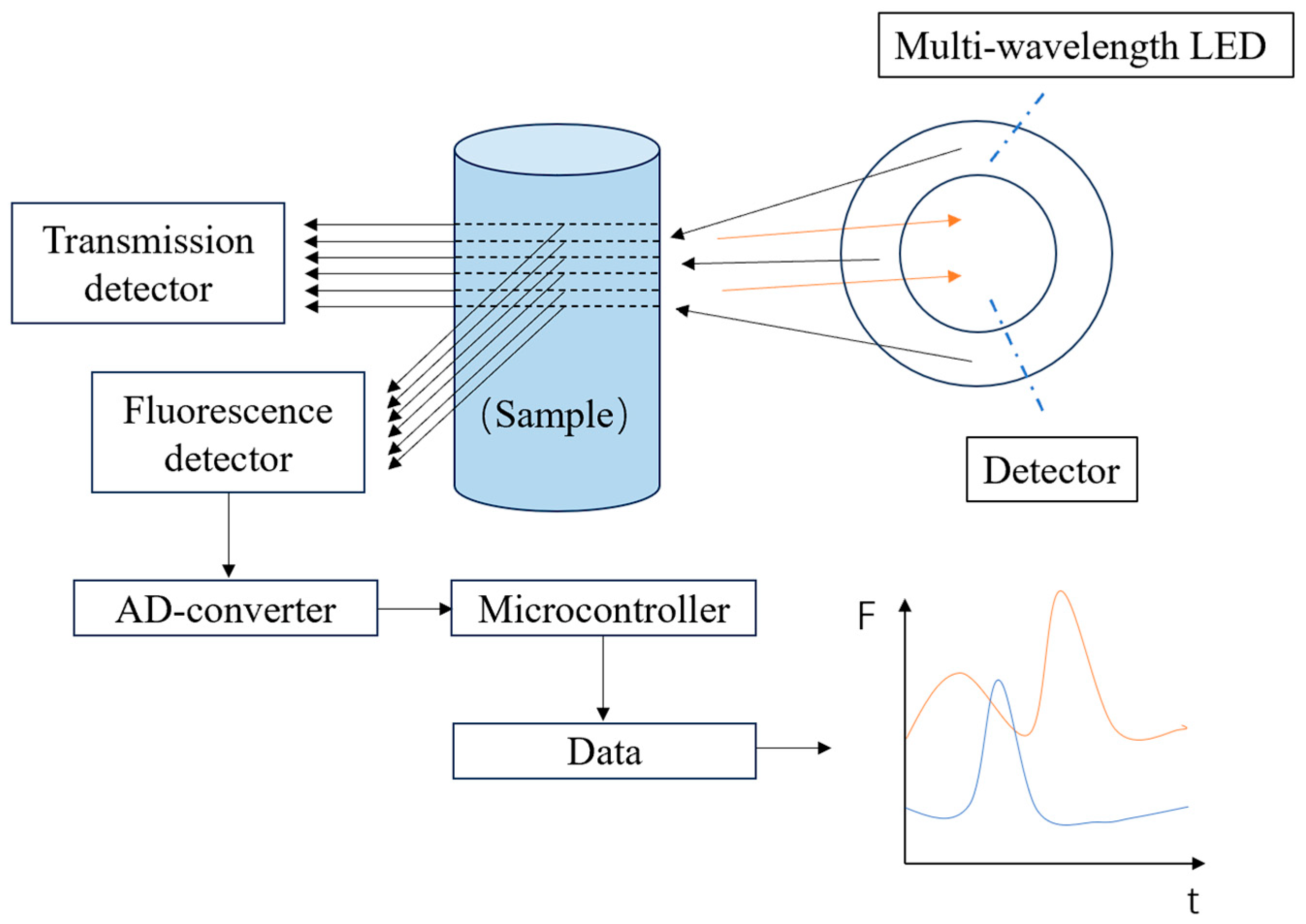
The algae Sensor is a new type of sensor developed based on an optical method, which is based on the following principles. Firstly, different pigments emit different fluorescence wavelengths after being excited by a beam of the same wavelength. Secondly, the same pigment emits different fluorescence wavelengths after being excited by a beam of different wavelengths. Thirdly, the composition of pigments in different algae is different. The shape of the fluorescence spectrum in phytoplankton is closely related to the composition of pigments, and the sensor can realize phytoplankton classification (qualitative) to a certain extent by measuring the concentration and type of pigments in phytoplankton. The algae sensor has built-in spectral ‘fingerprints’ of many kinds of phytoplankton, such as green algae, diatoms, cyanobacteria, dinoflagellates/diatoms, and other phyla of phytoplankton. Additionally, the researchers can include the spectral “fingerprints” of the phytoplankton based on the characteristics of the phytoplankton communities in the research area.
Researchers can improve the accuracy of the sensor in characterization and quantification by independently adding the spectral ‘fingerprint’ of phytoplankton based on the characteristics of the phytoplankton community in the study area. During the measurement process, the algae sensor emits multiple wavelengths of excitation light to irradiate the seawater. Then, it collects the fluorescence signals emitted by the fluorescent substances in the algae using a receiver. The density and Chl of the algae are then measured by analyzing the intensity and wavelength of the fluorescence (See
Figure 1). As natural waters often commonly contain Colored Dissolved Organic Matter (CDOM), which can interfere with measurements, algal sensors typically adjust their data for CDOM concentrations [
55]. In addition, some of the physical characteristics of the ocean can affect the measurement results, so these devices also compensate for transmittance, temperature, and turbidity.
Measurements of phytoplankton from algal sensors are highly correlated with those from standard methods and are now widely used in studies of spatial variability of the phytoplankton distribution in various aquatic ecosystems [
56].
4.3.2. Imaging FlowCytobot (IFCB)
Flow Cytometry (FCM) is a technique used for the rapid quantitative analysis and classification of cells or other biological particles, including microspheres, bacteria, and small model organisms. It was first used in the 1980s for the study of algae [
57]. However, the inability of the instrument to observe the morphological characteristics of cells limits the ability of the FCM to classify algae to the level of “functional group”. IFCB, which adds imaging functionality to FCM and combines it with built-in image recognition ability, significantly improved the quantitative and qualitative levels of phytoplankton cells. IFC was officially used for phytoplankton research in the late 1990s. As an enhanced version of FCM [
58], IFC has greatly promoted the development of algae analysis and has been widely used in the fields of microalgae morphology, cellular processes, cell-to-cell interactions, population dynamics, and HABs development [
59,
60,
61].
Olson and Sosik (2007) developed the Imaging FlowCytobot (IFCB) for underwater deployment, which can be operated continuously for 6 months in field environments at depths up to 40 m, with a sampling resolution of up to 5 mL/20 min, making it ideally suited for in situ monitoring of HABs [
62]. The IFCB deployed in the study area monitors the density and abundance of HABs organisms in real-time and provides early warning when an abnormal increase in their abundance is detected [
63,
64]. To improve the accuracy of IFCB’s biological classification in the target area, researchers need to train the built-in algorithm of IFCB with images of algal compositions specific to the target marine area. The imaging quality of the IFCB is high, and its biological classification resolution can reach the level of “genus” or even “species”. Lee et al. (2020) deployed an IFCB in the aquaculture area of Hong Kong and optimized the classification algorithm of machine learning [
65]. The sample testing period was less than 7 min, and the algorithm achieved a classification accuracy of over 80% for HABs species. Recent advances in deep learning, such as the use of convolutional neural networks (CNNs), have further improved the accuracy and robustness of automated image classification from IFCB data.
4.3.3. Environmental Sample Processor (ESP)
ESP is an in situ monitoring system for algae and algal toxins based on molecular biology technology, which is similar to an “automated underwater molecular biology laboratory”. ESP can realize the processes of automatic collection of water samples, filtration and concentration, cell crushing in seawater, as well as in situ quantitative DNA and RNA monitoring. ESP plays an important role in the real-time monitoring of plankton, invertebrates, and algal toxins. The ESP, which enables autonomous sampling and DNA/RNA detection, is an important advance in HABs monitoring technology [
66], and the total process time for analyzing a single sample is only 3 h. The ESP consists of three main modules: the sample processor (“core ESP”), sampling modules, and analytical modules. The core ESP is designed to analyze DNA and protein arrays from small samples (in water depths less than 50 m), while in water depths greater than 50 m it is necessary to use a sampling module to transport depressurized seawater to the core ESP for analysis, and an analytical module as a stand-alone molecular detection system (which can be integrated into the core ESP).
The ESP utilizes molecular probes to detect DNA or RNA in cell lysates [
43], so as to realize the classification and identification of bacteria, archaea, invertebrates, algal species, and microcystins. ESP can also integrate other chemical and physical sensors, providing a new perspective for identifying the response of HABs to environmental factors, the relationship between HABs organisms and nutrients, and the potential mechanism of the HABs process. The application of ESP in the Pacific Northwest Continental Shelf, Monterey Bay of the USA, and other locations has demonstrated its great potential for HABs monitoring and mechanism research [
42,
67,
68].
4.4. Summary of Sensor Technologies
Each sensor technology has its own merits, and the selection is heavily dependent on specific monitoring objectives, budget, and environmental conditions. To clearly present their characteristics,
Table 1 provides a systematic comparison of the main sensors discussed above. In the future, a single sensor can hardly meet complex monitoring demands. Integrating sensors based on different principles (e.g., combining the molecular specificity of the ESP with the morphological classification capability of the IFCB) represents a crucial direction for overcoming technical bottlenecks and achieving precise monitoring.
5. Typical Platforms for HABs Monitoring
5.1. Remote Sensing Monitoring Platform
Remote sensing technology is an effective tool for water quality as well as HABs monitoring in nearshore waters due to its advantages of a wide range, high efficiency, non-contact, short cycle time, and low cost. As a complement to conventional HABs monitoring means [
69], remote sensing allows bio-optical measurements at spatial and temporal scales that are not possible with conventional monitoring methods [
70]. Successful applications of on-board sensors such as the Sea-viewing Wide Field-of-view Sensor (SeaWiFS), the Moderate-resolution Imaging Spectroradiometer (MODIS and MERIS), the Visible Infrared Imaging Radiometer (VIIRS), and the Ocean and Land Colour Instrument (OLCI) have confirmed this view. Current remote sensing monitoring can be summarized as two kinds of satellite remote sensing and airborne remote sensing. Satellite remote sensing takes the satellite as a platform carrying all kinds of sensors, which can carry out large-scale macro-monitoring; airborne remote sensing takes aircraft, airships, and drones, and other motorized facilities as a platform, which can carry out ultra-high-resolution monitoring of the study area.
Ocean color is a comprehensive reflection of colored substances (Chl, particulate matter, dissolved matter, and so on) in the ocean, so ocean color data from satellite remote sensing can be used to invert the concentrations of Chl, biomass, and organic carbon in the upper water column and be used for HABs monitoring [
71,
72]. Lee et al. (2010) constructed an HABs monitoring algorithm based on satellite remote sensing data from Landsat-8 and a deep learning algorithm [
73]. Gokul et al. (2019) used high-resolution satellite remote sensing data (1 km, MODIS-Aqua) to achieve HABs monitoring at Chl concentrations greater than 1 mg/m
−3 [
74]. Based on the optical properties of different organisms, Gernez et al. (2023) realized the detection and differentiation of HABs species using data from the Sentinel-2 satellite and typical reflectance spectra of multiple HABs organisms [
75]. Satellite remote sensing has strong timeliness, high monitoring frequency, and wide coverage, and is suitable for monitoring HABs with temporal and spatial variability. Compared with other monitoring platforms, satellite remote sensing has lower sensor costs, making it suitable for large-scale monitoring of HABs. Remote sensing also has its limitations. Firstly, the depth of the water column penetrated by remote sensing is shallow, and in the upper 15 m of the water column, it can usually be monitored at the oceans, but in the coastal waters, where HABs are common, the depth of detection is even shallower [
76]. Therefore, it is difficult to monitor low biomass HABs (usually in the form of subsurface algal blooms). Secondly, the spatial resolution is too low to monitor small-scale HABs. Thirdly, it is subject to interference from clouds and land, which also limits its application in coastal waters.
Aerial remote sensing, also known as airborne remote sensing, has become a useful complement to in situ surveys and satellite remote sensing. When HABs occur far from the monitoring site and within the revisit interval of satellites, it is necessary to use highly maneuverable platforms such as various aircraft, airships, and drones as sensor platforms to monitor sudden HABs. Multispectral and hyperspectral sensors carried on airborne platforms have a great potential for identifying macroalgae in intertidal zones and shallow waters [
77]. Taddia et al. (2020) used a multispectral camera on an airborne platform to map underwater algae in shallow waters and concluded that this sensor can be utilized for reliable monitoring over long periods of time [
78]. Román et al. (2021) used a variety of algorithms and demonstrated that a multispectral camera on an Unmanned Aerial Vehicle (UAV) platform can be used to detect and differentiate seagrass beds in the 0–2 m depth range [
79]. Jiang et al. (2020) utilized an RGB camera on a UAV platform to enable the detection of harmful algal blooms (green tides) [
80]. Tait et al. (2019) argued that a combination of an RGB camera and a multispectral camera can improve the classification accuracy of underwater habitats [
81]. Aerial remote sensing has the advantages of low cost, high flexibility, and high ground resolution [
82]. However, it also has some shortcomings compared with field surveys and satellite remote sensing, with its all-weather operation capability, wide-range monitoring capability, and poor water layer penetration capability, such as in a turbid water column. Airborne remote sensing is unable to effectively monitor areas with water depths exceeding 3 m [
81].
5.2. Fixed Monitoring Platform
5.2.1. Mooring Buoy Platform
Moored buoys are a widely used monitoring platform for oceans, lakes, reservoirs, and rivers. They are the most widely used in situ monitoring platforms in the world due to their low cost, flexibility in deployment, and the ability to conduct all-weather monitoring of HABs. Early moored buoys were mainly used to observe physical and meteorological parameters on the sea surface. The increased attention to the ecological environment and the rapid progress of sensor technology have led to the development of moored buoys, which carry chemical and biological sensors related to HABs (e.g., chlorophyll, nutrients, pH, temperature, DO, salinity, and algae sensors, etc.). It can continuously monitor the chemical and biological environment of the seawater for a long time at a fixed point. Mooring platforms are usually used for target monitoring in areas with a high risk of HABs. Moored buoys are usually composed of solar panels, communication modules, batteries, floats, brackets, anchors, corrosion protection devices, and biochemical sensors. The float serves to provide buoyancy, enabling the buoy to float on the water surface. The solar panel is responsible for converting solar energy into electrical energy, which can be used in conjunction with the battery to provide energy to the buoy in the absence of light conditions. The bracket structure is employed to fix and protect the components, preventing them from falling off and being damaged. Due to the impact of external forces, such as collisions and vibrations, the biochemical sensor is the fundamental component of the ecological mooring buoy. It is operated by a preset programme, which initiates data collection (sample measurement) at regular intervals. The data collected by the sensor is transmitted to the shore-based receiving station through the communication system (4G or satellite).
Several countries, including the USA, the UK, France, and others, have established buoy monitoring networks and utilized the monitoring data for marine environment monitoring, ecosystem monitoring, and ecological disaster early warning. Some scholars have compared in situ buoy monitoring data with satellite remote sensing data and found that the discrepancy between the two increases with the concentration of Chl in the water. This discrepancy can be reduced by increasing the number of buoys deployed and using the buoy monitoring data to validate satellite data, thus enabling the monitoring of HABs [
83]. Data from buoy networks are therefore crucial for the calibration and validation (cal/val) of satellite ocean color products, thereby enhancing the accuracy of large-scale remote sensing assessments.
5.2.2. Shore-Based Marine Monitoring Station
The establishment of a shore-based marine monitoring station (referred to as “shore-based station”) on the coast for marine monitoring represents a significant advancement in the field of marine scientific research. The monitoring indexes of the shore-based station are comprehensive, encompassing meteorological variables (wind speed, wind direction, air temperature, air pressure, relative humidity, visibility, rainfall, atmospheric deposition, etc.), physical variables (water temperature, salinity, DO, transmittance, etc.), chemical variables (pH, TOC, Chl, CDOM, turbidity, oil, nutrients, dissolved gases, etc.), and biological variables (phytoplankton, zooplankton, fish, benthic animals, etc.). In addition to the in situ monitoring of the aforementioned parameters, the shore-based station also has the function of data transmission, which enables the transmission of monitoring data back to the data center in real time.
A shore-based station typically comprises a sample collection system, a sample distribution system, a detection system (comprising sensors and analytical instruments), a communication system, a power supply system, and an auxiliary system. Shore-based stations can be upgraded (adding sensors and sample collection and distribution systems according to actual needs) and expanded (adding functional areas and optimizing the original layout) on the basis of tide level observation stations, so they have the advantages of low cost, convenient operation, and maintenance. The monitoring indicators of the shore-based station are diverse, rendering it suitable for long-term trend monitoring. Its long-term monitoring data set not only facilitates a profound comprehension of the dynamic trend of the target area but also serves as a foundation for decision-making in the evaluation of anomalies in HABs indicators.
5.3. Mobile Monitoring Platform
5.3.1. Vessel Platform
Vessel platforms have been the traditional means of conducting marine monitoring since the 1930s. This method has been employed for the purpose of walk-away monitoring of marine bioecology. The early cruise monitoring approach involved a combination of manual sampling and laboratory analysis. In this method, researchers first measured certain physical parameters (such as light, transparency, water temperature, salinity, pH, current speed, and direction of flow) in the field, and then collected samples of chemical and biological parameters that could not be measured in the field (e.g., DO, nutrients, trace elements, algae, Chl. Samples were collected and preserved using a variety of methods, and then returned to the laboratory for quantitative determination. Due to the abundant space, professional staff, complete equipment, and mature monitoring methods, as well as the comprehensive and accurate data obtained from voyage monitoring, the data collected by the vessel platform can truly assess the current situation of the study area. However, extreme weather and negative sea conditions have an extremely bad influence on the safety of ship operation, so vessel platforms’ voyage monitoring cannot be carried out when the environmental conditions are severe. Traditional vessel-based cruise monitoring requires manual sampling, pre-processing, and instrument operation, making it highly dependent on experienced scientists. Vessel-based cruise monitoring is costly, and ships are generally not used for emergency monitoring of HABs. It typically takes a few days to 2 weeks from sample collection on board the ship to sample transport to the laboratory to complete the determination, and even months for some ocean voyages, resulting in poor timeliness of traditional vessel-based cruise monitoring, which is more suitable for conducting routine monitoring. In addition to timeliness issues, some samples may undergo morphological changes or degradation during transport or preprocessing, resulting in data bias (deviation of detection values from the original values).
In order to enhance the monitoring efficiency and reduce the necessity for manpower, shipboard online monitoring systems with sensors rather than researchers are gradually gaining popularity and application [
84,
85,
86]. Modern shipboard online monitoring systems typically comprise a sample collection system, a sample distribution system, a detection system (comprising sensors and analytical instruments), a cleaning system, and software, among other components. Such systems can facilitate fully automated time- or latitude-longitude-based water sample collection, distribution, filtration, analysis, and data transmission in unmanned conditions. This has injected a new power into the fields of marine ecological environment investigation, marine resources exploitation, and utilization. The spatial and temporal resolution of ship platforms has been significantly enhanced by the introduction of a shipboard online monitoring system. The shipboard online monitoring system has made significant advances in spatial and temporal resolution, enhancing monitoring efficiency and speed. It has also addressed the limitations of the traditional ship-based monitoring system, which has been known to be lacking in timeliness. The application of the shipboard online monitoring system has expanded the scope of ship platforms beyond the realm of voyage monitoring and routine monitoring, enabling them to also be utilized for the real-time monitoring of emergencies such as HABs, oil spills, and other disasters. In addition to providing more accurate detection data, shipboard monitoring can also be used for the authentication and correction of remote sensing monitoring results. The deployment of spectrometers, digital cameras, and other equipment on vessel platforms allows for the acquisition of remote sensing a priori information, which can then be employed to verify the monitoring results of satellite air remote sensing.
5.3.2. Unmanned Mobile Monitoring Platform
The frequency and duration of HABs in the ocean are increasing, and the demand for HABs monitoring is also increasing. The time and spatial resolution of mainly manual monitoring can no longer meet the demand for HABs monitoring [
87]. Consequently, unmanned automated monitoring platforms are gradually playing an important role in the field of dynamic tracking and real-time monitoring of HABs. An unmanned mobile monitoring platform is a novel type of marine environment integrated observation and monitoring platform. It can be categorised into two sub-types according to the application scenario: surface mobile monitoring platform and underwater mobile monitoring platform. The surface mobile monitoring platform for HABs monitoring is typically referred to as an Autonomous Surface Vehicle (ASV), which is a two-dimensional vehicle that can carry the requisite sensors to monitor environmental indicators at the sea–air interface. The underwater mobile monitoring platforms for HABs monitoring are primarily represented by the Autonomous Underwater Vehicle (AUV), which is capable of carrying sensors for three-dimensional monitoring of the ocean. The vertical heterogeneity of HABs necessitates the measurement of vertical changes in relevant indicators through the use of AUV platforms for HABs monitoring. However, the shape and structural design of an AUV determine that it is usually not suitable for offshore shallow water operations, and a key constraint is the trade-off between sensor payload, power consumption, and mission endurance. The unmanned mobile monitoring platform offers several advantages, including autonomy, miniaturisation, and maintenance-free operation. The platform’s net buoyancy, carrying capacity, and monitoring indicator requirements can be considered when selecting suitable sensors, enabling the platform to perform a range of monitoring tasks, such as routine monitoring, cruise monitoring, and emergency monitoring. The monitoring data of the unmanned mobile monitoring platform can be transmitted back to the data center through 4G communication and satellite communication, and can also be transmitted after the platform is recovered.
A significant number of in situ sensors have been successfully deployed on mobile monitoring platforms for HABs monitoring [
88,
89]. This has resulted in a reduction in monitoring costs and an improvement in temporal and spatial resolution. A comparison of the two types of monitoring platforms, surface and underwater platforms, reveals that surface mobile monitoring platforms lack depth-dependent three-dimensional monitoring capabilities. However, they have a higher carrying capacity than underwater mobile monitoring platforms, allowing them to carry more numbers and types of sensors. Furthermore, the platforms are easy to retrieve and have timely data transmission. Mobile monitoring platforms with biological and chemical sensors provide highly reliable data support for exploring marine ecological processes and play a significant role in areas such as marine ecological disaster monitoring and early warning. Due to its high mobility, the unmanned mobile monitoring platform has considerable application prospects in scenarios such as emergency monitoring, tracking, detection, and daily cruise monitoring of HABs. The application of unmanned mobile monitoring platforms has significantly enhanced the temporal resolution of HABs-related data collection. However, to achieve the same spatial resolution as in situ and remote sensing monitoring, unmanned mobile monitoring platforms require higher costs. The following table provides a comparative overview of the key characteristics of the major monitoring platforms discussed. The comparative analysis of HAB monitoring platforms is shown in
Table 2.
6. Conclusions and Future Perspectives
HABs monitoring is a systematic and multidisciplinary undertaking. This review has systematically summarized the technical characteristics of existing sensors and monitoring platforms. The analysis demonstrates that the core of future development lies in integration, intelligence, and collaboration. By establishing a synergistic monitoring network, advancing next-generation sensor technologies, and deeply integrating artificial intelligence, it may become possible to achieve more timely, accurate, and efficient monitoring and early warning of harmful algal blooms, thereby better addressing this global environmental challenge.
Despite significant progress in HABs monitoring technologies, the development of an efficient and reliable early warning system still faces three major challenges. First, data obtained from different platforms differ greatly in spatiotemporal resolution and parameter dimensions, while effective fusion methods and standardized protocols remain insufficient. Second, sensor performance is still constrained by technical bottlenecks. For example, the long-term stability of in situ sensors is often affected by biofouling and complex water matrices, whereas many chemical and biological sensors are characterized by high power consumption and frequent maintenance requirements. Third, current systems are still focused primarily on data acquisition, and how to leverage advanced algorithms to bridge the gap between monitoring and prediction remains a key challenge. To overcome these limitations, three future directions deserve particular attention, which are as follows:
(1) Establishment of an Integrated “Space–Aerial–Shore–Sea” Intelligent Monitoring Network. The construction of a comprehensive, multi-platform monitoring network (termed the “Space–Aerial–Shore–Sea” network) requires deep operational synergy. Rather than merely co-deploying technologies, this framework envisions a three-stage operational workflow: trigger → response → assimilation.
In the trigger stage, a constellation of polar-orbiting and geostationary satellite sensors—specifically the Ocean and Land Colour Instrument (OLCI) on Sentinel-3, the Moderate-resolution Imaging Spectroradiometer (MODIS) on Terra/Aqua, and the Visible Infrared Imaging Radiometer Suite (VIIRS)—continuously scans coastal and oceanic waters to generate near-real-time anomaly maps of sea surface temperature (SST) and chlorophyll-a concentration. When these data exceed pre-defined statistical thresholds (e.g., a 30% increase in Chl-a above the seasonal climatology coinciding with a positive SST anomaly of 2 °C), an automated alert is generated and disseminated to the network’s in situ assets.
Upon receiving the alert, the response stage is activated. High-resolution aerial platforms, specifically Unmanned Aerial Vehicles (UAVs) equipped with lightweight hyperspectral imaging spectrometers, are dispatched to conduct targeted overflights over the anomaly area, capturing detailed maps of phytoplankton biomass and community composition at sub-meter resolution. Simultaneously, the nearest shore-based marine monitoring station intensifies its automated sampling sequence: a refrigerated autosampler collects and preserves discrete water samples for immediate laboratory analysis using High Performance Liquid Chromatography (HPLC) and Liquid Chromatography–Mass Spectrometry (LC-MS) to quantify algal pigments and toxin profiles. In parallel, a network of Autonomous Underwater Vehicles (AUVs), such as Slocum gliders, is cued to perform high-resolution, three-dimensional surveys of the bloom patch. These gliders carry a payload of integrated physical and biogeochemical sensors—a CTD for temperature, salinity, and depth; an optical dissolved oxygen sensor; and a multi-parameter fluorescence sensor capable of measuring chlorophyll-a and phycobiliproteins—and transmit their vertical profile data to shore in near-real time via Iridium satellite communication.
The critical assimilation stage involves synthesizing these heterogeneous, multi-scale data streams into a unified, four-dimensional data cube. Advanced data-fusion techniques, including Ensemble Kalman Filtering (EnKF) and three-dimensional variational (3D-Var) assimilation, are employed to optimally merge the satellite-derived surface fields with the high-resolution vertical profiles from the gliders and the continuous point-based time series from moored buoys. This dynamically assimilated dataset directly forces operational hydrodynamic-biological coupled models, such as the Regional Ocean Modeling System (ROMS) coupled to a nutrient–phytoplankton–zooplankton–detritus (NPZD) module. By cycling every 6–12 h, the modeling system produces probabilistic forecasts of bloom trajectory, intensity, and potential coastal landfall for the coming 72 h. The model outputs are then translated into a geographic information system (GIS)-based risk map, which categorizes coastal zones into actionable warning levels. This information is disseminated to fisheries managers for preemptive closure decisions, to public health authorities for shellfish monitoring prioritization, and to water utility operators for adjusting treatment protocols. Through this end-to-end operational chain, the monitoring network is transformed from a passive data collection system into an active, predictive decision-support engine that directly informs HAB early warning and risk management.
(2) Advancing Sensors toward Miniaturization, Intelligence, and Long-term Stability. Sensor technology itself must evolve to become smaller, smarter, and more durable. Microfluidic and MEMS technologies can reduce sensor size and power consumption. The integration of self-cleaning and self-calibrating modules can effectively mitigate biofouling and signal drift. In addition, embedding edge-computing capabilities can enable sensors to perform local data processing and anomaly detection, thereby realizing intelligent sensing.
(3) Deepening AI-Driven Data Fusion and Predictive Forecasting. Artificial intelligence (AI) will be key to overcoming existing bottlenecks. Machine learning algorithms can be applied to multi-source data correction and fusion. Deep learning models that integrate environmental parameters with image and spectral data can improve the accuracy of species identification and biomass inversion. Ultimately, the goal is to develop predictive HAB models that assimilate real-time monitoring data and provide proactive decision support for risk management.