Article

Numerical Study on the Crushing Failure of Sea Ice Against a Vertical Structure Using the S-ALE Method

1
China Ship Scientific Research Center, Wuxi 214000, China
2
School of Marine Science and Engineering, Guangzhou International Campus, South China University of Technology, Guangzhou 510641, China
*
Author to whom correspondence should be addressed.
J. Mar. Sci. Eng. 2026, 14(10), 938; https://doi.org/10.3390/jmse14100938 (registering DOI)
Submission received: 17 April 2026 / Revised: 10 May 2026 / Accepted: 15 May 2026 / Published: 19 May 2026

Abstract

The crushing failure of sea ice is a critical design issue for polar offshore structures and ship structures because ice-induced loads may generate pronounced local damage and dynamic responses. Accurately modelling this process remains challenging because ice crushing involves localized fragmentation, crack propagation, rubble accumulation, and repeated contact release. This paper presents a controlled numerical sensitivity study of level-ice crushing against a vertical structure using a coupled LS-DYNA framework that combines the Structured Arbitrary Lagrangian–Eulerian (S-ALE) formulation with the Cohesive Element Method (CEM). The study focuses on a benchmark-scale indentation configuration and examines how mesh topology, mesh size, and imposed indentation velocity affect the predicted fracture morphology and load-time histories. The results show that random triangular meshes better reproduce stochastic fragmentation and lateral flaking than regular triangular or quadrilateral meshes, while finer meshes reduce excessive load oscillations and provide more stable force histories. The velocity study indicates a transition from gradual crushing and fragment retention at lower velocities to more rapid brittle chipping and stronger dynamic fluctuations at higher velocities. A benchmark-level comparison with published ice-indentation simulations shows that the predicted peak line load is of the same order of magnitude as reference results. The proposed framework is therefore useful for investigating numerical sensitivities and failure-mode trends in ice-crushing simulations, although final design-load application requires further calibration and formal mesh-independence assessment.

1. Introduction

As Arctic sea routes become more accessible, polar maritime transport and resource development are expanding, including oil and gas extraction and wind power generation. As these activities expand, the structural integrity of both ships and offshore platforms against the relentless forces of sea ice has emerged as a crucial safety concern, where the stability and service life of structures are directly challenged by ice-induced impacts. Among the various modes of ice–structure interaction, the crushing failure of level ice stands out as a primary source of high-frequency, high-magnitude loading, posing a severe threat to vertical support members and ship hulls alike. A better understanding of sea ice crushing and the resulting loads is important for the safe design and operation of polar engineering structures [1].
The interaction mechanism between sea ice and vertical structures is complex, involving processes such as plastic deformation, ductile and brittle failure, local crack propagation, ice debris generation, and instantaneous load peaks. These phenomena can trigger high-frequency vibrations, transient shocks, and localized damage, thereby compromising structural safety and increasing maintenance costs. Consequently, accurately simulating load characteristics during ice crushing and predicting their impact on structures has become a core issue in polar engineering [2].
Traditional physical models and experimental studies have played an important role in revealing these mechanisms. For example, Moslet et al. [3] established a numerical model based on experiments of ice–cylindrical structure interactions in Svalbard, analyzing stress distribution and contact pressure. Their results showed that tangential tensile stress caused by structural shape and the friction coefficient at the ice–structure interface play key roles in ice load magnitude. Sodhi et al. [4] conducted medium-scale indentation experiments to measure three-way forces and interface pressures at various speeds. Kim et al. [5] used FEM to model ice–sea, ice–structure, and ice–ice interactions in broken-ice conditions. Erceg et al. [6] developed a contact-based simulator for local ice loads and validated it against RV Polarstern full-scale measurements. However, these methods are often limited by site conditions, costs, and experimental scale, making it difficult to fully reflect the complex mechanical behavior during ice crushing.
In the past decade, experimental studies at major ice research institutions have improved understanding of ice crushing and load formation. Model-scale ice–structure interaction tests performed in the Aalto ice basin have provided detailed measurements of global load evolution, identifying distinct phases of crushing, rubble accumulation, and intermittent failure mechanisms [7]. Similarly, dynamic ice–structure interaction experiments carried out at the Hamburg Ship Model Basin (TUHH) using cylindrical structural models have revealed strong coupling between transient ice loads and vibration responses [8]. These recent experimental efforts highlight that ice load processes cannot be fully described by early studies alone, and updated references are necessary for modern offshore design.
Recent ice basin investigations have also focused on ice-induced structural vibrations, demonstrating phenomena such as frequency lock-in and intermittent crushing regimes, which are particularly relevant for offshore wind turbine foundations and compliant structures [9]. Ji and Wang’ [10] couple DEM and FEM and further accelerate the computation using a GPU-based parallel strategy. Wang, Ji, and Liu apply a domain-decomposition scheme to the same class of ice-induced vibration problem [11]. Innovative experimental methodologies, such as the ice extrusion test proposed by TUHH researchers, have further enabled controlled laboratory investigation of brittle and ductile crushing behaviors, providing new sources for full-scale validation [12].
Numerical simulation is now an important tool for studying ice crushing. Numerical models allow for the effective analysis of crushing modes, load characteristics, and dynamic responses under different conditions. In particular, the Finite Element Method (FEM) and the S-ALE (Structured Arbitrary Lagrangian–Eulerian) fluid–solid coupling module in LS-DYNA demonstrate significant advantages in handling non-linear large deformation problems, accurately capturing mechanical changes during ice crushing [13]. The S-ALE method, through dynamic mesh partitioning, effectively solves the coupling of ice fragmentation and hydrodynamic effects. Ji and Yang [14] extend the coupled framework to offshore wind turbine foundations and examine load evolution together with vibration response. Zhang et al. [15] introduced an SPH fluid component to represent a more complex ice–structure interaction process.
In addition to FEM-based approaches, finite–discrete element and discrete element simulations have become increasingly important for capturing stochastic fracture propagation, fragmentation, and rubble pile accumulation during ice crushing [16]. Long, Liu, and Ji investigate how the ice breaking length influences the resulting load on a conical structure [17]. Ji et al. applied DEM to ship hulls in broken ice and provided an early bridge between granular fracture modelling and ship-load prediction [18]. Numerical experiments in shallow-water environments further demonstrate that water depth and rubble grounding can significantly amplify peak loads, complementing physical experiments [19]. Recent contributions from TU Delft have expanded the research scope toward offshore renewable energy applications, investigating scaling laws, hybrid testing methods, and dynamic response prediction for ice-induced vibrations of wind turbine structures [20].
Previous research by Kolari et al. [21] simulated brittle failure modes in columnar ice, such as splitting and spalling, using a 3D crack nucleation model. Yu et al. [22] studied ice load characteristics and crack propagation of level ice against vertical structures through both experiments and simulations. Zhang et al. [23] utilized a cohesive element model to simulate collisions between level ice and semi-submersible platforms, verifying the accuracy of the CEM approach. Furthermore, Konuk et al. [24] and Gürtner et al. [25] successfully applied cohesive element methods to simulate ice action against lighthouses, capturing observed phenomena qualitatively and quantitatively.
Despite these advances, accurately representing ice material behavior remains a challenge. Recent reviews from NTNU emphasize the need for improved fracture and constitutive models to account for strain-rate effects, energy dissipation, and uncertainties in ice load prediction [26]. Experimental–numerical coupled studies also confirm that structural dynamics can significantly influence ice failure evolution, underscoring the importance of robust multi-physics modeling frameworks [27].The broader literature on ship and ice structure interaction, including the review by Ji and Liu, reinforces the point that the governing failure modes and load pathways must be treated together rather than in isolation [1].
This study asks how mesh topology, mesh resolution, and indentation velocity affect fracture morphology and load-time histories in a benchmark-scale vertical indentation problem modeled with S-ALE + CEM in LS-DYNA. To answer this question, the paper establishes an ice–structure interaction model based on the specimen dimensions reported by Määttänen et al. [28] and performs a controlled sensitivity analysis for three mesh types, three mesh sizes, and four indentation velocities. This work provides a systematic assessment of numerical modelling choices, providing a foundation for future fully calibrated design-load models. The findings provide practical guidance for selecting mesh strategies and interpreting load histories in subsequent validated simulations of ice-resistant structures.

2. Sea Ice Crushing Mechanism

Sea ice crushing is a critical phenomenon encountered in interactions between polar marine structures and sea ice. This failure mode occurs when a solid structure exerts pressure on sea ice, leading to localized crushing failure within the ice layer. Understanding ice indentation failure is essential for the design and safety of offshore structures in ice-covered waters. Factors such as the mechanical properties of ice (strength, elasticity), temperature, structural shape, and indentation velocity influence the nature of the failure.
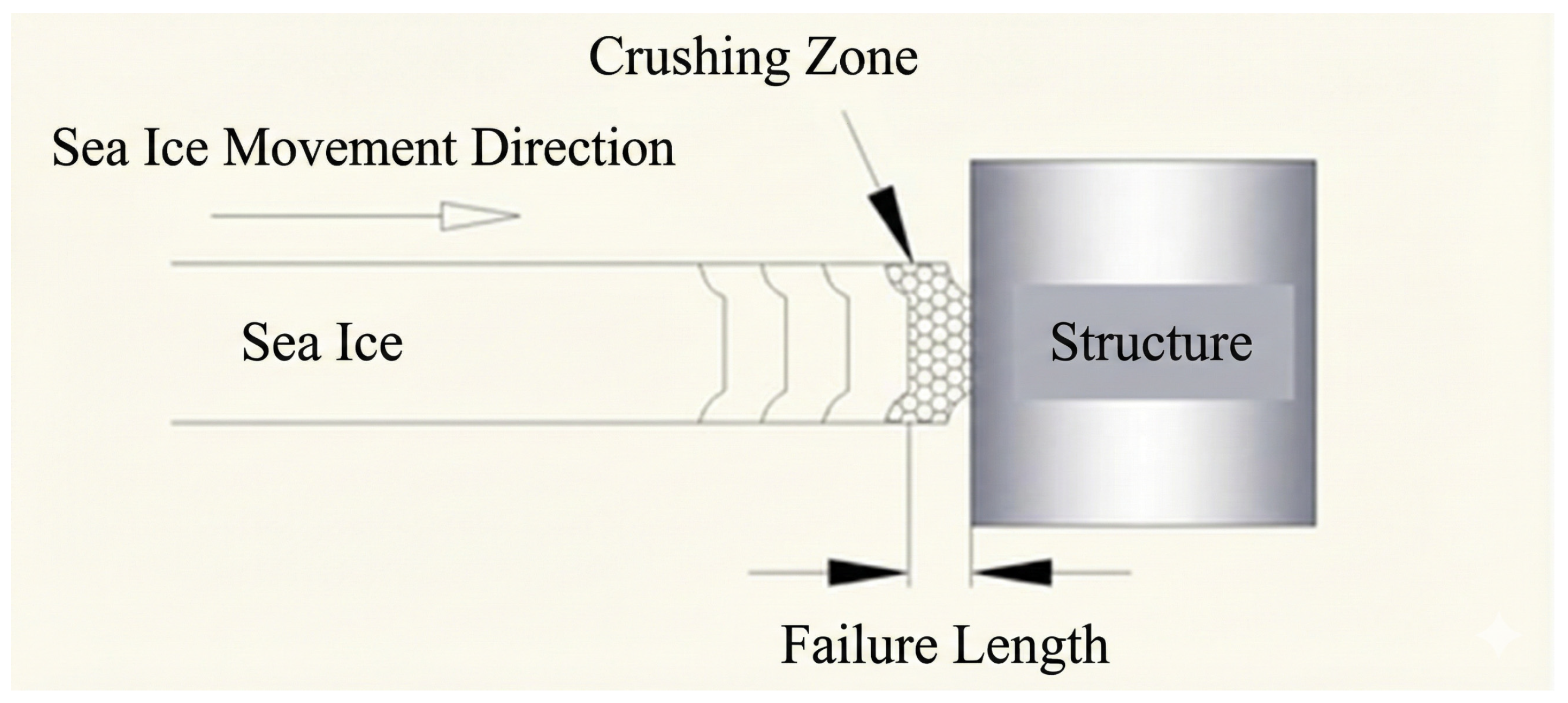
Regarding the failure mechanism, sea ice under compression typically involves a combination of ductile and brittle failure, the transition of which depends on the deformation rate and environmental conditions. At lower loading rates, ductile failure manifests as gradual plastic deformation and localized yielding, accompanied by compression and shearing where internal stresses are released slowly. Conversely, at higher rates, brittle failure dominates, characterized by rapid crack initiation, propagation, and ice spalling. This process is often accompanied by dynamic impact loads, localized stress concentrations, and high-frequency vibrations. Daley et al. [29] proposed a conceptual model for ice layer failure involving crushing, flaking, bending, and splitting, where each failure event alters the local boundary conditions for subsequent interactions, As shown in Figure 1. Qu et al. [30] proposed a new mechanism for ice-induced frequency lock-in vibrations, suggesting that the ductile damage and crushing behavior of ice during interaction leads to phase coupling with structural vibrations, as shown in Figure 2.

3. Numerical Model Setup

3.1. Material Parameters

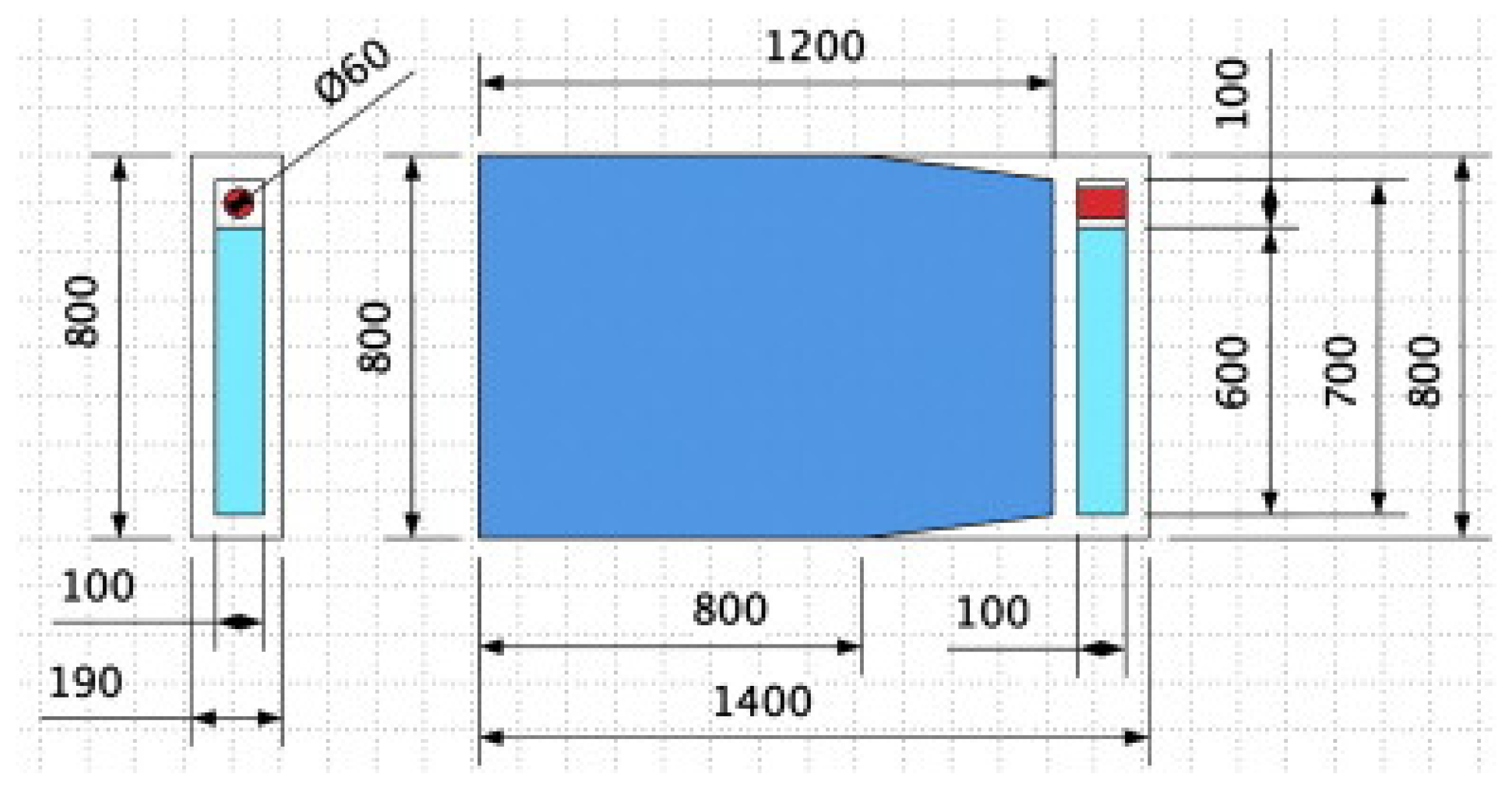
The numerical case is based on the ice structure indentation tests reported by Määttänen et al. [28], with a specimen size of 1200 × 800 × 190 mm, as shown in Figure 3 and Figure 4. This benchmark-scale configuration was selected because it allows crushing, flaking, fragment confinement, and contact force evolution to be examined without the added complexity of a more complicated structure. It is therefore suitable for isolating the numerical influence of mesh topology, mesh resolution, and imposed indentation velocity.
A fluid–structure interaction model including the vertical structure, ice, air, and water was built using the S-ALE method. Compared to traditional methods, S-ALE offers improved numerical stability and accuracy in simulating FSI, as it avoids severe mesh distortion and enhances solution robustness in large-deformation problems. For instance, Souli et al. [33] demonstrated that ALE-based formulations can effectively handle strong fluid–structure coupling and maintain numerical stability under large deformation conditions.
Air and water were retained in the S-ALE model to maintain the hydrostatic pressure field and numerical consistency. The direct influence of air on the computed impact response is expected to be small; Fragassa et al. [34] compared simulations with and without air and reported only marginal differences in structural acceleration and impact characteristics. In the present indentation cases, the maximum prescribed velocity is 54 mm/s, so the water dynamic pressure is far smaller than the characteristic ice crushing/contact stress. The fluid phase is therefore mainly used to provide the hydrostatic environment and numerical coupling framework, whereas the dominant load variations are governed by cohesive fracture, fragment interaction, and contact evolution.
The vertical structure is modeled as a rigid body using the MAT_RIGID_20 material model, as its deformation is not considered, as shown in Table 1. To ensure constant velocity, all degrees of freedom except for the direction of motion are constrained, and velocity is applied via the PRESCRIBED_MOTION_RIGID keyword.
The *ALE_STRUCTURED_FSI keyword is used to define the coupling between the structure, ice water, and air. Unlike the *CONSTRAINED_LAGRANGE_IN_SOLID keyword, this method automatically determines the number of coupling points during initialization and includes automatic fluid leakage detection. The ice material parameters are provided in Table 2, with a friction coefficient of 0.1 applied to all contact surfaces.
The MAT_COHESIVE_GENERAL model used here is rate-independent and does not explicitly include temperature-dependent or strain rate-dependent ice strength. Consequently, the velocity effects discussed below should be interpreted as dynamic and kinematic effects of the coupled indentation process, including inertia-driven fragment interaction, contact release, and changes in failure morphology, rather than as intrinsic rate sensitivity of the cohesive law. This clarification is important for preventing overinterpretation of the velocity study.
For contact within the ice body, the CONTACT_AUTOMATIC_SINGLE_SURFACE algorithm (soft option 2) is employed to simulate collisions between ice elements and minimize penetration.

3.2. S-ALE Simulation Environment and Boundary Conditions

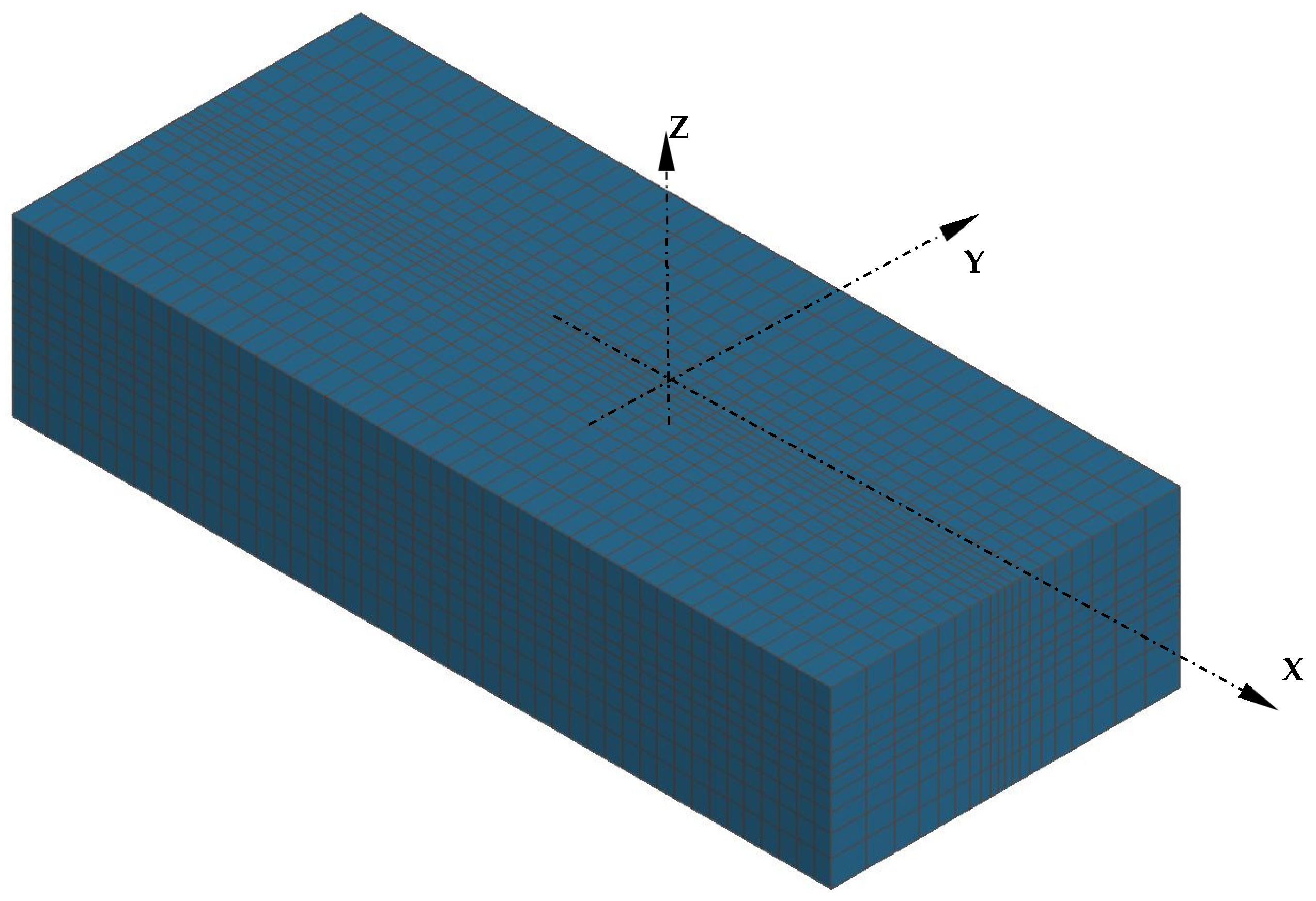
In the S-ALE algorithm, the 3D structured adaptive mesh for the fluid domain is defined using *ALE_STRUCTURED_MESH and *ALE_STRUCTURED_MESH_CONTROL_POINTS. The latter controls element size and density across the X, Y, and Z dimensions, as shown in Figure 5.
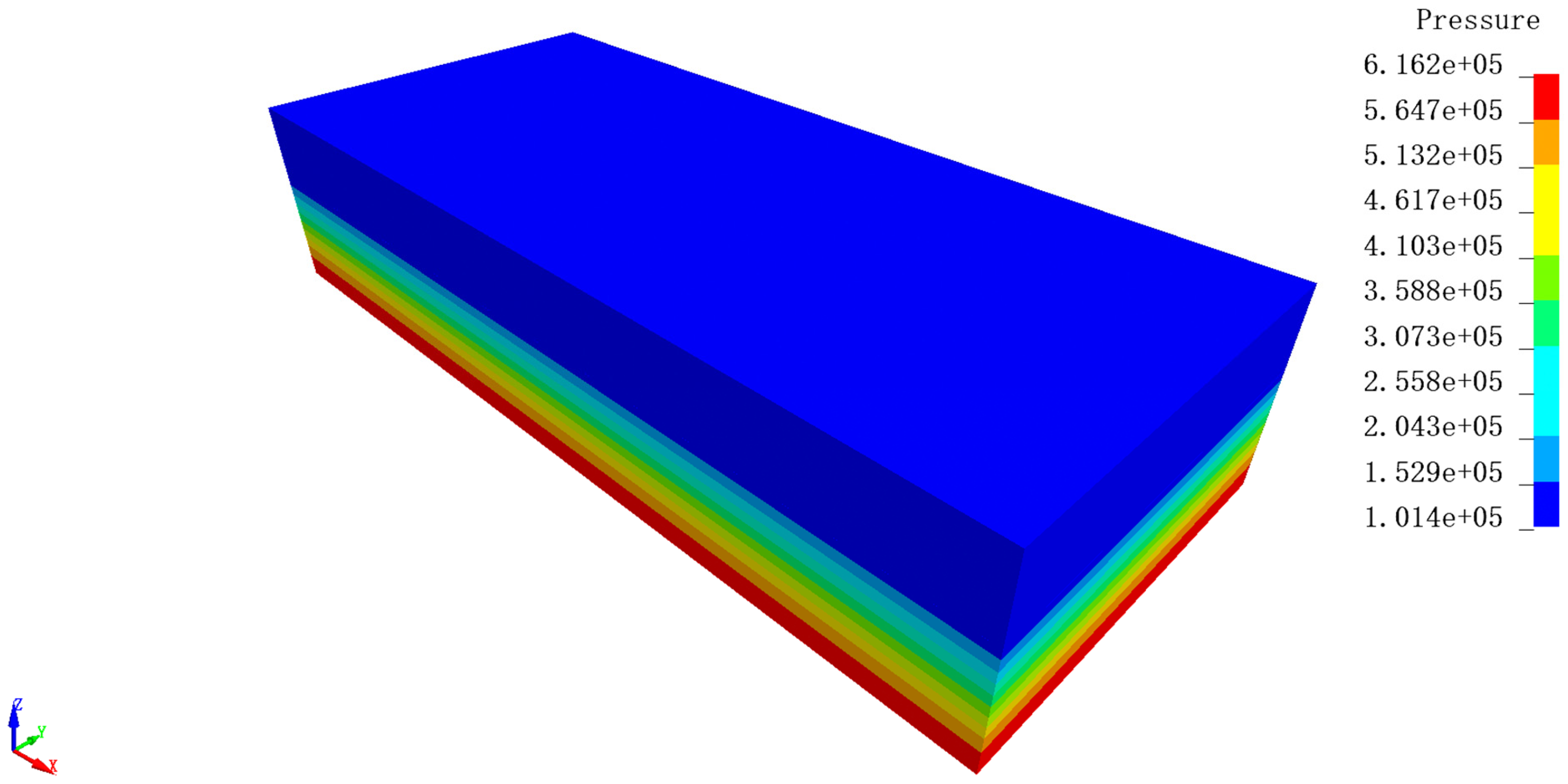
To reduce boundary effects, non-reflecting boundaries are applied on five faces of the fluid domain (excluding the top) using BOUNDARY_NON_REFLECTING. Hydrostatic pressure fields, generated by gravity, are initialized using INITIAL_HYDROSTATIC_ALE and ALE_AMBIENT_HYDROSTATIC, with a surface pressure of 1.014 × 10⁵ Pa, as shown in Figure 6.
The stratification of air and water is achieved through ALE_MULTI_MATERIAL_GROUP and INITIAL_VOLUME_FRACTION_GEOMETRY. Both use the MAT_NULL_09 model. The seawater pressure is defined by the Gruneisen equation of state (EOS) in Equation (1):
p = ρ 0 C 2 μ 1 + 1 γ 0 2 μ a 2 μ 2 [ 1 ( S 1 1 ) μ S 2 μ 2 μ + 1 S 3 μ 3 ( μ + 1 ) 2 ] 2 + γ 0 + a μ E
The air EOS is defined in Equation (2):
P = C 0 + C 1 μ + C 2 μ 2 + C 3 μ 3 + C 4 + C 5 μ + C 6 μ 2 E
In Equations (1) and (2), p or P denotes pressure, ρ0 is the reference density, C is the bulk sound speed, μ = ρ/ρ0 − 1 is the relative compression, γ0 is the Gruneisen gamma, a is the first-order volume correction coefficient, E is the specific internal energy per unit initial volume, S1–S3 are Hugoniot slope coefficients, and C0–C6 are the linear–polynomial EOS coefficients. The EOS forms and coefficients in Table 3 follow conventional LS-DYNA keyword definitions for water and air [35,36,37]. These coefficients are numerical EOS inputs for the surrounding media and should not be interpreted as calibrated ice’s constitutive parameters.

3.3. Simulation Results Analysis

At the indentation speeds considered here, hydrodynamic inertia is much smaller than ice fracture and contact effects. At the maximum imposed velocity of 54 mm/s (0.054 m/s), the representative water dynamic pressure, q = 0.5ρv2, is approximately 1.5 Pa for ρ = 1025 kg/m3. This value is negligible compared with the MPa-level strength parameters used for the ice and the contact stresses generated during crushing. Previous ALE-based ice structure studies also reported that fluid viscosity and EOS choices have a limited direct influence on peak contact forces compared with mesh discretization and contact/fracture evolution [38,39]. Therefore, the fluid domain is retained for hydrostatic consistency and FSI completeness, while the force histories discussed below are interpreted primarily as outcomes of cohesive fracture, fragment interaction, and contact dynamics.
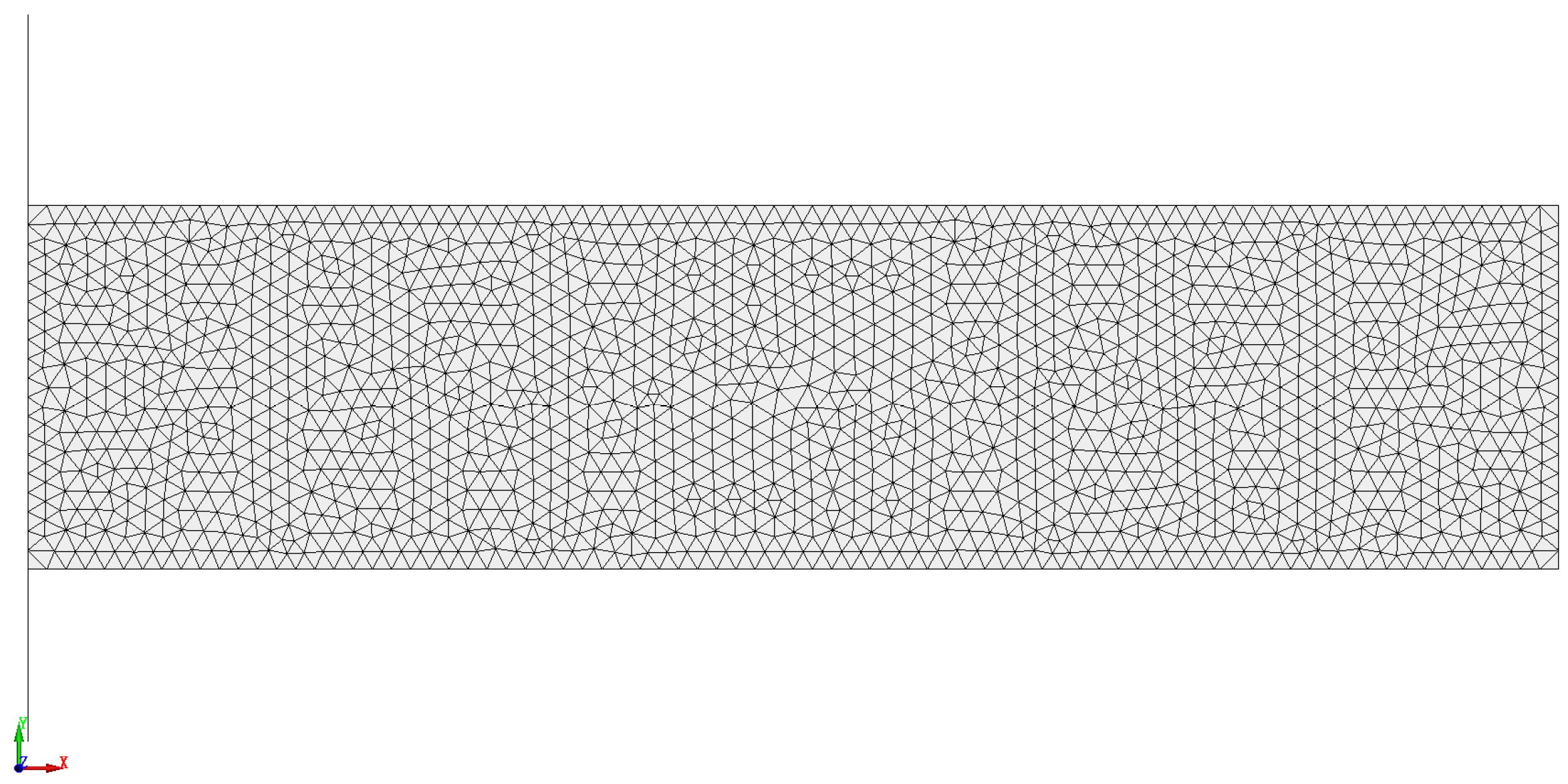
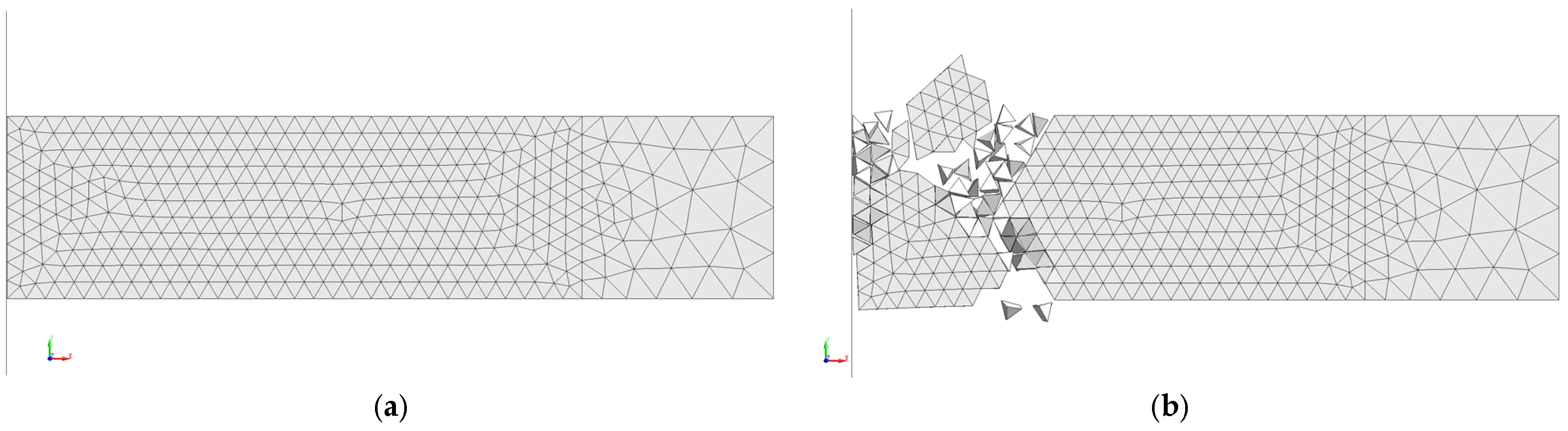
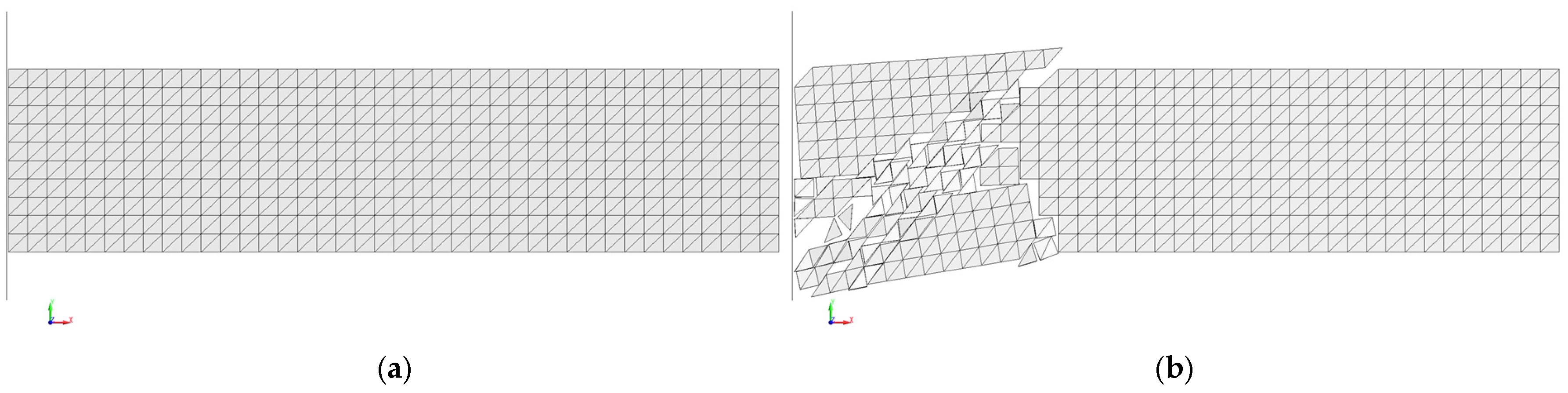
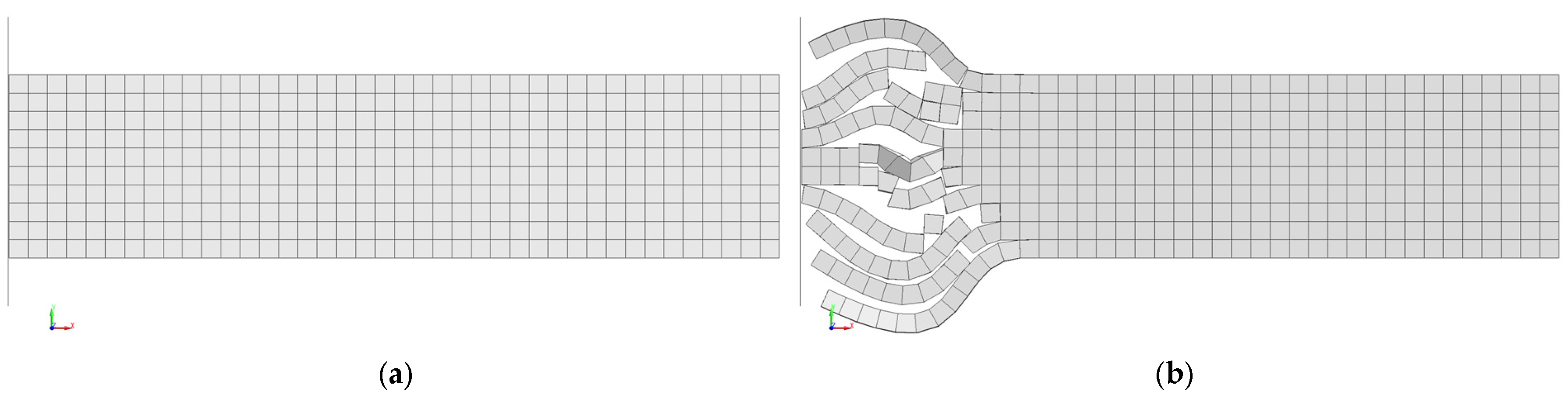
In numerical simulations of sea ice fragmentation, the mesh topology exerts a significant influence on the characteristics of crack propagation. Makarov et al. [40] previously utilized the Cohesive Element Method (CEM) to simulate ice load variations on cylindrical structures across different mesh configurations. This study conducts a comparative simulation to evaluate the effects of various mesh types on sea ice crushing behavior, as illustrated in Figure 7, Figure 8 and Figure 9.
It should be noted that the observed differences between structured and unstructured meshes are consistent with well-established findings in cohesive fracture simulations. Tijssens et al. [41] pointed out that regular structured meshes, although numerically attractive, may impose artificial constraints on crack propagation paths and thus introduce mesh bias in fracture analyses. In contrast, unstructured triangular or tetrahedral meshes allow cracks to branch and propagate along naturally varying orientations without any ad hoc branching assumptions, leading to more realistic representation of curved and stochastic crack paths at the macroscale. Therefore, the use of random triangular meshing in the present study is motivated not only by numerical considerations but also by its ability to better capture the inherent variability of brittle ice fragmentation.
Under the extrusion of the vertical structure, the random triangular mesh demonstrates a crushing pattern that more closely aligns with experimental phenomena compared to regular triangular or quadrilateral meshes. This suggests that random triangular meshing captures the complex fracture behavior of sea ice better than the other mesh types in this study.
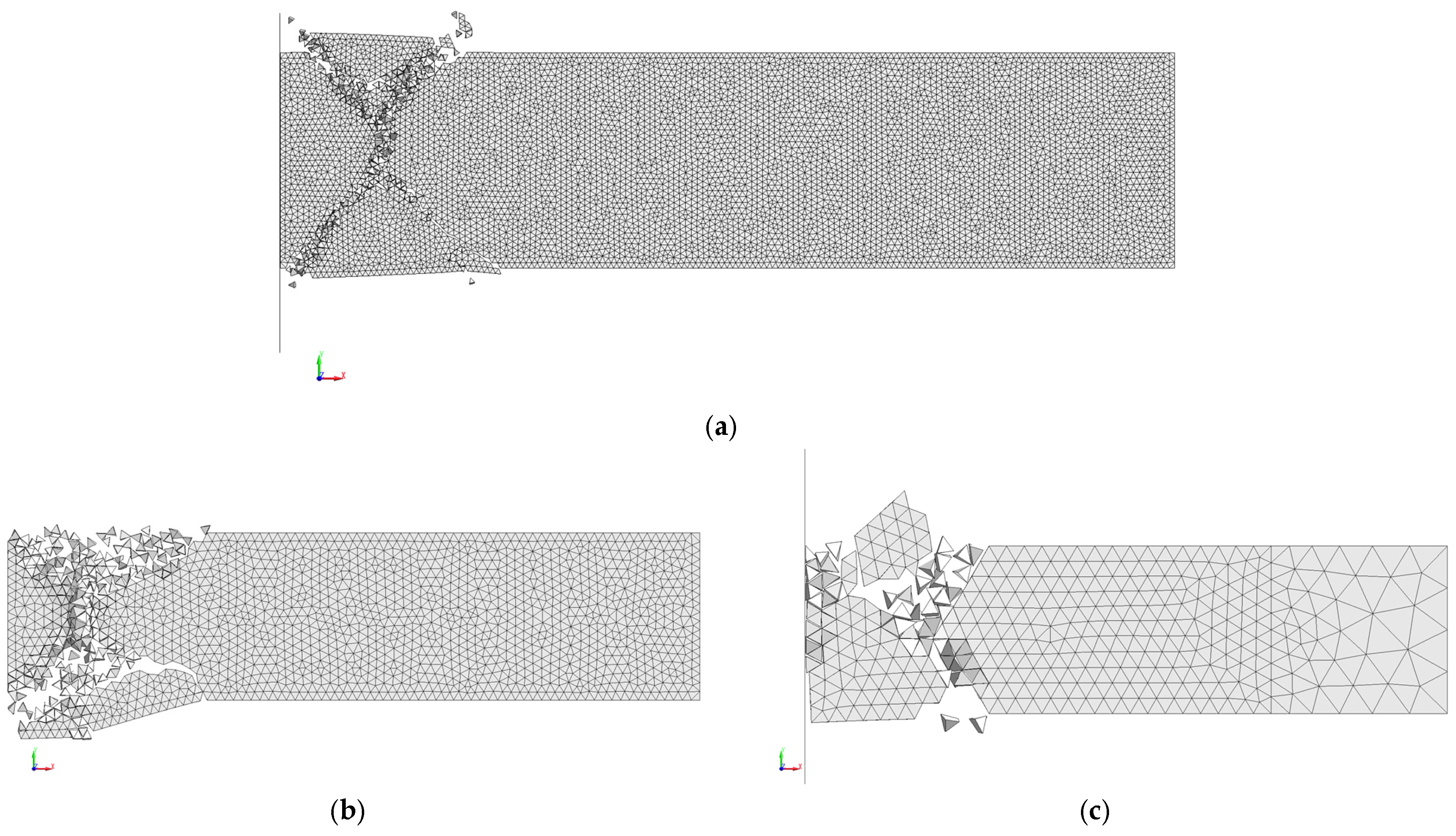
Building upon the investigation of mesh types, this section examines the impact of three distinct mesh sizes (10 mm, 20 mm, and 30 mm) on the crushing process, as depicted in Figure 10. Across all three mesh scales, the sea ice consistently exhibits the formation of typical triangular fragments on both lateral sides during extrusion. These fragments, which detach from the main ice sheet, are primarily concentrated along the crushing periphery, where a distinct wedge-shaped structure is formed. The emergence of this wedge-shaped fragmentation boundary is intrinsically linked to the stress concentration and strain rate distribution corresponding to each mesh size.
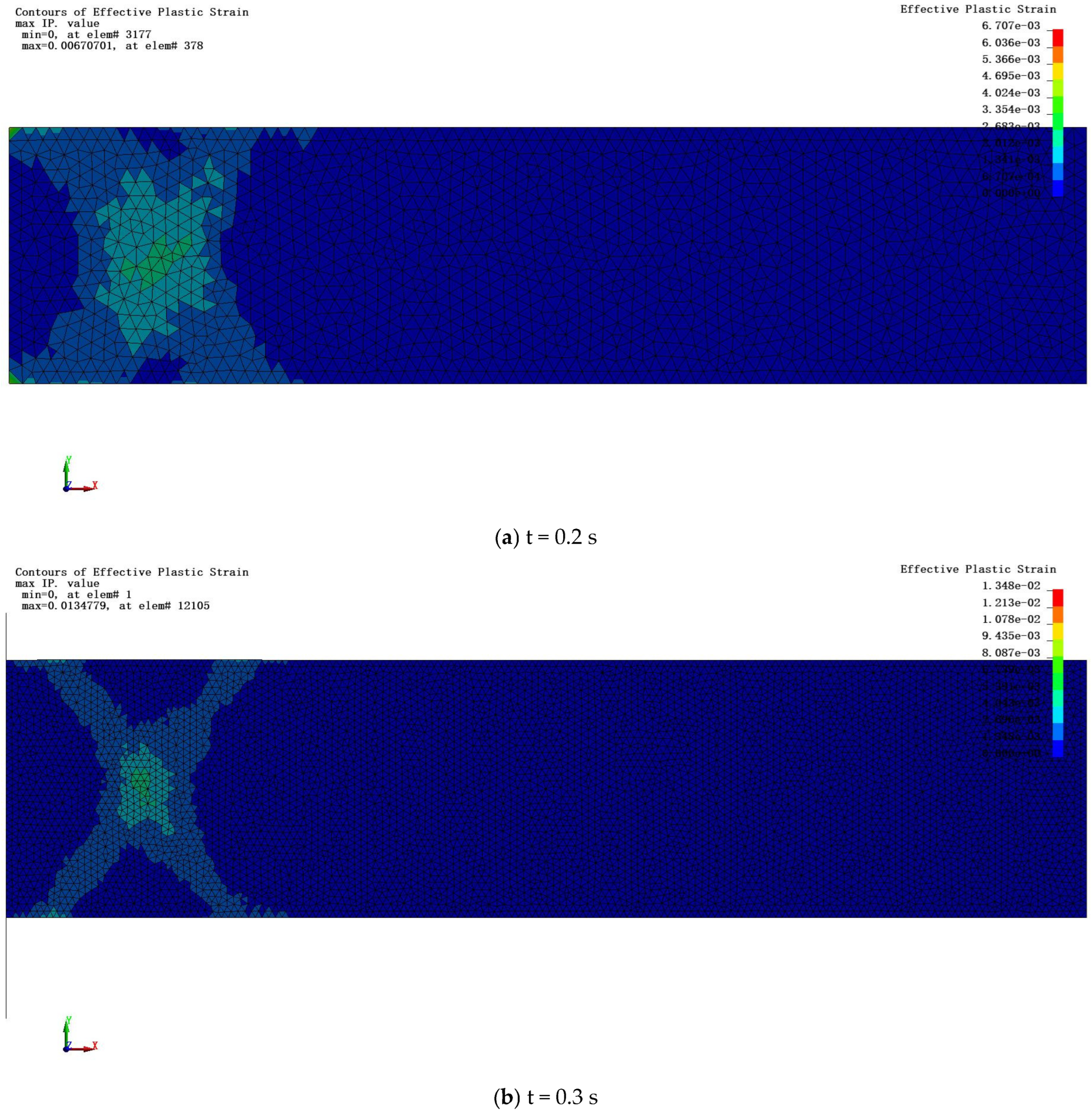
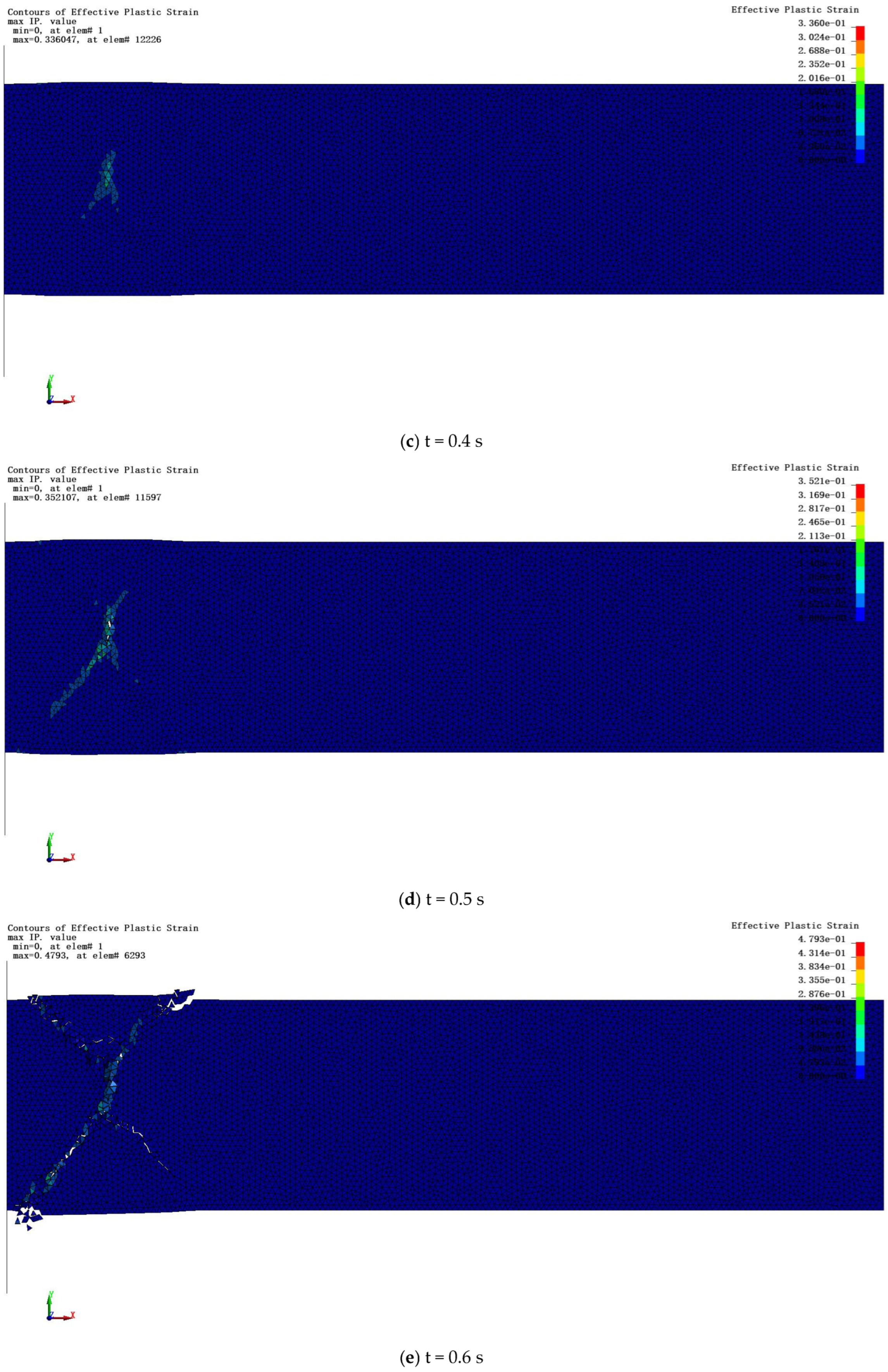
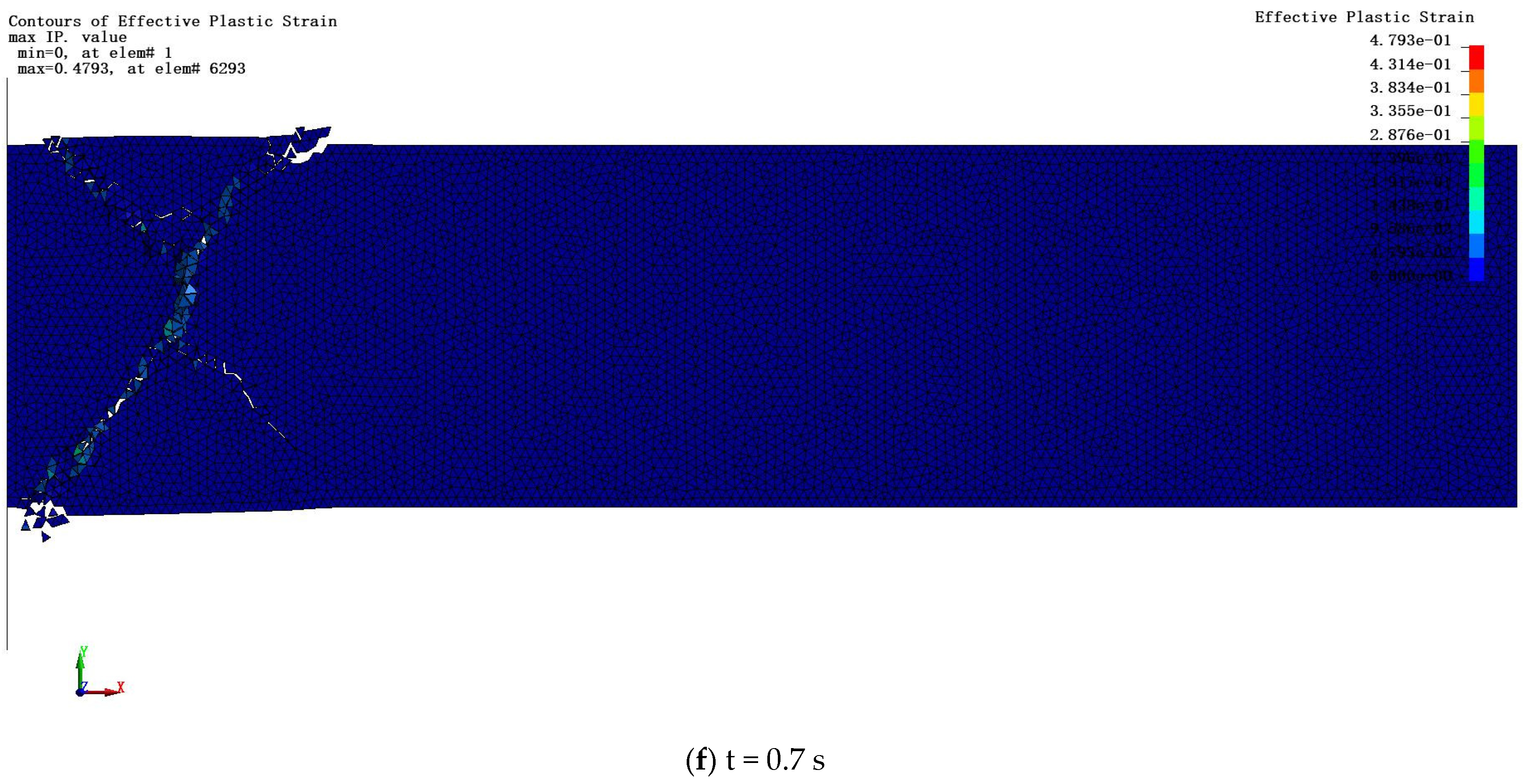
To further elucidate the underlying mechanics of the crushing process, the evolution of effective plastic strain within the sea ice was observed at discrete intervals. The process transitions from localized stress concentration during the initial loading phase to progressive crack initiation and expansion, ultimately culminating in comprehensive ductile damage and fragmentation. Under high-pressure conditions, dense shear failure occurs within the ice, facilitating the formation of micro-cracks. As these cracks propagate, a significant redistribution of the stress field occurs; the regions of stress concentration expand from localized points to a global scale, serving as a precursor to ductile failure. Upon reaching the critical point of fracture, the internal stress is rapidly released, leading to a precipitous drop in local stress levels. Consequently, ice is extruded from both the upper and lower surfaces, generating a large quantity of irregular fragments, as shown in Figure 11.
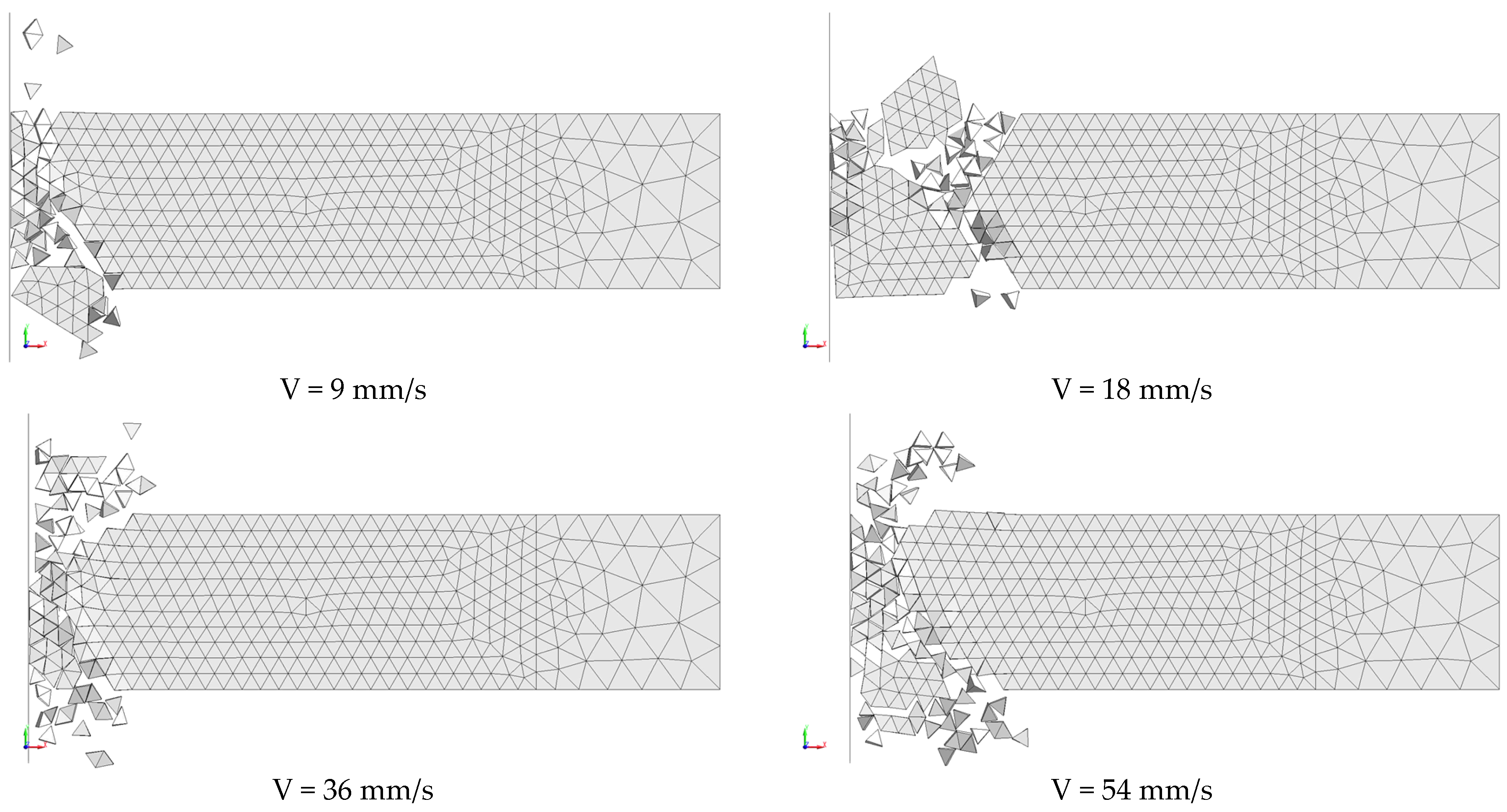
Four indentation speeds of 9, 18, 36, and 54 mm/s were considered to examine the effect of velocity. These values represent low-speed model-scale indentation conditions centered on 18 mm/s. They are not intended to reproduce full-scale ship advance speeds directly; rather, they provide a controlled numerical range for examining how the imposed kinematic rate affects local fracture morphology, fragment retention, and contact-load fluctuations. At lower speeds, the crushing behavior remains relatively gradual, and fragments are typically retained within the immediate crushing zone. As the indentation velocity increases, the simulation shows more rapid brittle chipping, stronger fragmentation, and wider lateral dispersion of ice fragments, as shown in Figure 12.
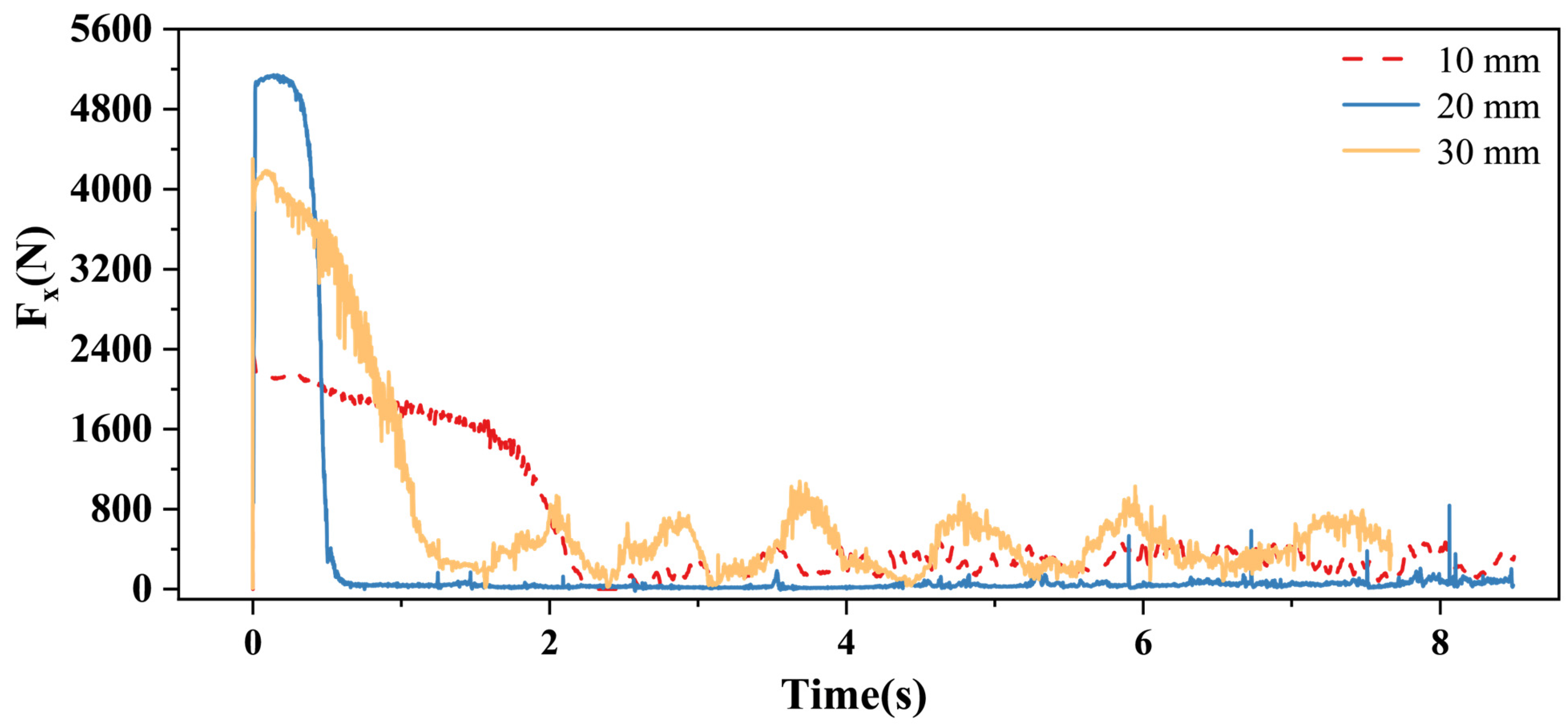
The time–history curves of ice loads for mesh sizes of 10, 20, and 30 mm are presented in Figure 13. These results should be interpreted as a mesh-size sensitivity analysis rather than proof of formal mesh convergence. The 30 mm mesh exhibits the strongest fluctuations, indicating that coarse discretization amplifies local stress concentration and contact instability during fragmentation. The 10 mm and 20 mm meshes produce smoother force histories, but the maximum force does not decrease monotonically with element size; the 20 mm case gives the highest instantaneous peak. This non-proportional trend is consistent with the nonlinear nature of cohesive fracture and penalty-based contact, where small changes in fracture path, deleted-element sequence, fragment confinement, and instantaneous contact area can alter the peak force. Therefore, Figure 13 supports the conclusion that mesh refinement improves load-history stability, while additional mesh levels and calibrated contact parameters would be required before claiming strict mesh convergence for design-load prediction.
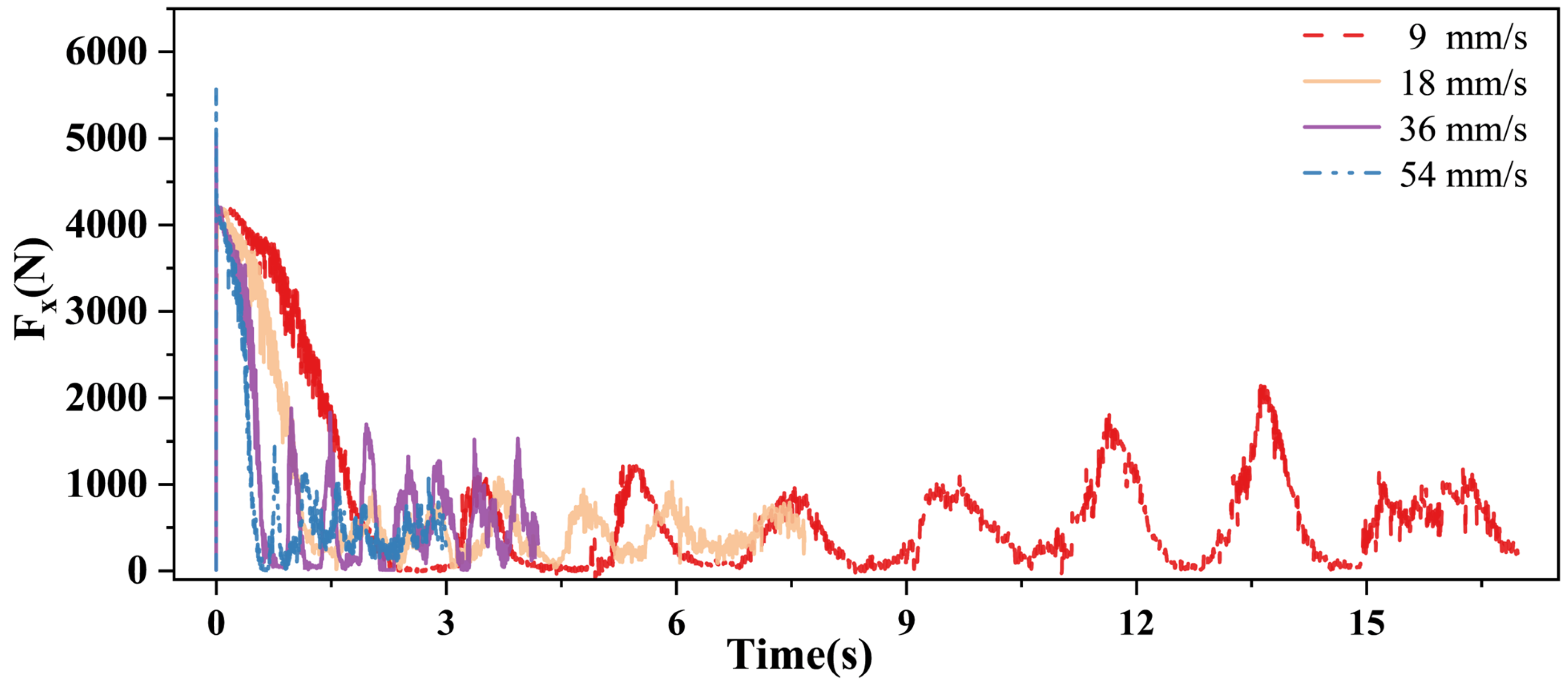
Under varying velocity conditions, the ice loads exhibit prominent dynamic features, as shown in Figure 14. These cases were computed using the same random triangular mesh and 20 mm mesh size adopted in the velocity study so that the influence of velocity could be isolated. Initially, the load rises sharply to a peak value, with higher velocities producing larger instantaneous loads because contact compression and brittle fracture develop more abruptly. The subsequent force histories contain high-frequency oscillations associated with repeated fragment re-contact, sliding friction, intermittent contact release, element deletion, and the penalty-based contact algorithm. These oscillations may affect raw peak values more strongly than time-averaged loads. For engineering interpretation, the instantaneous numerical peaks should therefore be used with caution and should preferably be evaluated together with filtered or moving-average force measures and experimental calibration. In the present paper, the curves are used mainly to compare numerical trends among cases rather than to prescribe final design ice loads.

4. Discussion

4.1. Scope of the Numerical Evidence

The present results should be read as a numerical sensitivity study. The model reproduces key qualitative features of level-ice crushing, including localized pulverization near the contact interface, lateral extrusion of fragments, wedge-shaped fragmentation zones, and stronger brittle chipping at higher velocities. However, the study does not claim that a single mesh size has achieved complete mesh convergence or that the raw instantaneous peaks can be used directly as design loads. This scope has been clarified to avoid overstating the predictive maturity of the current model.

4.2. Hydrodynamic Effects

The assumption that hydrodynamic effects are secondary is supported by the imposed velocity range and previous ALE-based ice-structure studies. The maximum speed in the present simulations is 0.054 m/s, giving a representative water dynamic pressure of only about 1.5 Pa. This pressure is several orders of magnitude lower than the cohesive strength and contact stress levels involved in ice crushing. Thus, although the S-ALE formulation includes air and water to maintain hydrostatic and coupling consistency, the dominant mechanisms controlling the calculated force histories are fracture, fragment interaction, and contact release rather than hydrodynamic impact loading.

4.3. Comparison with Published Indentation Results

The 18 mm/s indentation case was compared at benchmark level with the experimental-based numerical study of Kuutti and Kolari [42]. The predicted peak line load is of the same order of magnitude as the reference result, and the simulated failure morphology shows similar local crushing and fragment extrusion features. This comparison provides order-of-magnitude support for the modelling framework, while also indicating that further experimental calibration is needed before the method is used for final design-load quantification.

4.4. Mesh Sensitivity and Load Oscillations

The non-monotonic peak force in Figure 13 reflects nonlinear coupling between cohesive fracture and penalty-based contact rather than a simple relation between element size and load. In a deletion-based cohesive model, peak force can be affected by the instantaneous crack path, fragment size distribution, contact area, and timing of element erosion. High-frequency oscillations in Figure 13 and Figure 14 are therefore treated as numerical and physical contact fragmentation signatures, not as standalone design-load values. For design applications, filtered peaks, mean loads over a physically meaningful time window and calibration against experimental measurements would be required.

5. Conclusions

This study examines sea-ice crushing against a vertical structure using the coupled S-ALE formulation and cohesive element modeling in LS-DYNA. The simulations reproduced key crushing features, including local fragmentation, lateral flaking, fragment re-contact, and oscillatory force histories. Among the mesh topologies considered, the random triangular mesh provided the most realistic representation of stochastic crack paths and fragment formation. The mesh size study showed that finer meshes improve the stability of force histories, although the non-monotonic peak force indicates that the present results should be interpreted as mesh sensitivity rather than formal mesh convergence. The velocity study showed that increasing indentation speed promotes more abrupt brittle chipping, wider fragment dispersion, and stronger dynamic load fluctuations.
The force histories contain post-peak oscillations associated with fragment re-contact, frictional sliding, contact release, element deletion, and penalty-based contact. These oscillations are useful for identifying relative numerical trends among the simulated cases, but raw instantaneous peaks should not be interpreted as final design loads without filtering, averaging over an appropriate time window and validation against experimental data.
The present study provides benchmark-level qualitative and order-of-magnitude support for the S-ALE + CEM modelling framework and clarifies the sensitivity of ice crushing simulations to mesh and velocity choices. For direct engineering design application, further work should include systematic experimental calibration, additional mesh-independence assessment, and contact stabilization sensitivity analysis. These limitations have been stated so that the numerical results are interpreted within their proper scope.

Author Contributions

Conceptualization, Y.T., Y.Q. and Y.Z.; methodology, Y.Z. and H.Z.; software, Y.Z.; validation, Y.T., Y.Z. and C.Y.; formal analysis, Y.Z.; investigation, Y.T. and Y.Z.; resources, Y.Z.; data curation, Y.Z.; writing—original draft preparation, Y.T. and Y.Z.; writing—review and editing, Y.T. and Y.Z.; visualization, H.Y.; supervision, S.T.; project administration, Y.T.; funding acquisition, Y.T. All authors have read and agreed to the published version of the manuscript.

Funding

This research was supported by the National Natural Science Foundation of China (Grant Nos. 52192690, 52192694).

Data Availability Statement

The original contributions presented in this study are included in the article. Further inquiries can be directed to the corresponding author.

Acknowledgments

The authors acknowledge the financial support received. No generative Artificial Intelligence (GenAI) was used in the preparation of this manuscript or in any aspect of the study, including text generation, data analysis, or study design. The authors take full responsibility for the content of this publication.

Conflicts of Interest

The authors declare no conflicts of interest.

References

  1. Shunying, J.; Shewen, L. Interaction between sea ice/iceberg and ship structures: A review. Chin. J. Polar Res. 2012, 23, 187–195. [Google Scholar] [CrossRef]
  2. Kujala, P.; Arughadhoss, S. Statistical analysis of ice crushing pressures on a ship’s hull during hull–ice interaction. Cold Reg. Sci. Technol. 2012, 70, 1–11. [Google Scholar] [CrossRef]
  3. Moslet, P. Medium scale ice–structure interaction. Cold Reg. Sci. Technol. 2008, 54, 143–152. [Google Scholar] [CrossRef]
  4. Sodhi, D.S.; Takeuchi, T.; Nakazawa, N.; Akagawa, S.; Saeki, H. Medium-scale indentation tests on sea ice at various speeds. Cold Reg. Sci. Technol. 1998, 28, 161–182. [Google Scholar] [CrossRef]
  5. Kim, J.-H.; Kim, Y.; Kim, H.-S.; Jeong, S.-Y. Numerical simulation of ice impacts on ship hulls in broken ice fields. Ocean Eng. 2019, 182, 211–221. [Google Scholar] [CrossRef]
  6. Erceg, S.; Erceg, B.; und Polach, F.v.B.; Ehlers, S. A simulation approach for local ice loads on ship structures in level ice. Mar. Struct. 2022, 81, 103117. [Google Scholar] [CrossRef]
  7. Lemström, I.; Polojärvi, A.; Tuhkuri, J. Model-scale tests on ice-structure interaction in shallow water, Part I: Global ice loads and the ice loading process. Cold Reg. Sci. Technol. 2022, 81, 103106. [Google Scholar]
  8. Onken, G.; Evers, K.U.; Haase, A.; Jochmann, P. Ice model tests with a cylindrical structure to investigate dynamic ice-structure interaction. In Proceedings of the 22nd International Conference on Port and Ocean Engineering Under Arctic Conditions (POAC 2013), Espoo, Finland, 9–13 June 2013. [Google Scholar]
  9. Hendrikse, H.; Hammer, T.C.; Owen, C.C.; van den Berg, M.; van Beek, K.; Polojärvi, A.; Puolakka, O.; Willems, T. Ice basin tests for ice-induced vibrations of offshore structures in the SHIVER project. In Proceedings of the ASME 2022 41st International Conference on Ocean, Offshore and Arctic Engineering, Hamburg, Germany, 5–10 June 2022; Polar and Arctic Sciences and Technology; ASME: New York, NY, USA, 2022; Volume 6, 9p. [Google Scholar] [CrossRef]
  10. Ji, S.; Wang, S. A coupled discrete–finite element method for the ice-induced vibrations of a conical jacket platform with a GPU-based parallel algorithm. Int. J. Comput. Methods 2020, 17, 1850147. [Google Scholar] [CrossRef]
  11. Wang, S.; Ji, S. Coupled DEM–FEM analysis of ice-induced vibrations of a conical jacket platform based on the domain decomposition method. Int. J. Offshore Polar Eng. 2018, 28, 190–199. [Google Scholar] [CrossRef]
  12. Herrnring, H.; Kubiczek, J.M.; Ehlers, S. The ice extrusion test: A novel test setup for ice–structure interaction. Ships Offshore Struct. 2020, 15, S1–S9. [Google Scholar] [CrossRef]
  13. Kim, H.; Daley, C.; Colbourne, B. A numerical model for ice crushing on concave surfaces. Ocean Eng. 2015, 106, 289–297. [Google Scholar] [CrossRef]
  14. Ji, S.; Yang, D. Ice loads and ice-induced vibrations of offshore wind turbine based on coupled DEM-FEM simulations. Ocean Eng. 2022, 243, 110197. [Google Scholar] [CrossRef]
  15. Zhang, H.; Ji, S.; Kanavalau, A.; Liu, L. Ice loads on offshore wind turbine in sea ice based on DEM-FEM-SPH coupling model. J. Hydraul. Res. 2026, 64, 65–81. [Google Scholar] [CrossRef]
  16. Tuhkuri, J.; Polojärvi, A. A review of discrete element simulation of ice–structure interaction. Ocean Eng. 2018, 376, 20170335. [Google Scholar] [CrossRef] [PubMed]
  17. Long, X.; Liu, S.; Ji, S. Discrete element modelling of relationship between ice breaking length and ice load on conical structure. Ocean Eng. 2020, 201, 107152. [Google Scholar] [CrossRef]
  18. Ji, S.; Li, Z.; Li, C.; Shang, J. Discrete element modeling of ice loads on ship hulls in broken ice fields. Acta Oceanol. Sin. 2013, 32, 50–58. [Google Scholar] [CrossRef]
  19. Lemström, I.; Polojärvi, A.; Tuhkuri, J. Numerical experiments on ice–structure interaction in shallow water. Cold Reg. Sci. Technol. 2020, 176, 103088. [Google Scholar] [CrossRef]
  20. Hammer, T.C. Ice-Induced Vibrations of Offshore Wind Turbines: An Exploration of Scaling, Hybrid Testing, and Numerical Simulations. Ph.D. Thesis, Delft University of Technology, Delft, The Netherlands, 2024; 183p. [Google Scholar] [CrossRef]
  21. Kolari, K. Modeling splitting and spalling of columnar ice compressed biaxially: The role of crack nucleation. J. Geophys. Res. Solid Earth 2019, 124, 3271–3287. [Google Scholar] [CrossRef]
  22. Yu, C.; Tian, Y.; Gang, X.; Kong, S.; Ji, S.; Wang, Y. Ice loading on vertical cylindrical structures under the action of level ice. J. Ship Mech. 2024, 28, 169–178. [Google Scholar] [CrossRef]
  23. Zhigang, H.; Shan, Z.; Limin, W. Numerical Simulation of Ship–Ice Layer Collision Using the Cohesive Element Method. In 2023 International Conference on Telecommunications, Electronics and Informatics (ICTEI); IEEE: Piscataway, NJ, USA, 2023; pp. 419–427. [Google Scholar]
  24. Konuk, I.; Gűrtner, A.; Yu, S. A cohesive element framework for dynamic ice-structure interaction problems—Part II: Implementation. In Proceedings of the International Conference on Offshore Mechanics and Arctic Engineering, Honolulu, HI, USA, 31 May–5 June 2009; pp. 185–193. [Google Scholar]
  25. Gűrtner, A.; Bjerkås, M.; Kűhnlein, W.; Jochmann, P.; Konuk, I. Numerical simulation of ice action to a lighthouse. In Proceedings of the International Conference on Offshore Mechanics and Arctic Engineering, Tokyo, Japan, 7–12 June 2009; pp. 175–183. [Google Scholar]
  26. Mokhtari, M.; Leira, B.J. A critical review of constitutive models for ice-crushing simulation. J. Mar. Sci. Eng. 2024, 12, 1021. [Google Scholar] [CrossRef]
  27. Kim, E. Experimental and Numerical Studies Related to the Coupled Behavior of Ice Mass and Steel Structures During Accidental Collisions. Doctoral Thesis, NTNU Institutt for Marin Teknikk, Trondheim, Norway, 2014. [Google Scholar]
  28. Määttänen, M.; Marjavaara, P.; Saarinen, S.; Laakso, M. Ice crushing tests with variable structural flexibility. Cold Reg. Sci. Technol. 2011, 67, 120–128. [Google Scholar] [CrossRef]
  29. Daley, C.; Tuhkuri, J.; Riska, K. The role of discrete failures in local ice loads. Cold Reg. Sci. Technol. 1998, 27, 197–211. [Google Scholar] [CrossRef]
  30. Qu, Y.; Huang, Z.; Zou, K.; Yin, H.; Zhang, D. Mechanism and simple analysis method of ice induced frequency lock-in vibration of offshore structures. Chin. J. Theor. Appl. Mech. 2021, 53, 728–739. [Google Scholar] [CrossRef]
  31. Kuutti, J.; Kolari, K.; Marjavaara, P. Simulation of ice crushing experiments with cohesive surface methodology. Cold Reg. Sci. Technol. 2013, 92, 17–28. [Google Scholar] [CrossRef]
  32. Wang, B.; Yin, H.; Gao, S.; Qu, Y.; Chuang, Z. Ice-Induced Vibration Analysis of Fixed-Bottom Wind Turbine Towers. J. Harbin Eng. Univ. 2025, 12, 1159. [Google Scholar] [CrossRef]
  33. Souli, M.; Ouahsine, A.; Lewin, L. ALE formulation for fluid–structure interaction problems. Comput. Methods Appl. Mech. Eng. 2000, 190, 659–675. [Google Scholar] [CrossRef]
  34. Fragassa, C.; Topalovic, M.; Pavlovic, A.; Vulovic, S. Dealing with the Effect of Air in Fluid Structure Interaction by Coupled SPH-FEM Methods. Materials 2019, 12, 1162. [Google Scholar] [CrossRef]
  35. Ansys. LS-DYNA Keyword User’s Manual, Volume II: Material Models, Release R13.0; Ansys, Inc.: Canonsburg, PA, USA, 2021. [Google Scholar]
  36. Ansys LS-DYNA. Equation of State. Available online: https://lsdyna.ansys.com/equation-of-state-2/ (accessed on 9 May 2026).
  37. Altair Engineering. *EOS_GRUNEISEN (LS-DYNA Input Interface). Available online: https://help.altair.com/hwsolvers/rad/topics/solvers/rad/eos_gruneisen_lsdyna_r.htm (accessed on 9 May 2026).
  38. Song, M.; Kim, E.; Amdahl, J.; Greco, M.; Souli, M. Numerical Investigation of Fluid-Ice-Structure Interaction During Collision by an Arbitrary Lagrangian Eulerian Method. In Proceedings of the International Conference on Offshore Mechanics and Arctic Engineering, Busan, Republic of Korea, 19–24 June 2016; p. V008T007A017. [Google Scholar]
  39. Song, M.; Kim, E.; Amdahl, J.; Ma, J.; Huang, Y. A comparative analysis of the fluid-structure interaction method and the constant added mass method for ice-structure collisions. Mar. Struct. 2016, 49, 58–75. [Google Scholar] [CrossRef]
  40. Makarov, O.; Bekker, A. Modelling of ice impacts using cohesive element method: Influence of element shape. In Proceedings of the IOP Conference Series: Earth and Environmental Science; IOP Publishing: Bristol, UK, 2021; p. 032014. [Google Scholar]
  41. Tijssens, M.G.; Sluys, B.L.; van der Giessen, E. Numerical simulation of quasi-brittle fracture using damaging cohesive surfaces. Eur. J. Mech. A/Solids 2000, 19, 761–779. [Google Scholar] [CrossRef]
  42. Kuutti, J.; Kolari, K. Simulation of dynamic ice indentation failure. In Proceedings of the 22nd International Conference on Port and Ocean Engineering under Arctic Conditions, POAC 2013, Espoo, Finland, 9–13 June 2013. [Google Scholar]
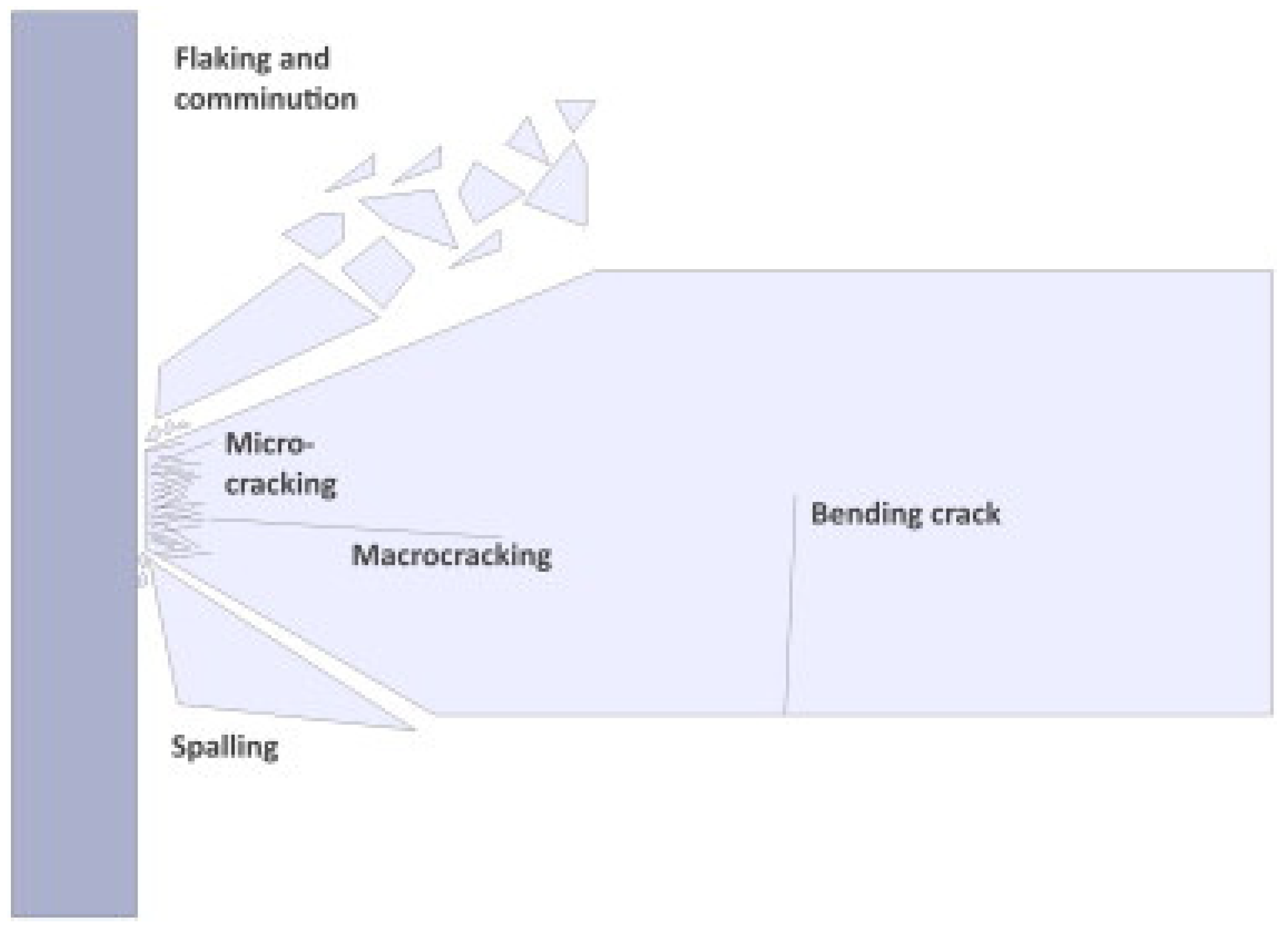
Figure 1. Physical process of sea ice crushing [31].
Jmse 14 00938 g001
Figure 2. Schematic of sea ice ductile failure [32].
Jmse 14 00938 g002
Figure 3. Sea ice dimensions.
Jmse 14 00938 g003
Figure 4. Numerical model.
Jmse 14 00938 g004
Figure 5. Fluid domain mesh schematic.
Jmse 14 00938 g005
Figure 6. Hydrostatic pressure stratification.
Jmse 14 00938 g006
Figure 7. (a). Random triangular mesh. (b). Random triangular mesh effect.
Jmse 14 00938 g007
Figure 8. (a). Regular triangular mesh. (b). Regular triangular mesh effect.
Jmse 14 00938 g008
Figure 9. (a). Regular quadrilateral mesh. (b). Regular quadrilateral mesh effect.
Jmse 14 00938 g009
Figure 10. (a). mesh sizes = 10 mm. (b). mesh sizes = 20 mm. (c). mesh sizes = 30 mm.
Jmse 14 00938 g010
Figure 11. Variation of effective plastic strain in sea ice at different time intervals.
Jmse 14 00938 g011aJmse 14 00938 g011bJmse 14 00938 g011c
Figure 12. Sea ice crushing patterns at different velocities.
Jmse 14 00938 g012
Figure 13. Ice load–time curves under different mesh sizes.
Jmse 14 00938 g013
Figure 14. Ice load–time curves under different velocities.
Jmse 14 00938 g014
Table 1. Material parameters for the vertical structure.
ParameterSymbolValue
DensityRO7850 kg/m3
Young’s ModulusE200 GPa
Poisson’s RatioPR0.3
Table 2. Material parameters for the ice layer.
ParameterValue
Density (kg⋅m−3)860
Young’s Modulus (GPa)7
Tensile Strength (MPa)0.85
Shear Strength (MPa)0.91
Normal Fracture Energy Release Rate (J/m2)30
Shear Fracture Energy Release Rate (J/m2)30
TSL Curve FormLinear traction–separation law
Material ModelMAT_COHESIVE_GENERAL
Friction Coefficient between Level Ice and PlatformStatic friction coefficient: 0.1, Dynamic friction coefficient: 0.1
Friction Coefficient between Sea IceStatic friction coefficient: 0.1, Dynamic friction coefficient: 0.1
Table 3. Parameters for seawater and air.
MediumParameterSymbolValue
SeawaterMaterial model-*MAT_NULL_9
Reference densityρ01025 kg/m3
Sound speedC1480 m/s
Hugoniot coefficientS11.79
Hugoniot coefficientS20
Hugoniot coefficientS30
Gruneisen gammaγ00
Volume correction coefficienta0
Initial internal energyE00
Pressure cutoff-−10
Dynamic viscosity coefficient-8.64 × 10⁻⁴
Element formulation-SOLID-ELFORM-11
AirMaterial model-*MAT_NULL_9
Reference densityρ01.18 kg/m3
Polynomial coefficientC0, C1 ~ C30
Polynomial coefficientC40.4
Polynomial coefficientC50.4
Polynomial coefficientC60
Initial internal energyE02.535 × 105 J/m3
Initial relative volumeV01.0
Pressure cutoff-−10
Dynamic viscosity coefficient-2 × 10⁻⁵
Element formulation-SOLID-ELFORM-11
Disclaimer/Publisher’s Note: The statements, opinions and data contained in all publications are solely those of the individual author(s) and contributor(s) and not of MDPI and/or the editor(s). MDPI and/or the editor(s) disclaim responsibility for any injury to people or property resulting from any ideas, methods, instructions or products referred to in the content.