


Abstract
The reinforcement of high-water-content, low-permeability soft soils presents a critical challenge in marine and coastal engineering. While electroosmotic dewatering is a promising technique, its widespread application is often hindered by issues such as high energy consumption and limited strength gain. However, the specific mechanisms by which marine-derived biopolymers modify soil properties and microstructure to enhance electroosmotic efficiency and significantly improve the post-treatment bearing capacity remain insufficiently understood. To address this gap, this study investigates the use of Sodium Alginate (SA) to enhance the electroosmotic dewatering performance of coastal soft soil. Laboratory experiments were conducted using carbon felt electrodes with varying SA mass fractions (0.0%, 0.2%, 0.5%, and 1.0%). The study integrated macroscopic monitoring with Scanning Electron Microscopy (SEM) to evaluate the electroosmotic efficiency and mechanical property evolution. The results demonstrate that the cross-linked structure of SA gel effectively bridges soil particles and fills inter-granular pores, significantly increasing the liquid limit (from 32.34% to 49.15% at 1.0% SA) and mitigating soil cracking. This microstructural alteration enhanced electrical conductivity and accelerated drainage; the average water content reduction increased from 12.78% (0.0% SA) to 20.86% (1.0% SA). Notably, the 0.5% SA treatment improved the average bearing capacity to approximately 86 kPa (about 7 times that of 0.0% SA) with only a 21% increase in the energy consumption coefficient. This study confirms that utilizing SA for electroosmotic reinforcement effectively modifies soil properties to provide a marine solution for coastal soft soil foundation treatment.
1. Introduction
With the rapid expansion of global coastal economic zones, the demand for land reclamation and offshore infrastructure construction has surged [1]. In China, extensive areas such as the Bohai Rim, the Yangtze River Delta, and the Pearl River Delta are characterized by the prevalence of deep, natural sedimentary soft clays [2]. These coastal soft soils typically exhibit high water content, large void ratios, high compressibility, and low strength [3,4,5]. Under engineering loads, such foundations are highly susceptible to excessive post-construction settlement and uneven deformation, posing serious threats to the long-term safety of infrastructure [6,7]. Consequently, how to efficiently and rapidly dehydrate and reinforce marine and coastal soft soils with high water content has become a critical scientific challenge in the fields of geotechnical and marine engineering [8].
For soft soil ground improvement, conventional methods such as surcharge preloading and vacuum preloading are widely used. However, when treating ultra-soft clays, the formation of a dense “smear zone” or “clogging layer” around the drainage boards often causes drainage efficiency to decay exponentially over time [9,10,11]. Furthermore, while solidification technologies like deep cement mixing can enhance strength, their high energy consumption and carbon emissions are contrary to current global “dual carbon” goals [12,13,14].
In contrast, electroosmosis, based on electrokinetic phenomena, has proven to possess unique advantages in treating fine-grained, low-permeability clays [15]. Although electroosmosis can significantly accelerate pore pressure dissipation, its practical application still faces three core bottlenecks, as highlighted by recent analytical and experimental studies [16,17]. Firstly, as the drainage process progresses, soil electrical resistivity increases sharply, leading to current attenuation and a surge in energy consumption, where studies indicate that a substantial portion of electrical energy is often converted into Joule heat rather than being used for drainage [18,19]. Secondly, traditional metal electrodes (e.g., iron, aluminum) are highly susceptible to corrosion, which increases interface resistance and limits potential gradient transmission [20,21]. While Electrokinetic Geosynthetics (EKG) and carbon fiber electrodes can mitigate corrosion to some extent, their higher costs and complex connection processes hinder large-scale application [22,23]. Finally, electroosmotic flow typically causes excessive drying or even cracking in the anode region, while strength improvement in the cathode region remains limited. This spatial disparity in mechanical properties seriously affects the overall stability of the foundation [24,25,26].
To overcome the aforementioned limitations, chemical electroosmosis, which combines chemical solution injection with electroosmosis, has emerged as a research hotspot [27]. By introducing inorganic salt solutions (e.g., CaCl2, Na2SiO3) via electrophoresis/electromigration, ion exchange and cementation precipitation reactions can be induced, thereby significantly improving soil strength [28,29]. For instance, Han et al. [30] proposed an intermittent grouting strategy that effectively delayed anode polarization and increased drainage volume by 3.59 times. However, traditional chemical reagents are often strongly alkaline or pose ecological risks due to residual ions [31].
In recent years, the application of eco-friendly biopolymers in geotechnical engineering has attracted widespread attention. Sodium Alginate (SA), a natural polysaccharide extracted from brown algae, not only possesses excellent heavy metal adsorption capabilities [32,33] but also emerges as a potential candidate for modifying soil structure during electroosmosis [34]. Although existing studies have confirmed the excellent performance of SA in contaminated soil remediation, there remains a distinct scientific deficit regarding its application mechanism in the physical and mechanical reinforcement of soft soils. Specifically, current research primarily focuses on the removal efficiency of SA for heavy metal ions, lacking in-depth investigation into its interaction with soil particles, pore water migration, and microstructural reorganization mechanisms under the action of an electric field, and there is a notable absence of microstructural analysis and quantitative energy efficiency evaluation for SA-modified electroosmotic reinforced soils.
Addressing these scientific challenges, this paper proposes a novel electroosmotic reinforcement method based on the cross-linked structure of SA. The research aims to investigate the reinforcement mechanisms of SA and its effects on electroosmosis efficiency and soil properties. Specifically, through a series of laboratory model experiments, this study quantitatively compares the electric potential, electric current, drainage volume, water content, and bearing capacity under different SA dosages. Furthermore, Scanning Electron Microscopy (SEM) is utilized to observe and analyze the microstructure of the soil. This paper conducts a multi-indicator study of the effects of electroosmotic dewatering, analyzes the mechanisms by which SA alters soil properties, and provides a marine solution for coastal soft soil foundation treatment.
2. Materials and Methods
2.1. Materials
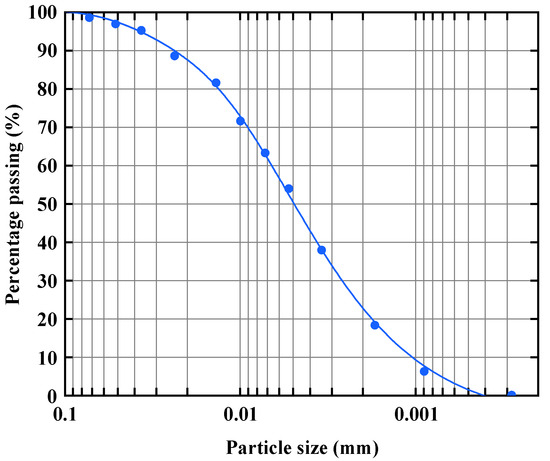
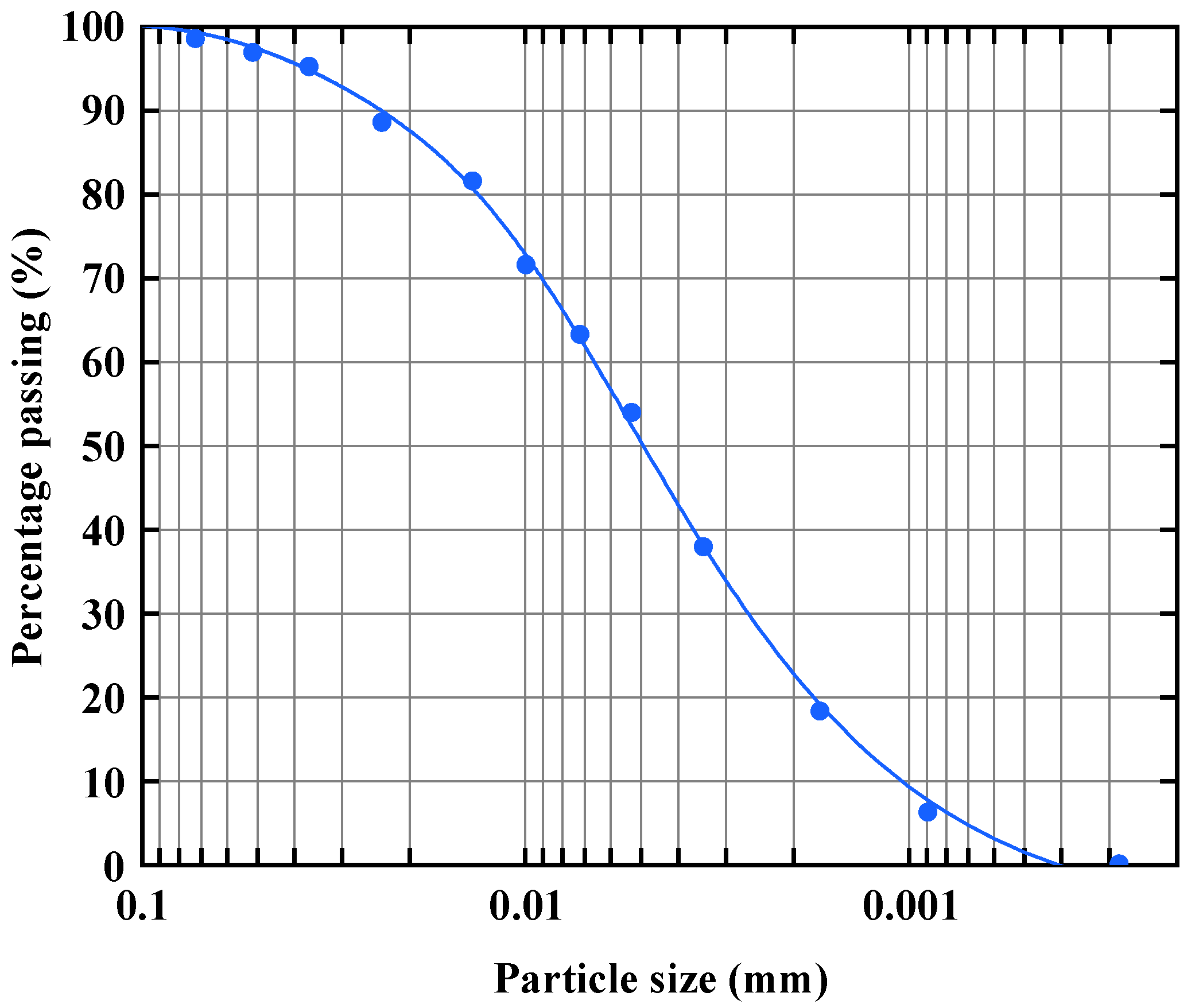
The soil was collected from Sandun Town, Xihu District, Hangzhou City. The particle size distribution curve and basic physical parameters of the test soil were determined in accordance with the “Standard for geotechnical testing method” (GB/T 50123-2019) [35], as presented in Figure 1 and Table 1.
Figure 1.
Particle size distribution of the soil.
Table 1.
Physical parameters of the test soil.
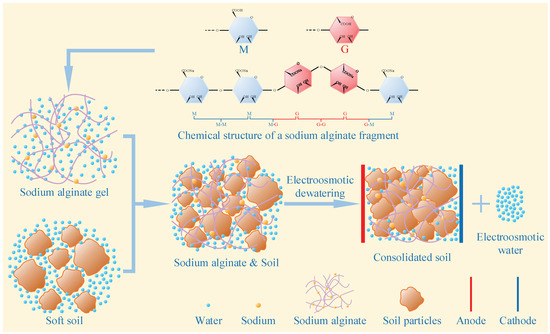
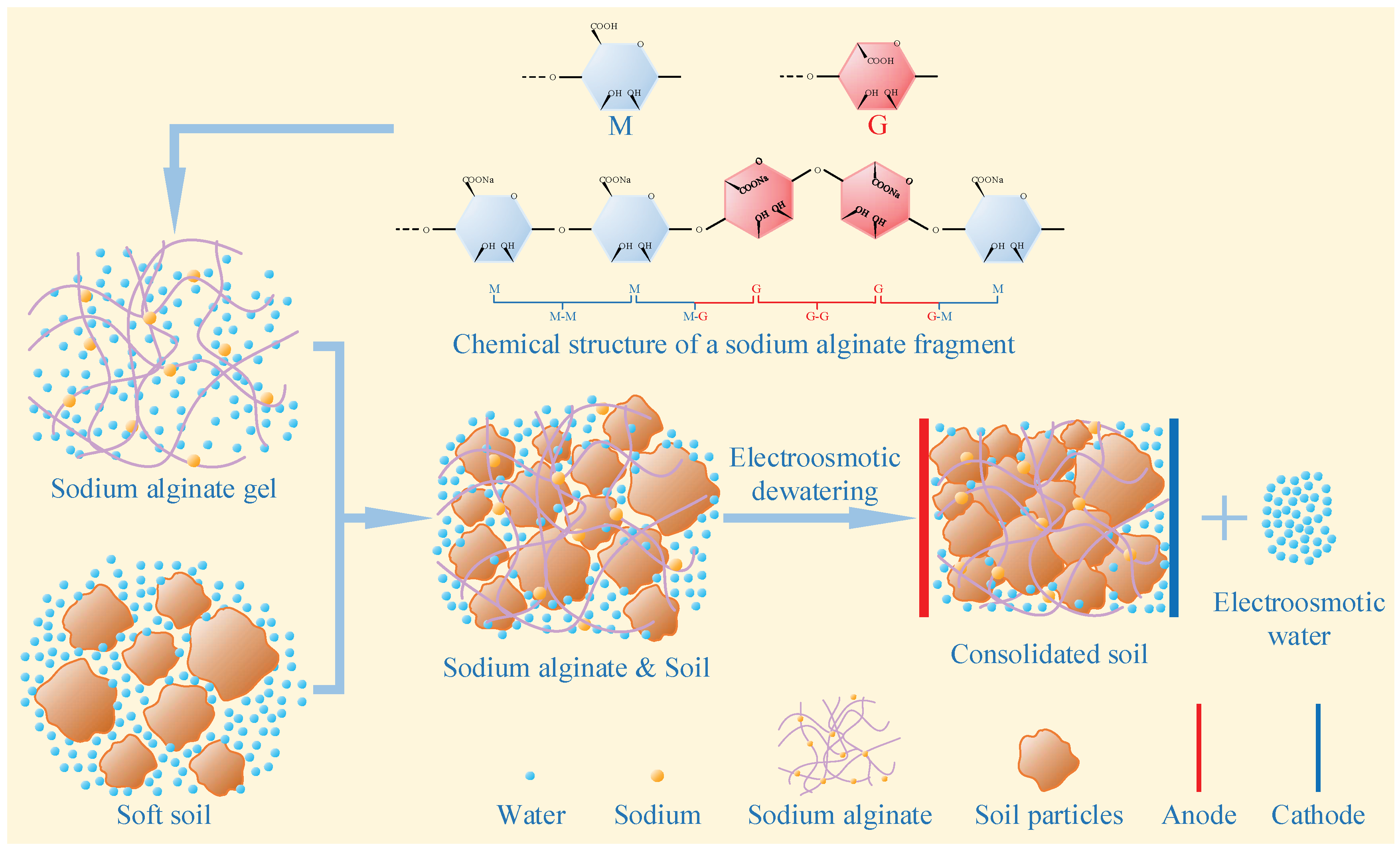
SA is a linear (unbranched) polysaccharide found in various marine brown algae, with the molecular formula (C6H7O6Na)n and a molecular weight of (198.11)n. The monomers are residues of β-D-mannuronic acid (M) and α-L-guluronic acid (G) [36,37], as shown in Figure 2.
Figure 2.
Schematic of electroosmotic dewatering and reinforcement mechanism enhanced by cross-linked structure of SA.
Upon hydration, SA forms a cross-linked structure [38] that effectively bridges dispersed soil particles and fills inter-granular pores, thereby enhancing the cohesion and cementing capacity of the soil. Additionally, SA is a water-soluble polyelectrolyte that dissociates in aqueous solutions to form a negatively charged anionic backbone and sodium counterions [34]. SA has excellent thickening and gel-forming properties, effective water retention, and is easy to produce, cost-effective, and environmentally friendly, making it promising for widespread applications [39,40]. The SA used in this experiment was purchased from China National Pharmaceutical Group Co., Ltd. (SINOPHARM, Beijing, China), with CAS Number 9005-38-3, and is chemically pure.
Rigid metal electrodes typically corrode and detach from shrinking soil bodies in the later phase of electroosmosis, particularly the anodes, resulting in reduced electrode-soil contact area, increased interfacial resistance, and significantly lowered effective potential, thereby leading to a decrease in electroosmotic dewatering efficiency [21,41]. Carbon felt, as a flexible and porous electrode material, with a high porosity (>93%), serves as an excellent channel for electroosmotic drainage. Its other advantages include relatively low manufacturing costs, non-toxicity, good conductivity, and chemical stability [42]. Compared to other carbon-based materials (such as graphite, carbon fibers, and carbon paper, which are also widely used as electrode materials), flexible carbon felt offers reliable performance at a low cost, especially making it more competitive as an electrode material in soft soil electroosmotic dewatering engineering practices. The carbon felt raw material used in this experiment was purchased from Inner Mongolia Wanxing Carbon Co., Ltd. (Baotou, China), with a carbon content of 95% to 99%, custom processed into test electrodes, specifications being 3 mm × 120 mm × 150 mm.
The DC power supply used in the experiment was purchased from Shenzhen Kuaiqu Electronic Co., Ltd. (Shenzhen, China), model SPS605, with a maximum output voltage of 60 V and a maximum output current of 5 A. The miniature penetrometers used in the experiment were purchased from Changzhou Ying’anyang Instrument Co., Ltd. (Changzhou, China), models WXGR-3.0 and WXGR-4.0. These are used for the quantitative determination of soil bearing capacity. The instrument measures by converting spring compression deformation into pointer scale readings, with an accuracy better than ±1%.
2.2. Experimental Apparatus
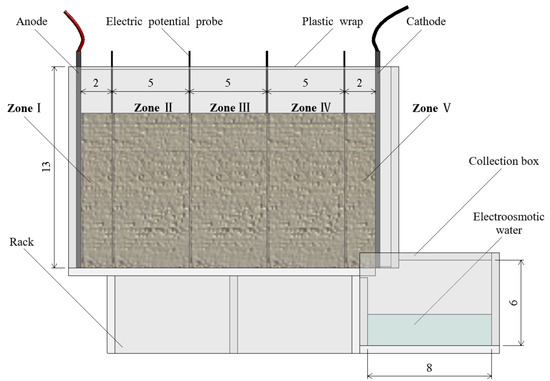
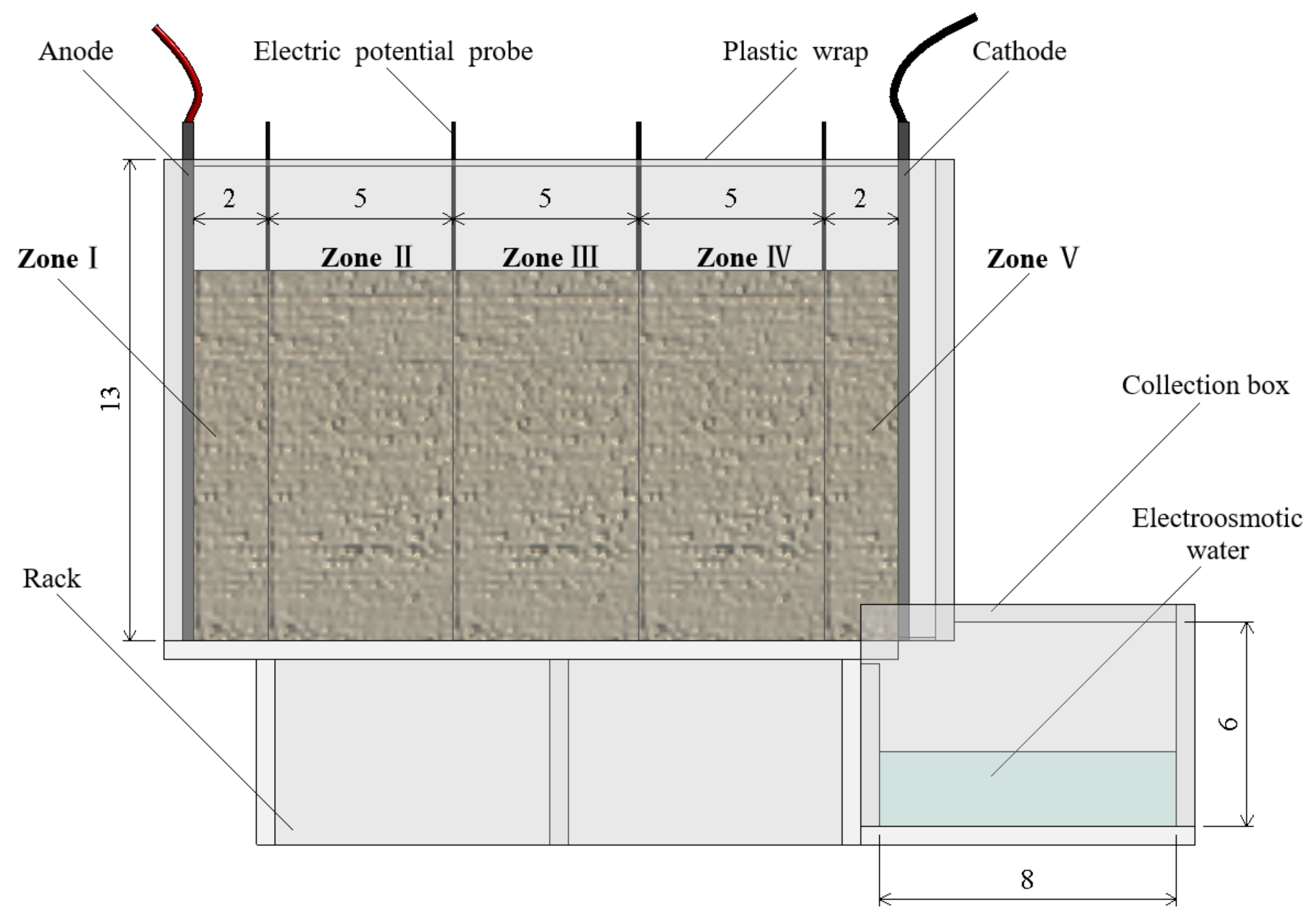
As shown in Figure 3, the dimensions of the model box are 19 cm × 12 cm × 13 cm. The soil is divided into five zones from the anode to the cathode, namely Zone I (adjacent to the anode), Zone II, Zone III, Zone IV, and Zone V (adjacent to the cathode). Zones I and V have a width of 2 cm each, while the remaining three zones each have a width of 5 cm, with a total distance of 19 cm between the anode and the cathode. Electric potential probes are installed at the interfaces of each soil zone to monitor the electric potential at these interfaces. Plastic wrap covers the top of the model box to minimize the effects of evaporation on the experiment. Underneath the cathode plate, there is a covered collection box used to collect the electroosmotic water. The electrode spacing of 19 cm was selected to achieve a balance between a sufficiently long drainage path, and a manageable voltage requirement to maintain a target electric gradient, a common and effective value cited in prior studies [43,44].
Figure 3.
Schematic diagram of the experimental apparatus (Unit: cm).
2.3. Experimental Methods
Before the formal experiment, pre-experiments were conducted within a wide range of SA contents. It was found that the gel formed by a certain concentration of SA exhibited excellent water retention properties. Considering the content selection by other scholars [45] and based on changes in the liquid-plastic limit of the soil and economic principles, three contents of SA were ultimately determined: 0.2%, 0.5%, and 1.0%, along with a control group with 0% content, as shown in Table 2. According to previous studies [3,9,20,21,28,46], the initial water content of the test was usually 1.1–1.7 times of the liquid limit. Combined with the liquid-plastic limit of the soil in this test, the initial water content was determined to be 45%.
Table 2.
Experimental conditions of the samples.
Preparation Phase: The natural soil was dried and ground, then the selected content of SA was added, followed by adding water and thoroughly stirring to ensure uniformity, and the initial water content was controlled at 45%. Then, the soil samples were layered into the model box, electric potential probes were inserted at set positions, and plastic wrap was placed over the top of the model box. A portion of the soil sample was also taken for liquid-plastic limit tests.
Electroosmotic Phase: Before powering the system, the model box was left to stand for 24 h; after the power was connected, the electric potential gradient remained at 1.0 V/cm. At specific intervals, the current, drainage volume, and the electric potential at different zones were measured. Due to rapid changes in the indicators during the early phase of the experiment, it is advisable to increase the data collection frequency. In the early phase of the experiment (0–12 h), measurements were taken every 1–2 h; in the mid-phase (12–36 h), every 4 h; and in the later phase (36–120 h), every 12 h.
Post-treatment Assessment Phase: After the electroosmotic dewatering was completed, the bearing capacity, water content and surface settlement were measured for each soil zone (I to V). Representative soil samples were extracted for SEM analysis to observe microstructural changes.
2.4. Data Processing and Instrument Calibration
To ensure the rigor and reproducibility of the laboratory study, strict data processing protocols and instrument calibration procedures were implemented.
A multi-point sampling strategy was adopted to ensure data representativeness. For bearing capacity, measurements were performed at least three times at different locations within each zone (I to V) using miniature penetrometers. If high data dispersion was observed, additional tests were conducted, and the arithmetic mean was recorded. For water content, the arithmetic mean of two parallel samples per zone was calculated. Tests were repeated if the deviation exceeded the tolerance limits specified in the “Standard for geotechnical testing method” (GB/T 50123-2019).
All instruments, including the miniature penetrometers, DC power supply, multimeters, and electronic balances, were inspected and calibrated prior to use to ensure measurement accuracy. During the electroosmotic phase, readings for electric current, potential, and drainage were recorded only after the display stabilized to minimize reading errors.
Electroosmotic migration coefficient, W, is defined as the volume of water transported per unit of electric charge moved [47], reflecting the utilization efficiency of electrical energy utilization. In engineering, it can be defined as the ratio of the electroosmotic drainage rate to the electric current:
where W is the electroosmotic migration coefficient, mL/(h·A); qe is the electroosmotic drainage rate, mL/h; and I is the electric current, A.
The electroosmotic energy consumption coefficient, Cw, as one of the important indicators for electroosmotic stabilization of soft soils, is defined as the electrical energy consumed to drain a unit volume of pore water [44]:
where Cw is the electroosmotic energy consumption coefficient, W·h/mL; I(t) is the current at time t, measured in A; qe(t) is the electroosmotic drainage rate at time t, mL/h; ΔE is the applied voltage difference, V.
3. Results and Discussion
3.1. Liquid and Plastic Limits
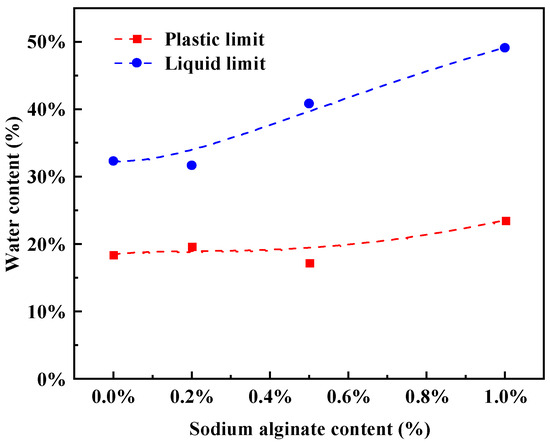
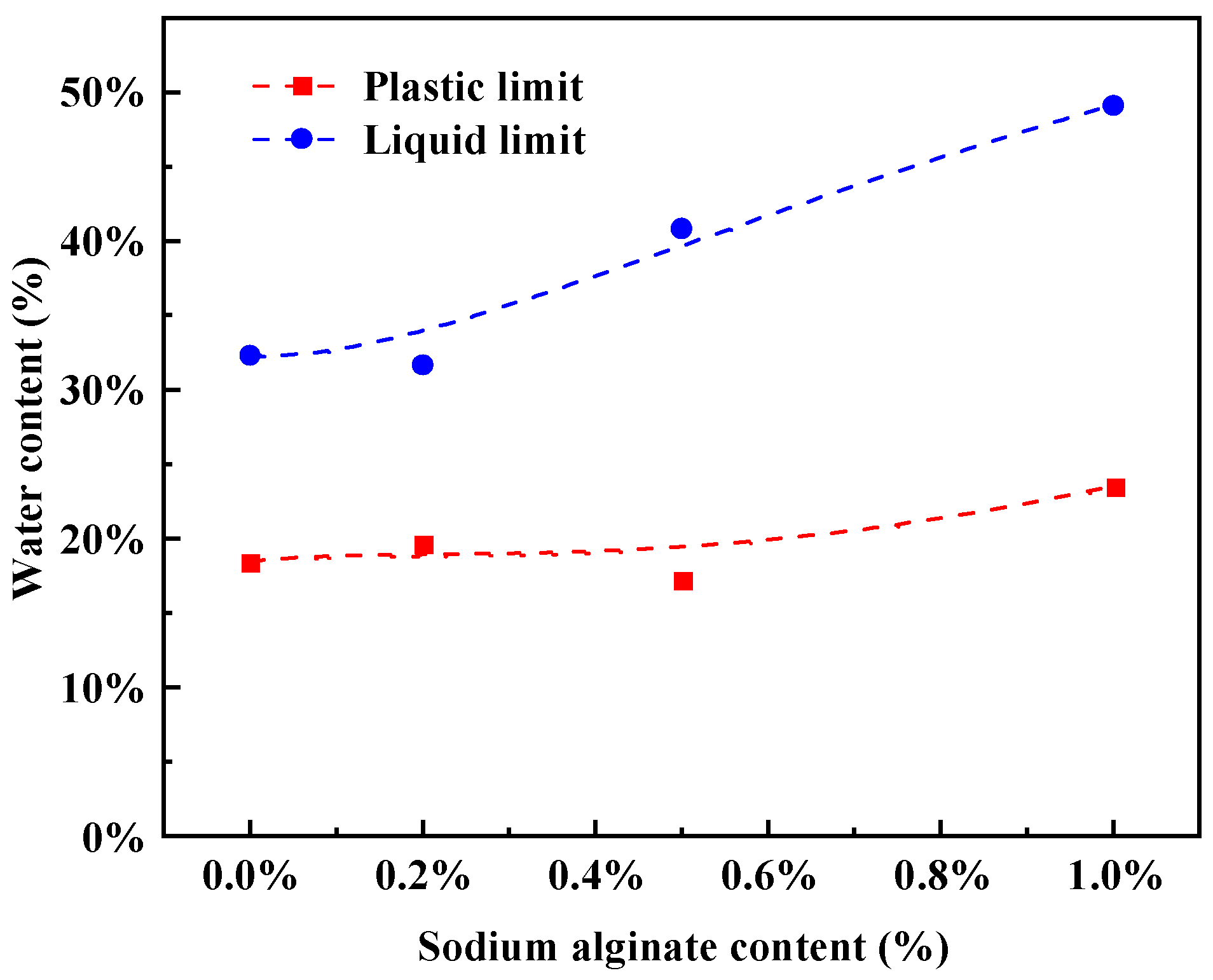
As shown in Figure 4, the addition of SA increased the liquid limit of soil, while the plastic limit exhibited a relatively minor increase. This indicated that SA primarily enhanced the soil’s water retention capacity at the fluid state. The cross-linked structure [34] effectively immobilized a large volume of pore water, significantly increasing the water content required for the soil to flow (i.e., liquid limit). However, at the lower water content corresponding to the plastic limit, where soil cohesion dominated, the soft and plastic hydrogel infill had a less pronounced effect on the mechanical resistance to rolling, resulting in a less significant change in the plastic limit.
Figure 4.
Changes in soil liquid-plastic limit with different SA content.
3.2. Morphology of the Soil Surface
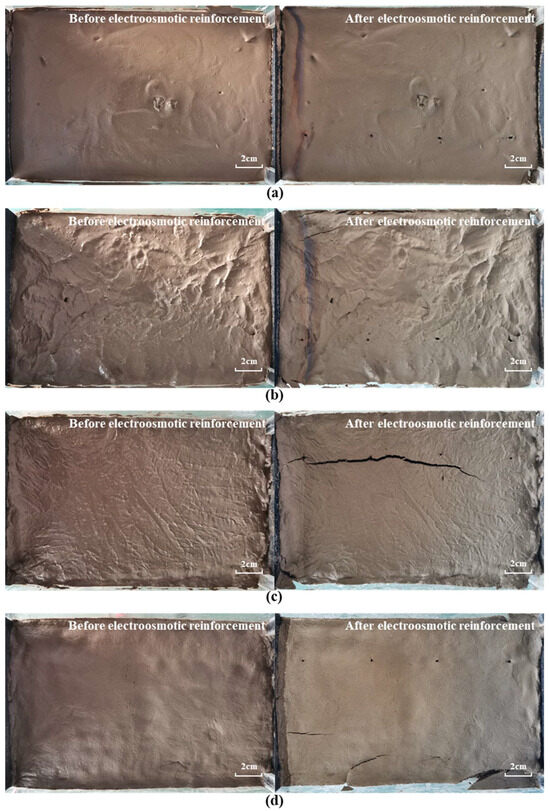
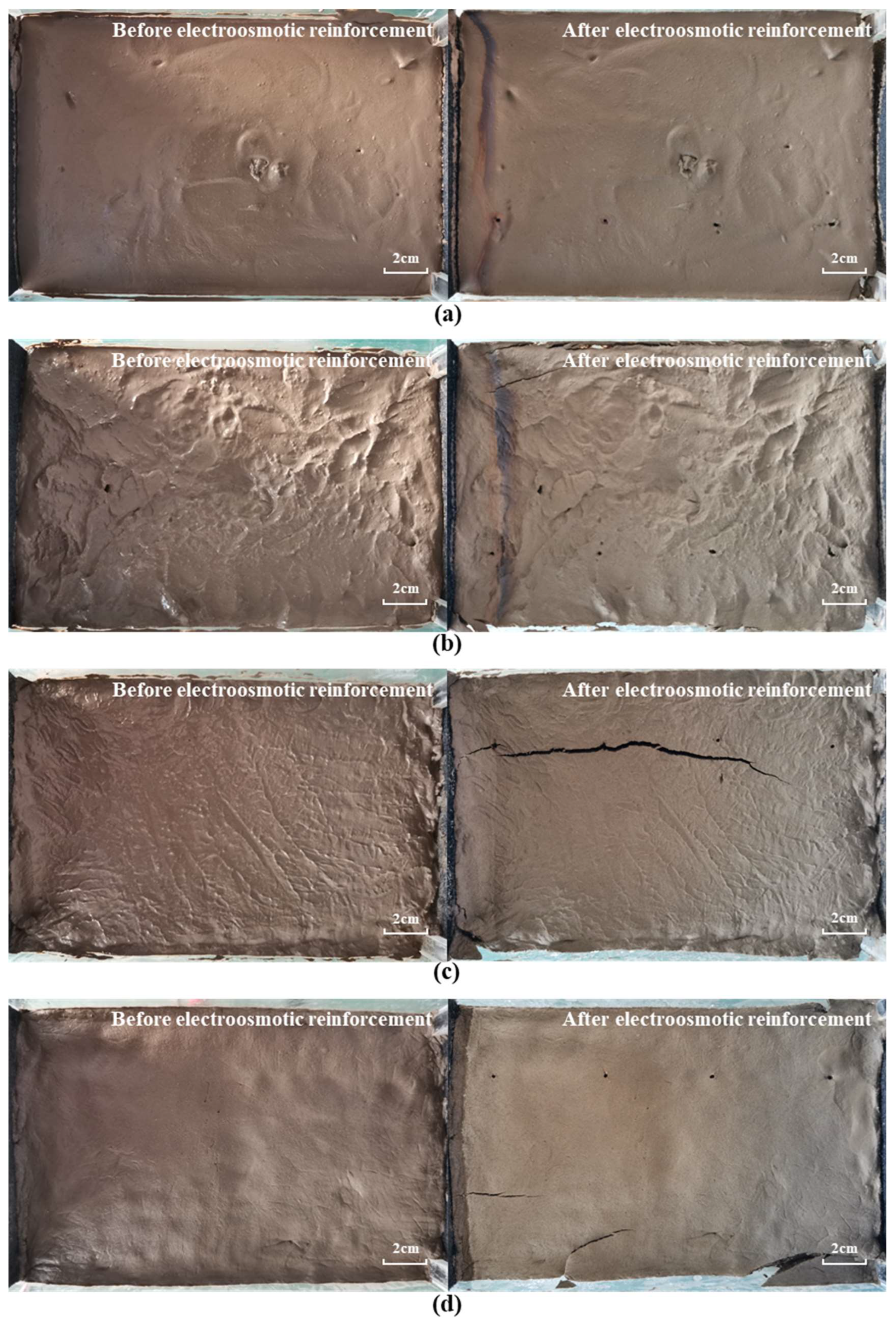
The surfaces of the soil in each experimental group exhibit some changes after the experiment, as shown in Figure 5. The surface of the T0 soil did not show any significant cracks. The T1 soil showed a few fine and narrow cracks in Zones I and II. The T2 soil developed a large crack approximately 2–3 mm wide that extended from Zone I to Zone IV. The T3 soil exhibited several discontinuous narrow cracks.
Figure 5.
Comparison of soil surface before and after electroosmotic reinforcement (cathodes are on the right): (a) T0; (b) T1; (c) T2; (d) T3.
The direction of crack propagation in all groups was from the anode towards the cathode, consistent with the distribution of soil water content after the electroosmotic experiment; that is, the soil closer to the anode approached the cracking water content sooner. Cracks act like “circuit breaks” in the soil’s electrical circuit during the electroosmosis process, which is detrimental to dewater in the later phase of the experiment and should be avoided, especially large cracks in the early phase of the experiment. Under a higher content of SA, the T3 soil, thanks to the cross-linked structure of the SA gel, did not exhibit large cracks similar to those in T2; a 1.0% content of SA can greatly prevent the occurrence of large cracks in the later phases of the experiment.
The soil and electrodes in each experimental group remained well-attached without any obvious detachment, ensuring good contact between the soil and electrodes. The carbon felt electrodes showed no obvious changes in appearance, mass, or thickness after the experiment, and no significant deterioration was observed in their main properties related to electroosmotic dewatering, such as conductivity. The flexible carbon felt electrodes can closely conform to deforming soil, preventing changes in the contact area between the electrode and soil, thereby ensuring the efficiency of electroosmotic dewatering.
3.3. Variation in Experimental Parameters During Electroosmotic Dewatering
3.3.1. Current
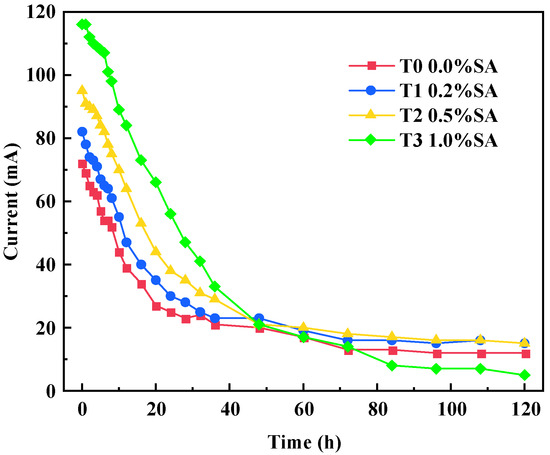
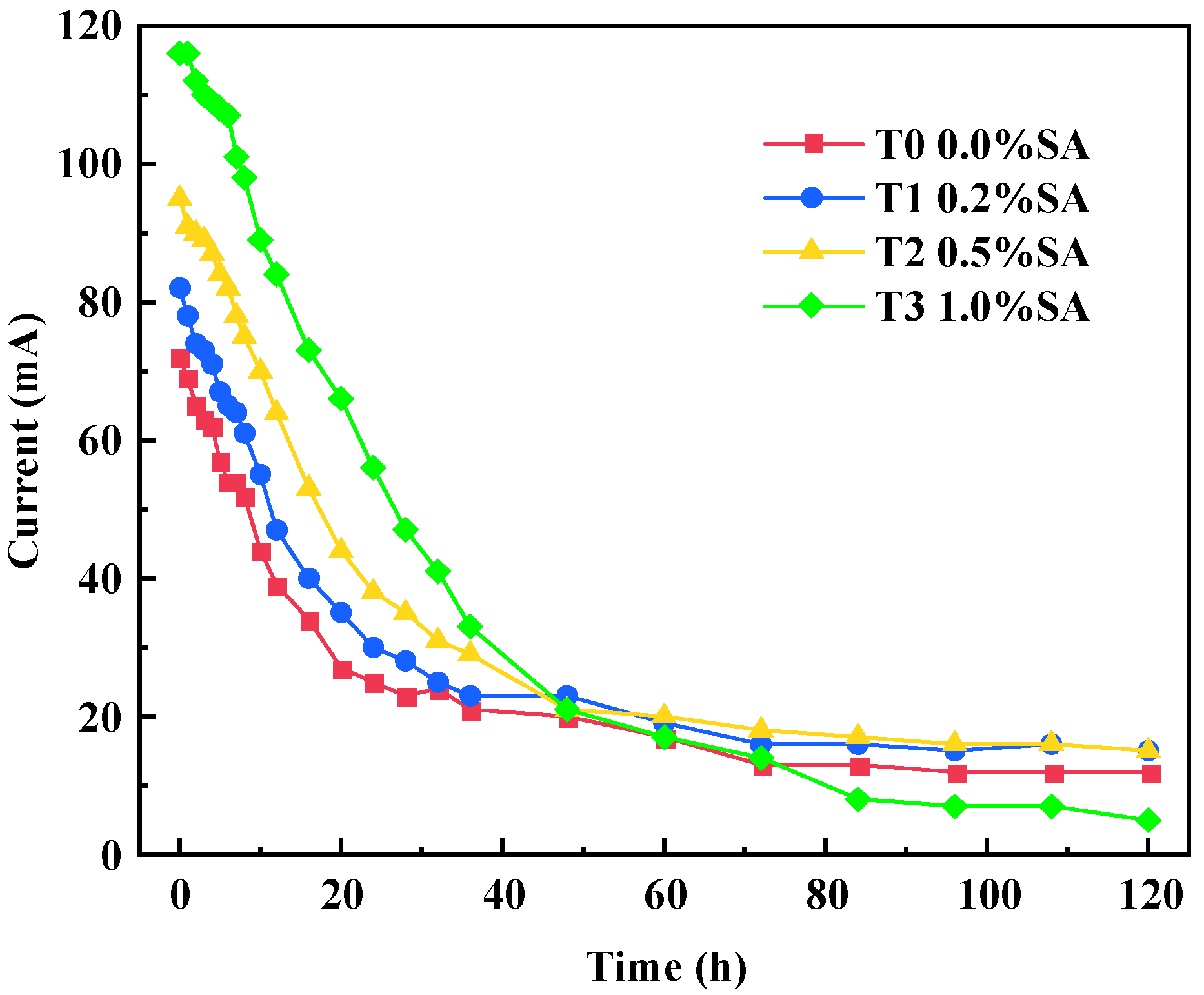
As shown in Figure 6, the trend in current changes for each group is characterized by an initial rapid decrease followed by a leveling off, which is generally consistent with the trends observed in other studies [46,48]. SA dissociates in pore water to produce charged ions, thereby increasing the conductivity of the soil [34,40]. In terms of electrical performance, the higher the content of SA, the higher the current.
Figure 6.
Variation curves of current with time.
3.3.2. Electric Potential
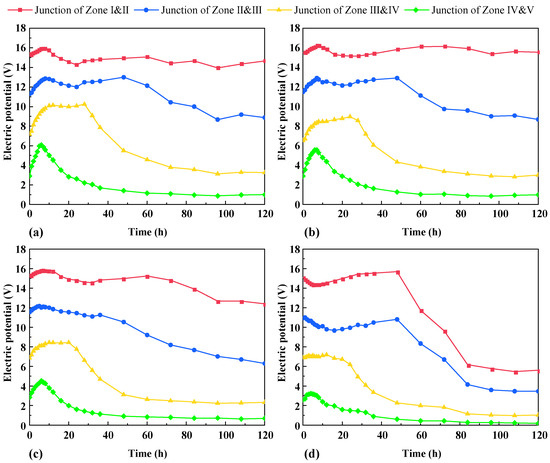
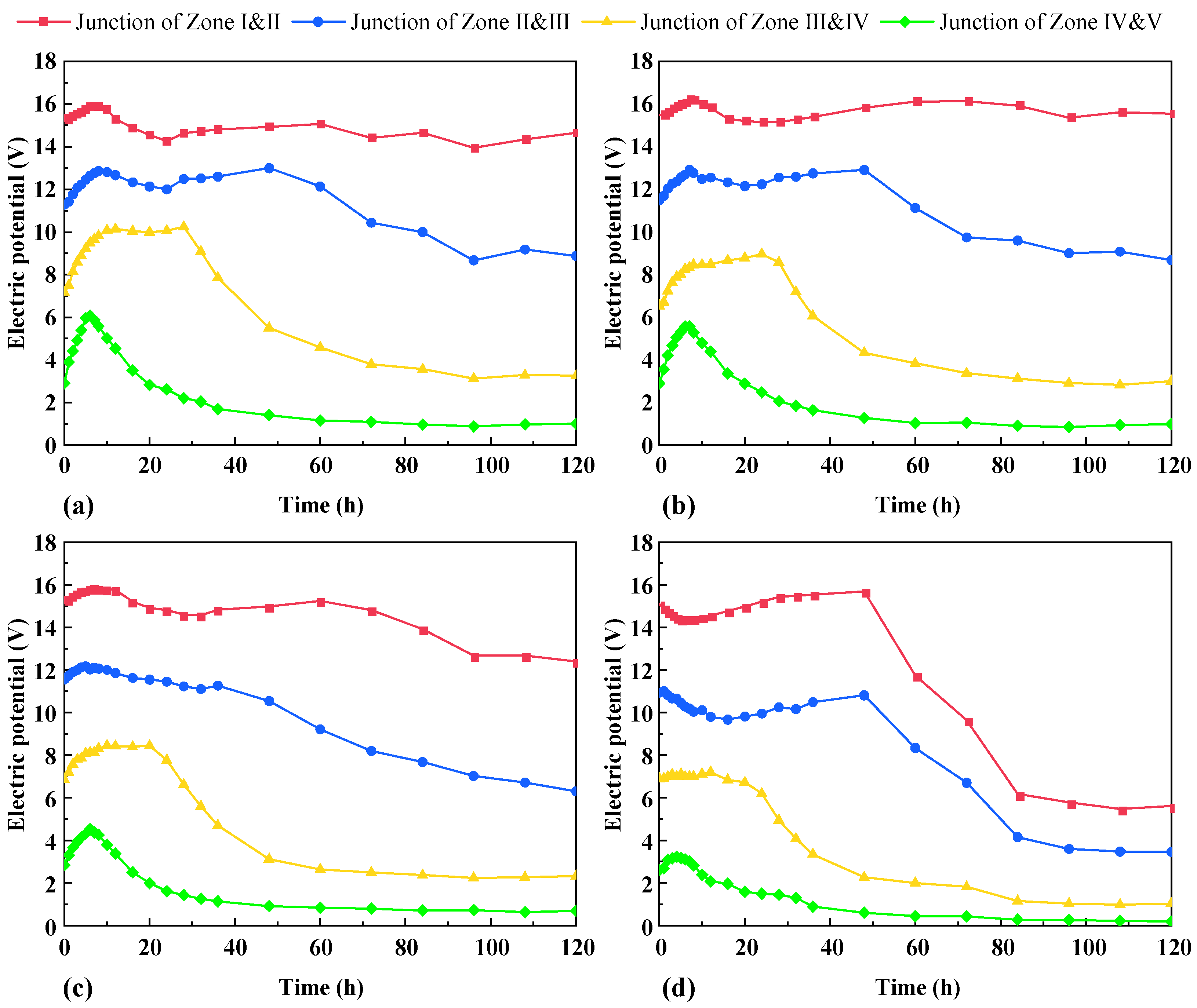
As shown in Figure 7, the electric potential change trends in T0, T1, and T2 are quite similar: in Zone I, the soil’s electric potential remains essentially unchanged throughout the experiment; in Zone II, the soil’s electric potential generally shows a steady increase; in Zone III, the soil’s electric potential remains stable in the early phase of the experiment, increases during the mid-phase, and then stabilizes; in Zones IV and V, the soil’s electric potential first rises and then quickly drops, thereafter remaining stable. The electric potential in Zone I is influenced by both the anode interface resistance and the resistance of the soil in Zone I, with the interface resistance being relatively greater, hence the stability of the electric potential in Zone I. The initial rise in electric potential in Zones IV and V is due to their proximity to the cathode, which causes drainage from the cathode at the beginning of the experiment; as the water content in Zones IV and V decreases, this leads to an increase in soil resistance in these zones, which in turn causes the rise in electric potential during the initial phase of the experiment. As electroosmosis continues, Zones IV and V begin to receive electroosmotic water from Zones I to III, causing a decrease in soil resistance and a subsequent drop in electric potential during the mid-phase of the experiment, which then settles in the later phases. Additionally, the electric potentials in Zones I and V show no significant changes during the later phases of the experiment. The observation that the anode and cathode carbon felts remain well-connected to the soil without detachment further validates this.
Figure 7.
Variation curves of electric potential with time: (a) T0; (b) T1; (c) T2; (d) T3.
3.3.3. Conductivity
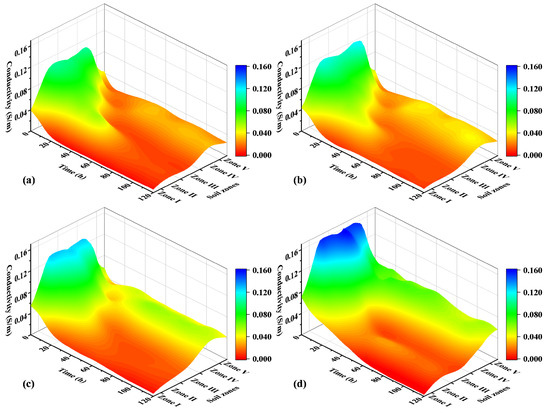
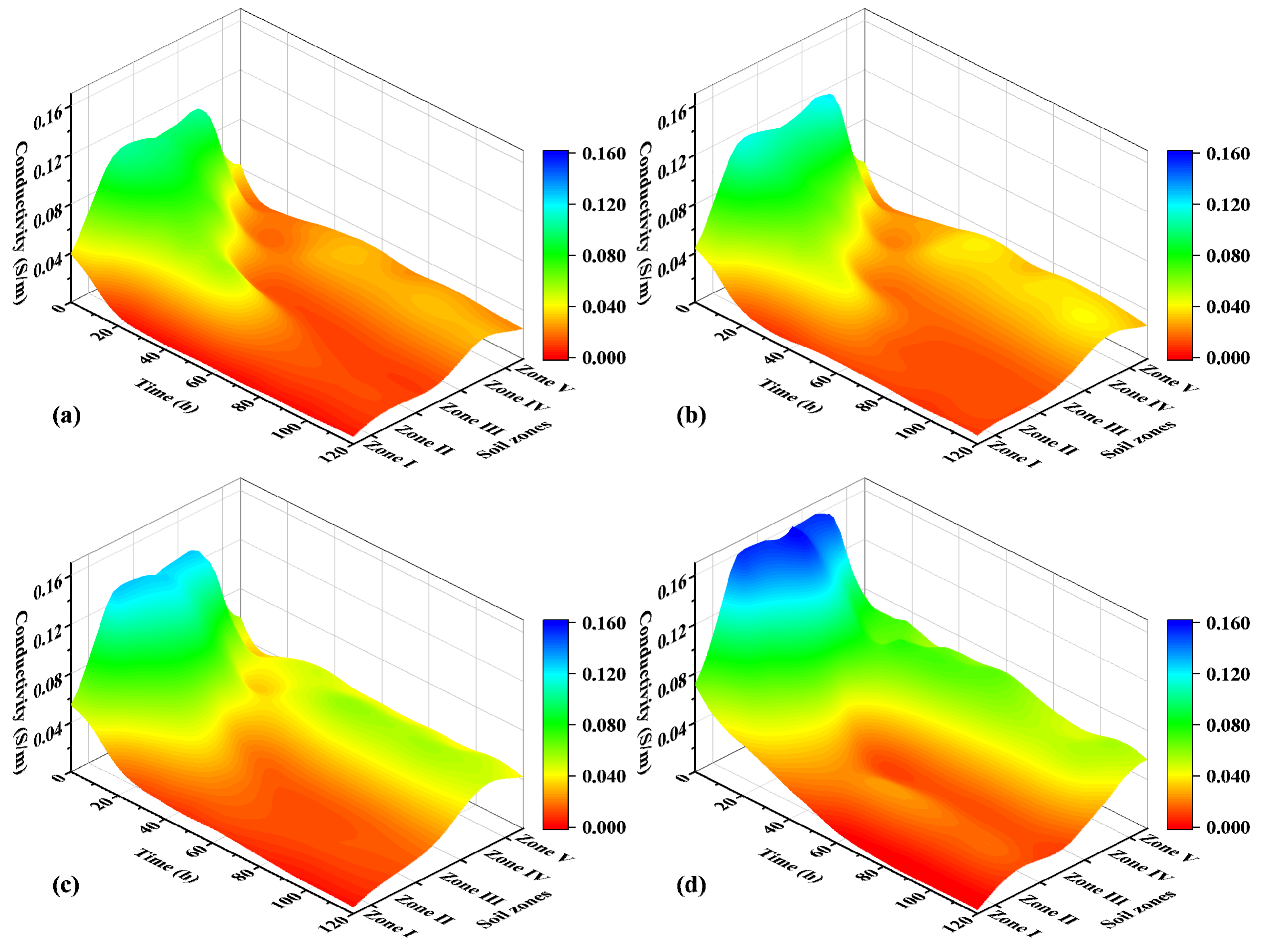
This experiment aims to explore the rules of conductivity evolution over time and space during the electroosmotic dewatering, hence the conductivity of different soil zones was measured, as shown in Figure 8. Based on the ternary soil conductivity model proposed by Rhoades [49], and combined with other scholars’ research [50,51,52] on soil conductivity, it is believed that soil conductivity is nonlinearly positively correlated with water content and linearly positively correlated with salt content. Therefore, the measured conductivity can, to some extent, reflect changes in the soil’s water content.
Figure 8.
Variations in soil conductivity across different soil zones with time: (a) T0; (b) T1; (c) T2; (d) T3.
The patterns of spatial-temporal evolution of soil conductivity and electric potential distribution in the four groups are essentially consistent. At the beginning of the experiment, the conductivity in Zones II to IV was generally the same, while that in Zones I and V was noticeably lower due to interface resistance with the electrodes. In the early phase of the experiment, the conductivity in Zones IV and V began to decrease first because these zones are closest to the cathode and thus experience the earliest decrease in water content. During the mid-phase of the experiment, the conductivity in Zones II and III began to gradually decrease, indicating that water in these zones was migrating towards the cathode, while Zones IV and V experienced a slight increase in conductivity, indicating an increase in water content in these zones, which came from Zones I to III. In the later phases of the experiment, the conductivity in all zones remained stable. Theoretically, as the electroosmosis experiment continued, Zones IV and V would continue to dewater, causing a continual decrease in water content and conductivity. However, over a lengthy period in the later phases of the experiment (60 to 120 h), the conductivity in Zones IV and V remained basically unchanged, due to the excessively low conductivity in Zones I to III, resulting in an overall low current. Under such low current conditions, there is virtually no migration of water in the soil. To further reduce the water content in Zones IV and V, it would be necessary to move the anode to the middle of the soil [53] or to increase the electric potential gradient in the later phases of the experiment.
3.4. Energy Consumption Analysis
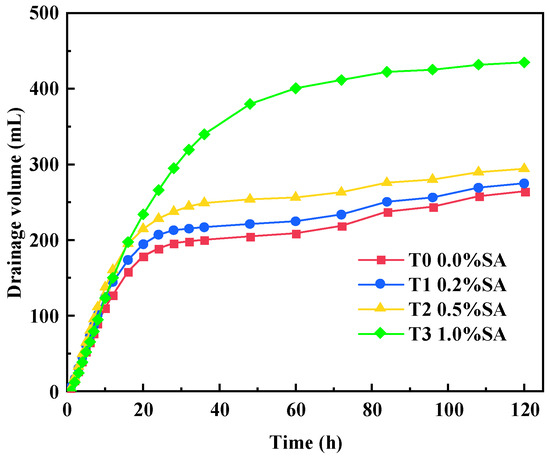
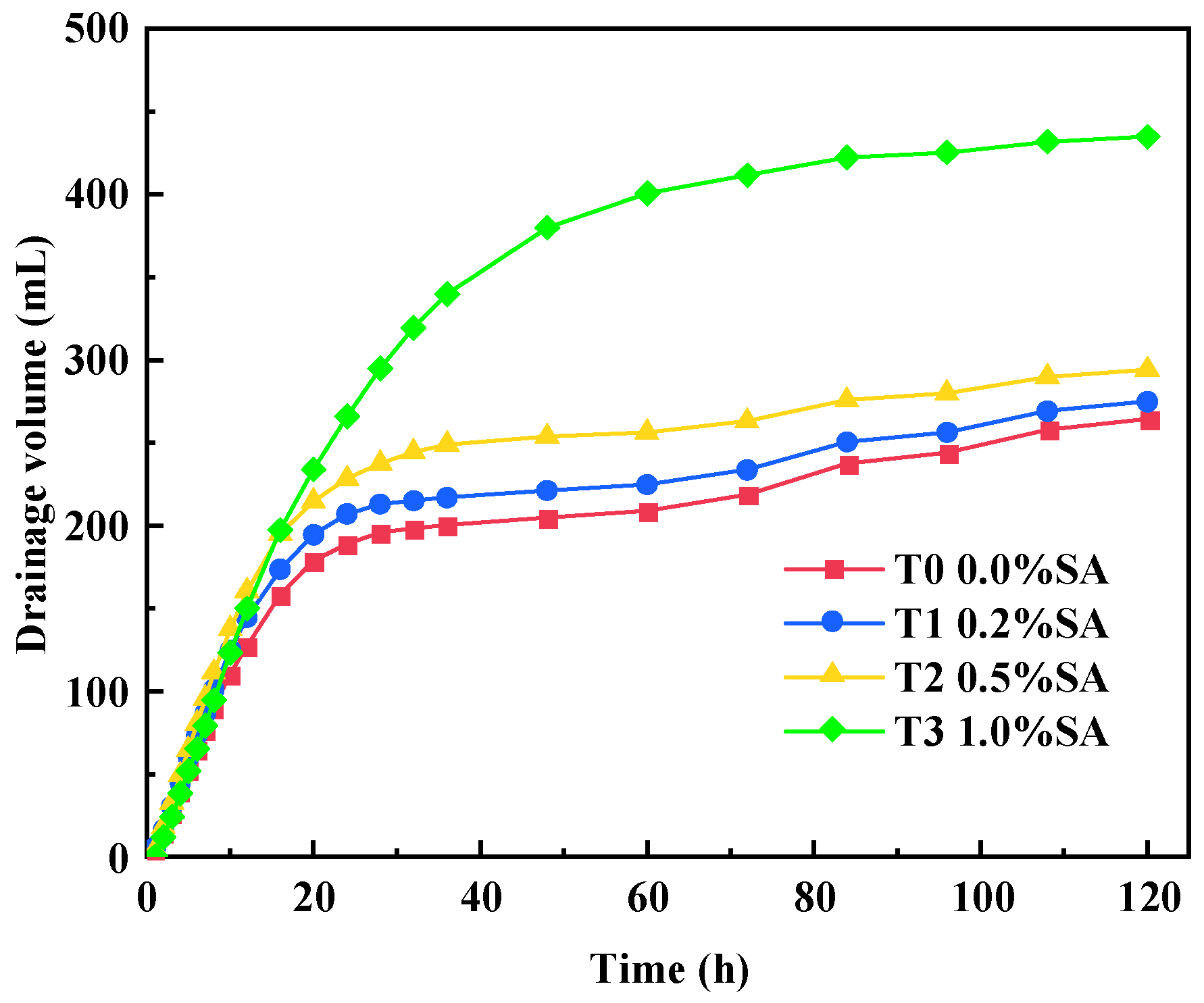
The drainage volume of the four test groups initially increases rapidly and then remains relatively constant, as shown in Figure 9. The total drainage volumes for T0, T1, T2, and T3 are 264.2 mL, 274.7 mL, 294.0 mL, and 434.6 mL, respectively. Overall, the higher the SA content, the greater the total drainage volume, with T3’s drainage volume significantly higher than the other three groups.
Figure 9.
Variation curves of drainage volume with time.
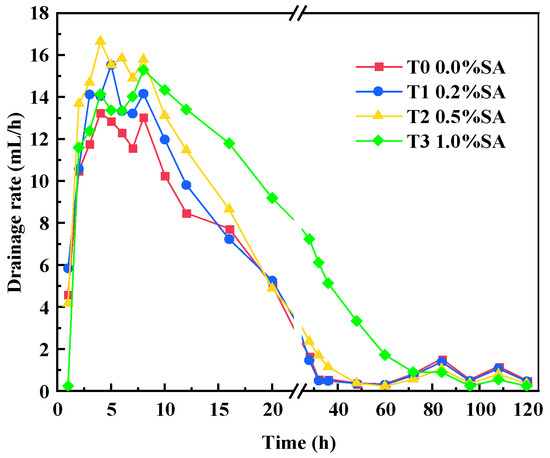
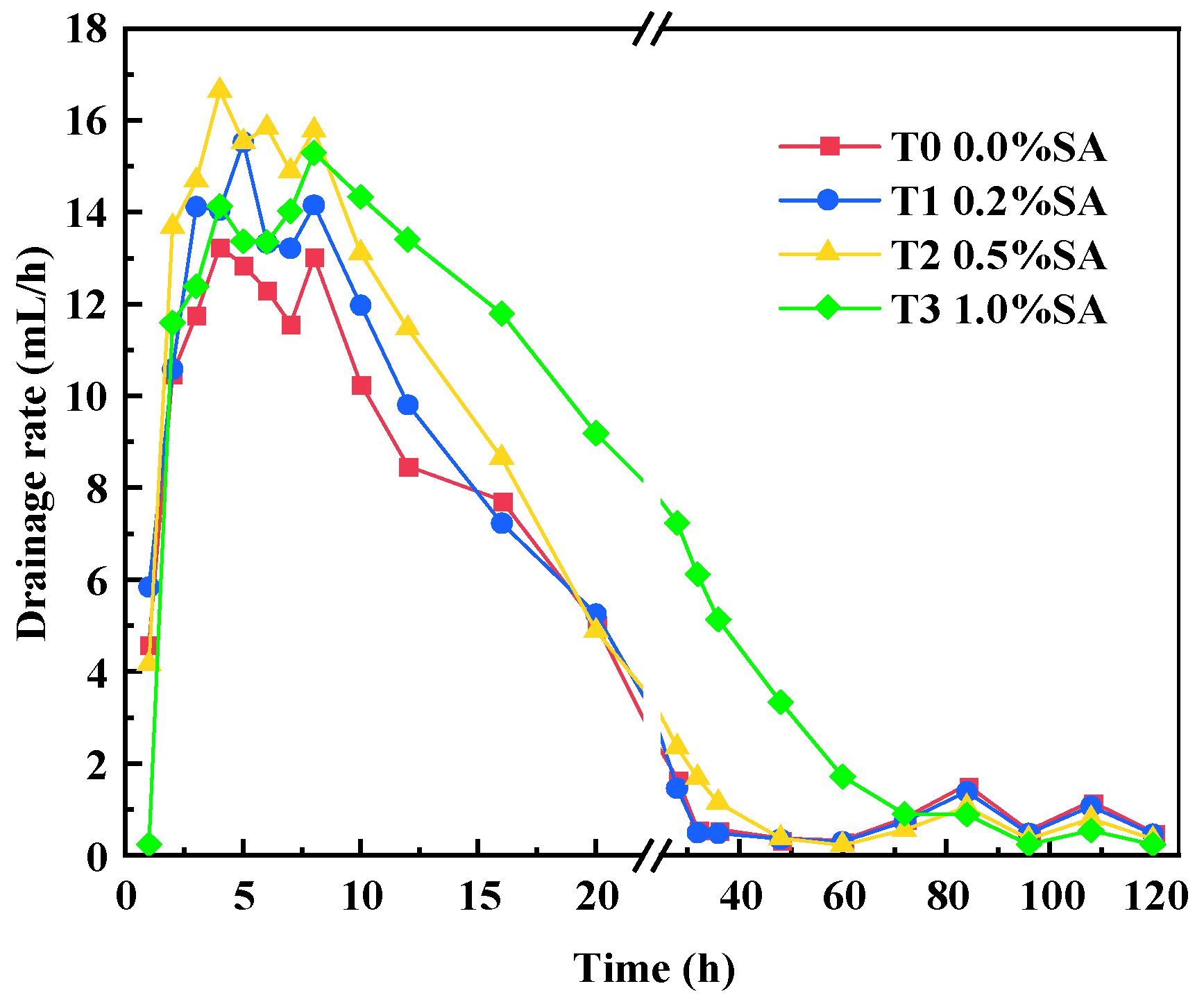
To focus on observing changes in the drainage rate during the early phases of the experiment, adjustments were made to the horizontal axis in Figure 10. Figure 10 provides a more visual representation of the drainage changes across the groups: within the first 2 to 8 h of the experiment, the drainage rate for all four groups maintains a high level (12 to 16 mL/h); from 8 to 36 h, the drainage rate gradually decreases, and between 8 and 20 h, the drainage rate is positively correlated with the SA content; after 36 h, the drainage rates for T0, T1, and T2 remain at a lower level, while T3 maintains a lower level only after 60 h. Appropriately added SA can increase the drainage rate and extend the duration of electroosmotic drainage, effectively enhancing the electroosmotic dewatering process.
Figure 10.
Variation curves of drainage rate with time.
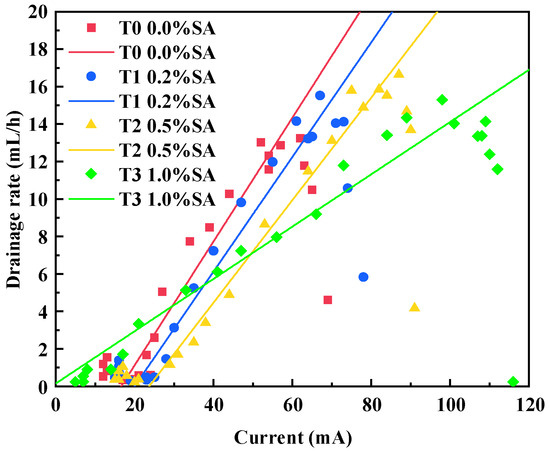
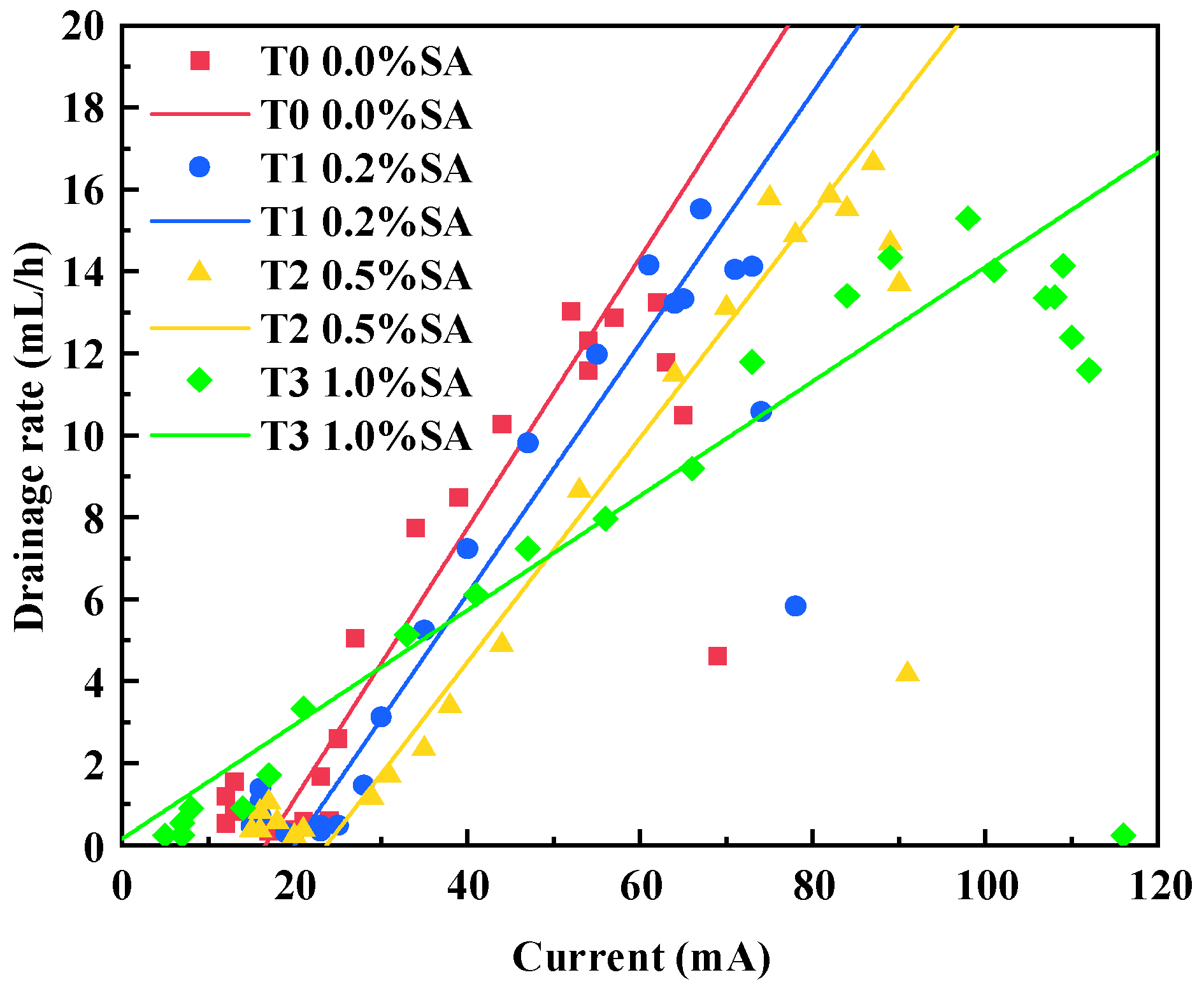
In this experiment, the applied voltage difference ΔE is kept constant at 19 V, and the electroosmotic migration coefficient is considered constant. The stable drainage phase is fitted as a straight line, as shown in Figure 11, whose slope represents the electroosmotic migration coefficient. Further calculation allows for the determination of the electroosmotic migration and energy consumption parameters under different SA content, as shown in Table 3.
Figure 11.
The relationship between electric current and drainage rate under different SA content.
Table 3.
Determination of electroosmotic migration and energy consumption parameters.
As shown in Table 3, it is evident that the higher the SA content, the lower the electroosmotic migration coefficient and the higher the energy consumption coefficient and total electrical energy consumption. The energy consumption coefficients of T0, T1, and T2 are roughly similar, while that of T3 is significantly higher than the other three groups. The energy consumption coefficient of T3 increased by 96.07% compared to T2, but the total electrical energy consumption only increased by 5.60%. This is because, in the later phases of electroosmosis, the current in T3 was the lowest among the four groups, leading to a limited increase in total electrical energy consumption.
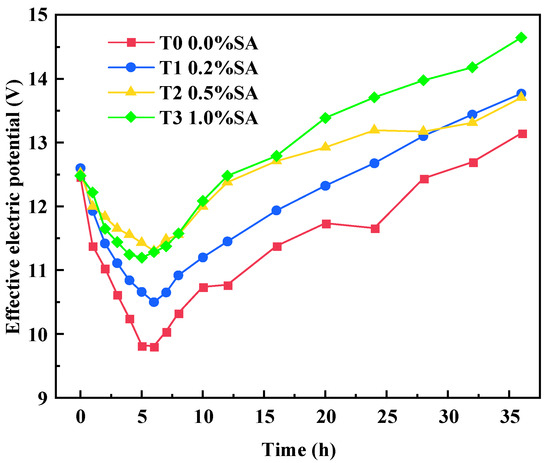
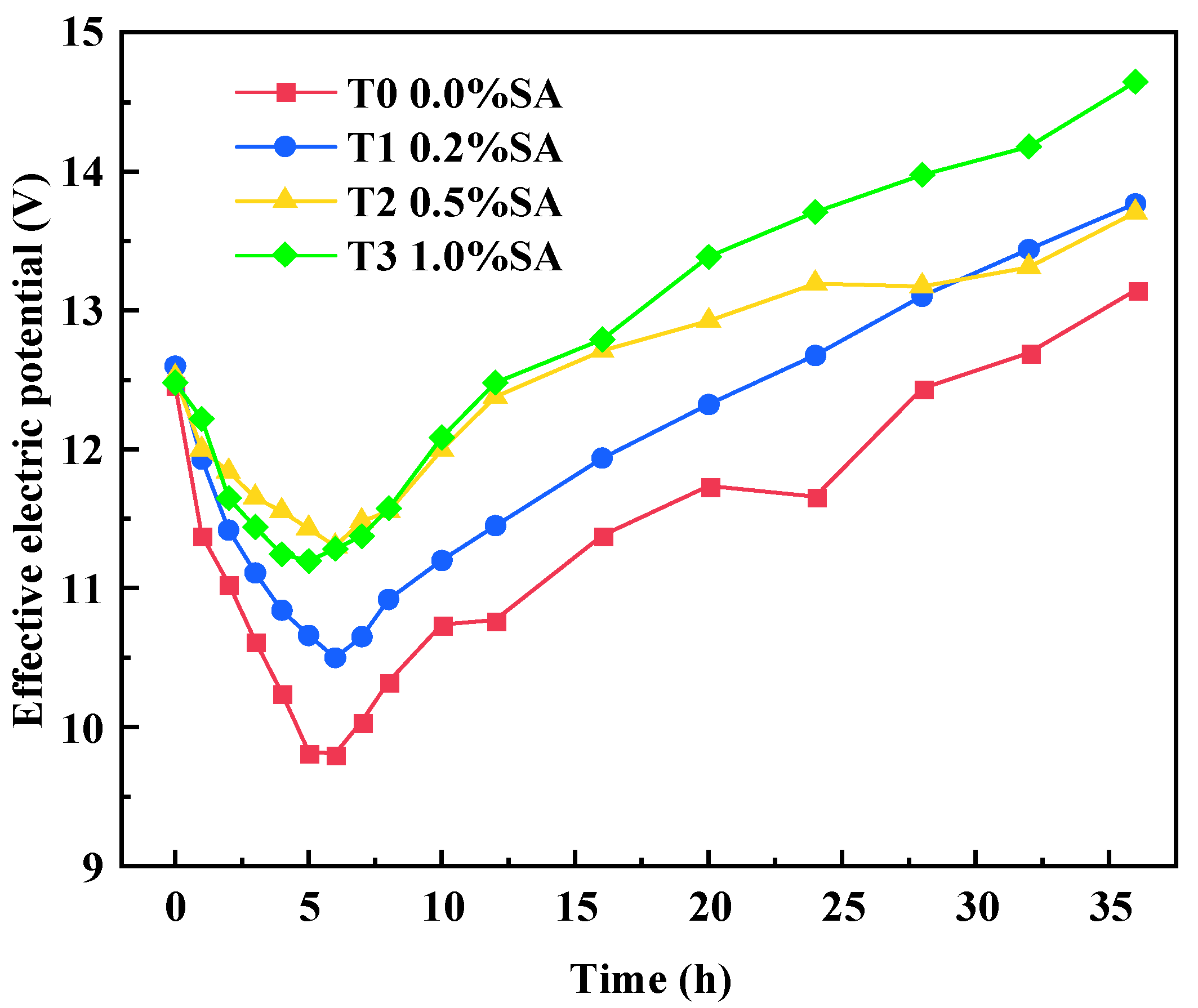
The higher the SA content, the greater the energy consumption coefficient, which seems economically disadvantageous. While the energy consumption coefficient can evaluate the effectiveness of electroosmotic reinforcement, it should not be the sole indicator. Changes in soil bearing capacity before and after the experiment also have significant practical importance for engineering. During the early and middle phases of the experiment (the main period for soil dewatering), a higher SA content resulted in a higher effective electric potential, which led to increased electrical energy consumption, as shown in Figure 12. Therefore, “optimal efficiency” should be defined as a multi-objective balance between energy consumption, water content, bearing capacity, and material cost, rather than solely by the energy consumption coefficient.
Figure 12.
Variation curves of effective electric potential with time.
3.5. Water Content and Bearing Capacity
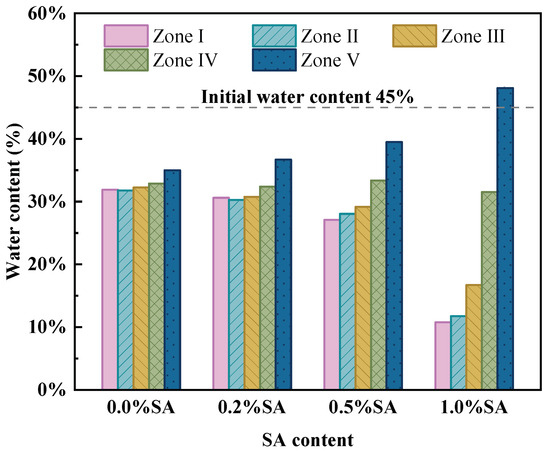
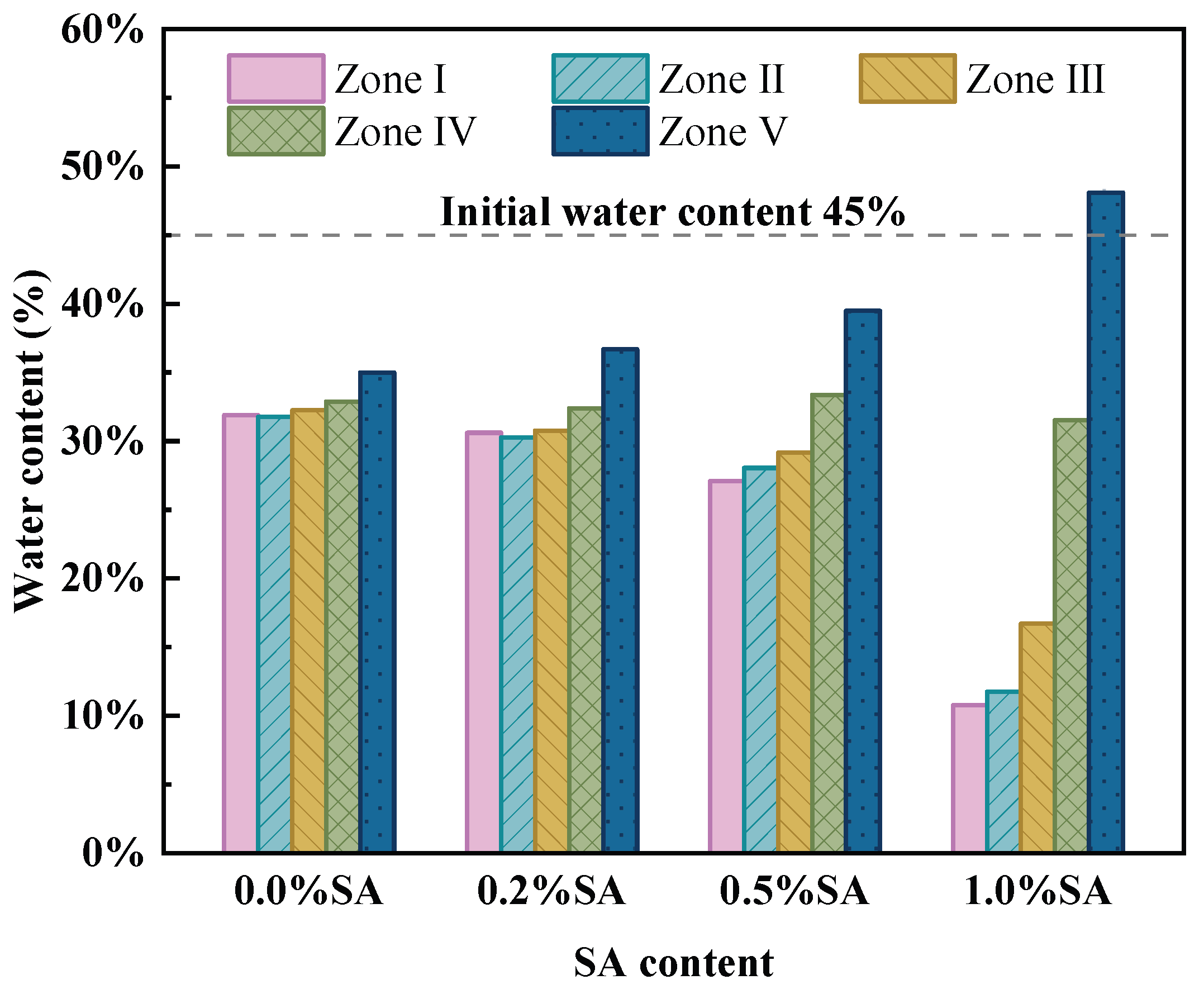
The water content distribution in each zone exhibits significant variations after electroosmosis under different SA concentrations, as shown in Figure 13.
Figure 13.
Water content distribution after electroosmosis under different SA content.
Except for the soil in Zone V of T3, the water content of the soils in all other groups and zones has significantly decreased. Particularly in Zones I to III of T3, the electroosmotic dewatering effect is pronounced, with Zone I experiencing a water content decrease of about 35%. The average water content reductions for T0, T1, T2, and T3 are 12.78%, 13.18%, 14.18%, and 20.86%, respectively. Within a single group, the water content increases from Zone I to Zone V, which matches the direction of water migration during the electroosmosis process. Comparing T0, T1, T2, and T3, the higher the SA content, the lower the post-experiment water content in Zones I to III, but the higher it is in Zone V. From the perspectives of pore water migration and the water retention properties of SA gel, the reasons for the water content distribution result are as follows: During the electroosmosis process, pore water in soil moves from the anode to the cathode, passing through Zone V, and due to the lower currents in the later phases of the experiment, more water accumulates in Zone V. Additionally, the SA gel has effective water retention properties, making it harder for water in Zone V to drain. Especially under the condition of 1.0% SA content in T3, the water content in Zone V not only fails to decrease but actually increases compared to before the experiment, suggesting that too high a content of SA is counterproductive for electroosmotic dewatering. Future research should focus more on improving drainage in Zone V and the soil near the cathode, particularly when using additives like SA that have effective water retention properties.
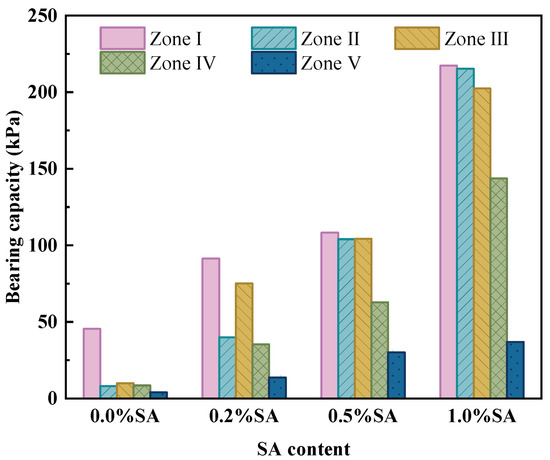
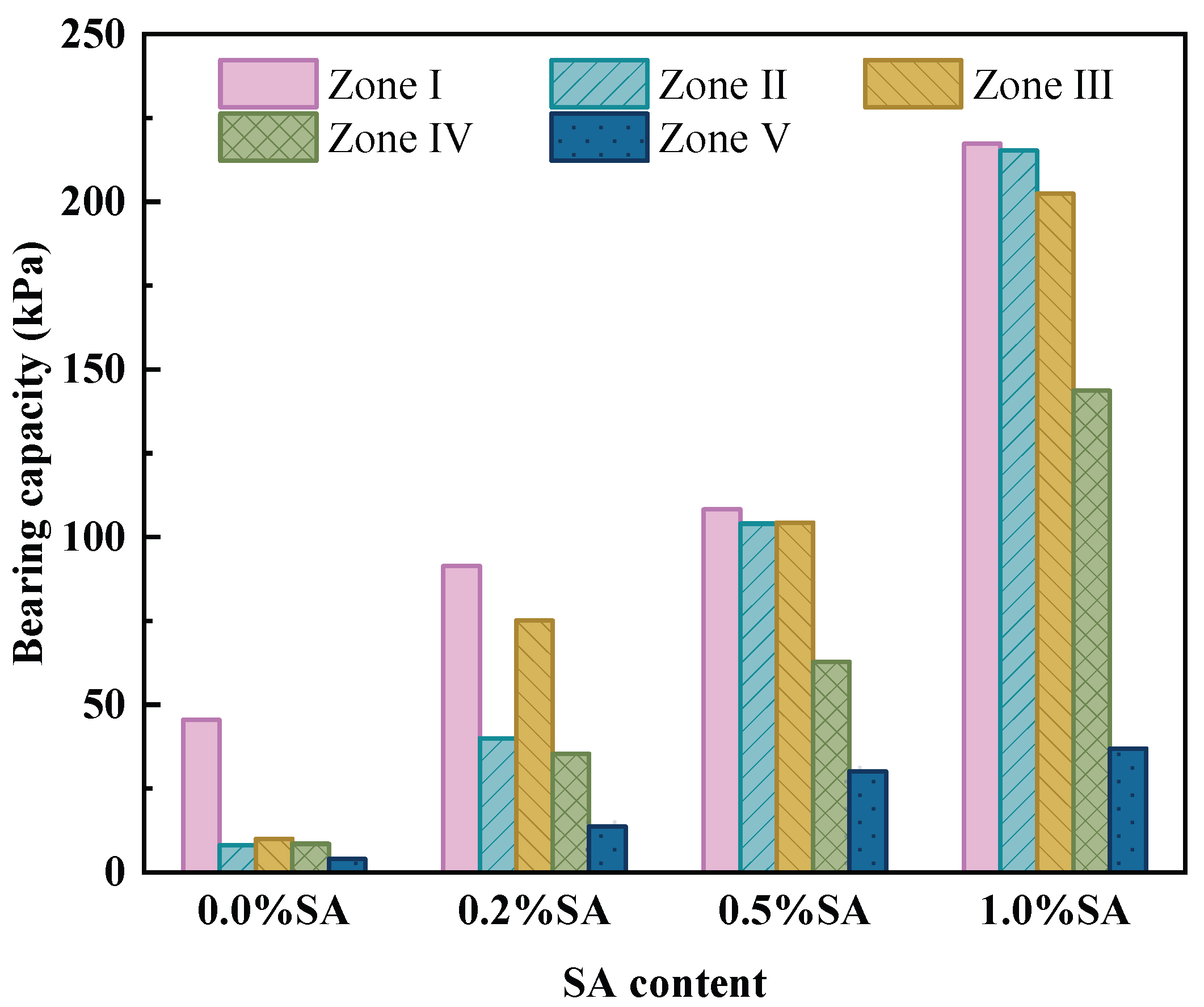
After foundation treatment, bearing capacity is an extremely critical indicator for meeting engineering requirements. The variations in the bearing capacity of the soil zones under different SA contents following the treatment are demonstrated in Figure 14.
Figure 14.
Bearing capacity of the soil zones under different SA content.
Except for T3, which had an initial bearing capacity (due to a slight increase caused by the incorporation of SA), the initial bearing capacities of the other three groups were 0 kPa. After the experiment, the bearing capacity of all four groups improved. The bearing capacity decreased from the anode towards the cathode, while the water content increased from the anode towards the cathode. The higher the SA content, the higher the post-experiment soil bearing capacity; T3’s bearing capacity was significantly higher than the other three groups, and the bearing capacity in Zone I of T3 even reached 217 kPa. Incorporating energy consumption analysis, although the incorporation of SA into soft soil increases the energy consumption coefficient, SA can significantly enhance the bearing capacity of the soil after electroosmotic reinforcement. In this experiment, the average post-experiment bearing capacity of T2 reached about 86 kPa, approximately 7 times that of T0, but the energy consumption coefficient only increased by 21%. Therefore, during the electroosmosis process, the appropriate addition of SA significantly enhances the effectiveness of electroosmotic soil reinforcement. In this experiment, the bearing capacity of the T2 soil after electroosmotic reinforcement could basically meet the practical engineering requirements, and the increase in energy consumption coefficient and total electrical energy consumption was limited.
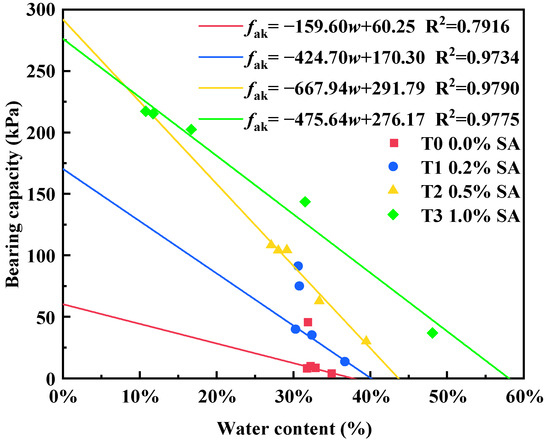
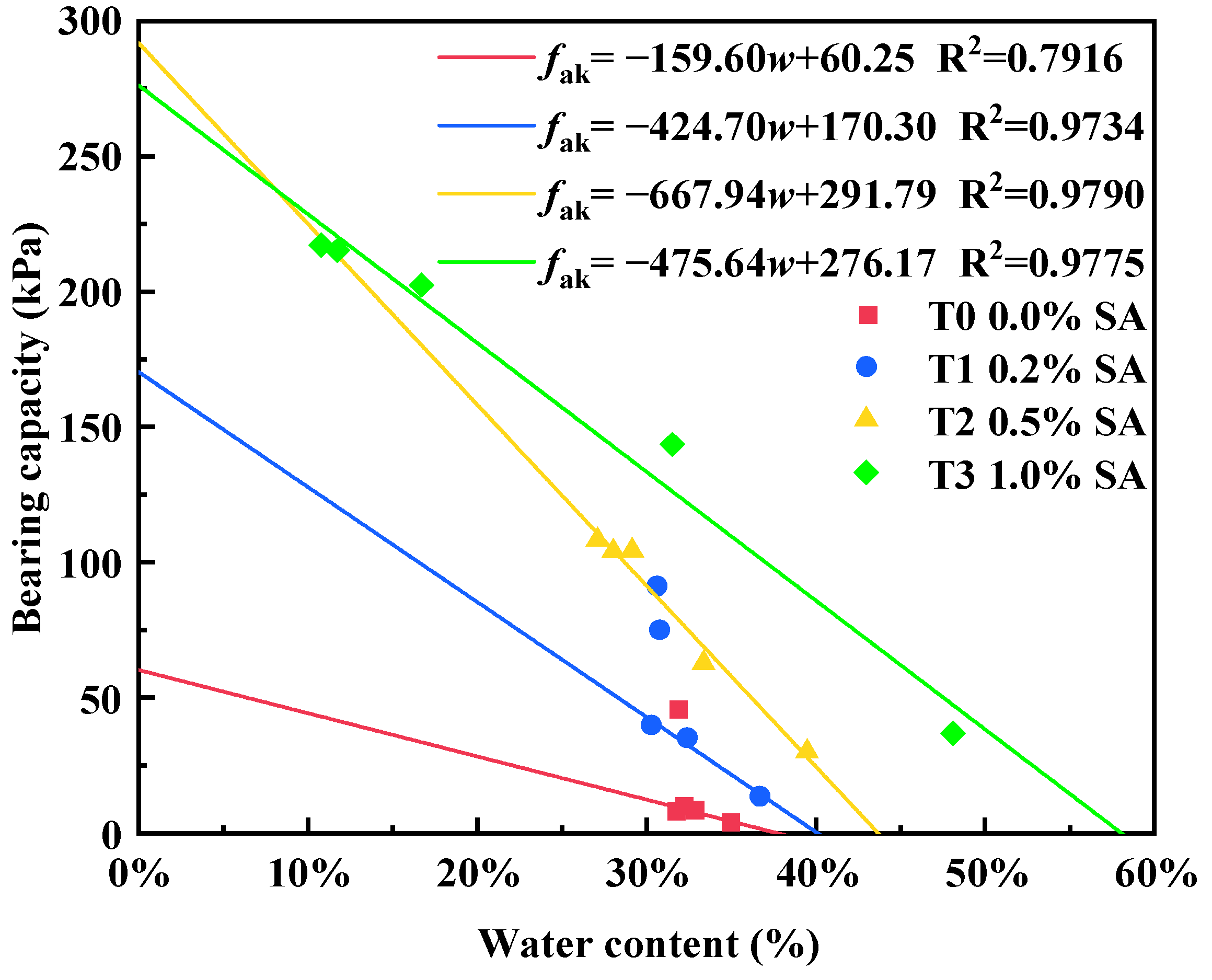
The bearing capacity of soil is closely related to its water content, and whether their relationship is nonlinear needs to be determined based on the characteristics of the soil [54,55,56,57,58]. In this experiment, the linear relationship is not obvious for T0 and T1, while T2 and T3 display a better linear relationship, as shown in Figure 15.
Figure 15.
The relationship between water content and bearing capacity.
The incorporation of SA significantly alters the relationship between soil water content and bearing capacity. For T0, T1, and T2, both the intercepts and slopes on the coordinates increase to varying degrees with the addition of SA: an increase in the horizontal intercept means that soil with a high SA content can provide some bearing capacity even in a high water environment; a significant increase in the vertical intercept indicates that SA greatly enhances the bonding between soil particles through its cross-linked structure; an increase in the slope means that the higher the SA content, the more the bearing capacity increases for the same reduction in water content, indicating that the soil is more sensitive to changes in water content. A decrease in both the vertical intercept and slope for T3 suggests that the positive impact of SA on the soil water content-bearing capacity relationship has its limits, and higher contents are not necessarily better. Thus, it is evident that SA can significantly alter the inherent characteristics of the soil. The improvement in soil bearing capacity is mainly due to two factors: the drainage consolidation during the electroosmosis process, which reduces the soil water content, and the cross-linked structures formed by SA within the soil particles.
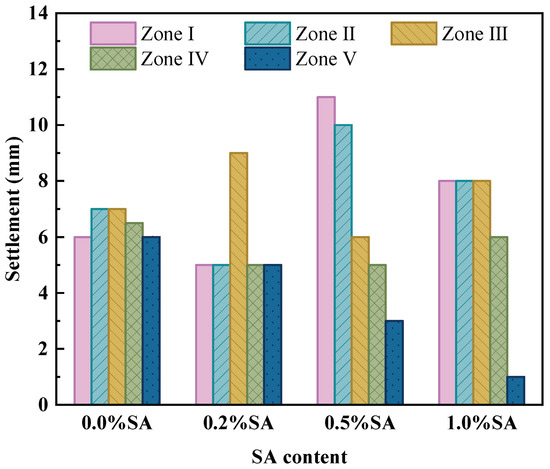
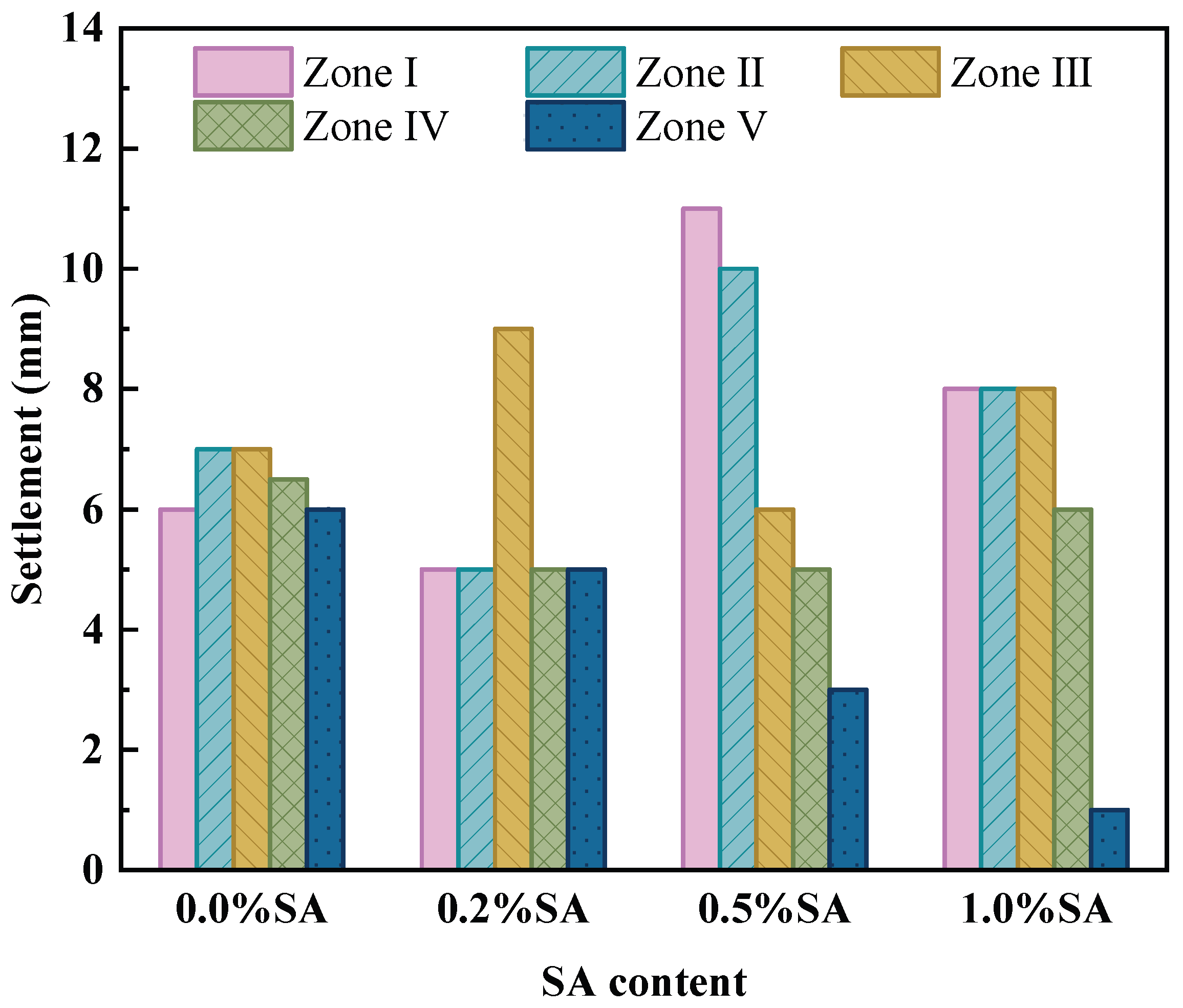
After the electroosmotic dewatering, the volume of soil in T0, T1, T2, and T3 decreased by 14.29%, 14.53%, 16.14%, and 13.18%, respectively. As shown in Figure 16, the vertical settlement of the soil decreases gradually from Zone I to Zone V, and the drainage of the soil also decreases from Zone I to Zone V, with both trends being consistent. T0 and T1 show relatively uniform settlement across different zones, with small differences in settlement between zones. T2 exhibits the most uneven settlement and the greatest soil shrinkage among the four groups, and it is the only group that developed large cracks, which indirectly reflects the excellent electroosmosis effect in this group. The smallest settlement in T3 occurs in Zone V, which is also the zone with the highest water content after the experiment, mainly due to poor drainage in Zone V in the later phases of the experiment. However, no large cracks appeared on the surface of the T3 soil samples, which is also related to the effective water retention properties of SA.
Figure 16.
Surface settlement of different zones for each group.
3.6. Micro-Morphology of the Soil
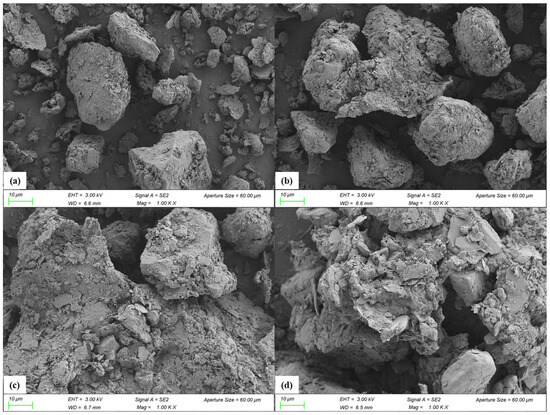
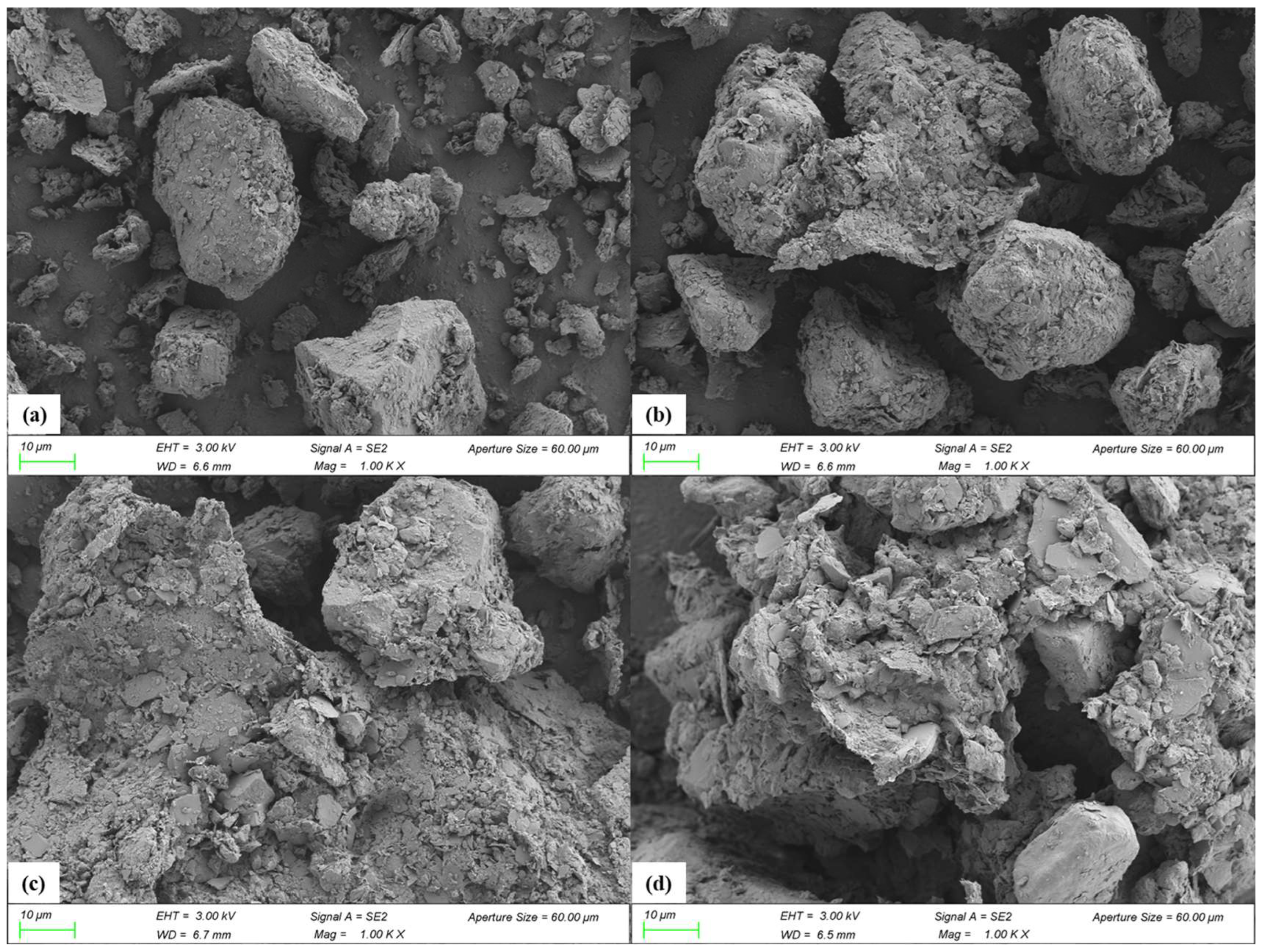
To verify the formation of the SA cross-linked structure within the soil, the micro-morphology of the soil samples was characterized using SEM, as presented in Figure 17. Figure 17a revealed that the T0 (0.0% SA) exhibited a typical dispersed structure, characterized by loosely packed soil particles with weak inter-particle interactions. Upon the addition of SA, the micro-morphology underwent a significant transformation, shifting from a dispersed state to compact aggregates, as illustrated in Figure 17b–d. This transition occurred because, as the SA content increased, a three-dimensional network (or cross-linked) structure gradually formed, tightly wrapping dispersed particles and connecting them into larger agglomerates. Particularly in Figure 17d, it was clearly observable that the SA-induced cross-linked structure not only exerted a bridging effect on larger particles but also effectively encapsulated smaller clay particles. Furthermore, a substantial amount of fine, flaky clay minerals were observed to be adsorbed onto the edges of this cross-linked structure, effectively filling the inter-granular pores. The formation of a “soil-polymer” composite matrix, based on the cross-linked structure of SA, enhanced the contact area and bonding strength between particles, thereby providing robust microstructural evidence for the observed changes in macroscopic physical properties (e.g., liquid limit and strength).
Figure 17.
Scanning electron microscopy (SEM) images of the soil after the experiment: (a) T0; (b) T1; (c) T2; (d) T3.
3.7. Discussion
To evaluate the efficacy of the proposed method, Table 4 compares the current results with previous electroosmotic studies. The mechanism of SA differs fundamentally from previous methods. Unlike the physical conduction channels provided by carbon fibers [43] or the rapid precipitation hardening of inorganic salts [59], SA functions via a cross-linked structure that bridges particles and fills pores. Compared to the previous studies, the energy consumption coefficients in this paper are lower, which can effectively reduce electricity costs. Furthermore, the use of carbon felt electrodes effectively avoids the severe corrosion associated with traditional copper or stainless steel electrodes, ensuring system durability similar to the carbon fiber cloth but with cheaper electrode cost.
Table 4.
Comparison with previous electroosmotic studies.
Future research should focus on the long-term durability of the SA-soil matrix in complex marine environments, specifically balancing the biopolymer’s biodegradability with permanent stability. Additionally, establishing a multi-field coupling model (Chemical-Electrical-Mechanical) is essential for predicting consolidation behavior under varying salinity and pH conditions.
For future real-world applications in marine and coastal engineering (e.g., land reclamation), adapting “Deep Mixing” for shallow layers and utilizing “Electroosmotic Grouting” with hollow EKG electrodes for deep layers are proposed. These strategies leverage the fluid consistency of SA to achieve uniform reinforcement in coastal soft soils.
4. Conclusions
This study investigated the feasibility and mechanisms of using Sodium Alginate (SA) as an additive to enhance the electroosmotic dewatering for coastal soft soil. Based on the experimental results, the conclusions are summarized in terms of scientific mechanisms and engineering results:
- (1)
- The addition of SA significantly alters the inherent properties of the soil. SEM analysis confirmed the formation of the SA cross-linked structure, which bridges soil particles and fills inter-particle pores, as well as enhances the soil’s water retention capacity. Quantitatively, for soil with 1.0% SA, the liquid limit increased significantly from 32.34% to 49.15%, while the plastic limit showed a minor increase from 18.45% to 23.52%.
- (2)
- During the electroosmotic dewatering process, distinct spatiotemporal variations in electrical conductivity were observed. Pore water was first expelled from the cathode in Zones IV and V, causing a decrease in soil conductivity in these zones. As pore water migrated from Zones I to III towards the cathode, the conductivity in Zones I to III decreased in the order of Zone I, Zone III, and Zone II, while the conductivity in Zones IV to V slightly recovered during the mid-phase of the experiment and remained essentially unchanged towards the end.
- (3)
- SA increases soil conductivity, accelerates the drainage rate, and prolongs the effective electroosmotic dewatering time. The total drainage volume increased with higher SA content. Specifically, for SA contents of 0.0%, 0.2%, 0.5%, and 1.0%, the average water content decreased by 12.78%, 13.18%, 14.18%, and 20.86%, respectively. Notably, in the 1.0% SA group, the water content in the anode region (Zone I) decreased by approximately 35%, demonstrating a significant promotion of drainage.
- (4)
- The bearing capacity of the soil after electroosmotic reinforcement was markedly improved by SA addition. The average bearing capacity of the 0.5% SA group reached approximately 86 kPa, which is about 7 times that of the control group (0.0% SA). From an engineering-economic perspective, this substantial strength gain was achieved with a relatively controlled cost, as the energy consumption coefficient increased by only 21% compared to the control.
Author Contributions
G.W.: Experiment, Data curation, Writing—Original draft preparation. L.Z.: Investigation, Writing, Reviewing, Supervision. X.Z.: Investigation, Reviewing. G.C.: Experiment, Reviewing. S.G.: Investigation, Writing, Reviewing. Y.Y.: Investigation, Reviewing. X.X.: Reviewing, Supervision. All authors have read and agreed to the published version of the manuscript.
Funding
This research was supported by the National Natural Science Foundation of China (No. 52378374, 52378372), Zhejiang Provincial Natural Science Foundation of China (No. LZ20E080001), Postdoctoral Fellowship Program of CPSF (No. GZC20240940), Postdoctoral Innovative Talents Support Program of Shandong Province (No. SDBX202302007), Shandong Provincial Natural Science Foundation (No. ZR2024QE174).
Data Availability Statement
The data that support the findings of this study are available from the corresponding author upon reasonable request.
Conflicts of Interest
Author Yuanhong Yu was employed by the company Zhejiang Reclaim Construction Group Co., Ltd. The remaining authors declare that the research was conducted in the absence of any commercial or financial relationships that could be construed as a potential conflict of interest.
References
- Kitazume, M. Sustainable Land Reclamation in Coastal Area. Rev. Fr. Géotech. 2022, 170, 15. [Google Scholar] [CrossRef]
- Qiao, F.; Bo, J.; Wang, L.; Chang, C.; Zhang, Z.; Qi, W. Survey of China’s Soft Soil and Its Dynamic Characteristics. World Earthq. Eng. 2019, 35, 150–161. [Google Scholar]
- Tang, X.; Xue, Z.; Yang, Q.; Li, T.; VanSeveren, M. Water Content and Shear Strength Evaluation of Marine Soil after Electro-Osmosis Experiments. Dry. Technol. 2017, 35, 1696–1710. [Google Scholar] [CrossRef]
- Dong, Y.; Fu, D.; Feng, X. Engineering Properties of Marine Soils and Offshore Foundations. J. Mar. Sci. Eng. 2024, 12, 2077. [Google Scholar] [CrossRef]
- Fu, X.; Li, J.; Liu, J.; Hu, Z.; Tang, C. Influence of Complex Hydraulic Environments on the Mechanical Properties of Pile-Soil Composite Foundation in the Coastal Soft Soil Area of Zhuhai. Buildings 2023, 13, 563. [Google Scholar] [CrossRef]
- Tao, Y.; Zhu, J.; Zhou, J.; Yu, Z.; Lu, J. Study on the Electro-Osmosis-Combined-Preloading Method in Strengthening Reclaimed Sludge from the Macroscopic and Microscopic Views. J. Mar. Sci. Eng. 2022, 10, 646. [Google Scholar] [CrossRef]
- Wang, J.; Zhuang, H.; Guo, L.; Cai, Y.; Li, M.; Shi, L. Secondary Compression Behavior of Over-Consolidated Soft Clay after Surcharge Preloading. Acta Geotech. 2022, 17, 1009–1016. [Google Scholar] [CrossRef]
- Chen, Z.; Shu, J.; Song, S.; Wu, L.; Ji, Y.; Zhai, C.; Wang, J.; Lai, X. Advancements in Drainage Consolidation Technology for Marine Soft Soil Improvement: A Review. J. Mar. Sci. Eng. 2025, 13, 1951. [Google Scholar] [CrossRef]
- Sun, Z.; Gao, M.; Yu, X. Dewatering Effect of Vacuum Preloading Incorporated with Electro-Osmosis in Different Ways. Dry. Technol. 2017, 35, 38–45. [Google Scholar] [CrossRef]
- Cui, Y.; Zhong, F.; Qi, C.; Yang, X.; Gao, X. A Vertical Electro-Osmosis Method to Improve the Bearing Capacity of Piles in Marine Soft Clay. J. Mar. Sci. Eng. 2023, 11, 790. [Google Scholar] [CrossRef]
- Wang, L.; Huang, P.; Liu, S.; Alonso, E. Analytical Solution for Nonlinear Consolidation of Combined Electroosmosis-Vacuum-Surcharge Preloading. Comput. Geotech. 2020, 121, 103484. [Google Scholar] [CrossRef]
- Mahabub, M.S.; Hasan, M.R.; Khatti, J.; Hossain, A.T.M.S. Assessing the Effects of Influencing Parameters on Field Strength of Soft Coastal Soil Stabilized by Deep Mixing Method. Bull. Eng. Geol. Environ. 2023, 83, 9. [Google Scholar] [CrossRef]
- Zhao, C.; Zhao, D. Application of Construction Waste in the Reinforcement of Soft Soil Foundation in Coastal Cities. Environ. Technol. 2021, 21, 101195. [Google Scholar] [CrossRef]
- Deng, T.; Sun, J.; Deng, Y.; Geng, X.; Liu, S.; Chen, Y.; Sun, H. Desulfurization Ash Recycling in the Cement-Stabilized Sludge and Its Abnormal Efficiency. Constr. Build. Mater. 2023, 395, 132304. [Google Scholar] [CrossRef]
- Pandey, B.K.; Rajesh, S. Enhanced Engineering Characteristics of Soils by Electro-Osmotic Treatment: An Overview. Geotech. Geol. Eng. 2019, 37, 4649–4673. [Google Scholar] [CrossRef]
- Feng, J.; Shen, Y.; Liu, H.; Shi, W. An Analytical Solution of Electroosmotic Consolidation Concerning Effective Voltage Attenuation. Acta Geotech. 2023, 18, 1169–1177. [Google Scholar] [CrossRef]
- Zhang, L.; Hou, F.; Chen, Y.; Lv, Y.; Wang, B.; Jin, D.; Fang, C.; Wang, L. Two-Dimensional Analytical Solutions for Marine Clay Consolidation Under Coupled Electro-Osmosis, Surcharge, and Vacuum Preloading with Radial-Vertical Attenuation. Int. J. Numer. Anal. Methods Geomech. 2026, 50, 502–518. [Google Scholar] [CrossRef]
- Zhang, X.; Zheng, L.; Ge, S.; Zheng, X.; Xie, X. Electroosmotic Reinforcement Mechanism and Laboratory Tests of Pulsating Direct Current with a High Energy Efficiency Ratio. Soils Found. 2024, 64, 101423. [Google Scholar] [CrossRef]
- Xie, X.; Deng, W.; Gan, Q.; Wang, L.; Su, Y. Pulsed Voltage Enhanced Electro-Dewatering of Sewage Sludge: A Comparison between Pulsed and Constant Voltage. Dry. Technol. 2025, 43, 1089–1107. [Google Scholar] [CrossRef]
- Zhang, L.; Wang, N.; Jing, L.; Fang, C.; Dong, R. Comparative Experiments of Different Electrode Materials on Electro-Osmotic Consolidation. Rock Soil Mech. 2019, 40, 3493–3514. [Google Scholar] [CrossRef]
- Zang, J.; Zheng, L.; Xie, X.; Wang, H.; Liu, Y.; Pang, J. Comparative Experiments on Electro-Osmotic Treatment Effect of Polluted Soil Using EKG and Iron Electrodes. J. Cent. South Univ. 2018, 25, 3052–3061. [Google Scholar] [CrossRef]
- Tang, K.; Zhang, F.; Feng, D.; Lu, X. Moisture Migration and Electric Distribution of Unsaturated Clay under Electro-Osmosis with Carbon Fiber Tape as Electrode. Eng. Geol. 2021, 294, 106404. [Google Scholar] [CrossRef]
- Jin, H.; Zhang, L.; Wang, B.; Fang, C.; Wang, L. Effects of Electrode Materials and Potential Gradient on Electro-Osmotic Consolidation for Marine Clayey Soils. Front. Earth Sci. 2024, 12, 1260045. [Google Scholar] [CrossRef]
- Li, Y.; Zhou, J.; Gong, X.; Chen, Z.; Tao, Y. Experimental Research on Influence of Electrode Array on Electroosmotic Effect. Rock Soil Mech. 2013, 34, 1972–1978. [Google Scholar] [CrossRef]
- Sun, Z.; Qing, Y.; Zhang, J.; Mediamartha, B.M. The Influence of Voltage Gradient Application History on Electro-Osmotic Reinforcement of Marine Soft Clay. J. Mar. Sci. Eng. 2025, 13, 352. [Google Scholar] [CrossRef]
- Du, Y.; Zhang, C.; Gou, C.; Wu, W.; Li, X.; Hu, X.; Wang, C.; Li, M. Behaviour of Electroosmotic Consolidation by Electrode Configuration and Fracture Grouting. Mar. Georesour. Geotechnol. 2022, 40, 139–146. [Google Scholar] [CrossRef]
- Guan, G.; Shen, Y.; Feng, J.; Fan, K. Behavior of Drainage and Chemical Consolidation during Electroosmosis in Soil: A Review. Dry. Technol. 2025, 43, 2020–2041. [Google Scholar] [CrossRef]
- Ren, L.; Xiao, Y.; Kong, G.; Zhang, M. Laboratory Tests on Soft Ground Improvement by Chemical Electro-Osmosis Method. Chin. J. Geotech. Eng. 2018, 40, 1247–1256. [Google Scholar] [CrossRef]
- Lin, J.; Ai, M.; Yuan, G.; Wang, L.; Gao, Z.; Li, X.; Fu, H.; Fan, Y. Study on the Effect of Sodium Silicate Solution Injection Timings on Electrochemical Reinforcement of Dredged Sludge. Buildings 2025, 15, 70. [Google Scholar] [CrossRef]
- Han, S.; Wang, B.; Wang, Y.; Liu, W.; Chen, C.; Zhang, Y. Experimental Study on Soil Improvement by Electrochemical Injection of Calcium Chloride Solutions with Time Interval. Sci. Rep. 2024, 14, 15748. [Google Scholar] [CrossRef]
- Ge, S.; Jiang, W.; Zheng, L.; Xie, X.; Pan, Y. Green Remediation of High-Lead Contaminated Soil by Stabilization/Solidification with Insoluble Humin: Long-Term Leaching and Mechanical Characteristics. J. Clean. Prod. 2021, 324, 129184. [Google Scholar] [CrossRef]
- He, C.; Hu, A.; Wang, F.; Zhang, P.; Zhao, Z.; Zhao, Y.; Liu, X. Effective Remediation of Cadmium and Zinc Co-Contaminated Soil by Electrokinetic-Permeable Reactive Barrier with a Pretreatment of Complexing Agent and Microorganism. Chem. Eng. J. 2021, 407, 126923. [Google Scholar] [CrossRef]
- Wang, Y.; Han, Z.; Li, A.; Cui, C. Enhanced Electrokinetic Remediation of Heavy Metals Contaminated Soil by Biodegradable Complexing Agents. Environ. Pollut. 2021, 283, 117111. [Google Scholar] [CrossRef]
- Pawar, S.N.; Edgar, K.J. Alginate Derivatization: A Review of Chemistry, Properties and Applications. Biomaterials 2012, 33, 3279–3305. [Google Scholar] [CrossRef]
- GB/T 50123-2019; Standard for Geotechnical Testing Method. China Planning Press: Beijing, China, 2019.
- Vold, I.M.N.; Kristiansen, K.A.; Christensen, B.E. A Study of the Chain Stiffness and Extension of Alginates, in Vitro Epimerized Alginates, and Periodate-Oxidized Alginates Using Size-Exclusion Chromatography Combined with Light Scattering and Viscosity Detectors. Biomacromolecules 2006, 7, 2136–2146. [Google Scholar] [CrossRef]
- Xing, M.; Cao, Q.; Wang, Y.; Xiao, H.; Zhao, J.; Zhang, Q.; Ji, A.; Song, S. Advances in Research on the Bioactivity of Alginate Oligosaccharides. Mar. Drugs 2020, 18, 144. [Google Scholar] [CrossRef]
- Zazzali, I.; Aguirre Calvo, T.R.; Pizones Ruíz-Henestrosa, V.M.; Santagapita, P.R.; Perullini, M. Effects of pH, Extrusion Tip Size and Storage Protocol on the Structural Properties of Ca(II)-Alginate Beads. Carbohydr. Polym. 2019, 206, 749–756. [Google Scholar] [CrossRef] [PubMed]
- Cao, L.; Lu, W.; Mata, A.; Nishinari, K.; Fang, Y. Egg-Box Model-Based Gelation of Alginate and Pectin: A Review. Carbohydr. Polym. 2020, 242, 116389. [Google Scholar] [CrossRef]
- Jiang, X.; Xiang, N.; Zhang, H.; Sun, Y.; Lin, Z.; Hou, L. Preparation and Characterization of Poly(Vinyl Alcohol)/Sodium Alginate Hydrogel with High Toughness and Electric Conductivity. Carbohydr. Polym. 2018, 186, 377–383. [Google Scholar] [CrossRef]
- Malekzadeh, M.; Lovisa, J.; Sivakugan, N. An Overview of Electrokinetic Consolidation of Soils. Geotech. Geol. Eng. 2016, 34, 759–776. [Google Scholar] [CrossRef]
- Huong Le, T.X.; Bechelany, M.; Cretin, M. Carbon Felt Based-Electrodes for Energy and Environmental Applications: A Review. Carbon 2017, 122, 564–591. [Google Scholar] [CrossRef]
- Chen, G.; Zheng, L.; Zhang, X.; Wu, G.; Feng, C.; Zheng, X.; Xie, X. Characteristics of Electro-Osmosis Consolidation and Resistivity Evolution in Soft Clay Reinforced with Recycled Carbon Fibers. Geotext. Geomembr. 2025, 53, 96–105. [Google Scholar] [CrossRef]
- Zheng, L.; Xie, X.; Xie, K.; Zang, J.; Li, Z. Electro-Osmosis Efficiency Analysis of Marine Sludge Based on Constant Potential Gradient Model Tests. J. Southeast Univ. Nat. Sci. Ed. 2018, 48, 557–562. [Google Scholar] [CrossRef]
- Wang, Y.; Li, A.; Ren, B.; Han, Z.; Lin, J.; Zhang, Q.; Cao, T.; Cui, C. Mechanistic Insights into Soil Heavy Metals Desorption by Biodegradable Polyelectrolyte under Electric Field. Environ. Pollut. 2022, 292, 118277. [Google Scholar] [CrossRef]
- Xie, X.; Zheng, L.; Xie, K.; Zang, J.; Xu, C. Experimental Study on Electro-Osmosis of Marine Soft Soil with Varying Potential Gradient and Electrode Spacing. China Civ. Eng. J. 2019, 52, 108–114, 121. [Google Scholar] [CrossRef]
- Gray, D.H.; Mitchell, J.K. Fundamental Aspects of Electro-Osmosis in Soils. J. Soil Mech. Found. Div. 1967, 93, 209–236. [Google Scholar] [CrossRef]
- Xue, Z.; Xiong, Q. Electro-Osmotic Chemical Behavior of Clayey Soil under Various Boundary Conditions. J. Cent. South Univ. 2021, 28, 1493–1504. [Google Scholar] [CrossRef]
- Rhoades, J.D.; Manteghi, N.A.; Shouse, P.J.; Alves, W.J. Soil Electrical Conductivity and Soil Salinity: New Formulations and Calibrations. Soil Sci. Soc. Am. J. 1989, 53, 433–439. [Google Scholar] [CrossRef]
- Zha, F.; Liu, S.; Du, Y.; Cui, K. The Electrical Resistivity Characteristics of Unsaturated Clayey Soil. Rock Soil Mech. 2007, 28, 1671–1676. [Google Scholar] [CrossRef]
- Li, Y.; Gong, X. Experimental Study on Effect of Soil Salinity on Electro-Osmotic Dewatering in Soft Clay. Chin. J. Geotech. Eng. 2011, 33, 1254–1259. [Google Scholar]
- Corwin, D.L.; Lesch, S.M. Apparent Soil Electrical Conductivity Measurements in Agriculture. Comput. Electron. Agric. 2005, 46, 11–43. [Google Scholar] [CrossRef]
- Liu, F.; Zhang, L.; Wang, J.; Zhang, B. Experimental Analysis of the Electro-Osmosis Consolidation of Soft Clay Under Anode Follow-Up. J. Civ. Archit. Environ. Eng. 2014, 36, 52–58. [Google Scholar] [CrossRef]
- Arabani, M.; Haghsheno, H. The Effect of Water Content on Shear and Compressive Behavior of Polymeric Fiber-Reinforced Clay. SN Appl. Sci. 2020, 2, 1759. [Google Scholar] [CrossRef]
- Kong, D.; Wan, R.; Zhao, C.; Dai, J.; Dong, T.; Ni, W.; Gao, J.; Wang, T. Effect of Conglomeration Gradation on Loess Shear Strength with Different Water Content. Sci. Prog. 2021, 104, 1–20. [Google Scholar] [CrossRef] [PubMed]
- Paprocki, J.; Stark, N.; Wadman, H. A Framework for Assessing the Bearing Capacity of Sandy Coastal Soils from Remotely Sensed Moisture Contents. J. Geotech. Geoenviron. Eng. 2023, 149, 04023083. [Google Scholar] [CrossRef]
- Xu, F.; Leng, W.; Zhao, C.; Yu, Z. Experimental Study on Influence of Clayfoundation Bearing Capacity by Water Content and Compaction Degree. J. Rail Way Sci. Eng. 2011, 8, 62–66. [Google Scholar] [CrossRef]
- Zhang, Y.; Liu, Y.; Luo, H.; Chen, P.; Li, D.; Liu, E.; Yang, B. A Method of Calculating the Bearing Capacity of Sand Pile Composite Foundations in a Mucky Soil Layer Considering Consolidation. Sci. Rep. 2021, 11, 16962. [Google Scholar] [CrossRef]
- Zhang, X.; Ge, S.; Zheng, L.; Xie, X. Effects of Chemical Solutions and Flexible Electric Geotextiles on Electroosmotic Consolidation of River Silt. Soil Mech. Found. Eng. 2024, 60, 556–563. [Google Scholar] [CrossRef]

Disclaimer/Publisher’s Note: The statements, opinions and data contained in all publications are solely those of the individual author(s) and contributor(s) and not of MDPI and/or the editor(s). MDPI and/or the editor(s) disclaim responsibility for any injury to people or property resulting from any ideas, methods, instructions or products referred to in the content. |
© 2025 by the authors. Licensee MDPI, Basel, Switzerland. This article is an open access article distributed under the terms and conditions of the Creative Commons Attribution (CC BY) license.