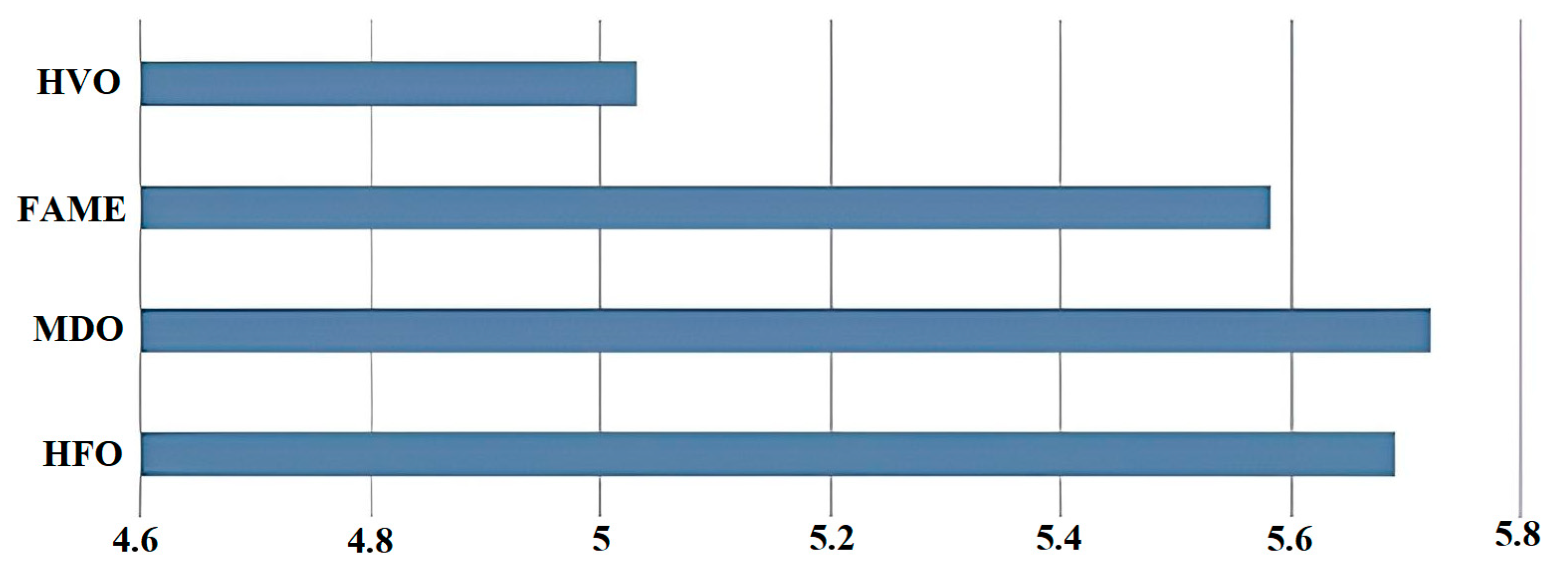
1. Introduction
It is a well-known fact that maritime transport plays a key role in the global economy, and that it accounts for over 80% of the total volume of international trade. The efficiency of this transport and commercial sector directly depends on the reliability, but, more than that, on the performance of the ship’s propulsion systems, especially on the slow-propulsion diesel engines that are mostly being fitted on board significant commercial vessels. However, the last decade came with increasing concerns about the environmental impact generated by these main engines, which have led to significant pressure on the maritime industry to adopt sustainable solutions regarding fuels and propulsion technologies. Among other potential solutions, biofuels have constantly been proposed as a strong and viable alternative to conventional fossil fuels, due to their prospective reduction in greenhouse gas emissions and other air pollutants [
1]. The use of many different types of biofuel in the maritime sector does not come without major challenges.
Current maritime propulsion systems were primarily designed for conventional fuels, and that is why these engines can have performance variations, accelerated wear, or even premature basic components failure due to the use of fuels with a different chemical composition. In this particular case, slow two-stroke engines, such as MAN B&W 6S70MC-C7, a maritime main engine fitted on board thousands of commercial ships, need to be carefully studied for their potential compatibility with biofuels in terms of combustion as well as the effects on internal components: fuel nozzles, valves, piston rings, pistons, lubrication pumps, etc. Thus, the study focuses on analyzing the possibility of using biofuels in the case of a marine engine that was designed to operate normally with the traditional fuels HFO (heavy fuel oil) and MDO (marine diesel oil). Starting from the premise that these biofuels can substitute traditional fuels, due to their physical and chemical properties, the impact of their use on certain more exposed components of the main engine (piston rings, cylinder head, liner, pistons, lubrication pumps), but especially on the components of the fuel supply system (nozzles, fuel pump, valves) is subsequently studied.
Table 1 details the main technical specifications of the engine.
In the last decade, more and more international regulations, especially those issued by the International Maritime Organization (known as IMO), have imposed increasing limits on sulfur content and greenhouse gas emissions generated by maritime engines [
2]. Well-known regulations, such as MARPOL—Annex VI and the IMO 2050 strategy, intend to gradually reduce carbon emissions generated by maritime transport. As a result, operators and engine manufacturers have to explore alternative fuels meeting these requirements without compromising operational safety and efficiency. Biofuels, especially those in the FAME (Fatty Acid Methyl Esters) or HVO (Hydrotreated Vegetable Oil) categories, as well as other derivatives from renewable sources, are intensely studied for their potential use in commercial maritime transport system, having already been tested on a pilot scale by major players in the field, such as Maersk, CMA CGM, or NYK.
The aim of this study is to evaluate the impact of the potential use of biofuels on the maintenance cycle and durability of the MAN B&W 6S70MC-C7 marine main engine components. In this regard, the main purpose is identifying the changes that have occurred in the fuel, injection, combustion, and lubrication systems, as well as the corrective and preventive measures necessary to maintain a high performance level. By correlating experimental data and operational experience, the study is intended to outline a clear picture regarding the behavior of this type of engine in the context of switching to the proposed alternative fuels.
The unique nature of the study lies in the fact that, although similar studies have been conducted in recent decades, no studies have been conducted on this type of marine engine, specifically the MAN B&W 6S70MC-C7. In previous studies, different topics regarding this matter have been presented, such as the one presented in reference [
3], which is focused on the production and usage of biofuels in the maritime industry, with a case study on Brazil. Reference [
4] presents a case study carried out on a container ship with similar dimensions to the one in this study, but with a different configuration regarding the propulsion system. On the other hand, reference [
5] summarizes the study of four types of biofuels used in the fuel system of the entire energy system on board a bulk carrier. The ship in this study has smaller dimensions, and the main engine, although also produced by MAN B&W, is type 5S60M-C8, having a lower nominal power. The biofuels analyzed are DAM, RMG380, B10, and B30. The methodology applied in this reference is similar to that in this article, but the results differ due to the different configuration of the energy system. Reference [
6] proposes a study for biofuels such as FAME and RMA10, presenting their applicability in the case of a different, medium-speed marine engine, the Yanmar 6N165LW, which is mounted on board a much smaller vessel. The only reference addressing the issue of the potential impact of biofuels on the operation and maintenance durability is reference [
7], addressing the subject of life cycle maintenance of the structural components of a maritime main engine, but it differs in its methodology, as it is based on an estimation method, covering a much wider range of biofuels, from LNG to B20. Reference [
8] presents a study that analyzes biofuels of the same type, but in the context of a small four-stroke engine with a maximum power of 7.3 kW. The results obtained in this study also confirm the applicability of biofuels in diesel engines.
2. Materials and Methods
In order to define the materials and methods, the theoretical basis has to be provided, being necessary for a better understanding of biofuels in a maritime context, highlighting their classification, relevant physicochemical properties, and implications for energy performance. Useful information and field data have been collected, studied, and evaluated for assessing the heat input and compatibility with onboard installations designed for the operation of main engines [
3]. The main engine performance data have been measured for a specific oil tanker, DIMITRIS P., and validated with data from technical aspects available from other similar studies made by marine engine manufacturers. Thus, the main source of materials used in this study is based on the operational experience of the same type of engine, as well as similar studies available on the topic. These elements are essential in the applied analysis of the efficiency of and impact on the MAN B&W 6S70MC-C7 engine in a distinctive manner. This analysis was based on the fact that, in marine propulsion systems, fuel energy efficiency is an essential factor in the design and operation of the engine and its auxiliary systems. That is why it is important to project a comparative analysis of fossil fuels versus alternative fuels (such as FAME, HVO, etc.) from the perspective of energy input. In a basic way, biofuels can be grouped as follows:
- -
First-generation—vegetable oils, sugars, starch (FAME, bioethanol);
- -
Second-generation—agricultural waste, cellulose, forestry residues (HVO);
- -
Third-generation—algae and high-yield microorganisms;
- -
Synthetic fuels—obtained through chemical synthesis (e-fuels) [
9].
Basic characteristic heat values of the main fuels used in navigation are defined by the heat value, a parameter directly influencing the specific consumption of the main engine. A fuel with a LHV (lower heating value), such as FAME, will generate less useful power, requiring a higher feed rate. The physicochemical and economic properties of the fuels considered are briefly presented in
Table 2.
The differences between them in terms of heat value, viscosity, and oxidative stability are parameters directly influencing the combustion behavior and the overall efficiency of the main engine and the most important maintenance requirements. At the same time, parameters such as hygroscopicity and unit cost have implications for storage logistics and operational profitability. Thus, the physicochemical properties of these fuels, from a maintenance perspective, can be summarized as
- -
Viscosity—has a strong influence on atomization and injection, with FAME having a higher viscosity, while HVO has a viscosity similar to MDO;
- -
Flash point—influences safety and cold starting, with HVO having a slightly higher flash point than FAME;
- -
Oxidation stability—FAME degrades easily, while HVO is very stable;
- -
Hygroscopicity—FAME attracts water, increasing th risk of corrosion;
- -
Oxygen content—FAME has integrated oxygen conserving clean combustion, but also accelerated oxidation [
4].
Understanding the physicochemical properties of these fuels helps to highlight certain advantages and disadvantages:
- -
Advantages—low CO2, SOx emissions, high flash point (ensuring a high safety index), renewable sources-based, and partial compatibility with, existing marine main engines;
- -
Disadvantages—lower heating value (especially for FAME), increased hygroscopicity, high production costs, reduced oxidation stability (in the case of FAME), and special storage requirements [
4,
9].
The main regulations and standards that define and stimulate the usage of biofuels in the maritime industry are
- -
MARPOL Annex VI—regarding emission limits for SOx, Nox, and CO2;
- -
IMO 2050—on global emission reduction by 50% by 2050;
- -
ISO 8217—this being the international standard, including specifications for biofuels;
- -
FuelEU Maritime (EU)—regional regulation that requires low carbon content for fuel used in European ports [
4].
It is important to mention that, in practice, biofuels are not always used in their pure form, but in the form of Bx type standardized blends, with x representing the percentage by volume of biofuel. Common examples for the maritime industry are B20 (meaning 20% FAME + 80% MDO—marine diesel oil) or B100 (meaning 100% biofuel, pure FAME, or HVO). A critical factor in the adoption of biofuels is their interaction with fuel system materials, including gaskets, hoses, pipes, and injectors. FAME biofuels, in particular, are hygroscopic, i.e., they absorb moisture from the atmosphere, which can promote the corrosion of metal surfaces, degradation of elastomers, or formation of biofilms and microorganisms.
The MAN B&W 6S70MC-C7 engine is a slow-speed marine main engine, designed to operate in a constant load and is optimized for direct propulsion of a fixed-pitch propeller. It operates according to the two-stroke diesel cycle, meaning that each cylinder performs a complete combustion with each complete rotation of the crankshaft.
Components such as injectors, piston rings, pistons, and exhaust valves are directly influenced by the quality and chemical composition of the fuel used in the operation. First of all, chemical changes (oxygen content, hygroscopicity, fatty acids) in biofuels can have an impact on the combustion (time, pressure, detonation), lubrication, cooling and deposit formation, and chemical/corrosive wear [
10].
When using biofuels on the operation of this maritime main engine, the following specific difficulties may occur:
- -
Viscosity variations—especially in the case of FAME (biodiesel), the higher viscosity at low temperatures can affect the formation of the fuel jet and lead to incomplete atomization;
- -
Deposits and sediments—over time, impurity accumulations can occur in the injection channels, reducing the pressure and quality of the injection. This phenomenon affects consumption and increases component wear;
- -
Internal corrosion—compounds, such as peroxides or free fatty acids present in some biofuels types, possibly accelerate the corrosion of metal elements in pumps and injectors;
- -
Poor lubrication—especially with HVO, being very pure, can lead to mechanical wear between parts in contact, if protective additives are not used [
11].
In regard to the lubrication system, the oil is required to compensate for decreases in lubrication due to biofuels, while the Total Base Number (TBN), i.e., the acid neutralization capacity, must be monitored, especially in the presence of HVO. The LDCL (load dependent cylinder liner) cooling system—present in the 6S70MC series—contributes to maintaining the optimal temperature of the liners, protecting them from acid wear.
Biofuels introduce new parameters into these cycles, having a direct impact on sustainability and maintenance routines [
11,
12]. In
Table 3, a brief comparison is presented on the main impacts that biofuels can have on different components of the combustion system of the main engine.
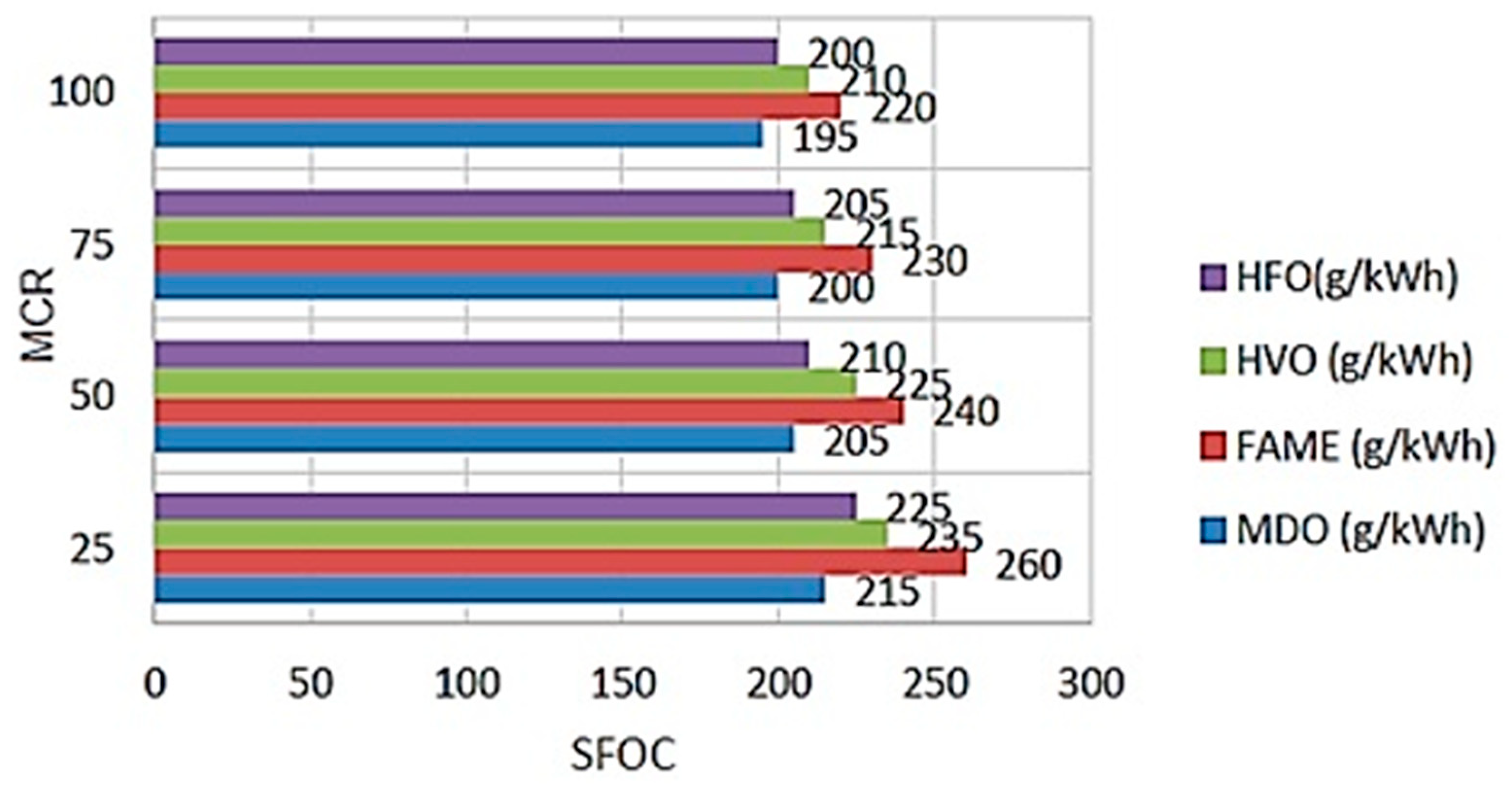
The use of biofuels in marine diesel engines, such as the MAN B&W 6S70MC-C7, has a strong impact on a number of essential operational parameters, with particular regard to the combustion process, energy efficiency, and thermal behavior. Among the alternative fuels, FAME and HVO have distinct characteristics that affect how the engine operates at different load regimes. Furthermore, SFOC (specific fuel oil consumption) expresses the amount of fuel required to produce one kilowatt-hour of useful energy and it is influenced by the lower heating value (LHV), combustion efficiency, and engine adaptation to the fuel type.
Figure 1 shows a comparison of the variation in SFOC as a function of engine load for four types of fuel. The data presented in this figure is a graphic representation of the technical characteristics obtained by analyzing the available information regarding the calculation of specific fuel consumption in relation to the main engine load when operating with the four types of fuels.
The operating mode of the MAN B&W 6S70MC-C7 marine diesel engine is directly influenced by the physicochemical characteristics of the fuel used. The stability of the fuel under various load conditions, especially during cold starts and prolonged ballast operation, has a major impact on overall reliability, consumption, and maintenance duration.
FAME (biodiesel B100) has a high availability, relatively clean combustion, and low sulfur content. At low loads, such as 30–50% MCR (maximum continuous rating), speed oscillations and ignition instability may occur, due to slow and uneven combustion [
14,
15]. It also has pronounced hygroscopicity and it tends to absorb water, favoring microbial contamination and the formation of biofilms in fuel tanks. With this type of fuel, oxidative degradation over time is accelerated without additives.
HVO has a low and constant viscosity, being close to marine diesel. With it, the main engine starts easily in cold weather, being suitable even in low temperature operational conditions. It behaves stably in all load regimes, including prolonged operation in ballast. It has excellent chemical stability to oxidation, which makes it ideal for long-term storage without degradation, and it does not contain reactive oxygen, so it does not favor the formation of deposits or corrosion.
On the other hand, classic fuels, such as MDO (marine diesel oil), ensure predictable and stable behavior, being designed for standard operation in marine installations. At low loads, it maintains an acceptable combustion regime, but it can generate light deposits, especially if the injectors are worn. In case of long-term storage, it may require periodic recirculation to prevent stratification or contamination. HFO (heavy fuel oil) requires constant heating in all stages (storage, supply, injection) [
16]. With it, cold starting is impossible without preheating and, at a reduced load, combustion is inefficient, generating smoke, soot deposits, and risk of partial detonation. It can contain impurities (vanadium, particles, sediments) that negatively influence combustion stability and it presents physical instability during storage, requiring constant homogenization and filtration.
When studying the combustion chamber, FAME has a risk of incomplete combustion, especially at low loads, and that is why deposits are formed, affecting the efficiency and durability of pistons and liners. On the opposite side, HVO provides complete combustion, without residues, maintaining the integrity of the combustion chamber, while MDO is stable and has constant combustion, with good efficiency in all modes [
17].
The use of biofuels in the case of this engine implies a careful revision of the preventive maintenance plan, compared to the standard regime applicable to conventional fuels. In the case of FAME, in particular, the unstable chemical characteristics and the tendency to microbial contamination require a stricter monitoring and intervention regime, as mentioned in
Table 4.
Cylinder lubricating oil plays an essential role in protecting the components from the combustion chain (such as liners, rings, pistons, cylinder heads, and others) by lubricating, cooling, and neutralizing the acids resulting from the combustion process. The type of fuel used directly influences the chemical stability of lubricating oil, its service life, and the frequency of changes it may need. When operating on FAME, there is a risk of introducing major chemical risks to oil stability by the means of incomplete combustion that favors the penetration of undegraded fuel into the oil film, which leads to high contamination. Oxygenated and esterified compounds in FAME lead to the formation of fatty acids, which can generate the accelerated decrease in the TBN [
18]. If the TBN drops below 10, there is a risk of chemical corrosion of the cylinder walls, seizure, and premature wear, and that is why it requires the use of oils with a TBN higher than 70 and frequent monitoring (e.g., once every 500 h).
3. Results
Operational experience and practical data showed that the components most affected in the long term by alternative fuels for the MAN B&W 6S70MC-C7 marine engine are
- -
rings and pistons—being exposed to hard, potentially abrasive deposits (FAME);
- -
injectors—with a high risk of blockage or corrosion due to chemical contaminants;
- -
exhaust valves—may suffer more accelerated thermal and mechanical degradation.
The use of biofuels in maritime propulsion involves not only technical adaptations, but also a reassessment of operating costs, auxiliary systems compatibility, and fuel stability over time. The results presented from this point forward show the logistical and operational implications specific to each fuel, with a focus on maintenance, storage, and additive requirements for the MAN B&W 6S70MC-C7 marine engine [
19].
As proven, the 6S70MC-C7 main engine can operate efficiently with biofuels, provided that the operating strategy is aligned with the chemical characteristics of the fuel. FAME requires increased control and adaptive maintenance, while HVO is a robust solution for a safe and predictable energy transition.
The performance of the MAN B&W 6S70MC-C7 engine varies depending on the type of fuel used and the load parameters at which it operates. The comparison between fuels is made based on standard operational parameters such as SFOC, exhaust gas temperature (EGT), mean effective pressure (MEP), and combustion behavior. In order to evaluate the performance of the MAN B&W 6S70MC-C7 engine and the impact of biofuels on energy efficiency, two representative operating regimes are considered:
- -
Scenario no. 1—Reduced load regime (30–50% MCR). This operational condition is typical for ballast navigation (with no freight on board), port maneuvering, and economic conditions of low speed (slow steaming). This is the regime in which FAME and HVO can accentuate the differences in operational behavior due to modified ignition and combustion.
- -
Scenario no. 2—Nominal load operation (75–100% MCR). This load scenario is characterized by high pressures and temperatures in the cylinders. It has a complete and stable combustion when the engine is powered by conventional fuels. The main engine has energy and mechanical efficiencies close to the maximum values. In this scenario, the differences between fuels are highlighted mainly by variations in SFOC, emissions, and operational stability.
For the second scenario, the parameters influenced by the fuel are detailed in
Table 5.
One of the most important reasons for introducing biofuels in maritime transport is their potential to reduce pollutant emissions, especially CO
2, NO
x, SO
x, and particulate matter (PM). The chemical nature and sulfur or oxygen content of the fuel directly influence the amount and type of emissions generated by the diesel engine in normal operation.
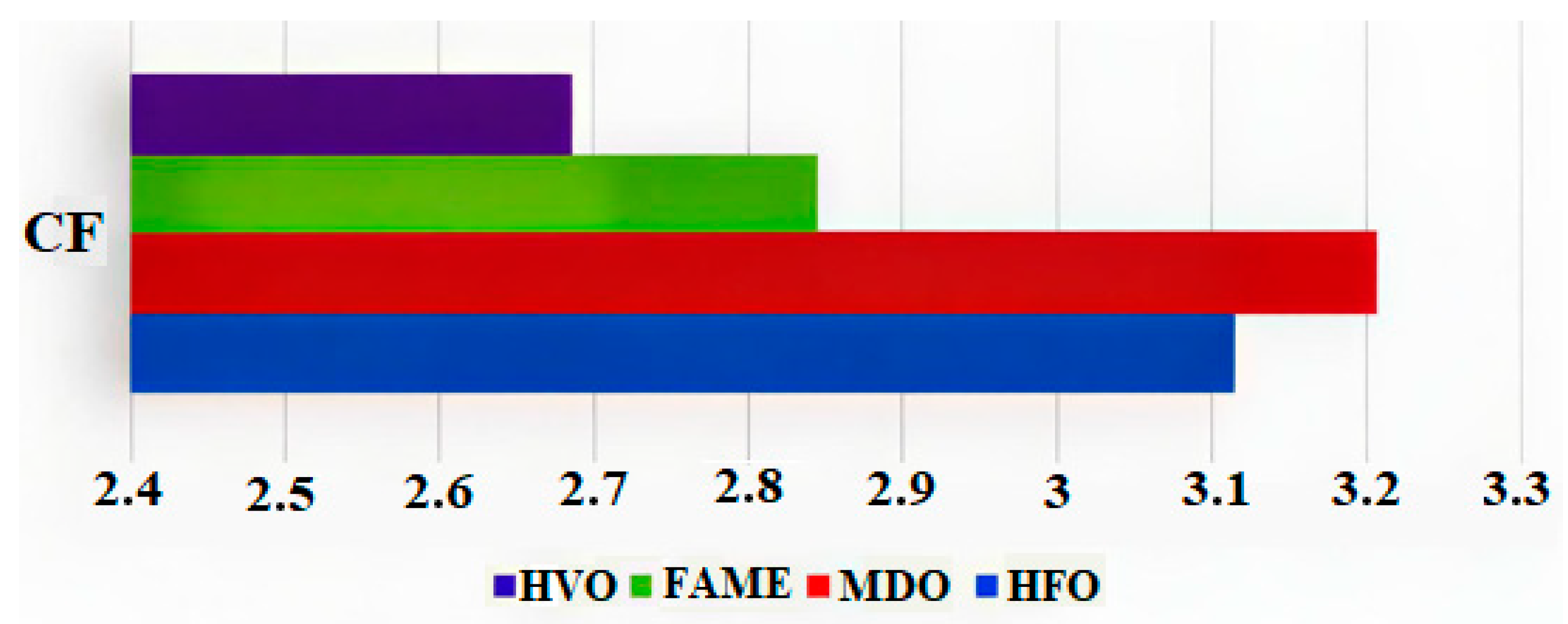
Figure 2 shows a comparative analysis between HFO, MDO, FAME, and HVO used in the MAN B&W 6S70MC-C7 engine, based on data synthesized from specialized literature and technical reports.
CO
2 emissions are proportional to the amount of carbon in the fuel and the total volume burned. From this point of view, the results show that FAME and HVO are considered neutral in the carbon life cycle because the carbon released was previously captured by photosynthesis [
20]. However, HVO generates less CO
2 per kilowatt-hour due to its HHV (higher heating value), which means that a lower fuel flow rate is required for the same energy delivered, while HFO, having a high carbon content, generates the highest amount of CO
2 at the same load.
The formation of NOx is mainly determined by the maximum combustion temperature and the duration of the combustion reactions in the cylinder. FAME, due to its high oxygen content, tends to increase the peak temperature and, implicitly, NOx emissions, especially at a high load. HVO has a behavior closer to traditional marine diesel, maintaining lower temperatures and a more controlled combustion.
The sulfur content of the fuel proportionally determines the SOx emission in the exhaust gases. It is well known that HFO contains between 2.5 and 3.5% sulfur, requiring the use of scrubbers to comply with MARPOL Annex VI regulations, while MDO has a low sulfur content (<0.5%), being already compatible with most ECA established areas. FAME and HVO are naturally sulfur-free, making them fully compliant with IMO SOx requirements, without the need for additional after-treatment equipment.
Additionally, HFO generates the most particulate matter, especially if an after-treatment system is missing, and this arises from incomplete combustion and the presence of aromatic compounds and other impurities. FAME may generate less PM, but with a smaller diameter (therefore these are more dangerous). HVO produces the least particulate matter and burns extremely clean, even without a particulate filter. Nevertheless, the usage of marine biofuels does not come without risks and there are corrective measures that have to be taken into account, especially:
- -
Fuel accelerated oxidation (FAME)—Biofuels are prone to oxidation in contact with air and at high temperatures. Oxidation leads to the formation of gums, resins, and deposits in injectors and filters;
- -
Water absorption (hygroscopicity)—FAME absorbs water from the atmosphere, increasing the risk of corrosion, cavitation, and the formation of microorganisms. This type of fuel also increases the frequency of fuel filter replacement;
- -
Reduced compatibility with fuel system materials—FAME can expand seals, crack elastomers, and affect pumps, and that is why compatibility with certified materials is required;
- -
LHV—Biofuels (especially FAME) have lower LHV with an increased flow requirement, which can cause a possible overload of fuel pumps;
- -
Reduced stability at low temperatures—The crystallization temperature can be high, with an increased CFPP (cold filter plugging point), increasing the risk of gelation in pipes and filters [
21].
Additional details regarding the main risks and recommended measures associated with the usage of biofuels and traditional fuels in the case of maritime main engines are presented in
Table 6.
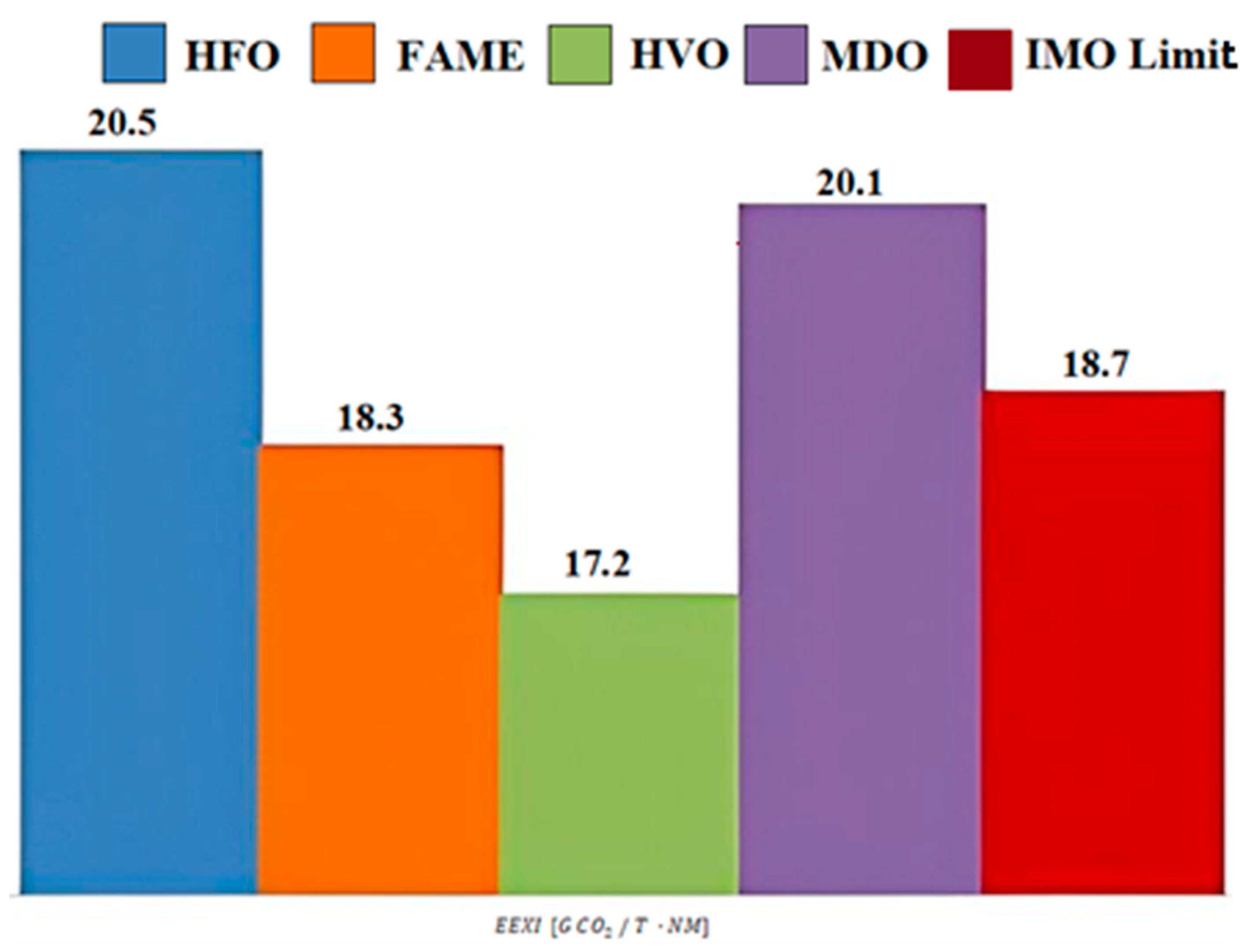
In the context of international regulations imposed by IMO on energy efficiency and emission reduction, the choice of fuel becomes a determining factor in the qualification of the ship. Biofuels, such as HVO and B30-type blends, directly influence the EEXI (Energy Efficiency Existing Ship Index), EEDI (Energy Efficiency Design Index), and CII (Carbon Intensity Indicator) values, even if the engine and propeller configuration remains the same.
Figure 3 presents the reference points for the four types of fuels studied in the context of EEXI.
The fuel type influences the CII through the total amount of CO
2 emissions. Although the distance and cargo may remain constant, the use of a fuel with a lower CF (e.g., HVO) leads to a better CII classification. The impact of fuel type on the CII indicator is shown in
Table 7.
4. Discussions
In the individual case of an oil tanker, the DIMITRIS P. vessel, operating with HVO, could theoretically reduce the EEXI by 10–12% compared to HFO, and the CII could be improved by one step. These results were obtained for a ship with a 157,000 dwt capacity, operating at a cruising speed of 15 knots. The data was collected while the ship was on voyage from La Havre to Houston (4900 nautical miles), with a total of 13.6 days of constant operating for the main engine, a MAN B&W 6S70MC-C7.
Table 8 includes the main parameter values used in these calculations.
The important data has been mentioned above, while the duration is 13.6 day or 326.4 h. The applied calculation for HFO EEDI is presented as an example, while the values for all types of fuels are detailed in
Table 9.
For HFO: SFOC = 205 g/kWh and CF = 3.114 gCO
2/g of fuel, resulting:
EEXI is an IMO-regulated indicator applicable to existing ships. It defines the amount of CO
2 generated per cargo ton and mile, under design conditions, using theoretical engine and fuel data. The official IMO formula is
The applied calculation for HFO EEXI is presented as an example, while the values for all types of fuels are displayed in
Table 9.
For HFO/SFOC = 205 g/kWh and CF = 3.114 gCO
2/g of fuel, resulting in:
It is obvious that the energy transition in the maritime sector requires clear measures to reduce emissions and increase energy efficiency. Slow diesel engines, the backbone of maritime propulsion, must adapt to new types of fuel without compromising reliability and performance [
24]. In this context, biofuels represent a promising direction, but they must be carefully analyzed, both from the point of view of energy efficiency and the effects on engine durability.
All these principles are applied in the case study of the MAN B&W 6S70MC-C7 main engine fitted on the DIMITRIS P. oil tanker, using approximate but representative data, as shown in
Figure 4, to validate the central ideas of the study and to provide an original and applicable contribution to the field of maritime engineering. In order to evaluate the impact of fuels on energy performance and emissions, a common set of operating conditions was defined, which are valid for the presented scenarios. These data reflect a realistic operating situation of the DIMITRIS P. vessel on a typical transatlantic voyage.
The formula for this indicator is
DWT = 157,000 t, while the distance is 65,000 mile (nine voyages), the CO2 mass is the total CO2 generated in one year, and the total annual energy generated by the main engine in one year is E = 21,000 kW ∙ 29,376.6 h = 61,657,600 kWh.
For HFO/SFOC = 205 g/kWh and CF = 3.114 gCO
2/g of fuel, resulting in:
The applied calculation for HFO CII is presented as an example, while the values for all types of fuels are displayed in
Table 8.
AER is an operational indicator of energy efficiency, expressed in tons CO
2/(ton DWT mile) and reflects how much CO
2 the ship emits for each ton of deadweight and mile traveled, calculated as
The applied calculation for HFO AER is presented as an example, while the values for all types of fuels are displayed in
Table 9.
To complete the energy efficiency and emissions analysis, it is essential to evaluate the total amount of fuel required and the useful energy obtained under real operating conditions. The calculations highlight the differences in autonomy and performance between fuels at the same engine operating mode [
5]. These values provide an insight into the energy autonomy and overall performance, being directly influenced by SFOC and LHV:
The applied calculation for the total amount of HFO is presented as an example, while the values for all types of fuels are displayed in
Table 8.
The values obtained are similar to the ones viewed in the operational experience of engines fitted on board on similar ships, as well in studies on the same subject, with slight differences in the case of the “m” parameter.
In the operation of the MAN B&W 6S70MC-C7 engine, the main engine components influenced by the nature of the fuel are the injectors, exhaust valves, piston rings, cylinder liners, and fuel filtration systems.
The injectors are the first to be influenced by the chemical nature of any type of fuel. In the case of FAME, deposits and sediments may occur, caused by rapid oxidation and the possible presence of microbiological contaminants. These deposits can lead to inefficient atomization and loss of jet symmetry. On the other hand, HVO was proved to have a clean and stable combustion, with a low risk of deposit formation, behaving very well even under variable load conditions. In comparison, conventional fuels require standard periodic cleaning but do not normally cause injector clogging in short intervals.
Exhaust valves, being directly exposed to combustion gases, operate in high temperature conditions and are influenced by the fuel chemistry itself. When operating on FAME, an increase in the maximum exhaust temperature is being noticed, and this can accelerate wear and erosion of sealing surfaces [
25,
26]. HVO, having an uniform combustion and a stable flame, reduces this risk and protects the valves more effectively than HFO, which in turn is mainly affected by the presence of sulfur and the formation of acidic compounds in the exhaust gases.
Piston rings, responsible for sealing the combustion chamber, can be influenced by soot and solid residues formed as a result of incomplete combustion or contaminated fuel. FAME tends to generate more solid deposits, especially at a reduced load operation, requiring more frequent maintenance interventions. HVO, with its purified composition and lack of sulfur, greatly reduces this phenomenon, offering protection similar to that observed when using MDO.
Cylinder liners can suffer increased wear if lubrication is compromised. Biofuels, especially FAME, can interfere with the oil film and accelerate the decrease in the TBN, leading to corrosive acids in the combustion chamber. This issue requires either more frequent oil changes or the use of lubricants with high-alkaline properties [
7]. HVO has not been proven to have a noticeable negative impact on lubrication, and its behavior is almost identical to that of marine diesel, maintaining a stable oil film.
Finally, fuel filtration systems are also subjected to greater stress in the case of operating on biofuels. FAME is prone to oxidation and can form sludge or strong deposits in the presence of oxygen or water absorbed from the atmosphere. Thus, the premature clogging of filters has been reported. HVO, being chemically stable and oxygen-free in structure, performs excellently, without requiring changes in the configuration of the filtration plant.
Based on this discussion, some relevant conclusions can be highlighted for ship operators, maintenance supervisors, and maritime engineers involved in making decisions regarding fuel choice and adapting existing systems:
- -
Energy performance depending on the type of fuel:
- ○
HVO offers the best energy efficiency (in normal and partial load operation modes);
- ○
MDO is stable and predictable, but has high CO2 emissions;
- ○
FAME (the B100 variant), has low energy performance and combustion is inefficient at low loads;
- ○
HFO has stable performance, but with high emissions and low compatibility with current regulations [
27].
- -
Impact on maintenance and wear:
- ○
HVO significantly reduces the frequency of cleaning and preventive maintenance operations needed;
- ○
FAME requires frequent inspections and the use of additives and creates a risk of filter and injector clogging;
- ○
In existing systems, the use of pure FAME requires technical reconfiguration, especially gaskets and filters;
- ○
When using HVO, no modification is required and it can be directly introduced into the existing installation [
28].
- -
Operational implementation guidance:
- ○
For operators seeking compliance with IMO requirements (EEXI, CII), switching from HFO to HVO or B30 can bring a 10–15% decrease in EEXI values, without mechanical changes;
- ○
For ships operating in a mixed intercontinental regime (cargo/ballast), HVO is preferable to FAME, performing much better in a part load regime;
- ○
For older ships or ships without an emission treatment system it is preferable to avoid using 100% FAME (only a blend lower than B30);
- ○
For technical personnel, it is recommended to calibrate the maintenance cycle according to the fuel used and check the oil TBN more frequently in case of oxygenated fuels (FAME). It is important to monitor the SFOC and exhaust gas temperature if alternative fuel is used [
29].
- -
Energy Transition Perspectives:
- ○
HVO is currently the most beneficial solution for decarbonizing the world commercial fleet without major investments;
- ○
The use of B30 in different stages (20%, then 30%) can be a good intermediate step to assess the performance of marine main engines;
- ○
The SEEMP (Ship Energy Efficiency Management Plan) should reflect the changes in the fuel mix and include an emissions control and maintenance strategy [
28,
29].
The limitations of the study are represented by the extent of the use of these types of fuel in the commercial fleet. Although practical examples and studies have confirmed that these fuels can successfully replace traditional fuels, their costs are still quite high. Some companies have implemented policies whereby their ships use blends of traditional fuels with biofuels, but there are no ships that use 100% biofuels. For these reasons, extensive operational experience is not available and the information base is limited. In order to study the potential impact of biofuels on the operation and maintenance durability of marine main engine components, more suitable data should be made available. At the same time, a series of practical studies should be carried out on a wider range of types of marine engines, especially dual-fuel ones, using LNG and HFO. The expected results would be much better considering that in this situation two types of biofuels are used.
5. Conclusions
HFO remains a cheap and widely used fuel, but with a significant negative impact on the environment. It has a high sulfur and particulate content, requiring scrubbers to comply with MARPOL regulations. It also generates deposits and requires high TBN lubricants. It is not compatible with the new IMO requirements without technical and operational adaptations.
MDO is a distillate fuel, with low viscosity, lower emissions, and efficient combustion. It is compatible with existing installations, is easy to handle, and requires moderate maintenance. It is the reference base against which biofuels are analyzed. In terms of emissions, MDO complies with the requirements for ECA areas, but does not contribute significantly to decarbonization.
FAME is a first-generation biofuel, obtained from vegetable oils or animal fats. It has low CO2 and SOx emissions, but its chemical behavior raises significant issues, such as hygroscopicity, accelerated oxidation, storage instability, and risk of deposit formation. It requires more frequent inspections and maintenance, adaptations of sealing materials, and specialized additives. It is suitable for B20–B30 blends, but its pure use (B100) involves increased operational risks.
HVO is considered the most advanced and efficient biofuel currently available. It has excellent chemical stability, clean combustion, and very low emissions and is fully compatible with existing diesel installations. It does not require additives, does not affect maintenance frequency, and can be used in its pure form (HVO100) without major modifications. From a technical point of view, HVO has proven the best balance between performance, reliability, and sustainability.
Among the four fuels that were analyzed, HVO stands out as the most balanced option for the energy transition in maritime transport, meeting both environmental and reliability requirements. FAME, while having potential for emission reduction, is more suitable for use in blending, especially if the installation is not fully adapted. MDO remains a stable and transitional solution, while HFO requires additional technical measures to remain usable in the context of current regulations.
EEDI and EEXI were significantly more favorable for HVO, demonstrating its high energy efficiency even compared to conventional fuels such as MDO. CII, as an annual operational indicator, showed that switching to biofuels reduces emission intensity and can improve the ship’s energy classification by up to two notches (e.g., from D to B). From the perspective of total consumption and useful energy generated, HVO proved superior in terms of efficiency and stability, offering both a technical and economic advantage over time. FAME, in its pure form (B100), generated the worst energy performance, and its unstable behavior at low loads makes it a suitable option only for blends (B20–B30), and not for direct use without adaptations.
The impact assessment on the maintenance cycle highlighted the fact that biofuels have real influences on component wear, requiring periodic revision of the maintenance plan depending on the type of fuel used.
By integrating the results obtained, it can be confirmed that biofuels, especially HVO, can be used in marine main engines without major compromises in terms of performance, reliability, or maintenance, and bring important benefits in terms of emissions and compliance with international regulations.
Considering the IMO objectives regarding the decarbonization of the maritime sector and the increasing pressure on the industry for the energy transition, the following research and applicability directions can be formulated:
- -
Experimental testing on more types of commercial ships of HVO + MDO and FAME + MDO mixtures in variable proportions (B20–B50) is needed to establish optimal limits;
- -
Integration into SEEMP of new types of fuels, with real-time monitoring of consumption and emissions through automated systems (e.g., Kyma, Fobas);
- -
Correlating the use of biofuels with the optimization of the voyage profile, so as to maximize energy performance on specific routes (short vs. long, ballast vs. loaded, two-stroke vs. four-stroke);
- -
Adapting maintenance plans according to the fuel type and operating regime by developing predictive algorithms based on historical data and operational experience;
- -
Assessing the long-term economic impact, taking into account the reduction in indirect costs and not only the immediate price of the fuel.