5.1. Polar Target Data Testing Based on YOLOv5n, YOLOv8n, and YOLOv11n
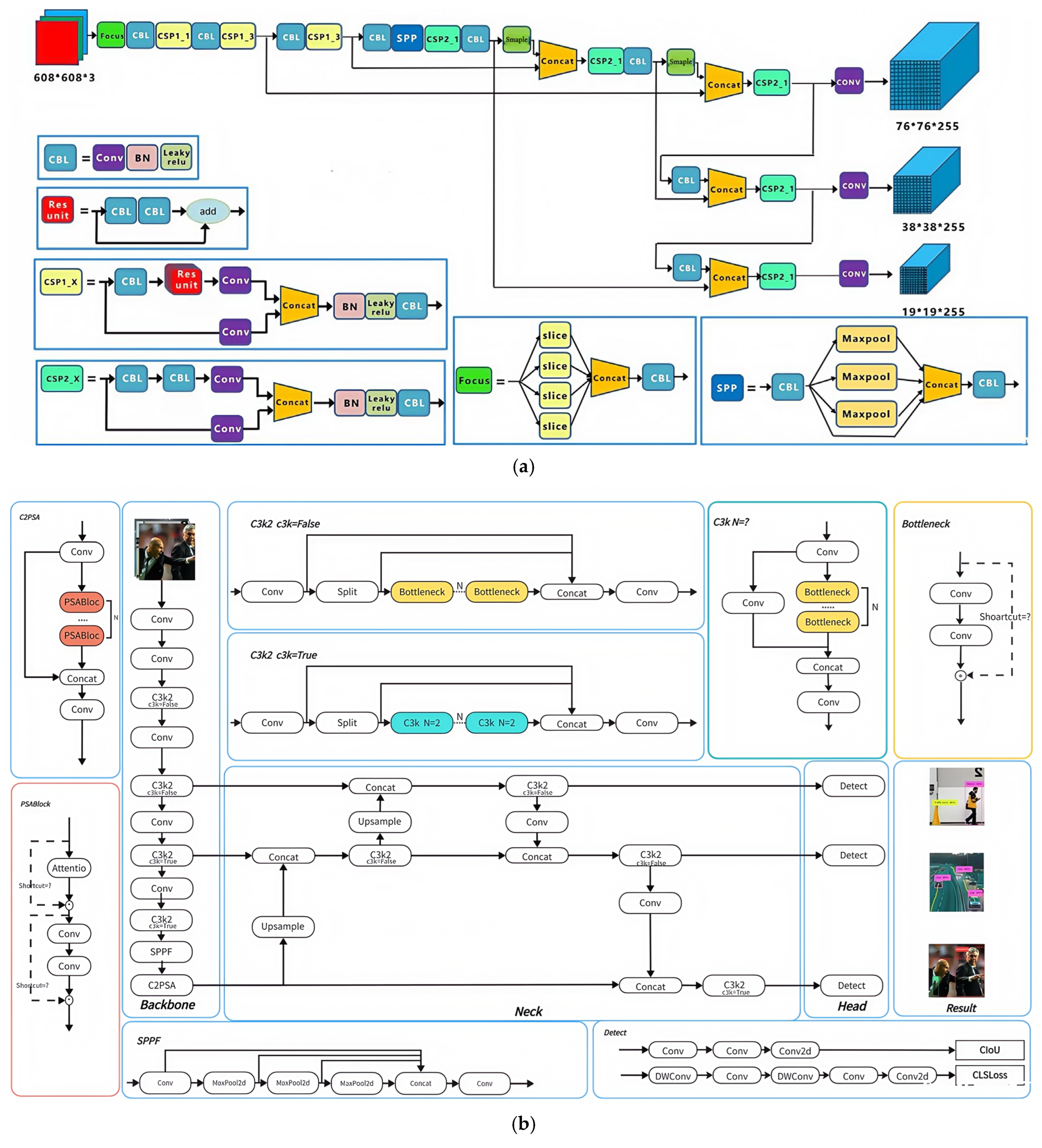
The network architecture of YOLOv5n is shown in
Figure 7a [
25]. Its structure includes key modules such as Focus, CBL, CSP1_X, CSP2_X, SPP, and PAN: the Focus module processes the 608 × 608 × 3 input image to reduce spatial dimensions while retaining feature details; the CSP1_X and CSP2_X modules realize cross-stage feature fusion through residual connections to avoid gradient disappearance; the SPP module enhances large-target feature extraction; and the PAN structure fuses multi-scale features (76 × 76 × 255, 38 × 38 × 255, and 19 × 19 × 255) to improve small-target detection [
25].
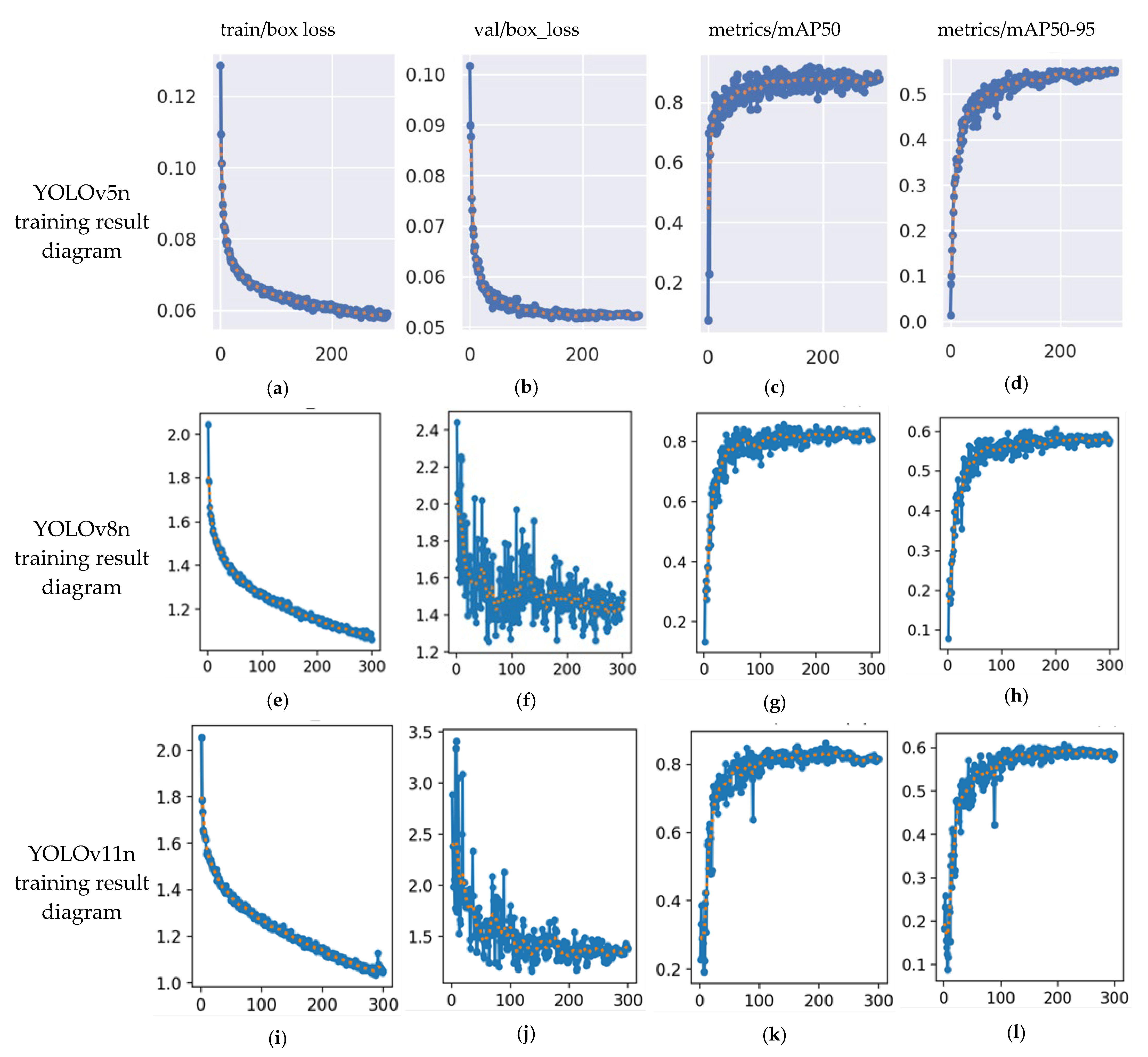
The training results of YOLOv5n are shown in
Figure 8. It can be observed that during the training and validation processes, losses including box_loss, cls_loss, and obj_loss all exhibit a decreasing trend (e.g., train/box loss in
Figure 8a drops from 0.12 to around 0.06; val/box_loss in
Figure 8b decreases from 0.10 to around 0.05), while precision and recall increase gradually. This reflects that the model gradually tends to converge during training, and its detection performance for polar targets improves progressively. Meanwhile, the validation loss follows a consistent trend with the training loss, indicating that the model does not have obvious overfitting [
25].
YOLOv8n is selected as the baseline model for subsequent optimization, as it inherits the advantages of previous YOLO versions and incorporates in-depth improvements: it uses the C2f module and efficient feature fusion to enhance detection accuracy and adapt to complex polar scenarios; the Anchor-Free detection head simplifies the structure, improves inference speed, and enhances small-target detection while reducing computational cost and memory usage; it optimizes bounding-box regression with CIoU loss and DFL loss, and uses binary cross-entropy for classification to further strengthen detection robustness [
3].
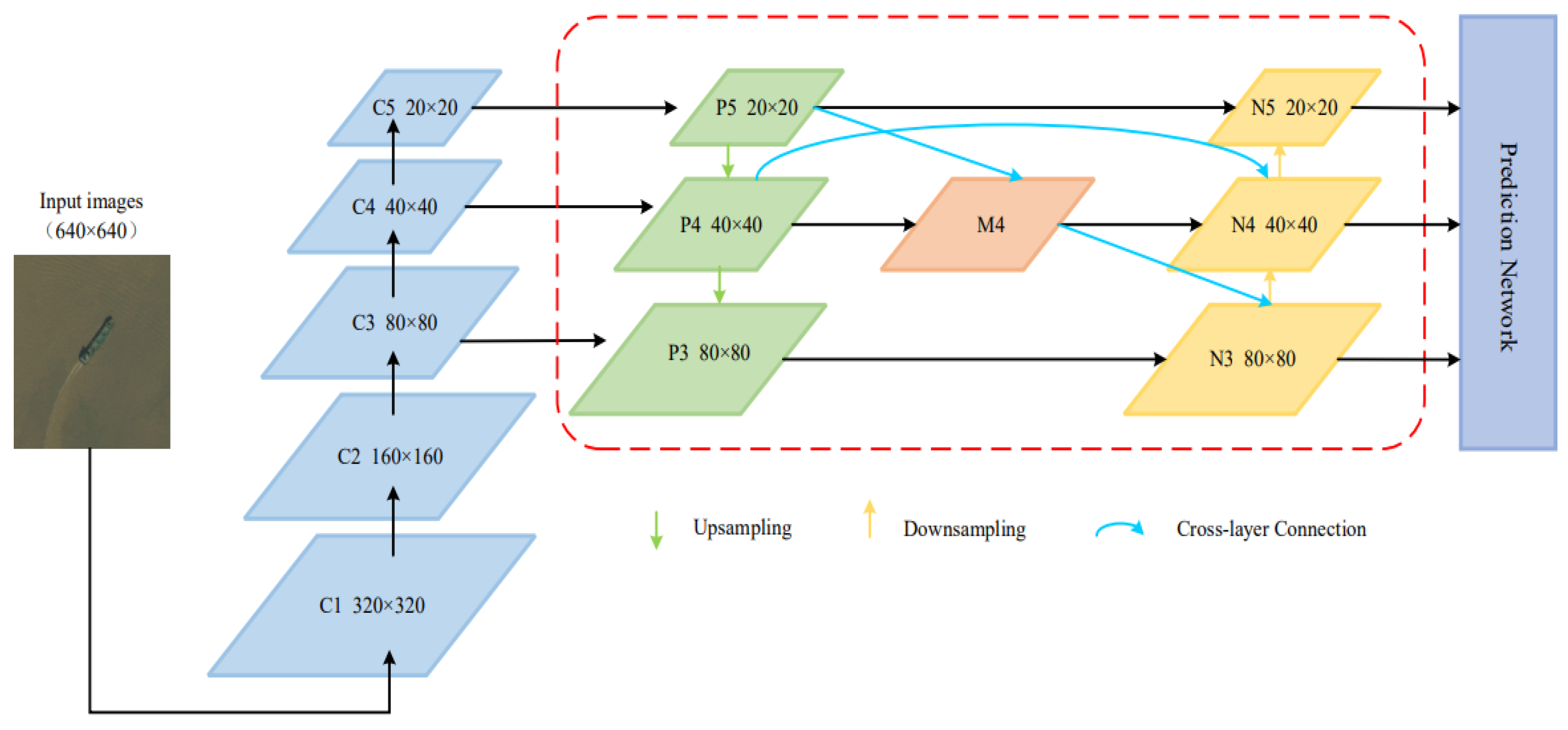
The YOLOv8n network consists of three core parts: the backbone (extracts features layer by layer from low to high levels), neck (adopts the PAN concept to fuse multi-scale features and improve detection accuracy), and head (uses a decoupled design for accurate target localization and classification). The training results of YOLOv8n are shown in
Figure 8: both training and validation losses (including box_loss, cls_loss, and dfl_loss) present a decreasing trend (e.g., train/box loss in
Figure 8e drops from 2.0 to around 1.2), while precision and recall increase gradually. The validation loss has the same trend as the training loss, indicating that the model does not suffer from significant overfitting and has good adaptability to polar environmental targets [
3].
To facilitate an intuitive understanding of the convergence speed, final performance, and overfitting status of each model, we now conduct an integrated comparison. YOLOv5n starts with the lowest train/box loss (0.12) and val/box loss (0.10), with its loss curves declining smoothly and steadily, achieving the lowest final train/box loss (≈0.06) and val/box loss (≈0.05), and metrics/mAP50 reaching around 0.8; its loss curves are the smoothest, with validation loss strictly following training loss, showing no obvious overfitting. YOLOv8n, as the baseline model, starts with a train/box loss of 2.0, converging to around 1.2, balances efficiency and accuracy with metrics/mAP50 around 0.6 and metrics/mAP50-95 around 0.4, and its validation loss has the same trend as training loss, with slight fluctuations but no significant overfitting. YOLOv11n also starts with a train/box loss of 2.0 but converges slightly faster to around 1.0, outperforms in metrics/mAP50 and metrics/mAP50-95, demonstrating the strongest feature capture ability, and its validation loss is consistent with the training loss trend, with no obvious overfitting. Through this comparison, readers can clearly discern the strengths and characteristics of each model in convergence speed, final detection performance, and generalization ability, offering a clear reference for selecting appropriate models for different polar target detection scenarios.
The network architecture of YOLOv11n is shown in
Figure 7b. Its structure includes modules such as C2PSA, C3k, C3k2, PSABlock, and SPPF: the C2PSA and PSABlock modules enhance feature extraction and attention to polar targets; the C3k and C3k2 modules optimize cross-stage feature fusion; and the SPPF module improves the extraction of large-target features (e.g., icebergs) [
3].
The training results of YOLOv11n are shown in
Figure 8. During both training and validation phases, losses including box_loss, cls_loss, and dfl_loss show a decreasing trend (e.g., the train/box loss in
Figure 8i decreases from 2.0 to around 1.0; the val/box_loss in
Figure 8j drops from 3.5 to around 2.0), while precision and recall increase gradually. This reflects that the model gradually converges during training. Notably, its convergence speed is slightly faster than that of YOLOv5n, and the consistent trend of validation loss and training loss further demonstrates that the model has no significant overfitting issue, with stable detection performance for polar environmental targets [
3].
5.2. Data Testing of Polar Target Datasets with Different YOLO Versions
Three sets of experiments are conducted on the polar target dataset using different YOLO versions. Training is carried out in the same environment to ensure comparable results. As shown in
Table 4, the evaluation metrics include average precision (AP, measuring the detection capability of a single category), mean average precision (mAP, comprehensively evaluating all categories), and detection rate (FPS, reflecting real-time performance) [
16,
17,
18].
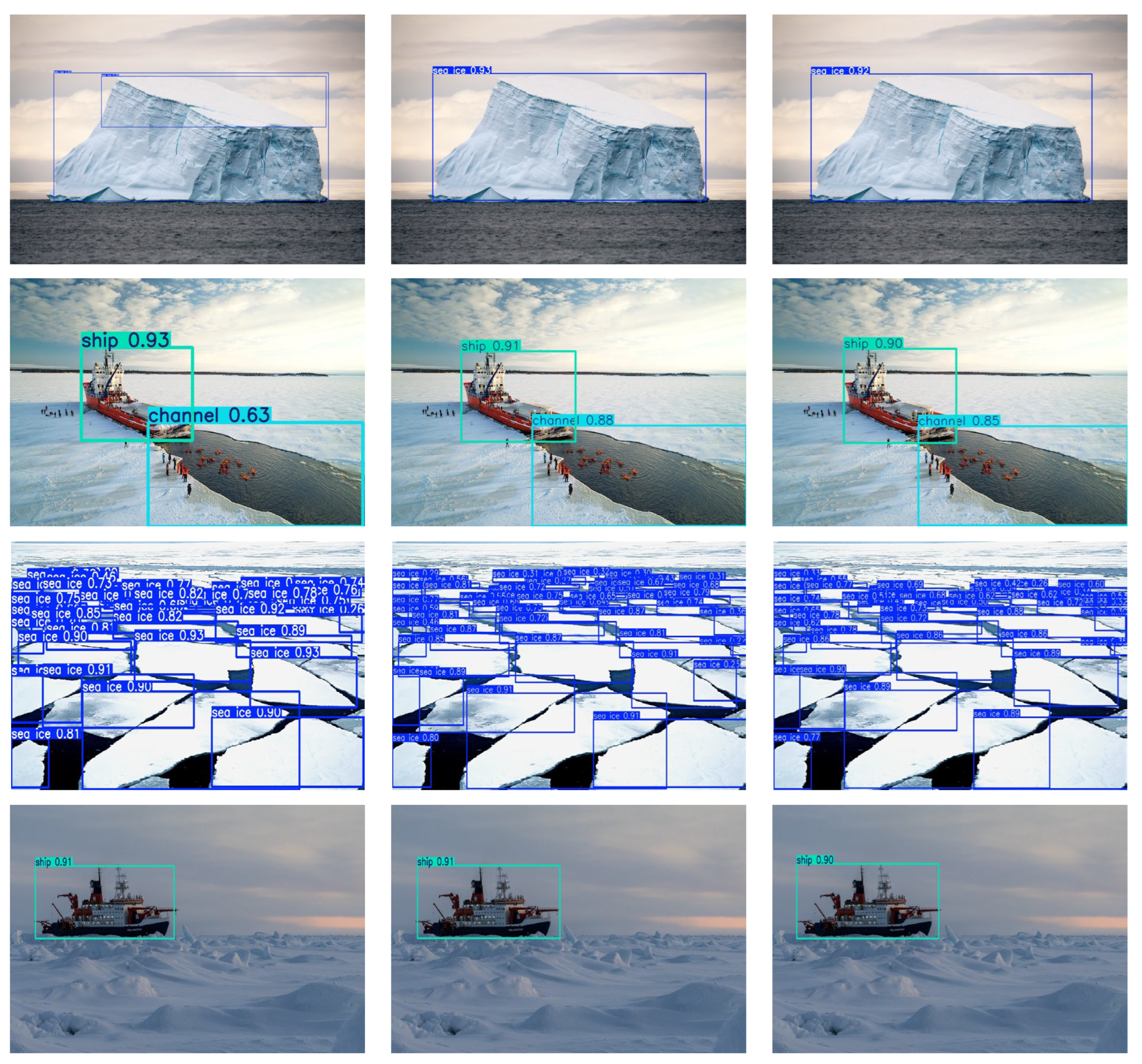
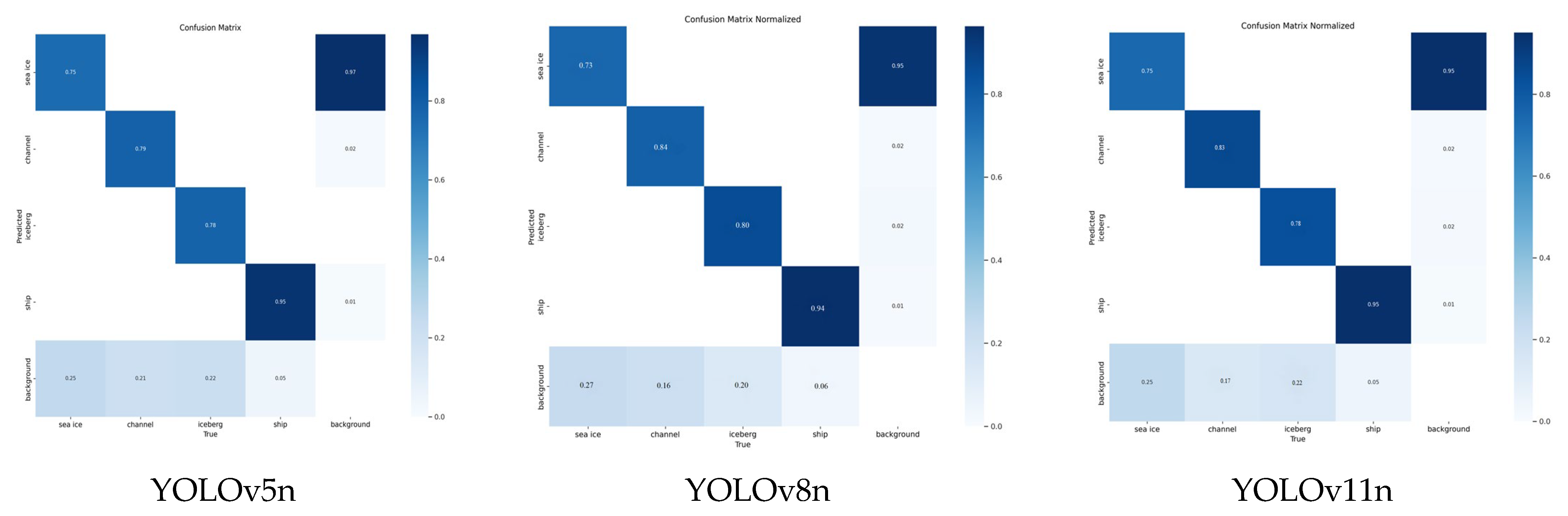
The comparison of test results of polar target datasets for different YOLO versions is shown in
Figure 9.
From the above results, it can be seen that the accuracy of YOLOv5n [
25] is slightly lower than that of YOLOv8n [
3], and the model is only 3.9MB, making it suitable for deployment on resource-constrained devices; the mAP of YOLOv8n reaches 0.830, leading the way, and its detection speed (FPS) is the fastest, with a single-image detection time of 6.8 milliseconds, achieving a good balance between accuracy and real-time performance; and YOLOv11n performs well in small-target detection (higher accuracy and recall), but its detection speed is slightly slower (9.2 milliseconds per image).
By comparing the performances of YOLOv5n, YOLOv8n, and YOLOv11n in polar environmental target detection, the following conclusions can be drawn.
YOLOv5n is suitable for deployment on resource-constrained devices due to its lightweight nature; YOLOv8n achieves a good balance between accuracy and real-time performance, making it suitable for most application scenarios; and YOLOv11n performs well in small-target detection and is very suitable for identifying various small targets in polar environments. The polar target dataset proposed in this paper can effectively support the target detection tasks of YOLO models in polar environments [
3,
25].
5.3. Cross-Scene Transfer Adaptability of Improved Modules and Polar-Specific Value
Polar environments present unique extended challenges: low-temperature sensor noise, drastic polar day–night illumination changes, dynamic sea ice evolution, and low-power edge deployment constraints. The selection of CBAM, SE, SCConv, AKConv, and BiFPN is based on precise alignment between module functions and polar characteristics, validated by cross-scene applications and relevant studies [
14,
15].
Polar low temperatures cause sensor noise, while extreme illumination distorts target features. CBAM/SE enhances effective feature channels and spatial regions to suppress noise and extract weak signals [
14]. Proven in low-temperature SAR image processing and low-light detection, these mechanisms improve feature distinguishability between sea ice and noise, ensuring robust detection under harsh lighting.
Polar detection relies on edge devices with limited computing power and solar endurance. SCConv’s “channel spatial reconstruction” reduces parameters and computation while mitigating overfitting on small polar datasets. Similar lightweight convolutions have enabled real-time, low-power detection on Antarctic UAVs, matching this study’s small-sample and deployment needs.
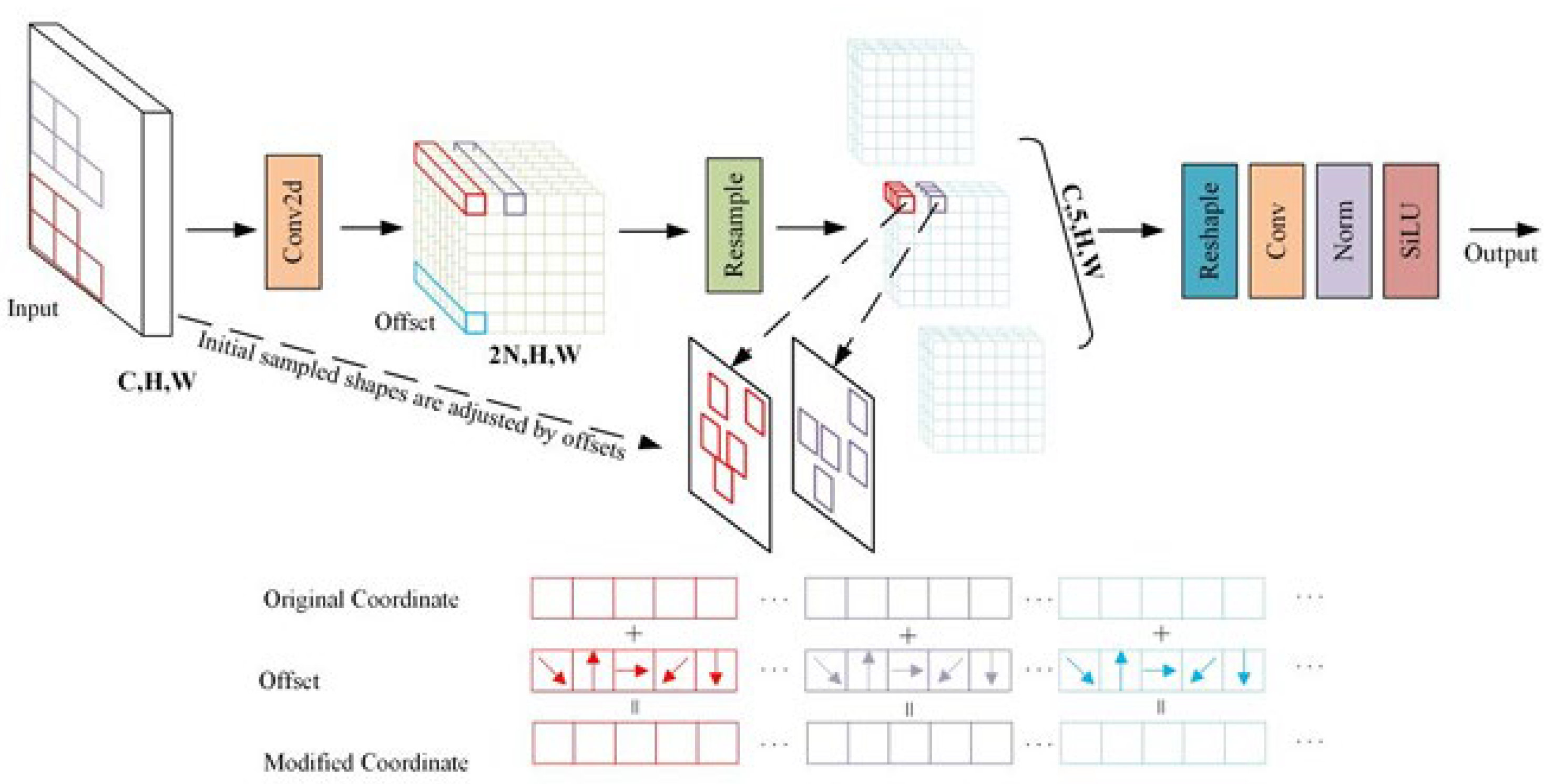
Polar sea ice evolves dynamically (calving, aggregation, and thawing), posing challenges for fixed-kernel convolutions. AKConv’s dynamic sampling adapts to irregular, changing morphologies, as validated in dynamic target detection studies. It improves capture of iceberg edges and broken ice distribution, enhancing recall for dynamic polar targets.
Polar day–night illumination causes overexposure of large targets and attenuation of small ones. BiFPN’s bidirectional weighted fusion calibrates unbalanced scale features [
15], as demonstrated in Antarctic ice channel monitoring. It stabilizes detection accuracy across extreme lighting, outperforming traditional FPN in multi-scale target alignment.
These modules address polar-specific challenges: noise suppression (CBAM/SE [
14]), low-power adaptation (SCConv), dynamic morphology capture (AKConv), and illumination calibration (BiFPN [
15]). Their cross-scene validation ensures engineering practicality, balancing accuracy, efficiency, and deployment feasibility for polar scientific research and navigation.
5.4. Comparison of Improvement Effects
This experiment is based on the PyTorch framework and GPU (Windows 11 system, Intel Core i9-12900H, NVIDIA RTX3050Ti, CUDA 11.8, and Python 3.8). The epoch is set to 300, the batch size is 8, the learning rate is 0.01, the confidence threshold is 0.5, and the non-maximum suppression threshold is 0.3. The model is trained from scratch in this experiment. A single training takes about 7 h, and a total of 56 h is required.
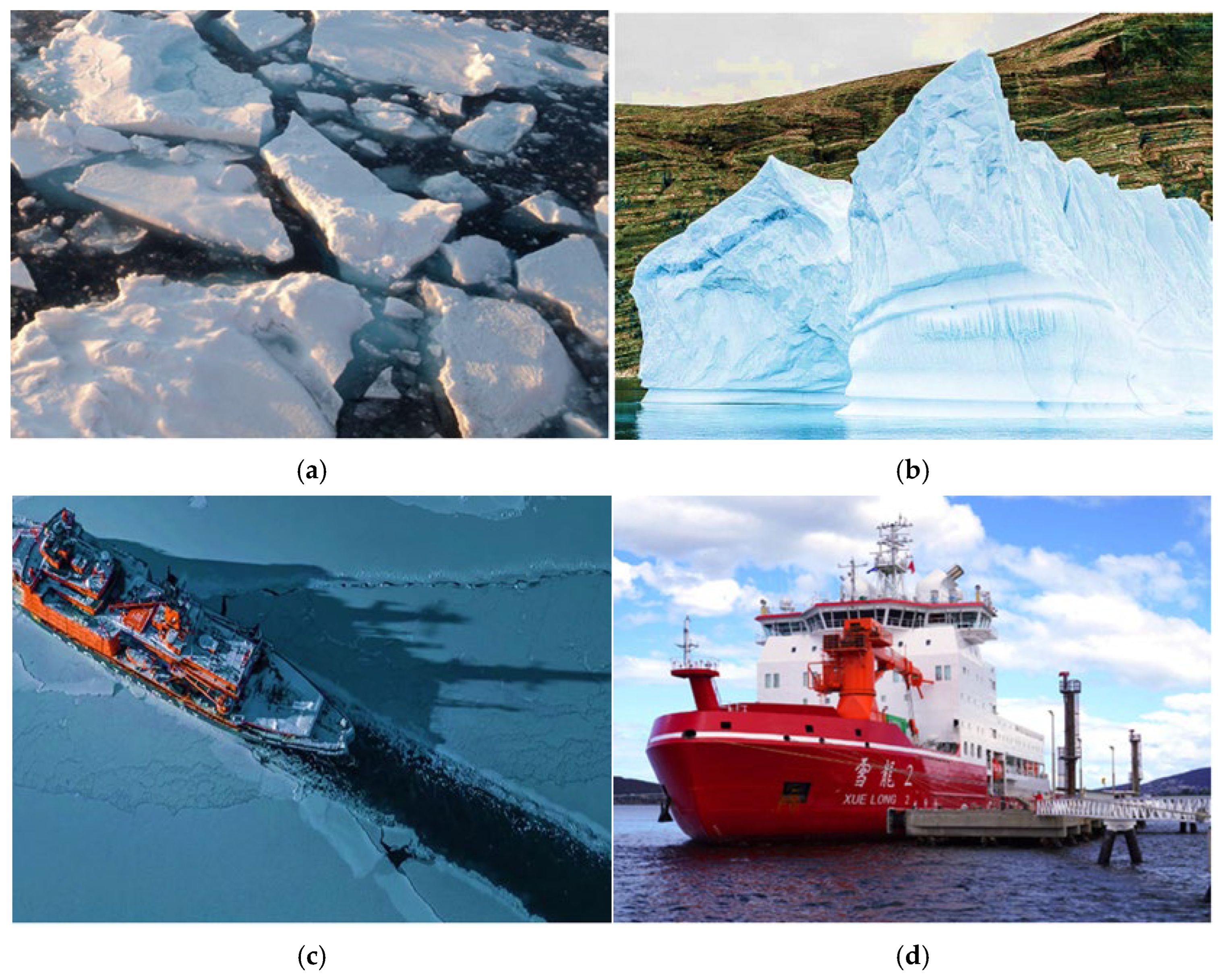
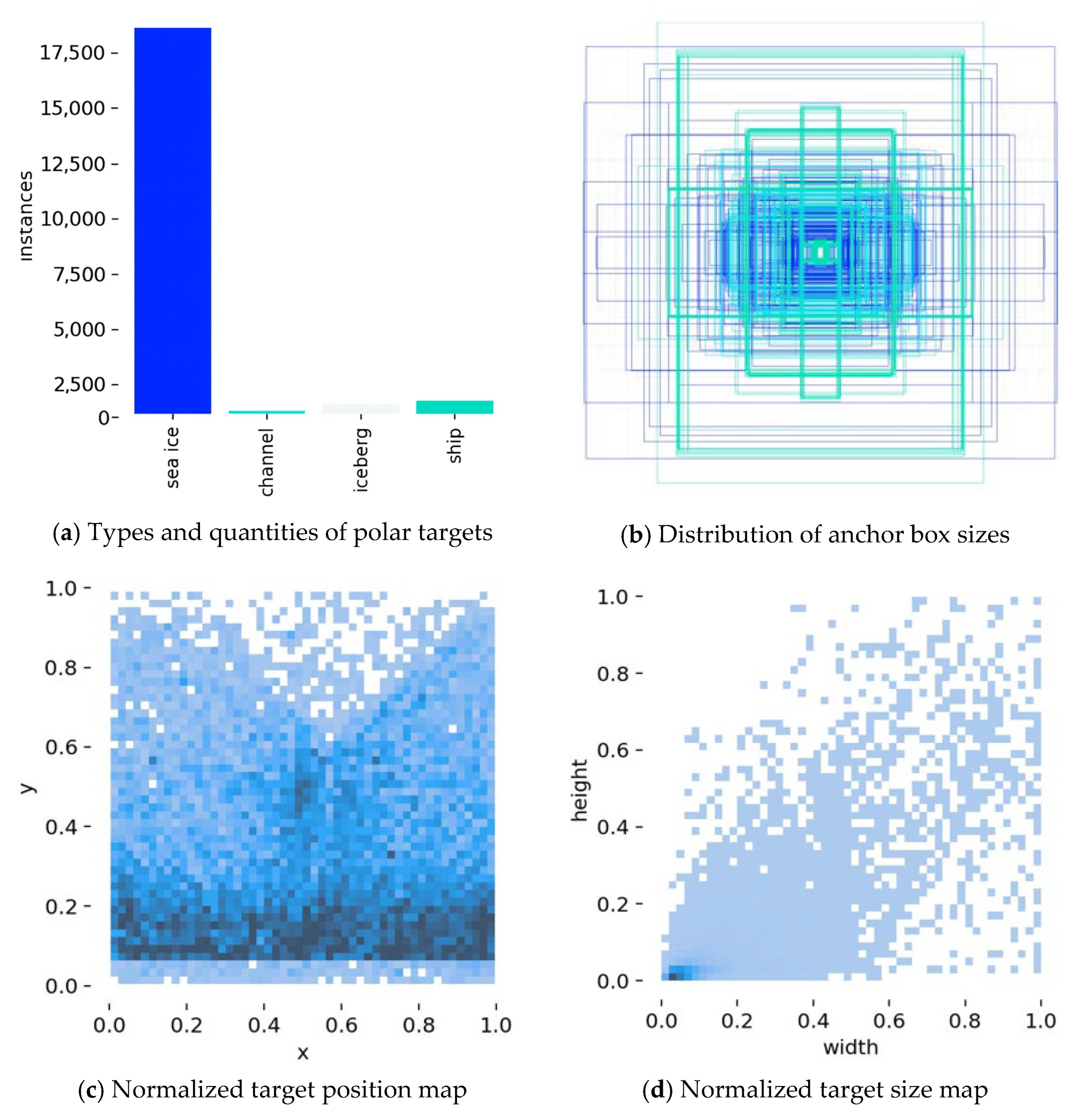
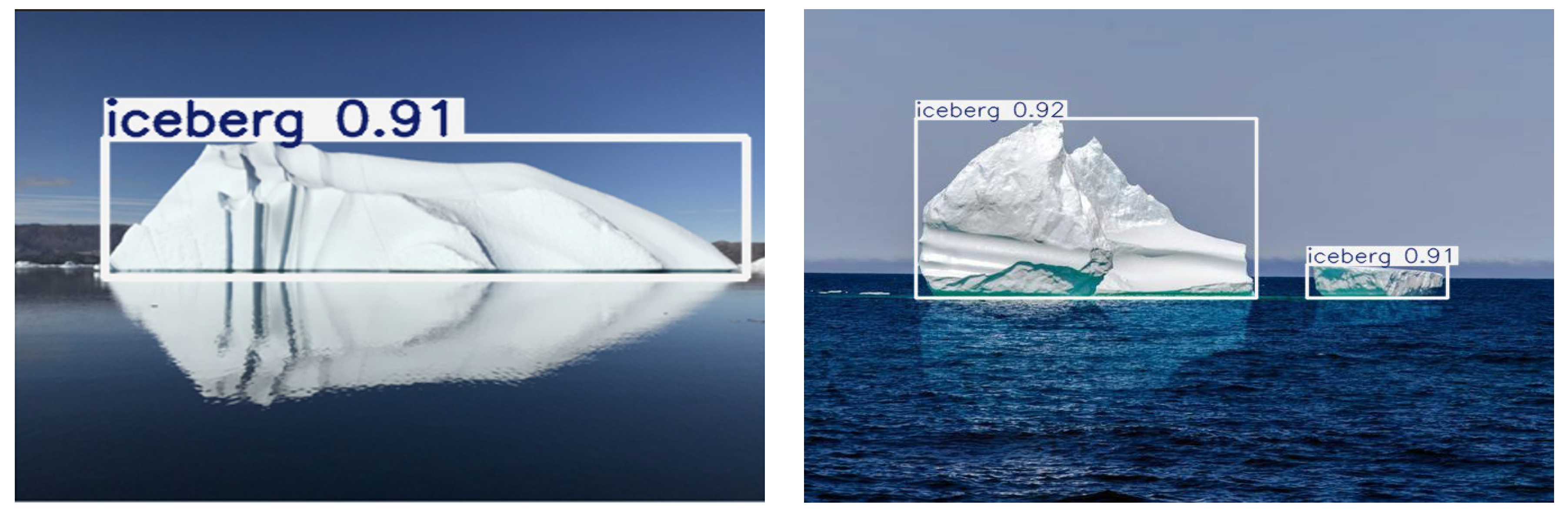
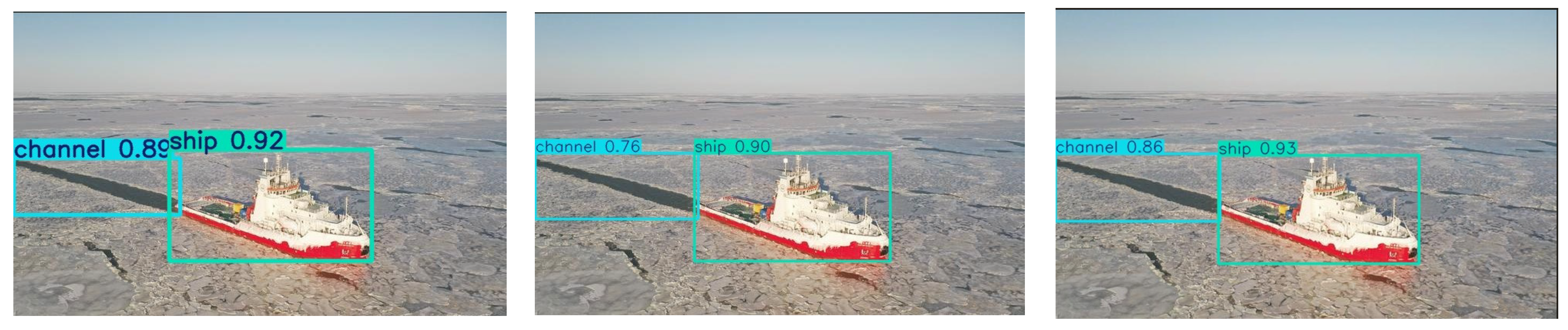
Figure 10 shows the distribution map of the polar target dataset, including the comparison of the number of instances of different categories, the size of YOLO anchor boxes, and the distribution of target center coordinates and width and height, which provides insight into the input characteristics and performance of the model.
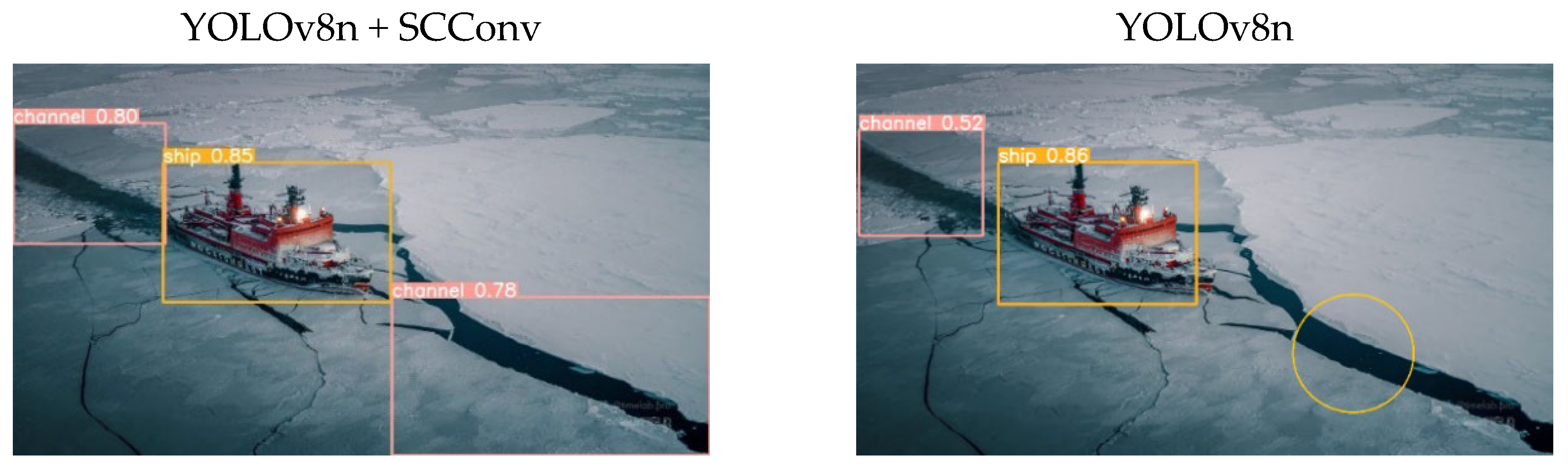
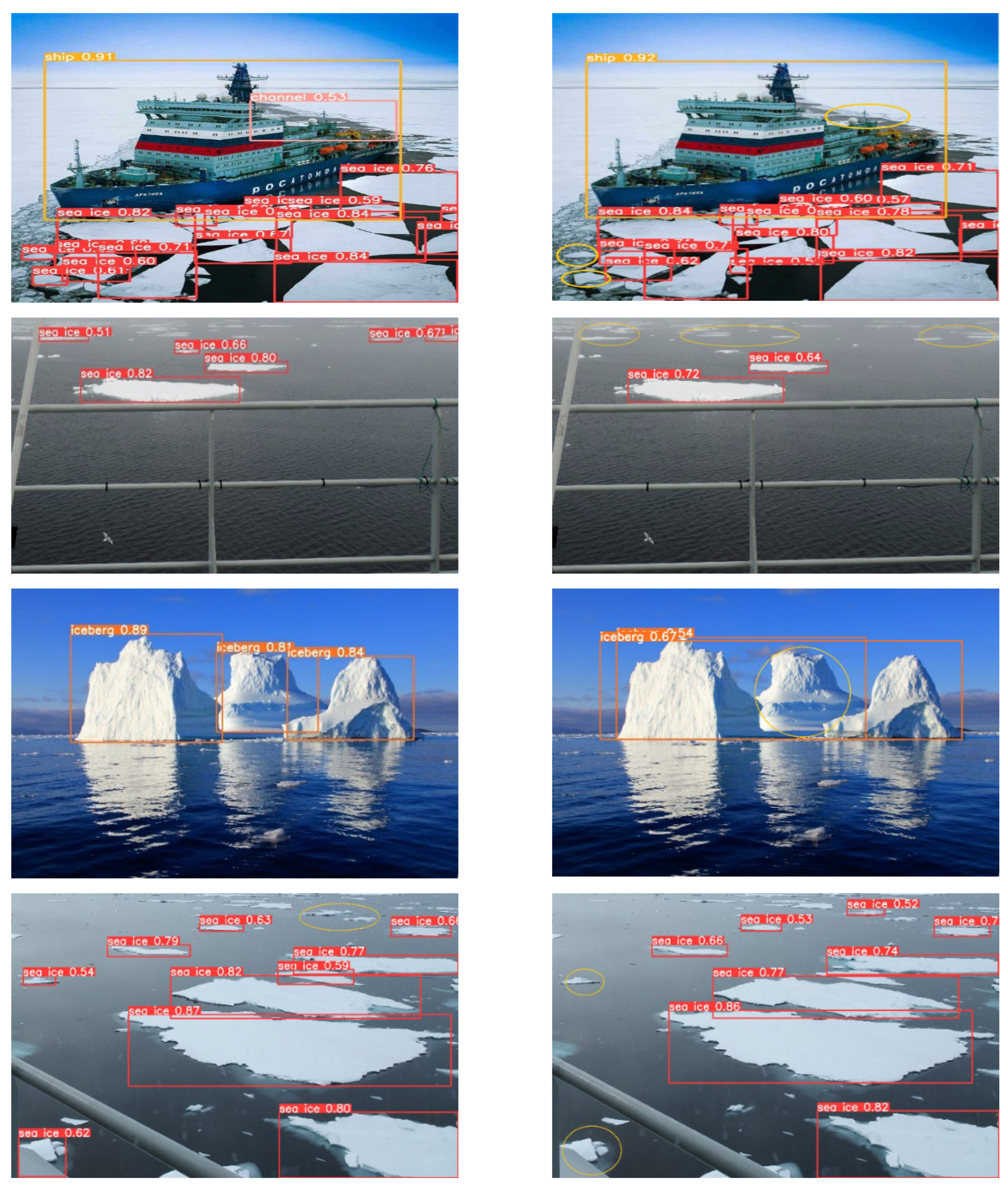
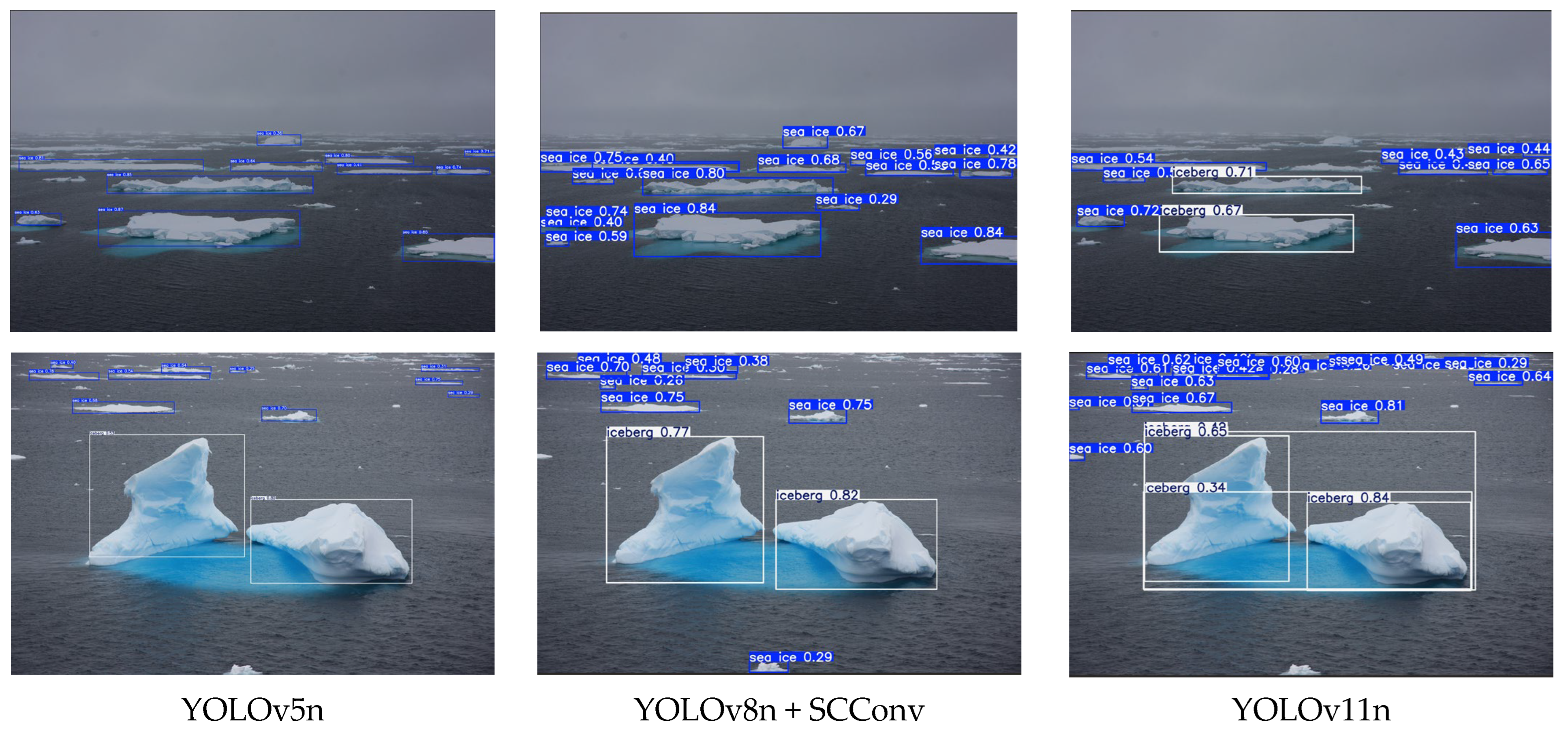
As shown in
Figure 11, it is a comparison effect diagram of the improved YOLOv8n + SCConv and YOLOv8n [
3].
It can be seen from
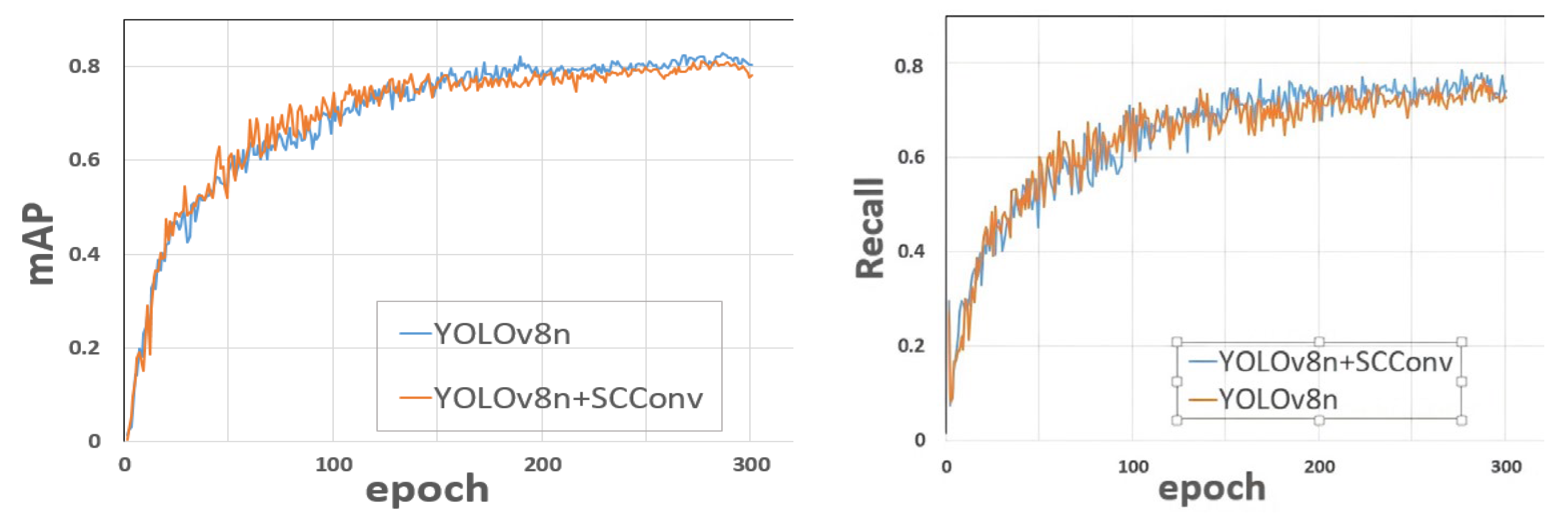
Figure 11 that the original YOLOv8n model has many missed detections when detecting ice channels, icebergs, and sea ice, while the improved YOLOv8n + SCConv model has fewer missed detections. The detection accuracy of ships in ice zones is high, and the original model is slightly better. The loss of the original model drops rapidly to 0.4 in the first 50 iterations, and the mAP rises to 0.83 after 200 iterations. In Experiment 5 (improved model), the loss also drops in the first 50 iterations and then decreases faster after 100 iterations. The mAP rises rapidly in the first 200 iterations and reaches 0.844 after 200 iterations, and stabilizes. The loss drops faster and has less oscillation, and the final average precision is better, proving that the improvement is effective.
The overall training workflow and performance evolution are summarized in
Figure 12. To further analyze the effectiveness of the model improvement, this paper shows and compares the training results of different modules in detail. The following is the performance of each module during training:
For baseline YOLOv8n [
3] (
Figure 13, including the precision–recall (PR) curve, precision–confidence curve, F1–confidence curve, and recall–confidence curve), the highlight is that the “ship” category achieves the highest mAP of 0.942 and leads in precision across all confidence intervals. However, its performance on small targets such as sea ice and ice channels is limited, with an F1-score of only 0.423. In terms of practical significance, it is suitable for basic ship navigation scenarios, for example, serving as a visual supplement for the Automatic Identification System (AIS) in polar waters [
1]. It ensures continuous ship identification when AIS signals are interfered with, thereby reducing collision risks. Nevertheless, its weakness in detecting small targets restricts its application in complex ice regions, such as areas with dense sea ice fragments [
21].
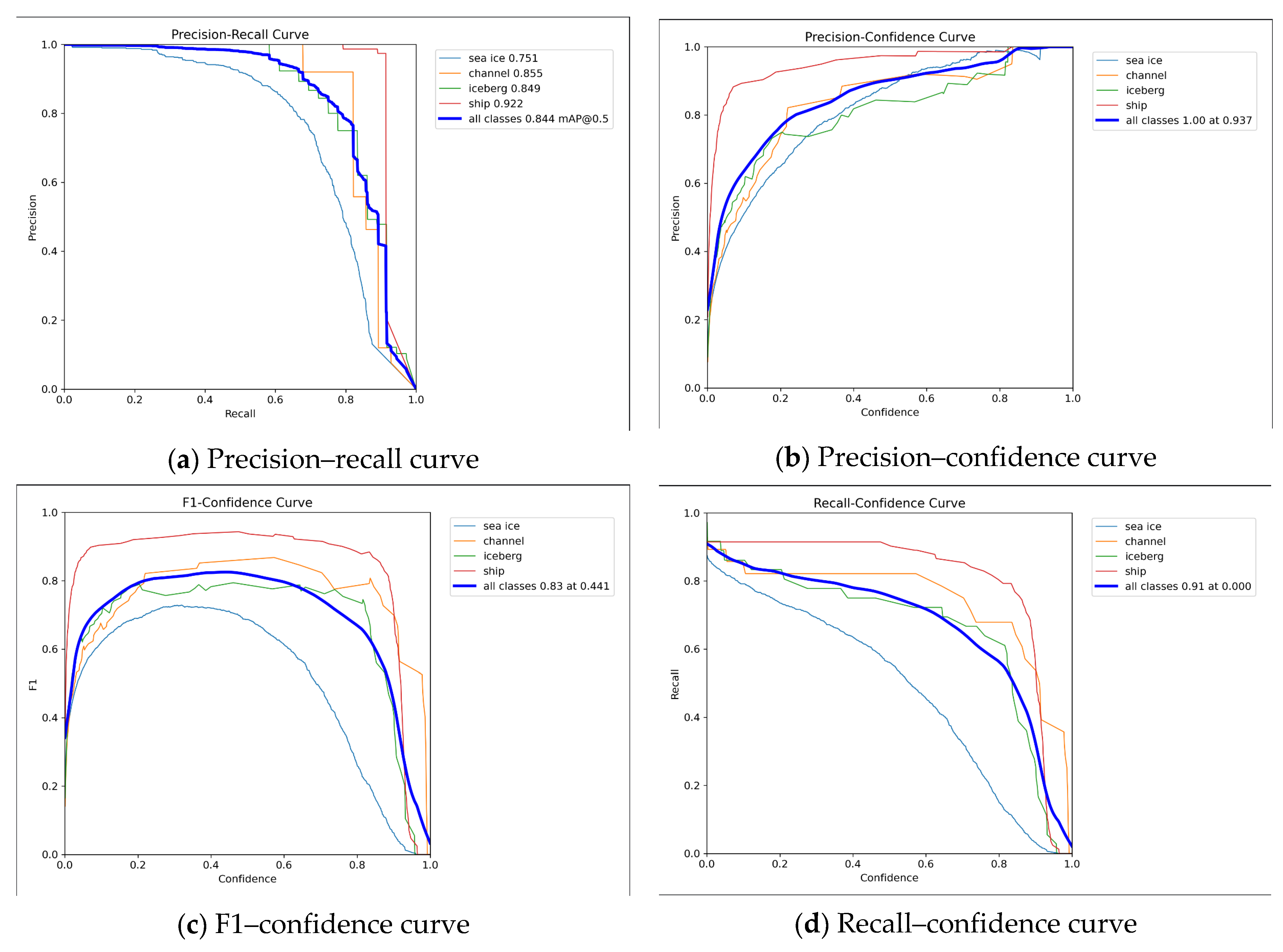
Figure 14 shows the training result diagram of YOLOv8n improved by SCConv.
Through the PR curve, it can be observed that the mAP of “ship” is the highest at 0.922. Compared with the original model [
3], the YOLOv8n improved by SCConv has improved recognition accuracy in “sea ice”, “channel”, and “iceberg”. The P curve shows that the average accuracy is 0.937, and the F1 is the highest at 0.441, when it is 0.83, indicating that the improved model can effectively detect targets, and the improvement is effective.
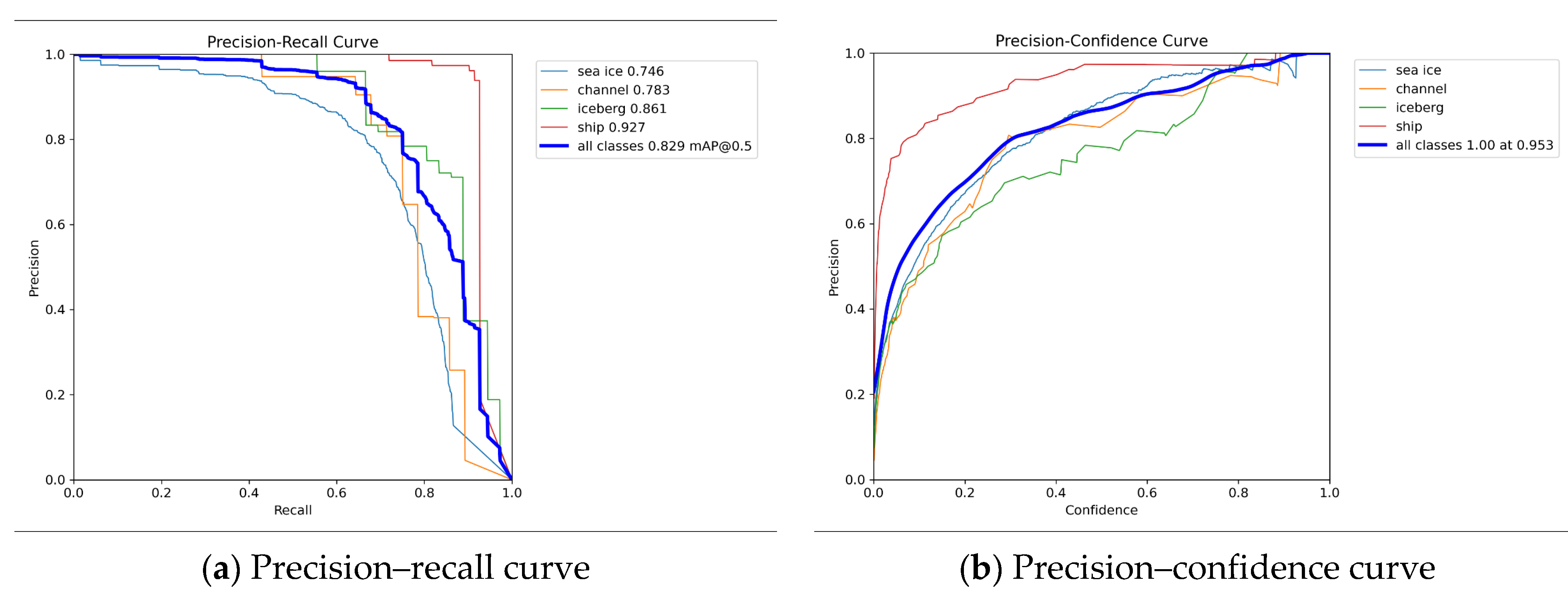
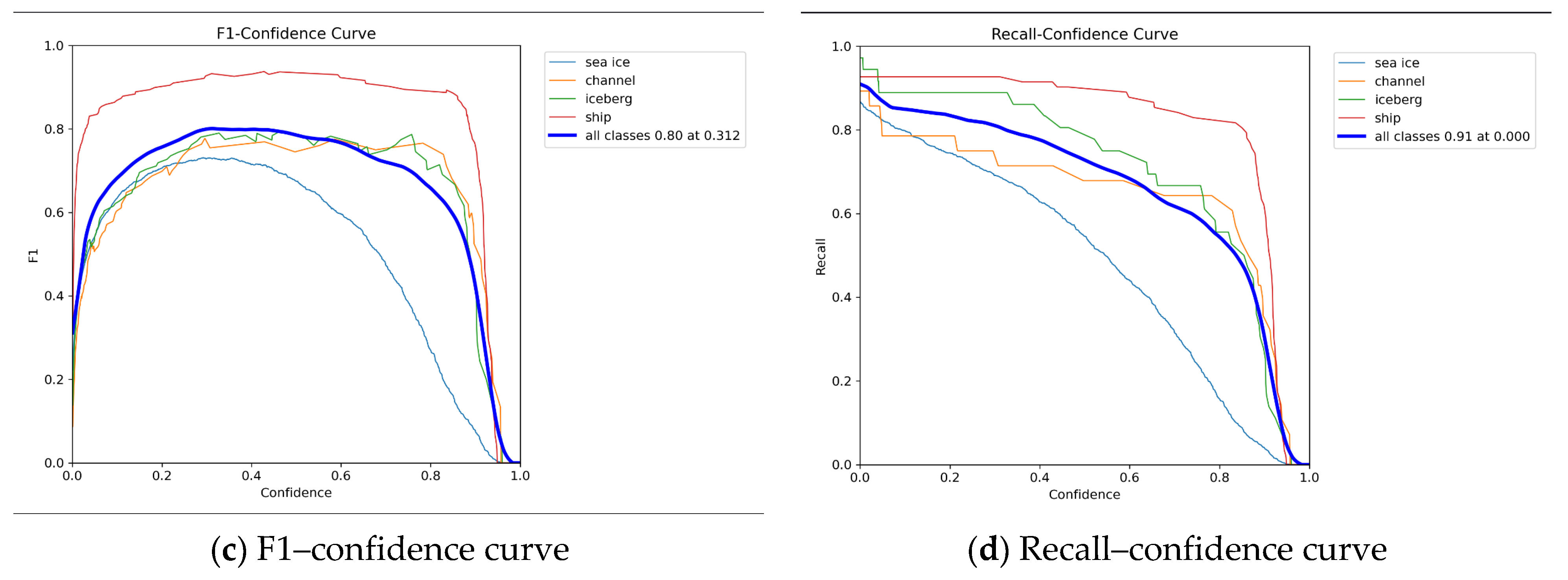
As shown in
Figure 15, the training results of YOLOv8n with the BiFPN network fused are presented.
The PR curve shows that the mAP of “ship” is the highest at 0.927. The model using the BiFPN network has the most significant improvement in the detection effect of icebergs and is suitable for areas with frequent icebergs. The P curve shows that the average accuracy is 0.953, and the F1 is the highest at 0.312 when the confidence threshold is 0.80, indicating that YOLOv8n with the BiFPN network fused can effectively detect targets [
15].
Experiments show that the polar target detection algorithm based on the improved YOLOv8n shows clear improvement over the baseline YOLOv8n. The SCConv convolution can extract small-target features in the polar target dataset, and fusing the BiFPN network can improve the detection effect. The improved YOLOv8n, combined with the polar target dataset, can complete the polar environmental target detection task and effectively detect polar environmental targets.