Article

Numerical Analysis of Air-Injection Drag Reduction for the KVLCC2 Hull Using the VOF Interface-Capturing Method


1
School of Naval Architecture and Ocean Engineering, Jiangsu University of Science and Technology, Zhenjiang 212100, China
2
State Key Laboratory of Robotics and Intelligent Systems, Shenyang Institute of Automation, Chinese Academy of Sciences, Shenyang 110016, China
*
Author to whom correspondence should be addressed.
J. Mar. Sci. Eng. 2025, 13(12), 2253; https://doi.org/10.3390/jmse13122253
Submission received: 1 November 2025 / Revised: 20 November 2025 / Accepted: 24 November 2025 / Published: 27 November 2025
(This article belongs to the Special Issue Advancements in Marine Hydrodynamics and Structural Optimization)

Abstract

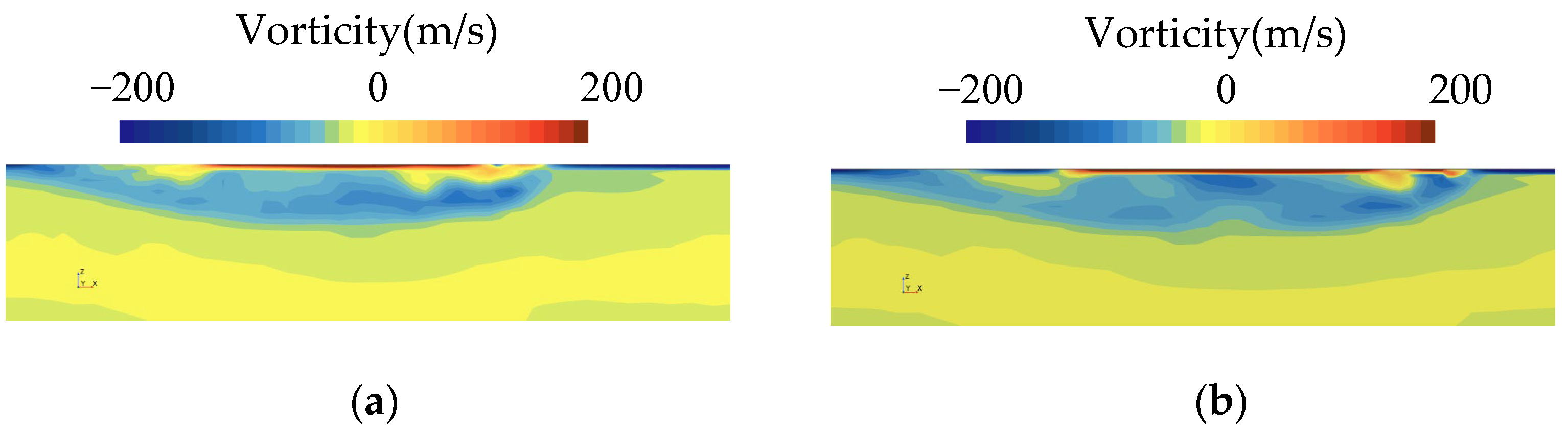
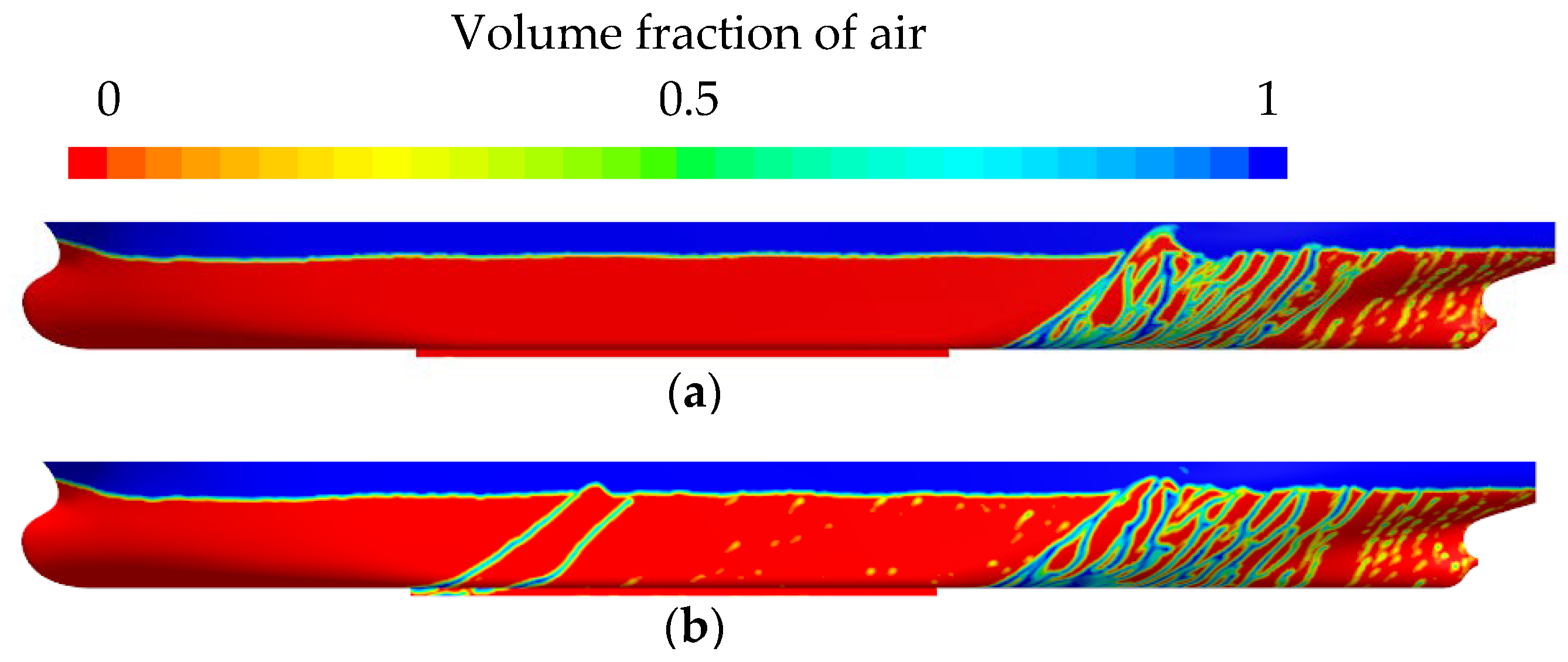
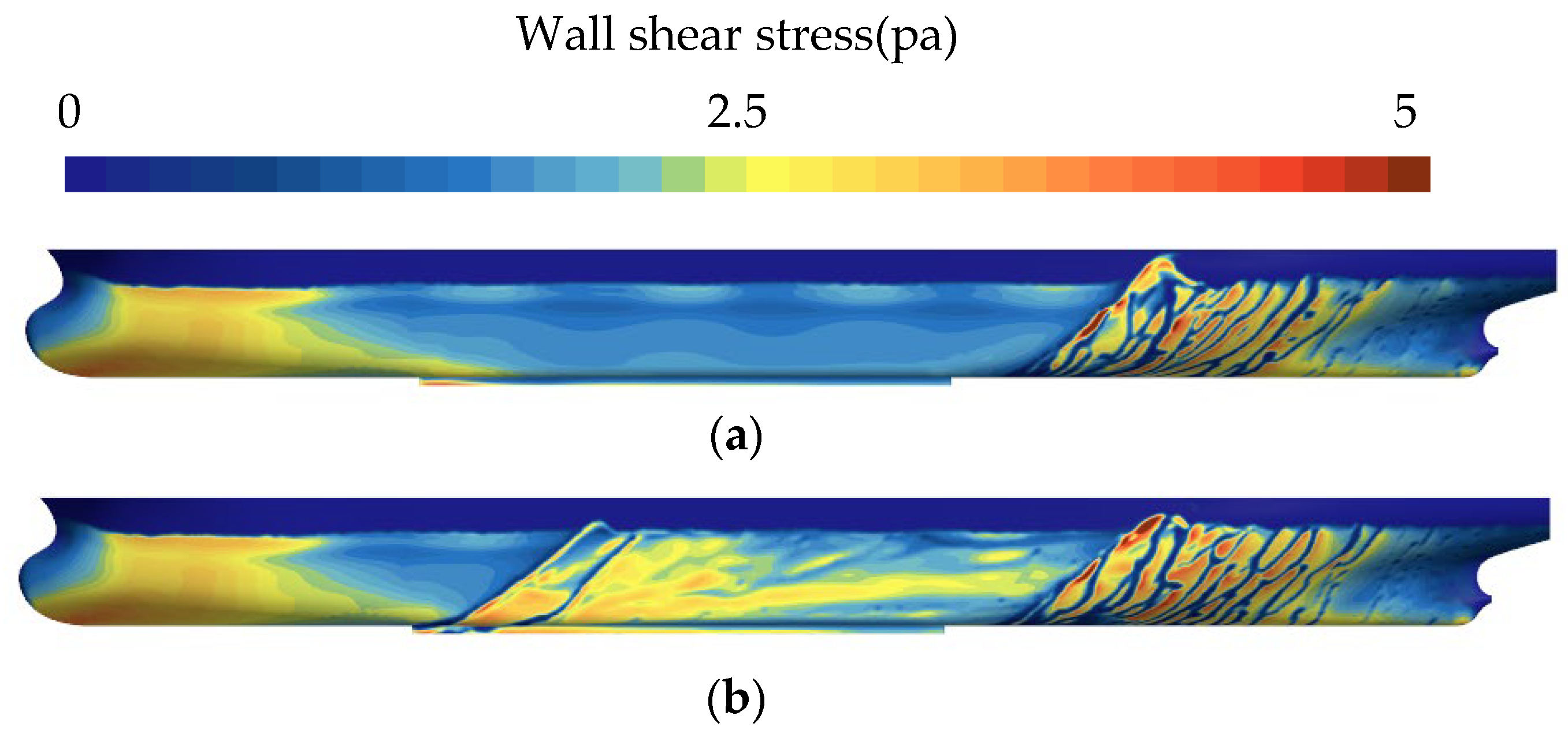
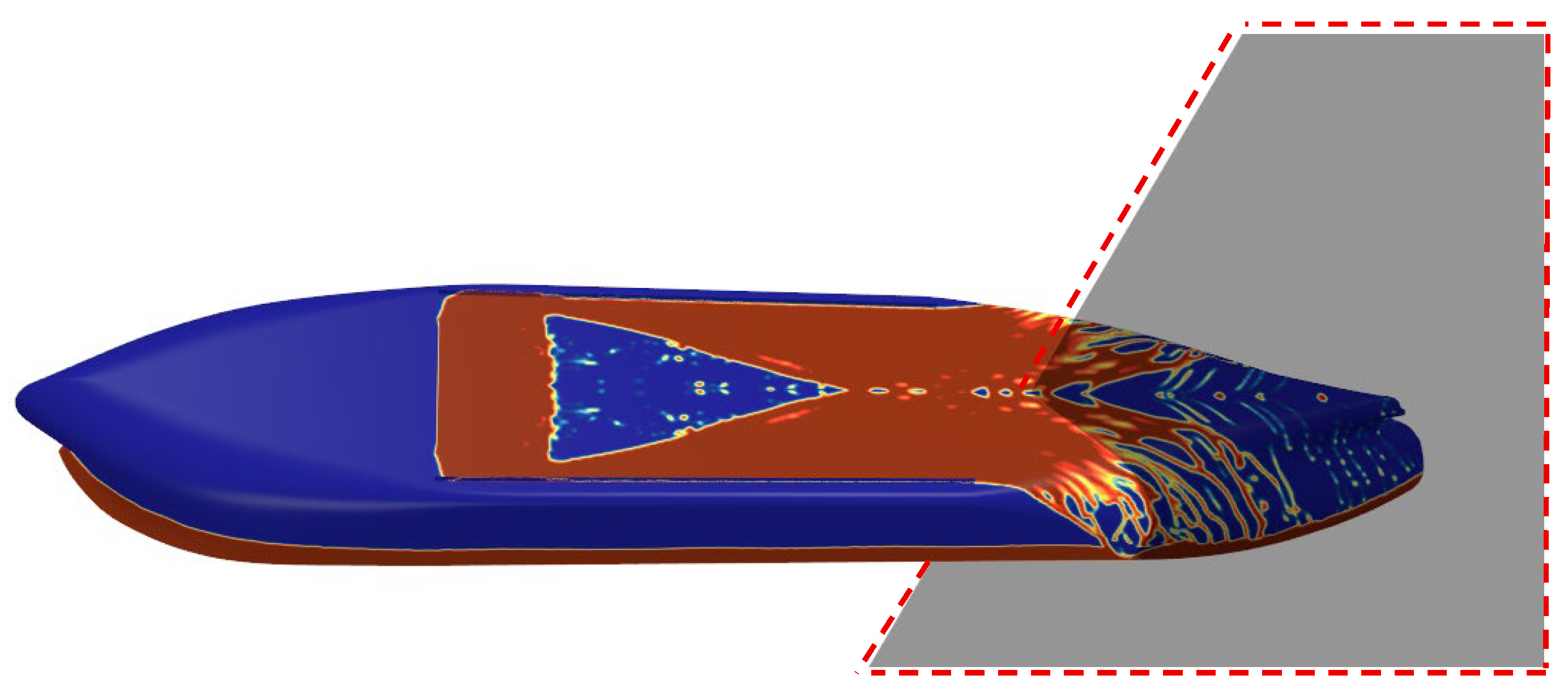
To investigate the air layer drag reduction and the related flow field characteristics of ships, the gas–liquid two-phase numerical model using the VOF solver in STAR-CCM+ has been established, considering the effects of free surface and surface tension. The numerical model is first validated through experimental results for the drag reduction by air-injection on a simplified ship model. Then, the numerical simulations for the KVLCC2 at varying speeds and air-injection rates are conducted, considering different ship attitudes and air-injection surface configurations. The impacts of flow velocity, air-injection rates, ship attitude and air-injection configurations on air layer drag reduction are analyzed. The distributions of air and pressure around the ship and their influence mechanisms on drag reduction are discussed. The simulation results show that the drag reduction exhibits a positive correlation with air-injection rate until it reaches an optimal peak value. The combined action of the incoming flow and injection velocities causes the vortex recirculation of the air layer under the ship, leading to its disruption and the subsequent formation of air-free zones on the hull bottom. High air-injection rates and the stern trim induce air layer lateral spillage, increasing frictional resistance on the hull side surfaces. An air layer on the stern surface will reduce the viscous pressure resistance by changing the flow separation near the ship stern. Air-layer coverage area is closely correlated with inflow velocity and injection surface configurations. The reasonable configurations of the air-injection surfaces can significantly improve the drag reduction.
Keywords: volume of fluid model; air layer; drag reduction; ship; numerical simulation volume of fluid model; air layer; drag reduction; ship; numerical simulation