Article

Experimental Research on Petrophysical, Geomechanical Features, and Fracture Behaviors of Organic-Rich Marine Shale


1
Hubei Key Laboratory of Oil and Gas Exploration and Development Theory and Technology (China University of Geosciences), Wuhan 430074, China
2
Key Laboratory of Tectonics and Petroleum Resources (China University of Geosciences), Ministry of Education, Wuhan 430074, China
3
State Key Laboratory of Deep Geothermal Resources (China University of Geosciences), Wuhan 430074, China
4
Faculty of Oil, Gas and Renewable Energy, Department of Exploration and Production, University of Kinshasa, Kinshasa P.O. Box 127, Democratic Republic of the Congo
*
Authors to whom correspondence should be addressed.
J. Mar. Sci. Eng. 2025, 13(12), 2245; https://doi.org/10.3390/jmse13122245
Submission received: 2 October 2025 / Revised: 7 November 2025 / Accepted: 11 November 2025 / Published: 25 November 2025
(This article belongs to the Topic Advanced Technology for Oil and Nature Gas Exploration)

Abstract

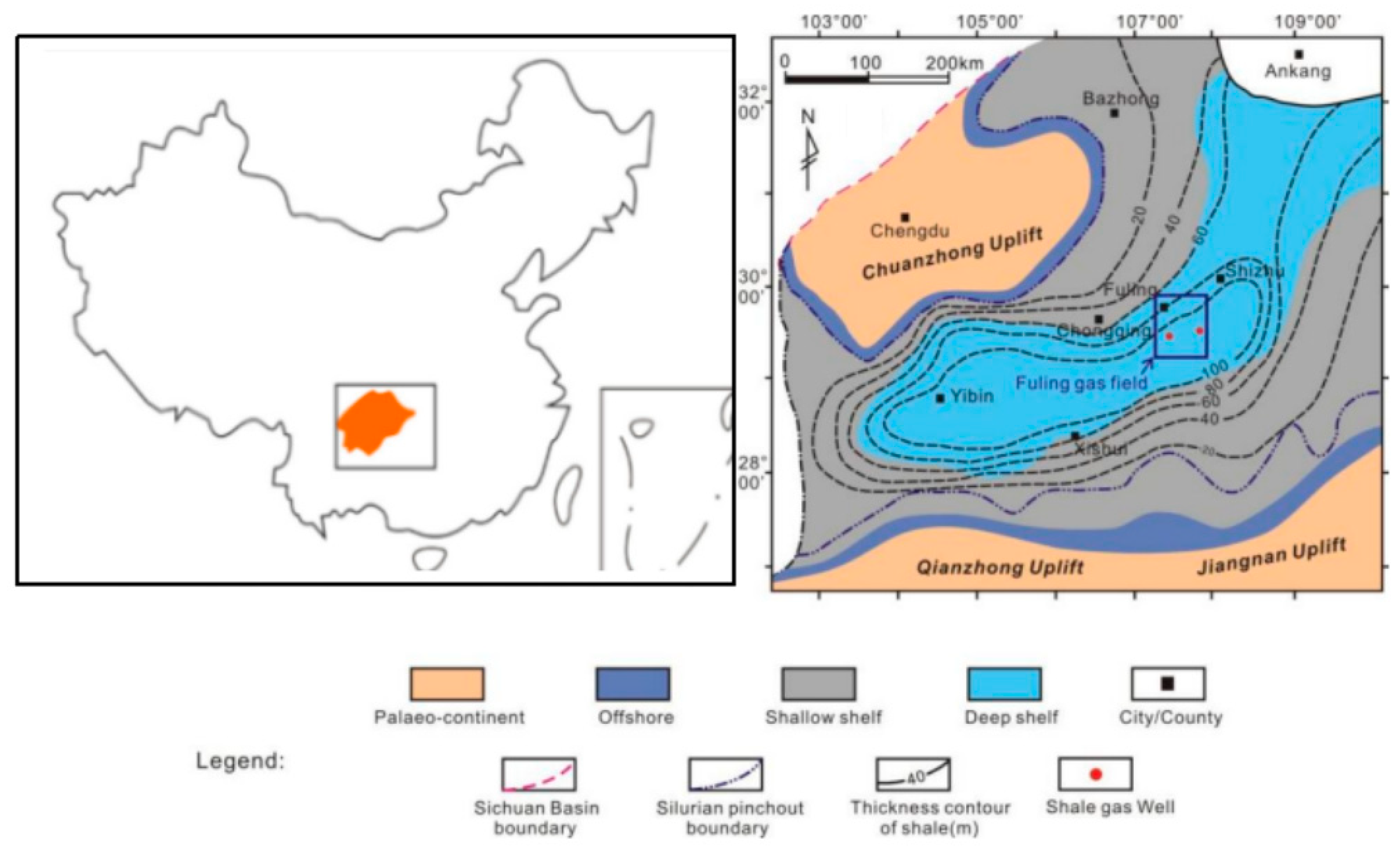
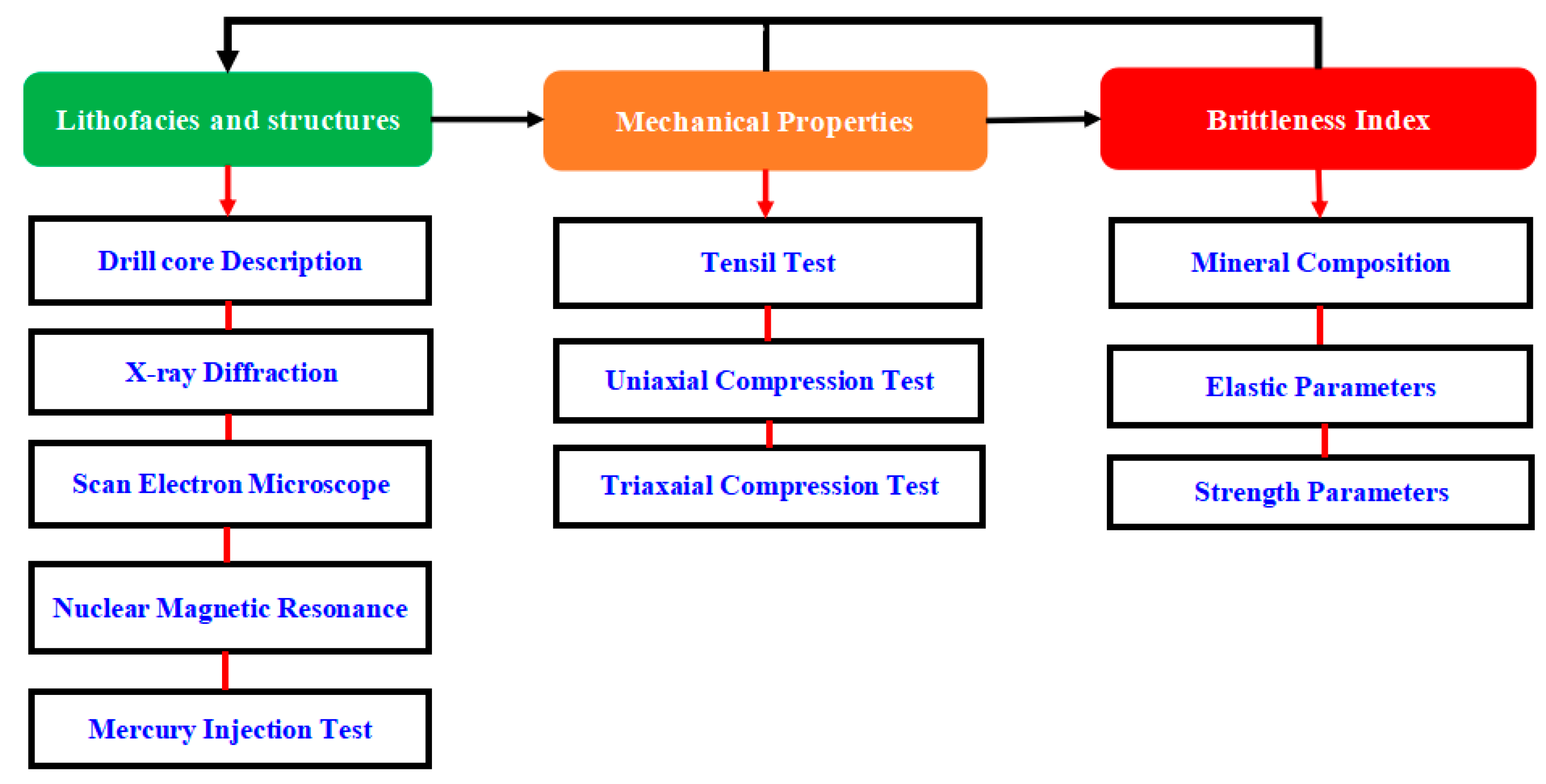
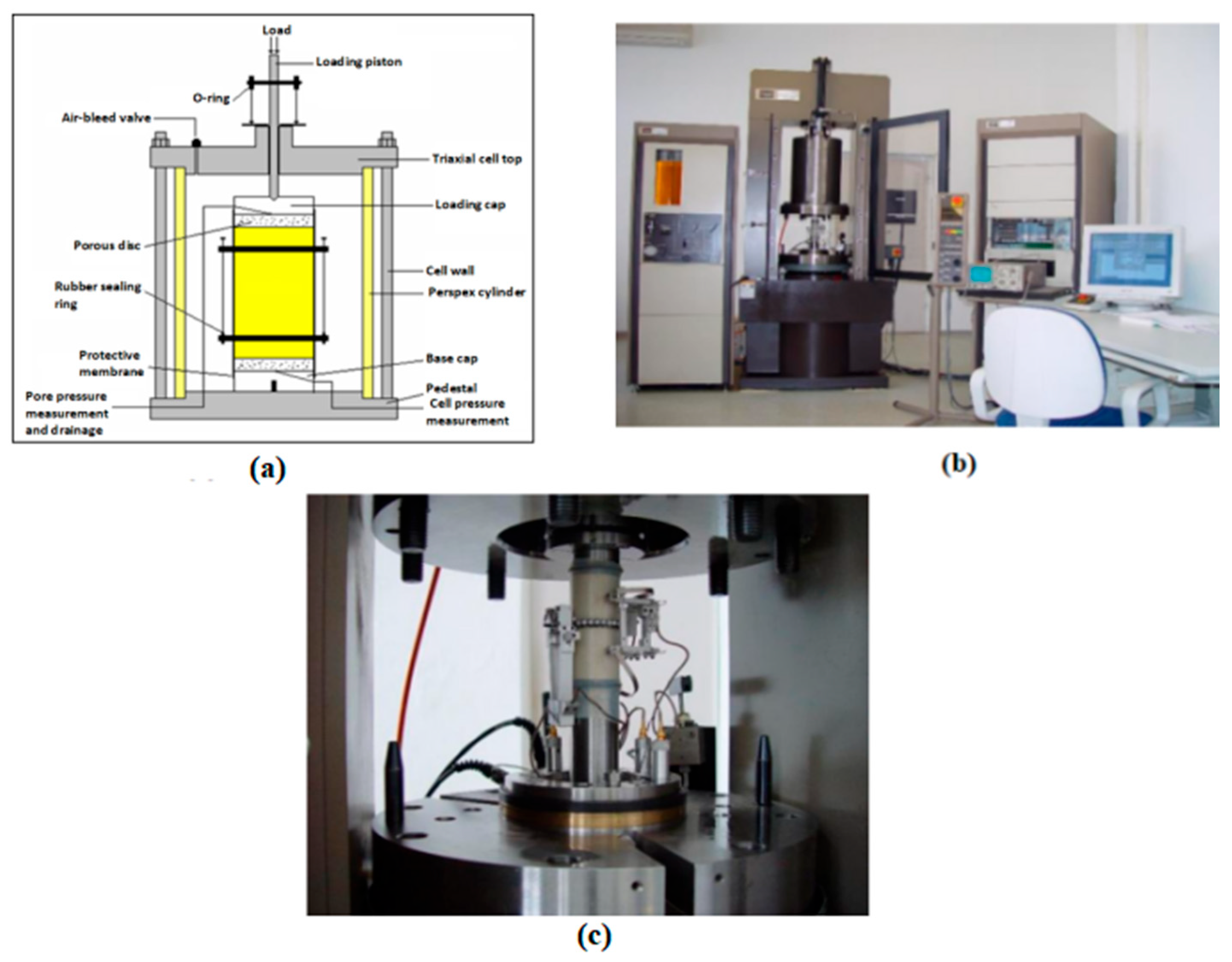
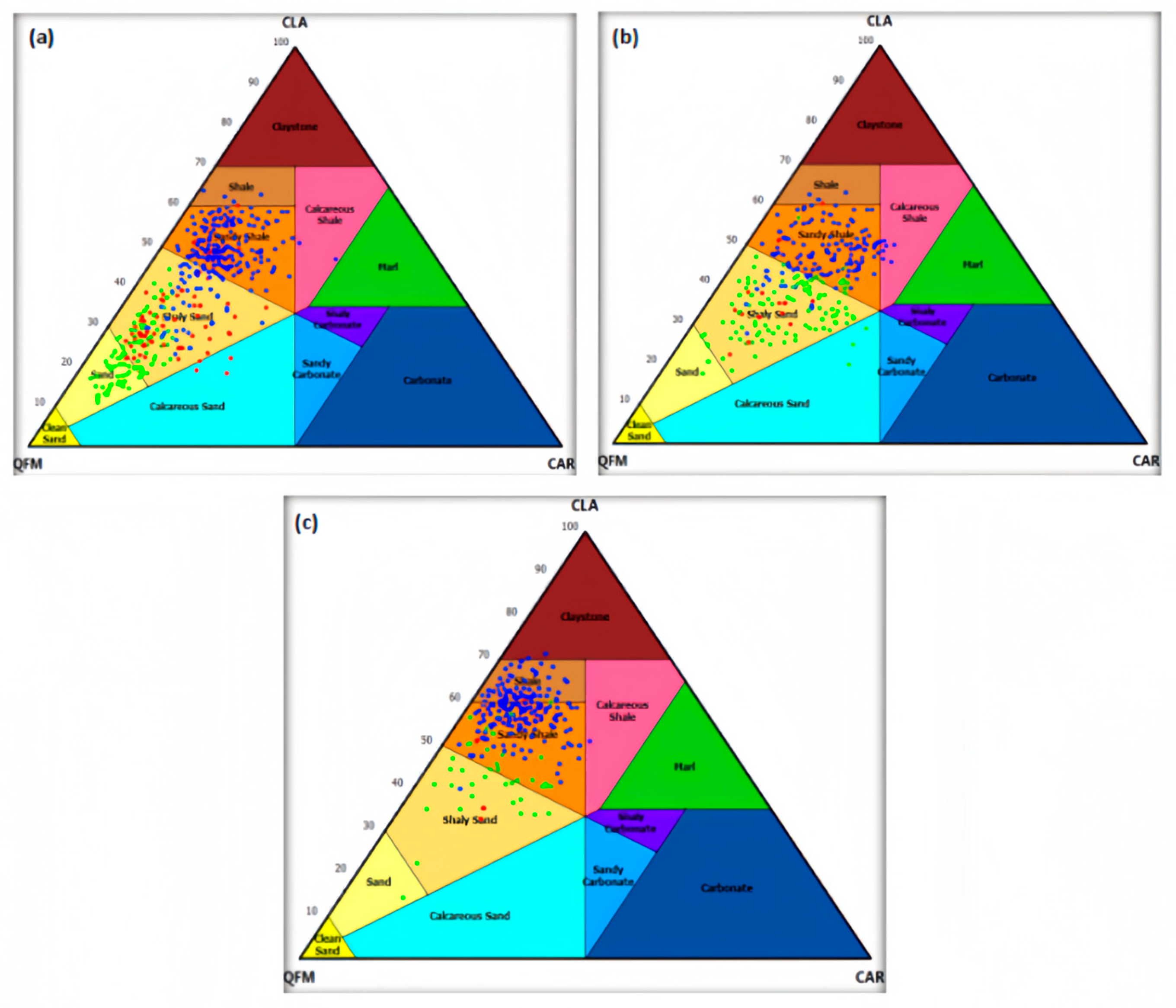
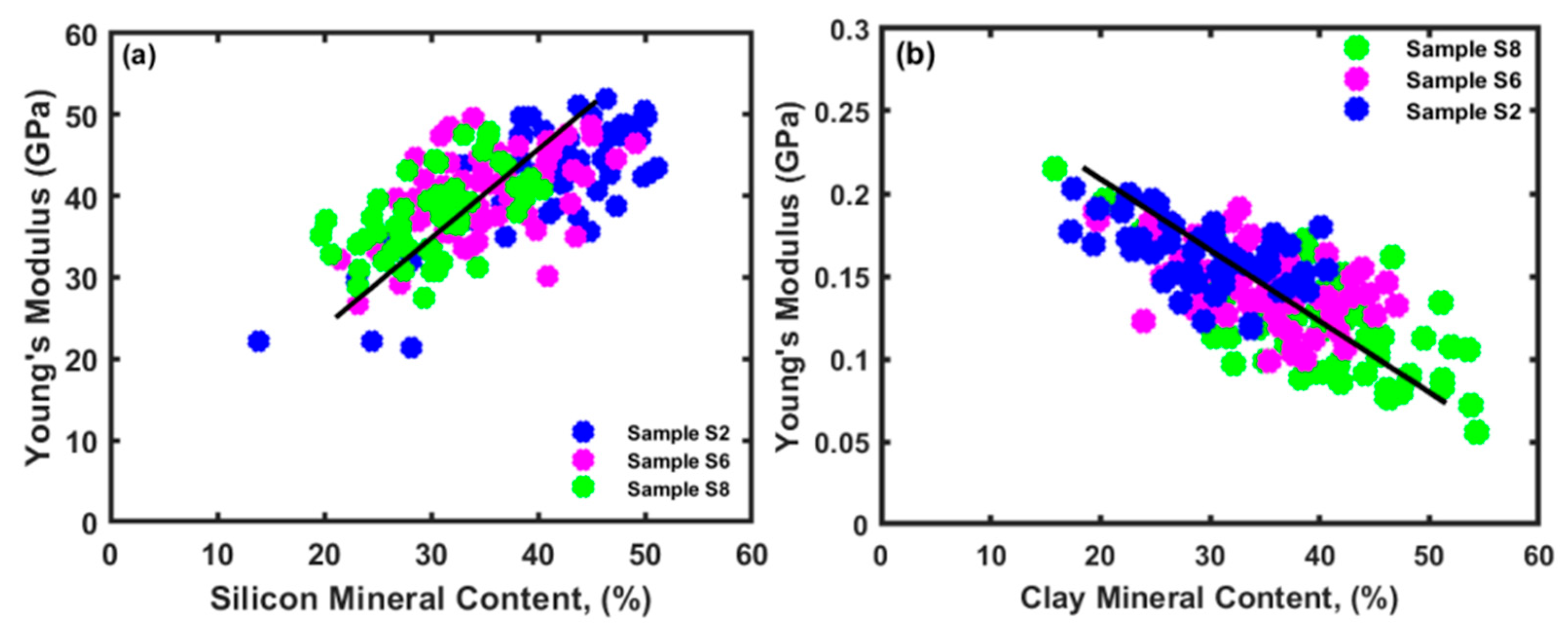
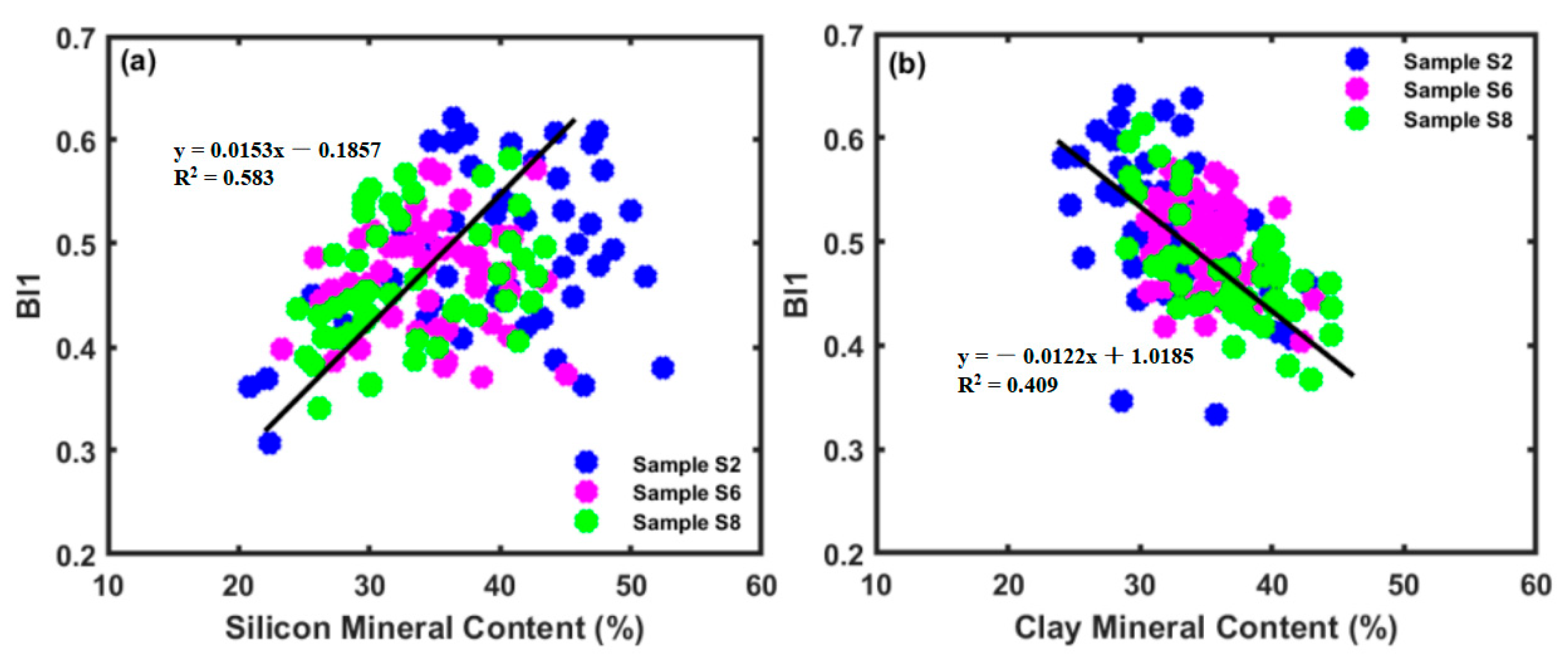
Longmaxi shale is one of major and earliest shale gas formations in China, which hosts significant reserves and produces substantial amounts of natural gas. A thorough understanding of how mineral composition and geomechanical properties govern fracture initiation and propagation in the Longmaxi shale is therefore essential in designing hydraulic fracturing operations. In this study, nine core samples from different layers of the Longmaxi shale in Well A at Sichuan Basin were collected and a series of experiments were conducted, including X-ray diffraction, triaxial and uniaxial compression tests, brittleness index assessment, scanning electron microscopy, and nuclear magnetic resonance. Results reveal that samples from layers S6–S9 are rich in clay minerals, whereas layers S1–S5 are dominated by siliceous minerals. From the top to the bottom of the reservoir, a noticeable increase presents in total organic carbon (TOC), porosity, natural gas content, and silica mineral proportion. Young’s modulus shows a positive correlation with silicon mineral content but a negative correlation with clay content. Under high-stress conditions, shale with low quartz content tends to exhibit ductility, which inhibits fracture propagation. Quantitative models were established to predict brittleness and interpret the mechanical behavior of marine shale reservoirs.
Keywords: organic-rich marine shale; geomechanical properties; mineral content; rock mechanics test; fracture feature organic-rich marine shale; geomechanical properties; mineral content; rock mechanics test; fracture feature