
Article

Acoustic Scattering Characteristics of Micropterus salmoides Using a Combined Kirchhoff Ray-Mode Model and In Situ Measurements


1
School of Marine Science and Technology, Northwestern Polytechnical University, Xi’an 710072, China
2
Shenzhen Research Institute of Northwestern Polytechnical University, Shenzhen 518057, China
3
Ningbo Institute of Northwestern Polytechnical University, Ningbo 315103, China
*
Author to whom correspondence should be addressed.
J. Mar. Sci. Eng. 2025, 13(10), 1856; https://doi.org/10.3390/jmse13101856
Submission received: 26 August 2025 / Revised: 21 September 2025 / Accepted: 23 September 2025 / Published: 25 September 2025
(This article belongs to the Section Marine Aquaculture)

Abstract

Effective management of Micropterus salmoides resources requires accurate assessment of their abundance and distribution. Fisheries acoustics is a key method for such evaluations, yet its application is limited by insufficient target strength (TS) data. This study combines the Sobel edge detection technique with the Kirchhoff ray-mode model to estimate the TS of Micropterus salmoides cultured in Guangdong, China, and validates the results through in situ measurements. The relationships between TS and fish body length were established at 38 kHz, 70 kHz, 120 kHz, and 200 kHz. At 200 kHz, the average in situ TS was –42.41 dB, with a fitted formula of TS = 32.00 lgL − 88.24. Further validation was performed using time- and frequency-domain analyses of echo signals. The results show that TS increases with swim bladder volume, indicating its dominant influence. The relationship between TS and frequency is nonlinear and affected by the swim bladder angle, swimming posture, and behavioral patterns. This study also improves the computational efficiency of the Kirchhoff ray-mode model. Overall, it provides essential parameters for acoustic stock assessment of Micropterus salmoides, providing a scientific basis for their sustainable management and conservation.

1. Introduction

Micropterus salmoides is a fish species native to North America [1]. With the global population increasing and the demand for meat products rising rapidly, Micropterus salmoides has gained widespread market popularity and recognition due to its fast growth and high nutritional value [2]. Ecologically, Micropterus salmoides typically inhabits freshwater environments such as lakes, reservoirs, and slow-moving rivers, favoring habitats with clear water, abundant aquatic vegetation, and moderate temperatures. Driven by improvements in breeding techniques, expanding market demand, and supportive aquaculture policies, the production of Micropterus salmoides has increased rapidly in recent years [3]. In 2023, China’s aquaculture production of Micropterus salmoides exceeded 888,000 tons. Increasingly, breeders are exploring brackish water aquaculture methods. These include semi-flow-through pond systems using low-salinity water (1–6 ppt) or salt–alkaline water from inland areas, which have shown better disease resistance, improved water quality stability, and higher profitability compared to traditional freshwater farming [4]. However, in recent years, excessively high stocking densities in pond farming have led to deteriorations in water quality and frequent outbreaks of infectious diseases [5], resulting in declines in both yield and quality [6]. These issues have severely hindered the healthy development of Micropterus salmoides and caused significant economic losses.
Acoustic assessment methods have been widely applied in fisheries resource evaluation due to their environmentally friendly nature and non-harmful impact on organisms [7,8,9,10]. By studying the acoustic scattering characteristics of Micropterus salmoides to assess their stock, this approach provides a scientific basis for improving aquaculture practices. Specifically, it enables real-time monitoring of fish distribution and biomass, supporting optimized feeding strategies and effective stocking density management. Also, it offers essential references for the sustainable management of fisheries resources.
Target strength (TS) is a crucial parameter in acoustic methods for assessing fishery resources; it is used to measure the reflective capability of aquatic organisms to sound waves [11,12]. The accuracy of TS measurements directly impacts the precision of fish population assessments. The primary methods for measuring target strength include direct measurement (in situ measurement) and modeling approaches. In situ measurements require targets to be in their natural state, dispersed and singular, effectively reflecting the population characteristics of the species. However, due to high costs and technical limitations, in situ measurements are not feasible for assessing the target strength of all fish species [13].
In contrast, modeling methods predict and calculate fish target strength by analyzing the scattering characteristics of targets against sound waves, offering advantages such as high flexibility and independence from site and environmental disturbances. Common modeling methods include the sphere model, ellipsoid model, distorted-wave Born approximation model, and finite element method, among others. These approaches facilitate an in-depth analysis of the mechanisms and characteristics of fish body acoustic scattering, advance research on fish species identification, and have gradually become the primary methods for researchers worldwide studying target strength.
The Kirchhoff ray-mode model (KRM) is a widely used mathematical model in acoustic scattering estimation, employed to calculate and predict the scattering characteristics of objects under the influence of sound waves [14]. Compared to the limitations of sphere and ellipsoid models in complex modeling, the high computational demands of finite element models, and the suitability of the distorted wave Born approximation model for plankton modeling, the Kirchhoff ray-mode model offers significant advantages in detecting and analyzing fish targets within complex marine ecological environments. However, obtaining target echo data requires detailed calculations of the relative positions between the target fish’s body and its swim bladder, necessitating complex analysis and processing of X-ray images in the preliminary stages. This has become a significant challenge in applying the Kirchhoff ray-mode model.
In recent years, advancements in computer vision technology have propelled edge detection to become a widely utilized image processing technique across various fields, including medicine [15], architecture [16], and radar communications [17]. The primary objective of edge detection is to identify regions within an image that exhibit significant grayscale variations, thereby extracting the contour information of target objects. Among the numerous edge detection algorithms, the Sobel operator stands out for its efficiency and accuracy, particularly in straightforward scenarios [18,19].
In this study, edge detection technology was applied to the analysis and processing of X-ray images to effectively extract morphological information such as the position and size of fish bodies and swim bladders. This extraction provides essential data support for subsequent calculations and analyses using the Kirchhoff ray-mode model. Additionally, the target strength of Micropterus salmoides was compared using both the Kirchhoff ray-mode model and in situ measurement methods. A comprehensive analysis of their acoustic scattering characteristics was conducted, providing valuable data references for accurately assessing fishery resources.

2. Materials and Methods

2.1. Integration of Edge Detection Technology with the Kirchhoff Ray-Mode Model

The traditional Kirchhoff ray-mode model method involves the following steps: the fish body and swim bladder are subdivided into equally spaced cross-sections, which are then approximated as a series of cylindrical segments. This cylindrical segmentation simplifies the complex fish geometry, facilitating calculation while introducing some approximation errors, especially for irregularly shaped fish where fine structural details may be lost. The scattering intensity of each cylinder is calculated and labeled as the fish body scattering intensity L b and the swim bladder scattering intensity L s , respectively. The sum of these intensities yields the total scattering intensity L f of the target fish, which is subsequently used to calculate the TS.
Based on the Kirchhoff ray-mode model for fish target strength, the scattering intensity L s of the swim bladder is given by the following [20]:
L s i R b s 1 R w b 2 2 π   0 N s 1 A s b k b a j + 1 cos χ 1 2 e i 2 k b v j + φ p Δ u j
where R b s is the reflection coefficient at the interface between the fish body and the swim bladder. R w b is the reflection coefficient at the interface between water and the fish body. N s is the number of swim bladder slices. k b is the wave number of sound waves within the fish’s body. a j is the equivalent radius of the j -th cylindrical segment. χ is the angle between the horizontal axis and the fish’s body axis. A s b and φ p are the empirical amplitude and empirical phase of the smaller effective cylinder radius. Δ u j is the projection of the slice length on the horizontal axis after rotating the coordinates by angle χ .
The scattering intensity L b of the fish body is calculated as follows:
L b i R w b 2 π   0 N b 1 k a j 1 2 e i 2 k v U j T w b T b w e i 2 k v U j + i 2 k b v U j v L j + i φ b Δ u j
where N b is the number of fish body slices. k is the wave number of sound waves in the water environment. v U j and v L j are the coordinates of the upper and lower surfaces of the equivalent cylinder for the j -th slice. T w b is the sound wave transmission coefficient for plane waves entering the fish body from water. T b w is the sound wave transmission coefficient for plane waves entering water from the fish body. φ b is the empirical correction phase.
For swim bladder fish, the total scattering intensity L f is expressed as follows:
L f = L s + L b
The single fish backward scattering cross-section σ b s is given by the following:
σ b s = L f 2
Thus, the target strength is determined by the following:
T S = 10 lg σ b s
To accurately simulate the swimming posture of Micropterus salmoides, this study analyzed fish body inclination angles ranging from −50° to 50°, where 0° represents sound waves incident perpendicularly to the fish’s back. Angles where the fish’s head tilts downward are defined as negative, while those tilting upward are positive. To precisely describe the distribution of posture angles, a normal distribution N [−5°, 15°] (mean, standard deviation) was adopted as the probability density function for inclination angles. The average target strength ( T S ¯ ) for all samples is calculated as follows:
T S ¯ = 10 lg σ ¯
where σ ¯ is the sample mean backward scattering cross-section, obtained by weighting and averaging the scattering cross-sections σ of all individual fish inclination angles.
To estimate the size structure of the fish population based on the distribution of target strength, accurately count fish schools, and more effectively correlate target strength with the biological characteristics of fish, empirical formulas relating target strength to fish length were employed in an in-depth study. The fitting Equation for the relationship between fish target strength and length is the following:
T S = a lg L + b
For ease of statistical recording, an alternative empirical formula for the target strength-length relationship is also utilized:
T S = 20 lg L + b 20
where L is the fish length in centimeters and a , b and b 20 are regression coefficients.
When applying the Kirchhoff ray-mode model to calculate the acoustic characteristics of the fish body and swim bladder, the model can accurately analyze the acoustic scattering properties of the target fish. However, it relies on precise boundary coordinates, resulting in a substantial computational load that somewhat limits practical application efficiency. To address this issue, X-ray images of the fish body and swim bladder must be processed to obtain their boundary coordinate points.
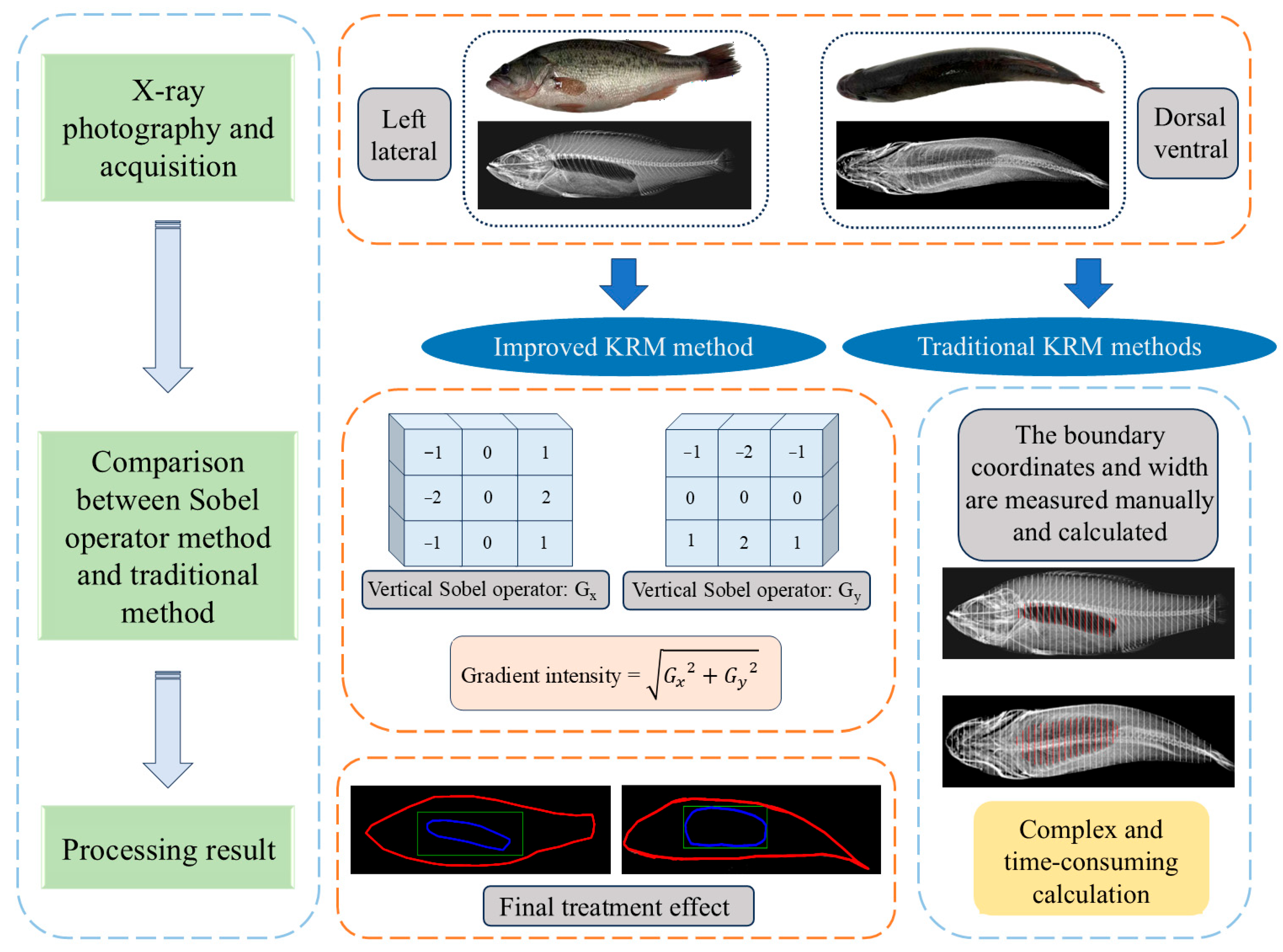
The Sobel operator is a classic edge detection algorithm. The gradient of the gray value is calculated through image preprocessing to determine the position of the edge. The Sobel operator uses convolution kernels to calculate gradients, where the convolution kernels in horizontal and vertical directions are as follows:
G x = 1 0 1 2 0 2 1 0 1
and
G y = 1 2 1 0 0 0 1 2 1
For any pixel in the image, the horizontal gradient G x and vertical gradient G y are calculated as follows:
G x = i = 1 1 j = 1 1 G x i , j I x + i , y + j
G y = i = 1 1 j = 1 1 G y i , j I x + i , y + j
where I x , y represents the grayscale value of the image at point x , y , G x i , j and G y i , j represents the horizontal and vertical convolution kernels of the Sobel operator, respectively.
By calculating the gradient magnitude, the edge strength at each point is obtained as follows:
G = G x 2 + G y 2 G x + G y
Edge detection technology efficiently extracts the boundary features of fish bodies and swim bladders, providing essential foundational support for subsequent calculations. By employing commonly used edge detection algorithms, such as the Sobel operator, significant grayscale variation regions within images can be accurately identified. Compared to traditional methods, such as manual delineation or threshold-based segmentation, these algorithms demonstrate higher efficiency and reliability in segmenting the micro-elements of fish bodies and swim bladders, thereby significantly enhancing the quality of the segmentation results. This advantage offers a practical and feasible technical solution for improving the application efficiency of the Kirchhoff ray-mode model in analyzing the acoustic characteristics of fish. Furthermore, it promotes the scientific application of acoustic assessment methods in fisheries resource management.

2.2. In Situ Measurement of Target Strength

The in situ measurement method involves identifying and processing echo images captured by split-beam transducers. By comparing the intensities of incident sound waves and reflected sound waves, the reflection strength of the target can be calculated, thereby determining the target strength:
T S = 10 lg I r I 0
where I 0 is the intensity of the incident sound wave (W/m2), I r is the intensity of the reflected sound wave (W/m2), T S is the target strength (dB).
The experiment employed a self-developed split-beam echo sounder, with specific parameters detailed in Table 1.

2.3. Sample Acquisition

At the outset of the experiment, twenty Micropterus salmoides were selected as experimental samples. All specimens were sourced from professional Micropterus salmoides brackish water aquaculture farms in Guangdong, China. The fish were collected in April 2025 during routine sampling operations. All individuals were sub-adult to adult, with body lengths ranging from 22.48 cm to 33.62 cm and a mean of 27.75 ± 3.16 cm (mean ± SD), including both males and females.
To ensure the accuracy and representativeness of the experimental data, detailed morphological parameters of each sampled fish were meticulously measured. Immediately after capture, on-site morphological measurements and direct measurement methods were employed to minimize any changes that might occur during transportation, thereby ensuring the real-time accuracy and reliability of the data.
To further ensure the samples’ freshness and enhance the scientific validity of the experimental results, all fish specimens underwent X-ray imaging within three hours post-capture. X-ray imaging not only preserves the original structure of the fish, preventing morphological changes during subsequent processing, but also provides essential data for the subsequent acoustic characteristic analysis using the modeling method. This rigorous sample acquisition and processing protocol ensures the collection of high-quality experimental data and the generation of reliable results, laying a solid foundation for subsequent acoustic detection research.

2.4. In Situ Measurement Method

To ensure accurate measurement of acoustic scattering signals and minimize interference from boundary reflections, the experimental measurements were conducted in a customized anechoic tank. The experiments were conducted in a customized anechoic tank lined with underwater-grade polyurethane-based absorbing material. This material was selected based on its acoustic impedance being closely matched to that of water, effectively reducing sound wave reflection at the boundary interface.
The tank had a water depth of 5 m and was filled with low-salinity water (3 ppt), simulating a typical brackish aquaculture environment for Micropterus salmoides. During the tests, the water temperature was maintained at 25 ± 0.5 °C, and the pH was approximately 7.6. These parameters were strictly controlled to reduce environmental influences on sound wave propagation and acoustic scattering.
To avoid near-field interference, the minimum distance between the transducer and the target was set beyond the near-field boundary, which was calculated to be approximately 0.32 m based on the transducer diameter and frequency.
The split-beam echo sounder used in this study was set with a transducer central frequency of 200 kHz to obtain clearer echo signals at higher frequencies. Before the experiments, the echo sounder was rigorously calibrated using a standard copper sphere with a diameter of 23 mm, following the internationally recognized target strength calibration method. This calibration step aimed at eliminating any systemic errors inherent to the instrument, ensuring the accuracy and repeatability of the measurement results.
During the in situ measurement process, the echo sounder was securely installed at a designated position within the anechoic water tank to maintain consistency and control of the measurement environment (in Figure 1). The fish is fixed under the lifting equipment through fishing lines and fixed rods. The fixed rods are marked with scale positions and keep the fish’s ventral and dorsal sides aligned with the transducer. The position of the transducer is also marked with the same scale on the fixed rod, ensuring consistency in vertical position between the two. In addition, the horizontal positions of the two are achieved through the movement and fixation of the lifting equipment, keeping them consistent on the axis.
Utilizing split-beam technology, the echo sounder could simultaneously receive echo signals from four quadrants, thereby accurately locating the position of target fish and estimating their acoustic scattering characteristics. Throughout the experiment, the time–frequency characteristics of the echo signals were continuously monitored and recorded, providing a wealth of raw data to support subsequent data analysis and model development.

2.5. Edge Detection Processing and Model Construction

In this study, all fish samples were subjected to X-ray imaging within three hours after in situ measurement to ensure the freshness of the samples and the accurate recording of their morphological characteristics. The fish directly measured in the experiment were dead fish. The resulting X-ray images were processed using specialized software, where key morphological parameters, such as fish body length, swim bladder volume, and boundary coordinate points, were annotated.
The specific steps are as follows:
(1)
Edge Detection and Separation. Utilizing edge detection algorithms, the X-ray images were processed in software to precisely separate the fish body and swim bladder regions. This step involved identifying high-gradient areas within the images to extract the boundary contours of both the fish body and the swim bladder.
(2)
Model Segmentation and Cross-Section Extraction. The separated fish body and swim bladder models were divided into equally spaced cross-sections. Each cross-section segment was uniformly distributed to ensure data continuity and representativeness. By recording the boundary coordinate points and length information of each cross-section, the structural features of the swim bladder and fish body were accurately depicted.
(3)
Target Strength Calculation and Acoustic Scattering Analysis. Based on Equations (1)–(8), the target strength of each fish was calculated. Furthermore, acoustic scattering characteristics were analyzed to evaluate the reflection and scattering effects of fish bodies on sound waves.
The mathematical model used in this study is based on established theoretical formulas, which have been calibrated and adjusted to reflect actual environmental parameters. Figure 2 illustrates the differences and advantages of using the edge detection algorithm for model construction compared to the traditional Kirchhoff ray-mode model. The results demonstrate that the edge detection algorithm can more accurately capture boundary information when handling complex fish body and swim bladder morphologies, thereby reducing errors in the model construction process and enhancing the precision of target strength calculations.
Additionally, by segmenting the fish body and swim bladder into equally spaced cross-section segments, the acoustic scattering characteristics of different parts of the fish body can be analyzed in greater detail. The boundary coordinate points and length information of each cross-section provide comprehensive data support for subsequent acoustic characteristic analyses, making the model construction more precise and thorough.

3. Results and Discussion

3.1. Morphological Information

Table 2 presents the morphological parameters of the twenty Micropterus salmoides samples. The actual measurements revealed that the body lengths of the samples ranged from 22.48 cm to 33.62 cm, with an average length of 27.26 cm. Key parameters of the swim bladder, including swim bladder length, width, height, and volume, were determined using X-ray imaging technology. Additionally, dissections of selected samples further validated the position and size of the swim bladder. The results indicated that the average swim bladder length was 9.26 cm, the average width was 3.07 cm, the average height was 2.03 cm, and the average swim bladder volume was 31.10 cm3. The swim bladder of the Micropterus salmoides exhibited a slender, spindle-shaped morphology, with a length constituting approximately one-third of the total body length. This morphology suggests excellent buoyancy regulation capabilities, enabling frequent movement between different water layers, which is consistent with their diurnal and nocturnal behavioral patterns.
Furthermore, edge detection technology was employed to perform equidistant cross-sectional slicing of the fish bodies’ lateral and dorsal-ventral X-ray images. This process extracted critical information, including the upper and lower boundary coordinates and widths of both the fish body and the swim bladder. These morphological data provide foundational support for subsequent studies on the acoustic characteristics of Micropterus salmoides and fisheries resource assessments. Additionally, they offer essential parameter references for understanding the swim bladder’s role in fish’s acoustic scattering mechanisms.

3.2. Acoustic Scattering Characteristics of Micropterus salmoides

3.2.1. Relationship Between Target Strength and Body Length

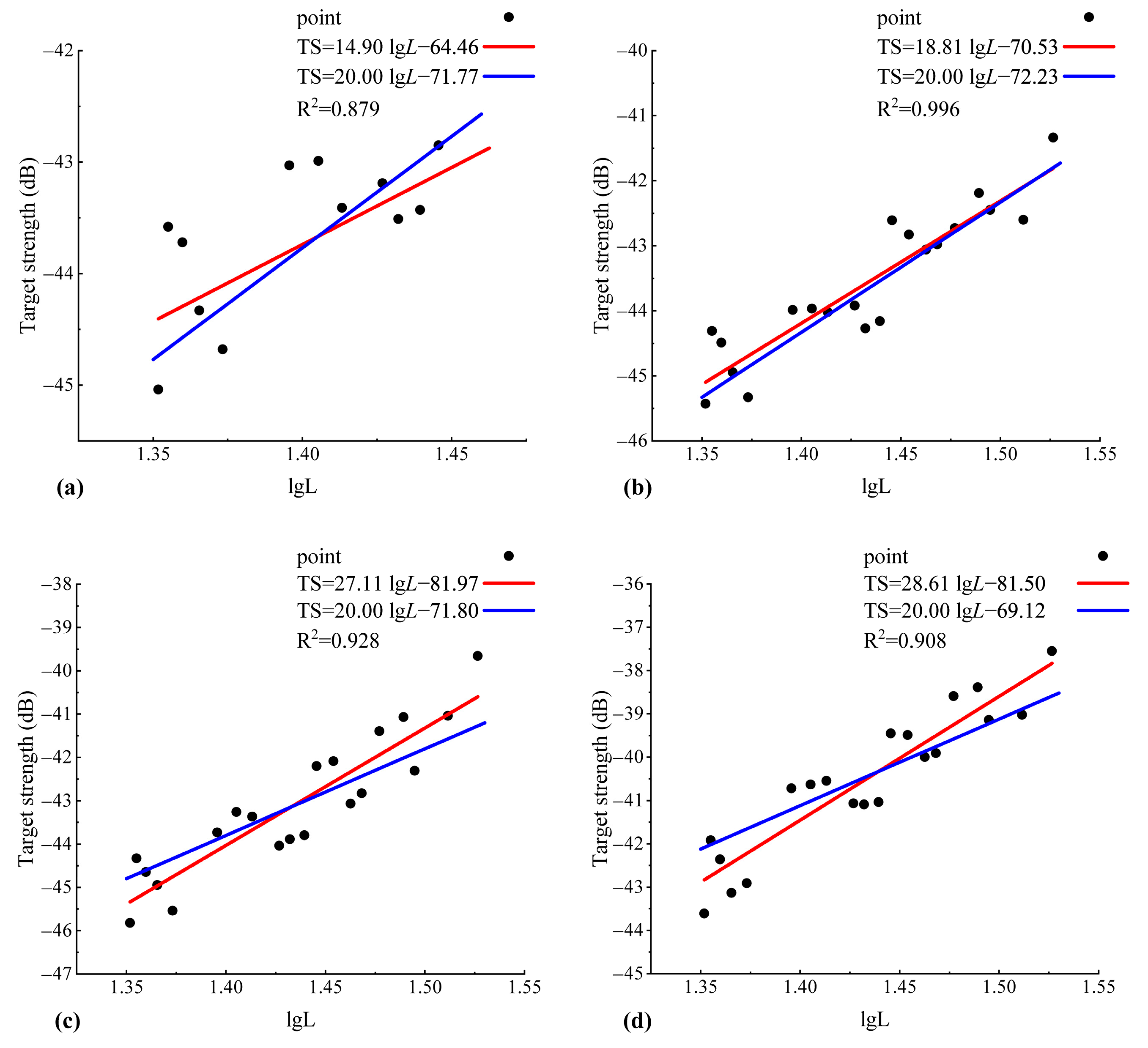
Using the Kirchhoff ray-mode model and assuming a normal distribution for the probability density function of the fish orientation angle (−5° to 15°) [22], the average target strength was calculated at various frequencies. The relationship between average target strength and body length was analyzed to determine the b20 values in the empirical formulas for each frequency, as summarized in Table 3.
Based on data calculations and Equation (7), the fitted equations relating target strength to fish length for Micropterus salmoides at frequencies of 38 kHz, 70 kHz, 120 kHz, and 200 kHz are as follows: T S = 14.90 lg L 64.46 , T S = 18.81 lg L 70.53 , T S = 27.11 lg L 81.97 , T S = 28.61 lg L 81.50 . Additionally, using Equation (8), these relationships can also be expressed as follows: T S = 20 lg L 71.77 , T S = 20 lg L 72.23 , T S = 20 lg L 71.80 , T S = 20 lg L 69.12 . Figure 3 illustrates the fitted equations for target strength at different frequencies.
The study results indicate that the curves fitted using Equation (4) more closely align with the actual measurements. Under the measurement conditions of 70 kHz and 120 kHz, the fitted curves exhibit minimal differences in slope and intercept, suggesting relatively low measurement errors in target strength for Micropterus salmoides at these frequencies.
An ANCOVA was conducted to statistically compare the fitted curves, confirming that the slopes and intercepts at 70 kHz and 120 kHz are not significantly different (p > 0.05), whereas those at 38 kHz and 200 kHz show significant divergence (p < 0.05). At 70 kHz and 120 kHz, b20 values were closest to 20, indicating that the scattering process in this range is most consistent with the geometric scattering model. Regression statistics further showed that the determination coefficients (R2) were as high as 0.996 (70 kHz) and 0.928 (120 kHz), while lower at 38 kHz (0.879) and 200 kHz (0.908). RMSE values also reflected this difference, being smaller at 70 kHz (0.52 dB) but higher at 120 kHz (0.66 dB) and 200 kHz (0.79 dB). These results reinforce that the frequency range of 70–120 kHz provides the most reliable TS–length estimates under the tested conditions.
In addition, confidence intervals (95% CI) for the regression slopes and intercepts were calculated to assess uncertainty. At 70 kHz and 120 kHz, the 95% CIs of slopes overlapped with the theoretical b20 = 20 line, confirming consistency with the geometric scattering regime. In contrast, the wider CIs observed at 38 kHz and 200 kHz indicated greater variability, possibly due to resonance effects or complex echo characteristics at these frequencies. Residual analysis also supported that posture angle variability and frequency contributed most strongly to TS fluctuations, highlighting posture as a key sensitive factor.
Typically, when the size of the fish body or other biological targets relative to the sound wave wavelength falls into different scattering regimes (such as Rayleigh, geometric, or resonance scattering), the relationship between the measured TS and fish length does not strictly adhere to the ‘ 20 lg L ’ form. At higher measurement frequencies (relative to fish size), scattering tends to approach geometric scattering, resulting in fitted slopes that often exceed 20. Conversely, at lower measurement frequencies (with smaller fish size-to-wavelength ratios), different scattering characteristics or resonance peaks may occur, leading to greater deviations in slope from 20.
Furthermore, the species Micropterus salmoides contains various tissues such as swim bladders, whose shapes and compositions are not ideal rigid scatterers, significantly affecting acoustic scattering. These structural differences cause variations in slope across different measurement frequencies and scattering regimes, resulting in deviations between the measured TS and the ideal model. Therefore, the lack of precision in low-frequency sound wave measurements and the complex interference of high-frequency sound waves are key factors influencing measurement results.
In summary, future research should further optimize the range of measurement frequencies to enhance the accuracy and reliability of target strength measurements. Additionally, considering the complex biological structure of Micropterus salmoides, improvements in transducer design and signal processing algorithms are crucial to reducing measurement errors and enhancing the effectiveness of acoustic detection technology in fisheries resource assessments. Based on the results of this study, measurement frequencies around 70–120 kHz exhibited the most stable and accurate TS values with narrow confidence intervals and low residuals, suggesting that this frequency range may be optimal for future investigations. In contrast, frequencies below 50 kHz or above 150 kHz may introduce higher errors due to resonance effects or complex scattering.

3.2.2. Relationship Between Target Strength and Swim Bladder Volume

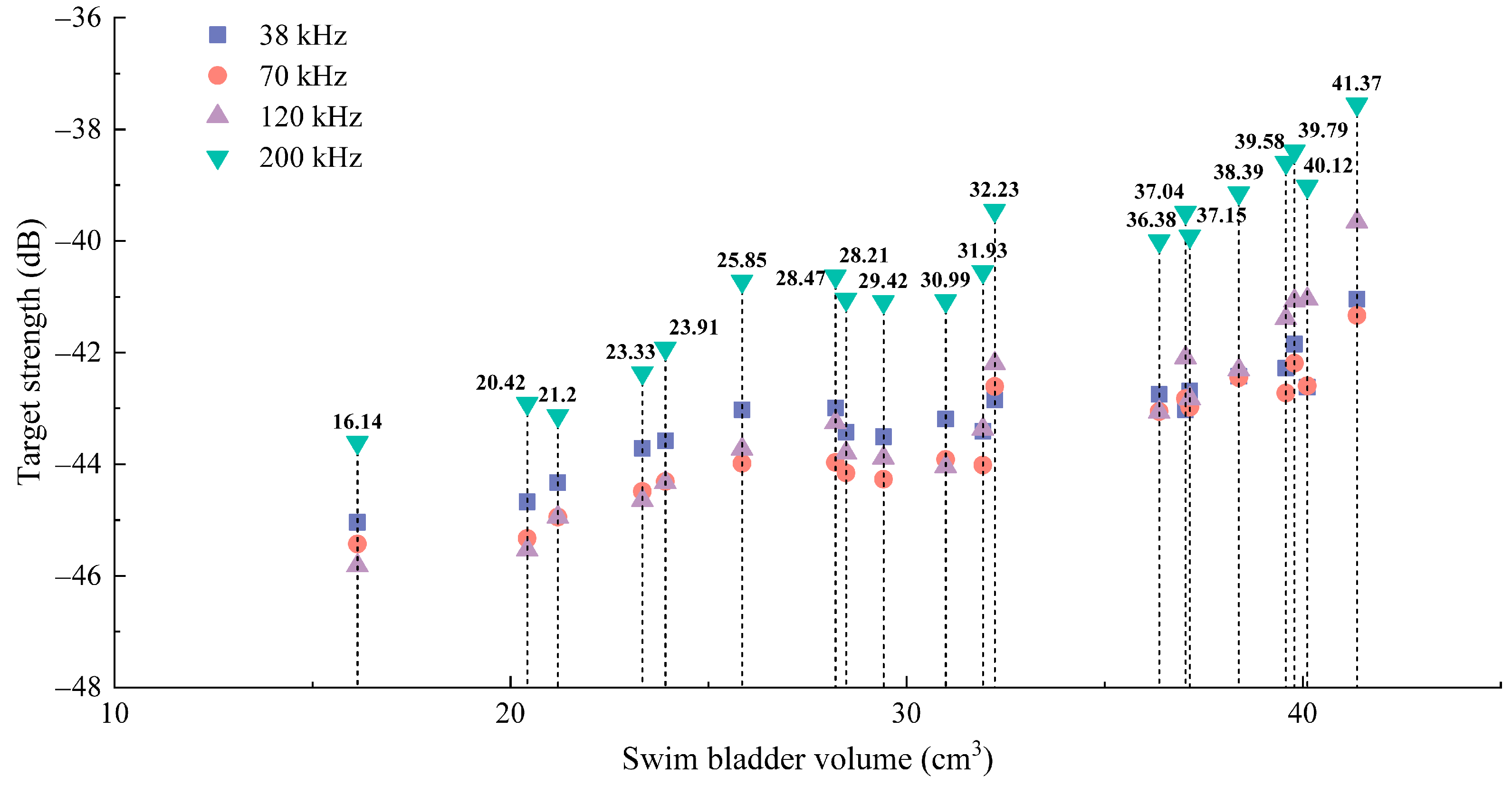
By analyzing the X-ray images of the 20 fish samples, the coordinate parameters of the fish body and swim bladder were further determined. These data provided the basis for calculating the impact of different frequencies and fish orientation angles on target strength using the Kirchhoff ray mode model. Figure 4 shows the variation in target strength with swim bladder volume for two Micropterus salmoides samples of different lengths at four common measurement frequencies: 38 kHz, 70 kHz, 120 kHz, and 200 kHz.
As shown in Figure 4, within the same frequency range, the swim bladder volume of Micropterus salmoides exhibits an increasing trend with increasing target strength, which is supported by linear regression analysis at four tested frequencies. Linear regression results show significant positive correlations (38 kHz: slope = 0.111, R2 = 0.82, p < 0.001; 70 kHz: slope = 0.138, R2 = 0.89, p < 0.001; 120 kHz: slope = 0.197, R2 = 0.86, p < 0.001; 200 kHz: slope = 0.211, R2 = 0.92, p < 0.001), indicating that larger swim bladder volumes consistently lead to higher TS values across frequencies. This confirms that swim bladder volume is a key factor influencing the target strength of Micropterus salmoides. The swim bladder is filled with gas, and the significant difference in acoustic impedance between gas and water results in higher reflected sound wave intensity as the acoustic impedance difference increases, leading to greater sound wave scattering. This phenomenon further validates the role of the swim bladder as the primary acoustic scattering organ in fish.
Moreover, a larger swim bladder volume alters the propagation angle and intensity of scattered sound waves, increasing the overall reflected sound wave energy. As the swim bladder volume rises, the reflection and scattering phenomena during sound wave propagation become more pronounced, thereby significantly enhancing target strength [23]. Studies have shown that the swim bladder is not only an essential organ for buoyancy regulation in fish but also a critical factor in acoustic characteristic analysis that cannot be overlooked. Therefore, when conducting acoustic fish detection and target strength assessments, the influence of swim bladder volume must be thoroughly considered to improve the accuracy and reliability of measurement results. While this study focuses on the swim bladder due to its dominant acoustic impedance contrast, the contributions of other structures, such as bones and muscles, were not separately quantified, and future work should consider their potential influence.
In summary, the impact of the swim bladder volume on the target strength of Micropterus salmoides is substantial. The regression results with high R2 values and significant slopes across frequencies emphasize the robustness of this relationship. Future research should further investigate the specific mechanisms by which varying swim bladder volumes affect acoustic scattering characteristics and optimize the design of acoustic detection equipment. This will enable a more accurate reflection of the influence of fish physiological structures on acoustic signals, thereby enhancing the precision and efficiency of fisheries resource assessments.

3.2.3. Underwater Acoustic Data Processing and Analysis

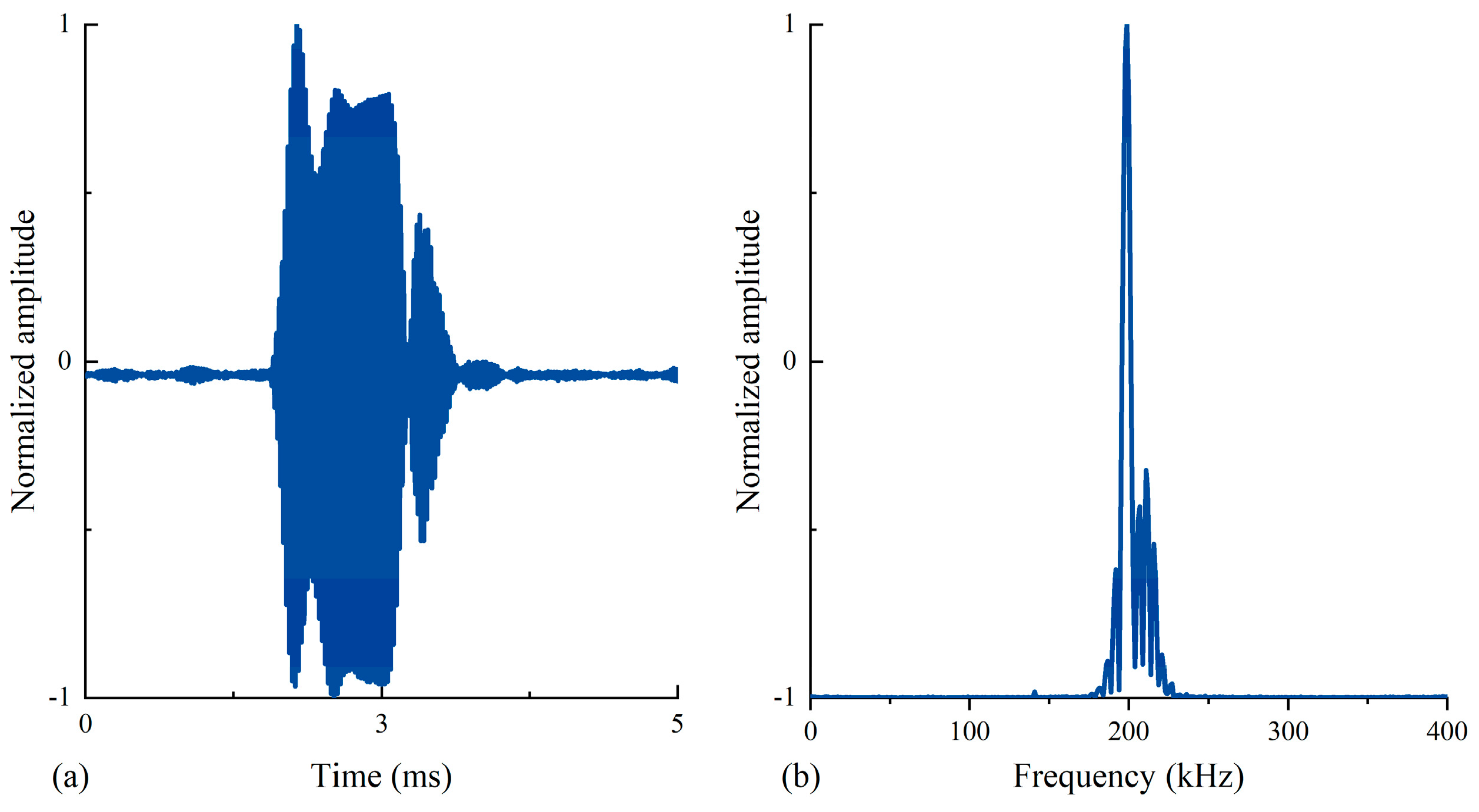
In the in situ measurement experiments of this study, the echo sounder operated in band-pass sampling mode with a range setting of 5 m, a maximum gain compensation of 2 dB, a working frequency of 200 kHz, and a sampling rate of 1 MHz. A detailed analysis of the data collected by the split-beam echo sounder yielded time–frequency analysis diagrams of the acoustic scattering signals from the target fish bodies (Figure 5).
The time-domain graph displays the echo characteristics of the Micropterus salmoides. Significant variations in signal amplitude indicate differences in reflection intensity and timing caused by the fish body’s diverse internal and external structures, resulting in multiple interference waves within the time-domain echo signal. The signal attenuates and extends on both sides, reflecting the attenuation effects during sound wave propagation and indicating variations in the distances to different parts of the fish’s body. This waveform characteristic demonstrates that the echo sounder, operating at a frequency of 200 kHz, can accurately capture echo signals from various parts of the Micropterus salmoides.
Frequency domain analysis revealed a prominent central frequency peak at 200 kHz, consistent with the echo sounder’s operating frequency. This indicates that the majority of reflected energy is concentrated within this frequency range, reflecting the favorable physical characteristics of Micropterus salmoides. The central frequency peak is narrow and sharp, suggesting that the fish body surface is relatively smooth and uniform, with echo signals not significantly affected by Doppler effects or complex scattering phenomena. Due to the limited propagation distance of high-frequency sound waves, the echo signals primarily reflect the structural characteristics of the fish’s body surface, with minimal influence from deeper tissues. The spectrum remains relatively flat in frequency bands outside the central peak with no noticeable noise peaks, indicating a relatively quiet underwater environment during the experiment and minimal interference signals.
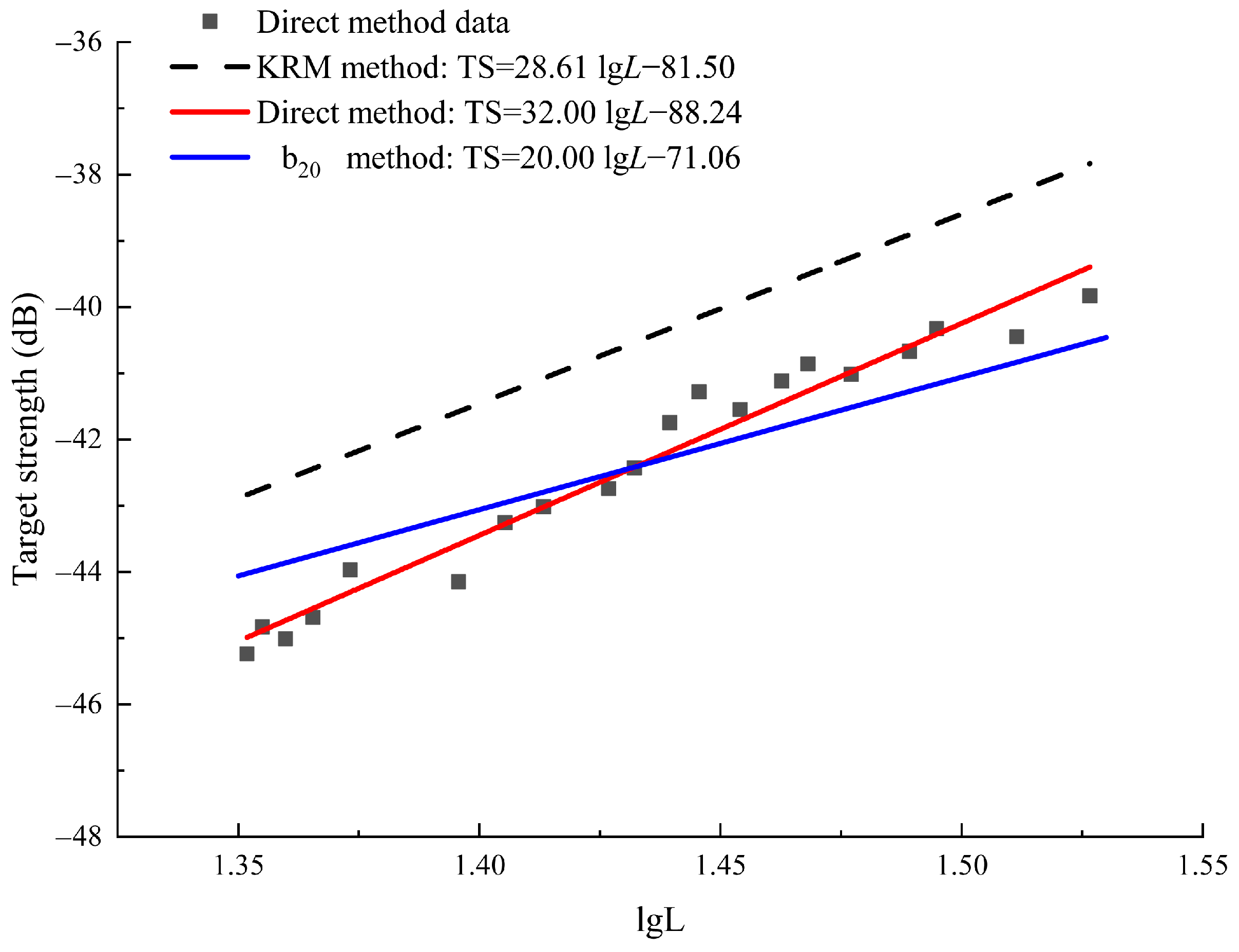
At a fixed operating frequency of 200 kHz, the average target strength of Micropterus salmoides acoustic scattering signals was calculated using Equation (14), yielding the probability distribution of TS, as shown in Table 4. A fitted curve based on the obtained data points was established, as T S = 32.00 lg L 88.24 , illustrated in Figure 6. The results indicate that, at 200 kHz, the average target strength of Micropterus salmoides measured using the direct method is −42.41 dB. Linear regression comparison further showed that the direct method yielded T S = 32.00 lg L 88.24 (R2 = 0.96, RSS = 5.01), whereas the KRM produced T S = 28.61 lg L 81.50 (R2 = 0.93, RSS = 7.64). When compared with the theoretical b20 approximation ( T S = 20 lg L 71.06 ), both methods exhibited strong linear correlations, but the direct method presented a slope more consistent with empirical measurements, while the KRM showed a relatively lower intercept. These results suggest that the direct method provides slightly more reliable and realistic estimates under the tested conditions.
These results demonstrate that while both methods are effective in describing the TS–length relationship, the direct measurement approach provides slightly more reliable estimates under the tested conditions. Future work should explore how adjusting measurement parameters or refining model assumptions may further enhance the accuracy and robustness of TS estimation in natural aquatic environments.

3.2.4. Other Factors Affecting Target Strength

Based on the aforementioned data analysis, the target strength of Micropterus salmoides is significantly influenced by body length, posture inclination angle, swim bladder volume, and operating frequency. By comparing the TS data of the swim bladder, fish body, and overall fish, it was observed that the TS of the swim bladder closely matches the overall TS curve, further validating the primary role of the swim bladder in the acoustic scattering process of swim-bladdered fish [18].
Furthermore, the TS of the fish body is not only determined by its morphological structure, tissue acoustic properties, and posture orientation, but is also affected by additional factors such as detection frequency and aquatic environmental conditions [9]. For instance, variations in frequency can change the interaction between sound waves and fish morphology, thereby altering measured TS values. Environmental parameters, such as temperature, salinity, and turbidity, also have significant effects on the propagation and scattering characteristics of sound waves.
To further quantify the reliability of the results, an uncertainty and sensitivity analysis was conducted to evaluate the effects of body length, posture inclination, and frequency on TS. According to Equation (7), the propagation of body length error in TS can be approximately expressed in differential form:
Δ T S L T S L Δ L = a L ln 10 Δ L
where a is the regression slope, L is the average body length, and Δ L is the measurement error. At the mean body length of L = 27.26 cm and an error of Δ L = ±1 cm, the TS uncertainty is approximately ± 0.51 dB for the direct method (a = 32.00) and ± 0.46 dB for the KRM (a = 28.61).
For the posture inclination angle, the TS error can be described as follows:
T S θ θ s θ
Δ T S θ s θ Δ θ
where s θ is the local angular sensitivity and Δ θ is the posture angle error. Empirical sensitivity analysis indicated s θ ≈ 0.12–0.18 dB/deg.
For frequency, perturbation analysis showed that a small error around the working frequency of 200 kHz produces a negligible variation. Specifically, for a ±1 kHz frequency offset, the TS error remains below ±0.1 dB.
Assuming the error sources (body length, posture inclination, and frequency) are independent, their contributions to TS uncertainty can be combined. The overall uncertainty was estimated at 0.54 dB, consistent with the regression RMSE (<1 dB). This result indicates that body length uncertainty contributes the largest proportion of total TS uncertainty, while posture inclination and frequency errors play secondary roles. These findings confirm the robustness of the estimates and demonstrate that the empirical TS equations are reliable and reproducible under the tested conditions.

4. Conclusions

This study systematically and thoroughly analyzed the acoustic scattering characteristics of Micropterus salmoides by integrating edge detection technology with the Kirchhoff ray-mode model. The results indicate that the fitted equations relating Target Strength (TS) to body length (L) at frequencies of 38 kHz, 70 kHz, 120 kHz, and 200 kHz are as follows: T S = 14.90 lg L 64.46 , T S = 18.81 lg L 70.53 , T S = 27.11 lg L 81.97 , T S = 28.61 lg L 81.50 , respectively. Additionally, using the in situ measurement method at a frequency of 200 kHz, the relationship between TS and body length was determined to be T S = 32.00 lg L 88.24 . These results validate the feasibility of combining modeling and experimental measurements for estimating fish TS.
Linear regression analysis revealed that the model-based and direct measurement methods yielded similar slopes, while minor differences in intercepts may be attributed to environmental factors such as posture variation and in situ noise. The overall high coefficients of determination and low residuals support the accuracy and reliability of both methods.
This study further analyzed the influence of swim bladder volume, posture inclination angle, and frequency on TS. It was found that TS increases significantly with swim bladder volume due to the strong acoustic impedance contrast between the gas-filled bladder and surrounding tissues. Additionally, a nonlinear relationship between TS and frequency was observed, likely due to the effects of fish posture and resonance scattering. Regression analyses with 95% confidence intervals confirmed the robustness of these relationships, highlighting swim bladder volume and posture as the most sensitive parameters.
These findings provide valuable insights into the acoustic behavior of Micropterus salmoides and establish a theoretical basis for improving fishery resource assessment. The results also demonstrate that integrating advanced acoustic modeling with empirical data enhances the accuracy of TS estimation. Furthermore, the combined use of statistical validation and acoustic modeling strengthens the reliability of the results, providing a more rigorous framework for fisheries applications.
Future studies should incorporate a broader range of body lengths and frequencies, as well as additional fish species, to expand model generalization. Further optimization of acoustic detection systems, along with the exploration of behavioral and environmental factors that influence them, will contribute to more robust, accurate, and widely applicable fishery resource monitoring technologies. Overall, this study demonstrates the practical potential of acoustic scattering analysis in brackish-water aquaculture, offering both theoretical support and applied guidance for sustainable fishery management.

Author Contributions

Conceptualization, W.W.; methodology, W.W.; software, W.W.; validation, W.W. and Z.G.; formal analysis, Z.G. and M.W.; investigation, W.W.; resources, Z.G.; data curation, W.W.; writing—original draft preparation, W.W.; writing—review and editing, M.S. and Z.G.; visualization, W.W. and Z.G.; supervision, M.S. and Z.G.; project administration, M.S.; funding acquisition, M.S. and M.W. All authors have read and agreed to the published version of the manuscript.

Funding

This research was funded by the Shenzhen Science and Technology Program, grant number KCXFZ20240903094406009.

Data Availability Statement

The original contributions presented in the study are included in the article, further inquiries can be directed to the corresponding author.

Conflicts of Interest

The authors declared no potential conflicts of interest with respect to the research, authorship, and/or publication of this article.

References

  1. Dai, X.; Zhu, S.; Ye, J.; Xu, Q.; Yi, T.; Wu, C.; Wang, B.; Luo, K.; Gao, W. Effects of Dietary Enzymatically Treated Artemisia annua L. in Low Fish Meal Diet on Growth, Antioxidation, Metabolism and Intestinal Health of Micropterus salmoides. Aquac. Rep. 2023, 33, 101843. [Google Scholar] [CrossRef]
  2. Yuan, H.; Hu, J.; Li, X.; Sun, Q.; Tan, X.; You, C.; Dong, Y.; Huang, Y.; Zhou, M. Dietary Black Soldier Fly Oil Enhances Growth Performance, Flesh Quality, and Health Status of Largemouth Bass (Micropterus salmoides). Anim. Nutr. 2024, 18, 234–245. [Google Scholar] [CrossRef]
  3. Yu, P.; Chen, H.; Liu, M.; Zhong, H.; Wang, X.; Wu, Y.; Sun, Y.; Wu, C.; Wang, S.; Zhao, C.; et al. Current Status and Application of Largemouth bass (Micropterus salmoides) Germplasm Resources. Reprod. Breed. 2024, 4, 73–82. [Google Scholar] [CrossRef]
  4. Liu, Y.; Tian, J.; Song, H.; Zhu, T.; Lei, C.; Du, J.; Li, S. Osmoregulation and Physiological Response of Largemouth Bass (Micropterus salmoides) Juvenile to Different Salinity Stresses. Int. J. Mol. Sci. 2025, 26, 3847. [Google Scholar] [CrossRef]
  5. Wang, Z.; Zheng, J.; Pu, D.; Li, P.; Wei, X.; Li, D.; Gao, L.; Zhai, X.; Zhao, C.; Du, Y. Comparative Evaluation of Nutritional Quality and Flavor Characteristics for Micropterus salmoides Muscle in Different Aquaculture Systems. Food Chem. X 2024, 24, 101787. [Google Scholar] [CrossRef]
  6. Qin, Y.; Zhang, P.; Zhang, M.; Guo, W.; Deng, S.; Liu, H.; Yao, L. Isolation and Identification of a New Strain Micropterus salmoides Rhabdovirus (MSRV) from Largemouth Bass Micropterus salmoides in China. Aquaculture 2023, 572, 739538. [Google Scholar] [CrossRef]
  7. Dunn, M.; Pedersen, G.; Daase, M.; Berge, J.; Venables, E.; Basedow, S.L.; Falk-Petersen, S.; Langbehn, T.J.; Jensen, J.; Camus, L.; et al. Broadband Acoustic Classification of Atlantic Cod, Polar Cod, and Northern Shrimp in in Situ Mesocosm Experiments. Fish. Res. 2025, 286, 107388. [Google Scholar] [CrossRef]
  8. Kattler, K.R.; Looby, A.; Côté, I.M.; Cox, K.D. The Sound of Recovery: Integrating Acoustics into Fish Status Assessments and Recovery Strategies. Biol. Conserv. 2025, 310, 111339. [Google Scholar] [CrossRef]
  9. Becker, A.; Lowry, M.B.; Fowler, A.M.; Taylor, M.D. Hydroacoustic Surveys Reveal the Distribution of Mid-Water Fish Around Two Artificial Reef Designs in Temperate Australia. Fish. Res. 2023, 257, 106509. [Google Scholar] [CrossRef]
  10. Wolfenkoehler, W.; Long, J.M.; Gary, R.; Snow, R.A.; Schooley, J.D.; Bruckerhoff, L.A.; Lonsinger, R.C. Viability of Side-Scan Sonar to Enumerate Paddlefish, a Large Pelagic Freshwater Fish, in Rivers and Reservoirs. Fish. Res. 2023, 261, 106639. [Google Scholar] [CrossRef]
  11. Ladino, A.; Pérez-Arjona, I.; Espinosa, V.; Chillarón, M.; Vidal, V.; Godinho, L.M.; Moreno, G.; Boyra, G. Role of Material Properties in Acoustical Target Strength: Insights from Two Species Lacking a Swimbladder. Fish. Res. 2024, 270, 106895. [Google Scholar] [CrossRef]
  12. Dunning, J.; Jansen, T.; Fenwick, A.J.; Fernandes, P.G. A New In-Situ Method to Estimate Fish Target Strength Reveals High Variability in Broadband Measurements. Fish. Res. 2023, 261, 106611. [Google Scholar] [CrossRef]
  13. Rautureau, C.; Goulon, C.; Guillard, J. In Situ TS Detections Using Two Generations of Echo-Sounder, EK60 and EK80: The Continuity of Fishery Acoustic Data in Lakes. Fish. Res. 2022, 249, 106237. [Google Scholar] [CrossRef]
  14. Wang, B.; Wang, W.; Fan, J.; Zhao, K.; Zhou, F.; Tan, L. Modeling of Bistatic Scattering from an Underwater Non-Penetrable Target Using a Kirchhoff Approximation Method. Def. Technol. 2022, 18, 1097–1106. [Google Scholar] [CrossRef]
  15. Xing, Z.; Yuan, X.; Lam, C.-T.; Im, S.-K. Low-Complexity DQED: Advancing Dual-Scenario Quantum Edge Detection for Enhanced Image Analysis. Comput. Electr. Eng. 2025, 127, 110545. [Google Scholar] [CrossRef]
  16. Lu, Y.; Duanmu, L.; Zhai, Z.J.; Wang, Z. Application and Improvement of Canny Edge-Detection Algorithm for Exterior Wall Hollowing Detection Using Infrared Thermal Images. Energy Build. 2022, 274, 112421. [Google Scholar] [CrossRef]
  17. Chen, G.; Jiang, Z.; Kamruzzaman, M.M. Radar Remote Sensing Image Retrieval Algorithm Based on Improved Sobel Operator. J. Vis. Commun. Image Represent. 2020, 71, 102720. [Google Scholar] [CrossRef]
  18. Wang, Y.; Zhang, W.; Wu, Y.; Qu, C.; Hu, H.; Lee, T.; Lin, S.; Zhang, J.; Lam, K.S.; Wang, A. Protocol for Vision Transformer-Based Evaluation of Drug Potency Using Images Processed by an Optimized Sobel Operator. STAR Protoc. 2023, 4, 102259. [Google Scholar] [CrossRef]
  19. Peng-o, T.; Chaikan, P. High Performance and Energy Efficient Sobel Edge Detection. Microprocess. Microsyst. 2021, 87, 104368. [Google Scholar] [CrossRef]
  20. Foote, K.G. Importance of the Swimbladder in Acoustic Scattering by Fish: A Comparison of Gadoid and Mackerel Target Strengths. J. Acoust. Soc. Am. 1980, 67, 2084–2089. [Google Scholar] [CrossRef]
  21. Yasuma, H.; Sawada, K.; Takao, Y.; Miyashita, K.; Aoki, I. Swimbladder condition and target strength of myctophid fish in the temperate zone of the Northwest Pacific. ICES J. Mar. Sci. 2010, 67, 135–144. [Google Scholar] [CrossRef]
  22. Li, D.; Hao, Y.; Duan, Y. Nonintrusive Methods for Biomass Estimation in Aquaculture with Emphasis on Fish: A Review. Rev. Aquac. 2020, 12, 1390–1411. [Google Scholar] [CrossRef]
  23. McCartney, B.S.; Stubbs, A.R. Measurements of the Acoustic Target Strengths of Fish in Dorsal Aspect, Including Swimbladder Resonance. J. Sound Vib. 1971, 15, 397–420. [Google Scholar] [CrossRef]
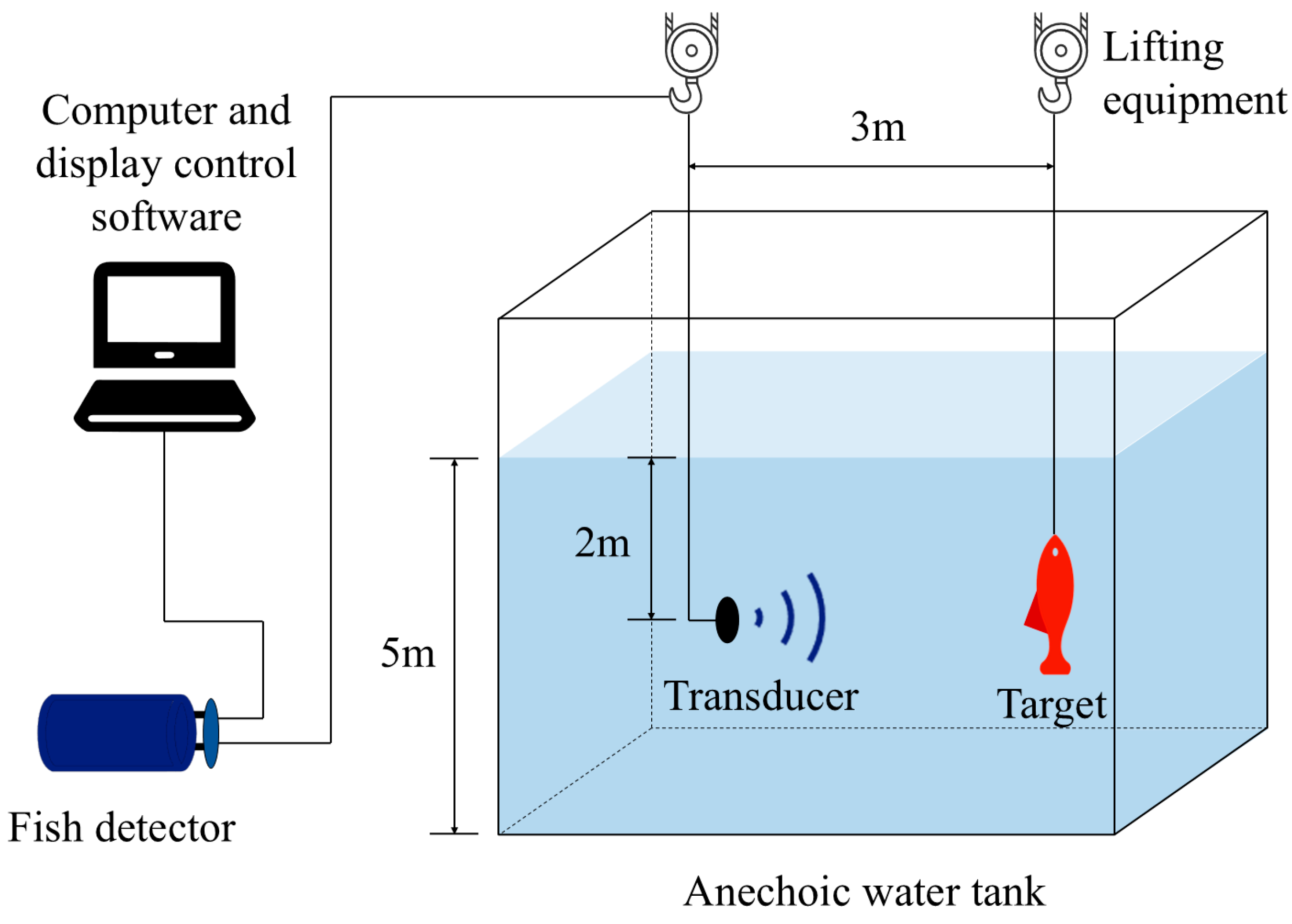
Figure 1. Anechoic water tank experiment diagram.
Jmse 13 01856 g001
Figure 2. A comparison between traditional KRM and improved KRM methods. Note: In the figure, the red line represents the fish body contour, the blue line represents the swim bladder contour, and the green box represents the graphical shape from which the swim bladder was obtained.
Jmse 13 01856 g002
Figure 3. Fitting the equation of target strength of Micropterus salmoides at different frequencies. (a) 38 kHz; (b) 70 kHz; (c) 120 kHz; (d) 200 kHz.
Jmse 13 01856 g003
Figure 4. Relationship between bladder volume and target strength.
Jmse 13 01856 g004
Figure 5. The time-domain and frequency-domain acoustic scattering signals of a sample fish. (a) Time domain; (b) frequency domain.
Jmse 13 01856 g005
Figure 6. The comparison between the KRM method and the direct method at a frequency of 200 kHz.
Jmse 13 01856 g006
Table 1. Relevant parameters of the split-beam fish finder.
ParameterValueParameterValue
Operating frequency200 kHzInput voltageDC10–14 V
Detection range1.0–200 mPower consumption30 W
Pulse typeCW and LFMCommunication modeethernet network
Pulse duration0.1–10 msData transfer rate100 Mbps
Maximum emission SL210 dBMaterialsStainless steel
Beam typesplit beamDynamic range±40 dB
Frame rate0.01–30 frames/secondOperating systemWindows
Table 2. Morphological parameters of the sample fish.
No.Body Length (cm)Body
Width (cm)
Body
Height (cm)
Bladder
Length
(cm)
Bladder
Width
(cm)
Bladder
Height
(cm)
Badder Volume (cm3)
122.483.766.558.152.441.5516.14
222.654.687.738.512.871.8723.91
322.904.618.058.662.681.9223.33
423.204.277.098.502.871.6621.20
523.623.956.888.562.561.7820.42
624.874.748.199.043.152.0530.57
725.434.968.328.612.982.1028.21
825.905.018.309.493.062.1031.93
926.724.818.179.683.201.9130.99
1027.054.757.909.803.051.8829.42
1127.514.608.019.572.991.9028.47
1227.905.068.729.983.232.1536.29
1328.455.128.849.853.172.2837.28
1429.025.148.869.933.382.0736.38
1529.395.128.929.883.422.1037.15
1630.005.208.789.903.322.3039.58
1730.855.279.059.923.362.2839.79
1831.255.158.9610.013.272.2438.39
1932.475.349.1210.083.322.2940.12
2033.625.239.1010.123.382.3141.37
average27.264.848.279.363.072.0331.10
Note: The swim bladder volume V b was calculated using the formula V b = 4 3 π × ( S L 2 ) × ( S H 2 ) × ( S W 2 ) , where S L is the swim bladder length, S H is the swim bladder height, and S W is the swim bladder width [21].
Table 3. The average target strength of Micropterus salmoides under different frequencies at a normal attitude in inclination probability density function (−5°, 15°).
No.Body Length
(cm)
Average of Target Strength (dB)b20
38 kHz70 kHz120 kHz200 kHz38 kHz70 kHz120 kHz200 kHz
122.48−45.04−45.43−45.82−43.61−72.08 −72.47 −72.86 −70.65
222.65−43.58−44.31−44.33−41.92−70.68 −71.41 −71.43 −69.02
322.90−43.72−44.49−44.65−42.36−70.92 −71.69 −71.85 −69.56
423.20−44.33−44.95−44.95−43.13−71.64 −72.26 −72.26 −70.44
523.62−44.68−45.33−45.54−42.91−72.15 −72.80 −73.01 −70.38
624.87−43.03−43.99−43.73−40.72−70.94 −71.90 −71.64 −68.63
725.43−42.99−43.97−43.26−40.63−71.10 −72.08 −71.37 −68.74
825.90−43.41−44.02−43.37−40.55−71.68 −72.29 −71.64 −68.82
926.72−43.19−43.92−44.04−41.07−71.73 −72.46 −72.58 −69.61
1027.05−43.51−44.27−43.89−41.09−72.15 −72.91 −72.53 −69.73
1127.51−43.43−44.16−43.80−41.04−72.22 −72.95 −72.59 −69.83
1227.90−42.85−42.61−42.20−39.45−71.76 −71.52 −71.11 −68.36
1328.45−43.03−42.83−42.09−39.49−72.11 −71.91 −71.17 −68.57
1429.02−42.75−43.06−43.07−40.00−72.00 −72.31 −72.32 −69.25
1529.39−42.69−42.98−42.83−39.91−72.05 −72.34 −72.19 −69.27
1630.00−42.28−42.73−41.39−38.59−71.82 −72.27 −70.93 −68.13
1730.85−41.85−42.19−41.07−38.39−71.64 −71.98 −70.86 −68.18
1831.25−42.43−42.45−42.31−39.14−72.33 −72.35 −72.21 −69.04
1932.47−42.62−42.60−41.04−39.02−72.85 −72.83 −71.27 −69.25
2033.62−41.04−41.34−39.66−37.55−71.57 −71.87 −70.19 −68.08
Average27.26−43.12−43.58−43.15−40.53−71.77−72.23−71.80−69.12
Table 4. The direct measurement results of target intensity for Micropterus salmoides at 200 kHz.
No.Body Length
(cm)
Average of Target Strength
(dB)
b20
122.48−45.24−72.28
222.65−44.83−71.93
322.90−45.01−72.21
423.20−44.69−72.00
523.62−43.97−71.44
624.87−44.15−72.06
725.43−43.26−71.37
825.90−43.02−71.29
926.72−42.74−71.28
1027.05−42.43−71.07
1127.51−41.75−70.53
1227.90−41.28−70.19
1328.45−41.55−70.63
1429.02−41.12−70.37
1529.39−40.86−70.22
1630.00−41.02−70.56
1730.85−40.67−70.46
1831.25−40.33−70.23
1932.47−40.45−70.68
2033.62−39.83−70.36
Average27.26−42.41−71.06
Disclaimer/Publisher’s Note: The statements, opinions and data contained in all publications are solely those of the individual author(s) and contributor(s) and not of MDPI and/or the editor(s). MDPI and/or the editor(s) disclaim responsibility for any injury to people or property resulting from any ideas, methods, instructions or products referred to in the content.