Article

Quantification of Expert Knowledge in Describing COLREGs Linguistic Variables

1
Maritime Department, University of Dubrovnik, Ćira Carića 4, 20000 Dubrovnik, Croatia
2
Faculty of Maritime Studies, University of Rijeka, Studentska ulica 2, 51000 Rijeka, Croatia
*
Authors to whom correspondence should be addressed.
J. Mar. Sci. Eng. 2024, 12(6), 849; https://doi.org/10.3390/jmse12060849
Submission received: 22 April 2024 / Revised: 13 May 2024 / Accepted: 18 May 2024 / Published: 21 May 2024
(This article belongs to the Special Issue Autonomous Marine Vehicle Operations—2nd Edition)

Abstract

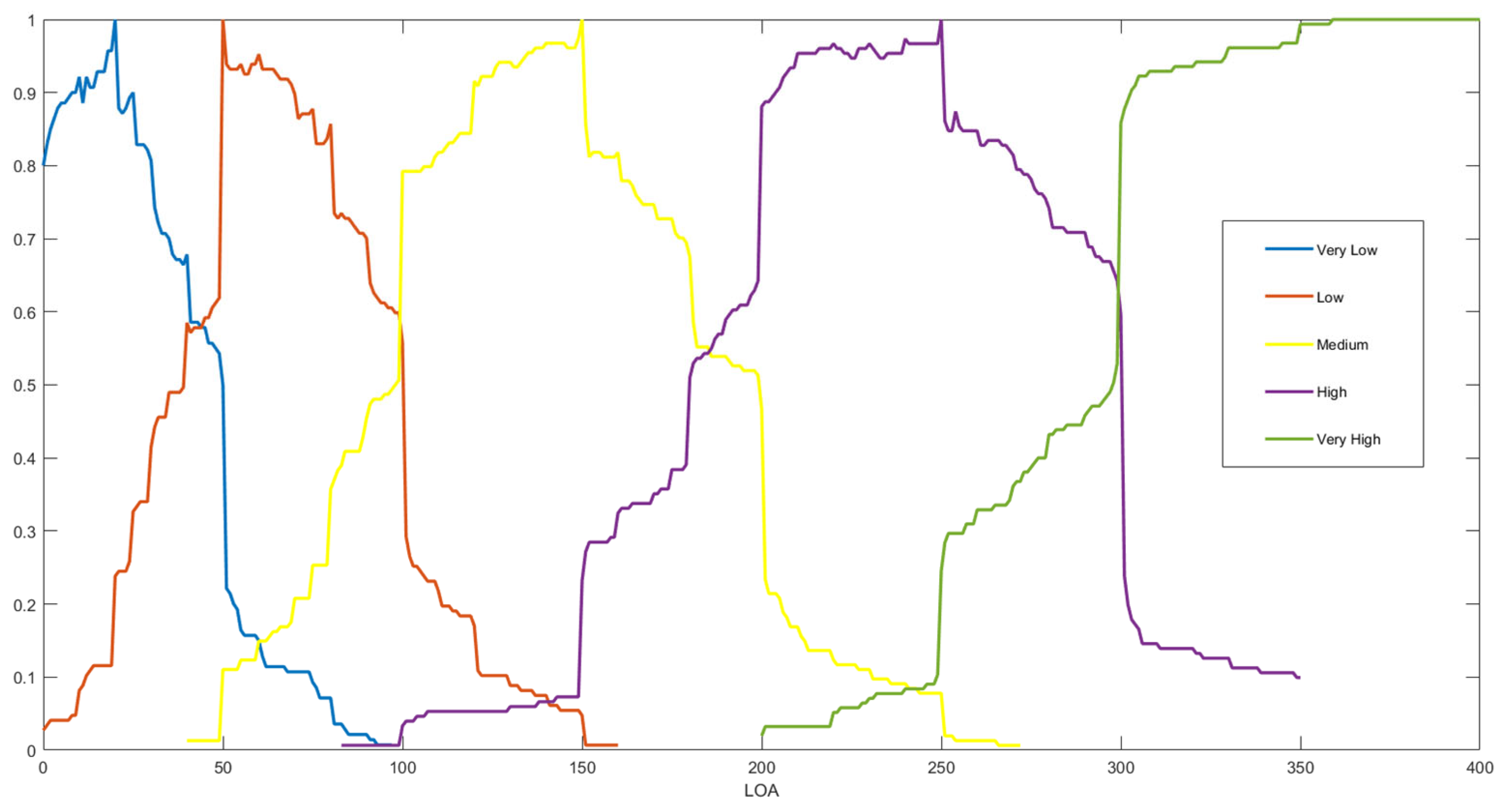
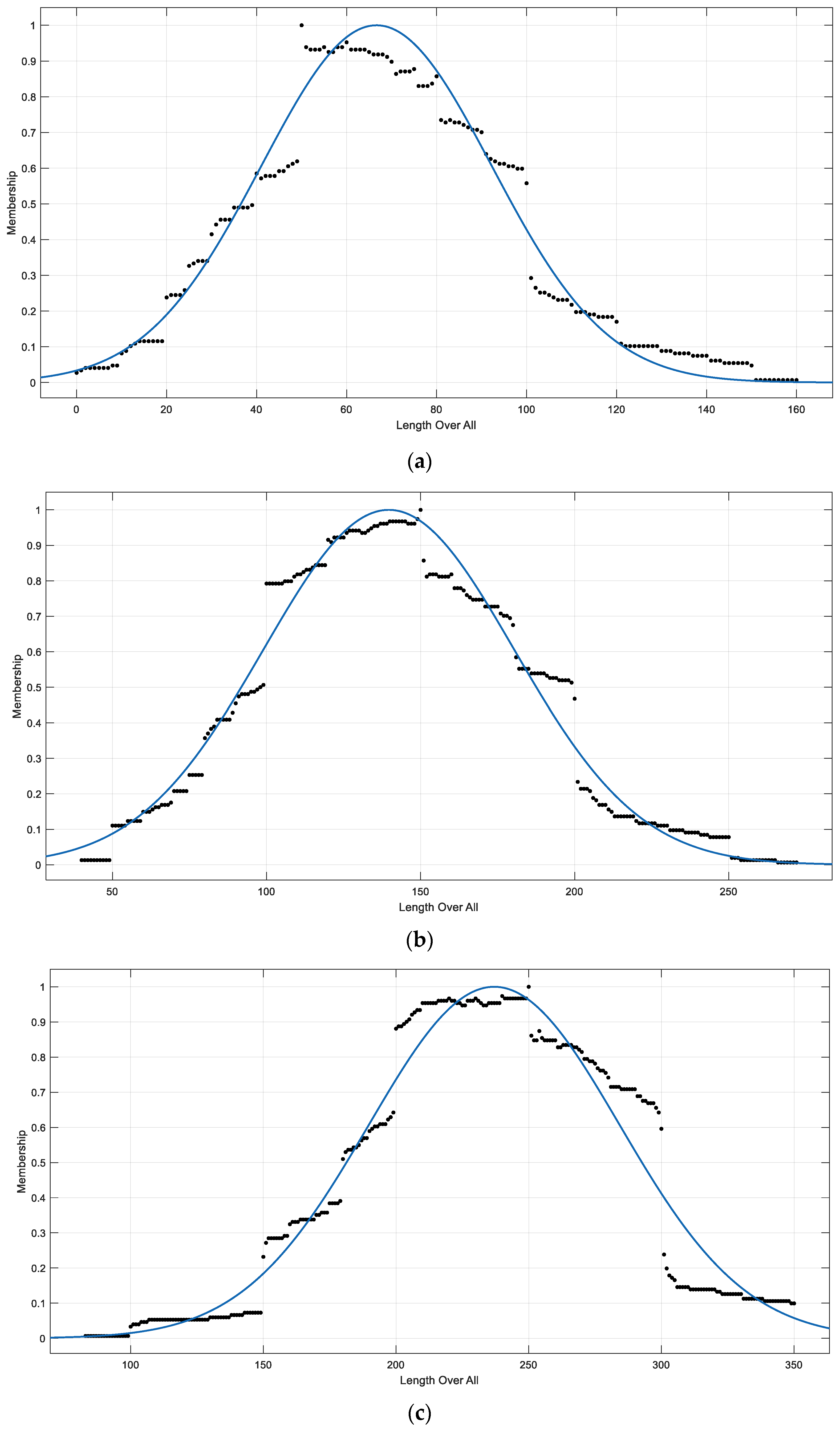
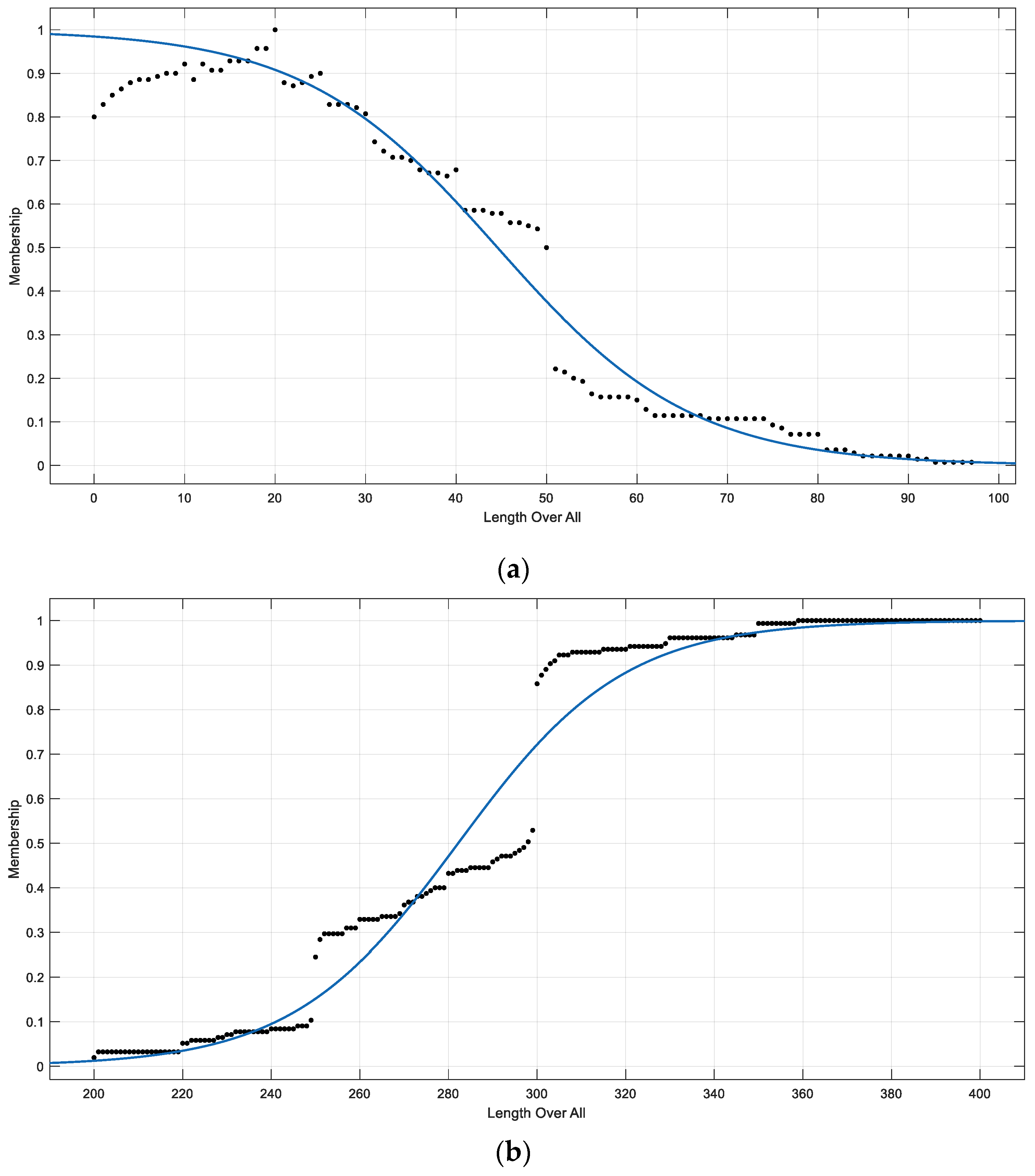
The International Regulations for Preventing Collisions at Sea 1972 (COLREGs) have been the cornerstone of maritime navigation since their introduction. Knowledge and implementation of these rules are paramount in collision avoidance at sea. However, terms found in these rules are sometimes imprecise or fuzzy, as they are written by humans for humans, giving them some freedom in interpretation. The term Very Large Ship used in Rule 7 of the COLREGs is, by its nature, fuzzy. While human navigators understand this term’s meaning, it could be challenging for machines or autonomous ships to understand such an unprecise expression. Fuzzy sets could easily describe unprecise terms used in maritime navigation. A fuzzy set consists of elements with degrees of membership in a set, making them perfect for interpreting some terms where boundaries are unclear. This research was conducted among 220 navigational experts to describe linguistic variables used in maritime regulations. This research consists of an internationally distributed questionnaire. Membership data were collected with the adapted horizontal method, and the results were statistically analyzed, followed by regression analyses to describe the range and shape of membership functions. A conceptual model of the implementation of linguistic variables is presented. The novelty of this study derives from the data collecting, modeling, and quantification of the important but neglected linguistic term Very Large Ship based on a large number of navigational experts. The same quantification method could be easily used for other COLREGs linguistic variables, which could easily lift barriers to advances in intelligent solutions based on fuzzy sets. The obtained quantified fuzzy sets can be used in decision support or control systems used by conventional or autonomous ships in the future.
Keywords: fuzzy set; collision avoidance; COLREGs; safety of navigation fuzzy set; collision avoidance; COLREGs; safety of navigation