Article

Experimental Analysis of Elastic Property Variations in Methane Hydrate-Bearing Sediments with Different Porosities

1
State Key Laboratory of Petroleum Resources and Prospecting, China University of Petroleum (Beijing), Beijing 102249, China
2
CNPC Key Laboratory of Geophysical Exploration, China University of Petroleum (Beijing), Beijing 102249, China
3
Bureau of Geophysical Prospecting Inc., China National Petroleum Corporation, Zhuozhou 072751, China
*
Author to whom correspondence should be addressed.
J. Mar. Sci. Eng. 2024, 12(12), 2370; https://doi.org/10.3390/jmse12122370
Submission received: 13 November 2024 / Revised: 18 December 2024 / Accepted: 19 December 2024 / Published: 23 December 2024
(This article belongs to the Section Marine Energy)

Abstract

Natural gas hydrates, a promising clean energy resource, hold substantial potential. Porosity plays a crucial role in hydrate systems by influencing formation processes and physical properties. To clarify the effects of porosity on hydrate elasticity, we examined methane hydrate formation and its acoustic characteristics. Experiments were conducted on sediment samples with porosities of 23%, 32%, and 37%. P- and S-wave velocities were measured to assess acoustic responses. Results show that as hydrate saturation increases, sample acoustic velocity also rises. However, high-porosity samples consistently exhibit lower acoustic velocities compared to low-porosity samples and reach a lower maximum hydrate saturation. This behavior is attributed to rapid pore filling in high-porosity samples, which blocks flow pathways and limits further hydrate formation. In contrast, hydrate formation in low-porosity sediments progresses more gradually, maintaining clearer pore channels and resulting in relatively higher hydrate saturation. Higher porosity also accelerates the shift of hydrates from cementing to load-bearing morphologies. These findings underscore porosity’s significant influence on hydrate formation and provide insights into observed variations in hydrate saturation and acoustic velocity across different experimental conditions.

1. Introduction

Marine gas hydrates are widely distributed in marine sediments and are recognized as both a critical energy resource and a potential factor in climate dynamics [1,2]. Their significance has made a central focus of marine geoscience research [3]. Hydrates are ice-like clathrate compounds formed when methane gas combines with water molecules under high-pressure and low-temperature conditions [4,5]. The critical role of porosity in gas hydrate systems has been widely recognized [6,7,8,9,10]. High-porosity sediments exhibit lower capillary pressures, enhancing gas diffusion and accelerating hydrate formation [11,12,13]. In contrast, low-porosity sediments restrict gas diffusion rates [14,15,16], thereby slowing hydrate formation. Porosity not only affects the rate of hydrate formation but also directly influences the hydrate content within the formation [17], making it a key factor in production forecasting and recovery analysis [18,19]. Consequently, investigating the impact of porosity on hydrate systems is essential, particularly in cases where hydrate formation may lead to sediment pore blockage, impeding fluid flow within the reservoir [17].
Seismic exploration is a primary approach in gas hydrate research, efficiently estimating hydrate distribution and saturation through acoustic velocity analysis and seismic imaging [20,21]. However, the potential impact of porosity on the acoustic properties of hydrates remains insufficiently studied. Changes in porosity can significantly alter sediment structure and flow channels [22,23,24], subsequently affecting the elastic properties during hydrate formation [25]. Additionally, as sediment depth increases, porosity generally decreases [26,27,28], which further influences hydrate formation mechanisms and acoustic responses across varying porosity conditions.
Significant variability exists in the relationship between hydrate saturation and acoustic velocity across experiments. For instance, some studies report a convex trend between hydrate saturation and acoustic velocity [29,30,31], while others have observed a concave trend [32,33,34]. This discrepancy is often closely linked to hydrate morphology [32,35,36,37,38]. Hydrates typically occur in sediments as cementing, pore-filling, or load-bearing types [32,39]. Cementing hydrates form between grain contact points, enhancing sediment stiffness; pore-filling hydrates occupy the spaces between grains, while load-bearing hydrates reinforce the sediment framework [39,40]. At low saturation, cementing hydrates can significantly enhance acoustic velocity [29,36,41], whereas pore-filling and load-bearing hydrates exhibit comparatively limited increases in acoustic velocity under low saturation conditions [32,39]. Hydrate morphology directly influences the elastic properties of sediments, significantly impacting the accurate estimation of hydrate saturation [42]. Porosity likely plays a critical role in driving these morphological changes. Therefore, further investigation into the effects of porosity on hydrate morphology and acoustic characteristics is essential. Such research will help reconcile experimental inconsistencies and enhance future in situ evaluations of hydrate reservoirs.
This study developed a gas hydrate experimental simulation system to investigate hydrate formation under varying porosity conditions. The analysis systematically examined changes in P- and S-wave velocities across three different sample groups. Coupled with rock physics modeling, the investigation further explores the influence of porosity on hydrate morphology and the physical properties of sediments. The findings provide insight into the mechanisms by which porosity affects hydrate morphology and pore-blocking phenomena. These findings reveal the critical role of porosity in the formation dynamics and acoustic responses of gas hydrate-bearing sediments within marine environments, offering implications for improved understanding and evaluation of hydrate reservoirs.

2. Methods

2.1. Experiment Setup

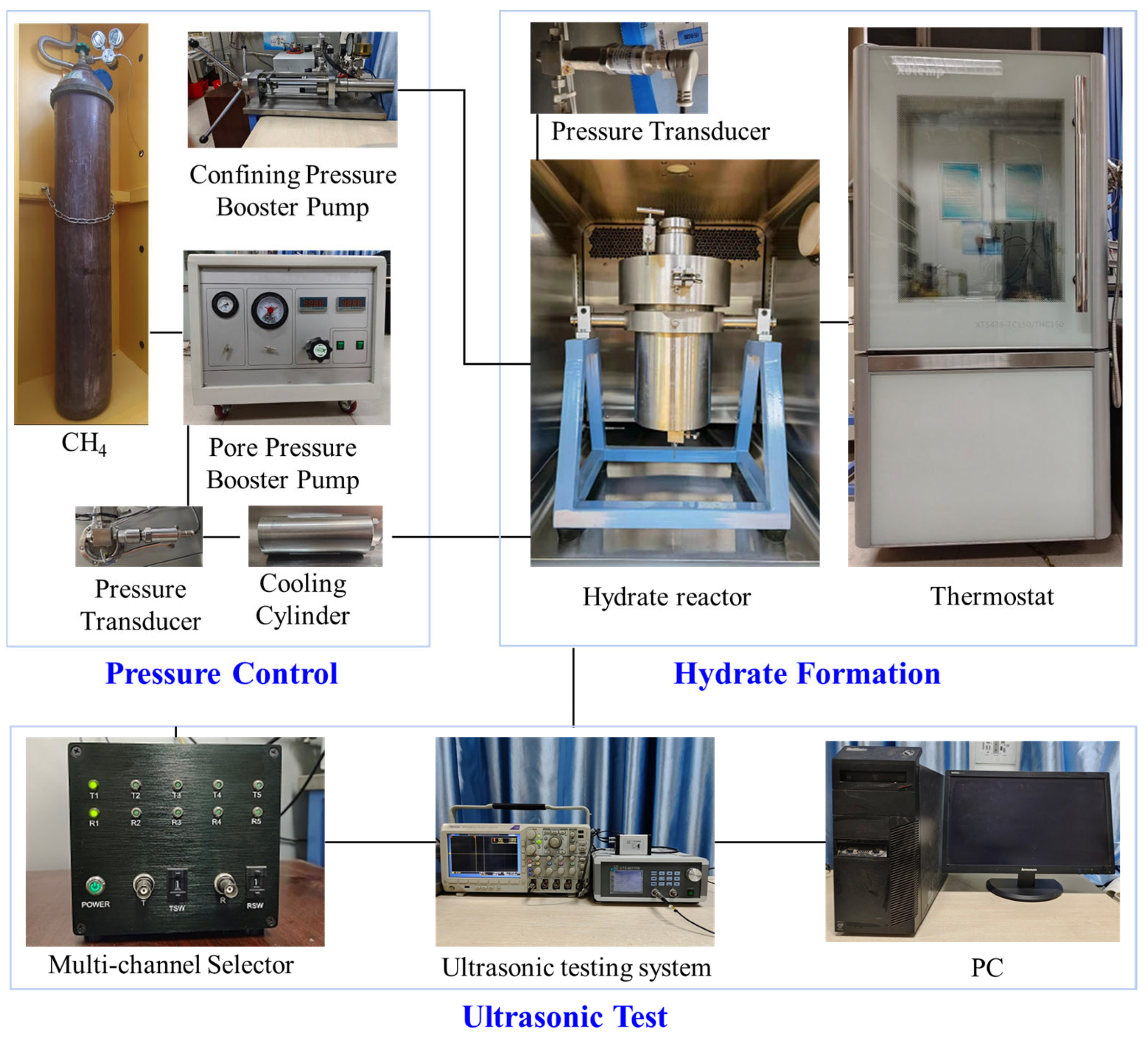
The experimental system comprises three primary modules: pressure control, hydrate formation, and ultrasonic testing (Figure 1). The pressure control module includes a methane cylinder for gas supply, pore and confining pressure booster pumps for precise pressure control, and pressure transducers for continuous monitoring. The hydrate formation module includes a high-pressure hydrate reactor and a thermostatic chamber simulating the specific pressure and temperature conditions required for methane hydrate formation. The thermostatic chamber controls temperature fluctuations, while the reactor withstands high pressures necessary for hydrate synthesis. This ultrasonic testing system records the real-time transmission properties of P- and S-waves during hydrate formation using multi-channel selectors, pulse transmitters, oscilloscopes, and a computer for data analysis. Waveform changes are captured and analyzed to assess acoustic velocity and attenuation.

2.2. Experiment Approach

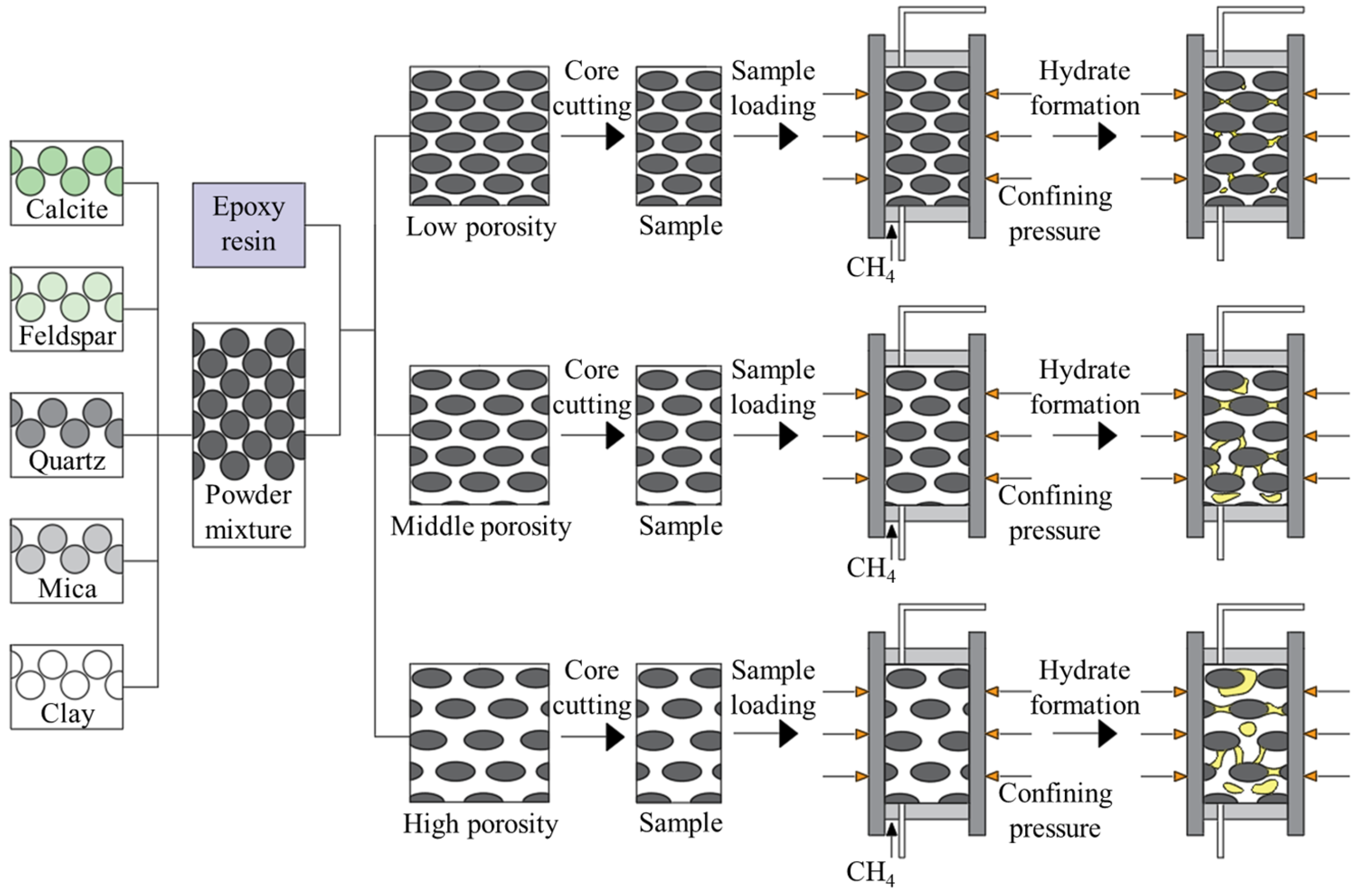
In this study, hydrate formation experiments were conducted on three groups of sediment samples with varying porosities to examine the effects of porosity on hydrate formation and ultrasonic velocity. The experimental procedure followed these steps (Figure 2):
(1) Sample preparation: Based on statistical analysis of the SH2 well in the Shenhu area of the South China Sea, samples were prepared with identical mineral compositions (28% quartz, 20% clay, 14% calcite, 12% feldspar, and 26% mica) [43].To ensure homogeneity, these minerals were mixed for 24 h in a ball mill, following a procedure similar to that described by Ding et al. (2017) [44]. The mixture was then combined with epoxy resin for 1 h. Porosity was controlled by adjusting compaction pressure: lower pressure for high-porosity samples and higher pressure for low-porosity samples. After compaction, core specimens (38 mm diameter, 63 mm height) were cut, and porosity was measured using the water saturation method. Detailed parameters are listed in Table 1;
(2) Experimental Setup: The hydrate formation apparatus was purged with gas to minimize contaminants. Pre-saturated samples (90% water) were placed in the hydrate reactor under a confining pressure of 10 MPa to simulate in situ conditions. The temperature was set to 4 °C, typical of gas hydrate deposits. Methane gas was pre-injected into a cooling cylinder, gradually cooled in the thermostatic chamber, and then introduced into the hydrate reactor. Under high-pressure and low-temperature conditions, methane dissolved into water, forming a supersaturated solution and initiating hydrate nucleation. As methane and water molecules interacted, a stable cage-like hydrate structure formed;
(3) Ultrasonic Monitoring: A real-time ultrasonic system measured P- and S-wave velocities during hydrate formation. Transducers at opposite ends of the sample captured waveform changes, allowing analysis of hydrate saturation effects on ultrasonic velocities;
(4) Porosity Impact Analysis: To examine the influence of porosity, steps in (2) were repeated with samples of varying porosity. The collected data were subsequently analyzed using rock physics models to further understand porosity’s effect on hydrate elastic property.

2.3. Calculation of Hydrate Saturation

In this study, hydrate saturation was calculated using the real gas equation [45]. Pressure data were recorded every 0.5 min until the hydrate formation process was complete, providing a detailed profile of hydrate state changes. The experimental temperature was maintained consistently at 4 °C to eliminate any potential impact of temperature fluctuations on the results.
The hydrate saturation S h can be expressed as
S h = V h V p o r e = m h ρ h V p o r e ,
where m h represents the mass of methane hydrate; ρ h is the density of the methane hydrate; V h represents the hydrate volume; V p o r e represents the pore volume;
The m h can be calculated as follows:
m h = Δ n M h = ( n 1 n 2 ) M h ,
where Δ n represent the number of moles of methane. n 1 and n 2 represents the number of moles of methane before and after hydrate formation, respectively. M h represents the molar mass of the methane hydrate.
The n 1 and n 2 can be calculated as the nonideal gas law [45]:
n 1 = P 1 V f r e e Z 1 R T ,
n 2 = P 2 V f r e e Z 2 R T ,
where P 1 and P 2 are the pore pressures in the reactor before and after hydrate formation, respectively; V f r e e is the free space of the methane; Z 1 and Z 2 are the compressibility factor of methane gas before and after hydrate formation, respectively [46]; R represents the molar gas constant (8.314 J/mol/K); and T represents the experimental temperature.
By combining Equations (1)–(4), we can derive the hydrate saturation S h as follows:
S h = n 1 n 2 M h ρ h V p o r e = P 1 Z 1 P 2 Z 2 V f r e e M h R T ρ h V p o r e .

3. Results

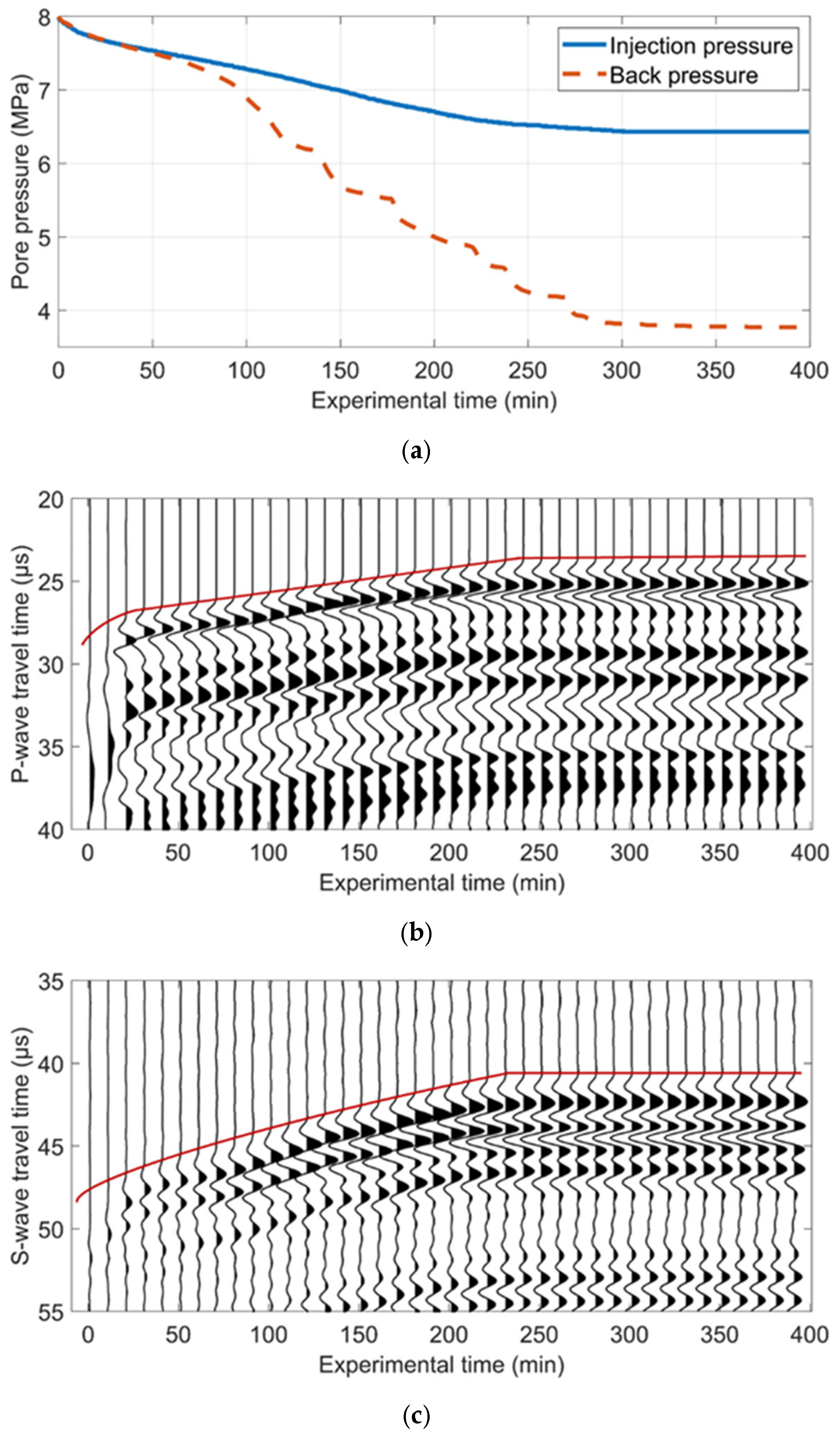
Figure 3a shows the changes in injection pressure and back pressure with experimental time. During the initial phase (0–50 min), the injection and back pressures remained nearly identical, indicating balanced pressure conditions and uniform gas diffusion. However, after 50 min, a pressure differential between the injection and back pressures. The rate of pressure decreases for the injection pressure slowed considerably, while the back pressure continued to decline. This suggests that, as hydrate formation progressed, the gas permeability paths began to narrow. This change was likely due to hydrate accumulation of hydrate within the pore channels, which increasingly restricted gas flow. The observed increase in pressure differential indicates the initiation of localized clogging effects caused by hydrate formation within the sediment matrix.
Figure 3b,c show the changes in P-wave and S-wave waveforms with experiment time. As the experiment progressed, the first arrival times of both waves gradually decreased, indicating an increase in wave propagation velocity within the sample. This velocity increase suggests that hydrate formation significantly enhanced the sample’s structural integrity. Additionally, the amplitudes of both P- and S-waves increased over time. This implies that hydrate formation strengthened the internal structure of the sample, thereby improving energy transmission efficiency.
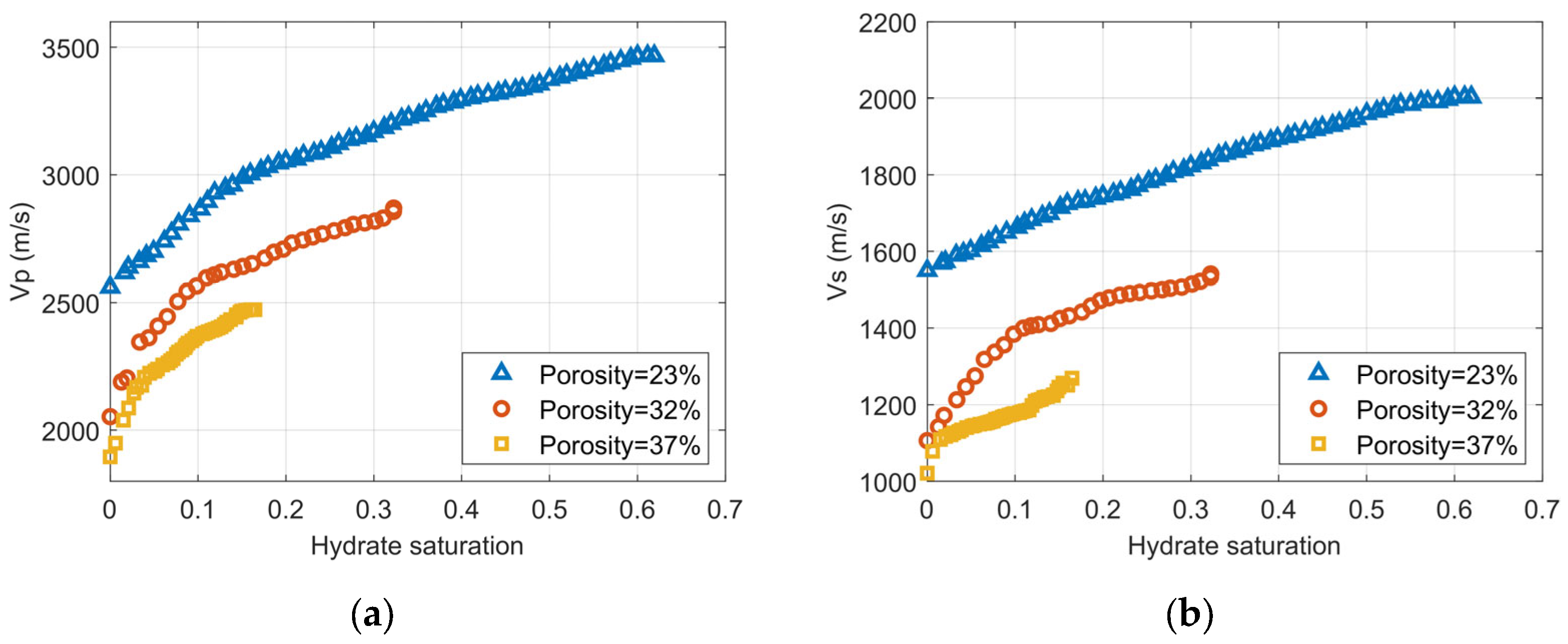
The experimental results in Figure 4a,b demonstrates a clear inverse relationship between porosity and acoustic wave velocity in hydrate-bearing sediment samples. Samples with higher porosity exhibited lower P- and S-wave velocities across various hydrate saturation levels. This phenomenon can be attributed to the reduced contact points between solid grains in higher-porosity samples, weakening the solid framework and thereby decreasing acoustic velocity. Unlike P-waves, which are sensitive to both the solid matrix and pore fluids, S-waves primarily propagate through the solid framework, rendering them less affected by fluid presence. The observed increase in S-wave velocity with hydrate saturation indicates that hydrates primarily form as a solid phase within pore structures, reinforcing the grain framework and enhancing the shear stiffness of the sediment. Notably, as porosity increases, the achievable maximum hydrate saturation decreases.
The observed difference in the trends of P- and S-wave velocities at 37% porosity may be attributed to changes in fluid distribution during hydrate formation. As water transforms into hydrate, water saturation decreases. This decrease in saturation causes a significant initial reduction in P-wave velocity due to fluid effects, followed by a gradual increase [47,48]. In contrast, S-wave velocity is less influenced by fluid presence. During the initial stage of hydrate formation, the shear stiffness rapidly increases, leading to a faster rise in S-wave velocity. As hydrate saturation increases, the trend of S-wave velocity gradually stabilizes. Hydrate formation enhances both P- and S-wave velocities. Therefore, at lower hydrate saturations, the increase in P-wave velocity is slower than that of S-wave velocity. As saturation increases, the rate of increase in P-wave velocity surpasses that of S-wave velocity. At lower porosities, the effect of water saturation on P-wave velocity diminishes [48], leading to a smaller difference between the trends of P- and S-wave velocities.

4. Discussion

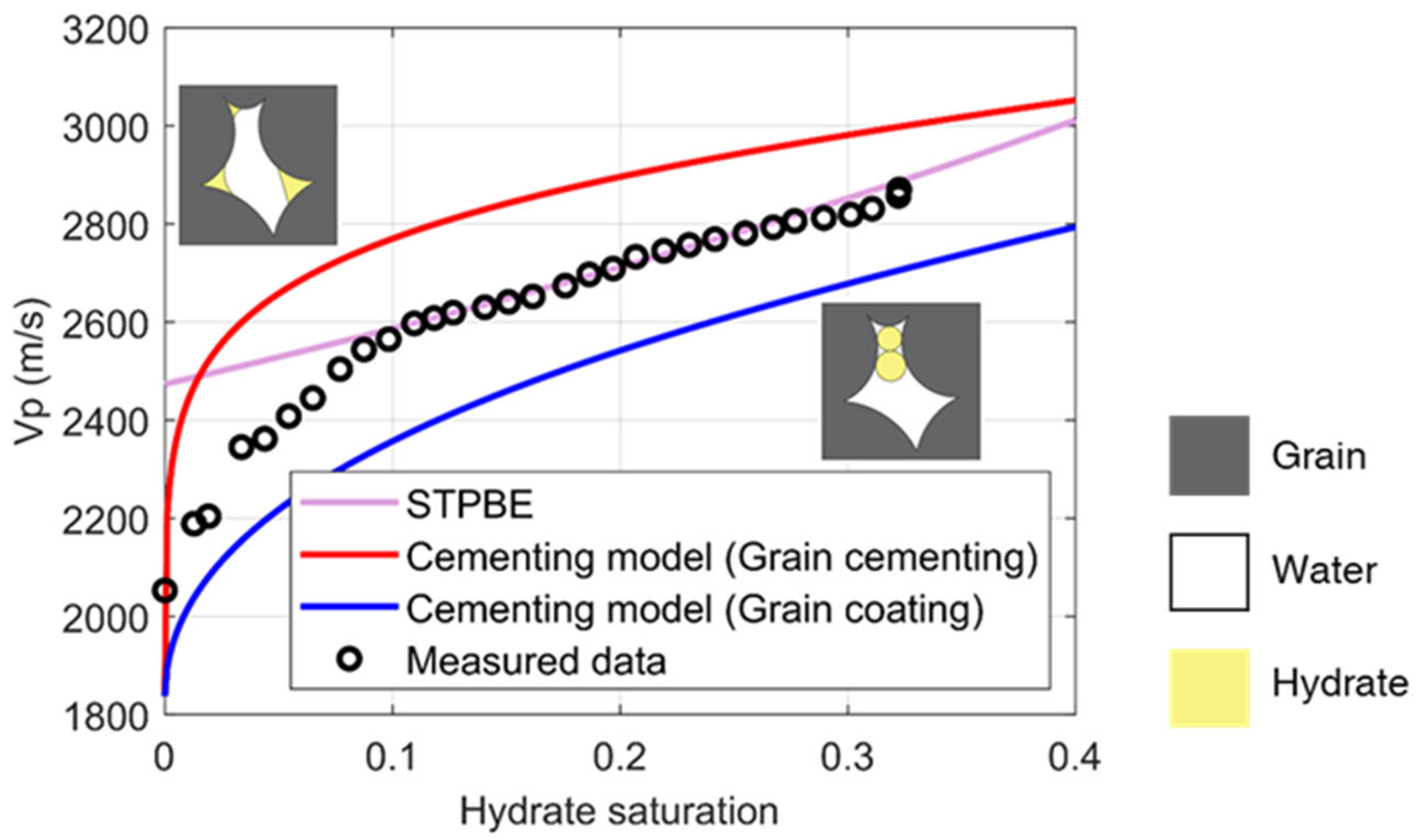
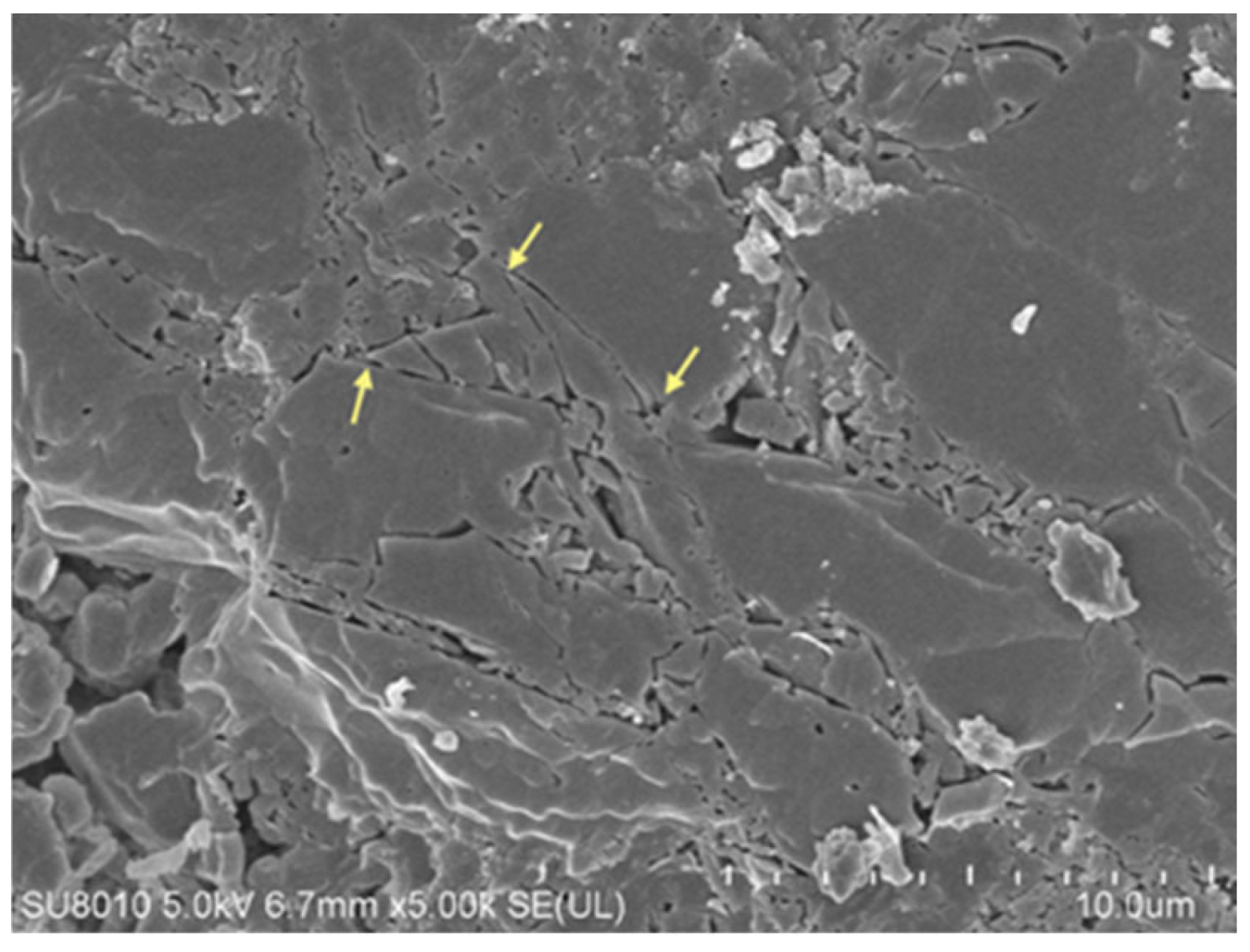
To analyze hydrate morphologies at varying saturation, experimental data were compared with the simplified three-phase Biot-type equation (STPBE) [49,50] and the cementing model [51]. As shown in Figure 5, during the low saturation phase (0–10%), P-wave velocity exhibits a rapid increase. This pattern aligns closely with the predictions of the cementation model commonly applied in rock physics. This finding suggests that hydrates predominantly exist in a cementing morphology at grain contact points. This morphology effectively enhances the overall stiffness of the sediment, which is consistent with previous studies [36]. Additionally, scanning electron microscope (SEM) images in Figure 6 reveal several pore contact points where cementing hydrates may form.
When the hydrate saturation reached 10–33%, the experimental results aligned with the predictions of STPBE, with parameters ε = 0 and α = 10.5. Within this range, the STPBE indicates that hydrates progressively adopt a load-bearing morphology. This transition suggests that, at these saturation levels, hydrates extend beyond strengthening grain contact points. Instead, they gradually occupy pore spaces, forming a stable support framework that enhances the overall strength of the sediment structure.
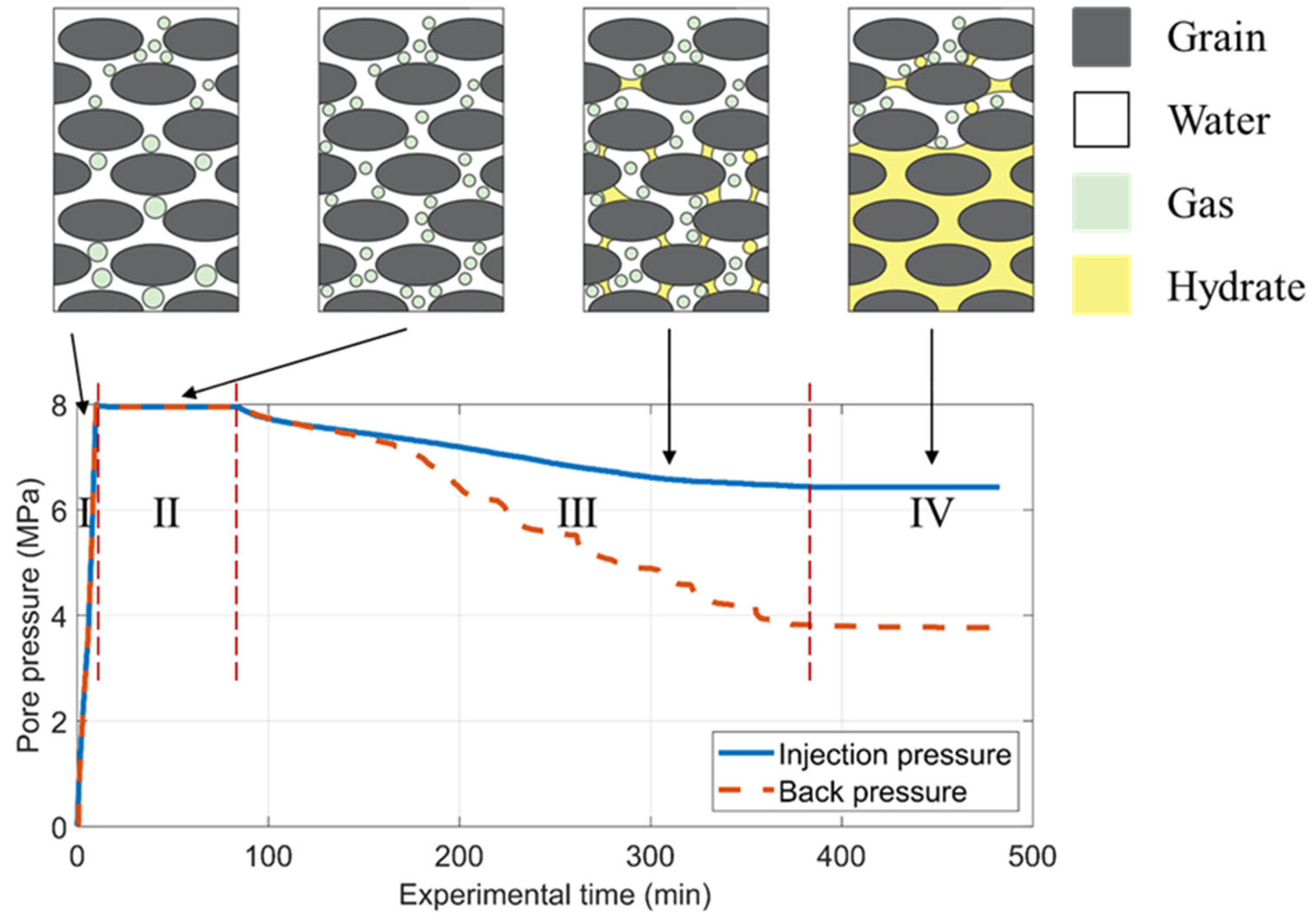
Figure 7 shows the pressure changes during four stages of the hydrate formation experiment, along with corresponding schematic diagrams of microscopic distributions. Gas Injection Phase (0–10 min): During this initial phase, methane gas was injected into the sample through the injection port, leading to a gradual increase in pore pressure as the gas diffused into the pore space. At this point, the porous structure remained relatively open, allowing the gas to flow freely and distribute. Gas Equilibrium Phase (10–85 min): After the gas injection valve was closed, no further gas entered the system, and the internal pore pressure stabilized. During this phase, methane gradually dissolved into the pore water. This dissolution allowed gas molecules to interact with water, initiating the formation of hydrate nuclei [52,53]. Rapid Hydrate Growth Phase (85–385 min): During this phase, the hydrate formation rate significantly increased, primarily generating cementing-type hydrate structures at grain contact points. These cementing hydrates enhanced the rigidity of the pore structure by binding grains together. As hydrate formation progressed, the permeability of pore channels decreased. This reduction progressively restricted gas flow, leading to a differential between injection and back pressures. With increasing hydrate content, the morphology gradually transitions to a load-bearing type. The transition reinforced the sediment framework, further reducing channel permeability. It also increased resistance to gas flow. Stable Hydrate Phase (385–480 min): This final stage represents the completion of the hydrate formation process. By this time, hydrates had extensively filled the sample’s pore space, predominantly adopting a load-bearing morphology. The sediment pore structure was now densely packed with hydrates, almost completely blocking gas flow. The differential between injection and back pressures reached a maximum, indicating that pore channels were almost completely blocked by the hydrate.
Based on Figure 4 and Figure 7, in high porosity samples, larger and more abundant pore spaces provide effective pathways for gas diffusion. This high diffusion rate offers adequate surface area for adhesion and nucleation, thereby accelerating the initial growth of hydrates. However, rapid hydrate accumulation quickly fills the pore spaces, blocking these diffusion pathways. The blockage restricts further gas movement and ultimately limits continuous hydrate formation. Consequently, hydrate saturation in high-porosity samples becomes constrained as pore spaces progressively clog. In contrast, low-porosity samples exhibit a denser pore structure, which slows the hydrate formation process. This gradual growth allows hydrates to accumulate more persistently and continuously, eventually achieving higher saturation.
The transition from cementing to load-bearing type in hydrate formation is also influenced by porosity. In samples with 23% porosity, hydrates transition from cementing to load-bearing morphologies at approximately 0.15 saturation. By comparison, in samples with 37% porosity, this transition occurs at a much lower saturation (approximately 0.025). This indicates that in high-porosity samples, fewer contact points exist between sediment grains, leading to reduced cementing hydrate formation. Therefore, it can be inferred that with further increases in porosity, the sediment matrix may lack any cementing hydrate morphology. In such cases, hydrates would exist exclusively in a load-bearing type. This phenomenon also explains variations in hydrate saturation and P-wave velocity trends observed in different experiments.
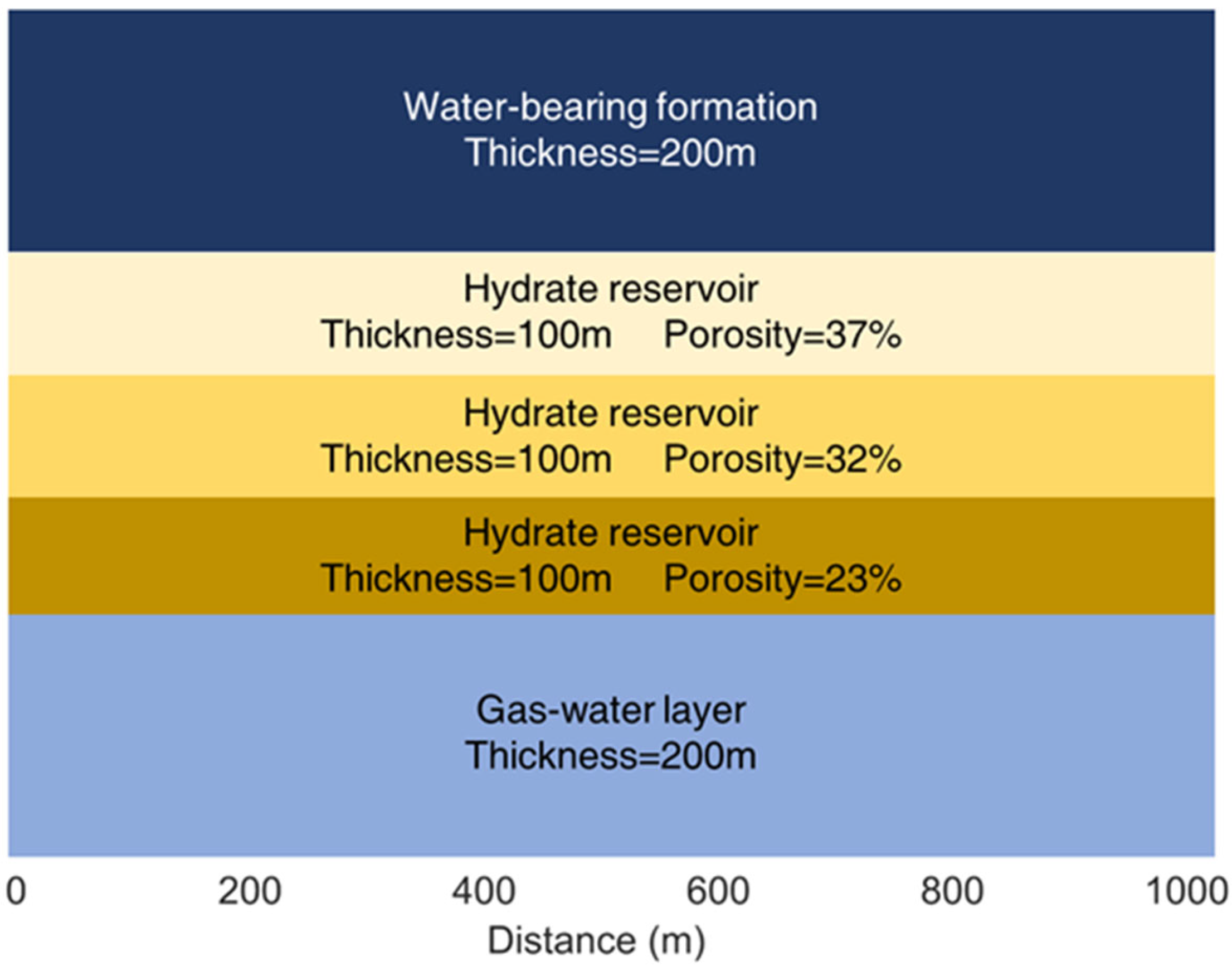
Seismic exploration is a common method for studying hydrate formations, with the bottom simulating reflector (BSR) serving as a key indicator for identifying hydrates [54,55]. However, due to variations in subsurface conditions, BSR-based interpretations can sometimes lack clarity [56]. Figure 8 shows the seismic model developed to investigate the influence of porosity on BSR characteristics, integrating experimental data. The water-bearing formation data were obtained from experimental results on a 37% porosity sample without gas injection. The gas-water layer data were obtained from experimental results on a 23% porosity sample during the second stage of the experiment.
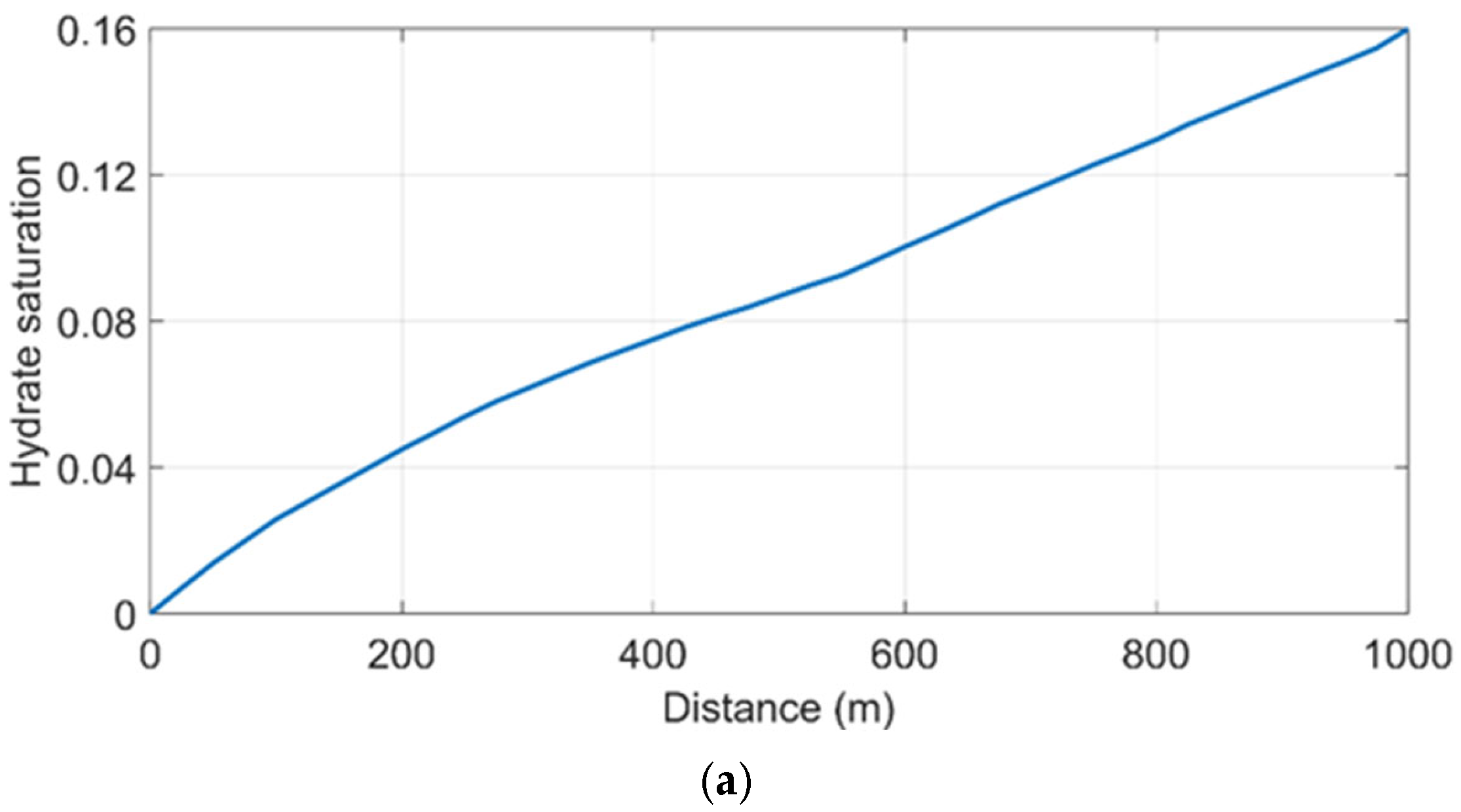
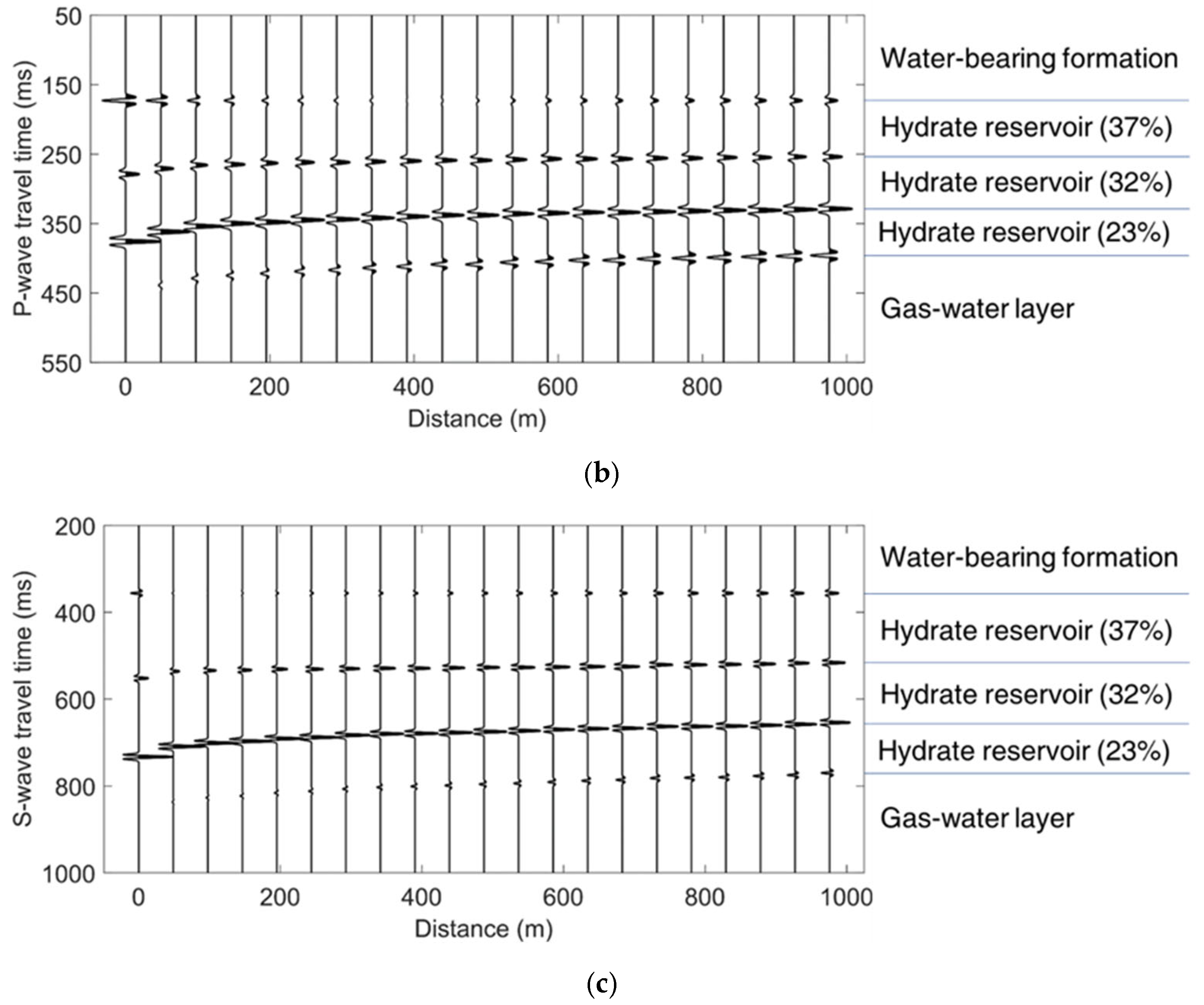
To control the variable as porosity, the hydrate saturation range for all three layers was set between 0–16%. The variation of saturation with formation distance is shown in Figure 9a. The increase in saturation affects the response characteristics of P- and S-waves. Figure 9b,c show the synthetic seismic data of P- and S-wave waveforms.
Due to variations in porosity within the hydrate layers, multiple BSR reflections appear in the forward-modeled data. This observation aligns with real seismic data, where multiple BSR reflections are commonly observed [58,59]. Greater porosity differences among hydrate layers lead to stronger acoustic impedance contrasts with adjacent layers, thereby enhancing BSR characteristics in the seismic profile. This study highlights how porosity-induced variations within marine hydrate-bearing sediment layers improve seismic detectability, offering valuable insights into the characterization of natural gas hydrate reservoirs. This study primarily focuses on the influence of porosity. However, other geological factors, such as pore structure and fractures, may also impact hydrate-bearing formations in actual subsurface conditions. Further research is needed to explore these complexities.

5. Conclusions

This study systematically investigates the impact of porosity on methane hydrate formation and its acoustic characteristics. Experiments on methane hydrate formation were conducted using sediment samples with three distinct porosities. P- and S-wave velocity measurements were also taken, revealing the critical role of porosity in hydrate formation and stability:
(1) With increasing hydrate saturation, the acoustic velocity of the samples consistently increases. However, the acoustic velocities in high-porosity samples remain significantly lower than those in low-porosity samples across all saturation levels;
(2) In low-saturation samples, the hydrate morphology initially exhibits a cementing type, transitioning to a load-bearing type as saturation increases;
(3) The maximum achievable saturation in high-porosity samples is lower than in low-porosity samples. This is primarily due to rapid filling and clogging of pore spaces in high-porosity sediments, limiting further hydrate formation;
(4) Higher porosity accelerates the transition from cementing to load-bearing hydrate morphologies. In high-porosity samples, fewer grain contact points reduce the potential of cementing hydrates, resulting in a preference for load-bearing morphology;
(5) The critical saturation at which this morphology transition occurs varies with porosity. For example, samples with 23% porosity transition at around 0.15 saturation, while samples with 37% porosity transition at approximately 0.025 saturation.
These findings provide new insights into the inconsistencies observed in hydrate saturation and acoustic velocity trends across different experiments. It highlights the significant influence of porosity on the acoustic response of hydrate-bearing sediments. Notably, the inference of hydrate morphology in this study is based on experimental data and rock physics models, which may not fully capture the complexity of hydrate morphology distribution within pores. Future studies could integrate X-ray computed tomography (CT) imaging for a more accurate analysis of the porosity-hydrate relationship.

Author Contributions

Conceptualization, W.X.; methodology, W.X. and J.W.; software, W.X.; validation, W.X. and B.D.; formal analysis, B.D. and H.C.; investigation, W.X. and J.W.; resources, H.C.; data curation, W.X. and J.W.; writing—original draft preparation, W.X.; writing—review and editing, B.D., and H.C.; visualization, W.X.; supervision, B.D.; project administration, H.C.; funding acquisition, B.D. All authors have read and agreed to the published version of the manuscript.

Funding

This research was funded by the research project of the China National Petroleum Corporation (grant 2021DJ3503).

Institutional Review Board Statement

Not applicable.

Informed Consent Statement

Not applicable.

Data Availability Statement

Data associated with this research are available and can be obtained by contacting the corresponding authors.

Conflicts of Interest

Haifeng Chen is employed at Bureau of Geophysical Prospecting Inc., China National Petroleum Corporation. The other authors declare no conflicts of interest.

References

  1. Dong, L.; Li, Y.; Zhang, Y.; Hu, G.; Liao, H.; Chen, Q.; Wu, N. Deformation Characteristics of Hydrate-Bearing Sediments. J. Ocean Univ. China 2024, 23, 149–156. [Google Scholar] [CrossRef]
  2. Zhao, Y.; Hu, G.; Bu, Q.; Liu, L.; Zhao, J.; Sun, J.; Zhang, Y.; Ji, Y. Investigation on hydrate exploitation in submarine slope: Insights from discontinuous pillar exploitation. Ocean Eng. 2024, 292, 116545. [Google Scholar] [CrossRef]
  3. Chen, J.; Xu, J.; Zhang, Z.; Liu, C.; Hu, G.; Ding, T.; Hao, Y.; Wang, X. Insight on the stability of methane hydrate in montmorillonite slits by molecular dynamics simulations. Appl. Surf. Sci. 2024, 654, 159413. [Google Scholar] [CrossRef]
  4. Hu, Q.; Li, Y.; Wu, N.; Jiang, Y.; Sun, X.; Wang, H.; Bu, Q.; Hu, G. Influences of stress state on compressional wave velocity of sandy hydrate-bearing sediment: Experiments and modeling. Geoenergy Sci. Eng. 2024, 234, 212683. [Google Scholar] [CrossRef]
  5. Hu, X.; Zou, C.; Qin, Z.; Yuan, H.; Song, G.; Xiao, K. Numerical simulation of resistivity and saturation estimation of pore-type gas hydrate reservoirs in the permafrost region of the Qilian Mountains. J. Geophys. Eng. 2024, 21, 599–613. [Google Scholar] [CrossRef]
  6. Di Lorenzo, M.; Aman, Z.M.; Sanchez Soto, G.; Johns, M.; Kozielski, K.A.; May, E.F. Hydrate Formation in Gas-Dominant Systems Using a Single-Pass Flowloop. Energy Fuels 2014, 28, 3043–3052. [Google Scholar] [CrossRef]
  7. Sa, J.-H.; Lee, B.R.; Zhang, X.; Kinnari, K.J.; Li, X.; Askvik, K.M.; Sum, A.K. Hydrate Management in Deadlegs: Hydrate Deposition Characterization in a 1-in. Vertical Pipe System. Energy Fuels 2017, 31, 13536–13544. [Google Scholar] [CrossRef]
  8. Sa, J.-H.; Lee, B.R.; Zhang, X.; Folgerø, K.; Haukalid, K.; Kocbach, J.; Kinnari, K.J.; Li, X.; Askvik, K.; Sum, A.K. Hydrate Management in Deadlegs: Detection of Hydrate Deposition Using Permittivity Probe. Energy Fuels 2018, 32, 1693–1702. [Google Scholar] [CrossRef]
  9. Xie, Y.; Li, R.; Wang, X.-H.; Zheng, T.; Cui, J.-L.; Yuan, Q.; Qin, H.-B.; Sun, C.-Y.; Chen, G.-J. Review on the accumulation behavior of natural gas hydrates in porous sediments. J. Nat. Gas Sci. Eng. 2020, 83, 103520. [Google Scholar] [CrossRef]
  10. Wu, Z.; Gu, Q.; Li, G.; Zhao, Z.; Li, Y. Effect of decomposition water content of natural gas hydrate on permeability and gas production of clay sediments based on numerical simulation. J. Nat. Gas Sci. Eng. 2022, 108, 104826. [Google Scholar] [CrossRef]
  11. Bei, K.; Xu, T.; Shang, S.; Wei, Z.; Yuan, Y.; Tian, H. Numerical Modeling of Gas Migration and Hydrate Formation in Heterogeneous Marine Sediments. J. Mar. Sci. Eng. 2019, 7, 348. [Google Scholar] [CrossRef]
  12. Liu, Y.; Yu, B.; Xu, P.; Wu, J. Study of the Effect of Capillary Pressure on Permeability. Fractals 2007, 15, 55–62. [Google Scholar] [CrossRef]
  13. Liang, J.; Meng, M.; Liang, J.; Ren, J.; He, Y.; Li, T.; Xu, M.; Wang, X. Drilling Cores and Geophysical Characteristics of Gas Hydrate-Bearing Sediments in the Production Test Region in the Shenhu sea, South China sea. Front. Earth Sci. 2022, 10, 911123. [Google Scholar] [CrossRef]
  14. Pszonka, J.; Götze, J. Quantitative estimate of interstitial clays in sandstones using Nomarski differential interference contrast (DIC) microscopy and image analysis. J. Pet. Sci. Eng. 2018, 161, 582–589. [Google Scholar] [CrossRef]
  15. Liu, J.-F.; Song, S.-B.; Ni, H.-Y.; Cao, X.-L.; Pu, H.; Mao, X.-B.; Skoczylas, F. Research on gas migration properties in a saturated bentonite/sand mixture under flexible boundary conditions. Soils Found. 2018, 58, 97–109. [Google Scholar] [CrossRef]
  16. Xu, L.; Ye, W.M.; Chen, Y.G.; Chen, B.; Cui, Y.J. Investigation on gas permeability of compacted GMZ bentonite with consideration of variations in liquid saturation, dry density and confining pressure. J. Contam. Hydrol. 2020, 230, 103622. [Google Scholar] [CrossRef]
  17. Li, R.; Han, Z.; Zhang, L.; Zhou, J.; Wang, S. Effect of Hydrate Saturation on Permeability Anisotropy for Hydrate-Bearing Turbidite Sediments Based on Pore-Scale Seepage Simulation. J. Mar. Sci. Eng. 2024, 12, 1079. [Google Scholar] [CrossRef]
  18. Kurihara, M.; Sato, A.; Ouchi, H.; Narita, H.; Masuda, Y.; Saeki, T.; Fujii, T. Prediction of gas productivity from Eastern Nankai Trough methane-hydrate reservoirs. SPE Reserv. Eval. Eng. 2009, 12, 477–499. [Google Scholar] [CrossRef]
  19. Chibura, P.E.; Zhang, W.; Luo, A.; Wang, J. A review on gas hydrate production feasibility for permafrost and marine hydrates. J. Nat. Gas Sci. Eng. 2022, 100, 104441. [Google Scholar] [CrossRef]
  20. Santos, L.A.; Matsumoto, R.; Freitas, F.D.S.; Santos, M.A.C. Geophysical Characterization and Attenuation Correction Applied for Hydrate Bearing Sediments in Japan Sea. Minerals 2023, 13, 655. [Google Scholar] [CrossRef]
  21. Monteleone, V.; Minshull, T.A.; Marín-Moreno, H. Seismic characterisation of multiple BSRs in the Eastern Black Sea Basin. Mar. Pet. Geol. 2024, 161, 106604. [Google Scholar] [CrossRef]
  22. Pszonka, J.; Wendorff, M. Carbonate cements and grains in submarine fan sandstones—The Cergowa Beds (Oligocene, Carpathians of Poland) recorded by cathodoluminescence. Int. J. Earth Sci. 2017, 106, 269–282. [Google Scholar] [CrossRef]
  23. Young, A.H.; Kabala, Z.J. Hydrodynamic Porosity: A New Perspective on Flow through Porous Media, Part II. Water 2024, 16, 2166. [Google Scholar] [CrossRef]
  24. Xu, J.; Bu, Z.; Qin, H.; Li, S.; Li, H. Pore-scale modeling of seepage behaviors and permeability evolution in heterogeneous hydrate-bearing sediments and its implications for the permeability model. Geoenergy Sci. Eng. 2023, 221, 211372. [Google Scholar] [CrossRef]
  25. Xu, J.; Bu, Z.; Li, H.; Wang, X.; Liu, S. Permeability Models of Hydrate-Bearing Sediments: A Comprehensive Review with Focus on Normalized Permeability. Energies 2022, 15, 4524. [Google Scholar] [CrossRef]
  26. Chand, S.; Minshull, T.A.; Priest, J.A.; Best, A.I.; Clayton, C.R.I.; Waite, W.F. An effective medium inversion algorithm for gas hydrate quantification and its application to laboratory and borehole measurements of gas hydrate-bearing sediments. Geophys. J. Int. 2006, 166, 543–552. [Google Scholar] [CrossRef]
  27. Tanikawa, W.; Hirose, T.; Hamada, Y.; Gupta, L.P.; Ahagon, N.; Masaki, Y.; Abe, N.; Wu, H.Y.; Sugihara, T.; Nomura, S.; et al. Porosity, permeability, and grain size of sediment cores from gas-hydrate-bearing sites and their implication for overpressure in shallow argillaceous formations: Results from the national gas hydrate program expedition 02, Krishna-Godavari Basin, India. Mar. Pet. Geol. 2019, 108, 332–347. [Google Scholar] [CrossRef]
  28. You, K.; Flemings, P.B. Methane Hydrate Formation and Evolution During Sedimentation. J. Geophys. Res. Solid Earth 2021, 126, e2020JB021235. [Google Scholar] [CrossRef]
  29. Priest, J.A.; Best, A.I.; Clayton, C.R.I. A laboratory investigation into the seismic velocities of methane gas hydrate-bearing sand. J. Geophys. Res. Solid Earth 2005, 110, B04102. [Google Scholar] [CrossRef]
  30. Duchkov, A.D.; Duchkov, A.A.; Permyakov, M.E.; Manakov, A.Y.; Golikov, N.A.; Drobchik, A.N. Acoustic properties of hydrate-bearing sand samples: Laboratory measurements (setup, methods, and results). Russ. Geol. Geophys. 2017, 58, 727–737. [Google Scholar] [CrossRef]
  31. Li, Y.; Hu, Q.; Wu, N.; Wang, H.; Sun, X.; Hu, G.; Sun, Z.; Jiang, Y. Acoustic characterization for creep behaviors of marine sandy hydrate-bearing sediment. Sci. Rep. 2023, 13, 22199. [Google Scholar] [CrossRef] [PubMed]
  32. Priest, J.A.; Rees, E.V.L.; Clayton, C.R.I. Influence of gas hydrate morphology on the seismic velocities of sands. J. Geophys. Res. Solid Earth 2009, 114, B11205. [Google Scholar] [CrossRef]
  33. Zhang, Q.; Yang, Z.; He, T.; Lu, H.; Zhang, Y. Growth pattern of dispersed methane hydrates in brine-saturated unconsolidated sediments via joint velocity and resistivity analysis. J. Nat. Gas Sci. Eng. 2021, 96, 104279. [Google Scholar] [CrossRef]
  34. Chen, J.; Hu, G.; Bu, Q.; Wu, N.; Liu, C.; Chen, Q.; Li, C.; Wan, Y.; Wang, Z.; Zhao, W.; et al. Elastic wave velocity of marine sediments with free gas: Insights from CT-acoustic observation and theoretical analysis. Mar. Pet. Geol. 2023, 150, 106169. [Google Scholar] [CrossRef]
  35. Waite, W.F.; Winters, W.J.; Mason, D.J.A.M. Methane hydrate formation in partially water-saturated Ottawa sand. Am. Mineral. 2004, 89, 1202–1207. [Google Scholar] [CrossRef]
  36. Best, A.I.; Priest, J.A.; Clayton, C.R.I.; Rees, E.V.L. The effect of methane hydrate morphology and water saturation on seismic wave attenuation in sand under shallow sub-seafloor conditions. Earth Planet. Sci. Lett. 2013, 368, 78–87. [Google Scholar] [CrossRef]
  37. Dong, H.; Sun, J.; Cui, L.; Song, L.; Yan, W.; Li, Y.; Lin, Z.; Fang, H. Study on the effects of natural gas hydrate cementation mode on the physical properties of rocks. J. Geophys. Eng. 2018, 15, 1399–1406. [Google Scholar] [CrossRef]
  38. Wu, C.-Z.; Zhang, F.; Ding, P.-B.; Sun, P.-Y.; Cai, Z.-G.; Di, B.-R.J.G. Rock-physics model of a gas hydrate reservoir with mixed occurrence states. Geophysics 2024, 89, MR53–MR62. [Google Scholar] [CrossRef]
  39. Sahoo, S.K.; North, L.J.; Marín-Moreno, H.; Minshull, T.A.; Best, A.I. Laboratory observations of frequency-dependent ultrasonic P-wave velocity and attenuation during methane hydrate formation in Berea sandstone. Geophys. J. Int. 2019, 219, 713–723. [Google Scholar] [CrossRef]
  40. Zhang, H.; Bian, H.; Qi, S.; Wang, J. A comprehensive analysis of formation conditions, intrinsic properties, and mechanical responses of gas hydrate-bearing sediments. Rock Mech. Bull. 2024, 3, 100114. [Google Scholar] [CrossRef]
  41. Dai, S.; Santamarina, J.C.; Waite, W.F.; Kneafsey, T.J. Hydrate morphology: Physical properties of sands with patchy hydrate saturation. J. Geophys. Res. Solid Earth 2012, 117, B11205. [Google Scholar] [CrossRef]
  42. Zhu, X.; Liu, T.; Ma, S.; Liu, X.; Li, A. Morphology identification of gas hydrate based on a machine learning method and its applications on saturation estimation. Geophys. J. Int. 2023, 234, 1307–1325. [Google Scholar] [CrossRef]
  43. Lin, L.; Liang, J.; Guo, Y.; Lu, J.; Liang, J. Eastimating Saturation of Gas Hydrates Within Marine Sediments Using Sonic Log Data. Well Logging Technol. 2014, 38, 234–238. [Google Scholar]
  44. Ding, P.; Di, B.; Wang, D.; Wei, J.; Li, X. Measurements of Seismic Anisotropy in Synthetic Rocks with Controlled Crack Geometry and Different Crack Densities. Pure Appl. Geophys. 2017, 174, 1907–1922. [Google Scholar] [CrossRef]
  45. Sahoo, S.K.; Marín-Moreno, H.; North, L.J.; Falcon-Suarez, I.; Madhusudhan, B.N.; Best, A.I.; Minshull, T.A. Presence and Consequences of Coexisting Methane Gas With Hydrate Under Two Phase Water-Hydrate Stability Conditions. J. Geophys. Res. Solid Earth 2018, 123, 3377–3390. [Google Scholar] [CrossRef]
  46. Ghanem, A.; Gouda, M.F.; Alharthy, R.D.; Desouky, S.M. Predicting the Compressibility Factor of Natural Gas by Using Statistical Modeling and Neural Network. Energies 2022, 15, 1807. [Google Scholar] [CrossRef]
  47. Han, T.; Gurevich, B.; Fu, L.Y.; Qi, Q.; Wei, J.; Chen, X. Combined Effects of Pressure and Water Saturation on the Seismic Anisotropy in Artificial Porous Sandstone With Aligned Fractures. J. Geophys. Res. Solid Earth 2020, 125, e2019JB019091. [Google Scholar] [CrossRef]
  48. He, L.; Ding, P.; Di, B.; Zhang, F. Influence of partial saturation on bulk modulus and attenuation: The experiment and the theoretical model. Geophys. J. Int. 2023, 235, 1311–1324. [Google Scholar] [CrossRef]
  49. Lee, M.W.; Waite, W.F. Estimating pore-space gas hydrate saturations from well log acoustic data. Geochem. Geophys. Geosystems 2008, 9, Q07008. [Google Scholar] [CrossRef]
  50. Wu, C.; Han, L.; Zhang, F.; Liu, J.; Chen, H.; Di, B. Gas hydrate reservoir identification based on rock physics modelling and sensitive elastic parameters. J. Geophys. Eng. 2023, 20, 117–127. [Google Scholar] [CrossRef]
  51. Dvorkin, J.; Helgerud, M.B.; Waite, W.F.; Kirby, S.H.; Nur, A. Introduction to physical properties and elasticity models. In Natural Gas Hydrate; Springer: Dordrecht, The Nederland, 2003; pp. 245–260. [Google Scholar]
  52. Wang, L.; Hall, K.; Zhang, Z.; Kusalik, P.G. Mixed Hydrate Nucleation: Molecular Mechanisms and Cage Structures. J. Phys. Chem. B 2022, 126, 7015–7026. [Google Scholar] [CrossRef] [PubMed]
  53. Maynor, K.; Bhati, A.; Hamalian, M.; Ferraria, A.M.; Ribeiro, A.; Moita, A.S.; Bahadur, V. Magnesium-Induced Rapid Nucleation of Tetrahydrofuran Hydrates. Langmuir 2024, 40, 21758–21766. [Google Scholar] [CrossRef] [PubMed]
  54. Kamal, M.; Ali, A.; Amin, Y.; Farid, A.; Sarosh, B. Advanced Data Processing as a Tool to Enhance the Vertical and Horizontal Resolution of Bottom Simulating Reflector (BSR): Implications for GAS Hydrate Exploitation. Pure Appl. Geophys. 2023, 180, 2369–2387. [Google Scholar] [CrossRef]
  55. Fabre, M.; Riboulot, V.; Loncke, L.; Ker, S.; Ballas, G.; Thomas, Y.; Ion, G.; Sultan, N. Slow Dynamics of Hydrate Systems Revealed by a Double BSR. Geophys. Res. Lett. 2024, 51, e2023GL106284. [Google Scholar] [CrossRef]
  56. Li, H.; Lu, X.; Wang, L.; Wang, W.; Li, T.; Lu, W.; Chen, Y. Dissolution migration of gas, a mechanism to enrich ethane near the BSR and increase upwardly C1/C2 ratios in the hydrate-occurring zones: Insight from pore-scale experimental observation. Front. Mar. Sci. 2023, 10, 1091549. [Google Scholar] [CrossRef]
  57. Guo, Q.; Luo, C.; Grana, D. Bayesian linearized rock-physics amplitude-variation-with-offset inversion for petrophysical and pore-geometry parameters in carbonate reservoirs. Geophysics 2023, 88, MR273–MR287. [Google Scholar] [CrossRef]
  58. Zhang, W.; Liang, J.; Qiu, H.; Deng, W.; Meng, M.; He, Y.; Huang, W.; Liang, J.; Lin, L.; Wang, L.; et al. Double bottom simulating reflectors and tentative interpretation with implications for the dynamic accumulation of gas hydrates in the northern slope of the Qiongdongnan Basin, South China Sea. J. Asian Earth Sci. 2022, 229, 105151. [Google Scholar] [CrossRef]
  59. Gupta, S.; Deusner, C.; Burwicz-Galerne, E.; Haeckel, M. Numerical analysis of the dynamic gas hydrate system and multiple BSRs in the Danube paleo-delta, Black Sea. Mar. Geol. 2024, 469, 107221. [Google Scholar] [CrossRef]
Figure 1. Schematic of the hydrate formation experimental system, showing key components for pressure control, hydrate formation, and ultrasonic testing.
Jmse 12 02370 g001
Figure 2. Experimental procedure flowchart for methane hydrate formation, illustrating sample preparation, core cutting, sample loading into the experimental setup (with confining pressure indicated by orange arrows), and hydrate formation (represented by yellow areas within the pore space). The black ellipses represent the sample framework.
Jmse 12 02370 g002
Figure 3. Experimental data changes with time for the sample with 23% porosity: (a) pore pressure, (b) P-wave waveforms, and (c) S-wave waveforms, where the red lines indicate the P- and S-wave first arrival times, respectively.
Jmse 12 02370 g003
Figure 4. Changes in elastic wave velocities (a) Vp and (b) Vs. with hydrate saturation in hydrate-bearing sediments.
Jmse 12 02370 g004
Figure 5. Comparison of experimental data for a 32% porosity sample with theoretical models. The STPBE includes two adjustable parameters, ε and α, which characterize hydrate distribution and sediment stiffening. When ε = 0, the hydrate exhibits a load-bearing morphology; when ε = 1, it indicates a pore-filling morphology. Values of 0 < ε < 1 suggest a coexistence of both load-bearing and pore-filling hydrate morphologies. The top-left illustration represents cementing-type hydrate, while the right illustration represents load-bearing hydrate.
Jmse 12 02370 g005
Figure 6. SEM image of sediment sample, showing pore contact points with yellow arrows indicating areas where cementing hydrates may form between grain contacts.
Jmse 12 02370 g006
Figure 7. Relationship between microscopic hydrate distribution and pressure changes during the four phases of hydrate formation: (I) Gas injection; (II) Gas equilibrium; (III) Rapid hydrate growth; (IV) Stable hydrate.
Jmse 12 02370 g007
Figure 8. Geological model of gas hydrate-bearing sediment. The geological model consists of five layers: a water-bearing layer, three hydrate reservoirs with different porosities (37%, 32%, and 23%), and a gas-water layer.
Jmse 12 02370 g008
Figure 9. Synthetic modeling data showing (a) hydrate saturation, (b) P-wave waveform, and (c) S-wave waveform changes with lateral distance. The Aki-Richard approximation equation [57] was used for the seismic forward modeling with a 40 Hz Ricker wavelet.
Jmse 12 02370 g009aJmse 12 02370 g009b
Table 1. Physics parameter of samples at 0.1013 MPa (atmospheric pressure) and 20 °C, including porosity, acoustic velocity, and other relevant parameters.
PorosityDensity (g/cm3)Diameter (mm)Height (mm)Vp (m/s)Vs (m/s)
23%1.8638.262.926671686
32%1.6437.862.716341030
37%1.5338.062.41556976
Disclaimer/Publisher’s Note: The statements, opinions and data contained in all publications are solely those of the individual author(s) and contributor(s) and not of MDPI and/or the editor(s). MDPI and/or the editor(s) disclaim responsibility for any injury to people or property resulting from any ideas, methods, instructions or products referred to in the content.