Review

Fruit Quality Regulation in Passion Fruit (Passiflora edulis): Biological Mechanisms, Omics Evidence, and Opportunities for Biological Intervention


by
Jose Leonardo Santos-Jiménez
and
Maite Freitas Silva Vaslin
*
Plant Molecular Virology Laboratory, Departamento de Virologia, Instituto de Microbiologia, Universidade Federal do Rio de Janeiro (UFRJ), Av. Carlos Chagas, Filho, 373, CCS, Rio de Janeiro 21941-599, RJ, Brazil
*
Author to whom correspondence should be addressed.
Agriculture 2026, 16(9), 958; https://doi.org/10.3390/agriculture16090958
Submission received: 15 February 2026 / Revised: 25 March 2026 / Accepted: 23 April 2026 / Published: 27 April 2026
(This article belongs to the Special Issue Fruit Quality Formation and Regulation in Fruit Trees)

Abstract

Passion fruit (Passiflora edulis) quality is defined by integrated sensory and nutritional traits, including sugar–acid balance, volatile organic compounds (VOCs), pigment-related attributes, and bioactive compounds such as ascorbic acid and phenolics. These traits emerge from coordinated regulation of carbon allocation, mineral nutrition, ripening metabolism, and stress- and defense-related signaling pathways, which are strongly modulated by environmental conditions. Sustainable biological inputs are increasingly explored as tools to influence these regulatory networks; however, evidence linking such interventions to reproducible fruit quality outcomes in Passiflora remains fragmented. This review first synthesizes current knowledge on the physiological, biochemical, and molecular mechanisms underlying passion fruit quality formation and maintenance, and then discusses how biofertilizers; microbial inoculants (including plant growth-promoting rhizobacteria—PGPR and arbuscular mycorrhizal fungi—AMF); fungal-derived elicitors such as chitosan and chitooligosaccharides; and complementary postharvest biological strategies may modulate these processes. Emphasis is placed on traits beyond yield, including sugar–acid balance, aroma and VOC profiles, color, nutritional quality, texture, and shelf life. By integrating genomics, transcriptomics, metabolomics, proteomics, and microbiome-based evidence, we examine how environmental modulation and key signaling pathways intersect with metabolic networks underlying fruit quality. Available studies indicate that responses to biological inputs are context-dependent and often non-linear. Key knowledge gaps and priorities for mechanism-informed sustainable management of passion fruit quality are identified.

1. Introduction

Passion fruit (Passiflora edulis Sims) is a high-value tropical fruit appreciated for its intense aroma and acidity-driven flavor profile. Commercial and nutritional quality are commonly assessed using physicochemical and bioactive metrics, including total soluble solids (TSS/°Brix), titratable acidity (TA), pulp pH, and concentrations of sugars, ascorbic acid, and phenolic compounds. Importantly, these variables can vary substantially among Passiflora cultivars and with the ripeness stage. A comparative analysis across Passiflora cultivars by [1] showed that glucose, fructose, sucrose, ascorbic acid, total phenolic content, and total antioxidant activity differ by cultivar and vine-ripening status, and that these variables, together with °Brix, help discriminate quality profiles, underscoring the need to control or report maturity indices when comparing quality outcomes.
This review examines fruit quality regulation in Passiflora edulis from an integrated physiological, biochemical, and molecular perspective. First the major quality-defining traits and the metabolic and regulatory mechanisms underlying their formation, including sugar–acid balance, volatile aroma development, pigment accumulation, antioxidant traits, and postharvest behavior are summarized. It then integrates current omics evidence that has helped identify candidate pathways, genes, and regulatory nodes associated with these traits. Finally, we discuss how biological inputs and related biological interventions may modulate these endogenous networks and highlight current opportunities and limitations for improving fruit quality in sustainable passion fruit production systems.

2. Passion Fruit Quality

Fruit quality formation and regulation in Passiflora edulis emerge from coordinated metabolic and regulatory processes involving carbohydrate partitioning, tricarboxylic acid (TCA) cycle dynamics, volatile biosynthesis pathways, and hormone-mediated ripening regulation. These processes integrate source–sink relations, mineral nutrition, and environmental cues with transcriptional programs controlling sugar accumulation, organic acid turnover, and secondary metabolite biosynthesis during fruit development and maturation. From a biochemical perspective, these traits arise primarily from the regulation of key metabolite groups, including soluble sugars, organic acids, volatile compounds, pigments, and antioxidant metabolites. These interacting processes determine the sensory and nutritional attributes that define consumer acceptance, including sugar–acid balance, volatile organic compound (VOC) profiles, pigment composition, antioxidant capacity, texture, and postharvest performance. Rather than representing isolated traits, these attributes reflect coordinated metabolic and transcriptional programs that vary with genotype, maturity stage, and environmental context.

2.1. Sugar–Acid Balance and Primary Flavor Determinants

The balance between soluble sugars and organic acids is one of the most important determinants of sensory quality in passion fruit. During fruit development and ripening, the accumulation of glucose, fructose, and sucrose occurs in parallel with dynamic changes in organic acid pools, particularly citric and malic acids. This metabolic interplay determines perceived sweetness and acidity and ultimately defines the characteristic flavor profile of Passiflora edulis. Variability in these parameters is influenced by genotype, maturity stage, and environmental conditions. Sugar–acid balance is among the most widely used indicators of passion fruit quality and is primarily determined by the dynamic regulation of major organic acids such as citrate and malate during fruit development and ripening [2]. Baseline variability across cultivars and maturity states is substantial, with cultivar- and vine-ripening–dependent differences in sugars, organic acids, and antioxidant capacity reported across Passiflora sp materials [1]. This inherent variability reinforces the importance of maturity control and cultivar reporting when comparing fruit quality data.
Aroma is a defining characteristic of passion fruit and is shaped by ripening-dependent accumulation of VOCs, particularly esters, with metabolomic studies identifying dozens of aroma-related metabolites associated with cultivar-specific flavor profiles [3,4,5,6,7]. Integrated VOC profiling and transcriptomic analyses during ripening have demonstrated progressive accumulation of esters and coordinated activation of ester biosynthesis- and lipid-derived metabolism pathways, including genes such as alcohol acyltransferase (AAT), lipoxygenase (LOX), and hydroperoxide lyase (HPL) [2]. Comparative omics across cultivars with contrasting sensory profiles further suggest that terpene synthase gene family dynamics and differential transcriptional programs contribute to flavor diversity [8]. These findings position aroma formation as a highly regulated, genotype-sensitive process linked to coordinated transcriptional and metabolic reprogramming during ripening. Additional evidence indicates that cultivar-specific volatile profiles can influence biotic interactions, such as insect feeding preferences and plant–environment signaling processes [9,10].

2.2. Ripening-Associated Metabolic Reprogramming

Fruit quality traits ultimately emerge from coordinated ripening-associated metabolic reprogramming involving carbohydrate metabolism, organic acid turnover, and secondary metabolite biosynthesis. Integrated metabolomic and transcriptomic studies have shown that ripening in P. edulis is accompanied by coordinated changes in sugars, organic acids, flavonoids, carotenoids, and volatile precursors, with intermediate maturity stages often playing a decisive role in shaping final quality outcomes [11,12,13].
Organic acid metabolism, including citric acid and malic acid accumulation-related genes, is tightly regulated during fruit development and involves coordinated biosynthesis, degradation, and vacuolar transport processes governed by complex transcriptional and hormonal regulatory networks [2,12], while lipoxygenase pathway activity and ester formation are central to volatile biosynthesis [14]. Transcriptome profiling during postharvest storage further indicates that starch and sucrose metabolism, hormone signaling, phenylpropanoid pathways, and cell-wall remodeling are key components of ripening and senescence processes [15]. Together, these datasets provide a mechanistic foundation for interpreting quality variation in terms of coordinated metabolic reprogramming rather than isolated compositional changes.

2.3. Bioactive Metabolites and Nutritional Quality

Bioactive metabolites such as ascorbic acid, phenolics, flavonoids, and carotenoids contribute significantly to the nutritional value and antioxidant capacity of passion fruit. Across cultivars, vine-ripened purple and yellow P. edulis have shown higher ascorbic acid, total phenolics, and antioxidant activity compared with other genotypes or ripening conditions, highlighting strong maturity and genetic effects [1].
Broader germplasm evaluations have revealed pronounced differences in polyphenols, flavonoids, carotenoids, sugars, and organic acids among Passiflora spp. accessions, with polyphenols identified as major drivers of antioxidant activity [16]. Regional syntheses have also highlighted the nutritional richness and sustainability-oriented management of Passiflora edulis production systems [17]. These findings underscore that nutritional quality traits are highly dependent on genotype and production context, and that comparisons across studies must account for cultivar identity and phenological stage.

2.4. Postharvest Physiology and Quality Retention

Passiflora edulis exhibits climacteric ripening behavior characterized by increased respiration and ethylene production. Ethylene perception activates downstream transcriptional cascades involving ripening-associated transcription factors and hormone-responsive regulatory networks that coordinate cell wall remodeling, carotenoid metabolism, and the accumulation of volatile aroma compounds. Postharvest quality retention is constrained by rapid epidermal senescence, water loss, and susceptibility to fungal pathogens. Transcriptomic profiling during postharvest storage has identified coordinated involvement of carbohydrate metabolism, hormone signaling, phenylpropanoid and flavonoid pathways, carotenoid biosynthesis, and cell-wall–related genes in ripening and senescence processes [14].
Comparative multi-omics studies have further linked cultivar differences in pathogen resistance to differential defense-related gene expression and pathway activity, suggesting that genetic background influences storage outcomes independently of external interventions [18]. Storage experiments also indicate dynamic shifts in soluble sugars and bioactive compounds over time, reflecting continued metabolic activity during postharvest phases [19].
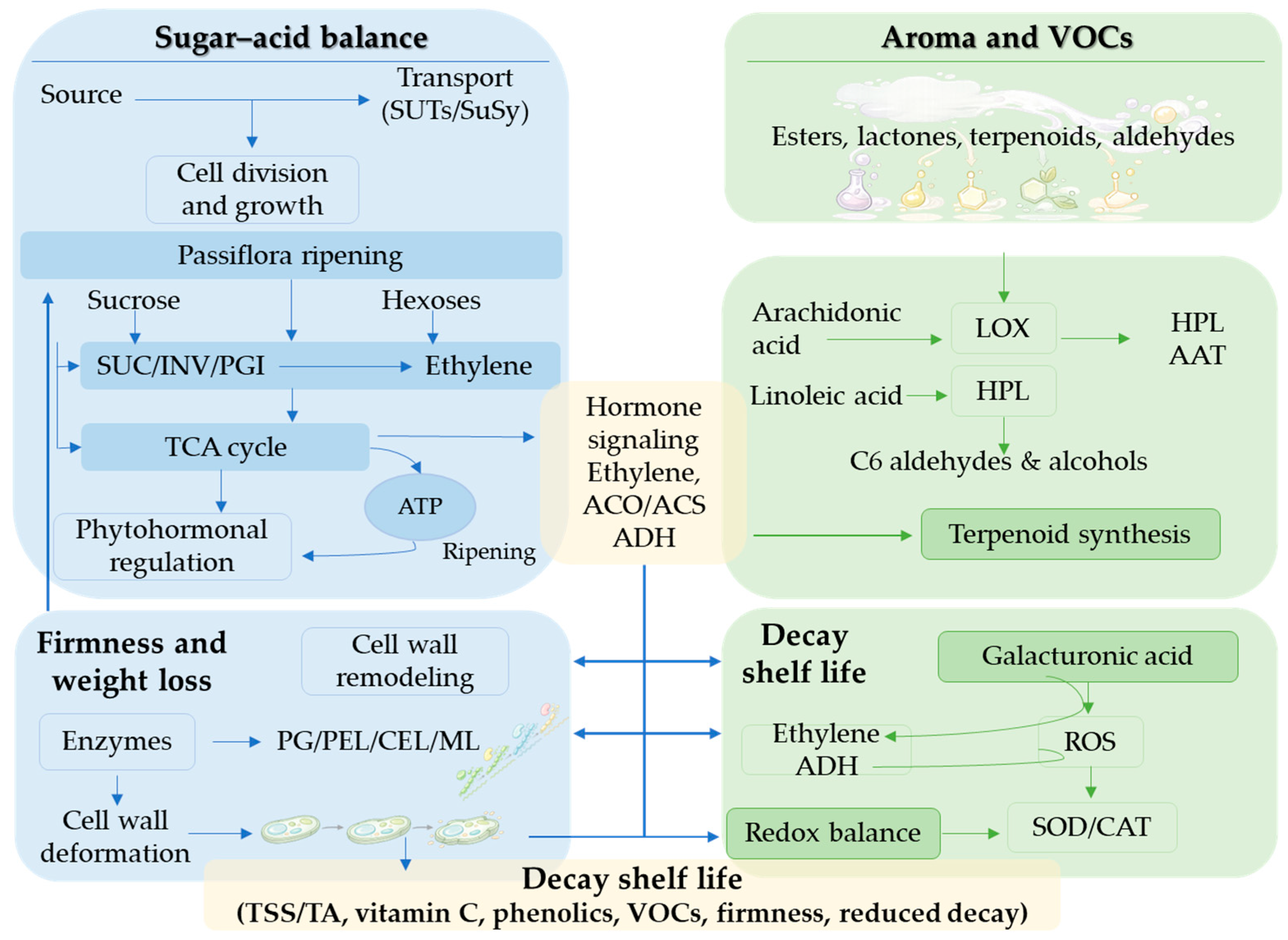
Taken together, these phenotypic, metabolic, and molecular observations define the intrinsic quality architecture of passion fruit. Understanding this baseline framework is essential before evaluating how agronomic management or biological interventions may modulate these regulatory networks. The coordinated interaction among carbohydrate metabolism, volatile biosynthesis, pigment pathways, cell wall remodeling, and stress-related regulation is summarized in Figure 1.

3. Omics Evidence Underlying Quality Formation and Regulation in Passiflora edulis

Recent advances in genomics and multi-omics have substantially expanded the mechanistic understanding of fruit quality formation in Passiflora edulis. Beyond descriptive trait-level observations, transcriptomics, metabolomics, lipidomics, and proteomics now provide system-level insights into how ripening-associated signaling networks coordinate carbon metabolism, organic acid turnover, secondary metabolism, volatile biosynthesis, and stress-related processes [20].

3.1. Genomic and Transcriptomic Foundations of Quality Regulation

The availability of a chromosome-scale genome assembly for P. edulis has provided a structural framework for linking flavor-related metabolic pathways with candidate gene families involved in volatile formation and secondary metabolism [21]. Integration of genomic resources with transcriptomic and metabolomic datasets has enabled identification of genes associated with ester biosynthesis, α-linolenic acid metabolism, terpene synthases, and phenylpropanoid pathways, establishing a genomic context for flavor and pigment regulation [22].
Transcriptome profiling during fruit development and postharvest stages further reveals coordinated shifts in gene expression linked to starch and sucrose metabolism, hormone signal transduction, flavonoid biosynthesis, carotenoid metabolism, and cell-wall remodeling [11,15]. These studies demonstrate that ripening is not a linear process but involves tightly regulated transcriptional reprogramming in which transcription factors, hormone signaling pathways, and metabolic gene networks coordinately regulate carbohydrate metabolism, organic acid dynamics, and volatile biosynthesis.
Comparative analyses across cultivars with contrasting sensory profiles indicate that differences in flavor and volatile composition are associated with distinct transcriptional programs and gene family dynamics, including terpene synthases and lipid-derived metabolic pathways [2,8]. Together, these findings support a model in which cultivar-dependent transcriptional architecture underlies observed differences in aroma intensity and composition.

3.2. Metabolomics and Lipidomics: Linking Metabolic Shifts to Sensory Traits

Integrated metabolomic–transcriptomic analyses have demonstrated that intermediate ripening stages can be particularly decisive for final quality outcomes, revealing coordinated regulation of sugars, organic acids, lipids, and volatile precursors during fruit development and ripening [23,24,25]. In Passiflora edulis, these transitions involve differential accumulation of flavonols, anthocyanins, and flavanols, together with substantial changes in aroma-related volatile organic compounds during ripening [23,25]. These datasets reinforce the concept that sugar–acid balance, pigment accumulation, and aroma formation arise from synchronized regulation of primary and secondary metabolism and interconnected flavor-related metabolic networks [26].
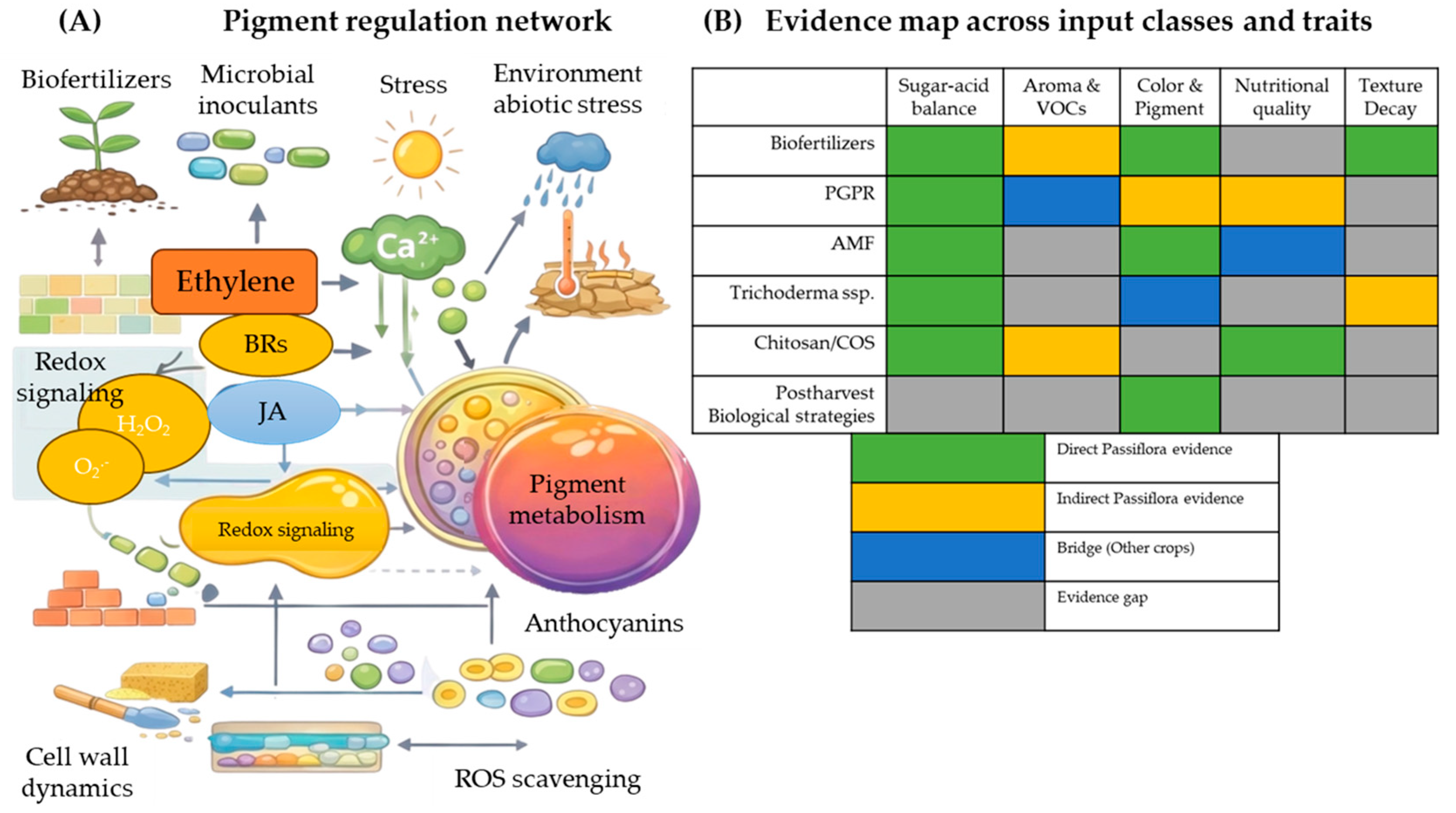
An integrated view of pigment-related regulation in passion fruit, together with a preliminary overview of the literature linking biological input classes to major quality traits, is summarized in Figure 2.
Recent work combining transcriptome and metabolome analyses under different postharvest conditions has identified regulatory nodes connecting organic acid metabolism and volatile production. For example, repression of a malate dehydrogenase gene (PeMDH1) by PeWRKY20 was associated with altered malic acid levels and changes in selected volatile compounds, highlighting a mechanistic bridge between acid metabolism and aroma formation [27]. Such findings illustrate how transcription factors can integrate carbon metabolism with volatile biosynthesis pathways and broader flavor-related metabolic networks. Beyond this specific regulatory module, the connection between organic acid metabolism and volatile biosynthesis in fruit systems is increasingly understood as part of a broader metabolic network linking primary carbon metabolism with aroma precursor formation. Organic acids such as malate and citrate are closely associated with tricarboxylic acid (TCA) cycle activity and mitochondrial metabolism, which influence the availability of carbon skeletons and reducing equivalents for downstream biosynthetic pathways. These metabolic intermediates can indirectly affect lipid-derived volatile formation through pathways such as the lipoxygenase (LOX)–hydroperoxide lyase (HPL) cascade and related ester-forming reactions. In addition, transcription factors involved in ripening-associated regulation may coordinately control genes associated with organic acid turnover, fatty acid metabolism, and ester biosynthesis, thereby coupling acidity modulation with aroma development. Although detailed regulatory modules remain incompletely characterized in Passiflora edulis, evidence from integrated metabolomic and transcriptomic studies suggests that such metabolic cross-talk may play an important role in shaping final fruit flavor profiles.
Lipidomics data further indicate that membrane remodeling and lipid-derived precursors contribute to volatile biosynthesis and postharvest behavior, reinforcing the importance of α-linolenic acid and related pathways in shaping aroma profiles [13,15].
It should be noted that comparisons of VOC profiles across studies should be interpreted with caution due to methodological variability. Differences in extraction techniques, such as solid-phase microextraction (SPME), solvent extraction, or dynamic headspace sampling, as well as variations in analytical platforms including GC–MS (one-dimensional gas chromatography-mass spectrometry) or GC×GC–MS (comprehensive two-dimensional gas chromatography-mass spectrometry), can influence the number and relative abundance of detected compounds. In addition, factors such as fruit maturity stage, sample preparation protocols, and instrumental parameters may significantly affect VOC quantification. Therefore, methodological variability should be considered when comparing aroma profiles reported in different studies of Passiflora edulis.

3.3. Proteomic Insights into Quality-Associated Stress and Defense Networks

Proteomic analyses have begun to reveal protein-level regulatory dynamics associated with fruit quality maintenance during storage and stress responses in Passiflora edulis. Studies examining different fruit tissues during storage have identified differential accumulation of proteins involved in reactive oxygen species (ROS) scavenging, lipid peroxidation, heat stress responses, and pathogen resistance across epicarp, mesocarp, endocarp, and pulp tissues [28]. These findings provide molecular evidence that postharvest deterioration involves coordinated stress and defense responses, not merely passive senescence.
Comparative transcriptomic and metabolomic studies of purple and yellow cultivars under pathogen challenge have further linked defense-related gene expression and pathway activity to differences in decay susceptibility [18]. These datasets highlight that quality retention during storage depends on interactions between ripening-associated metabolism and defense signaling networks. Together, these proteomic observations complement transcriptomic and metabolomic evidence by revealing how postharvest stress responses and defense-related protein networks interact with metabolic pathways that determine fruit quality outcomes.
A summary of omics-based studies in Passiflora edulis related to fruit development, ripening, and postharvest regulation is compiled in Table 1.

3.4. Integrative Regulatory Architecture

Taken together, genomic, transcriptomic, metabolomic, lipidomic, and proteomic evidence converges on a multilayer regulatory architecture governing fruit quality formation in Passiflora edulis. These integrated datasets indicate that traits such as color, aroma, sweetness-acidity balance, texture, and postharvest performance are shaped by coordinated interactions among structural genes, transcriptional regulators, metabolic pathways, and environmental cues. In this context, multi-omics approaches not only improve our understanding of fruit quality regulation but also provide a basis for identifying intervention points for crop and postharvest management.
This mechanistic framework provides the necessary foundation for interpreting how external factors, including environmental modulation and agronomic management, may influence fruit quality through the reconfiguration of endogenous regulatory networks.

4. Use of Biological Inputs in the Passion Fruit System

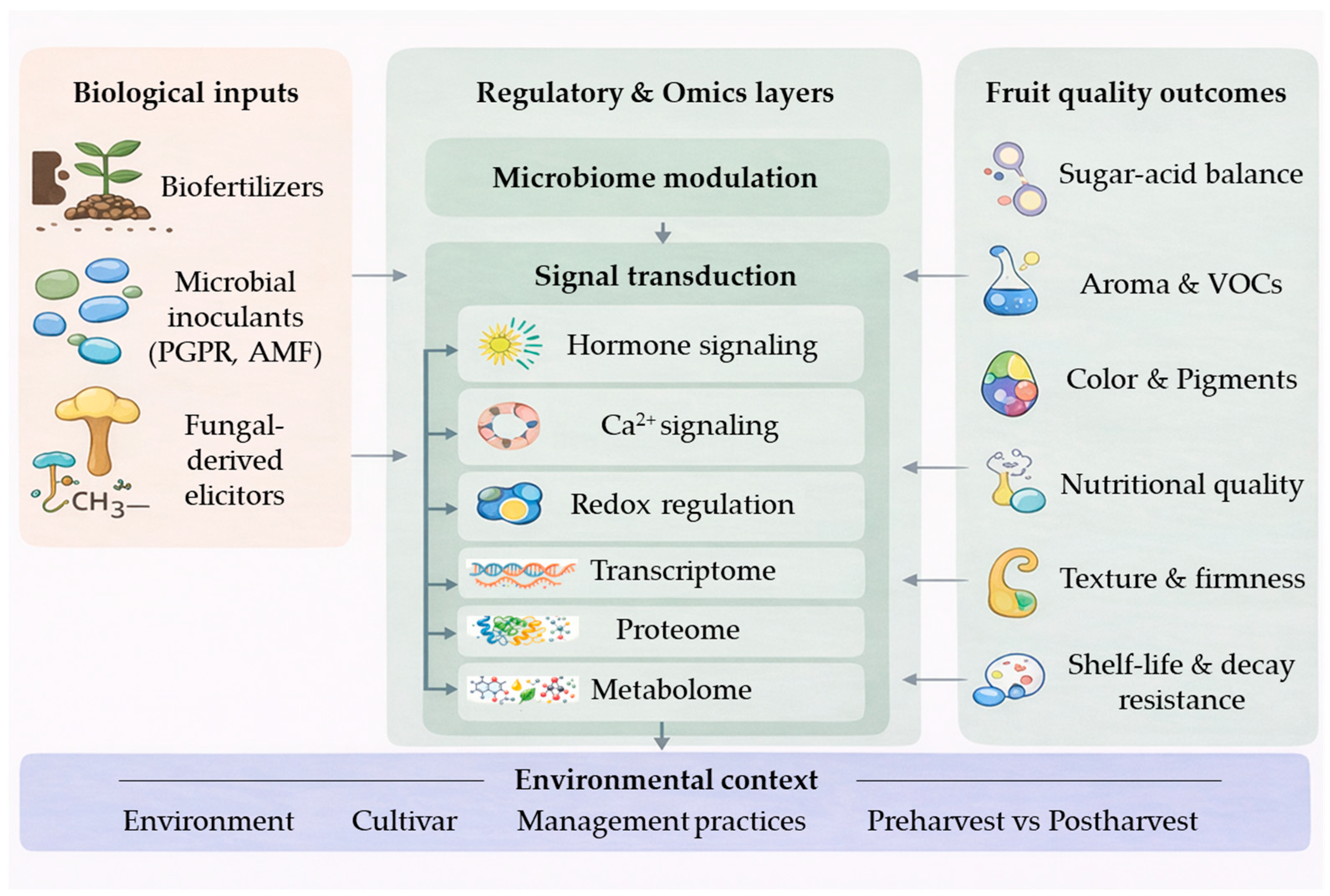
Building upon the physiological and omics-based framework outlined above, biological interventions in the passion fruit system should be understood as potential modulators of endogenous regulatory networks rather than as direct drivers of isolated quality traits. In this context, the integration of multi-omics knowledge with sustainable crop-management approaches provides a conceptual basis for understanding how biological inputs may interact with fruit quality regulation in Passiflora edulis. This broader integrative perspective, linking molecular regulatory architecture with the potential role of biological inputs in crop performance and fruit quality, is summarized in Figure 3.
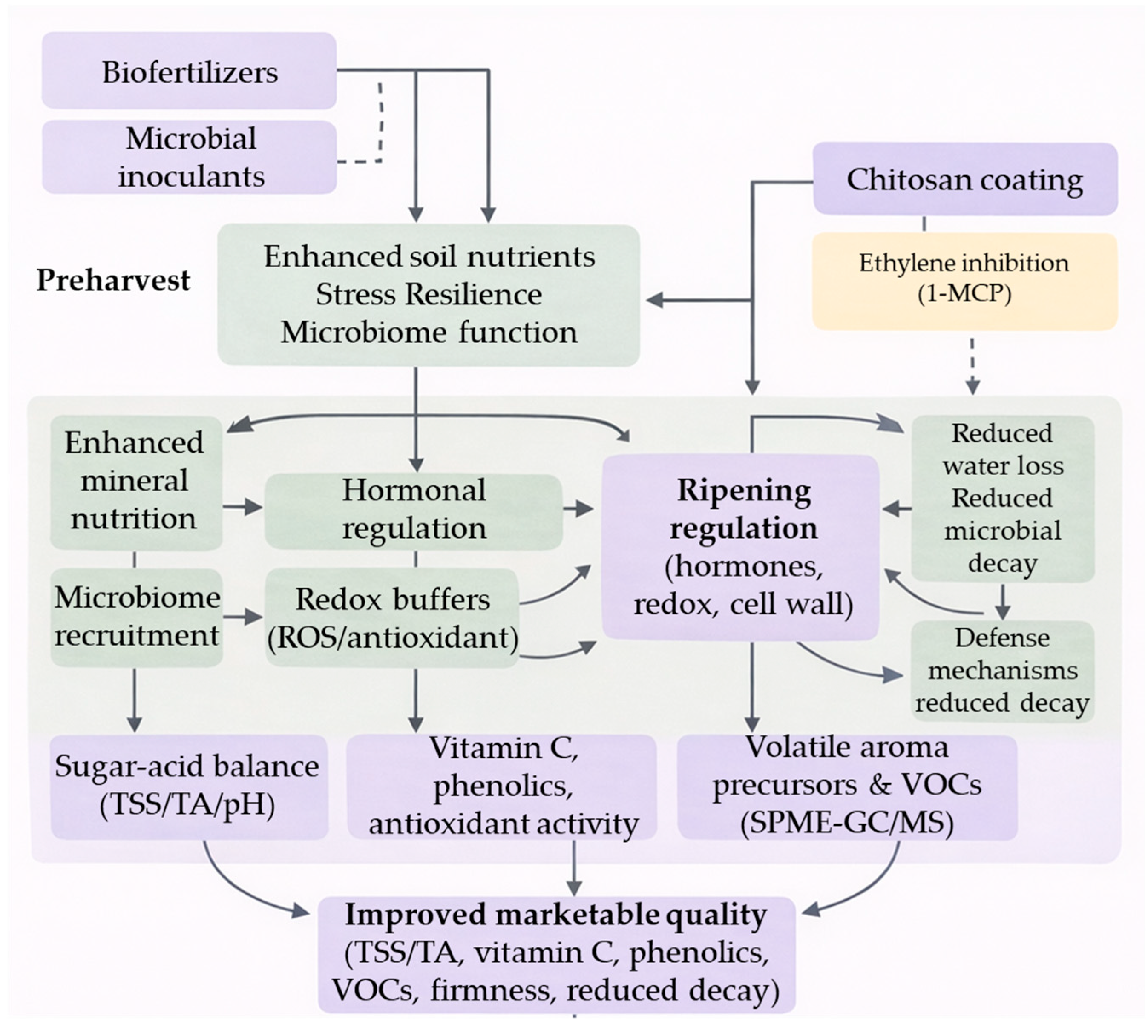
More specifically, biofertilizers, microbial inoculants [32], fungal-derived elicitors, and biologically based postharvest treatments may affect fruit quality through three major interfaces: (i) soil–plant processes influencing nutrient acquisition, source-sink relations, and rhizosphere interactions; (ii) signaling and defense pathways that intersect with ripening-associated regulation; and (iii) fruit metabolic and postharvest processes associated with aroma, acidity, texture, and shelf-life maintenance. These interconnected interfaces and their potential effects on quality traits are summarized in Figure 4.
Mechanistically, biological strategies are relevant to passion fruit quality regulation because they may affect the same endogenous pathways that control fruit development, ripening, and postharvest behavior. Rather than acting on fruit quality traits in isolation, biofertilizers, microbial inoculants, fungal-derived elicitors, and biologically based postharvest treatments may influence nutrient acquisition, carbon partitioning, phytohormone signaling, redox balance, defense priming, and cell wall remodeling. Through these interconnected processes, biological inputs can indirectly modulate sugar–acid balance, volatile biosynthesis, pigment-related pathways, antioxidant metabolism, firmness, and shelf-life performance. This mechanistic perspective is essential for interpreting how biological strategies may regulate passion fruit quality beyond descriptive treatment effects.

4.1. Soil–Plant Interface: Nutrition, Rhizosphere Processes, and Microbiome Dynamics

At the soil–plant interface, biofertilizers and microbial inoculants can alter nutrient availability, root architecture, and rhizosphere microbial communities [33]. In passion fruit, rhizosphere-associated microbial shifts under continuous cropping have been linked to disease resistance and plant performance [34,35], supporting the plausibility of microbiome-mediated effects on plant physiology.
Field studies combining biofertilizers and organic amendments indicate that biological inputs can influence agronomic performance, phenological development, and fruit quality-related parameters in passion fruit [36,37]. For example, cultivation under saline conditions showed that biofertilizer dose interacted with irrigation salinity to modulate pulp pH and ascorbic acid content [38], highlighting non-linear and context-dependent responses. Similarly, integration of alkaline humic acid fertilizer with reduced chemical fertilization has been associated with maintenance or improvement of sugar–acid balance and vitamin C levels in fruit [39].
These findings suggest that soil-level biological inputs may influence fruit composition indirectly by stabilizing nutrient supply and altering rhizosphere microbial communities that modulate nutrient uptake efficiency, phytohormone signaling, and plant stress responses. However, responses appear dose-dependent and environment-sensitive, underscoring the importance of factorial experimental designs that include cultivar and stress intensity as explicit variables.
A structured synthesis of biological inputs evaluated in Passiflora edulis, including the type of intervention, experimental conditions, and reported quality-related outcomes, is presented in Table 2.

4.2. Signaling Interface: Defense Priming and Hormone-Linked Regulation

Beyond nutrient effects, biological inputs may act through signaling pathways that intersect with ripening and stress-related regulation. In passion fruit, fungal-derived biostimulants, alone or in association with humic acid treatments, have been shown to induce early defense-related gene expression and later upregulate phytohormone-associated transcripts linked to growth and fitness improvement [39]. Such defense activation typically involves pathogenesis-related proteins, antioxidant enzymes, and coordinated hormone–redox signaling networks that integrate stress responses with developmental plasticity [41]. This temporal shift supports a model of defense priming followed by enhanced physiological performance.
A crop-specific example is the root-colonizing fungus Piriformospora indica, which has been reported to trigger early defense responses followed by increased fitness and higher fruit quality under controlled conditions [29]. Such findings illustrate how early immune or hormonal reprogramming may translate into altered carbon allocation and metabolite accumulation during fruit development.
Chitosan and chitooligosaccharides, widely recognized as plant immune elicitors, have also been investigated in Passiflora sp systems. Application of chitosan oligosaccharides has been associated with induced resistance against viral infection [43], supporting the broader concept that elicitor-triggered signaling cascades can reshape metabolic priorities. Although most mechanistic data derive from defense contexts, the overlap between defense signaling, redox regulation, and secondary metabolism suggests potential crosstalk with quality-associated pathways [44]. This is consistent with previous reports associating virus tolerance with improved yield under field and greenhouse conditions [42,45].

4.3. Fruit Metabolic and Postharvest Interface

Biological strategies applied at or after harvest may influence fruit quality by modulating ripening rate, oxidative stress, and pathogen development. Postharvest transcriptomic studies indicate that carbohydrate metabolism, hormone signaling, and cell-wall–related pathways are central to senescence progression [15]. Interventions that delay ethylene perception or enhance antioxidant defenses can therefore influence shelf-life outcomes. Microbially derived volatile compounds have also been shown to suppress fungal pathogens in other fruit systems, providing bridge evidence for VOC-mediated interactions [31].
Combined application of 1-methylcyclopropene (1-MCP) and chitosan-coated films has been shown to maintain storage quality and modulate ripening-associated parameters in passion fruit [30]. Comparative multi-omics analyses of pathogen resistance further demonstrate that cultivar-dependent defense pathway activity influences decay susceptibility [18], suggesting that biological control or elicitor-based strategies may interact with endogenous resistance networks.
Importantly, storage studies indicate that sugars, organic acids, and bioactive compounds continue to shift dynamically during postharvest phases [19]. Thus, postharvest biological treatments may alter not only decay incidence but also metabolic trajectories that define final sensory quality.

4.4. Context Dependence and Regulatory Plasticity

Across studies, responses of passion fruit quality traits to biological inputs are frequently non-linear and context-dependent. Effects vary with cultivar identity, maturity stage at harvest, environmental stress intensity, and formulation or dose of the applied input. In some cases, higher doses do not translate into proportional quality gains and may even shift sugar–acid balance in unintended directions [38].
These observations are consistent with a plastic regulatory framework in which biological inputs modulate endogenous signaling networks controlling nutrient assimilation, carbon allocation, and stress-responsive metabolism. The magnitude and direction of quality responses, therefore, depend on the physiological state of the plant and the environmental context in which these regulatory pathways are activated.
It is also important to acknowledge methodological limitations that may influence the interpretation of reported treatment effects. In several studies, limited experimental replication, variability in metabolite quantification methods, and insufficient control of fruit maturity stages may affect the reliability and comparability of results. Because the ripening stage strongly influences sugar accumulation, organic acid metabolism, and volatile biosynthesis, differences in harvest maturity may confound the interpretation of biological treatment effects. Future studies should therefore prioritize standardized analytical protocols and clearly defined maturity indices to improve reproducibility across experiments.

5. Research Gaps and Future Directions

Despite the expanding body of physiological and multi-omics research in Passiflora edulis, several critical gaps remain in the understanding of how biological inputs modulate fruit quality formation in a reproducible and mechanism-informed manner.

5.1. Limited Integration of Biological Inputs with Multi-Omics Readouts

While transcriptomic, metabolomic, lipidomic, and proteomic resources have substantially clarified the endogenous regulatory networks underlying ripening and quality traits [11,21,27], relatively few studies have combined controlled biological input treatments with multi-layer omics measurements in passion fruit. Most biofertilizer or inoculant trials report agronomic or compositional endpoints without resolving whether observed changes arise from altered metabolic fluxes, delayed ripening, stress mitigation, or shifts in defense signaling.
Reviews across horticultural crops emphasize that organic plant biostimulants may influence fruit quality through indirect metabolic modulation [40]. Future research should explicitly integrate RNA-seq, metabolomics (including targeted sugar–acid profiling and VOC analysis), and, where feasible, proteomics under factorial designs incorporating cultivar, maturity stage, and stress intensity. Such integrative approaches would enable distinction between direct metabolic enhancement and indirect effects mediated through modified ripening kinetics.

5.2. Standardization of Maturity Indices and Experimental Design

A recurrent limitation in passion fruit quality studies is the insufficient standardization of harvest maturity. Given the strong influence of ripening stage on sugar–acid balance, volatile accumulation, and antioxidant content [1,11], failure to control for phenological stage can substantially confound the interpretation of treatment effects. Future trials evaluating biological inputs should therefore define harvest maturity using objective and reproducible indices, such as peel color stage, TSS/TA thresholds, firmness, or respiration rate. In addition, cultivar identity should be treated as an explicit experimental factor rather than a background variable, and environmental conditions and stress levels should be reported in sufficient detail to allow contextual interpretation. Such methodological rigor is essential to distinguish genuine quality modulation from apparent changes driven primarily by altered maturation timing.

5.3. Preharvest–Postharvest Continuum

Most studies treat preharvest management and postharvest interventions as independent domains. However, omics evidence suggests that ripening-associated transcriptional programs, redox balance, and defense pathway activation during fruit development influence storage performance and pathogen susceptibility [18,27].
Future research should adopt an integrated continuum perspective, tracking fruit from preharvest treatments through storage and shelf-life evaluation. Linking rhizosphere and/or elicitor-induced priming effects with postharvest transcriptomic and metabolomic trajectories could clarify whether early signaling modulation confers durable improvements in flavor retention or decay resistance.

5.4. Mechanistic Dissection of the Acid–Aroma Interface

Emerging evidence indicates that organic acid metabolism and volatile biosynthesis are interconnected through shared regulatory nodes, including transcription factors such as PeWRKY20 and enzymes involved in malate metabolism [27]. However, the extent to which biological inputs can reproducibly influence this acid–aroma interface remains unresolved.
From an applied perspective, biological inputs could influence the acid–aroma interface through at least three non-mutually exclusive mechanisms: (i) modulation of mineral nutrition and carbon allocation, which may alter sugar and organic acid pools; (ii) alteration of ripening kinetics through ethylene- and hormone-related signaling; and (iii) indirect effects on fatty acid-derived volatile biosynthesis through stress mitigation and redox regulation. However, direct studies in Passiflora edulis simultaneously quantifying organic acids and VOC profiles after bio-input application remain scarce, which currently limits mechanistic interpretation. Targeted experiments combining controlled elicitor or microbial treatments with measurements of organic acid pools, volatile precursors, transcription factor expression, and enzyme activity are therefore needed to clarify causal relationships. This interface represents a promising mechanistic entry point for improving sensory quality without compromising overall fruit physiology.

5.5. Microbiome-Quality Interactions

Although rhizosphere shifts have been documented in passion fruit systems [34,35,46], direct links between microbial community composition and fruit metabolite profiles remain largely unexplored. Bridging microbiome analyses with fruit-targeted metabolomics could illuminate whether specific microbial assemblages correlate with stable improvements in sugar–acid balance, VOC complexity, or antioxidant capacity [47,48,49].
Such integrative designs would move beyond descriptive microbiome profiling toward functional interpretation in the context of fruit quality regulation.

6. Conclusions

Fruit quality in Passiflora edulis arises from coordinated interactions among carbon allocation, organic acid metabolism, volatile biosynthesis, pigment-related pathways, hormone signaling, and stress-responsive regulatory networks operating during fruit development, ripening, and postharvest storage. Recent advances in genomics and multi-omics have strengthened the mechanistic understanding of these interconnected processes and provided a more integrated framework for interpreting variation in sensory, nutritional, and postharvest quality traits.
From a practical perspective, this knowledge supports the development of mechanism-informed biological strategies aimed at improving sugar–acid balance, aroma-related traits, nutritional quality, and shelf-life performance in sustainable passion fruit production systems. However, the effects of biological inputs remain strongly context-dependent and are influenced by cultivar, maturity stage, environmental conditions, and treatment formulation.
Future research should prioritize the integration of controlled biological input trials with standardized phenotyping and multi-omics analyses across preharvest and postharvest stages. Such approaches will be essential for moving from descriptive evidence toward reproducible and mechanistically grounded strategies for improving passion fruit quality.

Author Contributions

Writing—original draft preparation, J.L.S.-J.; writing—review and editing, M.F.S.V.; supervision, M.F.S.V.; funding acquisition, M.F.S.V. All authors have read and agreed to the published version of the manuscript.

Funding

This research was funded by Conselho Nacional de Desenvolvimento Científico e Tecnológico (CNPq), doctoral fellowship grant number 141963/2019-0, and Fundação de Amparo à Pesquisa do Estado do Rio de Janeiro (FAPERJ), grant number 26/290.008/2023.

Data Availability Statement

Data sharing is not applicable to this article as no new data were created or analyzed in this review.

Acknowledgments

The conceptual figures included in this manuscript were prepared by the authors using BioRender (web version) and graphical design software for scientific illustration. BioRender was used only to assist with the visual organization and layout of conceptual elements. All scientific content, figure logic, pathway selection, interpretation, labeling, and final validation were performed exclusively by the authors based on the literature reviewed in this study. No generative AI tools were used to generate research data, experimental images, study design, data analysis, or scientific interpretation.

Conflicts of Interest

The authors declare no conflicts of interest.

References

  1. Ramaiya, S.D.; Bujang, J.S.; Zakaria, M.H.; King, W.S.; Sahrir, M.A.S. Sugars, ascorbic acid, total phenolic content and total antioxidant activity in passion fruit (Passiflora) cultivars. J. Sci. Food Agric. 2013, 93, 1198–1205. [Google Scholar] [CrossRef] [PubMed]
  2. Fu, B.L.; Chen, L.Y. Molecular orchestration of malate and citrate metabolism: Regulatory networks governing organic acid dynamics and fruit quality attributes. Hortic. Res. 2026, 13, uhaf292. [Google Scholar] [CrossRef]
  3. Chen, L.; Liao, P. Current insights into plant volatile organic compound biosynthesis. Curr. Opin. Plant Biol. 2025, 85, 102708. [Google Scholar] [CrossRef]
  4. Jin, W.; Yang, Z.; Xu, K.; Liu, Q.; Luo, Q.; Li, L.; Xiang, X. A comprehensive review of plant volatile terpenoids, elucidating interactions with surroundings, systematic synthesis, regulation, and targeted engineering production. Biology 2025, 14, 466. [Google Scholar] [CrossRef] [PubMed]
  5. Lu, H.; Zhao, H.; Zhong, T.; Chen, D.; Wu, Y.; Xie, Z. Molecular regulatory mechanisms affecting fruit aroma. Foods 2024, 13, 1870. [Google Scholar] [CrossRef]
  6. Garcia, E.; Miranda, M.R.A.; Liu, X.; Sarkhosh, A.; Wang, Y.; Liu, T. Metabolomic profiling of pulp from three passion fruit varieties: Implications for postharvest quality and nutritional value. Postharvest Biol. Technol. 2025, 229, 113689. [Google Scholar] [CrossRef]
  7. Dadwal, V.; Jha, D.K.; Gaid, M.; Joshi, R. Editorial: Exploring volatile organic compounds in fruits and flowers: Aroma, biosynthesis, and ecological impact. Front. Plant Sci. 2025, 16, 1701678. [Google Scholar] [CrossRef]
  8. Teng, Y.; Wang, Y.; Zhang, S.; Zhang, X.; Li, J.; Wu, F.; Li, A. Integration of full-length Iso-Seq, Illumina RNA-Seq, and flavor testing reveals potential differences in ripened fruits between two Passiflora edulis cultivars. PeerJ 2024, 12, e17983. [Google Scholar] [CrossRef]
  9. Li, W.; Ren, Z.; Wang, T.; Wei, X.; Wei, H.; Tian, H.; Xu, R.; Dong, J.; Wu, L.; Huang, B. Cultivar-specific volatile profiles in Passiflora edulis determine thrips (Frankliniella intonsa) feeding preferences. Front. Plant Sci. 2025, 16, 1667805. [Google Scholar] [CrossRef] [PubMed]
  10. Luo, R.; Lun, X.; Gao, R.; Wang, L.; Yang, Y.; Su, X.; Habibullah-Al-Mamun, M.; Xu, X.; Li, H.; Li, J. A review of biogenic volatile organic compounds from plants: Research progress and future prospects. Toxics 2025, 13, 364. [Google Scholar] [CrossRef] [PubMed]
  11. Xin, M.; Li, C.; He, X.; Li, L.; Yi, P.; Tang, Y.; Li, J.; Liu, G.; Sheng, J.; Sun, J. Integrated metabolomic and transcriptomic analyses of quality components and associated molecular regulation mechanisms during passion fruit ripening. Postharvest Biol. Technol. 2021, 180, 111601. [Google Scholar] [CrossRef]
  12. Zhang, X.; Wei, X.; Ali, M.M.; Rizwan, H.M.; Li, B.; Li, H.; Jia, K.; Yang, X.; Ma, S.; Li, S.; et al. Changes in the Content of Organic Acids and Expression Analysis of Citric Acid Accumulation-Related Genes during Fruit Development of Yellow (Passiflora edulis f. flavicarpa) and Purple (Passiflora edulis f. edulis) Passion Fruits. Int. J. Mol. Sci. 2021, 22, 5765. [Google Scholar] [CrossRef]
  13. Zhu, X.; Yu, J.; Xu, Q.; Chen, C.; Fan, Q.; Li, G.; Xu, L.; Xu, Z. Integrated metabolomics and lipidomics reveal dynamic metabolic changes in passion fruit with different ripening stages. Food Chem. 2026, 499, 147366. [Google Scholar] [CrossRef]
  14. Huang, D.; Ma, F.; Wu, B.; Lv, W.; Xu, Y.; Xing, W.; Chen, D.; Xu, B.; Song, S. Genome-Wide Association and Expression Analysis of the Lipoxygenase Gene Family in Passiflora edulis Revealing PeLOX4 Might Be Involved in Fruit Ripeness and Ester Formation. Int. J. Mol. Sci. 2022, 23, 12496. [Google Scholar] [CrossRef]
  15. Li, C.; Xin, M.; Li, L.; He, X.; Liu, G.; Li, J.; Sheng, J.; Sun, J. Transcriptome profiling helps to elucidate the mechanisms of ripening and epidermal senescence in passion fruit (Passiflora edulis Sims). PLoS ONE 2020, 15, e0236535. [Google Scholar] [CrossRef]
  16. Viera, W.; Shinohara, T.; Samaniego, I.; Sanada, A.; Terada, N.; Ron, L.; Suárez-Tapia, A.; Koshio, K. Phytochemical composition and antioxidant activity of Passiflora spp. germplasm grown in Ecuador. Plants 2022, 11, 328. [Google Scholar] [CrossRef]
  17. Campos-Rodríguez, J.; Acosta-Coral, K.; Moreno-Rojo, C.; Paucar-Menacho, L.M. Passiflora edulis (maracuyá): Nutritional composition, bioactive compounds, by-product utilization, biocontrol and organic fertilization. Sci. Agropecu. 2023, 14, 479–497. [Google Scholar] [CrossRef]
  18. Rizwan, H.M.; Zhimin, L.; Harsonowati, W.; Waheed, A.; Qiang, Y.; Yousef, A.F.; Chen, F. Identification of fungal pathogens causing postharvest passion fruit decays and multi-omics analysis reveals cultivar-specific resistance. J. Fungi 2021, 7, 879. [Google Scholar] [CrossRef]
  19. Militão, A.O.; da Silva, T.I.; do Nascimento, A.M.; da Costa, F.B.; de Castro, A.K.G.; Macêdo, L.F.; Alcântara, C.M.; Evangelista, M.E.M.; Sales, G.N.B.; Lopes, K.P.; et al. Storage increases soluble sugars and decreases bioactive compounds in wild passion fruit (Passiflora cincinnata). Hortic. Environ. Biotechnol. 2025, 66, 657–672. [Google Scholar] [CrossRef]
  20. Zhang, D.; Du, L.; Lin, J.; Wang, L.; Zheng, P.; Deng, B.; Zhang, W.; Su, W.; Liu, Y.; Lu, Y.; et al. Genome-wide identification and expression analysis of calmodulin and calmodulin-like genes in passion fruit (Passiflora edulis) and their involvement in flower and fruit development. BMC Plant Biol. 2024, 24, 626. [Google Scholar] [CrossRef]
  21. Xia, Z.; Huang, D.; Zhang, S.; Wang, W.; Ma, F.; Wu, B.; Xu, Y.; Xu, B.; Chen, D.; Zou, M.; et al. Chromosome-scale genome assembly provides insights into the evolution and flavor synthesis of passion fruit (Passiflora edulis Sims). Hortic. Res. 2021, 8, 14. [Google Scholar] [CrossRef]
  22. Zheng, Y.-Y.; Chen, L.-H.; Fan, B.-L.; Xu, Z.; Wang, Q.; Zhao, B.-Y.; Gao, M.; Yuan, M.-H.; Qamar, M.T.U.; Jiang, Y.; et al. Integrative multiomics profiling of passion fruit reveals the genetic basis for fruit color and aroma. Plant Physiol. 2024, 194, 2491–2510. [Google Scholar] [CrossRef]
  23. Qiu, W.; Su, W.; Cai, Z.; Dong, L.; Li, C.; Xin, M.; Fang, W.; Liu, Y.; Wang, X.; Huang, Z.; et al. Combined transcriptome and metabolome analyses reveal mechanisms of coloration and fruit quality in yellow and purple Passiflora edulis Sims. J. Agric. Food Chem. 2020, 68, 12096–12106. [Google Scholar] [CrossRef]
  24. Gao, Y.; Yao, Y.; Chen, X.; Wu, J.; Wu, Q.; Liu, S.; Zhang, X.; Guo, A. Metabolomic and transcriptomic analyses reveal the mechanism of sweet-acidic taste formation during pineapple fruit development. Front. Plant Sci. 2022, 13, 971506. [Google Scholar] [CrossRef]
  25. Li, C.; Xin, M.; Li, L.; He, X.; Yi, P.; Tang, Y.; Li, J.; Zheng, F.; Liu, G.; Sheng, J.; et al. Characterization of the aromatic profile of purple passion fruit (Passiflora edulis Sims) during ripening by HS-SPME-GC/MS and RNA sequencing. Food Chem. 2021, 356, 129685. [Google Scholar] [CrossRef]
  26. Fang, X.; Shen, J.; Zhang, L.; Zou, X.; Jin, L. Metabolomic and transcriptomic integration reveals the mechanism of aroma formation as strawberries naturally turn colors while ripening. Food Chem. 2024, 460, 140765. [Google Scholar] [CrossRef]
  27. Huang, M.; Li, K.; Cheng, Y.; Li, M.; Liu, L.; Mur, L.A.J.; Fang, C. PeWRKY20 represses PeMDH1 to modulate malic acid metabolism and flavor formation in postharvest passion fruit. Postharvest Biol. Technol. 2024, 218, 113164. [Google Scholar] [CrossRef]
  28. Garcia, E.; Koh, J.; Wu, X.; Sarkhosh, A.; Liu, T. Tissue-specific proteome profile analysis reveals regulatory and stress-responsive networks in passion fruit during storage. Sci. Rep. 2024, 14, 3564. [Google Scholar] [CrossRef]
  29. Yan, C.; Rizwan, H.M.; Liang, D.; Reichelt, M.; Mithöfer, A.; Scholz, S.S.; Chen, F. The effect of the root-colonizing Piriformospora indica on passion fruit (Passiflora edulis) development: Initial defense shifts to fitness benefits and higher fruit quality. Food Chem. 2021, 359, 129671. [Google Scholar] [CrossRef]
  30. You, M.; Duan, X.; Li, X.; Luo, L.; Zhao, Y.; Pan, H.; Li, G. Effect of 1-methylcyclopropene combined with chitosan-coated film on storage quality of passion fruit. Sustain. Chem. Pharm. 2022, 27, 100679. [Google Scholar] [CrossRef]
  31. Delgado, N.; Olivera, M.; Cádiz, F.; Bravo, G.; Montenegro, I.; Madrid, A.; Fuentealba, C.; Pedreschi, R.; Salgado, E.; Besoain, X. Volatile organic compounds produced by Gluconobacter cerinus and Hanseniaspora osmophila suppress table grape rot pathogens. Antibiotics 2021, 10, 663. [Google Scholar] [CrossRef]
  32. Fanai, A.; Bohia, B.; Lalremruati, F.; Lalhriatpuii, N.; Lalmuanpuii, R.; Singh, P.K. Plant growth-promoting bacteria-induced plant adaptations to stresses: An updated review. PeerJ 2024, 12, e17882. [Google Scholar] [CrossRef]
  33. Gonçalves, B.; Santos, M.; Silva, V.; Rodrigues, A.; Oliveira, I.; Lopes, T.; Sujeeth, N.; Guinan, K.J. Biostimulants in fruit crop production: Impacts on growth, yield, and fruit quality. Horticulturae 2025, 11, 1452. [Google Scholar] [CrossRef]
  34. Wang, Y.; Teng, Y.; Zhang, J.; Zhang, Z.; Wang, C.; Wu, X.; Long, X. Passion fruit plants alter the soil microbial community with continuous cropping and improve plant disease resistance by recruiting beneficial microorganisms. PLoS ONE 2023, 18, e0281854. [Google Scholar] [CrossRef]
  35. Lin, W.; Chen, Z.; Li, Z.; Lin, W. Changes in enzyme activity and microbial community of rhizosphere soil under continuously monocultured Passiflora edulis treatment. PLoS ONE 2025, 20, e0328363. [Google Scholar] [CrossRef]
  36. Melini, F.; Melini, V.; Luziatelli, F.; Abou Jaoudé, R.; Ficca, A.G.; Ruzzi, M. Effect of microbial plant biostimulants on fruit and vegetable quality: Current research lines and future perspectives. Front. Plant Sci. 2023, 14, 1251544. [Google Scholar] [CrossRef]
  37. Lalmuanpuii, R.; Hazarika, T.K. Biofertilizer consortium amended with organic manures for improving phenological attributes, yield and quality of purple passion fruit. J. Plant Nutr. 2025, 48, 2270–2279. [Google Scholar] [CrossRef]
  38. de Souza, T.R.A.; Silva, A.L.; Santos, R.H.S.; de Lima, V.L.A.; Araújo, M.S.F.; de Lima, G.S.; Arruda, T.F.d.L.; da Costa, M.V.P.; Correia, G.E.S. Irrigated cultivation of sour passion fruit under saline stress and application of cassava wastewater biofertilizer. Arid Land Res. Manag. 2025, 40, 85–107. [Google Scholar] [CrossRef]
  39. Fan, Q.; Yu, J.; Feng, J.; Wu, H.; Jiu, Y.; Wu, X.; Zhang, Q.; Xu, Z. Enhancing passion fruit agriculture with alkaline humic acid and chemical fertilizers: Impacts on soil and fruit quality. Environ. Technol. Innov. 2025, 39, 104214. [Google Scholar] [CrossRef]
  40. Rodrigues, M.; Baptistella, J.L.C.; Horz, D.C.; Bortolato, L.M.; Mazzafera, P. Organic plant biostimulants and fruit quality—A review. Agronomy 2020, 10, 988. [Google Scholar] [CrossRef]
  41. Santos-Jiménez, J.L.; de Barros Montebianco, C.; Olivares, F.L.; Canellas, L.P.; Barreto-Bergter, E.; Rosa, R.C.C.; Vaslin, M.F.S. Passion fruit plants treated with biostimulants induce defense-related and phytohormone-associated genes. Plant Gene 2022, 30, 100357. [Google Scholar] [CrossRef]
  42. Santos-Jiménez, J.L.; Montebianco, C.d.B.; Bernardino, M.C.; Barreto-Bergter, E.; Rosa, R.C.C.; Vaslin, M.F.S. Enhancing passion fruit resilience: The role of Hariman in mitigating viral damage and boosting productivity in organic farming systems. Int. J. Mol. Sci. 2025, 26, 2177. [Google Scholar] [CrossRef]
  43. Zhang, L.; Yu, L.; Zhao, Z.; Li, P.; Tan, S. Chitosan oligosaccharide as a plant immune inducer on the Passiflora spp. (passion fruit) CMV disease. Front. Plant Sci. 2023, 14, 1131766. [Google Scholar] [CrossRef]
  44. Cuéllar-Torres, E.A.; Aguilera-Aguirre, S.; Hernández-Oñate, M.Á.; López-García, U.M.; Vega-Arreguín, J.; Montalvo-González, E.; Chacón-López, A. Molecular aspects revealed by omics technologies related to defense system activation in fruits in response to elicitors: A review. Horticulturae 2023, 9, 558. [Google Scholar] [CrossRef]
  45. Santos-Jiménez, J.L.; de Barros Montebianco, C.; Vidal, A.H.; Ribeiro, S.G.; Barreto-Bergter, E.; Vaslin, M.F.S. A fungal glycoprotein mitigates passion fruit woodiness disease caused by Cowpea aphid-borne mosaic virus (CABMV) in Passiflora edulis. Biocontrol 2022, 67, 75–87. [Google Scholar] [CrossRef]
  46. Sanyal, R.; Pandey, S.; Nandi, S.; Mondal, R.; Samanta, D.; Mandal, S.; Manokari, M.; Mishra, T.; Dhama, K.; Pandey, D.K.; et al. Biotechnology of Passiflora edulis: Role of Agrobacterium and endophytic microbes. Appl. Microbiol. Biotechnol. 2023, 107, 5651–5668. [Google Scholar] [CrossRef]
  47. Qi, M.; Shi, X.; Huang, W.; Wei, Q.; Zhang, Z.; Zhang, R.; Dong, S.; Anwar, S.; Bakhat, H.F.; Wang, B.; et al. Microbiome and metabolome illustrate the correlations between endophytes and flavor metabolites in Passiflora ligularis fruit juice. Int. J. Mol. Sci. 2025, 26, 2151. [Google Scholar] [CrossRef]
  48. Lv, M.; Liu, X.; Liu, R.; Aihaiti, A.; Hong, J.; Zheng, L.; Xing, J.; Cui, Y.; Wang, L. Untargeted metabolomics reveals flavor and metabolic changes in mixed Lactobacillus-fermented black mulberry juice. Food Chem. X 2025, 27, 102367. [Google Scholar] [CrossRef]
  49. Wu, Y.; Li, W.; Shi, J.; Zhang, Z.; Jing, C.; Sheng, J.; Li, Z.; Shi, X.; Liu, D.; He, L.; et al. Microbiome–volatile metabolome analysis reveals aroma regulation driven by microbial niche competition in Jinggang honey pomelo wine. Front. Microbiol. 2026, 16, 1725554. [Google Scholar] [CrossRef]
Figure 1. Trait-to-pathway map summarizing the biochemical and regulatory processes underlying major fruit quality attributes in passion fruit (Passiflora edulis). The diagram integrates (i) sugar–acid balance, driven by source–sink relations, carbohydrate transport and metabolism, and organic acid dynamics associated with the tricarboxylic acid (TCA) cycle; (ii) aroma- and volatile organic compound (VOC)-related traits arising from lipid-derived pathways, including lipoxygenase (LOX)–hydroperoxide lyase (HPL)-associated reactions and downstream ester-forming steps involving alcohol acyltransferase (AAT), as well as terpenoid biosynthesis; (iii) firmness and weight loss linked to ripening-associated cell wall remodeling and enzyme-mediated structural changes; and (iv) decay and shelf-life outcomes shaped by ethylene-associated ripening processes and redox/antioxidant defense balance. Abbreviations: TSS, total soluble solids; TA, titratable acidity; TCA, tricarboxylic acid; VOCs, volatile organic compounds; LOX, lipoxygenase; HPL, hydroperoxide lyase; AAT, alcohol acyltransferase; SUTs, sucrose transporters; SuSy, sucrose synthase; SUC, sucrose; INV, invertase; PGI, phosphoglucose isomerase; ATP, adenosine triphosphate; ACO, 1-aminocyclopropane-1-carboxylate oxidase; ACS, 1-aminocyclopropane-1-carboxylate synthase; ADH, alcohol dehydrogenase; PG, polygalacturonase; PEL, pectate lyase; CEL, cellulase; ML, mannanase-like enzyme(s); ROS, reactive oxygen species; SOD, superoxide dismutase; CAT, catalase. Conceptual diagram developed by the authors based on the literature reviewed in this study.
Agriculture 16 00958 g001
Figure 2. Integrated regulation of pigment-related traits and evidence strength across biological input classes in Passiflora edulis. (A) Conceptual network illustrating the coordinated regulation of pigment metabolism in passion fruit. Pigment accumulation, including anthocyanins and related secondary metabolites, emerges from interactions among hormone signaling pathways (ethylene, jasmonic acid, and brassinosteroids), Ca2+-mediated signaling, redox regulation, cell wall remodeling, and environmental or abiotic stress cues. Biological inputs such as biofertilizers and microbial inoculants may modulate these regulatory layers indirectly through microbiome-associated and signaling-related interfaces. (B) Evidence map summarizing the current strength of published evidence linking major classes of biological inputs, including biofertilizers/organic amendments, plant growth-promoting rhizobacteria (PGPR) and microbial consortia, arbuscular mycorrhizal fungi (AMF) and beneficial fungi, Trichoderma spp., chitosan/chitooligosaccharides (COS), and postharvest biological strategies, to major fruit quality traits, including sugar–acid balance, aroma and volatile organic compounds (VOCs), color- and pigment-related traits, nutritional quality, and texture and decay-related traits. Color coding indicates direct evidence in Passiflora edulis, indirect evidence in Passiflora spp., bridge evidence from other fruit crops, and areas where evidence remains limited. Abbreviations: JA, jasmonic acid; BRs, brassinosteroids; ROS, reactive oxygen species; PGPR, plant growth-promoting rhizobacteria; AMF, arbuscular mycorrhizal fungi; COS, chitooligosaccharides; VOCs, volatile organic compounds. Conceptual diagram developed by the authors based on the literature reviewed in this study.
Agriculture 16 00958 g002
Figure 3. Omics-enabled conceptual framework illustrating how biological inputs may influence fruit quality outcomes in passion fruit through coordinated effects on microbiome dynamics, signal transduction pathways, and host molecular regulation. The framework integrates major classes of biological inputs, including biofertilizers, microbial inoculants, and fungal-derived elicitors, with regulatory and omics layers involving microbiome modulation, hormone signaling, Ca2+-mediated signaling, redox regulation, transcriptomic, proteomic, and metabolomic responses. Through these interconnected processes, biological inputs may contribute to variation in sugar–acid balance, aroma and volatile organic compounds (VOCs), color- and pigment-related traits, nutritional quality, texture and firmness, and shelf-life and decay resistance. Environmental context, cultivar background, management practices, and preharvest versus postharvest conditions are represented as modulatory factors influencing these interactions. Abbreviations: PGPR, plant growth-promoting rhizobacteria; AMF, arbuscular mycorrhizal fungi; Ca2+, calcium signaling; VOCs, volatile organic compounds. Conceptual diagram developed by the authors based on the literature reviewed in this study.
Agriculture 16 00958 g003
Figure 4. Conceptual framework linking preharvest and postharvest biological strategies with ripening regulation and major fruit quality outcomes in passion fruit. The diagram integrates preharvest inputs, including biofertilizers and microbial inoculants, with postharvest treatments such as chitosan coating and ethylene inhibition by 1-methylcyclopropene (1-MCP), and illustrates how these interventions may influence nutrient availability, microbiome recruitment, hormonal regulation, redox buffering, ripening-associated processes, defense mechanisms, and volatile precursor formation. Through these interconnected pathways, biological strategies may contribute to variation in sugar–acid balance, antioxidant-related traits, aroma-associated metabolites, and overall marketable fruit quality. Abbreviations: TSS, total soluble solids; TA, titratable acidity; ROS, reactive oxygen species; VOCs, volatile organic compounds; SPME-GC/MS, solid-phase microextraction coupled with gas chromatography–mass spectrometry; 1-MCP, 1-methylcyclopropene. Conceptual diagram developed by the authors based on the literature reviewed in this study.
Agriculture 16 00958 g004
Table 1. Mechanistic pathways and omics evidence underlying major fruit quality traits in Passiflora edulis.
Quality TraitKey Regulatory PathwaysOmics Level(s)Evidence TypeRepresentative References
Sugar–acid balanceCarbon partitioning; organic acid metabolism; hormone-regulated ripeningTranscriptomics; metabolomicsDirect Passiflora[1,11,27]
Aroma and volatile organic compounds (VOCs)LOX–HPL pathway; ester biosynthesis; terpene metabolism; jasmonate-linked regulationTranscriptomics; metabolomics; VOC profilingDirect Passiflora[8,14,25,27]
Color- and pigment-related traitsFlavonoid/anthocyanin biosynthesis; phenylpropanoid pathway; ripening-associated regulationTranscriptomics; metabolomicsDirect Passiflora[22,23]
Nutritional quality (vitamin C, phenolics, antioxidant capacity)Redox regulation; phenylpropanoid metabolism; stress-responsive pathwaysMetabolomics; enzyme activity assaysDirect Passiflora[1,16,29]
Texture and firmnessCell wall remodeling; ethylene signaling; antioxidant-mediated senescence delayTranscriptomics; proteomicsDirect Passiflora[15,28,30]
Shelf life and decay resistanceDefense signaling; ROS scavenging; pathogen-response pathwaysTranscriptomics; proteomics; physiological assaysDirect + bridge[18,30,31]
References listed are representative and illustrate mechanistic links discussed in the text rather than providing an exhaustive survey.
Table 2. Summary of biological inputs evaluated in passion fruit (Passiflora edulis) and reported effects on key fruit quality traits across preharvest and postharvest contexts (abbreviations: TSS, total soluble solids; TA, titratable acidity; VOCs, volatile organic compounds; AMF, arbuscular mycorrhizal fungi; 1-MCP, 1-methylcyclopropene).
Biological Input/StrategyStageContext (Envronment/System)Quality Traits ReportedDirection of Effect (Summary)Mechanistic Signals ReportedStudy Type/NotesKey References
Cassava wastewater biofertilizer (dose based on K) × saline irrigationPreharvestGreenhouse; semi-arid–relevant; salinity gradientTSS/TA-related metrics; pulp pH; ascorbic acidNon-linear: intermediate dose mitigated negative effects at lower salinity; high dose not beneficial; higher salinity decreased pulp pH and ascorbic acidStress × nutrient loading interaction (dose-dependent response)Split-plot; salinity levels; multiple doses[38]
Organic manures + biofertilizer consortium (Azospirillum + PSB + KSB ± VAM)PreharvestMulti-year orchard studyYield components; fruit quality variables (reported as “quality”)Improved flowering/fruiting, yield, and quality metrics; different treatments optimized different endpointsNutrient mobilization and symbiosis (inferred)Objective trade-offs between yield vs. quality[37]
Integrated organic nutrient management + consortium (nutrient status focus)PreharvestOrchard/fieldLeaf/soil nutrient status (indirect quality pathway)Improved nutrient status supporting nutrition-mediated quality formationMineral nutrition pathway supportMechanistic bridge (nutrition)[37]
Root-colonizing fungus Piriformospora indicaPreharvestGreenhouseFruit development; fruit quality-associated metabolitesEarly defense shifts followed by fitness benefits; higher fruit qualityDefense-to-fitness transition; metabolite profile shiftsMechanistic, crop-specific microbial symbiosis[29]
Continuous cropping effects on rhizosphere microbiome (recruitment of beneficial taxa incl. Trichoderma)Preharvest/systemContinuous cropping of soilsDisease resistance (quality-adjacent outcome)Microbiome shifts associated with improved disease resistanceMicrobiome recruitment patternsDoes not directly quantify fruit chemistry in all cases[34,35]
Chitosan-coated film combined with 1-MCPPostharvestCold storage (4 °C)Weight loss, shrinkage, respiration rate; antioxidant enzyme activity trajectoriesReduced weight loss and shrinkage; lower respiration; slowed decline in POD and APX; improved storage qualityRedox/antioxidant maintenance; ripening delayDose optimization of chitosan concentration[30]
Postharvest pathogen identification + comparative transcriptomics/metabolomics (purple vs. yellow cultivars)PostharvestTwo seasons; pathogen challenge/decay contextDecay incidence; cultivar-dependent resistanceYellow more susceptible; purple more resistant; defense-associated pathways higher in purpleDefense-related gene expression and metabolic pathway enrichmentMulti-omics under pathogen pressure[18]
Ripening/senescence transcriptome under postharvest treatments (1-MCP, preservative film)PostharvestStorage treatmentsQuality deterioration processes (cell wall, antioxidants)Delayed senescence; altered expression in starch/sucrose metabolism, hormone signaling, phenylpropanoid/flavonoid pathways; reduced cell-wall degradationHormone signaling + redox + cell wallMechanistic omics in postharvest[15]
Ripening VOC profiling + RNA-seq (pulp aroma)Postharvest/ripeningRipening stagesVOC accumulation (esters, etc.)Stage-specific VOC accumulation; ester biosynthesis pathways activeCandidate genes (AAT, LOX, HPL)Mechanistic flavor formation[25]
Iso-Seq + RNA-seq + flavor testing (cultivar comparison)Ripening/geneticTwo cultivars with contrasting flavorFlavor differences; candidate gene familiesDifferential expression; TPS family expansion implicatedNutrient transport vs. resistance programsOmics + sensory framework[8]
Baseline cultivar/ripeness variation in sugars, vitamin C, phenolics, antioxidant activityBaselineMultiple Passiflora cultivarsSugars; vitamin C; phenolics; antioxidant activityStrong cultivar and ripeness dependenceMaturity/cultivar effectSets “background variance”[1]
Phytochemical and antioxidant profiling across Passiflora germplasmBaselineGermplasm grown in EcuadorPolyphenols, flavonoids, carotenoids, vitamin C, sugars, organic acidsLarge among-accession variability; polyphenols major drivers of antioxidant activityComposition baselineNutraceutical framing[16]
Organic biostimulants and fruit quality (cross-crop synthesis)Bridge evidenceMulti-cropAppearance + chemical/physical traitsEmphasizes stage-specific evaluation (preharvest vs. postharvest)Conceptual frameworkReview[40]
Cultivar-specific leaf VOCs linked to pest behavior (thrips)Bridge/adjacentField/leaf VOCsVOC networks (defense-related)Cultivar-specific volatiles linked to phenylpropanoid and α-linolenic pathwaysDefense–VOC couplingNot pulp aroma; supports VOC regulation premise[9]
Microbial VOCs as biocontrol mode of action (table grapes)Bridge evidencePostharvest diseaseFungal rot suppression via VOCsStrong inhibition of rot pathogens by VOCsVOC-mediated mechanismIn vivo + in vitro[31]
Microbial plant biostimulants and quality (cross-crop synthesis)Bridge evidenceMulti-cropFruit/vegetable quality traitsStrong context dependence (strain, crop, environment)Framework and research agendaReview/Research[36,41,42]
This table provides the reference basis for the evidence-strength classification summarized in Figure 2. Evidence levels (direct, indirect, or bridge) were assigned based on whether fruit quality outcomes were supported by trait-resolved fruit chemistry or postharvest measurements, indirect physiological or agronomic proxies, or comparative evidence from other fruit crops. Reported effects refer to fruit-level quality metrics unless otherwise stated. Additional abbreviations: PGPR, plant growth-promoting rhizobacteria; PSB, phosphate-solubilizing bacteria; KSB, potassium-solubilizing bacteria; VAM, vesicular-arbuscular mycorrhiza; POD, peroxidase; APX, ascorbate peroxidase.
Disclaimer/Publisher’s Note: The statements, opinions and data contained in all publications are solely those of the individual author(s) and contributor(s) and not of MDPI and/or the editor(s). MDPI and/or the editor(s) disclaim responsibility for any injury to people or property resulting from any ideas, methods, instructions or products referred to in the content.