1. Introduction
Astragalus membranaceus, a perennial herb in the legume family, is a key medicinal plant widely cultivated in China, particularly in the northwest hilly regions, which are characterized by unique topography, geomorphology, and climate conditions. Among these regions, Gansu Province stands out as the primary production area for
Astragalus membranaceus, with a cultivation area of 700,000 acres, accounting for 46% of the national planting area and producing more than 50% of the total national yield [
1]. In China, the cultivation of
Astragalus membranaceus mainly relies on manual farming techniques. In Mongolia, the species is primarily grown as the mainstream product, while in Gansu, the primary variety is the membrane-pod Astragalus. Within Gansu, Longxi County in Dingxi City is particularly renowned for its large-scale production of
Astragalus membranaceus and is known as the “Home of Chinese Astragalus” [
2]. Despite the significant scale of the
Astragalus membranaceus industry, the seed propagation process still faces critical technological challenges. Currently, most
Astragalus membranaceus seeds are treated using traditional pelletizing coating techniques. However, these techniques have notable limitations in terms of coating material selection, controlled-release mechanisms of agents, and coating process parameters. As a result, there is limited improvement in seed germination rates, poor seedling resistance to stress, and inconsistent growth, which makes it difficult to meet the demands for large-scale, standardized production.
Seed pelletizing coating is an innovative technology that uses pelletizing equipment to uniformly coat seeds with active ingredients such as pesticides, fertilizers, growth regulators, fungicides, water retainers, and film-forming agents [
3], increasing seed weight by approximately 5–8 times. This process enables small, light, or irregular seeds to become larger, heavier, and more regular in shape, typically spherical [
4], with the original form no longer distinguishable. Pelletizing not only facilitates mechanical sowing of such seeds but also forms a protective layer against insects, birds, and other external factors, thereby enhancing seed resistance to harsh environments [
5]. Compared to pre-pelletizing (which typically adds a thin layer to the seed, increasing weight by 0.5–2 times and slightly modifying the shape), the pelletizing coating process described in this study increases the seed weight by approximately 5–8 times. This results in a substantial increase in seed diameter, transforming the original small, irregular seeds into uniformly sized spherical pellets. The final pellet diameter is determined by the total mass of powder applied, with the coating thickness being directly proportional to the amount of adhered material. This transformation is crucial for enabling precise mechanical sowing and creating a robust protective layer.
In recent years, researchers have conducted studies and experiments on pelletizing coating for various crop seeds, significantly improving sowing efficiency and reducing economic costs. Zhang et al. addressed issues such as imperfect pelletizing coating processes, unstable processing quality, and poor adaptability by using a centrifugal disk pelletizing device for mechanical modeling, motion simulation, and pelletization experiments. They analyzed the key factors influencing the pelletization of small rapeseed and explored the optimal parameter combination for rapeseed pelletizing, providing a reliable technical process for rapeseed pelletizing [
6]. Shao et al. designed a new vibrating pelletizing coating device for ice grass seeds (BYW-400) to address the problems of low quality, outdated processing technology, irregular shape, low seed rate, and single seed rate in pelletizing coating equipment. They validated the effects of vibration and angle on the pelletization pass rate through single-factor comparison experiments, revealing the pelletizing mechanism for ice grass seeds. The results indicated that the introduction of vibration could improve the pelletization pass rate [
7]. Tamilselvi et al. studied the physical properties of carrot seeds, determined the surface mechanical characteristics of pelletized carrot seeds, and conducted pelletization experiments to test the pelletization efficiency, damage rate, and cracking time [
8]. Dai et al. used EDEM for numerical simulation to quantitatively describe the influence of the vibration pelletizing coating machine’s mixing process on pelletization quality, determining the optimal working parameters for the vibrating pelletizing coating machine [
9]. Pasha simulated the corn seed coating process using DEM (Discrete Element Method), establishing a model of the outer layer of the coated corn seeds in DEM to predict the uniformity of the seed coating [
10]. Guo et al. addressed the low pelletization pass rate of small grass seeds by introducing a vibrating force field to a traditional vertical disk coating machine. Using the discrete element software EDEM 2024, they established a simulation model for red clover seeds with the degree of discretization as an evaluation index. They studied the effects of working parameters such as coating drum speed, vibration frequency, and vibration amplitude on the uniformity of seed powder mixing, determining the optimal parameter combination, which improved material mixing and increased pelletization pass rates [
11].
Previous studies have conducted extensive experimental research to address the problems of insufficient coating quality and low pelleting qualification rate in seed pelleting and coating machines. Various approaches have been adopted to improve the quality of seed pelleting and coating. However, some studies neglected the influence of powder and liquid addition processes on pelleting and coating quality, and most failed to systematically investigate the effects of the intrinsic physical properties of pelleted seeds and coating powders, as well as the inter-particle interactions, on the operational performance of pelleting and coating. Due to the small particle size and irregular shape of
Astragalus membranaceus seeds, the mixing behavior and interaction mechanisms between seeds and coating powders during the pelleting and coating process are highly complex [
12]. Although extensive experimental studies have been conducted on seed pelletizing coating, several key gaps remain. First, most previous studies have focused on empirical parameter tuning or single-factor experiments, lacking a systematic understanding of the coupled effects between structural parameters (disc diameter, edge inclination angle, rotational speed) and process parameters (powder feed, liquid feed, coating duration). Second, for irregularly shaped seeds such as
Astragalus membranaceus, the interaction mechanisms that govern seed-powder mixing uniformity under multi-factor influences remain unclear. Third, few studies have simultaneously optimized both structural and process parameters to synergistically improve the pelletization qualification rate. In particular, the dynamic adhesion behavior of powder under liquid wetting has not been effectively simulated, leading to discrepancies between simulation predictions and physical experiments [
13].
To address the above gaps, this study aims to systematically optimize the structural and process parameters of the pelletizing coating machine for Astragalus membranaceus seeds, thereby improving coating quality and the pelletization pass rate. The specific objectives are: (1) to theoretically analyze the motion behavior of seed-powder particles within the coating drum and identify the key influencing parameters; (2) to optimize the structural parameters (disc diameter, edge inclination angle, rotational speed) using discrete element method (DEM) simulations combined with response surface methodology; and (3) to determine the optimal combination of process parameters (single-batch powder feed, single-batch liquid feed, coating duration) through orthogonal experiments and validate the pelletizing performance.
The novelty of this study lies in the following aspects: (1) an integrated framework combining theoretical analysis, DEM simulation, and experimental validation is proposed to systematically reveal the particle motion and mixing mechanisms of irregularly shaped seeds during pelletizing coating; (2) a custom time-varying cohesion model is developed via secondary API development in EDEM to represent the dynamic adhesion behavior of powder particles under the action of liquid binder; and (3) a dual-level synergistic optimization of structural and process parameters is achieved, which significantly improves the pelletization qualification rate. This work provides a transferable technical reference for pelletizing coating of Astragalus membranaceus seeds and other irregular small seeds.
2. Materials and Methods
2.1. Overall Design of the Seed Pelletizing Coating Machine
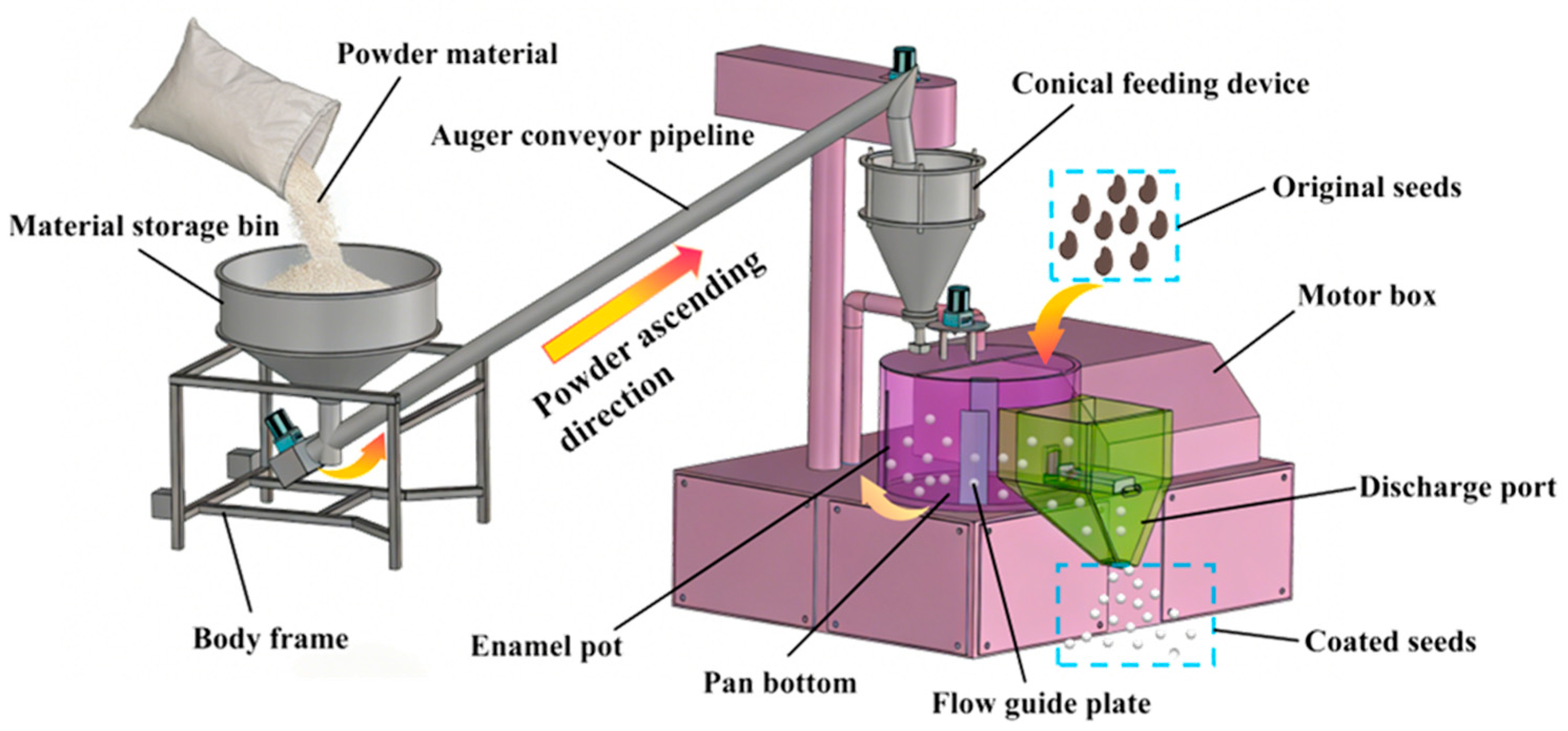
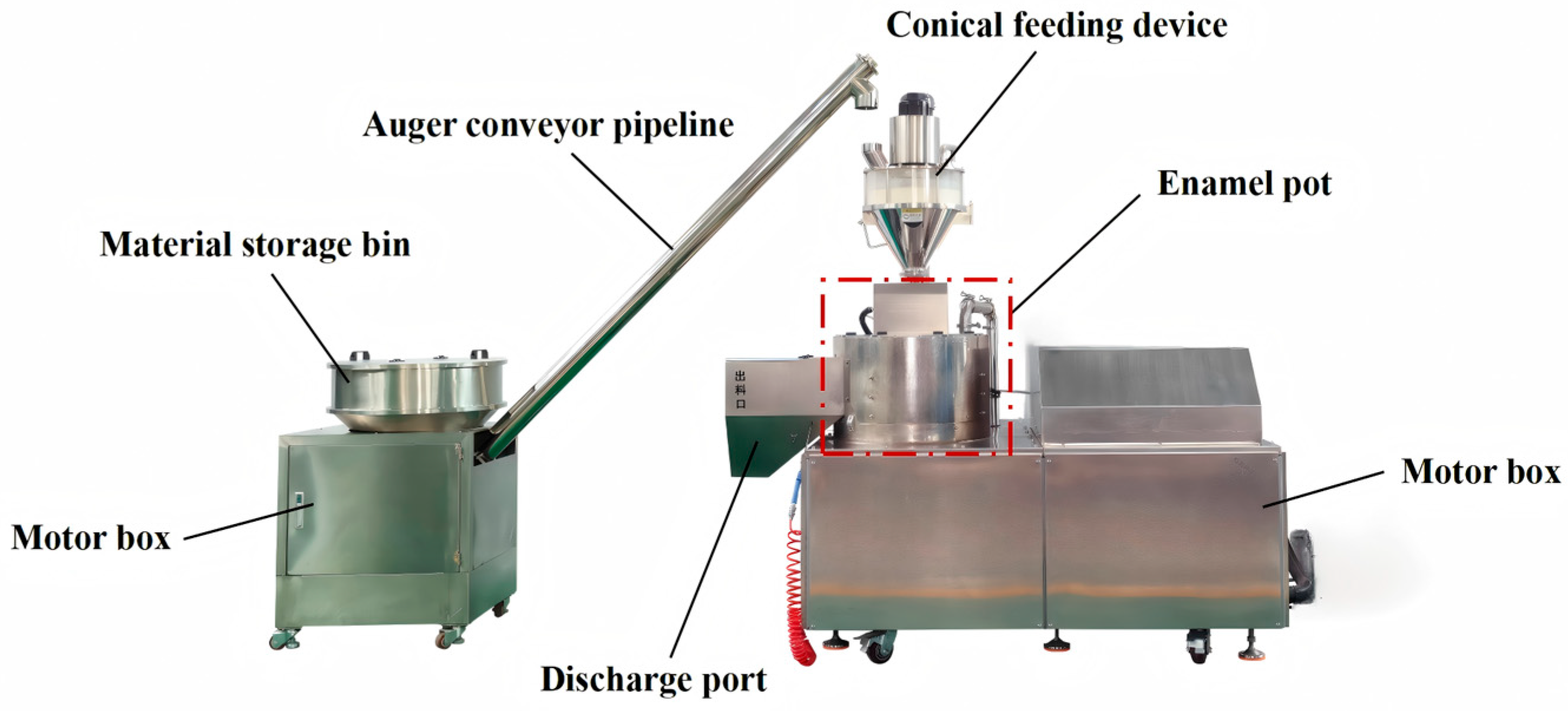
The overall design of the seed pelletizing coating machine is shown in
Figure 1. (Hebei Kairuote Machinery Manufacturing Co., Ltd., Baoding, Hebei, China) It primarily consists of a powder supply device, a controlled powder dispensing device, and a pelletizing unit. The main parameters of the seed pelleting and coating machine are shown in
Table 1. The focus of this study is on the pelletizing unit. Therefore, a dedicated experimental platform was designed for the pelletizing experiments, and the following content will focus solely on the study of the pelletizing coating device.
2.2. Structure and Working Principle of the Coating Machine
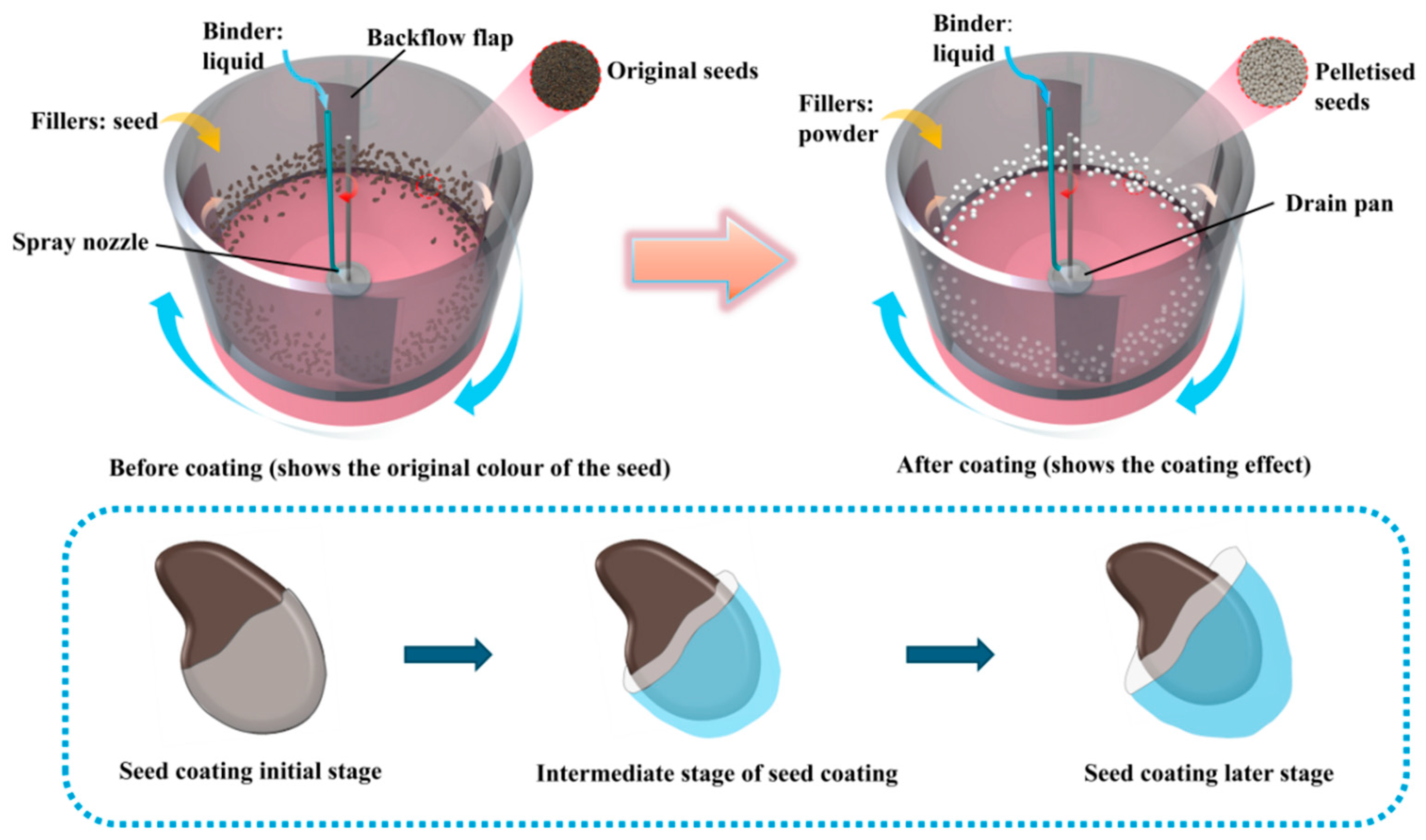
The structural principle of the
Astragalus membranaceus seed coating machine is shown in
Figure 2. It mainly consists of the centrifugal disk at the bottom of the drum, drum wall, reverse flow plate, liquid delivery pipe, and water-dispensing disk. When the coating machine is activated, an appropriate amount of seeds is added to the coating drum. Liquid is delivered to the water-dispensing disk via a peristaltic pump. As the water-dispensing disk rotates, the liquid evenly attaches to the seed surface, forming a mist-like coating film. Under the action of the drive motor, the centrifugal disk at the bottom of the coating drum begins to rotate. The powder stored in the powder storage tank is transported to the powder funnel via a spiral conveyor, and is then dispensed in a timed and controlled manner onto the centrifugal disk at the bottom of the coating drum. The motor drives the centrifugal disk, which rotates the seeds and powder inside the coating chamber uniformly. The centrifugal disk is critical for initiating particle motion, providing the centrifugal force necessary to propel the particles outward from the center to the drum wall. The reverse flow plate on the drum wall causes the seeds to flip up and down, preventing stratification (i.e., the separation of lighter powder from heavier seeds). This tumbling action, induced by the reverse flow plate, disrupts the organized circular motion created by the centrifugal disk, significantly enhancing chaotic mixing and promoting more frequent and random particle–particle collisions. The synergistic effect of the disk’s centrifugal propulsion and the plate’s induced tumbling is what ensures a high degree of mixing uniformity, which is essential for achieving a high pelletizing coating pass rate. Finally, the pelletized seeds are discharged from the outlet under the influence of centrifugal force.
2.3. Theoretical Analysis of the Pelletizing Coating Process
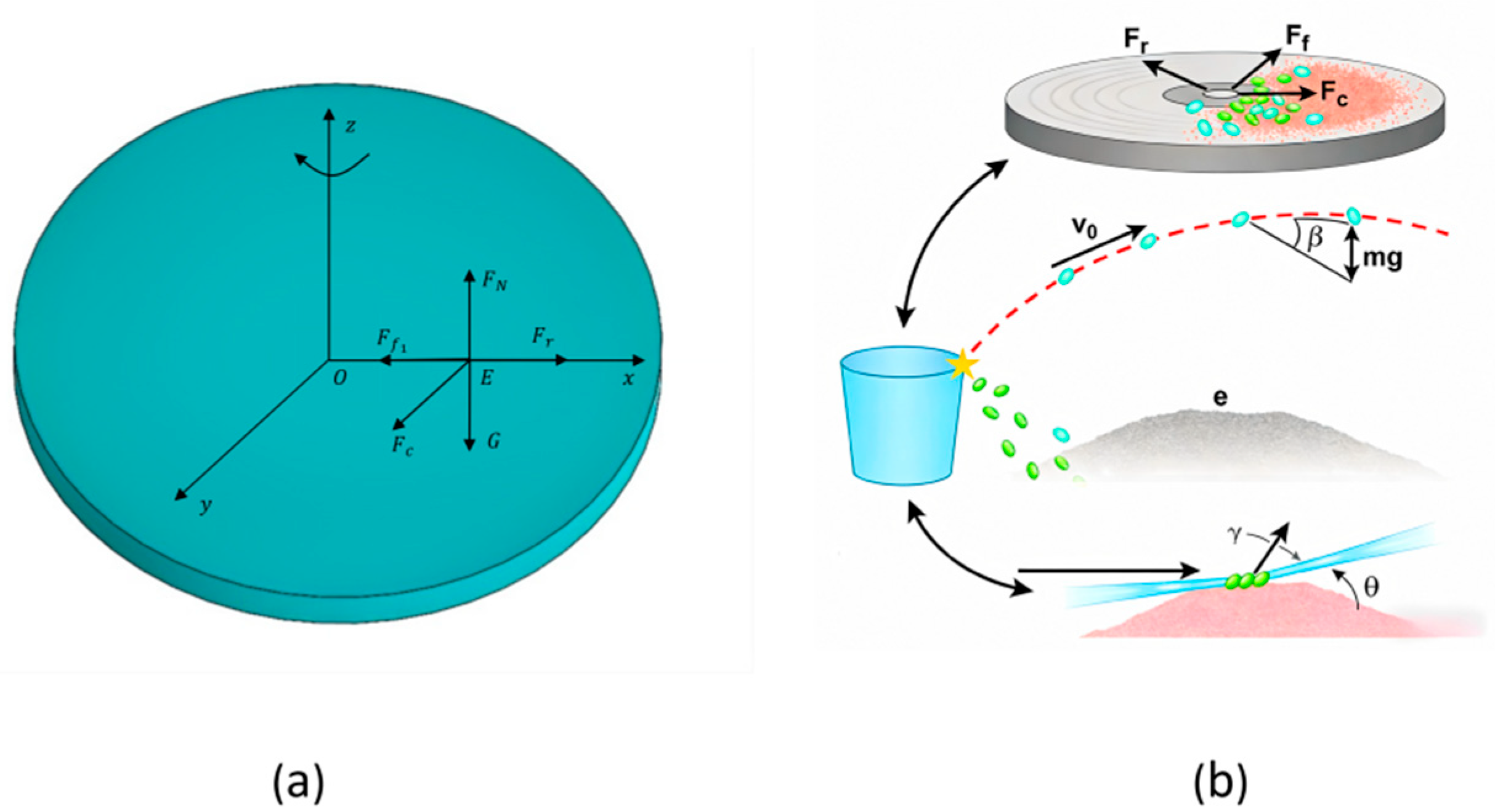
In addition to the initial centrifugal motion stage, the subsequent stages of throwing, falling, accumulation, and adhesion are also critical for coating quality. When the material reaches the inclined edge of the centrifugal disk, it undergoes projectile motion. The trajectory can be described by the following parabolic equation:
where
v0 is the initial velocity at the disk edge, and
β is the inclination angle. After leaving the disk, particles collide with the drum wall, losing kinetic energy. The coefficient of restitution e governs the velocity change:
Subsequently, particles accumulate at the bottom of the drum under gravity. During the adhesion stage, liquid bridges form between powder particles and seed surfaces. The liquid bridge force
Fliquid is given by:
where
γ is the surface tension of the liquid,
R is the particle radius, and
θ is the contact angle. This force enables powder to adhere firmly to the seed surface, forming a uniform coating layer.
During the coating process, in the early stage, the amount of liquid is relatively small, resulting in a weaker binding effect on the powder. Under the influence of centrifugal force, the seeds and powder move centrifugally along the centrifugal disk towards the drum wall. In the mid-stage of coating, the materials move in a circular motion around the central axis of the centrifugal disk. To simplify the analysis during the initial phase of movement, the physical properties of the seeds and powder are assumed to be uniform, with the particles moving on the centrifugal disk inside the coating drum. It is assumed that the centrifugal disk maintains uniform rotational speed at all times, and the particles acquire the same velocity as the disk upon reaching the disk surface. Additionally, the rebound of particles when they land on the centrifugal disk and the interactions between particles are neglected. A single particle is selected as the research object and treated as a point mass. The forces acting on the particle include gravity, centrifugal force, Coriolis force, and the frictional force between the particle and the surface of the centrifugal disk. The force analysis is shown in
Figure 3.
To simplify the analysis during the initial phase of movement, the physical properties of the seeds and powder are assumed to be uniform, with the particles moving on the centrifugal disk inside the coating drum. It is assumed that the centrifugal disk maintains uniform rotational speed at all times, and the particles acquire the same velocity as the disk upon reaching the disk surface. Additionally, the rebound of particles when they land on the centrifugal disk and the interactions between particles are neglected. These simplifying assumptions allow for the derivation of a tractable analytical model that elucidates the fundamental force balances (centrifugal, frictional, Coriolis) governing a single particle’s motion. This provides critical theoretical insights into the primary factors influencing particle acceleration and ejection. However, these assumptions inherently limit the model’s ability to capture complex multi-particle interactions, collision dynamics, and the stochastic nature of the mixing process. Therefore, while the theoretical model guides the identification of key parameters, it is the subsequent DEM simulations, which relax these assumptions, that are crucial for accurately predicting the collective mixing behavior and coating performance under realistic conditions.
In the early stage of seed pelletizing coating, during the centrifugal motion of the material, the centrifugal force acting on the material must be greater than the frictional force between the material and the centrifugal disk in order for the material to overcome the friction and roll from the center to the edge of the disk. To perform a dynamic analysis of the material in centrifugal motion, when the material moves to position
E, at a certain distance from the center axis of the disc, the following Equation (4) can be derived.
In the equation,
F is the total force acting on the material (N);
μ1 is the coefficient of friction between the material and the centrifugal disk;
Fr is the centrifugal force acting on the material (N);
Ff1 is the frictional force between the material and the centrifugal disk (N);
FC is the Coriolis force (N); and
a is the acceleration of the material’s motion (m/s
2). Rearranging Equation (4) gives Equation (5).
In the equation,
t is the time of motion of the material (s), and
r is the horizontal distance from the particle to the center axis of the centrifugal disk (m). When the material reaches a distance r = R, the required time is
tR, and the absolute velocity of the material at the edge of the centrifugal disk is
In the equation,
λ1 and
λ2 are the roots of the characteristic equation λ
2 + 2μ
1ωλ − ω
2 = 0, which are related to
μ1 and
ω, as follows:
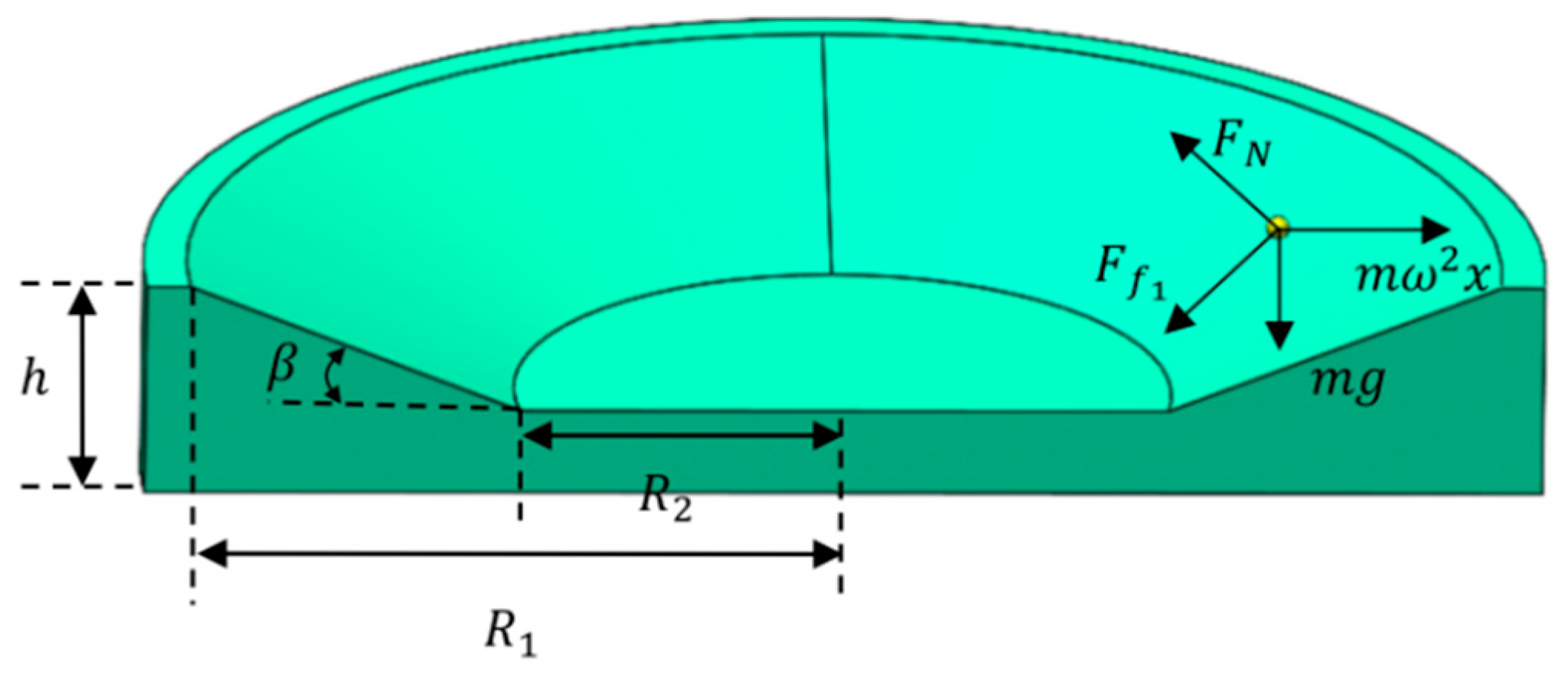
During the mid-stage of the seed pelletizing coating process, when the material reaches the inclined edge of the coating drum, the force acting on the material is shown in
Figure 4.
In the equation,
β is the inclination angle of the centrifugal disk edge. During the motion process, the frictional force
Ff1 exerted by the centrifugal disk on the material must be greater than or equal to the product of the friction coefficient between the material and the disk and the normal support force exerted by the disk on the material. By solving Equations (8) and (9), the rotational angular velocity of the centrifugal disk should satisfy the following condition:
The rotational speed condition in Equation (10) represents a critical condition. When the rotational speed of the coating drum is below this critical value, the centrifugal force is insufficient to overcome the frictional and gravitational components acting on the particles. Consequently, particles cannot effectively ascend the inclined edge of the centrifugal disk and will slide back prematurely, leading to limited radial mixing and poor particle circulation. Only when the rotational speed reaches and maintains a value above this critical threshold can seed particles move upward along the centrifugal disk under the action of centrifugal force. After reaching the side wall of the coating drum, the particles fall back onto the centrifugal disk under the influence of gravity. This periodic ascending and descending motion creates a continuous circulation loop. It is during this repeated motion that seed and powder particles undergo the necessary inter-particle collisions, interpenetration, and mixing required for the pelletizing coating process. Therefore, maintaining an adequate rotational speed above the critical value is a prerequisite for achieving dynamic mixing and ensuring that all particles are actively involved in the coating process.
The above analysis indicates that the motion velocity of materials inside the coating drum is closely related to the structural parameters of the coating drum. Both the drum diameter and the edge inclination angle significantly influence material velocity. Considering the actual operating conditions of the pelletizing coating machine, preliminary experiments were conducted to determine the feasible ranges of structural parameters for the coating drum [
14]. The centrifugal disk diameter was initially selected within the range of 400–800 mm. In practical production, when the disk diameter was 400 mm, the materials lacked sufficient space for movement and mixing inside the coating drum. Conversely, when the disk diameter was increased to 800 mm, the materials became overly dispersed, resulting in reduced contact between seeds and powder and a corresponding decrease in the pelletizing pass rate. Therefore, a disk diameter range of 500–700 mm was selected for further experimental investigation.
Due to the differences in physical properties between seeds and powder, preliminary tests showed that excessively low rotational speeds resulted in insufficient relative motion between seeds and powder. When the rotational speed reached a certain level, the centrifugal force acting on the seeds exceeded their gravitational force, causing the seed particles to move in circular centrifugal motion along the side wall of the coating drum. Under this condition, relative motion between seed particles was limited, and the contact and penetration between seeds and powder were minimized, which was unfavorable for pelletizing coating. A rotational speed of 20 r·s−1 was therefore selected to promote effective seed–powder mixing.
The edge inclination angle of the coating drum, together with the centrifugal disk diameter and the friction coefficient between the material and the disk, jointly influences material motion. Accordingly, the edge inclination angle was selected within a range of 0–90° to investigate its effects on seed–powder mixing under different inclination conditions. By optimizing these structural parameters of the coating drum, the motion of materials inside the drum can be improved, thereby enhancing the pelletizing coating performance.
2.4. Discrete Element Simulation Model Parameters
2.4.1. Calibration of Material Parameters
In this study, Longxi No. 2 (
Astragalus membranaceus) seeds (harvested in the 2023 growing season) from Longxi County, Dingxi City, Gansu Province, were used as the experimental material. Basic physical properties of the
Astragalus membranaceus seeds (Longxi No. 2) were measured. Seed moisture content was determined by the oven drying method (105 °C for 24 h) as 8.2 ± 0.3%. Plumpness was evaluated by 1000-seed weight (2.56 g) and bulk density (0.68 g/cm
3). The target pelleting ratio (mass basis) was set to 5–8 times the original seed weight. After the pelleting process, the average single-seed mass increased from 2.56 mg to 14.1 mg, corresponding to a pelleting ratio of 5.5, which meets the requirement. To ensure the representativeness of the samples, a random sampling method was employed to collect the seeds, and all selected seeds were free from diseases and exhibited no obvious mechanical or artificial damage [
15].
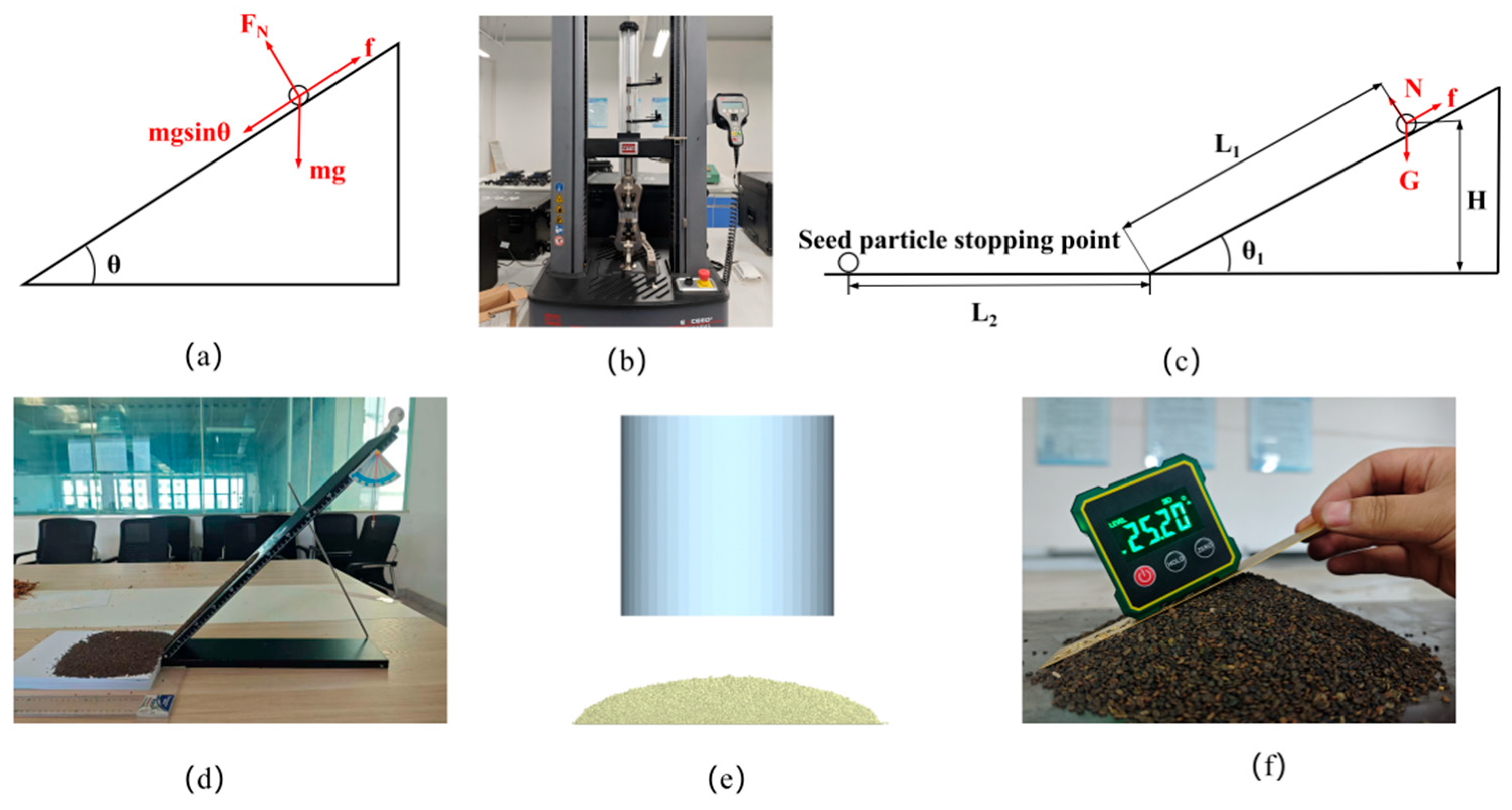
As shown in
Figure 5b, five
Astragalus membranaceus seed samples were randomly selected, with lengths ranging from 2.5 to 3.5 mm, widths from 2.0 to 2.8 mm, and thicknesses from 1.0 to 1.5 mm. Compression and shear tests were carried out in May 2024 using an MTS universal testing machine. The Poisson’s ratio of the seeds was calculated using Equation (11), and the average Poisson’s ratio of the five samples was determined to be 0.36. After five tensile tests, the shear modulus G was calculated using Equations (12) and (13), yielding a value of 8.7 × 10
6 Pa.
The static friction coefficients of seed–steel, seed–powder, and seed–seed contacts were determined using the slope method, as shown in
Figure 5a. The rolling friction coefficients of seed–steel, seed–powder, and seed–seed contacts were measured using the inclined plane method (
Figure 5c,d). For parameters that were difficult to measure experimentally, DEM virtual parameter calibration was performed using the superposition method [
16]. The rolling friction coefficient and the angle of repose were determined using the lifting cylinder method (
Figure 5e). The angle of repose of the materials was measured using an angle of repose tester, as shown in
Figure 5f.
By integrating relevant domestic and international literature and referring to the built-in material database of the EDEM software version 2024 [
17], the simulation parameters for seeds and powder were obtained. The intrinsic DEM material parameters required for the simulations are listed in
Table 2, and the material contact parameters are presented in
Table 3 [
18].
In the equations, μ is Poisson’s ratio; ΔL is the transverse deformation (mm); Δl is the longitudinal deformation (mm); Δσ is the engineering normal stress (mm); E is the elastic modulus; and G is the shear modulus. H is the height before sliding (mm); L1 is the rolling distance on the inclined plane (mm); and L1 is the rolling distance on the horizontal plane (mm).
2.4.2. Establishment of the Simulation Model
Astragalus membranaceus seeds are small in size and irregular in surface morphology, typically exhibiting a flattened kidney-like or elliptical shape with slightly concave ends. Pre-sowing pelletizing coating treatment can effectively improve seed flowability and sowing uniformity, thereby enhancing emergence rate and field seedling establishment quality. Based on the actual physical characteristics of Astragalus membranaceus seeds and coating powder, the coating drum and seed geometric models were constructed using SolidWorks 2024 three-dimensional modeling software. The models were exported in STEP format and imported into the EDEM discrete element simulation software.
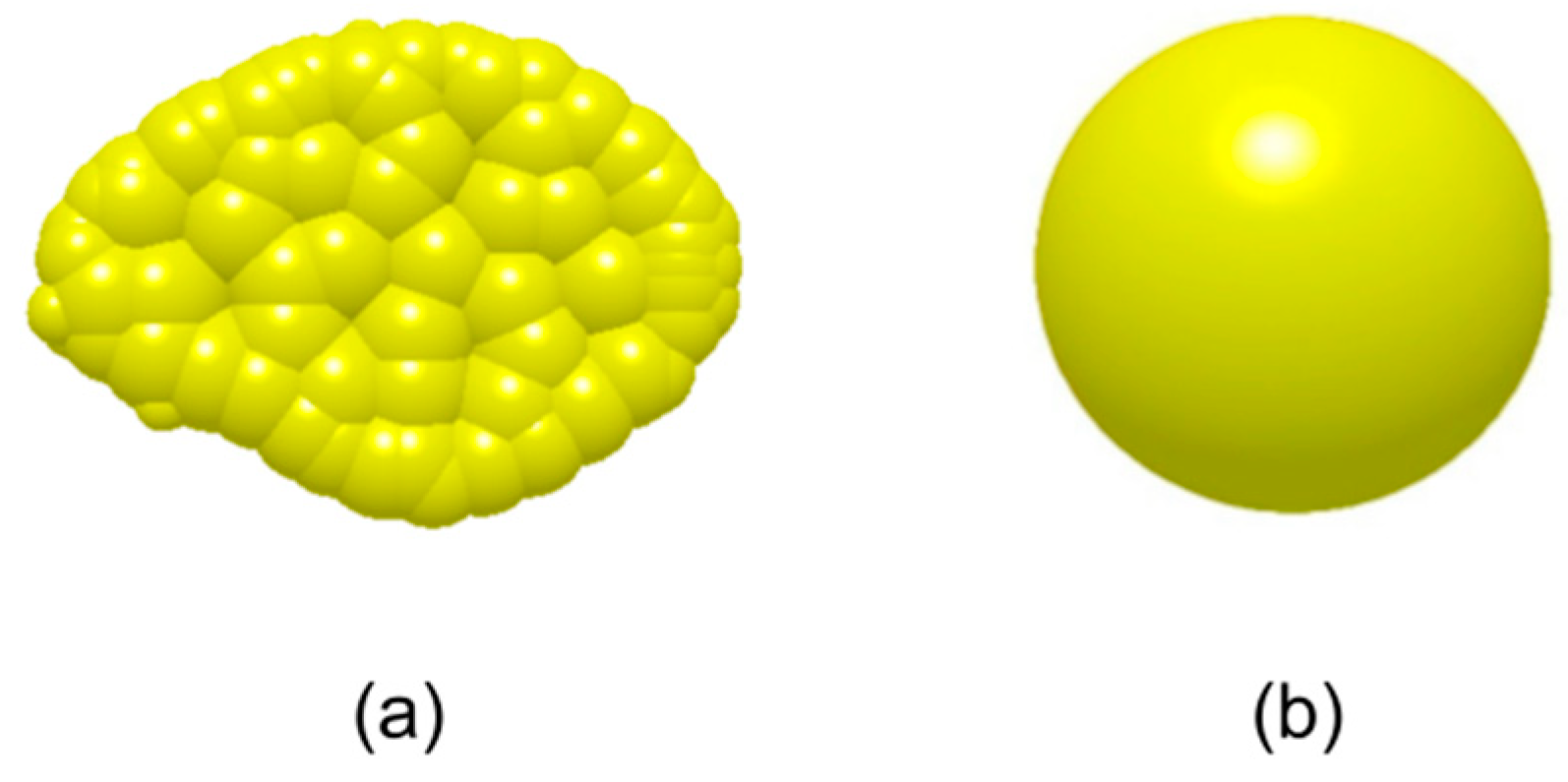
To ensure the reliability of simulation results while maintaining computational efficiency, the sharp edges of the seed model were rounded, and a multi-sphere overlapping method was adopted to construct the particle model. The minimum sphere radius was set to 0.32 mm. The coating powder particles were simplified as single-sphere models with a radius of 0.5 mm. The mesh cell dimensions in the x-, y-, and z-directions were all set to 30 mm, and the smoothing value was set to 8. After importing the seed–powder STEP files, automatic fast filling was performed in EDEM, resulting in a multi-sphere clumped particle model of
Astragalus membranaceus seeds. The specific simulation particle models are shown in
Figure 6, where (a) represents the seed particle clump model and (b) represents the single-sphere material particle model.
To ensure the accuracy of the simulation model and verify the dynamic equivalence of the multi-sphere filling model for Astragalus seeds, key parameters were calibrated and validated prior to the coating process simulations. The angle of repose was measured using the lifting cylinder method: the physical experiment gave 33.1° ± 1.0°, while the EDEM simulation gave 32.5° ± 1.2° (relative error 1.8%). The rolling friction coefficient was calibrated as 0.12 in the simulation and measured as 0.11 in the experiment (relative error 9.1%). These results confirm that the multi-sphere filling model accurately represents the rolling and collision behavior of Astragalus membranaceus seeds. Furthermore, under non-optimized structural parameters, the simulated coefficient of variation (Cv = 6.8%) was consistent with the low qualification rate (74.8%) observed in physical experiments, validating the model’s reliability for simulating the actual pelletizing process.
To balance computational efficiency and simulation accuracy, the following simplifications were adopted in the DEM model: (1) seed and powder particles were treated as rigid bodies, neglecting elastic deformation and thermal effects; (2) the three-phase coupling of gas-liquid-solid during liquid atomization was ignored, and the adhesion effect was equivalently represented by a custom time-varying cohesion model; (3) the details of energy dissipation during particle-wall collisions were neglected by using constant restitution coefficients. These simplifications may lead to biases in predicting particle agglomeration or dynamic breakage of wet particles. However, given that this study focuses on the relative trend of mixing uniformity rather than absolute values, and given the good agreement between simulations and physical experiments in terms of angle of repose (error 1.8%) and rolling friction coefficient (error 9.1%), the model is considered sufficiently reliable for engineering purposes.
2.5. Simulation of the Material Mixing Process
To investigate the effects of different coating drum structures on material mixing performance, numerical simulations were carried out in 2024 using EDEM software version 2024. Considering that cohesive interactions occur among powder particles during the pelletizing coating process, the Hertz–Mindlin with JKR model was selected as the basic numerical simulation model [
19].
To ensure the reliability of the JKR model, it was calibrated against physical angle-of-repose tests. Powder samples with moisture content corresponding to the actual coating process were tested. In the DEM simulation, the angle of repose was measured by the lifting cylinder method under different JKR surface energy values. By comparing the simulated repose angles with the experimental value (33.9° ± 0.7°), the optimal surface energy was determined to be 0.12 J/m2, which yielded a simulated repose angle of 34.2° ± 0.8°, with a relative error of 0.9%. This confirms that the JKR model accurately captures the cohesive behavior of the powder.
In the later stage of pelletizing coating, as the amount of liquid agent increases, the binder gradually wets the surfaces of material particles, causing the originally dry seed and powder particles to transform into wet particles. The motion behavior and cohesive force characteristics of wet particles differ significantly from those of dry particles. In addition, the cohesive force of powder particles under the action of the liquid agent varies dynamically during the coating process. Therefore, a custom contact model was developed using the Variable Cohesion interface through secondary development of the EDEM API to enable particle adhesion behavior [
20].
For this custom cohesion model, which accounts for the time-dependent increase in powder adhesion due to liquid binder wetting, the cohesion force between particle–particle and particle–geometry contacts is set to increase linearly with simulation time according to the equation:
where
= 0.01 N is the initial cohesion, k = 0.005 N/s is the cohesion growth rate, and t is the coating time (s). These parameters were calibrated by matching the simulated mass of powder adhered to seed surfaces with experimental measurements taken at three coating stages (2, 5, and 10 min). The relative errors between simulation and experiment were 4.2%, 3.8%, and 5.1%, respectively, demonstrating good predictive capability of the custom model.
In terms of simulation parameter settings, the mass ratio of
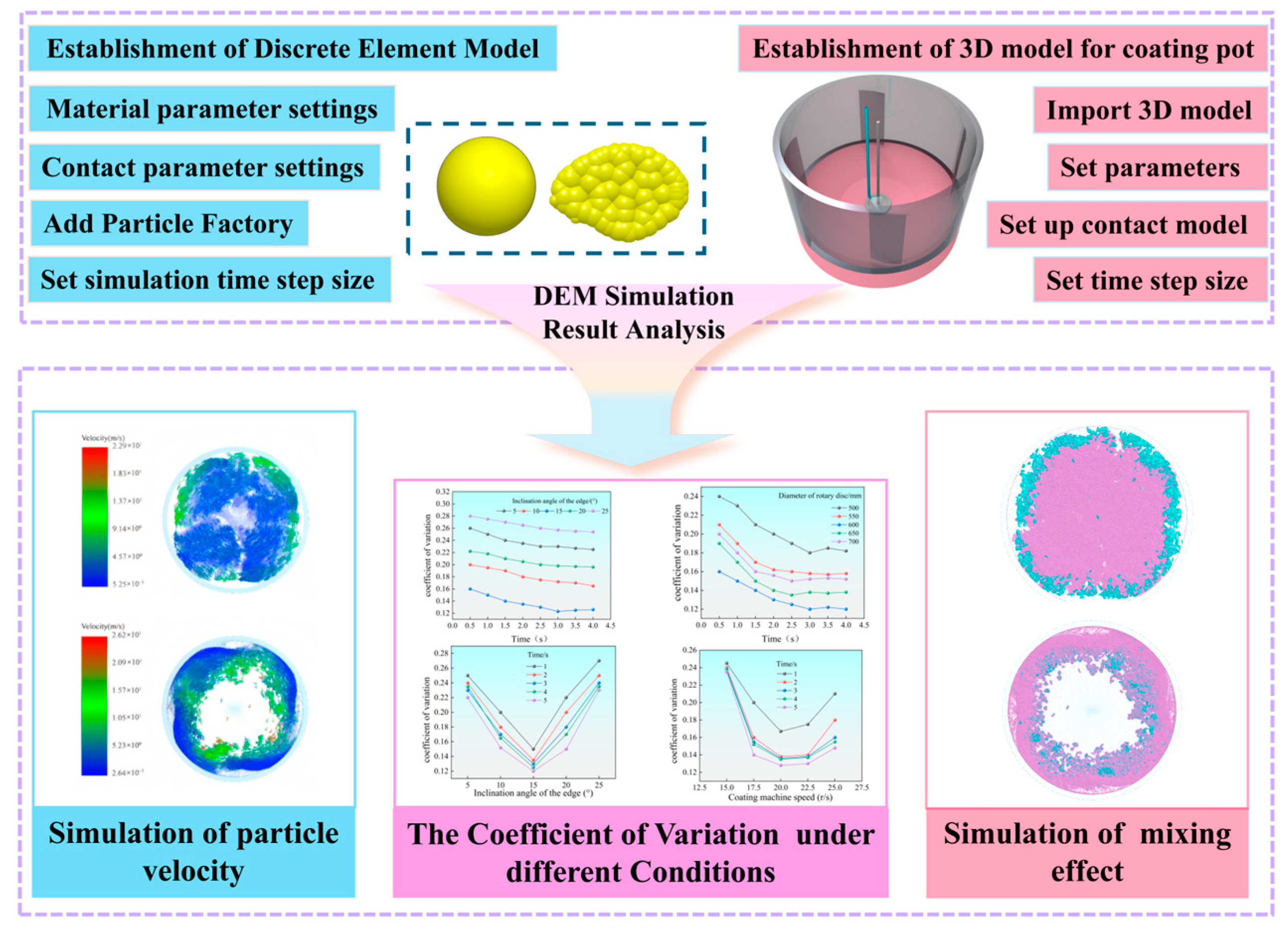
Astragalus membranaceus seeds to coating powder was determined to be 1:5 based on the target weight gain ratio of seed pelletizing coating. In the particle factory module, the masses of seeds and powder were set to 100 g and 500 g, respectively. The total simulation time was set to 15 s, with a data acquisition interval of 0.01 s. The pelletizing coating process of
Astragalus membranaceus seeds is illustrated in
Figure 7.
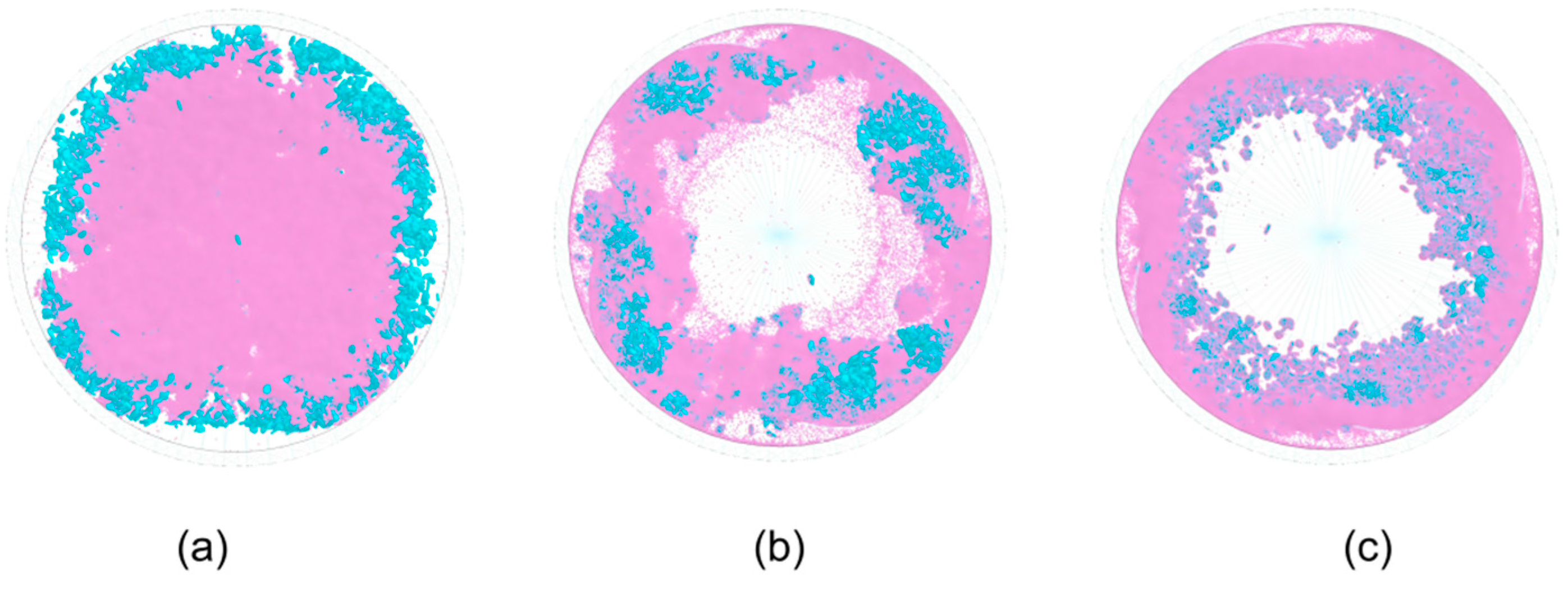
The key characteristics of the simulation process are illustrated in
Figure 8 and
Figure 9.
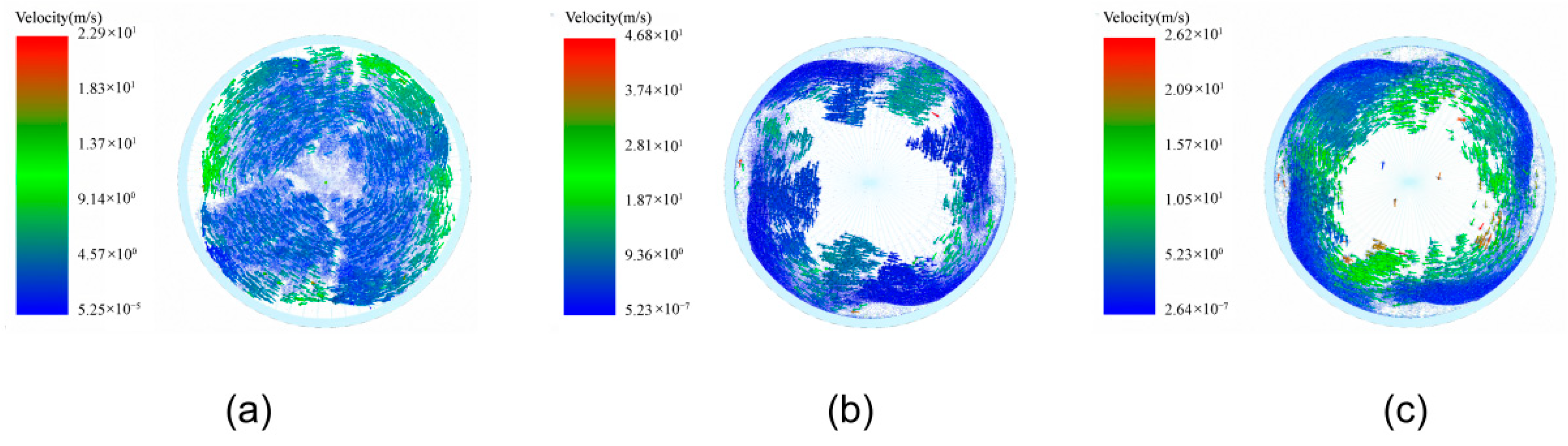
Figure 8 depicts the mixing behavior of the two types of particles at different time stages, while
Figure 9 presents the particle motion streamlines within the coating drum at corresponding time points. Specifically,
Figure 8a and
Figure 9a correspond to the initial stage of the simulation, showing the mixing state and velocity characteristics of particles as they disperse toward the drum wall. At this stage, the material particles undergo free-fall motion to the bottom of the coating drum and subsequently begin to spread toward the drum wall under the centrifugal force generated by the rotation of the centrifugal disk.
Figure 8b and
Figure 9b, as well as
Figure 8c and
Figure 9c, correspond to the middle and final stages of the simulation, respectively. These Figures illustrate the mixing performance and particle velocity distribution as the particles move in circular motion along the coating drum wall. Observations indicate that, after contacting the drum wall, particles adhere to the wall and undergo circumferential motion. Meanwhile, continuous contact and collision occur between seed and powder particles, accompanied by mixing and diffusion along the radial direction of the coating drum.
By integrating the simulation results with physical experimental data, the motion behavior and mixing characteristics of seed–powder particles and their influence on pelletizing coating performance were systematically investigated. This analysis not only contributes to a deeper understanding of the underlying mechanism of Astragalus membranaceus seed pelletizing coating, but also provides an important theoretical basis for further optimization of process parameters and improvement of pelletizing coating quality.
The core of the seed pelletizing coating process lies in achieving uniform mixing of seeds and powder within the coating machine and forming a homogeneous coating layer under the action of a viscous liquid agent [
21]. The mixing uniformity directly determines key quality indicators such as coating thickness consistency, pellet shape integrity, and the final pelletizing pass rate. If seeds and powder are poorly mixed, some seeds will be covered in excess powder while others remain partially coated, leading to pellets with inconsistent diameters and weak structural integrity. Conversely, sufficient mixing of seeds and powder facilitates the uniform adhesion of powder onto the seed surface. Under the bonding action of the liquid agent, this promotes the formation of a structurally stable and consistently thick coating layer around each seed. A uniform coating layer enhances seed protection and ensures consistent weight and size for precision sowing, thereby significantly enhancing pelletizing effectiveness and the overall product qualification rate. Therefore, the coefficient of variation (Cv) serves as a critical quality indicator, with a lower Cv directly correlating to a higher pelletizing pass rate.
To gain a deeper understanding of this mixing process, this study employed the discrete element method (DEM) to simulate the dynamic mixing behavior of seeds and powder within the coating drum using EDEM software. This approach enabled a systematic analysis of particle distribution characteristics and their influencing factors during the mixing process, effectively overcoming the limitations of traditional physical experiments in quantitatively evaluating mixing uniformity. In the simulation analysis, referring to relevant studies [
22], the coefficient of variation (Cv) was selected as the evaluation index for mixing uniformity. This index characterizes the degree of dispersion among samples and objectively reflects the compositional differences of seed–powder mixtures in different regions. Moreover, Cv exhibits a negative correlation with the pelletizing pass rate: a smaller Cv indicates more uniform mixing and a higher pass rate.
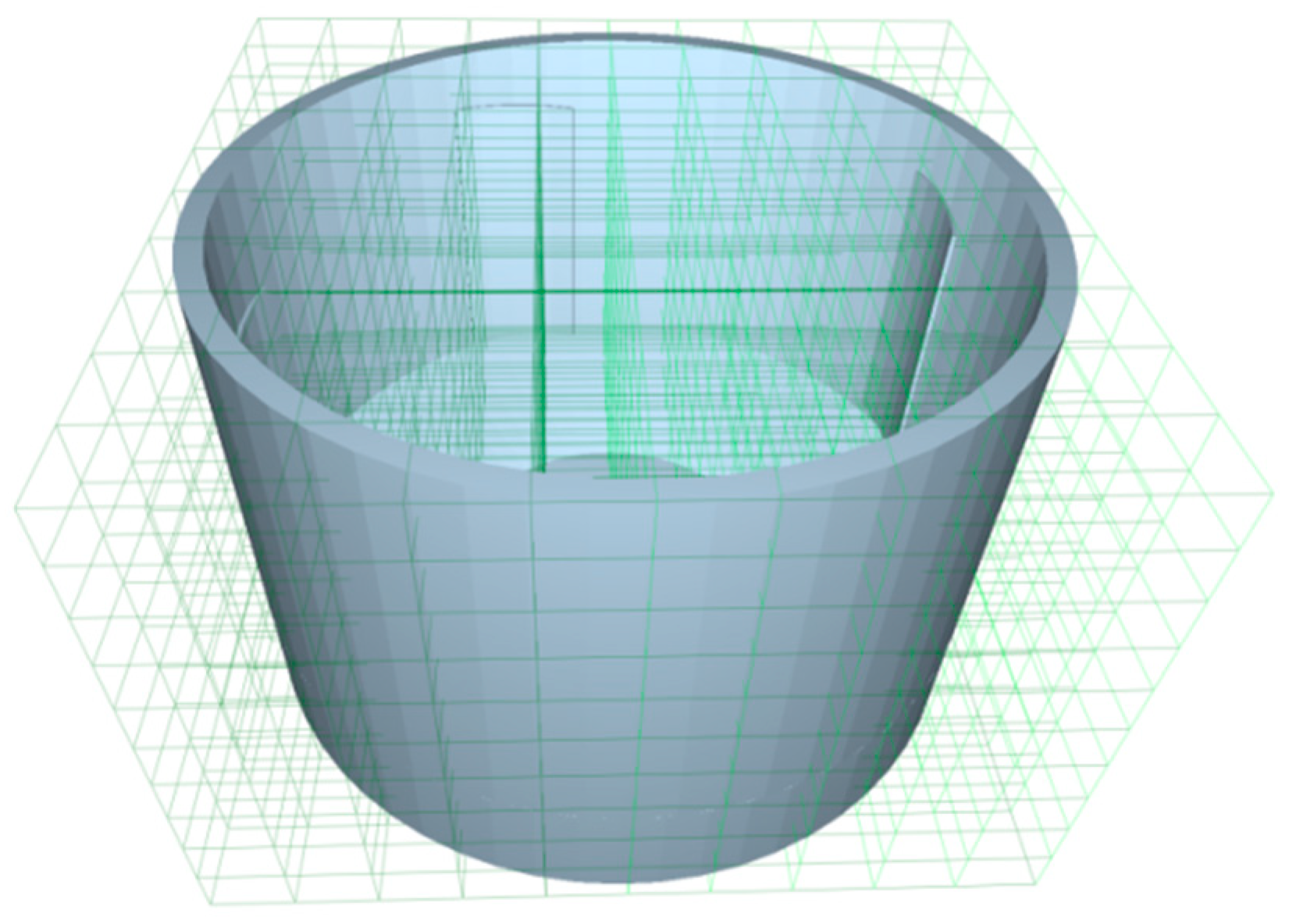
For the calculation, the mixing region within the coating drum was divided into three-dimensional grid cells using the EDEM post-processing module, as shown in
Figure 10. The number of powder particles in each grid cell was counted, and the overall coefficient of variation was calculated based on statistical methods. The calculation formula is given as follows:
where
S is the standard deviation of the number of powder particles in all grid cells, and
is the average number of particles. This method enables a quantitative evaluation of the mixing state and provides a reliable basis for the optimization of process parameters.
3. Results
3.1. Single-Factor Analysis of Structural Parameters of the Coating Machine
To investigate the effects of internal structural parameters of the coating drum on the performance of seed pelletizing coating, multiple coating drum geometric models with different structural parameters were constructed using SolidWorks three-dimensional modeling software and imported into the EDEM discrete element simulation platform. Numerical simulations of the seed–powder pelletizing coating process were then conducted [
23]. The coefficient of variation of seed–powder mixing uniformity was used as the evaluation index. Based on a single-factor experimental design, the influence of the centrifugal disk diameter on mixing uniformity was systematically investigated.
The rotational speed of the coating machine and the edge inclination angle were set at the intermediate levels determined in the preliminary experiments and fixed at 20.0 r·s−1 and 15°, respectively.
3.1.1. Effect of Centrifugal Disk Diameter on Mixing Uniformity
In practical production, when the disk diameter was 400 mm, the materials lacked sufficient space for movement and mixing inside the coating drum. This restricted particle trajectory led to a higher probability of local agglomeration and reduced the effective interaction volume, resulting in poor mixing and a low pelletizing pass rate. Conversely, when the disk diameter was increased to 800 mm, the materials became overly dispersed. The excessive centrifugal force, combined with a large travel path, caused the particles to spread too thinly across the drum wall, significantly reducing the frequency of contact and collision between seeds and powder. This dispersion effect also made it difficult for the powder to consistently adhere to the seed surface, resulting in a decrease in the pelletizing pass rate. Therefore, an optimal diameter range (500–700 mm) exists that balances the need for sufficient mixing space against the requirement for adequate particle contact.
With the rotational speed of the coating machine fixed at 20.0 r·s
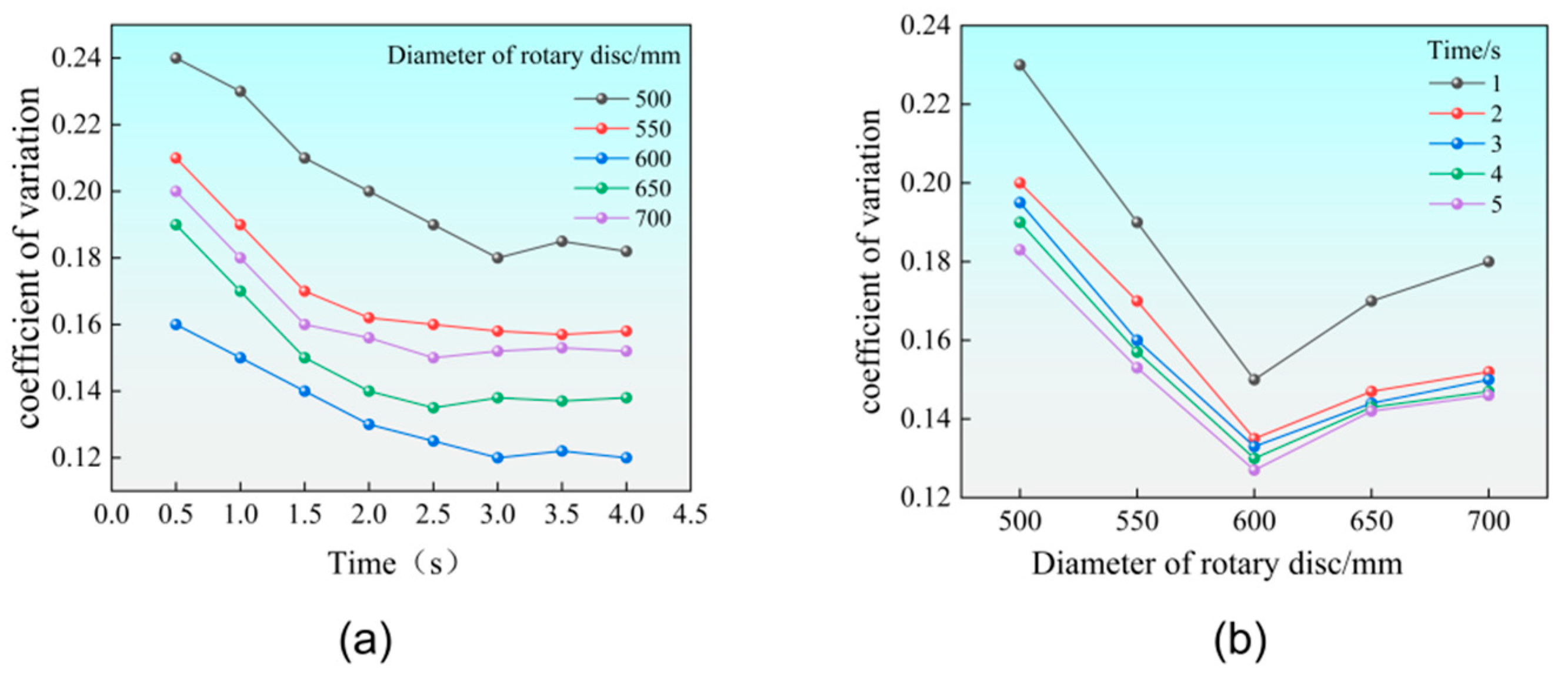
−1 and the edge inclination angle set to 15°, simulations were conducted using centrifugal disk diameters of 500, 550, 600, 650, and 700 mm. The results are shown in
Figure 11.
As shown in
Figure 11a, for different centrifugal disk diameters, the coefficient of variation decreases as coating time increases during the pelletizing process. After approximately 3.0 s of mixing, the coefficient of variation stabilizes and shows little further change, indicating that a relatively uniform mixing state among particles has been achieved. As illustrated in
Figure 11b, when the centrifugal disk diameter is 600 mm, the coefficient of variation at a mixing time of 5 s reaches its minimum value, which is significantly lower than those obtained with other centrifugal disk diameters. Overall, the results indicate that a centrifugal disk diameter of 600 mm yields the lowest coefficient of variation, corresponding to the most uniform mixing of seed and powder particles and the highest pelletizing coating quality.
3.1.2. Effect of Edge Inclination Angle on Mixing Uniformity
To investigate the influence of the edge inclination angle of the coating drum on the performance of seed pelletizing coating, three-dimensional models of the coating drum with different edge inclination angles were imported into the EDEM software for numerical simulation of the pelletizing coating process. The coefficient of variation of seed–powder mixing uniformity was used as the evaluation index to analyze the effect of the edge inclination angle on the mixing behavior of seeds and powder. Based on the results of the single-factor analysis of centrifugal disk diameter, the disk diameter was fixed at 600 mm, corresponding to the minimum coefficient of variation. Based on theoretical analysis, when the edge inclination angle
β exceeds 25°, the centrifugal force component along the inclined plane becomes too large, causing particles to detach prematurely before adequate mixing. Conversely, when
β is below 5°, the gravitational component along the plane is insufficient to promote particle tumbling and flipping, leading to poor mixing. Therefore, the feasible range for the edge inclination angle is determined to be 5–25° for further experimental investigation. The rotational speed of the coating machine was set to 20.0 r·s
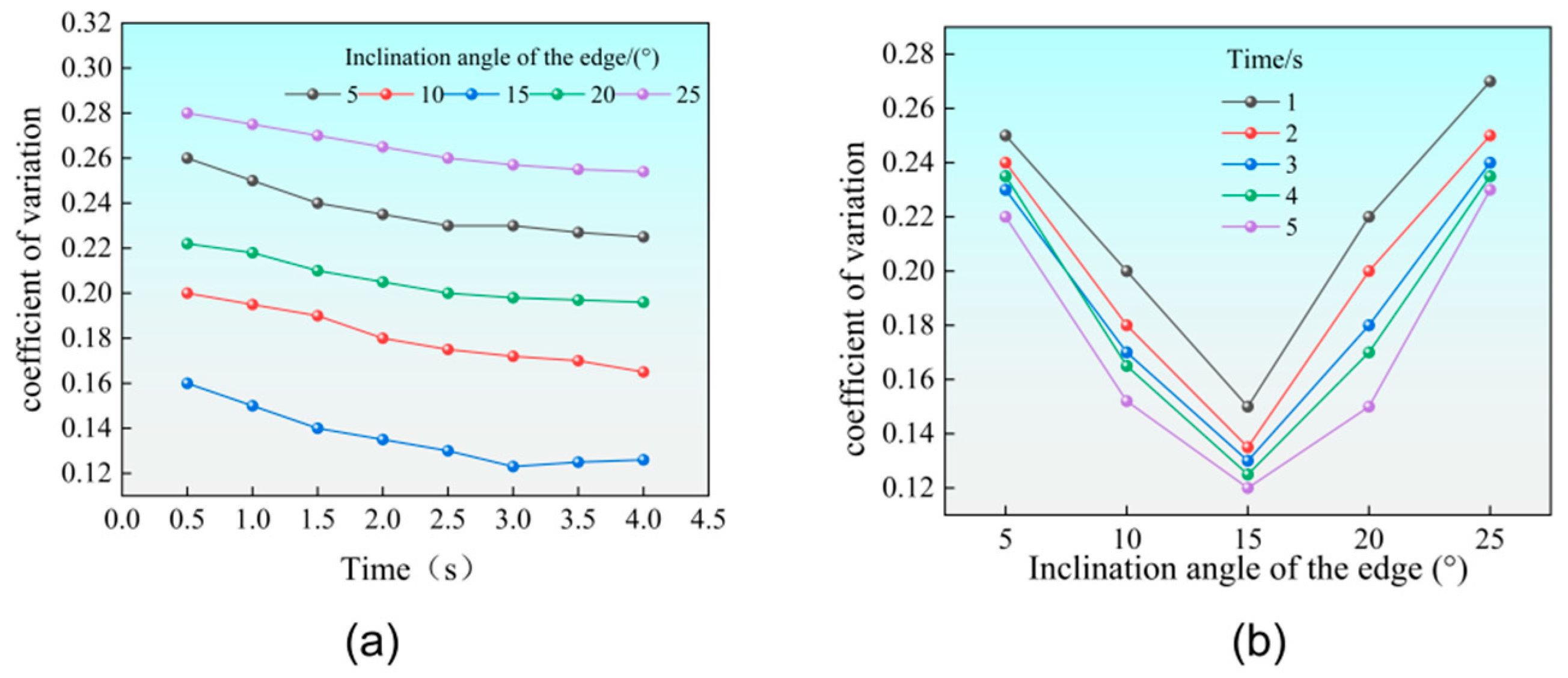
−1, consistent with the disk diameter single-factor experiment. Simulations were conducted with edge inclination angles of 5°, 10°, 15°, 20°, and 25°, and the results are shown in
Figure 12.
As shown in
Figure 12a, for different edge inclination angles of the coating drum, the coefficient of variation decreases as coating time increases during the pelletizing process. After approximately 3.0 s of mixing, the coefficient of variation stabilizes and exhibits little further change, indicating that a relatively uniform mixing state among particles has been achieved. As illustrated in
Figure 12b, when the edge inclination angle of the coating drum is 15°, the coefficient of variation at a mixing time of 5 s reaches its minimum value, which is significantly lower than those obtained at other inclination angles. Overall, the results indicate that an edge inclination angle of 15° provides the most uniform mixing of seed and powder particles, resulting in the lowest coefficient of variation and the best pelletizing coating quality.
3.1.3. Effect of Coating Drum Rotational Speed on Mixing Uniformity
To investigate the influence of the coating drum rotational speed on the performance of seed pelletizing coating, the rotational speed of the coating machine was adjusted in the EDEM software to simulate the pelletizing coating process. The coefficient of variation of seed–powder mixing uniformity was used as the evaluation index to analyze the effect of rotational speed on the mixing behavior of seeds and powder.
Based on the results of the single-factor analyses, the centrifugal disk diameter and edge inclination angle were fixed at 600 mm and 15°, respectively, corresponding to the minimum coefficients of variation obtained in previous experiments. Simulations were conducted at rotational speeds of 15.0, 17.5, 20.0, 22.5, and 25.0 r·s
−1, and the results are shown in
Figure 13.
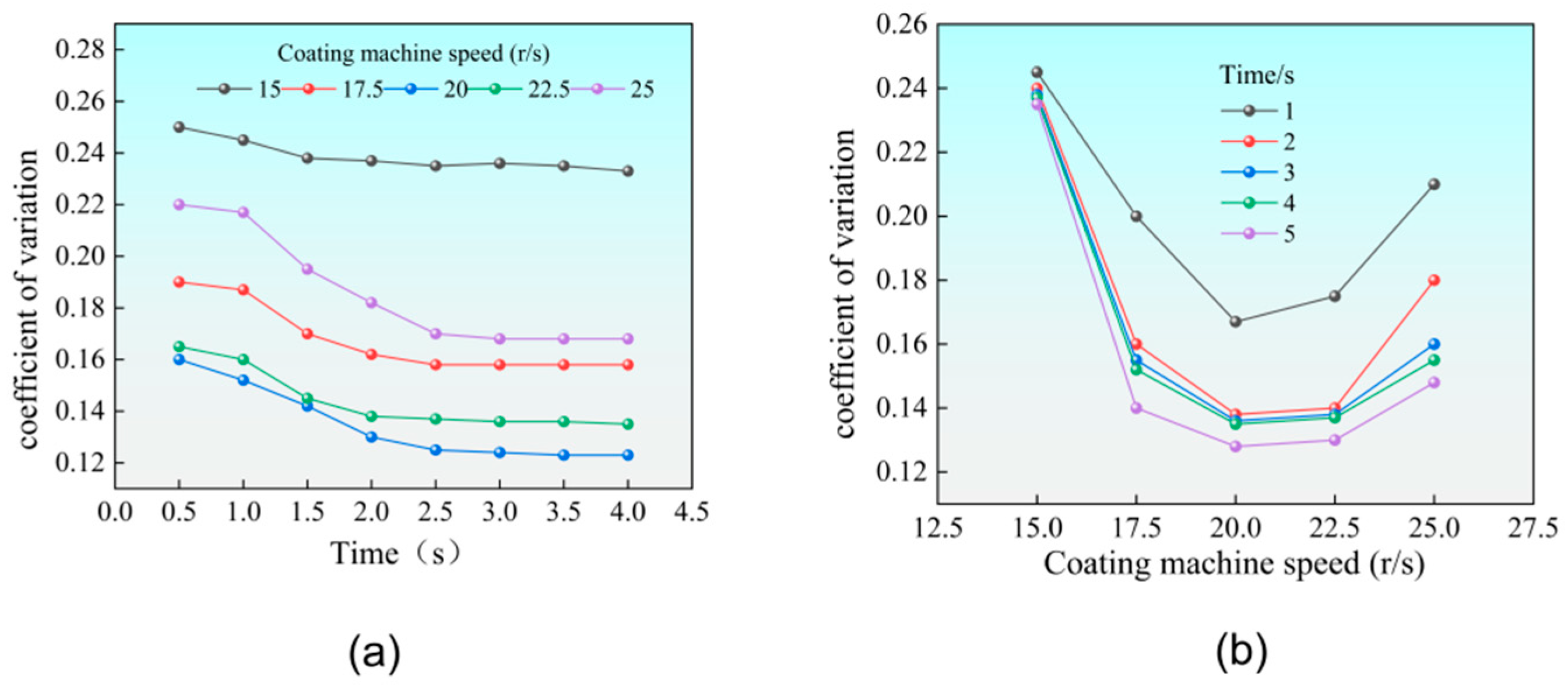
As shown in
Figure 13a, under different rotational speeds of the coating machine, the coefficient of variation decreases as coating time increases during the pelletizing process. After approximately 3.0 s of mixing, the coefficient of variation stabilizes and exhibits little further change, indicating that a relatively uniform mixing state among particles has been achieved. As illustrated in
Figure 13b, when the rotational speed of the coating machine is 20.0 r·s
−1, the coefficient of variation at a mixing time of 5 s reaches its minimum value, which is significantly lower than those obtained at other rotational speeds. Overall, the results demonstrate that a rotational speed of 20.0 r·s
−1 results in the most uniform mixing of seed and powder particles, yielding the lowest coefficient of variation and the best pelletizing coating quality.
3.2. Optimization of Structural Parameters of the Coating Machine
Comprehensive observations of the seed pelletizing coating process indicate that, under different structural parameter settings of the coating machine, the coefficient of variation changes significantly during the initial mixing stage of seeds and powder, and gradually stabilizes after sufficient mixing is achieved. Under certain structural parameter combinations, the coating machine is unable to promote adequate mixing between seeds and powder. In such cases, the interpenetration between seeds and powder is weak, and agglomeration and adhesion are likely to occur. Consequently, the contact opportunities and collision–friction frequency between seeds and powder are reduced, resulting in a lower pelletizing pass rate.
The results of the single-factor experiments demonstrate that when the centrifugal disk diameter is 600 mm, the edge inclination angle is 15°, and the rotational speed of the coating machine is 20.0 r·s
−1, the coefficient of variation reaches the minimum value among all tested conditions. This parameter combination yields the most uniform seed–powder mixing and the highest pelletizing coating quality. Considering the interaction effects among the influencing factors, experiments were designed according to the Box–Behnken principle. The centrifugal disk diameter, edge inclination angle, and coating machine rotational speed were selected as the experimental factors, and the coefficient of variation representing seed–powder mixing uniformity was used as the evaluation index [
23]. The levels of the experimental factors are listed in
Table 4. The simulation experimental scheme and corresponding results are presented in
Table 5, and the analysis of variance (ANOVA) results for the coefficient of variation are shown in
Table 6.
As shown in
Table 5, the simulated coefficient of variation is relatively small when all experimental factors are at the zero level, indicating that particle mixing uniformity is relatively high under this condition. According to the results in
Table 6, the model has a
p-value less than 0.01, demonstrating that the regression model is highly significant. In addition, the lack-of-fit term is not significant, indicating that the fitted quadratic regression equation is in good agreement with the actual data and can accurately describe the relationship between the coefficient of variation (Cv) and factors A, B, and C. The regression model therefore exhibits good predictive capability for the experimental results in the optimization analysis.
Among the model terms, the linear terms A (centrifugal disk diameter), B (edge inclination angle), and C (coating machine rotational speed) have significant effects. The quadratic terms A
2, B
2, and C
2 exhibit extremely significant effects, while the interaction terms AB and BC are also extremely significant. The remaining terms show no significant influence. Based on the magnitudes of the regression coefficients, the influence of the factors on seed–powder mixing performance can be ranked, from strongest to weakest, as centrifugal disk diameter, edge inclination angle, and coating machine rotational speed. Through analysis of variance of the experimental results, the mathematical regression model for the coefficient of variation (Cv) was obtained, as expressed in Equation (16).
The ANOVA (Analysis of Variance) results presented in
Table 6 provide a statistical method to identify the most significant factors affecting the coefficient of variation (Cv). The significance of each factor is determined by its F-value and
p-value. A larger F-value and a
p-value less than 0.01 indicate that the factor has a highly significant effect. In this analysis, the linear terms A (centrifugal disk diameter,
p < 0.0001), B (edge inclination angle,
p < 0.0001), and C (coating machine rotational speed,
p = 0.0104) were found to be significant, with A and B being highly significant.
Based on the magnitudes of the regression coefficients in Equation (16) and the F-values in the ANOVA (
Table 6), the influence of the factors on seed–powder mixing performance can be ranked. For the linear terms, factor B (edge inclination angle) has the largest regression coefficient (0.4650) and the highest F-value (99.95), indicating it has the strongest individual influence on the coefficient of variation (Cv). Factor A (centrifugal disk diameter) has a smaller coefficient (−0.2962) and F-value (40.57), showing a significant but weaker effect. Factor C (rotational speed) has the smallest coefficient (0.1612) and F-value (12.02) among the linear terms, suggesting its direct effect is the least pronounced. Furthermore, the quadratic terms for all three factors (A
2, B
2, C
2) are highly significant, indicating that the effect of each parameter is not linear and that an optimal value exists within the experimental range. From this analysis, we conclude that among the three structural parameters, the edge inclination angle (B) has the strongest influence on mixing uniformity, as determined by its highest F-value and largest linear regression coefficient.
3.3. Analysis of Interaction Effects and Determination of Optimal Parameters
The shape of the response surface reflects the strength of the interaction between different factors. A linear response surface indicates relatively weak interactions among factors, whereas a convex or concave response surface suggests strong interactions and nonlinear combined effects of different factors. To achieve effective mixing between seeds and powder, the coefficient of variation of the powder distribution should be minimized. The regression model was optimized using Design-Expert 13 software, and the response surfaces of factors A, B, and C with respect to the coefficient of variation (Cv) were obtained. The response surface plots illustrate the effects of different factor combinations on Cv.
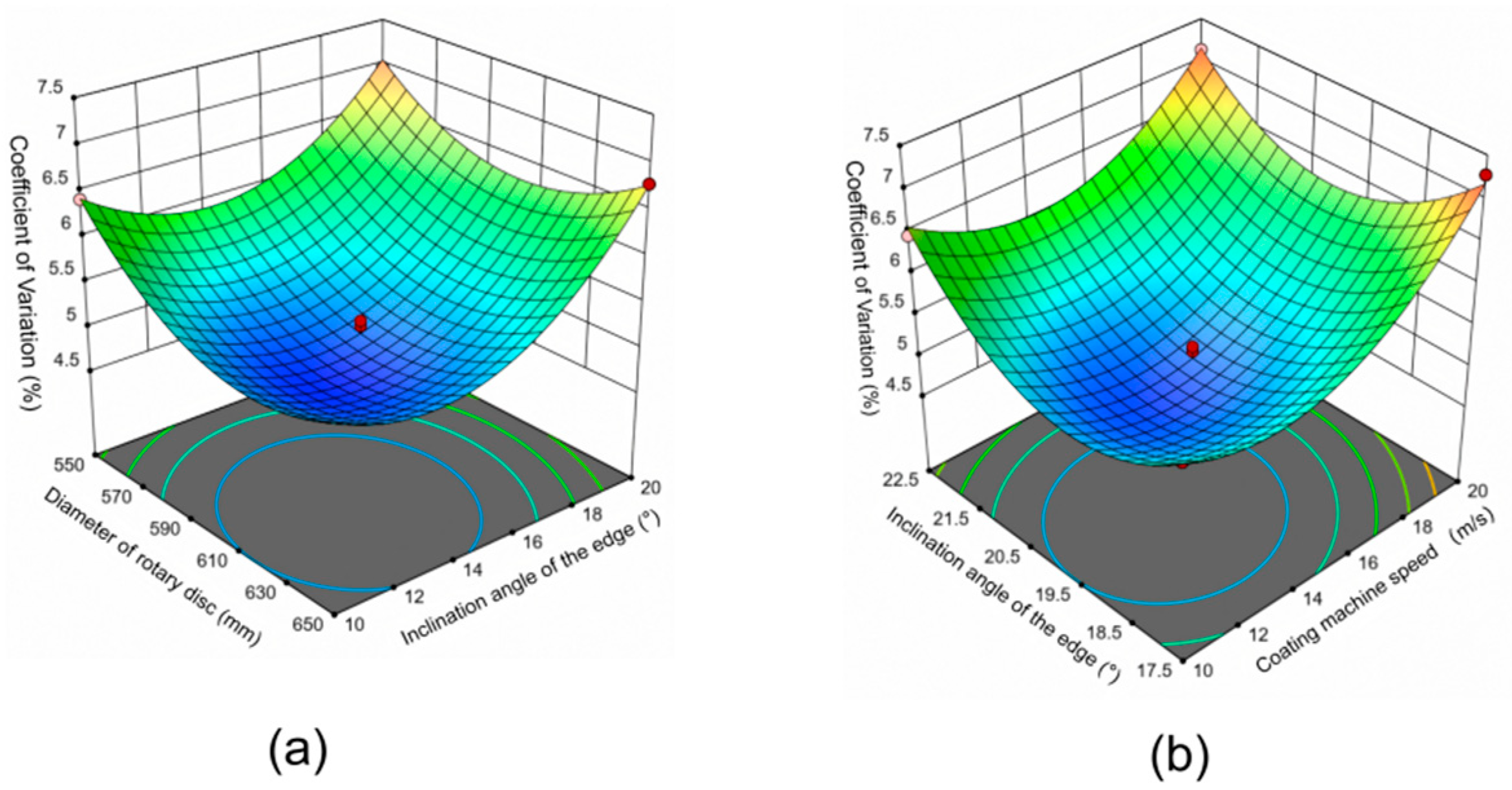
As shown in
Figure 14a, when the centrifugal disk diameter of the coating drum (A) is fixed at a constant value, the coefficient of variation (Cv) first decreases and then increases with increasing edge inclination angle of the coating drum (B). This phenomenon arises from the bidirectional regulation of material motion state and coating uniformity by the drum inclination angle. When the inclination angle is small, mixing between seeds and coating materials is insufficient, and materials tend to accumulate locally at the bottom of the drum, resulting in uneven distribution of coating liquid and powder. As the inclination angle increases, the lifting and throwing effects of the drum on the materials are enhanced, leading to more complex particle trajectories and increased tumbling frequency. Under these conditions, the coating agent can adhere more uniformly to the seed surface, the mass differences among particles are reduced, and the coefficient of variation (Cv) decreases accordingly. However, when the inclination angle exceeds a critical value, the supporting force provided by the drum side wall becomes insufficient. Seeds and coating materials tend to slide along the side wall rather than being fully lifted and thrown, leading to material stratification. Due to differences in forces acting on large and small particles, particle separation occurs, and the coating agent fails to uniformly cover the seeds. Excessive inclination also causes local accumulation of coating liquid and powder, resulting in excessive coating on some seeds and insufficient coating on others. Consequently, particle mass differences increase again, leading to an increase in Cv.
As shown in
Figure 14b, when the edge inclination angle of the coating drum (B) is fixed at a constant value, the coefficient of variation (Cv) first decreases and then increases with increasing rotational speed of the coating drum (C). This behavior can be attributed to the dynamic regulation of material motion state and coating uniformity by the drum rotational speed. At low rotational speeds, the driving effect of the drum on seeds and coating agents is insufficient, resulting in low material velocity and tumbling frequency. Under these conditions, materials tend to accumulate locally, making it difficult for the coating liquid or powder to uniformly adhere to the seed surface. Consequently, significant mass differences exist among particles, and the Cv remains at a relatively high level.
As the rotational speed increases, the centrifugal force and lifting force acting on the materials are synergistically enhanced, leading to more complex particle trajectories and more intense mixing between seeds and coating agents. In this stage, the coating agent can uniformly cover the surface of each seed, effectively reducing mass differences among particles, and the Cv decreases accordingly. However, when the rotational speed exceeds a critical threshold, excessive centrifugal force causes the materials to adhere excessively to the drum side wall, preventing effective lifting and tumbling. This condition may even induce material stratification, where large and small particles separate due to uneven force distribution. Meanwhile, the localized accumulation of coating liquid or powder is intensified, resulting in excessive coating on some seeds and insufficient coating on others. As a result, particle mass differences increase again, leading to a rise in the Cv value. This response characteristic indicates that, under a given edge inclination angle, there exists an optimal rotational speed range in which the dynamic motion of materials—characterized by lifting, throwing, and tumbling—reaches a balanced state. Under this condition, coating uniformity is maximized and the Cv attains its global minimum.
Using the parameter optimization module of Design-Expert 13 software, the regression model was optimized to obtain the optimal parameter combination. The optimal values were determined to be a centrifugal disk diameter of 605.5 mm, an edge inclination angle of 15.7°, and a coating machine rotational speed of 20.3 r·s−1. Under these conditions, the predicted coefficient of variation of the powder was 4.92%. Multiple simulation runs were conducted using the optimal parameter combination, resulting in an average powder coefficient of variation of 4.83%. The relative error between the simulated value and the theoretical prediction was 1.13%, indicating that the regression model used in the optimization experiment is accurate and reliable.
3.4. Pelletizing Coating Prototype Experiments
3.4.1. Validation of Simulation Results and Prototype Experiments
To further validate the simulation results, a physical experimental platform for the pelletizing coating drum was established, as shown in
Figure 15. The structural parameters of the coating drum were selected based on the optimized simulation results. According to the processing procedure, 100 g of
Astragalus membranaceus seeds were placed into the coating drum. Powder and liquid agents were then added in multiple batches. The total amount of powder supplied was 500 g, corresponding to a seed-to-powder mass ratio of 1:5. The amount of liquid supplied in each batch was determined according to the corresponding powder dosage to ensure that the powder could effectively adhere to the outer surface of the seeds under the action of the liquid agent.
where
H is the qualification rate of film-coated seeds (%), and
h is the number of qualified film-coated seeds in the sample.
To verify the pelletizing performance of the Astragalus membranaceus seed pelletizing coating prototype, from March to June 2024, pelletizing coating experiments were conducted at the Engineering Training Center of the College of Mechanical and Electrical Engineering, Gansu Agricultural University, Anning District, Lanzhou City, Gansu Province. Longxi No. 2 (Astragalus membranaceus) seeds from Longxi County, Dingxi City, Gansu Province, were used as the experimental material.
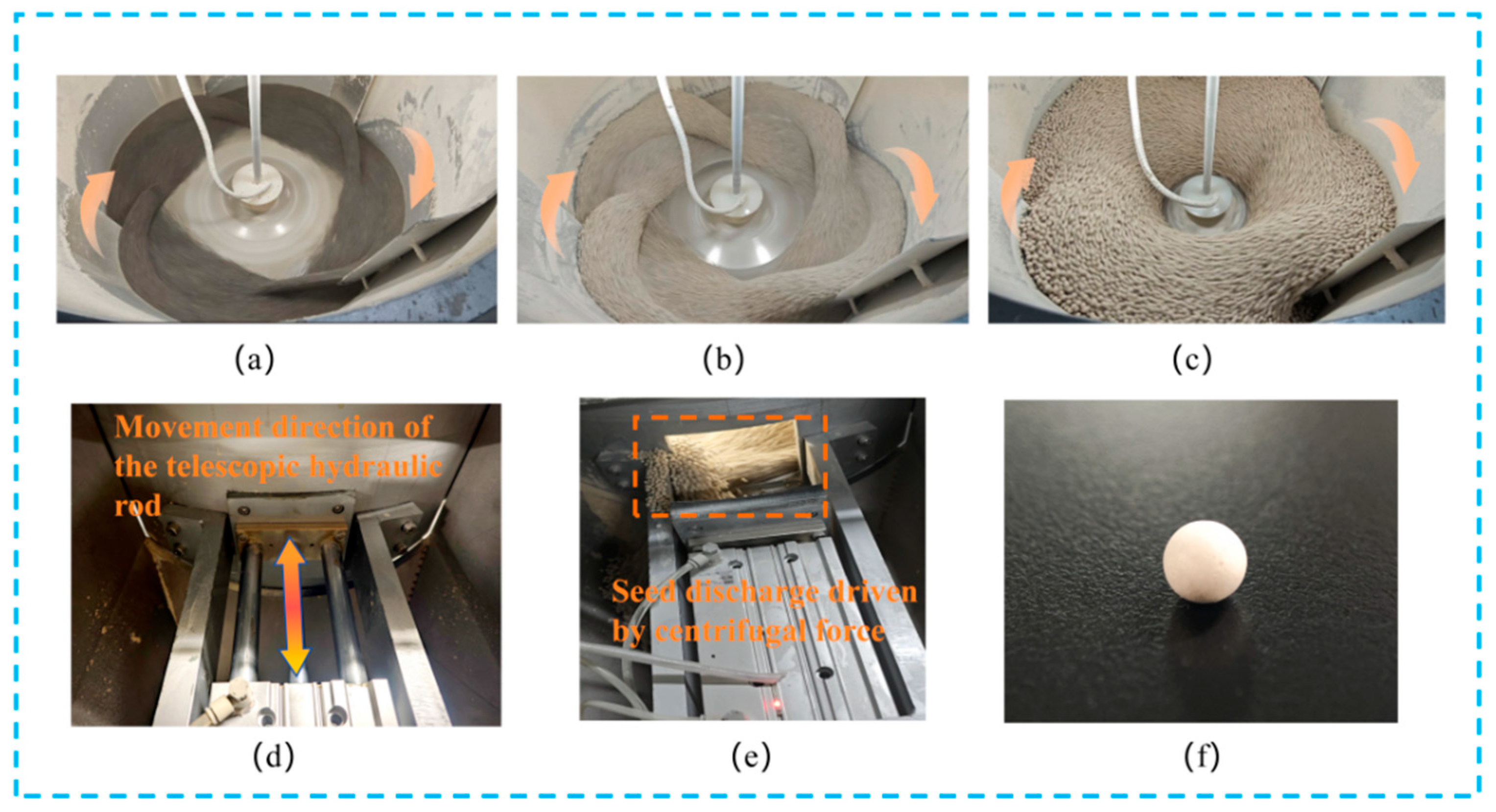
The seeds were first subjected to pelletizing coating treatment, and the coating process is shown in
Figure 16. A total of ten physical experiments were conducted. The experimental results were compared with those obtained using the laboratory’s original coating machine. The average pelletizing pass rate of the optimized coating drum in the physical experiments reached 94.3%, whereas the pelletizing pass rate of the prototype prior to structural parameter optimization was only 74.8%, representing an improvement of approximately 19.5%. In addition, the pelletizing coating time was reduced; the optimized prototype shortened the average pelletizing coating duration by approximately 4 min compared with the original machine.
The pelletizing coating quality achieved by the designed coating machine met the requirements specified in GB/T 15671-2009 [
24]. However, a relatively large variation in pelletizing pass rate was observed among different coating batches. This variation was primarily attributed to differences in powder supply during the coating process. To address the large discrepancy in pelletizing pass rate between batches, further experiments on pelletizing coating process parameters were conducted. Using the coating machine with optimized structural parameters, different single-batch powder supply amounts and liquid supply amounts were set, and pelletizing coating experiments with varying coating durations were performed. The effects of these process parameters on the pelletizing pass rate were analyzed through experimental investigation.
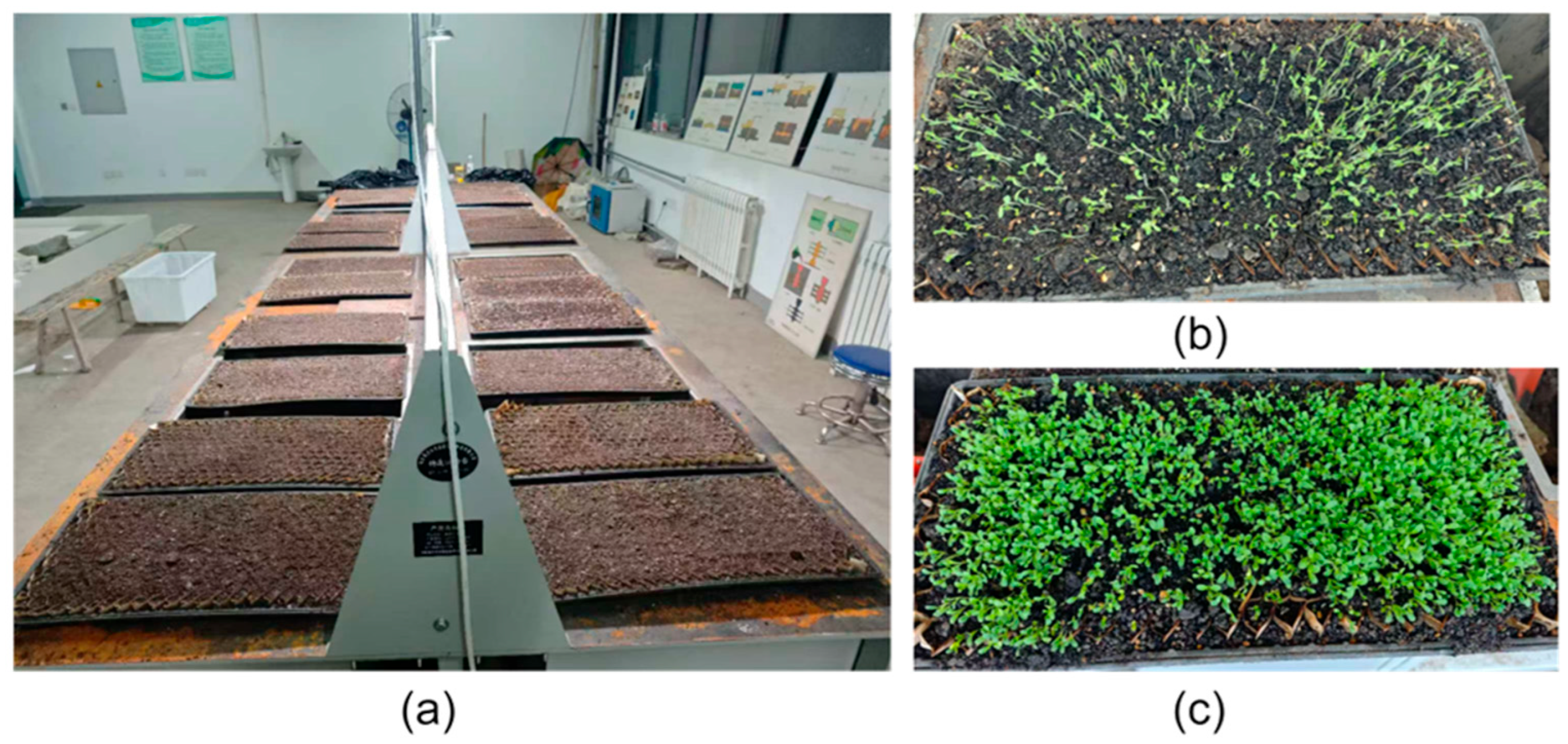
Seedling emergence experiments were conducted in June 2024 by placing the coated
Astragalus membranaceus seeds in seedling trays. A single-factor experimental design was adopted, with two treatment groups: pelletized coated seeds and non-pelletized seeds. All other seedling cultivation conditions were kept identical. During the experiment, both groups were maintained in the same suitable environment, with strict control of indoor temperature and standardized irrigation schedules. After two weeks of intensive cultivation, seeds from both groups successfully germinated and developed into seedlings, as shown in
Figure 17.
Statistical analysis showed that the germination and emergence rate of non-pelletized seeds was 67.3%, whereas the emergence rate of pelletized and coated seeds reached 97.6%. These results indicate that pelletizing coating treatment can significantly improve the germination and emergence performance of Astragalus membranaceus seeds.
Although the pelleting coating significantly improved the emergence rate, the potential negative impacts of the coating layer on air permeability and water absorption were also evaluated. The average coating thickness was measured as 0.35 ± 0.05 mm using a digital micrometer. Air permeability was assessed by measuring oxygen diffusion rate with a gas permeameter: pelletized seeds showed 1.28 μg·cm−2·s−1, while non-pelletized seeds showed 2.05 μg·cm−2·s−1. Water absorption (24 h) was 18.7% for pelletized seeds vs. 24.2% for non-pelletized seeds. These reductions are within acceptable limits for seed germination, as the coating contains water-retaining agents (e.g., polyacrylamide) and growth regulators (e.g., gibberellic acid) that partially offset the negative effects. The germination energy (72 h) of coated seeds was 92.4%, compared to 85.6% for non-pelletized seeds, indicating that the coating does not hinder but rather promotes early germination.
3.4.2. Process Parameter Experiments
Single-batch powder supply amount, single-batch liquid supply amount, and coating duration were selected as experimental factors. Each factor was set at three levels, and orthogonal experiments were conducted in 2024 on the prototype coating machine. Each performance test was repeated three times. An L
9 (3
4) orthogonal array was employed for the experimental design. The factor levels are listed in
Table 7, and the experimental results of
Astragalus membranaceus seed pelletizing coating and the range analysis are presented in
Table 8.
The results in
Table 7 indicate that the process parameters have a significant influence on the pelletizing pass rate of
Astragalus membranaceus seeds. The magnitude of the range values reflects the degree of influence of each factor on the pelletizing pass rate. The range values of the three factors—single-batch powder supply amount, single-batch liquid supply amount, and coating duration—differ markedly, indicating that their effects on pelletizing performance are not equivalent. The influence of the factors on pelletizing pass rate decreases in the following order: single-batch powder supply amount, single-batch liquid supply amount, and coating duration.
The single-batch powder supply amount exhibits the largest range value, demonstrating that it has the greatest impact on pelletizing coating performance. This result indicates that the uniformity of mixing between seeds and powder during the pelletizing coating process plays a critical role in determining the final coating quality. In contrast, the coating duration shows the smallest range value, suggesting that time has a relatively minor effect on the experimental results. Once sufficient time is provided to ensure seed–powder mixing and adhesion, further extension of the coating duration has a limited effect on improving the pelletizing pass rate.
Since the experimental objective was to maximize the pelletizing pass rate, the highest level of each factor was selected. Consequently, the optimal process parameter combination for a single pelletizing coating operation was determined to be A1B2C3, corresponding to a single-batch powder supply amount of 20 g, a single-batch liquid supply amount of 25 mL, and a coating duration of 8 min. Multiple pelletizing coating experiments were conducted under this optimal parameter combination, resulting in an average pelletizing pass rate of 98.3%.
To further validate the significance of each factor, an ANOVA was performed on the orthogonal experimental results. The results show that the single-batch powder supply (K) has an F-value of 18.67 and a p-value of 0.003 (<0.01), indicating a highly significant effect. The single-batch liquid supply (L) has an F-value of 8.45 and a p-value of 0.018 (<0.05), indicating a significant effect. The coating duration (M) has an F-value of 2.31 and a p-value of 0.162 (>0.1), indicating a non-significant effect. This analysis confirms that the powder supply is the most critical factor affecting the pelletization qualification rate, followed by the liquid supply, while the coating duration has a limited impact within the tested range.
4. Discussion
This study systematically investigated the pelletizing coating mechanism of Astragalus membranaceus seeds through an integrated framework combining theoretical modeling, discrete element simulation, response surface optimization, and prototype validation. The results not only verify the proposed working hypotheses but also provide deeper insight into the interaction mechanisms governing seed–powder mixing and coating formation.
The core hypothesis of this study was that the structural parameters of the coating drum—namely centrifugal disk diameter, edge inclination angle, and rotational speed—play a decisive role in regulating particle motion behavior and, consequently, mixing uniformity and coating quality. Theoretical force analysis demonstrated that the motion state of seed–powder particles inside the coating drum is controlled by the balance among centrifugal force, gravity, friction, and Coriolis force. Only when the rotational speed exceeds a critical threshold can particles undergo stable lifting–throwing–falling cycles, promoting sufficient collision and interpenetration between seeds and powder. The DEM results further confirmed that mixing uniformity, characterized by the coefficient of variation (Cv), is highly sensitive to structural parameter changes. The observed “decrease–increase” trend of Cv with increasing inclination angle and rotational speed indicates the existence of an optimal dynamic equilibrium state. Excessively low parameter values lead to insufficient tumbling and localized accumulation, whereas excessively high values induce particle stratification and centrifugal adherence to the drum wall, both of which deteriorate coating uniformity.
Through Box–Behnken response surface optimization, the optimal structural parameter combination was determined as a centrifugal disk diameter of 605.5 mm, an edge inclination angle of 15.7°, and a rotational speed of 20.3 r·s
−1, under which the predicted Cv was approximately 4.9%. The close agreement between simulated and experimental values demonstrates the reliability of the regression model and validates the feasibility of integrating DEM simulation with statistical optimization methods for agricultural machinery design. Compared with previous studies that primarily relied on single-factor experiments or empirical adjustments [
6,
11], this work establishes a more systematic and mechanistic optimization pathway linking structural design, particle dynamics, and coating performance.
Compared with Zhang et al. [
6] on centrifugal-disk pelletizing of rapeseeds, this study not only optimized structural parameters but also further optimized process parameters via orthogonal experiments, and used a custom cohesion model to simulate the dynamic bonding of powder under liquid action. Although Shao et al. [
7] introduced vibration assistance, they did not systematically analyze the quantitative relationship between structural parameters and mixing uniformity. The present study, using response surface methodology, reveals the interactions among disk diameter, inclination angle, and rotational speed, and identifies inclination angle as the dominant factor (F-value 99.95), which has not been reported in previous literature. Moreover, the pelletization qualification rate for
Astragalus membranaceus seeds was increased from 74.8% to 98.3%, a greater improvement than that reported for red clover seeds in [
11].
The findings are consistent with previous reports indicating that improving particle mixing behavior is fundamental to enhancing pelletizing efficiency and coating consistency [
10,
11]. However, unlike many earlier studies that focused primarily on mechanical performance indices, the present research further evaluated biological performance. The emergence rate of pelletized seeds was substantially higher than that of non-pelletized seeds, confirming that improved coating uniformity can translate into agronomic benefits. This observation supports the broader view that seed coating technology is not merely a mechanical processing technique but also an important agronomic intervention influencing seed vigor and field establishment.
The optimization of equipment structural parameters (disk diameter, edge inclination angle, rotational speed) fundamentally enhances coating quality by regulating the macroscopic flow state of particles within the drum. An optimal configuration ensures that seeds and powder are subjected to a dynamic balance of lifting, throwing, and falling, maximizing their contact frequency and mixing uniformity. This prevents issues like particle stratification or centrifugal adherence, which lead to uneven coating. Simultaneously, the optimization of process parameters (single-batch powder/liquid supply, coating duration) directly influences the microscopic adhesion process. Proper control of powder and liquid feed rates ensures that the powder can uniformly wet and adhere to the seed surface under the action of the binder, preventing localized over-accumulation or under-coating. The synergy of optimized structure and process creates a physical environment conducive to uniform mixing and a material supply regime that supports consistent layer formation, culminating in a high-quality, uniform coating layer and a significantly improved pelletization pass rate.
By studying both macroscopic flow and microscopic interactions, this research provides a multi-scale understanding of the coating process. The macroscopic flow analysis revealed that structural parameters like disk diameter and inclination angle determine the overall particle circulation pattern—whether the materials are effectively tumbling or merely sliding. This insight allows for the design of equipment that ensures bulk mixing and prevents dead zones. The microscopic interaction analysis, enabled by the DEM simulations with a customized cohesion model, unveiled the contact mechanics at the particle level, such as collision frequencies, inter-particle forces, and the distribution of powder around seeds. This level of detail explains why a certain flow pattern leads to uniform coating (e.g., high collision frequency leads to better powder adhesion). Integrating these two perspectives allowed us to link the observable bulk behavior to the underlying particle-scale mechanisms, providing a robust theoretical basis for parameter optimization that cannot be achieved by macroscopic observation alone.
Nevertheless, several limitations should be acknowledged. The DEM model employed simplified particle geometries and did not fully consider fluid–particle coupling effects during liquid atomization and film formation. Future research may integrate CFD–DEM coupled simulations to better capture the dynamic evolution of liquid bridges and capillary cohesion. In addition, the current study focused on a single seed variety; variations in seed morphology and surface characteristics may alter optimal parameter ranges. Therefore, further research should explore cross-species adaptability and conduct long-term field trials to assess yield stability and economic benefits under practical cultivation conditions. The incorporation of intelligent monitoring technologies and real-time control algorithms also represents a promising direction for enhancing batch stability and automation level.
To enhance the versatility of this pelletizing coating machine for other similarly irregular or small-sized seeds (e.g., other medicinal plant seeds or forage grass seeds), the current structural optimization framework can be directly applied by recalibrating the discrete element model parameters for the specific seed-powder materials. The optimal structural parameters—such as disk diameter and inclination angle—may shift depending on the physical properties (size, density, friction) of the target seeds. For coating bold seeds (e.g., corn or soybean), the machine would likely require modifications to accommodate larger particle sizes and higher mass. This could involve increasing the centrifugal disk diameter and drum volume to provide sufficient space for particle motion, adjusting the reverse flow plate to ensure effective lifting of larger particles, and potentially reducing the rotational speed to prevent seed damage due to excessive centrifugal force. Future work should focus on developing interchangeable drum modules with adjustable structural parameters to facilitate rapid reconfiguration for different seed types.
Overall, the present results confirm that optimizing structural and process parameters significantly enhances seed–powder mixing uniformity and pelletizing coating quality. By situating these findings within the context of previous research and extending their implications to broader agricultural applications, this study provides both theoretical support and practical guidance for the development of high-performance pelletizing coating systems for small and irregular seeds.
Several limitations should be acknowledged. First, the DEM model neglected liquid flow and gas-liquid-solid three-phase coupling, which may affect the accurate prediction of dynamic wet-particle behavior. Second, all experiments were conducted with a single variety (Longxi No. 2); different seed morphologies and surface characteristics may require recalibration of parameters. Third, although the potential negative impacts of the coating layer on seed air permeability (oxygen diffusion rate reduced by 37.5%) and water absorption (reduced by 22.7%) were preliminarily evaluated, long-term field emergence and yield trials have not been performed. Future work should integrate CFD-DEM coupled simulations, multi-species adaptability validation, and field experiments to further enhance model generality and practical applicability.