Article

Comparative Economic Evaluation of Greenhouse Pepper Cultivation Under Conventional and Organic Management

by
Begoña García Castellanos
,
Pedro Enrique Fuster Villa
,
José García García
* and
Felipe Egea Clemente
Department of Bioeconomy, Water and Environment, Murcia Institute for Agricultural and Environmental Research and Development (IMIDA), 30150 Murcia, Spain
*
Author to whom correspondence should be addressed.
Agriculture 2026, 16(8), 889; https://doi.org/10.3390/agriculture16080889
Submission received: 24 March 2026 / Revised: 13 April 2026 / Accepted: 15 April 2026 / Published: 16 April 2026
(This article belongs to the Special Issue Farmer Behavior and Sustainable Agricultural Management)

Abstract

Economic comparison of different production models, focusing on production costs and economic viability–profitability are essential to guide decision-making and enhance the competitiveness and resilience of the agri-food chain. This is the overall objective of the paper: to establish the production and cost structure and to economically evaluate two greenhouse pepper production models. Data on the production process of the production models (organic and conventional greenhouse pepper) and their cost and income structures were collected through 15 on-site surveys conducted with growers and horticultural sector technicians. The initial investment is very high (140,030 €·ha−1) and requires a significant financial effort for implementation, being the same for both conventional and organic cultivation, this means that fixed costs are high in percentage terms, especially when compared to other intensive outdoor horticultural crops. The key cost differences between the two systems are found in fertilisers, plant protection treatments, and biotechnological control and cost structure indicates a higher unit cost for organically produced peppers, 0.60 €·kg−1 for conventional and 0.75 €·kg−1 for organic production. Greenhouse pepper cultivation in southeastern Spain is an economically viable and profitable activity under both conventional and organic management. Profitability indicators consistently show that the conventional system is more profitable at the same farm scale or size.

1. Introduction

Pepper (Capsicum annuum) is one of the main crops worldwide in terms of production, with an average output of 36.9 million tonnes between 2019 and 2023 [1]. The leading producing countries are China, Turkey, Mexico, Indonesia, and Spain. Ranked fifth, Spain recorded an average production of 1.46 million tonnes over this period. More than half of Spanish pepper production is exported to European countries [2], with Germany, France, and Italy being the main export destinations [3]. In 2024, over 82% of national production and more than 70% of the cultivated area were concentrated in south-eastern Spain under intensive greenhouse production systems: Almeria (985 thousand tonnes and 13,795 ha), the Region of Murcia (209 thousand tonnes and 1916 ha), and Alicante (50 thousand tonnes and 561 ha) [2]. Within greenhouse pepper cultivation, two management systems can be distinguished: conventional and organic. The latter covered 1798 ha in 2024, with a production of 112,814 tonnes [4].
Since the 1970s, a clear trend has emerged—both nationally and internationally—towards promoting organic farming systems, driven by growing societal concern about the environmental and health impacts associated with intensive agriculture [4,5]. At present, the area devoted to organic farming in the European Union (EU) is showing an upward trend [6]. European policies such as the Farm to Fork Strategy encourage management practices and the transition towards organic production models, with the aim of achieving more sustainable and healthier agri-food systems for consumers, while mitigating the impacts associated with conventional agricultural practices based on the use of synthetic fertilisers and pesticides [7,8].
In south-eastern Spain, pepper varieties commonly grown under greenhouse conditions include Lamuyo, a thick-fleshed elongated pepper (mainly red) that is predominantly consumed in Spain, and the Californian type, which is square and compact, available in green, red, and yellow colours, and primarily destined for European markets [9]. In pepper cultivation, both conventional and organic management systems coexist in the producing areas of south-eastern Spain [10]. The required infrastructure (greenhouse, irrigation network, fertigation unit, etc.) is the same in both systems, involving a high initial investment and high production costs compared with other intensive open-field horticultural crops [3,11].
Both systems use organic fertilisation for biosolarization, a practice driven by the ban on the use of synthetic active substances for soil disinfestation against nematodes [12,13]. Under conventional management, the remainder of fertilisation is carried out using synthetic inorganic fertilisers. With regard to plant health management, synthetic active substances are used in combination with biological control, with greenhouse pepper production being a benchmark for the successful implementation of biological control in south-eastern Spain [14,15,16,17]. The slight upward trend in organic pepper cultivation may be driven by the effective integration of organic fertilisation and the use of biological control [12,18,19]. Nevertheless, in organic greenhouse pepper production, as in other crops under this management system, the number of permitted and effective active substances is considerably more limited than in conventional systems. This results, in this case, in an increase in the number of treatments required to achieve the same level of efficacy and, consequently, in higher costs associated with this item [20]. In terms of fertilisation, liquid organic fertilisers applied through irrigation are used, whose high price further increases the costs of this input [17,20].
Likewise, organic production shows lower yields than conventional production, a pattern also observed in other crops [21,22,23,24,25]. This combination of factors may compromise the economic viability of the organic model or make it less profitable than the conventional one. In fact, in 2024, only 7.45% of the total greenhouse pepper production in Spain was organic [4]. Furthermore, it is essential to carry out environmental assessments comparing different management systems within the same crop, as several studies applying the Life Cycle Assessment (LCA) methodology have shown that, in some cases, the higher input use combined with the lower productivity of organic systems can lead to similar or even higher environmental impacts than those of conventional systems [18,23,26,27].
Economic and production cost analysis constitutes a fundamental tool for decision-making, investment planning in the agricultural sector, and the establishment of prices that cover the effective costs of production. The Farm to Fork Strategy also promotes the economic sustainability of agricultural production systems, advocating for greater transparency and fair incomes for the most vulnerable stakeholders. The Spanish Food Chain Law is based on the principles of the Farm to Fork Strategy in an effort to guarantee these aspects at the national level. The Food Chain Law [28] provides the legal framework that reinforces these aspects by requiring contractual prices to cover, at a minimum, the effective costs incurred at each stage of the chain, thereby promoting more balanced and transparent commercial relationships [17]. Within this framework, the economic comparison of different production models (such as conventional versus organic) is also of particular interest, as it allows the identification of investment strategies compatible with regulatory requirements and the economic sustainability of farms. However, there is a notable scarcity of both publicly available data produced by public administrations and scientific literature addressing these issues [18,29], which hinders the achievement of the aforementioned objectives. No published studies have been found that provide a complete cost structure for greenhouse pepper production under conventional and organic management in the Mediterranean region. In this context, studies focused on production costs and economic viability–profitability are essential to guide decision-making, enhance the competitiveness and resilience of the agri-food chain, and serve as a reference for both public authorities and the private sector.
The productive relevance of south-eastern Spain in pepper cultivation, the pressing need to carry out cost analysis within the framework of European and Spanish policies, and the scarcity of literature in this field motivate the present study, whose objectives are as follows:
  • To technically characterise and define the two pepper production systems representative of south-eastern Spain, corresponding to conventional and organic management.
  • To establish and compare the cost and income structures of both production scenarios.
  • To calculate economic indicators in order to analyse and compare the viability, profitability, and employment generation of the two systems.

2. Materials and Methods

2.1. Description of the Study Area and Production Systems

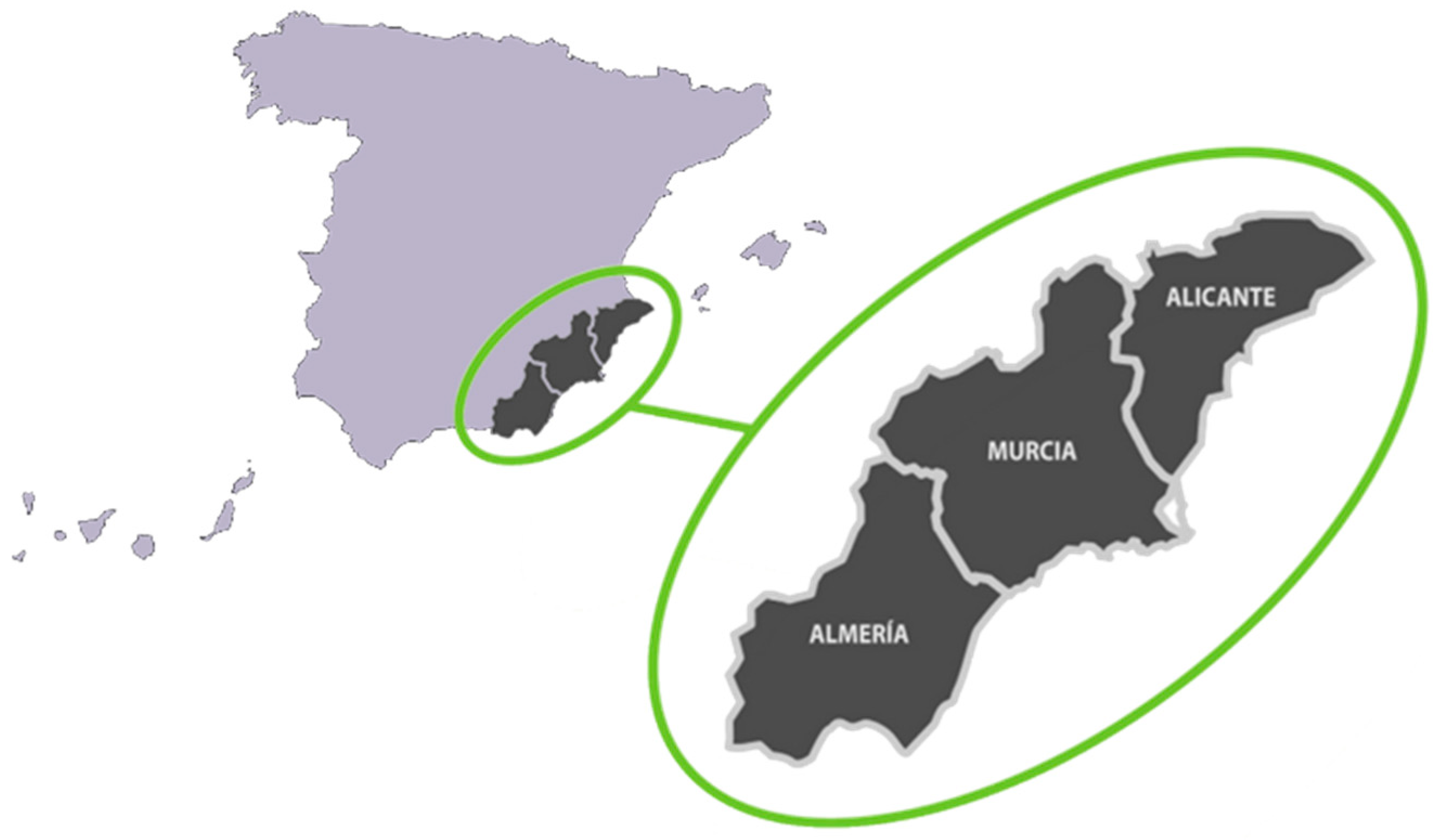
The study area of this work focuses on south-eastern Spain (Figure 1), where more than 95% of pepper production is concentrated [2]. This region presents specific characteristics that are not found in other producing areas of Spain, particularly its climate, which is characterised by mild winter temperatures, hot summers, low rainfall levels typical of the southeast, and generally light winds [5,23,30]. These conditions make the area especially suitable for greenhouse pepper cultivation.
Two greenhouse pepper production systems are studied, organic and conventional, both under localised irrigation, with a planting framework of 1 m × 0.4 m, one 2 L·h−1 dripper per plant, and a density of 25,000 plants per hectare. This crop has a long production cycle, with soil preparation carried out between July and August, planting in October, and harvesting between June and July of the following year, resulting in an almost complete absence of seasonality.

2.2. Data Collection

Data on the production process for the development of the production models (organic and conventional greenhouse peppers) and their cost structures were collected through 15 on-site surveys conducted with growers and horticultural sector technicians during the year 2025. The selected growers and technicians were specialised in greenhouse pepper cultivation and operate within two leading production companies that together account for more than 800 hectares. Although the number of surveys is limited, the selective process of the respondents, their representativeness, and the level of detail of the survey ensure a robust characterisation of the production processes. Moreover, intensified production systems under controlled conditions (greenhouse-based cropping systems) involve very standardised agronomic practices. Additionally, previously published information from the IMIDA Bioeconomy Team was used to support the model development [3,11].
The survey included all technical and economic data described in the production cost structure: production model (planting density, yield, non-marketable fresh produce, etc.), infrastructure (greenhouse, irrigation network, irrigation equipment, storage facilities, etc.), inputs, and labour and machinery performance in the various field operations. Data collection was carried out in three phases. The first consisted of an open interview with the respondents; in the second phase, a structured questionnaire, designed by the IMIDA research team (Murcian Institute of Agricultural and Environmental Research and Development), was administered. This questionnaire gathered detailed information on the production systems and associated investments, productivity indicators, labour requirements, and other production costs. Finally, once the production model had been defined, the survey data were validated through specific follow-up questions posed to the respondents (IMIDA Bioeconomy Team).
For income, the farm-gate prices of peppers were updated according to quality grades, using official sources on regional agricultural product prices, namely the Regional Agricultural Statistics [31] and the Andalusia Price Observatory [32].
This economic assessment is subject to limitations related to market-driven price variability. Additionally, in the context of agronomic studies, results may be influenced by agro-climatic factors and the specific geographical characteristics of the study area. Furthermore, a small number of surveys makes it impossible to obtain statistical representativeness.

2.3. Economic Analysis

The economic analysis is structured in two phases:
  • Economic analysis from an accounting perspective, aimed at establishing the cost and income structure of both greenhouse pepper production scenarios (organic and conventional).
  • Calculation of a set of indicators for viability, profitability, and employment generation.

2.3.1. Productive Structure of Costs and Income

The economic analysis from an accounting perspective was conducted by establishing the production cost and income structure for each scenario. The results are expressed in euros (€) per unit of area (hectares) and per unit of mass (kg), as these are the most commonly used metrics in agricultural economic analysis [20,33,34].
Costs are first established and subdivided into fixed and variable costs [35,36,37]. For each cost, the opportunity cost is taken into account [38], meaning that the alternative use of funds in risk-free savings accounts is considered. The opportunity cost is calculated using an interest rate of 1.5% [11]. It is assumed that the land is owned and, since it does not depreciate, it is not considered a cost. Additionally, the analysis is conducted under the assumption of self-financing [11,20].
Fixed Costs
Fixed costs correspond to those arising from the depreciation of investments. Depreciation is calculated using the straight-line method [3,39].
The greenhouse structure is made of galvanised steel with two slopes, with openings and automation for ventilation. The investment is thus allocated to a representative farm to determine the sizing of the infrastructure (irrigation equipment, irrigation network, greenhouse, etc.).
The greenhouse is covered with low-density polyethylene plastic film with a thickness of 800 gauge. Additionally, the windows are fitted with plastic mesh to prevent insect entry.
The irrigation head has a capacity of 50 m3·h−1 and is sized according to the flow rate required by the emitters per unit area and the size of the farm. The irrigation network is designed using polyethylene pipes (diameter = 63 mm for the main pipeline and 16 mm for the lateral drip lines) and pressure-compensating drippers with a flow rate of 2 L·h−1, spaced 40 cm apart, that is, one dripper per plant. The regulating reservoir has a capacity of 850 m3 and is sized to store half of the water required during the month of maximum water demand. An 80 m2 building for the irrigation head and input storage is also included. In addition, the investment accounts for auxiliary equipment (shovels, hoes, pruning shears, etc.) required for farm operations.
Variable Costs
Variable costs are those that may change from one production cycle to another [3,39]. They are associated with the operations carried out during the course of an annual production season. Machinery is accounted for as a variable cost, as it is assumed that the farm contracts external service providers.
  • Crop removal: As the two systems differ only in management (conventional vs. organic), the removal of the previous crop is identical in both cases. The plastic elements (double chamber plastic and the plastic threads for guiding and trellising the plants) are removed manually; subsequently, the crop is incorporated into the soil by means of two tractor tasks (one crusher pass and one rotavator pass).
  • Soil disinfection: In both cropping scenarios, soil disinfestation is carried out through biosolarization, as chemical disinfestation has been prohibited in recent years. This process lasts approximately 4–5 weeks and is usually performed between July and August. Specifically, 15,000 kg·ha−1 of sheep/goat manure are applied (Table 1), followed by deep irrigation, and the soil is then covered with low-density polyethylene plastic film of 200 gauge. The cost of manure is accounted for under fertilisers, as it contributes nutrient units required for crop development and production.
  • Preparation and planting: Once the disinfection has been carried out, tilling and levelling of the land are carried out. Planting is manual, with plants from a nursery. Planting is carried out in rows running from side to side of the greenhouse, making full use of its entire width.
  • Plastic in double chamber and plastic for staking: This includes a 200-gauge LDPE sheet placed manually in the double chamber. The plants are supported with stakes and plastic threads (PVC) that are arranged both horizontally and vertically.
  • Whitewashing: The operation includes the labour and lime required for whitewashing the exterior plastic of the greenhouse. This operation is carried out in spring and especially in summer to help reduce solar radiation intensity.
  • Staking and manual pruning: This includes the labour costs for staking and pruning. Staking is carried out by placing a vertical string approximately every metre, running from the ground to the top mesh of the greenhouse. Horizontal strings are installed every 20–25 cm, and these are attached to the vertical strings with plastic clips to provide plant support and prevent collapse. Pruning involves removing axillary shoots below the main cross and excess leaves. Each plant is trained to develop 3–4 main branches.
  • Machinery: This includes the cost of labour, tractor, and implements used in plant protection treatment operations.
  • Organic and inorganic fertilisation: The study examines both organic and conventional production models across the entire south-eastern Spain region. The fertiliser requirements (N-P2O5-K2O-CaO-MgO) used to establish the fertilisation programmes are 280-150-360-150-20 for both conventional and organic systems. These amounts were determined based on information obtained from the surveys and the specific literature [3,11]. This section also accounts for the organic matter applied during biosolarization (sheep/goat manure) with a nutrient balance of 1.48-0.56-2.35-2.96-0.91. Considering the nutrient content of the manure and the amount applied, the remaining balance to be supplied to the crop is recalculated as 58-66-8-0-0 (Table 1).
  • Phytosanitary treatments: Treatments may vary between years and between farms due to various agro-climatic factors. Based on information obtained from the surveys, two average treatment programmes were established: one for conventional cultivation and one for organic cultivation. In organic production, these treatments mainly target thrips, aphids, whitefly, spider mites, and powdery mildew. In conventional production, up to 10 fewer treatments are carried out than in organic production (Table 1), and it is common to combine these applications with foliar corrections of Zn and Mn or bio-stimulants. Additionally, in most plant protection treatments, a pH corrector or regulator is used to ensure treatment efficacy. In organic production, plant protection treatments are applied almost systematically, except in rare cases where a specific product is added as a reinforcement. The majority of treatments are based on Bacillus spp. and sulphur, and for summarising purposes, they are accounted for as single units in the table above.
  • Biological control: Under conventional management, the following releases are considered (Table 1): one release of Orius laevigatus to control thrips, one release of Amblyseius swirskii against whitefly and thrips, and one release of Neoseiulus californicus against spider mites, carried out at the time when the pest begins to be detected. Under organic management (Table 1), the same releases as in the conventional system are considered, and it is assumed that spider mite control is intensified with two releases of Phytoseiulus persimilis, while aphid control is addressed with one release of Aphidius colemani.
  • Maintenance: Annual maintenance of the infrastructure (tool shed, head, and irrigation network), calculated as a percentage of the value of the investment (1.5%).
  • Irrigation water: The water is supplied by the Irrigation Users Community (Campo de Cartagena) [40]. Water consumption is 8500 m3·ha−1 for both conventional and organic systems.
  • Electrical energy: Electricity consumption by fertigation pumps.
  • Harvest: The harvest is staggered over time, depending on the degree of maturity of the peppers, and is completely manual. It includes the harvest in the greenhouse, loading, and delivery to the warehouse.
  • Permanent staff: It is usual that this refers to the owner of the farm, whose tasks are linked to phytosanitary support and control, irrigation and fertilisation, harvesting support, personnel management, and general administration.

Table 1. Characteristics of greenhouse pepper cultivation in Campo de Cartagena.
ConceptConventional PepperOrganic Pepper
Gross yield (kg·ha−1)115,00096,000
Non-fresh marketable yield (%)55
Net yield (kg·ha−1)109,25091,200
Gross fertiliser requirements280-150-360-150-20280-150-360-150-20
Manure (biosolarization) (kg·ha−1)15,00015,000
Fertiliser balance N-P2O5-K2O-CaO-MgO58-66-8-0-058-66-8-0-0
Phytosanitary treatments 717
Biological control releases36
Irrigation water (m3·ha−1)85008500
Income
Total income for each production system is calculated based on the average annual yield obtained from the surveys (kg·ha−1) and the average annual selling prices (€·kg−1) for the period 2020–2025 in the Region of Murcia. Greenhouse pepper prices were obtained from the Regional Agricultural Statistics [31], the Price Observatory of the Regional Ministry of Agriculture, Livestock, Water and Fisheries of the Region of Murcia [41], and the Price Observatory of the Regional Ministry of Agriculture, Fisheries, Water and Rural Development of the Regional Government of Andalusia [32].
For the unit price calculation, a weighted average was applied according to commercial categories (first class (FC), second class or industry (SC)) and size grades, for both Lamuyo and California-type peppers, in their red and green varieties (Equations (1) and (2)). Information on yields, non-marketable produce, and prices was cross-checked with the surveys conducted among sector professionals.
IN = NP × WP
WP = FC × (RP × AR + GP × AG) + SC × (RP × AR + GP × AG)
IN = income (€·ha−1); NP = net production (kg·ha−1); WP = weighted price (€·kg−1); RP = red pepper (%); AR= average price of red pepper (€·kg−1); GP = green pepper (%); AG = average price of green pepper (€·kg−1).

2.3.2. Socio-Economic Indicators

Once the production cost and income structures for each system have been established, a series of economic indicators are calculated to analyse the viability, profitability, and employment generation of the two models, enabling a comparative analysis. To do this, the net margin must first be calculated [3,42], using the following equation (Equation (3)):
NM = IN − (FC + VC + OC)
NM = net margin (€); IN = income (€·ha−1); FC = fixed costs (€·ha−1); VC = variable costs (€·ha−1); OC = opportunity costs (€·ha−1).
The indicators used are as follows:
  • NM/investment (MN/K0) (%): Long-term profitability indicator.
  • NM/variable costs (MN/VC) (%): Return on working capital, i.e., an indicator of short-term profitability.
  • NM/total costs (NM/TC) (%): This shows the global profitability of the activity.
  • Viability threshold (UV) (€·kg−1): This indicates the minimum sale price of the product at origin for the activity to be viable. For an already established market price, it can be expressed as the minimum viable size (hectares).
  • Break-even point (PM) (kg·ha−1): This indicates the minimum production, for the average market sale price, for the activity to be viable.
  • The agricultural work unit (AWU) (AWU·ha−1): This is an indicator of the direct employment generation linked to the rural environment. One AWU is considered to correspond to 1840 h of agricultural work [18].
Finally, a sensitivity analysis is conducted on the weighted price variable to identify the unit price at which both systems—conventional and organic—achieve equivalent overall profitability, that is, the point at which the NM/TC indicator converges. For the less profitable system, a range of lower and higher price values is defined, and the evolution of the indicator within this range is assessed.

3. Results and Discussion

Table 2 presents the initial investment and the corresponding depreciation, based on the useful life of each asset, its residual value, and the associated opportunity cost. This table is identical for both conventional and organic pepper cultivation, as the infrastructure and initial equipment are the same in both systems.
The initial investment is very high (140,030 €·ha−1) and requires a significant financial effort for implementation [3,29], being the same for both conventional and organic cultivation [11]; that is, management does not result in different absolute investment values. In both cases, the bulk of the investment is attributable to the greenhouse, including its structure and plastic covering, which accounts for slightly over 71% of the total investment. Another significant component is the irrigation system, as the irrigation head, network, and regulating reservoir represent 15%. The storage building is also notable (approximately 13%), but due to its long useful life (25 years), it contributes less to the annual cost.
The cost distribution (Table 3) clearly shows that fixed costs are high from a percentage perspective, reaching 14.11% for conventional cultivation and 13.48% for organic cultivation. Compared with other intensive open-field horticultural crops (melon, watermelon, broccoli, lettuce, etc.), these values are considerably higher, as capital costs for those crops typically range between 4% and 5% of total fixed costs as is the case of broccoli cultivation [17].
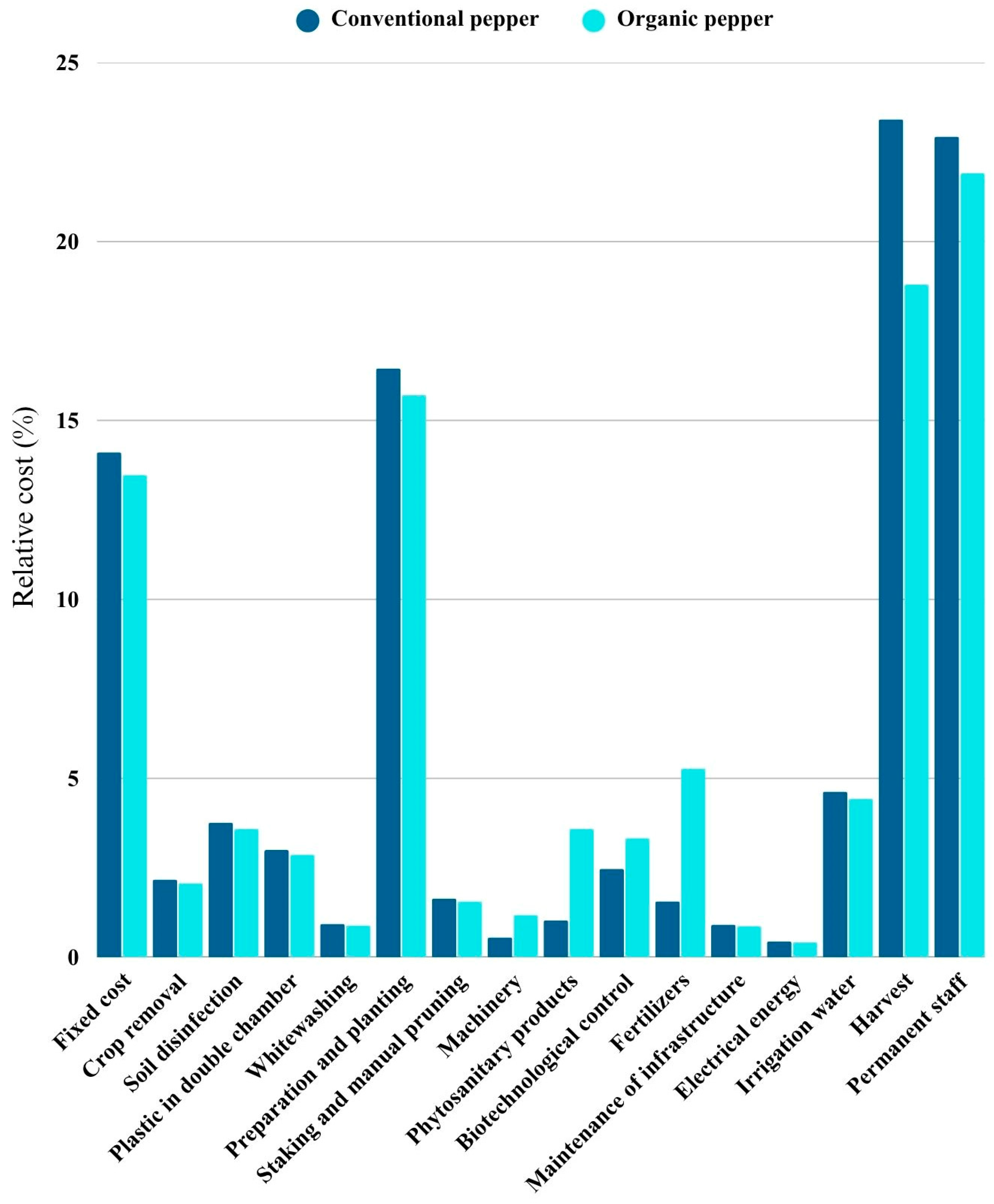
The most significant cost in both systems (conventional and organic) is associated with manual operations (staking and pruning, whitewashing, harvesting, and permanent staff), accounting for nearly 49% of total costs (TCs) in conventional cultivation and 43% in organic cultivation (Figure 2). In relative terms, these values can be compared with other regions, such as Iraq, where they represent just over 41% [39]. This activity is highly relevant for employment generation in rural areas. Production at the farm level generates 1.78 AWU·ha−1 in conventional systems and 1.66 AWU·ha−1 in organic systems. These figures, along with greenhouse tomato cultivation, are substantially higher than those of other herbaceous (0.22 AWU gross ha−1 in de case of broccoli) or woody crops (0.34 and 0.43 AWU gross·ha−1 in Verna and Fino lemon) typical of south-eastern Spain [3,11,17,20].
Table 3. Cost structure in conventional and organic pepper cultivation.
Conventional PepperOrganic Pepper
Absolute Annual Costs
(€·ha−1)
Relative Costs
(%)
Absolute Annual Costs
(€·ha−1)
Relative Costs
(%)
Fixed Costs (FCs)919514.11%919513.48%
Shed for equipment5480.84%5480.80%
Irrigation equipment8881.36%8881.30%
Irrigation network2930.45%2930.43%
Auxiliary material250.04%250.04%
Irrigation reservoir1290.20%1290.19%
Greenhouse structure, ventilation and automatisms36545.61%36545.36%
Anti-thrips plastic mesh1560.24%1560.23%
800-gauge plastic covering35025.37%35025.14%
Variable Costs (VCs)55,96785.89%59,00286.52%
Crop removal14142.17%14142.07%
Soil disinfection24483.76%24483.59%
Preparation and planting10,71616.45%10,71615.71%
Plastic in double chamber19573.00%19572.87%
Whitewashing6090.93%6090.89%
Staking and manual pruning10661.64%10661.56%
Machinery3590.55%8081.18%
Fertilisers10191.56%36005.28%
Phytosanitary products6691.03%24453.59%
Biotechnological control16092.47%22743.33%
Maintenance of infrastructure5950.91%5950.87%
Electrical energy2880.44%2880.42%
Irrigation water30204.63%30204.43%
Harvest15,25723.41%12,82118.80%
Permanent staff14,94122.93%14,94121.91%
Total Costs (TCs) (€·ha−1)65,162100.00%68,197100.00%
Fresh pepper cost (€·kg−1)0.600.75
Figure 2. Comparison of relative costs between conventional and organic pepper.
Agriculture 16 00889 g002
Following the significance of the costs associated with manual operations, the next largest component is annual soil preparation and planting, which in both systems accounts for approximately 16%, with seed and seedling costs being particularly notable within this category [39].
Other relevant costs in both management systems include crop removal, the double-layer plastic (replaced each cycle), and soil disinfestation, which are identical in absolute terms in both systems (Table 3). The latter is currently carried out using biosolarization, representing slightly over 3.5% of total costs in both systems. As the sole disinfestation method, biosolarization is not as effective as chemical treatments or combinations of both [12,43], which has led in recent years to a slight decline in average gross yield [11,18]. This process requires a substantial amount of manure, at least 15,000 kg·ha−1 in both systems, to ensure effectiveness [44].
The key cost differences between the two systems are found in three categories: fertilisers, plant protection treatments, and biotechnological control. Fertilisation represents a higher cost in organic production in order to meet the nutrient requirements of the crop. The permitted and applied liquid organic fertilisers have a higher unit price than synthetic inorganic fertilisers [20,45]; in particular, the fertilisation cost in organic systems is more than three times that of conventional cultivation. Organic fertilisation associated with biosolarization may reduce the cost of this component; therefore, the use of locally sourced organic amendments and composts could lower costs compared with current fertilisation practices [17,46].
Plant protection treatments are applied more frequently in organic cultivation, as they are less effective against pests and diseases than in conventional systems, resulting in costs that are four times higher. This increased number of treatments also leads to higher machinery costs, including greater fuel consumption, more than double in organic systems, as shown in Figure 2.
Regarding biotechnological control, its impact is similar in both systems, although slightly higher in organic production due to the need for additional applications to compensate for the lower effectiveness of plant protection treatments. In any case, the advancement of biological control, which represents a relative cost of 2.47% and 3.33% in conventional and organic systems, respectively, has been a major success in this crop, substantially reducing the use of chemical plant protection treatments [18].
Finally, it should be noted that the irrigation component (water and electricity) represents 5% of total costs (Table 3). Although this crop has high water requirements, it achieves very high resource productivity. For this reason, irrigation costs are not among the most significant, unlike in other crops such as lemon [20] or broccoli [17] in the same regions. The most relevant water-related issues in this crop are linked to the availability of sufficient quantity and quality, which are structural problems in south-eastern Spain [40,47], rather than cost limitations.
The analysed cost structure indicates a higher unit cost for organically produced peppers, as shown in Table 3: 0.60 €·kg−1 for conventional and 0.75 €·kg−1 for organic production. A key factor distinguishing the two systems is gross yield (kg·ha−1). As shown in Table 1, the conventional system produces an average of 115,000 kg, compared with 96,000 kg in the organic system, representing a 12.7% production deficit in organic cultivation. This yield gap has been previously reported by several authors across different crops and conditions [24,25,48].
Income, calculated using Equations (1) and (2), is slightly higher in conventional cultivation than in organic cultivation (Table 3). Regarding income, the difference between the systems is very small (1.9%), despite a significant difference in productivity (16.5%). This is due to the higher market price of organic peppers, which partially offsets the production differences. Based on the production and cost structure, both systems can be economically compared using the following indicators.
The economic indicators show that conventional pepper cultivation achieves higher profitability across all metrics, being viable from 0.69 hectares, compared with slightly more (0.74 ha) for organic cultivation (Table 4). Although this crop requires substantial investments (Table 2), it is highly productive at the regional level, making it viable and profitable even with relatively small greenhouse areas. In both short- and long-term profitability indicators, the conventional system outperforms the organic system. Overall, considering net margin relative to total costs, the conventional system shows a profitability of 37.2%, compared with 28.6% for the organic system (Table 4). In any case, these are relatively high profitability levels for an agricultural production activity.
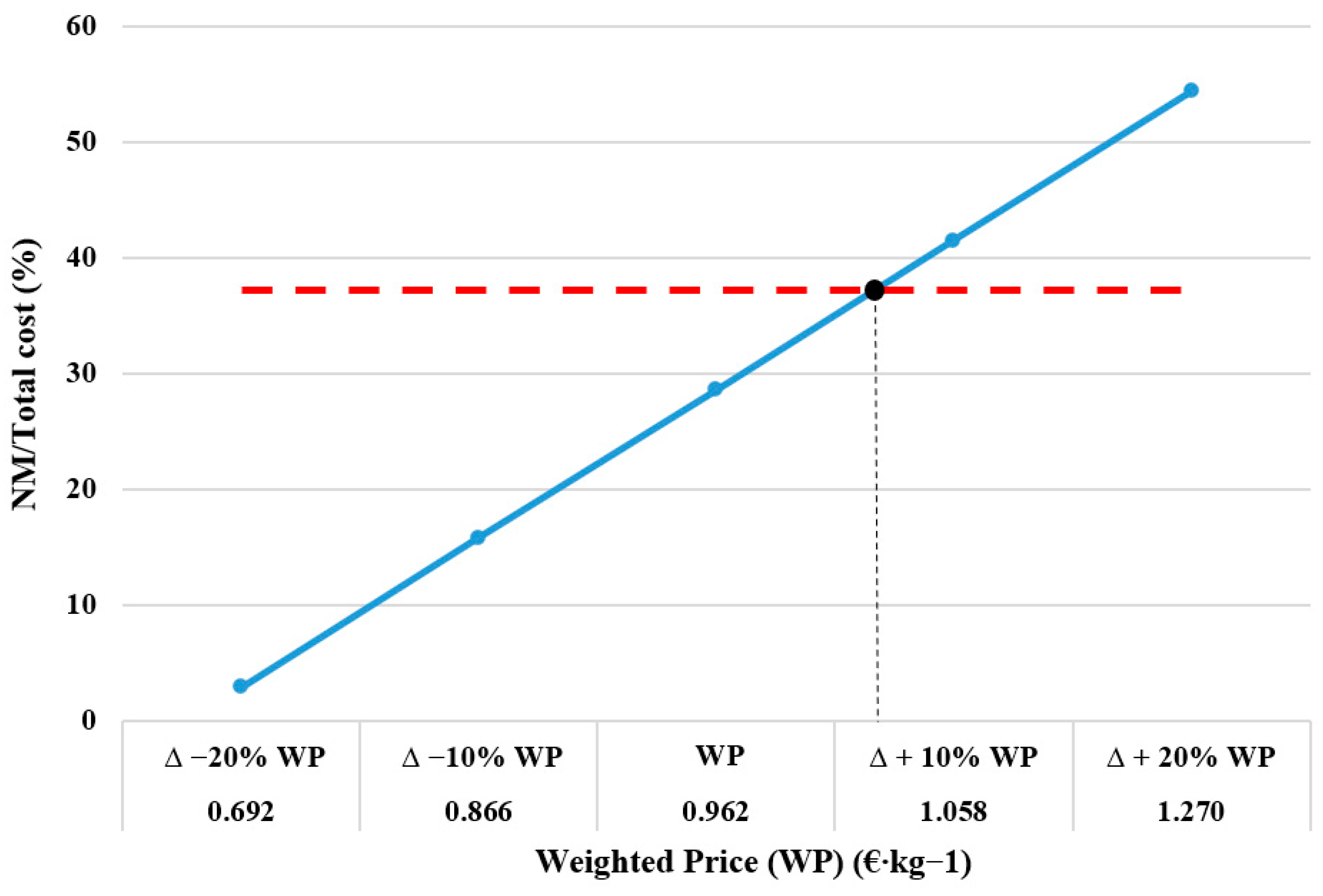
A sensitivity analysis is conducted on the most influential variable (weighted price), to assess the evolution of overall profitability (NM/TC) in the organic production system. As this system exhibits lower profitability, Figure 3 illustrates how NM/TC values evolve as a function of different weighted selling prices for organic peppers, specifically within a ±20% range around the prevailing market price. As shown in Figure 3, the point at which the NM/TC of both production systems converges is clearly identified. An increase of 0.063 €·kg−1 would be required to reach a unit price of 1.025 €·kg−1, corresponding to a 6.6% increase over the current price for organic peppers (0.962 €·kg−1). This represents a relatively small adjustment, and it ultimately depends on consumers’ willingness to pay for achieving equivalent profitability between both systems at the farm level.

4. Conclusions

Greenhouse pepper cultivation in south-eastern Spain is an economically viable and profitable activity under both conventional and organic management. Profitability indicators consistently show that the conventional system is more profitable at the same farm scale or size.
Its high productivity is noteworthy, as it allows the crop to be viable even on small cultivation areas, making it an activity that requires very little land. Regarding its impact on the rural areas where it is established, it contributes significantly to direct employment and, due to its production and cost structure, also generates a considerable economic effect on the local population. Its nearly year-round production cycle results in low seasonality, thereby providing stable employment.
Conventional greenhouse pepper cultivation is more productive relative to the inputs required, with fertilisation being particularly noteworthy. Currently, the fertilisers permitted and predominantly used in organic production are liquid organic fertilisers applied via fertigation. Their high market prices result in substantially higher fertilisation costs in organic systems compared with conventional production.
Regarding plant protection strategies, both production systems rely on a combination of chemical treatments and biotechnological control practices, which are effective in both cases. However, in organic cultivation, the more limited availability of active substances results in lower treatment efficacy and, consequently, a higher number of interventions. This reality leads to higher costs in the organic system. The future of greenhouse pepper production in south-eastern Spain, under both production systems, lies in identifying effective and low-cost organic fertilisers, with composting representing a promising alternative. Another potential avenue involves the development of combined organic and inorganic fertilisation strategies capable of achieving high productivity, lower costs, and reduced environmental impact, thereby promoting more efficient and sustainable production systems over time.
Water is not a limiting cost factor in such a highly productive crop, despite the relatively high unit prices of the resource. Any limitations are more likely related to the large volumes required per unit of cultivated area.
Finally, it should be noted that studies on crop production costs and their regular updating promote transparency and fairness in commercial relationships across the different links of the agri-food sector, thereby protecting the most vulnerable stakeholders. Likewise, it would be advisable to conduct environmental analyses using standardised methodologies such as LCA in parallel with the technical–economic analyses, in order to carry out evaluations from a global perspective, considering this a promising path for future research.

Author Contributions

P.E.F.V., J.G.G. and B.G.C. conceived and designed the present study. B.G.C., P.E.F.V. and J.G.G. collected the data from producers and companies in the area. P.E.F.V. made the agronomic calculations and performed the economic analysis, supervised by J.G.G. and B.G.C., F.E.C., J.G.G. and B.G.C. drafted the manuscript and F.E.C., J.G.G. and B.G.C. supervised the entire manuscript. All authors have read and agreed to the published version of the manuscript.

Funding

This research was funded by FEDER RM 23–27 C.C.822. Project: “Evaluación económica y ambiental de procesos productivos regionales” of FEDER Región de Murcia 23–27.

Data Availability Statement

All the data generated or analysed during this study are available within the article or upon request from the corresponding author.

Conflicts of Interest

The authors declare no conflicts of interest.

References

  1. FAOSTAT. Crops and Livestock Products; Organización de las Naciones Unidas para la Alimentación y la Agricultura: Roma, Italia, 2025. [Google Scholar]
  2. Anuario de Estadistica (Ministerio de Agricultura, Pesca y Alimentación). Available online: https://www.mapa.gob.es/es/estadistica/temas/estadistica-digital/powerbi-cultivos (accessed on 22 October 2025).
  3. García García, J. Estructura de Costes de Las Orientaciones Productivas Agrícolas de La Región de Murcia: Horticultura al Aire Libre y Bajo Invernadero; Técnica; Consejería de Agua, Agricultura, Ganadería, Pesca y Medio Ambiente de la Región de Murcia: Murcia, Spain, 2020.
  4. MAPA. Estadísticas de Producción Ecológica En España 2024; Ministerio de Agricultura, Pesca y Alimentación, Secretaría General de Calidad y Sostenibilidad Alimentaria: Madrid, Spain, 2025.
  5. García Castellanos, B.; García García, B.; García García, J. Evaluation of the Sustainability of Vineyards in Semi-Arid Climates: The Case of Southeastern Spain. Agronomy 2022, 12, 3213. [Google Scholar] [CrossRef]
  6. Eurostat (Eurostat Statistical Database 2025). Available online: https://ec.europa.eu/eurostat/web/main/data/database (accessed on 25 October 2025).
  7. European Commission. A Farm to Fork Strategy. Communication from the Commission to the European Parliament, the Council, the European Economic and Social Committee and the Committee of the Regions; European Commission: Brussels, Belgium, 2020. [Google Scholar]
  8. Schebesta, H.; Candel, J.J.L. Game-Changing Potential of the EU’s Farm to Fork Strategy. Nat. Food 2020, 1, 586–588. [Google Scholar] [CrossRef] [PubMed]
  9. Reche Mármol, J. Cultivo Del Pimiento Dulce En Invernadero; Agricultura. Estudios e informes técnicos; Junta de Andalucía, Consejería de Agricultura y Pesca: Sevilla, Spain, 2010.
  10. Castillo-Díaz, F.J.; Belmonte-Ureña, L.J.; Batlles-delaFuente, A.; Camacho-Ferre, F. Impact of Soil Biodisinfection Techniques in Horticultural Crops on Profitability within the Framework of the Circular Economy. Horticulturae 2023, 9, 859. [Google Scholar] [CrossRef]
  11. García García, J. Estructura de Costes de Los Principales Cultivos En Agricultura Ecológica de La Región de Murcia; Técnica; Consejería de Agua, Agricultura, Ganadería, Pesca y Medio Ambiente de la Región de Murcia: Murcia, Spain, 2023.
  12. Ros, C.; Martínez, V.; Sánchez-Solana, F.; López-Marín, J.; Lacasa, C.M.; Guerrero, M.d.M.; Lacasa, A. Combination of Biosolarization and Grafting to Control Meloidogyne incognita in Greenhouse Pepper Crops. Crop Prot. 2018, 113, 33–39. [Google Scholar] [CrossRef]
  13. Ros, C.; Sánchez, F.; Martínez, V.; Lacasa Martínez, C.; Hernández, A.; Torres, J.; Guerrero, M.M.; Lacasa, A. El cultivo de brásicas para biosolarización reduce las poblaciones de Meloidogyne incognita en los invernaderos de pimiento del Sudeste de España. Inf. Téc. Econ. Agrar. 2016, 112, 109–126. [Google Scholar] [CrossRef]
  14. Sanchez, J.A.; Lacasa, A. A Biological Pest Control Story. In Integrated Control in Protected Crops; Castañé, C., Sánchez, J.A., Eds.; IOBC-WPRS Bulletin: Murcia, Spain, 2006; Volume 29, pp. 17–22. [Google Scholar]
  15. Lee, K.J.; Kamala-Kannan, S.; Sub, H.S.; Seong, C.K.; Lee, G.W. Biological Control of Phytophthora Blight in Red Pepper (Capsicum annuum L.) Using Bacillus Subtilis. World J. Microbiol. Biotechnol. 2008, 24, 1139–1145. [Google Scholar] [CrossRef]
  16. Hahm, M.-S.; Sumayo, M.; Hwang, Y.-J.; Jeon, S.-A.; Park, S.-J.; Lee, J.Y.; Ahn, J.-H.; Kim, B.-S.; Ryu, C.-M.; Ghim, S.-Y. Biological Control and Plant Growth Promoting Capacity of Rhizobacteria on Pepper under Greenhouse and Field Conditions. J. Microbiol. 2012, 50, 380–385. [Google Scholar] [CrossRef] [PubMed]
  17. Egea Clemente, F.; García Castellanos, B.; García García, J.; Fuster Villa, P.E. Economic Assessment of Conventional Broccoli Cultivation in Southeastern Spain. Agriculture 2025, 15, 2446. [Google Scholar] [CrossRef]
  18. García García, J.; García García, B. Sustainability Assessment of Greenhouse Pepper Production Scenarios in Southeastern Spain. Agronomy 2022, 12, 1254. [Google Scholar] [CrossRef]
  19. Calin, M.; Cristea, T.O.; Brezeanu, P.M.; Ambarus, S.; Brezeanu, C.; Muscalu, S.P.; Sova, F.; Antal, C.A.; Prisecaru, M.; Costache, M.; et al. Biological Control of Pepper Pests in Organic Agriculture. Acta Hortic. 2020, 161–168. [Google Scholar] [CrossRef]
  20. García Castellanos, B.; García García, B.; García García, J. Economic and Environmental Assessment of Organic Lemon Cultivation: The Case of Southeastern Spain. Agronomy 2025, 15, 1372. [Google Scholar] [CrossRef]
  21. Calabro, G.; Vieri, S. Limits and Potential of Organic Farming towards a More Sustainable European Agri-Food System. Br. Food J. 2024, 126, 223–236. [Google Scholar] [CrossRef]
  22. Meier, M.S.; Stoessel, F.; Jungbluth, N.; Juraske, R.; Schader, C.; Stolze, M. Environmental Impacts of Organic and Conventional Agricultural Products—Are the Differences Captured by Life Cycle Assessment? J. Environ. Manag. 2015, 149, 193–208. [Google Scholar] [CrossRef]
  23. Ben Abdallah, S.; Gallego-Elvira, B.; Imbernón-Mulero, A.; Martínez-Alvarez, V.; Maestre-Valero, J. Environmental Footprint of Organic and Conventional Grapefruit Production Irrigated with Desalinated Seawater in Spain. Sustain. Prod. Consum. 2023, 39, 326–335. [Google Scholar] [CrossRef]
  24. Seufert, V.; Ramankutty, N.; Foley, J.A. Comparing the Yields of Organic and Conventional Agriculture. Nature 2012, 485, 229–232. [Google Scholar] [CrossRef] [PubMed]
  25. De La Cruz, V.Y.V.; Tantriani; Cheng, W.; Tawaraya, K. Yield Gap between Organic and Conventional Farming Systems across Climate Types and Sub-Types: A Meta-Analysis. Agric. Syst. 2023, 211, 103732. [Google Scholar] [CrossRef]
  26. Romero-Gámez, M.; Suárez-Rey, E.M. Environmental Footprint of Cultivating Strawberry in Spain. Int. J. Life Cycle Assess. 2020, 25, 719–732. [Google Scholar] [CrossRef]
  27. García García, J.; Romero Azorín, P.; García García, B.; García Castellanos, B.; Botía, P.; Navarro, J.M. Sustainability of Vine Cultivation in Arid Areas of Southeastern Spain through Strategies Combining Controlled Deficit Irrigation and Selection of Monastrell Clones. Agronomy 2023, 13, 2046. [Google Scholar] [CrossRef]
  28. Gobierno de España. Ley 16/2021, de 14 de Diciembre, Por La Que Se Modifica La Ley 12/2013, de 2 de Agosto, de Medidas Para Mejorar El Funcionamiento de La Cadena Alimentaria; Boletín Oficial del Estado (BOE): Madrid, Spain, 2021.
  29. Sturiale, S.; Gava, O.; Gallardo, M.; Buendía Guerrero, D.; Buyuktas, D.; Aslan, G.E.; Laarif, A.; Bouslama, T.; Navarro, A.; Incrocci, L.; et al. Environmental and Economic Performance of Greenhouse Cropping in the Mediterranean Basin: Lessons Learnt from a Cross-Country Comparison. Sustainability 2024, 16, 4491. [Google Scholar] [CrossRef]
  30. Martin-Gorriz, B.; Gallego-Elvira, B.; Martínez-Alvarez, V.; Maestre-Valero, J.F. Life Cycle Assessment of Fruit and Vegetable Production in the Region of Murcia (South-East Spain) and Evaluation of Impact Mitigation Practices. J. Clean. Prod. 2020, 265, 121656. [Google Scholar] [CrossRef]
  31. Estadística Agraria de La Región de Murcia (Comunidad Autónoma de la Región de Murcia). Available online: https://esam.carm.es/ (accessed on 15 June 2025).
  32. Observatorio de Precios y Mercados (Conserjería de Agricultura, Pesca, Agua y Desarrollo Rural de Andalucía). Available online: https://www.juntadeandalucia.es/agriculturaypesca/observatorio/servlet/FrontController?ec=default (accessed on 15 June 2025).
  33. Sgroi, F.; Candela, M.; Trapani, A.M.D.; Foderà, M.; Squatrito, R.; Testa, R.; Tudisca, S. Economic and Financial Comparison between Organic and Conventional Farming in Sicilian Lemon Orchards. Sustainability 2015, 7, 947–961. [Google Scholar] [CrossRef]
  34. García García, J. Estructura de Costes de las Orientaciones Productivas Agrícolas de la Región de Murcia: Frutales de Hueso y Cítricos; Técnica; Consejería de Agua, Agricultura, Ganadería y Pesca de la Región de Murcia: Murcia, Spain, 2018.
  35. Mitrović, I.; Todorović, M.; Marković, M.; Mehmeti, A. Eco-Efficiency Analysis of Rainfed and Irrigated Maize Systems in Bosnia and Herzegovina. J. Water Clim. Change 2023, 14, 4489–4505. [Google Scholar] [CrossRef]
  36. Tamburini, E.; Pedrini, P.; Marchetti, M.; Fano, E.; Castaldelli, G. Life Cycle Based Evaluation of Environmental and Economic Impacts of Agricultural Productions in the Mediterranean Area. Sustainability 2015, 7, 2915–2935. [Google Scholar] [CrossRef]
  37. García Castellanos, B.; García García, B.; García García, J. Economic and Environmental Assessment of Conventional Lemon Cultivation: The Case of Southeastern Spain. Agronomy 2024, 14, 1842. [Google Scholar] [CrossRef]
  38. Špička, J.; Dereník, P. How Opportunity Costs Change the View on the Viability of Farms? Empirical Evidence from the EU. Agric. Econ.—Czech 2021, 67, 41–50. [Google Scholar] [CrossRef]
  39. Abdalltef, E.A.; Khalaf, M.A.; Mohammed, I.A.A. An Economic Analysis of the Production Costs of Pepper (Capsicum annuum L.) Crop Under the Greenhouses in Anbar Governorate for the Agricultural Season 2019–2020. Int. J. Agric. Stat. Sci. 2021, 17, 755–764. [Google Scholar]
  40. Soto García, M.; Martínez Álvarez, V.; Martín Górriz, B. El Regadío En La Región de Murcia. Caracterización y Análisis Mediante Indicadores de Gestión; Sindicato Central de Regantes del Acuerdo Tajo-Segura: Murcia, Spain, 2014. [Google Scholar]
  41. Precios En Origen (Comunidad Autónoma de la Región de Murcia). Available online: https://www.carm.es/web/pagina?IDCONTENIDO=1210&IDTIPO=100&RASTRO=c80$m22721,22746,1174,72274,75299 (accessed on 15 June 2025).
  42. MAPA. Resultados Técnico-Económicos de Frutales 2017; Subdirección General de Análisis, Coordinación y Estadística, Subsecretaría, Agricultura, Pesca y Alimentación: Madrid, Spain, 2019.
  43. Ros, C.; Martínez, C.; Sánchez, F.; Lacasa, C.M.; Guerrero, M.d.M.; Lacasa, A. Biosolarization and Grafting as a Way Mitigate the Selection of Virulent Population of Meloidogyne incognita in Pepper. Bull. IOBC-WPRS 2011, 7, 113–116. [Google Scholar]
  44. Guerrero, M.M.; Lacasa, C.M.; Martínez, V.; Martínez-Lluch, M.C.; Larregla, S.; Lacasa, A. Soil Biosolarization for Verticillium Dahliae and Rhizoctonia Solani Control in Artichoke Crops in Southeastern Spain. Span. J. Agric. Res. 2019, 17, e1002. [Google Scholar] [CrossRef]
  45. Torres, J.; Valera, D.; Belmonte, L.; Herrero-Sánchez, C. Economic and Social Sustainability through Organic Agriculture: Study of the Restructuring of the Citrus Sector in the “Bajo Andarax” District (Spain). Sustainability 2016, 8, 918. [Google Scholar] [CrossRef]
  46. García Castellanos, B.; García García, B.; García García, J. Economic and Environmental Effects of Replacing Inorganic Fertilizers with Organic Fertilizers in Three Rainfed Crops in a Semi-Arid Area. Sustainability 2023, 15, 16897. [Google Scholar] [CrossRef]
  47. Alcon, F.; García-Bastida, P.A.; Soto-García, M.; Martínez-Alvarez, V.; Martin-Gorriz, B.; Baille, A. Explaining the Performance of Irrigation Communities in a Water-Scarce Region. Irrig. Sci. 2017, 35, 193–203. [Google Scholar] [CrossRef]
  48. Ponisio, L.C.; M’Gonigle, L.K.; Mace, K.C.; Palomino, J.; De Valpine, P.; Kremen, C. Diversification Practices Reduce Organic to Conventional Yield Gap. Proc. R. Soc. B 2015, 282, 20141396. [Google Scholar] [CrossRef] [PubMed]
Figure 1. Study area.
Agriculture 16 00889 g001
Figure 3. Results of the sensitivity analysis.
Agriculture 16 00889 g003
Table 2. Investment and amortisation of investment.
Farm of 1 haInitial Investment (€)Useful Life (Years)Residual Value (€·ha−1)Amortisation (€·ha−1·Year−1)Opportunity CostTotal
Investment Cost
Shed for equipment18,0002545005408548
Irrigation equipment13,12515087513888
Irrigation network28851002884293
Auxiliary material1255025125
Irrigation reservoir50833012711272129
Greenhouse structure, ventilation and automatisms90,0002503600543654
Anti-thrips plastic mesh462301542156
800-gauge plastic covering10,350303450523502
140,030 9195
Table 4. Economic indicators for conventional and organic pepper cultivation.
Conventional PepperOrganic Pepper
Income89,37387,719
Total cost (€·ha−1)65,16268,197
Net margin (NM) (€)24,21119,522
NM/variable cost (%)43.333.1
NM/total cost (%)37.228.6
NM/investment (%)17.313.9
Break-even point (kg·ha−1)79,65470,903
Viability threshold (€·kg−1)0.600.75
Viability threshold (ha)0.690.74
Disclaimer/Publisher’s Note: The statements, opinions and data contained in all publications are solely those of the individual author(s) and contributor(s) and not of MDPI and/or the editor(s). MDPI and/or the editor(s) disclaim responsibility for any injury to people or property resulting from any ideas, methods, instructions or products referred to in the content.