Article

Soil-Dwelling Predatory Mites (Acari: Mesostigmata) from Agricultural and Semi-Natural Habitats in Slovenia


1
Department of Agronomy, Biotechnical Faculty, University of Ljubljana, Jamnikarjeva 101, SI-1000 Ljubljana, Slovenia
2
Eurofins MITOX B.V., Science Park 408, 1098 XH Amsterdam, The Netherlands
3
Plant Protection Institute, HUN-REN Centre for Agricultural Research, Brunszvik u. 2., H-2462 Martonvásár, Hungary
4
Department of Plant Sciences, Albert Kázmér Faculty of Mosonmagyaróvár, Széchenyi István University, Vár Square 2, H-9200 Mosonmagyaróvár, Hungary
*
Author to whom correspondence should be addressed.
Agriculture 2026, 16(7), 759; https://doi.org/10.3390/agriculture16070759
Submission received: 25 February 2026 / Revised: 26 March 2026 / Accepted: 27 March 2026 / Published: 29 March 2026
(This article belongs to the Section Crop Protection, Diseases, Pests and Weeds)

Abstract

Soil-dwelling predatory mites (Acari: Mesostigmata) are key components of decomposer-based soil food webs and contribute to the regulation of soil microarthropods, including agricultural pests. Despite their ecological and applied importance, the predatory mite fauna of Slovenia has remained poorly documented. This study provides the first systematic inventory of soil-dwelling mesostigmatid mites in Slovenia, based on standardized sampling conducted between July and October 2024 and between June and September 2025. Samples were collected from a range of organic substrates, including stable manure, compost, vermicompost, decomposing plant material and forest litter, and mites were extracted using a modified Berlese–Tullgren method. In total, 31 predatory mite taxa belonging to nine families were recorded, with all species except Macrocheles glaber being reported for the first time in Slovenia. Diversity analyses, based on species richness, Shannon index and minimum confirmed abundance, revealed clear differences in community structure among substrate types. Manure- and compost-based substrates showed the highest species richness and abundance, whereas forest litter supported lower diversity but more even communities. Several recorded genera include species with documented or potential relevance for the suppression of soil-dwelling pests such as Rhizoglyphus spp. These findings provide baseline data for future faunistic, ecological and applied research and improve our understanding of predatory mite communities in organically enriched agroecosystems.

1. Introduction

Soil environments in agricultural and semi-natural ecosystems support diverse communities of predatory mites (Acari: Mesostigmata), which play important roles in regulating soil microfauna and in the decomposition of organic substrates [1,2,3]. Despite the widespread occurrence of several mesostigmatid families across Europe [4,5], their diversity, distribution and ecological roles in Slovenia remain poorly documented [6,7]. Slovenia, located within the Western Palearctic region and characterized by a high diversity of habitats, remains insufficiently studied with respect to mesostigmatid mite diversity. Existing data are fragmented and do not allow for a comprehensive assessment of species distribution, habitat associations or community structure. This knowledge gap limits our understanding of the ecological roles of these mites and their potential importance in soil ecosystem functioning, highlighting the need for systematic faunistic and ecological investigations. Such documentation is imperative for a comprehensive understanding of regional biodiversity patterns and for evaluating the potential of native predatory mites in integrated pest management (IPM) strategies [3,8,9].
Several groups of soil-associated phytophagous mites are of economic importance in agricultural systems. These include bulb mites (Acaridae), particularly Rhizoglyphus spp., which damage the bulbs, corms and roots of onions, garlic, lilies and other crops. Such damage often leads to tissue decay and facilitates secondary fungal and bacterial infections [10,11,12]. In addition, several species of Tyrophagus are soil-dwelling and may damage seedlings and young plants by feeding on germinating seeds, roots and hypocotyls, particularly under greenhouse and high-moisture conditions [13,14,15]. Other soil-associated pests include tarsonemid mites such as Steneotarsonemus laticeps. Species such as Polyphagotarsonemus latus and Phytonemus pallidus are primarily associated with aboveground plant parts, but are mentioned here due to their occasional occurrence in soil or litter environments [16,17]. Additional groups include soil-occurring stages of tetranychid mites [2,18], false spider mites (Tenuipalpidae) [19] and various oribatid mites, some of which may feed on fine plant roots [20,21]. The presence of these pest groups highlights the importance of understanding the composition and ecology of natural predatory mite populations inhabiting soil and decomposing substrates.
The order Mesostigmata includes numerous families of mites [22], including Macrochelidae, Parasitidae, Urodinychidae, Diplogyniidae, Veigaiidae, Trachytidae, Epicriidae and Blattisociidae. Representatives of these families are commonly found in manure, compost, forest litter and soil, where many species function as generalist predators feeding on nematodes, astigmatid mites, collembolans, fungal grazers and early developmental stages of dipteran flies [8,23,24]. Comparable national-scale inventories have proven essential for revealing unexpected species diversity and refining distribution patterns of soil-dwelling Mesostigmata. Several genera, such as Macrocheles, Blattisocius, Gamasolaelaps and Phorytocarpais, have been shown to possess the capacity to suppress populations of bulb mites and other soil-dwelling pests under experimental or applied conditions [25,26,27,28,29]. An important ecological trait of several predatory mite families, particularly Macrochelidae, is phoresy. Many macrochelids disperse by attaching to adult flies or dung beetles, enabling rapid colonization of short-lived, nutrient-rich substrates such as manure and decomposing organic matter [30,31,32]. This dispersal strategy strongly influences their spatial distribution and their capacity to exploit habitats where pest mites also occur. Despite their ecological significance and applied potential, faunistic data on soil-dwelling mesostigmatid mites in Slovenia remain extremely limited [6,7]. No comprehensive inventory encompassing multiple predatory families has been published, and information on species-level distributions, substrate associations and biogeographic patterns is largely absent.
The aim of this study is to present the first systematic inventory of soil-dwelling predatory mites recorded in Slovenia during the 2024 and 2025 sampling seasons. We document species across nine mesostigmatid families, summarize their known ecology and distribution based on the available literature, and provide biogeographic classifications for each species. Particular attention is given to taxa with documented or potential relevance for suppression of bulb mites and other soil-associated plant pests.

2. Materials and Methods

2.1. Sampling Sites, Period and Collection Method

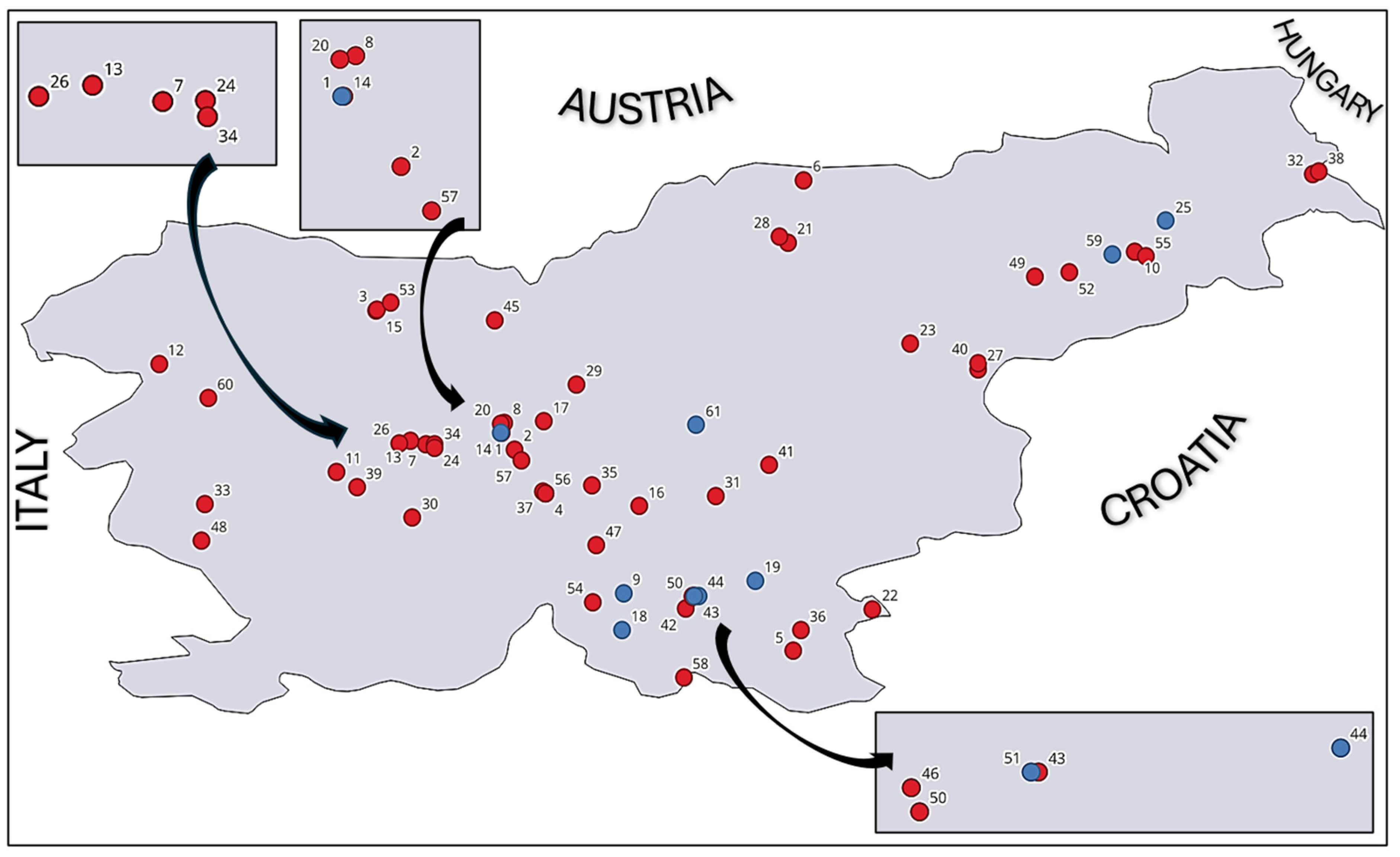
A systematic sampling of soil predatory mites was conducted across multiple regions of Slovenia between 25 July and 1 October 2024, and 17 June and 4 September 2025. During this period, a total of 61 samples (Figure 1) of organic material were collected. The majority of samples consisted of stable (livestock) manure, obtained either directly from livestock farms or from manure piles located in meadows and along field margins. Additional samples were collected from a range of other organic substrates, including vermicompost, compost, rotting onion material, corn silage residues and forest litter. Detailed information on sampling locations, including geographic coordinates, substrate type and associated habitats, is provided in Supplementary Table S1.
At each sampling site, approximately 1 kg of organic material was collected manually and placed into transparent plastic bags. The samples were then transported to the Laboratory of Phytomedicine, Biotechnical Faculty, University of Ljubljana, where soil mites were extracted using a modified Berlese–Tullgren method [33,34]. In the laboratory setup, a light source was positioned above a plastic funnel containing the organic material. A glass cylinder containing approximately 100 mL of 96% ethanol was placed beneath the funnel, while the sample was supported on a fine metal sieve with mesh openings measuring <1 mm. Over a period of 3–4 days, exposure to heat and light caused the mites to move downward through the sieve and into the ethanol. After extraction, mites were transferred from the collecting cylinder into Eppendorf tubes containing fresh 96% ethanol. The samples were subsequently stored at −18 °C until further processing and taxonomic identification.

2.2. Identification of Soil Predatory Mites

Morphological identification of extracted mites was carried out using standard acarological procedures. Mite specimens were cleared with lactic acid and mounted on microscope slides in Hoyer’s medium. Specimens were examined under a DIC microscope (Leica, DM2500) (Leica Microsystems GmbH, Wetzlar, Germany), photographed with Leica MC170 camera (Leica Microsystems GmbH, Wetzlar, Germany) and identified to species level. Species identification was performed using published taxonomic keys, original species descriptions and relevant taxonomic revisions [35,36,37,38,39]. When necessary, identifications were further verified using diagnostic morphological characters described in the literature. Comparisons with published illustrations were used only as a supplementary tool to support species-level identification, and not as the primary method. The number of collected specimens was recorded for each species whenever possible, allowing the assessment of relative abundance. In cases where exact counts were not available due to partial loss of field records, minimum confirmed abundance values were used. All mounted specimens will be deposited in the mite collection of the Department of Agronomy, University of Ljubljana.

2.3. Mapping of Sampling Sites

A map illustrating the geographic distribution of the sampling sites was created using QGIS Desktop (version 3.44.6). Geographic coordinates of all sampling locations were recorded in decimal degrees using the WGS 84 coordinate reference system (EPSG:4326) and imported into QGIS as a point layer from a CSV file. The national boundary of Slovenia was obtained from open-source spatial data (Natural Earth, Admin 0—Countries, 1:10 m resolution). Sampling sites were symbolized according to mite family using categorized symbology. All sampling sites, including locations where predatory mites were detected and those where no mites were recovered, are shown on the map. Sites were classified based on the presence or absence of predatory mites and are indicated by different symbols. Each sampling location was assigned a unique site identification number, which was used to link geographic locations with faunistic records and subsequent diversity analyses.
To evaluate community structure across habitat categories, diversity metrics were calculated based on species occurrence and minimum confirmed abundance data. Substrates were grouped into four habitat categories for analysis: manure/animal excrement (including stable manure, chicken manure and other animal excrement), compost/organic waste (including compost, vermicompost and municipal sludge), decomposing plant material (e.g., rotting onion and plant residues) and forest soil (including forest soil and litter). Species were assigned to these categories based on recorded substrate associations.
Species richness (S) was defined as the total number of taxa recorded within each habitat category.
The Shannon diversity index (H) was calculated by the following equation:
H = i = 1 S p i ( l n p i )
where pi represents the proportion of individuals belonging to species i (pi = ni/N), and natural logarithms (ln) were used. Minimum confirmed abundance values (ni) were used directly to calculate species proportions (pi), without further correction or normalization.
Pielou’s evenness (J) was calculated by the following equation:
J = H l n   S
Total abundance (N) was calculated as the sum of minimum confirmed counts within each habitat category. Relative abundance was calculated for dominant taxa based on minimum confirmed abundance values, and dominant taxa were identified based on their relative contribution to total abundance. Due to incomplete quantitative data for some samples, all calculations were based on minimum confirmed abundance values and should be interpreted as conservative estimates of actual community structure. More advanced similarity or richness estimator analyses were not applied due to incomplete quantitative data and the use of minimum confirmed abundance values.

3. Results

3.1. Community Composition and Diversity

A total of 31 mesostigmatid taxa belonging to nine families were recorded, providing an overview of community composition across sampled substrates in Slovenia. The occurrence and abundance of the recorded taxa are summarized in Table 1.
The most abundant species recorded in the present study was Fuscuropoda marginata (N = 49), followed by Phorytocarpais fimetorum (N = 31) and Cornigamasus ocliferius (N = 29). These taxa dominated the community, indicating a dominance structure characterized by a few highly abundant species. The majority of taxa were recorded in a low number of samples, indicating a high proportion of rare or infrequently encountered species. Most recorded taxa were associated with manure-based substrates, particularly stable manure. Abundance values are based on minimum confirmed counts for taxa where exact specimen numbers were not available. Due to partial loss of quantitative field records for some samples, abundance values represent minimum confirmed counts. Consequently, all community-level metrics should be interpreted as conservative estimates of actual abundance patterns.
To further characterize community structure across habitat types, diversity metrics were calculated (Table 2).
Diversity metrics (Table 2) revealed clear differences among habitat categories. Manure and animal excrement supported the highest species richness (S = 20) and total abundance (N ≥ 200), confirming these substrates as the primary habitat for mesostigmatid taxa. Compost and other organic waste showed moderate diversity (S = 10) with relatively high evenness (J = 0.83), indicating a more balanced distribution of taxa. In contrast, decomposing plant material and forest soil harbored fewer taxa (S = 5 and S = 3, respectively), although evenness was highest in forest soil (J = 0.87), suggesting a more uniform distribution of taxa despite low species richness.
Overall, the results suggest an ecological gradient from nutrient-rich, manure-based substrates supporting high abundance and species richness to more stable or resource-limited habitats characterized by lower richness but higher evenness. This pattern may reflect differences in resource availability and substrate stability among habitat types, with nutrient-rich substrates supporting higher population densities and more complex communities.
As demonstrated in Table 3, relative abundance analysis indicated that the community structure was dominated by a small number of taxa. Fuscuropoda marginata was the most prevalent species, accounting for 16.2% of the total minimum confirmed abundance. This was followed by Glyptholaspis confusa and Phorytocarpais fimetorum. Collectively, the dominant taxa constituted a significant proportion of the total community, while the majority of species were present in low numbers. This pattern reflects a typical right-skewed distribution, with a small number of dominant taxa and a large proportion of rare species.

3.2. Taxonomic Accounts of Mesostigmatid Mites

The following section provides taxonomic accounts of all recorded mesostigmatid taxa, organized by family, including brief notes on distribution and ecological associations.
Detailed occurrence records for each species, including sampling sites, geographic coordinates, dates, substrates and specimen counts, are provided in Supplementary Table S1.

3.2.1. Family Macrochelidae

The Macrochelidae are a diverse family of fast-moving predatory mites that typically inhabit nutrient-rich, short-lived substrates such as livestock manure, compost and decomposing organic matter. Their rapid colonization of these habitats is closely tied to phoretic dispersal on adult Diptera and dung beetles [30,32]. Ecologically, macrochelids function as generalist predators of nematodes, astigmatid mites, and early dipteran stages, and several species play an established role in reducing populations of manure-breeding flies. Their high reproductive rate, broad prey spectrum and strong synanthropy enable them to dominate agroecosystems with continuous organic input [23,24,40]. Although many species have been well studied due to their importance in biological control, regional faunistic knowledge remains uneven [4,41,42]. The Slovenian records presented here contribute new data on species composition and substrate associations of macrochelids in Central European agricultural landscapes.
The following presentation comprises detailed species accounts for all Macrochelidae recorded in Slovenia.
  • Glyptholaspis confusa (Foà, 1900)
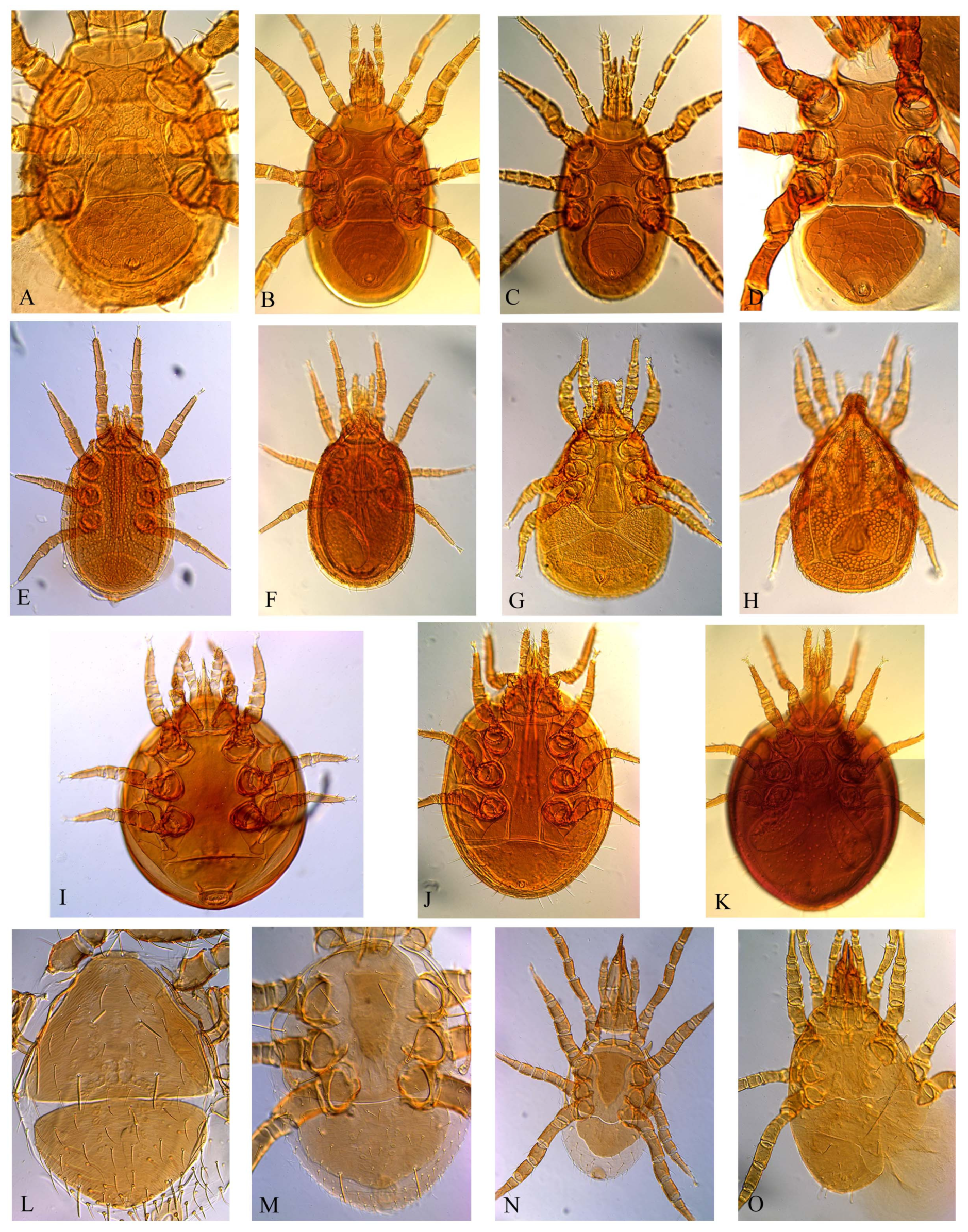
Distribution: This species is recorded for the first time from Slovenia. Primarily a Palearctic species, G. confusa is distributed across Southern, Central and Mediterranean Europe, with additional records from the Middle East [43,44]. It is frequently encountered in synanthropic environments, especially near livestock facilities (Figure 2A).
Ecological notes: G. confusa was recorded from 11 sites, predominantly in stable manure, municipal sludge and chicken manure, and was associated with manure and organic waste habitats. According to the minimum confirmed abundance, this species represents one of the dominant taxa in manure-associated habitats. This species inhabits decomposing organic substrates and is typical of manure- and compost-associated environments. It is a generalist predator feeding on nematodes and soft-bodied arthropods and often co-occurs with muscid larvae and dung beetles, suggesting opportunities for phoretic dispersal. Its documented presence in animal carrion [45] indicates a broad tolerance for different stages of organic matter decomposition.
Macrocheles mammifer (Berlese, 1918)
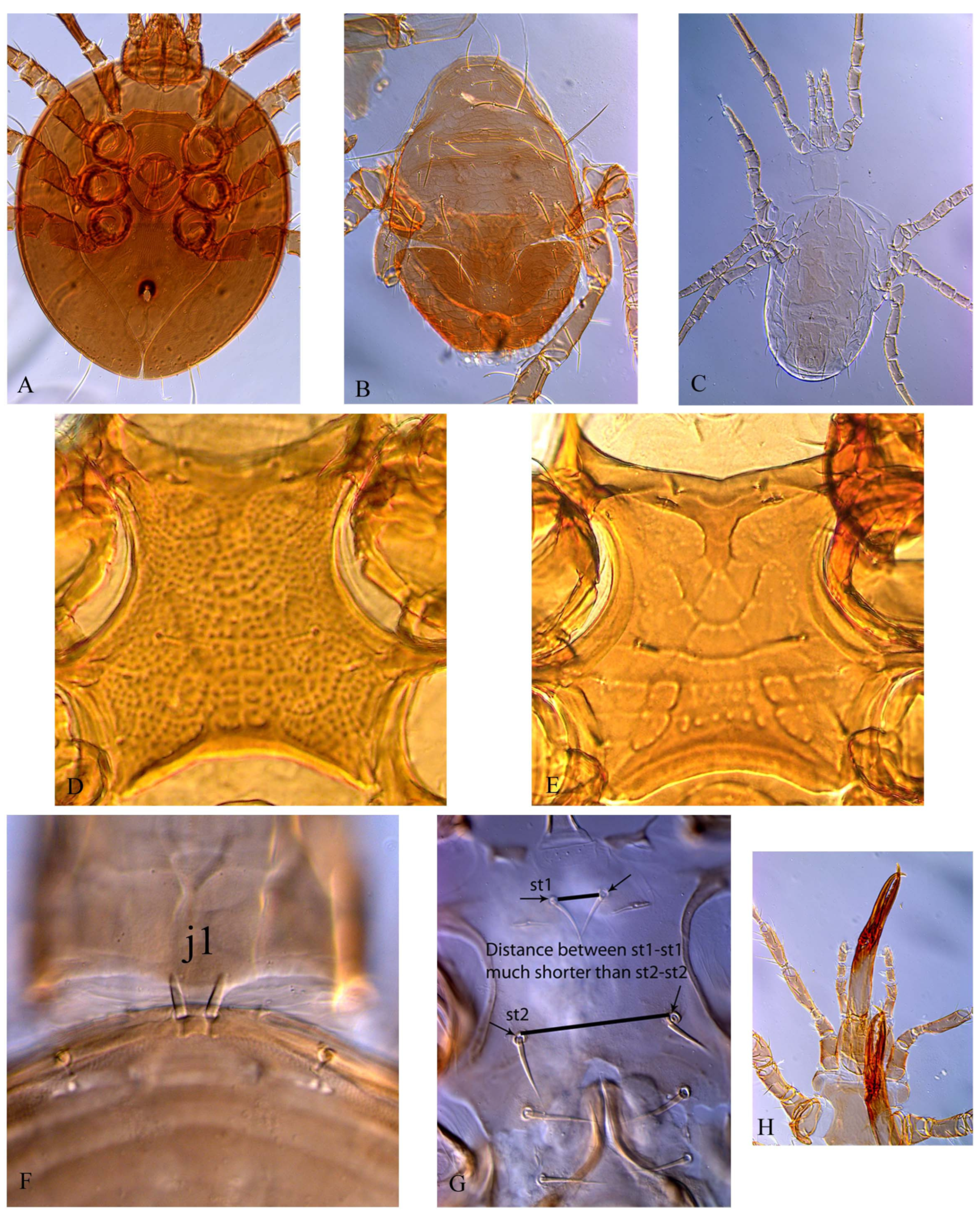
Distribution: This species is recorded for the first time from Slovenia. A predominantly Palearctic species, with records extending across parts of Eurasia and the Middle East [41,46], it is regularly reported from dung-based habitats throughout temperate regions (Figure 3D).
Ecological notes: M. mammifer was recorded from three sites, exclusively in stable manure. It inhabits livestock manure and organically enriched soil–manure interfaces, where it preys on nematodes, astigmatid mites and early dipteran stages [23,24,30]. Its frequent association with dung beetles and occasionally adult Diptera demonstrates reliance on phoresy for the colonization of short-lived substrates. The species typically reaches peak abundance during intermediate stages when prey density is high [41]. Slovenian records match its known ecological preferences and confirm its presence in regional dung-associated predator populations.
  • Macrocheles matrius (Hull, 1925)
Distribution: This species is recorded for the first time from Slovenia. A cosmopolitan and strongly synanthropic species commonly found in manure, poultry litter and compost worldwide [40,47].
Ecological notes: M. matrius was recorded from two sites in stable manure. It is a highly adaptable generalist predator, feeding on nematodes, astigmatid mites and early dipteran stages. Efficient phoresy on Musca domestica [30] enables rapid colonization of fresh manure. Its biocontrol potential has been demonstrated in the suppression of house fly larvae [48]. Slovenian records from two distinct regions indicate that the species is well established in manure-rich agricultural habitats.
  • Macrocheles nataliae (Bregetova & Koroleva, 1960)
Distribution: This species is recorded for the first time from Slovenia. M. nataliae was originally described from Lithuania, where it was collected from nests of small mammals, and has subsequently been reported from several parts of Central Europe as well as from Russia (including Siberia and Sakhalin) and North America [4,49,50,51,52,53].
Ecological notes: M. nataliae was recorded from a single site in stable manure. This species occupies moist, shaded manure microhabitats, often in decaying substrates and phoretic on various beetles, even the necrophilous [54,55]. Although ecological data remain limited, it is presumed to prey on early dipteran stages and small arthropods in accordance with patterns observed in related species [23,40]. Its patchy distribution likely reflects sensitivity to humidity and substrate decomposition stage [41]. The Slovenian record aligns with the expected but under-documented Central European distribution of this rarely collected species.
  • Macrocheles peniculatus (Berlese, 1904)
Distribution: This species is recorded for the first time from Slovenia. Distributed mainly in the Mediterranean and Palearctic regions, with numerous records from Southern and CCCentral Europe [40,41] (Figure 2D and Figure 3E).
Ecological notes: M. peniculatus was recorded from a single site in decomposing plant material (rotting onion substrate). Unlike many congeners, M. peniculatus occurs predominantly in plant-derived decomposing substrates such as rotting bulbs, onions, and vegetative compost. These habitats are characterized by high humidity and microbial activity [40,45]. It co-occurs with astigmatid mites, including Rhizoglyphus spp. [9,11], raising the possibility of opportunistic predation, although this has not been formally documented.
  • Macrocheles subbadius (Berlese, 1904)
Distribution: This species is recorded for the first time from Slovenia. A cosmopolitan and abundant species reported from temperate and subtropical regions worldwide [23,40,41] (Figure 2C and Figure 3F).
Ecological notes: M. subbadius was recorded from five sites, mainly in stable manure and occasionally in plant residues. It occupies a wide range of decomposing substrates, including fresh manure, compost and silage. It tolerates lower moisture levels than many macrochelids and commonly occurs in microbially active habitats with dense populations of nematodes and microarthropods [24,41]. It is a well-known predator of dipteran eggs and larvae and contributes significantly to the suppression of manure-breeding flies [23,47]. Slovenian records align with its known ecological breadth and dominance in manure ecosystems.
  • Macrocheles merdarius (Berlese, 1889)
Distribution: This species is recorded for the first time from Slovenia. A cosmopolitan synanthropic species widely reported from dung, compost, rodent nests and organic waste across Europe and other regions [40,41].
Ecological notes: M. merdarius was recorded from two sites in stable manure and chicken manure. It exploits a broad range of decomposing substrates and frequently engages in phoresy on dung beetles and muscid flies, allowing rapid colonization of fresh manure. It preys on nematodes, astigmatid mites, and early dipteran stages and contributes to nutrient cycling within organically enriched soils [56,57].
  • Macrocheles muscaedomesticae (Scopoli, 1772)
Distribution: This species is recorded for the first time from Slovenia. A globally cosmopolitan species strongly associated with synanthropic, livestock-based environments [35,36].
Ecological notes: M. muscaedomesticae was recorded from two sites associated with organic waste, including composted turf and chicken manure. A key predator in manure ecosystems, M. muscaedomesticae is intimately linked with Musca domestica, on which it regularly engages in phoresy [30]. It preys on eggs and larvae of dung-breeding flies and can markedly reduce muscid populations [23,40]. Recent observations of phoresy on Apis mellifera [58] suggest broader dispersal capacity than previously recognized.
  • Macrocheles glaber (Müller, 1860)
Distribution: M. glaber is a widely distributed Palearctic species, recorded throughout much of Europe and extending into parts of Western and Central Asia. It is among the most frequently reported macrochelid mites in faunistic surveys of agricultural and synanthropic habitats and is particularly common in regions with intensive livestock production [23,40,41].
Ecological notes: M. glaber was recorded from five sites, mainly in stable manure and organic waste substrates such as vermicompost. This species is typically associated with livestock manure, dung heaps, compost and organically enriched soils. It is a generalist predator feeding on nematodes, astigmatid mites and early developmental stages of dipteran flies, similar to other manure-inhabiting Macrochelidae [23,24]. M. glaber frequently occurs in moist manure microhabitats during intermediate stages of decomposition, when prey availability is high. Phoresy on dung beetles and adult Diptera has been repeatedly reported and is considered a key mechanism enabling rapid colonization of ephemeral substrates [24,41]. Although not as intensively studied as M. muscaedomesticae, M. glaber is regarded as an important component of manure-associated predator communities and likely contributes to the regulation of microbivore populations within decomposer food webs.
  • Macrocheles perglaber (Filipponi & Pegazzano, 1962)
Distribution: This species is recorded for the first time from Slovenia. M. perglaber is a Palearctic species with confirmed records primarily from Southern and Central Europe. Compared with M. glaber, it appears to have a more restricted documented distribution, although this may partly reflect difficulties in reliable morphological separation between the two species [40,41,49] (Figure 2B).
Ecological notes: M. perglaber was recorded from three sites in stable manure. Ecologically, M. perglaber closely resembles M. glaber and other manure-associated macrochelids. It has been reported from livestock manure, compost and dung-enriched soils, where it functions as a generalist predator of nematodes, astigmatid mites, and dipteran eggs and larvae [23,41]. Available data suggest that M. perglaber occupies similar successional stages of manure decomposition and likely exhibits comparable phoretic behavior on dung beetles and flies, although species-specific studies focusing exclusively on this species remain scarce. Due to these ecological similarities and overlapping morphological characters, M. perglaber is often underreported or merged with M. glaber in faunistic studies.
  • Macrocheles glaber/perglaber species complex
Distribution: Specimens attributable to the Macrocheles glaber/perglaber species complex are widespread across the Palearctic region and are commonly reported from manure-based habitats in Europe. Due to overlapping morphological characters, records of these species are frequently treated jointly in faunistic and ecological studies [40,41].
Ecological notes: The M. glaber/perglaber species complex was recorded from six sites, primarily in stable manure and animal excrement. Species of this complex are characteristic inhabitants of livestock manure, compost and other organically enriched substrates. They function as generalist predators of nematodes, astigmatid mites, and early dipteran stages and are regularly encountered in synanthropic environments associated with animal husbandry. The inability to reliably separate M. glaber and M. perglaber based on routine morphological examination is well documented and reflects subtle diagnostic differences that often require well-preserved adult females or supplementary characters [40,41]. Consequently, treatment of ambiguous material as a species complex is considered taxonomically appropriate and ecologically justified.

3.2.2. Family Parasitidae

The Parasitidae constitute a widespread family of soil-dwelling mesostigmatid mites found in forest litter, manure, compost, moss, decomposing vegetation and organic-rich topsoil [35,59]. Many species are predators of nematodes, larvae of insects, springtails and astigmatid mites, playing a significant role in regulating soil microfaunal communities [22,60]. Several parasitoids are associated with manure and decomposing plant matter, where they occupy mid- to late-stage successional microhabitats. Some species exhibit facultative phoresy on beetles and flies, which enhances dispersal across patchy organic substrates [61]. The family includes taxa of potential applied relevance: species of Phorytocarpais and Parasitus have been investigated as natural enemies of pest mites, including bulb mites [9,25]. Slovenian material demonstrates the presence of several characteristic Palearctic parasitids, thereby contributing to a more complete understanding of their regional distribution.
The following species were recorded from Slovenian agroecosystems during the present survey.
  • Cornigamasus ocliferius (Skorupski & Witaliński, 1997)
Distribution: This species is recorded for the first time from Slovenia. C. ocliferius is primarily a Palearctic species with records concentrated in Central and Eastern Europe, particularly in manure-rich habitats, compost and soil–litter interfaces, and has been reported from several Central European countries, including Slovakia, the Czech Republic, Poland, Germany and Hungary [35,59,62] (Figure 2N,O).
Ecological notes: C. ocliferius was recorded from six sites, exclusively in stable manure. Based on minimum confirmed abundance, this species represents one of the dominant taxa, particularly in manure-based substrates. This species inhabits moist, organically enriched substrates such as manure and compost. It is considered a generalist predator feeding on nematodes, astigmatid mites and early dipteran larvae [59,63,64]. C. ocliferius is frequently associated with livestock environments and may disperse phoretically on dung beetles [59,63], enabling rapid colonization of ephemeral nutrient-rich habitats. Its repeated detection across four geographically distinct Slovenian sites suggests that the species is well established in temperate agricultural systems and contributes to the natural suppression of microbivorous soil fauna.
  • Cornigamasus lunaris (Berlese, 1882)
Distribution: This species is recorded for the first time from Slovenia. C. lunaris is widely distributed across the Palearctic region, including Central and Southern Europe, the Mediterranean Basin and Western Asia [35,59,65]. It is commonly encountered in forest litter, compost, manure and humus-rich soils.
Ecological notes: C. lunaris was recorded from two sites associated with animal excrement and compost. The species occupies moist organic substrates and preys upon nematodes and small arthropods. Associations with dung beetle tunnels, decaying vegetation and intermittently humid microhabitats suggest moderate tolerance to fluctuating moisture conditions [35,59]. Although less studied than other parasites, C. lunaris is regarded as an active soil predator contributing to microarthropod community regulation.
  • Parasitus coleoptratorum (Linnaeus, 1758)
Distribution: This species is recorded for the first time from Slovenia. A widespread Holarctic species occurring throughout Europe, Asia and North America [35,59,65] (Figure 2M). It is one of the most commonly recorded parasitid in manure, compost and litter-rich soils and frequently engages in phoresy on beetles, especially Carabidae and Staphylinidae.
Ecological notes: P. coleoptratorum was recorded from four sites in stable manure. It is a generalist predator with broad ecological tolerance, feeding on nematodes, insect larvae and astigmatid mites [59,63,64]. Although its predation on bulb mites has not been directly studied, the closely related Parasitus fimetorum preys on Rhizoglyphus robini [25], indicating potential functional overlap. The Slovenian records correspond with typical ecological patterns, confirming its role in decomposer systems and natural suppression of soil-dwelling microarthropods.
  • Phorytocarpais americanus (Banks, 1904)
Distribution: This species is recorded for the first time from Slovenia. Originally described from North America, it is now regarded as a cosmopolitan species with synanthropic populations established across Europe, Asia and the Americas. In Europe, it has been reported from several Central European countries, including Slovakia, the Czech Republic, Poland, Germany and Hungary [35,59,62,65].
Ecological notes: P. americanus was recorded from three sites, mainly in compost and stable manure. It inhabits manure, compost, enriched soils and stored organic materials. It is a generalist predator of nematodes, astigmatid mites and dipteran eggs, and is often associated with greenhouse conditions and compost-heated substrates [35,63,64]. Its capacity to thrive in stable, moisture-rich anthropogenic environments likely facilitates its establishment in a range of agricultural habitats.
  • Phorytocarpais fimetorum (Berlese, 1904)
Distribution: This species is recorded for the first time from Slovenia. A cosmopolitan species recorded across Europe, North America and Australia, typically occurring in livestock manure, compost, hay residues and other decaying organic substrates [35,59,65] (Figure 2L and Figure 3G).
Ecological notes: P. fimetorum was recorded from seven sites across a range of organic substrates, including manure, compost, municipal sludge and animal excrement. According to minimum confirmed abundance, this species represents one of the dominant taxa in manure- and organic waste-associated habitats. It is of applied interest due to its demonstrated ability to suppress Rhizoglyphus robini in peat substrates [25]. Its predation efficiency declines in dry substrates such as vermiculite, indicating strong dependence on moisture. Besides its role in biological control, the species preys on nematodes and microarthropods in manure and compost [35]. Slovenian occurrences support its preference for moist, decomposing substrates typical of livestock and composting environments.
  • Phorytocarpais sp.
Distribution: Because the available specimens could not be reliably identified to species level, their precise distribution cannot be determined. Species of the genus Phorytocarpais occur broadly throughout the Palearctic and Nearctic regions [59,65].
Ecological notes: Phorytocarpais sp. was recorded from two sites in decomposing plant material and compost. Members of Phorytocarpais are moisture-dependent predators inhabiting manure, compost and richly decomposed plant material. Their diet includes nematodes, astigmatid mites and small dipteran larvae [35]. The association with rotting onion is notable, as such substrates frequently attract bulb mites (Rhizoglyphus spp.) [25].
  • Rhabdocarpais mammilatus (Berlese, 1904)
Distribution: This species is recorded for the first time from Slovenia. A widespread Palearctic species recorded from forest litter, humus-rich soils, manure and agricultural substrates across Europe and Western Asia [35,59,65].
Ecological notes: R. mammillatus was recorded from a single site in manure-based compost. It inhabits moist organic substrates and preys on nematodes and small arthropods. Its frequent occurrence in forest litter and manure systems indicates moderate ecological flexibility [35,59].
  • Parasitus mustelarum (Oudemans, 1903)
Distribution: This species is recorded for the first time from Slovenia. P. mustelarum is a Palearctic species with records primarily from Central and Northern Europe. It has been reported from a range of temperate regions, often in association with mammal nests and organic-rich substrates influenced by vertebrate activity. Published records originate mainly from Europe, including faunistic surveys of soil and nest-associated Mesostigmata [35,54,59]. Its apparent rarity in collections is likely related to its specialized microhabitat preferences rather than true scarcity.
Ecological notes: P. mustelarum was recorded from two sites in stable manure. This species is characteristically associated with organic substrates influenced by mammals, particularly nests and resting sites of mustelids and other small mammals, where organic debris, hair and prey remain accumulate. As with other members of the genus Parasitus, P. mustelarum is regarded as a free-living predatory mite feeding on nematodes, astigmatid mites, and other small soil- and nest-dwelling arthropods [35,59]. Species of Parasitus are known to tolerate fluctuating microclimatic conditions and to exploit nutrient-rich, decomposing substrates, including manure, compost and mammal-associated detritus. Facultative phoresy on insects, particularly beetles, has been documented for several congeners and may also contribute to the dispersal of P. mustelarum between patchily distributed habitats [54,59]. The occurrence of P. mustelarum in Slovenia is ecologically consistent with its known preference for organically enriched microhabitats and further expands the documented regional distribution of this rarely recorded parasitid species.

3.2.3. Family Urodinychidae

Urodinychidae are mesostigmatid mites typically associated with moist, organically enriched substrates, including livestock manure, compost, rotting vegetation and forest litter. Many species maintain phoretic relationships with Scarabaeidae, Staphylinidae and other coprophilous insects, a strategy that enables rapid colonization of nutrient-rich but ephemeral habitats [50,52]. Ecologically, urodinychids act as microbivores or facultative predators feeding on fungi, nematodes and small arthropods, contributing to decomposition processes and soil nutrient cycling [50,51,52]. Their distribution spans much of the Palearctic, with some species extending into temperate Asia and the Mediterranean region. Although morphologically well defined, their ecology remains comparatively understudied, with most species known only from faunistic surveys. The Slovenian records fall within expected habitat ranges and highlight the presence of several widespread urodinychid taxa in agricultural and semi-natural environments.
  • Uroobovella fimicola (Vitzthum, 1923)
Distribution: This species is recorded for the first time from Slovenia. U. fimicola is a widely distributed Palearctic species occurring across Central and Northern Europe [23,52]. It is regularly recorded from livestock manure, decomposing plant residues and organically enriched soils [3,50,52,66]. Faunistic surveys from agricultural and semi-natural habitats indicate that U. fimicola is a characteristic member of manure- and compost-associated uropodine communities [50,51,67] (Figure 2E,F).
Ecological notes: U. fimicola was recorded from five sites, mainly in stable manure and decomposing plant material. The species typically inhabits moist organic substrates in early to intermediate stages of decomposition. Like other Uropodina, U. fimicola is considered a facultative microbivore and predator, feeding on fungi, nematodes and small arthropods [51,52,68,69]. Its frequent association with coprophilous coleopterans enhances its dispersal among patchy manure deposits [52,67]. The Slovenian records from both manure and rotting onion indicate a broader ecological tolerance, consistent with previous observations of the species in decomposing plant substrates as well as livestock waste [3,50,52,66].
  • Fuscuropoda marginata (C.L. Koch, 1839)
Distribution: This species is recorded for the first time from Slovenia. F. marginata is one of the most widespread species within the family Urodinychidae, occurring across the Palearctic and extending into temperate Asia [51,52]. It is frequently encountered in agricultural soils, manure-rich habitats, compost heaps and peridomestic organic substrates [50,67] (Figure 2J,K).
Ecological notes: F. marginata was recorded from 12 sites and exhibited a broad ecological distribution across manure, compost and other organic waste substrates. Based on minimum confirmed abundance, this species represents the most dominant taxon in the studied community. This species is an ecological generalist and one of the most common uropodines in anthropogenic environments. It thrives in a broad range of decomposing substrates, including manure, compost and bird droppings, demonstrating high tolerance to moisture fluctuations and varying nutrient content [51,68]. Phoretic relationships with beetles, especially Scarabaeidae and Staphylinidae, are well documented and play a key role in its dispersal among ephemeral organic habitats [50,67]. Its widespread occurrence in Slovenia across diverse substrates and localities corresponds closely with its known ecological flexibility in European agroecosystems [67].
  • Uroobovella pyriformis (Berlese, 1916)
Distribution: This species is recorded for the first time from Slovenia. U. pyriformis is known from scattered records across Southern and Central Europe, inhabiting soil, decomposing plant material and manure-enriched substrates [50,51,52]. It is frequently associated with dung beetles or other coprophilous insects, which likely function as phoretic carriers.
Ecological notes: U. pyriformis was recorded from a single site in stable manure. Although species-specific ecological information is limited, U. pyriformis is considered a facultative predator or microbivore, similar to other members of Uroobovella [51,68]. Available observations indicate a preference for moderately decomposed organic substrates with stable moisture. The lack of substrate data from Slovenian material prevents habitat-specific conclusions; however, the record fits well within the expected distribution and ecological range documented for this species in the Western Palearctic [23,50,52].
  • Vinicoloraobovella vinicolora (Vitzthum, 1923)
Distribution: This species is recorded for the first time from Slovenia. V. vinicolora is distributed across Southern and southeastern Europe, particularly in vineyards, orchard soils and livestock-influenced agroecosystems [23,50]. Additional records from Hungary document its frequent presence in vineyard soils and organic debris beneath perennial crops [3,23,50,52,66].
Ecological notes: V. vinicolora was recorded from three sites in stable manure. This species is considered a habitat specialist associated with moist, organically enriched soils. Although detailed trophic studies are lacking, broader family-level data suggest feeding on fungi, nematodes and small arthropods [23,52,68,69]. The Slovenian records from stable manure align with its known preference for nutrient-rich microhabitats in Southern European agricultural systems.

3.2.4. Family Diplogyniidae

The Diplogyniidae represent a relatively small but ecologically diverse family of mesostigmatid mites associated primarily with decomposing organic substrates, soil enriched with organic matter, and nests of vertebrates and insects [33,70]. Many diplogyniid species occur in manure, compost and decaying plant residues, habitats characterized by high microbial activity and abundant microfauna. Dispersal is often facilitated by phoretic associations with beetles, particularly coprophilous and saprophagous taxa, enabling colonization of short-lived nutrient-rich habitats [50,71,72,73]. Diplogyniid mites are generally regarded as microbivores or facultative predators, feeding on fungi, nematodes and small arthropods, although their trophic roles remain insufficiently studied [70]. The family is distributed mainly across tropical and temperate regions of the Afrotropical, Palearctic, and Oriental regions, with several species occurring in synanthropic environments in Europe. The Slovenian records presented here reflect typical habitat associations of Diplogyniidae in agricultural landscapes.
  • Lobogynoides longisetosus (Samšiňák, 1960)
Distribution: This species is recorded for the first time from Slovenia. L. longisetosus is a rarely reported Palearctic species known from Central and Eastern Europe, primarily from livestock manure, compost heaps and organically enriched soils [33,50,70].
Ecological notes: L. longisetosus was recorded from a single site in stable manure. The species typically inhabits moist manure microhabitats with elevated microbial activity. In line with general patterns observed in Diplogyniidae, L. longisetosus is assumed to function as a microbivore or facultative predator feeding on fungi, nematodes and small arthropods [33,70]. The Slovenian record from Sneberje corresponds well with previously documented habitat preferences and supports the view that the species is associated with livestock-derived organic substrates.
  • Lobogynium sudhiri (Datta, 1967)
Distribution: This species is recorded for the first time from Slovenia. L. sudhiri has been recorded from the Palearctic and parts of the Oriental region and is typically associated with manure, compost-enriched soils and decaying vegetation [50,74] (Figure 3A).
Ecological notes: L. sudhiri was recorded from four sites in manure and compost. The species occurs in moist, organically rich substrates and is presumed to function as a microbivore or opportunistic predator, consistent with the ecological roles described for Diplogyniidae [33,70]. Its occurrence in both stable manure and compost-derived grass material in Slovenia indicates ecological plasticity and the ability to exploit a range of decomposing organic habitats. Given the limited ecological data available for this species, the Slovenian records contribute valuable information to its known distribution and habitat use in Central Europe.
  • Lobogynoides spp.
Distribution: Because the Slovenian material could not be identified to species level, a precise distribution cannot be assigned. The genus Lobogynoides is known primarily from the Palearctic region, with described species recorded from Europe and parts of Asia, mainly in association with organic-rich substrates influenced by vertebrate activity [50,75]. Faunistic records indicate that representatives of the genus are sporadically collected and likely underreported due to their cryptic habits and limited taxonomic coverage.
Ecological notes: A species of Lobogynoides spp. was recorded from stable manure in one site. Lobogynoides spp. are members of the family Diplogyniidae and are typically associated with decomposing organic substrates, including manure, compost and soil enriched with animal-derived organic matter. Available data suggest that diplogyniid mites function primarily as microbivores or facultative predators, feeding on fungi, nematodes and small arthropods [70,75]. Several diplogyniids, including species of Lobogynoides, are known to exhibit phoretic associations with beetles, which facilitate dispersal between ephemeral and spatially fragmented habitats such as dung pats, manure accumulations and compost heaps [50]. The occurrence of Lobogynoides spp. in the present study is therefore ecologically consistent with known habitat preferences of the genus and supports its association with nutrient-rich, decomposing substrates in agricultural or semi-synanthropic environments. Due to the absence of reliable species-level diagnostic characters in the available material, the Slovenian specimens are conservatively treated at the genus level. This approach is taxonomically appropriate and avoids overinterpretation of limited morphological evidence.

3.2.5. Family Trachytidae

The family Trachytidae comprises a group of free-living mesostigmatid mites primarily associated with forest soils, leaf litter, decaying organic matter and dung-enriched microhabitats. Species of Trachytes are characteristic components of soil predator communities in temperate forests, where they occur in the upper soil layers, under dung pats and in humus-rich substrates [23,68]. Members of the family are generally considered generalist predators, feeding on nematodes, small arthropods and possibly insect eggs, and contribute to the regulation of soil microfauna [33,70]. Trachytids do not exhibit obligate phoresy and are typically less mobile than many manure-associated Mesostigmata. Their occurrence is therefore often linked to relatively stable microhabitats with sustained moisture and organic input, such as forest soils influenced by grazing animals or wildlife [68]. The Slovenian records represent typical ecological conditions for the family and provide additional data on the distribution of Trachytes species in Central European forest ecosystems.
  • Trachytes arcuatus (Hirschmann & Zirngiebl-Nicol, 1969)
Distribution: This species is recorded for the first time from Slovenia. T. arcuatus is a widespread Palearctic species, recorded throughout much of Europe, including the Central, Eastern and Northern regions [23,68] (Figure 2G). It is primarily associated with forest soils, leaf litter and dung-influenced substrates.
Ecological notes: T. arcuatus was recorded from forest soil associated with animal excrement. This species typically inhabits moist forest soils rich in organic matter, often occurring beneath dung pats, decaying litter or in humus layers where microarthropod abundance is high [68]. T. arcuatus is regarded as a generalist predator feeding on nematodes and small soil arthropods, contributing to the regulation of decomposer communities. Its presence under cow excrement in a forest setting in Slovenia corresponds well with previous observations that dung input can locally increase trachytid abundance by enhancing prey availability and moisture conditions [68,70].
  • Trachytes minima (Trägårdh, 1908)
Distribution: This species is recorded for the first time from Slovenia. T. minima is a Palearctic species with records across Europe, particularly in forested landscapes and semi-natural habitats [23,68]. It is generally less frequently reported than T. arcuatus, likely reflecting its small size and cryptic lifestyle (Figure 2H).
Ecological notes: T. minima was recorded from forest soil associated with animal excrement. The species is typically associated with leaf litter, humus-rich soils and dung-influenced forest microhabitats. Like other members of the genus, T. minima is considered a predator of nematodes and small arthropods inhabiting decomposing organic matter [33,68]. Its occurrence under cow excrement in Slovenian forest soil suggests that localized nutrient enrichment and increased prey density may facilitate its presence, even in habitats otherwise dominated by forest-associated mesostigmatid communities.

3.2.6. Family Veigaiidae

Veigaiidae are free-living, soil-dwelling mesostigmatid mites that occur mainly in leaf litter, humus-rich forest soils and other organic surface horizons; some taxa also occur in decaying organic matter in anthropogenic habitats [76]. They are generally regarded as predators or facultative predators within soil food systems and, among others, also include the genera Veigaia and Gamasolaelaps [22,70,77]. In Europe, the genus Veigaia is relatively well documented taxonomically, with modern keys and regional distribution data available, and several species (including V. cerva) are widespread in temperate forest soils [50,78,79].
  • Gamasolaelaps sp.
Distribution: Because the available specimen could not be identified to species level, a precise distribution cannot be assigned. Species of the genus Gamasolaelaps are distributed mainly in the Palearctic region, with records across Europe and also parts of Western Asia (e.g., Iran). The genus has been reported primarily from soil, litter and organically enriched substrates, including manure, although its taxonomy and distribution remain incompletely resolved due to historical changes in family-level classification [76].
Ecological notes: Species of Gamasolaelaps spp. were recorded from a single site in stable manure and are treated as free-living edaphic mites; records typically originate from soil, leaf litter and other organically enriched substrates. In modern taxonomic treatments and regional faunistic reviews, the genus is consistently included among predatory or facultatively predatory members of the family Veigaiidae [22,70,77]. Occasional records from manure and compost have been interpreted as opportunistic habitat use rather than evidence of strict habitat specialization, reflecting the ecological flexibility characteristic of many soil-dwelling mesostigmatid mites [50,78]. The Slovenian finding of Gamasolaelaps in stable manure therefore most likely represents exploitation of a locally organic-rich microhabitat rather than a primary association with dung.
  • Veigaia cerva (Kramer, 1876)
Distribution: This species is recorded for the first time from Slovenia. V. cerva is widely distributed in Europe and has also been reported from North America and the Russian Far East [80,81,82]. It is regarded as one of the characteristic representatives of the genus Veigaia in temperate forest ecosystems [79,83] (Figure 3B,H).
Ecological notes: V. cerva was recorded from two sites in forest soil and leaf litter. This species is typically associated with moist forest soils and leaf litter, where it inhabits stable microhabitats with sustained organic input. V. cerva acts as a predator of nematodes and small soil arthropods and is considered an important component of forest soil predator guilds [70,77]. Behavioral work on V. cerva confirms its fully soil-dwelling lifestyle and provides detailed observations of oviposition behavior under laboratory video monitoring, supporting its characterization as an active edaphic species rather than a transient inhabitant of organic waste [84]. Its occurrence under leaf litter of Carpinus betulus in Slovenia corresponds closely with published ecological data, which consistently report the species from deciduous forest soils rather than from strongly disturbed or ephemeral substrates. The Slovenian record thus represents a typical habitat association and confirms the presence of V. cerva in semi-natural forest ecosystems of the region [83].

3.2.7. Family Epicriidae

The family Epicriidae comprises free-living mesostigmatid mites that are primarily associated with soil and litter habitats, including humus-rich forest soils, decaying plant material and organically enriched microhabitats [79,85]. The members of this family are generally characterized by robust body morphology and distinctive idiosomatic structures. These characteristics have been linked to their predatory lifestyle [86]. Epicriids are considered predators or facultative predators within soil food systems, feeding primarily on small arthropods and other soil-dwelling invertebrates [87]. From a taxonomic perspective, Epicriidae is a relatively small but well-defined family, with the genus Epicrius Canestrini and Fanzago, 1877 representing its most diverse and widely distributed species in the Palearctic region [85,86,88]. It is evident that species of Epicrius are most frequently recorded from forest litter, moss and decaying organic matter. However, they are also occasionally found in substrates influenced by anthropogenic activities, reflecting moderate ecological flexibility at the genus level [88].
  • Epicrius nr. spinituberculatus (Evans, 1958)
Distribution: This species is recorded for the first time from Slovenia. The distribution of Epicrius spinituberculatus cannot be assessed based on the present material, as the Slovenian specimen could not be confidently assigned to species level and is therefore treated as E. nr. spinituberculatus. It is evident that species of the genus Epicrius are widely distributed across the Palearctic region. Confirmed records of this genus are present in Central and Southern Europe [85,86,88].
Ecological notes: E. nr. spinituberculatus was recorded from a single site in decomposing plant material. There is an absence of ecological information for this species in the published literature. Therefore, ecological interpretation of the Slovenian specimen is based on data available for the genus Epicrius and the family Epicriidae. It is widely accepted that species from the genus Epicrius are regarded as predatory mites, as evidenced by the presence of morphological adaptations in their forelegs and mouthparts that are related to prey capture [87]. These species are typically found to inhabit moist, organically rich substrates with abundant soil microarthopods [85,88]. The presence of E. nr. spinituberculatus in rotting onion material in Slovenia represents an unusual but ecologically logical habitat. Such substrates constitute localized, nutrient-rich microhabitats that support dense communities of decomposers and potential prey. Although epicriids are most often recorded from forest soils and litter, records from decomposing plant material are consistent with the ecological diversity observed at the genus level [88]. Consequently, the Slovenian finding is more likely to represent an opportunistic exploitation of a suitable organic microhabitat, as compared to specialization for bulb-derived substrates.

3.2.8. Family Uropodidae

The Uropodidae are a distinctive family of soil-dwelling mesostigmatid mites characterized by a complex life cycle that includes a phoretic deutonymphal stage. Members of the family are most commonly associated with manure, dung pats, compost, soil rich in organic matter, and other short-lived, nutrient-rich substrates, particularly in agricultural and horticultural landscapes [89,90]. A defining ecological feature of uropodid mites is their highly specialized phoresy. Deutonymphs attach to insect carriers—most frequently coprophilous beetles—by means of a pedicel produced by specialized pedicellar organs. This adaptation facilitates efficient dispersal between habitats that are spatially and temporally fragmented, such as dung pats and manure accumulations [69,73]. Numerous studies have demonstrated that the success of phoretic dispersal depends on beetle species, body size, surface morphology and seasonal dynamics, resulting in non-random patterns of host use and attachment site selection [91,92,93,94].
Post-phoretic stages of these mites develop within manure and organically enriched soils, where they function mainly as microbivores or facultative predators, feeding on nematodes and other components of the decomposer microfauna [89]. Consequently, Uropodidae are a distinctive and frequently prevalent element of dung-associated mite communities in temperate agroecosystems.
  • Uropoda orbicularis (Müller, 1776)
Distribution: This species is recorded for the first time from Slovenia. U. orbicularis is a widely distributed and well-documented species endemic to the Palearctic region. It is one of the most extensively studied members of the family Uropodidae (Figure 2I). Its occurrence has been documented on multiple occasions throughout Europe in close association with livestock manure and dung beetle populations. The distribution of the species is closely related to effective phoretic dispersal [90,91].
Ecological notes: U. orbicularis was recorded from six sites in stable manure. It is a characteristic coprophilous uropodid mite whose life cycle is tightly connected to dung-associated insects. Deutonymphs of this species commonly attach phoretically to beetles belonging to Scarabaeidae, Geotrupidae, Aphodiidae, Hydrophilidae and Histeridae, which act as primary dispersal vectors between dung pats and manure accumulations [90,91]. Detailed research has demonstrated that factors such as infestation intensity, attachment site selection and pedicel length are influenced by beetle morphology, gender and body size, as well as by seasonal and environmental factors [69,92]. After detachment from the carrier, post-phoretic stages complete development within manure or manure-enriched soil, where the species functions as a facultative predator or microbivore, feeding primarily on nematodes and other elements of the decomposer microfauna [89]. The repeated recovery of U. orbicularis from stable manure in Slovenia is therefore fully consistent with its known ecology and confirms its status as a regular and well-established component of manure-associated mite populations in temperate agricultural systems.

3.2.9. Family Blattisociidae

The Blattisociidae are a family of free-living mesostigmatid mites occurring in soil, litter, decomposing organic matter and stored-product environments. Members of the family are generally regarded as predators or facultative predators within decomposer and synanthropic ecosystems, feeding on small arthropods, nematodes, and the eggs or early developmental stages of insects and mites [95,96]. Several genera, including Blattisocius, are particularly well represented in anthropogenic habitats such as compost, manure, grain stores and vermicomposting systems, where prey availability is high and environmental conditions are relatively stable. This ecological pattern has been repeatedly documented in applied and ecological studies on blattisociid mites in agricultural and storage systems [97,98,99]. Although Blattisociidae are widely distributed across Europe, the Middle East, and other temperate to subtropical regions, their diversity and ecological roles in soil- and compost-based systems remain comparatively less documented, highlighting the need for additional faunistic and ecological studies in non-storage habitats [96,100,101,102].
  • Blattisocius tarsalis (Berlese, 1918)
Distribution: This species is recorded for the first time from Slovenia. Blattisocius tarsalis is a widely distributed, nearly cosmopolitan species recorded from Europe, the Mediterranean region, North and South America (including Argentina and Brazil), Australia, and other temperate regions (Figure 3C). It is frequently associated with stored products, grain residues, compost, manure and other organic substrates in agricultural and food-storage systems, and is also commonly reported from bird nests [97,103].
Ecological notes: B. tarsalis was recorded from a single site in vermicompost. This species is one of the most extensively studied representatives of the Blattisociidae family, primarily due to its notable predatory behavior and its potential for biological control. B. tarsalis is predominantly an egg predator, feeding on the eggs of moths and other insects, as well as on astigmatid mites and other small arthropods [104,105]. Laboratory and semi-field studies have demonstrated that its predation rate and developmental performance are strongly influenced by temperature, prey type and substrate structure [106,107]. The presence of B. tarsalis in vermicompost in Slovenia is ecologically consistent with its known habitat preferences. Vermicompost constitutes a nutrient-rich, microbially active substrate that supports high densities of potential prey, including astigmatid mites and insect eggs. It has been repeatedly demonstrated that similar organic substrates function as suitable habitats for B. tarsalis, both within storage environments and within decomposing organic matter [108,109].

4. Ecologically Relevant Soil-Dwelling Pest Mites

Several soil-dwelling phytophagous mites are of considerable economic importance in agricultural systems, particularly in organic-rich substrates such as manure, compost, and plant-derived residues [2,9,10,11]. Although these pest mites were not detected in the present survey, their well-documented association with habitats comparable to those sampled in this study provides an important ecological context for interpreting the potential functional role of the recorded predatory mite fauna.
Among the most relevant groups are bulb mites of the genus Rhizoglyphus (Acari: Acaridae) and tarsonemid mites such as Steneotarsonemus laticeps, which are commonly associated with subterranean plant tissues and decomposing organic material [10,11,16,17]. These species are typically found in moist, organically enriched substrates, including manure, compost and plant residues, where they may contribute to crop damage and reduced crop quality [9,11].
The ecological requirements of these pest mites—particularly high humidity, abundant organic matter and structurally complex substrates—closely overlap with those of many mesostigmatid predators recorded in the present study. Such co-occurrence has been widely documented in manure, compost and related substrates that support diverse communities of both phytophagous and predatory mites [2,9,11,25]. Although direct interactions were not assessed in this study, the overlap in habitat preferences suggests that these predatory mite assemblages may contribute to the natural regulation of soil-dwelling pest mites in Slovenian agroecosystems [2,8,9,25].

5. Potential Trophic Interactions Between Predatory and Pest Mites

The predatory mite assemblage documented in this study includes several taxa that are known or suspected to interact trophically with soil-dwelling pest mites under natural or semi-controlled conditions. Members of the families Macrochelidae, Parasitidae, Blattisociidae and Veigaiidae are predominantly generalist predators that exploit a wide range of soft-bodied prey, including nematodes, astigmatid mites and early developmental stages of insects [23,24,70].
The following discussion is based on literature data and ecological inference, as direct trophic interactions were not assessed in this study. Species of Macrocheles, particularly M. subbadius, M. matrius, M. muscaedomesticae and M. merdarius, are frequently reported as predators of acarid mites in manure and compost systems. Several of these species have been experimentally shown to reduce populations of soil-dwelling pest mites under controlled conditions [25,26,35]. Although direct predation on Rhizoglyphus spp. has been demonstrated for only a subset of macrochelid species, the substantial ecological overlap between predator and prey habitats suggests that opportunistic predation may occur, particularly in organically enriched substrates such as those sampled in this study. Predatory mites of the family Parasitidae, including species of Parasitus and Phorytocarpais, have also been implicated in the suppression of bulb mites and other acarid pests. Experimental studies have shown that P. fimetorum can reduce populations of Rhizoglyphus robini in peat and organic substrates, particularly under high-humidity conditions [25]. Comparable trophic interactions may also occur in related parasitid species recorded in Slovenian manure and compost samples, although this was not directly assessed in the present study. Members of Blattisociidae, especially Blattisocius tarsalis, are best known for their role in controlling stored-product pests. However, they are also capable of preying on astigmatid mites and other microarthropods in decomposing organic matter [97,104]. The occurrence of B. tarsalis in vermicompost in Slovenia extends its known ecological context beyond storage systems, suggesting that such substrates may serve as potential reservoirs for predatory mites capable of exerting regulatory pressure on pest mite populations.
Although direct predator–prey interactions between the recorded predatory mites and the pest species discussed above were not observed in this study, the consistent overlap in habitat preferences and substrate associations suggests the possibility of trophic interactions based on habitat co-occurrence patterns. These patterns indicate that soil-dwelling mesostigmatid mites may play a role in the regulation of pest mite populations in agricultural systems, particularly in habitats characterized by high organic input and microbial activity. However, these interactions remain to be confirmed, and further experimental and field-based studies are needed to quantify predation rates and to evaluate the effectiveness of specific predator species under Slovenian agroecological conditions.

6. Discussion

This study provides the first systematic overview of soil-dwelling predatory mesostigmatid mites in Slovenia, based on standardized sampling of a wide range of organic substrates conducted in 2024–2025. Several of the recorded species represent the first records for Slovenia, thereby expanding the currently known national distribution of soil-dwelling predatory mites and highlighting a previously unrecognized faunistic knowledge gap. The recorded diversity across nine families demonstrates that Slovenia hosts a rich assemblage of predatory mites typical of the Western Palearctic, and that the previous scarcity of records is likely attributable, at least in part, to historical sampling limitations rather than to genuinely low species richness [4,5].
Manure, compost and vermicompost were identified as particularly important habitats, supporting diverse communities of generalist predators, especially within the families Macrochelidae, Parasitidae, Uropodidae and Blattisociidae. This pattern is further supported by diversity metrics, which revealed the highest species richness and abundance in manure-based substrates, supporting their role as important hotspots of mesostigmatid diversity. These substrates are likely associated by high prey availability, elevated microbial activity and relatively stable microclimatic conditions, which may favor species adapted to short-lived, nutrient-rich environments [23,24,89,96]. In contrast, families such as Veigaiidae, Trachytidae and Epicriidae were predominantly associated with forest litter and organically enriched soil, reflecting their preference for more structured and less disturbed habitats [70,78,85]. Lower species richness but higher evenness observed in these habitats suggests a relatively more balanced community structure compared with manure-based systems, where a few dominant taxa prevail.
Phoresy emerged as a key ecological trait shaping the observed species composition. Phoretic taxa, particularly among Macrochelidae and Uropodidae, were widespread and frequently recorded, consistent with their ability to disperse efficiently between ephemeral substrates via insect carriers [30,32,90,94]. Conversely, non-phoretic or weakly phoretic species were recorded less frequently, suggesting a stronger dependence on habitat continuity and local environmental stability [70]. These patterns underline the importance of dispersal strategy as a major determinant of community composition in highly dynamic, organic-rich substrates. The dominance structure observed in the present study, characterized by a small number of highly abundant species and a larger proportion of rare taxa, further suggests the importance of dispersal ability and rapid colonization in short-lived habitats.
Several of the taxa recorded in this study belong to genera with documented or potential relevance for the suppression of soil-dwelling pest mites, including astigmatid mites such as Rhizoglyphus spp. [9,25,29]. Their frequent occurrence in manure- and compost-based substrates suggests that organically enriched habitats may act as potential reservoirs of beneficial predatory mites within agricultural landscapes [3,8]. Although direct predator–prey interactions were not assessed experimentally, the observed overlap in habitat use supports the ecological relevance of these predators within decomposer-based soil food webs [1,2].
Despite the relatively high diversity documented, ecological information remains limited for several taxa, particularly within Parasitidae, Veigaiidae and Epicriidae. For many species, data on habitat preferences, dispersal strategies and trophic interactions remain sparse and are often inferred from related taxa or laboratory observations [59,68,70]. The present study, therefore, provides an important baseline for future faunistic, ecological and applied research on soil-dwelling predatory mites in Slovenia. In particular, it provides a useful framework for evaluating the potential role of mesostigmatid predators in sustainable soil management and the natural regulation of pest mite populations in organically enriched agroecosystems. These findings are broadly consistent with general ecological patterns reported for decomposer-driven systems, where resource-rich substrates promote high abundance but lower evenness.

7. Conclusions

This study provides the first systematic inventory of soil-dwelling predatory mesostigmatid mites in Slovenia, documenting species from nine families across a wide range of organic substrates. Several of the recorded species represent the first records for Slovenia, highlighting gaps in previous faunistic knowledge. The results demonstrate that Slovenian agricultural and semi-natural habitats support a diverse assemblage of predatory mites characteristic of the Western Palearctic region.
Differences among habitat types were evident in terms of species richness, abundance and community structure. Manure- and excrement-based substrates supported the highest diversity and abundance, whereas compost and other organic waste showed more balanced communities with higher evenness. Conversely, forest soil and decomposing plant material exhibited comparatively lower biodiversity but more consistent species distributions. These patterns suggest that substrate type appears to be an important factor in the structuring of mesostigmatid communities. However, it should be noted that the observed trends are based on minimum confirmed abundance and should therefore be interpreted with caution. These patterns are consistent with the diversity metrics presented in Table 2.
Community structure was characterized by a small number of dominant species and a larger proportion of rare taxa, reflecting a typical skewed distribution in organic-rich, transient habitats. The frequent occurrence of taxa belonging to Macrochelidae, Parasitidae, Uropodidae and Blattisociidae in manure and compost substrates further suggests a strong association of these groups with nutrient-rich environments. Several recorded genera include species with documented or potential relevance for the natural suppression of soil-dwelling pests. Although direct predator–prey interactions were not assessed, the observed co-occurrence of predatory mites in habitats known to support pest species indicates their potential ecological importance in decomposer-based agroecosystems. By providing species-level records, substrate associations and diversity-based community patterns, this study establishes a foundation for future faunistic, ecological and applied research on soil-dwelling predatory mites in Slovenia. Further studies are required to quantitatively assess habitat preferences, species interactions and functional roles within soil ecosystems, particularly in the context of sustainable soil and pest management.

Supplementary Materials

The following supporting information can be downloaded at: https://www.mdpi.com/article/10.3390/agriculture16070759/s1, Table S1: Detailed occurrence records of mesostigmatid mites used for diversity and community analyses, including sampling sites, coordinates, dates, substrates and specimen counts.

Author Contributions

Conceptualization, S.A.Z., T.B. and S.T.; Methodology, S.A.Z., T.B., S.T., F.F. and J.K.; Software, F.F. and J.K.; Validation, T.B., S.T., F.F. and J.K.; Formal Analysis, S.A.Z.; Investigation, T.B., S.T. and S.A.Z.; Resources, S.T.; Data Curation, S.A.Z., F.F. and J.K.; Writing—Original Draft Preparation, S.A.Z.; Writing—Review and Editing, S.A.Z., T.B., S.T., F.F. and J.K.; Visualization, S.A.Z. and F.F.; Supervision, S.T., F.F. and J.K.; Project Administration, S.T.; Funding Acquisition, S.T. All authors have read and agreed to the published version of the manuscript.

Funding

This paper was written within the Professional Tasks from the Field of Plant Protection, a program funded by the Ministry of Agriculture, Forestry and Food of the Republic of Slovenia, Administration for Food Safety, Veterinary Sector and Plant Protection. The preparation of the paper was partly funded within Horticulture No. P4-0013-0481, a program funded by the Slovenian Research and Innovation Agency.

Institutional Review Board Statement

Not applicable.

Data Availability Statement

The data presented in this study are available on request from the corresponding author. The data are not publicly available due to privacy concerns.

Conflicts of Interest

Author Farid Faraji is employed by the Eurofins MITOX B.V. The remaining authors declare that the research was conducted in the absence of any commercial or financial relationships that could be construed as a potential conflict of interest. The funders had no role in the design of the study; in the collection, analyses, or interpretation of data; in the writing of the manuscript; or in the decision to publish the results.

References

  1. Bonkowski, M.; Villenave, C.; Griffiths, B. Rhizosphere fauna: The functional and structural diversity of intimate interactions of soil fauna with plant roots. Plant Soil 2009, 321, 213–233. [Google Scholar] [CrossRef]
  2. Gerson, U.; Weintraub, P.G. Mites (Acari) as a factor in greenhouse management. Annu. Rev. Entomol. 2012, 57, 229–247. [Google Scholar] [CrossRef] [PubMed]
  3. Beretta, G.M.; Deere, J.A.; Messelink, G.J.; Muñoz-Cárdenas, K.; Janssen, A. Predatory soil mites as biocontrol agents of above- and below-ground plant pests. Exp. Appl. Acarol. 2022, 87, 143–162. [Google Scholar] [CrossRef]
  4. Kontschán, J. Checklist of the Hungarian species of family Macrochelidae (Acari: Mesostigmata). Acarol. Stud. 2020, 2, 7–17. [Google Scholar]
  5. Seniczak, A.; Seniczak, S.; Starý, J.; Kaczmarek, S.; Jordal, B.H.; Kowalski, J.; Roth, S.; Djursvoll, P.; Bolger, T. High diversity of mites (Acari: Oribatida, Mesostigmata) supports the high conservation value of a broadleaf forest in Eastern Norway. Forests 2021, 12, 1098. [Google Scholar] [CrossRef]
  6. Bohinc, T.; Trdan, S. Phytophagous and predatory mites in Slovenia. Acarologia 2013, 53, 145–150. [Google Scholar] [CrossRef]
  7. Novljan, M.; Bohinc, T.; Kreiter, S.; Döker, I.; Trdan, S. The indigenous species of predatory mites (Acari: Phytoseiidae) as biological control agents of plant pests in Slovenia. Acarologia 2023, 63, 1048–1061. [Google Scholar] [CrossRef]
  8. Azevedo, L.H.; Ferreira, M.P.; de Campos Castilho, R.; Cançado, P.H.D.; de Moraes, J. Potential of Macrocheles species (Acari: Mesostigmata: Macrochelidae) as control agents of harmful flies (Diptera) and biology of Macrocheles embersoni on Stomoxys calcitrans and Musca domestica. Biol. Control 2018, 123, 1–8. [Google Scholar] [CrossRef]
  9. Palevsky, E.; Konopická, J.; Rueda-Ramírez, D.; Zemek, R. A review of prospective biocontrol agents and sustainable soil practices for bulb mite (Acari: Acaridae) management. Agronomy 2022, 12, 1491. [Google Scholar] [CrossRef]
  10. Labanowski, G.S.; Soika, G. Occurrence and injurious effects of Rhizoglyphus echinopus—A new pest of Hemerocallis hybrida. Acta Hortic. 1992, 325, 739–742. [Google Scholar] [CrossRef]
  11. Díaz, A.; Okabe, K.; Eckenrode, C.J.; Villani, M.G.; OConnor, B.M. Biology, ecology, and management of the bulb mites of the genus Rhizoglyphus (Acari: Acaridae). Exp. Appl. Acarol. 2000, 24, 85–113. [Google Scholar] [CrossRef]
  12. Cilbircioğlu, C.; Çobanoğlu, S. Phytophagous mite (Acari) species on garlic (Allium sativum L.) cultivation areas and storages of Kastamonu, Turkey. Pers. J. Acarol. 2019, 8, 211–224. [Google Scholar] [CrossRef]
  13. Hughes, A.M. The Mites of Stored Food and Houses; Ministry of Agriculture, Fisheries and Food: London, UK, 1976. [Google Scholar]
  14. Fan, Q.-H.; Zhang, Z.-Q. Tyrophagus (Acari: Acaridae). In Encyclopedia of Entomology; Capinera, J.L., Ed.; Springer: Dordrecht, The Netherlands, 2007; pp. 3865–3867. [Google Scholar]
  15. Zhang, Z.-Q. Mites of Greenhouses: Identification, Biology and Control; CABI Publishing: Wallingford, UK, 2003. [Google Scholar]
  16. Easterbrook, M.A.; Fitzgerald, J.D.; Pinch, C.; Tooley, J.; Xu, X.-M. Development times and fecundity of three important pests of strawberry in the United Kingdom. Ann. Appl. Biol. 2003, 143, 325–331. [Google Scholar] [CrossRef]
  17. Messelink, G.J.; van Holstein-Saj, R. Biological control of the bulb scale mite Steneotarsonemus laticeps (Acari: Tarsonemidae) with Neoseiulus barkeri (Acari: Phytoseiidae) in amaryllis. IOBC/WPRS Bull. 2007, 30, 81–85. [Google Scholar]
  18. Naves, P.; Nóbrega, F.; Auger, P. Updated and annotated review of Tetranychidae occurring in mainland Portugal, the Azores, and Madeira Archipelagos. Acarologia 2021, 61, 380–393. [Google Scholar] [CrossRef]
  19. Childers, C.C.; French, J.V.; Rodrigues, J.C.V. Brevipalpus californicus, B. obovatus, B. phoenicis, and B. lewisi (Acari: Tenuipalpidae): A review of their biology, feeding injury and economic importance. Exp. Appl. Acarol. 2003, 30, 5–28. [Google Scholar] [CrossRef] [PubMed]
  20. Pollierer, M.M.; Langel, R.; Körner, C.; Maraun, M.; Scheu, S. The underestimated importance of belowground carbon input for forest soil animal food webs. Ecol. Lett. 2007, 10, 729–736. [Google Scholar] [CrossRef] [PubMed]
  21. Heidemann, K.; Scheu, S.; Ruess, L.; Maraun, M. Molecular detection of nematode predation and scavenging in oribatid mites: Laboratory and field experiments. Soil Biol. Biochem. 2011, 43, 2229–2236. [Google Scholar] [CrossRef]
  22. Lindquist, E.E.; Krantz, G.W.; Walter, D.E. Order Mesostigmata. In A Manual of Acarology, 3rd ed.; Krantz, G.W., Walter, D.E., Eds.; Texas Tech University Press: Lubbock, TX, USA, 2009; pp. 124–232. [Google Scholar]
  23. Halliday, R.B.; Holm, E. Mites of the family Macrochelidae as predators of two species of dung-breeding pest flies. Entomophaga 1987, 32, 333–338. [Google Scholar] [CrossRef]
  24. Perotti, M.A. Prey location and predation rates of predatory mites (Acari: Macrochelidae) on immature stages of pest flies (Diptera: Muscidae). Syst. Appl. Acarol. 2001, 6, 27–33. [Google Scholar] [CrossRef]
  25. Lesna, I.K.A.; Sabelis, M.W.; Bolland, H.R.; Conijn, C.G.M. Candidate natural enemies for control of Rhizoglyphus robini Claparede (Acari: Astigmata) in lily bulbs: Exploration in the field and pre-selection in the laboratory. Exp. Appl. Acarol. 1995, 19, 655–669. [Google Scholar] [CrossRef]
  26. Conijn, C.G.M.; Altena, K.; Lesna, I. Biological control of the bulb mite Rhizoglyphus robini by the predatory mite Hypoaspis aculeifer on lilies: Implementation in practice. In Proceedings of the VII International Symposium on Flower Bulbs. Acta Hortic. 1997, 430, 98. [Google Scholar] [CrossRef]
  27. Amin, M.-R.; Khanjani, M.; Zahiri, B. Preimaginal development and fecundity of Gaeolaelaps aculeifer (Acari: Laelapidae) feeding on Rhizoglyphus echinopus (Acari: Acaridae) at constant temperatures. J. Crop Prot. 2014, 3, 581–587. [Google Scholar]
  28. Yassin, E.M.A.; El-Khalik, A.R.A.; El-Sebaay, M.M.; Osman, S.A. Studies on biology of ascid mite Blattisocius keegani (Acari: Gamasida: Ascidae) when fed on two astigmatid mites at different laboratory conditions. Egypt. Acad. J. Biol. Sci. 2017, 10, 35–41. [Google Scholar] [CrossRef]
  29. Abbas, A.A.; Yassin, E.M.A.; El-Bahrawy, A.F.; El-Sharabasy, H.M.; Kamel, M.S. Biology of Blattisocius mali (Oudemans) (Acari: Gamasida: Ascidae) feeding on different diets under laboratory conditions. Egypt. Vet. Med. Soc. Parasitol. J. 2020, 16, 92–101. [Google Scholar]
  30. Axtell, R.C. Phoretic relationship of some common manure-inhabiting Macrochelidae (Acarina: Mesostigmata) to the house fly. Ann. Entomol. Soc. Am. 1964, 57, 584–587. [Google Scholar] [CrossRef]
  31. Elzinga, R.J.; Broce, A.B. Hypopi (Acari: Histiostomatidae) on house flies (Diptera: Muscidae): A case of detrimental phoresy. J. Kans. Entomol. Soc. 1988, 61, 208–213. [Google Scholar]
  32. Glida, H.; Bertrand, M. The occurrence of Macrocheles mites (Acari: Macrochelidae) in relation to the activity of dung beetles: A field study in Southern France. In Acarid Phylogeny and Evolution: Adaptation in Mites and Ticks; Bernini, F., Nannelli, R., Nuzzaci, G., de Lillo, E., Eds.; Springer: Dordrecht, The Netherlands, 2002; pp. 199–207. [Google Scholar] [CrossRef]
  33. Walter, D.E.; Krantz, G.W. Collecting, rearing, and preparing specimens. In A Manual of Acarology, 3rd ed.; Krantz, G.W., Walter, D.E., Eds.; Texas Tech University Press: Lubbock, TX, USA, 2009; pp. 83–96. [Google Scholar]
  34. Bano, R.; Roy, S. Extraction of soil microarthropods: A low-cost Berlese–Tullgren funnel extractor. Int. J. Fauna Biol. Stud. 2016, 3, 14–17. [Google Scholar]
  35. Karg, W. Acari (Acarina), Milben. Parasitiformes (Anactinochaeta), Cohors Gamasina Leach. Raubmilben, 2nd rev. ed.; Gustav Fischer Verlag: Jena, Germany, 1993; p. 523. [Google Scholar]
  36. Evans, G.O. Principles of Acarology; CABI Publishing: Wallingford, UK, 1992. [Google Scholar]
  37. Mašán, P.; Fend’a, M. Zerconid Mites of Slovakia (Acari, Mesostigmata, Zerconidae); Institute of Zoology, Slovak Academy of Sciences: Bratislava, Slovakia, 2004. [Google Scholar]
  38. Hyatt, K.H.; Emberson, R.M. A review of the Macrochelidae (Acari: Mesostigmata) of the British Isles. Bull. Br. Mus. Nat. Hist. Zool. 1988, 54, 63–125. [Google Scholar]
  39. Krantz, G.W.; Walter, D.E. (Eds.) A Manual of Acarology, 3rd ed.; Texas Tech University Press: Lubbock, TX, USA, 2009. [Google Scholar]
  40. Azevedo, L.; Emberson, R.M.; Esteca, F.; de Moraes, G.J. Macrochelid mites (Mesostigmata: Macrochelidae) as biological control agents. In Prospects for Biological Control of Plant Feeding Mites and Other Harmful Organisms; Carrillo, D., de Moraes, G.J., Peña, J.E., Eds.; Springer: Cham, Switzerland, 2015; Volume 19, pp. 103–132. [Google Scholar] [CrossRef]
  41. Cicolani, B. Macrochelid mites (Acari: Mesostigmata) occurring in animal droppings in the pasture ecosystem in Central Italy. Agric. Ecosyst. Environ. 1972, 40, 47–60. [Google Scholar] [CrossRef]
  42. Farahi, S.; Shishehbor, P.; Nemati, A.; Perotti, M.A. Mesostigmata diversity by manure type: A reference study and new datasets from southwestern Iran. Exp. Appl. Acarol. 2022, 86, 517–534. [Google Scholar] [CrossRef]
  43. Van der Hammen, L. The morphology of Glyptholaspis confusa (Foà, 1900) (Acarida, Gamasina). Zool. Verh. 1964, 71, 1–56. [Google Scholar]
  44. Özbek, H.H.; Doğan, S.; Bal, D.A. The genus Glyptholaspis Filipponi & Pegazzano (Acari: Macrochelidae) of the Kelkit Valley (Turkey), with first description of the male of G. saprophila Mašán. Turk. J. Zool. 2015, 39, 119–125. [Google Scholar] [CrossRef]
  45. Pérez-Martínez, S.; Moraza, M.L.; Saloña-Bordas, M.I. Gamasina mites (Acari: Mesostigmata) associated with animal remains in the Mediterranean region of Navarra (Northern Spain). Insects 2019, 10, 5. [Google Scholar] [CrossRef]
  46. Krantz, G.W. Macrochelidae from Hamburg (Acari, Mesostigmata), with descriptions of two new species. Entomol. Mitt. Zool. Mus. Hamb. 1969, 4, 263–275. [Google Scholar]
  47. Axtell, R.C. New records of North American Macrochelidae (Acarina: Mesostigmata) and their predation rates on the house fly. Ann. Entomol. Soc. Am. 1961, 54, 748–752. [Google Scholar] [CrossRef]
  48. Soliman, Z.R.; Zaher, M.A.; Mohamed, M.I. Biology and predaceous efficiency of Macrocheles matrius (Hull) (Acari, Mesostigmata). J. Appl. Entomol. 1978, 85, 225–230. [Google Scholar] [CrossRef]
  49. Kontschán, J. Contribution to the Macrochelidae fauna of Hungary (Acari: Mesostigmata). Folia Hist.-Nat. Mus. Matr. 2005, 29, 77–80. [Google Scholar]
  50. Kontschán, J. Uropodina mites of the Balkan Peninsula (Acari: Mesostigmata). Opusc. Zool. Inst. Zoosyst. Oecol. Univ. Bp. 2013, 44, 97–131. [Google Scholar]
  51. Halliday, R.B. Catalogue of genera and their type species in the mite suborder Uropodina (Acari: Mesostigmata). Zootaxa 2015, 3972, 101–147. [Google Scholar] [CrossRef][Green Version]
  52. Błoszyk, J.; Napierała, A.; Kulczak, M.; Zacharyasiewicz, M. Geographical differentiation of mites from the suborder Uropodina (Acari: Mesostigmata) in dead wood in Europe in the light of recent research. Diversity 2023, 15, 646. [Google Scholar] [CrossRef]
  53. Knee, W. New Macrocheles species (Acari, Mesostigmata, Macrochelidae) associated with burying beetles (Silphidae, Nicrophorus) in North America. ZooKeys 2017, 721, 1–32. [Google Scholar] [CrossRef]
  54. Mašán, P.; Zubáčová, Z. First records of macrochelid mites (Acari, Macrochelidae) in Slovakia. Biologia 2001, 56, 577–578. [Google Scholar]
  55. Gorb, S. Attachment Devices of Insect Cuticle; Springer: Berlin/Heidelberg, Germany, 2007; p. 305. [Google Scholar]
  56. Arriaga-Jimenez, A.; Roy, L.; Lumaret, J.-P.; Bertrand, M. Phoretic Mexican macrochelids on high altitude ecosystems (Acari, Mesostigmata). Bull. Soc. Entomol. Fr. 2014, 119, 363–380. [Google Scholar] [CrossRef]
  57. Quintero-Gutiérrez, E.J.; Cómbita-Heredia, O.; Klompen, H. Mesostigmatid mites associated with Oxysternon conspicillatum (Coleoptera: Scarabaeidae): A new species of Macrocheles, description of the male of M. magna, and four new records for Colombia. Int. J. Acarol. 2020, 46, 496–512. [Google Scholar] [CrossRef]
  58. Fulton, J.C.; Bolton, S.J.; Moore, M.R.; Kyles, S.; Klimov, P.; Ellis, J.D. Macrocheles muscadomesticae, a first record of phoresy on Apis mellifera. J. Apic. Res. 2025; in press. [CrossRef]
  59. Hyatt, K.H. Mites of the subfamily Parasitinae (Mesostigmata: Parasitidae) in the British Isles. Bull. Br. Mus. Nat. Hist. (Zool.) 1980, 38, 237–378. [Google Scholar] [CrossRef]
  60. Koehler, H.H. Mesostigmata (Gamasina, Uropodina) as predators of soil microfauna and regulators of nematode populations. Agric. Ecosyst. Environ. 1997, 62, 105–117. [Google Scholar] [CrossRef]
  61. Hrúzová, K.; Fenďa, P. First record of Parasitus americanus (Berlese, 1905) and Cornigamasus ocliferius Skorupski & Witaliński, 1997 (Acari: Mesostigmata: Parasitidae) from Slovakia. CheckList 2017, 13, 239–243. [Google Scholar]
  62. Paraschiv, M.; Isaia, G. Disparity of phoresy in Mesostigmatid mites upon their specific carrier Ips typographus (Coleoptera: Scolytinae). Insects 2020, 11, 771. [Google Scholar] [CrossRef]
  63. de Groot, G.A.; Jagers op Akkerhuis, G.A.J.M.; Dimmers, W.J.; Charrier, X.; Faber, J.H. Biomass and diversity of soil mite functional groups respond to extensification of land management, potentially affecting soil ecosystem services. Front. Environ. Sci. 2016, 4, 15. [Google Scholar] [CrossRef]
  64. Urbanowski, C.K.; Horodecki, P.; Kamczyc, J.; Skorupski, M.; Jagodziński, A.M. Predatory mite instars (Acari: Mesostigmata) and decomposing tree leaves in mixed and monoculture stands growing on a spoil heap and surrounding forests. Exp. Appl. Acarol. 2021, 84, 703–731. [Google Scholar] [CrossRef]
  65. Hrúzová, K.; Fenďa, P. The family Parasitidae (Acari: Mesostigmata)—History, current problems and challenges. Acarologia 2018, 58, 25–42. [Google Scholar] [CrossRef]
  66. Koehler, H.H. Predatory mites (Gamasina, Mesostigmata). Agric. Ecosyst. Environ. 1999, 74, 395–410. [Google Scholar] [CrossRef]
  67. Błoszyk, J.; Klimczak, J.; Leśniewska, M. Phoretic relationships between Uropodina (Acari: Mesostigmata) and centipedes (Chilopoda) as an example of evolutionary adaptation of mites to temporary microhabitats. Eur. J. Entomol. 2006, 103, 699–707. [Google Scholar] [CrossRef]
  68. Mašán, P. Identification key to Central European species of Trachytes (Acari: Uropodina) with redescriptions, ecology and distribution of Slovak species. Eur. J. Entomol. 2003, 100, 435–448. [Google Scholar] [CrossRef]
  69. Bajerlein, D.; Witaliński, W. Localization and density of phoretic deutonymphs of the mite Uropoda orbicularis (Parasitiformes: Mesostigmata) on Aphodius beetles (Aphodiidae) affect pedicel length. Naturwissenschaften 2014, 101, 265–272. [Google Scholar] [CrossRef]
  70. Walter, D.E.; Proctor, H.C. Mites: Ecology, Evolution and Behaviour: Life at a Microscale, 2nd ed.; Springer: Dordrecht, The Netherlands, 2013; p. 494. [Google Scholar]
  71. Bartlow, A.W.; Agosta, S.J. Phoresy in animals: Review and synthesis of a common but understudied mode of dispersal. Biol. Rev. 2021, 96, 223–246. [Google Scholar] [CrossRef]
  72. Seeman, O.D.; Walter, D.E. Phoresy and mites: More than just a free ride. Annu. Rev. Entomol. 2023, 68, 69–88. [Google Scholar] [CrossRef] [PubMed]
  73. Bajerlein, D.; Błoszyk, J.; Halliday, B.; Konwerski, S. Hitchhiking through life: A review of phoresy in Uropodina mites (Parasitiformes: Mesostigmata). Eur. Zool. J. 2024, 91, 31–63. [Google Scholar] [CrossRef]
  74. Plumari, M.; Kazemi, S. Redescription and neotype designation of Lobogynium sudhiri (Datta) (Acari: Diplogyniidae), a mite associated with beetles of the genus Atholus (Thomson) (Coleoptera: Histeridae) in the Palaearctic region. Zootaxa 2012, 3352, 1–16. [Google Scholar] [CrossRef]
  75. Krantz, G.W. A Manual of Acarology, 2nd ed.; Oregon State University Book Stores: Corvallis, OR, USA, 1978. [Google Scholar]
  76. Hajizadeh, J. Review of the family Veigaiidae (Acari: Mesostigmata) in Iran with a key to the species. J. Biol. Stud. 2022, 5, 726–739. [Google Scholar] [CrossRef]
  77. Evans, G.O. The genera Cyrthydrolaelaps Berlese and Gamasolaelaps Berlese (Acari: Mesostigmata). Acarologia 1959, 1, 201–215. [Google Scholar]
  78. Salmane, I.; Brumelis, G. Species list and habitat preference of Mesostigmata mites (Acari: Parasitiformes) in Latvia. Acarologia 2010, 50, 373–394. [Google Scholar] [CrossRef]
  79. Farrier, M.H. A Revision of the Veigaiidae (Acarina). North Carol. Agric. Exp. Stn. Tech. Bull. 1957, 124, 1–103. [Google Scholar]
  80. Bregetova, N.G. Family Veigaiaidae Oudemans, 1939. In Key to Soil-Inhabiting Mites. Mesostigmata; Ghilyarov, M.S., Bregetova, N.G., Eds.; Nauka Publishers: Leningrad, Russia, 1977; pp. 108–145. (In Russian) [Google Scholar]
  81. Marchenko, I.I. Gamasid mites (Parasitiformes, Mesostigmata) of the Russian Far East soils. Zool. Zhurnal 1998, 77, 1037–1046. [Google Scholar]
  82. Mašán, P.; Fenďa, P.; Mihál, I. New edaphic mites of the genus Veigaia from Slovakia and Bulgaria, with a key to the European species (Acari: Mesostigmata: Veigaiidae). Zootaxa 2008, 1897, 1–19. [Google Scholar] [CrossRef]
  83. Manu, M.; Cǎlugǎr, A.; Badiu, D. Distribution of the genus Veigaia (Mesostigmata: Veigaiidae) in Romania with notes on the species ecology. Biologia 2017, 72, 628–641. [Google Scholar] [CrossRef]
  84. Marquardt, T.; Faleńczyk-Koziróg, K.; Kaczmarek, S. Oviposition behaviour of the soil mite Veigaia cerva (Acari: Veigaiidae). Exp. Appl. Acarol. 2013, 60, 395–402. [Google Scholar] [CrossRef] [PubMed]
  85. Evans, G.O. A revision of the family Epicriidae (Acarina: Mesostigmata). Bull. Br. Mus. Nat. Hist. (Zool.) 1955, 3, 169–200. [Google Scholar] [CrossRef]
  86. Moraza, M.L. Revised diagnosis of Epicrius Canestrini & Fanzago, 1877 and description of four new species (Acari: Mesostigmata: Epicriidae). Int. J. Acarol. 2005, 31, 341–354. [Google Scholar]
  87. Alberti, G. On predation in Epicriidae (Gamasida, Anactinotrichida) and fine-structural details of their forelegs. Soil Org. 2010, 82, 179–192. [Google Scholar]
  88. Mašán, P. The family Epicriidae in Slovakia: Annotated faunal synopsis and description of a new species of Epicrius (Acari: Mesostigmata: Epicriidae). Zootaxa 2008, 1880, 48. [Google Scholar] [CrossRef]
  89. Curry, J.P. The arthropod fauna associated with cattle manure applied as slurry to grassland. Proc. R. Ir. Acad. B 1979, 79, 15–27. [Google Scholar]
  90. Bajerlein, D.; Błoszyk, J. Phoresy of Uropoda orbicularis (Acari: Mesostigmata) by beetles (Coleoptera) associated with cattle dung in Poland. Eur. J. Entomol. 2004, 101, 185–188. [Google Scholar] [CrossRef]
  91. Bajerlein, D. Seasonal abundance and infestation of deutonymphs of Uropoda orbicularis (Müller, 1776) (Acari: Mesostigmata) phoretic on coprophilous beetles (Scarabaeidae, Geotrupidae, Aphodiidae, Hydrophilidae, Histeridae). Int. J. Acarol. 2011, 37, 216–227. [Google Scholar] [CrossRef]
  92. Bajerlein, D.; Przewoźny, M. When a beetle is too small to carry phoretic mites? A case of hydrophilid beetles (Coleoptera: Hydrophilidae) and Uropoda orbicularis (Acari: Mesostigmata). Can. J. Zool. 2012, 90, 368–375. [Google Scholar] [CrossRef]
  93. Bajerlein, D.; Adamski, Z.; Kacalak, W.; Tandecka, K.; Wiesner, M.; Jurga, S. To attach or not to attach? The effect of carrier surface morphology and topography on attachment of phoretic deutonymphs of Uropoda orbicularis (Acari). Sci. Nat. 2016, 103, 61. [Google Scholar] [CrossRef]
  94. Bajerlein, D.; Zduniak, P.; Wyszyńska, A.; Baraniak, E.; Przewoźny, M.; Grzegorczyk, T.; Urbański, A. Influences of carrier sex, body size, and time on the symbiotic interaction between Nicrophorus vespolloides and the Uroobovella nova mite species complex. Sci. Rep. 2025, 15, 19823. [Google Scholar] [CrossRef]
  95. Lindquist, E.E.; Moraza, M.L. Revised diagnosis of the family Blattisociidae (Acari: Mesostigmata: Phytoseioidae), with a key to its genera and description of a new fungus-inhabiting genus from Costa Rica. Zootaxa 2010, 2479, 1–21. [Google Scholar] [CrossRef]
  96. de Moraes, G.J.; Venancio, R.; dos Santos, V.L.V.; Paschoal, A.D. Potential of Ascidae, Blattisociidae and Melicharidae (Acari: Mesostigmata) as biological control agents of pest organisms. In Prospects for Biological Control of Plant Feeding Mites and Other Harmful Organisms; Carrillo, D., et al., Eds.; Springer: Cham, Switzerland, 2015; Volume 19, pp. 25–45. [Google Scholar] [CrossRef]
  97. Eliopoulos, P.; Athanassiou, C.; Palyvos, N.; Stathas, G.J.; Buchelos, C. Dominance and frequency of predatory mites on stored products in Greece. In Advances in Stored Product Protection: Proceedings of the 8th International Working Conference on Stored Product Protection, York, UK, 22–26 July 2002; Credland, P.F., Armitage, D.M., Bell, C.H., Cogan, P.M., Highley, E., Eds.; CAB International: Wallingford, UK, 2003; pp. 258–262. [Google Scholar]
  98. McMurtry, J.A.; de Moraes, G.J.; Sourassou, N.F. Revision of the lifestyles of phytoseiid mites (Acari: Phytoseiidae) and implications for biological control strategies. Syst. Appl. Acarol. 2013, 18, 297–320. [Google Scholar] [CrossRef]
  99. Del Arco, L.; Castañé, C.; Riudavets, J. Biological control of pests of stored cereals with the predatory mites Blattisocius tarsalis and Cheyletus malaccensis. J. Pest Sci. 2025, 98, 1463–1474. [Google Scholar] [CrossRef]
  100. Messelink, G.J.; van Maanen, R.; van Steenpaal, S.E.F.; Janssen, A. Biological control of thrips and whiteflies by a shared predator: Two pests are better than one. Biol. Control 2008, 44, 372–379. [Google Scholar] [CrossRef]
  101. Kavianpour, M.; Karimpour, Y.; Nemati, A. Ascoidea and Blattisociidae (Mesostigmata) mites of Urmia (West Azerbaijan, Iran), with identification keys to genera and species. Biharean Biol. 2018, 12, 73–78. [Google Scholar]
  102. Karaca, M.; Urhan, R. Blattisociidae (Acari: Mesostigmata) species recorded from Türkiye. In Proceedings of the 2nd International Conference on Applied Sciences, Erzurum, Türkiye, 21–23 November 2025; pp. 365–372. [Google Scholar]
  103. Parsons, J.; Campos-Rivela, J.M.; Agustí, N.; Martínez Ferrer, M.T.; Dahmane, M.; da Silva Lopes, M.; Riudavets, J. Spatial and seasonal performance of Blattisocius tarsalis in stored grain environments. J. Stored Prod. Res. 2026, 115, 102884. [Google Scholar] [CrossRef]
  104. Riudavets, J.; Quero, R. Prey preference of the predatory mite Blattisocius tarsalis (Acari: Ascidae). In Advances in Stored Product Protection: Proceedings of the 8th International Working Conference on Stored Product Protection, York, UK, 22–26 July 2002; Credland, P.F., Armitage, D.M., Bell, C.H., Cogan, P.M., Highley, E., Eds.; CAB International: Wallingford, UK, 2003; pp. 297–300. [Google Scholar] [CrossRef]
  105. Gavara, J.; Cabello, T.; Gallego, J.R.; Hernández-Suarez, E.; Piedra-Buena Diaz, A. Evaluation of the egg predator Blattisocius tarsalis (Mesostigmata: Blattisociidae) for the biological control of the potato tuber moth Tecia solanivora under storage conditions. Agriculture 2022, 12, 920. [Google Scholar] [CrossRef]
  106. Nielsen, P.-S. The impact of temperature on activity and consumption rate of moth eggs by Blattisocius tarsalis (Acari: Ascidae). Exp. Appl. Acarol. 1999, 23, 149–157. [Google Scholar] [CrossRef]
  107. Nielsen, P.S. Developmental time of Blattisocius tarsalis (Acari: Ascidae) at different temperatures. Exp. Appl. Acarol. 2001, 25, 605–608. [Google Scholar] [CrossRef] [PubMed]
  108. Nielsen, P.S. Predation by Blattisocius tarsalis (Berlese) (Acari: Ascidae) on eggs of Ephestia kuehniella Zeller (Lepidoptera: Pyralidae). J. Stored Prod. Res. 2003, 39, 395–400. [Google Scholar] [CrossRef]
  109. Gavara, J.; Piedra-Buena, A.; Hernandez-Suarez, E.; Gamez, M.; Cabello, T.; Gallego, J.R. Potential for the postharvest biological control of Phthorimaea operculella (Lepidoptera: Gelechiidae) by Blattisocius tarsalis (Mesostigmata: Blattisociidae). Agronomy 2021, 11, 288. [Google Scholar] [CrossRef]
Figure 1. Geographic distribution of sampling sites in Slovenia. Red circles indicate locations where mites were detected, while blue circles indicate locations where mites were not detected. Numbers correspond to sampling site numbers used throughout the text. Insets show enlarged views of areas with a high density of sampling sites.
Agriculture 16 00759 g001
Figure 2. Idiosomal view of Glyptholaspis confusa (Foà, 1900) (female) (A); Macrocheles perglaber Filipponi & Pegazzano, 1962 (female) (B); Macrocheles subbadius (Berlese, 1904) (female) (C); Macrocheles peniculatus (Berlese, 1904) (female) (D); Uroobovella fimicola (Vitzthum, 1923) (deutonymph and female) (E,F); Trachytes arcuatus Hirschmann & Zirngiebl-Nicol, 1969 (female) (G); Trachytes minima Trägårdh, 1908 (female) (H); Uropoda orbicularis (Müller, 1776) (deutonymph) (I); Fuscuropoda marginata (C.L. Koch, 1839) (deutonymph and female) (J,K); Phorytocarpais fimetorum (Berlese, 1904) (deutonymph) (L); Parasitus coleoptratorum (Linnaeus, 1758) (deutonymph) (M); Cornigamasus ocliferius Skorupski & Witaliński, 1997 (deutonymph and male) (N,O). Figures not scaled.
Agriculture 16 00759 g002
Figure 3. Idiosomal view of Lobogynium sudhiri (Datta, 1967) (female) (A); Veigaia cerva (Kramer, 1876) (female) (B); Blattisocius tarsalis (Berlese, 1918) (female) (C); sternal shield of Macrocheles mammifer Berlese, 1918 (female) (D); Macrocheles peniculatus (Berlese, 1904) (female) (E); setae j1 of Macrocheles subbadius (Berlese, 1904) (female) (F); sternal shield of Phorytocarpais fimetorum (Berlese, 1904) (female) (G); chelicerae of Veigaia cerva (Kramer, 1876) (female) (H). Figures not scaled.
Agriculture 16 00759 g003
Table 1. Occurrence and abundance of mesostigmatid taxa recorded in Slovenia during the 2024–2025 sampling period.
SpeciesNumber of Specimens (N *)Number of SamplesSubstrate/HabitatHabitat Category
Family Macrochelidae
Glyptholaspis confusa (Foà, 1900)≥3311Stable manure, municipal sludge, chicken manureManure/organic waste
Macrocheles mammifer Berlese, 1918≥33Stable manureManure
Macrocheles matrius (Hull, 1925)≥22Stable manureManure
Macrocheles nataliae Bregetova & Koroleva, 1960≥11Stable manureManure
Macrocheles peniculatus (Berlese, 1904)11Rotting onion substrateDecomposing plant material
Macrocheles subbadius (Berlese, 1904)≥95Stable manure, corn silage residueManure/plant residues
Macrocheles merdarius (Berlese, 1889)32Stable manure, chicken manureManure
Macrocheles muscaedomesticae (Scopoli, 1772)162Composted turf, chicken manureOrganic waste
Macrocheles glaber (Müller, 1860)≥55Stable manure, deep bedding, vermicompostManure/organic waste
Macrocheles perglaber Filipponi & Pegazzano, 1962143Stable manure Manure
Macrocheles glaber/perglaber species complex166Stable manure, deer excrement Manure/animal excrement
Family Parasitidae
Cornigamasus ocliferius Skorupski & Witaliński, 1997296Stable manureManure
Cornigamasus lunaris (Berlese, 1882)52Cow excrement, composted grassAnimal excrement/compost
Parasitus coleoptratorum (Linnaeus, 1758)≥44Stable manure Manure
Phorytocarpais americanus (Banks, 1904)193Compost, stable manure, composted turf Compost/manure
Phorytocarpais fimetorum (Berlese, 1904)317Stable manure, grass on the compost, municipal sludge, deer and cow excrementOrganic waste/excrement
Phorytocarpais sp.72Rotting onion, composted turf Decomposing plant material
Rhabdocarpais mammilatus (Berlese, 1904)21Chicken manure compostManure/compost
Parasitus mustelarum Oudemans, 190352Stable manure Manure
Family Urodinychidae
Uroobovella fimicola (Vitzthum, 1923)85Stable manure, rotting onion substrateManure/plant material
Fuscuropoda marginata (C.L. Koch, 1839)4912Stable manure, compost, vermicompost, chicken manure Organic waste
Uroobovella pyriformis (Berlese, 1916)11Stable manureManure
Vinicoloraobovella vinicolora (Vitzthum, 1923)≥33Stable manureManure
Family Diplogyniidae
Lobogynoides longisetosus Samšiňák, 1960≥11Stable manureManure
Lobogynium sudhiri (Datta, 1967)74Stable manure, grass on the compostManure/compost
Lobogynoides sp.≥11Stable manureManure
Family Trachytidae
Trachytes arcuatus Hirschmann & Zirngiebl-Nicol, 196931Forest soil under dry cow excrementForest soil
Trachytes minima Trägårdh, 190841Forest soil under dry cow excrementForest soil
Family Veigaiidae
Gamasolaelaps sp.11Stable manureManure
Veigaia cerva (Kramer, 1876)22Fallen leaves, forest soil (under fallen leaves of Carpinus betulus)Forest soil
Family Epicriidae
Epicrius nr. spinituberculatus Evans, 195811Rotting onion substrate Decomposing plant material
Family Uropodidae
Uropoda orbicularis (Müller, 1776)166Stable manureManure
Family Blattisociidae
Blattisocius tarsalis (Berlese, 1918)11Vermicompost Compost
N * = total number of collected specimens. For several species, the exact number of individuals was not recorded in the original sampling notes; therefore, the minimum confirmed number of specimens is indicated (≥).
Table 2. Diversity metrics of mesostigmatid taxa across habitat categories (based on minimum confirmed abundance).
Habitat CategoryNumber of Species (S)Total Abundance (N) *Shannon Index (H) *Evenness (J) *
Manure/animal excrement20≥2002.200.73
Compost/organic waste10≥701.900.83
Decomposing plant material5≥121.300.81
Forest soil390.950.87
* Values are based on minimum confirmed abundance and approximate allocation of specimens to habitat categories derived from collection data. Due to incomplete counts and multi-habitat occurrence of some taxa, values should be interpreted as conservative estimates.
Table 3. Relative abundance of dominant species (based on minimum confirmed abundance).
SpeciesN *Relative Abundance (%)
Fuscuropoda marginata4916.2
Glyptholaspis confusa≥33≥10.9
Phorytocarpais fimetorum3110.2
Cornigamasus ocliferius299.6
Phorytocarpais americanus196.3
Macrocheles muscaedomesticae165.3
* Based on minimum confirmed abundance.
Disclaimer/Publisher’s Note: The statements, opinions and data contained in all publications are solely those of the individual author(s) and contributor(s) and not of MDPI and/or the editor(s). MDPI and/or the editor(s) disclaim responsibility for any injury to people or property resulting from any ideas, methods, instructions or products referred to in the content.