Article

Soil Properties of Reclaimed Coastal Saline–Alkali Farmland in a Chinese Province: Spatial Variability and Soil Profiles

1
College of Agricultural Science and Engineering, Hohai University, Nanjing 219800, China
2
Jiangsu Coast Development Group Co., Ltd., Nanjing 219800, China
*
Authors to whom correspondence should be addressed.
Agriculture 2026, 16(6), 638; https://doi.org/10.3390/agriculture16060638
Submission received: 24 November 2025 / Revised: 9 March 2026 / Accepted: 9 March 2026 / Published: 11 March 2026

Abstract

Coastal saline–alkali farmland typically experiences poor crop growth and low yields. Clarifying soil quality and identifying the primary constraining factors are crucial for improving productivity. This study systematically investigated the spatial heterogeneity and vertical distribution of soil physicochemical properties in a coastal reclamation area using large-scale field sampling. The results revealed that the plow layer soil in the coastal reclamation zone is characterized by typical saline–alkali conditions, low fertility, and weak nutrient-holding capacity, with a pH range of 8.0 to 9.2. Over 60% of the region had soluble salt (SS) content exceeding 2.0 g/kg, and soil organic matter (SOM), total nitrogen (TN), and cation exchange capacity (CEC) ranged from 7.2 to 24.9 g/kg, 0.45 to 1.42 g/kg, and 1.4 to 15.7 cmol+/kg, respectively. Correlation analysis showed significant positive correlations between SOM and TN, available potassium (AK), and CEC, while a strong negative correlation was found between pH and AP. Vertically, the soil demonstrated a notable risk of salt efflorescence and nutrient leaching. Soil salinity and alkalinity increased with depth, while SOM, TN, available phosphorus (AP), and nitrate content decreased. In conclusion, effectively suppressing soil salinization, lowering pH, and increasing organic matter content are essential strategies for improving soil structure, enhancing nutrient retention, and boosting the quality of coastal saline–alkali farmland.

1. Introduction

Coastal saline–alkali land, a distinctive land resource within the land–sea ecotone, represents a vital component and a potential reserve of global arable land. China possesses approximately 3.6 × 10⁷ hm2 of saline–alkali land, accounting for 4.88% of its total utilizable land area [1], ranking it the third largest country in the world by such land distribution [2,3]. With rapid socioeconomic development in China, the reclamation and efficient utilization of coastal saline–alkali wasteland have become crucial pathways for ensuring national food security and alleviating the pressure of limited land resources. Soil salinization and alkalization are primary constraints on agricultural productivity [4]. Excessive salt induces osmotic stress and ion toxicity in plants (e.g., sodium ions Na+ and chloride ions Cl) [5,6], directly inhibiting seed germination, plant growth, and metabolic processes [7]. Additionally, alkaline soil conditions disrupt ion balance and water uptake, suppress photosynthesis and the synthesis of photosynthetic pigments [8], and exacerbate oxidative and osmotic stress. These factors significantly constrain crop growth and reduce yields [9]. As reported by Haj-Amor et al. [10], highly saline soils severely affect rice growth and yield, with yield reductions for some crops reaching up to 58%. Moreover, soil salinization and alkalization impair microbial functions and nutrient cycling, thus diminishing the efficiency of ecosystem services [11,12]. Therefore, effective strategies for reducing soil salinity and alkalinity are essential for improving crop yields in these regions. Techniques such as drip irrigation, mulching, and the application of organic amendments (including biochar and bio-organic fertilizers) have demonstrated significant benefits in enhancing soil properties and crop productivity. For instance, compared to traditional flood irrigation, drip irrigation can reduce root zone salt content by 37.7% and increase crop yield by 37.4% [13]. Similarly, the combined use of mulch cultivation and organic amendments can decrease soil salinity by up to 20.9% and boost crop yield by over 30% [14]. For alkali soils, gypsum application can improve soil structure and enhance infiltration, thereby creating hydraulic conditions conducive to salt leaching [15,16]. Meanwhile, a well-designed and properly maintained subsurface drainage system provides a continuous pathway for salt export, ensuring the long-term effectiveness of reclamation and salinity control [17]. These findings highlight the importance of salinity and alkalinity management in sustainable agriculture, where effective remediation not only boosts crop yields but also maintains long-term soil health and ecosystem stability. However, coastal reclaimed areas are characterized by a short reclamation history, high water table, and proximity to the sea [18,19]. Under intense evaporation and plant transpiration, salts dissolved in groundwater can readily migrate upward through capillary rise to the soil surface [20], leading to soil resalinization. This process often generates salt patches and localized high-salinity hotspots, making single, stand-alone measures insufficient for stable, long-term remediation. Therefore, it is essential to synergistically integrate the key steps of evaporation suppression, salinity control, soil amelioration, and salt removal into a systematic management framework.
The formation of coastal saline–alkali land primarily results from seawater immersion, tidal incursions, and salt-laden parent material. As a result, soils in newly reclaimed areas typically exhibit a combination salinity and alkalinity, along with significant fertility depletion. In addition to the saline–alkaline stress, these soils are characterized by inherently low background levels of key fertility factors such as soil organic matter (SOM), total nitrogen (TN), and available potassium (AK) [21,22]. Micronutrient deficiencies, including a lack of available iron and manganese, are also commonly observed [23], further limiting normal crop growth and development. Furthermore, the coastal region is primarily composed of sandy or sandy loam textures [24]. While these soils benefit from favorable permeability and aeration due to their loose structure and macro-porosity, they exhibit inherently low cation exchange capacity (CEC), resulting in poor nutrient and water retention. In addition, the region receives substantial annual precipitation (562–1100 mm) [25], which promotes high nutrient leaching, particularly of mobile nitrogen compounds and certain forms of phosphorus. Under irrigation or rainfall conditions, these nutrients migrate to deeper soil layers or groundwater [26,27]. This nutrient leaching represents a significant waste of agricultural resources and poses risks of non-point source pollution, while also making nutrients largely inaccessible to crop roots. Additionally, in coastal sandy soils, soil biota can influence both organic matter inputs and nutrient redistribution. However, the elevated salinity typical of coastal saline–alkali soils suppresses the abundance and activity of soil fauna and microbial communities, thereby constraining organic matter incorporation into the soil matrix and nutrient cycling processes [28,29].
Under these conditions, the sustainable utilization of coastal saline–alkali farmland faces a dual challenge of salt accumulation and nutrient leaching. Salts accumulate in surface soils due to evaporation, while nutrients are leached to deeper layers through water movement. This opposing dynamic results in a spatially compounded negative effect of soil saline–alkaline stress coupled with fertility depletion. In typical coastal reclamation regions, such as Yancheng in Jiangsu Province, natural conditions including high water tables, sandy soil textures, and abundant rainfall create bottlenecks that hinder the effectiveness of saline–alkali land improvement. These conditions facilitate vertical nutrient leaching and the surface accumulation of salts. However, there is still a lack of systematic understanding regarding the spatial correlations between salinization–alkalization and nutrient indicators, as well as their distribution patterns in vertical soil profiles at varying depths. Therefore, to mitigate the compounded adverse effects of salt upward return and nutrient leaching losses, it is necessary to address both irrigation and drainage regulation and nutrient management. Sustainable farmland management practices, such as optimized irrigation and drainage, mulching to suppress evaporation, improved fertilization strategies, and organic matter amendment, should be implemented to jointly regulate water and salt dynamics, as well as nutrient cycling.
To systematically analyze the aforementioned issues, this study conducted an integrated sampling strategy in the coastal reclamation zone of Yancheng, Jiangsu Province. This approach combined extensive horizontal spatial sampling with vertical stratified sampling of typical soil profiles. Soil samples were collected from 110 horizontal sampling points and four typical profiles at depths ranging from 0 to 140 cm. The study systematically analyzed soil salinity–alkalinity and nutrient indicators. The objectives were to clarify the spatial distribution patterns and vertical variation characteristics of physicochemical properties in saline–alkali farmland soils, uncover the intrinsic relationships between salinity, pH and nutrient availability, and explore their governing mechanisms on nutrient leaching behavior. The findings aim to provide scientific basis for the targeted amelioration of coastal saline–alkali land, optimization of fertilization strategies, and the sustainable enhancement of soil productivity.

2. Materials and Methods

2.1. Study Area

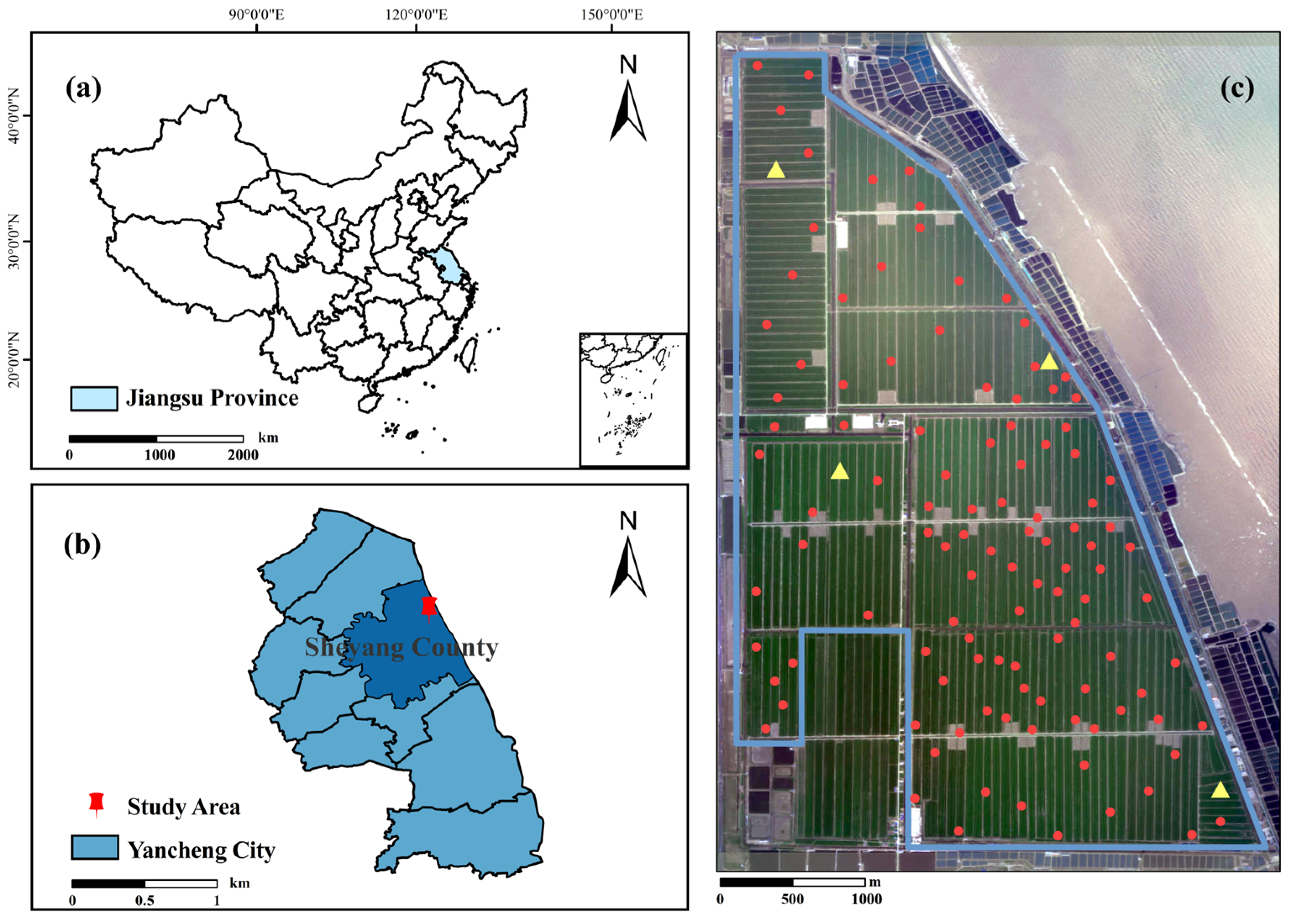
The study area is located in Sheyang County, Yancheng City, Jiangsu Province (33.93° N–33.99° N, 120.38° E–120.42° E), with ground elevations ranging from 0.8 to 2.2 m above sea level, exhibiting a general topographic trend of higher elevation in the west and lower elevation in the east. The region experiences a warm temperate monsoon climate, with an average annual temperature of approximately 14 °C and annual precipitation around 1000 mm. The water table typically ranges from 2.0 to 2.5 m. Based on the analysis of 55 soil samples randomly collected across the study area (at a density of approximately one sampling point per 13.3 hectares), the soil texture was identified as sandy loam. Prior to sampling, the reclaimed area had been under continuous cultivation for approximately 30 years, primarily following rice–wheat or rice–rapeseed rotation systems. The fertilization regime consisted of compound fertilizer (15-15-15) applied at 450 kg/ha and urea at 300 kg/ha per crop season. Irrigation in the study area is conducted using surface irrigation, with water supplied from branch canals of a north–south-oriented river system. The irrigation coverage is 100%, and the annual variation in irrigation-water mineralization ranges from 1.0 to 3.0 g/L.

2.2. Soil Sample Collection

To investigate the spatial patterns of soil salinization–alkalinization and fertility status, an intensive large-scale soil sampling campaign was conducted across the approximately 733 ha reclamation land. Due to the uneven spatial distribution of soil properties in coastal saline–alkali areas, particularly the high variability of saline–alkali indicators, sampling density was increased in areas with low productivity and obvious saline–alkali constraints based on preliminary survey results, in order to improve the accuracy of spatial distribution analysis of soil properties. Specifically, one sampling point was established per approximately 13.33 ha in areas without obvious constraints and with relatively balanced crop productivity, and one sampling point per approximately 3.33 ha in areas with low productivity and obvious saline–alkali constraints. A total of 110 sampling points were established (Figure 1c). The sampling campaign took place in June 2024 during the wheat–rice rotation interval. Each sampling point featured a 5 m × 5 m sampling unit, with topsoil collected from 0 to 20 cm using the five-point sampling method. Soil samples from five sub-sampling points (spaced 2–3 m apart) were thoroughly mixed in equal proportions to form a composite representative sample for subsequent analysis of soil pH, SOM, TN, available phosphorus (AP), AK, soluble salt (SS), and CEC.
To further investigate the vertical variation patterns of soil properties, four representative sites were selected for soil profile excavation (Figure 1c). Given the uniform soil texture and stable topography and groundwater table in the study area, the distance to surrounding water bodies became the primary factor controlling salinity. Therefore, representative sampling sites were comprehensively determined using distance to water as the primary stratification criterion, in combination with typical crop growth conditions in the field. At each profile, soil samples were collected at depths of 0, 20, 40, 60, 80, 100, 120, and 140 cm, with three replicates obtained at each depth interval. The profile soil samples were analyzed for bulk density (BD), pH, electrical conductivity (EC), SS, SOM, TN, AP, AK, ammonium nitrogen (NH4+-N), and nitrate nitrogen (NO3-N).

2.3. Soil Sample Analysis

The collected soil samples were sieved through a 2 mm mesh after removing plant roots and stones, then air-dried for physicochemical analysis. The determination of various indicators followed the Soil Agrochemical Analysis Methods [30]. Soil pH was measured using a pH meter (Mettler S220, Mettler Toledo AG, Columbus, OH, USA) with a soil-to-water ratio of 1:2.5. Soil EC was measured with a conductivity meter (Mettler S700, Mettler Toledo AG, Columbus, OH, USA) at a soil-to-water ratio of 1:5. Soil SS was quantified using the evaporation method after extraction at a 1:5 soil-to-water ratio and filtration. Soil TN was determined through the Kjeldahl method. SOM was measured using the potassium dichromate oxidation method. Soil AP was measured by the sodium bicarbonate extraction–molybdenum–antimony anti-colorimetric method, and AK was determined through the flame photometer method. Soil NH4+-N and NO3-N concentrations were determined using a continuous flow analyzer (Skalar SAN++, Skalar Analytical B.V., Breda, The Netherlands) after extraction with 2 mol/L KCL solution at a 1:5 soil-to-solution ratio. Soil BD was measured by the core method. Soil texture was determined using the hydrometer method. With reference to the United States Department of Agriculture (USDA) particle-size classification standard, the soil textural class was identified based on the percentages of sand, silt, and clay.

2.4. Data Processing

The soil contents of SS, SOM, TN, AP, AK, NH4+-N, NO3-N per hectare (ha) were calculated using Equation (1):
C X = C x × B x × 0.2 × 0.01
where C(X) is the content of SS, SOM, TN, AP, AK, NH4+-N, NO3-N, per ha (t/ha or kg/ha); C(x) is the content of SS, SOM, TN, AP, AK, NH4+-N, NO3-N (g/kg or mg/kg); B(x) represents the bulk density for each soil layer (kg/m3). The thickness of the corresponding soil layer (m) is 0.2. 0.01 is the conversion factor for g/kg or mg/kg to t/ha or kg/ha.
Soil nutrient indicators and salinity levels were evaluated and classified according to the criteria outlined in the Chinese Soil Survey Technology [31] and The Third National Soil Survey Tentative Specifications [32], respectively (Appendix A (Table A1 and Table A2)). Data organization and descriptive statistical analysis were performed using SPSS 22.0 and Excel 2024. Correlation analysis and regression fitting among various indicators were conducted using Origin 2021, while one-way analysis of variance (ANOVA) was performed with SPSS 22.0. Additionally, the vertical variation patterns of soil properties along the profiles were visualized employing both SPSS 22.0 and Origin 2021. The spatial distribution patterns of soil properties were analyzed through Inverse Distance Weighting (IDW) interpolation in ArcMap 10.8 software. The IDW method is a simple deterministic interpolation approach in which unknown values are estimated as a weighted average of nearby observations, with weights determined by a power function of the Euclidean distance between sampled and unsampled locations. In this study, IDW was selected for spatial interpolation based on the following considerations: (1) previous studies showing no significant accuracy difference between IDW and Ordinary Kriging in comparable coastal environments [33,34]; (2) the suitability of IDW for our non-uniform adaptive densification sampling strategy and its computational efficiency [35]; and (3) the advantage of IDW in preserving local extremes, which is essential for characterizing spatial heterogeneity in saline–alkali constraints in coastal tidal flat areas [36,37]. The IDW estimation of values is given by [38]:
θ ( x 0 ) = i = 1 n θ ( x i ) d i r i = 1 n d i r
where θ(x0) is the estimated value at the unsampled location x0; θ(xi) is the observed value at the i-th sampled location x (i = 1, 2, …, n); di is the Euclidean distance between the unsampled location x0 and the sampled location xi; r is the power parameter controlling the influence of distance on the weighting; and n is the number of neighboring sample points used for interpolation. In this study, the power parameter r was set to 2, and 12 neighboring points were used for the IDW interpolation.

3. Results

3.1. Spatial Distribution Patterns of Soil Physicochemical Properties in the Coastal Reclamation Zone

3.1.1. Spatial Distribution Patterns of Soil Salinity and Alkalinity Indicators

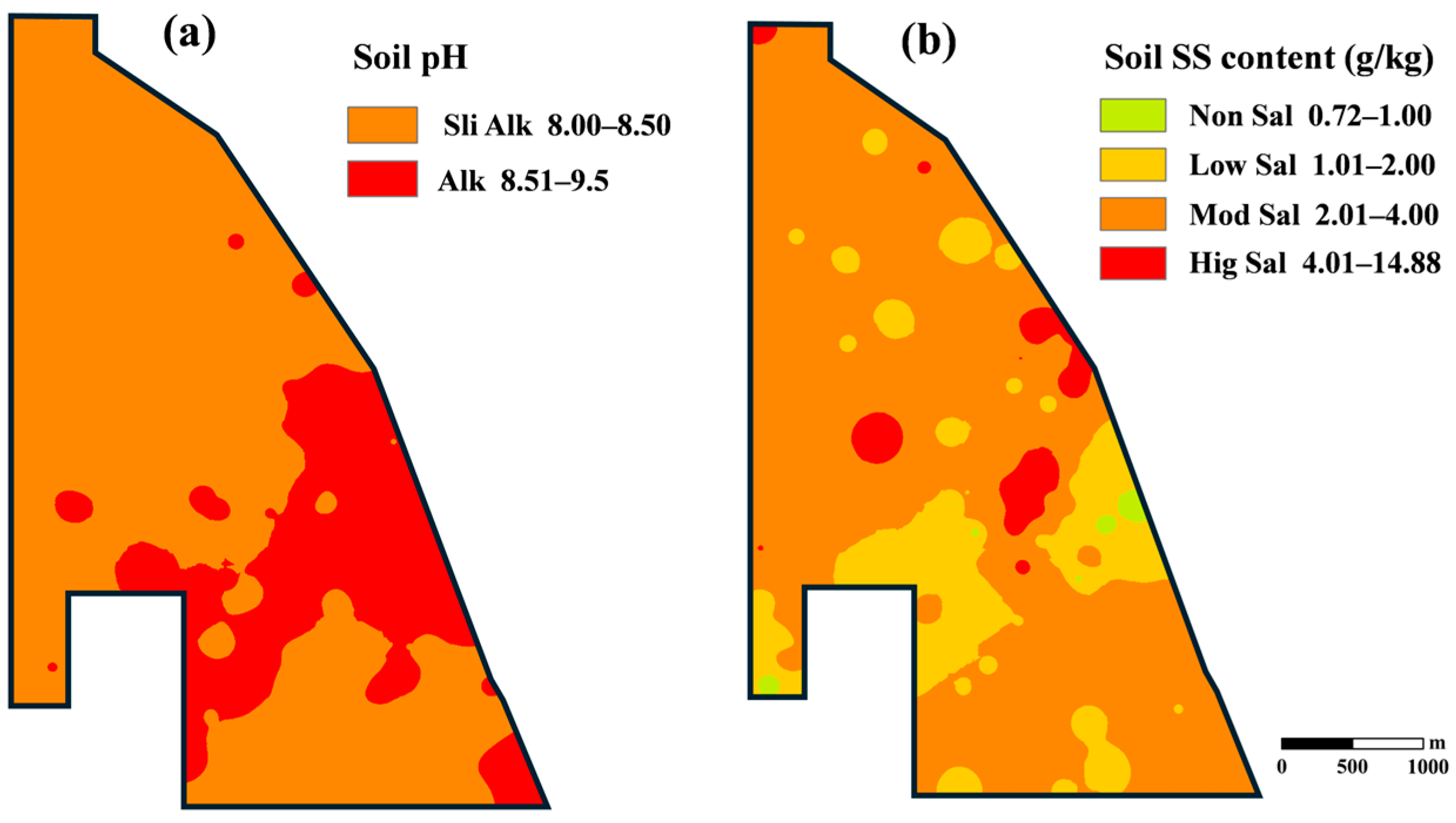
The coastal reclamation zone exhibited significant spatial heterogeneity in soil pH and soluble salt content (Figure 2). Overall, soil pH was lower in the west and higher in the east (Figure 2a). The pH ranged from 8.0 to 9.2, indicating alkaline soil conditions throughout the area. Specifically, slightly alkaline soils (pH 7.5–8.5) accounted for 39.1% of the samples, while alkaline soils (pH 8.5–9.5) constituted 60.9% of the total. The spatial distribution of soil soluble salts showed limited regularity, with salt patches distinctly present in localized areas (Figure 2b). The salt content ranged from 0.7 to 14.9 g/kg. According to the salinization classification criteria, non-saline soils (<1.0 g/kg) accounted for merely 5.5% of samples, while lowly (1.0–2.0 g/kg), moderately (2.0–4.0 g/kg), and highly (4.0–10 g/kg) salinized soils represented 33.6%, 49.1%, and 11.8% of the total, respectively.

3.1.2. Spatial Distribution Patterns of Soil Nutrient Indicators

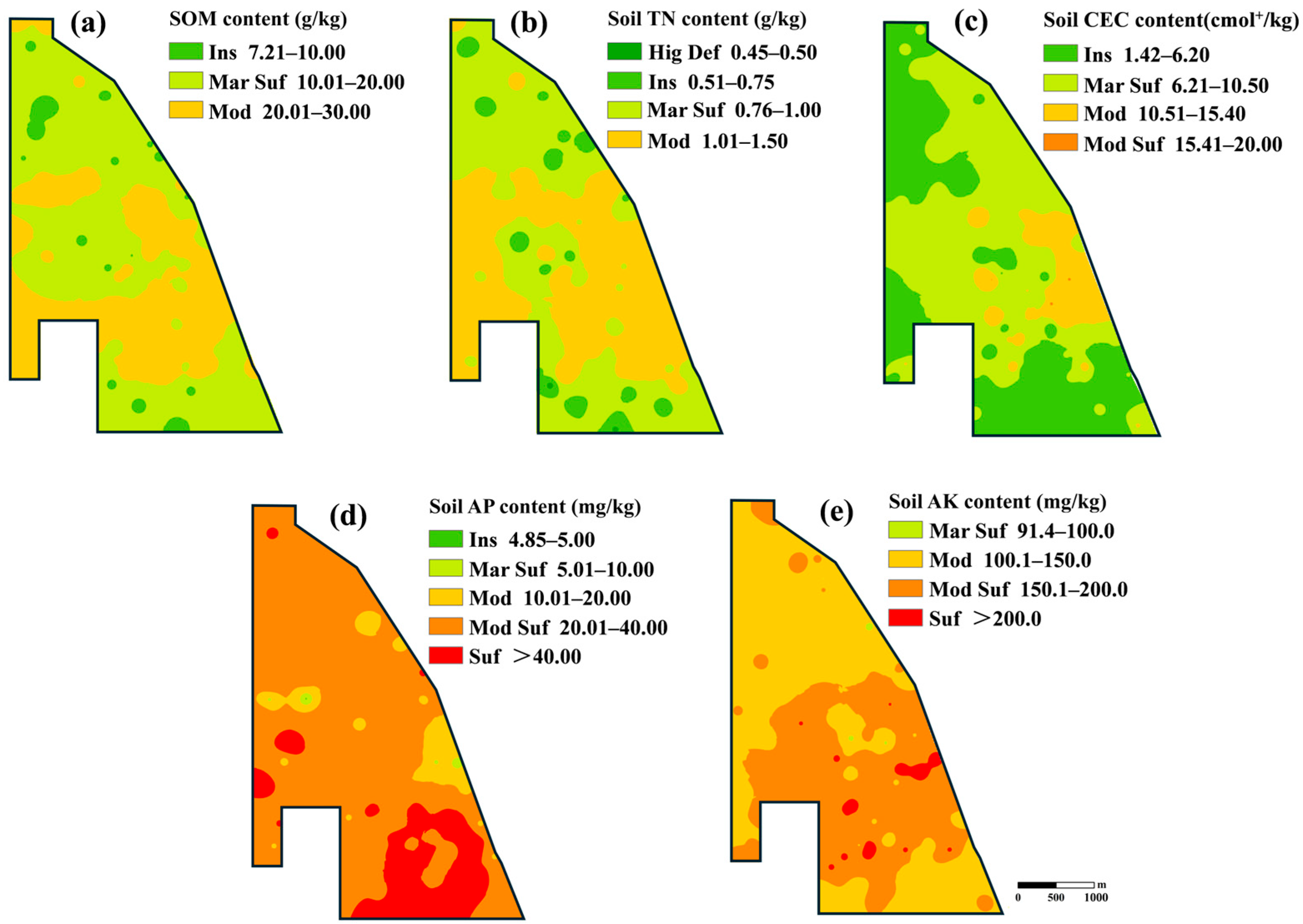
The soil nutrient indicators exhibited complex spatial distribution patterns (Figure 3). The SOM content was lower in the northern and southern sectors and higher in the central region (Figure 3a), with values ranging from 7.2 to 24.9 g/kg. Specifically, 33.6% of samples were classified as Marginally Sufficient (10–20 g/kg), while 14.5% were classified as Insufficient (6–10 g/kg). The remaining 51.8% of samples had Moderate SOM levels (20–30 g/kg). The spatial distribution of TN followed a pattern similar to SOM, with lower values in the northern and southern sectors and higher concentrations in the central region (Figure 3b), ranging from 0.45 to 1.42 g/kg. Specifically, 54.5% of samples demonstrated Moderate TN levels, while 30.0% and 13.6% of samples were classified as Marginally Sufficient (0.75–1.0 g/kg) and Insufficient (0.5–0.75 g/kg), respectively. The spatial distribution of CEC showed no clear spatial pattern, with generally low levels observed across the coastal reclamation zone (Figure 3c). The CEC ranged from 1.4 to 15.7 cmol+/kg, with only 22.7% of samples showing Moderate CEC levels (10.5–15.4 cmol+/kg), while 42.7% and 31.8% of samples were classified as Marginally Sufficient (6.2–10.5 cmol+/kg) and Insufficient (<6.2 cmol+/kg), respectively.
The AP content was generally high across the coastal reclamation zone, exhibiting a spatial trend of lower concentrations in the northern sector and higher concentrations in the southern region (Figure 3d), with values ranging from 4.8 to 85.5 mg/kg. Only 2.7% of samples were classified as Marginally Sufficient (5–10 mg/kg), while the remaining samples reached Moderate or Sufficient levels. The spatial distribution of AK demonstrated a pattern of lower values in the northern and southern sectors and higher concentrations in the central area (Figure 3e). The overall AK content was abundant, ranging from 90 to 263 mg/kg, with only 3.6% of samples classified as Marginally Sufficient (50–100 mg/kg).

3.2. Interrelationships of Soil Physicochemical Properties

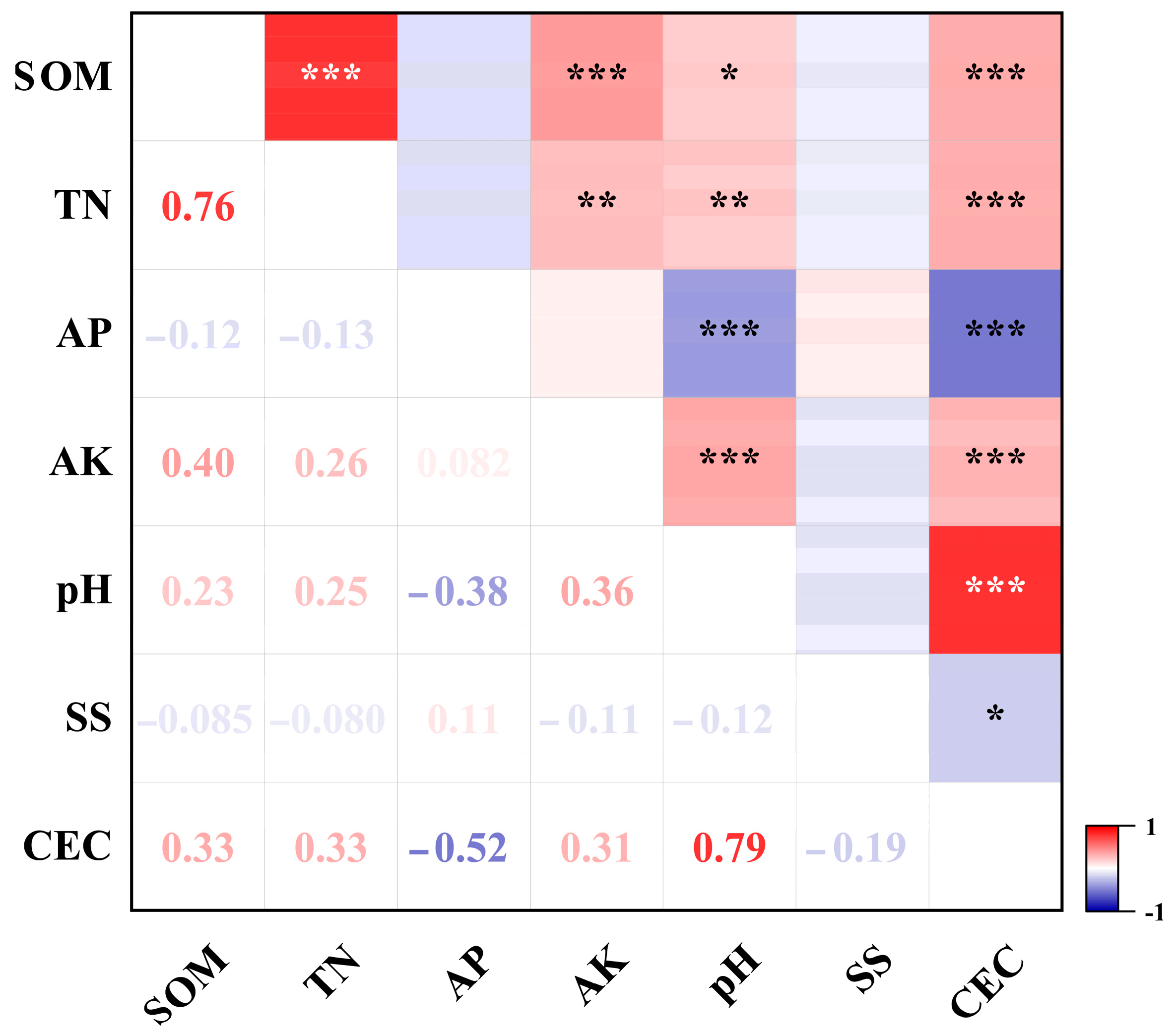
Correlation analysis revealed significant correlations among multiple soil physicochemical properties (Figure 4). SOM showed extremely strong positive correlations with TN, AK, and CEC (p < 0.001). TN also exhibited highly positive correlations with both AK (p < 0.01) and CEC (p < 0.001). CEC demonstrated extremely strong positive correlations with AK and pH (p < 0.001), while showing significant negative correlations with AP (p < 0.001) and SS (p < 0.05). Additionally, pH was strongly negatively correlated with AP (p < 0.001).
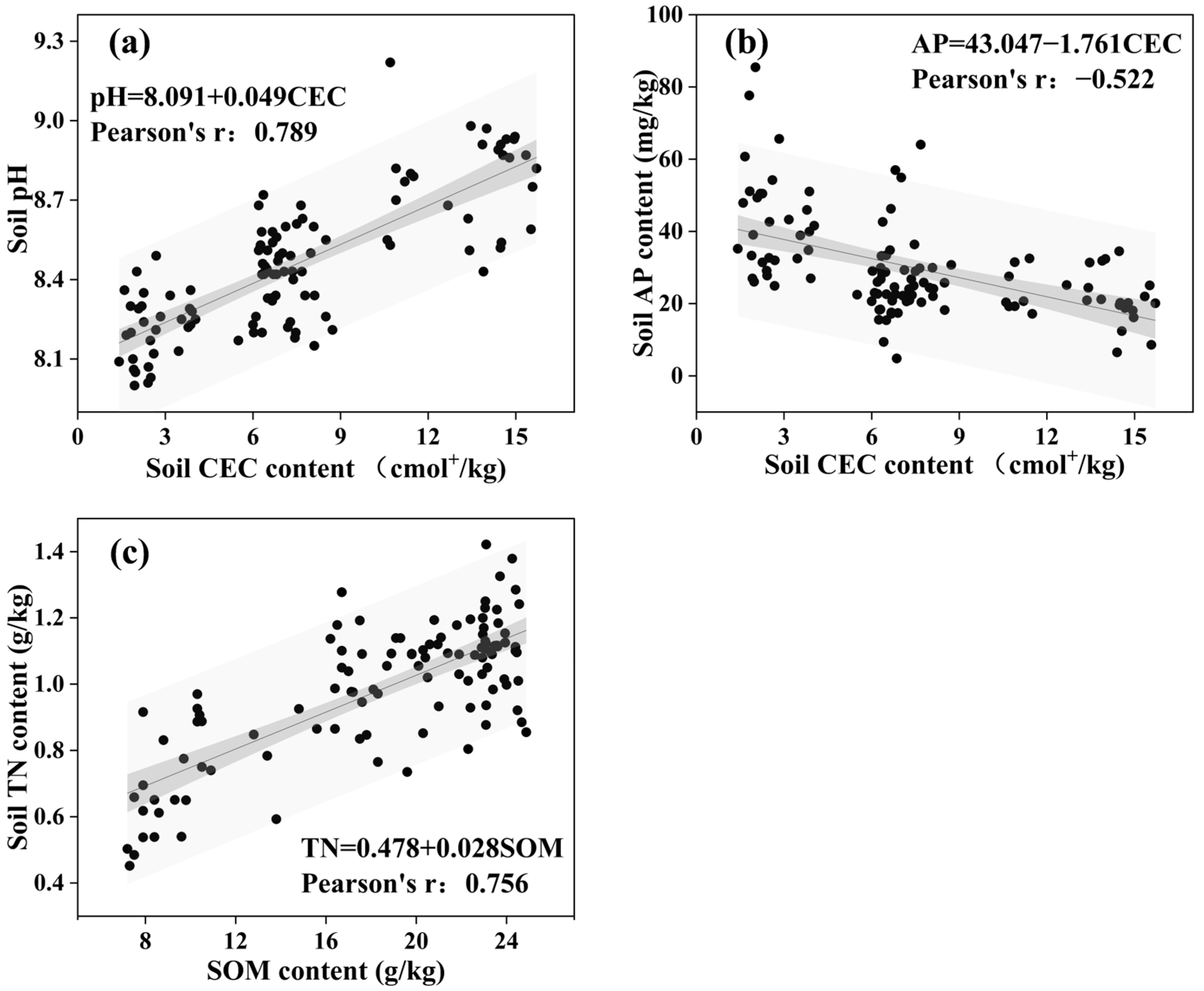
Further linear regression analysis revealed clear linear relationships between key indicators (Figure 5). A highly significant positive linear correlation was observed between SOM and TN (r = 0.756, p < 0.001). Similarly, pH and CEC also showed a highly significant positive linear correlation (r = 0.789, p < 0.001). Meanwhile, CEC and AP exhibited a significant negative correlation (r = −0.522, p < 0.001).

3.3. Vertical Distribution Characteristics of Soil Physicochemical Properties

3.3.1. Vertical Variation Patterns of Soil Physicochemical Indicators

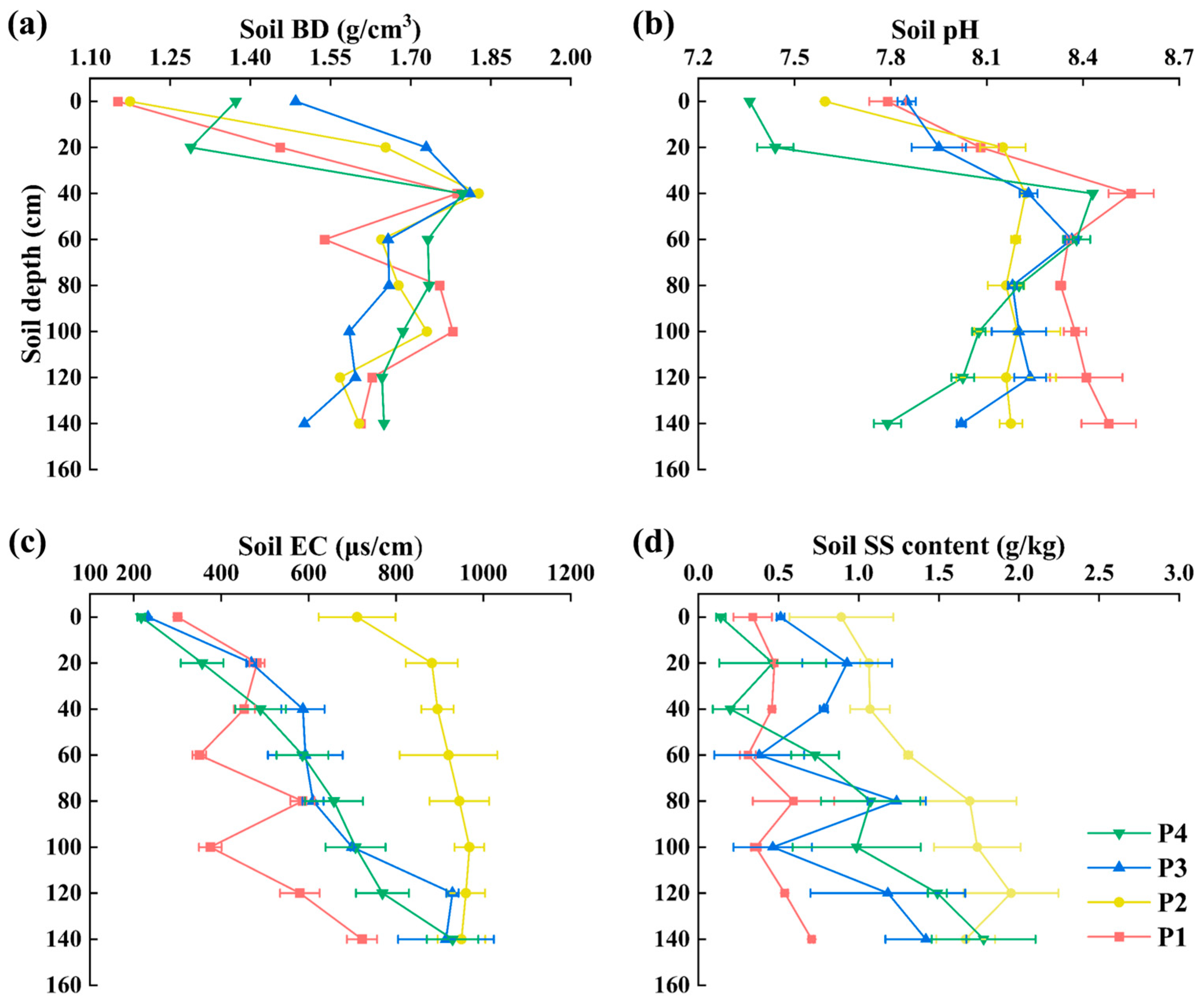
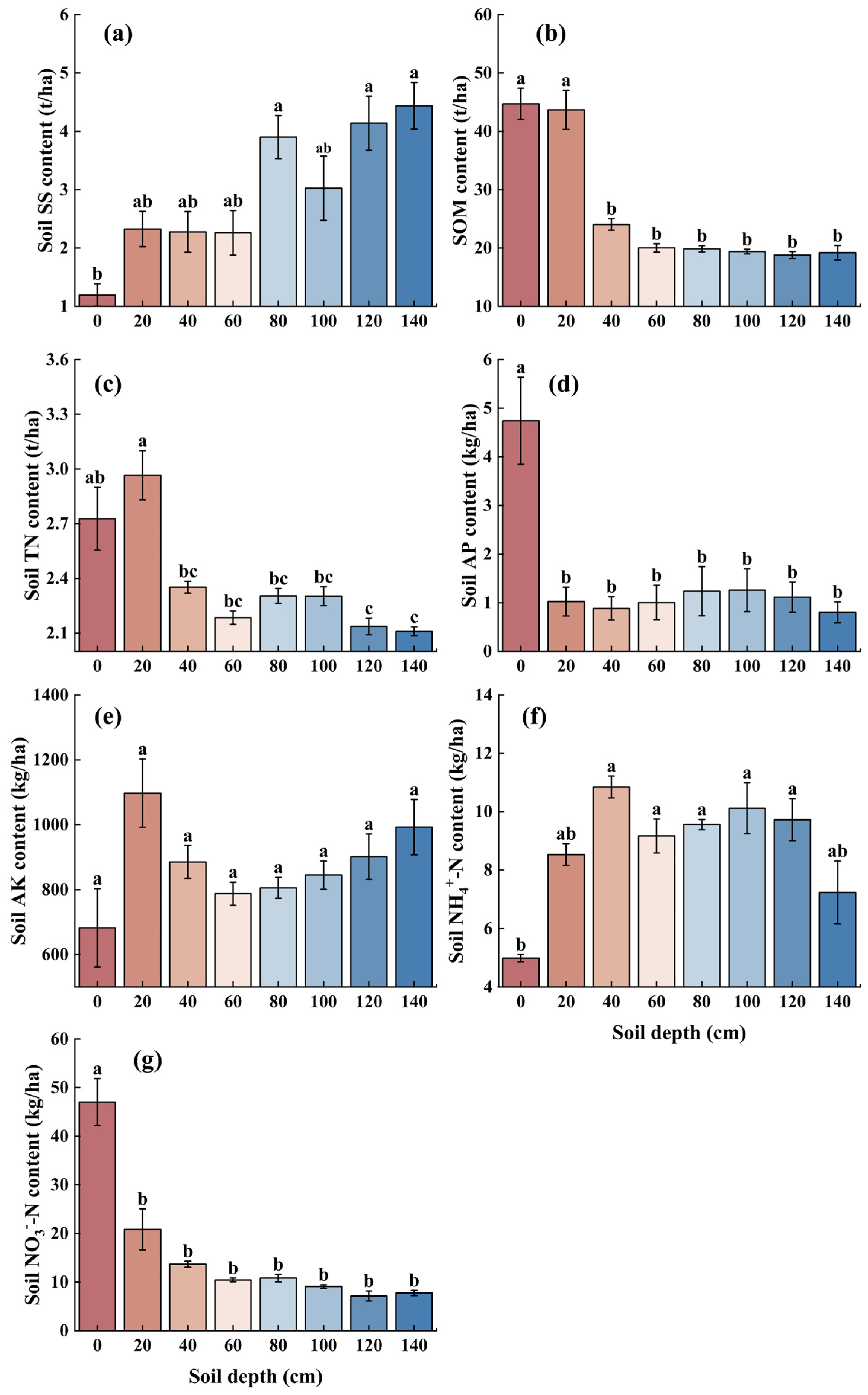
The physicochemical properties of the four soil profiles exhibited broadly similar vertical variation trends (Figure 6 and Figure 7). Soil BD generally increased with increasing depth. Two of the four profiles showed relatively low BD (1.15–1.17 g/cm3) in the 0–20 cm surface layer, whereas the remaining two profiles exhibited comparatively higher BD (1.37–1.49 g/cm3). Across all profiles, BD reached its maximum at a depth of 40 cm (1.79–1.81 g/cm3), followed by a slight decrease at 60 cm depth and subsequent stabilization at approximately 1.65 g/cm3 in deeper layers (Figure 6a). Soil pH also exhibited an increasing trend with depth. The surface layer exhibited the lowest pH (7.36–7.87). In all four profiles, soil pH reached its maximum at the 40 cm depth (8.21–8.60), then showed a slight decrease at 60 cm depth and subsequently stabilized at approximately 8.2 in deeper layers (Figure 6b). Both soil EC and SS content increased progressively with soil depth across all profiles (Figure 6c,d). In the three profiles characterized by relatively low surface salinity, EC increased from 217–300 μS/cm in the surface layer to 676–971 μS/cm at a depth of 140 cm, while SS increased from 0.11–0.46 g/kg to 0.71–1.78 g/kg. In contrast, the remaining profile, which exhibited higher initial surface salinity, showed an increase in EC from 692 μs/cm to 982 μs/cm and in SS from 0.89 g/kg to 1.67 g/kg over the same depth interval. At the unit area scale, soil salinity at depths of 120–140 cm and 140–160 cm (4.14–4.44 t/ha) was significantly higher than that in the 0–20 cm topsoil layer (1.20 t/ha) (p < 0.05) (Figure 8a).

3.3.2. Vertical Distribution Characteristics of Soil Nutrient Indicators

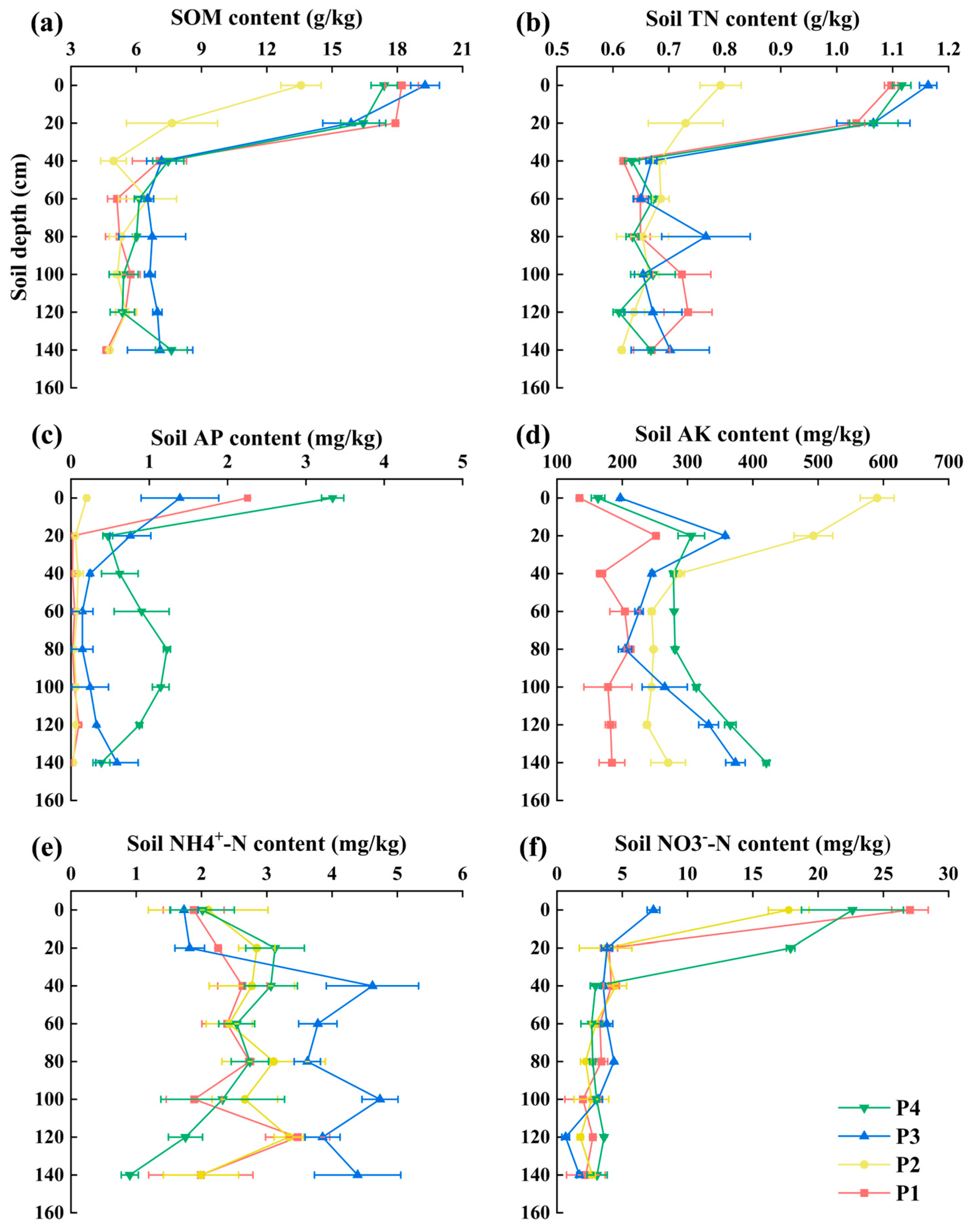
Soil nutrient contents exhibited clear vertical stratification patterns along the soil profiles (Figure 7). Across all four profiles, both SOM and TN contents decreased progressively with increasing depth, reaching their minimum values at a depth of 40 cm. Among the profiles, three exhibited relatively high SOM and TN contents in the surface-layer, with mean values of 18.29 g/kg and 1.13 g/kg, respectively. These values declined to 7.23 g/kg for SOM and 0.64 g/kg for TN at the 40 cm depth. In contrast, the remaining profile showed lower initial surface values, with SOM and TN contents of 13.57 g/kg and 0.79 g/kg, respectively, which decreased to 7.49 g/kg and 0.68 g/kg at the 40 cm depth (Figure 7a,b). When expressed at the unit area scale, SOM reserves in the 40–60 cm and deeper soil layers (18.80–24.05 t/ha) were significantly lower than those in the 0–20 cm and 20–40 cm layers (43.68–44.72 t/ha) (p < 0.05) (Figure 8b). Similarly, TN reserves in the 120–140 cm and 140–160 cm depth layers (2.11–2.14 t/ha) were significantly lower than those in the 0–20 cm and 20–40 cm layers (2.73–2.97 t/ha) (Figure 8c).
Soil AP content across all depths of the soil profiles was generally low, with all four profiles exhibiting extremely low levels (<1 mg/kg) below 20 cm depth (Figure 7c). When expressed at the unit area scale, AP reserves in the 20–40 cm and deeper soil layers (0.80–1.26 kg/ha) were significantly lower than those in the 0–20 cm surface layer (4.74 kg/ha) (Figure 8d). For the AK content, three profiles showed an increase from a mean value of 165 mg/kg at the surface layer to 312 mg/kg at the 140 cm depth. In contrast, the remaining profile showed a decreasing trend with depth, attributable to an exceptionally high AK content in the topsoil (590 mg/kg) (Figure 7d). Overall, however, no significant differences were observed in AK reserves at the unit area scale among soil layers (p < 0.05) (Figure 8e).
The vertical distribution of soil NH4+-N generally exhibited an increasing trend with depth. Soil NH4+-N content in the surface ranged from 1.9 to 2.1 mg/kg and gradually increased to 2.7–4.7 mg/kg with increasing depth. Peak NH4+-N concentrations across all profiles were primarily observed at depths of 100–120 cm (Figure 7e). In contrast, NO3-N exhibited distinct surface enrichment, with a mean content of 18.70 mg/kg in the 0–20 cm layer. However, it decreased sharply to 7.40 mg/kg at 20 cm depth and remained relatively stable below this depth (<5 mg/kg) (Figure 7f). At the unit area scale, the NH4+-N content reserves in the 0–20 cm soil layer (4.99 kg/ha) were significantly lower than those in the 20–40 cm and deeper layers (7.24–10.82 kg/ha). Conversely, NO3-N reserves in the 0–20 cm layer (47.03 kg/ha) were significantly higher than those in the 20–40 cm and deeper layers (7.14–20.83 kg/ha) (Figure 8f,g).

4. Discussion

4.1. Spatial Distribution Characteristics of Soil Physicochemical Properties

The results of this study indicate that the saline–alkali farmland soils in the coastal reclamation area of Jiangsu Province are characterized by elevated pH and high salt content. These coastal saline–alkali soils primarily originate from seawater-saturated saline silt, and their pedogenesis is accompanied by long-term salinization, resulting in generally elevated soil salinity across the region [39]. Consistent with our findings, previous studies have also demonstrated that this coastal area generally maintains a high water table, with the annual groundwater depth ranging between 2.0 and 3.0 m and exhibiting high mineralization (1.0–3.0 g/L) [40]. Such shallow, highly mineralized groundwater can readily migrate upward through capillary rise, thereby promoting salt accumulation in the soils [41,42]. Farmland soils in coastal reclaimed areas also commonly exhibit high pH, which is largely associated with excessive Na+. Previous studies have shown that exchangeable sodium percentage (ESP) in coastal saline–alkali soils is generally high, often exceeding 15%, and in some areas reaching values as high as 90% [43,44]. Elevated ESP indicates the dominance of Na+ over calcium ions (Ca2+) and magnesium ions (Mg2+) in the soil solution, which promotes soil alkalization and may further induce soil crusting and compaction [45]. Therefore, during the desalinization of reclaimed soils, particular attention should be paid to the potential risk of excessive Na+ incorporation into the soil exchange complex, as this may exacerbate alkalization and structural degradation.
In contrast to salt accumulation, soil SOM, TN, and CEC contents in the coastal reclamation zone were generally low. This pattern can be primarily attributed to the dual inhibitory effects of saline–alkali stress on vegetation growth and soil microbial activity. High salinity limits plant growth, thereby reducing organic matter inputs derived from plant residues, while simultaneously suppressing microbially mediated processes of organic matter decomposition and nutrient cycling. Together, these effects result in slow accumulation of SOM and TN [46,47,48]. In addition, excessively high Na+ concentrations promote soil dispersion, which disrupts soil structure and further enhances the leaching loss of organic matter and associated nutrients [49,50]. The low CEC observed in the study area is closely related to the low clay content and sandy texture of the soils [24,51].
Soils in the coastal reclamation zone exhibited relatively abundant levels of AP and AK. In general, the high soil pH typical of coastal saline–alkali lands promotes the formation of insoluble compounds between Ca2+ and phosphate (PO43−), thereby reducing phosphorus availability [26]. In the present study area, the relatively high AP content in the surface soil is mainly attributed to the long-term application of phosphorus fertilizers to enhance crop yields. Potassium deficiency is generally uncommon in coastal regions due to the inherently high potassium content of the parent material [52]. Soil profile analysis further showed that AK contents remained above 150 mg/kg even below a depth of 40 cm, which is unaffected by tillage, providing additional evidence that the parent material serves as an abundant source of potassium in this region.

4.2. Analysis of Interrelationships Among Soil Physicochemical Properties

Correlation analysis further revealed the intrinsic relationships among soil physicochemical properties in the coastal reclamation zone. Consistent with previous studies [53,54,55], SOM showed strong positive correlations with TN, AK, and CEC, highlighting its pivotal role in ameliorating saline–alkali soils and enhancing soil fertility. More than 90% of soil nitrogen exists in organic forms, such as proteins, amino acids, and humus, resulting in synchronous accumulation of SOM and TN [56,57]. Therefore, the soil TN content is positively correlated with the SOM content. Soil CEC primarily originates from the negatively charged colloidal surfaces, including inorganic colloids (e.g., clay minerals) and organic colloids (e.g., humus) [58]. Owing to their large specific surface area and abundance of negatively charged functional groups, organic colloids generally contribute much more to CEC than inorganic colloids [59]. Consequently, increasing SOM directly enhances soil CEC, thereby effectively improving nutrient retention capacity. Because SOM itself contains a certain amount of potassium, microbial decomposition and mineralization of SOM release potassium into the soil in the form of potassium ions (K+), directly increasing the content of AK [60]. In addition, the enhanced nutrient retention capacity associated with higher SOM levels favors the preservation of available potassium in the soil [61].
A notable negative correlation between soil AP and pH was observed in the study area, consistent with findings from saline soils of the Songnen Plain reported by Jiang et al. [62]. Under high-pH conditions, phosphorus readily forms insoluble phosphates with Ca2+ and Mg2+, leading to its immobilization in soil and a consequent reduction in availability [63,64].
Soil CEC exhibited a strong positive correlation with pH but a negative correlation with salinity, in agreement with previous studies by Van Erp et al. [65] and Solly et al. [59]. Under alkaline conditions, increased hydroxide ion (OH) concentrations promote deprotonation of functional groups on colloidal surfaces, thereby increasing negative charge density and enhancing cation adsorption capacity [66]. In contrast, elevated salinity, particularly increased Na+ concentrations, competes with other cations for exchange sites on colloids, resulting in reduced CEC [67].

4.3. Vertical Distribution Characteristics of Soil Physicochemical Properties and Environmental Effects

The physicochemical properties of coastal saline–alkali soils exhibited significant stratified heterogeneity along the vertical profile. Soil pH, EC, and SS content increased progressively with depth, indicating a notable risk of surface salt accumulation. Driven by intense evaporation, salts from deeper layers are continuously transported upward through capillary action and accumulate in the surface soils [68,69]. In coastal areas, soluble salts are primarily composed of sodium chloride (NaCl), and Na+ accumulation increases ESP, exacerbating soil alkalization [70,71]. Although the rice–wheat rotation system and annual rice irrigation help leach salts from surface soils, salts still accumulate in deeper layers.
In contrast, nutrient indicators exhibited vertical distribution patterns distinct from those of soil salinity and alkalinity. Due to inputs from crop residues and fertilizer application, SOM, TN, AP, and NO3-N contents in the 0–20 cm plough layer were higher than those in deeper soil layers [72,73,74]. However, coastal soils are predominantly sandy loams with good aeration and permeability but weak nutrient-retention capacity, making nutrients susceptible to leaching or surface runoff. Under conditions of high rainfall and shallow groundwater tables in coastal areas [75], long-term excessive fertilizer use can readily lead to agricultural non-point source pollution and groundwater contamination [76,77].

4.4. Existing Problems and Integrated Amelioration Strategies for Coastal Saline–Alkali Soils

Based on the results of this study, saline–alkali farmland in the coastal reclaimed area of the study region is constrained by two opposing processes, namely readily upward salt return and pronounced nutrient leaching. On the one hand, shallow, highly mineralized groundwater supplies salts upward through capillary rise under evaporation-driven fluxes, promoting salt enrichment in the surface layer and increasing the risk of resalinization. On the other hand, sandy or sand-dominated soils in the study area have low CEC and weak nutrient-retention capacity. Under abundant rainfall and irrigation-induced disturbance, mobile nutrients, particularly nitrogen in the form of NO3–N, are prone to vertical leaching losses, making it difficult to maintain topsoil fertility. This “bidirectional constraint” leads to a spatially compounded penalty in which salinity and alkalinity stress co-occurs with fertility depletion. Consequently, reliance on a single salinity-control measure rarely sustains stable, long-term improvement. Effective amelioration of coastal saline–alkali soils therefore requires integrated management, including salinity regulation, soil-structure improvement, and sustained fertility enhancement.
The susceptibility of coastal saline–alkali soils to resalinization is jointly controlled by water table depth and groundwater mineralization, surface evaporation intensity, and soil capillary pore structure. To address this issue, the core amelioration concept can be summarized as “zoned management, salinity control and blocking, and bioremediation.” “Zoned management” refers to conducting targeted soil surveys, producing spatial salinity distribution maps, accurately delineating “salt patches” as well as slightly, moderately, and severely salinized zones, and then implementing zone specific technical measures accordingly [78]. “Salinity control and blocking” can be achieved by establishing an effective drainage system, combined with water saving irrigation to enable periodic leaching and salt flushing [13]. In addition, straw incorporation should be promoted across the area to form a biomass barrier layer that physically interrupts upward salt accumulation pathways [4]. “Bioremediation” involves planting salt tolerant species in severely saline–alkali areas, such as Suaeda salsa and Tamarix spp., to facilitate biological desalination [79,80]. In slightly to moderately salinized zones, salt tolerant rice, wheat, and rapeseed can be cultivated [81], thereby developing a utilization model integrating “pioneer plant restoration plus salt tolerant crop production” to achieve co benefits for ecological restoration and agricultural productivity [82]. Moreover, salinity management in coastal saline–alkali soils should emphasize calcium supplementation. Regular application of calcium-based amendments, such as gypsum or calcium superphosphate, can increase soil Ca2+ availability, displace exchangeable Na+ from soil colloids, promote aggregate formation, and alleviate soil crusting and compaction [45].
Nutrient leaching in coastal saline–alkali soils is closely associated with a sand-dominated texture, low CEC and SOM, as well as fertilization practices and irrigation and drainage regimes, which collectively result in soil impoverishment and weak nutrient-retention capacity. To address this issue, the core amelioration concept can be summarized as “deep tillage to expand the effective rooting zone, organic matter building, and nutrient balancing” [83]. “Deep tillage to expand the effective rooting zone” refers to implementing conservation deep tillage (to a depth of 30–35 cm) combined with subsoiling to break the plow pan and thereby increase effective topsoil thickness [84,85]. “Organic matter building” involves increasing organic fertilizer inputs and promoting straw incorporation and green manure cropping, which sustainably enhance SOM and organic colloid contents, strengthen CEC, improve soil structure, and increase nutrient and water retention [86,87]. “Nutrient balancing” refers to applying zone-specific management based on soil survey data and gradually correcting imbalances in N, P, and K through integrated application of mineral N and P fertilizers and organic amendments [88], while optimizing nutrient ratios [89], thereby enabling a fundamental shift toward balanced and sustainable soil fertility under saline conditions.

5. Conclusions

Farmland soils in coastal regions are simultaneously subjected to salinity–alkalinity stress and fertility imbalance. Soils in the study area generally exhibit severe saline–alkali conditions, characterized by high pH and elevated salinity, together with low SOM, TN, and CEC. These properties indicate an overall status of poor fertility, degraded soil structure, and weak nutrient-retention capacity. Although AP in the topsoil is relatively high due to long-term fertilizer inputs, saline–alkali soils have a strong capacity to fix phosphorus, and a potential risk of phosphorus deficiency may still exist. In addition, vertical profile results reveal a clear tendency toward surface salt accumulation and an enhanced risk of nutrient leaching in this region.
Therefore, amelioration and management of coastal saline–alkali farmland should adopt a systematic strategy that gives equal priority to suppressing salt rise and conserving soil fertility. For water and salt regulation, optimized irrigation and drainage management, together with effective drainage outlets and evaporation-suppression measures, is required to enhance salt export efficiency and reduce the risk of resalinization. Meanwhile, timely calcium supplementation should be implemented to improve soil structure and hydraulic conductivity. For fertility enhancement, increasing SOM and strengthening CEC should be the central objectives, supported by an optimized fertilization regime to reduce nutrient leaching losses. This approach can mitigate the risks of non-point source and groundwater pollution at the source, thereby promoting high-yield, high-efficiency, and sustainable agricultural development. In future work, multiple interpolation methods should be integrated and compared to enhance the reliability of spatial evaluation. In addition, building on the obstacle factors identified herein, further efforts should focus on assessing the long-term effects of improvement measures and introducing innovative remediation technologies, thereby providing stronger theoretical support for the precise management of coastal saline–alkaline cropland.

Author Contributions

Conceptualization, T.M. and H.P.; methodology, T.M. and H.P.; software, Q.S., C.C. and H.W.; validation, Q.S., H.W. and M.Z.; formal analysis, Q.S., C.C. and L.J.; investigation, T.M., Q.S. and H.Z.; resources, H.P., C.C. and Y.Y.; data curation, C.C., T.M. and H.P.; writing—original draft preparation, Q.S., T.M., Y.Y. and H.W.; writing—review and editing, Q.S., T.M. and H.P.; visualization, Q.S., T.M. and H.P.; supervision, T.M. and H.P.; project administration, T.M., and H.P.; funding acquisition, T.M. and Y.Y. All authors have read and agreed to the published version of the manuscript.

Funding

This research was supported by the National Key Research and Development Program of China (No. 2023YFD1902000; No. 2020YFD0900705) and National Natural Science Foundation of China (41701304).

Institutional Review Board Statement

Not applicable.

Data Availability Statement

Data will be made available on request.

Conflicts of Interest

Authors Chao Chen, Yutian Yao and Hao Peng were employed by the company Jiangsu Coast Development Group Co., Ltd. The remaining authors declare that the research was conducted in the absence of any commercial or financial relationships that could be construed as a potential conflict of interest.

Abbreviations

The following abbreviations are used in this manuscript:
SOMSoil organic matter
TNTotal nitrogen
AKAvailable potassium
APAvailable phosphorus
CECCation exchange capacity
SSSoluble salt
BDBulk density
ECElectrical conductivity
NH4+-NAmmonium nitrogen
NO3-NNitrate nitrogen
ESPExchangeable Sodium Percentage
SufSufficient
Mod SufModerately Sufficient
ModModerate
Mar SufMarginally Sufficient
InsInsufficient
Hig DefHighly Deficient
Non SalNon-Saline
Low SalLow-Saline
Mod SalModerate-Saline
Hig SalHigh-Saline
Str AciStrongly Acidic
AciAcidic
Sli AciSlightly Acidic
NeuNeutral
Sli AlkSlightly alkaline
AlkAlkaline

Appendix A

Table A1. Classification methods for soil nutrient indicators.
GradingClassifySOM (g/kg)TN (g/kg)AP (mg/kg)AK (mg/kg)CEC (cmol+/kg)
Level 1Sufficient>40>2.00>40>200>20.0
Level 2Moderately Sufficient30–401.50–2.0020–40150–20015.4–20.0
Level 3Moderate20–301.00–1.5010–20100–15010.5–15.4
Level 4Marginally Sufficient10–200.75–1.005–1050–1006.2–10.5
Level 5Insufficient6–100.50–0.753–530–50<6.2
Level 6Highly Deficient<6<0.50<3<30-
Table A2. Classification methods for soil salinity and alkalinity.
Salt content (‰)1.0–2.02.0–4.04.0–10 --
ClassifyNon-SalineLow-SalineModerate-SalineHigh-Saline--
pH<4.54.5–5.55.5–6.56.5–7.57.5–8.58.5–9.5
ClassifyStrongly AcidicAcidicSlightly AcidicNeutralSlightly alkalineSlightly alkaline

References

  1. Yang, J. Development and prospect of the research on salt-affected in China. Acta Pedol. Sin. 2008, 45, 837–845. [Google Scholar]
  2. Wang, B. Current status, challenges and suggestions for saline soil utilization, salt-tolerant crop breeding and cultivation techniques. J. Shandong Norm. Univ. (Nat. Sci. Ed.) 2025, 40, 123–132. [Google Scholar]
  3. Chang, L.; Ju, T.H.; Liu, H.J.; Li, Y.F. The Contribution of Saline-Alkali Land to the Terrestrial Carbon Stock Balance: The Case of an Important Agriculture and Ecological Region in Northeast China. Land 2024, 13, 900. [Google Scholar] [CrossRef]
  4. Song, Y.; Sun, J.; Cai, M.; Li, J.; Bi, M.; Gao, M. Effects of management of plastic and straw mulching management on crop yield and soil salinity in saline-alkaline soils of China: A meta-analysis. Agric. Water Manag. 2025, 308, 109309. [Google Scholar] [CrossRef]
  5. Balasubramaniam, T.; Shen, G.X.; Esmaeili, N.; Zhang, H. Plants’ Response Mechanisms to Salinity Stress. Plants 2023, 12, 2253. [Google Scholar] [CrossRef]
  6. Tibesigwa, D.G.; Zhuang, W.H.; Matola, S.H.; Zhao, H.Q.; Li, W.X.; Yang, L.; Ren, J.R.; Liu, Q.Q.; Yang, J.L. Molecular Insights Into Salt Stress Adaptation in Plants. Plant Cell Environ. 2025, 48, 5604–5615. [Google Scholar] [CrossRef] [PubMed]
  7. Kumar, A.; Singh, S.; Gaurav, A.K.; Srivastava, S.; Verma, J.P. Plant Growth-Promoting Bacteria: Biological Tools for the Mitigation of Salinity Stress in Plants. Front. Microbiol. 2020, 11, 1216. [Google Scholar] [CrossRef]
  8. Qiao, S.Q.; Ma, C.M.; Li, H.J.; Zhang, Y.; Zhang, M.H.; Zhao, W.H.; Liu, B.X. Responses of growth and photosynthesis to alkaline stress in three willow species. Sci. Rep. 2024, 14, 14672. [Google Scholar] [CrossRef]
  9. Litalien, A.; Zeeb, B. Curing the earth: A review of anthropogenic soil salinization and plant-based strategies for sustainable mitigation. Sci. Total Environ. 2020, 698, 134235. [Google Scholar] [CrossRef]
  10. Haj-Amor, Z.; Araya, T.; Kim, D.G.; Bouri, S.; Lee, J.; Ghilou, W.; Yang, Y.; Kang, H.; Jhariya, M.K.; Banerjee, A.; et al. Soil salinity and its associated effects on soil microorganisms, greenhouse gas emissions, crop yield, biodiversity and desertification: A review. Sci. Total Environ. 2022, 843, 156946. [Google Scholar] [CrossRef]
  11. Xing, J.; Li, X.Y.; Li, Z.Q.; Wang, X.T.; Hou, N.; Li, D.P. Remediation of soda-saline-alkali soil through soil amendments: Microbially mediated carbon and nitrogen cycles and remediation mechanisms. Sci. Total Environ. 2024, 924, 171641. [Google Scholar] [CrossRef] [PubMed]
  12. Wu, Q.C.; Chen, Y.; Dou, X.H.; Liao, D.X.; Li, K.Y.; An, C.C.; Li, G.H.; Dong, Z. Microbial fertilizers improve soil quality and crop yield in coastal saline soils by regulating soil bacterial and fungal community structure. Sci. Total Environ. 2024, 949, 175127. [Google Scholar] [CrossRef] [PubMed]
  13. Du, Y.Q.; Liu, X.F.; Zhang, L.; Zhou, W. Drip irrigation in agricultural saline-alkali land controls soil salinity and improves crop yield: Evidence from a global meta-analysis. Sci. Total Environ. 2023, 880, 163226. [Google Scholar] [CrossRef] [PubMed]
  14. Li, T.; Wang, S.N.; Liu, S.L.; Zhang, X.L.; Dong, H.L.; Dai, S.; Chai, L.Y.; Li, H.; Lv, Y.L.; Li, T.W.; et al. Trade-offs of organic amendment input on soil quality and crop productivity in saline-alkali land globally: A meta-analysis. Eur. J. Agron. 2025, 164, 127471. [Google Scholar] [CrossRef]
  15. Ziskin, R.; Dag, A.; Yermiyahu, U.; Levy, G.J. Different amendments for combating soil sodicity in an olive orchard. Agric. Water Manag. 2024, 299, 108837. [Google Scholar] [CrossRef]
  16. Niaz, S.; Wehr, J.B.; Dalal, R.C.; Kopittke, P.M.; Menzies, N.W. Organic amendments and gypsum reduce dispersion and increase aggregation of two sodic Vertisols. Geoderma 2022, 425, 116047. [Google Scholar] [CrossRef]
  17. Wang, H.; Zhu, Q.Q.; Pan, Y.Z.; Ma, X.P.; Ding, F.; Xu, W.L.; Fu, Y.B.; Bian, Q.Y.; Kade, M. Effect of Subsurface Drainpipe Parameters on Soil Water and Salt Distribution in a Localized Arid Zone: A Field-Scale Study. Agronomy 2025, 15, 678. [Google Scholar] [CrossRef]
  18. Guo, H.P.; Jiao, J.J. Impact of coastal land reclamation on ground water level and the sea water interface. Ground Water 2007, 45, 362–367. [Google Scholar] [CrossRef]
  19. Zhang, J.; Lu, C.H.; Werner, A.D. Analytical and Experimental Investigation of the Impact of Land Reclamation on Steady-State Seawater Extent in Coastal Aquifers. Water Resour. Res. 2021, 57, e2020WR029028. [Google Scholar] [CrossRef]
  20. Zheng, W.J.; Yang, Z.L.; Wang, X.X.; Wang, H.L.; Yu, X.; Wang, L.P.; He, B. Impacts of evaporation and inundation on near-surface salinity at a coastal wetland park. Mar. Pollut. Bull. 2022, 185, 114373. [Google Scholar] [CrossRef]
  21. Zhang, W.W.; Wang, C.; Xue, R.; Wang, L.J. Effects of salinity on the soil microbial community and soil fertility. J. Integr. Agric. 2019, 18, 1360–1368. [Google Scholar] [CrossRef]
  22. Yang, S.; Hao, X.H.; Xu, Y.M.; Yang, J.J.; Su, D.R. Meta-Analysis of the Effect of Saline-Alkali Land Improvement and Utilization on Soil Organic Carbon. Life 2022, 12, 1870. [Google Scholar] [CrossRef] [PubMed]
  23. Zang, Y.L.; Huang, Y.; Chang, X.Y.; Chen, J.Z.; Jiang, T.C.; Wu, Z.Y.; Lu, L.L.; Tian, S.K. High Soil pH and Plastic-Shed Lead to Iron Deficiency and Chlorosis of Citrus in Coastal Saline-Alkali Lands: A Field Study in Xiangshan County. Horticulture 2023, 9, 437. [Google Scholar] [CrossRef]
  24. Zhu, Y.; Guo, B.; Liu, C.; Lin, Y.C.; Fu, Q.L.; Li, N.Y.; Li, H. Soil fertility, enzyme activity, and microbial community structure diversity among different soil textures under different land use types in coastal saline soil. J. Soils Sediments 2021, 21, 2240–2252. [Google Scholar] [CrossRef]
  25. Wang, F.; Zhu, Y. Development patterns and suitability assessment of tidal flat resources in Jiangsu Province. Resour. Sci. 2009, 31, 619–628. [Google Scholar]
  26. Li, Z.; Wang, Y.; Liu, Z.; Han, F.; Chen, S.G.; Zhou, W.Z. Integrated application of phosphorus-accumulating bacteria and phosphorus-solubilizing bacteria to achieve sustainable phosphorus management in saline soils. Sci. Total Environ. 2023, 885, 163971. [Google Scholar] [CrossRef]
  27. Libutti, A.; Monteleone, M. Soil vs. groundwater: The quality dilemma. Managing nitrogen leaching and salinity control under irrigated agriculture in Mediterranean conditions. Agric. Water Manag. 2017, 186, 40–50. [Google Scholar] [CrossRef]
  28. Liu, R.A.; Liang, B.J.; Zhao, H.L.; Zhao, Y. Impacts of various amendments on the microbial communities and soil organic carbon of coastal saline-alkali soil in the Yellow River Delta. Front. Microbiol. 2023, 14, 1239855. [Google Scholar] [CrossRef]
  29. Kudureti, A.; Zhao, S.; Zhakyp, D.; Tian, C.Y. Responses of soil fauna community under changing environmental conditions. J. Arid Land 2023, 15, 620–636. [Google Scholar] [CrossRef]
  30. Lu, R. Soil Agricultural Chemical Analysis Methods; China Agricultural Science and Technology Press: Beijing, China, 2000. [Google Scholar]
  31. National Soil Survey in China. Chinese Soil Survey Technology; China Agriculture Press: Beijing, China, 1992; p. 243. [Google Scholar]
  32. Office of the Leading Group for the Third National Soil Survey under the State Council. The Third National Soil Survey Tentative Specifications; China Agriculture Press: Beijing, China, 2023. [Google Scholar]
  33. Radocaj, D.; Jug, I.; Vukadinovic, V.; Jurisic, M.; Gasparovic, M. The Effect of Soil Sampling Density and Spatial Autocorrelation on Interpolation Accuracy of Chemical Soil Properties in Arable Cropland. Agronomy 2021, 11, 2430. [Google Scholar] [CrossRef]
  34. Shabankareh, M.G.; Amanipoor, H.; Battaleb-Looie, S.; Khatooni, J.D. Zonation of coastal sediments based on the effective properties on the accumulation of heavy metals using the IDW and kriging method (case study: SW Iran). Geocarto Int. 2018, 33, 1257–1267. [Google Scholar] [CrossRef]
  35. Lu, G.Y.; Wong, D.W. An adaptive inverse-distance weighting spatial interpolation technique. Comput. Geosci. 2008, 34, 1044–1055. [Google Scholar] [CrossRef]
  36. AbdelRahman, M.A.E.; Zakarya, Y.M.; Metwaly, M.M.; Koubouris, G. Deciphering Soil Spatial Variability through Geostatistics and Interpolation Techniques. Sustainability 2021, 13, 194. [Google Scholar] [CrossRef]
  37. Qiao, P.W.; Lei, M.; Yang, S.C.; Yang, J.; Guo, G.H.; Zhou, X.Y. Comparing ordinary kriging and inverse distance weighting for soil as pollution in Beijing. Environ. Sci. Pollut. Res. 2018, 25, 15597–15608. [Google Scholar] [CrossRef]
  38. Babak, O.; Deutsch, C.V. Statistical approach to inverse distance interpolation. Stoch. Environ. Res. Risk Assess. 2009, 23, 543–553. [Google Scholar] [CrossRef]
  39. Paz, A.M.; Amezketa, E.; Canfora, L.; Castanheira, N.; Falsone, G.; Goncalves, M.C.; Gould, I.; Hristov, B.; Mastrorilli, M.; Ramos, T.; et al. Salt-affected soils: Field-scale strategies for prevention, mitigation, and adaptation to salt accumulation. Ital. J. Agron. 2023, 18, 2166. [Google Scholar] [CrossRef]
  40. Xia, J.B.; Ren, J.Y.; Zhang, S.Y.; Wang, Y.H.; Fang, Y. Forest and grass composite patterns improve the soil quality in the coastal saline-alkali land of the Yellow River Delta, China. Geoderma 2019, 349, 25–35. [Google Scholar] [CrossRef]
  41. Lian, H.D.; Sun, Z.J.; Xu, C.D.; Gu, F.Y. The Relationship Between the Distribution of Water and Salt Elements in Arid Irrigation Areas and Soil Salination Evolution. Front. Earth Sci. 2022, 10, 852485. [Google Scholar] [CrossRef]
  42. Yang, H.J.; Xia, J.B.; Cui, Q.; Liu, J.T.; Wei, S.C.; Feng, L.; Dong, K.K. Effects of different Tamarix chinensis-grass patterns on the soil quality coastal saline soil in the Yellow River Delta, China. Sci. Total Environ. 2021, 772, 145501. [Google Scholar] [CrossRef]
  43. Yu, J.B.; Wang, Z.C.; Meixner, F.X.; Yang, F.; Wu, H.F.; Chen, X.B. Biogeochemical Characterizations and Reclamation Strategies of Saline Sodic Soil in Northeastern China. Clean-Soil Air Water 2010, 38, 1010–1016. [Google Scholar] [CrossRef]
  44. Chen, X.; Yaa, O.-K.; Wu, J. Effects of different organic materials application on soil physicochemical properties in a primary saline-alkali soil. Eurasian Soil Sci. 2020, 53, 798–808. [Google Scholar] [CrossRef]
  45. Rezapour, S.; Nouri, A.; Asadzadeh, F.; Barin, M.; Erpul, G.; Jagadamma, S.; Qin, R.J. Combining chemical and organic treatments enhance remediation performance and soil health in saline-sodic soils. Commun. Earth Environ. 2023, 4, 285. [Google Scholar] [CrossRef]
  46. Zhou, M.H.; Butterbach-Bahl, K.; Vereecken, H.; Brüggemann, N. A meta-analysis of soil salinization effects on nitrogen pools, cycles and fluxes in coastal ecosystems. Glob. Change Biol. 2017, 23, 1338–1352. [Google Scholar] [CrossRef] [PubMed]
  47. Ashraf, M.; Shahzad, S.M.; Imtiaz, M.; Rizwan, M.S. Salinity effects on nitrogen metabolism in plants–focusing on the activities of nitrogen metabolizing enzymes: A review. J. Plant Nutr. 2018, 41, 1065–1081. [Google Scholar] [CrossRef]
  48. Etesami, H.; Glick, B.R. Halotolerant plant growth-promoting bacteria: Prospects for alleviating salinity stress in plants. Environ. Exp. Bot. 2020, 178, 104124. [Google Scholar] [CrossRef]
  49. Singh, P.; Sharma, S.; Nisar, S.; Choudhary, O.P. Structural Stability and Organic Matter Stabilization in Soils: Differential Impacts of Soil Salinity and Sodicity. J. Soil Sci. Plant Nutr. 2023, 23, 1751–1773. [Google Scholar] [CrossRef]
  50. Yan, S.H.; Zhang, T.B.; Zhang, B.B.; Zhang, T.G.; Cheng, Y.; Wang, C.; Luo, M.; Feng, H.; Siddique, K.H.M. The higher relative concentration of K+ to Na+ in saline water improves soil hydraulic conductivity, salt-leaching efficiency and structural stability. Soil 2023, 9, 339–349. [Google Scholar] [CrossRef]
  51. Saidian, M.; Godinez, L.J.; Prasad, M. Effect of clay and organic matter on nitrogen adsorption specific surface area and cation exchange capacity in shales (mudrocks). J. Nat. Gas Sci. Eng. 2016, 33, 1095–1106. [Google Scholar] [CrossRef]
  52. Wang, Y.X.; Liu, G.H.; Zhao, Z.H. Spatial heterogeneity of soil fertility in coastal zones: A case study of the Yellow River Delta, China. J. Soils Sediments 2021, 21, 1826–1839. [Google Scholar] [CrossRef]
  53. Zhang, Y.; Jia, W.X.; Yang, L.; Zhu, G.F.; Lan, X.; Luo, H.F.; Yu, Z.J. Change Characteristics of Soil Organic Carbon and Soil Available Nutrients and Their Relationship in the Subalpine Shrub Zone of Qilian Mountains in China. Sustainability 2023, 15, 13028. [Google Scholar] [CrossRef]
  54. Han, T.F.; Liu, K.L.; Huang, J.; Khan, M.N.; Shen, Z.; Li, J.W.; Zhang, H.M. Temporal and spatial characteristics of paddy soil potassium in China and its response to organic amendments: A systematic analysis. Soil Tillage Res. 2024, 235, 105894. [Google Scholar] [CrossRef]
  55. Bi, X.Q.; Chu, H.; Fu, M.M.; Xu, D.D.; Zhao, W.Y.; Zhong, Y.J.; Wang, M.; Li, K.; Zhang, Y.N. Distribution characteristics of organic carbon (nitrogen) content, cation exchange capacity, and specific surface area in different soil particle sizes. Sci. Rep. 2023, 13, 12242. [Google Scholar] [CrossRef] [PubMed]
  56. Lyu, H.; Li, Y.; Wang, Y.L.; Wang, P.F.; Shang, Y.P.; Yang, X.H.; Wang, F.; Yu, A.Z. Drive soil nitrogen transformation and improve crop nitrogen absorption and utilization—A review of green manure applications. Front. Plant Sci. 2024, 14, 1305600. [Google Scholar] [CrossRef]
  57. Nicolás, C.; Martin-Bertelsen, T.; Floudas, D.; Bentzer, J.; Smits, M.; Johansson, T.; Troein, C.; Persson, P.; Tunlid, A. The soil organic matter decomposition mechanisms in ectomycorrhizal fungi are tuned for liberating soil organic nitrogen. ISME J. 2019, 13, 977–988. [Google Scholar] [CrossRef] [PubMed]
  58. Bortoluzzi, E.C.; Tessier, D.; Rheinheimer, D.S.; Julien, J.L. The cation exchange capacity of a sandy soil in southern Brazil: An estimation of permanent and pH-dependent charges. Eur. J. Soil Sci. 2006, 57, 356–364. [Google Scholar] [CrossRef]
  59. Solly, E.F.; Weber, V.; Zimmermann, S.; Walthert, L.; Hagedorn, F.; Schmidt, M.W.I. A Critical Evaluation of the Relationship Between the Effective Cation Exchange Capacity and Soil Organic Carbon Content in Swiss Forest Soils. Front. For. Glob. Change 2020, 3, 98. [Google Scholar] [CrossRef]
  60. Andrews, E.M.; Rivers, D.J.; Gaudin, A.C.M.; Geisseler, D.; Brown, P.H.; Khalsa, S.D.S. In a nutshell: Almond hull and shell organic matter amendments increase soil and tree potassium status. Plant Soil 2024, 495, 699–722. [Google Scholar] [CrossRef]
  61. Ramos, F.T.; Dores, E.; Weber, O.L.D.; Beber, D.C.; Campelo, J.H.; Maia, J.C.D. Soil organic matter doubles the cation exchange capacity of tropical soil under no-till farming in Brazil. J. Sci. Food Agric. 2018, 98, 3595–3602. [Google Scholar] [CrossRef]
  62. Jiang, Y.; Yan, Q.L.; Liu, T.L.X.; Xu, Y.F.; Han, X.; Ma, X.L.; Wang, Y.J. Phosphorus adsorption characteristics and release risk in saline soils: A case study of Songnen Plain, China. Front. Plant Sci. 2023, 14, 1302763. [Google Scholar] [CrossRef]
  63. Xian, X.X.; Pang, M.Y.; Zhang, J.L.; Zhu, M.K.; Kong, F.L.; Xi, M. Assessing the effect of potential water and salt intrusion on coastal wetland soil quality: Simulation study. J. Soils Sediments 2019, 19, 2251–2264. [Google Scholar] [CrossRef]
  64. Zhou, J.M. The relationship between soil pH and geochemical components. Environ. Earth Sci. 2024, 83, 402. [Google Scholar] [CrossRef]
  65. van Erp, P.J.; Houba, V.J.G.; van Beusichem, M.L. Actual cation exchange capacity of agricultural soils and its relationship with pH and content of organic carbon and clay. Commun. Soil Sci. Plant Anal. 2001, 32, 19–31. [Google Scholar] [CrossRef]
  66. Bai, Y.; Subdiaga, E.; Haderlein, S.B.; Knicker, H.; Kappler, A. High-pH and anoxic conditions during soil organic matter extraction increases its electron-exchange capacity and ability to stimulate microbial Fe(III) reduction by electron shuttling. Biogeosciences 2020, 17, 683–698. [Google Scholar] [CrossRef]
  67. Sumner, M.E.; Miller, W.P. Cation Exchange Capacity and Exchange Coefficients. In Methods of Soil Analysis; Soil Science Society of America, Inc./American Society of Agronomy, Inc.: Madison, WI, USA, 1996; pp. 1201–1229. [Google Scholar]
  68. Nordio, G.; Fagherazzi, S. Evapotranspiration and Rainfall Effects on Post-Storm Salinization of Coastal Forests: Soil Characteristics as Important Factor for Salt-Intolerant Tree Survival. Water Resour. Res. 2024, 60, e2024WR037907. [Google Scholar] [CrossRef]
  69. Zhu, W.; Gu, S.G.; Jiang, R.; Zhang, X.; Hatano, R. Saline-Alkali Soil Reclamation Contributes to Soil Health Improvement in China. Agriculture 2024, 14, 1210. [Google Scholar] [CrossRef]
  70. Zhao, H.X.; Gu, B.J.; Chen, D.C.; Tang, J.J.; Xu, X.L.; Qiao, Z.; Wang, J.Q. Physicochemical properties and salinization characteristics of soils in coastal land reclamation areas: A case study of China-Singapore Tianjin Eco-City. Heliyon 2022, 8, e12629. [Google Scholar] [CrossRef]
  71. Otlewska, A.; Migliore, M.; Dybka-Stepien, K.; Manfredini, A.; Struszczyk-Swita, K.; Napoli, R.; Bialkowska, A.; Canfora, L.; Pinzari, F. When Salt Meddles Between Plant, Soil, and Microorganisms. Front. Plant Sci. 2020, 11, 553087. [Google Scholar] [CrossRef]
  72. Bai, X.; Wang, B.; Liu, Y.; Wang, T.; Zhang, B.; Liu, P.; Tian, F.; Zhao, H. Combined application of amendment materials enhances aggregate stability and organic carbon content of saline-alkali soil, and maize yield in Hetao Irrigation District. J. Plant Nutr. Fertil. 2024, 30, 2082–2092. [Google Scholar]
  73. Yu, B.; Yang, Z.; Wang, Y.; Ma, Y.; Guo, Y.; Zhang, Y.; Ren, Q.; Mu, J.; Xu, S.; Zhang, X. Effects of straw returning and amendments on chemical properties and nutrients of saline-alkali soil. Chin. Agric. Sci. Bull. 2024, 40, 50–55. [Google Scholar]
  74. Xin, Y.F.; Wu, Y.; Zhang, H.L.; Li, X.X.; Qu, X.H. Soil depth exerts a stronger impact on microbial communities and the sulfur biological cycle than salinity in salinized soils. Sci. Total Environ. 2023, 894, 164898. [Google Scholar] [CrossRef]
  75. Luo, F.B.; Wang, D.; Tian, X.P.; Bi, X.L.; Zheng, Q.; Zhou, Z.X.; Tang, Z.X. Estuarine groundwater level response to and recovery from extreme precipitation events: Typhoon Lekima in the Yellow River Delta. J. Hydrol. 2024, 632, 130918. [Google Scholar] [CrossRef]
  76. Boumaiza, L.; Chesnaux, R.; Drias, T.; Walter, J.; Huneau, F.; Garel, E.; Knoeller, K.; Stumpp, C. Identifying groundwater degradation sources in a Mediterranean coastal area experiencing significant multi-origin stresses. Sci. Total Environ. 2020, 746, 141203. [Google Scholar] [CrossRef] [PubMed]
  77. Jiang, T.H.; Wang, M.M.; Zhang, W.; Zhu, C.; Wang, F.J. A Comprehensive Analysis of Agricultural Non-Point Source Pollution in China: Current Status, Risk Assessment and Management Strategies. Sustainability 2024, 16, 2515. [Google Scholar] [CrossRef]
  78. Günal, E. Delineating reclamation zones for site-specific reclamation of saline-sodic soils in Dushak, Turkmenistan. PLoS ONE 2021, 16, e0256355. [Google Scholar] [CrossRef]
  79. Wang, Y.Y.; Guo, T.K.; Tian, C.Y.; Zhang, K.; Zhao, Z.Y.; Mao, X.M.; Mai, W.X. Effects of root growth on salt leaching and soil structure improvement in saline soils: A case study of Suaeda salsa. Agric. Water Manag. 2025, 314, 109533. [Google Scholar] [CrossRef]
  80. Sun, J.; Xia, J.B.; Zhao, X.M.; Gao, F.L.; Zhao, W.L.; Xing, X.S.; Dong, M.M.; Chu, J.M. Enrichment of soil nutrients and salt ions with different salinities under Tamarix chinensis shrubs in the Yellow River Delta. Catena 2023, 232, 107433. [Google Scholar] [CrossRef]
  81. Xie, X.F.; Ji, R.T.; Xu, Z.Q.; Shao, Q.; Pu, L.J.; Jia, Z.Y.; Wu, T.; Xu, F.; Hu, J.; Miu, Y.Q.; et al. Effect of salt-tolerant rice (Oryza sativa L.) cultivation on soil bacterial community and ecological function groups in coastal saline land. Appl. Soil Ecol. 2024, 201, 105511. [Google Scholar] [CrossRef]
  82. Li, J.S.; Chen, H.Y.; Guo, K.; Li, W.L.; Feng, X.H.; Liu, X.J. Changes in soil properties induced by pioneer vegetation patches in coastal ecosystem. Catena 2021, 204, 105393. [Google Scholar] [CrossRef]
  83. Lei, S.; Jia, X.; Zhao, C.; Shao, M. A review of saline-alkali soil improvements in China: Efforts and their impacts on soil properties. Agric. Water Manag. 2025, 317, 109617. [Google Scholar] [CrossRef]
  84. Zhang, L.; Su, X.Y.; Meng, H.; Wang, H.; Yan, X.Y.; Qin, D.L.; Liu, C.M.; Men, Y.; Zhang, X.P.; Song, X.L.; et al. Long-term cotton stubble return and subsoiling improve soil organic carbon by changing the stability and organic carbon of soil aggregates in coastal saline fields. Soil Tillage Res. 2024, 241, 106127. [Google Scholar] [CrossRef]
  85. Li, Z.J.; Meng, Q.; Li, L.; Bai, Z.T.; Li, Y.J.; Liu, H.G.; Li, P.F.; Wang, T.G. Integrated deep vertical rotary tillage and subsurface pipe drainage techniques for sustainable soil salinization management and cotton production in arid regions. Agric. Water Manag. 2025, 312, 109429. [Google Scholar] [CrossRef]
  86. Chang, F.D.; Zhang, H.Y.; Zhao, P.Y.; Zhao, N.; Song, J.S.; Yu, R.; Wang, J.; Wang, X.Q.; Han, D.X.; Liu, X.D.; et al. Green manure roots return drives saline-alkali soil organic carbon accumulation via microbial necromass formation. Soil Tillage Res. 2025, 251, 106550. [Google Scholar] [CrossRef]
  87. Liu, B.; Jia, P.Y.; Zou, J.S.; Ren, H.X.; Xi, M.; Jiang, Z.X. Improving soil properties and Sesbania growth through combined organic amendment strategies in a coastal saline-alkali soil. J. Environ. Manag. 2025, 374, 124041. [Google Scholar] [CrossRef]
  88. Ma, C.J.; Wu, W.B.; Hou, P.; Wang, Y.; Li, B.W.; Yuan, H.B.; Liu, L.N.; Wang, X.J.; Sun, Z.Q.; Li, Y. Effect of combined nitrogen and phosphorus fertilization on summer maize yield and soil fertility in coastal saline-alkali land. Agric. Water Manag. 2025, 309, 109277. [Google Scholar] [CrossRef]
  89. Zhang, X.; Geng, X.; Liu, Y.; Zhu, J.; Jiang, Y.; Chen, Y.; Gao, P.; Wei, H.; Dai, Q. Two-time application of controlled-release fertilizer: Effects on wheat yield, nitrogen use efficiency, and N2O emissions in coastal saline-alkaline soils. J. Agric. Food Res. 2025, 24, 102493. [Google Scholar] [CrossRef]
Figure 1. Distribution map of sampling points in the coastal reclamation zone. (a) shows a national map of China, with Jiangsu Province highlighted in blue. (b) displays Yancheng City, with Sheyang County marked in dark blue and the red marker indicating the location of the study area. (c) illustrates the soil sampling area, where the “●” represents horizontal sampling points and the “▲” indicate profile sampling sites.
Agriculture 16 00638 g001
Figure 2. Spatial distribution patterns of soil alkalinity (a) and salinity (b) in the coastal reclamation zone. Red areas indicate high values, yellow areas represent moderate values, and the low value is shown in green (the same applies hereafter). “Sli Alk” is the Slightly alkaline; “Alk” is the alkaline; “Non Sal” is the non-saline; Low Sal is the low-saline; “Mod Sal” is the moderate-saline; “Hig Sal” is the high-saline.
Agriculture 16 00638 g002
Figure 3. Spatial distribution patterns of the soil SOM content (a), TN content (b), CEC content (c), AP content (d) and AK content (e) in the coastal reclamation zone. “Suf” is the sufficient; “Mod Suf” is the moderately sufficient; “Mod” is the moderate; “Mar Suf” is the marginally sufficient; “Ins” is the Insufficient; “Hig Def” is the highly deficient.
Agriculture 16 00638 g003
Figure 4. Correlation matrix of soil physicochemical properties in the coastal reclamation zone. The numerical values represent Pearson’s correlation coefficients (r). The asterisks denote statistical significance levels: * indicates significance at p < 0.05, ** indicates significance at p < 0.01, and *** indicates significance at p < 0.001.
Agriculture 16 00638 g004
Figure 5. Linear regression relationships between pH and CEC (a), AP and CEC (b), and TN and SOM (c) based on horizontal soil samples from the coastal reclamation zone. The dark shaded bands represent the 95% confidence intervals, while the light shaded bands indicate the 95% prediction intervals. All relationships are statistically significant (p < 0.001).
Agriculture 16 00638 g005
Figure 6. Vertical variations in soil BD (a), pH (b), EC (c), and SS content (d) across soil profiles in the coastal reclamation zone. P1, P2, P3, and P4 represent Soil Profile 1, Soil Profile 2, Soil Profile 3, and Soil Profile 4, respectively. The error bars represent one standard error of the mean.
Agriculture 16 00638 g006
Figure 7. Vertical variations in SOM (a), TN (b), AP (c), AK (d), NH4+-N (e), and NO3-N (f) contents along soil profiles in the coastal reclamation zone. P1, P2, P3, and P4 denote Soli Profile 1, Soil Profile 2, Soil Profile 3, and Soil Profile 4, respectively. The error bars represent one standard error of the mean.
Agriculture 16 00638 g007
Figure 8. Variations in soil SS (a), SOM (b), TN (c), AP (d), AK (e), NH4+-N (f), and NO3-N (g) contents across different soil depths across the coastal reclamation zone. Values at each soil depth represent the mean of four soil profiles. The error bars show one standard deviation of the mean. Different lowercase letters above the bars denote statistically significant differences among soil depths based on one-way ANOVA (p < 0.05).
Agriculture 16 00638 g008
Disclaimer/Publisher’s Note: The statements, opinions and data contained in all publications are solely those of the individual author(s) and contributor(s) and not of MDPI and/or the editor(s). MDPI and/or the editor(s) disclaim responsibility for any injury to people or property resulting from any ideas, methods, instructions or products referred to in the content.