Article

How Does Rural Tourscape Influence Tourists’ Environmentally Responsible Behavior? The Mediating Role of Nature Relatedness and Place Attachment


1
Business and Tourism School, Sichuan Agricultural University, Chengdu 611830, China
2
Department of Tourism, Sport & Society, Lincoln University, Lincoln 7647, New Zealand
*
Authors to whom correspondence should be addressed.
Agriculture 2026, 16(6), 639; https://doi.org/10.3390/agriculture16060639
Submission received: 28 January 2026 / Revised: 4 March 2026 / Accepted: 7 March 2026 / Published: 11 March 2026
(This article belongs to the Special Issue Agritourism: Sustainability, Management, and Socio-Economic Impact)

Abstract

Tourists’ environmentally responsible behavior (ERB) is a key requirement in the promotion of the sustainable development of tourism destinations. Although extensive studies have explored the antecedents of tourists’ ERB, research within the context of rural tourism remains limited. Addressing this gap and guided by the Stimulus–Organism–Response theory, this study develops an integrated model in which nature relatedness and place attachment serially mediate the effect of the rural tourscape on tourists’ ERB. Based on 398 valid questionnaires collected from Huangling Village in Wuyuan, China—a UNWTO Best Tourism Village—data were analyzed using structural equation modeling. The findings reveal that (1) the ambience and agricultural products dimensions of the rural tourscape have a direct positive impact on tourists’ ERB, and (2) both nature relatedness and place attachment serve as independent mediators between the rural tourscape and tourists’ ERB. Furthermore, there exists a serial mediating pathway of “nature relatedness → place attachment” between them. This study uncovers the complex mechanisms underlying the formation of tourists’ ERB in rural tourism settings. By introducing nature relatedness as a mediator, it offers new insights for both theoretical advancement and the practical management of tourists’ ERB.

1. Introduction

Rural tourism is a form of tourist activity whose core experience encompasses a diverse range of products and services related to nature-based sectors (such as agriculture and forestry), rural lifestyles and culture and rural heritage [1]. Rural tourism development can generate many positive impacts for rural areas; it can drive infrastructure improvements, enhance local economic vitality, and facilitate the shift of impoverished residents into non-agricultural employment, offering an important pathway for many developing countries to alleviate rural poverty [2,3]. Recent studies further highlight that rural tourism can act as a catalyst to reverse well-established trends of rural-to-urban migration [4], thereby fostering rural revitalization [5,6] and consequently helping to narrow regional disparities and development imbalances [7].
However, the influx of mass tourism may result in the degradation of the ecological environment of rural areas, undermining the potential offered by sustainable tourism development. Tourism activities are known to exert significant environmental pressures on destinations, manifested through increased waste generation, air pollution, degradation of water quality, and threats to native species survival [8]. Tourists’ environmentally irresponsible behaviors are widely recognized as a primary contributor to these issues [9]. Therefore, mitigating the ecological damage and pollution caused by tourist behavior is critical for advancing the sustainability of rural tourism. Consequently, fostering tourists’ environmentally responsible behavior (ERB) has emerged as a key focus in industry practice and a central research theme in tourism studies over the past decade [10,11].
Tourists’ ERB can be defined as actions to minimize negative impacts on the environment [12]. Extant research has examined the antecedents of ERB. While these bahaviors are closely tied to personal environmental consciousness, it is suggested that the inherent features of tourism—such as anonymity, hedonism, and temporariness [13]—combined with a lack of knowledge and connection to the destination, introduce considerable uncertainty into ERB enactment [14]. In parallel, studies have identified various factors across diverse tourism settings, such as nature-based tourism, religious tourism, and urban tourism [15,16,17].
While existing research has elucidated various mechanisms by which to influence tourists’ ERB, it has largely overlooked the destination’s holistic environment as a potential influence and the need for an analytical framework that systematically captures destination-scale environmental elements. In this context, the concept of tourscape offers a valuable lens. Proposed by Zhang and Xu (2019) [18] as an extension of Bitner’s (1992) [19] servicescape framework, a tourscape refers to the composite of tangible and intangible environmental elements perceived by tourists across a destination. It shifts the focus from indoor service settings to the open, characteristic spaces of tourism locales [20]. Adapting this concept, Liu and Lin (2024) [21] advanced the specific notion of the rural tourscape, defined as the experiential environment that accentuates rural qualities within a destination. They conceptualize the rural tourscape as a multidimensional construct comprising: nature (agricultural landscapes and pastoral scenery), ambience (living atmosphere from local residents), hospitality (hospitableness from residents and employees), farming activities (rural production and daily life activities), and agricultural products (local agricultural offerings) [21].
Previous ERB research has tended to focus on single environmental factors—such as the stimulus role of the natural environment [22] or the impact of interaction [23]. However, the tourist experience is inherently multifaceted and intertwined; examining isolated environmental factors fails to capture the full stimulus field to which tourists are exposed. Thus, by integrating natural, ambience, hospitality, product, and activity dimensions, the rural tourscape construct more accurately reflects the composite nature of the rural tourism experience.
Natural elements constitute a foundational component of the rural tourscape, as tourist activities in these destinations are profoundly dependent on the natural environment. Consequently, when analyzing the mechanisms by which the rural tourscape shapes tourist behavior, it is essential to incorporate natural elements—particularly tourists’ sense of relatedness to nature—as a critical factor within the analytical framework of this paper. Nature relatedness, also referred to as connectedness to nature, is defined as the degree to which an individual experiences a subjective sense of unity with the natural world [24]. This connection manifests in emotional attachment to nature, the cognitive integration of nature into one’s self-concept, an experiential affinity for natural settings, and a disposition to maintain close contact with them [25]. Generally, a higher level of nature relatedness is associated with a greater tendency for individuals to perceive themselves as part of the broader ecosystem, feel an affinity for nature, and thus adopt more favorable environmental attitudes [26,27].
While the existing literature offers valuable insights into tourists’ ERB, two critical research gaps remain unaddressed. First, while ERB is acknowledged as highly context-dependent [28], it remains underexplored within the specific context of rural tourism. A systematic review indicates that over one-third of studies concentrate on national parks or protected areas, whereas rural tourism settings have received scant attention [29]. The rural tourscape encompasses both natural and cultural dimensions, reflecting the historical outcomes of human–nature interaction, and provides both unique experiences and may create external conditions conducive to ERB. For example, pastoral landscapes facilitate physical and mental restoration [21], while traditional lifestyles and resident interactions foster a sense of destination belonging and identification [30]. However, the mechanism through which this rural tourscape influences ERB by shaping tourists’ internal psychological states remains an underexplored question.
Second, prior research has predominantly centered on the challenges tourism activities and destination characteristics pose to ERB, while largely overlooking the potential of the destination environment itself to positively shape behavior [31]. For example, a rural destination’s natural environment offers ecological amenities (e.g., fresh air, local produce) that may strengthen nature relatedness [32], thereby positively influencing environmental cognition and attitudes. To advance ERB research, it is therefore necessary to both broaden the scope to understudied contexts such as rural tourism and incorporate key psychological variables like nature relatedness into analytical frameworks.
To address these research gaps, this study aims to develop and test a sequential mediation model that explains the psychological mechanism underlying tourists’ ERB within rural tourism contexts. Specifically, the research questions (RQs) are as follows:
RQ1. 
Given that rural tourism offers tourists a unique setting integrating both natural and cultural connotations, does the rural tourscape significantly influence tourists’ ERB?
RQ2. 
Does the rural tourscape promote ERB by enhancing tourists’ nature relatedness?
RQ3. 
Does place attachment—as an emotional bond between tourists and the destination that has been empirically demonstrated to influence ERB [33]—mediate the relationship between the rural tourscape and ERB?
Addressing these questions will advance the theoretical understanding of tourists’ ERB and offer practical implications for sustainable rural tourism development. To this end, this study proposes a sequential mediation model and empirically tests it in the context of Huangling Village in Wuyuan County, China—a UNWTO “Best Tourism Village”.
The structure of this paper is arranged as follows. After the introduction, Section 2 reviews the literature and proposes the research hypotheses. Section 3 outlines the research design. Section 4 reports the empirical results, followed by a discussion of their implications in Section 5. Section 6 concludes the study with a summary and suggestions for future research.

2. Literature Review and Hypothesis Development

2.1. S-O-R Theory

In studies of tourists’ ERB, the Stimulus–Organism–Response (S-O-R) theory stands as one of the most widely adopted theoretical frameworks [29]. Recognizing that individuals’ environmental attitudes are not formed independently of external contexts, but are instead profoundly shaped by their surroundings, the present study adopts the S-O-R model.
The S-O-R theory posits that environmental factors serve as stimuli (S) that influence individuals’ internal cognitive and affective states (O for organism), which in turn drive behavioral responses (R) [34]. Importantly, the conceptualization of stimulus within the S-O-R framework extends beyond physical objects to encompass social psychological stimuli [35,36]. Specifically, within the tourism destination context, stimuli encompass tourists’ perceptions of destination management and the service environment encountered during on-site experiences [37]. The S-O-R model has been recognized as a simple yet robust framework for predicting individuals’ responses, with its validity receiving empirical support in studies examining tourists’ ERB. For instance, Qiu et al. (2022) [33] examined the influence of destination source credibility on ERB, identifying destination image and place attachment as mediating variables. Similarly, Jiang et al. (2022) [22] conceptualized the natural environment and infrastructure as stimuli and the emotion of awe as the organismic state in their study of ERB in mountain tourism.
Drawing on this theoretical framework, the present study proposes that the rural tourscape (Stimuli) would elicit tourists’ nature relatedness and place attachment (Organism), which subsequently lead to tourists’ ERB (Response).

2.2. Tourists’ ERB

The concept of ERB originates in environmental psychology, denoting actions advocated by individuals or groups to address environmental issues [38]. In the context of tourism, tourists’ ERB refers to a series of actions undertaken by visitors during their activities at a destination that aim to mitigate negative environmental impacts, promote environmental conservation, and support the sustainable use of resources without disrupting local ecosystems or the biosphere [39]. Related concepts in existing literature include tourists’ environmentally friendly behavior [14], pro-environmental behavior [17], and eco-friendly behavior [40]. While these concepts may differ slightly in disciplinary stance and theoretical perspective, their fundamental connotations are largely consistent and are often used interchangeably in the literature.
Research on tourists’ ERB has extensively explored its dimensions, measurement, and influencing mechanisms [41], with influencing factors and their underlying mechanisms constituting a core focus. Existing studies have primarily examined these factors from two perspectives: external contextual factors related to the tourism destination and internal subjective factors pertaining to the tourists themselves [42].
Regarding external contextual factors, scholars have examined the potential influence of destination-related variables on tourists’ ERB from perspectives such as destination source credibility [33], environmental interpretation [43], and green advertising [44]. Compared to external destination factors, research on tourists’ individual factors has been more extensive, with many scholars investigating the influence of tourists’ environmental knowledge and environmental attitude [45] on their ERB based on Cognitive–Behavioral–Normative Theories. Other studies, grounded in the Norm-Activation Theory and the Theory of Emotional Solidarity, have explored the impact of awe [22], emotions [46], and perceptions [47] on tourists’ ERB.

2.3. Rural Tourscape and Tourists’ ERB

As a key external stimulus, it is argued here that the rural tourscape (RTS) plays a pivotal role in shaping tourists’ attitudes and behavioral responses. Nature serves as both the foundation of the RTS and an important element of the tourist experience, encompassing the aesthetic and ecological qualities of the rural landscape. The visual appeal and perceived naturalness of the rural scenery serve as environmental stimuli that can evoke positive emotional responses and heighten tourists’ environmental protection awareness [48]. Exposure to natural settings has been shown to enhance tourists’ cognition and environmental literacy [31,49]. Ambiance refers to the authentic, lived-in character of the rural destination, encompassing its tranquility, its cleanliness, and the rhythms of local daily life. As an environmental stimulus, this atmosphere can foster a sense of place and emotional affinity with the destination [50]. When tourists are affectively connected to the ambiance of a place, they may become more intrinsically motivated to engage in behaviors that preserve its character and quality; research by Wang has demonstrated that tourists’ interactions with homestay hosts and their participation in farming activities can influence their environmental behavior [51]. This finding provides an empirical foundation for positing the influence of the hospitality and farming activity dimensions on tourists’ ERB. Moreover, as a distinctive element of the RTS, agricultural products generate multi-sensory stimuli for tourists through visual presentations (e.g., sun-drying crops), the emission of natural aromas, and tasting experiences. These sensory experiences may convey to tourists the health and quality of the local ecological environment, thereby helping to strengthen their environmental cognition and fostering a deeper subconscious recognition of the value embedded in rural ecosystems.
Based on the above theoretical and contextual analysis, this study proposes the following hypotheses:
H1a–H1e. 
The nature dimension (H1a), ambience dimension (H1b), hospitality dimension (H1c), farming activities (H1d), and agricultural products (H1e) within the RTS positively impact tourists’ ERB.

2.4. The Mediating Role of Nature Relatedness

Nature relatedness (NR) originates from the universal human trait of biophilia—an innate tendency to seek connection with nature and derive psychological satisfaction from it [52]. In the field of tourism research, this tendency materializes as the emotional and cognitive bond formed through tourists’ deep interaction with the natural environment. Tranquil ecological environments have been shown to be effective in eliciting positive emotional responses toward nature [53], and nature-based tourism experiences tied to psychological recuperation and stress relief [54] or those triggering intense positive emotions like awe [55] can serve as crucial conditions for enhancing NR.
Rural tourism destinations, with their natural landscapes and ecological resources, may constitute an ideal setting for cultivating NR. When immersed in the rural natural environment, tourists’ inherent biophilic feelings are not only awakened but also deepened and consolidated through continuous aesthetic appreciation and explorative interaction. More importantly, elements closely associated with nature within the rural context—such as eco-friendly agricultural products, immersive farm activities, and a generally serene atmosphere—collectively form an experiential system that fosters ecological identity. This system continuously reinforces tourists’ value perception and emotional attachment to nature through multisensory channels, thereby systematically elevating their level of NR.
Based on the above theoretical consideration and contextual analysis, this study posits that the core elements within the RTS that highlight nature interaction and ecological value are key external stimuli for enhancing tourists’ NR. In summary, the following hypotheses are proposed:
H2a–H2e. 
The nature dimension (H2a), ambience dimension (H2b), hospitality dimension (H2c), farming activities (H2d), and agricultural products (H2e) within the RTS positively impact NR.
Furthermore, as a key internal psychological mechanism, NR has been confirmed to be an important antecedent driving individuals’ pro-environmental attitudes and behaviors [56,57]. Existing research indicates that individuals with stronger NR tend to demonstrate more significant environmental concern and protective intentions [58]. This influence exhibits robust cross-context validity: meta-analytic research confirms that NR can significantly enhance individuals’ well-being and nature conservation intentions [49]. In tourism contexts, tourists’ NR consistently shows a stable positive predictive effect on their ERB [57]. Collectively, these studies reveal that deepening human-environment interaction to enhance the sense of NR is a critical pathway for strengthening environmental awareness and prompting environmental protection behavior.
Based on this, in the context of rural tourism, the sense of connection formed through tourists’ deep interaction with rural natural landscapes and ecology is expected to similarly translate into specific actions for local environmental protection. Therefore, this study proposes the following hypotheses:
H3. 
NR positively impacts tourists’ ERB.
H4a–H4e. 
NR mediates the relationship between the RTS (nature dimension (H4a), ambience dimension (H4b), hospitality dimension (H4c), farming activities (H4d), and agricultural products (H4e)) and tourists’ ERB.

2.5. The Mediating Role of Place Attachment

Place attachment (PA) serves as a core emotional bond connecting tourists to a destination, with the potential to profoundly influence their perceptions, experiences, and subsequent behavioral intentions [59]. Its formation is significantly shaped by the destination’s external environment, with the physical and cultural environments being particularly crucial [60]. Specifically, an individual’s dynamic and positive perception of their surroundings forms the foundation for cultivating PA, while natural elements and the overall atmosphere within the tourism setting have been identified as direct antecedents for evoking attachment to place [61,62].
In the context of rural tourism, the role of scenic elements in shaping PA is equally pronounced. The distinctive natural scenery and the atmosphere co-created by service providers form the emotional backdrop for positive experiences. Meanwhile, elements such as farming activities and agricultural products offer concrete opportunities for tourists to interact with the physical environment and immerse themselves in the local culture [21]. This characteristic of immersive experience and deep interaction may allow the RTS to more effectively fulfill tourists’ emotional and identity needs, thereby fostering PA.
Consequently, this study infers that various dimensions constituting the core experience of rural tourism are significant sources for nurturing PA. Based on this, the following hypotheses are proposed:
H5a–H5e. 
The nature dimension (H5a), ambience dimension (H5b), hospitality dimension (H5c), farming activities (H5d), and agricultural products (H5e) within the RTS positively impact PA.
PA comprises two dimensions: place dependence and place identity [63]. These two dimensions jointly influence ERB through complementary psychological mechanisms: place dependence fosters a maintenance motivation stemming from tourists’ appreciation of the destination’s functions and resources, while place identity internalizes a stronger sense of environmental responsibility by integrating the self-concept with the place [64]. A substantial body of research confirms that this emotional bond has a robust driving effect on tourists’ ERB, with its efficacy validated across diverse tourism contexts, including forest wellness tourism [10] and national park tourism [11].
In the context of rural tourism, its unique natural landscapes, cultural atmosphere, and interactive experiences collectively create a psychological environment conducive to fostering emotional attachment. When tourists engage in high-quality immersive experiences, they are likely to develop not only functional dependence but also emotional identification and a sense of belonging. This PA, cultivated through scene-based experiences, is anticipated to serve as a key psychological mechanism linking external scene stimuli to internal pro-environmental behaviors. Accordingly, this study proposes the following hypotheses:
H6. 
PA positively impacts tourists’ ERB.
H7a–H7e. 
PA mediates the relationship between the RTS (nature dimension (H7a), ambience dimension (H7b), hospitality dimension (H7c), farming activities (H7d), and agricultural products (H7e)) and tourists’ ERB.
Individuals’ behavioral intentions are typically shaped by the complex interaction of multiple psychological variables through intricate pathways, rather than by the direct effect of a single factor [65]. Within this psychological process, NR may serve as a foundational disposition that facilitates emotional projection onto specific geographical spaces. Research by Zhang et al. (2023) in national forest parks has demonstrated that visitors’ NR positively influences their place attachment, which subsequently promotes ERB [57]. This finding provides empirical evidence that a stronger sense of NR not only enhances tourists’ perceived closeness to a destination but also facilitates the development of emotional attachment to the place as a whole [66], thereby shaping their subsequent behavioral intentions. Furthermore, research indicates that individuals with a higher level of NR tend to spend more time engaged in outdoor activities, which is positively associated with heightened environmental concern and action [32]. This suggests a potential transmission pathway from nature-related affect to place-related affect.
This transmission mechanism is particularly salient in the context of rural tourism, where tourists typically perceive nature and the environment as the core of the tourism destination. Through immersive interaction, tourists’ initial sensory and emotional encounters with natural elements may gradually develop into a deeper connection to place and a stronger identification with the rural place [58]. In other words, the deep connection tourists establish with rural natural landscapes can effectively catalyze the development of a deeper, more stable attachment to the place, which in turn further influences their pro-environmental behavioral intentions. It can thus be inferred that within the RTS, NR functions as an important affective foundation for cultivating PA. Based on this reasoning, the following hypotheses are proposed:
H8. 
NR positively impacts PA.
H9a–H9e. 
NR and PA exhibit a serial mediation effect in the relationship between the RTS (nature dimension (H9a), ambience dimension (H9b), hospitality dimension (H9c), farming activities (H9d), and agricultural products (H9e)) and tourists’ ERB.

3. Measurement and Data Collection

3.1. Variables Measurement

The RTS is measured based on the scale developed by Liu and Lin (2024) [21], which has been empirically validated in rural tourism destinations with good reliability and validity. The measurement of NR primarily adopts the NR-6 scale developed by Nisbet and Zelenski (2013) [67], which has demonstrated good reliability and validity in empirical studies and is relatively concise and effective. The scale for PA is designed based on the work of Patwardhan et al. (2019) [68], comprising a total of six items. The measurement of tourists’ ERB draws mainly on studies by Chiu et al. (2014) [42] and Jia (2015) [69], incorporating three measurement items. The specific measurement items for each variable are provided in (Appendix A).
To ensure accuracy in item formulation, all scales adhered to the translation-back translation procedure. Except for demographic questions, all items were measured using a five-point Likert scale, where 1 indicates “strongly disagree” and 5 indicates “strongly agree”.

3.2. Study Area

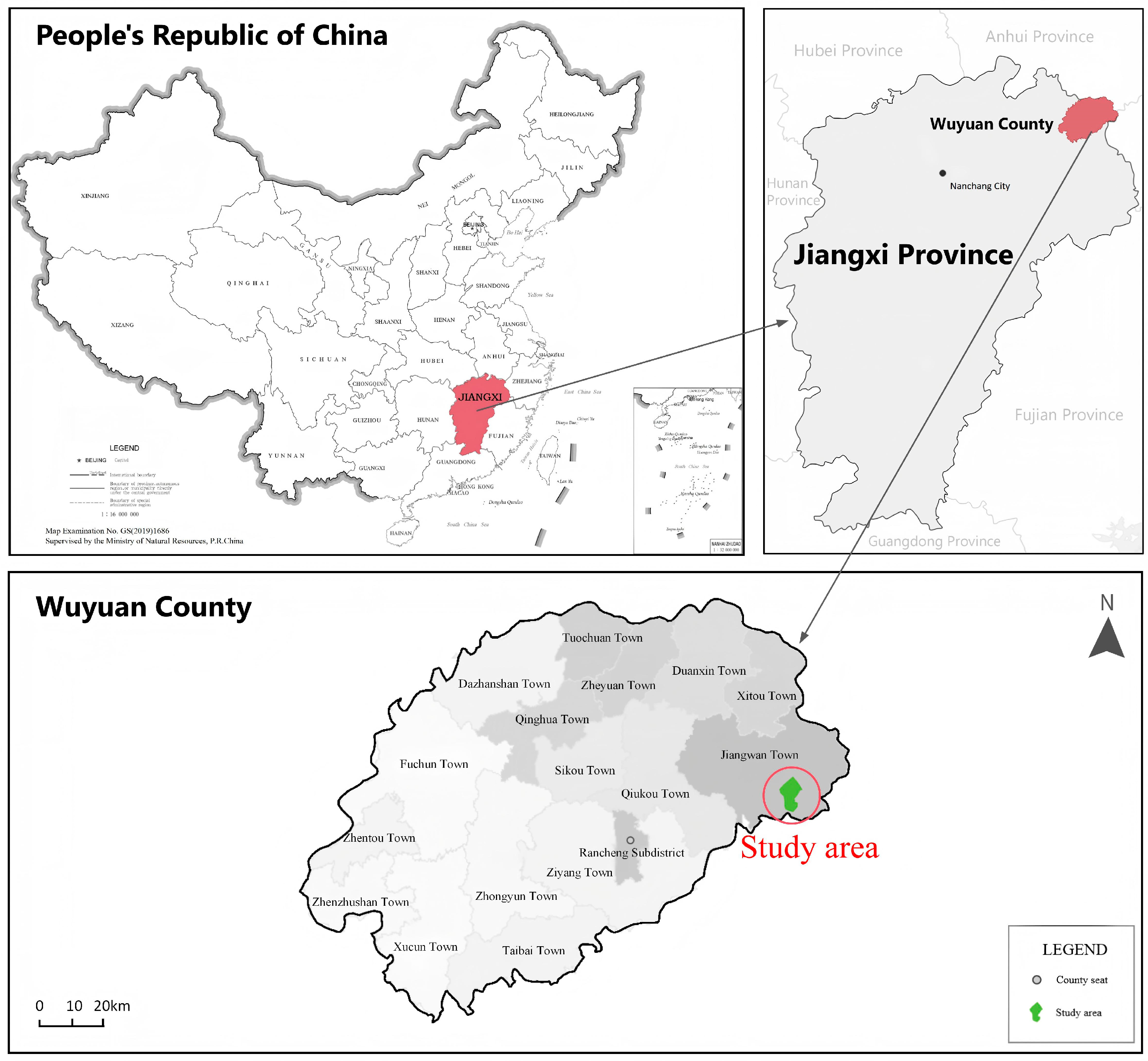
China is an ancient civilization with a long history of agriculture and a major modern tourism industrial system. As such, the country has achieved remarkable success in rural tourism development. This study selects the Huangling Rural Tourism Scenic Area in Wuyuan County, Jiangxi Province, as the case site for investigation. The location of the study area is shown in Figure 1. Located in northeastern Jiangxi Province, 39 km from the county seat, Huangling is a traditional ancient village with a 600-year history. It is renowned for the “Shai Qiu” (Sun-drying Autumn Harvest) folk custom. The terraced flower fields, mountain village settlements, and traditional Hui-style residential architecture collectively form its unique landscape system, making it a comprehensive rural tourism destination that integrates sightseeing, leisure activities and cultural experiences.
Due to its outstanding performance in tourism development, rural revitalization, and community participation, Huangling is recognized as a successful representative of rural tourism in China and has been awarded titles such as the UNWTO “Best Tourism Village” (2023) and China’s National 5A-level Tourist Attraction (2024). In 2024, the scenic area received over three million tourist visits, demonstrating strong market appeal. The area offers visitors diverse opportunities, ranging from experiences of traditional rural lifestyles to outdoor recreation activities, aligning with the core essence of rural tourism [70]. Therefore, Huangling represents a successful rural tourism destination and an appropriate case study location.

3.3. Data Collection and Sample Characteristics

Data were collected from January to March 2025 by a team of two postgraduate and two undergraduate students who received systematic training prior to the survey. The training covered research objectives, target population, procedures, and communication techniques to ensure consistency. Data collection involved distributing paper questionnaires in Chinese at the exit of the scenic area. Researchers verbally confirmed that visitors had completed their tour, explained the study’s purpose, obtained informed consent, and invited participants to complete an anonymous questionnaire. A total of 430 questionnaires were collected. After excluding invalid responses, 398 valid questionnaires were retained, resulting in an effective response rate of 92.56%.
Among the valid samples, female respondents accounted for a slightly higher proportion (54.8%) than male respondents (45.2%). In terms of age distribution, the majority (84.2%) were young and middle-aged respondents between 18 and 45 years old. Regarding educational attainment, over 50% held a bachelor’s degree or higher qualification. The monthly income distribution showed that the largest group (32.9%) fell within the 5001–7500 RMB range, followed by the 7501–10,000 RMB range (24.1%), both of which are higher than the national average monthly income of urban residents. Detailed demographic characteristics are presented in (Appendix B). The following analysis will be conducted on the sample data using CB-SEM.

4. Results

4.1. Common Method Bias and Normality Distribution Test

As the data for this study were collected via questionnaire surveys, with all latent variables self-reported by respondents, there was a potential risk of common method bias due to the uniform measurement approach. To identify and control for this potential bias, a single-factor confirmatory factor analysis was performed. Using AMOS 24.0 software, a single-factor model was constructed and compared with the original eight-factor model. The results indicated that the single-factor model exhibited poor fit indices: χ2/df = 6.914, SRMR = 0.091, CFI = 0.625, RMSEA = 0.122, and TLI = 0.602, all of which failed to meet acceptable standards. Subsequently, the unmeasured latent method construct approach was employed to test for common method bias [71]. This method introduces a latent common method factor into the initial measurement model, linking it to all observed indicators. Accordingly, each item is simultaneously explained by its corresponding theoretical construct and this common method factor. To ensure model identification, equality constraints were imposed on all path coefficients from the common method factor to the observed indicators. The model incorporating the common method factor demonstrated acceptable fit. More importantly, compared to the baseline model (without the common method factor), the fit indices showed only negligible changes: CFI decreased by 0.003, TLI decreased by 0.004, and RMSEA increased by 0.003. These results suggest that common method bias is not a serious concern in the sample data.
An analysis of the skewness and kurtosis of the latent variables in the sample data showed that the absolute values of skewness were all less than 1, and the absolute values of kurtosis were all less than 2. These results meet the requirements for approximate normal distribution in multivariate statistical analysis. Therefore, the data collected in this study generally exhibit satisfactory normality, fulfilling the prerequisites for parametric tests and enabling subsequent hypothesis testing and structural equation modeling.

4.2. Reliability and Validity Analysis

In terms of reliability, Cronbach’s α coefficient was employed to assess internal consistency. The values for all latent variables ranged from 0.845 to 0.918, indicating high internal consistency and stable, reliable measurement results. Additionally, the KMO values for all variables exceeded 0.7, and Bartlett’s test of sphericity was significant (p < 0.001), confirming the suitability of the data for further factor analysis.
Convergent validity was assessed using standardized factor loadings, composite reliability (CR), and average variance extracted (AVE). As presented in Table 1, the standardized factor loadings for all observed variables exceeded the threshold of 0.6, indicating strong explanatory power of the items for their corresponding latent variables. The CR values substantially surpassed the recommended threshold of 0.6, demonstrating good internal consistency of the constructs [72]. Furthermore, the AVE values ranged from 0.614 to 0.681, meeting the convergent validity criterion proposed by Fornell and Larcker (1981) [72]. This further confirms that the measurement model possesses satisfactory convergent validity and effectively reflects the true attributes of the latent variables.
Discriminant validity is primarily used to assess the degree of distinction between different latent variables, emphasizing the statistical independence of constructs. This study employed both the Fornell-Larcker Criterion (AVE-SV comparison) and the Heterotrait–Monotrait ratio (HTMT) of correlations to assess discriminant validity, with the results presented in Table 2. The analysis revealed that the square root of the AVE for each latent variable was greater than its correlations with other latent variables [72]. Furthermore, all HTMT values between the latent variables were below the stringent threshold of 0.85 [73]. Therefore, the discriminant validity criteria are satisfied.

4.3. Model Fitting Indicators

To assess the overall fit of the research model, a goodness-of-fit test was conducted for the structural equation model. The results indicated: χ2/df = 1.275; RMSEA = 0.026, well below the standard threshold of 0.08; RMR = 0.036, also below the 0.05 threshold; AGFI = 0.897, meeting the acceptable criterion; and GFI, IFI, and CFI values were 0.913, 0.984, and 0.983, respectively, all exceeding the desirable level of 0.9. Overall, all fit indices surpassed the established standards, indicating that the model exhibits a satisfactory overall fit.

4.4. Path Analysis

The study employed structural equation modeling (SEM) to examine the hypothesized relationships among latent variables and assess whether each hypothesis was supported by the data. Path analysis was conducted using AMOS software to evaluate direct effects between variables, with the results summarized in Table 3.
The ambience dimension and agricultural products demonstrated significant effects on tourists’ ERB. Specifically, the ambience dimension showed a path coefficient of 0.134 (p = 0.037), while agricultural products exhibited a coefficient of 0.309 (p < 0.001), supporting hypotheses H1b and H1e. In contrast, the natural dimension, hospitality, and farming activities did not exhibit significant effects on tourists’ ERB; thus, hypotheses H1a, H1c, and H1d were not supported.
With the exception of hospitality, the remaining four dimensions of the RTS demonstrated significant effects on NR. The data showed that the natural, ambience, farming activities, and agricultural products dimensions exhibited path coefficients of 0.248 (p < 0.001), 0.182 (p = 0.005), 0.231 (p < 0.001), and 0.121 (p = 0.049) on NR, respectively, supporting hypotheses H2a, H2b, H2d, and H2e. This indicates that the natural, ambience, farming activities, and agricultural products in rural destinations all contribute to enhancing NR. In contrast, hospitality did not show a significant effect on NR; thus, hypothesis H2c was not supported.
All dimensions of the RTS demonstrated statistically significant effects on PA. The path coefficients of the natural, ambience, hospitality, farming activities, and agricultural products dimensions on PA were 0.205 (p < 0.001), 0.159 (p = 0.007), 0.122 (p = 0.024), 0.168 (p = 0.007), and 0.114 (p = 0.041), respectively, supporting hypotheses H5a, H5b, H5c, H5d, and H5e.
NR showed significant effects on both PA and tourists’ ERB. The path coefficient of NR on PA was 0.199, and on tourists’ ERB was 0.228, with both coefficients being statistically significant at p < 0.001. Therefore, hypotheses H8 and H3 were supported.
PA exhibited a significant positive effect on tourists’ ERB. The path coefficient was 0.213 (p = 0.002), supporting hypothesis H6. This indicates that, within the rural tourism context, PA significantly influences tourists’ ERB.

4.5. Mediating Effect Test

To further examine the mediating effects of NR and PA, the study employed the Bootstrap method in AMOS 24.0 for mediation effect analysis. When the 95% confidence interval of the mediating effect does not include zero and the effect estimate is positive, it indicates that the mediating path has statistically positive significance, thereby supporting the corresponding mediation hypothesis. The results are shown in Table 4.
NR has a partial mediating role between the four dimensions of the RTS (nature, ambience, farming activities, and agricultural products) and tourists’ ERB, and hypotheses H4a, H4b, H4d, and H4e are supported. The mediating effect of NR between hospitality and tourists’ ERB is not significant, and hypothesis H4c is not supported.
PA mediates the relationship between all dimensions of the RTS and tourists’ ERB, with mediating effect coefficients of 0.044, 0.034, 0.026, 0.036, and 0.024, respectively, indicating that hypotheses H7a, H7b, H7c, H7d, and H7e are supported.
The data demonstrate a significant serial mediating effect of NR and PA between the RTS and tourists’ ERB. This effect is empirically supported across four dimensions of the RTS. Specifically, the natural, ambience, and farming activities show statistically significant mediation through “NR → PA,” supporting hypotheses H9a, H9b, and H9d. The estimated indirect effect of agricultural products on tourists’ ERB through “ NR → PA “ is 0.005. Displaying the decimal to four places reveals CI = 0.0004 to 0.0176, with the 95% confidence interval not crossing zero, which also satisfies the condition for a significant mediation effect. Therefore, hypothesis H9e is supported. In contrast, the hospitality dimension does not exhibit a significant mediation effect, and thus, hypothesis H9c is not supported. Overall, the mediating effects of NR and PA are supported, although their effect sizes are relatively small.

5. Discussion

5.1. The Differentiated Effects of RTS Dimensions on Tourists’ ERB

The study found that the ambience and agricultural products dimensions of the RTS exert a significant positive influence on tourists’ ERB. Regarding the ambience dimension, it is proposed that the unique local charm, folk activities, and interactive atmosphere characteristic of rural settings can effectively evoke tourists’ emotional engagement. Through immersive experiences, tourists develop an emotional identification with the rural environment, which in turn translates into protective behavioral responses. This finding is consistent with the theoretical proposition that environmental stimuli elicit emotional resonance through sensory engagement [74]. Regarding agricultural products, agrifood tourism has drawn scholarly attention [75,76]; however, little research has focused on its potential influence on tourists’ ERB. This study provides empirical evidence for such an impact. Within the multi-sensory experience characteristic of rural tourism, agricultural products function as a multidimensional “matrix of embodied stimuli,” engaging tourists through visual presentation, olfactory cues, and gustatory experiences. This immersive, multi-sensory contact enables tourists to perceive and internalize the idea of agricultural products as tangible embodiments of local natural essence, thereby activating protective behaviors informed by reciprocity and stewardship. In essence, within the rural tourism context, agricultural products transcend their conventional role as consumption goods to serve as direct emotional conduits that connect individuals with nature and stimulate pro-environmental action.
It is noteworthy that the direct effect of the nature dimension on tourists’ ERB was not statistically significant in this study, which differs from the findings of Jiang et al. (2022) [22]. One possible explanation is that in rural tourism destinations where natural and cultural landscapes are integrated, tourists’ attention may be more readily attracted by cultural elements, with the natural environment serving as a backdrop for cultural experiences. Consequently, the direct stimulating effect of nature on behavior may be diluted by other dimensions. This result also reveals the boundary conditions under which the natural environment exerts its influence across different tourism contexts and emotional pathways.
Similarly, the direct effects of the hospitality and farming activities dimensions on tourists’ ERB were not supported by the data, which diverges from the qualitative findings of Wang et al. (2018) [51]. A possible explanation lies in the differing nature of these experiences across studies. In Wang et al.’s study, respondents were primarily homestay guests engaged in deep, meaningful interpersonal interactions with hosts. Moreover, the farming activities they participated in were often intentionally designed to incorporate environmental guidance, representing what may be termed educational farming activities.
In contrast, the present study measured tourists’ generalized, post hoc impressions of the destination hospitality—a more abstract perception distinct from situated interpersonal interactions. Furthermore, the farming activities reported by respondents typically lacked environmental education, reflecting consumption-oriented farming activities. This comparison suggests that different types of farming activities—educational versus consumption-oriented—may play distinct roles in shaping tourists’ ERB. It also underscores a fundamental difference in how hospitality operates: as a situated interpersonal interaction versus a generalized destination attribute. These insights offer a valuable theoretical direction for future research seeking to integrate micro-level interaction and macro-level perception perspectives.

5.2. Influence of RTS Dimensions on NR and PA

The analysis revealed that the natural, ambience, farming activities, and agricultural products within the RTS positively influenced NR. Specifically, natural elements such as clear waters and pastoral landscapes, along with the rural living atmosphere, farming activities, and distinctive local products, encouraged tourists to immerse themselves in the rural environment, thereby strengthening their connection with nature. These findings underscore the role of environmental features in fostering a stronger tourist–nature bond. In contrast, the hospitality dimension did not exhibit a significant effect on NR. Strzelecka et al. (2021) [77] suggest that when interpersonal interactions lack meaningful engagement with the natural environment, the formation of a connection with nature is substantially impeded. Applying this insight, a plausible explanation is that hospitality functions primarily as a social stimulus, manifested through host–guest interpersonal interactions. When such interactions center on functional service transactions rather than incorporating meaningful contact with natural elements, tourists may find it difficult to cultivate a deep emotional bond with nature. Consequently, this dimension fails to exert a positive influence on tourists’ NR.
The RTS positively influences PA. By cultivating a distinctive natural and cultural atmosphere and offering a range of locally characteristic agricultural products and farming activities, rural tourism destinations can enrich tourists’ perceptions and on-site experiences, thereby contributing to the formation of PA. This finding aligns with the work of Liu & Lin (2024) [21].

5.3. NR as a Predictor of PA and Tourists’ ERB

The study reveals that NR positively influences both PA and tourists’ ERB. First, when tourists perceive a strong connection with the natural environment of a destination, they are more likely to develop emotional attachment to the place, thereby contributing to PA. Second, NR also emerged as a significant positive predictor of tourists’ ERB. As tourists come to view themselves as part of the destination’s ecosystem, they tend to regard it as “my place” and exhibit a stronger willingness to protect it. This finding aligns with Zhang et al.’s (2024) [78] research on the positive relationship between NR and tourists’ ERB.

5.4. Mediating Role of NR and PA in the RTS–ERB Relationship

NR demonstrated a significant mediating effect in the relationship between RTS (natural, ambience, farming activities, and agricultural products) and tourists’ ERB. Through deep engagement with the natural environment—such as participating in farming experiences or nature observation—tourists may construct an “ecological self” [79], whereby environmental protection becomes internalized as part of their self-identity. NR thus facilitates ERB by strengthening this ecological self-perception. This finding aligns with Li et al. (2023) [56], who position NR as a key mediator between environmental perception and pro-environmental behavior. As noted earlier, hospitality did not significantly influence NR, and consequently, the mediating role of NR in the hospitality–ERB relationship was also not supported by the data.
Meanwhile, PA consistently mediated the effects of RTS on tourists’ ERB. The mediating role of PA corroborates the findings of Zhou et al. (2023) [47] and underscores the importance of RTS in fostering PA, which in turn promotes ERB.

5.5. Serial Mediation of NR and PA in the RTS–ERB Relationship

The empirical results support a significant serial mediation pathway through which the RTS influences tourists’ ERB via NR and PA. This indirect pathway is consistently observed across four dimensions: nature, ambience, farming activities, and agricultural products. These findings suggest that the RTS contributes to ERB not only directly but also through a sequential process involving tourists’ affective and cognitive states. While prior research has examined serial mediation pathways such as destination source credibility → cognitive image → affective image → place attachment → TERB [33] and destination eco-friendly reputation → tourist satisfaction → tourists’ recollection → TERB [37], this study provides empirical evidence for the specific chain of “RTS→ NR → PA →tourists’ ERB”. This finding contributes to a deeper understanding of the psychological mechanisms through which environmental stimuli may translate into sustainable behavior.
Notably, however, a study has explored the relationship of PA → NR → ERB [80]. Although this research was not conducted in a tourism context, it suggests that the formation mechanism of individuals’ ERB is complex. In addition to the serial mediation pathway identified in this study, other causal sequences—such as prior ERB influencing NR—cannot be entirely ruled out and thus warrant further investigation.

6. Conclusions and Limitations

6.1. Conclusions

Strengthening tourists’ ERB is critical for promoting the sustainable development of tourism destinations. Focusing on the rural tourism context, this study conducted questionnaire surveys and data analysis in a World’s Best Tourism Village, yielding the following main findings. First, the influence of different dimensions of the RTS on tourists’ ERB was found to be asymmetric. Specifically, ambiance and agricultural products serve as key direct stimuli, exerting significant positive effects on ERB. In contrast, although the nature, hospitality, and farming activity dimensions did not exhibit significant direct effects, they were found to operate through indirect pathways. Unlike previous research that has emphasized the negative impact of a destination’s non-routine environments on tourists’ ERB [9,14], this study suggests that certain dimensions of a destination’s rural tourscape may play a limited yet positive guiding role. Second, the mediating role of NR in the relationship between RTS and tourists’ ERB is supported by the data. Although the indirect effect size is relatively small, this finding suggests that NR constitutes a meaningful psychological pathway for understanding tourists’ behavioral transformation process.
These findings have important implications for the sustainable development of rural tourism destinations. For example, destinations may consider enhancing tourists’ opportunities to engage with the rural natural environment by developing immersive rural ecological trails, integrating storytelling that highlights the origins and production of agricultural products, and organizing tourism activities centered around local farming systems. These initiatives have the potential to deepen tourists’ understanding of rural ecosystems and foster stronger emotional and nature relatedness with rural destinations, which may in turn encourage environmentally responsible behaviors. Finally, the findings also support the mediating role of PA and the chain mediation path of “ NR → PA “. Thus, this research indicates that the formation of tourists’ ERB is not driven by a single mechanism but rather relies on a multi-layered psychological transmission process. Overall, these findings enhance our understanding of the formation mechanisms underlying tourists’ ERB within the rural tourism context.

6.2. Theoretical Contributions

First, this study advances ERB research by contextualizing it within the underexplored domain of rural tourism. While ERB is acknowledged as highly context-dependent [28], empirical investigations in rural tourism contexts remain limited. Given the distinctive spatial attributes, experiential characteristics, and human–environment interactions inherent to rural destinations, this study systematically examines the antecedents and pathways shaping tourists’ ERB in this context. In doing so, it addresses a notable research gap and extends the theoretical boundaries of ERB literature.
Second, this study delineates the psychological transmission mechanism underlying tourists’ ERB within the rural tourism context, where nature is not merely a backdrop but may be a central component of the tourism experience. Accordingly, introducing nature relatedness as a mediating variable directly addresses this contextual specificity. The mediating role of NR in the relationship between the RTS and tourists’ ERB is empirically supported. Furthermore, while prior research has examined serial multiple mediation mechanisms such as destination image and place attachment [33], as well as tourist satisfaction and recollection [37] in relation to tourists’ ERB, the present study extends this line of inquiry by proposing and empirically validating a novel serial mediation path—namely, nature relatedness and place attachment. These findings offer a novel affective perspective for understanding person–environment interactions in rural settings.
Third, this study extends the theoretical development of the RTS construct. While prior work, such as Liu et al. (2024) [21], has explored its effect on tourists’ psychological restoration, whether and how it affects other behavioral outcomes (e.g., ERB) remains largely unexplored. This study addresses this gap by demonstrating that only specific dimensions of the RTS exert direct effects on ERB, revealing the asymmetrical pathways through which the construct influences tourist behavior. In so doing, it not only broadens the theoretical applicability of the RTS construct but also advances the mechanistic understanding of how distinct dimensions differentially shape behavioral outcomes, thereby contributing to the ongoing theoretical development of tourscape research.

6.3. Limitations and Future Research

This study also has certain limitations, which point to possible directions for future research. First, the conclusions are primarily derived from a case study of a rural tourism destination in Wuyuan, China. Given that differences in Chinese and Western cultural values significantly influence tourists’ perceptions and interpretations of rural settings [81], the validity and robustness of these findings, particularly the mediating mechanisms of nature relatedness and place attachment in the relationship between the RTS and tourists’ ERB, warrant further examination across diverse types of rural tourism destinations and varied cultural contexts. Second, data were collected at a single time point, limiting a comprehensive understanding of the seasonal dynamics inherent to rural tourscapes. Key elements—such as rural landscapes, farming and folk activities, and natural ambiance—exhibit pronounced seasonal variations (e.g., harvest scenes in autumn vs. revival scenery in spring), endowing the rural tourscape with differentiated stimulus potential across seasons. Future research could adopt a longitudinal design to systematically examine the seasonal variation in stimulus effects across different dimensions of the rural tourscape and further test the moderating role of seasonal factors. Finally, a measurement limitation of this study lies in the semantic overlap between certain items of the NR and tourists’ ERB scales. While this overlap did not compromise the statistical discriminant validity, it may blur the theoretical boundaries between the two constructs. Future research could further refine the scale design by employing measurement indicators that are more theoretically exclusive, thereby delineating the conceptual boundaries between the constructs more clearly.

Author Contributions

Conceptualization, K.C. and L.G.; methodology, K.C.; software, Y.C. and B.F.; validation, K.C. and B.F.; formal analysis, Y.C. and H.N.; investigation, Y.C.; data curation, Y.C. and H.N.; writing—original draft preparation, Y.C. and B.F.; writing—review and editing, K.C., J.F. and L.G.; visualization, Y.C. and B.F.; supervision, K.C.; project administration, K.C.; funding acquisition, K.C. All authors have read and agreed to the published version of the manuscript.

Funding

This research was funded by the China Scholarship Council, grant number 202406910064. The APC was also funded by the China Scholarship Council.

Institutional Review Board Statement

The study was conducted in accordance with the Declaration of Helsinki and approved by the Institutional Review Board of the School of Business and Tourism, Sichuan Agricultural University (protocol code BTSAUIRB-2024-1202 and date of approval 23 December 2024).

Data Availability Statement

The original data presented in this study are openly available in OSF at https://doi.org/10.17605/OSF.IO/5MABT.

Conflicts of Interest

The authors declare no conflicts of interest.

Appendix A. Measurement Items

  • Rural Tourscape
  • Nature Dimension (ND)
  • ND 1. The rural scenery of Huangling is absolutely enchanting.
  • ND 2. The natural elements of Huangling serve multiple functions.
  • ND 3. Its natural and cultural landscapes exist in perfect harmony.
  • ND 4. Here, I feel distanced from the trivialities of daily life, allowing me to relax both physically and mentally while pondering matters that truly capture my interest.
  • ND 5. The tourism experience in Huangling resonates well with my personality.
  • Ambience Dimension (AD)
  • AD1.Huangling boasts a strongly leisure-filled atmosphere.
  • AD2.The ambiance in Huangling is exceptionally joyful.
  • AD3.Huangling offers a highly interactive environment.
  • AD4.The pace of life in Huangling is remarkably leisurely.
  • Hospitality Dimension (HD)
  • HD1.The service staff in Huangling are genuinely warm and hospitable.
  • HD2.The service personnel in Huangling are attentive and considerate.
  • HD3.The staff members in Huangling are friendly and approachable.
  • HD4.The services provided in Huangling are rich in authentic local characteristics.
  • Farming activities (FA)
  • FA1.Huangling offers hands-on experiences in processing agricultural by-products and creating local handicrafts.
  • FA2.It provides rural leisure activities such as fishing and insect-catching.
  • FA3.Visitors can participate in productive labor experiences like planting and harvesting.
  • FA4.Huangling organizes activities featuring authentic local cuisine tasting.
  • Agricultural Products (AP)
  • AP1.The village has numerous specialty shops selling local products.
  • AP2.Huangling’s specialty goods possess distinct regional characteristics.
  • AP3.The local handicrafts showcase strong rustic features with profound local cultural elements.
  • Nature Relatedness (NR)
  • NR1. My ideal travel destinations are places far from modern urban areas.
  • NR2. I always consider the environmental impact of my actions.
  • NR3. My connection with the natural environment is an integral part of my spiritual life.
  • NR4. Wherever I am, I make a point of noticing and observing wildlife.
  • NR5. My bond with nature is a fundamental part of who I am.
  • NR6. I feel a profound connection with all living beings on Earth.
  • Place Attachment (PA)
  • PA1. Compared to other destinations, I prefer Huangling.
  • PA2. This place fulfills my travel needs better than other locations.
  • PA3. Huangling provides me with a sense of satisfaction that other rural tourism destinations cannot match.
  • PA4. To me, the travel experience in Huangling is truly unique.
  • PA5. I feel a strong sense of identity with the Huangling region.
  • PA6. I like Huangling so much that I wish to extend my stay here.
  • Tourists’ Environmental Responsible Behavior (TERB)
  • TERB1. I made sure to properly dispose of all waste during my travels in Huangling.
  • TERB2. I actively encouraged my fellow travelers to adopt environmentally friendly practices that benefit Huangling’s ecosystem.
  • TERB3. I consider it my personal responsibility to contribute to the protection of Huangling’s natural environment.

Appendix B

Table A1. Frequency analysis of demographic variables.
VariableOptionFrequencyPercentage (%)
GenderMale18045.2
Female21854.8
Age18–2511127.9
26–3513533.9
36–458922.4
46–55379.3
56–65184.5
66 and above82.0
EducationMiddle school or below143.5
High school4010.1
Vocational college13132.9
Bachelor’s degree17945.0
Master’s degree or above348.5
OccupationGovernment/institution staff7619.1
Employee13433.7
Self-employed 4511.3
Farmer61.5
Freelancer6215.6
Student5614.1
Retiree82.0
Others112.8
Income (in RMB)Below 25006917.3
2500–50005112.8
5001–750013132.9
7501–10,0009624.1
Above 10,0005112.8

References

  1. UNWTO. Rural Tourism. Available online: https://www.unwto.org/rural-tourism (accessed on 10 November 2025).
  2. Yu, L.; Wang, G.; Marcouiller, D.W. A scientometric review of pro-poor tourism research: Visualization and analysis. Tour. Manag. Perspect. 2019, 30, 75–88. [Google Scholar] [CrossRef]
  3. Qin, D.; Xu, H.; Chung, Y. Perceived impacts of the poverty alleviation tourism policy on the poor in China. J. Hosp. Tour. Manag. 2019, 41, 41–50. [Google Scholar] [CrossRef]
  4. Wang, X.; Huang, D.; Wu, M. Rural tourism as a catalyst for labor return? A rethinking of return migration from a mixed embeddedness perspective. J. Destin. Mark. Manag. 2026, 39, 101041. [Google Scholar] [CrossRef]
  5. Yang, J.; Yang, R.; Chen, M.; Su, C.; Zhi, Y.; Xi, J. Effects of rural revitalization on rural tourism. J. Hosp. Tour. Manag. 2021, 47, 35–45. [Google Scholar] [CrossRef]
  6. Zhang, J.; Zhang, Y. Tourism specialization, rural-urban integration and rural revitalization: Evidence from China’s cities. Tour. Manag. 2026, 114, 105359. [Google Scholar] [CrossRef]
  7. Song, S.; Gong, Y.; Li, T.; Peng, X.; Da, Q. Rural policies, regional integration, and tourism growth: Evidence from a quasi-natural experiment of the national tourism poverty alleviation demonstration project. Int. Rev. Econ. Financ. 2025, 103, 104411. [Google Scholar] [CrossRef]
  8. Han, H.; Al-Ansi, A.; Chua, B.L.; Ahmad, N.; Kim, J.J.; Radic, A.; Bobby Ryu, H. Reconciling civilizations: Eliciting residents’ attitude and behaviours for international Muslim tourism and development. Curr. Issues Tour. 2023, 26, 1463–1481. [Google Scholar] [CrossRef]
  9. Gao, J.; Huang, Z.W.; Zhang, C. Tourists’ perceptions of responsibility: An application of norm-activation theory. J. Sustain. Tour. 2017, 25, 276–291. [Google Scholar] [CrossRef]
  10. Xu, H.; Lin, X.; Liu, F.; Wang, X.; Wang, M. Experiential Value, Place Attachment, and Environmentally Responsible Behavior of Forest Health Tourism-A Case of China. Forests 2022, 13, 1855. [Google Scholar] [CrossRef]
  11. Sthapit, E.; Björk, P.; Coudounaris, D.N. Memorable nature-based tourism experience, place attachment and tourists’ environmentally responsible behaviour. J. Ecotour. 2023, 22, 542–565. [Google Scholar] [CrossRef]
  12. Lee, T.H.; Jan, F.H.; Huang, G.W. The influence of recreation experiences on environmentally responsible behavior: The case of Liuqiu Island, Taiwan. J. Sustain. Tour. 2015, 23, 947–967. [Google Scholar] [CrossRef]
  13. Yang, Y.; Li, C.; Qu, Z. An AI-driven approach to sustainability: The effect of AI accent on tourists’ pro-environmental behavioral intentions. J. Hosp. Tour. Manag. 2025, 63, 478–487. [Google Scholar] [CrossRef]
  14. Dolnicar, S.; Cvelbar, L.K.; Grün, B. A Sharing-based Approach to Enticing Tourists to Behave More Environmentally Friendly. J. Travel Res. 2019, 58, 241–252. [Google Scholar] [CrossRef]
  15. Wu, J.; Wu, H.; Hsieh, C.M.; Ramkissoon, H.R. Face consciousness, personal norms, and environmentally responsible behavior of Chinese tourists: Evidence from a lake tourism site. J. Hosp. Tour. Manag. 2022, 50, 148–158. [Google Scholar] [CrossRef]
  16. Yan, A.; Jia, W. The influence of eliciting awe on pro-environmental behavior of tourist in religious tourism. J. Hosp. Tour. Manag. 2021, 48, 55–65. [Google Scholar] [CrossRef]
  17. Qin, Q.; Hsu, C. Urban travelers’ pro-environmental behaviors: Composition and role of pro-environmental contextual force. Tour. Manag. 2022, 92, 104561. [Google Scholar] [CrossRef]
  18. Zhang, H.; Xu, H. A structural model of liminal experience in tourism. Tour. Manag. 2019, 71, 84–98. [Google Scholar] [CrossRef]
  19. Bitner, M.J. Servicescape: The impact of physical surroundings on customers and employees. J. Mark. 1992, 56, 57–71. [Google Scholar] [CrossRef]
  20. Zhang, H.; Xu, H. The effects of tourscape and destination familiarity on tourists’ place attachment. Tour. Trib. 2022, 38, 122–135. (In Chinese) [Google Scholar] [CrossRef]
  21. Liu, W.; Lin, D. Influences of the rural tourscape on tourists’ psychological recovery: The mediating role of place attachment. Tour. Trib. 2024, 39, 106–118. (In Chinese) [Google Scholar] [CrossRef]
  22. Jiang, J.; Gao, B.W.; Su, X. Antecedents of Tourists’ Environmentally Responsible Behavior: The Perspective of Awe. Front. Psychol. 2022, 13, 619815. [Google Scholar] [CrossRef]
  23. Aziz, S.; Niazi, M.A.K. Protecting coastal tourism through developing tourists’ environment responsible behaviour. J. Outdoor Rec. Tour. 2023, 44, 100698. [Google Scholar] [CrossRef]
  24. Mayer, F.S.; Frantz, C.M. The connectedness to nature scale: A measure of individuals’ feeling in community with nature. J. Environ. Psychol. 2004, 24, 503–515. [Google Scholar] [CrossRef]
  25. Li, Y.; Li, J.; Wu, F. Connectedness to Nature: Conceptualization, Measurements and Promotion. Psychol. Dev. Educ. 2018, 34, 120–127. (In Chinese) [Google Scholar] [CrossRef]
  26. Barragan-Jason, G.; de Mazancourt, C.; Parmesan, C.; Singer, M.C.; Loreau, M. Human-nature connectedness as a pathway to sustainability: A global meta-analysis. Conserv. Lett. 2022, 15, e12852. [Google Scholar] [CrossRef] [PubMed]
  27. Mackay, C.M.L.; Schmitt, M.T. Do people who feel connected to nature do more to protect it? A meta-analysis. J. Environ. Psychol. 2019, 65, 101323. [Google Scholar] [CrossRef]
  28. Gifford, R.; Nilsson, A. Personal and social factors that influence pro-environmental concern and behavior: A review. Int. J. Psychol. 2014, 49, 141–157. [Google Scholar] [CrossRef]
  29. Feng, Y.; Ahmad, A.; Azman, N. Tourists’ Environmentally Responsible Behavior: A Systematic Literature Review. J. Res. Admin. 2024, 6, 3580–3603. [Google Scholar]
  30. Wang, K.; Yu, Y.; Yang, Y.; Tang, F. The emotional mechanism of host-guest interaction impact tourist value co-creation behaviors: A perspective from affective events theory. J. Hosp. Tour. Manag. 2025, 64, 101326. [Google Scholar] [CrossRef]
  31. Wang, C.; Zhang, J.; Cao, J.; Hu, H.; Yu, P. The influence of environmental background on tourists’ environmentally responsible behaviour. J. Environ. Manag. 2019, 231, 804–810. [Google Scholar] [CrossRef]
  32. Nisbet, E.K.; Zelenski, J.M.; Murphy, S.A. The nature relatedness scale linking individuals’ connection with nature to environmental concern and behavior. Environ. Behav. 2009, 41, 715–740. [Google Scholar] [CrossRef]
  33. Qiu, H.; Wang, X.; Wu, M.; Wei, W.; Morrison, A.M.; Kelly, C. The effect of destination source credibility on tourist environmentally responsible behavior: An application of stimulus-organism-response theory. J. Sustain. Tour. 2022, 31, 1797–1817. [Google Scholar] [CrossRef]
  34. Namkung, Y.; Jang, S.C. Effects of perceived service fairness on emotions, and behavioral intentions in restaurants. Eur. J. Mark. 2010, 44, 1233–1259. [Google Scholar] [CrossRef]
  35. Slama, M.E.; Tashchian, A. Validating the S-O-R paradigm for consumer involvement with a convenience good. J. Acad. Mark. Sci. 1987, 15, 36–45. [Google Scholar] [CrossRef]
  36. Lee, S.; Ha, S.; Widdows, R. Consumer responses to high-technology products: Product attributes, cognition, and emotions. J. Bus. Res. 2011, 64, 1195–1200. [Google Scholar] [CrossRef]
  37. Su, L.; Hsu, M.K.; Boostrom, R.E., Jr. From recreation to responsibility: Increasing environmentally responsible behavior in tourism. J. Bus. Res. 2020, 109, 557–573. [Google Scholar] [CrossRef]
  38. Borden, R.J.; Schettino, A.P. Determinants of environmentally responsible behavior. J. Environ. Educ. 1979, 10, 35–39. [Google Scholar] [CrossRef]
  39. Lee, T.H.; Jan, F.H.; Yang, C.C. Conceptualizing and measuring environmentally responsible behavior from the perspective of community-based tourists. Tour. Manag. 2013, 36, 454–468. [Google Scholar] [CrossRef]
  40. Han, H.; Hwang, J.; Lee, M.J. The value-belief-emotion-norm model: Investigation customers eco-friendly behavior. J. Travel Tour. Mark. 2017, 34, 590–607. [Google Scholar] [CrossRef]
  41. Schönherr, S. Tourism Actors’ Responsible Behavior: A Systematic Literature Review. J. Hosp. Tour. Res. 2024, 48, 671–683. [Google Scholar] [CrossRef]
  42. Chiu, Y.T.H.; Lee, W.I.; Chen, T.H. Environmentally responsible behavior in ecotourism: Antecedents and implications. Tour. Manag. 2014, 40, 321–329. [Google Scholar] [CrossRef]
  43. Frías-Jamilena, D.M.; Fernández-Ruano, M.L.; Polo-Peña, A.I. Gamified environmental interpretation as a strategy for improving tourist behavior in support of sustainable tourism: The moderating role of psychological distance. Tour. Manag. 2022, 91, 104519. [Google Scholar] [CrossRef]
  44. Qiu, Z.; Chen, S.; Law, R.; Zuo, Y.; Zhang, M. Enhancing green advertising: How emotional and rational appeals influence tourists’ pro-environmental intentions based on behavior types. J. Hosp. Tour. Manag. 2025, 63, 434–445. [Google Scholar] [CrossRef]
  45. Elsamen, A.A.; Fotiadis, A.; Alalwan, A.A.; Huan, T.C. Enhancing pro-environmental behavior in tourism: Integrating attitudinal factors and norm activation theory. Tour. Manag. 2025, 109, 105155. [Google Scholar] [CrossRef]
  46. Li, Q.; Wang, Y.; Shan, W.; Guan, J. Dual trust, emotional bond, and tourists’ on-site pro-environmental behavior at nature-based destinations: Extending norm-activation theory from the perspective of social dilemma. J. Outdoor Rec. Tour. 2025, 49, 100839. [Google Scholar] [CrossRef]
  47. Zhou, B.; Wang, L.; Huang, S.; Xiong, Q. Impact of perceived environmental restorativeness on tourists’ pro-environmental behavior: Examining the mediation of place attachment and the moderation of ecocentrism. J. Hosp. Tour. Manag. 2023, 56, 398–409. [Google Scholar] [CrossRef]
  48. van Heezik, Y.; Freeman, C.; Falloon, A.; Buttery, Y.; Heyzer, A. Relationships between childhood experience of nature and green/blue space use, landscape preferences, connection with nature and pro-environmental behavior. Landsc. Urban Plan. 2021, 213, 104135. [Google Scholar] [CrossRef]
  49. Barragan-Jason, G.; Loreau, M.; de Mazancourt, C.; Singer, M.C.; Parmesan, C. Psychological and physical connections with nature improve both human well-being and nature conservation: A systematic review of meta-analyses. Biol. Conserv. 2023, 277, 109842. [Google Scholar] [CrossRef]
  50. Filimonau, V.; Matute, J.; Mika, M.; Faracik, R. National culture as a driver of pro-environmental attitudes and behavioural intentions in tourism. J. Sustain. Tour. 2018, 26, 1804–1825. [Google Scholar] [CrossRef]
  51. Wang, W.; Wu, J.; Wu, M.; Pearce, P.L. Shaping tourists’ green behavior: The hosts’ efforts at rural Chinese B&Bs. J. Destin. Mark. Manag. 2018, 9, 194–203. [Google Scholar] [CrossRef]
  52. Cooley, S.J.; Jones, C.R.; Kurtz, A.; Robertson, N. ‘Into the Wild’: A meta-synthesis of talking therapy in natural outdoor spaces. Clin. Psychol. Rev. 2020, 77, 101841. [Google Scholar] [CrossRef] [PubMed]
  53. Trammell, J.P.; Aguilar, S.C. Natural Is Not Always Better: The Varied Effects of a Natural Environment and Exercise on Affect and Cognition. Front. Psychol. 2021, 11, 575245. [Google Scholar] [CrossRef]
  54. Buckley, R. Nature tourism and mental health: Parks, happiness, and causation. J. Sustain. Tour. 2020, 28, 1409–1424. [Google Scholar] [CrossRef]
  55. Pearce, J.; Strickland-Munro, J.; Moore, S.A. What fosters awe-inspiring experiences in nature-based tourism destinations? J. Sustain. Tour. 2017, 25, 362–378. [Google Scholar] [CrossRef]
  56. Li, J.; Huang, L.; He, M.; Ye, B.H. Understanding pro-environmental behavior in tourism: Developing an experimental model. J. Hosp. Tour. Manag. 2023, 57, 213–224. [Google Scholar] [CrossRef]
  57. Zhang, H.; Cai, L.; Bai, B.; Yang, Y.; Zhang, J. National forest park visitors’ connectedness to nature and pro-environmental behavior: The effects of cultural ecosystem service, place and event attachment. J. Outdoor Rec. Tour. 2023, 42, 100621. [Google Scholar] [CrossRef]
  58. Chen, J.; Huang, Y.; Wu, E.Q.; Ip, R.; Wang, K. How does rural tourism experience affect green consumption in terms of memorable rural-based tourism experiences, connectedness to nature and environmental awareness? J. Hosp. Tour. Manag. 2023, 54, 166–177. [Google Scholar] [CrossRef]
  59. Qu, Y.; Zhou, Q.; Cao, L. How do positive host-guest interactions in tourism alter the indicators of tourists’ general attachment styles? A moderated mediation model. Tour. Manag. 2024, 105, 104937. [Google Scholar] [CrossRef]
  60. Cai, X.; Hu, Z.; He, J.; Zou, X.; Morrison, A.M. A meta-analysis of the antecedents and outcomes of tourist place attachment. J. Hosp. Tour. Manag. 2025, 64, 101256. [Google Scholar] [CrossRef]
  61. Xu, X.; Gursoy, D. Exploring the relationship between servicescape, place attachment, and intention to recommend accommodations marketed through sharing economy platforms. J. Travel Tour. Mark. 2020, 37, 429–446. [Google Scholar] [CrossRef]
  62. Jiang, J.; Xia, Q.; Tang, Y.; Chen, Y.; Su, X. How does nature heal tourists in the context of COVID-19? The perspective of the emotional mechanism. J. Hosp. Tour. Manag. 2022, 52, 368–381. [Google Scholar] [CrossRef]
  63. Boley, B.B.; Strzelecka, M.; Yeager, E.P.; Ribeiro, M.A.; Aleshinloye, K.D.; Woosnam, K.M.; Mimbs, B.P. Measuring place attachment with the Abbreviated Place Attachment Scale (APAS). J. Environ. Psychol. 2021, 74, 101577. [Google Scholar] [CrossRef]
  64. Uesugi, A.; Kudo, Y. The relationship between outdoor sport participants’ place attachment and pro-environment behaviour in natural areas of Japan for developing sustainable outdoor sport tourism. Eur. J. Sport Soc. 2020, 17, 162–179. [Google Scholar] [CrossRef]
  65. Kim, J.; Shin, H.H.; Jeong, M.; Lee, W.S. Impact of tourists’ psychological ownership of an eco-friendly trail on their behavior intention: An empirical investigation of Jeju Olle Trail in South Korea. Asia Pac. J. Tour. Res. 2021, 26, 1097–1110. [Google Scholar] [CrossRef]
  66. Basu, M.; Hashimoto, S.; Dasgupta, R. The mediating role of place attachment between nature connectedness and human well-being: Perspectives from Japan. Sustain. Sci. 2020, 15, 849–862. [Google Scholar] [CrossRef]
  67. Nisbet, E.K.; Zelenski, J.M. The NR-6: A new brief measure of nature relatedness. Front. Psychol. 2013, 4, 813. [Google Scholar] [CrossRef]
  68. Patwardhan, V.; Ribeiro, M.A.; Payini, V.; Woosnam, K.M.; Mallya, J.; Gopalakrishnan, P. Visitors’ place attachment and destination loyalty: Examining the roles of emotional solidarity and perceived safety. J. Travel Res. 2019, 59, 3–21. [Google Scholar] [CrossRef]
  69. Jia, Y.; Lin, D. Influence Factors and Effects of Tourists’ Environmentally Responsible Behaviors Based on Place Theory. China Popul. Resour. Environ. 2015, 25, 161–169. (In Chinese) [Google Scholar] [CrossRef]
  70. Samper-Mendívil, M.; Aramendia-Muneta, M.E.; Alarcón-López, R. Assessing sustainability in rural tourism: Insights from accommodation managers and residents in Navarre. J. Rural Stud. 2025, 120, 103866. [Google Scholar] [CrossRef]
  71. Podsakoff, P.M.; MacKenzie, S.B.; Podsakoff, N.P. Sources of method bias in social science research and recommendations on how to control it. Annu. Rev. Psychol. 2012, 63, 539–569. [Google Scholar] [CrossRef] [PubMed]
  72. Fornell, C.; Larcker, D.F. Evaluating structural equation models with unobservable variables and measurement error. J. Mark. Res. 1981, 18, 39–50. [Google Scholar] [CrossRef]
  73. Voorhees, C.M.; Brady, M.K.; Calantone, R.; Ramirez, E. Discriminant validity testing in marketing: An analysis, causes for concern, and proposed remedies. J. Acad. Mark. Sci. 2016, 44, 119–134. [Google Scholar] [CrossRef]
  74. Jiang, C.; Zhang, K.; Zhi, Y.; Zeng, Y. Feel the thrill: Exploring how sensory experiences drive positive emotions on themed tours. Tour. Manag. 2025, 111, 105247. [Google Scholar] [CrossRef]
  75. Liu, J.; Liu, F.; Webb, D. Can agrifood products generate tourist desire to visit a place? An empirical study of image transfer and self-congruity. J. Destin. Mark. Manag. 2023, 30, 100794. [Google Scholar] [CrossRef]
  76. Fountain, J.; Cradock-Henry, N.; Buelow, F.; Rennie, H. Agrifood tourism, rural resilience, and recovery in a postdisaster context: Insights and evidence from Kaikōura-Hurunui, New Zealand. Tour. Anal. 2021, 26, 135–149. [Google Scholar] [CrossRef]
  77. Strzelecka, M.; Prince, S.; Boley, B.B. Resident connection to nature and attitudes towards tourism: Findings from three different rural nature tourism destinations in Poland. J. Sustain. Tour. 2021, 31, 664–687. [Google Scholar] [CrossRef]
  78. Zhang, Y.; Jia, W.; Chan, J.H.; Sciacca, A. The awe-habitual model: Exploring tourists’ pro-environmental behaviors in religious settings. J. Sustain. Tour. 2024, 33, 2055–2074. [Google Scholar] [CrossRef]
  79. Bragg, E.A. Towards ecological self: Deep ecology meets constructionist self-theory. J. Environ. Psychol. 1996, 16, 93–108. [Google Scholar] [CrossRef]
  80. Chang, B.; Sheng, H.; Wei, Y.; Fang, J.; Wen, Y. The relationship between place attachment and pro-environmental behavioral intentions: The mediating role of nature connectedness. Front. Psychol. 2026, 16, 1678177. [Google Scholar] [CrossRef] [PubMed]
  81. Fountain, J.; Espiner, S.; Xie, X. A cultural framing of nature: Chinese tourists’ motivations for, expectations of, and satisfaction with, their New Zealand tourist experience. Tour. Rev. Int. 2011, 14, 71–83. [Google Scholar] [CrossRef]
Figure 1. Location map of the study area.
Agriculture 16 00639 g001
Table 1. Results of convergent validity test.
VariableItemStandardized LoadingCRAVEVariableItemStandardized LoadingCRAVE
Nature DimensionND10.7540.8940.628Nature RelatednessNR10.7820.9050.614
ND20.817NR20.760
ND30.779NR30.759
ND40.777NR40.824
ND50.833NR50.781
Ambience DimensionAD10.7870.8800.647NR60.794
AD20.817Place AttachmentPA10.8250.9180.651
AD30.805PA20.784
AD40.809PA30.814
Hospitality DimensionHD10.7580.8750.636PA40.819
HD20.836PA50.802
HD30.790PA60.797
HD40.805Tourists’ ERBTERB10.8190.8650.681
Farming ActivitiesFA10.8260.8880.665TERB20.830
FA20.801TERB30.827
FA30.816
FA40.819
Agricultural ProductsAP10.8430.8460.648
AP20.807
AP30.763
Table 2. Results of discriminant validity test.
VariableNDADHDFAAPNRPATERB
ND0.7930.5620.5200.5340.4250.5530.6070.462
AD0.5570.8050.5170.5680.5010.5410.5990.561
HD0.5240.5150.7980.5250.4380.4550.5410.493
FA0.5260.5680.5220.8160.5900.5670.6080.537
AP0.4220.4980.4390.5870.8050.4830.5270.617
NR0.5530.5420.4570.5670.4780.7840.6050.594
PA0.6040.5960.5400.6100.5270.6040.8070.614
TERB0.4650.5600.4910.5380.6170.5930.6150.825
Note: Bold diagonal values are the square roots of the AVE. Below the diagonal are the Pearson correlations. The data above the diagonal indicate the HTMT values. TERB = tourists’ ERB; PA = place attachment; NR = nature relatedness; AP = agricultural products; FA = farming activities; HD = hospitality dimension; AD = ambience dimension; ND = nature dimension.
Table 3. Path coefficient test.
Hyp.PathS.E.C.R.βpSupported
H1aND → TERB0.073−0.630−0.0390.529No
H1bAD → TERB0.0692.0830.1340.037 *Yes
H1cHD → TERB0.0681.5500.0910.121No
H1dFA → TERB0.070−0.066−0.0040.948No
H1eAP → TERB0.0644.9580.309***Yes
H2aND → NR0.0663.9840.248***Yes
H2bAD → NR0.0622.8200.1820.005 **Yes
H2cHD → NR0.0620.9950.0590.320No
H2dFA → NR0.0643.3920.231***Yes
H2eAP → NR0.0571.9650.1210.049 *Yes
H3NR → TERB0.0693.6550.228***Yes
H5aND → PA0.0643.5830.205***Yes
H5bAD → PA0.0602.7130.1590.007 **Yes
H5cHD → PA0.0602.2650.1220.024 *Yes
H5dFA → PA0.0622.7080.1680.007 **Yes
H5eAP → PA0.0542.0410.1140.041 *Yes
H6PA → TERB0.0723.0870.2130.002 **Yes
H8NR → PA0.0603.5330.199***Yes
Note: * p < 0.05; ** p < 0.01; *** p < 0.001; Hyp. = hypothesis; S.E. = standard error; β = standardized estimate; p = p-value; TERB = tourists’ ERB; PA = place attachment; NR = nature relatedness; AP = agricultural products; FA = farming activities; HD = hospitality dimension; AD = ambience dimension; ND = nature dimension.
Table 4. Results of mediation analysis.
Hyp.PathβS.E.pLowerUpperSupported
H4aND → NR → TERB0.0560.0220.001 **0.0210.110Yes
H4bAD → NR → TERB0.0410.0210.008 **0.0100.094Yes
H4cHD → NR → TERB0.0140.0160.288−0.0140.048No
H4dFA → NR → TERB0.0530.0240.001 **0.0160.114Yes
H4eAP → NR → TERB0.0280.0170.046 *0.0010.070Yes
H7aND → PA → TERB0.0440.0200.005 **0.0120.095Yes
H7bAD → PA → TERB0.0340.0200.012 *0.0060.090Yes
H7cHD → PA → TERB0.0260.0180.027 *0.0020.076Yes
H7dFA → PA → TERB0.0360.0200.010 *0.0070.089Yes
H7eAP → PA → TERB0.0240.0160.041 *0.0010.065Yes
H9aND → NR → PA → TERB0.0100.0070.005 **0.0020.032Yes
H9bAD → NR → PA → TERB0.0080.0060.008 **0.0010.026Yes
H9cHD → NR → PA → TERB0.0030.0030.173−0.0020.013No
H9dFA → NR → PA → TERB0.0100.0060.005 **0.0020.030Yes
H9eAP → NR → PA → TERB0.0050.0040.028 *0.0000.018Yes
Note: * p < 0.05; ** p < 0.01; S.E. = standard error; Hyp. = hypothesis; β = standardized estimate; p = p-value; TERB = tourists’ ERB; PA = place attachment; NR = nature relatedness; AP = agricultural products; FA = farming activities; HD = hospitality dimension; AD = ambience dimension; ND = nature dimension.
Disclaimer/Publisher’s Note: The statements, opinions and data contained in all publications are solely those of the individual author(s) and contributor(s) and not of MDPI and/or the editor(s). MDPI and/or the editor(s) disclaim responsibility for any injury to people or property resulting from any ideas, methods, instructions or products referred to in the content.