Article

Effects of Different Biodegradable Mulch Films on Grain Filling Dynamics and Hormone Contents in Maize Grown in a Cold Region

1
Faculty of Agronomy, Jilin Agricultural University, Changchun 130118, China
2
Institute of Agricultural Resources and Environment, Jilin Academy of Agriculture Sciences, Changchun 130033, China
*
Author to whom correspondence should be addressed.
Agriculture 2026, 16(5), 614; https://doi.org/10.3390/agriculture16050614
Submission received: 6 February 2026 / Revised: 3 March 2026 / Accepted: 5 March 2026 / Published: 6 March 2026
(This article belongs to the Section Crop Production)

Abstract

In the cold and cool region of northeastern China, low temperature and limited soil moisture retention constrain maize yield, and mulching is widely used to alleviate these limitations. To reduce the environmental risks associated with polyethylene (PE) film, a two-year field experiment (2024–2025) was conducted to evaluate biodegradable films suitable for maize production in this region. Five mulching treatments were tested, including PE film (T1) and four biodegradable options—polypropylene carbonate (PPC, T2), polybutylene adipate terephthalate (PBAT, T3), polylactic acid (PLA, T4), and a PBAT + PPC composite film (T5)—with no mulching as the control (CK). Across two growing seasons, T1–T5 increased the effective grain filling duration by 4.74–13.58%, raised grain auxin content during grain filling by 1.54–29.33%, and increased the two-year mean yield by 13.95–24.73% compared with CK. Notably, the PBAT + PPC composite film (T5) did not differ significantly from PE film (T1) in grain filling traits, hormone regulation, or yield improvement (p > 0.05), indicating that T5 is a promising and sustainable alternative to PE film for maize production in cold regions. These findings provide technical support for selecting and applying biodegradable mulch films in cold-region maize systems and contribute to environmentally sustainable high-yield cultivation.

1. Introduction

Plastic film mulching is a key agronomic practice for enhancing crop yields, particularly in arid, semi-arid, and sub-humid regions, and it has shown pronounced yield benefits for maize (Zea mays L.) in cool spring and low-temperature regions [1,2]. In China, such conditions are typical of the cold region of the northeastern plains, which mainly includes northern Heilongjiang Province, northeastern Inner Mongolia, and the mountainous areas of eastern Jilin Province. This region is characterized by a short growing season and insufficient accumulated temperature; frequent low-temperature stress and chilling injury severely restrict crop growth and yield formation. Under these climatic constraints, mulching plays a crucial role by increasing soil temperature, stabilizing soil moisture, and suppressing weeds, thereby promoting crop growth and improving yield [3,4,5]. However, the widely used polyethylene (PE) film, made from petroleum-based products, lacks biodegradability [6]. Due to limitations in residual film recycling technologies and associated costs [7], the long-term and high-intensity use of PE film has led to severe accumulation of residual plastics in farmlands [8]. The presence of residual films not only impedes root expansion and the absorption of water and nutrients but also damages soil aggregate structure, leading to soil physicochemical degradation and soil erosion [9,10,11]. Additionally, it causes farmland landscape pollution [12], and for conventional non-degradable plastic films, physical weathering and fragmentation can generate microplastics that may enter the food chain, posing potential threats to human health [13]. The environmental and ecological risks caused by the excessive use of PE film have become significant constraints to sustainable agricultural development [14]. Therefore, reducing dependence on PE film and developing and promoting environmentally friendly mulching materials are urgent research priorities in the field of agricultural ecology [15].
Biodegradable films are regarded as an environmentally favorable alternative to PE films in many agricultural settings and have been widely applied in crop cultivation [16]. After crop harvest, biodegradable films can be incorporated into the soil and may undergo microbial degradation over time, which can help alleviate environmental issues associated with persistent plastic residues and reduce, to some extent, the labor required for film retrieval [17]. The commonly used materials for biodegradable film production include polypropylene carbonate (PPC), polybutylene adipate terephthalate (PBAT), polylactic acid (PLA), and PBAT/PPC composite blends [18]. PPC is a novel biodegradable plastic made from carbon dioxide and propylene oxide (PO) co-polymerization, with a low carbon footprint, but its practical application is limited by its low thermal decomposition temperature, glass transition temperature, and amorphous structure, which makes it brittle at low temperatures and loses mechanical strength quickly at high temperatures [19,20]. PBAT is a biodegradable aliphatic–aromatic copolyester synthesized primarily from petroleum-based monomers and currently accounts for more than 60% of the biodegradable mulch film market [21]. Although PBAT is compostable and biodegradable under suitable conditions, it is not bio-based, and its fossil-derived origin results in a higher carbon footprint compared with fully bio-based polymers [22]. In addition, PBAT films generally exhibit weaker water retention capacity than polyethylene (PE) films due to their higher water vapor permeability, which may reduce insulation and moisture conservation performance [5,23]. PLA, derived from renewable biomass such as sugarcane and corn starch, is widely used as a bio-based biodegradable polymer with good mechanical strength and tensile properties [24]. However, its relatively high production cost and rapid degradation under field conditions limit its application in agricultural mulching films [25]. PBAT/PPC composite blends aim to integrate the mechanical flexibility of PBAT with the barrier properties of PPC, thereby improving film processability and performance while partially reducing reliance on fossil-based materials [23].
Grain filling is regulated by source–sink relationships and sink strength and is influenced by phytohormones [26,27]. In maize and other cereals, auxin (IAA) and cytokinins (e.g., zeatin riboside, ZR) are associated with early kernel development and sink establishment (e.g., endosperm cell division), thereby affecting the subsequent grain filling rate [28]. Abscisic acid (ABA) is related to assimilate remobilization and starch accumulation and can promote carbohydrate transport to developing kernels [29]. Mulching alters the soil hydrothermal regime and may affect crop phenology and kernel development, potentially shifting endogenous IAA/ZR/ABA levels and their balance and thereby modifying grain filling dynamics under mulched conditions [30,31]. Studies in multiple countries have verified the feasibility of re-placing PE films with degradable films, and previous research mainly focused on their characteristics and their positive effects on soil temperature, moisture, water use efficiency, and yield [32]. However, little attention has been paid to the coupled effects of different types of films on maize hormones and grain filling. Therefore, this study will conduct a two-year field experiment on maize in the north-eastern plains from 2024 to 2025, setting up four different biodegradable films (PPC, PBAT, PLA, and PBAT/PPC composite films), one non-biodegradable polyethylene (PE) mulch film, and a no-film control (CK). Based on the research background and scientific questions, we propose the following hypotheses: (1) long-term coverage with different types of biodegradable films will significantly regulate maize growth, development, and yield formation, and affect yield quality by changing grain filling characteristics and related hormone levels; (2) degradable film coverage is expected to maintain maize agronomic traits and yield at levels comparable to those under PE film and to improve the soil environment, thereby supporting the replacement of PE film and achieving both environmental sustainability and yield stability in maize production in the northeastern cool regions. The results of this study will provide theoretical support for evaluating the sustainability of maize cultivation under long-term film mulching and the feasibility of replacing PE film with degradable films.

2. Materials and Methods

2.1. Site Description

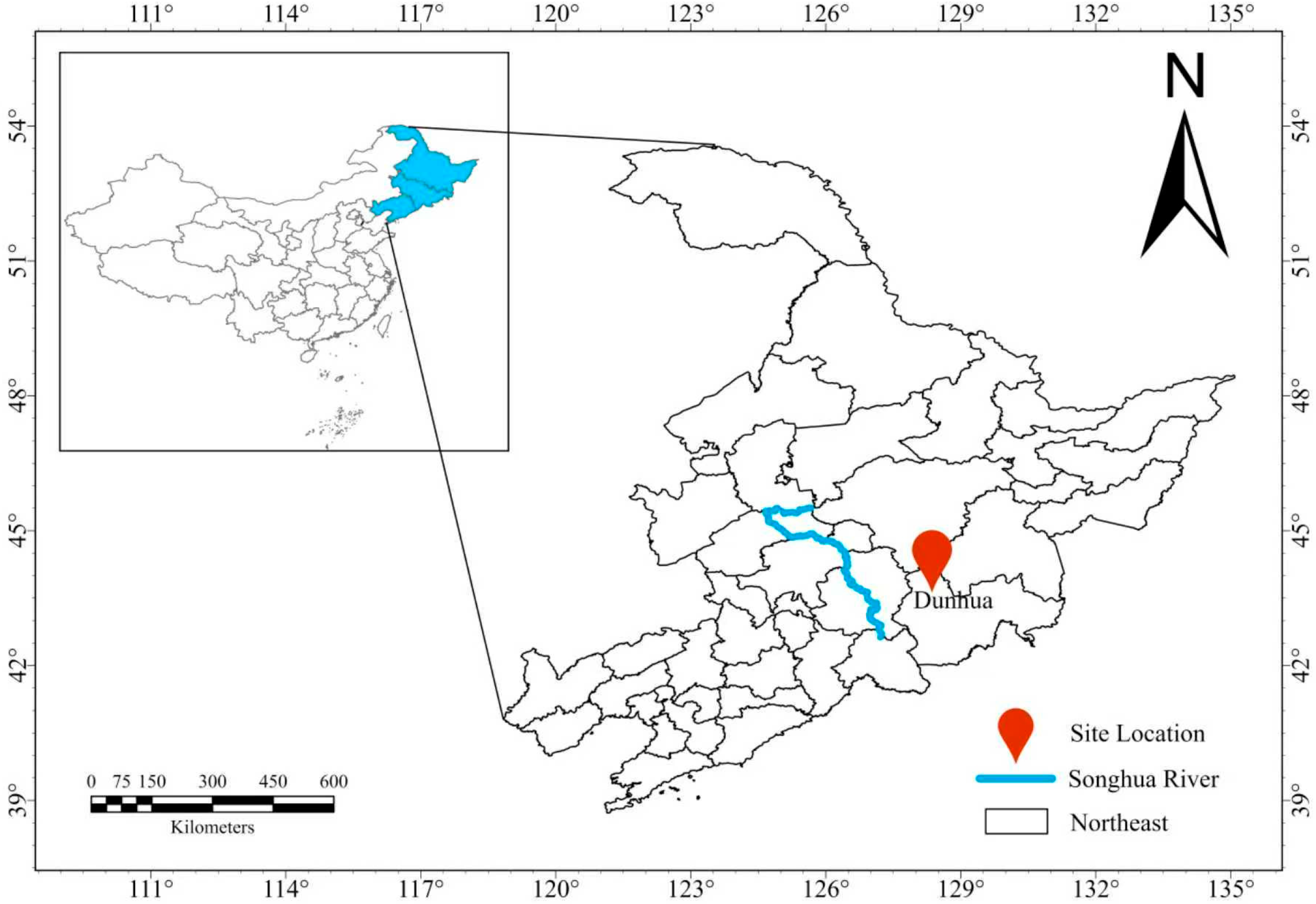
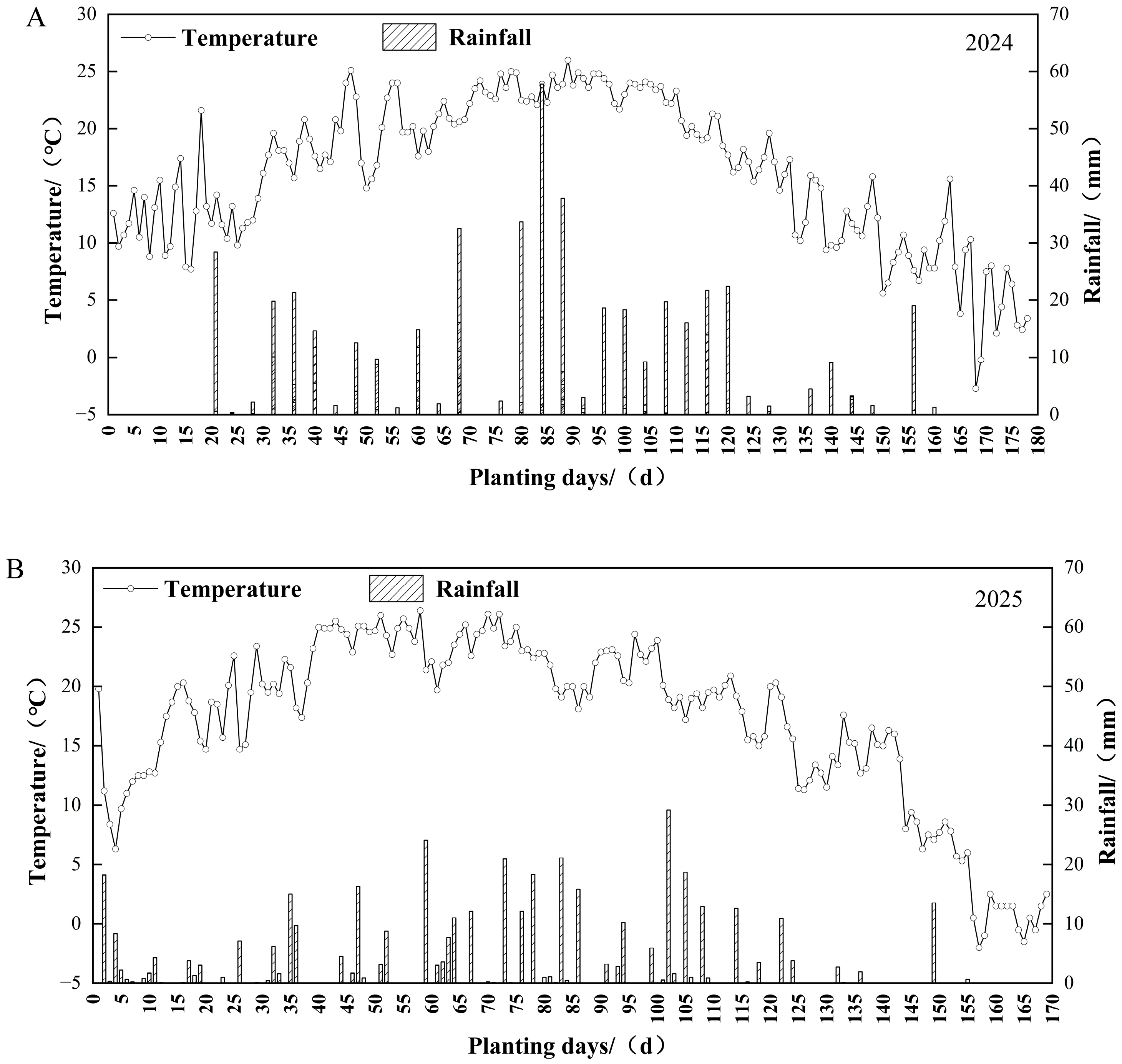
The experiment was conducted in 2024–2025 at Shuangshanzi Village, Shaheyan Town, Dunhua City, Yanbian Korean Autonomous Prefecture, Jilin Province, China (128.36° E, 43.61° N) (Figure 1). This region has a temperate continental climate, with an active accumulated temperature (≥10 °C) of 2300–2400 °C·d. The daily average temperature and precipitation during the growing seasons of 2024 and 2025 are shown in Figure 2. The study area has a frost-free period of 120 days, defined as the period between the last frost in spring and the first frost in autumn. The soil at the experimental site is classified as a saline soil, with the preceding crop being maize. Prior to the experiment, the soil bulk density in the 0–20 cm layer was 1.27 g·cm−3, organic matter content was 36.75 g·kg−1, total nitrogen was 2.17 g·kg−1, total phosphorus was 0.95 g·kg−1, total potassium was 21.00 g·kg−1, available phosphorus was 17.50 mg·kg−1, available potassium was 160.00 mg·kg−1, alkali-hydrolyzable nitrogen was 164.43 mg·kg−1, and the soil pH was 5.73.

2.2. Experimental Design

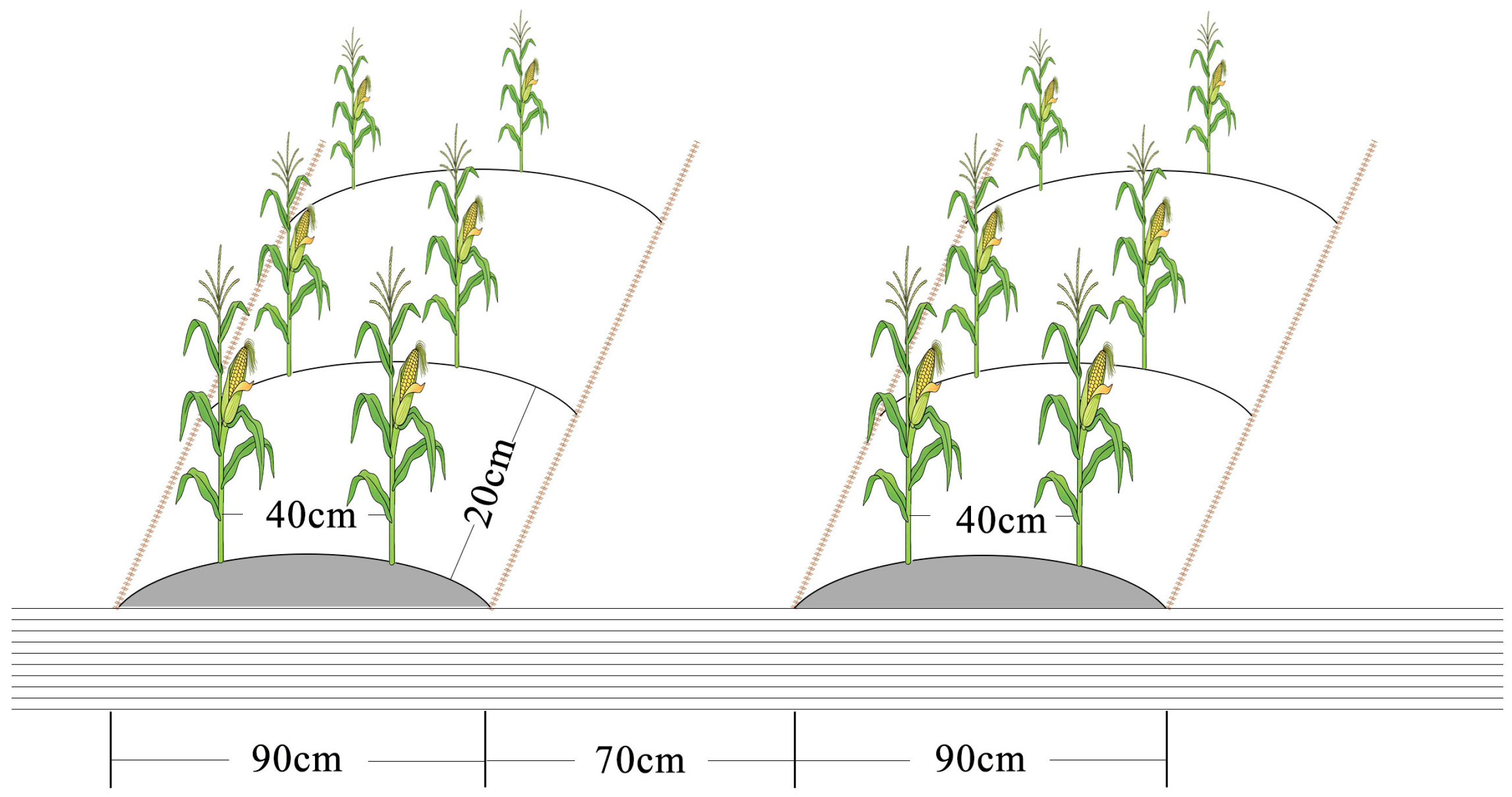
The maize variety used in the experiment was Dika C2235, which is suitable for an accumulated temperature of 2450–2500 °C. The experimental plots were prepared with uniform pre-sowing rotary tillage, Sowing using an integrated machine for plastic film mulching, fertilization and seeding, with sowing dates on 5 May 2024, and 15 May 2025, and harvesting dates on 29 October 2024, and 28 October 2025, respectively. The experiment followed a randomized complete block design (RCBD) with six treatments, three replications, and 18 total subplots. Each subplot was 72 m2 (2.4 m × 30 m), using large ridge double-row planting. Each treatment consisted of two large ridges, a double-row spacing of 0.4 m on the ridge, and a plant spacing of 0.2 m (Figure 3). The planting density was 83,333 plants·ha−1. The fertilizer used was the Six Nations slow-release corn-special compound fertilizer, with an application rate of 900 kg·ha−1 (N-P2O5-K2O: 26-11-12). Other field management practices were consistent with local production practices. The experiment employed five types of biodegradable mulches with different materials. All mulches were white in color, with a width of 90 cm and a thickness of 0.008 mm. Detailed information about the mulches is provided in Table 1.

2.3. Sampling and Measurements

2.3.1. Soil Temperature and Moisture Content

After maize sowing, under different mulching treatments, soil temperature and moisture at 10 cm and 20 cm depths were measured every 10 days at 10:00, 15:00, and 20:00 using a thermometer and a soil moisture meter. Measurements in each plot were taken at the center of the ridge [33].

2.3.2. Determination of Mulch Film Degradation

After maize sowing, mulch film degradation was monitored throughout the growing season under different mulching treatments. Degradation was evaluated based on the occurrence and size of natural cracks or holes on the mulched ridge surface. Film degradation was classified into four stages: Non-degraded stage, Induction stage, Cracking stage, and Severe cracking stage. The Non-degraded stage referred to the period during which no visible cracks or holes appeared on the film surface. The Induction stage was identified when more than three natural cracks or holes per meter, each with a diameter ≤2 cm, appeared. The Cracking stage was recorded when natural cracks or holes with a diameter≥2 cm and <20 cm were observed. The Severe cracking stage was recorded when natural cracks or holes with a diameter >20 cm appeared. For each treatment (except the no mulching treatment), three sampling points were randomly selected in each large plot. A 1 m section of mulched ridge was marked at each point. The time required to reach each degradation stage was recorded for each marked section, and the average value of the three replicates was calculated to represent the degradation time of each treatment [34].

2.3.3. Plant Agronomic Traits

During the V8 (tasseling), V12 (silking), and R3 (grain filling) stages, three maize plants with similar growth were randomly selected from each large plot. The plant height and leaf length and width of each leaf were measured using a ruler. The leaf area of a single maize plant was calculated using the formula: Leaf Area = Length × Width × 0.75. After measurement, the plants were separated, bagged, and placed in an oven. The samples were first boiled at 105 °C for 30 min, then dried at 80 °C until a constant weight was achieved. The dry matter accumulation of a single maize plant was then determined [35].

2.3.4. Grain Filling Characteristics

Sampling was conducted on the 10th day after maize flowering and repeated every 10 days for a total of 6 times. In each large plot, three maize plants with similar growth were selected, and 100 grains from the middle of the ear were collected, bagged, and marked. These samples were dried at 108 °C for 1 h, then at 80 °C until a constant weight was achieved. The 100-grain weight was measured using an electronic balance (precision 0.01 g). Logistic regression was applied to fit the grain filling process, using flowering days (t) as the independent variable and grain weight (W) as the dependent variable. The goodness-of-fit statistics for logistic fitting across treatments in 2024 and 2025 are provided in the Supplementary Materials (Table S1). Grain filling characteristic parameters are as follows [36]:
Maize grain filling equation:
W = A / 1 + B e C t
Maximum filling rate:
R max = C W max 1 W max / A
Time at maximum filling rate:
T max = ln B / C
Growth at maximum filling rate:
W max = A / 2
Average filling rate:
V mean = W 3 / t 3
Start date of peak filling:
t 1 = ( ln B 1.317 ) / C
End date of peak filling:
t 2 = ( ln B + 1.317 ) / C
Effective filling time:
t 3 = ( ln B + 4.59512 ) / C
Duration of slow filling phase:
T 1 = t 1
Duration of fast filling phase:
T 2 = t 2 t 1
Duration of slow increment phase:
T 3 = t 3 t 2
Grain weight increment in slow filling:
w 1 = W 1
Grain weight increment in fast filling:
w 2 = W 2 W 1
Grain weight increment in slow increment phase:
w 3 = W 3 W 2
Average filling rate in slow filling phase:
v 1 = w 1 / T 1
Average filling rate in fast filling phase:
v 2 = w 2 / T 2
Average filling rate in slow increment phase:
v 3 = w 3 / T 3
Note: A: Theoretical maximum 100-kernel weight of maize; B, C: Shape parameters.

2.3.5. Grain Formation-Related Characteristics During the Filling Period

In 2024 and 2025, sampling was conducted at the maize grain-forming stage (R2), filling stage (R3), and milk ripening stage (R4). In each plot, three maize plants with uniform growth were selected, and grains from the middle portion of the ear were collected. The samples were immediately frozen in liquid nitrogen and stored at −80 °C for subsequent analysis. The starch synthase activity (SS), starch (S), auxin (IAA), and abscisic acid (ABA) in the grains were determined using enzyme-linked immunosorbent assay (ELISA) kits produced by Jiangsu Aidisheng Biotechnology Co., Ltd., Yancheng, China, following the manufacturer’s instructions. The results were expressed on a fresh weight basis (FW) [37]. The standard curves for IAA and ABA are shown in Supplementary Materials (Figures S1 and S2).

2.3.6. Maize Yield and Seed Examination

At maize maturity (R6), three areas (20 m2 each) within each treatment were selected that had not been previously sampled. Maize yield was measured at 14% moisture content. For seed examination, 10 ears of similar size were selected from each sampling area, and 100-grain weight and ear grain number were recorded [7].

2.4. Data Processing and Analysis

All data were analyzed using Microsoft Excel 365 (Version 2602) and IBM SPSS Statistics 20 (IBM Corp., Armonk, NY, USA). Values in tables and figures are means of three replicates. Differences among treatments were tested by one-way ANOVA followed by the LSD test (p < 0.05). Yield and yield components were analyzed using two-way ANOVA, whereas PH, LAI, and SDM were analyzed using three-way ANOVA in SPSS. Figures and tables were prepared using Origin 2024 10.1 or Excel 365. Maps and illustrations were produced with ArcGIS Pro 3.6 and Adobe Photoshop 20.0.8. Grain filling parameters were fitted using CurveExpert 1.4.

3. Results

3.1. Effects of Different Mulching Treatments on Soil Temperature, Moisture, and Mulch Film Degradation

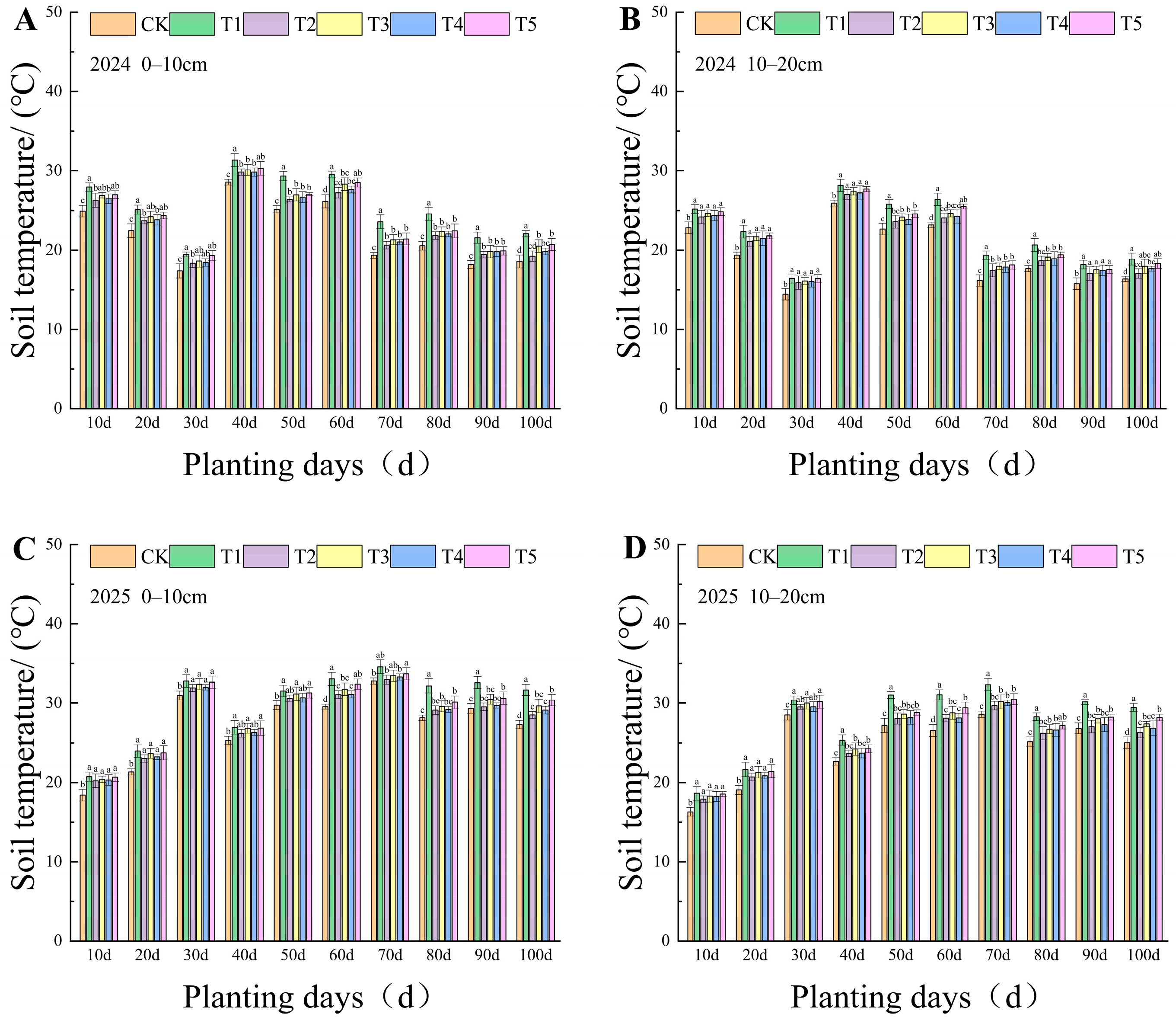
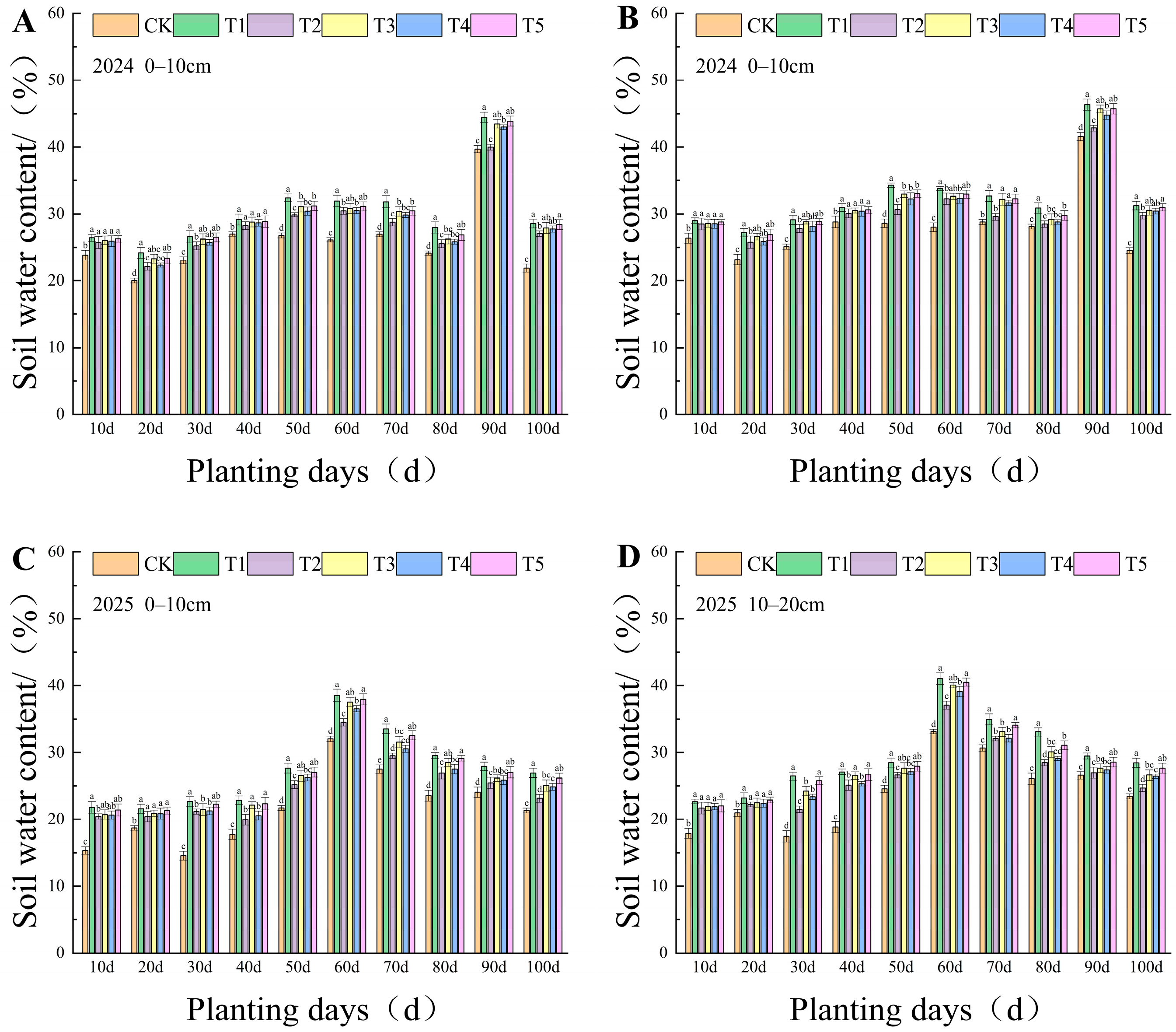
The soil temperature and moisture content at the 0–10 cm and 10–20 cm soil layers in 2024 and 2025 under different mulching treatments are shown in Figure 4 and Figure 5. Overall, both variables followed the trend T1 > T5 > T3 > T4 > T2 > CK. Across the sampling times shown in Figure 4 and Figure 5, T1 and T5 were significantly higher than CK (p < 0.05), whereas no significant difference was detected between T1 and T5 (p > 0.05). Differences among treatments were minor within the first 30 days after sowing. As the growing season progressed, the warming and moisture retention effects of the mulches gradually declined, likely due to film degradation as well as increased plant transpiration and canopy shading. In most sampling dates and soil layers, T1 exhibited the highest mean soil temperature and moisture content, whereas CK generally showed the lowest values, consistent with the significance labels in Figure 4 and Figure 5. Compared with CK, mulching generally increased mean soil temperature during the observation period, with significant differences observed at several sampling times and soil layers (p < 0.05). In 2024, soil temperature increased by 5.30–15.05% at 0–10 cm and 6.51–16.19% at 10–20 cm. In 2025, the increases ranged from 2.83–8.98% and 3.55–12.08% at the respective depths. Soil moisture content decreased with increasing soil depth under all treatments. Compared with CK, mulching increased the average soil moisture content by 8.06–15.89% (0–10 cm) and 6.31–13.21% (10–20 cm) in 2024, and by 13.91–26.10% and 11.22–23.13% at the respective depths in 2025.
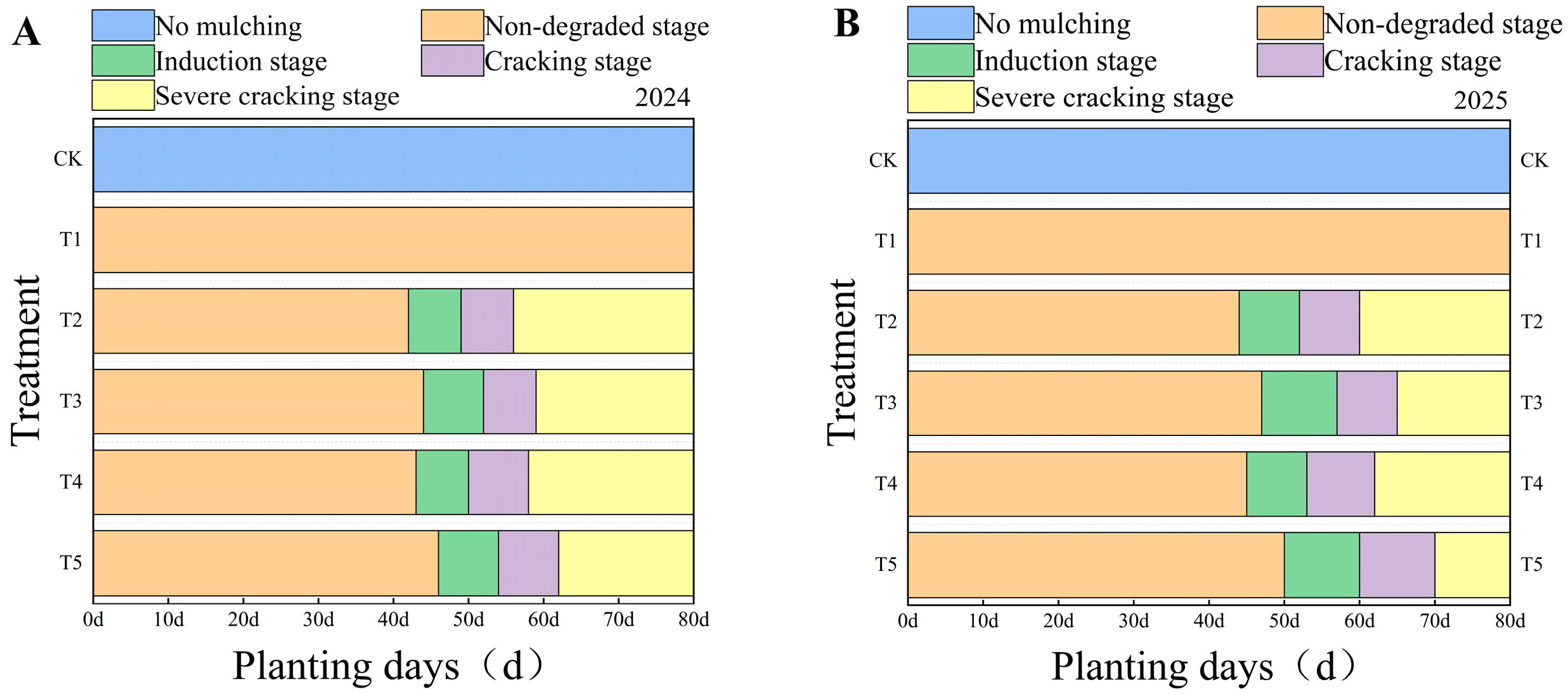
The degradation dynamics of the mulching films are shown in Figure 6. In both years, T2, T3, T4, and T5 reached the Severe cracking stage by 62 days (2024) and 70 days (2025) after sowing, whereas T1 showed no visible damage throughout the observation period. In 2024, T2, T4, T3, and T5 successively entered the Induction stage beginning at 42 days after sowing, followed by the Cracking stage at 49 days and the Severe cracking stage at 56 days. Among the treatments, T2 consistently reached each stage earliest, whereas T5 was the latest, with delays of 4, 5, and 6 days at the Induction, Cracking, and Severe cracking stages, respectively. Overall, T5 lagged behind T2 by 4–6 days across degradation stages. A similar pattern was observed in 2025. The Induction, Cracking, and Severe cracking stages were reached beginning at 44, 52, and 60 days after sowing, respectively. Compared with T2, T5 was delayed by 6 days at the Induction stage, 8 days at the Cracking stage, and 10 days at the Severe cracking stage. Overall, T5 exhibited a 4–6 day delay at the Induction stage and a 6–10 days delay at the Severe cracking stage relative to T2 during the observation period.

3.2. Effects of Different Mulching Treatments on Maize Plant Growth and Dry Matter Accumulation

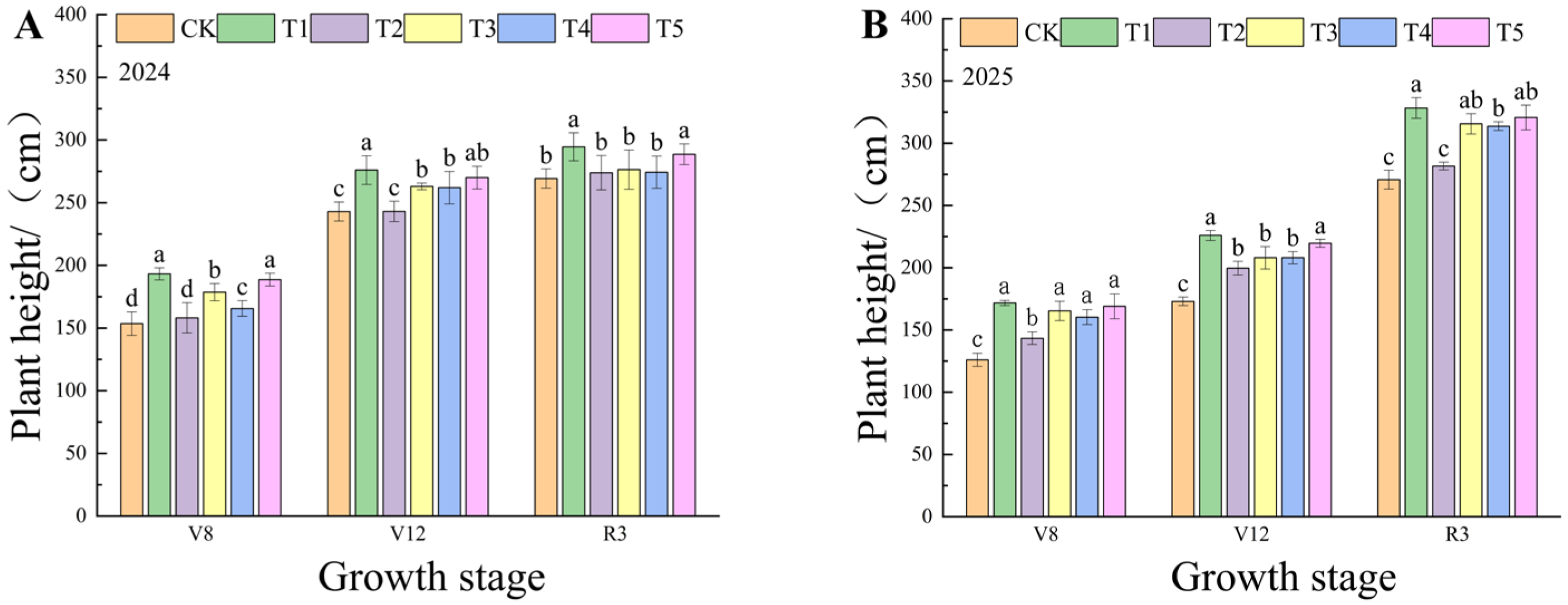
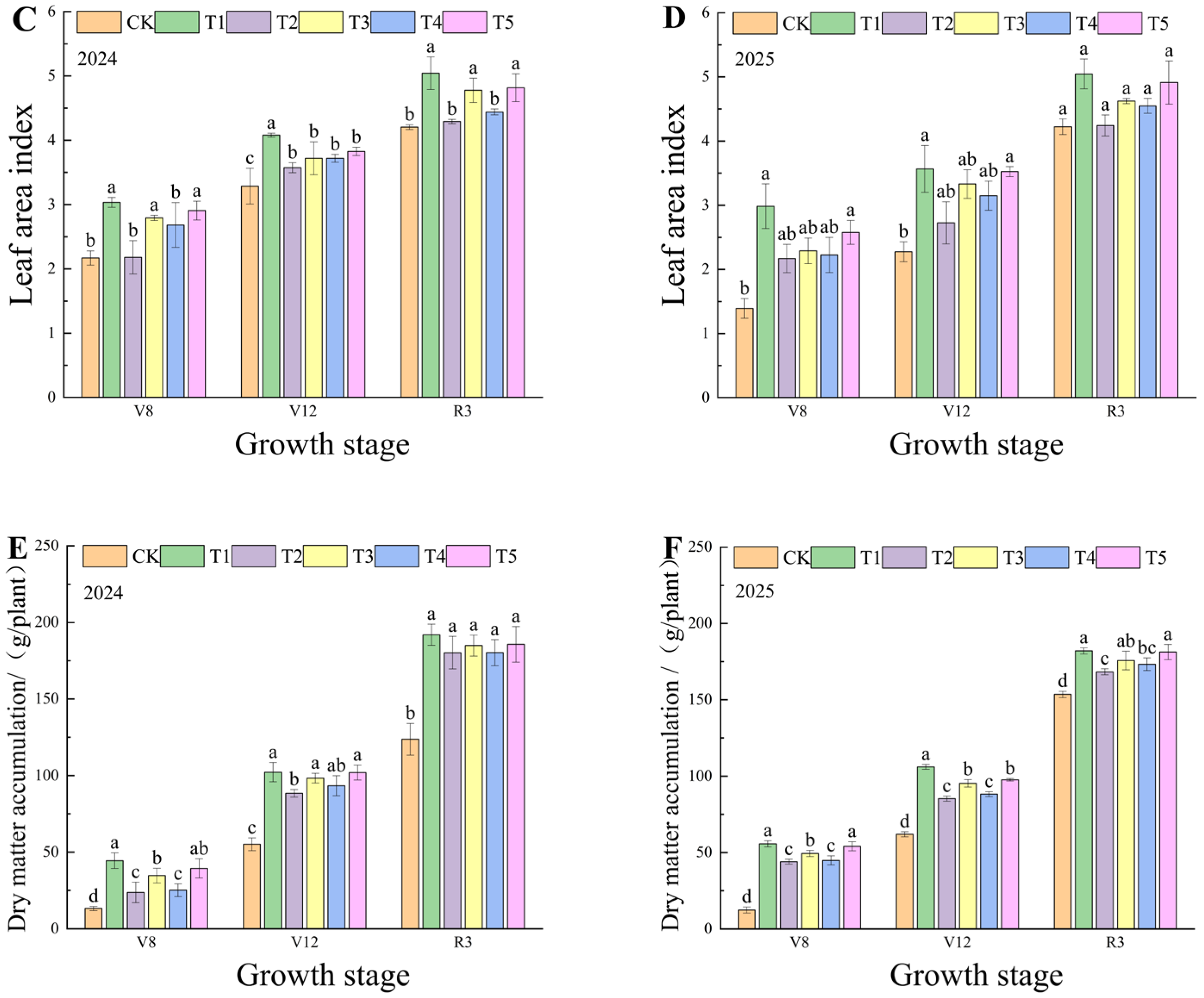
As shown in Figure 7, in both years, maize plant height (PH), leaf area index (LAI), and shoot dry matter (SDM) followed the general trend: T1 > T5 > T3 > T4 > T2 > CK. There were no significant differences in PH between T1 and T5 (p > 0.05), and both treatments were significantly higher than CK in both years (p < 0.05). For LAI, at the R3 stage in 2024, T1, T3, and T5 showed no significant differences among them (p > 0.05), but all were significantly higher than CK (p < 0.05). In 2025, no significant differences were detected among treatments at the R3 stage (p > 0.05), although numerical increases relative to CK were observed. SDM was significantly increased under all mulching treatments compared with CK at the three growth stages in both years (p < 0.05). At the R3 stage, SDM increased by 27.68–36.85% in 2024 and 29.30–34.08% in 2025 relative to CK.
Table 2 summarises the main and interaction effects of Year (Y), Treatment (T), and Growth stage (G) on PH, LAI, and SDM: Year, Treatment, and Growth stage significantly affected PH and LAI (p < 0.01), while SDM was significantly influenced by Treatment and Growth stage (p < 0.01) but not by Year; none of the interaction terms (Y × T, T × G, Y × G, or Y × T × G) were significant for any trait.

3.3. Effects of Different Mulching Treatments on Grain Filling Characteristics

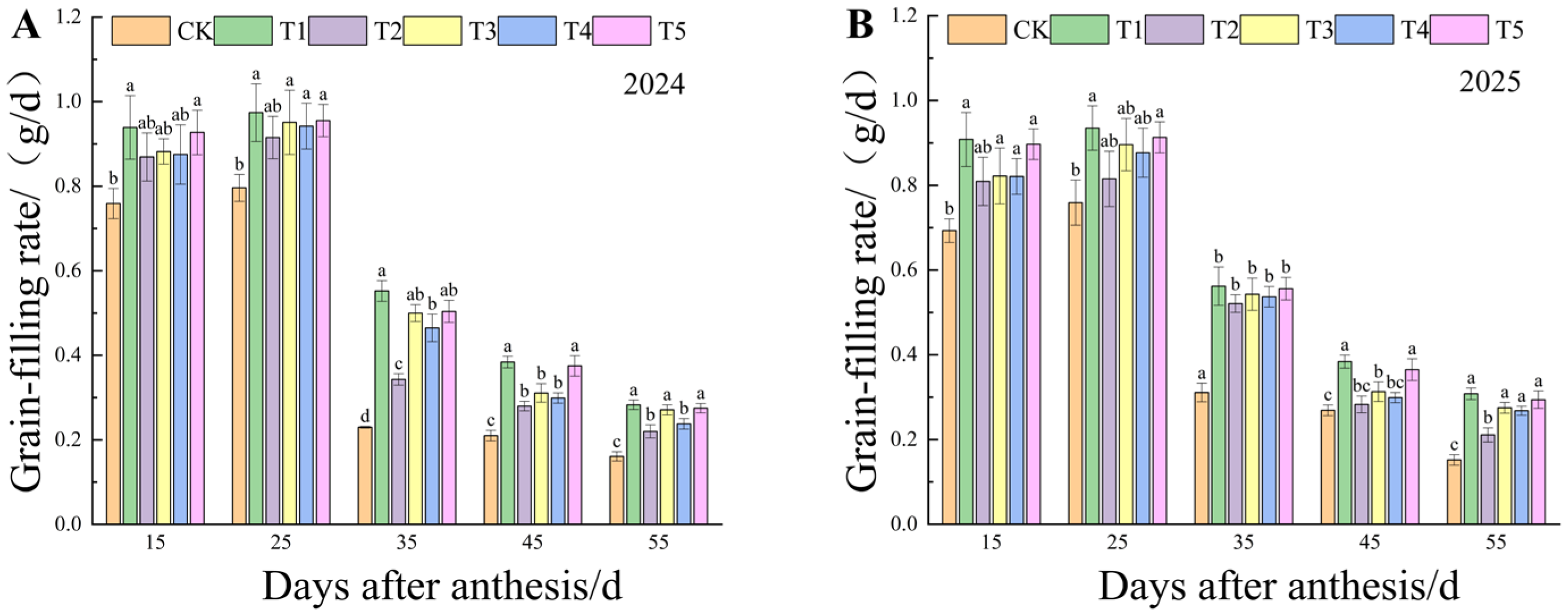
As shown in Figure 8, the grain filling rate within 60 days after flowering exhibited a typical single-peak (parabolic) pattern in both 2024 and 2025 across all treatments. No significant differences were detected among mulching treatments within the first 30 days after flowering (p > 0.05). However, during the rapid filling stage, T1 and T5 showed significantly higher filling rates than CK in both years (p < 0.05), whereas no significant difference was observed between T1 and T5 (p > 0.05). At 15 days after flowering, the filling rates under T1 and T5 were 27.37% and 25.79% higher than CK, respectively (p < 0.05). Similarly, at 25 days, the increases were 22.78% and 20.13%, respectively (p < 0.05).
The fitting determination coefficients (R2) of the grain filling equations for all treatments exceeded 0.99, indicating an excellent fit of the model to the observed data (Table 3). Compared with CK, mulching treatments significantly increased the maximum grain filling rate (Rmax), the kernel weight at maximum filling rate (Wmax), and the average filling rate (Vmean) (p < 0.05). In addition, the effective filling time (t3) was prolonged under mulching treatments relative to CK (p < 0.05). Across the two years, Vmean under T1–T5 increased by 16.84–26.97% compared with CK (p < 0.05), while t3 was extended by 4.74–13.58% (p < 0.05). Two-way ANOVA showed that year, treatment, and their interaction had significant effects on Rmax and Vmean (p < 0.05), whereas no significant effects were detected on Tmax or t3 (p > 0.05).
The grain filling process was further partitioned into three stages based on the logistic model (Table 4), namely the early stage, middle stage, and late stage. Across treatments, grain filling exhibited a typical pattern characterized by a gradual increase during the early stage, a rapid increase during the middle stage, and a slower increase during the late stage. Kernel weight accumulation was greatest during the middle stage, followed by the late stage and the early stage. Compared with CK, the duration of the early stage under T1–T5 was extended by 0.80–16.19% (p < 0.05). In addition, the weight gain during the middle stage increased by 37.04–53.25% relative to CK (p < 0.05).

3.4. Effects of Different Mulching Treatments on Grain-Forming Substances

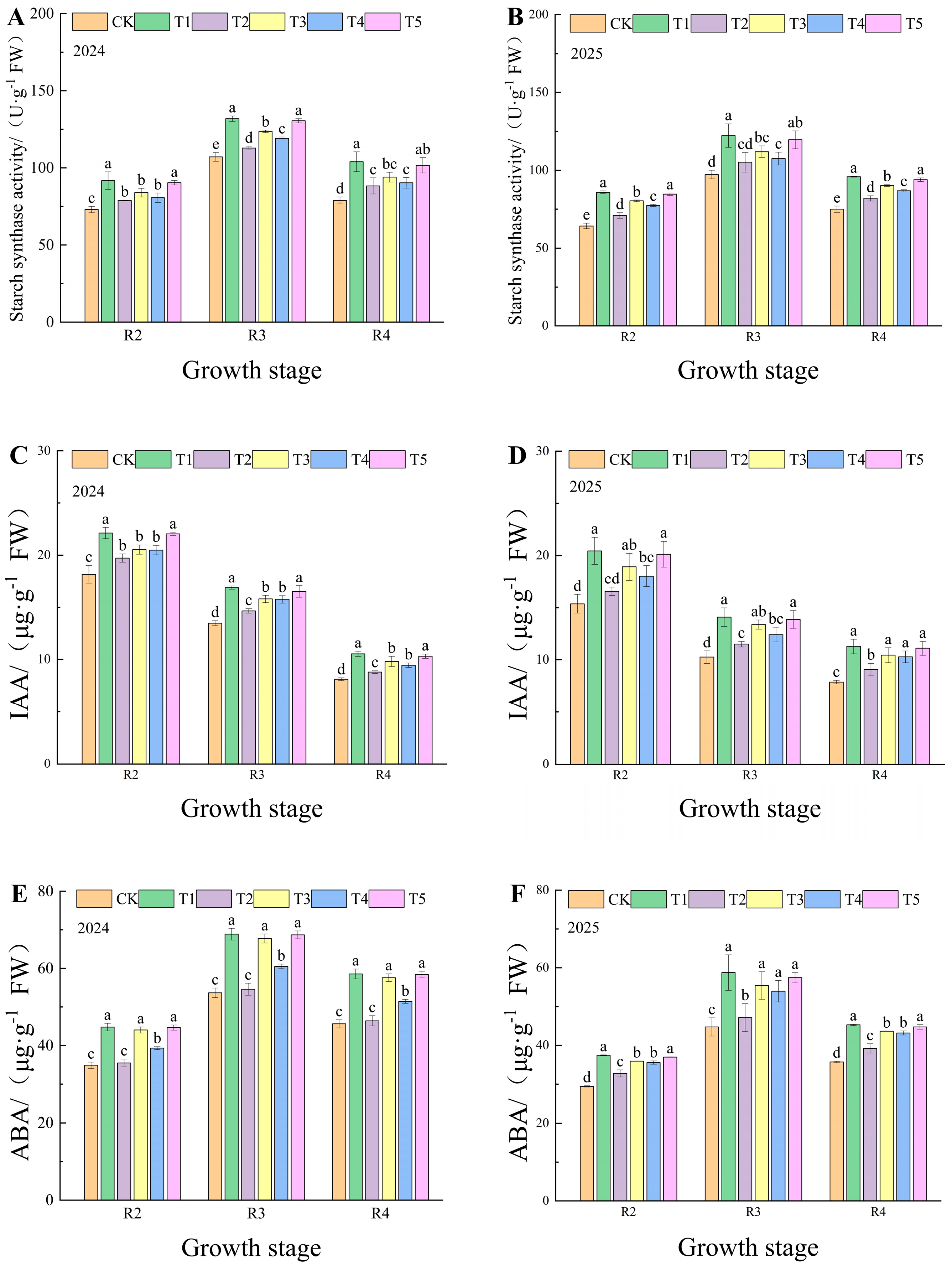
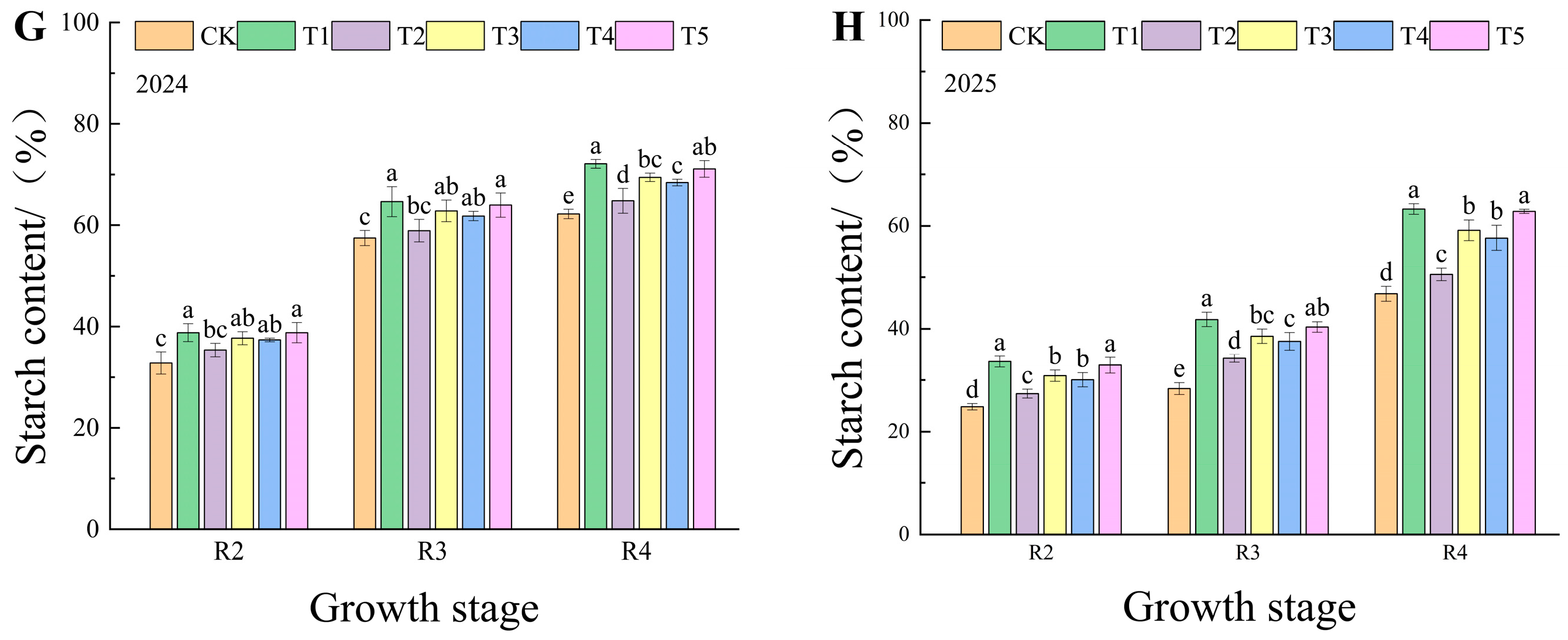
As shown in Figure 9, the starch synthase activity (SS), indole-3-acetic acid (IAA), abscisic acid (ABA), and starch (S) were compared among different mulching treatments at the R2, R3, and R4 stages. The SS under T1 and T5 was significantly higher than that under CK (p < 0.05), with two-year mean increases of 27.46% and 25.30%, respectively, compared with CK. There was no significant difference in SS content between T1 and T5 (p > 0.05). Compared with CK, the two-year mean IAA content increased by 30.11%, 9.60%, 21.32%, 17.97%, and 28.21% under T1–T5, respectively. Among these treatments, IAA content under T1 and T5 was significantly higher than that under CK (p < 0.05). The ABA content under T1 and T5 showed no significant difference between these two treatments (p > 0.05), and both were significantly higher than that under CK (p < 0.05), with two-year mean increases of 28.52% and 27.39%, respectively, compared with CK. The starch content (S) under T1, T2, T3, T4, and T5 was significantly higher than that under CK (p < 0.05), with two-year mean increases of 24.59%, 6.17%, 17.60%, 15.35%, and 22.10%, respectively, compared with CK. There was no significant difference in starch content between T1 and T5 (p > 0.05). These results indicate that mulching treatments increased SS content and starch accumulation and altered endogenous hormone levels at the R2, R3, and R4 stages.

3.5. Yield and Its Components

As shown in Table 5, the number of grains per ear, 100-grain weight, and grain yield under different mulching treatments across the three growing seasons followed the trend of T1 > T5 > T3 > T4 > T2 > CK. Compared with CK, grain yield increased by 24.73%, 13.95%, 20.45%, 19.97%, and 22.88% under T1, T2, T3, T4, and T5, respectively. Over the two-year average, there was no significant difference between T1 and T5 (p > 0.05). Two-way ANOVA showed that the interaction between year and treatment had no significant effect on grain yield (p > 0.05), whereas treatment significantly affected grain yield (p < 0.01). These results indicate that yield improvement was primarily driven by mulching treatments rather than interannual variability.

3.6. Correlation Analysis

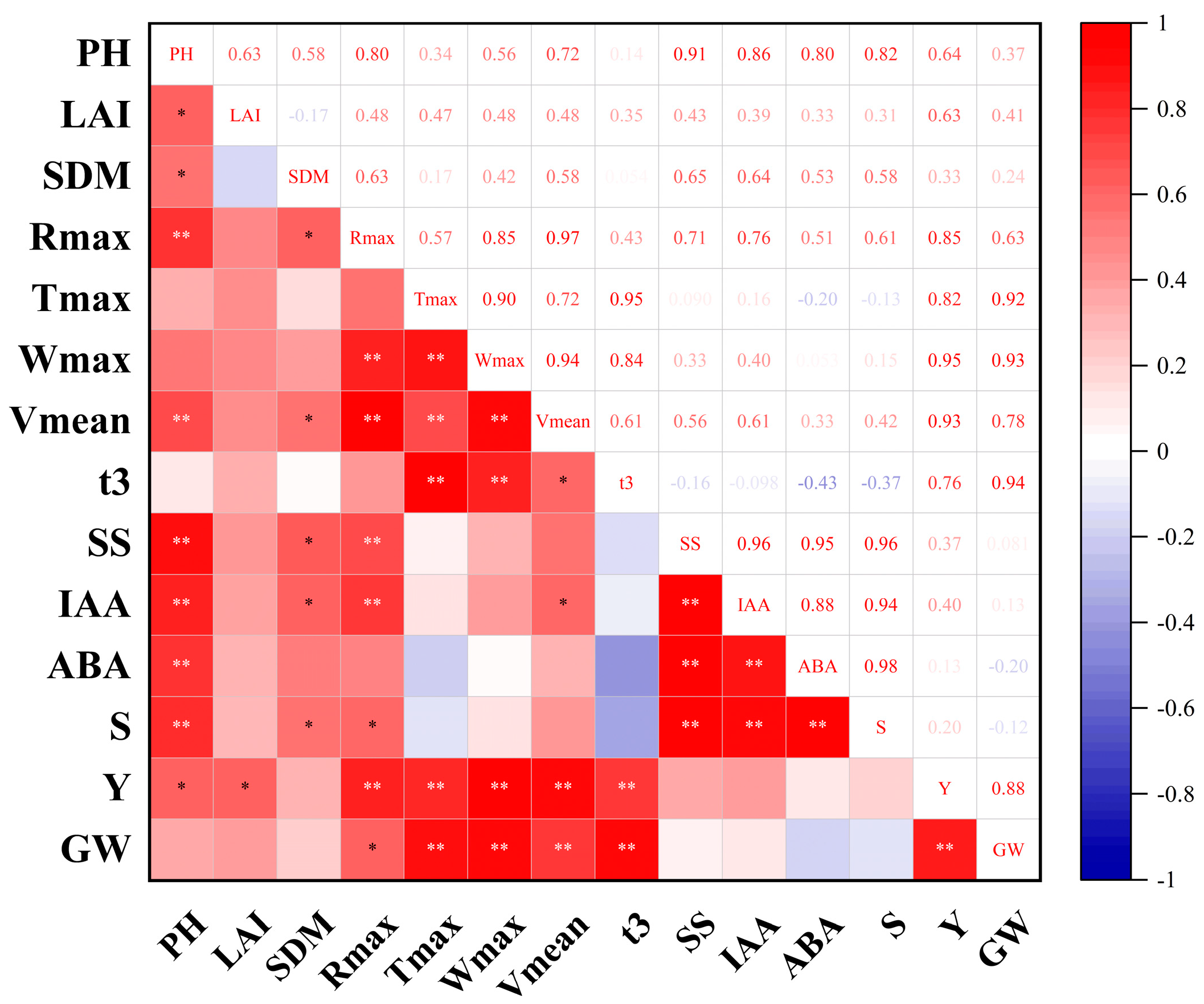
The correlation analysis among maize indices under different mulching treatments is presented in Figure 10. Rmax, Tmax, Wmax, Vmean, and t3 were all significantly positively correlated with grain yield (p < 0.01). In addition, Tmax, Wmax, Vmean, and t3 were significantly positively correlated with grain weight (GW) (p < 0.01). SDM was positively correlated with Rmax, Vmean, AS, IAA, and S. Both IAA and ABA were positively correlated with grain yield and were also positively associated with Rmax, Wmax, and Vmean.

4. Discussion

In the cold and cool region of northeastern China, low temperature and poor soil moisture availability often constrain maize production and hinder yield improvement [38]. Film mulching can increase soil temperature and conserve moisture, thereby promoting plant growth, stabilizing root physiological activity, and improving crop yield [39]. In this study, all mulching treatments (T1–T5) enhanced soil warming and moisture retention during the early maize growth stage, with soil temperature and moisture content in the first 30 days after sowing being significantly higher than those under CK (p < 0.05; Figure 4 and Figure 5). However, clear differences among films were observed: across both years, T1 and T5 generally maintained higher soil temperature and moisture than T2–T4 (Figure 4 and Figure 5). This contrast may be attributed to the faster degradation of T2–T4 (Figure 6), which shortened the duration of effective soil coverage and weakened hydrothermal regulation during the early to mid-growth stages. By comparison, T1 and T5 tended to show more persistent warming and moisture retention effects during vegetative growth; although T5 degraded, it likely retained sufficient coverage to provide effective mulching for much of this period. Because canopy cover is low at the early growth stage, the mulching effect on soil temperature and moisture is particularly pronounced [40], benefiting maize emergence and early establishment (Figure 7). As films progressively crack/degrade and canopy cover increases, the warming and moisture-retaining effects gradually weaken [17]. Notably, the biodegradable film T5 produced maize growth and yield responses comparable to those of the PE film (T1), with no significant differences observed. Previous studies have shown that excessive soil temperature and moisture in later growth stages under mulching can induce environmental stress and negatively affect crop performance [41]. In this context, timely degradation and cracking of biodegradable films may be beneficial by creating holes and fissures that enhance soil gas exchange and water infiltration, thereby alleviating the risks associated with high temperature and humidity beneath the film [42]. Additionally, this study found that the soil moisture retention under mulched films in 2025 was better than in 2024, which aligns with the findings of Yin et al. [43], who observed that “increased rainfall weakens the moisture retention effect of film mulching.” This suggests that interannual differences in rainfall and initial soil moisture may shift the relative advantage of mulching, thereby leading to year-to-year variation in treatment effects. Nevertheless, T1 and T5 remained consistently superior across both years, indicating a relatively stable performance across environments.
Grain filling is a crucial process in the transport of photosynthates to the grains, directly regulating maize final grain weight, yield, and quality [44]. Appropriate soil moisture and temperature conditions are key environmental factors influencing the grain filling process, helping to extend the effective filling time, enhance filling rate, and ultimately improve maize yield and quality [27]. In this study, the grain filling process from flowering to maturity in maize followed an “S-shaped” growth curve, passing through a slow increase phase, a fast increase phase, and a slow increase phase, with the peak filling rate occurring 25 days after flowering. This result is consistent with the research conclusion of Liao et al. [30]. The absence of significant differences in grain filling rate at the early stage (R2) may be attributed to the fact that early kernel development is mainly determined by sink establishment rather than assimilate supply. The influence of soil hydrothermal conditions becomes more pronounced during the middle and late filling stages [45]. Previous studies have confirmed that optimizing planting methods can effectively improve the grain filling process, where increasing the average filling rate and extending the effective filling time are important ways to achieve increased maize yield [46]. Building upon prior studies, this research further clarified that maize mulching significantly increased the average filling rate and ex-tended the filling duration, with the extended duration of the fast filling phase having a more prominent effect on the increase in grain weight, thus promoting the 100-grain weight increase. Film mulching improves the soil’s hydrothermal conditions, extending the fast filling phase and increasing the average filling rate during this phase (Table 3), which maximizes dry matter accumulation in the plants [28]. A comparison of filling rates between different treatments showed that the filling rate in the T1 and T5 treatments was consistently higher than in CK, T2, T3, and T4 treatments throughout the entire filling period (Figure 8). Furthermore, T1 and T5 maintained a high filling rate throughout the grain filling period, particularly after 35 days, with a significantly smaller decrease in filling rate compared to the other treatments [47]. The reason for this may be related to the degradation characteristics of the mulching films. Different biodegradable mulching films undergo varying degrees of degradation during the reproductive growth stage of maize (Figure 4, Figure 5 and Figure 6), and the degradation rate differences directly affect the stability of the soil’s hydro-thermal balance [12], ultimately resulting in differences in extending the filling duration and increasing the average filling rate [28]. Mulching improved soil hydrothermal conditions, which enhanced grain filling traits and increased grain IAA and ABA contents as well as starch synthase activity (SS) thereby increasing yield.
During the grain filling process, plant endogenous hormones play a key role in regulating grain filling and grain weight formation, mainly by affecting cell division in the grains and enhancing sink capacity [47]. Different maize mulching treatments increased the contents of auxin (IAA), abscisic acid (ABA), and starch synthase activity (SS) in maize grains to varying degrees, with the specific effects influenced by the degradation timing of the films. During the two years of the grain filling period, the contents of IAA, ABA, and starch synthase activity (SS) in grains under T1 and T5 were significantly higher than those under CK, with no significant difference between T1 and T5. T2–T4 showed intermediate levels of IAA, ABA, and starch synthase activity (SS) between T1/T5 and CK (Figure 9), consistent with their earlier loss of effective mulching due to faster cracking/degradation, suggesting that film degradation timing can modulate subsequent grain hormonal status and starch-synthesis capacity [48,49,50]. Different mulching films exhibit varying warming and moisture retention effects, and their degradation timing influences maize growth to different extents. Changes in IAA content during grain filling were generally consistent with the average filling rate [51]. At the early filling stage, increased IAA content promoted endosperm cell proliferation and accelerated the transport of photoassimilates to the grains, thereby enhancing sink capacity [37]. The trend in ABA content was similar to that of IAA, and IAA may induce an increase in ABA levels [52]. ABA is widely considered to exert concentration-dependent effects on plant growth and development, and excessively high ABA levels may exert inhibitory effects [53]. The present results showed that ABA content in maize grains was positively correlated with the average filling rate (Figure 10). This correlation is consistent with previous reports suggesting that ABA may facilitate sugar unloading and starch accumulation and may be associated with a higher filling rate [51]. Increasing ABA content in maize grains may enhance the accumulation and expression level of key enzymes involved in sucrose-to-starch conversion, thus improving the filling rate. This finding is consistent with the conclusions of Yuan L.M. et al. [52]. Furthermore, under mulching conditions, IAA and ABA contents were significantly positively correlated with starch synthase activity (SS). Higher levels of IAA and ABA may promote starch accumulation by increasing SS activity, thereby accelerating sucrose-to-starch conversion and ultimately enhancing grain filling rate and starch content in maize grains [29].
These findings should be interpreted within the context of this study. The experiment was conducted at a single site over two growing seasons, and the effects of mulching may vary with soil properties, weather conditions, baseline hydrothermal status, cultivar, and management practices. In addition, comprehensive evaluations of economic feasibility and environmental impacts were beyond the scope of this work. Therefore, multi-site and multi-year studies, together with cost–benefit and environmental assessments, are needed to validate the broader applicability of biodegradable mulch films in cold-region maize systems.

5. Conclusions

Compared with the other biodegradable mulch films tested, the PBAT + PPC composite film delivered the most consistent improvements in dry matter accumulation, grain filling performance, endogenous hormone regulation, and grain yield. Across two growing seasons at our study site in the cold and cool region of northeastern China, its overall agronomic performance was comparable to that of PE mulch, with no significant differences in key yield-related outcomes (p > 0.05). Relative to the non-mulched control, mulching extended the effective grain filling duration and increased grain auxin content during grain filling and final yield, demonstrating clear benefits under local conditions. Overall, these results indicate that the PBAT + PPC composite film is a promising alternative to PE mulch for maize production in the cold and cool region of northeastern China. Further multi-site and multi-year evaluations, together with cost–benefit and environmental assessments, are recommended to support wider adoption.

Supplementary Materials

The following supporting information can be downloaded at: https://www.mdpi.com/article/10.3390/agriculture16050614/s1, Figure S1: Standard curve for indole-3-acetic acid (IAA); Figure S2: Standard curve for abscisic acid (ABA); Table S1: Goodness-of-fit statistics for logistic fitting across treatments in 2024 and 2025.

Author Contributions

Conceptualization, Y.G., C.X. and H.Z.; methodology, C.X. and H.Z.; software, Y.Z.; validation, Y.Z., H.L. and D.Z.; formal analysis, D.Z.; investigation, N.S., Y.Z., H.L., D.Z., F.L., L.Z. (Lihua Zhang) and L.Z. (Lizi Zhang); resources, H.Z.; data curation, L.Z. (Lihua Zhang), and L.Z. (Lizi Zhang); writing—original draft preparation, Y.G.; writing—review and editing, Y.G., S.B. and N.S.; visualization, H.L.; supervision, H.Z. and N.S.; project administration, N.S.; funding acquisition, H.Z. All authors have read and agreed to the published version of the manuscript.

Funding

This research was funded by the National Key R&D Plan Project of China (2024YFD1501504), the National Key Research and Development Program of China (NK202218070103) and the Science and Technology Development Program of Jilin Province (20240303026NC).

Institutional Review Board Statement

Not applicable.

Data Availability Statement

All relevant data are contained within the manuscript.

Acknowledgments

The authors acknowledge support from the National Key Research and Development Program of China and the Science and Technology Development Program of Jilin Province.

Conflicts of Interest

The authors declare that they have no conflicts of interest to report.

References

  1. Gu, X.B.; Li, Y.N.; Du, Y.D. Biodegradable film mulching improves soil temperature, moisture and seed yield of winter oilseed rape (Brassica napus L.). Soil Tillage Res. 2017, 171, 42–50. [Google Scholar] [CrossRef]
  2. Mo, F.; Wang, J.Y.; Zhou, H.; Luo, C.L.; Zhang, X.F.; Li, X.Y.; Li, F.M.; Xiong, L.B.; Kavagi, L.; Nguluu, S.N.; et al. Ridge-furrow plastic-mulching with balanced fertilization in rainfed maize (Zea mays L.): An adaptive management in east African Plateau. Agric. For. Meteorol. 2017, 236, 100–112. [Google Scholar] [CrossRef]
  3. Li, R.; Hou, X.Q.; Jia, Z.K.; Han, Q.F. Soil environment and maize productivity in semi-humid regions prone to drought of Weibei Highland are improved by ridge-and-furrow tillage with mulching. Soil Tillage Res. 2020, 196, 104476. [Google Scholar] [CrossRef]
  4. Graf, M.; Greenfield, L.M.; Reay, M.K.; Bargiela, R.; Golyshin, P.N.; Evershed, R.P.; Lloyd, C.E.M.; Williams, G.B.; Chadwick, D.R.; Jones, D.L. Field-based assessment of the effect of conventional and biodegradable plastic mulch film on nitrogen partitioning, soil microbial diversity, and maize biomass. Appl. Soil. Ecol. 2024, 202, 105595. [Google Scholar] [CrossRef]
  5. Gao, W.C.; Tu, Z.G.; Yin, X.; Ming, S.; Cai, K. Effects of PBAT biodegradable mulch on lettuce (Lactuca sativa L.) physiology and soil microbial community: Based on a long-term degradation trial. Ecotoxicol. Environ. Saf. 2025, 302, 118734. [Google Scholar] [CrossRef]
  6. Hayes, D.G.; Wadsworth, L.C.; Sintim, H.Y.; Flury, M.; English, M.; Schaeffer, S.; Saxton, A.M. Effect of diverse weathering conditions on the physicochemical properties of biodegradable plastic mulches. Polym. Test. 2017, 62, 454–467. [Google Scholar] [CrossRef]
  7. Huang, F.Y.; Liu, Z.H.; Li, Z.Y.; Wang, B.F.; Zhang, P.; Jia, Z.K. Is biodegradable film an alternative to polyethylene plastic film for improving maize productivity in rainfed agricultural areas?—Evidence from field experiments. Agric. Water Manag. 2022, 272, 107868. [Google Scholar] [CrossRef]
  8. Chen, N.; Li, X.Y.; Shi, H.B.; Hu, Q.; Zhang, Y.H.; Sun, Y.N.; Song, F.F. Simulation of maize crop growth using an improved crop model considering the disintegrated area of biodegradable film. Field Crops Res. 2021, 272, 108270. [Google Scholar] [CrossRef]
  9. Hu, Q.; Li, X.Y.; Gonçalves, J.M.; Shi, H.B.; Tian, T.; Chen, N. Effects of residual plastic-film mulch on field corn growth and productivity. Sci. Total Environ. 2020, 729, 138901. [Google Scholar] [CrossRef]
  10. Yang, C.; Zhao, Y.; Long, B.B.; Wang, F.Y.; Li, F.Y.; Xie, D.; Yang, C.; Zhao, Y.; Long, B.; Wang, F.; et al. Biodegradable mulch films improve yield of winter potatoes through effects on soil properties and nutrients. Ecotoxicol. Environ. Saf. 2023, 264, 115402. [Google Scholar] [CrossRef] [PubMed]
  11. Leng, X.; Li, X.Y.; Chen, N.; Zhang, J.J.; Guo, Y.; Ding, Z.J. Evaluating the effects of biodegradable film mulching and topdressing nitrogen on nitrogen dynamic and utilization in the arid cornfield. Agric. Water Manag. 2021, 258, 107166. [Google Scholar] [CrossRef]
  12. Meng, Y.; Wang, Z.H.; Zong, R.; Zhang, J.Z.; Ma, Z.L.; Guo, L. Effects of biodegradable film resilience and irrigation amounts on film degradation and maize growth in arid northwest China. Eur. J. Agron. 2022, 140, 126588. [Google Scholar] [CrossRef]
  13. Qi, R.M.; Jones, D.L.; Liu, Q.Y.; Liu, Q.; Li, Z.; Yan, C.R. Field test on the biodegradation of poly(butylene adipate-co-terephthalate) based mulch films in soil. Polym. Test. 2021, 93, 107009. [Google Scholar] [CrossRef]
  14. Zhang, H.J.; Chen, T.; Yu, S.C.; Zhou, C.L.; Teng, A.G.; Lei, L.; Li, F.Q. Optimizing the Mulching Pattern and Nitrogen Application Rate to Improve Maize Photosynthetic Capacity, Yield, and Nitrogen Fertilizer Utilization Efficiency. Plants 2024, 13, 1241. [Google Scholar] [CrossRef]
  15. Kim, S.; Yang, W.; Lee, H.S.; Tsang, Y.F.; Lee, J. Effectiveness of CO2-mediated pyrolysis for the treatment of biodegradable plastics: A case study of polybutylene adipate terephthalate/polylactic acid mulch film. J. Clean. Prod. 2022, 372, 133763. [Google Scholar] [CrossRef]
  16. Bandopadhyay, S.; Martin-Closas, L.; Pelacho, A.M.; DeBruyn, J.M. Biodegradable Plastic Mulch Films: Impacts on Soil Microbial Communities and Ecosystem Functions. Front. Microbiol. 2018, 9, 819. [Google Scholar] [CrossRef]
  17. Gu, X.B.; Cai, H.J.; Fang, H.; Chen, P.P.; Li, Y.P.; Li, Y.N. Soil hydro-thermal characteristics, maize yield and water use efficiency as affected by different biodegradable film mulching patterns in a rain-fed semi-arid area of China. Agric. Water Manag. 2021, 245, 106560. [Google Scholar] [CrossRef]
  18. Ryu, Y.; Bouharras, F.E.; Cha, M.S.; Mudondo, J.; Kim, Y.H.; Ramakrishnan, S.R.; Shin, S.B.; Yu, Y.C.; Lee, W.J.; Park, J.Y.; et al. Recent advancements in the evolution, production, and degradation of biodegradable mulch films: A review. Environ. Res. 2025, 277, 121629. [Google Scholar] [CrossRef]
  19. Liang, J.; Zhang, J.F.; Yao, Z.M.; Luo, S.Y.; Tian, L.; Tian, C.J.; Sun, Y. Preliminary Findings of Polypropylene Carbonate (PPC) Plastic Film Mulching Effects on the Soil Microbial Community. Agriculture 2022, 12, 406. [Google Scholar] [CrossRef]
  20. Gao, L.J.; Chen, X.G.; Liang, X.J.; Guo, X.Z.; Huang, X.L.; Chen, C.F.; Wan, X.D.; Deng, R.Y.; Wu, Q.F.; Wang, L.Y.; et al. A Novel One-Pot Synthesis of Poly(Propylene Carbonate) Containing Cross-Linked Networks by Copolymerization of Carbon Dioxide, Propylene Oxide, Maleic Anhydride, and Furfuryl Glycidyl Ether. Polymers 2019, 11, 881. [Google Scholar] [CrossRef] [PubMed]
  21. Yang, C.; Feng, S.L.; Yu, J.Y.; Tao, X.Y.; Gao, X.H.; Xu, S.C. Effects of PLA/PBAT-based biodegradable film mulch on water and nitrogen dynamics in soil-potato system. Agric. Water Manag. 2024, 297, 108829. [Google Scholar] [CrossRef]
  22. Luo, C.K.; Zhou, Y.; Chen, Z.T.; Bian, X.C.; Chen, N.; Li, J.J.; Wu, Y.F.; Yang, Z.F. Comparative life cycle assessment of PBAT from fossil-based and second-generation generation bio-based feedstocks. Sci. Total Environ. 2024, 954, 176421. [Google Scholar] [CrossRef]
  23. Ran, L.B.; Hong, W.Y.R.; Yu, G.Y.; Du, Q.J.; Guo, S.Y.; Li, C.H. Preparation and improving mechanism of PBAT/PPC-based micro-layer biodegradable mulch film with excellent water resistance and mechanical properties. Polymer 2024, 291, 126614. [Google Scholar] [CrossRef]
  24. Yang, L.M.; Li, D.Z.; Shi, Y.H.; Hill, C.; Pilliadugula, R.; Page, L.; Wang, J.J.; Boland, J.J.; Xiao, L.W. High levels of microparticles release from biodegradable polylactic acid paper cups compared with polyethylene-lined cups. Chem. Eng. J. 2023, 468, 143620. [Google Scholar] [CrossRef]
  25. Lyu, J.S.; Han, J. Scale-up fabrication of a biodegradable PBAT/PLA composite film compatibilized with a chain extender for industrial agricultural mulch film application. Compos. Part C Open Access 2023, 12, 100397. [Google Scholar] [CrossRef]
  26. Zarea, M.J. The Regulatory Roles of Phytohormones in the Wheat Grain-Filling Process. J. Plant Growth Regul. 2025, 44, 2609–2626. [Google Scholar] [CrossRef]
  27. Ma, B.; Zhang, L.; He, Z.H. Understanding the regulation of cereal grain filling: The way forward. J. Integr. Plant Biol. 2023, 65, 526–547. [Google Scholar] [CrossRef]
  28. Wei, S.; Wang, X.; Li, G.; Qin, Y.; Jiang, D.; Dong, S. Plant Density and Nitrogen Supply Affect the Grain-Filling Parameters of Maize Kernels Located in Different Ear Positions. Front. Plant Sci. 2019, 10, 180. [Google Scholar] [CrossRef] [PubMed]
  29. Yue, K.; Li, L.L.; Xie, J.H.; Liu, Y.Q.; Xie, J.H.; Anwar, S.; Fudjoe, S.K. Nitrogen Supply Affects Yield and Grain Filling of Maize by Regulating Starch Metabolizing Enzyme Activities and Endogenous Hormone Contents. Front. Plant Sci. 2022, 12, 798119. [Google Scholar] [CrossRef] [PubMed]
  30. Liao, Z.Q.; Zhang, C.; Zhang, Y.; Yu, S.L.; Yan, S.C.; Zhang, S.H.; Li, Z.J.; Fan, J.L. Nitrogen Application and Soil Mulching Improve Grain Yield of Rainfed Maize by Optimizing Source–Sink Relationship and Grain Filling Process on the Loess Plateau of China. Eur. J. Agron. 2024, 153, 127060. [Google Scholar] [CrossRef]
  31. Zhang, Z.C.; Xue, Y.G.; Wang, Z.Q.; Yang, J.C.; Zhang, J.H. The relationship of grain filling with abscisic acid and ethylene under non-flooded mulching cultivation. J. Agric. Sci. 2009, 147, 423–436. [Google Scholar] [CrossRef]
  32. Wang, K.; Flury, M.; Sun, S.Y.; Cai, J.L.; Zhang, A.H.; Li, Q.; Jiang, R. In-field degradation of polybutylene adipate-co-terephthalate (PBAT) films, microplastic formation, and impacts on soil health. Environ. Res. 2025, 272, 121086. [Google Scholar] [CrossRef]
  33. Wang, K.; Wang, C.; Chen, M.Q.; Misselbrook, T.; Kuzyakov, Y.; Soromotin, A.; Dong, Q.G.; Feng, H.; Jiang, R. Effects of plastic film mulch biodegradability on nitrogen in the plant-soil system. Sci. Total Environ. 2022, 833, 155220. [Google Scholar] [CrossRef]
  34. Wang, A.; Chang, Q.T.; Chen, C.S.; Zhong, X.Q.; Yuan, K.X.; Yang, M.H.; Wu, W. Degradation characteristics of biodegradable film and its effects on soil nutrients in tillage layer, growth and development of taro and yield formation. AMB Express 2022, 12, 81. [Google Scholar] [CrossRef]
  35. Liu, D.H.; Shi, Z.J.; Ma, Q.; Zhang, Y.; Cai, T.; Zhang, P.; Jia, Z.K. Strategy for matching fertilizer application with soil water before sowing can stabilize maize productivity under rainwater harvesting and mulching planting in dry areas: A six-year field experiment. Agric. Water Manag. 2023, 287, 108452. [Google Scholar] [CrossRef]
  36. Wang, L.Q.; Yu, X.F.; Gao, J.L.; Ma, D.L.; Liu, H.Y.; Hu, S.P. Regulation of tillage on grain matter accumulation in maize. Front. Plant Sci. 2024, 15, 1373624. [Google Scholar] [CrossRef]
  37. Yue, K.; Li, L.L.; Xie, J.H.; Wang, L.L.; Liu, Y.Q.; Anwar, S. Tillage and nitrogen supply affects maize yield by regulating photosynthetic capacity, hormonal changes and grain filling in the Loess Plateau. Soil Tillage Res. 2022, 218, 105317. [Google Scholar] [CrossRef]
  38. Zhang, X.F.; Luo, C.L.; Ren, H.X.; Dai, R.Z.; Mburu, D.; Kavagi, L.; Wesly, K.; Nyende, A.B.; Batool, A.; Xiong, Y.C. Fully biodegradable film to boost rainfed maize (Zea mays L.) production in semiarid Kenya: An environmentally friendly perspective. Eur. J. Agron. 2020, 119, 126124. [Google Scholar] [CrossRef]
  39. Zhao, Y.M.; Zhang, F.Y.; Li, L.; Yang, X.J.; Zhang, F.W.; Zhao, W.Y.; He, Q. Substitution Experiment of Biodegradable Paper Mulching Film and White Plastic Mulching Film in Hexi Oasis Irrigation Area. Coatings 2022, 12, 1225. [Google Scholar] [CrossRef]
  40. Li, C.; Wang, Q.S.; Wang, N.J.; Luo, X.Q.; Li, Y.; Zhang, T.B.; Feng, H.; Dong, Q.G. Effects of different plastic film mulching on soil hydrothermal conditions and grain-filling process in an arid irrigation district. Sci. Total Environ. 2021, 795, 148886. [Google Scholar] [CrossRef] [PubMed]
  41. Huang, F.Y.; Wang, B.F.; Li, Z.Y.; Liu, Z.H.; Wu, P.; Wang, J.Y.; Ye, X.; Zhang, P.; Jia, Z.K. Continuous years of biodegradable film mulching enhances the soil environment and maize yield sustainability in the dryland of northwest China. Field Crops Res. 2022, 288, 108698. [Google Scholar] [CrossRef]
  42. Chen, N.; Li, X.Y.; Šimůnek, J.; Shi, H.B.; Hu, Q.; Zhang, Y.H. Evaluating the effects of biodegradable and plastic film mulching on soil temperature in a drip-irrigated field. Soil Tillage Res. 2021, 213, 105116. [Google Scholar] [CrossRef]
  43. Yin, M.H.; Li, Y.N.; Fang, H.; Chen, P.P. Biodegradable mulching film with an optimum degradation rate improves soil environment and enhances maize growth. Agric. Water Manag. 2019, 216, 127–137. [Google Scholar] [CrossRef]
  44. Cheng, Y.; Chen, X.Y.; Ren, H.; Zhang, J.W.; Zhao, B.; Ren, B.Z.; Liu, P. Deep nitrogen fertilizer placement improves the yield of summer maize (Zea mays L.) by enhancing its photosynthetic performance after silking. BMC Plant Biol. 2025, 25, 172. [Google Scholar] [CrossRef]
  45. Seebauer, J.R.; Singletary, G.W.; Krumpelman, P.M.; Ruffo, M.L.; Below, F.E. Relationship of source and sink in determining kernel composition of maize. J. Exp. Bot. 2010, 61, 511–519. [Google Scholar] [CrossRef]
  46. Wang, L.Q.; Yu, X.F.; Gao, J.L.; Ma, D.L.; Li, L.; Hu, S.P. Regulation of subsoiling tillage on the grain filling characteristics of maize varieties from different eras. Sci. Rep. 2021, 11, 20430. [Google Scholar] [CrossRef] [PubMed]
  47. Xu, C.; Li, F.; Zhuang, Y.; Li, Q.; Zhang, Z.A.; Zhang, L.H.; Zhao, H.X.; Bian, S.F.; Wang, H.J.; Zhao, R.J.; et al. The Effect of Drip Irrigation Quota on Biochemical Activities and Yield-Related Traits in Different Drought-Tolerant Maize Varieties. Agriculture 2023, 13, 1682. [Google Scholar] [CrossRef]
  48. Liu, Y.; Han, J.; Liu, D.; Gu, D.; Wang, Y.; Liao, Y.; Wen, X. Effect of Plastic Film Mulching on the Grain Filling and Hormonal Changes of Maize under Different Irrigation Conditions. PLoS ONE 2015, 10, e0122791. [Google Scholar] [CrossRef] [PubMed]
  49. Yu, T.; Xin, Y.; Liu, P. Exogenous Abscisic Acid (ABA) Improves the Filling Process of Maize Grains at Different Ear Positions by Promoting Starch Accumulation and Regulating Hormone Levels under High Planting Density. BMC Plant Biol. 2024, 24, 80. [Google Scholar] [CrossRef] [PubMed]
  50. Zhang, W.; Wang, W.; Zhang, Y.; Wang, F.; Sun, S. Determining the Optimal Degradation Rate of Biodegradable Films in a Maize Farmland Based on the EWM-TOPSIS Model. Agric. Water Manag. 2025, 309, 109359. [Google Scholar] [CrossRef]
  51. Yuan, L.B.; Geng, Y.L.; Ali, S. Planting models and mulching materials management to improve anti-oxidant defense system, grain hormone balance and production of maize in semi-arid regions. J. Plant Physiol. 2023, 280, 153897. [Google Scholar] [CrossRef] [PubMed]
  52. Yuan, L.M.; Zhou, T.Y.; Li, K.; Tian, Y.F.; Xu, Y.J.; Zhang, J.H.; Yang, J.C. Moderate soil drying improves physiological performances and kernel yield of maize. Food Energy Secur. 2023, 12, e444. [Google Scholar] [CrossRef]
  53. Yu, N.N.; Zhang, J.W.; Liu, P.; Zhao, B.; Ren, B.Z. Integrated agronomic practices management improved grain formation and regulated endogenous hormone balance in summer maize (Zea mays L.). J. Integr. Agric. 2020, 19, 1768–1776. [Google Scholar] [CrossRef]
Figure 1. Schematic diagram of the experimental site.
Agriculture 16 00614 g001
Figure 2. Daily average temperature and precipitation variations during the maize (Zea mays L.) growing seasons of 2024 and 2025. (A) Daily average temperature and precipitation variations during the maize growing season of 2024; (B) Daily average temperature and precipitation variations during the maize growing season of 2025.
Agriculture 16 00614 g002
Figure 3. Schematic diagram of maize crop planting with full coverage of plastic film.
Agriculture 16 00614 g003
Figure 4. Soil Temperature at Different Depths under Different Mulching Treatments. (A) Soil temperature at 0–10 cm depth under different mulching treatments in 2024; (B) Soil temperature at 10–20 cm depth under different mulching treatments in 2024; (C) Soil temperature at 0–10 cm depth under different mulching treatments in 2025; (D) Soil temperature at 10–20 cm depth under different mulching treatments in 2025. Note: Different lowercase letters in the same column represented significant difference (p < 0.05).
Agriculture 16 00614 g004
Figure 5. Soil Moisture Content at Different Depths under Different Mulching Treatments. (A) Soil moisture content at 0–10 cm depth under different mulching treatments in 2024; (B) Soil moisture content at 10–20 cm depth under different mulching treatments in 2024; (C) Soil moisture content at 0–10 cm depth under different mulching treatments in 2025; (D) Soil moisture content at 10–20 cm depth under different mulching treatments in 2025. Note: Different lowercase letters in the same column represented significant difference (p < 0.05).
Agriculture 16 00614 g005
Figure 6. Degradation stages of mulch film under different coating treatments. (A) Degradation stages of mulch film under different coating treatments in 2024; (B) Degradation stages of mulch film under different coating treatments in 2025. Note: Non-degraded stage refers to the period with no visible cracks or holes on the film surface, Induction stage refers to the presence of >3 natural cracks/holes per meter with a diameter ≤2 cm, Cracking stage refers to natural cracks/holes with a diameter ≥2 cm and <20 cm, and Severe cracking stage refers to natural cracks/holes with a diameter >20 cm.
Agriculture 16 00614 g006
Figure 7. Plant height, leaf area index, and dry matter accumulation of maize under different mulching treatments. (A) Plant height of maize under different mulching treatments in 2024; (B) Plant height of maize under different mulching treatments in 2025; (C) Leaf area index of maize under different mulching treatments in 2024; (D) Leaf area index of maize under different mulching treatments in 2025; (E) Dry matter accumulation of maize under different mulching treatments in 2024; (F) Dry matter accumulation of maize under different mulching treatments in 2025. Note: Different lowercase letters in the same column represented significant difference (p < 0.05).
Agriculture 16 00614 g007aAgriculture 16 00614 g007b
Figure 8. The effect of different mulching treatments on the grain filling rate of maize. (A) Effect of different mulching treatments on the grain-filling rate of maize in 2024; (B) Effect of different mulching treatments on the grain-filling rate of maize in 2025. Note: Different lowercase letters in the same column represented significant difference (p < 0.05).
Agriculture 16 00614 g008
Figure 9. Changes in grain-related enzymes and hormones of maize at the R2, R3, and R4 stages under different mulching treatments in 2024–2025. (A) Starch synthase content of maize grains at the R2, R3, and R4 stages under different mulching treatments in 2024; (B) Starch synthase content of maize grains at the R2, R3, and R4 stages under different mulching treatments in 2025; (C) Indole-3-acetic acid (IAA) content of maize grains at the R2, R3, and R4 stages under different mulching treatments in 2024; (D) Indole-3-acetic acid (IAA) content of maize grains at the R2, R3, and R4 stages under different mulching treatments in 2025; (E) Abscisic acid (ABA) content of maize grains at the R2, R3, and R4 stages under different mulching treatments in 2024; (F) Abscisic acid (ABA) content of maize grains at the R2, R3, and R4 stages under different mulching treatments in 2025; (G) Starch content of maize grains at the R2, R3, and R4 stages under different mulching treatments in 2024; (H) Starch content of maize grains at the R2, R3, and R4 stages under different mulching treatments in 2025. Note: Different lowercase letters in the same column represented significant difference (p < 0.05).
Agriculture 16 00614 g009aAgriculture 16 00614 g009b
Figure 10. Correlation analysis of maize indexes under different mulching treatments. Note: * indicates a significant difference at the 0.05 level, and ** indicates a significant difference at the 0.01 level. PH represents plant height, LAI represents leaf area index, SDM represents dry matter accumulation, Rmax represents maximum grain filling rate, Tmax represents the time at which the maximum grain filling rate occurs, Wmax represents the growth amount at the maximum grain filling rate, Vmean represents the average grain filling rate, t3 represents effective grain filling time, AS represents starch synthase activity, IAA represents indole-3-acetic acid, ABA represents abscisic acid, Y represents yield, S represents starch content, and GW represents 100-grain weight.
Agriculture 16 00614 g010
Table 1. Treatment codes and manufacturers of the tested plastic films.
TreatmentTested ManufacturersMain Components
CKWithout plastic film coverage
T1Baishan Xifeng Plastics Co., Ltd., Baishan, ChinaPE
T2Jilin Difu Fertilizer Technology Co., Ltd., Gongzhuling, ChinaPPC
T3Jinan Xinsan Plastic Co., Ltd., Jinan, ChinaPBAT
T4Sichuan Zhongke Huize Environmental Protection Technology Group Co., Ltd., Chengdu, ChinaPLA
T5Anhui Changqing New Materials Co., Ltd., Bozhou, ChinaPBAT + PPC
Note: PE material is polyethylene, PPC material is polypropylene carbonate, PBAT material is poly-butylene adipate terephthalate, and PLA material is polylactic acid.
Table 2. Significance of main and interaction effects of Year, Treatment, and Growth Stage on PH, LAI, and SDM.
SourcePHLAISDM
Year (Y)****ns
Treatment (T)******
Growth stage (G)******
Year (Y) × Treatment (T)nsnsns
Treatment (T) × Growth stage (G)nsnsns
Year (Y) × Growth stage (G)**nsns
Year (Y) × Treatment (T) × Growth stage (G)nsnsns
Note: ** indicates significant differences at the 0.01 level (p < 0.01), and ns indicates no significant difference.
Table 3. Maize grain filling characteristic parameters under different mulching treatments.
YearTreatmentLogistic ModelR2Rmax (g·d−1)Tmax (d)Wmax (g)Vmean (g·d−1)t3 (d)
2024CKW = 27.08/(1 + 11.55e−0.12t)0.9940.80 d20.71 e13.54 e0.45 c59.61 e
T1W = 39.63/(1 + 9.56e−0.10t)0.9980.98 a22.71 a19.81 a0.57 a68.94 a
T2W = 32.96/(1 + 10.28e−0.11t)0.9970.93 c20.75 e16.48 d0.53 b61.68 d
T3W = 36.72/(1 + 9.93e−0.10t)0.9980.95 b22.16 c18.36 b0.55 ab66.51 b
T4W = 35.43/(1 + 10.29e−0.11t)0.9980.95 b21.78 d17.71 c0.55 ab64.71 c
T5W = 38.40/(1 + 9.44e−0.10t)0.9980.96 b22.40 b19.20 a0.56 ab68.25 a
2025CKW = 28.20/(1 + 9.55e−0.11t)0.9980.75 d21.20 d14.10 e0.44 d64.39 e
T1W = 40.14/(1 + 8.47e−0.09t)0.9980.94a22.79 a20.03 a0.56 a71.80 a
T2W = 34.88/(1 + 8.58e−0.10t)0.9990.85 c21.87 c17.25 d0.51 c68.26 d
T3W = 36.75/(1 + 9.02e−0.10t)0.9990.89 b22.61 a18.37 c0.53 bc69.84 c
T4W = 36.15/(1 + 8.99e−0.10t)0.9990.88 b22.43 b18.08 c0.52 c69.37 c
T5W = 38.88/(1 + 8.81e−0.10t)0.9980.93 a22.77 a19.44 b0.55 ab70.83 b
Year (Y)-**nsns**ns
Treatment (T)-**nsns**ns
Year × Treatment (Y × T)-**ns***ns
Note: R2: Coefficient of determination of the equation fit; Rmax: Maximum filling rate; Tmax: Time at maximum filling rate; Wmax: Growth amount at maximum filling rate; Vmean: Average filling rate; t3: Effective filling time. Different lowercase letters in the same column represented significant difference (p < 0.05). * indicates significant differences at the 0.05 level (p < 0.05), ** indicates significant differences at the 0.01 level (p < 0.01), and ns indicates no significant difference.
Table 4. Characteristic parameters of maize grain filling at three stages under different mulching treatments.
YearFilling PhaseParametersCKT1T2T3T4T5
2024Early stageT1 (d)11.09 a9.46 b9.02 d9.44 bc9.48 bc9.26 c
v1 (g·d−1 100-kernel−1)0.59 e0.88 a0.77 d0.82 b0.79 c0.88 a
w1 (g·100-kernel−1)6.58 f8.37 a6.97 e7.76 c7.49 d8.11 b
Middle stageT2 (d)19.25 f24.69 a23.46 d23.69 c22.93 e24.49 b
v2 (g·d−1 100-kernel−1)0.72 e0.88 a0.81 d0.85 bc0.84 c0.86 b
w2 (g·100-kernel−1)13.92 e21.63 a19.03 d20.04 c19.34 d20.96 b
Late stageT3 (d)29.27 b34.79 a29.20 b33.38 ab32.31 ab34.51 ab
v3 (g·d−1·100-kernel−1)0.22 c0.28 a0.24 b0.27 a0.27 a0.27 a
w3 (g·100-kernel−1)6.58 f9.62 a6.97 e8.92 c8.6 d9.33 b
2025Early stageT1 (d)10.52 a8.74 c8.57 c9.07 b8.98 b8.99 b
v1 (g·d−1 100-kernel−1)0.65 c0.97 a0.85 b0.86 b0.85 b0.91 a
w1 (g·100-kernel−1)6.85 d8.48 a7.29 c7.77 b7.64 b8.22 a
Middle stageT2 (d)21.37 e26.17 b26.59 a25.22 d25.07 d25.67 c
v2 (g·d−1 100-kernel−1)0.68 e0.84 a0.75 d0.8 bc0.79 c0.83 ab
w2 (g·100-kernel−1)14.5 e21.91 a19.92 cd20.06 c19.73 d21.22 b
Late stageT3 (d)32.49 f36.88 a33.09 e35.54 c35.32 d36.18 b
v3 (g·d−1·100-kernel−1)0.21 b0.26 a0.22 b0.25 a0.25 a0.26 a
w3 (g·100-kernel−1)6.85 e9.75 a7.29 d8.93 c8.78 c9.44 b
Note: T1: Duration of the gradual increase stage of grain filling; T2: Duration of the rapid increase stage of grain filling; T3: Duration of the slow increase stage of grain filling; v1: Average filling rate during the gradual increase stage; v2: Average filling rate during the rapid increase stage; v3: Average filling rate during the slow increase stage; w1: Grain weight increment during the gradual increase stage; w2: Grain weight increment during the rapid increase stage; w3: Grain weight increment during the slow increase stage. Different lowercase letters in the same column represented significant difference (p < 0.05).
Table 5. Changes in corn yield and its components under different film mulching treatments.
YearTreatmentNumber of Grains per Spike100-Grain Mass/(g)Yield/(kg/hm2)
2024CK480.06 ± 32.54 d28.16 ± 0.5 b9543.63 ± 94.56 d
T1645.37 ± 45.65 a35.68 ± 3.23 a12,636.37 ± 118.46 a
T2582.07 ± 36.54 c31.34 ± 1.51 ab11,513.30 ± 146.54 c
T3615.85 ± 42.65 b32.98 ± 3.26 a12,150.70 ± 162.65 b
T4613.47 ± 13.63 b31.63 ± 2.35 ab12,116.09 ± 78.95 b
T5638.96 ± 36.51 a34.35 ± 1.1 a12,568.28 ± 120.67 a
2025CK579.00 ± 33.08 a30.69 ± 1.19 c10,633.56 ± 879.51 b
T1624.06 ± 39.38 a36.30 ± 1.35 a12,446.46 ± 623.42 a
T2585.54 ± 27.62 a33.60 ± 1.29 b11,405.28 ± 296.19 ab
T3620.94 ± 55.88 a34.24 ± 1.49 b12,077.46 ± 443.20 a
T4600.96 ± 29.74 a33.95 ± 2.72 b12,015.06 ± 1092.26 a
T5623.94 ± 32.18 a34.49 ± 2.26 b12,129.06 ± 408.14 a
Year (Y)ns*ns
Treatment (T)******
Year × Treatment (Y × T)nsnsns
Note: Data followed by different lowercase letters within the same column indicate significant differences at the 5% level (p < 0.05). * indicates significant differences at the 0.05 level (p < 0.05), ** indicates significant differences at the 0.01 level (p < 0.01), and ns indicates no significant difference.
Disclaimer/Publisher’s Note: The statements, opinions and data contained in all publications are solely those of the individual author(s) and contributor(s) and not of MDPI and/or the editor(s). MDPI and/or the editor(s) disclaim responsibility for any injury to people or property resulting from any ideas, methods, instructions or products referred to in the content.