Article

Characteristics of Phosphorus Activation and Identification of Phosphorus-Solubilizing Bacteria During Composting of Livestock and Poultry Manure with Phosphogypsum

1
Institute of Plant Protection and Soil Fertilizer, Hubei Academy of Agricultural Sciences, Key Laboratory of Fertilization from Agricultural Wastes, Ministry of Agriculture and Rural Affairs, Wuhan 430064, China
2
College of Resources and Environmental Science, China Agricultural University, Beijing 100193, China
3
Key Laboratory of Technologies and Models for Cyclic Utilization from Agricultural Resources, Ministry of Agriculture and Rural Affairs, Beijing 100125, China
*
Author to whom correspondence should be addressed.
Agriculture 2026, 16(5), 607; https://doi.org/10.3390/agriculture16050607
Submission received: 16 January 2026 / Revised: 27 February 2026 / Accepted: 4 March 2026 / Published: 6 March 2026
(This article belongs to the Section Agricultural Technology)

Abstract

Phosphogypsum (PG) has the potential to elevate phosphorus levels in compost; however, it may also retard the composting maturation process, and its underlying mechanism for phosphorus activation remains unclear. In this study, sawdust was mixed with pig manure or chicken manure at a ratio of 1:4 (m:m, fresh weight) and added 10% PG as the treatment group, and added no PG as control treatment. The entire composting process lasts for 60 days. During the composting process, temperature was monitored daily, pH, electrical conductivity (EC), germination index (GI), phosphorus and its distribution were measured to monitor the composting process, and bacterial communities and predict phosphate-solubilizing genes and bacteria through the KEGG database. Pearson correlation analysis between phosphate-solubilizing bacteria and phosphorus components was conducted. The results demonstrated that (1) PG supplementation delayed the temperature rise and humification during composting, yet the final compost maturity was maintained (GI ≈ 90%). (2) PG addition increased the abundance of the ppx-gppa and phoR genes in pig manure compost, while enhancing the phnE and phoP genes in chicken manure compost. (3) In pig manure composting, Dietzia and Clostridium sensu stricto_1 were identified as key bacteria responsible for phosphorus activation, and promoting their growth favored phosphorus mobilization. (4) In chicken manure compost, Lactobacillus and Pseudomonas played crucial roles in phosphorus activation, though inhibiting their growth was found to enhance phosphorus availability. Overall, PG addition promoted phosphorus activation in compost, significantly increasing the NaHCO3-P content in both pig manure and chicken manure composts (by 9.36 and 17.86 percentage points, respectively).

1. Introduction

Phosphogypsum (PG), a by-product of phosphate fertilizer and phosphorus chemical production, generates approximately 4.5–5.0 tons per ton of phosphate fertilizer synthesized [1]. Annually, China produces over 80 million tons of PG. Owing to its low resource utilization rate (<50%), the accumulated stockpile exceeded 700 million tons by the end of 2023. These stockpiles are primarily concentrated in Hubei, Yunnan, Guizhou, Shandong, and Anhui provinces, collectively constituting >75% of the national total. Such large-scale stockpiling not only occupies extensive land resources but also poses significant contamination risks to aquatic systems. Although PG has been directly applied in agriculture as a phosphate fertilizer substitute, its low available phosphorus content limits efficacy [2,3]. Consequently, mobilizing inactive phosphorus within PG has emerged as a critical research priority.
Studies demonstrate that incorporating phosphate rock powder and PG into composting raw materials significantly enhances the available phosphorus (AP) content in compost, with a marked positive correlation between AP and organic acid concentrations [4,5,6]. During composting, high microbial abundance and diversity drive organic matter decomposition, promoting the generation of organic acids. Concurrently, microbial metabolism synthesizes and secretes organic acids directly [7,8,9]. Adding a large amount of PG to compost might significantly increase the total phosphorus content of the product. When applied to soil, it might cause phosphorus runoff. Therefore, it is important to pay attention to the amount of PG added and the application rate of compost products. The total phosphorus content of phosphate rock powder was about 15%, and the addition amount was usually 10% of the dry weight of compost. In this study, the total phosphorus content of PG was about 2%. Adding 10% to compost should not pose a risk of subsequent phosphorus runoff.
Microorganisms drive P dynamics in composting systems through three core mechanisms: mineralization of organic P, dissolution of insoluble phosphates, and interconversion of P fractions. Key genes and their functions include the following: (1) Organic phosphorus mineralization genes primarily function to encode enzymes capable of hydrolyzing organic phosphorus compounds and releasing bioavailable inorganic phosphate (Pi). This process drives the biogeochemical cycling of phosphorus, alleviates phosphorus limitation in the environment, and provides essential phosphorus nutrients for host microorganisms, including phoD (alkaline phosphatase, dominant in Proteobacteria and Actinobacteria) and phoA/phoX (alkaline phosphatases), appA (acid phosphatase), and 3-phytase (e.g., phyK). These hydrolyze phosphate ester bonds (e.g., in phytic acid) under acidic conditions (pH 3.0–6.0), releasing bioavailable inorganic phosphate (Pi). (2) Inorganic phosphorus solubilization genes primarily encode enzymes or metabolites capable of converting insoluble inorganic phosphates into soluble phosphates that can be biologically absorbed and utilized, representing another critical pathway through which microorganisms participate in the phosphorus cycle, including organic acid synthesis genes (mdh, maeA/B, gcd) that acidify environments via malate/gluconate secretion, while polyphosphate metabolism genes (ppk1, ppa, ppx-gppA) regulate intracellular Pi homeostasis [10]. (3) P transport and Regulation: Inorganic Pi transporters (pstS, pstA, pstB, pstC, phoU) and organophosphorus transporters (phnD, phnC, phnE) coordinate Pi uptake. (4) Two-component systems (phoR/phoB, vicK/vicR) sense extracellular Pi limitations and upregulate phosphatase expression. Phosphate-solubilizing bacteria (PSB) and their functional gene abundance vary significantly across livestock manures, directly governing P activation efficiency in composting [11]. Therefore, it is necessary to investigate the effects of PG on the maturation of compost and phosphorus activation in different types of livestock manure.
We hypothesize that the addition of PG may affect the maturation process of livestock and poultry manure composting. Moreover, after adding PG, it may influence the bacterial communities in pig manure and chicken manure composting, ultimately impacting the activation of phosphorus during the composting process. Based on this, the co-composting systems of PG with livestock and poultry manures (pig manure or chicken manure) were established. Dynamic changes in phosphorus availability (e.g., Olsen-P and P fractions), along with bacterial diversity and succession patterns, were analyzed using sequential extraction and high-throughput sequencing techniques. This study primarily investigates (1) whether the addition of PG inhibits compost maturity, (2) whether the addition of PG promotes an increase in available phosphorus content in compost, and (3) which bacteria affect the activation of phosphorus in PG composted with pig manure or chicken manure? This study could help in understanding the bacterial regulation mechanisms of P solubilization during composting, providing an approach for recycling utilization of P resources in livestock manure and PG.

2. Materials and Methods

2.1. Composting Experiment

Pig manure and chicken manure were collected from livestock farms in Shandong Province, China. Sawdust (particle size: 0.1–1 cm) was obtained from a timber mill in Nanjing, China. PG was sourced from abandoned phosphate mines in Hubei Province. Basic properties of raw materials are summarized in Table 1.
Sawdust was used to adjust the initial C/N ratio of both pig manure and chicken manure composts to 25. Four experimental treatments are shown in Table 2, each treatment with 3 repetitions. The initial moisture content was maintained at ≈60% for all treatments. The inoculated PSB was Bacillus sp., which was inoculated into beef extract peptone liquid medium and cultured at 37°C for 24 hours, and then the bacterial suspension was collected by centrifugation. The concentration of the PSB was diluted to 108 CFU/mL with physiological saline, and the inoculation amount was 0.5% (v/w, mL·g−1 fresh weight). The 60 L compost reactors were used (the experiment was conducted in 2024). The initial weight (wet weight) of the mixture of pig/chicken manure and sawdust was 30 kg (including 24 kg manure and 6 kg sawdust). Among them, PM-P and CM-P treatments added PG at 10% of the dry weight of the pile. The aeration rate was 0.4 L/min/kg. Representative solid samples were collected during composting at specific intervals (0, 3, 7, 12,18, 30, 35, 40 and 60 day) after mixing them homogeneously. An approximately 500 g sample was collected each time, which was separated into two sections; one was for measuring pH, EC (electrical conductivity), GI (germination index), and phosphorus fractions (total P, water-extractable P, Olsen-P, citric acid-soluble P, sequential-extracted P). The other aliquot was stored at −20 °C for subsequent molecular analysis.
Notes: the temperature data covers a period of 60 days; with measurements of pH, EC, and GI taken at days 0, 3, 7, 12, 18, 30, 35, 40, and 60; phosphorus content, water-soluble phosphorus content, Olsen-P content, and citrate-extractable phosphorus content taken at days 0 and 60; P distribution taken at days 0, 3, 12, 35 and 60; and relative abundance of bacteria and phosphorus cycling functional genes taken at days 0, 3, 35, 60.

2.2. Physicochemical Index Analysis

Daily temperature monitoring was conducted at 9:00 and 15:00 using a digital thermometer. Sample pH and electrical conductivity (EC) were measured using a pH meter and an electric conductivity meter (model MP521), respectively [12]. The seed germination index (GI) was determined using cabbage seeds, following the method described by Zhang et al. [13]. Phosphorus fractions were quantified using a sequential extraction procedure based on Hedley et al. [14]. Specifically, the following fractions were measured: water-extractable phosphorus (H2O-P), sodium bicarbonate-extractable phosphorus (NaHCO3-P, Olsen-P), sodium hydroxide-extractable phosphorus (NaOH-P), hydrochloric acid-extractable phosphorus (HCl-P), and residual phosphorus (Residual-P). Residual-P was determined by digesting the extraction residue with H2SO4-H2O2.

2.3. DNA Extraction and High-Throughput Sequencing Analysis

Total DNA of bacterial communities was extracted using the soil DNA kit (Omega Bio-Tek, D5625, USA). Amplification of the 16S rRNA gene fragments was performed with the universal primer pair 515F (5′-GTGCCAGCMGCCGCGGTAA-3′) and 909R (5′-CCCCGYCAATTCMTTTRAGT-3′) [15]. Purified amplicons underwent high-throughput sequencing on the Illumina HiSeq 2500 platform (Novogene, Beijing, China). Raw sequence data were deposited in the NCBI Sequence Read Archive under accession number PRJNA1254899.

2.4. Statistical Analysis

Statistical analyses, including Pearson correlation and all pairwise comparisons (least significant differences, LSD) (total phosphorus content, water-soluble phosphorus content, Olsen-P content, citrate-extractable phosphorus content), were performed using SPSS 21.0 (IBM, USA) and Statistix 8 (Analytical Software, USA); p < 0.05 indicates a significant difference, denoted by different lowercase letters. Basic physicochemical properties (temperature, pH, EC, GI), phosphorus and its fractions, and bacterial community composition were visualized with Origin Pro 2026 Learning Edition (OriginLab, USA). Bacterial community functional profiles were predicted with PICRUSt2 software (v2.5.x). Functional gene abundance heatmaps were generated using TBtools software (v2.018). Predicted functional genes were aligned against the KEGG Orthology database to identify orthologous genes, mapped to KEGG metabolic pathways, and screened for pathways associated with phosphorus cycling.

3. Results and Discussion

3.1. Maturity Characteristics of Co-Composting PG with Livestock and Poultry Manure

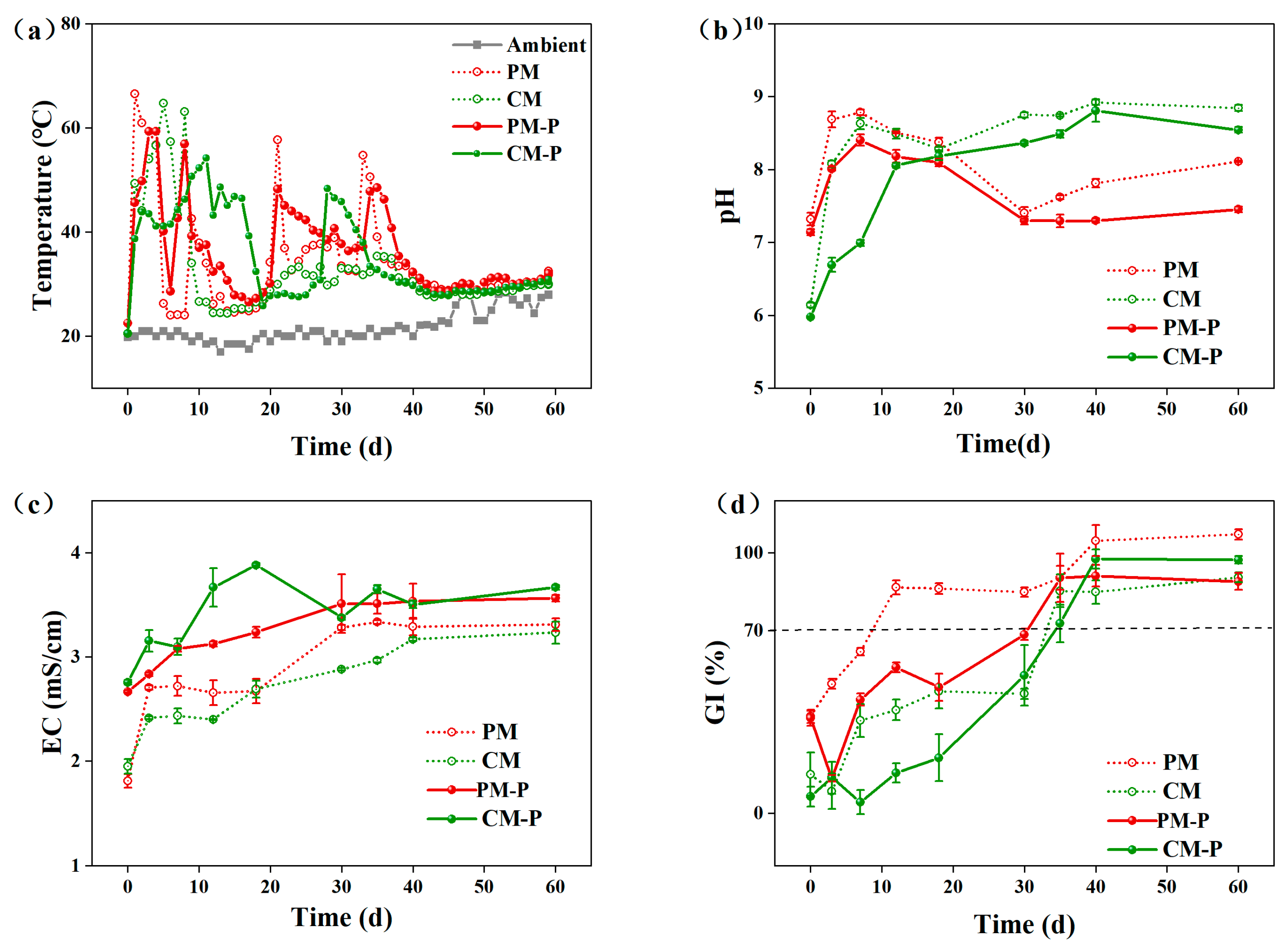
Temperature, pH, electrical conductivity (EC), and germination index (GI) serve as key indicators for assessing compost maturity [16]. In the pig manure (PM) treatment, temperatures increased rapidly, reaching the thermophilic phase (>50 °C) by day 2 of composting (Figure 1a). In contrast, the PM-P reached its first temperature peak (59.3 °C) on day 3. The maximum temperature recorded for PM-P (59.3 °C) was significantly lower than that for PM (66.5 °C). Following the initial peak, temperatures declined in PM and PM-P treatments but exhibited secondary peaks approaching 35.0 °C around day 10 (PM-P) and day 20 (PM), respectively. Additional temperature fluctuations occurred throughout the process until day 40. During chicken manure composting, the CM exhibited a rapid temperature increase to 57.3 °C within the initial 0–6 days. After declining from day 8, temperatures rebounded to a secondary peak of approximately 63.1 °C. Conversely, the CM-P treatment demonstrated slower temperature elevation, reaching a maximum of approximately 54.2 °C. By day 40, temperatures in all treatments stabilized near ambient levels (around 30 °C), indicating entry into the maturation stage. These results demonstrate that PG addition inhibits temperature elevation during livestock manure composting, potentially compromising maturation efficiency. This suppression was attributed to the inherent low pH (~2.0) of PG, which could inhibit bacterial activity essential for composting [17].
The initial pH of PG addition remained consistently lower than that of the untreated controls throughout the composting process (Figure 1b), attributable to the inherent acidity of PG (pH ≈ 2.0). At the start of composting, pH values for PM, PM-P, CM, and CM-P were 7.72, 7.14, 6.16, and 5.97, respectively. And at the end of composting, the pH of the four treatments was 8.11, 7.45, 8.84, and 8.54, respectively. The results demonstrate that PG addition significantly reduced both initial and final pH (p < 0.05), shifting the terminal pH closer to neutral ranges (7.0–7.5). Su et al. found that the addition of phosphate could reduce the pH of compost, which was beneficial for the preservation of nitrogen [18].
At the initial of composting, the EC values of PM and CM were 1.81 and 1.95 mS/cm, respectively, whereas PM-P and CM-P (with PG addition) exhibited higher initial values of 2.67 and 2.76 mS/cm (Figure 1c). From day 0 to 40, the EC of all treatments initially increased before stabilizing. By day 60, the EC values of PM-P and CM-P reached 3.56 and 3.67 mS/cm, respectively, exceeding PM (3.31 mS/cm) and CM (3.23 mS/cm) treatment. Maybe, the increase in EC was attributed to the decomposition of macromolecular substances into small molecular substances. Nevertheless, all final EC values remained below the threshold of 4.0 mS/cm, meeting established criteria for compost salinity safety [19].
At the beginning of composting, the GI values were 37.16% (PM), 14.96% (CM), 36.42% (PM-P), and 6.39% (CM-P) (Figure 1d). By the end of composting, these values increased to 107.00% (PM), 90.57% (CM), 88.97% (PM-P), and 97.27% (CM-P), respectively, which suggesting that PG addition significantly inhibited the rise in GI during composting. Nevertheless, the final GI values of PM-P and CM-P were 88.97% and 97.27%, respectively, meeting the requirements for decomposition and maturity (GI > 70%), similarly to Jiang et al. [20].
The results demonstrate that PG addition delayed the temperature elevation and maturation progression during both pig manure and chicken manure composting. Notwithstanding these inhibitory effects, all PG addition treatments satisfied standard compost maturity criteria (GI > 70%) within 60 days, exhibiting stabilized physicochemical properties including pH, EC and GI values.

3.2. Phosphorus Activation Characteristics During Co-Composting of PG with Livestock and Poultry Manure

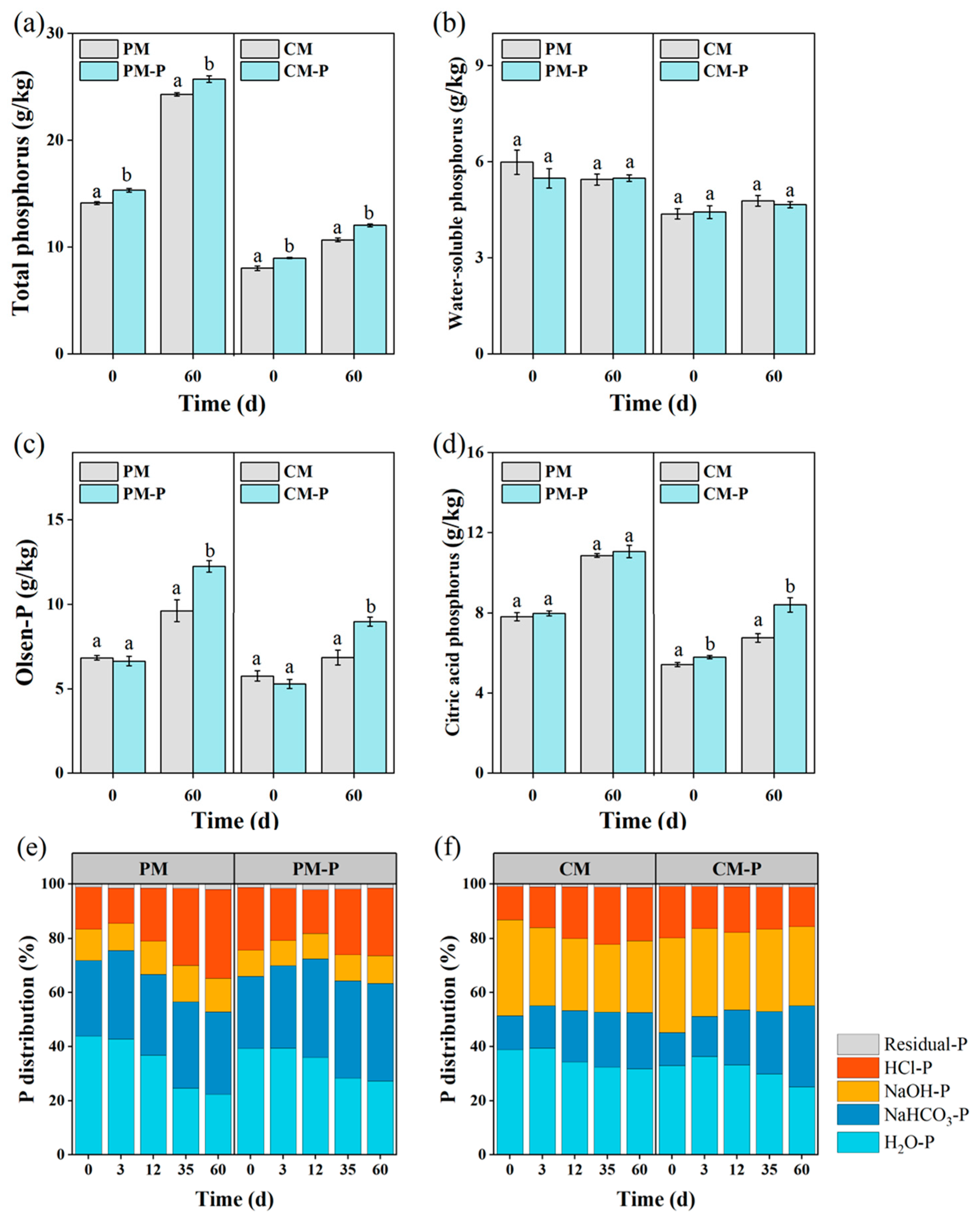
PG addition directly and indirectly modulated TP content and speciation during livestock manure composting. To elucidate the role of PG in phosphorus transformation dynamics, this study systematically compared variations in TP and available phosphorus (AP) fractions from the start to end of composting. PG addition significantly enhanced TP accumulation (p < 0.05). The TP of PM-P reached 25.71 g/kg, exceeding PM (24.27 g/kg) by 1.44 g/kg. Similarly, CM-P (12.03 g/kg) surpassed CM (10.66 g/kg) by 1.37 g/kg (Figure 2a). Water-soluble phosphorus remained stable (≈5 mg/kg) across all treatments, indicating that PG addition had no impact on short-term P solubility (Figure 2b). The PG addition did not increase the initial Olsen-P content of composting but facilitated the elevation of Olsen-P levels at the end of composting (Figure 2c). At the end of composting, Olsen-P content in PG addition composts significantly surpassed controls (p < 0.05), with PM-P and CM-P reaching 12.25 g/kg and 8.97 g/kg, respectively, compared to 9.62 g/kg (PM) and 6.85 g/kg (CM). The results showed that PG addition enhances Olsen-P bioavailability in livestock manure composts, corresponding to relative increases of 27.34% and 30.95% for PM and CM systems. PM and PM-P demonstrated comparable increases (from 7.9 to 11.0 g/kg) in citric acid-soluble P, and CM-P was higher than CM at the start and end of composting (p < 0.05) (Figure 2d). The results demonstrate that PG addition not only elevates TP but also enhances AP accumulation (particularly Olsen-P and citric acid-soluble P content).
PG addition could elevate HCl-P content (Figure 2e,f), which was attributed to the fact that PG contains a large amount of insoluble phosphorus. In traditional pig manure (PM) composting, labile P fractions (H2O-P + NaHCO3-P) transiently increased within 0–3 days (Figure 2e), followed by a significant decline (days 12–60) primarily driven by the sharp reduction in H2O-P. Conversely, HCl-P proportion progressively increased throughout the process. The bioavailable P fraction decreased from 71.79% (day 0) to 52.90% (day 60), indicating progressive P passivation during conventional composting. In contrast, the PM-P treatment (Figure 2e) exhibited distinct dynamics: NaHCO3-P increased (days 0–12) while HCl-P concurrently decreased. During the maturation phase (days 35–60), H2O-P declined moderately. At the end of composting, PM-P retained higher proportions of H2O-P (27.27% vs. 22.40%) and NaHCO3-P (36.05% vs. 30.50%) compared to PM, demonstrating enhanced P bioavailability and attenuated passivation. These findings align with Chen et al. [21], who reported that phosphate rock addition promoted labile P accumulation in food waste compost.
The proportion of H2O-P initially increased but subsequently decreased in CM and CM-P treatments (Figure 2f). At the end of composting, H2O-P decreased by 7.13% (CM) and 7.92% (CM-P), while NaHCO3-P increased by 8.35% and 17.86%, respectively. Consequently, the total labile phosphorus fraction (H2O-P + NaHCO3-P) in CM-P (55.10%) was higher by 2.46 percentage points than in CM (52.64%). Moreover, CM-P composting reduced NaOH-P and HCl-P by 5.83% and 4.46%, respectively, indicating partial dissolution and utilization of sparingly soluble phosphorus from PG. Collectively, PG addition significantly enhanced the activation efficiency of recalcitrant phosphorus during pig and chicken manure composting.

3.3. Analysis of the Main Pathways of Phosphorus Transformation

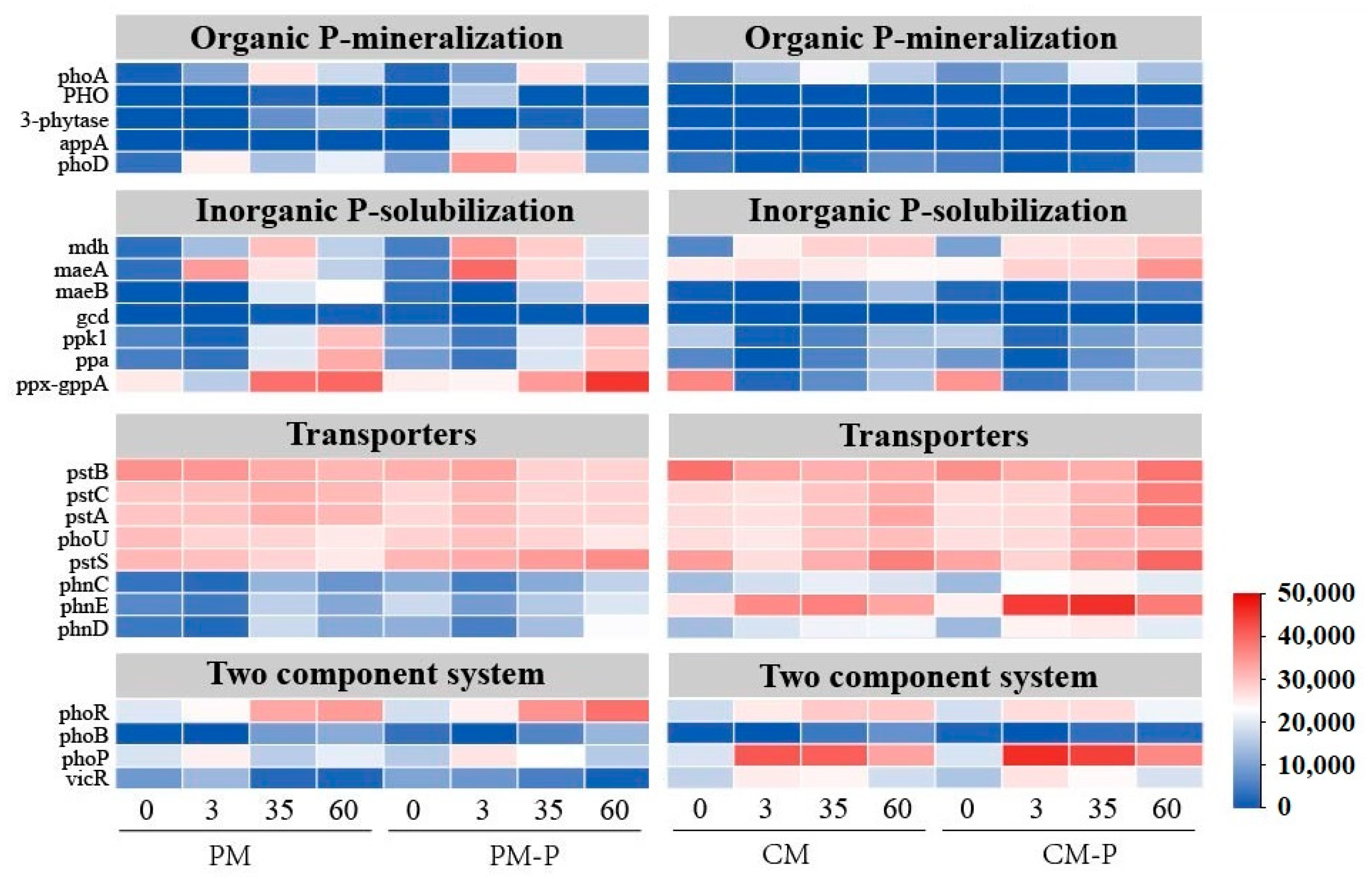
In total, 24 P-cycling genes predicted from 16S rDNA were analyzed, including 5 genes of organic P-mineralization, 7 genes of inorganic P-solubilization, 8 genes of transport, and 4 genes of two component systems (Figure 3). After adding PG, the gene abundance of mdh, maeA, ppx-gppA, pstS, and phoR in pig manure compost was increased, and the gene abundance of maeA, pstB, pstC, pstA, pstS, phnE, and phoP in chicken manure compost was increased. The addition of PG could promote the abundance of the above phosphorus transport genes, thereby promoting the activation of insoluble phosphorus. We used 16S rDNA data and PICRUSt2 to predict phosphorus transport functional genes, rather than actual measurements. In subsequent research, we can adopt more reliable high-throughput sequencing to study phosphorus transport genes.
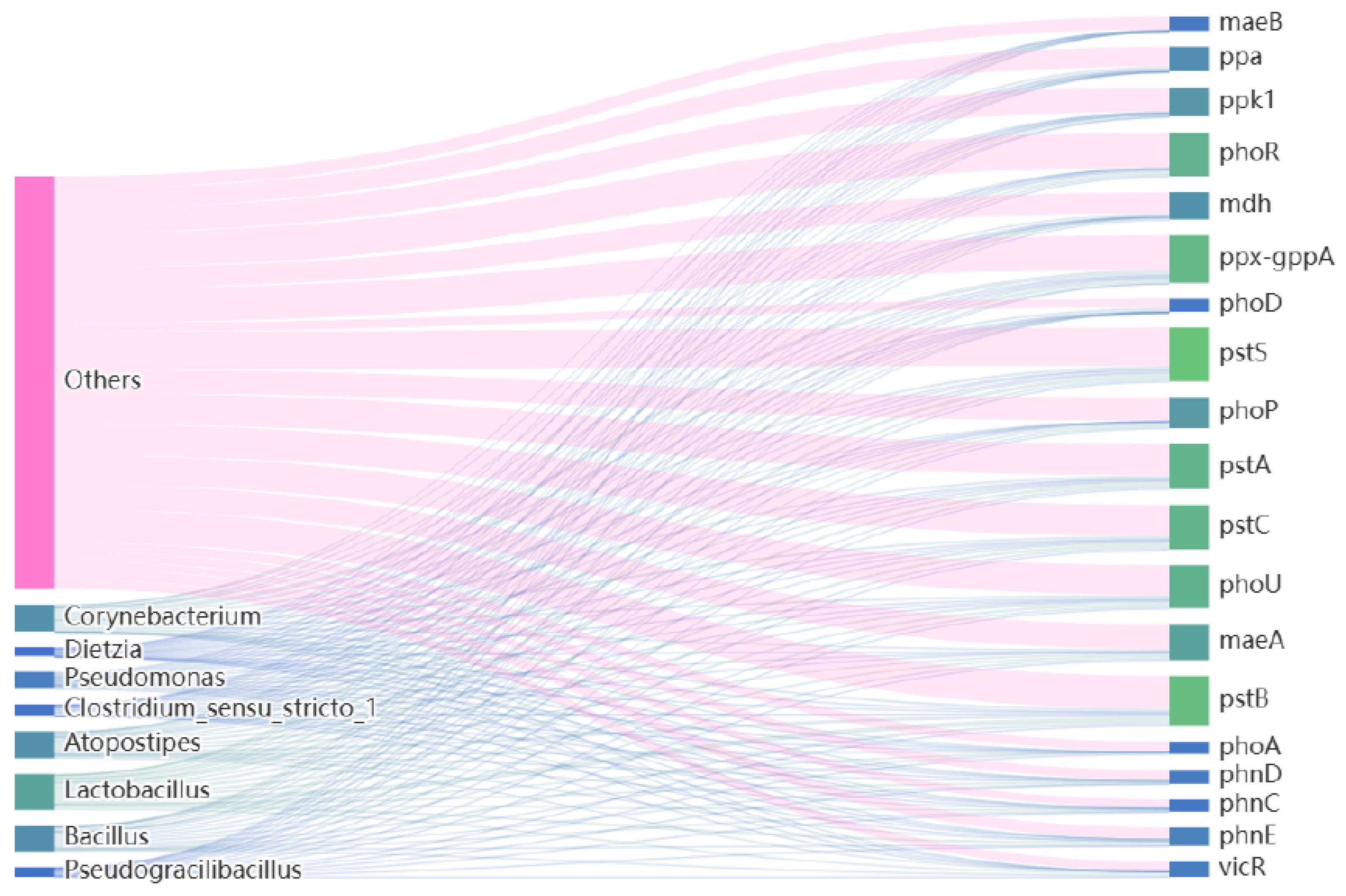
The above phosphorus transport genes predicted from 16S rDNA mainly came from eight bacterial genera, including Lactobacillus, Atopostipes, Corynebacterium, Bacillus, Pseudomonas, Clostridium_sensu_stricto_1, Pseudogracilibacillus, and Dietzia (Figure 4). Among these, Bacillus and Pseudogracilibacillus substantially enhanced the abundance of inorganic P-solubilizing genes (e.g., mdh, maeA, pstS, pstB), suggesting their dominant role in mobilizing inorganic P. This implies a competitive advantage in acquiring and converting P into bioavailable forms within composting matrices. Corynebacterium spp. significantly contributed to polyphosphate metabolism genes (phoD, ppa, ppx-gppA) [22,23] and phosphate transport genes (pstB, pstC, pstA, pstS). Elevated ppa and ppx-gppA abundance indicates active involvement in polyphosphate synthesis and degradation, thereby facilitating P cycling. Concurrently, a high expression of phosphate transport genes underscores efficient P uptake and translocation. In contrast, genera such as Lactobacillus and Atopostipes primarily influenced P cycling via ppx-gppA and phosphate transport genes.
PG addition reshaped bacterial community structure during composting, thereby enhancing functional gene abundance related to P cycling and driving P transformation. Transformation predicted from 16S rDNA PG addition promoted the dominance of specific bacterial genera (e.g., Bacillus, Pseudogracilibacillus, Corynebacterium), which amplified P-cycling functional genes [24]. Under PM-P treatment, Bacillus and Corynebacterium dominance elevated key gene abundance (mdh, maeA, ppa, phoD). In CM-P systems, Bacillus and Pseudogracilibacillus maintained high relative abundances during thermophilic and maturation phases, significantly increasing inorganic P-solubilizing genes (mdh, maeA) and the phosphate transporter gene (pstS).

3.4. Changes in PSB and Their Correlation Analysis with Phosphorus Distribution

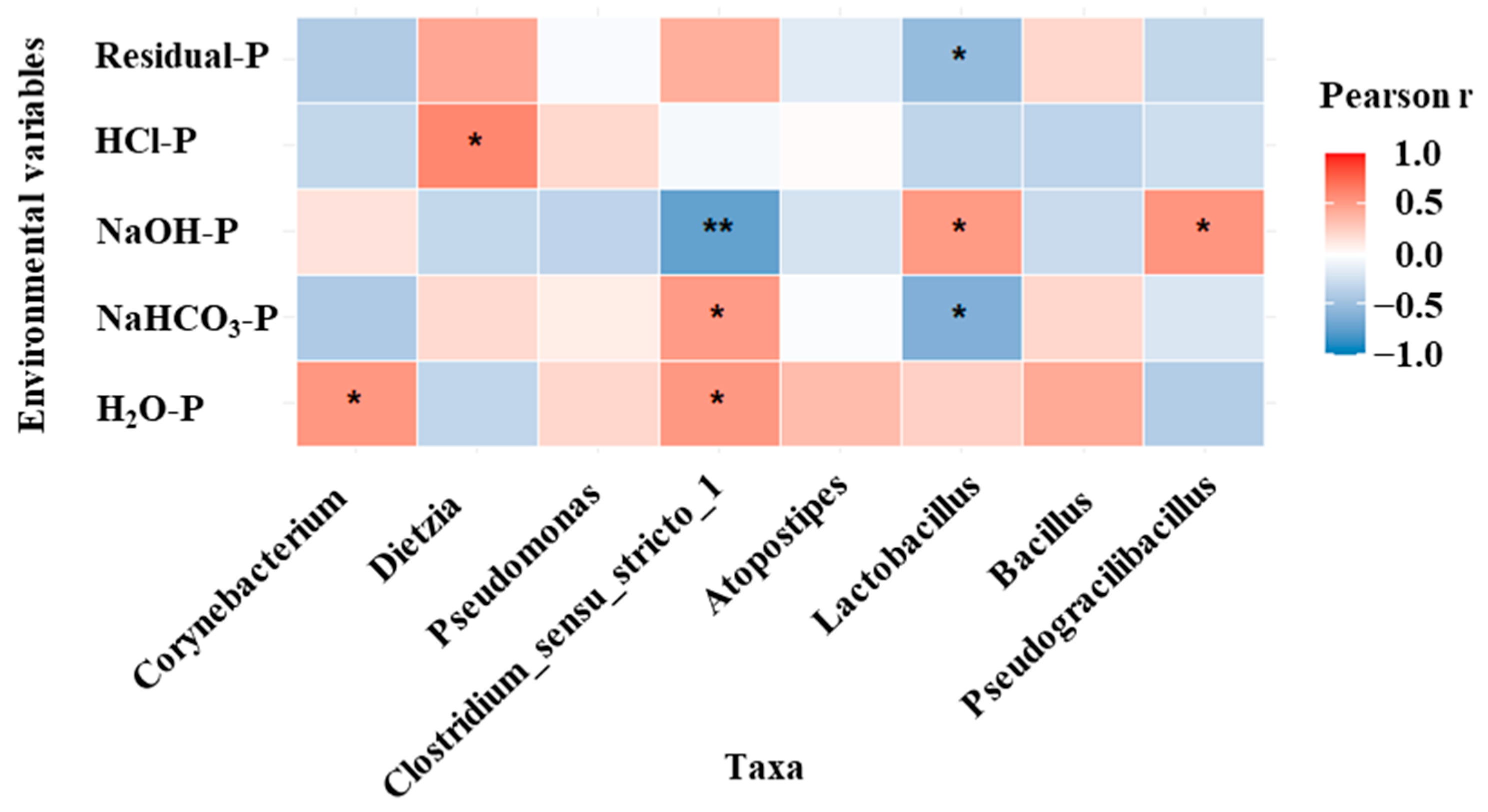
The dynamic changes in eight key PSB were analyzed (Figure S1), and their correlations with phosphorus fractions were investigated (Figure 5). Corynebacterium and Clostridium_sensu_stricto_1 were identified as the dominant PSB in the early stages of pig manure composting, while Clostridium_sensu_stricto_1 became predominant in the later stages. In contrast, Corynebacterium and Lactobacillus were the dominant PSB during the early phases of chicken manure composting, with Pseudogracilibacillus emerging as the primary one in the later phases. During composting, a decline in PSB was consistently observed, attributable to the unfavorable high temperatures for their growth. In future research, the regulation of composting temperature through turning or aeration could be implemented to enhance the solubilization of insoluble phosphorus. During the composting process, the abundance of PSB in the PM treatment ranged from 7.46% to 51.06%, while that in the PM-P treatment ranged from 10.76% to 64.76%. Similarly, for the CM treatment, PSB abundance ranged from 6.00% to 58.06%, whereas in the CM-P treatment, it ranged from 7.67% to 59.01%. The results indicated that PG addition promotes the growth of PSB. Corynebacterium exhibited a significant positive correlation with H2O-P (p < 0.05), indicating that the growth of Corynebacterium was conducive to the increase in H2O-P. Dietzia showed a significant positive correlation with HCl-P (p < 0.05), suggesting that the proliferation of Dietzia facilitates the activation of HCl-P. And Dietzia was higher in PM compost and lower in CM compost, implying that Dietzia plays a key role in phosphorus activation during PM composting. Some studies indicated that Corynebacterium and Dietzia could secrete organic acids and phosphatases, which could enhance the activation efficiency of insoluble phosphorus [25,26]. Clostridium_sensu_stricto_1 exhibited significant positive correlations with H2O-P and NaHCO3-P (p < 0.05) while showing a significant negative correlation with NaOH-P (p < 0.05). This indicates that the growth of Clostridium_sensu_stricto_1 facilitates the conversion of NaOH-P into H2O-P and NaHCO3-P. And its relative abundance was higher in PM treatment compared with CM treatment, suggesting that Clostridium_sensu_stricto_1 plays a key role in phosphorus activation during pig manure composting. Lactobacillus exhibited a significant positive correlation with NaOH-P (p < 0.05), while showing significant negative correlations with NaHCO3-P and Residual-P. This suggests that a decline in Lactobacillus facilitates the conversion of NaOH-P to NaHCO3-P. As Lactobacillus was a predominant genus in CM compost, these findings indicate that suppressing its growth could enhance phosphorus activation in CM compost. Lactobacillus with high relative abundance might be attributed to the low oxygen content, leading to an anaerobic state in the pile, which in turn causes changes in the bacterial community, hindering the activation of phosphorus. Xu et al. found that inhibiting the growth of Lactobacillus was beneficial to the formation of humic acid in food waste composting [17]. Pseudogracilibacillus showed a significant positive correlation with NaOH-P (p < 0.05), indicating that a decrease in Pseudogracilibacillus abundance promotes the activation of NaOH-P. As Pseudogracilibacillus was a dominant genus in CM compost, these findings suggest that suppressing its growth might enhance phosphorus activation in CM compost. Previous studies have shown that Pseudogracilibacillus could inhibit phosphorus activation by competing with PSB for substrates [27]. Perhaps, in subsequent research, we can conduct a correlation analysis between PSB and basic physicochemical factors (such as temperature, moisture content, oxygen, carbon–nitrogen ratio, etc.), and ultimately promote the growth of PSB through the regulation of temperature, moisture content, oxygen, and carbon–nitrogen ratio.

4. Conclusions

The addition of PG delayed the rise in temperature and GI but did not affect the final maturation of the compost. PG influenced the bacterial communities in pig manure and chicken manure compost. Dietzia and Clostridium sensu stricto_1 were dominant PSB in pig manure composting, while Lactobacillus and Pseudomonas were dominant PSB in chicken manure composting. After the addition of PG, the NaHCO3-P content in pig manure and chicken manure compost increased by 9.36 and 17.86 percentage points, respectively. A promising strategy for future research would be to regulate composting parameters (such as temperature, pH, C/N, and C/P) to stimulate essential PSB, ultimately improving phosphorus availability in the composting of PG with livestock and poultry manure.

Supplementary Materials

The following supporting information can be downloaded at https://www.mdpi.com/article/10.3390/agriculture16050607/s1, Figure S1: Changes of phosphate solubilizing bacteria in composting of livestock and poultry manure with PG. (PM, pig manure; CM, chicken manure; PM-P, pig manure+ PG; CM-P, chicken manure + PG).

Author Contributions

Y.Z., Writing—original draft; Y.W., Writing—review and editing; M.X., Methodology; J.X., Methodology; Y.C., Writing—original draft, Funding acquisition. All authors have read and agreed to the published version of the manuscript.

Funding

This research was funded by Hubei Provincial Natural Science Foundation (2024AFB389), Youth Science Fund of Hubei Academy of Agricultural Sciences (2024NKYJJ11), Open Project of Key Laboratory of Ministry of Agriculture and Rural Affairs (KLTMCUAR2024–03, KLTMCUAR2025-01), National Natural Science Foundation of China (32271728).

Data Availability Statement

The original contributions presented in the study are included in the article; further inquiries can be directed to the corresponding author.

Conflicts of Interest

The authors declare no conflicts of interest. The funders had no role in the design of the study; in the collection, analyses, or interpretation of data; in the writing of the manuscript; or in the decision to publish the results.

References

  1. Du, M.X.; Wang, J.M.; Dong, F.Q.; Wang, Z.J.; Yang, F.H.; Tan, H.B.; Fu, K.B.; Wang, W.Q. The study on the effect of flotation purification on the performance of α-hemihydrate gypsum prepared from phosphogypsum. Sci. Rep. 2022, 12, 95. [Google Scholar] [CrossRef]
  2. Owen, D.; Williams, A.P.; Griffith, G.W.; Withers, P.J.A. Use of commercial bioinoculants to increase agricultural production through improved phosphrous acquisition. Appl. Soil Ecol. 2015, 86, 41–54. [Google Scholar] [CrossRef]
  3. Zhan, Y.B.; Xu, S.Q.; Hou, Z.N.; Gao, X.; Su, J.; Peng, B.H.; Zhao, J.Y.; Wang, Z.G.; Cheng, M.D.; Zhang, A.K.; et al. Co-inoculation of phosphate-solubilizing bacteria and phosphate accumulating bacteria in phosphorus-enriched composting regulates phosphorus transformation by facilitating polyphosphate formation. Bioresour. Technol. 2023, 390, 129870. [Google Scholar] [CrossRef]
  4. Li, Y.; Gao, C.; Liu, H.; Han, D.; Cong, J.; Li, X.; Wang, G. Distribution of phosphorus forms in surface soils of typical peatlands in northern great khingan mountains and its potential to reconstruct paleo-vegetations. J. Environ. Manag. 2022, 302, 114033. [Google Scholar] [CrossRef]
  5. Ran, X.; Li, S.; Tejaswi Uppuluri, N.S.; Deng, Y.; Su, Y.; Huang, G.; Dong, R.; Müller, J.; Wei, Q.; Guo, J.; et al. Phosphorus transformation and bioavailability in livestock manure through aerobic composting and anaerobic digestion. Chem. Eng. J. 2025, 505, 159285. [Google Scholar] [CrossRef]
  6. Biswas, D.R.; Narayanasamy, G. Rock phosphate enriched compost: An approach to improve low-grade Indian rock phosphate. Bioresour. Technol. 2006, 97, 2243–2251. [Google Scholar] [CrossRef] [PubMed]
  7. Wei, Y.Q.; Zhao, Y.; Shi, M.Z.; Cao, Z.Y.; Lu, Q.; Yang, T.X.; Fan, Y.Y.; Wei, Z.M. Effect of organic acids production and bacterial community on the possible mechanism of phosphorus solubilization during composting with enriched phosphate-solubilizing bacteria inoculation. Bioresour. Technol. 2018, 247, 190–199. [Google Scholar] [CrossRef] [PubMed]
  8. Wei, Y.Q.; Zhao, Y.; Lu, Q.; Cao, Z.Y.; Wei, Z.M. Organophosphorus-degrading bacterial community during composting from different sources and their roles in phosphorus transformation. Bioresour. Technol. 2018, 264, 277–284. [Google Scholar] [CrossRef]
  9. Zeng, Q.W.; Wu, X.Q.; Wang, J.C.; Ding, X.L. Phosphate solubilization and gene expression of phosphate-solubilizing bacterium Burkholderia multivorans WS-FJ9 under different levels of soluble phosphate. J. Microbiol. Biotechnol. 2017, 27, 844–855. [Google Scholar] [CrossRef]
  10. Zhang, Y.; Hua, Z.-S.; Lu, H.; Oehmen, A.; Guo, J. Elucidating functional microorganisms and metabolic mechanisms in a novel engineered ecosystem integrating C, N, P and S biotransformation by metagenomics. Water Res. 2019, 148, 219–230. [Google Scholar] [CrossRef]
  11. Yu, H.; Zhao, Y.; Zhang, C.; Wei, D.; Wu, J.; Zhao, X.; Hao, J.; Wei, Z. Driving effects of minerals on humic acid formation during chicken manure composting: Emphasis on the carrier role of bacterial community. Bioresour. Technol. 2019, 294, 122239. [Google Scholar] [CrossRef] [PubMed]
  12. Zhan, Y.B.; Zhang, Z.Y.; Ma, T.T.; Zhang, X.J.; Wang, R.H.; Liu, Y.D.; Sun, B.R.; Xu, T.; Ding, G.C.; Wei, Y.Q.; et al. Phosphorus excess changes rock phosphate solubilization level and bacterial community mediating phosphorus fractions mobilization during composting. Bioresour. Technol. 2021, 337, 125433. [Google Scholar] [CrossRef] [PubMed]
  13. Zhang, X.J.; Zhan, Y.B.; Zhang, H.; Wang, R.H.; Tao, X.L.; Zhang, L.P.; Zuo, Y.L.; Zhang, L.; Wei, Y.Q.; Li, J. Inoculation of phosphate-solubilizing bacteria (Bacillus) regulates microbial interaction to improve phosphorus fractions mobilization during kitchen waste composting. Bioresour. Technol. 2021, 340, 125714. [Google Scholar] [CrossRef] [PubMed]
  14. Hedley, M.J.; Stewart, J.W.B.; Chauhan, B.S. Changes in inorganic and organic soil phosphorus fractions induced by cultivation practices and by laboratory incubations. Soil Sci. Soc. Am. J. 1982, 46, 970–976. [Google Scholar] [CrossRef]
  15. Wang, Y.; Gong, J.Y.; Li, J.X.; Xin, Y.Y.; Hao, Z.Y.; Chen, C.; Li, H.X.; Wang, B.; Ding, M.; Li, W.W.; et al. Insights into bacterial diversity in compost: Core microbiome and prevalence of potential pathogenic bacteria. Sci. Total Environ. 2020, 718, 137304. [Google Scholar] [CrossRef]
  16. Zhan, Y.B.; Chang, S.; Chen, Y.T.; Chang, Y.; Chen, P.Z.; Chen, Y.F.; Zhang, L.L.; Yang, L.; Xia, X.G.; Li, J.; et al. Effect of auxiliary materials on the formation of humic acid carbon and nitrogen and bacterial dynamics in kitchen waste compost. J. Environ. Chem. Eng. 2024, 12, 113190. [Google Scholar] [CrossRef]
  17. Xu, M.; Wei, Y.Q.; Chen, Y.F.; Zhou, H.B.; Ma, S.S.; Zhan, Y.B. Neutral initial pH enhances the formation of humic acid by inhibiting the growth of Lactobacillus in food waste composting. Environ. Technol. Innov. 2025, 39, 104271. [Google Scholar] [CrossRef]
  18. Su, J.; Zhan, Y.B.; Chang, Y.; Chang, S.; Luo, Y.; Chen, P.Z.; Tao, X.L.; Chen, Y.F.; Yang, L.; Xu, T.; et al. Phosphate additives promote humic acid carbon and nitrogen skeleton formation by regulating precursors and composting bacterial communities. Bioresour. Technol. 2024, 399, 130617. [Google Scholar] [CrossRef]
  19. Wei, Y.; Zhao, Y.; Zhao, X.; Gao, X.; Zheng, Y.; Zuo, H.; Wei, Z. Roles of different humin and heavy-metal resistant bacteria from composting on heavy metal removal. Bioresour. Technol. 2020, 296, 122375. [Google Scholar] [CrossRef]
  20. Jiang, J.; Huang, Y.; Liu, X.; Huang, H. The effects of apple pomace, bentonite and calcium superphosphate on swine manure aerobic composting. Waste Manag. 2014, 34, 1595–1602. [Google Scholar] [CrossRef]
  21. Chen, W.J.; Zhan, Y.B.; Zhang, X.J.; Shi, X.; Wang, Z.G.; Xu, S.Q.; Chang, Y.; Ding, G.C.; Li, J.; Wei, Y.Q. Influence of carbon-to-phosphorus ratios on phosphorus fractions transformation and bacterial community succession in phosphorus-enriched composting. Bioresour. Technol. 2022, 362, 127786. [Google Scholar] [CrossRef] [PubMed]
  22. Liang, J.; Liu, J.; Jia, P.; Yang, T.; Zeng, Q.; Zhang, S.; Liao, B.; Shu, W.; Li, J. Novel phosphate-solubilizing bacteria enhance soil phosphorus cycling following ecological restoration of land degraded by mining. ISME J. 2020, 14, 1600–1613. [Google Scholar] [CrossRef] [PubMed]
  23. Liang, H.; Wang, C.; Lu, X.; Sai, C.; Liang, Y. Dynamic changes in soil phosphorus accumulation and bioavailability in phosphorus-contaminated protected fields. Int. J. Environ. Res. Public Health 2022, 19, 12262. [Google Scholar] [CrossRef]
  24. Estrada-Bonilla, G.A.; Lopes, C.M.; Durrer, A.; Alves, P.R.L.; Passaglia, N.; Cardoso, E.J.B.N. Effect of phosphate-solubilizing bacteria on phosphorus dynamics and the bacterial community during composting of sugarcane industry waste. Syst. Appl. Microbiol. 2017, 40, 308–313. [Google Scholar] [CrossRef]
  25. Park, J.; Kim, M.K.; Yun, B.R.; Han, J.H.; Kim, S.B. Pseudogracilibacillus endophyticus sp. nov., a moderately thermophilic and halophilic species isolated from plant root. Int. J. Syst. Evol. Microbiol. 2018, 68, 165–169. [Google Scholar] [CrossRef]
  26. Nishioka, T.; Elsharkawy, M.M.; Suga, H.; Kageyama, K.; Hyakumachi, M.; Shimizu, M. Development of culture medium for the isolation of Flavobacterium and Chryseobacterium from rhizosphere soil. Microbes Environ. 2016, 31, 104–110. [Google Scholar] [CrossRef]
  27. Yu, C.Z.; Li, M.X.; Huang, H.P.; Yan, J.; Zhang, X.L.; Luo, T.; Ye, M.Y.; Meng, F.H.; Sun, T.C.; Hou, J.Q.; et al. Electron transfer and microbial mechanism of synergistic degradation of lignocellulose by hydrochar and aerobic fermentation. Bioresour. Technol. 2024, 394, 129980. [Google Scholar] [CrossRef] [PubMed]
Figure 1. Changes in temperature (a), pH (b), EC (c) and GI (d) in livestock and poultry manure composting. Different letters indicate significant differences between groups (p < 0.05) (PM, pig manure; CM, chicken manure; PM-P, pig manure + PG; CM-P, chicken manure + PG).
Agriculture 16 00607 g001
Figure 2. Changes in total phosphorus content (a), water-soluble phosphorus content (b), Olsen-P content (c), citrate-extractable phosphorus content (d), P distribution in pig manure compost (e), P distribution in chicken manure compost (f). Different letters indicate significant differences between groups (p < 0.05). (PM, pig manure; CM, chicken manure; PM-P, pig manure + PG; CM-P, chicken manure + PG). Different lowercase letters indicate significant differences, p < 0.05. The P distribution adopts the average value, while the rest adopt the average value + standard deviation, n = 3.
Agriculture 16 00607 g002
Figure 3. Changes in relative abundance of phosphorus cycling functional genes in pig manure compost and chicken manure compost (PM, pig manure; CM, chicken manure; PM-P, pig manure + PG; CM-P, chicken manure + PG). The P cycling genes adapt average values, n = 3.
Agriculture 16 00607 g003
Figure 4. Analysis of the contribution of bacterial genera to the abundance of phosphorus cycling genes (PM, pig manure; CM, chicken manure; PM-P, pig manure + PG; CM-P, chicken manure + PG). The abundance of bacterial genera and P cycle genes adapts average values, n = 3.
Agriculture 16 00607 g004
Figure 5. Pearson correlation analysis between phosphate-solubilizing bacteria and P distribution in composting of livestock and poultry manure with PG (PM, pig manure; CM, chicken manure; PM-P, pig manure + PG; CM-P, chicken manure + PG). * p < 0.05, indicating a significant difference; ** p < 0.01, indicating a highly significant difference; red indicates positive correlation, and blue indicates negative correlation.
Agriculture 16 00607 g005
Table 1. Basic characteristics of the raw materials in composting.
Raw MaterialsMC b (%)pH bTOC a (g/kg)TN a (g/kg)C/NTP a (g/kg)
Pig manure74.5 ± 1.27.2 ± 0.1365.0 ± 0.538.8 ± 0.19.4 ± 0.415.5 ± 0.1
Chicken manure75.2 ± 0.77.1 ± 0.5300.1 ± 0.236.3 ± 0.28.3 ± 0.49.0 ± 0.5
Sawdust5.1 ± 0.37.7 ± 0.1367.2 ± 0.33.6 ± 0.1102.0 ± 0.31.1 ± 0.2
Phosphogypsum21.1 ± 0.12.2 ± 0.124.6 ± 0.3
MC, Moisture content; TOC, total organic carbon; TN, total nitrogen; C/N, carbon–nitrogen ratio; TP, total phosphorus. a: Calculated based on dry basis calculation; b: calculated based on wet basis.
Table 2. Experimental treatment design.
TreatmentsPig Manure (kg)Chicken Manure (kg)Sawdust (kg)PG (%)PSB (%)
PM24600.5
PM-P246100.5
CM24600.5
CM-P246100.5
Disclaimer/Publisher’s Note: The statements, opinions and data contained in all publications are solely those of the individual author(s) and contributor(s) and not of MDPI and/or the editor(s). MDPI and/or the editor(s) disclaim responsibility for any injury to people or property resulting from any ideas, methods, instructions or products referred to in the content.