1. Introduction
In modern agricultural systems, the correct and efficient application of plant protection products (PPPs) plays a pivotal role in mitigating crop losses and ensuring global food supplies to meet the growing global demand [
1,
2,
3]. Farmers routinely apply pesticides across various crops and growth stages, often relying on conventional fixed-rate application methods, which deliver a uniform dose across the entire field [
4,
5,
6]. Since the 1990s, global pesticide usage has increased by approximately 50%, with current estimates indicating nearly 4 million tons are applied annually across agricultural lands [
7]. However, pest, disease, and weed pressures often exhibit substantial spatial heterogeneity within the field, thus rendering fixed-rate applications pesticide overuse [
6,
8]. As a result, this overapplication not only increases production costs but also contributes to soil and water contamination, exposes non-target species, and accelerates the evolution of resistant pest populations [
9,
10].
According to the projections of the “Agriculture in 2050” initiative, the global population is expected to reach nearly 10 billion by mid-century, intensifying pressure on agricultural systems. Meeting this demand requires strategies that enhance agricultural productivity while minimizing environmental impacts [
11,
12,
13].
One of the most promising solutions is the adoption of variable-rate application (VRA) technologies in crop protection practices (fertilizers, herbicides or pesticides) [
14,
15,
16,
17,
18]. These systems enable the spatially and temporally optimized pesticide application by adjusting the doses of active ingredients according to site-specific crop requirements or pest incidence. When correctly implemented, VRA technologies improve target deposition and allow a greater area to be treated with the same spray volume, thereby enhancing input efficiency and reducing environmental burden [
19,
20,
21,
22].
Despite these significant technical performances, a critical gap remains in the literature regarding the adoption costs, economic returns, and the operational viability of VRA technologies under real farm conditions (e.g., farm size, crop specialization). Although the environmental benefits of VRA are well-documented, the high initial capital availability, subsequent training, and tool implementation pose challenges to their scalability, particularly for small-to-medium-sized enterprises or in developing agricultural contexts. Current research often focuses on localized technical efficiency, frequently overlooking the broader economic feasibility required for the adoption across different crop types. Consequently, there is a pressing need for synthesizing existing knowledge to understand how these economic constraints affect the global distribution of VRA technology [
23].
Over the last few years, research efforts have been made on different aspects of PPP application to increase field-level application efficiency and reduce the potential impact on the ecosystem, including the adoption and implementation of conventional and various precision agriculture practices and technologies.
Conventional spraying systems often operate at constant pressure or with fixed nozzle configurations, which may compromise dose accuracy. To overcome these limitations, modern sprayers integrate advanced control strategies such as individual nozzle selection, variable-pressure spraying, pulse width modulation (PWM), and fast close (FC) valve-controlled variable-orifice nozzles [
24,
25,
26,
27]. In parallel, map-based prescription systems have become increasingly relevant, enabling improved control and adaptability to spatially variable field conditions [
28,
29].
In recent years, PWM technology has gained widespread interest due to its ability to adjust application rates in real time by modulating spray frequency and nozzle duty cycle while maintaining a constant droplet size distribution [
30,
31,
32]. Unlike flow-based systems that vary pressure, PWM sprayers regulate output by changing the duty cycle, thus preserving spray characteristics. Moreover, PWM systems show favorable droplet size distribution performance, particularly within the 40–100% duty cycle range [
33].
In the study carried out by Zhang et al. (2025) [
34], a variable-rate spraying system was developed to address limitations of conventional variable-rate spraying systems by employing a multisensory fusion methodology, which integrated canopy volume and disease detection to reduce pesticide usage. The authors demonstrated how the newly developed variable-rate spraying system could lead to a reduction of 74% in chemical usage compared to conventional spraying.
As research on VRA technologies continues to expand rapidly, driven by a growing diversity of methods and innovations, such as remote sensing (RS) imagery [
35,
36,
37], sensor-based applications [
38,
39,
40], robot platforms [
41,
42,
43], unmanned aerial vehicles (UAVs) [
44,
45,
46], and artificial intelligence (AI) [
47,
48,
49], understanding the evolution of scientific developments, emerging trends, and relevant gaps has become essential to support future innovation in the precision agriculture (PA) domain.
These technological advances support three different VRA implementation strategies, including map-based systems, which rely on pre-generated prescription maps (e.g., from satellite or drone data), sensor-based approaches, which address the use of sensors (e.g., infrared or ultrasonic) capable of detecting real-time crop or canopy characteristics like canopy density or soil moisture, and real-time VRA systems (on-the-go) that dynamically adjust application rates during operation by integrating sensor feedback to respond to detected field variability [
50].
At a global scale, there is no critical assessment of the extent to which technological innovation is systematically linked to agronomic effectiveness, environmental outcomes, and economic viability. Addressing these structural unknowns would be valuable to understand whether the research domain is progressing toward consolidation or simply expanding in volume. At this juncture, bibliometric and scientometric analyses are not merely timely but essential. This methodological approach is useful now to consolidate nearly two decades of disparate findings into a rigorous and quantifiable framework. By doing so, the present review identifies the precise structural gaps in the literature, particularly those associated with PWM and flow control systems [
51,
52,
53].
This study employed both bibliometric and scientometric techniques to investigate the global evolution of research on VRA technologies from 2005 to 2025. Specifically, the primary objective was to provide a comprehensive quantitative overview of research outputs identifying leading authors, journals, countries, and their collaborative networks. By identifying insights into the trajectory and structure of this PA-advancing topic, the study contributed to understanding how innovation in VRA is reshaping crop protection strategies in pursuit of sustainable agricultural development.
3. Results and Discussion
3.1. Search Results
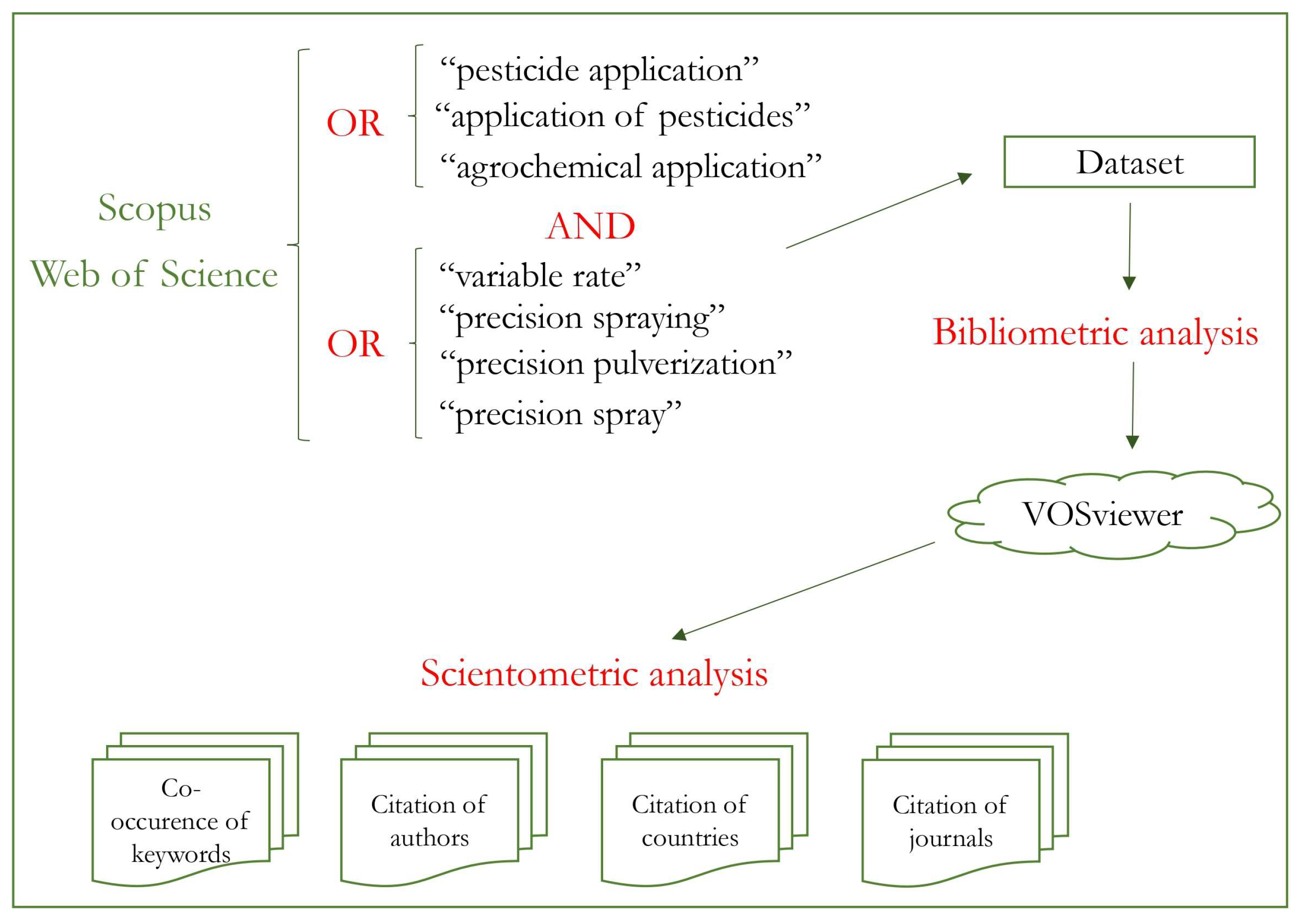
After data acquisition was completed, a total of 98 records were retrieved from the Scopus database. After applying the defined inclusion criteria in terms of temporal range (2005–2025), language (English), document type (journal article), and application field (agricultural science), 94 publications were found. Similarly, the WoS database returned 32 records, of which 26 met the same inclusion criteria (
Table 1).
Differences in the number of records retrieved from Scopus and WoS databases can be attributed to their distinct coverage of precision agriculture and engineering-oriented journals related to VRA of pesticides. Scopus generally includes a broader range of applied and technical sources toward engineering and automation, whereas WoS applies more selective indexing criteria, prioritizing agronomic evaluations and field-level performance. The reliance on both databases was intentional, serving as a methodological approach to compare how indexing scope affects thematic and structural patterns in the field. Consequently, the final dataset represents a high-quality corpus that highlights the multidisciplinary nature of VRA research, rather than a selection bias.
3.2. Bibliometric Analysis—Scopus
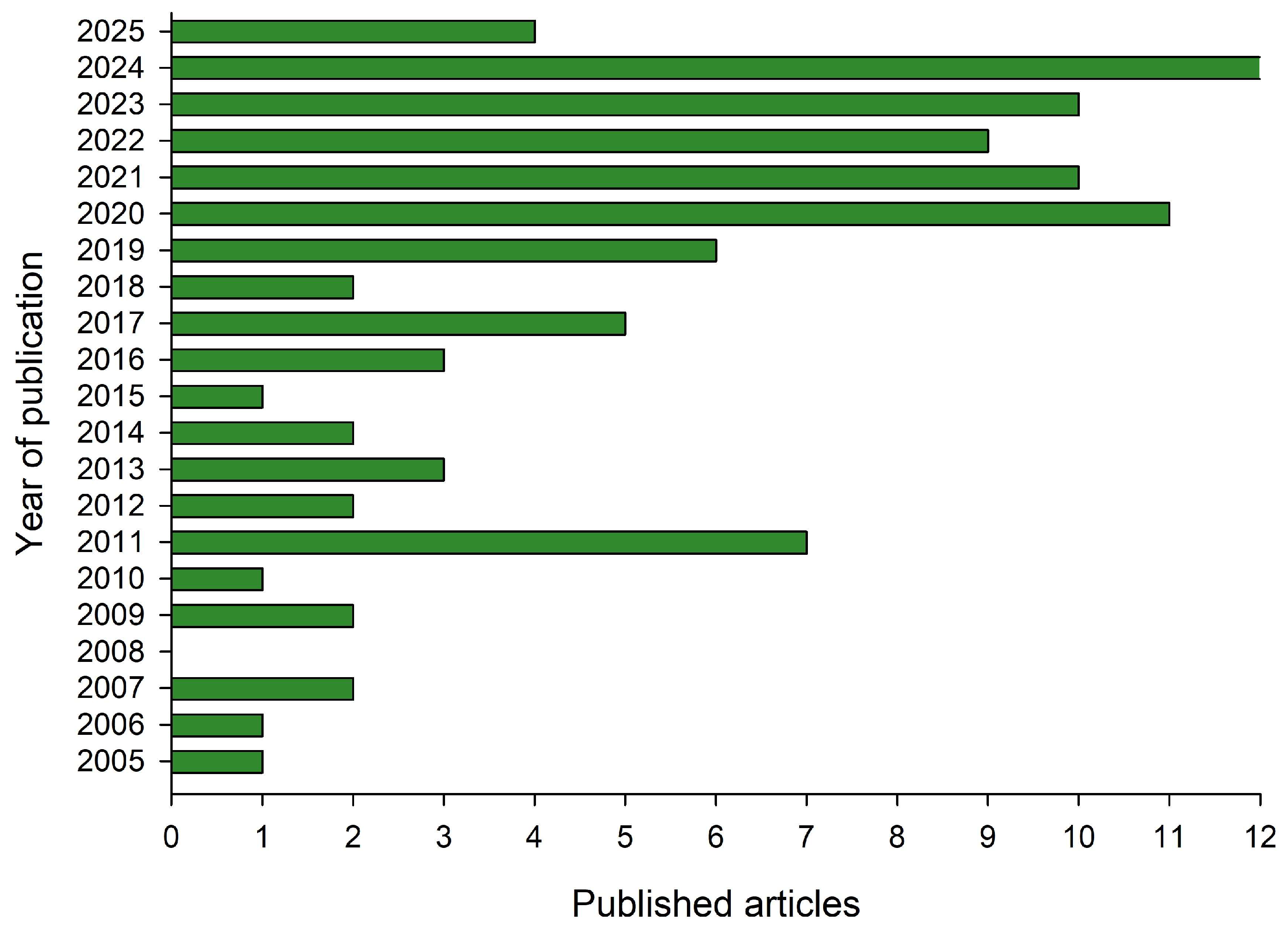
The analysis of the temporal distribution of publications showed a clear growth trend in VRA research activity, suggesting emerging interest in this technology within PA (
Figure 2). Initially, the volume of publications was characterized by a limited and sporadic output, with the first noticeable instance occurring in 2011 (seven publications). This early phase can be interpreted as a period of introduction and initial exploration of the fundamental concepts and emerging technologies related to VRA. The relative scarcity of publications during this time may reflect the initial challenges in designing, developing, and validating efficient and economically viable systems.
However, from 2011 onward, a turning point was observed, marked by a substantial increase in the number of publications. This progressive acceleration gained further momentum in subsequent years, culminating in notable peaks in the range 2020–2024 and maintaining a significant volume through the partial projection for 2025.
The growing awareness of the field is driven by the urgent need for sustainable PPP management to mitigate environmental impacts [
58,
59,
60,
61]. Critical factors of this maturation include the integration of technological advances, such as remote sensing (RS), global positioning systems (GPS), and geographic information systems (GIS) for precise mapping, along with sophisticated spraying systems such as PWM and individual nozzle control [
62,
63,
64,
65].
The publication peaks observed in specific years (e.g., 2020 and 2024) may be associated with relevant scientific events, significant research funding, or the wider dissemination of positive outcomes from VRA in agricultural practice. Conversely, periods of lower scientific output may reflect technical challenges that were later overcome, shifts in research priorities, or the time required for the consolidation and dissemination of new findings.
Beyond indicating a quantitative growth in the number of publications, the temporal trend reveals a structural transition in the VRA research landscape. The consolidation observed after 2020 suggests a shift from exploratory and proof-of-concept studies toward more applied and system-oriented research. This transition reflects not only technological maturation but also growing regulatory pressure and environmental awareness regarding PPP use. It is worth mentioning that the sharp increase in publication volume is not necessarily accompanied by proportional diversification of research themes, indicating that growth was driven primarily by technological refinement rather than by integrative studies addressing economic factors or scalability across different agricultural contexts.
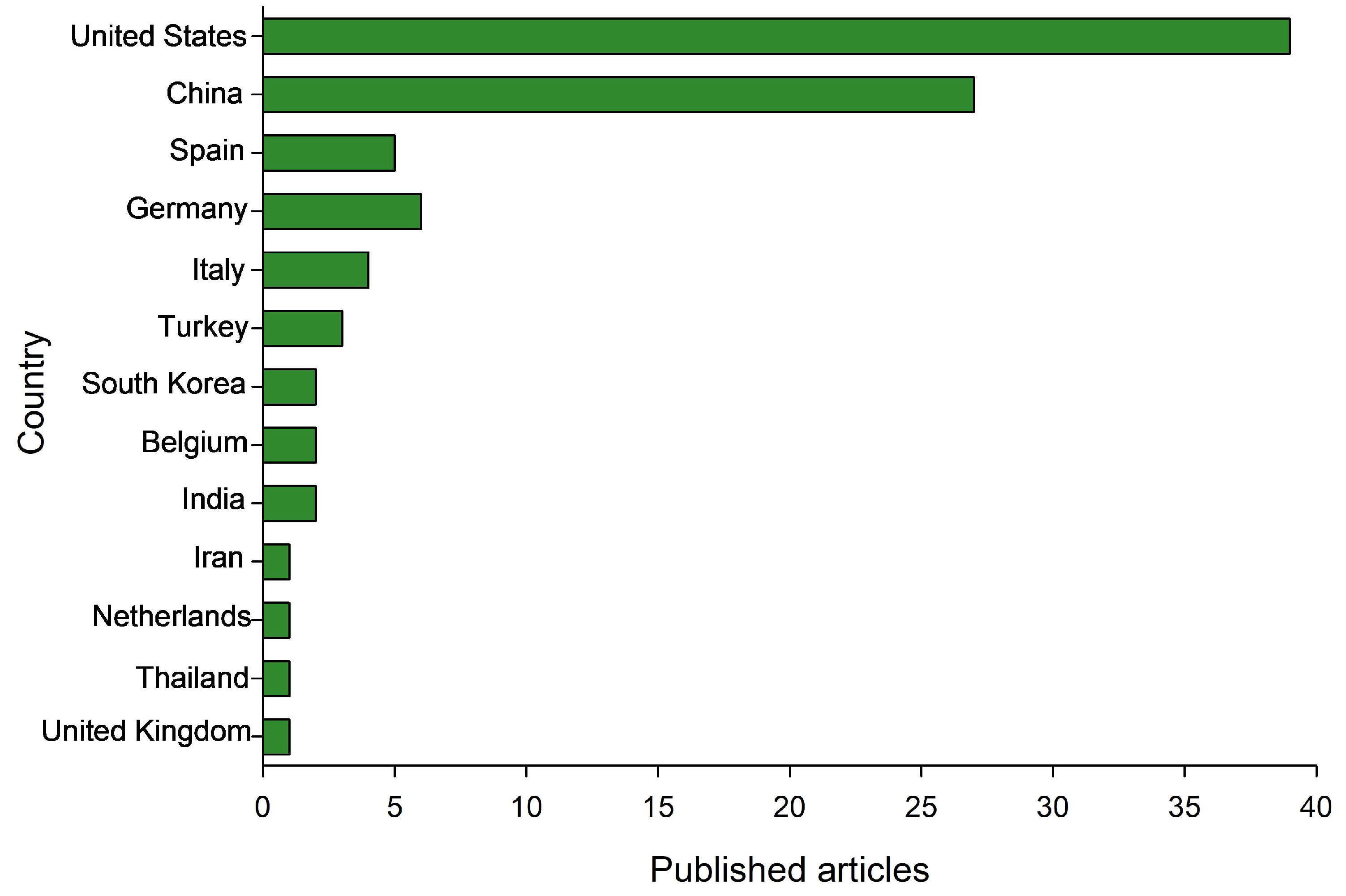
The geographic distribution analysis of scientific production on VRA revealed a notable concentration of research activity in a limited number of countries (
Figure 3).
The United States and China clearly emerged as the leading centers in the field, producing a higher volume of publications compared to other countries. This pronounced leadership may suggest strong investment and proactive engagement of their research institutions in advancing knowledge and developing technologies related to precision PPP application. Their prominence may be further reinforced, likely by national funding aimed at modernizing agricultural systems to enhance PPP application effectiveness, supported by major investments in VRA-based technologies.
Although the United States and China clearly dominate scientific production on VRA technologies, the lower representation of other countries may be explained by a combination of structural, economic, and technological factors. The development and validation of variable-rate application systems require advanced research infrastructure, access to precision equipment, high-cost sensors, and strong integration between academia and industry. In many developing or emerging agricultural regions, limited funding availability, reduced access to advanced machinery, and insufficient technological transfer mechanisms may constrain research output in this field. Additionally, differences in agricultural policies, farm size distribution, and regulatory frameworks may influence national research priorities, directing efforts toward other areas of agricultural innovation rather than precision spraying technologies [
66,
67]. Nevertheless, the leading role of these countries reflects fundamentally different agricultural contexts that shape the adaptability of VRA technology. For instance, the United States focuses on large-scale farmland, where studies are oriented toward highly mechanized farming systems, advanced sensor integration, and automated control strategies [
14,
19], whereas China often takes into account a dual agricultural context, where smallholder farms coexist with expanding large-scale operations [
6,
17]. This divergence suggests that national research priorities are closely linked to farm structure, with implications for the transferability of VRA across regions characterized by different levels of mechanization and farm fragmentation.
Within the European context, Spain and Germany stood out as the most productive contributors, mirroring the growing relevance of VRA technology toward input optimization. Italy, Turkey, South Korea, Belgium, Iran, and the Netherlands also maintain relevant scientific outputs, demonstrating the global adoption of VRA to diverse agricultural needs.
On the other hand, the lower representation of countries such as Thailand and the United Kingdom may suggest differing research priorities within the field of PA or a focus on other specific areas of the agricultural sector. However, this does not necessarily imply a lack of interest or research activity in these countries, but rather a lower level of representation in global scientific output on VRA during the analyzed timeframe.
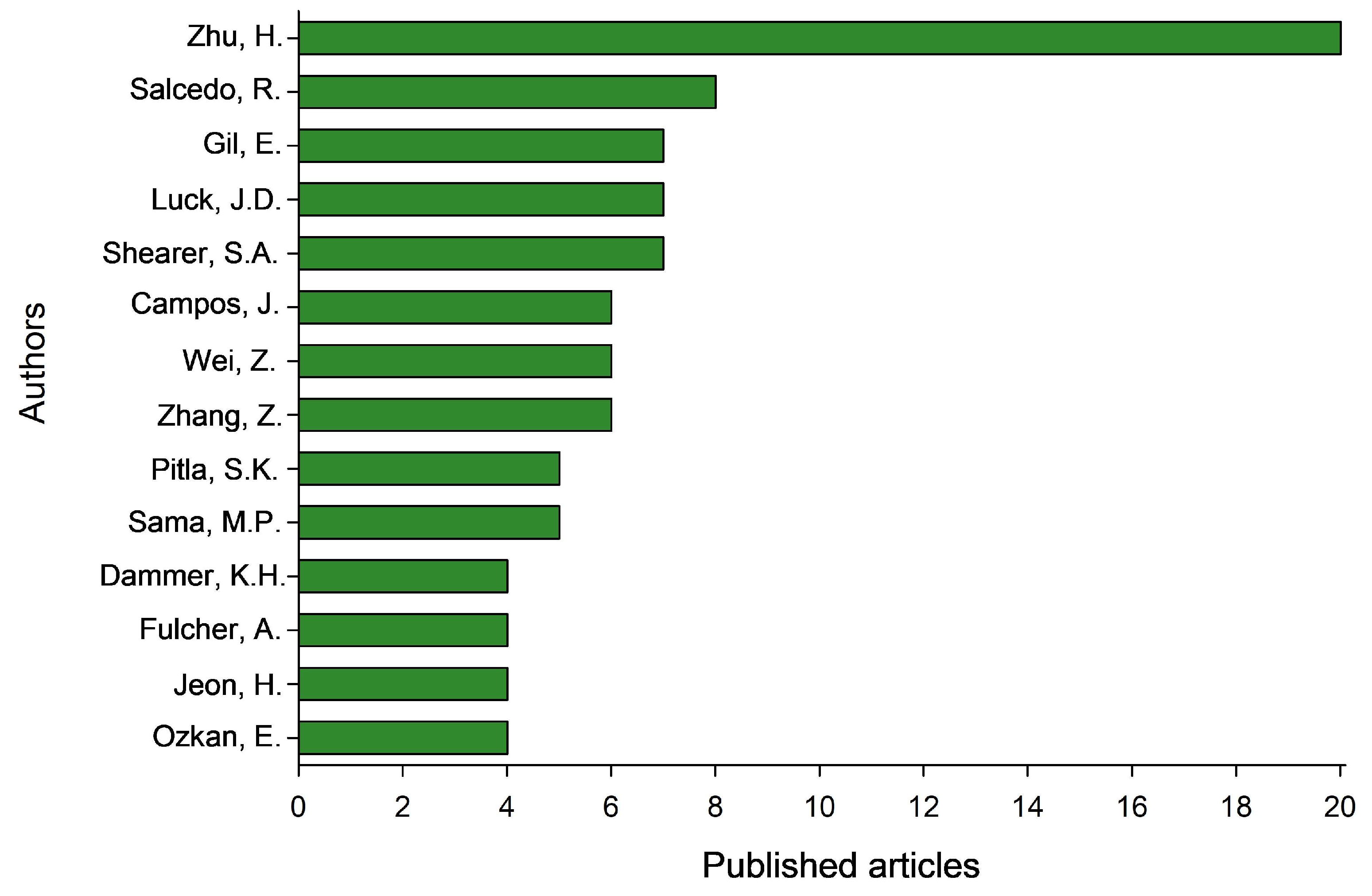
Analysis of the most prolific authors in VRA research revealed a heterogeneous distribution (
Figure 4). Zhu, H. stood out prominently, presenting a significantly higher number of publications compared to the other listed authors. This high level of productivity suggests a consistent focus and substantial contribution by this researcher to the advancement of knowledge in variable rate pesticide application. Zhu’s leadership may indicate the presence of a well-established research group with robust and continuous lines of investigation.
At a second level of productivity, authors such as Salcedo, R. and Gil, E. exhibited a considerable number of publications. Their consistent contributions suggested significant engagement and consolidated expertise in the field, likely leading or actively participating in relevant research projects. The close number of publications between these authors may indicate the existence of collaborations or a shared focus on specific research lines within the domain.
Significant contributions were also noted from Luck, J.D., Shearer, S.A., and Campos, J., whose work reinforced the multidisciplinary nature of VRA of PPPs. A tier of intermediate productivity, including Wei, Z., Zhang, Z., Pitla, S.K., and Sama, M.P., yielded relevant contributions to the literature, indicating active participation from a variety of researchers and research groups in the development of this knowledge area. Finally, authors with the lowest number of publications—Dammer, K.H., Fulcher, A., Jeon, H., and Ozkan, E.—still represented important contributions to the field. Their inclusion highlighted the participation of a diverse range of researchers in advancing VRA technology, even if with a lower individual publication output compared to the leading authors.
3.3. Bibliometric Analysis—Web of Science
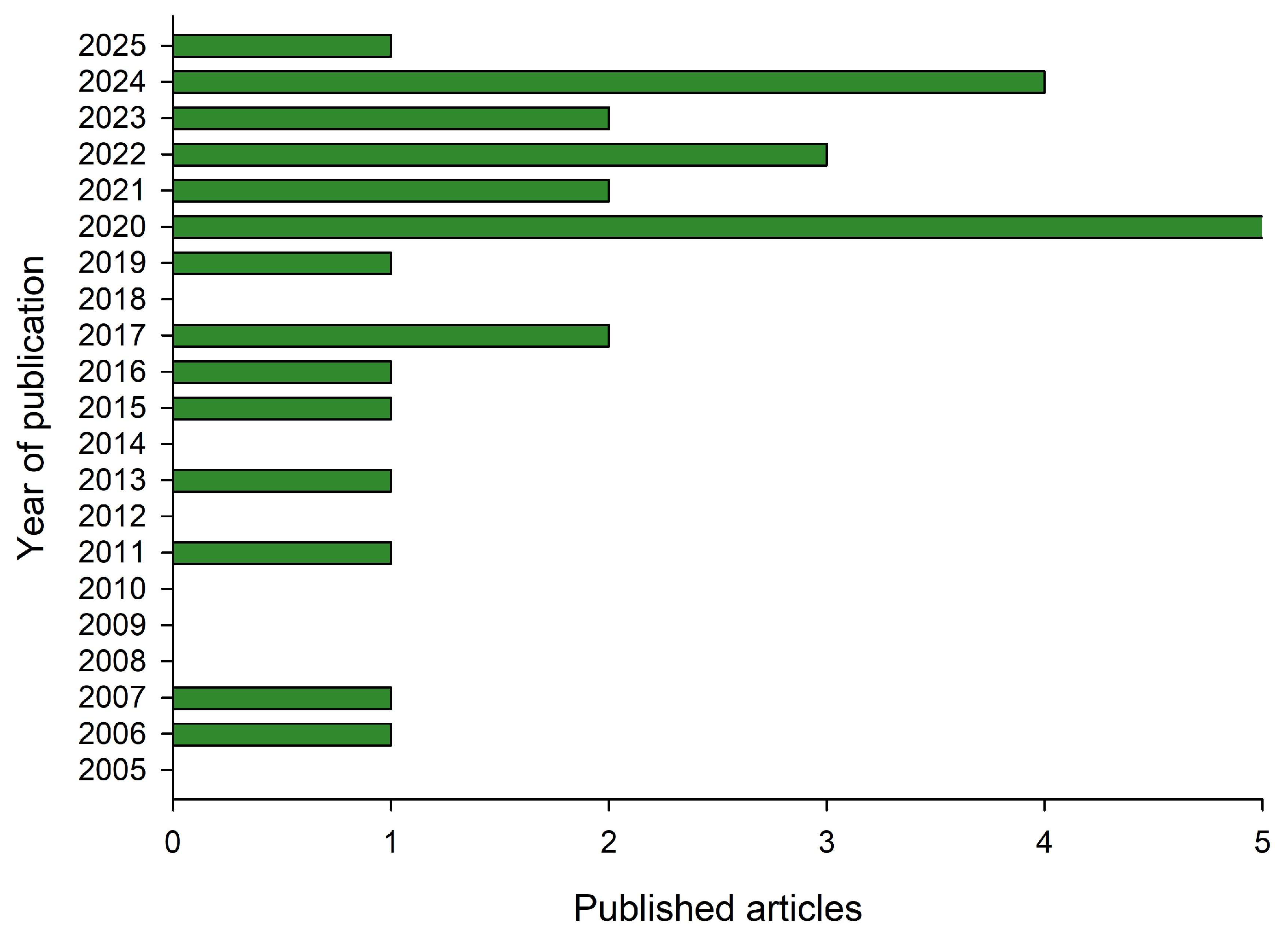
The bibliometric analysis of the scientific output indexed in the Web of Science (WoS) database from 2005 to 2025 revealed a slow and discontinuous evolution during the early years. Subsequently, more substantial growth was observed starting in 2020, reflecting the recent consolidation of VRA as a relevant topic within the academic landscape (
Figure 5).
During the first decade (2005–2014), scientific production on VRA was sparse, with at most one publication per year and some years without any (2005, 2008, 2009, 2010, 2012, 2014 and 2018). These data suggested that the technology was still in an early stage of development, being addressed sporadically and exploratorily by a limited number of research groups.
Starting from 2020 onward, there was a significant shift in this pattern, with more consistent annual publications. This increase was related to the dissemination of technologies such as prescription-based systems, PWM systems, embedded sensors, and digital tools for flow rate control. However, a reduction in the number of publications was observed in the subsequent years, with three papers in 2021, three papers in 2022, and two papers in 2023. This decline is likely associated with the effects of the COVID-19 pandemic, which significantly impacted the pace of experimental research, project funding, and the dynamics of scientific publishing across multiple fields.
Despite this temporary setback, the four publications in 2024 suggested a recovery in growth, while partial data for 2025 (one publication) indicated ongoing interest in the topic. This pattern reinforced the hypothesis that VRA became a growing research field, aligned with contemporary challenges in sustainable agriculture and input-use efficiency.
The delayed and discontinuous growth pattern observed in the WoS database contrasts with the more consistent expansion observed in Scopus, reflecting differences in database scope and indexing policies. This temporal lag suggests that WoS captures a more selective subset of VRA studies, often emphasizing research with stronger agronomic or theoretical contributions. As a result, early-stage technological developments and applied engineering works may be underrepresented, potentially masking the initial phases of innovation within the field.
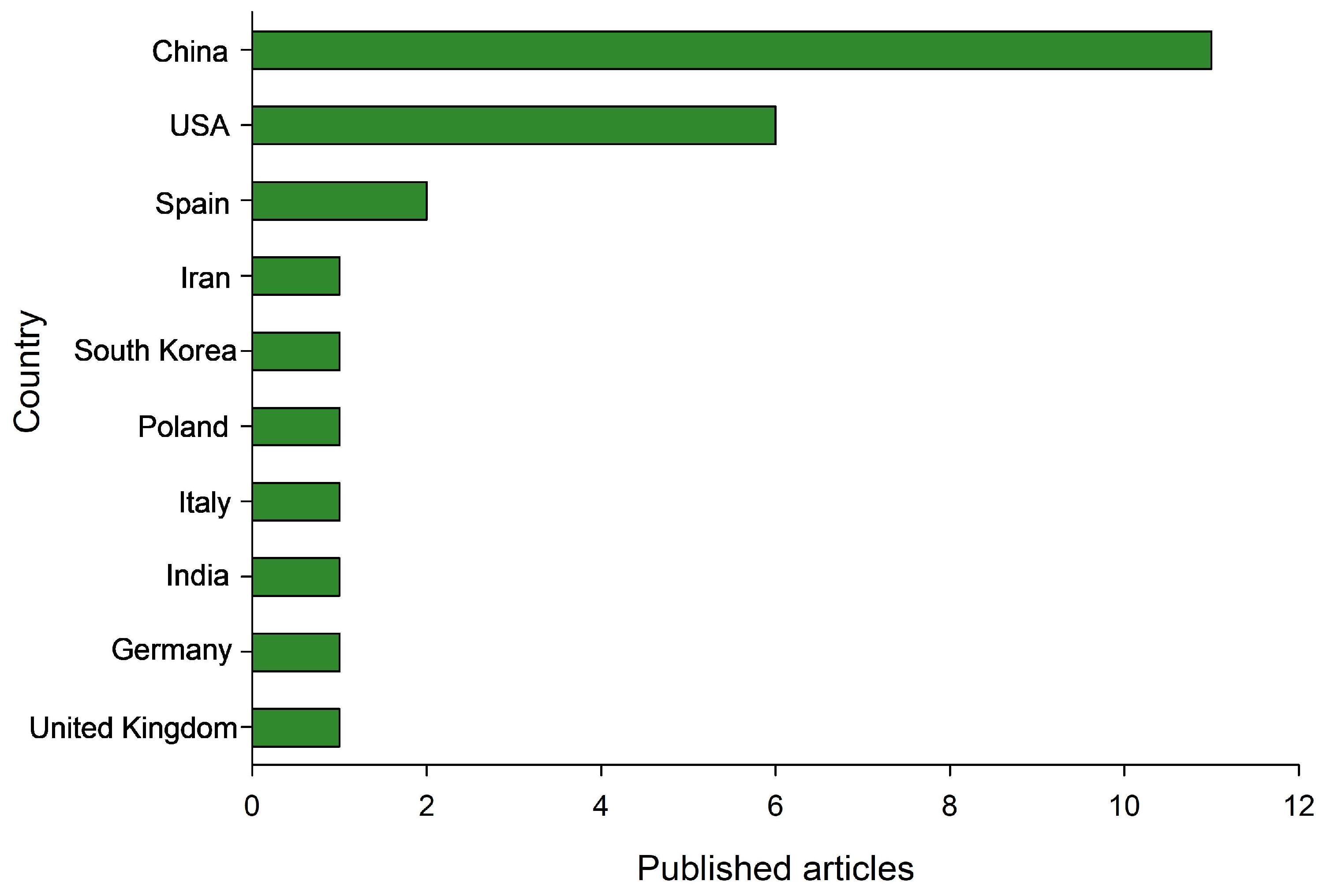
The geographic distribution analysis revealed that research output was concentrated in a few countries, with China and the United States taking leading roles. Together, these two nations accounted for more than half of the identified records on VRA of PPP application (
Figure 6).
China (11 publications) reflected its growing role in the field of PA. This implied the country’s significant investments in advanced agricultural technologies, including precision spraying, RS, and process automation.
The United States followed with six publications, maintaining its traditional position as a center of excellence in agricultural science. Its strong academic network and partnership has supported the development of advanced spraying systems, including PWM-based technologies, prescription maps, and artificial intelligence.
Spain (two publications) emerged as a developing contributor to research on VRA technology, indicating local initiatives in technological adaptation and the development of its own solutions. Other countries such as South Korea, Poland, Italy, India, Germany, and the United Kingdom (one publication) demonstrated that, while the topic gained international visibility, its consolidation remained concentrated in a few research hubs. The sporadic participation of these countries may reflect specific projects or international collaborations, which, however, do not yet constitute continuous research lines.
The concentration of scientific output in technologically advanced countries or with aggressive agricultural policies suggests that the adoption of VRA is closely linked to research infrastructure, funding availability, and agricultural innovation policies. Furthermore, the predominance of China and the U.S. aligned with the bibliometric analysis of authors, which showed the centrality of these nations in scientific collaboration networks.
The geographic concentration that emerged in WoS reinforces the structural dominance of a few countries in shaping the scientific literature on VRA systems. The limited number of contributing countries suggests that WoS-indexed research would reflect a narrower international engagement compared to Scopus. This restriction may affect how research priorities are framed, favoring contexts with established academic traditions and potentially excluding region-specific challenges related to crop diversity and farm structure.
Overall, the absence of publications originating from regions such as Latin America and Africa may be attributable to a combination of structural and contextual issues rather than a mere lack of research interest. In these regions, the adoption of VRA technologies may often be hindered by high initial investment costs and a shortage of specialized technical support, which limits demand from small- and medium-scale farmers. In addition, the insufficient availability of funding may restrict the development of locally adapted solutions, reducing the publication output in high-impact international journals. As a consequence, the lack of research in this domain is not a reflection of technical irrelevance, but rather a result of limited experimental infrastructure and socio-economic misalignment between available precision agriculture tools and local agricultural scales.
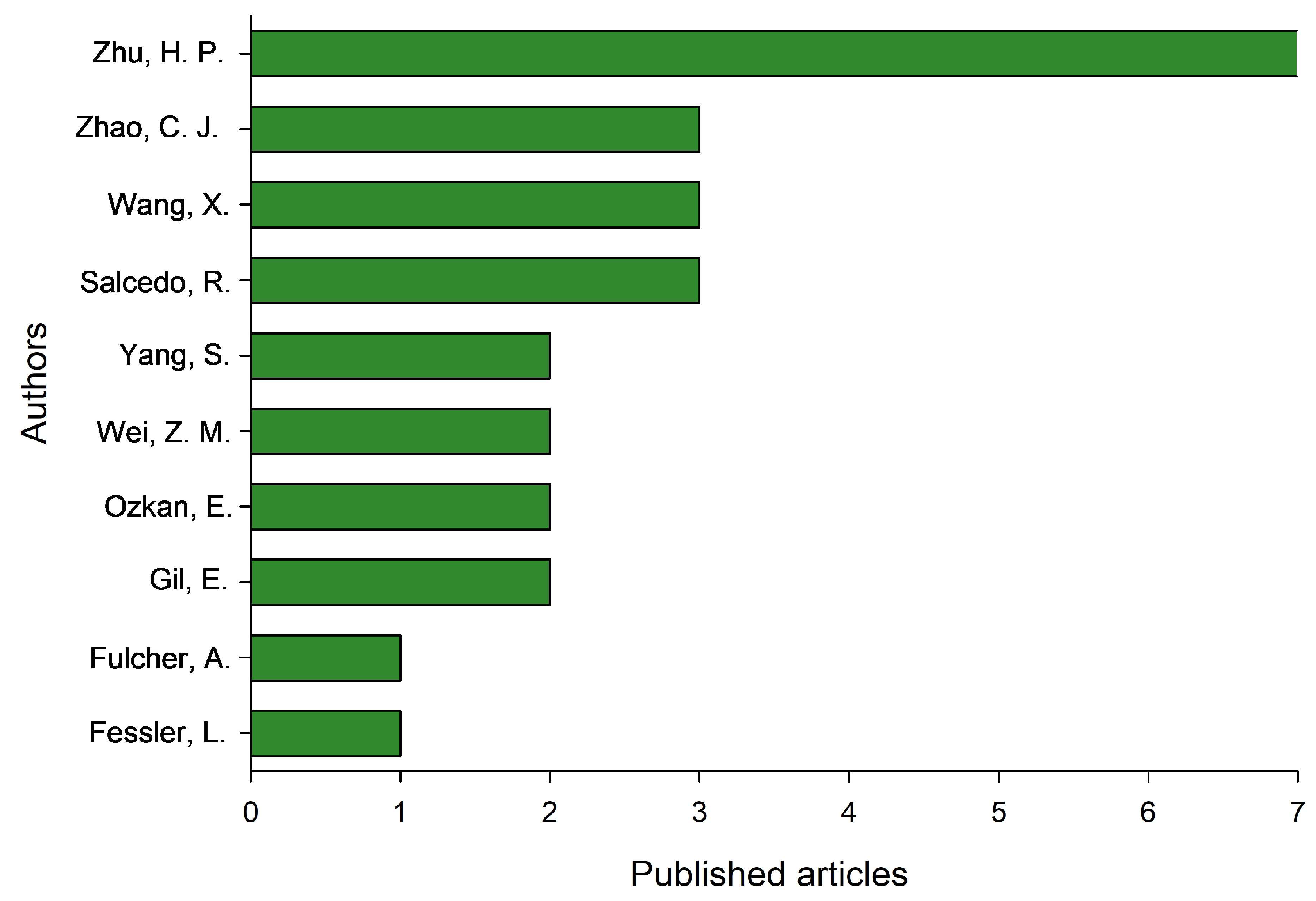
The analysis of author productivity revealed a scenario in which a small group of researchers concentrates the majority of publications, reflecting the presence of well-established centers of scientific excellence in the area (
Figure 7).
Zhu, H. P. led the field (seven publications), focusing on advanced spraying technologies, such as PWM-based systems, automated flow rate control, and studies on droplet deposition and application efficiency.
A second tier of researchers including Zhao, C. J., Wang, X., and Salcedo, R. (three publications) demonstrated solid engagement in intelligent spraying and operational sustainability. Complementary expertise was provided by Wei, Z. M., Yang, S., and Ozkan, E. (two publications), focusing on drift analysis, nozzle performance, and integration with optical sensors.
The observed pattern is typical of research fields that are still in the process of consolidation. This suggests that, although VRA technology is expanding, it remains a research line led by a limited number of highly specialized groups.
3.4. Scientometric Analysis—Co-Occurrence Analysis of Keywords
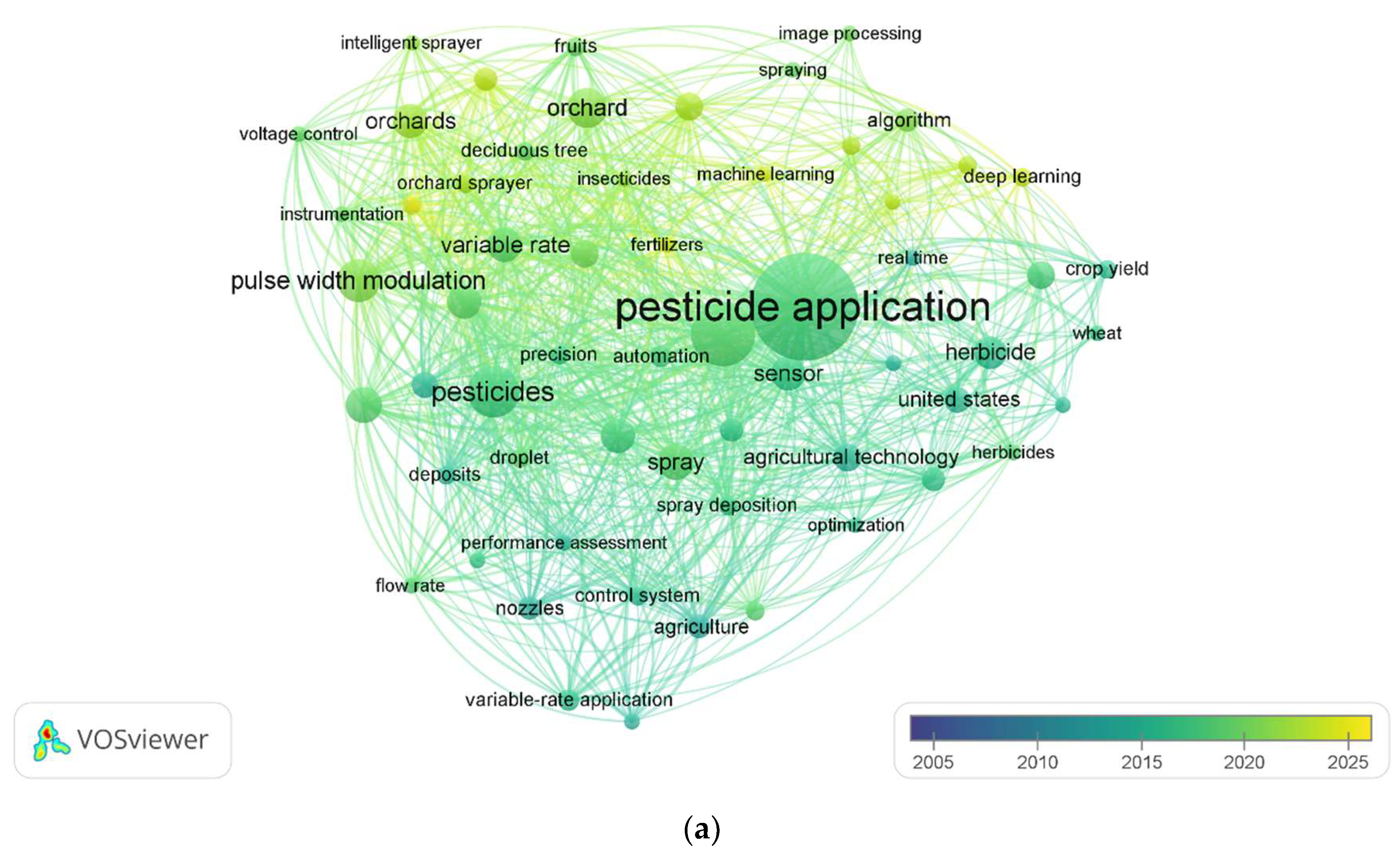
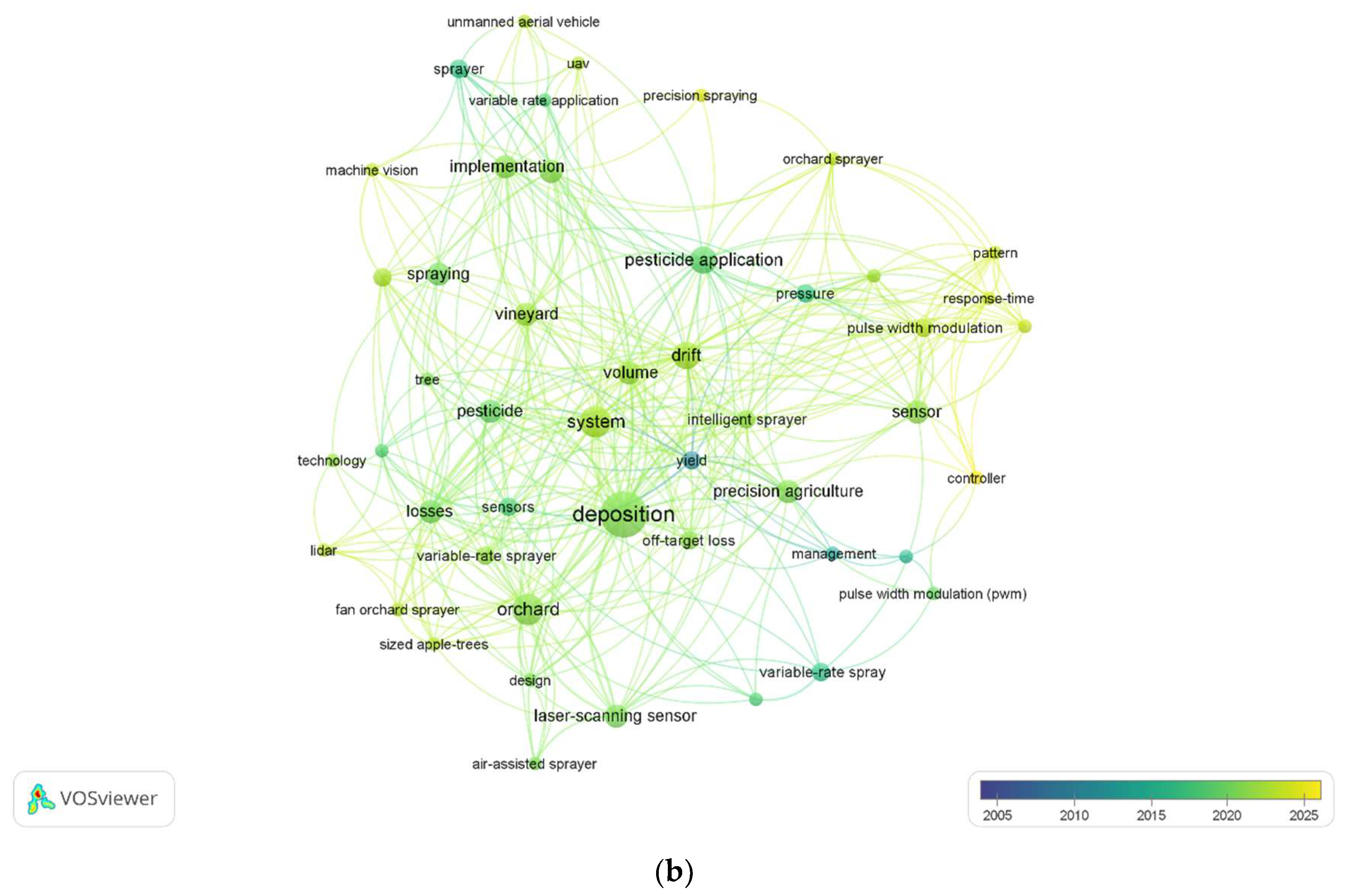
The scientometric analysis of VRA revealed significant trends in the scientific literature indexed in the Scopus and WoS platforms. Through the keyword co-occurrence maps generated in VOSviewer, it was possible to identify the main topics addressed as well as their temporal evolution throughout the period from 2005 to 2025 (
Figure 8). In the figure, the size of each node is proportional to the frequency of keyword occurrence, indicating the relative importance of each topic within the literature. The colors represent the average year of publication, with darker tones associated with earlier research and lighter tones indicating more recent studies. This color gradient allows the identification of emerging research fronts, such as pulse width modulation, machine learning, and real-time sensing technologies, which appear predominantly in lighter colors.
In the Scopus database, the terms with the highest centrality and connectivity were “pesticide application”, “pesticides”, “sensor”, “spray”, “pulse width modulation”, and “variable rate”. The prominence of “pulse width modulation” indicated growing scientific interest in more precise flow control methods, reflecting a technical transition toward the optimization of spray quality indices. This advance is critical for maintaining a stable droplet size distribution and consistent canopy coverage despite variations in operating pressure and flow rate. Moreover, the presence of terms such as “machine learning”, “automation”, “real time”, and “image processing”, especially associated with lighter colors (recent years), reflected the integration of digital technologies and artificial intelligence in the application process, signaling a current trend in precision agriculture.
In the WoS database, the most relevant terms included “deposition”, “drift”, “precision agriculture”, “laser-scanning sensor”, and “system”. A more technical focus on process efficiency was noted, particularly in relation to drift mitigation (“off-target loss”, “losses”) and enhanced deposition precision. Terms such as “orchard sprayer”, “air-assisted sprayer”, and “lidar” indicate a deepening interest in targeted spraying technologies, with a particular emphasis on tree crops.
Overall, this analysis shows that research in the field is increasingly focusing on the trade-off between chemical reduction and deposition efficiency, pointing out a pivotal shift from conventional spraying application to solutions capable of ensuring drift mitigation in complex canopy architectures.
When comparing the platforms, it became evident that Scopus presented a broader and more technology-oriented approach, emphasizing computational advancements and automation, whereas WoS focused more on operational aspects and application efficiency. This difference may be related to how each database indexes journals and fields of knowledge: Scopus covers a wider range of engineering and applied computing journals in the agriculture sector, while WoS tends to concentrate on journals with higher impact factors and a stronger focus on agricultural sciences.
Furthermore, the temporal evolution observed in both figures reinforces the growing importance of the topic. Terms related to PWM, intelligent sprayers, laser-scanning sensors, and machine learning appear in lighter colors, indicating their emergence in recent years (2020–2025), which supports the notion that the development of variable-rate application is closely linked to technological advances in control, sensing, and automation tools.
Beyond confirming the centrality of “pesticide application” and “variable rate” terms, the keyword co-occurrence analysis revealed important structural characteristics and gaps within the VRA research landscape. The strong dominance of terms related to control systems (e.g., pulse width modulation, sensors, automation) highlighted a technology-driven research focus, particularly in Scopus. However, this technological emphasis is not consistently accompanied by keywords related to agronomic outcomes, environmental assessment, or long-term field validation, indicating a fragmentation between engineering development and applied agronomic impact. The emergence of other topics (e.g., machine learning, image processing, and real-time sensing) confirms that recent efforts have shifted toward digitalization and intelligent spraying systems. Nevertheless, these emerging topics appear weakly connected to keywords associated with performance metrics, such as drift reduction, deposition efficiency, and environmental risk. This suggests that many studies focus on algorithm development or system implementation without fully integrating these tools into a comprehensive evaluation of PPP applications.
A clear distinction between databases further reinforces this structural imbalance. While Scopus emphasizes computational and automation-related terms, WoS focuses more on process efficiency, deposition, and loss mitigation. Although both perspectives are complementary, the limited cross-linking between thematic clusters indicates that integrated frameworks combining sensing, control strategies, and application performance remain underexplored. This gap points to a research opportunity for studies that explicitly bridge technological innovation with agronomic and environmental effectiveness in VRA of PPP applications.
3.5. Scientometric Analysis—Citation Analysis Among Authors
In addition to the keyword analysis, the scientometric evaluation made it possible to identify the main authors working on the VRA topic.
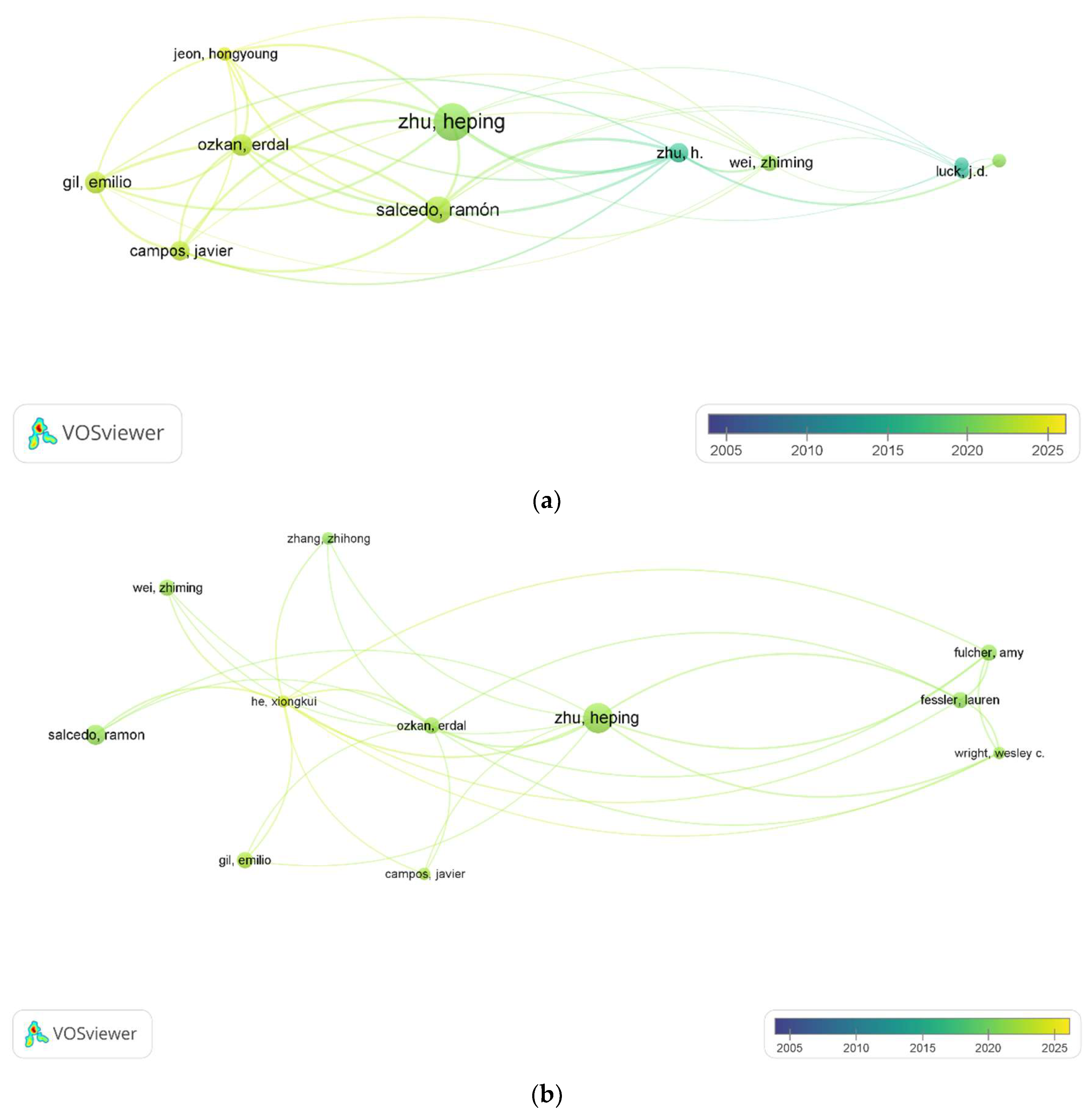
Figure 9 presents the author citation network generated by VOSviewer, highlighting clusters of researchers with the highest production and mutual collaboration in the field. In the figure, node size reflects the citation impact of each author, while the links indicate citation and collaborative relationships among researchers. The color scale represents the temporal dimension of authors’ contributions, with lighter colors corresponding to more recent publications. This visualization highlights both established leaders and emerging contributors, as well as the formation of collaborative research clusters within the VRA technology domain. Clusters of similarly colored nodes suggest thematic proximity and shared research focus among authors, particularly in areas related to PWM control, spray deposition, and intelligent spraying systems.
The node colors show a clear predominance of light green and yellow tones, confirming that the peak of activity and influence of the associated authors occurred in recent years, highlighting the intensification of scientific production and global interest in the topic between 2015 and 2025.
The analysis of the author citation network revealed the main researchers who contributed significantly to the development of the topic related to VRA technology. Based on data from Scopus and WoS databases, distinct patterns of collaboration and scientific influence were observed.
In the Scopus database, Zhu H. stood out as the most central figure in the citation network, being widely referenced and acting as a link between different research groups. The presence of authors such as Ozkan E., Salcedo R., Campos J., Gil E., and Hongyoung J. reinforced the formation of a solid core of researchers investigating technical aspects of spraying, such as pulse-width modulation, droplet deposition, and automated control. The positioning of Zhu H. and Wei Z. in more recent regions of the timeline (lighter tones) indicated that these authors published prominent studies in recent years, reflecting their contemporary relevance.
In the WoS database, the centrality of Zhu H. was also evident, confirming his international leadership in the field. However, a greater diversity of emerging collaborations could be seen, with researchers such as He X., Zhang Z., Fessler L., Fulcher A., and Wright W.C. appearing connected to recent studies (2020–2025). This distinction suggests that, while Scopus presents a more consolidated and traditional network of authors, WoS reveals a renewal and expansion in scientific partnerships, with the inclusion of new names at the forefront of knowledge.
The recurrence of names like Ozkan E., Campos J., and Salcedo R. in both databases highlighted their consistency and cross-cutting importance in the development of technologies applied to precision agricultural spraying. These researchers were associated with studies on deposition, drift, and sprayer system performance, which are critical topics for the technical feasibility of VRA technology.
When comparing the two databases, it was evident that Scopus tended to concentrate on researchers with continuous contributions and more established publications, while WoS included a greater inclusion of new collaborations and emerging research trends. This difference underscores the importance of using multiple databases for a more comprehensive and representative scientometric analysis.
The author citation network provided additional information on the intellectual structure of VRA research. The strong centrality of a limited number of authors, particularly Zhu H. and long-established collaborators, indicates a field that has been historically shaped by a relatively small core of research groups. While this consolidation contributed to methodological robustness and technological maturation, it may also partially explain the persistence of similar experimental approaches and research questions over time. The emergence of new authors in recent years suggests an ongoing expansion of the research community. However, these newer contributors appear to be weakly connected to the established core, indicating that novel approaches, such as UAV-based spraying, advanced sensing platforms, or AI-driven decision systems, are not yet fully integrated into the dominant research streams. This fragmentation may limit knowledge transfer between emerging technologies and well-established application performance frameworks.
Furthermore, the concentration of influential authors around technical aspects such as deposition, drift, and PWM control highlights a strong engineering orientation in the literature. In contrast, fewer highly cited authors focus on interdisciplinary themes, including environmental sustainability, regulatory implications, or economic feasibility. This imbalance suggests that future progress in VRA research may depend on stronger collaboration between engineering-driven research groups and those addressing agronomic, environmental, and socio-economic dimensions.
3.6. Scientometric Analysis—Citation Analysis Among Countries
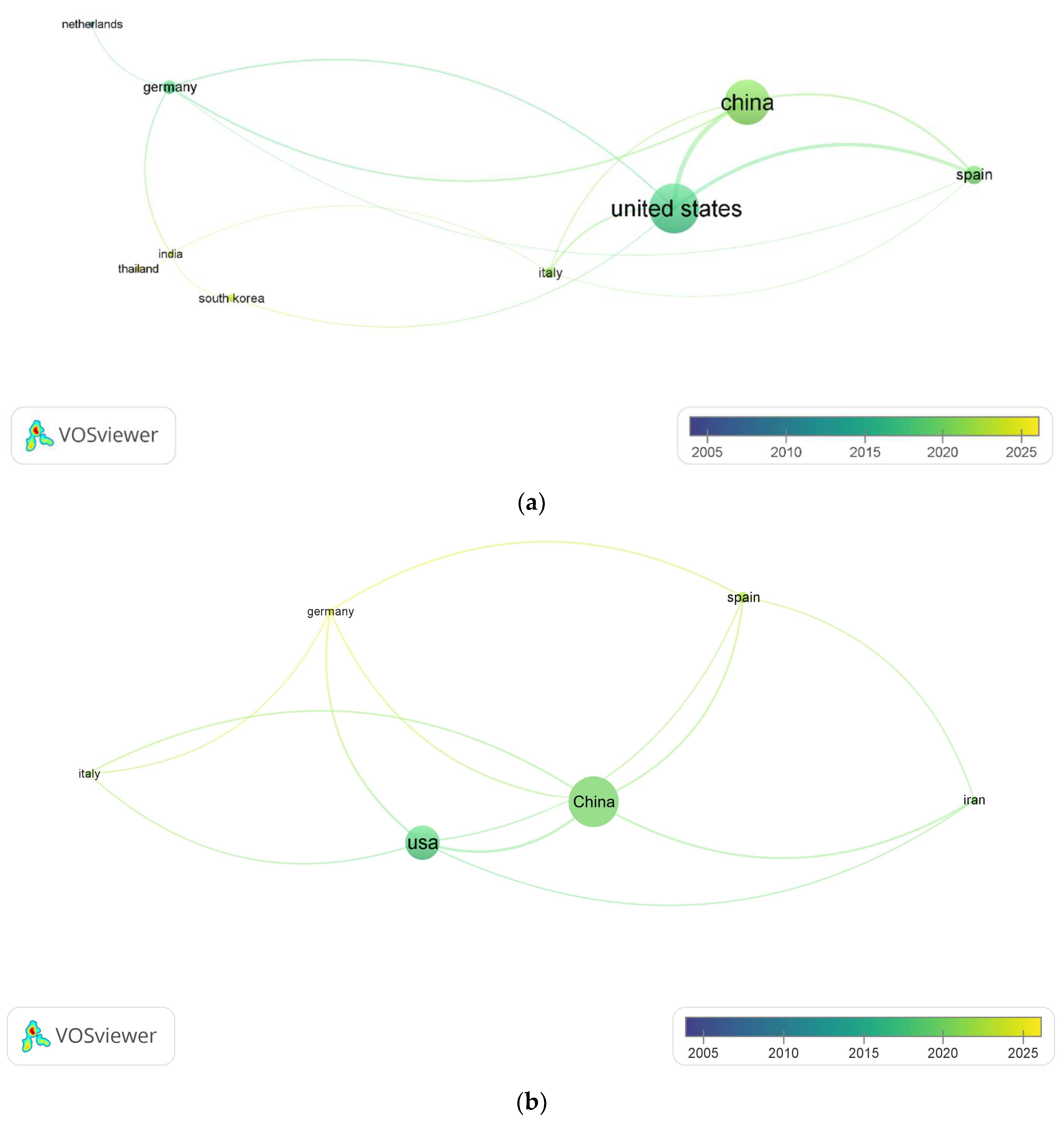
The citation analysis among countries made it possible to identify the main centers of scientific production and their interactions in research on variable-rate pesticide application. The maps constructed using data from Scopus and WoS highlighted the leadership of the United States and China, both in terms of publication volume and the centrality of their connections, reinforcing their international prominence in the field (
Figure 10a).
In the Scopus database, the United States appeared as the most influential and cited country, showing strong interaction with China, Spain, Germany, and Italy. The presence of South Korea, Thailand, and India suggested the emergence of new research centers in recent years, expanding the geographical scope of the topic. Furthermore, the connectivity among countries indicates a broad and relatively distributed collaborative network, with the U.S. acting as a key link between multiple international research groups.
In the WoS database, China assumed an even more central role in the network, with a greater number of connections and active collaborations, especially with Spain, Germany, Iran, and the United States. This pattern indicated significant growth in China’s scientific output in the area, aligned with its intensified investment in precision agricultural technologies. The presence of Iran as an active country in recent years, although with a lower degree of connectivity, demonstrated the expansion of research on VRA in diverse agricultural contexts (
Figure 10b).
The comparison between the two databases showed that Scopus presented a more geographically diverse collaboration network, whereas WoS tended to highlight more consolidated and concentrated collaborations among the leading agricultural science-producing countries. This difference may be related to the broader coverage of Scopus for technical and regional journals, in contrast to the WoS focus on higher-impact and internationally recognized publications.
Both networks revealed strong collaboration between China and the United States, reinforcing their global leadership in the field. These countries concentrated on major reference institutions, invested in research and development, and produced highly visible publications, as previously observed in author analysis.
The predominantly light green coloring in the connections between countries indicated that international collaboration has intensified especially since 2015, which aligned with the recent expansion of digital technologies in agriculture, such as sensors, PWM-based systems, and intelligent sprayers.
4. Summary and Future Perspectives
VRA technology has evolved as the main pillar of precision PPP application, yet its implementation pathway has to cope with several technical, operational, and contextual challenges that still limit its widespread adoption. This review examined the scientific evolution of research on VRA technology through a combined bibliometric and scientometric analysis using Scopus and Web of Science (WoS) databases from 2005 to 2025. The analysis showed the publication dynamics, authorship pattern, geographical distribution, and network visualizations among keywords, countries, and authors, thus providing a structured overview of how this research field has developed over the past two decades.
The results obtained through these analyses demonstrated that the PPP application at variable rates constitutes a rapidly expanding field of knowledge, particularly after 2015, driven by advances in sensing technologies, PWM systems, automation, and the increasing incorporation of artificial intelligence and real-time decision-making tools. However, beyond this technological phase, the analysis revealed structural imbalances, which may limit the broader consolidation of VRA technologies. These imbalances must be addressed to consolidate the VRA domain. First, the geographical concentration is highly pronounced in the United States and China, suggesting that current VRA solutions are optimized for large-scale or specific high-tech agricultural contexts, potentially overlooking the socio-economic constraints of countries such as those in Latin America and Africa. Second, the thematic network structure reveals a technology-application orientation. Although keywords related to control systems (e.g., PWM, sensors) are frequent, they show weak co-occurrence intensity with keywords related to environmental risk assessment and long-term economic viability.
From a practical perspective, these findings highlight that the successful adoption of VRA systems depends not only on engineering advances but also on their demonstrable benefits under real farming conditions. The limited availability of studies addressing cost–benefit relationships and operational robustness represents a key barrier to technology transfer. In this context, stronger links between research outcomes, agricultural policies, and industry stakeholders are essential to accelerate the transition from experimental systems to commercially viable solutions.
Based on the gaps identified in the scientometric analysis, future research directions should prioritize three key multidisciplinary approaches that combine integrative agronomic performance, economic assessment, and environmental impact evaluation. Given the observed fragmentation between automation and agronomic impact clusters, future studies should move beyond proof-of-concept for PWM and sensors to include comprehensive evaluations of standardized protocols for testing deposition, drift reduction, and system responsiveness under variable-rate conditions. This would improve comparability among studies and support regulatory and operational decision-making. In parallel, expanding research efforts in underrepresented regions and focusing on affordable solutions, particularly for small- and medium-sized farms, would be critical for ensuring that the benefits of VRA technologies contribute effectively to sustainable and global crop protection strategies.



 ,
,