1. Introduction
Economic injury level (EIL) is the lowest pest population density at which economic damage occurs, i.e., where the cost of control equals the value of the prevented loss. Economic threshold (ET) is the action-trigger point set below the EIL to allow time for intervention so that pest populations do not reach EIL. In practice, ET operationalises EIL for timely, cost-effective decisions in integrated pest management (IPM). The economic injury level (EIL) emerged from mid-twentieth-century efforts to rationalize pest control within integrated pest management (IPM). Pedigo [
1] later embedded EIL in a bioeconomic framework linking pest numbers, host responses, and economic outcomes.
A widely used, robust EIL expression relates management cost and control efficacy to crop value and damage parameters: EIL = C/(V × D × I × K), where C is cost of control per production unit, V is crop market value, D is damage per unit injury, I is injury per pest, and K is proportional reduction in injury due to management. Variants merge D and I, or assume perfect control, yielding simplified forms commonly used in extension guides and teaching [
2]. These formulations are underpinned by damage curves that may exhibit tolerance/compensation, linear loss phases, and desensitisation at higher injuries, indicating that crop responses to injury are not universally linear and can be stage-specific.
EIL marks the break-even density where costs equal benefits. ET is the action point set below EIL to account for pest growth, phenology, and time lags in tactic deployment. Practice sometimes uses heuristics (e.g., ET ≈ 80% of EIL), but in fast-growing pests, ET can be far lower to preempt rapid population increases. Extension systems emphasise that treatment at ET is typically most cost-effective even if not maximizing yield [
2,
3,
4].
Integrated pest management (IPM) has long served as a foundation for ecologically based pest control, emphasizing reduced pesticide reliance, biological control, cultural practices, and informed decision-making. The FAO defines IPM as the integration of multiple pest control tactics designed to minimize risks to human health and the environment while sustaining crop productivity and ecosystem functions [
5]. Rapid advances in agricultural technology have reshaped how IPM is implemented, giving rise to precision integrated pest management (P-IPM). Remote sensing, real-time field sensors, automated pest detection systems, and GPS/GIS mapping expand pest surveillance capacity and enable precise, site-specific interventions. These innovations enhance early detection, risk mapping, and decision-making efficiency. Furthermore, precision agriculture tools have increased the productivity and monitoring efficiency of plant production systems by integrating remote sensing, IoT, GIS, and AI-enabled forecasting [
6]. As climate change reshapes pest dynamics worldwide—driving faster development rates, increased survival, and range expansions—static economic thresholds are increasingly inadequate. This shift necessitates adaptive, climate-responsive decision tools embedded within IPM frameworks [
7,
8].
There is a critical need for a climate-responsive, precision-enabled, uncertainty-aware reconceptualisation of the economic injury level and economic threshold frameworks—one that links agricultural decision-making to food security outcomes and is adaptable to both advanced and smallholder systems. Current literature provides strong foundational theory but lacks integrated models that combine bioeconomic thresholds, real-time precision agriculture data, and climate-induced pest dynamics. Addressing this gap is essential for designing resilient, sustainable pest management strategies under future agricultural and environmental conditions. The aim of this review is to synthesize recent advances and provide an illustrative integrated framework for the understanding of EIL and ET in the contexts of food security and agri-food value chain risk management, including pre- and post-harvest stages. The justification is that while there is a large body of literature on the subject, simple EILs can omit externalities (resistance, non-target effects, environmental contamination, and interseasonal dynamics) and broader social costs. More recent literature expanded EIL frameworks to incorporate sustainability considerations, aligning with modern IPM goals beyond purely economic calculus, and FAO’s guidance frames pest management within ecological systems and risk reduction [
9,
10].
2. Methodology
This review adopted a structured, integrative approach to synthesise current knowledge on the conceptualisation of economic injury level (EIL) and economic threshold (ET) within the broader contexts of agricultural management, food security, climate variability, and value-chain dynamics. A systematic search strategy was implemented across major academic databases, including Web of Science, Scopus, ScienceDirect, and AGRIS. Keywords and Boolean combinations such as “economic injury level,” “economic threshold,” “integrated pest management,” “agricultural decision-making,” “climate change impacts,” “food security,” and “agricultural value chain analysis” guided article identification.
Peer-reviewed studies, policy documents, technical reports, and seminal theoretical papers published between 1980 and 2026 were screened. Inclusion criteria focused on works that (i) defined or applied EIL/ET concepts; (ii) examined their relevance to crop production systems; (iii) assessed interactions with climate risk, market conditions, or food-security outcomes; or (iv) explored economic or ecological modelling approaches. Exclusion criteria eliminated studies lacking conceptual relevance or methodological transparency.
Data extraction emphasised conceptual definitions, analytical frameworks, modelling techniques, empirical findings, and reported limitations. A thematic synthesis method was used to organise evidence into four domains: agricultural management applications, food-security implications, climate-related stressors, and value-chain influences. Comparative analysis enabled identification of converging and diverging perspectives across disciplines.
Finally, the review applied a narrative integrative framework to evaluate how EIL and ET concepts evolve under dynamic ecological, socioeconomic, and climatic conditions and to propose a revised interpretation suitable for contemporary agricultural systems.
3. Core Concepts and Bioeconomic Relevance
Effective pest management in agriculture requires balancing biological realities with economic decision-making. The two cornerstone concepts, economic injury level (EIL) and economic threshold (ET), guide when farmers should intervene to prevent crop losses while avoiding unnecessary costs or ecological harm. These concepts remain foundational across modern IPM systems, from smallholder farms to technologically advanced precision agriculture programs (
Supplementary Materials).
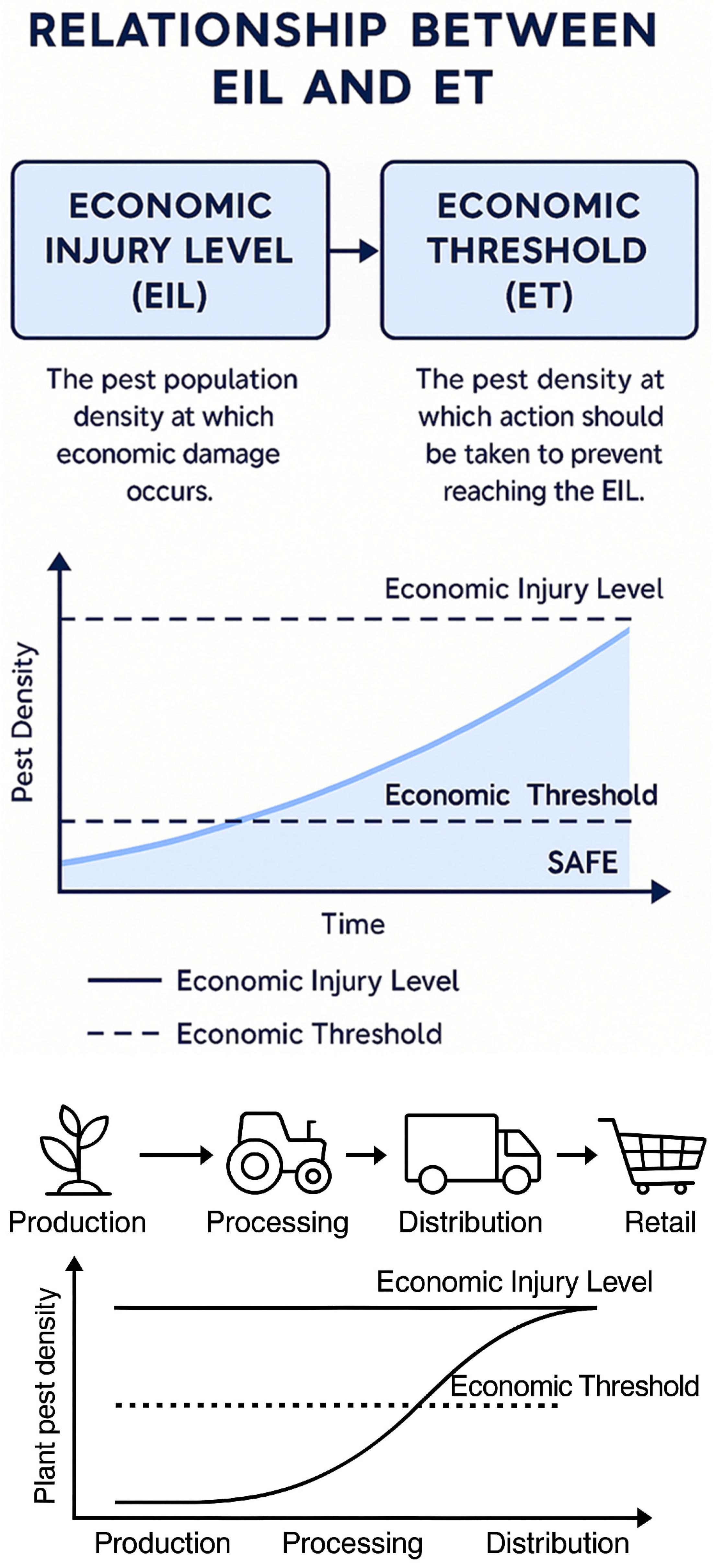
The economic threshold (ET) is the pest density at which action must be taken to prevent the population from reaching the EIL. (“The density of pest population at which control measures should be …”) It is usually set below the EIL to account for:
Extension programs emphasise that treating at ET is more cost-effective than waiting until EIL is reached [
1,
2,
3,
4,
5] (
Figure 1).
In the context of bioeconomic modelling, a common expression is EIL = C/(V × D × K), where C is management cost per production unit, V is market value per unit, D is percent yield loss per pest, and K is proportional injury reduction due to control. ET is set below EIL accounting for pest growth rates, sampling lag, and control lead times [1, A1.1]. A quantitative illustration of the simple model can be explained by a simple example. Assume control cost C = $12/ha; market value V = $250/t; D = 0.08 t/ha lost per pest equivalent; and K = 0.7 (70% injury reduction). Then EIL = 12/(250 × 0.08 × 0.7) ≈ 0.86 pest equivalents per sampling unit. ET would be set below ~0.86, accounting for expected growth and lead time, e.g., 0.6–0.7, adjusted by stage and natural enemy counts. Intervention becomes economically justified only when the pest population reaches 0.86 pests/plant. However, waiting until that point is risky; hence, the ET is set lower (e.g., 0.35–0.55 pests/plant depending on growth rate).
4. Dynamics That Influence EIL–ET Management Implications in IPM
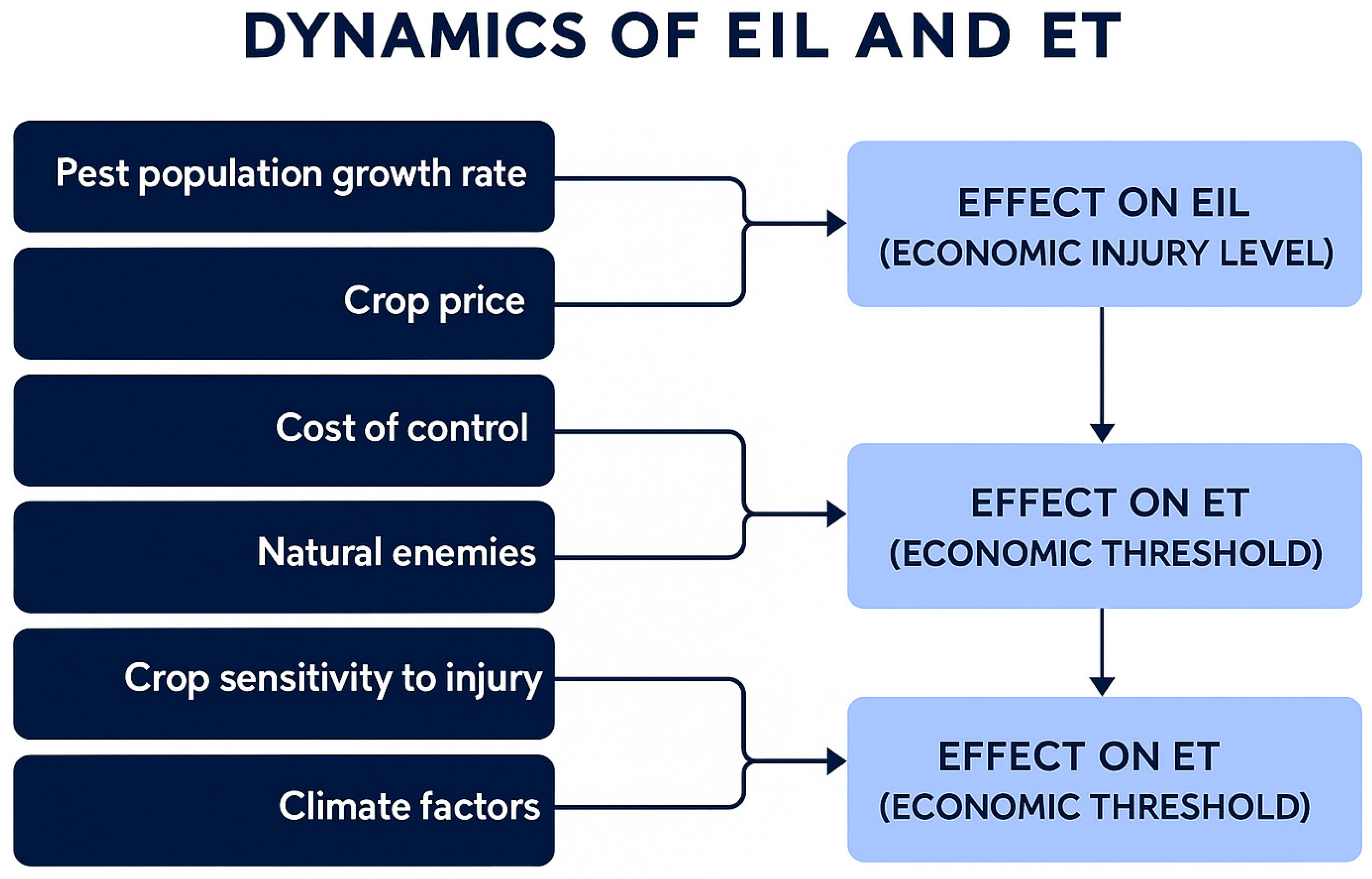
The relationship is underpinned by three main pillars. Decision rules are important for ET to enable cost-effective timing. Treatment at EIL may maximise yield but not net profit. Dynamic parameters determine how EIL and ET shift with control costs, commodity prices, crop stage sensitivity, natural enemies, and weather. Precision tools enhance decision support systems, and sensors can refine ET by forecasting pest risk windows and intervention efficacy. The management relevance of these dynamics can be explained from a variety of perspectives (
Figure 2).
For the practical purpose of the current study, there are five relevant factors: pest growth rate, natural enemy activity, value chain, and climate factors.
4.1. Pest Growth Rate
Pest population growth rate is one of the most critical dynamic factors influencing the practical application of economic injury level (EIL) and economic threshold (ET) in integrated pest management (IPM). While the EIL itself is a bioeconomic break-even point, defined formally as the lowest pest population density that causes economic damage, the ET is the action-trigger set below EIL to ensure that pest densities do not rise to damaging levels. Because ET must predict the future state of the pest population, growth rate serves as the central driver of threshold timing.
Pest populations rarely remain static. Many agricultural pests, such as aphids, fall armyworm (FAW), whiteflies, and stored-product beetles, grow exponentially under favourable conditions. Even a modest daily increase of 20–40% can double a population in just a few days. This makes the difference between a manageable infestation and one that surpasses the EIL before farmers have time to respond [
Section S1.2]. Extension guidance emphasises that decision-making in IPM is fundamentally about timing: EIL indicates
whether to act, while ET indicates
when to act, and the gap between these points is shaped heavily by pest growth rate.
Pest population dynamics in crop fields often follow exponential growth patterns, meaning the number of individuals increases by a constant proportion over a defined time interval. If a pest population multiplies by a factor of 2.46 every 3 days, this reflects a high intrinsic rate of increase consistent with many fast-growing insect pests under favorable conditions [
11,
12].
Given an initial scouting observation of 0.35 pests per plant, the expected population after 3 days can be estimated using
Such short-term projections are useful for determining when populations may reach economic thresholds and require management action. By comparison, maize plants may increase their biomass or leaf area by approximately 35% per day during rapid vegetative stages under optimal conditions [
3,
4]. When crop growth and pest population growth occur simultaneously, understanding both rates helps practitioners estimate potential damage risk and strategize timely interventions. DuPont et al. [
13] quantified natural enemy inaction thresholds for pear psylla (
Cacopsylla pyricola) and showed that the presence of predators such as
Deraeocoris brevis,
Campylomma verbasci, and earwigs allowed managers to delay or avoid insecticide sprays during the third generation. These thresholds explicitly incorporated natural enemy densities into ET calculations, demonstrating that higher natural enemy activity shifts ET upward, reducing unnecessary interventions.
Natural enemies suppress pest population growth between scouting events. If this service is ignored, managers assume higher pest growth and initiate control at lower densities than necessary. The resulting sprays further depress enemy populations, diminishing future suppression and forcing even earlier or additional sprays—a reinforcing loop that entrenches resurgence risk. Contemporary ET frameworks and overviews emphasise that bioeconomic decision rules work best when they incorporate factors affecting pest growth, including natural enemy pressure; omitting this component biases decisions toward unnecessary action [
13].
Pest growth rates are further modulated by weather patterns. Warm and humid conditions accelerate reproduction for many pests, while extreme cold or dryness slows population expansion. Warming trends in both field and post-harvest environments increase generation rates, which in turn reduces the time window between ET and EIL, requiring more conservative (earlier) ET settings. Growth rates interact with crop stage and damage potential. Rapidly growing pest populations have more severe implications during sensitive crop stages (e.g., tasseling in maize or flowering in vegetables). At these stages, damage per pest (D) increases sharply, lowering the EIL and thus tightening the acceptable window for management.
When crop sensitivity doubles D (e.g., from 0.08 to 0.16 yield loss per pest equivalent), EIL may fall from 0.86 to 0.43, meaning ET must be set dramatically earlier to prevent explosive growth from exceeding the updated EIL. Damage-curve research (tolerance → linear → desensitisation phases) highlights that timing of injury can be as important as the magnitude of pest presence [
Sections S1.1–S1.3]. It is important to note that a pest equivalent per sampling unit is the standardized count of pests—adjusted for life stage, injury capacity, or relative damage potential—present within a defined sampling unit, used to estimate injury levels in EIL calculations and to determine when ET is reached. This concept has been explained in literature [
14]:
Pest equivalent = a standardized injury-weighted pest unit.
Sampling unit = field observation unit (plant, m2, trap, sweep, and row length).
Pest equivalents per sampling unit = number of injury-standardized pests within each sampling unit, used for EIL/ET calculation.
Climate change intensifies growth rate risks. Climate-induced warming accelerates pest development cycles, particularly in post-harvest supply chains where rising storage temperatures increase reproduction rates and reduce control efficacy. As pests grow faster and some chemical or temperature-based controls become less effective, EIL declines, and ET must be triggered earlier. This pattern is well documented in climate–IPM research, which warns that warmer microclimates reduce the efficacy of low-temperature management (e.g., grain cooling) and some insecticides, compounding the effect of faster growth.
4.2. Natural Enemy Activity
High predator or parasitoid abundance slows pest growth by increasing mortality. Under strong natural biological control, ET may be raised because expected growth is lower, giving farmers more time before EIL is reached. Many threshold systems incorporate natural enemy indices for this reason. Natural enemies, such as predators, parasitoids, and pathogens, play an essential role in shaping pest management decisions grounded in the economic injury level (EIL) and economic threshold (ET). While the EIL is mathematically defined as the lowest pest density at which economic damage occurs and the ET is the preemptive action point set below EIL, understanding natural enemy activity is central to ensuring these decision points reflect ecological conditions rather than pest pressure alone [
Section S2.1].
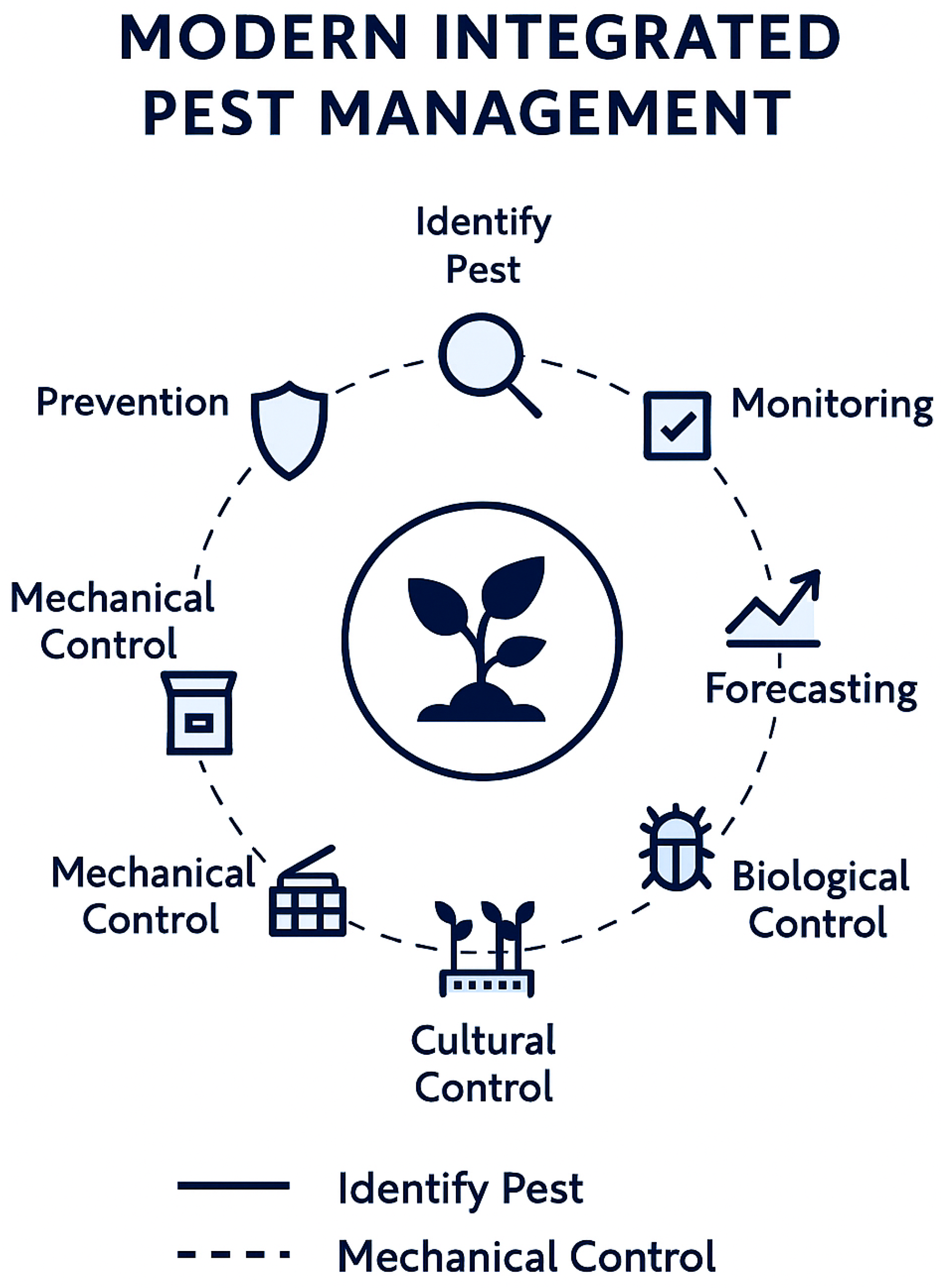
Modern integrated pest management (IPM) frameworks (
Figure 3) emphasise that pest density must not be evaluated in isolation. The presence, abundance, and effectiveness of natural enemies significantly alter the likelihood that a pest population will reach the EIL. This is because natural enemies contribute to pest suppression, thereby reducing the expected rate of pest population increase. As noted in extension training for threshold-based decisions, monitoring predators and parasitoids closely is a key component of sound IPM.
Pest populations often grow rapidly when unchecked, and this rapid growth is one of the major reasons ET must be set below EIL. However, in the presence of natural enemies, such as lady beetles feeding on aphids or parasitoid wasps attacking caterpillars, the effective pest growth rate is reduced. This ecological suppression delays the point at which pests might reach the EIL, allowing for higher ETs or even no intervention, if natural enemies are sufficiently abundant.
Research on the damage curve and injury-to-damage relationships highlights that pest populations show distinct phases of tolerance, linear damage, and desensitisation, and natural enemies can slow the transition toward damaging phases [
7,
8,
9]. This reduces the expected injury level and can adjust EIL-related decision-making, especially during crop growth stages when biological control agents are active.
Field monitoring protocols emphasise that growers must be capable of identification of both pests and beneficial organisms [
4,
10]. Natural enemy counts are incorporated into ET-based decisions because they significantly alter the trajectory of pest population dynamics. For example, when natural enemy presence is high, the ET can be set higher, meaning a farmer can safely tolerate more pests before action becomes economically justified. Conversely, in fields lacking beneficial species due to pesticide disruption, weather extremes, or early-season conditions, ETs must be set lower to compensate for the absence of natural suppression. This principle is well reflected in threshold guidelines that caution against mechanical or chemical intervention when biological control is functioning effectively because premature pesticide use may destroy beneficial species, inadvertently increasing the likelihood of EIL exceedance later in the season. Natural enemy activity improves profitability by
Reducing unnecessary pesticide applications.
Lowering management costs (C in the EIL equation).
Suppressing pests to keep them below damaging levels.
Supporting long-term sustainability by minimizing pesticide resistance risks.
These outcomes align with the economic logic behind EIL/ET frameworks, which are designed not to eliminate pests entirely, but to keep them at economically acceptable levels [
10,
15,
16,
17]. The presence of robust natural enemy populations effectively raises the EIL because natural control reduces the expected crop loss per pest equivalent, decreasing the necessity for artificial intervention.
The literature highlights that modern IPM integrates biological control into EIL/ET frameworks precisely because natural enemy activity enhances ecological stability [
4,
10,
18]. Natural control reduces the risk of population spikes that might push a pest density over the EIL in a short time frame [
7,
8]. This ecological buffering capacity is particularly critical in systems with multi-pest complexes, where natural enemies may exert simultaneous control on several species [
19,
20].
Moreover, by minimizing unnecessary pesticide use, threshold-based natural enemy conservation helps preserve ecosystem services, including pollination, soil health, and predator diversity, an integral part of modern EIL/ET-based IPM [
21,
22,
23,
24]. As climate change alters pest behaviour and increases the likelihood of outbreak conditions, natural enemies serve as a stabilizing force. While warming trends may increase pest reproduction rates, natural predators and parasitoids can partially mitigate these effects, effectively counterbalancing climate-driven pest acceleration in some contexts. Climate change studies show that warming conditions affect natural enemy efficacy differently across systems, which means conservation and monitoring of beneficial organisms become even more essential when updating ETs for climate-smart agriculture [
25,
26].
4.3. Control Costs and Market Price Fluctuations
The concepts of economic injury level (EIL) and economic threshold (ET) are crucial for economically sound integrated pest management (IPM). Developed from the early work [
9] and formalized in modern bioeconomic frameworks, EIL represents the pest density at which economic damage equals the cost of control, while ET is the action point set below EIL to prevent populations from reaching damaging levels. Two of the most influential economic variables in this decision-making process are control costs and market price fluctuations [
27,
28,
29,
30]. Their interaction significantly alters the position of EIL and, consequently, the timing and justification for ET-triggered actions. Control costs (C) include the price of pesticides, labour, equipment, fuel, and application logistics. In the established EIL equation:
C is in the numerator, meaning that when control costs increase, the EIL also increases. This directly impacts management decisions:
This relationship is repeatedly emphasised in modern threshold literature [
27,
28,
29,
30,
31,
32,
33]. A doubling of control costs can double the EIL value, making previously justified interventions no longer profitable. For example, if a spray cost increases from
$12/ha to
$20/ha, the EIL for many maize–pest systems increases from 0.86 to ~1.43 pests per plant, making action less economically viable. This is consistent with extension recommendations, which state that economic thresholds must always be recalibrated when control costs rise sharply, such as during fuel price hikes or pesticide shortages.
The market value of the crop (V) strongly influences EIL through the denominator of the same equation. Because EIL is inversely related to V:
Volatile market prices, which are common in maize, soybean, horticulture, and export crops, can dramatically shift the economic logic of pest control. Increased commodity prices amplify the financial consequences of pest injury, decreasing EIL and tightening the margin for ET timing [
26,
27]. For example, when maize prices rise from
$250/t to
$300/t, the EIL drops from approximately 0.86 to ~0.71 pests per plant, meaning farmers should treat at lower pest densities, since each unit of saved yield is more valuable. In extension systems, fluctuating commodity prices are described as one of the main reasons economic thresholds cannot remain static and must be updated annually or even mid-season for high-risk crops.
Since ET is deliberately set below EIL to account for pest growth, delays in application, and uncertainty, any shift in EIL caused by market or cost changes requires a corresponding adjustment to ET. When crop prices rise steeply, ET must be lowered to prevent the pest from reaching a now-smaller EIL window. Conversely, when control costs rise, ET may be raised to avoid unnecessary expenditure.
This relationship is particularly important in the following contexts [
21,
22,
23,
24,
25,
26,
27,
28,
29]:
Smallholder systems: Where budgets are tight, even small increases in control costs may push treatments beyond affordability, artificially raising the effective EIL. Pest-alert systems have shown that timely warnings help smallholders align interventions with real-time cost and price conditions, improving yields and incomes.
High-value horticulture: Cosmetic thresholds and variable export prices cause EIL to be highly sensitive to market changes. Even tiny pest densities may exceed EIL when market value is high.
Climate-induced volatility: As climate change affects market stability and increases input costs (e.g., fuel for irrigation and pesticide supply chain constraints), both sides of the equation become more unstable, requiring dynamic EIL and ET adjustments. Post-harvest climate-driven pest acceleration further emphasises the need for value-based threshold recalibration.
4.4. Climate Factors
Climate factors, such as temperature, humidity, rainfall patterns, and extreme weather events, are increasingly central to the predictive modelling of economic injury level (EIL) and economic threshold (ET) relationships [
23,
24]. As climate variability intensifies, pest populations, crop vulnerability, and the effectiveness of management tactics shift in ways that make static threshold systems insufficient. Modern IPM now requires climate-responsive EIL and ET models to support timely and economically efficient interventions. Climate change modifies pest population dynamics by influencing survival, reproduction, dispersal, and phenology. Warming accelerates insect metabolism and reduces generation times, which increases the probability that pest populations will reach the EIL faster than predicted under historical models [
25]. Post-harvest research shows that warming microclimates in storage environments increase pest generation times, abundance, and contamination potential, elevating risks across the supply chain [
26,
27,
28,
29,
30]. This has substantial implications for EIL modelling: faster pest growth lowers the effective EIL because crop losses accumulate more quickly and forces ET to be set earlier to maintain economic viability. Similarly, climate adaptation synthesis for invasive crop pests in sub-Saharan Africa highlights warming temperatures, shifting rainfall, and drought intensify pest pressures and stress crop systems simultaneously. Combined with increased pest invasiveness and mobility, these factors make predictive climate-informed ET systems necessary to avoid threshold exceedance.
The EIL formula [EIL = C/(VD′KC)] contains parameters yield loss per pest (D) and control efficacy (K) that are sensitive to climate. Yield loss per pest (D) can be explained. Warmer temperatures increase pest feeding rates and activity levels, raising the damage per pest. Predictive models must therefore incorporate temperature-dependent injury functions to calculate realistic EIL values under warming conditions. Control efficacy (K) can be explained. Climate change reduces the effectiveness of certain pest control tools. For example, warming temperatures undermine the efficacy of low-temperature grain cooling, and some insecticides (e.g., pyrethroids) lose efficiency under elevated temperatures. When K declines, EIL increases unless compensated by earlier ET-triggered interventions. These changes show why predictive modelling must integrate weather forecasts and climate trends to adjust EIL and ET in real time.
Climate variability increases the need for forecast-based ET systems [
23,
24,
25]. Traditional ET tables assume stable seasonal patterns (
Table 1). However, climate-driven unpredictability, such as heat waves, irregular rains, and extreme humidity, requires dynamic, model-based ETs rather than fixed numeric thresholds. Modern climate-smart pest management research identifies several climate-responsive modelling approaches [
31,
32,
33,
34]:
Weather-driven pest forecasting predicts pest emergence, outbreak potential, and development cycles based on temperature, rainfall, and humidity anomalies.
AI prediction models are relevant for crop yield and pest-pressure forecasting using climate variables to quantify how temperature, rainfall, and soil moisture alter pest risk and ET timing. AI/XAI models show temperature as the most critical predictor of yield loss, which directly interacts with EIL/ET decision frameworks.
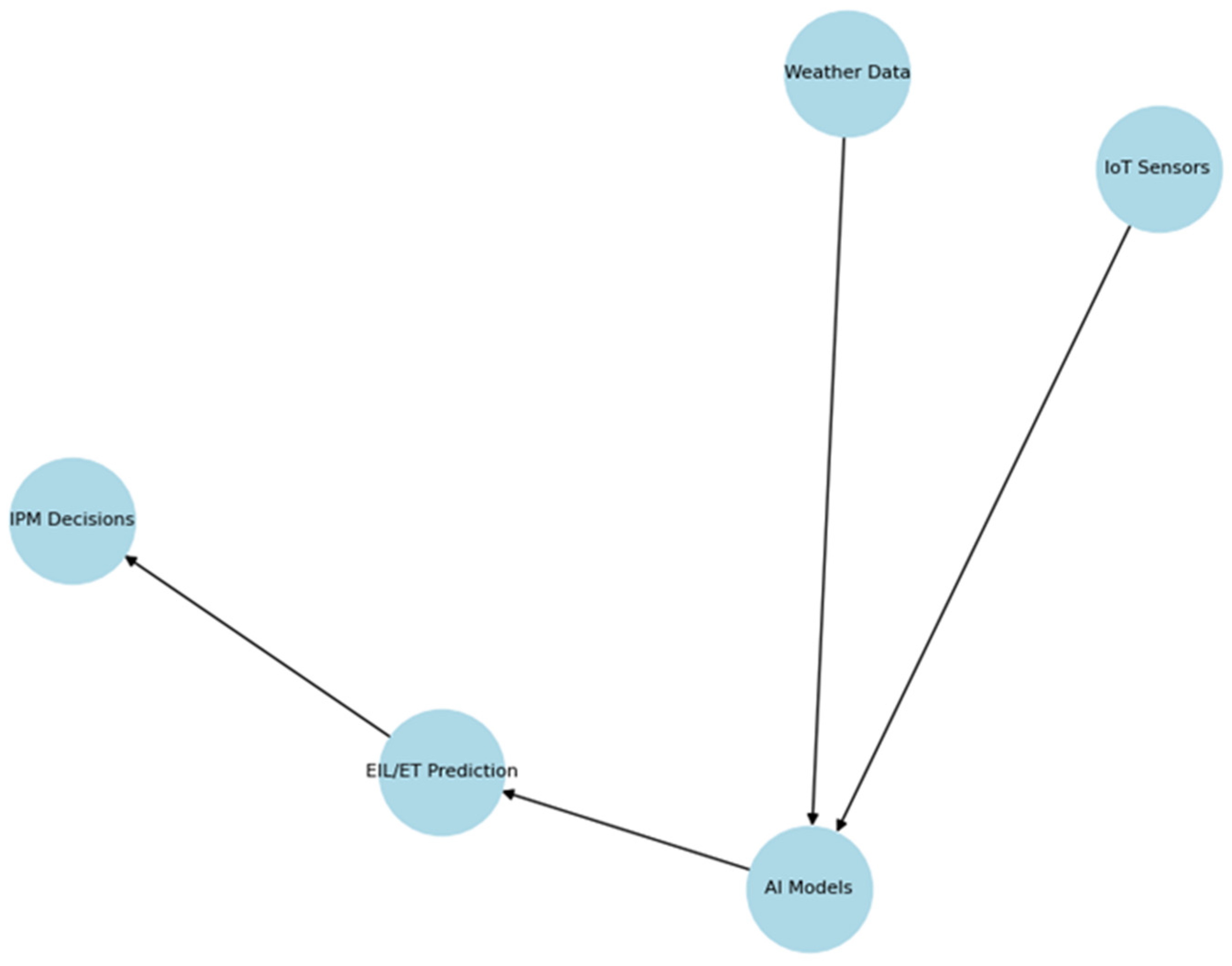
IoT-based sensor networks explain how smart sensors track microclimate conditions within fields and storage structures, enabling predictive ET systems that react before pests cross critical thresholds (
Table 1).
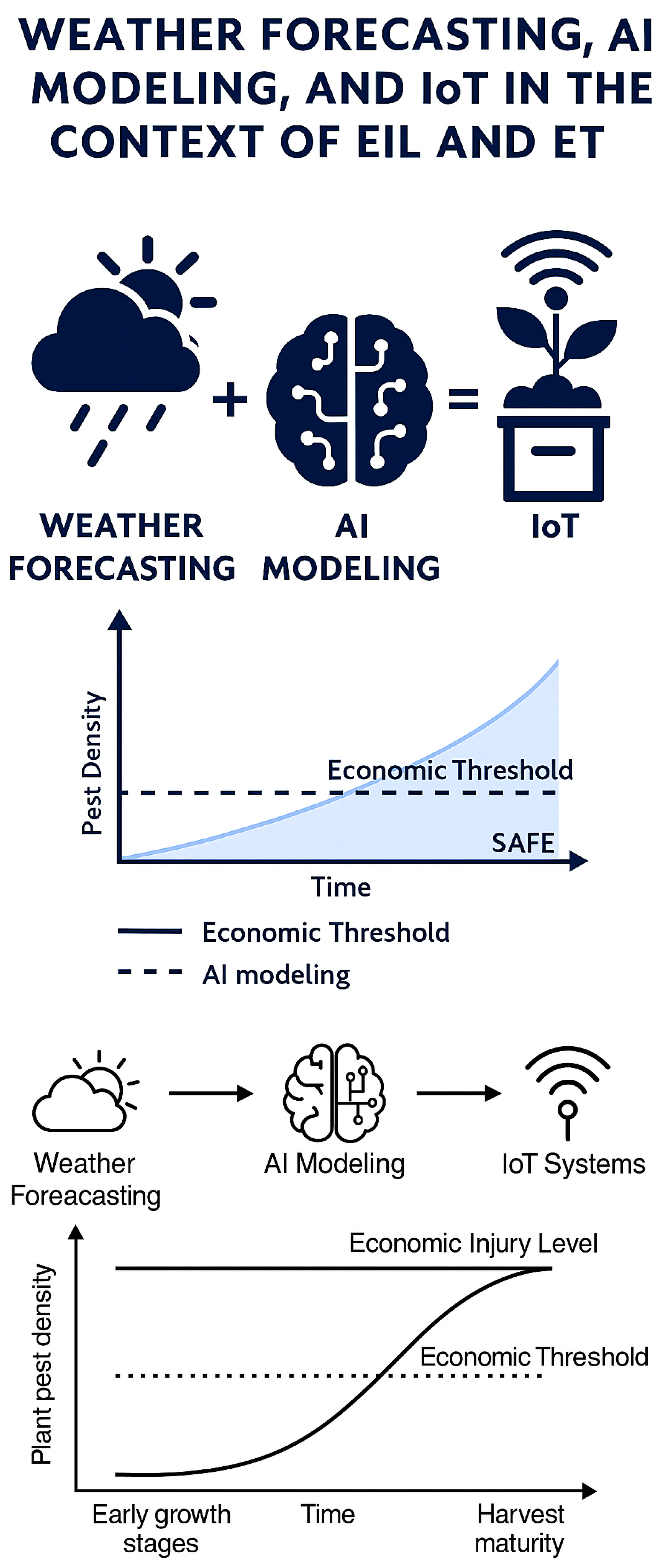
These systems demonstrate improved accuracy in anticipating pest risk windows under climate variability. By integrating climate data, predictive ET models reduce unnecessary pesticide use while preventing economic loss from delayed action (
Figure 4).
Figure 4.
Linking weather forecasting, AI modeling, and IoT systems to improve prediction and timing of economic injury level (EIL) and economic threshold (ET) decisions in integrated pest management (IPM) [
2].
Figure 4.
Linking weather forecasting, AI modeling, and IoT systems to improve prediction and timing of economic injury level (EIL) and economic threshold (ET) decisions in integrated pest management (IPM) [
2].
Climate stress not only affects the field phase. It also shapes post-harvest thresholds.
Research on climate impacts in post-harvest supply chains shows that altered storage microclimates increase pest growth, reduce tactic efficacy, and shift EIL–ET relationships downstream, making predictive monitoring essential from farm to storage to distribution [
33,
35,
36]. Warming conditions increase the need for earlier, climate-adjusted ETs at storage facilities to prevent pest-induced contamination and quality loss. Thus, climate-aware EIL/ET modelling is crucial not just for crop protection, but also for protecting market value, food safety, and supply chain resilience.
Climate change facilitates the spread of invasive pests into new regions, often where natural enemies are absent, and farmers lack established ET guidelines [
37].
Studies on climate adaptation for invasive pests document that species such as fall armyworm, fruit flies, and coffee berry borers are increasingly appearing in new ecologies, causing severe yield losses and overwhelming existing IPM systems. Predictive EIL/ET models must therefore incorporate range expansion projections and climate-adjusted injury calculations to remain relevant (
Table 1). This highlights the need for ongoing recalibration of thresholds as biological and climatic realities evolve
Figure 5).
Table 1.
Integrated weather–AI–IoT models for IPM.
Table 1.
Integrated weather–AI–IoT models for IPM.
| Model Type | Weather Component | AI Component | IoT Component | Reference |
|---|
| AI-driven climate-pest forecasting | Climate variables | DL models for pest prediction | Environmental sensors | [21,22] |
| Fog-enabled IoT weather forecasting | Microclimate forecasting | Wavelet–LSTM models | IoT weather sensors | [23,24,25,26,27] |
| IoT–AI local weather forecasting | High-res local forecasts | AI/ML processing pipeline | IoT meteorological networks | [24,25,26,27,28] |
| AI-driven pest prediction under climate change | Climate change modeling | CNN/RNN pest risk | Remote sensing + IoT | [23] |
| IoT-based pest monitoring | Weather–pest models | AI analytics of sensor streams | Smart traps and drone sensors | [24] |
| AI-enabled smart farming systems | Weather-integrated prediction | ML/CV for detection | IoT-automated responses | [25] |
| Hybrid AI–IoT–fuzzy logic outbreak model | Environment parameters | CNN + XAI + Fuzzy logic | Edge IoT devices | [26] |
| IoT–AI ensemble yield forecasting | Weather-linked stress model | Ensemble ML | IoT + UAV imagery | [22,23] |
5. Analysis of EIL–ET Dynamics
The integration of economic injury level (EIL) and economic threshold (ET) within integrated pest management (IPM) frameworks has long relied on stable relationships among pest population dynamics, crop responses, and management costs. However, mounting evidence indicates that climate variability, pest occurrence patterns, and natural enemy performance increasingly interact in ways that alter traditional threshold calculations.
5.1. Climate Influence on Pest Dynamics
Climate conditions play a critical role in determining pest development rates, reproduction, and survival. Rising temperatures often accelerate pest population growth, especially among species with high intrinsic rates of increase, such as aphids, thereby elevating the risk that pest populations may reach economically damaging levels more rapidly than in the past. This dynamic shifts ETs downward, requiring earlier intervention to prevent pests from reaching the EIL. Additionally, climate-driven changes in crop vigour and phenology modify the relationship between injury and yield loss, consequently affecting EIL calculations because damage per pest unit increases when crops are stressed. These effects underscore the necessity for adaptive threshold frameworks that incorporate weather-based forecasting and real-time environmental monitoring.
5.2. Natural Enemy Interactions and Biological Control
Natural enemies—predators, parasitoids, and pathogens—serve as intrinsic regulators of pest populations, often preventing pests from reaching economic thresholds. However, the efficacy of biological control can be compromised when climate-driven changes alter predator–prey synchrony, reduce natural enemy survival, or disrupt habitat conditions. Conversely, well-conserved natural enemy communities raise ETs by suppressing pest densities, thus delaying or eliminating the need for chemical intervention. Misapplied pesticides can disrupt these beneficial populations and lead to secondary pest outbreaks, emphasizing the importance of integrating biological-control-sensitive ETs within IPM. Continuous monitoring and accurate identification reinforce the foundational principle that thresholds depend on ecosystem-level interactions rather than pest densities alone.
5.3. Tri-Interaction and Its Impact on Threshold-Based Decision-Making
The interplay between climate, pests, and natural enemies fundamentally reshapes EIL–ET dynamics. Because EIL depends on economic variables (market value and control costs) as well as biological parameters (damage per unit injury and injury per pest), any factor that influences crop condition or pest performance has cascading impacts on threshold accuracy. Climate variability generally lowers EIL by increasing damage potential, whereas natural enemies buffer this effect by reducing effective injurious pest populations. Consequently, IPM decision support systems must adopt dynamic, context-responsive threshold models that reflect real-time field conditions. The literature consistently emphasises the need for degree-day models, enhanced pest surveillance, and multi-tactic IPM strategies that prioritize sustainable biological control while judiciously applying chemical controls.
6. Food Security Context
EIL/ET-based IPM reduces avoidable yield and income losses while it minimises pesticide externalities, supporting availability, access, and stability pillars of food security [
26,
30]. In smallholder systems, timely pest alerts and ET-driven actions are associated with higher adoption of IPM and measurable yield/income gains. Food security, defined as consistent access to sufficient, safe, and nutritious food, depends heavily on the stability and productivity of agricultural systems. Pest damage remains one of the largest threats to crop production globally, causing yield losses, income reductions, and post-harvest degradation that weaken all four pillars of food security: availability, access, utilization, and stability. In this context, economic injury level (EIL) and economic threshold (ET) become critical decision-making tools for managing pests in ways that protect not only crop profitability but also broader food-system resilience.
EIL represents the lowest pest population density at which economic damage occurs, while ET is the action point set below EIL to prevent pest populations from reaching damaging levels. These concepts guide farmers to intervene at the most cost-effective moment, preserving yields while avoiding unnecessary pesticide use. The central role of EIL and ET in integrated pest management (IPM) therefore advances food security by optimizing resource use, preventing crop losses, and promoting sustainable production practices.
Food availability relies directly on crop production levels. Unmanaged pest populations are responsible for an estimated 40% of global crop losses, especially in vulnerable regions like sub-Saharan Africa. Studies indicate that pests such as fall armyworm and tomato leaf miner create annual agricultural losses of over US$66 billion in Africa alone, severely affecting staple crop supplies.
By identifying the precise point at which pest populations cause economic damage, EIL allows farmers to prevent unnecessary yield losses. ET provides the practical trigger for timely interventions, preventing pest populations from surpassing the EIL. This targeted management increases harvest volume and reduces food shortages, especially in smallholder-dominant regions where food availability is linked to household production.
Food access depends on household income and the affordability of food. When farmers overspend on unnecessary or mistimed pest interventions, production costs rise, and net incomes fall. Conversely, delayed interventions can reduce yields and revenue. ET helps avoid both extremes. Evidence from the Pest Risk Information Service (PRISE) shows that farmers receiving ET-aligned pest alerts achieved higher yields and higher incomes compared to farmers who did not receive such alerts. Pest alerts improved IPM adoption by 8–32% and increased yield and income by 18–26%, strengthening food access at the household level. Accurate EIL and ET frameworks minimize economic waste, support profitability, and improve purchasing power, directly influencing food access for rural communities.
Food utilization includes nutritional quality, safety, and post-harvest integrity. Overuse or mistimed use of pesticides, which is common in farming systems without threshold-based decision frameworks, can lead to pesticide residues on food, contamination of storage environments, destruction of natural enemies, and long-term degradation of ecological services.
Threshold-based IPM promotes rational pesticide use, lowering risks to human health and preventing contamination of fresh produce and stored grains. Climate change research further highlights the importance of EIL/ET-based decisions in post-harvest systems, where warming microclimates increase pest reproduction and storage losses. Threshold-driven sanitation and monitoring help protect grain quality, nutritional content, and safety from production to consumption.
Food system stability is increasingly challenged by climate change, global supply chain disruptions, and market volatility. In this context, EIL and ET become even more relevant for the possible reasons:
Climate-induced pest pressure increases require dynamic, climate-responsive thresholds.
Market volatility affects the economic justification for interventions, altering EIL and ET in real time.
Extreme weather events create unpredictable pest surges, making ET-based early-warning systems essential.
Disruptions in agricultural value chains make it critical to maintain quality and volume through accurate threshold-based pest management.
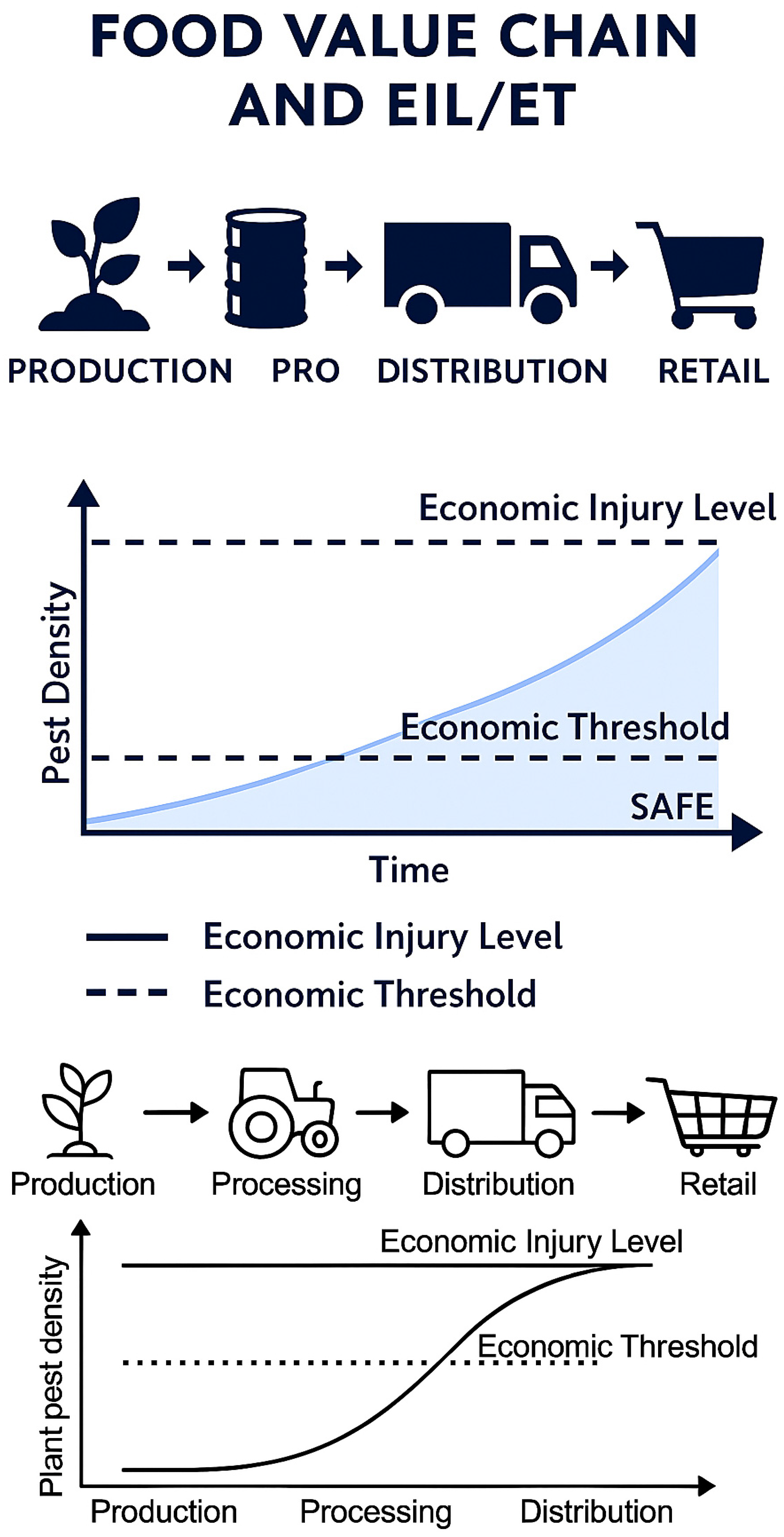
Sustainable value-chain research shows that resilient agricultural systems, i.e., those that maintain production despite climate or market shocks, depend heavily on coordinated, efficient use of inputs and timely responses to risk. Threshold-based pest management contributes directly to system stability by reducing avoidable production losses and preventing cascading effects across processing, storage, and distribution (
Figure 6).
Modern food-security strategies increasingly incorporate digital innovations (e.g., remote sensing, pest alerts, predictive modelling, and IoT networks) that enhance ET accuracy (
Table 1). These systems support coordinated, area-wide pest management, reducing reinvasion and protecting large production zones. Research on invasive pest management in Africa underscores the importance of collective, threshold-guided action for controlling highly mobile pests such as fall armyworm. Such coordinated, EIL/ET-driven IPM approaches enhance regional food security by stabilizing production across entire communities or districts [
30].
7. Critical Analysis of the PRISE Concept in Relation to EIL/ET Thresholds in IPM
The economic injury level (EIL) and economic threshold (ET) remain foundational decision-making tools in IPM, defining when pest populations become economically damaging and when interventions should be initiated to prevent losses. EIL is the lowest pest density causing economic damage, while ET signals when management should occur to prevent the population from reaching the EIL. Both concepts require accurate data on pest pressure, crop susceptibility, control costs, and expected yield responses. The PRISE concept, interpreted here as a Predictive-Risk–Integrated Surveillance and Early-warning framework, aligns with modern IPM’s shift toward proactive, ecological, and data-driven decision-making. PRISE emphasises continuous monitoring, early detection, risk modelling, and proactive intervention, which naturally interfaces with EIL–ET systems. However, integrating PRISE into EIL/ET approaches presents both opportunities and limitations.
7.1. Strengths of Applying a PRISE Framework to EIL/ET Thresholds
Enhancing predictive capacity of threshold models is useful in that traditional ETs depend heavily on pest phenology, growth rates, crop stages, and localized knowledge—variables that are not always fully understood and can be highly subjective. PRISE strengthens EIL–ET systems by
Improving forecast accuracy through advanced monitoring tools (e.g., traps and weather-based models).
Reducing reliance on fixed thresholds by introducing real-time, adaptive decision rules.
Supporting degree-day modelling and predictive analytics, similar to established scouting and monitoring recommendations in IPM.
This alignment addresses one of the major limitations of traditional ETs, their dependence on often incomplete ecological information. The second value of PRISE is associated with integrating multi-risk parameters beyond economic variables. EIL/ET originally emphasised economic damage and cost-benefit considerations. PRISE expands this by incorporating
Ecological risks (e.g., natural enemy suppression).
Climatic risks (e.g., weather-driven pest outbreaks).
Social/environmental costs (aligned with the expanded EIL concept embracing sustainability concerns).
This produces a more holistic threshold interpretation, supporting modern IPM’s shift toward environmental and social stewardship. Strengthening early warning and preventive action has been linked to PRISE’s emphasis on early detection, which complements ET’s role as a preemptive threshold. By improving forecasting
The system can anticipate when pest populations are likely to reach ET.
Managers gain extended lead time relative to conventional scouting practices.
This reduces pesticide overuse, supporting the conservation of beneficial organisms—an explicit goal in IPM.
7.2. Limitations and Challenges of Integrating PRISE with EIL/ET
The risk of oversensitivity and over-intervention is real in that PRISE prioritizes early warning. Hence, there is a danger of
Lowering ETs unnecessarily.
Triggering interventions before pest populations demonstrate meaningful economic threat.
Undermining IPM’s principle that “certain levels of pest injury are tolerable” and must not automatically trigger control measures.
This may contradict the original EIL concept, which was developed to prevent unnecessary pesticide use and mitigate resistance development. Data-intensive and potential costs are also an ignored limitation. EIL calculations already suffer from the difficulty of estimating variables like damage coefficients, injury per pest, and fluctuating crop prices [
27,
28,
29,
31]. PRISE adds additional layers:
It is important to note that these may be impractical for smallholder farming systems or resource-limited regions without institutional support. However, this does not diminish the reality that EIL–ET system is valued for providing objective, simple guidelines for treatment decisions. PRISE introduces complexity that may overwhelm farmers or extension staff, reduce adoption in systems where training levels are low, and create dependency on external technical expertise. This directly challenges the practical and educational intentions of the classical EIL system. PRISE has been shown to have potential misalignment with natural enemy dynamics. It may encourage rapid intervention upon early detection, which risks disrupting natural enemy communities before they exert control, increasing long-term pesticide reliance and undermining natural biological regulatory services emphasised in IPM frameworks. Hence, PRISE must integrate natural enemy thresholds to avoid ecological backlash. To overcome limitations and maximize synergy, PRISE should adopt biocontrol-sensitive thresholds. This can be done by integrating predator–prey ratios and conservation biological control indicators to prevent premature intervention. Use of dynamic, not static, threshold models is essential to incorporate scenario-based EIL/ET that adjust according to real-time climate data, pest development models, and crop condition indicators consistent with modern IPM recommendations for adaptive thresholds. Simplifying outputs for end users is essential to create farmer-friendly dashboards, traffic light systems, or mobile alerts rather than abstract modelling outputs. Ensuring multiscale monitoring is crucial to combine regional early-warning signals, farm-level scouting, field-level microclimate, and pest data.
This multilayered approach enhances reliability and reduces false signals. PRISE provides a forward-looking, proactive, and risk-aware framework for improving the predictive and preventive functions of EIL/ET thresholds within IPM. Its strengths lie in enhancing timeliness, accuracy, and ecological breadth of decision-making. However, without careful integration, PRISE may introduce unnecessary complexity, encourage over-intervention, increase costs, and potentially undermine the biological and economic foundations of the classical EIL–ET system. The optimal role of PRISE is therefore not to replace EIL/ET, but to function as a complementary system that updates, refines, and contextualizes threshold-based IPM decisions in an era of climate variability, technological advancement, and sustainability concerns.
8. Case Studies for Cost-Benefit Analysis
Crop and economic analyses of IPM are available in literature for many field crops and are supported by controlled environment research [
2,
27,
28,
29,
30,
31,
32,
33]. In the context of the current study, it is necessary to present case studies on maize, one of the three major cereal crops of the world, including rice and wheat (
Table 2).
Each case in
Table 2 has unique dynamics. For the purpose of this study, a general perspective is provided with an explanation of the dynamics using a simple cost-benefit analysis. For example, recent maize pest management case studies highlight how fall armyworm (FAW) and stem borer pressures vary across crop stages, influencing the timing and economic justification for interventions under EIL–ET frameworks. FAW causes early-stage whorl damage that can lead to yield losses of up to 34%, making early thresholds particularly critical for economic protection. Comparative studies show FAW has the highest damage incidence (34.8%), while stem borers produce greater severity, indicating that thresholds must account for pest-specific injury patterns that change across seasons and years 2. These dynamics underscore the need for adaptive ETs that reflect both crop-stage sensitivity and fluctuating pest pressure.
Cost-benefit analyses from integrated pest management (IPM) trials consistently show that multi-tactic ecological strategies outperform conventional approaches, altering both the EIL and the timing of ET-based interventions. For example, an IPM package combining pheromone traps, bird perches, seed treatment, azadirachtin, and
Metarhizium anisopliae reduced FAW infestation to 12.7% (vs. 39.7% in untreated plots) and achieved a superior cost-benefit ratio of 1:2.1 compared to 1:1.3 in controls. Similarly, intercropping systems such as maize–marigold or maize–legume combinations reduce FAW incidence, enhance natural enemy populations, and improve economic returns, demonstrating how ecological intensification can raise ETs by lowering effective pest injury while preserving yield stability. Collectively, these studies illustrate that maize pest thresholds must remain dynamic, stage-specific, and grounded in cost-effective IPM strategies [
38].
A simplified cost-benefit analysis explains the concept:
Fall armyworm (General): Control becomes cost-effective when damage approaches 12%, as yield savings exceed pesticide and labour costs.
Fall armyworm (ETL ≈ 0.29 larvae/plant): Low ETL indicates strong economic justification for early intervention to avoid exponential pest growth.
Fall armyworm (V12 stage): Late-stage treatment must consider diminishing yield return, justified if infestation threatens significant yield loss.
Fall armyworm (V4 stage): Young maize is highly vulnerable; early control at ~3 larvae/plant avoids high future losses at low cost.
Chilo partellus: Threshold of ~3–4 larvae/plant signals economically meaningful damage; control is justified depending on pesticide cost.
Stem borers in Egypt: Species-specific EILs reflect economic thresholds where intervention prevents yield losses exceeding control cost.
Results of cost-benefit analysis can be used to evaluate whether the economic value of preventing crop losses outweighs the costs associated with control actions. In general terms, this information is important in that it involves comparing expected yield savings, derived from preventing pest populations from reaching damaging levels, with the expenses of intervention, such as pesticide purchase, application labour, equipment use, and potential environmental or ecological trade-offs. Beyond crop management, this information can be used to confirm that the economic injury level (EIL) provides the break-even point at which the cost of control equals the monetary value of avoided crop damage, while the economic threshold (ET) triggers action before this point is reached to prevent populations from surpassing the EIL. When pest densities or damage indicators approach these thresholds, intervention becomes cost-effective because the anticipated yield losses, if left uncontrolled, would exceed the financial, operational, and environmental costs of treatment.
9. Conclusions
This review demonstrates that the conceptual and practical value of economic injury level (EIL) and economic threshold (ET) has expanded significantly under modern agricultural conditions. Three core findings emerge. First, biological drivers—including pest growth rates, crop phenology, and natural enemy activity—remain foundational to determine when interventions are economically justified. These ecological interactions shape the speed, direction, and magnitude of threshold shifts, reinforcing the need for integrated monitoring that captures both pest and beneficial organism dynamics. Second, economic signals, such as control costs, commodity prices, and market volatility, strongly redefine threshold values. As these economic variables fluctuate, EIL and ET must be recalibrated to ensure that management actions remain profitable and avoid unnecessary expenses. The review shows that ignoring these economic dynamics risks either premature intervention or delayed response, both of which may undermine farm profitability. Third, climate variability has become a dominant force reshaping pest pressures, natural enemy performance, post-harvest vulnerabilities, and management efficacy. Warming temperatures, erratic rainfall, extreme weather events, and altered storage microclimates now accelerate pest reproduction and reduce the efficiency of some control measures. Consequently, climate-responsive thresholds—supported by predictive modelling, remote sensing, AI-enabled analytics, and IoT-based surveillance—are essential for current and future IPM systems. Collectively, these findings confirm that EIL and ET should no longer be viewed as static bioeconomic formulas, but as dynamic, adaptive decision tools embedded within complex ecological, economic, and climatic systems. Their relevance extends beyond yield protection to food-security enhancement, sustainable value-chain performance, and environmental stewardship. Future research should focus on (i) developing integrated climate–bioeconomic threshold models; (ii) refining natural-enemy-sensitive ETs to prevent ecological disruption; (iii) embedding AI and sensor-driven forecasting tools into practical IPM decision platforms; and (iv) improving adoption pathways for smallholder farmers through simplified, context-appropriate threshold communication tools. These directions will ensure that threshold-based IPM remains adaptive, evidence-driven, and aligned with global efforts to build resilient and sustainable food systems under accelerating climate and economic uncertainty.