Article

Effects of Different Conditions on Fermentation Quality and Nutrient Composition of Tender Bamboo Silage After Irradiation


1
College of Life Science and Technology, Central South University of Forestry and Technology, 498 Shaoshan Southern Road, Tianxin District, Changsha 410004, China
2
Hunan Academy of Forestry, Changsha 410004, China
3
Guangxi Weidu State Owned Forest Farm, Laibing 546199, China
*
Author to whom correspondence should be addressed.
†
These authors contributed equally to this work.
Agriculture 2026, 16(5), 531; https://doi.org/10.3390/agriculture16050531
Submission received: 27 November 2025 / Revised: 27 December 2025 / Accepted: 4 January 2026 / Published: 27 February 2026
(This article belongs to the Section Agricultural Product Quality and Safety)

Abstract

The impact of pretreatment methods on the fermentation quality and nutritional profile of bamboo silage was assessed to determine the optimal ensiling strategy. Tender bamboo underwent microwave, ultrasound, alkali, and irradiation pretreatments. Subsequently, a four-factor, three-level L9 (34) orthogonal experiment was employed, utilizing pretreated bamboo as the substrate. The experiment evaluated the effects of silage time (30, 45, 60 days), moisture content (55%, 60%, 65%), cellulase addition [2, 4, and 6 mg/g FM (Fresh weight)], and silage inoculant addition (0.5, 5, 50 mg/g FM). Results indicated that γ-ray irradiation pretreatment effectively reduced lignin and cellulose content while increasing reducing sugars levels approximately fourfold compared to the control group. Six out of the nine treatment groups exhibited superior comprehensive fermentation quality scores, with silage time demonstrating the most significant influence on the fermentation quality of tender bamboo silage. The order of influence was silage time > silage inoculant level > moisture content > cellulase, with a silage time of 30 days, a silage inoculant level of 0.5 mg/g FM, a moisture content of 65%, and a cellulase level of 2 mg/g FM, all contributing to enhanced fermentation quality. Regarding nutritional composition, silage time significantly impacted crude protein and soluble sugar levels, with optimal levels observed at 30 and 60 days, respectively. Moisture content primarily affected soluble sugar levels, followed by neutral detergent fiber, with an optimal level of 55%. Other factors showed minimal effects. Based on fermentation quality and nutritional component analysis, and prioritizing fermentation quality while considering cost-effectiveness, the optimal ensiling conditions for bamboo were determined to be a silage time of 30 days, a moisture content of 65%, an addition of 2 mg/g FM of cellulase, and an addition of 0.5 mg/g FM of silage inoculant.

1. Introduction

China’s livestock sector has experienced substantial growth in recent years, with the development of ruminant livestock, including cattle and sheep, showing continuous improvement. Statistical data indicated that in 2020, China’s beef and mutton production reached 6.72 million and 4.92 million tons, respectively, reflecting a year-on-year increase of 50,000 tons. However, the rising demand for feed and forage, driven by the expansion of ruminant livestock industries, has exacerbated forage scarcity [1]. Identifying alternative forage sources to substitute costly concentrated feeds is vital for economic and efficiency improvements in livestock production, particularly amid rising costs. In 2021, China’s grass imports totaled 2.045 million tons, with alfalfa hay constituting 1.78 million tons—up 31% year-on-year [2]. The “14th Five-Year Plan” emphasizes increasing raw material supply, reducing dependence on corn and soybean meal, and lowering import reliance to decrease feed costs and strengthen food security [3]. Consequently, developing unconventional feed resources is critical. Silage preserves the nutrition and palatability of green forage, ensuring a year-round supply. Incorporating silage improves feed acceptance, reduces concentrate use, and lowers costs [4]. Appropriate silage can improve feed digestibility and daily weight gain in ruminants, leading to improved economic returns. Therefore, the current focus of the feed industry is on identifying novel, economical, safe, and mass-producible raw materials and methods.
Phyllostachys edulis (Moso bamboo) is a free-growing evergreen arborescent bamboo of the gramineae family and the genus Phyllostachys. It is perennial, evergreen, and rich in lignocellulose. China has the richest bamboo resources in the world, encompassing over 40 genera and more than 500 species. Its coverage area, stock volume, bamboo product output, and export value rank first globally [5], earning it the moniker “Kingdom of Bamboo.” Domestically, bamboo is widely distributed, predominantly in eastern and western regions, with Hunan Province being one of the leading areas in production [6]. However, bamboo possesses a high lignin content and a unique core structure. Compared to other grasses (such as corn stalks), which are characterized by high nutrient content and loose structure, bamboo exhibits greater hardness and higher density. This makes it more difficult for its lignocellulose to degrade into reducing sugars, significantly reducing the quality of silage fermentation, resulting in silage fermentation quality greatly decreased [7]. Tender bamboo, with lower lignocellulosic biomass and abundant carbohydrates, proteins, amino acids, vitamins, and micronutrients (calcium, iron, and zinc), is an optimal substrate for anaerobic fermentation [8]. Advanced pretreatments disrupt lignin and reduce polymerization of cellulose and hemicellulose, enhancing enzymatic hydrolysis and fermentation efficiency. Yin et al. [9] pretreated wheat straw with γ-ray and NaOH, and found that the reducing sugar yield reached 72.67% after 100 kGy and 2% NaOH treatment for 1 h. Qi et al. [10] used irradiation (0, 400, 800 kGy) combined with NaOH (0, 1%, 2%, 4%) to deconstruct the lignocellulosic structure of reed straw. It was found that when 800 kGy irradiation was combined with 4% NaOH solution, the maximum enzymatic conversion of cellulose was 85.02%, which greatly destroyed the lignocellulosic structure.
Ensiling is a microbiological fermentation process facilitated by native lactic acid bacteria (LAB) present in the forage biomass. These LAB metabolize fermentable carbohydrates into organic acids under anaerobic conditions, resulting in a decrease in pH and elevated acidity. This acidification suppresses the proliferation of spoilage microorganisms such as molds, yeasts, and clostridia. The activity of LAB is inhibited when the pH falls below 4.2, thereby securing the stability and extended shelf life of the stored silage [11,12,13]. Zhao et al. [14] evaluated the impact of bamboo shoot shell as a whole-plant corn replacement on the fermentation characteristics and nutritional value of total mixed silage. Replacement levels of 0%, 15%, 25%, and 35% were assessed. The study indicated that bamboo shoot shells could partially substitute whole-plant corn in total mixed silage, representing a potential silage feedstock. Asano et al. [15] observed that reed alone did not ensile effectively; however, the addition of glucose and LAB improved ensiling. Na et al. [16] inoculated commercial LAB additives into alfalfa silage, demonstrating that LAB supplementation enhanced the fermentation quality and bacterial community composition of alfalfa silage.
This study utilized tender bamboo as raw material, employing physical and chemical pretreatments to reduce lignocellulosic content while increasing reducing sugar levels, thereby facilitating silage fermentation. Orthogonal experimental design was employed to investigate the effects of varying conditions on the fermentation quality and nutritional value of bamboo silage. Optimal fermentation parameters were identified to provide a theoretical framework and scientific basis for rational bamboo utilization, thereby developing a safe, effective, and economically viable alternative silage feed.

2. Materials and Methods

2.1. Test Materials

Tender bamboo was cultivated at Jingzhou Forest Farm in Huaihua City, Hunan Province, supplied by the Hunan Academy of Forestry. The cellulose enzyme was procured from Shanghai Yuanye Bio-Technology Co., Ltd., Shanghai, China. The silage inoculant (including Pediococcus acidilactici, Lactobacillus plantarum, and Lactobacillus buchneri) was purchased from Zhengzhou Haowangnong Biotechnology Co., Ltd., Zhengzhou, China.

2.2. Pretreatment Method

2.2.1. Tender Bamboo Pretreatment

Following ambient air desiccation, the tender bamboo culms were comminuted to a 60-mesh particle size. The raw material then underwent microwave, ultrasonic, dilute alkali, and irradiation pretreatments, followed by the determination of lignocellulose content.

2.2.2. Detection of Wood Fiber Components of Bamboo After Pretreatment

(1) Precisely weighed 1.0000 g of tender bamboo fiber sample, designated as M0, and transferred it into a conical flask. Added 25 mL of nitric acid-ethanol solution, assembled the reflux apparatus, and subjected the mixture to a water bath at 100 °C. Reacted until the bamboo fibers turned white, then terminated the reaction. Removed the mixture, rinsed with hot water, and washed twice with anhydrous ethanol until the effluent was clear. The remaining residue was dried in a 105 °C oven to constant weight, cooled in a desiccator, and weighed as M1. The residue was then placed in a muffle furnace set at 550 °C for calcination for 3 h. After cooling, it was weighed again and recorded as M2.
(2) Placed the M0 sample into a Soxhlet extractor, added 100 mL of anhydrous ethanol to fully immerse the sample, and operated the reflux for 2 h at 95 °C. After extraction, the sample was washed with pure water until no ethanol smell remained and dried at 80 °C to constant weight. Cooled in a desiccator and weighed as M3.
(3) The dried M3 sample was transferred to a conical flask and mixed with 50 mL of 2 mol/L HCl. Reacted in a water bath at 100 °C for 50 min, shaking the mixture intermittently. Filtered the residue immediately, rinsed with acetone, then washed with pure water until the effluent reached neutrality. Dried at 80 °C to constant weight, cooled in a desiccator, and recorded as M4.
(4) Transferred the dried filtrate residue M4 to a conical flask, prepared a 72% H2SO4 solution, cooled to room temperature, and added 10 mL of this solution. Mixed thoroughly with the residue, then incubated at approximately 20 °C for 3 h. Filtered the mixture, rinsed with pure water until neutral, dried at 105 °C to constant weight, cooled, and recorded as M5.
(5) Subjected the remaining residue M5 to calcination at 575 °C in a muffle furnace for 3 h. After cooling in a desiccator, we weighed and recorded the mass as M6.
The calculation formulas for the content of each lignocellulosic component in the sample are as follows [17]:
Cellulose   ( % )   = ( M 1 − M 2 ) ÷ M 0 × 100 %
Hemicellulose   ( % )   = ( M 3 − M 4 ) ÷ M 0 × 100 %
Lignin   ( % )   = ( M 5 − M 6 ) ÷ M 0 × 100 %

2.2.3. Glucose Standard Curve

Dried the glucose standard in an oven at 105 °C until a constant weight was achieved. Then, 100 mg of anhydrous glucose was accurately weighed into a beaker, dissolved in an appropriate volume of distilled water, and transferred into a 100 mL volumetric flask to dilute to volume, preparing a 1 mg/mL glucose stock solution. Aliquots of 0.0, 0.2, 0.4, 0.6, 0.8, 1.0, and 1.2 mL of the standard solution were pipetted into 25 mL test tubes. Each tube was supplemented with distilled water to a final volume of 2 mL, followed by the addition of 1.5 mL of DNS reagent. The mixtures were thoroughly mixed and allowed to react in a boiling water bath for 5 min. After removing from the heat, the tubes were rapidly cooled to room temperature, and distilled water was added to a final volume of 25 mL with gentle shaking. The absorbance was measured at 540 nm using a UV-Vis spectrophotometer. The standard curve was obtained with absorbance value (OD540) as the ordinate and glucose content (mg) as the abscissa.

2.2.4. Determination of Reducing Sugar

1 g sample was transferred into a 25 mL screw-cap tube, mixed with 15 mL distilled water, and held at 50 °C for 20 min. After rapid cooling, the volume was adjusted to 25 mL to give the reducing-sugar extract. 1 mL of extract was reacted with 1.5 mL of DNS reagent in a boiling-water bath for 5 min, cooled to room temperature, diluted to 25 mL with water, and the absorbance was read at 540 nm.

2.2.5. Scanning Electron Microscope

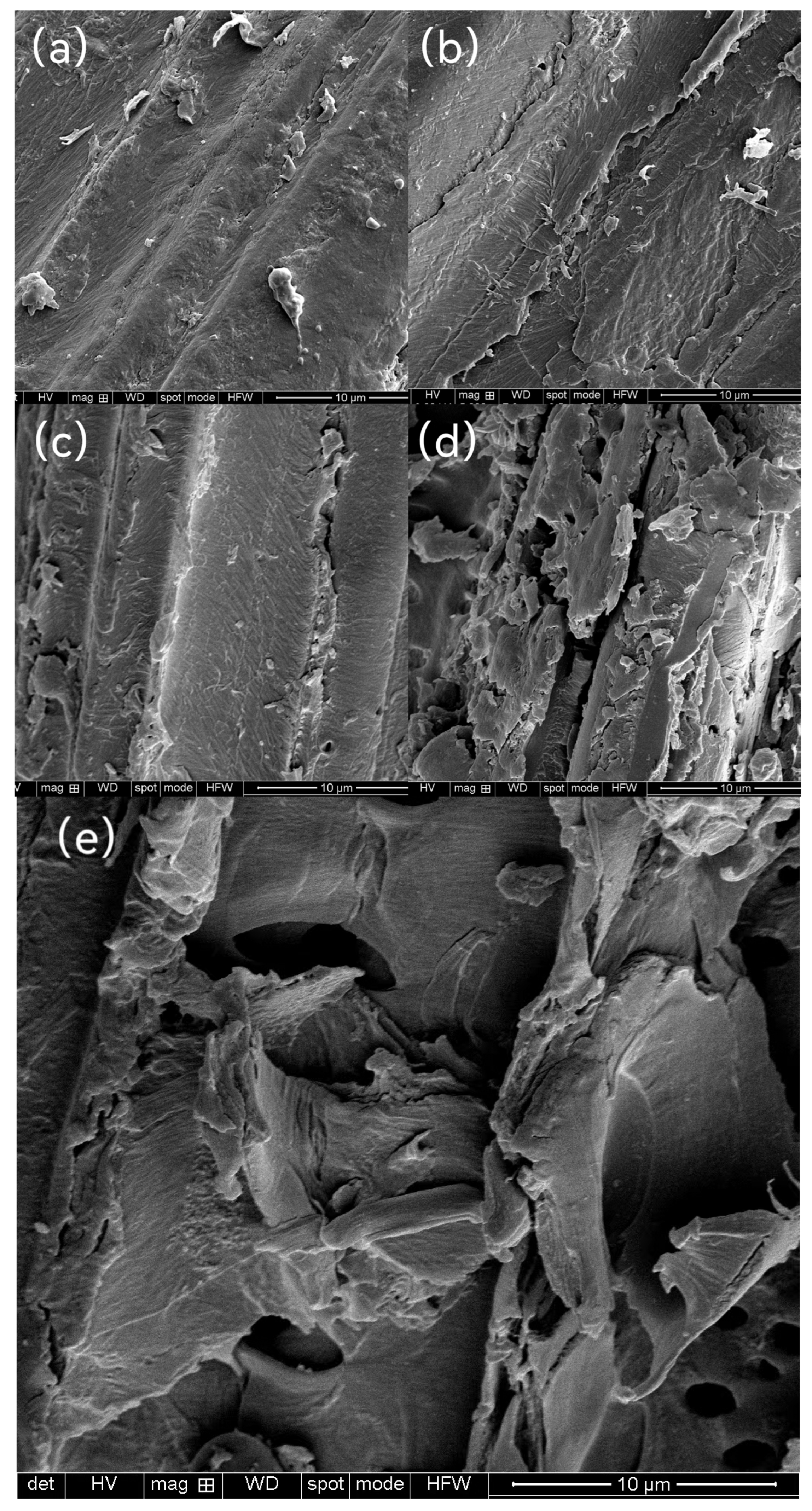
The raw materials and pre-treated samples were dried to constant weight, and the morphological and structural changes in bamboo fibers were observed by a scanning electron microscope (SEM) at 5000 times magnification.

2.3. Tender Bamboo Silage Fermentation

2.3.1. Experimental Design

Utilizing an L9 (34) orthogonal experimental design, we investigated the ensiling of irradiated tender bamboo. The four factors evaluated were silage time, moisture content, cellulase application rate, and silage inoculant concentration. Silage time was assessed at 30, 45, and 60 days (d). Moisture content was adjusted to 55%, 60%, and 65%. Cellulase was applied at levels of 2, 4, and 6 mg/g FM (Fresh weight), and the silage inoculant was introduced at concentrations of 0.5, 5, and 50 mg/g FM. Based on an orthogonal experimental design, 9 treatment groups were established. Each group was divided into 3 replicates and fermented at room temperature in vacuum-sealed polyethylene silage bags. Each replicate weighed 200 g, resulting in a total of 27 silage bags (Table 1).

2.3.2. Tender Bamboo Silage Treatment

Following harvest, the tender bamboo was air-dried and subsequently comminuted to facilitate passage through a 60-mesh sieve. The samples were subjected to γ-ray irradiation at a dosage of 600 kGy. Subsequently, cellulase and silage inoculants were incorporated according to the experimental design and thoroughly homogenized. The moisture content of each treatment group was adjusted using sterile water. Finally, each treatment group was packed into fermentation bags, vacuum-sealed, and ensiled at ambient temperature for durations of 30, 45, and 60 d.

2.3.3. Sampling and Determination of Tender Bamboo Silage

Upon completion of the 30, 45, and 60-day ensiling periods, the silage bags were opened, and the tender bamboo silage was thoroughly mixed. 100 g subsample was extracted from each treatment group for the determination of fermentation quality and nutrient composition.
Determination of Fermentation Quality
Sensory evaluation of tender bamboo silage was conducted according to the German Agricultural Society’s (DLG) silage quality sensory scoring system [18] (Table 2).
For each treatment group, 20 g of tender bamboo silage was precisely weighed and combined with 180 mL of distilled water. The mixture was homogenized for 1 min, passed through four layers of gauze, and centrifuged at 6000 r/min for 5 min. The supernatant was filtered through filter paper; part was used for pH measurement, and the remainder was stored in centrifuge tubes at −20 °C for later use. Lactic acid (LA), acetic acid (AA), and butyric acid (BA) were determined by high-performance liquid chromatography (HPLC) (column: Shodex Rspark KC-811, 8 mm × 300 mm; mobile phase: 3 mmol perchloric acid solution, filtered through a water-phase filter membrane and degassed; flow rate 1.0 mL/min, column temperature 50 °C, injection volume 10 µL, wavelength 210 nm). Ammonia nitrogen (AN) was determined using the phenol-hypochlorite colorimetric method, and total nitrogen (TN) was determined using an automated Kjeldahl nitrogen analyzer. The ratio of AN/TN was then calculated [19].
Determination of Nutrient Composition
The raw materials underwent desiccation in a 65 °C oven until a consistent weight was achieved. The resultant dried samples were subsequently milled and sieved through a 60-mesh screen and stored in sealed bags for subsequent analysis. All component contents, excluding dry matter (DM), were calculated on a dry matter basis. The analytical methodologies for each component were as follows: DM was determined via the oven-drying method [20]; crude protein (CP) was quantified using the Kjeldahl method with an automated Kjeldahl apparatus [21]; ether extract (EE) was assessed through petroleum ether extraction [21]; crude ash (Ash) was determined by muffle furnace ashing [22]; neutral detergent fiber (NDF) and acid detergent fiber (ADF) were determined using the Van Soest fiber-washing method [23]; water-soluble carbohydrates (WSC) were determined using the anthrone colorimetric method [24].

2.4. Data Statistics and Analysis

After processing the data with Excel 2019 software, the primary and secondary order of the influencing factors was analyzed according to the range analysis method, and the significance analysis of the data was carried out with SPSS 27.0.

3. Results

3.1. Component Determination and Characterization of Bamboo After Pretreatment

3.1.1. Analysis of Wood Fiber Components and Changes in Reducing Sugar Content of Bamboo Before and After Pretreatment

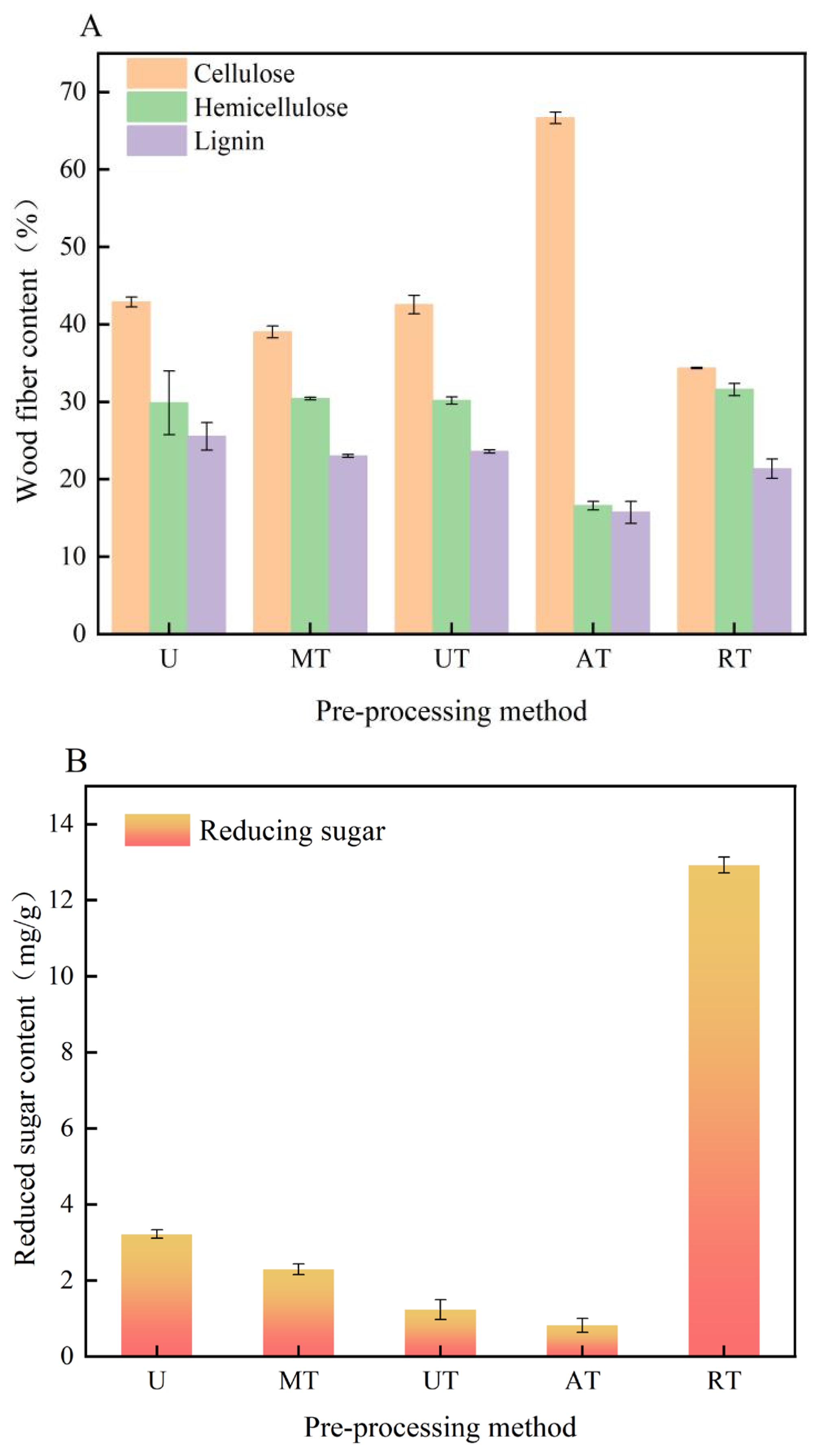
As shown in Figure 1A, the content of three elements in the wood fiber of the tender bamboo without pretreatment was 42.87%, 29.85%, and 25.53%, respectively. Among the four pretreatment approaches, the cellulose concentration in tender bamboo subjected to 4% NaOH high-pressure steam treatment reached the highest level at 66.66%. The overall lignocellulosic fiber content remained low, effectively minimizing its impact on subsequent fermentation by LAB in silage production. Although the cellulose enrichment after alkali pretreatment favorably facilitates enzymatic hydrolysis by cellulase into fermentable reducing sugars, as shown in Figure 1B, the corresponding reducing sugar yield was the lowest. This indicates that alkali pretreatment may hinder the immediate availability of fermentable substrates for LAB during silage fermentation. In contrast, irradiated tender bamboo had the highest reducing sugar, roughly fourfold that of the non-irradiated material. This readily available carbohydrate both fuels LAB during ensiling and, because the tissue is already low in fiber, lessens the need for added cellulase and so lowers the cost.

3.1.2. Scanning Electron Microscopy Analysis

In Figure 2a the surface of the tender bamboo without pretreatment was smooth and complete, and the structure was dense; Figure 2b After microwave and medium fire treatment, the surface of the tender bamboo became rough and the structure began to break down; Figure 2c Slight cracks on the surface of the tender bamboo after ultrasonic treatment; Figure 2d Soaking with NaOH and mixing with high-pressure steam greatly destroyed the structure of the bamboo, and increased the surface area of the bamboo while the structure became loose; Figure 2e After γ-ray irradiation, the original structure of the tender bamboo became loose, the surface was seriously damaged, and a large number of holes appeared, which greatly increased the binding site of cellulase and reduced the difficulty of subsequent fermentation.

3.2. Nutritional Composition of Tender Bamboo Before and After Irradiation

As indicated in Table 3, the NDF and ADF contents in the irradiated tender bamboo decreased by 17.62% and 13.57%, respectively, compared to pre-irradiation levels, which is conducive to silage fermentation.

3.3. Effects of Different Conditions on the Fermentation Quality of Tender Bamboo Silage

3.3.1. Sensory Evaluation

According to Table 4, only the fourth group was rated as good among the nine treatment groups, and the other eight groups were all excellent, indicating that the fermentation effect of silage with tender bamboo after irradiation under different conditions can be basically achieved.

3.3.2. Evaluation of Organic Acids and AN

Employing the silage quality assessment protocol established in China [25], which utilizes the ratio of AN/TN and the concentrations of LA, AA, and BA as evaluative parameters, the fermentation quality of tender bamboo silage was assessed. Fermentation quality was graded according to the following criteria: excellent (80–100 points), good (60–80 points), and poor (below 60 points). As indicated in Table 5, LA was the predominant acid produced during the ensiling of tender bamboo across all nine treatment groups, followed by AA, with negligible BA detected. Treatment group 1 exhibited the highest LA concentration, while treatment group 4 displayed the lowest. The AN/TN values across all nine treatment groups were consistently low. Based on the final scoring, all treatment groups were categorized as excellent.

3.3.3. pH Evaluation

Utilizing the quality assessment system for silage in China [25], the pH values of the tender bamboo silage were scored, with a total of 25 points. The grading criteria were as follows: excellent, 3.4–3.8 (18–25 points); good, 3.9–4.1 (10–17 points); average, 4.2–4.7 (1–9 points); and poor, above 4.8 (0 points). The scores for each treatment group are presented in Table 6. Among the 9 treatment groups, except for groups 1, 4, and 8, which were good, the rest of the groups were excellent.

3.3.4. Analysis of Fermentation Quality of Tender Bamboo

Sensory evaluation and pH value score were converted according to a percentage system; sensory evaluation, organic acid, and AN/TN comprehensive score, and pH score accounted for 50%, 25%, and 25%. In actual production, sensory evaluation was the main way to judge whether silage could be fed directly, so sensory evaluation accounted for a high proportion of comprehensive scores in this experiment. The total score of each sample is the sum of all indexes, and three grades are set according to the comprehensive score: excellent (80–100 points), medium (60–80 points), and poor (below 60 points).
The range analysis method was used to judge the range size. The greater the range, the greater the influence of this factor. According to the range (R-value) in Table 7, the effects on the fermentation quality of tender bamboo silage were sorted as silage time, silage inoculant, moisture content, and cellulase. According to the K value, the optimum silage time was 30 d (K1: 84.46), the moisture content was 65% (K3: 83.33), cellulase was 2 mg/g FM (K1: 82.67), and starter was 0.5 mg/g FM (K1: 83.79). Among 9 treatments, the 1st, 2nd, 3rd, 6th, 8th and 9th groups showed better fermentation quality.

3.4. Effects of Different Conditions on Nutrient Composition of Tender Bamboo Silage

3.4.1. Range Analysis of Orthogonal Test

As can be seen from Table 8, for the range analysis of CP, the four factors had little difference in CP content (R-value < 1). For the range analysis of EE, the four factors had little influence on EE content (R-value < 1). For the range analysis of Ash, the influence of four factors on Ash was not significant (R-value < 1). For the range analysis of NDF, the four factors had little influence on NDF (R-value < 2). For the range analysis of ADF, silage inoculant had the greatest effect on them (R-value 2.18), and the best addition was 50 mg/g FM, while the other three factors had little effect. For the range analysis of WSC, moisture content had the greatest effect on them (R-value 5.96), 55% moisture content was the best, followed by silage time (R-value 2.54), the best time was 60 d, and the other two factors had little effect.

3.4.2. Orthogonal Test ANOVA

As can be seen from Table 9, when the silage time was 30 days, the CP content was significantly higher than other levels (p < 0.05). The other three factors had no significant difference in their content (p > 0.05). When the moisture content was 55%, the NDF content was significantly decreased (p < 0.05) by 1.77%, and there was no significant difference between the other two levels of NDF content groups (p > 0.05). WSC content decreased with increasing moisture content, and WSC content was significantly higher than other levels when the moisture content was 55% (p < 0.05).

3.5. Comprehensive Analysis

The comprehensive analysis was centered on the fermentation quality of tender bamboo silage and various nutrients as the primary criteria. The main principle guiding the assessment of silage fermentation quality was to identify the optimal parameters. Silage time: The most favorable duration, considering fermentation quality, was 30 days. From a nutritional perspective, the optimal durations were 30 and 60 days; however, selecting 30 days was recommended. Moisture content: The ideal level, based on fermentation quality, was 65%, whereas for nutritional quality, it was 55%. A moisture content of 65% was deemed suitable due to cost-effectiveness. Cellulase: The recommended addition level was 2 mg/g FM to achieve the desired fermentation quality. Since the impact of varying levels was minimal, adding 2 mg/g FM was optimal. Silage inoculant: The optimal addition level for fermentation quality was 0.5 mg/g FM, while for nutritional quality, it was 50 mg/g FM. Considering cost savings, an appropriate addition level was 0.5 mg/g FM. In conclusion, the optimal parameters for tender bamboo silage were a silage time of 30 days, a moisture content of 65%, cellulase addition of 2 mg/g FM, and silage inoculant addition of 0.5 mg/g FM, denoted as A1B3C1D1 in the context of silage conditions.

4. Discussion

4.1. Influence of Pretreatment on the Components of Bamboo

Lignocellulose consists of cellulose, hemicellulose, and lignin, with cellulose serving as the structural backbone, thereby preventing biological enzymes from contacting it [26]. However, lignocellulose is a macromolecular substance that cannot be directly used by organisms. Therefore, lignocellulose was pretreated to destroy its structure and degrade it into small monosaccharide molecules to improve its utilization efficiency. In this study, untreated tender bamboo had 98.25% lignocellulose, which decreased by 11.18% to 87.27% after irradiation, reflecting structural disruption and improved enzyme accessibility—consistent with electron microscopy showing surface pores. As demonstrated by Fei et al. [27] in their study of the effects of 0–1200 kGy electron beam irradiation on birch wood, irradiation treatment degrades cellulose and lignin while significantly disrupting the lignocellulosic structure, thereby enhancing enzymatic hydrolysis efficiency. Through exploring the change in reducing sugar content, it was found that the reduced sugar content of untreated bamboo was 3.22 mg/g, and that of irradiated bamboo was 12.94 mg/g, about 4 times that of untreated bamboo. This finding was consistent with the results reported by Guo et al. [28], who investigated the effects of different doses of electron beam irradiation on the composition and structure of corn cobs. They observed that irradiation treatment reduced lignin content while increasing reducing sugar content. Therefore, in contrast to chemical methods that may cause environmental pollution and biological treatments that require prolonged processing times, irradiation cleaves lignocellulosic bonds within minutes, boosts reducing sugars, and generates no hazardous effluent. As an efficient and environmentally friendly pretreatment approach, it has garnered increasing scientific interest.

4.2. Effects of Different Conditions on Fermentation Quality of Tender Bamboo Silage

The commonly used indexes to evaluate the fermentation quality of silage were pH value, AN/TN, LA, etc. It was generally believed that the pH value of good silage should be lower than 4.2 [29]. In this study, the fermentation quality of tender bamboo silage in most treatment groups was excellent. After opening the bag, the color was similar to that of raw materials, the structure was maintained well, and the taste was aromatic. Most of them had a fruit acid flavor, and a few treatment groups had a light wine flavor; and the pH value of all treatment groups was below 4.2, which met the standard of excellent silage. This finding was consistent with the results from Xu et al. [30], where the pH values in the LAB and cellulase additive groups during oat silage preparation were below 4.2, significantly lower than those in the untreated group. This may be because the cellulose of the tender bamboo itself was decomposed into monosaccharides by cellulase, which provided energy for the fermentation of LAB, produced a large amount of LA and AA in an oxygen-free environment, and reduced the pH value. At the same time, the acidic environment can inhibit the growth of harmful microorganisms during the silage process, reduce the production of PA and BA, and maintain the freshness and aroma of the feed [31]. Moisture content is a critical factor influencing silage fermentation, with adequately hydrated raw materials enhancing fermentation quality. In this study, higher moisture levels correlated with lower pH values. When the moisture content of the silage reached 65%, the fermentation quality was notably poor, with the maximum K-value observed in the analysis. This aligns with findings by Bao et al. [32], indicating that higher moisture content is more conducive to silage fermentation and exerts a significant impact on fermentation quality.

4.3. Effects of Different Conditions on Nutrient Composition of Tender Bamboo Silage

The nutrients of silage included CP, EE, WSC, NDF, and ADF, among which WSC and CP provided energy and nitrogen sources for animals. NDF and ADF affect the digestion and nutrient absorption of animals, and the higher the content is, the more unfavorable the digestion of animals. EE was generally relatively low, but can also provide additional energy [33]. In this study, compared with raw materials, the CP content of all treatment groups was significantly increased, and the NDF and ADF contents were significantly decreased. This indicated that adding LAB silage inoculant, and cellulase during the silage process could improve the nutritional composition and increase the feeding value of the tender bamboo. In studies conducted by Wang et al. [34], the addition of LAB and cellulase during oat ensiling significantly enhanced nutritional components such as CP and WSC, demonstrating excellent silage fermentation quality. These findings align with the results of the present study. During silage fermentation, the addition of LAB enhances LA production and maintains a lower pH level, which helps stabilize protein content and provides animals with greater nutritional value [35]. Cellulase can decompose cellulose and turn it into small molecular sugars, which can not only provide energy for animal growth but also improve the digestibility of feed and increase the intake of feed for animals [36]. Zhao et al. [37] studied how cellulase and LAB affect the fermentation characteristics and microbial communities in the mixed silage of wet beer grain and corn stalk and found that all additive-treated groups showed higher fermentation quality during the 30-day silage period. The content of NDF and ADF in the cellulase treatment group was the lowest. Therefore, silage fermentation agents and cellulase enzymes are critical factors influencing silage fermentation, not only enhancing the nutritional content of plants but also reducing the risk of fermentation failure.

5. Conclusions

After pretreatment, the best treatment method was γ-ray irradiation at 600 kGy irradiation dose. The lignocellulose content was 87.27%, which was 11.18% lower than that before treatment, and the reducing sugar content was 12.94 mg/g, which was about 4 times that before treatment. Through the four-factor and three-level L9 (34) orthogonal test, it was found that groups 1, 2, 3, 6, 8, and 9 showed better fermentation quality, and the order of the four factors was silage time > silage inoculant > moisture content > cellulase. In the analysis of fermentation quality, the optimal conditions were identified as follows: silage time of 30 days, moisture content of 65%, cellulase content of 2 mg/g FM, and silage inoculant content of 0.5 mg/g FM, resulting in the maximum K value and the best fermentation quality. In the analysis of nutritional components, it was observed that silage time significantly influenced the contents of CP and WSC, with optimal durations found to be 30 days and 60 days, respectively. Moisture content had a substantial impact on the levels of WSC and NDF, with the ideal moisture level identified as 55%. The comprehensive analysis was based on the fermentation quality and nutritional components of tender bamboo silage. The optimal silage conditions were determined as 30 days of silage time, 65% moisture content, 2 mg/g FM cellulase addition, and 0.5 mg/g FM silage inoculant addition.

6. Outlook

In this study, the changes in lignocellulosic components of bamboo were obtained by a pretreatment method, which provided a way to produce biomass energy, such as reducing sugar from bamboo as a raw material in the future. At the same time, the optimal silage scheme was selected through an orthogonal test, which proved the feasibility of tender bamboo as silage. However, further animal feeding tests should be carried out in the future to evaluate its suitability as animal feed. In the nine fermented samples, CP content was generally low, while NDF and ADF contents remained relatively high. Therefore, if tender bamboo is to be used as silage in the future, it is recommended to select a variety of protein-rich additives (such as corn meal or soybean meal) based on the existing nutritional composition of tender bamboo silage. This should be followed by fermentation trials to optimize nutrient retention and enhance the nutritional quality of the silage. Additionally, the silage material used in this study was irradiated tender bamboo, which had its microbial population and diversity largely eliminated. This reduced interference from extraneous microorganisms during the silage fermentation process. However, the silage conditions for fresh tender bamboo differ significantly. Therefore, future research could explore ensiling fresh tender bamboo under various fermentation conditions to provide a theoretical foundation for its further development.

Author Contributions

J.C., M.L. and B.Z. designed the study. J.C., T.W. and T.Z. performed the experiments. J.C. wrote the manuscript and analyzed the data. J.C., M.L., B.Z. and Y.M. reviewed and edited the manuscript. B.Z. and M.L. funded and supervised the study. All authors have read and agreed to the published version of the manuscript.

Funding

Supported by the research project of Hunan Forestry Science and Technology Research and Innovation Fund Project (XLK202407); Supported by Scientific Innovation Fund for Post-graduates of Central South University of Forestry and Technology [CX20240689]; Hunan Forestry Ecological Protection, Restoration, and Development Fund—Bamboo Industry Development Project, the Forestry Department of Hunan Province (grant number: XCZHZ [2024] 39); the 2025 Forestry Ecological Protection, Restoration, and Development Fund—Bamboo Industry Transition and Upgrading Category: Bamboo Industry Development Project (No. 2025ZCY003).

Informed Consent Statement

The authors confirm that the ethical policies of the journal, as noted on the journal’s author guidelines page. The authors confirm that they have followed EU standards for the protection of animals used for scientific purposes and feed legislation.

Data Availability Statement

All data generated or analysed during this study are included in this published article.

Acknowledgments

We acknowledge Central South University of Forestry and Technology and the Hunan Academy of Forestry for providing the experimental materials and instrumentation.

Conflicts of Interest

The authors declare no conflicts of interest.

References

  1. Gao, Q.; Liu, H.; Wang, Z.; Lan, X.; An, J.; Shen, W.; Wan, F. Recent advances in feed and nutrition of beef cattle in China—A review. Anim. Biosci. 2022, 36, 529. [Google Scholar] [CrossRef] [Scilit]
  2. Langworthy, A.D.; Freeman, M.J.; Hills, J.L.; McLaren, D.K.; Rawnsley, R.P.; Pembleton, K.G. A forage allowance by forage type interaction impacts the daily milk yield of early lactation dairy cows. Animals 2023, 13, 1406. [Google Scholar] [CrossRef] [Scilit] [PubMed]
  3. Wang, W. Weakness analysis of the nation’s feed processing technological innovation and suggestion to the 14th five-year developing plan. Feed. Ind. 2020, 41, 1–4. (In Chinese) [Google Scholar]
  4. Kalač, P. The effects of silage feeding on some sensory and health attributes of cow’s milk: A review. Food Chem. 2011, 125, 307–317. [Google Scholar] [CrossRef] [Scilit]
  5. Liu, K.W.; Xu, Q.F.; Wang, G.; Chen, F.M.; Leng, Y.B.; Yang, J.; Harries, K.A. Distribution of bamboo forest resources and species for construction. In Proceedings of the Contemporary Bamboo Architecture in China, Chengdu, China, 25–26 July 2022; Springer: Singapore, 2022; pp. 1–5. [Google Scholar]
  6. Dlamini, L.C.; Fakudze, S.; Makombe, G.G.; Muse, S.; Zhu, J. Bamboo as a valuable resource and its utilization in historical and modern-day China. BioResources 2022, 17, 1926–1938. [Google Scholar] [CrossRef] [Scilit]
  7. Yuan, Y.; Jiang, B.; Chen, H.; Wu, W.; Wu, S.; Jin, Y.; Xiao, H. Recent advances in understanding the effects of lignin structural characteristics on enzymatic hydrolysis. Biotechnol. Biofuels 2021, 14, 205. [Google Scholar] [CrossRef] [Scilit]
  8. Hartono, R.; Iswanto, A.H.; Priadi, T.; Herawati, E.; Farizky, F.; Sutiawan, J.; Sumardi, I. Physical, chemical, and mechanical properties of six bamboo from Sumatera Island Indonesia and its potential applications for composite materials. Polymers 2022, 14, 4868. [Google Scholar] [CrossRef] [Scilit]
  9. Yin, Y.; Wang, J. Enhancement of enzymatic hydrolysis of wheat straw by gamma irradiation–alkaline pretreatment. Radiat. Phys. Chem. 2016, 123, 63–67. [Google Scholar] [CrossRef] [Scilit]
  10. Qi, H.; Wu, X.; Chen, L.; Liu, A.; Deng, M.; Wei, D.; Wang, D.; Peng, Z.; Wang, K. The effect of irradiation combined with sodium hydroxide pretreatment on component, structure, utilization efficiency of Phragmites australis. Waste Biomass Valoriz. 2024, 15, 6615–6633. [Google Scholar] [CrossRef] [Scilit]
  11. Xie, Y.; Wang, L.; Li, W.; Xu, S.; Bao, J.; Deng, J.; Wu, Z.; Yu, Z. Fermentation quality, in vitro digestibility, and aerobic stability of total mixed ration silage in response to varying proportion alfalfa silage. Animals 2022, 12, 1039. [Google Scholar] [CrossRef] [Scilit]
  12. Grant, R.J.; Ferraretto, L.F. Silage review: Silage feeding management: Silage characteristics and dairy cow feeding behavior. J. Dairy Sci. 2018, 101, 4111–4121. [Google Scholar] [CrossRef] [Scilit]
  13. Yang, C.; Huang, B.; Lin, J.; Yang, Q.; Guo, Y.; Liu, D.; Sun, B. Isolation and screening of high biofilm producing lactic acid bacteria, and exploration of its effects on the microbial hazard in corn straw silage. J. Hazard. Mater. 2024, 480, 136009. [Google Scholar] [CrossRef] [Scilit]
  14. Zhao, J.; Dong, Z.; Chen, L.; Wang, S.; Shao, T. The replacement of whole-plant corn with bamboo shoot shell on the fermentation quality, chemical composition, aerobic stability and in vitro digestibility of total mixed ration silage. Anim. Feed. Sci. Technol. 2020, 259, 114348. [Google Scholar] [CrossRef] [Scilit]
  15. Asano, K.; Ishikawa, T.; Araie, A.; Ishida, M. Improving quality of common reed (Phragmites communis Trin.) silage with additives. Asian-Australas. J. Anim. Sci. 2018, 31, 1747–1755. [Google Scholar] [CrossRef] [Scilit]
  16. Na, N.; Qili, M.; Wu, N.; Sun, L.; Xu, H.; Zhao, Y.; Wei, X.; Xue, Y.; Tao, Y. Bacterial community and fermentation quality of ensiling alfalfa with commercial lactic acid bacterial additives. Front. Microbiol. 2022, 13, 836899. [Google Scholar] [CrossRef] [Scilit]
  17. Pradipta, N.N.; Irawati, D. Reducing sugar production of 3 species mushrooms spent media for bioethanol. In Proceedings of the AIP Conference Proceedings, Melville, NY, USA, 30–31 March 2020; AIP Publishing: Melville, NY, USA, 2020; Volume 2223. [Google Scholar]
  18. Pan, X.; Deng, T.-F.; Li, L.-Q.; Yang, L.-S.; Gao, M.; Yan, Y.-F.; Peng, M.; Yang, J.; Liu, S.; Ge, L.-J.; et al. The effects of different inoculation amount of Lactobacillus plantarum on antioxidant capacity, chemical composition and sensory quality of Rosa roxburghii Tratt fruit pomace ensiled. Waste Biomass Valoriz. 2024, 15, 7009–7015. [Google Scholar] [CrossRef] [Scilit]
  19. Jia, Z.; Shuhao, D.; Baomei, W.; Lan, Q.; Xiaobin, T. Comparison of three methods for determination of ammonia nitrogen in surface water. Meteorol. Environ. Res. 2019, 10, 90–97. [Google Scholar]
  20. Zhang, J.; Yu, Z.; Shao, T. Effect of adding propionic acid and lactic acid bacteria on fermentation quality of Italian ryegrass silages. Acta Agrestia Sin. 2009, 17, 162–165. [Google Scholar]
  21. Jia, Z.; Zhou, J.; Yang, M.; Wang, M.; Li, L.; Fan, X. Preparation and evaluation of certified reference materials for crude protein, crude fat, and crude ash in feed. Microchem. J. 2023, 191, 108854. [Google Scholar] [CrossRef] [Scilit]
  22. Thiex, N.; Novotny, L.; Crawford, A. Determination of ash in animal feed: AOAC official method 942.05 revisited. J. AOAC Int. 2012, 95, 1392–1397. [Google Scholar] [CrossRef] [Scilit]
  23. Dong, F.M.; Rasco, B.A. The neutral detergent fiber, acid detergent fiber, crude fiber, and lignin contents of distillers’ dried grains with solubles. J. Food Sci. 1987, 52, 403–405. [Google Scholar] [CrossRef] [Scilit]
  24. Kejla, L.; Schulzke, T.; Šimáček, P.; Auersvald, M. Anthrone method combined with adsorption of interferents as a new approach towards reliable quantification of total carbohydrate content in pyrolysis bio-oils. J. Anal. Appl. Pyrolysis 2023, 173, 106066. [Google Scholar] [CrossRef] [Scilit]
  25. Silage quality evaluation criteria. China Feed 1996, 7, 5–7. (In Chinese)
  26. Yin, X.; Wei, L.; Pan, X.; Liu, C.; Jiang, J.; Wang, K. The pretreatment of lignocelluloses with green solvent as biorefinery preprocess: A minor review. Front. Plant Sci. 2021, 12, 670061. [Google Scholar] [CrossRef] [Scilit]
  27. Fei, X.; Jia, W.; Wang, J.; Chen, T.; Ling, Y. Study on enzymatic hydrolysis efficiency and physicochemical properties of cellulose and lignocellulose after pretreatment with electron beam irradiation. Int. J. Biol. Macromol. 2020, 145, 733–739. [Google Scholar] [CrossRef] [Scilit]
  28. Guo, X.; Zhang, T.; Shu, S.; Zheng, W.; Gao, M. Compositional and structural changes of corn cob pretreated by electron beam irradiation. ACS Sustain. Chem. Eng. 2017, 5, 420–425. [Google Scholar] [CrossRef] [Scilit]
  29. Shao, T.; Zhang, Z.X.; Shimojo, M.; Wang, T.; Masuda, Y. Comparison of fermentation characteristics of Italian ryegrass (Lolium multiflorum Lam.) and guineagrass (Panicum maximum Jacq.) during the early stage of ensiling. Asian-Australas. J. Anim. Sci. 2005, 18, 1727–1734. [Google Scholar] [CrossRef] [Scilit]
  30. Xu, J.; Zhang, K.; Lin, Y.; Li, M.; Wang, X.; Yu, Q.; Sun, H.; Cheng, Q.; Xie, Y.; Wang, C.; et al. Effect of cellulase and lactic acid bacteria on the fermentation quality, carbohydrate conversion, and microbial community of ensiling oat with different moisture contents. Front. Microbiol. 2022, 13, 1013258. [Google Scholar] [CrossRef] [Scilit] [PubMed]
  31. Sun, L.; Xue, Y.; Xiao, Y.; Te, R.; Wu, X.; Na, N.; Wu, N.; Qili, M.; Zhao, Y.; Cai, Y. Community synergy of lactic acid bacteria and cleaner fermentation of oat silage prepared with a multispecies microbial inoculant. Microbiol. Spectr. 2023, 11, e00705-23. [Google Scholar] [CrossRef] [Scilit]
  32. Bao, J.; Wang, L.; Yu, Z. Effects of different moisture levels and additives on the ensiling characteristics and in vitro digestibility of stylosanthes silage. Animals 2022, 12, 1555. [Google Scholar] [CrossRef] [Scilit] [PubMed]
  33. Li, D.; KuiKui, N.; Zhang, Y.; Lin, Y.; Yang, F. Influence of lactic acid bacteria, cellulase, cellulase-producing Bacillus pumilus and their combinations on alfalfa silage quality. J. Integr. Agric. 2018, 17, 2768–2782. [Google Scholar] [CrossRef] [Scilit]
  34. Wang, X.; Liu, H.; Wang, Y.; Lin, Y.; Ni, K.; Yang, F. Effects of lactic acid bacteria and cellulase additives on the fermentation quality, antioxidant activity, and metabolic profile of oat silage. Bioresour. Bioprocess. 2024, 11, 92. [Google Scholar] [CrossRef] [Scilit] [PubMed]
  35. Tahir, M.; Wang, T.; Zhang, J.; Xia, T.; Deng, X.; Cao, X.; Zhong, J. Compound lactic acid bacteria enhance the aerobic stability of Sesbania cannabina and corn mixed silage. BMC Microbiol. 2025, 25, 68. [Google Scholar] [CrossRef] [Scilit]
  36. Wu, J.; Zhang, Y.; Chen, H.; Xia, Q.; Zhao, P.; Lin, Y.; Shen, G. The ability to digest cellulose can significantly improve the growth and development of silkworms. Insects 2024, 15, 997. [Google Scholar] [CrossRef] [Scilit]
  37. Zhao, G.; Wu, H.; Li, Y.; Li, L.; He, J.; Yang, X.; Xie, X. Fermentation characteristics and microbial community composition of wet brewer’s grains and corn stover mixed silage prepared with cellulase and lactic acid bacteria supplementation. Anim. Biosci. 2023, 37, 84–94. [Google Scholar] [CrossRef] [Scilit] [PubMed]
Figure 1. Content of lignocellulose components of different pretreatment methods (A), content of reducing sugar in different pretreatment methods (B). (U: Untreated; MT: Microwave treatment; UT: Ultrasonic treatment; AT: Alkali treatment; RT: Radiation treatment).
Agriculture 16 00531 g001
Figure 2. Scanning electron microscope images of tender bamboo with different preprocessing methods (5000 times). (a) Untreated; (b) microwave treatment; (c) ultrasonic treatment; (d) NaOH + autoclaving treatment; (e) γ-ray irradiation treatment.
Agriculture 16 00531 g002
Table 1. Orthogonal experimental design for L9 (34).
TreatmentSilage Time (A)/dMoisture Content (B)/%Cellulase (C)/mg/g FMSilage Inoculant (D)/mg/g FM
1305520.5
2306045
33065650
44555450
5456060.5
6456525
7605565
86060250
9606540.5
Table 2. Sensory evaluation criteria for silage.
Scoring ItemsGradingScore
ColorSimilarly to raw material, light brown after drying2
Slightly discolored, light yellow or light brown1
Serious discoloration, dark green or fading to yellow, with a strong musty smell0
OdorNo butyric acid odor, aromatic14
Faint butyric acid odor, strong sour aroma10
Strong butyric acid odor, or pungent burnt taste4
Strong butyric acid or ammonia odor2
TextureStem and leaf structure is well-maintained4
Poorly maintained stem and leaf structure2
Stems and leaves are lightly contaminated and moldy1
Stems and leaves are rotting or heavily contaminated0
Total score16–2010–155–94–0
1 Excellent2 Fairly good3 Moderate4 Rotting
Table 3. Nutritional composition of raw materials.
Raw MaterialDM (%)CP (%)EE (‰)Ash (%)NDF (%)ADF (%)
Untreated33.923.994.222.8080.1359.12
Irradiation treatment91.974.848.924.2566.0151.10
Note: Except for dry substances, the nutrients in the table are measured on a dry basis.
Table 4. Silage sensory evaluation comprehensive score.
TreatmentOdorTextureColorScoreLevel
1124218Excellent
2124218Excellent
3114217Excellent
4104115Good
5114116Excellent
6114116Excellent
7134116Excellent
8114118Excellent
9134118Excellent
Table 5. Evaluation of organic acid and AN/TN in tender bamboo silage.
TreatmentLA/(g/kg)AA/(g/kg)BA/(g/kg)LA ScoreAA ScoreBA ScoreAN/TNAN/TN ScoreAggregate ScoreLevel
19.975.420.072317451.75092.5Excellent
28.715.630.062115451.615090.5Excellent
37.476.380.051712482.145088.5Excellent
45.324.720.051711451.595086.5Excellent
59.377.530.041812482.195089Excellent
67.865.570.062014451.235089.5Excellent
78.947.380.061812451.885087.5Excellent
85.885.480.061611452.575086Excellent
99.037.440.061813453.265088Excellent
Table 6. pH score for tender bamboo silage.
Treatment123456789
pH3.943.833.864.063.823.783.843.973.77
Score171818141819181519
Table 7. Effects of different conditions on fermentation quality of tender bamboo silage by orthogonal test range analysis.
TreatmentSilage Time (A)/dMoisture Content (B)/%Cellulase (C)/mg/g FMSilage Inoculant (D)/mg/g FMAggregate ScoreLevel
1305520.585.13Excellent
230604585.63Excellent
3306565082.63Excellent
4455545073.13Medium
5456060.580.25Medium
645652581.38Excellent
760556579.88Medium
8606025081.5Excellent
9606540.586Excellent
K184.4679.3882.6783.79A > D > B > C
K278.2579.3881.5882.29
K382.4683.3380.9279.08
R6.213.961.754.71
Note: K in the table indicates the mean value of the composite score of each level under each factor condition, e.g., K1 indicates the mean value under time (30 d), moisture content (55%), cellulase (2 mg/g FM) and silage inoculant (0.5 mg/g FM), respectively; the extreme deviation R indicates the difference between the maximum value and the minimum value of K1, K2 and K3.
Table 8. Effects of different conditions on nutritional composition of tender bamboo silage by orthogonal test range analysis.
TreatmentSilage Time (A)/dMoisture Content (B)/%Cellulase (C)/mg/g FMSilage Inoculant (D)/mg/g FMCP/%EE/‰Ash/%NDF/%ADF/%WSC/‰
1305520.56.783.264.0168.1253.1624.98
23060455.982.963.4569.2153.0421.72
330656506.254.183.769.651.9418.55
445554505.794.164.1867.5650.9224.41
5456060.56.0952.9569.3751.2121.54
64565255.183.873.5869.8555.4320.91
76055655.713.313.6268.8655.0527.7
860602505.383.973.8169.3354.1225.42
9606540.55.53.493.8770.4154.1219.76
K16.346.095.786.12Analysis of CP extreme variance
K25.695.825.765.62
K35.535.646.025.81
R0.810.450.260.5
K13.473.583.73.92Analysis of EE extreme variance
K24.343.983.543.38
K33.593.854.164.1
R0.870.40.620.72
K13.723.943.83.61Analysis of Ash extreme variance
K23.573.43.833.55
K33.773.723.423.9
R0.20.540.410.35
K168.9868.1869.169.3Analysis of NDF extreme variance
K268.9369.369.0669.31
K369.5369.9569.2868.83
R0.61.770.220.48
K152.7153.0454.2452.83Analysis of ADF extreme variance
K252.5252.7952.6954.51
K354.4353.8352.7352.33
R1.911.041.552.18
K121.7525.723.7722.09Analysis of WSC extreme variance
K222.2922.8921.9623.44
K324.2919.7422.622.79
R2.545.961.811.35
Table 9. Effects of different conditions on nutritional composition of tender bamboo silage by orthogonal test ANOVA.
FactorLevelCP/%EE/‰Ash/%NDF/%ADF/%WSC/‰
Silage time (A)/d306.34 ± 0.41 a3.47 ± 0.643.72 ± 0.2868.98 ± 0.7752.71 ± 0.6721.75 ± 3.22
455.69 ± 0.46 ab4.34 ± 0.593.57 ± 0.6268.93 ± 1.2152.52 ± 2.5222.29 ± 1.87
605.53 ± 0.17 b3.59 ± 0.343.77 ± 0.1369.53 ± 0.7954.43 ± 0.5424.29 ± 4.09
Moisture content (B)/%556.09 ± 0.603.58 ± 0.513.94 ± 0.2968.18 ± 0.65 b53.04 ± 2.0725.70 ± 1.76 a
605.82 ± 0.383.98 ± 1.023.40 ± 0.4369.30 ± 0.08 a52.79 ± 1.4722.89 ± 2.19 ab
655.64 ± 0.553.85 ± 0.353.72 ± 0.1569.95 ± 0.41 a53.83 ± 1.7619.74 ± 1.18 b
Cellulase (C)/mg/g FM25.78 ± 0.873.70 ± 0.383.80 ± 0.2269.10 ± 0.8954.24 ± 1.1423.77 ± 2.49
45.76 ± 0.243.54 ± 0.603.83 ± 0.3769.06 ± 1.4352.69 ± 1.6321.96 ± 2.33
66.02 ± 0.284.16 ± 0.853.42 ± 0.4169.28 ± 0.3852.73 ± 2.0422.60 ± 4.67
Silage inoculant (D)/mg/g FM0.56.12 ± 0.643.92 ± 0.953.61 ± 0.5869.30 ± 1.1552.83 ± 1.4822.09 ± 2.65
55.62 ± 0.413.38 ± 0.463.55 ± 0.0969.31 ± 0.5054.51 ± 1.2823.44 ± 3.71
505.81 ± 0.444.10 ± 0.123.90 ± 0.2568.83 ± 1.1152.33 ± 1.6322.79 ± 3.71
Note: In the same column, the same lower letters or no letters indicate no significant difference (p > 0.05), and different lower letters indicate a significant difference (p < 0.05).
Disclaimer/Publisher’s Note: The statements, opinions and data contained in all publications are solely those of the individual author(s) and contributor(s) and not of MDPI and/or the editor(s). MDPI and/or the editor(s) disclaim responsibility for any injury to people or property resulting from any ideas, methods, instructions or products referred to in the content.