Article

Pyramiding of Low-Nitrogen-Responsive QTL Clusters Enhances Yield and Nutrient-Use Efficiency in Barley

International Science and Technology Cooperation Base for Efficient Utilization of Nutrient Resources and Fertilizer Innovation, College of Resources, Sichuan Agricultural University, Chengdu 611130, China
*
Author to whom correspondence should be addressed.
Agriculture 2026, 16(4), 453; https://doi.org/10.3390/agriculture16040453
Submission received: 16 January 2026 / Revised: 6 February 2026 / Accepted: 12 February 2026 / Published: 14 February 2026

Abstract

Given that nitrogen (N) is a major limiting factor for global crop production, improving low-nitrogen (LN) tolerance in barley is essential for sustaining yields worldwide. Building on our laboratory’s previous quantitative trait locus (QTL) mapping, which identified three LN-specific QTL clusters on chromosomes 2H and 5H, this study investigated the potential of gene pyramiding to improve LN tolerance. We generated two recombinant inbred line populations (C79 and F79) containing these QTLs and evaluated them for thirty-six traits related to yield, agronomy, and N, phosphorus (P), and potassium (K) uptake and utilization. The results confirmed that LN stress significantly reduced most yield, agronomic, and NPK-related traits. Under LN conditions, grain yield and accumulations of N, P, and K in the C79 population increased with the number of QTL clusters harbored by the lines. More compellingly, in the F79 population under LN stress, lines containing all three QTL clusters exhibited superior performance for critical yield components such as grain yield, spike number, grain number, and nutrient efficiency indices. Furthermore, in both populations, lines with the full QTL complement demonstrated higher values for harvest index, grain number, and K harvest index under LN stress than under normal-N conditions. In conclusion, this study is the first to link LN-QTL pyramiding with P and K use efficiency and demonstrates that pyramiding breeding can produce high-yielding barley varieties with enhanced LN tolerance and nutrient absorption capacity.

1. Introduction

Nitrogen (N) is an essential element for plant growth, playing a critical role in development and yield formation [1,2]. In fact, N contributes more significantly to yield than other nutrients [3,4]. Furthermore, the application of N fertilizer influences the uptake of other critical elements, such as phosphorus (P) and potassium (K) [5]. However, the excessive use of N fertilizers increases production costs [6] and causes serious environmental pollution [7,8,9]. Consequently, improving crop nitrogen use efficiency (NUE) is an urgent priority for sustainable agriculture. Given the significant genotypic variation in crop adaptation to low-nitrogen (LN) stress [10], the selection and breeding of LN-tolerant varieties represents a crucial strategy for enhancing NUE and reducing fertilizer dependency [11,12].
LN stress-related traits in plants are quantitative traits governed by complex genetic mechanisms and exhibit considerable genotypic variation. Quantitative trait locus (QTL) mapping serves as an effective approach for dissecting these complex traits and identifying favorable alleles [1]. Conventional breeding, which relies heavily on phenotypic selection, is often time-consuming, subjective, and unpredictable [13,14]. However, advances in molecular marker technology have enabled marker-assisted selection (MAS), significantly improving breeding efficiency. QTL analysis using molecular markers now provides a robust means of pinpointing key genomic regions influencing traits of interest [15,16]. We defined a QTL cluster as a genomic region harboring three or more QTLs with overlapping confidence intervals [17,18]. MAS breeding with QTL clusters as targets holds promise for the simultaneous improvement of multiple crop traits. QTL pyramiding, a strategy that combines multiple beneficial QTLs into a single genotype, has emerged as a powerful breeding tool [19,20,21]. Compared to phenotypic selection or MAS alone, pyramiding enhances genetic gain more effectively [22]. Recent studies have successfully applied this approach to improve yield and quality in crops such as rice [23,24,25], wheat [26,27,28,29], and triticale [30].
Barley (Hordeum vulgare L.) is the fourth largest cereal crop and is used for brewing, forage, and food [31]. To improve barley’s tolerance to LN conditions and enhance molecular breeding efficiency, numerous QTL studies have been conducted on LN stress-related traits [15,32,33,34,35,36,37]. Furthermore, the variation in utilization efficiency among the three primary fertilizer elements, N, P, and K, is not well characterized, and the relationship between nutrient uptake, utilization, and agronomic traits remains underexplored. In parallel, several studies have applied pyramiding breeding strategies in barley, primarily to enhance disease resistance [38,39,40,41,42]. In contrast, very few have focused on pyramiding for improved quality and yield [43]. Notably, there are no reported studies on the use of pyramiding breeding to improve barley’s nutrient utilization efficiency.
Centuries of selective breeding have narrowed the genetic diversity of modern barley [44]. In contrast, wild and landrace barley possess superior allelic diversity and greater resistance to adverse conditions [45]. To identify genes responsible for efficient N utilization under LN stress, we screened genotypes from diverse geographical origins and plant types. Our screening identified three such QTL clusters in two highly LN-resistant genotypes: a wild barley and an Asian landrace [32,37,46]. In the Asian landrace, a cluster on chromosome 5H, containing four QTLs, was identified as a primary factor for LN stress tolerance [32]. In the wild barley, two distinct clusters on chromosome 2H, one with six QTLs and the other with four, were found to be primarily responsible for its tolerance [37,46]. While these QTL clusters have been detected, the feasibility of enhancing LN resistance by pyramiding them through breeding remains to be experimentally validated. To address this, we generated two segregating populations and evaluated them for yield, agronomic traits, and traits related to N, P, and K utilization. The objectives of this study were: (1) to assess the feasibility of enhancing barley LN tolerance through pyramiding these QTL clusters; (2) to investigate the effects of pyramiding LN-related QTL clusters on P and K uptake and utilization; (3) to determine the feasibility of using QTL pyramid breeding to develop LN-tolerant, high-yielding barley with high nutrient-use efficiency.

2. Materials and Methods

2.1. Plant Materials

This study focused on three QTL clusters associated with nitrogen (N) utilization under low-nitrogen (LN) stress. One cluster (C1) on chromosome 5H was derived from the landrace CN4079 (R1) [32]. The other two clusters (C2 and C3) were located on chromosome 2H and originated from wild barley CN4027 (R2) [37,46]. Collectively, these clusters contained fourteen QTLs (Table S1), nine of which were LN-specific (identified only under LN) and five of which were stably expressed across N treatments.
To introgress these QTL clusters, F1 crosses of the two resistance sources (R1 and R2) were crossed with two high-yielding South Australian varieties: Commander, a malting barley, and Fleet, a fodder barley of similar maturity. This generated two tri-parental recombinant inbred line (RIL) populations: the Commander//R1/R2 population (C79) with 64 lines, and the Fleet//R1/R2 population (F79) with 107 lines.

2.2. Molecular Marker Analysis

DArT probe sequences within the target QTL cluster intervals were retrieved. To obtain more extensive sequence information for these regions, BLAST 2.13.0 analyses were performed against the barley genome using the Ensembl Plants database (http://plants.ensembl.org (accessed on 10 July 2024)). PCR-based co-dominant SSR markers were selected for development. SSR motifs were extracted from the target sequences using SSRHunter 1.3 software. Subsequently, PCR primers flanking the identified SSR loci were designed using Primer Premier 5 software.
PCR primer design criteria: primer length 17–25 bp, amplification product length 75–300 bp, Tm value 50–65 °C, and GC% between 40% and 60% (Table 1). Full and consistent barley seeds were selected and germinated until the three-leaf stage, and young leaves were then collected for DNA extraction. DNA was extracted according to the CTAB method [47], and PCR amplification and nucleic acid fragment analysis are described in Chen et al. [19]. Finally, we analyzed the polymorphisms on agarose gel.

2.3. Experimental Design and N Treatments

The field trial was sown in October 2022 and harvested in May 2023. The test site was located in Chongzhou City, Sichuan Province, China, which is in the mid-latitude subtropical humid climate zone, and the cropping system was based on water and drought rotation. The soil type of the experimental field was retention-type rice soil developed from recent river alluvium, with organic matter content of 17.49 g kg−1, total N of 1.20 g kg−1, alkaline-dissolved N of 51.25 mg kg−1, quick-acting P of 12.41 mg kg−1, quick-acting K of 93.99 mg kg−1, and a pH value of 7.45.
This study applied the same two nitrogen levels as those used in the environments for detecting the three QTL clusters [32,37,46]. The experiment employed a split-plot design with N application rate as the main plot factor and genotype as the sub-plot factor. Two N treatments were applied, a low-nitrogen treatment (LN, 0 kg N ha−1) and a normal-nitrogen treatment (NN, 150 kg N ha−1), each with three replications. Both treatments received a uniform basal application of 75 kg P2O5 ha−1 as superphosphate and 75 kg K2O ha−1 as potassium chloride. All fertilizers were applied as a basal dressing in a single application ten days before sowing. They were then thoroughly incorporated into the soil using a rotary tiller. The experimental material consisted of recombinant inbred lines (RILs) and their parents, which were planted together in the same plots. Plots consisted of 1 m long rows with 20 cm spacing between rows. Each row was sown with eight seeds, and every three rows of experimental material were separated by a single protection row. All other field management adhered to conventional local practices.

2.4. Measurement of Indicators

A total of thirty-six traits of five types were investigated. The determination of yield, agronomic, and N-related traits was based on previous studies [32], and the determination of P and K-related traits was referred to the determination of N-related traits.
For yield traits, which included seven traits, grain dry weight per plant (GDW, g·plant−1), straw dry weight per plant (StDW, g·plant−1), and dry weight for aboveground per plant (ADW, g·plant−1) were determined using a 1/100 balance. The harvest index (HI = GDW/ADW), spike number per plant (SN), and grain number per spike (GN) were calculated. The thousand-grain weight (TGW) was measured three times, 200 grains for each line in each replication after harvesting, using 1/1000 balances. For agronomic traits, which included five traits, plant height (PH, cm), spike length (SL, cm), and awn length (AL, cm) were measured using a ruler. The lodging resistance (LDR) was a visual rating (1–5) of the severity of lodging at maturity, where 1 represents no lodging and 5 represents total lodging. At the same time, the growth period (GP) was calculated.
In addition, twenty-four N, P, and K-related traits were investigated in this study. The N-related traits included eight traits: grain N content (GNC), stem N content (StNC), grain N accumulation per plant (GNA = GNC × GDW), stem N accumulation per plant (StNA = StNC × StDW), total N accumulation per plant (TNA = GNA + StNA), N harvest index (NHI = GNA/TNA × 100%), N utilization efficiency for aboveground dry matter (NUtEDM = ADW/TNA), and N utilization efficiency for grain yield (NUtEGY = GDW/TNA). Among them, GNC and StNC were measured using Automatic Kjeldahl equipment (SKD-100, Peiou Ltd., Shanghai, China). The P-related traits included eight traits: grain P content (GPC), stem P content (StPC), grain P accumulation per plant (GPA = GPC × GDW), stem P accumulation per plant (StPA = StPC × StDW), total P accumulation per plant (TPA = GPA + StPA), P harvest index (PHI= GPA/TPA × 100%), P utilization efficiency for aboveground dry matter (PUtEDM = ADW/TPA), and P utilization efficiency for grain yield (PUtEGY = GDW/TPA). Among them, GPC and StPC were measured using the molybdenum antimony colorimetric method. The K-related traits included eight traits: grain K content (GKC), stem K content (StKC), grain K accumulation per plant (GKA = GKC × GDW), stem K accumulation per plant (StKA = StKC × StDW), total K accumulation per plant (TKA = GKA + StKA), K harvest index (KHI = GKA/TKA × 100%), K utilization efficiency for aboveground dry matter (KUtEDM = ADW/TKA), and K utilization efficiency for grain yield (KUtEGY = GDW/TKA). Among them, GKC and StKC were measured using the Flame photometric method (Sherwood M410, Shanghai, China).

2.5. Data Analysis

Microsoft Excel 2013 was used for data organization. SPSS 22.0 was used for ANOVA and independent-samples t-tests, and genotypic differences were evaluated with Tukey’s HSD test (p < 0.05). Graphics were produced using Origin Pro 8.5 (Origin Lab Corporation, Northampton, MA, USA).

3. Results

3.1. Molecular Marker Analysis Within the RIL Populations

The C79 and F79 populations were screened for polymorphism using PCR primers targeting three QTL clusters (C1, C2, and C3). The distribution of these clusters is detailed in Figure S1 and Table S2. The C79 population contained 19, 26, and 18 accessions with the C1, C2, and C3 clusters, respectively. In contrast, the F79 population contained 45, 27, and 25 accessions with the respective clusters.

3.2. Phenotypic Analysis of Barley RIL Populations Under LN Stress

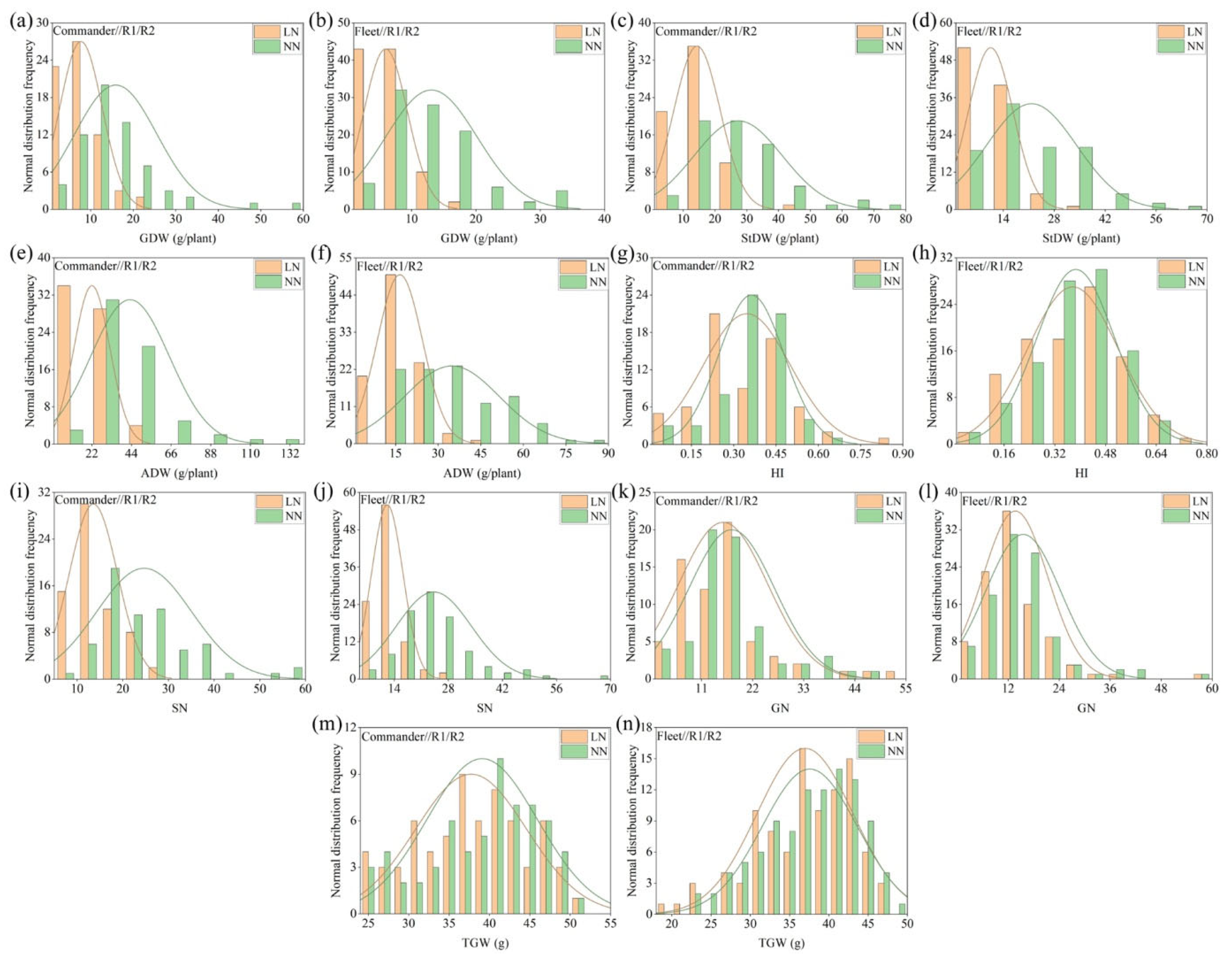
The frequency distributions for all traits in both RIL populations exhibited continuous variation and approximated a normal distribution under varying N treatments. Under LN stress, yield traits at maturity were consistently reduced in both populations (Figure 1). Specifically, GDW, StDW, ADW, and SN all decreased significantly (p < 0.01) (Table S3). The C79 population showed average reductions of 51.9%, 47.4%, 48.9%, and 44.9%, respectively, while the F79 population showed reductions of 54.4%, 51.6%, 52.6%, and 49.6%. Notably, GDW experienced the most substantial decline, indicating that grain yield formation is particularly sensitive to LN conditions.
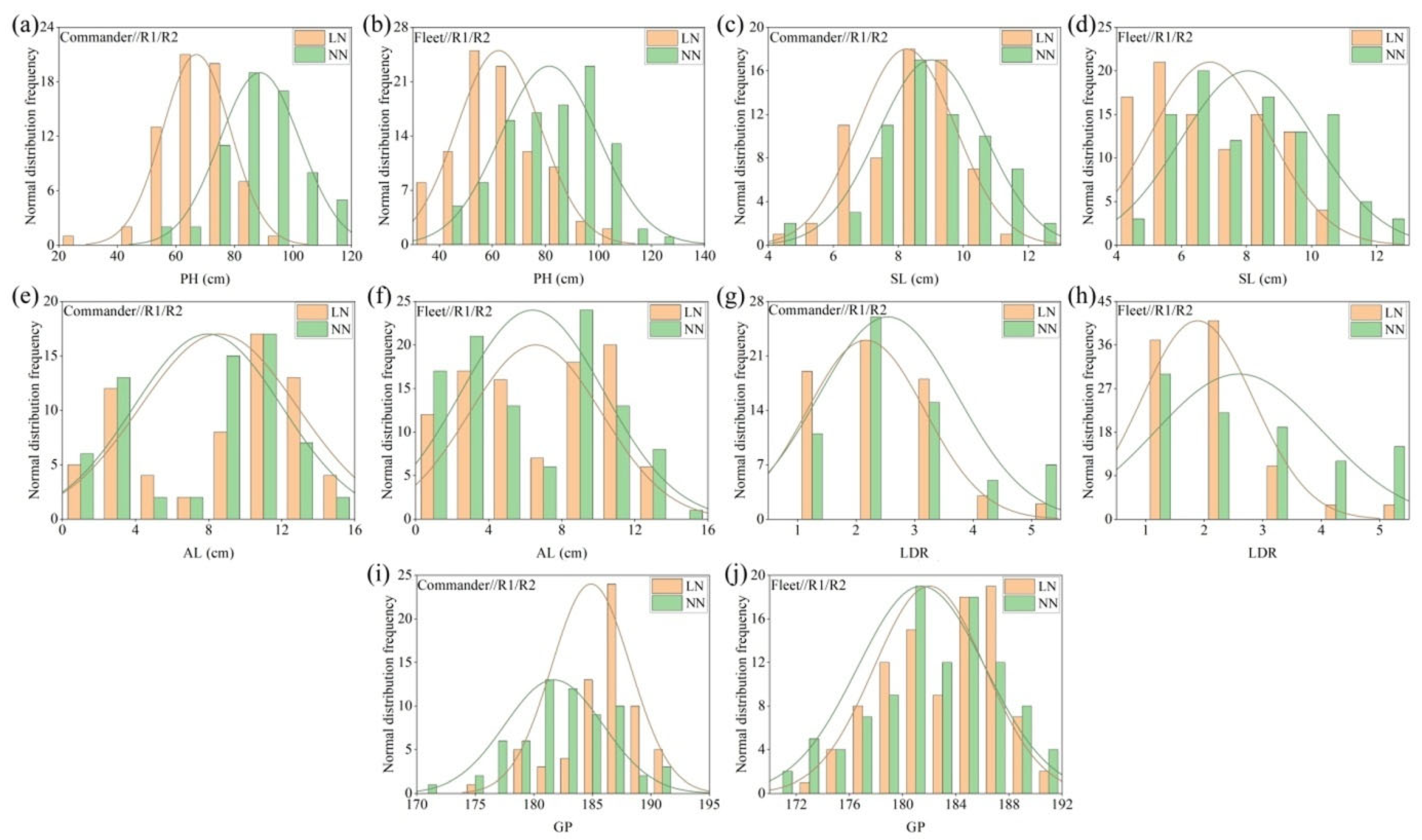
Under LN conditions, both RIL populations exhibited significant reductions in most agronomic traits measured at maturity (Figure 2). The C79 population was particularly affected in PH, GP, and LDR, with PH showing an average reduction of 24.4% (p < 0.05) (Table S4). Similarly, the F79 population displayed significant decreases in PH, SL, and LDR, with average reductions of 23.6%, 15.0%, and 24.7%, respectively (p < 0.01). This indicates that the increased lodging resistance under LN stress is likely due to reduced plant height, not to enhanced structural strength.
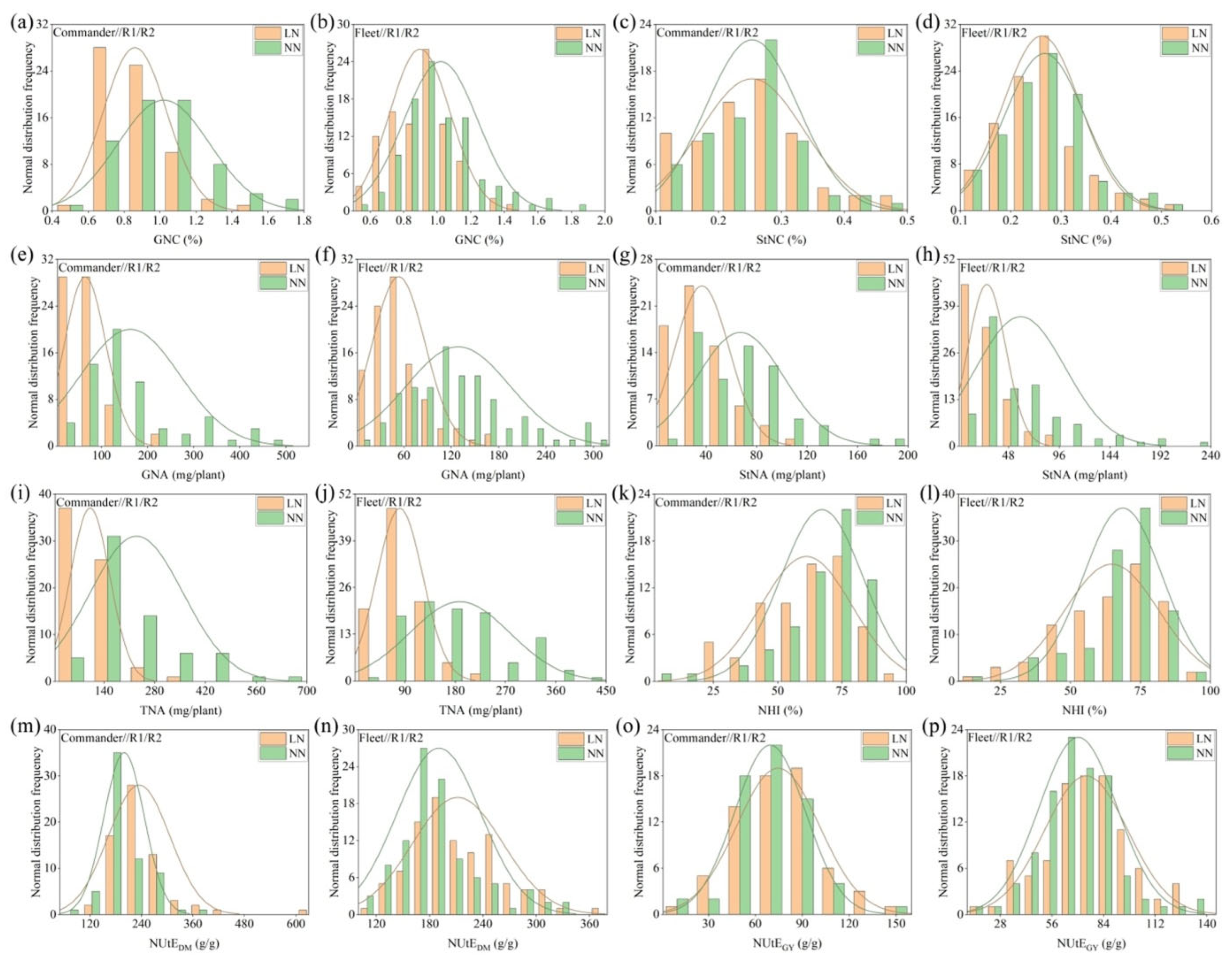
The two RIL populations showed different degrees of increase or decrease in N-related traits under different N treatments (Figure 3). GNC, GNA, StNA, and TNA of both populations showed significant decreases, with GNA showing the largest decreases of 58.5–60.1% (p < 0.01) (Table S5). This indicated that LN stress would limit the ability of barley aboveground to transfer N into the grain. In addition, NUtEDM and NUtEGY in both RIL populations increased to different degrees. This indicates that under LN stress, plants enhance their NUE to sustain essential physiological functions.
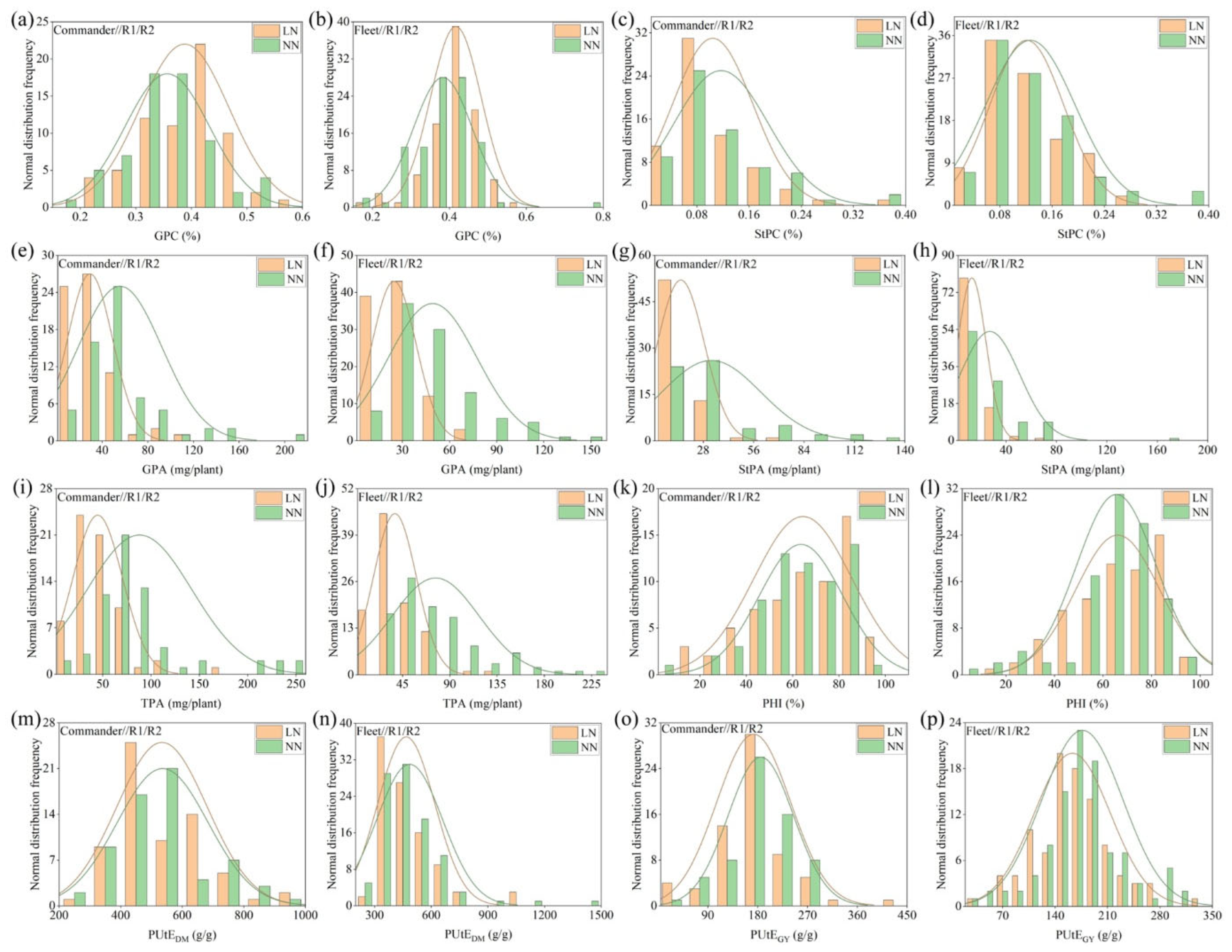
Under LN stress, P accumulation decreased by 47.4–57.8% in the whole plant (lower GPA, StPA, and TPA) but increased in the grain (higher GPC) in both RIL populations (p < 0.05) (Table S6). This indicated that N deficiency in the soil caused a significant limitation in P accumulation in the aboveground barley at maturity (Figure 4). Plants remobilize nutrients, prioritizing grain filling as a reproductive assurance strategy under stress.
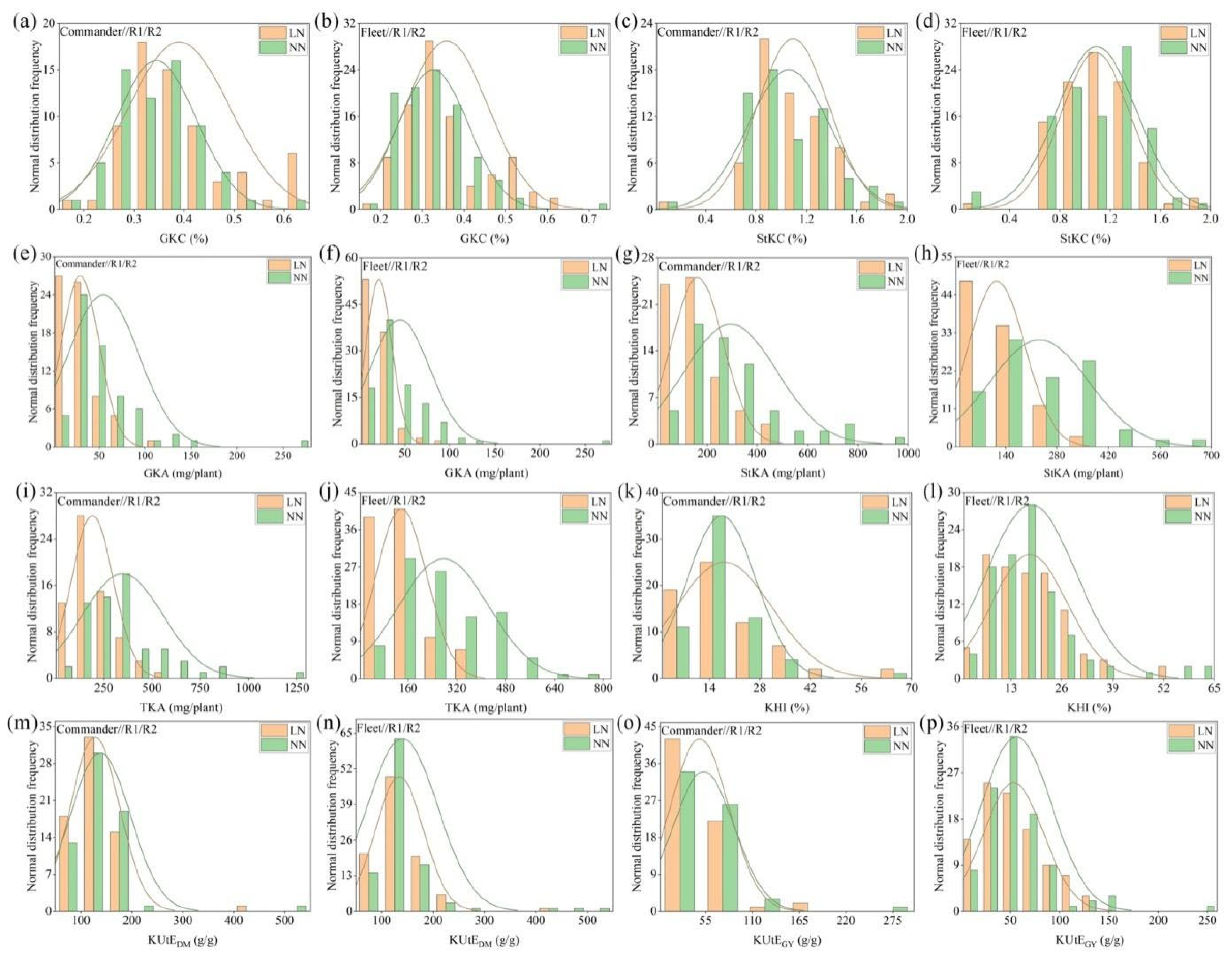
Among the K-related traits, GKA, StKA, and TKA were significantly reduced in both RIL populations, with average decreases ranging from 44.8% to 52.2% (p < 0.01) (Table S7). In contrast, only the C79 population exhibited a significant increase in GKC (p < 0.01). The remaining K-related traits showed only minor fluctuations (Figure 5). This indicates that LN treatment reduces K accumulation in barley vegetative tissues while enhancing GKC, mirroring the pattern for P-related traits.
While trait changes under different N treatments have been studied in the two RIL populations, the phenotypic differences among lines with specific QTL cluster combinations remain to be elucidated.

3.3. Analysis of QTL Pyramid Effect

To understand the additive and non-additive effects of QTL clusters, as well as the trait differences of lines containing different QTL clusters under different N treatments, we investigated the traits of different lines. Additionally, we analyzed the significance of trait differences for lines containing all QTL clusters across the different N treatments (Tables S8–S12).
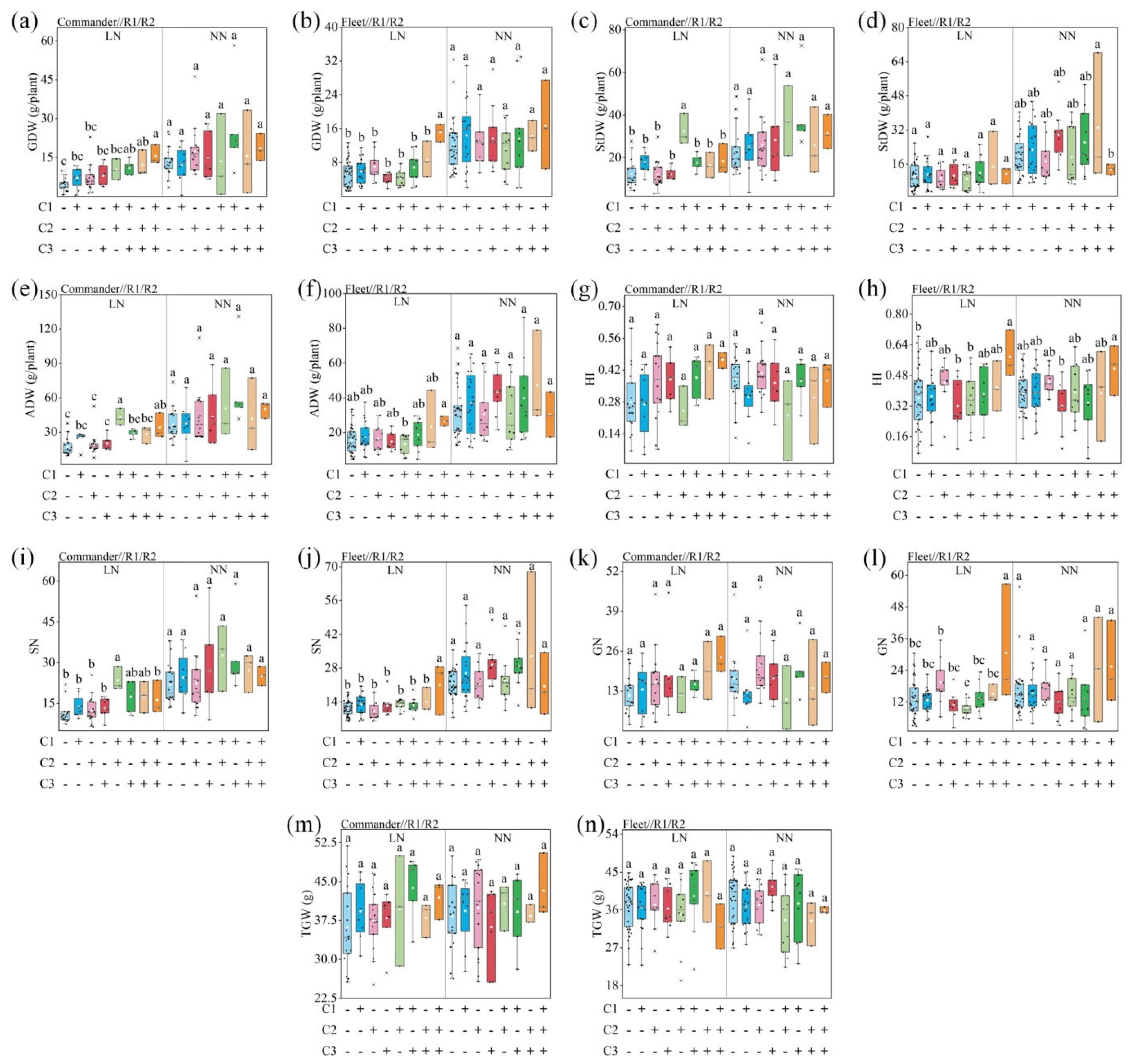
Under varying N levels, the yield traits of the RIL population differed depending on the presence and number of QTL clusters (Figure 6). Under LN treatment, the C79 population yield-related traits showed significant differences among lines containing different QTL clusters without revealing a discernible trend. Notably, lines carrying the C1 + C3, C2 + C3, or C1 + C2 + C3 clusters showed a significantly greater GDW than those without any clusters. Under NN conditions, no significant differences were observed among the lines for any yield trait. In the F79 population under LN treatment, lines harboring all three QTL clusters showed significantly greater GDW, SN, and GN compared to other lines. Under NN treatment, StDW was significantly higher in lines with both C2 and C3 clusters, while HI was significantly elevated in lines containing all three QTL clusters. In addition, lines containing all three QTL clusters exhibited no significant differences in yield traits under different N treatments (Table S8). A key observation was that in the C79 population, HI and GN in lines with all three QTL clusters were 24.67% and 38.21% higher under LN than NN treatment, respectively. Similarly, in the F79 population, the same traits in equivalent lines increased by 12.10% (HI) and 20.49% (GN) under LN compared to NN conditions (Figure 6).
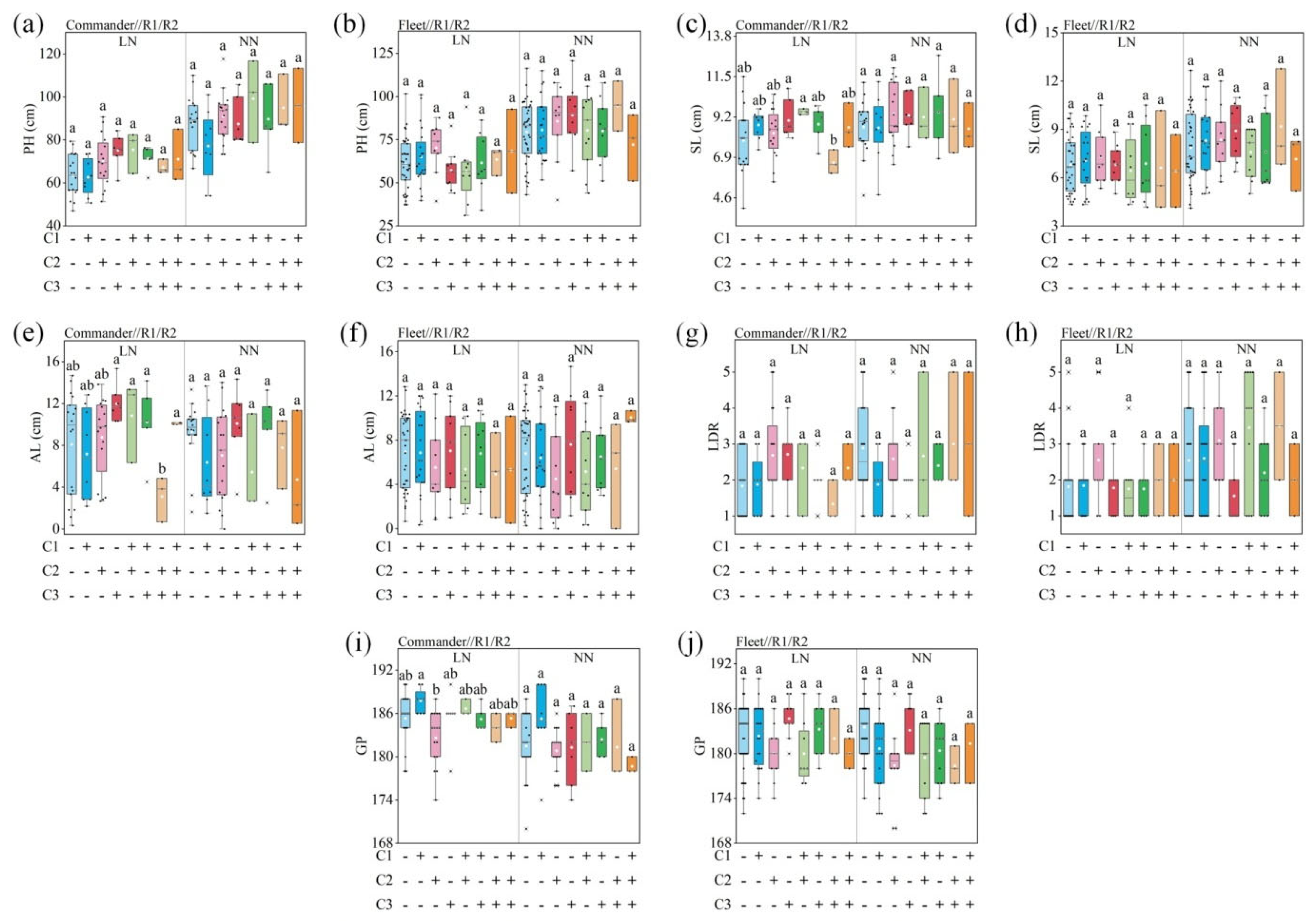
In the C79 population under LN treatment, significant differences were observed for the agronomic traits SL and AL. Lines containing both the C2 and C3 clusters exhibited the lowest values for these traits (Figure 7). In contrast, no significant differences in agronomic traits were detected under NN conditions. Although the F79 population showed some variation in agronomic traits across nitrogen treatments, these differences were not statistically significant (Figure 7).
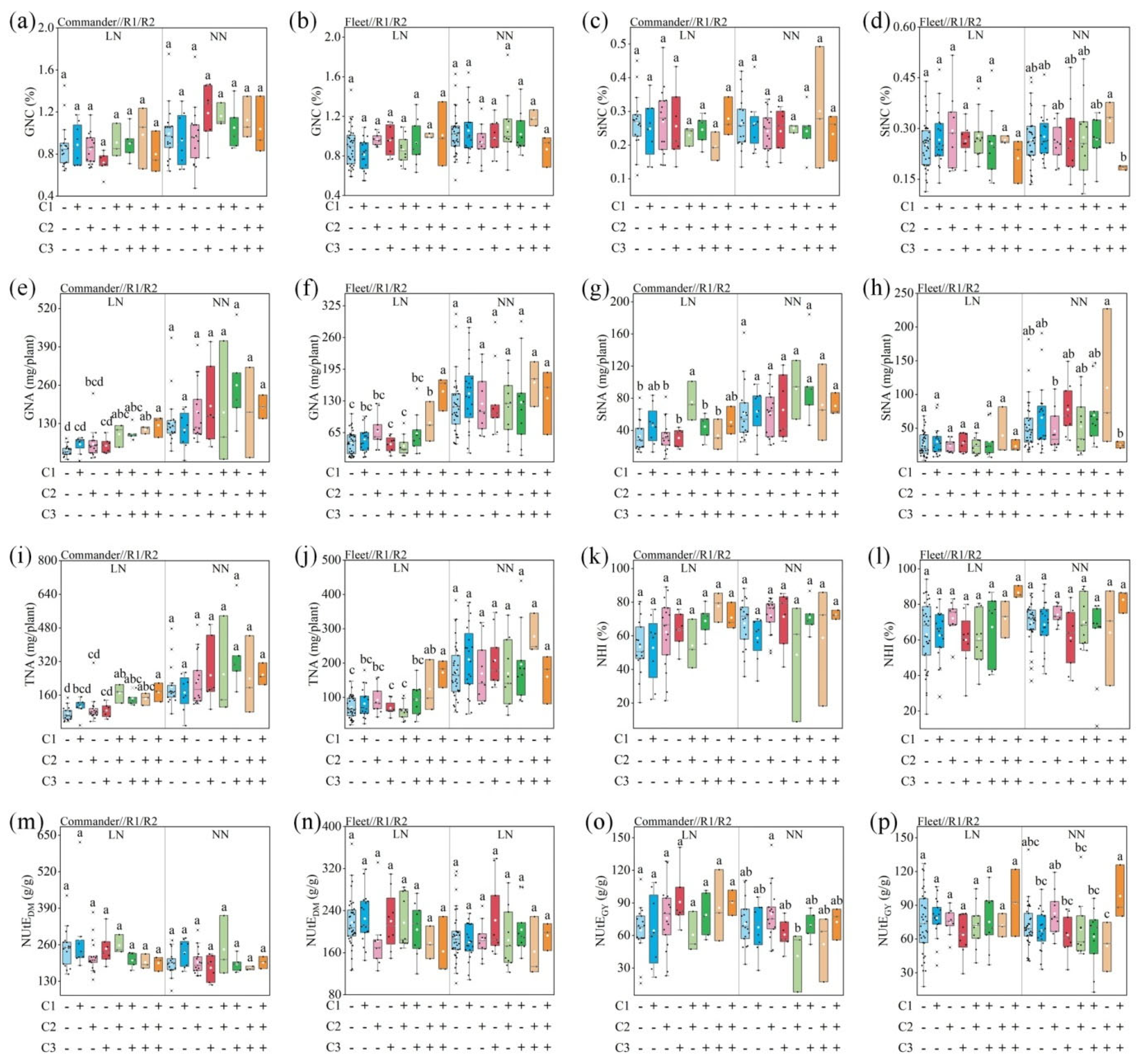
The two RIL populations exhibited distinct responses in N-related traits to differential N supplies (Figure 8). In the C79 population under LN treatment, GNA and TNA were positively correlated with the number of QTL clusters per line. Under NN conditions, however, most N-related traits showed no significant variation among lines, with the exception of NUtEGY. For the F79 population under LN, lines harboring all three QTL clusters displayed significantly elevated GNA and TNA. In addition, lines containing all three QTL clusters exhibited no significant differences in N-related traits under different N treatments (Table S10). However, StNC exhibited higher trait values under LN treatment compared to NN treatment.
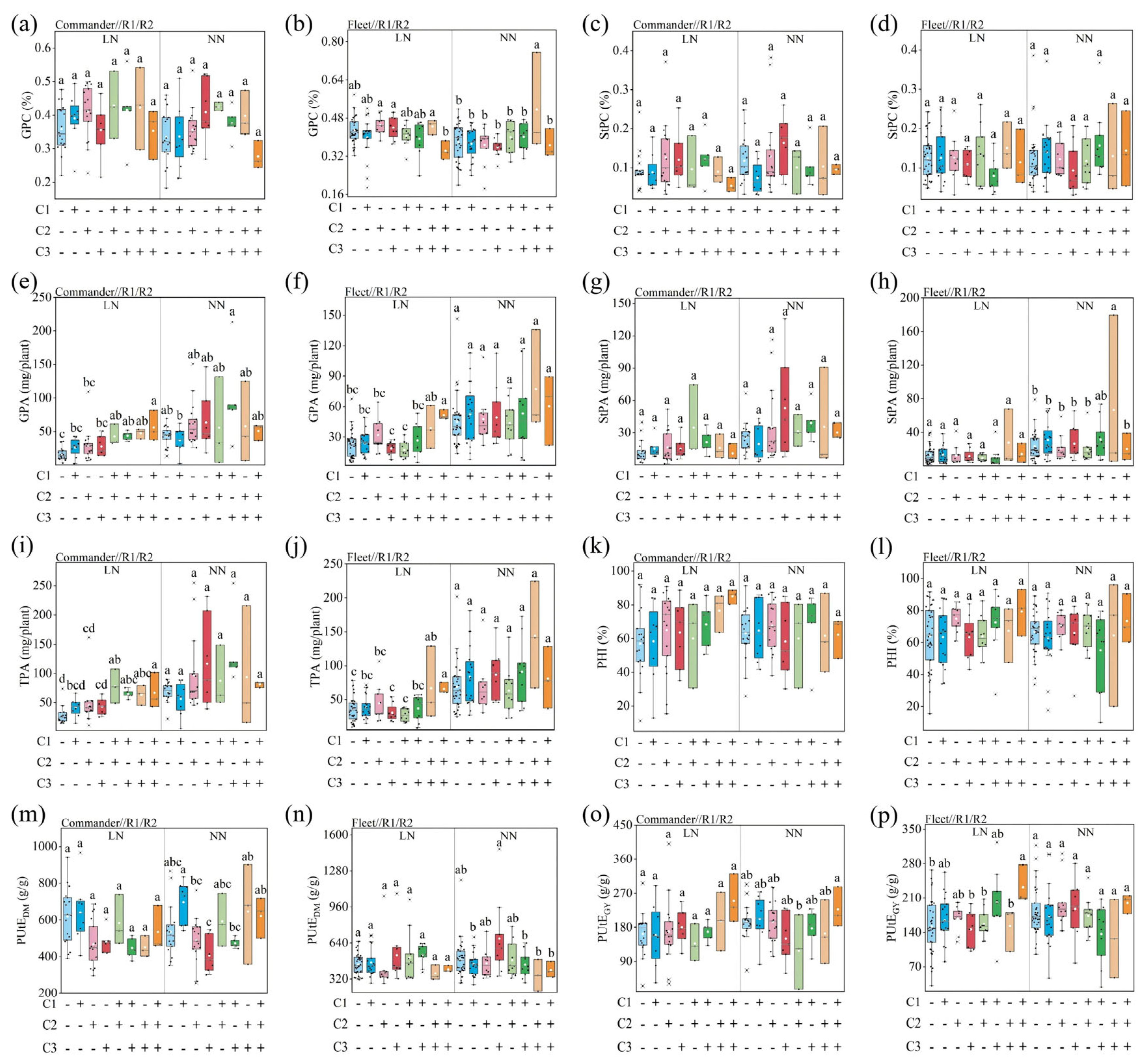
Analysis of the C79 population revealed that the number of QTL clusters was significantly positively correlated with GPA and TPA under LN treatment (Figure 9). Under NN conditions, variation in the types and number of these clusters explained the significant differences observed in GPA, PUtEDM, and PUtEGY. For the F79 population, the composition of QTL clusters was the primary driver of significant differences in GPC, GPA, TPA, and PUtEGY under LN stress. Under NN treatment, significant variation was detected for GPC, StPA, and PUtEDM, with the highest GPC and StPA values associated with lines containing both the C2 and C3 clusters.
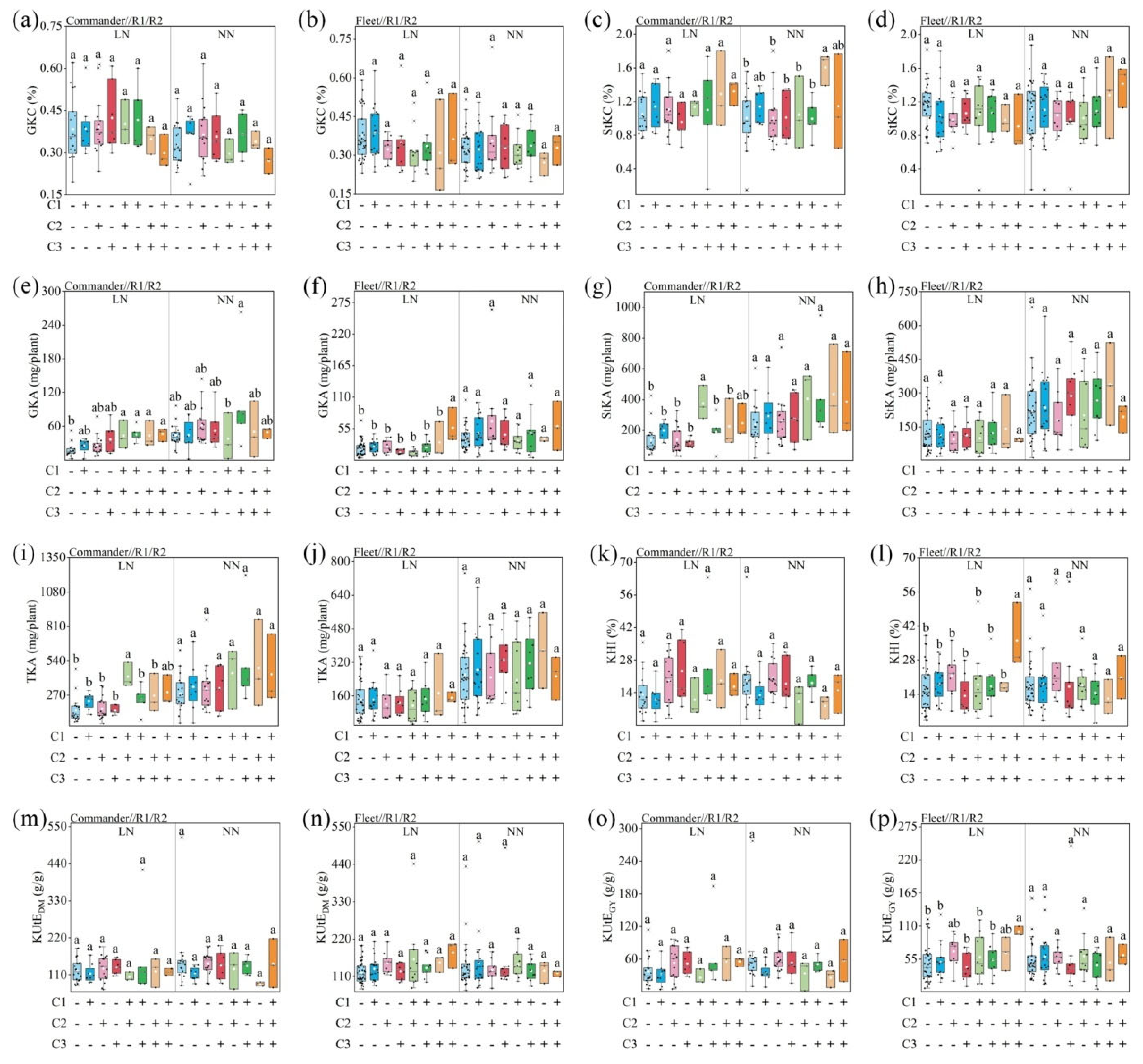
In the C79 population under LN treatment, lines with QTL clusters demonstrated higher values for GKA, StKA, and TKA than lines without clusters. Specifically, GKA increased with the number of QTL clusters harbored by the lines. Under NN conditions, lines containing both the C1 and C3 clusters exhibited significantly higher GKA than all other lines (Figure 10). A similar pattern was observed in the F79 population under LN treatment, where lines possessing all three QTL clusters showed the highest values for GKA, KHI, and KUtEGY. In contrast, no significant differences in these potassium-related traits were detected among F79 lines under NN treatment (Figure 10). Notably, the presence of all three QTL clusters conferred a greater advantage under LN stress. In the C79 population, the KHI of these lines was 10.79% higher under LN than under NN. This effect was even more pronounced in the F79 population, where equivalent lines showed remarkable increases of 73.02% in KHI and 63.9% in KUtEGY under LN compared to NN conditions (Figure 10).
In this section, we found that the F79 population consistently exhibited a stronger pyramiding effect than C79. The reason is that Commander is a malting barley, while Fleet is a fodder barley. Therefore, the F79 population has better maturity traits and better compatibility with the QTL cluster.

4. Discussion

4.1. Analysis of the Additive Effects of Gene Pyramids

A century of intensive barley breeding has led to modern cultivars with reduced genetic diversity [44]. In contrast, wild barleys and landraces possess greater allelic diversity and often exhibit superior performance under low-input conditions [48,49]. To harness this diversity, gene pyramiding via molecular marker-assisted selection (MAS) enables the combination of favorable alleles from multiple parents [38,39]. In this study, we pyramided three QTL clusters from wild barley CN4027 and landrace CN4079. Two recombinant inbred line populations were developed by crossing the F1 progeny with two additional landraces. Lines within these populations were classified using MAS based on markers tightly linked to the target QTL clusters. Finally, we evaluated the resulting lines for yield, key agronomic traits, and NPK-related traits.
The results indicated that under LN treatment, most traits exhibited higher values in lines containing QTL clusters than in those without. Under LN treatment, the values of GDW, GNA, TNA, GPA, TPA, and GKA in the C79 population lines increased with the number of QTL clusters, indicating an additive effect. However, the additive effects of these QTL clusters diminished as the number of clusters in a line increased, a finding consistent with previous reports [19]. Under NN treatment, the trends for each trait were less obvious. Notably, in both RIL populations, the HI, GN, StNC, and KHI of lines containing all three QTL clusters were higher under LN than under NN conditions. A similar trend was observed for the KUtEGY trait in the F79 population. Furthermore, due to the background-dependent nature of QTL effects, the two RIL populations in this study exhibited distinct pyramiding efficiencies [50]. Therefore, favorable QTLs must be paired with suitable varieties to optimize breeding objectives. In conclusion, QTL pyramiding may be an effective strategy for enhancing LN tolerance while maintaining high yield and nutrient efficiency.

4.2. Effect of N Nutrition on Agronomic Traits

The supply of different nitrogen levels significantly influences crop yield and agronomic traits [51]. An LN environment is known to reduce PH [15,33,52,53] and NUtEGY [54], while also shortening the GP [52,53]. In this study, evaluation of twelve yield and agronomic traits in barley revealed that LN treatment reduced GDW, StDW, ADW, SN, and PH across the RIL populations. These results are in full agreement with previous findings [32].
In additive effect analysis, previous studies have shown that overlapping loci for two traits can significantly influence their phenotypic expression [19]. In our study, lines containing all three QTL clusters in both RIL populations displayed higher HI and GN under LN conditions than under NN conditions. Additionally, in the C79 population under LN stress, the GDW increased with the number of QTL clusters harbored by the lines. This pattern may be explained by the fact that clusters C1 and C2 form overlapping regions for HI, GDW, and N-related traits, with most of these QTLs being LN-specific. Regarding TGW, previous research in barley found it to be largely independent of N fertilization levels [15,32,51]. Consistent with this, our results showed no significant differences in TGW among the various lines under different N treatments, indicating that TGW is largely unaffected by N supply. This alignment with established findings supports the validity of our results.

4.3. Effect of N Nutrition on N, P, and K-Related Traits

Different levels of nitrogen supply significantly affect not only plant N-related traits but also those related to P and K [51,55,56]. Previous studies have shown that an LN environment reduces GNC and StNC [36], whereas the uptake of P and K tends to increase with N application [57,58]. In this study, LN treatment significantly decreased GNC, GNA, StNA, TNA, GPA, StPA, TPA, GKA, StKA, and TKA in the two RIL populations, while differentially increasing GKC, NUtEDM and NUtEGY. Furthermore, in the C79 population under LN treatment, the values of GNA, TNA, GPA, TPA, and GKA increased with the number of QTL clusters. These findings suggest a potential interaction among N, P, and K-related traits under LN stress, which warrants further investigation.
Existing research indicates that external N levels influence plant nutrient acquisition by modulating lateral root development [59]. In parallel, plants adjust P uptake through the NIGT1-PHR1 regulatory module in response to varying nitrate supplies [60]. Additionally, P acquisition is closely linked to arbuscular mycorrhizal fungi (AMF) symbiosis, a process itself co-regulated by both N and P status [61]. Previous trait studies have primarily focused on the effects of different NPK fertilizers on yield and agronomic traits [5], and have often been limited to examining either N-P or N-K interactions [54,55,56,57]. Few studies have investigated plant P and K uptake and content under different N treatments. This study fills this research gap.

4.4. The Role of Gene Pyramids in Breeding

Crop varieties with high tolerance to abiotic stresses can be developed through QTL pyramiding while maintaining yield and quality. This approach has been successfully applied in rice to improve grain size, yield potential, and cold tolerance [21]. For instance, Endo et al. [62] introduced the qCT-4 allele into the “Hitomebore” population, which significantly enhanced cold tolerance without compromising grain yield or quality. Similarly, Feng et al. [63] pyramided two drought-tolerant loci (qDT3.9 and qDT6.3) with two LN-tolerant loci (qGY1 and qSF8) in a population of rice HHZ-ILs, resulting in lines with strong drought and LN tolerance. In barley, however, high yield and LN tolerance are complex quantitative traits controlled by minor-effect polygenes and are highly susceptible to environmental influences [32,37,46]. Conventional breeding methods are inefficient for selecting such traits, and few reports have been published on pyramiding barley QTL for LN stress tolerance using MAS techniques.
This study demonstrates that QTL pyramiding via MAS is an effective strategy for improving LN tolerance in barley. In subsequent barley breeding, the pyramided lines developed in this study can serve as elite donors of favorable QTLs, offering potential for the coordinated improvement of multiple traits [64]. It is essential to fully account for the background dependence of these QTLs by selecting elite varieties as recipients [50]. Through backcrossing combined with MAS, single-segment substitution lines or overlapping introgression lines can be developed [65]. We propose to evaluate QTL cluster stability via multi-year trials and to develop functional markers for major QTL clusters, with the goal of breeding LN-tolerant, high-yielding, and nutrient-efficient barley cultivars or advanced breeding lines.

5. Conclusions

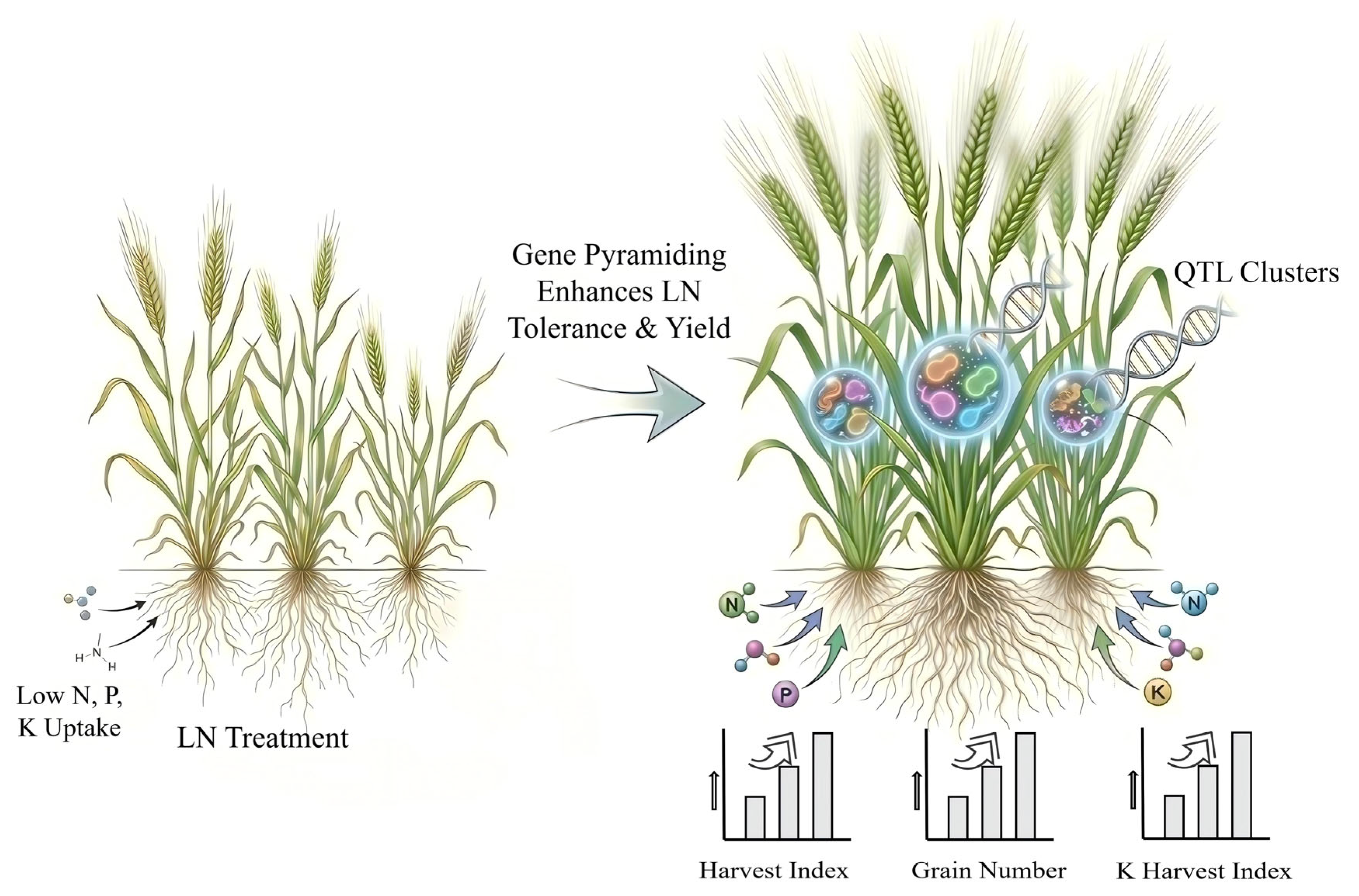
LN treatment significantly reduced most agronomic traits, yield traits and N, P and K-related traits in both recombinant inbred lines. Conversely, LN stress enhanced N utilization efficiency for aboveground dry matter and N utilization efficiency for grain yield in both populations and significantly increased grain K content in the C79 population. Under LN conditions, lines harboring QTL clusters demonstrated significant improvements in yield formation, agronomic traits, and N, P, and K uptake compared to lines without these clusters. Notably, in both populations, lines containing all three QTL clusters displayed higher values for harvest index, grain number per spike, and K harvest index under LN treatment than under NN conditions (Figure 11). This study demonstrates that gene pyramiding can effectively enhance LN tolerance in barley, maintaining high yield while improving N, P and K uptake and utilization efficiency, thereby providing a viable strategy for barley cultivar improvement. A subsequent breeding strategy involves using these pyramided lines as donors in backcrosses with elite varieties to develop overlapping introgression lines. This approach, coupled with stability assessment of the QTL clusters, enables the development of new barley varieties that combine LN tolerance with high yield and nutrient-use efficiency.

Supplementary Materials

The following supporting information can be downloaded at: https://www.mdpi.com/article/10.3390/agriculture16040453/s1, Figure S1. PCR profile polymorphisms between parental lines (CN4027, CN4079) and RIL populations; Table S1: Detailed information on the three superior QTL clusters; Table S2: Statistics of the combination line of each QTL cluster in the pyramiding population; Table S3: Phenotypic differences in yield traits of the RIL population; Table S4: Phenotypic differences in agronomic traits of the RIL population; Table S5: Phenotypic differences in N-related traits of the RIL population; Table S6: Phenotypic differences in P-related traits of the RIL population; Table S7: Phenotypic differences in K-related traits of the RIL population; Table S8: Phenotypic differences in yield traits of lines containing three QTL clusters; Table S9: Phenotypic differences in agronomic traits of lines containing three QTL clusters; Table S10: Phenotypic differences in N-related traits of lines containing three QTL clusters; Table S11: Phenotypic differences in P-related traits of lines containing three QTL clusters; Table S12: Phenotypic differences in K-related traits of lines containing three QTL clusters.

Author Contributions

B.-J.C., Y.H., Z.-Y.Z., Y.-F.H., D.-Y.H., L.Y. and Y.-G.X. carried out the measurements of the phenotypes and data analysis. Y.L., S.Y. and G.-D.C. conducted data curation. B.-J.C. and S.Y. participated in drafting this manuscript. G.-D.C. designed the experiments and guided the entire study. All authors have read and agreed to the published version of the manuscript.

Funding

This study was supported by the National Natural Science Foundation of China (42207016) and the Fund of the Science & Technology Department of Sichuan Province (24NSFSC7762).

Institutional Review Board Statement

Not applicable.

Data Availability Statement

The datasets used in the current study are available from the corresponding author upon reasonable request.

Acknowledgments

We thank the anonymous referees for critically reading and revising this manuscript.

Conflicts of Interest

The authors declare no conflicts of interest.

References

  1. Xu, G.-W.; Lu, D.-K.; Wang, H.-Z.; Li, Y. Morphological and physiological traits of rice roots and their relationships to yield and nitrogen utilization as influenced by irrigation regime and nitrogen rate. Agric. Water Manag. 2018, 203, 385–394. [Google Scholar] [CrossRef]
  2. Duncan, E.G.; O’Sullivan, C.A.; Roper, M.M.; Palta, J.; Whisson, K.; Peoples, M.B. Yield and nitrogen use efficiency of wheat increased with root length and biomass due to nitrogen, phosphorus, and potassium interactions. J. Plant Nutr. Soil Sci. 2018, 181, 364–373. [Google Scholar] [CrossRef]
  3. Lundy, M.E.; Pittelkow, C.M.; Linquist, B.A.; Liang, X.; van Groenigen, K.J.; Lee, J.; Six, J.; Venterea, R.T.; van Kessel, C. Nitrogen fertilization reduces yield declines following no-till adoption. Field Crop. Res. 2015, 183, 204–210. [Google Scholar] [CrossRef]
  4. Silva Alves Dos Santos, C.; Bonfim-Silva, E.M.; da Silva, T.J.A. Nitrogen and potassium in biomass production and water use efficiency of irrigated wheat cv. BRS 394 in Cerrado. J. Plant Nutr. 2023, 46, 3174–3183. [Google Scholar] [CrossRef]
  5. Fageria, N.K.; Oliveira, J.P. Nitrogen, Phosphorus and Potassium Interactions in Upland Rice. J. Plant Nutr. 2014, 37, 1586–1600. [Google Scholar] [CrossRef]
  6. Robertson, G.P.; Vitousek, P.M. Nitrogen in Agriculture: Balancing the Cost of an Essential Resource. Annu. Rev. Environ. Resour. 2009, 34, 97–125. [Google Scholar] [CrossRef]
  7. Ladha, J.K.; Tirol-Padre, A.; Reddy, C.K.; Cassman, K.G.; Verma, S.; Powlson, D.S.; van Kessel, C.; Richter, D.d.B.; Chakraborty, D.; Pathak, H. Global nitrogen budgets in cereals: A 50-year assessment for maize, rice and wheat production systems. Sci. Rep. 2016, 6, 19355. [Google Scholar] [CrossRef]
  8. Olmo, M.; Villar, R.; Salazar, P.; Alburquerque, J.A. Changes in soil nutrient availability explain biochar’s impact on wheat root development. Plant Soil 2015, 399, 333–343. [Google Scholar] [CrossRef]
  9. Wang, Y.; Xiao, L.; Guo, S.; An, F.; Du, D. Fine Mapping and Whole-Genome Resequencing Identify the Seed Coat Color Gene in Brassica rapa. PLoS ONE 2016, 11, e0166464. [Google Scholar] [CrossRef]
  10. Hawkesford, M.J.; Griffiths, S. Exploiting genetic variation in nitrogen use efficiency for cereal crop improvement. Curr. Opin. Plant Biol. 2019, 49, 35–42. [Google Scholar] [CrossRef]
  11. Bloch, S.E.; Ryu, M.-H.; Ozaydin, B.; Broglie, R. Harnessing atmospheric nitrogen for cereal crop production. Curr. Opin. Biotechnol. 2020, 62, 181–188. [Google Scholar] [CrossRef] [PubMed]
  12. Xu, G.; Fan, X.; Miller, A.J. Plant Nitrogen Assimilation and Use Efficiency. Annu. Rev. Plant Biol. 2012, 63, 153–182. [Google Scholar] [CrossRef] [PubMed]
  13. Hefferon, K.L. Nutritionally Enhanced Food Crops; Progress and Perspectives. Int. J. Mol. Sci. 2015, 16, 3895–3914. [Google Scholar] [CrossRef] [PubMed]
  14. Lenaerts, B.; Collard, B.C.; Demont, M. Review: Improving global food security through accelerated plant breeding. Plant Sci. 2019, 287, 110207. [Google Scholar] [CrossRef]
  15. Saal, B.; von Korff, M.; Léon, J.; Pillen, K. Advanced-backcross QTL analysis in spring barley: IV. Localization of QTL × nitrogen interaction effects for yield-related traits. Euphytica 2010, 177, 223–239. [Google Scholar] [CrossRef]
  16. Wei, D.; Cui, K.; Ye, G.; Pan, J.; Xiang, J.; Huang, J.; Nie, L. QTL mapping for nitrogen-use efficiency and nitrogen-deficiency tolerance traits in rice. Plant Soil 2012, 359, 281–295. [Google Scholar] [CrossRef]
  17. Gong, X.; Wheeler, R.; Bovill, W.D.; McDonald, G.K. QTL mapping of grain yield and phosphorus efficiency in barley in a Mediterranean-like environment. Theor. Appl. Genet. 2016, 129, 1657–1672. [Google Scholar] [CrossRef]
  18. Guo, Y.; Kong, F.-M.; Xu, Y.-F.; Zhao, Y.; Liang, X.; Wang, Y.-Y.; An, D.-G.; Li, S.-S. QTL mapping for seedling traits in wheat grown under varying concentrations of N, P and K nutrients. Theor. Appl. Genet. 2011, 124, 851–865. [Google Scholar] [CrossRef]
  19. Chen, G.; Habib, A.; Wei, Y.; Zheng, Y.-L.; Shabala, S.; Zhou, M.; Liu, C. Enhancing Fusarium crown rot resistance by pyramiding large-effect QTL in barley. Mol. Breed. 2015, 35, 26. [Google Scholar] [CrossRef]
  20. Shamsudin, N.A.A.; Swamy, B.P.M.; Ratnam, W.; Cruz, M.T.S.; Sandhu, N.; Raman, A.K.; Kumar, A. Pyramiding of drought yield QTLs into a high quality Malaysian rice cultivar MRQ74 improves yield under reproductive stage drought. Rice 2016, 9, 21. [Google Scholar] [CrossRef]
  21. Wang, P.; Xing, Y.; Li, Z.; Yu, S. Improving rice yield and quality by QTL pyramiding. Mol. Breed. 2011, 29, 903–913. [Google Scholar] [CrossRef]
  22. Lande, R.; Thompson, R. Efficiency of marker-assisted selection in the improvement of quantitative traits. Genetics 1990, 124, 743–756. [Google Scholar] [CrossRef] [PubMed]
  23. Chen, D.-G.; Guo, J.; Chen, K.; Ye, C.-J.; Liu, J.; Chen, Y.-D.; Zhou, X.-Q.; Liu, C.-G. Pyramiding Breeding of Low-Glutelin-Content Indica Rice with Good Quality and Resistance. Plants 2023, 12, 3763. [Google Scholar] [CrossRef] [PubMed]
  24. Lin, C.; Zhu, T.; Ogorek, L.L.P.; Wang, Y.; Sauter, M.; Pedersen, O. The Pyramiding of Three Key Root Traits Aid Breeding of Flood-Tolerant Rice. Plants 2022, 11, 2033. [Google Scholar] [CrossRef]
  25. Muthu, V.; Abbai, R.; Nallathambi, J.; Rahman, H.; Ramasamy, S.; Kambale, R.; Thulasinathan, T.; Ayyenar, B.; Muthurajan, R. Pyramiding QTLs controlling tolerance against drought, salinity, and submergence in rice through marker assisted breeding. PLoS ONE 2020, 15, e0227421. [Google Scholar] [CrossRef]
  26. Gautam, T.; Dhillon, G.S.; Saripalli, G.; Rakhi; Singh, V.P.; Prasad, P.; Kaur, S.; Chhuneja, P.; Sharma, P.K.; Balyan, H.S.; et al. Marker-assisted pyramiding of genes/QTL for grain quality and rust resistance in wheat (Triticum aestivum L.). Mol. Breed. 2020, 40, 49. [Google Scholar] [CrossRef]
  27. Liu, R.; Lu, J.; Zhou, M.; Zheng, S.; Liu, Z.; Zhang, C.; Du, M.; Wang, M.; Li, Y.; Wu, Y.; et al. Developing stripe rust resistant wheat (Triticum aestivum L.) lines with gene pyramiding strategy and marker-assisted selection. Genet. Resour. Crop. Evol. 2020, 67, 381–391. [Google Scholar] [CrossRef]
  28. Zhang, B.; Shi, W.; Li, W.; Chang, X.; Jing, R. Efficacy of pyramiding elite alleles for dynamic development of plant height in common wheat. Mol. Breed. 2013, 32, 327–338. [Google Scholar] [CrossRef]
  29. Zheng, Z.; Gao, S.; Zhou, M.; Yan, G.; Liu, C. Enhancing Fusarium crown rot resistance by pyramiding large-effect QTL in common wheat (Triticum aestivum L.). Mol. Breed. 2017, 37, 107. [Google Scholar] [CrossRef]
  30. Moullet, O.; Díaz Bermúdez, G.; Fossati, D.; Brabant, C.; Mascher, F.; Schori, A. Pyramiding wheat pre-harvest sprouting resistance genes in triticale breeding. Mol. Breed. 2022, 42, 60. [Google Scholar] [CrossRef]
  31. Langridge, P. Economic and Academic Importance of Barley. In The Barley Genome; Stein, N., Muehlbauer, G.J., Eds.; Springer International Publishing: Cham, Switzerland, 2018; pp. 1–10. ISBN 978-3-319-92528-8. [Google Scholar]
  32. Chen, B.; Hou, Y.; Huo, Y.; Zeng, Z.; Hu, D.; Mao, X.; Zhong, C.; Xu, Y.; Tang, X.; Gao, X.; et al. QTL Mapping of Yield, Agronomic, and Nitrogen-Related Traits in Barley (Hordeum vulgare L.) under Low Nitrogen and Normal Nitrogen Treatments. Plants 2024, 13, 2137. [Google Scholar] [CrossRef] [PubMed]
  33. Hoffmann, A.; Maurer, A.; Pillen, K. Detection of nitrogen deficiency QTL in juvenile wild barley introgression linesgrowing in a hydroponic system. BMC Genet. 2012, 13, 88. [Google Scholar] [CrossRef] [PubMed]
  34. Kindu, G.A.; Tang, J.; Yin, X.; Struik, P.C. Quantitative trait locus analysis of nitrogen use efficiency in barley (Hordeum vulgare L.). Euphytica 2014, 199, 207–221. [Google Scholar] [CrossRef]
  35. Kjaer, B.; Jensen, J. The Inheritance of Nitrogen and Phosphorus Content in Barley Analysed by Genetic Markers. Hereditas 1995, 123, 109–119. [Google Scholar] [CrossRef]
  36. Schnaithmann, F.; Pillen, K. Detection of exotic QTLs controlling nitrogen stress tolerance among wild barley introgression lines. Euphytica 2012, 189, 67–88. [Google Scholar] [CrossRef]
  37. Zeng, Z.; Song, S.; Ma, J.; Hu, D.; Xu, Y.; Hou, Y.; Chen, H.; Chen, Y.; Huo, Y.; Li, Y.; et al. QTL mapping of nitrogen use efficiency traits at the seedling and maturity stages under different nitrogen conditions in barley (Hordeum vulgare L.). Plant Breed. 2023, 143, 155–167. [Google Scholar] [CrossRef]
  38. Castro, A.J.; Capettini, F.; Corey, A.E.; Filichkina, T.; Hayes, P.M.; Kleinhofs, A.; Kudrna, D.; Richardson, K.; Sandoval-Islas, S.; Rossi, C.; et al. Mapping and pyramiding of qualitative and quantitative resistance to stripe rust in barley. Theor. Appl. Genet. 2003, 107, 922–930. [Google Scholar] [CrossRef]
  39. Castro, A.J.; Chen, X.; Corey, A.; Filichkina, T.; Hayes, P.M.; Mundt, C.; Richardson, K.; Sandoval-Islas, S.; Vivar, H. Pyramiding and Validation of Quantitative Trait Locus (QTL) Alleles Determining Resistance to Barley Stripe Rust: Effects on adult plant resistance. Crop. Sci. 2003, 43, 2234–2239. [Google Scholar] [CrossRef]
  40. Richardson, K.L.; Vales, M.I.; Kling, J.G.; Mundt, C.C.; Hayes, P.M. Pyramiding and dissecting disease resistance QTL to barley stripe rust. Theor. Appl. Genet. 2006, 113, 485–495. [Google Scholar] [CrossRef]
  41. Riedel, C.; Habekuß, A.; Schliephake, E.; Niks, R.; Broer, I.; Ordon, F. Pyramiding of Ryd2 and Ryd3 conferring tolerance to a German isolate of Barley yellow dwarf virus-PAV (BYDV-PAV-ASL-1) leads to quantitative resistance against this isolate. Theor. Appl. Genet. 2011, 123, 69–76. [Google Scholar] [CrossRef]
  42. Werner, K.; Friedt, W.; Ordon, F. Strategies for Pyramiding Resistance Genes Against the Barley Yellow Mosaic Virus Complex (BaMMV, BaYMV, BaYMV-2). Mol. Breed. 2005, 16, 45–55. [Google Scholar] [CrossRef]
  43. Emebiri, L.; Michael, P.; Moody, D.B.; Ogbonnaya, F.C.; Black, C. Pyramiding QTLs to improve malting quality in barley: Gains in phenotype and genetic diversity. Mol. Breed. 2008, 23, 219–228. [Google Scholar] [CrossRef]
  44. Ellis, R.; Forster, B.; Robinson, D.; Handley, L.; Gordon, D.; Russell, J.; Powell, W. Wild barley: A source of genes for crop improvement in the 21st century? J. Exp. Bot. 2000, 51, 9–17. [Google Scholar] [CrossRef] [PubMed]
  45. Chen, G.D.; Liu, Y.X.; Wei, Y.M.; McIntyre, C.L.; Zhou, M.X.; Zheng, Y.-L.; Liu, C.J. Major QTL for Fusarium crown rot resistance in a barley landrace. Theor. Appl. Genet. 2013, 126, 2511–2520. [Google Scholar] [CrossRef]
  46. Zeng, Z.; Song, S.; Ma, J.; Hu, D.; Xu, Y.; Hou, Y.; He, C.; Tang, X.; Lan, T.; Zeng, J.; et al. QTL Mapping of Agronomic and Physiological Traits at the Seedling and Maturity Stages under Different Nitrogen Treatments in Barley. Int. J. Mol. Sci. 2023, 24, 8736. [Google Scholar] [CrossRef]
  47. Li, J.; Wang, S.; Yu, J.; Wang, L.; Zhou, S. A Modified CTAB Protocol for Plant DNA Extraction. Chin. Bull. Bot. 2013, 48, 72–78. [Google Scholar] [CrossRef]
  48. Ceccarelli, S. Adaptation to low/high input cultivation. Euphytica 1996, 92, 203–214. [Google Scholar] [CrossRef]
  49. Weltzien, E.; Fischbeck, G. Performance and Variability of Local Barley Landraces in Near-Eastern Environments. Plant Breed. 1990, 104, 58–67. [Google Scholar] [CrossRef]
  50. Zhao, F.; Wang, L.; Xu, S. Identification of QTL-by-environment interaction by controlling polygenic background effect. J. Genet. Genom. 2025, 52, 915–926. [Google Scholar] [CrossRef]
  51. Baethgen, W.E.; Christianson, C.; Lamothe, A.G. Nitrogen fertilizer effects on growth, grain yield, and yield components of malting barley. Field Crop. Res. 1995, 43, 87–99. [Google Scholar] [CrossRef]
  52. Cai, H.; Chu, Q.; Gu, R.; Yuan, L.; Liu, J.; Zhang, X.; Chen, F.; Mi, G.; Zhang, F. Identification of QTLs for plant height, ear height and grain yield in maize (Zea mays L.) in response to nitrogen and phosphorus supply. Plant Breed. 2012, 131, 502–510. [Google Scholar] [CrossRef]
  53. Cai, H.; Chu, Q.; Yuan, L.; Liu, J.; Chen, X.; Chen, F.; Mi, G.; Zhang, F. Identification of quantitative trait loci for leaf area and chlorophyll content in maize (Zea mays) under low nitrogen and low phosphorus supply. Mol. Breed. 2012, 30, 251–266. [Google Scholar] [CrossRef]
  54. Yang, X.; Xia, X.; Zhang, Z.; Nong, B.; Zeng, Y.; Xiong, F.; Wu, Y.; Gao, J.; Deng, G.; Li, D. QTL Mapping by Whole Genome Re-sequencing and Analysis of Candidate Genes for Nitrogen Use Efficiency in Rice. Front. Plant Sci. 2017, 8, 1634. [Google Scholar] [CrossRef] [PubMed]
  55. Li, W.; Li, L.; Sun, J.; Zhang, F.; Christie, P. Effects of Nitrogen and Phosphorus Fertilizers and Intercropping on Uptake of Nitrogen and Phosphorus by Wheat, Maize, and Faba Bean. J. Plant Nutr. 2003, 26, 629–642. [Google Scholar] [CrossRef]
  56. Zhang, F.; Niu, J.; Zhang, W.; Chen, X.; Li, C.; Yuan, L.; Xie, J. Potassium nutrition of crops under varied regimes of nitrogen supply. Plant Soil 2010, 335, 21–34. [Google Scholar] [CrossRef]
  57. Brennan, R.F.; Bolland, M.D.A. Comparing the Nitrogen and Potassium Requirements of Canola and Wheat for Yield and Grain Quality. J. Plant Nutr. 2009, 32, 2008–2026. [Google Scholar] [CrossRef]
  58. Zubillaga, M.M.; Aristi, J.P.; Lavado, R.S. Effect of Phosphorus and Nitrogen Fertilization on Sunflower (Helianthus annus L.) Nitrogen Uptake and Yield. J. Agron. Crop. Sci. 2002, 188, 267–274. [Google Scholar] [CrossRef]
  59. Forde, B.G. Nitrogen signalling pathways shaping root system architecture: An update. Curr. Opin. Plant Biol. 2014, 21, 30–36. [Google Scholar] [CrossRef]
  60. Ueda, Y.; Kiba, T.; Yanagisawa, S. Nitrate-inducible NIGT1 proteins modulate phosphate uptake and starvation signalling via transcriptional regulation of SPX genes. Plant J. 2020, 102, 448–466. [Google Scholar] [CrossRef]
  61. Bonneau, L.; Huguet, S.; Wipf, D.; Pauly, N.; Truong, H. Combined phosphate and nitrogen limitation generates a nutrient stress transcriptome favorable for arbuscular mycorrhizal symbiosis in Medicago truncatula. New Phytol. 2013, 199, 188–202. [Google Scholar] [CrossRef]
  62. Endo, T.; Chiba, B.; Wagatsuma, K.; Saeki, K.; Ando, T.; Shomura, A.; Mizubayashi, T.; Ueda, T.; Yamamoto, T.; Nishio, T. Detection of QTLs for cold tolerance of rice cultivar ‘Kuchum’ and effect of QTL pyramiding. Theor. Appl. Genet. 2016, 129, 631–640. [Google Scholar] [CrossRef]
  63. Feng, B.; Chen, K.; Cui, Y.; Wu, Z.; Zheng, T.; Zhu, Y.; Ali, J.; Wang, B.; Xu, J.; Zhang, W.; et al. Genetic Dissection and Simultaneous Improvement of Drought and Low Nitrogen Tolerances by Designed QTL Pyramiding in Rice. Front. Plant Sci. 2018, 9, 306. [Google Scholar] [CrossRef]
  64. Zou, T.; Zhao, H.; Li, X.; Zheng, M.; Zhang, S.; Sun, L.; He, N.; Pan, X.; Liu, Z.; Fu, X. QTLs detection and pyramiding for stigma exsertion rate in wild rice species by using the single-segment substitution lines. Mol. Breed. 2020, 40, 74. [Google Scholar] [CrossRef]
  65. Zhou, K.; Yu, J.; Yu, Z.; Chi, C.; Ren, J.; Zhao, Z.; Zhang, H.; Ling, Y.; Zhang, C.; Zhao, F. Identification of quantitative trait loci for yield traits and fine-mapping of qGW4 using the chromosome segment substitution line-Z708 and dissected single-segment substitution lines. Front. Plant Sci. 2025, 16, 1524770. [Google Scholar] [CrossRef]
Figure 1. Trend plots of yield traits of the RIL population under different N treatments. LN: low-nitrogen treatment; NN: normal-nitrogen treatment. Lines of different colors represent the distribution trends of population traits under different N treatments. R1: CN4079; R2: CN4027. GDW, grain dry weight per plant (a,b); StDW, straw dry weight per plant (c,d); ADW, dry weight for aboveground per plant (e,f); HI, harvest index (g,h); SN, spike number per plant (i,j); GN, grain number per spike (k,l); TGW, thousand-grain weight (m,n).
Agriculture 16 00453 g001
Figure 2. Trend plots of agronomic traits of the RIL population under different N treatments. LN: low-nitrogen treatment; NN: normal-nitrogen treatment. Lines of different colors represent the distribution trends of population traits under different N treatments. R1: CN4079; R2: CN4027. PH, plant height (a,b); SL, spike length (c,d); AL, awn length (e,f); LDR, lodging resistance (g,h); GP, growth period (i,j).
Agriculture 16 00453 g002
Figure 3. Trend plots of N-related traits of the RIL population under different N treatments. LN: low-nitrogen treatment; NN: normal-nitrogen treatment. Lines of different colors represent the distribution trends of population traits under different N treatments. R1: CN4079; R2: CN4027. GNC, grain N content (a,b); StNC, stem N content (c,d); GNA, grain N accumulation per plant (e,f); StNA, stem N accumulation per plant (g,h); TNA, total N accumulation per plant (i,j); NHI, N harvest index (k,l); NUtEDM, N utilization efficiency for aboveground dry matter (m,n); NUtEGY, N utilization efficiency for grain yield (o,p).
Agriculture 16 00453 g003
Figure 4. Trend plots of P-related traits of the RIL population under different N treatments. LN: low-nitrogen treatment; NN: normal-nitrogen treatment. Lines of different colors represent the distribution trends of population traits under different N treatments. R1: CN4079; R2: CN4027. GPC, grain P content (a,b); StPC, stem P content (c,d); GPA, grain P accumulation per plant (e,f); StPA, stem P accumulation per plant (g,h); TPA, total P accumulation per plant (i,j); PHI, P harvest index (k,l); PUtEDM, P utilization efficiency for aboveground dry matter (m,n); PUtEGY, P utilization efficiency for grain yield (o,p).
Agriculture 16 00453 g004
Figure 5. Trend plots of K-related traits of the RIL population under different N treatments. LN: low-nitrogen treatment; NN: normal-nitrogen treatment. Lines of different colors represent the distribution trends of population traits under different N treatments. R1: CN4079; R2: CN4027. GKC, grain K content (a,b); StKC, stem K content (c,d); GKA, grain K accumulation per plant (e,f); StKA, stem K accumulation per plant (g,h); TKA, total K accumulation per plant (i,j); KHI, K harvest index (k,l); KUtEDM, K utilization efficiency for aboveground dry matter (m,n); KUtEGY, K utilization efficiency for grain yield (o,p).
Agriculture 16 00453 g005
Figure 6. Box plots of yield traits of different lines under different N treatments in two RIL populations. R1: CN4079; R2: CN4027. “+” means containing QTL clusters, and “-” means not containing QTL clusters. The differently colored boxes represent lines containing different QTL clusters. Boxes indicate 25% and 75% percentiles; horizontal solid lines indicate medians; white circles indicate means; black circles indicate trait value; vertical lines indicate ranges; crosses above and below the bars indicate outliers. LN: low-nitrogen treatment; NN: normal-nitrogen treatment. Different letters indicate significant differences between RIL population lines under LN or NN treatment at the p < 0.05 level. GDW, grain dry weight per plant (a,b); StDW, straw dry weight per plant (c,d); ADW, dry weight for aboveground per plant (e,f); HI, harvest index (g,h); SN, spike number per plant (i,j); GN, grain number per spike (k,l); TGW, thousand-grain weight (m,n).
Agriculture 16 00453 g006
Figure 7. Box plots of agronomic traits of different lines under different N treatments in two RIL populations. R1: CN4079; R2: CN4027. “+” means containing QTL clusters, and “-” means not containing QTL clusters. The differently colored boxes represent lines containing different QTL clusters. Boxes indicate 25% and 75% percentiles; horizontal solid lines indicate medians; white circles indicate means; black circles indicate trait value; vertical lines indicate ranges; crosses above and below the bars indicate outliers. LN: low-nitrogen treatment; NN: normal-nitrogen treatment. Different letters indicate significant differences between RIL population lines under LN or NN treatment at the p < 0.05 level. PH, plant height (a,b); SL, spike length (c,d); AL, awn length (e,f); LDR, lodging resistance (g,h); GP, growth period (i,j).
Agriculture 16 00453 g007
Figure 8. Box plots of N-related traits of different lines under different N treatments in two RIL populations. R1: CN4079; R2: CN4027. “+” means containing QTL clusters, and “-” means not containing QTL clusters. The differently colored boxes represent lines containing different QTL clusters. Boxes indicate 25% and 75% percentiles; horizontal solid lines indicate medians; white circles indicate means; black circles indicate trait value; vertical lines indicate ranges; crosses above and below the bars indicate outliers. LN: low-nitrogen treatment; NN: normal-nitrogen treatment. Different letters indicate significant differences between RIL population lines under LN or NN treatment at the p < 0.05 level. GNC, grain N content (a,b); StNC, stem N content (c,d); GNA, grain N accumulation per plant (e,f); StNA, stem N accumulation per plant (g,h); TNA, total N accumulation per plant (i,j); NHI, N harvest index (k,l); NUtEDM, N utilization efficiency for aboveground dry matter (m,n); NUtEGY, N utilization efficiency for grain yield (o,p).
Agriculture 16 00453 g008
Figure 9. Box plots of P-related traits of different lines under different N treatments in two RIL populations. R1: CN4079; R2: CN4027. “+” means containing QTL clusters, and “-” means not containing QTL clusters. The differently colored boxes represent lines containing different QTL clusters. Boxes indicate 25% and 75% percentiles; horizontal solid lines indicate medians; white circles indicate means; black circles indicate trait value; vertical lines indicate ranges; crosses above and below the bars indicate outliers. LN: low-nitrogen treatment; NN: normal-nitrogen treatment. Different letters indicate significant differences between RIL population lines under LN or NN treatment at the p < 0.05 level. GPC, grain P content (a,b); StPC, stem P content (c,d); GPA, grain P accumulation per plant (e,f); StPA, stem P accumulation per plant (g,h); TPA, total P accumulation per plant (i,j); PHI, P harvest index (k,l); PUtEDM, P utilization efficiency for aboveground dry matter (m,n); PUtEGY, P utilization efficiency for grain yield (o,p).
Agriculture 16 00453 g009
Figure 10. Box plots of K-related traits of different lines under different N treatments in two RIL populations. R1: CN4079; R2: CN4027. “+” means containing QTL clusters, and “-” means not containing QTL clusters. The differently colored boxes represent lines containing different QTL clusters. Boxes indicate 25% and 75% percentiles; horizontal solid lines indicate medians; white circles indicate means; black circles indicate trait value; vertical lines indicate ranges; crosses above and below the bars indicate outliers. LN: low-nitrogen treatment; NN: normal-nitrogen treatment. Different letters indicate significant differences between RIL population lines under LN or NN treatment at the p < 0.05 level. GKC, grain K content (a,b); StKC, stem K content (c,d); GKA, grain K accumulation per plant (e,f); StKA, stem K accumulation per plant (g,h); TKA, total K accumulation per plant (i,j); KHI, K harvest index (k,l); KUtEDM, K utilization efficiency for aboveground dry matter (m,n); KUtEGY, K utilization efficiency for grain yield (o,p).
Agriculture 16 00453 g010
Figure 11. Main conclusion diagram. LN: low-nitrogen treatment; QTL: quantitative trait locus.
Agriculture 16 00453 g011
Table 1. Specific primers for PCR analysis.
Target QTL ClusterForward PrimerReverse PrimerTm/°C
C1AAGCAGCAAAGCAAAGTACCTCATCAGCATCTGATCATCC53.4 °C
C2TGCTCTGTCCGAAATGATGGTGACTGGGCTTTGTTGA51.5 °C
C3TCCAGGAGCCAAGAACCACGAGCGGCGAAAGA52.9 °C
Disclaimer/Publisher’s Note: The statements, opinions and data contained in all publications are solely those of the individual author(s) and contributor(s) and not of MDPI and/or the editor(s). MDPI and/or the editor(s) disclaim responsibility for any injury to people or property resulting from any ideas, methods, instructions or products referred to in the content.