2.2.1. Basic Physical Properties Testing
The same test materials selected in
Section 2.1 are used for the physical and mechanical tests. The moisture content is determined using the oven-drying method, while the water displacement method is used to measure the density.
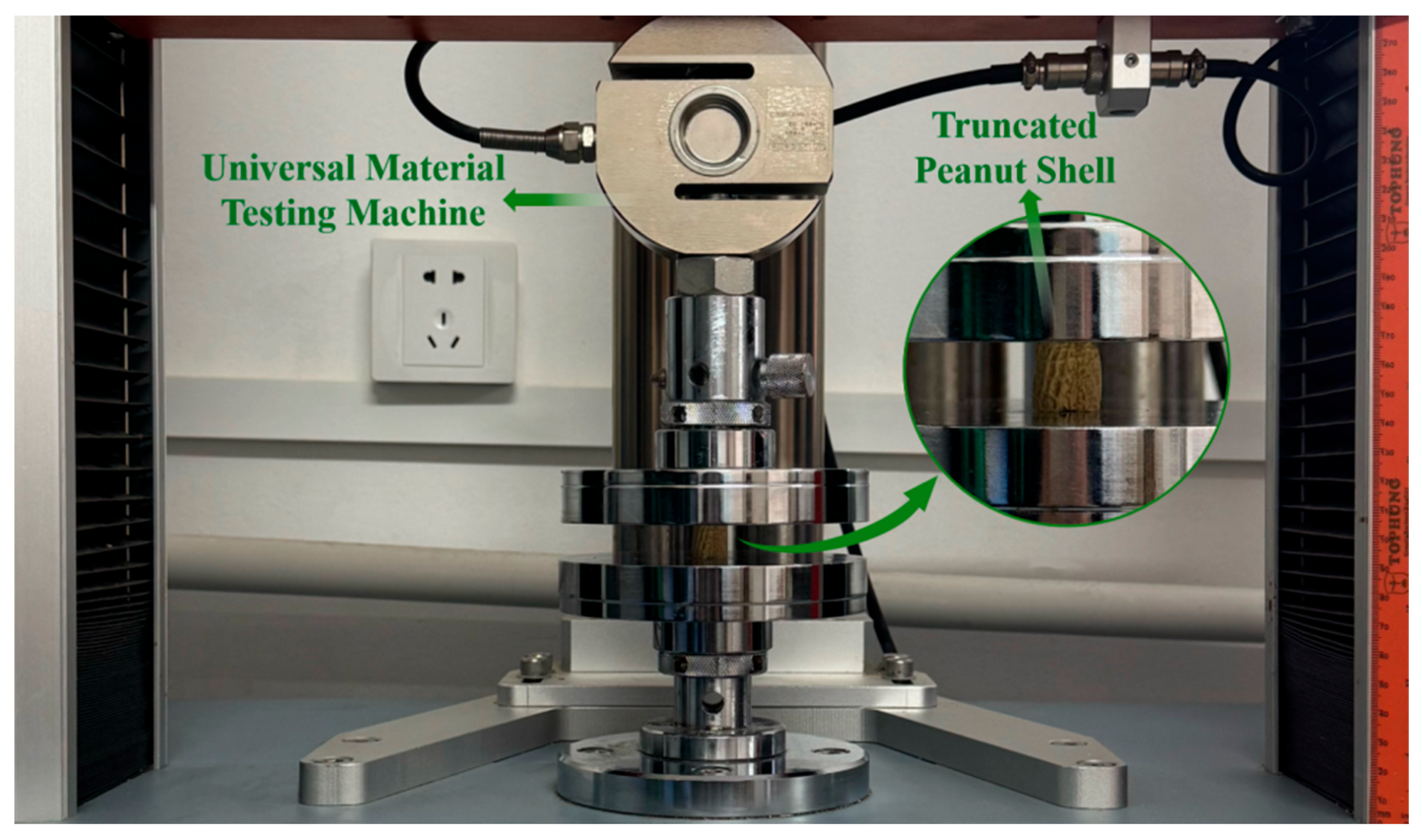
The elastic moduli of peanut shells and kernels are measured by a uniaxial compression test using a servo-controlled computerized universal material testing machine (TH-8201S, Tuobo, Suzhou, China), as shown in
Figure 4 below. Select peanut pods that are roughly cylindrical in shape and cut a section from the middle to form the specimen. Measure the height of the specimen and then measure the inner and outer diameters separately at the upper, middle and lower positions. Calculate the cross-sectional area and use the average value during the compression process. A single-factor test is conducted at a loading rate of 2 mm/min, with each group repeated five times. The final result is taken as the mean value. The elastic moduli are calculated using formula (1):
where
F is the maximum load capacity, N;
L is the initial length, mm;
S is the cross-sectional area of the specimen, mm; and Δ
L is the difference in length before and after compression of the specimen, mm.
The elastic moduli obtained for the peanut pod shell and kernel are 15.89 MPa and 9.58 MPa, respectively.
The Poisson ratio is calculated using formula (2):
where
δ1 is the lateral displacement, mm;
δ2 is the axial displacement, mm;
W1 is the lateral dimensions prior to compression, mm;
W2 is the compressed lateral dimensions, mm;
L1 is the axial dimension before compression, mm; and
L2 is the axial dimension after compression, mm.
The fundamental physical properties of peanut pods are presented in
Table 1 below.
2.2.2. Testing and Analysis of Peanut Pod Contact Characteristics
Impact tests were used to measure the coefficients of restitution between the peanut pods and steel plates, and between the peanut pods themselves. A high-speed camera was employed to record the maximum rebound height
D1 of peanut pods after they freely fell from an initial height of
D0 = 200 mm onto the steel plate. Each test group was repeated 5 times, and the corresponding average value was adopted as the final measured result, calculated using Formula (3):
where
v1 is the falling velocity, m/s;
v2 is the rebound speed, m/s; and g is the gravitational acceleration, m/s
2.
Using the formula, the measured coefficient of restitution was determined as 0.41 for the peanut pods and steel plates and 0.57 for the peanut pods themselves.
The inclined plane method was employed to determine the coefficients of static friction for the contact pairs of peanut pod–steel, peanut shell–steel, peanut pod–pod, and peanut shell–shell. Steel plates or fruit plates bonded separately with peanut pods and peanut shells were selected as the contact materials, which were then fixed on the inclinometer panel. The fruit plates bonded separately with peanut pods and peanut shells were used as the test materials and placed on the contact materials, respectively. The inclinometer was slowly lifted until the test materials exhibited a slight tendency to slide. This angle was defined as the static friction angle corresponding to the onset of sliding against the maximum static friction. This angle was substituted into Equation (4) in order to obtain the coefficient of static friction:
where
α is the static friction angle for overcoming the maximum static friction (°).
The kinetic friction coefficients were measured via the inclined plane method for the contact pairs listed below: peanut pod–steel plate, peanut shell–steel plate, peanut pod–peanut pod, and peanut shell–peanut shell. The steel plates, peanut pod plates or peanut shell plates were fixed to the panel of the inclinometer and acted as the contact materials, while the peanut pods or shells acted as the test materials and were placed on top of the contact materials. The test materials were made to roll stably on the contact materials by continuously increasing the inclination angle of the inclined plane. The tangent value of the angle indicated by the inclinometer at this point was the coefficient of rolling friction (
Table 2).
2.2.3. Calibration of Peanut Pod Shell and Kernel Bonding Parameters
Axial compression tests integrated with a calibration approach were used to obtain the mechanical parameters of the Parallel Bond Model (PBM) for peanut pods, which are hard to measure directly by experiments. These parameters include the normal stiffness coefficient, tangential stiffness coefficient, normal critical stress and tangential critical stress.
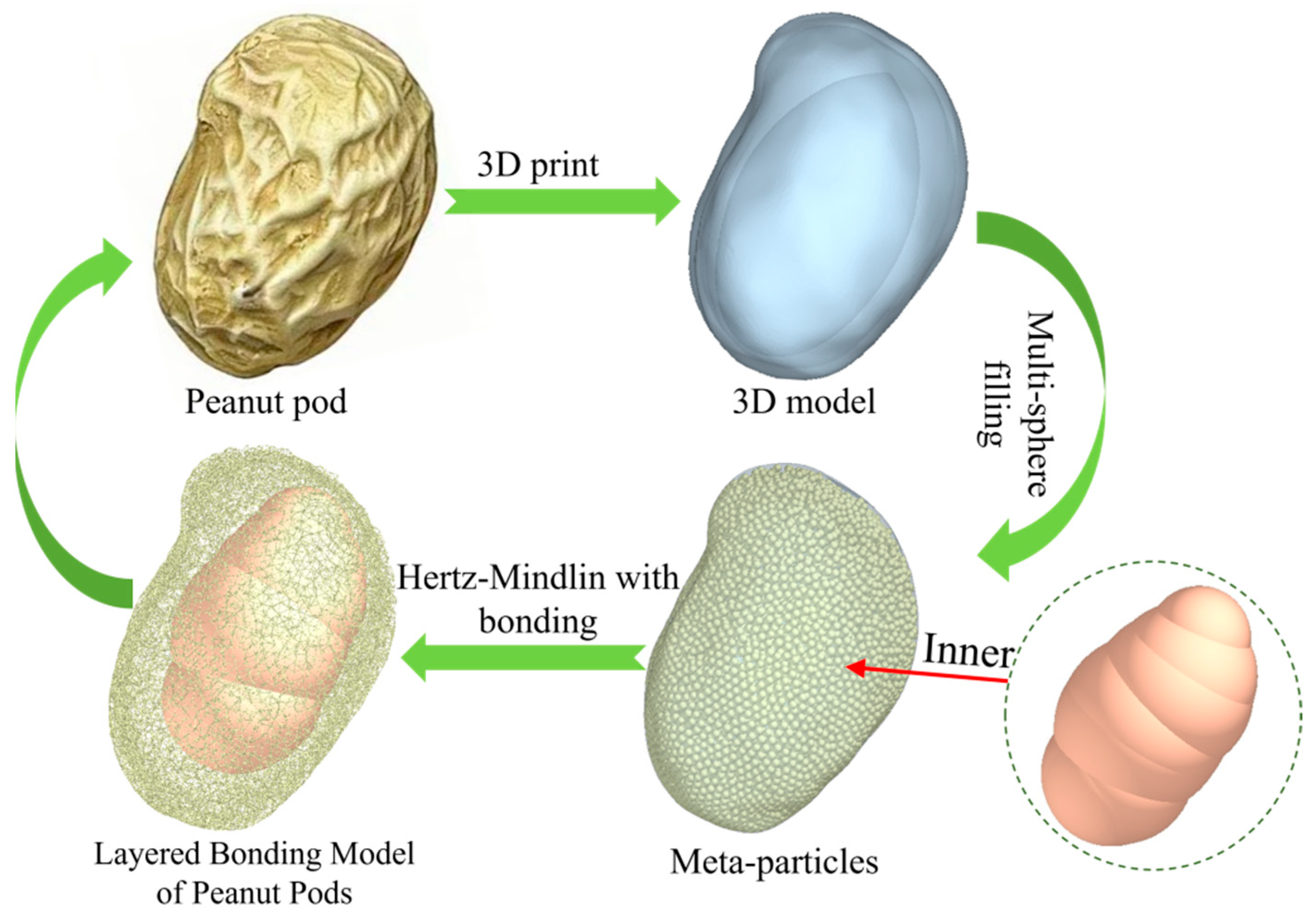
The Hertz–Mindlin model with bonding particle contact was utilized in the simulation analysis. First, a Plackett–Burman (PB) test was used to analyze the significance of the simulation parameters. Then, the factor levels were adjusted sequentially using the steepest ascent test, thereby gradually approaching the optimal range. To obtain the optimal simulation parameter combination for the layered bonding analysis model of peanut pods, a Box–Behnken (BB) test was finally carried out.
The compression of peanut pods was simulated using EDEM 2018 software and the stress exerted at the moment of breakage was measured. By comparing these results with those of physical experiments, we obtained the range of bonding parameter values that best matched the actual compression tests of peanut pods. Subsequently, a PB design was implemented to screen the factors that imposed significant influences on the experimental outcomes. Using Design-Expert 13 software, the discrete element contact parameters of peanut pods were set as the independent variables, and were denoted as A to D (subscripts 1 and 2 represent the contact parameters of husk–husk and kernel–kernel, respectively). The eight experimental parameters were coded such that their maximum and minimum values corresponded to the +1 and −1 levels, respectively. The level values were set as the test values of each factor, with the compression force designated as the response value. The level table for the test parameters is shown in
Table 3.
For the axial simulation test, the pressure plate’s loading speed was set to 2 mm/min, matching the operating speed of the mechanical test.
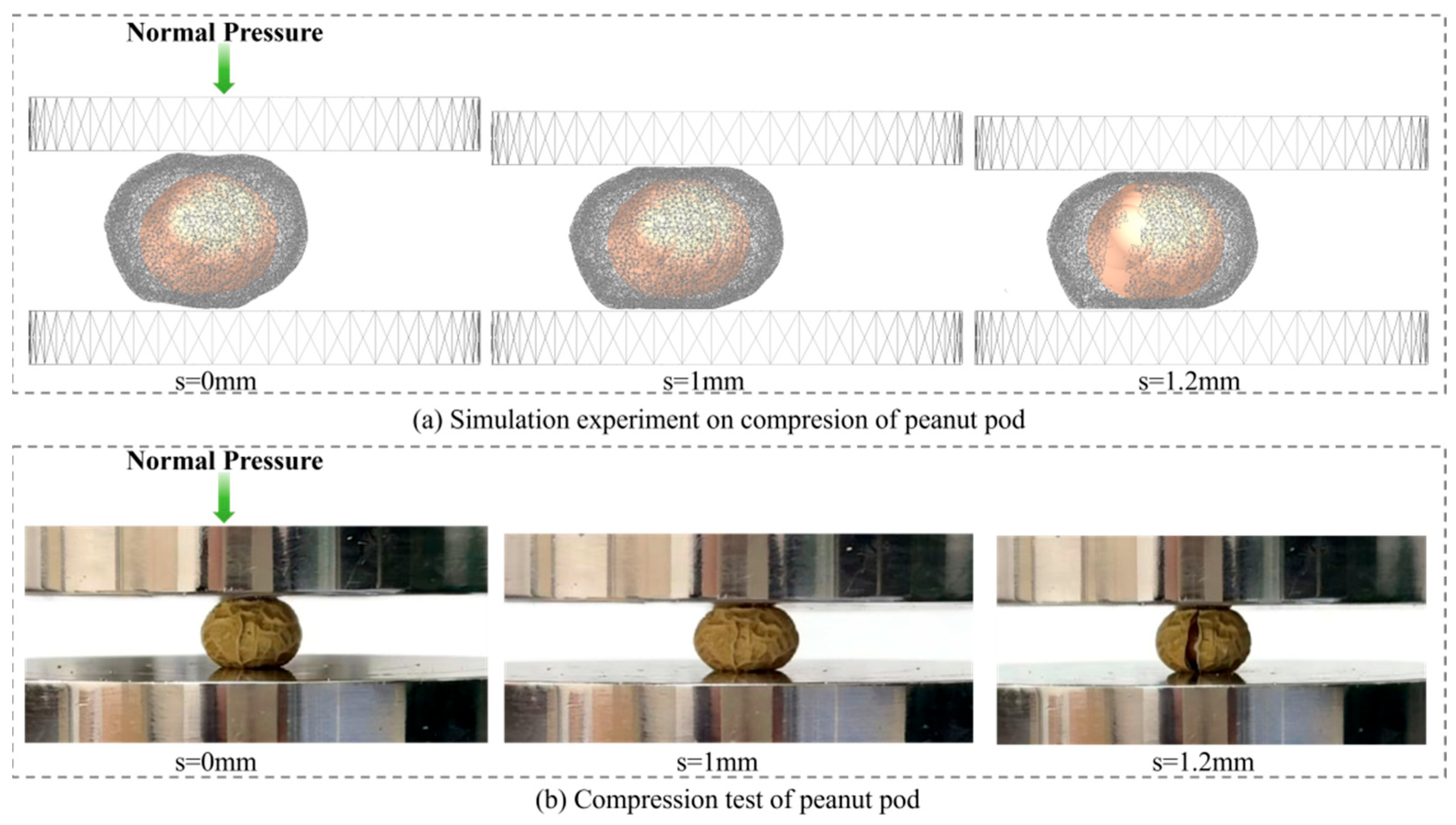
Figure 5a shows a screenshot of the simulation of the compression test and
Figure 5b shows a screenshot of the actual physical compression test.
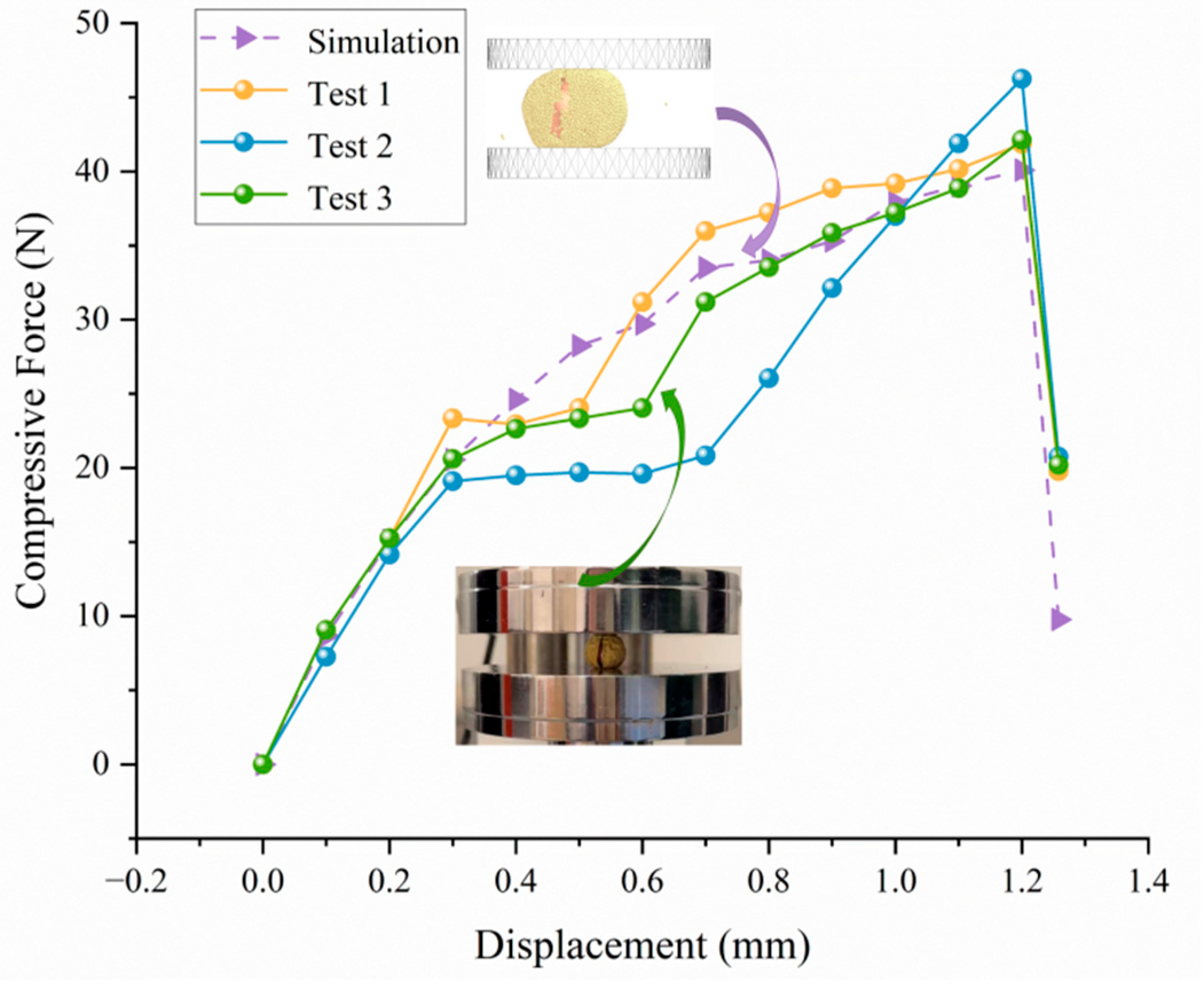
Figure 6 below shows a line chart comparing the simulation and physical experiment results for the peanut pod compression. Both curves generally exhibit an increasing trend in the compression force with compression displacement, and both experience a sharp drop at a displacement of 1.2 mm. At this point, the peanut husk ruptures and is unable to withstand any greater pressure. However, the experimental value shows a brief decrease at a displacement of 0.5 mm, potentially due to temporary contact instability in the experimental device. Meanwhile, the simulation model continues to increase in a uniform, continuous manner.
The PB trial comprised 12 groups in total, with the specific arrangements and results detailed in
Table 4 below.
Table 5 below presents the outcomes of the PB test for significance analysis of the experimental factors. The results of the test show that the
p-value of the model is 0.0007, which is less than the significance level of 0.01. This indicates an extremely significant level and verifies the reliability of the model. The coefficient of determination, R
2 = 0.9183, suggests the good correlation of the model, which exhibits a high degree of fit with the test data and is applicable to 91.83% of the test data. The adjusted coefficient of determination, R
2adj = 0.8716, indicates that, after considering the number of independent variables in the model, it can explain 87.16% of the variability in the response variable. The
p-value of C
1 is less than 0.01, demonstrating that the critical normal stress of the husk–husk has a highly significant effect on the critical load. The
p-values of A1 and D1 are below 0.05, demonstrating that the normal stiffness per unit area and critical shear stress of the husk–husk have significant effects on the critical load. The
p-value of D
1 is greater than 0.05, suggesting that it has no significant effect on the critical load.
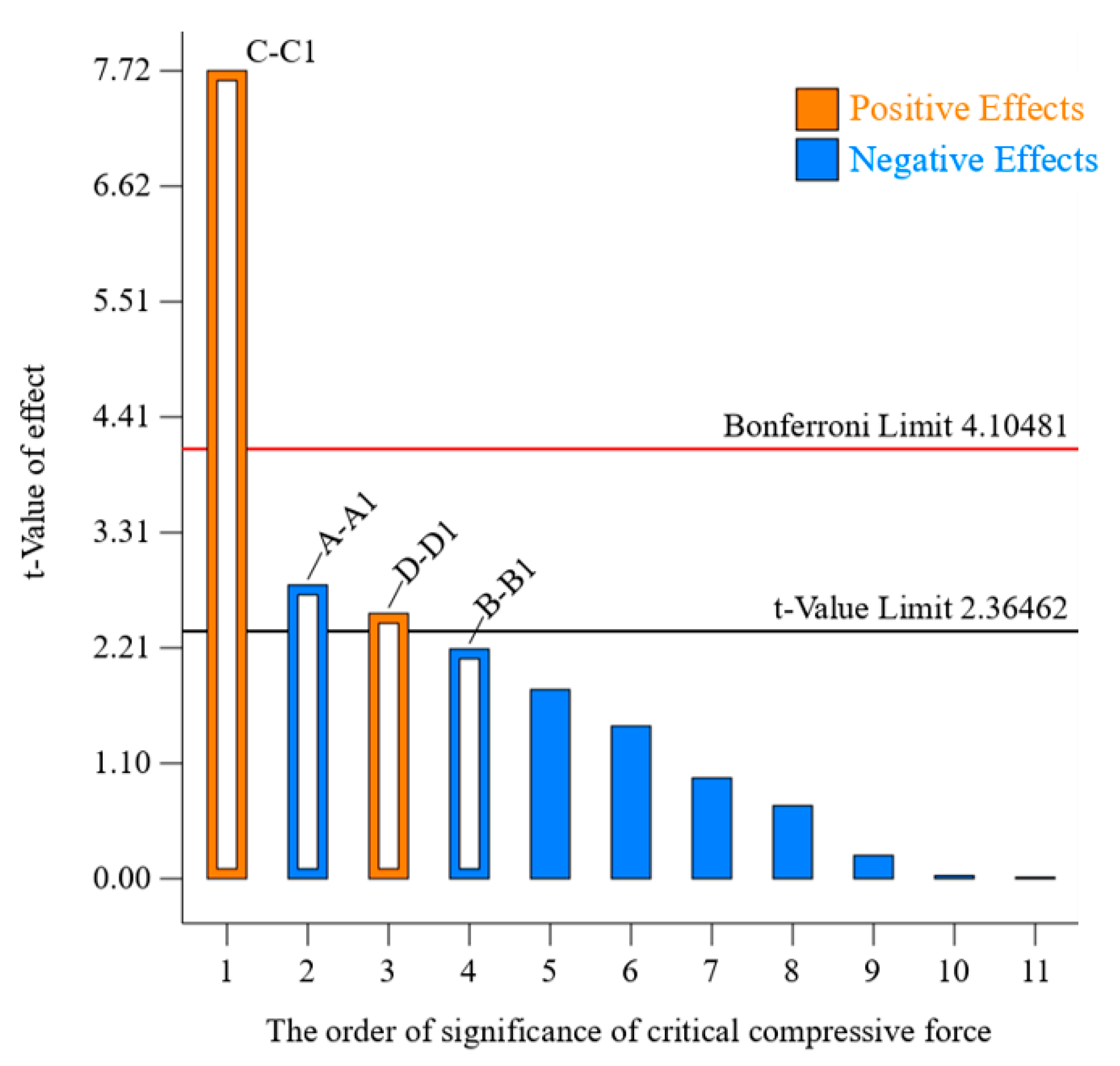
Combined with
Figure 7 below, the Pareto chart of the PB test shows that factors A
1, C
1, and D
1 all exceed the critical t-value of 2.36462 and have positive effects on the response value of the PB test. Among these factors, C
1 is the most significant one; therefore, this factor determines the climbing direction of the path on the steepest ascent test.
In summary, a steepest ascent test was conducted on the three most significant factors, and the specific path arrangement as well as the corresponding results are presented in
Table 5 below. As shown in
Table 6, an analysis of the steepest ascent test results revealed that the critical load corresponding to the third set of test levels stood at 40.10 N, whereas the critical load from the physical test was 41.85 N. The relative error was therefore the smallest at 4.18%. Thus, test 3 was selected as the central level, and tests 2 and 4 were defined as the low and high levels, respectively, for the subsequent BB design. On this basis, a three-factor, three-level response surface methodology analysis was conducted. All the other non-significant parameters in the simulation test remained unchanged from those utilized in the steepest ascent test.
Table 7 presents the BB experimental design and results.
The experimental data were subjected to a quadratic multiple regression analysis, yielding a regression model with the critical load as the dependent variable, as follows: Y = 37.0 − 2.42A
1 + 7.11C
1 − 0.8875D
1 − 0.20A
1C
1 + 0.70A
1D
1 + 1.87C
1D
1 − 0.7625A
12 − 0.5875C
12 − 1.29D
12; coefficient of determination of the regression equation R
2 = 0.9839; adjusted coefficient of determination R
2adj = 0.9633; and coefficient of variation C.V. = 2.98%. This indicates that the model fits the data well and can explain 96.33% of the variability in the response value. An analysis of variance was therefore performed on the BB test, and the results are presented in
Table 8. Evidently, the model exhibits a
p-value below 0.01, which attests to its extreme significance and capability to accurately characterize the intrinsic correlation between the investigated factors and the response variable. The lack-of-fit term is not significant (
p > 0.05), indicating that there is no significant lack-of-fit problem. The order of the significance levels of the three factors, from highest to lowest, is C
1 > A
1 > D
1.
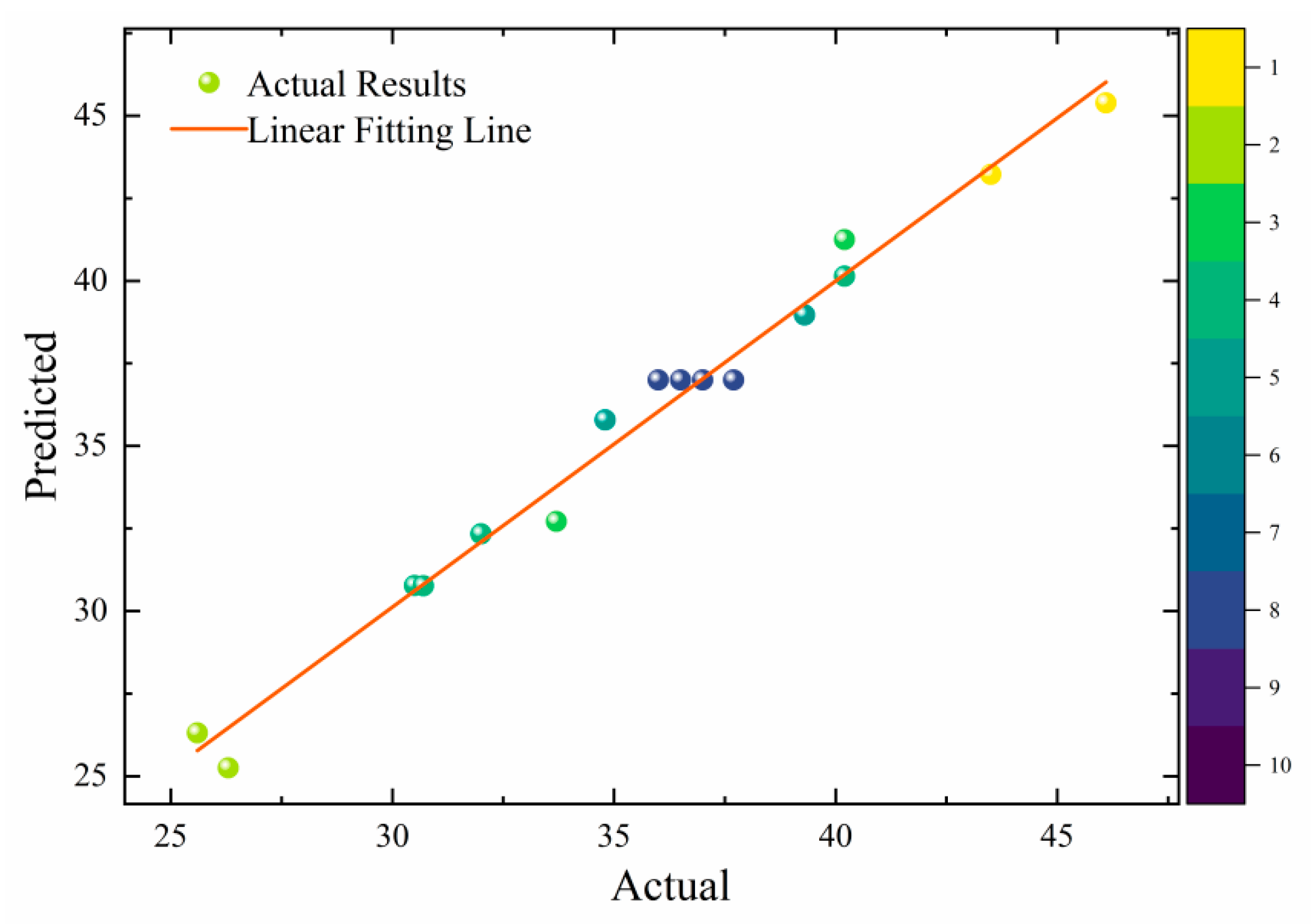
The compression force was predicted using the regression equation under various bonding parameter conditions. Based on the above analysis, a comparison diagram of physical and simulation tests (
Figure 8) and the response surface contour plots (
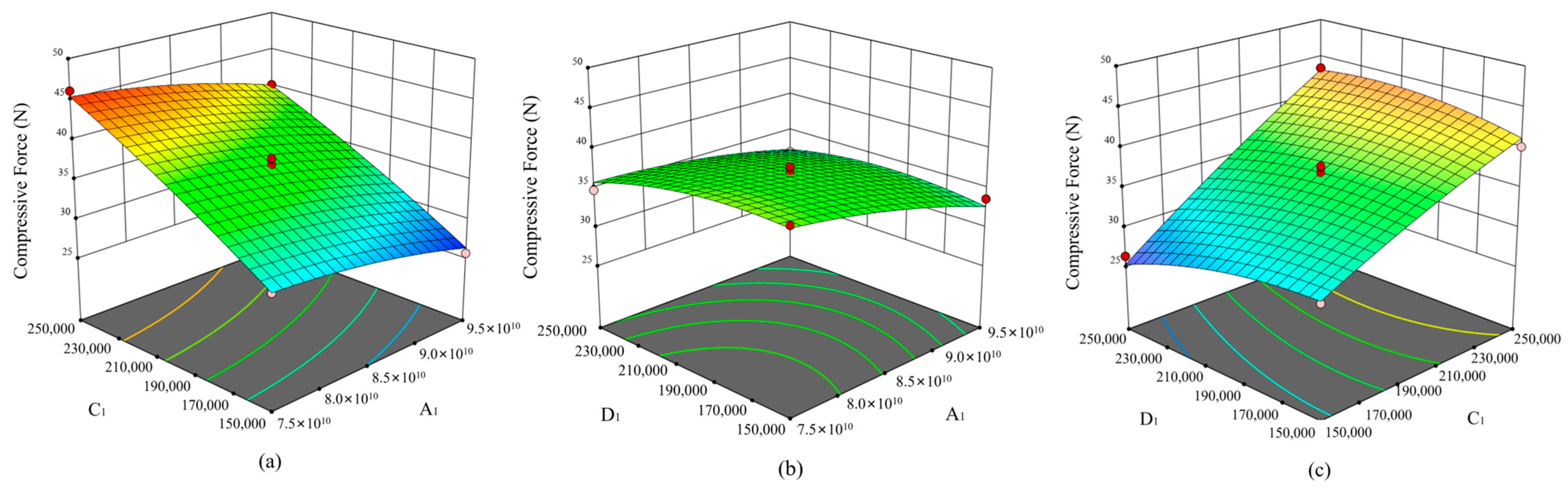
Figure 9) were further established. As can be seen from the relationship diagram in
Figure 8 showing the experimental and predicted values, the data points are distributed near the 45° fitting line and are relatively concentrated. This indicates that the model has good fitting performance and high prediction accuracy, and can therefore be used to predict and analyze the compression force of peanut pods. The response surface diagrams illustrate the trend of influence and interaction effects of each factor.
Figure 9 shows the interaction effects of A
1, C
1 and D
1 on the compressive force, and these results are consistent with the analysis of the
p-values of the interaction terms in
Table 8.
Based on the BB test results and the regression equation, an optimal solution analysis of factors A
1, C
1 and D
1 was performed using Design-Expert 13 software, with the breaking load obtained from the physical test as the target. The constraint optimization conditions were set as follows:
The optimal values of each parameter were obtained through a combination of BB analysis and the following calculations: peanut shell–peanut shell normal stiffness per unit area: 7.81 × 10¹⁰ N/m3; peanut shell–peanut shell shear stiffness per unit area: 9.0 × 10⁸ N/m3; peanut shell–peanut shell critical normal stress: 2.17 × 10⁵ N/m3; peanut shell–peanut shell critical shear stress: 2.25 × 10⁵ N/m3.