1. Introduction
Healthy soils are a fundamental prerequisite for stable and resilient agroecosystems [
1]. However, the capacity of soils to maintain stability and resilience is declining rapidly, with more than 60% of European soils exhibiting signs of degradation driven by intensive agricultural practices, including erosion, compaction, and contamination. Soil degradation jeopardises biodiversity, ecosystem resilience, and ultimately food security, while underscoring the urgent need to establish effective systems for soil monitoring and restoration [
2]. In addition, Ferreira et al. [
3] highlight that the Mediterranean region is particularly vulnerable due to the convergence of seasonal droughts, erosion processes, and shallow soil profiles, which collectively exacerbate soil degradation. Within this context, agroecological and organic approaches represent a sustainable alternative, relying on biologically mediated processes that restore soil fertility. These approaches stimulate soil microbial activity and support functional biodiversity [
4,
5]. Their further development and wider implementation are therefore essential for advancing regenerative agriculture in alignment with the objectives of the European Green Transition by 2030 [
6].
Recent research increasingly contributes to the development of sustainable solutions by placing beneficial microorganisms at the centre of approaches aimed at preserving soil fertility and soil health [
7,
8]. These organisms are no longer regarded merely as inherent components of soil, but as drivers of functional change, and are therefore increasingly employed in the assessment of soil status and the effectiveness of soil restoration measures [
7]. In this context, the conservation and restoration of microbiological balance have emerged as important indicators of sustainable soil management. Accordingly, bioinoculants are defined as deliberately applied beneficial microorganisms that are environmentally friendly and contribute to the enhancement of soil functionality, particularly under adverse environmental conditions [
9]. Furthermore, bioinoculants are gaining prominence as an effective solution, as the application of beneficial microorganisms stimulates microbial activity, increases nutrient availability, and enhances plant tolerance to stress, thereby reducing the reliance of agricultural production on chemical inputs [
10,
11]. The close interconnection between microorganisms, soil, and plants places the rhizosphere at the core of their mutual interactions [
10,
12], where microorganisms act as mediators in the transfer of nutrients and signalling molecules between soil and plant roots [
13,
14]. The success of bioinoculation is therefore strongly dependent on microbial diversity and the ecological compatibility of inoculants with prevailing environmental conditions [
8].
Beneficial fungus of the genus
Trichoderma Pers. is recognised as a versatile, avirulent, and endophytic symbiont with a pronounced capacity for the rapid colonisation of rhizosphere and plant roots, where it establishes beneficial interactions with the host plant [
15]. It readily adapts to a wide range of ecological conditions and life strategies [
16]. Species of the genus
Trichoderma possess multiple biocontrol mechanisms, which can be either direct (mycoparasitism or antibiosis) or indirect (competition for nutrients and space). Both modes of action promote plant growth and development and induce plant defence systems against diseases and pests [
16,
17,
18]. Through these mechanisms,
Trichoderma simultaneously suppresses phytopathogenic fungi and PPN. In addition, it enhances plant growth and stress tolerance, thereby contributing to functional soil health and the stability of agroecosystems [
13,
19,
20,
21].
Trichoderma atroviride P. Karst. is a filamentous fungus that can be isolated from soils of temperate regions and exhibits optimal growth at 25 °C under laboratory conditions [
22]. It is capable of synthesising enzymes such as chitinases and glucanases, as well as secondary metabolites including 6-pentyl-α-pyrone (6PP) and harzianic acid (HA). These compounds exert antimicrobial and signalling functions, activate plant defence mechanisms, and modulate microbial communities in soil [
23,
24]. Collectively, these processes promote plant growth and resilience and improve the physico-chemical and biological properties of soil, including aggregate stability and the activity of beneficial microbiota [
13,
21].
The efficacy of
Trichoderma spp. is determined by the genetic and ecological traits of individual strains and their adaptation to local abiotic conditions [
21]. Consequently, the importance of autochthonous isolates, such as
T. atroviride [
25], adapted to specific microbiological and climatic characteristics of soils is increasingly emphasised. Such isolates may contribute over the long term to the restoration of functional soil health and the resilience of agricultural systems [
12,
16]. Efficient production and commercialisation of these preparations are crucial for reducing the use of chemical inputs in agriculture [
26,
27]. However, the biological effects of
Trichoderma application in perennial cropping systems remain insufficiently explored. It is still unclear how
Trichoderma inoculation influences soil biological properties, especially FLNs, which, due to their sensitivity and rapid response to environmental change, represent reliable bioindicators of soil condition [
28,
29].
Nematodes, including FLNs and PPNs, represent the most abundant and taxonomically diverse group of soil organisms, encompassing all trophic levels from bacterivores (Ba) and fungivores (Fu) to herbivores (He), omnivores (Om), and predators (Pr) [
30]. Their widespread occurrence, ecological sensitivity, and rapid response to environmental change make them valuable indicators of soil functional status [
31,
32,
33,
34]. In addition, their presence and abundance can be readily assessed using relatively simple extraction methods [
35]. Nematode Indicator Joint Analysis (NINJA) software (
https://nemaplex.ucdavis.edu/, accessed on 29 March 2025) [
36] enables standardised analyses and calculation of nematological and ecological indices [
37].
Nematode indices represent a valuable tool for the biological assessment of soil health, as they integrate information on nematode community structure and trophic interactions into indicators of soil resilience, stability, and functional balance [
29,
38]. Likewise, trophic indices serve as diagnostic tools that facilitate the interpretation of changes within the soil food web under the influence of environmental factors and anthropogenic activities [
33].
The effects of
Trichoderma application in perennial cropping systems have most often been evaluated in comparison to nematicides, primarily in terms of efficacy against PPNs. In this context, the influence of
Trichoderma application on the abundance and diversity of FLNs has generally been overlooked. Available studies conducted under in vitro or greenhouse conditions have reported significant reductions in PPN populations in soil and on plant roots [
20,
39,
40,
41]. For example, in citrus orchards, the effects of
Trichoderma album Preuss,
Trichoderma harzianum Rifai, and
T. viride Pers., on the PPN
Tylenchulus semipenetrans Cobb, have been investigated [
41,
42]. Against root-knot nematodes of the genus
Meloidogyne Goeldi, the effects of
T. harzianum and
T. viride have been reported in peach orchards [
20], while the effect of
T. asperellum Samuels, Lieckfeldt & Nirenberg has been reported in pineapple plantations [
41]. However, controlled experimental conditions do not encompass the complexity of field agroecosystems. More recent in vivo studies demonstrate that species of genus
Trichoderma, applied alone or in combination with bacteria and yeasts, not only effectively reduce PPN populations but also exert positive effects on the abundance and diversity of FLNs [
42,
43,
44]. Bridging this in vivo research gap is essential for understanding the effects of
Trichoderma species not only on PPNs but also on FLNs, which reflects the functional status of soil and provides insight into interactions among microorganisms, soil, and plants. Interactions in perennial cropping systems, such as olive orchards, are highly dynamic and complex, and such studies can substantially contribute to a better understanding of the effects of bioinoculation in agroecosystems exposed to pronounced environmental variability.
Olive tree (
Olea europaea L.) is a typical evergreen species with a long tradition of cultivation in the Mediterranean region [
45], adapted to cool, wet winters and hot, dry summers [
46]. In Croatia, olive cultivation extends along approximately 1000 km of the Adriatic coast, encompassing about 5.5 million trees distributed across six subregions [
47]. Traditional, small-scale olive orchards represent an important component of sustainable Mediterranean landscapes, as they contribute to the conservation of biodiversity, particularly varietal diversity [
48]. Preservation of autochthonous cultivars, such as
Oblica,
Lastovka,
Istarska bjelica, and
Buža, is crucial for the resilience and sustainability of Mediterranean olive growing [
49,
50]. Their genetic variability underlines the need for integrated pest management strategies [
51], a conclusion supported by similar findings for the Portuguese cultivar
Galega vulgar [
52]. Climate change is driving increased thermal and water stress, yield reductions [
53], and shifts in phenology and in the occurrence of key pests, such as the olive fruit fly and olive moth [
54]. Drought conditions also alter the composition of root-associated and rhizospheres microbiomes, in which beneficial microorganisms activate plant resistance mechanisms [
55]. Consequently, the conservation of local cultivars and the promotion of natural microbial interactions constitute a cornerstone of olive sector adaptation to climate change.
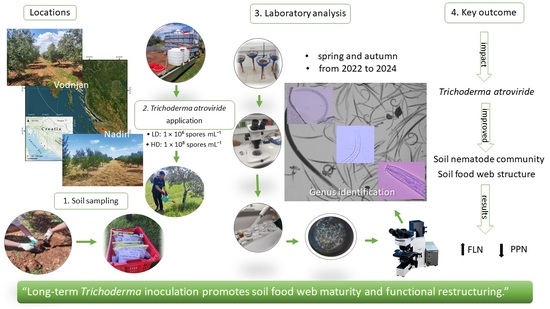
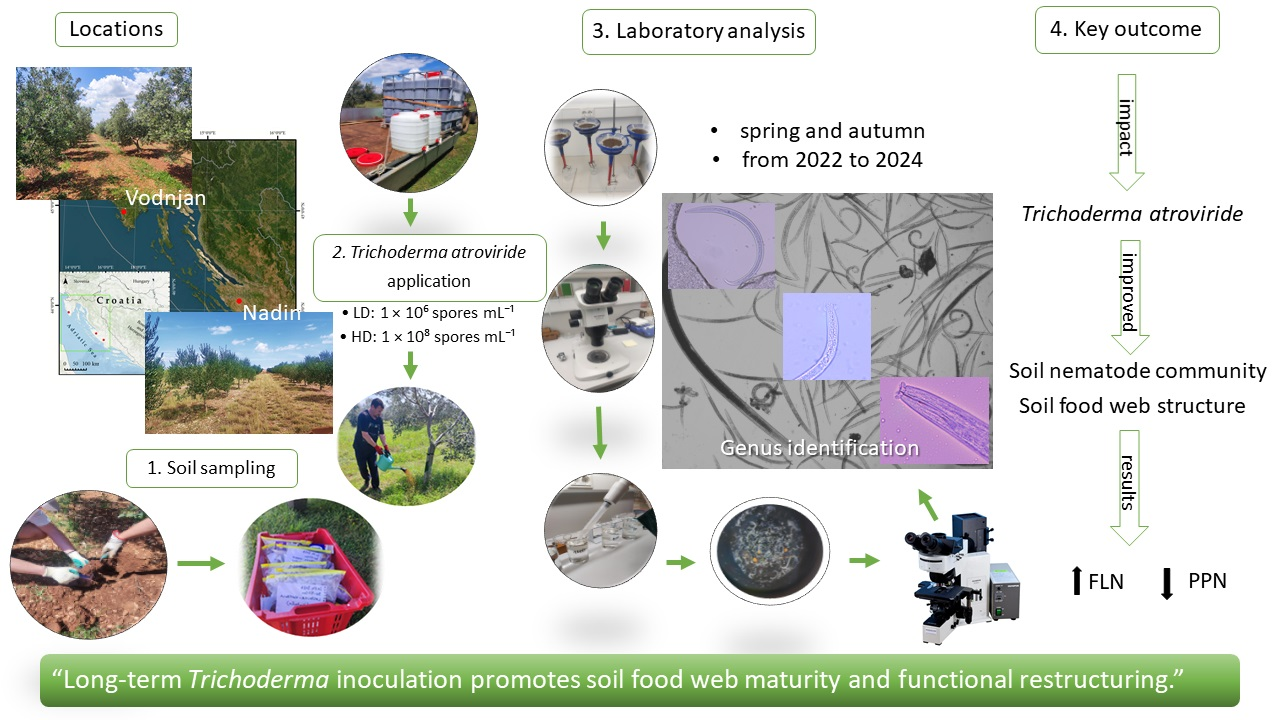
The aim of this study is to contribute to a deeper understanding of soil nematode biodiversity and its interactions with T. atroviride. Expansion of our knowledge of the role of bioinoculation in improving and maintaining soil health is addressed through testing the following hypotheses: (i) the presence of T. atroviride enhances soil quality by promoting increases in overall nematode biodiversity, as reflected by abundance-based indicators; (ii) inoculum application reduces the proportion of PPN while increasing the proportion of beneficial FLN trophic groups; (iii) different concentrations of T. atroviride exert distinct effects on nematode genus-level biodiversity, soil disturbance indices, and diagnostic food web indices.
3. Results
For clarity, the main text presents the results of the univariate model GLMM (Type II Wald χ2 tests) for significant fixed effects (p < 0.05) and trends (p < 0.1), whereas the results of the multivariate model (PERMANOVA) are shown in their entirety.
3.1. Trophic Groups and Genus Diversity of Genera
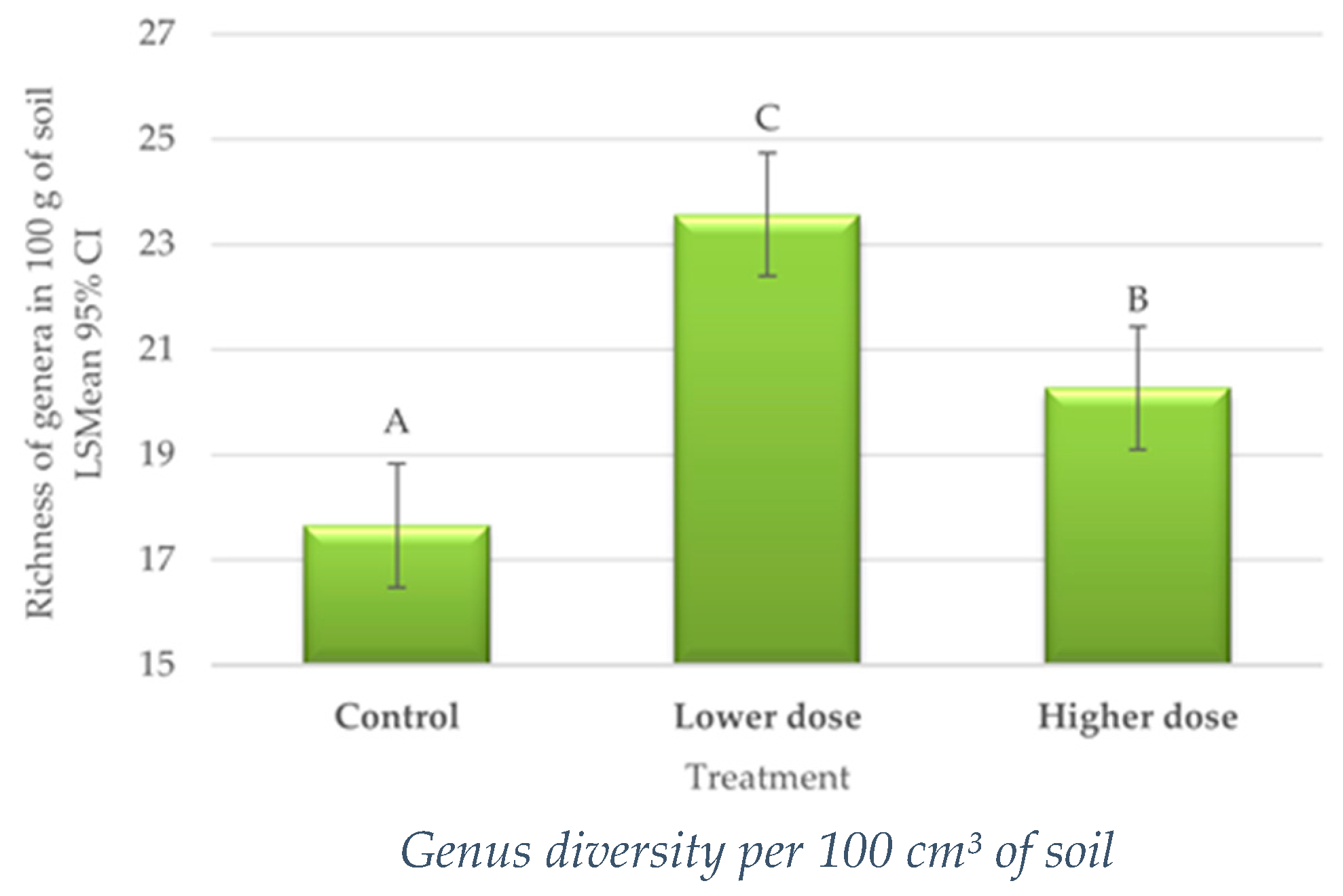
Univariate analysis (GLMM) confirmed, in comparison to the control, an effect of treatment with
T. atroviride at both investigated locations,
Vodnjan and
Nadin, χ
2 = 55.80 (
p < 0.001) (
Table 1), on genus diversity per 100 cm
3 of soil. The LD dose increased the genus diversity
estimated, 5.45 ± 1.59 (
p = 0.001), whereas the HD dose showed a weaker but still significant increase compared to the control (
Figure 4).
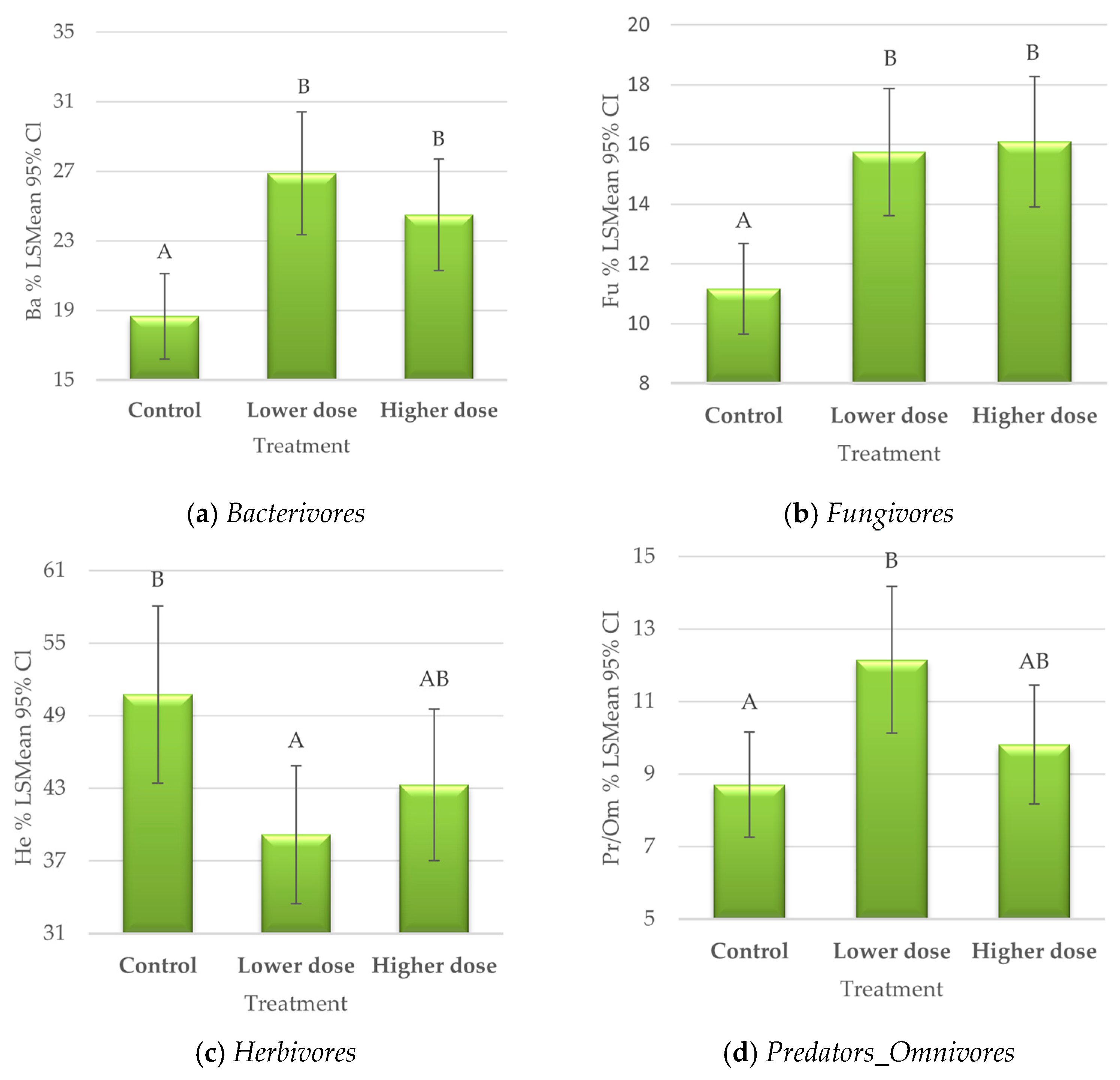
The effect of treatment with
T. atroviride on the diversity of nematode trophic groups was manifested as an increase in their abundance compared to the control (
Figure 5). An increase in Ba was recorded at both doses (
estm. LD: 0.61 ± 0.20;
p = 0.002, HD: 0.59 ± 0.20;
p = 0.002), as was an increase in the abundance of Fu at both doses (
estm. LD: 0.40 ± 0.20;
p = 0.05, HD: 0.51 ± 0.20;
p = 0.01) and Pr_Om, χ
2 = 8.43 (
p = 0.01). In contrast, relative to the control, treatment with
T. atroviride reduced the abundance of He at the LD dose,
estm. −15.88 ± 7.65 (
p = 0.04), while at the HD dose a trend of reduced abundance was observed,
estm. −14.21 ± 7.65 (
p = 0.07) (
Table 2).
In addition to the treatment effect, a seasonal effect (spring vs. autumn) was recorded for the Ba and He trophic groups reflecting opposite seasonal trends in their abundances. In spring, an increase in Ba abundance was observed, estm. 0.45 ± 0.09 (p < 0.001), and a reduced abundance of He, estm. −12.89 ± 3.53 (p < 0.001).
At the Vodnjan location, a lower initial abundance of He was observed, estm. −20.70 ± 8.07 (p = 0.01), and a higher abundance of Ba, estm. 0.55 ± 0.20 (p = 0.005), compared to the ref. combination (Nadin_Oblica_control_autumn_2022).
A two-way interaction (location and cultivar) showed an effect on the composition of the trophic groups, χ2 = 8.87 (p = 0.01). In Nadin, the cultivar Lastovka had a higher abundance of Ba, estm. 0.57 ± 0.20 (p < 0.001), and a trend towards a lower abundance of Pr_Om, estm. −4.90 ± 2.67 (p = 0.07), compared to the cultivar Oblica.
The effect of year (2024 vs. 2022) on Pr_Om showed an increase in abundance in 2024 compared to 2022, estm. 3.94 ± 1.59 (p = 0.02).
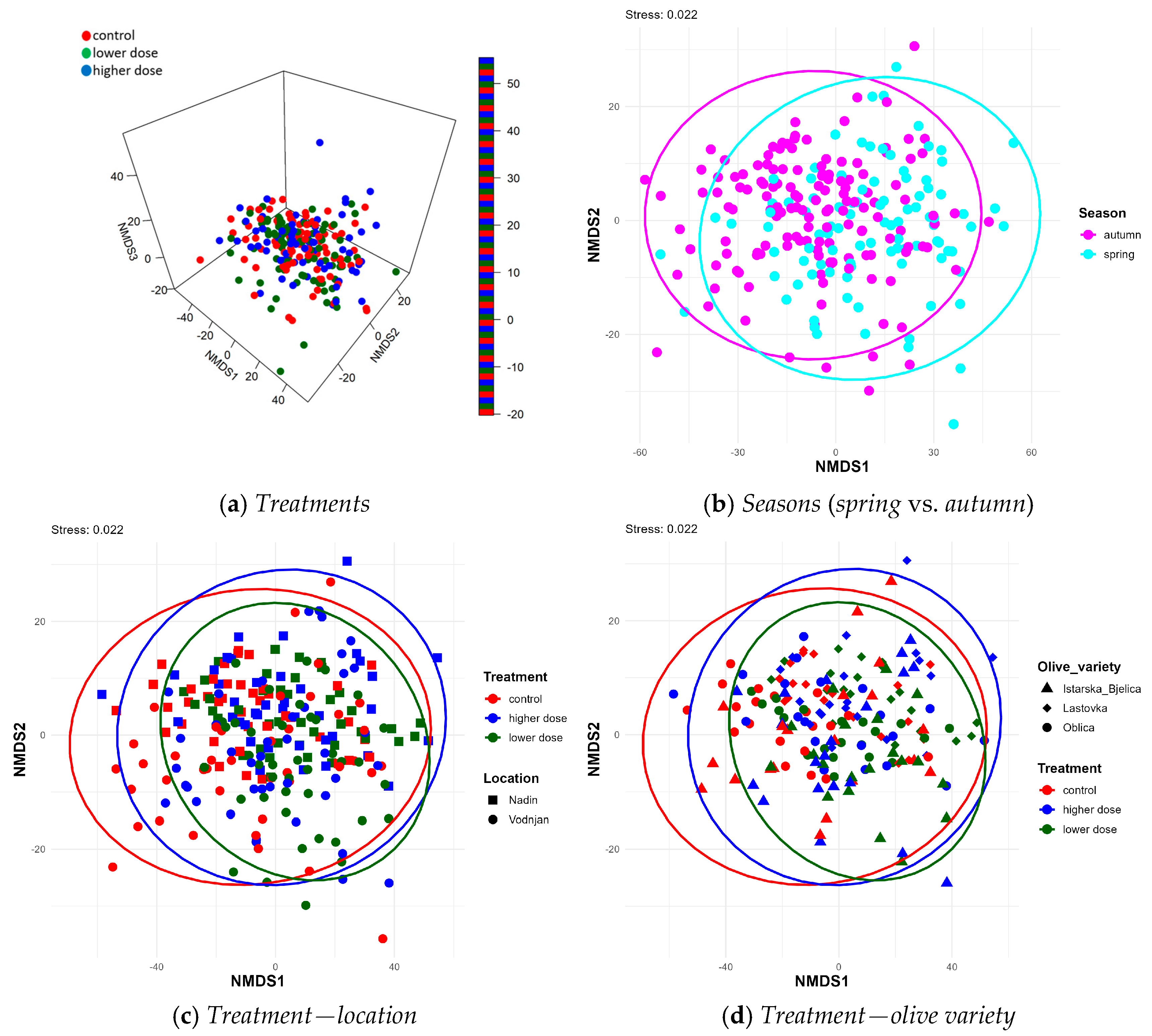
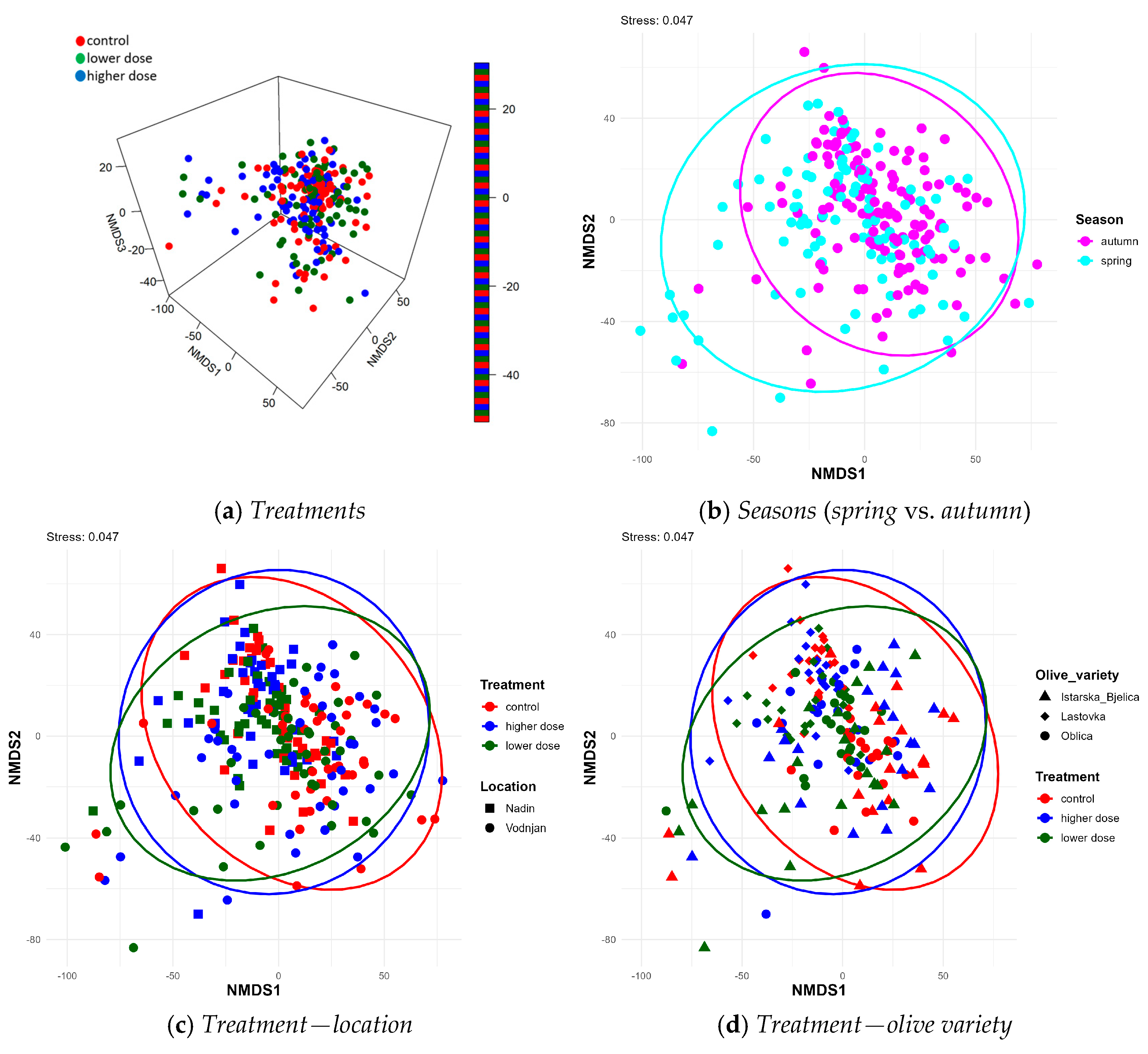
PERMANOVA analysis (
Table 3) showed an effect of treatment with
Trichoderma atroviride, F = 8.54 (
p = 0.001), year, F = 6.19 (
p = 0.002), and season, F = 21.21 (
p = 0.001), on the overall diversity of nematode trophic groups (
Figure 6). Season explained the largest proportion of total variance (R
2 = 0.075), 7.5%, followed by treatment (R
2 = 0.060), 6.0%, and year (R
2 = 0.044), 4.4%. The interaction between treatment and year showed no effect (
p = 0.366).
3.2. Nematode Functional Guilds
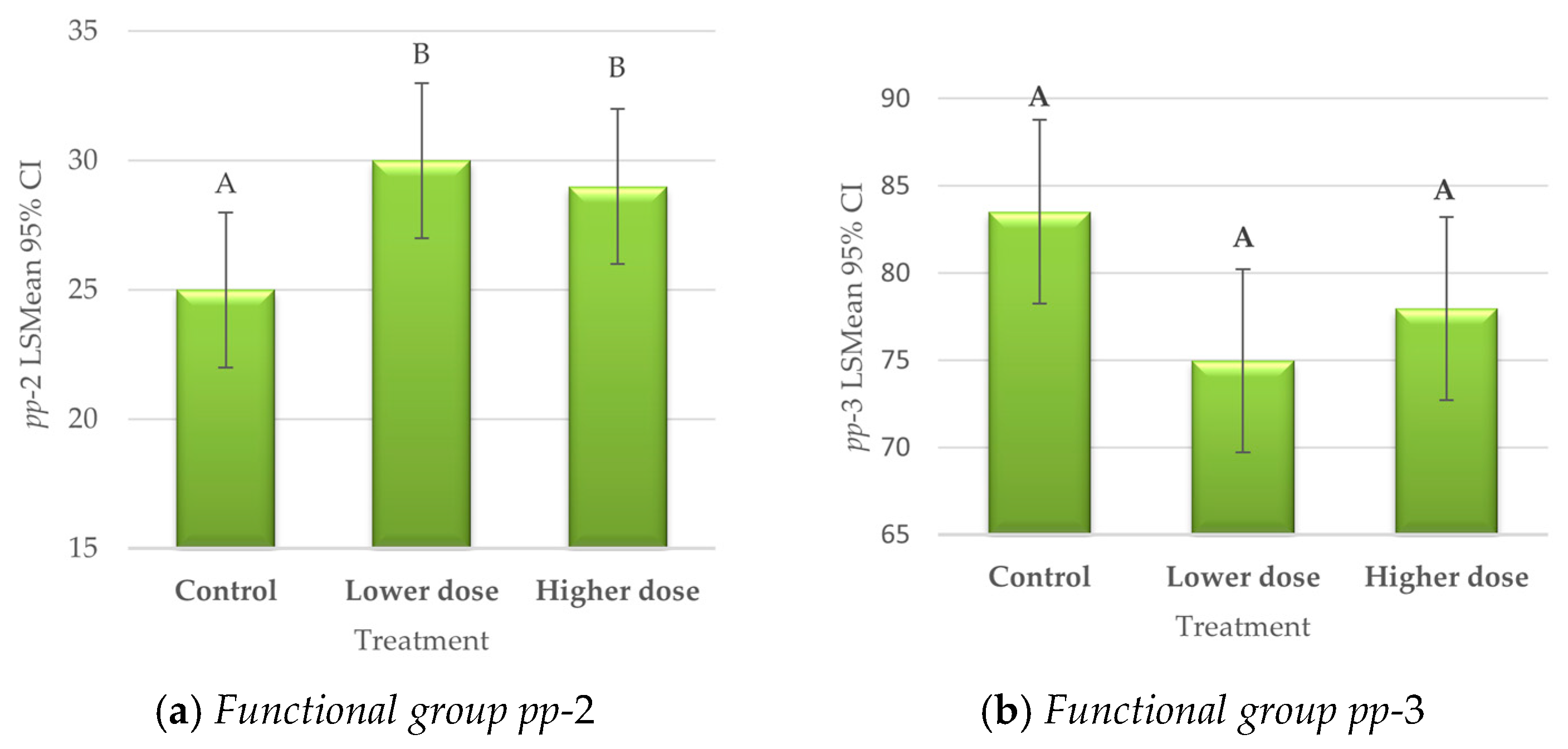
The results indicate a differentiated effect of treatment with
T. atroviride on PPNs of two functional groups. Relative to the control, an effect of treatment with
T. atroviride on the abundance of the PPN pp-2 group was recorded, χ
2 = 10.82 (
p = 0.004), as well as an effect on the abundance of the pp-3 group, χ
2 = 6.00 (
p = 0.05) (
Table 4).
Furthermore, an effect of both doses was recorded (
estm. LD: 0.91 ± 0.35;
p = 0.009, HD: 0.95 ± 0.35;
p = 0.007) on the increase in abundance of the pp-2 group (
Figure 7).
An effect of season (spring vs. autumn) on PPN abundance was recorded in spring, χ2 = 12.32; 14.30 (p < 0.001). For the PPN pp-2 group, an increase in abundance was recorded, estm. 0.66 ± 0.18 (p < 0.001), in spring, whereas for the pp-3 group a decrease in abundance was recorded, estm. −11.56 ± 3.30 (p < 0.001).
At the Vodnjan location, a higher initial abundance of PPN pp-2 was observed, estm. 1.60 ± 0.42 (p < 0.001), and a lower initial abundance of pp-3, estm. −17.00 ± 7.67 (p = 0.03), compared to the ref. combination.
Furthermore, the results obtained (
Table 5) indicate a differentiated effect of treatment with
T. atroviride on individual functional groups. Relative to the control, treatment with
T. atroviride reduced the abundance of the cp-1 group in HD treatment,
estm. −5.46 ± 2.76 (
p = 0.05), while in LD treatment a trend of reduced abundance was observed,
estm. −5.15 ± 2.76 (
p = 0.07).
In comparison to the ref. combination, at the Vodnjan location a lower initial abundance of the cp-1 group was recorded, estm. −5.47 ± 2.79 (p = 0.05), and a higher initial abundance of the cp-2 group, estm. 22.68 ± 7.14 (p = 0.002).
Two-way interactions (location and treatment) and (location and cultivar) showed that at the Vodnjan location, relative to the ref. combination, the application of T. atroviride reduced the abundance of the cp-2 group at both doses (estm. LD: −23.56 ± 9.66; p = 0.02, HD: −23.53 ± 9.66; p = 0.02), whereas in Nadin the cultivar Lastovka, relative to the cultivar Oblica, had a higher abundance of the cp-2 group, estm. 26.58 ± 6.90 (p < 0.001), and a lower abundance of the cp-4_5 group, estm. −18.99 ± 4.56 (p < 0.001).
A three-way interaction (location, cultivar, and treatment) at the Nadin location, for cultivar Lastovka, relative to the ref. combination, showed a lower abundance of the cp-2 group at both doses: LD estm. −26.97 ± 9.66 (p = 0.007); HD estm. −21.12 ± 9.66 (p = 0.02). In addition, an increase in the abundance of the cp-4_5 group was recorded at both doses: LD estm. 16.36 ± 6.46 (p = 0.01), HD estm. 16.52 ± 6.46 (p = 0.01).
The effect of season (spring vs. autumn) was pronounced. In spring, an increase in the abundance of the cp-1 group was recorded, estm. 5.24 ± 1.29 (p < 0.001), accompanied by a decrease in the abundance of the cp-3 group, estm. −7.83 ± 1.86 (p < 0.001).
The effect of year (2024 vs. 2022) on the abundance of the cp-2 and cp-3 groups in 2024 was recorded as a reduced abundance of the cp-2 group, estm. −12.95 ± 4.13 (p = 0.002), and a simultaneous increase in the abundance of the cp-3 group, estm. 7.63 ± 2.41 (p = 0.002), relative to 2022.
PERMANOVA analysis (
Table 6) showed an effect of treatment with
T. atroviride, F = 2.13 (
p = 0.04), year, F = 2.20 (
p = 0.02), and season, F = 12.55 (
p = 0.001), on the overall diversity of nematode functional groups (
Figure 8). Seasonal differences explained 5% of the total variance (R
2 = 0.050), whereas the effect of treatment (R
2 = 0.017) explained 1.7% and year explained 1.7% of the total variance. No interaction between treatment and year was observed (
p > 0.05).
3.3. Nematological Indices
A global effect of treatment with
T. atroviride on nematological indices was not observed (
p > 0.05) (
Table 7). In comparison to the ref. combination, a lower initial value of PPI,
estm. −1.71 ± 8.15 (
p = 0.04), was recorded at the
Vodnjan location.
An effect of treatment with T. atroviride was recorded in a three-way interaction (location, cultivar, and treatment) at the Nadin location for the cultivar Lastovka compared to the ref. combination, where an increase in MI values was recorded at both doses, LD estm. 3.87 ± 1.55 (p = 0.02) and HD estm. 3.24 ± 1.55 (p = 0.04), as well as an increase in MI2–5 at both doses, LD estm. 4.39 ± 1.61 (p = 0.004) and HD estm. 4.31 ± 1.61 (p = 0.01).
Furthermore, an effect was recorded in a two-way interaction (location and cultivar), whereby at the Nadin location for the cultivar Lastovka, compared to the cultivar Oblica, lower values of MI were observed, estm. −4.46 ± 1.18 (p < 0.001), as well as lower values of MI2–5, estm. −5.19 ± 1.17 (p < 0.001).
For spring compared to autumn’s affected values of nematode indices, lower values of all nematode indices were recorded: MI estm. −1.93 ± 5.08 (p < 0.001), MI2–5 estm. −1.16 ± 5.28 (p = 0.03) and PPI estm. −1.38 ± 3.53 (p < 0.001).
An effect of year (2024 vs. 2022) was recorded, whereby in 2024 the values of MI increased, estm. 1.61 ± 6.60 (p = 0.02), and those of MI2–5, estm. 1.76 ± 6.68 (p = 0.01), relative to 2022.
PERMANOVA analysis (
Table 8) showed an effect of season on the overall variability of the nematode indices, F = 12.48 (
p = 0.001), whereby approximately 5% of the total variance was explained (R
2 = 0.050). An effect of treatment with
T. atroviride and year was not observed (
p > 0.05), nor was their interaction.
3.4. Nematode-Based Ecological Indices
Although a global effect of treatment with
T. atroviride was not observed (
p > 0.05), pairwise comparisons within the model showed certain differences (
Table 9). Relative to the control, the HD dose increased the BI value,
estm. 11.29 ± 4.82 (
p = 0.02), while simultaneously reducing the EI value,
estm. −16.68 ± 6.25 (
p = 0.01).
Two-way interactions (location and treatment; location and cultivar) showed that at the Vodnjan location, treatment with T. atroviride reduced BI at both doses, LD estm. −14.26 ± 6.82 (p = 0.04) and HD estm. −15.57 ± 6.82 (p = 0.03), relative to the ref. combination. In Nadin, for the cultivar Lastovka compared to the cultivar Oblica, a higher BI value was recorded, estm. 17.33 ± 4.84 (p < 0.001), and a lower SI value, estm. −26.61 ± 6.91 (p < 0.001).
In a three-way interaction (location, cultivar, and treatment) at the Nadin location for the cultivar Lastovka, relative to the ref. combination, a lower BI value was recorded at both doses with T. atroviride: LD estm. −17.23 ± 6.82 (p = 0.02), HD estm. −13.90 ± 6.82 (p = 0.05). In addition, a higher SI value was recorded at both doses: LD estm. 24.75 ± 9.71 (p = 0.01), HD estm. 21.53 ± 9.71 (p = 0.03).
In spring compared to autumn, lower SI values, estm. −8.94 ± 3.17 (p = 0.007), lower CI values, estm. −20.07 ± 5.47 (p < 0.001), and higher EI values, estm. 8.93 ± 2.91 (p = 0.004) were recorded.
The effect of year (2024 vs. 2022) showed a reduction in BI, estm. −8.25 ± 2.91 (p = 0.006), and an increase in SI, estm. 12.48 ± 4.15 (p = 0.004), in 2024 relative to 2022.
PERMANOVA analysis (
Table 10) showed an effect of year, F = 4.14 (
p = 0.001), and season, F = 11.00 (
p = 0.001), on soil food web indices. Seasonal variability explained the largest proportion of total variance (R
2 = 0.044), 4.4%, while the effect of year accounted for 3.2%. The effect of treatment with
T. atroviride and its interaction with year was not observed (
p > 0.05).



 ,
,