Induced Mutagenesis in Safflower (Carthamus tinctorius L.) Uncovers High-Oleic Acid Mutants Genetically Distinct from the Canonical CtFAD2-1 Allele

 , , , , ,
  and
and 
Abstract
1. Introduction
2. Materials and Methods
2.1. Plant Material and Mutagenic Treatment
2.2. Estimation of Lethal Dose (LD50)
2.3. Trait Evaluation and Analytical Procedures
2.3.1. Estimation of Oil Content (%)
2.3.2. Fatty Acid Composition and Profiling
2.3.3. Oleic Desaturation Ratio (ODR)
2.3.4. Polyunsaturated/Saturated Fatty Acid Index (P/S Index)
2.4. Estimation of Mutagenic Effectiveness and Efficiency
2.5. Statistical and Multivariate Analysis
2.6. Genotyping and Molecular Profiling of Higher and Mid-Oleic Mutants
3. Results
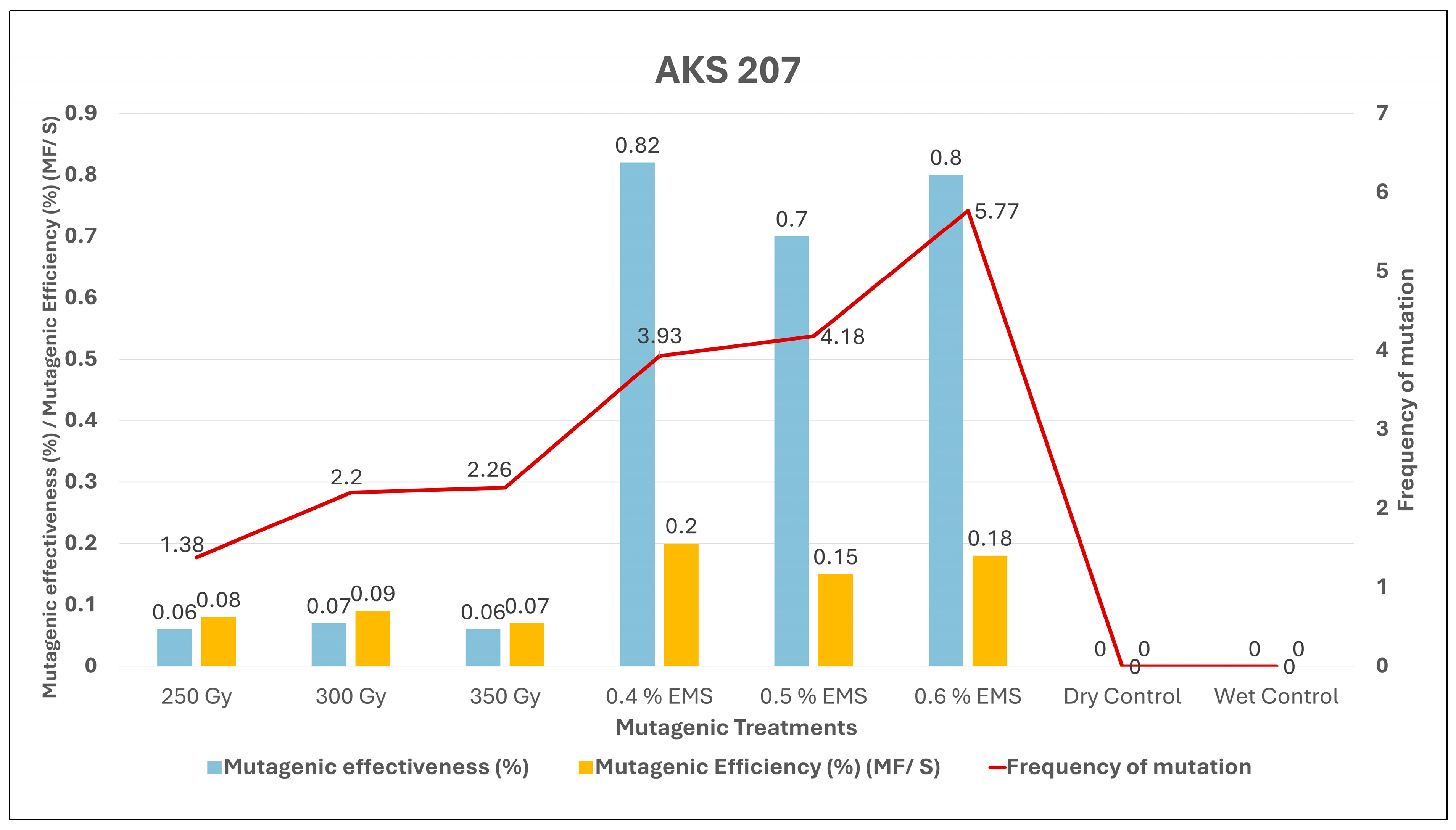
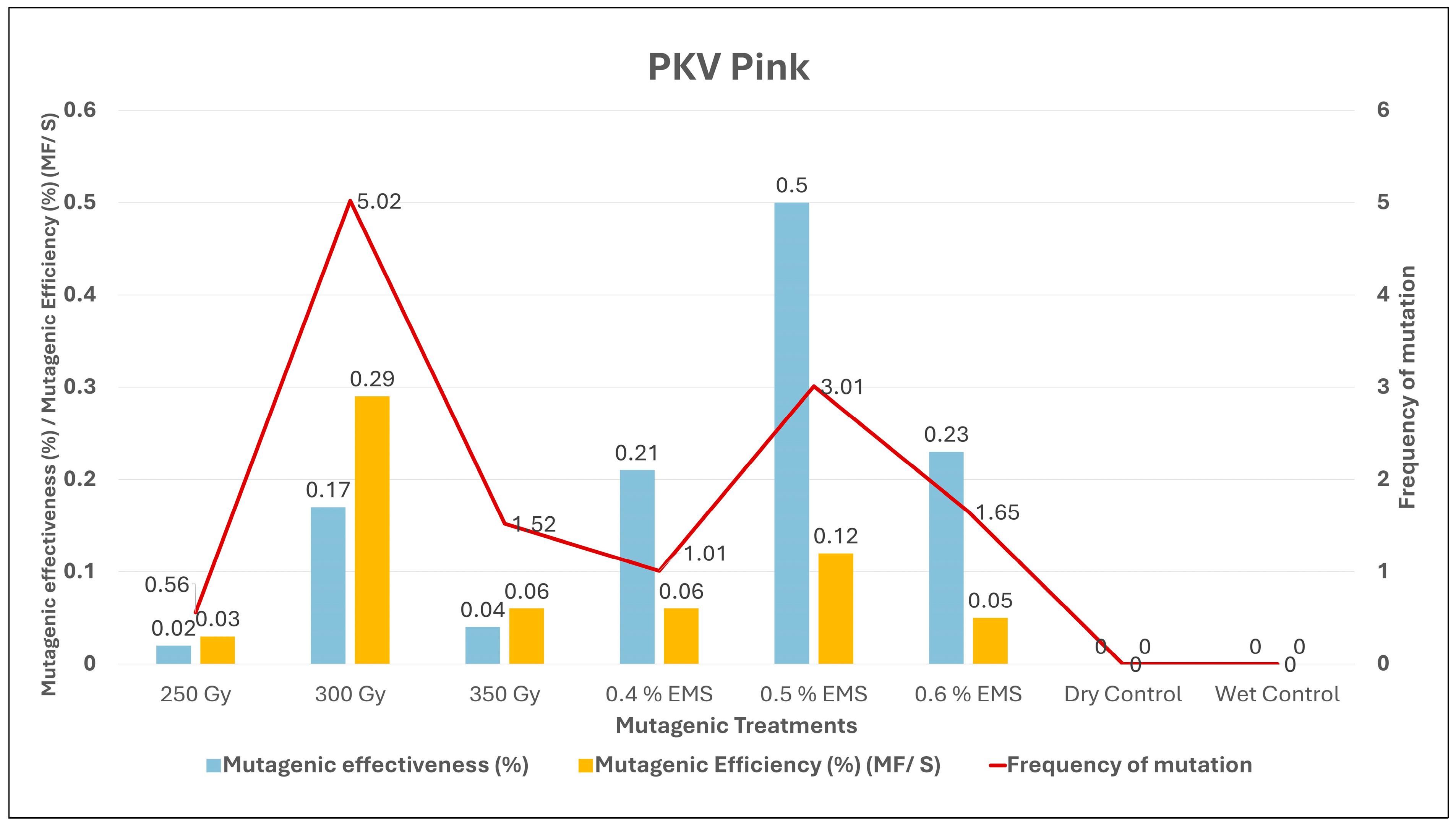
3.1. Estimates of Mutagenic Effectiveness and Efficiency
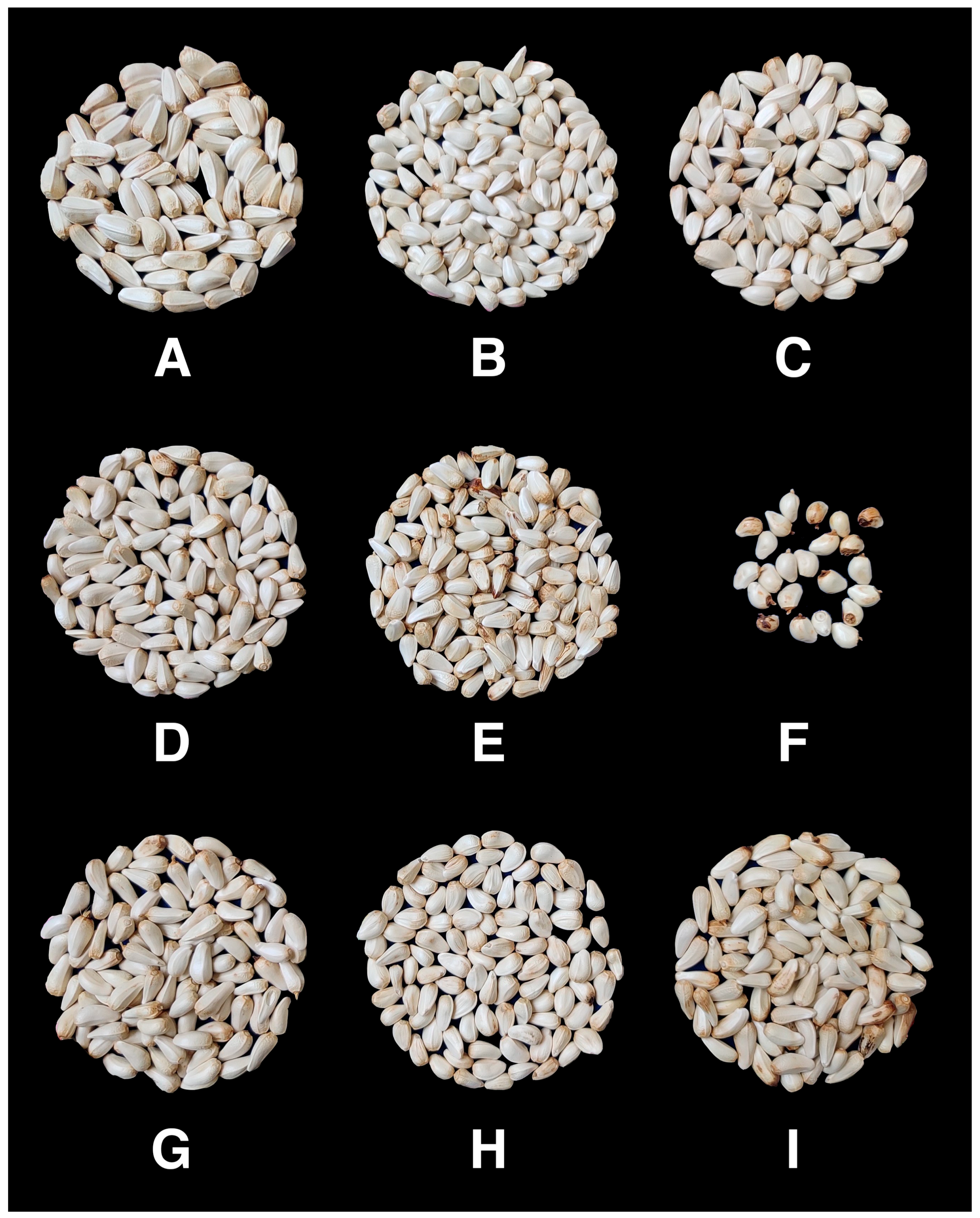
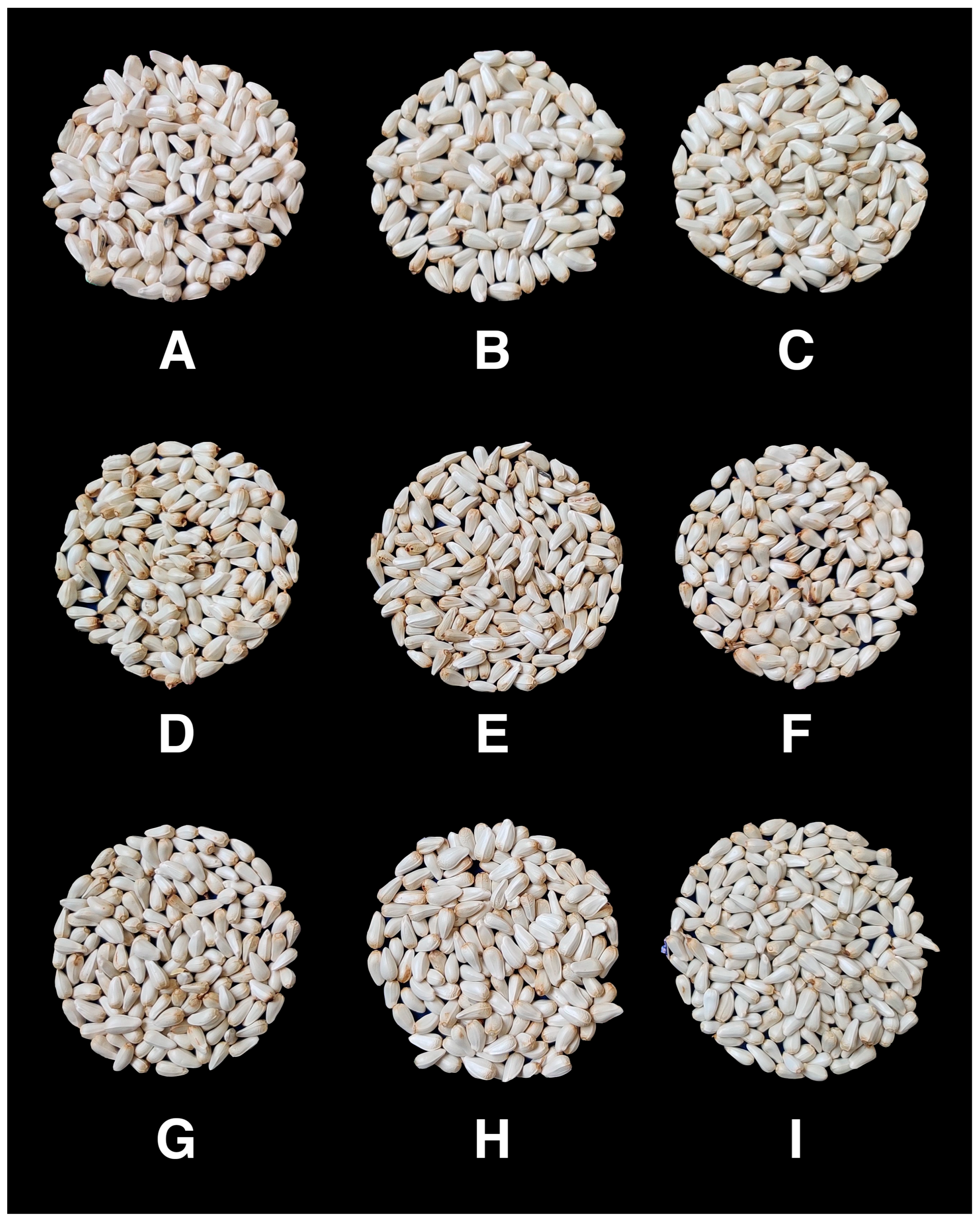
3.2. Seed Characteristics of Identified Mutants
3.3. Variation in Oil Content and Fatty Acid Composition of Mutants
3.3.1. High Oil Content Mutants
3.3.2. High Linoleic Acid Mutants
3.3.3. High Oleic Acid Mutants
3.3.4. High Stearic Acid Mutants
3.3.5. Low Palmitic Acid Mutants
3.3.6. Oleic Desaturation Ratio (ODR)
3.3.7. Polyunsaturated-to-Saturated Fatty Acid Ratio (P/S Index)
3.4. Protein Content Variation in Mutants
3.5. Integrated Analyses of Phenotypic Architecture and Pleiotropic Linkages
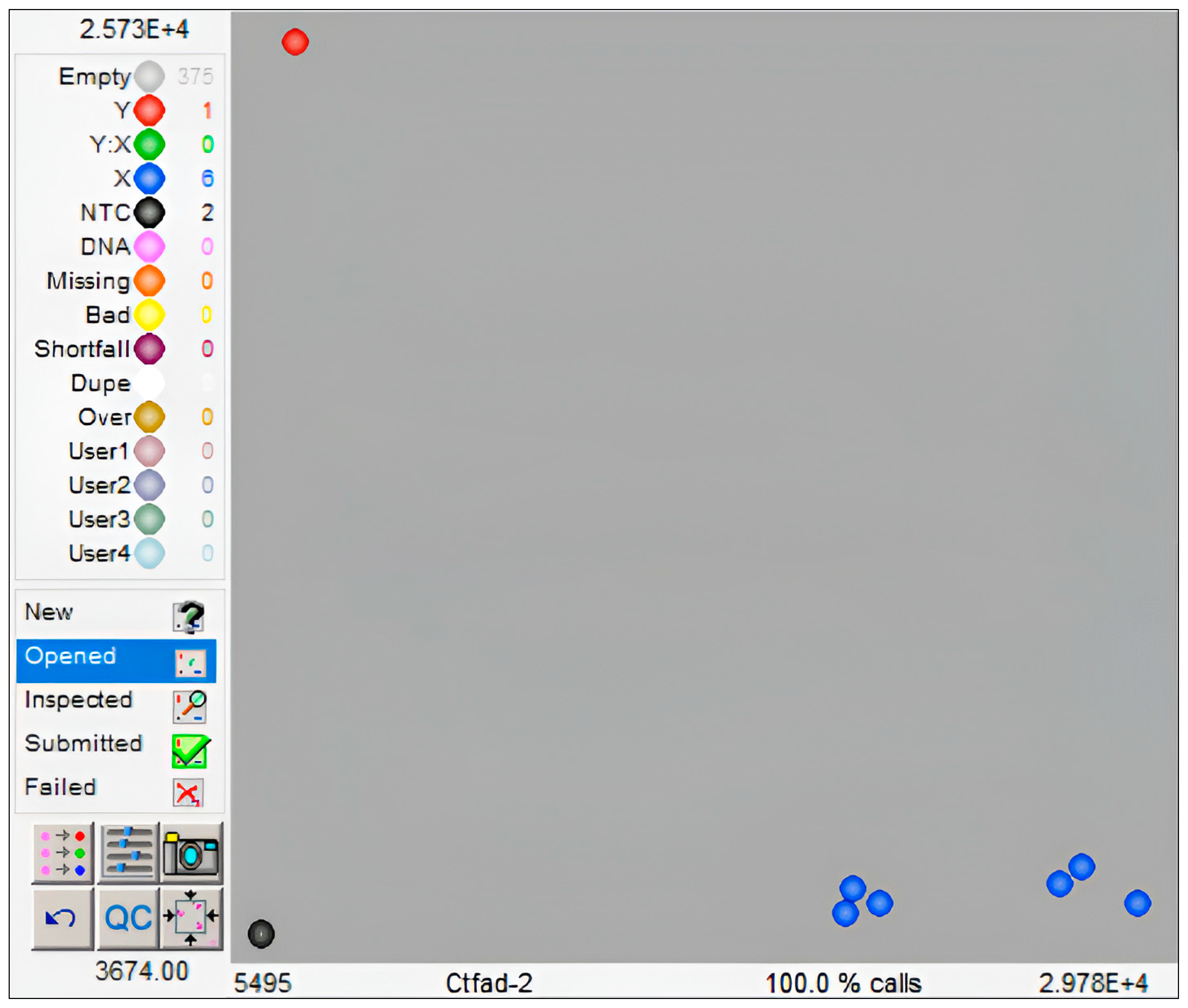
3.6. Molecular Profiling of Selected Mutants for Higher and Mid-Oleic Acid Content
4. Discussion
5. Limitations and Future Directions
6. Conclusions
Supplementary Materials
Author Contributions
Funding
Institutional Review Board Statement
Data Availability Statement
Acknowledgments
Conflicts of Interest
References
- USDA. India: Oilseeds and Products Annual. Report Number: IN2025-0021. USDA Foreign Agricultural Service. 2025. Available online: https://apps.fas.usda.gov/newgainapi/api/Report/DownloadReportByFileName?fileName=Oilseeds%20and%20Products%20Annual_New%20Delhi_India_IN2025-0021.pdf (accessed on 17 August 2025).
- TOI Business Desk. Agriculture Self-Reliance: Govt Says Oilseeds and Pulses Output Growing Faster; MPs Raise Alarm over Costly Edible Oil Imports. The Times of India. 2025. Available online: https://timesofindia.indiatimes.com/business/india-business/agriculture-self-reliance-govt-says-oilseeds-and-pulses-output-growing-faster-mps-raise-alarm-over-costly-edible-oil-imports/articleshow/121992839.cms (accessed on 17 August 2025).
- Paroda, R.S. Strategies for enhancing oilseed production. In Reorienting Indian Agriculture: Challenges and Opportunities; CABI Books: Oxfordshire, UK, 2018; pp. 115–132. [Google Scholar] [CrossRef]
- Varona, E.; Tres, A.; Rafecas, M.; Vichi, S.; Barroeta, A.; Guardiola, F. Composition and Nutritional Value of Acid Oils and Fatty Acid Distillates Used in Animal Feeding. Animals 2021, 11, 196. [Google Scholar] [CrossRef]
- Tian, M.; Bai, Y.; Tian, H.; Zhao, X. The Chemical Composition and Health-Promoting Benefits of Vegetable Oils—A Review. Molecules 2023, 28, 6393. [Google Scholar] [CrossRef]
- Korale, O.D.; Dhuppe, M.V.; Bhosle, G.B.; Sargar, P.R. Assessment of genetic variability, heritability and genetic advance for yield and yield contributing characters in groundnut (Arachis hypogaea. L). Multilogic Sci. 2021, 12, 123–126. [Google Scholar]
- Kante, S.; Wadikar, P.B.; Sargar, P.R.; Patil, S.S. Correlation Analysis for Seed Yield and its Related Attributes in Genotypes of Sesame (Sesamum indicum L.). Int. J. Plant Environ. 2022, 8, 87–90. [Google Scholar] [CrossRef]
- Orhan, D.D.; Pekacar, S.; Ulutaş, O.K.; Özüpek, B.; Sümmeoğlu, D.; Berkkan, A. Assessment of commercially safflower oils (Carthami oleum raffinatum) in terms of European Pharmacopoeia criteria and their weight control potentials. Turk. J. Pharm. Sci. 2021, 19, 273–279. [Google Scholar] [CrossRef] [PubMed]
- Sargar, P.; Wadikar, P.; Patil, S.; Shrotri, S. Hybrid vigour and inbreeding depression analysis for seed yield and its related attributes in safflower (Carthamus tinctorius L.). Electron. J. Plant Breed. 2021, 12, 195. [Google Scholar] [CrossRef]
- Kammili, A.; Yadav, P. Enhancing oleic acid and oil content in low oil and oleic type Indian safflower (Carthamus tinctorius L.). Ind. Crops Prod. 2022, 175, 114254. [Google Scholar] [CrossRef]
- Rampure, N.H.; Choudhary, A.D.; Jambhulkar, S.J.; Badere, R.S. Ethyl Methane Sulphonate-Induced High Oleic Acid Mutants in Safflower (Carthamus tinctorius L.). J. Crop Improv. 2015, 29, 720–727. [Google Scholar] [CrossRef]
- Khalid, N.; Khan, R.S.; Hussain, M.I.; Farooq, M.; Ahmad, A.; Ahmed, I. A comprehensive characterisation of safflower oil for its potential applications as a bioactive food ingredient—A review. Trends Food Sci. Technol. 2017, 66, 176–186. [Google Scholar] [CrossRef]
- Wang, C.; Sun, C.; Lu, W.; Gul, K.; Mata, A.; Fang, Y. Emulsion structure design for improving the oxidative stability of polyunsaturated fatty acids. Compr. Rev. Food Sci. Food Saf. 2020, 19, 2955–2971. [Google Scholar] [CrossRef]
- Yılmaz, E.G.; Yorulmaz, A. Improvement in Frying Stability of Safflower Oil by Blending with Refined Olive Pomace Oil during Deep Fat Frying. J. Oleo Sci. 2023, 72, 901–910. [Google Scholar] [CrossRef]
- Nogales-Delgado, S.; Encinar, J.M.; Cortés, Á.G. High oleic safflower oil as a feedstock for stable biodiesel and biolubricant production. Ind. Crops Prod. 2021, 170, 113701. [Google Scholar] [CrossRef]
- Sarkar, M.A.A.S.U.; Shaha, B.K.; Kabir, M.A.; Islam, M.T.; Khatun, M.M.; Siddik, M.N.A. Fatty acid profile, antioxidant capabilities and Physico-chemical assessment of functional oils from safflower seeds: A potential source in Bangladesh. Results Chem. 2025, 15, 102235. [Google Scholar] [CrossRef]
- Adjonu, R.; Prenzler, P.D.; Ayton, J. The Performance of the Super-High-Oleic Acid Safflower (Carthamus tinctorius) Oil During Intermittent Frying. Foods 2025, 14, 729. [Google Scholar] [CrossRef] [PubMed]
- Kammili, A.; Yadav, P.; Reddy, A.V. ISF-1: First high oleic safflower variety developed in India. Indian Farm. 2020, 70. Available online: https://epubs.icar.org.in/index.php/IndFarm/article/view/106277 (accessed on 27 October 2025).
- Liu, Q.; Cao, S.; Zhou, X.; Wood, C.; Green, A.; Singh, S. Nonsense-mediated mRNA degradation of CtFAD2-1 and development of a perfect molecular marker for olol mutation in high oleic safflower (Carthamus tinctorius L.). Theor. Appl. Genet. 2013, 126, 2219–2231. [Google Scholar] [CrossRef]
- Salunke, G.; Badhe, Y.; Singh, V.; Ghorpade, P.; Hegde, M.; Kadoo, N. Molecular insights into the oleic acid accumulation in safflower. J. Am. Oil Chem. Soc. 2024, 102, 351–363. [Google Scholar] [CrossRef]
- Akbari, G.A.; Heshmati, S.; Soltani, E.; Dehaghi, M.A. Influence of Seed Priming on Seed Yield, Oil Content and Fatty Acid Composition of Safflower (Carthamus tinctorius L.) Grown Under Water Deficit. Int. J. Plant Prod. 2019, 14, 245–258. [Google Scholar] [CrossRef]
- Subaşı, İ.; Başalma, D.; Arslan, Y.; Eryiğit, T. Influence of EMS applications on fatty acids composition in safflower. Kuwait J. Sci. 2023, 50, 26–30. [Google Scholar] [CrossRef]
- Wang, R.; Hou, N.; Chen, Z.; Liu, Y.; Qin, Z.; Chang, Y.; Qin, Z.; Liu, H. Effect of heat pretreatment of safflower seeds on quality and polyphenol composition of extracted oil. LWT 2025, 217, 117418. [Google Scholar] [CrossRef]
- Rosqvist, F.; Iggman, D.; Kullberg, J.; Cedernaes, J.; Johansson, H.; Larsson, A.; Johansson, L.; Ahlström, H.; Arner, P.; Dahlman, I.; et al. Overfeeding polyunsaturated and saturated fat causes distinct effects on liver and visceral fat accumulation in humans. Diabetes 2014, 63, 2356–2368. [Google Scholar] [CrossRef]
- Kostik, V.; Memeti, S.; Bauer, B. Fatty acid composition of edible oils and fats. J. Hygienic Eng. Des. 2013, 4, 112–116. [Google Scholar]
- Yadava, D.K.; Vasudev, S.; Singh, N.; Mohapatra, T.; Prabhu, K.V. Breeding Major Oil Crops: Present Status and Future Research Needs. In Technological Innovations in Major World Oil Crops, Volume 1: Breeding; Gupta, S.K., Ed.; Springer: New York, NY, USA, 2012; Chapter 2. [Google Scholar]
- Cerrotta, A.; Lindström, L.I.; Echenique, V. Selection tools for oil content and fatty acid composition in safflower (Carthamus tinctorius L.). Breed. Sci. 2020, 70, 558–566. [Google Scholar] [CrossRef] [PubMed]
- Phanindra, K.S.; Toprope, V.N.; Thakur, N.R. Effect of Sodium Azide in Yield and Yield Contributing Traits of Confectionary Sunflower (Helianthus annuus L.). Int. J. Curr. Microbiol. App. Sci. 2018, 7, 2326–2333. [Google Scholar] [CrossRef]
- Patil, S.H.; Wadikar, P.B.; Dhutraj, D.N.; Sargar, P.R. Correlation Analysis for Grain Yield and its Components in Pearl Millet [Pennisetum glaucum (L.) R. Br.]. Madras Agric. J. 2021, 108, 169–171. [Google Scholar] [CrossRef]
- Patil, D.K.; Dhare, S.L.; Gite, V.K.; Kalpande, H.V.; Thakur, N.R.; Pratap, A.; Baig, K.S.; Ahire, R.D. Pre-breeding efforts through introgression of pre-harvest sprouting resistance genes from wild Vigna radiata var. sublobata into cultivated mungbean. Front. Plant Sci. 2025, 16, 1689852. [Google Scholar] [CrossRef]
- Yadav, P.; Murthy, I.Y.L.N. Calibration of NMR spectroscopy for accurate estimation of oil content in sunflower, safflower and castor seeds. Current Sci. 2016, 110, 73–76. [Google Scholar] [CrossRef]
- Pushpa, H.D.; Helan, B.T.; Sujatha, M.; Ramchander, L.; Sravanthi, J.; Rajani, B.; Jagtap, P.; Rajkumar, S.; Gomashe, S.; Mathur, R.K.; et al. Variability for oil content and fatty acid composition in diverse accessions of Niger (Guizotia abyssinica L.f. Cass.). J. Food Qual. 2025, 6839620. [Google Scholar] [CrossRef]
- Ntiamoah, C.; Rowland, G.G. Inheritance and characterization of two low linolenic acid EMS-induced McGregor mutant flax (Linum usitatissimum L.). Can. J. Plant Sci. 1997, 77, 353–358. [Google Scholar] [CrossRef]
- Konzak, C.F.; Nilan, R.A.; Wagner, J.; Foster, R.J. Efficient chemical mutagenesis. In The Use of Induced Mutations in Plant Breeding, Proceedings of the FAO/IAEA Technical Meeting, Rome, Italy, 25 May 1964; Pergamon Press: Oxford, UK, 1965; pp. 49–70. [Google Scholar]
- Gaul, H. Present aspects of induced mutation in plant breeding. Euphytica 1958, 7, 275–289. [Google Scholar] [CrossRef]
- Posit Team. RStudio: Integrated Development Environment for R, (Version 2025.09) Posit Software; PBC: Boston, MA, USA, 2025; Available online: http://www.posit.co/ (accessed on 15 October 2025).
- Harrell, F.E., Jr. Hmisc: Harrell Miscellaneous, R Package Version 5.1-0. 2023. Available online: https://hbiostat.org/R/Hmisc/ (accessed on 17 August 2025).
- Wei, T.; Simko, V. R Package “corrplot”: Visualization of a Correlation Matrix, Version 0.95. 2017. Available online: https://github.com/taiyun/corrplot (accessed on 17 August 2025).
- Lê, S.; Josse, J.; Husson, F. FactoMineR: An R Package for Multivariate Analysis. J. Stat. Softw. 2008, 25, 1–18. [Google Scholar] [CrossRef]
- Kassambara, A.; Mundt, F. factoextra: Extract and Visualize the Results of Multivariate Data Analyses, R Package Version 1.0.7. 2020. Available online: https://cran.r-project.org/web/packages/factoextra/index.html (accessed on 17 August 2025).
- Larsson, J.; Gustafsson, P. A Case Study in Fitting Area-Proportional Euler Diagrams with Ellipses Using eulerr. In Proceedings of the International Workshop on Set Visualization and Reasoning, Edinburgh, UK, 18 June 2018; Volume 2116, pp. 84–91. Available online: https://ceur-ws.org/Vol-2116/paper7.pdf (accessed on 17 October 2025).
- Allaire, J.J.; Ellis, P.; Gandrud, C.; Kuo, K.; Lewis, B.W.; Owen, J.; Russell, K.; Rogers, J.; Sese, C.; Yetman, C.J. networkD3: D3 JavaScript Network Graphs from R, Version 0.4.1. 2025. Available online: https://cran.r-project.org/web/packages/networkD3/index.html (accessed on 17 August 2025). [CrossRef]
- Doyle, J.J.; Doyle, J.L. A Rapid DNA Isolation Procedure for Small Quantities of Fresh Leaf Tissue. Phytochem. Bul. 1987, 19, 11–15. [Google Scholar]
- Guan, L.L.; Xu, Y.W.; Wang, Y.B.; Chen, L.; Shao, J.F.; Wu, W. Isolation and characterization of a temperature-regulated microsomal Oleate desaturase gene (CtFAD2-1) from safflower (Carthamus tinctorius L.). Plant Mol. Biol. Rep. 2012, 30, 391–402. [Google Scholar] [CrossRef]
- Kadirvel, P.; Veerraju, C.; Senthilvel, S.; Yadav, P.; Kiran, B.U.; Shaik, M.; Shaw, R.; Selvaraj, V.M.; Reddy, Y.R.; Mohanrao, M.D.; et al. Marker-assisted selection for fast-track breeding of high oleic lines in safflower (Carthamus tinctorious L.). Ind. Crops Prod. 2020, 158, 112983. [Google Scholar] [CrossRef]
- Jatayev, S.; Kurishbayev, A.; Zotova, L.; Khasanova, G.; Serikbay, D.; Zhubatkanov, A.; Botayeva, M.; Zhumalin, A.; Turbekova, A.; Soole, K.; et al. Advantages of amplifluor-like SNP markers over KASP in plant genotyping. BMC Plant Biol. 2017, 17, 254. [Google Scholar] [CrossRef] [PubMed]
- Herridge, R.P.; Day, R.C.; Baldwin, S.; Macknight, R.C. Rapid analysis of seed size in Arabidopsis for mutant and QTL discovery. Plant Methods 2011, 7, 3. [Google Scholar] [CrossRef]
- Li, N.; Peng, W.; Shi, J.; Wang, X.; Liu, G.; Wang, H. The Natural Variation of Seed Weight Is Mainly Controlled by Maternal Genotype in Rapeseed (Brassica napus L.). PLoS ONE 2015, 10, e0125360. [Google Scholar] [CrossRef]
- Burow, G.; Xin, Z.; Hayes, C.; Burke, J. Characterization of a Multiseeded (msd1) Mutant of Sorghum for Increasing Grain Yield. Crop Sci. 2014, 54, 2030–2037. [Google Scholar] [CrossRef]
- Rampure, N.H.; Choudhary, A.D.; Jambhulkar, S.J.; Badere, R.S. Isolation of desirable mutants in safflower for crop improvement. Indian J. Genet. 2017, 77, 134–144. [Google Scholar] [CrossRef]
- Anbarasan, K.; Rajendran, R.; Sivalingam, D. Studies on the mutagenic effectiveness and efficiency of gamma rays, EMS and combined treatments in sesame (Sesamum indicum L.) var. TMV3. Res. J. Pharm. Biol. Chem. Sci. 2015, 6, 589. [Google Scholar]
- Julia, T.; Renuka, T.; Nanita, H.; Jambhulkar, S. Mutagenic effectiveness and efficiency of gamma rays in Indian mustard (Brassica juncea L. Czern and Coss). Int. J. Curr. Microbiol. App. Sci. 2018, 7, 3376–3386. [Google Scholar] [CrossRef]
- Saha, S.; Paul, A. Effectiveness and efficiency of gamma rays on sesame (Sesamum indicum L.) Genotypes. Bioscan 2018, 13, 197–201. [Google Scholar]
- Sakr, H.; El-Zaher, I.A.; Haridy, M.; Okaz, A. Effect of recurrent mutagenesis on some induced genotypes in safflower (Carthamus tinctorious L.). Arch. Agric. Sci. J. 2020, 3, 78–82. [Google Scholar] [CrossRef]
- Khadeer, M.A.; Anwar, S.Y. Induction and characterization of seed mutant oil and fatty acid composition in safflower. Cytologia 1991, 56, 4. [Google Scholar] [CrossRef][Green Version]
- Yermanos, D.M.; Hemstreet, S.; Garber, M.J. Inheritance of Quality and Quantity of Seed-Oil in Safflower (Carthamus tinctorius L.). Crop Sci. 1967, 7, 5. [Google Scholar] [CrossRef]
- Gawande, S.M. Genetic Improvement of Safflower (Carthamus Tinctorius L.) Through Induced Mutation. Ph.D. Thesis, VNMKV, Parbhani, Maharashtra, India, 2022. [Google Scholar]
- Tonguç, M.; Önder, S.; Erbaş, S. Variations in seed oil and chemical composition among the safflower genotypes (Carthamus tinctorius L.). Not. Bot. Horti Agrobot. Cluj-Napoca 2023, 51, 13045. [Google Scholar] [CrossRef]
- Fan, K.; Qin, Y.; Hu, X.; Xu, J.; Ye, Q.; Zhang, C.; Ding, Y.; Li, G.; Chen, Y.; Liu, J.; et al. Identification of genes associated with fatty acid biosynthesis based on 214 safflower core germplasm. BMC Genomics 2023, 24, 763. [Google Scholar] [CrossRef]
- Liu, L.; Guan, L.L.; Wu, W.; Wang, L. A Review of Fatty Acids and Genetic Characterization of Safflower (Carthamus tinctorius L.) Seed Oil. World J. Tradit. Chin. Med. 2016, 2, 48–52. [Google Scholar] [CrossRef]
- Zambiazi, R.C.; Przybylski, R.; Zambiazi, M.W.; Mendonca, C.B. Fatty acid composition of vegetable oils and fats. B. CEPPA Curitiba. 2007, 25, 111–120. [Google Scholar]
- Singh, R.; Langyan, S.; Sangwan, S.; Rohtagi, B.; Khandelwal, A.; Shrivastava, M. Protein for human consumption from oilseed cakes: A review. Front. Sustain. Food Syst. 2022, 6, 856401. [Google Scholar] [CrossRef]
- Toutirais, L.; Walrand, S.; Vaysse, C. Are oilseeds a new alternative protein source for human nutrition? Food Funct. 2024, 15, 2366–2380. [Google Scholar] [CrossRef]
- Surmi, A.; El Dengawy, R.A.H.; Khalifa, A.H. Chemical and Nutritional Aspects of Some Safflower Seed Varieties. J. Food Process Technol. 2016, 7, 585. [Google Scholar] [CrossRef]
- Nagaraj, G. Quality and Utility of Oil Seeds; Directorate of Oilseeds Research (Indian Council of Agricultural Research) Cultivars: Hyderabad, India, 1995.
- Olorunmaiye, S.K.; Joseph, G.G.; Animasaun, D.A.; Oyedeji, S. Mutagenic components and dosage effects of ethyl methane sulphonate on Arachis hypogea (Samnut 24 var.). Ife J. Sci. 2019, 21, 309. [Google Scholar] [CrossRef]
- Pavadai, P.; Girija, M.; Dhanavel, D. Effectiveness, efficiency and biochemical content of physical and chemical mutagens in soybean (Glycine max (L.) Merr.). J. Phytol. 2009, 1, 444–447. [Google Scholar]
- Thakur, N.; Toprope, V.; Phanindra, K.S. Estimation of Genetic Variability, Correlation and Path Analysis for Yield and Yield Contributing Traits in Chickpea (Cicer arietinum L.). Int. J. Curr. Microbiol. App. Sci. 2018, 7, 2298–2304. [Google Scholar] [CrossRef]
- Kadam, S.R.; Thakur, N.R.; Jahagirdar, J.E. Study of Correlation in Mungbean (Vigna Radiata L.) for Seed Yield and Yield Contributing Traits. Seed Res. 2023, 51, 61–64. [Google Scholar]
- Lukonge, E.; Labuschagne, M.T.; Hugo, A. The evaluation of oil and fatty acid composition in seed of cotton accessions from various countries. J. Sci. Food Agric. 2006, 87, 340–347. [Google Scholar] [CrossRef]
- Hernández, M.L.; Sicardo, M.D.; Belaj, A.; Martínez-Rivas, J.M. The Oleic/Linoleic Acid Ratio in Olive (Olea europaea L.) Fruit Mesocarp Is Mainly Controlled by OeFAD2-2 and OeFAD2-5 Genes Together With the Different Specificity of Extraplastidial Acyltransferase Enzymes. Front. Plant Sci. 2021, 12, 653997. [Google Scholar] [CrossRef]
- Chakroborty, N.; Kabir, M.A.; Hossen, M.M.; Afrin, J.; Islam, M.M.; Robin, A.H.K. Species-Specific variation in oil content and fatty acid profiles of Short-Duration Rapeseed and mustard. ACS Food Sci. Technol. 2025, 5, 1082–1090. [Google Scholar] [CrossRef]
- Rudolphi, S.; Becker, H.C.; Schierholt, A.; Von Witzke-Ehbrecht, S. Improved estimation of oil, linoleic and oleic acid and seed hull fractions in safflower by NIRS. J. Am. Oil Chem. Soc. 2011, 89, 363–369. [Google Scholar] [CrossRef] [PubMed]
- Wood, C.C.; Okada, S.; Taylor, M.C.; Menon, A.; Mathew, A.; Cullerne, D.; Stephen, S.J.; Allen, R.S.; Zhou, X.; Liu, Q.; et al. Seed-specific RNAi in safflower generates a superhigh oleic oil with extended oxidative stability. Plant Biotechnol. J. 2018, 16, 1788–1796. [Google Scholar] [CrossRef] [PubMed]
- Hamdan, Y.A.S.; Pérez-Vich, B.; Velasco, L.; Fernández-Martínez, J.M. Inheritance of high oleic acid content in safflower. Euphytica 2009, 168, 61–69. [Google Scholar] [CrossRef]
- García-Inza, G.; Castro, D.; Hall, A.; Rousseaux, M. Responses to temperature of fruit dry weight, oil concentration, and oil fatty acid composition in olive (Olea europaea L. var. ‘Arauco’). Eur. J. Agron. 2014, 54, 107–115. [Google Scholar] [CrossRef]
- Du, P.; Deng, Q.; Wang, W.; Garg, V.; Lu, Q.; Huang, L.; Wang, R.; Li, H.; Huai, D.; Chen, X.; et al. scRNA-seq Reveals the Mechanism of Fatty Acid Desaturase 2 Mutation to Repress Leaf Growth in Peanut (Arachis hypogaea L.). Cells 2023, 12, 2305. [Google Scholar] [CrossRef]



| Variety/Dose | Plant Population | Frequency of Mutation | Pollen Sterility (%) | Mutagenic Effectiveness (%) | Mutagenic Efficiency (%) (MF/S) |
|---|---|---|---|---|---|
| AKS 207 | |||||
| 250 Gy | 1672 | 1.38(23) | 11.63 | 0.06 | 0.08 |
| 300 Gy | 1454 | 2.20(32) | 16.47 | 0.07 | 0.09 |
| 350 Gy | 1325 | 2.26(30) | 24.32 | 0.06 | 0.07 |
| 0.4% EMS | 1144 | 3.93(45) | 16.73 | 0.82 | 0.20 |
| 0.5% EMS | 790 | 4.18(33) | 22.49 | 0.70 | 0.15 |
| 0.6% EMS | 624 | 5.77(36) | 27.46 | 0.80 | 0.18 |
| Dry Control | 252 | NA | 8.11 | NA | NA |
| Wet Control | 249 | NA | 5.69 | NA | NA |
| PKV Pink | |||||
| 250 Gy | 1437 | 0.56(8) | 9.75 | 0.02 | 0.03 |
| 300 Gy | 936 | 5.02(47) | 14.69 | 0.17 | 0.29 |
| 350 Gy | 1053 | 1.52(16) | 22.63 | 0.04 | 0.06 |
| 0.4% EMS | 895 | 1.01(9) | 16.89 | 0.21 | 0.06 |
| 0.5% EMS | 831 | 3.01(25) | 18.69 | 0.50 | 0.12 |
| 0.6% EMS | 607 | 1.65(10) | 24.65 | 0.23 | 0.05 |
| Dry Control | 255 | NA | 7.41 | NA | NA |
| Wet Control | 261 | NA | 6.39 | NA | NA |
| Mutant | Dose of Mutagen (Gy/%) | Oil % | Linoleic Acid | Oleic Acid | Stearic Acid | Palmitic Acid | Oleic Desaturation Ratio | P/S Index | Protein % |
|---|---|---|---|---|---|---|---|---|---|
| AKS 207 | |||||||||
| Control | 29.79 | 68.09 | 18.63 | 4.16 | 6.92 | 3.27 | 6.15 | 15.86 | |
| T1-5 | 250 | 27.36 | 67.91 | 21.21 | 3.52 | 7.31 | 3.2 | 6.27 | 20.23 |
| T1-24 | 250 | 32.27 | 70.54 | 19.28 | 3.58 | 6.6 | 3.66 | 6.93 | 13.69 |
| T1-79 | 250 | 25.27 | 62.33 | 24.15 | 4.72 | 8.82 | 2.58 | 4.6 | 14.77 |
| T2-3 | 300 | 24.41 | 63.4 | 27.52 | 3.17 | 5.91 | 2.3 | 6.98 | 15.42 |
| T2-69 | 300 | 29.28 | 60.67 | 28.8 | 2.65 | 7.88 | 2.11 | 5.76 | 12.81 |
| T2-70 | 300 | 28.25 | 51.63 | 32.03 | 6.69 | 9.64 | 1.61 | 3.16 | 15.05 |
| T2-72 | 300 | 28.58 | 74.74 | 18.07 | 1.35 | 5.84 | 4.14 | 10.39 | 11.48 |
| T3-7 | 350 | 24.45 | 67.37 | 21.47 | 3.96 | 7.2 | 3.14 | 6.04 | 20.44 |
| T3-8 | 350 | 24.27 | 66.25 | 22.56 | 3.94 | 7.24 | 2.94 | 5.93 | 20.16 |
| T3-17 | 350 | 27.65 | 63.31 | 25.64 | 3.51 | 7.54 | 2.47 | 5.73 | 21.04 |
| T4-14 | 0.4 | 31.36 | 71.23 | 18.08 | 3.04 | 7.66 | 3.94 | 6.66 | 14.84 |
| T4-29 | 0.4 | 29.6 | 72.02 | 19.68 | 2.09 | 6.2 | 3.66 | 8.69 | 20.9 |
| T4-30 | 0.4 | 28.4 | 69.49 | 20.65 | 2.69 | 7.17 | 3.37 | 7.05 | 22.12 |
| T4-59 | 0.4 | 27.69 | 73.78 | 18.46 | 1.68 | 6.07 | 4 | 9.52 | 15.16 |
| T4-62 | 0.4 | 31.07 | 58.18 | 29.21 | 2.86 | 9.75 | 1.99 | 4.61 | 12.08 |
| T5-16 | 0.5 | 31.99 | 66.97 | 22.71 | 2.86 | 7.47 | 2.95 | 6.48 | 18.48 |
| T5-23 | 0.5 | 29.94 | 66.8 | 23.39 | 3.22 | 6.6 | 2.86 | 6.8 | 21.49 |
| T5-58 | 0.5 | 26.12 | 51.93 | 36.86 | 2.68 | 8.53 | 1.41 | 4.63 | 14.77 |
| T5-63 | 0.5 | 26.76 | 66.95 | 20.57 | 4.24 | 8.23 | 3.25 | 5.37 | 14.35 |
| T5-64 | 0.5 | 35.19 | 69.1 | 18.49 | 4.08 | 8.33 | 3.74 | 5.57 | 12.25 |
| T5-65 | 0.5 | 25.69 | 63.1 | 27.37 | 2.09 | 7.44 | 2.31 | 6.62 | 15.16 |
| T6-2 | 0.6 | 23.99 | 58.63 | 26.88 | 5.39 | 9.1 | 2.18 | 4.05 | 15.43 |
| T6-13 | 0.6 | 32.16 | 65.42 | 23.2 | 4.1 | 7.28 | 2.82 | 5.75 | 17.36 |
| T6-31 | 0.6 | 32.42 | 71.68 | 18.69 | 2.77 | 6.87 | 3.84 | 7.44 | 20.34 |
| T6-55 | 0.6 | 24.79 | 73.51 | 19.18 | 1.01 | 6.3 | 3.83 | 10.06 | 15.47 |
| PKV Pink | |||||||||
| Control | 33.6 | 70.23 | 19.03 | 2.98 | 7.76 | 3.69 | 6.54 | 16.7 | |
| T1-85 | 250 | 32.01 | 78.13 | 13.84 | 1.14 | 6.89 | 5.65 | 9.73 | 17.61 |
| T1-86 | 250 | 33.88 | 72.14 | 19.21 | 1.35 | 7.3 | 3.76 | 8.34 | 15.61 |
| T2-41 | 300 | 34.71 | 70.75 | 18.46 | 2.74 | 8.05 | 3.83 | 6.56 | 15.26 |
| T2-45 | 300 | 30.24 | 61.94 | 26.5 | 3.42 | 8.15 | 2.34 | 5.35 | 15.54 |
| T2-87 | 300 | 34.13 | 69.46 | 20.42 | 1.72 | 8.4 | 3.4 | 6.86 | 13.79 |
| T2-90 | 300 | 33.89 | 74.07 | 17.14 | 1.38 | 7.41 | 4.32 | 8.43 | 16.47 |
| T2-91 | 300 | 34.64 | 74.18 | 17.25 | 1.68 | 6.89 | 4.3 | 8.66 | 12.11 |
| T2-92 | 300 | 28.64 | 72.09 | 20.37 | 1.22 | 6.32 | 3.54 | 9.56 | 16.81 |
| T2-93 | 300 | 34.16 | 72.66 | 18.42 | 1.95 | 6.97 | 3.94 | 8.15 | 14.81 |
| T3-42 | 350 | 29.33 | 69.34 | 21.1 | 1.94 | 7.63 | 3.29 | 7.25 | 21.39 |
| T3-43 | 350 | 31.18 | 60.22 | 28.96 | 2.19 | 8.58 | 2.08 | 5.59 | 17.89 |
| T4-95 | 0.4 | 33.8 | 69.28 | 18.58 | 4 | 8.14 | 3.73 | 5.71 | 16.52 |
| T5-51 | 0.5 | 26.79 | 69.59 | 20.42 | 2.25 | 7.74 | 3.41 | 6.97 | 22.51 |
| T5-52 | 0.5 | 34.5 | 69.03 | 21.18 | 2.38 | 7.41 | 3.26 | 7.05 | 15.89 |
| T5-99 | 0.5 | 32.74 | 61.94 | 27.35 | 2.58 | 8.13 | 2.26 | 5.78 | 20.16 |
| T5-100 | 0.5 | 33.27 | 69.24 | 18.12 | 4.99 | 7.65 | 3.82 | 5.48 | 15.19 |
| T5-103 | 0.5 | 33.76 | 74.26 | 15.65 | 3.19 | 6.91 | 4.75 | 7.35 | 15.33 |
| T6-96 | 0.6 | 34.96 | 77.36 | 14.88 | 1.4 | 6.36 | 5.2 | 9.97 | 13.16 |
| T6-97 | 0.6 | 33.66 | 73.31 | 15.81 | 3.75 | 7.12 | 4.64 | 6.74 | 15.96 |
| T6-98 | 0.6 | 34.67 | 70.44 | 18.41 | 4.01 | 7.13 | 3.83 | 6.32 | 15.02 |
Disclaimer/Publisher’s Note: The statements, opinions and data contained in all publications are solely those of the individual author(s) and contributor(s) and not of MDPI and/or the editor(s). MDPI and/or the editor(s) disclaim responsibility for any injury to people or property resulting from any ideas, methods, instructions or products referred to in the content. |
© 2026 by the authors. Licensee MDPI, Basel, Switzerland. This article is an open access article distributed under the terms and conditions of the Creative Commons Attribution (CC BY) license.
Share and Cite
Khatod, J.P.; Gahukar, S.J.; Kadirvel, P.; Dhole, V.J.; Akhare, A.A.; Yadav, P.; Jadhav, P.V.; Sargar, P.R.; Ingle, K.P.; Thakur, N.R.; et al. Induced Mutagenesis in Safflower (Carthamus tinctorius L.) Uncovers High-Oleic Acid Mutants Genetically Distinct from the Canonical CtFAD2-1 Allele. Agriculture 2026, 16, 431. https://doi.org/10.3390/agriculture16040431
Khatod JP, Gahukar SJ, Kadirvel P, Dhole VJ, Akhare AA, Yadav P, Jadhav PV, Sargar PR, Ingle KP, Thakur NR, et al. Induced Mutagenesis in Safflower (Carthamus tinctorius L.) Uncovers High-Oleic Acid Mutants Genetically Distinct from the Canonical CtFAD2-1 Allele. Agriculture. 2026; 16(4):431. https://doi.org/10.3390/agriculture16040431
Chicago/Turabian StyleKhatod, Jitendra Premchand, Santosh Janardhan Gahukar, Palchamy Kadirvel, Vinod Janardan Dhole, Amrapali Atul Akhare, Praduman Yadav, Pravin Vishwanathrao Jadhav, Pramod Ramchandra Sargar, Krishnananda Pralhad Ingle, Niranjan Ravindra Thakur, and et al. 2026. "Induced Mutagenesis in Safflower (Carthamus tinctorius L.) Uncovers High-Oleic Acid Mutants Genetically Distinct from the Canonical CtFAD2-1 Allele" Agriculture 16, no. 4: 431. https://doi.org/10.3390/agriculture16040431
APA StyleKhatod, J. P., Gahukar, S. J., Kadirvel, P., Dhole, V. J., Akhare, A. A., Yadav, P., Jadhav, P. V., Sargar, P. R., Ingle, K. P., Thakur, N. R., & Ceasar, S. A. (2026). Induced Mutagenesis in Safflower (Carthamus tinctorius L.) Uncovers High-Oleic Acid Mutants Genetically Distinct from the Canonical CtFAD2-1 Allele. Agriculture, 16(4), 431. https://doi.org/10.3390/agriculture16040431