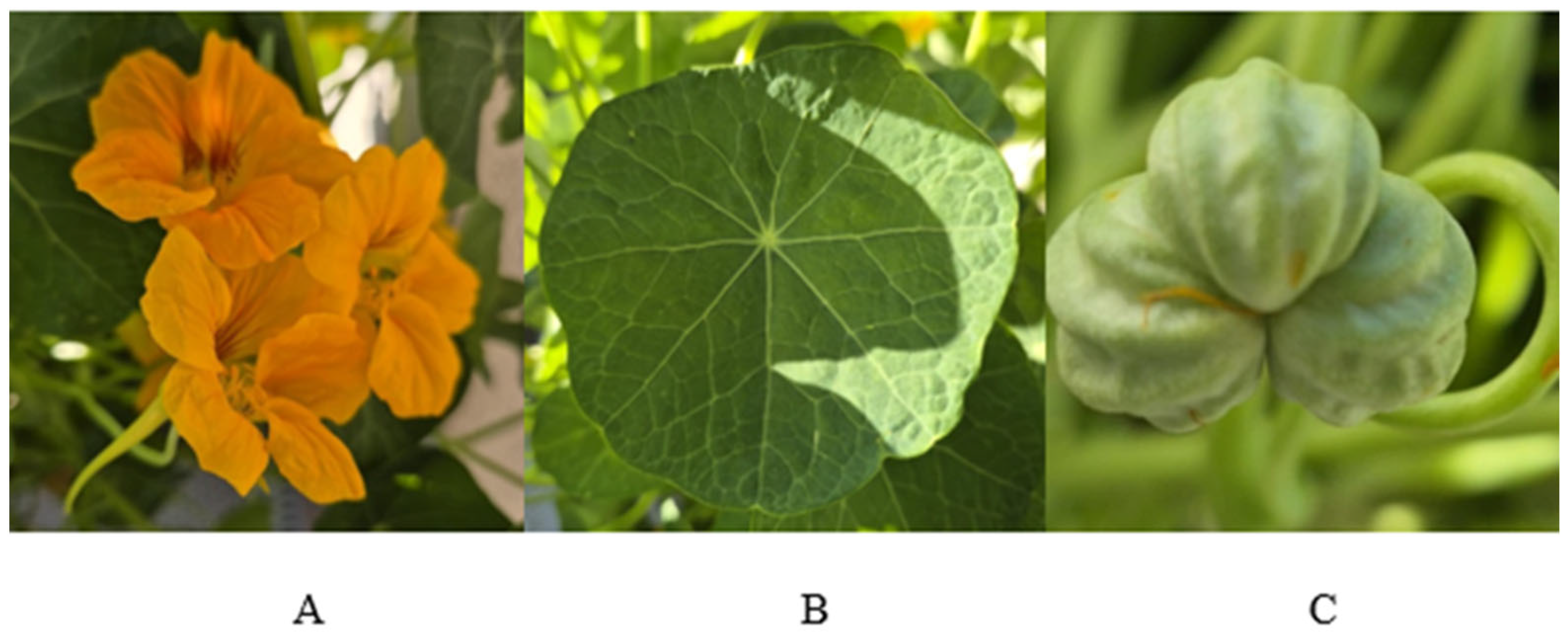
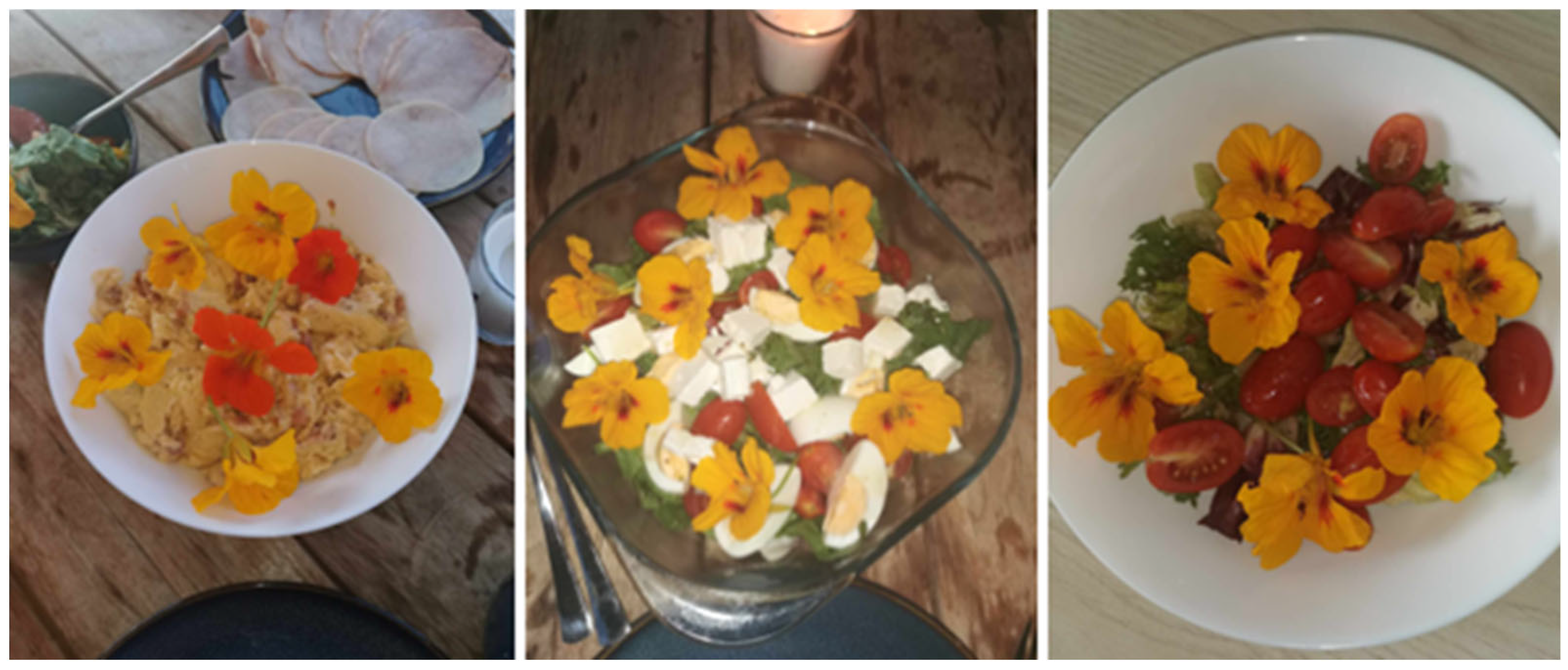
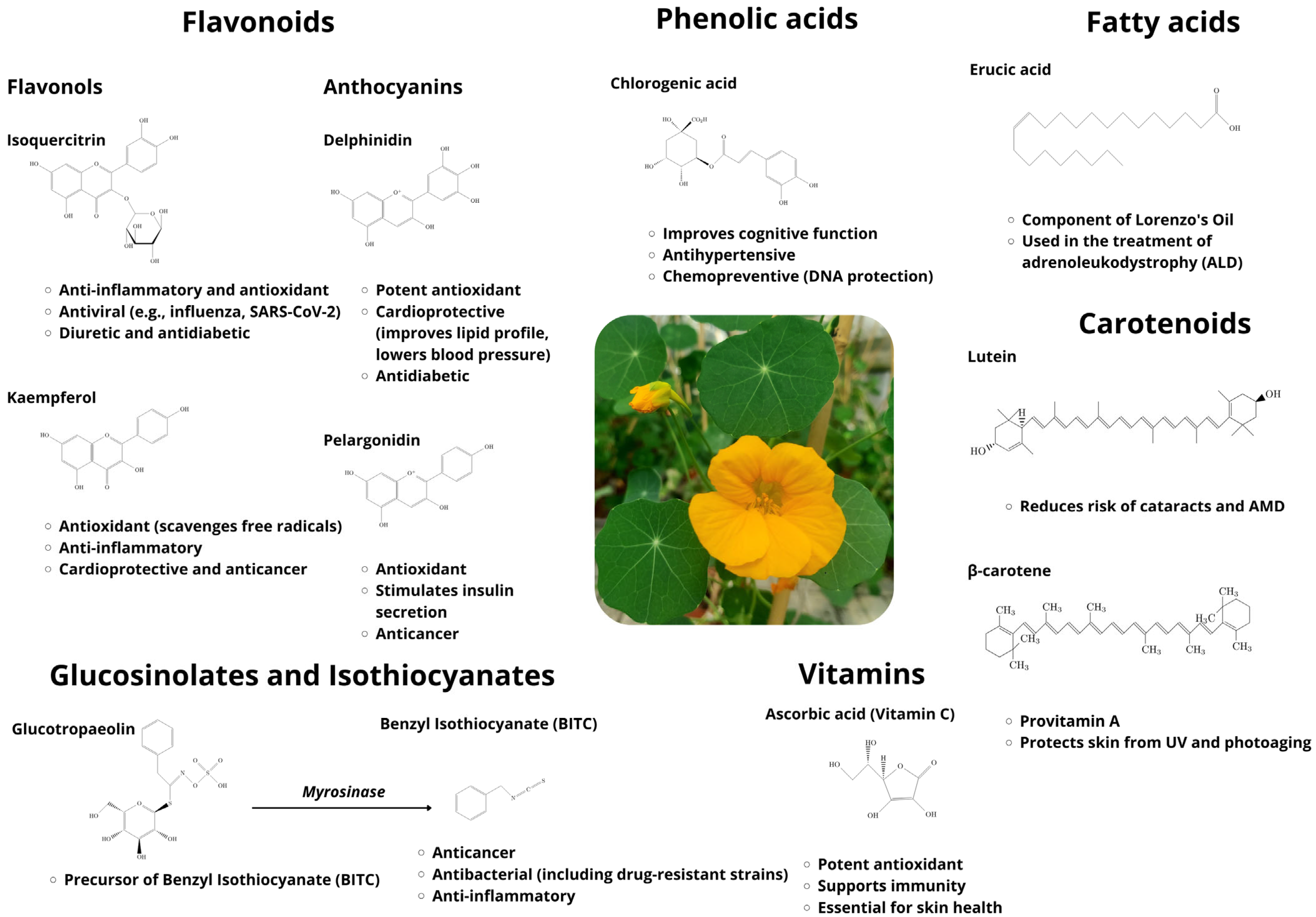
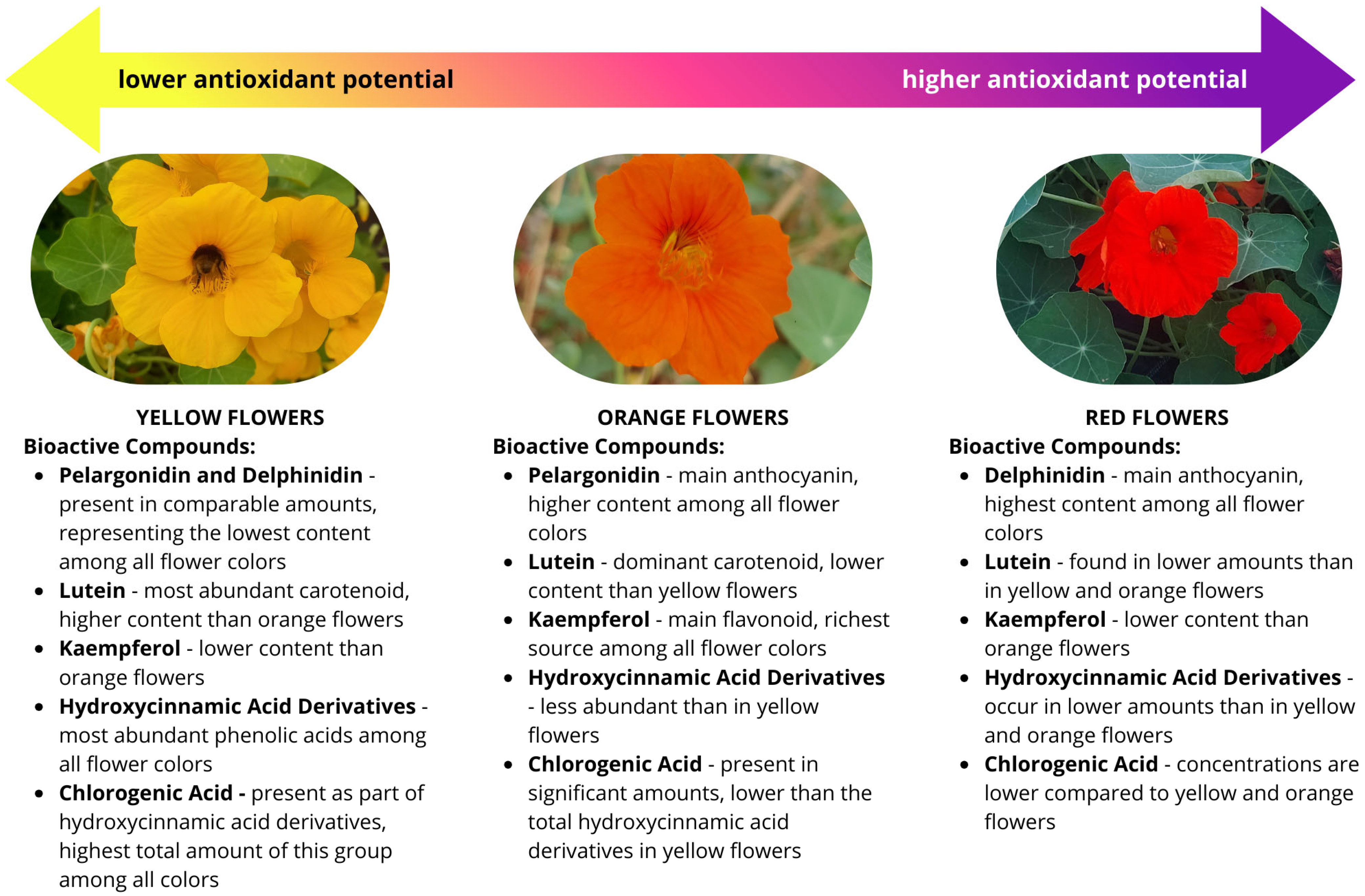
Bioactive Chemicals and Biological Activity of Tropaeolum majus L. and the Importance of Trichoderma spp. in the Cultivation of This Species


Abstract
1. Introduction
2. Bioactive Compounds in the Flowers, Leaves and Seeds of T. majus and Their Biological Activity
2.1. Phenolics Compounds
2.1.1. Flavonoids
Isoquercitrin
Kaempferol
Anthocyanins
2.1.2. Phenolic Acid
2.2. Carotenoids
2.3. Glucosinolates
2.4. Fatty Acids
2.5. Other Constituents
2.6. Toxicity
3. The Importance of Trichoderma spp. in Plant Cultivation
3.1. Characteristics of Fungi of the Trichoderma Genus
3.2. Trichoderma spp. in the Cultivation of T. majus
4. Conclusions
Author Contributions
Funding
Data Availability Statement
Conflicts of Interest
Abbreviations
| SGLT-1 | Sodium/glucose cotransporter 1 |
| ROS | Reactive oxygen species |
| RNS | Reactive nitrogen species |
| LPS | Lipopolysaccharide |
| NO | Nitric oxide |
| iNOS | Inducible nitric oxide synthase |
| ACE | Angiotensin-converting enzyme |
| SHR | Spontaneously hypertensive rats |
| HCTZ | Hydrochlorothiazide |
| DW | Dry weight |
| FW | Fresh weight |
| PGRs | Plant growth regulators |
| CKs | Cytokinins |
| COX1 | Cyclooxygenase-1 |
| LDLs | Low-Density Lipoproteins |
| AMD | Age-Related Macular Degeneration |
| UV | Ultraviolet radiation |
| BITC | Benzyl isothiocyanate |
| ALD | Adrenoleukodystrophy |
| N | Nitrogen |
| P | Phosphorus |
| K | Potassium |
| Ca | Calcium |
| Mg | Magnesium |
| Na | Sodium |
| Fe | Iron |
| Mn | Manganese |
| Cu | Copper |
| Zn | Zinc |
| Mo | Molybdenum |
| B | Boron |
| H2O | Water |
| O2 | Oxygen |
References
- Jakubczyk, K.; Janda, K.; Watychowicz, K.; Łukasiak, J.; Wolska, J. Garden nasturtium (Tropaeolum majus L.)—A source of mineral elements and bioactive compounds. Rocz. Państw. Zakł. Hig. 2018, 69, 119–126. [Google Scholar]
- Plants of the World Online. Tropaeolum majus L. Available online: https://powo.science.kew.org/taxon/urn:lsid:ipni.org:names:310974-2 (accessed on 20 January 2025).
- Das, M.; Biswas, S.K.; Zaman, S.; Mitra, A. Nasturtium (Tropaeolum majus) an annual herb has medicinal property to cure throat sore and it has antivirus property. Int. J. Environ. Agric. Sci. 2019, 3, 1–3. [Google Scholar]
- Dueñas-López, M.A. Tropaeolum majus (Nasturtium). CABI Compendium. 2022. Available online: https://www.cabidigitallibrary.org/doi/10.1079/cabicompendium.54181 (accessed on 20 January 2025).
- Barbosa, L.; da Silva, T.; Gomes Dias, M.; Pereira, E.; Cruz, R.; Silva, J.; Costa, F.; Grossi, J. Application of phytohormones reduces damage caused by salt stress in Tropaeolum majus. S. Afr. J. Bot. 2024, 166, 69–78. [Google Scholar] [CrossRef]
- Torros-Jimenez, I.B.; Quintana-Cardenes, I.J. Comparative analysis on the use of medicinal plants in traditional medicine in Cuba and The Canary Islands. Rev. Cuba. Plantas Med. 2004, 9, 31. [Google Scholar]
- Wang, X.; Wang, W.; Chen, S.; Lian, Y.; Wang, S. Tropaeolum majus R2R3 MYB transcription factor TmPAP2 functions as a positive regulator of anthocyanin biosynthesis. Int. J. Mol. Sci. 2022, 23, 12395. [Google Scholar] [CrossRef]
- Broda, B.; Mowszowicz, J. Przewodnik do Oznaczania Roślin Leczniczych, Trujących i Użytkowych; PZWL: Warszawa, Poland, 2000. [Google Scholar]
- Marchyshyn, S.; Budniak, L.; Slobodianiuk, L. Chemical composition of the garden nasturtium essential oil and antibacterial activity of fresh juice of the herb. Pharmacologyonline 2021, 3, 1463–1473. [Google Scholar]
- Garzón, G.A.; Wrolstad, R.E. Major anthocyanins and antioxidant activity of Nasturtium flowers (Tropaeolum majus). Food Chem. 2009, 114, 44–49. [Google Scholar] [CrossRef]
- Silva, R.M.M.F.; Silva, M.E.P.F.; Scalon, S.P.Q.; Pereira, Z.V. Aspectos da biologia de flores de Tropaeolum majus L. (Tropaeolaceae). In 60° Congresso Nacional de Botânica; Universidade Federal da Grande Dourados: Feira de Santana, BA, Brazil, 2009. [Google Scholar]
- Ortiz de Boada, D.; Cogua, J. Reconocimiento de granos de polen de algunas plantas melíferas en la sabana de Bogotá. Agron. Colomb. 1989, 6, 52–63. [Google Scholar]
- Grzeszczuk, M.; Kawecka, A.; Jadczak, D. Kwiaty jadalne—Nasturcja większa Tropaeolum majus L. Panacea 2010, 2, 20–21. [Google Scholar]
- Bremness, L. The Complete Book of Herbs; Dorling Kindersley: London, UK, 1991. [Google Scholar]
- Ożarowski, A.; Rumińska, A. Leksykon Roślin Leczniczych; PWRiL: Warszawa, Poland, 1990. [Google Scholar]
- Lykkesfeldt, J.; Møller, B.L. Synthesis of benzylglucosinolate in Tropaeolum majus L. (Isothiocyanates as potent enzyme inhibitors). Plant Physiol. 1993, 102, 609–613. [Google Scholar] [CrossRef]
- Fernandes, L.; Casal, S.; Pereira, J.A.; Saraiva, J.A.; Ramalhosa, E. Edible flowers: A review of the nutritional, antioxidant, antimicrobial properties and effects on human health. J. Food Compos. Anal. 2017, 60, 38–50. [Google Scholar] [CrossRef]
- Česlová, L.; Klikarová, J.; Šalomounová, T. The content and profile of biologically active compounds present in individual parts of nasturtium (Tropaeolum majus L.): Comprehensive study. Eur. Food Res. Technol. 2022, 248, 3327–3342. [Google Scholar] [CrossRef]
- Parker, J.E.; Snyder, W.E.; Hamilton, G.C.; Rodriguez-Saona, C. Companion planting and insect pest control. In Weed and Pest Control–Conventional and New Challenges; Soloneski, S., Larramendy, M., Eds.; InTech: Rijeka, Croatia, 2013; pp. 1–30. [Google Scholar]
- Hooks, C.R.R.; Johnson, M.W. Impact of agricultural diversification on the insect community of cruciferous crops. Crop Prot. 2003, 22, 223–238. [Google Scholar] [CrossRef]
- Różański, H. Tropaeolum majus–In Medycyna Dawna i Współczesna. Available online: http://rozanski.li/242/tropaeolum-majus-nasturcja-jako-przyprawa-i-lek (accessed on 4 February 2025).
- Navarro-González, I.; González-Barrio, R.; García-Valverde, V.; Bautista-Ortín, A.B.; Periago, M.J. Nutritional composition and antioxidant capacity in edible flowers: Characterisation of phenolic compounds by HPLC-DAD-ESI/MSn. Int. J. Mol. Sci. 2015, 16, 805–822. [Google Scholar] [CrossRef]
- Carlson, K.D.; Kleiman, R. Chemical survey and erucic acid content of commercial varieties of nasturtium, Tropaeolum majus L. JAOCS 1993, 70, 1145–1148. [Google Scholar] [CrossRef]
- Bazylko, A.; Granica, S.; Filipek, A.; Piwowarski, J.; Stefańska, J.; Osińska, E.; Kiss, A. Comparison of antioxidant, anti-inflammatory, antimicrobial activity and chemical composition of aqueous and hydroethanolic extracts of the herb of Tropaeolum majus L. Ind. Crops Prod. 2013, 50, 88–94. [Google Scholar] [CrossRef]
- Bazylko, A.; Parzonko, A.; Jez, W.; Osińska, E.; Kiss, A.K. Inhibition of ROS production, photoprotection, and total phenolic, flavonoids and ascorbic acid content of fresh herb juice and extracts from the leaves and flowers of Tropaeolum majus. Ind. Crops Prod. 2014, 55, 19–24. [Google Scholar] [CrossRef]
- Gasparotto, A.; Gasparotto, F.M.; Lourenço, E.L.; Crestani, S.; Stefanello, M.E.; Salvador, M.J.; da Silva-Santos, J.E.; Marques MCAKassuya, C.A.L. Antihypertensive effect of isoquercitrin and extracts from Tropaeolum majus L.: Evidence for the inhibition of angiotensin converting enzyme. J. Ethnopharmacol. 2011, 134, 363–374. [Google Scholar] [CrossRef] [PubMed]
- Gasparotto Junior, A.; Prando, T.B.; Leme, T.S.; Gasparotto, F.M.; Lourenço, E.L.; Rattmann, Y.D.; da Silva-Santos, J.E.; Kassuya, C.A.; Marques, M.C. Mechanisms underlying the diuretic effects of Tropaeolum majus L. extracts and its main component isoquercitrin. J. Ethnopharmacol. 2012, 141, 501–509. [Google Scholar] [CrossRef]
- Kleinwächter, M.; Schnug, E.; Selmar, D. The glucosinolate-myrosinase system in nasturtium (Tropaeolum majus L.): Variability of biochemical parameters and screening for clones feasible for pharmaceutical utilization. J. Agricul. Food Chem. 2008, 56, 11165–11170. [Google Scholar] [CrossRef] [PubMed]
- Gasparotto, A.; Gasparotto, F.M.; Boffo, M.A.; Lourenço, E.L.B.; Stefanello, M.E.A.; Salvador, M.J.; Silva-Santos, J.E.; Marques, M.C.; Kassuya, C.A. Diuretic and potassium-sparing effect of isoquercitrin–An active flavonoid of Tropaeolum majus L. J. Ethnopharmacol. 2011, 134, 210–215. [Google Scholar] [CrossRef]
- Li, R.; Yuan, C.; Dong, C.; Shuang, S.; Choi, M.M. In vivo antioxidative effect of isoquercitrin on cadmium-induced oxidative damage to mouse liver and kidney. Naunyn-Schmiedeberg’s Arch. Pharmacol. 2011, 383, 437–445. [Google Scholar] [CrossRef]
- Koriem, K.M.M.; Arbid, M.S.; el Gendy, N.F.I. The protective role of Tropaeolum majus on blood and liver toxicity induced by diethyl maleate in rats. Toxicol. Mech. Method. 2010, 20, 579–586. [Google Scholar] [CrossRef]
- Garzón, G.A.; Manns, D.C.; Riedl, K.; Schwartz, S.J.; Padilla-Zakour, O. Identification of phenolic compounds in petals of nasturtium flowers (Tropaeolum majus) by high-performance liquid chromatography coupled to mass spectrometry and determination of oxygen radical absorbance capacity (ORAC). Crit. Rev. Food Sci. Nutr. 2015, 63, 1803–1811. [Google Scholar] [CrossRef]
- Dabeek, W.M.; Marra, M.V. Dietary quercetin and kaempferol: Bioavailability and potential cardiovascular-related bioactivity in humans. Nutrients 2019, 11, 2288. [Google Scholar] [CrossRef] [PubMed]
- Frei, P.; Nadegger, C.; Vollmar, A.M.; Müller, T.; Moser, S. Structural characterization, and antioxidative and anti-inflammatory activities of phylloxanthobilins in Tropaeolum majus, a plant with relevance in phytomedicine. Planta Medica 2024, 90, 641–650. [Google Scholar] [CrossRef]
- Parus, A.; Grys, A. Roślina przyszłości–nasturcja większa (Tropaeolum majus L.) (Plant of the future–Tropaeolum majus L.). Post. Fitoter. 2012, 3, 184–187. [Google Scholar]
- Niizu, P.Y.; Rodriguez-Amaya, D.B. Flowers and leaves of Tropaeolum majus L. as rich sources of lutein. J. Food Sci. 2005, 70, 605–609. [Google Scholar] [CrossRef]
- Radwan, S.S. Localization of lipids containing (Z)-11-eicosenoic acid and (Z)-13-docosenoic acid in Tropaeolum majus. Phytochemistry 1976, 15, 1727–1729. [Google Scholar] [CrossRef]
- Musolino, V.; Marrelli, M.; Perri, M.R.; Palermo, M.; Gliozzi, M.; Mollace, V.; Conforti, F. Centranthus ruber (L.) DC. and Tropaeolum majus L.: Phytochemical profile, in vitro anti-denaturation effects and lipase inhibitory activity of two ornamental plants traditionally used as herbal remedies. Molecules 2022, 28, 32. [Google Scholar] [CrossRef]
- Vrca, I.; Ramić, D.; Fredotović, Ž.; Možina, S.S.; Blažević, I.; Bilušić, T. Chemical composition and biological activity of essential oil and extract from the seeds of Tropaeolum majus L. var. Altum. Food Technol. Biotechnol. 2022, 60, 533–542. [Google Scholar] [CrossRef]
- Benyelles, B.; Allali, H.; Belkaid, A.B.; Fekih, N.; Muselli, A. Chemical composition of the volatile components of Tropaeolum majus L. (Garden Nasturtium) from North Western Algeria. PCBS J. 2015, 9, 92–97. [Google Scholar]
- Bagul, H.; Patel, N. The nutritional and functional property of unconventional food plant: Nasturtium (Tropaeolum majus L.). Acta Sci. Nutr. Health 2024, 8, 100–102. [Google Scholar] [CrossRef]
- Andrzejak, R.; Janowska, B.; Rosińska, A.; Skazińska, S.; Borsai, O. Flowering, quality and nutritional status of Tropaeolum majus L. ‘Spitfire’ after application of Trichoderma spp. Sustainability 2024, 16, 4672. [Google Scholar] [CrossRef]
- Vrca, I.; Jug, B.; Fredotović, Ž.; Vuko, E.; Brkan, V.; Šestić, L.; Juretić, L.; Dunkić, V.; Nazlić, M.; Ramić, D.; et al. Significant benefits of environmentally friendly hydrosols from Tropaeolum majus L. seeds with multiple biological activities. Plants 2023, 12, 3897. [Google Scholar] [CrossRef] [PubMed]
- Afaq, F. Natural agents: Cellular and molecular mechanisms of photoprotection. Arch. Biochem. Biophys. 2011, 508, 144–151. [Google Scholar] [CrossRef]
- Mishra, A.K.; Mishra, A.; Chattopadhyay, P. Herbal cosmeceuticals for photoprotection from ultraviolet B radiation: A review. Trop. J. Pharm. Res. 2011, 10, 351. [Google Scholar] [CrossRef]
- Nichols, J.A.; Katiyar, S.K. Skin Photoprotection by Natural Polyphenols: Anti-Inflammatory, Antioxidant and DNA Repair Mechanisms. Arch. Dermatol. Res. 2010, 302, 71–83. [Google Scholar] [CrossRef]
- Bruneton, J. Pharmacognosy: Phytochemistry and Medicinal Plants, 4th ed.; Editions Tec & Doc (Lavoisier): Paris, France, 2009; pp. 1–1268. [Google Scholar]
- Fournier, P.; Leclerc, H. Le Livre des Plantes Médicinales et Vénéneuses de France; University Michigan: Ann Arbor, MI, USA, 1947. [Google Scholar]
- Strzelecka, H.; Kowalski, J. Encyklopedia Zielarstwa i Ziołolecznictwa; Wydawn. Naukowe PWN: Warszawa, Poland, 2000. [Google Scholar]
- van Wyk, B.-E.; Wink, M. Medicinal Plants of the World: An Illustrated Scientific Guide to Important Medicinal Plants and Their Uses; Cabi: Wallingford, UK, 2018. [Google Scholar]
- Mbikay, M.; Chrétien, M. Isoquercetin as an Anti-COVID-19 medication: A potential to realize. Front. Pharmacol. 2022, 13, 830205. [Google Scholar] [CrossRef]
- Makino, T.; Shimizu, R.; Kanemaru, M.; Suzuki, Y.; Moriwaki, M.; Mizukami, H. Enzymatically modified isoquercitrin, alpha-oligoglucosyl quercetin 3-O-glucoside, is absorbed more easily than other quercetin glycosides or aglycone after oral administration in rats. Biol. Pharm. Bull. 2009, 32, 2034–2040. [Google Scholar] [CrossRef]
- Zhang, R.; Yao, Y.; Wang, Y.; Ren, G. Antidiabetic activity of isoquercetin in diabetic KK-Ay Mice. Nutr. Metab. 2011, 8, 85. [Google Scholar] [CrossRef]
- Yamanouchi, H.; Minami, Y.; Kajiya, K. Evaluation and validation of angiotensin-converting enzyme inhibitory activity of Moringa oleifera, quercetin, and isoquercetin: A comparative study of fluorescence and absorbance measurement methods. Food Res. Int. 2025, 202, 115768. [Google Scholar] [CrossRef]
- Gasparotto Junior, A.; Boffo, M.A.; Lourenco, E.L.; Stefanello, M.E.; Kassuya, C.A.; Marques, M.C. Natriuretic and diuretic effects of Tropaeolum majus (Tropaeolaceae) in rats. J. Ethnopharmacol. 2009, 122, 517–522. [Google Scholar] [CrossRef] [PubMed]
- Vries JHMde Hollman, P.C.; Meyboom, S.; Buysman, M.N.; Zock, P.L.; van Staveren, W.A.; Katan, M.B. Plasma concentrations and urinary excretion of the antioxidant flavonols quercetin and kaempferol as biomarkers for dietary intake. Am. J. Clin. Nutr. 1998, 68, 60–65. [Google Scholar] [CrossRef] [PubMed]
- du Pont, M.S.; Day, A.J.; Bennett, R.N.; Mellon, F.A.; Kroon, P.A. Absorption of kaempferol from endive, a source of kaempferol-3-glucuronide, in humans. Eur. J. Clin. Nutr. 2004, 58, 947–954. [Google Scholar] [CrossRef] [PubMed]
- Singh, R.; Singh, B.; Singh, S.; Kumar, N.; Kumar, S.; Arora, S. Anti-free radical activities of kaempferol isolated from Acacia nilotica (L.) Willd. Ex. Del. Toxicol. Vitr. 2008, 22, 1965–1970. [Google Scholar] [CrossRef]
- Brondani, J.C.; Cuelho, C.H.F.; Marangoni, L.D.; de Lima, R.; Gaube Guex, C.; de França Bonilha, I.; Palermo Manfron, M. Traditional usages, botany, phytochemistry, biological activity and toxicology of Tropaeolum majus L.—A review. Bol. Latinoam. Caribe Plantas Med. Aromát. 2016, 15, 264–273. [Google Scholar]
- Oszmiański, J.; Kolniak-Ostek, J.; Wojdyło, A. Characterization and content of flavonol derivatives of Allium ursinum L. plant. J. Agric. Food Chem. 2013, 61, 176–184. [Google Scholar] [CrossRef]
- Crespo, I.; García-Mediavilla, M.V.; Gutiérrez, B.; Sánchez-Campos, S.; Tuñón, M.J.; González-Gallego, J. A comparison of the effects of kaempferol and quercetin on cytokine-induced pro-inflammatory status of cultured human endothelial cells. Br. J. Nutr. 2008, 100, 968–976. [Google Scholar] [CrossRef]
- Kampkötter, A.; Nkwonkam, C.G.; Zurawski, R.F.; Timpel, C.; Chovolou, Y.; Wätjen, W.; Kahl, R. Effects of the flavonoids kaempferol and fisetin on thermotolerance, oxidative stress and FoxO transcription factor DAF-16 in the model organism Caenorhabditis elegans. Arch. Toxicol. 2007, 81, 849–858. [Google Scholar] [CrossRef]
- Sanz, M.J.; Ferrandiz, M.L.; Cejudo, M.; Terencio, M.C.; Gil, B.; Bustos, G.; Ubeda, A.; Gunasegaran, R.; Alcaraz, M.J. Influence of a series of natural flavonoids on free radical generating systems and oxidative stress. Xenobiotica 1994, 24, 689–699. [Google Scholar] [CrossRef]
- Li, J.W.; Fan, L.P.; Ding, S.D.; Ding, X.L. Nutritional composition of five cultivars of Chinese jujube. Food Chem. 2007, 103, 454–460. [Google Scholar] [CrossRef]
- Hertog, M.G.L.; Feskens, E.J.M.; Kromhout, D.; Hollman, P.C.H.; Katan, M.B. Dietary antioxidant flavonoids and risk of coronary heart disease: The zutphen elderly study. Lancet 1993, 342, 1007–1011. [Google Scholar] [CrossRef]
- Huxley, R.R.; Neil, H.A.W. The relation between dietary flavonol intake and coronary heart disease mortality: A meta-analysis of prospective cohort studies. Eur. J. Clin. Nutr. 2003, 57, 904–908. [Google Scholar] [CrossRef]
- Kwon, E.K.; Lee, D.Y.; Lee, H.; Kim, D.O.; Baek, N.I.; Kim, Y.E.; Kim, H.Y. Flavonoids from the buds of Rosa damascena inhibit the activity of 3-hydroxy-3-methylglutaryl-coenzyme A reductase and angiotensin I-converting enzyme. J. Agric. Food Chem. 2010, 58, 882–886. [Google Scholar] [CrossRef]
- Marniemi, J.; Alanen, E.; Impivaara, O.; Seppänen, R.; Hakala, P.; Rajala, T.; Rönnemaa, T. Dietary and serum vitamins and minerals as predictors of myocardial infarction and stroke in elderly subjects. Nutr. Metab. Cardiovasc. Dis. 2005, 15, 188–197. [Google Scholar] [CrossRef]
- D’Agostini, F.; Izzotti, A.; Balansky, R.M.; Bennicelli, C.; de Flora, S. Modulation of apoptosis by cancer chemopreventive agents. Mutat. Res. 2005, 591, 173–186. [Google Scholar] [CrossRef]
- Nirmala, P.; Ramanathan, M. Effect of kaempferol on lipid peroxidation and antioxidant status in 1, 2-dimethyl hydrazine induced colorectal carcinoma in rats. Eur. J. Pharmacol. 2011, 654, 75–79. [Google Scholar] [CrossRef] [PubMed]
- Sofrata, A.; Santangelo, E.M.; Azeem, M.; Borg-Karlson, A.; Gustafsson, A.; Pütsep, K. Benzyl isothiocyanate, a major component from the roots of Salvadora persica is highly active against Gram-negative bacteria. PLoS ONE 2011, 6, e23045. [Google Scholar] [CrossRef] [PubMed]
- de Pascual-Teresa, S.; Sanchez-Ballesta, M.T. Anthocyanins: From plant to health. Phytochem. Rev. 2007, 7, 281–299. [Google Scholar] [CrossRef]
- Cappellini, F.; Marinelli, A.; Toccaceli, M.; Tonelli, C.; Petroni, K. Anthocyanins: From mechanisms of regulation in plants to health benefits in foods. Front. Plant Sci. 2021, 12, 748049. [Google Scholar] [CrossRef]
- Mozos, I.; Flangea, C.; Vlad, D.C.; Gug, C.; Mozos, C.; Stoian, D.; Atanasov, A.G. Effects of anthocyanins on vascular health. Biomolecules 2021, 11, 811. [Google Scholar] [CrossRef]
- Li, D.; Wang, P.; Luo, Y.; Zhao, M.; Chen, F. Health benefits of anthocyanins and molecular mechanisms: Update from recent decade. Crit. Rev. Food Sci. Nutr. 2017, 57, 1729–1741. [Google Scholar] [CrossRef]
- Kozłowska, A.; Dzierżanowski, T. Targeting inflammation by anthocyanins as the novel therapeutic potential for chronic diseases: An update. Molecules 2021, 26, 4380. [Google Scholar] [CrossRef]
- Speciale, A.; Anwar, S.; Canali, R.; Chirafisi, J.; Saija, A.; Virgili, F.; Cimino, F. Cyanidin-3-O-glucoside counters the response to TNF-alpha of endothelial cells by activating Nrf2 pathway. Mol. Nutr. Food Res. 2013, 57, 1979–1987. [Google Scholar] [CrossRef]
- Blando, F.; Calabriso, N.; Berland, H.; Maiorano, G.; Gerardi, C.; Carluccio, M.A.; Andersen, Ø.M. Radical Scavenging and anti-inflammatory activities of representative anthocyanin groupings from pigment-rich fruits and vegetables. Int. J. Mol. Sci. 2018, 19, 169. [Google Scholar] [CrossRef] [PubMed]
- Garcia-Alonso, M.; Rimbach, G.; Sasai, M.; Rivas-Gonzalo, J.C.; de Pascual-Teresa, S. Electron spin resonance spectroscopy studies on wine anthocyanins and pyranoanthocyanins. Mol. Nutr. Food Res. 2005, 49, 1112–1119. [Google Scholar] [CrossRef]
- Zhu, Y.; Huang, X.; Zhang, Y.; Wang, Y.; Liu, Y.; Sun, R.; Ling, W. Anthocyanin supplementation improves HDL-associated paraoxonase 1 activity and enhances cholesterol efflux capacity in subjects with hypercholesterolemia. J. Clin. Endocrinol. Metab. 2014, 99, 561–569. [Google Scholar] [CrossRef] [PubMed]
- Akkarachiyasit, S.; Charoenlertkul, P.; Yibchok-Anun, S.; Adisakwattana, S. Inhibitory activities of cyanidin and its glycosides and synergistic effect with acarbose against intestinal α-glucosidase and pancreatic α-amylase. Int. J. Mol. Sci. 2010, 11, 3387–3396. [Google Scholar] [CrossRef] [PubMed]
- Jayaprakasam, B.; Vareed, S.K.; Olson, L.K.; Nair, M.G. Insulin secretion by bioactive anthocyanins and anthocyanidins present in fruits. J. Agric. Food Chem. 2005, 53, 28–31. [Google Scholar] [CrossRef]
- Fukamachi, K.; Imada, T.; Ohshima, Y.; Xu, J.; Tsuda, H. Purple corn color suppresses ras protein level and inhibits 7,12-dimethylbenz(a)anthracene-induced mammary carcinogenesis in the rat. Cancer Sci. 2008, 99, 1841–1846. [Google Scholar] [CrossRef]
- Manach, C.; Williamson, G.; Morand, C.; Scalbert, A.; Rémésy, C. Bioavailability and bioefficacy of polyphenols in humans. I. Review of 97 bioavailability studies. Am. J. Clin. Nutr. 2005, 81, 230S–242S. [Google Scholar] [CrossRef]
- Vitaglione, P.; Donnarumma, G.; Napolitano, A.; Galvano, F.; Gallo, A.; Scalfi, L.; Fogliano, V. Protocatechuic acid is the major human metabolite of cyanidin-glucosides. J. Nutr. 2007, 137, 204–206. [Google Scholar] [CrossRef]
- Bento-Silva, A.; Koistinen, V.M.; Mena, P.; Aura, A.M.; Sahlstrøm, S.; Kitrytė, V.; Moco, S.; Bronze, M.R. Factors affecting intake, metabolism and health benefits of phenolic acids: Do we understand individual variability? Eur. J. Nutr. 2019, 59, 1275–1293. [Google Scholar] [CrossRef]
- Saxena, M.; Saxena, J.; Pradhan, A. Flavonoids and phenolic acids as anti-oxidants in plants and human health. Int. J. Pharm. Sci. Res. 2012, 16, 130–134. [Google Scholar]
- Kato, M.; Ochiai, R.; Kozuma, K.; Sato, H.; Katsuragi, Y. Effect of chlorogenic acid intake on cognitive function in the elderly: A pilot study. Evid. Based Complement. Alternat. Med. 2018, 7, 8608497. [Google Scholar] [CrossRef] [PubMed]
- Rashmi, H.B.; Negi, P.S. Phenolic acids from vegetables: A review on processing stability and health benefits. Food Res. Int. 2020, 136, 109298. [Google Scholar] [CrossRef] [PubMed]
- Ranheim, T.; Halvorsen, B. Coffee consumption and human health—Beneficial or detrimental?—Mechanisms for effects of coffee consumption on different risk factors for cardiovascular disease and type 2 diabetes mellitus. Mol. Nutr. Food Res. 2005, 49, 274–284. [Google Scholar] [CrossRef]
- Lindsay, J.; Laurin, D.; Verreault, R.; Hébert, R.; Helliwell, B.; Hill, G.B.; McDowell, I. Risk factors for Alzheimer’s disease: A prospective analysis from the Canadian study of health and aging. Am. J. Epidemiol. 2002, 156, 445–453. [Google Scholar] [CrossRef] [PubMed]
- Dos Santos, M.D.; Almeida, M.C.; Lopes, N.P.; de Souza, G.E.P. Evaluation of the anti-inflammatory, analgesic and antipyretic activities of the natural polyphenol chlorogenic acid. Biol. Pharm. Bull. 2006, 29, 2236–2240. [Google Scholar] [CrossRef]
- Hudson, E.A.; Dinh, P.A.; Kokubun, T.; Simmonds, M.S.; Genscher, A. Characterization of potentially chemopreventive phenols in extracts of brown rice that inhibit the growth of human breast and colon cancer cells. Cancer Epidemiol. Biomark. Prev. 2000, 9, 1163–1170. [Google Scholar]
- Goleniowski, M.; Bonfill, M.; Cusido, R.; Palazon, J. Phenolic acids. In Natural Products: Phytochemistry, Botany and Metabolism of Alkaloids, Phenolics and Terpenes; Ramawat, K.G., Mérillon, J.M., Eds.; Springer: Berlin/Heidelberg, Germany, 2013; pp. 1951–1973. [Google Scholar]
- Cooperstone, J.L.; Schwartz, S.J. Recent insights into health benefits of carotenoids. In Handbook on Natural Pigments in Food and Beverages; Schweiggert, R., Ed.; Woodhead Publishing, Sawston: Cambridge, UK, 2016; pp. 473–497. [Google Scholar]
- Eggersdorfer, M.; Wyss, A. Carotenoids in human nutrition and health. Arch. Biochem. Biophys. 2018, 652, 18–26. [Google Scholar] [CrossRef] [PubMed]
- Lund, E. Non-Nutritive Bioactive constituents of plants: Dietary sources and health benefits of glucosinolates. Int. J. Vit. Nutr. Res. 2003, 73, 105–112. [Google Scholar] [CrossRef]
- Šamec, D.; Pavlović, I.; Radojčić Redovniković, I.; Salopek-Sondi, B. Comparative analysis of phytochemicals and activity of endogenous enzymes associated with their stability, bioavailability and food quality in five Brassicaceae sprouts. Food Chem. 2018, 269, 96–102. [Google Scholar] [CrossRef]
- Martinez-Ballesta, M.C.; Carvajal, M. Myrosinase in Brassicaceae: The most important issue for glucosinolate turnover and food quality. Phytoch. Rev. 2015, 14, 1045–1051. [Google Scholar] [CrossRef]
- Schreiner, M.; Krumbein, A.; Mewis, I.; Ulrichs, C.; Huyskens-Keil, S. Short-term and moderate UV-B radiation effects on secondary plant metabolism in different organs of nasturtium (Tropaeolum majus L.). Innov. Food Sci. Emerg. Technol. 2009, 10, 93–96. [Google Scholar] [CrossRef]
- Fahey, J.W.; Holtzclaw, W.D.; Wehage, S.L.; Wade, K.L.; Stephenson, K.K.; Talalay, P. Sulforaphane bioavailability from glucoraphanin-rich broccoli: Control by active endogenous myrosinase. PLoS ONE 2015, 10, e0140963. [Google Scholar] [CrossRef]
- Butnariu, M.; Bostan, C. Antimicrobial and anti-inflammatory activity of the volatile oil compounds from Tropaeolum majus L. (Nasturtium). Afr. J. Biotechnol. 2011, 10, 5900–5909. [Google Scholar] [CrossRef][Green Version]
- Cho, H.J.; Lim, D.Y.; Kwon, G.T.; Kim, J.H.; Huang, Z.; Song, H.; Oh, Y.S.; Kang, Y.H.; Lee, K.W.; Dong, Z.; et al. Benzyl isothiocyanate inhibits prostate cancer development in the transgenic adenocarcinoma mouse prostate (TRAMP) model, which is associated with the induction of cell cycle G1 arrest. Int. J. Mol. Sci. 2016, 17, 264. [Google Scholar] [CrossRef]
- Kim, E.J.; Hong, J.E.; Eom, S.J.; Lee, J.Y.; Park, J.H. Oral administration of benzyl-isothiocyanate inhibits solid tumor growth and lung metastasis of 4T1 murine mammary carcinoma cells in BALB/c mice. Breast Cancer Res. Treat. 2011, 130, 61–71. [Google Scholar] [CrossRef]
- Stoner, G.D.; Morse, M.A. Isothiocyanates and glucosinolates. J. Cell. Biochem. 1997, 27, 115–120. [Google Scholar]
- Franzen, F.L.; Richards, N.S.P.D.S.; Oliveira, M.S.R.; Backes, F.A.A.L.; Menegaes, J.F.; Zago, A.P. Caracterização e qualidade nutricional de pétalas de flores ornamentais. Acta Iguazu 2016, 5, 58–70. [Google Scholar]
- Martínez-González, M.A.; Bes-Rastrollo, M. The cardioprotective benefits of monounsaturated fatty acid. Altern. Ther. Health Med. 2006, 12, 24–30. [Google Scholar] [PubMed]
- Bressan, J.; Hermsdorff, H.H.M.; Zulet, M.A.; Martinez, J.A. Impacto hormonal e inflamatório de diferentes composições dietéticas: ênfase em padrões alimentares e fatores dietéticos específicos. Arch. Endocrinol. Metab. 2009, 53, 572–581. [Google Scholar] [CrossRef] [PubMed]
- James, M.J.; Gibson, R.A.; Cleland, L.G. Dietary polyunsaturated fatty acids and inflammatory mediator production. Am. J. Clin. Nutr. 2000, 71, 343–348. [Google Scholar] [CrossRef]
- Youdim, K.A.; Martin, A.; Joseph, J.A. Essential fatty acids and the brain: Possible health implications. Int. J. Dev. Neurosci. 2000, 18, 383–399. [Google Scholar] [CrossRef]
- Egebjerg, M.M.; Olesen, P.T.; Eriksen, F.D.; Ravn-Haren, G.; Bredsdorff, L.; Pilegaard, K. Are wild and cultivated flowers served in restaurants or sold by local producers in Denmark safe for the consumer? Food Chem. Toxicol. 2018, 120, 129–142. [Google Scholar] [CrossRef]
- Kim, G.C.; Kim, J.S.; Kim, G.M.; Choi, S.Y. Anti-adipogenic effects of Tropaeolum majus (Nasturtium) ethanol extract on 3T3-L1 cells. J. Food Nutr. Res. 2017, 61, 1339555. [Google Scholar] [CrossRef]
- Imelouane, B.; Tahri, M.; Elbastrioui, M.; Aouinti, F.; Elbachiri, A.; Mater, J. Mineral contents of some medicinal and aromatic plants growing in Eastern Morocco. J. Mater. Environ. Sci. 2011, 2, 104–111. [Google Scholar]
- Bloem, E.; Berk, A.; Haneklaus, S.; Selmar, D.; Schnug, E. Influence of Tropaeolum majus supplements on growth and antimicrobial capacity of glucotropaeolin in piglets. For. Res. 2008, 3, 203–210. [Google Scholar]
- Lee, W.; Song, G.; Bae, H. Glucotropaeolin promotes apoptosis by calcium dysregulation and attenuates cell migration with FOXM1 suppression in pancreatic cancer cells. Antioxidants 2023, 12, 257. [Google Scholar] [CrossRef] [PubMed]
- Lawson, A.P.; Long, M.J.C.; Coffey, R.T.; Qian, Y.; Weerapana, E.; El Oualid, F.; Hedstrom, L. Naturally occurring isothiocyanates exert anticancer effects by inhibiting deubiquitinating enzymes. Cancer Res. 2015, 75, 5130–5142. [Google Scholar] [CrossRef] [PubMed]
- Zanetti, G.D.; Manfron, M.P.; Hoelzel, S.C.S.M.; Pagliarin, V.P.; Morel, A.F. Acute toxicity and activity antibacterial two extracts of Tropaeolum majus L. Acta Fam. Bonaer. 2003, 22, 159–162. [Google Scholar]
- Gomes, C.; Lourenço, E.L.B.; Liuti, E.B.; Duque, A.O.; Nihi, F.; Lourenço, A.C.; Mendes, T.C.; Gasparotto, A.; Dalsenter, P.R. Evaluation of subchronic toxicity of the hydroethanolic extract of Tropaeolum majus in Wistar rats. J. Ethnopharmacol. 2012, 142, 481–487. [Google Scholar] [CrossRef]
- Lourenço, E.L.B.; Muller, J.C.; Boareto, A.C.; Gomes, C.; Lourenço, A.C.; Palozi, R.A.C.; Prando, T.B.L.; Gasparotto, A.; Dalsenter, P.R. Effects of angiotensin-converting enzyme inhibitor derived from Tropaeolum majus L. rat preimplantation embryos: Evidence for the dehydroepiandrosterone and estradiol role. Evid. Based Complement. Alternat. Med. 2014, 2014, 209207. [Google Scholar] [CrossRef]
- Pozo, M.J.; Zabalgogeazcoa, I.; Vazquez de Aldana, B.R.; Martinez-Medina, A. Untapping the potential of plant mycobiomes for applications in agriculture. Curr. Opin. Plant Biol. 2021, 60, 102034. [Google Scholar] [CrossRef]
- Contreras-Cornejo, H.A.; Schmoll, M.; Esquivel-Ayala, B.A.; González-Esquivel, C.E.; Rocha-Ramírez, V.; Larsen, J. Mechanisms for plant growth promotion activated by Trichoderma in natural and managed terrestrial ecosystems. Microbiol. Res. 2024, 281, 127621. [Google Scholar] [CrossRef]
- Andrzejak, R.; Janowska, B.; Reńska, B.; Kosiada, T. Effect of Trichoderma spp. and fertilization on the flowering of Begonia × tuberhybrida Voss. ‘Picotee Sunburst’. Agronomy 2021, 11, 1278. [Google Scholar] [CrossRef]
- Andrzejak, R.; Janowska, B. Flowering, nutritional status, and content of chloroplast pigments in leaves of Gladiolus hybridus L. ‘Advances Red’ after application of Trichoderma spp. Sustainability 2022, 14, 4576. [Google Scholar] [CrossRef]
- Andrzejak, R.; Janowska, B. Trichoderma spp. improves flowering, quality, and nutritional status of ornamental plants. Int. J. Mol. Sci. 2022, 23, 15662. [Google Scholar] [CrossRef]
- Harman, G.E.; Howell, C.R.; Viterbo, A.; Chet, I.; Lorito, M. Trichoderma species–opportunistic, avirulent plant symbionts. Nat. Rev. Microbiol. 2004, 2, 43–56. [Google Scholar] [CrossRef]
- Harman, G.E.; Uphoff, N. Symbiotic root-endophytic soil microbes improve crop productivity and provide environmental benefits. Scientifica 2019, 2, 9106395. [Google Scholar] [CrossRef]
- Yedidia, I.; Srivastava, A.K.; Kupalnik, Y.; Chet, I. Effect of Trichoderma harzianum on microelement concentrations and increased growth of cucumber plants. Plant Soil 2001, 235, 235–242. [Google Scholar] [CrossRef]
- Simkin, A.J.; Gaffe, J.; Alcaraz, J.P.; Carde, J.P.; Bramley, P.M.; Fraser, P.D.; Kuntz, M. Fibrillin influence on plastid ultrastructure and pigment content in tomato fruit. Phytochemistry 2007, 68, 1545–1556. [Google Scholar] [CrossRef]
- Lorito, M.; Woo, S.; Harman, G.; Monte, E. Translational research on Trichoderma: From ‘omics to the field. Ann. Rev. Phytopathol. 2010, 48, 395–417. [Google Scholar] [CrossRef]
- Benítez, T.; Rincón, A.M.; Limón, M.C.; Codón, A.C. Biocontrol mechanisms of Trichoderma strains. Int. Microbiol. 2004, 7, 249–260. [Google Scholar] [PubMed]
- Rosatto, S.; Roccotiello, E.; di Piazza, S.; Cecchi, G.; Greco, G.; Zotti, M.; Vezzulli, L.; Mariotti, M. Rhizosphere response to nickel in a facultative hyperaccumulator. Chemosphere 2019, 232, 243–253. [Google Scholar] [CrossRef] [PubMed]
- Prisa, D.; Sarrocco, S.; Forti, M.; Burchi, G.; Vannacci, G. Endophytic ability of Trichoderma spp. as inoculants for ornamental plants innovative substrates. J. Plant Pathol. 2013, 86, 169–174. [Google Scholar]
- Błaszczyk, L.; Witaszak, N.; Basinska-Barczak, A.; Marczak, L.; Sawikowska, A.; Perlikowski, D.; Kosmala, A. Reakcja roślin pszenicy zwyczajnej (Triticum aestivum L.) na kolonizację korzeni przez grzyby Trichoderma. Biul. Inst. Hod. Aklim. Roślin 2019, 285, 129–130. [Google Scholar]
- Souza, R.; Ambrosini, A.; Passaglia, L.M. Plant growth-promoting bacteria as inoculants in agricultural soils. Genet. Mol. Biol. 2015, 38, 401–419. [Google Scholar] [CrossRef]
- Druzhinina, I.S.; Seidl-Seiboth, V.; Herrera-Estrella, A.; Horwitz, B.A.; Kenerley, C.M.; Monte, E.; Mukherjee, P.; Zeiliger, S.; Grigoriew, I.V.; Kubicek, C.P. Trichoderma: The genomics of opportunistic success. Nat. Rev. Microbiol. 2011, 9, 749–759. [Google Scholar] [CrossRef]
- Vargas, W.A.; Crutcher, F.K.; Kenerley, C.M. Functional characterisation of a plant-like sucrose transporter from the beneficial fungus Trichoderma virens. Regulation of the symbiotic association with plants by sucrose metabolism inside the fungal cells. New Phytol. 2011, 189, 777–789. [Google Scholar] [CrossRef] [PubMed]
- Akiyama, K.; Matsuzaki, K.; Hayashi, H. Plant sesquiterpenes induce hyphal branching in arbuscular mycorrhizal fungi. Nature 2005, 435, 824–827. [Google Scholar] [CrossRef] [PubMed]
- Esparza-Reynoso, S.; Ruíz-Herrera, L.F.; Pelagio-Flores, R.; Macías-Rodríguez, L.I.; Martínez-Trijillo, M.; López-Coria, M.; Sánchez-Nieto, S.; Herrera-Estrella, A.; López-Bucio, J. Trichoderma atroviride-emitted volatiles improve growth of Arabidopsis seedlings through modulation of sucrose transport and metabolism. Plant Cell Environ. 2021, 44, 1961–1976. [Google Scholar] [CrossRef]
- Lombardi, N.; Vitale, S.; Turrà, D.; Reverberi, M.; Fanelli, C.; Vinale, F.; Marra, R.; Ruocco, M.; Pascale, A.; d’Errico, G.; et al. Root exudates of stressed plants stimulate and attract Trichoderma soil fungi. Mol. Plant Microbe Inter. 2018, 31, 982–995. [Google Scholar] [CrossRef] [PubMed]
- Silva, R.N.; Monteiro, V.N.; Steindorff, A.S.; Gomes, E.V.; Noronha, E.F.; Ulhoa, C.J. Trichoderma/pathogen/plant interaction in pre-harvest food security. Fungal Biol. 2019, 123, 565–583. [Google Scholar] [CrossRef]
- Taylor, J.T.; Harting, R.; Shalaby, S.; Kenerley, C.M.; Braus, G.H.; Horwitz, B.A. Adhesion as a focus in Trichoderma-root interactions. J. Fungi 2022, 8, 372. [Google Scholar] [CrossRef]
- Brotman, Y.; Lisec, J.; Méret, M.; Chet, I.; Willmitzer, L.; Viterbo, A. Transcript and metabolite analyses of the Trichoderma induced systemic resistance response to Pseudomonas syringae in Arabidopsis thaliana. Microbiology 2012, 158, 139–146. [Google Scholar] [CrossRef]
- Singh, D.P.; Singh, V.; Shukla, R.; Sahu, P.; Prabha, R.; Gupta, A.; Sarma, B.K.; Gupta, V.K. Stage-dependent concomitant microbial fortification improves soil nutrient status, plant growth, antioxidative defense system and gene expression in rice. Microbiol. Res. 2020, 239, 126538. [Google Scholar] [CrossRef]
- Cig, A.; Aydin, M.H. The effects of Trichoderma species on some parameters of the tulip (Tulipa gesneriana cv. “Golden Parade”). Fresenius Environ. Bull. 2019, 28, 1522–1530. [Google Scholar]
- Janowska, B.; Andrzejak, R.; Kosiada, T. The influence of fungi of the Trichoderma genus on the flowering of Freesia refracta Klatt ‘Argentea’ in winter. Hort. Sci. 2020, 47, 203–210. [Google Scholar] [CrossRef]
- Prisa, D. Trichoderma harzianum: Biocontrol to Rhizoctonia solani and biostimulation in Pachyphytum oviferum and Crassula falcata. World J. Adv. Res. Rev. 2019, 3, 11–18. [Google Scholar] [CrossRef]
- Altomare, C.; Norvell, W.A.; Biorkman, T.; Harman, G.E. Solubilization of phosphates and micronutrients by the plant-growth-promoting and biocontrol fungus Trichoderma harzianum Rifai 1295-22. Appl. Environ. Microbiol. 1999, 65, 2926–2933. [Google Scholar] [CrossRef] [PubMed]
- Khosa, S.S.; Younis, A.; Rayit, A.; Yasmeen, S.; Riaz, A. Effect of foliar application of macro and micronutrients on growth and flowering of Gerbera jamesonii L. Am. Eurasian J. Agric. Environ. Sci. 2011, 11, 736–757. [Google Scholar]
- Lahijie, M.F. Application of micronutrients FeSO4 and ZnSO4 on the growth and development of Gladiolus variety ‘Oscar’. Intl. J. Agri. Crop Sci. 2012, 4, 718–720. [Google Scholar]
- Grusak, M.A. Plant macro- and micronutrient minerals. In Encyclopedia of Life Sciences; Nature Publishing Group: London, UK, 2001. [Google Scholar]



| Composition | Seeds | Flowers |
|---|---|---|
| Moisture [% of FW] | 9.40–13.95 | 89.32 ± 0.16 |
| Protein [% of FW] | 21.70–0.80 | 1.99 ± 0.06 |
| Dietary Fiber [% of FW] | 9.40–12.90 | 4.51 ± 0.12 |
| Ash [% of FW] | 5.17–7.25 | 0.63 ± 0.01 |
| Fats [% of FW] | 5.90–10.5 | 0.33 ± 0.03 |
| Carbohydrates [% of FW] | - | 7.14 ± 0.87 |
| Calories [kcal per 100 g] | - | 21.44 ± 0.89 |
| Group | Flowers | Leaves | Seeds |
|---|---|---|---|
| Phenolic compounds (flavonols, anthocyanins, and phenolic acids) | isoquercitrin (quercetin 3-glucoside) [29,30] kaempferol [31,32,33] | isoquercitrin (quercetin 3-glucoside) [29,30] kaempferol [33] routine [34] | isoquercitrin (quercetin 3-glucoside), kaempferol [35] |
| delphinidin (red flowers), pelargonidin (orange flowers), pelargonidin and delphinidin (yellow flowers) [32] | |||
| chlorogenic acid (orange and yellow flowers) [1] hydroxycinnamic acid derivatives [1,25,32] p-coumaric acid derivatives [1,25] quinic acid [18] | hydroxycinnamic acid, quinic acid [18] | hydroxycinnamic acid, quinic acid [18] | |
| Carotenoids | violaxanthin, antheraxanthin, lutein, zeaxanthin, α-, β- and γ-carotene [1,32,36] | lutein, violaxanthin, β- carotene, neoxanthin [1,31,36] | No data available |
| Glucosinolates | glucotropaeolin, sinalbin [1,18,29] | glucotropaeolin, sinalbin [1,18,29] | glucotropaeolin [18] |
| Fatty acids | linoleic acid, oleic acid, erucic acid [31] palmitic acid, stearic acid, arachidic acid, behenic acid, gondoic acid (eicosenoic acid), trierucin [1,37,38] | linoleic acid, oleic acid, erucic acid [31] | linoleic acid, oleic acid, erucic acid, linolenic acid, palmitic acid, stearic acid, arachidicacid, behenic acid, gondoic acid (eicosenoic acid), trierucin [1,37,38] |
| Volatile oils | benzyl isothiocyanate, benzyl cyanide [1,39] | benzyl isothiocyanate, benzyl cyanide [39,40] | benzyl isothiocyanate, benzyl cyanide [39] |
| Macronutrients | P, K, Ca, Mg and Na [41] | N, P, K, Ca, Mg and Na [42] | No data available |
| Micronutrients | Fe, Mn, Cu, Zn, Mo [41] | Fe, Mn, Cu, Zn, Mo [42] | No data available |
| Symbol for a Macro- or Microelement | Flowers | Leaves |
|---|---|---|
| Macroelement | ||
| (mg·100 g−1 of FW) | (g·100 g−1 of DW) | |
| N | - | 2.87 |
| P | 0.05 | 0.33 |
| K | 0.23 | 1.97 |
| Ca | 0.06 | 1.97 |
| Mg | 0.04 | 1.28 |
| Na | 0.01 | 0.35 |
| Microelement | ||
| (mg·100 g−1 of FW) | (mg·kg−1 of DW) | |
| Fe | 0.55 | 103.53 |
| Zn | 0.66 | 30.97 |
| Mn | 0.40 | 52.3 |
| Cu | 0.47 | 3.90 |
Disclaimer/Publisher’s Note: The statements, opinions and data contained in all publications are solely those of the individual author(s) and contributor(s) and not of MDPI and/or the editor(s). MDPI and/or the editor(s) disclaim responsibility for any injury to people or property resulting from any ideas, methods, instructions or products referred to in the content. |
© 2025 by the authors. Licensee MDPI, Basel, Switzerland. This article is an open access article distributed under the terms and conditions of the Creative Commons Attribution (CC BY) license.
Share and Cite
Skazińska, S.; Andrzejak, R.; Waszkowiak, K.; Janowska, B. Bioactive Chemicals and Biological Activity of Tropaeolum majus L. and the Importance of Trichoderma spp. in the Cultivation of This Species. Agriculture 2026, 16, 101. https://doi.org/10.3390/agriculture16010101
Skazińska S, Andrzejak R, Waszkowiak K, Janowska B. Bioactive Chemicals and Biological Activity of Tropaeolum majus L. and the Importance of Trichoderma spp. in the Cultivation of This Species. Agriculture. 2026; 16(1):101. https://doi.org/10.3390/agriculture16010101
Chicago/Turabian StyleSkazińska, Sylwia, Roman Andrzejak, Katarzyna Waszkowiak, and Beata Janowska. 2026. "Bioactive Chemicals and Biological Activity of Tropaeolum majus L. and the Importance of Trichoderma spp. in the Cultivation of This Species" Agriculture 16, no. 1: 101. https://doi.org/10.3390/agriculture16010101
APA StyleSkazińska, S., Andrzejak, R., Waszkowiak, K., & Janowska, B. (2026). Bioactive Chemicals and Biological Activity of Tropaeolum majus L. and the Importance of Trichoderma spp. in the Cultivation of This Species. Agriculture, 16(1), 101. https://doi.org/10.3390/agriculture16010101