Article

Quantifying Feed-to-Manure Transfer of Heavy Metals and Nutrients for Precision Pig Production in China

1
State Key Laboratory for Quality and Safety of Agro-Products, Institute of Environment, Resource, Soil and Fertilizer, Zhejiang Academy of Agricultural Sciences, Hangzhou 310021, China
2
Zhejiang General Station of Animal Husbandry Technology Promotion and Breeding Livestock Monitoring, Hangzhou 310020, China
3
Key Laboratory of Nutrition and Breeding for High-Quality Animal Products of Zhejiang Province, College of Animal Science, Zhejiang University, Hangzhou 310058, China
4
Xianghu Laboratory, Hangzhou 311231, China
*
Author to whom correspondence should be addressed.
Agriculture 2026, 16(3), 372; https://doi.org/10.3390/agriculture16030372
Submission received: 30 December 2025 / Revised: 25 January 2026 / Accepted: 28 January 2026 / Published: 4 February 2026
(This article belongs to the Section Farm Animal Production)

Abstract

Intensive pig production systems in China face dual challenges of heavy metal (HM) contamination and nutrient overloading from manure. However, stage-specific quantitative relationships between diet and excretion remain poorly characterized, hindering targeted mitigation. To address this, we conducted a comprehensive farm survey in the southern water network region—a major pig production hub in China—collecting 93 paired feed and manure samples from piglets, finishing pigs, and sows across 32 large-, medium-, and small-scale farms. The results revealed that essential trace elements (Cu, Zn, Fe, Mn) in feed exceeded safety guidelines by 3–19-fold, while toxic metals (As, Hg, Pb, Cd, Cr) remained below hygienic limits. Notably, Cu and Zn concentrations in manure significantly surpassed organic fertilizer standards, with piglet manure showing the highest exceedance rates (69–91%). Strong linear correlations (Pearson’s r = 0.360–0.766) were found between feed additives (Cu, Zn, As, Pb, Cd, Cr) and their excretion in manure, with Cu and Zn exhibiting the strongest relationships, especially in piglets. Feed crude protein (CP) and phosphorus (P) levels positively influenced nitrogen (N) and P excretion (r = 0.389–0.860), particularly in finishing pigs. Scenario analysis demonstrated that aligning Cu and Zn supplementation with safety guidelines could reduce HM excretion by 50–67%, while low-CP diets and precision P feeding lowered N and P losses by 10.2–10.8% and reduced feed costs by 4.1%. These findings highlight the potential of dietary interventions to mitigate environmental risks without compromising productivity, offering actionable strategies for sustainable pig production and revised feed regulations. This study provides quantitative, stage-specific evidence linking feed formulation to excretion patterns, addressing critical knowledge gaps in feed-to-manure transfer mechanisms and supporting the development of precision feeding standards and integrated manure management systems to decouple livestock intensification from environmental degradation.

1. Introduction

China, as the world’s largest pork producer, faces unprecedented challenges in balancing food security with environmental sustainability in its livestock sector [1]. Pig production, representing approximately 50% of global output [2], has led to severe environmental pollution due to intensive farming practices and inadequate manure management [3]. Between the 1960s and 2010s, nitrogen (N) and phosphorus (P) losses from pig production surged dramatically, reaching 5289 Gg and 829 Gg, respectively—a 30-fold and 95-fold increase [4]. While nutrient overloading constitutes a primary driver of eutrophication, intensive pig production simultaneously confronts a parallel yet distinct environmental challenge: contamination by heavy metals (HMs). To maintain animal health and welfare, pig production systems often rely on HM feed additives such as copper (Cu) and zinc (Zn). However, only a small fraction of these metals is absorbed by pigs, with the majority excreted in manure [5]. The persistent use of manure contaminated with these metals has resulted in their accumulation in soils and crops, threatening both soil quality and food safety [6]. We therefore also evaluate compliance with national safety standards for heavy metals in feed and manure alongside their environmental transfer. Addressing the sustainability of pig production therefore requires an integrated understanding of nutrients losses and HM pollution.
Commercial feeds and additives are frequently enriched with essential elements such as Cu, Zn, Fe, and Mn to meet mineral requirements and enhance the growth performance of livestock [7]. However, due to the low purity of mineral additives used in animal feed, non-essential trace elements, including Cd, Pb, and Cr, are inadvertently introduced into livestock farming, leading to the accumulation of HMs in manure [8,9]. Investigations in China have revealed that the content of HMs (Cd, Pb, Cr, As, Hg, Cu, Zn) exceeding the safe limits for organic fertilizers ranges from 3% to 54%, with pig manure exhibiting higher HM concentrations compared to other animal manures [10]. While feed is undoubtedly a major source of mineral elements in livestock systems, we may consider acknowledging additional exposure pathways and the role of long-term environmental accumulation [11]. Existing research has largely emphasized end-of-pipe manure treatment or regional pollution surveys, with limited integration of predictive modeling for source-directed mitigation [12,13,14]. However, few studies have focused on dietary strategies. While previous studies have documented heavy metal concentrations in manure or feed separately, or have focused narrowly on single elements (e.g., Cu or Zn) [15,16], few have systematically quantified the stage-specific, paired feed–manure transfer relationships for a comprehensive suite of heavy metals and nutrients under real farming conditions. Furthermore, few studies have assessed the compliance with environmental or safety regulations related to heavy metals from feed and manure [17]. Addressing these knowledge gaps is essential to develop precision feeding strategies that reduce HM excretion at the source, complementing existing manure treatment approaches.
Current pig production systems exhibit low nitrogen (N) and phosphorus (P) utilization efficiency, with only 23% of feed nutrients being absorbed and the remainder excreted in manure [4]. Notably, significant variations exist in nutrient utilization among different production stages (e.g., fattening pigs vs. sows), yet the quantitative relationships between feed nutrient inputs and manure excretion patterns remain poorly characterized. While previous studies have explored strategies to reduce N and P excretion, such as low-protein diets, phytase supplementation, and fermented feed additives [18,19,20], these findings primarily stem from model-based analyses at broad scales. For instance, reducing dietary CP by 1% may decrease N excretion by 29%, and phytase supplementation can reduce P excretion by 31%, according to meta-analysis [21]. However, these approaches lack empirical validation through controlled feeding trials, particularly across different growth stages [22]. The mechanisms through which N and P inputs at various growth stages influence N and P excretion patterns remain insufficiently understood, hindering the development of cost-effective feeding strategies that could enhance production efficiency while minimizing environmental impacts.
The southern water network region serves as a major pig production hub in China, accounting for over 70% of the region’s total meat output [23]. Intensive pig farming in this area has led to significant environmental challenges, including HM accumulation in soils and N and P losses to water bodies, resulting in soil contamination and water eutrophication. These problems have been exacerbated by inadequate manure management practices and the recent African swine fever outbreak, which has created dual pressures to maintain pork supply while ensuring environmental sustainability [24,25]. This study aims to quantify the stage-specific transfer of HMs and nutrients from feed to manure and to assess the efficacy of precision feeding strategies in reducing environmental emissions without compromising economic viability. Specifically, we hypothesize the following: (1) significant linear relationships exist between HM concentrations in feed and manure, with Cu and Zn showing the strongest correlations; (2) these relationships vary across production stages (piglets, finishing pigs, and sows); and (3) optimized feeding strategies—such as low-protein diets and precision phosphorus feeding—can substantially reduce HM, N, and P excretion while lowering feed costs. To test these hypotheses, we conducted a comprehensive farm-level survey across different production stages, analyzing paired feed and manure samples, and performed scenario analyses to evaluate the environmental and economic benefits of tailored dietary interventions. Unlike conventional nutrient accounting that estimates bulk excretion, our paired feed–manure analysis quantifies stage-specific transfer coefficients. This enables formulating diets that precisely meet animal needs while minimizing excess excretion, the essence of precision management. The overarching objective is to provide evidence-based strategies for decoupling pig production from environmental degradation through precision nutrition and sustainable manure management.

2. Material and Methods

2.1. Sample Collection and Preparation

Six major regions of pig production were selected based on pig slaughter in 2023 in southern water network region [26]. We selected 1–2 counties in each major pig production area proportional to regional pig farming density, and randomly selected 2–3 pig farms in each county. This study was based on a cross-sectional observational survey with a stratified random sampling approach. No experimental treatments were applied to the farms. The animal diets were usually formulated according to commercial guidelines and the experience of farmers. The diet formulations were not consistent across different pig categories (sows, piglets, finishing pigs) within the same farm. This is, in fact, a feature of modern pig production and the very reason for our stage-specific investigation.
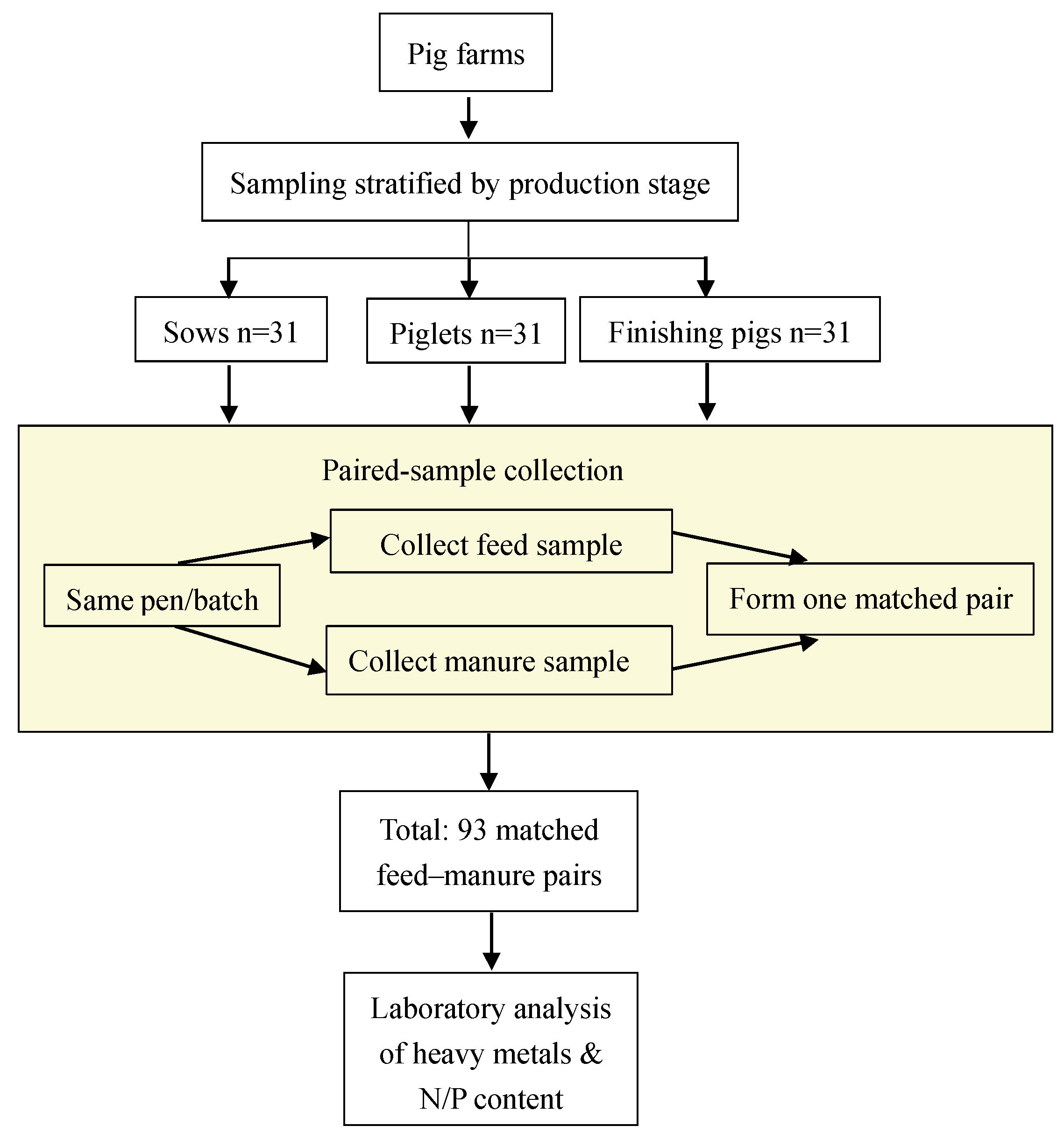
A total of 32 farms were included in the study. Feed and manure samples across different pig growth stages were all collected from these 32 farms, comprising 31 matched feed–manure pairs from sows, 32 matched feed–manure pairs from piglets, and 30 matched feed–manure pairs from finishing pigs. At each farm, paired feed and manure samples were collected concurrently from the same production lot to ensure direct comparability. Samples were excluded if they originated from farms with recent disease outbreaks or if antibiotic or other non-routine feed additives had been administered within one month prior to sampling. This matched-pair design allowed for precise quantification of feed-to-manure transfer of heavy metals and nutrients across different pig categories (Figure 1). For each matched pair, feed was sampled from the active batch, and fresh manure was collected from the same pen of pigs within 24 h to ensure temporal correspondence with the ingested diet. Approximately 500 g of commercial premixed feed and the manure (feces and urine combined) from sows, piglets and finishing pigs was collected in sterile, plastic zip-lock bags, kept chilled, and transported to the Zhejiang Academy of Agricultural Sciences, where it was dried, milled to fine particles, and stored at −20 °C before analysis. Finally, 93 matched feed–manure samples pairs were collected for analyzing HM, N, and P concentrations.
This sample size was determined to be sufficient for robust statistical analysis (e.g., ANOVA, correlation) based on sampling standards in environmental monitoring studies and provided a representative profile of the major pig production systems in the study region. The sampled pigs were within their typical production phases (sows in gestation/lactation, post-weaning piglets, finishing pigs in growth), and the feed provided was their habitual diet. Therefore, the manure collected represents the excretion output under the prevailing, continuous feeding regimen, effectively capturing the operational steady state of the farm system.

2.2. Analytical Methods for Heavy Metals, Nitrogen, and Phosphorus

The samples of feed and manure were dried at 65 °C for 48 h, and the samples were homogenized and subjected to microwave-assisted acid digestion following established protocols [27,28]. Samples were digested by microwave-assisted acid digestion in closed vessels with HCl-HNO3 (4:1, v/v) (Sinopharm Chemical Reagent Co., Beijing, China). After digestion, the acid was removed, and the solution was diluted to 50 mL with deionized water in a volumetric flask. Hg and As contents were analyzed using atomic fluorescence spectrometry (AFS, AFS-610E, Beijing, China). Pb, Cd, and Cr concentrations were measured using a flame atomic absorption spectrometer (FAAS, ZEEnit 700, Analytik Jena, Jena, Germany). Fe, Mn, Cu, and Zn contents were analyzed using an atomic absorption spectrophotometer (ICP-OES, iCAP 7400, Thermo Scientific, Waltham, MA, USA). For quality control, procedural blanks and certified reference materials (GBW10020) were analyzed for every batch of 20 samples. Replicate analyses (n = 3) were performed on 10% of randomly selected samples to assess analytical precision. The recovery rates for all heavy metals ranged from 92% to 110%, confirming the accuracy and reliability of the analytical methods. The standard solutions of the HMs were obtained from the National Institute of Metrology, China. Total N was determined by Kjeldahl digestion (NKY6120, Shanghai, China), while total P was measured via ammonium molybdate spectrophotometry (NH310, Shanghai, China), complying with Chinese organic fertilizer standard NY 525-2021 [29]. The specific limits of detection (LOD) and quantification (LOQ) for each heavy metal, N, and P value are presented in Table S1 (see Supplementary Information). All analytical results for heavy metal concentrations are expressed on a dry matter (DM) basis in milligrams per kilogram (mg kg−1 DM). Total N and P concentrations in feed and manure are expressed on a DM basis as a percentage (% DM) to align with agronomic conventions.

2.3. Calculations for Heavy Metal, Nitrogen, and Phosphorus Excretion via Manure

The heavy metal, N, and P excretions from manure were calculated as follows:
Ti = S × D × M × Ci
Ti indicates manure excretion (Gg); i indicates HMs (As, Hg, Pb, Cd, Cr, Cu, Zn, Fe, Mn), N, and P. S indicates total pigs slaughtered (7.56 million heads) in the study areas for 2023, obtained from National Bureau of Statistics [26]. D shows the average breeding days (150 d) of a pig [30]. M is average daily manure excretion coefficient (3.67 kg per day), representing a mean value across the primary growth stages (piglet, finishing) of the production cycle. Ci indicates the HM, N, and P concentrations of the manure, which were obtained from the farm-level sampling and sample analysis.
To estimate the actual environmental emissions, potential nutrient losses during manure management were accounted for. The manure from the pig housing was collected via “Ganqing” management (solid–liquid separation with periodic removal of manure solids). The total N and P losses from manure at the housing and storage stages were estimated as follows:
TN (or TP) losses from housing and storage = TN (or TP) × loss coefficients for manure N (or P) in housing + (TN (or TP) − TN (or TP) losses from housing) × loss coefficients for manure N (or P) in storage
TN (or TP) indicates total manure N (or P) loss (Gg) from housing and storage; TN (TP) is the total N (or P) excretion via manure; loss coefficients for manure N (or P) in housing and storage include the N losses via NH3, N2O, and N2 emissions, N leaching, and runoff and P losses via leaching and runoff [31,32] (see Table S1).
The total feed costs were estimated as follows:
Total feed costs = S × F
Here, Total feed costs indicates the total cost of pig feeds (Chinese yuan, CNY); S indicates total pigs slaughtered; F is feed costs in the study areas for 2023, which averaged CNY 984.42 per head across farm scales, with additive expenditures constituting 0.06% of feed costs [33,34].

2.4. Scenario Analysis: Model-Based Simulation of Feeding Interventions

This section employs a model-based scenario analysis to project the potential environmental and economic impacts of implementing optimized feeding strategies at a regional scale. It is crucial to note that the scenarios (S1 and S2) represent hypothetical simulations based on extrapolating the empirical feed–manure relationships established in this study, combined with fixed husbandry and economic parameters. They are not the results of controlled feeding trials, but rather theoretical projections intended to quantify the potential magnitude of benefits from dietary adjustments.
Baseline: Total HM, N, and P excretion via manure, N and P losses from housing and storage, and the total feed costs of pigs in the study areas for 2023 were estimated in Section 2.3.
Scenario 1 (S1): The additives in the pig feed were regulated according to the Hygienic Standard for Feeds and the Guidelines for the Safe Use of Feed Additives [35,36]. Analysis of feed samples from six major pig production areas revealed that toxic metal levels (As, Hg, Pb, Cd, Cr) were significantly below the Hygienic Standard for Feeds. However, essential trace-element concentrations (Cu, Zn) substantially exceeded the Guidelines for the Safe Use of Feed Additives (Table 1). Furthermore, these essential trace elements in feed showed a significant positive linear correlation with their corresponding manure excretion levels. Our estimates suggest that adjusting essential trace-element supplementation to comply with the Guidelines for the Safe Use of Feed Additives would reduce both feed costs and HM excretion via manure.
Scenario 2 (S2): Low crude protein (CP) diet and precision P feeding. The average CP content in pig feed in the European Union is currently 10.7%, which does not negatively affect pork production [37]. We propose reducing the CP content in finishing pig diets by 1% (10 g CP per kg dry-matter-based feed) compared to the current standard diet in the study areas. Further, by reducing CP in feed by 1%, costs can be reduced by 1.5% [38]. A reduction in feed costs can also be achieved through precision P feeding. Precision P feeding entails formulating diets that precisely meet the physiological requirements of animals at specific growth stages (sows, piglets, finishing pigs), thereby minimizing the excess excretion of P [21]. We suggest adjusting the dietary P content from 0.52% to 0.42%, meeting pigs’ nutritional requirements without compromising growth performance [39]. Correspondingly, precision P feeding can decrease feed costs by 2.5% compared with traditional pig feeding [40]. Based on these adjustments, we estimated the resulting changes in feed costs, N and P excretion in manure, and N and P losses in pig farms.

2.5. Sensitivity Analysis

To assess the robustness of our scenario projections to uncertainties in key input parameters, a simple one-way sensitivity analysis was conducted. We varied three influential parameters—daily manure excretion (M), feed cost per head (F), and breeding days (D)—by ±10% from their baseline values. The impact on the projected reductions in total heavy metal (Cu, Zn) excretion, nutrient (N, P) excretion, and total feed costs under scenarios S1 and S2 was calculated.

2.6. Statistical Analysis

Prior to statistical testing, all variables (heavy metal, nitrogen, and phosphorus concentrations in feed and manure) were tested for normality using the Shapiro–Wilk test and for homoscedasticity (homogeneity of variances) using Levene’s test. Variables that significantly deviated from normality (p < 0.05) or exhibited heterogeneous variances were log10-transformed to meet the assumptions of parametric analysis. Data from different pig categories (sow, piglet, finishing) within the same farm were treated as independent observations for the purpose of correlation and regression analysis, as the primary relationships of interest were between feed composition and manure output at the animal-category level. Data processing and graph preparation were performed using Microsoft Excel 2019 and Origin 2022. HM, N, and P concentrations in feed and manure were expressed as means ± standard deviation. Statistical analyses were conducted using IBM SPSS (version 27.0). One-way ANOVA with Tukey’s post hoc test was used to assess significant differences in HM (As, Hg, Pb, Cd, Cr, Cu, Zn, Fe, Mn), N, and P levels among pig categories (piglets, finishing pigs, and sows). The relationships between the contents of HMs, N, and P manure in feeds and manure were determined by bivariate correlation analysis (Pearson correlation coefficient for normally distributed data) and linear regression analysis with IBM SPSS. The linear model was selected based on empirical evidence [9], established animal nutrition principles (nutrient mass balance), and its adequacy in describing preliminary data trends. The principal component analysis (PCA) was completed with Origin 2022. Differences were considered statistically significant at p < 0.05.

3. Results

3.1. Divergent Trends of Toxic Metals and Essential Elements in Feed

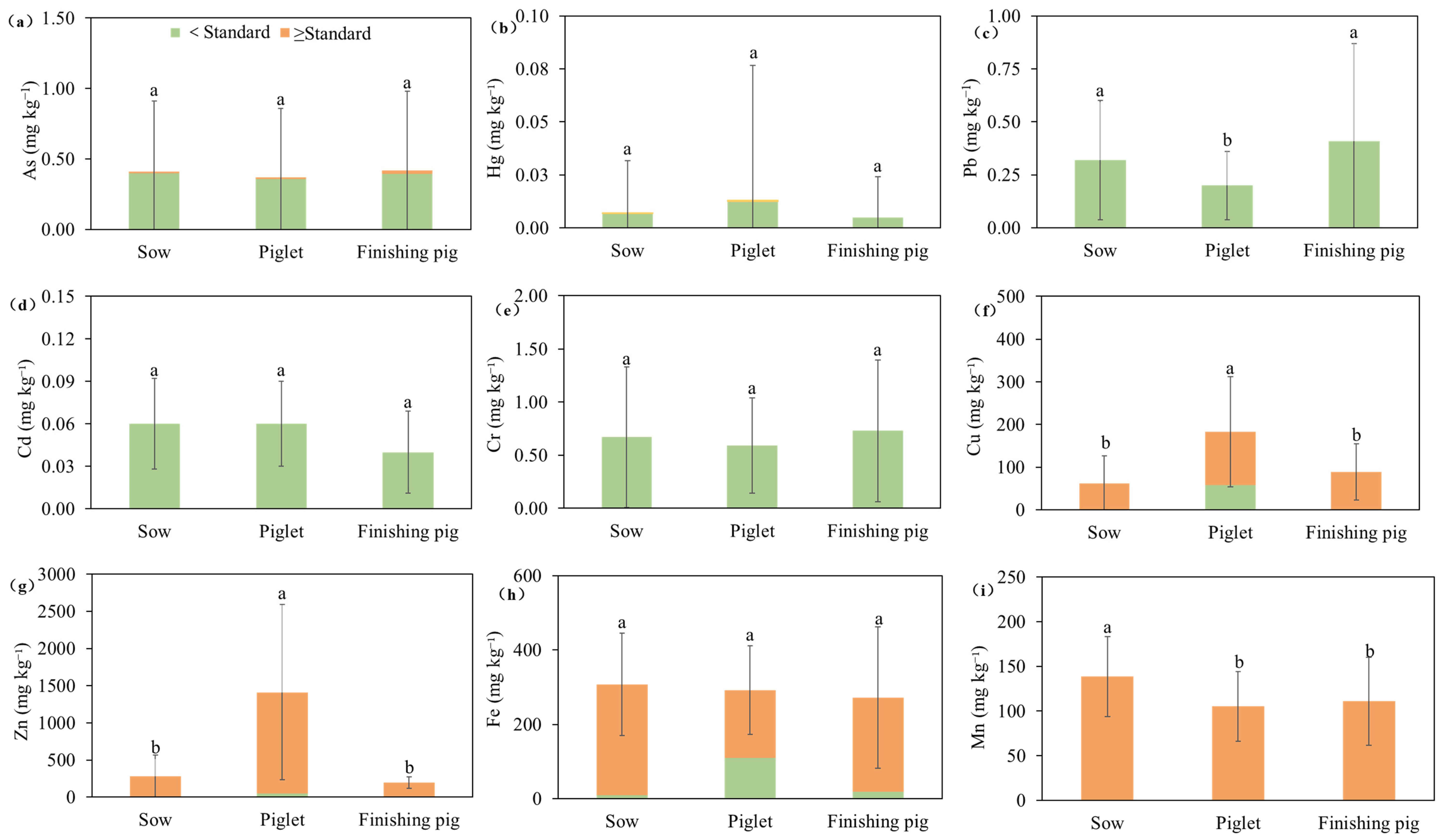
Analysis of swine feeds revealed a critical divergence in contaminant profiles. Toxic metals (As, Hg, Pb, Cd, Cr) predominantly complied with hygienic thresholds, with only 3.1–6.7% of samples exceeding limits for As and Hg. All samples maintained Pb, Cd, and Cr within regulatory bounds (Figure 2a–e), indicating negligible contamination from non-essential pollutants. Essential trace elements (Cu, Zn, Fe, Mn) exhibited severe over-supplementation, surpassing safety guidelines by 3- to 19-fold (Table 1). Alarmingly, 63.3–100.0% of feeds across sow, piglet, and finishing pig categories violated Cu, Zn, Fe, and Mn thresholds (Figure 2f–i), with piglet feeds showing the highest Cu and Zn loads. While high Cu and Zn are often used for growth promotion and gut health, the elevated Fe and Mn likely stem from non-specific mineral premix inclusion and the use of low-purity feed-grade mineral sources, rather than targeted biological justification. The limits of detection (LOD) and quantification (LOQ) for all analytes are provided in Table S1, confirming that all reported concentrations were above the LOQ and analytically reliable.
Significant variations were observed in Pb, Cu, Zn, and Mn concentrations among feeds for sows, piglets, and finishing pigs (Figure 2a–i). Sow feeds contained elevated Mn but lower Cu and Zn, whereas piglet feeds prioritized high Cu and Zn (commercially linked to growth performance and fecal appearance) but minimized Pb. Finishing pig feeds showed intermediate elemental levels, suggesting stage-specific formulation practices that amplify environmental risks through manure-derived heavy metal accumulation.

3.2. Critical Disparities for Heavy Metals in Manure Across Pig Categories

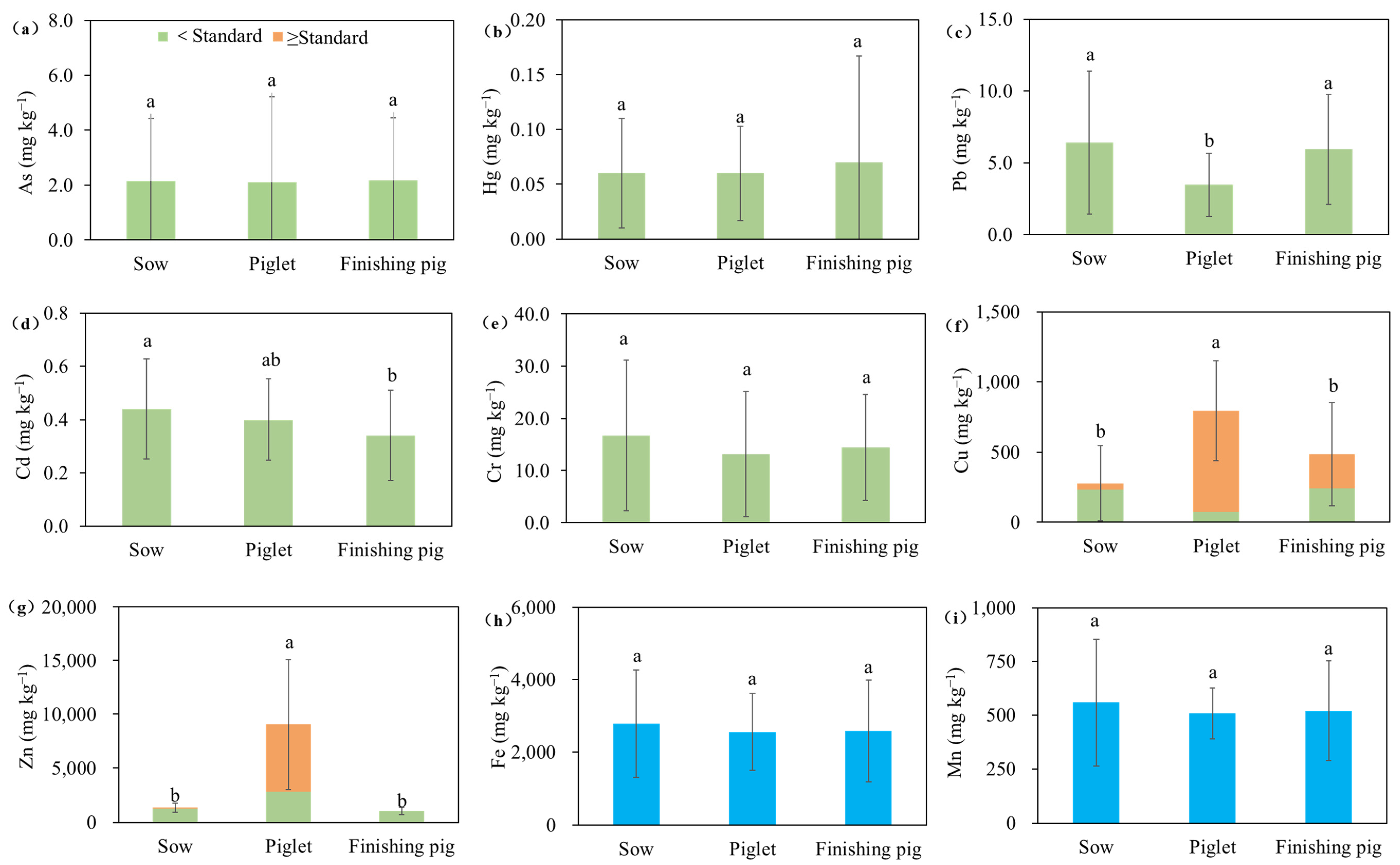
Toxic metals (As, Hg, Pb, Cd, Cr) consistently complied with national hygienic thresholds (GB/T 25246-2025, NY 525-2021), with no samples exceeding regulatory limits across all pig categories (Figure 3a–e). However, essential trace elements exhibited severe environmental accumulation. Cu and Zn concentrations significantly surpassed safety limits by 3.9- to 21.7-fold (Table 2), with 68.5–91.2% of piglet manure samples violating standards—the highest among all categories (Figure 3f,g). Fe and Mn averaged 2639.0 mg·kg−1 and 528.6 mg·kg−1, respectively, yet lack regulatory thresholds despite potential soil loading risks.
The differences in Pb, Cd, Cu, and Zn content were reflected in manure samples across pig categories. Sow manure showed elevated Pb and Cd (though below limits), potentially associated with longer metabolic accumulation cycles (Figure 3). Piglet manure contained the highest Cu and Zn loads (p < 0.01), directly linked to commercial-feed additive practices targeting growth performance. Finishing pigs exhibited intermediate metal levels, reflecting phased feeding strategies. Notably, Fe, Mn, Cr, and As showed no significant inter-category differences, suggesting uniform excretion mechanisms unrelated to growth stages.

3.3. Multivariate Analysis Reveals Stage-Specific Heavy Metal Signatures

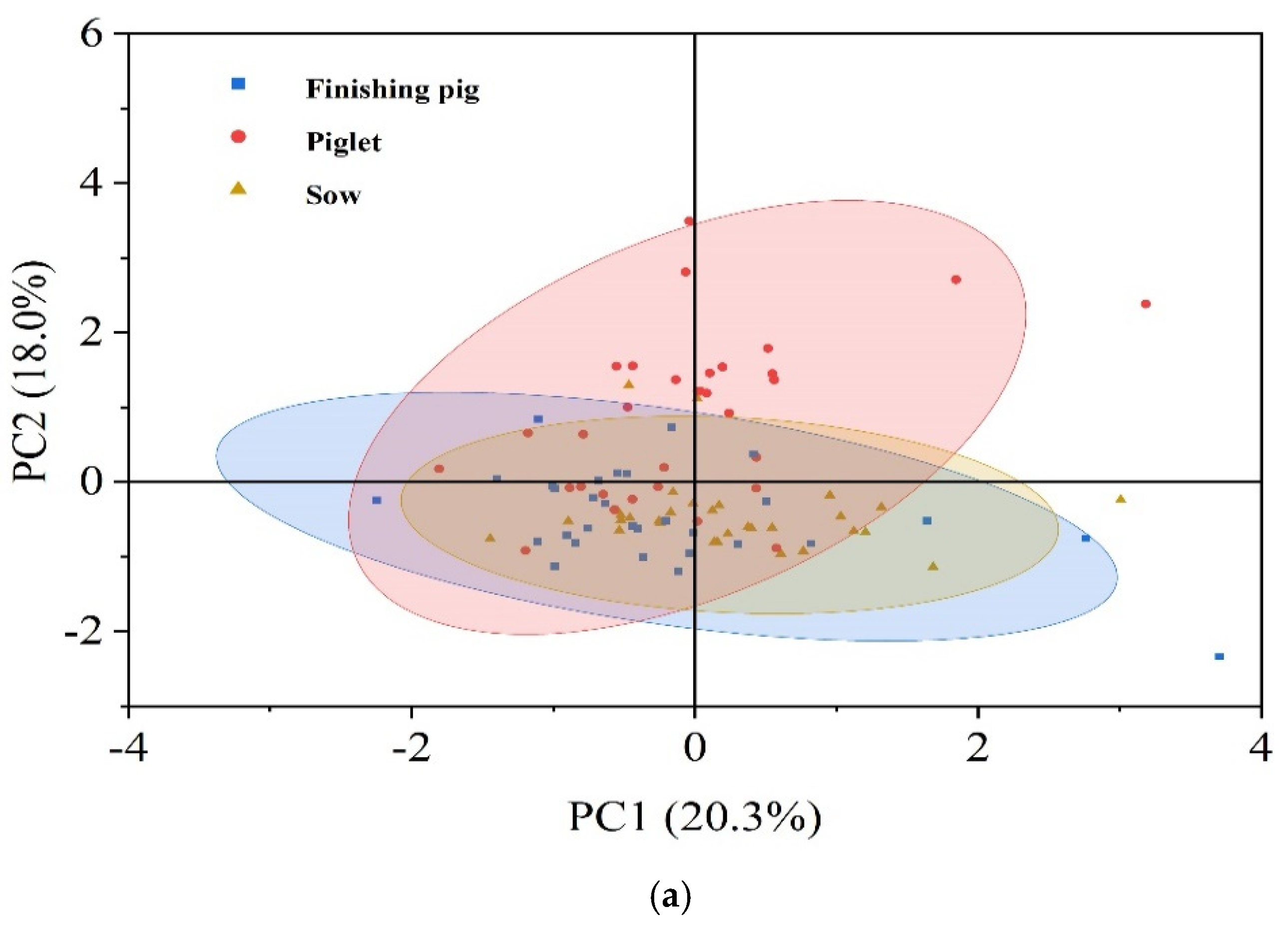
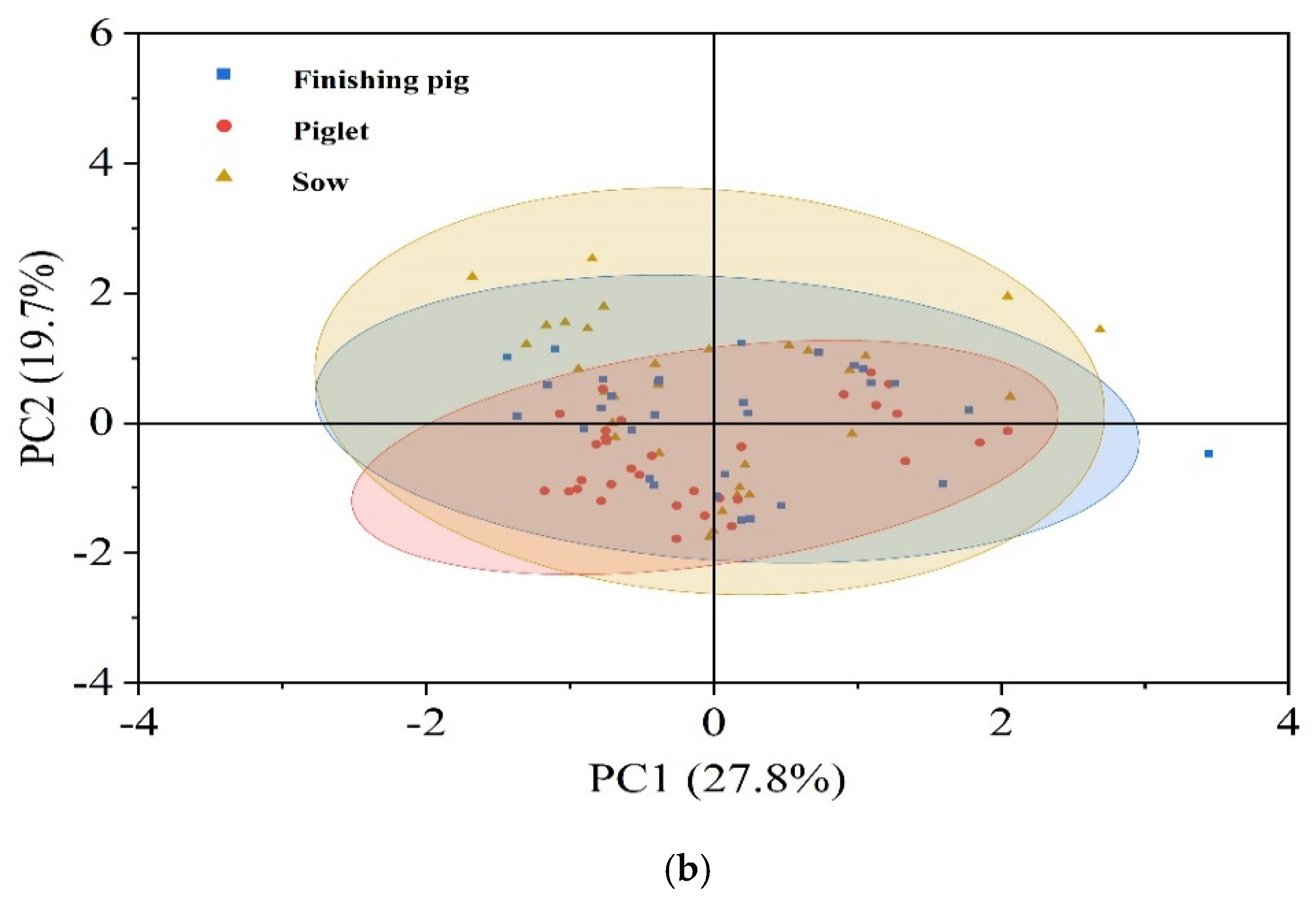
Figure 4 shows the results of PCA of all the heavy metals content in pig feed (Figure 4a) and manure (Figure 4b) with different pig categories. Piglet feeds form a distinct cluster (separated along PC1: 20.3% variance) from overlapping sow and finisher feeds, confirming unique Cu and Zn enrichment (641.0 mg·kg−1 Zn; 112.2 mg·kg−1 Cu) linked to growth-stage formulations. Low cumulative variance (PC1 + PC2 = 38.3%) suggests unaccounted drivers (e.g., commercial additives) amplify trace-element heterogeneity. Manure PCA (Figure 4b) exhibits unexpected convergence. All categories show complete overlap within 95% confidence ellipses (PC1: 27.8%; PC2: 19.7%), indicating that the excreted metal signatures in manure become less distinguishable than those in the source feeds. Despite distinct feed inputs, manure samples from all three pig categories showed complete overlap in the PCA plot (Figure 4b). This overlap suggests that post-ingestive processes (e.g., differential absorption, homeostasis) substantially attenuate the distinct heavy metal signatures observed in the source feeds by the time of excretion. The stage-specific differences observed in feed are largely attenuated by the time of excretion.
The PCA is intended as an exploratory tool to guide interpretation. The cumulative variance explained by the first two principal components (PC1 and PC2) was relatively low (38.3% for feed, 47.5% for manure). This indicates that a significant portion of the total variance in heavy metal profiles is not captured by the primary components derived from the analyzed metals alone. This residual variance likely stems from unmeasured factors influencing metal composition, such as variations in commercial additive formulations, basal feed ingredient sources, or farm-specific management practices that were not quantified in this study. Despite the modest explained variance, the distinct separation of piglet feeds along PC1 remains interpretable, as it is strongly driven by the excessively high loadings of Cu and Zn, which are the most variable and policy-relevant elements in our dataset.

3.4. Feed–Manure Heavy Metal Correlations

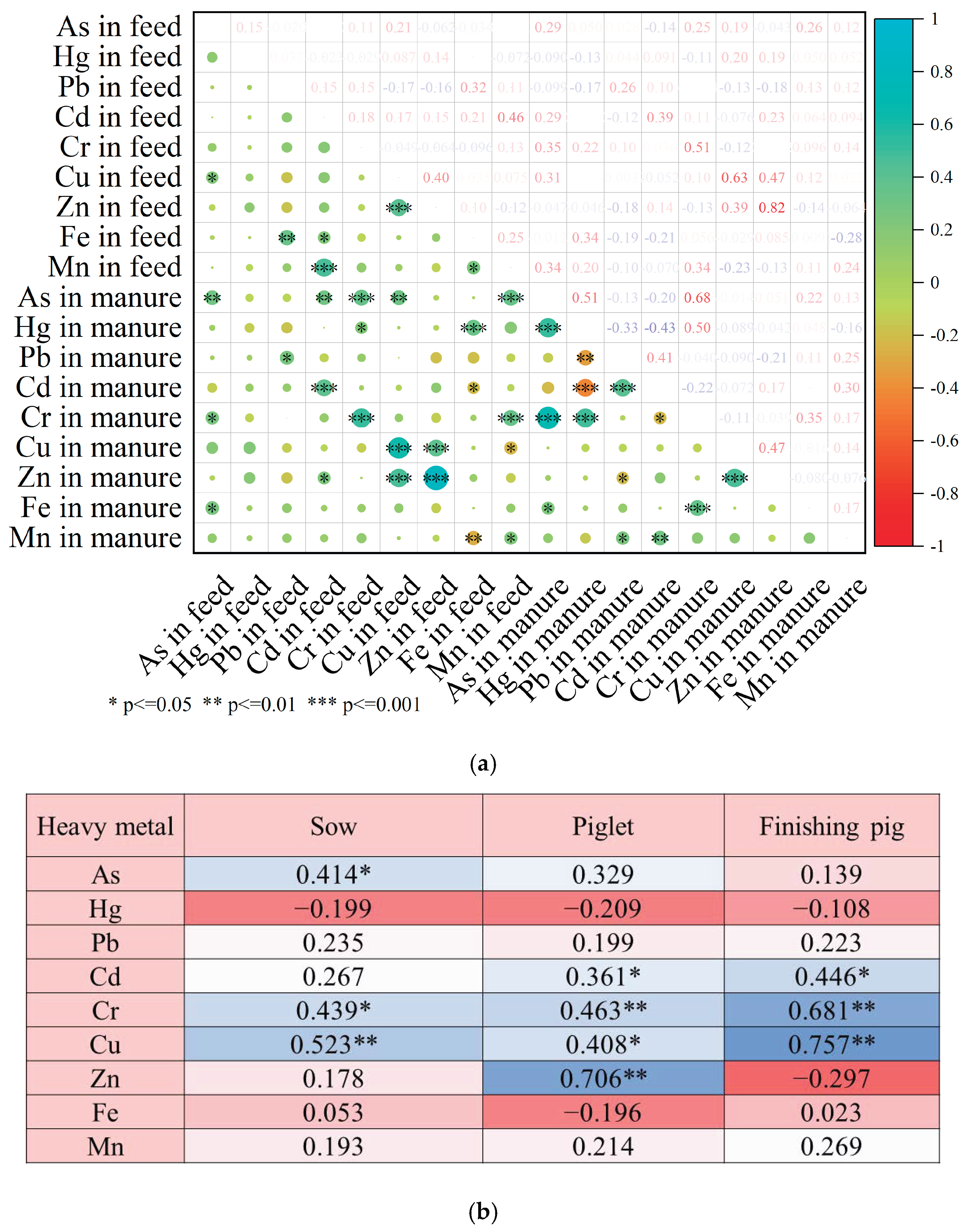
The content of As, Pb, Cd, Cr, Cu, Zn, and Mn in pig feed and manure showed a significant positive correlation (Figure 5a). It is important to note that this farm-level survey establishes robust associative relationships, not direct causative links, as unmeasured confounding factors may influence these correlations. Nonetheless, the consistent patterns strongly suggest that dietary addition of these heavy metals is a primary driver of their excretion in manure. Additionally, the correlation between heavy metal content in feed and manure was analyzed for different pig categories. A significant positive correlation was found for As, Cr, and Cu in sow feed and manure. For piglet feed and manure, the correlation was significant for Cd, Cr, Cu, and Zn. In finishing pig feed and manure, a significant positive correlation was observed for Cd, Cr, and Cu (Figure 5b).

3.5. Linear Relationships Between Heavy Metals in Feed and Manure

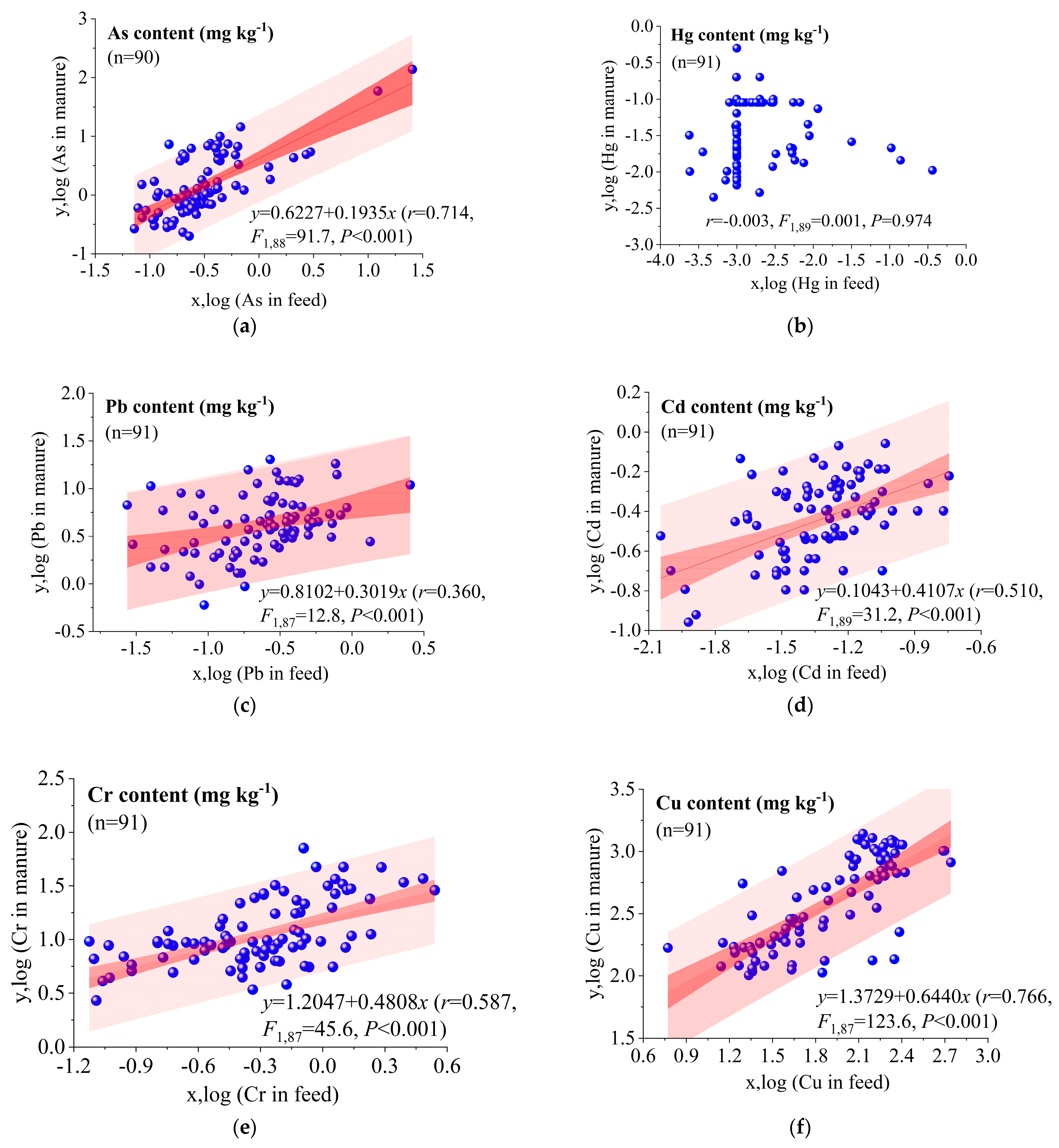
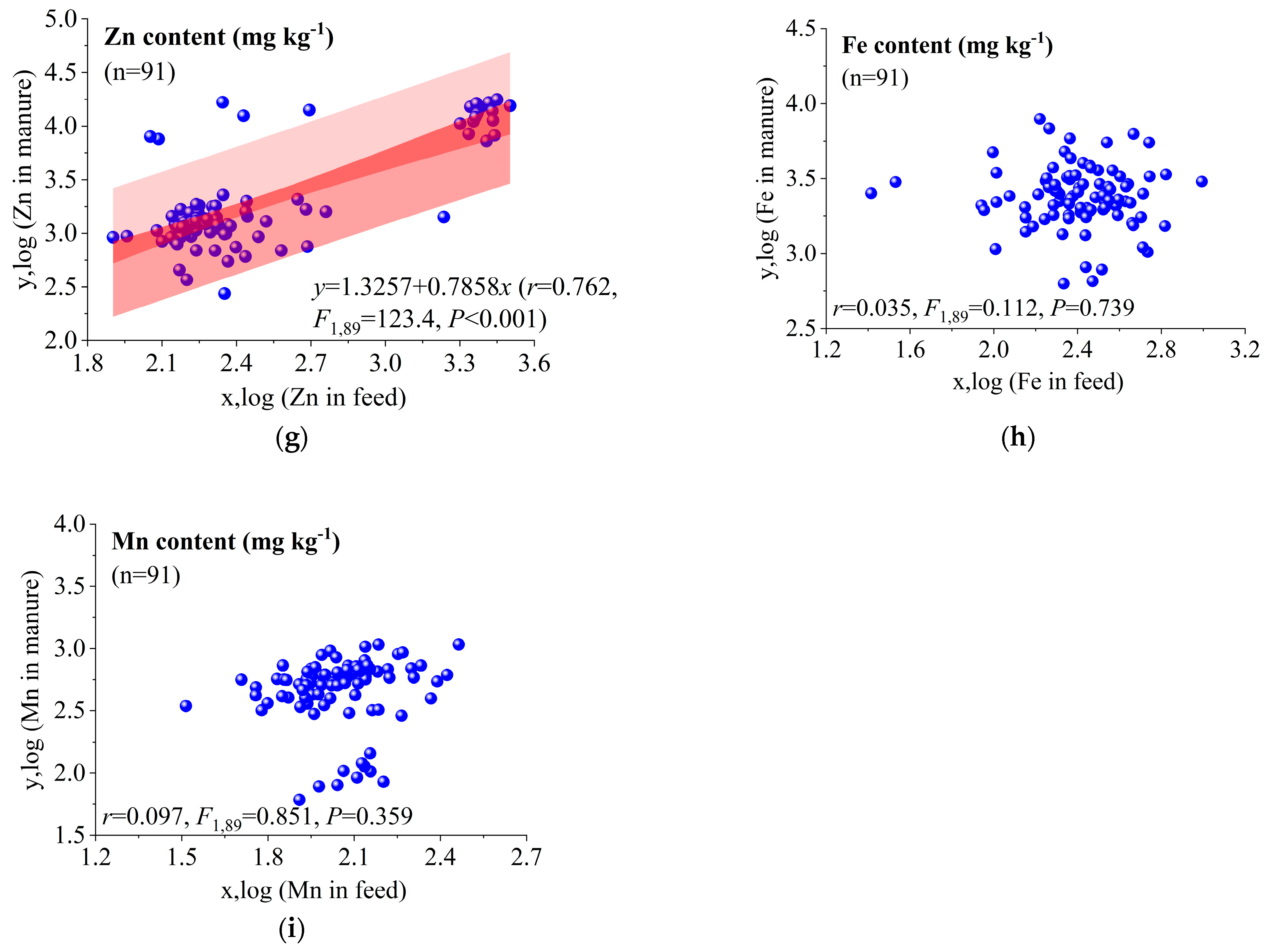
Our analysis revealed striking linear correlations between heavy metal (HM) concentrations in pig feed and HM excretion in manure (p < 0.001). Cu and Zn exhibited the strongest feed-to-manure transfer, with Pearson coefficients of 0.766 and 0.762, respectively—highlighting their pronounced accumulation in manure due to excessive dietary supplementation. As followed closely (r = 0.714), while Cr (r = 0.587), Cd (r = 0.510), and Pb (r = 0.360) showed weaker but significant relationships (Figure 6). Notably, piglet manure displayed the highest sensitivity to feed additives, with Zn demonstrating a stage-specific linear trend (p < 0.05). In contrast, Hg, Fe, and Mn exhibited no significant correlations (Figure 6b,h,i), suggesting distinct metabolic pathways or regulatory mechanisms. These results underscore Cu and Zn as priority targets for dietary intervention to mitigate environmental contamination. For the essential elements Fe and Mn, the results may indicate the presence of tight homeostatic regulation within the pig, leading to relatively constant excretion rates regardless of intake above requirement levels.

3.6. Feed-Driven Nitrogen and Phosphorus Excretion Dynamics

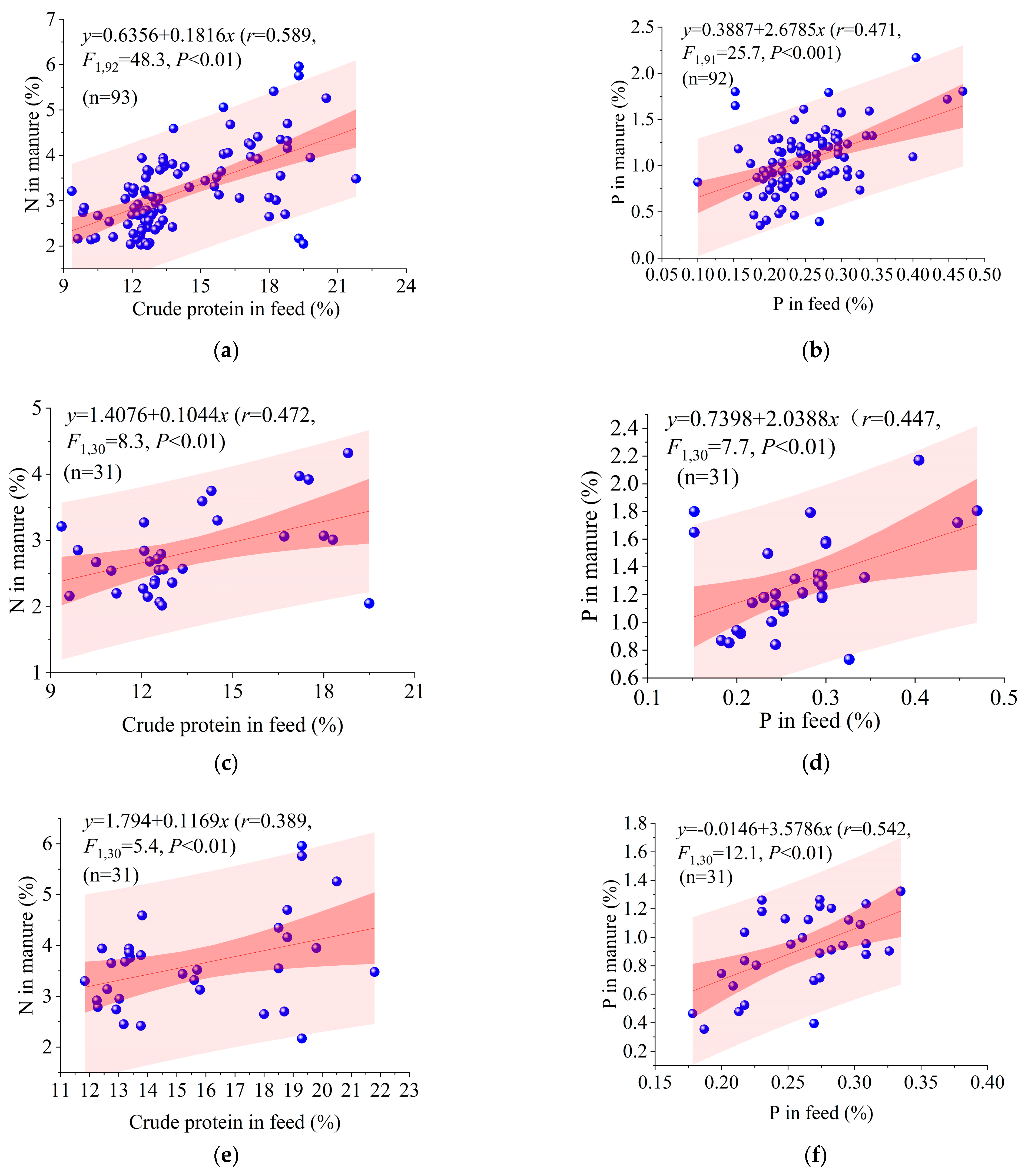
The crude protein content in piglet feed (15.7%) was significantly higher than in sow feed (13.5%) and finishing pig feed (13.5%). Similarly, P input was higher in sow feed (0.3%) and piglet feed (0.3%) compared to finishing pig feed (0.2%) (Table 3). The N and P content between pig feed and manure showed a significant positive correlation (Figure S1).
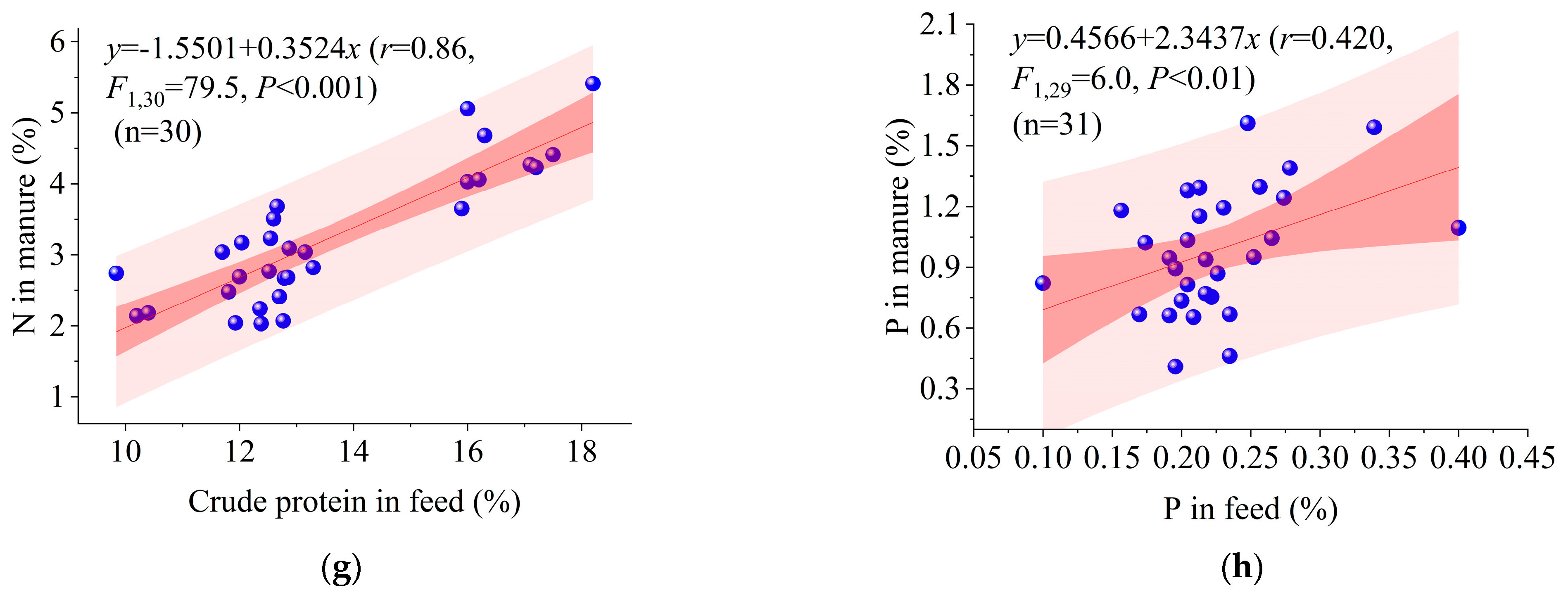
Precise linear relationships emerged between dietary nutrient inputs and manure outputs (Figure 7). This trend was consistent with the significant overall correlation observed between feed and manure N and P concentrations across all samples (Figure S1). Crude protein (CP) in feed exerted a dominant influence on nitrogen (N) excretion, particularly in finishing pigs (r = 0.860, p < 0.001)—the strongest correlation observed across all nutrient–metal analyses (Figure 7g). Sow and piglet N excretion also responded significantly to feed CP (r = 0.472 and 0.389, respectively). For phosphorus (P), feed content robustly predicted manure P levels across all production stages (piglets: r = 0.542; sows: r = 0.447; finishing pigs: r = 0.420; p < 0.05). Notably, feed nutrient manipulation impacted N excretion more profoundly than P excretion (*r*~N~ > *r*~P~ universally). These linear models quantitatively expose CP and P as direct levers for mitigating nutrient pollution.

3.7. Dual Environmental–Economic Gains Through Optimized Feeding

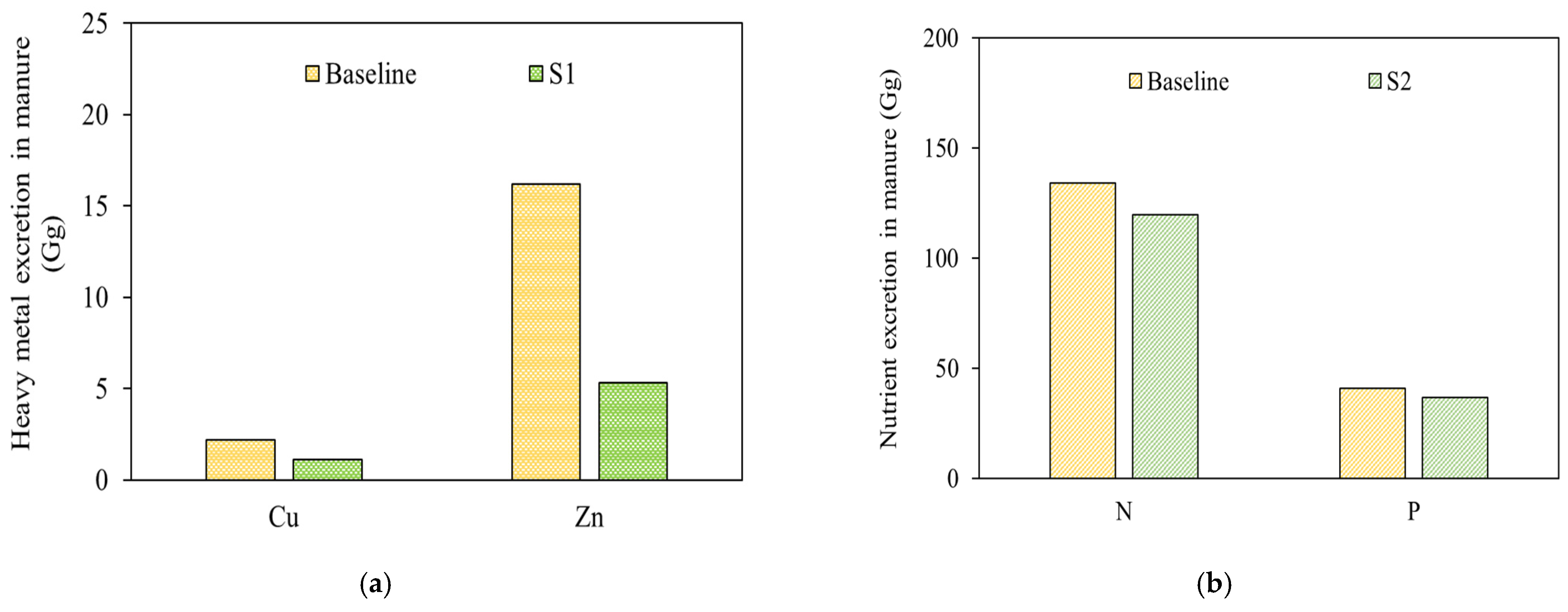
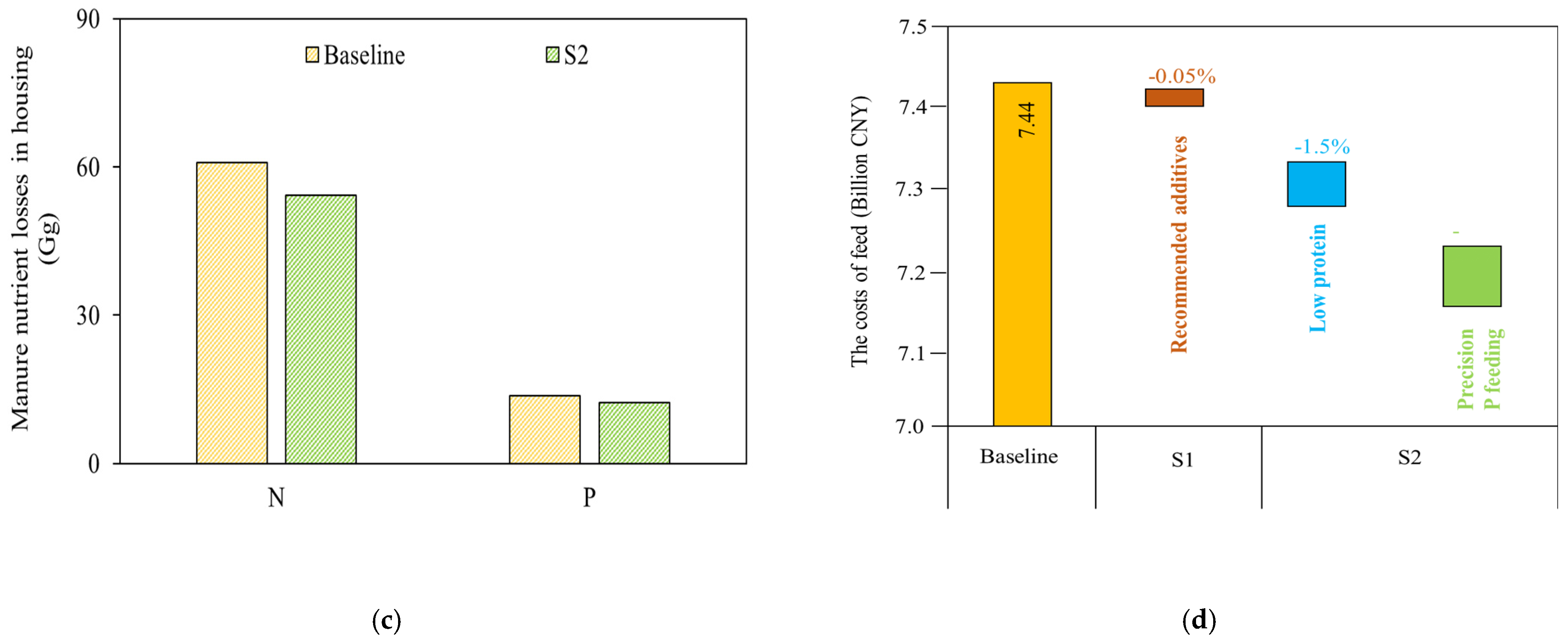
In 2023, total N and P excretion in pig manure reached 13.4 and 9.4 Gg, respectively, in the major pig production area. Cu and Zn excretion amounted to 2.2 and 16.2 Gg (Figure 8). Scenario analysis demonstrated transformative potential: aligning feed additives with safety guidelines slashed Cu and Zn excretion by 50% and 67.3%, respectively—halving heavy metal pollution risks (Figure 8a). Simultaneously, low-CP diets and precision P feeding reduced manure N and P excretion by 10.8% and 10.2%, directly curbing nutrient losses (Figure 8b,c). Critically, these strategies unlocked economic benefits: precision P feeding maximized cost savings (2.5%), while low-CP diets cut expenses by 1.5%, collectively reducing the CNY 7.44 billion regional feed budget by 4.1% (Figure 8d). Strikingly, additive restriction imposed negligible cost burden yet delivered the highest heavy metal mitigation. This nexus of >50% pollutant reduction and net 4.1% cost reduction proves that sustainable intensification is economically viable.
The sensitivity analysis (Table S6) indicated that while the absolute magnitude of projected benefits varies proportionally with parameter changes, the direction and substantial advantage of the optimized feeding strategies remain consistent. For example, with a ±10% variation in manure excretion, the reduction in Cu excretion under S1 ranged from 45.0% to 55.0% (baseline: 50.0%), and Zn excretion reduction ranged from 60.6% to 74.0% (baseline: 67.3%). Similarly, the total feed cost reduction under S2 remained positive (3.7–4.5%) across all parameter variations. This confirms that our primary conclusion—that dietary interventions can significantly reduce environmental emissions while maintaining or reducing costs—is robust to reasonable parameter uncertainty.

4. Discussion

4.1. Strategic Reduction of HM Additives: Balancing Productivity and Environmental Safety

Although non-essential trace-element concentrations (As, Hg, Pb, Cd, Cr) were significantly below the hygienic standard, essential trace-element levels, including Cu, Zn, Fe, and Mn, were far beyond the safety guidelines for feed additives (Table 1). Cu facilitates iron metabolism, hemoglobin synthesis, and antioxidant enzyme activity (e.g., superoxide dismutase) and enhances growth performance by modulating gut microbiota and improving feed efficiency. However, Cu accumulates in the liver, leading to hepatocyte necrosis and fibrosis, while high Cu competes for intestinal transport proteins (such as DMT1), resulting in Zn and Fe deficiency [8]. Zn is critical for enzyme systems (e.g., metalloenzymes), immune response, and skin integrity, and reduces post-weaning diarrhea in piglets via antimicrobial and anti-inflammatory effects [41]. A high Zn dose may cause gastric ulcers and villus atrophy. Zn overload disrupts T-cell regulation, increasing susceptibility to infections, and high Zn induces Cu deficiency by upregulating metallothionein (MT) binding [15].
Fe is essential for hemoglobin and myoglobin synthesis, preventing neonatal anemia. Newborn piglets require iron dextran injections (100–200 mg) due to low iron content in sow milk [42]. Excess Fe generates free radicals, damaging the liver, intestine, and DNA, and interferes with Zn and P utilization [43]. Mn supports skeletal development, carbohydrate metabolism, and reproductive performance, which is vital for sow fertility, including ovulation and embryonic survival [44]. Excess Mn causes motor dysfunction and Parkinsonism-like symptoms and inhibits Fe absorption, exacerbating anemia [45].
This study reflects current manure concentrations resulting from established high-input feeding practices. The high levels of Cu and Zn likely reflect cumulative effects from chronic over-supplementation. Nonetheless, our strong linear correlations demonstrate that current dietary inputs remain the dominant, controllable driver of immediate excretion and manure concentrations. Excess additive input in feed may increase HM excretion and cause pollution of soil and aquatic ecosystems [6]. Gourlez et al. (2024) reported that concentrations of Cu and Zn accumulated in feces were highly dependent on dietary supplies [41].
Excessive addition of HM elements to feed is widespread in China. High amounts of undigested HMs are excreted through animal manure [9]. High levels of HMs in animal manure pose a potential threat to both the ecological environment and public health [46]. A 15-year protected-field vegetable production experiment in China found that continuous and high manure application rates significantly increased the total concentrations of soil Cd, Zn, Cr, and Cu rather than Pb or As [47]. Feed management is the main lever for reducing the amount of HMs in pig effluents and hence in the soil [41]. The pig feeding experiment showed that dietary Cu and Zn can be reduced without decreasing the performance or mineral status of pigs, and fecal excretion of Cu and Zn decreased as dietary concentration decreased [48].
Despite the lack of regulatory thresholds for Fe and Mn in manure, their chronic high-load application risks soil system imbalance, phytotoxicity, and potential trophic transfer, which could ultimately impact ecosystem and food safety [27]. The prevalent exceedance in essential elements, particularly in piglet feeds, indicates a systemic non-compliance with safety guidelines. This highlights a critical gap between policy intent and field practice, necessitating targeted enforcement and education [49]. These findings strongly support the core objectives of China’s “Agriculture Green Development” strategy by demonstrating a direct pathway to achieve its goals of reducing non-point source pollution and improving resource use efficiency. Prioritizing the enforcement of existing feed additive regulations aligns directly with this national policy framework.

4.2. Low-Protein Diets and Precision P Feeding: A Circular Economy Approach

The linear relationships between dietary crude protein (CP) and P and their excretion in manure provide a mechanistic lever for nutrient management. Compared with Europe, the CP diet and feed conversion ratio are very high in China [50]. In one study, lowering dietary CP content within a moderate level in combination with adding additional amino acids did not impair pig growth, and total N excretion was reduced by 28% [21]. Precision P feeding is a scientific feeding strategy based on the actual P requirements of animals, the utilization efficiency of P in feed ingredients, and environmental sustainability [51]. Its core technologies include accurate assessment of animal P needs and optimized feed formulation, such as selecting raw materials with reduced phytate-P content, adding phytase supplementation to improves phytate-P utilization, and reducing inorganic P inclusion. A previous study indicated that adding phytase to feed significantly decreased total P excretion by 31% [21]. The low-CP diet and precision P feeding contributed greatly to decreasing N and P excretion and losses in pig housing (Figure 8b,c). Our empirical findings provide a direct rationale for intervention: the strong, stage-specific linear correlations we identified between feed and manure concentrations (Figure 5, Figure 6 and Figure 7) constitute the quantitative backbone for implementing precision dietary adjustments. These relationships, derived from field conditions, confirm that targeted reductions in feed additives and nutrients are a viable primary strategy for mitigating environmental excretion [52].
Low-CP diets and precision P feeding reduced P excretion and loss potential to the environment at a low cost (Figure 8d). For the diet-manipulation option, adjusting diet protein would not need any extra technical equipment, labor, or energy input. Therefore, there is no additional implementation cost for the diet-manipulation option, which is the most cost-effective option for abating nutrient losses in animal production [53]. Similarly, a low-CP diet led to much lower N2O emissions than those in current livestock production, and the reduction was achieved at the lowest mitigation cost, relative to anaerobic digestion and composting [37]. Except for the low-CP diet, ref. [21] estimated that supplementation of enzymes, fermented feed, and other additives have relatively large abatement potentials at a lower level of cost saving than that the 1% dietary CP reduction.
Overall, dietary manipulation not only reduces nutrient excretion in manure and decreases the risk of nutrient loss, but also effectively lowers animal feeding costs, without compromising the growth and development of the animals. However, many livestock farmers still have little knowledge on dietary manipulation, due to their older age, low education level, and lack of technical guidance. Further, many farmers are not even aware of what low-protein diets and precision P feeding are [54]. Therefore, policy makers and relevant researchers should promote low-protein diets and precision P feeding technologies through policy incentives, knowledge dissemination, and technical guidance. These efforts can enhance farmers’ awareness and increase their willingness to adopt improved feeding practices [55]. Consequently, this will improve nutrient resource efficiency in farming systems, reduce environmental pollution risks, and increase farmers’ income.

4.3. Optimized Manure Management

Cu and Zn concentration in manure exceeded the manure application standard (GBT25246-2025) based on our study (Table 1). Although the non-essential trace-element content in manure was lower than that the standard of organic fertilizer (NY 525-2021), long-term manure application may lead to HM accumulation in soil [47]. Our reported Cu and Zn concentrations in manure (Table 2) reflect baseline levels resulting from current high-input feeding practices, not long-term soil accumulation. These elevated levels originate directly from excessive dietary supplementation, as shown by the strong feed–manure correlations. Even without historical accumulation, they already pose immediate environmental risks upon land application [56]. In addition, there are large amount of N and P losses due to poor manure treatment and application, causing serious environment pollution [57,58]. It is therefore essential to optimize manure management for environmentally sustainable crop–livestock production. This study highlights the stage-specific heterogeneity of manure composition, particularly for HMs. This argues against treating all swine manure as a homogeneous entity. Future research on treatment technologies should consider feedstock segregation (e.g., piglet vs. sow manure) to improve the efficiency of HM immobilization or removal processes.
Manure application must transition from a disposal activity to a precision nutrient management practice. This involves the following: (1) Testing: Regular analysis of manure, especially from piglet operations, for HM content before land application. (2) Calibration: Adhering to “Technical Specification GBT25246-2025” by matching manure application rates to soil type and crop needs, using soil tests to avoid cumulative HMs buildup. (3) Technology Adoption: Promoting injection or immediate incorporation techniques to minimize ammonia volatilization and nutrient runoff, thereby maximizing the agronomic value of manure while minimizing its environmental footprint.
The elevated levels of Cu and Zn in manure, particularly from piglets, pose direct risks beyond soil accumulation. Land application of such manure can lead to the leaching of soluble metal forms and the erosion of particle-bound metals, contributing to the contamination of surface- and groundwater [15]. Furthermore, these bio-available metals can be taken up by crops, entering the food chain and posing potential long-term risks to food safety. Therefore, source reduction through precision feeding is not only a soil protection strategy but a critical intervention for safeguarding water resources and the broader agro-food system.

4.4. Limitations

This study utilized fixed coefficients for manure production and breeding days to isolate the effects of dietary interventions. We acknowledge that actual on-farm values may vary due to factors such as farm management practices, pig genetics, and local climate. This variability introduces uncertainty into the absolute quantification of total regional excretion. However, as the core objective was a comparative assessment of different feeding strategies under a consistent framework, the relative reductions and trends identified are robust and valid. Future research incorporating farm-specific husbandry data could refine the precision of absolute load estimates.
The quantitative relationships established here are derived from correlation analyses of farm survey data. While robust, they require validation through controlled feeding trials to confirm causative effects and refine dose–response curves for HM and nutrient excretion. Furthermore, future research should explore the efficacy of novel feed additives (e.g., HM-chelating binders) and the socio-economic drivers of technology adoption among farmers to bridge the gap between scientific recommendation and practical implementation.

4.5. The Way Forward: Key Priorities for Sustainable Pig Production

To advance green pig production while mitigating HM and nutrient excretion, the following integrated strategies should be prioritized in policy, research, and practice.
Our data confirm widespread non-compliance with existing safety guidelines, particularly for Cu and Zn in piglet feeds. A top priority is strengthening the enforcement of China’s stage-specific “Guidelines for the Safe Use of Feed Additives” [35,36]. This must be complemented by refining these standards based on robust dose–response studies to establish safe, growth-stage-specific maximum limits for all trace elements (e.g., Fe, Mn), not just Cu and Zn. Scenario analysis demonstrates that low-protein diets and precision P feeding can reduce nutrient excretion by ~10% while lowering feed costs. Extension services should prioritize promoting these economically viable, low-complexity strategies. Key actions include (1) providing farmers with simplified tools to formulate low-CP diets with synthetic amino acids and (2) subsidizing phytase adoption to enhance P utilization. Farmers should audit and adjust feed formulations, specifically reducing Cu/Zn in piglet diets to meet safety guidelines, a low-cost, high-impact change. Adopting distinct phased feeding programs for sows, piglets, and finishing pigs—with reduced protein and precision P for finishing pigs—targets excretion where it matters most. Finally, separate management of piglet manure is advised to mitigate its high heavy metal load.
Given farmers’ low awareness, generic policy dissemination is insufficient. A “Science and Technology Backyard” model adapted for livestock [59] should be piloted. This involves embedding researchers on farms to co-develop and demonstrate cost-effective, stage-specific feeding plans that directly show the economic and environmental benefits of reducing Cu/Zn in piglet rations and optimizing protein for finishing pigs.
Governments should strengthen organic fertilizer market supervision and strictly control production processes to prevent excessive levels of harmful substances such as HMs. Increased research investment is needed to develop optimized manure treatment technologies, including anaerobic digestion and biochar amendment during composting to immobilize HMs and reduce their bioavailability [60,61]. Financial support should be provided to organic fertilizer enterprises to upgrade production equipment and processes, thereby stimulating innovation to produce safer and more effective organic fertilizer products with enhanced market competitiveness.
At the application stage, fertilization strategies should be optimized through balanced fertilization, immediate soil incorporation after surface application, and slurry injection to minimize HM accumulation in soils while reducing N and P runoff and leaching risks [12,62]. Currently, China’s organic fertilizer utilization exhibits severe polarization: excessive continuous application by cash crop (e.g., vegetables and fruits) growers leads to HM accumulation and significant nutrient losses, while cereal crop smallholders show reluctance due to low economic returns [63]. Future research should focus on enhancing technical training for cash crop growers to improve fertilization practices and mitigate contamination risks, while strengthening policy support and science-based demonstrations to increase awareness and adoption rates among cereal crop farmers.

5. Conclusions

This research provides a comprehensive, quantitative analysis of the associative relationships and transfer coefficients of pollutants in intensive pig production, addressing the critical knowledge gap concerning stage-specific source contributions. The core scientific advancement lies in the development of a predictive, mechanistic framework that quantifies pollutant transfer coefficients across growth stages, moving beyond descriptive contamination surveys. This enables more accurate environmental modeling of livestock systems. The principal practical implication is unequivocal: the most effective and economically viable strategy for mitigating pollution is source reduction via precision feeding. Scenario analysis demonstrates that simply adhering to existing safety guidelines for Cu and Zn, combined with optimized protein and phosphorus diets, could be strongly associated with a reduction in heavy metal excretion by 50–67% and nutrient losses by over 10%, while concurrently lowering feed costs. Therefore, this study argues for a paradigm shift from end-of-pipe manure treatment to proactive, feed-based pollution prevention. Enforcing and disseminating stage-specific feed standards represents an immediate, low-cost policy lever to decouple livestock intensification from environmental degradation, offering a critical pathway for sustainable animal agriculture in China and analogous global contexts.

Supplementary Materials

The following supporting information can be downloaded at: https://www.mdpi.com/article/10.3390/agriculture16030372/s1, Figure S1: Relevance analysis of N and P content between in pig feed and manure; Table S1: Limits of detection (LOD) and quantification (LOQ) for heavy metals, nitrogen, and phosphorus analyzed in feed and manure samples; Table S2: The N and P loss coefficients of pig manure from housing and storage stages; Table S3: The correlation between heavy metal content in pig manure and feed from sow; Table S4: The correlation between heavy metal content in pig manure and feed from piglet; Table S5: The correlation between heavy metal content in pig manure and feed from finishing pig; Table S6: Sensitivity analysis of scenario outcomes to ±10% variation in key parameters.

Author Contributions

Conceptualization, T.Z. and F.Z.; Methodology, T.Z. and F.Z.; Software, T.Z.; Validation, T.Z.; Formal analysis, T.Z.; Investigation, F.Z. and L.L.; Resources, F.Z. and L.L.; Data curation, T.Z.; Writing—original draft preparation, T.Z.; Writing—review and editing, L.L., J.F., C.H., W.W., R.G., W.Z., L.H., Y.Y. and F.Z.; Visualization, T.Z.; Supervision, F.Z.; Project administration, T.Z. and F.Z.; Funding acquisition, T.Z. and F.Z. All authors have read and agreed to the published version of the manuscript.

Funding

This research was funded by the Zhejiang Provincial Science and Technology Program (grant no. 2024C02004), the National Natural Science Foundation of China (NSFC, grants no. 32402681), the Key Social Development Project of Major Science and Technology Special Program in Zhejiang Province (grant no. 2015C03006), and the Zhejiang “San Nong Jiu Fang” Science and Technology Collaboration Program (grant no. 2024SNJF047).

Data Availability Statement

Data is contained within the article or Supplementary Materials.

Conflicts of Interest

The authors declare no conflict of interest.

Correction Statement

This article has been republished with a minor correction to the Data Availability Statement. This change does not affect the scientific content of the article.

References

  1. Wang, M.; Ma, L.; Strokal, M.; Ma, W.; Liu, X.; Kroeze, C. Hotspots for nitrogen and phosphorus losses from food production in China: A county-scale analysis. Environ. Sci. Technol. 2018, 52, 5782–5791. [Google Scholar] [CrossRef] [PubMed]
  2. Hou, Y.; Oenema, O.; Zhang, F. Integrating crop and livestock production systems-Towards agricultural green development. Front. Agric. Sci. Eng. 2021, 8, 1–14. [Google Scholar] [CrossRef]
  3. Tong, B.; Zhang, L.; Hou, Y.; Oenema, O.; Long, W.; Velthof, G.; Ma, W.; Zhang, F. Lower pork consumption and technological change in feed production can reduce the pork supply chain environmental footprint in China. Nat. Food 2023, 4, 74–83. [Google Scholar] [CrossRef]
  4. Bai, Z.; Ma, L.; Qin, W.; Chen, Q.; Oenema, O.; Zhang, F. Changes in pig production in China and their effects on nitrogen and phosphorus use and losses. Environ. Sci. Technol. 2014, 48, 12742–12749. [Google Scholar] [CrossRef]
  5. Hejna, M.; Gottardo, D.; Baldi, A.; Orto, V.D.; Cheli, F.; Zaninelli, M.; Rossi, L. Review: Nutritional ecology of heavy metals. Animal 2018, 12, 2156–2170. [Google Scholar] [CrossRef] [PubMed]
  6. Qian, X.; Wang, Z.; Shen, G.; Chen, X.; Tang, Z.; Guo, C.; Gu, H.; Fu, K. Heavy metals accumulation in soil after 4 years of continuous land application of swine manure: A field-scale monitoring and modeling estimation. Chemosphere 2018, 210, 1029–1034. [Google Scholar] [CrossRef]
  7. Bian, B.; Yang, D. Distribution of heavy metals in raw and anaerobically digested pig slurry: A full-scale study in Taihu basin, China. Desalination Water Treat. 2017, 63, 145–151. [Google Scholar] [CrossRef]
  8. Huang, H.; Li, B.; Li, J.; Zhang, P.; Yu, W.; Zhao, N.; Guo, G.; Young, B. Influence of process parameters on the heavy metal (Zn2+, Cu2+ and Cr3+) content of struvite obtained from synthetic swine wastewater. Environ. Pollut. 2019, 245, 658–665. [Google Scholar] [CrossRef]
  9. Xu, Y.; Li, J.; Zhang, X.; Wang, L.; Xu, X.; Xu, L.; Gong, H.; Xie, H.; Li, F. Data integration analysis: Heavy metal pollution in China’s large-scale cattle rearing and reduction potential in manure utilization. J. Clean. Prod. 2019, 232, 308–317. [Google Scholar] [CrossRef]
  10. Mu, H.; Zhuang, Z.; Li, Y.; Qiao, Y.; Chen, Q.; Xiong, J.; Guo, L.; Jiang, R.; Li, H. Heavy metal contents in animal manure in China and the related soil accumulation risks. Environ. Sci. 2020, 41, 986–996. [Google Scholar]
  11. Bruno, F.; Miller, A.; Bruschetta, G.; Nava, V.; Rifici, C.; Zappalà, S.; Licata, P. Levels of Mineral Elements in Different Organs of Dogs from the Ionian-Etnean Volcanic Area. Animals 2025, 15, 1545. [Google Scholar] [CrossRef] [PubMed]
  12. Feng, Z.; Zhu, H.; Deng, Q.; He, Y.; Li, J.; Yin, J.; Gao, F.; Huang, R.; Li, T. Environmental pollution induced by heavy metal(loid)s from pig farming. Environ. Earth Sci. 2018, 77, 103. [Google Scholar] [CrossRef]
  13. Lu, D.; Wang, L.; Yan, B.; Ou, Y.; Guan, J.; Bian, Y.; Zhang, Y. Speciation of Cu and Zn during composting of pig manure amended with rock phosphate. Waste Manag. 2014, 34, 1529–1536. [Google Scholar] [CrossRef]
  14. Luisa, D.C.E.S.; Sigurnjak, I.; Robles-Aguilar, A.; Adriaens, A.; Meers, E. Development of conversion factors to estimate the concentrations of heavy metals in manure-derived digestates. Waste Manag. 2023, 168, 334–343. [Google Scholar] [CrossRef]
  15. Ding, H.; Zhang, Q.; Xu, H.; Yu, X.; Chen, L.; Wang, Z.; Feng, J. Selection of copper and zinc dosages in pig diets based on the mutual benefit of animal growth and environmental protection. Ecotoxicol. Environ. Saf. 2021, 216, 112177. [Google Scholar] [CrossRef]
  16. Xu, Y.; Li, J.; Ouyang, Z.; Zhang, H. Implications of feed mineral reduction and enhancement for China’s feed standards. Resour. Conserv. Recycl. 2021, 168, 105342. [Google Scholar] [CrossRef]
  17. Tang, Y.; Wang, L.; Carswell, A.; Misselbrook, T.; Shen, J.; Han, J. Fate and transfer of heavy metals following repeated biogas slurry application in a rice-wheat crop rotation. J. Environ. Manag. 2020, 270, 110938. [Google Scholar] [CrossRef]
  18. Bai, Z.; Ma, W.; Ma, L.; Velthof, G.L.; Wei, Z.; Havlík, P.; Oenema, O.; Lee, M.R.F.; Zhang, F. China’s livestock transition: Driving forces, impacts, and consequences. Sci. Adv. 2018, 4, eaar8534. [Google Scholar] [CrossRef]
  19. Hou, Y.; Velthof, G.L.; Oenema, O. Mitigation of ammonia, nitrous oxide and methane emissions from manure management chains: A meta-analysis and integrated assessment. Glob. Change Biol. 2015, 21, 1293–1312. [Google Scholar] [CrossRef]
  20. Long, W.; Wang, H.; Hou, Y.; Chadwick, D.; Ma, Y.; Cui, Z.; Zhang, F. Mitigation of multiple environmental footprints for China’s Pig production using different land use strategies. Environ. Sci. Technol. 2021, 55, 4440–4451. [Google Scholar] [CrossRef]
  21. Wang, H.; Long, W.; Chadwick, D.; Velthof, G.L.; Oenema, O.; Ma, W.; Wang, J.; Qin, W.; Hou, Y.; Zhang, F. Can dietary manipulations improve the productivity of pigs with lower environmental and economic cost? A global meta-analysis. Agric. Ecosyst. Environ. 2020, 289, 106748. [Google Scholar] [CrossRef]
  22. Babatunde, O.O.; Adeola, O. A time-series effect of phytase supplementation on phosphorus utilization in growing and finishing pigs fed a low-phosphorus diet. J. Anim. Sci. 2022, 100, skab350. [Google Scholar] [CrossRef]
  23. NBS. National Data; National Bureau of Statistics: Beijing, China, 2023. (In Chinese)
  24. Yan, B.; Li, Y.; Yan, J.; Shi, W. Potential reduction of greenhouse gas emissions from pig production in China on the basis of households ’ pork consumption. Environ. Int. 2023, 177, 108008. [Google Scholar] [CrossRef]
  25. Zhuo, N.; Chen, J.; Ding, J. Pig farmers’ willingness to recover their production under COVID-19 pandemic shock in China-Empirical evidence from a farm survey. J. Integr. Agric. 2020, 19, 2891–2902. [Google Scholar] [CrossRef]
  26. ZJSY. Zhejiang Statistical Yearbook; China Statistics Press: Beijing, China, 2020. [Google Scholar]
  27. Ifie, I.; Igwebuike, C.G.; Imasuen, P.; Akalamudo, W.; Oghenebrorhie, O.; Akpodiete, J.O.; Eze, U.A. Assessment of aflatoxin and heavy metals levels in maize and poultry feeds from Delta State, Nigeria. Int. J. Environ. Sci. Technol. 2022, 19, 12551–12560. [Google Scholar] [CrossRef]
  28. Tao, C.; Wei, X.; Zhang, B.; Zhao, M.; Wang, S.; Sun, Z.; Qi, D.; Sun, L.; Rajput, S.A.; Zhang, N. Heavy metal content in feedstuffs and feeds in Hubei Province, China. J. Food Prot. 2020, 83, 762–766. [Google Scholar] [CrossRef] [PubMed]
  29. AISC. Agricultural Industry Standards of China, Organic Fertilizer (NY 525-2012); Ministry of Agriculture and Rural Affairs of the People’s Republic of China: Beijing, China, 2012.
  30. Liu, X.; Wang, X.; Li, S. Livestock and poultry faeces nitrogen loading rate and its potential return to farmland in China. Environ. Sci. 2018, 39, 5723–5739. [Google Scholar]
  31. Bai, Z.; Ma, L.; Jin, S.; Ma, W.; Velthof, G.L.; Oenema, O.; Liu, L.; Chadwick, D.; Zhang, F. Nitrogen, phosphorus, and potassium flows through the manure management chain in China. Environ. Sci. Technol. 2016, 50, 13409–13418. [Google Scholar] [CrossRef]
  32. Hou, Y.; Velthof, G.L.; Lesschen, J.P.; Staritsky, I.; Staritsky, I.G.; Oenema, O. Nutrient recovery and emissions of ammonia, nitrous oxide, and methane from animal manure in Europe: Effects of manure treatment technologies. Environ. Sci. Technol. 2017, 51, 375–383. [Google Scholar] [CrossRef] [PubMed]
  33. Liu, D. The cost and application of feed additives and premixed feed. Feed. Res. 1986, 1, 8–10. [Google Scholar] [CrossRef]
  34. NDRC. Compilation of Cost-Benefit Data for Agricultural Products in China; China Statistics Press: Beijing, China, 2019. [Google Scholar]
  35. MARA. Guidelines for Safety Use of Feed Additives (2526); Ministry of Agriculture and Rural Affairs of the People’s Republic of China: Beijing China, 2018.
  36. GB 13078-2017; Hygienical Standard for Feeds. China National Standardization Administration: Beijing, China, 2017.
  37. Xu, P.; Houlton, B.Z.; Zheng, Y.; Zhou, F.; Ma, L.; Li, B.; Liu, X.; Li, G.; Lu, H.; Quan, F.; et al. Policy-enabled stabilization of nitrous oxide emissions from livestock production in China over 1978–2017. Nat. Food 2022, 3, 356–366. [Google Scholar] [CrossRef]
  38. Wang, Y.; Zhou, J.; Wang, G.; Cai, S.; Zeng, X.; Qiao, S. Advances in low-protein diets for swine. J. Anim. Sci. Biotechnol. 2018, 9, 60. [Google Scholar] [CrossRef]
  39. GB/T 39235; Nutrient Requirement of Swine. National Standardization Management Committee: Beijing, China, 2020.
  40. Ferreira, Y.M.; Amaral, R.S.V.; Silva, B.G.V.; Moura, L.C.S.; Oliveira, D.A.; Da Silva, T.E.; Hauschild, L.; Andretta, I.; Santos, L.S. A simplified daily fit model to reduce costs and nutrientiIntake in growing-Finishing pigs. Animals 2024, 14, 2922. [Google Scholar] [CrossRef]
  41. Gourlez, E.; Beline, F.; Dourmad, J.; Monteiro, A.R.; Guiziou, F.; Le Bihan, A.; de Quelen, F. The fate of Cu and Zn along the feed-animal-excreta-effluent continuum in swine systems according to feed and effluent treatment strategies. J. Environ. Manag. 2024, 354, 120299. [Google Scholar] [CrossRef]
  42. Johnson, A.J.; Li, W.; Dittrich, B.I.; Cole, A.C.; Prodell, M.K.; Lyons, J.W.; Fritz, S.A.; Fregulia, P.; Chen, C.; Kwon, C.H.; et al. Effect of second iron injection on growth performance, hematological parameters, and fecal microbiome of piglets fed different dietary iron levels. J. Anim. Sci. 2025, 103, skae371. [Google Scholar] [CrossRef]
  43. Williams, H.E.; Woodworth, J.C.; DeRouchey, J.M.; Dritz, S.S.; Tokach, M.D.; Fry, R.S.; Kocher, M.E.; Usry, J.L.; Goodband, R.D. Effects of feeding increasing levels of iron from iron sulfate or iron carbonate on nursery pig growth performance and hematological criteria. J. Anim. Sci. 2020, 98, skaa211. [Google Scholar] [CrossRef]
  44. Wu, C.; Song, J.; Liu, X.; Zhang, Y.; Zhou, Z.; Thomas, D.G.; Wu, B.; Yan, X.; Li, J.; Zhang, R.; et al. Effect of iron-manganese oxide on the degradation of deoxynivalenol in feed and enhancement of growth performance and intestinal health in weaned piglets. Ecotoxicol. Environ. Saf. 2024, 286, 117246. [Google Scholar] [CrossRef] [PubMed]
  45. Wang, Y.; Gou, Z.; Lin, X.; Fan, Q.; Ye, J.; Jiang, S. Optimal Level of Supplemental Manganese for Yellow-Feathered Broilers during the Growth Phase. Animals 2021, 11, 1389. [Google Scholar] [CrossRef] [PubMed]
  46. Wang, X.; Zhang, X.; Li, N.; Yang, Z.; Li, B.; Zhang, X.; Li, H. Prioritized regional management for antibiotics and heavy metals in animal manure across China. J. Hhazardous Mater. 2024, 461, 132706. [Google Scholar] [CrossRef]
  47. Zhen, H.; Jia, L.; Huang, C.; Qiao, Y.; Li, J.; Li, H.; Chen, Q.; Wan, Y. Long-term effects of intensive application of manure on heavy metal pollution risk in protected-field vegetable production. Environ. Pollut. 2020, 263, 114552. [Google Scholar] [CrossRef] [PubMed]
  48. Gourleza, E.; Dourmada, J.Y.; Belinec, F.; Monteiroc, A.R.; Boudona, A.; Narcyd, A.; Schlegele, P.; de Quelen, F. Effects of reducing copper and zinc supplementation on the performance and mineral status of fattening pigs. Animal 2024, 18, 101270. [Google Scholar] [CrossRef]
  49. Gourlez, E.; Baratte, C.; de Quelen, F.; Dourmad, J.; Rigo Monteiro, A.; Garcia-Launay, F.; Brossard, L.; Beline, F. A mass balance model to predict the fate of copper and zinc in pig farming systems to reduce environmental impacts: Application to French context. Agric. Syst. 2025, 225, 104274. [Google Scholar] [CrossRef]
  50. Lesschen, J.P.; van den Berg, M.; Westhoek, H.J.; Witzke, H.P.; Oenema, O. Greenhouse gas emission profiles of European livestock sectors. Anim. Feed Sci. Technol. 2011, 166–167, 16–28. [Google Scholar] [CrossRef]
  51. Andretta, I.; Pomar, C.; Rivest, J.; Pomar, J.; Lovatto, P.A.; Radünz Neto, J. The impact of feeding growing–finishing pigs with daily tailored diets using precision feeding techniques on animal performance, nutrient utilization, and body and carcass composition. J. Anim. Sci. 2014, 92, 3925–3936. [Google Scholar] [CrossRef] [PubMed]
  52. Alam, S.; Velayudhan, S.M.; Bateki, C.A.; Malik, P.K.; Bhatta, R.; Buerkert, A.; König, S.; Schlecht, E. Seasonal variation in heavy metal intake and excretion by dairy cattle in an Indian megacity. Livest. Sci. 2024, 286, 105520. [Google Scholar] [CrossRef]
  53. Zhang, N.; Bai, Z.; Winiwarter, W.; Ledgard, S.; Luo, J.; Liu, J.; Guo, Y.; Ma, L. Reducing ammonia emissions from dairy cattle production via cost-effective manure management techniques in China. Environ. Sci. Technol. 2019, 53, 11840–11848. [Google Scholar] [CrossRef] [PubMed]
  54. Tan, M.; Hou, Y.; Zhang, L.; Shi, S.; Long, W.; Ma, Y.; Zhang, T.; Li, F.; Oenema, O. Operational costs and neglect of end-users are the main barriers to improving manure treatment in intensive livestock farms. J. Clean. Prod. 2021, 289, 125149. [Google Scholar] [CrossRef]
  55. Zhang, T.; Meng, T.; Hou, Y.; Huang, X.; Oenema, O. Which policy is preferred by crop farmers when replacing synthetic fertilizers by manure? A choice experiment in China. Resour. Conserv. Recycl. 2022, 180, 106176. [Google Scholar] [CrossRef]
  56. Liu, X.; Li, S. Temporal and spatial distribution of nutrient resource from livestock and poultry feces and its returning to cropland. Trans. Chin. Soc. Agric. Eng. 2018, 34, 1–14. [Google Scholar]
  57. Bai, Z.; Ma, L.; Ma, W.; Qin, W.; Velthof, G.L.; Oenema, O.; Zhang, F. Changes in phosphorus use and losses in the food chain of China during 1950–2010 and forecasts for 2030. Nutr. Cycl. Agroecosystems 2016, 104, 361–372. [Google Scholar] [CrossRef]
  58. Zhang, T.; Liu, H.; Luo, J.; Wang, H.; Zhai, L.; Geng, Y.; Zhang, Y.; Li, J.; Lei, Q.; Bashir, M.A.; et al. Long-term manure application increased greenhouse gas emissions but had no effect on ammonia volatilization in a Northern China upland field. Sci. Total Environ. 2018, 633, 230–239. [Google Scholar] [CrossRef]
  59. Zhang, W.; Cao, G.; Li, X.; Zhang, H.; Wang, C.; Liu, Q.; Chen, X.; Cui, Z.; Shen, J.; Jiang, R.; et al. Closing yield gaps in China by empowering smallholder farmers. Nature 2016, 418, 671–677. [Google Scholar] [CrossRef]
  60. Amaral, A.C.D.; Kunz, A.; Steinmetz, R.L.R.; Justi, K.C. Zinc and copper distribution in swine wastewater treated by anaerobic digestion. J. Environ. Manag. 2014, 141, 132–137. [Google Scholar] [CrossRef] [PubMed]
  61. Chen, Z.; Bao, H.; Wen, Q.; Wu, Y.; Fu, Q. Effects of H3PO4 modified biochar on heavy metal mobility and resistance genes removal during swine manure composting. Bioresour. Technol. 2022, 346, 126632. [Google Scholar] [CrossRef] [PubMed]
  62. Jahanzad, E.; Saporito, L.S.; Karsten, H.D.; Kleinman, P.J.A. Varying Influence of Dairy Manure Injection on Phosphorus Loss in Runoff over Four Years. J. Environ. Qual. 2019, 48, 450–458. [Google Scholar] [CrossRef] [PubMed]
  63. Zhang, T.; Hou, Y.; Meng, T.; Ma, Y.; Tan, M.; Zhang, F.; Oenema, O. Replacing synthetic fertilizer by manure requires adjusted technology and incentives: A farm survey across China. Resour. Conserv. Recycl. 2021, 168, 105301. [Google Scholar] [CrossRef]
Figure 1. A simple sampling flowchart.
Agriculture 16 00372 g001
Figure 2. The content of heavy metals (mean ± SD) in feed for different pig categories, including sow, piglet, and finishing pig (ai). The different lowercase letters indicate statistically significant differences at p < 0.05. Error bars represent standard deviation. The standard indicate the Hygienical Standard for Feeds (GB 13078-2017), and Guidelines for the Safe Use of Feed Additives (MARA 2625).
Agriculture 16 00372 g002
Figure 3. The heavy metals in manure (mean ± SD) for different pig categories, including sow, piglet and finishing pig. Here, the (ai) indicate the content of As, Hg, Pb, Cd, Cr, Cu, Zn, Fe, Mn in manure from different pig categories. The different lowercase letters indicate statistically significant differences at p < 0.05. Error bars represent standard deviation. The blue indicates Fe and Mn in manure still lack regulatory thresholds The standard indicates the Technical Specification for Land Application of Livestock and Poultry Manure Fertilizer (GBT25246-2025) and Organic Fertilizer (NY 525-2021).
Agriculture 16 00372 g003
Figure 4. PCA of the heavy metal content in pig feed (a) and manure (b) from sow, piglet, and finishing pig. (a) PCA of heavy metal concentrations in pig feed samples. (b) PCA of heavy metal concentrations in corresponding manure samples. Data are grouped by pig category: sows (circles), piglets (triangles), and finishing pigs (squares). The ellipses represent the 95% confidence intervals for each group. The percentage of total variance explained by each principal component (PC) is indicated on the axes. The distinct clustering of piglet feeds in (a) indicates unique Cu/Zn enrichment, while the overlap in (b) suggests homogenization of excreted metals.
Agriculture 16 00372 g004aAgriculture 16 00372 g004b
Figure 5. Relevance analysis of heavy metal content between in pig feed and manure. (a) indicates the heavy metal content of feed and manure from all pig categories. (b) indicates the heavy metal content of feed and manure from sow, piglet, and finishing pig. The color intensity and number in each cell represent the correlation coefficient (r). Only statistically significant correlations (p < 0.05) are marked with an asterisk (*), (p < 0.01) are marked with an asterisk (**) for each pig category.
Agriculture 16 00372 g005
Figure 6. The relationships between heavy metals in pig feeds and in manure. The (ai) indicate linear correlation relationship for As, Hg, Pb, Cd, Cr, Cu, Zn, Fe, Mn between in pig feeds and in manure, respectively. The linear correlation relationships for between heavy metals in pig feeds and in manure were analyzed via linear regression analysis. F-statistic compared the variance between groups to the variance within groups; r indicated the Pearson correlation coefficient; differences were considered statistically significant at p < 0.05. The dark-color band represents the 95% confidence interval, while the light-color band represents the 95% prediction interval.
Agriculture 16 00372 g006aAgriculture 16 00372 g006b
Figure 7. The relationships for N and P concentration in feeds and N and P excretion via manure from all pig categories (a,b) and from sows (c,d), piglets (e,f), and finishing pigs (g,h). The correlation relationships between N and P in pig feeds and manure were analyzed via linear regression analysis. F-statistic compared the variance between groups to the variance within groups; r indicated the Pearson correlation coefficient; differences were considered statistically significant at p < 0.05. The dark-color band represents the 95% confidence interval, while the light-color band represents the 95% prediction interval.
Agriculture 16 00372 g007aAgriculture 16 00372 g007b
Figure 8. The potential to reduce nutrient losses and feed costs through optimized feeding in pig production. (a) Heavy metal excretion via manure under baseline and scenario S1; (b) N and P excretion in manure under baseline and scenario S2; (c) N and P losses from manure in pig housing; (d) cost of feed.
Agriculture 16 00372 g008aAgriculture 16 00372 g008b
Table 1. The content of heavy metals in feed (mg kg−1).
Heavy MetalsThe Content of Heavy Metals in FeedHygienic Standard for Feeds (GB 13078-2017) [36]Guidelines for the Safe Use of Feed Additives (MARA 2625) [35]
As0.40 ± 0.51≤2.0
Hg0.01 ± 0.04≤0.1
Pb0.31 ± 0.33≤5.0
Cd0.05 ± 0.03≤0.5
Cr0.66 ± 0.60≤5.0
Cu112.2 ± 105.8 * 6.0
Zn641.0 ± 900.8 * 80.0
Fe290.9 ± 150.1 * 100.0
Mn118.2 ± 46.2 * 20.0
Notes: Hygienic standard limits (GB 13078-2017) and recommended safety guidelines (MARA 2625) for feed additives are provided for comparison. An asterisk (*) indicates that the mean concentration exceeds the corresponding MARA 2625 safety guideline. Note: MARA 2625 provides maximum limits only for essential trace elements (Cu, Zn, Fe, Mn), not for toxic metals (As, Hg, Pb, Cd, Cr).
Table 2. The content of heavy metals in manure (mg kg−1).
Heavy MetalsThe Content of Heavy Metals in ManureTechnical Specification for Land Application of Livestock and Poultry Manure Fertilizer (GBT25246-2025)Organic Fertilizer (NY 525-2021)
As2.1 ± 2.6≤50.0≤15.0
Hg0.07 ± 0.07 ≤2.0
Pb5.2 ± 4.0 ≤50.0
Cd0.40 ± 0.17 ≤3.0
Cr14.8 ± 12.3 ≤150.0
Cu522.4 ± 394.0 *≤300.0
Zn3896.6 ± 5147.8 *≤2000.0
Fe2639.0 ± 1311.8
Mn528.6 ± 227.4
Notes: The * indicates that the content of heavy metals in manure (mean ± SD) exceeds the hygienic standard.
Table 3. The content of crude protein and P in feed and manure (%).
Nutrients ContentSowPigletFinishing Pig
Crude protein in feed13.5 ± 2.8 b15.7 ± 3.1 a13.5 ± 2.3 b
P in feed0.3 ± 0.07 a0.3 ± 0.04 a0.2 ± 0.05 b
N in manure2.8 ± 0.6 b3.6 ± 0.9 a3.2 ± 0.9 ab
P in manure1.3 ± 0.3 a0.9 ± 0.3 b1.0 ± 0.3 b
The different lowercase letters in the table indicate statistically significant differences at p < 0.05.
Disclaimer/Publisher’s Note: The statements, opinions and data contained in all publications are solely those of the individual author(s) and contributor(s) and not of MDPI and/or the editor(s). MDPI and/or the editor(s) disclaim responsibility for any injury to people or property resulting from any ideas, methods, instructions or products referred to in the content.