Soil Sensors in Smart Agriculture: Multi-Type Monitoring Technologies and Ecological Development Pathways




Abstract
1. Introduction
1.1. Sensor Technologies and Ecological Sustainability: Integrative Framework
1.1.1. Regulatory Function: Soil–Water–Crop Interaction
1.1.2. Mitigative Function: Long-Term Ecological Impact
1.1.3. Informative Function: Policy and Standardization
1.2. Research Roadmap
2. Literature Review Methodology
2.1. Research Question-Driven Literature Scoping
2.2. Targeted Literature Retrieval
2.3. Strict Inclusion and Exclusion Criteria for Literature Screening
2.4. Standardized Data Extraction and Thematic Synthesis
3. Comparative Analysis of Soil Sensor Technologies
3.1. Performance Trade-Offs and Maturity Classification
3.2. Sensor Maturity–Adoption Matrix
3.3. Detailed Comparative Analysis of Key Sensor Types
3.4. Adoption Bottlenecks in Developing Agricultural Systems
3.4.1. Cost Disparity
3.4.2. Infrastructure Limitations
3.4.3. Capacity Gaps
3.5. Accuracy Limitations and Deployment Challenges
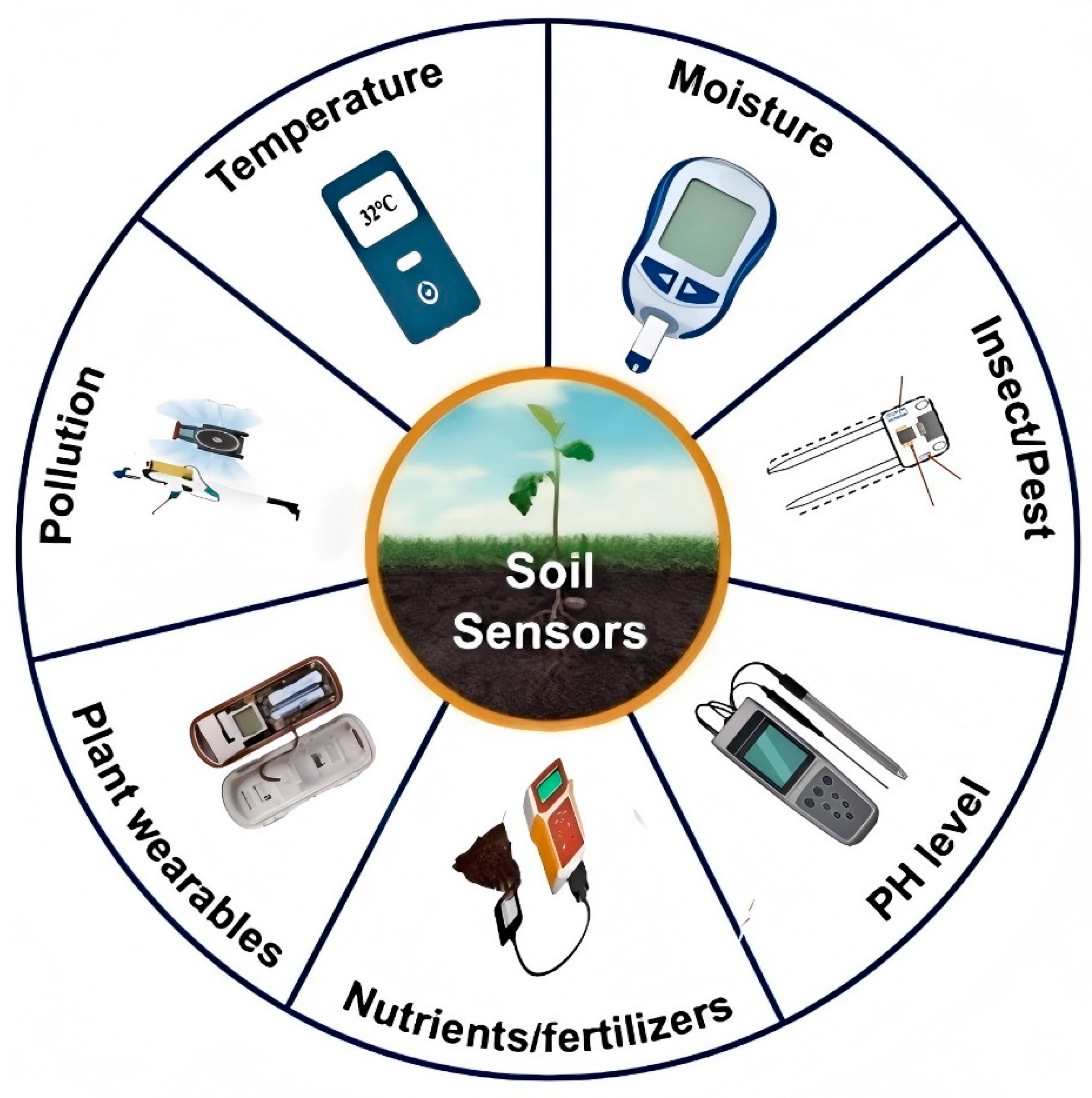
4. Types of Soil Collection Sensors

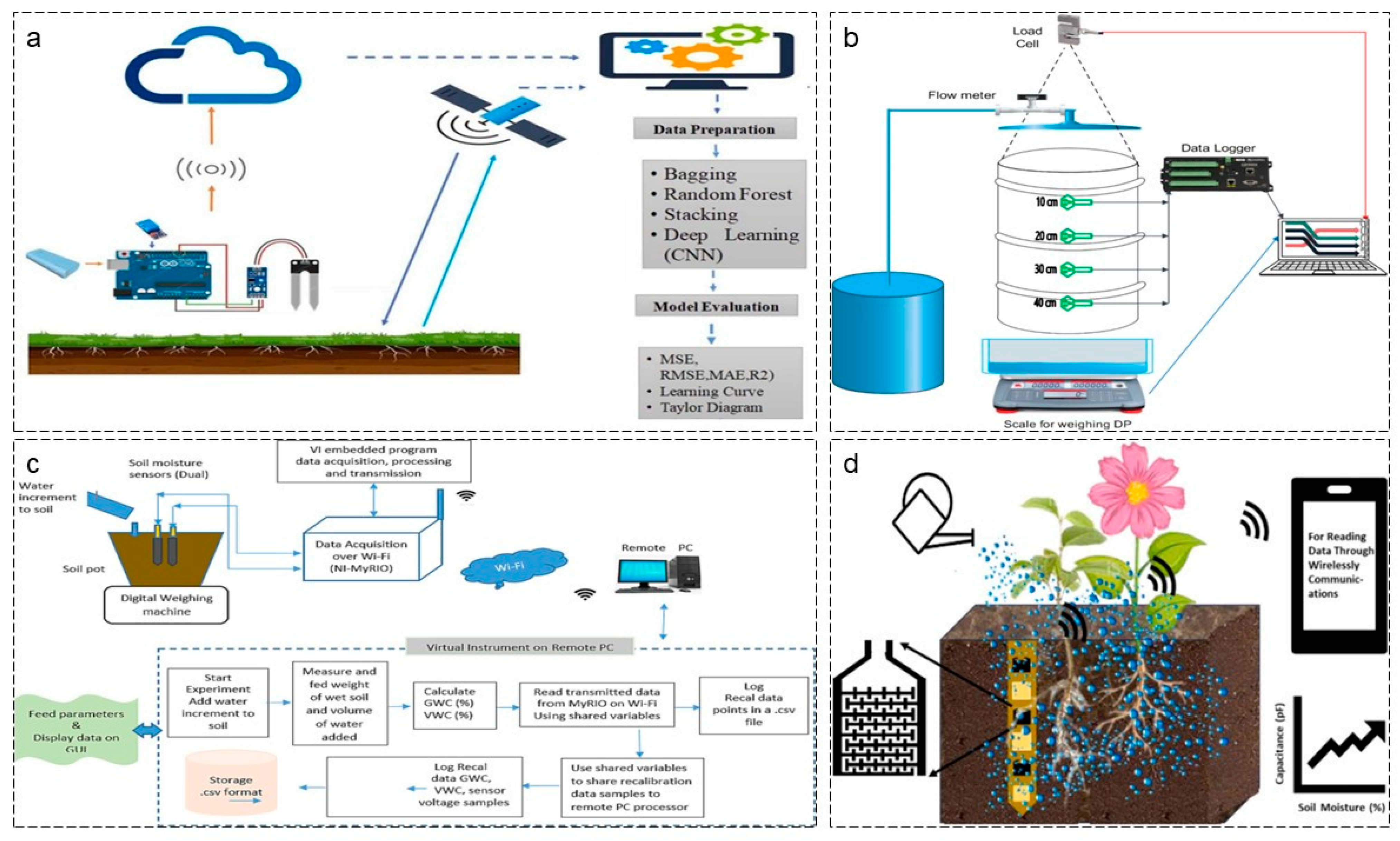
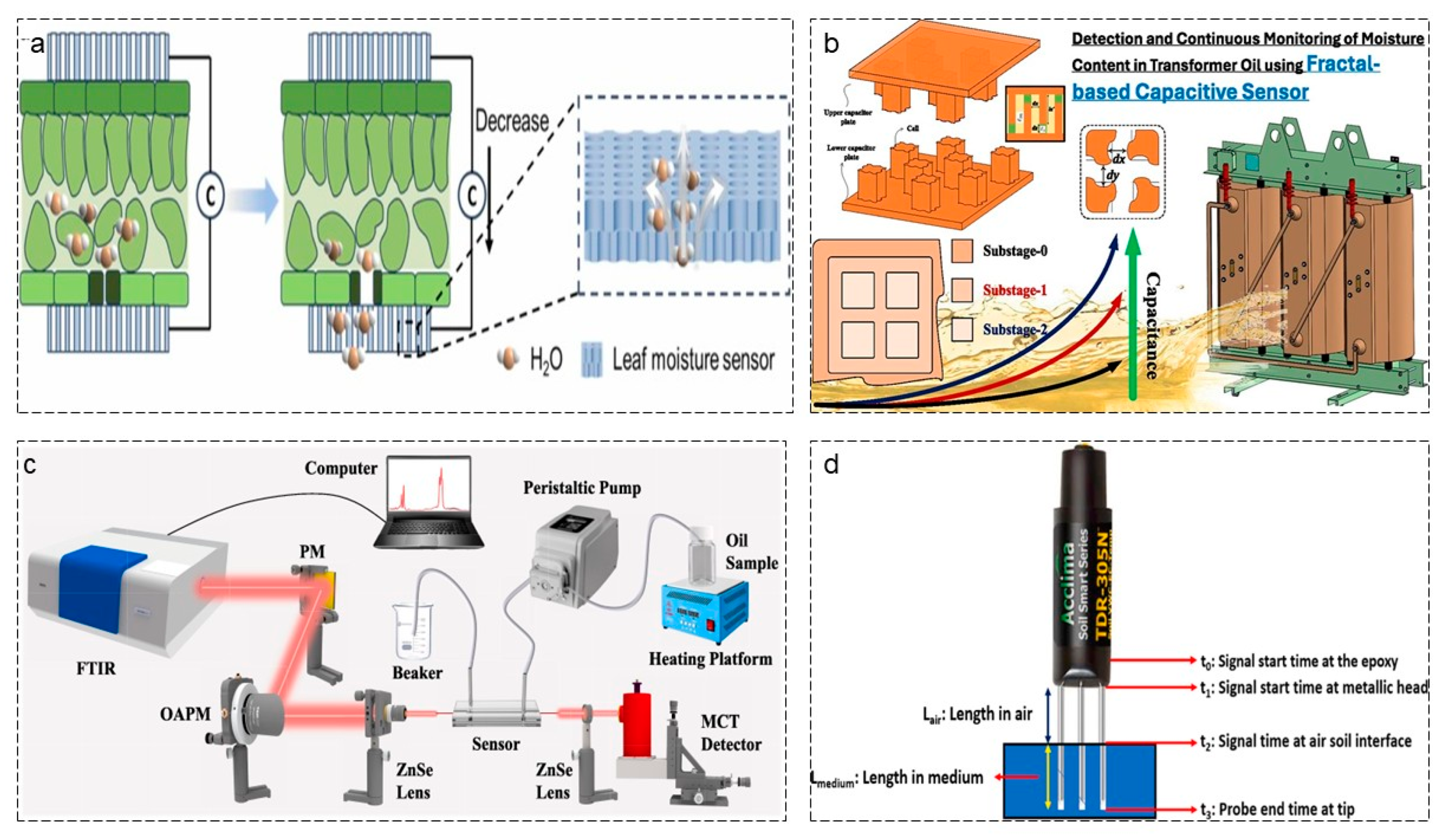
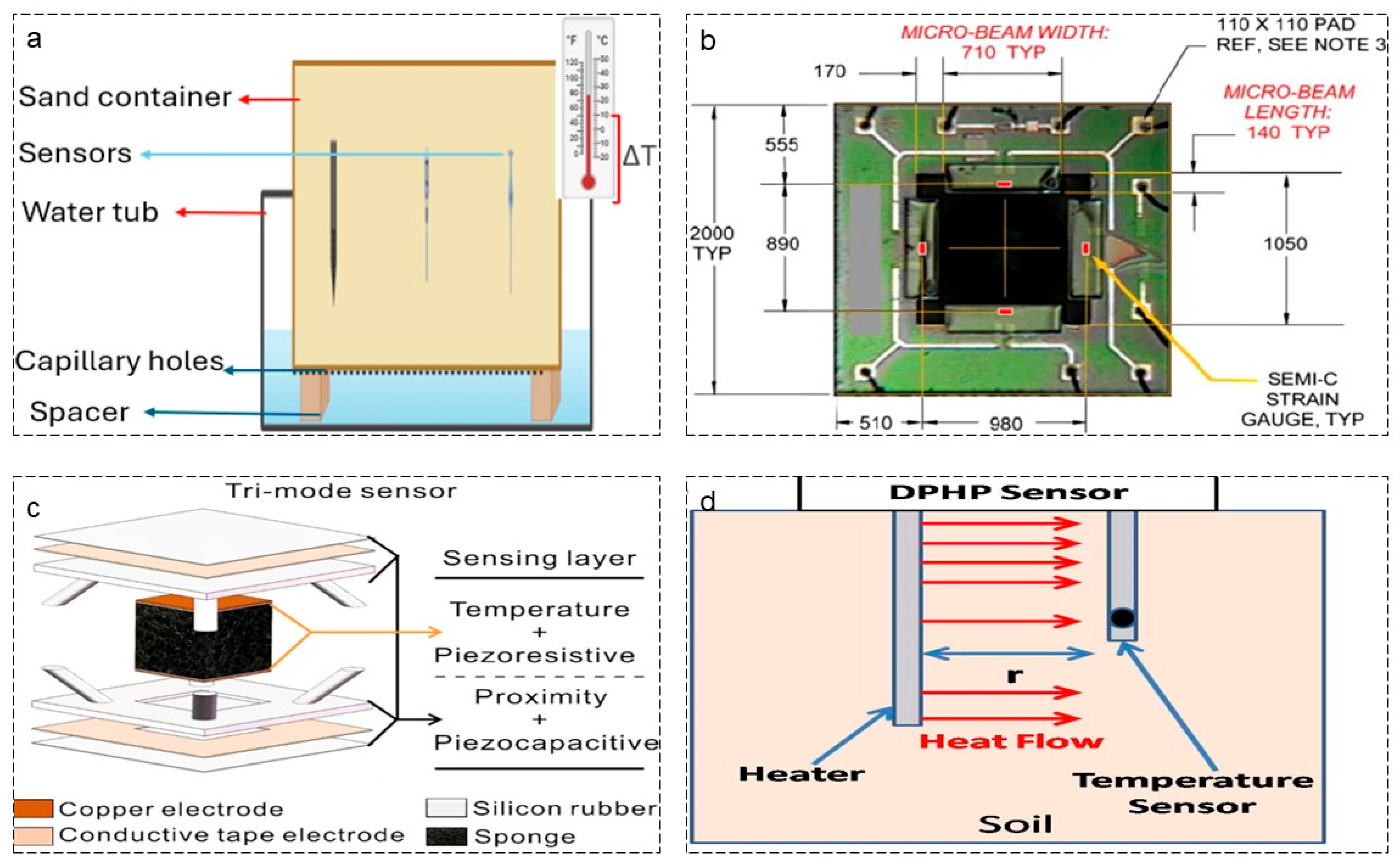
4.1. Soil Moisture Sensor
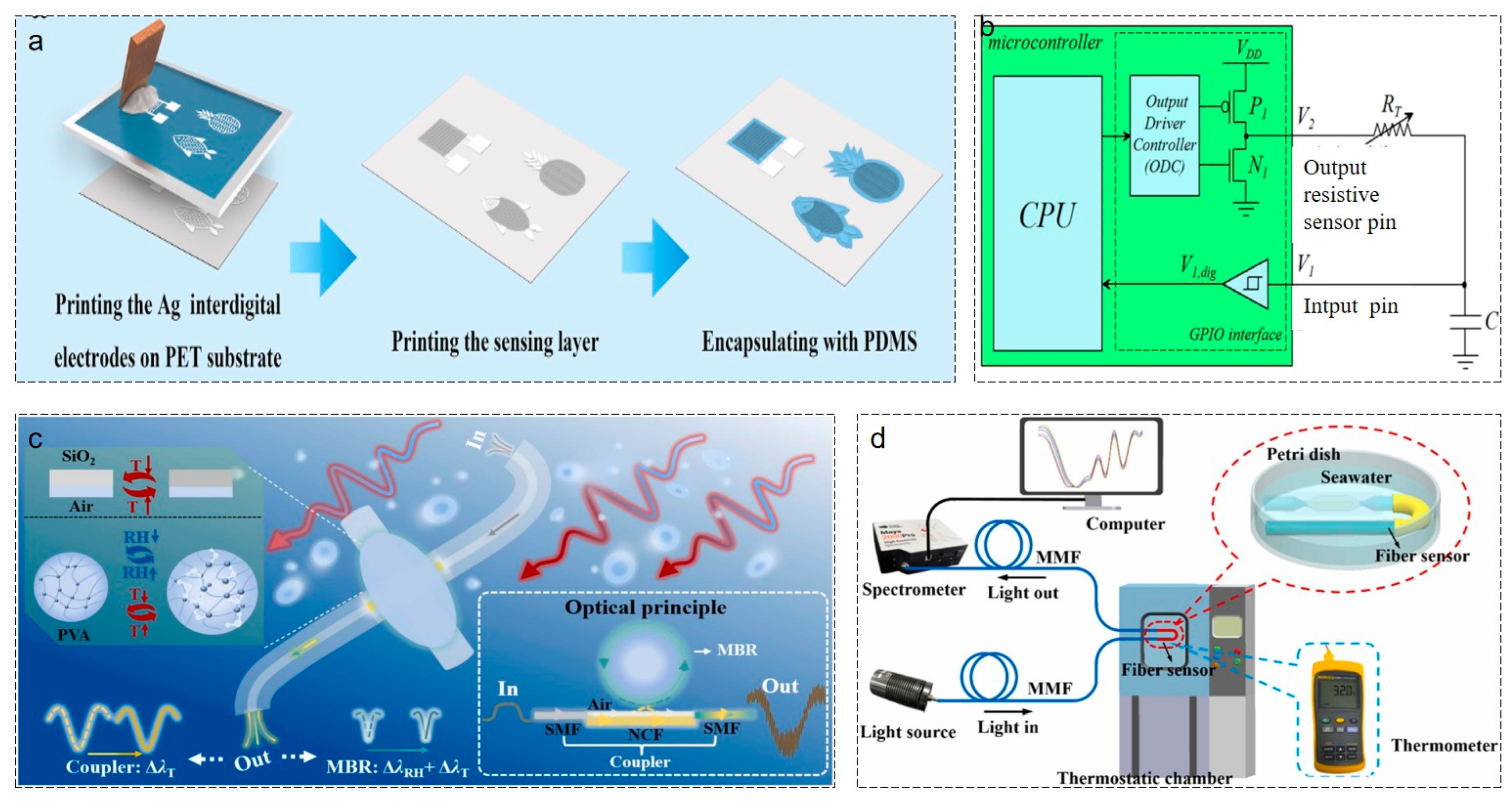
4.2. Soil Temperature Sensor

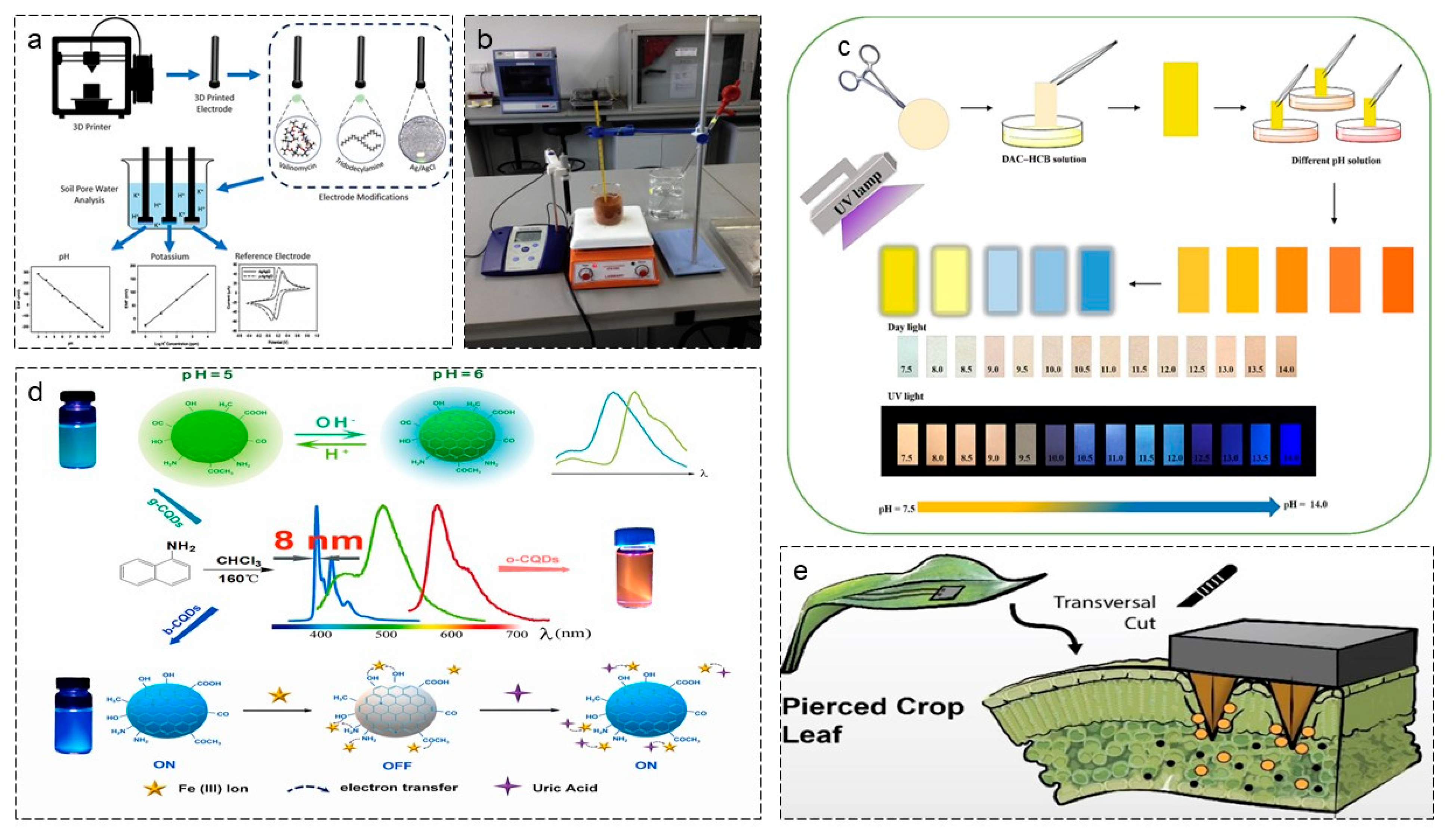
4.3. Soil pH Sensor
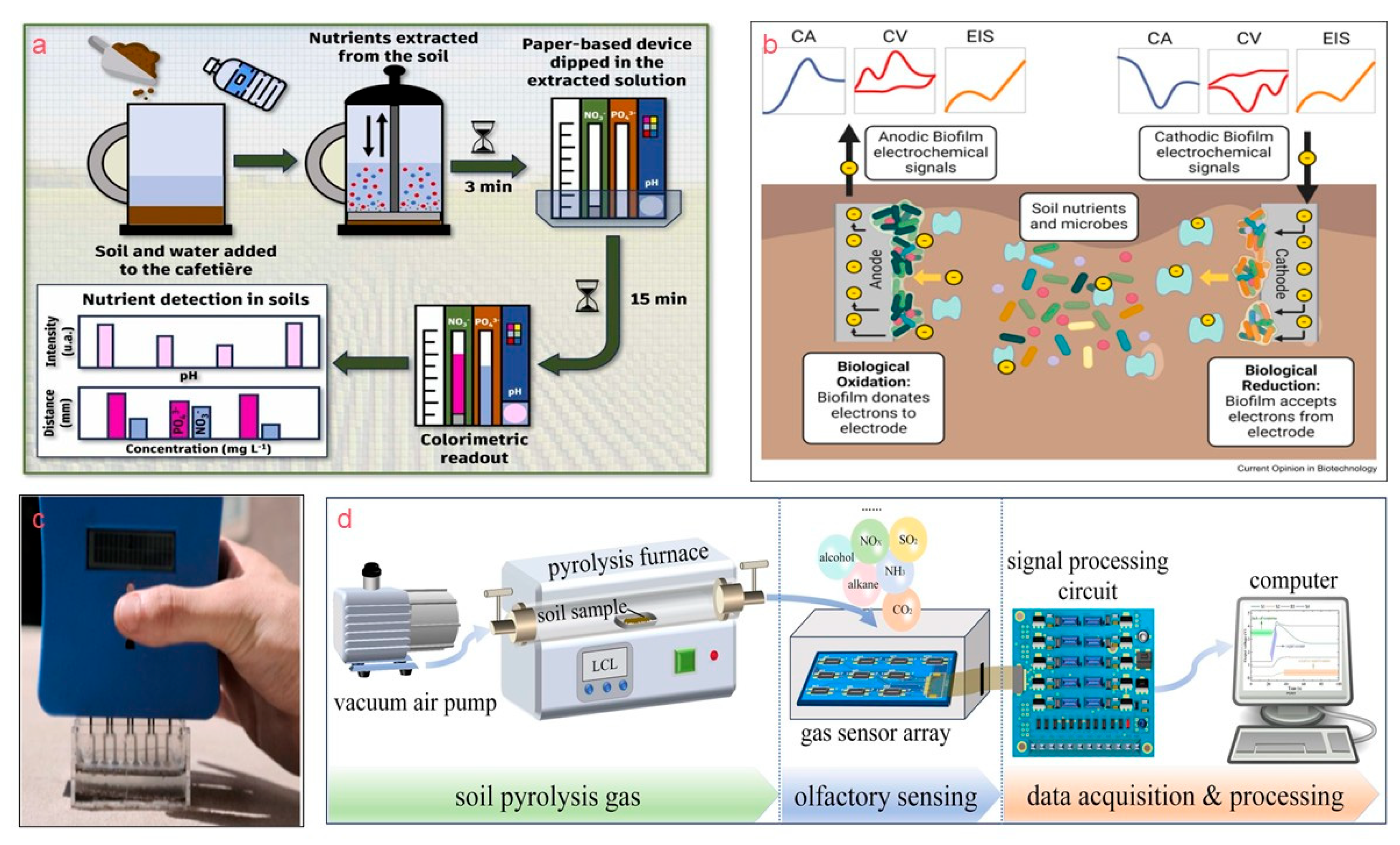
4.4. Soil Nutrient Sensors
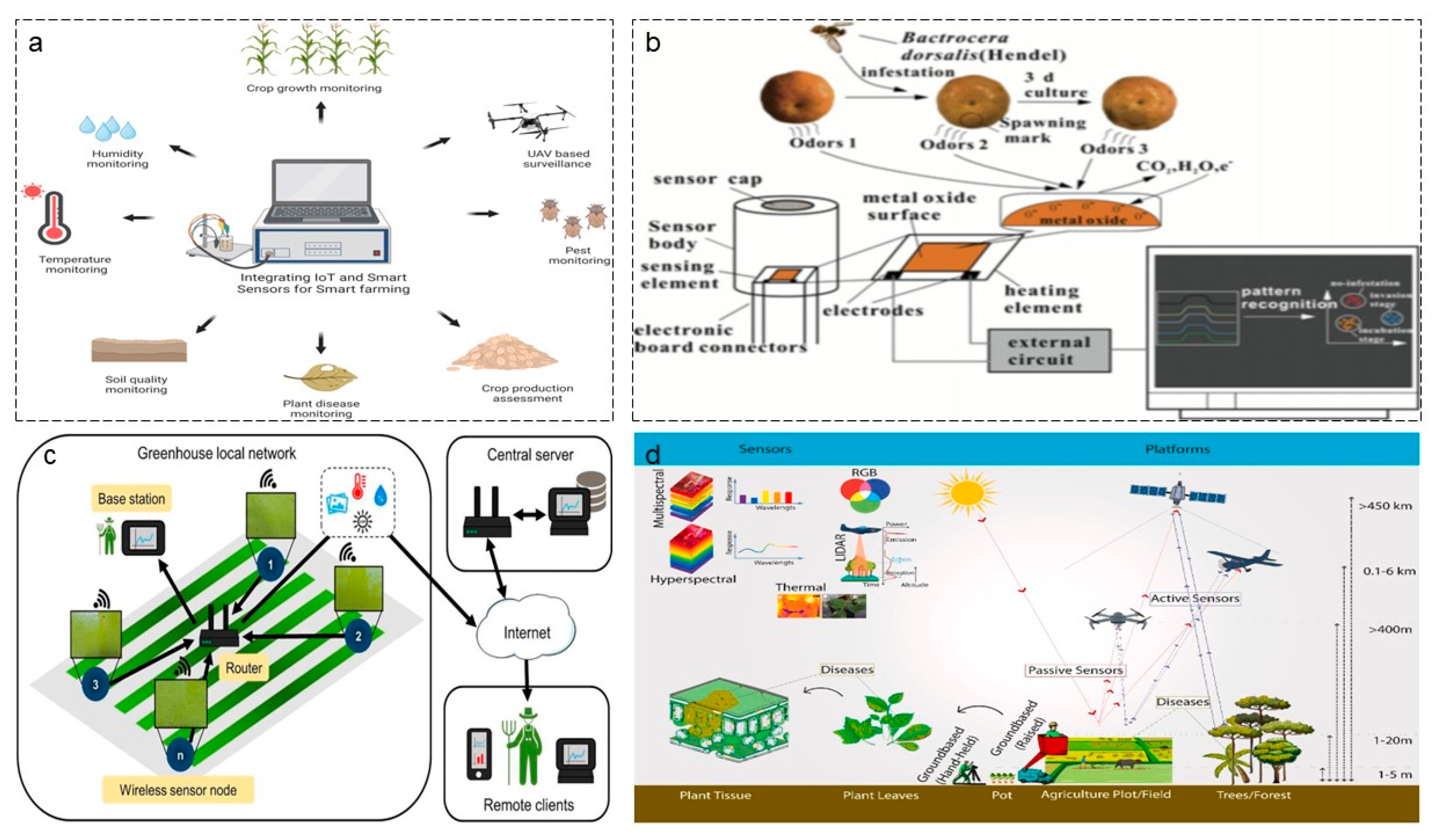
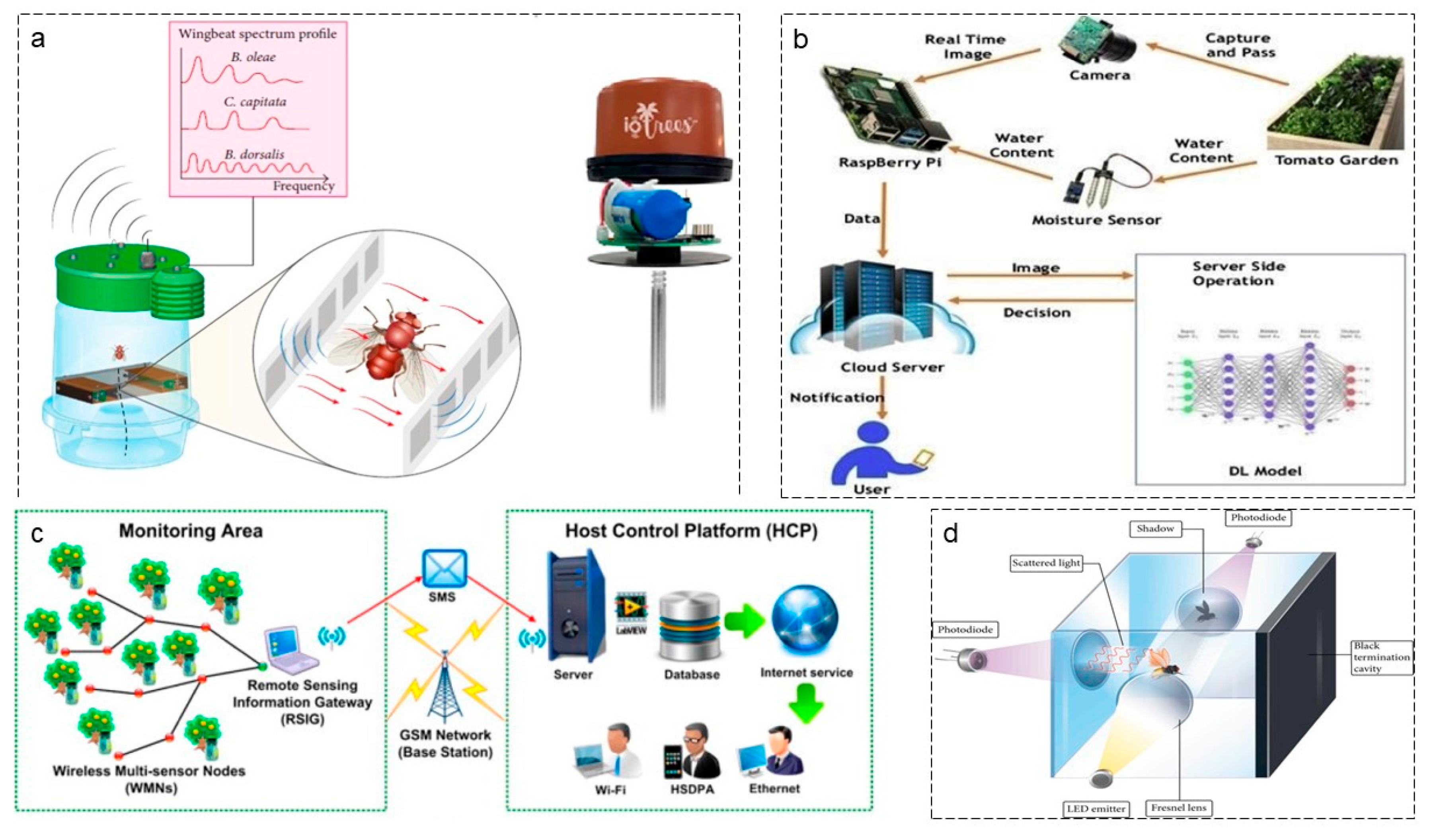
4.5. Soil Pest and Disease Sensors


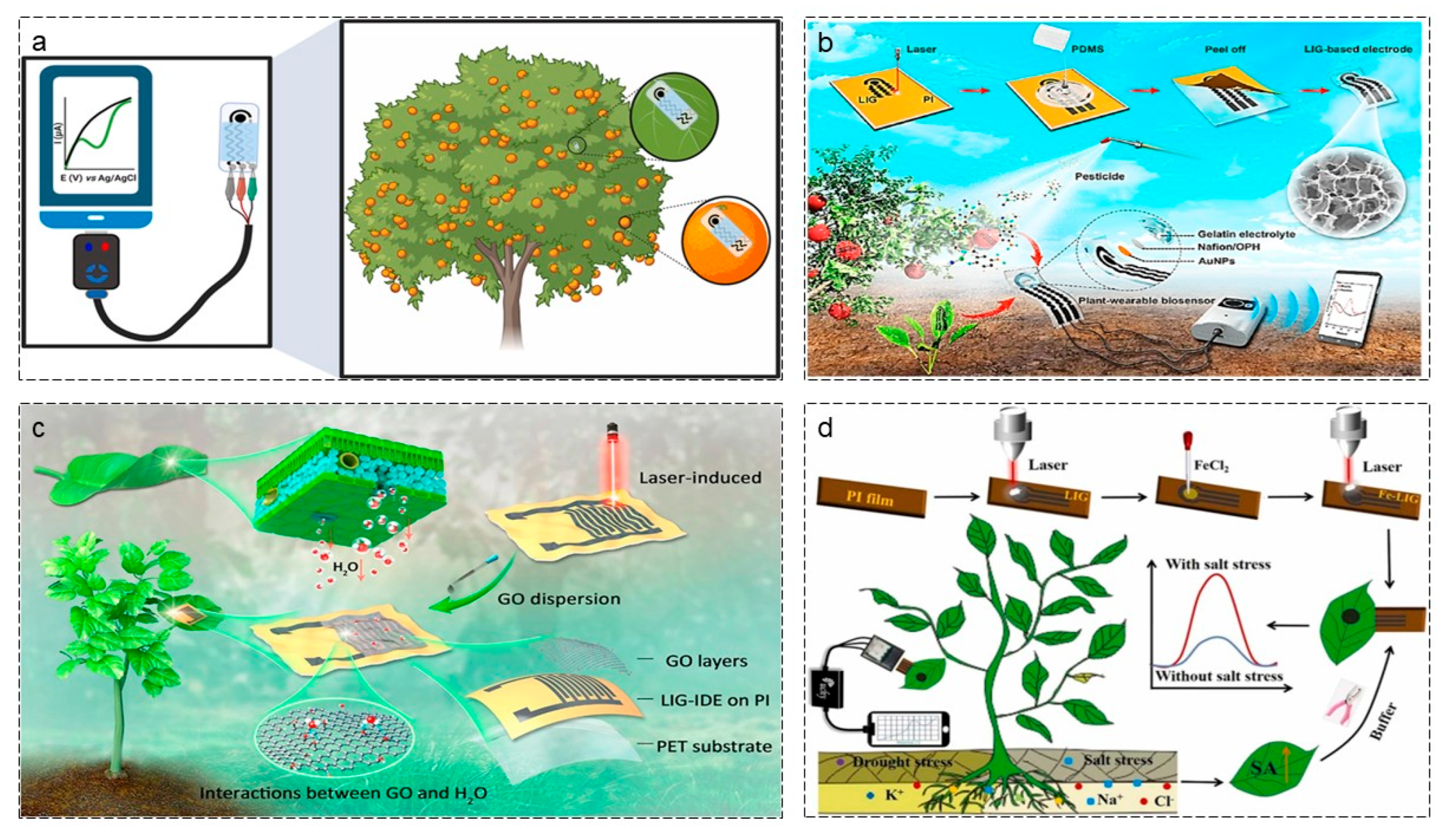
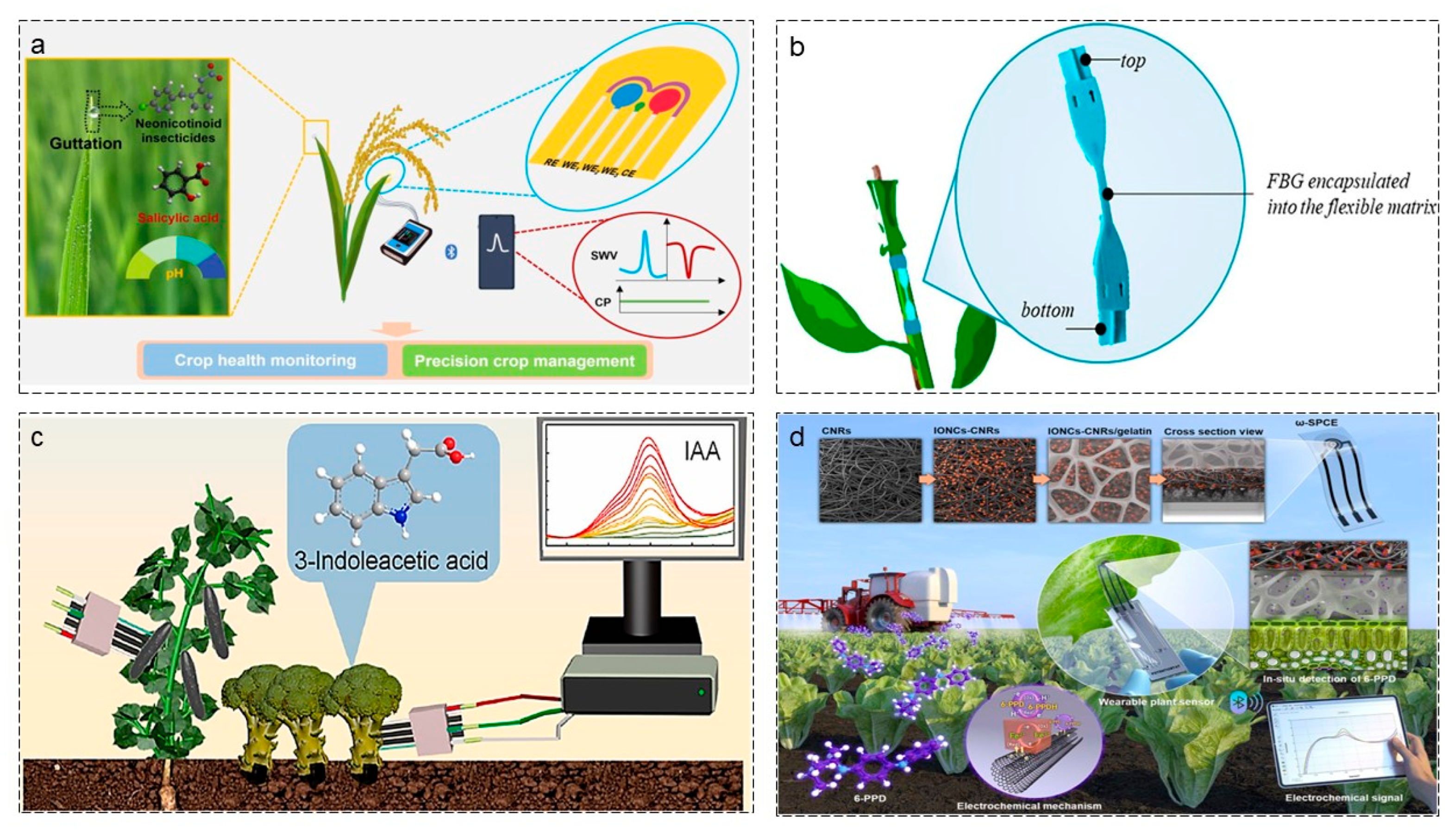
4.6. Plant Wearable Sensors


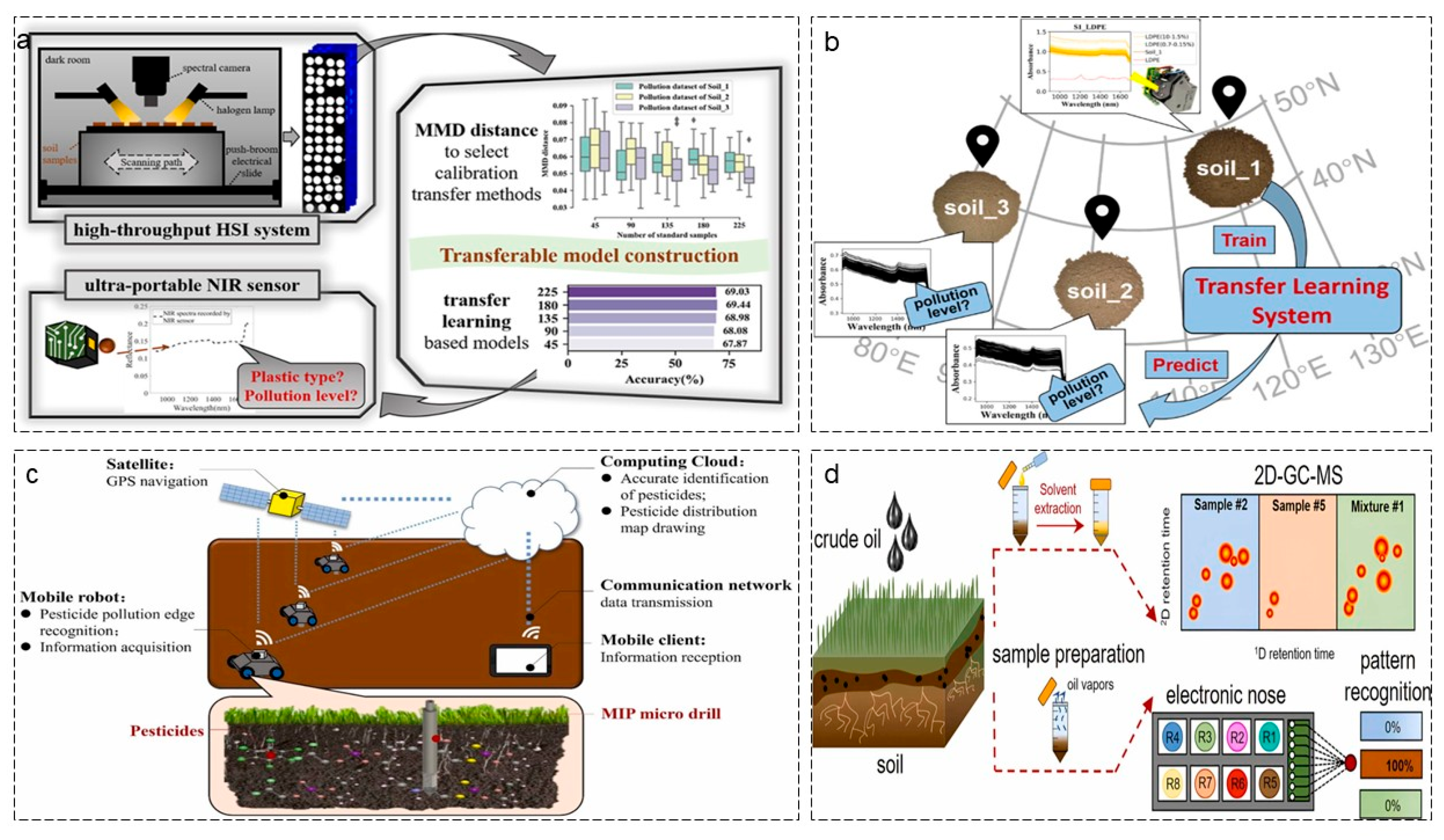
4.7. Soil Pollution Sensors
4.8. Discussion of Synthesized Results
4.8.1. Performance Trade-Offs and Ecological Implications
4.8.2. Regional Disparities in Sensor Adoption
4.8.3. Integration of Ecological Functions
5. Conclusions
6. Future Research Directions
6.1. Low-Cost Multi-Parameter Sensor Design
6.2. IoT-Enabled Multi-Sensor Fusion Networks
6.3. Longitudinal Field Validation in Diverse Agro-Ecosystems
6.4. Policy-Driven Standardization and Capacity Building
Author Contributions
Funding
Data Availability Statement
Conflicts of Interest
References
- Ayoub Shaikh, T.; Rasool, T.; Rasheed Lone, F. Towards Leveraging the Role of Machine Learning and Artificial Intelligence in Precision Agriculture and Smart Farming. Comput. Electron. Agric. 2022, 198, 107119. [Google Scholar] [CrossRef]
- Barrett, C.B. Measuring Food Insecurity. Science 2010, 327, 825–828. [Google Scholar] [CrossRef]
- Sambo, P.; Nicoletto, C.; Giro, A.; Pii, Y.; Valentinuzzi, F.; Mimmo, T.; Lugli, P.; Orzes, G.; Mazzetto, F.; Astolfi, S.; et al. Hydroponic Solutions for Soilless Production Systems: Issues and Opportunities in a Smart Agriculture Perspective. Front. Plant Sci. 2019, 10, 923. [Google Scholar] [CrossRef]
- Faqir, Y.; Qayoom, A.; Erasmus, E.; Schutte-Smith, M.; Visser, H.G. A Review on the Application of Advanced Soil and Plant Sensors in the Agriculture Sector. Comput. Electron. Agric. 2024, 226, 109385. [Google Scholar] [CrossRef]
- Yin, H.; Cao, Y.; Marelli, B.; Zeng, X.; Mason, A.J.; Cao, C. Soil Sensors and Plant Wearables for Smart and Precision Agriculture. Adv. Mater. 2021, 33, 2007764. [Google Scholar] [CrossRef]
- Mallik, S.; Chakraborty, A.; Podder, K.; Talukdar, S.; Rahman, A.; Mishra, U. Enhancing Soil Moisture Prediction with Explainable AI: Integrating IoT and Multi-Sensor Remote Sensing Data through Soft Computing. Appl. Soft Comput. 2025, 180, 113406. [Google Scholar] [CrossRef]
- Okasha, A.M.; Ibrahim, H.G.; Elmetwalli, A.H.; Khedher, K.M.; Yaseen, Z.M.; Elsayed, S. Designing Low-Cost Capacitive-Based Soil Moisture Sensor and Smart Monitoring Unit Operated by Solar Cells for Greenhouse Irrigation Management. Sensors 2021, 21, 5387. [Google Scholar] [CrossRef] [PubMed]
- Giménez-Gómez, P.; Priem, N.; Richardson, S.; Pamme, N. A Paper-Based Analytical Device for the on-Site Multiplexed Monitoring of Soil Nutrients Extracted with a Cafetière. Sens. Actuators B Chem. 2025, 424, 136881. [Google Scholar] [CrossRef]
- Guo, P.; Liu, Q.; Zhang, X.; Liang, J.; Li, Q.; Zheng, K.; Wu, W. Temperature-Sensitive Polymer Composite-Enabled All-Printed Flexible Temperature Sensors for Safety Monitoring. Compos. B Eng. 2025, 300, 112474. [Google Scholar] [CrossRef]
- Zhao, Y.; Zhang, S.Q.; Peng, Y.; Cai, L.; Li, C.F.; Chen, X.M.; Zhao, J.C. A Taper-Enhanced U-Shaped Hybrid Fiber Optic Sensor Based on SPR and MZI for Simultaneous Measurement of Salinity and Temperature. Sens. Actuators B Chem. 2025, 441, 138001. [Google Scholar] [CrossRef]
- Zhao, F.; He, J.; Li, X.; Bai, Y.; Ying, Y.; Ping, J. Smart Plant-Wearable Biosensor for in-Situ Pesticide Analysis. Biosens. Bioelectron. 2020, 170, 112636. [Google Scholar] [CrossRef]
- Lima, M.C.F.; de Almeida Leandro, M.E.D.; Valero, C.; Coronel, L.C.P.; Bazzo, C.O.G. Automatic Detection and Monitoring of Insect Pests—A Review. Agriculture 2020, 10, 161. [Google Scholar] [CrossRef]
- Zheng, Z.; Zhang, C. Electronic Noses Based on Metal Oxide Semiconductor Sensors for Detecting Crop Diseases and Insect Pests. Comput. Electron. Agric. 2022, 197, 106988. [Google Scholar] [CrossRef]
- Liao, M.S.; Chuang, C.L.; Lin, T.S.; Chen, C.P.; Zheng, X.Y.; Chen, P.T.; Liao, K.C.; Jiang, J.A. Development of an Autonomous Early Warning System for Bactrocera Dorsalis (Hendel) Outbreaks in Remote Fruit Orchards. Comput. Electron. Agric. 2012, 88, 1–12. [Google Scholar] [CrossRef]
- Kuruppuarachchi, C.; Kulsoom, F.; Ibrahim, H.; Khan, H.; Zahid, A.; Sher, M. Advancements in Plant Wearable Sensors. Comput. Electron. Agric. 2025, 229, 109778. [Google Scholar] [CrossRef]
- Zhao, S.; Qiu, Z.; He, Y. Transfer Learning Strategy for Plastic Pollution Detection in Soil: Calibration Transfer from High-Throughput HSI System to NIR Sensor. Chemosphere 2021, 272, 129908. [Google Scholar] [CrossRef]
- Dakshinamurthy, H.N.; Jones, S.B.; Schwartz, R.C.; Young, S.N. Waveform Analysis for Short Time Domain Reflectometry (TDR) Probes to Obtain Calibrated Moisture Measurements from Partial Vertical Sensor Insertions. Comput. Electron. Agric. 2025, 235, 110233. [Google Scholar] [CrossRef]
- Bahuguna, R.N.; Jagadish, K.S.V. Temperature Regulation of Plant Phenological Development. Environ. Exp. Bot. 2015, 111, 83–90. [Google Scholar] [CrossRef]
- Wang, M.; Sun, Y.; Zheng, H.; Zhang, Y.N. Resonance-Interference Concurrent Fiber Sensor: Enabling Simultaneous Detection of Temperature and Humidity. Sens. Actuators B Chem. 2025, 440, 137888. [Google Scholar] [CrossRef]
- Bogena, H.R.; Huisman, J.A.; Schilling, B.; Weuthen, A.; Vereecken, H. Effective Calibration of Low-Cost Soil Water Content Sensors. Sensors 2017, 17, 208. [Google Scholar] [CrossRef] [PubMed]
- Huang, H.; Wang, X.; Zhou, G.; Qian, C.; Zhou, Z.; Wang, Z.; Yang, Y. A Novel Ratiometric Fluorescent Sensor from Modified Coumarin-Grafted Cellulose for Precise PH Detection in Strongly Alkaline Conditions. Int. J. Biol. Macromol. 2024, 262, 130066. [Google Scholar] [CrossRef]
- Zhang, D.; Chao, D.; Yu, C.; Fu, Y.; Zhou, S.; Tian, L.; Zhou, L. One-Pot Synthesis of Multicolor Carbon Quantum Dots: One as PH Sensor, One with Ultra-Narrow Emission as Fluorescent Sensor for Uric Acid. Dye. Pigment. 2023, 213, 111201. [Google Scholar] [CrossRef]
- Pal, A.; Dubey, S.K.; Goel, S.; Kalita, P.K. Portable Sensors in Precision Agriculture: Assessing Advances and Challenges in Soil Nutrient Determination. TrAC Trends Anal. Chem. 2024, 180, 117981. [Google Scholar] [CrossRef]
- Liu, X.; Xiang, J.; Xue, Y.; Zhao, J.; Ma, X.; Ge, L.; Li, F.; Gai, P. Plant Wearable Sensor Based on Flexible Laser-Induced Fe-Doped Graphene for in Situ Monitoring Salicylic Acid under Salt Stress. Sens. Actuators B Chem. 2025, 440, 137931. [Google Scholar] [CrossRef]
- Qiu, Z.; Zhao, S.; Feng, X.; He, Y. Transfer Learning Method for Plastic Pollution Evaluation in Soil Using NIR Sensor. Sci. Total Environ. 2020, 740, 140118. [Google Scholar] [CrossRef] [PubMed]
- Zaytsev, V.; Issainova, A.; Borisov, R.S.; Shi, X.; Baideldinov, M.U.; Zimens, M.E.; Zhunusbekov, A.M.; Lantsberg, A.V.; Kondrashov, V.A.; Nasibulin, A.G.; et al. Coding Smell Patterns of Crude Oil by the Electronic Nose: A Soil Pollution Case. J. Hazard Mater. 2024, 480, 135838. [Google Scholar] [CrossRef] [PubMed]
- Hong, Q.; Qiu, J.; Hao, J.; Lin, Z.; Zhou, Z.; Ruan, X.; Zhang, T.; Yao, F.; Wang, Z.; Li, Z.; et al. Flexible Self-Decoupled Pressure/Proximity/Temperature Sensor for Composite Stimulus Sensing with Low Signal Crosstalk. Chem. Eng. J. 2025, 512, 162663. [Google Scholar] [CrossRef]
- Tan, W.Y.; Then, Y.L.; Lew, Y.L.; Tay, F.S. Newly Calibrated Analytical Models for Soil Moisture Content and PH Value by Low-Cost YL-69 Hygrometer Sensor. Measurement 2019, 134, 166–178. [Google Scholar] [CrossRef]
- Kelley, B.; Ali, N.; Dong, Y. Methods to Correct Temperature-Induced Changes of Soil Moisture Sensors to Improve Accuracy. MethodsX 2025, 14, 103100. [Google Scholar] [CrossRef] [PubMed]
- Pahuja, R. Development of Semi-Automatic Recalibration System and Curve-Fit Models for Smart Soil Moisture Sensor. Measurement 2022, 203, 111907. [Google Scholar] [CrossRef]
- Jackson, T.; Mansfield, K.; Saafi, M.; Colman, T.; Romine, P. Measuring Soil Temperature and Moisture Using Wireless MEMS Sensors. Measurement 2008, 41, 381–390. [Google Scholar] [CrossRef]
- McCole, M.; Bradley, M.; McCaul, M.; McCrudden, D. A Low-Cost Portable System for on-Site Detection of Soil PH and Potassium Levels Using 3D Printed Sensors. Results Eng. 2023, 20, 101564. [Google Scholar] [CrossRef]
- Parrilla, M.; Steijlen, A.; Kerremans, R.; Jacobs, J.; den Haan, L.; De Vreese, J.; Van Noten Géron, Y.; Clerx, P.; Watts, R.; De Wael, K. Wearable Platform Based on 3D-Printed Solid Microneedle Potentiometric PH Sensor for Plant Monitoring. Chem. Eng. J. 2024, 500, 157254. [Google Scholar] [CrossRef]
- Palaparthy, V.S.; Singh, D.N.; Baghini, M.S. Compensation of Temperature Effects for In-Situ Soil Moisture Measurement by DPHP Sensors. Comput. Electron. Agric. 2017, 141, 73–80. [Google Scholar] [CrossRef]
- Wang, J.; Lin, C.; Han, Z.; Fu, C.; Huang, D.; Cheng, H. Dissolved Nitrogen in Salt-Affected Soils Reclaimed by Planting Rice: How Is It Influenced by Soil Physicochemical Properties? Sci. Total Environ. 2022, 824, 153863. [Google Scholar] [CrossRef]
- Kumar, K.; Sharma, A.; Tripathi, S.L. Sensors and Their Application. In Electronic Devices, Circuits, and Systems for Biomedical Applications: Challenges and Intelligent Approach; Academic Press: Cambridge, MA, USA, 2021; pp. 177–195. [Google Scholar] [CrossRef]
- Song, W.; Wang, J.; Jin, Y.; Zheng, C.; Zhang, B. Optimization of the Thermal Response Test under Voltage Fluctuations Based on the Infinite Line Source Model. Renew. Energy 2023, 203, 731–740. [Google Scholar] [CrossRef]
- Steinegger, A.; Wolfbeis, O.S.; Borisov, S.M. Optical Sensing and Imaging of PH Values: Spectroscopies, Materials, and Applications. Chem. Rev. 2020, 120, 12357–12489. [Google Scholar] [CrossRef]
- Ebadati, E.; Switalska, E.; Lombi, E.; Warren-Smith, S.C.; Evans, D. Challenges of Polymer-Based PH Sensing in Soil. J. Polym. Sci. 2024, 62, 32–41. [Google Scholar] [CrossRef]
- Ali, N.; Dong, Y.; Rouland, G. Estimation of Deep Percolation in Agricultural Soils Utilizing a Weighing Lysimeter and Soil Moisture Sensors. Sci. Total Environ. 2025, 969, 178974. [Google Scholar] [CrossRef] [PubMed]
- Ullah, A.; Zubair, M.; Zulfiqar, M.H.; Kamsong, W.; Karuwan, C.; Massoud, Y.; Mehmood, M.Q. Highly Sensitive Screen-Printed Soil Moisture Sensor Array as Green Solutions for Sustainable Precision Agriculture. Sens. Actuators A Phys. 2024, 371, 115297. [Google Scholar] [CrossRef]
- Kanissery, R.G.; Sims, G.K. Biostimulation for the Enhanced Degradation of Herbicides in Soil. Appl. Environ. Soil Sci. 2011, 2011, 843450. [Google Scholar] [CrossRef]
- Dong, Y.; Hansen, H. Development and Design of an Affordable Field Scale Weighing Lysimeter Using a Microcontroller System. Smart Agric. Technol. 2023, 4, 100147. [Google Scholar] [CrossRef]
- Negrón-Juárez, R.; Ferreira, S.J.F.; Mota, M.C.; Faybishenko, B.; Monteiro, M.T.F.; Candido, L.A.; Ribeiro, R.P.; de Oliveira, R.C.; de Araujo, A.C.; Warren, J.M.; et al. Calibration, Measurement, and Characterization of Soil Moisture Dynamics in a Central Amazonian Tropical Forest. Vadose Zone J. 2020, 19, e20070. [Google Scholar] [CrossRef]
- Qin, S.; Yang, P.; Liu, Z.; Hu, J.; Li, N.; Ding, L.; Chen, X. Triboelectric Sensor with Ultra-Wide Linear Range Based on Water-Containing Elastomer and Ion-Rich Interface. Nat. Commun. 2024, 15, 10640. [Google Scholar] [CrossRef]
- Huang, J.; You, R.; Zhou, T. Frequency-Adaptive Multi-Scale Deep Neural Networks. Comput. Methods Appl. Mech. Eng. 2025, 437, 117751. [Google Scholar] [CrossRef]
- Naveed, M.F.; Amaar, A.; Khan, S.S.; Omar, M.; Larkin, S. Detection and Continuous Monitoring of Moisture Content in Transformer Oil Using Fractal-Based Capacitive Sensor. Heliyon 2024, 10, e40995. [Google Scholar] [CrossRef] [PubMed]
- Hamimed, S.; Mahjoubi, Y.; Abdeljelil, N.; Gamraoui, A.; Othmani, A.; Barhoum, A.; Chatti, A. Chemical Sensors and Biosensors for Soil Analysis: Principles, Challenges, and Emerging Applications. In Advanced Sensor Technology: Biomedical, Environmental, and Construction Applications; Elsevier: Amsterdam, The Netherlands, 2023; pp. 669–698. [Google Scholar] [CrossRef]
- Reverter, F. The Art of Directly Interfacing Sensors to Microcontrollers. J. Low Power Electron. Appl. 2012, 2, 265–281. [Google Scholar] [CrossRef]
- Grossi, M.; Omaña, M.; Metra, C. Impact of Aging on Temperature Measurements Performed Using a Resistive Temperature Sensor with Sensor-to-Microcontroller Direct Interface. Microelectron. Reliab. 2025, 169, 115729. [Google Scholar] [CrossRef]
- Xia, J.; Wang, X.; Wang, X.; Majer-Baranyi, K.; Zhang, X. Hysteresis Dynamic Modeling and Analysis of Flexible Nano Silver-Polyvinyl Alcohol Humidity Sensor Based on the Microscopic Process and Langmuir-Fick Theory. ACS Omega 2022, 7, 14994–15004. [Google Scholar] [CrossRef] [PubMed]
- Neina, D. The Role of Soil PH in Plant Nutrition and Soil Remediation. Appl. Environ. Soil Sci. 2019, 2019, 5794869. [Google Scholar] [CrossRef]
- Zhao, B.; Ma, H.; Zheng, M.; Xu, K.; Zou, C.; Qu, S.; Tan, Z. Narrow-Bandwidth Emissive Carbon Dots: A Rising Star in the Fluorescent Material Family. Carbon Energy 2022, 4, 88–114. [Google Scholar] [CrossRef]
- Geilfus, C.M. The PH of the Apoplast: Dynamic Factor with Functional Impact Under Stress. Mol. Plant 2017, 10, 1371–1386. [Google Scholar] [CrossRef] [PubMed]
- Abd El-Kader, S.M.; Mohammad El-Basioni, B.M. Precision Farming Solution in Egypt Using the Wireless Sensor Network Technology. Egypt. Inform. J. 2013, 14, 221–233. [Google Scholar] [CrossRef]
- Webster, C.F.; Kim, W.J.; Reguera, G.; Friesen, M.L.; Beyenal, H. Review: Can Bioelectrochemical Sensors Be Used to Monitor Soil Microbiome Activity and Fertility? Curr. Opin. Biotechnol. 2024, 90, 103222. [Google Scholar] [CrossRef]
- Gavrilescu, M. Enhancing Phytoremediation of Soils Polluted with Heavy Metals. Curr. Opin. Biotechnol. 2022, 74, 21–31. [Google Scholar] [CrossRef]
- Rosenberg, R.; Bono, M.S.; Braganza, S.; Vaishnav, C.; Karnik, R.; Hart, A.J. In-Field Determination of Soil Ion Content Using a Handheld Device and Screen-Printed Solidstate Ion-Selective Electrodes. PLoS ONE 2018, 13, e0203862. [Google Scholar] [CrossRef]
- Sishodia, R.P.; Ray, R.L.; Singh, S.K. Applications of Remote Sensing in Precision Agriculture: A Review. Remote Sens. 2020, 12, 3136. [Google Scholar] [CrossRef]
- Rustia, D.J.A.; Lin, C.E.; Chung, J.Y.; Zhuang, Y.J.; Hsu, J.C.; Lin, T. Te Application of an Image and Environmental Sensor Network for Automated Greenhouse Insect Pest Monitoring. J. Asia Pac. Entomol. 2020, 23, 17–28. [Google Scholar] [CrossRef]
- Abdullah, H.M.; Mohana, N.T.; Khan, B.M.; Ahmed, S.M.; Hossain, M.; Islam, K.S.; Redoy, M.H.; Ferdush, J.; Bhuiyan, M.A.H.B.; Hossain, M.M.; et al. Present and Future Scopes and Challenges of Plant Pest and Disease (P&D) Monitoring: Remote Sensing, Image Processing, and Artificial Intelligence Perspectives. Remote Sens. Appl. 2023, 32, 100996. [Google Scholar] [CrossRef]
- Rajak, P.; Ganguly, A.; Adhikary, S.; Bhattacharya, S. Internet of Things and Smart Sensors in Agriculture: Scopes and Challenges. J. Agric. Food Res. 2023, 14, 100776. [Google Scholar] [CrossRef]
- Potamitis, I.; Rigakis, I.; Vidakis, N.; Petousis, M.; Weber, M. Affordable Bimodal Optical Sensors to Spread the Use of Automated Insect Monitoring. J. Sens. 2018, 2018, 3949415. [Google Scholar] [CrossRef]
- Antonacci, A.; Arduini, F.; Moscone, D.; Palleschi, G.; Scognamiglio, V. Nanostructured (Bio)Sensors for Smart Agriculture. TrAC Trends Anal. Chem. 2018, 98, 95–103. [Google Scholar] [CrossRef]
- Hasan, M.R.; Rahman, M.M.; Shahriar, F.; Khan, S.I.; Mohi Uddin, K.M.; Hasan, M.M. Smart Farming: Leveraging IoT and Deep Learning for Sustainable Tomato Cultivation and Pest Management. Crop Des. 2024, 3, 100079. [Google Scholar] [CrossRef]
- Doitsidis, L.; Fouskitakis, G.N.; Varikou, K.N.; Rigakis, I.I.; Chatzichristofis, S.A.; Papafilippaki, A.K.; Birouraki, A.E. Remote Monitoring of the Bactrocera Oleae (Gmelin) (Diptera: Tephritidae) Population Using an Automated McPhail Trap. Comput. Electron. Agric. 2017, 137, 69–78. [Google Scholar] [CrossRef]
- Ferreira, D.M.; Paschoarelli, M.V.; de Lima, L.F.; de Araujo, W.R. Paper-Based Laser-Scribed Graphene towards Wearable Plant Sensor: A Portable Electrochemical Platform for Precision Agriculture. Talanta 2025, 295, 128212. [Google Scholar] [CrossRef]
- Seddaoui, N.; Arduini, F. Recent Advances in Wearable and Implantable Electrochemical (Bio)Sensors for Plant Health Monitoring. TrAC Trends Anal. Chem. 2025, 191, 118336. [Google Scholar] [CrossRef]
- Geng, Z.; Feng, Z.; Kong, H.; Su, J.; Zhang, K.; Li, J.; Sun, X.; Liu, X.; Ge, L.; Gai, P.; et al. Ruthenium Anchored Laser-Induced Graphene as Binder-Free and Free-Standing Electrode for Selective Electrosynthesis of Ammonia from Nitrate. Adv. Sci. 2024, 11, 2406843. [Google Scholar] [CrossRef] [PubMed]
- Lan, L.; Le, X.; Dong, H.; Xie, J.; Ying, Y.; Ping, J. One-Step and Large-Scale Fabrication of Flexible and Wearable Humidity Sensor Based on Laser-Induced Graphene for Real-Time Tracking of Plant Transpiration at Bio-Interface. Biosens. Bioelectron. 2020, 165, 112360. [Google Scholar] [CrossRef] [PubMed]
- Hsu, H.H.; Zhang, X.; Xu, K.; Wang, Y.; Wang, Q.; Luo, G.; Xing, M.; Zhong, W. Self-Powered and Plant-Wearable Hydrogel as LED Power Supply and Sensor for Promoting and Monitoring Plant Growth in Smart Farming. Chem. Eng. J. 2021, 422, 129499. [Google Scholar] [CrossRef]
- Chu, G.; Yu, S.; Wang, Y.; Zhang, W.; Xue, B.; Huang, J.; Wang, Z.; Luo, J.; Sun, X.; Li, M. A Wearable Electrochemical Sensor for the Monitoring of Neonicotinoid Insecticides, Salicylic Acid and the PH in Plant Guttation. Chem. Eng. J. 2024, 498, 155340. [Google Scholar] [CrossRef]
- Lo Presti, D.; Cimini, S.; Massaroni, C.; D’amato, R.; Caponero, M.A.; De Gara, L.; Schena, E. Plant Wearable Sensors Based on FBG Technology for Growth and Microclimate Monitoring. Sensors 2021, 21, 6327. [Google Scholar] [CrossRef]
- Zhang, Y.; Li, M.; Li, H. A Vertical/Horizontal Graphene-Based Microneedle Plant Sensor for on-Site Detection of Indole-3-Acetic Acid in Vegetables. Talanta 2025, 283, 127114. [Google Scholar] [CrossRef] [PubMed]
- Manavalan, S.; Cho, G.; Kim, H.S.; Jung, S.M. High-Performance Wearable Sensor for Non-Destructive, Real-Time Detection of 6-PPD on Living Plants Using Fe2O3 Nanocube-Carbon Nanotube Nanoribbon Hybrid Electrocatalyst. J. Hazard Mater. 2025, 491, 137981. [Google Scholar] [CrossRef] [PubMed]
- Kong, C.; Ren, L.; Shi, X.; Chang, Z. Soil Pesticides Pollution Detection and Specific Recognition Using Electronic Nose. Sens. Actuators B Chem. 2024, 408, 135492. [Google Scholar] [CrossRef]



| Key Research Gaps | Proposed Solutions | Performance Targets | Agro-Ecosystem Focus | References |
|---|---|---|---|---|
| High cost of multi-parameter sensors limits smallholder adoption. | Hybrid capacitive–spectroscopic sensors; pay-as-you-go rental models. | Cost <USD 100; durability ≥3 years; minimal calibration (≤2 times/year). | Sub-Saharan Africa, Southeast Asia (low-resource settings). | [6,7,8] |
| IoT connectivity/power gaps restrict sensor network deployment. | Mobile-based edge-computing platforms; solar-powered sensors. | Latency reduction by 40–50%; 100% off-grid operation capability. | India (rice farms), North Africa (arid regions). | [9,10,11] |
| Experimental sensors lack long-term field validation in diverse contexts. | 2–3 years of longitudinal trials; region-specific sensor optimization. | Detection accuracy +10–15%; lifespan extension to 2–4 years. | Arid, tropical, and temperate agro-ecosystems. | [12,13,14,15] |
| Limited farmer capacity to interpret sensor data; low utilization. | Mobile data visualization tools; community training programs. | 80%+ farmer proficiency in data interpretation; 50% higher sensor utilization. | Tanzania (maize-growing regions), Sub-Saharan Africa. | [12,14,15] |
| Lack of global calibration protocols; cross-region interoperability issues. | FAO-aligned standardization; sensor–ecology integration framework. | 100% cross-region data comparability; policy integration. | Global (developing + developed agricultural systems). | [6,9,16] |
| Sensor Type | Working Principles | Accuracy | Cost Range | Durability | Scalability | Maturity Level | Key Trade-Offs | Key Ecological Benefits |
|---|---|---|---|---|---|---|---|---|
| Soil Moisture | Capacitive/resistive/TDR (Time Domain Reflectometry)/FDR (Frequency Domain Reflectometry) [6,7,17] | ±1–5% v/v | USD 20–2000 | 2–8 years | High (field-scale) | Mature | Low cost/high scalability vs. limited multi-parameter integration | Water conservation (25–40% savings) [6,7] |
| Soil Temperature | Thermistor/thermocouple/fiber optic [9,18,19] | ±0.1–0.5 °C | USD 15–500 | 3–10 years | Very High | Mature | High durability/accuracy vs. single-parameter focus | Optimized greenhouse energy use (10–15% emission reduction) [9,18] |
| Soil pH | Ion-selective electrode/optical [20,21,22] | ±0.1–0.3 pH units | USD 50–1200 | 1–5 years | Medium | Mature | Accurate amendment guidance vs. frequent calibration | Reduced soil salinization from over-amendment [20,21] |
| Soil Nutrient | Spectroscopic/electrochemical [8,23,24] | ±5–15% of nutrient content | USD 200–5000 | 1–3 years | Low–Medium | Semi-Mature | Multi-nutrient detection vs. high cost/low durability | Reduced fertilizer runoff (15–30%) [8,24] |
| Soil Pest and Disease | Biosensor/electronic nose/acoustic [12,13,14] | 80–95% detection rate | USD 300–3500 | 1–4 years | Medium | Experimental | Early warning vs. unvalidated field performance | Lower pesticide application (30–50%) [12,13] |
| Plant Wearable | Electrochemical/fiber optic [9,11,15] | ±5–10% (physiological signals) | USD 100–1800 | 6–24 months | Medium | Experimental | Plant–soil interaction insights vs. short lifespan | Precision water/nutrient targeting [11,15] |
| Soil Pollution | Atomic absorption/HPLC (High-Performance Liquid Chromatography)/NIR (Time Domain Reflectometry) [16,25,26] | ±5–10% of pollutant concentration | USD 500–10,000 | 2–6 years | Low | Semi-Mature | Accurate pollution detection vs. high cost/low scalability | Targeted soil remediation, reduced ecological disruption [16,26] |
| Sensor Type | Maturity Level | Adoption Feasibility | Key Stakeholder and Application Priority | References |
|---|---|---|---|---|
| Soil Moisture Sensor | Mature | High (cost USD 20–2000, field-scale scalable, no specialized infrastructure) [7,17] | Smallholder farmers; priority for low-cost, stable performance in precision irrigation, supporting water conservation by 25–40% in arid regions [6,7] | [6,7,17] |
| Soil Temperature Sensor | Mature | High (cost USD 15–500, highly scalable, compatible with conventional agricultural setups) [9,18] | Smallholder farmers and greenhouse managers; priority for crop growth environment regulation, optimizing greenhouse energy use by 10–15% [18,19] | [9,18,19] |
| Soil Pest and Disease Sensor | Experimental | Low (cost USD 300–3500, unvalidated field performance, short lifespan) [12,13] | Research institutions; focus on optimizing detection rate (currently 80–95%) and field validation, enabling 30–50% reduction in pesticide use [12,14] | [12,13,14] |
| Plant Wearable Sensor | Experimental | Low (cost USD 100–1800, lifespan 6–24 months, requires technical operation) [9,11] | Research institutions; focus on extending lifespan and extracting plant–soil interaction insights, supporting precision water and nutrient targeting [11,15] | [9,11,15] |
| Sensing Principle | Accuracy | Response Time | Cost Range | Durability | Robustness (Field Conditions) | Calibration Frequency | Power Consumption | References |
|---|---|---|---|---|---|---|---|---|
| Capacitive | ±1–3% v/v | 10–50 ms | USD 20– 300 | 3–8 years | High (resistant to moderate salinity) | 1–2 times/year | Low (5–10 mA) | [7,27,28] |
| Resistive | ±2–5% v/v | 50–200 ms | USD 15– 150 | 2–5 years | Low (susceptible to salinity/clay) | 2–4 times/year | Very Low (2–5 mA) | [6,17] |
| TDR | ±0.5–2% v/v | <10 ms | USD 500–2000 | 5–10 years | Very High (resistant to salinity/clay) | 1 time/2 years | Medium (20–50 mA) | [17,29] |
| FDR | ±1–4% v/v | 20–100 ms | USD 300–1500 | 4–8 years | High (resistant to moderate clay) | 1–2 times/year | Medium (15–30 mA) | [7,30,31] |
| Sensing Principle | Accuracy | Response Time | Cost Range | Durability | Robustness (Field Conditions) | Calibration Frequency | Power Consumption | References |
|---|---|---|---|---|---|---|---|---|
| Ion-Selective Electrode (ISE) | ±0.1–0.2 pH units | 1–5 s | USD 50–800 | 1–3 years | Medium (susceptible to organic matter) | 1–2 times/season | Low (10–20 mA) | [20,21] |
| Optical (Fluorescent) | ±0.2–0.3 pH units | 5–10 s | USD 200–1200 | 2–5 years | High (resistant to organic matter) | 1 time/year | Low (5–15 mA) | [22,28] |
| 3D-Printed Solid Microneedle | ±0.1–0.3 pH units | 3–8 s | USD 100–500 | 1–2 years | Medium (fragile in compacted soil) | 2–3 times/season | Very Low (3–8 mA) | [32,33] |
Disclaimer/Publisher’s Note: The statements, opinions and data contained in all publications are solely those of the individual author(s) and contributor(s) and not of MDPI and/or the editor(s). MDPI and/or the editor(s) disclaim responsibility for any injury to people or property resulting from any ideas, methods, instructions or products referred to in the content. |
© 2026 by the authors. Licensee MDPI, Basel, Switzerland. This article is an open access article distributed under the terms and conditions of the Creative Commons Attribution (CC BY) license.
Share and Cite
Song, W.; Li, X.; Zhang, J.; Huang, J.; Wang, J.; Feng, W.; Guo, Y.; Ren, L. Soil Sensors in Smart Agriculture: Multi-Type Monitoring Technologies and Ecological Development Pathways. Agriculture 2026, 16, 359. https://doi.org/10.3390/agriculture16030359
Song W, Li X, Zhang J, Huang J, Wang J, Feng W, Guo Y, Ren L. Soil Sensors in Smart Agriculture: Multi-Type Monitoring Technologies and Ecological Development Pathways. Agriculture. 2026; 16(3):359. https://doi.org/10.3390/agriculture16030359
Chicago/Turabian StyleSong, Wei, Xinyu Li, Jinfeng Zhang, Junwei Huang, Jingli Wang, Weizhi Feng, Yingjie Guo, and Lili Ren. 2026. "Soil Sensors in Smart Agriculture: Multi-Type Monitoring Technologies and Ecological Development Pathways" Agriculture 16, no. 3: 359. https://doi.org/10.3390/agriculture16030359
APA StyleSong, W., Li, X., Zhang, J., Huang, J., Wang, J., Feng, W., Guo, Y., & Ren, L. (2026). Soil Sensors in Smart Agriculture: Multi-Type Monitoring Technologies and Ecological Development Pathways. Agriculture, 16(3), 359. https://doi.org/10.3390/agriculture16030359