Enhanced Rock Weathering Increases Soil Carbon but Reduces Soil Organic Carbon Stability in Subtropical Croplands

 , and
, and 
Abstract
1. Introduction
2. Materials and Methods
2.1. Study Area
2.2. Experimental and Sampling Design
2.3. Soil Analysis
2.4. Statistical Analyses
3. Results
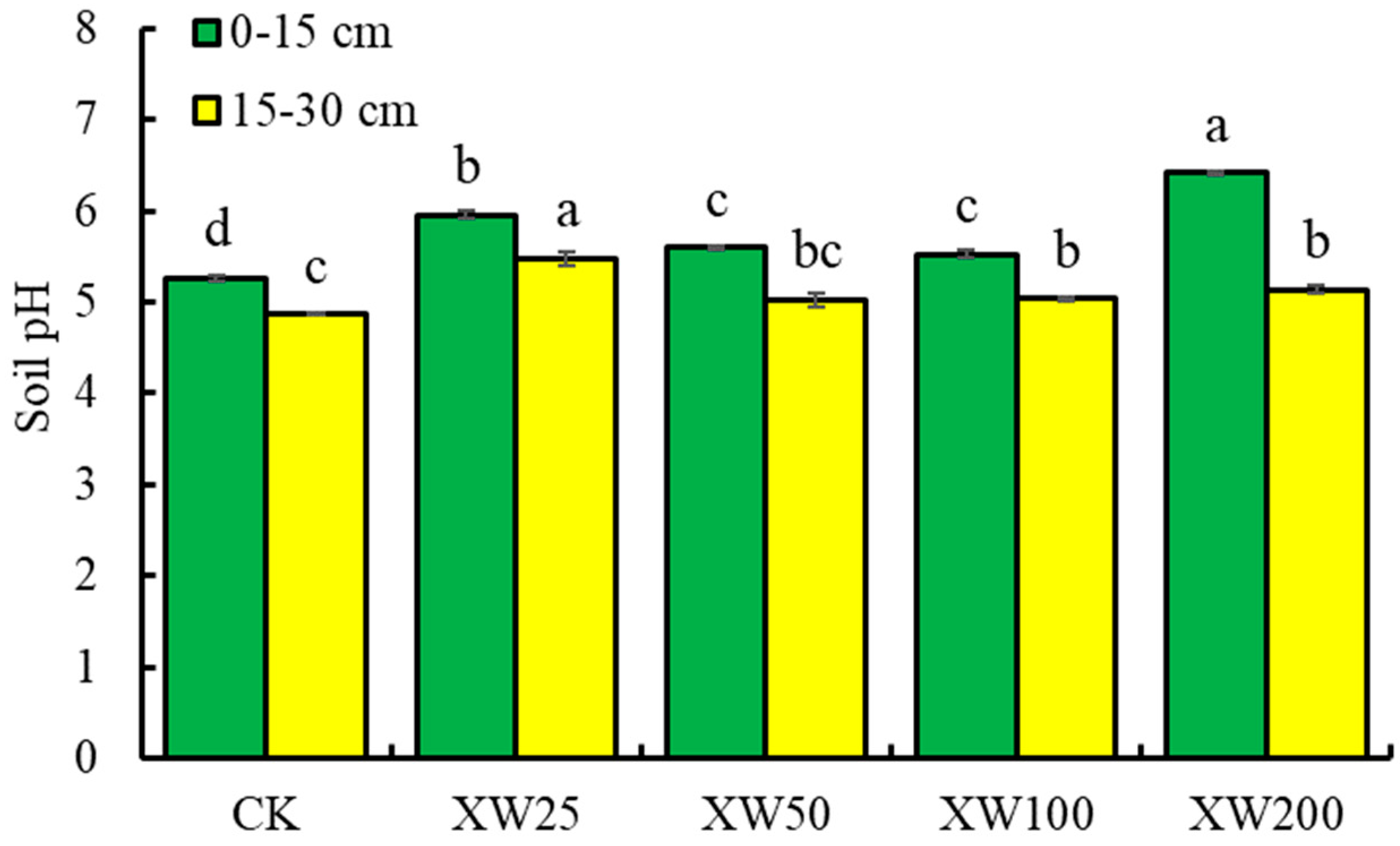
3.1. Changes in Soil pH
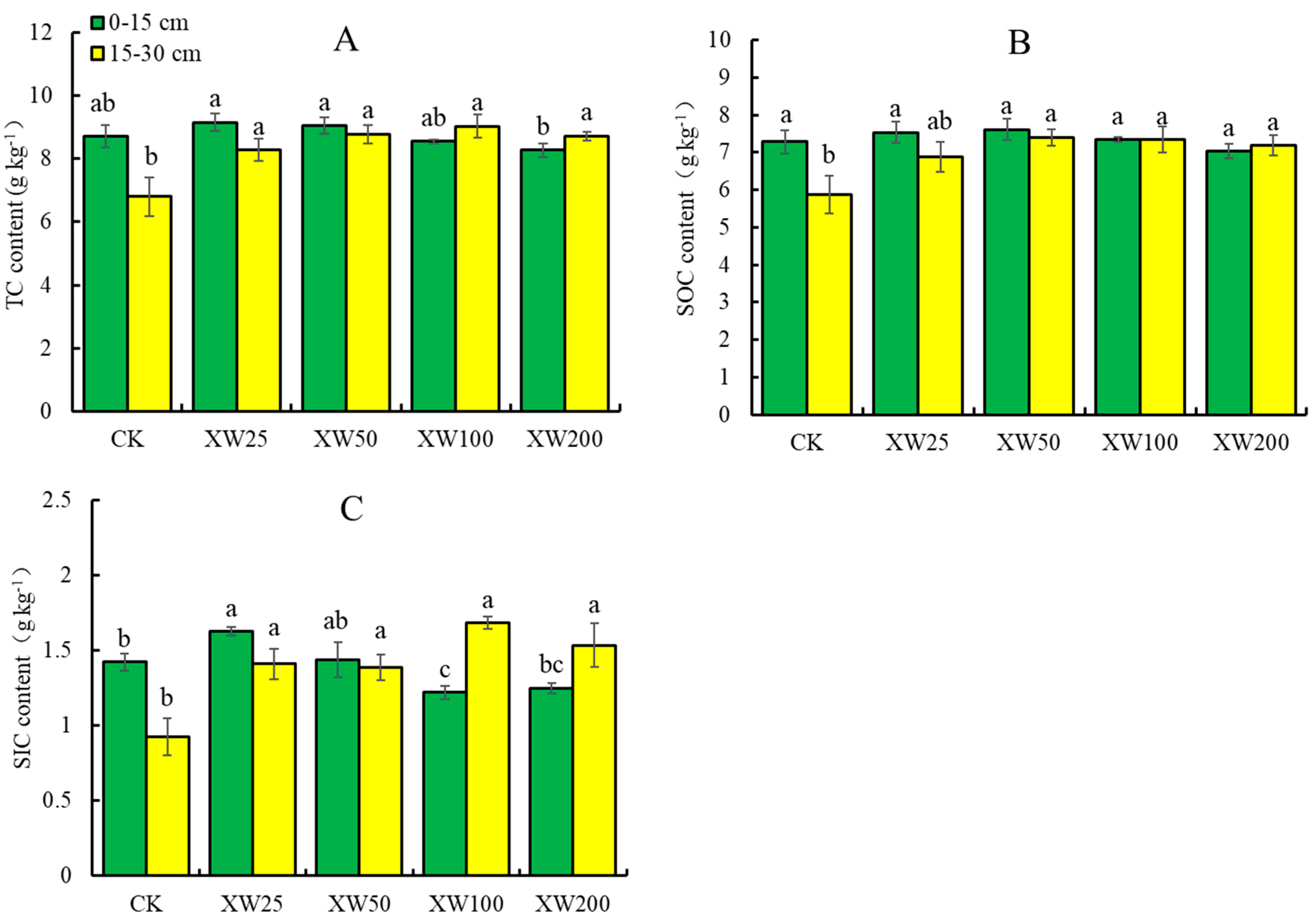
3.2. The Total Carbon, Soil Organic Carbon and Soil Inorganic Carbon Content
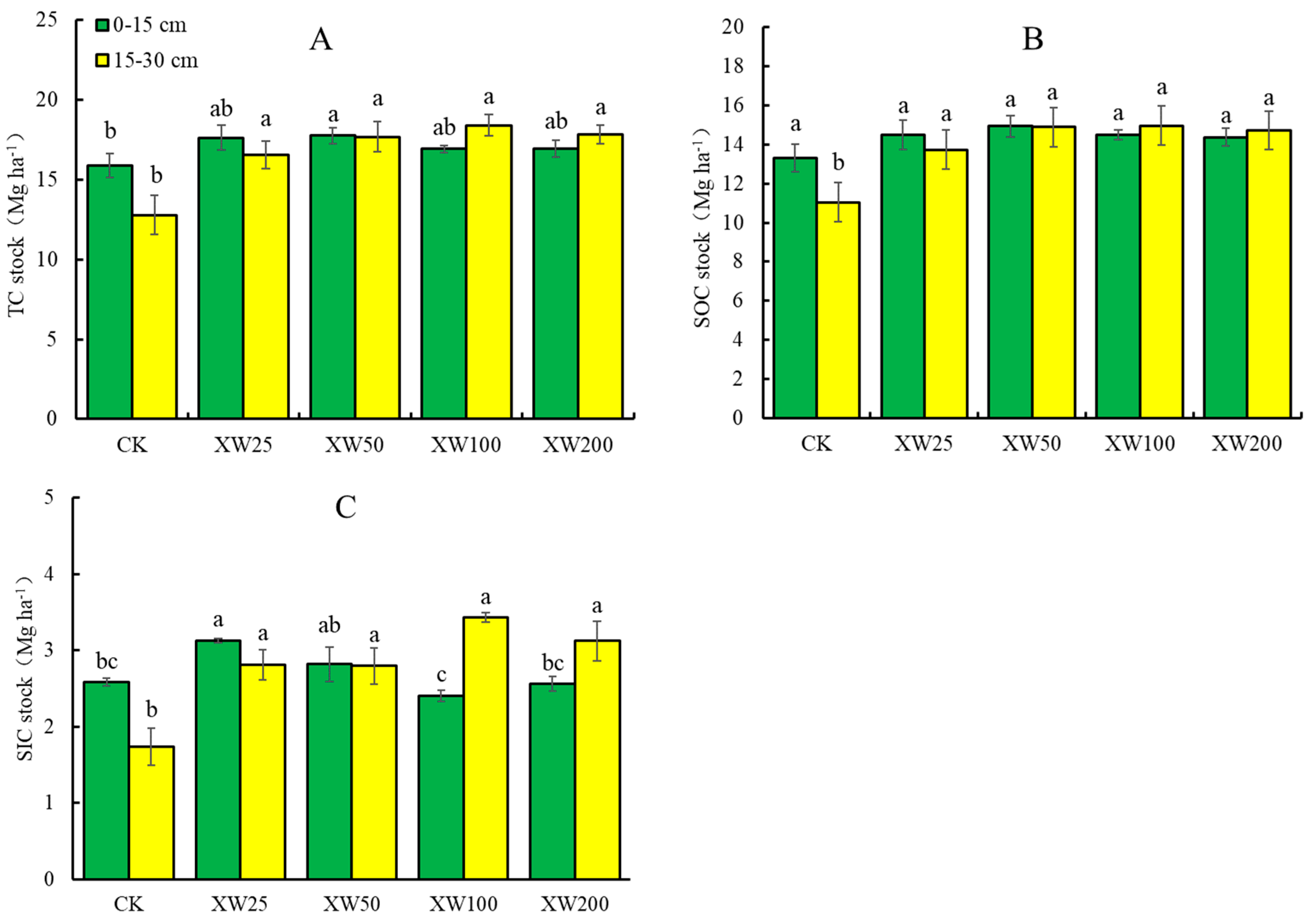
3.3. The Total Carbon, Soil Organic Carbon and Soil Inorganic Carbon Stocks
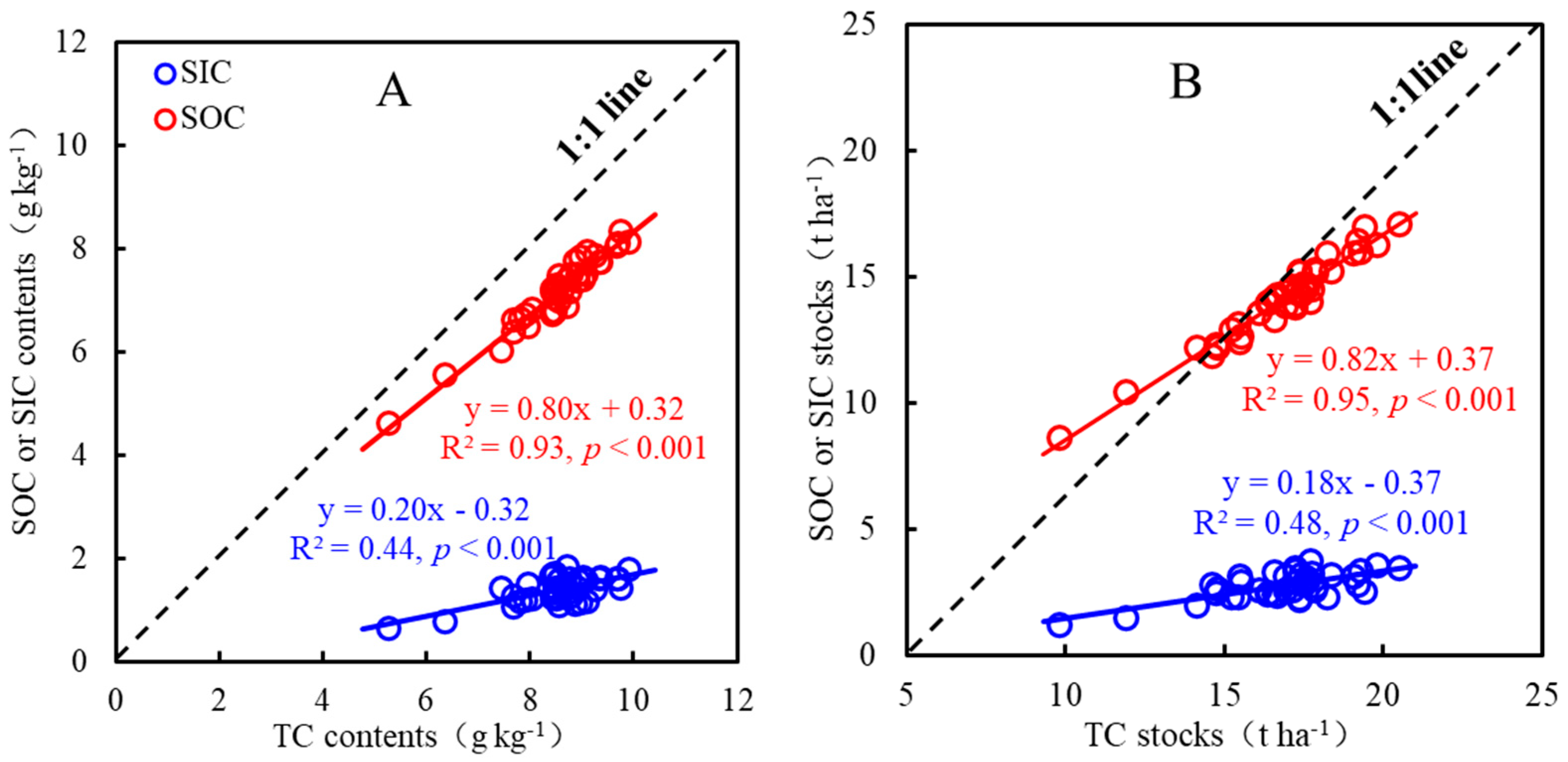
3.4. Effect of Total Carbon on Soil Organic Carbon and Soil Inorganic Carbon
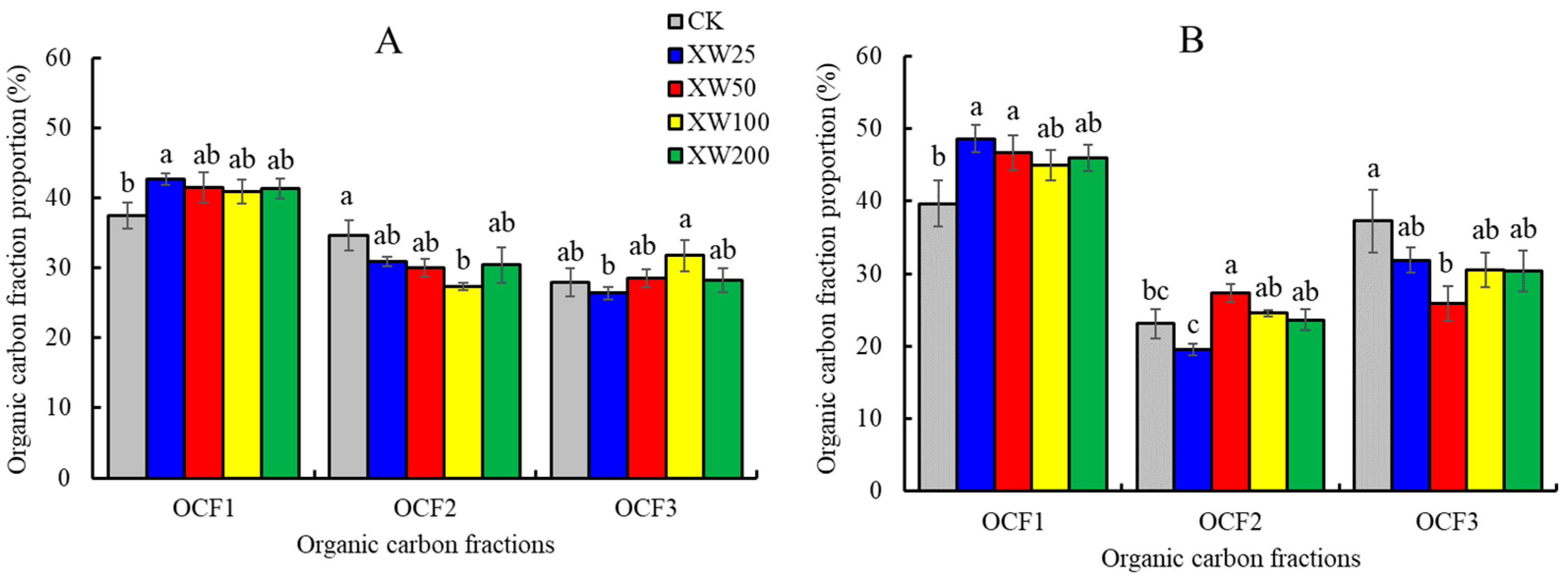
3.5. Contents of Soil Organic Carbon Fractions
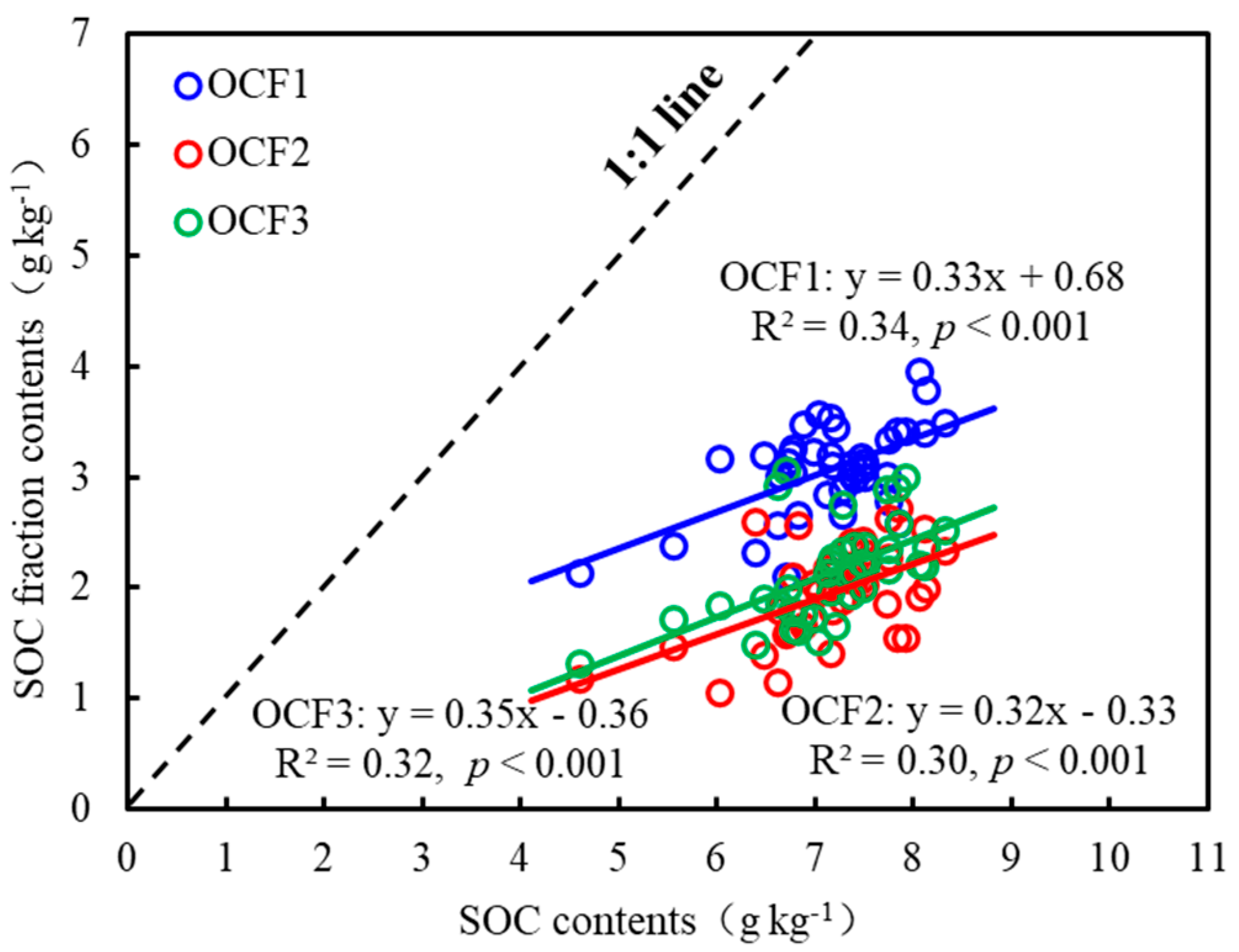
3.6. Effect of Soil Organic Carbon on Its Fractions
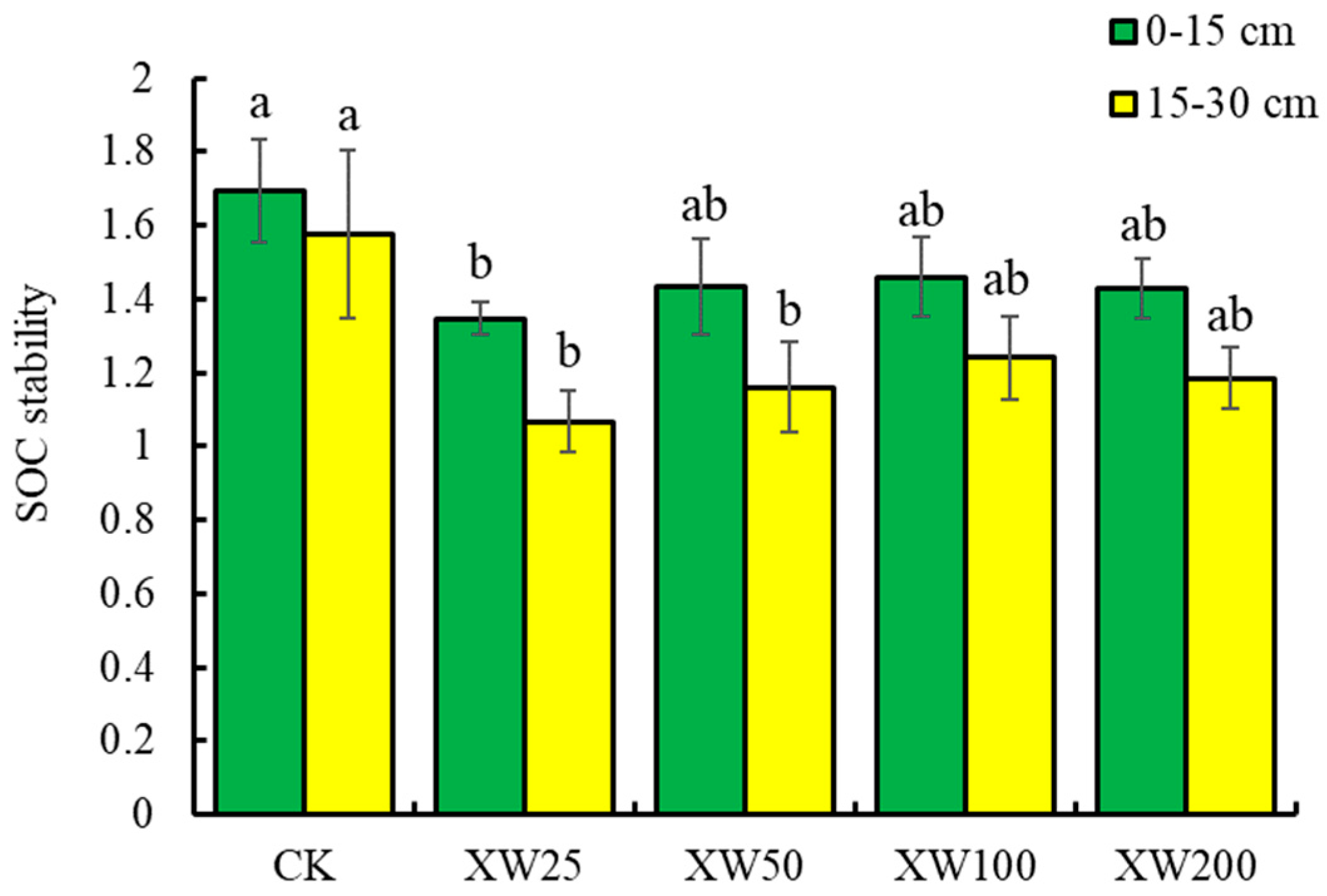
3.7. Changes in Soil Organic Carbon Stability
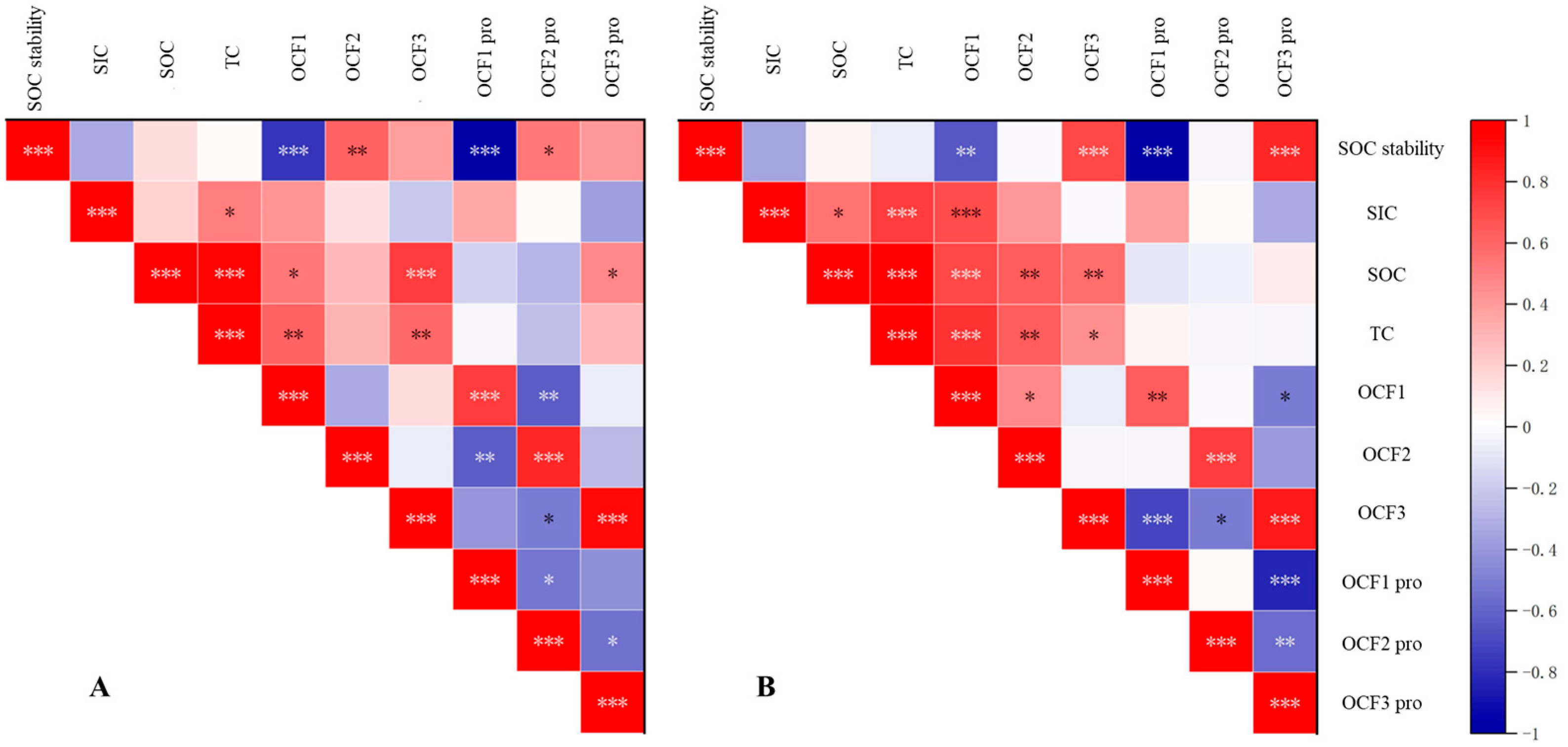
3.8. Correlations of Soil Organic Carbon Stability with Soil Carbon Fractions
4. Discussion
4.1. Basalt Addition Increases the Content and Stock of Soil Carbon
4.2. Basalt Additions Increased the Labile Organic Carbon Contents
4.3. Basalt Additions Reduced the Soil Organic Carbon Stability
5. Conclusions
Author Contributions
Funding
Data Availability Statement
Acknowledgments
Conflicts of Interest
References
- Kattel, G.R. Climate warming in the Himalayas threatens biodiversity, ecosystem functioning and ecosystem services in the 21st century: Is there a better solution? Biodivers. Conserv. 2022, 31, 2017–2044. [Google Scholar] [CrossRef]
- Wu, G.Y.; Chen, J.; Shi, X.Y.; Kim, J.S.; Xia, J.; Zhang, L.P. Impacts of global climate warming on meteorological and hydrological droughts and their propagations. Earth’s Future 2022, 10, e2021EF002542. [Google Scholar] [CrossRef]
- Intergovernmental Panel on Climate Change. Climate Change 2023: Synthesis Report. Contribution of Working Groups I, II and III to the Sixth Assessment Report of the Intergovernmental Panel on Climate Change; Core Writing Team, Lee, H., Romero, J., Eds.; Intergovernmental Panel on Climate Change: Geneva, Switzerland, 2023; pp. 35–115. [Google Scholar]
- Matthews, H.D.; Weaver, A.J. Committed climate warming. Nat. Geosci. 2010, 3, 142–143. [Google Scholar] [CrossRef]
- Feng, X.; Dai, G.; Liu, T.; Jia, J.; Zhu, E.; Liu, C.; Zhao, Y.; Wang, Y.; Kang, E.; Xiao, J.; et al. Understanding the mechanisms and potential pathways of soil carbon sequestration from the biogeochemistry perspective. Sci. China Earth Sci. 2024, 67, 3386–3396. [Google Scholar] [CrossRef]
- Lal, R. Soil carbon sequestration impacts on global climate change and food security. Science 2004, 304, 1623–1627. [Google Scholar] [CrossRef]
- Yu, P.J.; Li, Y.X.; Liu, S.W.; Ding, Z.; Zhang, A.C.; Tang, X.G. The quantity and stability of soil organic carbon following vegetation degradation in a salt-affected region of Northeastern China. Catena 2022, 211, 105984. [Google Scholar] [CrossRef]
- Slepetiene, A.; Belova, O.; Fastovetska, K.; Dinca, L.; Murariu, G. Advances in understanding carbon storage and stabilization in temperate agricultural soils. Agriculture 2025, 15, 2489. [Google Scholar] [CrossRef]
- Wang, Y.; Li, Y.; Ye, X.; Chu, Y.; Wang, X. Profile storage of organic/inorganic carbon in soil: From forest to desert. Sci. Total Environ. 2010, 408, 1925–1931. [Google Scholar] [CrossRef]
- Yu, P.J.; Li, Q.; Jia, H.T.; Zheng, W.; Wang, M.L.; Zhou, D.W. Carbon stocks and storge potential as affected by vegetation in the Songnen grassland of northeast China. Quat. Int. 2013, 306, 114–120. [Google Scholar]
- Kan, Z.R.; Liu, W.X.; Liu, W.S.; Lal, R.; Dang, Y.P.; Zhao, X.; Zhang, H.L. Mechanisms of soil organic carbon stability and its response to no-till: A global synthesis and perspective. Glob. Change Biol. 2022, 28, 693–710. [Google Scholar] [CrossRef] [PubMed]
- Liu, S.W.; Wang, R.T.; Yang, Y.; Shi, W.Y.; Jiang, K.; Jia, L.Y.; Zhang, F.; Liu, X.; Ma, L.; Li, C.; et al. Changes in soil aggregate stability and aggregate-associated carbon under different slope positions in a karst region of Southwest China. Sci. Total Environ. 2024, 928, 172534. [Google Scholar] [CrossRef]
- Ma, L.; Li, M.Y.; Li, C.; Mao, Z.; Wang, C.; Xu, M.Z.; Zhu, D.X.; Si, H.T.; Liu, S.W.; Yu, P.J. Responses of aggregate-associated carbon and their fractions to different positions in a karst valley of Southwest China. Environ. Monit. Assess. 2025, 197, 524. [Google Scholar] [CrossRef]
- An, H.; Wu, X.; Zhang, Y.; Tang, Z. Effects of land-use change on soil inorganic carbon: A meta-analysis. Geoderma 2019, 353, 273–282. [Google Scholar] [CrossRef]
- Dostie, L.; Power, I.M.; Rausis, K. Carbon dioxide supply and scaling constraints on direct air capture using calcium oxide powder. J. Clean. Prod. 2025, 527, 146635. [Google Scholar] [CrossRef]
- Ferdush, J.; Paul, V. A review on the possible factors influencing soil inorganic carbon under elevated CO2. Catena 2021, 204, 105434. [Google Scholar] [CrossRef]
- Tan, W.F.; Zhang, R.; Cao, H.; Huang, C.Q.; Yang, Q.K.; Wang, M.K.; Koopal, L.K. Soil inorganic carbon stock under different soil types and land uses on the Loess Plateau region of China. Catena 2014, 121, 22–30. [Google Scholar] [CrossRef]
- Li, J.; Pei, J.; Fang, C.; Li, B.; Nie, M. Drought may exacerbate dryland soil inorganic carbon loss under warming climate conditions. Nat. Commun. 2024, 15, 617. [Google Scholar] [CrossRef]
- Shi, H.J.; Wang, X.J.; Zhao, Y.J.; Xu, M.G.; Li, D.W.; Guo, Y. Relationship between soil inorganic carbon and organic carbon in the wheat-maize cropland of the North China Plain. Plant Soil 2017, 418, 423–436. [Google Scholar] [CrossRef]
- Naorem, A.; Jayaraman, S.; Dalal, R.C.; Patra, A.; Rao, C.S.; Lal, R. Soil inorganic carbon as a potential sink in carbon storage in dryland soils—A review. Agriculture 2022, 12, 1256. [Google Scholar] [CrossRef]
- Baek, S.H.; Kanzaki, Y.; Lora, J.M.; Planavsky, N.; Reinhard, C.T.; Zhang, S. Impact of climate on the global capacity for enhanced rock weathering on croplands. Earth’s Future 2023, 11, e2023EF003698. [Google Scholar] [CrossRef]
- Boito, L.; Steinwidder, S.L.; Rijnders, J.; Berwouts, J.; Janse, S.; Niron, H.; Roussard, J.; Vienne, A.; Vicca, S. Enhanced rock weathering altered soil organic carbon fluxes in a plant trial. Glob. Change Biol. 2025, 31, e70373. [Google Scholar] [CrossRef]
- Levy, C.R.; Almaraz, M.; Beerling, D.J.; Raymond, P.; Reinhard, C.T.; Suhrhoff, T.J.; Taylor, L. Enhanced rock weathering for carbon removal–monitoring and mitigating potential environmental impacts on agricultural land. Environ. Sci. Technol. 2024, 58, 17215–17226. [Google Scholar] [CrossRef]
- Xu, T.T.; Yuan, Z.Q.; Vicca, S.; Goll, D.S.; Li, G.C.; Lin, L.X.; Chen, H.; Bi, B.Y.; Chen, Q.; Li, C.L.; et al. Enhanced silicate weathering accelerates forest carbon sequestration by stimulating the soil mineral carbon pump. Glob. Change Biol. 2024, 30, e17464. [Google Scholar] [CrossRef]
- Steinwidder, L.; Boito, L.; Frings, P.J.; Niron, H.; Rijnders, J.; Schutter, A.; Vienne, A.; Vicca, S. Beyond inorganic C: Soil organic C as a key pathway for carbon sequestration in enhanced weathering. Glob. Change Biol. 2025, 31, e70340. [Google Scholar] [CrossRef]
- Sun, T.R.; Xiao, K.Q.; Feng, L.S. Enhanced rock weathering aids to promote carbon sequestration and yield in China’s agricultural fields. Clim. Smart Agric. 2025, 2, 100072. [Google Scholar] [CrossRef]
- Swoboda, P.; Doring, T.F.; Hamer, M. Remineralizing soils? The agricultural usage of silicate rock powders: A review. Sci. Total Environ. 2022, 807, 150976. [Google Scholar] [CrossRef] [PubMed]
- Barak, P.; Chen, Y.; Singer, A. Ground basalt and tuff as iron fertilizers for calcareous soils. Plant Soil 1983, 73, 155–158. [Google Scholar] [CrossRef]
- Ramezanian, A.; Dahlin, A.S.; Campbell, C.D.; Hillier, S.; Öborn, I. Assessing biogas digestate, pot ale, wood ash and rock dust as soil amendments: Effects on soil chemistry and microbial community composition. Acta Agric. Scand. Sect. B-Soil Plant Sci. 2015, 65, 383–399. [Google Scholar]
- Pan, C.C.; Huang, C.H. Cow dung compost and vermicompost amendments promote soil carbon stock by enhancing labile organic carbon and residual oxidizable carbon fractions in maize field soil. Soil Use Manag. 2024, 40, e13122. [Google Scholar] [CrossRef]
- Walkley, A.; Black, I.A. An examination of the Degtjareff method for determining soil organic matter, and a proposed modification of the chromic acid titration method. Soil Sci. 1934, 37, 29–38. [Google Scholar] [CrossRef]
- Yu, P.J.; Wang, H.Q.; Hu, J.; Shi, W.Y.; Xia, X.Y.; Sun, X.Z.; Tang, H.Y.; Huang, Y.X. Vegetation degradation reduces aggregate associated carbon by reducing both labile and stable carbon fraction in Northeast China. Sci. Total Environ. 2024, 654, 176789. [Google Scholar] [CrossRef]
- Anda, M.; Shamshuddin, J.; Fauziah, C.I. Improving chemical properties of a highly weathered soil using finely ground basalt rocks. Catena 2015, 124, 147–161. [Google Scholar] [CrossRef]
- Kantzas, E.P.; Val Martin, M.; Lomas, M.R.; Eufrasio, R.M.; Renforth, P.; Lewis, A.L.; Taylor, L.L.; Mecure, J.F.; Pollitt, H.; Vercoulen, P.V.; et al. Substantial carbon drawdown potential from enhanced rock weathering in the United Kingdom. Nat. Geosci. 2022, 15, 382–389. [Google Scholar] [CrossRef]
- Wang, C.; Kuzyakov, Y. Soil organic matter priming: The pH effects. Glob. Change Biol. 2024, 30, e17349. [Google Scholar] [CrossRef]
- Lewis, A.L.; Sarkar, B.; Wade, P.; Kemp, S.J.; Hodson, M.E.; Taylor, L.L.; Yeong, K.L.; Davies, K.; Nelson, P.N.; Bird, M.I.; et al. Effects of mineralogy, chemical and physical properties of basalts on carbon capture potential and plant -nutrient element release via enhanced weathering. Appl. Geochem. 2021, 132, 105203. [Google Scholar] [CrossRef]
- Kelland, M.E.; Wade, P.W.; Lewis, A.L.; Taylor, L.L.; Sarkar, B.; Andrews, M.G.; Lomas, M.R.; Cotton, T.E.A.; Kemp, S.J.; James, R.H.; et al. Increased yield and CO2 sequestration potential with the C4 cereal Sorghum bicolor cultivated in basaltic rock dust-amended agricultural soil. Glob. Change Biol. 2020, 26, 3658–3676. [Google Scholar] [CrossRef] [PubMed]
- Diederich, K.M.; Ruark, M.D.; Krishnan, K.; Arriaga, F.J.; Silva, E.M. Increasing labile soil carbon and nitrogen fractions require a change in system, rather than practice. Soil Sci. Soc. Am. J. 2019, 83, 1733–1745. [Google Scholar] [CrossRef]
- Basak, N.; Mandal, B.; Datta, A.; Kundu, M.C.; Rai, A.K.; Mitran, T. Stock and stability of organic carbon in soils under major agro-ecological zones and cropping systems of sub-tropical India. Agric. Ecosyst. Environ. 2021, 312, 107317. [Google Scholar] [CrossRef]
- Chen, M.M.; Zhang, S.R.; Liu, L.; Liu, J.; Ding, X. Organic fertilization increased soil organic carbon stability and sequestration by improving aggregate stability and iron oxide transformation in saline-alkaline soil. Plant Soil 2022, 474, 233–249. [Google Scholar] [CrossRef]
- Vicca, S.; Goll, D.S.; Hagens, M.; Hartmann, J.; Janssens, I.A.; Neubeck, A.; Penuelas, J.; Poblador, S.; Rijnders, J.; Sardans, J.; et al. Is the climate change mitigation effect of enhanced silicate weathering governed by biological processes? Glob. Change Biol. 2022, 28, 711–726. [Google Scholar] [CrossRef]
- Sharififar, A.; Minasny, B.; Arrouays, D.; Boulonne, L.; Chevallier, T.; Van Deventer, P.; Field, D.J.; Gomez, C.; Jang, J.J.; Jeon, S.H.; et al. Soil inorganic carbon, the other and equally important soil carbon pool: Distribution, controlling factors, and the impact of climate change. Adv. Agron. 2023, 178, 165–231. [Google Scholar]
- Yu, P.J.; Liu, S.W.; Zhang, L.; Li, Q.; Zhou, D.W. Selecting the minimum data set and quantitative soil quality indexing of alkaline soils under different land uses in northeastern China. Sci. Total Environ. 2018, 616–617, 564–571. [Google Scholar] [CrossRef]
- Cotrufo, M.F.; Lavallee, J.M. Soil organic matter formation, persistence, and functioning: A synthesis of current understanding to inform its conservation and regeneration. Adv. Agron. 2022, 172, 1–66. [Google Scholar]
- Nyabami, P.; Weinrich, E.; Maltais-Landry, G.; Lin, Y. Three years of cover crops management increased soil organic matter and labile carbon pools in a subtropical vegetable agroecosystem. Agrosyst. Geosci. Environ. 2024, 7, e20454. [Google Scholar] [CrossRef]
- Buss, W.; Hasemer, H.; Sokol, N.W.; Rohling, E.J.; Borevitz, J. Applying minerals to soil to draw down atmospheric carbon dioxide through synergistic organic and inorganic pathways. Commun. Earth Environ. 2024, 5, 602. [Google Scholar] [CrossRef]
- Zang, H.; Mehmood, I.; Kuzyakov, Y.; Jia, R.; Gui, H.; Blagodatskaya, E.; Xu, X.L.; Smith, P.; Chen, H.Q.; Zeng, Z.H.; et al. Not all soil carbon is created equal: Labile and stable pools under nitrogen input. Glob. Change Biol. 2024, 30, e17405. [Google Scholar] [CrossRef]
- Lai, L.; Zhao, J.; Dou, Y. Fungal necromass carbon contributes more to POC and MAOC under different forest types of Qinling Mountains. Plant Soil 2025, 512, 603–618. [Google Scholar] [CrossRef]
- Yu, P.J.; Li, Y.X.; Liu, S.W.; Liu, J.L.; Ding, Z.; Ma, M.G.; Tang, X.G. Afforestation influences soil organic carbon and its fractions associated with aggregates in a karst region of Southwest China. Sci. Total Environ. 2022, 814, 152710. [Google Scholar] [CrossRef]
- Tian, Q.; He, H.; Cheng, W.; Bai, Z.; Wang, Y.; Zhang, X. Factors controlling soil organic carbon stability along a temperate forest altitudinal gradient. Sci. Rep. 2016, 6, 18783. [Google Scholar] [CrossRef]



| 0–15 cm (g·kg−1) | 15–30 cm (g·kg−1) | |||||
|---|---|---|---|---|---|---|
| OCF1 | OCF2 | OCF3 | OCF1 | OCF2 | OCF3 | |
| CK | 2.73 (±0.17) b | 2.51 (±0.09) a | 2.05 (±0.23) a | 2.29 (±0.11) b | 1.34 (±0.11) c | 2.25 (±0.43) a |
| XW25 | 3.21 (±0.09) a | 2.33 (±0.09) ab | 1.99 (±0.13) a | 3.32 (±0.09) a | 1.35 (±0.10) c | 2.21 (±0.24) a |
| XW50 | 3.15 (±0.14) a | 2.29 (±0.12) ab | 2.19 (±0.17) a | 3.46 (±0.22) a | 2.02 (±0.05) a | 1.93 (±0.20) a |
| XW100 | 3.00 (±0.13) ab | 2.01 (±0.04) b | 2.33 (±0.16) a | 3.29 (±0.17) a | 1.80 (±0.08) ab | 2.26 (±0.25) a |
| XW200 | 2.90 (±0.10) ab | 2.14 (±0.16) b | 1.99 (±0.17) a | 3.30 (±0.08) a | 1.69 (±0.06) b | 2.20 (±0.28) a |
Disclaimer/Publisher’s Note: The statements, opinions and data contained in all publications are solely those of the individual author(s) and contributor(s) and not of MDPI and/or the editor(s). MDPI and/or the editor(s) disclaim responsibility for any injury to people or property resulting from any ideas, methods, instructions or products referred to in the content. |
© 2026 by the authors. Licensee MDPI, Basel, Switzerland. This article is an open access article distributed under the terms and conditions of the Creative Commons Attribution (CC BY) license.
Share and Cite
Ma, L.; Li, M.; Zhang, H.; Mao, Z.; Zhang, S.; Wang, C.; Li, C.; Liu, S.; Yu, P. Enhanced Rock Weathering Increases Soil Carbon but Reduces Soil Organic Carbon Stability in Subtropical Croplands. Agriculture 2026, 16, 338. https://doi.org/10.3390/agriculture16030338
Ma L, Li M, Zhang H, Mao Z, Zhang S, Wang C, Li C, Liu S, Yu P. Enhanced Rock Weathering Increases Soil Carbon but Reduces Soil Organic Carbon Stability in Subtropical Croplands. Agriculture. 2026; 16(3):338. https://doi.org/10.3390/agriculture16030338
Chicago/Turabian StyleMa, Lei, Manyi Li, Hualian Zhang, Zheng Mao, Shuqing Zhang, Chen Wang, Cheng Li, Shiwei Liu, and Pujia Yu. 2026. "Enhanced Rock Weathering Increases Soil Carbon but Reduces Soil Organic Carbon Stability in Subtropical Croplands" Agriculture 16, no. 3: 338. https://doi.org/10.3390/agriculture16030338
APA StyleMa, L., Li, M., Zhang, H., Mao, Z., Zhang, S., Wang, C., Li, C., Liu, S., & Yu, P. (2026). Enhanced Rock Weathering Increases Soil Carbon but Reduces Soil Organic Carbon Stability in Subtropical Croplands. Agriculture, 16(3), 338. https://doi.org/10.3390/agriculture16030338