Article

Role of Nitrogen Fertilization in Mitigating Drought-Induced Physiological Stress in Wheat Seedlings

by
Wojciech Pikuła
1,*,
Marta Jańczak-Pieniążek
2 and
Ewa Szpunar-Krok
2,*
1
Silesian Botanical Garden, Sosnowa 5 St., 43-190 Mikołów, Poland
2
Department of Crop Production, Faculty of Technology and Life Sciences, University of Rzeszów, Zelwerowicza 4 St., 35-601 Rzeszów, Poland
*
Authors to whom correspondence should be addressed.
Agriculture 2026, 16(3), 337; https://doi.org/10.3390/agriculture16030337
Submission received: 1 December 2025 / Revised: 21 January 2026 / Accepted: 27 January 2026 / Published: 29 January 2026

Abstract

Drought stress is one of the major abiotic factors limiting crop growth and yield, particularly in wheat. Water deficit leads to reduced chlorophyll content, impaired photosynthetic performance, and decreased biomass accumulation. Nitrogen fertilization may influence plant physiological responses to drought; however, its capacity to alleviate drought-induced growth reduction remains uncertain. A pot experiment was conducted to evaluate the impact of different nitrogen-based fertilizers on wheat seedlings grown under irrigation level 60% PPW (control) and 30% PPW (drought stress) conditions, with balanced levels of phosphorus and potassium maintained in all treatments. Water deficit led to substantial reductions in chlorophyll content compared to optimally irrigated plants. Similarly, the performance index (PI) decreased by 139.3% at Term 1 (1 day after foliar nitrogen application) and 27.2% at Term 2 (7 days after application). The net photosynthetic rate (Pn) declined markedly under drought conditions and was not significantly improved by nitrogen fertilization, indicating a partial and mainly short-term physiological response to nitrogen under water deficit. The application of nitrogen fertilizers, particularly urea and Nitron S, modulated the relative chlorophyll content and selected chlorophyll fluorescence (Fv/Fm, Fv/Fo, PI) and gas-exchange (E, gs, Ci) parameters under drought conditions, mainly shortly after application. However, aboveground dry biomass under drought conditions was not significantly affected by any nitrogen fertilizer. Urea induced the most consistent short-term physiological responses under both irrigation regimes, with effects more pronounced shortly after application, whereas Nitron S showed fertilizer-specific effects under drought stress. Overall, the results demonstrate that foliar nitrogen fertilization can modulate short-term physiological responses of wheat seedlings to drought but does not translate into sustained improvements in Pn or biomass accumulation. In the context of climate change and increasing water scarcity, identifying nitrogen fertilizers that support physiological functioning without overestimating growth benefits has critical implications for sustainable wheat production. Optimizing nitrogen fertilization may, therefore, contribute to improved nutrient management strategies under water-limited conditions.

1. Introduction

Wheat (Triticum aestivum L.) is one of the world’s most widely cultivated staple crops, grown on over 220 million hectares and producing around 798 million tons annually [1,2]. The steadily increasing global population continues to raise the demand for wheat. It is estimated that global wheat production must increase by 60% by 2050 to meet the nutritional needs of the growing human population [3]. Since expanding the area under wheat cultivation is limited, current efforts focus on improving yield potential and tolerance to environmental stresses, particularly drought [4]. Drought is one of the most severe abiotic factors negatively affecting plant growth and development, especially during the reproductive stage, leading to reductions in grain number and weight, and consequently to significant yield losses [5,6,7,8]. The physiological effects of drought include reduced tissue water content, decreased water potential and leaf turgor, stomatal closure, as well as suppression of photosynthesis and biomass accumulation [9,10]. Drought also induces the accumulation of reactive oxygen species (ROS), resulting in oxidative stress, metabolic disturbances, and cellular damage [11,12]. Therefore, key processes such as electron transport in photosystem II (PSII), ATP synthesis, Rubisco activity, and CO2 assimilation are disrupted, substantially reducing photosynthetic efficiency [13,14,15].
In response to water deficit, wheat plants develop a range of adaptive mechanisms, including morphological, physiological, biochemical, and molecular adjustments that enable plant survival under stressful conditions [16,17,18]. Among these responses, impairment of photosynthetic processes is one of the earliest and most sensitive indicators of drought stress in wheat. Nevertheless, the effectiveness of these mechanisms is often insufficient to maintain high yields in field conditions. Therefore, agronomic practices such as proper nitrogen fertilization are of great importance, as they can improve the physiological condition of plants and enhance their drought tolerance [19,20,21].
Water and nitrogen are two of the most critical factors limiting plant growth. In response to the increasing global demand for food, improving yield per unit area has become a major objective of modern agriculture, particularly in the context of limited arable land and intensifying climate change [22,23]. Nitrogen fertilization is widely applied to support plant physiological status, including photosynthetic performance and water-use efficiency, particularly under water deficit. In this study, we focus on early seedling responses to different forms of nitrogen under controlled drought conditions [24,25,26]. As an essential macronutrient, nitrogen plays a key role in the synthesis of chlorophyll, proteins, and enzymes, as well as in the regulation of metabolic processes. Adequate nitrogen availability can support photosynthetic activity and root system development and improve water-use efficiency [27,28]. However, excessive nitrogen fertilization under water-deficit conditions may lead to environmental risks and reduced yield efficiency [29,30]. Sustainable intensification of agriculture, therefore, requires increased resource-use efficiency while maintaining or improving productivity and protecting environmental resources [31]. Although the role of nitrogen in improving drought tolerance has been widely reported, relatively little attention has been paid to the differential effects of specific nitrogen fertilizer formulations on wheat physiological performance under water-deficit conditions. In this context, the present study focuses on a comparative assessment of selected nitrogen-based fertilizers differing in formulation and sulfur content, evaluated under controlled drought conditions using physiological and photosynthetic indicators.
The aim of the present study was to determine the effect of differentiated nitrogen fertilization on the early physiological responses of common wheat (Triticum aestivum L.) seedlings grown under optimal watering conditions and drought stress. Particular attention was paid to parameters related to chlorophyll content, photosynthesis, and the dry mass of aboveground biomass. It was hypothesized that foliar application of nitrogen-containing fertilizers would modulate short-term physiological responses of wheat seedlings to drought stress, potentially improving photosynthetic efficiency, rather than fully restoring growth under water deficit. The results of this study are intended to identify nitrogen formulations that most effectively support wheat physiological performance under drought stress, providing a basis for further field-scale validation.

2. Materials and Methods

2.1. Pot Experiment Setup

The pot experiment was carried out at the University of Rzeszów (Rzeszów, Poland) in 2021. Winter wheat grains were sown into plastic pots (15 × 15 cm) at a depth of 2–3 cm, with a planting density of 5 grains per pot. The growth substrate consisted of brown soil (Cambisol) with a slightly acidic reaction (pH: KCl 6.35; H2O 6.52). The initial nutrient status of the soil was as follows: organic carbon 1.39%, total nitrogen (N) 0.92 mg·kg−1, available phosphorus (P) 26.4 mg·kg−1, potassium (K) 26.1 mg·kg−1, and magnesium (Mg) 17.3 mg·kg−1 of the soil. Winter wheat (Triticum aestivum L. subsp. aestivum) cv. Chevignon (bread-making quality class B; breeder: Asur Plant Breeding SAS, Pôle Végétal de la Plaine d’Estrées, Estrées-Saint-Denis, France) was used in the experiment.
A two-factor experiment was established in a completely randomized design with four replicates. Plants were grown in a controlled-environment growth chamber (Model GC-300/1000, JEIO Tech Co., Ltd., Daejeon, Republic of Korea) under the following conditions: temperature 22 ± 2 °C, relative humidity 60 ± 3%, photoperiod 16/8 h (light/dark), and maximum photosynthetic photon flux density of approximately 300 µmol m−2 s−1.
Soil moisture in control pots was maintained at 60%, while drought-stressed pots were kept at 30% of the maximum water-holding capacity (WHC). Drought stress was controlled gravimetrically. Pots were weighed daily, and water was adjusted accordingly to maintain the target moisture level, previously determined based on the soil’s WHC. This procedure ensured consistent drought conditions and minimized variation related to differential water loss. To account for changes in pot weight unrelated to plant biomass gain, control pots containing the same soil substrate but without plants were weighed daily in parallel. These pots were used to estimate evaporative water loss, allowing accurate gravimetric control of soil water content throughout the experiment.
Nitrogen fertilizers—Urea, Basfoliar 36 Extra, Nitron S, and Ammonium nitrate (Table 1)—were applied foliarly at the 3–4 leaf stage of wheat, using a hand sprayer. Solutions were prepared at 1% N concentration with 0.05% non-ionic surfactant (Tween 20). For each pot, 40 mL of solution was applied to wet leaves uniformly while minimizing runoff to the soil. The total N applied per pot was approximately 400 mg. Physiological measurements were performed twice on the first fully expanded leaves: 1 day and 7 days after the foliar application. Following the measurements, the aboveground plant material was harvested, oven-dried, and weighed with an accuracy of 0.01 g. Although biomass accumulation generally occurs over a longer period, measurements taken 1 and 7 days after foliar nitrogen fertilization were sufficient to capture early growth responses, which correlate with physiological changes and provide an indication of potential longer-term effects.
Although biomass accumulation typically requires longer experimental periods, measurements performed 1 and 7 days after foliar nitrogen application were intended to capture early physiological and growth-related responses associated with changes in photosynthetic activity, rather than long-term biomass formation.

2.2. Evaluation of Plant Physiological Parameters

Physiological measurements, including relative chlorophyll content (CCI), chlorophyll fluorescence, and gas exchange, were performed throughout the experiment according to the procedures described by Jańczak-Pieniążek et al. [32].

2.2.1. Relative Chlorophyll Content

Relative chlorophyll content was measured using a hand-held chlorophyll meter (Chlorophyll Content Meter CCM-200plus, Opti-Sciences, Hudson, NH, USA). Measurements were taken on fully expanded, healthy leaves. For each pot, five leaves were selected and measured to obtain a representative value. The sensor was positioned midway between the leaf base and tip, avoiding the main veins, and each measurement was taken in duplicate to reduce instrument noise. All measurements were conducted under consistent light conditions to minimize variability associated with ambient illumination.

2.2.2. Chlorophyll Fluorescence

Chlorophyll a fluorescence was measured using a Pocket PEA fluorometer (Hansatech Instruments, King’s Lynn, Norfolk, UK). Leaves were dark-adapted for 30 min using leaf clips placed on the adaxial surface, avoiding the main vein [33]. The following parameters were analyzed: the maximum quantum efficiency of PSII photochemistry (Fv/Fm), the ratio of variable to minimal fluorescence (Fv/Fo), and the performance index (PI). For each pot, four leaves were measured to obtain representative values. All measurements were conducted under stable environmental conditions to ensure data consistency and accuracy.

2.2.3. Gas Exchange

Gas exchange parameters were measured using a portable photosynthesis system LCpro-SD (ADC BioScientific Ltd., Hoddesdon, UK). During the measurements, the photosynthetic photon flux density inside the leaf chamber was maintained at 300 µmol m−2 s−1, and the chamber temperature was set to 22 °C. Fully expanded leaves were positioned in the chamber, ensuring an airtight seal and avoiding the main veins of the plant. For each pot, two leaves were analyzed. The following parameters were recorded: net photosynthetic rate (Pn), stomatal conductance (gs), intercellular CO2 concentration (Ci), and transpiration rate (E).

2.3. Statistical Analysis

Statistical analyses were performed using Statistica 13.3.0 (TIBCO Software Inc., Palo Alto, CA, USA). Data normality was assessed using the Shapiro–Wilk test at a significance level of α = 0.05. Two separate analyses of variance were performed in the experiment: (1) two-factor ANOVA to compare the effects of fertilizers at two irrigation levels (60% PPW and 30% PPW), separately for each measurement date (Term 1 and Term 2); (2) one-way ANOVA with repeated measurements, including time as a factor (the analyses were performed to compare the effects of fertilizers at specific times, separately for each fertilization variant). Differences between treatments were assessed using Tukey’s post hoc test at p ≤ 0.05.

3. Results

3.1. Relative Chlorophyll Content

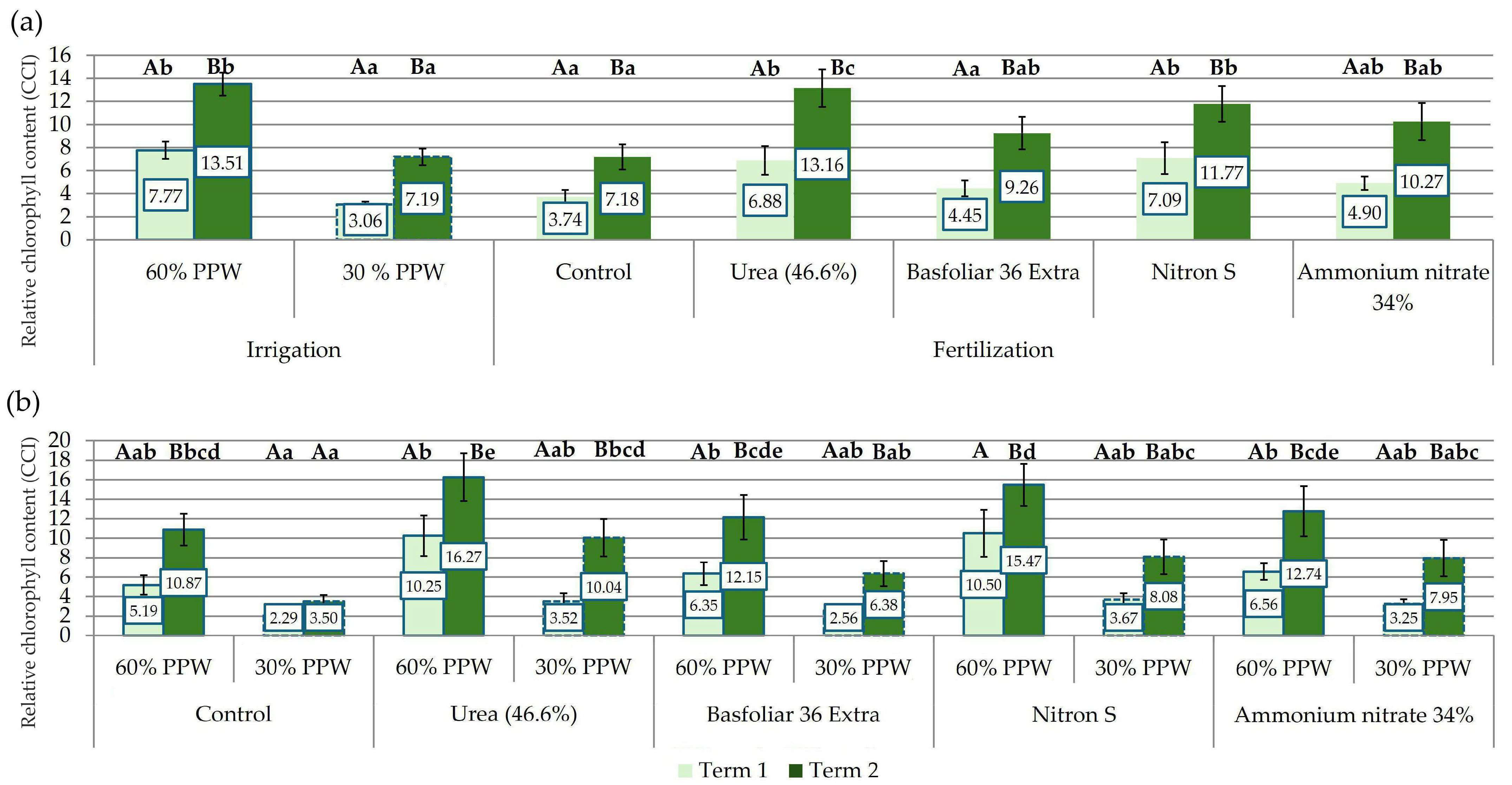
Relative chlorophyll content was significantly affected by both water regime and nitrogen fertilizer (Figure 1a). In Term 1, plants under 60% PPW showed higher relative chlorophyll content (7.77) compared to drought-stressed plants (3.06, F = 37.35, p < 0.05) (Table S1). In Term 2, a similar significant decrease was observed under drought conditions (60% PPW—13.51 and 30% PPW—7.19, F = 148.84, p < 0.05). Nitrogen fertilizers also had a significant effect on measurement Term 1 (F = 3.01, p < 0.001) and Term 2 (F = 158.34, p < 0.001). In Term 2, the highest chlorophyll content was found in plants treated with Urea (13,16). Significant interactions between irrigation and fertilizer treatments were detected at Term 1 (F = 1.23, p < 0.001) and Term 2 (F = 9.02, p < 0.001), indicating that the response to fertilizer depended on water availability (Figure 1b).

3.2. Chlorophyll Fluorescence

3.2.1. Maximum Quantum Efficiency of PSII Photochemistry (Fv/Fm)

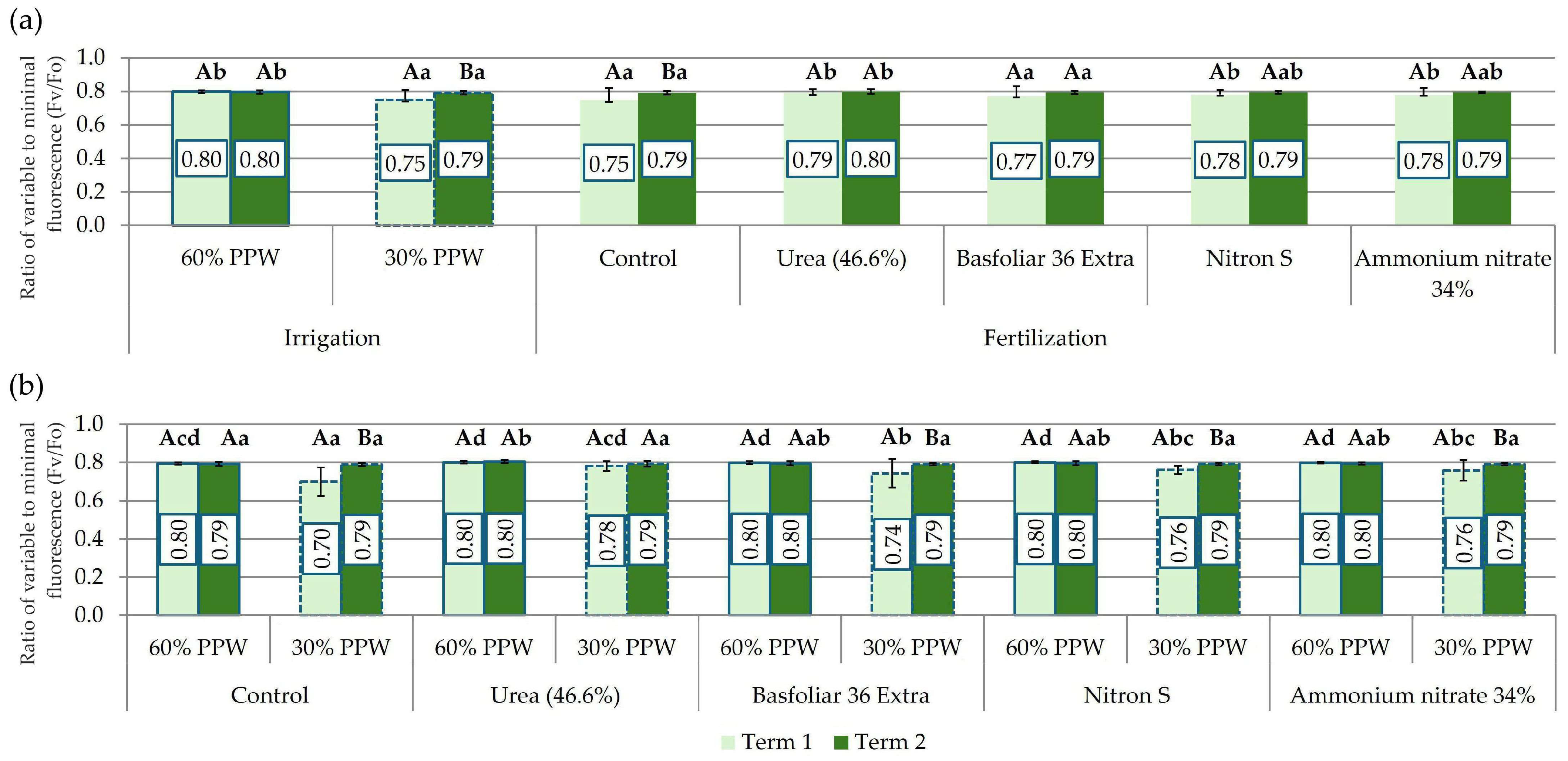
Under drought stress, a significant reduction in Fv/Fm values was observed (Figure 2a). A strong main effect of water regime was detected in both measurement terms, with a higher F value in Term 1 (F = 37.75, p < 0.001) than in Term 2 (F = 6.79, p < 0.05) (Table S1). At 60% PPW, the mean Fv/Fm value was 0.80, whereas at 30% FWC the parameter was significantly lower, reaching 0.75 in Term 1 and 0.79 in Term 2.
Fertilizer treatment significantly affected Fv/Fm only in Term 1 (F = 3.33, p < 0.05). In this term, the application of Urea, Nitron S, and Ammonium nitrate resulted in higher Fv/Fm values compared with the unfertilized control. No significant effect of fertilization was detected in Term 2.
No statistically significant interactions between experimental factors were found, indicating that the effects of water regime and fertilization on Fv/Fm were independent and did not vary significantly across measurement terms (Figure 2b).

3.2.2. Ratio of Variable to Minimal Fluorescence (Fv/Fo)

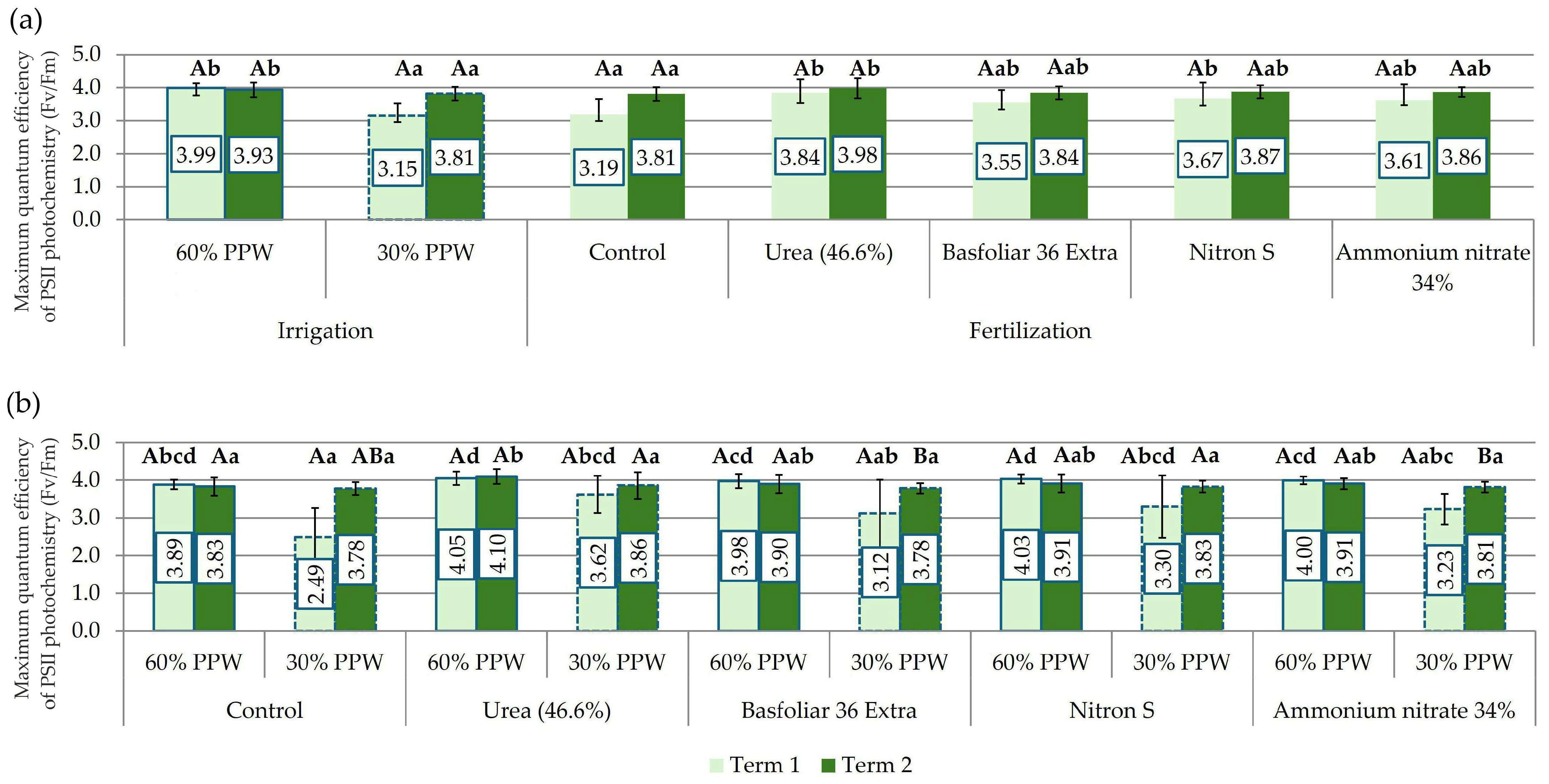
Drought stress caused a significant decrease in Fv/F0 values in both measurement terms, with a strong main effect of water regime observed in Term 1 (F = 60.48, p < 0.001) (Table S1) and a weaker but still significant effect on Term 2 (F = 6.80, p < 0.001) (Figure 3a). In Term 1, Fv/F0 was reduced from 3.99 at 60% PPW to 3.15 at 30% PPW, whereas in Term 2 the decrease was less pronounced, from 3.93 (60% PPW) to 3.81 (30% PPW).
Fertilization significantly affected Fv/F0 in Term I (F = 3.96, p < 0.01). In this term, higher values of Fv/F0 compared with the control were observed only for Urea (3.84) and Nitron S (3.67). In Term 2, a significant effect of fertilization was detected only for Urea (F = 1.75, p < 0.01), with a mean value of 3.98.
No statistically significant interactions among the experimental factors were detected (Figure 3b).

3.2.3. Performance Index (PI)

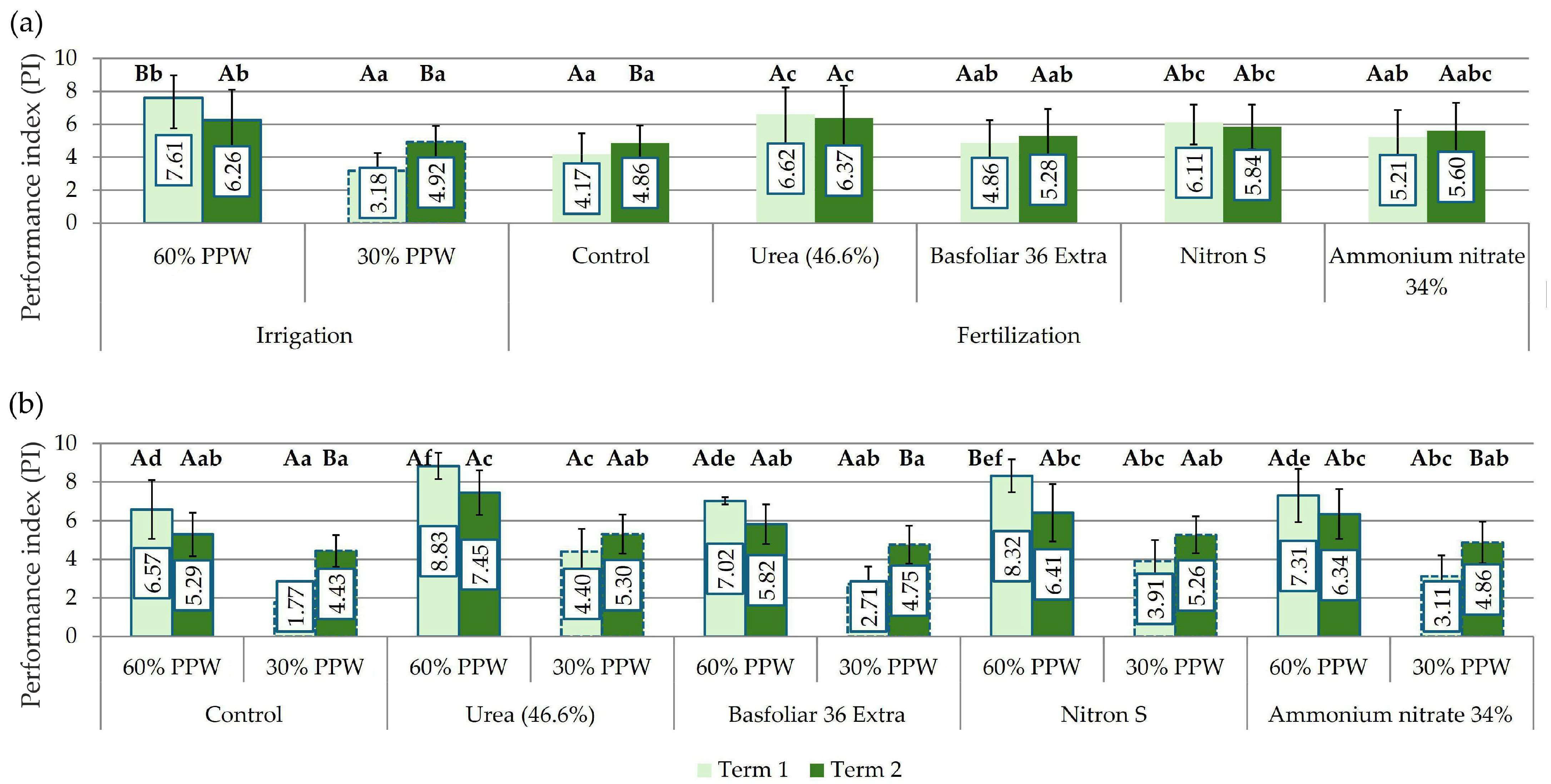
A reduction in the irrigation level from 60% to 30% PPW resulted in a significant decrease in PI (Figure 4a). In Term 1, a strong main effect of water regime was observed (F = 242.62, p < 0.001) (Table S1), with PI values of 7.61 at 60% PPW and 3.18 at 30% PPW. A similar pattern was observed in Term 2 (F = 19.52, p < 0.001), where PI reached 6.26 under higher irrigation and decreased to 4.92 under reduced irrigation.
In Term 1, fertilization significantly affected PI (F = 9.48, p < 0.001). Compared with the control treatment (4.17), a significant increase in PI was observed only following the application of Urea (6.62) and Nitron S (6.11).
No statistically significant interaction between irrigation level and fertilization was detected in either Term 1 or Term 2 (Figure 4b).

3.3. Gas Exchange

3.3.1. Net Photosynthetic Rate (Pn)

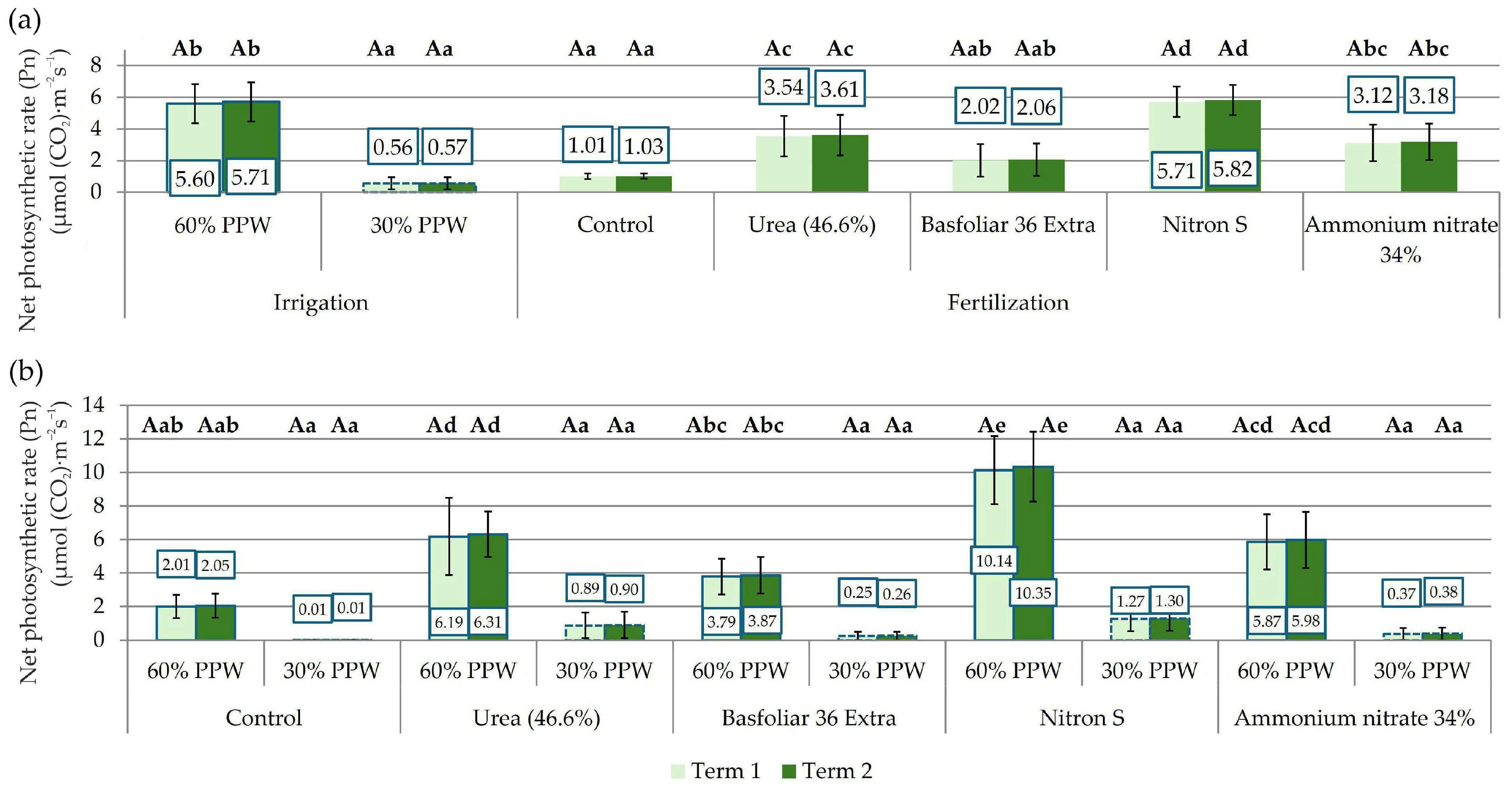
Lower irrigation (30% PPW) resulted in a significant decrease in Pn compared with 60% PPW (Figure 5a). In Term 1, a strong main effect of water regime was observed (F = 252.33, p < 0.001) (Table S1), with Pn values of 5.60 μmol CO2 m−2 s−1 at 60% PPW and 0.56 μmol CO2 m−2 s−1 at 30% PPW. Similarly, in Term 2 (F = 338.38, p < 0.001), Pn reached 5.71 μmol CO2 m−2 s−1 under higher irrigation and decreased to 0.57 μmol CO2 m−2 s−1 under reduced irrigation. Fertilization significantly increased Pn compared with the control treatment, with the exception of Basfoliar 36 Extra, in both Term 1 (F = 24.86, p < 0.001) and Term 2 (F = 33.33, p < 0.001). Significant interactions between experimental factors were detected in Term 1 (F = 13.12, p < 0.001) and Term 2 (F = 13.12, p < 0.001). Under drought conditions (30% PPW), no improvement in Pn was observed as a result of fertilization. In contrast, at 60% PPW, fertilization increased Pn values for all treatments except Basfoliar 36 Extra. Application of this fertilizer did not result in an increase in Pn in either Term 1 or Term 2 (Figure 5b). Importantly, under drought conditions (30% PPW), no significant improvement in Pn was observed following nitrogen fertilization, indicating that the observed fertilization effects were restricted to well-watered conditions.

3.3.2. Stomatal Conductance (gs)

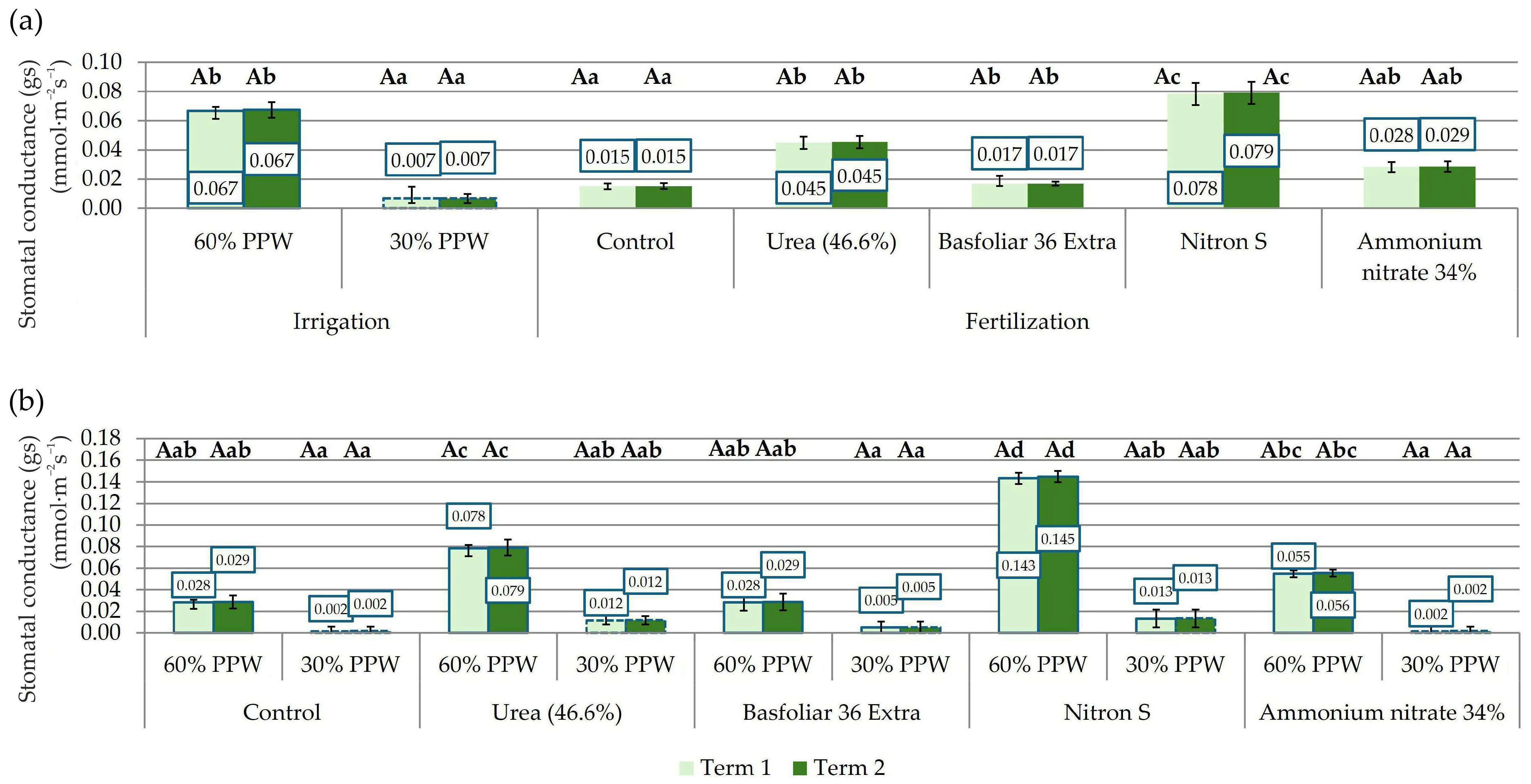
A reduction in irrigation level from 60% to 30% PPW resulted in a decrease in stomatal conductance (gs) (Figure 6a). In both Term 1 (F = 98.30, p < 0.001) and Term 2 (F = 155.44, p < 0.001) (Table S1), gs declined from 0.067 mmol m−2 s−1 at 60% PPW to 0.007 mmol m−2 s−1 at 30% PPW. Fertilization improved gs values relative to the control when Urea, Basfoliar 36 Extra, and Nitron S were applied. The highest gs values were recorded at 60% PPW following the application of Nitron S in both Term 1 (F = 10.16, p < 0.001) and Term 2 (F = 16.07, p < 0.001). Under these conditions, gs reached 0.143 mmol m−2 s−1 in Term 1 and 0.145 mmol m−2 s−1 in Term 2. No improvement in gs was observed under drought conditions (30% PPW) as a result of fertilization (Figure 6b).

3.3.3. Intercellular CO2 Concentration (Ci)

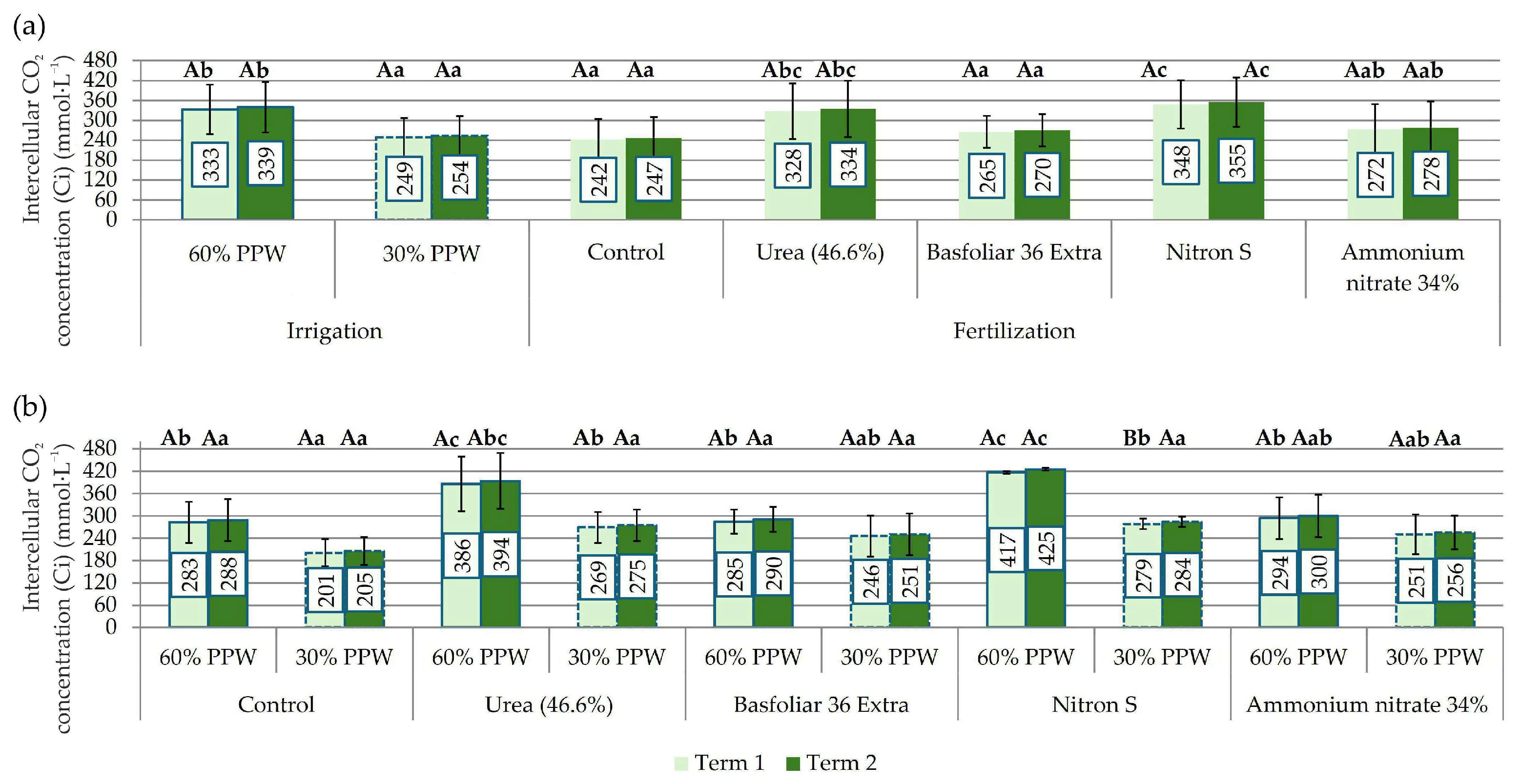
A change in irrigation level from 60% to 30% PPW resulted in a significant decrease in Ci (Figure 7a). In Term 1, a significant main effect of water regime was observed (F = 38.04, p < 0.001) (Table S1), with Ci values of 333 mmol L−1 at 60% PPW and 249 mmol L−1 at 30% PPW. Similarly, in Term 2 (F = 46.23, p < 0.001), Ci reached 339 mmol L−1 under higher irrigation and decreased to 254 mmol L−1 under reduced irrigation.
In both Term 1 (F = 8.65, p < 0.001) and Term 2 (F = 11.02, p < 0.001), fertilization increased Ci values relative to the control only in the case of Urea and Nitron S. A significant interaction between experimental factors was detected only in Term 2 (F = 3.29, p < 0.05). Under 60% PPW, an increase in Ci was observed following the application of Urea and Nitron S. In contrast, no improvement in Ci values was detected under water-deficit conditions (30% PPW) (Figure 7b).

3.3.4. Transpiration Rate (E)

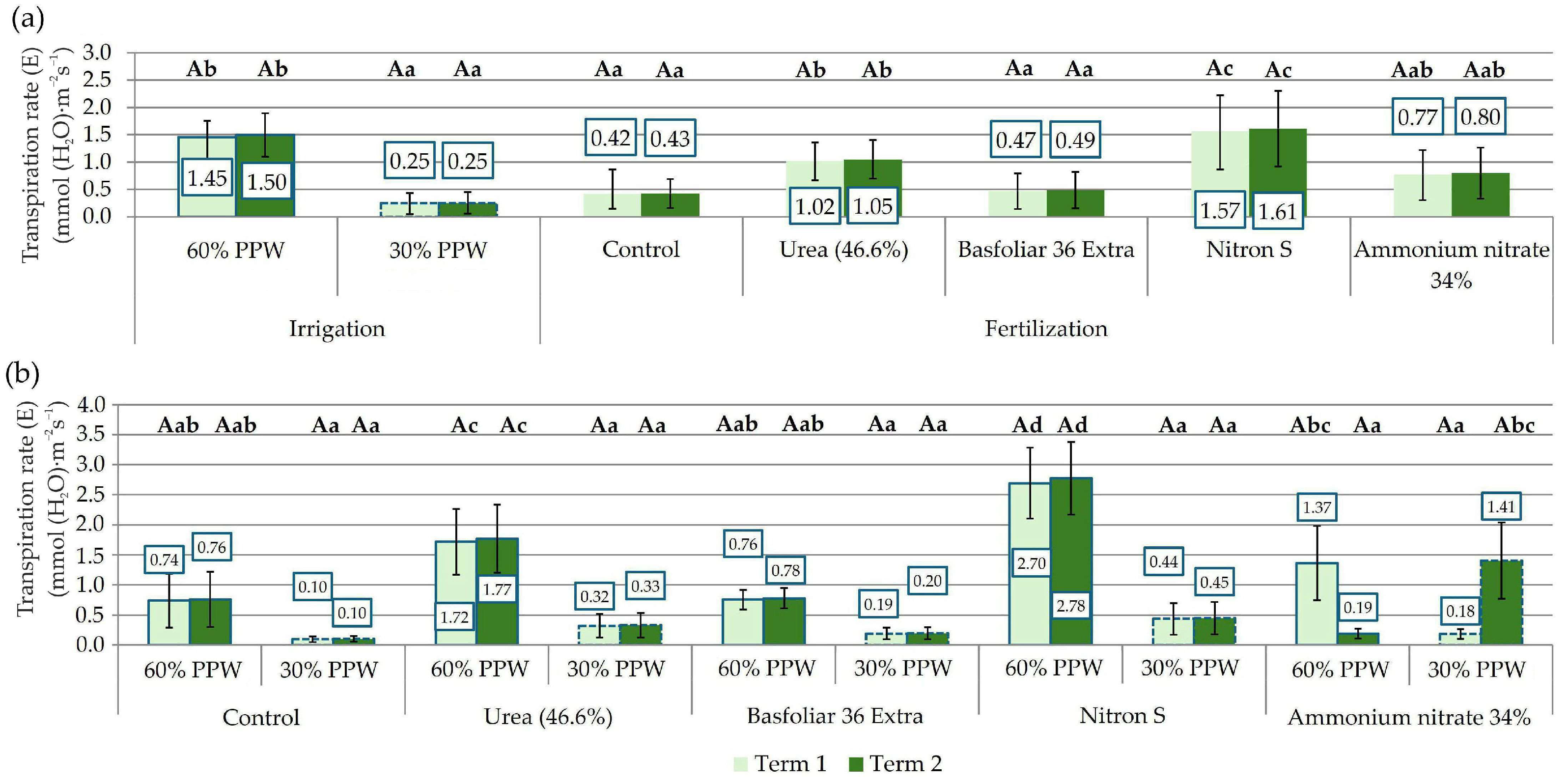
A reduction in irrigation level from 60% to 30% of PPW resulted in a decrease in E from 1.45 to 0.25 mmol H2O m−2 s−1 in Term 1 (F = 159.07, p < 0.001) and from 1.50 to 0.25 mmol H2O m−2 s−1 in Term 2 (F = 183.74, p < 0.001) (Figure 8a and Table S1).
In both Term 1 (F = 19.05, p < 0.001) and Term 2 (F = 22.00, p < 0.001), fertilization increased E values relative to the control only when Urea and Nitron S were applied. Under 30% PPW, only the application of ammonium nitrate resulted in an improvement in E compared with the control, and this effect was observed only in Term 2.
At 60% PPW, a significant increase in E was detected following the application of Urea and Nitron S in both Term 1 (F = 10.20, p < 0.001) and Term 2 (F = 11.78, p < 0.001) (Figure 8b).

3.4. Aboveground Dry Biomass

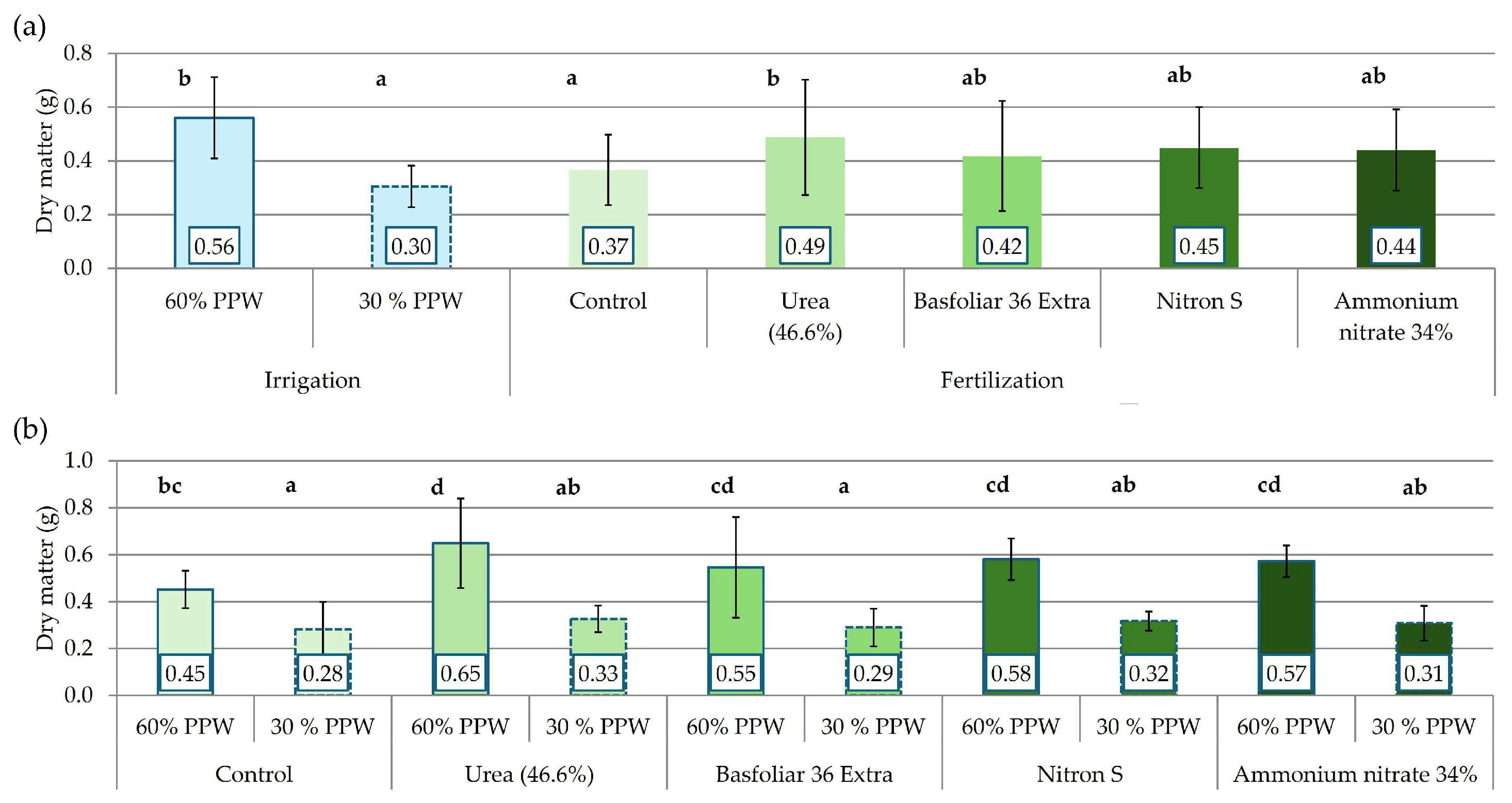
Drought stress significantly reduced the aboveground dry mass compared to the control (F = 3.62, p < 0.001) (Table S1). Under 60% PPW irrigation, aboveground dry mass reached 0.56 g, whereas under 30% PPW it decreased to 0.30 g (Figure 9a). Nitrogen fertilization also significantly affected this parameter, with lower dry mass observed in the unfertilized control (0.37 g) compared to plants fertilized with Urea (0.49 g; F = 148.66, p < 0.001). No significant interactions between experimental factors were detected (p > 0.05) (Figure 9b).

4. Discussion

4.1. Effects of Drought Stress on Wheat Physiological Performance

Drought stress is one of the key factors limiting agricultural development and poses a significant threat to the stability of global crop production [6]. In the present study, drought stress negatively affected the physiological condition of wheat seedlings, manifested by decreases in physiological parameters and aboveground dry mass compared to the control. These results are consistent with previous reports indicating that limited water availability disrupts physiological and biochemical processes, particularly photosynthesis [34,35]. Water is an essential factor determining biomass production and transpiration rate [36], and its deficiency disrupts plant metabolism, leading to reduced photosynthesis, a fundamental mechanism for converting light energy into chemical energy [37]. Photosynthesis is considered one of the most sensitive physiological processes to water stress in higher plants, including wheat. Drought stress limits stomatal conductance, transpiration rate, carboxylation efficiency, photosynthetic rate, and the content of photosynthetic pigments [38].
In this study, stomatal conductance decreased compared with control plants, corroborating earlier observations [39,40] that stomatal closure is one of the fastest defense mechanisms limiting water loss through transpiration. However, this response also restricts gas exchange and reduces photosynthetic rate by lowering CO2 concentration in leaves [6,10,12,38,41,42]. Low stomatal conductance (gs) is therefore a key factor limiting photosynthetic efficiency and crop productivity [43]. Similar results were obtained by Olsovska et al. [44], who reported decreases in gs and photosynthetic rate in different wheat genotypes under drought stress. Centritto et al. [45] highlighted that stomatal closure is an adaptive strategy that reduces water loss at the expense of gas exchange parameters. In the conducted studies, gs values under optimal conditions were relatively low, likely reflecting the physiological status of young wheat seedlings and/or device-specific baseline and should be interpreted cautiously compared to field-grown plants. Nevertheless, the observed gs trends aligned with changes in photosynthesis and chlorophyll content, indicating that nitrogen fertilization affected the physiological performance of wheat under both optimal and drought conditions.
In recent years, chlorophyll fluorescence measurement has become an increasingly important tool for assessing the effects of abiotic stress on photosynthesis [46]. This rapid, non-invasive method is valuable for evaluating the physiological status of plants under stress conditions [47]. In this study, drought stress significantly reduced chlorophyll fluorescence parameters (Fv/Fo, Fv/Fm, PI), indicating a decline in PSII photochemical efficiency. These findings are consistent with previous observations [48,49,50], which demonstrated that water stress damages PSII reaction centers, reducing their efficiency. Reductions in Fv/Fm under drought were also reported in lettuce seedlings [49] and durum wheat [51]. This parameter is considered a key indicator for assessing photosynthetic efficiency and damage to the photosynthetic apparatus [52,53].
Decreased PSII efficiency under drought stress may result from impaired dissipation of excess light energy, leading to the formation of reactive oxygen species (ROS) and thylakoid membrane damage [54]. This phenomenon is also associated with reduced chlorophyll content, as confirmed in the present study. Similar results were reported by Zada et al. [55], who observed declines in photosynthetic pigments with increasing drought intensity in wheat. Reduced chlorophyll content limits light absorption and effective photosynthesis [56,57]. Chlorophyll degradation may result from excessive ROS accumulation, causing peroxidation of thylakoid membrane lipids [58,59]. Wasaya et al. [42] confirmed that chlorophyll content decreases with increasing drought stress, particularly under severe water deficit, reflecting inhibited chlorophyll biosynthesis and structural damage [60,61].
Similar effects were observed in other crops, e.g., soybean exposed to water stress and high temperature, which showed significant reductions in photosynthetic rate and chlorophyll content [62]. Maintaining high chlorophyll content is therefore crucial for sustaining photosynthetic activity and stable yields under stress.

4.2. Role of Nitrogen Fertilization in Mitigating Drought Stress

In the present study, the effectiveness of different nitrogen fertilization strategies (Urea, Basfoliar 36 Extra, Nitron S, and Ammonium Nitrate) in modulating physiological responses to drought stress was evaluated. Under drought conditions, nitrogen fertilization did not restore growth, but transiently modified selected physiological parameters, particularly shortly after application. Urea and Nitron S induced short-term increases in chlorophyll fluorescence parameters (Fv/Fm and PI) at Term 1; however, these effects were no longer detectable at Term 2 and did not translate into increased aboveground biomass under drought conditions. The lack of biomass response despite transient physiological improvements highlights an important distinction between short-term modulation of photosynthetic processes and sustained growth under water deficit. Under drought stress, limitations in carbon assimilation, nutrient uptake, and metabolic integration constrain the conversion of improved physiological performance into structural biomass. The intensity of the effect varied depending on the fertilizer used. Differences among nitrogen fertilizers may be attributed to the chemical form of nitrogen and the presence of accompanying nutrients, which influence foliar uptake, assimilation efficiency, and short-term physiological responses under drought stress. Therefore, the effects of nitrogen application are discussed below in a fertilizer-specific manner. Improvements in parameters such as photosynthetic rate, stomatal conductance, and chlorophyll content suggest that nitrogen, regardless of form, supports photosynthetic activity under stress, corroborating previous studies [25,26,63]. Urea showed the most consistent short-term physiological response among the tested fertilizers [64]. As a neutral amid nitrogen source, urea can readily penetrate the leaf cuticle and be rapidly assimilated in plant tissues [65]. This may support chlorophyll synthesis and stabilization of PSII under drought stress, which is consistent with the observed transient increases in Fv/Fm and PI at Term 1. However, these effects did not persist to Term 2 and did not result in a significant improvement in net photosynthetic rate or biomass accumulation under drought [64]. Nitron S also improved selected fluorescence parameters and Ci under drought conditions, particularly at Term 1. In addition to nitrogen, Nitron S supplies sulfur, which plays a key role in antioxidant metabolism and protection against oxidative stress. Sulfur-dependent compounds such as glutathione may contribute to maintaining PSII efficiency under water deficit, potentially explaining the relatively stronger physiological response compared to other fertilizers [66,67,68]. Despite its high nitrogen content, Basfoliar 36 Extra showed limited or no physiological benefits under drought stress. This may be related to constraints in nitrogen uptake, translocation, or metabolic utilization under severe water deficit.
In this study, drought stress also significantly reduced aboveground dry mass, reflecting the well-documented inhibitory effects of water deficit on cell division, tissue expansion, and photosynthetic efficiency [10,63,69]. Recent studies confirm that drought strongly suppresses biomass accumulation in wheat by reducing CO2 assimilation, accelerating leaf senescence, and impairing primary metabolism [38,69,70]. A decrease in aboveground dry mass is therefore a typical response to water deficit, as limited water availability disrupts growth processes and protein synthesis [71,72,73].
In the present experiment, an increase in aboveground dry mass was observed only after the application of urea under optimal water conditions, whereas under drought, nitrogen addition did not significantly improve biomass accumulation. This agrees with recent findings emphasizing that nitrogen-use efficiency declines sharply under drought due to reduced nutrient uptake and impaired nitrogen metabolism [27,74]. Plants under water deficit are unable to effectively incorporate nitrogen into structural biomass, resulting in a lack of dry mass improvement despite fertilization [75]. Although drought is often associated with increased assimilate allocation to roots, this response was not directly assessed in the present study [76,77]. Thus, as supported by earlier studies [27,78], nitrogen fertilization enhances dry biomass production primarily under optimal moisture conditions, while drought significantly restricts its effectiveness. Although the 7-day duration of the experiment is relatively short for capturing full biomass accumulation, the observed early differences in dry mass under optimal conditions, together with physiological measurements, indicate that foliar nitrogen fertilization affected wheat physiological performance, while its impact on growth under drought remained limited.
The enhanced photosynthetic efficiency is due to nitrogen being a key component of many organic compounds, including proteins, nucleic acids, chlorophyll, and photosynthetic enzymes such as Rubisco [21,79]. All nitrogen fertilizers were applied foliarly at the 3–4 leaf stage. Differences in physiological responses between Urea, Ammonium nitrate, and Nitron S likely reflect differences in nitrogen form and nutrient composition. Similar mechanisms linking nitrogen to chlorophyll, photosynthetic enzymes, and osmolytes have been reported by Khan et al. [20] and Jia et al. [79]. However, the literature emphasizes that water–nitrogen interactions are complex, and excessive nitrogen under limited water availability can negatively affect nutrient balance and soil properties [30]. The results of the pot experiment indicate that rational nitrogen fertilization partially alleviated selected physiological limitations imposed by water stress during the early growth stages of wheat.
The results obtained confirm that drought stress significantly limits the photosynthetic efficiency of wheat by altering stomatal conductance, reducing chlorophyll content, and decreasing PSII activity. Simultaneously, nitrogen fertilization can partially mitigate the negative effects of water deficit by improving selected physiological parameters, without fully restoring biomass production. The enhanced effectiveness of urea and Nitron S likely reflects differences in nitrogen form and associated nutrients. Urea, as an amid nitrogen source, may be more readily absorbed and assimilated under water deficit, while sulfur supplied by Nitron S may support antioxidant metabolism and protection of photosynthetic processes [80]. These mechanisms, although not directly measured, are consistent with the observed physiological responses [81]. According to previous studies [81], these mechanisms may contribute to improved physiological performance under drought conditions; however, in the present study, these effects were limited to short-term physiological responses and did not result in sustained improvements in photosynthetic rate or biomass accumulation. These mechanistic interpretations are based on known physiological roles of different nitrogen forms and accompanying nutrients; however, nitrogen uptake and assimilation were not directly measured in this study, which precludes definitive conclusions regarding causal mechanisms. Nevertheless, the conducted study represents an important preparatory step for field experiments, as it enables the identification of nitrogen fertilization forms that most effectively support physiological functioning of wheat seedlings under water-limited conditions. This information will facilitate the optimization of field trials and allow for the assessment of whether the observed short-term physiological benefits can be confirmed under field conditions and translated into agronomically relevant outcomes. In the context of sustainable agriculture, developing fertilization strategies that reduce the adverse effects of water stress while minimizing the environmental impact of nitrogen inputs is crucial for adapting crop production to ongoing climate change.

5. Conclusions

Drought stress strongly impaired the physiological performance of wheat seedlings, as evidenced by marked reductions in chlorophyll content, chlorophyll fluorescence parameters, gas exchange, and aboveground biomass. Foliar nitrogen application modulated selected physiological responses, with urea and Nitron S inducing short-term improvements in chlorophyll fluorescence and photosynthetic indicators, particularly shortly after application, under both optimal irrigation and drought conditions. Crucially, these transient physiological responses did not result in increased aboveground biomass under drought stress, indicating that foliar nitrogen fertilization at the seedling stage has a limited capacity to mitigate drought-induced growth inhibition under the applied experimental conditions. The present results highlight the importance of distinguishing between short-term physiological modulation and sustained growth responses. They provide a mechanistic basis for further studies aimed at evaluating nitrogen–water interactions at later developmental stages and under field conditions, where longer-term growth, yield components, and agronomic relevance can be properly assessed.

Supplementary Materials

The following supporting information can be downloaded at: https://www.mdpi.com/article/10.3390/agriculture16030337/s1, Table S1: F-test statistics in ANOVA (F/p value).

Author Contributions

Conceptualization, W.P. and E.S.-K.; methodology, W.P. and E.S.-K.; formal analysis, W.P. and M.J.-P.; investigation, W.P., M.J.-P. and E.S.-K.; resources, E.S.-K.; data curation, W.P.; writing—original draft preparation, W.P.; writing—review and editing, W.P., M.J.-P. and E.S.-K.; visualization, W.P.; supervision, E.S.-K. All authors have read and agreed to the published version of the manuscript.

Funding

This research was funded by the financial resources of the Ministry of Science and Higher Education for scientific activities of the Faculty of Technology and Life Sciences, University of Rzeszów.

Institutional Review Board Statement

Not applicable.

Data Availability Statement

The data presented in this study are available from the corresponding author upon reasonable request.

Conflicts of Interest

The authors declare no conflicts of interest.

References

  1. Shewry, P.R. Wheat. J. Exp. Bot. 2009, 60, 1537–1553. [Google Scholar] [CrossRef]
  2. FAOSTAT. Available online: http://www.fao.org/faostat/en/#data/QC (accessed on 26 October 2025).
  3. Borisjuk, N.; Kishchenko, O.; Eliby, S.; Schramm, C.; Anderson, P.; Jatayev, S.; Shavrukov, Y. Genetic modification for wheat improvement: From transgenesis to genome editing. BioMed Res. 2019, 2019, 6216304. [Google Scholar] [CrossRef] [PubMed]
  4. Aurangzaib, M.; Ahmad, Z.; Jalil, M.I.; Nawaz, F.; Shaheen, M.R.; Ahmad, M.; Hussain, A.; Ejaz, M.K.; Tabassum, M.A. Foliar spray of silicon confers drought tolerance in wheat (Triticum aestivum L.) by enhancing morphophysiological and antioxidant potential. Silicon 2022, 14, 4793–4807. [Google Scholar] [CrossRef]
  5. Mansour, H.A.; El, S.; Mohamed, S.; Lightfoot, D.A. Molecular studies for drought tolerance in some Egyptian wheat genotypes under different irrigation systems. Open Agric. 2020, 5, 280–290. [Google Scholar] [CrossRef]
  6. Ahmad, S.; Muhammad, I.; Wang, G.Y.; Zeeshan, M.; Yang, L.; Ali, I.; Zhou, X.B. Ameliorative effect of melatonin improves drought tolerance by regulating growth, photosynthetic traits and leaf ultrastructure of maize seedlings. BMC Plant Biol. 2021, 21, 368. [Google Scholar] [CrossRef] [PubMed]
  7. Chen, X.; Zhu, Y.; Ding, Y.; Pan, R.; Shen, W.; Yu, X.; Xiong, F. The relationship between characteristics of root morphology and grain filling in wheat under drought stress. PeerJ 2021, 9, e12015. [Google Scholar] [CrossRef]
  8. Thapa, S.; Xue, Q.; Jessup, K.E.; Rudd, J.C.; Liu, S.; Devkota, R.N.; Baker, J.A. Soil water extraction and use by winter wheat cultivars under limited irrigation in a semi-arid environment. J. Arid. Environ. 2020, 174, 104046. [Google Scholar] [CrossRef]
  9. Jamali, A.; Sohrabi, Y.; Mardeh, A.S.; Hoseinpanahi, F. Morphological and yield responses of 20 genotypes of bread wheat to drought stress. Arch. Biol. Sci. 2020, 72, 71–79. [Google Scholar] [CrossRef]
  10. Farooq, M.; Wahid, A.; Kobayashi, N.; Fujita, D.; Basra, S.M.A. Plant drought stress: Effects, mechanisms and management. Agron. Sustain. Dev. 2009, 29, 185–212. [Google Scholar] [CrossRef]
  11. Liu, H.; Sultanm, M.A.; Liu, X.L.; Zhang, J.; Yu, F.; Zhao, H.X. Physiological and comparative proteomic analysis reveals different drought responses in roots and leaves of drought-tolerant wild wheat (Triticum boeoticum). PLoS ONE 2015, 10, e0121852. [Google Scholar] [CrossRef]
  12. Nardino, M.; Perin, E.C.; Aranha, B.C.; Carpes, S.T.; Fontoura, B.H.; de Sousa, D.J.P.; de Freitas, D.S. Understanding drought response mechanisms in wheat and multi-trait selection. PLoS ONE 2022, 17, e0266368. [Google Scholar] [CrossRef]
  13. Zivcak, M.; Brestic, M.; Balatova, Z.; Drevenakova, P.; Olsovska, K.; Kalaji, H.M.; Yang, X.; Allakhverdiev, S.I. Photosynthetic electron transport and specific photoprotective responses in wheat leaves under drought stress. Photosynth. Res. 2013, 117, 529–546. [Google Scholar] [CrossRef]
  14. Sharifi, P.; Mohammadkhani, N. Effects of drought stress on photosynthesis factors in wheat genotypes during anthesis. Cereal Res. Commun. 2016, 44, 229–239. [Google Scholar] [CrossRef]
  15. Zahra, N.; Hafeez, M.B.; Kausar, A.; Al Zeidi, M.; Asekova, S.; Siddique, K.H.M.; Farooq, M. Plant photosynthetic responses under drought stress: Effects and management. J. Agron. Crop. Sci. 2023, 209, 651–672. [Google Scholar] [CrossRef]
  16. Gupta, A.; Rico-Medina, A.; Caño-Delgado, A.I. The physiology of plant responses to drought. Science 2020, 368, 266–269. [Google Scholar] [CrossRef]
  17. Bashir, S.S.; Hussain, A.; Hussain, S.J.; Wani, O.A.; Zahdi Nabi, S.; Dar, N.A.; Baloch, F.S.; Mansoor, S. Plant drought stress tolerance: Understanding its physiological, biochemical and molecular mechanisms. Biotechnol. Biotechnol. Equip. 2021, 35, 1912–1925. [Google Scholar] [CrossRef]
  18. Chowdhury, M.K.; Hasan, M.A.; Bahadur, M.M.; Islam, M.R.; Hakim, M.A.; Iqbal, M.A.; Javed, T.; Raza, A.; Shabbir, R.; Sorour, S.; et al. Evaluation of drought tolerance of some wheat (Triticum). Agronomy 2021, 11, 1792. [Google Scholar] [CrossRef]
  19. Muhammad, I.; Yang, L.; Ahmad, S.; Farooq, S.; Al-Ghamdi, A.A.; Khan, A.; Zeeshan, M.; Elshikh, M.S.; Abbasi, A.M.; Zhou, X.-B. Nitrogen Fertilizer Modulates Plant Growth, Chlorophyll Pigments and Enzymatic Activities under Different Irrigation Regimes. Agronomy 2022, 12, 845. [Google Scholar] [CrossRef]
  20. Khan, A.; Zahir Afridi, M.; Airf, M.; Ali, S.; Muhammad, I.A. Sustainable approach toward maize production: Effectiveness of farm yard manure urea. N. Ann. Biol. Sci. 2017, 5, 7–13. [Google Scholar] [CrossRef]
  21. Ata-Ul-Karim, S.T.; Liu, X.; Lu, Z.; Yuan, Z.; Zhu, Y.; Cao, W. Inseason estimation of rice grain yield using critical nitrogen dilution curve. Field Crops Res. 2016, 195, 1–8. [Google Scholar] [CrossRef]
  22. Plett, D.C.; Ranathunge, K.; Melino, V.J.; Kuya, N.; Uga, Y.; Kronzucker, H.J. The intersection of nitrogen nutrition and water use in plants: New paths toward improved crop productivity. J. Exp. Bot. 2020, 71, 4452–4468. [Google Scholar] [CrossRef] [PubMed]
  23. Li, Z.; Cui, S.; Zhang, Q.; Xu, G.; Feng, Q.; Chen, C.; Li, Y. Optimizing Wheat Yield, Water, and Nitrogen Use Efficiency With Water and Nitrogen Inputs in China: A Synthesis and Life Cycle Assessment. Front. Plant Sci. 2022, 13, 930484. [Google Scholar] [CrossRef]
  24. Xing, H.; Zhou, W.; Wang, C.; Li, L.; Li, X.; Cui, X.; Hao, W.; Liu, F.; Wang, Y. Excessive nitrogen application under moderate soil water deficit decreases photosynthesis, respiration, carbon gain and water use efficiency of maize. Plant Physiol. Biochem. 2021, 166, 1065–1075. [Google Scholar] [CrossRef]
  25. Song, Y.S.; Li, J.L.; Liu, M.L.; Meng, Z. Nitrogen increases drought tolerance in maize seedlings. Funct. Plant Biol. 2019, 46, 350. [Google Scholar] [CrossRef]
  26. Li, L.; Ma, H.Y.; Xing, J.Y.; Liu, F.L.; Wang, Y.S. Effects of water deficit and nitrogen application on leaf gas exchange, phytohormone signaling, biomass and water use efficiency of oat plants. J. Plant Nutr. Soil Sci. 2020, 183, 695–704. [Google Scholar] [CrossRef]
  27. Abid, M.; Tian, Z.; Ata-Ul-Karim, S.T.; Cui, Y.; Liu, Y.; Zahoor, R.; Jiang, D.; Dai, T. Nitrogen nutrition improves the potential of wheat (Triticum aestivum L.) to alleviate the effects of drought stress during vegetative growth periods. Front. Plant Sci. 2016, 7, 981. [Google Scholar] [CrossRef]
  28. Shabbir, R.N.; Waraich, E.A.; Ali, H.; Nawaz, F.; Ashraf, M.Y.; Ahmad, R.; Awan, M.I.; Hussain, S.; Irfan, M.; Ahmad, Z. Supplemental exogenous NPK application alters biochemical processes to improve yield and drought tolerance in wheat (Triticum aestivum L.). Environ. Sci. Pollut. Res. Int. 2016, 23, 2651–2662. [Google Scholar] [CrossRef]
  29. Pandey, J.; Devadasu, E.; Saini, D.; Dhokne, K.; Marriboina, S.; Agepati, R.S.; Subramanyam, R. Reversible changes in structure andfunction of photosynthetic apparatus of pea (Pisum sativum) leaves under drought stress. Plant J. 2022, 113, 60–74. [Google Scholar] [CrossRef]
  30. Mack, U.D.; Feger, K.H.; Gong, Y.; Stahr, K. Soil water balance and nitrate leaching in winter wheat–summer maize doublecropping systems with different irrigation and N fertilization in the North China Plain. J. Plant Nutr. Soil Sci. 2005, 168, 454–460. [Google Scholar] [CrossRef]
  31. Hou, P.; Gao, Q.; Xie, R.; Li, S.; Meng, Q.; Kirkby, E.A.; Römheld, V.; Müller, T.; Zhang, F.; Cui, Z. Grain yields in relation to N requirement: Optimizing nitrogen management for spring maize grown in China. Field Crop. Res. 2012, 129, 1–6. [Google Scholar] [CrossRef]
  32. Jańczak-Pieniążek, M.; Pikuła, W.; Pawlak, R.; Drygaś, B.; Szpunar-Krok, E. Physiological Response of Miscanthus sinensis (Anderss.) to Biostimulants. Agriculture 2024, 14, 33. [Google Scholar] [CrossRef]
  33. Maxwell, K.; Johnson, G.N. Chlorophyll fluorescence—A practical guide. J. Exp. Bot. 2000, 51, 659–668. [Google Scholar] [CrossRef] [PubMed]
  34. Abid, M.; Ali, S.; Qi, L.K.; Zahoor, R.; Tian, Z.; Jiang, D.; Snicer, J.L.; Dai, T. Physiological and biochemical changes during drought and recovery periods at tillering and jointing stages in wheat (Triticum aestivum L.). Sci. Rep. 2018, 8, 4615. [Google Scholar] [CrossRef]
  35. Piao, S.; Ciais, P.; Friedlingstein, P.; Peylin, P.; Reichstein, M.; Luyssaert, S.; Margolis, H.; Fang, J.; Barr, A.; Chen, A.; et al. Net carbon dioxide losses of northern ecosystems in response to autumn warming. Nature 2008, 451, 49–52. [Google Scholar] [CrossRef] [PubMed]
  36. Quemada, C.; Perez-Esqudero, J.M.; Gonzalo, R.; Gonzalo, R.; Ederra, I.; Santesteban, L.G.; Torres, N.; Iriarte, J.C. Remote sensing of plant water content monitoring: A Review. Remote. Sens. 2021, 13, 2088. [Google Scholar] [CrossRef]
  37. Kapoor, D.; Bhardwaj, S.; Landi, M.; Sharma, A.; Ramakrishnan, M.; Sharma, A. The Impact of Drought in Plant Metabolism: How to Exploit Tolerance Mechanisms to Increase Crop Production. Appl. Sci. 2020, 10, 5692. [Google Scholar] [CrossRef]
  38. Chen, F.; Zhang, K.; Yan, S.; Li, X.; Wang, J. Response of photosynthesis to light and CO2 concentration in spring wheat under progressive drought stress. BMC Plant Biol. 2025, 25, 324. [Google Scholar] [CrossRef]
  39. Anosheh, H.P.; Moucheshi, A.S.; Pakniyat, H.; Pessarakli, M. Stomatal responses to drought stress. In Water Stress and Crop Plants, 1st ed; Parvaiz, A., Ed.; John Wiley & Sons Ltd.: Hoboken, NJ, USA, 2016; Volume 1, pp. 24–40. [Google Scholar] [CrossRef]
  40. Schroeder, J.I.; Kwak, J.M.; Allen, G.J. Guard cell abscisic acid signalling and engineering drought hardiness in plants. Nature 2001, 410, 327–330. [Google Scholar] [CrossRef]
  41. Driesen, E.; Van Den Ende, W.; De Proft, M.; Saeys, W. Influence of environmental factors light, CO2, temperature and relative humidity on stomatal opening and development: A Review. Agronomy 2020, 10, 1975. [Google Scholar] [CrossRef]
  42. Wasaya, A.; Manzoor, S.; Yasir, T.A.; Sarwar, N.; Mubeen, K.; Ismail, I.A.; Raza, A.; Rehman, A.; Hossain, A.; EL Sabagh, A. Evaluation of Fourteen Bread Wheat (Triticum aestivum L.) Genotypes by Observing Gas Exchange Parameters, Relative Water and Chlorophyll Content, and Yield Attributes under Drought Stress. Sustainability 2021, 13, 4799. [Google Scholar] [CrossRef]
  43. Wang, Y.; Wang, Y.; Tang, Y.; Zhu, X.G. Stomata conductance as a goalkeeper for increased photosynthetic efficiency. Curr. Opin. Plant Biol. 2022, 70, 102310. [Google Scholar] [CrossRef]
  44. Olsovská, K.; Kovář, M.; Breštič, M.; Živčák, M.; Slamka, P.; Shao, H.B. Genotypically Identifying Wheat Mesophyll Conductance Regulation under Progressive Drought Stress. Front. Plant Sci. 2016, 7, 1111. [Google Scholar] [CrossRef]
  45. Centritto, M.; Lauteri, M.; Monteverdi, M.C.; Serraj, R. Leaf gas exchange, carbon isotope discrimination, and grain yield in contrasting rice genotypes subjected to water deficits during the reproductive stage. J. Exp. Bot. 2009, 60, 2325–2339. [Google Scholar] [CrossRef] [PubMed]
  46. Rastogi, A.; Kovar, M.; He, X.; Zivcak, M.; Kataria, S.; Kalaji, H.M.; Skalicky, M.; Ibrahimova, U.F.; Hussain, S.; Mbarki, S.; et al. JIP-test as a tool to identify salinity tolerance in sweet sorghum genotypes. Phostosynthetica 2020, 58, 518–520. [Google Scholar] [CrossRef]
  47. Woo, N.S.; Badger, M.R.; Pogson, B.J. A rapid, non-invasive procedure for quantitative assessment of drought survival using chlorophyll fluorescence. Plant Methods 2008, 4, 27. [Google Scholar] [CrossRef]
  48. Zhuang, J.; Wang, Y.; Chi, Y.; Zhou, L.; Chen, J.; Zhou, W.; Song, J.; Zhao, N.; Ding, J. Drought stress strengthens the link between chlorophyll fluorescence parameters and photosynthetic traits. PeerJ 2020, 8, e10046. [Google Scholar] [CrossRef]
  49. Shin, Y.K.; Bhandari, S.R.; Jo, J.S.; Song, J.W.; Lee, J.G. Effect of Drought Stress on Chlorophyll Fluorescence Parameters, Phytochemical Contents, and Antioxidant Activities in Lettuce Seedlings. Horticulturae 2021, 7, 238. [Google Scholar] [CrossRef]
  50. Sherstneva, O.; Khlopkov, A.; Gromova, E.; Yudina, L.; Vetrova, Y.; Pecherina, A.; Kuznetsova, D.; Krutova, E.; Sukhov, V.; Vodeneev, V. Analysis of chlorophyll fluorescence parameters as predictors of biomass accumulation and tolerance to heat and drought stress of wheat (Triticum aestivum) plants. Funct. Plant Biol. 2022, 49, 155–169. [Google Scholar] [CrossRef] [PubMed]
  51. Larouk, C.; Gabon, F.; Kehel, Z.; Djekoun, A.; Nachit, M.; Amri, A. Chlorophyll Fluorescence and Drought Tolerance in a Mapping Population of Durum Wheat. Contemp. Agric. 2021, 70, 123–134. [Google Scholar] [CrossRef]
  52. Husen, A. Growth characteristics, physiological and metabolic responses of teak (Tectona grandis Linn. F.) clones differing in rejuvenation capacity subjected to drought stress. Silvae Genet. 2010, 59, 124–136. [Google Scholar] [CrossRef]
  53. Johnson, S.M.; Lim, F.-L.; Finkler, A.; Fromm, H.; Slabas, A.R.; Knight, M.R. Transcriptomic analysis of Sorghum bicolor responding to combined heat and drought stress. BMC Genom. 2014, 15, 456. [Google Scholar] [CrossRef]
  54. Nosalewicz, A.; Okoń, K.; Skorupka, M. Non-Photochemical Quenching under Drought and Fluctuating Light. Int. J. Mol. Sci. 2022, 23, 5182. [Google Scholar] [CrossRef]
  55. Zada, A.; Ali, A.; Binjawhar, D.N.; Abdel-Hameed, U.K.; Shah, A.H.; Gill, S.M.; Hussain, I.; Abbas, Z.; Ullah, Z.; Sher, H.; et al. Molecular and Physiological Evaluation of Bread Wheat (Triticum aestivum L.) Genotypes for Stay Green under Drought Stress. Genes 2022, 13, 2261. [Google Scholar] [CrossRef]
  56. Arjenaki, F.G.; Morshedi, A.; Jabbari, A.R. Evaluation of drought stress on relative water content, chlorophyll content and mineral elements of wheat (Triticum aestivum L.) Varieties. Agric. Food Sci. 2012, 4, 726–729. [Google Scholar]
  57. Javed, A.; Ahmad, N.; Ahmed, J.; Hameed, A.; Ashraf, M.A.; Zafar, S.A.; Maqbool, A.; Al-Amrah, H.; Alatawi, H.A.; Al-Harbi, M.S.; et al. Grain yeld, chlorophyland protein contentsof elitewheat genotypesunder drought stress. J. King Saud Univ. Sci. 2022, 34, 102279. [Google Scholar] [CrossRef]
  58. Khalilzadeh, R.; Seyed Sharifi, R.; Jalilian, J. Antioxidant status and physiological responses of wheat (Triticum aestivum L.) to cycocel application and bio fertilizers under water limitation condition. J. Plant Interact. 2016, 11, 130–137. [Google Scholar] [CrossRef]
  59. Djanaguiraman, M.; Prasad, P.V.; Seppanen, M. Selenium protects sorghum leaves from oxidative damage under high temperature stress by enhancing antioxidant defense system. Plant Physiol. Biochem. 2010, 48, 999–1007. [Google Scholar] [CrossRef]
  60. Hassanzadeh, M.; Ebadi, A.; Panahyan-Kivi, M.; Eshghi, A.G.; Jamaati-E-Somarin, S.; Saeidi, M.; Zabihi-E-Mahmoodabad, R. Evaluation of drought stress on relative water content and chlorophyll content of sesame (Sesamum indicum L.) genotypes at early flowering stage. Res. J. Environ. Sci. 2009, 3, 345–350. [Google Scholar] [CrossRef]
  61. Yasir, T.A.; Min, D.; Chen, X.; Condon, A.G.; Hu, Y.G. The association of carbon isotope discrimination (D) with gas exchange parameters and yield traits in Chinese bread wheat cultivars under two water regimes. Agric. Water Manag. 2013, 119, 111–120. [Google Scholar] [CrossRef]
  62. Jumrani, K.; Bhatia, V.S.; Kataria, S.; Rastogi, A. The interactive effect of high temperature and water deficit stress on nitrogen fixation, photosynthesis, chlorophyll fluorescence, seed yield and quality in soybean (Glycine max). Plant Physiol. Rep. 2024, 29, 125–140. [Google Scholar] [CrossRef]
  63. Anjum, S.A.; Xie, X.Y.; Wang, L.C.; Saleem, M.F.; Man, C.; Lei, W. Morphological, Physiological and Biochemical Responses of Plants to Drought Stress. Afr. J. Agric. Res. 2011, 6, 2026–2032. [Google Scholar]
  64. Zhu, J.; Cai, Y.; Li, X.; Yang, L.; Zhang, Y. High-nitrogen fertilizer alleviated adverse effects of drought stress on the growth and photosynthetic characteristics of Hosta ‘Guacamole’. BMC Plant Biol. 2024, 24, 299. [Google Scholar] [CrossRef]
  65. Aguilar, J.V.; Lapaz, A.d.M.; Bomfim, N.C.P.; Mendes, T.F.S.; Souza, L.A.; Furlani Júnior, E.; Camargos, L.S. Photosynthetic Performance and Urea Metabolism After Foliar Fertilization with Nickel and Urea in Cotton Plants. Agriculture 2025, 15, 699. [Google Scholar] [CrossRef]
  66. Lian, H.; Qin, C.; Shen, J.; Ahanger, M.A. Alleviation of Adverse Effects of Drought Stress on Growth and Nitrogen Metabolism in Mungbean (Vigna radiata) by Sulphur and Nitric Oxide Involves Up-Regulation of Antioxidant and Osmolyte Metabolism and Gene Expression. Plants 2023, 12, 3082. [Google Scholar] [CrossRef] [PubMed]
  67. Ashraf, A.M.; Archana, H.A.; Naveen Kumar, M.R.; Muhammed Iqshanullah, A.; Rajasekaran, R.; Dhinesh, K.S.; Naziya Begam, S. Potential Foliar Chemicals for Enhancing Yield and Drought Tolerance in Leguminous Crops: A Review. Legume Res. 2023, 47, 1251–1257. [Google Scholar] [CrossRef]
  68. Wei, X.; Han, L.; Xu, N.; Sun, M.; Yang, X. Nitrate nitrogen enhances the efficiency of photoprotection in Leymus chinensis under drought stress. Front. Plant Sci. 2024, 15, 1348925. [Google Scholar] [CrossRef]
  69. Khamis, G.; Alsherif, E.A.; Korany, S.M.; Aldailami, D.A.; Aloufi, A.S.; Khalaf, M.H.; Hamed, S.M.; Maridueña-Zavala, M.G.; Al Jaouni, S.K.; Selim, S. Drought stress differentially influences growth, physiology, and metabolite accumulation in Triticum aestivum (C3) and Amaranthus caudatus (C4) plants. BMC Plant Biol. 2025, 25, 1199. [Google Scholar] [CrossRef] [PubMed]
  70. Zhao, W.; Liu, L.; Shen, Q.; Yang, J.; Han, X.; Tian, F.; Wu, J. Effects of Water Stress on Photosynthesis, Yield, and Water Use Efficiency in Winter Wheat. Water 2020, 12, 2127. [Google Scholar] [CrossRef]
  71. Pour-Aboughadareh, A.; Omidi, M.; Naghavi, M.R.; Etminan, A.; Mehrabi, A.A.; Poczai, P.; Bayat, H. Effect of Water Deficit Stress on Seedling Biomass and Physio-Chemical Characteristics in Different Species of Wheat Possessing the D Genome. Agronomy 2019, 9, 522. [Google Scholar] [CrossRef]
  72. Falcioni, R.; de Oliveira, C.A.; Vedana, N.G.; Mendonça, W.A.; Gonçalves, J.V.F.; da Silva Haubert, D.d.F.; de Matos, D.H.S.; Reis, A.S.; Antunes, W.C.; Crusiol, L.G.T.; et al. Progressive Water Deficit Impairs Soybean Growth, Alters Metabolic Profiles, and Decreases Photosynthetic Efficiency. Plants 2025, 14, 2615. [Google Scholar] [CrossRef]
  73. Shao, H.B.; Chu, L.Y.; Jaleel, C.A.; Zhao, C.X. Water-deficit stress-induced anatomical changes in higher plants. C. R. Biol. 2008, 331, 215–225. [Google Scholar] [CrossRef] [PubMed]
  74. Ru, C.; Hu, X.; Wang, W.; Yan, H. Impact of nitrogen on photosynthesis, remobilization, yield, and efficiency in winter wheat under heat and drought stress. Agric. Water Manag. 2024, 302, 109013. [Google Scholar] [CrossRef]
  75. Wang, X.; Zhang, C.; Zhao, N.; Sun, X.; Hou, S.; Wang, P. Physiological Nitrogen Uptake and Utilisation Responses in Two Native Plants from the Qinghai-Tibet Plateau under Different Water and Fertiliser Conditions. Agronomy 2024, 14, 440. [Google Scholar] [CrossRef]
  76. Bektas, H.; Hohn, C.E.; Lukaszewski, A.J.; Waines, J.G. On the Possible Trade-Off between Shoot and Root Biomass in Wheat. Plants 2023, 12, 2513. [Google Scholar] [CrossRef]
  77. Bacher, H.; Sharaby, Y.; Walia, H.; Peleg, Z. Modifying root-to-shoot ratio improves root water influxes in wheat under drought stress. J. Exp. Bot. 2021, 73, 1643–1654. [Google Scholar] [CrossRef]
  78. Zhuang, T.; Ata-Ul-Karim, S.T.; Zhao, B.; Liu, X.; Tian, Y.; Zhu, Y.; Cao, W.; Cao, Q. Investigating the impacts of different degrees of deficit irrigation and nitrogen interactions on assimilate translocation, yield, and resource use efficiencies in winter wheat. Agric. Water Manag. 2024, 304, 109089. [Google Scholar] [CrossRef]
  79. Jia, X.; Shao, L.; Liu, P.; Zhao, B.; Gu, L.; Dong, S.; Bing, S.H.; Zhang, J.; Zhao, B. Effect of different nitrogen and irrigation treatments on yield and nitrate leaching of summer maize (Zea mays L.) under lysimeter conditions. Agric. Water Manag. 2014, 137, 92–103. [Google Scholar] [CrossRef]
  80. Zenda, T.; Liu, S.; Dong, A.; Duan, H. Revisiting Sulphur—The Once Neglected Nutrient: It’s Roles in Plant Growth, Metabolism, Stress Tolerance and Crop Production. Agriculture 2021, 11, 626. [Google Scholar] [CrossRef]
  81. Qaderi, M.M.; Evans, C.C.; Spicer, M.D. Plant Nitrogen Assimilation: A Climate Change Perspective. Plants 2025, 14, 1025. [Google Scholar] [CrossRef]
Figure 1. Effect of nitrogen fertilization and irrigation regime on chlorophyll content (CCI) in wheat leaves under drought stress. Term 1—1 day after foliar application; Term 2—7 days after application. (a) Main effects of treatments; (b) Interaction effects between treatments. Data are presented as mean ± SD. Uppercase letters indicate significant differences between measurement dates separately for each fertilization variant; lowercase letters indicate differences among treatments within a particular date (p ≤ 0.05).
Agriculture 16 00337 g001
Figure 2. Effect of nitrogen fertilization and irrigation regime on the maximum quantum efficiency of PSII photochemistry (Fv/Fm) in wheat leaves. Term 1—1 day after foliar application; Term 2—7 days after application. (a) Main effects of treatments; (b) Interaction effects between treatments. Data are presented as mean ± SD. Uppercase letters indicate significant differences between measurement dates separately for each fertilization variant; lowercase letters indicate differences among treatments within a particular date (p ≤ 0.05).
Agriculture 16 00337 g002
Figure 3. Effect of nitrogen fertilization and irrigation regime on the ratio of variable to the minimal fluorescence (Fv/Fo) in wheat leaves. Term 1—1 day after foliar application; Term 2—7 days after application. (a) Main effects of treatments; (b) Interaction effects between treatments. Data are presented as mean ± SD. Uppercase letters indicate significant differences between measurement dates separately for each fertilization variant; lowercase letters indicate differences among treatments within a particular date (p ≤ 0.05).
Agriculture 16 00337 g003
Figure 4. Effect of nitrogen fertilization and irrigation regime on the performance index (PI) in wheat leaves. Term 1—1 day after foliar application; Term 2—7 days after application. (a) Main effects of treatments; (b) Interaction effects between treatments. Data are presented as mean ± SD. Uppercase letters indicate significant differences between measurement dates separately for each fertilization variant; lowercase letters indicate differences among treatments within a particular date (p ≤ 0.05).
Agriculture 16 00337 g004
Figure 5. Effect of nitrogen fertilization and irrigation regime on net photosynthetic rate (Pn) in wheat leaves. Term 1—1 day after foliar application; Term 2—7 days after application. (a) Main effects of treatments; (b) Interaction effects between treatments. Data are presented as mean ± SD. Uppercase letters indicate significant differences between measurement dates separately for each fertilization variant; lowercase letters indicate differences among treatments within a particular date (p ≤ 0.05).
Agriculture 16 00337 g005
Figure 6. Effect of nitrogen fertilization and irrigation regime on stomatal conductance (gs) in wheat leaves. Term 1—1 day after foliar application; Term 2—7 days after application. (a) Main effects of treatments; (b) Interaction effects between treatments. Data are presented as mean ± SD. Uppercase letters indicate significant differences between measurement dates separately for each fertilization variant; lowercase letters indicate differences among treatments within a particular date (p ≤ 0.05).
Agriculture 16 00337 g006
Figure 7. Effect of nitrogen fertilization and irrigation regime on intercellular CO2 concentration (Ci) in wheat leaves. Term 1—1 day after foliar application; Term 2—7 days after application. (a) Main effects of treatments; (b) Interaction effects between treatments. Data are presented as mean ± SD. Uppercase letters indicate significant differences between measurement dates separately for each fertilization variant; lowercase letters indicate differences among treatments within a particular date (p ≤ 0.05).
Agriculture 16 00337 g007
Figure 8. Effect of nitrogen fertilization and irrigation regime on transpiration rate (E) in wheat leaves. Term 1—1 day after foliar application; Term 2—7 days after application. (a) Main effects of treatments; (b) Interaction effects between treatments. Data are presented as mean ± SD. Uppercase letters indicate significant differences between measurement dates separately for each fertilization variant; lowercase letters indicate differences among treatments within a particular date (p ≤ 0.05).
Agriculture 16 00337 g008
Figure 9. Effect of nitrogen fertilization and irrigation regime on aboveground dry biomass. (a) Main effects of treatments; (b) Interaction effects between treatments. Data are presented as mean ± SD. Lowercase letters indicate differences among nitrogen treatments within each irrigation level (p ≤ 0.05).
Agriculture 16 00337 g009
Table 1. Experimental treatments applied in the pot experiment.
Factor I
Soil Moisture Level
Factor II
Nitrogen Fertilizers
1. 60% WHC
2. 30% WHC
1. ControlNo nitrogen fertilization
2. UreaUrea (46.64% N)
3. Basfoliar 36 ExtraBasfoliar 36 Extra (Total N—36.2%; 6.3% N-NO3; 4.7% N-NH4; 25.2% N-NH2; 4.3% MgO; 0.027% B; 0.27% Cu; 0.027% Fe; 1.34% Mn; 0.007% Mo; 0.013% Zn)
4. Nitron SNitron S (308 g N, 56 g SO3)
5. Ammonium nitrateAmmonium nitrate (34% N)
WHC—water-holding capacity.
Disclaimer/Publisher’s Note: The statements, opinions and data contained in all publications are solely those of the individual author(s) and contributor(s) and not of MDPI and/or the editor(s). MDPI and/or the editor(s) disclaim responsibility for any injury to people or property resulting from any ideas, methods, instructions or products referred to in the content.