Review

Soil Amendments in Cold Regions: Applications, Challenges and Recommendations

1
Qinghai-Beiluhe Plateau Frozen Soil Engineering Safety National Observation and Research Station, The State Key Laboratory of Cryospheric Science and Frozen Soil Engineering, Northwest Institute of Eco-Environment and Resources, Chinese Academy of Sciences, Lanzhou 730000, China
2
University of Chinese Academy of Sciences, Beijing 100049, China
3
China Railway Qinghai-Tibet Group Co., Ltd., Xining 810007, China
*
Author to whom correspondence should be addressed.
Agriculture 2026, 16(3), 326; https://doi.org/10.3390/agriculture16030326
Submission received: 30 December 2025 / Revised: 23 January 2026 / Accepted: 27 January 2026 / Published: 28 January 2026
(This article belongs to the Section Agricultural Soils)

Abstract

Soil amendments are widely applied to improve soil fertility and structure, yet their performance in cold regions is constrained by low accumulated temperatures, frequent freeze–thaw (FT) cycles, and permafrost sensitivity. In this review, ‘cold regions’ refers to high-latitude and high-altitude areas characterized by long winters and seasonally frozen soils and/or permafrost. We screened the peer-reviewed literature using keyword-based searches supplemented by backward/forward citation tracking; studies were included when they assessed amendment treatments in cold region soils and reported measurable changes in physical, chemical, biological, or environmental indicators. Across organic, inorganic, biological, synthetic, and composite amendments, the most consistent benefits are improved aggregation and nutrient retention, stronger pH buffering, and the reduced mobility of potentially toxic elements. However, effectiveness is often site-specific and may be short-lived, and unintended risks—including greenhouse gas emissions, contaminant accumulation, and thermal disturbances—can offset gains. Cold-specific constraints are dominated by limited thermal regimes, FT disturbance, and the trade-off between surface warming for production and permafrost protection. We therefore propose integrated countermeasures: prescription-based amendment portfolios tailored to soils and seasons; the prioritization and screening of local resources; coupling with engineering and land surface strategies; a minimal cold region MRV loop; and the explicit balancing of agronomic benefits with environmental safeguards. These insights provide actionable pathways for sustainable agriculture and ecological restoration in cold regions under climate change.

1. Introduction

Cold region soils—characterized by long winters, low accumulated temperatures, frequent freeze–thaw (FT) cycles, and widespread permafrost—are among the most fragile components of the Earth’s terrestrial system [1,2]. In these environments, repeated FT cycles dominate soil physical evolution [3]. During freezing, pore water expands and disrupts aggregates; thawing then causes collapse and loss of strength, altering pore connectivity and promoting erosion [4,5]. These processes result in shallower soil profiles with increased erodibility, exacerbating structural degradation caused by agricultural practices and infrastructure development [6,7]. As a result, conventional management measures often underperform, narrowing the pathway to sustainable soil rehabilitation relative to temperate zones [8].
Cold region ecosystems face dual pressures from climate change and human disturbance. Warming reshapes hydrothermal regimes and FT rhythms, while agricultural expansion, infrastructure, and legacy mining intensify structural damage, organic matter loss, and functional decline [9]. Within agricultural systems, degraded physical structures, significant nutrient depletion, and impaired hydrological regulation have emerged as critical limitations to food security in high-latitude regions. Multiple nations have consequently integrated cold region soil protection and enhancement into national policies [10,11,12,13]—for example, the EU Soil Deal for Europe (2021–2030), China’s Black Soil Protection Law (2022), and Finland’s gypsum-based watershed program for erosion and phosphorus control. These initiatives highlight the growing policy emphasis on soil health and resilience in boreal and permafrost-affected zones (see Supplementary Table S1 for details).
Within this context, soil amendments provide a practical toolbox for cold region soil rehabilitation, but their functions are amendment-specific. Organic amendments (e.g., compost/manure, straw return, and biochar) predominantly improve aggregation, porosity, and water retention and supply carbon substrates that stimulate microbial activity [14,15,16,17,18]. Inorganic conditioners (e.g., lime and gypsum) mainly correct acidity/sodicity, enhance cation exchange and structural stability, and can reduce the mobility of potentially toxic elements [19,20,21,22,23,24,25]. Biological amendments (e.g., microbial and mycorrhizal inoculants) primarily target root growth and rhizosphere interactions [26,27,28,29], whereas synthetic or engineered materials (e.g., superabsorbent polymers and biochar-based composites) can further strengthen water retention and sorption/immobilization functions [21,30,31]. Nevertheless, the effectiveness and durability of amendments in cold regions are strongly path-dependent: low temperatures slow organic matter turnover and biostimulant action; FT cycles can erode aggregation gains; application windows are compressed by snow cover and soil frost; and, in permafrost landscapes, interventions that warm the surface may risk subsurface thaw and ground instability. These coupled constraints make cold region soil improvement both urgently needed and uniquely challenging.
This review therefore focuses on soil amendments and their application and challenges in cold regions. We (i) summarize amendment classifications with an emphasis on cold region suitability; (ii) synthesize evidence for applications across physical, chemical, and biological indicators and deployment scales; (iii) analyze problems observed in practice; and (iv) articulate cold-specific challenges—highlighting the central role of the accumulated temperature and the trade-off between surface warming to stimulate function and the need to protect permafrost from downward heat transfer. Finally, we propose recommendations that integrate prescription-based portfolios, local resource prioritization and screening, cold region MRV frameworks, and engineering/land surface strategies (e.g., insulating layers, mulches, surface albedo management) to elevate near-surface function while safeguarding subsurface thermal stability.
By consolidating these strands, this review clarifies why restoration in cold regions is intrinsically difficult, what has worked to date, where limits and risks lie, and how to design amendment strategies that are ecologically robust and operationally feasible under cold climate constraints.

2. Review Methodology

This review was conducted as a structured narrative synthesis. In this paper, “cold regions” refers to high-latitude and high-altitude environments characterized by long winters, low accumulated temperatures, and seasonally frozen soils and/or permafrost, where FT cycles strongly regulate soil processes and management outcomes.
The literature was identified primarily through keyword-based searches in major academic databases (Web of Science Core Collection, Scopus, and Google Scholar), supplemented by backward and forward citation tracking to capture influential and highly relevant studies. Search terms combined amendment-related keywords with cold region descriptors. Examples of amendment terms included biochar, hydrochar, compost/manure, lime/gypsum/slag, wood ash/fly ash, zeolite/clays, polymer conditioners (e.g., PAM/SAP), and microbial inoculants (e.g., PGPR/AMF). Cold region descriptors included permafrost, seasonally frozen soil, freeze–thaw, alpine/high altitude, and high latitude/boreal. Search strings were adapted to database syntax and iteratively refined as additional relevant terms emerged during screening.
In the Web of Science Core Collection, we conducted a Topic search using the following query: (soil* NEAR/3 (amendment* OR “soil conditioner*” OR biochar OR hydrochar OR compost* OR manure OR “green manure” OR straw OR lime OR gypsum OR slag OR “wood ash” OR “fly ash” OR zeolite OR bentonite OR vermiculite OR polymer* OR PAM OR SAP OR “microbial inoculant*” OR PGPR OR AMF)) AND (permafrost OR “seasonally frozen soil*” OR “freeze-thaw” OR (freeze NEAR/1 thaw) OR periglacial OR cryosol* OR gelisol*) NOT (wastewater OR sludge OR “water treatment” OR adsorption OR catalyst* OR concrete OR asphalt OR “building material*”). This search returned 336 records (last searched on 18 November 2025). To reduce cross-disciplinary noise and improve topical relevance, we further refined the results using Web of Science Categories and Citation Topics (Meso) as supportive filters, prioritizing soil-, environment-, agronomy-, ecology-, and cold region geoscience-related categories/topics and excluding clearly unrelated ones. After refinement, 281 records were retained for detailed screening.
Screening was conducted in two stages (title/abstract, followed by full-text assessment). We primarily considered peer-reviewed studies that (i) examined one or more soil amendments in cold region soils or under cold-relevant FT conditions; (ii) included an unamended control or baseline enabling comparison; and (iii) reported measurable responses in at least one domain of soil physical, chemical, biological, and/or environmental indicators (e.g., aggregation/porosity/bulk density/water retention, nutrient availability, pH buffering, contaminant mobility/bioavailability, greenhouse gas fluxes, and hydrothermal properties). Studies were generally not included when the site/conditions could not be reasonably linked to cold region constraints, when the amendment type or application information was insufficiently described, or when the reported outcomes were not directly related to soil properties/processes.
Following the two-stage screening, 144 studies were included in the synthesis from the refined Web of Science set. In addition, approximately 25 relevant papers were identified through Scopus and Google Scholar searches and were included to improve the coverage.

3. Concept and Classification of Soil Amendments

Soil amendments are materials applied to improve soil’s physical, chemical, or biological properties. Their primary role is to maintain and enhance the soil’s structure, reactivity, and ecological activity; while they may supply nutrients, they are not primarily fertilizers [15,32]. The SSSA and the EU Fertilizing Products Regulation (EU 2019/1009) specify that an amendment’s function should include one or more of the following: (1) physical improvement—adjusting the pore architecture, increasing the water-holding capacity, and improving infiltration and aeration; (2) chemical improvement—neutralizing acidity, mitigating sodicity or salinity, or immobilizing potentially toxic metals via precipitation, coordination, or adsorption; and (3) biological improvement—enhancing soil microbial communities and enzyme activity to promote the accumulation and cycling of organic matter [14,19,33].
Given differences in source, mechanism, and emphasis, soil amendments are commonly classified into five categories: organic, inorganic, biological, synthetic, and composite [20,21,22].

3.1. Organic Amendments

Organic amendments are derived from plant and animal residues and their stabilized products, including crop straw, compost, green manure, livestock manure or digestate, biochar, and hydrochar. They also include natural macromolecules such as humic substances, polysaccharides, cellulose, and lignin (Table 1). Their shared mode of action is to promote aggregate formation via organic matter and colloids, optimize the pore architecture, and thereby enhance the water-holding capacity and cation exchange capacity (CEC) [16,34].
As carbon sources and nutrient carriers, organic amendments increase microbial biomass and key enzymes’ activity. They often display a fertility-enhancing effect, but their primary function is soil improvement rather than simple fertilization [35]. Their pH effects are material-dependent: compost and manure are usually buffering to mildly alkaline, whereas peat or immature materials may cause short-term acidification [36]. Humic acids enhance the buffering capacity and CEC and improve N cycling processes and microbial habitats through dissociation and complexation by carboxyl and phenolic groups [37]. Biochar and hydrochar differ in ash content, aromaticity, and stabilization [38]. Hydrochar can retain more polar soluble components and shows pronounced dose–maturity sensitivity; high application rates or non-stabilized hydrochar may induce early plant stress and should be stabilized or co-composted before field use [16,39]. For thermally treated biochar, an appropriate application rate and particle size often increase the field capacity and available water, especially for coarse-textured soils [40].
Among other natural macromolecules, polysaccharides (e.g., xanthan, guar, alginate) form hydrogels and multi-point hydrogen bond networks. Low doses can increase cohesion and water retention, directly benefiting the texture and structure-holding capacity [41,42]. Cellulose-rich amendments provide substrates for microbes and promote fungus-driven aggregation, but a high C/N ratio can cause short-term N immobilization and delayed fertility; pairing with an N source or maturation is recommended [43,44]. Lignin, as a slow-release aromatic carbon skeleton with reactive sites, helps to resist shear and slaking and can serve as a biobased carrier in hydrogels or controlled-release systems for water retention and spatiotemporal solute management [45].

3.2. Inorganic Amendments

Inorganic amendments consist mainly of natural minerals and industrial inorganic by-products (Table 2).
Lime and dolomite neutralize acidity, alleviate Al toxicity, and increase base saturation [36,46]; gypsum (CaSO4·2H2O) replaces Na+ with Ca2+, thereby promoting flocculation and improving the soil structure in sodic conditions [19]. Clay minerals such as zeolite, bentonite, and vermiculite enlarge the specific surface area and cation exchange capacity, supporting water retention and nutrient buffering in coarse-textured or cold dry soils [47,48].
Among industrial by-products, steel slag (alkaline Ca–Si source) raises the pH, stimulates microbe and enzyme activity, and can improve crop uptake and yields, but its effects on rhizosphere interactions and symbioses require attention [49,50]. Fly ash and coal gangue can improve physical properties and immobilize Cd and Pb, yet soluble salts, metal leaching, and dose-dependent risks must be managed; fly ash rates should be strictly controlled [51,52]. Wood ash is rich in K and Ca and strongly alkaline, and it can raise the pH, buffering capacity, and crop responses to drought and nutrients, but its composition varies widely, so source characterization and dosage management are essential to avoid the accumulation of heavy metals or organic pollutants [53,54].
Overall, inorganic amendments act quickly and lend themselves to engineering design; however, composition heterogeneity and context-dependent reactions (e.g., under FT cycles) determine their effects and safety boundaries. Long-term, multi-season field monitoring remains essential [20].

3.3. Biological Amendments

Biological amendments focus on living microbes and their formulations, with representative groups being plant growth-promoting rhizobacteria (PGPR) and arbuscular mycorrhizal fungi (AMF) or ectomycorrhizae (Table 3). Core mechanisms include N fixation, P solubilization, siderophore production, and plant hormone synthesis or induced resistance, which improve nutrient bioavailability and root function, often with simultaneous increases in microbial biomass and enzyme activity [55,56].
Extensive evidence demonstrates that microbial inoculation significantly enhances crop growth and yields, with average yield increases of approximately 20–30% [27,57]. Compared with single strains, mixed or co-inoculations usually generate stronger and more stable benefits. This pattern suggests that “functional complementarity and community synergy” are advantageous under field conditions [26].
For AMF, recent high-quality studies and meta-analyses show marked gains in crop acquisition of phosphorus and other nutrients. AMF also improve the soil structure, increase stress tolerance, and raise soil organic carbon levels [28,58]. Concurrently, biological amendments restructure rhizosphere microbial networks, modify community compositions, and influence the acquisition pathways of essential elements such as iron. Multi-omics studies and field trials provide direct evidence for these effects [59,60].
It is important to emphasize that field performance is context-dependent. The colonization capacity, use of local or core microbiota, inoculation density, and paired management practices jointly determine the final outcome [29,61].

3.4. Synthetic Amendments

Synthetic amendments are engineered polymers and functional carriers, including anionic polyacrylamide (PAM), superabsorbent polymers (SAP) or hydrogels, biodegradable polymers based on poly(vinyl alcohol) (PVA) or chitosan, and various coated carriers for controlled or slow release (Table 4).
Mechanistically, PAM stabilizes aggregates through flocculation and surface adhesion, suppresses crusting and erosion, and markedly improves the structure and texture, whereas direct effects on the pH and microbial diversity are limited [62,63,64]. SAP-type hydrogels enhance the water-holding capacity and buffer infiltration and can be coupled with nutrients or bioactive molecules to deliver “water retention plus slow release” [30,65,66]. Biobased polymers such as PVA or chitosan combine structural bonding with carrier or antipathogenic potential, supporting water maintenance and rhizosphere optimization [67,68]. Regarding safety and sustainability, recent studies have assessed the environmental fate of PAM and microplastic risks from SAP residues, advocating for degradable, biobased alternatives and degradable designs for controlled-release coatings [69,70,71].
Overall, synthetic amendments are targeted and fast-acting, but both the effects and risks are context-dependent; prescriptions and ecological safety assessments must account for the soil texture, hydrothermal regime, and cropping system [66,69,70].

3.5. Composite Amendments

Composite amendments emphasize multi-mechanism coupling and interfacial engineering, constructing synergistic networks—adsorption–precipitation, coordination–ion exchange, and catalysis or carrier effects—on base materials. For example, biochar composited with Fe/Mn oxides, clay minerals, layered double hydroxides (LDH), or phosphates can simultaneously engage pore or functional group adsorption, Fe/Mn-mediated precipitation and surface complexation, and LDH anion exchange, markedly improving the immobilization of Pb, Cd, and As while enhancing soil properties [21,31]. In saline–alkali or sodic soils, “gypsum plus lime or organic matter” couples Ca2+–Na+ exchange with pH buffering and cation supply, often reducing P losses and improving infiltration; however, pH shifts necessitate precise prescriptions [19,23].
At material–interface–soil scales, composites can synchronize water–heat–solute scheduling, but source variability, interface aging, and cost–benefit trade-offs constrain scalability; therefore, durability tests and full-factor MRV are required [21,23,72].

4. Applications of Soil Amendments in Cold Regions

4.1. Scale of Application

The application of soil amendments in cold regions has gradually expanded from local experimental plots to larger, policy-supported initiatives, but the overall scale remains constrained by environmental, economic, and logistical barriers. Historically, soil improvement practices in high-latitude and high-altitude regions relied primarily on the recycling of organic resources. For instance, in the black soils of Northeast China, farmers traditionally incorporated straw and manure to sustain soil fertility under severe temperature limitations. Recent national policies, such as the Black Soil Protection Law (enacted in 2021), have promoted straw incorporation and organic fertilization, covering more than 6.67 million hectares by 2022 [12,73]. These measures demonstrate the shift from scattered farm-level practices to coordinated regional programs.
In other cold environments, peat has historically been applied on a large scale, especially in Russia and parts of Northern Europe, where peat resources are abundant [74]. However, peat mining and application are increasingly criticized for their carbon emissions and ecological damage, leading to gradual replacement with composted residues and biochar [75,76,77]. In Finland, for example, the use of gypsum as a soil amendment has been promoted at watershed scales to reduce erosion and phosphorus runoff [78]. These experiences underline that, while amendments can be scaled up, their deployment requires strong policy support and financial incentives.
In North America, soil amendment application in cold climates has been confined primarily to research trials [79]. Field studies in Alaska and Northern Canada have evaluated the use of biochar and compost for improving soil fertility in permafrost-affected soils. For example, researchers tested biochar in Fairbanks, Alaska and found that, while the soil bulk density decreased by 8–12% and water retention improved significantly, the high transport and application costs restricted widespread adoption [80]. Similarly, trials with composted organic waste in Canadian boreal soils reported increases in soil organic matter and microbial activity, but seasonal accessibility (frozen ground from October to May) restricted annual application periods to only a few weeks [81]. In the United States, a nationwide program launched in 2016 covered more than 50,000 hectares of cropland, showing both environmental benefits and farmer acceptance despite high logistical costs [82].
Biological amendments are also being explored at pilot scales in cold environments. Studies on cold-tolerant PGPR and AMF inoculants in Northeast China have demonstrated potential yield increases of 10–20% for maize and soybean, but performance varied greatly across years due to low soil temperatures during early growth stages [83]. Large-scale adoption remains rare because microbial survival during winter is uncertain, and farmers are cautious about investing in products without consistent performance.
Overall, the scale of soil amendment application in cold regions remains fragmented. While some amendments, such as straw, manure, and gypsum, have reached regional or national programs, others, such as biochar, compost, biological inoculants, and synthetic polymers, remain at pilot or research scales. Expansion is limited by the short application window imposed by snow cover and frozen soils, the high transport costs of bulky materials in remote areas, and the uncertain long-term performance under FT dynamics.

4.2. Effectiveness of Applications

4.2.1. Soil Texture

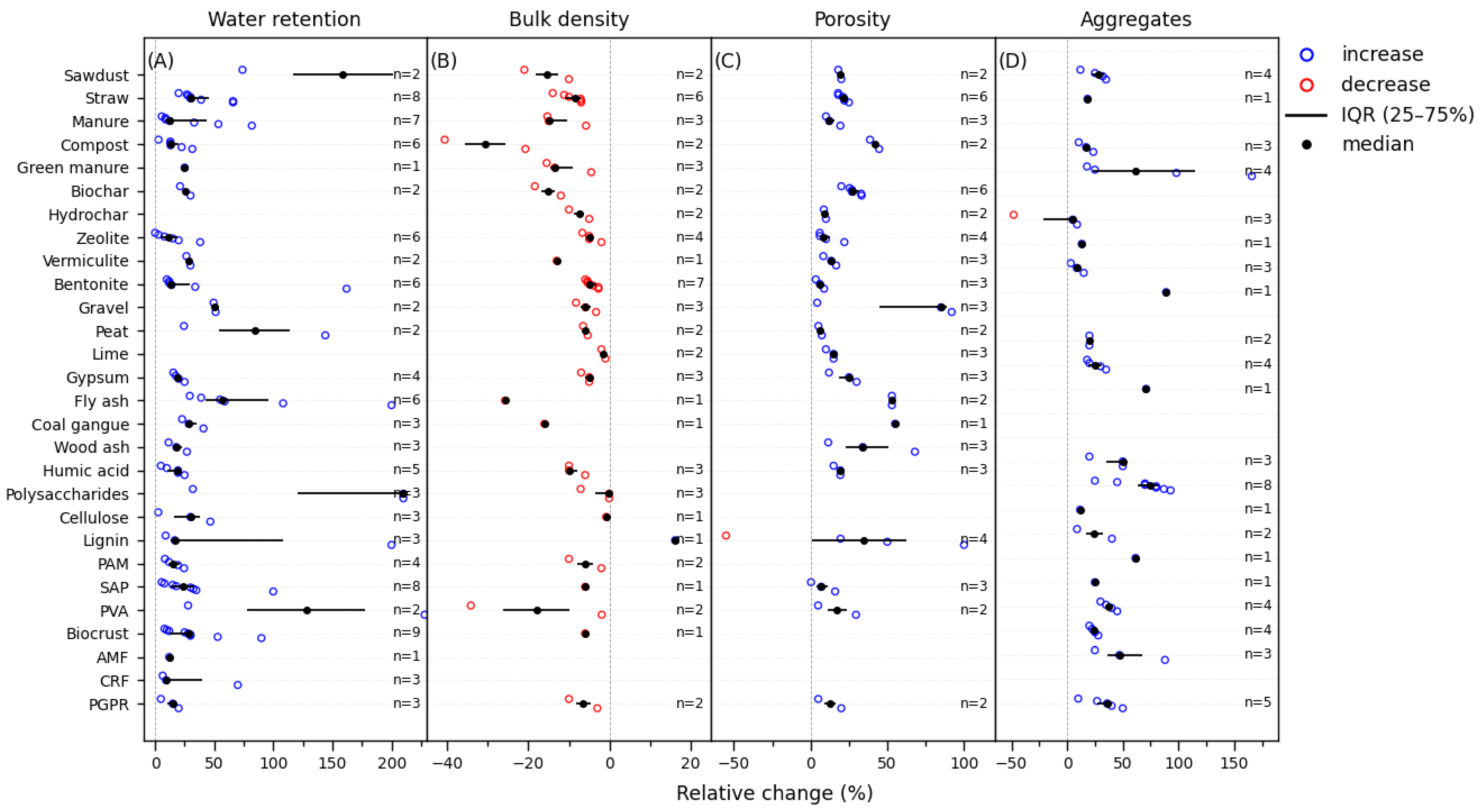
The soil texture governs water retention, nutrient supply, and root performance. In cold region croplands, such as Northeast China’s Mollisols and other high-latitude systems, amendments alter aggregates, porosity, bulk density, and water-holding capacity in ways that mitigate FT-induced degradation. Figure 1 illustrates reported changes in texture-related indicators after amendment application, showing consistent improvements across organic, inorganic, and biological materials.
Organic amendments such as straw return and livestock manure provide a durable “cement + skeleton” function under FT disturbance. Long-term straw return increases the proportion of water-stable aggregates, enhances the porosity, and lowers the BD by 5–15%, while simultaneously improving the hydrothermal conditions for spring crop emergence [73,84,85]. Compost and green manure combine labile carbon with root modifications, reducing compaction and increasing the field capacity even during drought [86].
Biochar is widely studied for its stabilizing role in cold soils. Applications typically decrease the BD by 5–18%, increase the porosity by 10–30% and increase the available water by >20% [31,87,88]. Field evidence shows that biochar mitigates FT-induced aggregate breakdown, although excessive fineness or high dosages may restrict aeration and reorganize pore networks [89,90,91].
Inorganic amendments act through ion exchange and flocculation. Structural liming has been shown to maintain aggregate stability for more than five years in cold clay soils [92,93], while gypsum improves saline–alkali soils by replacing Na+ with Ca2+, lowering the BD by 5–7% and improving infiltration [19,94]. Bentonite and vermiculite increased plant-available water by 10–160% and reduce the BD by 3–13% in semiarid Inner Mongolia, where severe winters exacerbate compaction [95].
Biological amendments such as PGPR consortia and AMF reshape rhizosphere microstructures. PGPR-secreted extracellular polymeric substances (EPS) cement fine particles and enhance pore connectivity, resulting in 10–50% increases in aggregation and 5–20% improvements in the water retention capacity [47,96]. AMF and glomalin-related proteins provide additional aggregate stability, while biological crusts in alpine meadows encapsulate surface fines, reducing erosion but sometimes limiting infiltration on the Qinghai–Tibet Plateau [97,98,99].

4.2.2. Soil Nutrients

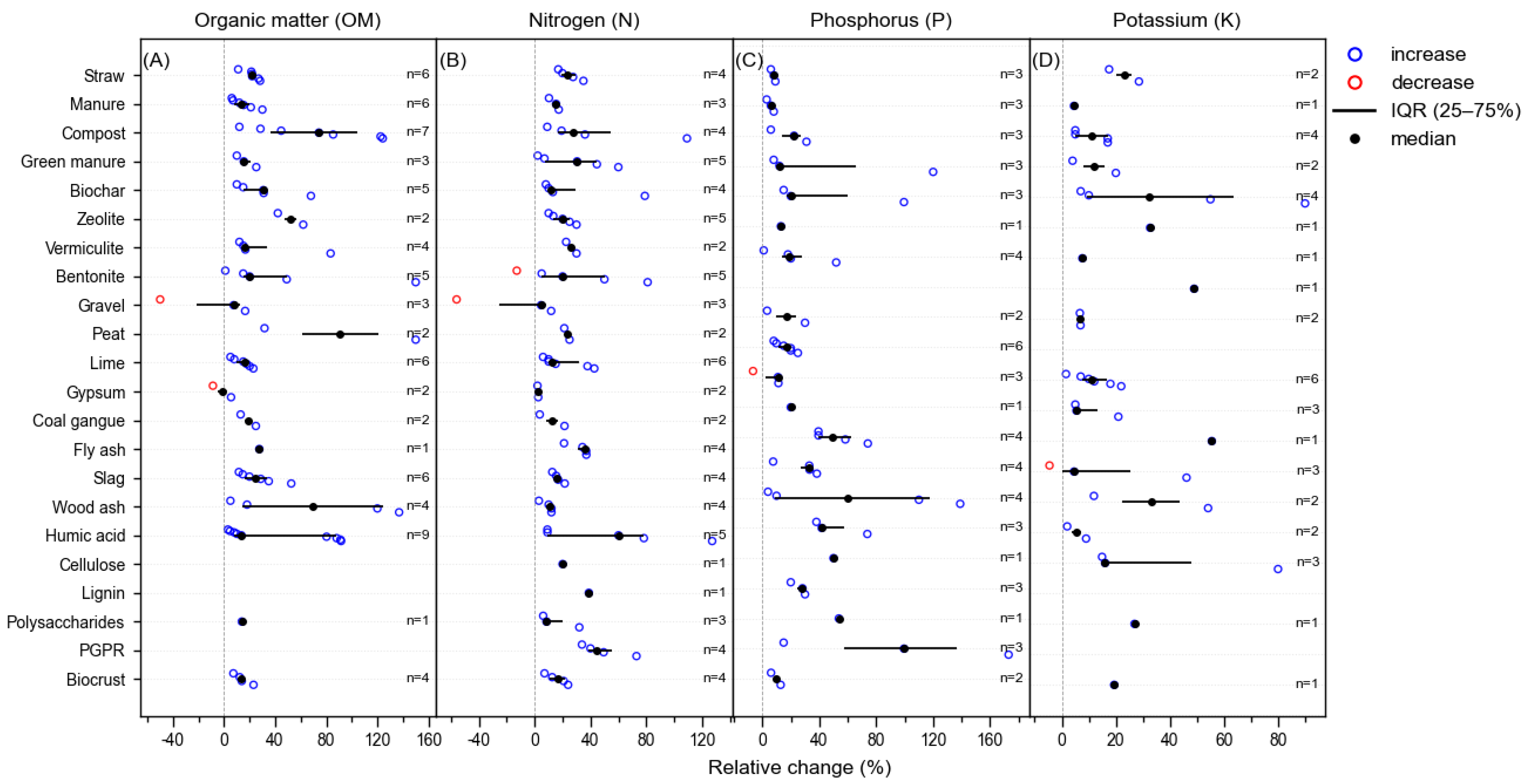
Nutrient availability is a critical constraint in cold soils because mineralization is suppressed at low temperatures, yet “pulse-like” release occurs during thaw. Figure 2 synthesizes observed modifications in soil organic matter (SOM), nitrogen (N), phosphorus (P), and potassium (K) following amendment applications.
Organic inputs (straw, manure, compost, green manure) consistently enhance SOM and nutrient stocks. In Northeast China, long-term manure application increased SOM by 6–30% and nitrogen by 10–17%, while compost produced gains of 12–124% in SOM and 9–109% in N [17,73]. At higher latitudes, digestate and compost raise P availability by stimulating microbial processes [17].
Biochar and hydrochar exert dual effects: alkaline ash and functional groups elevate P and K availability, while their porous skeletons reduce leaching during snowmelt [18]. In Mollisols, biochar raised the available P by up to 120% and K by 90%. Humic acids further stabilize nutrient cycling through complexation and adsorption, enhancing microbial efficiency under cold stress [100].
Mineral amendments such as zeolite and vermiculite improve nutrient use indirectly by increasing water retention and aeration [101,102,103]. Peat, rich in organic matter, raises SOM by up to 150% [104]. Bentonite demonstrates a capacity to adsorb NH4+ and NO3, occasionally reducing the available N, but, when combined with organic materials, it significantly enhances SOM formation and nitrogen cycling processes [105,106,107,108,109].
Industrial by-products show variable effects. Coal gangue increased SOM by 12.98–24.90% depending on the soil type and application rate [110,111], while steel slag improved P availability by reducing Al/Fe fixation [112].
Biological amendments are especially valuable under short growing seasons. PGPR fix N, solubilize P, and mobilize K, helping roots to recover after FT stress [96,113]. Arbuscular mycorrhizal fungi (AMF) enhance P uptake efficiency, while biological crusts in alpine ecosystems improve N retention and P cycling dynamics [98,99].
Synthetic polymers such as PAM and PVA reduce runoff losses of NPK during thaw by stabilizing aggregates and releasing solutes more gradually [64,67].

4.2.3. Soil pH

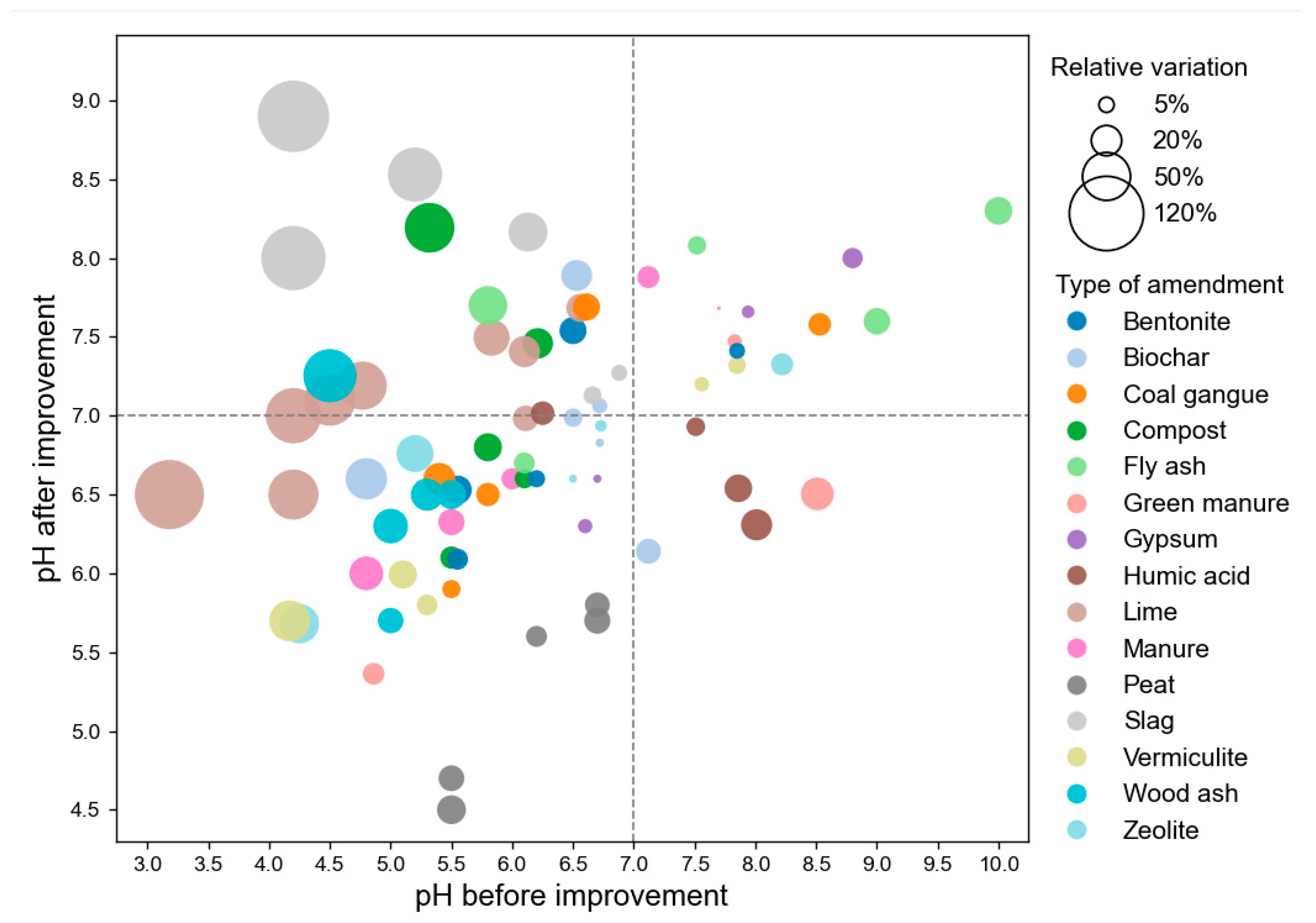
The soil pH is a critical determinant of nutrient bioavailability and microbial community function. Cold climate soils frequently exhibit acidification tendencies attributed to their inherently limited buffering capacities. Various soil amendments can effectively moderate pH levels, with the specific outcomes contingent upon both the material’s chemical properties and the existing edaphic conditions (Figure 3).
Carbonates and alkaline ash from manure and compost increase the soil pH by supplementing Ca2+, Mg2+, and K+ [114]. The pH-modulating effects of biochar are determined by the pyrolysis parameters: high-temperature-pyrolyzed biochar exhibits alkaline properties that neutralize soil acidity, whereas acid-functionalized biochar formulations reduce the pH in saline–alkali soil systems [115,116,117,118,119,120,121].
Inorganic materials such as lime, slag, and wood ash provide strong alkalinization. Lime raises the pH rapidly by neutralizing H+, while slag adds Si and base cations, sustaining long-term improvements [24,112,122,123,124]. Wood ash corrects acidity quickly but provides weaker long-term buffering [125,126,127]. Conversely, peat and humic acids lower the pH in alkaline soils by releasing organic acids and chelating cations [128,129,130,131,132,133].
Biological and synthetic amendments generally demonstrate limited efficacy in altering the bulk soil pH yet significantly influence rhizosphere microenvironmental acidity. PGPR and AMF adjust the pH locally via exudates, supporting root activity under snowmelt leaching [96,113].

4.2.4. Soil Heavy Metals

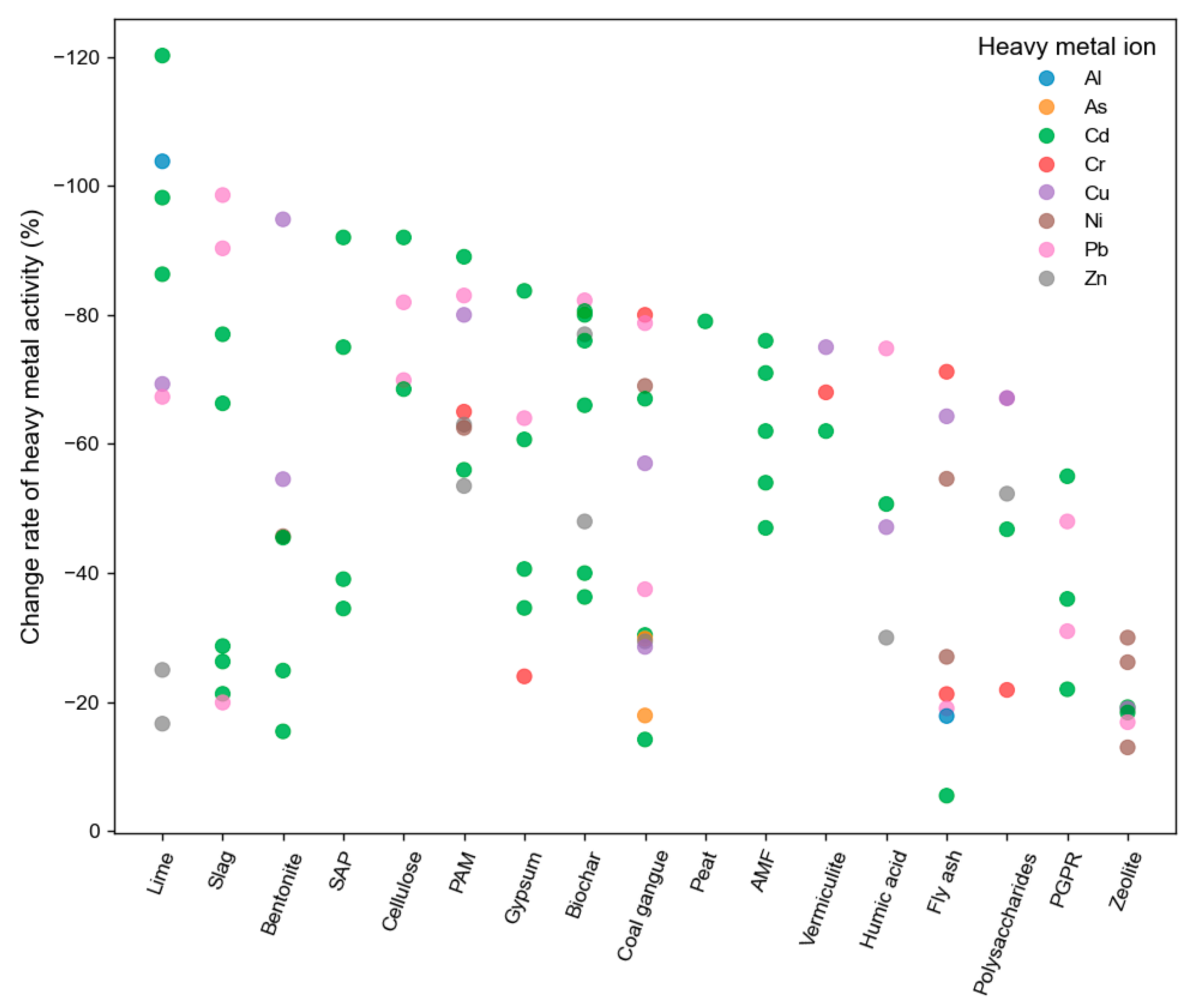
Cold soils, with slow weathering and weak buffering, often exhibit enhanced metal mobility under mild acidity, raising the risks of plant uptake and leaching. Figure 4 summarizes the immobilization capacities of representative amendments for Cd, Pb, Zn, Cr, Ni, and others.
Inorganic amendments such as lime, gypsum, zeolite, bentonite, and vermiculite immobilize metals by elevating the pH and increasing cation exchange. Long-term liming in Belgium reduced Cd in crops by over 80% [25], while zeolite amendments achieved >30% reductions in multiple metals in sandy loam soils [134]. Steel slag, fly ash, and coal gangue, rich in alkaline oxides, decreased Cd and Pb by up to 90%, but they require monitoring for secondary risks [112,135,136,137,138].
Organic amendments improve immobilization through alkalization and complexation. Biochar reduced Cd and Pb by ~80% and Zn by ~77% [139,140,141]. Humic substances and compost buffer Cu and other metals by forming stable complexes [68,142].
Biological and synthetic amendments are emerging tools. PGPR and AMF immobilize metals through exudates, EPS, and hyphal interactions, reducing Cd bioavailability by 22–76% [143,144,145,146]. Synthetic polymers like polyacrylamide (PAM) and superabsorbent polymers (SAP) demonstrate reduced mobility of Cd, Cr, and Pb, although their long-term stability requires further investigation [147].

5. Problems and Challenges

Although most reports on soil amendments in cold regions highlight positive outcomes, a closer examination reveals several unresolved problems and fundamental challenges. The apparent discrepancy arises because short-term experimental results under controlled conditions often mask longer-term trade-offs, site-specific variability, and interactions with FT dynamics. Understanding these limitations is crucial in refining amendment strategies.

5.1. Problems

Existing studies largely confirm the beneficial effects of soil amendments on soil structure, fertility, and biological activity in cold environments. Yet three recurring problems emerge when the results are examined across scales and longer timeframes.
First, short-lived effectiveness is a common issue. Many positive effects of organic amendments (e.g., straw, manure, compost) diminish rapidly in cold regions, where decomposition is slow and FT cycles disrupt aggregation. For example, the SOM gains reported in Northeast China after straw return decreased by nearly 30% within two winters, as aggregates broke down under repeated freezing [148,149]. Biochar offers longer stability, but its porosity may gradually cause clogging under FT conditions, reducing the water-holding capacity [150,151].
Second, variability across soil types and landscapes is striking. In Mollisols, biochar improved nutrient retention, whereas, in the sandy loams of Inner Mongolia, the same amendment showed negligible effects, likely due to weak cation exchange capacity and high leaching potential [152]. Similarly, lime improved the pH in acidic soils but aggravated sodicity in alkaline–saline soils by disrupting the ionic balance [153]. These inconsistencies indicate that one-size-fits-all amendment strategies are inappropriate in cold regions.
Third, unintended environmental risks remain insufficiently addressed. Industrial by-products such as fly ash, coal gangue, and steel slag supply alkaline oxides that immobilize metals, but they can also introduce trace contaminants [51,52,112,154,155]. Field surveys found elevated Cr and As in amended soils, raising concerns over long-term safety [156]. Likewise, heavy manure application increased greenhouse gas emissions (CH4 and N2O) during thawing, offsetting the fertility benefits [157].
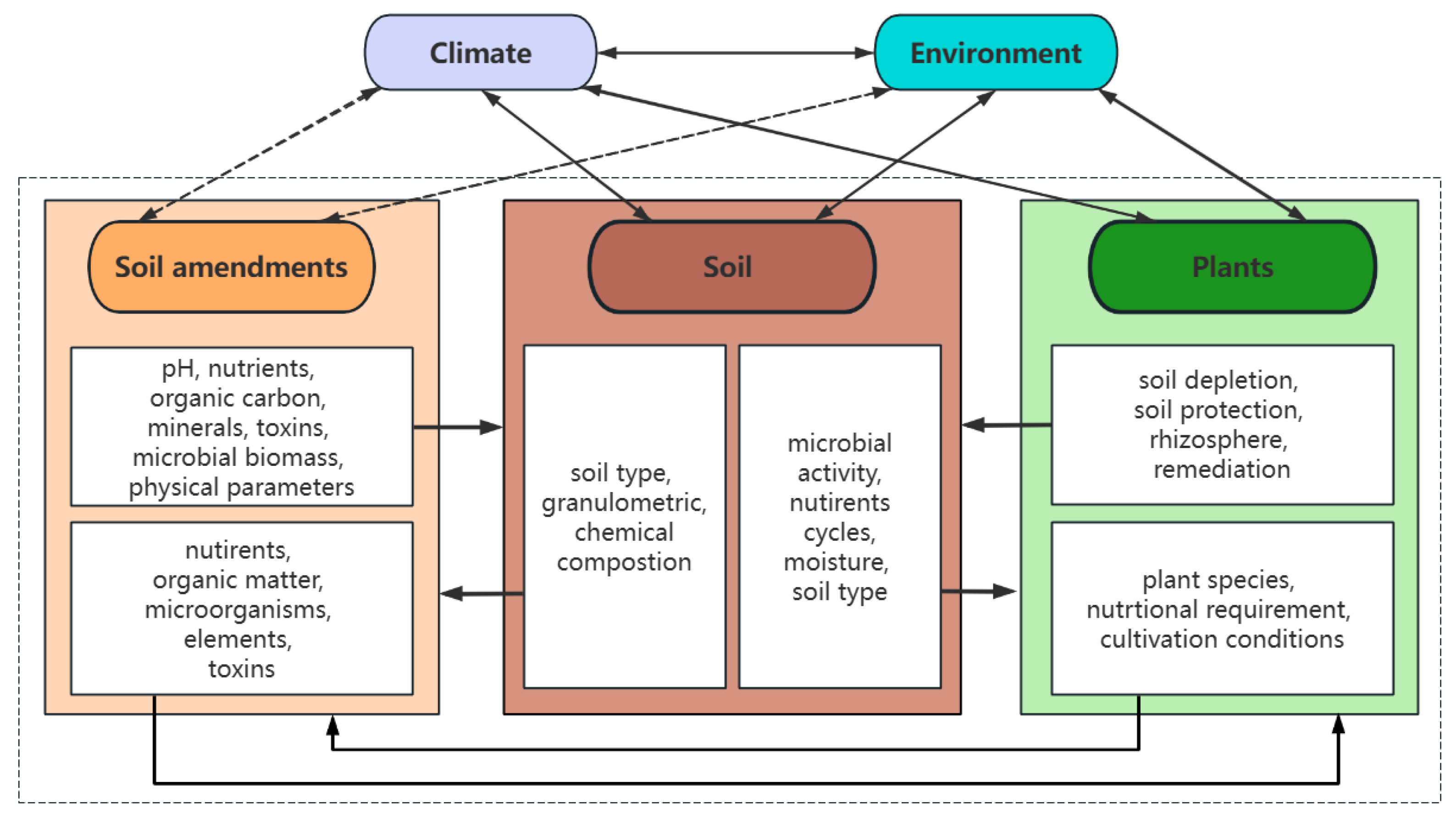
In addition, a more systemic problem lies in the current research paradigm: most soil amendment practices are still designed around single-directional effects, such as improving fertility or correcting the pH, without sufficiently integrating the broader climate–soil–vegetation interactions that shape outcomes in cold regions. As shown in Figure 5, soil amendments should be understood as part of an integrated system involving amendment properties, soil physicochemical processes, plant responses, and external climatic drivers. However, few studies explicitly address this coupling. The neglect of cross-scale linkages means that current improvement measures may deliver short-term gains while overlooking long-term sustainability, especially under climate change.

5.2. Challenges

Beyond the immediate problems described above, cold region soil amendments face broader and more structural challenges. The first challenge is the intrinsic limitation of the thermal regime. The soil temperature controls microbial activity, organic matter decomposition, and nutrient mineralization [158,159]. In cold regions, the accumulated temperatures are insufficient to sustain these processes over extended periods, resulting in short growing seasons and the reduced effectiveness of amendments [160,161,162]. For instance, meta-analyses show that, while amendments may yield 20–30% increases under favorable temperate conditions, their performance in high-latitude or boreal systems is much more modest, often below 10%, reflecting limitations imposed by low temperatures, short seasons, and slow microbial turnover [36,163,164].
The second challenge relates to FT disturbance, which continuously disrupts soil aggregates and pore networks. While amendments such as biochar and compost can mitigate these effects, their stabilizing influence is often outweighed by repeated FT cycles [88,165]. Field observations on the Qinghai–Tibet Plateau and in other high-altitude permafrost regions suggest that the gains in aggregate stability from organic inputs may be offset over subsequent winters with intense FT cycles, indicating that improvements may not persist without accounting for FT disturbances and the climatic context [166,167].
The third—and a particularly complex—challenge is how to increase the soil temperature for crop production without damaging underlying permafrost ecosystems. Warming soils through mulching, plastic films, or biochar can raise early-season temperatures by 1–2 °C, promoting germination and growth, although the magnitude varies with the soil depth, amendment rate, and moisture conditions [168,169,170,171]. However, in permafrost regions, such warming may accelerate thaw and destabilize ground ice, thereby triggering erosion and carbon release [172,173,174]. To balance these trade-offs, surface energy management is crucial. Experiments show that gravel–sand mulches can increase the near-surface soil temperature by 1.0–5.3 °C while modifying heat fluxes [175], and sand layers on the Qinghai–Tibet Plateau demonstrate a dual role, with thin covers protecting permafrost but thick layers intensifying thaw [176,177]. In addition, materials with high thermal resistance, such as bentonite, have been evaluated for thermal backfill and shown to buffer soil temperature fluctuations [178,179].
Fourth, there is a lack of integrated amendment–soil–vegetation frameworks that account for climatic and ecological feedbacks. Current amendment practices are mostly optimized for immediate agronomic outputs, yet long-term sustainability in cold regions requires balancing soil fertility with permafrost stability, greenhouse gas mitigation, and hydrological regulation [180,181]. This is particularly critical because soil warming not only benefits crops but may also alter snowmelt timing, percolation, and runoff, reshaping entire watershed functions [182,183].
In summary, the challenges of cold region soil amendments extend beyond material performance. Instead, they are deeply intertwined with climate constraints, thermal regimes, and ecosystem sensitivity. Addressing these challenges requires not only improving amendment design but also developing system-level strategies that jointly optimize soil fertility, vegetation growth, and permafrost protection under a changing climate.

6. Recommendations and Countermeasures

Cold region soil amendments present both immediate opportunities and systemic challenges. Addressing these requires a shift from single-purpose interventions toward integrated, adaptive, and multi-scale frameworks. Based on the review of the amendment categories, applications, and limitations, several strategic recommendations can be articulated to guide future research, practice, and policy.

6.1. Prescription Portfolios Using Local Resources

Cold regions’ heterogeneity in texture, pH, nutrient status, and FT exposure makes one-size-fits-all approaches ineffective. Portfolios should therefore tailor amendment types, rates, and combinations to the local pedology and thermal regime, with explicit attention to how prescriptions will perform across short field windows.
For bulky, low-unit-value materials, the binding constraint is the delivered cost to field, not the purchase price. The delivered cost reflects raw materials plus preprocessing/stabilization (e.g., grinding, aging, co-composting) and transport/handling, net of any by-product credits. Options should be compared on an effect-normalized basis—e.g., USD per unit liming value for acidity correction, USD per mm plant-available water gained or per % bulk density decrease for structure targets, USD per mg·kg−1 reduction in DTPA metals for immobilization, or USD per kg available nutrient for co-benefits—so that logistics and agronomic efficacy are evaluated on the same scale.
To minimize haul distances and season-sensitive risks (frozen roads, thaw restrictions), sourcing should follow a pragmatic hierarchy: on-farm residues → district/municipal organics (compost/digestate) → nearby minerals or industrial by-products (bentonite/zeolite, gypsum, steel/wood ash, coal gangue) → imported specialty products. This hierarchy should be aligned with the storage capacity, moisture/bulk density constraints, and the timing of application windows.
Before field use, it is necessary to adopt a tiered protocol: rapid lab assays for nutrients, buffering capacity, EC/salinity, and contaminants (trace metals, PAHs/organics); targeted stabilization where needed (co-composting/aging for biobased materials; washing/aging for hydrochar or ash to reduce leachables); and local dose–response validation under the site’s FT intensity. For industrial by-products, leaching tests and particle size control should be included to balance efficacy with environmental safety.
Prescriptions can be sequenced across seasons—rapid correction (lime/gypsum) → structural stabilization and water retention (biochar, bentonite/zeolite, preferably with local compost) → biological consolidation (PGPR/AMF, compost/digestate)—to build resilience while respecting supply chains and narrow operating windows. When two options perform similarly, it is recommended to select the material with a shorter haul distance, lower preprocessing needs, and a greater effect per tonne.

6.2. Coupled Engineering and Environmental Safeguards

Cold regions face a dual objective: raise the near-surface fertility and temperature for crops while protecting permafrost and water quality. Coupled measures align amendments with land surface engineering—e.g., gravel–sand or mulch layers to shape the surface energy balance; albedo management to limit excess summer heat; thermal buffer layers (bentonite backfill) to dampen subsurface fluctuations. These benefits must be bounded by explicit safeguards: permafrost stability (active layer thickness), spring GHG events (especially N2O), and meltwater DOC/TN/TP losses. Where industrial by-products are used, they should be applied only when leaching risks are negligible. Lifecycle assessment (LCA) should be used to screen net energy/emission trade-offs, and “do-no-harm” rules should trigger dose reduction, material substitution, or cover adjustments when thresholds are exceeded.

6.3. MRV + Multi-Scale Modeling for Adaptive Management

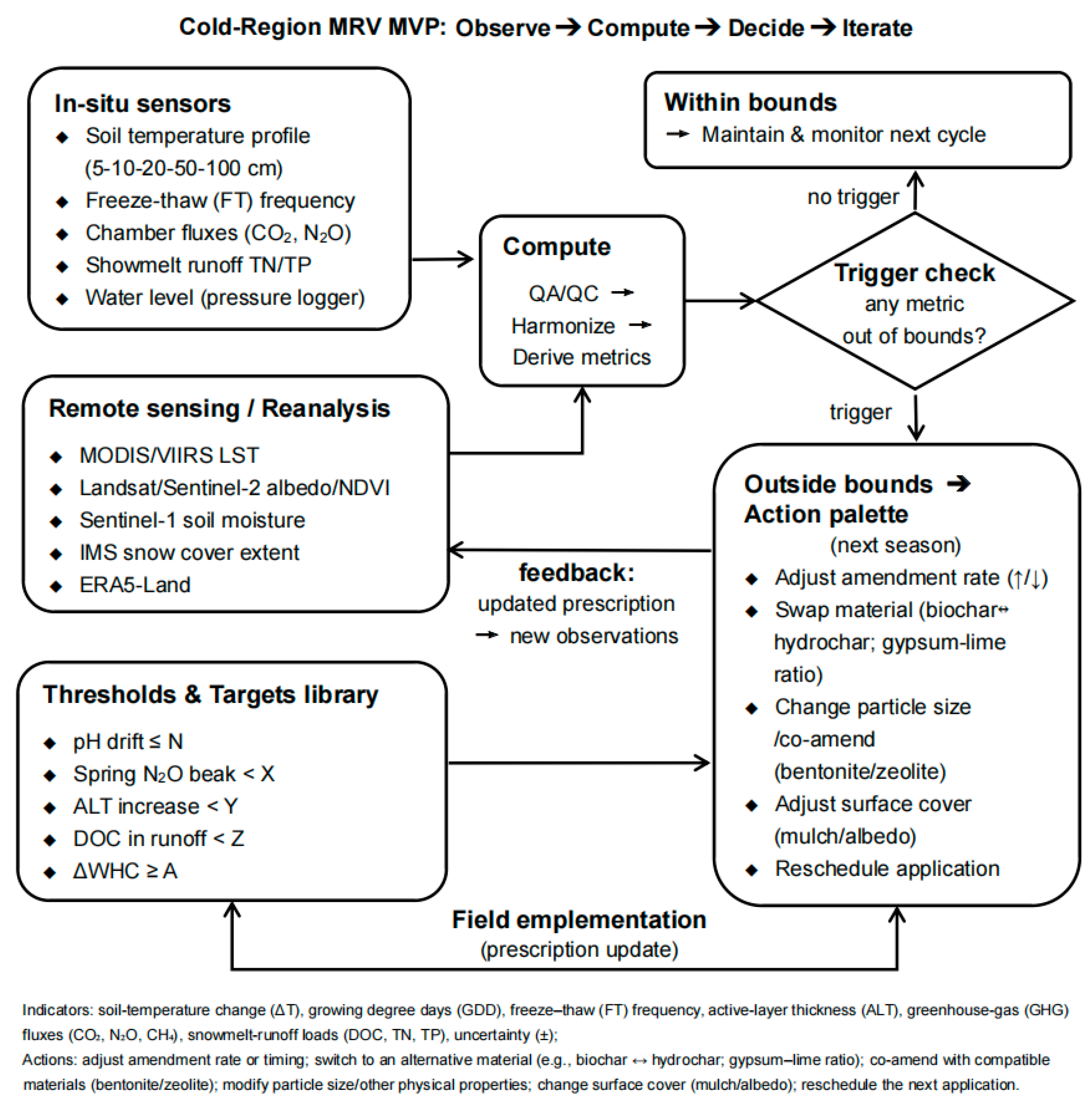
Figure 6 presents a minimum-viable MRV loop for cold regions: in situ sensors and Earth observation/reanalysis feed QA/QC → harmonization → derived metrics (ΔT, GDD, FT frequency, active layer thickness, spring GHG peaks, meltwater loads). We agree that more “actionable” MRV guidance would be useful; however, based on the current evidence base, we intentionally frame the MRV component as an adaptive, evidence-informed workflow rather than a fixed prescription. Amendment studies are highly heterogeneous in terms of material type, rate, soil background, and study design (field vs. laboratory), and the subset explicitly conducted under cold region constraints remains comparatively limited. Therefore, a single universal checklist or fixed sampling frequency could be overly specific and potentially misleading.
In this review, the “Thresholds and Targets Library” in Figure 6 is intended to provide indicative bounds that can be initialized from literature-reported ranges and refined using site baselines. For example, the reported application rates in cold region studies often span 1–50 t·ha−1 for organic amendments (frequently 5–20 t·ha−1 in field trials) and 0.5–10 t·ha−1 for lime/alkaline mineral materials, while monitoring durations commonly cover one growing season to 1–3 years, with fewer studies extending beyond 3–5 years. These ranges are presented to improve transparency (what has been tested) and to define plausible operating envelopes for the trigger check step—not to imply an optimal rate or schedule.
Accordingly, if any metric trends outside locally defined bounds, decisions are routed to an action palette (e.g., adjust rate/timing, switch/co-amend materials, modify surface cover/albedo, reschedule application), followed by field implementation and seasonal feedback. Where feasible, rapid assays (e.g., enzyme activity, microbial respiration, labile-C pools) can be added as proximal indicators, while hydrothermal constraints and FT dynamics remain priorities in permafrost-affected settings.

6.4. Policy, Incentives, and Institutional Pathways

Mainstreaming amendment portfolios requires coherent policy instruments and institutional support. Demonstrated levers encompass transport/processing subsidies for bulk materials, risk-sharing mechanisms for pioneer adopters, and certification frameworks guaranteeing safety and efficacy. Soil health indicators and cold region MRV results should be embedded in agricultural and climate policies to align incentives. Cross-sector collaboration—research, extension services, local governments, industry, and farmers—can accelerate deployment through living labs and open data platforms. Embedding amendments within integrated soil–ecosystem management paradigms transforms practices rom isolated interventions toward systems approaches that concurrently address fertility enhancement, permafrost stabilization, and ecosystem service optimization.

Supplementary Materials

The following supporting information can be downloaded at https://www.mdpi.com/article/10.3390/agriculture16030326/s1. Supplementary Table S1. Multinational soil strategy guide.

Author Contributions

Conceptualization, Z.M. and J.C.; validation, J.C. and S.Z.; formal analysis, Z.M.; investigation, Z.M. and R.S.; resources, S.Z. and T.D.; data curation, Z.M.; writing—original draft preparation, Z.M. and R.S.; writing—review and editing, J.C. and Y.Z.; visualization, Z.M.; supervision, J.C. and J.Z.; project administration, J.C.; funding acquisition, J.C. All authors have read and agreed to the published version of the manuscript.

Funding

This research was funded by the National Key Research and Development Program of China (2022YFF1302601), the Complete Set of Technologies for Ecological Restoration of Sandy Land along the Golmud–Lhasa Section of the Qinghai–Tibet Railway (QZ2022-Z01), and the Ecological Treatment of Solid Waste Coal Gangue in High Cold Regions and Its Application in Degraded and Desertified Grasslands (2023-1-46) project.

Data Availability Statement

No new data were created or analyzed in this study. Data sharing is not applicable to this article.

Acknowledgments

We thank the China Railway Qinghai–Tibet Group Co., Ltd., Lanzhou Municipal Bureau of Science and Technology, and the Northwest Institute of Eco-Environment and Resources, Chinese Academy of Sciences for their support. We are grateful to the academic editors and anonymous reviewers for their valuable opinions and comments.

Conflicts of Interest

Authors Shouhong Zhang, Tianchun Dong, and Yaojun Zhao were employed by the China Railway Qinghai-Tibet Group Co., Ltd. The remaining authors declare that the research was conducted in the absence of any commercial or financial relationships.

References

  1. UNCCD. Global Land Outlook, Land Restoration for Recovery and Resilience, 2nd ed.; UNCCD: Bonn, Germany, 2022. [Google Scholar]
  2. Huang, Y.; Zhang, L.; Li, Y.; Ren, C.; Pan, T.; Zhang, W.; Zhang, F.; Li, C.; Gu, J.; Liu, J. Characteristics of the Northern Hemisphere Cold Regions Changes from 1901 to 2019. Sci. Rep. 2023, 13, 3879. [Google Scholar] [CrossRef]
  3. Shi, Y.; Zhang, L.; Mu, Y.; Ma, W.; Kong, X.; Yang, C. Dynamic Characteristics of Soil Pore Structure and Water-Heat Variations during Freeze-Thaw Process. Eng. Geol. 2024, 343, 107785. [Google Scholar] [CrossRef]
  4. Leuther, F.; Schlüter, S. Impact of Freeze–Thaw Cycles on Soil Structure and Soil Hydraulic Properties. Soil 2021, 7, 179–191. [Google Scholar] [CrossRef]
  5. Han, Y.; Wang, Q.; Niu, C.; Fu, H.; Liu, J.; Han, M.; Lin, S.; Ammar, M. Failure Mode and Genesis of Bare Dispersive Soil Slope in the Cold Dry Region: Insights from Southwest Songnen Plain, China. Bull. Eng. Geol. Environ. 2022, 81, 500. [Google Scholar] [CrossRef]
  6. Ping, C.L.; Jastrow, J.D.; Jorgenson, M.T.; Michaelson, G.J.; Shur, Y.L. Permafrost Soils and Carbon Cycling. Soil 2015, 1, 147–171. [Google Scholar] [CrossRef]
  7. Gharemahmudli, S.; Sadeghi, S.H.; Najafinejad, A.; Zarei Darki, B.; Kheirfam, H.; Mohammadian Behbahani, A. Changes in Overall and Inter-Variability of Runoff and Soil Loss for a Loess Soil Resulted from a Freezing–Thawing Cycle. Environ. Monit. Assess. 2023, 195, 860. [Google Scholar] [CrossRef]
  8. Wu, T.; Wang, D.; Mu, C.; Zhang, W.; Zhu, X.; Zhao, L.; Li, R.; Hu, G.; Zou, D.; Chen, J.; et al. Storage, Patterns, and Environmental Controls of Soil Organic Carbon Stocks in the Permafrost Regions of the Northern Hemisphere. Sci. Total Environ. 2022, 828, 154464. [Google Scholar] [CrossRef] [PubMed]
  9. Smith, P.; Poch, R.M.; Lobb, D.A.; Bhattacharyya, R.; Alloush, G.; Eudoxie, G.D.; Anjos, L.H.C.; Castellano, M.; Ndzana, G.M.; Chenu, C.; et al. Status of the World’s Soils. Annu. Rev. Environ. Resour. 2024, 49, 73–104. [Google Scholar] [CrossRef]
  10. FAO. Fao Status of the World’s Soil Resources: Main Report; FAO: Rome, Italy; ITPS: Rome, Italy, 2015; ISBN 978-92-5-109004-6. [Google Scholar]
  11. Cees, P. Veerman Activity Update of the Mission Board of European Union on Soil Health and Food. Soil Environ. Health 2023, 1, 100018. [Google Scholar] [CrossRef]
  12. Duan, J.; Kuang, N.; Gao, L. International Practices in Black Soil Conservation and China’s Lessons. Chin. J. Eco-Agric. 2025, 33, 2118−2127. [Google Scholar] [CrossRef]
  13. Danilov-Danilyan, V.I.; Klyuev, N.N.; Kotlyakov, V.M. Russia in the Global Natural and Ecological Space. Reg. Res. Russ. 2023, 13, 34–57. [Google Scholar] [CrossRef]
  14. Omondi, M.O.; Xia, X.; Nahayo, A.; Liu, X.; Korai, P.K.; Pan, G. Quantification of Biochar Effects on Soil Hydrological Properties Using Meta-Analysis of Literature Data. Geoderma 2016, 274, 28–34. [Google Scholar] [CrossRef]
  15. Garbowski, T.; Bar-Michalczyk, D.; Charazińska, S.; Grabowska-Polanowska, B.; Kowalczyk, A.; Lochyński, P. An Overview of Natural Soil Amendments in Agriculture. Soil Tillage Res. 2023, 225, 105462. [Google Scholar] [CrossRef]
  16. Schmidt, H.-P.; Kammann, C.; Hagemann, N.; Leifeld, J.; Bucheli, T.D.; Monedero, M.A.S.; Cayuela, M.L. Biochar in Agriculture—A Systematic Review of 26 Global Meta-analyses. Glob. Change Biol. Bioenergy 2021, 13, 1708–1730. [Google Scholar] [CrossRef]
  17. Dai, Z.; Zhang, Y.; Wei, Y.; Cai, C. Impacts of Long-Term Organic Manure Inputs on Cultivated Soils with Various Degradation Degrees. Soil Tillage Res. 2024, 236, 105950. [Google Scholar] [CrossRef]
  18. Joona, J.; Liski, E.; Kahiluoto, H. Manure Increases Soil Organic Carbon Most When Allocated to Annual Cropping. Catena 2024, 238, 107844. [Google Scholar] [CrossRef]
  19. Zoca, S.M.; Penn, C. Chapter One—An Important Tool with No Instruction Manual: A Review of Gypsum Use in Agriculture. In Advances in Agronomy; Sparks, D.L., Ed.; Academic Press: Cambridge, MA, USA, 2017; Volume 144, pp. 1–44. [Google Scholar]
  20. Palansooriya, K.N.; Shaheen, S.M.; Chen, S.S.; Tsang, D.C.W.; Hashimoto, Y.; Hou, D.; Bolan, N.S.; Rinklebe, J.; Ok, Y.S. Soil Amendments for Immobilization of Potentially Toxic Elements in Contaminated Soils: A Critical Review. Environ. Int. 2020, 134, 105046. [Google Scholar] [CrossRef] [PubMed]
  21. Wang, L.; Ok, Y.S.; Tsang, D.C.W.; Alessi, D.S.; Rinklebe, J.; Mašek, O.; Bolan, N.S.; Hou, D. Biochar Composites: Emerging Trends, Field Successes and Sustainability Implications. Soil Use Manag. 2022, 38, 14–38. [Google Scholar] [CrossRef]
  22. Bolan, N.; Kunhikrishnan, A.; Thangarajan, R.; Kumpiene, J.; Park, J.; Makino, T.; Kirkham, M.B.; Scheckel, K. Remediation of Heavy Metal(Loid)s Contaminated Soils—To Mobilize or to Immobilize? J. Hazard. Mater. 2014, 266, 141–166. [Google Scholar] [CrossRef]
  23. Niaz, S.; Wehr, J.B.; Dalal, R.C.; Kopittke, P.M.; Menzies, N.W. Organic Amendments and Gypsum Reduce Dispersion and Increase Aggregation of Two Sodic Vertisols. Geoderma 2022, 425, 116047. [Google Scholar] [CrossRef]
  24. Hazarika, S.; Nabam, A.; Thakuria, D.; Kataki, S.; Krishnappa, R. Lime Equivalence of Organic Manures and Scope of Their Utilization as Acid Soil Amendments. Arch. Agron. Soil Sci. 2021, 67, 660–674. [Google Scholar] [CrossRef]
  25. Ruttens, A.; Adriaensen, K.; Meers, E.; De Vocht, A.; Geebelen, W.; Carleer, R.; Mench, M.; Vangronsveld, J. Long-Term Sustainability of Metal Immobilization by Soil Amendments: Cyclonic Ashes versus Lime Addition. Environ. Pollut. 2010, 158, 1428–1434. [Google Scholar] [CrossRef]
  26. Liu, X.; Mei, S.; Salles, J.F. Inoculated Microbial Consortia Perform Better than Single Strains in Living Soil: A Meta-Analysis. Appl. Soil Ecol. 2023, 190, 105011. [Google Scholar] [CrossRef]
  27. Li, J.; Wang, J.; Liu, H.; Macdonald, C.A.; Singh, B.K. Application of Microbial Inoculants Significantly Enhances Crop Productivity: A Meta-analysis of Studies from 2010 to 2020. J. Sustain. Agric. Environ. 2022, 1, 216–225. [Google Scholar] [CrossRef]
  28. Koziol, L.; McKenna, T.P.; Bever, J.D. Meta-analysis Reveals Globally Sourced Commercial Mycorrhizal Inoculants Fall Short. New Phytol. 2025, 246, 821–827. [Google Scholar] [CrossRef]
  29. O’Callaghan, M.; Ballard, R.A.; Wright, D. Soil Microbial Inoculants for Sustainable Agriculture: Limitations and Opportunities. Soil Use Manag. 2022, 38, 1340–1369. [Google Scholar] [CrossRef]
  30. Chang, L.; Xu, L.; Liu, Y.; Qiu, D. Superabsorbent Polymers Used for Agricultural Water Retention. Polym. Test. 2021, 94, 107021. [Google Scholar] [CrossRef]
  31. Premarathna, K.S.D.; Rajapaksha, A.U.; Sarkar, B.; Kwon, E.E.; Bhatnagar, A.; Ok, Y.S.; Vithanage, M. Biochar-Based Engineered Composites for Sorptive Decontamination of Water: A Review. Chem. Eng. J. 2019, 372, 536–550. [Google Scholar] [CrossRef]
  32. USDA. Conservation Practice Standard Soil Carbon Amendment (Code 336); USDA: Washington, DC, USA, 2022.
  33. Liu, W.; Yang, Z.; Ye, Q.; Peng, Z.; Zhu, S.; Chen, H.; Liu, D.; Li, Y.; Deng, L.; Shu, X.; et al. Positive Effects of Organic Amendments on Soil Microbes and Their Functionality in Agro-Ecosystems. Plants 2023, 12, 3790. [Google Scholar] [CrossRef] [PubMed]
  34. Ma, S.; Cao, Y.; Lu, J.; Ren, T.; Cong, R.; Lu, Z.; Zhu, J.; Li, X. Response of Soil Aggregation and Associated Organic Carbon to Organic Amendment and Its Controls: A Global Meta-Analysis. Catena 2024, 237, 107774. [Google Scholar] [CrossRef]
  35. Cui, J.; Yang, B.; Zhang, M.; Song, D.; Xu, X.; Ai, C.; Liang, G.; Zhou, W. Investigating the Effects of Organic Amendments on Soil Microbial Composition and Its Linkage to Soil Organic Carbon: A Global Meta-Analysis. Sci. Total Environ. 2023, 894, 164899. [Google Scholar] [CrossRef]
  36. Zhang, S.; Zhu, Q.; de Vries, W.; Ros, G.H.; Chen, X.; Muneer, M.A.; Zhang, F.; Wu, L. Effects of Soil Amendments on Soil Acidity and Crop Yields in Acidic Soils: A World-Wide Meta-Analysis. J. Environ. Manag. 2023, 345, 118531. [Google Scholar] [CrossRef]
  37. Jin, Y.; Yuan, Y.; Liu, Z.; Gai, S.; Cheng, K.; Yang, F. Effect of Humic Substances on Nitrogen Cycling in Soil-Plant Ecosystems: Advances, Issues, and Future Perspectives. J. Environ. Manag. 2024, 351, 119738. [Google Scholar] [CrossRef]
  38. Kambo, H.S.; Dutta, A. A Comparative Review of Biochar and Hydrochar in Terms of Production, Physico-Chemical Properties and Applications. Renew. Sustain. Energy Rev. 2015, 45, 359–378. [Google Scholar] [CrossRef]
  39. Wei, B.; Peng, Y.; Lin, L.; Zhang, D.; Ma, L.; Jiang, L.; Li, Y.; He, T.; Wang, Z. Drivers of Biochar-Mediated Improvement of Soil Water Retention Capacity Based on Soil Texture: A Meta-Analysis. Geoderma 2023, 437, 116591. [Google Scholar] [CrossRef]
  40. Bona, D.; Bertoldi, D.; Borgonovo, G.; Mazzini, S.; Ravasi, S.; Silvestri, S.; Zaccone, C.; Giannetta, B.; Tambone, F. Evaluating the Potential of Hydrochar as a Soil Amendment. Waste Manag. 2023, 159, 75–83. [Google Scholar] [CrossRef] [PubMed]
  41. Abbott, L.K.; Macdonald, L.M.; Wong, M.T.F.; Webb, M.J.; Jenkins, S.N.; Farrell, M. Potential Roles of Biological Amendments for Profitable Grain Production—A Review. Agric. Ecosyst. Environ. 2018, 256, 34–50. [Google Scholar] [CrossRef]
  42. Al-Hazmi, N.E.; Naguib, D.M. Agricultural Wastes Polysaccharides Promising Soil Fertilizer Improves Plant Growth and Resistance against Soil-Borne Pathogens. Plant Soil 2024, 495, 675–697. [Google Scholar] [CrossRef]
  43. Cao, Y.; He, Z.; Zhu, T.; Zhao, F. Organic-C Quality as a Key Driver of Microbial Nitrogen Immobilization in Soil: A Meta-Analysis. Geoderma 2021, 383, 114784. [Google Scholar] [CrossRef]
  44. Clocchiatti, A.; Hannula, S.E.; Rizaludin, M.S.; Hundscheid, M.P.J.; Klein Gunnewiek, P.J.A.; Schilder, M.T.; Postma, J.; de Boer, W. Impact of Cellulose-Rich Organic Soil Amendments on Growth Dynamics and Pathogenicity of Rhizoctonia Solani. Microorganisms 2021, 9, 1285. [Google Scholar] [CrossRef]
  45. Zhang, T.; Cai, G.; Liu, S. Assessment of Mechanical Properties in Recycled Lignin-Stabilized Silty Soil as Base Fill Material. J. Clean. Prod. 2018, 172, 1788–1799. [Google Scholar] [CrossRef]
  46. Enesi, R.O.; Dyck, M.; Chang, S.; Thilakarathna, M.S.; Fan, X.; Strelkov, S.; Gorim, L.Y. Liming Remediates Soil Acidity and Improves Crop Yield and Profitability—A Meta-Analysis. Front. Agron. 2023, 5, 1194896. [Google Scholar] [CrossRef]
  47. Javaid, A.; Munir, N.; Abideen, Z.; Siddiqui, Z.S.; Yong, J.W.H. The Role of Natural and Synthetic Zeolites as Soil Amendments for Mitigating the Negative Impacts of Abiotic Stresses to Improve Agricultural Resilience. Plant Stress 2024, 14, 100627. [Google Scholar] [CrossRef]
  48. Mumpton, F.A. La Roca Magica: Uses of Natural Zeolites in Agriculture and Industry. Proc. Natl. Acad. Sci. USA 1999, 96, 3463–3470. [Google Scholar] [CrossRef]
  49. Das, S.; Gwon, H.S.; Khan, M.I.; Jeong, S.T.; Kim, P.J. Steel Slag Amendment Impacts on Soil Microbial Communities and Activities of Rice (Oryza sativa L.). Sci. Rep. 2020, 10, 6746. [Google Scholar] [CrossRef]
  50. Goswami, V.; Deepika, S.; Sharma, P.; Kothamasi, D. Recycling Steel Slag as Fertiliser Proxy in Agriculture Is Good Circular Economy but Disrupts Plant Microbial Symbioses in the Soil. Sci. Total Environ. 2024, 954, 176750. [Google Scholar] [CrossRef]
  51. Horvatinec, J.; Buczny, J.; Ondrasek, G. Fly Ash Application Impacts Master Physicochemical Pedovariables: A Multilevel Meta-Analysis. J. Environ. Manag. 2024, 368, 122066. [Google Scholar] [CrossRef]
  52. Zhao, G.; Wu, T.; Ren, G.; Zhu, Z.; Gao, Y.; Shi, M.; Ding, S.; Fan, H. Reusing Waste Coal Gangue to Improve the Dispersivity and Mechanical Properties of Dispersive Soil. J. Clean. Prod. 2023, 404, 136993. [Google Scholar] [CrossRef]
  53. Baloch, S.B.; Ali, S.; Bernas, J.; Moudrý, J.; Konvalina, P.; Mushtaq, Z.; Murindangabo, Y.T.; Onyebuchi, E.F.; Baloch, F.B.; Ahmad, M.; et al. Wood Ash Application for Crop Production, Amelioration of Soil Acidity and Contaminated Environments. Chemosphere 2024, 357, 141865. [Google Scholar] [CrossRef] [PubMed]
  54. Romdhane, L.; Ebinezer, L.B.; Panozzo, A.; Barion, G.; Dal Cortivo, C.; Radhouane, L.; Vamerali, T. Effects of Soil Amendment with Wood Ash on Transpiration, Growth, and Metal Uptake in Two Contrasting Maize (Zea mays L.) Hybrids to Drought Tolerance. Front. Plant Sci. 2021, 12, 661909. [Google Scholar] [CrossRef]
  55. Oleńska, E.; Małek, W.; Wójcik, M.; Swiecicka, I.; Thijs, S.; Vangronsveld, J. Beneficial Features of Plant Growth-Promoting Rhizobacteria for Improving Plant Growth and Health in Challenging Conditions: A Methodical Review. Sci. Total Environ. 2020, 743, 140682. [Google Scholar] [CrossRef]
  56. Backer, R.; Rokem, J.S.; Ilangumaran, G.; Lamont, J.; Praslickova, D.; Ricci, E.; Subramanian, S.; Smith, D.L. Plant Growth-Promoting Rhizobacteria: Context, Mechanisms of Action, and Roadmap to Commercialization of Biostimulants for Sustainable Agriculture. Front. Plant Sci. 2018, 9, 1473. [Google Scholar] [CrossRef]
  57. Herrmann, M.N.; Wang, Y.; Hartung, J.; Hartmann, T.; Zhang, W.; Nkebiwe, P.M.; Chen, X.; Müller, T.; Yang, H. A Global Network Meta-Analysis of the Promotion of Crop Growth, Yield, and Quality by Bioeffectors. Front. Plant Sci. 2022, 13, 816438. [Google Scholar] [CrossRef]
  58. Lutz, S.; Bodenhausen, N.; Hess, J.; Valzano-Held, A.; Waelchli, J.; Deslandes-Hérold, G.; Schlaeppi, K.; van der Heijden, M.G.A. Soil Microbiome Indicators Can Predict Crop Growth Response to Large-Scale Inoculation with Arbuscular Mycorrhizal Fungi. Nat. Microbiol. 2023, 8, 2277–2289. [Google Scholar] [CrossRef] [PubMed]
  59. Garrido-Sanz, D.; Čaušević, S.; Vacheron, J.; Heiman, C.M.; Sentchilo, V.; van der Meer, J.R.; Keel, C. Changes in Structure and Assembly of a Species-Rich Soil Natural Community with Contrasting Nutrient Availability upon Establishment of a Plant-Beneficial Pseudomonas in the Wheat Rhizosphere. Microbiome 2023, 11, 214. [Google Scholar] [CrossRef] [PubMed]
  60. Francioli, D.; Kampouris, I.D.; Kuhl-Nagel, T.; Babin, D.; Sommermann, L.; Behr, J.H.; Chowdhury, S.P.; Zrenner, R.; Moradtalab, N.; Schloter, M.; et al. Microbial Inoculants Modulate the Rhizosphere Microbiome, Alleviate Plant Stress Responses, and Enhance Maize Growth at Field Scale. Genome Biol. 2025, 26, 148. [Google Scholar] [CrossRef]
  61. Zhou, Y.; Liu, D.; Li, F.; Dong, Y.; Jin, Z.; Liao, Y.; Li, X.; Peng, S.; Delgado-Baquerizo, M.; Li, X. Superiority of Native Soil Core Microbiomes in Supporting Plant Growth. Nat. Commun. 2024, 15, 6599. [Google Scholar] [CrossRef]
  62. Sojka, R.E.; Bjorneberg, D.L.; Entry, J.A.; Lentz, R.D.; Orts, W.J. Polyacrylamide in Agriculture and Environmental Land Management. In Advances in Agronomy; Elsevier: Amsterdam, The Netherlands, 2007; Volume 92, pp. 75–162. ISBN 978-0-12-373686-4. [Google Scholar]
  63. Kebede, B.; Tsunekawa, A.; Haregeweyn, N.; Tsubo, M.; Mulualem, T.; Mamedov, A.I.; Meshesha, D.T.; Adgo, E.; Fenta, A.A.; Ebabu, K.; et al. Effect of Polyacrylamide Integrated with Other Soil Amendments on Runoff and Soil Loss: Case Study from Northwest Ethiopia. Int. Soil Water Conserv. Res. 2022, 10, 487–496. [Google Scholar] [CrossRef]
  64. Zhang, L.; Gao, F.; Liu, D.; Wang, L.; Xiang, R.; Ye, C.; Kang, C.; Liu, C.; Xiao, H.; Xia, Z. Estimating Sheet Erosion on Purple Soil Hillslope Treated with Polyacrylamide (PAM) in the Three Gorges Reservoir Area. J. Hydrol. Reg. Stud. 2023, 49, 101510. [Google Scholar] [CrossRef]
  65. Zhu, J.; Zhang, Z.; Wen, Y.; Song, X.; Tan, W.K.; Ong, C.N.; Li, J. Recent Advances in Superabsorbent Hydrogels Derived from Agro Waste Materials for Sustainable Agriculture: A Review. J. Agric. Food Chem. 2024, 72, 22399–22419. [Google Scholar] [CrossRef]
  66. Abdelghafar, R.; Abdelfattah, A.; Mostafa, H. Effect of Super Absorbent Hydrogel on Hydro-Physical Properties of Soil under Deficit Irrigation. Sci. Rep. 2024, 14, 7655. [Google Scholar] [CrossRef] [PubMed]
  67. Malka, E.; Margel, S. Engineering of PVA/PVP Hydrogels for Agricultural Applications. Gels 2023, 9, 895. [Google Scholar] [CrossRef] [PubMed]
  68. Torres-Figueroa, A.V.; De Los Santos-Villalobos, S.; Rodríguez-Félix, D.E.; Moreno-Salazar, S.F.; Pérez-Martínez, C.J.; Chan-Chan, L.H.; Ochoa-Meza, A.; Del Castillo-Castro, T. Physically and Chemically Cross-Linked Poly(Vinyl Alcohol)/Humic Acid Hydrogels for Agricultural Applications. ACS Omega 2023, 8, 44784–44795. [Google Scholar] [CrossRef]
  69. Cheng, Y.-C.; Wang, C.-P.; Liu, K.-Y.; Pan, S.-Y. Towards Sustainable Management of Polyacrylamide in Soil-Water Environment: Occurrence, Degradation, and Risk. Sci. Total Environ. 2024, 926, 171587. [Google Scholar] [CrossRef]
  70. Buchmann, C.; Neff, J.; Meyer, M.; Bundschuh, M.; Steinmetz, Z. Superabsorbent Polymers in Soil: The New Microplastics? Camb. Prism. Plast. 2024, 2, e3. [Google Scholar] [CrossRef]
  71. Gutiérrez, C.A.; Ledezma-Delgadillo, A.; Juárez-Luna, G.; Neri-Torres, E.E.; Ibanez, J.G.; Quevedo, I.R. Production, Mechanisms, and Performance of Controlled-Release Fertilizers Encapsulated with Biodegradable-Based Coatings. ACS Agric. Sci. Technol. 2022, 2, 1101–1125. [Google Scholar] [CrossRef]
  72. Wang, X.; Zhang, P.; Wang, C.; Jia, H.; Shang, X.; Tang, J.; Sun, H. Metal-Rich Hyperaccumulator-Derived Biochar as an Efficient Persulfate Activator: Role of Intrinsic Metals (Fe, Mn and Zn) in Regulating Characteristics, Performance and Reaction Mechanisms. J. Hazard. Mater. 2022, 424, 127225. [Google Scholar] [CrossRef]
  73. Lin, Z.; Lu, X.; Xu, Y.; Sun, W.; Yu, Y.; Zhang, W.; Mishra, U.; Kuzyakov, Y.; Wang, G.; Qin, Z. Increased Straw Return Promoted Soil Organic Carbon Accumulation in China’s Croplands over the Past 40 Years. Sci. Total Environ. 2024, 945, 173903. [Google Scholar] [CrossRef]
  74. Li, H.; Yang, S.; Semenov, M.V.; Yao, F.; Ye, J.; Bu, R.; Ma, R.; Lin, J.; Kurganova, I.; Wang, X.; et al. Temperature Sensitivity of SOM Decomposition Is Linked with a K-Selected Microbial Community. Glob. Change Biol. 2021, 27, 2763–2779. [Google Scholar] [CrossRef]
  75. Kalu, S.; Kulmala, L.; Zrim, J.; Peltokangas, K.; Tammeorg, P.; Rasa, K.; Kitzler, B.; Pihlatie, M.; Karhu, K. Potential of Biochar to Reduce Greenhouse Gas Emissions and Increase Nitrogen Use Efficiency in Boreal Arable Soils in the Long-Term. Front. Environ. Sci. 2022, 10, 914766. [Google Scholar] [CrossRef]
  76. Tisserant, A.; Cherubini, F. Potentials, Limitations, Co-Benefits, and Trade-Offs of Biochar Applications to Soils for Climate Change Mitigation. Land 2019, 8, 179. [Google Scholar] [CrossRef]
  77. Zhu, X.; Zhu, T.; Pumpanen, J.; Palviainen, M.; Zhou, X.; Kulmala, L.; Bruckman, V.J.; Köster, E.; Köster, K.; Aaltonen, H.; et al. Short-Term Effects of Biochar on Soil CO2 Efflux in Boreal Scots Pine Forests. Ann. For. Sci. 2020, 77, 59. [Google Scholar] [CrossRef]
  78. Elina, K.; Aino, S.; Maria, K.; Jutta, P.; Petteri, A.; Petri, E. The Effect of Seasonal Variation, Flow Conditions and Erosion Forces on Suspended Matter Fluxes from Boreal Gypsum-Treated Agricultural Fields. Catena 2024, 243, 108199. [Google Scholar] [CrossRef]
  79. Güereña, D.; Lehmann, J.; Hanley, K.; Enders, A.; Hyland, C.; Riha, S. Nitrogen Dynamics Following Field Application of Biochar in a Temperate North American Maize-Based Production System. Plant Soil 2013, 365, 239–254. [Google Scholar] [CrossRef]
  80. Brian, M. Impact of Biochar Application on Agricultural Landscapes Through Soil Infiltration and Changes in Soil Physical Properties. Master’s Thesis, The Pennsylvania State University, University Park, PA, USA, 2024. [Google Scholar]
  81. Fahrig, L.; Girard, J.; Duro, D.; Pasher, J.; Smith, A.; Javorek, S.; King, D.; Lindsay, K.F.; Mitchell, S.; Tischendorf, L. Farmlands with Smaller Crop Fields Have Higher Within-Field Biodiversity. Agric. Ecosyst. Environ. 2015, 200, 219–234. [Google Scholar] [CrossRef]
  82. Das, S.; Berns, K.; McDonald, M.; Ghimire, D.; Maharjan, B. Soil Health, Cover Crop, and Fertility Management: Nebraska Producers’ Perspectives on Challenges and Adoption. J. Soil Water Conserv. 2022, 77, 126–134. [Google Scholar] [CrossRef]
  83. Li, J.; Xu, Z.; Zhang, W.; Yang, X.; Struik, P.C.; Jiang, S.; Wang, Z.; Jin, K. Soil Microbiome Mediates Plant Community Productivity in Grass–Legume Mixtures. Plant Soil 2025, 510, 149–168. [Google Scholar] [CrossRef]
  84. Li, H.; Li, M.; Wang, S.; Gao, M. Variation in Soil Hydrothermal after 29-Year Straw Return in Northeast China during the Freeze–Thaw Process. Agronomy 2024, 14, 1525. [Google Scholar] [CrossRef]
  85. Yu, F.; Zhao, S.; Zhao, Y.; Wang, Y.; Zhai, C.; Zhong, R.; Zhang, J.; Meng, Q. Long-Term Cattle Manure Application to Saline-Sodic Soil Increases Maize Yield by Decreasing Key Obstacle Factors in the Black Soil Region of Northeastern China. Int. J. Agric. Biol. Eng. 2024, 16, 176–183. [Google Scholar] [CrossRef]
  86. Park, S.; Lee, J. Green Manure Improves Humification and Aggregate Stability in Paddy Soils. Soil Biol. Biochem. 2025, 206, 109796. [Google Scholar] [CrossRef]
  87. Acharya, B.S.; Dodla, S.; Wang, J.J.; Pavuluri, K.; Darapuneni, M.; Dattamudi, S.; Maharjan, B.; Kharel, G. Biochar Impacts on Soil Water Dynamics: Knowns, Unknowns, and Research Directions. Biochar 2024, 6, 34. [Google Scholar] [CrossRef]
  88. Zuo, Y.; Meng, F.; Li, T.; Fu, Q.; Liu, D.; Hou, R.; Li, Q.; Li, M. Effect of Biochar Application on Freezing-Thawing Deformation of Farmland Soil during Freeze–Thaw Cycling. Geoderma 2022, 405, 115510. [Google Scholar] [CrossRef]
  89. Khaledi, S.; Delbari, M.; Galavi, H.; Bagheri, H.; Chari, M.M. Effects of Biochar Particle Size, Biochar Application Rate, and Moisture Content on Thermal Properties of an Unsaturated Sandy Loam Soil. Soil Tillage Res. 2023, 226, 105579. [Google Scholar] [CrossRef]
  90. Si, H.; Zhao, C.; Wang, B.; Liang, X.; Gao, M.; Jiang, Z.; Yu, H.; Yang, Y.; Gu, Z.; Ogino, K.; et al. Liquid-Solid Ratio during Hydrothermal Carbonization Affects Hydrochar Application Potential in Soil: Based on Characteristics Comparison and Economic Benefit Analysis. J. Environ. Manag. 2023, 335, 117567. [Google Scholar] [CrossRef]
  91. Masoumi, S.; Borugadda, V.B.; Nanda, S.; Dalai, A.K. Hydrochar: A Review on Its Production Technologies and Applications. Catalysts 2021, 11, 939. [Google Scholar] [CrossRef]
  92. Blomquist, J.; Simonsson, M.; Etana, A.; Berglund, K. Structure Liming Enhances Aggregate Stability and Gives Varying Crop Responses on Clayey Soils. Acta Agric. Scand. B-Soil Plant Sci. 2017, 68, 311–322. [Google Scholar] [CrossRef]
  93. Nyström, Å.O.; Blomquist, J.; Persson, L.; Gunnarsson, A.; Berglund, K. Long-Term Effects of Liming on Crop Yield, Plant Diseases, Soil Structure and Risk of Phosphorus Leaching. Agric. Food Sci. 2023, 32, 139–153. [Google Scholar] [CrossRef]
  94. Ekholm, P.; Ollikainen, M.; Punttila, E.; Ala-Harja, V.; Riihimäki, J.; Kiirikki, M.; Taskinen, A.; Begum, K. Gypsum Amendment of Agricultural Fields to Decrease Phosphorus Losses—Evidence on a Catchment Scale. J. Environ. Manag. 2024, 357, 120706. [Google Scholar] [CrossRef]
  95. Mi, J.; Gregorich, E.G.; Xu, S.; McLaughlin, N.B.; Ma, B.; Liu, J. Effect of Bentonite Amendment on Soil Hydraulic Parameters and Millet Crop Performance in a Semi-Arid Region. Field Crops Res. 2017, 212, 107–114. [Google Scholar] [CrossRef]
  96. Lourenzi, C.R.; Loss, A.; Souza, M.; Comin, J.J.; Lovato, P.E.; Soares, C.R.F.S. The Role of PGPR Secondary Metabolites in Alleviating Allelopathic Effects (Biotic Stress) and Induced Tolerance in Plants. In Secondary Metabolites and Volatiles of PGPR in Plant-Growth Promotion; Sayyed, R.Z., Uarrota, V.G., Eds.; Springer International Publishing: Cham, Switzerland, 2022; pp. 133–152. ISBN 978-3-031-07559-9. [Google Scholar]
  97. Wang, C.; Kuzyakov, Y. Rhizosphere Engineering for Soil Carbon Sequestration. Trends Plant Sci. 2024, 29, 447–468. [Google Scholar] [CrossRef] [PubMed]
  98. Jia, X.; Li, Y.-S.; Wu, B.; Lu, Q.; Li, X. Plant Restoration Leads to Divergent Sequestration of Soil Carbon and Nitrogen in Different Fractions in an Arid Desert Region. Land Degrad. Dev. 2019, 30, 2197–2210. [Google Scholar] [CrossRef]
  99. Dai, L.; Fu, R.; Guo, X.; Du, Y.; Cao, G.; Zhou, H.; Hu, Z. Biocrust-Reduced Soil Water Retention and Soil Infiltration in an Alpine Kobresia Meadow. Hydrol. Earth Syst. Sci. 2023, 27, 4247–4256. [Google Scholar] [CrossRef]
  100. Deng, A.; Wu, X.; Su, C.; Zhao, M.; Wu, B.; Luo, J. Enhancement of Soil Microstructural Stability and Alleviation of Aluminium Toxicity in Acidic Latosols via Alkaline Humic Acid Fertiliser Amendment. Chem. Geol. 2021, 583, 120473. [Google Scholar] [CrossRef]
  101. Kalita, B.; Bora, S.S.; Gogoi, B. Zeolite: A Soil Conditioner. Int. J. Curr. Microbiol. Appl. Sci. 2020, 9, 1184–1206. [Google Scholar] [CrossRef]
  102. Jakkula, V.S.; Wani, S.P. Zeolites: Potential Soil Amendments for Improving Nutrient and Water Use Efficiency and Agriculture Productivity. Sci. Rev. Chem. Commun. 2018, 8, 1–15. [Google Scholar]
  103. Wu, X.; Liu, Y.; Shang, Y.; Liu, D.; Liesack, W.; Cui, Z.; Peng, J.; Zhang, F. Peat-Vermiculite Alters Microbiota Composition towards Increased Soil Fertility and Crop Productivity. Plant Soil 2022, 470, 21–34. [Google Scholar] [CrossRef]
  104. Li, D.; Joo, Y.K.; Christians, N.E.; Minner, D.D. Inorganic Soil Amendment Effects on Sand-Based Sports Turf Media. Crop Sci. 2000, 40, 1121–1125. [Google Scholar] [CrossRef]
  105. Mi, J.; Gregorich, E.G.; Xu, S.; McLaughlin, N.B.; Ma, B.; Liu, J. Changes in Soil Biochemical Properties Following Application of Bentonite as a Soil Amendment. Eur. J. Soil Biol. 2021, 102, 103251. [Google Scholar] [CrossRef]
  106. Fan, T.; Wang, M.; Wang, X.; Chen, Y.; Wang, S.; Zhan, H.; Chen, X.; Lu, A.; Zha, S. Experimental Study of the Adsorption of Nitrogen and Phosphorus by Natural Clay Minerals. Adsorpt. Sci. Technol. 2021, 2021, 4158151. [Google Scholar] [CrossRef]
  107. Medha, I.; Chandra, S.; Bhattacharya, J.; Samal, B.; Vanapalli, K.R. Development of Rice Straw-Derived Biochar-Bentonite Composite and Its Application for in Situ Sequestration of Ammonium and Phosphate Ions in the Degraded Mine Soil. Environ. Manag. 2023, 71, 1065–1086. [Google Scholar] [CrossRef]
  108. Chen, Y.; Li, Z.; Ye, W.; Wang, Q. Swelling Characteristics of Montmorillonite Mineral Particles in Gaomiaozi Bentonite. Constr. Build. Mater. 2024, 439, 137335. [Google Scholar] [CrossRef]
  109. Hussain, Z.; Cheng, T.; Irshad, M.; Khattak, R.A.; Yao, C.; Song, D.; Mohiuddin, M. Bentonite Clay with Different Nitrogen Sources Can Effectively Reduce Nitrate Leaching from Sandy Soil. PLoS ONE 2022, 17, e0278824. [Google Scholar] [CrossRef]
  110. Du, T.; Wang, D.; Bai, Y.; Zhang, Z. Optimizing the Formulation of Coal Gangue Planting Substrate Using Wastes: The Sustainability of Coal Mine Ecological Restoration. Ecol. Eng. 2020, 143, 105669. [Google Scholar] [CrossRef]
  111. Chu, Z.; Wang, X.; Wang, Y.; Zha, F.; Dong, Z.; Fan, T.; Xu, X. Influence of Coal Gangue Aided Phytostabilization on Metal Availability and Mobility in Copper Mine Tailings. Environ. Earth Sci. 2020, 79, 68. [Google Scholar] [CrossRef]
  112. O’Connor, J.; Nguyen, T.B.T.; Honeyands, T.; Monaghan, B.; O’Dea, D.; Rinklebe, J.; Vinu, A.; Hoang, S.A.; Singh, G.; Kirkham, M.B. Production, Characterisation, Utilisation, and Beneficial Soil Application of Steel Slag: A Review. J. Hazard. Mater. 2021, 419, 126478. [Google Scholar] [CrossRef]
  113. Delgado, A.; Gómez, J.A. The Soil. Physical, Chemical and Biological Properties. In Principles of Agronomy for Sustainable Agriculture; Villalobos, F.J., Fereres, E., Eds.; Springer International Publishing: Cham, Switzerland, 2016; pp. 15–26. ISBN 978-3-319-46116-8. [Google Scholar]
  114. Naz, M.; Dai, Z.; Hussain, S.; Tariq, M.; Danish, S.; Khan, I.U.; Qi, S.; Du, D. The Soil pH and Heavy Metals Revealed Their Impact on Soil Microbial Community. J. Environ. Manag. 2022, 321, 115770. [Google Scholar] [CrossRef] [PubMed]
  115. Bopp, C.; Christl, I.; Schulin, R.; Evangelou, M.W.H. Biochar as Possible Long-Term Soil Amendment for Phytostabilisation of TE-Contaminated Soils. Environ. Sci. Pollut. Res. 2016, 23, 17449–17458. [Google Scholar] [CrossRef]
  116. Reed, E.Y.; Chadwick, D.R.; Hill, P.W.; Jones, D.L. Critical Comparison of the Impact of Biochar and Wood Ash on Soil Organic Matter Cycling and Grassland Productivity. Soil Biol. Biochem. 2017, 110, 134–142. [Google Scholar] [CrossRef]
  117. Suliman, W.; Harsh, J.B.; Abu-Lail, N.I.; Fortuna, A.-M.; Dallmeyer, I.; Garcia-Perez, M. Influence of Feedstock Source and Pyrolysis Temperature on Biochar Bulk and Surface Properties. Biomass Bioenergy 2016, 84, 37–48. [Google Scholar] [CrossRef]
  118. Figueredo, N.A.D.; Costa, L.M.D.; Melo, L.C.A.; Siebeneichlerd, E.A.; Tronto, J. Characterization of Biochars from Different Sources and Evaluation of Release of Nutrients and Contaminants. Rev. Ciênc. Agron. 2017, 48, 395–403. [Google Scholar] [CrossRef]
  119. Rashid, M.; Hussain, Q.; Khan, K.S.; Al-Wabel, M.I.; Afeng, Z.; Akmal, M.; Ijaz, S.S.; Aziz, R.; Shah, G.A.; Mehdi, S.M.; et al. Prospects of Biochar in Alkaline Soils to Mitigate Climate Change. In Environment, Climate, Plant and Vegetation Growth; Fahad, S., Hasanuzzaman, M., Alam, M., Ullah, H., Saeed, M., Ali Khan, I., Adnan, M., Eds.; Springer International Publishing: Cham, Switzerland, 2020; pp. 133–149. ISBN 978-3-030-49732-3. [Google Scholar]
  120. Uchimiya, M.; Lima, I.M.; Klasson, K.T.; Wartelle, L.H. Contaminant Immobilization and Nutrient Release by Biochar Soil Amendment: Roles of Natural Organic Matter. Chemosphere 2010, 80, 935–940. [Google Scholar] [CrossRef]
  121. El-Sharkawy, M.; El-Naggar, A.H.; AL-Huqail, A.A.; Ghoneim, A.M. Acid-Modified Biochar Impacts on Soil Properties and Biochemical Characteristics of Crops Grown in Saline-Sodic Soils. Sustainability 2022, 14, 8190. [Google Scholar] [CrossRef]
  122. Pitman, R.M. Wood Ash Use in Forestry—A Review of the Environmental Impacts. Forestry 2006, 79, 563–588. [Google Scholar] [CrossRef]
  123. Bache, B.W. The Role of Calcium in Buffering Soils. Plant Cell Environ. 1984, 7, 391–395. [Google Scholar] [CrossRef]
  124. Lin, S.; Wang, W.; Sardans, J.; Lan, X.; Fang, Y.; Singh, B.P.; Xu, X.; Wiesmeier, M.; Tariq, A.; Zeng, F. Effects of Slag and Biochar Amendments on Microorganisms and Fractions of Soil Organic Carbon during Flooding in a Paddy Field after Two Years in Southeastern China. Sci. Total Environ. 2022, 824, 153783. [Google Scholar] [CrossRef] [PubMed]
  125. Gómez-Rey, M.X.; Madeira, M.; Coutinho, J. Wood Ash Effects on Nutrient Dynamics and Soil Properties under Mediterranean Climate. Ann. For. Sci. 2012, 69, 569–579. [Google Scholar] [CrossRef]
  126. Moragues-Saitua, L.; Arias-González, A.; Gartzia-Bengoetxea, N. Effects of Biochar and Wood Ash on Soil Hydraulic Properties: A Field Experiment Involving Contrasting Temperate Soils. Geoderma 2017, 305, 144–152. [Google Scholar] [CrossRef]
  127. Bossolani, J.W.; Crusciol, C.A.C.; Moretti, L.G.; Garcia, A.; Portugal, J.R.; Bernart, L.; Vilela, R.G.; Caires, E.F.; Amado, T.J.C.; Calonego, J.C.; et al. Improving Soil Fertility with Lime and Phosphogypsum Enhances Soybean Yield and Physiological Characteristics. Agron. Sustain. Dev. 2022, 42, 26. [Google Scholar] [CrossRef]
  128. Boron, D.J.; Evans, E.W.; Peterson, J.M. An Overview of Peat Research, Utilization, and Environmental Considerations. Int. J. Coal Geol. 1987, 8, 1–31. [Google Scholar] [CrossRef]
  129. Dong, L.; Córdova-Kreylos, A.L.; Yang, J.; Yuan, H.; Scow, K.M. Humic Acids Buffer the Effects of Urea on Soil Ammonia Oxidizers and Potential Nitrification. Soil Biol. Biochem. 2009, 41, 1612–1621. [Google Scholar] [CrossRef]
  130. Antilén, M.; Silva, K.; Acevedo, S.; Amiama, F.; Faúndez, M.; Knicker, H.; Pizarro, C. Characterization of Humic Acids Extracted from Biosolid Amended Soils. J. Soil Sci. Plant Nutr. 2014, 14, 1005–1020. [Google Scholar] [CrossRef]
  131. Niemi, R.M.; Vepsäläinen, M.; Wallenius, K.; Erkomaa, K.; Kukkonen, S.; Palojärvi, A.; Vestberg, M. Conventional versus Organic Cropping and Peat Amendment: Impacts on Soil Microbiota and Their Activities. Eur. J. Soil Biol. 2008, 44, 419–428. [Google Scholar] [CrossRef]
  132. Sun, Y.; Yang, T. Investigating the Use of Synthetic Humic-like Acid as a Soil Amendment for Metal-Contaminated Soil. Environ. Sci. Pollut. Res. 2023, 30, 16719–16728. [Google Scholar] [CrossRef]
  133. Mindari, W.; Aini, N.; Kusuma, Z.; Syekhfani, S. Effects of Humic Acid-Based Cation Buffer on Chemical Characteristics of Saline Soil and Growth of Maize. J. Degrad. Min. Lands Manag. 2014, 2, 259. [Google Scholar] [CrossRef]
  134. Tahervand, S.; Jalali, M. Sorption and Desorption of Potentially Toxic Metals (Cd, Cu, Ni and Zn) by Soil Amended with Bentonite, Calcite and Zeolite as a Function of pH. J. Geochem. Explor. 2017, 181, 148–159. [Google Scholar] [CrossRef]
  135. Raj, S.; Mohan, S. Approach for Improved Plant Growth Using Fly Ash Amended Soil. Int. J. Emerg. Technol. Adv. Eng. 2014, 4, 709–715. [Google Scholar]
  136. Nayak, A.K.; Raja, R.; Rao, K.S.; Shukla, A.K.; Mohanty, S.; Shahid, M.; Tripathi, R.; Panda, B.B.; Bhattacharyya, P.; Kumar, A. Effect of Fly Ash Application on Soil Microbial Response and Heavy Metal Accumulation in Soil and Rice Plant. Ecotoxicol. Environ. Saf. 2015, 114, 257–262. [Google Scholar] [CrossRef]
  137. Parab, N.; Sinha, S.; Mishra, S. Coal Fly Ash Amendment in Acidic Field: Effect on Soil Microbial Activity and Onion Yield. Appl. Soil Ecol. 2015, 96, 211–216. [Google Scholar] [CrossRef]
  138. Sims, J.T.; Vasilas, B.L.; Ghodrati, M. Evaluation of Fly Ash as a Soil Amendment for the Atlantic Coastal Plain: II. Soil Chemical Properties and Crop Growth. Water Air Soil Pollut. 1995, 81, 363–372. [Google Scholar] [CrossRef]
  139. Zhang, D.; Ding, A.; Li, T.; Wu, X.; Liu, Y.; Naidu, R. Immobilization of Cd and Pb in a Contaminated Acidic Soil Amended with Hydroxyapatite, Bentonite, and Biochar. J. Soils Sediments 2021, 21, 2262–2272. [Google Scholar] [CrossRef]
  140. Ramtahal, G.; Umaharan, P.; Hanuman, A.; Davis, C.; Ali, L. The Effectiveness of Soil Amendments, Biochar and Lime, in Mitigating Cadmium Bioaccumulation in Theobroma cacao L. Sci. Total Environ. 2019, 693, 133563. [Google Scholar] [CrossRef]
  141. Egene, C.E.; Van Poucke, R.; Ok, Y.S.; Meers, E.; Tack, F.M.G. Impact of Organic Amendments (Biochar, Compost and Peat) on Cd and Zn Mobility and Solubility in Contaminated Soil of the Campine Region after Three Years. Sci. Total Environ. 2018, 626, 195–202. [Google Scholar] [CrossRef]
  142. Zhou, L.; Monreal, C.M.; Xu, S.; McLaughlin, N.B.; Zhang, H.; Hao, G.; Liu, J. Effect of Bentonite-Humic Acid Application on the Improvement of Soil Structure and Maize Yield in a Sandy Soil of a Semi-Arid Region. Geoderma 2019, 338, 269–280. [Google Scholar] [CrossRef]
  143. Zhang, F.; Liu, M.; Li, Y.; Che, Y.; Xiao, Y. Effects of Arbuscular Mycorrhizal Fungi, Biochar and Cadmium on the Yield and Element Uptake of Medicago sativa. Sci. Total Environ. 2019, 655, 1150–1158. [Google Scholar] [CrossRef]
  144. Ke, T.; Guo, G.; Liu, J.; Zhang, C.; Tao, Y.; Wang, P.; Xu, Y.; Chen, L. Improvement of the Cu and Cd Phytostabilization Efficiency of Perennial Ryegrass through the Inoculation of Three Metal-Resistant PGPR Strains. Environ. Pollut. 2021, 271, 116314. [Google Scholar] [CrossRef]
  145. Pramanik, K.; Mitra, S.; Sarkar, A.; Maiti, T.K. Alleviation of Phytotoxic Effects of Cadmium on Rice Seedlings by Cadmium Resistant PGPR Strain Enterobacter Aerogenes MCC 3092. J. Hazard. Mater. 2018, 351, 317–329. [Google Scholar] [CrossRef] [PubMed]
  146. Wang, H.-R.; Zhao, X.-Y.; Zhang, J.-M.; Lu, C.; Feng, F.-J. Arbuscular Mycorrhizal Fungus Regulates Cadmium Accumulation, Migration, Transport, and Tolerance in Medicago sativa. J. Hazard. Mater. 2022, 435, 129077. [Google Scholar] [CrossRef]
  147. Ge, D.; Zhang, W.; Bian, C.; Yuan, H.; Zhu, N. Insight into a New Two-Step Approach of Ozonation and Chitosan Conditioning for Sludge Deep-Dewatering. Sci. Total Environ. 2019, 697, 134032. [Google Scholar] [CrossRef] [PubMed]
  148. Berhane, M.; Xu, M.; Liang, Z.; Shi, J.; Wei, G.; Tian, X. Effects of Long-term Straw Return on Soil Organic Carbon Storage and Sequestration Rate in North China Upland Crops: A Meta-analysis. Glob. Change Biol. 2020, 26, 2686–2701. [Google Scholar] [CrossRef] [PubMed]
  149. Zheng, L.; Wu, W.; Wei, Y.; Hu, K. Effects of Straw Return and Regional Factors on Spatio-Temporal Variability of Soil Organic Matter in a High-Yielding Area of Northern China. Soil Tillage Res. 2015, 145, 78–86. [Google Scholar] [CrossRef]
  150. Fu, Q.; Zhao, H.; Li, T.; Hou, R.; Liu, D.; Ji, Y.; Zhou, Z.; Yang, L. Effects of Biochar Addition on Soil Hydraulic Properties before and after Freezing-Thawing. Catena 2019, 176, 112–124. [Google Scholar] [CrossRef]
  151. Wang, L.; O’Connor, D.; Rinklebe, J.; Ok, Y.S.; Tsang, D.C.W.; Shen, Z.; Hou, D. Biochar Aging: Mechanisms, Physicochemical Changes, Assessment, and Implications for Field Applications. Environ. Sci. Technol. 2020, 54, 14797–14814. [Google Scholar] [CrossRef]
  152. Yan, S.; Zhang, S.; Yan, P.; Aurangzeib, M. Effect of Biochar Application Method and Amount on the Soil Quality and Maize Yield in Mollisols of Northeast China. Biochar 2022, 4, 56. [Google Scholar] [CrossRef]
  153. Sharma, U.C.; Datta, M.; Sharma, V. Recent Advances and Future Challenges. In Soil Acidity: Management Options for Higher Crop Productivity; Sharma, U.C., Datta, M., Sharma, V., Eds.; Springer Nature: Cham, Switzerland, 2025; pp. 523–580. ISBN 978-3-031-76357-1. [Google Scholar]
  154. Pandey, V.C.; Abhilash, P.C.; Upadhyay, R.N.; Tewari, D.D. Application of Fly Ash on the Growth Performance and Translocation of Toxic Heavy Metals within Cajanus cajan L.: Implication for Safe Utilization of Fly Ash for Agricultural Production. J. Hazard. Mater. 2009, 166, 255–259. [Google Scholar] [CrossRef] [PubMed]
  155. Li, J.; Wang, J. Comprehensive Utilization and Environmental Risks of Coal Gangue: A Review. J. Clean. Prod. 2019, 239, 117946. [Google Scholar] [CrossRef]
  156. Xu, Q.; Wu, B. Recent Progress on Ex Situ Remediation Technology and Resource Utilization for Heavy Metal Contaminated Sediment. Toxics 2023, 11, 207. [Google Scholar] [CrossRef] [PubMed]
  157. Zhou, M.; Zhu, B.; Wang, S.; Zhu, X.; Vereecken, H.; Brüggemann, N. Stimulation of N2O Emission by Manure Application to Agricultural Soils May Largely Offset Carbon Benefits: A Global Meta-Analysis. Glob. Change Biol. 2017, 23, 4068–4083. [Google Scholar] [CrossRef]
  158. Zhou, J.; Liu, C.; Shi, L.; Zamanian, K. Rhizosphere Influence on Microbial Functions: Consequence for Temperature Sensitivity of Soil Organic Matter Decomposition at Early Stage of Plant Growth. Plant Soil 2024, 494, 95–109. [Google Scholar] [CrossRef]
  159. Yi, Q.; Curtright, A.J.; Horwath, W.R.; Zhu-Barker, X. Response of Soil Nitrogen Mineralization to Warming Temperatures Depends on Soil Management History. Geoderma 2023, 440, 116716. [Google Scholar] [CrossRef]
  160. Su, D.; Liu, Y.; Liu, F.; Dong, Y.; Pu, Y. Enhancing Polycyclic Aromatic Hydrocarbon Soil Remediation in Cold Climates Using Immobilized Low-Temperature-Resistant Mixed Microorganisms. Sci. Total Environ. 2024, 939, 173414. [Google Scholar] [CrossRef]
  161. Liu, X.; Ye, Y.; Liu, Y.; Zhang, A.; Zhang, X.; Li, L.; Pan, G.; Kibue, G.W.; Zheng, J.; Zheng, J. Sustainable Biochar Effects for Low Carbon Crop Production: A 5-Crop Season Field Experiment on a Low Fertility Soil from Central China. Agric. Syst. 2014, 129, 22–29. [Google Scholar] [CrossRef]
  162. Schmidt, I.K.; Jonasson, S.; Michelsen, A. Mineralization and Microbial Immobilization of N and P in Arctic Soils in Relation to Season, Temperature and Nutrient Amendment. Appl. Soil Ecol. 1999, 11, 147–160. [Google Scholar] [CrossRef]
  163. Jeffery, S.; Abalos, D.; Prodana, M.; Bastos, A.C.; van Groenigen, J.W.; Hungate, B.A.; Verheijen, F. Biochar Boosts Tropical but Not Temperate Crop Yields. Environ. Res. Lett. 2017, 12, 53001. [Google Scholar] [CrossRef]
  164. Luo, G.; Li, L.; Friman, V.-P.; Guo, J.; Guo, S.; Shen, Q.; Ling, N. Organic Amendments Increase Crop Yields by Improving Microbe-Mediated Soil Functioning of Agroecosystems: A Meta-Analysis. Soil Biol. Biochem. 2018, 124, 105–115. [Google Scholar] [CrossRef]
  165. Song, Y.; Zou, Y.; Wang, G.; Yu, X. Altered Soil Carbon and Nitrogen Cycles Due to the Freeze-Thaw Effect: A Meta-Analysis. Soil Biol. Biochem. 2017, 109, 35–49. [Google Scholar] [CrossRef]
  166. Zhao, Y.-D.; Hu, X. A Pore-Scale Investigation of Soil Aggregate Structure Responding to Freeze-Thaw Cycles Using X-Ray Computed Microtomography. J. Soils Sediments 2023, 23, 3137–3148. [Google Scholar] [CrossRef]
  167. Sun, F.; Zhang, Z.; Jiang, P.; Zhou, S.; Ou, J. Structure and Stability Characteristics of Zonal Soil Aggregates in the Three Rivers Source of the Qinghai-tibetan Plateau. Soil Sci. Soc. Am. J. 2023, 87, 1042–1055. [Google Scholar] [CrossRef]
  168. Al-Shammary, A.A.G.; Al-Shihmani, L.S.S.; Fernández-Gálvez, J.; Caballero-Calvo, A. A Comprehensive Review of Impacts of Soil Management Practices and Climate Adaptation Strategies on Soil Thermal Conductivity in Agricultural Soils. Rev. Environ. Sci. Bio/Technol. 2025, 24, 513–543. [Google Scholar] [CrossRef]
  169. Shi, J.G.; Liu, J.H.; Zhao, B.P.; Jia, L.X.; Chen, Q.; Acharya, S.N.; Yan, Y.F.; Rong, X.P. Effects of Re-Used Plastic Film Mulching on Soil Temperature and Sunflower’s Emergence. Adv. Mater. Res. 2012, 518–523, 5390–5394. [Google Scholar] [CrossRef]
  170. Wang, H.; Fan, J.; Shao, M.; Wang, X.; Wang, J.; Hao, M. Effects of Biochar versus Film Mulching on Soil Hydrothermal Properties and Wheat Crop Performance in Semi-arid Loess. Eur. J. Soil Sci. 2024, 75, e13497. [Google Scholar] [CrossRef]
  171. Huang, Y.; Song, P.; Ji, Z.; Shen, Z.; Ma, X.; Huang, H.; Yu, F.; Yang, Y.; Fu, B.; Wang, C.; et al. Effects of Different Film Mulching Treatments on Soil Moisture, Temperature and Growth of Flue-Cured Tobacco in Cold Mountainous Area. Chin. Agric. Sci. Bull. 2023, 39, 92–98. [Google Scholar] [CrossRef]
  172. Qiu, Y.; Wang, X.; Xie, Z.; Wang, Y. Effects of Gravel-Sand Mulch on the Runoff, Erosion, and Nutrient Losses in the Loess Plateau of North-Western China under Simulated Rainfall. Soil Water Res. 2020, 16, 22–28. [Google Scholar] [CrossRef]
  173. Mohammed, A.A.; Schincariol, R.A.; Quinton, W.L.; Nagare, R.M.; Flerchinger, G.N. On the Use of Mulching to Mitigate Permafrost Thaw Due to Linear Disturbances in Sub-Arctic Peatlands. Ecol. Eng. 2017, 102, 207–223. [Google Scholar] [CrossRef]
  174. Lv, W.; Qiu, Y.; Xie, Z.; Wang, X.; Wang, Y.; Hua, C. Gravel Mulching Effects on Soil Physicochemical Properties and Microbial Community Composition in the Loess Plateau, Northwestern China. Eur. J. Soil Biol. 2019, 94, 103115. [Google Scholar] [CrossRef]
  175. Lü, H.; Yu, Z.; Horton, R.; Zhu, Y.; Zhang, J.; Jia, Y.; Yang, C. Effect of Gravel-Sand Mulch on Soil Water and Temperature in the Semiarid Loess Region of Northwest China. J. Hydrol. Eng. 2013, 18, 1484–1494. [Google Scholar] [CrossRef]
  176. Wang, L.; Wu, Q.; Zhang, W.; Fu, Z.; Gao, S. Aeolian Sand Cover Affects the Soil Hydrothermal State and Permafrost Degradation on the Qinghai-Tibet Plateau. Geoderma 2023, 435, 116515. [Google Scholar] [CrossRef]
  177. Wang, L.; Wu, Q.; Jiang, G. The Effect of Desertification on Frozen Soil on the Qinghai-Tibet Plateau. Sci. Total Environ. 2020, 711, 134640. [Google Scholar] [CrossRef]
  178. Sah, P.K.; Sreedeep, S. Evaluation of Bentonite-Based Thermal Backfill Materials. Environ. Geotech. 2014, 1, 179–188. [Google Scholar] [CrossRef]
  179. Agrawal, K.K.; Misra, R.; Agrawal, G.D. Improving the Thermal Performance of Ground Air Heat Exchanger System Using Sand-Bentonite (in Dry and Wet Condition) as Backfilling Material. Renew. Energy 2020, 146, 2008–2023. [Google Scholar] [CrossRef]
  180. Kabato, W.; Getnet, G.T.; Sinore, T.; Nemeth, A.; Molnár, Z. Towards Climate-Smart Agriculture: Strategies for Sustainable Agricultural Production, Food Security, and Greenhouse Gas Reduction. Agronomy 2025, 15, 565. [Google Scholar] [CrossRef]
  181. Basheer, S.; Wang, X.; Farooque, A.A.; Nawaz, R.A.; Pang, T.; Neokye, E.O. A Review of Greenhouse Gas Emissions from Agricultural Soil. Sustainability 2024, 16, 4789. [Google Scholar] [CrossRef]
  182. Qin, Y.; Abatzoglou, J.T.; Siebert, S.; Huning, L.S.; AghaKouchak, A.; Mankin, J.S.; Hong, C.; Tong, D.; Davis, S.J.; Mueller, N.D. Agricultural Risks from Changing Snowmelt. Nat. Clim. Change 2020, 10, 459–465. [Google Scholar] [CrossRef]
  183. Wu, N.; Zhang, K.; Naghibi, A.; Hashemi, H.; Ning, Z.; Zhang, Q.; Yi, X.; Wang, H.; Liu, W.; Gao, W.; et al. Predicting Snow Cover and Frozen Ground Impacts on Large Basin Runoff: Developing Appropriate Model Complexity. Hydrol. Earth Syst. Sci. 2025, 29, 3703–3725. [Google Scholar] [CrossRef]
Figure 1. Study-level distribution of reported relative changes (%) in soil texture-related indicators after soil amendment application. Open circles represent relative changes extracted from individual references (calculated against the unamended control/baseline); blue and red outlines indicate increases and decreases, respectively. For each amendment, the black dot denotes the median of the reported relative change across references, and the horizontal line indicates the interquartile range (IQR, 25th–75th percentiles). “n” denotes the number of references contributing data to each amendment–indicator combination. Panels show (A) water retention, (B) bulk density, (C) porosity, and (D) aggregates.
Agriculture 16 00326 g001
Figure 2. Study-level distribution of reported relative changes (%) in soil fertility indicators after soil amendment application. Open circles represent relative changes extracted from individual references (calculated against the unamended control/baseline); blue and red outlines indicate increases and decreases, respectively. For each amendment, the black dot denotes the median of the reported relative change across references, and the horizontal line indicates the interquartile range (IQR, 25th–75th percentiles). “n” denotes the number of references contributing data to each amendment–indicator combination. Panels show (A) organic matter (OM), (B) nitrogen (N), (C) phosphorus (P), and (D) potassium (K).
Agriculture 16 00326 g002
Figure 3. Changes in soil pH before and after the application of amendments. Each point represents one study observation, plotted as the pH after amendment application versus the pH before application. For a given point, the pH increases when the y-value exceeds the x-value (pH_after > pH_before) and decreases when pH_after < pH_before. The vertical and horizontal dashed lines mark pH = 7 (neutral), separating acidic and alkaline conditions. The bubble size denotes the magnitude of the relative pH change (|pH_after − pH_before|/pH_before, %), and colors indicate amendment types.
Agriculture 16 00326 g003
Figure 4. Change rates of heavy metal activity following amendment application. Each point represents one study observation grouped by amendment type on the x-axis and colored by metal ion. Values are expressed as the percent change relative to the unamended control. Negative values indicate a reduction in metal activity (i.e., stronger immobilization/passivation), whereas values closer to zero indicate weaker effects.
Agriculture 16 00326 g004
Figure 5. Amendment–soil–plant–climate–environment relationship diagram. The solid arrow indicates the current research hotspot, while the dashed line indicates less research.
Agriculture 16 00326 g005
Figure 6. Minimum-viable MRV loop tailored to cold regions. The solid arrow indicates the current research hotspot.
Agriculture 16 00326 g006
Table 1. Main organic amendments and their functions.
MaterialTypical Source/NotesTexturepHNutrient RetentionFertility IncreaseHeavy Metal ImmobilizationMicrobesEnzyme Activity
Straw/residuesPostharvest stems/leaves (mulch/return)
CompostStabilized kitchen/yard/manure wastes
Green manureLegumes/forage, plowed-in or mulched
Livestock manure/digestateManure/anerobic digestate
BiocharSolid from 300 to 700 °C pyrolysis△/✓△/✓
Hydrochar180–260 °C hydrothermal carbonization
PeatHigh SOM, strong water retention (acidic)△ (often ↓)
Humic acidsHumus extracts/marketed humates✓ (buffering)
Polysaccharides (natural)Starch, guar, xanthan, alginate
CellulosePlant cell wall polysaccharide (powder/microcrystal/fiber)
LigninAromatic polymer from plant cell walls (powder/lignosulfonates)△/✓
Note: ✓ indicates common improvement; △ indicates context-dependent or limited magnitude; — indicates not a main effect or insufficient evidence; ↓ indicates a decrease in value/function.
Table 2. Main inorganic amendments and their functions.
MaterialTypical Source/NotesTexturepHNutrient RetentionFertility IncreaseHeavy Metal ImmobilizationMicrobesEnzyme Activity
LimeCarbonate powders (dolomite supplies Mg)✓ (often ↑)△/✓
GypsumNatural/by-product gypsum
ZeoliteNatural aluminosilicate (high CEC)
BentoniteLayered clay; strong water retention
VermiculiteLayered silicate; retention and slow release
Phosphate rock/hydroxyapatiteP source; precipitates Pb, etc.
Fe/Mn oxide powdersFe/Al/Mn (hydr)oxides
Gravel/sandSkeleton materials; hydraulic modification
Steel slag (BOF/EAF)Ca–Si-rich by-product; may contain free CaO✓ (often ↑)△/✓
Coal gangueCoal mining/washing by-product; aluminosilicate
Fly ashCoal combustion solid by-product with multivalent oxides and K/Si△/✓✓ (often ↑)△/✓
Wood ashResidue from biomass burning; rich in K△/✓✓ (often ↑)△/✓△/✓
Note: ✓ indicates common improvement; △ indicates context-dependent or limited magnitude; — indicates not a main effect or insufficient evidence; ↑ indicates an improvement in numerical value/function.
Table 3. Main biological amendments and their functions.
MaterialTypical Source/NotesTexturepHNutrient RetentionFertility IncreaseHeavy Metal ImmobilizationMicrobesEnzyme Activity
PGPR consortiaRhizobacteria: N fixation/P solubilization/hormones/ISR
AMF/ectomycorrhizaeFungal symbionts; expand absorption interface
Biological soil crusts (microalgae/cyanobacteria)Eco-restoration/erosion control
Note: ✓ indicates common improvement; △ indicates context-dependent or limited magnitude; — indicates not a main effect or insufficient evidence.
Table 4. Main synthetic amendments and their functions.
MaterialTypical Source/NotesTexturepHNutrient RetentionFertility IncreaseHeavy Metal ImmobilizationMicrobesEnzyme Activity
PAMFlocculation, anti-erosion, anti-crusting
SAPHigh water holding, carrier
PVA (biobased polymers including chitosan)Structural bonding or antipathogenic potential△/✓△/✓
Controlled-/slow-release carriersPolymer/sulfur coatings, etc.
Note: ✓ indicates common improvement; △ indicates context-dependent or limited magnitude; — indicates not a main effect or insufficient evidence.
Disclaimer/Publisher’s Note: The statements, opinions and data contained in all publications are solely those of the individual author(s) and contributor(s) and not of MDPI and/or the editor(s). MDPI and/or the editor(s) disclaim responsibility for any injury to people or property resulting from any ideas, methods, instructions or products referred to in the content.