
Diversity of Phenological Characteristics and Fruit Quality of the Chinese Honeyberry (Lonicera caerulea L.) Collection
 , , , , , ,
  , , and
Abstract
1. Introduction
2. Materials and Methods
2.1. Plant Materials and Cultivation Methods
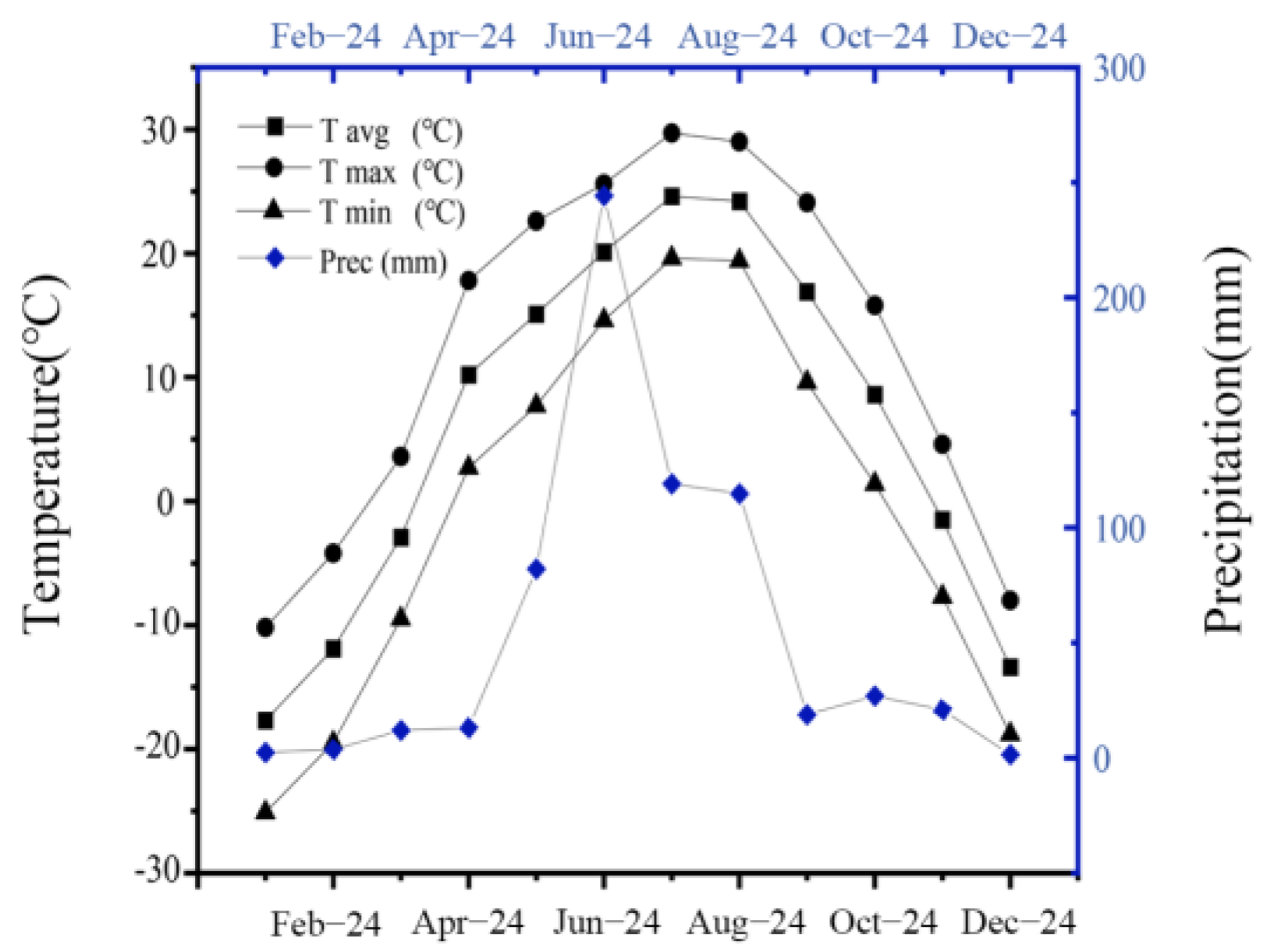
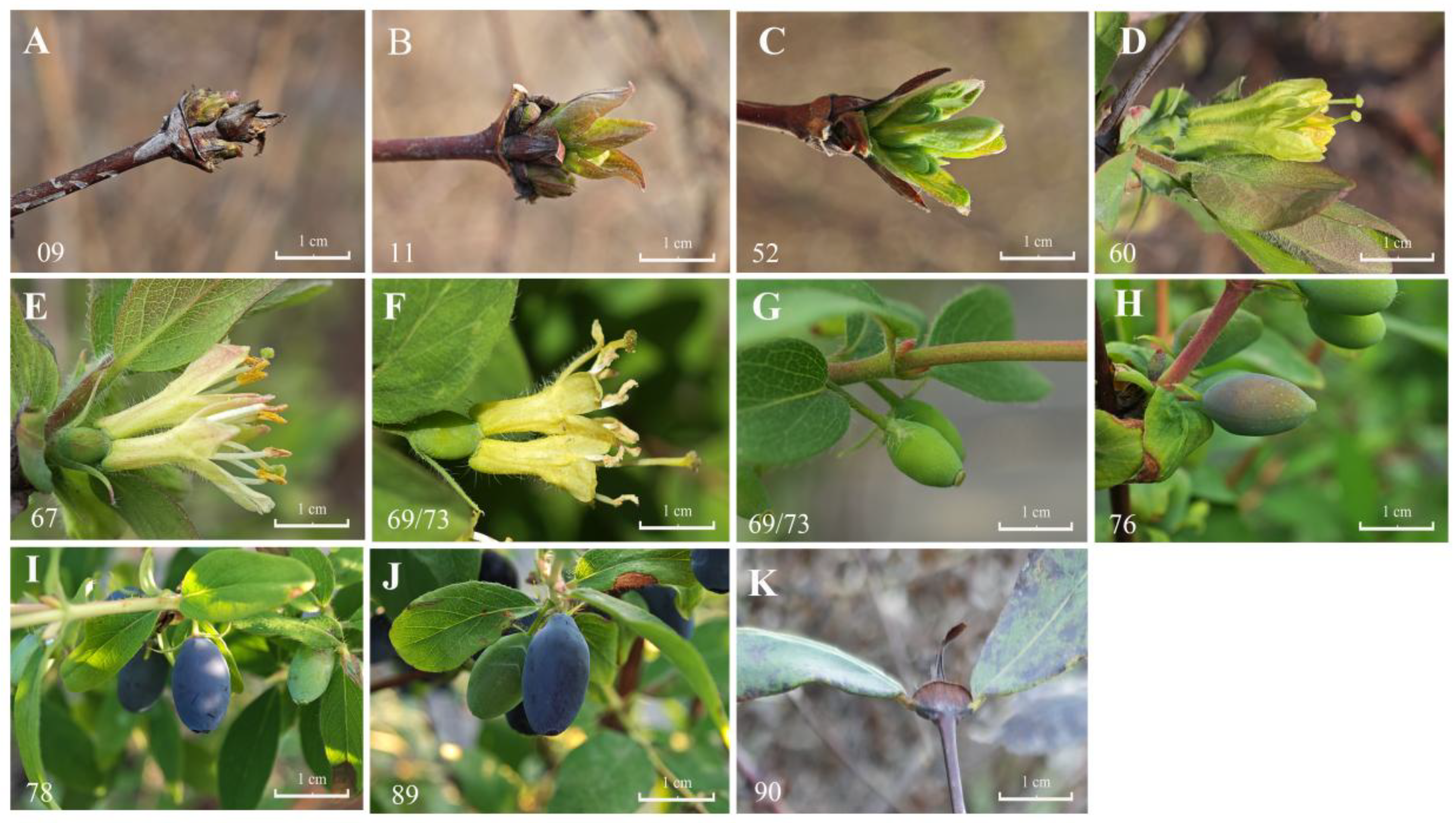
2.2. Meteorology and Phenological Investigation
2.3. Agricultural Trait Determination
2.4. Determination of Total Phenolics, Flavonoids, Vitamin C, and Anthocyanins
2.5. Statistical Analysis
3. Results and Discussion
3.1. Phenological Diversity of Chinese Honeyberry Germplasm Collection
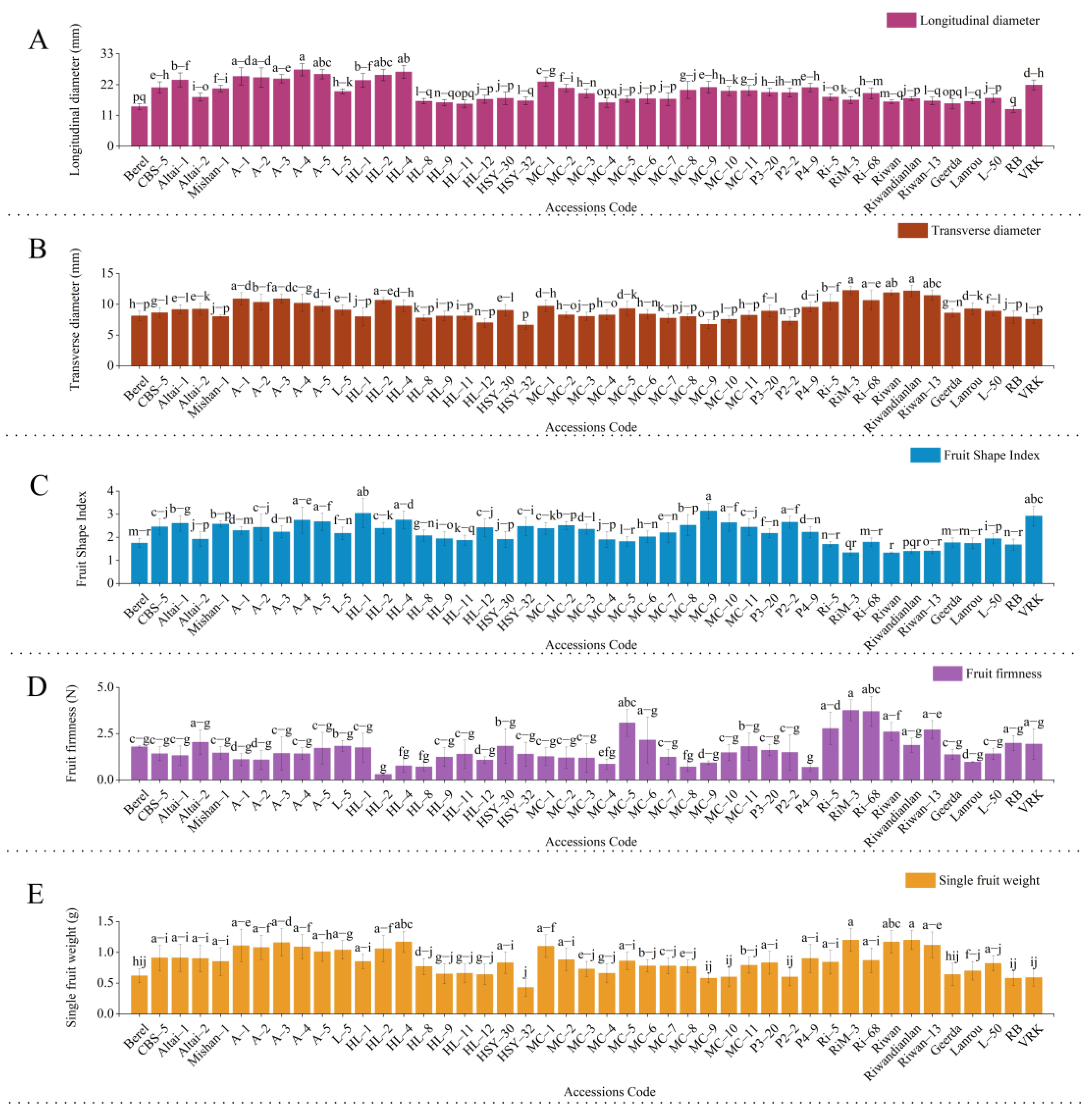
3.2. Fruit Morphology Diversity of Chinese Honeyberry Germplasm Collection
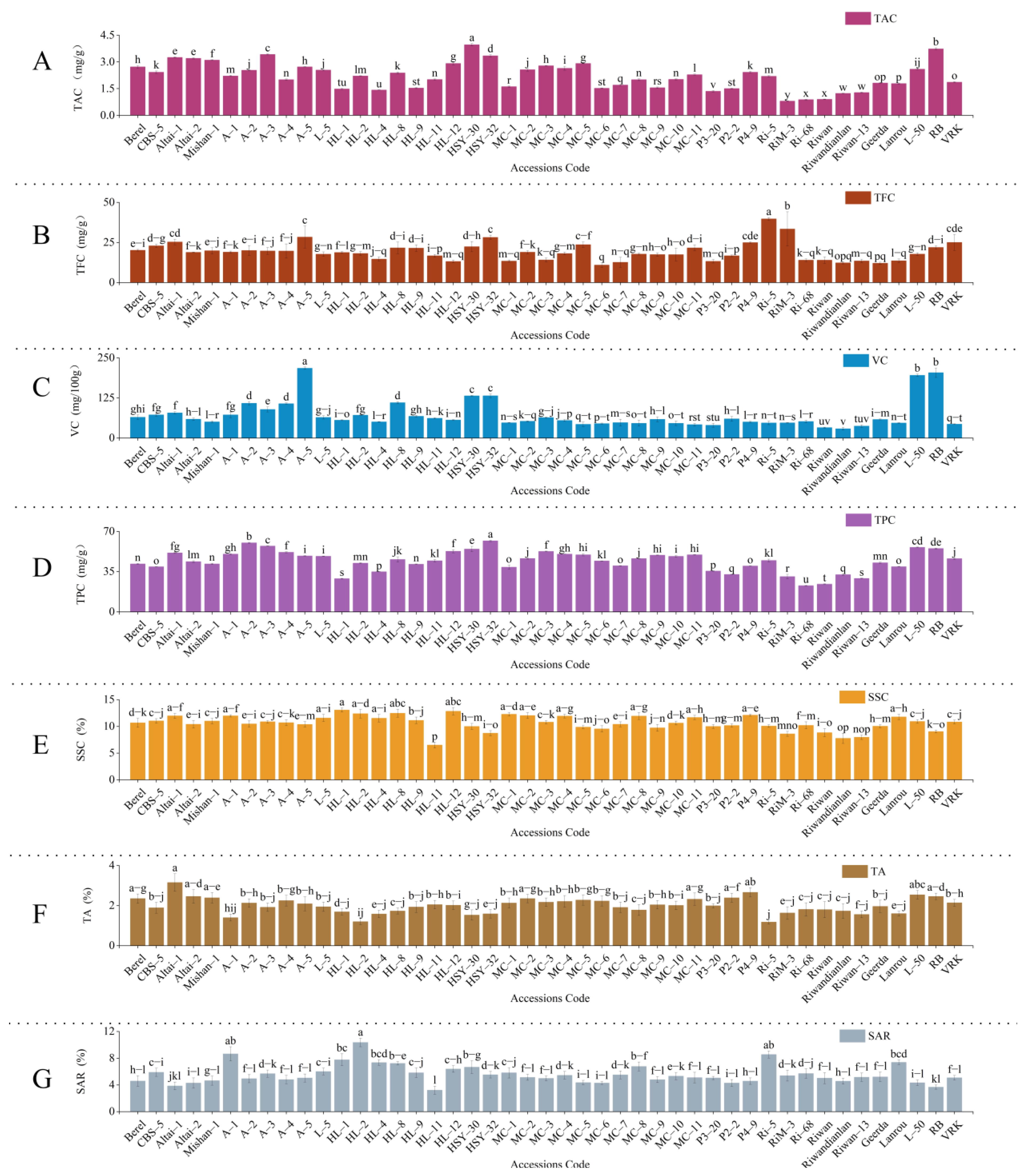
3.3. Fruit Quality of Chinese Honeyberry Germplasm Collection
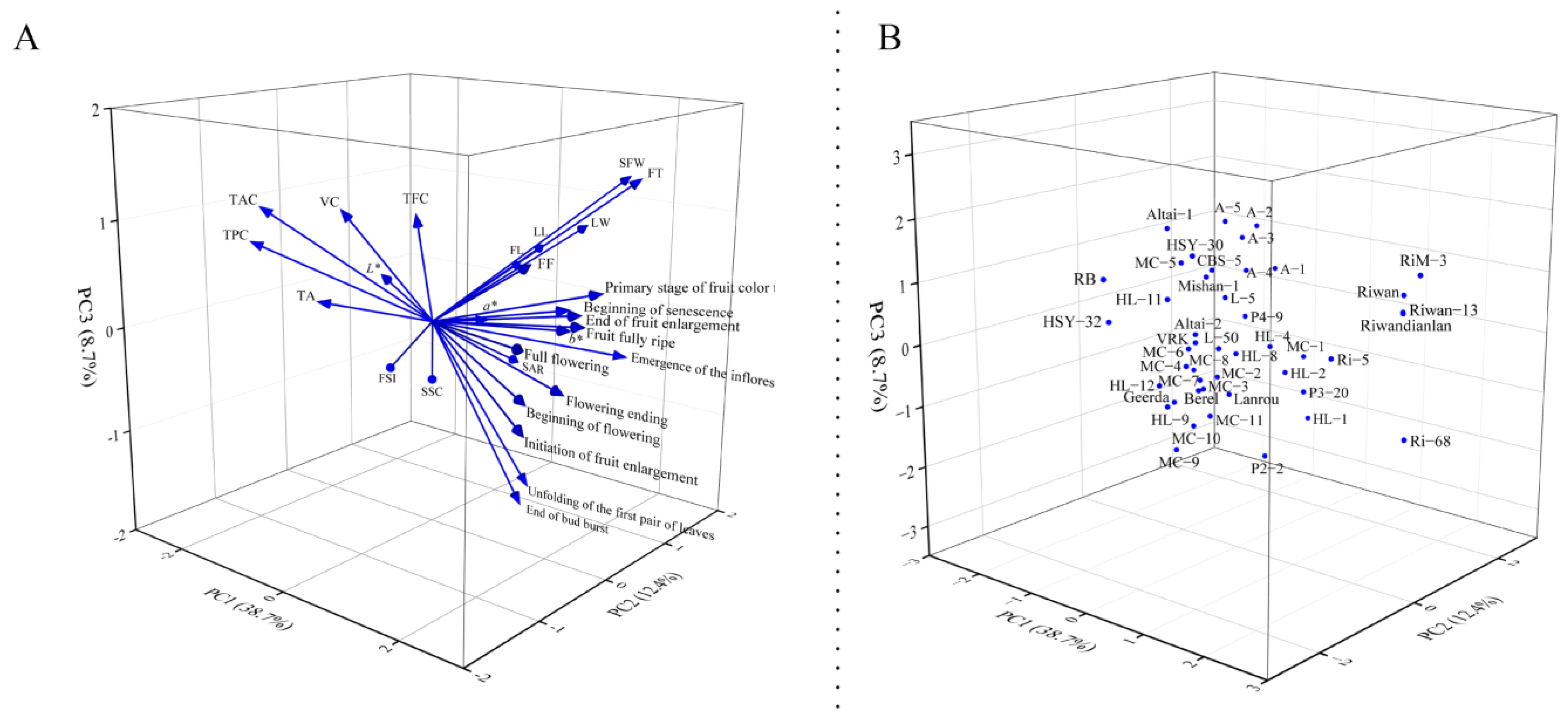
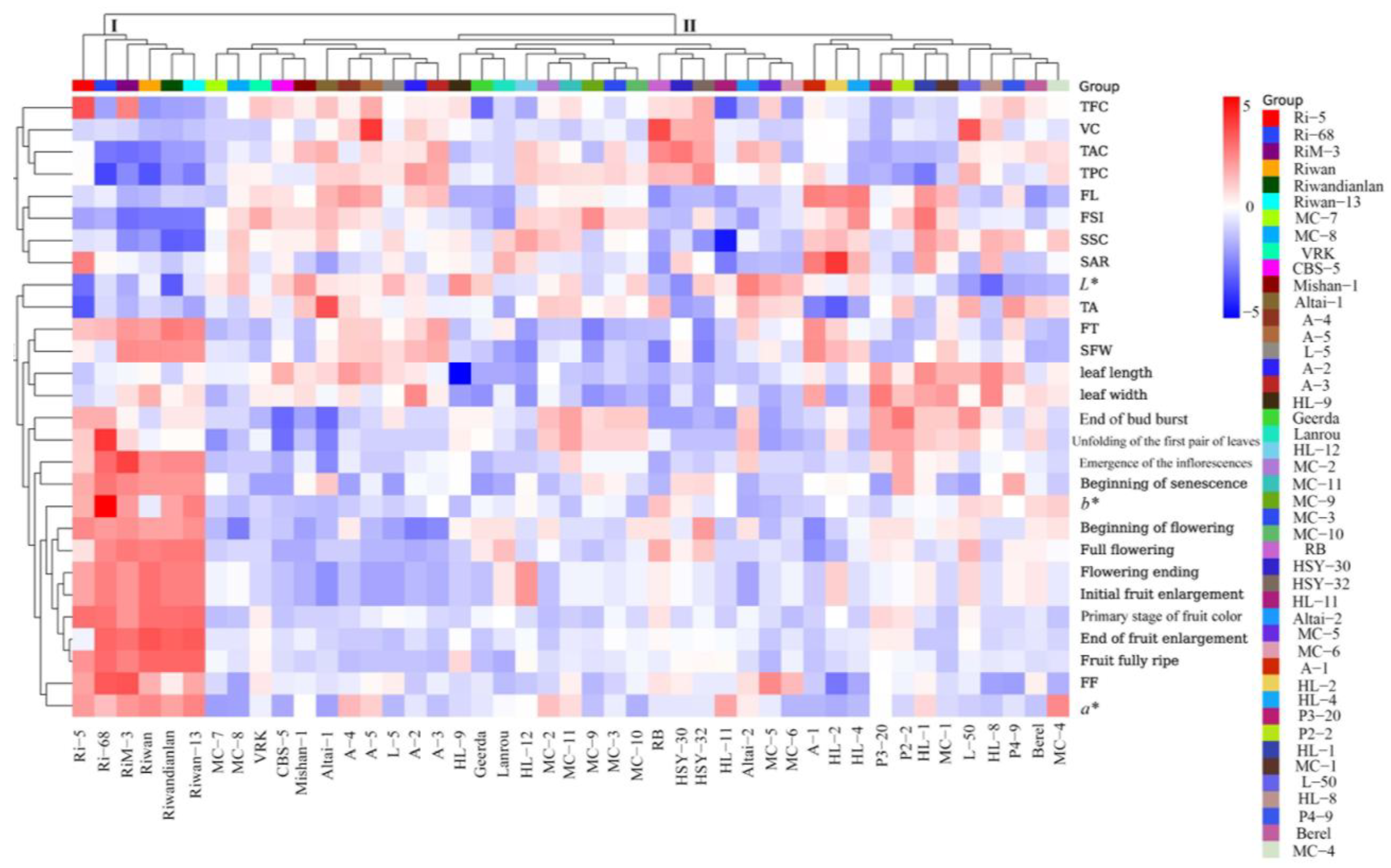
3.4. Principal Component and Hierarchical Clustering Analyses
4. Conclusions
Supplementary Materials
Author Contributions
Funding
Institutional Review Board Statement
Data Availability Statement
Acknowledgments
Conflicts of Interest
References
- Frier, S.D.; Somers, C.M.; Sheffield, C.S. Comparing the performance of native and managed pollinators of Haskap (Lonicera caerulea: Caprifoliaceae), an emerging fruit crop. Agric. Ecosyst. Environ. 2016, 219, 42–48. [Google Scholar] [CrossRef] [Scilit]
- Sip, S.; Sip, A.; Szulc, P.; Cielecka-Piontek, J. Haskap Berry Leaves (Lonicera caerulea L.)—The Favorable Potential of Medical Use. Nutrients 2022, 14, 3898. [Google Scholar] [CrossRef] [Scilit] [PubMed]
- Becker, R.; Szakiel, A. Phytochemical characteristics and potential therapeutic properties of blue honeysuckle Lonicera caerulea L. (Caprifoliaceae). J. Herbal Med. 2019, 16, 100237. [Google Scholar] [CrossRef] [Scilit]
- Niu, M.; Bao, X.; Xu, G. Progress in the systematic classification of plant polyphenols. J. Gansu Agric. Univ. 2025, 60, 65–85. [Google Scholar] [CrossRef]
- Zhang, X.; Wang, L.; Zhang, W.; Pei, M.; Zhu, C.; Huo, J.; Gang, H.; Qin, D. Metabolomic and transcriptomic analyses reveal the formation mechanism of bitter components in blue honeysuckle. LWT 2025, 223, 117727. [Google Scholar] [CrossRef] [Scilit]
- Xia, T.; Su, S.; Wang, L.; Tang, Z.; Huo, J.; Song, H. Exploring bitter characteristics of blue honeysuckle (Lonicera caerulea L.) berries by sensory-guided analysis: Key bitter compounds and varietal differences. Food Chem. 2024, 457, 140150. [Google Scholar] [CrossRef] [Scilit]
- Sozański, T.; Kucharska, A.Z.; Rapak, A.; Szumny, D.; Trocha, M.; Merwid-Ląd, A.; Dzimira, S.; Piasecki, T.; Piórecki, N.; Magdalan, J.; et al. Iridoid–loganic acid versus anthocyanins from the Cornus mas fruits (cornelian cherry): Common and different effects on diet-induced atherosclerosis, PPARs expression and inflammation. Atherosclerosis 2016, 254, 151–160. [Google Scholar] [CrossRef] [Scilit]
- Xia, T.; Su, S.; Guo, K.; Wang, L.; Tang, Z.; Huo, J.; Song, H. Characterization of key aroma-active compounds in blue honeysuckle (Lonicera caerulea L.) berries by sensory-directed analysis. Food Chem. 2023, 429, 136821. [Google Scholar] [CrossRef] [Scilit]
- Oszmiański, J.; Kucharska, A.Z. Effect of pre-treatment of blue honeysuckle berries on bioactive iridoid content. Food Chem. 2018, 240, 1087–1091. [Google Scholar] [CrossRef] [Scilit]
- Tremblay, C.; Deslauriers, A.; Lafond, J.; Lajeunesse, J.; Paré, M.C. Effects of Soil pH and Fertilizers on Haskap (Lonicera caerulea L.) Vegetative Growth. Agriculture 2019, 9, 56. [Google Scholar] [CrossRef] [Scilit]
- Yan, H.; Li, Y.; Lv, Y.; Zhao, X.; Man, Z.; Chen, Z.; Guo, L.; Huo, J.; Sang, M.; Li, C.; et al. Postharvest fruit rot on blue honeysuckle (Lonicera caerulea L.) caused by Penicillium oxalicum newly reported in China. Crop Prot. 2025, 193, 107195. [Google Scholar] [CrossRef] [Scilit]
- Hummer, K.E. Blue honeysuckle: A new berry crop for North America. J. Am. Pomol. Soc. 2006, 60, 3–8. [Google Scholar] [CrossRef] [Scilit]
- Sharma, A.; Lee, H.-J. Lonicera caerulea: An updated account of its phytoconstituents and health-promoting activities. Trends Food Sci. Technol. 2021, 107, 130–149. [Google Scholar] [CrossRef] [Scilit]
- He, Y.; Liu, J.; Hua, M.Z.; Singh, K.; Lu, X. Determination of antioxidant capacity and phenolic content of haskap berries (Lonicera caerulea L.) by attenuated total reflectance-Fourier transformed-infrared spectroscopy. Food Chem. 2025, 463, 141283. [Google Scholar] [CrossRef] [Scilit] [PubMed]
- Becker, R.; Dashbaldan, S.; Pączkowski, C.; Golis, T.; Szakiel, A. Comparison of steroids and triterpenoids in leaf cuticular waxes of selected Polish and Russian cultivars and genotypes of edible honeysuckle. Phytochem. Lett. 2019, 30, 238–244. [Google Scholar] [CrossRef] [Scilit]
- Česonienė, L.; Labokas, J.; Jasutienė, I.; Šarkinas, A.; Kaškonienė, V.; Kaškonas, P.; Kazernavičiūtė, R.; Pažereckaitė, A.; Daubaras, R. Bioactive Compounds, Antioxidant, and Antibacterial Properties of Lonicera caerulea Berries: Evaluation of 11 Cultivars. Plants 2021, 10, 624. [Google Scholar] [CrossRef] [Scilit]
- Jurikova, T.; Sochor, J.; Rop, O.; Mlček, J.; Balla, Š.; Szekeres, L.; Žitný, R.; Zitka, O.; Adam, V.; Kizek, R. Evaluation of Polyphenolic Profile and Nutritional Value of Non-Traditional Fruit Species in the Czech Republic—A Comparative Study. Molecules 2012, 17, 8968–8981. [Google Scholar] [CrossRef] [Scilit]
- Szpadzik, E.; Trzcińska, J.; Molska-Kawulok, K.; Seliga, Ł.; Pluta, S. Yield Performance and Physicochemical Properties of Selected Honey Berry (Lonicera caerulea L. var. kamtschatica Sevast.), Under Central Polish Conditions. Agriculture 2025, 15, 2225. [Google Scholar] [CrossRef] [Scilit]
- Senica, M.; Stampar, F.; Mikulic-Petkovsek, M. Blue honeysuckle (Lonicera cearulea L. subs. edulis) berry; A rich source of some nutrients and their differences among four different cultivars. Sci. Hortic. 2018, 238, 215–221. [Google Scholar] [CrossRef] [Scilit]
- Razgonova, M.P.; Nawaz, M.A.; Rusakova, E.A.; Sabitov, A.S.; Tikhonova, N.G.; Golokhvast, K.S. Comparative Analysis of the Metabolomic Profile of Honeysuckle Lonicera caerulea L. from Four Eurasian Regions by Using HPLC-ESI-MS and ESI-MS/MS Analysis. Molecules 2025, 30, 3761. [Google Scholar] [CrossRef] [Scilit]
- Li, J.; Hoshino, Y. Elucidating the impact of ploidy level on biochemical content accumulation in haskap (Lonicera caerulea L. subsp. edulis (Turcz. ex Herder) Hultén) fruits: A comprehensive approach for fruit assessment. Sci. Hortic. 2024, 327, 112831. [Google Scholar] [CrossRef] [Scilit]
- Fujita, R.; Jin, S.; Matoba, K.; Hoshino, Y. Novel production of β-cryptoxanthin in haskap (Lonicera caerulea subsp. edulis) hybrids: Improvement of carotenoid biosynthesis by interspecific hybridization. Sci. Hortic. 2023, 308, 111547. [Google Scholar] [CrossRef] [Scilit]
- Qi, Y.; Li, C.; Liang, X.; Chen, A.; Zhao, G.; Bai, H.; Li, H.; Wang, Z.; Han, W.; Ma, Y.; et al. Evaluation of Lonicera caerulea Cultivar Diversity Based on Phenotypic Traits and Nutrient Composition. Forests 2025, 16, 25. [Google Scholar] [CrossRef] [Scilit]
- Tian, Y.; Nie, J.; Fei, D.; Mao, S.; Wang, J.; Wu, Q.; Huang, K. Phenotypic evaluation and analysis of important agronomic traits and nutritional quality in purple flowering stalk (Brassica campestris L. ssp. chinensis var. purpurea Hort.). Sci. Hortic. 2025, 340, 113921. [Google Scholar] [CrossRef] [Scilit]
- Jiang, N.; Zhu, X.-G. Modern phenomics to empower holistic crop science, agronomy, and breeding research. J. Genet. Genom. 2024, 51, 790–800. [Google Scholar] [CrossRef] [Scilit]
- Liu, Q.; Dong, Q.; Zhang, L.; Sun, C. Summer cooling island effects of blue-green spaces in severe cold regions: A case study of harbin, China. Build. Environ. 2024, 257, 111539. [Google Scholar] [CrossRef] [Scilit]
- Belda, M.; Holtanová, E.; Halenka, T.; Kalvová, J. Climate classification revisited: From Köppen to Trewartha. Clim. Res. 2014, 59, 1–13. [Google Scholar] [CrossRef] [Scilit]
- Zhu, C.; Quan, X.; Lv, J.; Zhang, R.; Zhao, Y.; Qin, D.; Huo, J.; Huang, Z.; Zhang, L.; Yu, M. Coding and description of phenological stages of blue honeysuckle (Lonicera caerulea L.) according to the BBCH scale. Sci. Hortic. 2024, 337, 113566. [Google Scholar] [CrossRef] [Scilit]
- Meier, U. Growth Stages of Mono- and Dicotyledonous Plants: BBCH Monograph; Open Agrar Repositorium: Quedlinburg, Germany, 2018. [Google Scholar] [CrossRef]
- Gao, J. Effects of Different Fresh-Keepingtechniques on the Storage Quality of Blue Honeysuckle. Master’s Thesis, Northeast Agricultural University, Harbin, China, 2020. [Google Scholar] [CrossRef]
- Zhao, J. Sudies on Extraction, Identification and Antioxidant Activity of Blue Honeysuckle (Lonicera caerulea L.). Master’s Thesis, Northeast Agricultural University, Harbin, China, 2010. [Google Scholar]
- Li, X. Studies on Ascorbic Acid Diversity in Leaves andRelationship with Fruit of Black Currant (Ribes nigium L.). Master’s Thesis, Northeast Agricultural University, Harbin, China, 2014. [Google Scholar]
- Wang, Y.F.; Xin, X.L.; Chen, L.; Huo, J.W. Total Anthocyanins Content in Different Species of Lonicera cearulea Linn. by pH-differential Spectrophotometry. Food Res. Dev. 2014, 35, 75–78. [Google Scholar]
- Thompson, M.M.; Chaovanalikit, A. Preliminary observations on adaptation and nutraceutical values of blue honeysuckle (Lonicera caerulea) in Oregon, USA. Acta Hortic. 2003, 626, 65–72. [Google Scholar] [CrossRef] [Scilit]
- Gerbrandt, E.M.; Bors, R.H.; Chibbar, R.N.; Baumann, T.E. Blue honeysuckle (Lonicera caerulea L.) vegetative growth cessation and leaf drop phenological adaptation to a temperate climate. Genet. Resour. Crop Evol. 2018, 65, 1471–1484. [Google Scholar] [CrossRef] [Scilit]
- Gürcan, K.; Yılmaz, K.U.; Tunç, Y.; Yaman, M.; Güneş, A.; Yıldız, E.; Demirel, F.; Demirel, S.; Khadivi, A. Evaluation of genetic diversity in some hybrid individuals of honeyberry (Lonicera caerulea L.) based on fruit characteristics, leaf morphology, vitamin C, antioxidant activity, and biochemical and nutritional contents. BMC Plant Biol. 2024, 24, 1158. [Google Scholar] [CrossRef] [Scilit] [PubMed]
- Gerbrandt, E.M.; Bors, R.H.; Chibbar, R.N. Agronomic potential of fruit size and yield traits in blue honeysuckle (Lonicera caerulea L.) foundation germplasm. Euphytica 2018, 214, 107. [Google Scholar] [CrossRef] [Scilit]
- Grygorieva, O.; Klymenko, S.; Kuklina, A.; Vinogradova, Y.; Vergun, O.; Sedlackova, V.H.; Brindza, J. Evaluation of Lonicera caerulea L. genotypes based on morphological characteristics offruits germplasm collection. Turk. J. Agric. For. 2021, 45, 850–860. [Google Scholar] [CrossRef] [Scilit]
- Gerbrandt, E.M.; Bors, R.H.; Meyer, D.; Wilen, R.; Chibbar, R.N. Fruit quality of Japanese, Kuril and Russian blue honeysuckle (Lonicera caerulea L.) germplasm compared to blueberry, raspberry and strawberry. Euphytica 2020, 216, 59. [Google Scholar] [CrossRef] [Scilit]
- Gawroński, J.; Żebrowska, J.; Pabich, M.; Jackowska, I.; Kowalczyk, K.; Dyduch-Siemińska, M. Phytochemical Characterization of Blue Honeysuckle in Relation to the Genotypic Diversity of Lonicera sp. Appl. Sci. 2020, 10, 6545. [Google Scholar] [CrossRef] [Scilit]
- De Silva, A.B.K.H.; Rupasinghe, H.P.V. Polyphenols composition and anti-diabetic properties in vitro of haskap (Lonicera caerulea L.) berries in relation to cultivar and harvesting date. J. Food Compos. Anal. 2020, 88, 103402. [Google Scholar] [CrossRef] [Scilit]
- Auzanneau, N.; Weber, P.; Kosińska-Cagnazzo, A.; Andlauer, W. Bioactive compounds and antioxidant capacity of Lonicera caerulea berries: Comparison of seven cultivars over three harvesting years. J. Food Compos. Anal. 2018, 66, 81–89. [Google Scholar] [CrossRef] [Scilit]
- Wu, W.; Ma, X.; Wang, Y.; Yu, Y.; Huo, J.; Huang, D.; Sui, X.; Zhang, Y. Amplifying Bioactivity of blue honeysuckle (Lonicera caerulea L.) fruit puree through Ultrasonication: Antioxidant and antiproliferative activity. Ultrason. Sonochemistry 2025, 112, 107179. [Google Scholar] [CrossRef] [Scilit]
- Peng, Z.; Chen, H.; Niu, B.; Wu, W.; Chen, H.; Farag, M.A.; Ding, Y.; Liu, R.; Gao, H. Composition and micromorphological determination of blue honeysuckle fruit (Lonicera caerulea L.) cuticular wax and its effects on fruit post-harvest quality. Food Chem. 2025, 463, 141330. [Google Scholar] [CrossRef] [Scilit]
- Liu, S.; You, L.; Zhao, Y.; Chang, X. Wild Lonicera caerulea berry polyphenol extract reduces cholesterol accumulation and enhances antioxidant capacity in vitro and in vivo. Food Res. Int. 2018, 107, 73–83. [Google Scholar] [CrossRef] [Scilit]
- Wang, Y.; Zhu, J.; Meng, X.; Liu, S.; Mu, J.; Ning, C. Comparison of polyphenol, anthocyanin and antioxidant capacity in four varieties of Lonicera caerulea berry extracts. Food Chem. 2016, 197, 522–529. [Google Scholar] [CrossRef] [Scilit]
- Molina, A.K.; Vega, E.N.; Pereira, C.; Dias, M.I.; Heleno, S.A.; Rodrigues, P.; Fernandes, I.P.; Barreiro, M.F.; Kostić, M.; Soković, M.; et al. Promising Antioxidant and Antimicrobial Food Colourants from Lonicera caerulea L. var. Kamtschatica. Antioxidants 2019, 8, 394. [Google Scholar] [CrossRef] [Scilit]
- Jiang, Y.; Ye, J.; Zhou, L.; Chen, M.; Wei, Y.; Jiang, S.; Chen, Y.; Shao, X. Cell wall metabolism during the growth of peach fruit: Association of hardness with cell wall pectins. Sci. Hortic. 2024, 330, 113058. [Google Scholar] [CrossRef] [Scilit]
- Burdon, R.D.; Li, Y. Genotype-environment interaction involving site differences in expression of genetic variation along with genotypic rank changes: Simulations of economic significance. Tree Genet. Genomes 2018, 15, 2. [Google Scholar] [CrossRef] [Scilit]



| No. | ID | Accession Name | Origin | Pedigree |
|---|---|---|---|---|
| 1 | Berel | Berel | Russia | subsp. altaica × subsp. kamtschatica F1 |
| 2 | CBS–5 | -- | China | subsp. kamtschatica |
| 3 | Altai–1 | Caлют | Russia | subsp. altaica |
| 4 | Altai–2 | Cиpиyc | Russia | subsp. altaica |
| 5 | Mishan–1 | -- | China | subsp. altaica × subsp. kamtschatica F1 |
| 6 | A–1 | Гopдocть Бaкчapa | Russia | subsp. turczaninowii |
| 7 | A–2 | Cильгинкa | Russia | subsp. turczaninowii |
| 8 | A–3 | ЧyлымcкaЯ | Russia | subsp. turczaninowii |
| 9 | A–4 | Бaкчapcкaя | Russia | subsp. turczaninowii |
| 10 | A–5 | CибиpЯЧкa | Russia | subsp. turczaninowii |
| 11 | L–5 | Lanjingling | China | (subsp. altaica × subsp. kamtschatica) × subsp. kamtschatica |
| 12 | HL–1 | Accoль | Russia | subsp. altaica (natural pollination) |
| 13 | HL–2 | Пpoвинциaлкa | Russia | subsp. altaica (natural pollination) |
| 14 | HL–4 | Зoлyшкa | Russia | subsp. altaica (natural pollination) |
| 15 | HL–8 | Бapxaт | Russia | subsp. altaica (natural pollination) |
| 16 | HL–9 | Oгнeнный oпaл | Russia | subsp. altaica (natural pollination) |
| 17 | HL–11 | Иллиaдa | Russia | subsp. altaica (natural pollination) |
| 18 | HL–12 | -- | Russia | subsp. altaica (natural pollination) |
| 19 | HSY–30 | -- | Russia | var. edulis |
| 20 | HSY–32 | -- | Russia | var. edulis |
| 21 | MC–1 | -- | Russia | subsp. kamtschatica |
| 22 | MC–2 | -- | Russia | subsp. kamtschatica |
| 23 | MC–3 | -- | Russia | subsp. kamtschatica |
| 24 | MC–4 | -- | Russia | subsp. kamtschatica |
| 25 | MC–5 | -- | Russia | subsp. kamtschatica |
| 26 | MC–6 | -- | Russia | subsp. kamtschatica |
| 27 | MC–7 | -- | Russia | subsp. kamtschatica |
| 28 | MC–8 | -- | Russia | subsp. kamtschatica |
| 29 | MC–9 | Cибиpячкa | Russia | subsp. kamtschatica |
| 30 | MC–10 | -- | Russia | subsp. kamtschatica |
| 31 | MC–11 | -- | Russia | subsp. kamtschatica |
| 32 | P3–20 | -- | Russia | subsp. kamtschatica |
| 33 | P2–2 | -- | Russia | subsp. kamtschatica |
| 34 | P4–9 | -- | Russia | subsp. kamtschatica |
| 35 | Ri–5 | -- | Japan | subsp. emphyllocalyx |
| 36 | RiM–3 | -- | Japan | subsp. emphyllocalyx |
| 37 | Ri–68 | -- | Japan | subsp. emphyllocalyx |
| 38 | Riwan | -- | Japan | subsp. emphyllocalyx |
| 39 | Riwandianlan | -- | Japan | subsp. emphyllocalyx |
| 40 | Riwan–13 | -- | Japan | subsp. emphyllocalyx |
| 41 | Geerda | Гepдa | Russia | subsp. kamtschatica |
| 42 | Lanrou | Бapxaт | Russia | subsp. altaica (natural pollination) |
| 43 | L–50 | -- | China | (subsp. altaica × subsp. kamtschatica) × subsp. kamtschatica |
| 44 | RB | -- | Japan | subsp. emphyllocalyx |
| 45 | VRK | -- | Russia | subsp. kamtschatica |
Disclaimer/Publisher’s Note: The statements, opinions and data contained in all publications are solely those of the individual author(s) and contributor(s) and not of MDPI and/or the editor(s). MDPI and/or the editor(s) disclaim responsibility for any injury to people or property resulting from any ideas, methods, instructions or products referred to in the content. |
© 2026 by the authors. Licensee MDPI, Basel, Switzerland. This article is an open access article distributed under the terms and conditions of the Creative Commons Attribution (CC BY) license.
Share and Cite
Yang, H.; Zhang, X.; Yu, C.; Wang, Z.; Hao, R.; Wang, C.; Zhang, B.; Shi, J.; Li, J.; Qin, D.; et al. Diversity of Phenological Characteristics and Fruit Quality of the Chinese Honeyberry (Lonicera caerulea L.) Collection. Agriculture 2026, 16, 291. https://doi.org/10.3390/agriculture16030291
Yang H, Zhang X, Yu C, Wang Z, Hao R, Wang C, Zhang B, Shi J, Li J, Qin D, et al. Diversity of Phenological Characteristics and Fruit Quality of the Chinese Honeyberry (Lonicera caerulea L.) Collection. Agriculture. 2026; 16(3):291. https://doi.org/10.3390/agriculture16030291
Chicago/Turabian StyleYang, Hao, Xiaohui Zhang, Caihong Yu, Ziqing Wang, Ruijuan Hao, Chunfang Wang, Bingcui Zhang, Jiayi Shi, Jiacheng Li, Dong Qin, and et al. 2026. "Diversity of Phenological Characteristics and Fruit Quality of the Chinese Honeyberry (Lonicera caerulea L.) Collection" Agriculture 16, no. 3: 291. https://doi.org/10.3390/agriculture16030291
APA StyleYang, H., Zhang, X., Yu, C., Wang, Z., Hao, R., Wang, C., Zhang, B., Shi, J., Li, J., Qin, D., Gang, H., Huo, J., Zhu, C., & Yu, M. (2026). Diversity of Phenological Characteristics and Fruit Quality of the Chinese Honeyberry (Lonicera caerulea L.) Collection. Agriculture, 16(3), 291. https://doi.org/10.3390/agriculture16030291