Article

Spatial Metabolomics Reveals the Biochemical Basis of Stipe Textural Gradient in Flammulina filiformis


1
Sichuan Institute of Edible Fungi, Sichuan Academy of Agricultural Sciences, Chengdu 610066, China
2
National-Local Joint Engineering Laboratory of Breeding and Cultivation of Edible and Medicinal Fungi, Chengdu 610066, China
3
Scientific Observing and Experimental Station of Agro-Microbial Resource and Utilization in Southwest China, Ministry of Agriculture, Chengdu 610066, China
*
Author to whom correspondence should be addressed.
Agriculture 2026, 16(2), 276; https://doi.org/10.3390/agriculture16020276
Submission received: 20 December 2025 / Revised: 13 January 2026 / Accepted: 18 January 2026 / Published: 22 January 2026

Abstract

Flammulina filiformis is a widely cultivated edible mushroom valued for its taste and nutrition. However, its stipe often develops a fibrous and stringy texture that unpleasantly lodges between teeth during chewing. Texture analysis confirmed a distinct toughness gradient, with the upper stipe being more brittle and less tough than the lower part. UHPLC-MS/MS-based metabolomics of these regions identified 953 metabolites, predominantly spanning lipids and lipid-like molecules, organic acids and derivatives, and nucleosides, nucleotides, and analogues. Comparative analysis revealed that the tender upper stipe was characterized by a widespread downregulation of primary metabolites, including severe depletion of key signaling molecules (cAMP, cGMP) and amino acids such as L-tryptophan. In contrast, the tough lower stipe was enriched with metabolites indicative of an oxidative environment, notably a broad spectrum of oxidized lipids and phenolic compounds. KEGG pathway analysis attributed this dichotomy to distinct metabolic programs. While the upper stipe exhibited downregulation in tryptophan and purine metabolism, the lower stipe was enriched for pathways associated with redox homeostasis and lipid peroxidation, including glutathione metabolism and lipid peroxidation. The co-accumulation of oxidized lipids and phenolics suggests a potential mechanism for oxidation-driven tissue fortification. This study reveals a spatially programmed metabolic basis for the textural differentiation in F. filiformis stipes, providing a framework for understanding tissue development and highlighting potential regulatory targets for breeding varieties with improved eating quality.

1. Introduction

The edible mushroom Flammulina filiformis (enoki mushroom) is a globally cultivated and consumed commodity, prized for its unique flavor and nutritional value [1,2]. A significant portion of its economic worth and consumer acceptance hinges on the textural quality of its stipe (stem), the primary edible part [3]. However, a common and undesirable sensory experience—the tendency of stipes to become fibrous and lodge between teeth during chewing—significantly detracts from the eating experience [4,5]. This undesirable texture is intrinsically linked to a pronounced axial heterogeneity: the upper stipe is typically tender and brittle, while the basal region is notably tougher and more fibrous [6]. Understanding the biological basis of this spatial textural gradient is therefore not merely an academic exercise but a crucial step towards targeted breeding and post-harvest interventions aimed at improving the overall eating quality of this important crop.
The texture of mushroom stipes is fundamentally governed by the architecture and dynamic remodeling of the cell wall. In edible fungi, the cell wall is a dynamic composite primarily consisting of chitin, β-glucans, and other glycans [7]. Stipe elongation, a remarkable morphogenetic event, results from cell wall loosening and expansion. Mechanistic studies have clarified that chitinases play a key role in initiating wall extension by hydrolyzing crystalline chitin microfibrils, a process distinct from plant-cell-wall-loosening mechanisms [8,9]. Furthermore, fungal expansin-like proteins are specifically expressed in fast-elongation regions and can reconstitute wall extension activity without hydrolysis, suggesting an auxiliary role in cell wall polymer slippage [10,11]. The coordination of these cell-wall-modifying activities is tightly regulated. Transcriptomic studies in F. filiformis have revealed that stipe elongation occurs in a decreasing gradient from apex to base, accompanied by significant differential expression of genes involved in primary metabolism, biosynthesis, and cell-wall-related enzymes [12]. These findings position the axial textural variation as a direct outcome of spatially programmed cell wall development.
Beyond the execution of cell wall remodeling, upstream signaling events orchestrate this spatial programming. Reactive oxygen species (ROS) have emerged as critical spatial signals. In F. filiformis, a distinct gradient of superoxide anion (O2) in the elongation region and hydrogen peroxide (H2O2) in the stabilization region is established by NADPH oxidases and superoxide dismutases, actively regulating the gradient elongation rate [13]. This ROS signaling is intricately linked to broader metabolic and transcriptional reprogramming. An integrated multi-omics study established a clear link where increasing oxidative stress from the stipe apex to base triggers metabolic disorder and promotes cell wall glycan remodeling (including enhanced chitosan biosynthesis), directly underpinning tissue browning and concomitant toughening [6]. This indicates that oxidative stress acts as a pivotal upstream regulator driving the metabolic and structural shifts that culminate in basal toughness. Moreover, epigenetic regulation is also involved, as evidenced by the chromatin modifier FfJMHY regulating cell-wall-related enzyme genes to control elongation speed [14], and transcription factors being central to maintaining cell wall integrity and developmental processes in fungi [15].
While the phenomenological link between oxidative stress, cell wall remodeling, and stipe toughening is established, the precise, compartmentalized metabolic states that pre-determine the distinct mechanical fates of the upper (tender) and lower (tough) stipe regions remain largely uncharted. Current evidence suggests a fundamental dichotomy: the upper stipe, as the elongation zone, likely maintains a metabolically active [12]. It is plausible that this region prioritizes resources for rapid cell expansion, potentially at the expense of synthesizing robust structural compounds. Conversely, the basal stipe, which provides structural support and may encounter greater environmental stress, likely undergoes a metabolic reprogramming towards defense and reinforcement [6]. A comparative transcriptomic analysis of different stipe sections indeed found that the most significant differences in gene expression occurred between the upper (elongation zone) and middle sections, with pathways related to primary metabolism and biosynthesis being differentially regulated [3]. This genetic evidence strongly suggests that underlying metabolic fluxes are distinct between these regions.
Therefore, we hypothesize that the textural dichotomy in F. filiformis stipes is associated with a spatially defined metabolic divergence. We conducted a spatially resolved, non-targeted metabolomics analysis comparing the upper and lower sections of F. filiformis stipes, directly correlating findings with instrumental and sensory texture profiling. This study moves beyond correlating existing oxidative damage with toughness to elucidate the antecedent metabolic landscapes that predispose different stipe regions to their ultimate textural fate. By defining the key differential metabolites and associated pathways, our work provides a novel metabolic framework for understanding textural development, offering concrete molecular targets for future breeding or biotechnological strategies aimed at improving the palatability and commercial value of F. filiformis.

2. Materials and Methods

2.1. Strains and Chemical Reagents

The fruiting body of F. filiformis was commercially bought from industrial cultivation. Pure cultures of the F. filiformis strain were obtained through tissue isolation from the fruiting body and designated as LF. Briefly, the surface of the fresh fruiting body was first disinfected with 75% (v/v) ethanol for 1 min, followed by three rinses with sterile distilled water. Under aseptic conditions, the fruiting body was carefully dissected using a sterilized scalpel. Internal tissue (approximately 2–3 mm3 in size) was excised from the junction region between the pileus and the stipe. The tissue fragment was then transferred onto potato dextrose agar (PDA) medium (containing 200 g/L potato extract, 20 g/L glucose, and 20 g/L agar) and incubated at 25 °C in the dark. After 5–7 days, mycelial growth from the explant was observed. The emerging mycelia were subsequently subcultured onto fresh PDA plates to obtain axenic pure cultures.

2.2. Stipe Texture Detection

An adequate amount of mature F. filiformis stipes were collected. After removing the pileus, stipes with lengths between 13.5 cm and 14.5 cm were selected. The texture of the fresh and boiled stipes at different positions was assessed utilizing a TA.XT.PLUS C Texture Analyzer (TA.XT Plus, Texture Technologies Corp., Cambridge, MA, USA) with the A/MORS-type probe. The texture analysis settings were as follows: compression mode, a test speed of 1 mm/s, a post-test speed of 10 mm/s, a target pattern of Gap set at 0.01 mm, and a trigger mode of Button. The parameters measured encompassed toughness, fracturability and hardness.

2.3. Sample Preparation and Metabolite Extraction

Mature fruiting bodies were obtained directly from industrial cultivation. Stipes of uniform length (13.5–14.5 cm) were selected. The upper stipe section (0.5–1.5 cm from the pileus, designated FF-up) and the lower section (6.5–7.5 cm from the pileus, designated FF-dn) were dissected and immediately flash-frozen in liquid nitrogen. For metabolite extraction, one hundred milligrams of the frozen tissue from each section were individually grounded with liquid nitrogen and the homogenate was resuspended with prechilled 80% methanol by well vortex. The samples were incubated on ice for 5 min and then were centrifuged at 15,000× g, 4 °C for 20 min. Some of supernatant was diluted to a final concentration containing 53% methanol by LC-MS-grade water. The samples were subsequently transferred to new tubes and then were centrifuged at 15,000× g, 4 °C for 20 min. Finally, the supernatant was injected into the UHPLC-MS/MS (Ultra-High-Performance Liquid Chromatography–Tandem Mass Spectrometry) system analysis [16]. Metabolite profiling was conducted through an untargeted metabolomic approach by Beijing Novogene Technology Co., Ltd. (Beijing, China).

2.4. UHPLC-MS/MS Analysis for Metabolomics

UHPLC-MS/MS analysis were performed using a Vanquish UHPLC system (Thermo Fisher, Dreieich, Germany) coupled with an Orbitrap Q ExactiveTM HF mass spectrometer or Orbitrap Q ExactiveTM HF-X mass spectrometer (Thermo Fisher, Dreieich, Germany) in Novogene Co., Ltd. (Beijing, China) [17]. Samples were injected onto a Hypersil Goldcolumn (100 mm × 2.1 mm, 1.9 um) using a 12 min linear gradient at a flow rate of 0.2 mL/min. The eluents for the positive and negative polarity modes were eluent A (0.1% FA in Water) and eluent B (Methanol). The solvent gradient was set as follows: 2% B, 1.5 min; 2–85% B, 3 min; 85–100% B, 10 min; 100–2% B, 10.1 min; 2% B, 12 min. Q ExactiveTM HF mass spectrometer was operated in positive/negative polarity mode with spray voltage of 3.5 kV, capillary temperature of 320 °C, sheath gas flow rate of 35 psi and aux gas flow rate of 10 L/min, S-lens RF level of 60, and aux gas heater temperature of 350 °C.

2.5. Data Processing and Metabolite Identification

The raw data files generated by UHPLC-MS/MS were processed using the Compound Discoverer 3.3 (CD3.3, Thermo Fisher, Waltham, MA, USA) to perform peak alignment, peak picking, and quantitation for each metabolite. The main parameters were set as follows: peak area was corrected with the first QC, actual mass tolerance, 5 ppm; signal intensity tolerance, 30%; minimum intensity, 100,000; and retention time tolerance, 0.2 min [18,19]. After that, peak intensities were normalized to the total spectral intensity. The normalized data were used to predict the molecular formula based on additive ions, molecular ion peaks and fragment ions. And then peaks were matched with the mzCloud (https://www.mzcloud.org/, accessed on 7 May 2024), mzVault and MassList database to obtain accurate qualitative and relative quantitative results. Statistical analyses were performed using the statistical software R (R version R-3.4.3), Python (Python 2.7.6 version) and CentOS (CentOS release 6.6). When data were not normally distributed, these were standardized according to the following formula: sample raw quantitation value/(The sum of sample metabolite quantitation value/The sum of QC1 sample metabolite quantitation value) to obtain relative peak areas. Compounds whose CVs of relative peak areas in QC samples were greater than 30% were removed, and, finally, the metabolites’ identification and relative quantification results were obtained.

2.6. Metabolomics Data Analysis

These metabolites were annotated using the KEGG database (https://www.genome.jp/kegg/pathway.html, accessed on 8 May 2024) [20]. Principal component analysis (PCA) and partial least squares discriminant analysis (PLS-DA) [21] were performed at metaX (a flexible and comprehensive software for processing metabolomics data). We applied univariate analysis (t-test) to calculate the statistical significance (p-value). The metabolites with VIP (variable importance in projection) > 1 and p-value < 0.05 and fold change (FC) > 1.5 or FC < 0.667 were considered to be differential metabolites [22,23,24]. Volcano plots were used to filter metabolites of interest based on log2(Fold Change) and −1og10 (p-value) of metabolites by ggplot2 in R language.
For clustering heat maps, the data were normalized using z-scores of the intensity areas of differential metabolites and were plotted by the Pheatmap package in R language. The correlations between differential metabolites were analyzed by cor () in R language (method = pearson). Statistically significant correlations between differential metabolites were calculated by cor.mtest () in R language. p-value < 0.05 was considered statistically significant and correlation plots were plotted by corrplot package in R language. The functions of these metabolites and metabolic pathways were studied using the KEGG database. Metabolic pathway enrichment of differential metabolites was performed: when the ratios were satisfied by x/n > y/N, metabolic pathways were considered as enrichment; when the p-value of metabolic pathway < 0.05, metabolic pathways were considered as statistically significant enrichment.

2.7. Statistical Analysis and Graphing

Statistical analysis was performed using Excel (Microsoft 2021) or Prism 9 (GraphPad) software. The number of biological replicates and statistical methods are indicated in the figure legends. Statistical significance was calculated using the two-sided unpaired Student’s t-test. All error bars show standard deviations (SDs) of the mean. Statistical significance was defined as p-values ≤ 0.05.

3. Results

3.1. Mechanical Properties Reveal Distinct Texture Profiles in Upper and Lower Stipe

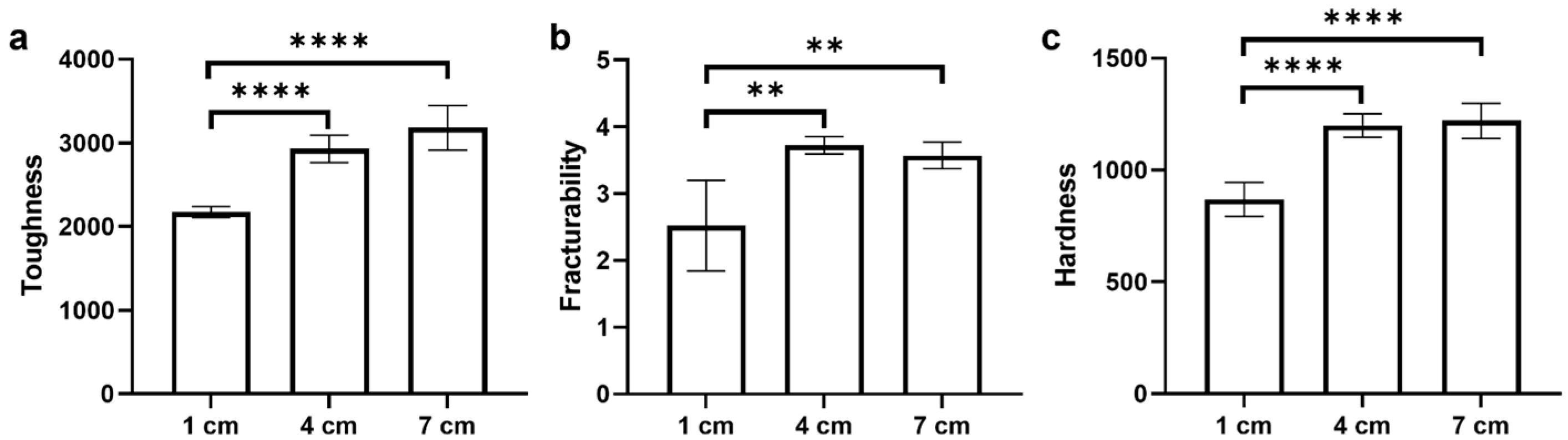
The stipe of F. filiformis exhibits a straight and firm morphology in the fresh state, with the region near the pileus being more prone to fracture compared to the distal portion. After boiling in water for 5 min, the stipe softens significantly, loses its structural support, and contracts to approximately 70% of its original length (Figure S1). This study utilized commercially available white F. filiformis as the experimental material. The textural properties of the boiled stipes were systematically examined at positions 1 cm, 4 cm, and 7 cm from the pileus using the TA.XT.PLUS C Texture Analyzer. The results (Figure 1a,b) revealed that both toughness and fracturability values were significantly lower in the pileus-proximal region than in the distal region. A lower toughness value indicates reduced resistance to biting, while a lower fracturability value reflects higher brittleness and a greater tendency to fracture. These findings suggest that the pileus-proximal stipe not only exhibits lower toughness but also higher brittleness, making it easier to chew and bite through, which is consistent with actual sensory experience. Furthermore, hardness measurements indicated that the pileus-proximal stipe was significantly harder than the distal region (Figure 1c), implying a relatively firmer texture in the former region. Taken together, these results demonstrate clear structural and mechanical differences between the pileus-proximal and pileus-distal regions of F. filiformis stipes, which directly influence textural characteristics and fracture behavior during chewing. Since metabolites serve as direct executors of gene function and the material basis of phenotype, they likely play crucial roles in stipe development and textural formation. These mechanical differences thus reflect distinct structural properties, prompting us to investigate whether underlying metabolic profiles could explain the textural divergence using untargeted metabolomics.

3.2. Metabolomic Profiling and Data Quality Control

Upper (FF-up) and lower (FF-dn) stipe sections were collected and processed for metabolomic analysis as described in the Methods section. Untargeted metabolomic analysis was conducted using UHPLC-MS/MS. To ensure data reliability, quality control (QC) samples were periodically analyzed throughout the instrumental run.
Three quality control (QC) samples were periodically inserted during instrumental analysis to ensure stability, reproducibility, and reliability. First, Pearson’s correlation coefficients among QC samples were calculated based on the relative quantitative values of metabolites for QC sample correlation analysis. The results showed correlation coefficients greater than 0.99 in both positive and negative ion modes, indicating minimal variation among the samples (Figure S2a,b). Principal component analysis (PCA) was then performed on the peaks extracted from all experimental and QC samples to reduce dimensionality, visualize sample clustering, and identify group differences. The results showed that QC samples clustered tightly together, confirming the high-quality data as sufficient to comprehensively capture the metabolic profiles of the samples (Figure S2c,d). This indicates that the instrument system demonstrated stability and reliability, providing a solid foundation for subsequent metabolite analysis.

3.3. Overview of Identified Metabolites

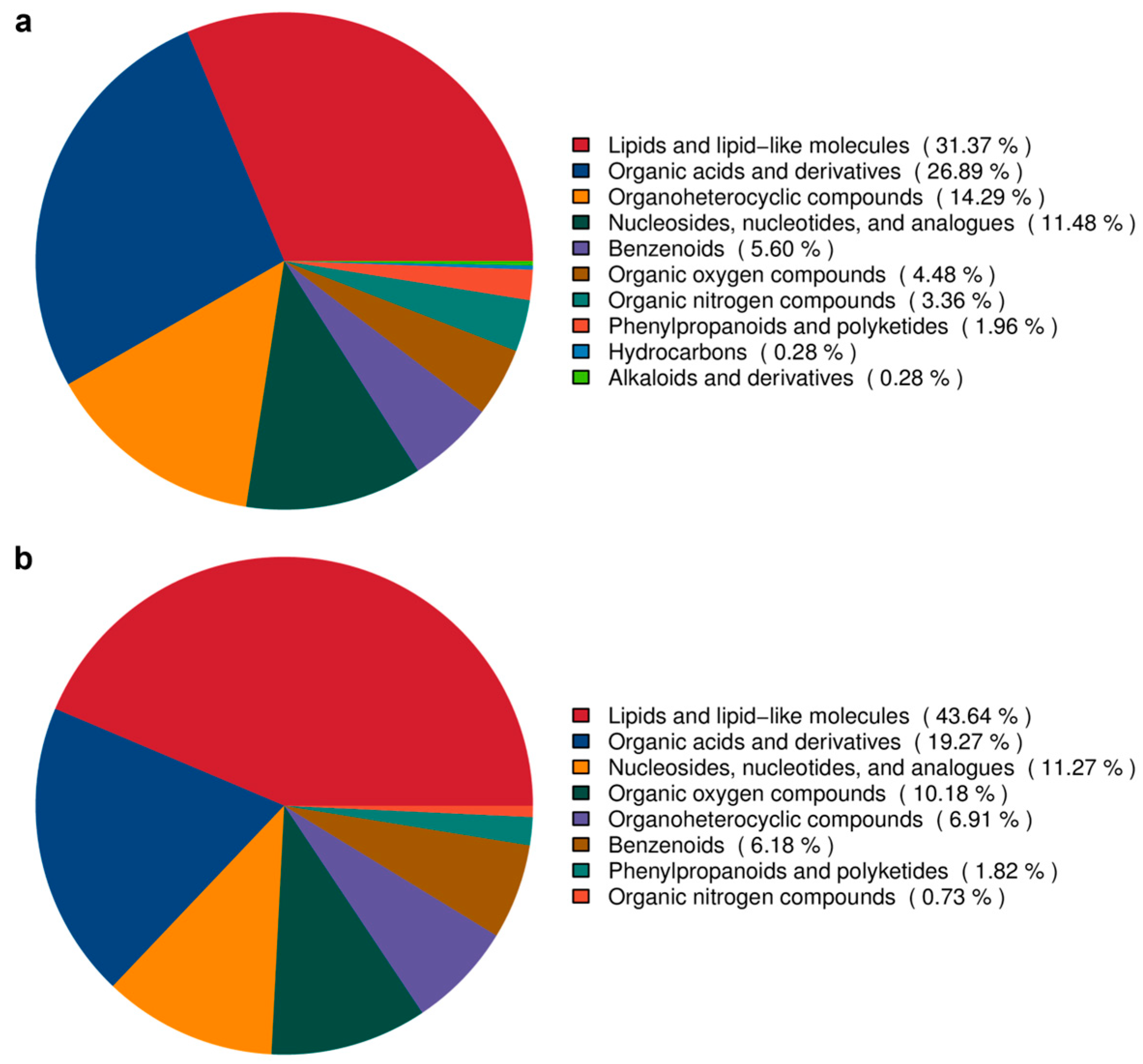
A total of 953 metabolites were identified in the 14 samples, including 612 in positive and 341 in negative ion mode (Table S1). In the positive ion mode (Figure 2a), the chemical taxonomy included lipids and lipid-like molecules (112), organic acids and derivatives (96), organoheterocyclic compounds (51), nucleosides, nucleotides, and analogues (41), benzenoids (20), organic oxygen compounds (16), organic nitrogen compounds (12), phenylpropanoids and polyketides (7), hydrocarbons (1), and alkaloids and derivatives (1). In the negative ion mode (Figure 2b), the categories were lipids and lipid-like molecules (120), organic acids and derivatives (53), nucleosides, nucleotides, and analogues (31), organic oxygen compounds (28), organoheterocyclic compounds (19), benzenoids (17), phenylpropanoids and polyketides (5), and organic nitrogen compounds (2). Overall, the major chemical taxonomy were lipids and lipid-like molecules (36.71%), organic acids and derivatives (23.58%), nucleosides, nucleotides, and analogues (11.39%), organoheterocyclic compounds (11.08%), organic oxygen compounds (6.96%), benzenoids (5.85%), organic nitrogen compounds (2.22%), phenylpropanoids and polyketides (1.90%), hydrocarbons (0.16%), and alkaloids and derivatives (0.16%) (Figure S3, Table S1).

3.4. Distinct Metabolic Profiles Between Upper and Lower Stipe

PCA was performed to observe overall distribution trends between FF-up and FF-dn. In both positive (Figure S4a) and negative (Figure S4b) ion modes, the two groups showed distinct intra-group clustering, with all samples falling within their respective 95% confidence ellipses, and clear inter-group separation. The cumulative contribution of PC1 and PC2 exceeded 50% of total variance, indicating that these components effectively captured major metabolic differences. Partial least squares discriminant analysis (PLS-DA), a supervised discriminant method, yielded score scatter plots with R2Y and Q2Y values of 1.00 and 0.98 in positive mode (Figure S4c), and 1.00 and 0.97 in negative mode (Figure S4d), respectively. Values close to 1 indicate excellent model stability and reliability. Permutation testing (200 iterations) showed R2 values higher than Q2, and the Q2 regression line intercept with the Y-axis was below zero (Figure S4e,f), indicating no overfitting. Thus, the model effectively describes the data and confirms distinct metabolic profiles between the stipe regions.

3.5. Screening and Classification of Differential Metabolites

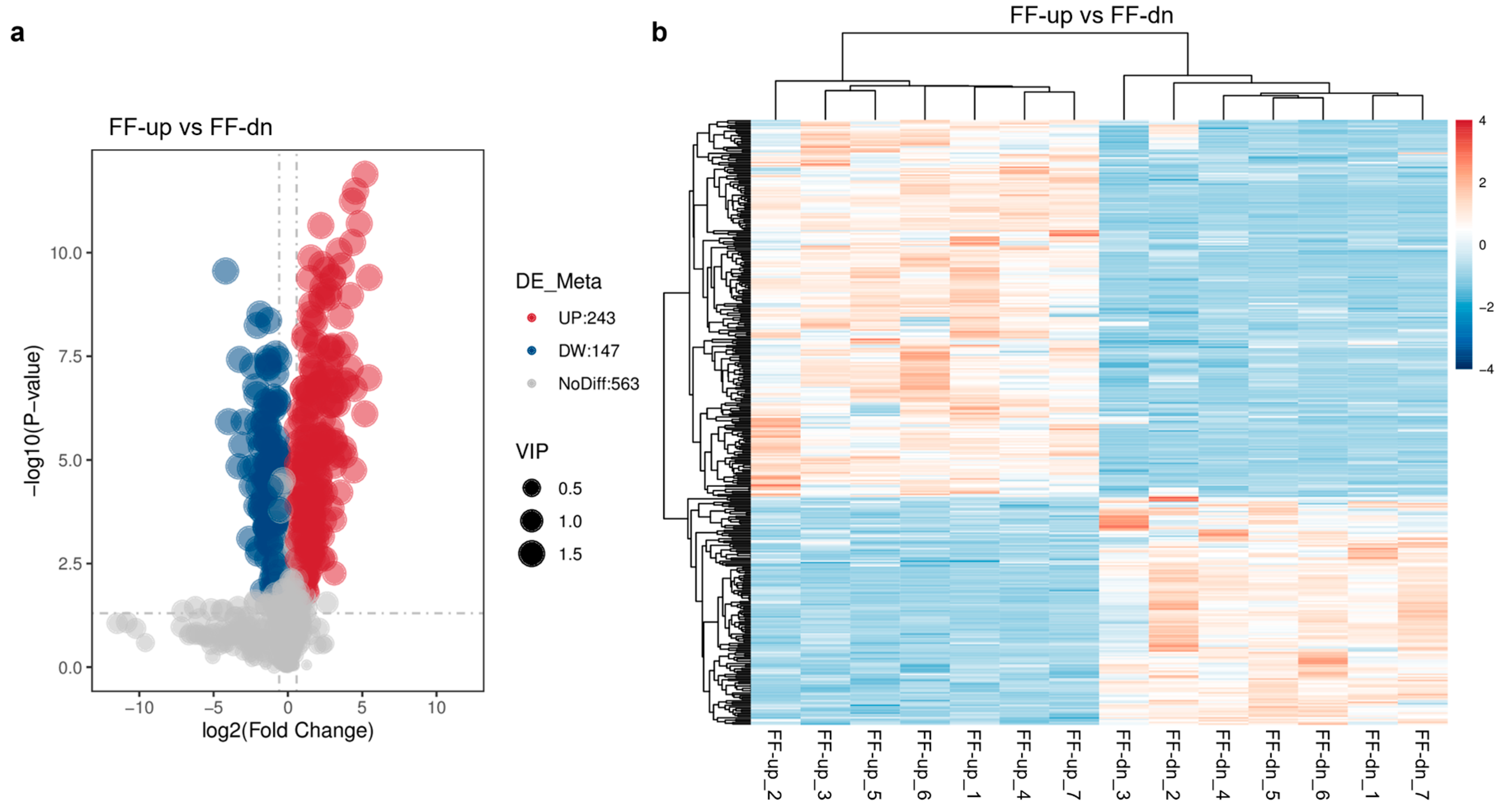
Differential metabolites (DMs) were screened based on three parameters: VIP (variable importance in projection) from PLS-DA, FC (fold change), and p-value (Student’s t-test). Thresholds were set as VIP > 1.0, FC > 1.5 or FC < 0.667, and p < 0.05. In the FF-up vs. FF-dn comparison (seven biological replicates per group), 390 DMs were identified (Table S2). A volcano plot highlighted 243 upregulated and 147 downregulated metabolites in FF-up (Figure 3a). The major chemical classes among DMs were lipids and lipid-like molecules (86, 31.39%), organic acids and derivatives (65, 23.72%), nucleosides, nucleotides, and analogues (38, 13.87%), organoheterocyclic compounds (34, 12.41%), benzenoids (19, 6.93%), organic oxygen compounds (16, 5.84%), organic nitrogen compounds (7, 2.55%), phenylpropanoids and polyketides (7, 2.55%), alkaloids and derivatives (1, 0.36%), and hydrocarbons (1, 0.36%) (Figure S5, Table S2). Heatmap clustering analysis of these DMs revealed pronounced differences in metabolite expression patterns, with clear separation between the FF-up and FF-dn groups, where samples from the same group clustered together (Figure 3b). This result confirms significant differences in the metabolic composition of the two stipe regions. In summary, the data presented here provide a comprehensive and representative portrayal of the differential metabolic profiles between the upper and lower parts of the F. filiformis stipe.

3.6. Identification of Biomarker Metabolites Distinguishing Stipe Regions

K-Means cluster analysis groups DMs with similar variation trends into the same subcluster, thereby providing a clear visualization of their relative abundance changes across different sample groups [25]. Based on log-centered and scaled relative quantitative values, the 390 DMs were divided into 5 distinct subclusters (Figure S6). Notably, subclusters 2 and 4 exhibited the most pronounced changes in metabolite abundance between FF-up and FF-dn (Table 1). Specifically, subcluster 2 comprised 26 metabolites that were significantly downregulated in FF-up compared to FF-dn, with a notably greater fold-change decrease than those in subcluster 1. Conversely, subcluster 4 contained 55 metabolites that were markedly upregulated in FF-up, showing substantially higher fold-change increases than those in subcluster 3. These distinct metabolic shifts highlight the fundamental biochemical divergence between the stipe regions.
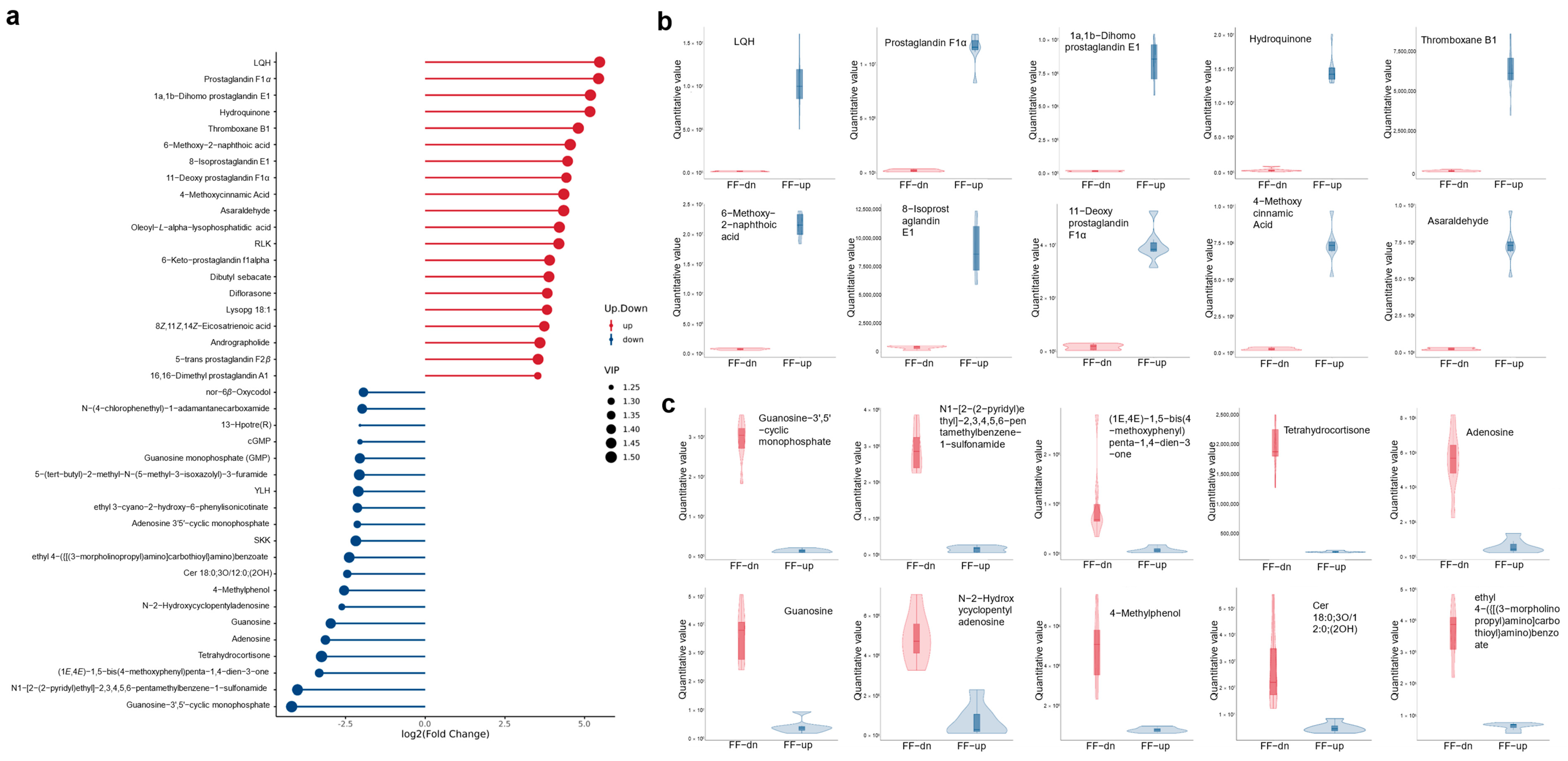
To identify potential biomarker metabolites, a stem plot of the top 20 upregulated and top 20 downregulated metabolites (by fold change) in the FF-up vs. FF-dn comparison was generated (Figure 4a). The corresponding top 10 upregulated (Figure 4b) and downregulated (Figure 4c) metabolites were illustrated using violin plots. The comparative analysis revealed two distinct metabolic patterns: the upper stipe (FF-up) was characterized by a widespread and significant downregulation of metabolites central to primary metabolism and cellular signaling. A severe depletion was observed in purine nucleotides and their derivatives, including the cyclic secondary messengers guanosine-3′,5′-cyclic monophosphate (cGMP) and adenosine 3′,5′-cyclic monophosphate (cAMP), along with precursors such as guanosine monophosphate (GMP), guanosine, and inosine. The aromatic amino acid L-tryptophan was also significantly diminished. Conversely, the lower stipe (FF-dn) metabolome was dominated by the pronounced accumulation of compounds associated with an altered redox state and structural potential. The most dramatic changes occurred within the oxidized lipid class. Among these, numerous features were annotated, based on high-confidence MS/MS spectral matches, as prostaglandins, thromboxanes, and hydroxyeicosatetraenoic acids (HETEs)—molecules widely recognized as products and mediators of lipid peroxidation. Concurrently, a substantial accumulation of phenolic compounds like hydroquinone was detected. These results delineate two distinct metabolic landscapes: an attenuated state of primary metabolism in the upper stipe and a state marked by active oxidation metabolism, characterized by the accumulation of diverse oxidized lipids and phenolics, in the lower stipe.

3.7. KEGG-Based Differential Metabolite Pathways Annotation and Enrichment Analysis

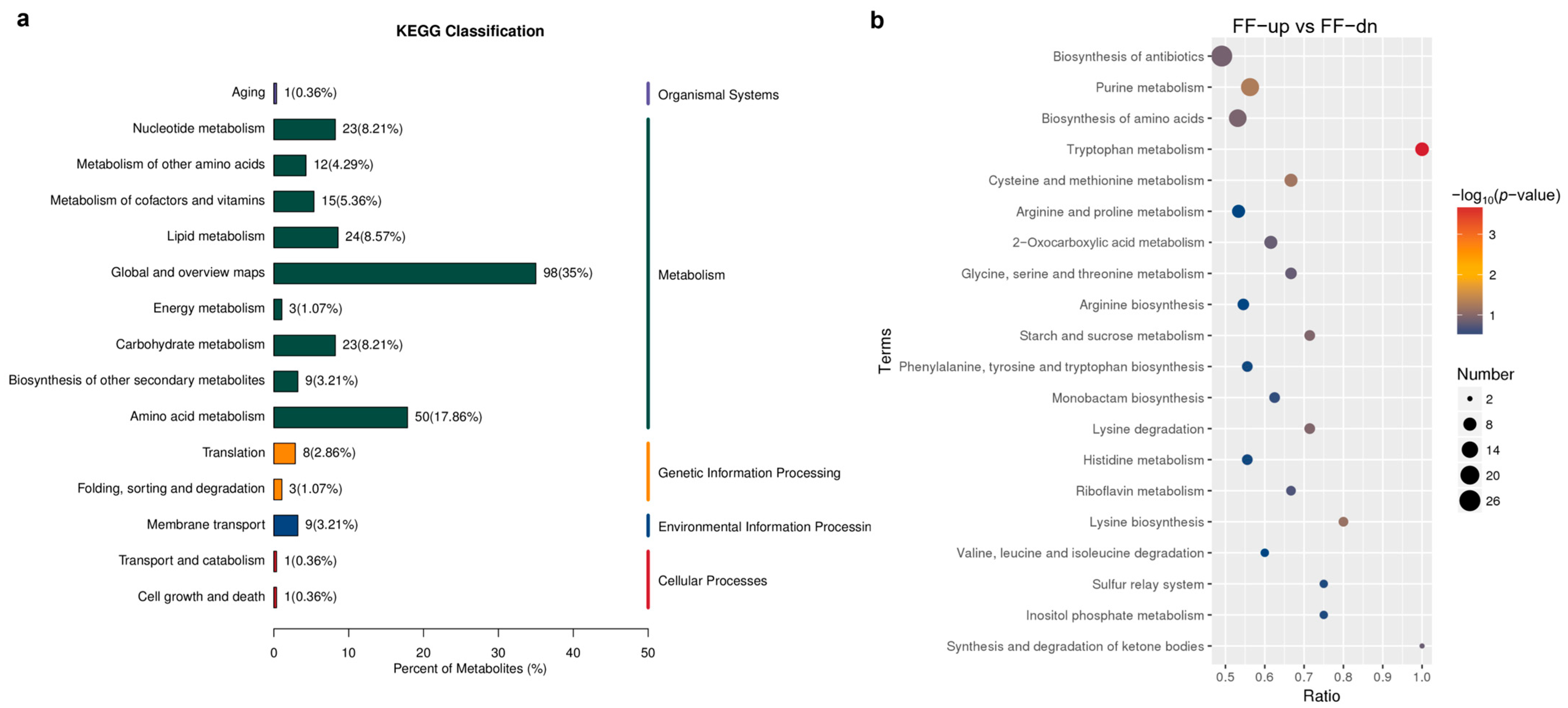
To systematically elucidate the metabolic mechanisms underlying the textural differences between upper and lower stipes, KEGG analysis was conducted to identify enriched pathways and biological processes of DMs. KEGG pathway annotation analysis revealed a predominant enrichment within the metabolism superclass (Figure 5a), particularly in global and overview maps (98 metabolites), amino acid metabolism (50 metabolites), lipid metabolism (24 metabolites), carbohydrate metabolism (23 metabolites), and nucleotide metabolism (23 metabolites). These pathways collectively indicate a comprehensive metabolic reprogramming associated with cell wall composition, membrane integrity, and cellular energy dynamics, which may underlie the observed textural differences in toughness and brittleness between the two regions. Additionally, minor enrichment was observed in pathways related to membrane transport (nine metabolites) and translation (eight metabolites), suggesting concomitant adjustments in cellular signaling and protein synthesis.
KEGG pathway enrichment analysis results showed that DMs was enriched in 55 pathways. The top 20 enriched pathways are displayed in Figure 5b, with tryptophan metabolism emerging as the most significantly enriched pathway (p = 0.000172). This finding directly contextualizes the severe depletion of L-tryptophan observed in the biomarker analysis. The pathway involved nine DMs with distinct expression patterns: L-kynurenine, kynurenic acid, and N-formylkynurenine were markedly upregulated, while L-tryptophan, indole, indole-3-lactic acid, and indole-3-acetaldehyde were consistently downregulated in the upper stipe. Concomitantly, pathways related to amino acid and methylation metabolism showed prominent enrichment, providing functional insight into the broader metabolic shift. The cysteine and methionine metabolism pathway displayed elevated S-adenosylmethionine (SAM, FC = 2.27) and reduced S-adenosylhomocysteine (SAH), indicating activated methyl-donor capacity. In the lysine biosynthesis and degradation pathway, L-lysine and its derivatives were downregulated, whereas acetyl-CoA was upregulated. The purine metabolism pathway revealed a dichotomous pattern that explains the nucleotide profile identified as biomarkers: energy-related nucleotides including inosine 5′-monophosphate (IMP, FC = 3.26) and GTP (FC = 2.44) accumulated, while signaling molecules such as cGMP (FC = 0.24) and cAMP (FC = 0.23) were substantially depleted. Furthermore, carbohydrate metabolism pathways demonstrated consistent downregulation trends, with sucrose, α,α-trehalose, and trehalose-6-phosphate all reduced in the upper stipe, aligning with the attenuated primary metabolic state. Pathways involving redox homeostasis and lipid remodeling also showed significant enrichment, corroborating the oxidative stress-related signature of the lower stipe: glutathione metabolism exhibited coordinated increases in both reduced (GSH) and oxidized (GSSG) glutathione, while sphingolipid and glycerolipid metabolism pathways displayed upregulation of lysophosphatidylcholines (LPCs) and sphingosine. Collectively, the pathway enrichment analysis validates and expands upon the initial biomarker findings. It delineates a comprehensive metabolic profile characterized by enhanced tryptophan catabolism, activated methylation capacity, altered nucleotide signaling (with depletion of key second messengers), reduced carbohydrate reserves, and dynamic redox and lipid metabolism in the upper stipe compared to the lower stipe. This integrated metabolic reprogramming provides a mechanistic foundation for the structural and textural divergence observed between the two stipe regions.

4. Discussion

The present study provides a comprehensive metabolomic and mechanical analysis of the stipe of Flammulina filiformis, revealing distinct textural and biochemical profiles between its upper and lower regions. Our findings demonstrate that the tender, brittle texture of the upper stipe and the tough, resilient nature of the lower stipe are underpinned by fundamentally different metabolic programs. These programs not only reflect differential cellular states but also suggest an adaptive developmental strategy balancing growth and structural reinforcement.
The mechanical analysis clearly established that the upper stipe exhibits lower toughness and higher brittleness, while the lower stipe is tougher and more resistant to fracture. This physical divergence is strongly correlated with a profound metabolic dichotomy. The upper stipe is characterized by a widespread downregulation of primary metabolites, including severe depletion of key signaling molecules such as cAMP and cGMP, as well as essential amino acids like L-tryptophan. This metabolic attenuation suggests a transition away from active growth and signal-driven cellular expansion, resulting in a cell wall structure that is mechanically weaker and more prone to fracture—consistent with its observed tenderness. Conversely, the lower stipe exhibits a metabolomic signature consistent with a pronounced shift toward oxidative metabolism and potential redox imbalance. This is unequivocally supported by a significant accumulation of a diverse array of oxidized lipids. Notably, many of the most upregulated features in this category were annotated as prostaglandins, thromboxanes, and HETEs. While the precise biosynthesis of these mammalian-associated lipid mediators in fungi remains an open question, their presence is a strong chemical indicator of intense lipid peroxidation and a pervasive oxidative state. Oxygen-mediated processes have been identified as fundamental drivers of metabolic reprogramming and tissue toughening in fungi [6,26]. Supporting this notion, we observed pronounced accumulation of phenolic compounds such as hydroquinone. Phenolic compounds with catechol groups are well-known substrates that readily undergo oxidative cross-linking via quinone intermediates [27]. In plants, similar phenolic compounds are oxidized to form quinone radicals that covalently cross-link polysaccharides, enhancing rigidity [28]. Therefore, we hypothesize that in the lower stipe of F. filiformis, the prevailing oxidized environment facilitates the oxidation of accumulated phenolics, driving cross-linking of cell wall components and thereby directly enhancing mechanical resistance. The co-localized accumulation of oxidized lipids, serving as both markers and potential amplifiers of this oxidative milieu, collectively orchestrates a metabolic program geared towards structural reinforcement.
KEGG pathway analysis further contextualizes and supports these metabolite-level observations. The most significantly enriched pathway in the upper stipe was tryptophan metabolism, where L-tryptophan depletion was accompanied by upregulation of its catabolites. This rerouting of tryptophan flux may simultaneously reduce auxin-related wall-loosening potential and increase oxidative metabolites that could further compromise wall integrity. Additionally, the downregulation of purine metabolism—specifically the severe depletion of cAMP and cGMP—likely attenuates cell wall integrity signaling, exacerbating structural vulnerability. Concurrently, reductions in carbohydrate reserves such as sucrose and trehalose limit substrate availability for structural polysaccharide synthesis. In contrast, the lower stipe showed significant enrichment in pathways related to redox homeostasis and lipid oxidation, including glutathione metabolism and lipid peroxidation pathways (Figure 5). This systematic analysis corroborates an active oxidative environment in the lower stipe, characterized by concerted upregulation of lipid peroxidation and glutathione-mediated redox metabolism, which aligns perfectly with the accumulation of oxidized lipids and phenolics. The upregulation of sphingolipid and glycerolipid metabolism further suggests membrane remodeling that could influence wall–membrane interactions and mechanical properties. Importantly, the elevated levels of S-adenosylmethionine (SAM) and reduced S-adenosylhomocysteine (SAH) indicate enhanced methylation capacity, which may modulate cell wall polymer properties and cross-linking efficiency, further fine-tuning mechanical resilience.
Together, these data support a textural gradient metabolic model in which the upper stipe adopts a low-defense, metabolically quiescent state conducive to rapid elongation but prone to fracture, while the lower stipe activates an oxidation-driven fortification program that enhances mechanical resilience primarily through phenolic cross-linking and cell wall remodeling, within a pervasive oxidized metabolic environment. This spatial metabolic specialization likely represents an adaptive strategy to balance growth with structural support along the stipe axis. From an applied perspective, this study identifies oxidized lipid metabolism and phenolic oxidation as key regulatory nodes influencing texture. These pathways offer promising targets for postharvest quality intervention and breeding strategies aimed at improving the eating quality of F. filiformis. Future research integrating spatial transcriptomics, genetic perturbation and direct biochemical validation of cell wall remodeling and oxidative cross-linking will be essential to validate the causality of these metabolic changes and to develop precise strategies for texture modulation.

Supplementary Materials

The following supporting information can be downloaded at: https://www.mdpi.com/article/10.3390/agriculture16020276/s1, Figure S1: A comparison between fresh and cooked enoki mushrooms; Figure S2: Correlation and PCA analysis of quality control (QC) samples; Figure S3: Chemical taxonomy of all the identified metabolites; Figure S4: PCA and PLS-DA analysis of experimental samples; Figure S5: Chemical taxonomy of the differential metabolites; Figure S6: K-Means cluster analysis of differential metabolites in the FF-up vs. FF-dn comparison; Table S1: Total metabolites identified by UHPLC-MS/MS; Table S2: Differential metabolites identified in the FF-up vs. FF-dn comparison.

Author Contributions

Conceptualization, X.S. and W.P.; methodology, Q.D. and X.L.; software, Q.Z. and S.Z.; validation, J.Z., Q.Z. and C.M.; investigation, J.Z. and S.L.; resources, X.L. and B.W.; data curation, Q.D. and S.Z.; writing—original draft preparation, X.S.; writing—review and editing, X.S., C.M. and W.P.; project administration, W.P.; funding acquisition, X.S. and W.P. All authors have read and agreed to the published version of the manuscript.

Funding

This work was financially supported by the National Key R&D Program of China project (2022YFD1200603), the Special Program for Introducing and Cultivating High level Talents of Sichuan Academy of Agricultural Sciences (NKYRCZX2024035, NKYRCZX2024034), and the Finance Independent Innovation Special Project of Sichuan Provincial (2024YXLW005).

Institutional Review Board Statement

Not applicable.

Data Availability Statement

The original contributions presented in this study are included in the article and in the Supplementary Materials. Further inquiries can be directed to the corresponding author.

Conflicts of Interest

The authors declare no conflicts of interest.

References

  1. Zuo, C.; Hu, Q.; Su, A.; Pei, F.; Ma, G.; Xu, H.; Xie, M.; Liu, J.; Mariga, A.M.; Yang, W. Transcriptome analysis reveals the underlying mechanism of nanocomposite packaging in delaying quality deterioration of Flammulina velutipes. Postharvest Biol. Technol. 2021, 182, 111723. [Google Scholar] [CrossRef]
  2. Zhang, Q.; Xu, Y.; Xie, L.; Shu, X.; Zhang, S.; Wang, Y.; Wang, H.; Dong, Q.; Peng, W. The function and application of edible fungal polysaccharides. Adv. Appl. Microbiol. 2024, 127, 45–142. [Google Scholar] [CrossRef]
  3. Cui, Y.; Liu, X.; He, X.; Wang, B.; Wan, Y.; Peng, W. Comparative transcriptomics analysis of pathways and genes related to stipe elongation regulation of Flammulina filiformis. Mycosystema 2024, 43, 240128. [Google Scholar] [CrossRef]
  4. Li, H.; Shi, L.; Tang, W.; Xia, W.; Zhong, Y.; Xu, X.; Xie, B.; Tao, Y. Comprehensive Genetic Analysis of Monokaryon and Dikaryon Populations Provides Insight Into Cross-Breeding of Flammulina filiformis. Front. Microbiol. 2022, 13, 887259. [Google Scholar] [CrossRef]
  5. Shaba, C.; Urban, P.L. Metabolic remodeling during fructification of enoki mushroom. Food Chem. 2025, 486, 144613. [Google Scholar] [CrossRef]
  6. Deng, B.; Zhang, B.; Xi, L.; Chang, M.; Meng, J.; Feng, C.; Liu, J.; Xu, J. The Tissue Browning and Concomitant Toughening of Yellow Flammulina filiformis Stipes Is Caused by Oxidative Damage-Mediated Metabolic Disorder and Cell Wall Glycan Remodeling. J. Agric. Food Chem. 2023, 71, 16593–16603. [Google Scholar] [CrossRef] [PubMed]
  7. Gow, N.A.R.; Latge, J.P.; Munro, C.A. The Fungal Cell Wall: Structure, Biosynthesis, and Function. Microbiol. Spectr. 2017, 5, 28513415. [Google Scholar] [CrossRef] [PubMed]
  8. Zhou, J.; Kang, L.; Liu, C.; Niu, X.; Wang, X.; Liu, H.; Zhang, W.; Liu, Z.; Latgé, J.P.; Yuan, S. Chitinases Play a Key Role in Stipe Cell Wall Extension in the Mushroom Coprinopsis cinerea. Appl. Environ. Microbiol. 2019, 85, e00532-19. [Google Scholar] [CrossRef] [PubMed]
  9. Liu, C.; Bi, J.; Kang, L.; Zhou, J.; Liu, X.; Liu, Z.; Yuan, S. The molecular mechanism of stipe cell wall extension for mushroom stipe elongation growth. Fungal Biol. Rev. 2021, 35, 14–26. [Google Scholar] [CrossRef]
  10. Fang, H.; Zhang, W.; Niu, X.; Liu, Z.; Lu, C.; Wei, H.; Yuan, S. Stipe wall extension of Flammulina velutipes could be induced by an expansin-like protein from Helix aspersa. Fungal Biol. 2014, 118, 1–11. [Google Scholar] [CrossRef]
  11. Huang, Q.; Han, X.; Mukhtar, I.; Gao, L.; Huang, R.; Fu, L.; Yan, J.; Tao, Y.; Chen, B.; Xie, B. Identification and Expression Patterns of fvexpl1, an Expansin-Like Protein-Encoding Gene, Suggest an Auxiliary Role in the Stipe Morphogenesis of Flammulina velutipes. J. Microbiol. Biotechnol. 2018, 28, 622–629. [Google Scholar] [CrossRef]
  12. Yan, J.; Tong, Z.; Han, X.; Gan, Y.; Liu, Y.; Chen, J.; Duan, X.; Lin, J.; Gan, B.; Xie, B. Transcriptome Profiling Reveals Candidate Genes Related to Stipe Gradient Elongation of Flammulina filiformis. J. Fungi 2022, 9, 64. [Google Scholar] [CrossRef]
  13. Yan, J.; Chekanova, J.; Liu, Y.; Gan, B.; Long, Y.; Han, X.; Tong, Z.; Miao, J.; Lian, L.; Xie, B.; et al. Reactive Oxygen Species Distribution Involved in Stipe Gradient Elongation in the Mushroom Flammulina filiformis. Cells 2022, 11, 1896. [Google Scholar] [CrossRef]
  14. Li, J.; Shao, Y.; Yang, Y.; Xu, C.; Jing, Z.; Li, H.; Xie, B.; Tao, Y. The Chromatin Modifier Protein FfJMHY Plays an Important Role in Regulating the Rate of Mycelial Growth and Stipe Elongation in Flammulina filiformis. J. Fungi 2022, 8, 477. [Google Scholar] [CrossRef] [PubMed]
  15. Diao, Y.; Jin, J.; Xiong, X.; Yu, C.; Tian, Y.; Li, D.; Liu, H. Transcription Factor VM1G_06867: A Requirement for Growth, Pathogenicity, Development, and Maintenance of Cell Wall Integrity in Valsa mali. J. Fungi 2023, 9, 692. [Google Scholar] [CrossRef] [PubMed]
  16. Want, E.J.; Masson, P.; Michopoulos, F.; Wilson, I.D.; Theodoridis, G.; Plumb, R.S.; Shockcor, J.; Loftus, N.; Holmes, E.; Nicholson, J.K. Global metabolic profiling of animal and human tissues via UPLC-MS. Nat. Protoc. 2013, 8, 17–32. [Google Scholar] [CrossRef]
  17. Volpi, N.; Galeotti, F.; Gatto, F. High-throughput glycosaminoglycan extraction and UHPLC-MS/MS quantification in human biofluids. Nat. Protoc. 2025, 20, 843–860. [Google Scholar] [CrossRef] [PubMed]
  18. Chen, Y.; Gao, W.; Zhu, Y.; Qiu, S.; Qiu, Z.; Dong, C.; Liu, Z.; Du, Y.; Li, J.; Huang, Z.; et al. Cr3a, a candidate gene conferring fruit cracking resistance, was fine-mapped in an introgression line of Solanum lycopersicum L. Plant J. 2025, 122, e70184. [Google Scholar] [CrossRef]
  19. Gao, L.; Zhang, Y.; Hu, Z.; Chen, S.; Wang, Q.; Zeng, Y.; Yin, H.; Zhao, J.; Zhan, Y.; Gao, C.; et al. Microbiota-Derived Inosine Suppresses Systemic Autoimmunity via Restriction of B Cell Differentiation and Migration. Adv. Sci. 2025, 12, e2409837. [Google Scholar] [CrossRef]
  20. Kanehisa, M.; Goto, S. KEGG: Kyoto encyclopedia of genes and genomes. Nucleic Acids Res. 2000, 28, 27–30. [Google Scholar] [CrossRef]
  21. Wen, B.; Mei, Z.; Zeng, C.; Liu, S. metaX: A flexible and comprehensive software for processing metabolomics data. BMC Bioinform. 2017, 18, 183. [Google Scholar] [CrossRef]
  22. Heischmann, S.; Quinn, K.; Cruickshank-Quinn, C.; Liang, L.P.; Reisdorph, R.; Reisdorph, N.; Patel, M. Exploratory Metabolomics Profiling in the Kainic Acid Rat Model Reveals Depletion of 25-Hydroxyvitamin D3 during Epileptogenesis. Sci. Rep. 2016, 6, 31424. [Google Scholar] [CrossRef]
  23. Haspel, J.A.; Chettimada, S.; Shaik, R.S.; Chu, J.H.; Raby, B.A.; Cernadas, M.; Carey, V.; Process, V.; Hunninghake, G.M.; Ifedigbo, E.; et al. Circadian rhythm reprogramming during lung inflammation. Nat. Commun. 2014, 5, 4753. [Google Scholar] [CrossRef]
  24. Sreekumar, A.; Poisson, L.M.; Rajendiran, T.M.; Khan, A.P.; Cao, Q.; Yu, J.; Laxman, B.; Mehra, R.; Lonigro, R.J.; Li, Y.; et al. Metabolomic profiles delineate potential role for sarcosine in prostate cancer progression. Nature 2009, 457, 910–914. [Google Scholar] [CrossRef] [PubMed]
  25. McLachlan, G.J.; Bean, R.W.; Ng, S.K. Clustering. Methods Mol. Biol. 2017, 1526, 345–362. [Google Scholar] [CrossRef] [PubMed]
  26. Fu, Y.; Tan, H.; Wang, B.; Peng, W.; Sun, Q.; Yu, Y. Integrated multi-omic analyses on yellow Flammulina filiformis cultivar reveal postharvest oxidative damage responses. Postharvest Biol. Technol. 2023, 195, 112111. [Google Scholar] [CrossRef]
  27. Wang, J.; Wang, R.; Gao, Y.; Wang, B.; Dong, S.; Yuan, L. Linear phenolic polymers with amide stabilized catechol moieties. Chem. Commun. 2024, 61, 89–92. [Google Scholar] [CrossRef]
  28. Li, C.; Cao, S.; Zhao, Y.; Wang, R.; Yin, X. Integrated transcriptomics and metabolomics analyses revealed mechanisms of Trichoderma harzianum-induced resistance to downy mildew in grapevine. Physiol. Mol. Plant Pathol. 2025, 137, 102619. [Google Scholar] [CrossRef]
Figure 1. Textural properties of the boiled F. filiformis stipe at different positions. (a) Toughness values of the boiled F. filiformis stipe at positions 1 cm, 4 cm, and 7 cm from the pileus. (b) Fracturability values of the boiled F. filiformis stipe at positions 1 cm, 4 cm, and 7 cm from the pileus. (c) Hardness values of the boiled F. filiformis stipe at positions 1 cm, 4 cm, and 7 cm from the pileus. Data are means of n = 6 biological replicates with SD. Two-sided unpaired Student’s t-test, ** p ≤ 0.01; **** p ≤ 0.0001.
Agriculture 16 00276 g001
Figure 2. Chemical taxonomy of all metabolites identified from both upper and lower stipe sections. (a) Metabolites detected in positive ion mode. (b) Metabolites detected in negative ion mode.
Agriculture 16 00276 g002
Figure 3. Comparative analysis of differential metabolites in the FF-up vs. FF-dn comparison. (a) Volcano plot of the different metabolites. The x-axis represents the log2FC value, while the y-axis represents the −log10 (p-value) value. Each data point corresponds to a metabolite, with red indicating upregulation (UP), blue indicating downregulation (DW) and gray indicating no significant difference (NoDiff). The size of the data point reflects the VIP value of the metabolite. (b) Clustering heatmap of differential metabolites. The redder the color of the small squares, the higher the expression level; the bluer the color, the lower the expression level. FF-up, upper stipe near the pileus; FF-dn, lower stipe distant from the pileus.
Agriculture 16 00276 g003
Figure 4. Stem plots and violin plots of the metabolites in the FF-up vs. FF-dn comparison. (a) Stem plots of the top 20 upregulated and top 20 downregulated metabolites with the higher fold change in the FF-up vs. FF-dn comparison. Each data point corresponds to a metabolite, with the horizontal axis reflecting the log2 (fold change), and the vertical axis denoting the metabolite names. The red indicating upregulation (up) and blue indicating downregulation (down). The length of the stem represents the log2FC value. The size of the data point reflects the VIP value of the metabolite. (b) Violin plots of the top 10 upregulated metabolites. (c) Violin plots top of the 10 downregulated metabolites. FF-up, upper stipe near the pileus; FF-dn, lower stipe distant from the pileus.
Agriculture 16 00276 g004
Figure 5. KEGG pathway classification and enrichment analysis of the differential metabolites in the FF-up vs. FF-dn comparison. (a) KEGG classification map of differential metabolites. The horizontal axis represents the percentage of the number of metabolites annotated under a certain KEGG pathway to the total number of all annotated metabolites. The right side of the vertical axis is the primary classification of the KEGG pathway, and the left side is the secondary classification of the KEGG pathway. (b) KEGG enrichment bubble chart. The horizontal axis represents the ratio value of the number of differential metabolites in the corresponding metabolic pathway/the total number of metabolites identified in that pathway. The larger the value, the higher the enrichment degree of differential metabolites in that pathway. The color of the dot represents the value of -log10(p-value). The larger the value, the greater the reliability and statistical significance of the test. The size of the dot represents the number of differential metabolites in the corresponding pathway. The larger the dot, the more differential metabolites there are in that pathway. FF-up, upper stipe near the pileus; FF-dn, lower stipe distant from the pileus.
Agriculture 16 00276 g005
Table 1. Differential metabolites with the most pronounced changes in the FF-up vs. FF-dn comparison.
Name of Matched CompoundMW 1Class_I 2FC 3p-ValueVIP 4Up/Down 5
Guanosine-3′,5′-cyclic monophosphate345.05Nucleosides, nucleotides, and analogues0.0550.0001.486down
N1-[2-(2-pyridyl)ethyl]-2,3,4,5,6-pentamethylbenzene-1-sulfonamide332.15-0.0620.0001.460down
(1E,4E)-1,5-bis(4-methoxyphenyl)penta-1,4-dien-3-one316.11-0.1000.0001.355down
Tetrahydrocortisone375.22Lipids and lipid-like molecules0.1050.0001.492down
Adenosine267.10Nucleosides, nucleotides, and analogues0.1140.0001.394down
Guanosine283.09Nucleosides, nucleotides, and analogues0.1280.0001.431down
N-2-Hydroxycyclopentyladenosine351.15Nucleosides, nucleotides, and analogues0.1630.0011.288down
4-Methylphenol108.06Benzenoids0.1720.0001.420down
Cer 18:0;3O/12:0;(2OH)515.45-0.1840.0001.341down
ethyl 4-({[(3-morpholinopropyl)amino]carbothioyl}amino)benzoate373.15-0.1920.0001.457down
SKK686.43-0.2210.0001.457down
Adenosine 3′5′-cyclic monophosphate329.05Nucleosides, nucleotides, and analogues0.2280.0001.312down
ethyl 3-cyano-2-hydroxy-6-phenylisonicotinate268.08-0.2290.0001.396down
YLH862.42-0.2340.0001.455down
5-(tert-butyl)-2-methyl-N-(5-methyl-3-isoxazolyl)-3-furamide262.13-0.2390.0001.467down
Guanosine monophosphate (GMP)363.06Nucleosides, nucleotides, and analogues0.2420.0001.427down
cGMP345.05Nucleosides, nucleotides, and analogues0.2420.0021.256down
13-Hpotre(R)310.21-0.2420.0011.233down
N-(4-chlorophenethyl)-1-adamantanecarboxamide271.15-0.2540.0001.404down
nor-6β-Oxycodol303.14Benzenoids0.2610.0001.393down
L-Tryptophan204.09Organoheterocyclic compounds0.2710.0001.476down
Cer 18:0;3O/12:0499.46-0.2730.0001.287down
Inosine268.08Nucleosides, nucleotides, and analogues0.2800.0001.298down
Leucylproline228.15Organic acids and derivatives0.2860.0001.423down
2-Hydroxyphenylacetic acid152.05Benzenoids0.2940.0001.373down
2-[(5-nitro-2-furyl)carbonyl]hydrazine-1-carbothioamide251.99-0.2960.0141.059down
1-[2-(2,5-dimethyl-1H-pyrrol-1-yl)-4-nitrophenyl]-1H-imidazole282.11-5.3360.0001.494up
Cytidine 5′-Monophosphate-N-Acetylneuraminic Acid614.15Nucleosides, nucleotides, and analogues5.4730.0001.263up
LPS 18:1523.29Lipids and lipid-like molecules5.5560.0001.406up
5 methyl THF459.19Hydrocarbons5.6480.0021.233up
Elaidic acid282.26Lipids and lipid-like molecules5.6530.0001.441up
HPK380.22-5.9050.0001.488up
JWH 250 N-pentanoic acid metabolite365.16Organoheterocyclic compounds6.3900.0001.457up
4-methyl-5-oxo-2-pentyl-2,5-dihydrofuran-3-carboxylic acid212.11-6.6110.0001.474up
2-chloro-6-[(2-oxoazepan-3-yl)amino]benzonitrile281.10-6.7460.0001.479up
6-Ketoprostaglandin F1α370.24Lipids and lipid-like molecules7.0080.0001.464up
Estradiol272.18Lipids and lipid-like molecules7.0080.0001.448up
N,N-dimethyl-5-nitro-6-[3-(trifluoromethyl)phenoxy]pyrimidin-4-amine328.08-7.0340.0001.463up
3-(4-hydroxy-3-methoxyphenyl)propanoic acid196.07-7.2040.0001.448up
ethyl 1-(3-nitro-2-thienyl)piperidine-4-carboxylate266.08-7.3110.0001.448up
Dehydrocholic acid402.24Lipids and lipid-like molecules7.3440.0001.435up
2-Naphthol144.06Benzenoids7.5260.0001.445up
UDP-D-glucuronate580.03Nucleosides, nucleotides, and analogues7.5550.0001.440up
3-Methoxy prostaglandin F1α408.25Lipids and lipid-like molecules7.6220.0001.457up
Oleoyl-L-α-lysophosphatidic acid436.26Lipids and lipid-like molecules7.6570.0001.360up
octadec-9-ynoic acid262.23-7.6710.0001.472up
Tetrahydrocorticosterone350.25Lipids and lipid-like molecules7.8420.0001.470up
4-methyl-6-phenyl-5,6-dihydro-2H-pyran-2-one188.08-8.1430.0001.486up
N-(4-butyl-2-methylphenyl)-N’-[4-(4-methylpiperazino)phenyl]urea380.25-8.1600.0001.481up
PC O-18:1521.35-8.5270.0001.437up
11β-Prostaglandin F2α376.22Lipids and lipid-like molecules8.6250.0001.297up
MAG (18:3)352.26Lipids and lipid-like molecules8.6250.0001.436up
5-fluoro AB-PINACA N-(4-hydroxypentyl) metabolite386.17Organic acids and derivatives8.6730.0051.143up
N-Formylkynurenine236.08Organic oxygen compounds8.7760.0001.439up
4-(cyclohexylmethyl)-6-(2-thienyl)-2,3-dihydropyridazin-3-one hydrate296.10-8.9650.0001.405up
2,3-Dinor-TXB2342.20Organic acids and derivatives9.0370.0001.440up
12(S)-HETE320.23Lipids and lipid-like molecules10.0620.0001.461up
LPC 18:1-SN1521.35-10.0930.0001.450up
Estropipate436.20Lipids and lipid-like molecules10.6580.0001.460up
Thromboxane B2392.22Lipids and lipid-like molecules10.8530.0001.488up
Docosatrienoic acid334.29Lipids and lipid-like molecules11.3170.0001.437up
16,16-Dimethyl prostaglandin A1386.24Lipids and lipid-like molecules11.5650.0001.308up
5-trans prostaglandin F2β376.22Lipids and lipid-like molecules11.6460.0001.468up
Andrographolide350.21Organoheterocyclic compounds12.1140.0001.484up
8Z,11Z,14Z-Eicosatrienoic acid306.26Lipids and lipid-like molecules13.3250.0001.447up
Lysopg 18:1510.30Lipids and lipid-like molecules14.1340.0001.437up
Diflorasone410.19Lipids and lipid-like molecules14.2160.0001.457up
Dibutyl sebacate314.25Lipids and lipid-like molecules14.7430.0001.475up
6-Keto-prostaglandin f1alpha370.24Lipids and lipid-like molecules14.9590.0001.467up
RLK415.29-18.2790.0001.484up
Oleoyl-L-alpha-lysophosphatidic acid458.24Lipids and lipid-like molecules18.4870.0001.485up
Asaraldehyde196.07Benzenoids20.3130.0001.495up
4-Methoxycinnamic Acid178.06Phenylpropanoids and polyketides20.3610.0001.492up
11-Deoxy prostaglandin F1α362.24Lipids and lipid-like molecules21.5330.0001.438up
8-Isoprostaglandin E1354.24-22.1350.0001.460up
6-Methoxy-2-naphthoic acid202.06Benzenoids23.4220.0001.501up
Thromboxane B1394.23-27.9060.0001.492up
Hydroquinone110.04Benzenoids35.9820.0001.476up
1a,1b-Dihomo prostaglandin E1382.27Lipids and lipid-like molecules36.3330.0001.496up
Prostaglandin F1α356.26Lipids and lipid-like molecules43.3530.0001.487up
LQH396.21-44.3410.0001.488up
1 MW, molecular weight. 2 Class I, the first-level classification of metabolites. 3 FC, fold change. 4 VIP, variable importance in projection. 5 Up/Down, up (upregulation) or down (downregulation).
Disclaimer/Publisher’s Note: The statements, opinions and data contained in all publications are solely those of the individual author(s) and contributor(s) and not of MDPI and/or the editor(s). MDPI and/or the editor(s) disclaim responsibility for any injury to people or property resulting from any ideas, methods, instructions or products referred to in the content.