Article

Modeling Moisture Content and Analyzing Water Infiltration in Coconut Coir Substrate Using RGB Image Recognition and Machine Learning

1
School of Landscape and Ecological Engineering, Hebei University of Engineering, Handan 056038, China
2
Institute of Environment and Sustainable Development in Agriculture, Chinese Academy of Agricultural Sciences, Beijing 100081, China
3
Xinjiang Uygur Autonomous Region Academy of Agricultural Sciences, Urumqi 830091, China
4
Digital Agriculture and Rural Research Institute, Chinese Academy of Agricultural Sciences, Zibo 255035, China
5
Agricultural Engineering at the College of Food Science, Shandong University of Technology, Zibo 255049, China
*
Authors to whom correspondence should be addressed.
Agriculture 2026, 16(2), 219; https://doi.org/10.3390/agriculture16020219

Submission received: 9 December 2025 / Revised: 9 January 2026 / Accepted: 10 January 2026 / Published: 14 January 2026
(This article belongs to the Section Agricultural Soils)

Abstract

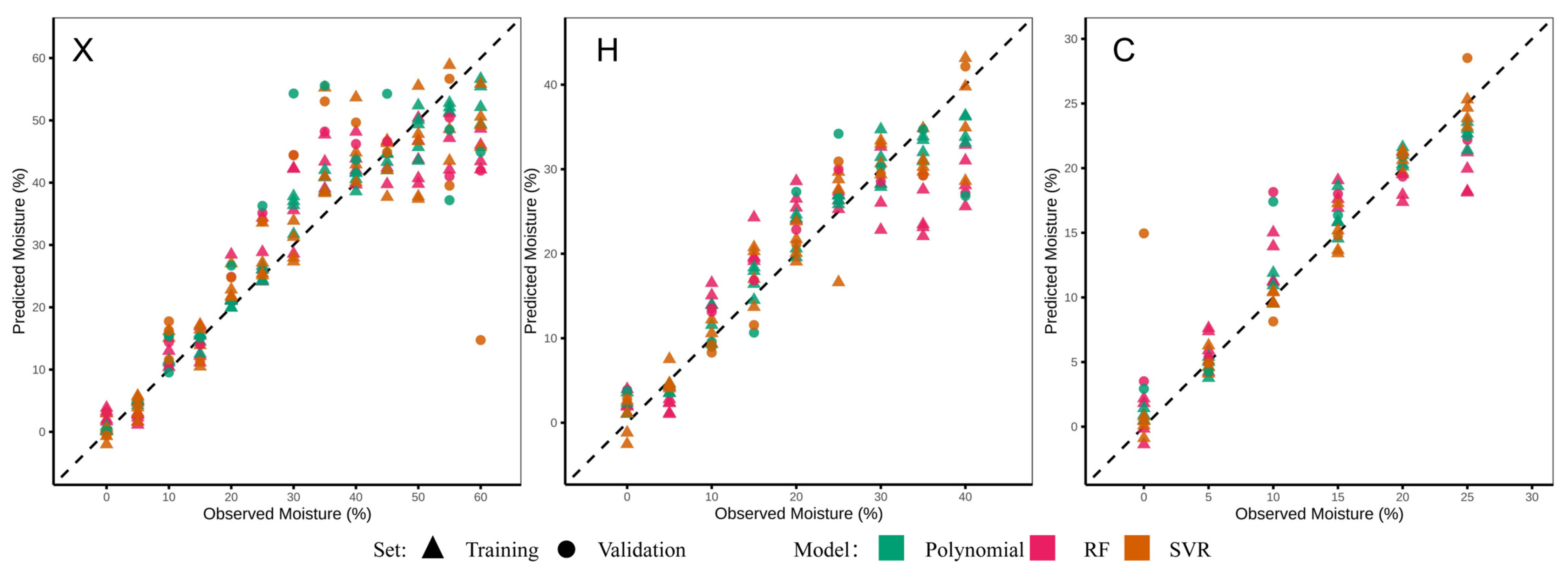
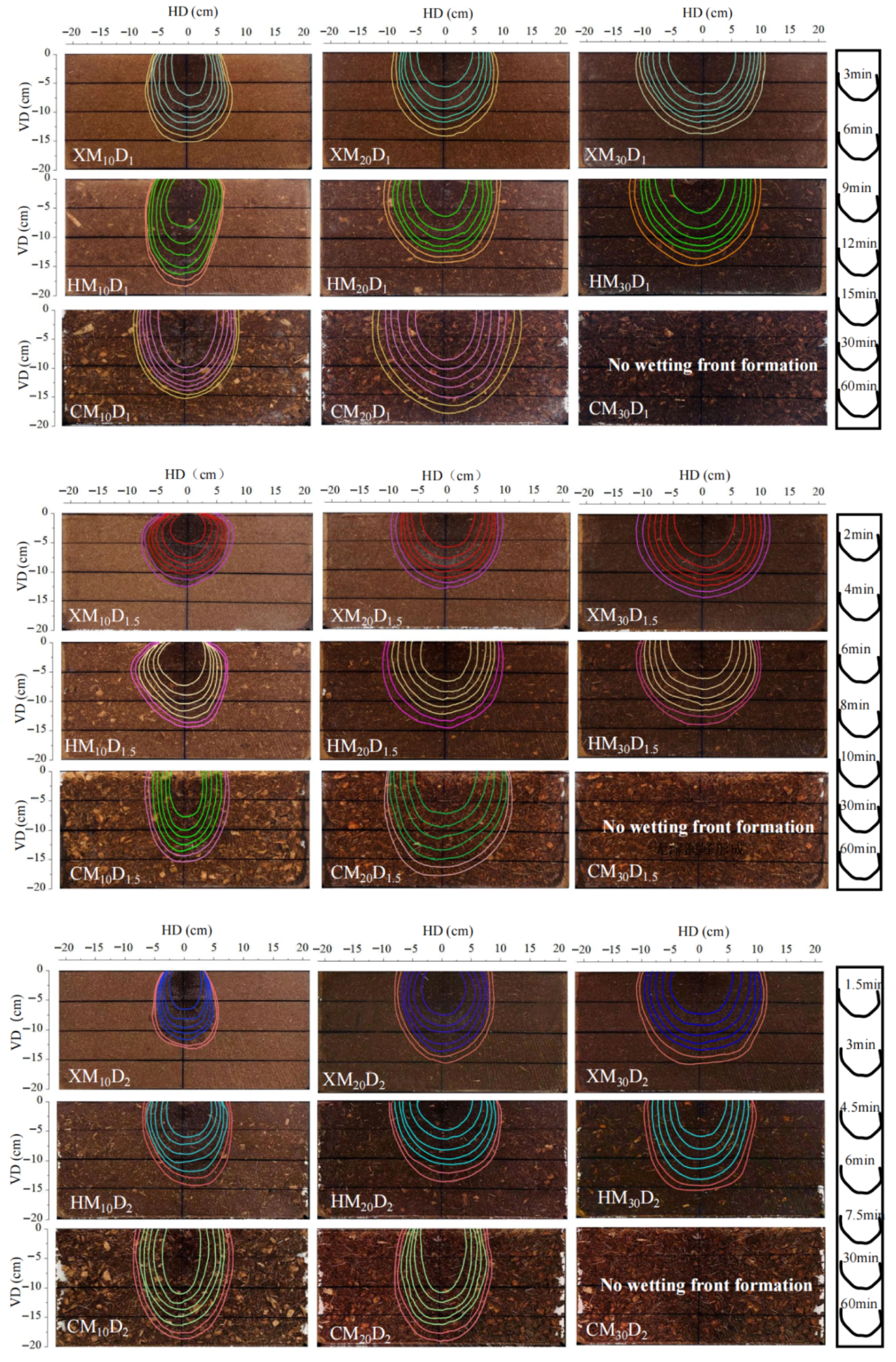
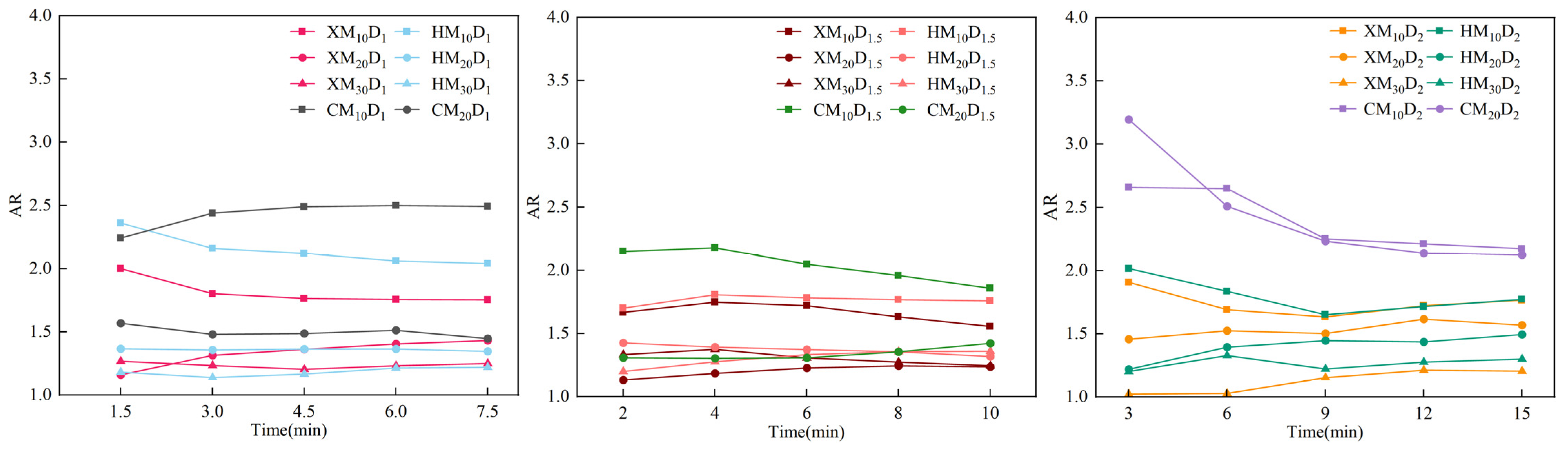
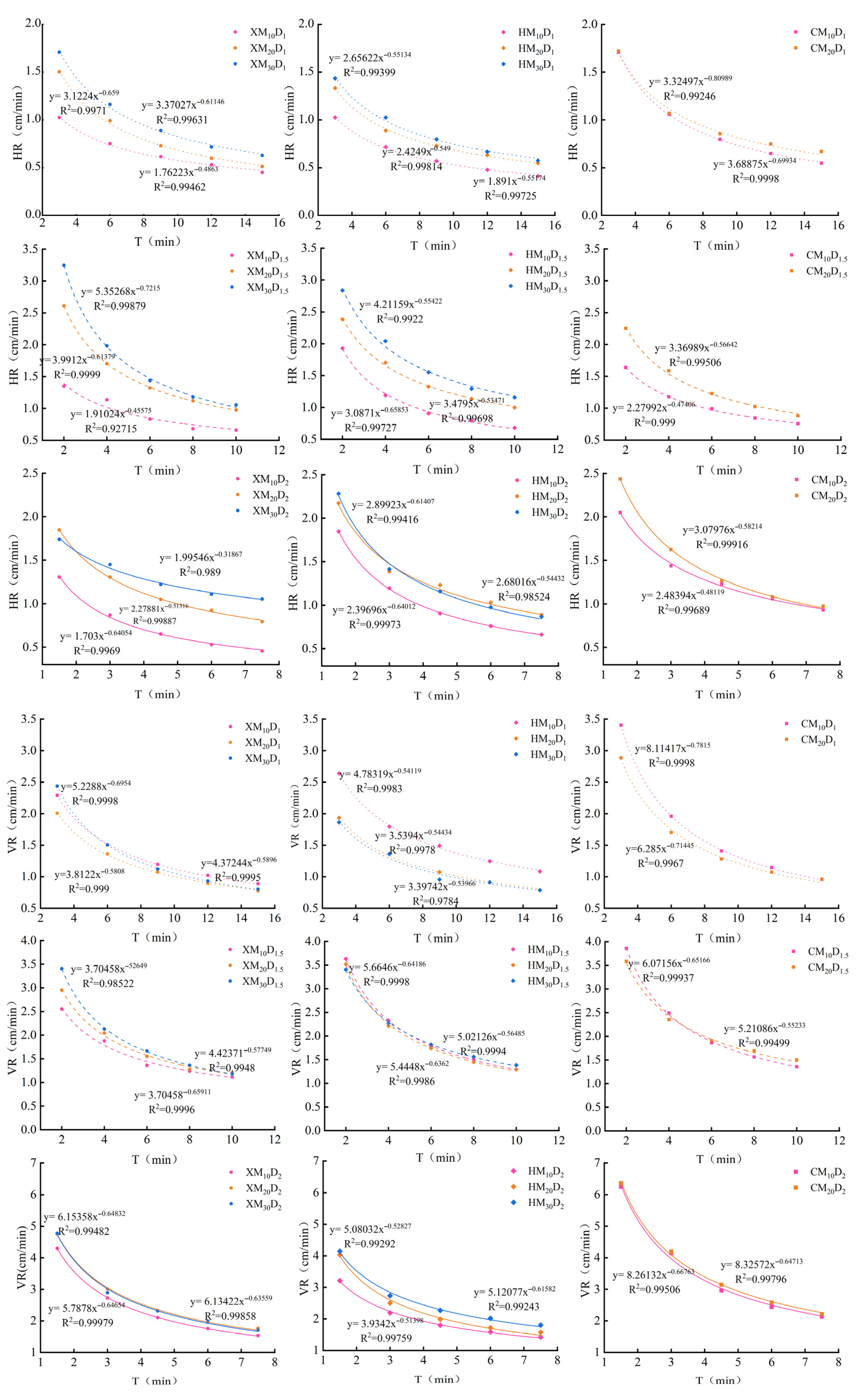
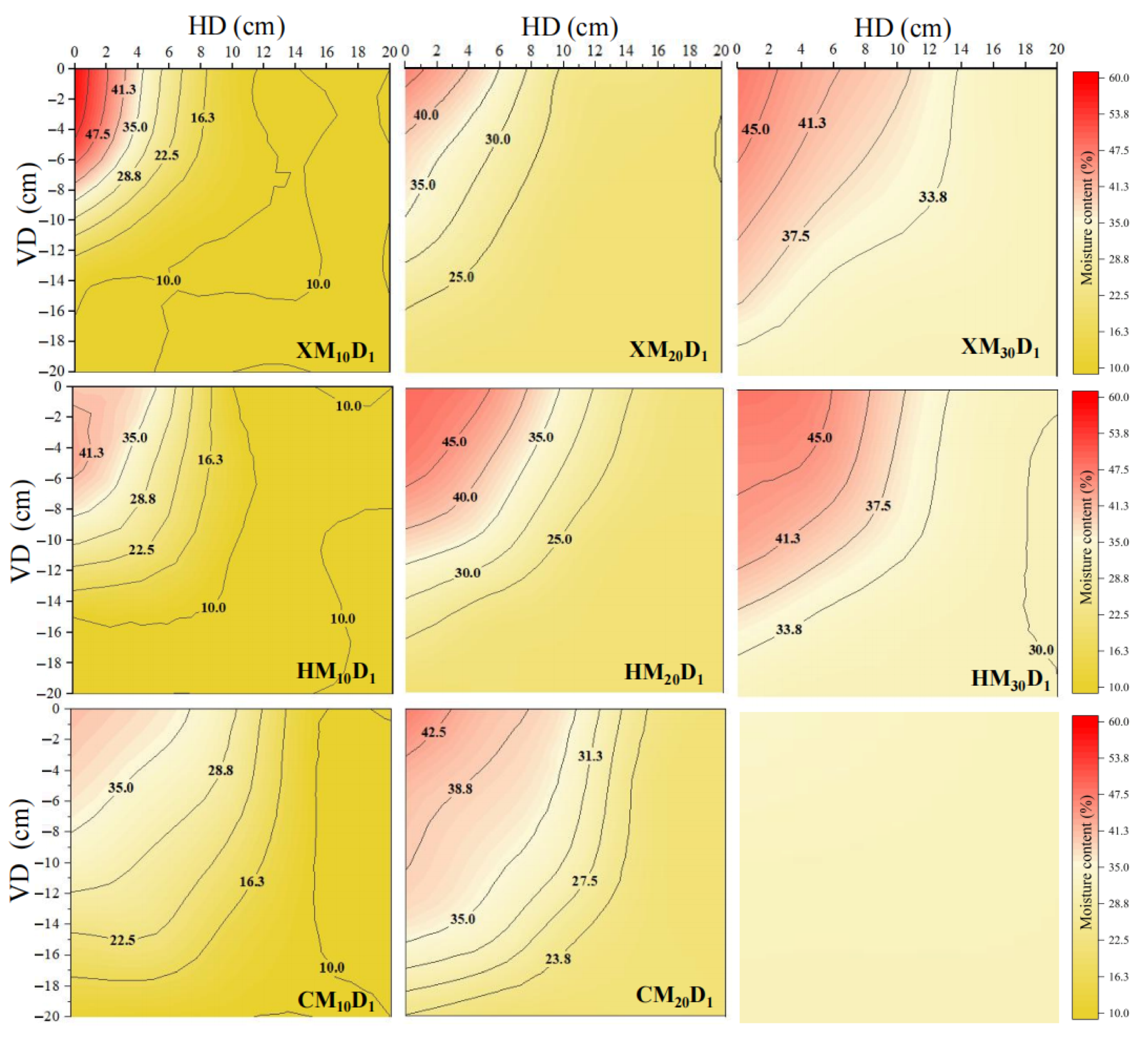
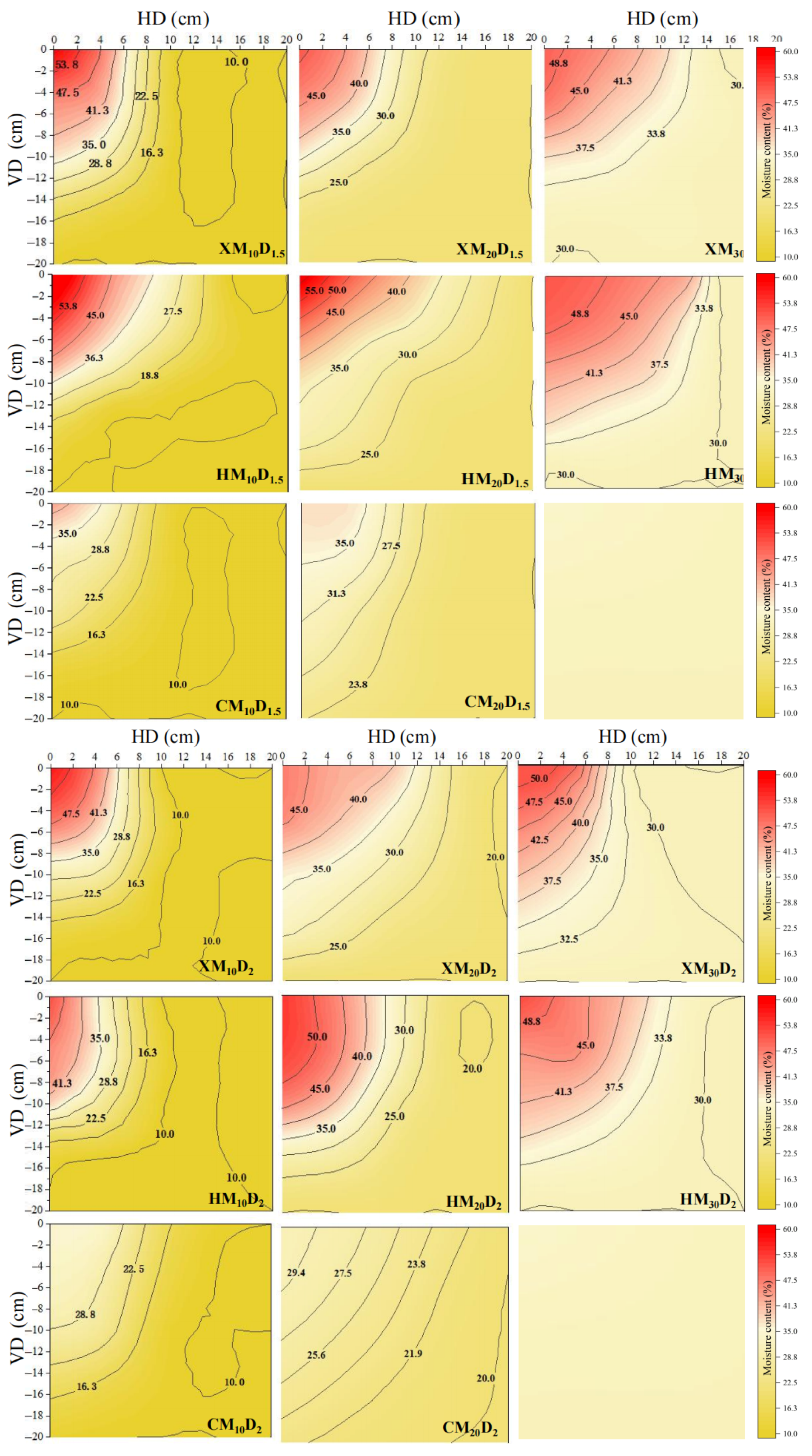
Coconut coir, a key substrate in soilless cultivation, presents challenges for accurate moisture detection because of its complex internal structure, which limits the understanding of water infiltration and redistribution. This study employed RGB image recognition techniques combined with machine learning algorithms to systematically investigate the effects of initial moisture content (10%, 20%, and 30%), coarse-to-fine coir volume ratio (1:0, 1:1, and 0:1), and emitter discharge rate (1.0, 1.5, and 2.0 L h−1) on wetting front morphology, water transport dynamics, and moisture variation within coir substrates. Morphological features of the wetting front were extracted from images and incorporated into three machine learning models—Support Vector Regression (SVR), Random Forest (RF), and Polynomial Regression—to construct a predictive framework for coir moisture estimation. The results showed that the SVR model achieved the best predictive performance in coarse coir substrates (R2 = 0.89, RMSE = 3.37%), whereas Polynomial Regression performed best in mixed substrates (R2 = 0.861, RMSE = 4.34%). All models exhibited lower accuracy in fine coir, particularly at high moisture levels. Under the same irrigation volume, increasing the initial moisture content enhanced both the water transport rate and the wetting front extent, with the aspect ratio (AR) decreasing from approximately 2.0 to 1.3, indicating a morphological transition of the wetting front from a “thumb-shaped” to a “hemispherical” pattern. Coarse particles facilitated vertical infiltration, while fine particles exhibited stronger water retention. By integrating RGB image recognition with machine learning approaches, this study achieved reliable prediction of coir moisture content and proposed an optimal management strategy using mixed substrates with an initial moisture content of 20–30% to balance infiltration efficiency and water-holding capacity while minimizing percolation risk. These findings provide a robust technical pathway for precise water management in coir-based cultivation systems.
Keywords: image recognition; machine learning; water transport; moisture content; coconut coir image recognition; machine learning; water transport; moisture content; coconut coir