Article

Nano-Enabled Zinc Fertilization Alters Targeted Organosulfur Metabolite Profiles in Garlic (Allium sativum L.)


1
CAFNR Research, College of Agriculture, Food and Natural Resources, Prairie View A&M University, Prairie View, TX 77446, USA
2
Zachry Department of Civil and Environmental Engineering, Texas A&M University, College Station, TX 77843, USA
*
Author to whom correspondence should be addressed.
Agriculture 2026, 16(18), 1981; https://doi.org/10.3390/agriculture16181981

Submission received: 3 August 2026 / Revised: 11 September 2026 / Accepted: 13 September 2026 / Published: 16 September 2026
(This article belongs to the Special Issue Research on Secondary Metabolites in Agricultural Plants)

Abstract

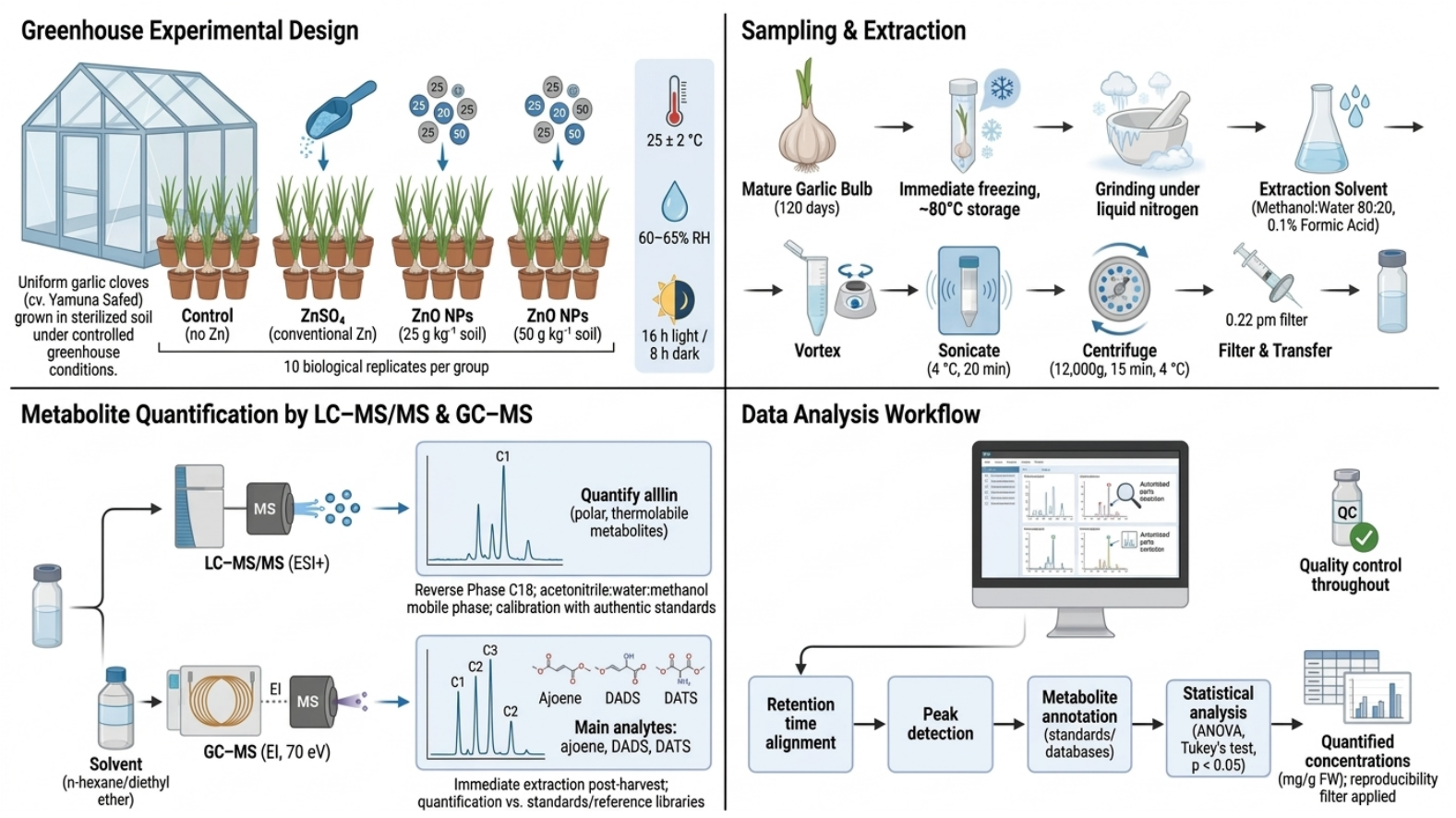
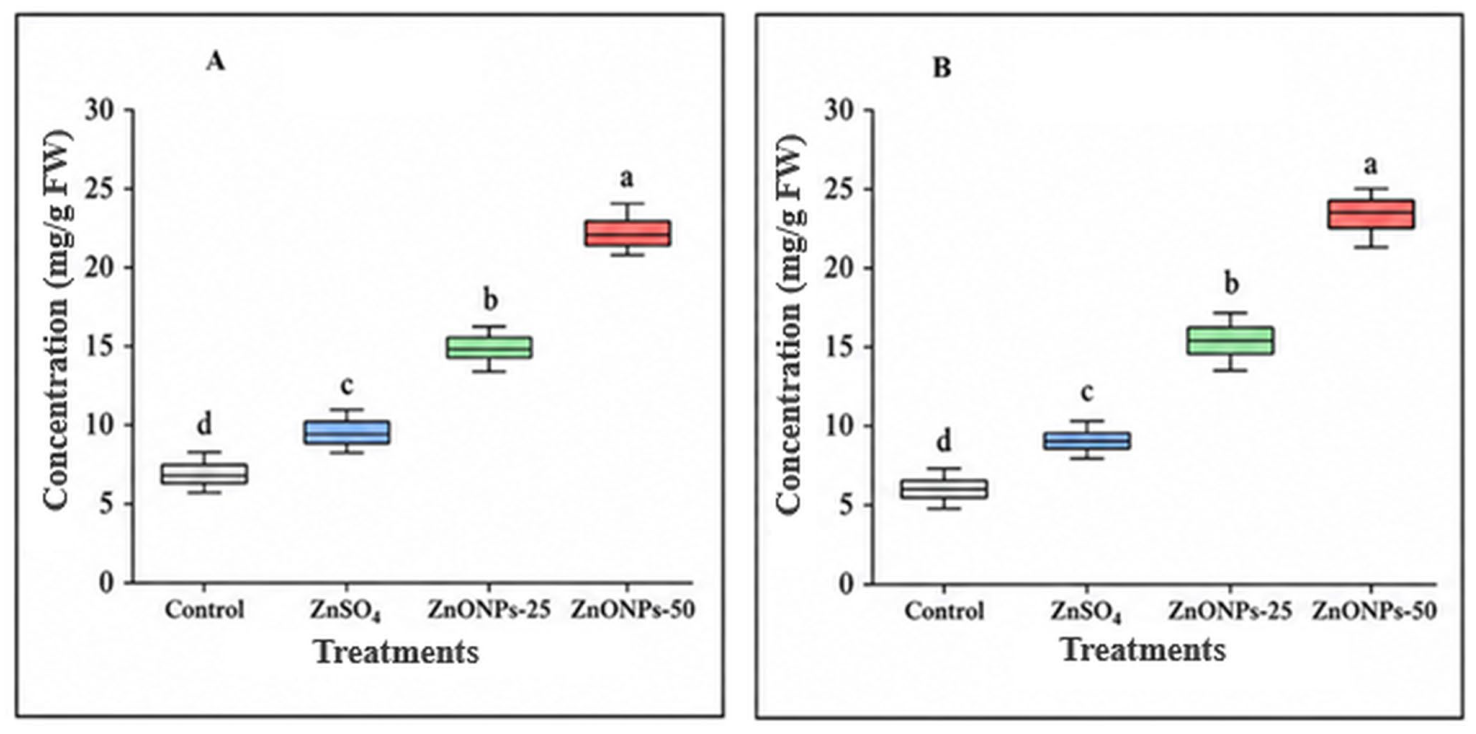
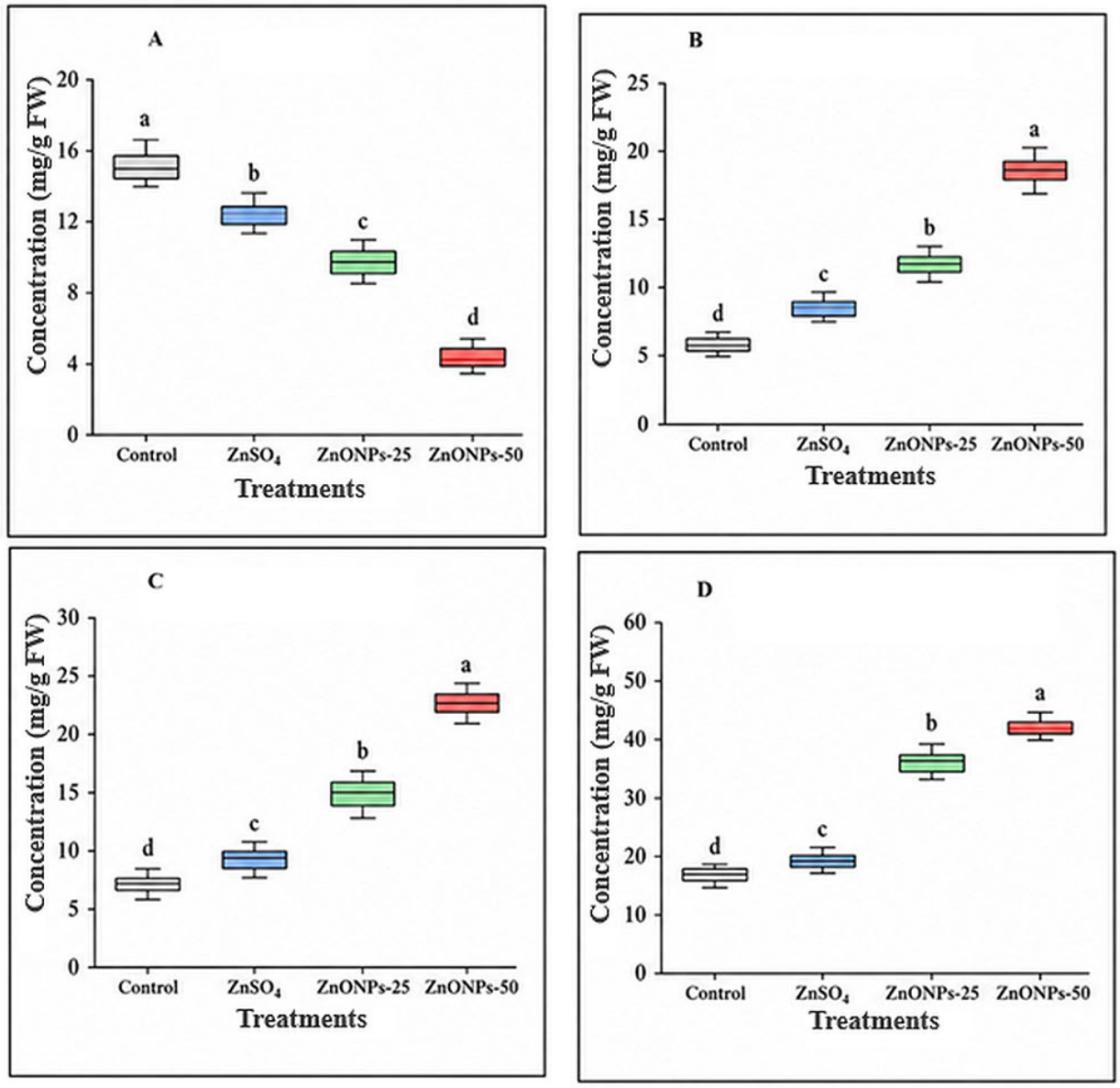
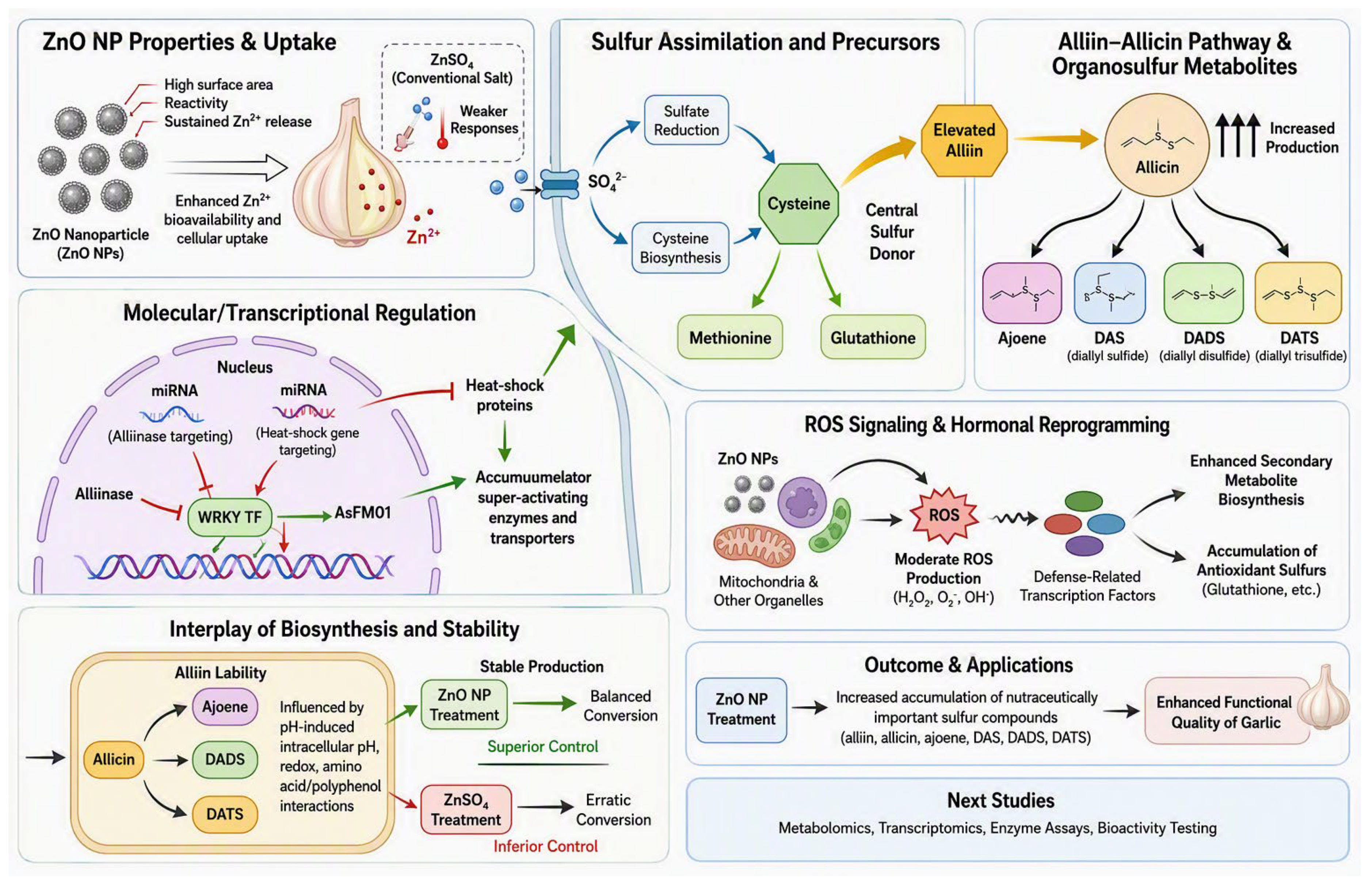
Garlic (Allium sativum L.) is a major horticultural crop valued for its distinctive flavor, nutritional quality, and health-promoting properties, including antioxidant and antimicrobial activities. The characteristic aroma and health benefits of garlic are primarily attributed to its organosulfur compounds. This study evaluated the effects of conventional zinc sulfate (ZnSO4) and zinc oxide nanoparticles (ZnO NPs) on selected organosulfur metabolites in garlic bulbs using targeted liquid chromatography–tandem mass spectrometry (LC–MS/MS) and gas chromatography–mass spectrometry (GC–MS). Treatments comprised an untreated control, ZnSO4, 25 mg ZnO NPs kg−1 soil (ZnO NP-25), and 55 mg ZnO NPs kg−1 soil (ZnO NP-50), with ten independent experimental units per treatment. Relative to the control, ZnO NP-50 increased alliin by 225.3%, allicin by 309.6%, diallyl sulfide (DAS) by 219.5%, diallyl disulfide (DADS) by 231.7%, and diallyl trisulfide (DATS) by 149.7%, whereas ajoene decreased by 67.3%. ZnO NP-50 produced the highest mean concentrations of alliin, allicin, DAS, DADS, and DATS, indicating a dose-related compositional pattern across the two nanoparticle rates. These findings demonstrate that soil-applied ZnO NPs altered the targeted organosulfur profile of garlic under greenhouse conditions. The physiological and molecular mechanisms underlying these responses were not measured and require further investigation.
Keywords: garlic; zinc oxide nanoparticles; targeted metabolite quantification; alliin; allicin; diallyl sulfides; ajoene garlic; zinc oxide nanoparticles; targeted metabolite quantification; alliin; allicin; diallyl sulfides; ajoene