Article

An Investigation into the Effects of Graphene and Cellulase Preparation on the Fermentation Quality and Bacterial Community Structure of Mulberry Silage


1
College of Animal Science and Technology, Yangzhou University, Yangzhou 225009, China
2
Institute of Animal Science, Jiangsu Academy of Agricultural Sciences, Nanjing 210014, China
3
Key Laboratory for Crop and Animal Integrated Farming, Ministry of Agriculture and Rural Affairs, Nanjing 210014, China
*
Authors to whom correspondence should be addressed.
Agriculture 2026, 16(17), 1875; https://doi.org/10.3390/agriculture16171875 (registering DOI)
Submission received: 6 August 2026 / Revised: 25 August 2026 / Accepted: 28 August 2026 / Published: 29 August 2026
(This article belongs to the Section Farm Animal Production)

Abstract

Developing efficient utilization approaches for unconventional feed resources is critical for sustainable livestock production. Mulberry (Morus alba L.) is a woody forage resource with high nutritional value. However, its inherent lignocellulosic barrier hinders high-quality fermentation during natural ensiling without exogenous additives. In this study, mature mulberry was ensiled under 8 treatments: a blank control (without any exogenous additives), 6 graphene treatments (G5, G10, G20, G25, G50, G75) with final graphene concentrations of 5, 10, 20, 25, 50, and 75 mg/L respectively, and a cellulase treatment (AC, Acremonium cellulolyticus). Four biological replicates were prepared for each treatment, and fermentation quality, chemical composition, and bacterial community structure were determined after 60 days of ensiling. Low-dose graphene treatments (G5 and G10) showed no significant difference in fermentation quality compared with the control. Across the G20–G75 gradient, silage pH decreased and then increased with rising graphene dosage, while lactic acid content exhibited the opposite trend. The G50 treatment achieved optimal fermentation performance, characterized by high lactic acid accumulation (2.84% DM), a low pH (4.13), and a low ammonia nitrogen/total nitrogen ratio (15.85%). The neutral detergent fiber content of the G50 treatment was comparable to that of the AC treatment. The relative abundance of Lactiplantibacillus plantarum increased with graphene concentration, with the minimum value observed in G5 and the maximum in G50. This study demonstrated that 50 mg/L graphene alone effectively alleviated the fermentation barrier of woody forage silage, with fermentation performance comparable to or even superior to that of cellulase treatment. These findings provide new insights and a theoretical basis for the application of functional nanomaterials in the livestock industry.

1. Introduction

With growing global demand for livestock products and limited supplies of conventional feed resources, woody forages represent a critical resource supporting the sustainable development of the livestock industry [1,2]. Mulberry (Morus alba L.) is a perennial woody forage crop with strong adaptability to diverse environments and high biomass yield, and is widely cultivated worldwide [3,4]. It is rich in protein, multiple nutrients and bioactive compounds; in particular, its crude fiber fraction exhibits high digestibility and availability for ruminants [5]. Accordingly, mulberry can partially substitute conventional protein feeds and has great potential for forage resource development [6]. However, mulberry harvesting is constrained by monsoon climates, leading to a narrow harvest period and high moisture content above 70%. In hot and humid regions, natural sun-drying of fresh mulberry is prone to mold growth and spoilage, making it difficult to maintain consistent feed quality and ensure stable year-round supply [7].
Ensiling is a well-established technology for the long-term preservation of fresh forage, which can effectively alleviate seasonal imbalances in forage supply [8]. However, the water-soluble carbohydrate (WSC) content of fresh mulberry is below the 5% of dry matter (DM) threshold required for successful ensiling. This unfavorable substrate characteristic delays the colonization of lactic acid bacteria (LAB) and prevents the establishment of a favorable fermentation environment, consequently compromising the fermentation quality [9]. Accordingly, the application of specific silage additives to modulate the ensiling process has been extensively explored, providing a feasible strategy to improve the quality of mulberry silage [10].
As an emerging class of two-dimensional carbon-based nanomaterial, graphene has been widely investigated and applied in various research fields, including environmental remediation and biocatalysis [11]. Existing studies have shown that graphene can effectively enhance the catalytic activity of multiple extracellular enzymes, including dehydrogenases, cellulases, and ureases [12,13,14]. The primary physical mechanism of graphene-mediated fiber degradation is associated with its unique structural properties. With an atomic-thick two-dimensional rigid lamellar structure and ultrahigh specific surface area, graphene can penetrate plant cell walls through van der Waals forces and capillary action, loosening the crystalline regions of cellulose, disrupting the protective lignin matrix, decreasing fiber crystallinity, and improving substrate bioavailability [15]. This physical action manifests rapidly at the initial stage of fermentation and serves as the dominant pathway for graphene-driven fiber degradation. In addition, graphene may exert secondary biological effects by modulating enzyme activity and microbial metabolism. Both physical and biological pathways are involved in the regulation of fiber degradation and the overall fermentation process. By establishing a multi-concentration gradient experimental design, researchers can systematically clarify the effective range and safety threshold of graphene on silage fermentation quality, microbial community structure and nutrient retention, providing a scientific basis for dosage optimization in practical applications.
In terms of economic cost, the current production cost of industrial-grade graphene powder is $200/kg, and this cost trends to decline as manufacturing technologies mature [16]. Preliminary estimation based on the additive dosages used in this study indicates that the application cost of graphene of silage is approximately $6–7/ton. The commercial high-purity cellulase used in this study is a feed-grade enzyme preparation derived from a specialized bacterial strain with high enzymatic activity, with a current international market price ranging from $400–800/kg. According to the conventional application dosage in commercial silage production, the application cost of cellulase is estimated at $10–20/ton of silage. Overall, graphene application has a markedly lower cost than commercial cellulase preparations, suggesting potential economic feasibility that requires further evaluation for large-scale application. Using commercially mature cellulase as a positive control enables quantitative assessment of the efficacy and cost-effectiveness of graphene as a novel silage additive, which further demonstrates the practical application value of this research.
As a commonly used enzyme additive in silage production, cellulase degrades cellulose and hemicellulose in plant cell walls, thereby releasing abundant fermentable substrates for the proliferation and metabolic activity of LAB [17,18]. Although graphene and other emerging nanomaterials have shown regulatory potential for microbial metabolic activity, their application in silage fermentation systems remains largely underexplored. To address this research gap, this study prepared mulberry silage with separate additive treatments and systematically evaluated the effects of cellulase and gradient concentrations of graphene on silage fermentation quality, chemical composition and bacterial community structure. This study aimed to verify the feasibility of graphene as a novel silage additive, and to provide a theoretical foundation for the subsequent development and optimization of new silage fermentation regulators in future research.

2. Materials and Methods

2.1. Material Pretreatment and Silage Preparation of Mulberry

Fresh mulberry branches and leaves were used as the experimental material. Samples were collected on 23 June 2025, from an experimental farm located in Hanjiang District, Yangzhou City, Jiangsu Province, China (119°26′ E, 32°30′ N). Healthy mulberry materials were harvested using manual pruning shears (DL 2789, Deli Group, Ningbo, China) and immediately chopped into 1–2 cm segments with large gardening shears (Fiskars PowerGear, Fiskars Group, Helsinki, Finland). The chopped mulberry was thoroughly homogenized to serve as the raw substrate for ensiling. Four representative fresh subsamples (1 kg each) were weighed and immediately placed in a refrigerated transport container. All samples were transported to the laboratory promptly for determination of the chemical composition and bacterial community of the material.
The experiment was conducted in a completely randomized single-factor design with eight treatments, to investigate the effects of exogenous additives on the chemical composition and bacterial community of mulberry silage. The 8 treatments were as follows: (1) blank control, with no exogenous additive; (2) six graphene treatments (G5, G10, G20, G25, G50, G75), with spray suspension concentrations of 5, 10, 20, 25, 50, and 75 mg/L, corresponding to actual graphene application rates of 0.005, 0.01, 0.02, 0.025, 0.05, and 0.075 mg/kg of DM, respectively; (3) cellulase (AC) treatment, supplemented with a cellulase preparation derived from Acremonium cellulolyticus (Meiji Co., Ltd., Tokyo, Japan). Each treatment included four biological replicates, resulting in a total of 24 silage samples. The AC cellulase preparation is a compound enzyme powder, with carboxymethyl cellulase, pectinase, and glucanase as the main active components. The determined enzyme activity was 7350 U/g. Prior to use, the enzyme powder was dissolved in sterile distilled water to prepare a 1% (w/v) stock solution, and the final application rate was set at 0.01% of DM basis. Graphene powder was supplied by Shenzhen Ruiheng Technology Co., Ltd. (Shenzhen, Guangdong, China). The physicochemical characterization parameters provided by the manufacturer were as follows: 1–3 graphene layers, lateral flake size of 0.5–5 μm, specific surface area of approximately 500 m2/g, carbon purity ≥ 98%, and single-layer thickness of 0.8–1.2 nm. All additive solutions were uniformly sprayed onto the mulberry material at a rate of 1 mL/kg DM using an electric sprayer. An equal volume of sterile distilled water was applied to the control treatment.
For ensiling preparation, 20 kg of homogenized fresh mulberry was weighed for each treatment. The corresponding additive solution was atomized and evenly sprayed onto the material surface, followed by thorough and repeated mixing to ensure uniform distribution of the additive. The treated material was divided into four equal subsamples (approximately 5 kg each) and packed individually into prelabeled 10 L polyethylene screw-cap silos (Shandong Dezhou Huafang Plastic Co., Ltd., Dezhou, China). Each independent silo was considered one biological replicate and the experimental unit. During packing, the material was added in sequential layers and manually compacted. The side walls of each silo were gently tapped simultaneously to remove entrapped air. Packing was stopped when the material surface was 2 cm below the silo rim to leave headspace for gas accumulation during ensiling. The top layer was thoroughly compacted before sealing. Screw caps were then tightly fastened, and the airtightness of each silo was confirmed. All silos were subsequently stored in the darkness at 25–29 °C for 60 days to undergo ensiling fermentation.
After 60 days of ensiling, three silos were randomly selected from each treatment and used as independent biological samples. The lids were opened, and the top layer of silage that had been exposed to air was discarded. All remaining silage was removed from each silo and thoroughly homogenized. Representative subsamples were taken according to experimental requirements for the determination of fermentation quality, chemical composition, and bacterial community structure.

2.2. Nutritional Composition and Fermentation Characteristic

Prior to the determination of nutritional and fermentation parameters, samples were heat-treated at 105 °C for 1 h to inactivate endogenous enzymes. The samples were then dried in an oven at 65 °C to constant weight. The DM content was calculated based on the difference in sample mass before and after drying. All dried samples were thoroughly mixed, ground, and sieved using a laboratory mill (CM100, Beijing Greed Instrument Equipment Co., Ltd., Beijing, China). The processed samples were sealed and stored in a desiccator for subsequent parameter determination and data analysis.
The contents of DM, crude protein (CP), neutral detergent fiber (NDF), and acid detergent fiber (ADF) were determined according to the official standard procedures of the Association of Official Analytical Chemists [19]. The WSC content was quantified by the anthrone colorimetric method [20].
The pH, organic acid composition, and ammonia nitrogen (NH3-N) were selected as core indicators for evaluating fermentation characteristics of silage. All samples were extracted using the cold-water extraction method proposed by Cai [21]. Briefly, 10 g of each sample was accurately weighed and homogenized with 90 mL of sterile distilled water. The mixture was stored at 4 °C for 24 h and then filtered through sterile gauze to obtain the aqueous extract. The pH of the extract was measured directly using a pH meter (S-90, Mettler-Toledo, Zurich, Switzerland). Lactic, acetic, propionic, and butyric acids in the silage were quantified using a high-performance liquid chromatography (HPLC) system (Agilent 1260 Infinity II) coupled with a Phenomenex ReZex ROA column. The chromatographic conditions were set as follows: column temperature at 60 °C, UV detection wavelength at 450 nm, isocratic elution with 3 mmol/L hypochlorite solution as the mobile phase, and a flow rate of 1.0 mL/min [22]. The NH3-N concentration was determined by the phenol-hypochlorite colorimetric assay, following the procedure reported by Cai [21].
For microbial population analysis, 10 g of sample was homogenized with 90 mL of sterile water. The mixture was shaken at a constant speed for 2 h at 4 °C in a shaking incubator (SHKE4000, Thermo Fisher Scientific, Waltham, MA, USA). Serial 8-fold dilutions (10−1 to 10−8) were prepared from the supernatant using sterile water as the diluent. Culturable microorganisms were counted using the standard plate count method [23]. The culture media used for different target microorganisms were as follows: de Man, Rogosa and Sharpe (MRS) agar (Difco Laboratories, Inc., Detroit, MI, USA) for LAB; nutrient agar (Nissui-Seiyaku Co., Ltd., Tokyo, Japan) for aerobic bacteria; blue light broth agar (Nissui-Seiyaku Co., Ltd., Tokyo, Japan) for coliform bacteria; and potato dextrose agar (Nissui-Seiyaku Co., Ltd., Tokyo, Japan) for yeast and mold, according to the protocol of Cai et al. [23]. Three appropriate dilutions were selected for each sample and spread onto separate agar plates, followed by colony enumeration. Microbial counts were expressed as colony-forming unit (cfu) per gram of fresh matter (FM). All count data were log-transformed for subsequent statistical analysis.

2.3. Bacterial Community Structure Analysis

For each silage, 10 g of sample was placed in a sterile container and mixed with 90 mL of 0.85% sterile saline at a 1:9 (w/v) ratio. The mixture was shaken at 160 rpm for 2 h to detach microorganisms attached to sample particles. After shaking, the suspension was filtered through 4 layers of sterile gauze, and the filtrate was collected into a 50 mL centrifuge tube. The suspension was then centrifuged at 5000× g for 10 min at 4 °C to pellet microbial cells. Total genomic DNA was extracted from the pellets using a commercial DNA extraction kit (DP302-2, Tiangen Biochemical Technology Co., Ltd., Beijing, China), following the manufacturer’s protocol as described by Du et al. [24].
Subsequently, PCR amplification was performed using the barcoded primers 27F (AGRGTTTGATYNTGGCTCAG) and 1492R (TASGGHTACCTTGTTASGACTT). The amplicons were denatured, quantified, and normalized prior to SMRTbell library construction. Following library quality control, SMRT sequencing was conducted on the PacBio Sequel II platform using the Sequel II Kit 2.0. Raw sequencing data were stored in BAM format and processed using PacBio SMRT Link software (version 8.0) to generate circular consensus sequencing (CCS) reads [25]. The CCS reads were then demultiplexed based on sample-specific barcodes, and primers, adapters, and low-quality sequences were removed to yield high-quality clean reads. Sequences with ≥97% similarity were clustered into operational taxonomic unit (OTU) using USEARCH (version 10.0). Taxonomic annotation of OTU was performed using the naive Bayes classifier integrated in QIIME2 (version 2020.6) against the SILVA database (version 138.1), with a confidence threshold of 70% [26].
Venn diagrams were generated using R software (version 3.1.1) [27]. Alpha diversity indices, including the abundance-based coverage estimator (ACE), Chao1, Shannon, and Simpson indices, were calculated using QIIME software (version 1.9.1) to assess bacterial community richness and diversity across all treatments [28]. Relative abundance bar charts at the genus and species levels were initially organized in Microsoft Excel 2003 and further visualized using Python (version 2.0) to display dominant microbial taxa [29,30].
Co-occurrence network analysis of the bacterial community was performed using R software (version 3.6.1) based on intra-sample species abundance and diversity data [31]. Functional profiles of the bacterial community were predicted using PICRUSt2 (version 2.3.0) with reference to the Kyoto Encyclopedia of Genes and Genomes (KEGG) database [32]. Bacterial community phenotypic traits were predicted using the BugBase tool (version 0.1.0) [33].

2.4. Statistical Analysis

One-way analysis of variance (ANOVA) was conducted using the General Linear Model (GLM) module of SPSS (version 19.0) to evaluate the effects of additives on nutritional composition, fermentation characteristics, culturable microbial counts, and alpha diversity indices. When a significant treatment effect was detected, Tukey’s post-hoc test was used for pairwise comparisons among treatments. Statistical significance was set at p < 0.05.

3. Results

The pH, nutritional composition, and epiphytic microbial counts of fresh mulberry are summarized in Table 1. Fresh mulberry was slightly alkaline (pH > 7) with a moisture content above 63%. On a DM basis, CP, NDF, and ADF contents were relatively high, exceeding 18%, 58%, and 37%, respectively, whereas WSC content was below 5%. Cultivable epiphytic microorganisms included LAB, yeast, and aerobic bacteria, with counts ranging from 103 to 105 cfu/g of FM. Specifically, the LAB count was 103 cfu/g of FM, while both yeast and aerobic bacteria reached 105 cfu/g of FM. No clostridia, coliform bacteria, or mold were detected in fresh mulberry.
The effects of additives on the nutritional composition, fermentation quality, and microbial counts of mulberry silage are presented in Table 2. No significant differences in nutritional composition were observed between the control and either graphene or cellulase treatments. Silage pH decreased significantly and lactic acid content increased significantly with increasing graphene concentration (p < 0.001). Neither butyric acid nor propionic acid was detected in any silages. The G50 treatment had a significantly higher LAB count than all other silages (p < 0.001). No clostridia, coliform bacteria, or molds were detected across all silages.
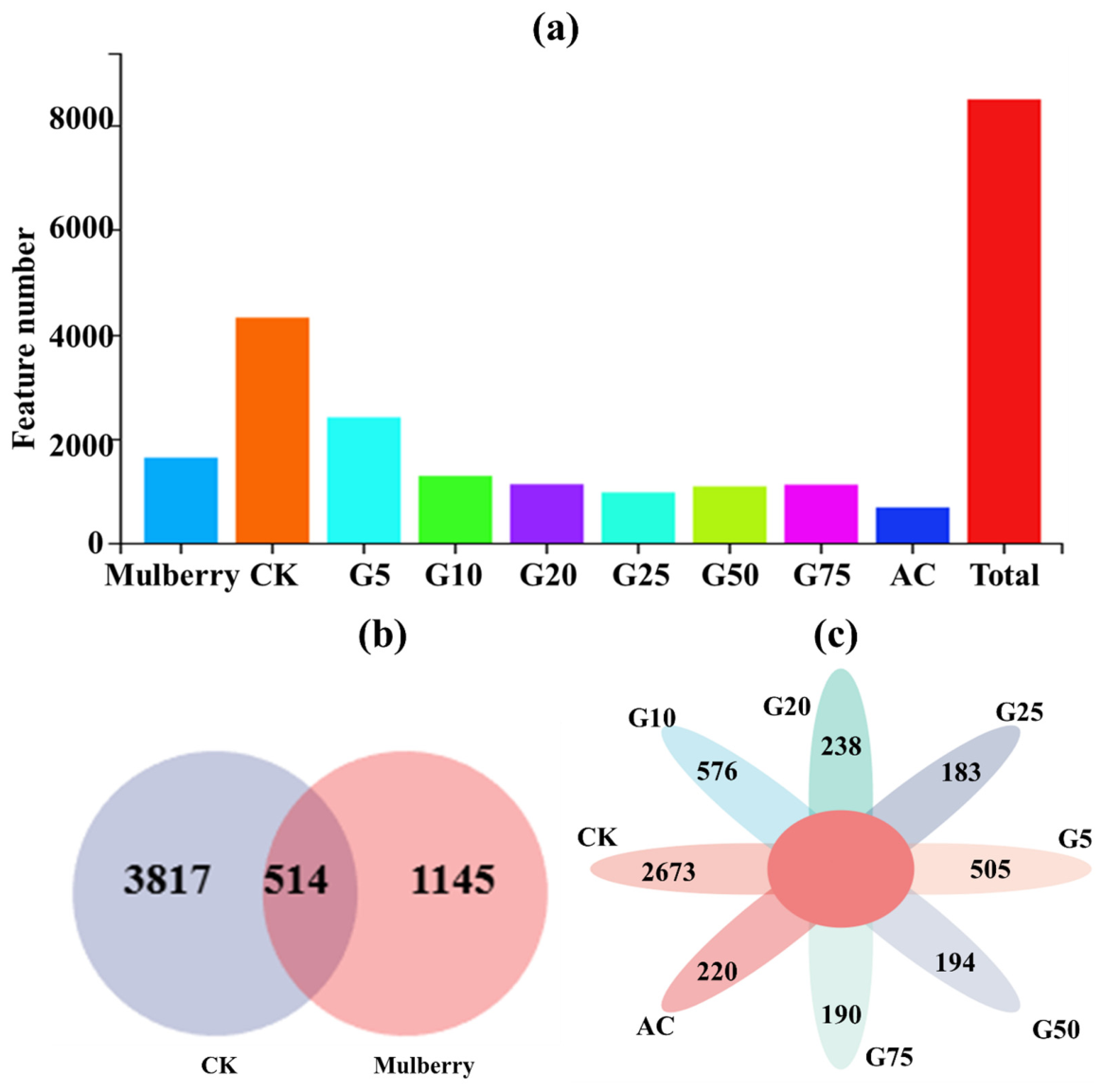
Figure 1 shows the number of microbial features and the overlap of OTUs between fresh mulberry and silages. The number of microbial features was higher in the control silage than in fresh mulberry, whereas additive-treated silages had fewer microbial features than fresh mulberry (Figure 1a). The Venn diagram revealed 1145 unique OTUs in fresh mulberry and 3817 unique OTUs in the control, with 514 OTUs shared between the two treatments (Figure 1b). All additive-treated silages had fewer unique OTUs than the control (Figure 1c).
Changes in bacterial α-diversity indices of fresh mulberry and silages are shown in Table 3. Compared with fresh mulberry, the control had higher ACE and Chao1 richness indices, whereas additive treatments decreased these two richness indices. The Shannon and Simpson diversity indices were lower in all additive-treated silages than in fresh mulberry. Notably, the G20 treatment had relatively high ACE and Chao1 indices and the highest Shannon index among all silages.
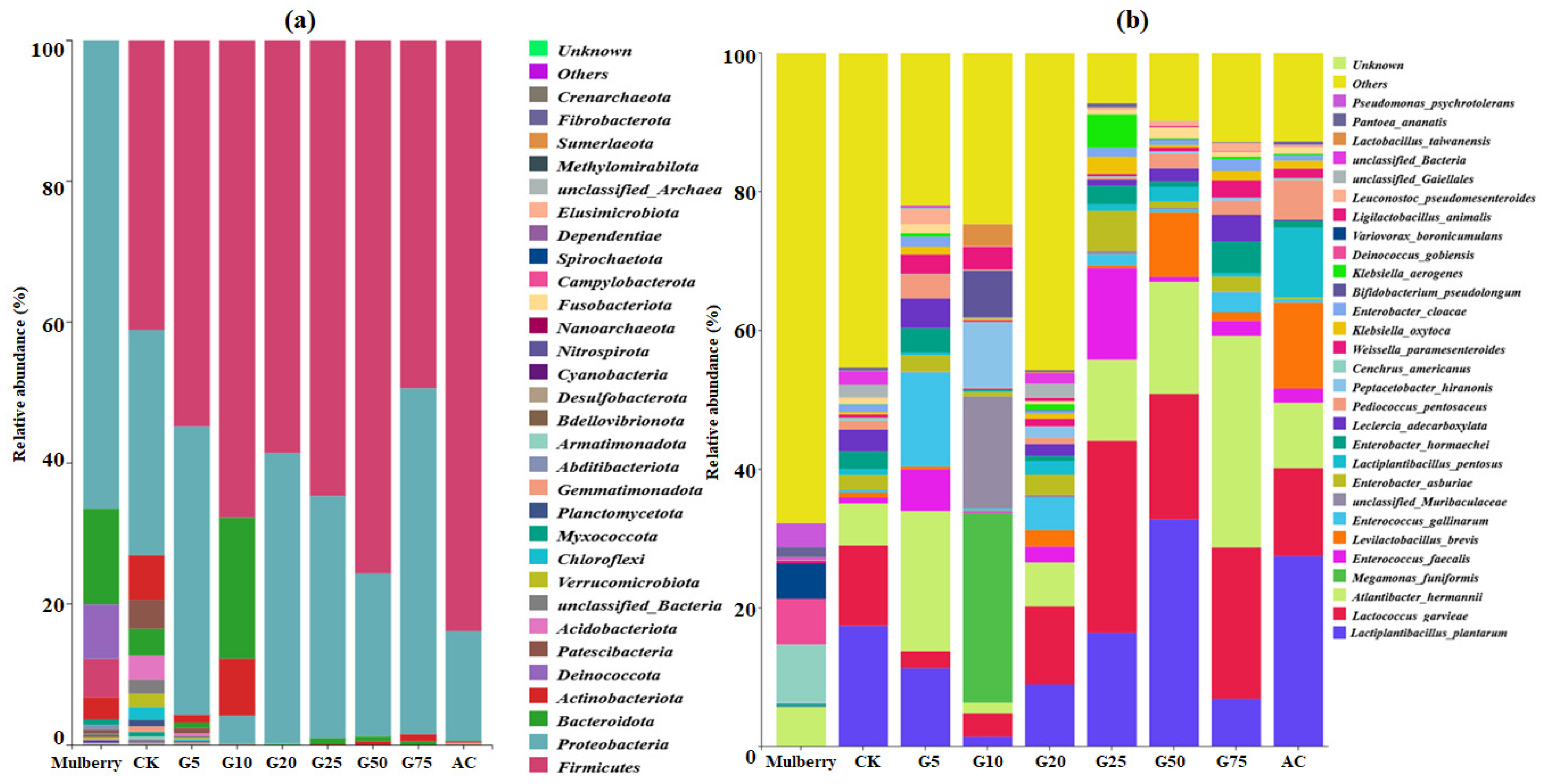
The relative abundances of the bacterial community at the phylum and species levels in fresh mulberry and silages are illustrated in Figure 2a and Figure 2b, respectively. Atlantibacter hermannii was the dominant epiphytic bacterium in fresh mulberry. After ensiling, Lactiplantibacillus plantarum exhibited the highest relative abundance in both G50 and AC-treated silages and became the dominant species.
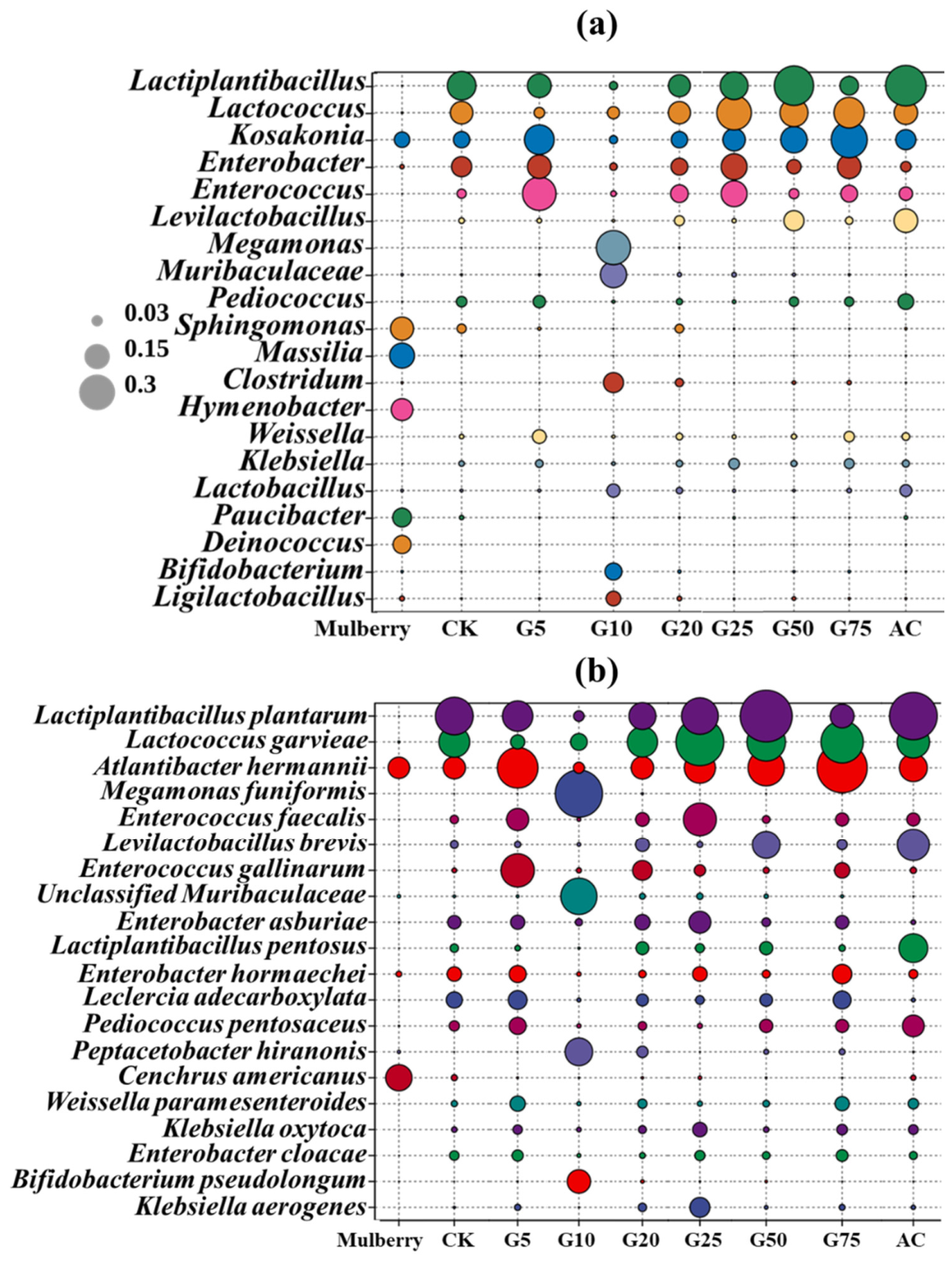
Bubble plots showing the bacterial community distribution at the genus and species levels are presented in Figure 3a and Figure 3b, respectively. Compared with fresh mulberry, the relative abundance of Lactiplantibacillus (predominantly Lactiplantibacillus plantarum) was markedly higher in additive-treated silages, with the highest levels observed in the G50- and AC-treated silages.
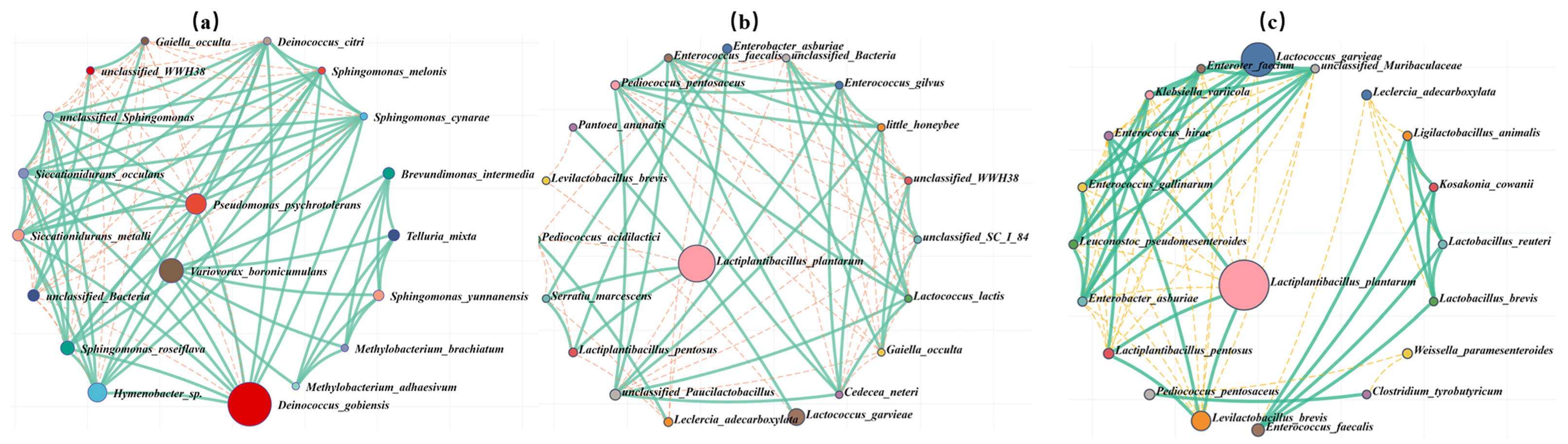
Species-level bacterial co-occurrence networks for fresh mulberry, control, and G50-treated silage are shown in Figure 4. Pseudomonas psychrotolerans was the most abundant species in fresh mulberry, and it was positively correlated with Sphingomonas melonis (Figure 4a). In the control, Lactiplantibacillus plantarum was a relatively abundant taxon, which was positively correlated with Lactiplantibacillus pentosus and negatively correlated with Leclercia adecarboxylata (Figure 4b). In G50-treated silage, Lactiplantibacillus plantarum was positively correlated with Lactiplantibacillus brevis and negatively correlated with Lactococcus garvieae (Figure 4c).
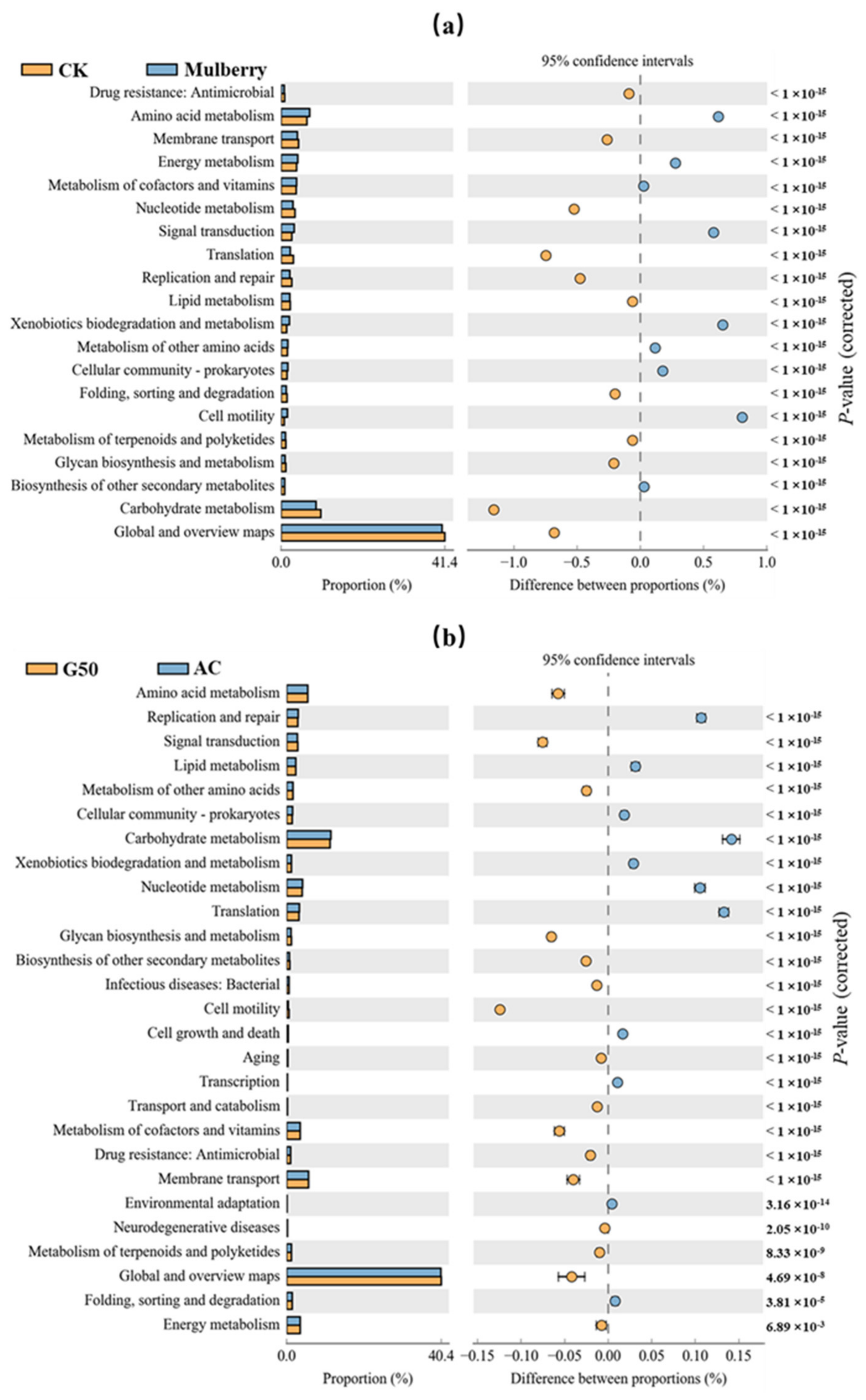
Figure 5 shows the KEGG functional profiles of bacterial community in fresh mulberry and silage (Figure 5a), as well as a comparison between AC- and G50-treated silages (Figure 5b). Compared with fresh mulberry, the control had a higher relative abundance of carbohydrate metabolism pathways and a lower relative abundance of amino acid metabolism pathways. The relative abundance of carbohydrate metabolism pathways was significantly lower in G50-treated silage than in AC-treated silage, whereas amino acid metabolism pathways were significantly more abundant in the G50 treatment.
Figure 5 shows the KEGG analysis of mulberry before and after silage (a) and a comparison between the AC- and the G50-treated silage (b). In the control, carbohydrate metabolism was more active than in fresh mulberry, while amino acid metabolism showed the opposite trend. Furthermore, compared with the AC, carbohydrate metabolism was significantly decreased and amino acid metabolism was significantly increased in the G50-treated silage (p < 0.001).

4. Discussion

4.1. Fermentation Characteristic and Microbial Counts

As a high-protein woody forage resource, mulberry can not only alleviate the supply–demand imbalance of high-quality protein feed, but also shows great application potential for reducing feeding costs in the livestock industry [1]. In this study, nutritional composition analysis demonstrated that fresh mulberry had suitable CP and fiber contents, which could provide essential nitrogen nutrients and structural fiber for livestock, further supporting the feeding value of mulberry as an unconventional feed [34,35].
Nevertheless, silage fermentation quality is largely determined by the physicochemical properties of materials and the characteristics of their epiphytic flora [18]. Fresh mulberry has a WSC content consistently below 5% of DM, and the epiphytic LAB population on its surface rarely reaches 105 cfu/g of FM. As reported by Hao et al. [8], successful silage fermentation depends on the sufficient availability of both fermentable sugars and LAB. However, mulberry is naturally deficient in both aspects: it provides limited fermentation substrates and harbors a low abundance of indigenous LAB. This dual limitation is the main intrinsic factor restricting its anaerobic fermentation quality. Due to insufficient fermentable carbohydrates and low initial LAB counts, acid production is slow and pH decreases gradually in the early fermentation stage, failing to rapidly establish an acidic environment that inhibits spoilage microorganisms. As a result, the final fermentation quality is inevitably impaired, which is consistent with the findings of Wang et al. [36]. This study data in Table 2 support this conclusion: the control had higher pH and NH3-N content, along with lower lactic acid accumulation, indicating poor fermentation performance. Overall, the inherent physicochemical properties and epiphytic microbiota of mulberry are insufficient to ensure desirable silage quality, and targeted exogenous intervention is therefore necessary.
Compared with the control, both single cellulase treatment and single graphene treatment at the optimal concentration significantly improved the fermentation profile of mulberry silage, as indicated by lower pH and NH3-N contents, and higher lactic acid content and LAB counts. The regulatory effect of cellulase on fermentation is attributed to its multi-enzyme system properties. The cellulase used in this study was produced by the cellulolytic fungus Acremonium cellulolyticus, which contains multiple active enzyme components including glucanase and pectinase. These enzymes specifically degrade cellulose and hemicellulose in plant-cell-wall structural carbohydrates, releasing monosaccharides such as glucose and xylose. These readily available carbon sources promote LAB proliferation and lactic acid production, thus improving overall silage fermentation quality [37]. This explains why single cellulase addition effectively enhanced silage fermentation performance in this study.
As a novel carbon-based nanomaterial, graphene exerts regulatory effects on anaerobic fermentation systems via multiple mechanisms. In this study, G50 treatment selectively increased the relative abundance of beneficial bacterial community in the silage system, and also accelerated fiber degradation and WSC release. With sufficient fermentable substrates in the system, LAB produce large amounts of lactic acid through glycolysis, ultimately improving the overall fermentation quality of silage [3,38,39].

4.2. Differences in Species Composition and Dominant Microbial Community

Bacterial community succession is a primary determinant of final silage fermentation quality. This study demonstrated that the bacterial community structure underwent substantial remodeling during mulberry ensiling. During ensiling, lactic acid accumulation inhibits the growth of non-LAB taxa. Once LAB gain a competitive advantage, community richness naturally declines [40]. Both single-cellulase and single-graphene treatments reduced the number of OTUs in the silage system, but they drove community succession via distinct mechanisms. Cellulase degrades plant cell walls to release WSC, providing abundant fermentable substrates for rapid LAB proliferation and suppression of non-LAB growth. In contrast, graphene drove the enrichment of functional taxa by modulating bacterial community assembly. Both additives directed the silage bacterial community toward functional specialization.
The abnormal increase in OTUs in the control was associated with the inherent characteristics of mulberry, namely low WSC content and high buffering capacity [41]. Without exogenous regulation, insufficient acid production and slow pH decline in the early fermentation stage allowed extensive proliferation of non-LAB taxa and increased community complexity in the later stage, consistent with the poor fermentation quality observed. Since no exogenous cellulase was added to the graphene treatments, the observed effects arose from the multifaceted regulatory properties of graphene itself. Specifically, graphene physically disrupted the lignocellulosic matrix to release fermentable carbon sources, while its surface physicochemical properties selectively enriched LAB and may have accelerated electron transfer to enhance lactic acid synthesis. These two pathways collectively promoted LAB dominance in the silage microbiome and improved fermentation performance [42]. The G50 treatment achieved an optimal regulatory balance among physical structural degradation, targeted microbial enrichment, and enhanced metabolic efficiency, and thus exhibited the greatest improvement in fermentation performance.
Alpha diversity indices (ACE, Chao1, Shannon, Simpson) reflect bacterial community structure and ecological stability in terms of species richness and evenness [43]. The epiphytic bacterial community on fresh mulberry is dominated by aerobic and facultative anaerobic bacteria, and the anaerobic environment generated during sealed ensiling drives directed community succession. In the naturally fermented control silage, although the anaerobic environment inhibited obligate aerobes and reduced community evenness, the low indigenous LAB abundance in mulberry delayed early-stage acidification, failing to promptly restrict the proliferation of facultative anaerobes and acid-tolerant spoilage bacteria. Consequently, the control silage maintained high species richness but reduced functional diversity. In contrast, graphene and cellulase addition accelerated lactic acid accumulation and rapid pH decline, exerting strong selective pressure against acid-intolerant organisms. As a result, the bacterial community exhibited reduced taxonomic richness and diversity.
Notably, graphene regulation of community diversity exhibited a distinct nonlinear dose–response pattern. The G20 treatment maintained the highest bacterial diversity among all silages, which may be attributed to the dual regulatory effects of graphene. At moderate concentrations, graphene physically loosens plant cell walls and releases partial WSC, expanding the pool of available substrates and supporting the growth of microbial taxa with diverse metabolic strategies. However, this concentration was insufficient to generate strong acidification-mediated selective pressure. The limited pH decline failed to fully eliminate acid-intolerant taxa, allowing the community to retain higher richness and diversity.
Accordingly, the fermentation quality of the G20 treatment was inferior to that of higher-concentration treatments such as G50. This is because the bacterial community had not undergone strong directed enrichment toward lactic-acid-producing bacteria, and spoilage taxa still occupied partial ecological niches. The resulting lower lactic acid accumulation rate and weaker acidification led to suboptimal fermentation performance. As graphene concentration increased to G50 and above, the acidification rate increased markedly. Strong selective pressure rapidly eliminated acid-intolerant taxa, leading to a LAB-dominated community with low richness and diversity, alongside optimal fermentation quality. These findings provide novel insights into the dose-dependent mechanisms of graphene-mediated silage microbiome regulation, and confirm the close association between community diversity and fermentation function.
Microbiome sequencing-based bacterial community profiling provides valuable insights into fermentation regulatory mechanisms, as well as forage quality and safety evaluation. Atlantibacter hermannii, a Gram-negative facultative anaerobe, was a dominant epiphytic bacterium on fresh mulberry. This species grows aerobically by assimilating nutrients released from material tissues, and is widely distributed in the plant phyllosphere [44]. Functionally, it serves as an indicator taxon linking bacterial community structure to silage fermentation performance [45].
Upon the onset of anaerobic ensiling, however, Lactiplantibacillus plantarum—a homofermentative LAB with high acid-producing capacity and broad environmental adaptability—gradually outcompetes aerobic epiphytic taxa and becomes the dominant species in the silage microbiome. This species efficiently utilizes WSC such as glucose and fructose from mulberry via homofermentative metabolism to proliferate rapidly, producing large amounts of lactic acid to drive rapid pH decline. This process inhibits acid-intolerant spoilage bacteria and establishes L. plantarum as the core taxon in the silage ecosystem [46]. This succession pattern was supported by the bubble plot analysis (Figure 3). The relative abundance of Lactiplantibacillus plantarum was markedly higher in the G50 and cellulase treatments than in other groups, confirming its dominant role in the functional microbial community. Furthermore, the improved fermentation quality and reduced bacterial α-diversity in these treatments further confirm that directed community succession dominated by Lactiplantibacillus plantarum is the core microbiological mechanism underlying enhanced silage fermentation performance.

4.3. Microbial Co-Occurrence Network System

Microorganisms form dynamic co-occurrence networks through metabolite exchange, signal transduction and interspecies interactions to maintain community homeostasis during ensiling [47]. Microbial network analysis can visually display correlations in species abundance and further elucidate complex interactions such as symbiosis, cooperation and competition within bacterial communities [48].
Sphingomonas melonis is a Gram-negative bacterium of the genus Sphingomonas with strong environmental adaptability [49]. By stabilizing the plant microecosystem, this species shows great potential as a candidate for environmentally sustainable plant disease management [50]. Pseudomonas psychrotolerans is a cold-tolerant strain originally isolated from rice seeds; it mediates plant nitrogen fixation and significantly promotes plant growth [51,52]. The co-occurrence network analysis in this study revealed a significant positive correlation between Sphingomonas melonis and Pseudomonas psychrotolerans in fresh mulberry. Through synergistic colonization, these two bacteria coordinately regulate plant development and enhance plant stress tolerance.
Lactiplantibacillus plantarum rapidly metabolizes glucose and fructose to produce lactic acid, driving a rapid pH decline in the fermentation system [53]. Lactiplantibacillus pentosus has a wider carbon source utilization spectrum and can simultaneously degrade pentoses (such as xylose and arabinose) and hexoses abundant in forage, making it more adaptable to colonization and growth under the high-pH conditions of early ensiling [54]. These two LAB strains show functional complementarity in carbon metabolism. The mildly acidic microenvironment formed by their synergistic acid production effectively inhibits the growth of the spoilage bacterium Leclercia adecarboxylata, which has low acid tolerance. This mechanism explains the significant positive correlation between the two LAB strains and their significant negative correlation with Leclercia adecarboxylata in mulberry silage.
The homofermentative Lactiplantibacillus plantarum and heterofermentative Levilactobacillus brevis act synergistically via acid-producing metabolism to maintain a low-pH environment in the silage system, thereby inhibiting the proliferation of Lactococcus garvieae, which has low acid tolerance. Meanwhile, graphene at an appropriate concentration can act as a microbial attachment substrate, enhancing the colonization ability of these two LAB strains, amplifying their synergistic effects and optimizing bacterial community structure.

4.4. Functional Gene Prediction

KEGG functional annotation based on 16S rRNA sequencing can reveal the functional potential of bacterial community at the metabolic pathway level, providing a functional basis for understanding the regulatory mechanisms of bacterial community during ensiling [55]. Under anaerobic sealed conditions, LAB proliferate gradually and drive soluble carbohydrate catabolism for acid production, leading to enrichment of carbohydrate metabolism pathways. Conversely, aerobic proteolytic taxa abundant on fresh plant surfaces are inhibited as the system acidifies, resulting in a corresponding decrease in amino acid catabolism [3,56]. At the optimal concentration, graphene enhances the metabolic activity of LAB, accelerates microbial succession, promotes the rapid dominance of Lactiplantibacillus plantarum, improves the efficiency of homofermentative acid production, and strengthens metabolic pathways involved in the conversion of carbohydrates to lactic acid.
It is worth noting that the KEGG functional prediction showed that the relative abundance of carbohydrate metabolism pathways was lower in the G50 treatment than in the AC treatment, whereas amino acid metabolism pathways were upregulated. Although this appears inconsistent with the expected pattern for efficient lactic acid fermentation, it can be inferred from the lowest NH3-N content and highest lactic acid accumulation in the G50 treatment that the relative reduction in carbohydrate metabolism may result from slowed substrate consumption by LAB as metabolic activity enters a stable phase in the late stage of fermentation. The upregulation of amino acid metabolism does not necessarily indicate increased protein degradation. Instead, it more likely reflects active utilization of environmental free amino acids by dominant LAB, or is associated with amino acid recycling during microbial cell turnover [57]. This hypothesis requires further validation with direct evidence from proteomics or metabolic flux analysis.

5. Conclusions

In summary, this study demonstrated under controlled laboratory conditions that spraying graphene at a concentration of 50 mg/L can effectively improve the fermentation quality of mulberry silage and drive the directed succession of bacterial communities toward acid-producing functional groups. Its fermentation-regulating effect is comparable to that of commercial cellulase preparations, indicating its research potential as a novel fermentation-regulating material for mulberry silage. This study preliminarily clarified the dose–response relationship and microecological characteristics of graphene in regulating the fermentation of woody forage silage, providing foundational data and theoretical references for exploratory research on carbon-based nanomaterials in the field of silage processing.
This study has several limitations. As a laboratory-scale trial conducted exclusively on mulberry leaves, the optimal graphene dosage identified cannot be generalized to other forage species. Data on large-scale application, aerobic stability, long-term storage, graphene residue, animal safety and ecotoxicological risks remain insufficient [58].
Future research will expand test materials, conduct pilot validation, evaluate full-cycle silage quality, and carry out systematic safety assessments to support the agricultural application of carbon-based nanomaterials.

Author Contributions

Writing—original draft, investigation, data curation, visualization, Y.C., Z.D., S.W.; methodology and formal analysis, Y.C.,Y.Z.; resources, Y.C., Z.D.; writing—review and editing, project administration and funding acquisition, Z.D., S.W., X.Y. All authors have read and agreed to the published version of the manuscript.

Funding

This work was supported by the Project of National Natural Science Foundation of China (32401483) and High-level Talents Program of “Lv-Yang-Jin-Feng of Yangzhou”.

Institutional Review Board Statement

Not applicable.

Data Availability Statement

The original contributions presented in this study are included in the article. Further inquiries can be directed to the corresponding authors.

Conflicts of Interest

The authors have no conflicts of interest to declare.

References

  1. Han, H.; Zhang, L.; Shang, Y.; Wang, M.; Phillips, C.J.C.; Wang, Y.; Su, C.; Lian, H.; Fu, T.; Gao, T. Replacement of maize silage and soyabean meal with mulberry silage in the diet of hu lambs on growth, gastrointestinal tissue morphology, rumen fermentation parameters and microbial diversity. Animals 2022, 12, 1406. [Google Scholar] [CrossRef] [Scilit] [PubMed]
  2. Wang, M.; Han, H.; Shang, Y.; Zhang, L.; Zhang, Y.; Su, C.; Lian, H.; Fu, T.; Gao, T. Effect of the replacement of maize silage and soyabean meal with mulberry silage in the diet of hu lambs on growth performance, serum biochemical indices, slaughter performance, and meat quality. Animals 2022, 12, 3164. [Google Scholar] [CrossRef] [Scilit] [PubMed]
  3. Du, Z.; Yamasaki, S.; Oya, T.; Cai, Y. Cellulase–lactic acid bacteria synergy action regulates silage fermentation of woody plant. Biotechnol. Biofuels 2023, 16, 125. [Google Scholar] [CrossRef] [Scilit] [PubMed]
  4. Zhang, Y.C.; Li, D.X.; Wang, X.K.; Lin, Y.L.; Zhang, Q.; Chen, X.Y.; Yang, F.Y. Fermentation dynamics and diversity of bacterial community in four typical woody forages. Ann. Microbiol. 2019, 69, 233–240. [Google Scholar] [CrossRef] [Scilit]
  5. Guo, L.; Wang, Y.; Wang, X.; Li, X.; Xiong, Y.; Lin, Y.; Ni, K.; Yang, F. Dynamic fermentation quality and bacterial community structure of paper mulberry silage from three regions of China. Chem. Biol. Technol. Agric. 2023, 10, 51. [Google Scholar] [CrossRef] [Scilit]
  6. Hao, J.; Sun, W.T.; Wu, C.R.; Zhang, M.Z.; Xia, G.H.; Zheng, Y.L.; Chen, C. Fermentation quality, bacterial community, and aerobic stability of perennial recut Broussonetia papyrifera silage with different additives and wilting time. Fermentation 2022, 8, 262. [Google Scholar] [CrossRef] [Scilit]
  7. Chen, D.; Zhou, W.; Guo, X.; Zheng, M.; Chen, X.; Zhang, Q. Citric acid influences the dynamics of the fermentation quality, protease activity and microbial community of mulberry leaf silage. Fermentation 2021, 7, 185. [Google Scholar] [CrossRef] [Scilit]
  8. Hao, Y.; Huang, S.; Liu, G.; Zhang, J.; Liu, G.; Cao, Z.; Wang, Y.; Wang, W.; Li, S. Effects of different parts on the chemical composition, silage fermentation profile, in vitro and in situ digestibility of paper mulberry. Animals 2021, 11, 413. [Google Scholar] [CrossRef] [Scilit] [PubMed]
  9. Tatlı Seven, P.; Çiçek, M.S.; İflazoğlu Mutlu, S.; Dadan, F.; Aktaş, N. Assessing the nutritional value, fermentation quality, and in vitro degradability of mulberry pomace silage ensiled with sumac additive. Rev. Cient. Fac. Cienc. Vet. 2025, 35, 8. [Google Scholar] [CrossRef] [Scilit]
  10. Peng, S.; Xie, L.; Cheng, Y.; Wang, Q.; Feng, L.; Li, Y.; Lei, Y.; Sun, Y. Effect of lactiplantibacillus and sea buckthorn pomace on the fermentation quality and microbial community of paper mulberry silage. Front. Plant Sci. 2024, 15, 1412759. [Google Scholar] [CrossRef] [Scilit] [PubMed]
  11. Narayan, J.; Bezborah, K. Recent advances in the functionalization, substitutional doping and applications of graphene/graphene composite nanomaterials. RSC Adv. 2024, 14, 13413–13444. [Google Scholar] [CrossRef] [Scilit] [PubMed]
  12. Chung, H.; Kim, M.J.; Ko, K.; Kim, J.H.; Kwon, H.; Hong, I.; Park, N.; Lee, S.-W.; Kim, W. Effects of graphene oxides on soil enzyme activity and microbial biomass. Sci. Total Environ. 2015, 514, 307–313. [Google Scholar] [CrossRef] [Scilit] [PubMed]
  13. Ren, W.; Chang, H.; Li, L.; Teng, Y. Effect of graphene oxide on growth of wheat seedlings: Insights from oxidative stress and physiological flux. Bull. Environ. Contam. Toxicol. 2020, 105, 139–145. [Google Scholar] [CrossRef] [Scilit] [PubMed]
  14. Qiao, J.; Liu, J.; Chen, X.; He, X.; Zhao, J.; Ma, G. Effects of graphene oxide plus external bacterial agents on accelerating poplar leaf-litter decomposition in saline–alkali soil. Front. Soil Sci. 2025, 5, 1694914. [Google Scholar] [CrossRef] [Scilit]
  15. Cao, H.; Zhang, X.; Wang, H.; Ding, B.; Ge, S.; Zhao, J. Effects of graphene-based nanomaterials on microorganisms and soil microbial communities. Microorganisms 2024, 12, 814. [Google Scholar] [CrossRef] [Scilit] [PubMed]
  16. Elsayed, M.H.; Alakbari, F.S.; Abd El-Haleem, L.E.; Zentou, H.; Saber, A.F.; Hoque, B.; Abdelnaby, M.M. Graphene materials at scale: Synthesis routes, market and techno-economic landscape, and net-zero applications. Sustain. Mater. Technol. 2026, 48, e01966. [Google Scholar] [CrossRef] [Scilit]
  17. Di, F.; Gao, J.; Ma, J.; Wang, X.; Jiang, Y.; Qiu, S.; Shi, H. Effects of wilting and additives on fermentation characteristics, microbial composition, metabolome, and ruminal degradation properties of mulberry silage. BMC Microbiol. 2026, 26, 139. [Google Scholar] [CrossRef] [Scilit] [PubMed]
  18. Guo, Y.; Peng, H.; Wang, H.; Li, S.; Zhao, J.; Zhang, W. Cellulase over lactic acid bacteria in enhancing antioxidant capacity of mulberry silage via phenolic release. Front. Microbiol. 2025, 16, 1725406. [Google Scholar] [CrossRef] [Scilit] [PubMed]
  19. Association of Official Agricultural Chemists (AOAC). Official Methods of Analysis, 17th ed.; AOAC: Arlington, VA, USA, 2000. [Google Scholar]
  20. Murphy, R.P. A method for the extraction of plant samples and the determination of total soluble carbohydrates. J. Sci. Food. Agr. 1958, 9, 714–717. [Google Scholar] [CrossRef] [Scilit]
  21. Cai, Y. Analysis method for silage. In Japanese Society of Grassland Science, Field and Laboratory Methods for Grassland Science; Tosho Printing Co., Ltd.: Tokyo, Japan, 2004; pp. 279–282. [Google Scholar]
  22. Wang, S.; Wang, Y.; Zhao, J.; Dong, Z.; Li, J.; Nazar, M.; Kaka, N.A.; Shao, T. Influences of growth stage and ensiling time on fermentation profile, bacterial community compositions and their predicted functionality during ensiling of Italian ryegrass. Anim. Feed Sci. Technol. 2023, 298, 115606. [Google Scholar] [CrossRef] [Scilit]
  23. Cai, Y.; Benno, Y.; Ogawa, M.; Kumai, S. Effect of applying lactic acid bacteria isolated from forage crops on fermentation characteristics and aerobic deterioration of silage. J. Dairy Sci. 1999, 82, 520–526. [Google Scholar] [CrossRef] [Scilit] [PubMed]
  24. Du, Z.; Sun, L.; Lin, Y.; Yang, F.; Cai, Y. The use of pacbio smrt technology to explore the microbial network and fermentation characteristics of woody silage prepared with exogenous carbohydrate additives. J. Appl. Microbiol. 2021, 131, 2193–2211. [Google Scholar] [CrossRef] [Scilit] [PubMed]
  25. Hou, Q.; Xu, H.; Zheng, Y.; Xi, X.; Kwok, L.-Y.; Sun, Z.; Zhang, H.; Zhang, W. Evaluation of bacterial contamination in raw milk, ultra-high temperature milk and infant formula using single molecule, real-time sequencing technology. J. Dairy Sci. 2015, 98, 8464–8472. [Google Scholar] [CrossRef] [Scilit] [PubMed]
  26. Lozupone, C.; Knight, R. Unifrac: A new phylogenetic method for comparing microbial communities. Appl. Environ. Microbiol. 2005, 71, 8228–8235. [Google Scholar] [CrossRef] [Scilit] [PubMed]
  27. Xiao, C.; Ran, S.; Huang, Z.; Liang, J. Bacterial diversity and community structure of supragingival plaques in adults with dental health or caries revealed by 16s pyrosequencing. Front. Microbiol. 2016, 7, 1145. [Google Scholar] [CrossRef] [Scilit] [PubMed]
  28. Price, M.N.; Dehal, P.S.; Arkin, A.P. Fasttree: Computing large minimum evolution trees with profiles instead of a distance matrix. Mol. Biol. Evol. 2009, 26, 1641–1650. [Google Scholar] [CrossRef] [Scilit] [PubMed]
  29. Wang, L.; You, L.X.; Zhang, J.M.; Yang, T.; Zhang, W.; Zhang, Z.X.; Liu, P.X.; Wu, S.; Zhao, F.; Ma, J. Biodegradation of sulfadiazine in microbial fuel cells: Reaction mechanism, biotoxicity removal and the correlation with reactor microbes. J. Hazard. Mater. 2018, 360, 402–411. [Google Scholar] [CrossRef] [Scilit] [PubMed]
  30. Yang, Q.; Cahn, J.K.B.; Piel, J.; Song, Y.F.; Zhang, W.; Lin, H.W. Marine sponge endosymbionts: Structural and functional specificity of the microbiome within euryspongia arenaria cells. Microbiol. Spectr. 2022, 10, e02296-21. [Google Scholar] [CrossRef] [Scilit] [PubMed]
  31. Gao, P.; Ma, C.; Sun, Z.; Wang, L.; Huang, S.; Su, X.; Xu, J.; Zhang, H. Feed-additive probiotics accelerate yet antibiotics delay intestinal microbiota maturation in broiler chicken. Microbiome 2017, 5, 91. [Google Scholar] [CrossRef] [Scilit] [PubMed]
  32. Bai, S.; Hou, G. Microbial communities on fish eggs from acanthopagrus schlegelii and halichoeres nigrescens at the Xuwen coral reef in the gulf of Tonkin. PeerJ 2020, 8, e8517. [Google Scholar] [CrossRef] [Scilit] [PubMed]
  33. Li, W.; Lei, M.; Han, Y.; Zheng, T.; Ma, Y.; Xu, M.; Wu, W.; Gao, P.; Lei, H. The pollutant elimination performance and bacterial communities of unpowered baffle rural sewage reactor filtered with construction wastes. J. Clean. Prod. 2022, 371, 133630. [Google Scholar] [CrossRef] [Scilit]
  34. Liu, Q.; Zhuo, Z.; Zhang, J.; Chen, G.; Xu, D.; Wang, X.; Ali, H. Nutritional quality assessment of mulberry leaves from different varieties as an alternative feed in ruminant nutrition. J. Food Compos. Anal. 2025, 140, 107213. [Google Scholar] [CrossRef] [Scilit]
  35. İnanç, Z.S.; Arik, H.D. In vitro and in situ evaluation of white mulberry (Morus alba) pomace and leaf: Fermentation kinetics, digestibility, and potential as alternative ruminant feed sources. Fermentation 2025, 11, 692. [Google Scholar] [CrossRef] [Scilit]
  36. Wang, N.; Wang, Y.; Lin, Y.; Xu, G.; Ni, K.; Yang, F. Effect of lactic acid bacteria and wheat bran on the fermentation quality and bacterial community of Broussonetia papyrifera silage. Chem. Biol. Technol. Agric. 2023, 10, 130. [Google Scholar] [CrossRef] [Scilit]
  37. Muck, R.E.; Nadeau, E.M.G.; McAllister, T.A.; Contreras-Govea, F.E.; Santos, M.C.; Kung, L. Silage review: Recent advances and future uses of silage additives. J. Dairy Sci. 2018, 101, 3980–4000. [Google Scholar] [CrossRef] [Scilit] [PubMed]
  38. Zhao, G.; Wu, H.; Li, Y.; Huang, Z.; He, J.; Xie, X. Ensiling characteristics, in vitro digestibility and bacterial community structure of mulberry leaf silage with or without the addition of cellulase, protease, and starch. Front. Plant Sci. 2025, 16, 1517529. [Google Scholar] [CrossRef] [Scilit] [PubMed]
  39. Song, J.; He, X.; Qiao, J.; Zhao, J.; Chen, Z.; Ren, J.; Ma, G. Effects of graphene oxide composite additive on the species abundance and diversity of microorganisms in saline–alkali soil. Can. J. Soil. Sci. 2025, 105, 1–8. [Google Scholar] [CrossRef] [Scilit]
  40. Niu, Y.; Guo, Y.; Huang, R.; Niu, J.; Wang, Y.; Zhang, P.; Lu, Q.; Zhang, W. Fermentative profile and bacterial community structure of whole-plant triticale silage (Triticosecale Wittmack) with or without the addition of Streptococcus bovis and Lactiplantibacillus plantarum. mSphere 2025, 10, e00894-24. [Google Scholar] [CrossRef] [Scilit] [PubMed]
  41. Cheng, Q.; Li, M.; Fan, X.; Chen, Y.; Sun, H.; Xie, Y.; Zheng, Y.; Chen, C.; Li, P. Effects of epiphytic and exogenous lactic acid bacteria on fermentation quality and microbial community compositions of paper mulberry silage. Front. Microbiol. 2022, 13, 973500. [Google Scholar] [CrossRef] [Scilit] [PubMed]
  42. Kong, T.; Zhang, W. Enhanced anaerobic digestion using conductive materials through mediation of direct microbial interspecies electron transfer: A review. Fermentation 2023, 9, 884. [Google Scholar] [CrossRef] [Scilit]
  43. Willis, A.D. Rarefaction, alpha diversity, and statistics. Front. Microbiol. 2019, 10, 2407. [Google Scholar] [CrossRef] [Scilit] [PubMed]
  44. Feng, Y.; Feng, Y.; Zong, Z. Draft genome sequence of an atlantibacter hermannii clinical strain isolated from human muscle tissue. Microbiol. Resour. Announc. 2024, 13, e00856-23. [Google Scholar] [CrossRef] [Scilit] [PubMed]
  45. Drouin, P.; Tremblay, J.; Chaucheyras-Durand, F. Dynamic succession of microbiota during ensiling of whole plant corn following inoculation with lactobacillus buchneri and lactobacillus hilgardii alone or in combination. Microorganisms 2019, 7, 595. [Google Scholar] [CrossRef] [Scilit] [PubMed]
  46. Cui, Y.; Wang, M.; Zheng, Y.; Miao, K.; Qu, X. The carbohydrate metabolism of lactiplantibacillus plantarum. Int. J. Mol. Sci. 2021, 22, 13452. [Google Scholar] [CrossRef] [Scilit] [PubMed]
  47. Borreani, G.; Tabacco, E.; Schmidt, R.J.; Holmes, B.J.; Muck, R.E. Silage review: Factors affecting dry matter and quality losses in silages. J. Dairy Sci. 2018, 101, 3952–3979. [Google Scholar] [CrossRef] [Scilit] [PubMed]
  48. Cai, Y.; Ataku, K. (Eds.) Cultural History and Modern Production Technology of Silage; Springer Nature: Singapore, 2025; ISBN 978-981-96-5786-5. [Google Scholar]
  49. Wang, X.; Wu, H.; Wang, L.; Wang, Y.; Wang, X.; Wang, H.; Lu, Z. Global transcriptional and translational regulation of sphingomonas melonis ty in response to hyperosmotic stress. Environ. Res. 2023, 219, 115014. [Google Scholar] [CrossRef] [Scilit] [PubMed]
  50. Matsumoto, H.; Fan, X.; Wang, Y.; Kusstatscher, P.; Duan, J.; Wu, S.; Chen, S.; Qiao, K.; Wang, Y.; Ma, B.; et al. Bacterial seed endophyte shapes disease resistance in rice. Nat. Plants 2021, 7, 60–72. [Google Scholar] [CrossRef] [Scilit] [PubMed]
  51. Lee, K.E.; Kang, S.M.; Adhikari, A.; Lee, I.J. Effect of silicate solubilizing bacteria pseudomonas psychrotolerans cs51 treatment on soybean crops at paddy soil. Proc. Korean Soc. Crop Sci. Conf. 2019, 2019, 46. [Google Scholar]
  52. Liu, R.; Zhang, Y.; Chen, P.; Lin, H.; Ye, G.; Wang, Z.; Ge, C.; Zhu, B.; Ren, D. Genomic and phenotypic analyses of pseudomonas psychrotolerans prs08-11306 reveal a turnerbactin biosynthesis gene cluster that contributes to nitrogen fixation. J. Biotechnol. 2017, 253, 10–13. [Google Scholar] [CrossRef] [Scilit] [PubMed]
  53. Echegaray, N.; Yilmaz, B.; Sharma, H.; Kumar, M.; Pateiro, M.; Ozogul, F.; Lorenzo, J.M. A novel approach to lactiplantibacillus plantarum: From probiotic properties to the omics insights. Microbiol. Res. 2023, 268, 127289. [Google Scholar] [CrossRef] [Scilit] [PubMed]
  54. Xavier, M.C.A.; Dias, G.S.; Hernalsteens, S.; Franco, T.T. Lactic acid production from sugarcane bagasse hydrolysates by lactiplantibacillus strains. ACS Omega 2025, 10, 51891–51899. [Google Scholar] [CrossRef] [Scilit] [PubMed]
  55. Gänzle, M.G. Lactic metabolism revisited: Metabolism of lactic acid bacteria in food fermentations and food spoilage. Curr. Opin. Food Sci. 2015, 2, 106–117. [Google Scholar] [CrossRef] [Scilit]
  56. Tao, L.; Guo, X.S.; Zhou, H.; Undersander, D.J.; Nandety, A. Short communication: Characteristics of proteolytic activities of endo- and exopeptidases in alfalfa herbage and their implications for proteolysis in silage. J. Dairy Sci. 2012, 95, 4591–4595. [Google Scholar] [CrossRef] [Scilit] [PubMed]
  57. Qi, Q.; Sun, C.; Zhang, J.; He, Y.; Wah Tong, Y. Internal enhancement mechanism of biochar with graphene structure in anaerobic digestion: The bioavailability of trace elements and potential direct interspecies electron transfer. Chem. Eng. J. 2021, 406, 126833. [Google Scholar] [CrossRef] [Scilit]
  58. Besharati, M. Use of additive in alfalfa silage production: A review. In Proceedings of the International Ege Agriculture Congress, Izmir, Turkey, 1–3 November 2023. [Google Scholar]
Figure 1. Profiles of microbial feature counts and OTU overlap patterns across fresh mulberry and corresponding silage. (a) Feature numbers of mulberry material and silages; (b) OTU of mulberry material and CK; (c) OTU of all the mulberry silages. CK, control; AC, Acremonium cellulase; G5, G10, G20, G25, G50, and G75 treatments with final graphene concentrations of 5, 10, 20, 25, 50, and 75 mg/L; OTU, operational taxonomic unit.
Agriculture 16 01875 g001
Figure 2. Relative abundance profiles of the top 30 dominant bacterial taxa at phylum (a) and species (b) levels in fresh and ensiled mulberry. CK, control; AC, Acremonium cellulase; G5, G10, G20, G25, G50, and G75 treatments with final graphene concentrations of 5, 10, 20, 25, 50, and 75 mg/L.
Agriculture 16 01875 g002
Figure 3. Bubble plot depicting bacterial community distribution patterns at the genus (a) and species (b) levels across fresh mulberry and ensiled silages. CK, control; AC, Acremonium cellulase; G5, G10, G20, G25, G50, and G75 treatments with final graphene concentrations of 5, 10, 20, 25, 50, and 75 mg/L.
Agriculture 16 01875 g003
Figure 4. Species–bacterial community correlation network diagram in mulberry material and silage. (a) Mulberry material; (b) mulberry control silage; (c) mulberry G50-treated silage. G50, final graphene concentrations of 50 mg/L. In a species correlation network, node size represents species abundance, while the lines between nodes reflect the relationships between species; the thickness of the lines indicates the strength of the correlation, with solid lines representing positive correlations and dashed lines representing negative correlations.
Agriculture 16 01875 g004
Figure 5. KEGG analysis of mulberry before and after ensiling (a) and G50- and AC-treated silage (b). CK, control; AC, Acremonium cellulase; G50, final graphene concentrations of 50 mg/L; KEGG, Kyoto Encyclopedia of Genes and Genomes.
Agriculture 16 01875 g005
Table 1. pH, chemical composition and epiphytic microbial population of fresh mulberry.
ItemMulberry (Mean ± SD)
pH7.56 ± 0.07
Chemical composition
  DM (%)36.78 ± 0.56
  CP (% DM)18.36 ± 0.62
  NDF (% DM)58.98 ± 0.60
  ADF (% DM)37.11 ± 0.66
  WSC (% DM)2.27 ± 0.18
Microbial population (lg cfu/g FM)
  Lactic acid bacteria3.57 ± 0.32
  Aerobic bacteria5.29 ± 0.50
  ClostridiaND
  Coliform bacteriaND
  Yeast5.41 ± 0.21
  MoldND
All values are presented as means ± SD from three independent replicate assays. SD, standard deviation; DM, dry matter; CP, crude protein; NDF, neutral detergent fiber; ADF, acid detergent fiber; WSC, water-soluble carbohydrate; cfu, colony-forming unit; FM, fresh matter; ND, not detected.
Table 2. Nutritional value, fermentation characteristics, and microbial count of mulberry silage for different additives.
ItemCKG5G10G20G25G50G75ACSEMp-Value
Chemical composition
  DM (%)36.9236.9936.8536.6937.2037.3537.1236.510.400.85
  CP (% DM)17.3417.7516.9517.8017.9717.8417.3617.780.340.36
  NDF (% DM)58.89 a57.63 ab56.92 ab57.39 ab58.70 ab57.78 ab57.09 ab56.10 b0.800.30
  ADF (% DM)36.8636.6636.9536.7936.3236.9536.5136.310.300.62
  WSC (% DM)1.67 bc1.87 a1.60 bcd1.61 bcd1.49 cd1.74 ab1.46 d1.71 ab0.06<0.001
Fermentation quality
  pH5.48 a5.22 a4.41 a4.39 bc4.32 bc4.13 c4.45 b4.21 bc0.20<0.001
  Lactic acid (% DM)1.46 c1.23 c2.03 c2.25 b2.31 b2.84 a2.46 b2.87 a0.27<0.001
  Acetic acid (% DM)0.96 c0.97 c1.03 bc1.24 a1.02 bc1.15 ab1.03 bc0.93 c0.050.0053
  Propionic acid (% DM)NDNDNDNDNDNDNDND----
  Butyric acid (% DM)NDNDNDNDNDNDNDND----
  NH3-N/TN (%)41.54 a16.78 b16.96 b15.58 b17.51 b16.58 b15.85 b17.08 b0.03<0.001
Microbial population (lg cfu/g FM)
  Lactic acid bacteria4.52 ab4.87 a4.42 ab4.98 b5.32 a5.43 a4.44 ab4.30 ab0.060.018
  Aerobic bacteria7.847.567.127.007.297.477.167.060.070.256
  ClostridiaNDNDNDNDNDNDNDND----
  Coliform bacteriaNDNDNDNDNDNDNDND----
  Yeast7.52 abc7.68 a7.65 ab7.26 bcd7.16 cd7.32 abcd7.18 cd7.04 d0.05<0.001
  MoldNDNDNDNDNDNDNDND----
All experimental data are based on the mean values calculated from three biological replicates. Different lowercase letters (a–d) within the same row indicate that the mean values between treatments differ significantly at the p < 0.05 level. CK, control; AC, Acremonium cellulase; G5, G10, G20, G25, G50, and G75 treatments with final graphene concentrations of 5, 10, 20, 25, 50, and 75 mg/L; SEM, standard error of the mean; DM, dry matter; CP, crude protein; NDF, neutral detergent fiber; ADF, acid detergent fiber; WSC, water-soluble carbohydrate; --, the value is zero; NH3-N, ammonia nitrogen; TN, total nitrogen; cfu, colony-forming unit; FM, fresh matter; ND, not detected.
Table 3. Analysis of bacterial alpha diversity indices including ACE, Chao1, Simpson, Shannon, and coverage in mulberry material and silages.
ItemACEChao1SimpsonShannon
Mulberry3942.15 b3834.060.98 a8.34 a
CK5295.28 a4002.610.85 cd5.19 bc
G54333.53 b3002.580.92 abc5.24 bc
G102018.96 e1632.810.88 bcd4.73 bc
G203834.44 b3131.050.95 ab6.21 b
G252998.68 cd1955.650.84 d3.88 c
G503630.45 bc2652.340.82 d4.11 c
G752806.91 d1935.870.80 d4.00 c
AC3724.75 b2383.590.86 d4.25 bc
SEM227.51819.010.02 cd0.60
p-value<0.00010.44<0.00010.0012
All experimental data are based on the mean values calculated from three biological replicates. Different lowercase letters (a–e) within the same row indicate that the mean values between treatments differ significantly at the p < 0.05 level. CK, control; AC, Acremonium cellulase; G5, G10, G20, G25, G50, and G75 treatments with final graphene concentrations of 5, 10, 20, 25, 50, and 75 mg/L; ACE, abundance-based coverage estimator; SEM, standard error of the mean.
Disclaimer/Publisher’s Note: The statements, opinions and data contained in all publications are solely those of the individual author(s) and contributor(s) and not of MDPI and/or the editor(s). MDPI and/or the editor(s) disclaim responsibility for any injury to people or property resulting from any ideas, methods, instructions or products referred to in the content.