Article

Computed Tomography-Based Assessment of Bone Morphometry and Mineral Concentrations in Broilers Fed Diets Supplemented with Probiotics and Phytogenic Additives

1
Agricultural Academy, Agricultural Institute, 6000 Stara Zagora, Bulgaria
2
Faculty of Veterinary Medicine, Trakia University, 6000 Stara Zagora, Bulgaria
*
Author to whom correspondence should be addressed.
Agriculture 2026, 16(17), 1810; https://doi.org/10.3390/agriculture16171810
Submission received: 20 July 2026 / Revised: 20 August 2026 / Accepted: 21 August 2026 / Published: 24 August 2026

Abstract

The present study was conducted to investigate the effect of dietary supplementation with the probiotic Zoovit LL—alone or in combination with a phytogenic blend—on bone morphometry and mineral concentrations in broilers by computed tomography (CT) and ICP-MS analysis. A total of 180 one-day-old male ROSS 308 chicks were randomly assigned to three groups with three replicates of 20 chicks each: control (standard diet), Zoovit LL (0.25%) and Zoovit LL (0.25%) in combination with Silybum marianum, Urtica dioica and Taraxacum officinale in a total amount of 1%. After 42 days, two birds were averaged within each replicate, resulting in three independent experimental units per treatment (n = 3 per group). Femurs were examined by CT for bone length, cortical bone thickness, diameters and radiodensity, while determination of calcium, phosphorus and magnesium concentrations in the sternum was performed by ICP-MS. No statistically significant effects of the nutritional supplements were found on the bone parameters assessed by computed tomography or on the mineral concentrations in the sternum. The results show that under the conditions of the present study, the addition of the probiotic alone or in combination with the phytogenic mixture did not lead to statistically significant changes in the specific parameters studied.

1. Introduction

The intensive development of modern poultry farming, including the use of highly producing hybrids, e.g., ROSS 308, results from targeted genetic selection and optimized nutritional strategies [1]. Despite the significant progress, this selection is often accompanied by unwanted consequences associated with compromised bone development and skeletal strength [2]. The discrepancy between the rapid muscle mass increase and the bone mineralization rate leads to increased risk of deformities, lameness and worsened welfare of birds, with the respective economic impact on production performance [3,4,5].
Bone tissue quality is an integral parameter depending on numerous factors, including genetics, nutrition, metabolic status, rearing conditions [6]. The adequate supply and utilization of macrominerals such as calcium (Ca), phosphorus (P) and magnesium (Mg) are especially important due to their key role in bone mineralization and maintenance of bone mechanical strength [7]. With this regard, increased interest in the use of alternative feed supplements of natural origin—probiotics and phytosupplements—to improve the poultry nutritional status and birds’ health in general is noted [8,9].
Probiotics are live microorganisms that are beneficial for the body when taken in adequate amounts [10]. Their potential importance for skeletal development is primarily related to their effects on gastrointestinal microbial balance, nutrient digestion and absorption, intestinal barrier function, and microbial metabolites that may influence the availability and uptake of minerals involved in bone formation, particularly calcium and phosphorus [11]. Bone development is a dynamic process involving the coordinated activity of osteoblasts and osteoclasts and is strongly influenced by mineral availability, hormonal regulation, growth rate, and metabolic status. Therefore, nutritional interventions that alter nutrient absorption or intestinal mineral absorption may indirectly affect bone mineralization and structural development. In turn, phytogenic supplements from medicinal plants such as milk thistle (Silybum marianum), particularly known for its flavonolignan complex including silymarin, stinging nettle (Urtica dioica) and dandelion (Taraxacum officinale), which contain various phenolic compounds, flavonoids and other bioactive constituents, as well as minerals such as potassium, magnesium, calcium and iron, have been associated with antioxidant, anti-inflammatory and metabolic activities that could potentially affect nutrient absorption and physiological processes related to skeletal development [12,13,14,15]. However, the biological effects of phytogenic mixtures depend on their botanical composition, concentration, bioavailability and duration of administration and therefore cannot necessarily be extrapolated from the properties of individual plant compounds.
Despite the increasing number of investigations on the effects of probiotics and phytosupplements in poultry farming, their combined effect on bone morphology and mineral concentration in broiler chickens remains insufficiently studied. Furthermore, the conventional bone assessment methods provide limited information on their internal structure [16]. In this regard, computed tomography (CT) provides a non-destructive approach for detailed assessment of bone morphometry and CT radiodensity, including three-dimensional evaluation of structural characteristics [16,17].
The present study was conducted to investigate the effect of dietary supplementation with the probiotic Zoovit LL—alone or in combination with a phytogenic blend—on bone morphometry and mineral concentrations in broilers by computed tomography (CT) and ICP-MS analysis.

2. Materials and Methods

2.1. Animals, Supplements, Experimental Design

The experiment was conducted at the experimental base of the Agricultural Institute, Stara Zagora, Bulgaria, from 12 September to 24 October 2025. A total of 180 one-day-old male ROSS 308 chicks were randomly allocated to three dietary treatment groups. Each treatment consisted of three replicate pens with 20 birds per pen, resulting in 60 birds per treatment. Each replicate was housed in a separate pen, and the respective dietary treatment was applied independently at the pen level as follows:
Group I (Control)—fed standard compound feed without supplements.
Group II (Experimental)—fed standard compound feed supplemented with Zoovit LL probiotic at a dose of 0.25% (0.250 kg/100 kg feed).
Group III (Experimental)—fed standard compound feed supplemented with Zoovit LL probiotic at a dose of 0.25% (0.250 kg/100 kg) feed and three medicinal plants—milk thistle (Silybum marianum), nettle (Urtica dioica) and dandelion (Taraxacum officinale) at a dose of 1 kg/100 kg feed.
Only clinically healthy male ROSS 308 chicks of similar initial condition were included in the experiment. Animals showing signs of disease or abnormal development were excluded prior to the experiment. No exclusion criteria were applied during the experiment. Birds were randomly allocated to experimental groups using a random allocation procedure to ensure comparable group sizes. The allocation was performed after initial selection of chicks, and each group contained birds randomly assigned from the whole population.
The tested probiotic Zoovit LL was manufactured by LB Lact BAS Laboratory and contained Lactobacillus delbrueckii subsp. bulgaricus—3.5 × 10⁷ CFU/mL, Lactobacillus rhamnosus—2.1 × 10⁷ CFU/mL, Lactobacillus casei—1.8 × 10⁷ CFU/mL, Streptococcus thermophilus—2.9 × 10⁷ CFU/mL and the probiotic yeast Kluyveromyces lactis—3.0 × 10⁵ CFU/mL. Zoovit LL was added to the feed of experimental group on a daily basis for 42 days at a rate of 0.25% (0.250 kg/100 kg) feed as recommended by the manufacturer. The phytogenic mixture contained equal proportions of Silybum marianum, Urtica dioica, and Taraxacum officinale (1:1:1) and was included at a total concentration of 1 kg/100 kg feed (1%). The mixture consisted of dried and ground milk thistle seeds, nettle leaves, and dandelion stalks obtained from a commercial supplier. No additional phytochemical characterization or standardization of the mixture according to specific bioactive compounds was performed in the present study. Neither the control nor the experimental groups were treated with antibiotics and other medications during the experimental period.
The chicks were raised on the floor for 42 days. All birds received a balanced, isocaloric compound feed formulated to meet the nutritional requirements of the ROSS 308 hybrid and calculated from the ingredient composition (Table 1). All groups were maintained under the same housing conditions throughout the experimental period. Feeding, watering, environmental conditions and management practices were identical among groups, except for the dietary supplementation. Optimum microclimatic conditions were maintained uniformly for all groups. Feed and water were provided ad libitum. No mortality was recorded during the 42-day experimental period.
At the end of the 42-day feeding period, two birds were randomly selected from each experimental replicate for analysis of bone morphometry, densitometry, and mineral concentration (n = 6 per group). Samples taken from the two birds from each replicate were considered subsamples. Accordingly, measurements obtained from the two birds were averaged within each replicate and the resulting replicate-level mean was used as the experimental unit for statistical analysis (n = 3 independent replicates per treatment group). After 12 h of fasting, they were stunned and slaughtered in accordance with the requirements [18] for minimising animal suffering during slaughter or killing.

2.2. CT-Based Morphometric Analysis

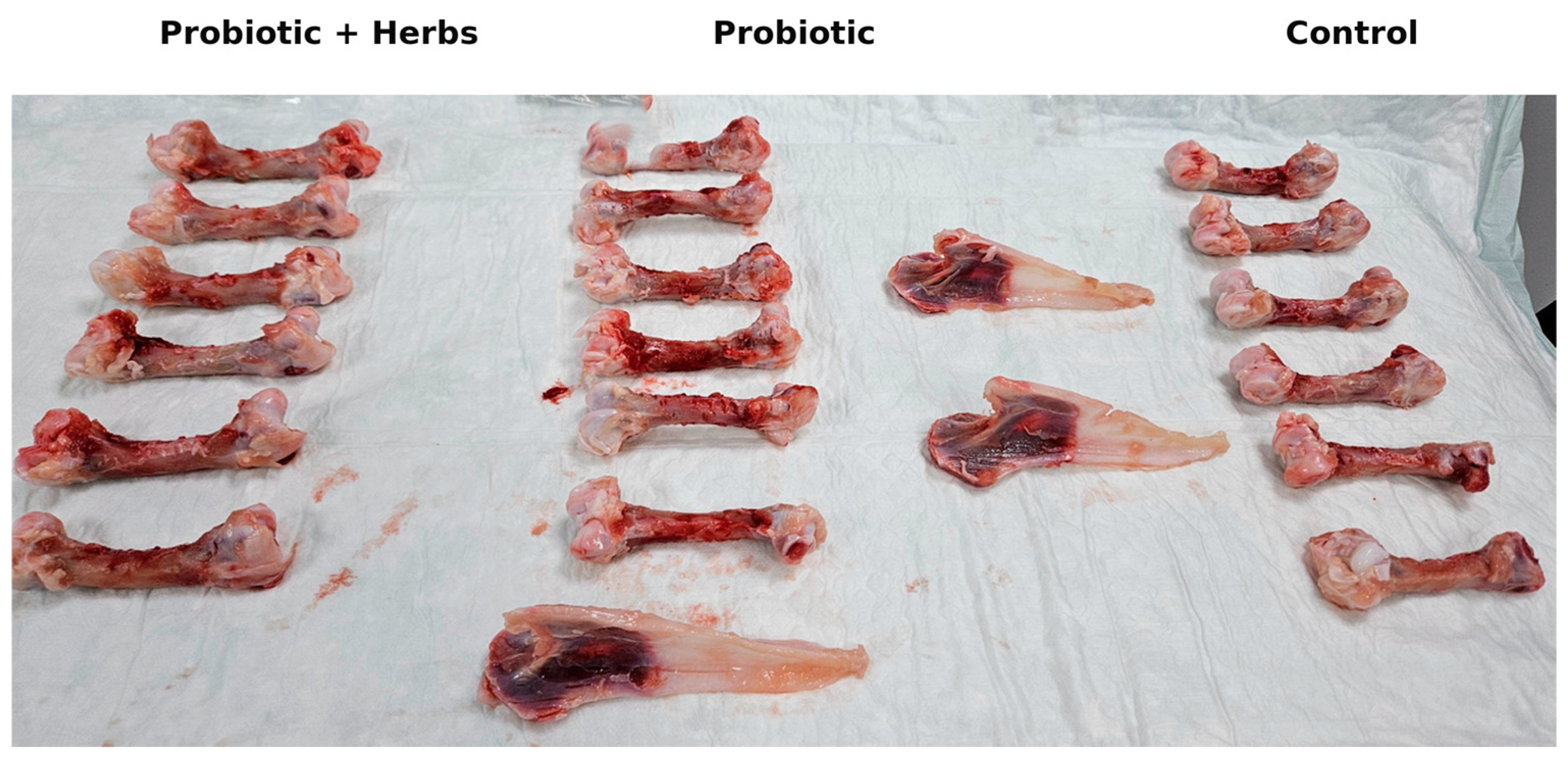
After slaughter of the ROSS 308 chickens at the end of the trial (day 42), the femurs were carefully dissected and subjected to computed tomography (CT) morphometric analysis (Figure 1). The bones were scanned using a Somatom Go Now CT scanner (Siemens Healthcare GmbH, Erlangen, Germany) in the helical mode with a craniocaudal orientation. Images were acquired at 130 kV and reconstructed with a slice thickness of 1.5 mm. The reconstruction field of view was 476 mm with a 512 × 512 matrix, resulting in an in-plane pixel spacing of 0.9297 × 0.9297 mm and nominal voxel dimensions of 0.9297 × 0.9297 × 1.5 mm3. The reconstructed images were imported into Syngo Via View&Go Software (Syngo CT VA30, Siemens Healthcare GmbH, Erlangen, Germany) for three-dimensional reconstruction and subsequent morphometric measurements.

2.2.1. Morphometric Parameters

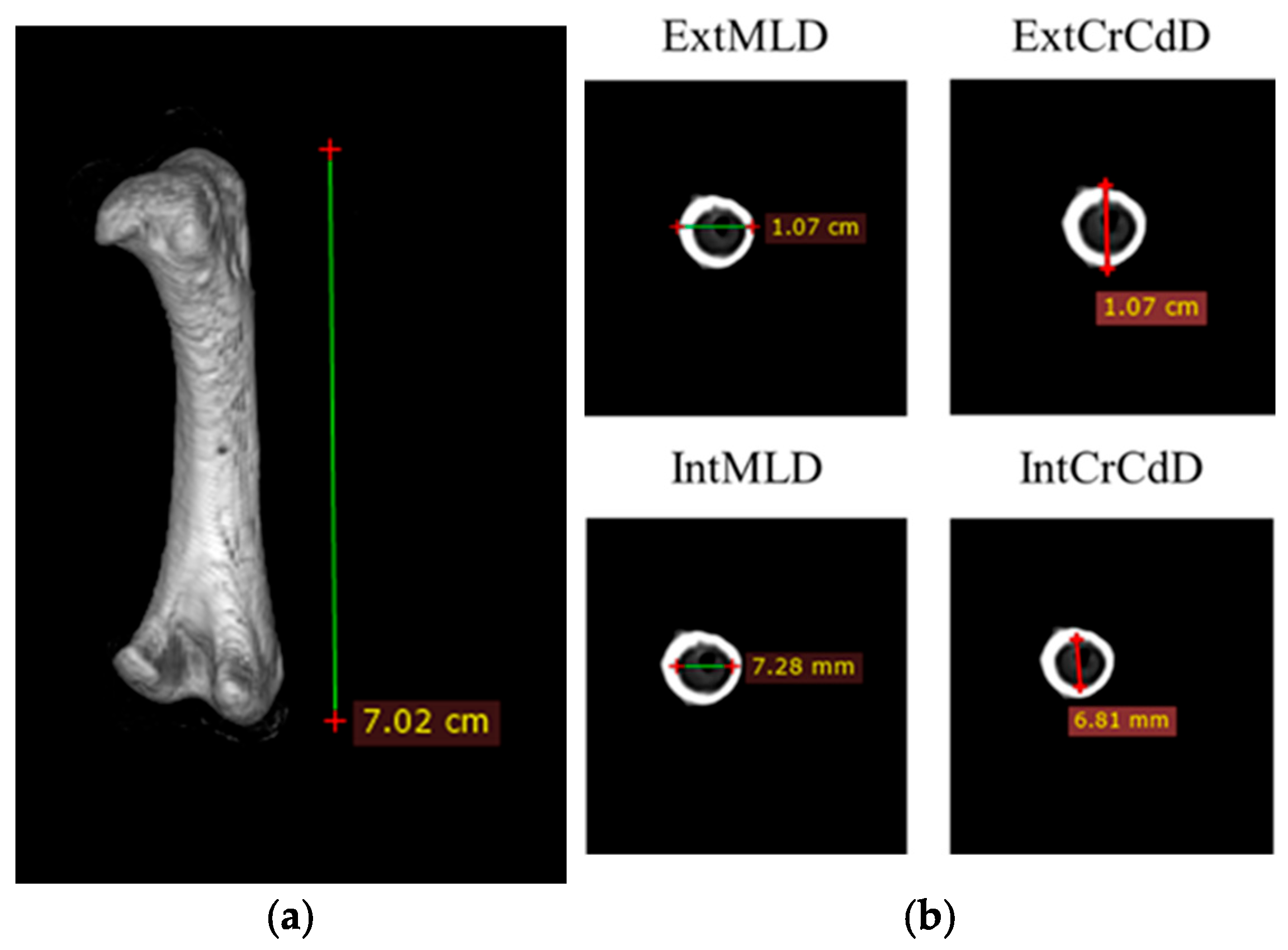
The morphometric analysis included determination of femoral length (bone length, cm) and the following measurements in the mid-diaphyseal region (example on Figure 2):
  • External medio-lateral diameter (ExtMLD, mm).
  • Internal medio-lateral diameter (IntMLD, mm).
  • External cranio-caudal diameter (ExtCrCdD, mm).
  • Internal cranio-caudal diameter (IntCrCdD, mm).
Figure 2. (a) Bone length. (b) External and internal medio-lateral diameter and cranio-caudal diameter.
Agriculture 16 01810 g002
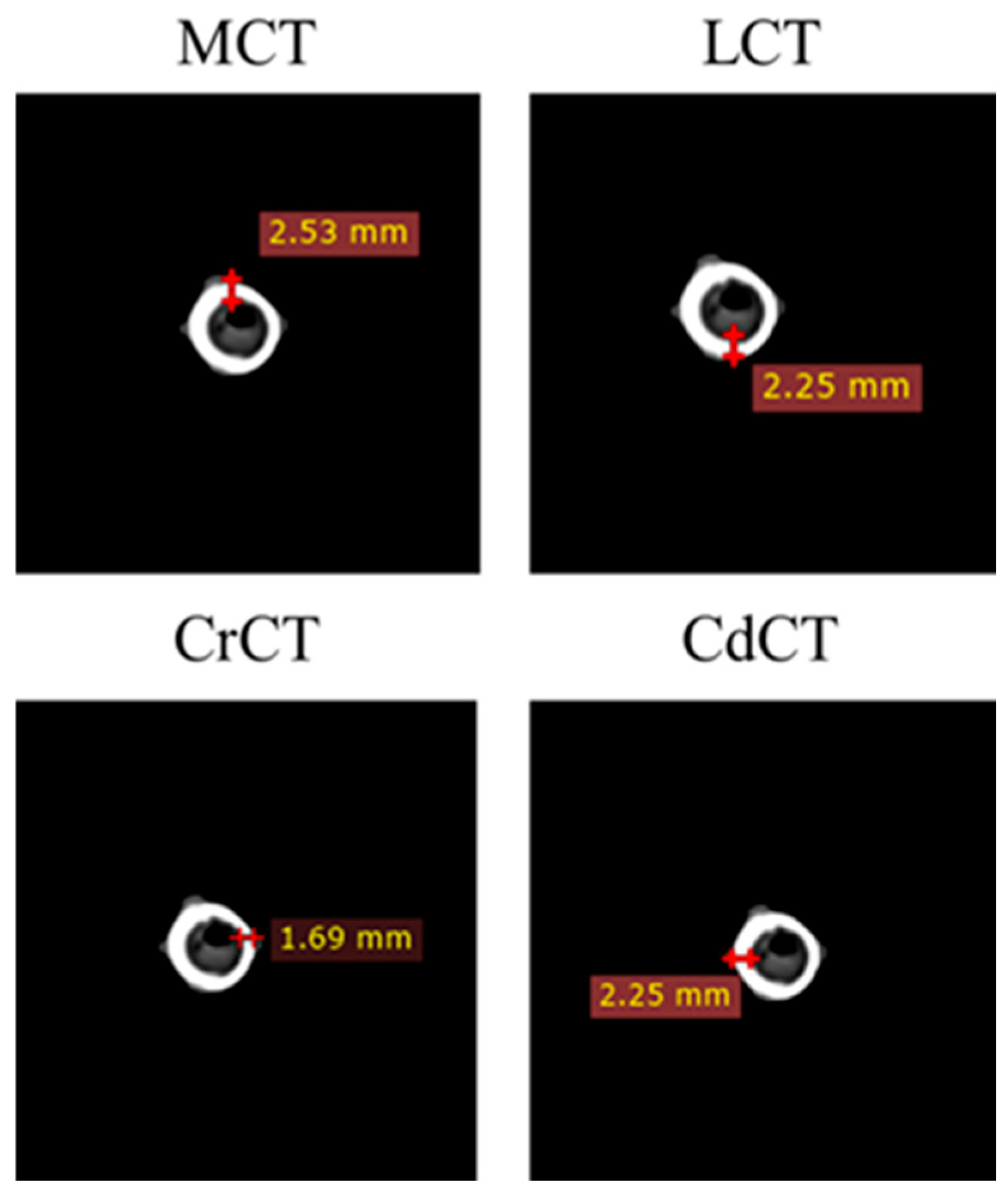
The cortical thickness (mm) was measured in four diaphyseal areas (example on Figure 3):
  • Medial cortical thickness (MCT).
  • Lateral cortical thickness (LCT).
  • Cranial cortical thickness (CrCT).
  • Caudal cortical thickness (CdCT).
Figure 3. Cranial and caudal cortical thickness.
Agriculture 16 01810 g003

2.2.2. Cortical Radiodensity

Cortical radiodensity was measured in Hounsfield units (HU) on axial CT images at the mid-diaphyseal level of the femur for the indicators medial cortical region radiodensity (MCR, HU), lateral cortical region radiodensity (LCR, HU), cranial cortical region radiodensity (CrCR, HU) and caudal cortical region radiodensity (CdCR, HU). A standardized circular region of interest (ROI) with a diameter of 1.5 mm was manually positioned in the central portion of the medial, lateral, cranial, and caudal cortices, avoiding the periosteal and endosteal margins in order to minimize partial-volume effects. Measurements were performed on CT sections with a reconstructed slice thickness of 1.5 mm, corresponding to an approximate sampled volume of 2.65 mm3 per ROI.
No external bone mineral calibration phantom was used during CT acquisition. The CT scanner underwent routine automatic system calibration before scanning. All femoral specimens were examined using the same scanner and identical acquisition and reconstruction settings. Accordingly, the HU values were interpreted as CT radiodensity and not as absolute bone mineral density.

2.2.3. Structural Indices

The mediolateral and craniocaudal cortico-medullary indices were calculated using the formulas [19]:
Mediolateral cortico-medullary index (ML index):
P e r i o s t e a l   d i a m e t e r     e n d o s t e a l   d i a m e t e r P e r i o s t e a l   d i a m e t e r ×   100
Craniocaudal cortico-medullary index (CrCd index):
D i a p h y s e a l   d i a m e t e r     M e d u l l a r y   c a n a l   d i a m e t e r   D i a p h y s e a l   d i a m e t e r   ×   100

2.3. Determination of Calcium, Magnesium and Phosphorus Concentrations

The entire sternum was collected from each selected bird and used for the determination of calcium (Ca), magnesium (Mg), and phosphorus (P) concentrations. Each sternum was carefully cleaned of adjacent soft tissues, dried to constant weight, ground, and homogenized in its entirety. A representative analytical subsample was subsequently taken from the resulting homogenate. The analyses were performed by a licensed laboratory in Plovdiv, Bulgaria, according to the validated in-house method VLM-ICP/MS-01, Revision 02, using inductively coupled plasma mass spectrometry (ICP-MS). Sample preparation by pressure-assisted acid digestion under microwave heating in closed vessels was performed. Approximately 0.2–1.0 g of the homogenized sample was weighed directly into a microwave digestion vessel and treated with 6 mL of 67–70% trace-metal-grade nitric acid (HNO3) and 2 mL of 30% analytical-grade hydrogen peroxide (H2O2). After digestion, the solution was quantitatively transferred into a 50 mL volumetric flask. Further dilution by a factor of 10 or higher was performed when necessary to minimise matrix effects and ensure that the analyte concentrations fell within the working range of the method.
Measurements were performed using a quadrupole ICP-MS system (iCAP Qc ICP). Quantification was based on calibration curves prepared from single-element certified standard solutions of Ca (1000 mg/L), Mg (1000 mg/L), and P (10,000 mg/L). Nitric acid was added to the calibration solutions to obtain a final concentration of 2% (v/v). An internal standard solution containing yttrium (Y), rhodium (Rh), and germanium (Ge), each at a concentration of 0.1 mg/L, was introduced online into all samples, calibration solutions, and blanks. Argon with a purity of 99.99% was used as the plasma gas.
Instrument performance was verified daily before sample analysis using the performance-check procedure incorporated into the instrument software. The verification included sensitivity, precision, background signal across the mass range, oxide formation (<2%), and doubly charged ion formation (<2%). When the specified criteria were not met, automatic instrument optimisation was performed before analysis. Quality control was performed using the certified reference material ERM-BD151 (skimmed milk powder). The limits of detection (LOD) and quantification (LOQ) were established by analysing six matrix-containing samples spiked with a K, Ca, Mg, and P standard mixture at 1000 µg/L and were calculated as LOD = 3 × SD and LOQ = 10 × SD, respectively.
Analyte concentrations in the test solutions were calculated from the corresponding calibration curves using the instrument software and corrected for all dilution factors applied during sample preparation. Final Ca, Mg, and P concentrations were expressed as mg/kg on a dry-matter basis. Analyses were conducted under controlled environmental conditions at 20 ± 2 °C and 20–80% relative humidity.

2.4. Statistical Analysis

The statistical analysis was performed using IBM SPSS Statistics, version 26.0 (IBM Corp., Armonk, NY, USA) [20]. For the parameters determined by computed tomography and mineral analysis, two birds were examined from each experimental replicate. To ensure that the statistical analysis was consistent with the experimental design and to avoid pseudoreplication, the average value of the measured parameters of the two birds was calculated for each experimental replicate. The resulting average value was accepted as one experimental unit. Thus, the analysis was performed on three independent experimental replicates for each of the three experimental groups (n = 3). Before performing the comparative analysis, the distribution of the data for each parameter studied by groups was assessed. Normality was evaluated using the Shapiro–Wilk test, and box-plot diagrams were examined for potential outliers. Homogeneity of the variances among the groups was assessed using the Levene test. To assess the overall effect of dietary treatment on each parameter, a one-way analysis of variance (ANOVA), part of the General Linear Model module, was applied. The statistical significance of overall group effects was assessed using F-statistics Fisher’s with statistical significance set at the α = 0.05 level (p < 0.05). Because no significant overall treatment effects were detected, post hoc pairwise comparisons were not performed. Results are presented as mean ± SD. The F- and p-values are reported to describe the overall effect of dietary treatment on each outcome. The findings were interpreted considering the limited number of independent experimental units and the consequently limited statistical power.

3. Results

Morphometric parameters of the femur did not differ significantly among the three groups (Table 2). One-way ANOVA analysis showed no statistically significant effect of dietary treatment on any of the evaluated parameters, including femur length, external and internal mediolateral diameter, external and internal craniocaudal diameter, and cortical thickness measured in the medial, lateral, cranial, and caudal regions (p > 0.05).
Values are presented as mean ± SD (n = 3 experimental replicates per treatment; each replicate represents the mean of two birds). F and p-values represent the overall effect of treatment group obtained from the univariate analysis. No statistically significant overall treatment effects were detected (p > 0.05).
External medio-lateral diameter (ExtMLD, mm); Internal medio-lateral diameter (IntMLD, mm); External cranio-caudal diameter (ExtCrCdD, mm); Internal cranio-caudal diameter (IntCrCdD, mm); Medial cortical thickness (MCT); Lateral cortical thickness (LCT); Cranial cortical thickness (CrCT); and Caudal cortical thickness (CdCT).
No statistically significant treatment effects were found for cortical CT radiodensity in any of the four femoral regions evaluated (Table 3). Statistical analysis showed no significant (p > 0.05) overall effect of dietary treatment for medial, lateral, cranial, or caudal cortical radiodensity.
Values are presented as mean ± SD (n = 3 experimental replicates per treatment; each replicate represents the mean of two birds). F and p-values represent the overall effect of treatment group obtained from the univariate analysis. No statistically significant overall treatment effects were detected (p > 0.05).
Medial cortical region radiodensity (MCR, HU); Lateral cortical region radiodensity (LCR, HU); Cranial cortical region radiodensity (CrCR, HU); and Caudal cortical region radiodensity (CdCR, HU).
No statistically significant overall effect of dietary supplements (p > 0.05) was found for either of the calculated cortico-medullary structural indices, including the mediolateral and craniocaudal indices (Table 4).
Values are presented as mean ± SD (n = 3 experimental replicates per treatment; each replicate represents the mean of two birds). F and p-values represent the overall effect of treatment group obtained from the univariate analysis. No statistically significant overall treatment effects were detected (p > 0.05).
Mediolateral cortico-medullary index (ML index) and craniocaudal cortico-medullary index (CrCd index).
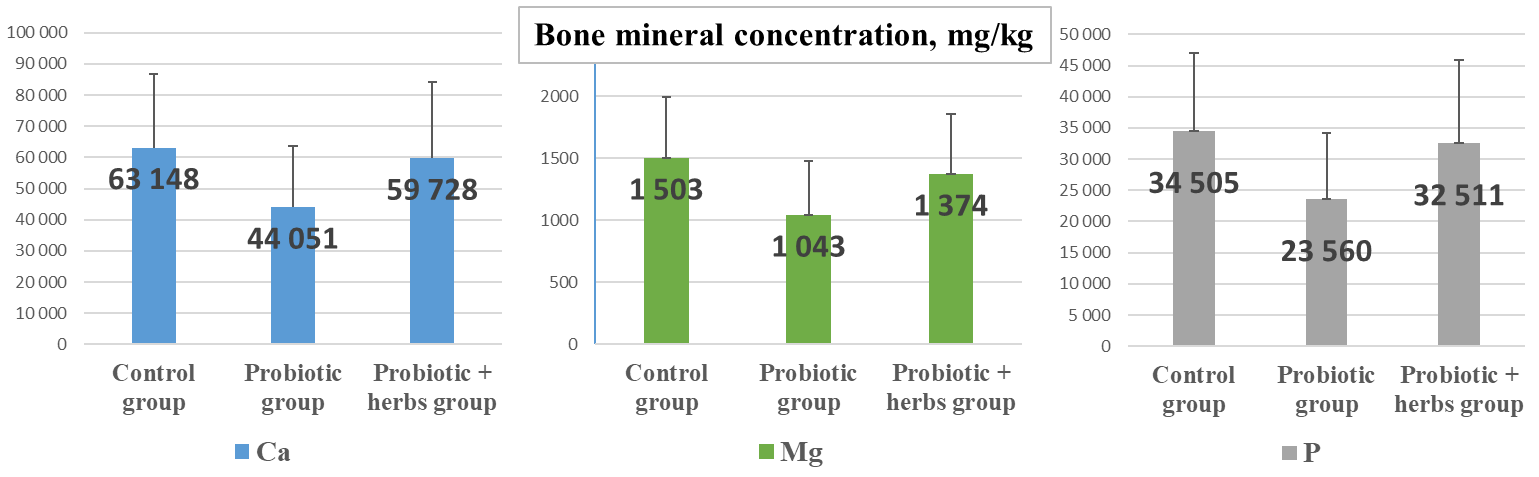
Dietary treatment had no significant overall effect on the concentrations of calcium, magnesium, or phosphorus in the sternum (p > 0.05; Figure 4).
Values are presented as mean ± SD (n = 3 experimental replicates per treatment; each replicate represents the mean of two birds), and error bars indicate SD. Blue, green, and gray bars represent calcium (Ca), magnesium (Mg), and phosphorus (P), respectively. Statistical analysis showed no significant (p > 0.05) overall treatment effect for Ca (F = 2.836, p = 0.171), Mg (F = 4.170, p = 0.105), or P (F = 3.325, p = 0.141).

4. Discussion

In the present study, dietary supplementation with the probiotic alone or in combination with a phytogenic mixture did not significantly affect the femoral morphometric parameters of ROSS 308 broilers. None of the parameters evaluated, including bone length, ExtMLD, IntMLD, ExtCrCdD, IntCrCdD, MCT, LCT, CrCT, and CdCT, differed significantly among the three groups. Therefore, under the conditions of the present experiment, no statistically significant effects of probiotic supplementation alone or in combination with the phytogenic mixture were observed on the investigated femoral morphometric parameters. Growth parameters were assessed as part of a separate pre-planned analysis and are therefore not reported in detail in this article. Initial body weight did not differ significantly between the experimental groups. However, the probiotic-supplemented group had significantly higher final body weight and body weight gain compared with the control group. Food intake and feed conversion ratio did not differ significantly between the groups. Despite the higher final body weight and body weight gain observed in the probiotic-supplemented group, no corresponding statistically significant differences were found in femoral morphometric parameters. This suggests that under the conditions of the present experiment, the improved growth parameters in this group were not accompanied by noticeable changes in femoral morphometry.
These findings are consistent with several studies reporting limited or no effects of dietary supplementation on bone morphology in broilers. Mutuş et al. [21] reported that supplementation with 500 g/1000 kg probiotic in the feed did not affect the main morphometric parameters of the tibial bone (length, weight, and weight/length index), but resulted in higher values of structural bone characteristics (medial and lateral tibial wall thickness) in Avian × Avian hybrid broilers. Similar to the results of the present study, no statistically significant effect on tibial bone length, weight, and diameter was found in Vencobb-400 broilers fed different levels of Moringa oleifera leaf meal (0.5%, 1.0%, 1.5%, and 2.0%) [22]. In broilers reared for 42 days and fed diets containing 1.5% and 3% kaolin, bentonite, or zeolite, the supplements did not significantly affect tibial bone length, diaphyseal diameter, medullary canal diameter, or bone phosphorus content [23]. These reported results, together with the absence of statistically significant effects in the present study, indicate that changes in bone morphology are not necessarily a consistent response to dietary supplementation and may depend on the type and dose of the supplement, duration of supplementation, and composition of the basal diet.
In contrast, positive effects on bone morphology have also been reported under specific supplementation conditions. Following a 35-day trial, higher tibial bone length, weight, and thickness were observed in groups supplemented with 0.1% probiotic and 0.1% prebiotic compared with the control group [24]. In broilers, higher tibial bone length was observed following supplementation with 300 and 400 mg/kg orange essential oil compared with groups receiving 100 and 200 mg/kg, as well as compared with the control group [25]. The differences between the findings of other authors and those of the present study may be associated with differences in supplement composition, dosage, number of birds used, duration of supplementation, and experimental conditions.
Regarding cortical CT radiodensity in the medial, lateral, cranial, and caudal cortical regions, no statistically significant differences were observed among the groups under the conditions of the present study. These results differ from those reported by Nechitailo et al. [26], who found higher values of bone density parameters in both tibial and femoral bones of Arbor Acres broilers supplemented with 20% calcium chloride, 20% calcium nitrate, and 20% dolomite meal. According to the same authors, femoral bone length was lower in the groups supplemented with 20% calcium chloride or 20% calcium nitrate compared with the control group. Supplementation of quails (Coturnix coturnix japonica) with 60 mg/kg zinc oxide or nano-zinc oxide did not significantly affect tibial bone morphometric parameters, except for higher external medio-lateral diameter (ExtMLD) values in the nano-zinc oxide group [27]. These findings further indicate that skeletal responses to dietary supplementation may depend on the parameter assessed, the type of supplement, and the bone examined. The suitability of a particular bone for detecting dietary effects may also depend on the age of the birds. Femoral ash differentiated diets with different Ca and P concentrations from three to six weeks of age and suggested that the femur may be suitable for assessing dietary differences in broilers aged approximately six weeks or older [28]. Although their findings concern bone ash rather than CT-derived parameters, they support the relevance of the femur as a skeletal site in 42-day-old broilers. Nevertheless, comparisons with studies evaluating the tibia or other bones should be interpreted cautiously because different skeletal sites may differ in their composition and response to dietary interventions.
The results obtained for the cortico-medullary structural indices (mediolateral cortico-medullary index and craniocaudal cortico-medullary index) showed no statistically significant differences among the experimental groups. It has been reported that, with increasing age, the tibiotarsal bone of ROSS 308 broilers becomes denser, larger, and stronger, with higher densitometric parameters in male birds than in females [29]. Therefore, the absence of significant differences related to dietary supplementation in the present study should be interpreted within the context of the specific age, number of statistically analyzed experimental units, sex, and nutritional conditions of the experimental birds. Additionally, a lower incidence of lameness was reported in laying hens receiving a multicomponent probiotic supplement compared with the control group [30].
The mineral concentrations (Ca, Mg, and P) in the sternum were also not significantly affected by dietary supplementation. Similar to our findings, inclusion of up to 12% Imbrasia belina adult larval meal did not affect the mineral composition of the femoral bones of Arbor Acres broilers and did not adversely affect bone growth and development [31]. The skeletal site examined should be considered when interpreting these results because mineral composition is not uniform throughout the avian skeleton. In 40-day-old ROSS 308 broilers, Suchý et al. [32] found significantly higher ash concentration in the tibiotarsus than in the femur and demonstrated bone- and sex-related differences in phosphorus distribution and Ca:P ratios. More recent evidence also indicates that the relative deposition of Ca and P differs among individual bones and that mineral values obtained from one skeletal site should not be extrapolated directly to the entire skeleton [33]. The keel bone has also been examined as a separate skeletal site for the analytical determination of bone ash and calcium and for comparison with quantitative CT-derived bone mineral content, although this evidence was obtained from mature laying hens [34]. Collectively, these findings support the interpretation of mineral measurements as skeletal-site-specific outcomes.
In the present study, CT-derived morphometric and radiodensity parameters were assessed in the femur, whereas Ca, Mg, and P concentrations were determined in the sternum. The two analyses therefore provide complementary but skeletal-site-specific information and should not be interpreted as direct structural and chemical measurements of the same bone. In particular, the mineral concentrations measured in the sternum cannot be used as direct chemical validation of femoral CT radiodensity. The use of different skeletal sites is therefore acknowledged as a limitation of the study.
In contrast to our findings, several authors have reported improved bone mineral concentrations following different dietary supplementation strategies. Javid et al. [24] reported higher calcium and phosphorus values in tibial bone ash in ROSS 308 broilers in the groups supplemented with probiotic (Lactobacillus spp., 0.1%) and in the group supplemented with prebiotic (mannan oligosaccharides, 0.1%). Supplementation with 0.4% fermented larval meal improved bone morphology and mineralization by increasing ash, calcium, and phosphorus content in the tibial bone of ROSS 308 broilers [35]. Supplementation with 500 g/1000 kg probiotic in the feed of Avian × Avian broilers resulted in significantly higher tibial bone phosphorus content, whereas calcium levels were not significantly affected [21]. The use of raw chickpea seeds as a protein substitute for soybean meal in the diet of ROSS 308 broilers increased the calcium and phosphorus content of the mineral fraction of the tibiotarsal bone [36]. Higher levels of calcium, magnesium, and phosphorus were found following the addition of 20% calcium chloride to the drinking water of Arbor Acres broilers, whereas inclusion of 20% calcium nitrate and 20% dolomite meal in the feed resulted in a statistically significant increase only in calcium content [26]. Taken together, these findings indicate that the effects of dietary supplementation on bone mineral concentrations may depend on the nutrient composition of the basal diet, the type and concentration of the supplemented compounds, the age of the birds, and the skeletal site examined.
The lack of statistically significant effects on the bone parameters evaluated in the present study may be associated with several experimental factors. The phytochemical composition and concentrations of potentially active compounds in the mixture of Silybum marianum, Urtica dioica, and Taraxacum officinale were not determined; therefore, no direct relationship can be established between specific bioactive compounds and the observed results. The adequate nutritional composition of the basal diets may also have reduced the potential for additional supplementation to produce detectable changes in bone morphometry or mineral concentrations. Furthermore, the dose and duration of supplementation, the age of the birds, and the skeletal site examined may have influenced the response. The relatively small number of independent experimental units limited the statistical power to detect treatment effects. Accordingly, the absence of statistical significance should not be interpreted as evidence that the supplements have no biological effect, but rather as a lack of statistically detectable effects on the specific femoral and sternal outcomes evaluated under the conditions of the present experiment.

5. Conclusions

In the present study, dietary supplementation with the probiotic Zoovit LL alone or in combination with a phytogenic blend of milk thistle (Silybum marianum), nettle (Urtica dioica) and dandelion (Taraxacum officinale) did not result in statistically significant differences in the measured femoral morphometric parameters, cortical CT radiodensity or corticomedullary structural indices. Similarly, no statistically significant differences were found in the concentrations of calcium, phosphorus or magnesium in the sternum.
These findings should be interpreted taking into account the limited number of independent experimental units included in the statistical analysis and the limited range of skeletal characteristics assessed. Further studies involving a larger number of independent experimental units, characterization and standardization of the phytogenic blend, and determination of mechanical strength are needed to clarify the potential skeletal effects of these dietary supplements.

Author Contributions

Conceptualization, S.L., M.O., P.H. and L.L.; methodology, S.L., M.O., P.H. and L.L.; software, K.Z., I.S. and R.V.; validation, S.L., M.O., P.H. and L.L.; formal analysis, K.Z., I.S. and R.V.; investigation, K.Z., N.I., I.S., I.A. and R.V.; resources, S.L., M.O. and P.H.; data curation, K.Z., I.S. and R.V.; writing—original draft preparation, K.Z.; writing—review and editing, S.L., M.O., P.H., N.I., I.S., I.A., R.V., K.Z. and L.L.; visualization, K.Z. and R.V.; supervision, S.L., M.O., P.H. and L.L.; project administration, S.L., M.O., P.H. and L.L.; funding acquisition, S.L. and M.O. All authors have read and agreed to the published version of the manuscript.

Funding

The experiment was funded by the Bulgarian National Science Fund (BNSF) and the Ministry of Education and Science (MES) under the project No. KP-06-N76/6 of 05.12.2023 “Impact of probiotic therapies on reproductive functions and bone system development in farm animals”.

Institutional Review Board Statement

The experimental procedures involving animals were conducted under the official permit for the use of animals in experiments issued by the Bulgarian Food Safety Agency (BFSA), Permit No. 376, approved by Order No. RD 11-3072/16.12.2021. The experimental procedures, animal handling and slaughter were conducted in accordance with the requirements specified in the permit and applicable animal welfare regulations.

Data Availability Statement

The original contributions presented in this study are included in the article. Further inquiries can be directed to the corresponding author.

Conflicts of Interest

The authors declare no conflicts of interest.

Abbreviations

The following abbreviations are used in this manuscript:
CTComputed tomography
ICP-MSinductively coupled plasma mass spectrometry
ExtMLDExternal medio-lateral diameter
IntMLDInternal medio-lateral diameter
ExtCrCdDExternal cranio-caudal diameter
IntCrCdDinternal cranio-caudal diameter
MCTmedial cortical thickness
LCTlateral cortical thickness
CrCTcranial cortical thickness
CdCTcaudal cortical thickness
MCRmedial cortical region radiodensity
LCRlateral cortical region radiodensity
CrCRcranial cortical region radiodensity
CdCRcaudal cortical region radiodensity
ML indexmediolateral cortico-medullary index
CrCd indexcraniocaudal cortico-medullary index
HUHounsfield units
ROIregion of interest
LODlimit of detection
LOQlimit of quantification
Cacalcium
Mgmagnesium
Pphosphorus
mgmilligram
ggram
kgkilogram
cmcentimeter
mmmillimeter
SDstandard deviation (sample)
FF-statistic from one-way analysis of variance

References

  1. Gilyazova, I.; Korytina, G.; Kochetova, O.; Savelieva, O.; Mikhaylova, E.; Vershinina, Z.; Chumakova, A.; Markelov, V.; Abdeeva, G.; Karunas, A.; et al. Advances in Genomics and Postgenomics in Poultry Science: Current Achievements and Future Directions. Int. J. Mol. Sci. 2025, 26, 8285. [Google Scholar] [CrossRef] [Scilit] [PubMed]
  2. Naeem, M. Improving Bone Health in Broiler Chickens: Integrating Population Density, Housing, and Nutritional Strategies for Enhanced Welfare and Productivity. Poult. Sci. Manag. 2025, 2, 14. [Google Scholar] [CrossRef] [Scilit]
  3. Liu, K.; He, Y.; Xu, B.; Lin, L.; Chen, P.; Iqbal, M.K.; Mehmood, K.; Huang, S. Leg Disorders in Broiler Chickens: A Review of Current Knowledge. Anim. Biotechnol. 2023, 34, 5124–5138. [Google Scholar] [CrossRef] [Scilit] [PubMed]
  4. Li, X.; Cai, X.; Wang, X.; Zhu, L.; Yan, H.; Yao, J.; Yang, C. Understanding the Causes of Keel Bone Damage and Its Effects on the Welfare of Laying Hens. Animals 2024, 14, 3655. [Google Scholar] [CrossRef] [Scilit] [PubMed]
  5. Farooq, U.; Qasim, M.; Rehman, A. Lameness etiologies in broiler chickens raised under intensive housing. Sci. Res. Rep. 2025, 3, 16–29. Available online: https://sciresearchreports.com/index.php/SRR/article/view/12 (accessed on 23 April 2026).
  6. Wawrzyniak, A.; Balawender, K. Structural and Metabolic Changes in Bone. Animals 2022, 12, 1946. [Google Scholar] [CrossRef] [Scilit] [PubMed]
  7. Binesh, A.; Venkatachalam, K.; Ranjan, A.; Joy, S.; Prasannan, A. Major Minerals (Na, K, Ca, Mg, P) in Physiological Function and Disease. In Functional Biochemistry of Metallic Elements; Dhalla, N.S., Tappia, P.S., Shah, A.K., Eds.; Springer Nature: Cham, Switzerland, 2026; pp. 355–382. [Google Scholar]
  8. Shehata, A.A.; Yalçın, S.; Latorre, J.D.; Basiouni, S.; Attia, Y.A.; El-Wahab, A.A.; Visscher, C.; El-Seedi, H.R.; Huber, C.; Hafez, H.M.; et al. Probiotics, Prebiotics, and Phytogenic Substances for Optimizing Gut Health in Poultry. Microorganisms 2022, 10, 395. [Google Scholar] [CrossRef] [Scilit] [PubMed]
  9. Cojocariu, L.-C.; Usturoi, M.-G.; Usturoi, A.; Lazăr, M.; Balmuș, I.M.; Simeanu, D.; Radu-Rusu, R.-M. Phytobiotics as Dietary Natural Growth Promoters in Producing High-Quality and Safe Poultry Products—A Narrative Review. Agriculture 2026, 16, 443. [Google Scholar] [CrossRef] [Scilit]
  10. Sardar, D.; Afsana, S.; Habib, A.; Hossain, T. Dietary Effects of Multi-Strain Probiotics as an Alternative to Antibiotics on Growth Performance, Carcass Characteristics, Blood Profiling and Meat Quality of Broilers. Vet. Integr. Sci. 2025, 23, 1–17. [Google Scholar] [CrossRef] [Scilit]
  11. Atuahene, D.; Sam, B.A.; Idan, F.; Sana, S.S.; Knop, R.; Suthar, T.; Kumar, H.; Shaikh, A.M. Probiotics, Prebiotics, and Synbiotics in Pigs and Poultry: A Review of Gut Health, Performance, and Environmental Outcomes. Vet. Sci. 2025, 12, 1054. [Google Scholar] [CrossRef] [Scilit] [PubMed]
  12. Gul, S.; Raza, R.; Hannan, A.; Khaliq, S.; Waheed, N.; Aderibigbe, A. Potential of a medicinal plant urtica dioica (stinging nettle) as a feed additive for animals and birds: A Review. Agrobiol. Rec. 2024, 17, 110–118. [Google Scholar] [CrossRef] [Scilit] [PubMed]
  13. Abd El-Hack, M.E.; Aldhalmi, A.K.; Ashour, E.A.; Elsherbeni, A.I. An Updated Review on Dandelion (Taraxacum officinale) Polysaccharides as a Natural Substitute for Antibiotics in Poultry Production: Benefits and Applications. Worlds Poult. Sci. J. 2025, 81, 1461–1479. [Google Scholar] [CrossRef] [Scilit]
  14. Divya, S.; Singh, N.; Dixit, R.; Jaiswal, V.; Shiva; Yadav, E. Pharmacognostic, Phytochemical, Ethnobotanical, and Pharmacological Significance of Silybum marianum (Milk Thistle)—A Comprehensive Review. Curr. Drug Ther. 2025, 20, 880–892. [Google Scholar] [CrossRef] [Scilit]
  15. Halagali, P.; Inamdar, A.; Singh, J.; Anand, A.; Sadhu, P.; Pathak, R.; Sharma, H.; Biswas, D. Phytochemicals, Herbal Extracts, and Dietary Supplements for Metabolic Disease Management. Endocr. Metab. Immune Disord.-Drug Targets 2025, 25, 993–1016. [Google Scholar] [CrossRef] [Scilit] [PubMed]
  16. Gascho, D. Advances in wound ballistic research: Computed tomography analysis of projectile effects in simulants. J. Forensic Leg. Med. 2026, 118, 103061. [Google Scholar] [CrossRef] [Scilit] [PubMed]
  17. Sharma, K. Computed tomography (CT) for non-destructive evaluation: Enhancing inspection capabilities and 3d visualization. SSRN Electron. J. 2023. [Google Scholar] [CrossRef] [Scilit]
  18. Ordinance No. 22 Ordinance No. 22 of 14 December 2005 on Minimising the Suffering of Animals During Slaughter or Killing; in Force from 1 May 2006. Available online: https://www.ciela.net/svobodna-zona-normativi/view/2135526211/naredba-%E2%84%96-22-ot-14-dekemvri-2005-g-za-namalyavane-do-minimum-stradaniyata-na-zhivotnite-po-vreme-na-klane-ili-umartvyavane?utm_source=chatgpt.com (accessed on 5 March 2026).
  19. Mabelebele, M.; Norris, D.; Siwendu, N.A.; Ng’ambi, J.; Alabi, O.J.; Mbajiorgu, C. Bone morphometric parameters of the tibia and femur of indigenous and broiler chickens Reared Intensively. Appl. Ecol. Environ. Res. 2017, 15, 1387–1398. [Google Scholar] [CrossRef] [Scilit]
  20. IBM Corp. IBM SPSS Statistics for Windows, Version 26.0; IBM Corp.: Armonk, NY, USA, 2019. Available online: https://www.ibm.com/support/pages/release-notes-ibm%C2%AE-spss%C2%AE-statistics-260 (accessed on 13 July 2026).
  21. Mutuş, R.; Kocabağli, N.; Alp, M.; Acar, N.; Eren, M.; Gezen, Ş.Ş. The effect of dietary probiotic supplementation on tibial bone characteristics and strength in broilers. Poult. Sci. 2006, 85, 1621–1625. [Google Scholar] [CrossRef] [Scilit] [PubMed]
  22. Meel, M.; Sharma, T. Dietary supplementation of Moringa oleifera leaf meal: Impact on tibia bone retention of broiler chicks. J. Anim. Res. 2023, 13, 957–961. [Google Scholar] [CrossRef] [Scilit]
  23. Safaeikatouli, M.; Boldaji, F.; Dastar, B.; Hassani, S. Growth response and tibia bone characteristics in broilers fed diets containing kaolin, bentonite and zeolite. J. Anim. Feed Sci. 2012, 21, 334–344. [Google Scholar] [CrossRef] [Scilit]
  24. Javid, M.A.; Masood, S.; Zaneb, H.; Rehman, H.U.; Nazir, M.M.; Waqas, M.Y.; Asif, M.; Basit, M.A.; Abbas, G.; Sufyan, A.B. Effect of dietary growth promoter supplementations on the serum biochemistry and morphometric characteristics of tibia bone in broiler chicken. Braz. J. Poult. Sci. 2022, 24, eRBCA-2021. [Google Scholar] [CrossRef] [Scilit]
  25. Souza, C.S.; Vieites, F.M.; Justino, L.R.; Lima, M.F.d.; Chaves, A.S.; Minafra, C.S.; Lima, C.A.R. de Orange essential oil in the diet of broilers: Performance, organ biometrics, bone characteristics, and intestinal morphometry. Rev. Bras. Zootec. 2021, 50, e20200097. [Google Scholar] [CrossRef] [Scilit]
  26. Nechitailo, K.S.; Kholodilina, T.N.; Kazaev, K.A. Morphometric characteristics of lower limb bones and elemental composition of bone tissue of broilers after using different forms of calcium in the diet. Arq. Bras. Med. Veterinária E Zootec. 2025, 77, e13449. [Google Scholar] [CrossRef] [Scilit]
  27. Yavaş, F.T.; Yıldırım, İ.G.; Kilimci, F.S. Effects of nano zinc oxide-enriched diets on bone morphometry and biomechanical strength in Japanese quails. Harran Univ. J. Fac. Vet. Med. 2025, 14, 52–59. [Google Scholar] [CrossRef] [Scilit]
  28. Scholey, D.V.; Burton, E.J. The effect of bone choice on quantification of mineralization in broiler chickens up to 6 weeks of Age. J. Appl. Poult. Res. 2017, 26, 485–490. [Google Scholar] [CrossRef] [Scilit]
  29. Charuta, A.; Dzierzęcka, M.; Komosa, M.; Kalinowski, Ł.; Pierzchała, M. Age- and sex-related differences of morphometric, densitometric and geometric parameters of tibiotarsal bone in ROSS broiler chickens. Folia Biol. 2013, 61, 211–220. [Google Scholar] [CrossRef] [Scilit] [PubMed]
  30. Yan, F. The Effects of Dietary Probiotic Inclusion on Skeletal Health of Poultry and Its Possible Mechanisms. Ph.D. Thesis, Purdue University, West Lafayette, IN, USA, 2016. Available online: https://docs.lib.purdue.edu/open_access_dissertations/1033 (accessed on 19 August 2026).
  31. Moyo, S.; Jaja, I.F.; Mopipi, K.; Masika, P.; Muchenje, V. Effect of graded levels of Imbrasia belina meal on blood lipid profile, bone morphometric and mineral content of broiler chickens. Anim. Feed Sci. Technol. 2021, 271, 114736. [Google Scholar] [CrossRef] [Scilit]
  32. Suchý, P.; Straková, E.; Herzig, I.; Steinhauser, L.; Králik, G.; Zapletal, D. Chemical composition of bone tissue in broiler chickens intended for slaughter. Czech J. Anim. Sci. 2009, 54, 324–330. [Google Scholar] [CrossRef] [Scilit]
  33. Salisbury, F.; Angel, C.; Cowieson, A.; Gous, R. A formal description of the growth and composition of bones in male and female broilers. Br. Poult. Sci. 2026, 67, 469–478. [Google Scholar] [CrossRef] [Scilit] [PubMed]
  34. Robison, C.I.; Karcher, D.M. Analytical bone calcium and bone ash from mature laying hens correlates to bone mineral content calculated from quantitative computed tomography scans. Poult. Sci. 2019, 98, 3611–3616. [Google Scholar] [CrossRef] [Scilit] [PubMed]
  35. Sarıca, Ş.; Yavuz, M.; Sanli, E.R.; Baş-Ekici, H.; Yardim, Z. Effects of dietary fermented mealworm larvae and stocking density on the morphometric characteristics and mineral contents of tibia bone of broilers. Turk. J. Agric.-Food Sci. Technol. 2025, 13, 294–302. [Google Scholar] [CrossRef] [Scilit]
  36. Muszyński, S.; Tomaszewska, E.; Dobrowolski, P.; Kwiecień, M.; Wiącek, D.; Świetlicka, I.; Skibińska, M.; Szymańska-Chargot, M.; Orzeł, J.; Świetlicki, M.; et al. Analysis of bone osteometry, mineralization, mechanical and histomorphometrical properties of tibiotarsus in broiler chickens demonstrates a influence of dietary chickpea seeds (Cicer arietinum L.) inclusion as a primary protein source. PLoS ONE 2018, 13, e0208921. [Google Scholar] [CrossRef] [Scilit] [PubMed]
Figure 1. Femoral and sternal bones collected from broiler chickens for morphometric and mineral analysis.
Agriculture 16 01810 g001
Figure 4. Mineral concentrations in the sternum of ROSS 308 broilers.
Agriculture 16 01810 g004
Table 1. Ingredient composition and nutritional value of experimental diets.
Ingredients (%)Control
(Basal Diet)
Probiotic
(+Basal Diet)
Probiotic + Herbs
(+Basal Diet)
Starter (1–14 days)
Wheat25.4425.3825.20
Corn30.0029.9329.60
Soybean meal35.0034.9034.50
Sunflower meal3.002.992.96
Sunflower oil3.002.992.96
DL-methionine0.170.170.17
Lysine-98%0.240.240.24
Optizim0.150.150.15
Salt0.200.200.20
Limestone0.500.500.49
Dicalcium phosphate2.102.102.08
Vitamin premix0.200.200.20
Probiotic
Herbs

0.25
0.25
1.00
Metabolizable energy (Mcal/kg)2.912.912.91
Crude protein, %22.0522.0522.05
Crude fiber, %4.354.354.35
Lysine, %1.441.441.44
Methionine, %0.510.510.51
Calcium, %1.021.021.02
Phosphorus, available, %0.500.500.50
Grower (15–28 days)
Wheat22.8922.8322.57
Corn36.0035.9135.57
Soybean meal31.0030.9230.55
Sunflower meal3.002.992.96
Sunflower oil4.003.993.99
DL-methionine0.130.130.13
Lysine-98%0.130.130.13
Optizim0.150.150.15
Salt0.200.200.20
Limestone0.440.440.44
Dicalcium phosphate1.861.861.86
Vitamin premix0.200.200.20
Probiotic
Herbs

0.25
0.25
1.00
Metabolizable energy (Mcal/kg)3.023.023.02
Crude protein, %20.5420.5420.54
Crude fiber, %4.114.114.11
Lysine, %1.231.231.23
Methionine, %0.460.460.46
Calcium, %0.900.900.90
Phosphorus, available, %0.450.450.45
Finisher (29–42 days)
Wheat28.0027.9327.65
Corn35.9235.8435.46
Soybean meal24.0023.9223.67
Sunflower meal3.002.992.96
Sunflower oil6.005.995.95
DL-methionine0.080.080.08
Lysine-98%0.090.090.09
Optizim0.150.150.15
Salt0.200.200.20
Limestone0.490.490.48
Dicalcium phosphate1.871.871.85
Vitamin premix0.200.200.20
Probiotic
Herbs

0.25
0.25
1.00
Metabolizable energy (Mcal/kg)2.982.982.98
Crude protein, %18.0218.0218.02
Crude fiber, %3.743.743.74
Lysine, %1.011.011.01
Methionine, %0.370.370.37
Calcium, %0.900.900.90
Phosphorus, available, %0.450.450.45
Table 2. Morphometric parameters of the femur of broilers from the ROSS 308 hybrid.
ParameterTreatment Groups of Broilers
ControlProbioticProbiotic + HerbsGroup Effect
Mean ± SDMean ± SDMean ± SDFp-Value
Bone Length, cm8.42 ± 0.228.25 ± 0.118.41 ± 0.101.7330.287
ExtMLD, mm10.10 ± 0.0510.01 ± 0.1710.08 ± 0.071.5740.313
IntMLD, mm6.00 ± 0.356.12 ± 0.636.19 ± 0.200.2090.820
ExtCrCdD, mm9.99 ± 0.1610.07 ± 0.0510.06 ± 0.020.6350.576
IntCrCdD, mm5.83 ± 0.606.05 ± 0.546.09 ± 0.780.1080.900
MCT, mm2.64 ± 0.182.49 ± 0.582.45 ± 0.260.2770.772
LCT, mm1.46 ± 0.231.40 ± 0.271.44 ± 0.200.0450.956
CrCT, mm1.90 ± 0.501.81 ± 0.281.99 ± 0.550.1360.877
CdCT, mm2.27 ± 0.122.21 ± 0.241.98 ± 0.440.9100.472
Table 3. Femoral cortical CT radiodensity of broilers from the ROSS 308 hybrid.
ParameterTreatment Groups of Broilers
ControlProbioticProbiotic + HerbsGroup Effect
Mean ± SDMean ± SDMean ± SDFp-Value
MCR, HU1756.00 ± 75.871774.00 ± 168.671793.50 ± 139.700.433 0.676
LCR, HU1415.00 ± 243.791678.33 ± 290.801657.50 ± 422.641.103 0.416
CrCR, HU1560.33 ± 274.091727.67 ± 211.001792.33 ± 143.922.355 0.211
CdCR, HU1511.83 ± 213.131529.50 ± 246.551422.33 ± 259.100.685 0.555
Table 4. Cortico-medullary structural indices of the femur of broilers from the ROSS 308 hybrid.
Structural Indices, %Treatment Groups of Broilers
ControlProbioticProbiotic + HerbsGroup Effect
Mean ± SDMean ± SDMean ± SDFp-Value
ML index40.59 ± 3.5038.86 ± 5.8538.58 ± 2.010.3110.749
CrCd index41.68 ± 5.6439.94 ± 5.2439.49 ± 7.680.0860.919
Disclaimer/Publisher’s Note: The statements, opinions and data contained in all publications are solely those of the individual author(s) and contributor(s) and not of MDPI and/or the editor(s). MDPI and/or the editor(s) disclaim responsibility for any injury to people or property resulting from any ideas, methods, instructions or products referred to in the content.