Review

A Systems-Based Review of White Fonio (Digitaria exilis), an Ancient Millet That Reduces Mid-Season Hunger Across West Africa

by
Roshan Pudasaini
and
Manish N. Raizada
*
Department of Plant Agriculture, University of Guelph, Guelph, ON N1G 2W1, Canada
*
Author to whom correspondence should be addressed.
An early version of this paper is part of the PhD Thesis of Roshan Pudasaini, presented at the University of Guelph (Canada).
Agriculture 2026, 16(15), 1608; https://doi.org/10.3390/agriculture16151608

Submission received: 11 May 2026 / Revised: 16 July 2026 / Accepted: 27 July 2026 / Published: 28 July 2026
(This article belongs to the Section Crop Genetics, Genomics and Breeding)

Abstract

Fonio is the smallest of the millets and one of the world’s oldest crops, grown across West Africa. Some landraces are the world’s fastest maturing cereals, helping small-scale farmers in semi-arid regions survive mid-season hunger as they await harvesting of primary crops. Fonio comprises two species distinguished by spikelet colour (white and black), with white fonio being dominant. Here we review research in white fonio from a cross-disciplinary, systems-based perspective, including germplasm conservation, crop breeding, agronomy, mechanization, and value chain development. Fonio is consumed like rice and comparable or superior nutritionally, but can survive dry/marginal soils. Despite food security potential, it remains semi-domesticated and underutilized, associated with low yield, lodging, seed shattering and post-harvest drudgery. Recently, there have been exciting advances in white fonio germplasm collection, genome sequencing, population structure analysis and agronomic/stakeholder surveys. Controlled experiments have identified physio-morphological-metabolomic acclimation traits as targets to breed fonio for improved drought tolerance, critical in the Sahel region of Western Africa, which is dry and among the most vulnerable to climate change and food insecurity. These advances have laid the foundation to develop fonio as an economically viable crop to improve the livelihoods of Sahelian indigenous peoples. White fonio could serve as a model for how modern techniques can be used to fully domesticate ancient crops and adapt them to climate change.

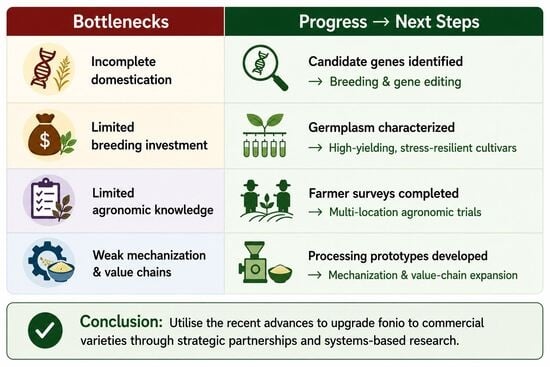
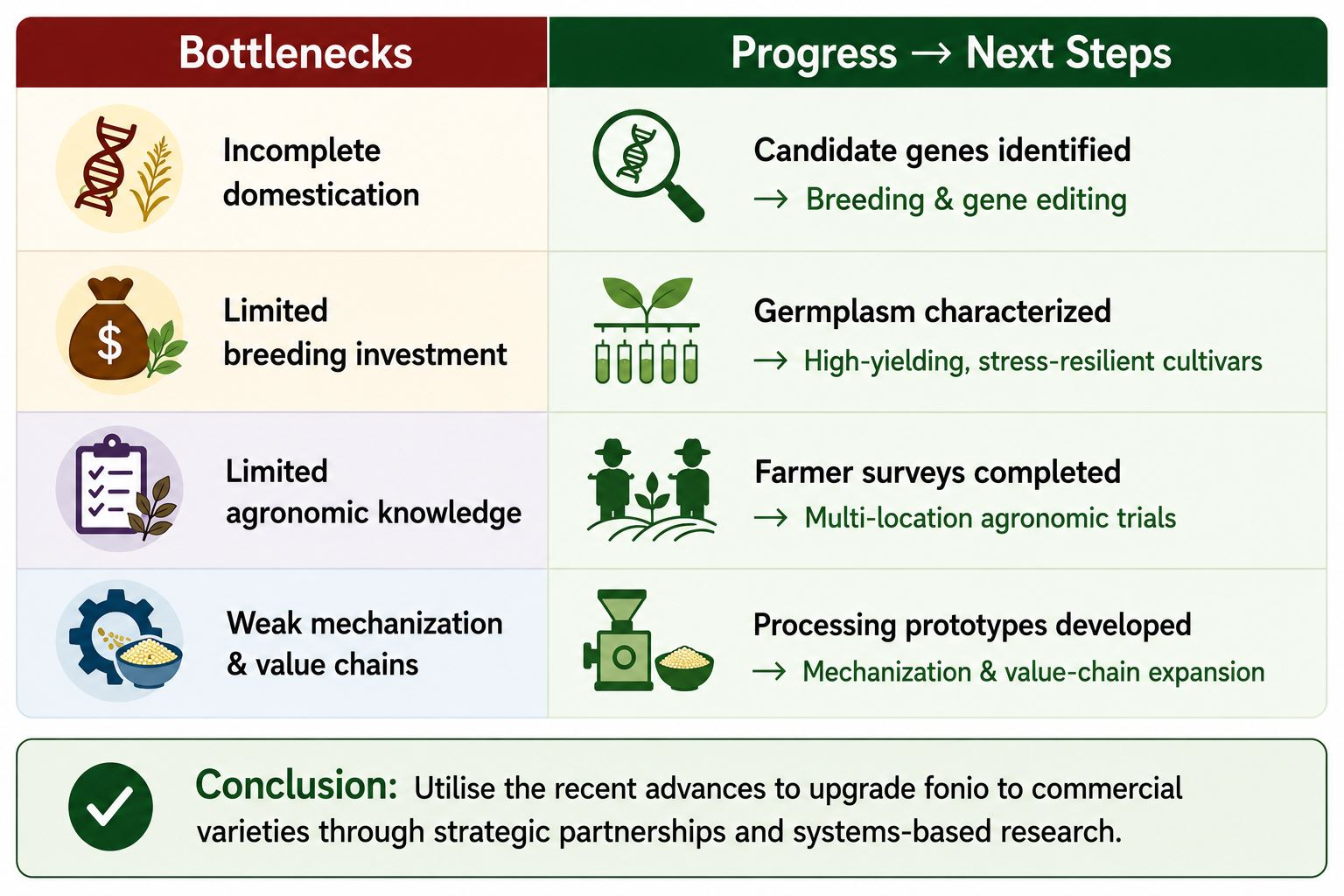
Graphical Abstract

1. Introduction

Fonio is a West African cereal and one of the world’s oldest crops, cultivated since 2400 BC, similar to ancient African rice [1]. Despite this long history, today fonio has become marginalized, consumed as a staple food by only four million people across 15 West African countries, with 75% of all production occurring in Guinea [2,3]. It is the smallest of the world’s small millet grains, less than 1 mm in diameter [1]. However, this small footprint underestimates the importance of this crop to the marginalized, small-scale farmers of the African Sahel, extending from the Western part of Africa between the Sahara Desert in the north and the Sudanian savanna in the south, and from the Atlantic Ocean in the west to the Red Sea to the east (area ~3.1 million km2). The Sahel is one of the most vulnerable and resource-poor regions in the world [4]. To Sahelian farmers, fonio offers two special traits. First, some fonio landraces represent the world’s fastest maturing cereals, harvested in only 6–8 weeks [1,5]. This is important because early maturing fonio, which can be harvested within 2 months of planting, becomes available during the food shortage period (July–August) before harvesting of main season crops (sorghum, pearl millet, rice), thus helping marginalized families to alleviate mid-season hunger, which extends from June to September [1,6,7]. Second, fonio can survive stressful environments ranging from dry to waterlogged, and soils that are nutrient-poor and acidic; conditions that many other crops do not thrive in [1,3,8]. As a result, for centuries, farmers have been able to grow fonio in a wide range of environments across West Africa, including hot tropical to arid temperate regions [6]. In the semi-arid Sahel, these two features allow fonio to help local people survive lean periods [9].
Cultural ties and values associated with fonio have been reported among various ethnicities in West Africa. For example, fonio is much valued and described as a ‘source of life’ by the Mandinka/Malinke peoples from Guinea, Mali and Senegal [10]. Similarly, the ancient Dogon people of Mali, Niger and Burkina Faso believe that the tiny grain of fonio symbolizes the origin of the whole universe [6]. Many communities consider fonio as part of their important traditional rituals, such as baptism or marriage [11]. Associated with life, as part of native cultures and traditions, fonio is an important crop for food security and the livelihood of marginal communities dependent on subsistence farming, especially women across West Africa [3,10].
Fonio comprises two species, primarily differentiated by the colour of the inflorescence spikelets: light (white fonio) versus dark (black fonio) [12]. White fonio [Digitaria exilis (Kippist.) Stapf], known as Acha or Fundi in local indigenous languages, is grown across West Africa including Guinea, Senegal, Mali, Burkina Faso, Benin, Togo, Ghana, Niger and Nigeria [13] (Figure 1). Black fonio [Digitaria iburua Stapf], locally called Iburu, is limited to the highlands and mountains of Benin and Togo, but primarily Nigeria [14,15]. In these regions, households continue to grow traditional landraces exclusively, since no improved varieties have been bred [7,16,17].
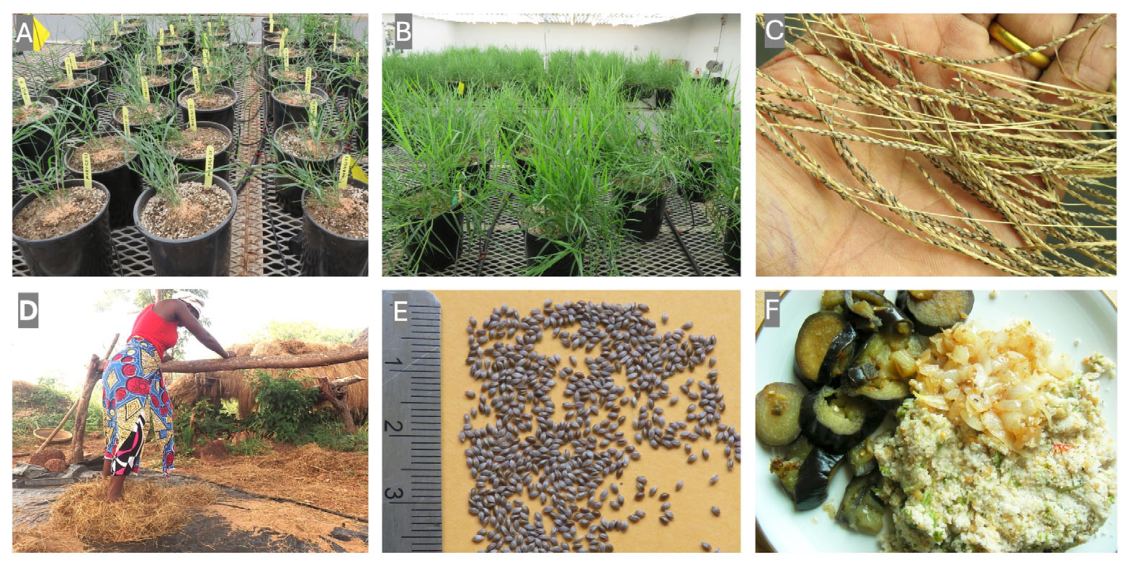
Botanically, fonio species are from the grass family and are herbaceous, self-pollinating C4 plants. Its tiny grains are tightly surrounded by husks on panicles located at the tips of a multi-tillered shoot (Figure 2A–E) [3,18,19]. During colonization, Europeans used the term ‘hungry rice’ to devalue these tiny seeds as a poor people’s grain, which was not true; rather, rural peoples enjoyed their taste and health benefits [1]. Today, consumers in Mali report that “when you eat fonio, you stay long without being hungry” [8]. It is consumed similarly to rice, both as a whole grain (traditionally) and as a polished grain. Whole grain fonio is comparable to white rice as a source of calories/carbohydrate (80% of the dry weight is starch) and as a source of total protein (range of 4.4 to 8.5 g/100 g) and dietary fibre (0.5 to 18 g/100 g reported), with low total lipids (1.1–4.7 g/100 g) [20,21]. However, local farmers report that fonio grain is easier to digest than rice [9]. It is gluten-free and possesses several micronutrients (iron, zinc, calcium, magnesium, copper, potassium) as well as the essential sulphur-rich amino acids that are deficient in many other cereal grains, like wheat and white rice [1,6,20,21,22,23]. In particular, it is an excellent source of methionine [21]. However, like most cereals, fonio is deficient in the essential amino acid lysine and contains low levels of some vitamins, although its niacin content is higher than that of rice, wheat, and sorghum. In addition, its high phytate content may limit iron bioavailability [21].
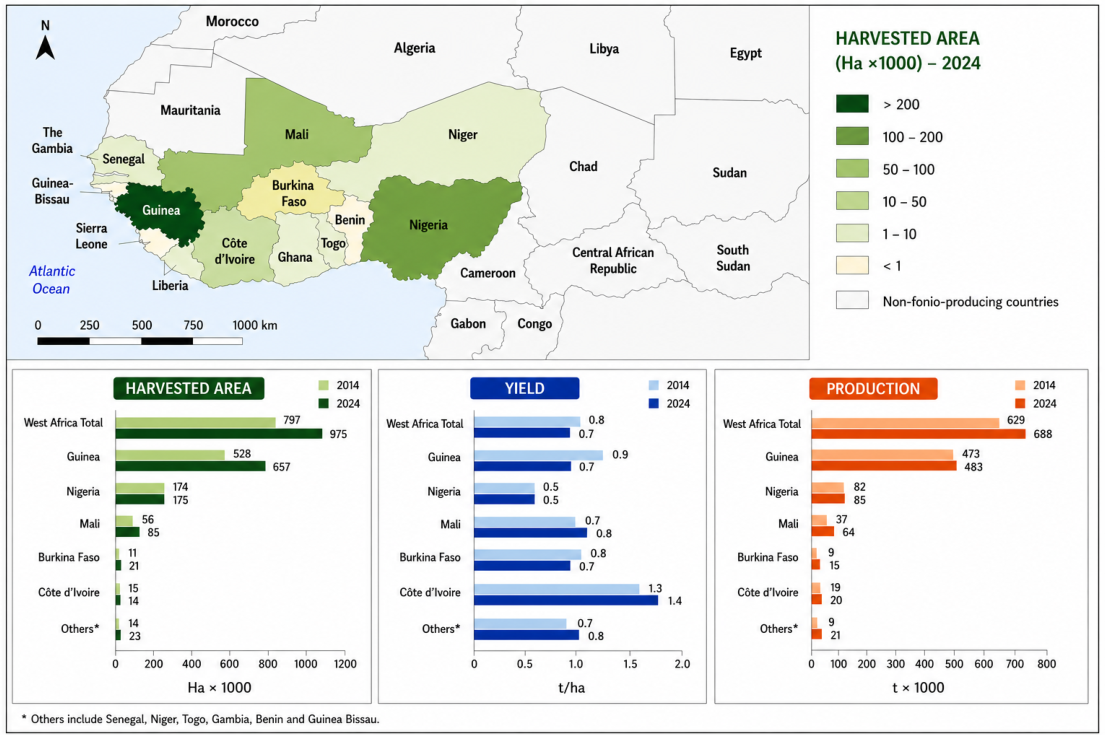
Figure 1. Fonio cultivated area, yield and production in West Africa, compared between 2014 and 2024 [24].
Agriculture 16 01608 g001
Figure 2. Fonio introductory images. (A,B) Fonio plants recovering after 20 days of drought exposure, (A) 41-day-old plants at the end of the drought treatment; (B) 61-day-old plants after receiving 20 days of normal watering (Source: R. Pudasaini). (C) Mature fonio panicles (Source: R. Pudasaini). (D) Female farmer threshing fonio manually (Source: James Courtright, CC BY SA 4.0). (E) Fonio grains (Source: R. Pudasaini). (F) A cooked fonio dish (Source: Tiexano, CC BY-NC-SA 2.0).
Agriculture 16 01608 g002
Fonio grain (non-dehulled) has a low glycemic index, and thus should be good for diabetic patients; it is also a palatable and digestible baby food [21,22,25]. On a cautionary note, however, nutritional studies have reported the presence of mycotoxins in marketed fonio grains; for instance, in Nigerian markets, nearly 80% of samples were found to be contaminated with aflatoxin [21]. Nevertheless, as a result of its nutrient and taste properties, fonio has gained commercial interest locally and internationally in recent years.
Culturally, fonio millet is consumed traditionally like a couscous (Figure 2F) or porridge, as well as in contemporary dishes like bread, cookies, drinks, steamed dumplings, and noodles in Europe and North America, or simply as sprouted grain [21,22,26]. There are many other traditional dishes made with fonio, often mixed with vegetables or other grains [27], which also reflect ethnic preferences. Recently, fonio has also been incorporated into nutritious food mixes (nuts, beans, milk powder, vitamins, etc.) for infants and children in West Africa [21]. In addition to grain, fonio straw has good fodder quality and has been used as livestock feed by African farmers and also sold in local markets for cash [13,28,29].
Because it is held in high esteem by local peoples, fonio grain can fetch double the price of rice in West African markets [13]. Due to increasing awareness of the potential benefits and subsequent market demand for this crop, the area of fonio cultivation has more than doubled in recent years (from 0.45 million ha in 2008 to 0.97 million ha in 2024) [24]. However, despite its promise, fonio yield has decreased from 1.1 t/ha in 2008 to 0.7 t/ha in 2024, which is very low compared to other cereals [24]. Between 2014 and 2024, the harvested area and production of fonio continue to increase, whereas yield continues to decline, albeit at a slower rate than in the past (Figure 1). This has impacted fonio adoption and extension. Selected landraces can yield above one metric tonne under optimal management [30,31], but such genotypes need more research support to enable breeding and farmer extension. Adoption of fonio by farmers is also affected by labour-intensive growing and post-harvest processing. Farmers, mostly the younger generation, find it ‘tedious’ [11,27]. As a result, even though some people in the Sahel often prefer fonio over other grains, they are shifting to high-yielding crops (rice, maize, potato) for greater net economic returns and ease of cultivation and processing [27]. Another factor affecting the choice of crop or landrace is the emergence of unpredictable climates, including, in some regions, frequent rainfall occurring during the harvesting window for short-duration fonio. This has been forcing farmers to switch to other crops or longer-duration fonio landraces [7,25], thereby depriving them of the traditional benefit of fonio in alleviating mid-season hunger. Therefore, despite recent increases, when compared to ancient times, the land area devoted to fonio cultivation has been dramatically reduced, jeopardizing its biodiversity and associated indigenous knowledge [10,12].
Fortunately, during recent years, there have been research breakthroughs related to fonio. Here, the published literature will be reviewed from a cross-disciplinary, systems-based perspective, with a focus on white fonio as a potential staple grain for Sahelian indigenous populations. We will describe the unsolved challenges across the production, post-harvest, and value chain, which contribute to this ancient crop’s stagnant yield trend, high post-harvest labour requirement and limited household income generation of the associated farmers. We have highlighted future research that is needed to fully domesticate this crop and breed high-yielding varieties adapted to local environments, combined with improved agronomic recommendations, mechanization, and value-chain development. We will argue that research investment has become timely and more cost-effective, since the recent scientific efforts have created platforms to catalyze long-term improvement in this crop, combined with new interest by Western consumers in millets and other ancient grains.

2. Methods

A comprehensive review of the published literature was conducted for this article. Journal articles published between 1990 and 2026, available on ScienceDirect, Google Scholar, and Web of Science, were considered. In addition, online articles, books, book chapters, and project reports were included in the review, particularly when peer-reviewed literature was unavailable or insufficient to provide specific data or information. Keywords for the publication search included: white fonio, Digitaria exilis, fonio crop domestication, diversity and genetic analysis, agronomy, crop breeding, farmers’ surveys, nutrient analysis, mechanization, fonio market, and gender roles. Information from all the literature was sorted into 9 thematic categories as presented in the paper: (i) germplasm conservation, (ii) germplasm improvement, (iii) crop breeding, (iv) climate adaptation, (v) agronomy, (vi) ecosystem interactions, (vii) harvesting and processing, (viii) income and gender dynamics, and (ix) marketing and export. Within each category, findings from the literature were first reported as current progress, followed by potential future actions supported by the relevant literature.

3. Research Needs and Opportunities in White Fonio

3.1. Germplasm Conservation and Diversity Studies

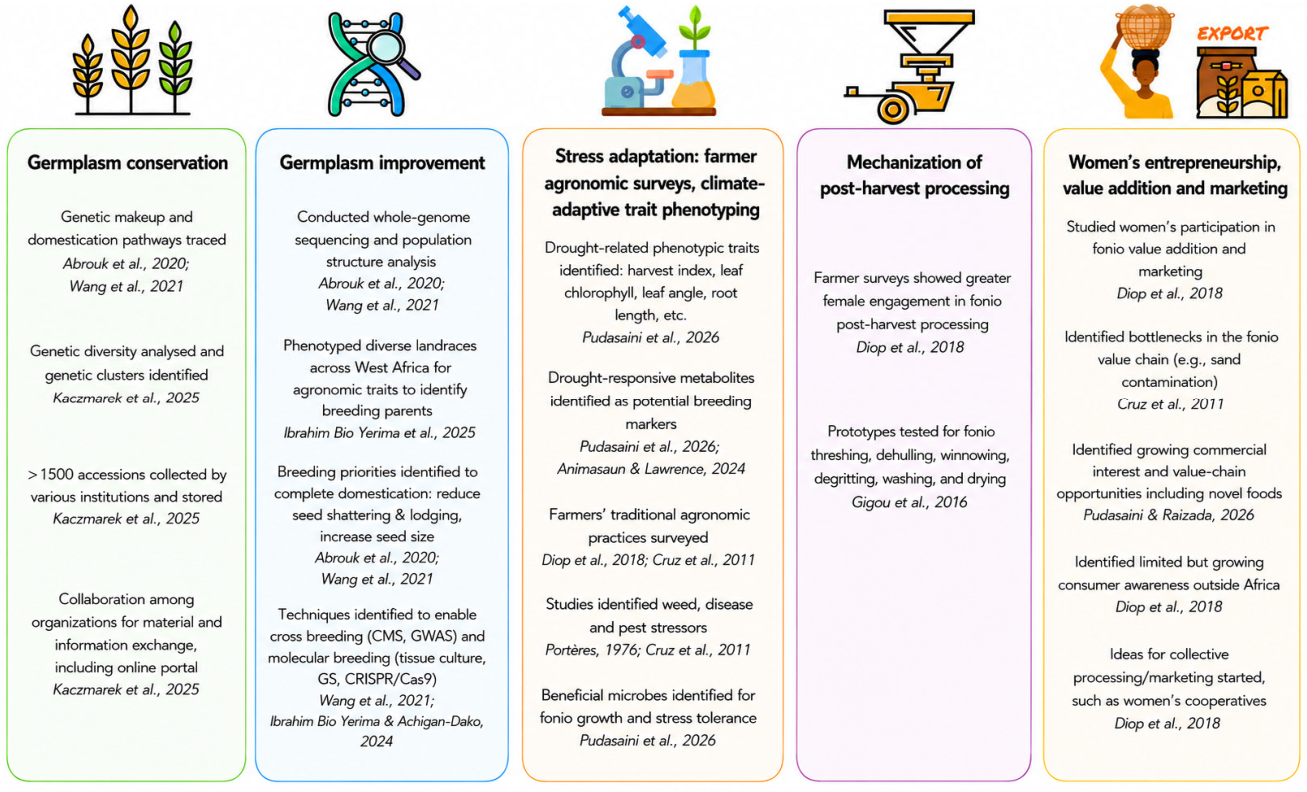
Germplasm collection, conservation, genetic diversity clustering, and domestication analyses are prerequisites to accelerate crop breeding. Fortunately, recent breakthroughs have substantially advanced these areas (Figure 3). Whole-genome sequencing by Abrouk et al. [18] showed white fonio has a moderate-sized genome (893 Mb) with 59,844 protein-coding genes. Parallel sequencing by Wang et al. [15] resulted in an assembly of 761 Mb with a similar number of protein-coding genes (58,459). Though white fonio diverged from the wild diploid plant, D. longiflora, studies have confirmed that white fonio is an allotetraploid (2n = 4x = 36), associated with a whole-genome duplication event around 3 million years ago [12,15,18]. Today, there remains high retention of homeologous gene pairs between its A and B sub-genomes [18], with only 4.3% sequence divergence between homeologous duplications [15]. Though an earlier study [32] suggested the domestication of white fonio occurred in the Inner Niger Basin of Mali, where it was suggested to have originally grown as a weed, more recent evidence suggests it was domesticated in Nigeria around 250–450 AD, independently from black fonio, then gradually migrated across West Africa [12,14,16], with ongoing independent domestication of both ancestral sub-genomes [15].
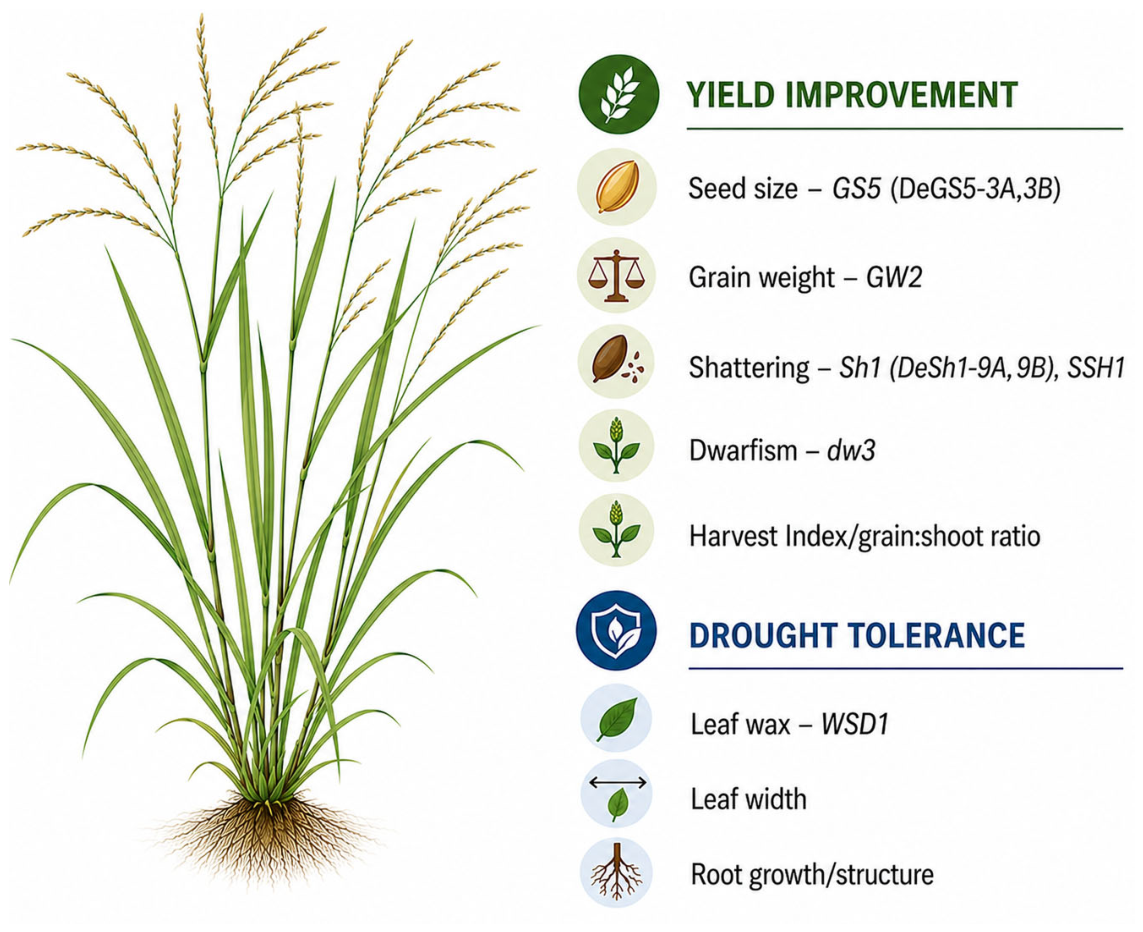
Overall, 57.4% of the white fonio genome contains two duplicate loci, and 30.4% contain >2 copies [15]. The high frequency of duplicated genes may have slowed down domestication by masking the phenotypes of novel recessive alleles, preventing farmers from selecting desired traits including reduced seed shattering, increased seed size, and semi-dwarfism [15]. For instance, seed shattering is caused by a distinct abscission zone at the base of spikelets, regulated by multiple genes including Seed Shattering 1 (Sh1) and Suppression of Seed Shattering 1 (SSH1) [15,16,18]. There is no widespread change in the abscission zone between cultivated fonio and its wild relatives, suggesting seed shattering has not been under strong selection by farmers [16]. White fonio has four loci related to the SSH1 gene, but interestingly, two of the copies are more closely related to the shattering SSH1 alleles of rice than the non-shattering alleles [15]. Similarly, with respect to the Sh1 gene, in which lower expression is associated with reduced seed shattering, at least two paralogs were observed in white fonio, of which one locus (Chromosome 9B homeolog in the B sub-genome) was consistently intact across accessions, whereas 37% of cultivated accessions across West Africa showed a deletion at the second locus (Chromosome 9A homeolog in the A sub-genome) which was not present in ancestral D. longiflora; likely as a result of this redundancy, among those accessions, there was only a 7% probability of reduced shattering [18]. Similarly, white fonio has multiple copies of dw3 (Dwarfing-3, sorghum ortholog) responsible for Green Revolution semi-dwarfism [15]. With respect to seed weight, white fonio has two loci encoding GW2 (GRAIN WEIGHT-2, rice/wheat ortholog), compared to only a single locus in some other cereals [15]. One of the fonio orthologs (DeGS5-3A in the A sub-genome) of the GS5 locus, which regulates grain weight and width in rice, was shown to have been under long-term selection, likely for improved seed size, but not its homeologous copy (DeGS5-3B in the B sub-genome) [18]. Therefore, in the future, simultaneous selection for desirable mutations in all gene copies may enable non-shattering, dwarfism, improved seed size and other desired traits to be introduced into fonio [15]. Today, partially as a result of this genetic redundancy, fonio remains a ‘semi-domesticated’ crop [16]. The pace of domestication may have been further reduced by its wild relative (D. longiflora) historically growing in the same fields, polluting cultivated fonio with the wild alleles [18].
Following domestication, ethnic identities in West Africa appear to have strongly influenced the genetic diversification of white fonio, especially the dispersal of early or late maturing landraces [33]. Evidence has suggested that ethnic barriers have mostly limited seed flow, contributing to the isolation of this crop’s genetic diversity. For instance, the Fulani community in Senegal cultivated early maturing accessions and also carried these genotypes towards the east (Mali and Guinea) during their migration, but apparently did not exchange the genotypes with other ethnicities, as evidenced by genetic diversity analysis [33]. The autogamic nature of the crop might have helped maintain the uniqueness of the landraces over time. Consequently, white fonio has maintained greater genetic diversity within landraces than between landraces, as observed by Agyare et al. [17] in their characterization of Ghanaian landraces.
Studies have also shown that, alongside farmer ethnicity, the agroclimate has had a strong influence on fonio diversity. Adoukonou-Sagbadja et al. [34] used amplified fragment length polymorphisms (AFLPs) to define the genetic relatedness of 118 white and 4 black fonio accessions across western Africa. Three major genetic groups for white fonio were distinguished, associated with their geographic origin: (i) the upper Niger basin, (ii) Burkina Faso, Guinea and Mali, and (iii) Benin and Togo. Black fonio accessions were centred only in Nigeria. By contrast, Agyare et al. [17] found a weaker effect of geographic location in shaping the genetic structure of fonio in Ghana, pointing instead to the importance of farmer ethnicity.
Abrouk et al. [18] have admirably undertaken genomic sequencing of 166 landraces to define the population structure of white fonio. Specifically, 6 genetic clusters were identified corresponding to: (1) Central Mali, (2) Central Guinea, (3) Burkina Faso, Northern Togo and Northern Benin, (4) North-Eastern Guinea and South-Eastern Mali, (5) Southern Togo and (6) South-Western Mali. Their study suggested that white fonio genetic diversity was mainly shaped by ecological and geographic factors. Similarly, a recent study by Kaczmarek et al. [14] used SSR markers to evaluate 1539 white fonio accessions across West Africa; they found evidence that supported the same clustering pattern. A separate study by Ibrahim Bio Yerima et al. [35] evaluated 259 white fonio accessions across six West African countries using single-nucleotide polymorphism (SNP) markers; their results suggested that fonio diversity was not necessarily grouped by ecological regions but rather confined within political boundaries (countries). This result was further elaborated by Diop et al. [33]. Ibrahim Bio Yerima et al. [35] concluded that white fonio diversity was closely associated with farmers (ethnic groups) and their respective management practices. The study identified only two clusters: (i) Benin, Niger and Mali and (ii) Nigeria, Guinea, Mali and Burkina Faso.
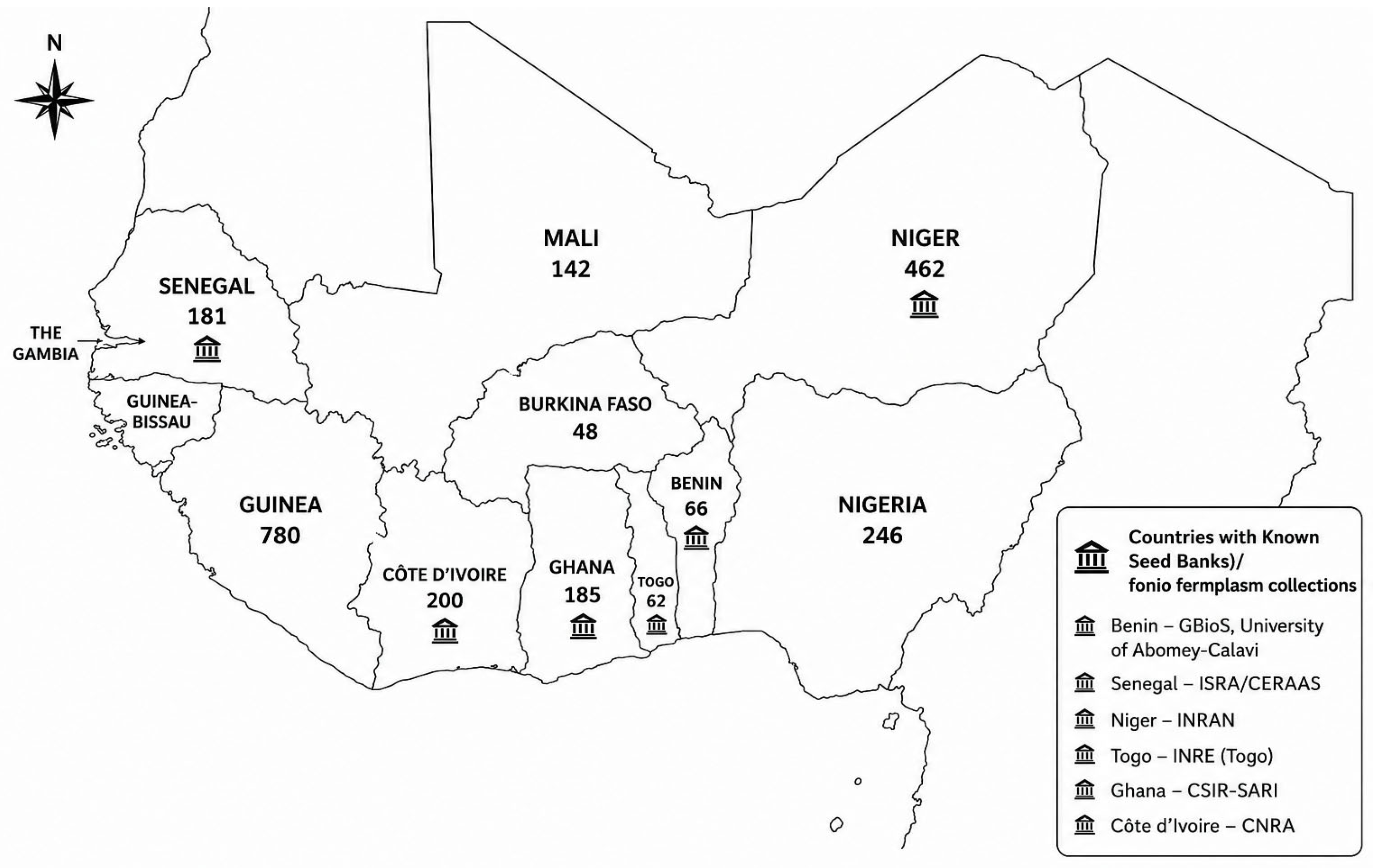
To capture this rich genetic diversity, IRD (The Research Institute for Development) and CIRAD in Montpellier, France, and their local partners across West Africa, have established a model North–South collaboration that has resulted in the collection and characterization of >1500 fonio accessions; the collaboration includes dedicated fonio researchers in Nigeria, Benin, Ghana, Niger, Guinea, Cote d’Ivoire, and Senegal [14]. Indeed, the recent collection was built upon the 600 accessions reported earlier by long-standing, pioneering researchers in West Africa, including in Niger and Benin (GBioS) [28,36]. The collections occurred between 1977 and 2021. The accessions are now permanently stored in Montpellier (France) by IRD, Agropolis Resource Centre for Crop Conservation, Adaptation and Diversity (ARCAD) and the GAMeT Biological Resource Center. Additional fonio germplasm collections have been reported in several West African countries, including Benin, Senegal, Guinea, Mali, Burkina Faso, Togo, and Nigeria. However, comprehensive national-scale genebank collections remain limited, particularly in Guinea and Nigeria, the two largest fonio-producing countries [14] (Figure 4). The fonio germplasm collection represents a breakthrough for fonio research and improvement efforts and will attract funding and encourage researchers around the world to investigate fonio [44].
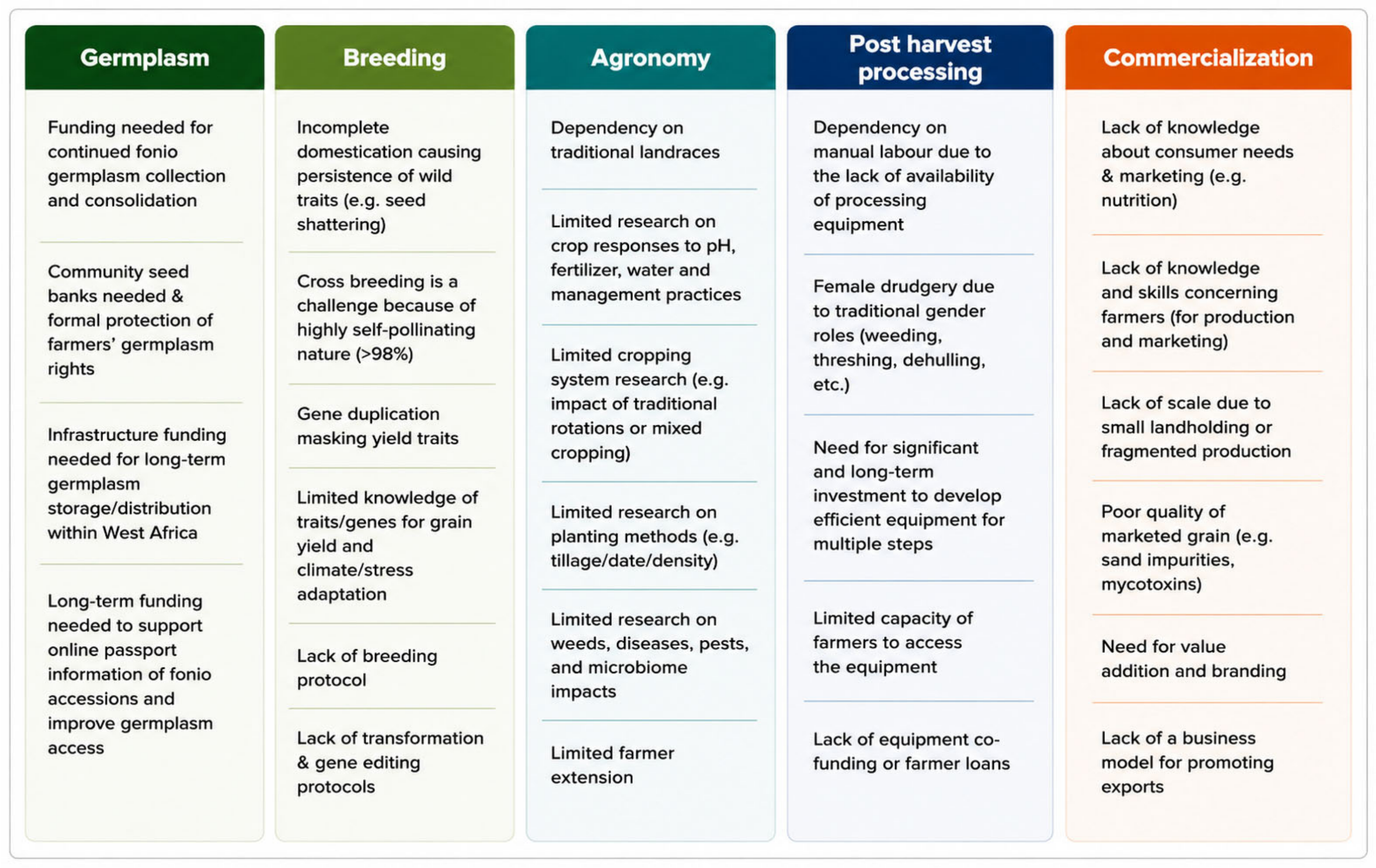
In Benin, it was reported that individual villages maintained only 1–5 landraces, with three on average, but this is in danger of decline [7]. Moving forward, long-term in situ conservation of fonio landraces in West Africa is necessary to protect its genetic diversity, associated agronomic practices, indigenous knowledge and ecological interactions (e.g., rhizosphere microbes) to maintain farmer resiliency against climate change. Access to fonio landraces, associated local knowledge, and future varieties can be enabled by the formation of community biodiversity management groups of community seed banks [37,45,46,47], which would enable greater seed exchange between traditionally isolated ethnic groups (Figure 5). More funding could enlarge and maintain ex situ fonio gene banks within West Africa to further enable local breeders (Figure 5). Greater funding could also be used to expand the current research network to include additional institutions, governments, and farmers to accelerate fonio research and development. This network could facilitate the online exchange of information and germplasm sharing between international scientists, local researchers, and farmers. Kaczmarek et al. [14] have already established an online portal, Shiny, to provide information about fonio germplasm, which should be funded over the long term, similar to portals for other crops at CGIAR (Consultative Group on International Agricultural Research) institutes. Eventually, when seedbank(s) form and fonio becomes a grain of global importance, protecting the germplasm rights of local communities will also become increasingly vital. Such efforts can be catalyzed by a suitable member(s) of the partnership network, such as IPGRI (The International Plant Genetic Resources Institute), as suggested by Ibrahim Bio Yerima and Achigan-Dako [36].

3.2. Germplasm Improvement

Today, fonio farmers remain completely dependent on traditional landraces [11,35] that, as noted above, retain wild ancestral alleles associated with small grain size, seed shattering, low apical dominance, and lodging [13,19]. Therefore, there is an urgent need for more research investment to complete the domestication of this crop [18,38] (Figure 5).
Fortunately, there is now a foundation for long-term genetic improvement in white fonio, as a result of the above germplasm collection and conservation, whole-genome sequencing, population structure analysis, genetic clustering and identification of important candidate genes for agronomic traits [12,15,18,44] (Figure 3). There is now a golden opportunity to breed white fonio cost-effectively.
A pre-requisite for using crossbreeding to improve traits is the existence of trait diversity. The above studies demonstrated that there is genomic diversity within white fonio. Additional studies have also demonstrated phenotypic diversity among landraces (Figure 3). For centuries, local communities across West Africa have continued to maintain wide morphological variation across the hundreds of white fonio landraces [1,5,7,15,34,35,38,48]. From their genetic diversity analysis across West Africa, Adoukonou-Sagbadja et al. [34] demonstrated that germplasm from the Upper Niger Basin had superior grain yield traits (biomass, panicle length and grain weight) compared to those from other West African genetic clusters. Subsequently, Ibrahim Bio Yerima et al. [38] examined the agromorphological characteristics of 180 white fonio accessions from five West African countries (Mali, Guinea, Niger, Benin, Burkina Faso). They observed variation in several phenotypic traits, including plant height, number of leaves, days to flowering, maturity, biomass yield, grain yield and harvest index. Grain yield had a positive correlation with harvest index but a negative correlation with days to flowering/maturity [38].
To enable long-term breeding, they defined three landrace phenotypic groups: (i) early maturing, shorter plants with greater grain yield in Mali and Niger, (ii) late maturing, taller plants with lower yield in all 5 countries, and (iii) late maturing, taller plants with lower yield and longer panicles in Niger, Benin and Burkina Faso. Based on these phenotypic traits, the authors suggested that the landraces from the first group were candidates for the breeding of high-yielding and lodging-resistant fonio varieties [38]. The existence of this phenotypic diversity in the form of inbred landraces, combined with the recent annotations of candidate genes, should facilitate crop improvement through traditional and molecular breeding techniques.
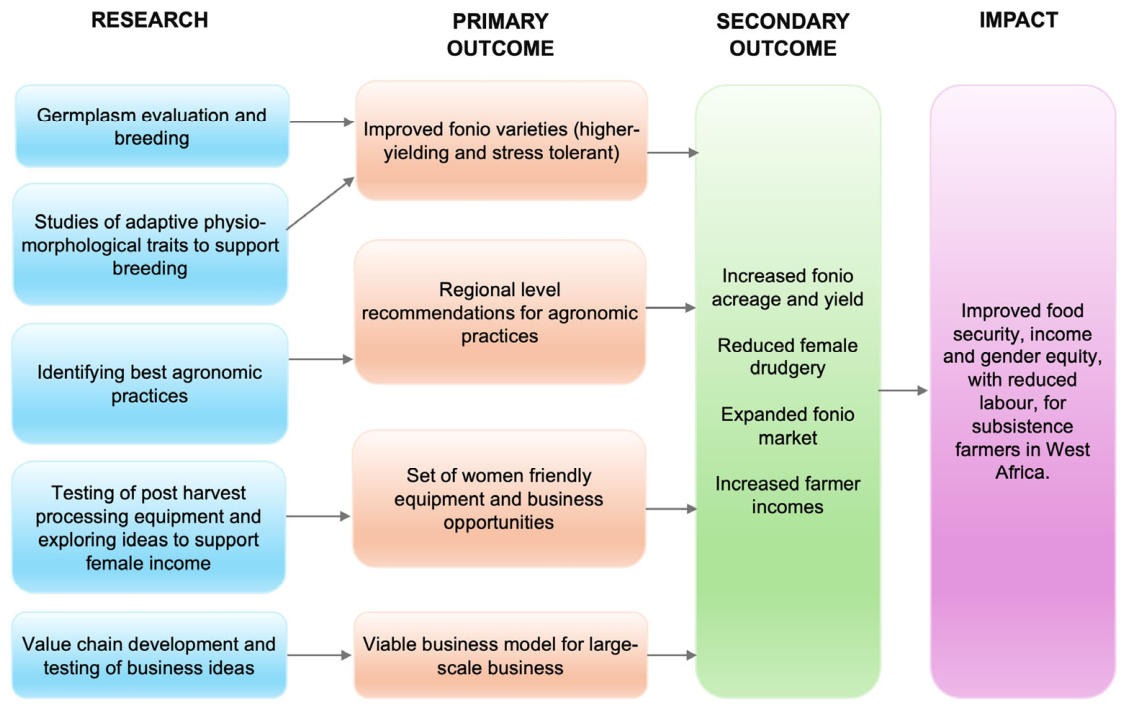
With respect to triaging future efforts, as already noted, overcoming the incomplete domestication (seed shattering, lodging, semi-dwarfism and seed size) is the most urgent breeding priority for fonio [15,36] (Figure 5 and Figure 6). Based on local farmer surveys, the top concern of fonio farmers is its small grain size, which is associated with low crop yield; the small grains also make dehusking more challenging [8]. For women, dehusking is a major labour constraint and contributes to reduced adoption of this crop [7,17]. The lack of strong selection on the well-known cereal domestication genes (seed shattering, dwarfism, seed size, etc.) [18] creates opportunities for targeted molecular breeding or gene editing—which would be major advances for this crop (Figure 5). In general, however, breeders believe that significant yield improvement and reduction in fonio lodging and grain shattering are possible through crossbreeding, by evaluating and crossing genetic materials using a regional-level germplasm collection [15,18,19,28,36]. Selective breeding could be undertaken to target a higher harvest index, lower tiller number, longer grain heads and improved nutrient content (e.g., lysine, B vitamins).
Grain yield is associated with maturity time. In some situations, fonio farmers have reported choosing longer duration landraces for higher grain yields or climate adaptation [16]. However, early maturing landraces are preferred by farmers to alleviate mid-season hunger, with some early landraces interestingly reported to have high grain yields [7], demonstrating a breeding opportunity among short-duration genotypes. Fonio grain yield is low, with one study reporting a range of 0.2 to 0.9 t/ha [6], which is the main reason farmers are tempted to switch to higher-yielding crops (corn, rice). Therefore, yield improvement through breeding is a top priority (Figure 5 and Figure 7).
Finally, there is a need to combine yield-enhancing traits with stress-tolerance traits (e.g., drought, low nitrogen), while minimizing potential trade-offs in crop yield, ultimately leading to the development of improved fonio varieties (Figure 6) [18,38]. Stress-tolerance traits are discussed further in Section 3.4 below.
As a model for implementing fonio crop improvement, we envisage a collaborative consortium involving CGIAR centres, particularly IITA and ICRISAT (which have a presence in West Africa), together with IRD and CIRAD, to provide scientific leadership, technical support, capacity building, and resource mobilization. Individual West African countries, through their designated national institutions (e.g., national gene banks, agricultural research institutes, and universities), could lead germplasm evaluation, selection, and multi-location field testing. Such a coordinated regional framework would facilitate the efficient sharing of germplasm, expertise, and financial resources while strengthening national breeding programmes and accelerating the development and dissemination of improved fonio cultivars.

3.3. Breeding Constraints and Approaches to Overcome

Because white fonio is still undergoing domestication and is a predominantly self-pollinating species, genetic improvement through conventional cross-breeding remains a major challenge due to limited genetic recombination and the difficulty of producing controlled hybrids. Nevertheless, as discussed above, several studies have suggested cross-breeding and hybridization, followed by selection within resulting large plant populations, to exploit the substantial genetic variation present among landraces. Prior to, or in parallel with, the development of efficient hybridization protocols, pure-line selection or line purification offers a practical and cost-effective breeding strategy. Moreover, the gene pools of black and white fonio appear to be distinct, suggesting an untapped opportunity to introduce beneficial traits, as their plant architectures differ [12]. Given limited resources available for advanced breeding technologies such as gene editing, genome-wide association studies (GWAS) could accelerate the identification of quantitative trait loci (QTLs), and candidate genes associated with the key agronomic traits could further assist in marker-assisted genomic selection in white fonio [36] (Figure 3). Direct genomic selection (GS) could be helpful to speed up trait-based genetic selection, shortening the fonio breeding cycle [36]. However, as already noted, fonio has a highly self-pollinated reproductive system [15,19]. Natural outcrossing in fonio is infrequent (<2%), evidenced by its extremely low rate of heterozygosity (<0.01%), thus requiring controlled, perhaps ex situ crossing [15,19]. For example, cytoplasmic male sterility or marker-assisted backcrossing could facilitate hybridization in fonio [36] (Figure 3). Overall, the absence of a crossing protocol is currently hindering breeding [15].
Another constraint, as already noted, is the presence of a duplicate genome, making selection for recessive alleles difficult in fonio using conventional trait-based breeding (Figure 5). As an alternative, gene editing (CRISPR/CAS9) has been suggested for fonio [36] (Figure 3). Researchers have suggested site-directed mutagenesis to simultaneously knock out pairs of domestication genes (such as Sh1 and dw3), thereby shortening and simplifying the breeding process [15,36]. Ntui et al. [49] have developed a protocol using stem explants to induce callus in tissue culture and regenerate it into seedlings, which is a likely prerequisite for biolistic or Agrobacterium-based gene editing. Gene editing, however, will require more research to create a transformation system that is efficient across diverse landraces (e.g., floral dip method).

3.4. Climate Adaptive Traits

West Africa is facing higher-level impacts of climate change, including drought [50]. Some fonio landraces are known to be capable of tolerating dry environments that dominate the African Sahel [1,3,6]. Despite droughts becoming more serious in semi-arid regions, characterized as having an unpredictable, irregular and shorter rainy season [7], funding has not been available to breed fonio for enhanced drought tolerance. As part of pre-breeding initiatives, identifying physiological and morphological traits in fonio that underlie drought adaptation and acclimation mechanisms may accelerate breeding efforts in this crop and help future-proof this crop under the changing climate (Figure 5 and Figure 7).
A recent study reported that fonio landraces adapted to arid regions are short-duration (early maturing) [38]. However, not all short-duration fonio landraces have higher yields [26]. Therefore, further studies are needed before early maturity can be used as a target breeding trait for improved drought tolerance in fonio.
Based on the crop’s agronomic background and phylogeny, some drought-related traits found in foxtail millet and barnyard millet were proposed to be present in fonio [39], including the ability to alter stomatal conductance, water uptake, and/or the root:shoot ratio [51,52]. As in foxtail millet, it was also reasonable to assume that fonio could alter its biochemistry and metabolome to promote growth and synthesize osmoprotectants during drought [53]. Indeed, a significant increase in activities of superoxide dismutase (SOD) to combat drought-induced oxidative stress in fonio was observed by Osundinakin et al. [54].
There have been other recent advances in fonio drought tolerance research (Figure 3). In the first detailed evaluation of drought responses in white fonio, landraces from Mali (dry environment) and Guinea (wetter environment) were evaluated indoors under controlled growth conditions [40]. Drought exposure resulted in altered physiology (reduced rate of photosynthesis, stomatal conductance, SPAD chlorophyll), prevention of water loss (reduced transpiration, narrowed leaf width), and photosystem damage avoidance (increased leaf angle), along with altered reproductive traits (panicle length, grain weight per panicle) and root system architecture (RSA) modifications previously implicated in efficient water scavenging; these RSA modifications included increased root/shoot ratio and crown root length, balanced by decreases in crown root number and diameter, and increased density and length of root hairs [40]. The dry-adapted Mali accession showed early maturity, shorter plant height, more leaves, and a higher harvest index, which are characteristics resembling those of higher-yielding fonio landraces reported by Ibrahim Bio Yerima et al. [38]. By measuring a panel of 30 metabolites, Pudasaini et al. [40] also demonstrated that leaves of white fonio exposed to drought exhibited 12–60-fold increases in the osmoprotectants, alanine- and glycine-betaine [40]. Some quantitative differences were observed in the plant acclimation responses between the two landraces, and several were noted as being cost-effective to measure (e.g., leaf angle, leaf width), including SPAD chlorophyll, which showed a high correlation to grain yield. These results offer hope for targeted local drought-resistance breeding in fonio at minimum cost [40].
Another study by Animasaun and Lawrence [41] compared two white fonio genotypes from contrasting environments and found alterations in several metabolites including sugars, fatty acids and siloxanes. Particular metabolites (phthalimide, triacontane, vaccenic acids, and cholestane) showed increased accumulation in one genotype, which performed better under drought. Together, the above studies suggest that beneficial, drought-associated metabolites could be selected or serve as markers to facilitate the development of stress-tolerant fonio varieties.
Moving forward, candidate traits that promote stress tolerance in fonio should now be surveyed using a larger number of landraces in different outdoor environments across West Africa, along with their relationship to grain yield and yield stability (Figure 7). As noted above, Wang et al. [15] and Abrouk et al. [18] have already conducted deep genome sequencing across a range of fonio landraces, thus creating a database of allelic variation that, if correlated to such phenotypic variation, could accelerate efforts to adapt fonio to rapid climate change in West Africa.

3.5. Agronomy

Comprehensive farmer surveys have been conducted to catalogue the agronomic practices of fonio farmers pertaining to the cropping system, soil nutrient management, and planting, which have revealed where future progress can be made (Figure 3). With respect to the cropping system, in general, West African farmers grow fonio as a monocrop, without fertilizer, as the final crop in a crop rotation after nutrient-exhaustive crops like upland rice, maize, sorghum or pearl millet [9,11,27]. However, this cropping system causes severe nutrient limitations on fonio [6]. Farmers undertake this practice because, when compared to these other crops, fonio is apparently most able to thrive on exhausted soil [6]. Indeed, focus groups in Mali have reported that “plots that do not succeed with other crops succeed with fonio” [8]. For example, in the mountainous regions of Guinea, the crop rotation was reported to be rice–rice–fonio or rice–rice–groundnut–fonio, whereas rice–fonio–fonio was more common in the plains [6]. In a few cases, farmers grow legumes before fonio, at the end of the crop rotation. Intercropping with legumes can benefit fonio, in the form of organic fertilization from symbiotic nitrogen fixation [55]. For example, in Togo, a minority of fonio farmers grew fonio in association with Bambara groundnut or pigeon pea, but also sometimes with non-legumes (pearl millet, cassava, sorghum, okra) [11]. Evaluation experiments are needed to understand which combination of crops is most productive for soil health and fonio yield (Figure 5 and Figure 7).
The land upon which fonio is grown is often marginal (coarse, thin, low-nutrient) [8,11,27]. The soils in West Africa are characteristically dry, sandy, low in organic matter, have poor structural stability, low-water/nutrient-holding capacity, low-cation exchange capacity, and moderate-to-high acidity [56,57,58]. It has been reported that many local soils have been further degraded by poor agricultural practices for decades [59]. The practice of planting fonio in degraded lands without chemical fertilizer results in serious nutrient limitations, compounded by persisting drought challenges [3]. This is a shame, because fonio responds substantially to fertilizers: for example, a study conducted by Gigou et al. [31] in Guinea revealed that using even a modest level of NPK fertilizers (15-15-15) could increase fonio yields significantly (12–22%). However, it is well known that the benefits of fertilizer inputs can differ location-wise according to the soil type and fertility, agro-climate, cropping system and methods of application. To address this challenge, experiments regarding chemical fertilizer/type and their doses for different fonio-growing regions are needed (Figure 5 and Figure 7).
Given the real-world constraints of fertilizer cost and accessibility, and heavy leaching from sandy soils, recommendations are also needed to optimize chemical fertilizer use, including split applications, micro-dosing and integration with organic approaches. Sustainable practices such as crop rotation (with maize, millets, sorghum, cassava, okra or legume crops) or intercropping (Bambara groundnut, pigeon pea, cowpea, pearl millet) are already undertaken by some farmers, as noted above [6,11,27,37], which help to overcome nutrient limitation and improve farm yield. However, more on-farm experiments are needed to understand local constraints (e.g., access to drought-tolerant legume seeds). Improving access to manure and compost (e.g., from drought-tolerant grasses and nitrogen-rich Acacia tree leaves) could help improve the organic matter and nutrient-holding capacity of local soils [60,61]. As plant nutrient availability is strongly pH-dependent [62], it is noteworthy that fonio tolerates acidic soils [1,6]; however, studies are needed to compare fonio performance across pH levels and to assess the impact of these levels on mineral nutrient availability, to identify the optimum, maximum, and minimum tolerated pH levels for this crop. In addition to nitrogen, research is needed to determine the tolerated levels of phosphorus and micronutrient deficiencies, and the impact of aluminum toxicity, as these are common problems for acidic soils in West Africa [63].
Planting dates also have effects on fonio yield. Fonio is a summer-season crop, planted through May–July. Early maturing fonio landraces are sown on West African drylands in May before or immediately after the first rain, whereas the late maturing landraces are sown from June through July when the rainy season is established [6]. Given the erratic and scarce rainfall around the Sahel region due to climate change [64], the time of planting has become critical for the successful production of fonio. For example, Gueye et al. [30] observed that early maturing landraces yield higher when planted early (early July) in South-Western Senegal. Yet in some regions, farmers prefer long-duration landraces as they face labour constraints when harvesting early maturing fonio, as it interferes with the planting of other crops during the onset of the rainy season [11]. As the climate changes rapidly, more studies are necessary to understand the optimal planting time for early and late fonio genotypes in different regions of the Sahel (Figure 5 and Figure 7).
Plant density can affect fonio yields. Planting of fonio is undertaken manually immediately after ploughing. Farmers broadcast seeds, and sometimes mix seeds with sand to improve their spatial distribution [1,6,8]. Broadcast-sown plots generally have higher plant density, causing low tillering and then low yield, whereas row sowing allows increased tillering because of better access to light and nutrients, resulting in higher crop yield [65]. However, a benefit–cost analysis of broadcasting versus line sowing has yet to be reported, to the best of our knowledge. Some other millets, e.g., Ethiopian teff, have been reported to produce significantly improved grain yields when planted in a row or transplanted, but such practices also have cost and labour implications [66,67]. Therefore, more studies are needed concerning optimal fonio planting strategies (Figure 5 and Figure 7).

3.6. Ecosystem Interactions: Weeds, Pests, Disease, Endophytic and Rhizosphere Microbes

Some progress has been made with respect to understanding weeds associated with fonio (Figure 3). Some reports suggest that only moderate attention is paid to weeding by fonio farmers; the crop reportedly suppresses weeds due to its rapid growth and dense canopy [1,3,6]. Farmer surveys, however, have sometimes contradicted this, reporting that fonio is a poor weed competitor and is associated with tedious manual weeding, which is undertaken primarily by women [8,11]. In Mali, a study identified some commonly observed weeds in fonio fields including Eleusine sp., Panicum spp., and Digitaria wild relatives [27]. The parasitic weed, striga (Striga hermonthica), has been reported as a problem for fonio and other millet crops in West Africa; it grows even in depleted soils where fonio is planted [9,68]. A single weeding between four and seven weeks after planting has been reported to increase fonio grain yield [6]. Traditional horizontally spreading intercrops such as Bambara groundnut have been reported to reduce weed pressure [37].
With respect to insects and pathogens, farmers have reported growing fonio without any insecticides or fungicides [1], but this may be reflective of farmers treating this crop as a low-yield/low-input crop, rather than an accurate assessment of pest and pathogen stress. For example, the crop can suffer from shoot flies (Atherigona spp.), stem borer (C. partellus) and grasshoppers [69]. Furthermore, fonio is reported to be susceptible to smut (Ustilago syntherismae) and other fungal diseases [1], like rust (Puccinia oahuensis) and blight (Helminthosporium spp.) [70]. In particular, as already noted, there is a high rate of fungal aflatoxin contamination in the grain, which is known to be carcinogenic to humans [21].
Future studies are needed to provide fonio farmers with options for managing weeds, pests and pathogens, including finding appropriate cultural and breeding solutions (Figure 5 and Figure 7). For example, in sorghum, striga was managed by breeding resistant varieties [71]. In addition to breeding, appropriate techniques may help fonio farmers minimize pest/disease occurrences and increase yields sustainably at a low cost, including hermetic bags for improved seed storage and other techniques for seed cleaning, seed treatment, and improved crop rotation [72,73,74,75]. As an opportunity to explore, fonio potentially holds disease-suppressing potential for other crops, such as legumes. For example, fonio is a non-host for the pathogen Macrophomina phaseolina, a fungus that causes charcoal rot disease in cowpeas and other legumes; fonio can reduce pathogen density in the soil by >80% after two years when included in the rotation [76].
In terms of beneficial plant–microbe interactions, Pudasaini et al. [77] have demonstrated that the roots and shoots of white fonio possess potentially beneficial endophytic bacteria in their microbiomes (Figure 3). Functional testing revealed the presence of Leifsonia and Bacilli that could tolerate water limitation in vitro (along with tolerance to low nitrogen, aluminum and/or low pH), though in planta testing awaits [77]. In a parallel groundbreaking study, Tabassum et al. [78] analyzed the bacterial communities inhabiting white fonio seeds (seed endophytes) across 126 fonio accessions from West Africa. The study revealed that different fonio genetic groups share a core microbiome potentially functioning to promote climate and soil stress tolerance (e.g., pH, soil carbon content), with the dominant bacteria belonging to Pseudomonas spp. and Bacillus spp., the latter known for its stress tolerance. Such endogenous fonio microbes could potentially be selected using microbe-specific molecular markers or host alleles during plant breeding. Indeed, Tabassum et al. [78] used genome-wide association analysis to identify 17 small-nucleotide polymorphisms (SNPs) in the white fonio genome, associated with 117 candidate genes that may influence seed microbiome diversity. Nevertheless, given the instability of bacterial communities, microbial selection is likely a longer-term urgent objective compared to breeding for traditional crop traits.
A final study by Ndoye et al. [79] in Senegal revealed the presence of 20 species of arbuscular mycorrhizal fungi (AMF) in fonio-grown soil, which varied across agroecosystems; in the future, identifying and inoculating with effective AMFs may promote improved water and nutrient uptake in fonio to adapt to rapidly changing environments.

3.7. Harvesting and Post-Harvest Processing

With respect to harvesting and post-harvest processing of fonio, the major challenge is the high labour requirement, in addition to the earlier noted genetic challenges of lodging and seed shattering (Figure 5). Here, there is a pronounced gender difference. For example, in farmer surveys conducted in Togo, 62% of male fonio farmers reported that their major production constraint was lack of improved harvesting technologies; by contrast, 64% of women farmers reported it to be lack of modern tools for post-harvest processing [11] (Figure 3). Whole fonio stalks are harvested by hand using a sickle and collected to make a heap [9]. Within a few days, threshing is done by beating or trampling [8]. The process requires a huge amount of manual labour [9,26] and causes loss of the precious small grains [13,37]. Indeed, a major problem is that fonio grains are tiny (length < 1 mm; 1000 grain weight < 0.5 g) [80]. As a result, grain harvesting, handling, and processing (threshing, winnowing, dehulling, whitening/polishing, washing) are strenuous for local farmers, especially small-scale women farmers, as modern equipment is still not developed or inaccessible [6]. The heavy labour required for these tasks is one of the main reasons that West African farmers have not been able to commercialize fonio on a large scale, and instead, have been shifting to other crops and abandoning fonio [1,6,8,27]. To reduce the drudgery faced by women, there is a need to improve fonio post-harvest processing equipment (Figure 5 and Figure 7). Mechanization will encourage farmers to expand and intensify fonio farming [81]. In this regard, different institutions have taken initiatives to develop a thresher for fonio. One thresher developed by the International Rice Research Institute (IRRI) in 1970 went through a series of modifications to adapt it to fonio grain, and the process is still ongoing as farmers want a cheaper and simpler version [6]. The GMBF (Guinea, Mali, Burkina, France) fonio huller developed by CIRAD (French Agricultural Research Centre for International Development, Montpellier, France) in 2000, in partnership with various other institutions, is now built by local equipment manufacturers in Mali and sold to local farmers; however, it is also still being modified for improved efficiency [6]. Various other institutions are trying to design and test additional processing equipment to assist with winnowing, dehulling, degritting, washing, and drying [6,37,82,83] (Figure 3).
Despite these efforts, post-harvest processing of fonio remains the top challenge to local growers, as the equipment remains inaccessible to most (Figure 5). Innovative strategies are needed to reduce equipment costs, including cost sharing within women farmer groups, empowering fee-for-service entrepreneurs, government subsidies, micro-finance and low-interest loans [42,84]. In addition to mechanization, experiments on grain conservation ideas, grain quality assessment, and storage duration are needed to minimize post-harvest losses and improve the grain quality of fonio. The issue of aflatoxins and the associated health risk in marketed fonio grain [21] also needs to be addressed by institutional policies and strategies. There is a need to develop control methods and equipment to minimize fungal infections during post-harvest handling. Ultimately, mechanization needs increased attention and investments to accelerate testing, in order to make machinery efficient and affordable to fonio-growing communities across West Africa.

3.8. Household Income and Female Empowerment

Fonio is an important crop for local food and nutritional security and for the livelihoods of marginal communities that are dependent on subsistence farming across West Africa [3,10]. Fonio is also a strategic crop with respect to female empowerment in Africa, as women farmers have higher ownership of the crop than men, including in the trading of fonio; as a result, fonio contributes to female income status [8,10]. This ownership is likely due to the dominant involvement of women in growing and processing fonio [1,11]. In particular, farmer surveys have shown that women are more involved than male farmers in weeding and post-harvest tasks, including threshing, drying, storage, dehulling, winnowing, grinding, and washing of this crop [1,8,10,11] (Figure 3). Men are more involved in planting and harvesting, with occasional involvement in activities like tillage and seed management [6,11], but all the meticulous activities are mainly carried out by women, similar to other millets [10,85]. Therefore, targeted support for women in fonio-growing households is needed to save their time and energy and to enable personal/family care, education and/or entrepreneurship. Innovative support activities, promoted through government policies, might include access to funding, knowledge (e.g., production technologies, post-harvest or market information), tools/equipment, financing, and marketing support [8]. Fonio can be promoted through women-led small enterprises by establishing farmer groups or cooperatives [86] to enable the selling of value-added products for extra income [43]. Recently, commercial fonio farms have been established in Ghana, with the involvement of marketing companies [17] (Figure 3). More ideas for value addition and marketing of fonio will, in turn, expand its production (Figure 5 and Figure 7).
Published studies about fonio markets are limited, and comprehensive retail price data are scarce. Available evidence suggests that retail prices of dehulled fonio in West Africa range from approximately USD $0.75 to $5.00 kg−1 [8,87]. Prices vary considerably depending on seasonal supply and demand, grain quality, processing level (e.g., whole grain, dehulled, polished, or washed), and the geographic location of the market. For example, a consecutive increase in price for washed (washed–dried), precooked (steamed–washed–dried), and djouka (steamed–washed–dried–added crumbs of steamed groundnut) fonio products is evident in African markets, and interestingly, precooked and djouka fonio are mainly marketed by women [8]. Therefore, there may be emerging opportunities for women to participate in fonio marketing and businesses to generate cash income.
An expanded fonio market will ultimately contribute to the food security and livelihoods of small-scale farmers in West Africa at a time of population growth and a changing climate [88,89,90] (Figure 7). Additional social science-based surveys could help identify the specific interventions needed by local women to inform projects focused on assisting West African farmers. Participatory evaluation of traditional practices and their comparison with relevant agricultural innovation (agricultural knowledge and tools), with the involvement of local scientists, could help women identify customized solutions to meet their individual needs [73]. Ultimately, the knowledge gained along the entire fonio value chain must be scaled up using innovative extension strategies for lower-literacy women farmers, including picture-based lessons, farmer field schools, MediaWiki, and informative TV or radio programmes [91,92,93,94,95].

3.9. Fonio Sales, Marketing and Export

The consumption of fonio grain by urban consumers in West Africa has been reported in the past to be generally low, for example less than 1 kg per year in Mali [96]. Nevertheless, there is increasing demand for fonio in local and global food markets, especially in Europe and America, as a gluten-free grain food, often promoted as a ‘food for the future’ [2,25,27,43,97] (Figure 3). Consumers in the capital of Mali (Bamako) noted a desire to consume more fonio due to its nutritional content and ease of digestion, but only if its high and seasonally variable price could be resolved [8]. Indeed, there are dozens of fonio food brands sold in African local markets. For instance, in 2018, Mali had 43 food brands that included fonio products in local markets [8]. However, of the fonio produced in Mali, only 3% was exported abroad [8]. There are some bottlenecks in fonio international marketing, including: (i) lack of consumer awareness, (ii) production scale and consistency, and (iii) variable grain quality [8,27] (Figure 5).
Although fonio millet has several comparative benefits as a nutritious, digestible human food, people outside West Africa are largely unaware of the dietary quality and appealing taste of this grain (Table 1). The emerging popularity of ‘ancient grains’ (e.g., millets) is a positive sign, but it is still at a primitive stage (Figure 3 and Figure 5). Unless people have awareness about this grain, there will not be a large market demand. Even for those urban West African consumers who are aware of fonio, sometimes the demand for this grain is limited to festive periods [8].
Secondly, a consistent supply of a certain quantity is needed to establish and sustain a market system. Fonio farmers from West Africa do not achieve a grain supply at scale to secure a permanent space for fonio in local and foreign markets [8] (Figure 5). Due to high uncertainty concerning the production and distribution of fonio, farmers cannot ensure a regular supply, and marketers and consumers have complained about the quality, particularly sand in the grain being sold [8]. To avoid sand contamination, local farmers in Mali suggested drying the grain indoors, covered with a cloth [8].
Farmers need agri-extension support combined with the inputs already noted (improved varieties, fertilizers, processing equipment, training and financial support for value-added products) to strengthen the fonio value chain. Of all the production constraints, lack of access to threshing and dehusking machines has been reported to be the most important bottleneck and should be prioritized [8]. By organizing themselves into cooperatives, fonio farmers can pool their production and processing to achieve the required scale [86] (Figure 3 and Figure 5). As already alluded to, cooperatives can enable the purchasing power and scale required to access inputs, supplies and machinery such as improved seeds, fertilizers, threshers, dehullers and grain washers. In Mali, several women’s post-harvest processing groups were reported to source, process and then sell fonio to local grocery stores and markets, but complained about a lack of capital [8]. Moving forward, a product quality certification and labelling system could support the marketing of fonio abroad, while its incorporation into school meal programmes could increase local demand [8]. As realized for millets in India [99], innovative business models and an improved value chain could help expand market opportunities for fonio within and outside Africa to ultimately develop this grain into a reliable source of income for small-scale farmers (Figure 7).

4. Summary and Conclusions

White fonio is a low-input, climate-resilient native cereal of West Africa with considerable potential to reduce mid-season hunger, strengthen food and nutritional security, diversify cropping systems, and improve smallholder livelihoods. This grain can also contribute to the pan-African mission of sustainable intensification of agriculture by adding diversity to Africa’s modern cropping systems [100,101]. Beyond its importance within West Africa, white fonio also has promising opportunities for value addition and export to international markets. Recent advances in germplasm conservation, genome sequencing, gene annotation, and population genomic analyses have established a strong foundation for the genetic improvement and continued domestication of this underutilized crop. As one of the first orphan cereals to benefit from modern genomic resources, fonio could serve as a model for accelerating the improvement of other neglected indigenous crops. However, sustained investment, particularly within West Africa, is needed to capitalize on this momentum while ensuring the conservation of fonio genetic resources and equitable benefits for the local communities that have cultivated this crop for generations.
To help farmers adapt to climate change in West Africa, research is needed to identify climate-adaptive, physio-morphological, and metabolomic traits in fonio, and use recently identified drought-related genetic loci to breed more stress-tolerant varieties. However, genetic improvement should be integrated with interdisciplinary, systems-based approaches. Agronomic research is needed to optimize crop rotations, planting practices, and sustainable nutrient management across diverse agro-climatic conditions. Therefore, white fonio improvement could be implemented through a collaborative programme, potentially involving CGIAR, CIRAD and IRD in technical and resource-mobilization support roles, alongside designated national institutions across West Africa conducting field testing and evaluation. In the process, the rights of local West African communities with respect to fonio genetic resource ownership must be further secured. Locally, at the village level, access to agronomic knowledge, inputs, machinery, and markets that benefit women and their families can be catalyzed through the establishment of women farmer cooperatives and targeted knowledge sharing.
Overall, given recent scientific advancements and growing research interest in white fonio, we conclude that it is now timely and strategic to invest in and conduct systems-based research in this ancient grain, ultimately to improve the food security and incomes of smallholder households that cultivate fonio across West Africa.

Author Contributions

Conceptualization, M.N.R.; Investigation, R.P.; Writing—Original Draft Preparation, R.P.; Writing—Review and Editing, R.P. and M.N.R.; Visualization, R.P.; Supervision, M.N.R.; Funding Acquisition, M.N.R. All authors have read and agreed to the published version of the manuscript.

Funding

This research was partially funded by NSERC Discovery grant 400924 to M.N.R. from the Natural Sciences and Engineering Research Council (NSERC) of Canada. R.P. was the recipient of a University of Guelph Arrell Doctoral Scholarship.

Institutional Review Board Statement

Not applicable.

Data Availability Statement

No new data were created or analyzed in this study. Data sharing is not applicable to this article.

Acknowledgments

We sincerely thank the editors and reviewers for handling and reviewing this manuscript. ChatGPT (GPT-5.5, OpenAI) was used artistically to design and refine the figure illustrations, but played no role in content generation.

Conflicts of Interest

The authors declare no conflicts of interest.

References

  1. NRC. Lost Crops of Africa: Volume I: Grains; National Academies Press: Washington, DC, USA, 1996. [Google Scholar] [CrossRef] [PubMed]
  2. Tridge. Overview of Global Fonio Market. 2026. Available online: https://www.tridge.com/intelligences/fonio/ (accessed on 9 May 2026).
  3. Small, E. Teff and fonio—Africa’s sustainable cereals. Biodiversity 2015, 16, 27–41. [Google Scholar] [CrossRef]
  4. World Bank. Central Sahel Monitor; World Bank: Washington, DC, USA, 2025; Available online: https://www.worldbank.org (accessed on 15 November 2025).
  5. Blench, R.M. Vernacular names for African millets and other minor cereals and their significance for agricultural history. Archaeol. Anthr. Sci. 2016, 8, 1–8. [Google Scholar] [CrossRef]
  6. Cruz, J.; Béavogui, F. Fonio, An African Cereal; CIRAD: Montpellier, France, 2016. [Google Scholar]
  7. Dansi, A.; Adoukonou-Sagbadja, H.; Vodouhè, R. Diversity, conservation and related wild species of fonio millet (Digitaria spp.) in the northwest of Benin. Genet. Resour. Crop Evol. 2010, 57, 827–839. [Google Scholar] [CrossRef]
  8. Mbosso, C.; Boulay, B.; Padulosi, S.; Meldrum, G.; Mohamadou, Y.; Niang, A.B.; Coulibaly, H.; Koreissi, Y.; Sidibé, A. Fonio and bambara groundnut value chains in Mali: Issues, needs, and opportunities for their sustainable promotion. Sustainability 2020, 12, 4766. [Google Scholar] [CrossRef]
  9. Vall, E.; Andrieu, N.; Beavogui, F.; Sogodogo, D. Contribution of fonio (Digitaria exilis Stapf) to seasonal food security. Cah. Agric. 2011, 20, 294–300. [Google Scholar] [CrossRef]
  10. Diop, B.M.; Gueye, M.C.; Agbangba, C.E.; Cissé, N.; Deu, M.; Diack, O.; Fofana, A.; Kane, N.A.; Ndir, K.N.; Ndoye, I.; et al. Fonio (Digitaria exilis (Kippist) Stapf): A socially embedded cereal for food and nutrition security in Senegal. Ethnobiol. Lett. 2018, 9, 150–165. [Google Scholar] [CrossRef]
  11. Adoukonou-Sagbadja, H.; Dansi, A.; Vodouhè, R.; Akpagana, K. Indigenous knowledge and traditional conservation of fonio millet (Digitaria exilis, Digitaria iburua) in Togo. Biodivers. Conserv. 2006, 15, 2379–2395. [Google Scholar] [CrossRef]
  12. Kaczmarek, T.; Cubry, P.; Champion, L.; Causse, S.; Couderc, M.; Orjuela, J.; Uyoh, E.A.; Oselebe, H.O.; Dachi, S.N.; Adje, C.O.A.; et al. Independent domestication and cultivation histories of two West African indigenous fonio millet crops. Nat. Commun. 2025, 16, 4067. [Google Scholar] [CrossRef] [PubMed]
  13. Vodouhe, R.S.; Achigan-Dako, E.G.; Dansi, A.; Adoukonou-Sagbadja, H. Fonio: A treasure for West Africa. In Plant Genetic Resources and Food Security in West and Central Africa; Bioversity International: Rome, Italy, 2007; pp. 219–223. [Google Scholar]
  14. Kaczmarek, T.; Causse, S.; Abdul, S.D.; Abraham, S.; Achigan-Dako, E.G.; Adje, C.; Adjebeng-Danquah, J.; Agyare, R.Y.; Akanvou, L.; Bakasso, Y.; et al. Towards conservation and sustainable use of an indigenous crop: A large partnership network enabled the genetic diversity assessment of 1539 fonio (Digitaria exilis) accessions. Plants People Planet 2025, 7, 621–630. [Google Scholar] [CrossRef]
  15. Wang, X.; Chen, S.; Ma, X.; Yssel, A.E.J.; Chaluvadi, S.R.; Johnson, M.S.; Gangashetty, P.; Hamidou, F.; Sanogo, M.D.; Zwaenepoel, A.; et al. Genome sequence and genetic diversity analysis of an under-domesticated orphan crop, white fonio (Digitaria exilis). GigaScience 2021, 10, giab013. [Google Scholar] [CrossRef] [PubMed]
  16. Burton, G.P.; Ceci, P.; MacKinnon, L.; Masters, L.E.; Randrianarimanana, N.F.H.; Ryan, P.; Turnbull, C.G.N.; Ulian, T.; Vorontsova, M.S. Phylogenetics and evolution of Digitaria grasses, including cereal crops fonio, raishan and Polish millet. Ann. Bot. 2025, 137, 141–157. [Google Scholar] [CrossRef] [PubMed]
  17. Agyare, R.Y.; Kaczmarek, T.; Leclerc, C.; Puozaa, D.K.; Tengey, T.K.; Bonsu, S.K.; Kombiok, J.M.; Causse, S.; Guillerminet, T.; Kena, A.W.; et al. Revealing Ghana’s unique fonio genetic diversity: Leveraging farmers’ knowledge for sustainable conservation and breeding strategies. Genet. Resour. Crop Evol. 2025, 72, 235–253. [Google Scholar] [CrossRef]
  18. Abrouk, M.; Ahmed, H.I.; Cubry, P.; Šimoníková, D.; Cauet, S.; Pailles, Y.; Bettgenhaeuser, J.; Gapa, L.; Scarcelli, N.; Couderc, M.; et al. Fonio millet genome unlocks African orphan crop diversity for agriculture in a changing climate. Nat. Commun. 2020, 11, 4488. [Google Scholar] [CrossRef] [PubMed]
  19. Barnaud, A.; Vigouroux, Y.; Diallo, M.T.; Saidou, S.I.; Piquet, M.; Barry, M.B.; Bakasso, Y.; Zekraoui, L.; Rivallan, R.; Kane, N.A.; et al. High selfing rate inferred for white fonio [Digitaria exilis (Kippist.) Stapf] reproductive system opens up opportunities for breeding programs. Genet. Resour. Crop Evol. 2017, 64, 1485–1490. [Google Scholar] [CrossRef]
  20. USDA. FoodData Central; U.S. Department of Agriculture: Washington, DC, USA, 2024. Available online: https://fdc.nal.usda.gov/ (accessed on 20 August 2025).
  21. Zhu, F. Fonio grains: Physicochemical properties, nutritional potential, and food applications. Compr. Rev. Food Sci. Food Saf. 2020, 19, 3365–3389. [Google Scholar] [CrossRef] [PubMed]
  22. Jideani, I.A.; Jideani, V.A. Developments on the cereal grains Digitaria exilis (acha) and Digitaria iburua (iburu). J. Food Sci. Technol. 2011, 48, 251–259. [Google Scholar] [CrossRef] [PubMed]
  23. Temple, V.J.; Bassa, J.D. Proximate chemical composition of acha (Digitaria exilis) grain. J. Sci. Food Agric. 1991, 56, 561–563. [Google Scholar] [CrossRef]
  24. FAOSTAT. Crop and Livestock Products; Food and Agriculture Organization of the United Nations: Rome, Italy, 2026; Available online: https://www.fao.org/faostat/en/#data/QCL (accessed on 7 March 2026).
  25. Jideani, I.A. Traditional and possible technological uses of Digitaria exilis (acha) and Digitaria iburua (iburu): A review. Plant Foods Hum. Nutr. 1999, 54, 363–374. [Google Scholar] [CrossRef] [PubMed]
  26. Ballogou, V.Y.; Soumanou, M.M.; Toukourou, F.; Hounhouigan, J.D. Indigenous knowledge on landraces and fonio-based food in Benin. Ecol. Food Nutr. 2014, 53, 390–409. [Google Scholar] [CrossRef] [PubMed]
  27. Burton, G.; Gori, B.; Camara, S.; Ceci, P.; Conde, N.; Couch, C.; Magassouba, S.; Vorontsova, M.S.; Ulian, T.; Ryan, P. Landrace diversity and heritage of the indigenous millet crop fonio (Digitaria exilis): Socio-cultural and climatic drivers of change in the Fouta Djallon region of Guinea. Plants People Planet 2024, 7, 704–718. [Google Scholar] [CrossRef]
  28. Ayenan, M.A.T.; Sodedji, K.A.F.; Nwankwo, C.I.; Olodo, K.F.; Alladassi, M.E.B. Harnessing genetic resources and progress in plant genomics for fonio (Digitaria spp.) improvement. Genet. Resour. Crop Evol. 2018, 65, 373–386. [Google Scholar] [CrossRef]
  29. Clottey, V.A.; Avornyo, F.; Addo-Kwafo, A.; Agyare, W.A. The potential of fonio (Digitaria exilis) as feed for monogastrics. Livest. Res. Rural Dev. 2006, 18. Available online: https://www.lrrd.org/lrrd18/7/clot18095.htm (accessed on 9 July 2023).
  30. Gueye, M.; Kanfany, G.; Fofana, A.; Gueye, M.; Noba, K.; Grove, J. Effect of planting date on growth and grain yield of fonio millet (Digitaria exilis Stapf) in the southeast of Senegal. Int. J. Biol. Chem. Sci. 2015, 9, 581–592. [Google Scholar] [CrossRef]
  31. Gigou, J.; Stilmant, D.; Diallo, T.A.; Cisse, N.; Sanogo, M.D.; Vaksmann, M.; Dupuis, B. Fonio millet (Digitaria exilis) response to N, P and K fertilizers under varying climatic conditions in West Africa. Exp. Agric. 2009, 45, 401–415. [Google Scholar] [CrossRef]
  32. Fuller, D.Q.; Denham, T.; Allaby, R. Plant domestication and agricultural ecologies. Curr. Biol. 2023, 33, R636–R649. [Google Scholar] [CrossRef] [PubMed]
  33. Diop, B.M.; Guèye, M.C.; Leclerc, C.; Deu, M.; Zekraoui, L.; Calatayud, C.; Rivallan, R.; Kaly, J.R.; Cissé, M.; Piquet, M.; et al. Ethnolinguistic and genetic diversity of fonio (Digitaria exilis) in Senegal. Plants People Planet 2025, 7, 666–678. [Google Scholar] [CrossRef]
  34. Adoukonou-Sagbadja, H.; Wagner, C.; Dansi, A.; Ahlemeyer, J.; Daïnou, O.; Akpagana, K.; Ordon, F.; Friedt, W. Genetic diversity and population differentiation of traditional fonio millet (Digitaria spp.) landraces from different agro-ecological zones of West Africa. Theor. Appl. Genet. 2007, 115, 917–931. [Google Scholar] [CrossRef] [PubMed]
  35. Ibrahim Bio Yerima, A.R.; Issoufou, K.A.; Adje, C.A.; Mamadou, A.; Oselebe, H.; Gueye, M.C.; Billot, C.; Achigan-Dako, E.G. Genome-wide scanning enabled SNP discovery, linkage disequilibrium patterns and population structure in a panel of fonio (Digitaria exilis [Kippist] Stapf) germplasm. Front. Sustain. Food Syst. 2021, 5, 699549. [Google Scholar] [CrossRef]
  36. Ibrahim Bio Yerima, A.R.; Achigan-Dako, E.G. A review of orphan small grain cereals improvement with a comprehensive plan for genomics-assisted breeding of fonio millet in West Africa. Plant Breed. 2021, 140, 561–574. [Google Scholar] [CrossRef]
  37. Adelabu, D.B. Meta-analysis of fonio production systems: Prospects for advancing food sustainability and security. Cogent Food Agric. 2025, 11, 2573192. [Google Scholar] [CrossRef]
  38. Ibrahim Bio Yerima, A.R.; Achigan-Dako, E.G.; Aissata, M.; Sekloka, E.; Billot, C.; Adje, C.O.A.; Barnaud, A.; Bakasso, Y. Agromorphological characterization revealed three phenotypic groups in a region-wide germplasm of fonio (Digitaria exilis (Kippist) Stapf) from West Africa. Agronomy 2020, 10, 1653. [Google Scholar] [CrossRef]
  39. Saarela, J.M.; Burke, S.V.; Wysocki, W.P.; Barrett, M.D.; Clark, L.G.; Craine, J.M.; Peterson, P.M.; Soreng, R.J.; Vorontsova, M.S.; Duvall, M.R. A 250 plastome phylogeny of the grass family (Poaceae): Topological support under different data partitions. PeerJ 2018, 6, e4299. [Google Scholar] [CrossRef] [PubMed]
  40. Pudasaini, R.; Amyotte, J.; Brettingham, D.J.L.; Raizada, M.N. Physiological, metabolomic, morphological and root system architecture acclimation responses to drought in the African orphan millet white fonio (Digitaria exilis). Plant Soil 2025, 512, 1529–1558. [Google Scholar] [CrossRef]
  41. Animasaun, D.A.; Lawrence, J.A. Phenotypic characterization and comparative non-targeted GC–MS-based metabolomic profiling of two contrasting seedling fonio millet (Digitaria exilis) cultivars: An insight to drought tolerance in small millets. Acta Physiol. Plant. 2025, 47, 79. [Google Scholar] [CrossRef]
  42. Nukpezah, J.A.; Blankson, C. Microfinance intervention in poverty reduction: A study of women farmer-entrepreneurs in rural Ghana. J. Afr. Bus. 2017, 18, 457–475. [Google Scholar] [CrossRef]
  43. CIRAD. Fonio: Upgrading Quality and Competitiveness of Fonio for Improved Livelihoods in West Africa; CIRAD: Montpellier, France, 2009. [Google Scholar]
  44. Noriega, I.L.; Halewood, M.; Abberton, M.; Amri, A.; Angarawai, I.I.; Anglin, N.; Blümmel, M.; Bouman, B.; Campos, H.; Costich, D.; et al. CGIAR operations under the plant treaty framework. Crop Sci. 2019, 59, 819–832. [Google Scholar] [CrossRef]
  45. Hyolmo, S.L. Indigenous Gurung farmers receive climate-resilient millet in Nepal. 2024. Available online: https://news.mongabay.com/2024/01/indigenous-gurung-farmers-revive-climate-resilient-millet-in-nepal/ (accessed on 13 November 2025).
  46. Sidibé, A.; Meldrum, G.; Coulibaly, H.; Padulosi, S.; Traore, I.; Diawara, G.; Sangaré, A.R.; Mbosso, C. Revitalizing cultivation and strengthening the seed systems of fonio and bambara groundnut in Mali through a community biodiversity management approach. Plant Genet. Resour. 2020, 18, 31–48. [Google Scholar] [CrossRef]
  47. Shrestha, P.; Vernooy, R.; Sthapit, B. Comparative analysis of key aspects of community seed banks: Functions and activities. In Community Seed Banks: Origins, Evolution and Prospects; Routledge: London, UK, 2015; pp. 20–25. [Google Scholar]
  48. Kwon-Ndung, E.H.; Dachi, S.N. Acha (fonio): Genotypic diversity and management in Nigeria. In African Crop Science Conference Proceedings; African Crop Science Society: El-Minia, Egypt, 2007; Volume 8, pp. 787–790. [Google Scholar]
  49. Ntui, V.O.; Azadi, P.; Supaporn, H.; Mii, M. Plant regeneration from stem segment-derived friable callus of fonio (Digitaria exilis (L.) Stapf.). Sci. Hortic. 2010, 125, 494–499. [Google Scholar] [CrossRef]
  50. Tomalka, J.; Birner, J.; Dieye, A.M.; Gleixner, S.; Harper, A.; Hauf, Y.; Hippe, F.; Jansen, L.; Lange, S.; Laudien, R.; et al. Climate Risk Profile: Sahel; Potsdam Institute for Climate Impact Research (PIK) and UNHCR: Potsdam, Germany, 2021. [Google Scholar]
  51. Kooyers, N.J. The evolution of drought escape and avoidance in natural herbaceous populations. Plant Sci. 2015, 234, 155–162. [Google Scholar] [CrossRef] [PubMed]
  52. Zegada-Lizarazu, W.; Monti, A. Photosynthetic response of sweet sorghum to drought and re-watering at different growth stages. Physiol. Plant. 2013, 149, 56–66. [Google Scholar] [CrossRef] [PubMed]
  53. Nematpour, A.; Eshghizadeh, H.R.; Zahedi, M. Drought-tolerance mechanisms in foxtail millet (Setaria italica) and proso millet (Panicum miliaceum) under different nitrogen supply and sowing dates. Crop Pasture Sci. 2019, 70, 442–452. [Google Scholar] [CrossRef]
  54. Osundinakin, M.; Ogunkanmi, A.; Onuminya, T.; Rotimi, T.; Ogundipe, O. Physio-chemical property responses of six fonio genotypes (Digitaria exilis and D. iburua) subjected to drought stress conditions. Adv. Res. Life Sci. 2023, 7, 22–32. [Google Scholar] [CrossRef]
  55. Bedoussac, L.; Journet, E.P.; Hauggaard-Nielsen, H.; Naudin, C.; Corre-Hellou, G.; Jensen, E.S.; Prieur, L.; Justes, E. Ecological principles underlying the increase of productivity achieved by cereal–grain legume intercrops in organic farming. Agron. Sustain. Dev. 2015, 35, 911–935. [Google Scholar] [CrossRef]
  56. Agegnehu, G.; Amede, T.; Erkossa, T.; Yirga, C.; Henry, C.; Tylere, R.; Nosworthy, M.G.; Beyene, S.; Sileshi, G.W. Extent and management of acid soils for sustainable crop production system in the tropical agroecosystems: A review. Acta Agric. Scand. Sect. B Soil Plant Sci. 2021, 71, 852–869. [Google Scholar] [CrossRef]
  57. Bationo, A.; Mokwunye, A.U. Alleviating soil fertility constraints to increased crop production in West Africa: The experience in the Sahel. Fertil. Res. 1991, 29, 95–115. [Google Scholar] [CrossRef]
  58. Hoogmoed, W.B.; Klaij, M.C. Soil management for crop production in the West African Sahel. I. Soil and climate parameters. Soil Tillage Res. 1990, 16, 85–103. [Google Scholar] [CrossRef]
  59. Bado, V.B.; Bationo, A. Integrated management of soil fertility and land resources in Sub-Saharan Africa: Involving local communities. Adv. Agron. 2018, 150, 1–33. [Google Scholar] [CrossRef]
  60. Paul, B.K.; Mutegi, J.K.; Wironen, M.B.; Wood, S.A.; Peters, M.; Nyawira, S.S.; Misiko, M.T.; Dutta, S.K.; Zingore, S.; Oberthür, T.; et al. Livestock solutions to regenerate soils and landscapes for sustainable agri-food systems transformation in Africa. Outlook Agric. 2023, 52, 103–115. [Google Scholar] [CrossRef]
  61. Goldan, E.; Nedeff, V.; Barsan, N.; Culea, M.; Panainte-Lehadus, M.; Mosnegutu, E.; Tomozei, C.; Chitimus, D.; Irimia, O. Assessment of manure compost used as soil amendment—A review. Processes 2023, 11, 1167. [Google Scholar] [CrossRef]
  62. Barrow, N.J.; Hartemink, A.E. The effects of pH on nutrient availability depend on both soils and plants. Plant Soil 2023, 487, 21–37. [Google Scholar] [CrossRef]
  63. Manu, A.; Bationo, A.; Geiger, S.C. Fertility status of selected millet producing soils of West Africa with emphasis on phosphorus. Soil Sci. 1991, 152, 315–320. [Google Scholar] [CrossRef]
  64. Biasutti, M. Rainfall trends in the African Sahel: Characteristics, processes, and causes. Wiley Interdiscip. Rev. Clim. Change 2019, 10, e591. [Google Scholar] [CrossRef] [PubMed]
  65. Kanlindogbè, C.; Sekloka, E.; Séïdou, M.; Kora, A.T. Effects of genotypes and sowing methods on growth, phenology, and yield of fonio (Digitaria exilis) in Benin. J. Agric. Sci. 2022, 161, 60–75. [Google Scholar] [CrossRef]
  66. Mihretie, F.; Tsunekawa, A.; Bitew, Y.; Chakelie, G.; Derebe, B.; Getahun, W.; Beshir, O.; Tadesse, Z.; Asfaw, M. Teff (Eragrostis tef (Zucc.)) rainfed yield response to planting method, seeding density, and row spacing. Agron. J. 2021, 113, 111–122. [Google Scholar] [CrossRef]
  67. Vandercasteelen, J.; Regassa, M.D.; Minten, B.; Taffesse, A.S. Perceptions, Impacts, and Rewards of Row Planting. In The Economics of Teff; IFPRI: Washington, DC, USA, 2018; pp. 97–130. [Google Scholar] [CrossRef] [PubMed]
  68. Ejeta, G. The Striga Scourge in Africa: A Growing Pandemic. In Integrating New Technologies for Striga Control Towards Ending the Witch-Hunt; Ejeta, G., Gressel, J., Eds.; World Scientific: Singapore, 2007; pp. 3–16. [Google Scholar]
  69. Kalaisekar, A.; Padmaja, P.G.; Bhagwat, V.R.; Patil, J.V. Introduction. In Insect Pests of Millets; Elsevier: Amsterdam, The Netherlands, 2017; pp. 1–25. [Google Scholar] [CrossRef]
  70. FiBL. African Organic Agriculture Training Manual, Version 2.0; FiBL: Frick, Switzerland, 2013. [Google Scholar]
  71. Mohemed, N.; Charnikhova, T.; Fradin, E.F.; Rienstra, J.; Babiker, A.G.T.; Bouwmeester, H.J. Genetic variation in Sorghum bicolor strigolactones and their role in resistance against Striga hermonthica. J. Exp. Bot. 2018, 69, 2415–2430. [Google Scholar] [CrossRef] [PubMed]
  72. Moroz, N. Vinegar, Bleach and Saltwater Treatment of Seeds. In Farmpedia: The Encyclopedia for Small-Scale Farmers; Raizada, M.N., Ed.; University of Guelph: Guelph, ON, Canada, 2022; Available online: http://www.farmpedia.org (accessed on 5 April 2023).
  73. Pudasaini, R.; Chapagain, T.; Raizada, M.N. Innovations for Terrace Farmers in Nepal and Testing of Private Sector Scaling up Using Sustainable Agriculture Kits and Stall-Based Franchises; IDRC: Ottawa, ON, Canada, 2019; Available online: https://idl-bnc-idrc.dspacedirect.org (accessed on 5 April 2023).
  74. Manandhar, A.; Milindi, P.; Shah, A. An overview of the post-harvest grain storage practices of smallholder farmers in developing countries. Agriculture 2018, 8, 57. [Google Scholar] [CrossRef]
  75. Taruvinga, C.; Mejia, D.; Alvarez, J.S. Appropriate Seed and Grain Storage System for Small-Scale Farmers: Key Practices for DRR Implementers; FAO: Rome, Italy, 2014. [Google Scholar]
  76. Ndiaye, M.; Termorshuizen, A.J.; van Bruggen, A.H.C. Effect of rotation of cowpea (Vigna unguiculata) with fonio (Digitaria exilis) and millet (Pennisetum glaucum) on Macrophomina phaseolina densities and cowpea yield. Afr. J. Agric. Res. 2008, 3, 37–43. [Google Scholar] [CrossRef]
  77. Pudasaini, R.; Khalaf, E.M.; Brettingham, D.J.L.; Raizada, M.N. First culturing of potential bacterial endophytes from the African Sahelian crop fonio grown under abiotic stress conditions. Bacteria 2025, 4, 31. [Google Scholar] [CrossRef]
  78. Tabassum, N.; Ahmed, H.I.; Parween, S.; Sheikh, A.H.; Saad, M.M.; Krattinger, S.G.; Hirt, H. Host genotype, soil composition, and geo-climatic factors shape the fonio seed microbiome. Microbiome 2024, 12, 11. [Google Scholar] [CrossRef] [PubMed]
  79. Ndoye, F.; Diop, I.; Gueye, M.C.; Sadio, O.; Sy, M.O.; Diouf, D.; Kane, A.; Diedhiou, A.G. Arbuscular mycorrhizal fungi and soil enzyme activities in different fonio millet (Digitaria exilis Stapf.) agroecosystems in Senegal. J. Pure Appl. Microbiol. 2024, 18, 1866–1882. [Google Scholar] [CrossRef]
  80. Jideani, A.I.; Akingbala, J.O. Some physicochemical properties of acha (Digitaria exilis stapf) and iburu (Digitaria iburua stapf) grains. J. Sci. Food Agric. 1993, 63, 369–374. [Google Scholar] [CrossRef]
  81. Mdoda, L.; Mdletshe, S.T.C.; Dyiki, M.C.; Gidi, L. The impact of agricultural mechanization on smallholder agricultural productivity: Evidence from Mnquma Local Municipality in the Eastern Cape Province. S. Afr. J. Agric. Ext. 2022, 50, 76–101. [Google Scholar] [CrossRef]
  82. Idris, R.M.; Yawas, D.S.; Abdulrahman, A.M. Development and performance evaluation of a three-roller acha (Digitaria exilis) dehusking machine. Arid. Zone J. Eng. Technol. Environ. 2018, 14, 261–271. [Google Scholar]
  83. Kaankuka, T.K.; Itodo, I.N.; Awulu, J.O. Design analysis of an existing acha (Digitaria exilis) dehulling machine. J. Sci. Technol. 2015, 35, 1–10. [Google Scholar] [CrossRef]
  84. Jindo, K.; Andersson, J.A.; Quist-Wessel, F.; Onyango, J.; Langeveld, J.W.A. Gendered investment differences among smallholder farmers: Evidence from a microcredit programme in western Kenya. Food Secur. 2023, 15, 1489–1504. [Google Scholar] [CrossRef]
  85. Devkota, R.; Khadka, K.; Gartaula, H.; Shrestha, A.; Karki, S.; Patel, K.; Chaudhary, P. Gender and labor efficiency in finger millet production in Nepal. In Transforming Gender and Food Security in the Global South; Njuki, J., Parkins, J.R., Kaler, A., Eds.; Routledge: London, UK, 2016; pp. 76–95. [Google Scholar]
  86. Bizikova, L.; Nkonya, E.; Minah, M.; Hanisch, M.; Turaga, R.M.R.; Speranza, C.I.; Karthikeyan, M.; Tang, L.; Ghezzi-Kopel, K.; Kelly, J.; et al. A scoping review of the contributions of farmers’ organizations to smallholder agriculture. Nat. Food 2020, 1, 620–630. [Google Scholar] [CrossRef] [PubMed]
  87. Centre for the Promotion of Imports from Developing Countries CBI. The European Market Potential for Fonio; Centre for the Promotion of Imports from Developing Countries CBI: The Hague, The Netherlands, 2023; Available online: https://www.cbi.eu/market-information/grains-pulses-oilseeds/fonio/market-potential (accessed on 3 July 2026).
  88. Akinola, R.; Pereira, L.M.; Mabhaudhi, T.; de Bruin, F.M.; Rusch, L. A review of indigenous food crops in Africa and the implications for more sustainable and healthy food systems. Sustainability 2020, 12, 3493. [Google Scholar] [CrossRef] [PubMed]
  89. Sousa, E.C.; Raizada, M.N. Contributions of African crops to American culture and beyond: The slave trade and other journeys of resilient peoples and crops. Front. Sustain. Food Syst. 2020, 4, 586340. [Google Scholar] [CrossRef]
  90. Tadele, Z. African orphan crops under abiotic stresses: Challenges and opportunities. Scientifica 2018, 2018, 1451894. [Google Scholar] [CrossRef] [PubMed]
  91. Devkota, R.; Odame, H.H.; Fitzsimons, J.; Pudasaini, R.; Raizada, M.N. Evaluating the effectiveness of picture-based agricultural extension lessons developed using participatory testing and editing with smallholder women farmers in Nepal. Sustainability 2020, 12, 9699. [Google Scholar] [CrossRef]
  92. van den Berg, H.; Phillips, S.; Dicke, M.; Fredrix, M. Impacts of farmer field schools in the human, social, natural and financial domain: A qualitative review. Food Secur. 2020, 12, 1443–1459. [Google Scholar] [CrossRef]
  93. Franzel, S.; Kiptot, E.; Degrande, A. Farmer-to-Farmer Extension: A Low-Cost Approach for Promoting Climate-Smart Agriculture. In The Climate-Smart Agriculture Papers; Rosenstock, T., Nowak, A., Girvetz, E., Eds.; Springer: Cham, Switzerland, 2019; pp. 277–288. [Google Scholar] [CrossRef]
  94. Raizada, M.N.; Smith, L. A Picture Book of Best Practices for Subsistence Farmers; University of Guelph: Guelph, ON, Canada, 2016. [Google Scholar]
  95. AECF. Assessing the Impacts of Shamba Shape Up; Africa Enterprise Challenge Fund: Nairobi, Kenya, 2014; Available online: https://shambashapeup.com (accessed on 14 April 2023).
  96. Konkobo-Yaméogo, C.; Chaloub, Y.; Bricas, N.; Karimou, R.; Ndiaye, J.-L. Urban consumption of a traditional cereal in West Africa: Fonio. Cah. Agric. 2004, 13, 125–128. [Google Scholar]
  97. Maritz, J. Company Bets on Surging Demand for West African Ancient Grain Fonio in US Market. How We Made It in Africa. 2022. Available online: https://www.howwemadeitinafrica.com/company-bets-on-surging-demand-for-western-african-ancient-grain-fonio-in-us-market/ (accessed on 17 November 2023).
  98. Irving, D.W.; Jideani, I.A. Microstructure and composition of Digitaria exilis Stapf (acha): A potential crop. Cereal Chem. 1997, 74, 224–228. [Google Scholar] [CrossRef]
  99. Adekunle, A.; Lyew, D.; Orsat, V.; Raghavan, V. Helping agribusinesses—Small millets value chain to grow in India. Agriculture 2018, 8, 44. [Google Scholar] [CrossRef]
  100. Barnaud, A.; Billot, C.; Abrouk, M.D.; Adjebeng-Danquah, J.; Akanvou, L.; Ahmed, H.I.; Adje, C.O.A.; Bakasso, Y.; Barry, M.B.; Achigan-Dako, E.G.; et al. From Shade to Light: Fonio and African orphan Crop, Towards Renewed Challenges. In Crop Adaptation and Improvement for Drought-Prone Environments; Kane, N.A., Fonceka, D., Dalton, T.J., Eds.; New Prairie Press: Manhattan, KS, USA, 2022. [Google Scholar]
  101. Amede, T.; Konde, A.A.; Muhinda, J.J.; Bigirwa, G. Sustainable farming in practice: Building resilient and profitable smallholder agricultural systems in Sub-Saharan Africa. Sustainability 2023, 15, 5731. [Google Scholar] [CrossRef]
Figure 3. Selected major recent research advances in the context of a systems-based approach to advancing fonio [6,7,8,11,12,14,15,16,18,21,25,26,27,29,31,33,34,35,36,37,38,39,40,41,42,43].
Agriculture 16 01608 g003
Figure 4. Geographic distribution of white fonio (Digitaria exilis) germplasm by country of origin across West Africa, based on the 2372 accessions collected at the GAMeT Resource Center (ARCAD platform and CIRAD/IRD, Montpellier, France). Countries marked with the seed bank symbol are national institutions that conserve fonio germplasm, and the number indicates the count of accessions from the respective location [14]. Data source: https://doi.org/10.23708/TX5DE2 (accessed on 26 July 2026).
Agriculture 16 01608 g004
Figure 5. Remaining systems-based challenges across the fonio research and development pipeline.
Agriculture 16 01608 g005
Figure 6. Potential target traits and associated genes (where identified) for white fonio genetic improvement [15,18].
Agriculture 16 01608 g006
Figure 7. The Theory of Change for how a systems-based approach can be used to sequentially advance, from conducting targeted research, to improving the livelihoods of indigenous West African farmers.
Agriculture 16 01608 g007
Table 1. Standardized nutritional composition of white fonio (Digitaria exilis) grain reported in the literature.
CategoryComponentRangeUnit
Macronutrients and proximate compositionEnergy335–410kcal/100 g
Moisture3.8–17.0%
Protein6.9–8.5%
Total lipid2.1–4.7%
Available carbohydrate84.8–87.8%
Crude fibre0.48–1.02%
Ash1.4–2.4%
MineralsPotassium (K)109–307mg/100 g
Phosphorus (P)120mg/100 g
Magnesium (Mg)43–152mg/100 g
Calcium (Ca)7.6–31.4mg/100 g
Sodium (Na)5.6–30mg/100 g
Iron (Fe)1.1–13.4mg/100 g
Zinc (Zn)0.65–4.2mg/100 g
Bioactive compoundsTotal phenolics2.4–3.8mg GAE g−1 DW
Phytic acid830–1150mg/100 g
Note: Values in the table represent the range of nutrients reported for white fonio (Digitaria exilis) grains in the published literature [21,23,98]. Variations reflect differences in genotype, production environment, grain processing (whole or dehulled) and analytical methodology.
Disclaimer/Publisher’s Note: The statements, opinions and data contained in all publications are solely those of the individual author(s) and contributor(s) and not of MDPI and/or the editor(s). MDPI and/or the editor(s) disclaim responsibility for any injury to people or property resulting from any ideas, methods, instructions or products referred to in the content.