


Abstract
Tef [Eragrostis tef (Zucc.) Trotter] is a multi-harvest annual cereal crop with outstanding fodder quality. Our overall goal was to evaluate tef as a multi-harvest summer fodder crop for Israeli dairy cows, and the objective of the study was to evaluate the effects of genotype earliness and harvest regimes on tef forage yield and quality. We report on the effects of genotype earliness and harvest timing on tef forage yield and quality for twelve genotypes (six early and six late) during two experimental years, each at different locations (hereafter environment 1-Revadim and 2-Shiller) in Central Israel. Under environment 1, forage yield was significantly greater at the grain-filling stage than at the heading stage (2100 vs. 1700 g DM/m2, significant). However, cell wall carbohydrates and crude protein content were higher at heading than at the grain-filling stage (14% vs. 11%). Early-heading genotypes yielded more than late-heading at the grain-filling stage (2300 vs. 1800 g DM/m2, significant). In contrast, under environment 2, late-heading genotypes yielded more than early-heading ones (2400 vs. 1400 g DM/m2, significant). The in vitro dry matter digestibility (IVDMD) and in vitro neutral detergent fiber digestibility (IVNDFD) were higher at heading than at the grain-filling stage (75 vs. 53%, significant and 71 vs. 47%, significant, respectively). Late-heading genotypes had more IVDMD and IVNDFD than early-heading genotypes (54 vs. 52% and 48 vs. 46%, respectively). Under Mediterranean conditions, harvesting at heading maximizes crude protein, IVDMD, and IVNDFD, whereas harvesting at the grain-filling stage maximizes yield. All genotypes maintained high quality with low lignin, which is desirable for livestock forage. Our findings imply that tef is a high-quality multi-harvest summer crop, which could be a potential alternative fodder crop for Israeli dairy cows.
1. Introduction
Tef (Eragrostis tef (Zucc.) Trotter, also known as teff) is a cereal crop of Ethiopian origin, known as an agricultural crop for over 2000 years [1]. It is a major source of food and feed in Ethiopia, occupying about 30% of the land used to cultivate cereals [2]. Tef is an annual plant with an upright stem and an oat-like panicle, either free or compact, and comprises 2–12 flowers per spikelet [3]. The flowers are bisexual, with about 99% self-pollination. Tef grains are very small; 1000 seeds have a mass ranging from 0.25 to 0.35 g, with varieties differing in grain color, from white to dark brown [4]. Tef has a C4 photosynthetic pathway, enabling high productivity in hot climates and the ability to grow in diverse climatic conditions [3,5,6]. Tef is adapted to low rainfall conditions (450–550 mm); however, under stress conditions such as drought, tillers and grain yield reduced up to 30% and 44%, respectively, on a whole-plant basis [7].
Various countries, other than Ethiopia, have an increasing interest in tef cultivation as a grain or fodder crop for various reasons [8,9]. In Israel, the introduction of tef is driven by dual factors: first, the demand for tef grain by the Ethiopian ethnic community, and second, an interest in diversifying field crops, in general, as well as ruminant fodder crops. Dairy cows’ feed in Israel is based on locally produced roughage (fibrous material), mostly wheat and maize, which requires complementing feed with expensive, imported concentrates (mainly grain).
Tef, a multi-harvest crop with a high production capacity and prime fodder quality [10], could be used as an alternative summer forage [11]. Tef straw is preferred by cattle relative to other cereal straws, hence can be used as livestock feed during the dry seasons where there is a shortage of feed, fetching a premium price [7]. Tef is capable of growing and producing in a wide variety of environments, including marginal lands within a relatively short period of time [8,12]. Research has shown that the nutritional value of tef fodder is similar to other fodder used to make hay and silage [13,14], with a digestibility similar to tropical grasses [15]. Tef has a crude protein (CP) content higher or similar compared to other cereal grains [10], as well as high trace minerals, such as calcium, phosphorus, iron, etc., and thiamine [16]. However, similar to most crops, CP and digestibility decrease with increased maturity, which could be overcome by harvesting the forage at an optimal stage of growth, balancing quality and quantity. Earlier work performed by Ketema [3] showed that tef can tolerate moisture stress and produce where other cereals such as maize and sorghum fail and can also be used as a double or relay crop. Considering the pest and disease aspects, tef grains are resistant to pest attack (weevils) relative to other cereals; hence, it can be easily stored with minimal postharvest losses and costs [3]. Tef seeds remain viable for up to three years for sowing and five years to almost indefinitely for food consumption [17]. Hence, the introduction of tef as a new, high-quality fodder crop would diversify both field and ruminant forage crops.
Tef is one of the typical examples of alternative crops, and it has been reported by [18] that it can adapt to Mediterranean conditions. After a short period of rainfall, it can grow in drought-tolerant fields [3]. In Israel, because of its small seeds, it is sown at a depth of 2–3 mm; tef is sown in Israel during the spring (March–April), at the onset of the hot and dry summer. Rainfall in Israel in March, and even more so in April, is very limited and scattered, and, therefore, irrigation is essential for securing proper germination and crop establishment [8,19]. Tef produces grains and/fodder in a relatively short growing season (30–90 days) [19,20], and it can be harvested multiple times in a growing season [7,11,21].
The planting date is key to optimizing plant production. This calls for selection of the most adequate growing period, where the plant has reached physiological maturity and allows selection of the most suitable genotype so as to obtain high yield and quality of tef [22]. Being a relatively new crop, its harvesting period is relatively unknown, and it also varies with location, variety, and prevailing seasonal weather [23]. Information about the optimal genotype and harvesting timing on tef forage yield and quality under Mediterranean conditions is scant [22]. Hence, we conducted an experiment to evaluate the effects of genotype and harvesting time on tef forage yield and quality.
Fodder quality is determined by the ability to satisfy appetite, as well as its effects on milk yield, butter fat content (BFC), odor, animal growth rate and health, palatability, and comparative preference in relation to other fodders [24]. All these parameters are influenced by leaf texture, maturity, taste, toxicity, growth season, and management regimes [24]. Low nutritive value feeds may be associated with weight loss, a decrease in milk yield, BFC, and livestock deterioration. Generally, feeding young forage to livestock is more nutritious, but limitations include a low biomass yield because the forage will not have attained full potential, requiring more land for production; and in case the young forage is leguminous, it may result in rumen bloat [25]. When the fodder is harvested at late maturity, it may be less nutritious because of the reduction in crude protein and digestibility [10]. The decision when to harvest fodder for livestock production should strike a balance between nutritive value (quality) and yield in biomass (quantity).
Our overall goal was to evaluate tef as a multi-harvest summer fodder crop for Israeli dairy cows. In our previous papers, we have shown that tef can be successfully preserved as silage [26] and that inclusion of tef hay in the rations of high-producing dairy cows increased milk yield [27]. Based on a previous study conducted by our group, we found a wide genetic diversity in tef germplasm for phenology (e.g., flowering time), morphology, and productivity [4]. We hypothesized that tef germplasm can offer a wide diversity in regrowth capacity, fodder productivity, and quality, and that genotype earliness and harvest regime affect forage yield and quality. Hence, we aimed to evaluate the effect of genotype earliness (early vs. late), harvest regime (heading vs. grain-filling), and their interaction on forage yield and quality.
2. Materials and Methods
2.1. Plant Materials
Tef accessions, mostly collected by the USDA in Ethiopia during the 1950s–60s, and later stored in the Israel Gene Bank (Agricultural Research Organization, Volcani Center, Rishon LeZion, Israel), were propagated and genetically fixed via one round of single-plant selection. A tef diversity panel (TDP-300) consisting of 297 genotypes representing a wide phenotypic and genetic diversity [4,28] was assembled at The Robert H. Smith Faculty of Agriculture, Food and Environment, the Hebrew University of Jerusalem. Twelve tef genotypes, characterized by high productivity, leafy canopy, and various levels of earliness (heading time), were selected from the diversity panel for the forage experiments, based on our preliminary studies.
2.2. Experimental Design and Growth Conditions
Two field experiments were conducted during two consecutive years at two sites in Israel located ≈ 13 km apart: in 2020, Kibbutz Revadim (31°46′04.8″ N 34°49′03.2″ E; hereafter Revadim), and in 2021, Kvutzat Shiller (31.879° N, 34.777° E; hereafter Shiller). The soil types were clay (42% sand, 17% silt, and 41% clay) at Revadim and sandy clay (47% sand, 15% silt, and 38% clay) at Shiller. During the experimental season, average temperatures were 17.8/30.7 °C (min/max) in Revadim and 16.8/31.3 °C in Shiller. Soil preparation included tilling and flattening with a heavy-duty leveler and crumble roller to obtain a smooth and even seedbed. Seeds were mechanically sown on 19 April 2020 in Revadim and 22 April 2021 in Shiller at a 1 cm depth using a plot seeder (Wintersteiger, Ried im Innkreis, Austria). The sowing rate was equivalent to 4 kg/ha based on our previous studies [29]. Sprinkler irrigation was applied at both sites, starting with 1–3-day intervals until 2 weeks after emergence and then switching to a one-week interval for the remaining experimental season. The total water applied was 446 and 484 mm in Revadim and Shiller, respectively. No rainfall was received during the experimental seasons. No fertilizer was applied in Revadim, owing to the nutrient-rich effluent water (containing 24, 2, and 20 ppm N, P, and K, respectively), whereas in Shiller, liquid fertilizer was applied via the irrigation system (920 L ha fertilizer, consisting of 5, 3, and 8% N, P2O5, and K2O, respectively). Weed control was applied according to commercial farming practices.
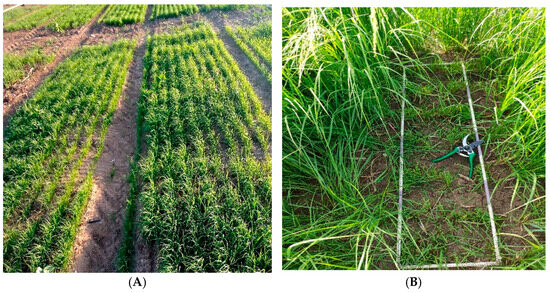
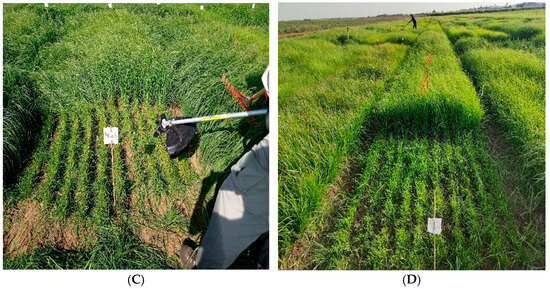
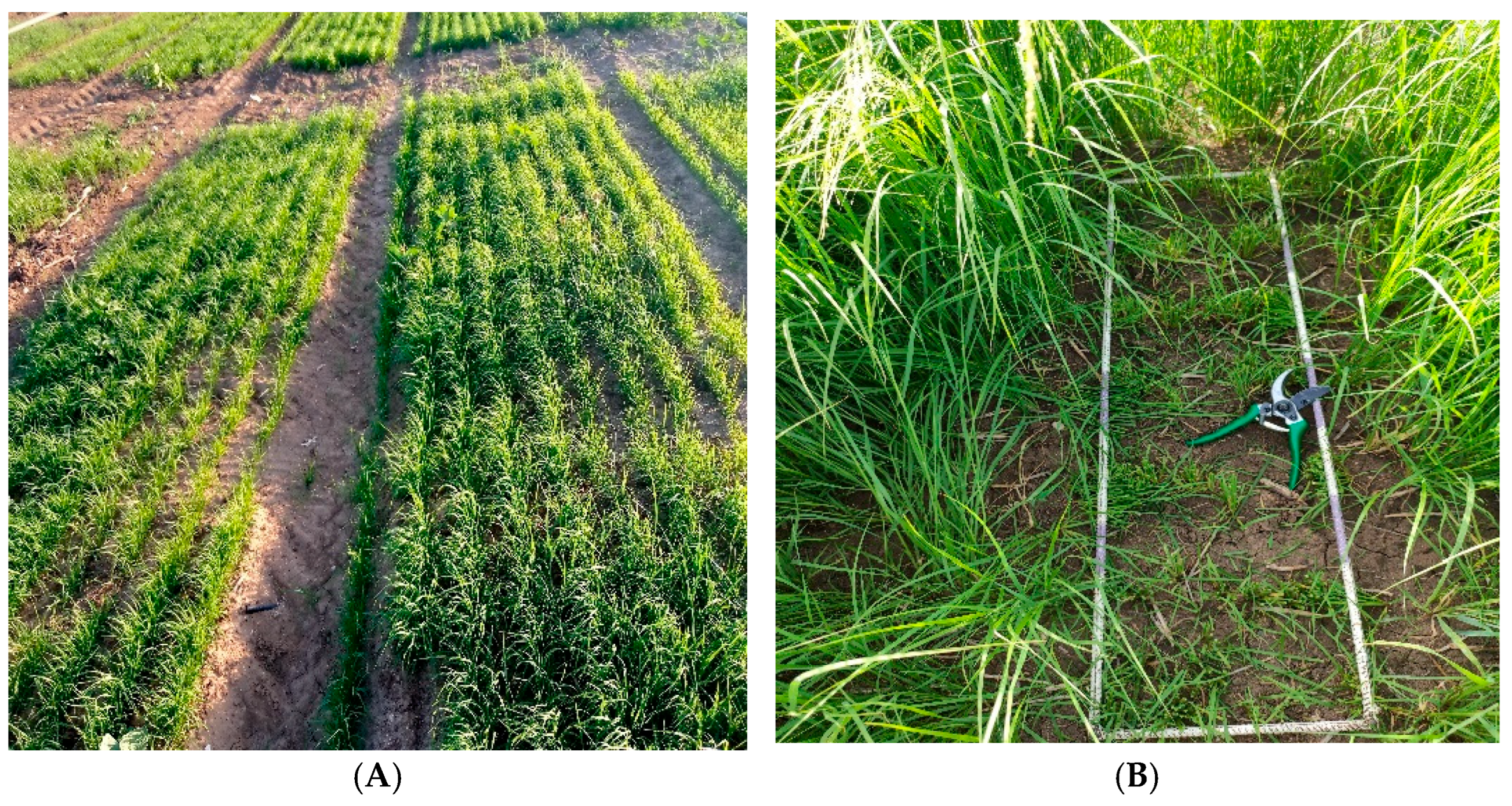
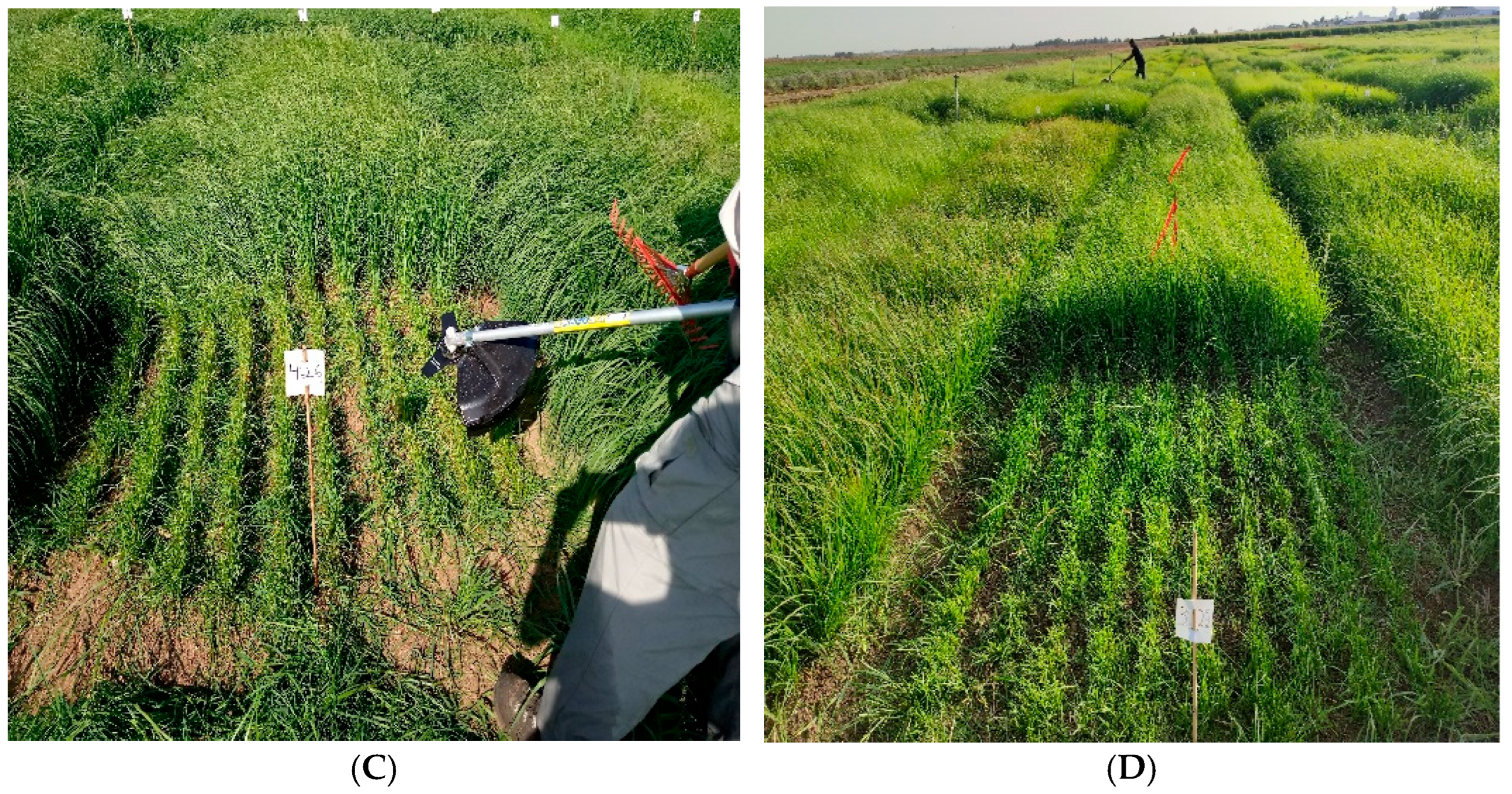
Each experiment consisted of twelve genotypes and six replicates in a randomized block design with split plots. Genotypes were randomized within each block, whereas different harvest timings were applied in subsections of each plot as specified hereafter. Each experimental plot was 10 m long and 1.6 m wide, subdivided into 3 sections (each 3.3 m by 1.6 m). Two harvest regimes were applied in different sections of each experimental plot: harvest at heading time and at grain development. It is worth mentioning that besides the two sections (1, for harvest at heading and 2, for harvest at the grain-filling stage), there was a third section designated for harvesting mature seeds for future experiments. All experimental plots were carefully inspected twice a week to assess their development and phenology. Heading was recorded when most plants in a certain experimental plot exhibited fully exposed panicles, and a genotype was considered at heading when at least 4 of the 6 replicates reached heading. Plant samples of each genotype were harvested at its heading day and once more during grain filling (determined chronologically at three weeks after heading). Specific sections (~2 × 1.6 m) within each experimental plot were allocated for each harvest regime. A 0.25 m2 sample was harvested from each plot at the designated time and section, after which the entire section of the plot was mowed using a handheld motor-driven mower (Hagarin Ltd., Yavne, Israel), and all biomass was removed, initiating a new growth cycle (Figure 1A–D). This methodology allowed sampling of each line at the required phenological stages with minimum interference to other lines. The harvested samples were oven-dried at 60 °C for 48 h to determine dry matter (DM) yield and subsequently used for quality assessment.
Figure 1.
Experimental methodology: (A) Establishment of the tef plots, (B) an area of 0.25 m2 harvested from the plot, (C) a pre-determined section of the plot mowed and biomass removed following the harvest of the 0.25 m2, (D) regrowth of the mowed plot; note the second section of the same plot designated to be harvested at grain filling.
The same twelve genotypes were examined in both years (Table 1), apart from RTC-266, which was replaced by RTC-55 due to seed deficiency. Genotypes were categorized based on their actual heading time into two phenological groups: an early group, heading at 46–51 and 48–52 days after sowing (DAS) in Revadim and Shiller, respectively, and a late group, heading at 57–70 and 55–59 DAS, respectively. Most genotypes exhibited a consistent earliness, except RTC-304, which fell into the early group in Revadim and the late group in Shiller. In Revadim, the early genotypes were harvested 3–4 times at heading and twice at grain filling, whereas the late ones were harvested 2–3 times at heading and 1–2 times at grain filling. In Shiller, both early and late genotypes were harvested 3 times at heading and once at grain filling.
Table 1.
Forage harvesting times of twelve tef genotypes differing in earliness under two harvest regimes (at heading and grain filling) in the field across two experimental seasons.
2.3. Forage Quality Assessment
All samples collected from the field were subjected to quality assessments. Dry biomass was first ground in a hammer mill with a 4 mm screen and further ground to a finer particle size in a knife mill (Thomas–Willey Laboratory Mill, model 4, Arthur H. Thomas Company, Philadelphia, PA, USA) to pass through a 2 mm screen. The samples were analyzed for CP using the Kjeldahl method (KjelMaster-K375, Buchi, Flawil, Switzerland) [30], as well as for neutral detergent fiber (NDF), acid detergent fiber (ADF), hemicellulose, cellulose, and lignin [31]. Using the same ground samples, three samples (biological replicates, n = 3) from each genotype and harvest regime from the 2021 experiment were subjected to in vitro dry matter digestibility (IVDMD) assays conducted according to the protocol of [32] and adapted to the DAISYII220 apparatus (ANKOM Technology Corp., Fairport, NY, USA). The IVDMD was completed in two phases: aerobic and anaerobic, with 48 h of incubation each. The IVDMD samples were dried and analyzed for NDF and used to calculate the in vitro neutral detergent fiber digestibility (IVNDFD). Rumen fluids were obtained from two ruminally fistulated wether Assaf sheep that were fed a standard ration containing 2.42 Mcal ME and 120 g of CP per kg on a DM basis. The ration contained 73% roughage feed of mainly wheat silage, clover hay, wheat hay, as well as concentrates, minerals, and vitamins to satisfy the maintenance requirements according to the recommendations [33]. In order to alleviate the effect of the sheep’s diet on digestibility, the rumen liquid from both sheep was pooled before running the in vitro assays. All procedures involving animal experiments were approved by the Institutional Animal Care and Use Committee (IACUC) of the Hebrew University of Jerusalem (Ethical Approval Number: AG-23-17436-3).
2.4. Data Processing and Statistical Analysis
Data were processed in Microsoft Excel (Microsoft Corporation, Redmond, WA, USA, 2018). To better represent genotype performance throughout the season, weighted averages of quality traits were calculated for each experimental plot as Qavg = (DM1 × Q1 + … DMn × Qn)/ΣDM1−n, where Qavg is the weighted average of trait Q; DM1 − DMn and Q1 − Qn are the DM and Q values for harvest 1 to n; and ΣDM1−n is the total DM yield harvested from that plot. Analysis of variance (ANOVA) was conducted using the JMP® version 17.0 Pro statistical package (SAS Institute, Cary, NC, USA). A two-way ANOVA model was employed to assess the effect of the harvesting regime across all genotypes on forage yield and quality. In addition, a nested two-way ANOVA was used to specifically assess the effects of earliness and genotypes (nested within earliness) on forage yield and quality of each harvest regime.
3. Results
3.1. The Effect of Harvest Regime on Yield and Quality of Tef Forage Across Two Years
For the Revadim experiment, the DM yield was significantly greater by over 400 g DM/m2 when the tef forage was harvested at the grain-filling stage than at the heading stage. However, the CP yield was 35 g CP/kg DM higher (CP yield = %CP × 10), and cell wall carbohydrates (NDF, ADF, hemicellulose, and cellulose) were ≈1–2% higher when the tef forage was harvested at heading compared to the grain-filling stage. Lignin was nearly ≈2% greater when the tef forage was harvested at the grain-filling stage than at the heading stage (Table 2).
Table 2.
Analysis of variance of the tef forage experiments showing the effect of genotype, harvest regime, and genotype X harvesting regime on total forage dry matter yield and averages of crude protein, NDF, ADF, hemicellulose, cellulose, and lignin contents on a dry matter basis.
For the Shiller experiment, the tef forage yield, hemicellulose and lignin did not differ between the two harvest regimes. Harvest at heading resulted in a 45 g CP/kg DM greater CP yield and ≈3.4% lower cell wall carbohydrates (NDF, ADF, and cellulose) than harvest at the grain-filling stage. It is worth noting that the CP content in Shiller was lower than in Revadim, though the effect of harvest regime was consistent. In Revadim, the cell wall carbohydrates were higher at the heading stage, whereas in Shiller, they were higher at the grain-filling stage (Table 2).
3.2. The Effects of Earliness and Genotypes on Yield and Quality of Tef Forage
3.2.1. Revadim Experiment (2020)
The forage DM yield harvested in the Revadim experiment at the heading stage ranged between 1500 and 1850 g DM/m2, with no significant differences between and within earliness groups. When harvested at the grain-filling stage, the yield was higher in the early- than the late-heading genotypes by over 500 g DM/m2. The tef forage yield at the grain-filling stage differed among the early-heading genotypes, ranging between 1874.3 and 2633.9 g DM/m2, whereas the late-heading genotypes also did not differ and ranged between 1415.9 and 1962.2 g DM/m2 (Table 3).
Table 3.
Analysis of variance for the effects of earliness and genotype (nested in earliness) on tef forage yield and quality [crude protein (CP), neutral detergent fiber (NDF), acid detergent fiber (ADF), hemicellulose, cellulose, and lignin contents] for Revadim, 2020.
The CP yield of tef forage when harvested at the heading stage differed between earliness groups, with nearly 18 g CP/kg DM higher at the early- than late-heading genotypes (151 vs. 133 g CP/kg DM). The CP yield also differed among the early-heading genotypes, ranging from 140 to 160 g CP/kg DM; the late-heading genotypes also differed, ranging between 121 and 144 g CP/kg DM. When harvested at the grain-filling stage, the CP did not differ between early- and late-heading genotypes; it ranged from 97.7 to 119 g CP/kg DM (Table 3).
Most cell wall carbohydrates (NDF, ADF, hemicellulose, and lignin) were usually lower in the early- than in late-heading genotypes, regardless of the harvest regime applied, as well as cellulose, which was higher in the early- than late-heading genotypes in both harvest regimes. ANOVA indicated significant effects of genotypes on all cell wall carbohydrates (NDF, ADF, cellulose, hemicellulose, and lignin) under both harvest regimes, with significant differences within earliness groups in most cases.
3.2.2. Shiller Experiment (2021)
In a repetition of the experiment at Shiller, when harvested at the heading stage, the yield did not differ between the early- and late-heading genotypes, similar to the Revadim experiment. The yield of the early-heading genotypes ranged between 1600 and 2000 g DM/m2, with no significant differences, whereas the late-heading genotypes ranged from 1500 to 2500 g DM/m2, with significant differences between genotypes. Tef forage harvested at the grain-filling stage showed a significantly higher yield in the late-heading than early-heading genotypes (1400 vs. 2400 g DM/m2 for early vs. late, respectively), an opposite trend to the Revadim experiment. Yields of the early-heading genotypes differed significantly, ranging between 900 and 2200 g DM/m2, whereas the late-heading genotypes did not differ in yield, which ranged between 2200 and 2800 g DM/m2 (Table 4).
Table 4.
Analysis of variance for the effects of earliness and genotype (nested in earliness) on tef forage yield and quality [crude protein (CP), neutral detergent fiber (NDF), acid detergent fiber (ADF), hemicellulose, cellulose, and lignin contents] for Shiller, 2021.
The CP content of tef forage under either harvest regime was not affected significantly by genotype or earliness. The CP content ranged from 115 to 130 g CP/kg DM when harvested at heading and 67.1 to 91.3 g CP/kg DM when harvested at the grain-filling stage (Table 4).
Three of the cell wall carbohydrates, NDF, ADF, and cellulose, were higher in the earl- than late-heading genotypes at the heading stage. Hemicellulose and lignin were not affected by earliness, and lignin remained constant with the harvest regime. The ANOVA of ADF, hemicellulose, and cellulose showed significant differences within late-maturing genotypes at the heading stage. The NDF differed within late-maturing genotypes at both heading and grain-filling stages (Table 4).
3.3. The Effect of Harvest Regimes and Earliness on Tef Forage In Vitro Digestibility
The IVDMD was greater by 22.2% when tef was harvested at the heading stage than the grain-filling stage (75.3 vs. 53.1%, respectively) (Table 5). A similar trend was noted for IVNDNFD, with 23.8% greater at the heading than grain-filling stage (70.7 vs. 46.9%, respectively).
Table 5.
Analysis of variance of the tef forage showing the effects of genotype, harvest regime, and genotype X harvesting regime on IVDMD and IVNDFD for Shiller.
The IVDMD of tef forage did not differ between early- and late-heading genotypes harvested at the heading stage, with an average of 75% (Table 6). However, when harvested at the grain-filling stage, the IVDMD of tef forage was higher in the late- than early-heading genotypes by 2% digestibility units (52 vs. 54%, respectively). A comparison between all genotypes at the heading and grain-filling stages showed significant differences at the grain-filling stage within the late-maturing genotypes. The IVDMD ranged from 72 to 79% at heading and 45–56% at the grain-filling stage. The IVNDFD showed a similar trend, with significant differences at the grain-filling stage within the late-maturing genotypes, with a comparison of all genotypes averaging 71%. At the grain-filling stage, the late-heading genotypes were 2% digestibility units more than the early-heading genotypes (46 vs. 48%, respectively). A comparison of the IVNDFDs of all genotypes showed differences only within the late-maturing genotypes at the heading stage, ranging from 66 to 75% at heading and 39–53% at the grain-filling stage.
Table 6.
Analysis of variance of the tef forage experiments showing the effects of earliness and genotype (nested in earliness) on the IVDMD and IVNDFD for Shiller.
4. Discussion
4.1. The Effects of Harvest Regime on Tef Forage Yield and Quality
The tef forage yield that was harvested in 2020 at the grain-filling stage was considerably higher relative to the yield harvested at the heading stage (Table 2). A similar trend, though small and not significant, was observed in the 2021 experiment (Table 2). Similar inconsistencies across years were reported by Ruggeri [34], which may arise from the variation between the different growing seasons (years). In addition to seasons, locations as well as harvesting frequency may also have caused the observed variations. The higher biomass yield when tef was harvested at the grain-filling stage than the heading stage is attributed to longer exposure of a fully developed crop canopy to solar radiation, maximizing photosynthesis and biomass productivity [35,36,37]. Whereas harvests at the heading stage may cause setbacks in growth and shorten the duration at which a fully developed canopy is exposed to sunlight.
All the quality variables have shown no more than a 4% difference between harvest regimes, indicating that tef is capable of maintaining high forage quality during the growing season. The CP (8–15%) and ADF (33–37%) contents were similar to other forage grasses, such as timothy grass (CP: 8–14% and ADF: 32–36%) [11] and previous tef studies (CP: 9–14% and ADF: 32–38%), as reported by Miller [11]. However, our NDF results were greater than 70%, whereas lower values (62–67%) were reported by Ruggeri [34] and other values (53–65%) for timothy grass and tef, respectively [11]. This variation in NDF results could be attributed to differences in the environmental conditions, crop management, and tef varieties.
Crude protein is one of the most expensive ingredients in rations [38,39,40]; hence, high CP in forage is most desirable. Our CP values were similar to a recent study by Ruggeri [34] that reported a CP content ranging from 14 to 16% depending on the harvesting time. A comparison between tef and other common forages, such as corn, wheat, and sorghum [41], showed that tef had higher CP (maximum 12% for common forages vs. up to 15% for tef, depending on the stage of harvest).
A higher CP content, when tef is harvested at the heading stage, can support the nutritional requirements of ruminants better than other existing forage grass species, which often require supplementation due to their relatively low CP content. Hence, tef could be a more efficient feed, as expenditure on protein supplementation may be reduced. The CP of tef reduced with an increase in maturity, similar to recent findings in four teff cultivars, Tiffany, Moxie, Corvallis, and Dessie [42]. It is worth noting that, similar to other pasture forages such as giant king grass, napier grass, alfalfa, and Desmanthus spp., the CP content in tef decreased with an increase in maturity (from harvest at heading to the grain-filling stage) [43,44,45,46]. This decrease in CP content could be attributed to the decrease in nitrogen concentration in the plant as the forage matures [43]. While the CP decreased with maturity, the biomass increased with maturity. This calls for harvesting the forage at the correct stage depending on the objectives for growing the crop. If one needs more CP, tef would be harvested at the heading stage with a fair amount of biomass. If one needs more biomass, it would then be better to harvest tef at the grain-filling stage, though with a slightly reduced CP content. This would ultimately permit weighing in on the opportunity costs.
Lignin content is a major limitation in forage digestibility [47,48,49]. Tef lignin content was threefold smaller (4%), with no or minor differences between harvest regimes, relative to the main forages, such as corn (12%) [50,51,52] and wheat (11%) [53,54], both showing higher values in the milk-to-dough stage. The lower lignin content would imply more digestibility of tef forage, desirable in the rations, as found in our previous study [27]. This consistently low lignin content from heading to grain filling in tef forage would imply that it can easily be used to complement or even replace some of the existing forages in the ration without drastically hampering the quality. However, this would require a cost–benefit analysis of replacing other forages in the diets. During a ~4-month season across the two years of this study, tef was harvested between two and four times at the heading stage or up to twice at the grain-filling stage, thus confirming its potential as a multi-harvest summer crop. Hence, our results concur with the most recent findings [34], as well as earlier findings [11,12,13,21]. Tef, being a multi-harvest crop with a short growing season, would imply savings (e.g., irrigation) associated with the existing summer forage crops, such as corn, that grow for a longer period and are harvested once during the growing season [55]. However, this would call for a thorough cost–benefit analysis of growing tef vs. corn, the most common forage crop in Israel.
In Revadim (Table 3), the early-heading genotypes accumulated more biomass when harvested at the grain-filling stage, and yet the CP yield was greater at the heading stage. The fast accumulation of biomass could be attributed to the general phenomenon that early-heading genotypes grow fast and utilize resources more efficiently relative to late-heading genotypes, as reported for different maturity groups of mungbeans [56]. This growth is supported by different components, mainly proteins [57,58], which was reflected as high CP content when tef was harvested at the heading stage.
The higher cell wall carbohydrates in the late genotypes, NDF at the grain-filling stage, and ADF and cellulose at both the heading and grain-filling stages, are due to the fact that the cell wall carbohydrates accumulate over time and increase with maturity in grasses and legumes, as reported by Buxton and Russell [47]. Similar results were also reported for giant king grass [43] and corn [59]. Harvesting early genotypes after a shorter time period rather than late-heading genotypes would be the most probable cause of lower cell wall carbohydrates in the early- rather than late-heading genotypes. This could be attributed to the general phenomenon that late-heading genotypes tend to partition more energy towards vegetative growth, yielding more biomass, whereas early-heading genotypes partition more energy towards grain yield, often to escape harsh environmental conditions such as drought [60].
For the repeat experiment in Shiller (Table 4), the more biomass seen in late-heading genotypes when harvested at the grain-filling stage could be a result of longer exposure to solar radiation, leading to the assimilation of more carbon [35,36,37]. However, it was noted that during this repeat experiment, early-heading genotypes had more cell wall carbohydrate contents (NDF, ADF, and cellulose) at the heading stage. This phenomenon could be a result of rapid plant growth and escape from harsh growing conditions, as reported by Lamalakshmi [60]. Differences in cell wall carbohydrates between the two years can be attributed to differences in growth environments, with the 2020 climatic conditions (slightly lower max. temperatures, clay soil, and irrigation with nutrient-rich wastewater) favoring the slow and greater accumulation of cell wall carbohydrates over time in late-heading genotypes, a phenomenon similar to that in maize by Morrison [61]. In contrast, the 2021 climate (slightly elevated max. temperatures) likely stimulated early-heading genotypes to grow rapidly and escape the harsh climate, leading to the synthesis of cell wall carbohydrates to support rapidly growing tef plants, as reported by Hamann, Le Gall, and Liepman [62,63,64].
4.2. The Effects of Earliness and Genotype on Tef Forage IVDMD and IVNDNFD
On a very positive note, here, we reported a higher IVDMD (75.4%) (Table 5) than those reported in previous studies in tef (54%), as reported by Twidwell [14]. The difference between our findings and the earlier findings of Twidwell [14] could be attributed to the environment, and more specifically, to the genotype, which is incredibly diverse, as reported by Ketema and Chanyalew [7,65]. Our in vitro digestibility results were also higher than those reported in other common forages, such as German millet, Siberian millet, and Sudangrass harvested at a similar phenological stage [14], as well as grass pasture and grass hay [66], and cereal grain hays, grass and legume forages [67,68].
In vitro digestibility of tef decreased with maturity, consistent with findings in teff hay by Boe and Staniar [13,21], and in common forages reported by Bruinenberg, Wilman, and Oba [69,70,71]. However, the observed increase in NDF, ADF, cellulose, and lignin, typically linked to reduced digestibility with plant maturity [72,73,74], could not explain our current findings due to the lignin content barely increasing as maturity increased, similar to earlier findings by Staniar [21], and only small changes in NDF, ADF, and cellulose (max. 3%).
The lignin content we found was also lower than that reported in common pastures such as Variegated brome, intermediate wheat grass, and Orchardgrass, as reported by Gürsoy [75], as well as wheat [76,77,78] and alfalfa [79].
However, the most plausible reason for the decrease in digestibility with maturity could be the fact that in tef, lignin can be deposited as early as six weeks of maturity and there are more cross-linkages in mature tissues, as reported by Diehn [80]. Additionally, the presence of seeds that are not easily digested could be overcome by threshing the tef forage when harvested at the grain-filling stage, which might separate the seeds, which would then be crushed or ground to increase surface area for microbial activity.
The late genotypes in our study, which had more in vitro digestibility than the early-heading genotypes, could be attributed to slightly lower cell wall carbohydrates in the late- rather than early-heading stage, as demonstrated in [75], where an increase in cell wall carbohydrates, such as NDF, ADF, and lignin, decreases digestibility.
4.3. Limitations of the Study
One of the limitations of this study was seed deficiency; for instance, genotype RTC-266 in the first year of the study was replaced with RTC-55 in the second year of the study to maintain the twelve study genotypes. The other challenge was a slight difference in the growing seasons, location, and differences in the frequencies of harvest cycles within harvest regimes beyond our control; hence, the genotypes were categorized as early when they fully bloomed 48–52 days after sowing, whereas in the second year of the study, the genotypes were categorized as early 55–59 days after sowing.
5. Conclusions
A subset of 12 out of 300 tef genotypes was selected for the current study based on preliminary observations. This study aimed to identify favorable phenology (earliness) and not specific, outstanding genotypes. Nevertheless, two best-performing genotypes, RTC-290b and RTC-58, which exhibited the highest yield and CP content during the two experimental seasons, were identified among the limited set of tested genotypes. Tef is indeed a multi-harvest summer crop under Mediterranean conditions. To maximize crude protein, IVDMD and IVNDFD, tef requires harvesting at the heading stage, and to maximize tef forage yield, it requires harvesting at the grain-filling stage under Mediterranean conditions. Though somewhat inconsistent, early- and late-heading tef genotypes did not differ in quality and maintained fairly high-quality (cell wall carbohydrates) and low lignin content relative to existing forages, making it a desirable livestock forage. Hence, tef can be used as an alternative or complement to the existing forages for Israeli dairy cows during summer. However, this may require a cost–benefit analysis relative to the existing forages.
Author Contributions
Conceptualization, P.W., S.J.M., Y.S., and S.B.-Z.; methodology, P.W., C.S., S.B.-Z., Y.S., and S.J.M.; software, P.W.; validation, Y.S. and S.J.M.; formal analysis, P.W. and C.S.; investigation, P.W.; resources, Y.S. and S.J.M.; data curation, P.W.; writing—original draft preparation, P.W.; writing—review and editing, Y.S. and S.J.M.; visualization, Y.S. and S.J.M.; supervision, Y.S. and S.J.M.; project administration, Y.S. and S.J.M.; funding acquisition, Y.S. and S.J.M. All authors have read and agreed to the published version of the manuscript.
Funding
This research was funded by the Chief Scientist of the Ministry of Agriculture, grant number 12-01-0032, and the Israeli Dairy Board, grant number 820-0328-17.
Institutional Review Board Statement
All procedures involving animal experiments were approved by the Institutional Animal Care and Use Committee (IACUC) of the Hebrew University of Jerusalem (Ethical Approval Number: AG-23-17436-3).
Data Availability Statement
The raw data supporting the conclusions of this article will be made available by the authors.
Acknowledgments
The authors thank the Chief Scientist of the Ministry of Agriculture and the Israeli Dairy Board for partially funding this research. We gratefully acknowledge the Robert H. Smith Foundation for doctoral fellowships awarded to Philip Wagali and Shiran Ben-Zeev. We thank the Kibbutz Revadim and Kvutzat Shiller farms for providing the platform for the field experiments. Yehoshua Saranga is the incumbent of the Haim Gvati Chair in Agriculture.
Conflicts of Interest
The authors declare that the research was conducted in the absence of any commercial or financial relationships that could be construed as a potential conflict of interest.
Abbreviations
The following abbreviations are used in this manuscript:
| ADF | Acid Detergent Fiber |
| BFC | Butter Fat Content |
| CP | Crude Protein |
| DAH | Days After Harvest |
| DAS | Days After Sowing |
| DM | Dry Matter |
| IACUC | Institutional Animal Care and Use Committee |
| IVDMD | In Vitro Dry Matter Digestibility |
| IVNDFD | In Vitro Neutral Detergent Fiber Digestibility |
| NDF | Neutral Detergent Fiber |
| TDP | Tef Diversity Panel |
References
- D’Andrea, A.C. T’ef (Eragrostis tef) in Ancient Agricultural Systems of Highland Ethiopia. Econ. Bot. 2008, 62, 547–566. [Google Scholar] [CrossRef] [Scilit]
- Cochrane, L.; Bekele, Y.W. Average Crop Yield (2001–2017) in Ethiopia: Trends at National, Regional and Zonal Levels. Data Brief 2018, 16, 1025–1033. [Google Scholar] [CrossRef] [Scilit] [PubMed]
- Ketema, S. Tef, Eragrostis tef (Zucc.) Trotter. In Promoting the Conservation and Use of Underutilized and Neglected Crops, 12th ed.; Joachim, H., Jan, E., Karl, H., Eds.; IPGRI: Rome, Italy, 1997. [Google Scholar]
- Ben-Zeev, S.; Bimro, J.; Barak, V.; Saranga, Y. Phenotypic Diversity and Heritability in Eragrostis tef under Irrigated Mediterranean Conditions. Isr. J. Plant Sci. 2018, 65, 222–231. [Google Scholar] [CrossRef] [Scilit]
- Araya, A.; Keesstra, S.D.; Stroosnijder, L. A New Agro-Climatic Classification for Crop Suitability Zoning in Northern Semi-Arid Ethiopia. Agric. For. Meteorol. 2010, 150, 1057–1064. [Google Scholar] [CrossRef] [Scilit]
- Gelaw, A.M.; Qureshi, A.S. Tef (Eragrostis tef): A Superfood Grain from Ethiopia with Great Potential as an Alternative Crop for Marginal Environments. In Emerging Research in Alternative Crops; Springer International Publishing: Cham, Switzerland, 2020; pp. 265–278. [Google Scholar]
- Ketema, S. Tef (Eragrostis tef): Breeding, Genetic Resources, Agronomy, Utilization and Role in Ethiopian Agriculture; Seyfu, K., Ed.; Institute of Agricultural Research: Addis Ababa, Ethiopia, 1993. [Google Scholar]
- Miller, D. Teff Grass: Crop Overview and Forage Production Guide, 2nd ed.; Miller, D., Ed.; Cal/West Seed Company: Woodland, CA, USA, 2010. [Google Scholar]
- Van Delden, S.H.; Vos, J.; Stomph, T.-J.; Brouwer, G.; Struik, P.C. Photoperiodism in Eragrostis tef: Analysis of Ontogeny and Morphology in Response to Photoperiod. Eur. J. Agron. 2012, 37, 105–114. [Google Scholar] [CrossRef] [Scilit]
- Stallknecht, G.F.; Gilbertson, K.M.; Eckhoff, J.L. Teff: Food Crop for Humans and Animals. In New Crops; Jamick, J., Simon, J.E., Eds.; Wiley: New York, NY, USA, 1993; pp. 231–234. [Google Scholar]
- Miller, D. Teff as an Alternative Summer Forage. In Proceedings of the 2008 California Alfalfa & Forage Symposium and Western Seed Conference; UC Cooperative Extension Plant Sciences Department, University of California: Davis, CA, USA; San Diego, CA, USA, 2008; pp. 1–5. [Google Scholar]
- Davison, J.; Mike, L.; Earl, C. The Potential for Teff as an Alternative Forage Crop for Irrigated Regions. In Proceedings of the 2011 41st Western Alfalfa & Forage Conference; UC Cooperative Extension, Plant Sciences Department, University of California: Davis, CA, USA; Las Vegas, NV, USA, 2011; p. 86. [Google Scholar]
- Boe, A.; Sommerfeldt, J.; Wynia, R.; Thiex, N. A Preliminary Evaluation of the Forage Potential of Teff. Proc. S. Dak. Acad. Sci. 1986, 65, 75–82. [Google Scholar]
- Twidwell, E.K.; Boe, A.; Casper, D.P. Teff: A New Annual Forage Grass for South Dakota? 2002. Available online: https://openprairie.sdstate.edu/extension_extra/278 (accessed on 12 December 2024).
- Morris, E.J. The Cell Walls of Eragrostis tef: Variations in Chemical Composition and Digestibility. J. Agric. Sci. 1980, 95, 305–311. [Google Scholar] [CrossRef] [Scilit]
- Mengesha, M.H. Chemical Composition of Teff (Eragrostis tef) Compared with That of Wheat, Barley and Grain Sorghum. Econ. Bot. 1966, 20, 268–273. [Google Scholar] [CrossRef] [Scilit]
- Barretto, R.; Buenavista, R.M.; Rivera, J.L.; Wang, S.; Prasad, P.V.V.; Siliveru, K. Teff (Eragrostis tef) Processing, Utilization and Future Opportunities: A Review. Int. J. Food Sci. Technol. 2021, 56, 3125–3137. [Google Scholar] [CrossRef] [Scilit]
- Kakabouki, I.; Tzanidaki, A.; Folina, A.; Roussis, I.; Tsiplakou, E.; Papastylianou, P.; Kanatas, P.; Bilalis, D.J. Teff (Eragrostis tef (Zucc.) Trotter) Fodder Yield and Quality as Affected by Cutting Frequency. Agron. Res. 2020, 18, 422–431. [Google Scholar] [CrossRef] [Scilit]
- Ben-Zeev, S.; Kerzner, S.; Rabinovitz, O.; Saranga, Y. Optimizing Sowing Depth of Tef for Irrigated Mediterranean Conditions: From Laboratory to Field Studies. Agronomy 2020, 10, 1983. [Google Scholar] [CrossRef] [Scilit]
- Uyanik, S.E.; Carpici, E.B. Effects of Different Sowing Times and Harvesting Stages on Dry Matter Yield, Quality, and Mineral Content of Teff (Eragrostis teff [Zucc.] Trotter). Agronomy 2025, 15, 457. [Google Scholar] [CrossRef] [Scilit]
- Staniar, W.B.; Bussard, J.R.; Repard, N.M.; Hall, M.H.; Burk, A.O. Voluntary Intake and Digestibility of Teff Hay Fed to Horses1. J. Anim. Sci. 2010, 88, 3296–3303. [Google Scholar] [CrossRef] [Scilit] [PubMed]
- Geren, H.; Ozdogan, T.; Simic, A.; Dzeletovic, Z.S. Effect of Different Sowing Dates on the Grain Yield and Some Yield Characteristics of Teff [Eragrostis teff (Zucc.) Trotter]. Turk. J. Field Crop. 2020, 25, 107–113. [Google Scholar] [CrossRef] [Scilit]
- Kebede, W.; Gebremeskel, K.; Fikre, T.; Ashe, G.; Tadesse, M.; Fentahun, A.; Ramirez-Gonzales, L.; Meseret, A.; Assefa, K.; Chanyalew, S.; et al. Tef. In Millets: Crops for Climate Resilience and for Food and Nutritional Security; Springer Nature: Singapore, 2025; pp. 271–302. [Google Scholar]
- Thapa, B.; Walker, D.H.; Sinclair, F.L. Indigenous Knowledge of the Feeding Value of Tree Fodder. Anim. Feed Sci. Technol. 1997, 68, 37–54. [Google Scholar] [CrossRef] [Scilit]
- Abdisa, T. Study on the Prevalence of Bovine Frothy Bloat in and Around Kebele Lencha, Tokke Kutaye District, Oromia Region. Approaches Poult. Dairy Vet. Sci. 2018, 2, 1–10. [Google Scholar] [CrossRef] [Scilit]
- Wagali, P.; Sabastian, C.; Saranga, Y.; Ben-Zeev, S.; Mabjeesh, S.J. The Effects of Irrigation, Genotype and Additives on Tef Silage Making. Animals 2023, 13, 470. [Google Scholar] [CrossRef] [Scilit] [PubMed]
- Wagali, P.; Ngomuo, G.; Kilama, J.; Sabastian, C.; Ben-Zeev, S.; Ben-Meir, Y.A.; Argov-Argaman, N.; Saranga, Y.; Mabjeesh, S.J. The Effect of Teff (Eragrostis tef) Hay Inclusion on Feed Intake, Digestibility, and Milk Production in Dairy Cows. Front. Anim. Sci. 2023, 4, 1260787. [Google Scholar] [CrossRef] [Scilit]
- Alemu, M.D.; Ben-Zeev, S.; Hellwig, T.; Barak, V.; Shoshani, G.; Chen, A.; Razzon, S.; Herrmann, I.; Vorobyova, A.; Hübner, S.; et al. Genomic Dissection of Productivity, Lodging, and Morpho-physiological Traits in Eragrostis tef under Contrasting Water Availabilities. Plants People Planet 2025, 7, 734–752. [Google Scholar] [CrossRef] [Scilit]
- Ben-Zeev, S.; Rabinovitz, O.; Orlov-Levin, V.; Chen, A.; Graff, N.; Goldwasser, Y.; Saranga, Y. Less Is More: Lower Sowing Rate of Irrigated Tef (Eragrostis tef) Alters Plant Morphology and Reduces Lodging. Agronomy 2020, 10, 570. [Google Scholar] [CrossRef] [Scilit]
- Kenneth, H. (Ed.) Official Methods of Analysis of the Association of Official Analytical Chemists, 15th ed.; AOAC (Association of Official Analytical Chemists, Inc.): Arlington, VA, USA, 1990; Volume 1. [Google Scholar]
- Van Soest, P.J.; Robertson, J.B.; Lewis, B.A. Methods for Dietary Fiber, Neutral Detergent Fiber, and Nonstarch Polysaccharides in Relation to Animal Nutrition. J. Dairy Sci. 1991, 74, 3583–3597. [Google Scholar] [CrossRef] [Scilit] [PubMed]
- Tilley, J.M.A.; Terry, R.A. A Two-Stage Technique for the In Vitro Digestion of Forage Crops. Grass Forage Sci. 1963, 18, 104–111. [Google Scholar] [CrossRef] [Scilit]
- NRC. Nutrient Requirements of Small Ruminants: Sheep, Goats, Cervids, and New World Camelids, 8th ed.; National Academies Press: Washington, DC, USA, 2007. [Google Scholar]
- Ruggeri, R.; Rossini, F.; Ronchi, B.; Primi, R.; Stamigna, C.; Danieli, P.P. Potential of Teff as Alternative Crop for Mediterranean Farming Systems: Effect of Genotype and Mowing Time on Forage Yield and Quality. J. Agric. Food Res. 2024, 17, 101257. [Google Scholar] [CrossRef] [Scilit]
- Banerjee, A.; Roychoudhury, A. Photosynthesis, Productivity and Environmental Stress; Ahmad, P., Abass Ahanger, M., Nasser Alyemeni, M., Alam, P., Eds.; Wiley: Hoboken, NJ, USA, 2019. [Google Scholar]
- Midmore, D.J.; Cartwright, P.M.; Fischer, R.A. Wheat in Tropical Environments. II. Crop Growth and Grain Yield. Field Crop. Res. 1984, 8, 207–227. [Google Scholar] [CrossRef] [Scilit]
- Wimalasekera, R. Effect of Light Intensity on Photosynthesis. In Photosynthesis, Productivity and Environmental Stress; Wiley: Hoboken, NJ, USA, 2019; pp. 65–73. [Google Scholar]
- Tozer, P.R.; Bargo, F.; Muller, L.D. Economic Analyses of Feeding Systems Combining Pasture and Total Mixed Ration. J. Dairy Sci. 2003, 86, 808–818. [Google Scholar] [CrossRef] [Scilit] [PubMed]
- Soriano, F.D.; Polan, C.E.; Miller, C.N. Supplementing Pasture to Lactating Holsteins Fed a Total Mixed Ration Diet. J. Dairy Sci. 2001, 84, 2460–2468. [Google Scholar] [CrossRef] [Scilit] [PubMed]
- Spain, J.; Bennett, M.; Williams, D.; Osburn, D. Give to AgEcon Search Plans, Uses and Economics by Herd Size. Missouri. 1993. Available online: http://ageconsearch.umn.edu (accessed on 12 December 2024).
- Wilkins, R.J. Forages and Their Role in Animal Systems. In Forage Evaluation in Ruminant Nutrition; Givens, D.I., Owen, E., Axford, R.F.E., Omed, H.M., Eds.; CABI Publishing: Wallingford, UK, 2000; pp. 1–14. [Google Scholar]
- Saylor, B.A.; Min, D.; Bradford, B.J. Effects of Cultivar and Harvest Days after Planting on Dry Matter Yield and Nutritive Value of Teff. J. Anim. Sci. Technol. 2021, 63, 510–519. [Google Scholar] [CrossRef] [Scilit] [PubMed]
- Geren, H.; Kavut, Y.; Unlu, H. Effect of Different Cutting Intervals on the Forage Yield and Some Silage Quality Characteristics of Giant King Grass (Pennisetum hybridum) Under Mediterranean Climatic Conditions. Turk. J. Field Crop. 2020, 25, 1–8. [Google Scholar] [CrossRef] [Scilit]
- Mwangi, F.W.; Charmley, E.; Adegboye, O.A.; Gardiner, C.P.; Malau-Aduli, B.S.; Kinobe, R.T.; Malau-Aduli, A.E.O. Chemical Composition and In Situ Degradability of Desmanthus Spp. Forage Harvested at Different Maturity Stages. Fermentation 2022, 8, 377. [Google Scholar] [CrossRef] [Scilit]
- Sheaffer, C.C.; Cash, D.; Ehlke, N.J.; Henning, J.C.; Jewett, J.G.; Johnson, K.D.; Peterson, M.A.; Smith, M.; Hansen, J.L.; Viands, D.R. Entry × Environment Interactions for Alfalfa Forage Quality. Agron. J. 1998, 90, 774–780. [Google Scholar] [CrossRef] [Scilit]
- Tessema, Z.K.; Mihret, J.; Solomon, M. Effect of Defoliation Frequency and Cutting Height on Growth, Dry-matter Yield and Nutritive Value of Napier Grass (Pennisetum Purpureum (L.) Schumach). Grass Forage Sci. 2010, 65, 421–430. [Google Scholar] [CrossRef] [Scilit]
- Buxton, D.R.; Russell, J.R. Lignin Constituents and Cell-Wall Digestibility of Grass and Legume Stems. Crop Sci. 1988, 28, 553–558. [Google Scholar] [CrossRef] [Scilit]
- Moore, K.J.; Jung, H.-J.G. Lignin and Fiber Digestion. J. Range Manag. 2001, 54, 420. [Google Scholar] [CrossRef] [Scilit]
- Smith, L.W.; Goering, H.K.; Gordon, C.H. Relationships of Forage Compositions with Rates of Cell Wall Digestion and Indigestibility of Cell Walls. J. Dairy Sci. 1972, 55, 1140–1147. [Google Scholar] [CrossRef] [Scilit]
- García-Chávez, I.; Meraz-Romero, E.; Castelán-Ortega, O.; Zaragoza-Esparza, J.; Osorio-Avalos, J.; Robles-Jiménez, L.E.; González-Ronquillo, M. Corn Silage, a Systematic Review of the Quality and Yield in Different Regions around the World. Cienc. Y Tecnol. Agropecu. 2022, 23, 2547. [Google Scholar] [CrossRef] [Scilit]
- Khanal, A.; Manandhar, A.; Shah, A. Physicochemical and Structural Characteristics of Corn Stover and Cobs After Physiological Maturity. Bioenergy Res. 2019, 12, 536–545. [Google Scholar] [CrossRef] [Scilit]
- Pordesimo, L.O.; Hames, B.R.; Sokhansanj, S.; Edens, W.C. Variation in Corn Stover Composition and Energy Content with Crop Maturity. Biomass Bioenergy 2005, 28, 366–374. [Google Scholar] [CrossRef] [Scilit]
- Wallsten, J.; Hatfield, R. Cell Wall Chemical Characteristics of Whole-Crop Cereal Silages Harvested at Three Maturity Stages. J. Sci. Food Agric. 2016, 96, 3604–3612. [Google Scholar] [CrossRef] [Scilit] [PubMed]
- Stone, J.E.; Blundell, M.J.; Tanner, K.G. The Formation of Lignin in Wheat Plants. Can. J. Chem. 1951, 29, 734–745. [Google Scholar] [CrossRef] [Scilit]
- Allen, M.S.; Coors, J.G.; Roth, G.W. Silage Science and Technology; Buxton, D.R., Muck, R.E., Harrison, J.H., Eds.; Agronomy Monographs; American Society of Agronomy, Crop Science Society of America, Soil Science Society of America: Madison, WI, USA, 2003. [Google Scholar]
- Singh, V.; Bell, M. Genotypic Variability in Architectural Development of Mungbean (Vigna radiata L.) Root Systems and Physiological Relationships with Shoot Growth Dynamics. Front. Plant Sci. 2021, 12, 725915. [Google Scholar] [CrossRef] [Scilit] [PubMed]
- Day, P.R. The Biology of Plant Proteins. Crit. Rev. Food Sci. Nutr. 1996, 36, 39–47. [Google Scholar] [CrossRef] [Scilit] [PubMed]
- Rasheed, F.; Markgren, J.; Hedenqvist, M.; Johansson, E. Modeling to Understand Plant Protein Structure-Function Relationships—Implications for Seed Storage Proteins. Molecules 2020, 25, 873. [Google Scholar] [CrossRef] [Scilit] [PubMed]
- Xu, S.; Harrison, J.H.; Kezar, W.; Entrikin, N.; Loney, K.A.; Riley, R.E.; Bush, L.J.; Guthrie, L.D.; Hunt, C. Evaluation of Yield, Quality, and Plant Composition of Early-Maturing Corn Hybrids Harvested at Three Stages of Maturity. Prof. Anim. Sci. 1995, 11, 157–165. [Google Scholar] [CrossRef] [Scilit]
- Lamalakshmi Devi, E.; Kumar, S.; Basanta Singh, T.; Sharma, S.K.; Beemrote, A.; Devi, C.P.; Chongtham, S.K.; Singh, C.H.; Yumlembam, R.A.; Haribhushan, A.; et al. Adaptation Strategies and Defence Mechanisms of Plants During Environmental Stress. In Medicinal Plants and Environmental Challenges; Springer International Publishing: Cham, Switzerland, 2017; pp. 359–413. [Google Scholar]
- Morrison, T.A.; Jung, H.G.; Buxton, D.R.; Hatfield, R.D. Cell-Wall Composition of Maize Internodes of Varying Maturity. Crop Sci. 1998, 38, 455–460. [Google Scholar] [CrossRef] [Scilit]
- Hamann, T. Plant Cell Wall Integrity Maintenance as an Essential Component of Biotic Stress Response Mechanisms. Front. Plant Sci. 2012, 3, 77. [Google Scholar] [CrossRef] [Scilit] [PubMed]
- Le Gall, H.; Philippe, F.; Domon, J.-M.; Gillet, F.; Pelloux, J.; Rayon, C. Cell Wall Metabolism in Response to Abiotic Stress. Plants 2015, 4, 112–166. [Google Scholar] [CrossRef] [Scilit] [PubMed]
- Liepman, A.H.; Wightman, R.; Geshi, N.; Turner, S.R.; Scheller, H.V. Arabidopsis—A Powerful Model System for Plant Cell Wall Research. Plant J. 2010, 61, 1107–1121. [Google Scholar] [CrossRef] [Scilit] [PubMed]
- Chanyalew, S.; Ferede, S.; Damte, T.; Fikre, T.; Genet, Y.; Kebede, W.; Tolossa, K.; Tadele, Z.; Assefa, K. Significance and Prospects of an Orphan Crop Tef. Planta 2019, 250, 753–767. [Google Scholar] [CrossRef] [Scilit] [PubMed]
- Holden, L.A. Comparison of Methods of In Vitro Dry Matter Digestibility for Ten Feeds. J. Dairy Sci. 1999, 82, 1791–1794. [Google Scholar] [CrossRef] [Scilit] [PubMed]
- Hansen, T.L.; Lawrence, L.M. Composition Factors Predicting Forage Digestibility by Horses. J. Equine Vet. Sci. 2017, 58, 97–102. [Google Scholar] [CrossRef] [Scilit]
- Mahmoud, E.M.A.; Abbas, S.M.; Cieslak, A.; Szumacher-Strabel, M. Evaluation of Chemical Composition and In Vitro Dry and Organic Matters Digestibility of Some Forage Plant Species Derived from Egyptian Rangelands. Artic. J. Anim. Plant Sci. 2017, 27, 1573–1581. [Google Scholar]
- Bruinenberg, M.H.; Valk, H.; Korevaar, H.; Struik, P.C. Factors Affecting Digestibility of Temperate Forages from Seminatural Grasslands: A Review. Grass Forage Sci. 2002, 57, 292–301. [Google Scholar] [CrossRef] [Scilit]
- Oba, M.; Allen, M.S. Evaluation of the Importance of the Digestibility of Neutral Detergent Fiber from Forage: Effects on Dry Matter Intake and Milk Yield of Dairy Cows. J. Dairy Sci. 1999, 82, 589–596. [Google Scholar] [CrossRef] [Scilit] [PubMed]
- Wilman, D.; Rezvani Moghaddam, P. In Vitro Digestibility and Neutral Detergent Fibre and Lignin Contents of Plant Parts of Nine Forage Species. J. Agric. Sci. 1998, 131, 51–58. [Google Scholar] [CrossRef] [Scilit]
- Cherney, D.J.R.; Mertens, D.R.; Moore, J.E. Intake and Digestibility by Wethers as Influenced by Forage Morphology at Three Levels of Forage Offering1,2. J. Anim. Sci. 1990, 68, 4387–4399. [Google Scholar] [CrossRef] [Scilit] [PubMed]
- Foguekem, D.; Tchamba, M.N.; Gonwouo, L.N.; Ngassam, P.; Loomis, M. Nutritional Status of Forage Plants and Their Use by Elephant in Waza National Park, Cameroon. Sci. Res. Essays 2011, 6, 3577–3583. [Google Scholar] [CrossRef] [Scilit]
- He, Y.; Mouthier, T.M.; Kabel, M.A.; Dijkstra, J.; Hendriks, W.H.; Struik, P.C.; Cone, J.W. Lignin Composition Is More Important than Content for Maize Stem Cell Wall Degradation. J. Sci. Food Agric. 2018, 98, 384–390. [Google Scholar] [CrossRef] [Scilit] [PubMed]
- Gürsoy, E.; Kaya, A.; Gül, M. Determining the Nutrient Content, Energy, and in Vitro True Digestibility of Some Grass Forage Plants. Emir. J. Food Agric. 2021, 33, 417–422. [Google Scholar] [CrossRef] [Scilit]
- Filya, I. Nutritive Value of Whole Crop Wheat Silage Harvested at Three Stages of Maturity. Anim. Feed Sci. Technol. 2003, 103, 85–95. [Google Scholar] [CrossRef] [Scilit]
- Lang, X.; Yang, M.; Saleem, A.M.; Zhao, X.; Xu, H.; Li, Y.; Xu, R.; Cao, J.; Xu, C.; Cui, Y.; et al. Nutritional Value, Fermentation Characteristics and In Vitro Degradability of Whole Wheat Hay Harvested at Three Stages of Maturity. Animals 2022, 12, 1466. [Google Scholar] [CrossRef] [Scilit] [PubMed]
- Weinberg, Z.G.; Chen, Y.; Solomon, R. The Quality of Commercial Wheat Silages in Israel. J. Dairy Sci. 2009, 92, 638–644. [Google Scholar] [CrossRef] [Scilit] [PubMed]
- Getachew, G.; Laca, E.A.; Putnam, D.H.; Witte, D.; McCaslin, M.; Ortega, K.P.; DePeters, E.J. The Impact of Lignin Downregulation on Alfalfa Yield, Chemical Composition, and in Vitro Gas Production. J. Sci. Food Agric. 2018, 98, 4205–4215. [Google Scholar] [CrossRef] [Scilit] [PubMed]
- Diehn, S.; Kirby, N.; Ben-Zeev, S.; Alemu, M.D.; Saranga, Y.; Elbaum, R. Raman Developmental Markers in Root Cell Walls Are Associated with Lodging Tendency in Tef. Planta 2024, 259, 54. [Google Scholar] [CrossRef] [Scilit] [PubMed]

Disclaimer/Publisher’s Note: The statements, opinions and data contained in all publications are solely those of the individual author(s) and contributor(s) and not of MDPI and/or the editor(s). MDPI and/or the editor(s) disclaim responsibility for any injury to people or property resulting from any ideas, methods, instructions or products referred to in the content. |
© 2026 by the authors. Licensee MDPI, Basel, Switzerland. This article is an open access article distributed under the terms and conditions of the Creative Commons Attribution (CC BY) license.