Effects of Reclaimed Wastewater Containing Pharmaceutical Active Compounds (PhACs) and Tomato–Wheat Crop Succession on Soil Microbial Communities and Crop Productivity

 ,
,  ,
,  , ,
, ,  ,
,  , ,
, , 
 ,
,  , , and
Abstract
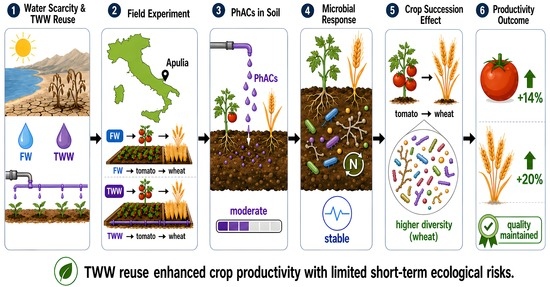
1. Introduction
2. Materials and Methods
2.1. Site Description and Crop Management
2.2. Chemical Parameters of Irrigation Water and PhACs Soil Content
2.3. Statistical Analysis
3. Results
3.1. Effect of Irrigation Water Source on the Main Quali-Quantitative Parameters of Crops
3.2. Irrigation Water and Soil-PhACs Content
3.3. Soil Microbial Indicators
3.4. Nitrogen Cycling Microbial Populations
3.5. Soil Microbiome Structure and Dynamics
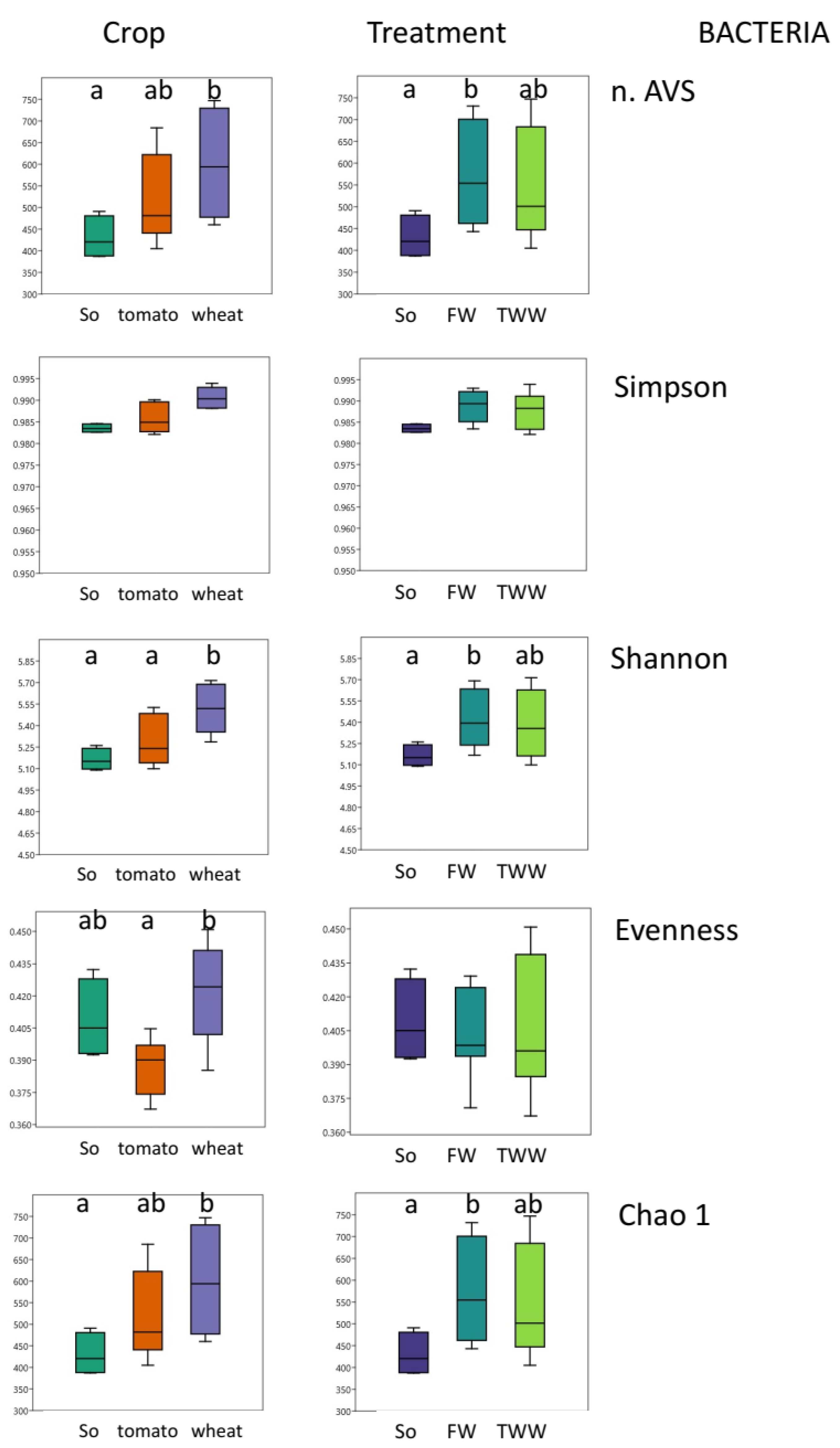
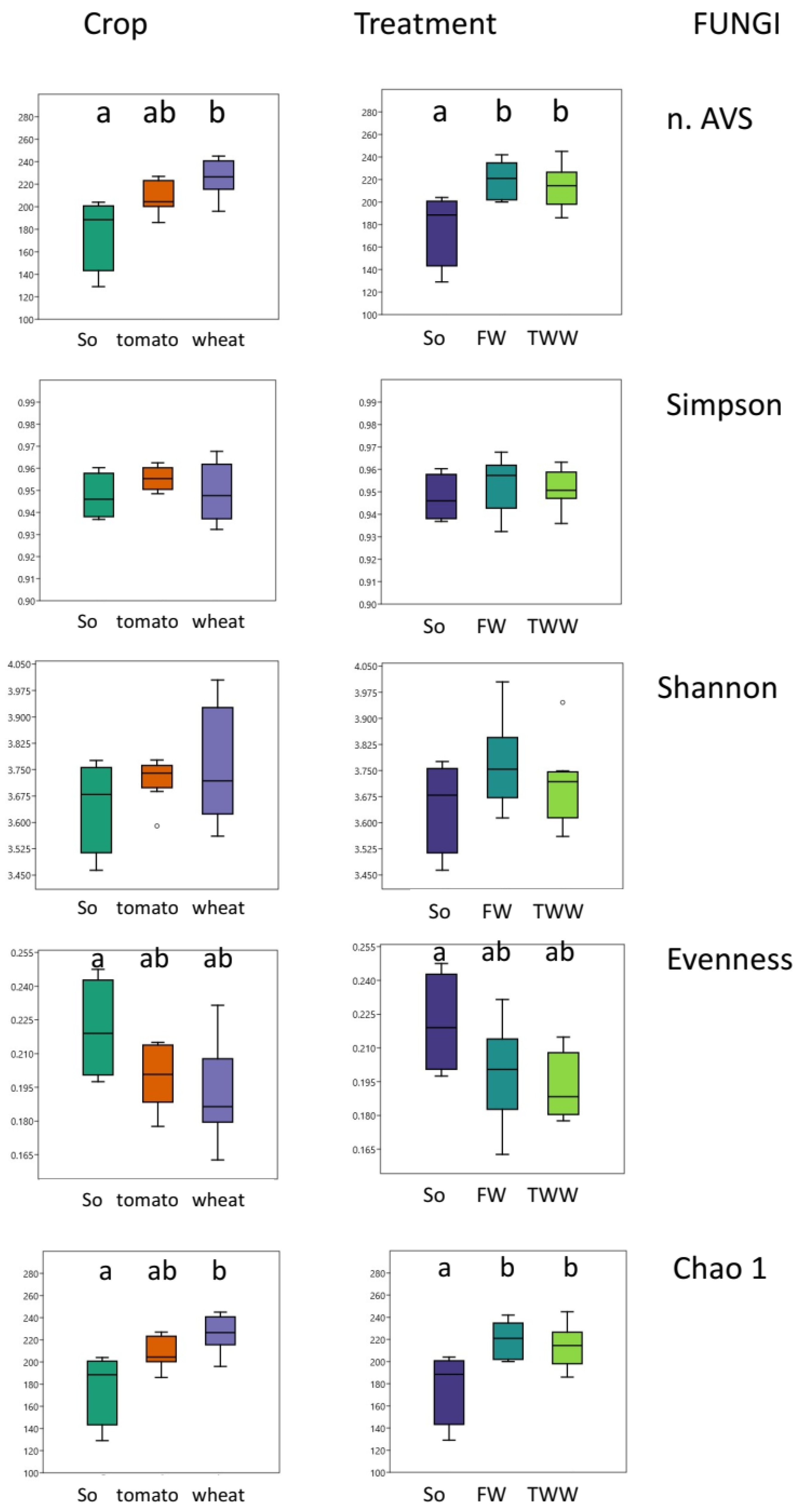
3.6. Alpha Diversity
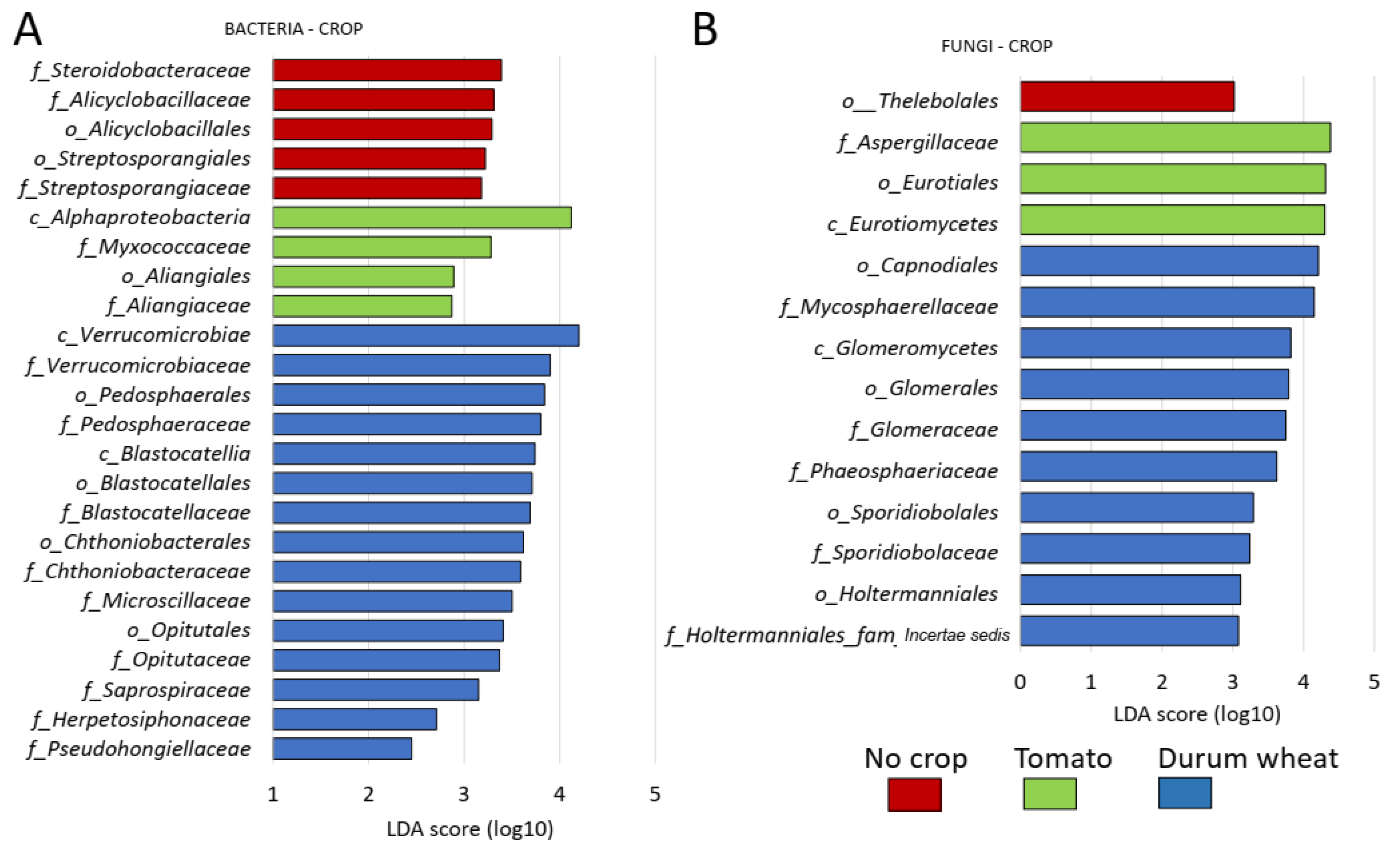
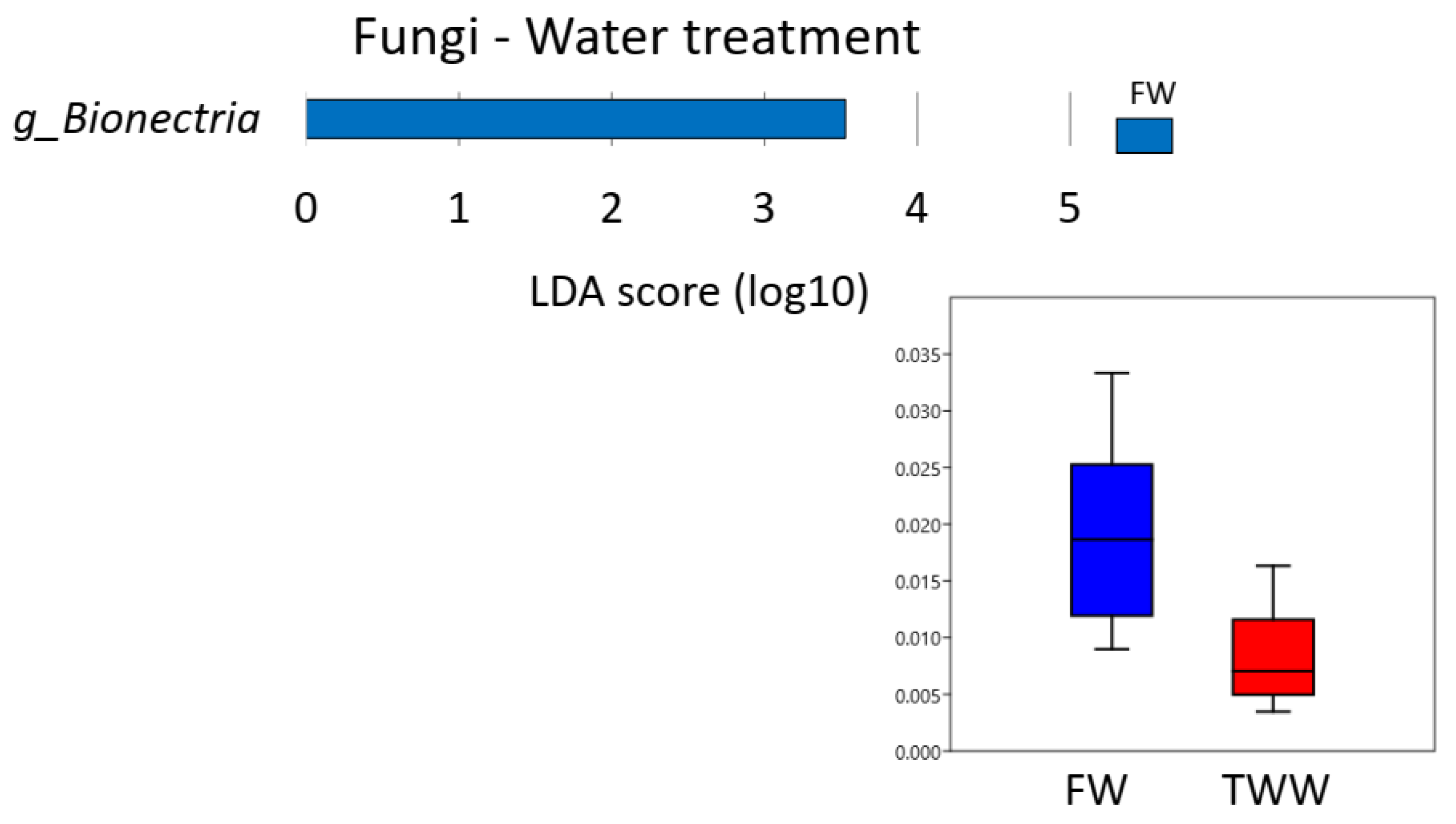
3.7. LEfSe Analysis
4. Discussion
4.1. The Impact of the TWW Reuse on Crop Yield and Quality
4.2. Fate and Persistence of PhACs in the Soil–Plant System
4.3. Microbial Ecology and Assembly Processes in the Soil
4.3.1. Microbial Indicators
4.3.2. Functional Genes and Nitrogen Cycle Dynamics
4.3.3. Microbial Community Dynamics
5. Conclusions and Implications for Sustainability
Supplementary Materials
Author Contributions
Funding
Data Availability Statement
Conflicts of Interest
References
- Pedrero, F.; Kalavrouziotis, I.; Alarcón, J.J.; Koukoulakis, P.; Asano, T. Use of Treated Municipal Wastewater in Irrigated Agriculture—Review of Some Practices in Spain and Greece. Agric. Water Manag. 2010, 97, 1233–1241. [Google Scholar] [CrossRef]
- Van Opstal, J.; Droogers, P.; Kaune, A. Reuse of Water in Agricultural Systems; FAO: Bangkok, Thailand, 2025. [Google Scholar]
- Libutti, A.; Gatta, G.; Gagliardi, A.; Vergine, P.; Pollice, A.; Beneduce, L.; Disciglio, G.; Tarantino, E. Agro-Industrial Wastewater Reuse for Irrigation of a Vegetable Crop Succession under Mediterranean Conditions. Agric. Water Manag. 2018, 196, 1–14. [Google Scholar] [CrossRef]
- Gatta, G.; Libutti, A.; Gagliardi, A.; Beneduce, L.; Brusetti, L.; Borruso, L.; Disciglio, G.; Tarantino, E. Treated Agro-Industrial Wastewater Irrigation of Tomato Crop: Effects on Qualitative/Quantitative Characteristics of Production and Microbiological Properties of the Soil. Agric. Water Manag. 2015, 149, 33–43. [Google Scholar] [CrossRef]
- Beneduce, L.; Gatta, G.; Bevilacqua, A.; Libutti, A.; Tarantino, E.; Bellucci, M.; Troiano, E.; Spano, G. Impact of the Reusing of Food Manufacturing Wastewater for Irrigation in a Closed System on the Microbiological Quality of the Food Crops. Int. J. Food Microbiol. 2017, 260, 51–58. [Google Scholar] [CrossRef] [PubMed]
- aus der Beek, T.; Weber, F.-A.; Bergmann, A.; Hickmann, S.; Ebert, I.; Hein, A.; Küster, A. Pharmaceuticals in the Environment—Global Occurrences and Perspectives. Environ. Toxicol. Chem. 2015, 35, 823–835. [Google Scholar] [CrossRef] [PubMed]
- Michael, I.; Rizzo, L.; McArdell, C.S.; Manaia, C.M.; Merlin, C.; Schwartz, T.; Dagot, C.; Fatta-Kassinos, D. Urban Wastewater Treatment Plants as Hotspots for the Release of Antibiotics in the Environment: A Review. Water Res. 2013, 47, 957–995. [Google Scholar] [CrossRef] [PubMed]
- Gatta, G.; De Mastro, F.; Carucci, F.; Perniola, M.; Denora, M.; Brunetti, G.; Gagliardi, A.; Giuliani, M.M. Soil Accumulation and Plant Uptake of Pharmaceutical Active Compounds and Related Metabolites from Irrigation Water in Fennel (Foeniculum vulgare Mill.). Front. Plant Sci. 2026, 17, 1664441. [Google Scholar] [CrossRef] [PubMed]
- Grenni, P.; Ancona, V.; Barra Caracciolo, A. Ecological Effects of Antibiotics on Natural Ecosystems: A Review. Microchem. J. 2018, 136, 25–39. [Google Scholar] [CrossRef]
- Paterson, E.; Gebbing, T.; Abel, C.; Sim, A.; Telfer, G. Rhizodeposition Shapes Rhizosphere Microbial Community Structure in Organic Soil. New Phytol. 2007, 173, 600–610. [Google Scholar] [CrossRef] [PubMed]
- Araujo, A.S.F.; Pereira, A.P.A.; de Medeiros, E.V.; Mendes, L.W. Root Architecture and the Rhizosphere Microbiome: Shaping Sustainable Agriculture. Plant Sci. 2025, 359, 112599. [Google Scholar] [CrossRef] [PubMed]
- Nakayasu, M.; Ohno, K.; Takamatsu, K.; Aoki, Y.; Yamazaki, S.; Takase, H.; Shoji, T.; Yazaki, K.; Sugiyama, A. Tomato Roots Secrete Tomatine to Modulate the Bacterial Assemblage of the Rhizosphere. Plant Physiol. 2021, 186, 270–284. [Google Scholar] [CrossRef] [PubMed]
- Matthews, A.; Pierce, S.; Hipperson, H.; Raymond, B. Rhizobacterial Community Assembly Patterns Vary Between Crop Species. Front. Microbiol. 2019, 10, 581. [Google Scholar] [CrossRef] [PubMed]
- Zverev, A.O.; Kurchak, O.N.; Orlova, O.V.; Onishchuk, O.P.; Kichko, A.A.; Eregin, A.V.; Naliukhin, A.N.; Pinaev, A.G.; Andronov, E.E. Dynamic of the Soil Microbiota in Short-Term Crop Rotation. Life 2023, 13, 400. [Google Scholar] [CrossRef] [PubMed]
- Falkowski, P.G.; Fenchel, T.; Delong, E.F. The Microbial Engines That Drive Earth’s Biogeochemical Cycles. Science 2008, 320, 1034–1039. [Google Scholar] [CrossRef] [PubMed]
- Kuypers, M.M.M.; Marchant, H.K.; Kartal, B. The Microbial Nitrogen-Cycling Network. Nat. Rev. Microbiol. 2018, 16, 263–276. [Google Scholar] [CrossRef] [PubMed]
- Pérez-Lucas, G.; Navarro, S. How Pharmaceutical Residues Occur, Behave, and Affect the Soil Environment. J. Xenobiot. 2024, 14, 1343–1377. [Google Scholar] [CrossRef] [PubMed]
- Chauhan, A.; Jain, A.; Kolton, M.; Pathak, A. Impacts of Long-Term Irrigation of Municipally-Treated Wastewater to the Soil Microbial and Nutrient Properties. Sci. Total Environ. 2025, 959, 178143. [Google Scholar] [CrossRef] [PubMed]
- Christou, A.; Papadavid, G.; Dalias, P.; Fotopoulos, V.; Michael, C.; Bayona, J.M.; Piña, B.; Fatta-Kassinos, D. Ranking of Crop Plants According to Their Potential to Uptake and Accumulate Contaminants of Emerging Concern. Environ. Res. 2019, 170, 422–432. [Google Scholar] [CrossRef] [PubMed]
- Christou, A.; Antoniou, C.; Christodoulou, C.; Hapeshi, E.; Stavrou, I.; Michael, C.; Fatta-Kassinos, D.; Fotopoulos, V. Stress-Related Phenomena and Detoxification Mechanisms Induced by Common Pharmaceuticals in Alfalfa (Medicago sativa L.) Plants. Sci. Total Environ. 2016, 557–558, 652–664. [Google Scholar] [CrossRef] [PubMed]
- Denora, M.; Mehmeti, A.; Candido, V.; Brunetti, G.; De Mastro, F.; Murgolo, S.; De Ceglie, C.; Gatta, G.; Giuliani, M.M.; Fiorentino, C.; et al. Fate of Emerging Contaminants in the Soil-Plant System: A Study on Durum Wheat Irrigated with Treated Municipal Wastewater. Front. Soil Sci. 2024, 4, 1448016. [Google Scholar] [CrossRef]
- Caliandro, A.; Lamaddalena, N.; Stelluti, M.; Steduto, P. Caratterizzazione Agro-Ecologica Della Regione Puglia in Funzione Della Potenzialità Produttiva; Ideaprint: Bari, Italy, 2005. [Google Scholar]
- Buono, V.; Gatta, G.; Riezzo, E.; Manes, A.; Nardella, E.; Gagliardi, A.; Carucci, F.; Giuliani, M.M. Experimental Testing of a Model-Based Decision Support System Integrated with Smart Sensors to Optimize Irrigation Strategies for Processing Tomato: A Case Study in Southern Italy. Acta Hortic. 2021, 1311, 485–492. [Google Scholar] [CrossRef]
- Abi Saab, M.T.; Houssemeddine Sellami, M.; Giorio, P.; Basile, A.; Bonfante, A.; Rouphael, Y.; Fahed, S.; Jomaa, I.; Stephan, C.; Kabalan, R.; et al. Assessing the Potential of Cereal Production Systems to Adapt to Contrasting Weather Conditions in the Mediterranean Region. Agronomy 2019, 9, 393. [Google Scholar] [CrossRef]
- Carucci, F.; Gagliardi, A.; Giuliani, M.M.; Gatta, G. Irrigation Scheduling in Processing Tomato to Save Water: A Smart Approach Combining Plant and Soil Monitoring. Appl. Sci. 2023, 13, 7625. [Google Scholar] [CrossRef]
- Si, Z.; Qin, A.; Liang, Y.; Duan, A.; Gao, Y. A Review on Regulation of Irrigation Management on Wheat Physiology, Grain Yield, and Quality. Plants 2023, 12, 692. [Google Scholar] [CrossRef] [PubMed]
- APAT Agenzia per La Protezione Dell’ambiente e per i Servizi Tecnici; IRSA-CNR Istituto Di Ricerca Sulle Acque Consiglio Nazionale Delle Ricerche. APAT Metodi Analitici per Le Acque; Volume Primo Sezione 1000-Parte Generale Sezione 2000-Parametri Chimico-Fisici Sezione 3000-Metalli; APAT Agenzia per La Protezione Dell’ambiente e per i Servizi Tecnici: Rome, Italy, 2003. [Google Scholar]
- American Public Health Association. Standard Methods for the Examination of Water and Wastewater, 21st ed.; APHA: Washington, DC, USA, 2025. [Google Scholar]
- Olsen, S.R.; Cole, C.V.; Watanabe, F.S.; Dean, L.A. Estimation of Available Phosphorus in Soil by Extraction with Sodium Bicarbonate; Circular no. 939; USDA: Washington, DC, USA, 1954; pp. 1–19. [Google Scholar]
- Walkley, A.; Black, I.A. An examination of the Degtjareff method for deter-mining organic carbon in soils: Effect of variations in digestion conditions and of inorganic soil constituents. Soil Sci. 1934, 63, 251–263. [Google Scholar]
- Keeney, D.R.; Nelson, D.W. Nitrogen inorganic forms. In Methods of Soil Analysis: Part 2, 2nd ed.; Agronomy Monographs 9; ASA: Madison, WI, USA; SSSA: Madison, WI, USA, 1982; pp. 643–698. [Google Scholar]
- De Mastro, F.; Cocozza, C.; Traversa, A.; Cacace, C.; Mottola, F.; Mezzina, A.; Brunetti, G. Validation of a Modified QuEChERS Method for the Extraction of Multiple Classes of Pharmaceuticals from Soils. Chem. Biol. Technol. Agric. 2022, 9, 49. [Google Scholar] [CrossRef]
- De Mastro, F.; Brunetti, G.; De Mastro, G.; Ruta, C.; Stea, D.; Murgolo, S.; De Ceglie, C.; Mascolo, G.; Sannino, F.; Cocozza, C.; et al. Uptake of Different Pharmaceuticals in Soil and Mycorrhizal Artichokes from Wastewater. Environ. Sci. Pollut. Res. 2022, 30, 33349–33362. [Google Scholar] [CrossRef] [PubMed]
- Bolyen, E.; Rideout, J.R.; Dillon, M.R.; Bokulich, N.A.; Abnet, C.C.; Al-Ghalith, G.A.; Alexander, H.; Alm, E.J.; Arumugam, M.; Asnicar, F.; et al. Reproducible, Interactive, Scalable and Extensible Microbiome Data Science Using QIIME 2. Nat. Biotechnol. 2019, 37, 852–857. [Google Scholar] [CrossRef] [PubMed]
- Callahan, B.J.; McMurdie, P.J.; Rosen, M.J.; Han, A.W.; Johnson, A.J.A.; Holmes, S.P. DADA2: High-resolution sample inference from Illumina amplicon data. Nat. Methods 2016, 13, 581–583. [Google Scholar] [CrossRef] [PubMed]
- Box, G.E.P.; Cox, D.R. An Analysis of Transformations. J. R. Stat. Soc. Ser. B Stat. Methodol. 1964, 26, 211–243. [Google Scholar] [CrossRef]
- Lozupone, C.; Knight, R. UniFrac: A New Phylogenetic Method for Comparing Microbial Communities. Appl. Environ. Microbiol. 2005, 71, 8228–8235. [Google Scholar] [CrossRef] [PubMed]
- Gatta, G.; Libutti, A.; Gagliardi, A.; Disciglio, G.; Tarantino, E.; Beneduce, L.; Giuliani, M.M. Wastewater Reuse in Agriculture: Effects on Soil-Plant System Properties. In Interaction and Fate of Pharmaceuticals in Soil-Crop Systems; Springer: Cham, Switzerland, 2020. [Google Scholar] [CrossRef]
- Muscarella, S.M.; Alduina, R.; Badalucco, L.; Capri, F.C.; Di Leto, Y.; Gallo, G.; Laudicina, V.A.; Paliaga, S.; Mannina, G. Water Reuse of Treated Domestic Wastewater in Agriculture: Effects on Tomato Plants, Soil Nutrient Availability and Microbial Community Structure. Sci. Total Environ. 2024, 928, 172259. [Google Scholar] [CrossRef] [PubMed]
- De Mastro, F.; Brunetti, G.; Cocozza, C.; Murgolo, S.; Mascolo, G.; Salerno, C.; Ruta, C.; De Mastro, G. Dynamics of Pharmaceuticals in the Soil–Plant System: A Case Study on Mycorrhizal Artichoke. Soil Syst. 2025, 9, 51. [Google Scholar] [CrossRef]
- Denora, M.; Candido, V.; Brunetti, G.; De Mastro, F.; Murgolo, S.; De Ceglie, C.; Salerno, C.; Gatta, G.; Giuliani, M.M.; Mehmeti, A.; et al. Uptake and Accumulation of Emerging Contaminants in Processing Tomato Irrigated with Tertiary Treated Wastewater Effluent: A Pilot-Scale Study. Front. Plant Sci. 2023, 14, 1238163. [Google Scholar] [CrossRef] [PubMed]
- The European Parliament; The Council of the European Union. Regulation (EU) 2020/741 of the European Parliament and of the Council of 25 May 2020 on Minimum Requirements for Water Reuse (Text with EEA Relevance). Off. J. Eur. Union 2020, 177, 33–55. [Google Scholar]
- Kodešová, R.; Kočárek, M.; Klement, A.; Golovko, O.; Koba, O.; Fér, M.; Nikodem, A.; Vondráčková, L.; Jakšík, O.; Grabic, R. An Analysis of the Dissipation of Pharmaceuticals under Thirteen Different Soil Conditions. Sci. Total Environ. 2016, 544, 369–381. [Google Scholar] [CrossRef] [PubMed]
- Paz, A.; Tadmor, G.; Malchi, T.; Blotevogel, J.; Borch, T.; Polubesova, T.; Chefetz, B. Fate of Carbamazepine, Its Metabolites, and Lamotrigine in Soils Irrigated with Reclaimed Wastewater: Sorption, Leaching and Plant Uptake. Chemosphere 2016, 160, 22–29. [Google Scholar] [CrossRef] [PubMed]
- Guedes, P.; Martins, C.; Couto, N.; Silva, J.; Mateus, E.P.; Ribeiro, A.B.; Pereira, C.S. Irrigation of Soil with Reclaimed Wastewater Acts as a Buffer of Microbial Taxonomic and Functional Biodiversity. Sci. Total Environ. 2022, 802, 149671. [Google Scholar] [CrossRef] [PubMed]
- Dulio, V.; Koschorreck, J.; van Bavel, B.; van Leerdam, J.A.; von der Ohe, P.C.; Schlabach, M.; Slobodnik, J.; Thomaidis, N.S.; Aalizadeh, R. The NORMAN Association: A network approach to address emerging environmental substances. Environ. Sci. Eur. 2018, 30, 16. [Google Scholar]
- NORMAN Network. NORMAN Ecotox Database: Ecotoxicology Module. NORMAN Database System (NDS). 2026. Available online: https://www.norman-network.com/ (accessed on 14 June 2026).
- Xie, Y.; Ouyang, Y.; Han, S.; Se, J.; Tang, S.; Yang, Y.; Ma, Q.; Wu, L. Crop Rotation Stage Has a Greater Effect than Fertilisation on Soil Microbiome Assembly and Enzymatic Stoichiometry. Sci. Total Environ. 2022, 815, 152956. [Google Scholar] [CrossRef] [PubMed]
- Gallego, S.; Montemurro, N.; Béguet, J.; Rouard, N.; Philippot, L.; Pérez, S.; Martin-Laurent, F. Ecotoxicological Risk Assessment of Wastewater Irrigation on Soil Microorganisms: Fate and Impact of Wastewater-Borne Micropollutants in Lettuce-Soil System. Ecotoxicol. Environ. Saf. 2021, 223, 112595. [Google Scholar] [CrossRef] [PubMed]
- Mahjoub, O.; Mauffret, A.; Michel, C.; Chmingui, W. Use of Groundwater and Reclaimed Water for Agricultural Irrigation: Farmers’ Practices and Attitudes and Related Environmental and Health Risks. Chemosphere 2022, 295, 133945. [Google Scholar] [CrossRef] [PubMed]
- Li, C.; Shi, L.; Wang, K.; Liu, B.; Liao, J.; An, Z.; Chang, S.X. Crop Rotation Differentially Increases Soil Bacterial and Fungal Diversities in Global Croplands: A Meta-Analysis. Nat. Commun. 2025, 16, 11686. [Google Scholar] [CrossRef]
- Berg, G.; Smalla, K. Plant Species and Soil Type Cooperatively Shape the Structure and Function of Microbial Communities in the Rhizosphere. FEMS Microbiol. Ecol. 2009, 68, 1–13. [Google Scholar] [CrossRef] [PubMed]
- Maleva, M.; Borisova, G.; Tugbaeva, A.; Malakheeva, A.; Voropaeva, O.; Ermoshin, A.; Betekhtina, A. Rhizobacteriome Diversity and Morphophysiological Features of Three Tomato Plant Varieties Under Nitrogen Deficiency. Nitrogen 2025, 6, 102. [Google Scholar] [CrossRef]
- Leitner, Z.R.; Daigh, A.L.M.; DeJong-Hughes, J. Temporal Fluctuations of Microbial Communities within the Crop Growing Season. Geoderma 2021, 391, 114951. [Google Scholar] [CrossRef]
- Wang, J.; Niu, W.; Song, X.; Han, J. Response of Tomato Root Endophytic Bacterial Communities to Water-Oxygen Coupling under Micro/Nanoaerated Drip Irrigation in Slightly Saline Soils. Sci. Hortic. 2023, 321, 112281. [Google Scholar] [CrossRef]
- Otoguro, M.; Yamamura, H.; Quintana, E.T. The family Streptosporangiaceae. In The Prokaryotes; Rosenberg, E., DeLong, E.F., Lory, S., Stackebrandt, E., Thompson, F., Eds.; Springer: Berlin/Heidelberg, Germany, 2014; pp. 1011–1045. [Google Scholar] [CrossRef]
- Kim, H.W.; Kim, N.K.; Phillips, A.P.R.; Parker, D.A.; Liu, P.; Whitaker, R.J.; Rao, C.V.; Mackie, R.I. Genomic insight and physiological characterization of thermoacidophilic Alicyclobacillus isolated from Yellowstone National Park. Front. Microbiol. 2023, 14, 1232587. [Google Scholar] [CrossRef] [PubMed]
- Nelson, A.R.; Narrowe, A.B.; Rhoades, C.C.; Fegel, T.S.; Daly, R.A.; Roth, H.K.; Chu, R.K.; Amundson, K.K.; Young, R.B.; Steindorff, A.S.; et al. Wildfire-dependent changes in soil microbiome diversity and function. Nat. Microbiol. 2022, 7, 1419–1430. [Google Scholar] [CrossRef] [PubMed]
- Ghaly, T.M.; McPherson, V.J.; Rajabal, V.; Ghaly, M.E.; Taws, N.; Gallagher, R.V.; Le Roux, J.J.; Tetu, S.G. Soil microbial traits shift on contrasting timescales following revegetation of former grazing lands. bioRxiv 2026. [Google Scholar] [CrossRef]
- Wu, X.; Bei, S.; Zhou, X.; Luo, Y.; He, Z.; Song, C.; Yuan, H.; Pivato, B.; Liesack, W.; Peng, J. Metagenomic insights into genetic factors driving bacterial niche differentiation between bulk and rhizosphere soils. Sci. Total Environ. 2023, 891, 164221. [Google Scholar] [CrossRef] [PubMed]
- Chen, J.; Liu, S.-S.; He, L.-X.; Cheng, Y.-X.; Ye, P.; Li, J.; Ying, G.-G.; Wang, Y.-J.; Yang, F. The Fate of Sulfonamides in the Process of Phytoremediation in Hydroponics. Water Res. 2021, 198, 117145. [Google Scholar] [CrossRef] [PubMed]
- Groß, V.; Reinhard, A.; Petters, S.; Pichler, M.; Urich, T. Adding complexity to soil food webs: Myxobacteria have broad predation spectra with bacteria, yeasts and filamentous fungi in vitro. Eur. J. Soil Biol. 2023, 117, 103508. [Google Scholar] [CrossRef]
- Dong, H.; Xu, X.; Gao, R.; Li, Y.; Li, A.; Yao, Q.; Zhu, H. Myxococcus xanthus R31 suppresses tomato bacterial wilt by inhibiting the pathogen Ralstonia solanacearum with secreted proteins. Front. Microbiol. 2022, 12, 801091. [Google Scholar] [CrossRef] [PubMed]
- De Corato, U.; Patruno, L.; Avella, N.; Salimbeni, R.; Lacolla, G.; Cucci, G.; Crecchio, C. Soil management under tomato-wheat rotation increases the suppressive response against Fusarium wilt and tomato shoot growth by changing the microbial composition and chemical parameters. Appl. Soil Ecol. 2020, 154, 103601. [Google Scholar] [CrossRef]
- Gruet, C.; Abrouk, D.; Börner, A.; Muller, D.; Moënne-Loccoz, Y. Wheat Genome Architecture Influences Interactions with Phytobeneficial Microbial Functional Groups in the Rhizosphere. Plant Cell Environ. 2023, 46, 1018–1032. [Google Scholar] [CrossRef] [PubMed]
- Dilla-Ermita, C.J.; Lewis, R.W.; Sullivan, T.S.; Hulbert, S.H. Wheat Genotype-Specific Recruitment of Rhizosphere Bacterial Microbiota Under Controlled Environments. Front. Plant Sci. 2021, 12, 718264. [Google Scholar] [CrossRef] [PubMed]
- Naziębło, A.; Pytlak, A.; Furtak, A.; Dobrzyński, J. Advances and hotspots in research on Verrucomicrobiota: Focus on agroecosystems. Microb. Ecol. 2025, 89, 1. [Google Scholar] [CrossRef] [PubMed]



| Parameters | Irrigation Water Source † | |
|---|---|---|
| FW | TWW | |
| COD (mg L–1) | 10.0 ± 3.5 | 22.9 ± 9.0 |
| BOD5 (mg L−1) | 5.3 ± 1.1 | 3.7 ± 1.5 |
| TN (mg L−1) | 5.5± 2.1 | 11.9 ± 7.9 |
| NH4-N, (mg L–1) | 0.0 ± 0.0 | 0.5 ± 0.4 |
| NO3-N (mg L–1) | 0.9 ± 0.1 | 7.6 ± 4.4 |
| PO4-P (mg L–1) | 0.2 ± 0.01 | 3.1 ± 2.4 |
| pH (-) | 7.5± 0.1 | 7.4 ± 0.3 |
| ECw (mS cm–1) | 0.60 ± 0.1 | 1.21 ± 0.23 |
| SAR (-) | 0.68 ± 0.15 | 0.89 ± 0.34 |
| Quali-Quantitative Parameters | Experimental Factors | Significance | |||
|---|---|---|---|---|---|
| Irrigation Source (IS) | Growing Seasons (GS) | IS × GS | |||
| FW | TWW | Y1 | Y2 | ||
| Processing tomato | |||||
| Marketable yield (t ha−1) | 96.26 ± 3.51 b | 110.02 ± 1.6 a | 101.2 ± 2.8 a | 105.1 ± 3.8 a | ns |
| Total yield (t ha−1) | 111.3 ± 3.4 b | 122.1 ± 1.20 a | 111.9 ± 2.3 a | 121.4 ± 3.0 a | ns |
| Dry matter of fruits (% fresh weight) | 5.80 ± 0.17 a | 5.70 ± 0.19 a | 5.9 ± 0.19 a | 5.6 ± 0.23 a | ns |
| pH (-) | 4.06 ± 0.02 a | 3.96 ± 0.03 a | 4.02 ± 0.03 a | 4.01 ± 0.04 a | ns |
| Titratable acidity (g citric acid 100 mL−1 fresh juice) | 0.34 ± 0.03 a | 0.33 ± 0.01 a | 0.32 ± 0.04 a | 0.35 ± 0.02 a | ns |
| Soluble solids content (°Brix) | 4.7 ± 0.2 a | 4.6 ± 0.2 a | 4.8 ± 0.3 | 4.5 ± 0.36 | ns |
| Color index (-) | 1.20 ± 0.09 a | 1.17 ± 0.1 a | 1.17 ± 0.01 a | 1.19 ± 0.01 a | ns |
| Durum Wheat | |||||
| Grain yield (t ha−1) | 4.76 ± 0.56 b | 5.71 ± 0.33 a | 5.14 ± 0.33 a | 5.32 ± 0.41 a | ns |
| Grain protein content (%) | 11.72 ± 0.43 b | 13.26 ± 0.46 a | 12.11 ± 0.27 a | 12.7 ± 0.76 a | ns |
| Thousand kernel weight (g) | 81.55 ± 0.52 a | 80.85 ± 0.65 a | 81.13 ± 0.72 a | 81.26 ± 0.30 a | ns |
| Experimental Factor | Microbial Counts | |||
|---|---|---|---|---|
| Bacteria | Fungi | Fec. Coliforms | E. coli | |
| Main effect | ||||
| Irrigation source (IS) | ||||
| FW | 5.87 ± 0.39 a | 3.94 ± 0.63 a | 1.66 ± 1.01 a | 0.96 ± 0.25 a |
| TWW | 5.86 ± 0.43 a | 3.78 ± 0.62 a | 1.53 ± 1.33 a | 0.99 ± 0.26 a |
| Sampling time (ST) | ||||
| S0 (No crop) | 6.11 ± 0.18 ab | 4.77 ± 0.31 a | 0.43 ± 0.32 b | 0.38 ± 0.80 b |
| S1 (Tomato 1) | 5.56 ± 0.43 c | 3.90 ± 0.32 bc | 0.98 ± 0.33 ab | 0.34 ± 0.82 b |
| S2 (Wheat 1) | 6.39 ± 0.11 a | 3.32 ± 0.26 b | 2.14 ± 0.26 a | 1.91 ± 0.99 a |
| S3 (Tomato 2) | 5.52 ± 0.05 c | 3.95 ± 0.38 d | 2.25 ± 0.28 a | 0.0 ± 0.0 b |
| S4 (Wheat 2) | 5.72 ± 0.20 bc | 3.37 ± 0.47 cd | 2.18 ± 0.48 a | 0.0 ± 0.0 b |
| Interaction IS × ST | ns | ns | ns | ns |
| Experimental Factor | qPCR Nitrogen Cycling Bacterial Genes | |||
|---|---|---|---|---|
| nifH | amoA | nirK | nosZ | |
| Main effect | ||||
| Irrigation source (IS) | ||||
| FW | 5.69 ± 0.46 a | 6.33 ± 0.44 a | 6.23 ± 0.34 a | 6.90 ± 0.46 a |
| TWW | 5.80 ± 0.38 a | 6.28 ± 0.41 a | 6.25 ± 0.28 a | 6.83 ± 0.52 a |
| Sampling time (ST) | ||||
| S0 (No crop) | 5.53 ± 0.54 bc | 6.64 ± 0.06 a | 6.29 ± 0.09 b | 7.39 ± 0.11 a |
| S1 (Tomato 1) | 5.77 ± 0.48 ab | 6.59 ± 0.15 a | 6.31 ± 0.12 ab | 7.42 ± 0.11 a |
| S2 (Wheat 1) | 5.42 ± 0.18 c | 6.47 ± 0.11 c | 5.73 ± 0.15 c | 6.65 ± 0.08 b |
| S3 (Tomato 2) | 6.08 ± 0.08 a | 5.60 ± 0.17 a | 6.49 ± 0.11 a | 6.56 ± 0.10 b |
| S4 (Wheat 2) | 5.95 ± 0.25 a | 6.21 ± 0.30 b | 6.38 ± 0.28 ab | 6.32 ± 0.32 c |
| Interaction IS × ST | * | ns | ns | ns |
Disclaimer/Publisher’s Note: The statements, opinions and data contained in all publications are solely those of the individual author(s) and contributor(s) and not of MDPI and/or the editor(s). MDPI and/or the editor(s) disclaim responsibility for any injury to people or property resulting from any ideas, methods, instructions or products referred to in the content. |
© 2026 by the authors. Licensee MDPI, Basel, Switzerland. This article is an open access article distributed under the terms and conditions of the Creative Commons Attribution (CC BY) license.
Share and Cite
Beneduce, L.; Carucci, F.; Giuliani, M.M.; Gagliardi, A.; Salerno, C.; Denora, M.; Perniola, M.; De Mastro, F.; Brunetti, G.; Totaro, M.; et al. Effects of Reclaimed Wastewater Containing Pharmaceutical Active Compounds (PhACs) and Tomato–Wheat Crop Succession on Soil Microbial Communities and Crop Productivity. Agriculture 2026, 16, 1426. https://doi.org/10.3390/agriculture16131426
Beneduce L, Carucci F, Giuliani MM, Gagliardi A, Salerno C, Denora M, Perniola M, De Mastro F, Brunetti G, Totaro M, et al. Effects of Reclaimed Wastewater Containing Pharmaceutical Active Compounds (PhACs) and Tomato–Wheat Crop Succession on Soil Microbial Communities and Crop Productivity. Agriculture. 2026; 16(13):1426. https://doi.org/10.3390/agriculture16131426
Chicago/Turabian StyleBeneduce, Luciano, Federica Carucci, Marcella Michela Giuliani, Anna Gagliardi, Carlo Salerno, Michele Denora, Michele Perniola, Francesco De Mastro, Gennaro Brunetti, Martina Totaro, and et al. 2026. "Effects of Reclaimed Wastewater Containing Pharmaceutical Active Compounds (PhACs) and Tomato–Wheat Crop Succession on Soil Microbial Communities and Crop Productivity" Agriculture 16, no. 13: 1426. https://doi.org/10.3390/agriculture16131426
APA StyleBeneduce, L., Carucci, F., Giuliani, M. M., Gagliardi, A., Salerno, C., Denora, M., Perniola, M., De Mastro, F., Brunetti, G., Totaro, M., Brusetti, L., Piergiacomo, F., Borruso, L., & Gatta, G. (2026). Effects of Reclaimed Wastewater Containing Pharmaceutical Active Compounds (PhACs) and Tomato–Wheat Crop Succession on Soil Microbial Communities and Crop Productivity. Agriculture, 16(13), 1426. https://doi.org/10.3390/agriculture16131426