Article

Potential of Lithuanian Oat Genotypes as Sources of Resistance to Blumeria graminis f. sp. avenae

1
Institute of Plant Genetics, Breeding and Biotechnology, University of Life Sciences in Lublin, Akademicka 15, 20-950 Lublin, Poland
2
Institute of Agriculture, Lithuanian Research Centre for Agriculture and Forestry, Instituto al. 1, Akademija, LT-58344 Kėdainiai, Lithuania
*
Author to whom correspondence should be addressed.
Agriculture 2026, 16(13), 1396; https://doi.org/10.3390/agriculture16131396
Submission received: 6 May 2026 / Revised: 22 June 2026 / Accepted: 24 June 2026 / Published: 26 June 2026

Abstract

Oat (Avena sativa L.) is a crop of significant economic and nutritional importance; however, its yield and quality can be substantially reduced by fungal diseases, including powdery mildew caused by Blumeria graminis f. sp. avenae (Bga). The aim of this study was to evaluate the phenotypic resistance of 110 genotypes of Lithuanian oat cultivars to powdery mildew using five pathogen isolates. Based on the results obtained, three genotypes with the highest level of resistance were selected. Among them, one cultivar—Delfin—carries the Pm7 resistance gene, as documented in the literature. The two remaining genotypes were subjected to detailed evaluation using 30 isolates for the purpose of resistance gene postulation, followed by molecular analysis employing STS (Sequence-Tagged Sites) and SCAR (Sequence Characterized Amplified Region) markers, aimed at identifying the presence of the Pm4, Pm5 and Pm7 genes, considered among the most desirable resistance genes against powdery mildew in oat. None of these genes were confirmed in the studied cultivars. The results obtained suggest that the observed resistance may be conferred by other as-yet-unidentified resistance genes. The studied genotypes may therefore represent a novel and valuable source of resistance to powdery mildew, useful in breeding programs aimed at improving disease resistance in oat.

1. Introduction

Oat (Avena sativa L.) is cultivated around the world. In 2024, world oat production covered approximately 23 million hectares, serving as an important source of animal feed and human food due to its high β-glucan, protein, and micronutrient content [1,2]. Based on the 2014–2024 average, Europe remains the leading producer of oats, but the major oat-producing places worldwide include Russia, Canada, Poland, Australia, and Finland [2]. In Lithuania, the oat harvesting area has fluctuated between 64 and 108 thousand hectares over the last decade and has shown a generally increasing trend [3]. Approximately one-third of this area is managed under organic farming systems [3,4]. Although oats are well adapted to local agro-climatic conditions, their yields in Lithuania remain below European and global averages, despite the recent expansion of the cultivation area [3,5].
Despite its agronomic importance, oat production is affected by several airborne fungal diseases that have received relatively limited attention in Lithuania due to the crop’s traditionally lower economic importance. In Europe, the most significant pathogens affecting oats include rust diseases, Fusarium head blight and powdery mildew [6,7]. In Lithuania, oat powdery mildew, caused by Blumeria graminis f. sp. avenae (Bga), is of particular concern and can substantially reduce yields under the cool and humid conditions typical of the region [8,9,10,11]. According to data from the State Plant Breeding Service under the Ministry of Agriculture, powdery mildew does not occur at a damaging level every year; however, under favorable meteorological conditions, disease severity may reach up to 6 points on a 0–9 scale, where 0 indicates no visible symptoms and 9 indicates complete leaf infection [12,13,14]. During the 2025 growing season at the Lithuanian Research Centre for Agriculture and Forestry (LAMMC), powdery mildew symptoms were observed on approximately 60% of oat plants, with disease severity ranging from 1 to 7 on the same scale. Furthermore, the successful introduction and cultivation of winter oats in Lithuania has provided an additional source of inoculum for spring oat crops. Consequently, the demand for spring oat varieties resistant to powdery mildew is expected to increase significantly [15,16].
The obligate biotrophic pathogen colonizes leaf surfaces, causing chlorosis, reducing photosynthetic area, and impairing plant development [17,18]. Early and severe infections can reduce tillering, shorten the grain-filling period, and ultimately decrease grain number and weight, resulting in significant yield losses. In Europe, powdery mildew typically causes yield reductions of approximately 5–10% [19], although losses of up to 40% have been recorded in susceptible cultivars during years with high disease pressure [20,21]. The severity of yield loss depends on environmental conditions, host susceptibility, and pathogen virulence [22].
Powdery mildew development is favored by moderate temperatures (15–22 °C) [23] and high relative humidity, conditions increasingly common during the growing season in Central and Eastern Europe. The pathogen spreads efficiently through airborne conidia, completing multiple infection cycles within a single season and enabling rapid disease progression under favorable conditions [17,24,25]. Climate change and more frequent extreme weather events may further enhance long-distance spore dispersal and the emergence of novel, highly aggressive pathotypes [26,27], while warming trends extend the growing season and increase disease pressure in countries. These changes highlight the need for continuous monitoring of pathogen populations and sustained resistance breeding efforts [28,29].
Fungal diseases can be effectively reduced by cultivating genetically resistant cultivars [30,31]. In line with integrated pest management (IPM) principles [32], the use of resistant cultivars is one of the most effective strategies to lower pathogen pressure while reducing reliance on chemical fungicides [33,34]. Such sustainable control approaches, supported by knowledge of pathogen population structure, combine biological, mechanical, and agronomic measures to keep disease levels below economic thresholds [35,36].
Oats possess several resistance mechanisms against pathogens, but durable resistance is largely conferred by resistance (R) genes. For powdery mildew, 13 Pm genes have been identified [37,38,39], although only a few still provide effective resistance [40]. Key genes such as Pm4, Pm5, Pm2, and Pm7 are currently absent in most commercial cultivars [41,42], highlighting the importance of monitoring pathogen virulence and deploying cultivars with effective resistance gene combinations.
The aim of this study was to analyze Lithuanian oat genotypes for resistance to powdery mildew (Blumeria graminis f. sp. avenae, Bga). Oat genotypes were screened using a set of pathogen isolates to identify resistant sources and determine their resistance profiles. The most promising genotypes were further analyzed using molecular markers associated with selected known powdery mildew resistance genes.

2. Materials and Methods

2.1. Plant Material

A total of 110 Lithuanian varieties and breeding lines were analyzed. Seventy-seven represent common oat, among which four varieties were registered in 2015–2024 (Viva DS, Frekula DS, Svaja DS and Simer DS), one in 2001 (Migla DS), and one in 1995 (Jaugila). Varieties Gyrūnės, Skaistūnės, Sidabrės, Šušvė and landrace Lietuviškos 607 were grown in Lithuania in 1942–1980. Landraces Vietinės 515, Vietinės 598, and Vietinės 599 were grown in 1934–1940 [43]. The German variety Delfin was included because it is used as a standard at Lithuanian state plant service Variety testing stations.
Common oat groups were also represented by breeding lines, among which Vietinės 1254, Vietinės 1255, and Vietinės 1256 were crossed in 1985. Fifty-nine other breeding lines were developed at LAMMC over the last 10 years. Also, a group of 33 naked oat varieties wwas investigated. Milija DS, Agoda DS and Vainius DS were registered in 2021–2025. Thirty-other naked oat breeding lines were developed at LAMMC over the last 10 years (Supplementary Table S1). As a control for resistance to powdery mildew investigation, a set of cultivars and lines with known Pm genes were used [20,44,45,46,47,48].

2.2. Powdery Mildew Inoculation

The level of resistance of the analyzed cultivars was determined based on the infection profile of 5 single-spore isolates of Blumeria gramins f. sp. avenae (Bga) obtained according to the modified method described in research articles [45,46,49]. Isolates were obtained from populations collected in different parts of Poland and Europe in different years. All isolates are part of the collection gathered in the Institute of Plant Genetics, Breeding and Biotechnology (University of Life Sciences in Lublin, Poland). Moreover, isolates were characterized by different levels of virulence to the control genotypes (Table 1).
The host–pathogen tests were carried out on the first leaves of 10-day-old seedlings of the oat genotypes according to the modified method described in research articles [45,46,49]. The leaf fragments were placed on round benzimidazole agar culture plates, half-full of agar (6 g agar per 1 L water and 35 mg × 1 L benzimidazole). Plates with leaf fragments were inoculated using an inoculation tower by placing about 500–700 powdery mildew spores per 1 cm2, and then the plates were incubated under appropriate conditions at approximately. 17 °C and lighting intensity of approximately 4 kLx. The experiment was conducted twice, with two replicates in each experiment.
Ten days after the infection with the isolates, the level of infection of the test cultivars was determined using the modified Mains scale [50], where 0 = no visible symptoms; 1 = very resistant, single colonies; 2 = intermediate resistance, moderate mycelium sporulating; 3 = moderately susceptible, extensive mycelium, more sporulation; and 4 = highly susceptible, large colonies and copious sporulation.
The results after infection were assigned to 3 typical plant reactions: R—resistant (0–20% of infection); I—Intermediate (20–50%); and S—susceptible (>50% infection). The result of infection scored as 0 or 1 point classified the cultivar as resistant (R). The intermediate (I) reaction consists of genotype infection, which was assessed as 2. If the infection was determined as the 3 or 4 points, the cultivar was qualified as susceptible.
Following the initial screening, accessions exhibiting the most promising resistance profiles were selected for further evaluation. These selected accessions were subsequently tested against a larger panel of 30 Bga isolates collected in different years (2014–2024) and originating from various European countries, including Poland, Ireland, Finland and Germany. The isolates represented a broad range of virulence profiles, providing a comprehensive pathogen set for the assessment of resistance durability and spectrum (Supplementary Table S2).

2.3. Molecular Analysis

For molecular analysis, DNA was extracted from the frozen leaf tissue collected from 7-day-old seedlings using the CTAB method [51]. The DNA concentration and purity were assessed using a NanoDrop2000 spectrophotometer (Thermo Fisher Scientific, Waltham, MA, USA), and samples were subsequently normalized to 20 ng/µL.
To investigate whether the resistance observed in the fully resistant cultivars was associated with previously characterized powdery mildew resistance genes, molecular marker analyses targeting the Pm4, Pm5, and Pm7 genes were performed.
To detect the powdery mildew resistance gene Pm4, a dominant marker derived from the silico Diversity Arrays Technology (Canberra, Australia) (silicoDArT) platform and closely linked to the Pm4 locus was used, as described by Okoń et al. [51]. The Pm5 gene was identified using Sequence-Tagged Site (STS) markers developed from Amplified Fragment Length Polymorphism (AFLP)-derived sequences by Yu and Herrmann [52]. These markers are closely linked to the Pm5 locus introgressed from Avena macrostachya. The Pm7 gene was detected using a silicoDArT-derived marker developed at the Institute of Plant Genetics, Breeding and Biotechnology, University of Life Sciences in Lublin, Poland. (data not published).
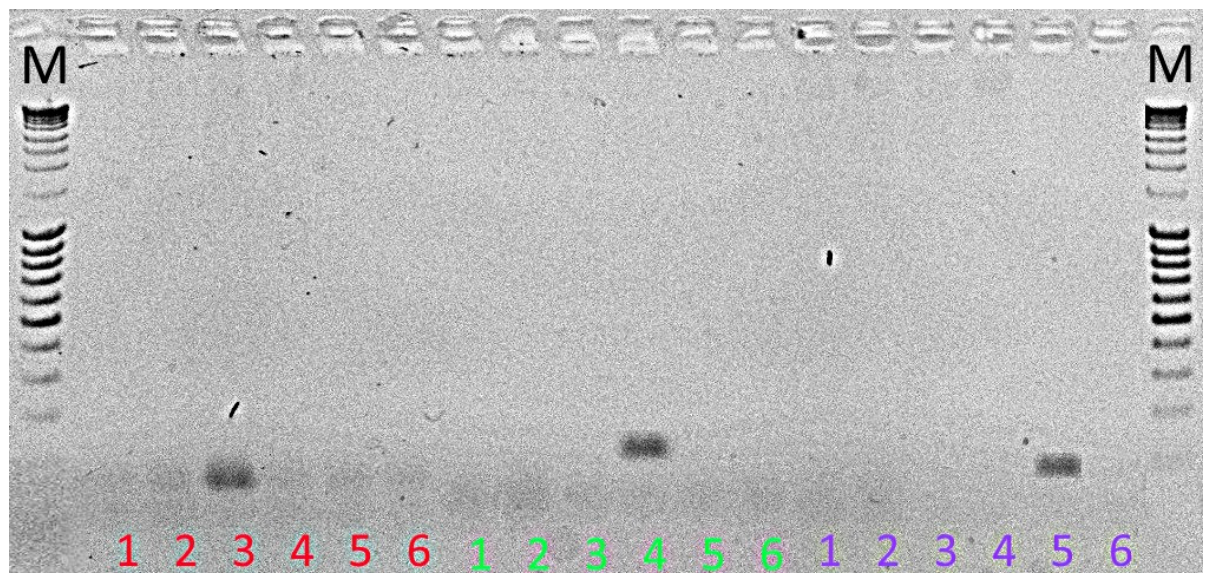
PCR amplification was performed using gene-specific markers for Pm4, Pm5, and Pm7. The primer sequences and expected fragment sizes are presented in Table 2. PCR products were separated on 2% agarose gel containing EtBr in TBE buffer at 120 V for 1 h. Fragment sizes were estimated using a GeneRuler 100 bp Plus DNA Ladder (Thermo Fisher Scientific, Waltham, MA, USA).
The presence or absence of expected amplification products was scored for each sample and marker system. A band of the expected size in a test accession, matching the positive control, was interpreted as indicative of the presence of the corresponding resistance gene. Absence of amplification in both the test accession and the susceptible control, alongside a band in the positive control, was interpreted as evidence for the absence of that gene.

2.4. Statistical Analysis

All statistical analyses and data visualizations were performed in R software version 4.3.3 (R Core Team, 2025, Vienna, Austria) using packages from the tidyverse collection, including ggplot2, tidyr, and dplyr, as well as the readxl, ggrepel, and RColorBrewer packages.
The distribution of disease severity scores for individual pathogen isolates was visualized using boxplots supplemented with individual genotype observations displayed as jittered points. Mean disease severity values were additionally indicated with diamond symbols, allowing simultaneous visualization of central tendency, variability, and the range of genotype responses to each isolate.
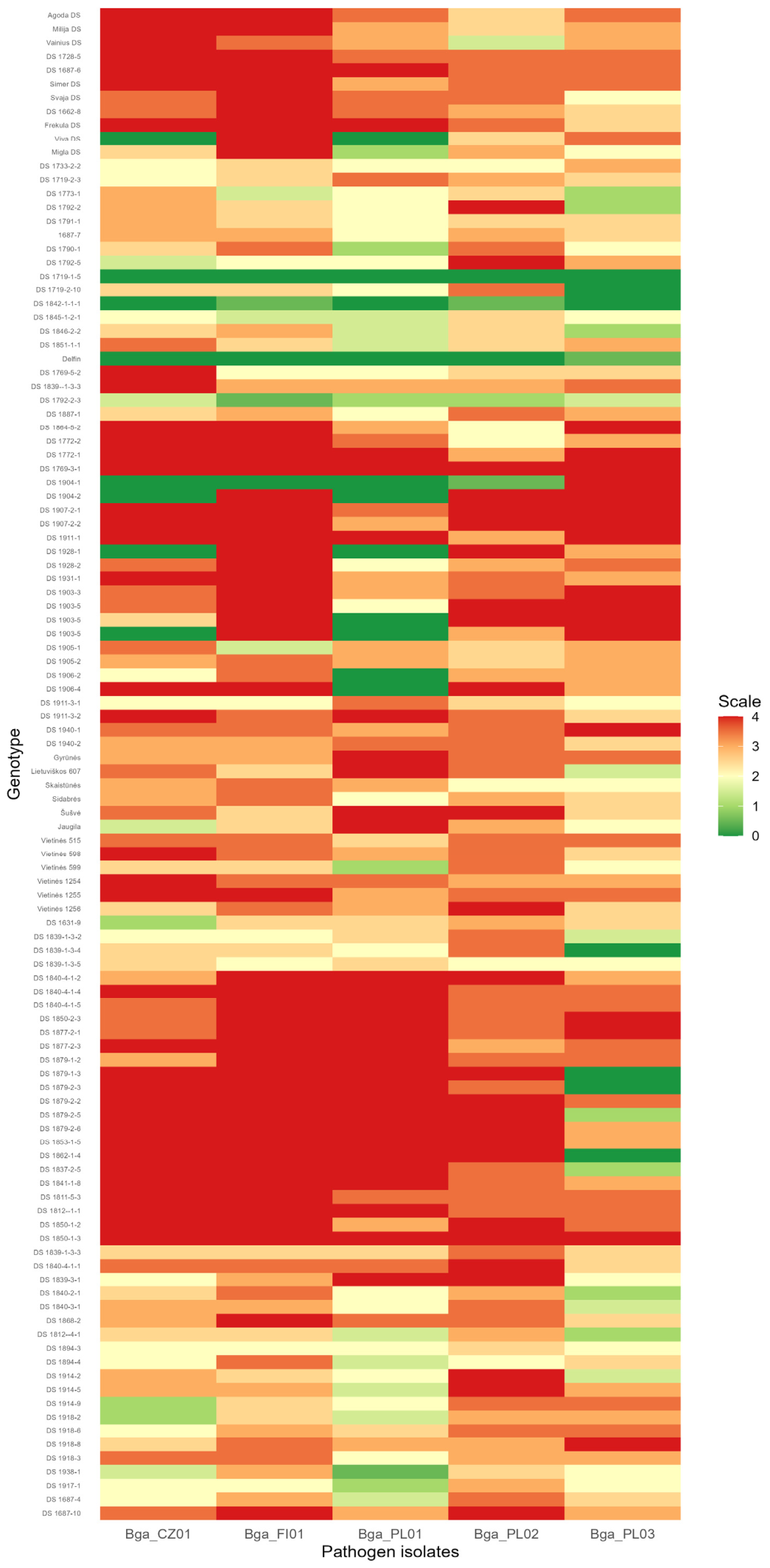
To compare the responses of genotypes across all tested isolates, a heatmap was generated in which rows represented individual genotypes and columns represented pathogen isolates. Color intensity, ranging from green through yellow to red, reflected disease severity scores according to the Mains scale [50]. This visualization enabled the identification of genotypes showing consistent responses across the entire set of isolates as well as isolate-specific response patterns.
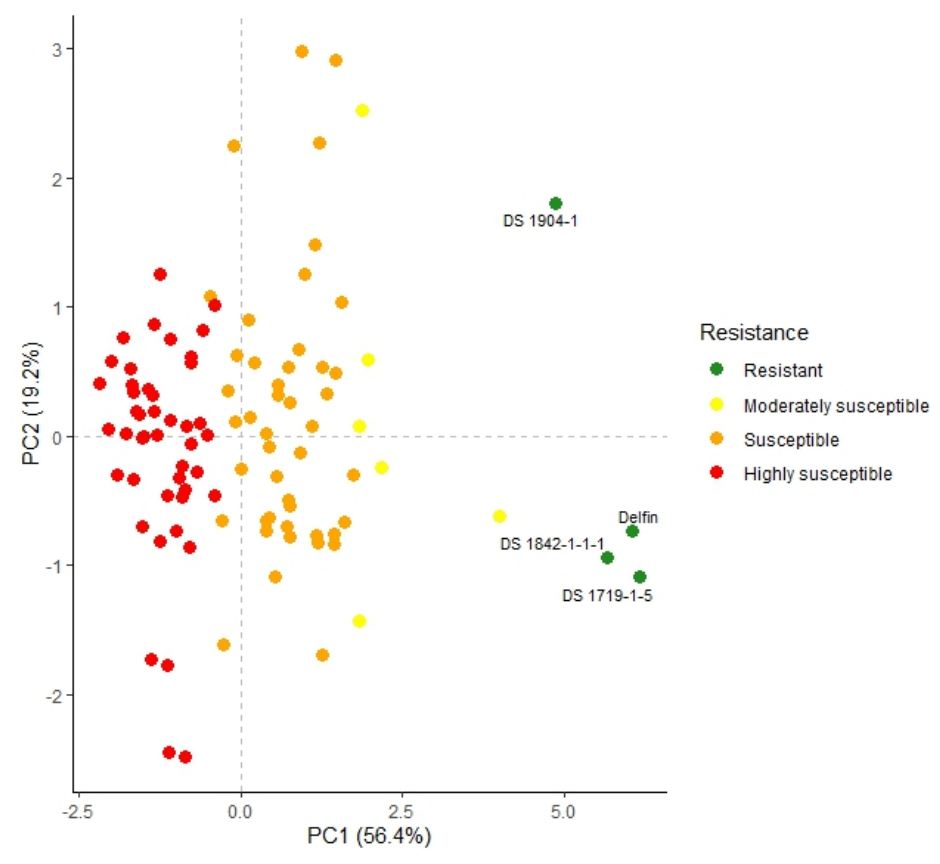
Based on the mean disease severity score calculated across all five isolates, genotypes were classified into four resistance categories: resistant (R), with a mean score ≤1.0; moderately susceptible (MS), with a mean score >1.0 and ≤2.0; susceptible (S), with a mean score >2.0 and ≤3.0; and highly susceptible (HS), with a mean score >3.0 and ≤4.0.
The structure of genotype variation and relationships among responses to individual isolates were assessed using Principal Component Analysis (PCA) based on disease severity scores obtained for the five isolates. Prior to PCA, variables were centered and scaled using the prcomp function implemented in R. The first two principal components explained 75.6% of the total variance (PC1: 56.4%; PC2: 19.2%). The PCA results were visualized as a scatter plot of the first two principal components, with genotypes labeled according to their assigned resistance categories.

3. Results

3.1. Resistance to Bga

Resistance to powdery mildew was evaluated using isolates presented in Table 1. This diverse isolate set enabled the assessment of both the effectiveness and the breadth of resistance among the tested oat cultivars, and the results are shown in Supplementary Tables S1 and S2.
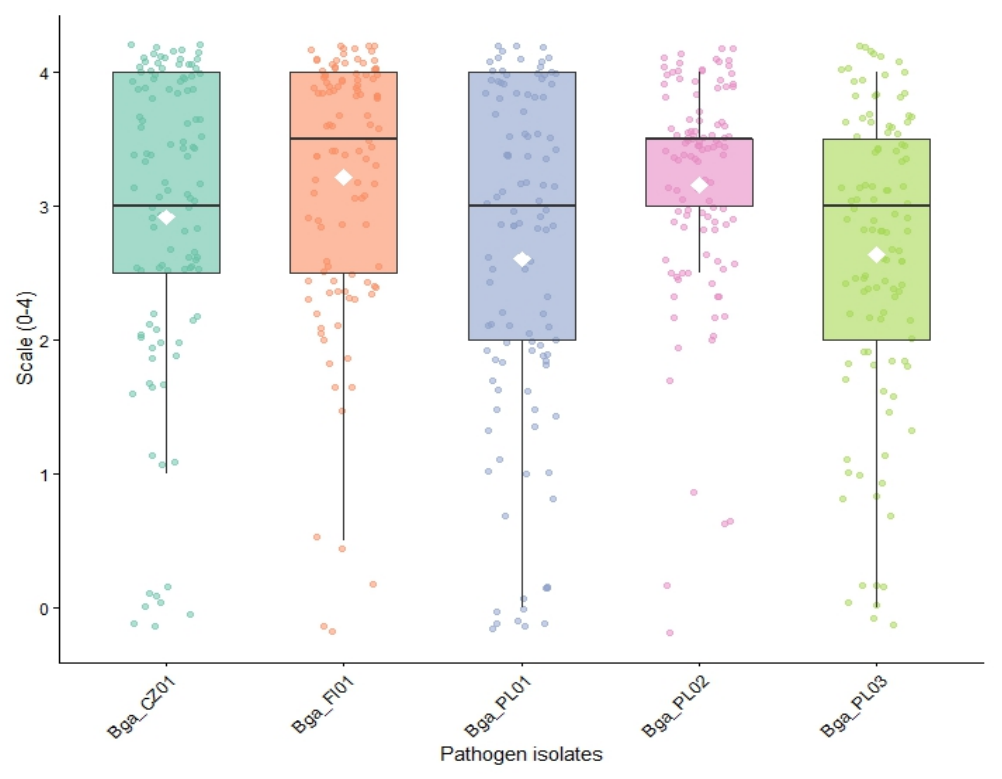
To further characterize the pathogenic diversity among the tested isolates, infection scores were compared across all evaluated cultivars. Comparative analysis of five Bga isolates revealed distinct virulence profiles (Figure 1). Bga_CZ01 and Bga_PL03 demonstrated the lowest virulence, with median disease severity values of approximately 3.0. Bga_PL02 displayed high virulence (median 3.3) with minimal variance, indicating consistent infectivity across all tested genotypes. Bga_FI01 emerged as the most aggressive isolate, exhibiting the highest median virulence (3.4) combined with substantial variation in disease expression. This variation in isolate-specific pathogenicity highlights the importance of evaluating resistance to diverse Bga populations for effective breeding strategies.

3.2. Infection Levels and Resistance of Individual Cultivars to Bga

The infection levels of all analyzed genotypes were visualized using a heat map (Figure 2). The heat map illustrates the intensity of infection caused by individual Bga isolates across successive experimental replicates. The visualization reveals substantial variation in host response patterns, with some plants displaying consistent resistance or susceptibility across all isolates, while others show differential responses depending on Bga isolates, indicating complex host–pathogen interaction.
Host–pathogen interaction assays revealed substantial variability in genotype responses to Bga infection. Complete resistance, defined as resistant reactions (R) to all tested isolates, was observed in only three genotypes: DS 1719-1-5, DS 1842-1-1-1 and Delfin. These genotypes remained resistant to Bga_PL01, Bga_FI01, Bga_PL02, Bga_PL03 and Bga_CZ01. Notably, the cultivar Delfin has previously been reported to carry the Pm7 resistance gene derived from the APR122 line, which is consistent with its broad resistance spectrum observed in the present study [40].
Among the remaining genotypes, DS 1904-1 exhibited the highest level of resistance, showing resistant reactions to four of the five isolates (Bga_PL01, Bga_FI01, Bga_PL02 and Bga_CZ01) and susceptibility only to Bga_PL03. None of the evaluated genotypes exhibited complete resistance to three of the five tested isolates.
Several genotypes were resistant to two isolates, including Viva DS (Bga_PL01 and Bga_CZ01), DS 1845-1-2-1 (Bga_PL01 and Bga_FI01), DS 1792-2-3 (Bga_PL01 and Bga_FI01), DS 1904-2 (Bga_PL01 and Bga_CZ01), DS 1928-1 (Bga_PL01 and Bga_CZ01), DS 1903-5 (Bga_PL01 and Bga_CZ01), and DS 1918-2 (Bga_PL01 and Bga_CZ01).
Resistance to a single isolate was the most common form of effective response. Resistance to Bga_PL01 was observed in DS 1790-1, DS 1851-1-1, DS 1906-2, DS 1906-4, Vietinės 599, DS 1914-5, DS 1918-3, and DS 1938-1. In contrast, resistance specific to Bga_PL03 was identified in DS 1839-1-3-4, DS 1879-1-3, DS 1879-2-3, DS 1879-2-5, DS 1862-1-4 and DS 1837-2-5. Resistance exclusively to Bga_CZ01 was detected only in DS 1631-9.
The majority of analyzed genotypes displayed intermediate resistance, with infection types predominantly scored as 2–3 and, in some cases, reaching the maximum value of 4. In contrast, forty-seven genotypes exhibited complete susceptibility, with no observable resistance response to each of the five tested isolates.
To compare resistance profiles across all evaluated genotypes, a principal component analysis (PCA) was performed based on mean infection scores (Figure 3). One of the resistant genotypes was clearly separated from the remaining genotypes, appearing in the upper right region of the plot, which suggests a distinct resistance mechanism. This cultivar is likely DS 1904-1, which had a mean infection score below 1 across all isolates but remained susceptible to one isolate. The three remaining fully resistant genotypes clustered closely together, indicating similar resistance profiles. Among the susceptible genotypes, a broad dispersion across the plot was observed, reflecting diverse susceptibility patterns.
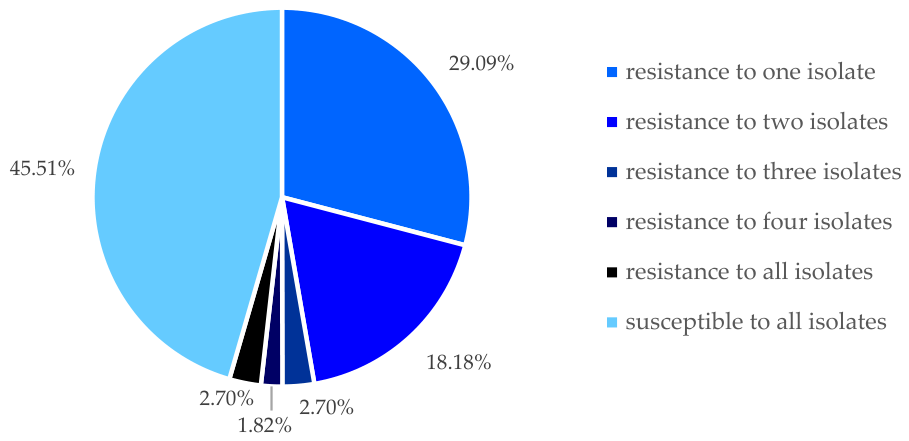
Quantitative analysis showed that 29.09% of genotypes were resistant to one Bga isolate, 18.18% to two isolates, 2.73% to three isolates, 1.82% to four isolates, and 2.73% to all five isolates. Overall, more than 50% of the evaluated genotypes expressed resistance to at least one Bga isolate; however, complete resistance across the entire pathogen population was rare. Notably, only 7.28% of genotypes showed resistance to three or more isolates, highlighting that broad-spectrum resistance is uncommon within the Lithuanian oat collection. This distribution of resistance levels among cultivars is summarized visually in Figure 4.

3.3. Postulation of Powdery Mildew Resistance Genes

Based on the methodology described by Okoń and Kowalczyk [49], numerical infection scores were converted into a letter-based coding system to facilitate comparison of infection profiles with those of reference cultivars and differential lines carrying known powdery mildew resistance (Pm) genes. The resulting profiles are presented in Supplementary Table S1. Gene postulation was based on the concordance between the infection profiles of the tested genotypes and the reference profiles of differential lines carrying known Pm genes.
Based on these comparisons, two hypotheses regarding the genetic basis of resistance were proposed. Eight genotypes exhibited the SSSRS reaction pattern, corresponding to the reference profile associated with the Pm6 gene (Supplementary Table S1). In addition, five genotypes displayed the RSSSR profile, which matched the reference pattern characteristic of Pm3-mediated resistance.
The cultivar Delfin exhibited complete resistance to all tested Bga isolates (RRRRR). Previous studies demonstrated that this cultivar carries the Pm7 resistance gene [40], and the resistance profile observed in the present study was consistent with this finding.
The remaining genotypes exhibiting complete resistance (DS 1719-1-5 and DS 1842-1-1-1) were subsequently evaluated using an expanded set of Bga isolates to further characterize their resistance spectra. This additional analysis was undertaken because several reference genotypes displayed identical reaction patterns when assessed with the initial set of isolates, limiting the discriminatory power of the primary differential panel.

3.4. Extended Virulence Analysis of Cultivars DS 1719-1-5 and DS 1842-1-1-1

To further characterize the resistance observed in the fully resistant genotypes identified in the initial screening, accessions DS 1719-1-5 and DS 1842-1-1-1 were subjected to an extended host–pathogen interaction assay using a panel of 30 Bga isolates originating from diverse geographic locations across Europe and collected across multiple years (Supplementary Table S2). This broader isolate set was applied to assess the breadth and stability of resistance and to enable a more refined postulation of the underlying resistance genes through comparison with reference genotypes carrying known Pm genes.
Accession DS 1719-1-5 demonstrated complete resistance to all 30 isolates tested, with infection scores of 0 recorded across the entire panel. This consistent absence of disease symptoms, maintained across isolates from geographically and temporally distinct populations, indicates the presence of broad-spectrum resistance effective against the full diversity of Bga represented in the panel.
In contrast, accession DS 1842-1-1-1 exhibited a narrower resistance spectrum. While DS 1842-1-1-1 remained fully resistant (infection score 0) to the majority of isolates, seven isolates elicited a susceptible response, with infection scores of 1 or 2: Bga_PL01, Bga_PL11, Bga_PL12, Bga_PL15, Bga_PL20, Bga_IE04, Bga_IE05. This pattern of partial susceptibility indicates that the resistance present in DS 1842-1-1-1 is isolate-specific and likely conferred by a gene with a narrower recognition spectrum than that present in DS 1719-1-5. Comparison of the infection profiles of DS 1719-1-5 and DS 1842-1-1-1 with those of reference genotypes carrying characterized Pm genes did not enable unambiguous assignment of either accession to a single known resistance gene. The resistance profiles of both cultivars were consistent with those of fully resistant reference lines across the majority of isolates; however, the differential responses observed in DS 1842-1-1-1 suggest a distinct genetic basis from DS 1719-1-5. The divergence between the two accessions, together with the inability to match either profile to a single known Pm gene, suggests that DS 1719-1-5 and DS 1842-1-1-1 may carry different, potentially novel resistance genes not previously described in oats. These findings underscore the genetic diversity of the Lithuanian oat collection and highlight the value of extended virulence testing for the characterization of resistance sources intended for use in breeding programs.

3.5. Molecular Analysis

To complement the phenotypic assessment and check whether known Pm resistance genes were present in both resistant genotypes, molecular analyses were performed based on available markers developed for the most effective Pm genes: Pm4, Pm5, and Pm7. In addition to accessions DS 1719-1-5 and DS 1842-1-1-1, positive controls carrying confirmed copies of each target gene were included in the analyses.
The molecular analyses confirmed that none of the resistant Lithuanian oat accessions carried any of the tested known resistance genes (Pm4, Pm5, or Pm7). In the gel electrophoresis results (Figure 5), both DS 1719-1-5 and DS 1842-1-1-1 produced no amplification products for any of the four marker systems applied, whereas the positive controls for each gene (lanes 3–5) yielded the expected diagnostic bands. The susceptible control cultivar Fuchs (lane 6) likewise showed no amplification, consistent with the absence of these genes in susceptible material. The complete absence of marker amplification in DS 1719-1-5 and DS 1842-1-1-1 across all four marker systems excludes the presence of Pm4, Pm5, and Pm7 and suggests that the observed resistance in these accessions may be conferred by a novel, previously uncharacterized genetic source not yet represented in the current set of molecular markers for oat powdery mildew resistance.

4. Discussion

Integrated pest management (IPM) has historically aimed to balance ecological, economic, and social aspects of crop production [54]. One of the central objectives of IPM is to achieve long-term and sustainable pathogen control while minimizing adverse environmental impacts [55]. Among the available strategies, genetic resistance is widely recognized as one of the most effective and environmentally sustainable approaches for reducing crop losses caused by plant pathogens. Plant resistance constitutes a fundamental component of IPM systems. The development and cultivation of resistant cultivars and breeding lines provide an economically viable and environmentally sound method of disease management. Furthermore, the deployment of resistant plant material can substantially reduce, or even eliminate, the need for repeated applications of chemical plant protection products [56]. In a study by Okoń et al. [57] concerning protection against Bga, the authors indicated that the use of cultivars carrying genetic resistance represents one of the most effective and environmentally safe approaches to limiting disease development in oats.
Consequently, numerous studies have been conducted to identify and verify the presence of resistance genes (Pm) in oat cultivars. Such analyses are carried out in different regions of the world to better understand the distribution and effectiveness of these genes. For example, Reilly et al. [58] analyzed the response of Irish historical oat lines to pathogen infection. Cieplak and Okoń [59] evaluated the resistance of oat cultivars originating from Central Europe. Earlier studies also reported data on oat responses to infection by Bga collected from Eastern Europe and North America [45], as well as from Great Britain [10]. At the same time, new sources of genetic resistance to fungal diseases, including resistance to Bga infection, continue to be actively investigated [39,44,60,61]. Research of this type is of particular importance in the context of efforts to reduce or eliminate the use of fungicides in modern agricultural systems. Reilly et al. [42], in their analysis of oat resistance to infection by Bga, reported that excessive reliance on chemical control and the limited number of effective resistance genes can make pathogen management increasingly difficult. The authors also emphasized that, at present, no highly effective fungicides are available for controlling powdery mildew infection.
An important aspect of research on host resistance is the evaluation of the effectiveness of previously identified resistance genes. Recent studies by Grzelak et al. [40] have demonstrated that the virulence structure of pathogen populations is continuously changing. This indicates the need for constant monitoring of pathogen populations and the ongoing search for new sources of resistance to Bga.
The aim of this study was to evaluate the level of resistance of 110 Lithuanian oat cultivars and breeding lines to infection by Bga isolates. The isolates used in this study originated from selected locations across Central Europe. In addition, we aimed to identify potential new sources of genetic resistance within the analyzed collection. The plant material represented diverse genotypes, including both old and newly developed breeding lines, as well as hulled and naked oat forms. The use of genetically diverse plant material increases the probability of identifying new sources of resistance with different resistance mechanisms. Previous studies have emphasized that the inclusion of a wide spectrum of genetic material, particularly genetically diverse cultivars and breeding lines, significantly increases the likelihood of discovering novel resistance genes and mechanisms [62].
The obtained results indicate considerable variability in the reactions of the analyzed genotypes to the applied pathogen isolates. Some genotypes exhibited a high level of resistance to selected isolates, whereas others were completely susceptible to infection. Among the 110 evaluated genotypes, three showed resistance to all tested isolates. Such a phenotypic pattern suggests the presence of specific resistance genes whose effectiveness depends on the corresponding avirulence genes present in the pathogen population.
The observed interaction pattern is consistent with the classical gene-for-gene concept proposed by Flor [63], according to which the effectiveness of plant resistance genes depends on the presence of matching avirulence genes in the pathogen population. Similar relationships have also been reported in studies on other cereal crops. For example, in barley, it has been demonstrated that individual plant genotypes may respond differently to specific avirulence genes present in pathogen isolates, further confirming the presence of resistance genes whose specificity is determined by the genetic composition of the fungal pathogen [64,65].
An essential component of the conducted study was the use of pathogen isolates originating from diverse geographic regions. Populations of fungal pathogens exhibit high genetic variability and a strong capacity to adapt to novel host genotypes. Therefore, the assessment of plant resistance should encompass a broad spectrum of pathogen isolates to enable a more reliable evaluation of both the range and stability of resistance [66]. In the initial experiments, five isolates were used, which allowed the evaluation of resistance in the tested genotypes and the postulation of the presence of the Pm3 and Pm6 genes in 13 genotypes; however, they did not enable a complete characterization of the resistance source in the varieties exhibiting the strongest resistance responses. Therefore, for these genotypes, a subsequent test was conducted using a set of 30 Bga isolates originating from various geographic locations across Europe and different years. In the study by Okoń et al. [60], the resistance of A. sterilis L. to powdery mildew was evaluated using 50 Bga isolates from 2014 to 2020. Different genotypes exhibited variation in resistance profiles, indicating the presence of new, previously uncharacterized sources of resistance. A similar approach has been applied in studies of other cereal diseases, where the use of isolates from diverse locations allowed the identification of specific host–pathogen interactions Hiddar et al. [67]. Oğuz and Karakaya [68], in their study on cereal leaf pathogens, also emphasize that changes in pathogen population structure can rapidly lead to resistance breakdown. Therefore, assessing plants against a broad set of isolates is crucial for determining the durability of resistance under field conditions.
Based on the conducted host–pathogen tests, varieties exhibiting resistance to some of the applied isolates were identified. These results suggest that the analyzed collection may represent a valuable source of resistance genes that could be utilized in the breeding of new oat cultivars. Resistance sources present in cultivated varieties are particularly valuable, as their use in breeding programs is generally easier than that of wild or primitive forms of the species. This is supported by studies in other cereal species—for instance, in collections of winter wheat from Kazakhstan, 45% of cultivars and breeding lines exhibited resistance to yellow rust caused by Puccinia striiformis f. sp. tritici [69], while the Canadian wheat cultivar Carberra maintains durable resistance to leaf rust and is widely used in breeding programs [70]. Although these studies were conducted in wheat, they provide strong evidence that resistant cultivated varieties constitute a practical and effective source of resistance genes that can be rapidly incorporated into new cereal breeding programs, including those for oats.
To ensure an optimal approach to resistance research, phenotypic analyses are often combined with molecular analyses. The use of molecular markers enables more precise and rapid development of new plant cultivars through accurate identification of desired resistance genes [71]. For example, Wight et al. [72] identified molecular markers associated with crown rust resistance genes in cultivated oat. Molecular markers also facilitate the identification of new resistance genes on the oat chromosome [39], and the markers developed in this way can subsequently be used to verify the presence of target genes in the evaluated cultivars or genotypes. In the present study, STS and SCAR markers were employed to identify the presence of the most desirable powdery mildew resistance genes (Pm4, Pm5, and Pm7 derived from APR lines) in selected resistant oat genotypes. The analyses revealed that the tested cultivars did not possess any of these genes, suggesting that they may represent a novel source of resistance. Given that one of the main challenges in modern breeding is the limited durability of resistance due to the rapid adaptation of pathogen populations, the identification of cultivars with potentially new resistance mechanisms offers promising perspectives for further research and breeding programs.
The obtained results confirm the high value of Lithuanian oat cultivars as a potential source of genetic resistance to Bga. The identified genotypes may serve as valuable starting material in breeding programs aimed at developing cultivars with enhanced and more durable resistance to pathogens. An important direction for further research should be a more detailed genetic characterization of the observed resistance mechanisms, including mapping the loci responsible for the detected responses and evaluating the tested cultivars against an even broader spectrum of Bga isolates. This will allow verification of the stability range of resistance and assessment of its potential utility in breeding oat cultivars with wide adaptive capacity.

Supplementary Materials

The following supporting information can be downloaded at: https://www.mdpi.com/article/10.3390/agriculture16131396/s1, Table S1: Reaction of oat cultivars and breeding lines to Blumeria graminis f. sp. avenae isolates and postulated Pm resistance genes; Table S2: Virulence profiles of Blumeria graminis f. sp. avenae isolates in a control set of oat genotypes and assessment of resistance of selected genotypes to infection with isolates used in extended tests.

Author Contributions

Conceptualization, W.G., V.D., A.N., A.G. and R.Š.; methodology, A.N. and S.O.; validation, W.G. and V.D.; formal analysis, W.G., A.G.; investigation, W.G., V.D. and A.N.; resources, V.D., A.G., R.Š. and S.O.; writing—original draft preparation, W.G., V.D., A.N., S.O.; writing—review and editing, W.G., V.D., A.N. and A.G.; visualization, R.Š. All authors agree to be accountable for all aspects of the work. All authors have read and agreed to the published version of the manuscript. .

Funding

This research received no external funding.

Data Availability Statement

The original contributions presented in this study are included in the article. Further inquiries can be directed to the corresponding author.

Conflicts of Interest

The authors declare no conflicts of interest.

References

  1. Sood, V.K.; Sanadya, S.K.; Kumar, S.; Chand, S.; Kapoor, R. Health Benefits of Oat (Avena sativa) and Nutritional Improvement through Plant Breeding Interventions. Crop Pasture Sci. 2022, 74, 993–1013. [Google Scholar] [CrossRef]
  2. FAOSTAT. Available online: https://www.fao.org/faostat/en/#data/QCL/visualize (accessed on 6 January 2026).
  3. FAOSTAT. Available online: https://www.fao.org/faostat/en/#data/QCL (accessed on 3 May 2026).
  4. Ekoagros Ekoagros|ATVIRI DUOMENYS. Available online: https://www.ekoagros.lt/atviri-duomenys (accessed on 3 May 2026).
  5. Marcinkevičienė, A.; Butkevičienė, L.M.; Skinulienė, L.; Rudinskienė, A. Effects of Cover Crop Mixtures on Soil Health and Spring Oat Productivity. Sustainability 2025, 17, 5566. [Google Scholar] [CrossRef]
  6. Liu, B.; Stevens-Green, R.; Johal, D.; Buchanan, R.; Geddes-McAlister, J. Fungal Pathogens of Cereal Crops: Proteomic Insights into Fungal Pathogenesis, Host Defense, and Resistance. J. Plant Physiol. 2022, 269, 153593. [Google Scholar] [CrossRef] [PubMed]
  7. Różewicz, M.; Wyzińska, M.; Grabiński, J. The Most Important Fungal Diseases of Cereals—Problems and Possible Solutions. Agronomy 2021, 11, 714. [Google Scholar] [CrossRef]
  8. Admassu-Yimer, B.; Klos, K.E.; Griffiths, I.; Cowan, A.; Howarth, C. Mapping of Crown Rust (Puccinia coronata f. sp. avenae) Resistance Gene Pc54 and a Novel Quantitative Trait Locus Effective Against Powdery Mildew (Blumeria graminis f. sp. avenae) in the Oat (Avena sativa) Line Pc54. Phytopathology® 2022, 112, 1316–1322. [Google Scholar] [CrossRef] [PubMed]
  9. Banyal, D.K.; Sood, V.K.; Singh, A.; Mawar, R. Integrated Management of Oat Diseases in North-Western Himalaya. Range Manag. Agrofor. 2016, 37, 84–87. [Google Scholar]
  10. Roderick, H.W.; Jones, E.R.L.; Šebesta, J. Resistance to Oat Powdery Mildew in Britain and Europe: A Review. Ann. Appl. Biol. 2000, 136, 85–91. [Google Scholar] [CrossRef]
  11. Xue, L.H.; Li, C.J.; Zhao, G.Q. First Report of Powdery Mildew Caused by Blumeria graminis on Avena sativa in China. Plant Dis. 2017, 101, 1954. [Google Scholar] [CrossRef]
  12. National List of Plant Varieties. 2017. Available online: https://vatzum.lrv.lt/media/viesa/saugykla/2023/11/1OtQ588iXOs.pdf (accessed on 10 June 2026).
  13. National List of Plant Varieties. 2026. Available online: https://vatzum.lrv.lt/public/canonical/1773398943/24524/2026.pdf (accessed on 10 June 2026).
  14. National List of Plant Varieties. 2021. Available online: https://vatzum.lrv.lt/media/viesa/saugykla/2023/11/cuEAL58-Bkc.pdf (accessed on 10 June 2026).
  15. State Plant Protection Service Under the Ministry of Agriculture. Data from the 2025 Study on the Agricultural Value of Plant Varieties/Data on Plant Varieties Tested for Value for Cultivation and Use in 2025; State Plant Protection Service Under the Ministry of Agriculture: Vilnius, Lithuania, 2026.
  16. State Plant Protection Service Under the Ministry of Agriculture. Data from the 2024 Study on the Agricultural Value of Plant Varieties/Data on Plant Varieties Tested for Value for Cultivation and Use in 2024; State Plant Protection Service Under the Ministry of Agriculture: Vilnius, Lithuania, 2026.
  17. Dean, R.; Van Kan, J.A.L.; Pretorius, Z.A.; Hammond-Kosack, K.E.; Di Pietro, A.; Spanu, P.D.; Rudd, J.J.; Dickman, M.; Kahmann, R.; Ellis, J.; et al. The Top 10 Fungal Pathogens in Molecular Plant Pathology. Mol. Plant Pathol. 2012, 13, 414–430. [Google Scholar] [CrossRef] [PubMed]
  18. Troch, V.; Audenaert, K.; Vanheule, A.; Bekaert, B.; Höfte, M.; Haesaert, G. Evaluation of Resistance to Powdery Mildew in Triticale Seedlings and Adult Plants. Plant Dis. 2013, 97, 410–417. [Google Scholar] [CrossRef]
  19. Clifford, B.C. Diseases, Pests and Disorders of Oats. In The Oat Crop; Welch, R.W., Ed.; Springer: Dordrecht, The Netherlands, 1995; pp. 252–278. [Google Scholar]
  20. Hsam, S.L.K.; Mohler, V.; Zeller, F.J. The Genetics of Resistance to Powdery Mildew in Cultivated Oats (Avena sativa L.): Current Status of Major Genes. J. Appl. Genet. 2014, 55, 155–162. [Google Scholar] [CrossRef]
  21. Sánchez-Martín, J.; Montilla-Bascón, G.; Mur, L.A.J.; Rubiales, D.; Prats, E. Compromised Photosynthetic Electron Flow and H2O2 Generation Correlate with Genotype-Specific Stomatal Dysfunctions during Resistance against Powdery Mildew in Oats. Front. Plant Sci. 2016, 7, 1660. [Google Scholar] [CrossRef] [PubMed]
  22. Cieplak, M.; Nucia, A.; Ociepa, T.; Okoń, S. Virulence Structure and Genetic Diversity of Blumeria graminis f. sp. avenae from Different Regions of Europe. Plants 2022, 11, 1358. [Google Scholar] [CrossRef] [PubMed]
  23. Mieslerová, B.; Cook, R.T.A.; Wheater, C.P.; Lebeda, A. Ecology of Powdery Mildews—Influence of Abiotic Factors on Their Development and Epidemiology. Crit. Rev. Plant Sci. 2022, 41, 365–390. [Google Scholar] [CrossRef]
  24. Green, J.R.; Carver, T.L.; Gurr, S.J. The Formation and Function of Infection and Feeding Structures; American Phytopathological Society (APS Press): St. Paul, MN, USA, 2002. [Google Scholar]
  25. Précigout, P.-A.; Claessen, D.; Robert, C. Crop Fertilization Impacts Epidemics and Optimal Latent Period of Biotrophic Fungal Pathogens. Phytopathology® 2017, 107, 1256–1267. [Google Scholar] [CrossRef] [PubMed]
  26. Cowger, C.; Parks, R.; Kosman, E. Structure and Migration in U.S. Blumeria graminis f. sp. Tritici Populations. Phytopathology® 2016, 106, 295–304. [Google Scholar] [CrossRef]
  27. Menardo, F.; Wicker, T.; Keller, B. Reconstructing the Evolutionary History of Powdery Mildew Lineages (Blumeria graminis) at Different Evolutionary Time Scales with NGS Data. Genome Biol. Evol. 2017, 9, 446–456. [Google Scholar] [CrossRef] [PubMed]
  28. Desprez-Loustau, M.-L.; Hamelin, F.M.; Marçais, B. The Ecological and Evolutionary Trajectory of Oak Powdery Mildew in Europe. In Wildlife Disease Ecology: Linking Theory to Data and Application; Fenton, A., Tompkins, D., Wilson, K., Eds.; Ecological Reviews; Cambridge University Press: Cambridge, UK, 2019; pp. 429–457. [Google Scholar]
  29. Pietrusińska-Radzio, A.; Bocianowski, J.; Czembor, P.C. Assessment of the Virulence Level of Powdery Mildew Populations Affecting Grains and Grasses in Poland during 2015–2017. Eur. J. Plant Pathol. 2025, 172, 829–840. [Google Scholar] [CrossRef]
  30. Dracatos, P.M.; Lu, J.; Sánchez-Martín, J.; Wulff, B.B.H. Resistance That Stacks up: Engineering Rust and Mildew Disease Control in the Cereal Crops Wheat and Barley. Plant Biotechnol. J. 2023, 21, 1938–1951. [Google Scholar] [CrossRef] [PubMed]
  31. Dreiseitl, A. Powdery Mildew Resistance Genes in European Barley Cultivars Registered in the Czech Republic from 2016 to 2020. Genes 2022, 13, 1274. [Google Scholar] [CrossRef] [PubMed]
  32. Directive 2009/128/EC of the European Parliament and of the Council of 21 October 2009 Establishing a Framework for Community Action to Achieve the Sustainable Use of Pesticides (Text with EEA Relevance). 2009. Available online: https://eur-lex.europa.eu/eli/dir/2009/128/oj/eng (accessed on 6 January 2026).
  33. Aktar-Uz-Zaman, M.; Tuhina-Khatun, M.; Hanafi, M.M.; Sahebi, M. Genetic Analysis of Rust Resistance Genes in Global Wheat Cultivars: An Overview. Biotechnol. Biotechnol. Equip. 2017, 31, 431–445. [Google Scholar] [CrossRef]
  34. Anderson, J.A.; Ellsworth, P.C.; Faria, J.C.; Head, G.P.; Owen, M.D.K.; Pilcher, C.D.; Shelton, A.M.; Meissle, M. Genetically Engineered Crops: Importance of Diversified Integrated Pest Management for Agricultural Sustainability. Front. Bioeng. Biotechnol. 2019, 7, 24. [Google Scholar] [CrossRef] [PubMed]
  35. Duru, M.; Therond, O.; Martin, G.; Martin-Clouaire, R.; Magne, M.-A.; Justes, E.; Journet, E.-P.; Aubertot, J.-N.; Savary, S.; Bergez, J.-E.; et al. How to Implement Biodiversity-Based Agriculture to Enhance Ecosystem Services: A Review. Agron. Sustain. Dev. 2015, 35, 1259–1281. [Google Scholar] [CrossRef]
  36. Wyckhuys, K.A.G.; Gu, B.; Ben Fekih, I.; Finger, R.; Kenis, M.; Lu, Y.; Subramanian, S.; Tang, F.H.M.; Weber, D.C.; Zhang, W.; et al. Restoring Functional Integrity of the Global Production Ecosystem through Biological Control. J. Environ. Manag. 2024, 370, 122446. [Google Scholar] [CrossRef] [PubMed]
  37. Ociepa, T.; Okoń, S.; Nucia, A.; Leśniowska-Nowak, J.; Paczos-Grzęda, E.; Bisaga, M. Molecular Identification and Chromosomal Localization of New Powdery Mildew Resistance Gene Pm11 in Oat. Theor. Appl. Genet. 2020, 133, 179–185. [Google Scholar] [CrossRef] [PubMed]
  38. Ociepa, T.; Okoń, S. Chromosomal Location of Pm12—A Novel Powdery Mildew Resistance Gene from Avena sterilis. Genes 2022, 13, 2409. [Google Scholar] [CrossRef] [PubMed]
  39. Schurack, S.; Beuch, S.; Cowan, S.; Griffiths, I.; Lunzer, M.; Morales, L.; Tudor, S.; Buerstmayr, H.; Howarth, C.J.; Tinker, N.A.; et al. Genetic Mapping of the Powdery Mildew Resistance Gene Pm13 on Oat (Avena sativa) Chromosome 1D. Plant Breed. 2025, 144, 387–398. [Google Scholar] [CrossRef]
  40. Grzelak, W.; Nucia, A.; Okoń, S. Powdery Mildew Resistance Gene (Pm) Stability and Blumeria graminis f. sp. Avenae Virulence Trends in Poland (2021–2023): Challenges to Durable Resistance in Oat. Agriculture 2025, 15, 1965. [Google Scholar] [CrossRef]
  41. Okoń, S.; Ociepa, T.; Paczos-Grzęda, E.; Kowalczyk, K. Analysis of the level of resistance of Polish oat cultivars (Avena sativa L.) to powdery mildew (Blumeria graminis DC. f. sp. avenae Em. Marchal.). Agron. Sci. 2016, 71, 51–60. [Google Scholar] [CrossRef]
  42. Reilly, A.; Okoń, S.; Cieplak, M.; Finnan, J.; Kildea, S.; Feechan, A. Breadth of Resistance to Powdery Mildew in Commercial Oat Cultivars Available in Ireland. Crop Prot. 2024, 176, 106517. [Google Scholar] [CrossRef]
  43. Danytė, V.; Gorash, A.; Liatukienė, A.; Liatukas, Ž. Trends changes of oat genotypes grown in Lithuania. Zemdirb.-Agric. 2020, 107, 323–328. [Google Scholar] [CrossRef]
  44. Herrmann, M.H.; Mohler, V. Locating Two Novel Genes for Resistance to Powdery Mildew from Avena byzantina in the Oat Genome. Plant Breed. 2018, 137, 832–838. [Google Scholar] [CrossRef]
  45. Hsam, S.L.; Peters, N.; Paderina, E.V.; Felsenstein, F.; Oppitz, K.; Zeller, F.J. Genetic Studies of Powdery Mildew Resistance in Common Oat (Avena sativa L.) I. Cultivars and Breeding Lines Grown in Western Europe and North America. Euphytica 1997, 96, 421–427. [Google Scholar] [CrossRef]
  46. Hsam, S.L.K.; Paderina, E.V.; Gordei, S.; Zeller, F.J. Genetic Studies of Powdery Mildew Resistance in Cultivated Oat (Avena sativa L.) II. Cultivars and Breeding Lines Grown in Northern and Eastern Europe. Hereditas 1998, 230, 227–230. [Google Scholar]
  47. Okoń, S.; Cieplak, M.; Kuzdraliński, A.; Ociepa, T. New Pathotype Nomenclature for Better Characterisation the Virulence and Diversity of Blumeria graminis f. sp. avenae Populations. Agronomy 2021, 11, 1852. [Google Scholar] [CrossRef]
  48. Okoń, S.M.; Ociepa, T. Effectiveness of New Sources of Resistance against Oat Powdery Mildew Identified in A. Sterilis. J. Plant Dis. Prot. 2018, 125, 505–510. [Google Scholar] [CrossRef]
  49. Okoń, S.; Kowalczyk, K. Deriving Isolates of Powdery Mildew (Blumeria graminis DC. f. sp. avenae Em. Marchal.) in Common Oat (Avena sativa L.) and Using Them to Identify Selected Resistance Genes. Acta Agrobot. 2012, 65, 155–160. [Google Scholar] [CrossRef]
  50. Mains, E.B. Inheritance of Resistance to Powdery Mildew, Erysiphe Graminis Tritici, in Wheat. Phytopathology 1934, 24, 1257–1261. [Google Scholar]
  51. Doyle, J.J.; Doyle, J.L. A Rapid DNA Isolation Procedure for Small Quantities of Fresh Leaf Tissue. Phytochem. Bull. 1987, 19, 11–15. [Google Scholar]
  52. Yu, J.; Herrmann, M. Inheritance and Mapping of a Powdery Mildew Resistance Gene Introgressed from Avena macrostachya in Cultivated Oat. Theor. Appl. Genet. 2006, 113, 429–437. [Google Scholar] [CrossRef] [PubMed]
  53. Okoń, S.M.; Ociepa, T.; Nucia, A. Molecular Identification of Pm4 Powdery Mildew Resistant Gene in Oat. Not. Bot. Horti Agrobot. Cluj-Napoca 2018, 46, 350–355. [Google Scholar] [CrossRef]
  54. He, D.; Zhan, J.; Xie, L. Problems, Challenges and Future of Plant Disease Management: From an Ecological Point of View. J. Integr. Agric. 2016, 15, 705–715. [Google Scholar] [CrossRef]
  55. Karlsson Green, K.; Stenberg, J.A.; Lankinen, Å. Making Sense of Integrated Pest Management (IPM) in the Light of Evolution. Evol. Appl. 2020, 13, 1791–1805. [Google Scholar] [CrossRef] [PubMed]
  56. Kaur, S.; Kaur, J.; Mavi, G.S.; Dhillon, G.S.; Sharma, A.; Singh, R.; Devi, U.; Chhuneja, P. Pyramiding of High Grain Weight with Stripe Rust and Leaf Rust Resistance in Elite Indian Wheat Cultivar Using a Combination of Marker Assisted and Phenotypic Selection. Front. Genet. 2020, 11, 593426. [Google Scholar] [CrossRef] [PubMed]
  57. Okoń, S.; Ociepa, T.; Paczos-Grzęda, E.; Ladizinsky, G. Evaluation of Resistance to Blumeria graminis (DC.) f. sp. Avenae, in Avena murphyi and A. magna Genotypes. Crop Prot. 2018, 106, 177–181. [Google Scholar] [CrossRef]
  58. Reilly, A.; Okoń, S.; Cieplak, M.; Finnan, J.; Kildea, S.; Feechan, A. Resistance to Powdery Mildew in Irish Oat Heritage Lines. Eur. J. Plant Pathol. 2024, 170, 105–118. [Google Scholar] [CrossRef]
  59. Cieplak, M.; Okoń, S. Resistance of Central European Oat Cultivars (A. sativa L.) to Powdery Mildew (Blumeria graminis f. sp. aveane). Res. Sq. 2023. [Google Scholar] [CrossRef] [PubMed]
  60. Okoń, S.; Nucia, A.; Ociepa, T.; Börner, A.; Kowalczyk, K. When the Source of Resistance Can Be Considered Effective—Resistance to Blumeria graminis f. Sp. Avenae Found in Avena sterilis L. Eur. J. Plant Pathol. 2025, 172, 819–827. [Google Scholar] [CrossRef]
  61. Okoń, S.M.; Chrząstek, M.; Kowalczyk, K.; Koroluk, A. Identification of New Sources of Resistance to Powdery Mildew in Oat. Eur. J. Plant Pathol. 2014, 139, 9–12. [Google Scholar] [CrossRef]
  62. He, H.; Tang, Q.; Zhang, Q.; Zhu, S.; Lv, S.; Bao, Y.; Liang, J.; Wang, J.; Wang, J.; Xu, H.; et al. An NLR Pair in the Pm68 Locus Confers Powdery Mildew Resistance in Durum and Common Wheat. Nat. Commun. 2025, 16, 9039. [Google Scholar] [CrossRef] [PubMed]
  63. Flor, H.H. Current Status of the Gene-For-Gene Concept. Annu. Rev. Phytopathol. 1971, 9, 275–296. [Google Scholar] [CrossRef]
  64. Skiba, R.M.; Wyatt, N.A.; Kariyawasam, G.K.; Fiedler, J.D.; Yang, S.; Brueggeman, R.S.; Friesen, T.L. Host and Pathogen Genetics Reveal an Inverse Gene-for-Gene Association in the P. teres f. Maculata–Barley Pathosystem. Theor. Appl. Genet. 2022, 135, 3597–3609. [Google Scholar] [CrossRef] [PubMed]
  65. Yaeno, T.; Wahara, M.; Nagano, M.; Wanezaki, H.; Toda, H.; Inoue, H.; Eishima, A.; Nishiguchi, M.; Hisano, H.; Kobayashi, K. RACE1, a Japanese Blumeria graminis f. sp. Hordei Isolate, Is Capable of Overcoming Partially Mlo-Mediated Penetration Resistance in Barley in an Allele-Specific Manner. PLoS ONE 2021, 16, e0256574. [Google Scholar] [PubMed]
  66. Thauvin, J.-N.; Russell, J.; Vequaud, D.; Looseley, M.; Bayer, M.; Roux, P.-M.L.; Pin, P.; Waugh, R.; Avrova, A. Genome-Wide Association Study for Resistance to Rhynchosporium in a Diverse Collection of Spring Barley Germplasm. Agronomy 2022, 12, 782. [Google Scholar] [CrossRef]
  67. Hiddar, H.; Rehman, S.; Belkadi, B.; Filali-Maltouf, A.; Al-Jaboobi, M.; Verma, R.P.S.; Gyawali, S.; Kehel, Z.; Amri, A. Identification of Sources of Resistance to Scald (Rhynchosporium commune) and of Related Genomic Regions Using Genome-Wide Association in a Mapping Panel of Spring Barley. Front. Plant Sci. 2023, 14, 1133404. [Google Scholar] [CrossRef] [PubMed]
  68. Oğuz, A.Ç.; Karakaya, A. Genetic Diversity of Barley Foliar Fungal Pathogens. Agronomy 2021, 11, 434. [Google Scholar] [CrossRef]
  69. Kokhmetova, A.; Rsaliyev, A.; Malysheva, A.; Atishova, M.; Kumarbayeva, M.; Keishilov, Z. Identification of Stripe Rust Resistance Genes in Common Wheat Cultivars and Breeding Lines from Kazakhstan. Plants 2021, 10, 2303. [Google Scholar] [CrossRef] [PubMed]
  70. Bokore, F.E.; Knox, R.E.; Hiebert, C.W.; Cuthbert, R.D.; DePauw, R.M.; Meyer, B.; N’Diaye, A.; Pozniak, C.J.; McCallum, B.D. A Combination of Leaf Rust Resistance Genes, Including Lr34 and Lr46, Is the Key to the Durable Resistance of the Canadian Wheat Cultivar, Carberry. Front. Plant Sci. 2022, 12, 775383. [Google Scholar] [CrossRef] [PubMed]
  71. Sinha, S.; Singh, R.S.; Kumar, A.; Kesari, R.; Kumari, A.; Singh, P.K. Molecular Markers and Their Applications in Marker-Assisted Selection in Industrial Crops. In Industrial Crops Improvement: Biotechnological Approaches for Sustainable Agricultural Development; Kumar, N., Ed.; Springer Nature: Cham, Switzerland, 2025; pp. 79–96. [Google Scholar]
  72. Wight, C.P.; O’Donoughue, L.S.; Chong, J.; Tinker, N.A.; Molnar, S.J. Discovery, Localization, and Sequence Characterization of Molecular Markers for the Crown Rust Resistance Genes Pc38, Pc39, and Pc48 in Cultivated Oat (Avena sativa L.). Mol. Breed. 2005, 14, 349–361. [Google Scholar] [CrossRef]
Figure 1. Pathogenic variation in powdery mildew isolates infecting Lithuanian oat varieties. Distribution of disease severity scores (0–4 scale) for plants inoculated with five Bga isolates. Boxes represent the interquartile range (IQR; 25th–75th percentiles), horizontal lines indicate the median, and white diamonds indicate the mean. Whiskers extend to 1.5 × IQR. Individual observations are shown as jittered points. The boxplots provide a descriptive summary of the observed disease severity scores.
Agriculture 16 01396 g001
Figure 2. Matrix plot presenting infection levels caused by Blumeria graminis f. sp. avenae isolates in the analyzed oat cultivars. Heatmap of disease severity scores recorded for 110 oat plants inoculated with five Bga isolates. Rows represent individual plants and columns represent pathogen isolates. Disease reactions were scored on a 0–4 scale, where 0 indicates complete resistance and 4 indicates high susceptibility. The color gradient ranges from green (resistant) to red (susceptible), facilitating visualization of variation in host responses among isolates.
Agriculture 16 01396 g002
Figure 3. PCA plot illustrating the diversity of resistance and susceptibility profiles among the evaluated oat accessions. The plot is based on the mean infection score (S) calculated as the average of infection ratings across all five isolates. Cultivars were classified as resistant (S < 1), moderately susceptible (1 ≤ S < 2), susceptible (2 ≤ S < 3), or highly susceptible (3 ≤ S < 4).
Agriculture 16 01396 g003
Figure 4. Percentage distribution of oat cultivars exhibiting resistance to different numbers of Blumeria graminis f. sp. avenae isolates.
Agriculture 16 01396 g004
Figure 5. Results of molecular analyses for the target resistance genes. M—length marker; Lane 1—DS 1719-1-5 (resistant accession); lane 2—DS 1842-1-1-1 (resistant accession); lane 3—positive control for Pm4 (Av1860); lane 4—positive control for Pm5 (Am25); lane 5—positive control for Pm7(APR122); lane 6—susceptible control cultivar Fuchs. Colors indicate the marker system used: red—Pm4 marker; green—Pm5 marker; purple—Pm7 marker. The expected amplification products were 68 bp for Pm4, 122 bp for Pm5, and approximately 80 bp for Pm7 (data not published).
Agriculture 16 01396 g005
Table 1. Geographic origins of Blumeria graminis f. sp. avenae isolates and their infection responses on differential oat lines carrying known powdery mildew resistance genes (Pm1Pm12), used for isolate characterization and resistance gene postulation. The columns Pm1Pm12 represent differential oat lines carrying known powdery mildew resistance genes. The recorded infection responses (R, I, S) were used to characterize the virulence spectrum of each isolate and served as reference profiles for subsequent resistance gene postulation in the tested genotypes.
Code Used in AnalysisLocalizationPm1Pm2Pm3Pm4Pm5Pm6Pm7Pm7 (Canyon)Pm3 + 8Pm9Pm10Pm11Pm12A. strigosaFuchs
Bga_PL01Central PolandSRRRRSRRRIRIRRS
Bga_PL02Eastern PolandRRSRRSRIRSSSRIS
Bga_PL03Western PolandRRSRRSRSISRIRRS
Bga_CZ01Czech RepublicSRSRRRRRSRRRRRS
Bga_FI01FinlandSRRRRSRRRRRIRRS
R—resistant; I—intermediate; S—susceptible.
Table 2. PCR amplification conditions.
GeneMarkerForward Primer (5′→3′)Reverse Primer (3′→5′)Primer TmReference
Pm45420825GCCAAACCTGATAGTGACCAATACGCCAAGCGTGTCAGTTA60Okoń [53]
Pm5ASE36M55CCATCAGATTAGTCAAGGTCACAAAAGTTGCCAAATCGATATGAAAC95Yu [52]
Pm7Data not published70Data not published
Disclaimer/Publisher’s Note: The statements, opinions and data contained in all publications are solely those of the individual author(s) and contributor(s) and not of MDPI and/or the editor(s). MDPI and/or the editor(s) disclaim responsibility for any injury to people or property resulting from any ideas, methods, instructions or products referred to in the content.