Article

Contrasting Rhizosphere Soil Stoichiometric Traits and Microbial Nitrogen Limitation Between Maize and Peanut Under Intercropping and Straw Retention


1
College of Agronomy, Jilin Agricultural University, Changchun 130118, China
2
Institute of Agricultural Resources and Environment, Jilin Academy of Agricultural Sciences (Northeast Agricultural Research Center of China)/Key Laboratory of Crop Ecophysiology and Farming System, Ministry of Agriculture and Rural Affairs, Changchun 130033, China
3
College of Plant Science, Jilin University, 5333 Xi’an Ave, Changchun 130062, China
*
Authors to whom correspondence should be addressed.
Agriculture 2026, 16(13), 1388; https://doi.org/10.3390/agriculture16131388 (registering DOI)
Submission received: 11 May 2026 / Revised: 19 June 2026 / Accepted: 23 June 2026 / Published: 25 June 2026
(This article belongs to the Topic Plant-Soil Interactions, 3rd Edition)

Abstract

Extracellular enzyme stoichiometry is a key indicator for assessing nutrient limitation experienced by soil microorganisms. Yet, the characteristics of enzyme-inferred microbial nutrient limitation in rhizosphere soil under the combined agricultural practices of intercropping and straw retention remain unclear. Here, we conducted a field experiment in the black soil region of Northeast China to quantify the effects of intercropping and straw retention on soil nutrients, microbial biomass, extracellular enzyme activities, and their C:N:P stoichiometry in the rhizosphere of maize and peanut. Our results showed that compared with sole cropping, intercropping increased soil organic carbon (SOC) by 6.21–13.57%, total nitrogen (TN) by 8.57–12.49%, and total phosphorus (TP) by 12.01–40.29% in the rhizosphere. The vector analysis revealed an average vector length (VL) of 1.68 and 1.57 for extracellular enzymes in the rhizosphere soil of maize and peanut, with a vector angle (VA) of 37.80° and 34.67°, respectively. These values suggest that soil microorganisms in the rhizosphere of both crops experienced C limitation, and that the degree of enzyme-inferred N limitation was modulated by microbial C acquisition strategies, with a dynamic trade-off between the two. This N limitation was more pronounced in the peanut rhizosphere. Notably, the combined treatment of intercropping and full straw retention increased the VA of peanut by 5.38%, corresponding to a partial alleviation of enzyme-inferred N limitation in the rhizosphere soil. The extracellular enzyme C:N:P stoichiometry in the rhizosphere soil of maize and peanut was 1.33:1.29:1.00 and 0.89:1.29:1.00, respectively. Microbial biomass nitrogen (MBN) was the primary factor affecting enzyme-inferred microbial nutrient limitation (explaining 54.6% of variation). The extracellular enzyme stoichiometric characteristics of rhizosphere soil differed significantly between the two crops. Intercropping had a stronger impact on rhizosphere microbial nutrient limitation than straw retention, and their synergistic effect was associated with a partial alleviation of rhizosphere enzyme-inferred N limitation by enhancing extracellular enzyme activity. These findings demonstrate that integrated intercropping and straw retention can support sustainable soil management in black soil agroecosystems.

1. Introduction

In China, the black soil region of its Northeast is a core grain production base, with irreplaceable strategic significance for national food security. In recent years, however, affected by factors such as soil erosion, long-term intensive cultivation, and poor nutrient management, this region has generally faced several concurrent problems, including thinning of the plow layer, decreased organic matter content, and soil function degradation [1]. In order to address this situation, it is imperative to explore more sustainable soil management models. As a proven and efficient agricultural management practice, intercropping has been widely applied around the world because of its advantages in improving soil quality and enhancing resource use efficiency [2]. In particular, the maize–peanut intercropping system may influence the composition, diversity, and structure of the soil microbial community, which promotes soil health [3]. Meanwhile, straw retention, another important practice in farming, can effectively enhance soil microbial activity by returning organic matter and nutrients to the soil, which promotes nutrient cycling and material transformation in agroecosystems [4], providing important support for ensuring high crop yields and sustainable farmland utilization.
Soil microorganisms, as core biological drivers of nutrient cycling, often have their metabolic activities limited by the local availability of certain soil nutrients [5,6]. Accordingly, soil extracellular enzyme stoichiometry provides a fresh perspective for studying these types of microbial nutrient limitation. By analyzing the activities of key enzymes involved in microbial acquisition of carbon (β-1,4-glucosidase, BG), nitrogen (β-1,4-N-acetylglucosaminidase, NAG; leucine aminopeptidase, LAP), and phosphorus (acid or alkaline phosphatase, AP), as well as their stoichiometric ratios (BG:(NAG + LAP):AP), this method can accurately reflect the relative nutrient demands and utilization strategies of soil microbial communities [7,8,9]. Many studies have shown that these enzyme activity ratios are closely related to soil C:N:P stoichiometric characteristics and can serve as effective indicators for assessing microbial nutrient limitation [10,11,12].
The rhizosphere, as the active interface zone for soil–plant interactions, is far richer in microbial and extracellular enzyme activities than the surrounding bulk soil [13]. It is known that extracellular enzyme stoichiometric characteristics of the rhizosphere are affected not only by soil physical properties, but are also closely related to local vegetation types and land management practices [14]. Over the last few years, the benefits of straw retention and maize–legume intercropping for the rhizosphere microecosystem have been confirmed, in that both practices can substantially increase microbial diversity and soil nutrient availability [15,16]. Recently, we reported on how these two agricultural practices affect extracellular enzyme activities in bulk soil [17].
However, critical aspects of microbial nutrient limitation in rhizosphere soil and their regulatory mechanisms under the combined management model of intercropping and straw retention remain unclear. Most previous studies have examined intercropping or straw retention in isolation, or have focused on bulk soil rather than the rhizosphere. Moreover, the specific responses of different crop species (maize vs. legume) within the same intercropping system have rarely been compared using enzyme stoichiometric approaches. Using the enzyme eco-stoichiometry approach, this study focused on exploring the effects of maize–peanut intercropping and straw retention on microbial nutrient limitation in rhizosphere soil. We address three pertinent scientific questions: (1) How do rhizosphere soil properties, microbial biomass, extracellular enzyme activities, and stoichiometric ratios of maize and peanut respond to the combined practices of intercropping and straw retention? (2) What is the status of rhizosphere soil microbial nutrient limitation of maize and peanut under those different practices? (3) What are the primary factors correlated with microbial nutrient limitation of maize and peanut crops? Answering these timely questions can provide a theoretical basis for the sustainable management of farmland ecosystems in China’s vital black soil region.

2. Materials and Methods

2.1. Site Description

This study was conducted at the Halahai Comprehensive Experimental Station of Jilin Academy of Agricultural Sciences (44°05′ N, 124°51′ E), where a long-term, fixed-field experiment platform for maize–peanut intercropping (with rotation in the following year) was established in 2015. The study area has a temperate continental monsoon climate, with an average annual temperature of 4.7 °C and an average annual precipitation of 507.7 mm. The tested soil was chernozem with a loamy texture. The 0–20 cm plow layer has these soil fertility properties: alkaline hydrolysable nitrogen—47.37 mg/kg; available phosphorus—13.27 mg/kg; available potassium—173.68 mg/kg; organic matter—13.79 g/kg; and pH = 7.86.

2.2. Experimental Design

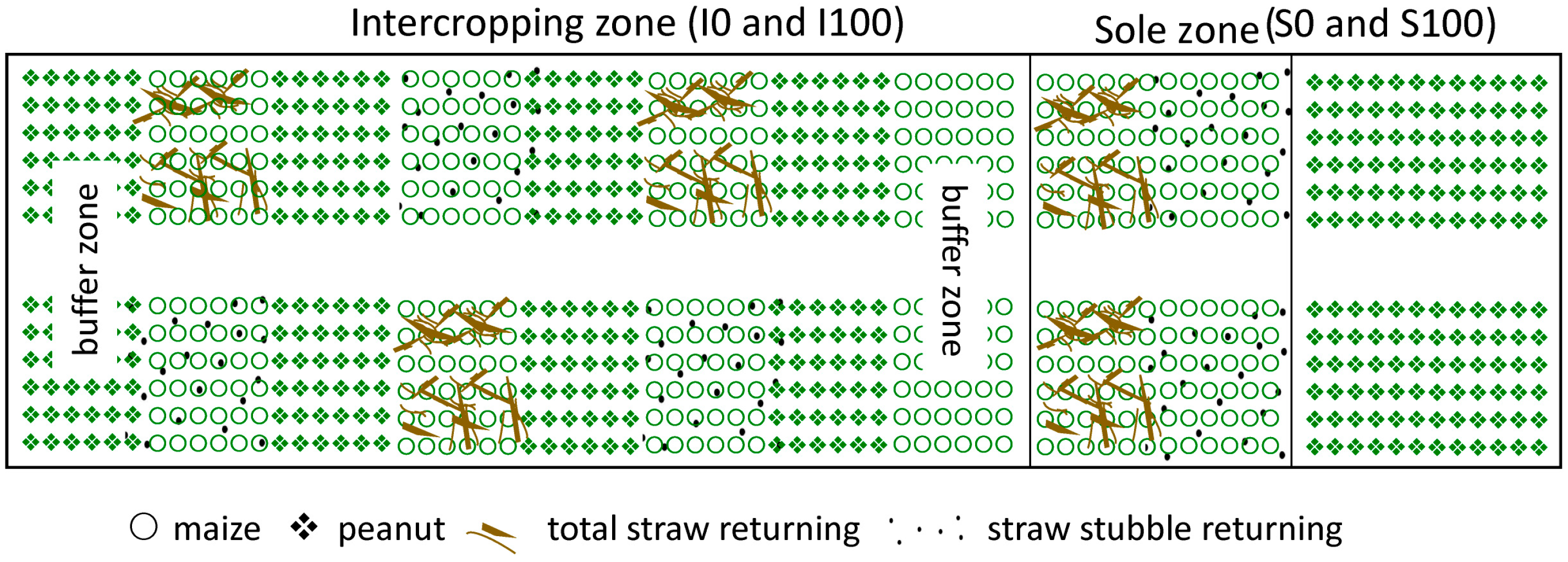
This field experiment adopted a randomized block split-plot design with two hierarchical levels (Figure 1). The main plot consisted of three planting patterns: maize||peanut 6:6 equal-width intercropping (row ratio 1:1), sole peanut cropping, and sole maize cropping. The subplot included two straw retention treatments: root stubble retention (only maize root stubble remained, with all aboveground straw removed) and full straw retention (straw crushed to approximately 10 cm and incorporated into soil via deep tillage to 30 cm depth), among which root stubble retention followed the conventional local maize production practice with a stubble height of about 10 cm. Four representative treatment combinations were selected in this study: intercropping with root stubble retention (I0/IM0), intercropping with full straw retention (I100/IM100), sole cropping with root stubble retention (S0/SM0, control), and sole cropping with full straw retention (S100/SM100). The experiment was arranged in three replicates with a randomized block design, setting a total of 9 main plots. For convenient field mechanized management, each intercropping plot was 120 m × 3.9 m, and each sole cropping plot was 120 m × 10.4 m. The tested cultivars were the semi-compact maize variety “Fumin 985” and the early-maturing upright flowering peanut variety “Huayu 20”, with a unified row spacing of 0.65 m for both crops.
Maize was sown around 7–10 May 2024 at a density of 60,000 plants ha−1; compound fertilizer (N:P2O5:K2O = 15:15:15) was applied as a base fertilizer at 970 kg ha−1, and 46% nitrogen urea was topdressed at 163 kg ha−1 during the maize large bell stage (around June 25). Peanut was sown around 13–20 May 2024 at a density of 120,000 holes ha−1 with 2 seeds per hole; the base fertilizer was compound fertilizer (N:P2O5:K2O = 12:17:16) applied at 700 kg ha−1, and no topdressing was applied during the entire peanut growth period. The crop yield was determined in late September to early October, and straw retention treatments were implemented immediately after the maize harvest in early October. In the full straw retention treatment, crop straw was chopped to about 10 cm and evenly returned to the field; in the root stubble retention treatment, all aboveground maize straw was completely removed. In addition, maize and peanut planting areas were implemented with crop rotation in the subsequent year, and all other field management measures followed local conventional agricultural production practices.

2.3. Soil Sample Collection

Soil samples were collected during the milk-ripe stage of maize and the pod-filling stage of peanut. To obtain rhizosphere soil, we used the soil-shaking method and followed these steps: from each plot, three maize and six peanut plants were selected as representative individuals, with a 30 cm × 30 cm × 30 cm root zone soil block excavated per crop type. After carefully removing any surface debris, the loose soil was removed by gentle shaking, and the soil adhering to within 5 mm of the surface of fine roots (diameter < 2 mm) was collected as rhizosphere samples. Each plot served as the experimental unit. Rhizosphere soils from the sampled plants within a plot were thoroughly mixed to form a single composite sample, ensuring that subsequent subsamples represented plot-level variability. These samples were then passed through a 2 mm sieve to remove any residual roots and other impurities. Next, each composite sample was immediately divided into two parts for processing. One part was quickly frozen with liquid nitrogen and stored in an ultra-low-temperature refrigerator at −80 °C for the determination of microbial biomass carbon (MBC), biomass nitrogen (MBN), biomass phosphorus (MBP), and extracellular enzyme activities related to C, N, and P cycling. The other part was naturally air-dried for the analysis of soil organic carbon (SOC), total nitrogen (TN), and total phosphorus (TP) contents.

2.4. Soil Sample Measurements

Standard methods were used to determine the basic physical and chemical properties of soil. The SOC content was quantified with a total organic carbon analyzer (TOC-L, Shimadzu Corp., Kyoto, Japan). The TN content was measured via the Kjeldahl method, with the following specific steps: soil samples were digested with concentrated H2SO4 until they appeared clear, then the volume was made up, and distilled and titrated using a Kjeldahl nitrogen analyzer (Titrette, 50 mL, Brand GmbH + Co. KG, Wertheim, Germany) [18,19]. The TP content was quantified by the H2SO4-HClO4 digestion-molybdenum antimony colorimetry method: after complete digestion, the volume was fixed, the supernatant was taken, molybdenum antimony anti-color developer was added, and colorimetry was performed at a 700 nm wavelength [20].
Microbial biomass was determined using the chloroform fumigation–extraction method [21]. During chloroform fumigation, to kill living soil microorganisms as completely as possible, soil samples were placed in Petri dishes, then placed into a desiccator, and the fumigation time in chloroform vapor was extended from 24 h to 48 h. For the MBN content’s determination, after extraction with 0.5 mol·L−1 K2SO4 solution, the nitrogen content was determined by high-temperature oxidation in a total organic carbon analyzer. When calculating the MBC:MBN ratio, the conversion coefficients used for the interpolation of C, N, and P contents between the fumigated and non-fumigated soils were 0.45, 0.54, and 0.40, respectively [22].
The respective activity of four extracellular enzymes related to C, N, and P cycling, namely β-1,4-glucosidase (BG), β-1,4-N-acetylglucosaminidase (NAG), leucine aminopeptidase (LAP), and alkaline phosphatase (AP), was determined using the microplate fluorometric method [23]. All sample preparations for these extracellular enzyme activity determinations were completed in advance. Once prepared, the soil that was previously stored frozen (at −80 °C) was transferred to a 4 °C environment for thawing one day prior. Taking six soil samples as a group, 1.5 g of soil was accurately weighed (ML-204, Mettler-Toledo, Columbus, OH, USA) and placed into a hard glass bottle, to which 150 mL of buffer solution was added, and the mixture was then fully stirred for 2 min (using a stirrer). Next, the soil mixture was transferred to a small bowl through a filter, poured into a rotor, and the reaction solution was slowly added to it under continuous stirring (with a magnetic stirrer). Finally, enzyme activity was recorded using a multi-functional microplate reader (Spectra Max ABS, Molecular Devices, San Jose, CA, USA). These determinations were made for three replicates per enzyme, with enzyme activity expressed as the amount of product produced per unit mass of soil per unit time.

2.5. Microbial Nutrient Limitation

Based on the stoichiometric characteristics of the above extracellular enzyme activities, a vector analysis model was applied to evaluate the nutrient limitation status of soil microorganisms [24,25]. First, the respective activity values of BG, NAG, LAP, and AP were transformed to their natural logarithm (ln), and enzyme activity ratios were then calculated as follows:
Enzyme C:N = ln(BG)/ln(NAG + LAP)
Enzyme C:P = ln(BG)/ln(AP)
Enzyme N:P = ln(NAG + LAP)/ln(AP)
Here, enzyme C:N refers to the soil enzyme carbon-to-nitrogen ratio; enzyme C:P refers to the carbon-to-phosphorus ratio; and enzyme N:P refers to the nitrogen-to-phosphorus ratio. Vector analysis was used to quantify the degree of microbial nutrient limitation, as follows:
VL = SQRT(X2 + Y2)
VA = Degrees [ATAN2(X, Y)]
In the above two equations, X = ln (NAG + LAP)/ln (AP) and Y = ln (BG)/ln (NAG + LAP); SQRT denotes the square root function; Degrees is the function for converting radians to degrees; and ATAN2 is the arctangent function. A longer vector length (VL) indicates a greater degree of C limitation on soil microorganisms; a vector angle (VA) > 45° means microorganisms are limited by P, while a VA < 45° indicates N limitation [6]. It should be noted that the vector analysis approach reflects the relative resource demand of microbial communities based on extracellular enzyme stoichiometry rather than directly measuring absolute soil nutrient deficiency. The threshold criteria (VA < 45° for N limitation) are empirical and may not be universally applicable across different ecosystems [26].

2.6. Statistical Analyses

All empirical data were initially organized using MS Excel 2021, with their statistical analysis performed in SPSS 18.0 software. The split-plot design was accounted for in the statistical model by treating block as a random effect and planting pattern, and straw retention and crop species as fixed factors. Plot-level composite samples were used as the experimental unit. A Shapiro–Wilk normality test and Levene’s homogeneity-of-variance test were conducted prior to statistical analysis. All data met the basic assumptions for three-way ANOVA before statistical analysis. Three-way ANOVA (analysis of variance) was used to test the main effects and interactions of these factors on rhizosphere soil properties, microbial biomass, and extracellular enzyme activities, and Duncan’s multiple-range test was applied for multiple comparisons among different treatments. An independent-samples t-test was adopted to compare the differences between the two crop groups under identical treatment. Redundancy analysis (RDA), Mantel tests, and Pearson correlations were performed using R 4.2.3 to explore the correlations among rhizosphere extracellular enzyme activities, microbial nutrient limitations, and soil environmental variables. Vector analysis diagrams and bar charts were drawn in Origin Pro 2022 software, and the data were presented as the mean ± standard error (n = 3).

3. Results

3.1. Rhizosphere Soil’s Physicochemical Properties and Nutrient Stoichiometry

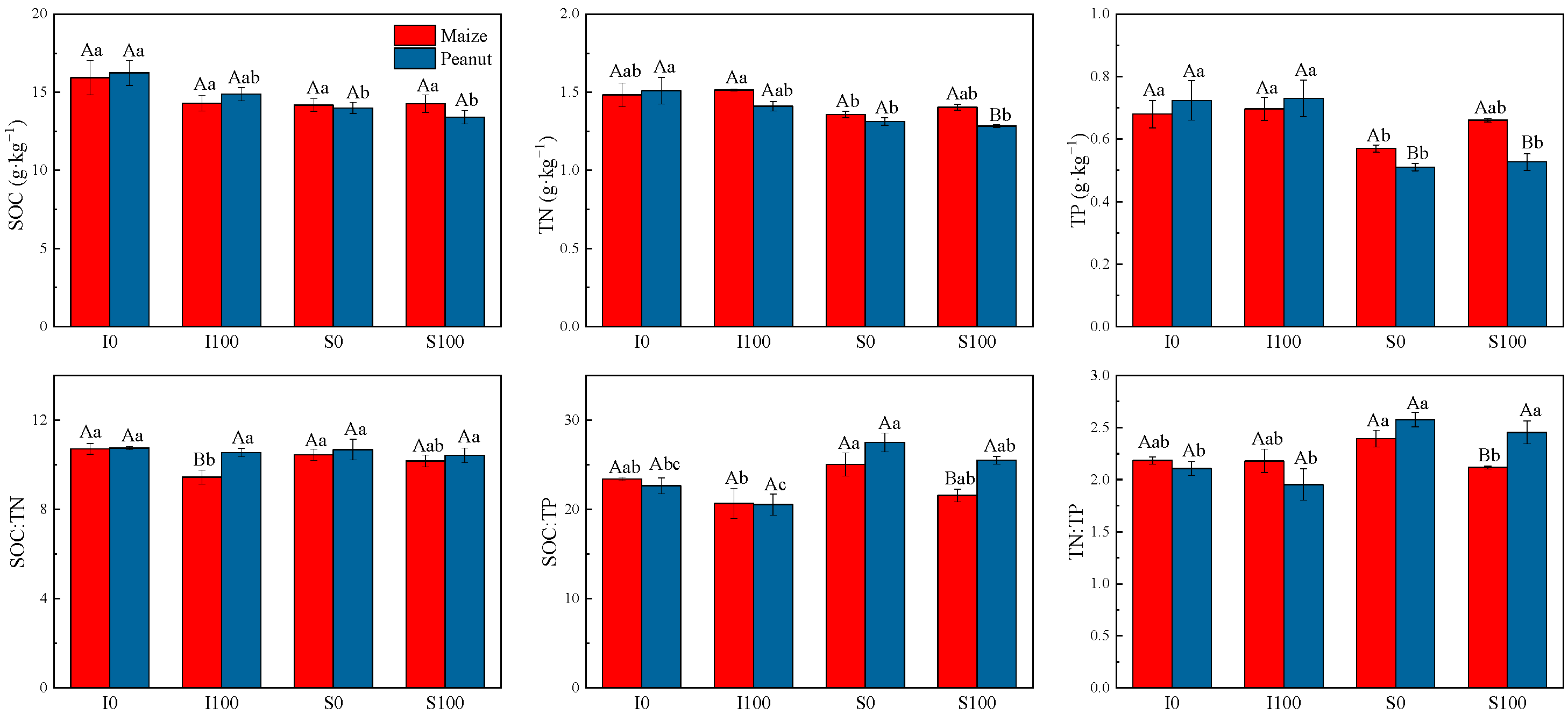
As Table 1 shows, the planting pattern (intercropping vs. sole cropping) significantly affected the rhizosphere contents of soil organic carbon (SOC) (p < 0.01), total nitrogen (TN) (p < 0.01), and total phosphorus (TP) (p < 0.01). Specifically, compared with both sole cropping treatments (S0 and S100), both intercropping treatments (I0 and I100) increased the SOC content by 6.21% and 13.57%, the TN content by 8.57% and 12.49%, and the TP content by 12.01% and 40.29% in the maize and peanut rhizospheres, respectively. Nevertheless, when combined with intercropping, a synergistic effect was observed. Notably, combining the intercropping and full straw retention (I100) practices had a more significant promoting effect: it increased the TN content in the maize rhizosphere by 11.41% relative to the control (S0), and increased the TP content in the maize and peanut rhizospheres by 22.81% and 43.41%, respectively (Figure 2). However, straw retention practices (root stubble retention/full straw retention) exerted no significant effects on SOC, TN, or TP contents, but significantly altered the SOC:TN stoichiometric ratio. Also, the rhizosphere TN content differed significantly between the two crops (p < 0.01), being generally lower in the peanut than in the maize rhizosphere. Stoichiometric analysis showed that both intercropping and straw retention significantly lowered the TN:TP and SOC:TP ratios, with a significant interaction effect of crop species and planting pattern on either ratio (p < 0.05).

3.2. Microbial Biomass and Stoichiometry of Rhizosphere Soil

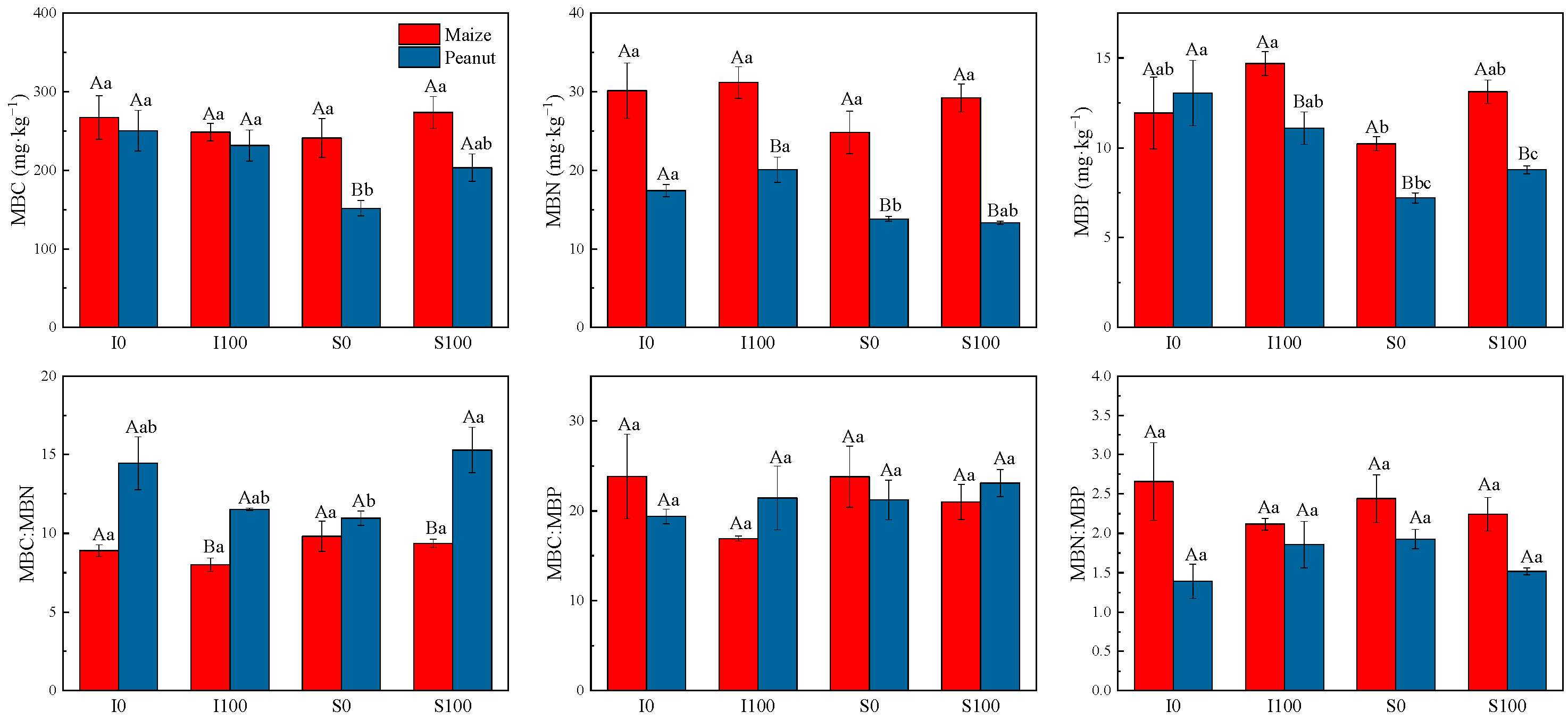
Planting pattern and crop species had significant effects on the microbial biomass carbon (MBC), nitrogen (MBN), and phosphorus (MBP) contents of rhizosphere soil (Table 2). Intercropping significantly increased MBC in the peanut rhizosphere (p < 0.05). Compared with both sole cropping treatments (S0 and S100), intercropping increased MBC by 0.20% and 35.72%, MBN by 13.43% and 38.11%, and MBP by 14.06% and 50.94% in the maize and peanut rhizospheres, respectively. This indicated that intercropping’s positive impact on microbial biomass in the peanut rhizosphere surpassed that in the maize rhizosphere (Figure 3). Stoichiometric analysis of microbial biomass showed that, in the maize rhizosphere, the MBC:MBN, MBC:MBP, and MBN:MBP ratios were 8.01–9.82, 16.92–23.84, and 2.12–2.66, respectively, while in the peanut rhizosphere the corresponding ratios were 10.96–15.29, 19.38–23.10, and 1.39–1.93. The MBC:MBN ratio was significantly affected by crop species, the interaction between planting pattern and straw retention method (p < 0.05), as well as the three-way interaction among those factors (p < 0.05); the MBN:MBP ratio was affected chiefly by crop species (p < 0.01); while the MBC:MBP ratio was similar among different treatments. When compared with the control (S0) treatment, the combination of intercropping and full straw retention (I100) decreased the MBC:MBN ratio by 22.64% in maize rhizosphere soil, but increased it by 5.20% in the peanut rhizosphere. This further confirmed the divergent responses of microbial communities in different crop rhizospheres to management practices.

3.3. Extracellular Enzyme Activities of Rhizosphere Soil and Their Stoichiometric Characteristics

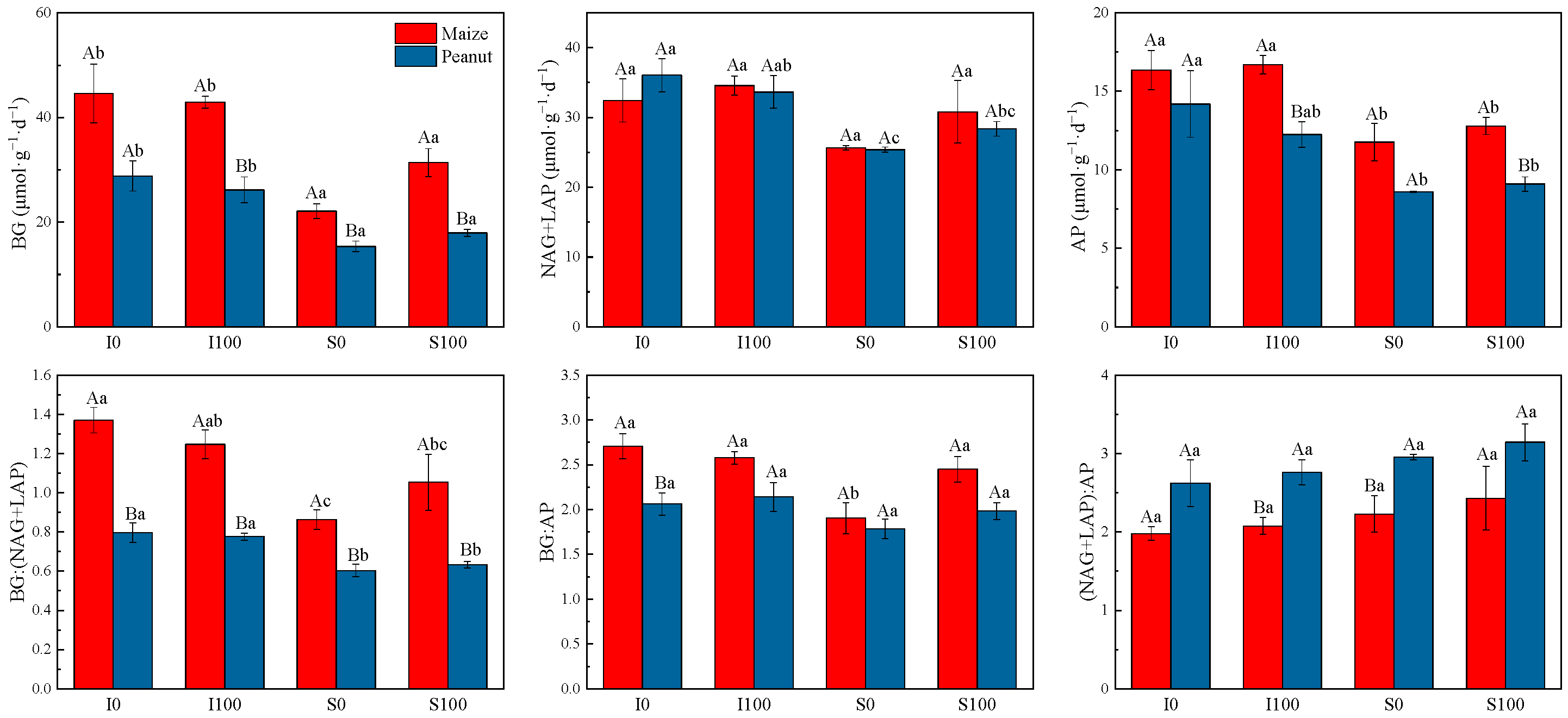
As Figure 4 shows, intercropping significantly bolstered the extracellular enzyme activities in rhizosphere soil (Table 3, p < 0.01). The activity range of the carbon-acquiring enzyme (BG), nitrogen-acquiring enzymes (NAG + LAP), and phosphorus-acquiring enzyme (AP) in the maize rhizosphere was 22.10–44.62, 25.65–34.23, and 11.77–16.68 μmol g−1 d−1, respectively, while the corresponding enzyme activities in the peanut rhizosphere were 15.36–28.81, 25.39–36.06, and 8.60–14.20 μmol g−1 d−1. Compared with sole cropping (S0 and S100), intercropping (I0 and I100) increased BG activity by 63.68% and 64.99%, AP activity by 34.53% and 49.51%, and NAG + LAP activity by 18.44% and 29.62% in the maize and peanut rhizospheres, respectively. In addition, BG and AP activities were significantly lower in the peanut than in the maize rhizosphere (p < 0.01). However, applying intercropping and straw retention in combination (I100) enhanced enzyme activities more than using either treatment alone, increasing BG activity by 94.23% and 70.34% in the maize and peanut rhizospheres, respectively. We detected significant differences in the C, N, and P stoichiometric ratios of extracellular enzymes in the rhizosphere between the two crop types (p < 0.01). Intercropping augmented the BG:(NAG + LAP) ratio by 36.52% and 27.22%, and the BG:AP ratio by 21.36% and 11.59%, in the maize and peanut rhizospheres, respectively. Both BG activity and the BG:AP ratio were significantly affected by the combined practice of intercropping and straw retention (p < 0.05), while the straw retention method alone had no discernible effect on enzyme activities.

3.4. Vector Analysis of Extracellular Enzyme Activities in Rhizosphere Soil

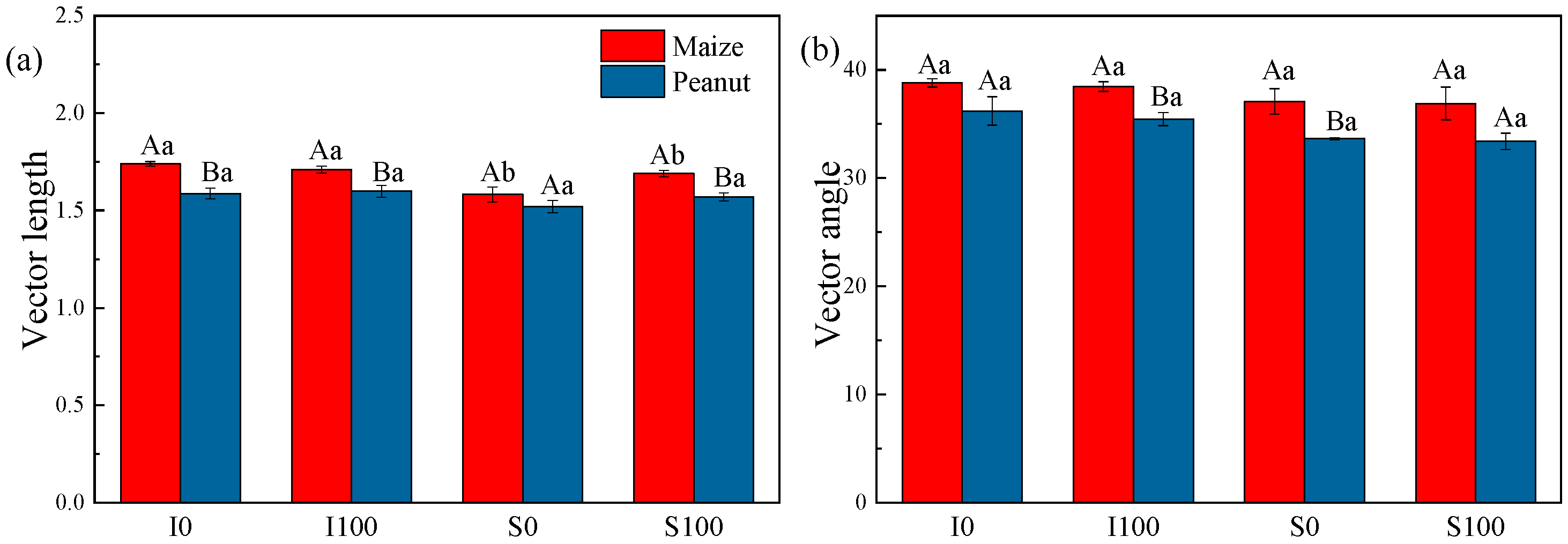
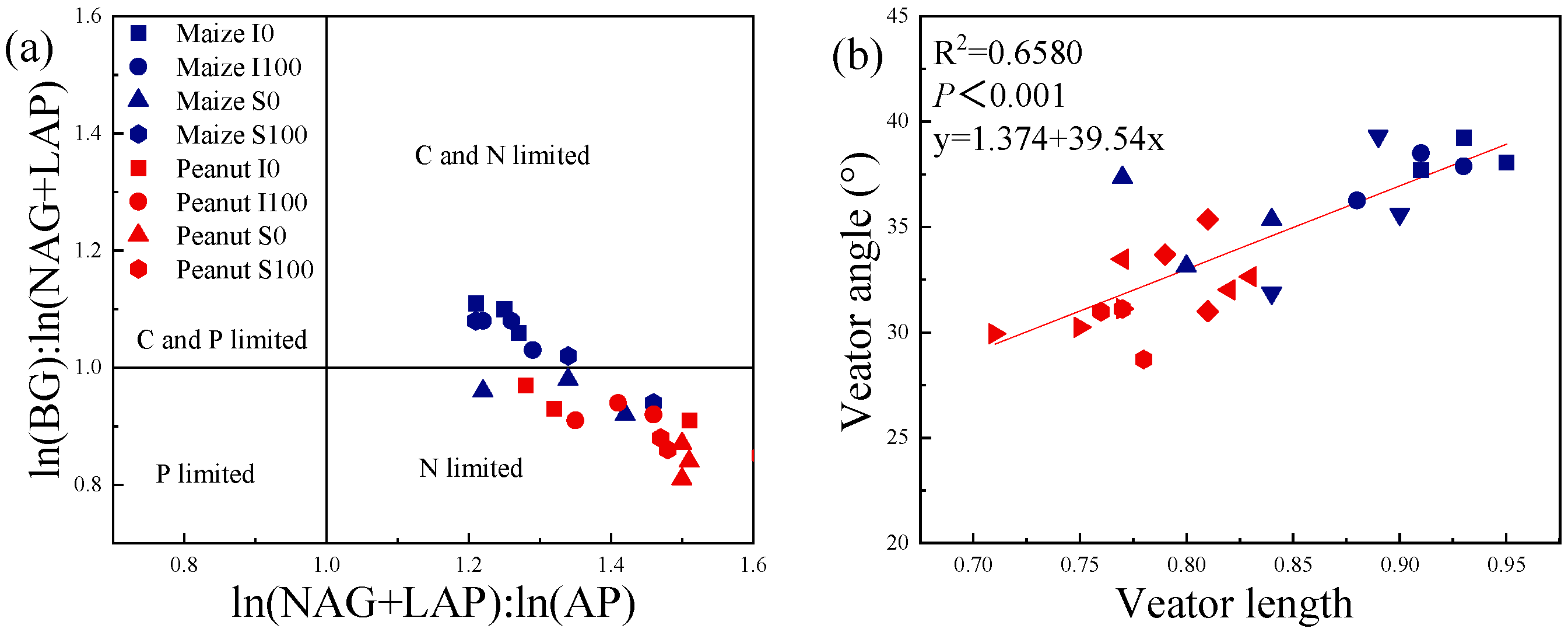
The vector analysis model uncovered significant differences in the stoichiometric characteristics of extracellular enzymes under the different treatments and crop types (Figure 5a,b). In both maize and peanut rhizosphere soils, the vector length (VL) of each extracellular enzyme was greater than 1.46, with vector angles (VA) smaller than 45°, indicating a relative pattern of C and enzyme-inferred N co-limitation based on extracellular enzyme stoichiometry. These results reflect the stoichiometric balance of enzyme synthesis, which may not directly equate to the physiological N status of the plant or to absolute soil N availability. The I100 treatment had the largest VL value, indicating the strongest C limitation among all treatments; its VA value was also the largest, implying a reduced enzyme-inferred N limitation. In contrast, the S100 treatment had a smaller VL value, suggesting that straw retention alone did not intensify C limitation. ANOVA results showed that the planting pattern and crop species had significant main effects on microbial metabolic characteristics (p < 0.01), along with a significant interaction effect of planting pattern and residue retention on VL (Table 4). Specifically, compared with either sole cropping treatment (S0 and S100), intercropping (I0 and I100) significantly increased the VL by 2.10% in the maize rhizosphere. Further analysis of the ln(BG):ln(NAG + LAP) and ln(BG):ln(AP) ratios confirmed that all treatments were in the realm of C and N limitations (Figure 6a); however, the degree of enzyme-inferred N limitation exhibited by microorganisms in the peanut rhizosphere (average VA = 34.67°) was significantly stronger than that in the maize rhizosphere (average VA = 37.80°), which may reflect microbial resource allocation strategies rather than absolute N deficiency. There was a significant positive correlation between VL and VA in both maize and peanut rhizospheres (p < 0.05) (Figure 6b). In our study, straw retention alone did not significantly alter VL, suggesting a limited effect on alleviating C limitation. However, when combined with intercropping, straw retention may shift microbial resource allocation toward N acquisition, as reflected by the increased VA.

3.5. Correlation Analysis Between Soil Nutrients and Microbial Biomass, and the C:N:P Stoichiometric Ratios of Extracellular Enzymes

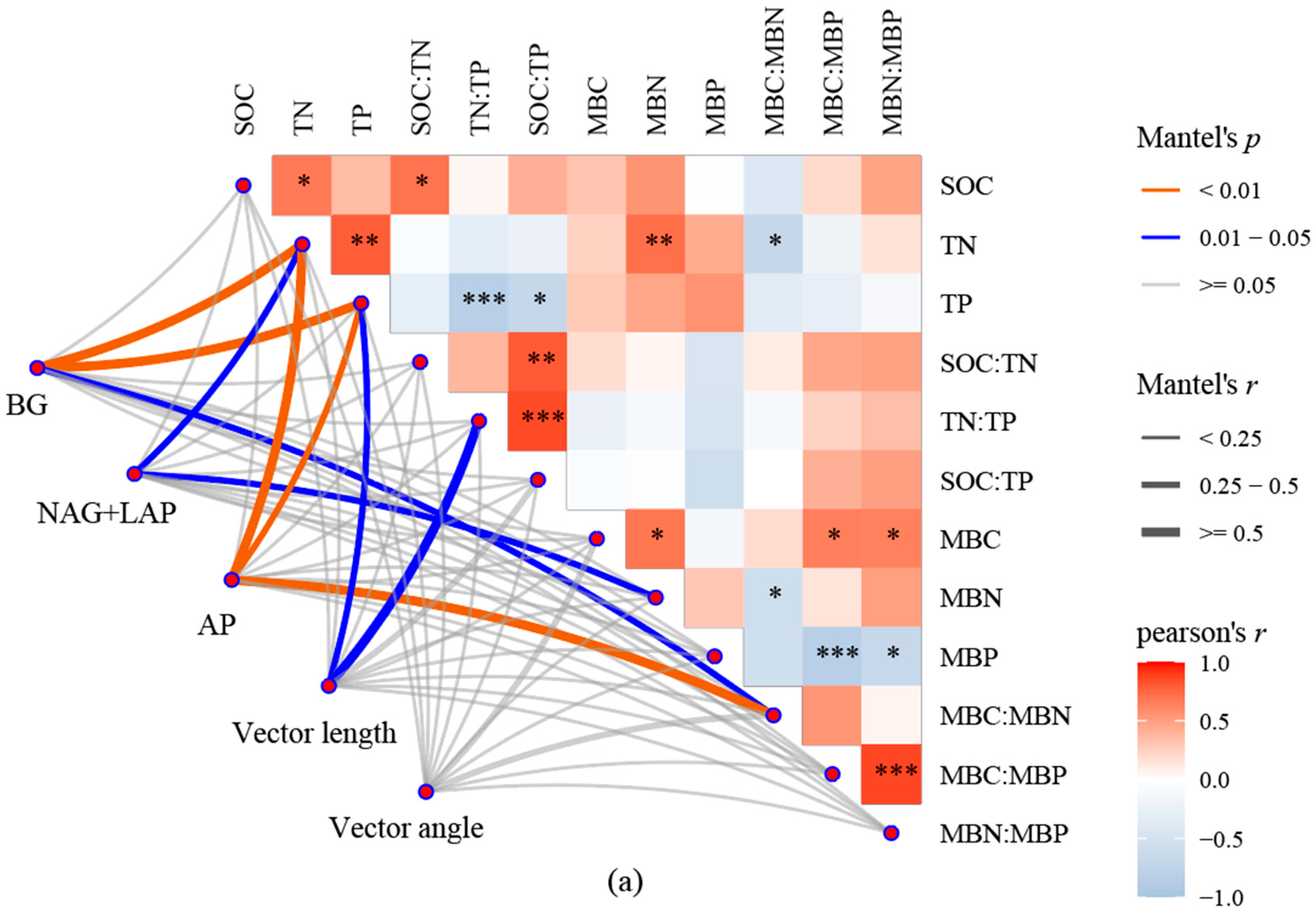
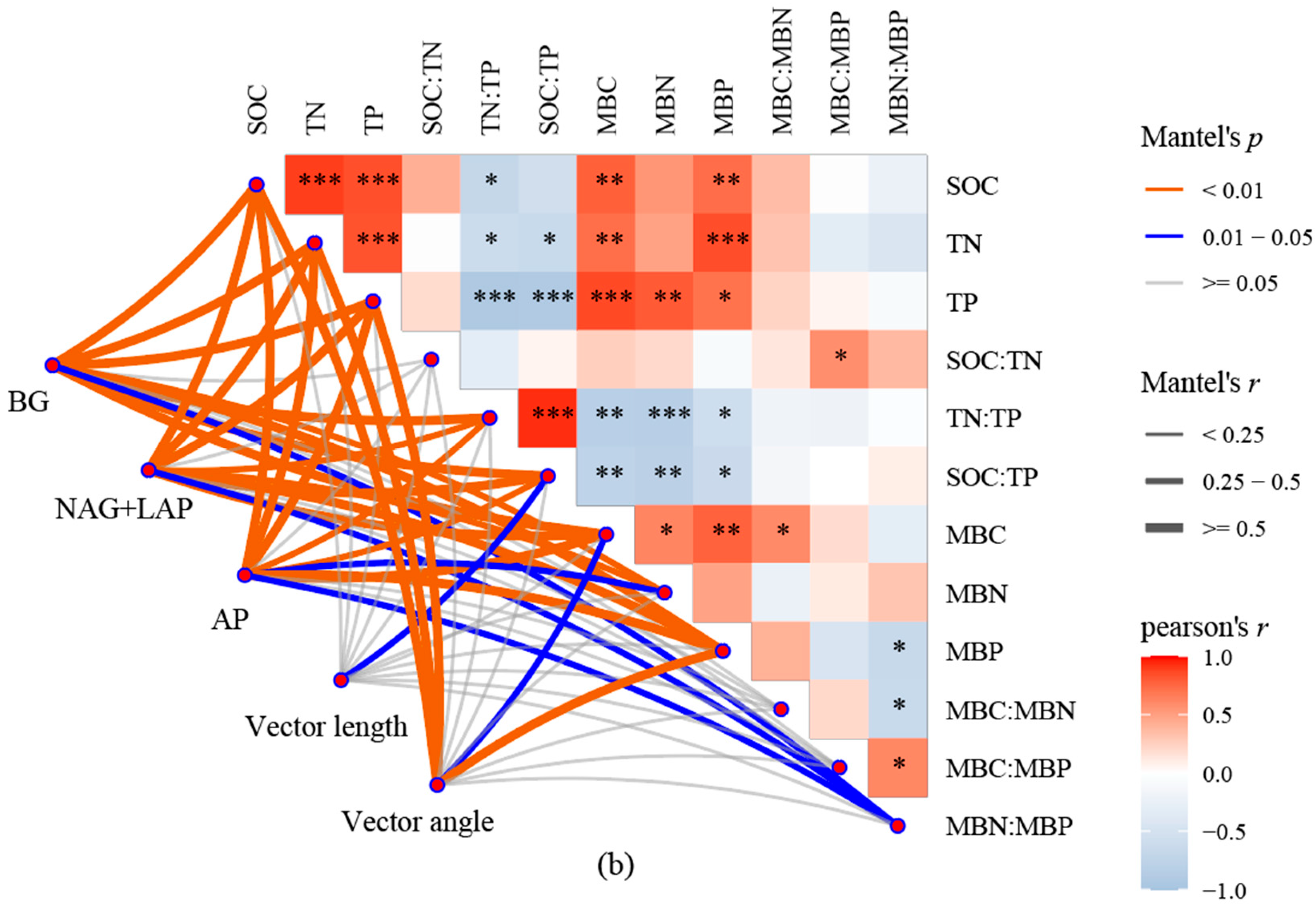
The Pearson correlations revealed close relationships between soil properties and microbial metabolic characteristics (Figure 7). In the maize rhizosphere, soil BG activity showed significant or highly significant positive correlations (p < 0.05) with TN, TP, and MBC:MBN. The activity of NAG+LAP was significantly positively correlated (p < 0.05) with TN as well as MBN. The AP activity had strong, significant positive correlations (p < 0.01) with TN, TP, and MBC:MBN. Regarding VL, its correlation with TP and TN:TP was positive and significant (p < 0.05).
In the peanut rhizosphere, more significant correlations were observed: the BG, NAG+LAP, and AP activities all had highly significant positive correlations (p < 0.01) with SOC, TN, TP, MBC, MBP, TN:TP, and SOC:TP ratios, and a significant positive correlation (p < 0.05) with MBN:MBP. The activity of AP had a significant positive correlation (p < 0.05) with MBN. Finally, VL showed a significant positive correlation (p < 0.05) with SOC:TP, while VA had highly significant positive correlations (p < 0.01) with SOC, TN, TP, and MBP, and a significant positive correlation (p < 0.05) with MBC.
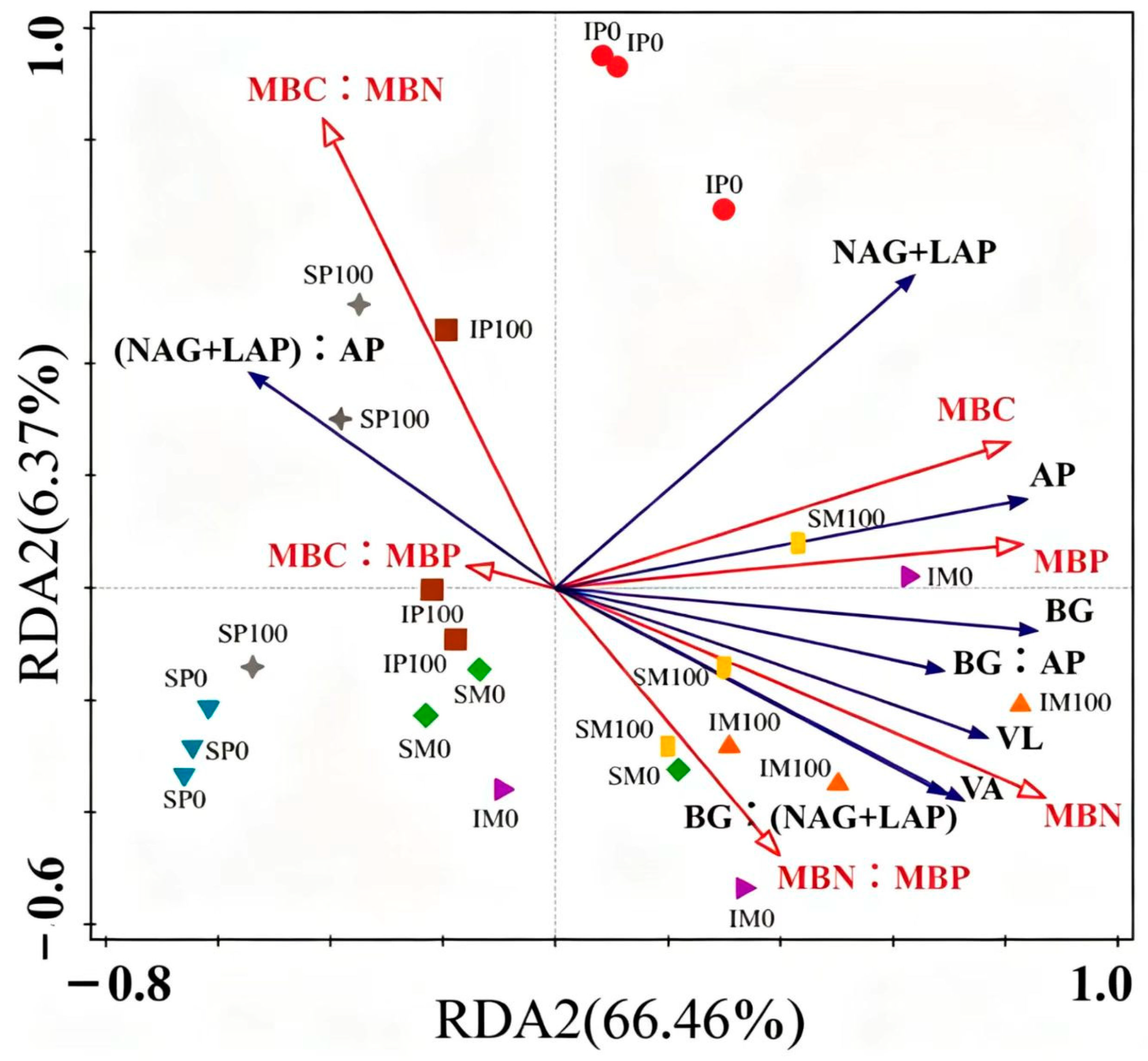
To assess the effects of SOC, TN, and TP, as well as microbial biomass C, N, P, and their stoichiometric ratios on microbial nutrient limitation in rhizosphere soil, we used RDA to examine the relationships between relevant indicators and VL and VA under the contrasting planting patterns and straw retention methods (Figure 8). These results showed that soil physicochemical properties, microbial biomass, and their stoichiometric ratios explained 79.51% of the variation in microbial nutrient limitation. MBN alone contribulted 54.6%, while TN and MBC:MBN contributed 8.6% and 5.1%, respectively. Both VL and VA were distributed in the same direction as rhizosphere soil SOC, TN, TP, MBC, MBN, MBP, and MBN:MBP, showing positive correlations with small angles and long arrows. Conversely, both featured negative correlations with SOC:TN, SOC:TP, TN:TP, MBC:MBP, and MBC:MBN. Thus, microbial biomass stoichiometry, especially MBN, emerged as a key driver of nutrient limitation in the rhizosphere.

4. Discussion

4.1. Effects of Intercropping and Straw Retention on Rhizosphere Soil Nutrients, Microbial Biomass, and Their Stoichiometric Characteristics

Intercropping and straw retention are key agricultural practices that can help regulate rhizosphere soil nutrients and stoichiometric characteristics. The results of this study show that the maize–peanut intercropping system significantly improved the rhizosphere soil’s nutrient status via multiple mechanisms. Intercropping not only increased the amount of organic carbon (SOC), total nitrogen (TN), and total phosphorus (TP) in rhizosphere soil, but also, more importantly, achieved a synergistic improvement of nutrients by increasing root exudates and residue inputs [27]. Changes in microbial biomass stoichiometry suggest a shift in resource allocation. Intercropping possibly promotes putative beneficial microbial groups, but this requires direct confirmation. In contrast, we found that straw retention played a secondary role compared to intercropping; its significant effects were mainly observed on stoichiometric ratios (e.g., SOC:TN and TN:TP) rather than on absolute nutrient contents or microbial biomass. This pronounced discrepancy highlights the distinct regulatory mechanisms of different agricultural practices upon soil nutrient cycling dynamics. Our field experimental results confirm that soil ecological stoichiometric characteristics can serve as sensitive indicators for assessing the effects of farmland management measures [28].
Maize–peanut intercropping significantly increased the contents of microbial biomass carbon (MBC), nitrogen (MBN), and phosphorus (MBP) in rhizosphere soil, but the responses differed markedly between the two crop types. We found a stronger response of microbial biomass to intercropping in the peanut rhizosphere than in the maize rhizosphere—a result that is closely tied to the unique nitrogen-fixing root nodule system of legumes and the microbial microenvironment that is shaped by specific root exudates [29]. Moreover, in the present study, the average MBC:MBN ratio in all treatments was above 7. While such stoichiometric ratios have historically been associated with fungal-dominated microbial communities, this remains an indirect inference that requires validation through direct characterization of community composition [30,31]. The combined treatment of intercropping and straw retention decreased the MBC:MBN ratio in maize rhizosphere, potentially suggesting a relative increase in bacterial contribution; however, this remains a trend rather than a confirmed shift [3,32]. Notably, the lower MBN:MBP ratio in the peanut rhizosphere implies that nitrogen limitation is stronger there [33,34], providing new evidence for a better understanding of the differences in rhizosphere microecology between legume and non-legume crops. These results deepen our knowledge of pivotal aspects of microbial nutrient limitation in the rhizosphere of different crops and offer a theoretical basis for precision agricultural management.

4.2. Effects of Intercropping and Straw Retention on Extracellular Enzyme Activities in Rhizosphere Soil and Their Stoichiometric Characteristics

This study found that maize–peanut intercropping significantly enhanced the activities of a carbon-acquiring enzyme (BG), nitrogen-acquiring enzymes (NAG + LAP), and a phosphorus-acquiring enzyme (AP), with nutrient-specific mechanisms. That is, intercropping increased the input of soil organic matter into the rhizosphere, likely providing sufficient carbon sources for microorganisms to bolster the activity of BG; it also improved nitrogen availability, possibly facilitating organic N mineralization, as reflected by NAG + LAP [35]. Meanwhile, the soil TP content also increased under intercropping, with AP activity being notably strengthened [36]. We also found that the BG and NAG + LAP activities in maize rhizosphere soil exceeded those in peanut rhizosphere soil, but the opposite was observed for AP activity, suggesting that crucial differences exist in the extracellular enzyme stoichiometric characteristics of different crops’ rhizosphere soils.
In this study, the extracellular enzyme C:N:P ratios in maize and peanut rhizosphere soils were 1.33:1.29:1.00 and 0.89:1.29:1.00, respectively, deviating noticeably from the global average soil enzyme C:N:P ratio of approximately 1:1:1 [37]. Such discrepancies stem from interspecific differences in root exudates and rhizosphere regulation strategies between the two crops. Maize roots mainly secrete carbohydrates and low-molecular-weight organic acids, which facilitate microbial decomposition of soil organic matter and elevate BG activity. Combined with the high organic matter background of black soil, rhizosphere microorganisms synthesize abundant carbon-acquiring enzymes to sustain metabolism, thereby increasing the relative abundance of C-hydrolases in maize rhizosphere. As a legume, peanut releases substantial flavonoids and phenolics. These exudates primarily recruit rhizobia and modulate nitrogen-cycle microbes, weakly inducing carbon-acquiring enzymes while preferentially stimulating the synthesis of nitrogen-acquiring enzymes. This discrepancy may be attributable to the high organic matter content in the black soil of the maize-growing area, where microorganisms must bolster their carbon-decomposing enzymes to meet their metabolic needs. On the other hand, the BG:(NAG + LAP) ratio in the peanut area is likely linked to the low BG activity and a carbon–nitrogen coupling effect caused by nitrogen fixation by the legume. This finding provides new evidence for understanding the adaptive differentiation of nutrient acquisition strategies in rhizosphere microorganisms of different crops [38].

4.3. Effects of Intercropping and Straw Retention on the Characteristics of Microbial Resource Limitations in Rhizosphere Soil

Microbial resource limitations link soil, microorganisms, and plants, and directly affect nutrient use efficiency and soil health [37]. Using vector analysis [6,39], we found that microorganisms in both maize and peanut rhizospheres experienced co-limitation by carbon (C) and enzyme-inferred nitrogen (N), but with crop-specific differences. The vector angle (VA) in the peanut rhizosphere was significantly smaller than that in the maize rhizosphere, suggesting a relatively stronger enzyme-inferred N limitation. This pattern may seem counterintuitive for a legume capable of biological nitrogen fixation (BNF); however, enzyme stoichiometry reflects microbial resource allocation rather than plant N status or absolute soil N availability. Possible explanations include energy demands of BNF intensifying competition for mineral N, differences in root exudate composition between maize and peanut, or decoupling between enzyme synthesis and actual N supply [40,41,42,43]. We did not directly measure soil mineral N, nodulation, or BNF rates; therefore, these mechanisms remain speculative.
The combined treatment of intercropping and full straw retention increased VA by 5.38% in the peanut rhizosphere, partially alleviating enzyme-inferred N limitation. Interestingly, this treatment also yielded the highest VL (strongest C limitation) among all treatments. The simultaneous increase in both VL and VA suggests that microorganisms decoupled their C and N acquisition strategies under the combined management. Intensified C limitation did not aggravate N limitation. Straw retention alone had no significant effect on either VL or VA, suggesting a limited effect when applied without intercropping. The average VL across all samples in this study reached 1.61, exceeding the global benchmark reported previously [44], which demonstrates widespread C limitation for soil microbes in Northeast China’s black soil region, mainly due to low-temperature suppression of organic carbon decomposition.

5. Conclusions and Prospects

Intercropping significantly increases the rhizosphere contents of soil organic carbon, total nitrogen, and total phosphorus, and promotes the accumulation of microbial biomass carbon, nitrogen, and phosphorus, with a significantly stronger response occurring in the peanut rhizosphere than in the maize rhizosphere. Straw retention had a limited effect on absolute nutrient contents but significantly altered several stoichiometric ratios (e.g., SOC:TN, TN:TP), suggesting a role in modulating stoichiometric balance rather than nutrient pools. Intercropping significantly enhances extracellular enzyme activities, but these activities and corresponding stoichiometric characteristics clearly differ between crop types. The combined practice of maize–peanut intercropping and straw retention is an effective agricultural technique for alleviating enzyme-inferred microbial nitrogen limitation in the rhizosphere and for advancing the sustainable development of farmland ecosystems in the black soil region of Northeast China.
Redundancy analysis showed that soil properties, microbial biomass, and their stoichiometry together explained 79.51% of the variation in microbial nutrient limitation, with MBN being the strongest explanatory factor (54.6%). This confirms that microbial biomass stoichiometry, particularly MBN, plays a key role in shaping resource allocation to enzyme production and thus influences nutrient acquisition strategies [45]. While N fertilization might alleviate microbial N limitation, it risks N leaching and higher production costs [46]. Our results suggest that adjusting the cropping system (e.g., maize–peanut intercropping rotation) may alleviate enzyme-inferred N limitation more sustainably than relying on excessive N fertilization [47]. Future research should empirically determine N application thresholds that balance crop yields and microbial functioning. It is also feasible to adopt 15N-based quantitative biological nitrogen fixation measurements combined with ecoenzymatic stoichiometry for mechanism verification. We recommend combining 16S/ITS amplicon sequencing, metatranscriptomic analysis of enzyme genes, and metagenomic sequencing to clarify microbial community mechanisms and link specific microbial taxa and functional guilds to enzymatic characteristics. Additionally, this study only examined maize–peanut intercropping; other crop combinations and the link between microbial community composition and enzyme activities require further investigation.

Author Contributions

Q.S.: Writing—original draft, Formal analysis, and Data curation. W.Q.: Writing—original draft, Formal analysis, and Data curation. J.L.: Review and editing and Supervision. Y.C.: Review and editing. F.Y.: Writing—review and editing and Funding acquisition. Y.W.: Experimental design, Supervision, and Review. All authors have read and agreed to the published version of the manuscript.

Funding

This work was supported by the Basic Research Funds of Jilin Academy of Agricultural Sciences (KYJF2025JJ003) and the Jilin Provincial Agricultural Science and Technology Innovation Project (CXGC2025RCY013).

Institutional Review Board Statement

Not applicable.

Data Availability Statement

The original contributions presented in this study are included in the article. Further inquiries can be directed to the corresponding authors.

Conflicts of Interest

The authors declare that they have no competing interests.

References

  1. Wang, J.; Xu, X.; Pei, J.; Li, S. Current situations of black soil quality and facing opportunities and challenges in Northeast China. Chin. J. Soil Sci. 2021, 52, 695–701. [Google Scholar] [CrossRef]
  2. Ma, H.; Zhou, J.; Ge, J.; Nie, J.; Zhao, J.; Xue, Z.; Hu, Y.; Yang, Y.; Peixoto, L.; Zang, H. Intercropping improves soil ecosystem multifunctionality through enhanced available nutrients but depends on regional factors. Plant Soil 2022, 480, 71–84. [Google Scholar] [CrossRef]
  3. Zhao, X.; Dong, Q.; Han, Y.; Zhang, K.; Shi, X.; Yang, X.; Yuan, Y.; Zhou, D.; Wang, K.; Wang, X. Maize/peanut intercropping improves nutrient uptake of side-row maize and system microbial community diversity. BMC Microbiol. 2022, 22, 14. [Google Scholar] [CrossRef] [PubMed]
  4. Wang, X.; Jia, Z.; Liang, L.; Zhao, Y.; Yang, B.; Ding, R.; Wang, J.; Nie, J. Changes in soil characteristics and maize yield under straw returning system in dryland farming. Field Crops Res. 2018, 218, 11–17. [Google Scholar] [CrossRef]
  5. Cui, Y.; Bing, H.; Fang, L.; Jiang, M.; Shen, G.; Yu, J.; Wang, X.; Zhu, H.; Wu, Y.; Zhang, X. Extracellular enzyme stoichiometry reveals the carbon and phosphorus limitations of microbial metabolisms in the rhizosphere and bulk soils in alpine ecosystems. Plant Soil 2019, 458, 7–20. [Google Scholar] [CrossRef]
  6. Moorhead, D.L.; Sinsabaugh, R.L.; Hill, B.H. Vector analysis of ecoenzyme activities reveal constraints on coupled C, N and P dynamics. Soil Biol. Biochem. 2016, 93, 1–7. [Google Scholar] [CrossRef]
  7. Liu, C.; Ma, J.; Qu, T. Extracellular enzyme activity and stoichiometry reveal nutrient dynamics during microbially-mediated plant residue transformation. Forests 2023, 14, 34. [Google Scholar] [CrossRef]
  8. Sinsabaugh, R.L. Exoenzymatic stoichiometry of microbial organic nutrient acquisition in soil and sediment. Nature 2009, 462, 795–798. [Google Scholar] [CrossRef] [PubMed]
  9. Zuccarini, P.; Asensio, D.; Ogaya, R. Effects of seasonal and decadal warming on soil enzymatic activity in a p-deficient Mediterranean shrubland. Glob. Change Biol. 2020, 26, 3698–3714. [Google Scholar] [CrossRef] [PubMed]
  10. Peng, X.; Wang, W. Stoichiometry of soil extracellular enzyme activity along a climatic transect in temperate grasslands of northern China. Soil Biol. Biochem. 2016, 98, 74–84. [Google Scholar] [CrossRef]
  11. Yang, Y.; Liang, C.; Li, T.; Cheng, H.; An, S. Soil extracellular enzyme stoichiometry reflects the shift from P- to N-limitation of microorganisms with grassland restoration. Soil Biol. Biochem. 2020, 149, 107928. [Google Scholar] [CrossRef]
  12. Yao, B.; Wang, X.; Li, Y.; Lian, J.; Li, Y.; Lou, Y.; Li, Y. Soil extracellular enzyme activity reflects the change of nitrogen to phosphorus limitation of microorganisms during vegetation restoration in semi-arid sandy land of northern China. Front. Environ. Sci. 2023, 11, 1298027. [Google Scholar] [CrossRef]
  13. Gartner, T.B.; Treseder, K.K.; Malcolm, G.M.; Sinsabaugh, R.L. Extracellular enzyme activity in the mycorrhizospheres of a boreal fire chronosequence. Pedobiologia 2012, 55, 121–127. [Google Scholar] [CrossRef]
  14. Cui, Y.; Fang, L.; Guo, X.; Wang, X.; Zhang, Y. Ecoenzymatic stoichiometry and microbial nutrient limitation in rhizosphere soil in the arid area of the northern Loess Plateau, China. Soil Biol. Biochem. 2018, 116, 11–21. [Google Scholar] [CrossRef]
  15. Jiang, P.; Wang, Y.; Zhang, Y.; Fei, J.; Rong, X.; Peng, J.; Yin, L.; Lou, G. Intercropping enhances maize growth and nutrient uptake by driving the link between rhizosphere metabolites and microbiomes. New Phytol. 2024, 243, 1506–1521. [Google Scholar] [CrossRef] [PubMed]
  16. Song, C.; Wang, W.; Gan, Y.; Wang, L.; Chang, X.; Wang, Y.; Yang, W. Growth promotion ability of phosphate-solubilizing bacteria from the soybean rhizosphere under maize-soybean intercropping systems. J. Sci. Food Agric. 2022, 102, 1430–1442. [Google Scholar] [CrossRef] [PubMed]
  17. Yao, F.; Qi, W.; Cao, Y.; Liang, J.; Liu, X.; Liu, Z.; Lv, Y.; Wei, W.; Xu, W.; Yu, Y. The effects of a combination of maize/peanut intercropping and residue return on soil microbial nutrient limitation in maize fields. Appl. Soil Ecol. 2025, 206, 105874. [Google Scholar] [CrossRef]
  18. Bao, S.D. Soil Agrochemical Analysis, 3rd ed.; China Agriculture Press: Beijing, China, 2000. [Google Scholar]
  19. Bremner, J.M. Determination of nitrogen in soil by the Kjeldahl method. J. Agric. Sci. 1960, 55, 11–33. [Google Scholar] [CrossRef]
  20. Murphy, J.; Riley, J.P. A modified single solution method for the determination of phosphate in natural waters. Anal. Chim. Acta 1962, 27, 31–36. [Google Scholar] [CrossRef]
  21. Margesin, R.; Schinner, F. Manual for Soil Analysis-Monitoring and Assessing Soil Bioremediation. In Soil Biology; Springer: Berlin/Heidelberg, Germany, 2005; Volume 5. [Google Scholar]
  22. Mueller, J.T. The fumigation-extraction method to estimate soil microbial biomass: Calibration of the kEN value. Soil Biol. Biochem. 1996, 28, 33–37. [Google Scholar] [CrossRef]
  23. German, D.P.; Weintraub, M.N.; Grandy, A.S.; Lauber, C.L.; Rinkes, Z.L.; Allison, S.D. Optimization of hydrolytic and oxidative enzyme methods for ecosystem studies. Soil Biol. Biochem. 2011, 43, 1387–1397. [Google Scholar] [CrossRef]
  24. Moorhead, D.; Cui, Y.; Sinsabaugh, R.; Schimel, J. Interpreting patterns of ecoenzymatic stoichiometry. Soil Biol. Biochem. 2023, 180, 108997. [Google Scholar] [CrossRef]
  25. Sinsabaugh, R.L.; Follstad Shah, J.J. Exoenzymatic stoichiometry and ecological theory. Annu. Rev. Ecol. Evol. Syst. 2012, 43, 313–343. [Google Scholar] [CrossRef]
  26. Abay, P.; Gong, L.; Luo, Y.; Zhu, H.; Ding, Z. Soil extracellular enzyme stoichiometry reveals the nutrient limitations in soil microbial metabolism under different carbon input manipulations. Sci. Total Environ. 2023, 913, 169793. [Google Scholar] [CrossRef] [PubMed]
  27. Zhao, X.; Hao, C.; Zhang, R.; Jiao, N.; Tian, J.; Lambers, H.; Liang, C.; Cong, W.; Zhang, F. Intercropping increases soil macroaggregate carbon through root traits induced microbial necromass accumulation. Soil Biol. Biochem. 2023, 185, 109146. [Google Scholar] [CrossRef]
  28. Yang, H.; Song, X.; Zhao, Y.; Wang, W.; Cheng, Z.; Zhang, Q.; Cheng, D. Temporal and spatial variations of soil C, N contents and C:N stoichiometry in the major grain-producing region of the North China Plain. PLoS ONE 2021, 16, e0253160. [Google Scholar] [CrossRef] [PubMed]
  29. Li, Q.; Li, L.; Wu, J.; Chen, L.; Muhammad, A.; Khan, M.A.; Luo, X.-M. Biochemical and microbial properties of rhizospheres under maize/peanut intercropping. J. Integr. Agric. 2016, 15, 101–110. [Google Scholar] [CrossRef]
  30. Yang, Y.; Li, T.; Wang, Y.; Dou, Y.; Cheng, H.; Liu, L.; An, S. Linkage between soil ectoenzyme stoichiometry ratios and microbial diversity following the conversion of cropland into grassland. Agric. Ecosyst. Environ. 2021, 314, 107418. [Google Scholar] [CrossRef]
  31. Li, X.; Liu, M.; Huang, T.; Yang, K.; Tian, J. Antifungal effect of nerol via transcriptome analysis and cell growth repression in sweet potato spoilage fungi Ceratocystis fimbriata. Postharvest Biol. Technol. 2020, 171, 111343. [Google Scholar] [CrossRef]
  32. Guan, Y.; Wu, M.; Che, S.; Yuan, S.; Yang, X.; Li, S.; Tian, P.; Wu, L.; Yang, M.; Wu, Z. Effects of continuous straw returning on soil functional microorganisms and microbial communities. J. Microbiol. 2023, 61, 49–62. [Google Scholar] [CrossRef] [PubMed]
  33. Cui, Y.; Moorhead, D.; Peng, S.; Sinsabaugh, R.L.; Peñuelas, J. Predicting microbial nutrient limitations from a stoichiometry-based threshold framework. Innov. Geosci. 2024, 2, 100048. [Google Scholar] [CrossRef]
  34. Liu, C.; Wang, X.; Li, X.; Yang, Z.; Dang, K.; Gong, X.; Feng, B. Effects of intercropping on rhizosphere microbial community structure and nutrient limitation in proso millet/mung bean intercropping system. Eur. J. Soil Biol. 2024, 122, 103646. [Google Scholar] [CrossRef]
  35. Ba, X.; Sui, X.; Bao, X.; An, H.; Xie, H.; Liu, M. Impacts of intercropping with cover crops and maize on soil carbon and nitrogen contents and related enzyme activities. Chin. J. Soil Sci. 2022, 53, 577–587. [Google Scholar] [CrossRef]
  36. Qu, X.; Liao, Y.; Pan, C.; Li, X. Positive effects of intercropping on soil phosphatase activity depend on the application scenario: A meta-analysis. Soil Tillage Res. 2023, 235, 105914. [Google Scholar] [CrossRef]
  37. Sinsabaugh, R.L.; Lauber, C.L. Stoichiometry of soil enzyme activity at global scale. Ecol. Lett. 2008, 11, 1252–1264. [Google Scholar] [CrossRef] [PubMed]
  38. Ma, H.; Surigaoge, S.; Xu, Y.; Li, Y.; Christie, P.; Zhang, W.; Li, L. Responses of soil microbial community diversity and co-occurrence networks to interspecific interactions in soybean/maize and peanut/maize intercropping systems. Appl. Soil Ecol. 2024, 203, 105613. [Google Scholar] [CrossRef]
  39. Cui, Y.; Moorhead, D.L.; Guo, X.; Peng, S.; Wang, Y.; Zhang, X.; Fang, L. Stoichiometric models of microbial metabolic limitation in soil systems. Glob. Ecol. Biogeogr. 2021, 30, 2297–2311. [Google Scholar] [CrossRef]
  40. Zhang, S.; Han, Y.; Wang, G.; Feng, L.; Lei, Y.; Xiong, S.; Yang, B.; Zhi, X.; Xin, M.; Jiao, Y.; et al. Peanut–cotton intercropping to enhance soil ecosystem multifunctionality: Roles of microbial keystone taxa, assembly processes, and C-cycling profiles. Agric. Ecosyst. Environ. 2024, 377, 109254. [Google Scholar] [CrossRef]
  41. Cui, J.; Yang, B.; Xu, X.; Ai, C.; Zhou, W. Long-term maize-soybean rotation in Northeast China: Impact on soil organic matter stability and microbial decomposition. Plant Soil 2025, 507, 141–158. [Google Scholar] [CrossRef]
  42. Feizi, A.; Luu, A.T.; Dinh, M.V.; Tuyet, T.T.T.; Wang, S.; Hoang, D.T.T. Divergent response of maize and soybean rhizosphere to arbuscular mycorrhiza. Rhizosphere 2023, 29, 100834. [Google Scholar] [CrossRef]
  43. Zhu, Y.; Liang, J.; Yang, W.; Lu, X.; Chen, X.; Yan, J.; Han, X.; Wu, Z.; Zou, W. Synergistic regulation of dissolved organic matter and microbial community on microbial necromass accumulation under long-term organic material application. Resour. Environ. Sustain. 2026, 25, 100331. [Google Scholar] [CrossRef]
  44. Cui, Y.; Peng, S.; Delgado-Baquerizo, M.; Rilling, M.C.; Terrer, C.; Zhu, B.; Jing, X.; Chen, J.; Li, J.; Feng, J.; et al. Microbial communities in terrestrial surface soils are not widely limited by carbon. Glob. Change Biol. 2023, 29, 4412–4429. [Google Scholar] [CrossRef] [PubMed]
  45. Chen, J.; Li, Y.; Xu, H.; Zhou, Z.; Chen, D.; Ma, X.; Li, Y.; Liu, Z.; Lambers, H.; Kuzyakov, Y. Plant functional traits define microbial response to nutrient availability in tropical rainforest soil. Glob. Change Biol. 2025, 31, e70457. [Google Scholar] [CrossRef] [PubMed]
  46. Du, E.; de Vries, W. Links between nitrogen limitation and saturation in terrestrial ecosystems. Glob. Change Biol. 2025, 31, e70271. [Google Scholar] [CrossRef] [PubMed]
  47. Mori, T. Is enzymatic stoichiometry a reliable indicator of microbial limitations in carbon, nitrogen, or phosphorus? Sci. Total Environ. 2024, 955, 176928. [Google Scholar] [CrossRef] [PubMed]
Figure 1. Experimental layout.
Agriculture 16 01388 g001
Figure 2. Bar plots for the contents and stoichiometric ratios of SOC, TN, and TP in the rhizosphere of two crops under different treatments. Note: I0: Maize||peanut intercropping with root stubble retention; I100: Maize||peanut intercropping with full straw retention; S0: Sole cropping with root stubble retention; S100: Sole cropping with full straw retention. Lowercase letters above error bars indicate significant differences between treatments (p < 0.05), and uppercase letters indicate significant differences between crops under the same treatment (p < 0.05).
Agriculture 16 01388 g002
Figure 3. Bar plots showing the effects of intercropping and residue retention on microbial biomass and stoichiometric ratios in the rhizosphere soil of two crops. Note: I0: Maize||peanut intercropping with root stubble retention; I100: Maize||peanut intercropping with full straw retention; S0: Sole cropping with root stubble retention; S100: Sole cropping with full straw retention. Lowercase letters above error bars indicate significant differences between treatments (p < 0.05), and uppercase letters indicate significant differences between crops under the same treatment (p < 0.05).
Agriculture 16 01388 g003
Figure 4. Bar plots of the activities and stoichiometric ratios of BG, NAG, LAP, and AP in the rhizosphere soil of two crops under different treatments. Note: I0: Maize||peanut intercropping with root stubble retention; I100: Maize||peanut intercropping with full straw retention; S0: Sole cropping with root stubble retention; S100: Sole cropping with full straw retention. Lowercase letters above error bars indicate significant differences between treatments (p < 0.05), and uppercase letters indicate significant differences between crops under the same treatment (p < 0.05).
Agriculture 16 01388 g004
Figure 5. Vector analysis of extracellular enzyme activities in rhizosphere soil of two crops under different treatments. vector length (a) and vector angle (b) Note: I0: Maize||peanut intercropping with root stubble retention; I100: Maize||peanut intercropping with full straw retention; S0: Sole cropping with root stubble retention; S100: Sole cropping with full straw retention. Lowercase letters above error bars indicate significant differences between treatments (p < 0.05), and uppercase letters indicate significant differences between crops under the same treatment (p < 0.05).
Agriculture 16 01388 g005
Figure 6. A scatter plot of soil enzymatic stoichiometry across different treatments (a) and the relationships of vector length with vector angle (b). Note: The gray shaded area represents the 95% confidence interval.
Agriculture 16 01388 g006
Figure 7. Correlation analysis of extracellular enzyme activities, microbial nutrient limitation, and rhizosphere soil properties in maize (a) and peanut crops (b). Note: Red indicates a positive correlation, blue indicates a negative correlation. The width and color of the lines represent the strength of the correlation, and asterisks indicate the statistical significance level (*, **, and *** correspond to p < 0.05, p < 0.01, and p < 0.001, respectively).
Agriculture 16 01388 g007aAgriculture 16 01388 g007b
Figure 8. Redundancy analysis of soil extracellular enzymes, their stoichiometric ratios, and microbial biomass.
Agriculture 16 01388 g008
Table 1. Results of ANOVAs assessing the main effects and interactions for planting pattern (PP), residue retention (RR), and crop species (CS) on rhizosphere soil SOC, TN, TP contents, and their stoichiometric ratios.
FactorSOCTNTPSOC:TNSOC:TPTN:TP
PP9.770 **20.452 **27.123 ***0.110 n.s.17.890 **19.389 **
RR4.019 n.s.0.186 n.s.1.444 n.s.6.164 *12.516 **4.818 *
CS0.019 n.s.3.757 **1.163 n.s.4.044 n.s.3.587 n.s.0.730 n.s.
CS × PP1.227 n.s.0.416 n.s.6.231 *0.644 n.s.6.302 *10.541 *
CS × RR0.053 n.s.2.419 n.s.0.285 n.s.1.820 n.s.0.526 n.s.0.000 n.s.
PP × RR2.015 n.s.0.449 n.s.0.900 n.s.1.342 n.s.0.048 n.s.0.921 n.s.
CS × PP × RR0.297 n.s.0.186 n.s.0.127 n.s.1.688 n.s.0.080 n.s.1.431 n.s.
Note: Bold type indicates p < 0.05, while *, **, and *** correspond to p < 0.05, p < 0.01, and p < 0.001, respectively. n.s. indicates no significant effect at the p < 0.05 level. The values are the F-test statistic. Block was included as a random factor in the model.
Table 2. Three-way ANOVA testing the effects of different treatments on rhizosphere soil contents of MBC, MBN, MBP, and their stoichiometric ratios.
FactorMBCMBNMBPMBC: MBNMBC: MBPMBN: MBP
PP4.843 *10.261 **14.058 **0.994 n.s.0.936 n.s.0.021 n.s.
RR0.656 n.s.1.898 n.s.2.986 n.s.0.000 n.s.0.719 n.s.0.876 n.s.
CS11.055 **85.100 ***10.437 **40.211 ***0.013 *14.296 **
CS × PP4.688 *0.314 n.s.2.543 n.s.0.620 n.s.0.006 n.s.0.153 n.s.
CS × RR0.103 n.s.0.354 n.s.3.919 n.s.1.179 n.s.3.679 n.s.1.190 n.s.
PP × RR4.368 n.s.0.001 n.s.1.447 n.s.9.148 **0.350 n.s.0.529 n.s.
CS × PP × RR0.103 n.s.1.403 n.s.1.230 n.s.7.190 *0.411 n.s.2.767 n.s.
Note: Bold type indicates p < 0.05, while *, **, and *** correspond to p < 0.05, p < 0.01, and p < 0.001, respectively. n.s. indicates no significant effect at the p < 0.05 level. The values are the F-test statistic. Block was included as a random factor in the model.
Table 3. Three-way ANOVA testing the effects of different treatments on BG, NAG+LAP, AP activities, and their stoichiometric ratios in rhizosphere soil.
FactorBGNAG + LAPAPBG:(NAG + LAP)(NAG + LAP):APBG:AP
PP53.967 ***15.934 **33.078 ***29.354 ***4.248 n.s.13.751 **
RR0.992 n.s.1.420 n.s.0.001 n.s.0.161 n.s.0.952 n.s.3.539 n.s.
CS48.336 ***0.000 n.s.20.203 **81.120 ***18.711 **20.450 ***
CS × PP2.676 n.s.0.654 n.s.0.008 n.s.3.606 n.s.0.030 n.s.1.792 n.s.
CS × RR1.015 n.s.1.010 n.s.0.881 n.s.0.088 n.s.0.002 n.s.0.144 n.s.
PP × RR4.569 *1.613 n.s.1.107 n.s.3.606 n.s.0.060 n.s.4.712 *
CS × PP × RR0.570 n.s.0.126 n.s.0.334 n.s.1.894 n.s.0.006 n.s.2.254 n.s.
Note: Bold type indicates p < 0.05, while *, **, and *** correspond to p < 0.05, p < 0.01, and p < 0.001, respectively. n.s. indicates no significant effect at the p < 0.05 level. The values are the F-test statistic. Block was included as a random factor in the model.
Table 4. Three-way ANOVA testing the effects of different treatments on the vector length (VL) and vector angle (VA) of extracellular enzyme activities and extracellular enzymatic stoichiometric ratios in rhizosphere soil.
FactorPPRRCSCS × PPCS × RRPP × RRCS × PP × RR
VL14.038 **3.683 n.s.37.486 ***1.203 n.s.0.033 n.s.5.645 *1.879 n.s.
VA9.338 **0.346 n.s.23.554 ***0.266 n.s.0.035 n.s.0.059 n.s.0.020 n.s.
Note: Bold type indicates p < 0.05, while *, **, and *** correspond to p < 0.05, p < 0.01, and p < 0.001, respectively. n.s. indicates no significant effect at the p < 0.05 level. The values are the F-test statistic. Block was included as a random factor in the model.
Disclaimer/Publisher’s Note: The statements, opinions and data contained in all publications are solely those of the individual author(s) and contributor(s) and not of MDPI and/or the editor(s). MDPI and/or the editor(s) disclaim responsibility for any injury to people or property resulting from any ideas, methods, instructions or products referred to in the content.