Review

From Mechanical Drive to Opto-Electro-Mechanical Integration: Research Progress and Prospects of Full-Process Intelligent Equipment for Garlic

1
School of Agricultural Engineering, Jiangsu University, Zhenjiang 212013, China
2
School of Mechanical Engineering, Jiangsu University, Zhenjiang 212013, China
*
Author to whom correspondence should be addressed.
Agriculture 2026, 16(12), 1290; https://doi.org/10.3390/agriculture16121290
Submission received: 24 April 2026 / Revised: 6 June 2026 / Accepted: 8 June 2026 / Published: 11 June 2026
(This article belongs to the Section Agricultural Technology)

Abstract

Garlic, a significant global specialty economic crop, is currently facing severe challenges from labor shortages and escalating production costs. Achieving full-process mechanized production is the core approach to ensuring sustainable industrial development and enhancing international competitiveness. This paper systematically reviews the research progress and application status of mechanized equipment throughout the entire crop cycle of garlic production, including seeding, field management, harvesting, and post-harvest processing and sorting. The study reveals that garlic equipment is undergoing a profound transformation from traditional mechanization to “opto-electro-mechanical integration” and intelligence. In the seeding phase, breakthroughs have been made in pneumatic precision seed-metering and machine vision-based clove bud orientation technologies, significantly improving the quality of upright planting. In field management, precise variable-rate application and targeted weeding have been preliminary realized through plant protection Unmanned Aerial Vehicle (UAV) downwash airflow field simulation (CFD) and deep learning-based image segmentation. In the harvesting phase, relying on 3D Discrete Element Method (3D-DEM) soil-cutting simulation and adaptive profile root-trimming technology, the industry is accelerating the transition from inefficient segmented harvesting to low-damage combined harvesting. In the post-harvest phase, hyperspectral imaging (HSI) and multi-label convolutional neural networks (CNNs) have been utilized to achieve high-speed non-destructive detection of internal and external quality. However, industry still faces critical bottlenecks such as the insufficient integration of machinery and agronomy, poor robustness of intelligent perception algorithms in complex environments, and high damage rates of core soil-engaging components. Future research should focus on lightweight algorithm deployment, digital twin-driven virtual prototyping, and the construction of regional standardized machinery–agronomy systems, aiming to build an efficient and universal intelligent production closed-loop for garlic.

1. Introduction

Garlic (Allium sativum L.), as a globally significant economic crop, occupies a crucial position in human dietary systems and agricultural trade due to its unique flavor and abundant nutritional and health-promoting values [1,2,3]. As a globally significant high-value cash crop renowned for its indispensable culinary and medicinal applications [4,5,6,7,8]. Regarding the global production landscape, garlic cultivation is predominantly concentrated in Asia, with China, India, Bangladesh, and the Republic of Korea being the major producing countries. Notably, China’s cultivation scale, production, and export volume have long ranked first in the world. In 2023, its planting area reached 835,000 hectares, with an annual yield exceeding 20,680 kt and an export volume surpassing 1930 kt. These products are exported to over 120 countries and regions, including Europe, the Americas, Japan, the Republic of Korea, and Southeast Asia, forming a massive industrial cluster with an annual output value exceeding several hundred billions of USD and playing a vital role in the national economy and international agricultural trade [9]. As the world’s second-largest garlic producer, India accounted for 24.18% of the global planting area and 11.39% of the total production in 2023, primarily concentrated in northern regions such as Uttarakhand and Chhattisgarh. However, constrained by climatic conditions and agricultural infrastructure, its yield per unit area remains relatively low. Although European and American countries have smaller planting areas—for instance, Europe’s perennial planting area is only 106.7 thousand hm2, approximately one-eighth of China’s—they possess significant advantages in production efficiency and product processing by virtue of large-scale planting and advanced mechanization technologies. Conversely, Asian countries such as the Republic of Korea and Japan, characterized by high population density and limited arable land, have developed intensive cultivation models, focusing on enhancing yield per unit area and product quality.
Garlic cultivation models exhibit significant regional disparities, broadly divided into two major types—autumn sowing and spring sowing—bounded by 35° to 38° north latitude. Regions south of 35° N experience milder winters and predominantly adopt the autumn sowing model, with harvesting occurring in the following summer. Conversely, regions north of 38° N and high-altitude areas, subjected to severe winters, primarily rely on early spring sowing, with harvesting scheduled for mid-to-late summer. Cultivation methods mainly include flat planting, ridge planting, and bed planting. Depending on local climates, soils, and planting customs, substantial variations exist in ridge width, bed height, and row-to-plant spacing across different regions. In major Asian producing regions such as China, the cultivation model is primarily characterized by high straw, high planting density, and extremely narrow row spacing, typically strictly maintained at less than 200 mm to maximize yield per unit area [10,11].
The morphological characteristics and bulb quality of garlic are significantly influenced by environmental factors and agronomic timing. Atif et al. [12] systematically investigated the modulatory effects of photoperiod, temperature, and harvesting time on garlic morphological parameters, indicating that fluctuations in these growth indicators directly dictate the force distribution and damage sensitivity during mechanized harvesting. This provides a crucial agronomic basis for determining the key operational parameters of harvesters.
The garlic production process encompasses multiple stages, including tillage and land preparation, seeding, film mulching, field management, harvesting, and post-harvest processing. Among these, seeding and harvesting represent the most labor-intensive and technically demanding stages, serving as the core bottlenecks restricting the scaling and modernization of garlic production. With the acceleration of global urbanization, traditional agriculture is confronted with severe challenges of aging and the exodus of the rural labor force [13]. The exponential surge in labor costs has rendered traditional manual planting and harvesting methods unsustainable. Consequently, propelling labor-intensive crops like garlic towards full-process mechanization and automation has become an inevitable choice to maintain agricultural economic viability and sustainable development [14,15,16]. In recent years, global agricultural equipment has been undergoing a profound transformation from singular mechanization to Smart Farming and Agricultural Robots [17,18]. The integration of next-generation sensors, data management, and automated actuators has provided unprecedented engineering opportunities for quality improvement and efficiency enhancement across the entire garlic production chain [19,20].
This paper systematically reviews mechanized equipment across the global garlic production cycle. Moving beyond generic smart agriculture concepts, we specifically analyze electromechanical systems tailored to the unique agronomic bottlenecks of garlic. By evaluating the performance, applicability, and limitations of mainstream machinery, this study provides a practical reference for equipment selection and establishes a theoretical foundation for precision garlic mechanization.
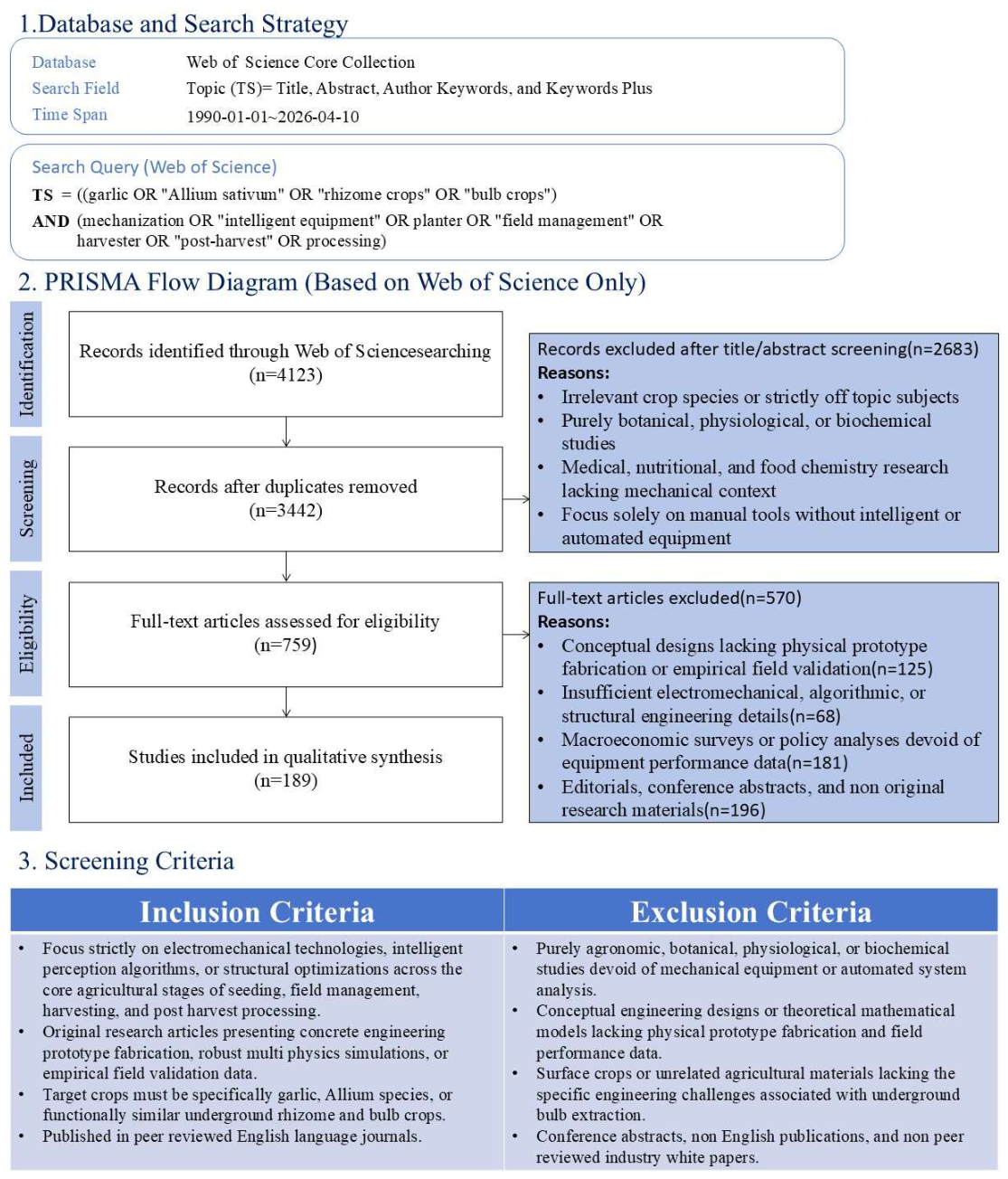
To ensure the objectivity, comprehensiveness, and reproducibility of this systematic review, a structured literature retrieval and screening process was executed in strict accordance with the Preferred Reporting Items for Systematic Reviews and Meta Analyses guidelines (Figure 1). The primary literature search was conducted exclusively within the Web of Science Core Collection database to capture high-quality peer-reviewed articles published between January 1990 and April 2026. The retrieval strategy utilized boolean combinations of targeted crop keywords, including garlic, Allium sativum, rhizome crops, and bulb crops, intersected with core engineering terms such as mechanization, intelligent equipment, planter, field management, harvester, post harvest, and processing. Rigid criteria were established to comprehensively filter the retrieved literature. The inclusion parameters strictly required peer reviewed English language articles focusing on electromechanical technologies, intelligent perception algorithms, or structural optimizations, supported by concrete prototype fabrication, robust multi physics simulations, or empirical field validation data. Conversely, purely agronomic studies devoid of automated systems, conceptual designs lacking physical performance validation, research on surface crops, and non-peer-reviewed materials were systematically excluded. As illustrated in the corresponding flowchart, from an initial identification of 4123 records, a rigorous multi-stage screening process was executed, culminating in the final inclusion of 189 highly relevant studies for comprehensive qualitative synthesis.

2. Research Status of Mechanized Garlic Seeding Technology

Garlic agronomy strictly dictates single seed placement per hole with the clove bud oriented upwards to ensure upright planting. While traditional manual planting satisfies these conditions, its prohibitive labor intensity and operational costs comprehensively fail to meet large scale production demands. The subsequent technological evolution of automated garlic seeding equipment is fundamentally driven by the continuous effort to overcome progressive physical and agronomic bottlenecks. Early mechanical seed metering systems primarily addressed severe rural labor shortages but consistently struggled with high clove damage rates and poor singulation precision due to rigid mechanical impacts. To mitigate this physical injury, airflow differential metering planters emerged, utilizing targeted airflow to handle irregularly shaped cloves gently. However, these traditional pneumatic configurations often failed to resolve the ultimate agronomic bottleneck requiring strict upright planting, a factor directly dictating final yield and bulb uniformity. Consequently, contemporary research has aggressively shifted toward intelligent orientation technologies combining machine vision and active robotic manipulation to guarantee optimal clove bud positioning prior to soil penetration. Rather than existing merely as diversified pathways, these progressive configurations represent a clear evolutionary trajectory culminating in multi adaptability specialized platforms.

2.1. Core Technologies of Seed Metering and Posture Control

2.1.1. Rigid Structural Metering Systems

Rigid structural planters represent the most widely applied technology type, with the core lying in achieving single-seed picking, clearing, and metering of garlic cloves through mechanical structures [21]. Early representative models abroad include the finger-clip planter by J.J. Broch (Spain) and the spoon-chain planter by Garmach (Poland) [22]; while these devices offer relatively high operational efficiency, they are mostly suitable for random seeding agronomy and struggle to meet the strict requirements for clove bud orientation in production areas such as China.
To address this shortcoming, some research teams have carried out targeted innovations. For instance, a double-filling-chamber garlic single-seed picking device, through the synergistic effect of primary picking and secondary clearing, achieved a single-seed qualification rate of 95.38% and a missed-filling rate of only 1.18%. Zhang et al. utilized a spoon-clamp seed-metering device to precisely control the clamping force at approximately 2.4 N, reducing the damage rate while achieving stable operation of the metering disc at various rotational speeds [23]. Furthermore, addressing the missed-seeding issue caused by seed population disturbance, related studies optimized the disturbance frequency of the clearing mechanism, reducing the missed-seeding rate to below 1.5%; meanwhile, a claw-type circulating seed-picking device based on the “pick multiple, retain one” principle achieved a single-seed qualification rate of over 92%. These innovations successfully resolved the high missed-seeding and high damage rates of traditional mechanical picking, aligning more closely with the agronomic requirements of intensive cultivation.
During the mechanical seed-picking process, the irregular geometric shape of garlic cloves easily triggers slipping and multiple-seeding when the transmission chain vibrates. Drawing on the kinematic evaluation methods for tuber crops like potatoes in spoon-chain metering devices [24], incorporating a high-speed camera system to track the falling speed and spacing uniformity of single seeds [25] can provide crucial dynamic parameter support for the surface improvement of garlic picking spoons and the tension optimization of the retaining belt.

2.1.2. Airflow Differential Metering Systems

Relying on the significant advantages of high seed-picking precision, strong adaptability to clove sizes, and minimal mechanical damage, airflow differential metering planters have emerged as a critical development direction for precision garlic seeding [26]. Representative foreign products, such as the pneumatic planter from ERME (France), utilize the negative pressure suction principle for high-speed seed picking, but still face challenges related to structural complexity and limited adaptability to irregularly shaped cloves.
Some scholars have further improved the operational performance of pneumatic seed-metering devices through airflow field regulation and CFD simulation. Because garlic cloves are highly irregular in shape and have uneven surfaces, traditional flat suction nozzles are prone to missed suction. Relevant studies constructed a gas–solid coupling mechanical model of garlic cloves and the metering disc, analyzed the pressure distribution state on the clove surface, and optimized the suction nozzle into a curved groove structure highly consistent with the contour of the clove back. Meanwhile, by applying hierarchical negative pressure regulation to the vacuum chamber (typically maintained within an operational range of 0.02–0.04 MPa), the system can ensure high conformity while effectively avoiding airflow turbulence, thereby keeping the missed-suction rate at extremely low levels. The precision of airflow field regulation directly dictates the suction stability of irregularly shaped cloves. The mathematical model of vacuum negative pressure in precision planters established by Karayel et al. [27] confirmed that the critical negative pressure value must strictly match the mass and aerodynamic characteristics of the seeds. Therefore, the optimization of modern pneumatic metering devices has become highly reliant on DEM-CFD coupling simulation technology. Through fluid dynamics solving and response surface optimization analysis (RSM) [28], researchers effectively eliminated airflow turbulence at the edges of the suction holes on the metering disc, vastly reducing the missed-suction rate while maintaining the 0.02–0.04 MPa negative pressure range. Additionally, the development of a pneumatic-flexible mechanical composite metering device combined the advantages of fluid dynamics and flexible contact, significantly reducing the multiple-seeding rate while guaranteeing minimal mechanical damage. Currently, technological innovation in this field is focusing on the development of flexible silicone suction nozzle materials and intelligent closed-loop control systems that dynamically adjust negative pressure based on the operational environment [29,30,31].

2.1.3. Bud Orientation and Upright Planting Planters

The bud orientation and upright planting integrated planter focuses on the core agronomic challenges of clove bud orientation and upright planting, serving as the key equipment to achieve high-quality and high-yield garlic production. Modern agronomic studies confirm that the spatial posture of garlic upon entering the soil directly determines its initial germination energy consumption and subsequent root development quality. When the clove bud remains strictly upwards or the inclination angle is tightly controlled within a ±45° range, garlic emergence uniformity and final yield reach their peaks [32]; conversely, lying flat or inverted planting leads to malformed seedling growth or even seed coat necrosis [33]. Therefore, relying on machine vision or mechanical posture adjustment devices to achieve precise orientation and upright planting of single cloves is not only a prerequisite for simplifying field management but also the most essential engineering means to promote full bulb expansion and ensure high-quality, high-yield outputs in large-scale planting [34].
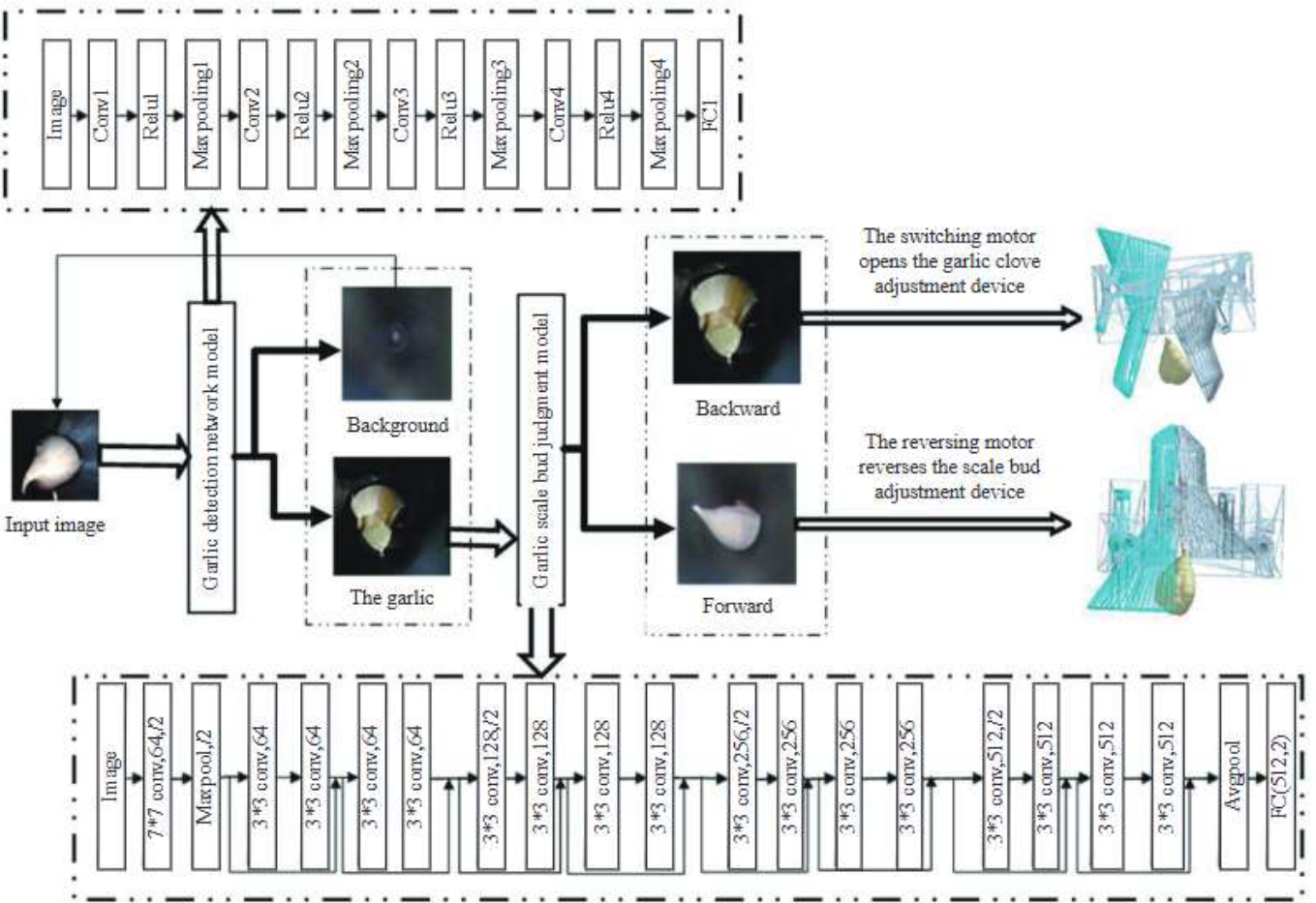
The premise of realizing clove bud orientation is the accurate deconstruction of garlic’s morphological characteristics. With the maturation of computer vision applications in extracting features of non-standard agricultural materials [35,36], it has become possible to acquire the contour, centroid, and major-minor axis ratio of garlic bulbs via image processing. The 2D projection-based geometric shape recognition algorithm proposed by Igathinathane et al. [37] provides a reliable mathematical criterion for rapidly defining the asymmetrical relationship between the garlic root plate and the bud. However, this foundational research was primarily confined to static algorithmic analysis and lacked integration with high-speed physical actuators for real world application. To bridge this critical engineering gap between theoretical software logic and dynamic mechanical execution, Chinese research teams (Figure 2) have made breakthrough progress in developing intelligent orientation devices. A typical vision-electromechanical coupled orientation system uses photoelectric sensors to trigger dual USB industrial cameras to acquire real-time images of garlic on a horizontal transmission chain. Once the system identifies the orientation of the bud, it controls relays and solenoids to drive a lever-type dial mechanism to dynamically correct the garlic’s posture via flipping. Addressing the persistent challenge of upright planting, an automatic bud righting mechanism developed by Geng [38] leverages machine vision to dynamically determine clove posture. Rather than relying on redundant computational steps, this streamlined system achieves a high identification accuracy of 97 percent. Furthermore, it seamlessly translates these real-time visual data into physical action, minimizing the mechanical orientation adjustment response time to under 0.1 s and ensuring highly efficient singulation. Fang [39] innovatively explored a bud recognition method based on capacitive sensing technology, providing a new orientation scheme with stronger anti-interference capabilities for complex, dusty field environments. In the planting stage, researchers employed Discrete Element Method simulation to analyze the interaction mechanism of “soil-planter-seed,” determining an optimal planting depth of 50 mm and an opening angle of 20° as the optimal parameters, and paired this with elastic pressing wheels to mitigate the impact of soil backflow, stabilizing the field uprightness rate at over 95%.
Despite the impressive laboratory performance of these intelligent orientation and planting mechanisms, their transition to commercial field operations reveals significant engineering limitations and practical challenges. Optical vision systems are inherently fragile in harsh agricultural environments. Intense sunlight fluctuations, high frequency tractor vibrations, and continuous lens contamination from field dust or mud splashing severely degrade real-time image quality and overarching recognition reliability [41]. Consequently the overarching practical applicability of these intelligent planting platforms remains fundamentally constrained by the extreme environmental vulnerability of optical sensors to dynamic field interferences.

2.2. Multi-Adaptability Planters

Multi-adaptability specialized planters address the differences in garlic seed characteristics and planting models across various production regions, emphasizing a balance between equipment universality and specificity [42,43]. Garlic production areas in China are widely distributed, and there are significant differences in the morphology and planting density of garlic seeds across regions. For example, Jinxiang garlic in Shandong (larger diameter, higher moisture content) and Acheng purple-skin garlic in Northeast China (smaller diameter, harder skin) differ significantly in physical characteristics, and planting models cover various types, including flat-bed, raised-bed, and plastic film-mulched planting [44]. A four-row garlic planter developed in relevant research adapts to different planting model demands through adjustable plant-spacing (80–120 mm) and row-spacing (160–220 mm) mechanisms, along with replaceable seed-picking components (spoon modules adapted to different seed diameters), achieving a pure operational productivity of 0.05 hm2/h. In cross-regional mechanized garlic seeding operations, the uniformity of seeding depth is severely constrained by differences in the physical and mechanical properties of the soil. To address the sharp increase in trenching resistance and backfill coverage issues caused by cohesive soils or dry, hard clods in northern regions, the design of modern furrow openers has become highly dependent on 3D discrete element method dynamic modeling of soil-tool interaction [45]. Through dynamic simulation analysis of the fluid dynamic characteristics of the furrow opener blade surface and the soil cutting friction mechanism [46], the developed synergistic mechanism of double discs and soil-loosening shovels effectively overcomes the adhesion effect of cohesive soils, ensuring consistent garlic seeding depth across different soil moisture boundaries. For arid regions, the planter incorporates a drip irrigation pipeline integration module to achieve synchronized seeding and water supplementation; simultaneously, it is designed with pressing wheels of adjustable intensity, regulating the pressing pressure based on soil moisture to ensure tight contact between the garlic seeds and the soil [47]. Furthermore, modular design has become a critical development direction for multi-adaptability planters, such as detachable orientation modules, seed-picking modules, and furrowing modules, which can be rapidly assembled and replaced according to the agronomic requirements of different regions, reducing equipment R&D and promotion costs. The core of designing such planters lies in modularity and adjustability. Through the optimization of component universality, flexible regulation of operational parameters, targeted structural improvements, and functional module integration, broad adaptability to different garlic varieties, planting models, and soil conditions is achieved, and its technological innovation provides vital support for the regionalized promotion of garlic planters.
In summary, the research and design of garlic planters have formed a pattern of parallel development across multiple technological pathways. Traditional mechanical metering systems offer significant structural simplicity and low maintenance costs, making them highly suitable for fragmented smallholder farms. However, these systems inherently suffer from higher clove damage rates and highly unstable upright orientation during high-speed operations. Conversely, while pneumatic planters significantly reduce mechanical damage and excel in high-speed singulation, their reliance on continuous negative pressure necessitates substantial tractor power consumption. Furthermore, precision pneumatic suction nozzles are highly susceptible to clogging from field dust and moisture, severely reducing their reliability in harsh environments. Therefore, the optimal selection between these technologies is not based on absolute superiority, but strictly depends on matching equipment limitations with specific field conditions, production scales, and economic constraints. Current research still faces several challenges, such as the stability of orientation accuracy under complex working conditions, adaptive adjustments for different garlic varieties, and the integrated application of intelligent regulation technologies. Future research should further strengthen the fusion of multiple technologies, combining advanced technologies such as vision recognition, intelligent regulation, and the Internet of Things (IoT) to develop intelligent seeding equipment with stronger adaptive capabilities [48,49,50]; simultaneously, it should focus on the precise matching of the physical characteristics of garlic seeds with equipment parameters, optimize structural design to reduce energy consumption and costs, and enhance field trials and long-term reliability verification, thereby providing more efficient and reliable technical equipment support for the full-process mechanized production of garlic.

3. Research Status of Mechanized Field Management Technologies for Garlic

Field management is the core phase for guaranteeing the quality and yield of garlic, encompassing key procedures such as weed control, pest and disease management, and water and fertilizer regulation. With the extensive integration of sensors, artificial intelligence (AI), and UAV technologies, garlic field management is leaping from traditional mechanization to precision and intelligence [51,52].

3.1. Mechanized Weed Control Technologies

As the issue of herbicide resistance becomes increasingly prominent globally, utilizing mechanical/physical methods or precision targeted spraying for field weed control has become a core consensus in modern sustainable agriculture [53]. Addressing the pain points of intra-row weeding for densely planted crops like garlic, physical soil-engaging weeding systems—based on high-precision tractor towing or co-robotic platforms—can achieve efficient weed eradication without damaging the root systems [54]. Concurrently, with the explosive growth of Deep Learning technologies, utilizing CNN for pixel-level classification of crops and weeds against complex farmland backgrounds has provided the most critical “digital eyes” for subsequent intelligent laser weeding and variable-rate spraying [41].

3.1.1. Specialized Mechanical Weeding Technologies

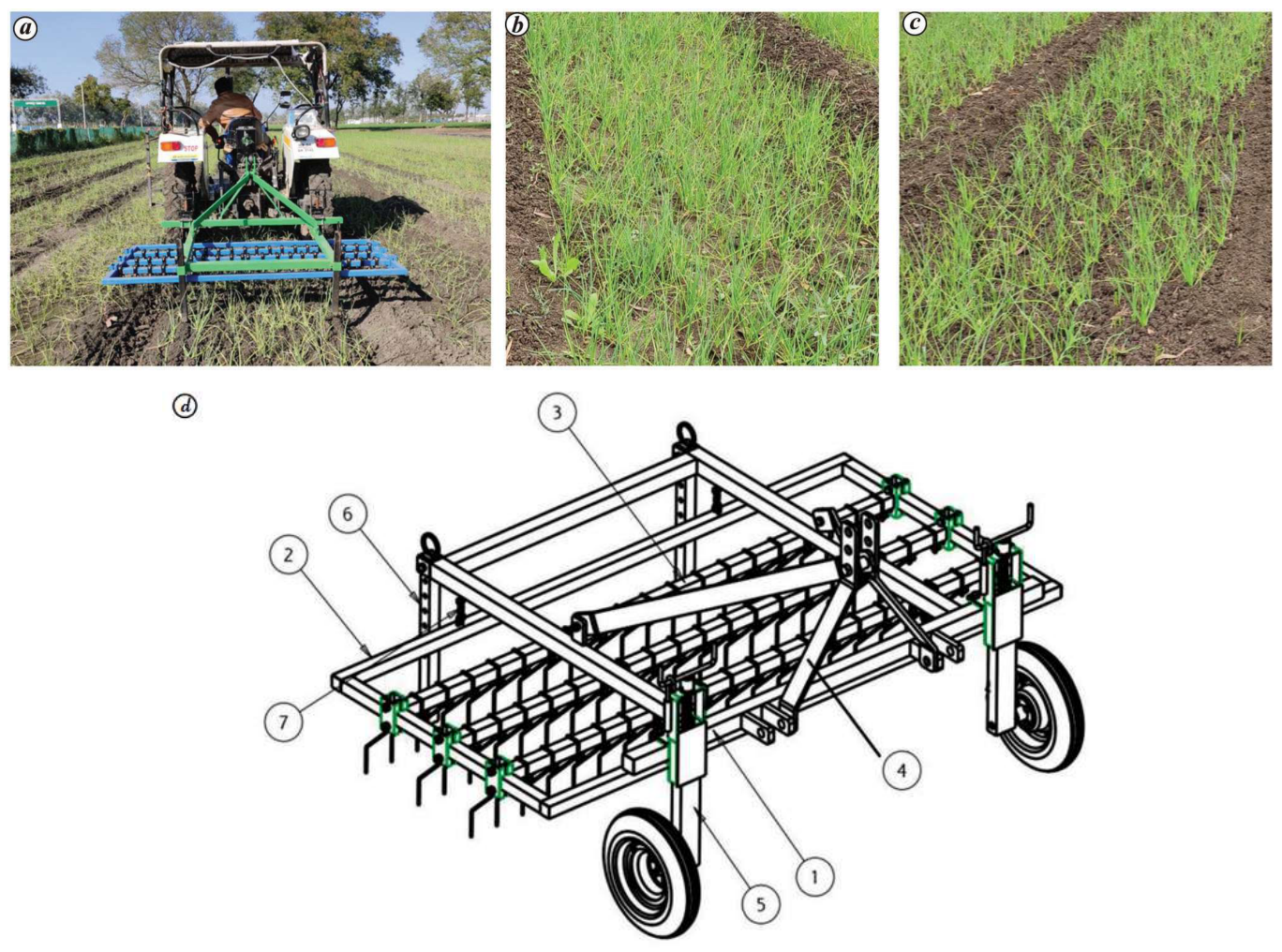
Weeds compete with garlic for nutrients and growth space, acting as a critical factor that leads to a 30–60% reduction in garlic yield. Traditional manual weeding is not only highly labor-intensive but also requires 50–60 person-days per hectare, incurring exorbitant costs [55,56,57]. To address this bottleneck, Jat et al. [58] from ICAR in India developed a 19-row tractor-drawn specialized garlic weeder (Figure 3). By employing a structurally optimized spring-loaded tine mechanism coupled with precise depth control wheels, this equipment effectively executes mechanical weeding while strictly avoiding damage to the shallow garlic root system. Rather than relying on rigid dimensional parameters, the highly adjustable design ensures robust adaptability across varying row spacings. Field evaluations confirm that multi-pass mechanical operations achieve a comprehensive weeding efficacy closely matching that of intensive manual labor. Crucially, this mechanized approach reduces overarching operational costs by nearly half, demonstrating profound economic viability.
In terms of mechanical structural optimization, this weeder utilizes a mild steel square box main frame and establishes a flexible connection between the tine frame and the main frame via link chains. It is adaptable to field environments with a soil moisture content of around 22% and demonstrates excellent operational stability in both clay and sandy soils. Overall, this structurally refined system maintains high operational efficiency and an exceptionally low plant damage rate, validating its practical effectiveness for large-scale garlic production.

3.1.2. Chemical Weed Control Mechanization Technologies

The core of mechanized chemical weed control lies in balancing precision application with environmental friendliness [59]. Regarding the underlying fluid dynamics optimization of spraying devices, electrostatic spraying systems have exhibited immense potential [60,61]. Field evaluations, such as the system developed by Zheng, demonstrate these benefits empirically by achieving a 35 percent increase in garlic canopy adhesion and a 52 percent reduction in drift losses compared to traditional sprayers [62]. Furthermore, integrating online spiral mixing technology within these systems ensures precise water pesticide proportioning, avoiding the chemical waste typical of traditional premixing models [62]. However, despite these demonstrated environmental and economic benefits, electrostatic spraying presents notable field limitations. The charged droplets frequently suffer from the Faraday cage effect, which restricts effective penetration into the dense lower canopy of mature garlic plants. Additionally, maintaining complex high-voltage generators in highly humid and unpredictable agricultural environments poses significant safety and durability challenges [61,63]. Consequently, while this technology successfully optimizes surface deposition and reduces chemical runoff, its inherent canopy penetration bottlenecks and strict maintenance requirements currently limit its independent widespread application in high-density garlic cultivation.
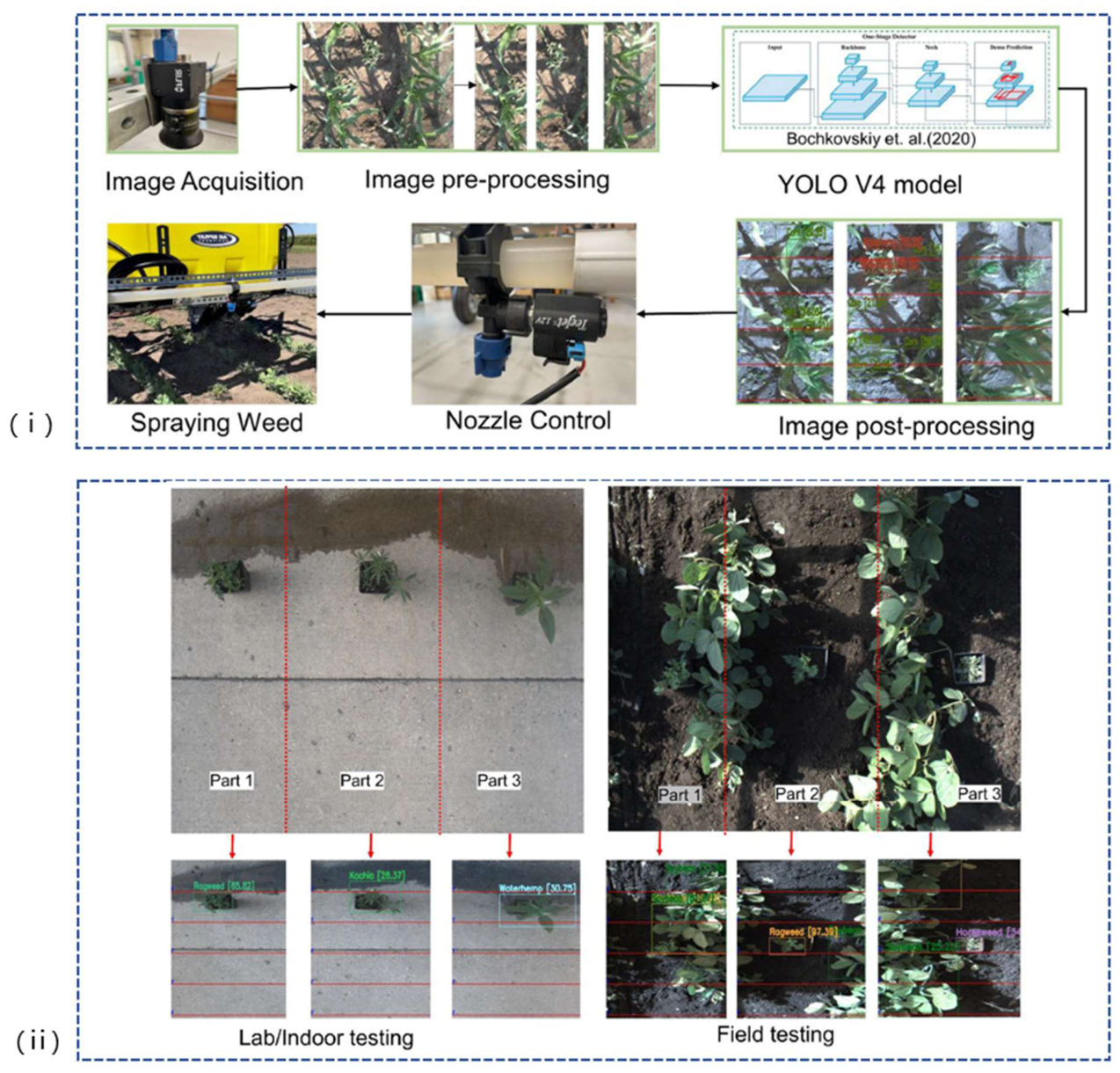
In terms of upper-level algorithms and holistic machine control, the integration of ground robotic weeding systems with variable-rate spraying has become a cutting-edge trend. Intelligent variable-rate robotic sprayers elevate precision agriculture by integrating real-time canopy sensors and machine vision algorithms to map weed density and crop health dynamically. By executing targeted site-specific spraying rather than traditional blanket coverage, these autonomous platforms achieve unprecedented application precision. This dynamic adjustment substantially slashes total chemical consumption, thereby directly mitigating agricultural environmental hazards. Simultaneously, it maximizes overall operational efficiency by significantly reducing the payload weight and extending the continuous operational range of the field equipment. For instance, the team of Xin Sun and Arjun Upadhyay from North Dakota State University (Figure 4) developed an intelligent spraying robotic platform integrating multi-source sensors and deep learning object detection algorithms, providing a highly robust software–hardware collaborative solution for precision application under complex field lighting conditions [64]. Regarding the actual chemical reduction evaluation of targeted application, Farooque et al. [65] developed an intelligent variable-rate spraying system based on a deep CNN (Figure 5). Field validations indicated that the system could identify weed distribution in real-time to execute dynamic “spot spraying.” While ensuring the eradication rate, it drastically reduced the total amount of herbicide used by nearly 47% compared to traditional broadcast spraying, offering landmark equipment support for reducing the environmental burden of agricultural chemicals.

3.1.3. Exploration of Novel Weed Control Technologies

As an environmentally friendly solution with zero chemical residue, laser weeding technology is gradually gaining widespread attention from both industry and academia. In the sector of commercial heavy equipment, high-tech enterprises represented by Carbon Robotics have developed weeding robots equipped with high-resolution LiDAR and object detection algorithms. Its core lies in utilizing high-power thermal lasers to instantaneously vaporize weed meristems, achieving highly efficient operations without disrupting the soil’s physical structure. In terms of low-cost miniaturization research, a joint Russian–Danish research team [66] developed a lightweight laser weeding prototype based on a Raspberry Pi edge controller and camera sensors. This study achieved rapid weed localization and targeted laser irradiation using a lightweight vision algorithm, confirming the feasibility of a low-cost electromechanical architecture for precisely recognizing and avoiding crops within a plant population. This provides a crucial technical prototype for the development of lightweight and simplified targeted weeding equipment for garlic fields.
In the domain of weed management for mulched garlic cultivation, integrating visual navigation with laser weeding provides a non-contact alternative to traditional mechanical methods. Mechanical weeding frequently tears the plastic mulch, compromising its essential soil warming and moisture retention functions. To address this, visual navigation systems employ deep learning algorithms to dynamically segment garlic seedlings from weeds, guiding high-energy laser beams to ablate weed meristems. Because this execution process involves no physical ground interaction, it successfully preserves mulch integrity and reduces chemical herbicide reliance. However, evaluating the commercial viability of this integrated system requires acknowledging significant engineering and economic limitations. Technologically, real-time optical segmentation is highly susceptible to field dust, variable illumination, and severe weed occlusion. Furthermore, effective laser ablation demands specific thermal dwell times to destroy weed tissue, which severely restricts the overarching operational speed and field efficiency of the machinery. Economically, the substantial capital investment required for high-power laser generators and advanced computational hardware renders this technology cost prohibitive for conventional garlic farmers. Consequently, practical field deployment currently remains limited to controlled experimental settings, necessitating further advancements in energy efficiency and hardware cost reduction before large scale commercial application becomes feasible [67].
Currently, garlic cultivation universally adopts plastic film mulching. The intense specular reflection of the plastic film and the cross-occlusion of leaves in the middle and late stages drastically increase the difficulty of extracting visual navigation lines [68,69,70]. Addressing similar highly reflective and noisy farmland environments, the visual navigation system for weeding robots developed by Choi et al. [71] for paddy fields offers theoretical references with significant cross-domain transfer value. By coupling machine vision with K-means clustering and the Hough transform algorithm, the system successfully overcame the dual interference of water surface reflection and crop occlusion, achieving high-precision navigation line extraction. Although initially designed for rice paddies, this highly robust anti-optical-noise mechanism and line-fitting logic open up a feasible technical pathway for resolving navigation deviation issues caused by “illumination distortion” in film-mulched garlic fields.

3.2. Pest and Disease Control Mechanization Technologies

3.2.1. Plant Protection UAV Application Technologies

Owing to their high maneuverability and broad adaptability, plant protection UAVs have become the primary equipment for large-scale garlic management and pest control [72,73,74,75]. To maximize aerial operational efficiency and spraying precision, modern plant protection UAVs increasingly integrate autonomous navigation and advanced sensing payloads. Specifically, intelligent obstacle avoidance systems continuously scan the flight trajectory to execute autonomous maneuvers around spatial hindrances, eliminating collision-related operational downtime. Concurrently, dynamic terrain-following control utilizes radar subsystems to maintain a constant operational altitude above uneven canopies, ensuring uniform droplet deposition and mitigating environmental drift. Furthermore, multispectral sensing enables the early diagnostic mapping of localized crop stress and pest hotspots, facilitating prescriptive site-specific applications rather than uniform blanket spraying. This synergistic integration of aerial physics and control logic elevates both the safety and productivity of garlic canopy management. To achieve precise field operations, autonomous flight control in complex environments is the primary prerequisite. Addressing the common presence of obstacles such as trees and power lines around garlic planting areas, Sun et al. [76] designed an obstacle avoidance system based on dual millimeter-wave radar. Its forward detection error is less than ±115 mm, and the lateral error is less than ±195 mm, immensely enhancing the safety of UAVs during low-altitude operations. Furthermore, targeting the fragmented distribution characteristic of major garlic producing areas, Zheng et al. [77] proposed a bidirectional RRT path planning algorithm. Through centroid bias sampling optimization, the replanning iteration count for obstacle avoidance trajectories was reduced by 23.69%, and the planning time was shortened to under 0.33 s, perfectly satisfying the path optimization demands for continuous multi-plot operations. Despite algorithmic advancements, the practical efficiency of these vehicles is fundamentally constrained by severely limited battery endurance and restricted liquid payload capacities, which necessitate frequent operational interruptions for recharging and refilling [78]. Furthermore, while radar subsystems improve theoretical safety, their sensory accuracy is highly vulnerable to dense field dust and adverse meteorological conditions. Environmentally, the inherent susceptibility of aerial droplet deposition to natural wind currents frequently results in chemical drift, threatening adjacent crops and ecological safety [79]. Consequently, the practical applicability of autonomous aerial spraying is currently restricted to highly controlled, large-scale cooperative farms, as the high initial capital investment and the requirement for specialized licensed operators remain substantial barriers for conventional smallholder garlic producers.
Building upon the fundamental requirements of flight safety and path planning, the overarching efficacy of aerial plant protection is further dictated by terrain following precision and sensory monitoring capabilities. Hu et al. [80] developed a fused navigation system integrating GNSS and machine vision. Their 3D point cloud extraction algorithm, originally designed for highly complex terrains like mountainous orchards, provides an excellent cross-domain technical reference for terraced garlic operations in hilly and undulating landscapes. Its terrain-following control average error is merely 0.01 m (maximum 0.15 m), ensuring ultimate stability during low-altitude terrain-hugging flights. Relying on this high-precision flight platform, UAVs equipped with multispectral sensors can conduct early monitoring of garlic pests and diseases. The system can astutely capture spectral reflectance differences caused by the destruction of leaf pigments and cell structures, achieving disease feature extraction across the visible to thermal infrared bands. The recognition accuracy for garlic leaf blight and purple blotch can reach 89%. By analyzing spectral reflectance variations linked to cellular damage, these systems attempt to enable targeted interventions. However, the practical diagnostic reliability of aerial multispectral imagery is frequently compromised by atmospheric interferences, fluctuating solar angles, and inherent spatial resolution limitations compared to ground-based sensors. Moreover, the necessity for complex post-processing software and specialized agronomic interpretation creates a steep technical threshold, further restricting the widespread commercial feasibility of autonomous aerial disease management.
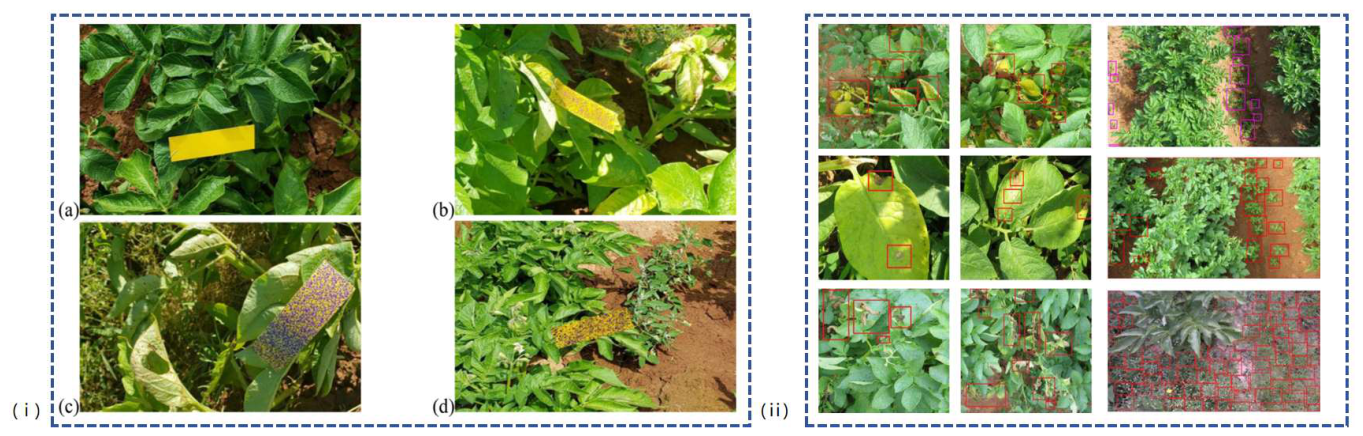
Beyond micro/meso-level disease prevention, high spatiotemporal resolution remote sensing data provides non-contact panoramic means for precise field management and growth assessment of garlic. In actual UAV plant protection operations, the downwash airflow generated by the rotors not only alters the deposition trajectory of droplets but also directly determines the spatial distribution of the liquid in the crop canopy. To overcome droplet drift, electrostatic spray technology combined with aerodynamic charging has been proven to significantly increase the uniform adhesion of the liquid on both leaf surfaces using electric field forces, which is exceptionally critical for Allium crops featuring waxy epicuticular surfaces [81]. Additionally, UAV platforms equipped with multispectral sensors act not only as efficient application carriers but also as central hubs for early non-destructive remote sensing monitoring of field diseases [82]. Marcone et al. [83] utilized UAV multispectral imagery to precisely extract key vegetation indices and texture features. The study confirmed that a garlic yield monitoring model integrating multi-source features could accurately capture subtle canopy variations during the bulb expansion stage. This not only provides a vital data benchmark for scientific harvest planning but also serves as core decision-making support for dynamic variable-rate regulation of field water and fertilizer. While integrating multi-source features theoretically supports the dynamic variable-rate regulation of water and fertilizer, transitioning these models to commercial scales reveals critical bottlenecks. The reliability of aerial multispectral data remains highly susceptible to fluctuating solar illumination, atmospheric interferences, and sensor calibration errors [84]. Additionally, translating raw spectral data into actionable agronomic decisions demands intensive computational processing and extensive ground truth validation [82], creating a substantial technical barrier that currently limits its practical deployment in conventional farming.

3.2.2. Precision Spraying Control Technologies

Precision spraying technology is the key to enhancing the efficiency and accuracy of plant protection UAVs [85,86,87]. Wen et al. developed a variable-rate spraying system based on an ARM architecture (STM32 chip) and Pulse Width Modulation (PWM) technology [88]. By parsing prescription map data in real-time and utilizing a closed-loop PID control algorithm to dynamically adjust the duty cycle of a miniature diaphragm pump, the system achieved rapid and precise matching between spray flow rate and UAV flight speed. Outdoor tests demonstrated that the deviation between the actual flow rate and the theoretical target flow rate under varying flight conditions was minimal, stably controlled within 2.16%. Furthermore, to counter variable interferences in complex farmland environments, related studies [89] introduced a BP neural network decision model. By comprehensively evaluating UAV flight height, speed, and meteorological parameters to dynamically predict and adjust liquid deposition, it fundamentally resolved the issues of uneven liquid distribution and pesticide waste caused by traditional constant-speed spraying. Prescription map-based variable-rate spraying technology thus realized on-demand application. However, a critical assessment of these systems reveals substantial engineering and practical deployment constraints. Generating accurate prescription maps demands intensive prior data acquisition and complex multispectral image processing, which significantly increases overarching operational costs and delays immediate field interventions [82]. Consequently, while these variable-rate systems demonstrate high precision in controlled tests, their commercial viability in complex garlic farming requires further optimization of mechanical responsiveness and highly simplified data processing pipelines [90].
While real-time sensory feedback systems struggle with onboard computational limits and mechanical latency, offline approaches utilizing pre-generated prescription maps offer an alternative pathway for targeted application. Campos et al. utilized UAVs to acquire multispectral imagery and generate high-precision prescription maps [91]. By importing the prescription map into a variable-rate spraying device equipped with a high-precision positioning system, precise on-demand distribution of field pesticides was achieved. Field trials indicated that this prescription map-based UAV variable-rate spraying system not only significantly improved the deposition uniformity of the liquid on the target canopy but also effectively reduced the total pesticide usage and surface runoff, drastically enhancing the economic and environmental friendliness of plant protection operations.

3.2.3. Droplet Drift Control Technologies

Droplet drift is the core bottleneck constraining the effective pesticide utilization rate of plant protection UAVs [92,93], inherently governed by a complex interplay of technological and environmental factors. Technologically, the drift potential is heavily dictated by operational flight parameters, primarily altitude and velocity, alongside specific nozzle characteristics that determine the initial droplet size spectrum. Furthermore, the aerodynamic structure of the rotor downwash field significantly influences the downward trajectory of the chemical spray. Environmentally, ambient wind velocity acts as the primary driver for horizontal drift, while low relative humidity and elevated temperatures accelerate droplet evaporation, exacerbating the risk of airborne dispersion. To optimize pesticide deposition efficiency specifically within garlic fields, these interacting factors must be precisely calibrated against the unique upright and narrow leaf architecture of the crop. Advanced optimization strategies involve dynamically adjusting the flight altitude and speed to ensure the rotor downwash effectively opens the dense garlic canopy without inducing excessive turbulent rebound. Coupled with the integration of specialized anti-drift nozzles to maintain a moderately coarse droplet spectrum, this multiparameter calibration maximizes chemical adhesion on the smooth garlic leaves while strictly minimizing off target environmental contamination. Addressing this pain point, current research primarily initiates active interventions from both electromechanical regulation and physicochemical modification. Regarding the dynamic regulation of airborne application systems, the research team from South China Agricultural University [94] developed an adaptive adjustment technology for spray angle and pressure based on a fuzzy control algorithm. Wind tunnel tests demonstrated that the system could optimize the nozzle installation posture and spray pressure in real-time according to changes in ambient wind speed. While guaranteeing target coverage, it significantly reduced the lateral drift distance of droplets by 33.7%. On the other hand, concerning the targeted regulation of the physicochemical properties of the liquid, research by Wang et al. [95] confirmed that compounding specialized aviation adjuvants into the spray mother liquor could significantly alter the droplet size spectral distribution. This modification effectively suppressed the generation of drift-prone fine droplets (diameter ≤ 75 μm). Field evaluations showed that, depending on the adjuvant formulation, total drift could be substantially slashed by 19% to 65%. As a typical Allium crop, garlic has erect leaves covered with a thick hydrophobic waxy layer, making the liquid highly susceptible to slipping and loss. The aforementioned mechanism of optimizing the droplet settling trajectory and enhancing wetting/penetration via adjuvant modification provides a highly targeted engineering solution for efficient pesticide application in garlic fields.
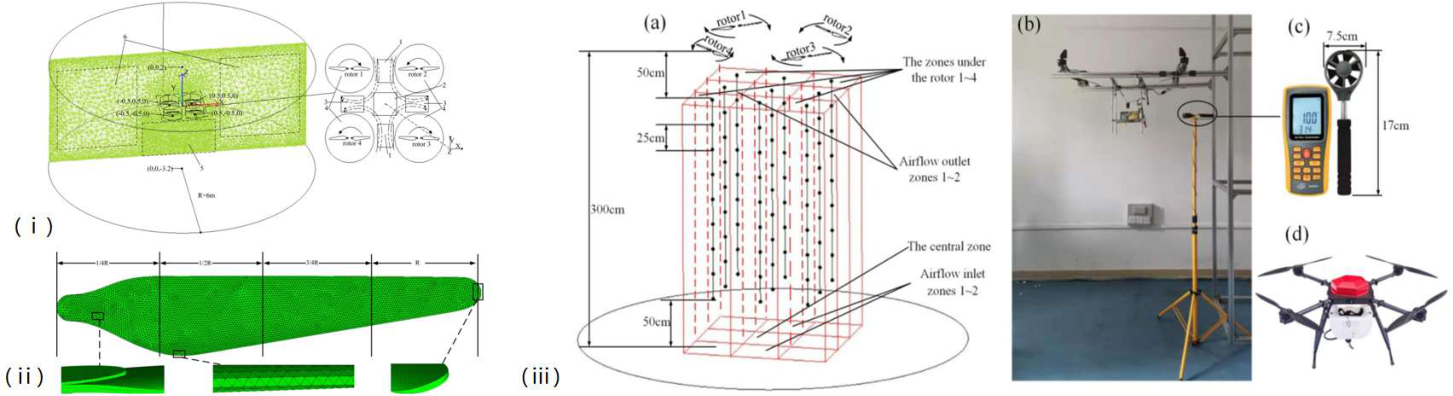
Beyond the active optimization of application devices, the coupling effect between the UAV rotor downwash airflow and complex micro-meteorological environments constitutes the passive aerodynamic mechanism affecting droplet drift. In terms of airflow field analysis, Guo et al. [96] (Figure 6) utilized CFD to conduct high-precision 3D modeling and spatial distribution simulation of the downwash airflow field of a quad-rotor agricultural UAV. This study profoundly revealed the dynamic evolution laws of vortices beneath the rotors and their disturbance characteristics on the crop canopy, providing a solid fluid mechanics basis for analyzing droplet settling trajectories within nonlinear airflow fields. Regarding empirical evidence in real-field environments, Wang et al. [97] systematically evaluated the drift potential of UAVs under varying natural wind speeds and constructed a highly fitted mathematical prediction model (R2 = 0.83). The results clearly indicated that a surge in ambient wind speed and a sudden drop in droplet size are the most critical triggers for lateral droplet drift. When the wind speed breaches a critical threshold, not only does the risk of downwind ecological pollution surge, but the effective deposition within the target area also suffers an order-of-magnitude attenuation. The integration of the aforementioned CFD theoretical simulations with field empirical conclusions establishes an exceptionally solid data-driven foundation for UAV route planning and operational parameter optimization for dense crops like garlic under complex micro-meteorological conditions.

3.3. Water and Fertilizer Management Mechanization Technologies

The primary prerequisite for achieving precise water and fertilizer management is the extremely clean extraction of crop growth information from complex farmland backgrounds [98,99,100]. Research by Hamuda et al. [101] demonstrated that traditional Excess Green (ExG-Otsu) feature extraction is highly susceptible to high-frequency misjudgments under intense illumination changes, underscoring the engineering necessity of introducing the CIE L*a*b* color space for specific segmentation. After acquiring high-fidelity visual data, modern precision agriculture systems, relying on canopy sensors and the Crop Water Stress Index (CWSI), can dynamically construct decision models for variable-rate topdressing and automatic irrigation [102,103]. This “monitor-decide-execute” closed-loop system, based on the underlying protocols of the Agricultural IoT, has completely eradicated the subjective blindness of traditional water and fertilizer management [104].

3.3.1. Water-Saving Irrigation Technologies

Water management throughout the entire growth cycle of garlic is vital to its ultimate yield. According to its biological characteristics of having a shallow root system, preferring moisture, and fearing waterlogging, its water demands differ significantly during the mulching, seedling, bolting, and bulb expansion stages [105,106,107,108]. In the application of modern water-saving irrigation technologies, research by Belay et al. [109] confirmed the exceptional efficacy of drip irrigation systems in garlic production. Field trials indicated that precisely delivering water to the active root layer of garlic using a drip irrigation system effectively reduced ineffective evaporation from the soil surface and deep percolation. Compared to traditional flood or furrow irrigation models, this precise water supply strategy not only boosted the Irrigation Water Use Efficiency (IWUE) of garlic by over 40% but also effectively optimized the microenvironment of the rhizosphere soil, offering a highly effective engineering solution for high and stable garlic yields and sustainable water resource utilization in arid regions.
Regarding irrigation machinery integration, the 2BUZ-2 self-propelled integrated garlic bud-righting, seeding, fertilizing, film-mulching, and irrigating machine achieved integrated operations with an efficiency of 0.29 ha/h, making it particularly suitable for large, contiguous plots. The equipment employs a chain-spoon seed-picking mechanism paired with a drip irrigation tape laying device, achieving precise irrigation immediately post-seeding. Soil moisture is maintained within the 20–25% range optimal for garlic growth, improving seedling emergence uniformity by 15%.
To streamline complex field management, modern agricultural engineering has developed highly integrated machinery capable of executing bud righting, seeding, fertilizing, film mulching, and drip tape laying in a single pass. While such integrated platforms theoretically ensure immediate post seeding irrigation to promote uniform emergence and reduce overarching field traffic, their complex architectural layouts introduce severe engineering vulnerabilities. Consolidating multiple mechanical subcomponents into a single chassis drastically increases the overarching machinery weight, which inevitably exacerbates severe soil compaction, particularly in moist field conditions [110]. Moreover, the highly coupled mechanical nature of these systems dictates that a localized malfunction in any single module, such as a ruptured plastic mulch film or a jammed seed metering spoon, mandates an immediate halt to the entire integrated operation [111]. Consequently, while these multi-functional machines demonstrate high theoretical throughput in uniform, large-scale plots, their practical deployment is strictly limited by the high probability of compounding mechanical failures and the uncompromising necessity for perfect seedbed preparation.

3.3.2. Precision Fertilization Technologies

The combination of soil-test formula fertilization and fertigation technologies has realized the precise matching of garlic nutrient demands. The variable-rate fertilization system developed by the Chinese Academy of Agricultural Sciences (CAAS) team utilizes data from soil nutrient sensors (pH, organic matter, NPK content) to generate application rate prescription maps for different zones. Paired with electromagnetic flow valves for precise control of the fertilizer liquid flow, the application error is strictly kept below 5%. In garlic basal fertilizer application, the system can precisely apply 2500–3000 kg/667 m2 of decomposed organic fertilizer, 50 kg/667 m2 of chlorine-based compound fertilizer, and trace elements, elevating the fertilizer utilization rate by 22%. While these pioneering experimental trials successfully demonstrate high precision under controlled conditions, scaling such variable-rate technologies to complex open-field environments exposes overarching industry wide engineering constraints [112]. Fundamentally, the current generation of real-time electrochemical nutrient sensors remains highly susceptible to calibration drift and signal interference from fluctuating soil moisture and heterogeneous textures. Furthermore, during large-scale field operations, physically metering viscous or particle-rich fertilizers through precision electromagnetic valves inevitably leads to severe mechanical clogging [113]. Consequently, these inherent physical limitations, which affect the entire agricultural equipment sector, continue to challenge theoretical application accuracy and increase maintenance downtime.
Similarly, aerial remote sensing has been introduced to guide dynamic topdressing during the active growth cycle. Kim Dong-Wook et al. [114]. from Seoul National University, Republic of Korea, based on UAV RGB imagery growth monitoring technology, extracted the garlic canopy Vegetation Fraction (VF) using the CIE L*a*b* color space and the Mean Shift (MS) algorithm. Combined with Plant Height (PH) acquired via Structure from Motion (SfM), the established fresh weight prediction model achieved an R2 of 0.82–0.92. This technology can adjust topdressing schemes in real-time based on the canopy growth state. In subsequent verification trials the following year, the linear relationship between predicted and actual fresh weight yielded an R2 > 0.82, providing precise data support for dynamic topdressing. Optically derived vegetation indices are inherently vulnerable to variable ambient illumination, cloud shadows, and dense canopy occlusions, which frequently distort structural estimations. Moreover, extracting three-dimensional plant height from overlapping mature garlic leaves via photogrammetry demands massive computational resources. Crucially, the complex data pipeline required to translate these offline aerial predictions into actionable, interoperable commands for ground-based variable-rate applicators remains a formidable technical barrier, restricting its adoption in conventional farming.

3.3.3. Growth Monitoring and Intelligent Regulation

Precise monitoring of crop growth is a prerequisite for realizing variable-rate regulation of water and fertilizer. In visual field monitoring of garlic, the intense reflection from plastic film mulches and canopy shadows often render traditional image extraction algorithms ineffective. To overcome this limitation, the high-precision crop segmentation framework developed by Kim et al. [114] leverages the CIE L*a*b* color space combined with the Mean Shift clustering algorithm. Methodologically, conventional thresholding approaches, such as the Excess Green index paired with Otsu’s method, rely heavily on luminance and global intensity distributions; consequently, they frequently misclassify bright plastic film reflections as crop pixels and fail under non-uniform shadowing. In contrast, the CIE L*a*b* color space effectively decouples illumination from chromaticity, allowing the green-red opponent channel (a* channel) to isolate the garlic plants based purely on chromatic traits regardless of specular gloss. Furthermore, instead of enforcing a rigid global threshold, the non-parametric Mean Shift algorithm robustly clusters pixels by locating local maxima in the feature space, successfully separating irregular garlic canopies from complex background noise like soil and mulch fragments. This algorithmic synergy significantly enhances segmentation robustness, providing high-fidelity front-end visual data for subsequent crop growth assessments.
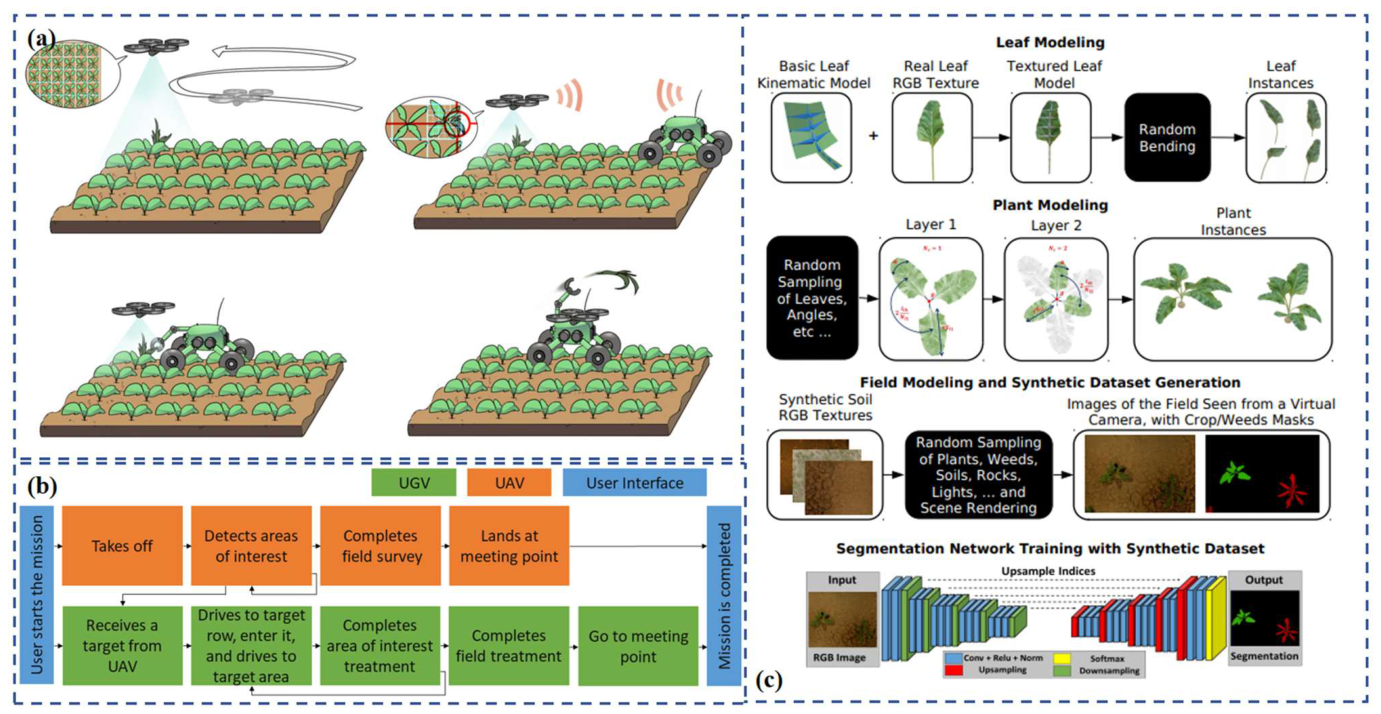
After acquiring high-precision visual data, intelligent regulation equipment and closed-loop field management constitute the “last mile” of precision agriculture. A joint research team led by ETH Zurich provided a highly forward-looking architecture regarding highly integrated agricultural ground mobile robots such as the BoniRob platform (Figure 7). Such high-end systems are equipped with multispectral sensors and deep learning-based visual perception modules. Relying on onboard edge computing nodes, they can parse the nutritional status and spatial distribution differences in crops in real-time with extremely low computational latency. By directly generating targeted variable-rate spraying or fertigation commands on the onboard node, the platform successfully bridges the “monitor-decide-execute” precision management closed loop. Furthermore, to ensure the physical precision of the actuators, the platform deeply integrates a high-precision RTK-GNSS navigation and positioning system, strictly controlling its lateral tracking and operational errors within an absolute physical boundary of ±2 cm. The coupling of this highly robust edge vision algorithm with an exceptionally precise chassis actuator provides an irreplaceable platform-level technical reference for the refined water management, dynamic nutrient topdressing, and maximum avoidance of “machinery seedling damage” for densely planted crops like garlic.
In summary, mechanized field management of garlic is comprehensively marching towards a new intelligent stage driven by “visual perception, fluid regulation, and edge computing.” In the comprehensive plant protection phase, relying on deep learning and high-fidelity image segmentation algorithms, modern agricultural machinery has successfully overcome visual interference from film reflections and canopy occlusion, achieving non-destructive targeted weeding and anti-drift precision variable-rate application. In the dimension of water and fertilizer management, the fusion of multi-source sensing and high-precision navigation has completely bridged the digital closed loop of “growth monitoring—prescription decision—precision execution.” However, electromechanical coupling in complex, densely planted environments remains the core barrier for all-weather operations. In the future, garlic management equipment will accelerate its evolution towards architectures featuring lightweight visual algorithms, low-cost edge deployment, and air-ground collaboration, aiming to break through the shackles of computing power and generalization ability, ultimately constructing a green and efficient intelligent management system for garlic.

4. Research Status of Mechanized Garlic Harvesting Technology

4.1. Overview of Global Harvesting Mechanization Development

Garlic harvesting represents the most labor-intensive and structurally complex phase of the entire production crop cycle, with its engineering development shaped by the dual demands of operational efficiency and crop quality protection. The technological evolution of harvesting equipment is fundamentally driven by the continuous effort to overcome progressive physical bottlenecks under variable field conditions. Early configurations relied primarily on passive soil-cutting blades and basic conveyor chains, which successfully mitigated manual digging labor but induced severe impact damage and high impurity rates in cohesive soils. To resolve these initial limitations, subsequent research shifted toward integrated combined harvesting platforms designed to synchronize mechanical digging, continuous soil-separation, and flexible clamping transport mechanisms. The contemporary technological frontier focuses on overcoming the precision bottleneck of post-harvest loss, aggressively adopting intelligent stem-cutting devices and adaptive depth control systems to maximize market value and storage life. The following sections systematically evaluate these sequential advancements, analyzing how modern configurations mitigate the physical stresses inherent to automated harvesting.

4.2. Types and Technical Characteristics of Harvesting Machinery

4.2.1. Segmented Harvesters

Segmented harvesters represent the fundamental type of global garlic harvesting mechanization. The operational workflow of these machines is governed by a continuous material transfer mechanism encompassing excavation, vibratory separation, and directional windrowing. Methodologically, the working principle initiates with an oscillating digging shovel penetrating the soil below the root plate to sever the primary capillary roots and lift the entire garlic soil mixture. Subsequently, this mixture is dynamically transferred onto an inclined rod chain conveyor. Driven by eccentric shafts, the conveyor subjects the mixture to high-frequency mechanical vibrations, effectively shattering cohesive soil clods. As the loose soil falls through the sieve gaps under gravity, the intact garlic plants are conveyed upward. Finally, a rear deflector mechanism structurally guides the cleaned plants to be deposited uniformly onto the field surface, forming neat windrows for natural curing prior to manual root trimming and collection. The widespread and sustained adoption of this segmented model in small-scale farming systems is primarily driven by its unique topographical, economic, and agronomic adaptability. Mechanically, their highly compact footprint and exceptional maneuverability perfectly accommodate the highly fragmented plots and terraced landscapes typical of smallholder agriculture. Furthermore, the significantly lower capital investment aligns perfectly with the limited purchasing power of individual growers, while the immediate field windrowing intrinsically satisfies the traditional natural curing requirements crucial for preserving bulb quality in regions lacking centralized artificial drying infrastructure [116,117].
Foreign segmented harvesters are prominently represented by those from Europe, America, Japan, and the Republic of Korea. For instance, the GW2400 four-row garlic digging and windrowing machine by TopAir (Parma, ID, USA) is tractor-drawn. The digging shovel unearths the garlic from the soil, separating it via a deflector wheel and a separation conveyor chain. The cleaned garlic is then uniformly laid on the ground for drying by a windrower. While its operational efficiency is high, clod separation is incomplete, necessitating tandem operation with a pickup machine. The segmented harvester from Sasaki (Towada, Aomori, Japan) operates in conjunction with a stalk cutter: the stalk cutter first removes the foliage, followed by the harvester completing the digging and soil removal. Although this resolves the issue of plastic film entanglement, the operational process is complex, resulting in relatively low overall efficiency.
The research, development, and application of segmented harvesters in China are the most extensive, forming various types such as trailed and self-propelled models adapted to different planting patterns and field conditions. The tractor-drawn digging and windrowing harvester is the most universally applied model in China. It employs a bar-type or oscillating digging shovel driven by an eccentric shaft for vibratory digging. After unearthing the garlic plants, a rod-chain conveyor belt transports and gathers them, sieving out the soil during transit, and neatly arranging them in the field. This type features low cost and low damage rates, with an operational efficiency of 0.05~0.10 hm2/h, a loss rate below 3%, and a damage rate below 1%. However, it is solely adapted to ridge cultivation models and generates significant vibration and noise during operation.
Self-propelled segmented harvesters have become a recent R&D hotspot in China. The 4DC-1 self-propelled vibratory segmented Welsh onion harvester (adaptable for garlic harvesting) developed by researchers utilizes vibratory soil-shaking technology, achieving the vibratory soil shaking and orderly windrowing of garlic. It boasts a net harvesting rate of up to 99%, restricts the damage rate to within 2%, and achieves an operational efficiency 12 times that of manual labor, drastically reducing labor intensity. The HY-4DCZL-1A Welsh onion combine harvester (adaptable for garlic) by Anqiu Haiyuan Machinery Co., Ltd., Anqiu, China, integrates functions like vibratory digging, clamping and conveying, secondary impurity cleaning, and quantitative collection and windrowing. It also innovatively incorporates crushing and sorting functions, further enhancing the quality of commercial garlic.
The technical characteristics of segmented harvesters are primarily manifested in the digging and soil cleaning stages. The design of the digging device directly dictates digging efficiency and the garlic damage rate [118]. Chinese models predominantly adopt oscillating digging shovels, which reduce digging resistance and improve efficiency by adjusting the vibration frequency and amplitude. Soil cleaning devices mainly utilize grid-sieve and vibrating-sieve types, effectively separating bulbs from the soil to lower the impurity rate. However, they also possess shortcomings such as disconnected operational workflows, reliance on manual labor for subsequent stages, and low overall efficiency. With the persistent surge in labor costs, they are gradually being superseded by combine harvesters, though they retain significant application value in small-scale plots and under complex topographical conditions.

4.2.2. Combine Harvesters

Combine harvesters represent the high-end equipment in garlic harvesting mechanization, capable of executing the entire process—digging, soil cleaning, root trimming, stalk cutting, and collection—in a single pass. Featuring a high degree of automation and operational efficiency, they serve as the mainstream equipment for global large-scale garlic planting and signify the future development trajectory of garlic harvesting mechanization [119,120,121,122].
European and American combine harvesters are characterized by large-scale, high-efficiency designs. The RECL trailed garlic combine harvester by ERME (Montégut-Arros, France) integrates digging, clamping and conveying, stem cutting, and collection. Utilizing a wide-swath header, it offers high operational efficiency while accommodating a certain degree of terrain adaptability, making it suitable for large-scale farm operations. The four-row garlic combine harvester by ZOCAPI (Las Pedroñeras, Cuenca, Spain) is equipped with an unloadable fruit bin and an enhanced stem-cutting system. It employs two rows of conveyor belts to align the garlic neatly before performing a uniform-height stem-cutting operation. Additionally, it features a novel cleaning device utilizing rubber bristles on a rotating drum to remove soil from the bulb surface, delivering excellent operational quality.
Conversely, Japanese and Korean combine harvesters are distinguished by their miniaturization and refinement. The HZ-20 compact garlic harvester by Yanmar (Osaka, Japan) can synchronously perform digging, soil sieving, root trimming, stalk cutting, and bagging. With its small footprint and flexible operation, it is suited for diverse working environments; however, it has a high retail price and is prone to entanglement issues when operating in weedy or plastic-film-mulched garlic fields. The garlic combine harvester by HADA (Iksan, Republic of Korea) employs a tracked chassis to adapt to harvesting needs in soft, wet topsoils. It has a compact structure and simple operation, capable of completing the full digging, cleaning, root trimming, stalk cutting, and collection process. Nevertheless, its production efficiency is relatively low, and the retained length of the cut garlic stalks is inconsistent [11].
Chinese R&D in combine harvesters has achieved remarkable breakthroughs. Tailoring to Chinese planting models and agronomic requirements, a series of models with independent intellectual property rights has been introduced. The 4DS-7HA garlic combine harvester by Shandong Maria Agricultural Machinery Co., Ltd (Jining, China). has reached an advanced level in China. It can complete the full operational suite—digging, conveying, stem cutting, collection, and stalk discharge—for seven rows of garlic in one pass. With high efficiency and strong adaptability, it is not only widely promoted across China’s main producing areas but has also successfully penetrated international markets such as Europe and America [123]. The walk-behind compact garlic combine harvester by Dezhou Chunming Agricultural Machinery Co., Ltd. (Dezhou, China). features a compact structure, synchronously executing digging, clamping and conveying, stem cutting, and root trimming. It demonstrates excellent applicability in small-plot scenarios and has gained widespread recognition in major garlic-producing areas.
The 4DLB-2 semi-feeding self-propelled garlic combine harvester, developed by Chinese research institutions, stands as a typical representative of Chinese garlic combine harvesters. It utilizes a tracked chassis with laterally configured operational components. The plant-dividing device lifts the garlic stalks; the digging shovel severs the main roots and loosens the soil; and the clamping chain grips and pulls the stalks, conveying them backward. During transit, soil-beating plates strike to remove dirt. After an alignment device elevates the bulbs to a uniform height, disc cutters sever the stalks, and the bulbs drop onto a scraper conveyor belt, which lifts them to a vibrating grid sieve for cleaning before finally entering the collection device. The stalk separation mechanism of this model utilizes a modular design, allowing component replacement to harvest other root crops. Its operational efficiency ranges from 0.13 to 0.21 hm2/h, with a damage rate of approximately 2.78%, making it suitable for wide-narrow row ridge cultivation models.
During the garlic combine harvesting process, the effectiveness of the front-end plant-dividing and gathering directly dictates the overall operational quality. To optimize the performance of the dividing and lifting mechanisms, Zhu et al. [124] deeply optimized their key operational parameters based on the physical characteristics of garlic plants, effectively enhancing the uniformity of the plants before entering the clamping chains. Furthermore, addressing the pervasive issue of lodging (plant falling over) in field harvesting, Li [125] designed and tested a plant-correcting reel with a deviation-correction function. By dynamically righting and guiding the lodged plants, it significantly reduced the missed-harvest rate, providing critical technical support for the continuous harvesting of garlic in complex growth environments.
The technological core of combine harvesters lies in the synergistic operation of critical stages: digging, soil cleaning, root/stalk trimming, and collection. Digging devices mostly utilize oscillating or rotating disc shovels, improving efficiency and lowering damage rates by optimizing shovel profiles and vibration parameters [126]. Soil cleaning devices adopt various forms—such as beating plates, rubber rollers, and brush rollers—to achieve effective bulb-soil separation. Root and stalk trimming devices employ disc or serrated knives, ensuring cutting quality through precise positioning and speed regulation. Collection devices primarily rely on conveyor belts and fruit bins to achieve orderly collection and bagging. With continuous technological advancement, the automation level and operational precision of combine harvesters are consistently improving, progressively steering toward intelligent and precise paradigms.

4.3. Progress of Key Harvesting Technologies

4.3.1. Digging Technologies

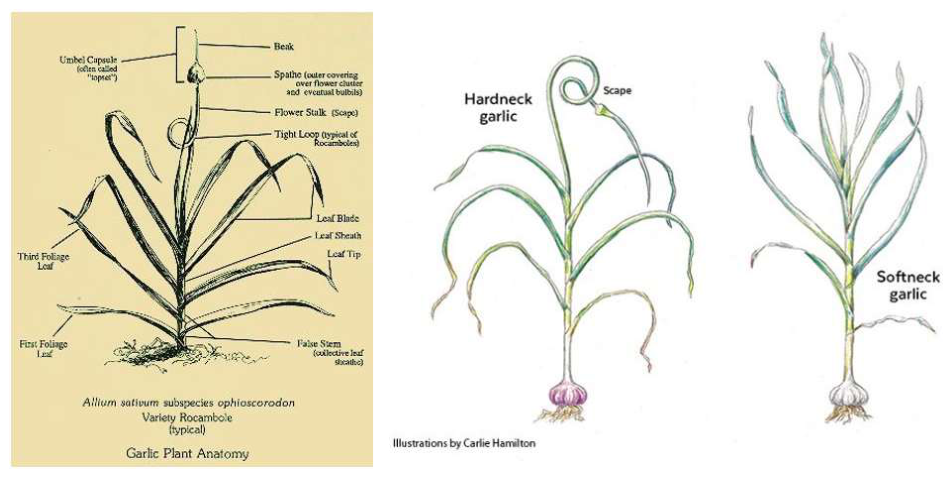
The essence of the digging process is to achieve low-energy ‘soil-tool’ cutting and separation. Drawing on universal digging theories for root crops, the structural design of modern digging shovels is highly dependent on 3D-DEM dynamic simulation [127]. By constructing soil particle models with varying moisture contents and porosities, research confirms that the penetration angle and geometric profile of the shovel face directly dictate cutting resistance and soil-breaking patterns [128]. Furthermore, addressing the traction overload issues easily triggered by cohesive soils, the introduction of a mechanical high-frequency vibration mechanism—which actively fractures internal soil cohesion by optimizing the oscillation frequency—has been proven as one of the most effective engineering methods to reduce digging resistance and enhance the clean bulb rate [129,130,131]. Figure 8 shows the structure of garlic.
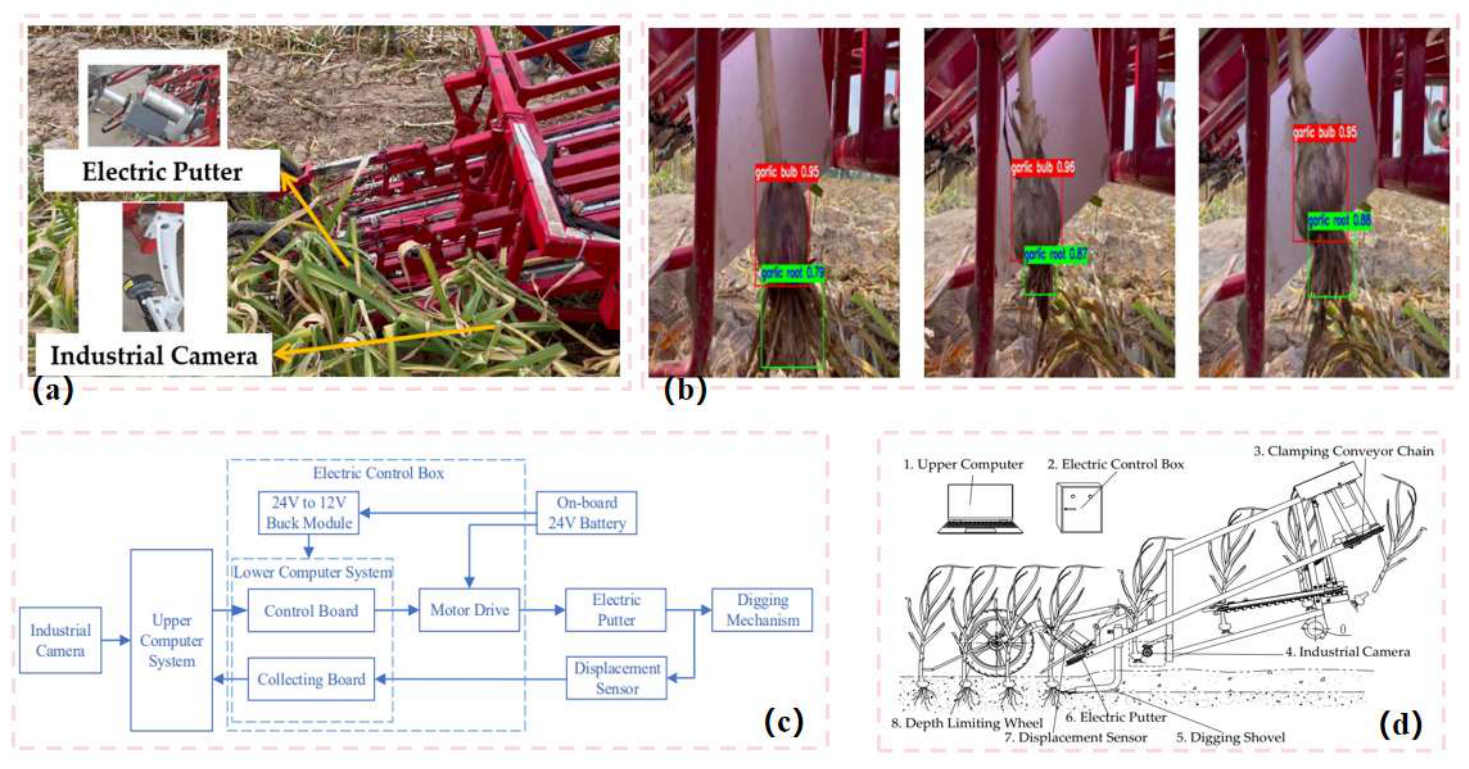
Oscillating digging technology currently represents the most widely applied and effective method in global garlic harvesting. Methodologically, by introducing a reciprocating high-frequency mechanical vibration to the digging shovel, this technology fundamentally alters the soil cutting dynamics. The continuous oscillation actively fractures the cohesive bonds between soil particles and the shovel surface, thereby transforming static friction into dynamic friction, which drastically reduces overall traction resistance and energy consumption. Furthermore, this vibratory action effectively prevents cohesive soil accumulation on the shovel blade, ensuring a smooth and uninterrupted material flow that significantly boosts overarching harvesting efficiency. Crucially, regarding the preservation of bulb integrity, the high-frequency vibration rapidly shatters hardened soil clods before they can exert rigid compressive forces on the garlic. The resulting loose soil acts as a dynamic cushioning layer, effectively buffering the bulbs from mechanical impact and drastically minimizing the damage rate [133]. Demonstrating these theoretical advantages, an eccentric vibrating linkage mechanism designed by Zhou et al. [134] successfully optimized these kinematic parameters, proving its exceptional adaptability and low damage performance in heavy cohesive soils achieves reciprocating shovel vibration, reducing traction resistance and energy consumption while boosting digging efficiency. Additionally, a disc-type garlic digging device underwent three-factor orthogonal testing to determine optimal working parameters (disc working inclination 8°, unit forward speed 0.85 m/s, disc rotational speed 152 r/min), achieving a digging rate of 99.56% and a damage rate of merely 1.57%. Foreign applications also exist; the HZ-1 garlic combine harvester by Yanmar employs an eccentric-wheel vibratory digging device, effectively reducing soil resistance and elevating efficiency. In the realm of intelligent digging, Ding developed an automatic digging depth control system based on machine vision for garlic combine harvesters. By dynamically adjusting the penetration depth via real-time terrain contour monitoring, it significantly reduced the additional energy consumption and damage caused by missed or excessively deep digging (Figure 9).
Rotary digging technology utilizes the high-speed rotation of disc shovels to sever roots and shatter soil for bulb excavation. It features fast digging speeds, high efficiency, and low energy consumption but is prone to tangling the garlic stalks, which hinders subsequent trimming operations. The GW2400 digging and windrowing machine by TopAir employs rotary digging shovels, offering high efficiency, though the bulbs are arranged disorderly, requiring subsequent manual sorting. The disc-type garlic digging device designed by the Chinese research team also falls under rotary digging technology; through parameter optimization, it minimizes stalk tangling while ensuring digging efficiency.
The structural design of the digging shovel critically influences digging outcomes. Common shovels include triangular, bar-type, and trough-type shovels. Utilizing bionic principles inspired by the head structures of mole crickets and fish fins, Chinese scholars designed a bionic vibrating shovel. This design improved digging efficiency and reduced soil bulldozing and weed wrapping; however, due to its complex structure and high production costs, it has yet to be widely promoted [92,136,137]. Depth control is another crucial aspect of digging technology. Chinese models frequently employ a depth-limiting wheel mechanism. By adjusting the height of this wheel, the penetration depth of the shovel is controlled, ensuring consistency and reducing the incidence of missed digs and damaged garlic.

4.3.2. Soil Cleaning Technologies

The core objective of soil cleaning technology is to remove soil and impurities from the bulb surface, guaranteeing quality and reducing subsequent processing workloads. It is primarily categorized into vibratory, beating, and brush roller cleaning, each possessing distinct advantages and disadvantages regarding efficiency and damage rates.
Vibratory soil cleaning technology dislodges soil via the vibration of conveyor belts or sieves. It is suitable for conditions with lower soil moisture content and features high efficiency and a simple structure. Chinese tractor-drawn segmented harvesters largely adopt grid-sieve vibratory cleaning devices, which offer good cleaning effects by sieving soil off the bulbs through rod-chain vibrations. However, soil bulldozing (clogging) easily occurs when soil moisture is high. The GW2400 digging and windrowing machine by TopAir utilizes the vibration of separation conveyor chains to detach the majority of the soil, paving the way for subsequent drying and pickup.
Beating soil cleaning technology utilizes beating plates or rubber rollers to strike and remove soil from the bulbs. It is suited for higher moisture conditions, offering thorough cleaning but posing a risk of bulb damage. The HZ-1 garlic combine harvester by Yanmar employs a “beat-beat-brush” cleaning sequence: bulbs are first struck by transverse rubber rollers, then by longitudinal rubber rollers, and finally combed by brush rollers, resulting in outstanding cleaning with low damage rates. China’s 4DLB-2 garlic combine harvester employs a co-directional oscillating beating structure, utilizing the left-right sway of beating plates against the root base of the stalks, yielding high efficiency and low damage.
Brush roller cleaning technology uses rotating brush rollers to comb soil from the bulb surface. It provides excellent cleaning with low damage but entails a complex structure and high maintenance costs. The garlic combine harvester by ERME (Montégut-Arros, France) is equipped with a rotating drum brush cleaning device that effectively removes adhering soil. Select high-end Chinese combine harvesters are also beginning to adopt brush roller technology to further elevate cleaning quality.
The developmental trend in soil cleaning technology is the combinatorial application of multiple methods. By integrating the strengths of vibratory, beating, and brush cleaning, highly efficient soil removal under varying conditions is achieved. Simultaneously, employing flexible materials and optimized structural designs minimizes bulb damage. In the orderly conveying and soil-shaking separation stages of combine harvesters, violent mechanical sieving is highly prone to inducing irreversible damage to garlic bulbs. Drawing on damage evaluation systems for bulk tuber crops, bruise damage caused by internal collisions is closely correlated with drop height, conveyor chain linear velocity, and contact surface material [138,139]. To quantify this impact process, modern harvesting equipment R&D frequently integrates ‘instrumented sphere’ technology, which captures three-axis acceleration to deduce peak collision forces within the conveying channel in real-time [140]. This data feedback, based on impact energy absorption mechanisms, provides crucial engineering design boundaries for the flexible wrapping and multi-component system integration of the internal logistics systems in garlic combine harvesters [141].

4.3.3. Root and Stalk Trimming Technologies

Root and stalk trimming is a crucial stage in garlic harvesting, directly impacting the storage quality and commercial value of the bulbs. The primary goal of root trimming is to remove garlic roots to prevent soil-borne diseases from infecting the bulb, while stalk trimming aims to remove excess foliage to facilitate storage and transport [142,143].
Root trimming technologies are mainly classified into fixed-blade, floating-blade, and adaptive trimming. Fixed-blade trimming is structurally simple and low-cost but yields a low net cutting rate and is prone to missed cuts or cutting into the bulb flesh. Floating-blade trimming utilizes a profile-following design to adapt to varying bulb sizes, offering high net cutting rates and low damage, making it the current mainstream technology. Adaptive trimming uses sensors to detect bulb size and automatically adjusts the blade position; it offers high precision but involves complex technology and high costs [144,145,146].
Post-harvest root and stalk trimming fundamentally dictates the commercial viability of garlic bulbs. Because in field growth postures and bulb geometries vary significantly, traditional fixed-blade mechanisms frequently inflict severe mechanical damage to the basal flesh. To mitigate this, recent developments emphasize adaptive profiling and dynamic blade adjustment. For instance, Yu et al. [147] have conducted extensive, internationally impactful pioneering work. They proposed a profile-floating root-cutting method for bulbs and deeply analyzed and optimized the kinematics of the field root-cutting system using computer simulation technology. The floating root-cutting testbed designed by the team optimized device parameters, achieving an impressive 98.29% qualified cutting mark rate with a damage rate of merely 2.23%. Furthermore, Yang [148] (Figure 10) explored an accurate garlic root-cutting mechanism based on continuous force feedback and attempted to integrate deep learning to predict root height for dynamic blade position adjustment. These cutting technologies, rooted in adaptive profiling and sensor fusion, represent the highest echelon of low-damage development in current garlic harvesting equipment.
Stalk cutting predominantly employs disc or serrated knives, ensuring uniform cutting length by adjusting blade height and speed. Foreign combine harvesters mostly use disc knives. The stalk-cutting garlic combine harvester by ERME (Montégut-Arros, France) levels the bulb height via a top positioning device, after which a disc knife swiftly severs the stalks at a uniform length. China’s 4DS-7HA garlic combine harvester employs an adjustable disc knife, allowing flexible length regulation according to requirements, yielding a high qualification rate. The trend in root and stalk trimming technology is toward precision and low-damage operation. By integrating sensors and automated control technologies, precise positioning and adaptive parameter adjustments are achieved, alongside the optimization of blade materials and structural designs to minimize bulb damage.
Achieving non-destructive root and stalk cutting remains the ultimate challenge for garlic combine harvesting. At the fundamental physical cutting level, the mechanical properties of crop stems dictate that cutting devices must possess optimal edge sliding-cutting angles and feed speeds to lower energy consumption while avoiding plant fiber tearing [149]. However, confronted with the significant individual morphological variances of field garlic, traditional fixed cutters have reached their technical limit. Consequently, modern high-end harvesting systems are rapidly adapting visual servo frameworks from agricultural robots. By introducing multi-dimensional visual perception algorithms, the system can precisely extract the spatial cutting points at the stem–root junction amidst complex field backgrounds [150]. This mechanism, relying on visual feedback to guide end-effectors for targeted dynamic cutting [151], effectively overcomes interference from plant height and postural distortions, serving as the most cutting-edge technological paradigm for achieving adaptive profile root trimming in garlic.
In summary, mechanized garlic harvesting is experiencing a generational leap from manually assisted segmented operations to single-pass, integrated combine synergies. Global harvesting equipment exhibits distinct regional adaptation traits: Europe and America dominate with large, highly efficient wide-swath operations [152]; Japan and the Republic of Korea specialize in compact, refined tracked equipment [153]; while China, consolidating its foundation in low-damage segmented harvesting, has rapidly achieved autonomous breakthroughs and international exportation in both semi-feeding and full-feeding combine models.
However, the dynamic deviation-correction of lodged plants in complex topographies and the absolute separation of muddy garlic in high-moisture soils remain the technical bottlenecks constraining the all-weather operation of high-end combine harvesters. In the future, the R&D of harvesting equipment is bound to deeply embed multi-physics interactive simulations and highly robust intelligent perception components, marching steadily toward multi-condition adaptive, highly flexible, zero-damage, fully automated operational workflow.

5. Research Status of Mechanized Garlic Processing and Sorting Technologies

Mechanized garlic processing and sorting represent the “last mile” bridging field production and market circulation. Freshly harvested garlic usually carries soil, roots, and excess foliage, along with high moisture content. Without efficient post-harvest processing, it is highly susceptible to mildew and rot. This phase is primarily divided into two major sectors: mechanized processing (focusing on core physical procedures such as peeling, oriented conveying, and defect rejection) and mechanized sorting (centering on non-destructive grading based on size, weight, and internal/external quality).
From the perspective of global technological evolution, a development pattern has emerged where “Europe, America, and India focus on the scaling of basic procedures, while China, Japan, and Republic of Korea focus on the fusion of machine vision and Artificial Intelligence” [154,155]. Modern garlic post-harvest processing is undergoing a profound transformation from “pure mechanical external force drive” to “opto-electro-mechanical integration”. At the core of this transformation is the extensive integration of machine vision technologies, which fundamentally resolves the bottlenecks of traditional physical sorting. Specifically, in automated orientation, lightweight object-detection algorithms, notably YOLO frameworks, identify the asymmetrical teardrop contour of the bulbs in real time, driving mechanical actuators to achieve unified directional conveying. For quality grading, three-dimensional depth cameras and structured light sensors acquire high-precision point cloud data to non-destructively estimate the volume and mass of individual cloves, completely replacing inefficient mechanical screens. Furthermore, in defect detection, advanced vision systems employ a synergistic approach. Morphological algorithms precisely extract geometric curvature anomalies to reject improperly peeled cloves, while multi-label deep convolutional neural networks simultaneously classify complex surface lesions including mud, scratches, and fungal infections. Together, these visual perception technologies act as the essential digital eyes guaranteeing high-throughput and non-destructive post-harvest commercialization.

5.1. Research Status of Mechanized Garlic Processing Technologies

The initial processing of garlic has long faced pain points such as high labor intensity, high product loss, and poor automation continuity. Due to the biological characteristics of garlic bulbs, the research and development of its processing equipment face numerous special engineering challenges. In recent years, garlic processing technologies have rapidly progressed towards highly intelligent and refined automation, fundamentally overcoming the high damage rates associated with traditional rough mechanical handling. To achieve non-destructive and highly precise processing, modern automated lines increasingly integrate multi-sensor fusion with advanced actuating mechanisms. For instance, contemporary intelligent frameworks now seamlessly connect continuous feeding, visual defect identification, and dynamic grading into a unified opto-electromechanical workflow. Within these refined systems, high-speed vision logic is coupled with soft robotic grasping and pneumatic rejection arrays, executing extremely precise peeling and sorting maneuvers without inflicting mechanical stress on the delicate garlic cloves. By transitioning from rigid mechanical force applications to adaptive intelligent control, these latest technological integrations significantly elevate the overarching commercial quality and maximize the high-throughput processing capabilities of modern agricultural facilities.

5.1.1. Research Status of Basic Processing Machinery and Peeling Technologies

In large-scale primary processing (e.g., producing garlic cloves, minced garlic, dehydrated garlic slices), peeling is the most core and challenging procedure. The garlic skin (membranous leaf sheath) adheres tightly to the flesh (clove bud). Traditional manual peeling is not only inefficient, but the allicin released by garlic severely irritates workers’ skin and eyes. If traditional pure mechanical rigid friction peeling is used, it easily ruptures the epidermal cells of the garlic, accelerating oxidative deterioration and causing juice leakage that sticks to the equipment.
To resolve this physical challenge, major garlic-producing and consuming countries like India and Turkey are dedicated to innovating flexible mechanical structures and pneumatic technologies. Manjunatha [156] (Figure 11) developed a power-driven peeling machine based on a cylinder-concave mechanism. Prior to development, the team systematically measured the friction coefficient and compressive yield limit of garlic. By optimizing the rotational speed of the rubber-coated cylinder (utilizing rubber’s high friction coefficient and low impact elasticity), the concave screen clearance, and the feed moisture of the garlic, the optimal process was determined. Field and factory trials demonstrated that this prototype achieved a peeling efficiency of 86.6%, with the clove damage rate strictly controlled at 9.15% and a capacity of 27 kg/h. Compared to traditional manual peeling, it saved 94.99% of economic costs and 97% of labor hours per kilogram of garlic.
As the pharmaceutical and deep-processing industries increasingly demand “zero mechanical damage,” pneumatic peeling technology has gradually become the mainstream. The physical principle of pneumatic peeling utilizes the powerful airflow shear force instantaneously generated by high-pressure compressed air, causing the outer skin to rapidly expand and detach from the flesh under the pressure differential, entirely avoiding physical extrusion from mechanical components. An internationally developed dual-unit pneumatic peeling machine employs a stainless steel double-chamber structure, precisely regulating instantaneous air pressure, loading, and peeling time via a Programmable Logic Controller (PLC). Its core innovation lies in the array layout of 45° horizontal air inlets, forming a cyclone vortex inside the peeling chamber, which effectively prevents secondary adhesion of the detached skins. Under optimal parameters, the single-unit peeling rate reaches 99.6%, and the total capacity of dual-unit linkage approaches 200 kg/h, highly accommodating the large-scale production demands of the modern food industry. However, evaluating the large-scale applicability of pneumatic systems requires acknowledging specific operational constraints. The generation of continuous high-pressure airflow inherently demands substantial electrical power, rendering the process highly energy intensive. Furthermore, the peeling efficacy is strictly dependent on the moisture content of the garlic skin; excessive humidity severely reduces detachment rates, necessitating strict pre-drying protocols. Additionally, the extreme aerodynamic turbulence, while avoiding direct mechanical crushing, can still induce micro bruising on the clove epidermis if pressure parameters are improperly calibrated. Consequently, optimizing pneumatic peeling requires a precise balance between aerodynamic efficiency, energy consumption, and raw material pretreatment. Moving forward, the evolutionary trajectory of post-harvest processing will inevitably shift towards intelligent sensory integration. By coupling real-time moisture detection with dynamic airflow regulation based on computational fluid dynamics, future equipment aims to autonomously maximize peeling efficiency while strictly minimizing both energy expenditure and epidermal damage.

5.1.2. Research Status of Intelligent Refined Processing and Defect Rejection Technologies

China, as the world’s largest garlic producer, although starting slightly later in processing technology research, has rapidly filled the automation gaps in niche scenarios in recent years with a breakthrough in “intelligence and refinement” [157,158].
Garlic possesses an asymmetrical “teardrop” geometric shape (a flat root plate at one end and a sharp bud at the other). In high-end packaging or automated root-cutting processes, it is imperative to ensure uniform orientation of all cloves (i.e., oriented conveying). Traditional orientation relies primarily on the physical gravity screening of vibrating bowls, but this method performs poorly for stemless garlic that has lost its obvious stalk. To this end, a Chinese research team developed a machine vision-based oriented and orderly conveying device. This system integrates a YOLOv5s lightweight object detection model with mechanical orientation paddles. As garlic moves on the conveyor belt, industrial cameras capture images at millisecond speeds. The AI model identifies the root-tip posture in real-time and calculates the geometric deviation angle, subsequently commanding the mechanical paddles to perform flipping corrections. Tests indicate that the posture recognition success rate reaches 98.67%, and the deviation angle calculation accuracy is 99.11%. Coordinated with optimal parameters, the equipment’s orientation success rate stabilizes at 95.6%, with a single-channel production cycle of merely 2.4 s (conveying efficiency of 75 pieces/min), successfully overcoming the limitations of physical shaping.
Machine vision has become an indispensable technical means for agricultural product quality inspection and grading [159]. For the automated assessment of garlic bulb volume and mass, researchers have drawn on mature mathematical modeling experiences from fruits and vegetables like tomatoes and citrus [160,161]. By extracting the target projection area, perimeter, and multiple geometric morphological parameters via image processing, combined with regression analysis or machine learning algorithms, rapid non-destructive estimation of single garlic mass has been achieved, providing a physical benchmark for subsequent automated grading.
In the defect rejection phase, Zhu [162] (Figure 12) targeted the pain point of residual skinned cloves after peeling machine processing (such cloves entering the market cause batch deterioration or affect taste) and developed an intelligent rejection robot based on machine vision. Skinned and peeled garlic are extremely similar in color, making them difficult for traditional photoelectric color sorters to distinguish. The system innovatively employs a morphological algorithm, extracting the coordinate difference between the upper and lower boundaries of the clove (Dn = YUn − YLn) as the core feature. The scientific rationale is that unpeeled skin usually forms an excess “tail tip” at the top of the clove, causing a sudden change in boundary curvature. Experimental data show that this feature algorithm achieves a 99.15% recognition success rate for skinned cloves. On the execution end, the system achieves non-destructive grasping via a four-degree-of-freedom robotic arm paired with flexible pneumatic grippers, resulting in a physical rejection success rate of 99.13% and a final product qualification rate of 97.15%. This equipment can seamlessly link with existing pneumatic peeling machines, marking a significant step toward robotization in garlic processing.

5.2. Research Status of Mechanized Garlic Sorting Technologies

The garlic bulb is wrapped in multiple layers of dry husks, making early internal saccharification, sprouting, or fungal infection in the cloves difficult to identify via conventional visible light vision. To conquer this internal defect detection challenge, Near-Infrared Spectroscopy (NIR), with its strong penetration and absorption characteristics for moisture and organic macromolecules, has been widely applied to non-destructive internal quality evaluation [163]. In recent years, Hyperspectral Imaging (HSI), integrating spectral and spatial information, has demonstrated even more powerful defect resolution capabilities [164]. By extracting spectral reflectance features in specific bands, the system can acutely capture the intracellular fluid permeation and chemical composition variations triggered by pathogenic bacteria (such as fungi causing Penicillium decay), enabling the precise rejection of inferior bulbs before macroscopic lesions become visible [165].

5.2.1. Non-Destructive Prediction and Grading of Size and Weight

Size is the most fundamental metric for garlic grading. Early mechanical grading equipment primarily used rotary screens or planar reciprocating screens. The principle is to let garlic tumble on screens covered with elongated or square holes; bulbs smaller than the hole diameter naturally fall through, achieving physical screening of three or four grades. The advantage of this purely mechanical screening is low equipment cost and massive throughput. However, due to continuous collisions on the screen, it faces limitations such as high vibration noise, a high propensity for epidermal abrasion, and high mixed-grading rates caused by hole clogging.
As agricultural economic research deepens, weight has proven to be a more accurate indicator of the internal dry matter content and commercial value of garlic. This is because garlic of the same size may exhibit a “hollow” state due to internal moisture loss or disease. Traditional dynamic weighing sensors on assembly lines react sluggishly to small-mass single cloves, struggling to achieve high-speed sorting. To realize high-speed, non-destructive weight prediction, Son [166] introduced Depth Camera technology. By emitting infrared structured light or using Time-of-Flight (ToF) ranging, depth cameras can acquire high-precision 3D point cloud data of garlic cloves (measurement accuracy up to ±0.1 mm). The absolute volume of the garlic is derived by integrating these 3D data. The research team compared various machine learning algorithms and ultimately confirmed that the Random Forest model performed best in weight prediction. Its coefficient of determination (R2) reached 0.849, and the Mean Absolute Percentage Error (MAPE) was only 0.098. This technology replaces physical contact weighing with “3D visual calculation for volume-derived weight,” opening a new pathway for high-speed, non-destructive weight grading of garlic.

5.2.2. Quality Grading Based on Deep Learning

Quality grading is the most challenging segment in garlic commercialization. It requires not only sorting appropriately sized bulbs but also comprehensively identifying whether the surface is muddy, roots are cleanly trimmed, or mechanical scratches or fungal infections are present.
Early machine vision technologies relied heavily on traditional threshold segmentation (e.g., ExG color space extraction) and morphological contour extraction. While processing speeds were fast (averaging about 612 ms), traditional algorithms were extremely dependent on environmental lighting. When the mud color on the bulb resembled the conveyor belt’s shadow, or scratched areas slightly oxidized, the recognition rate of traditional algorithms experienced a cliff-like drop [167,168,169].
When handling nonlinear classification problems like garlic quality grading, traditional ensemble learning algorithms demonstrated robust performance. The Random Forest algorithm [170], due to its excellent anti-overfitting capability when processing high-dimensional agricultural feature data, was widely applied in early garlic yield prediction and quality classification models, providing stable decision logic for precision agriculture. However, garlic requires not only physical sorting based on the maximum cross-sectional diameter but also a comprehensive evaluation of epidermal damage, mud content, and root plate cutting quality. Traditional morphological analysis extracts crop contour features via mathematical models like Fourier descriptors [171], but it lacks robustness against the complex epidermal occlusions and illumination distortions in post-harvest garlic [172].
In recent years, the introduction of Deep Convolutional Neural Networks (DCNNs) has radically altered this situation; the application of Convolutional Neural Networks has achieved revolutionary breakthroughs in detecting defects in agricultural products. Traditional machine vision relies heavily on handcrafted feature extraction based on surface color, texture, and geometric morphology. This manual feature engineering frequently fails when confronting complex multi-defect scenarios such as overlapping fungal infections, mechanical scratches, and adhered mud. While ensemble learning models improve upon basic thresholding by aggregating multiple shallow classifiers, their overarching classification accuracy remains fundamentally constrained by the robustness of the initial manual feature selection. Conversely, deep convolutional architectures autonomously learn hierarchical and nonlinear feature representations directly from raw pixel data. This deep semantic mapping enables the precise differentiation of highly similar surface anomalies, drastically elevating classification accuracy across diverse garlic varieties and unstructured lighting conditions. Furthermore, regarding real-time processing performance, modern lightweight convolutional networks utilizing optimized architectural topologies and hardware acceleration have entirely overcome the sequential computational bottlenecks of traditional multi-step vision pipelines. These advanced neural models currently process high resolution image streams at exceptional frame rates, perfectly satisfying the stringent high-throughput sorting demands of industrial garlic processing facilities [173,174]. Deep learning does not require manual feature definition; instead, it self-learns through massive image data to extract textures, edges, and deep semantic features from the garlic surface [175]. Anh [176] (Figure 13) developed an automatic-grading robot vision system based on deep learning for root-trimmed garlic. In real agricultural production, a single garlic bulb often has more than one defect (e.g., it might be both muddy and mechanically scratched). Traditional “Multi-class” mode ls employ mutually exclusive logic, easily leading to missed detections. The team innovatively introduced a “Multi-label” classification architecture, allowing the AI to simultaneously output multiple defect labels. Experimental results showed that this improvement significantly increased the overall classification accuracy from 91.8% to 98.0%. It demonstrated exceptionally high robustness, particularly in identifying “Muddy,” “Untrimmed,” and “Scratched” defects. Of greater industrial value, the median processing time per bulb for this model is only 11 ms, achieving a perfect balance between algorithm precision and real-time performance.
With the rapid development of deep learning technologies, single-stage object detection algorithms represented by YOLOv5 have been widely applied to superficial defect recognition in fruits and vegetables under complex backgrounds due to their excellent balance between speed and accuracy [177,178,179]. In garlic sorting scenarios, such models can perform millisecond-level feature extraction and localization for mechanical damage, mildew, and physiological lesions on the bulb surface. Compared to traditional image processing methods, CNN-based detection systems exhibit stronger robustness to the morphological diversity of garlic, significantly enhancing the automation and intelligence levels of sorting assembly lines [180,181,182].
Furthermore, to reduce the implementation costs of high-end AI technologies in the agricultural sector, researchers are committed to the “lightweighting” and edge computing deployment of neural network models [183]. For instance, in garlic feature recognition against complex backgrounds, Liu [184] developed a lightweight RTCB model based on an improved ResNet18. By introducing the Convolutional Block Attention Module (CBAM), the model actively focuses on local key features in garlic images. While maintaining an ultra-high classification accuracy of 98.90%, it drastically reduces computational complexity using partial convolutions. Targeting the real-time damage detection demands on garlic sorting lines, Gao [185] further proposed the Garlic-YOLO-DD lightweight algorithm, compressing the model parameters to about half of traditional models. These lightweight innovations enable complex AI vision algorithms to detach from expensive GPU graphics cards and be deployed directly onto low-cost miniature edge computing nodes (e.g., Raspberry Pi) on agricultural machinery or assembly lines, successfully bridging the “last mile” of “edge-side computing” in precision agriculture.
Overall, global mechanized garlic processing and sorting technologies are in an accelerated phase of intergenerational upgrading. Basic processing equipment, represented by pneumatic peeling, has become highly mature with the assistance of fluid dynamics, satisfying the demands of primary scale and low-damage production. Meanwhile, non-destructive intelligent detection technologies, represented by 3D depth cameras, YOLO object detection, and multi-label deep convolutional neural networks, have completely broken through the bottlenecks of low accuracy and poor anti-interference capabilities inherent in traditional physical screening and color sorters. The future development trend will be the deep coupling of advanced machine vision, flexible bionic robotic arms, and lightweight edge AI models, aiming to forge a modern garlic processing and sorting center characterized by multi-variety adaptability, high flexibility, and full-chain unmanned operations.

6. Challenges and Development Suggestions for Garlic Mechanization

Garlic mechanization is not merely an iteration of agricultural engineering technology but a systematic engineering process involving a profound interplay among biological characteristics, cultivation models, and mechanical performance. Although mechanized equipment covering the entire crop cycle of garlic has been developed globally, both industry and academia still face severe cross-regional and interdisciplinary challenges in achieving the developmental goals of “full-process, high-quality, and high-adaptability”.

6.1. Core Bottlenecks in the Current Global Development of Garlic Mechanization

The extremely low degree of standardization in garlic production is the primary common bottleneck currently faced globally. In European and American production areas (such as California, USA, and Spain), the planting model is dominated by large-scale flat cultivation on plains, with an extremely high degree of mechanization, but there is insufficient focus on refined agronomy such as clove bud orientation. In contrast, Asian production areas (such as China, Japan, Republic of Korea, and India) are constrained by complex terrains, smaller per capita arable land area, and specific high-yield agronomic practices (e.g., ridge cultivation, high-density planting, plastic film mulching). Consequently, the direct introduction of large European and American machinery often results in severe “acclimatization issues” (inadaptability). Currently, there is a lack of a globally recognized standardized cultivation protocol capable of perfectly balancing mechanical operational efficiency and plant biological yield. This profound disconnect between “machinery” and “agronomy” severely restricts the generalization and international promotion of high-end equipment [186,187].
Furthermore, the reliability and low-damage operation of key core components remain the red line constraining mechanization quality. Whether in China’s segmented harvesting or Europe’s large-scale combined harvesting, the issues of high damage rates and high missed-harvest rates persist. The highly irregular physical shape of garlic bulbs and their highly susceptible membranous epidermis pose near-stringent engineering requirements on the vibration frequency of digging shovels, the flexibility of clamping and conveying mechanisms, and the pressure control of post-harvest peeling. However, the R&D of most relevant equipment currently remains in the stage of “empirical design” and “trial-and-error iteration,” lacking in-depth modeling analysis based on underlying physical mechanisms such as the DEM and CFD. This results in massive fluctuations in operational performance when machines confront soil environments with varying moisture contents and viscosities.
Regarding intelligent integration, exorbitant costs and low universality constitute another major obstacle to technology implementation. Although under controlled laboratory environments, the accuracy of deep learning and machine vision-based garlic oriented-seeding and quality sorting has universally surpassed 95%; in real and harsh agricultural operational scenarios, drastic illumination changes, dust occlusion, high-frequency mechanical vibrations, and complex background interference often lead to the failure of intelligent perception systems. Meanwhile, expensive industrial-grade sensors, vision cameras, and high-performance computing units significantly inflate the unit retail price of smart agricultural machinery. This creates a profound contradiction with the realistic economic foundation of garlic production, which primarily relies on small-to-medium-sized farms or individual farmers, thereby restricting the large-scale application of cutting-edge agricultural robotic technologies [188].

6.2. Countermeasures and Suggestions for Promoting High-Quality Development

Addressing the aforementioned developmental bottlenecks, the primary breakthrough strategy lies in establishing a unified standardized system integrating “machinery, agronomy, and farmland.” It is recommended to actively promote the regional or even global unification of garlic cultivation standards through platforms like international agricultural engineering organizations, focusing on standardizing seeding spacing, regularizing ridge widths, and standardizing garlic seed grading. During this process, the R&D philosophy for agricultural machinery must shift from the traditional “passive adaptation to agronomy” to “deep mutual adaptation between machinery and agronomy.” By guiding moderate adjustments in the agronomic system—such as breeding mechanization-friendly garlic varieties with strong rooting capabilities and regular shapes, and optimizing field row-to-plant spacing configurations—the spatial constraints and physical difficulties of mechanical operations can be significantly mitigated at the source, thereby comprehensively elevating the operational efficiency and equipment universality of full-process mechanization.
Regarding core equipment breakthroughs, academia and industry must synergize to overcome the technical barriers of adaptability and low damage in key components. This requires researchers to further solidify foundational theoretical explorations, utilizing multi-physics coupled simulation technologies to deeply analyze the complex dynamic interaction mechanisms among “blade/shovel-soil-garlic.” On one hand, bionic principles and novel flexible materials should be actively introduced to manufacture clamping conveyor belts, soil-cleaning rollers, and peeling devices, maximizing the simulation of the gentleness of manual operations to protect the integrity of the garlic skin. On the other hand, robust efforts are needed to develop adaptive actuators capable of real-time perception of soil working resistance and crop spatial posture. Through closed-loop control systems, the dynamic feedback adjustment of harvesting penetration depth and root/stalk trimming force can be achieved, thereby fundamentally resolving the engineering conundrum of persistently high garlic damage rates.
Concurrently, the upgrading of the modern garlic industry is inseparable from the deep integration of “digital twins” and “lightweight intelligence.” Future mechanized garlic production should not be confined to isolated single-machine physical operations but must evolve into a globally optimal closed-loop management system based on big data. Targeting scenarios with extremely high computational demands, such as post-harvest sorting and oriented seeding of garlic, and developing lightweight AI models with lower computational complexity that are more suitable for edge computing devices is the inevitable path to lowering the threshold for hardware implementation. Furthermore, IoT technologies should be fully leveraged to connect data across the stages of seeding, water and fertilizer management, pest control, harvesting, and post-harvest processing, constructing a “data-driven” production model. By analyzing historical and real-time agricultural machinery operational parameters via the cloud, it can not only guide individual machines to perform precise variable-rate operations but also achieve the intelligent scheduling of large-scale agricultural resources across production regions [189].
Finally, the R&D of garlic equipment should not blindly pursue absolute universality—the “one machine fits all” approach—but rather implement a parallel development strategy of regional differentiation and international collaboration. For large-scale farms in Europe and America, efforts should continue to deepen the development of large combine harvesting and processing equipment, further optimizing operational quality and unmanned management levels in pursuit of ultimate production efficiency. For small-to-medium-scale major production areas in Asia and Eastern Europe, the R&D focus should pivot towards multi-functional, modular “intelligent lightweight agricultural machinery,” comprehensively enhancing the maneuverability and environmental adaptability of equipment under complex terrains and heavy cohesive soil conditions. On this basis, major garlic-producing powerhouses such as China, Spain, Japan, and the Republic of Korea should further dismantle barriers and strengthen transnational academic and technical exchanges. Joint efforts to overcome world-class agricultural engineering challenges, such as high-speed clove bud orientation and ultra-low-damage harvesting, will facilitate the construction of an ecosystem of resource sharing and collaborative innovation for global garlic mechanization technologies.
Global mechanized garlic production is at a historic crossroads, transitioning comprehensively from “machines replacing manual labor” to “intelligence empowering the industry.” Effectively resolving the mismatch between machinery and agronomy, breaking through the damage bottlenecks of core physical components, and lowering the application threshold of cutting-edge intelligent technologies constitute the core of academic research and the direction of industrialization in the field of garlic engineering equipment for the next decade. Through interdisciplinary collaborative innovation and the deepening construction of international standards, the garlic industry is bound to leap from a traditional labor-intensive model to a modern technology-intensive one. This will not only reshape the competitive and trade landscape of the global garlic industry but also provide a reference paradigm with immense academic value and application prospects for the full-life-cycle mechanization of other tuber and bulb specialty economic crops.

7. Conclusions

Garlic, as an important global horticultural economic crop, is experiencing a historic leap in its production model from labor-intensive to technology-intensive. By systematically reviewing the technological evolution of global full-process mechanized garlic production, this study reveals that substantial progress has been made in the R&D of equipment across all production stages. In the seeding phase, the integration of pneumatic precision metering and intelligent orientation-righting technologies has significantly enhanced seeding quality. In field management, precision technologies represented by UAV plant protection and machine vision weed control are progressively supplanting traditional operations. The harvesting phase is evolving towards low-damage, highly efficient combined harvesting models through the simulation optimization of digging and soil-cleaning mechanisms and the application of composite soil-cleaning technologies. The post-harvest processing and sorting phase, utilizing deep learning and 3D vision technologies, has achieved an intergenerational leap from physical screening to non-destructive quality detection. These technological advancements have not only effectively mitigated the severe challenges of labor shortages and surging costs confronting the global garlic industry but also provided solid technical support for the standardization and commercialization of garlic products.
However, comparing the mechanization processes across different global production regions reveals that insufficient machinery–agronomy adaptability and unbalanced regional development remain deep-seated bottlenecks restricting the high-quality development of the industry. Although large-scale plains production regions in Europe and America have achieved high degrees of mechanization scale effects, limitations persist in addressing refined agronomic demands. Meanwhile, small-scale, intensive production regions represented by China, Republic of Korea, and India, despite achieving localized breakthroughs in the R&D of key core components like intelligent orientation and low-damage harvesting, still require further optimization regarding equipment universality, robustness, and the economic viability of operational costs. Furthermore, digital disconnects still exist within the current mechanization system; the data chain across seeding, management, harvesting, and processing remains incompletely integrated, resulting in weak collaborative decision-making capabilities across the entire industrial chain.
Looking ahead, global mechanized garlic production should focus on two major strategic directions: the “deep integration of machinery and agronomy” and the “digital upgrading of the entire industrial chain.” Future research priorities should shift from single-stage performance enhancement to the collaborative optimization of full-process systems. On one hand, physical constraints on mechanical operations should be reduced by breeding mechanization-friendly garlic varieties and promoting standardized cultivation models. On the other hand, efforts should be dedicated to developing lightweight intelligent algorithms based on edge computing and flexible, low-damage actuators, significantly enhancing the adaptive capabilities of equipment in complex agronomic environments. By constructing a “data-driven” intelligent production closed-loop, the garlic industry is poised to achieve a comprehensive leap from traditional mechanization to intelligent and precision agriculture. This will not only reshape the competitive landscape of global garlic trade but also provide a universally valuable engineering paradigm and theoretical reference for the mechanization of other non-standard, difficult-to-harvest crops.

Author Contributions

Conceptualization, J.S. and Z.T.; methodology, J.S. and Q.H.; formal analysis, G.L., C.Z., M.F. and P.C.; investigation, J.S., Q.H., G.L., C.Z., M.F., P.C. and Z.T.; resources, Z.T.; data curation, Q.H. and P.C.; writing—original draft preparation, J.S. and Q.H.; writing—review and editing, Z.T., J.S. and Q.H.; visualization, J.S. and Q.H.; supervision, Z.T.; project administration, Z.T.; funding acquisition, Z.T. All authors have read and agreed to the published version of the manuscript.

Funding

This research was funded by the Modern Agricultural Machinery Equipment and Technology Promotion Project of Jiangsu Province (NJ2025-16), and the Taizhou Science and Technology Support Programme (Agriculture) Project (TN202315), the Postgraduate Research & Practice Innovation Program of Jiangsu Province (SJCX25_2455).

Data Availability Statement

The data in this article can be made available upon request.

Conflicts of Interest

The authors declare no conflicts of interest.

References

  1. Sasi, M.; Kumar, S.; Kumar, M.; Thapa, S.; Prajapati, U.; Tak, Y.; Changan, S.; Saurabh, V.; Kumari, S.; Kumar, A.; et al. Garlic (Allium sativum L.) Bioactives and Its Role in Alleviating Oral Pathologies. Antioxidants 2021, 10, 1847. [Google Scholar] [CrossRef] [PubMed]
  2. Bystrická, J.; Kovarovic, J.; Lenková, M.; Horváthová, J.; Konceková, L.; Halmová, D.; Lidiková, A. The Content of Polyphenols, Antioxidant Activity and Macroelements in Selected Garlic Varieties. J. Microbiol. Biotechnol. Food Sci. 2018, 8, 738–740. [Google Scholar] [CrossRef]
  3. El-Saadony, M.T.; Saad, A.M.; Korma, S.A.; Salem, H.M.; El-Mageed, T.A.A.; Alkafaas, S.S.; Elsalahaty, M.I.; Elkafas, S.S.; Mosa, W.F.A.; Ahmed, A.E.; et al. Garlic bioactive substances and their therapeutic applications for improving human health: A comprehensive review. Front. Immunol. 2024, 15, 1277074. [Google Scholar] [CrossRef]
  4. Shang, A.; Cao, S.Y.; Xu, X.Y.; Gan, R.Y.; Tang, G.Y.; Corke, H.; Mavumengwana, V.; Li, H.B. Bioactive Compounds and Biological Functions of Garlic (Allium sativum L.). Foods 2019, 8, 246. [Google Scholar] [CrossRef]
  5. Guo, Y.T.; Liu, W.; Wu, B.G.; Wu, P.; Duan, Y.Q.; Yang, Q.R.; Ma, H.L. Modification of garlic skin dietary fiber with twin-screw extrusion process and in vivo evaluation of Pb binding. Food Chem. 2018, 268, 550–557. [Google Scholar] [CrossRef]
  6. El-Saber Batiha, G.; Beshbishy, A.M.; Wasef, L.G.; Elewa, Y.H.A.; Al-Sagan, A.A.; Abd El-Hack, M.E.; Taha, A.E.; Abd-Elhakim, Y.M.; Devkota, H.P. Chemical Constituents and Pharmacological Activities of Garlic (Allium sativum L.): A Review. Nutrients 2020, 12, 872. [Google Scholar] [CrossRef]
  7. Ansary, J.; Forbes-Hernández, T.Y.; Gil, E.; Cianciosi, D.; Zhang, J.J.; Elexpuru-Zabaleta, M.; Simal-Gandara, J.; Giampieri, F.; Battino, M. Potential Health Benefit of Garlic Based on Human Intervention Studies: A Brief Overview. Antioxidants 2020, 9, 619. [Google Scholar] [CrossRef] [PubMed]
  8. Seki, T.; Hosono, T. Functionality of garlic sulfur compounds (Review). Biomed. Rep. 2025, 23, 124. [Google Scholar] [CrossRef]
  9. Cui, Y.D.; Zhang, S.H.; Dong, X.Y.; Li, Q.; Huang, Y.F.; Meng, X.P.; Wang, Y.; Ye, Y.L. Garlic-specific Fertilizer Improves Economic and Environmental Outcomes in China. Hortscience 2024, 59, 605–612. [Google Scholar] [CrossRef]
  10. Asnake, D.; Alemayehu, M.; Misganaw, M. Optimum intra-row spacing and clove size for the economical production of garlic (Allium sativum L.) in Northwestern Highlands of Ethiopia. Open Agric. 2024, 9, 311–327. [Google Scholar] [CrossRef]
  11. Zhang, X.L.; Qiu, L.Q.; Sun, Q.; Jing, Y.G.; Zhao, Y.; Yao, P.H. Design and Test of a Single-Row Harvesting and Cutting Integrated Handheld Garlic Harvester. Appl. Sci. 2023, 13, 7077. [Google Scholar] [CrossRef]
  12. Atif, M.J.; Amin, B.; Ghani, M.I.; Ali, M.; Cheng, Z.H. Variation in Morphological and Quality Parameters in Garlic (Allium sativum L.) Bulb Influenced by Different Photoperiod, Temperature, Sowing and Harvesting Time. Plants 2020, 9, 155. [Google Scholar] [CrossRef]
  13. Charlton, D.; Taylor, J.E. A Declining Farm Workforce: Analysis of Panel Data from Rural Mexico. Am. J. Agric. Econ. 2016, 98, 1158–1180. [Google Scholar] [CrossRef]
  14. Lowenberg-DeBoer, J.; Huang, I.Y.; Grigoriadis, V.; Blackmore, S. Economics of robots and automation in field crop production. Precis. Agric. 2020, 21, 278–299. [Google Scholar] [CrossRef]
  15. Basso, B.; Antle, J. Digital agriculture to design sustainable agricultural systems. Nat. Sustain. 2020, 3, 254–256. [Google Scholar] [CrossRef]
  16. Tai, S.; Tang, Z.; Li, B.; Wang, S.G.; Guo, X.H. Cumin-Harvesting Mechanization of the Xinjiang Cotton-Cumin Intercropping System: Review of the Problem Status and Solutions. Agriculture 2025, 15, 809. [Google Scholar] [CrossRef]
  17. Walter, A.; Finger, R.; Huber, R.; Buchmann, N. Smart farming is key to developing sustainable agriculture. Proc. Natl. Acad. Sci. USA 2017, 114, 6148–6150. [Google Scholar] [CrossRef] [PubMed]
  18. Bechar, A.; Vigneault, C. Agricultural robots for field operations: Concepts and components. Biosyst. Eng. 2016, 149, 94–111. [Google Scholar] [CrossRef]
  19. Saiz-Rubio, V.; Rovira-Más, F. From Smart Farming towards Agriculture 5.0: A Review on Crop Data Management. Agronomy 2020, 10, 207. [Google Scholar] [CrossRef]
  20. Klerkx, L.; Jakku, E.; Labarthe, P. A review of social science on digital agriculture, smart farming and agriculture 4.0: New contributions and a future research agenda. NJAS-Wagening. J. Life Sci. 2019, 90–91, 100315. [Google Scholar] [CrossRef]
  21. Bakhtiari, M.R.; Loghavi, M. Development and Evaluation of an Innovative Garlic Clove Precision Planter. J. Agric. Sci. Technol. 2009, 11, 125–136. [Google Scholar]
  22. Nare, B.; Shrivastava, A.K.; Naik, R.K.; Prakash, A. Design, Development and Evaluation of Self Propelled Garlic (Allium sativum L.) Clove Planter. AMA-Agric. Mech. Asia Afr. Lat. Am. 2014, 45, 74–79. [Google Scholar]
  23. Zhang, X.Y.; Yi, S.J.; Tao, G.X.; Zhang, D.M.; Chong, J. Design and Experimental Study of Spoon-Clamping Type Garlic Precision Seeding Device. Wirel. Commun. Mob. Comput. 2022, 2022, 5222651. [Google Scholar] [CrossRef]
  24. Buitenwerf, H.; Hoogmoed, W.B.; Lerink, P.; Müller, J. Assessment of the behaviour of potatoes in a cup-belt planter. Biosyst. Eng. 2006, 95, 35–41. [Google Scholar] [CrossRef]
  25. Karayel, D.; Wiesehoff, M.; Özmerzi, A.; Müller, J. Laboratory measurement of seed drill seed spacing and velocity of fall of seeds using high-speed camera system. Comput. Electron. Agric. 2006, 50, 89–96. [Google Scholar] [CrossRef]
  26. Han, D.D.; Zhang, D.X.; Jing, H.R.; Yang, L.; Cui, T.; Ding, Y.Q.; Wang, Z.D.; Wang, Y.X.; Zhang, T.L. DEM-CFD coupling simulation and optimization of an inside-filling air-blowing maize precision seed-metering device. Comput. Electron. Agric. 2018, 150, 426–438. [Google Scholar] [CrossRef]
  27. Karayel, D.; Barut, Z.B.; Özmerzi, A. Mathematical modelling of vacuum pressure on a precision seeder. Biosyst. Eng. 2004, 87, 437–444. [Google Scholar] [CrossRef]
  28. Yazgi, A.; Degirmencioglu, A. Optimisation of the seed spacing uniformity performance of a vacuum-type precision seeder using response surface methodology. Biosyst. Eng. 2007, 97, 347–356. [Google Scholar] [CrossRef]
  29. Hu, J.P.; Zhao, X.S.; Liu, W.; Yao, M.J.; Zhao, J. Development of a Seeding Control Method Based on Seed Height in the Hopper of a Precision Wheat Drill. Appl. Eng. Agric. 2021, 37, 1131–1138. [Google Scholar] [CrossRef]
  30. Chen, J.; Zhang, Z.Q.; Li, Y.M.; Guan, Z.H.; Tang, X.M. Research on Following Suction and Discharging Motion Control Method of Vacuum-Vibration Precision Seeding Manipulator. Appl. Eng. Agric. 2022, 38, 873–883. [Google Scholar] [CrossRef]
  31. Zhao, Z.; Jin, M.Z.; Tian, C.J.; Yang, S.X. Prediction of seed distribution in rectangular vibrating tray using grey model and artificial neural network. Biosyst. Eng. 2018, 175, 194–205. [Google Scholar] [CrossRef]
  32. Liu, J.; Yuan, J.; Cui, J.Y.; Liu, Y.R.; Liu, X.M. Contour Resampling-Based Garlic Clove Bud Orientation Recognition for High-Speed Precision Seeding. Agriculture 2022, 12, 1334. [Google Scholar] [CrossRef]
  33. Im, D.; Lee, H.S.; Kim, J.H.; Moon, D.J.; Moon, T.I.; Yu, S.H.; Park, Y.J. Bucket Size Optimization for Metering Device in Garlic Planter Using Discrete Element Method. Agriculture 2023, 13, 1199. [Google Scholar] [CrossRef]
  34. Yang, S.; Zhai, C.Y.; Gao, Y.Y.; Dou, H.J.; Zhao, X.G.; He, Y.K.; Wang, X. Planting uniformity performance of motor-driven maize precision seeding systems. Int. J. Agric. Biol. Eng. 2022, 15, 101–108. [Google Scholar] [CrossRef]
  35. Gomes, J.F.S.; Leta, F.R. Applications of computer vision techniques in the agriculture and food industry: A review. Eur. Food Res. Technol. 2012, 235, 989–1000. [Google Scholar] [CrossRef]
  36. Cubero, S.; Aleixos, N.; Moltó, E.; Gómez-Sanchis, J.; Blasco, J. Advances in Machine Vision Applications for Automatic Inspection and Quality Evaluation of Fruits and Vegetables. Food Bioprocess Technol. 2011, 4, 487–504. [Google Scholar] [CrossRef]
  37. Igathinathane, C.; Pordesimo, L.O.; Columbus, E.P.; Batchelor, W.D.; Methuku, S.R. Shape identification and particles size distribution from basic shape parameters using ImageJ. Comput. Electron. Agric. 2008, 63, 168–182. [Google Scholar] [CrossRef]
  38. Geng, A.J.; Li, X.Y.; Hou, J.L.; Zhang, J.; Zhang, Z.L.; Chong, J. Design and experiment of automatic garlic seed directing device. Int. J. Agric. Biol. Eng. 2020, 13, 85–93. [Google Scholar] [CrossRef]
  39. Fang, L.Z.; Zhou, K.; Li, T.H.; Hou, J.L.; Li, Y.H. Determination of garlic clove orientation based on capacitive sensing technology. Comput. Electron. Agric. 2024, 219, 108827. [Google Scholar] [CrossRef]
  40. Shao, M.X.; Zhang, X.M.; Fang, L.Z.; Ma, G.C.; Tian, J.; Fu, S.H. Research progress on mechanized garlic seeding technology in China. Int. J. Agric. Biol. Eng. 2025, 18, 9–20. [Google Scholar] [CrossRef]
  41. Hasan, A.; Sohel, F.; Diepeveen, D.; Laga, H.; Jones, M.G.K. A survey of deep learning techniques for weed detection from images. Comput. Electron. Agric. 2021, 184, 106067. [Google Scholar] [CrossRef]
  42. Gao, C.; Zhang, H. Study on the Direction Identification and Alignment of Garlic Scaly Bud. In Proceedings of the 3rd International Conference on Manufacturing Science and Engineering (ICMSE 2012), Xiamen, China, 27–29 March 2012; Trans Tech Publications Ltd.: Wollerau, Switzerland, 2012; pp. 220–223. [Google Scholar]
  43. Ahmad, F.; Qiu, B.J.; Ding, Q.S.; Ding, W.M.; Khan, Z.M.; Shoaib, M.; Chandio, F.A.; Rehim, A.; Khaliq, A. Discrete element method simulation of disc type furrow openers in paddy soil. Int. J. Agric. Biol. Eng. 2020, 13, 103–110. [Google Scholar] [CrossRef]
  44. Cui, R.; Wang, X.; Xin, J.; Sun, L.; Wu, C. Design and Test of Arc Duck-billed Garlic Seed Planter. Trans. Chin. Soc. Agric. Mach. 2022, 53, 120–130. [Google Scholar]
  45. Ucgul, M.; Fielke, J.M.; Saunders, C. Three-dimensional discrete element modelling (DEM) of tillage: Accounting for soil cohesion and adhesion. Biosyst. Eng. 2015, 129, 298–306. [Google Scholar] [CrossRef]
  46. Karmakar, S.; Kushwaha, R.L. Dynamic modeling of soil-tool interaction: An overview from a fluid flow perspective. J. Terramech. 2006, 43, 411–425. [Google Scholar] [CrossRef]
  47. Chen, G.L.; Yao, Y.F.; Yi, L.L.; Yin, X.; Du, J.; Chong, J. Automatic Precision Planting Mechanism of Garlic Seeder. Agriculture 2025, 15, 849. [Google Scholar] [CrossRef]
  48. Zhang, Z.Q.; Chen, J.; Li, Y.M.; Guan, Z.H.; Liao, C.Q.; Qiao, X.S. Design and experiment on the air-blowing and vibrating supply seed tray for precision seeders. Int. J. Agric. Biol. Eng. 2022, 15, 115–121. [Google Scholar] [CrossRef]
  49. Liao, C.Q.; Chen, J.; Geng, F.Z.; Tang, X.M. Airflow basin structure numerical optimisation analysis and suction nozzle characteristics experimental study of vacuum-vibration tray precision seeder. J. Agric. Eng. 2022, 53, 1294. [Google Scholar] [CrossRef]
  50. Fang, H.M.; Niu, M.M.; Zhu, Z.B.; Zhang, Q.Y. Experimental and numerical investigations of the impacts of separating board and anti-blocking mechanism on maize seeding. J. Agric. Eng. 2022, 53, 1273. [Google Scholar] [CrossRef]
  51. Jat, D.; Imran, S.S.; Singh, K.P. Development and Evaluation of Garlic Harvester for Raised Beds. J. Sci. Ind. Res. 2023, 82, 493–503. [Google Scholar] [CrossRef]
  52. Shao, L.T.; Gong, J.Q.; Fan, W.Q.; Zhang, Z.Y.; Zhang, M. Cost Comparison between Digital Management and Traditional Management of Cotton Fields-Evidence from Cotton Fields in Xinjiang, China. Agriculture 2022, 12, 1105. [Google Scholar] [CrossRef]
  53. Fennimore, S.A.; Slaughter, D.C.; Siemens, M.C.; Leon, R.G.; Saber, M.N. Technology for Automation of Weed Control in Specialty Crops. Weed Technol. 2016, 30, 823–837. [Google Scholar] [CrossRef]
  54. Pérez-Ruíz, M.; Slaughter, D.C.; Fathallah, F.A.; Gliever, C.J.; Miller, B.J. Co-robotic intra-row weed control system. Biosyst. Eng. 2014, 126, 45–55. [Google Scholar] [CrossRef]
  55. Li, H.; Li, C.X.; Chai, J.J.; Wang, L.L.; Yang, Z.S.; Yuan, Y.C.; Cheng, S.S. Design and Experimental Validation of a Weeding Device Integrating Weed Stem Damage and Targeted Herbicide Application. Agronomy 2026, 16, 151. [Google Scholar] [CrossRef]
  56. Jiang, Y.Y.; Wang, R.C.; Ding, R.K.; Sun, Z.Y.; Jiang, Y.; Liu, W. Research Review of Agricultural Machinery Power Chassis in Hilly and Mountainous Areas. Agriculture 2025, 15, 1158. [Google Scholar] [CrossRef]
  57. Jia, W.D.; Tai, K.L.; Wang, X.W.; Dong, X.; Ou, M.X. Design and Simulation of Intra-Row Obstacle Avoidance Shovel-Type Weeding Machine in Orchard. Agriculture 2024, 14, 1124. [Google Scholar] [CrossRef]
  58. Jat, D.; Imran, S.S. Mechanical garlic weeder for sustainable agriculture: A greener alternative. Curr. Sci. 2024, 127, 729–734. [Google Scholar] [CrossRef]
  59. Zhong, W.; Yang, W.T.; Wang, Y.F.; Dong, X.; Wang, X.W.; Jia, W.D.; Ou, M.X. Intelligent pesticide application system for intercropping: Development, challenges, and solutions based on monoculture machinery. Cogent Food Agric. 2025, 11, 2597615. [Google Scholar] [CrossRef]
  60. Li, Y.F.; Zou, A.N.; Hu, J.; Liu, C.X.; Zhao, S.X.; Li, Q.D.; Zhang, W.; Wang, Y.F. Agricultural Electrostatic Spraying Electrode Corrosion Degradation Mechanisms: A Multi-Parameter Coupling Model. Agriculture 2025, 15, 1348. [Google Scholar] [CrossRef]
  61. Appah, S.; Wang, P.; Ou, M.X.; Gong, C.; Jia, W.D. Review of electrostatic system parameters, charged droplets characteristics and substrate impact behavior from pesticides spraying. Int. J. Agric. Biol. Eng. 2019, 12, 1–9. [Google Scholar] [CrossRef]
  62. Zheng, J.Q.; Xu, Y.L. A Review: Development of Plant Protection Methods and Advances in Pesticide Application Technology in Agro-Forestry Production. Agriculture 2023, 13, 2165. [Google Scholar] [CrossRef]
  63. Law, S.E. Agricultural electrostatic spray application: A review of significant research and development during the 20th century. J. Electrost. 2001, 51, 25–42. [Google Scholar] [CrossRef]
  64. Sunil, G.C.; Upadhyay, A.; Sun, X. Development of software interface for AI-driven weed control in robotic vehicles, with time-based evaluation in indoor and field settings. Smart Agric. Technol. 2024, 9, 100678. [Google Scholar] [CrossRef]
  65. Farooque, A.A.; Hussain, N.; Schumann, A.W.; Abbas, F.; Afzaal, H.; McKenzie-Gopsill, A.; Esau, T.; Zaman, Q.; Wang, X. Field evaluation of a deep learning-based smart variable-rate sprayer for targeted application of agrochemicals. Smart Agric. Technol. 2023, 3, 100073. [Google Scholar] [CrossRef]
  66. Rakhmatulin, I.; Andreasen, C. A Concept of a Compact and Inexpensive Device for Controlling Weeds with Laser Beams. Agronomy 2020, 10, 1616. [Google Scholar] [CrossRef]
  67. Luo, Y.S.; Wei, L.L.; Xu, L.Z.; Zhang, Q.; Liu, J.Y.; Cai, Q.B.; Zhang, W.B. Stereo-vision-based multi-crop harvesting edge detection for precise automatic steering of combine harvester. Biosyst. Eng. 2022, 215, 115–128. [Google Scholar] [CrossRef]
  68. Meyer, G.E.; Neto, J.C. Verification of color vegetation indices for automated crop imaging applications. Comput. Electron. Agric. 2008, 63, 282–293. [Google Scholar] [CrossRef]
  69. Bakker, T.; Wouters, H.; van Asselt, K.; Bontsema, J.; Tang, L.; Müller, J.; van Straten, G. A vision based row detection system for sugar beet. Comput. Electron. Agric. 2008, 60, 87–95. [Google Scholar] [CrossRef]
  70. Slaughter, D.C.; Giles, D.K.; Downey, D. Autonomous robotic weed control systems: A review. Comput. Electron. Agric. 2008, 61, 63–78. [Google Scholar] [CrossRef]
  71. Choi, K.H.; Han, S.K.; Park, K.H.; Kim, K.S.; Kim, S. Vision based Guidance Line Extraction for Autonomous Weed Control Robot in Paddy Field. In Proceedings of the IEEE International Conference on Robotics and Biomimetics (ROBIO), Zhuhai, China, 6–9 December 2015; IEEE: New York, NY, USA, 2015; pp. 831–836. [Google Scholar]
  72. Altalak, M.; Uddin, M.A.; Alajmi, A.; Rizg, A. Smart Agriculture Applications Using Deep Learning Technologies: A Survey. Appl. Sci. 2022, 12, 5919. [Google Scholar] [CrossRef]
  73. Ren, C.; Kim, D.K.; Jeong, D. A Survey of Deep Learning in Agriculture: Techniques and Their Applications. J. Inf. Process. Syst. 2020, 16, 1015–1033. [Google Scholar] [CrossRef]
  74. Li, W.; Luo, Y.H.; Jiang, P.; Dong, X.; Tang, K.W.; Liang, Z.L.; Shi, Y.X. A sustainable crop protection through integrated technologies: UAV-based detection, real-time pesticide mixing, and adaptive spraying. Sci. Rep. 2025, 15, 35748. [Google Scholar] [CrossRef]
  75. Wu, Y.; Chen, L.; Yang, N.; Sun, Z.B. Research Progress of Deep Learning-Based Artificial Intelligence Technology in Pest and Disease Detection and Control. Agriculture 2025, 15, 2077. [Google Scholar] [CrossRef]
  76. Sun, K.; Wu, K.; Wang, Y.; Shao, Z. Research on obstacle avoidance system of plant protection UAV based on millimeter wave radar. Transducer Microsyst. Technol. 2020, 39, 73–76. [Google Scholar]
  77. Zheng, Z.; Yang, S.; Zheng, Y.; Liu, X.; Chen, J.; Su, D. Obstacle avoidance path planning algorithm for multi-rotor UAVs. Trans. Chin. Soc. Agric. Eng. 2020, 36, 59–69. [Google Scholar]
  78. Rejeb, A.; Abdollahi, A.; Rejeb, K.; Treiblmaier, H. Drones in agriculture: A review and bibliometric analysis. Comput. Electron. Agric. 2022, 198, 107017. [Google Scholar] [CrossRef]
  79. Ahmad, F.; Qiu, B.J.; Dong, X.Y.; Ma, J.; Huang, X.; Ahmed, S.; Chandio, F.A. Effect of operational parameters of UAV sprayer on spray deposition pattern in target and off-target zones during outer field weed control application. Comput. Electron. Agric. 2020, 172, 105350. [Google Scholar] [CrossRef]
  80. Hu, P.; Zhang, R.R.; Yang, J.X.; Chen, L.P. Development Status and Key Technologies of Plant Protection UAVs in China: A Review. Drones 2022, 6, 354. [Google Scholar] [CrossRef]
  81. Pascuzzi, S.; Cerruto, E. Spray deposition in “tendone” vineyards when using a pneumatic electrostatic sprayer. Crop Prot. 2015, 68, 1–11. [Google Scholar] [CrossRef]
  82. Maes, W.H.; Steppe, K. Perspectives for Remote Sensing with Unmanned Aerial Vehicles in Precision Agriculture. Trends Plant Sci. 2019, 24, 152–164. [Google Scholar] [CrossRef]
  83. Marcone, A.; Impollonia, G.; Croci, M.; Blandinières, H.; Pellegrini, N.; Amaducci, S. Garlic yield monitoring using vegetation indices and texture features derived from UAV multispectral imagery. Smart Agric. Technol. 2024, 8, 100513. [Google Scholar] [CrossRef]
  84. Aasen, H.; Honkavaara, E.; Lucieer, A.; Zarco-Tejada, P.J. Quantitative Remote Sensing at Ultra-High Resolution with UAV Spectroscopy: A Review of Sensor Technology, Measurement Procedures, and Data Correction Workflows. Remote Sens. 2018, 10, 1091. [Google Scholar] [CrossRef]
  85. Shen, Y.; Zhu, H.; Liu, H.; Chen, Y.; Ozkan, E. Development of a Laser-Guided, Embedded-Computer-Controlled, Air-Assisted Precision Sprayer. Trans. ASABE 2017, 60, 1827–1838. [Google Scholar] [CrossRef]
  86. Ji, X.; Wang, A.C.; Wei, X.H. Precision Control of Spraying Quantity Based on Linear Active Disturbance Rejection Control Method. Agriculture 2021, 11, 761. [Google Scholar] [CrossRef]
  87. Liu, J.Z.; Abbas, I.; Noor, R.S. Development of Deep Learning-Based Variable Rate Agrochemical Spraying System for Targeted Weeds Control in Strawberry Crop. Agronomy 2021, 11, 1480. [Google Scholar] [CrossRef]
  88. Wen, S.; Zhang, Q.Y.; Deng, J.Z.; Lan, Y.B.; Yin, X.C.; Shan, J. Design and Experiment of a Variable Spray System for Unmanned Aerial Vehicles Based on PID and PWM Control. Appl. Sci. 2018, 8, 2482. [Google Scholar] [CrossRef]
  89. Wen, S.; Zhang, Q.Y.; Yin, X.C.; Lan, Y.B.; Zhang, J.T.; Ge, Y.F. Design of Plant Protection UAV Variable Spray System Based on Neural Networks. Sensors 2019, 19, 1112. [Google Scholar] [CrossRef]
  90. Jiao, Y.X.; Sun, Z.; Jin, Y.K.; Cui, L.F.; Zhang, X.M.; Wang, S.; Zhang, S.C.; Chang, C.; Ding, S.M.; Xue, X.Y. Current Status and Future Prospects of Key Technologies in Variable-Rate Spray. Agriculture 2025, 15, 2111. [Google Scholar] [CrossRef]
  91. Campos, J.; Gallart, M.; Llop, J.; Ortega, P.; Salcedo, R.; Gil, E. On-Farm Evaluation of Prescription Map-Based Variable Rate Application of Pesticides in Vineyards. Agronomy 2020, 10, 102. [Google Scholar] [CrossRef]
  92. Wang, G.Q.; Li, Z.Y.; Jia, W.D.; Ou, M.X.; Dong, X.; Zhang, Z.J. A Review on the Evolution of Air-Assisted Spraying in Orchards and the Associated Leaf Motion During Spraying. Agriculture 2025, 15, 964. [Google Scholar] [CrossRef]
  93. Appah, S.; Jia, W.D.; Ou, M.X.; Wang, P.; Gong, C. Investigation of Optimum Applied Voltage, Liquid Flow Pressure, and Spraying Height for Pesticide Application by Induction Charging. Appl. Eng. Agric. 2019, 35, 795–804. [Google Scholar] [CrossRef]
  94. Chen, Y.Y.; Hou, C.J.; Tang, Y.; Zhuang, J.J.; Lin, J.T.; Luo, S.M. An effective spray drift-reducing method for a plant-protection unmanned aerial vehicle. Int. J. Agric. Biol. Eng. 2019, 12, 14–20. [Google Scholar] [CrossRef]
  95. Wang, X.N.; He, X.K.; Song, J.L.; Wang, Z.C.; Wang, C.L.; Wang, S.L.; Wu, R.C.; Meng, Y.H. Drift potential of UAV with adjuvants in aerial applications. Int. J. Agric. Biol. Eng. 2018, 11, 54–58. [Google Scholar] [CrossRef]
  96. Guo, Q.W.; Zhu, Y.Z.; Tang, Y.; Hou, C.J.; He, L.; Zhuang, J.J.; Zheng, Y.L.; Luo, S.M. CFD simulation and experimental verification of the spatial and temporal distributions of the downwash airflow of a quad-rotor agricultural UAV in hover. Comput. Electron. Agric. 2020, 172, 105343. [Google Scholar] [CrossRef]
  97. Wang, G.B.; Han, Y.X.; Li, X.; Andaloro, J.; Chen, P.C.; Hoffmann, W.C.; Han, X.Q.; Chen, S.D.; Lan, Y.B. Field evaluation of spray drift and environmental impact using an agricultural unmanned aerial vehicle (UAV) sprayer. Sci. Total Environ. 2020, 737, 139793. [Google Scholar] [CrossRef] [PubMed]
  98. Zuo, Z.Y.; Lü, T.Y.; Sun, J.C.; Peng, H.T.; Yang, D.Y.; Song, J.X.; Ma, G.X.; Mao, H.P. Dynamic Water and Fertilizer Management Strategy for Greenhouse Tomato Based on Morphological Characteristics. Agriculture 2025, 15, 304. [Google Scholar] [CrossRef]
  99. Gao, S.K.; Yu, S.E.; Wang, M.; Meng, J.J.; Tang, S.H.; Ding, J.H.; Li, S.; Miao, Z.M. Effect of Different Controlled Irrigation and Drainage Regimes on Crop Growth and Water Use in Paddy Rice. Int. J. Agric. Biol. 2018, 20, 486–492. [Google Scholar] [CrossRef]
  100. Hu, B.; Li, H.; Jiang, Y.; Tang, P.; Du, L.F. Review of the interaction mechanism for droplets and foliage under sprinkler irrigation and water-fertilizer integration. Int. J. Agric. Biol. Eng. 2024, 17, 31–43. [Google Scholar] [CrossRef]
  101. Hamuda, E.; Glavin, M.; Jones, E. A survey of image processing techniques for plant extraction and segmentation in the field. Comput. Electron. Agric. 2016, 125, 184–199. [Google Scholar] [CrossRef]
  102. O’Shaughnessy, S.A.; Evett, S.R.; Colaizzi, P.D.; Howell, T.A. A crop water stress index and time threshold for automatic irrigation scheduling of grain sorghum. Agric. Water Manag. 2012, 107, 122–132. [Google Scholar] [CrossRef]
  103. Colaço, A.F.; Bramley, R.G.V. Do crop sensors promote improved nitrogen management in grain crops? Field Crops Res. 2018, 218, 126–140. [Google Scholar] [CrossRef]
  104. Shi, X.J.; An, X.S.; Zhao, Q.X.; Liu, H.M.; Xia, L.M.; Sun, X.; Guo, Y.M. State-of-the-Art Internet of Things in Protected Agriculture. Sensors 2019, 19, 1833. [Google Scholar] [CrossRef]
  105. Zhou, X.J.; Condori-Apfata, J.A.; Liu, X.Q.; Condori-Pacsi, S.J.; Valencia, M.V.; Zhang, C.K. Transcriptomic Changes Induced by Drought Stress in Hardneck Garlic during the Bolting/Bulbing Stage. Agronomy 2021, 11, 246. [Google Scholar] [CrossRef]
  106. Martínez-López, J.A.; López-Urrea, R.; Martínez-Romero, A.; Pardo, J.J.; Montoya, F.; Domínguez, A. Improving the Sustainability and Profitability of Oat and Garlic Crops in a Mediterranean Agro-Ecosystem under Water-Scarce Conditions. Agronomy 2022, 12, 1950. [Google Scholar] [CrossRef]
  107. Zhang, M.M.; Xue, Y.H.; Jin, T.; Zhang, K.; Li, Z.L.; Sun, C.T.; Mi, Q.H.; Li, Q.Q. Effect of Long-Term Biodegradable Film Mulch on Soil Physicochemical and Microbial Properties. Toxics 2022, 10, 129. [Google Scholar] [CrossRef]
  108. Zhu, X.Y.; Chikangaise, P.; Shi, W.D.; Chen, W.H.; Yuan, S.Q. Review of intelligent sprinkler irrigation technologies for remote autonomous system. Int. J. Agric. Biol. Eng. 2018, 11, 23–30. [Google Scholar] [CrossRef]
  109. Belay, S.A.; Schmitter, P.; Worqlul, A.W.; Steenhuis, T.S.; Reyes, M.R.; Tilahun, S.A. Conservation Agriculture Saves Irrigation Water in the Dry Monsoon Phase in the Ethiopian Highlands. Water 2019, 11, 2103. [Google Scholar] [CrossRef]
  110. Keller, T.; Or, D. Farm vehicles approaching weights of sauropods exceed safe mechanical limits for soil functioning. Proc. Natl. Acad. Sci. USA 2022, 119, e2117699119. [Google Scholar] [CrossRef] [PubMed]
  111. Zhang, C.P.; Song, J.R.; Yin, X.Y.; Cai, J.; Liang, Y.C.; Lu, J.Z. Digital twin-based approaches for agricultural machinery damage prediction and maintenance: A review. J. Comput. Des. Eng. 2025, 12, 87–117. [Google Scholar] [CrossRef]
  112. Shafi, U.; Mumtaz, R.; García-Nieto, J.; Hassan, S.A.; Zaidi, S.A.R.; Iqbal, N. Precision Agriculture Techniques and Practices: From Considerations to Applications. Sensors 2019, 19, 3796. [Google Scholar] [CrossRef]
  113. O’Shaughnessy, S.A.; Evett, S.R.; Colaizzi, P.D.; Andrade, M.A.; Marek, T.H.; Heeren, D.M.; Lamm, F.R.; LaRue, J.L. Identifying Advantages and Disadvantages of Variable Rate Irrigation: An Updated Review. Appl. Eng. Agric. 2019, 35, 837–852. [Google Scholar] [CrossRef]
  114. Kim, D.W.; Jeong, S.J.; Lee, W.S.; Yun, H.S.; Chung, Y.S.; Kwon, Y.S.; Kim, H.J. Growth monitoring of field-grown onion and garlic by CIE L*a*b* color space and region-based crop segmentation of UAV RGB images. Precis. Agric. 2023, 24, 1982–2001. [Google Scholar] [CrossRef]
  115. Pretto, A.; Aravecchia, S.; Burgard, W.; Chebrolu, N.; Dornhege, C.; Falck, T.; Fleckenstein, F.; Fontenla, A.; Imperoli, M.; Khanna, R.; et al. Building an Aerial-Ground Robotics System for Precision Farming: An Adaptable Solution. IEEE Robot. Autom. Mag. 2021, 28, 29–49. [Google Scholar] [CrossRef]
  116. Yang, K.; Zhou, Y.L.; Shi, H.L.; Yao, R.; Yu, Z.Y.; Zhang, Y.H.; Peng, B.L.; Fan, J.L.; Hu, Z.C. Research and Experiments on Adaptive Root Cutting Using a Garlic Harvester Based on a Convolutional Neural Network. Agriculture 2024, 14, 2236. [Google Scholar] [CrossRef]
  117. Ji, K.Z.; Li, Y.M.; Liang, Z.W.; Liu, Y.B.; Cheng, J.H.; Wang, H.H.; Zhu, R.H.; Xia, S.B.; Zheng, G.Q. Device and Method Suitable for Matching and Adjusting Reel Speed and Forward Speed of Multi-Crop Harvesting. Agriculture 2022, 12, 213. [Google Scholar] [CrossRef]
  118. Zeng, Z.W.; Chen, Y.; Zhang, X.R. Modelling the interaction of a deep tillage tool with heterogeneous soil. Comput. Electron. Agric. 2017, 143, 130–138. [Google Scholar] [CrossRef]
  119. Zhu, Z.B.; Cao, X.; Hu, Z.C.; Wu, F.; Gu, F.W.; Yu, Z.Y. Optimum Design of Profiled Root-Trimming Device for Pull-Cut Harvester of Leading-Drawing-Cutting Type. Agriculture 2024, 14, 1922. [Google Scholar] [CrossRef]
  120. Yan, K.H.; Yao, S.; Huang, Y.C.; Zhao, Z. Study on Pulling Dynamic Characteristics of White Radish and the Optimal Design of a Harvesting Device. Agriculture 2023, 13, 942. [Google Scholar] [CrossRef]
  121. Chen, C.; Cao, G.; Zhang, J.; Hu, J. Dynamic Monitoring of Harvester Working Progress Based on Traveling Trajectory and Header Status. Eng. Agric. 2023, 43, e20220196. [Google Scholar] [CrossRef]
  122. Chen, J.; Ning, X.; Li, Y.; Yang, G.; Wu, P.; Chen, S. A Fuzzy Control Strategy for the Forward Speed of a Combine Harvester Based on KDD. Appl. Eng. Agric. 2017, 33, 15–22. [Google Scholar] [CrossRef]
  123. Zhu, Z.B.; Li, W.; Wen, F.J.; Chen, L.Z.; Xu, Y. Towards Optimizing Garlic Combine Harvester Design with Logistic Regression. Appl. Sci. 2022, 12, 6015. [Google Scholar] [CrossRef]
  124. Zhu, Z.B.; Cheng, J.P.; Wu, F.; Hu, Z.C.; Yu, Z.Y. Optimization of Operation Parameters of the Garlic Plant Divider and Lifter Mechanisms. Agriculture 2023, 13, 189. [Google Scholar] [CrossRef]
  125. Li, Y.H.; Li, C.; Liu, L.P.; Zhou, K.; Hou, J.L. Design and test of the plant-correcting reel for harvesting lodging garlic plants. Int. J. Agric. Biol. Eng. 2024, 17, 59–68. [Google Scholar] [CrossRef]
  126. Zhang, H.L.; Tang, Z.; Tian, L.Q.; Jing, T.T.; Zhang, B. An Analytical and Numerical Study of Wear Distribution on the Combine Harvester Header Platform: Model Development, Comparison, and Experimental Validation. Lubricants 2025, 13, 482. [Google Scholar] [CrossRef]
  127. Barr, J.B.; Ucgul, M.; Desbiolles, J.M.A.; Fielke, J.M. Simulating the effect of rake angle on narrow opener performance with the discrete element method. Biosyst. Eng. 2018, 171, 1–15. [Google Scholar] [CrossRef]
  128. Chen, Y.; Munkholm, L.J.; Nyord, T. A discrete element model for soil-sweep interaction in three different soils. Soil Tillage Res. 2013, 126, 34–41. [Google Scholar] [CrossRef]
  129. Shahgoli, G.; Fielke, J.; Saunders, C.; Desbiolles, J. Simulation of the dynamic behaviour of a tractor-oscillating subsoiler system. Biosyst. Eng. 2010, 106, 147–155. [Google Scholar] [CrossRef]
  130. Zhang, H.L.; Tang, Z.; Gu, X.Y.; Zhang, B. Understanding the Lubrication and Wear Behavior of Agricultural Components Under Rice Interaction: A Multi-Scale Modeling Study. Lubricants 2025, 13, 388. [Google Scholar] [CrossRef]
  131. Zhang, H.L.; Tian, L.Q.; Tang, Z.; Fang, M.; Zhang, B. Friction-Reduction Mechanism and Performance Optimization of Biomimetic Non-Smooth Surfaces Inspired by Dung Beetle Microstructures. Lubricants 2025, 13, 490. [Google Scholar] [CrossRef]
  132. Aravind, B.; Padmanathan, P.K.; Kavitha, R.; Thambidurai, S.; Ravindran, C. Mechanization of garlic cultivation: An overview. Plant Sci. Today 2025, 12, 1–11. [Google Scholar] [CrossRef]
  133. Gao, P.; Liu, X.T.; Xu, Z.H.; Wang, S.; Qu, M.Z.; Ma, Y.H. DEM Simulation and Experimental Investigation of Draft-Reducing Performance of Up-Cutting Subsoiling Method Inspired by Animal Digging. Agriculture 2025, 15, 2046. [Google Scholar] [CrossRef]
  134. Zhou, R.D.; Ding, J.X.; Wang, Y.J.; Li, H.; Li, Y.Q.; Ge, Y.Y.; Yin, X. Research on Optimization of Digging Shovel Parameters for a Garlic Harvester Based on Soil Damage Evolution. Agronomy 2025, 15, 832. [Google Scholar] [CrossRef]
  135. Ding, A.L.; Peng, B.L.; Yang, K.; Zhang, Y.H.; Yang, X.X.; Zou, X.G.; Zhu, Z.Q. Design of a Machine Vision-Based Automatic Digging Depth Control System for Garlic Combine Harvester. Agriculture 2022, 12, 2119. [Google Scholar] [CrossRef]
  136. Fang, H.M.; Li, J.Y.; Zhang, Q.Y.; Cheng, G.S.; Lu, J.L.; Zhang, J. Design and Experiment for a Crawler Self-Propelled Potato Combine Harvester for Hilly and Mountainous Areas. Agriculture 2025, 15, 1748. [Google Scholar] [CrossRef]
  137. Song, Z.Q.; Ma, Z.; Wang, S. Research progress on the key technologies and equipment for mechanized potato harvesting. Int. J. Agric. Biol. Eng. 2025, 18, 1–14. [Google Scholar] [CrossRef]
  138. Opara, U.L.; Pathare, P.B. Bruise damage measurement and analysis of fresh horticultural produce-A review. Postharvest Biol. Technol. 2014, 91, 9–24. [Google Scholar] [CrossRef]
  139. van Zeebroeck, A.; Tijskens, E.; Dintwa, E.; Kafashan, J.; Loodts, J.; De Baerdemaeker, J.; Ramon, H. The discrete element method (DEM) to simulate fruit impact damage during transport and handling: Model building and validation of DEM to predict bruise damage of apples. Postharvest Biol. Technol. 2006, 41, 85–91. [Google Scholar] [CrossRef]
  140. Bentini, M.; Caprara, C.; Martelli, R. Harvesting damage to potato tubers by analysis of impacts recorded with an instrumented sphere. Biosyst. Eng. 2006, 94, 75–85. [Google Scholar] [CrossRef]
  141. Bechar, A.; Vigneault, C. Agricultural robots for field operations. Part 2: Operations and systems. Biosyst. Eng. 2017, 153, 110–128. [Google Scholar] [CrossRef]
  142. Wang, W.; Lv, X.L.; Yi, Z.Y. Parameter Optimization of Reciprocating Cutter for Chinese Little Greens Based on Finite Element Simulation and Experiment. Agriculture 2022, 12, 2131. [Google Scholar] [CrossRef]
  143. Cao, Y.L.; Yu, Y.; Tang, Z.; Zhao, Y.F.; Gu, X.Y.; Liu, S.F.; Chen, S.R. Multi-Tooth Cutting Method and Bionic Cutter Design for Broccoli Xylem (Brassica oleracea L. var. Italica Plenck). Agriculture 2023, 13, 1267. [Google Scholar] [CrossRef]
  144. Hu, J.P.; Xu, L.Z.; Yu, Y.; Lu, J.; Han, D.L.; Chai, X.Y.; Wu, Q.H.; Zhu, L.J. Design and Experiment of Bionic Straw-Cutting Blades Based on Locusta Migratoria Manilensis. Agriculture 2023, 13, 2231. [Google Scholar] [CrossRef]
  145. Tian, K.P.; Zhang, B.; Ji, A.M.; Huang, J.C.; Liu, H.L.; Shen, C. Design and experiment of the bionic disc cutter for kenaf harvesters. Int. J. Agric. Biol. Eng. 2023, 16, 116–123. [Google Scholar] [CrossRef]
  146. Guan, C.S.; Fu, J.J.; Cui, Z.C.; Wang, S.L.; Gao, Q.S.; Yang, Y.T. Evaluation of the tribological and anti-adhesive properties of different materials coated rotary tillage blades. Soil Tillage Res. 2021, 209, 104933. [Google Scholar] [CrossRef]
  147. Yu, Z.Y.; Yang, M.J.; Hu, Z.C.; Gu, F.W.; Peng, B.L.; Zhang, Y.H.; Yang, K. Kinematic analysis and process optimization of root-cutting systems in field harvesting of garlic based on computer simulation technology. Front. Plant Sci. 2023, 14, 1168900. [Google Scholar] [CrossRef]
  148. Yang, K.; Yu, Z.Y.; Luo, W.W.; Fan, J.L.; Li, Y.Y.; Gu, F.W.; Zhang, Y.H.; Wang, S.Y.; Peng, B.L.; Hu, Z.C. Experiment and Study of Garlic Root Cutting Based on Continuous Force Feedback. Agronomy 2023, 13, 835. [Google Scholar] [CrossRef]
  149. Mathanker, S.K.; Grift, T.E.; Hansen, A.C. Effect of blade oblique angle and cutting speed on cutting energy for energycane stems. Biosyst. Eng. 2015, 133, 64–70. [Google Scholar] [CrossRef]
  150. Luo, L.F.; Tang, Y.C.; Zou, X.J.; Ye, M.; Feng, W.X.; Li, G.Q. Vision-based extraction of spatial information in grape clusters for harvesting robots. Biosyst. Eng. 2016, 151, 90–104. [Google Scholar] [CrossRef]
  151. Karkee, M.; Adhikari, B.; Amatya, S.; Zhang, Q. Identification of pruning branches in tall spindle apple trees for automated pruning. Comput. Electron. Agric. 2014, 103, 127–135. [Google Scholar] [CrossRef]
  152. Elwakeel, A.E.; Elbeltagi, A.; Dewidar, A.Z.; Salem, A.; Abdeen, M.A. Development and laboratory evaluation of a novel IoT-based electric-driven metering system for high precision garlic planter. PLoS ONE 2025, 20, e0317203. [Google Scholar] [CrossRef]
  153. Do, Y.W.; Min, Y.S.; Moon, S.P.; Nam, Y.J.; Kwon, S.G.; Kim, W.S. Evaluation of Power Requirement for a Self-Propelled Garlic Collector Based on Load Experiments and Variable Impact Analysis Under Various Operating Conditions. Electronics 2025, 14, 4559. [Google Scholar] [CrossRef]
  154. Zhang, H.L.; Sun, H.Y.; Tang, Z.; Wang, G.Q. Integrated agronomy of pea (Pisum sativum L.): A review on cultivation, harvesting, and storage for sustainable agriculture. Front. Plant Sci. 2025, 16, 1670445. [Google Scholar] [CrossRef]
  155. Zhang, H.L.; Tang, Z.; Sun, H.Y.; Wang, G.Q. Enhancing the food application value of pea (Pisum sativum L.): A systematic review on genetic improvement, processing, and biotransformation. AIP Adv. 2025, 15, 110705. [Google Scholar] [CrossRef]
  156. Manjunatha, M.; Samuel, D.V.K.; Anurag, R.K.; Gaikwad, N. Development and performance evaluation of a garlic peeler. J. Food Sci. Technol. 2014, 51, 3083–3093. [Google Scholar] [CrossRef]
  157. Yuan, L.M.; Cai, J.R.; Sun, L.; Ye, C. A Preliminary Discrimination of Cluster Disqualified Shape for Table Grape by Mono-Camera Multi-Perspective Simultaneously Imaging Approach. Food Anal. Methods 2016, 9, 758–767. [Google Scholar] [CrossRef]
  158. Wu, X.H.; Wu, B.; Sun, J.; Yang, N. Classification of Apple Varieties Using Near Infrared Reflectance Spectroscopy and Fuzzy Discriminant C-Means Clustering Model. J. Food Process Eng. 2017, 40, e12355. [Google Scholar] [CrossRef]
  159. Patel, K.K.; Kar, A.; Jha, S.N.; Khan, M.A. Machine vision system: A tool for quality inspection of food and agricultural products. J. Food Sci. Technol. 2012, 49, 123–141. [Google Scholar] [CrossRef]
  160. Nyalala, I.; Okinda, C.; Nyalala, L.; Makange, N.; Chao, Q.; Chao, L.; Yousaf, K.; Chen, K.J. Tomato volume and mass estimation using computer vision and machine learning algorithms: Cherry tomato model. J. Food Eng. 2019, 263, 288–298. [Google Scholar] [CrossRef]
  161. Omid, M.; Khojastehnazhand, M.; Tabatabaeefar, A. Estimating volume and mass of citrus fruits by image processing technique. J. Food Eng. 2010, 100, 315–321. [Google Scholar] [CrossRef]
  162. Zhu, Z.B.; Cao, X.; Xiao, Y.W.; Xin, L.; Xin, L.; Li, S.Q. Intelligent Detection and Automatic Removal Robot for Skinned Garlic Cloves. Agriculture 2025, 15, 1076. [Google Scholar] [CrossRef]
  163. Nicolaï, B.M.; Beullens, K.; Bobelyn, E.; Peirs, A.; Saeys, W.; Theron, K.I.; Lammertyn, J. Nondestructive measurement of fruit and vegetable quality by means of NIR spectroscopy: A review. Postharvest Biol. Technol. 2007, 46, 99–118. [Google Scholar] [CrossRef]
  164. Lorente, D.; Aleixos, N.; Gómez-Sanchis, J.; Cubero, S.; Garcia-Navarrete, O.L.; Blasco, J. Recent Advances and Applications of Hyperspectral Imaging for Fruit and Vegetable Quality Assessment. Food Bioprocess Technol. 2012, 5, 1121–1142. [Google Scholar] [CrossRef]
  165. Gómez-Sanchis, J.; Gómez-Chova, L.; Aleixos, N.; Camps-Valls, G.; Montesinos-Herrero, C.; Moltó, E.; Blasco, J. Hyperspectral system for early detection of rottenness caused by Penicillium digitatum in mandarins. J. Food Eng. 2008, 89, 80–86. [Google Scholar] [CrossRef]
  166. Son, J.H.; Park, H.G.; Han, Y.J.; Kang, S.H.; Woo, S.M.; Ha, Y.S. Prediction of garlic clove volume and mass using a depth camera and machine learning models. Postharvest Biol. Technol. 2025, 226, 113526. [Google Scholar] [CrossRef]
  167. Zhou, X.; Jun, S.; Yan, T.; Bing, L.; Hang, Y.Y.; Quansheng, C. Hyperspectral technique combined with deep learning algorithm for detection of compound heavy metals in lettuce. Food Chem. 2020, 321, 126503. [Google Scholar] [CrossRef]
  168. Zhou, X.; Zhao, C.J.; Sun, J.; Cao, Y.; Yao, K.S.; Xu, M. A deep learning method for predicting lead content in oilseed rape leaves using fluorescence hyperspectral imaging. Food Chem. 2023, 409, 135251. [Google Scholar] [CrossRef]
  169. You, J.; Li, D.S.; Wang, Z.; Chen, Q.S.; Ouyang, Q. Prediction and visualization of moisture content in Tencha drying processes by computer vision and deep learning. J. Sci. Food Agric. 2024, 104, 5486–5494. [Google Scholar] [CrossRef]
  170. Yuruk, Y.Y. Uncover This Tech Term: Random Forest. Korean J. Radiol. 2025, 26, 998–1001. [Google Scholar] [CrossRef]
  171. Costa, C.; Antonucci, F.; Pallottino, F.; Aguzzi, J.; Sun, D.W.; Menesatti, P. Shape Analysis of Agricultural Products: A Review of Recent Research Advances and Potential Application to Computer Vision. Food Bioprocess Technol. 2011, 4, 673–692. [Google Scholar] [CrossRef]
  172. Bhargava, A.; Bansal, A. Fruits and vegetables quality evaluation using computer vision: A review. J. King Saud. Univ. Comput. Inf. Sci. 2021, 33, 243–257. [Google Scholar] [CrossRef]
  173. Koirala, A.; Walsh, K.B.; Wang, Z.L.; McCarthy, C. Deep learning—Method overview and review of use for fruit detection and yield estimation. Comput. Electron. Agric. 2019, 162, 219–234. [Google Scholar] [CrossRef]
  174. Kamilaris, A.; Prenafeta-Boldú, F.X. Deep learning in agriculture: A survey. Comput. Electron. Agric. 2018, 147, 70–90. [Google Scholar] [CrossRef]
  175. Huang, G.; Liu, Z.; van der Maaten, L.; Weinberger, K.Q. Densely Connected Convolutional Networks. In Proceedings of the 30th IEEE/CVF Conference on Computer Vision and Pattern Recognition (CVPR), Honolulu, HI, USA, 21–26 July 2017; IEEE: New York, NY, USA, 2017; pp. 2261–2269. [Google Scholar]
  176. Anh, P.T.Q.; Thuyet, D.Q.; Kobayashi, Y. Image classification of root-trimmed garlic using multi-label and multi-class classification with deep convolutional neural network. Postharvest Biol. Technol. 2022, 190, 111956. [Google Scholar] [CrossRef]
  177. Cardellicchio, A.; Solimani, F.; Dimauro, G.; Petrozza, A.; Summerer, S.; Cellini, F.; Renò, V. Detection of tomato plant phenotyping traits using YOLOv5-based single stage detectors. Comput. Electron. Agric. 2023, 207, 107757. [Google Scholar] [CrossRef]
  178. Yao, J.; Qi, J.M.; Zhang, J.; Shao, H.M.; Yang, J.; Li, X. A Real-Time Detection Algorithm for Kiwifruit Defects Based on YOLOv5. Electronics 2021, 10, 1711. [Google Scholar] [CrossRef]
  179. Ma, Z.; Zhang, N.; Wang, S.; Li, Y.M.; Pan, Y.; Zhang, J.Q.; Liu, C.; Gao, H.Y. A lightweight real-time potato damage detection method based on improved YOLOv8. J. Food Meas. Charact. 2025, 19, 5931–5945. [Google Scholar] [CrossRef]
  180. Kondo, N. Automation on fruit and vegetable grading system and food traceability. Trends Food Sci. Technol. 2010, 21, 145–152. [Google Scholar] [CrossRef]
  181. Ruiz-Altisent, M.; Ruiz-Garcia, L.; Moreda, G.P.; Lu, R.F.; Hernandez-Sanchez, N.; Correa, E.C.; Diezma, B.; Nicolaï, B.; García-Ramos, J. Sensors for product characterization and quality of specialty crops-A review. Comput. Electron. Agric. 2010, 74, 176–194. [Google Scholar] [CrossRef]
  182. Naranjo-Torres, J.; Mora, M.; Hernández-García, R.; Barrientos, R.J.; Fredes, C.; Valenzuela, A. A Review of Convolutional Neural Network Applied to Fruit Image Processing. Appl. Sci. 2020, 10, 3443. [Google Scholar] [CrossRef]
  183. Kurtulmus, F.; Ünal, H. Discriminating rapeseed varieties using computer vision and machine learning. Expert Syst. Appl. 2015, 42, 1880–1891. [Google Scholar] [CrossRef]
  184. Liu, J.; Kan, J.R.; Chen, X.J.; Xu, L.X.; Zheng, X.L.; Ahmad, M.N.; Zhao, J.M. RTCB: An integrated deep learning model for garlic leaf disease identification. Front. Plant Sci. 2025, 16, 1687300. [Google Scholar] [CrossRef]
  185. Gao, Y.; Ma, X.D.; Xia, Z.N.; Qi, T.; Wang, X.; He, Z.; Chen, G. Garlic-YOLO-DD: A lightweight object detection algorithm for garlic damage detection. Front. Plant Sci. 2026, 16, 1702045. [Google Scholar] [CrossRef]
  186. Jiang, L.; Xu, B.Y.; Husnain, N.; Wang, Q. Overview of Agricultural Machinery Automation Technology for Sustainable Agriculture. Agronomy 2025, 15, 1471. [Google Scholar] [CrossRef]
  187. Shen, Y.; Yang, F.; Wu, J.B.; Luo, S.; Khan, Z.; Zhang, L.K.; Liu, H. Advances and Future Trends in Electrified Agricultural Machinery for Sustainable Agriculture. Agriculture 2025, 15, 2367. [Google Scholar] [CrossRef]
  188. Jin, Y.C.; Liu, J.Z.; Xu, Z.J.; Yuan, S.Q.; Li, P.P.; Wang, J.Z. Development status and trend of agricultural robot technology. Int. J. Agric. Biol. Eng. 2021, 14, 1–19. [Google Scholar] [CrossRef]
  189. Zhang, R.X.; Zhu, H.T.; Chang, Q.L.; Mao, Q.R. A Comprehensive Review of Digital Twins Technology in Agriculture. Agriculture 2025, 15, 903. [Google Scholar] [CrossRef]
Figure 1. PRISMA flow diagram detailing the systematic literature retrieval and screening process for garlic mechanization research.
Agriculture 16 01290 g001
Figure 2. Multi-feature clove recognition method [40].
Agriculture 16 01290 g002
Figure 3. Performance of the garlic weeder in actual field conditions and 3D model. (a), Operation of garlic weeder in the field at 25 days after planting (DAP). (b), Crop condition after 35 DAP (without weeder operation). (c), Crop condition after 35 DAP (with weeder operation). (d): 19-row tractor-drawn specialized garlic weeder (1) main frame; (2) tine frame; (3) tine frame member; (4) hitching pyramid; (5) depth control wheel; (6) stand; (7) link chain [58].
Agriculture 16 01290 g003
Figure 4. (i) Software integration pipeline, which includes image acquisition, image processing, deep learning model integration, and nozzle control based on weed localization. (ii) An original image acquired and image with weed detection and grid for outdoor field testing; grid contains flag T (True) or F (False) based on detected weed to control nozzle. Part 1, part 2, and part 3 images were used to create weed map for three nozzles [64].
Agriculture 16 01290 g004
Figure 5. (i) Yellow water-sensitive papers which did not receive spraying liquid stapled on healthy potato plants (a), turned blue after receiving drops of spraying liquids on diseased plants (b), and weeds (c,d). (ii) Processed images of potato plants infected with early blight (the left two columns), lamb’s quarters (top and middle of the right-side column), and corn spurry (bottom right) [65].
Agriculture 16 01290 g005
Figure 6. (i) Schematic diagram of the computational domain 1. Airflow inlet zones; 2. The central zone; 3. Airflow outlet zone; 4. The zone under the rotor; 5. The refined part; 6. The unrefined part. (ii) The grid of the rotor surface. (iii) Z-direction velocity test experiment. (a) Distribution of z-direction velocity measurement points. (b) The z-direction velocity test experiment. (c) GM8902+. (d) The ZHKU-0404-01 quad-rotor agricultural UAV [96].
Agriculture 16 01290 g006
Figure 7. (a) A conceptual overview of the Flourish project. A UAV continuously surveys a field over the growing season (top left), collecting data about crop density and weed pressure (top right) and coordinating and sharing information with a UGV (bottom left) that is used for targeted intervention and data analysis (bottom right). The gathered and merged information is then delivered to farm operators for high-level decision making. (b) Example of a coordinated mission. (c) An overview of the automatic model-based dataset generation procedure [115].
Agriculture 16 01290 g007
Figure 8. Garlic plant [132].
Agriculture 16 01290 g008
Figure 9. (a) Garlic digging process. (b) Image of garlic root detection. (c) 2. The working principle of the automatic control system of digging depth. (d) Automatic depth limiting structure diagram [135].
Agriculture 16 01290 g009
Figure 10. (a) Schematic diagram of the structure of the cutter module. (b) Analysis of the effective cutting speed of round blades. (c) Schematic diagram of the force analysis of the garlic root. (d) Double round blade root-cutting force curve. (e) Cutting force curve of double round blades at different cutting heights [148].
Agriculture 16 01290 g010
Figure 11. Design of garlic peeler [156].
Agriculture 16 01290 g011
Figure 12. Whole algorithm for recognizing skinned garlic cloves [162].
Agriculture 16 01290 g012
Figure 13. Garlic labels for classiffcation and Grad-CAM visualization for model predictions in garlic sorting robots. Grad-CAM is Gradient-weighted Class Activation Mapping visualization method. (a) eight image labels; ((b): left) input background image; ((b): middle) output of the multi-label model with background image class: correct prediction; ((b): right) output of the multi-label model without background image class: incorrect prediction; ((c): left) input image; ((c): middle) output of the multi-label model with background image class: correct prediction; ((c): right) output of the multi-label model without background image class: incorrect prediction; ((d): left) input image; ((d): middle) output of the multi-label model with background image class: correct prediction; ((d): right) output of the multi-label model without background image class: correct prediction [176].
Agriculture 16 01290 g013
Disclaimer/Publisher’s Note: The statements, opinions and data contained in all publications are solely those of the individual author(s) and contributor(s) and not of MDPI and/or the editor(s). MDPI and/or the editor(s) disclaim responsibility for any injury to people or property resulting from any ideas, methods, instructions or products referred to in the content.