Article

An Exploratory Modelling Framework for Sustainable Greenhouse Design in Mediterranean Conditions


by
Gabriella Impallomeni
1,*,
Concettina Marino
2,
Giuseppe Davide Cardinali
1 and
Francesco Barreca
1
1
Department of Agraria, “Mediterranean” University of Reggio Calabria, 89123 Reggio Calabria, Italy
2
Department of Civil, Energetic, Environmental and Material Engineering, “Mediterranean” University of Reggio Calabria, 89124 Reggio Calabria, Italy
*
Author to whom correspondence should be addressed.
Agriculture 2026, 16(12), 1291; https://doi.org/10.3390/agriculture16121291
Submission received: 10 April 2026 / Revised: 31 May 2026 / Accepted: 8 June 2026 / Published: 11 June 2026
(This article belongs to the Section Agricultural Technology)

Abstract

The use of sophisticated software for greenhouse microclimate analysis often requires advanced modelling expertise and significant computational effort, which may not always be available to greenhouse designers. This study proposes an integrated and modular workflow aimed at supporting greenhouse design through coupled thermal and evapotranspiration simulations. The design methodology is based on three steps. In the initial phase, the greenhouse environmental conditions are evaluated through the implementation of a dynamic thermal analysis, which is conducted by the DesignBuilder software (version 4.2). Subsequently, a plant evapotranspiration model is employed in MATLAB/Simulink (version R2025b) to evaluate crop transpiration, moisture production, and irrigation water consumption. In the final phase, the simulated moisture production is used to estimate the required ventilation rates and to support the sizing of greenhouse systems, including irrigation and HVAC components. Plant moisture production is a crucial factor in determining the sizing of greenhouse subsystems, such as the irrigation system, the ventilation rate, and the HVAC system. Nonetheless, the implementation of the evapotranspiration model necessitates a bespoke calibration to a case study. Indeed, the proposed models are more generally applicable and must be adapted to real-world applications. The methodology was applied to a small greenhouse used for the cultivation of aeroponic lettuce (Lactuca sativa cv. Romana) in a Mediterranean environment. The aim of the study was to explore the potential of the proposed integrated modelling framework to estimate annual irrigation water demand and the minimum ventilation rate required to mitigate excess moisture production, using a coupled MATLAB/Simulink implementation. The proposed approach should be interpreted as an exploratory design-support methodology rather than a fully validated predictive model, intended to investigate system behaviour under the specific conditions of the case study.

1. Introduction

Climate change and resource depletion, such as soil degradation, rising temperatures, and extreme weather events, are posing new challenges for conventional agriculture [1,2]. At the same time, the world’s population is expected to reach 9.6 billion by 2050 [3], thereby increasing the demand for food and energy. Rising urbanization and evolving dietary patterns are intensifying the demand for fresh, nutrient-rich produce, placing conventional agriculture under increasing strain and highlighting the growing importance of controlled-environment cultivation for ensuring global food security. Greenhouse farming provides a viable solution, enabling year-round and out-of-season food production while improving resource efficiency and resilience [4,5]. In recent years, soilless cultivation systems such as hydroponics and aeroponics have gained increasing attention as strategies to address water and land scarcity. These systems do not require fertile soil and generally reduce water consumption, fertiliser use, and cultivation area compared to conventional agriculture, while enabling higher productivity and vertical farming applications. However, their successful implementation requires careful environmental and system design. Optimal greenhouse crop production depends on the precise regulation of environmental variables such as temperature, relative humidity (RH), carbon dioxide (CO2), vapour pressure deficit (VPD), and light. These parameters directly influence plant physiological processes, including photosynthesis, transpiration, stomatal conductance, and biomass accumulation. In addition, crop-specific physiological characteristics significantly affect system performance, making accurate modelling essential for design and optimisation [6]. Greenhouse design is commonly based on dynamic energy simulation tools that require detailed representation of heat transfer, radiation exchange, and control systems [7,8]. Designers often require practical and reproducible modelling workflows that reduce implementation complexity while maintaining sufficient accuracy for greenhouse sizing and environmental analysis. However, many models rely on simplified approaches, directly estimating absorbed energy while neglecting both energy losses and the effects of multiple reflections of solar radiation between surfaces [9]. Advanced tools such as EnergyPlus enable a more detailed representation thanks to their ability to simulate complex building energy systems; nevertheless, the lack of an integrated graphical interface necessitates the use of external software, such as DesignBuilder, for model development. Furthermore, software such as DesignBuilder does not explicitly account for plant physiological behaviour, particularly evapotranspiration. It is crucial to develop integrated and structured modelling workflows that reduce implementation complexity while maintaining sufficient accuracy for greenhouse design and performance assessment. In this context, “simplified” does not refer to the use of low-complexity tools, but rather to a streamlined modelling procedure characterised by reduced manual data handling, a structured workflow, and fewer user-defined assumptions required for model coupling. Overall, these limitations highlight the continued need to integrate different tools and approaches to achieve more reliable simulations that better reflect the real behaviour of greenhouses [10].
Greenhouse microclimate is influenced by structural factors and by evapotranspiration (ET), which represents the combined effect of evaporation and plant transpiration. Evaporation occurs from open water surfaces, soil, and vegetation, whereas transpiration is driven by plant water uptake and transport and is regulated by environmental conditions such as solar radiation, temperature, wind speed, and stomatal conductance. In soilless cultivation systems, evaporation is generally negligible, and transpiration becomes the dominant component of water loss. A wide range of models has been developed to estimate ET from climatic variables, supporting microclimate simulation and water resource management. Among these, models derived from the Penman equation [11] are widely adopted; they are based on combined energy balance and mass transfer principles and are often simplified using the “big leaf” assumption.
In controlled environment agriculture (CEA), accurate ET estimation is essential for water and energy management, as it directly affects internal humidity levels and irrigation demand [12]. However, greenhouse microclimate simulation remains challenging due to the strong coupling between plant physiological processes and building energy dynamics. The proposed approach avoids the need for fully custom thermo-fluid dynamic modelling by integrating validated commercial simulation tools within a reproducible framework. This study proposes an integrated methodology for simulating evapotranspiration in lettuce grown under an aeroponic system, based on experimentally measured physiological data collected in a greenhouse. The model couples building energy simulation (DesignBuilder/EnergyPlus) with physiological modelling (MATLAB/Simulink) to represent the dynamic behaviour of the plant–greenhouse system.
Within the specific case study considered, the objective is to investigate the influence of evapotranspiration, parameterized from experimental measurements, on irrigation water demand and on the sizing of ventilation and humidity control systems. The proposed framework is exploratory and intended as a design-support tool for controlled-environment greenhouses under Mediterranean conditions. It integrates greenhouse thermal simulation and crop physiological modelling into a reproducible workflow for irrigation, ventilation, and environmental control system sizing.
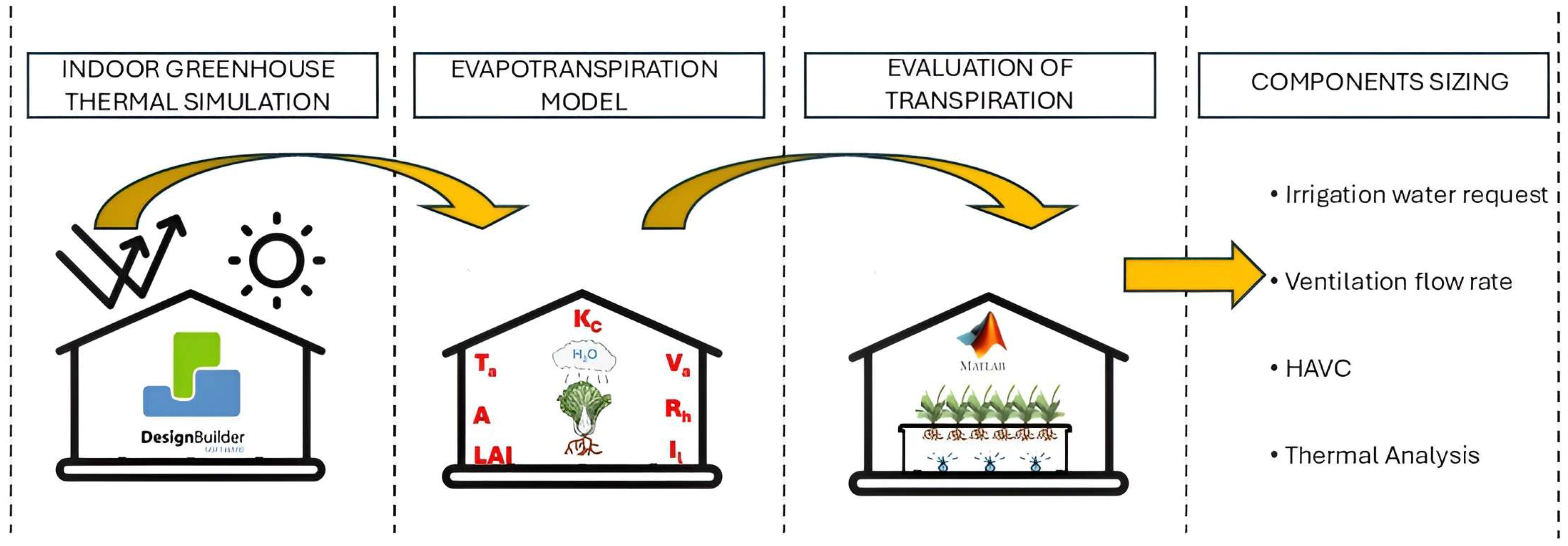
The proposed workflow is organised into three sequential phases, as schematically illustrated in Figure 1:
  • Dynamic thermal simulation of the greenhouse environment, performed in DesignBuilder/EnergyPlus to estimate the indoor climatic conditions under transient operating conditions;
  • Free-floating evapotranspiration and moisture production modelling, implemented in Matlab/Simulink to evaluate crop transpiration and irrigation water demand based on experimental data obtained in [13], along with environmental variables from the thermal simulation;
  • Greenhouse system sizing and environmental control assessment, aimed at determining the required ventilation rates and supporting the sizing of irrigation and HVAC systems.
Although the proposed framework relies on professional-grade simulation environments (DesignBuilder and MATLAB/Simulink), its contribution lies in the standardisation of the modelling procedure and in the automated exchange of data between thermal and physiological models, which reduces manual preprocessing and integration effort.
The resulting methodology enables the estimation of irrigation demand and supports the precise sizing of internal climate control systems, including ventilation, air treatment, and humidity management.

2. Materials and Methods

2.1. Tools Integration

The design of a greenhouse requires a multidisciplinary approach encompassing agronomy, plant physiology, computer science, and software engineering. The integration of these competencies may also represent a limiting factor in the development of efficient and sustainable controlled-environment systems. Hydroponic and aeroponic systems are highly efficient methods that can be implemented within greenhouse environments. These technologies exhibit strong performance under both indoor and outdoor environments and are characterised by relatively low maintenance requirements and a high degree of automation, thereby enabling plant production with minimal human intervention. A critical limitation associated with hydroponics and aeroponics is the absence of a soil matrix acting as a reservoir for water and nutrients. In such systems, any failure in the technological infrastructure can rapidly lead to plant stress and, ultimately, plant loss. Consequently, advanced approaches must be employed for fault detection, real-time monitoring, and thermal conditions. However, the development and application of sophisticated modelling tools for greenhouse microclimate analysis are not always readily accessible to designers. In this study, an integrated methodology is proposed to support the design of greenhouses by designers, researchers, and technicians involved in controlled-environment agriculture. The design methodology is based on three steps. In the initial phase, the greenhouse environmental conditions are evaluated through the implementation of a dynamic thermal analysis, which is conducted by the DesignBuilder software. The annual environmental data (e.g., temperature and humidity), generated by DesignBuilder, were exported into a data file and then imported into the Simulink model for simulation purposes. In the subsequent phase, a plant evapotranspiration model is implemented within the Simulink environment to estimate the variable air vapor production resulting from transpiration and irrigation water consumption. This moisture balance is a key parameter in the design of critical greenhouse subsystems, including irrigation networks, ventilation strategies, and HVAC systems (Figure 1). These analyses are executed within a specialized MATLAB/Simulink framework [14], which facilitates integrated simulation of thermal and physiological processes and enables the implementation of user-friendly applications. To facilitate accessibility and usability among different users, dedicated applications have also been developed. A more advanced implementation could include feeding the simulated evapotranspiration outputs back into the DesignBuilder weather file to further improve the representation of greenhouse microclimatic conditions. This will enhance the accuracy of the greenhouse model. In the present study, the case study was confined to a one-way phase.

2.2. Case Study

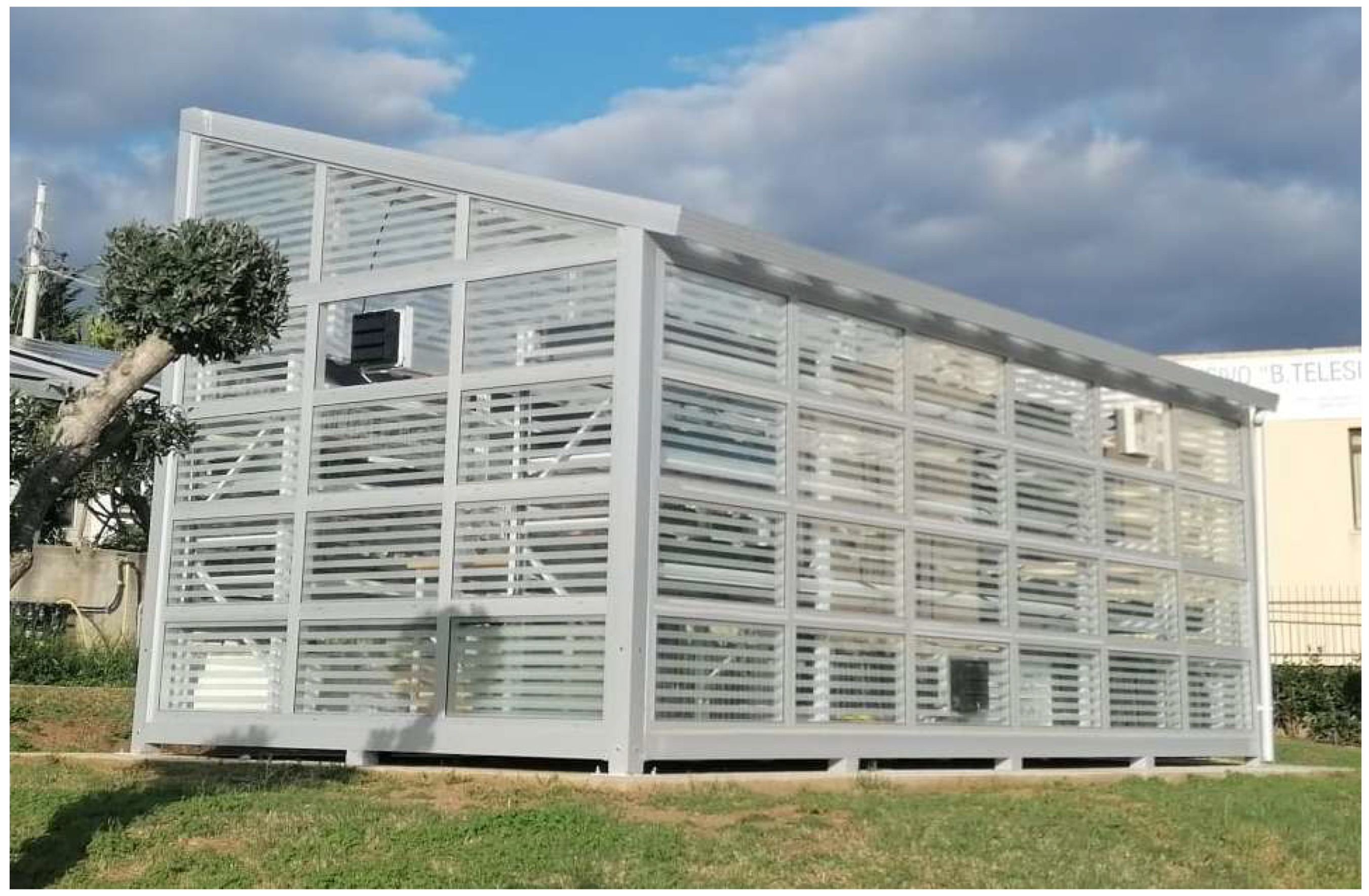
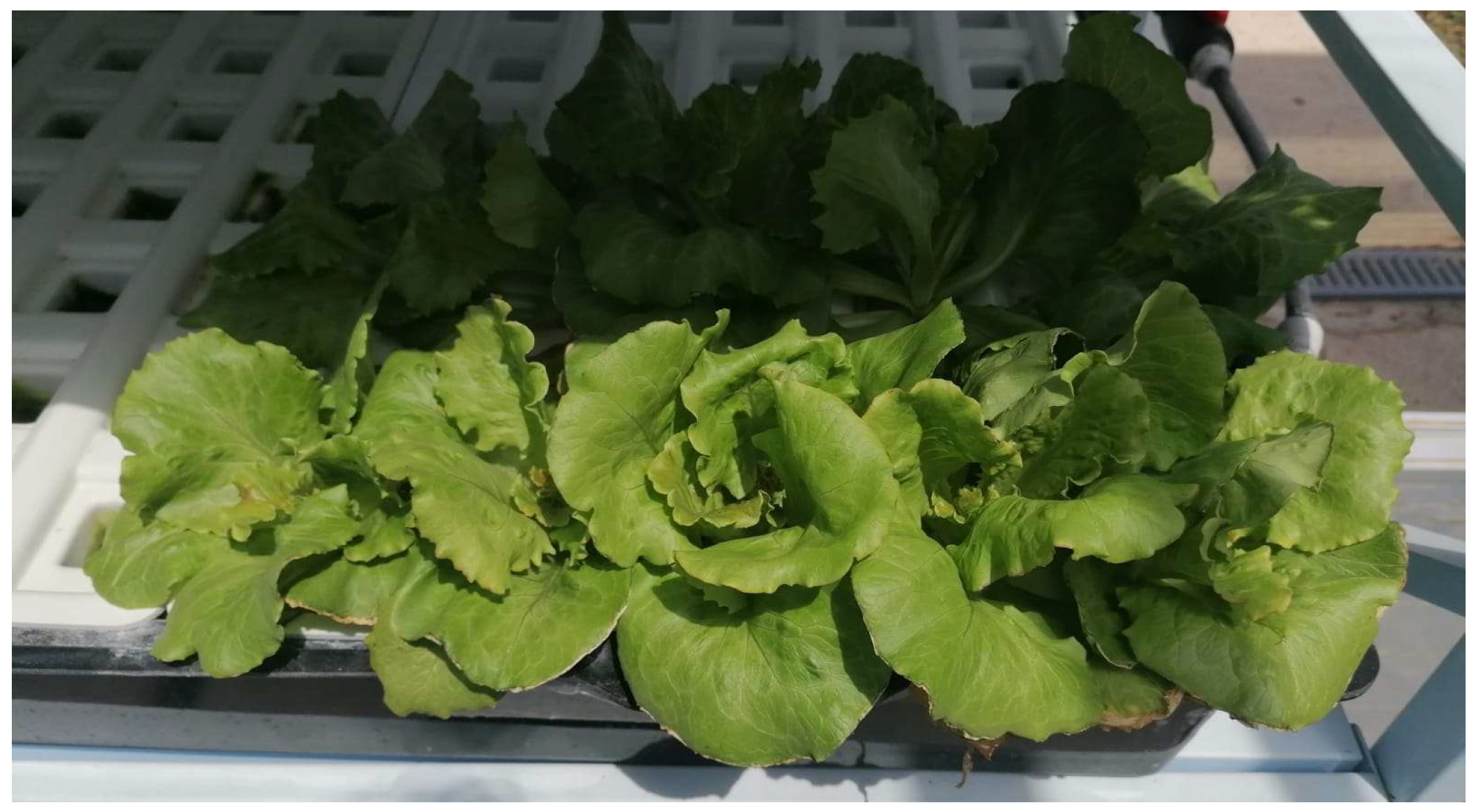
The proposed method was applied to a greenhouse structure located in Reggio Calabria (Latitude: 38.094833°, Longitude: 15.660706°, southern Italy) (Figure 2). The experiment was carried out in 2024. The structure is constructed with an aluminum frame and tempered glass panels and has the following dimensions: 6 m × 3 m × 3 m, with a volume of 54 m3. The cultivation plants were lettuce seedlings (Lactuca sativa cv. Romana) grown in an aeroponic system inside the greenhouse in cultivation trays. The use of the aeroponic system allows precise control of irrigation and nutrient delivery, minimizing waste and improving water-use efficiency. Furthermore, the multilevel arrangement optimizes vertical space utilization, increasing production density without compromising crop quality. The interior is organized on three aluminum cultivation racks supporting an aeroponic system, comprising a total of 72 cultivation trays equipped with a substrate blister system. The racks are arranged into three independent units, each consisting of three vertical layers. The total cultivation surface area is 13.87 m2, defined as the sum of the effective growing surfaces across all trays and vertical levels, excluding the ground footprint of the system. The total number of plants per cycle is 3240 (72 trays × 45 plants per tray). The potential annual lettuce production was estimated to be approximately 1580 kg. Based on a planting density of 45 plants per tray and an average marketable yield of 52.7 g per plant [13], the corresponding yield was estimated within the proposed modelling framework, using simulated transpiration rates parameterized from experimentally measured physiological data collected in the analysed greenhouse system. The annual production was calculated assuming approximately nine cultivation cycles. All cultivation cycles referred to Romaine lettuce cultivated under homogeneous operating conditions and harvested at the final vegetative stage, consistently with the experimental protocol described in [13]. The outputs were then scaled according to the effective cultivated area and operating conditions considered in the case study.
Two tanks for the nutrient solution and an automated irrigation system that includes a water-cooling unit and an irrigation pump are installed. The irrigation system can be configured to align with the specific requirements of the plants cultivated within the greenhouse. The greenhouse structure incorporates an automatic fan system that facilitates the regulation of environmental parameters.

Estimation of Modeled Crop Yield

The total potential yield reported in Section 2.2 was estimated considering the average weight of lettuce plants, derived from a previous experimental study [13], and the cultivable area available within the aeroponic greenhouse. The estimation was carried out using the following equation:
Y p = N t × N p t × w m × C
where Y p denotes the potential annual yield, N t is the number of trays, N p t represents the number of plants per tray, w m   corresponds to the average marketable fresh weight per plant, and C is the number of cultivation cycles per year. Figure 3 illustrates the aeroponic cultivation system used for Romaine lettuce (Lactuca sativa cv. Romana) production within the greenhouse.

2.3. Thermal Analysis

The greenhouse energy performance was assessed using EnergyPlus, a widely validated building simulation engine [15,16] with DesignBuilder (version 4.2, DesignBuilder Software Ltd., Stroud, UK) [17] employed to facilitate the input of the main model data, primarily the geometric configuration and the thermophysical properties of the building components.
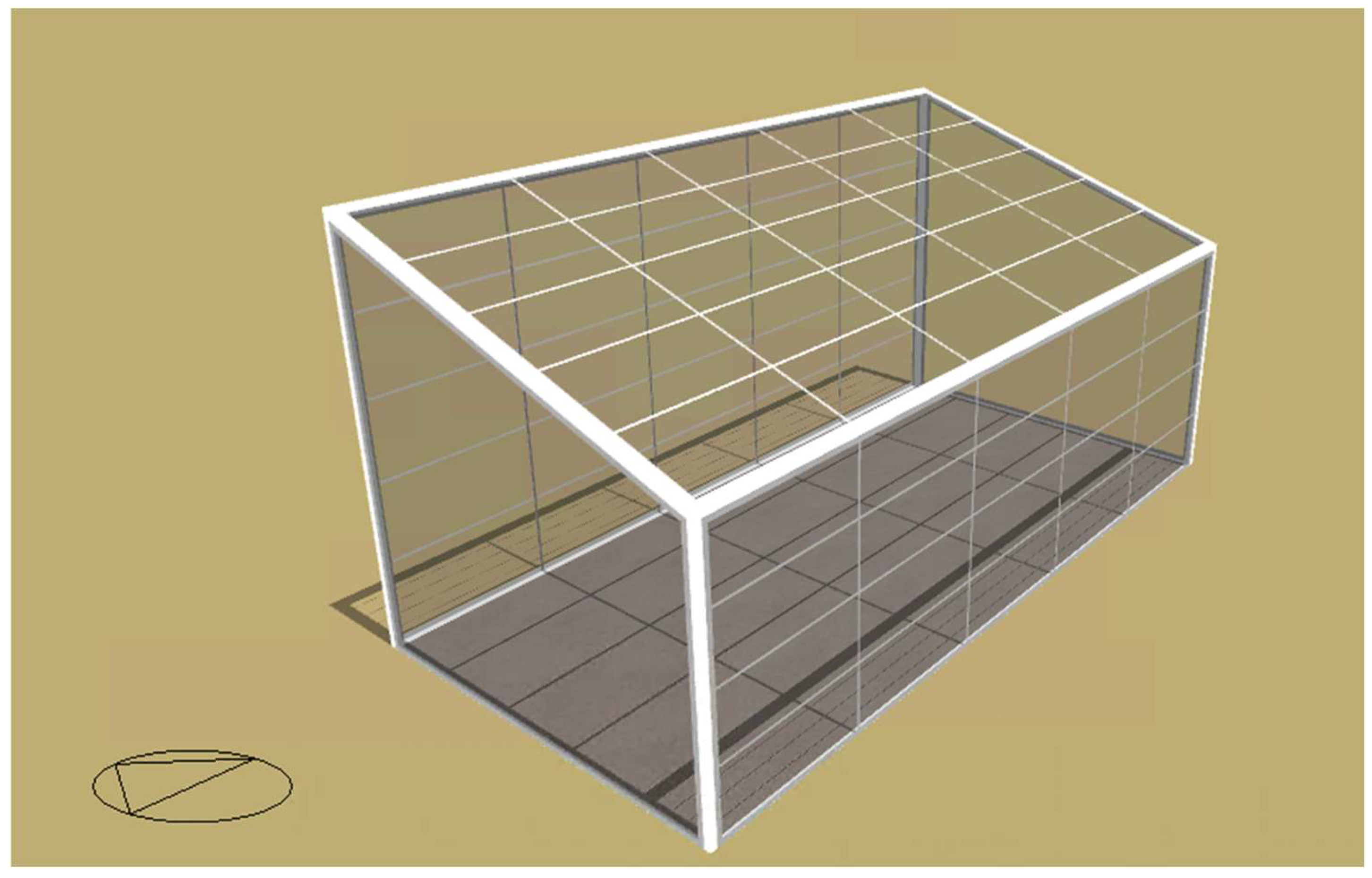
The resulting physical model of the greenhouse is depicted in Figure 4, which shows the structural configuration of opaque and transparent components.
The greenhouse envelope, including walls and roof, consists of tempered glass panels with a thickness of 0.5 cm, whose thermophysical characteristics are reported in Table 1. The simulation was carried out under free-floating indoor conditions, assuming an infiltration rate of 0.5 air changes per hour and a ventilation rate of 5 air changes per hour.
These values were selected as representative operational assumptions for greenhouse simulation and are consistent with reported ventilation ranges in literature, which vary between 2 and 60 air changes per hour, depending on climatic conditions, crop type, and management strategies [18,19].
To simulate the thermal behaviour of the greenhouse under these conditions and to properly select the needed output data, EnergyPlus code was used.
Unlike its predecessors, DOE-2 and BLAST, which relied on a sequential load-system-plant calculation structure, EnergyPlus was used (version 8.1, U.S. Department of Energy, USA) and implements a fully integrated simulation framework. This approach iteratively reconciles building thermal loads with HVAC system performance, enabling a more consistent estimation of indoor environmental conditions.
The software architecture is organized around two primary computational engines:
-
a heat and mass balance module, responsible for modeling radiative and convective exchanges within the building envelope, and
-
a building systems module, which represents HVAC components and their interactions.
These engines operate in conjunction with several auxiliary models, such as solar geometry, shading algorithms, and transient heat conduction, coordinated by the Simulation Manager, which ensures consistent data exchange among modules. The building systems module also supports detailed representation of a broad range of HVAC equipment.
In the EnergyPlus simulation engine, the air heat balance can be expressed, neglecting heat loss due to infiltration and ventilation between adjacent zones, by Equation (2):
C z d t z d τ = i = 1 N Q i , c + i = 1 N sup h i   A i t s , i t z + m v   c p t t z + Q N ˙
where C z is the air thermal capacity, N represents the number of internal convective heat sources, Q i , c , h i   A i t s , i t z is the heat flux dissipated by the thermal zone surfaces at temperature t s , i , m v   c p t t z is the ventilation heat flux, and Q N ˙ represents the HVAC system load.
Heat fluxes exchanged through the envelope components are calculated using either the response factor method, based on transfer function principles, or the finite difference method.

2.4. Evaluation of Evapotranspiration

Evapotranspiration (ET) is the process through which water is transferred from the surface to the atmosphere, combining evaporation and plant transpiration. In plants, this involves water uptake by roots, transport to the leaves, and evaporation from leaf surfaces. These two processes occur simultaneously and are difficult to separate; their intensity depends on factors such as solar radiation, temperature, wind speed, stomatal opening, and plant type.
It is important to note that the climate within greenhouses and the efficiency of water usage are significantly influenced by the process of evapotranspiration (ET) occurring within the greenhouse environment [20,21]. As asserted in the extant literature, the modelling of transpiration serves as a tool to evaluate the indoor greenhouse microclimate [16,22].
The primary function of these models can be twofold. Firstly, they can be employed to design and size the plants and components of the greenhouses, including HVAC, irrigation water tanks, and ventilation systems. Secondly, they can be used to simulate the greenhouse climate parameters in dynamic mode.
In this regard, a considerable number of evapotranspiration models have been developed and presented, all of which are based on the Penman–Monteith approach, specifically the “big leaf” model. The determination of evaporation from open water, bare soil, and grass is conducted based on a combination of energy balance and an aerodynamic formula. The conditions defined by Penman–Monteith provide the theoretical maximum rate of evaporation (EP) based exclusively on climatic factors. Regarding the complexity of implementation, it is evident that each model necessitates a calibration of certain coefficients associated with the boundary conditions (e.g., net solar radiation, cultivation type, leaf area index, surface characteristics, aerodynamic resistances, and crop coefficient). Furthermore, it was determined that independent parameters affecting the ET rate could, under certain experimental conditions, exhibit interrelationships due to the specific operating conditions. This phenomenon results in an inadequate fit of the experimental data with potentially erroneous predictions.
It is evident that each distinct type of greenhouse engenders a disparate microclimate, thereby exerting an influence on the physical process that governs the ET rate of a greenhouse canopy. The estimation of the energy to be absorbed by the plant is contingent upon numerous factors, including the characteristics of the greenhouse (particularly the type of cladding material employed) and the climate control equipment (such as shading screens, heating systems, and ventilation mechanisms). Consequently, reliable estimations of plant requirements must consider these factors and devise methods that link crop ET and greenhouse climate. A considerable number of equations for ET in greenhouses have been proposed and evaluated [23,24]. The most reliable and accurate formula was developed by Stanghellini [12]. The Stanghellini ET rate predictive method [25] demonstrated a strong correlation with experimental data, with a percentage error of 3% observed during the lighting period [26].
The Stanghellini model represents a revised version of the Penman–Monteith model, which is commonly employed to simulate conditions in greenhouses where air velocities are typically low (i.e., less than 1 m s−1). The Stanghellini model equation comprises internal and external resistance terms, in addition to a more complex calculation of the solar radiation heat flux derived from the empirical characteristics of short-wave and long-wave radiation absorption in a multilayer canopy by means of the leaf air index (LAI). The integration of the leaf area index (LAI), defined as the total leaf area per unit ground surface, allows for a more accurate representation of the transpiring surface of the crop. Higher LAI values correspond to a greater leaf area, increasing transpiration and influencing the transfer of energy and mass between plants and their surrounding environment. By linking LAI to the “big leaf” approach, the predictive capability of evapotranspiration models can be improved, particularly for dense crops and under variable climatic conditions or within greenhouse environments.
This model derives from the Penman–Monteith equation, incorporating the multlayer effect of the crop, and represents greenhouse microclimatic conditions of typically low wind speed (u < 2.0 m/s for ventilated greenhouses). The proposed model is tailored for estimating evapotranspiration in aeroponic systems, where soil-related components are not taken into account. A simplified equation for hourly ETc (mm/h) was defined by Pamungkas et al. [27]; it is described as follows:
E T c = K c 2 L A I 1 λ Δ R n G + K t V P D · ρ · C p r R Δ + γ 1 + r c r a
where:
E T c = crop evapotranspiration under standard conditions, (mm/h).
K c = crop coefficient.
L A I = index of the leaf area, m2· m−2.
R n = net radiation at the crop surface, (MJ·m2) ·h−1.
K t = time unit conversion factor equal to 3600 s·h−1.
V P D = hourly vapour pressure deficit.
ρ = mean atmospheric density, kg·m3.
C p = specific heat capacity of air at constant pressure, MJ· kg−1·°C−1).
r R = radiative resistance, s·m−1.
r c = canopy (stomatal) resistance, s·m−1.
r a = Aerodynamic resistance, s·m−1.
G = Soil heat flux, MJ·m2·h−1.
γ = Psychrometric constant, kPa·°C−1.
λ = Latent heat of vaporization MJ·kg−1.
  • where:
R n s = 0.77 R s   net short-wave radiation, MJ·m2·h−1.
R s = ground-level solar radiation, MJ·m2·h−1.
r R = ρ · C p 4 δ T a + 273.15 3  
where:
δ = Stefan–Boltzman constant, MJ·m2·K4·h.
Formula (2) was modified on the basis that G should be set to 0 in the absence of soil [28]. It is evident that, upon consideration of the parameters, the value obtained by Formula (2) serves as an indication of the transpiration rate of the plant.
The utilisation of the ET formula through the application of MATLAB Simulink software (Version R2025b, MathWorks, USA) [14] has been developed in a number of studies [29]. Nonetheless, the focus of these studies was on the development of simulation models for integration with thermal analysis simulations. The key indoor environmental variables (radiation, temperature, and humidity) are determined by means of hourly thermal simulation analysis; the integration of these models allow the dynamic simulation of the greenhouse’s indoor environment.

Transpiration Evaluation and Simulink Simulation

The Kc value of Formula (2) was estimated through SPAR measurements performed on a series of six lettuce plants at the end of the aeroponic growth cycle inside the greenhouse (Table 2) [30]. Physiological parameters, including water use efficiency (WUE), stomatal conductance, photosynthetic rate, and transpiration rate, were experimentally measured under controlled operating conditions. Transpiration rate is fundamental to carry out the transpiration evaluation. Although the sample size was limited, the measurements were obtained using a highly accurate method [13] and were intended to provide representative physiological parameters for model parameterization rather than a statistical characterization of the crop population. The measurements were used to derive representative physiological parameters for the specific case study conditions. Similar modelling approaches for evapotranspiration and crop productivity in controlled environment agriculture commonly rely on experimentally derived or literature-based physiological parameters for specific crop species and operating conditions [31]. In this study, experimentally measured transpiration data obtained from the analysed greenhouse were used to support a case-specific and exploratory simulation workflow. Accordingly, annual water consumption, ventilation requirements, and crop yield were estimated from simulated transpiration scaled to the effective cultivated area and the greenhouse operating conditions.
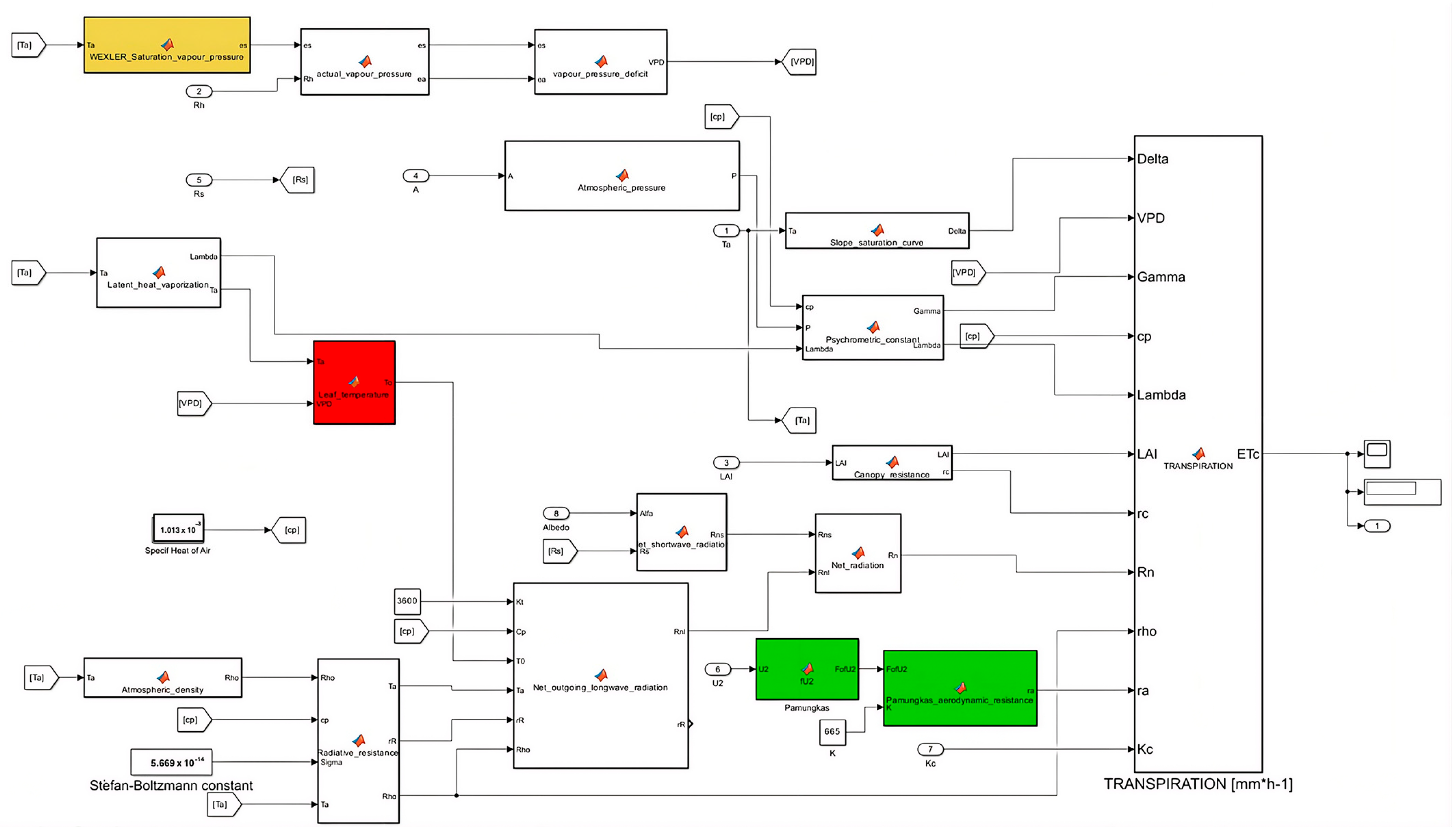
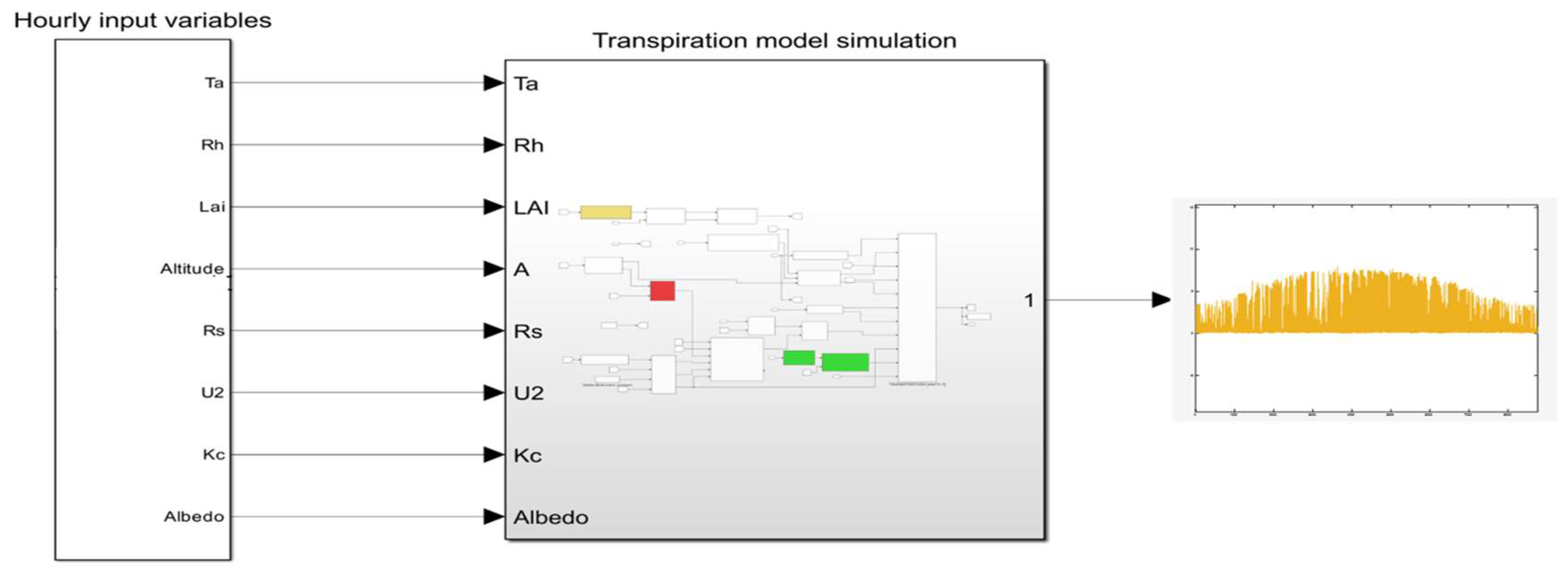
The transpiration model was implemented in MATLAB Simulink (Figure 5) [1] to predict the hourly plant transpiration under dynamic greenhouse conditions.
The Simulink model was integrated with the dynamic simulation carried out by means of DesignBuilder.
A sensitivity analysis was conducted to assess the robustness of the proposed modelling framework with respect to uncertainties in the crop coefficient (Kc), which directly affects irrigation demand and ventilation requirements.

2.5. Water Irrigation Requirements and Ventilation for Humidity Control

The requirement for aeroponic lettuce water is typically substantial, often constituting a significant proportion of the total water consumption of the plant [32]. The water consumption is directly proportional to the area of the cultivation plants [23] and to other factors, including leakage in the irrigation system, evaporation from water reservoirs, and root water uptake. Humidity control is fundamental for achieving high-quality crop yield. Elevated relative humidity (RH) levels have been shown to result in a decline in crop quality, often manifesting as fungal diseases, leaf necrosis, calcium deficiencies, and the production of soft and thin leaves [33]. The moisture control ventilation requirements in this case study were estimated based on an inside relative humidity value of 60%.
The ventilation rate within a greenhouse is closely related to wind speed and the size of the openings, directly influencing the efficiency of heat exchange and the removal of internal moisture. The cooling effect achievable at a given ventilation rate depends not only on the temperature difference between the inside and outside, but also on the prevailing humidity gradient [8].
Ventilation outdoor airflow into a greenhouse must be adequate to remove and dilute vapour and pollutant generated indoors. It is imperative that ventilation systems are energy-efficient and meticulously designed to ensure that they do not adversely affect indoor air quality or climate, nor cause any harm to plants or the structure. The basis upon which ventilation rates should be calculated must consider vapour loads and moisture generation. The concentration of humidity can be used to calculate the ventilation rate required to achieve acceptable steady-state levels for moisture. The calculation of the removal of humidity generated indoors can be performed for the steady state from Equation (4) [34].
In the subsequent equation:
V H 2 O =   Q · 800 / w i 6157.27 w o 6157.27
where:
V H 2 O = minimum ventilation rate, m3·h−1.
Q = w a t e r   a i r   m o i s t u r e , L·m3·10−3.
T o = outside temperature, °C.
R H o = outside relative humidity, (%).
T i = inside temperature, °C.
R H i = desired inside relative humidity, (%).
P w i = R H i · 3386.39 · e 17.863 9621 T i · 1.8 + 32 + 460   indoor vapour pressure of water, (Pa).
P w o = R H o · 3386.39 · e 17.863 9621 T o · 1.8 + 32 + 460 outdoor vapour pressure of water, (Pa).
w i = 0.62198 29.92 P w i 1 inside humidity ratio.
w o = 0.62198 29.92 P w o 1 outside humidity ratio.

3. Results

3.1. Thermal Analysis Results

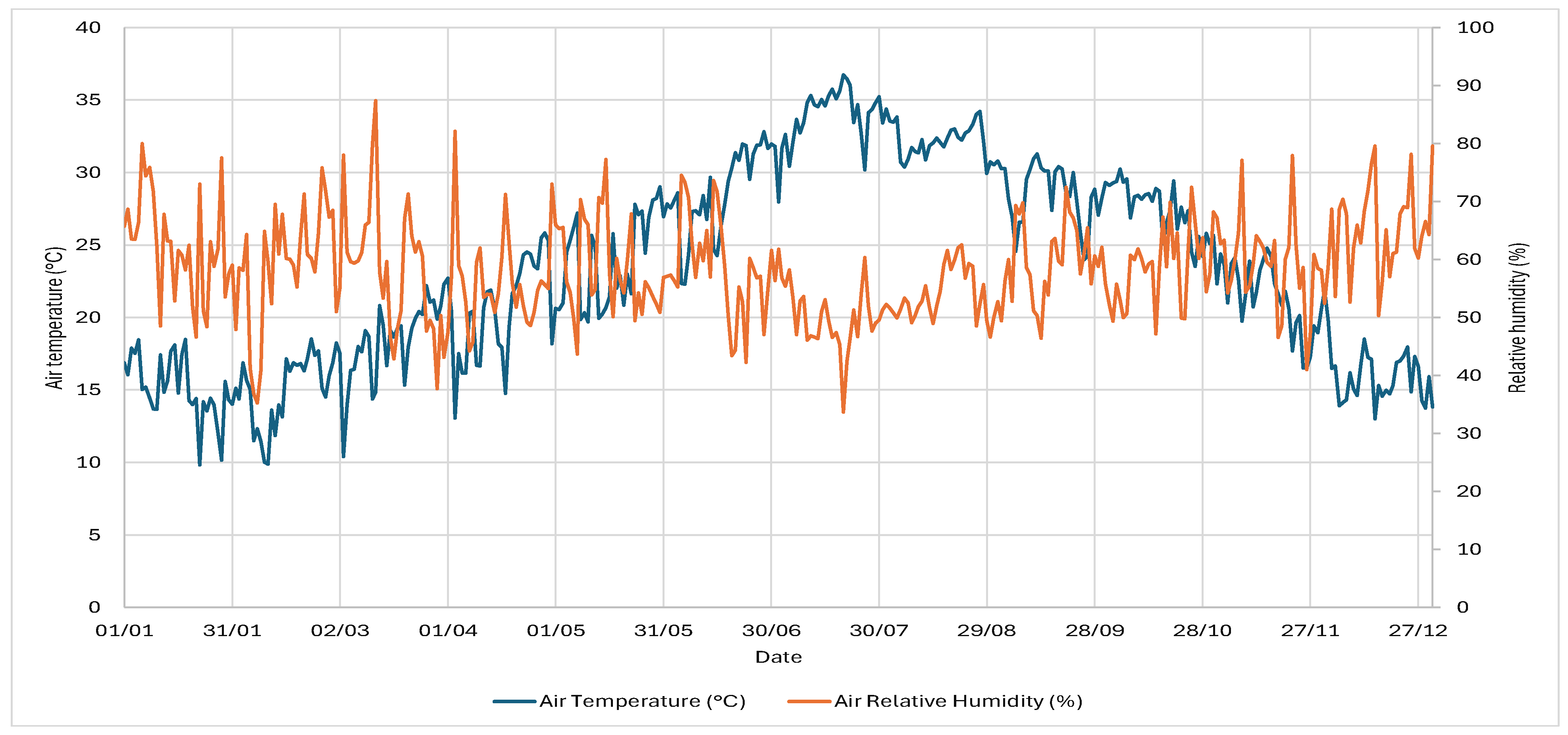
Main results, in terms of daily average indoor air temperature and relative humidity, are reported in Figure 5. According to the simulation, indoor air temperature increases during the summer months, accompanied by a corresponding decrease in relative humidity, whereas during the winter months, the trend is reversed (Figure 6).
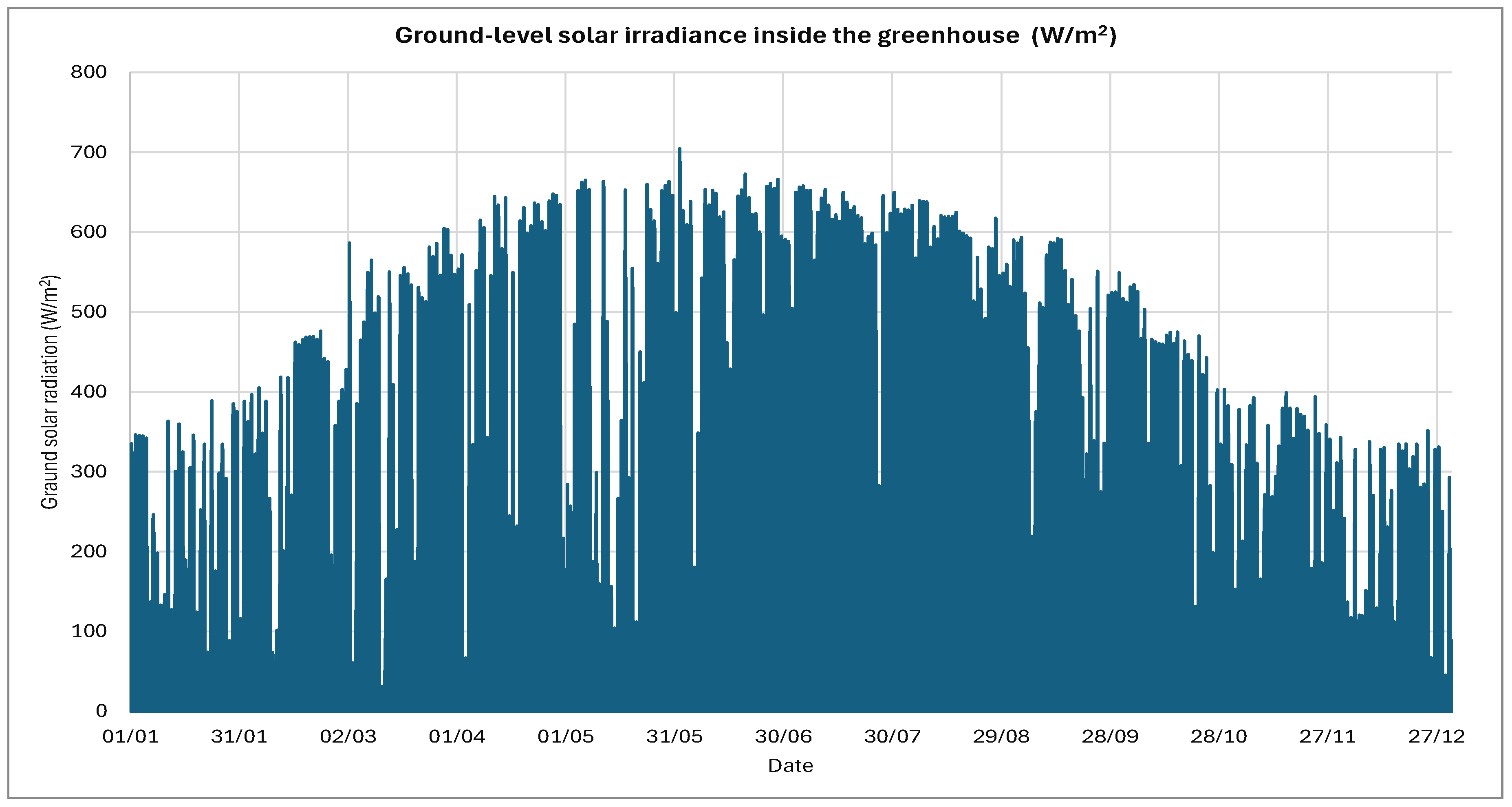
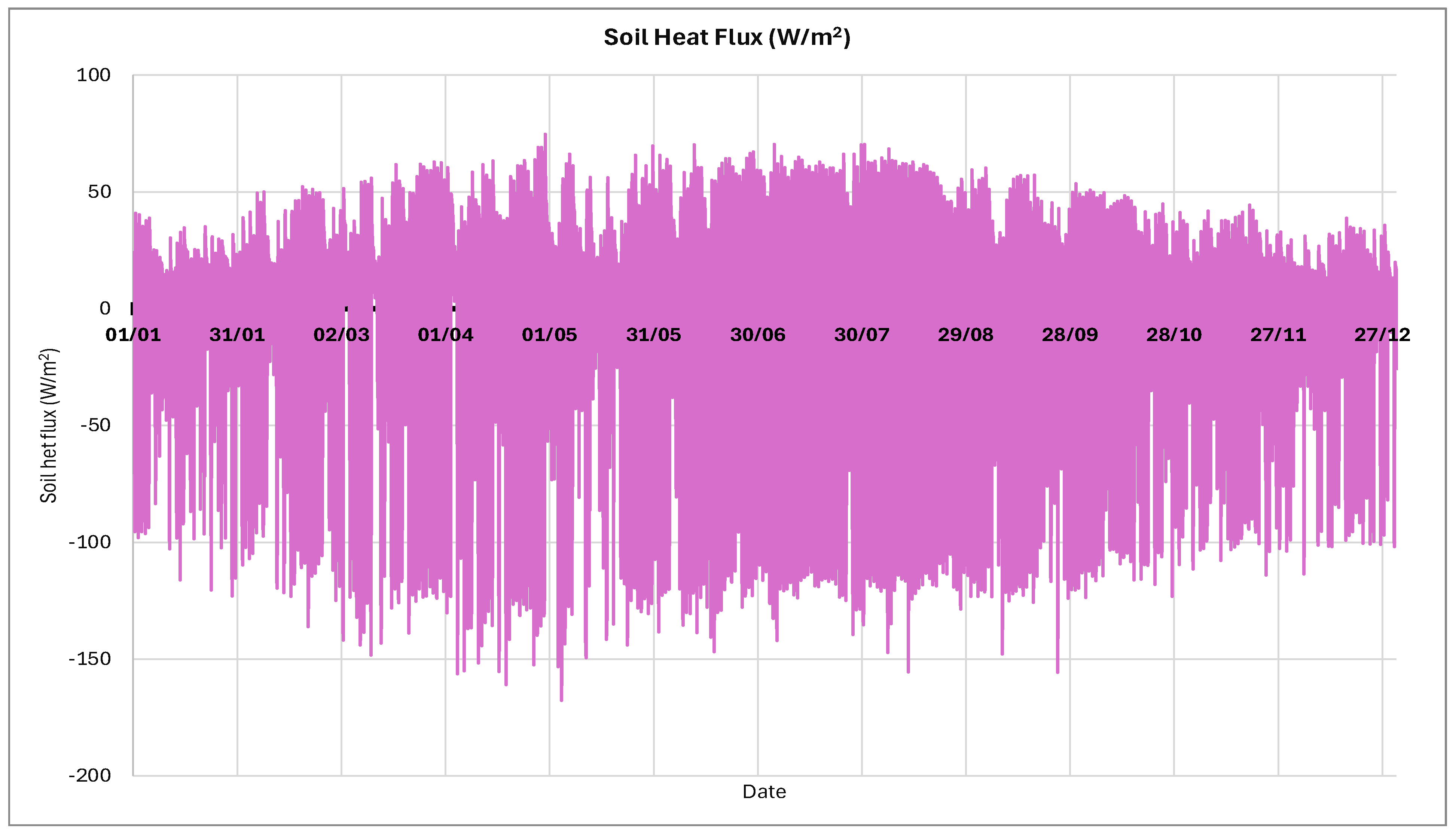
Energy flows, as hourly ground-level solar radiation and soil heat flux, used by the evapotranspiration model, are reported in Figure 7 and Figure 8, respectively. Ground-level solar irradiance within the greenhouse exhibited a steady increase and subsequently stabilized, reaching values above 600 W/m2 during the period between June and July (Figure 7).

3.2. Transpiration Evaluation

The mean value of the measured transpiration rate was found to be 2.51 (Table 2) µmol of H2O·m−2·s−1 (0.71 L·m−2·h−1), with a LAI = 4.39. The LAI corresponds to the mature growth stage and was calculated as the ratio between the total leaf area and the effective cultivated surface within the greenhouse system. In this study, LAI was assumed constant throughout the simulation period, as the analysis is focused on the final vegetative stage and on system sizing rather than on full crop growth dynamics.
The crop coefficient ( K c = 1.2) was derived by calibrating Equation (3) against experimental measurements obtained using a SPAR (Soil–Plant–Atmosphere–Research) system, which enables controlled-environment monitoring of plant–atmosphere interactions. The indoor environmental parameters, measured at the same time, were Ta = 29 °C, RH = 76%, Rs = 0.24 MJ·m2·h−1, U2 = 1.5 m·s−1, and Albedo = 0.23.
The environmental yearly simulated data (Ta, RH, LAI, Altitude, Rs, U2, Kc, and Albedo) were imported into the Simulink model via a datasheet file generated from DesignBuilder outputs.
The model was then used to simulate hourly transpiration over a 1-year period (Figure 9).

3.3. Water Irrigation Requirements

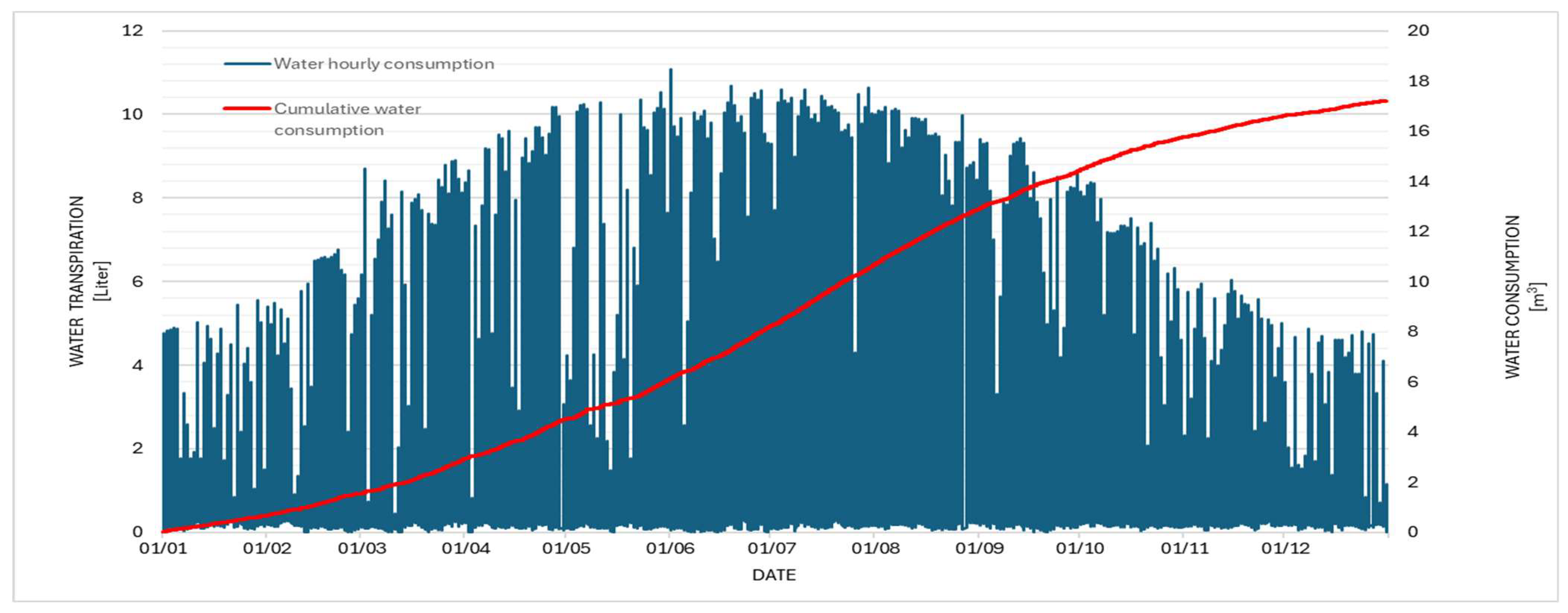
Regarding the area cultivated with lettuce within the greenhouse (Section 2.2), the model-derived estimated annual irrigation water consumption for irrigation demand in the case study was approximately 17,000 litres, as obtained from the simulated transpiration outputs of the proposed modelling framework. The estimated water consumption for lettuce production is consistent with values reported in literature, with results of another study on soilless cultivation [35,36]. However, the primary purpose of this estimation is to support the sizing and scheduling of the water storage system. It is important to note that this value is indirectly derived from the simulated plant production, as transpiration was scaled based on the estimated annual yield (Section 2.2), which determines the total number of plants and cultivation cycles considered in the model. As such, the result is intended for system sizing under representative operating conditions rather than for exact prediction under all possible environmental variations. As shown in Figure 5, the irrigation water trend indicated that the highest period of water consumption occurs during the summer period (June to September), when elevated environmental conditions increase crop transpiration rates.
The capacity of water reservoirs and irrigation daily schedule can be estimated using Figure 10. This can be achieved by identifying the time interval associated with the cumulative water consumption function.

3.4. Ventilation for Moisture Control

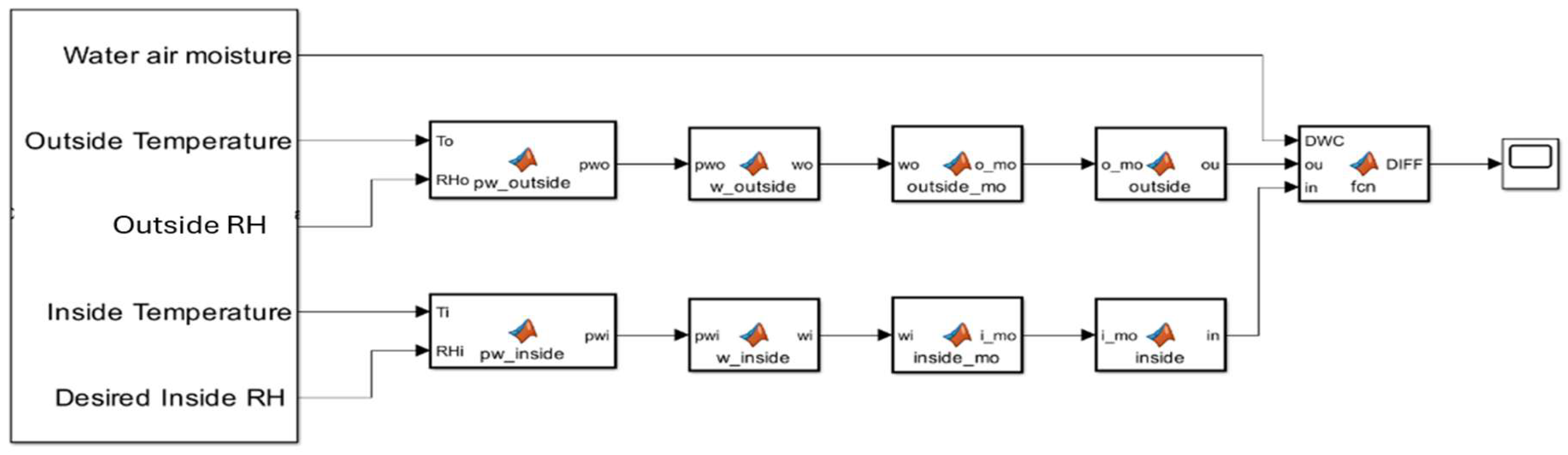
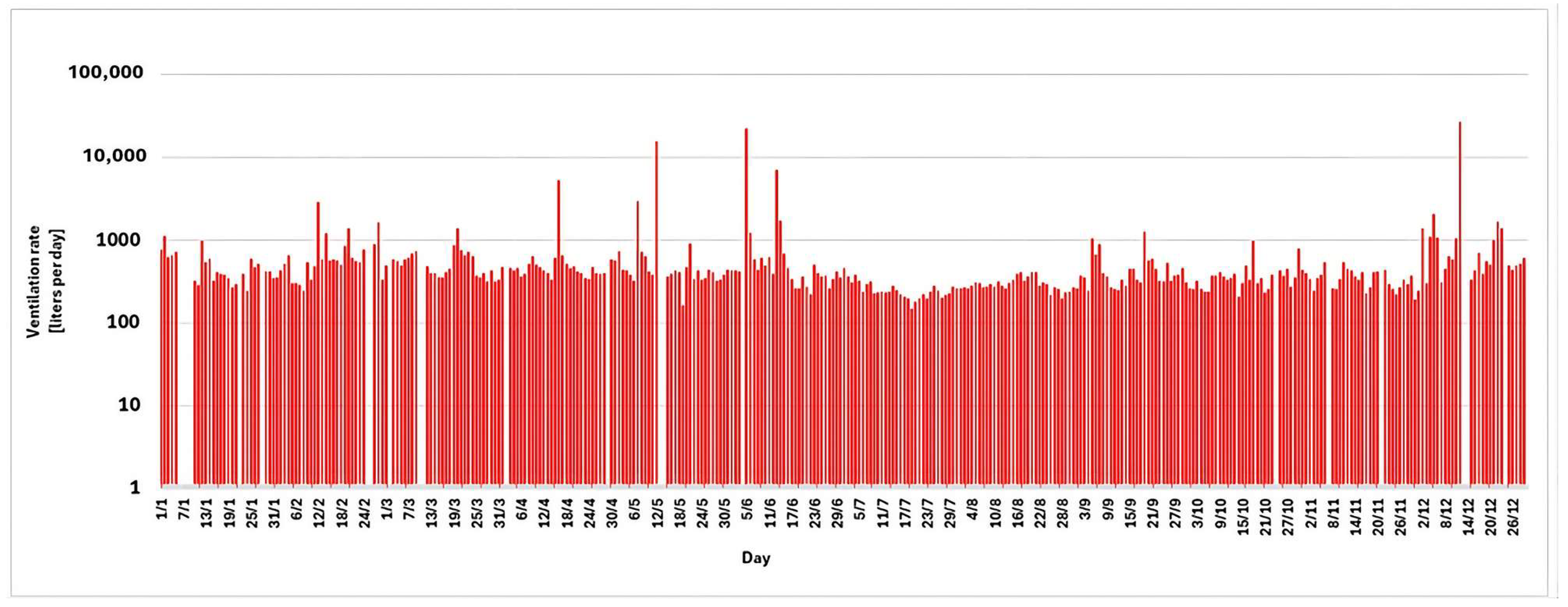
The minimum ventilation rate was calculated through the implementation of Equation (4) in the Matlab environment (Figure 11). The daily environment input data were obtained by means of the DesignBuilder simulation (Figure 12).
The mean daily ventilation calculated is approximately 645 m3/day. The installation of a fan with a ventilation flow rate of 100 m3/h is a possibility, with intermittent function of 1 h on and 3 h off. An increase in the function time is proposed during the period of peak moisture production.
The selection of the fan system, in conjunction with the temporal parameters of its utilisation, constitutes a pivotal factor in the determination of energy consumption.
To achieve net-zero performance, it is recommended that ventilation systems be powered by solar PV and/or geothermal energy. However, it should be noted that the consumption of energy often exceeds the projections made by simulation-based models, due to operational conditions and control strategies not explicitly represented in the model. Consequently, a precise evaluation of the minimal ventilation requirement is imperative to reduce the performance discrepancy. Indeed, effective ventilation is paramount to expunge excess vapour, whilst concomitantly facilitating the dissipation of heat. Heat recovery ventilator and energy recovery systems offer reliable returns in cold climates, but while natural ventilation is cost-free, its return on investment is less predictable and highly climate-dependent. An overemphasis on energy efficiency has the potential to compromise indoor air quality (IAQ). It is therefore essential that appropriate minimum ventilation rates are defined for NZEBs (nearly zero-energy buildings) to maintain a healthy indoor environment [37].

3.5. Integrated Results

Although transpiration measurements were conducted on a limited number of plants, the aim of this study was not to develop a fully representative evapotranspiration model for aeroponic lettuce cultivation. Instead, the focus was on assessing the feasibility of integrating complementary modelling strategies to support the accurate sizing of greenhouse ventilation systems under Mediterranean climatic conditions. A further limitation lies in the simplified representation of greenhouse operation and crop–microclimate interactions. The main contribution of this work is the development of an integrated modelling framework that links greenhouse energy simulation with crop physiological behaviour through a dynamic evapotranspiration formulation. In contrast to conventional methods, where thermal processes and plant water dynamics are treated separately, this approach establishes a direct connection between indoor environmental conditions and transpiration, enabling consistent representation of heat and moisture exchanges. Such integration allows key design parameters, including irrigation demand and ventilation requirements, to be directly derived from simulation outputs within a streamlined workflow, overcoming the traditional divide between advanced modelling tools and practical design applications. The framework is also designed to be computationally efficient and transferable, facilitating its potential application and adoption in real-world greenhouse design practice.
Coupling EnergyPlus/DesignBuilder with a Simulink-based evapotranspiration model provides a substantial improvement over standalone approaches. Building energy simulation tools effectively capture thermal behaviour but do not represent crop processes, whereas evapotranspiration models neglect indoor environmental variability. Their integration enables more reliable predictions of humidity, irrigation needs, and ventilation demand, leading to improved system sizing, lower energy consumption, and enhanced water use efficiency under variable climatic conditions. The present application refers to a specific greenhouse configuration and crop type; however, the proposed workflow may be adapted to different greenhouse systems and climatic conditions through the updating of crop physiological parameters and climatic boundary conditions, according to the specific application case. The presented results are intended as preliminary design indicators and should be interpreted in light of the simplified system representation and limited experimental dataset.

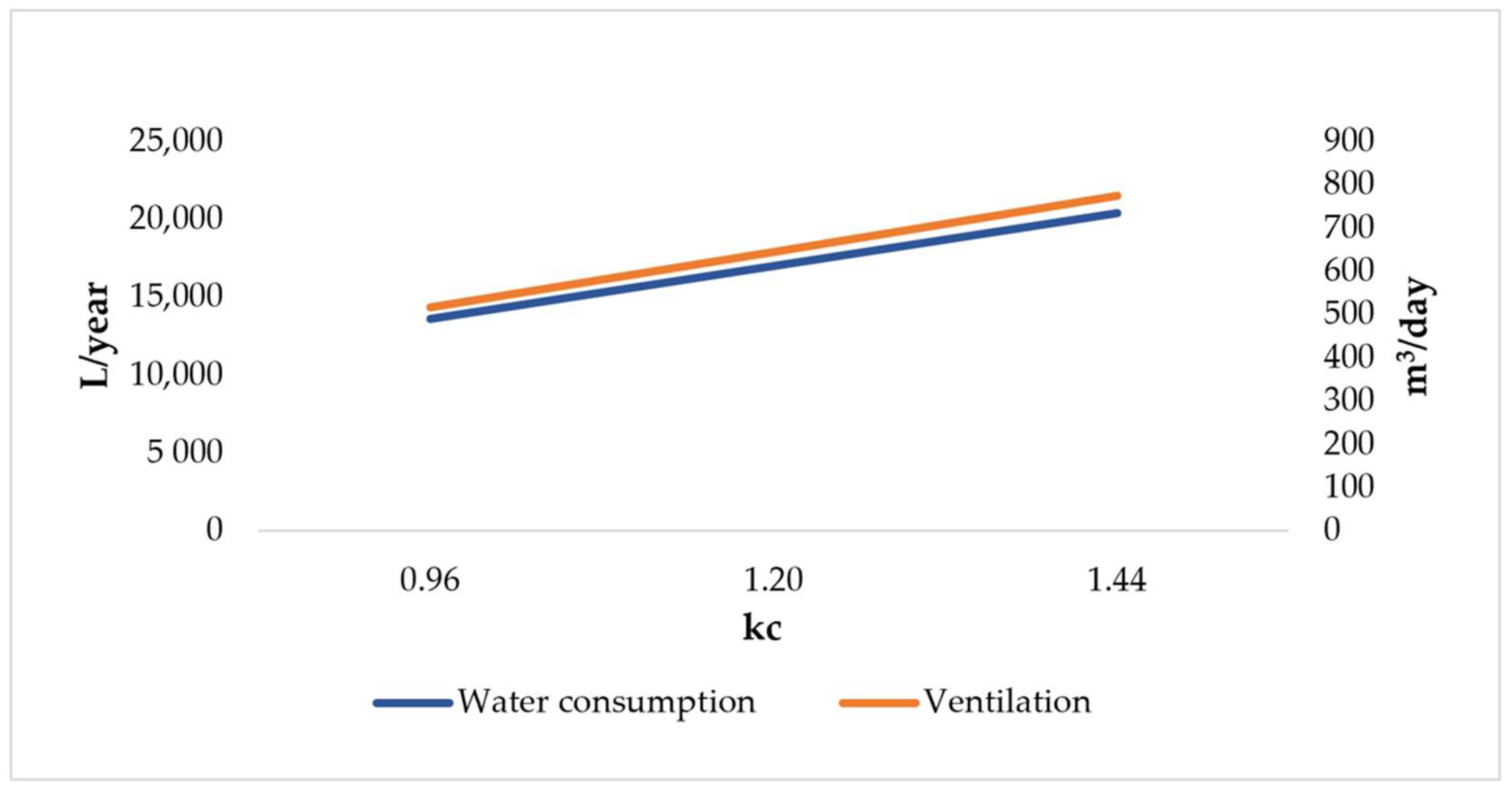
3.6. Sensitivity Analysis of Crop Coefficient and Model Outputs

A sensitivity analysis was conducted to evaluate the influence of uncertainty associated with the estimation of the crop coefficient K c on the main model output variables, namely annual irrigation water demand and the ventilation rate required for internal humidity control. The analysis was performed by applying a parametric variation of ±20% [38] around the reference value K c = 1.2 , while keeping all other climatic and physiological parameters constant.
The results, reported in Table 3 and Figure 12, show that annual irrigation water demand varies between 13,600 L/year and 20,400 L/year, while the required ventilation rate ranges from 516 m3/day to 774 m3/day. The baseline case yields an irrigation demand of 17,000 L/year and a ventilation rate of 645 m3/day.
The analysis highlights a monotonic and nearly linear response of the model outputs with respect to variations in K c , indicating that the system sizing variables are proportionally dependent on the crop coefficient without introducing nonlinear or unstable behaviours within the investigated range (Figure 13).
Although the K c value is derived from experimental measurements conducted on a limited number of samples, the sensitivity analysis demonstrates that such uncertainty does not significantly affect the key variables used for system sizing. In particular, the observed variations remain within a range consistent with typical operational conditions of Mediterranean greenhouse systems and do not alter the design implications of the model.
Therefore, the proposed framework maintains good robustness with respect to reasonable perturbations of physiological crop parameters, making it suitable for preliminary design applications in controlled-environment agriculture systems.

4. Discussion

The primary motivators for enhancing greenhouse design are associated with the need to develop sustainable cultivation systems capable of reducing energy and water consumption while maintaining suitable environmental conditions for crop production [39]. Consequently, several modelling approaches and simulation tools have been developed to support greenhouse design and environmental analysis [40]. Computational fluid dynamics (CFD) simulations, for example, have been applied to investigate the influence of greenhouse geometry, ventilation configuration, and HVAC systems [41,42]. However, these approaches are generally focused on physical and thermal phenomena and often require advanced modelling expertise and substantial computational effort [43]. It is imperative to furnish technicians with simplified models and tools to facilitate the expeditious and accurate design of greenhouses. In this context, the present study proposes an exploratory modelling framework based on the integration of dynamic thermal simulation (DesignBuilder/EnergyPlus) with a MATLAB/Simulink evapotranspiration model parameterized through experimentally measured physiological data. The objective was not to develop a fully validated predictive model, but rather to investigate the feasibility of coupling greenhouse thermal analysis with crop transpiration modelling within a structured and reproducible workflow suitable for preliminary greenhouse design applications.
The evaluation of crop evapotranspiration is particularly relevant for greenhouse environmental analysis because transpiration directly affects indoor humidity conditions, irrigation demand, and ventilation requirements [44]. Plant–atmosphere interactions are strongly affected by environmental conditions, such as temperature, radiation, and relative humidity, which regulate stomatal behaviour and water vapour exchange. Thus, several studies have demonstrated that high levels of humidity, exceeding 90%, may negatively influence greenhouse operation and crop conditions, while appropriate ventilation strategies are necessary to maintain acceptable environmental conditions. High humidity levels are conducive to the proliferation of diseases, as well as the formation of leaf mould and the decomposition of fruits and stems [45].
In the analysed case study, the integrated framework estimated an annual irrigation demand of approximately 17,000 L/year and a mean ventilation requirement of about 645 m3/day for humidity control under the investigated Mediterranean climatic conditions.
The results also highlighted the seasonal variability of water demand, with increased transpiration and irrigation requirements occurring during summer months due to higher temperature and solar radiation levels. These findings confirm the importance of considering dynamic environmental conditions when estimating greenhouse water consumption and ventilation needs, particularly in regions characterized by warm Mediterranean climates and seasonal water scarcity [46]. The associated ventilation systems may be powered by renewable energy sources, such as solar PV or geothermal technologies, to support net-zero energy targets. Actual consumption may exceed simulated values due to unaccounted real-world factors.
The adopted evapotranspiration formulation, based on the Stanghellini approach, was selected because it accounts for greenhouse-specific microclimatic conditions and incorporates the leaf area index (LAI), enabling the transpiring surface of the crop to be represented more realistically. Nevertheless, evapotranspiration modelling remains strongly dependent on crop characteristics, climatic boundary conditions, and greenhouse operating strategies. For this reason, in the present work, the crop coefficient Kc was calibrated using experimentally measured transpiration data obtained under the specific operating conditions of the analysed greenhouse.
Overall, the proposed framework demonstrates the feasibility of integrating greenhouse thermal simulation with plant physiological modelling in a unified workflow to support preliminary design and system sizing. The coupling between DesignBuilder/EnergyPlus and MATLAB/Simulink allows a direct link between indoor environmental conditions and crop transpiration dynamics, enabling a more consistent estimation of irrigation demand and ventilation requirements compared to standalone approaches. Nevertheless, the results should be interpreted as design-oriented indicators rather than fully predictive outputs. The model is based on simplified assumptions and on experimentally derived parameters obtained from a limited dataset, which were used to represent the specific conditions of the analysed case study. In this sense, the main contribution of the work lies in the structuring of an integrated and reproducible methodology rather than in the development of a fully validated agronomic forecasting tool. Accordingly, the proposed approach is intended to support early-stage greenhouse design decisions by providing order-of-magnitude estimates of key variables, such as water consumption and moisture-related ventilation needs. Further work is required to extend the validation of the model across different crop types, climatic conditions, and greenhouse configurations.

5. Conclusions

This study presented an integrated modelling framework for estimating greenhouse water and ventilation requirements in a Mediterranean environment. The approach couples dynamic thermal simulation (DesignBuilder/EnergyPlus) with a MATLAB/Simulink evapotranspiration model to support preliminary greenhouse design and system sizing.
Application of the proposed framework to the analysed case study resulted in an estimated annual irrigation water demand of approximately 17,000 L/year and a mean ventilation requirement for humidity control of about 645 m3/day. These outputs are directly derived from simulated transpiration and represent design-oriented indicators under the specified operating conditions. The proposed methodology was developed to simplify greenhouse thermal analysis and system sizing through the integration of user-friendly building energy simulation tools with dynamic crop modelling techniques. The methodology is intended as a design-support tool rather than a fully predictive model and can be adapted to different crops, greenhouse configurations, and climatic conditions by updating input parameters. Furthermore, the modular structure of the proposed workflow facilitates the integration of additional calculation modules for the analysis of other greenhouse components or alternative cultivation systems. Further studies are required to extend the validation of the model across different case studies and operating conditions and to assess its reliability through application to a wider range of real greenhouse scenarios.

Author Contributions

G.I.: conceptualization, investigation, methodology, data curation, formal analysis, writing—original draft preparation; C.M.: data curation, methodology, review and editing; G.D.C.: data curation, methodology, review and editing; F.B.: conceptualization, methodology, software, supervision, review and editing, funding acquisition. All authors have read and agreed to the published version of the manuscript.

Funding

The research is funded by PNRR Italian Government within Mission 4 “Instruction and Reserarch”-Ecosystem TECH4YOU Program-Spoke 3 Goal 1-Technologies for climate change adaptation and quality of life improvement. Innovation ecosystem project (EI-T4Y), identification code ECS00000009.

Data Availability Statement

The original contributions presented in this study are included in the article. Further inquiries can be directed to the corresponding author.

Conflicts of Interest

The authors declare that they have no known competing financial interests or personal relationships that could have appeared to influence the work reported in this paper.

References

  1. Majid, M.; Khan, J.N.; Ahmad Shah, Q.M.; Masoodi, K.Z.; Afroza, B.; Parvaze, S. Evaluation of Hydroponic Systems for the Cultivation of Lettuce (Lactuca sativa L., Var. Longifolia) and Comparison with Protected Soil-Based Cultivation. Agric. Water Manag. 2021, 245, 106572. [Google Scholar] [CrossRef]
  2. Chaurasia, A.R. Future Population Growth, 2015–2100. In Population and Sustainable Development in India; Springer: Singapore, 2020. [Google Scholar] [CrossRef]
  3. Impallomeni, G.; Barreca, F. Agrivoltaic Systems towards the European Green Deal and Agricultural Policies: A Review. J. Agric. Eng. 2025, 56, 1–19. [Google Scholar] [CrossRef]
  4. Li, Q.; Li, X.; Tang, B.; Gu, M. Growth Responses and Root Characteristics of Lettuce Grown in Aeroponics, Hydroponics, and Substrate Culture. Horticulturae 2018, 4, 35. [Google Scholar] [CrossRef]
  5. Lu, L.; Ya’acob, M.E.; Anuar, M.S.; Mohtar, M.N. Comprehensive Review on the Application of Inorganic and Organic Photovoltaics as Greenhouse Shading Materials. Sustain. Energy Technol. Assess. 2022, 52, 102077. [Google Scholar] [CrossRef]
  6. Akpenpuun, T.D.; Na, W.H.; Ogunlowo, Q.O.; Rabiu, A.; Adesanya, M.A.; Addae, K.S.; Kim, H.T.; Lee, H.W. Effect of Greenhouse Cladding Materials and Thermal Screen Configuration on Heating Energy and Strawberry (Fragaria ananassa Var. “Seolhyang”) Yield in Winter. Agronomy 2021, 11, 2498. [Google Scholar] [CrossRef]
  7. Cho, J.; Lee, I. Experimental Validation and Impact Analysis of Dynamic Energy Exchange between Building and Rooftop Greenhouse (Part 1). Energy Rep. 2026, 15, 108870. [Google Scholar] [CrossRef]
  8. Choi, E.J.; Lee, D.; Lee, S.M.; Lim, S. Two-Stage MLP-Lookup Table Model for Predicting Heat Pump Power in Greenhouses. Energy Build. 2026, 355, 117027. [Google Scholar] [CrossRef]
  9. Baglivo, C.; Mazzeo, D.; Panico, S.; Bonuso, S.; Matera, N.; Congedo, P.M.; Oliveti, G. Complete Greenhouse Dynamic Simulation Tool to Assess the Crop Thermal Well-Being and Energy Needs. Appl. Therm. Eng. 2020, 179, 115698. [Google Scholar] [CrossRef]
  10. Atam, E. Current Software Barriers to Advanced Model-Based Control Design for Energy-Efficient Buildings. Renew. Sustain. Energy Rev. 2017, 73, 1031–1040. [Google Scholar] [CrossRef]
  11. Zotarelli, L.; Dukes, M.D.; Romero, C.C.; Migliaccio, K.W.; Morgan, K.T. Step by Step Calculation of the Penman-Monteith Evapotranspiration (FAO-56 Method) 1. EDIS 2010, 2010, 1–10. [Google Scholar] [CrossRef]
  12. Stanghellini, C. Coltura e Clima: Effetto Microclimatico Dell’ Ambiente Serra Crop and Climate: Microclimatic Effect of the Greenhouse Environment. Italus Hortus 2007, 14, 37–49. [Google Scholar]
  13. Impallomeni, G.; Lupini, A.; Sorgon, A.; Gattuso, A.; Barreca, F. The Qualitative and Quantitative Relationship of Lettuce Grown in Soilless Systems in a Mediterranean Greenhouse. Int. J. Plant Biol. 2025, 16, 94. [Google Scholar] [CrossRef]
  14. Asadi, F. Engineering Mathematics with MATLAB® and Simulink®; Springer: Cham, Switzerland, 2025. [Google Scholar]
  15. EnergyPlusTM Version 24.1.0 Documentation. 2024, pp. 1–1824. Available online: https://energyplus.net/assets/nrel_custom/pdfs/pdfs_v24.2.0/EngineeringReference.pdf (accessed on 1 January 2025).
  16. Crawley, D.B.; Lawrie, L.K.; Winkelmann, F.C.; Buhl, W.F.; Huang, Y.J.; Pedersen, C.O.; Strand, R.K.; Liesen, R.J.; Fisher, D.E.; Witte, M.J.; et al. EnergyPlus: Creating a New-Generation Building Energy Simulation Program. Energy Build. 2001, 33, 319–331. [Google Scholar] [CrossRef]
  17. DesignBuilder. Available online: https://designbuilder.co.uk/about-us (accessed on 1 January 2025).
  18. Watson, J.A.; Gómez, C.; Buffington, D.E.; Bucklin, R.A.; Henley, R.W.; McConnell, D.B. Greenhouse Ventilation. EDIS 2019, 2019, 4. [Google Scholar] [CrossRef]
  19. ANSI/ASAE EP406.4; Heating, Ventilating, and Cooling Greenhouses (EP406.3). American Society of Agricultural Engineers: St. Joseph, MI, USA, 1998; p. 222.
  20. Pereira, L.S.; Paredes, P.; Espírito-Santo, D. Crop Coefficients of Natural Wetlands and Riparian Vegetation to Compute Ecosystem Evapotranspiration and the Water Balance. Irrig. Sci. 2024, 42, 1171–1197. [Google Scholar] [CrossRef]
  21. Singh, R.; Rao, A. Laxminarayan Water and Heat- Use Efficiency of Mustard (Brassica Junceae L. Czern. & Coss) and Its Yield Response to Evapotranspiration Rates under Arid Conditions. J. Agrometeorol. 2007, 9, 236–241. [Google Scholar] [CrossRef]
  22. Jaafar, H.H.; Ahmad, F. Determining Reference Evapotranspiration in Greenhouses from External Climate. J. Irrig. Drain. Eng. 2019, 145, 04019018. [Google Scholar] [CrossRef]
  23. Karaca, C.; Tezcan, A.; Büyüktaş, K.; Büyüktaş, D.; Baştuğ, R. Equations Developed to Estimate Evapotranspiration in Greenhouses. Yuz. Yil Univ. J. Agric. Sci. 2018, 28, 482–489. [Google Scholar] [CrossRef]
  24. Prenger, J.J.; Fynn, R.P.; Hansen, R.C. A Comparison of Four Evapotranspiration Models in A Greenhouse Environment. Trans. ASAE 2002, 45, 1779. [Google Scholar] [CrossRef]
  25. Seginer, I. Efficient Greenhouse Design: Evapotranspiration Approximated by a Linear Function of Global Radiation. Biosyst. Eng. 2022, 224, 213–225. [Google Scholar] [CrossRef]
  26. Arcasi, A.; Mastrullo, R.; Mauro, A.W.; Pantaleo, A.M. State of the Art of Evapotranspiration Models for Plant Cultivation in Open Fields, Greenhouse Systems and Plant Factories. In Proceedings of the Journal of Physics: Conference Series: Institute of Physics, Bari, Italy, 24–28 October 2022; Volume 2385, pp. 1–9. [Google Scholar] [CrossRef]
  27. Pamungkas, A.P.; Hatou, K.; Morimoto, T. Evapotranspiration Model Analysis of Crop Water Use in Plant Factory System. Environ. Control. Biol. 2014, 52, 183–188. [Google Scholar] [CrossRef]
  28. Fayezizadeh, M.R.; Ansari, N.A.Z.; Albaji, M.; Khaleghi, E. Effects of Hydroponic Systems on Yield, Water Productivity and Stomatal Gas Exchange of Greenhouse Tomato Cultivars. Agric. Water Manag. 2021, 258, 107171. [Google Scholar] [CrossRef]
  29. Pamungkas, A.P.; Hatou, K.; Morimoto, T. Modeling the Evapotranspiration Inside the Greenhouse Systems by Using Matlab Simulink; IFAC World Congress Proceedings; IFAC: New York City, NY, USA, 2013; Volume 1, pp. 1–5. ISBN 9783902823304. [Google Scholar] [CrossRef]
  30. Blom, T.; Jenkins, A.; Pulselli, R.M.; van den Dobbelsteen, A.A.J.F. The Embodied Carbon Emissions of Lettuce Production in Vertical Farming, Greenhouse Horticulture, and Open-Field Farming in the Netherlands. J. Clean. Prod. 2022, 377, 134443. [Google Scholar] [CrossRef]
  31. Amirshekari, M.H.; Fakhroleslam, M. Impact of Artificial Light on Photosynthesis, Evapotranspiration, and Plant Growth in Plant Factories: Mathematical Modeling for Balancing Energy Consumption and Crop Productivity. Smart Agric. Technol. 2025, 11, 100901. [Google Scholar] [CrossRef]
  32. Yang, X.; Xiao, F.; Jiang, P.; Luo, Y. Calculation and Prediction of Water Requirements for Aeroponic Cultivation of Crops in Greenhouses. Horticulturae 2025, 11, 1034. [Google Scholar] [CrossRef]
  33. Good Agricultural Practices for Greenhouse Vegetable Crops Principles for Mediterranean Climate Areas-FAO Plant Production and Protection Paper; FAO: Rome, Italy, 2013; Volume 217.
  34. Gutmann, F.; Simmons, L.M. A Theoretical Basis for the Antoine Vapor Pressure Equation. J. Chem. Phys. 1950, 18, 696–697. [Google Scholar] [CrossRef]
  35. Karimzadeh, S.; Daccache, A.; Rulli, M.C.; Ahamed, M.S. Global Water-Nutrient-Salinity-Energy Nexus in Lettuce Production: From Open-Field Irrigation to Closed-Loop Hydroponics in Greenhouses. J. Agric. Food Res. 2025, 21, 101935. [Google Scholar] [CrossRef]
  36. Janiak, K.; Jurga, A.; Kuźma, J.; Breś, W.; Muszyński-Huhajło, M. Surfactants Effect on Aeroponics and Important Mass Balances of Regenerative Life Support System—Lettuce Case Study. Sci. Total Environ. 2020, 718, 137324. [Google Scholar] [CrossRef] [PubMed]
  37. Xiong, J.; Yang, J.; Wu, D.; Zhang, Y.; Yang, C.; Yin, H.; Hou, Y.; Guo, J.; Hu, Z.; Li, A. Removal of Culturable Airborne Bacteria and Fungi by Natural Ventilation in Greenhouse Environments across Three Growth Stages. Build. Environ. 2025, 284, 113499. [Google Scholar] [CrossRef]
  38. Sharifi, A.; Dinpashoh, Y. Sensitivity Analysis of the Penman-Monteith Reference Crop Evapotranspiration to Climatic Variables in Iran. Water Resour. Manag. 2014, 28, 5465–5476. [Google Scholar] [CrossRef]
  39. Barreca, F. Sustainability in Food Production: A High-Efficiency Offshore Greenhouse. Agronomy 2024, 14, 518. [Google Scholar] [CrossRef]
  40. Singh, M.C.; Yousuf, A.; Singh, J.P. Greenhouse Microclimate Modeling under Cropped Conditions-A Review. Res. Environ. Life Sci. 2016, 9, 1552–1557. [Google Scholar]
  41. Bazgaou, A.; Fatnassi, H.; Bouharroud, R.; Tiskatine, R.; Wifaya, A.; Demrati, H.; Bammou, L.; Aharoune, A.; Bouirden, L. CFD Modeling of the Microclimate in a Greenhouse Using a Rock Bed Thermal Storage Heating System. Horticulturae 2023, 9, 183. [Google Scholar] [CrossRef]
  42. Badji, A.; Benseddik, A.; Bensaha, H.; Boukhelifa, A.; Hasrane, I. Design, Technology, and Management of Greenhouse: A Review. J. Clean. Prod. 2022, 373, 133753. [Google Scholar] [CrossRef]
  43. Rezvani, S.M.-E.; Shamshiri, R.R.; Hameed, I.A.; Abyane, H.Z.; Godarzi, M.; Momeni, D.; Balasundram, S.K. Greenhouse Crop Simulation Models and Microclimate Control Systems, A Review. In Next-Generation Greenhouses for Food Security; IntechOpen: London, UK, 2021. [Google Scholar] [CrossRef]
  44. Chen, S.; Liu, A.; Tang, F.; Hou, P.; Lu, Y.; Yuan, P. A Review of Environmental Control Strategies and Models for Modern Agricultural Greenhouses. Sensors 2025, 25, 1388. [Google Scholar] [CrossRef] [PubMed]
  45. Tawalbeh, M.; Aljaghoub, H.; Alami, A.H.; Olabi, A.G. Selection Criteria of Cooling Technologies for Sustainable Greenhouses: A Comprehensive Review. Therm. Sci. Eng. Prog. 2023, 38, 101666. [Google Scholar] [CrossRef]
  46. Hegazy, A.; Farid, M.; Subiantoro, A.; Norris, S. Sustainable Cooling Strategies to Minimize Water Consumption in a Greenhouse in a Hot Arid Region. Agric. Water Manag. 2022, 274, 107960. [Google Scholar] [CrossRef]
Figure 1. Flowchart of the greenhouse design method proposed. The arrows indicate the transition from one step to the next.
Agriculture 16 01291 g001
Figure 2. Experimental greenhouse structure studied to assess the proposed methodology.
Agriculture 16 01291 g002
Figure 3. Lettuce cultivated in aeroponic system.
Agriculture 16 01291 g003
Figure 4. Representation of the greenhouse structure used for energy simulation.
Agriculture 16 01291 g004
Figure 5. Simulink diagram of the transpiration model. Blocks represent the individual components of the mathematical model, whereas arrows denote the flow of variables and signals among the model components.
Agriculture 16 01291 g005
Figure 6. Time trend of the daily average air temperature and relative humidity inside the greenhouse.
Agriculture 16 01291 g006
Figure 7. Hourly ground-level solar radiation inside the greenhouse.
Agriculture 16 01291 g007
Figure 8. Hourly soil heat flux inside the greenhouse.
Agriculture 16 01291 g008
Figure 9. Simulation blocks of hourly transpiration.
Agriculture 16 01291 g009
Figure 10. Water consumption (hourly and cumulative).
Agriculture 16 01291 g010
Figure 11. Moisture control implemented in Simulink. Inputs are shown on the left, while the blocks represent the individual components of the simulation process.
Agriculture 16 01291 g011
Figure 12. Minimum ventilation rate for inside moisture control.
Agriculture 16 01291 g012
Figure 13. Sensitivity analysis of irrigation water demand and ventilation rate as a function of crop coefficient ( K c ) .
Agriculture 16 01291 g013
Table 1. Opaque structures’ thermophysical features.
Thickness (mm)50
Thermal   conductivity   ( W m K ) 1.000
Density   ( k g m 3 ) 2500
Specific   heat   capacity   ( J k g K ) 800
Solar factor SF (dimensionless)0.824
Solar transmittance (dimensionless)0.779
Visible transmittance (dimensionless)0.884
Table 2. Physiological parameters of lettuce at the final vegetative stage growth.
WUE (µmol CO2 µmol−1H2O)Transpiration Rate (µmol H2O m−2s−1)Stomatal Conductance (mmol H2O m−2s−1)Photosintetic Rate
(µmol CO2 m−2s−1)
6.28 ± 0.362.51 ± 0.300.12 ± 0.0215.80 ± 1.77
Table 3. Sensitivity analysis of irrigation water demand and ventilation rate as a function of crop coefficient (Kc). The table reports model outputs for baseline conditions and for ±20% variations of Kc.
KcWater Consumption (L/year)Ventilation Rate (m3/day)
Baseline scenario1.217,000645
Scenario + 20% 1.4420,400774
Scenario − 20%0.9613,600516
Disclaimer/Publisher’s Note: The statements, opinions and data contained in all publications are solely those of the individual author(s) and contributor(s) and not of MDPI and/or the editor(s). MDPI and/or the editor(s) disclaim responsibility for any injury to people or property resulting from any ideas, methods, instructions or products referred to in the content.