Remediation Effects and Mechanisms of Biochar Derived from Agricultural Waste on Soils Contaminated with Cadmium (Cd) and Lead (Pb)


Abstract
1. Introduction
2. Materials and Methods
2.1. Experimental Setup
2.2. Preparation of Biochar and Characterization
2.3. Soil Physicochemical Parameters
2.4. Adsorption of Cd and Pb by Biochars
2.5. High-Throughput Sequencing
2.6. Statistical Analysis
3. Results and Discussion
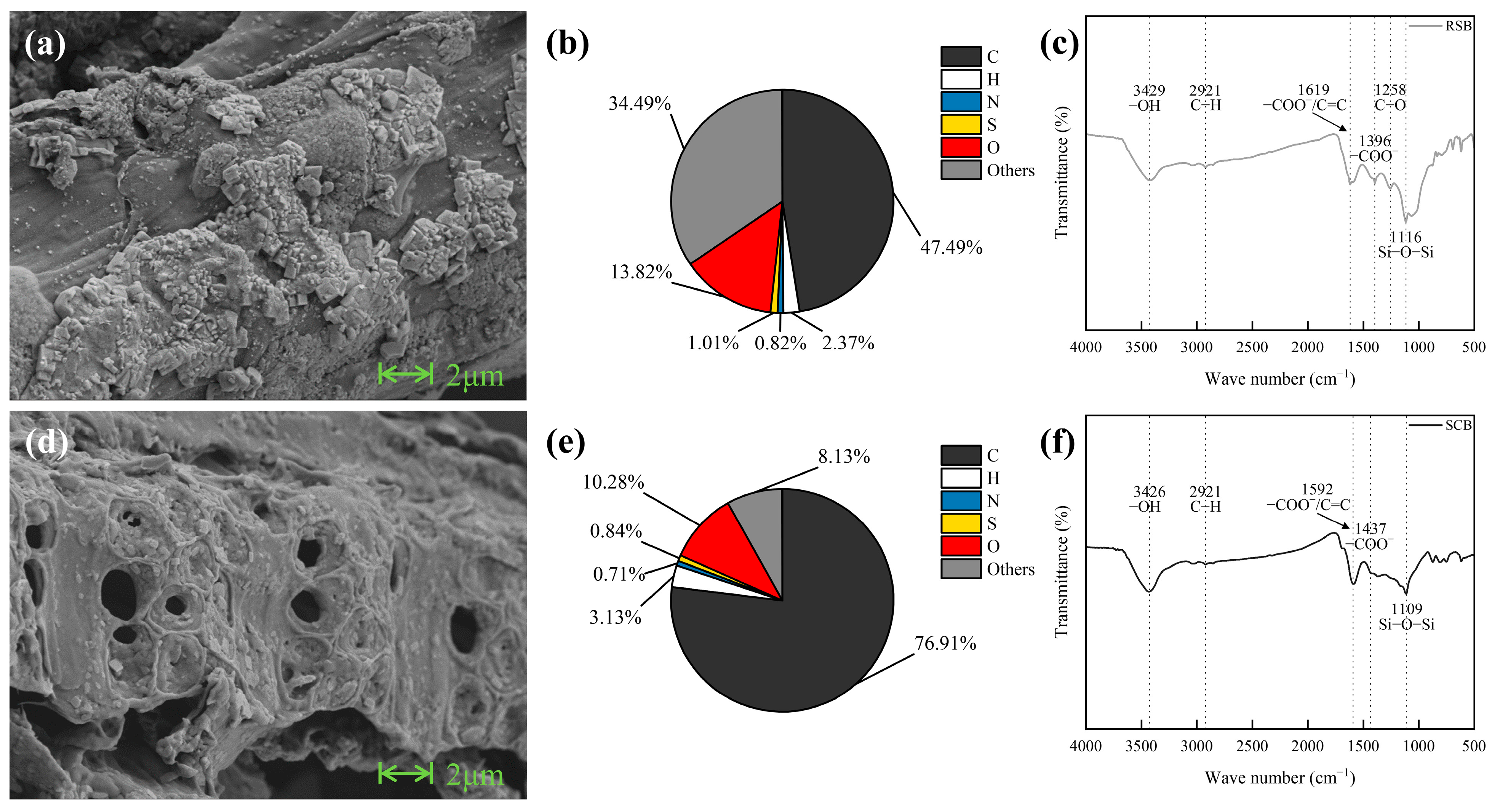
3.1. Biochar Characteristics
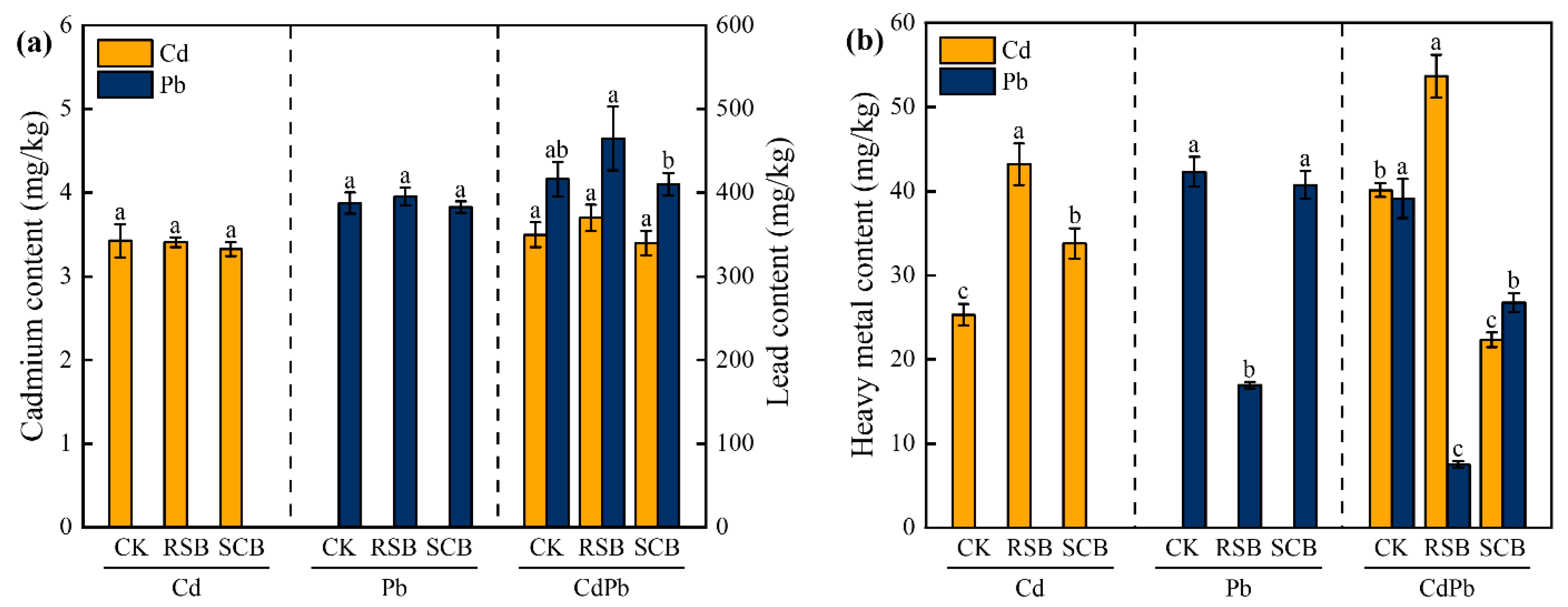
3.2. Effects of Biochar on Total Heavy Metal Contents in Soil and Pakchoi Shoots
3.3. Effects of Biochar on Soil Enzyme Activities
3.4. Adsorption of Cd and Pb by Biochar
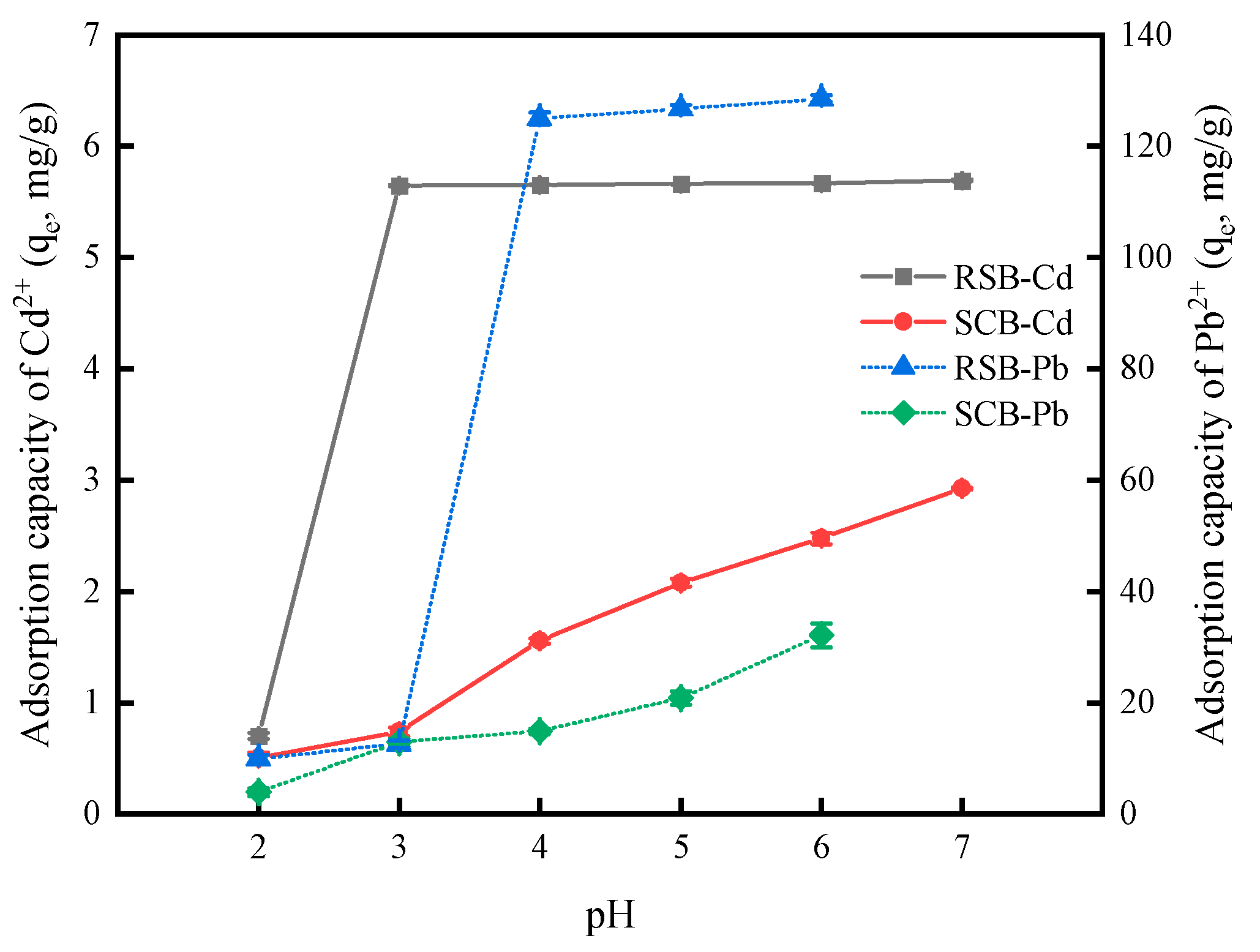
3.4.1. Effect of pH
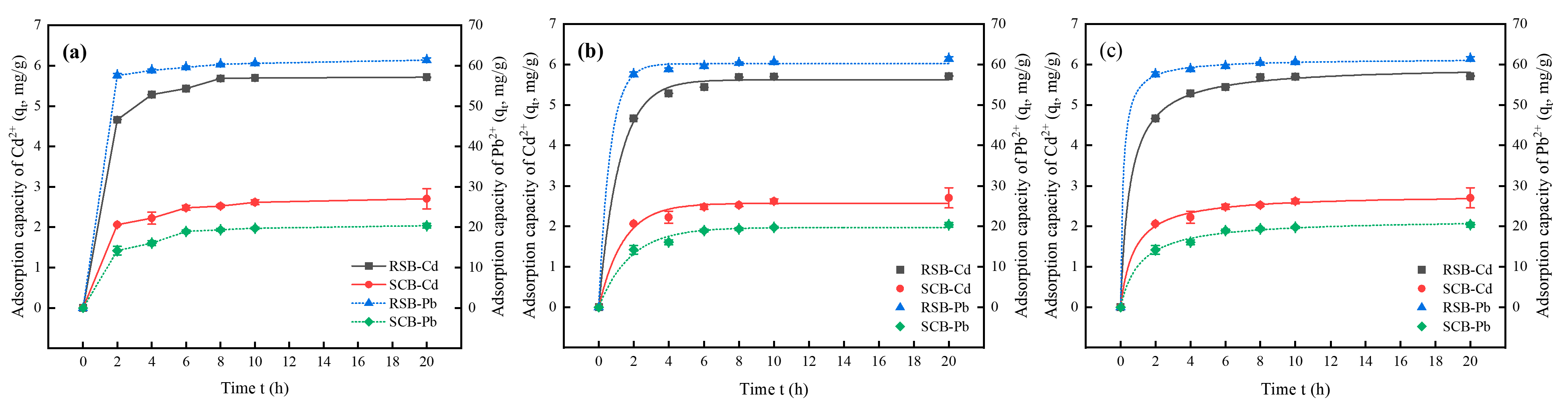
3.4.2. Adsorption Kinetics
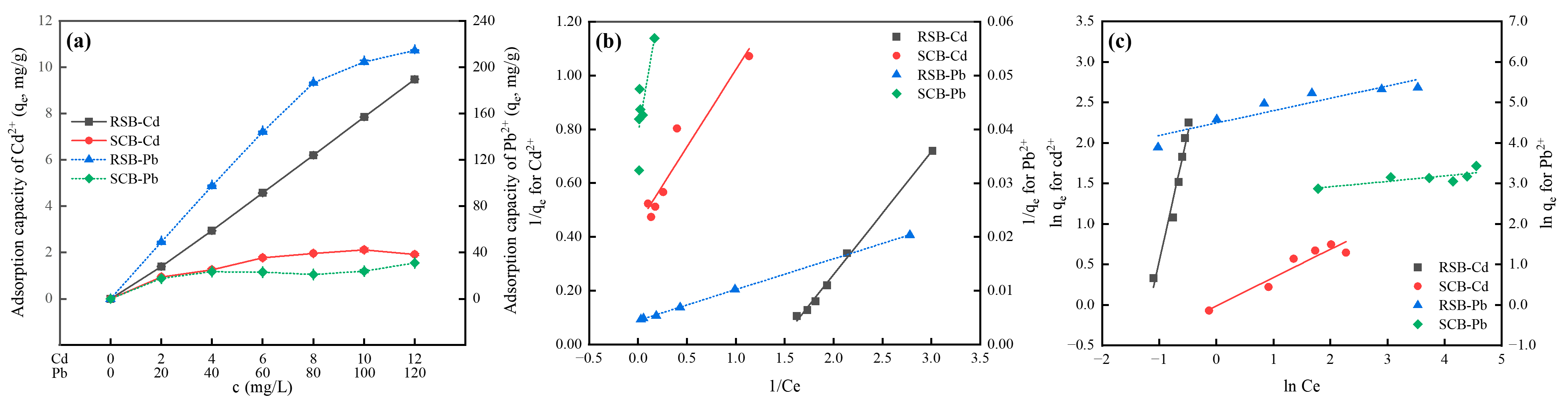
3.4.3. Adsorption Isotherms
3.5. Microbial Community Analysis
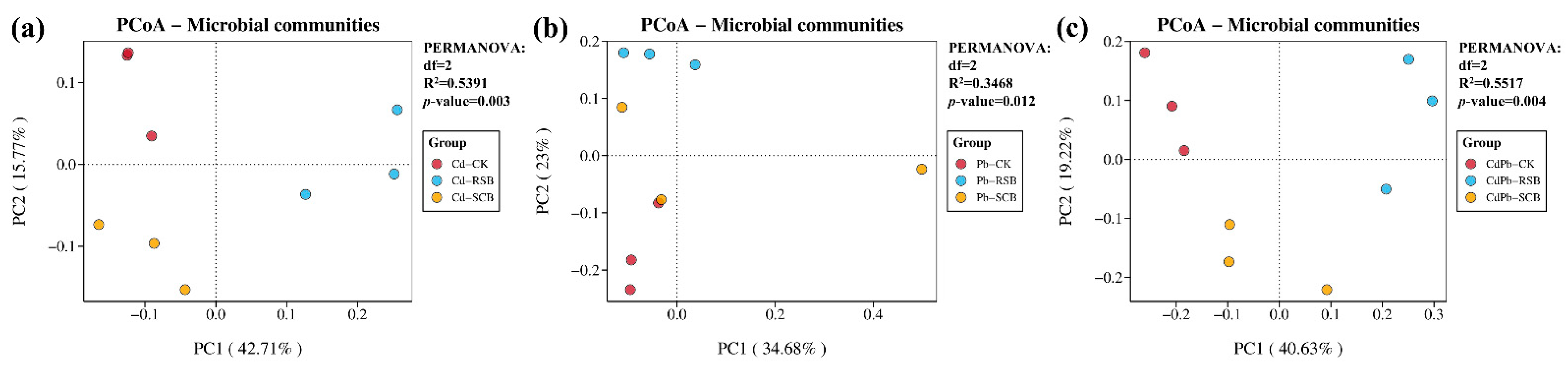
3.5.1. Microbial Abundance and Diversity
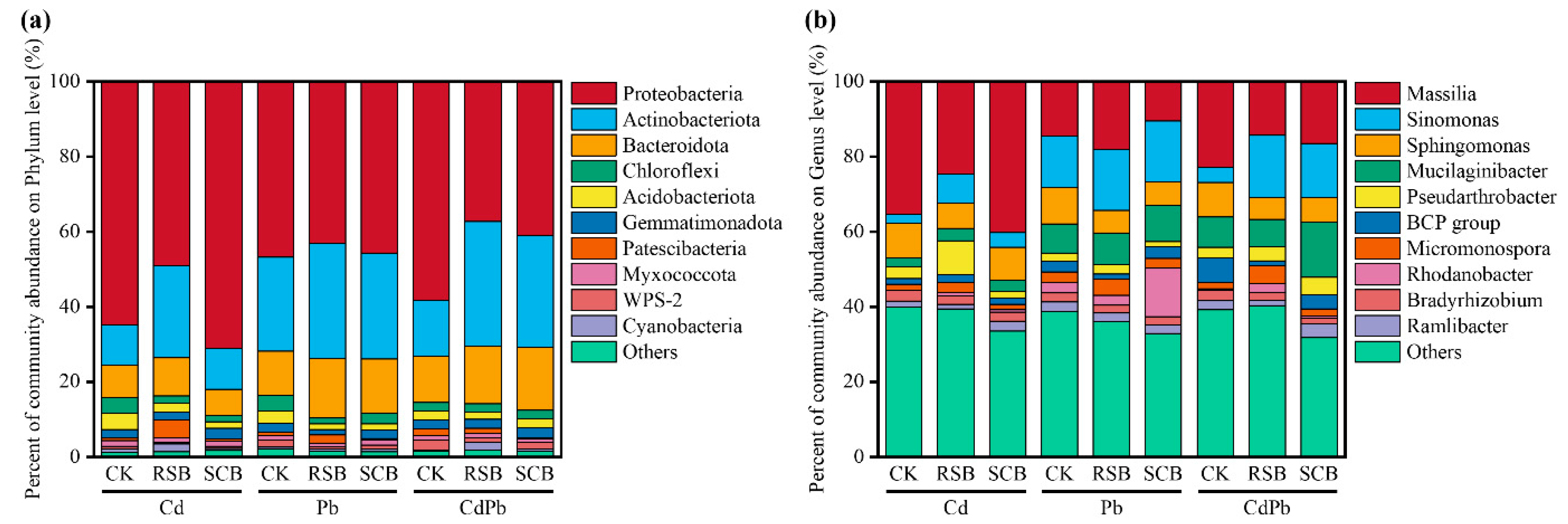
3.5.2. Microbial Community Composition
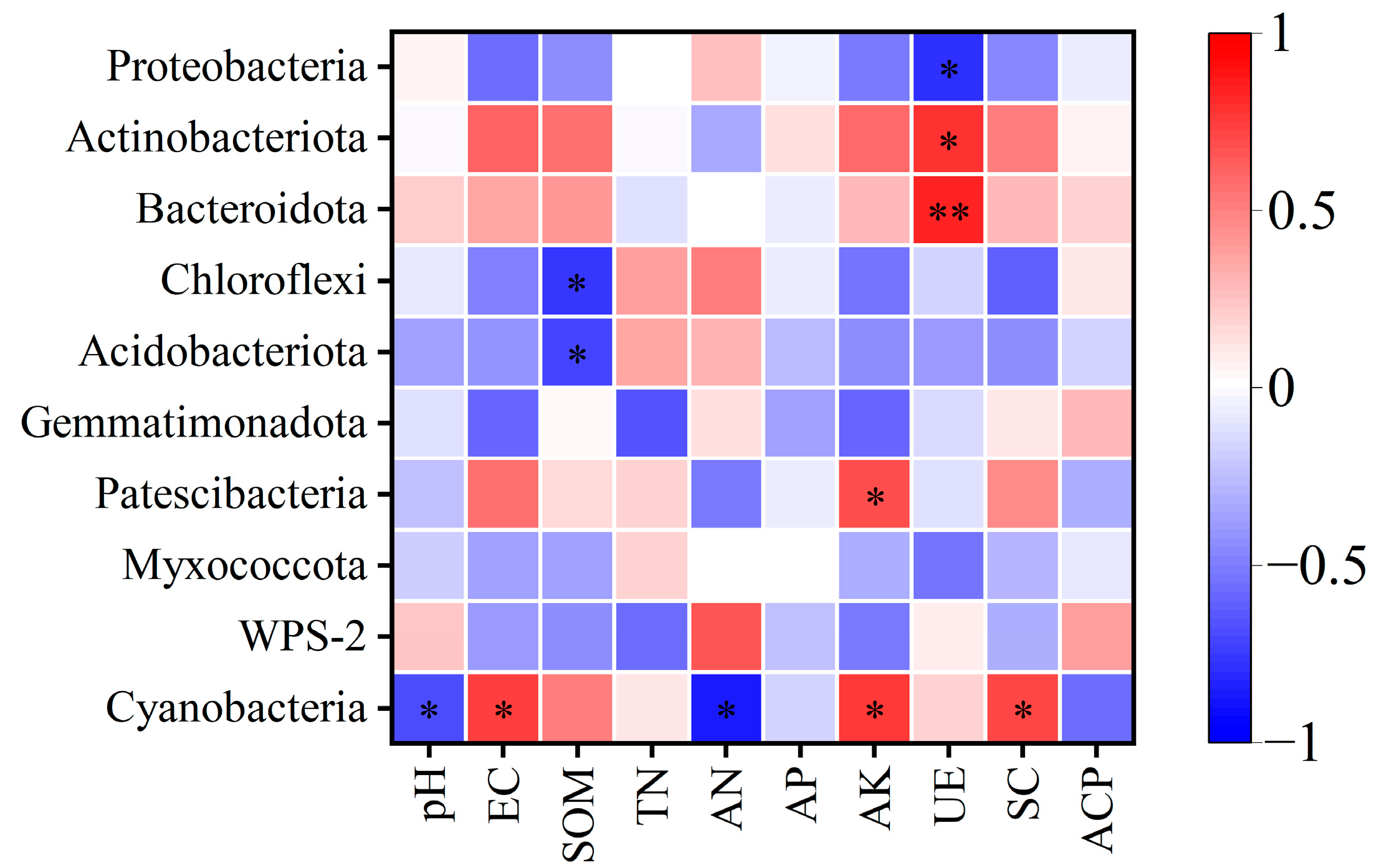
3.5.3. Effects of Soil Physicochemical Parameters on Microbial Community Structure
4. Conclusions
Supplementary Materials
Author Contributions
Funding
Data Availability Statement
Acknowledgments
Conflicts of Interest
References
- Yu, J.; Chen, Z.; Gao, W.; He, S.; Xiao, D.; Fan, W.; Huo, M.; Nugroho, W.A. Global trends and prospects in research on heavy metal pollution at contaminated sites. J. Environ. Manag. 2025, 383, 125402. [Google Scholar] [CrossRef]
- Yan, K.; Wang, H.; Lan, Z.; Zhou, J.; Fu, H.; Wu, L.; Xu, J. Heavy metal pollution in the soil of contaminated sites in China: Research status and pollution assessment over the past two decades. J. Clean. Prod. 2022, 373, 133780. [Google Scholar] [CrossRef]
- Hou, D.; Jia, X.; Wang, L.; McGrath, S.P.; Zhu, Y.-G.; Hu, Q.; Zhao, F.-J.; Bank, M.S.; O’Connor, D.; Nriagu, J. Global soil pollution by toxic metals threatens agriculture and human health. Science 2025, 388, 316–321. [Google Scholar] [CrossRef]
- Setu, S.; Strezov, V. Impacts of non-ferrous metal mining on soil heavy metal pollution and risk assessment. Sci. Total Environ. 2025, 969, 178962. [Google Scholar] [CrossRef] [PubMed]
- Kumar, A.; Kumar, V.; Thakur, M.; Singh, K.; Jasrotia, R.; Kumar, R.; Radziemska, M. Global perspectives on lead contamination and health risks in surface water, rice grains, and soils. Land Degrad. Dev. 2025, 36, 2159–2169. [Google Scholar] [CrossRef]
- Balali-Mood, M.; Naseri, K.; Tahergorabi, Z.; Khazdair, M.R.; Sadeghi, M. Toxic mechanisms of five heavy metals: Mercury, lead, chromium, cadmium, and arsenic. Front. Pharmacol. 2021, 12, 643972. [Google Scholar] [CrossRef]
- Mohamed, H.I.; Ullah, I.; Toor, M.D.; Tanveer, N.A.; Din, M.M.U.; Basit, A.; Sultan, Y.; Muhammad, M.; Rehman, M.U. Heavy metals toxicity in plants: Understanding mechanisms and developing coping strategies for remediation: A review. Bioresour. Bioprocess. 2025, 12, 95. [Google Scholar] [CrossRef]
- Genchi, G.; Sinicropi, M.S.; Lauria, G.; Carocci, A.; Catalano, A. The effects of cadmium toxicity. Int. J. Environ. Res. Public Health 2020, 17, 3782. [Google Scholar] [CrossRef]
- Nie, X.; Huang, X.; Li, M.; Lu, Z.; Ling, X. Advances in soil amendments for remediation of heavy metal-contaminated soils: Mechanisms, impact, and future prospects. Toxics 2024, 12, 872. [Google Scholar] [CrossRef] [PubMed]
- Palansooriya, K.N.; Shaheen, S.M.; Chen, S.S.; Tsang, D.C.W.; Hashimoto, Y.; Hou, D.; Bolan, N.S.; Rinklebe, J.; Ok, Y.S. Soil amendments for immobilization of potentially toxic elements in contaminated soils: A critical review. Environ. Int. 2020, 134, 105046. [Google Scholar] [CrossRef]
- Zhao, L.; Imran. Heavy metal mitigation in soil and plants using organic and inorganic amendments alone and in combination. Int. J. Phytoremediat. 2025, 27, 606–623. [Google Scholar] [CrossRef]
- Datta, D.K.; Biswas, T.; Castonguay, E.; Ni, P. Sustainable stabilizer derived from calcium- and phosphorus-rich biowaste for remediation of heavy metal-contaminated soil: A critical review. Sustainability 2024, 16, 8841. [Google Scholar] [CrossRef]
- Rajput, V.; Saini, I.; Parmar, S.; Pundir, V.; Kumar, V.; Kumar, V.; Naik, B.; Rustagi, S. Biochar production methods and their transformative potential for environmental remediation. Discov. Appl. Sci. 2024, 6, 408. [Google Scholar] [CrossRef]
- Chi, W.; Nan, Q.; Liu, Y.; Dong, D.; Qin, Y.; Li, S.; Wu, W. Stress resistance enhancing with biochar application and promotion on crop growth. Biochar 2024, 6, 43. [Google Scholar] [CrossRef]
- Zhu, Z.; Zhang, Y.; Tao, W.; Zhang, X.; Xu, Z.; Xu, C. The biological effects of biochar on soil’s physical and chemical characteristics: A review. Sustainability 2025, 17, 2214. [Google Scholar] [CrossRef]
- Maqbool, Z.; Shahbaz Farooq, M.; Rafiq, A.; Uzair, M.; Yousuf, M.; Ramzan Khan, M.; Huo, S. Unlocking the potential of biochar in the remediation of soils contaminated with heavy metals for sustainable agriculture. Funct. Plant Biol. 2024, 51, FP23257. [Google Scholar] [CrossRef]
- Ketrot, D.; Wisawapipat, W. Lead immobilisation in mining contaminated soil using biochar and ash from sugarcane. Plant Soil Environ. 2021, 67, 474–481. [Google Scholar] [CrossRef]
- Xue, Z.; Sui, F.; Qi, Y.; Pan, S.; Wang, N.; Bian, R.; Joseph, S.; Zhang, X.; Li, L.; Pan, G. Differences in soil Cd immobilization and blockage of rice Cd uptake by biochar derived from crop residue and bone—A 2-year field experiment. Ecotoxicol. Environ. Saf. 2025, 290, 117533. [Google Scholar] [CrossRef]
- Chen, X.; Jiang, S.; Wu, J.; Yi, X.; Dai, G.; Shu, Y. Three-year field experiments revealed the immobilization effect of natural aging biochar on typical heavy metals (Pb, Cu, Cd). Sci. Total Environ. 2024, 912, 169384. [Google Scholar] [CrossRef]
- Thongsomboon, W.; Baimark, Y.; Srihanam, P. Valorization of cellulose-based materials from agricultural waste: Comparison between sugarcane bagasse and rice straw. Polymers 2023, 15, 3190. [Google Scholar] [CrossRef]
- Shukla, A.; Kumar, M.; Tiwari, H.; Shukla, A. Alternative uses of rice straw in North-Western regions of India: A review. Int. J. Environ. Clim. Change 2022, 12, 206–216. [Google Scholar] [CrossRef]
- Zhuang, J.; Kim, K.H.; Jia, L.; Meng, X.; Kumar, D.; Leem, G.; Kang, S.B.; Li, Y.; Ragauskas, A.J.; Hou, Y.; et al. Ferric chloride aided peracetic acid pretreatment for effective utilization of sugarcane bagasse. Fuel 2022, 319, 123739. [Google Scholar] [CrossRef]
- Ni, Y.; Zhang, M.; Qian, X.; Shen, G.; Mwabonje, O. Anaerobic digestion of rice straw as profitable climate solution reduces paddy field greenhousegas emissions and produces climate-smart fertilizer under carbon trading mechanisms. Sustainability 2025, 17, 2439. [Google Scholar] [CrossRef]
- Xu, Z.; Liu, B.; Wang, W.; Zhang, Z.; Qiu, W. Assessing the impact of straw burning on PM2.5 using explainable machine learning: A case study in Heilongjiang Province, China. Sustainability 2024, 16, 7315. [Google Scholar] [CrossRef]
- Liang, F.; Li, B.; Vogt, R.D.; Mulder, J.; Song, H.; Chen, J.; Guo, J. Straw return exacerbates soil acidification in major Chinese croplands. Resour. Conserv. Recycl. 2023, 198, 107176. [Google Scholar] [CrossRef]
- GB 15618-2018; Soil Environmental Quality—Risk Control Standard for Soil Contamination of Agricultural Land. CNEPA (Chinese National Environmental Protection Agency): Beijing, China, 2018. (In Chinese)
- Su, M.X.; Zhang, L.; Zhou, X.P.; Kou, M.; Xiong, J.; Wang, M.X.; Tan, W.F. Remediation of lead-cadmium contaminated soil via continuous effect of combined biochar and calciumsilicate. J. Agric. Resour. Environ. 2024, 41, 473–481. (In Chinese) [Google Scholar] [CrossRef]
- Guo, M.; Song, W.; Tian, J. Biochar-facilitated soil remediation: Mechanisms and efficacy variations. Front. Environ. Sci. 2020, 8, 521512. [Google Scholar] [CrossRef]
- Alkharabsheh, H.M.; Seleiman, M.F.; Battaglia, M.L.; Shami, A.; Jalal, R.S.; Alhammad, B.A.; Almutairi, K.F.; Al-Saif, A.M. Biochar and its broad impacts in soil quality and fertility, nutrient leaching and crop productivity: A review. Agronomy 2021, 11, 993. [Google Scholar] [CrossRef]
- Xue, Y.; Wang, C.; Hu, Z.; Zhou, Y.; Xiao, Y.; Wang, T. Pyrolysis of sewage sludge by electromagnetic induction: Biochar properties and application in adsorption removal of Pb (II), Cd (II) from aqueous solution. Waste Manag. 2019, 89, 48–56. [Google Scholar] [CrossRef]
- NY/T 1121.16-2006; Soil Testing—Part 16: Method for Determination of Total Water-Soluble Salt. Ministry of Agriculture of the People’s Republic of China: Beijing, China, 2006.
- Bao, S.D. Soil Agrochemical Analysis, 3rd ed.; China Agriculture Press: Beijing, China, 2000. [Google Scholar]
- Chen, S.; Zhou, Y.; Chen, Y.; Gu, J. Fastp: An ultra-fast all-in-one FASTQ preprocessor. Bioinformatics 2018, 34, i884–i890. [Google Scholar] [CrossRef]
- Magoč, T.; Salzberg, S.L. FLASH: Fast length adjustment of short reads to improve genome assemblies. Bioinformatics 2011, 27, 2957–2963. [Google Scholar] [CrossRef]
- Wang, Q.; Garrity, G.M.; Tiedje, J.M.; Cole, J.R. Naive Bayesian classifier for rapid assignment of rRNA sequences into the new bacterial taxonomy. Appl. Environ. Microbiol. 2007, 73, 5261–5267. [Google Scholar] [CrossRef]
- Wang, Z.; Han, L.; Sun, K.; Jin, J.; Ro, K.S.; Libra, J.A.; Liu, X.; Xing, B. Sorption of four hydrophobic organic contaminants by biochars derived from maize straw, wood dust and swine manure at different pyrolytic temperatures. Chemosphere 2016, 144, 285–291. [Google Scholar] [CrossRef]
- Sahoo, S.S.; Vijay, V.K.; Chandra, R.; Kumar, H. Production and characterization of biochar produced from slow pyrolysis of pigeon pea stalk and bamboo. Clean. Eng. Technol. 2021, 3, 100101. [Google Scholar] [CrossRef]
- Chen, J.; Zhou, J.; Zheng, W.; Leng, S.; Ai, Z.; Zhang, W.; Yang, Z.; Yang, J.; Xu, Z.; Cao, J.; et al. A complete review on the oxygen-containing functional groups of biochar: Formation mechanisms, detection methods, engineering, and applications. Sci. Total Environ. 2024, 946, 174081. [Google Scholar] [CrossRef]
- Yuan, J.H.; Xu, R.K.; Zhang, H. The forms of alkalis in the biochar produced from crop residues at different temperatures. Bioresour. Technol. 2011, 102, 3488–3497. [Google Scholar] [CrossRef] [PubMed]
- Li, A.; Ye, C.; Jiang, Y.; Deng, H. Enhanced removal performance of magnesium-modified biochar for cadmium in wastewaters: Role of active functional groups, processes, and mechanisms. Bioresour. Technol. 2023, 386, 129515. [Google Scholar] [CrossRef] [PubMed]
- Stoykova, M.; Atanassova, I.; Benkova, M.; Simeonova, T.; Nenova, L.; Harizanova, M.; Atsenova, M. Positive effect of biochar application on soil properties: Solubility and speciation of heavy metals in non-acidic contaminated soils near a steel metallurgical plant in Southeastern Europe. Sustainability 2024, 16, 6891. [Google Scholar] [CrossRef]
- Nenova, L.; Atanassova, I.; Benkova, M.; Harizanova, M.; Simeonova, T. Dynamics, mobility and sources of heavy metals after biochar addition in contaminated agricultural soils around a copper smelter. J. Soils Sediments 2025, 25, 3381–3396. [Google Scholar] [CrossRef]
- Lima, J.Z.; Nauerth, I.M.R.; da Silva, E.F.; José Pejon, O.; Guimarães Silvestre Rodrigues, V. Competitive sorption and desorption of cadmium, lead, and zinc onto peat, compost, and biochar. J. Environ. Manag. 2023, 344, 118515. [Google Scholar] [CrossRef]
- Zhang, Y.; Xiao, Q.; Wu, W.; Zhang, X.; Xu, X.; Yang, S. Comparison of water-soluble organic matter (WSOM)-containing and WSOM-free biochars for simultaneous sorption of lead and cadmium. Sci. Total Environ. 2024, 921, 171159. [Google Scholar] [CrossRef]
- Chen, H.; Zhang, J.; Tang, L.; Su, M.; Tian, D.; Zhang, L.; Li, Z.; Hu, S. Enhanced Pb immobilization via the combination of biochar and phosphate solubilizing bacteria. Environ. Int. 2019, 127, 395–401. [Google Scholar] [CrossRef]
- Soria, R.I.; Rolfe, S.A.; Betancourth, M.P.; Thornton, S.F. The relationship between properties of plant-based biochars and sorption of Cd (II), Pb (II) and Zn (II) in soil model systems. Heliyon 2020, 6, e05388. [Google Scholar] [CrossRef]
- Li, H.; Dong, X.; da Silva, E.B.; de Oliveira, L.M.; Chen, Y.; Ma, L.Q. Mechanisms of metal sorption by biochars: Biochar characteristics and modifications. Chemosphere 2017, 178, 466–478. [Google Scholar] [CrossRef] [PubMed]
- Mohan, D.; Pittman, C.U., Jr.; Bricka, M.; Smith, F.; Yancey, B.; Mohammad, J.; Steele, P.H.; Alexandre-Franco, M.F.; Gómez-Serrano, V.; Gong, H. Sorption of arsenic, cadmium, and lead by chars produced from fast pyrolysis of wood and bark during bio-oil production. J. Colloid Interface Sci. 2007, 310, 57–73. [Google Scholar] [CrossRef]
- Inyang, M.I.; Gao, B.; Yao, Y.; Xue, Y.; Zimmerman, A.; Mosa, A.; Pullammanappallil, P.; Ok, Y.S.; Cao, X. A review of biochar as a low-cost adsorbent for aqueous heavy metal removal. Crit. Rev. Environ. Sci. Technol. 2016, 46, 406–433. [Google Scholar] [CrossRef]
- Adetunji, A.T.; Lewu, F.B.; Mulidzi, R.; Ncube, B. The biological activities of β-glucosidase, phosphatase and urease as soil quality indicators: A review. J. Soil Sci. Plant Nutr. 2017, 17, 794–807. [Google Scholar] [CrossRef]
- Tang, B.; Xu, H.; Song, F.; Ge, H.; Yue, S. Effects of heavy metals on microorganisms and enzymes in soils of lead–zinc tailing ponds. Environ. Res. 2022, 207, 112174. [Google Scholar] [CrossRef]
- Cui, L.; Yan, J.; Yang, Y.; Li, L.; Quan, G.; Ding, C.; Chen, T.; Fu, Q.; Chang, A. Influence of Biochar on Microbial Activities of Heavy Metals Contaminated Paddy Fields. BioResources 2013, 8, 5536. [Google Scholar] [CrossRef]
- Yang, X.; Liu, J.; McGrouther, K.; Huang, H.; Lu, K.; Guo, X.; He, L.; Lin, X.; Che, L.; Ye, Z. Effect of biochar on the extractability of heavy metals (Cd, Cu, Pb, and Zn) and enzyme activity in soil. Environ. Sci. Pollut. Res. 2016, 23, 974–984. [Google Scholar] [CrossRef] [PubMed]
- Hou, X.L.; Han, H.; Tigabu, M.; Li, Q.; Li, Z.; Zhu, C.; Huang, S.; Cai, L.; Liu, A. Lead contamination alters enzyme activities and microbial composition in the rhizosphere soil of the hyperaccumulator Pogonatherum crinitum. Ecotoxicol. Environ. Saf. 2021, 207, 111308. [Google Scholar] [CrossRef] [PubMed]
- Xiao, X.; Chen, Z.; Chen, B. Proton uptake behaviors of organic and inorganic matters in biochars prepared under different pyrolytic temperatures. Sci. Total Environ. 2020, 746, 140853. [Google Scholar] [CrossRef] [PubMed]
- Mei, Y.; Zhuang, S.; Wang, J. Adsorption of heavy metals by biochar in aqueous solution: A review. Sci. Total Environ. 2025, 968, 178898. [Google Scholar] [CrossRef] [PubMed]
- Padilla, J.T.; Watts, D.W.; Szogi, A.A.; Johnson, M.G. Evaluation of a pH-and time-dependent model for the sorption of heavy metal cations by poultry litter-derived biochar. Chemosphere 2024, 347, 140688. [Google Scholar] [CrossRef]
- Han, R.; Gao, Y.; Jia, Y.; Wang, S. Heterogeneous precipitation behavior and mechanism during the adsorption of cationic heavy metals by biochar: Roles of inorganic components. J. Hazard. Mater. 2024, 480, 136322. [Google Scholar] [CrossRef]
- Kołodyńska, D.; Wnętrzak, R.; Leahy, J.J.; Hayes, M.H.B.; Kwapiński, W.; Hubicki, Z. Kinetic and adsorptive characterization of biochar in metal ions removal. Chem. Eng. J. 2012, 197, 295–305. [Google Scholar] [CrossRef]
- Shafiq, M.; Alazba, A.A.; Amin, M.T. Kinetic and isotherm studies of Ni2+ and Pb2+ adsorption from synthetic wastewater using Eucalyptus camdulensis—Derived biochar. Sustainability 2021, 13, 3785. [Google Scholar] [CrossRef]
- Ding, W.; Dong, X.; Ime, I.M.; Gao, B.; Ma, L.Q. Pyrolytic temperatures impact lead sorption mechanisms by bagasse biochars. Chemosphere 2014, 105, 68–74. [Google Scholar] [CrossRef]
- Liu, L.; Fan, S.; Wang, Z.; Hu, J. Chemical speciation distribution, desorption characteristics, and quantitative adsorption mechanisms of cadmium/lead ions adsorbed on biochars. Arab. J. Chem. 2024, 17, 105669. [Google Scholar] [CrossRef]
- Dimov, S.G.; Doytchinov, V.V.; Neykov, N.; Muleshkova, T.; Kenderov, L.; Ilieva, R.; Georgieva Miteva, D.; Kitanova, M.; Peykov, S.; Iliev, M. Observations on the antagonistic relationships between fungi, archaea, and bacteria in Livingston Island (Maritime Antarctica) with the use of amplicon-based metagenomics. Diversity 2024, 16, 56. [Google Scholar] [CrossRef]
- Custodio, M.; Espinoza, C.; Peñaloza, R.; Peralta-Ortiz, T.; Sánchez-Suárez, H.; Ordinola-Zapata, A.; Vieyra-Peña, E. Microbial diversity in intensively farmed lake sediment contaminated by heavy metals and identification of microbial taxa bioindicators of environmental quality. Sci. Rep. 2022, 12, 80. [Google Scholar] [CrossRef]
- Arif, S.; Nacke, H.; Schliekmann, E.; Reimer, A.; Arp, G.; Hoppert, M. Composition and niche-specific characteristics of microbial consortia colonizing Marsberg copper mine in the Rhenish Massif. Biogeosciences 2022, 19, 4883–4902. [Google Scholar] [CrossRef]
- Xu, R.; Sun, X.; Häggblom, M.M.; Dong, Y.; Zhang, M.; Yang, Z.; Xiao, E.; Xiao, T.; Gao, P.; Li, B.; et al. Metabolic potentials of members of the class Acidobacteriia in metal-contaminated soils revealed by metagenomic analysis. Environ. Microbiol. 2022, 24, 803–818. [Google Scholar] [CrossRef]
- Presentato, A.; Piacenza, E.; Turner, R.J.; Zannoni, D.; Cappelletti, M. Processing of metals and metalloids by Actinobacteria: Cell resistance mechanisms and synthesis of metal (loid)-based nanostructures. Microorganisms 2020, 8, 2027. [Google Scholar] [CrossRef]
- Makarani, N.; Kaushal, R.S. Advances in actinobacteria-based bioremediation: Mechanistic insights, genetic regulation, and emerging technologies. Biodegradation 2025, 36, 24. [Google Scholar] [CrossRef] [PubMed]
- Li, J.; Peduruhewa, J.H.; Brown, R.W.; Chadwick, D.R.; Griffiths, R.I.; Fu, H.; Bian, H.; Sheng, L.; Ma, Q.; Jones, D.L. Biochar reshapes soil bacterial community composition and survival strategies: A meta-analysis revealing trade-offs between microbial stability and functional complexity. Biol. Fertil. Soils 2026, 62, 251–266. [Google Scholar] [CrossRef] [PubMed]
- Cui, W.; Liu, Y.; Li, W.; Pei, L.; Xu, S.; Sun, Y.; Liu, J.; Wang, F. Remediation agents drive bacterial community in a Cd-contaminated soil. Toxics 2023, 11, 53. [Google Scholar] [CrossRef] [PubMed]



| Treatment ID | Biochar | Contamination Type | Cd (mg/kg) | Pb (mg/kg) | Replicates |
|---|---|---|---|---|---|
| Cd-CK | None | Cd-only | 5 | — | 3 |
| Cd-RSB | RSB | Cd-only | 5 | — | 3 |
| Cd-SCB | SCB | Cd-only | 5 | — | 3 |
| Pb-CK | None | Pb-only | — | 500 | 3 |
| Pb-RSB | RSB | Pb-only | — | 500 | 3 |
| Pb-SCB | SCB | Pb-only | — | 500 | 3 |
| CdPb-CK | None | Cd-Pb co-contaminated | 5 | 500 | 3 |
| CdPb-RSB | RSB | Cd-Pb co-contaminated | 5 | 500 | 3 |
| CdPb-SCB | SCB | Cd-Pb co-contaminated | 5 | 500 | 3 |
| Contaminated | Treatment | S-UE (umol/d/g) | S-SC (mmol/d/g) | S-ACP (ug/d/g) |
|---|---|---|---|---|
| Cd | CK | 92.61 ± 9.94 ef | 0.75 ± 0.03 c | 16.39 ± 2.22 cd |
| RSB | 113.29 ± 10.88 cde | 2.34 ± 0.48 a | 21.15 ± 6.06 abc | |
| SCB | 79.34 ± 9.91 f | 1.43 ± 0.33 b | 22.40 ± 3.86 abc | |
| Pb | CK | 104.36 ± 5.76 de | 0.84 ± 0.18 c | 28.64 ± 0.68 ab |
| RSB | 117.40 ± 12.06 cd | 1.31 ± 0.16 bc | 19.86 ± 3.66 bcd | |
| SCB | 158.38 ± 24.46 a | 1.19 ± 0.28 bc | 30.32 ± 4.01 a | |
| CdPb | CK | 103.27 ± 12.46 de | 0.86 ± 0.22 bc | 24.37 ± 6.15 abc |
| RSB | 127.98 ± 11.76 bc | 1.98 ± 0.24 a | 12.16 ± 4.12 d | |
| SCB | 146.52 ± 8.60 ab | 2.07 ± 0.53 a | 29.17 ± 8.25 a |
| Models | Parameters | RSB-Cd | SCB-Cd | RSB-Pb | SCB-Pb | |
|---|---|---|---|---|---|---|
| Kinetic models | Pseudo-first-order | qe, cal (mg/g) | 5.621 | 2.566 | 60.193 | 19.693 |
| K1 (h−1) | 0.851 | 0.722 | 1.545 | 0.553 | ||
| R2 | 0.9974 | 0.9859 | 0.9989 | 0.9880 | ||
| Pseudo-second-order | qe, cal (mg/g) | 5.966 | 2.787 | 61.397 | 21.811 | |
| K2 (g/(mg·h)−1) | 0.310 | 0.461 | 0.113 | 0.041 | ||
| R2 | 0.9991 | 0.9968 | 0.9998 | 0.9953 | ||
| Isotherm models | Langmuir | qm (mg/g) | −1.532 | 2.237 | 223.714 | 25.445 |
| KL (L/mg) | −1.431 | 0.778 | 0.780 | 0.3754 | ||
| R2 | 0.9961 | 0.9205 | 0.9997 | 0.6419 | ||
| RMSE | 0.0163 | 0.0738 | 0.0001 | 0.0054 | ||
| AIC | −47.85 | −29.71 | −106.98 | −61.18 | ||
| Freundlich | n (mg/g) | 0.318 | 2.863 | 3.276 | 7.352 | |
| KF (L/mg) | 39.903 | 0.989 | 89.196 | 14.055 | ||
| R2 | 0.9654 | 0.9079 | 0.8565 | 0.5967 | ||
| RMSE | 0.1479 | 0.1085 | 0.2415 | 0.1306 | ||
| AIC | −21.36 | −25.08 | −15.48 | −22.86 |
| Contaminated | Treatment | Chao1 | ACE | Shannon | Simpson |
|---|---|---|---|---|---|
| Cd | CK | 241.333 ± 13.317 ab | 241.333 ± 13.317 ab | 4.218 ± 0.092 a | 0.960 ± 0.005 a |
| RSB | 239.000 ± 21.000 ab | 238.767 ± 21.399 ab | 4.390 ± 0.166 a | 0.973 ± 0.006 a | |
| SCB | 216.667 ± 15.503 b | 216.713 ± 15.433 b | 4.162 ± 0.160 a | 0.961 ± 0.005 a | |
| Pb | CK | 278.000 ± 48.570 a | 278.053 ± 48.488 a | 4.509 ± 0.175 a | 0.975 ± 0.007 a |
| RSB | 248.667 ± 7.572 ab | 248.751 ± 7.629 ab | 4.496 ± 0.086 a | 0.975 ± 0.007 a | |
| SCB | 204.000 ± 51.507 b | 204.000 ± 51.507 b | 4.017 ± 0.692 a | 0.931 ± 0.074 a | |
| CdPb | CK | 228.667 ± 10.693 ab | 228.713 ± 10.753 ab | 4.480 ± 0.194 a | 0.977 ± 0.007 a |
| RSB | 261.778 ± 34.835 ab | 261.824 ± 34.796 ab | 4.468 ± 0.107 a | 0.974 ± 0.005 a | |
| SCB | 222.000 ± 28.054 ab | 222.000 ± 28.054 ab | 4.289 ± 0.140 a | 0.971 ± 0.006 a |
Disclaimer/Publisher’s Note: The statements, opinions and data contained in all publications are solely those of the individual author(s) and contributor(s) and not of MDPI and/or the editor(s). MDPI and/or the editor(s) disclaim responsibility for any injury to people or property resulting from any ideas, methods, instructions or products referred to in the content. |
© 2026 by the authors. Licensee MDPI, Basel, Switzerland. This article is an open access article distributed under the terms and conditions of the Creative Commons Attribution (CC BY) license.
Share and Cite
Zhang, X.; Kuang, C.; Han, Z.; Chen, X.; Gao, Z.; Zhu, Y. Remediation Effects and Mechanisms of Biochar Derived from Agricultural Waste on Soils Contaminated with Cadmium (Cd) and Lead (Pb). Agriculture 2026, 16, 1236. https://doi.org/10.3390/agriculture16111236
Zhang X, Kuang C, Han Z, Chen X, Gao Z, Zhu Y. Remediation Effects and Mechanisms of Biochar Derived from Agricultural Waste on Soils Contaminated with Cadmium (Cd) and Lead (Pb). Agriculture. 2026; 16(11):1236. https://doi.org/10.3390/agriculture16111236
Chicago/Turabian StyleZhang, Xiang, Chunyi Kuang, Ziying Han, Xiaoyuan Chen, Zhihong Gao, and Yongyong Zhu. 2026. "Remediation Effects and Mechanisms of Biochar Derived from Agricultural Waste on Soils Contaminated with Cadmium (Cd) and Lead (Pb)" Agriculture 16, no. 11: 1236. https://doi.org/10.3390/agriculture16111236
APA StyleZhang, X., Kuang, C., Han, Z., Chen, X., Gao, Z., & Zhu, Y. (2026). Remediation Effects and Mechanisms of Biochar Derived from Agricultural Waste on Soils Contaminated with Cadmium (Cd) and Lead (Pb). Agriculture, 16(11), 1236. https://doi.org/10.3390/agriculture16111236