Review

Nutrient Release, Leaching, and Agronomic Performance of Additive-Enhanced Biochar-Based Fertilizers: A Global Meta-Analysis

by
Jéssica da Luz Costa
,
José Ferreira Lustosa Filho
,
Rhaila da Silva Rodrigues Viana
,
Jhon Kenedy Moura Chagas
and
Cícero Célio de Figueiredo
*
Faculty of Agronomy and Veterinary Medicine, University of Brasília, Brasília 70910-970, DF, Brazil
*
Author to whom correspondence should be addressed.
Agriculture 2026, 16(11), 1147; https://doi.org/10.3390/agriculture16111147
Submission received: 5 May 2026 / Revised: 20 May 2026 / Accepted: 21 May 2026 / Published: 23 May 2026
(This article belongs to the Section Agricultural Soils)

Abstract

Biochar-based fertilizers (BBFs), including formulations enriched with additives, are sustainable alternatives to conventional fertilizers, promoting waste reuse and controlled nutrient release. This study performed a global meta-analysis to evaluate nutrient dynamics (release and leaching in water and soil) and the agronomic performance of additive-enhanced BBFs compared with unfertilized and/or conventionally fertilized controls. Thirty studies were selected, with 264 experimental pairs extracted from the Web of Science and Scopus databases, and analyzed using a random-effects model. The results indicated that BBFs enriched with natural mineral additives promoted an average increase of 204.3% in nutrient release in water (p < 0.001), whereas in soil biotechnological additives showed the greatest increase, with 109.8% (p < 0.001). Leaching was reduced by up to 74.4% with BBFs enhanced with agricultural residue additives and by 46.9% with industrial additives, indicating greater nutrient retention and greater nutrient-use efficiency. In terms of agronomic performance, additive-enhanced BBFs resulted in average increases of 49.3% in plant height, 232.3% in aboveground biomass, 60.8% in root biomass, and 11.2% in grain yield, compared to unfertilized soil. Overall, the effectiveness of BBFs depends on both the type of additive and the application method, with industrial and mineral additives being the most promising for controlled nutrient release and increased crop productivity.

1. Introduction

The contemporary global agri-food system faces an increasingly evident paradox: it needs to substantially increase the food supply in the coming decades while simultaneously reducing the environmental impacts associated with production. Projections indicate that the global food supply will need to increase by approximately 70% by 2050 [1]. Agriculture, a sector fundamental to food security, is also a major source of environmental impacts, accounting for approximately 70% of freshwater use and 21% of global greenhouse gas emissions [2,3]. This scenario is exacerbated by the growing volume of organic waste, estimated at more than 2 billion tons per year, whose inadequate disposal constitutes an environmental liability and a neglected opportunity to recover valuable resources [2,3].
The low nutrient use efficiency of conventional fertilizers is a major challenge. On average, only 30–35% of the nitrogen (N), 50% of the phosphorus (P), and 40–60% of the potassium (K) applied are effectively absorbed by plants [4,5,6,7]. The remainder is lost through leaching, volatilization, and denitrification, contributing to eutrophication of water bodies, soil acidification, additional greenhouse gas emissions, and economic losses [8].
In this context, the principles of the circular economy emerge as a fundamental paradigm for the transition towards more sustainable agricultural systems. The valorization of organic waste through thermochemical conversion appears as a promising strategy to close nutrient cycles and reduce dependence on non-renewable inputs [9,10]. Biochar is a solid, carbon (C)-rich product produced by the thermal degradation of organic materials via biomass pyrolysis under controlled conditions with limited oxygen [11]. In addition to serving as an effective route for C sequestration, it can remain in the soil for hundreds to thousands of years and exhibits exceptional physicochemical properties for agricultural applications [12,13].
The porous structure of biochar confers properties such as water and nutrient retention, modulation of microbial activity, neutralization of soil acidity, and immobilization of organic and inorganic contaminants, characteristics that, together, give it agronomically relevant functionalities [14,15,16]. The combination of these attributes positions biochar as a multifunctional soil conditioner, capable of simultaneously improving the chemical, physical, and biological properties of the soil [17,18]. However, the magnitude of these effects is directly related to the characteristics of the feedstock and the conditions of the pyrolysis process, factors that determine the chemical composition and final morphology of the biochar [16,19,20,21,22].
The agronomic application of biochar has evolved with the use of biochar-based fertilizers (BBFs). BBFs encompass a range of biochar-derived fertilizing materials, from nutrient-rich biochars produced from manure or organic residues to formulations intentionally enriched with external materials. BBFs can be produced through multiple technological routes, including co-pyrolysis, post-pyrolysis enrichment, impregnation, encapsulation, and co-composting, using mineral, organic, biological, or industrial materials to improve nutrient availability and agronomic performance [23]. In the present study, the term ‘additive-enhanced BBFs’ refers specifically to BBFs containing intentionally added compounds designed to modify nutrient dynamics or agronomic performance.
These nutrient-enriched and functionalized compound materials utilize the porous biochar matrix to achieve more controlled, synchronized release in response to plant demand, thereby increasing utilization efficiency [24,25]. A meta-analysis demonstrated significant increases in productivity, even with reduced doses of BBFs [26].
Within this scope of improving BBFs, the incorporation of additives has proven to be a promising strategy. They enable the overcoming of the limitations of pure biochar. Additives are natural or synthetic materials used to improve the performance of BBFs [27]. Additives include solubilizing microorganisms (e.g., Bacillus spp.), natural minerals, chemical compounds, as well as various urban and agro-industrial residues that can provide nutrients or improve nutrient retention in BBFs [25]. For example, biological additives enhance the availability of assimilable nutrients [28], whereas natural minerals, such as phosphate rocks, alter the dynamics of nutrient retention and release in the soil [29,30]. Synthetic mineral fertilizers, such as urea and other concentrated nutrient sources and/or simple industrial minerals (e.g., magnesium oxide, MgO), are also used to enrich biochar, thereby increasing nutrient content and modulating its release [23,31]. Furthermore, the use of residues, such as ash and digestates, enhances bioavailability while valorizing byproducts [32,33].
However, the literature on the effectiveness of additive-enhanced BBFs remains fragmented and, with sometimes discrepant results, hinders the drawing of robust conclusions. Given this gap, the present study aimed to synthesize, through a comprehensive meta-analysis, the available evidence on the influence of different classes of additives on the agronomic performance of BBFs. We hypothesized that (i) incorporating additives into BBFs alters nutrient dynamics and agronomic performance, and (ii) the type of additive determines BBF efficiency.
The objective of this study was to evaluate, through a global meta-analysis, the performance of additive-enhanced BBF formulations on nutrient dynamics (release and leaching) and agronomic gains (plant growth and productivity).

2. Materials and Methods

2.1. Data Source

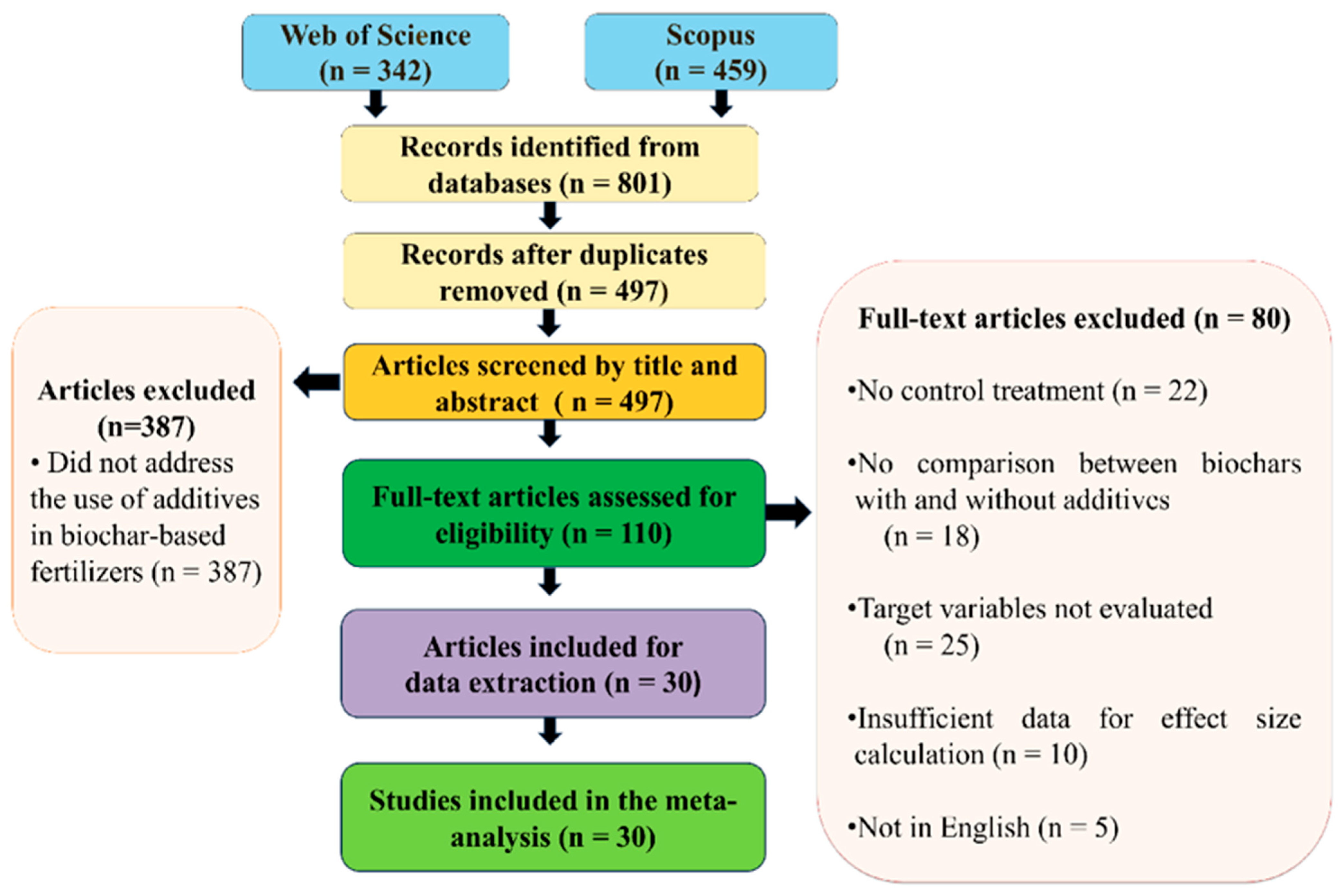
To obtain the data, the Web of Science (main collection) and Scopus databases were used. The following terms were used, limited to the fields “title”, “abstract”, and “keywords”: biochar-based OR BBF AND fertilizer OR biochar-compound OR additive. The results were filtered for documents of the type “article”, published up to 20 March 2025, resulting in 801 articles. After eliminating duplicate articles, 497 articles remained. The titles and abstracts of these publications were analyzed, and 387 publications that did not address the use of additives in BBFs were excluded. Subsequently, 80 publications were excluded after a full review of the texts, and 30 met the selection criteria (Figure 1). A summary of the studies included in the meta-analysis is presented in Table S1. The following criteria were adopted: (i) presence of a control treatment; (ii) English language; (iii) experimental design that included biochars with and without additives (biochar modifiers); (iv) evaluation of at least one of these characteristics: nutrient release in water or soil, nutrient leaching in the soil, and agronomic improvements. In this context, the inclusion of only 30 studies reflects the need for comparative experimental designs that evaluated biochars with additives alongside biochars without additives and their respective controls (with and without fertilization). This criterion was adopted as a mandatory requirement to ensure that the estimated effect sizes reflected the impact of the additives solely, thereby minimizing bias arising from uncontrolled experimental differences. This meta-analysis was conducted in accordance with the Preferred Reporting Items for Systematic Reviews and Meta-Analyses (PRISMA) guidelines including the recommended methodological steps and checklist items [34]. The review process comprised the stages of identification, screening, eligibility assessment, and inclusion, as summarized in Figure 1.

2.2. Data Collection

The data were organized according to the following experimental types: (i) nutrient release in water, (ii) nutrient release in soil, (iii) nutrient leaching in soil, and (iv) agronomic performance.
The articles included in this stage reported the methods used to quantify nutrient release or leaching under different extraction conditions. Given the methodological heterogeneity among the studies, data harmonization criteria were adopted to ensure comparability between the results. When articles reported data in different units of measurement, values were converted to the unit most frequently used within each analysis category, prioritizing the unit with the largest number of studies. In experiments with multiple evaluation times, only data from the longest reported experimental period were selected for each outcome variable (e.g., nutrient release, leaching, or agronomic parameters), because they better represent the cumulative effect of BBFs over time and avoid temporal pseudo-replication within the meta-analysis. Variations inherent to experimental methods were treated as part of the between-study variability and were statistically accounted for in the meta-analysis model.
For each experimental combination, nutrient concentrations released or leached were extracted for the BBF treatments and for the positive (with conventional fertilization) and negative (without fertilization) controls. This data collection considered various nutrients and their respective forms, in addition to N, P, and K, including specific forms of great agronomic relevance, such as ammonium (NH4+), nitrate (NO3), and available/extractable P, ensuring broad coverage of the nutritional dynamics. Additionally, the standard deviation, number of replicates, and coefficient of variation were recorded when available.
In total, 264 paired comparisons (treatment vs. control) were obtained, involving different types of biochar, nutrient sources, and experimental methodologies. These data enabled comparative analyses of the efficiency of BBFs in nutrient release and retention across different simulated environments. When a study included multiple treatments, each treatment–control combination was treated as an independent paired comparison when representing distinct experimental conditions, such as different additives, formulations, or experimental environments.
For the evaluation of agronomic improvement, 19 of the 30 articles were selected, resulting in 105 paired combinations. The variables analyzed included plant height, shoot dry biomass, root dry biomass, and grain yield.

2.3. Data Categorization and Subgroups

Additives were classified into five main categories, considering their origin and functional nature: (i) biotechnological, (ii) industrial, (iii) natural minerals, (iv) agricultural residues, and (v) urban waste. The biotechnological additive category included biological compounds, such as microbial inoculants (particularly Bacillus spp.) and other plant growth promoters. These additives are generally used to increase soil microbial activity or to impart bioactive properties to biochar. The industrial category encompasses additives derived from chemical processes or industrial synthesis, which are frequently used to enrich biochar with nutrients or modify its chemical properties. Examples of this category include iron oxide (Fe2O3), phosphoric acid (H3PO4), hydrotalcite, magnesium (Mg), monoammonium phosphate (MAP), ammonium molybdate, NPK fertilizers, and urea. Additives classified as natural minerals refer to ground geological materials, such as phosphate rock, used as sources of slow-release nutrients. Finally, the residues were subdivided into two groups: agricultural residues, such as bio-oils and biomass ash (e.g., sunflower straw ash), and urban residues, mainly represented by biogas sludge (digestate).
This categorization was the main subgrouping factor in the meta-analysis, as it is directly related to the study’s objective and represents a relevant source of heterogeneity. Other collected variables (soil properties, biochar raw material, pyrolysis parameters, experimental conditions) were not included in the statistical models.
Additionally, the compiled data were subjected to descriptive analysis to characterize the studies included in the meta-analysis with respect to the distribution of additive types, evaluated parameters, type of experiment, and climatic conditions.

2.4. Meta-Analysis

The compiled data were analyzed using OpenMEE software (Open Meta-Analysis for Ecology and Evolution, version 1.5.2, SPSS Inc., Chicago, IL, USA), developed by Wallace et al. [35], with support from the National Science Foundation. Initially, missing values (MV) were removed, and treatments were categorized by control type (“positive” and “negative”) and fertilizer (additivated and non-additivated biochar). The final spreadsheet was saved containing the means, standard deviations, and number of repetitions for each treatment.
The columns for means and deviations were identified as continuous variables, and the columns corresponding to the number of repetitions were defined as “count”. To quantify the effect of the treatments (additive-enhanced BBFs) relative to the control, the effect size (ES) was calculated as the ratio of means, and then transformed to the natural logarithm (ln), known as the log of the response ratio (lnRR).
The lnRR was used to compare the experimental (treatment) group with the control group, as shown in Equation (1):
l n R R = l n X _ T X _ C  
where XT and XC are means of the treatment (biochar + additive) and the control, respectively.
Values of lnRR > 0 indicate an increase in the variable due to treatment, lnRR < 0 indicates a reduction, and lnRR = 0 indicates no effect. A continuous random-effects model was used to account for heterogeneity across studies. This model incorporates not only the intrinsic variation of each study (sampling error) but also variation arising from methodological and experimental differences, such as cultivation conditions, biochar types, and additives used. The variance of heterogeneity (τ2) was estimated using the Sidik–Jonkman (SJ) method, recognized for its robustness in meta-analytic analyses with high variability between experiments [36].
Statistical significance was assessed using a 95% confidence interval (95% CI). The calculation of the confidence interval and the determination of the statistical significance of the mean effect were based on the standard normal distribution (Z-test), which is the reference distribution for large sample sizes and for weighted combinations of studies, as occurs in meta-analysis. Effects whose 95% CI did not include zero and whose respective 95% confidence intervals overlap showed no statistically significant difference between the additives. To facilitate the interpretation of the results, lnRR values were converted to percentage change (Pc) relative to the control, using Equation (2):
P c = e l n   R R   1   ×   100
This conversion was applied to both the mean effect estimate and the confidence interval limits. A subgroup analysis was performed to assess the effect of the additive’s origin. Funnel plots were generated to assess potential publication bias (Figure S1); however, their interpretation should be approached with caution because several subgroups have few studies and there is substantial heterogeneity among experiments. For some parameters (e.g., grain yield, root and shoot biomass, etc.), the analysis was restricted to categories with sufficient data, as detailed in the results section.

3. Results and Discussion

3.1. Descriptive Analysis of the Results

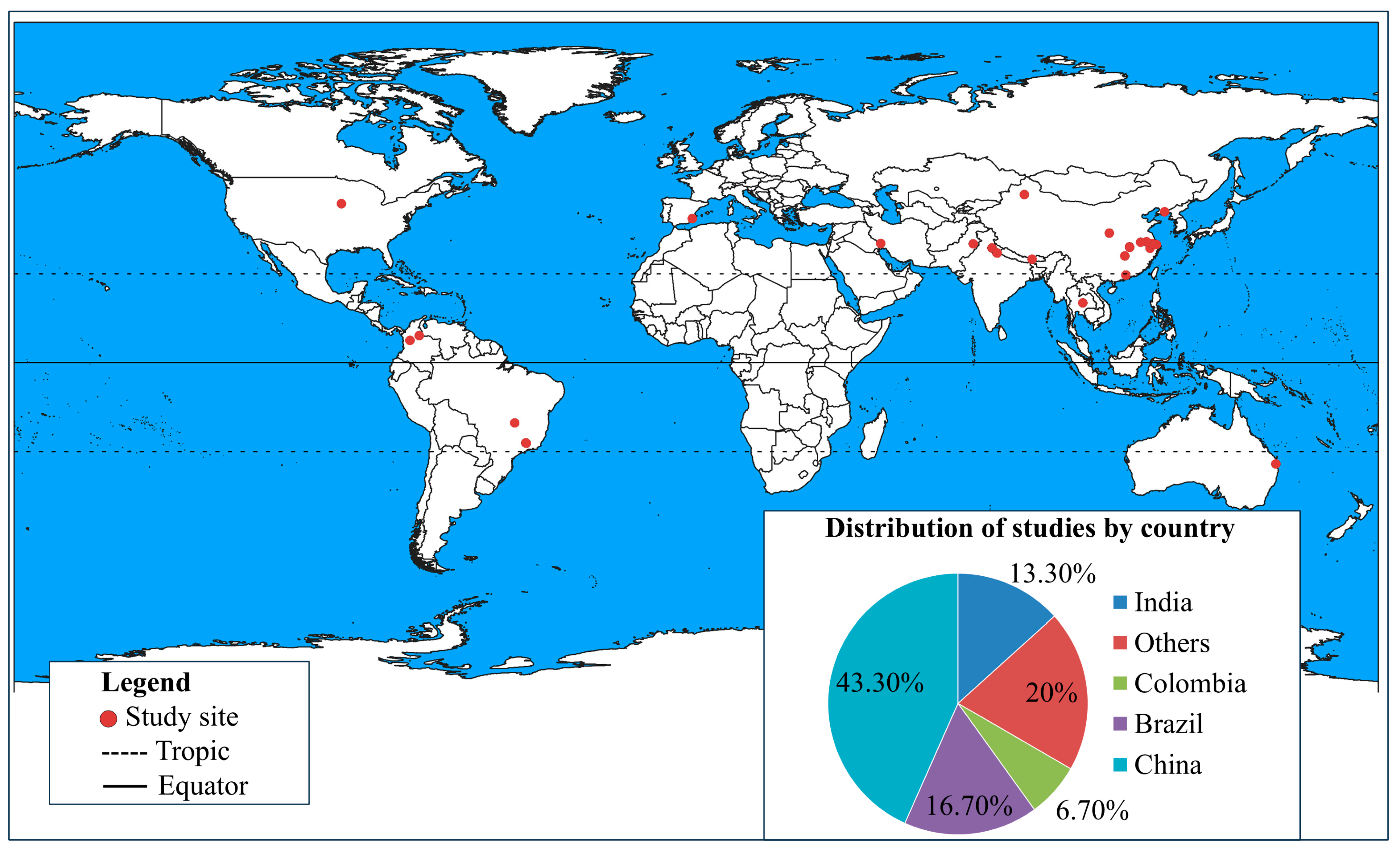
Of the 30 articles selected for this meta-analysis, 13 (43.3%) were conducted in China, highlighting the country’s leadership in research on additive-enhanced BBFs. Brazil ranks second, with five studies (16.7%), followed by India, with four (13.3%). Colombia contributed two studies (6.7%), while Australia, Spain, the United States, Iran, Pakistan, and Thailand each contributed one study (3.3% or 19.8% in total). This geographical distribution (Figure 2) reveals a concentration of research on this subject in a few countries, although the international diversity indicates a growing interest in the topic.
Most studies on nutrient release and leaching used biochars produced from agricultural waste (86.7%) and were predominantly conducted under temperate climate conditions (62.5%), in both laboratory (56.2%) and field (6.3%) experiments. The characterization of the studies included in this meta-analysis is presented in Table 1.
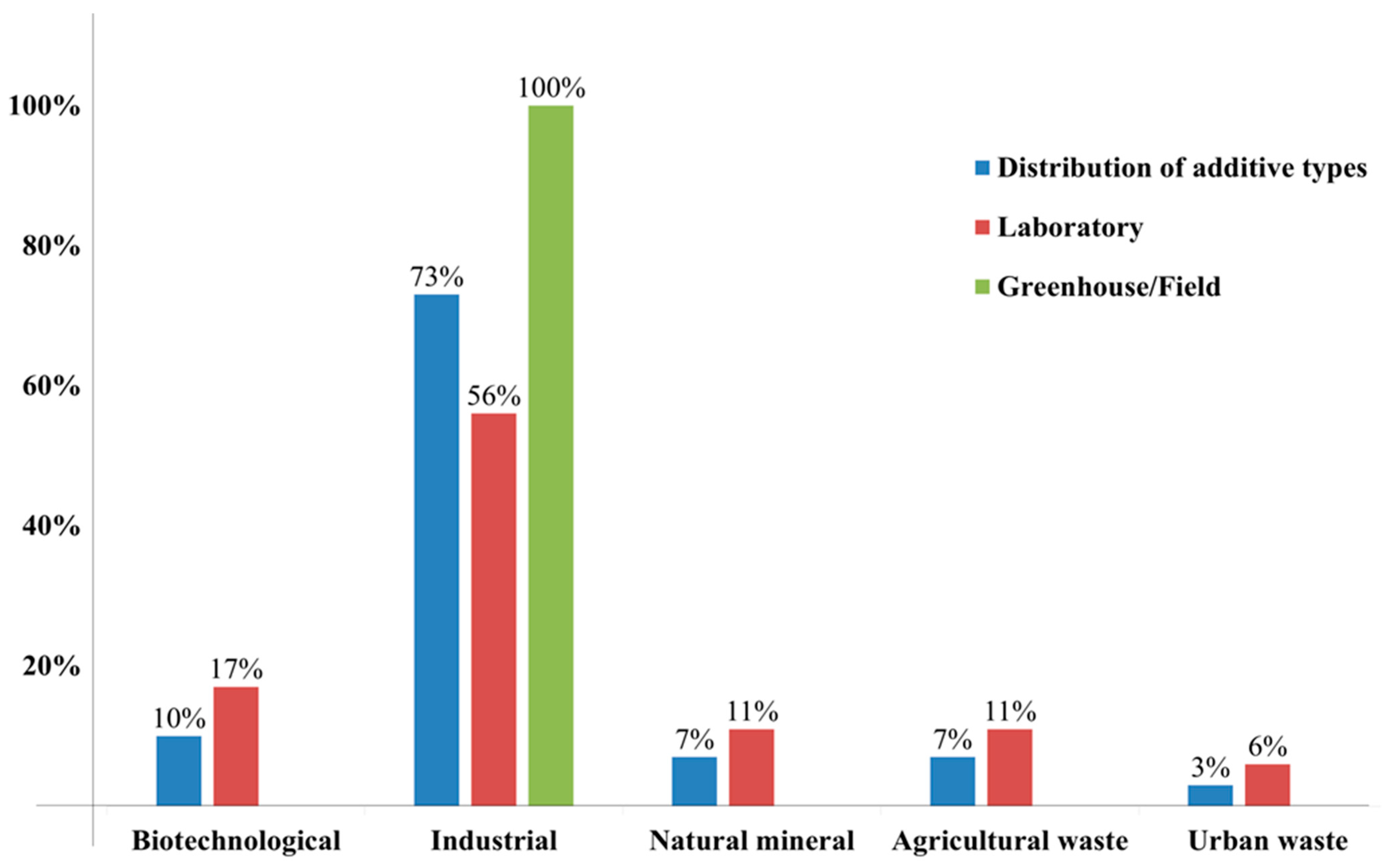
Analysis of the distribution of additive types used in BBFs reveals a strong predominance of industrial compounds, representing approximately 73% of the included studies (Figure 3). In contrast, natural mineral additives and those derived from agricultural residues each accounted for about 7% of studies, whereas biotechnological additives accounted for 10%, and urban waste had an even more limited share (3%). This pattern reveals a concentration in the literature on industrial formulations, with under-representation of other classes of additives.
When evaluated by the parameters, industrial additives predominate across nearly all categories, accounting for approximately 67% of studies on nutrient release in water, 71% of studies on leaching in soil, and 43% of evaluations of nutrient release in soil. In terms of agronomic parameters, this dominance is even more pronounced, with industrial additives accounting for approximately 78% of studies on aboveground biomass, 67% of evaluations of root biomass, and 100% of studies on grain productivity.
The contributions of natural and biotechnological mineral additives focus on specific parameters, such as nutrient release in the soil and plant height, whereas additives derived from agricultural and urban waste are less well explored and are limited to a small number of parameters.
The distribution of additive types by experiment type reinforces this pattern (Figure 3). In laboratory studies, industrial additives account for approximately 56% of the investigations, followed by 17% for biotechnological additives, 11% each for natural minerals and agricultural residues. In contrast, experiments conducted under greenhouse and field conditions focus exclusively on additives derived from urban waste (100%), highlighting a strong limitation in the diversity of additives evaluated under conditions closer to agronomic reality.

3.2. Dynamics of Nutrient Release from BBFs Enriched with Additives in Water and Soil

Although various nutrients and their respective chemical forms were considered during data collection (e.g., N, P, K, NH4+, NO3, and available/extractable P), a subgroup analysis based on the type of nutrient released was not performed. This methodological decision was due to the high heterogeneity among studies in the nutrients evaluated, the chemical forms measured, and the analytical methods employed, which would result in very small, statistically weak subgroups. Additionally, the limited number of studies available for several nutrient-specific combinations reduced the feasibility of conducting statistically robust subgroup analyses. Therefore, an integrated analysis was used to evaluate the overall effects of additive-enhanced BBFs on nutrient release dynamics in water and soil while minimizing biases arising from overly fragmented datasets.
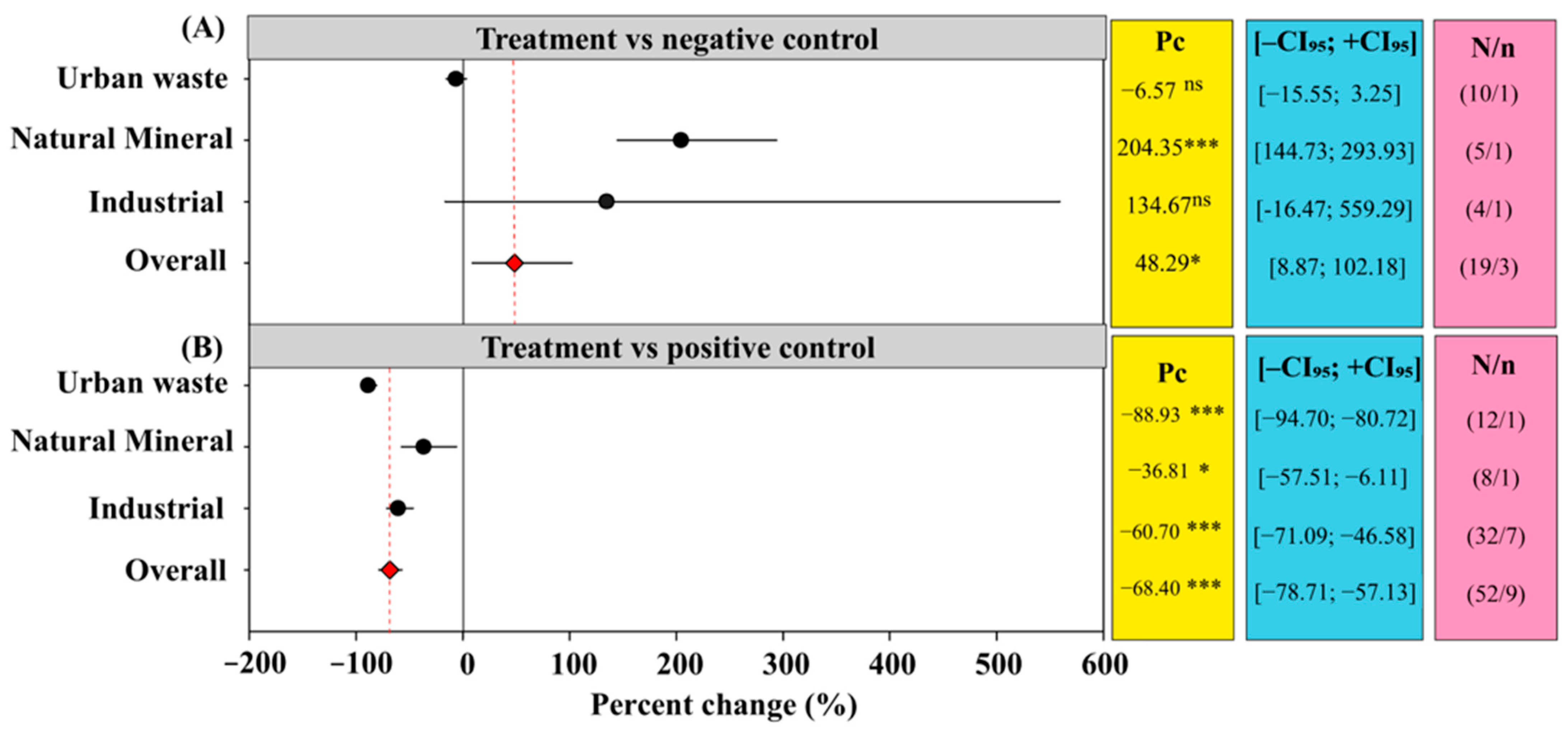
The overall analysis of the studies indicated an average 48.2% increase in nutrient release in water when using additive-enhanced BBFs, compared to the negative control without fertilization (p < 0.05). Among them, BBFs with natural mineral additives increased nutrient release in water compared to the unfertilized control (p < 0.001; Figure 4A), with an average increase of 204.3%, as reported by Moraes et al. [30]. However, this observation is based on a single study (n = 1) and should be interpreted with caution, as the limited number of studies precludes broader extrapolation of the observed effect. Thus, more studies are needed to confirm the magnitude and consistency of this result. The results indicate that mineral additives act as catalysts for nutrient solubilization, potentially facilitating initial plant absorption [29]. This behavior may be linked to the higher reactivity and partial dissolution of mineral phases when incorporated into the porous biochar matrix, which can temporarily increase nutrient diffusion into the aqueous medium through enhanced surface interactions and ion exchange [37,38]. However, the same mechanism that enhances nutrient release in water does not necessarily translate into greater agronomic efficiency in soil systems, where sorption reactions, microbial interactions, and soil buffering capacity strongly regulate nutrient availability [39]. In contrast, industrial additives and agricultural residues did not affect nutrient release from BBFs (p > 0.05).
On the other hand, compared to the fertilized control (conventional fast-release fertilizer), all additive-enhanced BBFs slowed nutrient release throughout the experimental evaluation periods (Figure 4B) with an average reduction of 68.4% (p < 0.001). Slow nutrient release is a desirable characteristic for sustainable fertilizers, as it increases plant use efficiency and reduces losses due to leaching and volatilization. This gradual nutrient supply may improve the synchronization between nutrient availability and plant demand, particularly under conditions that favor nutrient losses, such as sandy soils and high rainfall intensity [40,41]. When stratified by additive type, those derived from urban waste showed the largest average reduction (−88.9%), followed by industrial additives (−60.7%) and natural minerals (−36.8%), with no significant difference between the latter two. Despite this, the limited number of studies on urban waste and natural minerals should be highlighted.
Studies indicate that BBFs with added industrial compounds release N and P more slowly than conventional fertilizers. In particular, Luo et al. [42] demonstrated that these materials can release N and P up to seven times more slowly than fast-release fertilizers. Similarly, other studies highlight the potential of fertilizers with added compounds as controlled-release sources, associated with reduced leaching and greater nutrient use efficiency, although the magnitude of effect varies [30,43,44,45].
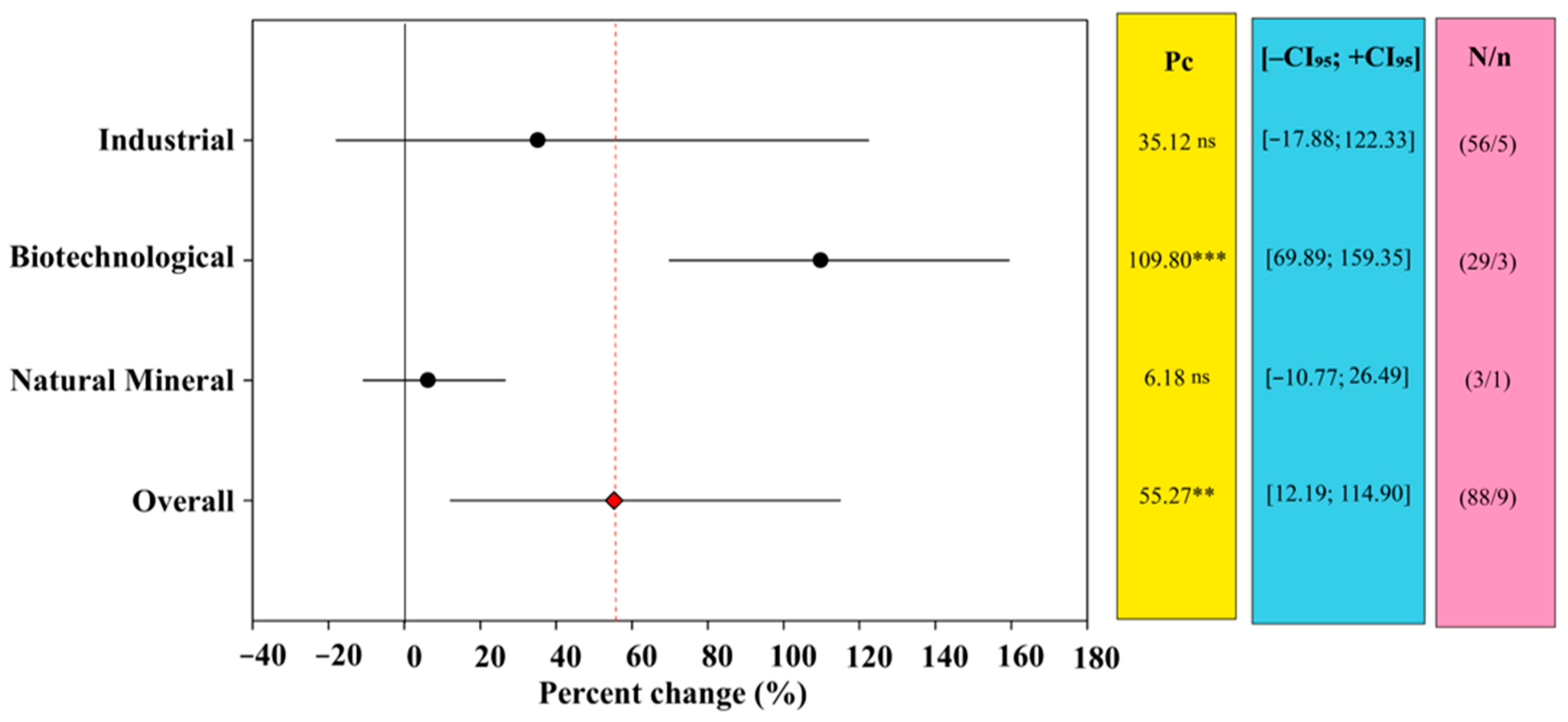
In the soil, biochar-enriched fertilizers showed superior nutrient release compared with the unfertilized control, with an average increase of 55.3% (p < 0.01; Figure 5). Among the groups evaluated, fertilizers formulated with biotechnological additives promoted a 109.8% increase in nutrient release (p < 0.001). This performance can be attributed to microbial activity and intensified soil enzymatic activity, which favor mineralization and nutrient availability. Wang et al. [39] demonstrated that microbial fertilizers based on biochar promoted the slow release of N and P through increased cation exchange capacity and increased activity of enzymes associated with the C, N, and P cycles, such as β-glucosidase, urease, and alkaline phosphatase. These effects resulted in improved soil fertility and a reorganization of the microbial community structure, with a greater abundance of microorganisms functionally linked to C and N metabolism.
Due to high variability across studies, industrial additives did not significantly increase nutrient release in the soil (p > 0.05). For natural mineral additives, the only study available in the meta-analysis (n = 1), conducted by Leite et al. [29], did not indicate an average increase in nutrient release in the soil compared to the control. This result may be associated with the intrinsic characteristics of many natural mineral additives, especially phosphate rocks, which have low initial solubility. Even when incorporated into biochar, nutrient availability often depends on slow processes, such as microbial acidification, organic acid production, and biogeochemical transformations, which may take days or weeks to manifest [29]. Thus, in short incubation periods, these additives may favor nutrient retention in the soil without necessarily promoting their immediate release.
In contrast, comparisons with conventionally fertilized controls showed no significant differences in nutrient release from additive-enhanced BBFs in soil (Figure S2). This result suggests that, under the evaluated conditions, additive-enhanced BBFs released nutrients in soil similarly to conventional fertilization.

3.3. Dynamics of Nutrient Leaching from BBF Enriched with Additives in the Soil

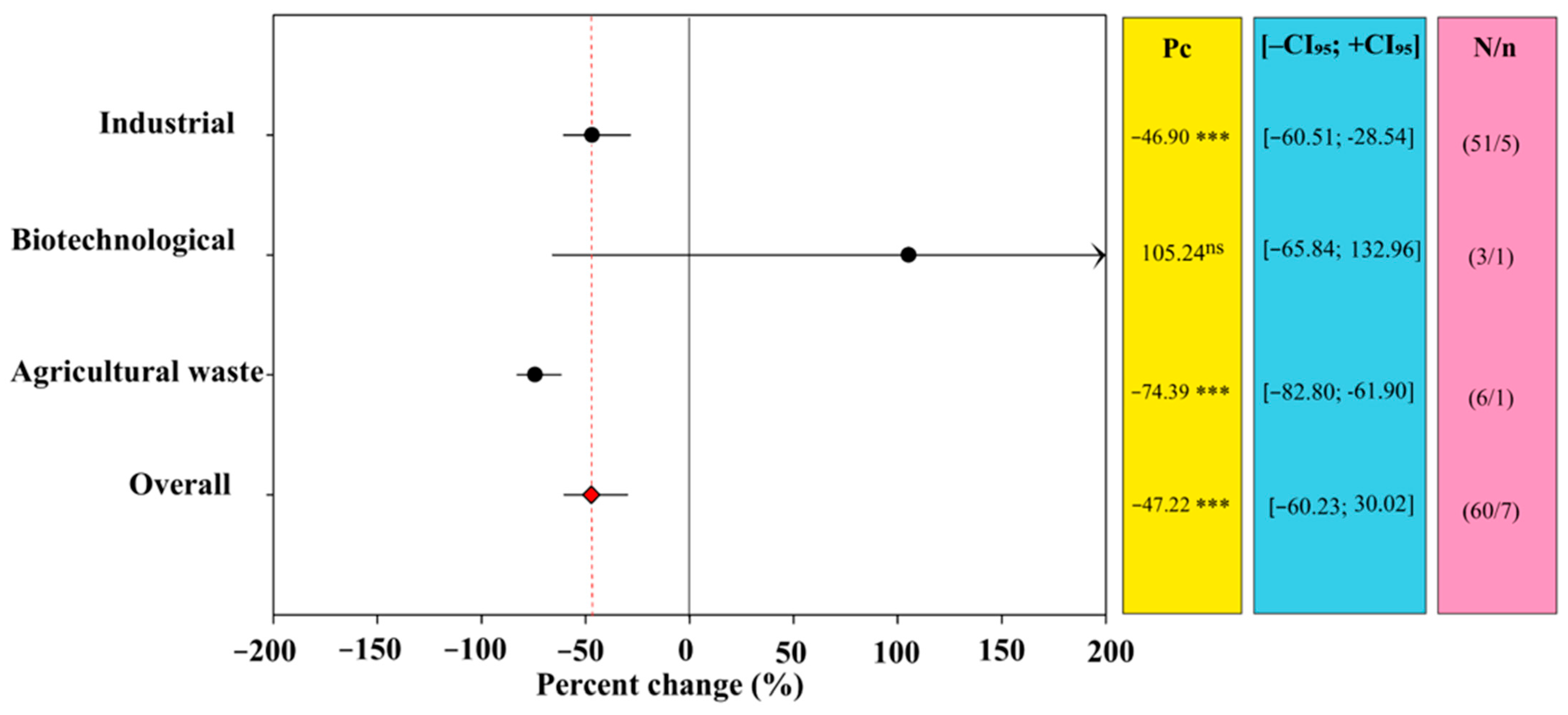
The additives influenced nutrient leaching in the soil differently compared to release into water, as shown in the previous section. In the soil, they reduced nutrient losses from the BBFs compared with conventional fertilizer, with an average 47.2% reduction in leaching (p < 0.001; Figure 6). This effect can be attributed to greater nutrient retention in the soil matrix, reducing their mobility to deeper layers and, consequently, the risk of groundwater contamination and eutrophication of surface water bodies.
These results reinforce the potential of additive-enhanced biochar formulations to mitigate nutrient losses and minimize environmental impacts associated with leaching, an effect that has also been reported in studies evaluating adsorbent materials and soil conditioners, even when not specifically associated with biochar. This capacity of biochar is closely related to its physicochemical characteristics, including high cation exchange capacity, porous structure, large surface area, alkaline pH, and oxygen-containing functional groups (e.g., carboxylic and phenolic groups), which provide numerous adsorption sites for nutrients while also enhancing soil water retention and reducing percolation through the soil profile [46,47]. Studies demonstrate that applying biochar improves nutrient retention and reduces N and P leaching in the soil, decreasing the potential for contaminating groundwater and surface water. For example, Kuo et al. [48] observed that the application of biochar reduced NH4+ and P leaching in sandy soils, increasing nutrient and organic matter retention in the soil profile.
Among additive types, agricultural additives were the most effective, reducing leaching by 74.4% (p < 0.05), followed by industrial additives, which reduced leaching by 46.9% (p < 0.05). Biotechnological additives did not show significant results. This lower mobility of nutrients in the soil is agronomically desirable, as it increases their availability to plants and minimizes losses due to runoff or percolation.
Similar results were reported by Li et al. [44], who demonstrated that a modified BBF with Mg, enriched with struvite, reduced ammonium (NH4+) and phosphate (PO43−) leaching rates by up to 3.62 times, due to the formation of a dense physical antioxidant barrier on the biochar surface. Tan et al. [43] also observed positive effects from the use of rice husk biochar enriched with NPK, achieving reductions in N and K losses (12.0% and 13.9%, respectively), in contrast to 42.3% and 51.3% recorded with conventional fertilizer.

3.4. Effects of Biochar-Based Fertilizer with Additives on Plant Biometrics

3.4.1. Plant Height

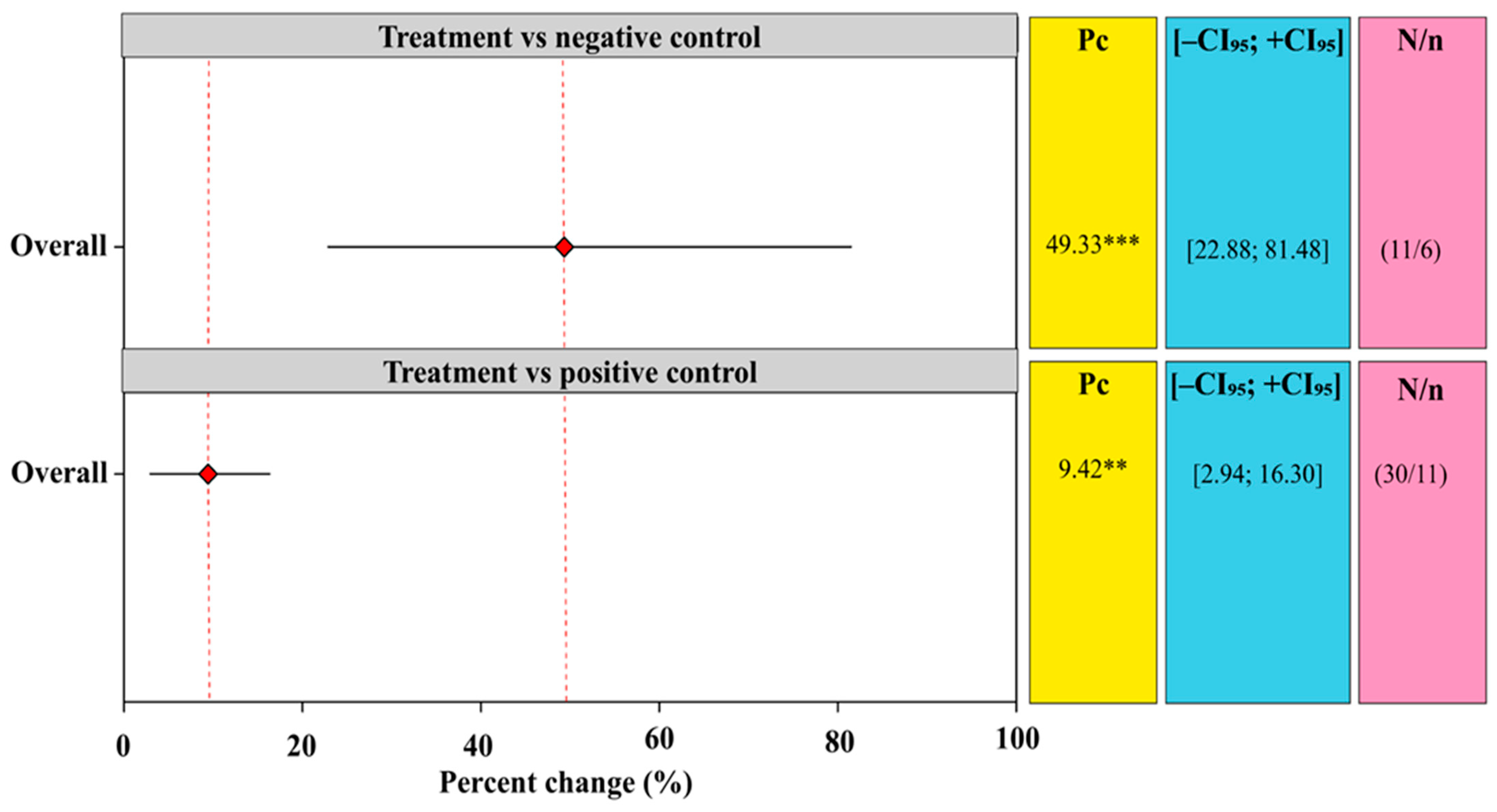
Compared to the negative control (no fertilization), additive-enhanced BBFs resulted in an average increase of 49.3% in plant height (p < 0.001; Figure 7). This effect was observed across different additive classes, indicating consistent positive responses in plant height relative to unfertilized soil.
These results are consistent with recent studies: Li et al. [44] observed a significant stimulus in the growth of Brassica rapa subsp. chinensis using functionalized biochar fertilizer enriched with Mg and struvite; Nayak et al. [49] reported greater plant height and rice productivity with slow-release fertilizers based on biochar enriched with urea. Morais and Silva [30] found improved corn growth with NPK fertilizers based on biochar formulated with acidulated apatite.
Most studies included in this comparison used industrial additives, suggesting that combining biochar with mineral inputs may be particularly effective in promoting plant growth. However, the variation in performance across additive types underscores the importance of accounting for experimental and environmental factors when evaluating such treatments. Compared to the positive control (conventional fertilizers), treatments with biochar-based additives showed an average increase of 9.4% in plant height (p < 0.01; Figure 7), indicating superior overall performance. Similar results have been reported in the literature, which attribute this performance to greater nutrient retention and the gradual release of N, P, and K promoted by biochar [30,44].
The results of the present study reinforce previous findings that biochar with additives is promising for improving initial plant nutrition and vegetative architecture [30,44,49]. However, the variability across additive types and cultivation contexts indicates that long-term studies under field conditions are essential to confirm the agronomic effectiveness of BBFs [43].

3.4.2. Aboveground Biomass of Plants

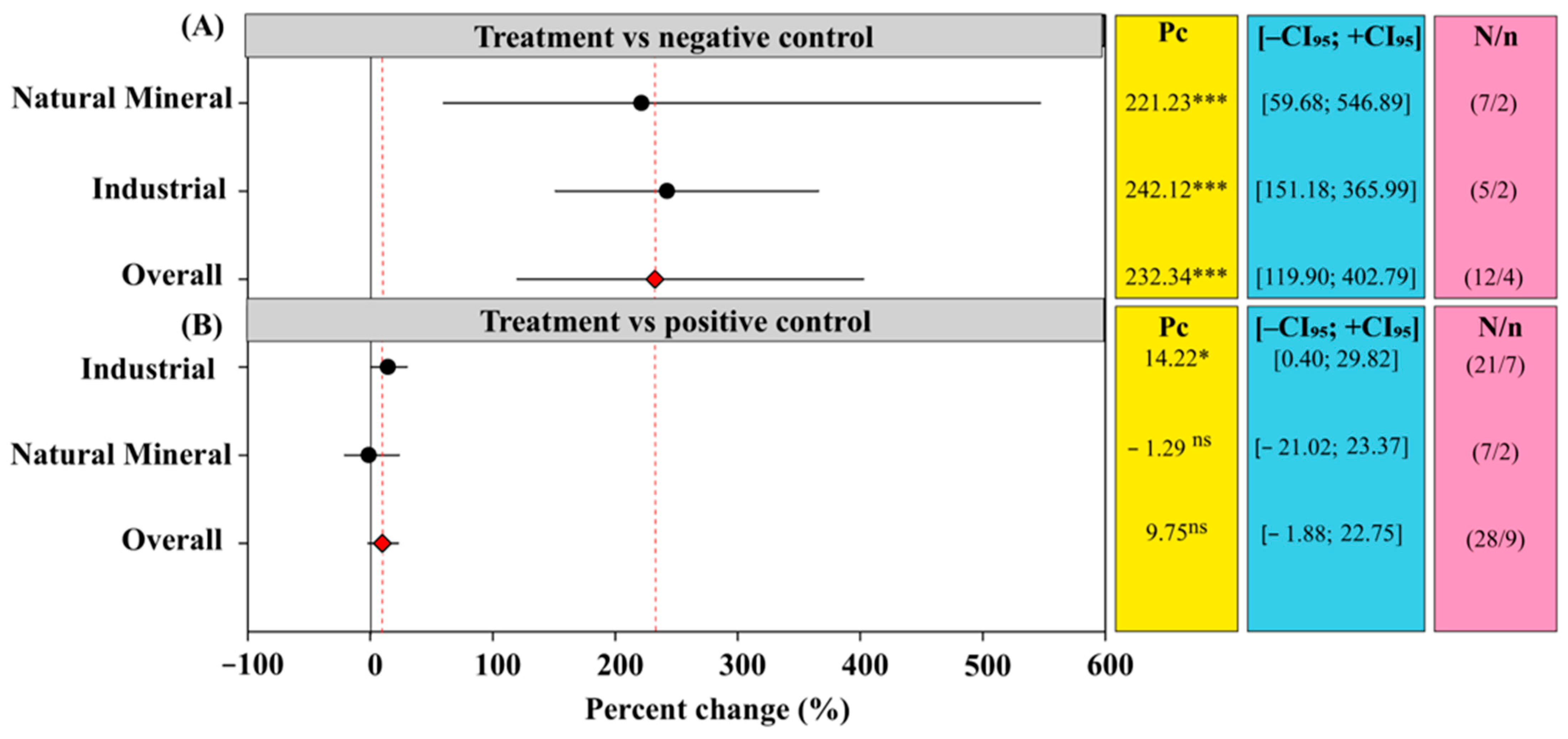
Biochar-based fertilizers with additives also increased aboveground plant biomass. The additive-enhanced fertilizers resulted in an average 232.3% increase in biomass compared to the unfertilized control (p < 0.001; Figure 8A). The most significant effects were observed with additives of industrial origin (+242.1%) and natural mineral origin (+221.2%), both significantly higher than the control. These results refer exclusively to these two types of additives, the only ones represented in the primary data included in the analysis. In both cases, a significant increase in aboveground biomass was observed, indicating a high potential to promote plant growth.
Compared with the positive control (NPK fertilizer), the increases were generally not statistically significant (Figure 8B). BBFs with industrial additives resulted in an average increase of 14.2% in plant biomass (p < 0.05), while those with mineral additives showed no significant difference compared to conventional fertilizer.
More relevant than the increase observed in relation to the negative control (without fertilization), the results indicate that the fortified BBFs performed similarly to the positive control, highlighting their potential as a viable alternative for reducing or partially replacing conventional mineral fertilization in plant growth. Similar results were reported by Fachini et al. [24], who observed a 150% increase in radish dry biomass with sewage sludge BBFs enriched with KCl, demonstrating the positive effect of industrial additives to complete the nutritional composition of BBFs. Similarly, Morais and Silva [30] verified a significant increase in corn biomass with BBFs enriched with acidulated apatite, reinforcing the potential of natural mineral additives to promote greater plant biomass accumulation. Furthermore, Roy et al. [50] reported substantial increases in biomass and nutrient use efficiency in rice grown with biochar enriched with NPK and industrial organic extracts, corroborating the positive effects observed in this study. Complementarily, Lustosa Filho et al. [51] demonstrated that biochars enriched with P and Mg showed shoot dry matter production in corn equivalent to that of triple superphosphate (TSP), in addition to greater P retention in the granule verified after cultivation (≈40% more than TSP), favoring its gradual release and residual availability in the soil over time.
Gains exceeding 200% with industrial and mineral additives, compared with the negative control (unfertilized soil), suggest that the combination of nutrient availability and the retention and gradual-release capacity of biochar creates a synergistic effect favorable to plant development. Thus, these formulations represent viable alternatives for reducing dependence on synthetic mineral inputs and thereby contributing to more sustainable agricultural systems. Despite the demonstrated potential, the limited number of studies on this topic reveals a knowledge gap that represents a significant opportunity for future research.

3.4.3. Plant Root Biomass

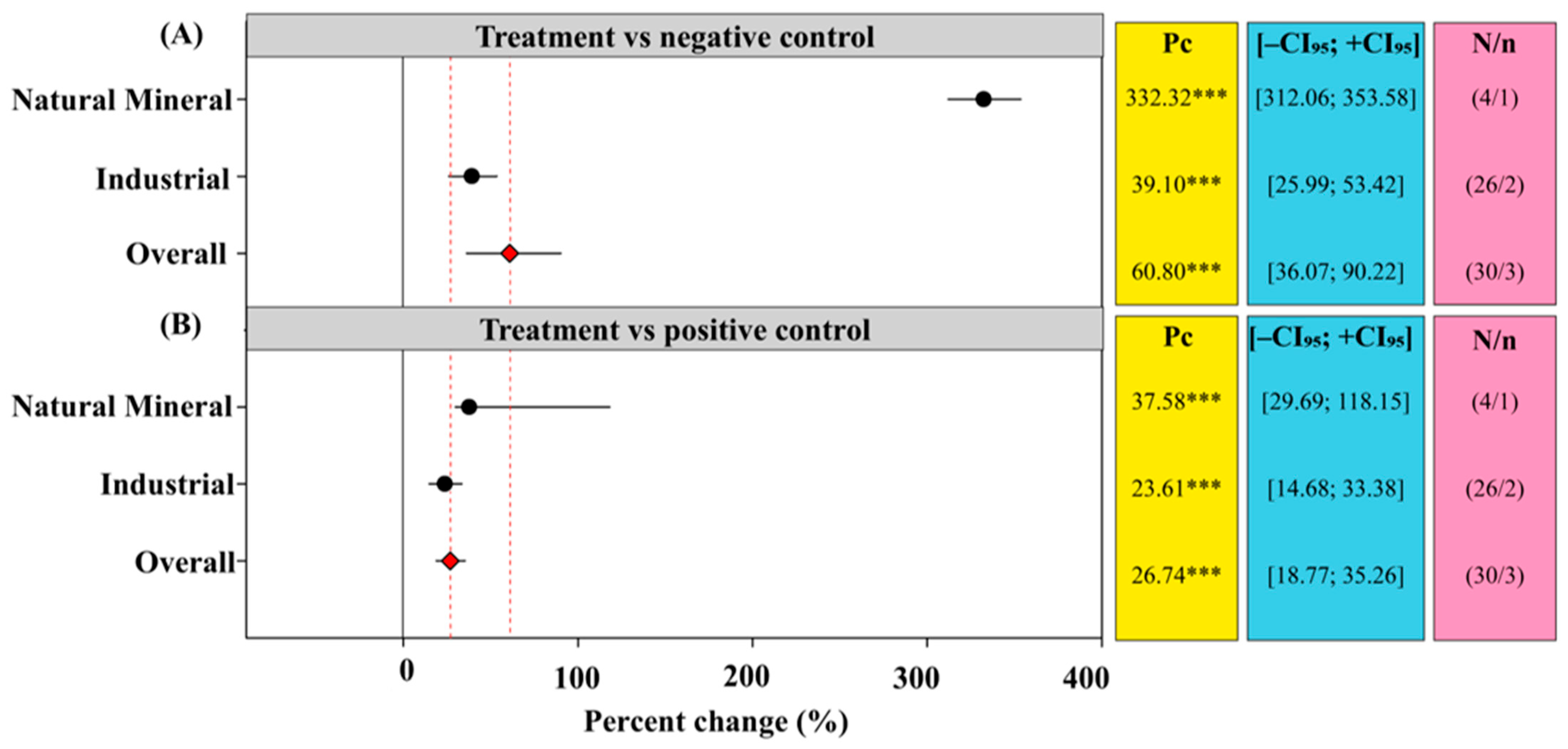
Compared with the negative control (unfertilized soil), biochars with additives increased root biomass by an average of 60.8% (p < 0.001). Despite the limited number of studies, the largest effect was observed with mineral additives, which showed a 332.3% increase (p < 0.001), followed by industrial additives, with a 39.1% increase (p < 0.001; Figure 9). Similar results have been reported in other systems, such as the increase in root biomass and nutrient accumulation in Citrus reticulata seedlings treated with MgO-enriched biochar [31], and the significant increase in tomato root biomass with BBFs containing hydrotalcite and starch [52], corroborating the positive effect of mineral and industrial additives on root growth.
Compared with the positive control (NPK fertilizer), the added BBFs also showed positive effects, with average increases in root biomass of 37.6% for mineral additives, 23.6% for industrial additives, and an overall gain of 26.7% (p < 0.001; Figure 9). These results are consistent with Luo et al. [42], who reported increased root biomass and greater nutrient-use efficiency in corn grown with biochar enriched with MgCl2, attributing this effect to the gradual release of N and P from the mineral additives.
The findings indicate that, in addition to overcoming the absence of fertilization, fortified biochemical fertilizers (BCFs), a type o BBF, offer advantages over conventional fertilizers, especially in stimulating root growth. The superior performance of mineral additives suggests that the synergy between high nutrient availability and reduced leaching losses (as shown in Section 3.3) enhances root biomass accumulation [31,42]. Thus, the addition of BCFs not only improves shoot growth but also strengthens the root system, thereby increasing plant resilience, water and nutrient uptake, tolerance to biotic and abiotic stresses, and interactions with beneficial rhizospheric microorganisms [53,54]. In addition, enhanced root development may have long-term implications beyond immediate biomass accumulation, including greater soil exploration capacity, improved drought tolerance, and increased nutrient-use efficiency. These effects are particularly relevant in low-fertility tropical soils, where root architecture strongly influences crop performance [55].

3.4.4. Grain Yield

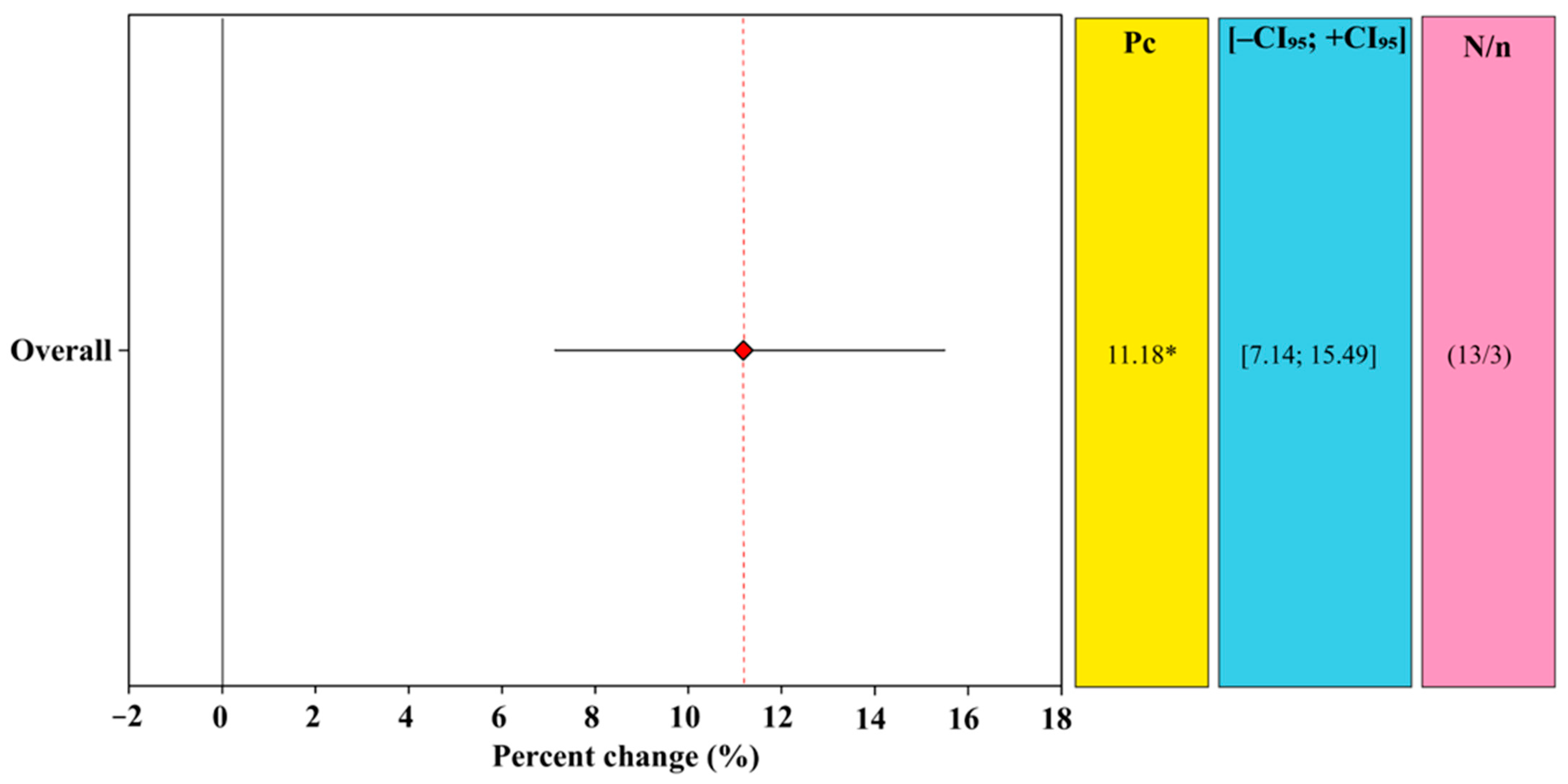
Compared with conventional fertilizers (positive control), BBFs with industrial additives increased grain productivity by an average of 11.2% (p < 0.05; Figure 10). This meta-subgroup analysis was limited to fertilizers containing industrial compounds because insufficient primary data were available to conduct a statistically robust evaluation of the other additive categories.
The observed positive effect is consistent with recent evidence highlighting the role of industrial additives in the agronomic efficiency of biochar-urea fertilizers. Nayak et al. [49], a study included in this meta-analysis, attributed the increase in rice productivity obtained with slow-release biochar-urea fertilizers supplemented with paraffin and natural gum to a greater synchrony between the controlled release of N and the crop’s demand.
Although not included in the meta-analysis presented in Figure 10, Knijnenburg et al. [56] observed that co-pyrolysis of biomass with P and Mg increased the retention and availability of P in slow-release forms, reducing losses. Melo et al. [26] reported productivity increases close to 10% with the use of BBFs, while Carneiro et al. [45] demonstrated greater efficiency in P use and a positive residual effect in subsequent crops with BBFs enriched with H3PO4 and MgO, compared to conventional fertilizer, corroborating the magnitude of the observed effect.
Therefore, the evidence from this meta-analysis, together with recent literature, indicates that adding BBFs may be a promising strategy for increasing grain productivity. However, this result should be interpreted with caution, as grain productivity is among the least evaluated biometric parameters in available studies, as reflected by the limited number of studies (n = 3). The limited number of grain yield studies contrasts with the large number of laboratory-based nutrient release experiments reported in the literature. This imbalance indicates that BBFs research remains predominantly focused on mechanistic evaluations, whereas evidence under realistic agronomic conditions remains scarce.
Nevertheless, available data indicate an increase in productivity compared to conventional fertilization, possibly associated with improved nutrient-use efficiency, controlled-release technology, and a lower risk of losses. In this context, additive-enhanced bioactive compounds stand out as potential alternatives to conventional fertilizers, combining agronomic performance and a more sustainable nutrient dynamic. However, confirmation of this effect requires a more robust set of primary studies, especially in different crops, edaphoclimatic conditions, and additive formulations.

4. Conclusions

The results of this meta-analysis suggest that additive-enhanced biochar-based fertilizers (BBFs) are an effective alternative to conventional fertilizers. Overall, BBF performance varies by additive type. Compared with the unfertilized control, BBFs enhanced with natural mineral additives showed the greatest observed effect on nutrient release into water, and those enriched with biotechnological additives were associated with an average 109.8% increase in nutrient release in soil. Furthermore, BBFs enhanced with agricultural and industrial additives reduced nutrient losses through leaching by up to 74.4%. In the agronomic context, additive-enhanced BBFs resulted in significant increases of 49.3% in plant height, 232.3% in aboveground biomass, 60.8% in root biomass, and 11.2% in grain yield, compared with unfertilized soil. Overall, the findings suggest that additive-enhanced BBFs show promising agronomic and environmental performance relative to the evaluated controls, contributing to the advancement of low-impact agricultural systems and greater nutrient circularity. Despite the great potential of BBFs, the number of studies remains limited, and the conclusions of this study should be interpreted with caution. Finally, it is recommended that future research prioritize: (i) long-term studies under real field conditions, specifically in tropical regions; (ii) investigation of the interactions among biochar, additives, and soil microbiota; and (iii) economic feasibility analysis for different formulations, aiming to guide the development of products optimized for specific cultivation contexts.

Supplementary Materials

The following supporting information can be downloaded at: https://www.mdpi.com/article/10.3390/agriculture16111147/s1, Table S1. Summary of the studies included in the meta-analysis [24,29,30,31,33,39,42,43,44,45,49,50,52,56,57,58,59,60,61,62,63,64,65,66,67,68,69,70,71,72]; Figure S1. Funnel plots assessing potential publication bias in the meta-analysis datasets. (A) Nutrient release and leaching under the negative control; (B) Nutrient release and leaching under the positive control; (C) Plant biometrics under the negative control; and (D) Plant biometrics under the positive control.; Figure S2. Percentage change (Pc) in nutrient leaching for additive-enhanced BBFs compared to the positive control (conventional fertilization). Parameters include 95% confidence intervals (95% CI), number of pairwise comparisons (N), and number of studies (n), while non-significant changes are labeled as “ns”. PRISMA Checklist.

Author Contributions

Conceptualization, J.d.L.C. and C.C.d.F.; methodology, J.d.L.C., R.d.S.R.V. and C.C.d.F.; software, J.d.L.C.; formal analysis, J.d.L.C., R.d.S.R.V., J.K.M.C., J.F.L.F. and C.C.d.F.; investigation, J.d.L.C. and C.C.d.F.; resources, J.d.L.C. and C.C.d.F.; writing—original draft preparation, J.d.L.C., R.d.S.R.V., J.K.M.C., J.F.L.F. and C.C.d.F.; writing—review and editing, J.d.L.C., R.d.S.R.V., J.K.M.C., J.F.L.F. and C.C.d.F. All authors have read and agreed to the published version of the manuscript.

Funding

We acknowledge the Conselho Nacional de Desenvolvimento Científico e Tecnológico (CNPq) for the scientific productivity fellowship granted to C.C.d.F (Grant number 305176/2023-4).

Institutional Review Board Statement

Not applicable.

Data Availability Statement

Data are contained within the article.

Conflicts of Interest

The authors declare no conflicts of interest.

References

  1. van Dijk, M.; Morley, T.; Rau, M.L.; Saghai, Y. A Meta-Analysis of Projected Global Food Demand and Population at Risk of Hunger for the Period 2010–2050. Nat. Food 2021, 2, 494–501. [Google Scholar] [CrossRef] [Scilit] [PubMed]
  2. IPCC. Agriculture, Forestry and Other Land Uses (AFOLU). In Climate Change 2022: Mitigation of Climate Change; Cambridge University Press: Cambridge, UK, 2022. [Google Scholar]
  3. FAO—Food and Agriculture Organization of the United Nations. The State of Food and Agriculture 2023: Revealing the True Cost of Food to Transform Agrifood Systems; FAO: Rome, Italy, 2023. [Google Scholar]
  4. Lun, F.; Liu, J.; Ciais, P.; Nesme, T.; Chang, J.; Wang, R.; Goll, D.; Sardans, J.; Peñuelas, J.; Obersteiner, M. Global and Regional Phosphorus Budgets in Agricultural Systems and Their Implications for Phosphorus-Use Efficiency. Earth Syst. Sci. Data 2018, 10, 1–18. [Google Scholar] [CrossRef] [Scilit]
  5. Roy, R.N.; Finck, A.; Blair, G.; Tandon, H. Plant Nutrition for Food Security: A Guide for Integrated Nutrient Management; FAO Fertilizer and Plant Nutrition Bulletin, 16; FAO: Rome, Italy, 2006. [Google Scholar]
  6. You, L.; Ros, G.H.; Chen, Y.; Shao, Q.; Young, M.D.; Zhang, F.; de Vries, W. Global Mean Nitrogen Recovery Efficiency in Croplands Can Be Enhanced by Optimal Nutrient, Crop and Soil Management Practices. Nat. Commun. 2023, 14, 5747. [Google Scholar] [CrossRef] [Scilit] [PubMed]
  7. Cassim, B.M.A.R.; Lisboa, I.P.; Besen, M.R.; Otto, R.; Cantarella, H.; Inoue, T.T.; Batista, M.A. Nitrogen: From Discovery, Plant Assimilation, Sustainable Usage to Current Enhanced Efficiency Fertilizers Technologies—A Review. Rev. Bras. Ciênc. Solo 2024, 48, e0230037. [Google Scholar] [CrossRef] [Scilit]
  8. IPCC. Climate Change 2021: The Physical Science Basis; Cambridge University Press: Cambridge, UK, 2021. [Google Scholar]
  9. Mcintyre, H.; Li, S. From Waste to Resource: Evaluating the Impact of Biosolid-Derived Biochar on Agriculture and the Environment. Biomass 2024, 4, 809–825. [Google Scholar] [CrossRef] [Scilit]
  10. Waheed, A.; Xu, H.; Qiao, X.; Aili, A.; Yiremaikebayi, Y.; Haitao, D.; Muhammad, M. Biochar in Sustainable Agriculture and Climate Mitigation: Mechanisms, Challenges, and Applications in the Circular Bioeconomy. Biomass Bioenergy 2025, 193, 107531. [Google Scholar] [CrossRef] [Scilit]
  11. Lehmann, J.; Joseph, S. Biochar for Environmental Management, 3rd ed.; Routledge: London, UK, 2024. [Google Scholar]
  12. Sohi, S.P.; Krull, E.; Lopez-Capel, E.; Bol, R. A Review of Biochar and Its Use and Function in Soil. Adv. Agron. 2010, 105, 47–82. [Google Scholar]
  13. Li, S.; Tasnady, D. Biochar for Soil Carbon Sequestration: Current Knowledge, Mechanisms, and Future Perspectives. C-J. Carbon Res. 2023, 9, 67. [Google Scholar] [CrossRef] [Scilit]
  14. Tan, S.; Narayanan, M.; Thu Huong, D.T.; Ito, N.; Unpaprom, Y.; Pugazhendhi, A.; Lan Chi, N.T.; Liu, J. A Perspective on the Interaction between Biochar and Soil Microbes: A Way to Regain Soil Eminence. Environ. Res. 2022, 214, 113832. [Google Scholar] [CrossRef] [Scilit] [PubMed]
  15. Zhang, L.; Jing, Y.; Xiang, Y.; Zhang, R.; Lu, H. Responses of Soil Microbial Community Structure Changes and Activities to Biochar Addition: A Meta-Analysis. Sci. Total Environ. 2018, 643, 926–935. [Google Scholar] [CrossRef] [Scilit]
  16. Lustosa Filho, J.F.; da Silva, A.P.F.; Costa, S.T.; Gomes, H.T.; de Figueiredo, T.; Hernández, Z. Biochars Derived from Olive Mill Byproducts: Typology, Characterization, and Eco-Efficient Application in Agriculture—A Systematic Review. Sustainability 2024, 16, 5004. [Google Scholar] [CrossRef] [Scilit]
  17. Manyà, J.J. Pyrolysis for Biochar Purposes: A Review to Establish Current Knowledge Gaps and Research Needs. Environ. Sci. Technol. 2012, 46, 7939–7954. [Google Scholar] [CrossRef] [Scilit] [PubMed]
  18. Yadav, S.P.S.; Bhandari, S.; Bhatta, D.; Poudel, A.; Bhattarai, S.; Yadav, P.; Ghimire, N.; Paudel, P.; Paudel, P.; Shrestha, J.; et al. Biochar Application: A Sustainable Approach to Improve Soil Health. J. Agric. Food Res. 2023, 11, 100498. [Google Scholar] [CrossRef] [Scilit]
  19. Li, S.; Harris, S.; Anandhi, A.; Chen, G. Predicting Biochar Properties and Functions Based on Feedstock and Pyrolysis Temperature: A Review and Data Syntheses. J. Clean. Prod. 2019, 215, 890–902. [Google Scholar] [CrossRef] [Scilit]
  20. Pariyar, P.; Kumari, K.; Jain, M.K.; Jadhao, P.S. Evaluation of Change in Biochar Properties Derived from Different Feedstock and Pyrolysis Temperature for Environmental and Agricultural Application. Sci. Total Environ. 2020, 713, 136433. [Google Scholar] [CrossRef] [Scilit] [PubMed]
  21. Rodriguez, J.A.; Lustosa Filho, J.F.; Melo, L.C.A.; de Assis, I.R.; de Oliveira, T.S. Co-Pyrolysis of Agricultural and Industrial Wastes Changes the Composition and Stability of Biochars and Can Improve Their Agricultural and Environmental Benefits. J. Anal. Appl. Pyrolysis 2021, 155, 105036. [Google Scholar] [CrossRef] [Scilit]
  22. Rodriguez, J.A.; Lustosa Filho, J.F.; Melo, L.C.A.; de Assis, I.R.; de Oliveira, T.S. Influence of Pyrolysis Temperature and Feedstock on the Properties of Biochars Produced from Agricultural and Industrial Wastes. J. Anal. Appl. Pyrolysis 2020, 149, 104839. [Google Scholar] [CrossRef] [Scilit]
  23. dos Santos, M.G.B.; Paiva, A.B.; Viana, R.d.S.R.; Jindo, K.; Figueiredo, C.C.d. Biochar as a Feedstock for Sustainable Fertilizers: Recent Advances and Perspectives. Agriculture 2025, 15, 894. [Google Scholar] [CrossRef] [Scilit]
  24. Fachini, J.; Figueiredo, C.C.d.; do Vale, A.T.; da Silva, J.; Zandonadi, D.B. Potassium-Enriched Biochar-Based Fertilizers for Improved Uptake in Radish Plants. Nutr. Cycl. Agroecosyst. 2024, 128, 415–427. [Google Scholar] [CrossRef] [Scilit]
  25. Ndoung, O.C.N.; Figueiredo, C.C.d.; Ramos, M.L.G. A Scoping Review on Biochar-Based Fertilizers: Enrichment Techniques and Agro-Environmental Application. Heliyon 2021, 7, e08473. [Google Scholar] [CrossRef] [Scilit]
  26. Melo, L.C.A.; Lehmann, J.; Carneiro, J.S.d.S.; Camps-Arbestain, M. Biochar-Based Fertilizer Effects on Crop Productivity: A Meta-Analysis. Plant Soil 2022, 472, 45–58. [Google Scholar] [CrossRef] [Scilit]
  27. Luo, P.; Zhang, W.; Xiao, D.; Hu, J.; Li, N.; Yang, J. Biochar-Based Fertilizers: Advancements, Applications, and Future Directions in Sustainable Agriculture—A Review. Agronomy 2025, 15, 1104. [Google Scholar] [CrossRef] [Scilit]
  28. Sun, Z.; Hu, Y.; Shi, L.; Li, G.; Pang, Z.; Liu, S.; Chen, Y.; Jia, B. Effects of Biochar on Soil Chemical Properties: A Global Meta-Analysis of Agricultural Soil. Plant Soil Environ. 2022, 68, 272–289. [Google Scholar] [CrossRef] [Scilit]
  29. Leite, A.d.A.; de Souza Cardoso, A.A.; de Almeida Leite, R.; de Oliveira-Longatti, S.M.; Filho, J.F.L.; de Souza Moreira, F.M.; Melo, L.C.A.; Cardoso, A.A.d.S.; Leite, R.d.A.; Oliveira-Longatti, S.M.d.; et al. Selected Bacterial Strains Enhance Phosphorus Availability from Biochar-Based Rock Phosphate Fertilizer. Ann. Microbiol. 2020, 70, 6. [Google Scholar] [CrossRef] [Scilit]
  30. Morais, E.G.d.; Silva, C.A. Novel Slow-Release NPK Biochar-Based Fertilizers with Acidulated Apatite: Evaluation of the Fertilization Value in a Short-Term Experiment. J. Soil Sci. Plant Nutr. 2023, 23, 4937–4954. [Google Scholar] [CrossRef] [Scilit]
  31. Deng, L.L.; Tu, P.; Ahmed, N.; Zhang, G.; Cen, Y.; Huang, B.; Deng, L.L.; Yuan, H. Biochar-Based Phosphate Fertilizer Improve Phosphorus Bioavailability, Microbial Functioning, and Citrus Seedling Growth. Sci. Hortic. 2024, 338, 113699. [Google Scholar] [CrossRef] [Scilit]
  32. Singh, H.M.; Sharma, M.; Tyagi, V.V.; Goria, K.; Buddhi, D.; Sharma, A.; Bruno, F.; Sheoran, S.; Kothari, R. Potential of Biogenic and Non-Biogenic Waste Materials as Flocculant for Algal Biomass Harvesting: Mechanism, Parameters, Challenges and Future Prospects. J. Environ. Manag. 2023, 337, 117591. [Google Scholar] [CrossRef] [Scilit]
  33. Ye, Z.; Zhang, L.; Huang, Q.; Tan, Z. Development of a Carbon-Based Slow Release Fertilizer Treated by Bio-Oil Coating and Study on Its Feedback Effect on Farmland Application. J. Clean. Prod. 2019, 239, 118085. [Google Scholar] [CrossRef] [Scilit]
  34. Page, M.J.; McKenzie, J.E.; Bossuyt, P.M.; Boutron, I.; Hoffmann, T.C.; Mulrow, C.D.; Shamseer, L.; Tetzlaff, J.M.; Akl, E.A.; Brennan, S.E.; et al. The PRISMA 2020 statement: An updated guideline for reporting systematic reviews. BMJ 2021, 372, n71. [Google Scholar] [CrossRef] [Scilit]
  35. Wallace, B.C.; Lajeunesse, M.J.; Dietz, G.; Dahabreh, I.J.; Trikalinos, T.A.; Schmid, C.H.; Gurevitch, J. Open MEE: Intuitive, Open-source Software for Meta-analysis in Ecology and Evolutionary Biology. Methods Ecol. Evol. 2017, 8, 941–947. [Google Scholar] [CrossRef] [Scilit]
  36. Sidik, K.; Jonkman, J.N. Simple Heterogeneity Variance Estimation for Meta-Analysis. J. R. Stat. Soc. Ser. C Appl. Stat. 2005, 54, 367–384. [Google Scholar] [CrossRef] [Scilit]
  37. Chia, C.H.; Singh, B.P.; Joseph, S.; Graber, E.R.; Munroe, P. Characterization of an Enriched Biochar. J. Anal. Appl. Pyrolysis 2014, 108, 26–34. [Google Scholar] [CrossRef] [Scilit]
  38. Gwenzi, W.; Nyambishi, T.J.; Chaukura, N.; Mapope, N. Synthesis and Nutrient Release Patterns of a Biochar-Based N–P–K Slow-Release Fertilizer. Int. J. Environ. Sci. Technol. 2018, 15, 405–414. [Google Scholar] [CrossRef] [Scilit]
  39. Wang, K.; Hou, J.; Zhang, S.; Hu, W.; Yi, G.; Chen, W.; Cheng, L.; Zhang, Q. Preparation of a New Biochar-Based Microbial Fertilizer: Nutrient Release Patterns and Synergistic Mechanisms to Improve Soil Fertility. Sci. Total Environ. 2023, 860, 160478. [Google Scholar] [CrossRef] [Scilit] [PubMed]
  40. El Sharkawi, H.M.; Tojo, S.; Chosa, T.; Malhat, F.M.; Youssef, A.M. Biochar-Ammonium Phosphate as an Uncoated-Slow Release Fertilizer in Sandy Soil. Biomass Bioenergy 2018, 117, 154–160. [Google Scholar] [CrossRef] [Scilit]
  41. Lustosa Filho, J.F.; Lima, B.C.; Costa, J.d.L.; Santos, M.G.B.d.; Costa, C.R.; Oliveira, S.S.d.; Mendes, G.d.O.; Fachini, J.; Figueiredo, C.C.d. Oxalic Acid Enhances the Performance of Potassium-Enriched Biochar-Based Fertilizers. Biomass Bioenergy 2026, 208, 108912. [Google Scholar] [CrossRef] [Scilit]
  42. Luo, W.; Qian, L.; Liu, W.; Zhang, X.; Wang, Q.; Jiang, H.; Cheng, B.; Ma, H.; Wu, Z. A Potential Mg-Enriched Biochar Fertilizer: Excellent Slow-Release Performance and Release Mechanism of Nutrients. Sci. Total Environ. 2021, 768, 144454. [Google Scholar] [CrossRef] [Scilit] [PubMed]
  43. Tan, T.; Xu, Y.; Liao, X.; Yi, Z.; Xue, S. Formulating New Types of Rice Husk Biochar-based Fertilizers for the Simultaneous Slow-release of Nutrients and Immobilization of Cadmium. GCB Bioenergy 2024, 16, e13142. [Google Scholar] [CrossRef] [Scilit]
  44. Li, Y.; Chi, D.; Sun, Y.; Wang, X.; Tan, M.; Guan, Y.; Wu, Q.; Zhou, H. Synthesis of Struvite-Enriched Slow-Release Fertilizer Using Magnesium-Modified Biochar: Desorption and Leaching Mechanisms. Sci. Total Environ. 2024, 926, 172172. [Google Scholar] [CrossRef] [Scilit]
  45. Carneiro, J.S.d.S.J.S.D.S.; Ribeiro, I.C.A.I.C.A.; Nardis, B.O.B.O.; Barbosa, C.F.C.F.; Lustosa Filho, J.F.J.F.; Melo, L.C.A.L.C.A. Long-Term Effect of Biochar-Based Fertilizers Application in Tropical Soil: Agronomic Efficiency and Phosphorus Availability. Sci. Total Environ. 2021, 760, 143955. [Google Scholar] [CrossRef] [Scilit]
  46. Zhang, Y.; Wang, J.; Feng, Y. The Effects of Biochar Addition on Soil Physicochemical Properties: A Review. CATENA 2021, 202, 105284. [Google Scholar] [CrossRef] [Scilit]
  47. Lu, Y.; Gu, K.; Shen, Z.; Tang, C.-S.; Shi, B.; Zhou, Q. Biochar Implications for the Engineering Properties of Soils: A Review. Sci. Total Environ. 2023, 888, 164185. [Google Scholar] [CrossRef] [Scilit]
  48. Kuo, Y.-L.; Lee, C.-H.; Jien, S.-H. Reduction of Nutrient Leaching Potential in Coarse-Textured Soil by Using Biochar. Water 2020, 12, 2012. [Google Scholar] [CrossRef] [Scilit]
  49. Nayak, P.; Nandipamu, T.M.K.; Chaturvedi, S.; Dhyani, V.C.; Chandra, S. Synthesis, Properties, and Mechanistic Release-Kinetics Modeling of Biochar-Based Slow-Release Nitrogen Fertilizers and Their Field Efficacy. J. Soil Sci. Plant Nutr. 2024, 24, 7460–7479. [Google Scholar] [CrossRef] [Scilit]
  50. Roy, A.; Chaturvedi, S.; Singh, S.V.; Kasivelu, G.; Dhyani, V.C.; Pyne, S. Preparation and Evaluation of Two Enriched Biochar-Based Fertilizers for Nutrient Release Kinetics and Agronomic Effectiveness in Direct-Seeded Rice. Biomass Convers. Biorefinery 2024, 14, 2007–2018. [Google Scholar] [CrossRef] [Scilit]
  51. Lustosa Filho, J.F.; Barbosa, C.F.; Carneiro, J.S.d.S.; Melo, L.C.A. Diffusion and Phosphorus Solubility of Biochar-Based Fertilizer: Visualization, Chemical Assessment and Availability to Plants. Soil Tillage Res. 2019, 194, 104298. [Google Scholar] [CrossRef] [Scilit]
  52. Lu, J.; Li, Y.; Cai, Y.; Jiang, P.; Yu, B. Co-Incorporation of Hydrotalcite and Starch into Biochar-Based Fertilizers for the Synthesis of Slow-Release Fertilizers with Improved Water Retention. Biochar 2023, 5, 44. [Google Scholar] [CrossRef] [Scilit]
  53. Kabir, E.; Kim, K.-H.; Kwon, E.E. Biochar as a Tool for the Improvement of Soil and Environment. Front. Environ. Sci. 2023, 11, 1324533. [Google Scholar] [CrossRef] [Scilit]
  54. Feng, W.; Sánchez-Rodríguez, A.R.; Bilyera, N.; Wang, J.; Wang, X.; Han, Y.; Ma, B.; Zhang, H.; Li, F.Y.; Zhou, J.; et al. Mechanisms of Biochar-Based Organic Fertilizers Enhancing Maize Yield on a Chinese Chernozem: Root Traits, Soil Quality and Soil Microorganisms. Environ. Technol. Innov. 2024, 36, 103756. [Google Scholar] [CrossRef] [Scilit]
  55. Lynch, J.P. Root Phenotypes for Improved Nutrient Capture: An Underexploited Opportunity for Global Agriculture. New Phytol. 2019, 223, 548–564. [Google Scholar] [CrossRef] [Scilit] [PubMed]
  56. Knijnenburg, J.T.N.; Kasemsiri, P.; Kaewpradit, W.; Tarinta, T.; Jantapa, W.; Jeejaila, T.; Saengthip, C.; Jetsrisuparb, K. Co-Pyrolysis of Biomass with Magnesium and Phosphorus: Effect of Magnesium Content on Phosphate Release from Biochar-Based Fertilizers. Biomass Convers. Biorefinery 2024, 14, 15351–15361. [Google Scholar] [CrossRef] [Scilit]
  57. An, X.; Wu, Z.; Yu, J.; Cravotto, G.; Liu, X.; Li, Q.; Yu, B. Copyrolysis of Biomass, Bentonite, and Nutrients as a New Strategy for the Synthesis of Improved Biochar-Based Slow-Release Fertilizers. ACS Sustain. Chem. Eng. 2020, 8, 3181–3190. [Google Scholar] [CrossRef] [Scilit]
  58. Banik, C.; Bakshi, S.; Laird, D.A.; Smith, R.G.; Brown, R.C. Impact of Biochar-based Slow-release N-fertilizers on Maize Growth and Nitrogen Recovery Efficiency. J. Environ. Qual. 2023, 52, 630–640. [Google Scholar] [CrossRef] [Scilit]
  59. Castejón-del Pino, R.; Sánchez-Monedero, M.A.; Sánchez-García, M.; Cayuela, M.L. Fertilization Strategies to Reduce Yield-Scaled N2O Emissions Based on the Use of Biochar and Biochar-Based Fertilizers. Nutr. Cycl. Agroecosyst. 2024, 129, 491–501. [Google Scholar] [CrossRef] [Scilit]
  60. Das, S.K.; Ghosh, G.K. Developing Biochar-Based Slow-Release N-P-K Fertilizer for Controlled Nutrient Release and Its Impact on Soil Health and Yield. Biomass Convers. Biorefinery 2023, 13, 13051–13063. [Google Scholar] [CrossRef] [Scilit]
  61. Deng, Z.; Wang, J.; Yan, Y.; Wang, J.; Shao, W.; Wu, Z. Biochar-Based Bacillus Subtilis Inoculants Promote Plant Growth: Regulating Microbial Community to Improve Soil Properties. J. Environ. Manag. 2025, 373, 123534. [Google Scholar] [CrossRef] [Scilit]
  62. Farrar, M.B.; Wallace, H.M.; Xu, C.-Y.; Nguyen, T.T.N.; Tavakkoli, E.; Joseph, S.; Bai, S.H. Short-Term Effects of Organo-Mineral Enriched Biochar Fertiliser on Ginger Yield and Nutrient Cycling. J. Soils Sediments 2019, 19, 668–682. [Google Scholar] [CrossRef] [Scilit]
  63. Gu, S.; Lian, F.; Yang, H.; Han, Y.; Zhang, W.; Yang, F.; Gao, J. Synergic Effect of Microorganism and Colloidal Biochar-Based Organic Fertilizer on the Growth and Fruit Quality of Tomato. Coatings 2021, 11, 1453. [Google Scholar] [CrossRef] [Scilit]
  64. Guo, X.; Liang, S.; Zou, Z.; Xu, X.; Yang, F.; Quan, J.; Li, X.; Duan, H.; Yu, W.; Yang, J. Enhanced Phosphorus Bioavailability of Biochar Derived from Sewage Sludge Co-Pyrolyzed with K, Ca-Rich Biomass Ash. Water Res. 2025, 271, 122901. [Google Scholar] [CrossRef] [Scilit]
  65. Huang, Y.; Chen, Y.; Wen, D.; Zhao, P.; Li, F.; Li, L.; Du, R.; Shi, H.; Deng, T.; Du, Y. Biochar-Based Molybdenum Slow-Release Fertilizer Enhances Nitrogen Assimilation in Chinese Flowering Cabbage (Brassica parachinensis). Chemosphere 2022, 303, 134663. [Google Scholar] [CrossRef] [Scilit]
  66. Khajavi-Shojaei, S.; Moezzi, A.; Norouzi Masir, M.; Taghavi, M. Synthesis Modified Biochar-Based Slow-Release Nitrogen Fertilizer Increases Nitrogen Use Efficiency and Corn (Zea mays L.) Growth. Biomass Convers. Biorefinery 2023, 13, 593–601. [Google Scholar] [CrossRef] [Scilit]
  67. Lustosa Filho, J.F.; Penido, E.S.; Castro, P.P.; Silva, C.A.; Melo, L.C.A. Co-Pyrolysis of Poultry Litter and Phosphate and Magnesium Generates Alternative Slow-Release Fertilizer Suitable for Tropical Soils. ACS Sustain. Chem. Eng. 2017, 5, 9043–9052. [Google Scholar] [CrossRef] [Scilit]
  68. Sepúlveda-Cadavid, C.; Romero, J.H.; Torres, M.; Becerra-Agudelo, E.; López, J.E. Evaluation of a Biochar-Based Slow-Release P Fertilizer to Improve Spinacia Oleracea P Use, Yield, and Nutritional Quality. J. Soil Sci. Plant Nutr. 2021, 21, 2980–2992. [Google Scholar] [CrossRef] [Scilit]
  69. Sharma, A.; Swami, S.; Pawaiya, A.; Mishra, A.; Chaudhary, M.; Bhatt, N.; Khan, A.A.; Mutiyar, P.K.; Suthar, S. Developing Slow-Release Fertilizer Based on Pyrolysis of Domestic Biogas Digestate Cake: A Circular Economy Approach for Rural Farmers. Biomass Bioenergy 2023, 178, 106966. [Google Scholar] [CrossRef] [Scilit]
  70. Villada, E.; Velasquez, M.; Gómez, A.M.; Correa, J.D.; Saldarriaga, J.F.; López, J.E.; Tamayo, A. Combining Anaerobic Digestion Slurry and Different Biochars to Develop a Biochar-Based Slow-Release NPK Fertilizer. Sci. Total Environ. 2024, 927, 171982. [Google Scholar] [CrossRef] [Scilit]
  71. Wali, F.; Naveed, M.; Bashir, M.A.; Asif, M.; Ahmad, Z.; Alkahtani, J.; Alwahibi, M.S.; Elshikh, M.S. Formulation of Biochar-Based Phosphorus Fertilizer and Its Impact on Both Soil Properties and Chickpea Growth Performance. Sustainability 2020, 12, 9528. [Google Scholar] [CrossRef] [Scilit]
  72. Chew, J.; Joseph, S.; Chen, G.; Zhang, Y.; Zhu, L.; Liu, M.; Taherymoosavi, S.; Munroe, P.; Mitchell, D.R.G.; Pan, G.; et al. Biochar-Based Fertiliser Enhances Nutrient Uptake and Transport in Rice Seedlings. Sci. Total Environ. 2022, 826, 154174. [Google Scholar] [CrossRef] [Scilit] [PubMed]
Figure 1. PRISMA flowchart illustrating the systematic study selection process.
Agriculture 16 01147 g001
Figure 2. Location map of the studies included in this meta-analysis.
Agriculture 16 01147 g002
Figure 3. Distribution and characterization of the types of additives used in the studies included in the meta-analysis, considering the distribution of the types of additives and the types of experiments conducted.
Agriculture 16 01147 g003
Figure 4. Percentage change (Pc) in nutrient release into water over time for BBF treatments with additives. (A) Comparison with the negative control (no fertilization). (B) Comparison with the positive control (with conventional fertilization). Parameters include 95% confidence intervals (95% CI), number of pairwise comparisons (N), and number of studies (n). Significant percentage changes are indicated by asterisks (* p < 0.05 and *** p < 0.001), while non-significant changes are labeled as “ns”.
Agriculture 16 01147 g004
Figure 5. Percentage change (Pc) in nutrient release to soil over time for treatments with biochar additives compared to the negative control (no fertilization). Parameters include 95% confidence intervals (95% CI), number of pairwise comparisons (N), and number of studies (n). Significant percentage changes (Pc) are indicated by asterisks (** p < 0.01 and *** p < 0.001), while non-significant changes are labeled as “ns”.
Agriculture 16 01147 g005
Figure 6. Percentage change (Pc) in nutrient leaching in soil over time for treatments with biochar additives compared to the positive control (with conventional fertilization). Parameters include 95% confidence intervals (95% CI), number of pairwise comparisons (N), and number of studies (n). Significant percentage changes (Pc) are indicated by asterisks (*** p < 0.001), while non-significant changes are labeled with ns.
Agriculture 16 01147 g006
Figure 7. Percentage change (Pc) in overall plant height increase in biochar compared to positive control (with conventional fertilization) and negative control (without fertilization). Parameters include 95% confidence intervals (95% CI), number of pairwise comparisons (N), and number of studies (n). Significant percentage changes (Pc) are indicated by asterisks (** p < 0.01 and *** p < 0.001).
Agriculture 16 01147 g007
Figure 8. Percentage change (Pc) in aboveground biomass increase of plants for treatments with industrial and mineral additives in biochar compared with (A) negative control (no fertilization) and (B) positive control (with conventional fertilization). Parameters include 95% confidence intervals (95% CI), number of pairwise comparisons (N), and number of studies (n). Significant percentage changes in Pc are indicated by asterisks (* p < 0.05 and *** p < 0.001), while non-significant changes are labeled with ns.
Agriculture 16 01147 g008
Figure 9. Percentage change (Pc) in the increase in plant root biomass promoted by treatments with industrial additives and natural minerals in biochar compared with (A) negative control (no fertilization) and (B) positive control (with conventional fertilization). Parameters include 95% confidence intervals (95% CI), number of pairwise comparisons (N), and number of studies (n). Significant percentage changes (Pc) are indicated by asterisks; *** p < 0.001).
Agriculture 16 01147 g009
Figure 10. Percentage change (Pc) in the overall increase in grain productivity with biochar compared to the positive control (with conventional fertilization). Parameters include 95% confidence intervals (95% CI), number of pairwise comparisons (N), and number of studies (n). Significant percentage changes (Pc) are indicated by asterisks (* p < 0.05).
Agriculture 16 01147 g010
Table 1. General characterization of the studies included in the meta-analysis.
VariableCategoryStudies (n)Comparisons (N)Percentage (%)
Origin of biocharAgricultural waste2020786.7
Forest waste45713.3
Type of experimentLaboratory1818656.3
Greenhouse117234.4
Laboratory and field163.1
Field266.3
ClimateTemperate2119967.7
Tropical42212.9
Arid64319.4
Disclaimer/Publisher’s Note: The statements, opinions and data contained in all publications are solely those of the individual author(s) and contributor(s) and not of MDPI and/or the editor(s). MDPI and/or the editor(s) disclaim responsibility for any injury to people or property resulting from any ideas, methods, instructions or products referred to in the content.