Article

Integrated Metabolomics and Transcriptomics Provide Insights into Amino Acid Biosynthesis Mechanisms During Seed Ripening in Three Corylus heterophylla × Corylus avellana Cultivars


College of Forestry, Shanxi Agricultural University, Jinzhong 030801, China
*
Author to whom correspondence should be addressed.
Agriculture 2026, 16(10), 1079; https://doi.org/10.3390/agriculture16101079
Submission received: 29 March 2026 / Revised: 11 May 2026 / Accepted: 12 May 2026 / Published: 15 May 2026
(This article belongs to the Section Crop Genetics, Genomics and Breeding)

Abstract

The amino acid composition of hazelnut seeds is a critical determinant of nutritional value and flavor. Understanding the biosynthesis mechanisms during seed development is essential for breeding functional varieties. In this study, we analyzed the seed quality characteristics of three Corylus heterophylla × Corylus avellana cultivars (DW, YZ, and B-21) using extensive targeted metabolomics and transcriptomics at the seed enrichment and fruit maturity stages. A total of 273 amino acid-related metabolites—including free proteinogenic amino acids, non-proteinogenic amino acids, small peptides, and their derivatives— were identified. While all cultivars contained a complete profile of essential amino acids, their accumulation patterns varied significantly. Notably, B-21 exhibited significantly higher total amino acid content compared with DW and YZ, although its content decreased during ripening. Integrated metabolomics and transcriptomics analysis, facilitated by Pearson correlation network analysis (PCA), identified 16 key structural genes strongly associated with amino acid synthesis, including PK, ENO, PHGDH, aroA, and trpE. Specifically, IMDH was significantly positively correlated with arginine synthesis, while ilvH, rpiA, and lysC were potential contributors to the synthesis of methionine, histidine, and tryptophan. These findings highlight a putative regulatory network of amino acid biosynthesis in hybrid hazelnuts and provide candidate genes for future functional validation and the genetic improvement of hazelnut nutritional quality.

1. Introduction

In 2022, China put forward the big food concept of ‘food from the forest’, given that China spans six temperature zones and its vast territory has rich forests that can provide a variety of woody food. However, there are still many gaps in the exploitation of forest trees as woody food species, and in the process of research and utilization of forest food, the efforts to explore and clarify the nutrient composition as well as the biosynthesis mechanism that affect the quality of forest food have still met with limited success, although they play a vital role in the development of forest functional foods.
Corylus heterophylla × Corylus avellana, in 2022, for the first time, was listed as an important woody forest food species in the National Reserve Forest catalog and has become the key research and development object of the forestry ‘14th Five-Year Plan’ in China. Therefore, the study of hazelnut quality components has become the focus of researchers [1]. The amino acids in hazelnuts, as the basic components of protein, participate in the synthesis of enzymes, hormones, and vitamins [2], and can also be converted into sugars or fats, with the role of providing energy and maintaining nitrogen balance [3,4]; they have thus attracted more attention from researchers as an important determinant of hazelnut quality. While the high accumulation of fatty acids (particularly oleic acid) provides the foundational creamy texture and energetic value of mature hazelnuts, free amino acids are equally indispensable. They not only determine the nutritional completeness of the seed but also serve as vital precursors for the Maillard reaction during roasting, ultimately generating the signature aromatic volatile compounds (such as pyrazines) of consumed hazelnuts. Although the lipid profiles of Corylus species have been extensively documented, the regulation of the amino acid network during ripening remains a significant knowledge gap.
In the study of amino acids in plant foods, essential amino acids are particularly noteworthy, including leucine, isoleucine, valine, lysine, threonine, methionine, phenylalanine, tryptophan, arginine, and histidine [5,6,7,8]. As a supplement to non-endogenous amino acids that cannot be synthesized by the body [5,9], they play a beneficial role in maintaining human physiological homeostasis and promoting complex enzyme cascade reactions [10,11,12]. For example, tryptophan is an important neurotransmitter involved in regulating adaptive responses and responses to environmental changes such as sleep, cognition, and eating behavior [13]. Phenylalanine is a crucial precursor in tyrosine biosynthesis and a key ingredient in amino acid drugs and nutritional supplements, as well as an intermediate in the production of the precursor for pharmaceutical compounds [14]. Threonine and lysine are widely involved in human life activities [15]. Fortunately, the essential amino acid components can be detected in most plants. But interestingly, the content and proportion of essential amino acids vary between different varieties. Interestingly, the content, proportion of essential amino acids, and their underlying transcriptional regulation vary significantly among different plant species and throughout the fruit ripening process [16,17,18,19,20].
While the lipid and fatty acid profiles of hazelnuts have been extensively studied, a significant knowledge gap remains regarding the molecular mechanisms and genetic networks governing amino acid biosynthesis during the ripening of hybrid hazelnuts (Corylus heterophylla × Corylus avellana). We hypothesized that the developmental differences in essential amino acid profiles during hazelnut ripening—defined in this study as the developmental progression from the seed enrichment stage 80 days after pollination, characterized by rapid cotyledon expansion and nutrient accumulation, to the fruit maturity stage 105 days after pollination, characterized by final moisture desiccation—are regulated by cultivar-specific transcriptional networks. Therefore, additional studies addressing the amino acids in hazelnuts of different species and growth stages are essential. In this study, we performed an integrated analysis of metabolomics and transcriptomics on three C. heterophylla × C. avellana cultivars (DW, YZ, and B-21) at the seed enrichment and fruit maturity stages. The specific objectives of this research were: (1) to characterize thechanges in amino acid composition and content during seed ripening; (2) to elucidate the transcriptional expression patterns of amino acid biosynthesis pathways; and (3) to identify key candidate genes strongly associated with the accumulation of essential amino acids. The results of this study will provide a theoretical basis for metabolic engineering and molecular breeding of high-quality hazelnut varieties.

2. Materials and Methods

2.1. Plant Samples Collection and Processing

This study was conducted in a demonstration garden (112°40′27.32″ E; 37°24′42.73″ N) of Corylus heterophylla × Corylus avellana cultivars, located in Limeizhuang Village, Taigu District, Jinzhong City, Shanxi Province, China. Three varieties of six-year fruiting Corylus trees called ‘dawei’ (DW), yuzhui’ (YZ), and ‘pingou21’ (B-21), which have consistent growth, no diseases, and no insect pests, were selected. To control for environmental variables (Genotype × Environment interactions) and ensure that metabolic differences were driven primarily by cultivar genetics, all selected trees were grown in the same demonstration garden under identical conditions, climatic exposure, and agricultural management practices. We collected the hazelnuts on 23 July 2022 (seed enrichment stage) and 7 August 2022 (fruit maturity stage), respectively representing the two different growth stages during the ripening process according to Zhang Yuhe’s 20 classification of the growth and development period of hazelnut [21]. These two specific stages were selected because they represent the most critical physiological turning points for yield and quality: rapid nutrient accumulation (enrichment stage) and final desiccation/maturation (maturity stage). Combined with the local hazelnut growth, the bracts of the fresh hazelnuts collected were removed, and the remaining parts of the nuts, which were recorded as samples DW-1, DW-2, YZ-1, YZ-2, B21-1, and B21-2, respectively, were promptly frozen in liquid nitrogen for 2 h, subsequently stored at −80 °C for phenotypic indicators, amino acid metabolite determination, and transcriptome sequencing. Three biological replicates were utilized for each variety experiment. For each biological replicate, 60 nuts were collected and pooled from six randomly selected trees within the plot.

2.2. Morphological Index Determination of Corylus heterophylla × Corylus avellana Seed

The cross diameter, longitudinal diameter, and side diameter of the Corylus heterophylla × Corylus avellana seed were measured by a Vernier caliper, and the net value of seed quality and fruit quality was measured on a one over ten-thousand analytical balance. The formula for the yield rate of the seed is as follows [22]:
Yield rate (%) = (net seed quality/net fruit quality) × 100%
All the data were statistically analyzed using the SPSS 25.0 software (IBM, Armonk, NY, USA).

2.3. Quantitation of the Amino Acid Content

Amino acid components and contents were determined at the Institute of Subtropical Forestry, Chinese Academy of Forestry, and the determination method was based on the Determination of Amino acids in Food (GB 5009.124-2016, China, 2016) [23]. Because standard acid hydrolysis degrades tryptophan, the tryptophan content was determined separately using the alkaline hydrolysis method according to the National Food Safety Standard (GB 5009.157-2016, China, 2016).

2.4. Amino Acid Metabolites Extraction and UPLC-MS/MS Analysis

The amino acid metabolites of Corylus heterophylla × Corylus avellana seed were detected by Wuhan Metware Biotechnology Co., LTD. (Wuhan, China, http://www.metware.cn/). After vacuum freeze-drying of the sample (Scientz-100F, Scientz Biotechnology Co., Ltd., Ningbo, China), it was ground for 1.5 min at 30 Hz using a grinding instrument (MM 400, Retsch, Haan, Germany) until in powder form, and a 50 mg sample powder (MS105DM, Mettler Toledo, Zurich, Switzerland) was weighed and placed in a 2.0 mL centrifuge tube. A total of 1200 μL of 70% methanol water extraction solution pre-cooled at −20 °C, containing L-2-Chlorophenylalanine as the internal standard, was added to the fine powder for extraction and vortex [24]. This specific methodology efficiently targets the free polar metabolite pools rather than total bound structural proteins. After the vortex, the extract was centrifuged at 12,000 rpm for 3 min, the supernatant was absorbed and filtered through a 0.22 μm microporous filter (pore size), and the QC samples were prepared by mixing aliquots of supernatants of all samples and stored in a sample injection vial for ultra-performance liquid chromatography-tandem mass spectrometry (UPLC-MS/MS, Shanghai, China) analysis [25]. The columns used were Agilent SB-C18 (1.8 µm, 2.1 mm × 100 mm, Agilent Technologies Inc., Santa Clara, CA, USA). Mobile phase A was an ultrapure aqueous solution containing 0.1% formic acid, and phase B was acetonitrile containing 0.1% formic acid. The column temperature was set to 40 °C, the flow rate was set to 0.35 mL/min, and the injection volume was 2 μL. The elution gradient was set as follows: the B phase ratio was 5% at 0 min, the phase B ratio increased linearly to 95% within 9.00 min, and was maintained at 95% for 1 min; the phase B ratio then decreased to 5% after 10 min and equilibrated at 5% to 14 min. Typical ion source parameters were: electrospray ionization (ESI) temperature 500 °C; ion spray voltage (IS) 5500 V (positive ion mode)/−4500 V (negative ion mode); ion source gas I (GSI), gas II (GSII), and air curtain gas (CUR) were set to 50, 60, and 25 psi, respectively, and the SCIEX Analyst workstation software (version 1.6.3) was used for mass spectrum data acquisition and processing. Metabolite identification was conducted based on the Metware Database (MWDB, http://www.metware.cn/), a widely targeted metabolomics database constructed using authentic standard substances. The 273 amino acid-related metabolites and their derivatives were identified with a high confidence level by accurately matching the retention times, precursor ions (Q1), product ions (Q3), and MS/MS fragmentation patterns of the samples against those of the authentic standards in the database [26].

2.5. Differential Metabolite Screening

Principal component analysis (PCA) was used to identify metabolites of Corylus heterophylla × Corylus avellana seed. Prior to multivariate analysis, the raw metabolite peak areas were log2-transformed and unit-variance scaled (Z-score normalization) to ensure data comparability. Subsequently, Orthogonal Partial Least Squares Discriminant Analysis (OPLS-DA) was performed to maximize group separation and extract the Variable Importance in Projection (VIP) scores [27]. The differential metabolites at different developmental stages were selected based on the Variable Importance in Projection (VIP). At the same time, the differential metabolites were further screened by combining the Fold Change (FC) value of univariate analysis. The screening criteria for differential metabolites were set to VIP > 1 and Fold Change (FC) ≥ 2 or ≤0.5, and a p-value < 0.05 (representing a 95% confidence level determined by Student’s t-test). These stricter thresholds were applied to identify the most biologically significant metabolic shifts and to minimize false positives given the complex matrix of hazelnut seeds [28].

2.6. Transcriptome Sequencing

For this study, a total of 18 transcriptome sequencing libraries were constructed to represent the full experimental design: 3 hazelnut varieties (DW, YZ, B-21) × 2 developmental growth stages (enrichment and maturity) × 3 independent biological replicates. Total RNA extraction was performed using the TRIzol method [21]. The concentration and purity of total RNA were checked using a NanoPhotometer spectrophotometer (Implen GmbH, Munich, Germany) and a Qubit 2.0 fluorometer (Invitrogen, Carlsbad, CA, USA) to ensure the stability and accuracy of transcriptome sequencing library construction, and then RNA integrity was again assessed accurately by using the Agilent 2100 Bioanalyzer (Agilent Technologies Inc., Santa Clara, CA, USA). High-quality total RNA was used for library construction and sequencing. Transcriptomic libraries were built for each biological replicate for a total of 18 libraries and were sequenced and analyzed using a MGIseq 2000 sequencer (MGI Tech, Wuhan, China).

2.7. Functional Annotation and Differentially Expressed Gene Analysis

Sequences obtained by sequencing were compared based on the KEGG and KOG databases and analyzed using the DIAMOND BLASTX (version 2.14.0) software. Gene sequences were aligned in the Pfam database using HMMER (version 3.3.2) software and gene functions were annotated. The fragments per kilobase of transcript per million fragments mapped (FPKM) was used as a measure of the level of transcript or gene expression. Differentially expressed genes were analyzed using DESeq2 (version 1.50.2) software [26,27], and the parameters were set as follows: |log2FC| > 1 and p value < 0.05, in accordance with standard statistical thresholds for establishing significant biological variation in RNA-seq datasets [26].

2.8. Statistical Analysis

All experiments were performed with three biological replicates. Data were presented as mean ± standard deviation (SD). Statistical significance of phenotypic and metabolic data was determined using two-way analysis of variance (ANOVA) to assess the main effects of ‘Cultivar’ and ‘Developmental Stage’ and their interactions, followed by Duncan’s multiple range test (p < 0.05) using SPSS 25.0 software. Principal component analysis (PCA) and Pearson correlation coefficients were calculated to assess the relationship between samples and metabolites. For all correlation analyses, a p-value < 0.05 was considered statistically significant. For transcriptomic data, differentially expressed genes (DEGs) were identified using DESeq2 with criteria of |log2Fold Change| ≥ 1 and FDR < 0.05. To evaluate the regulatory relationships between key amino acid metabolites and biosynthetic genes, a targeted correlation network analysis was performed. To avoid statistical overfitting issues inherent in high-dimensional omics data with limited sample sizes, we avoided complex predictive multivariate models. Instead, we applied a strict dimensionality reduction strategy: only DEGs enriched in the “Amino Acid Biosynthesis” KEGG pathway were selected. Pairwise Pearson correlation coefficients were calculated between these specific DEGs and the free essential amino acids, with strict thresholds (|r| > 0.8, p < 0.05) applied to identify robust co-varying candidate genes.

3. Results

3.1. C. heterophylla × C. avellana Seed Morphology Analysis

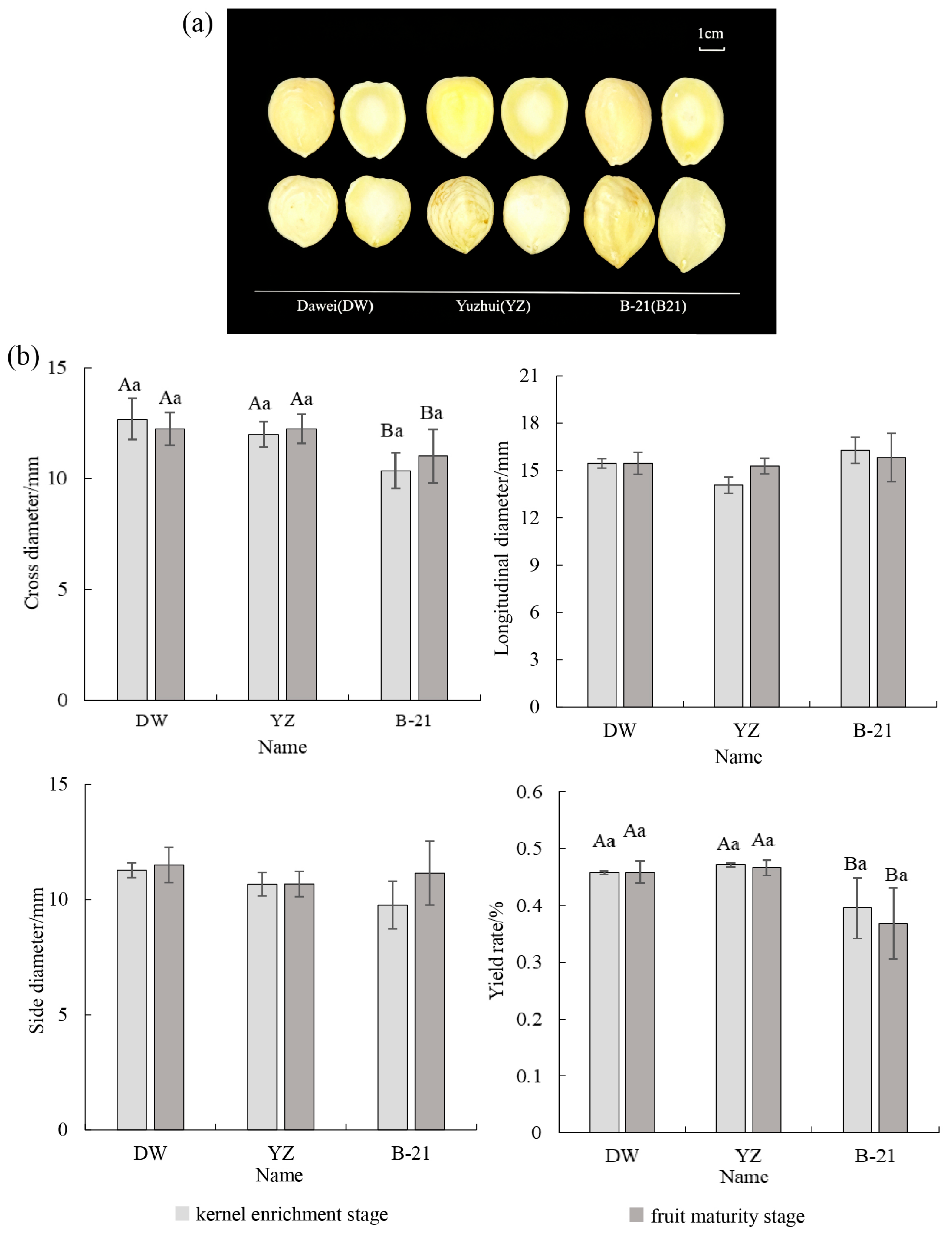
The morphological characteristics of the three C. heterophylla × C. avellana seeds are shown in Figure 1. Distinct differences in seed shape were observed: DW exhibited an oval form, YZ was conical, and B-21 displayed a long-oval morphology. The side diameter of all three cultivars increased consistently throughout the developmental period, whereas the trends in cross and longitudinal diameters varied. During different periods of fruit development, the variation in the three dimensions (cross diameter, longitudinal diameter, and side diameter) of the seed and seed yield was different among the different varieties. During the fruit maturity stage, the largest increase in the side diameter of the B-21 species was found, with a significant increase of 1.386 mm (p < 0.05) compared with the value measured during the seed enrichment stage, and the cross diameter and longitudinal diameters were significantly lower than those of the DW and YZ species.

3.2. Analysis of the Amino Acid Content

3.2.1. Analysis of Variations in Total Amino Acid Content

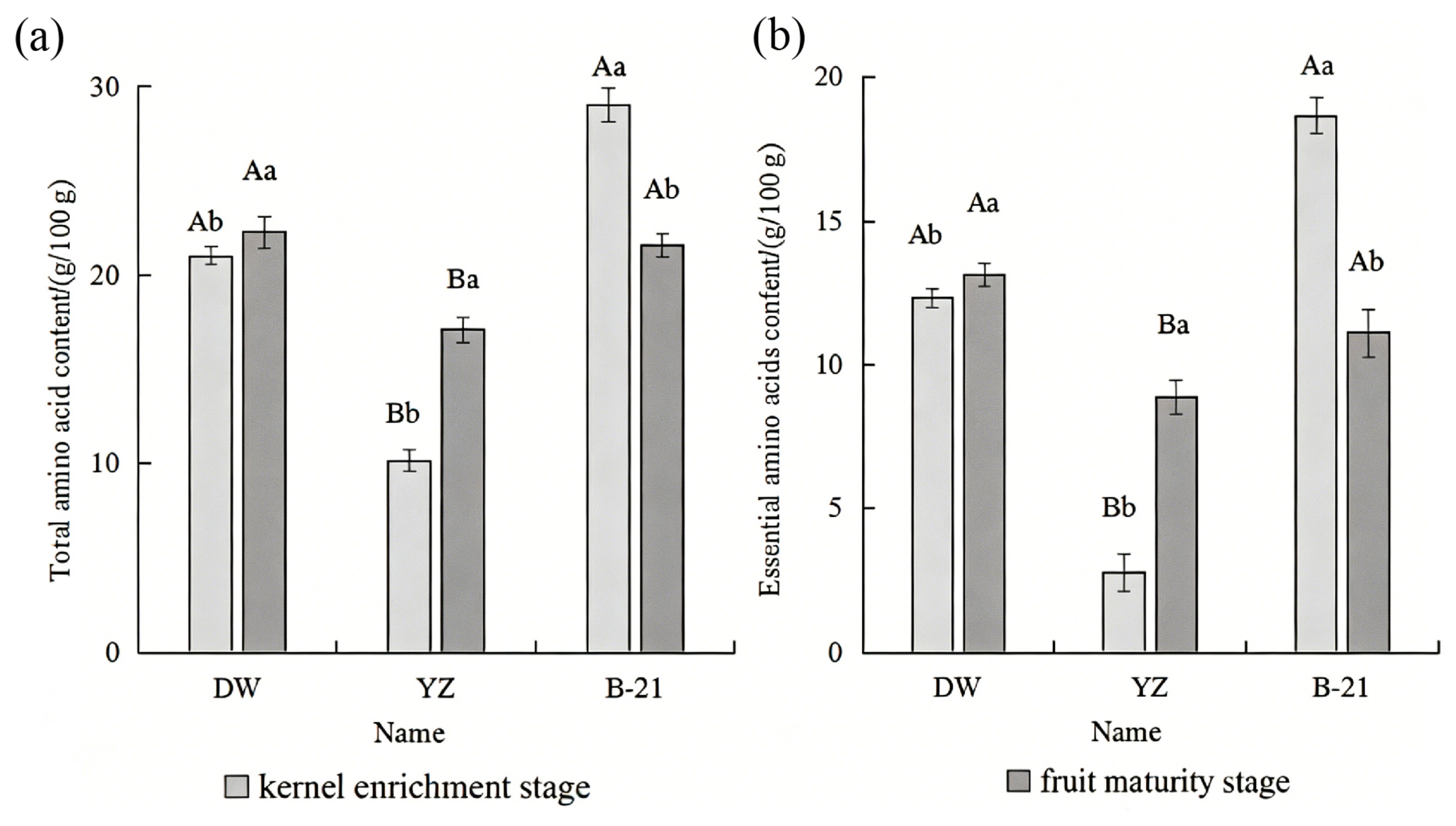
Analysis of amino acid content revealed that all three C. heterophylla × C. avellana cultivars contained the same 17 amino acids (Figure 2a): aspartate, threonine, serine, glutamate, glycine, alanine, cystine, valine, methionine, isoleucine, leucine, tyrosine, phenylalanine, lysine, histidine, arginine, and proline. The analysis of the total amount found that from the seed enrichment stage to the fruit maturity stage, DW was basically flat, and YZ showed an increasing trend and increased by 70%, while on the contrary, B-21 showed a downward trend, decreasing by 25%. At the seed enrichment stage, B-21 presented the highest total amino acid content (29.03 g/100 g), whereas YZ showed the lowest (10.16 g/100 g). At maturity, DW contained the highest level (22.284 g/100 g), while YZ, at 17.127 g/100 g, remained the lowest among the three cultivars. In addition, the total amino acid amount in B-21 was significantly higher than in YZ.

3.2.2. Difference Analysis of Essential Amino Acids

The capacity for amino acid biosynthesis varies among organisms: microorganisms and plants can synthesize all amino acids endogenously, whereas animals must obtain certain essential amino acids from dietary sources due to an inability to synthesize them or to produce them at rates sufficient for physiological demands. As shown in Figure 2b, the essential amino acid (EAA) content exhibited a trend consistent with that of the total amino acids. As can be seen from Table 1, the amino acid content in the three species was different during fruit development; the content of arginine in the three varieties was significantly higher than that of other essential amino acids, but arginine in DW and B-21 decreased with the fruit maturation process. Furthermore, leucine and lysine were present at relatively high concentrations, whereas histidine and methionine were among the lowest. Phenylalanine and threonine showed an increasing trend in all three varieties.

3.3. Amino Acid Metabolism Characteristics of C. heterophylla × C. avellana Seed

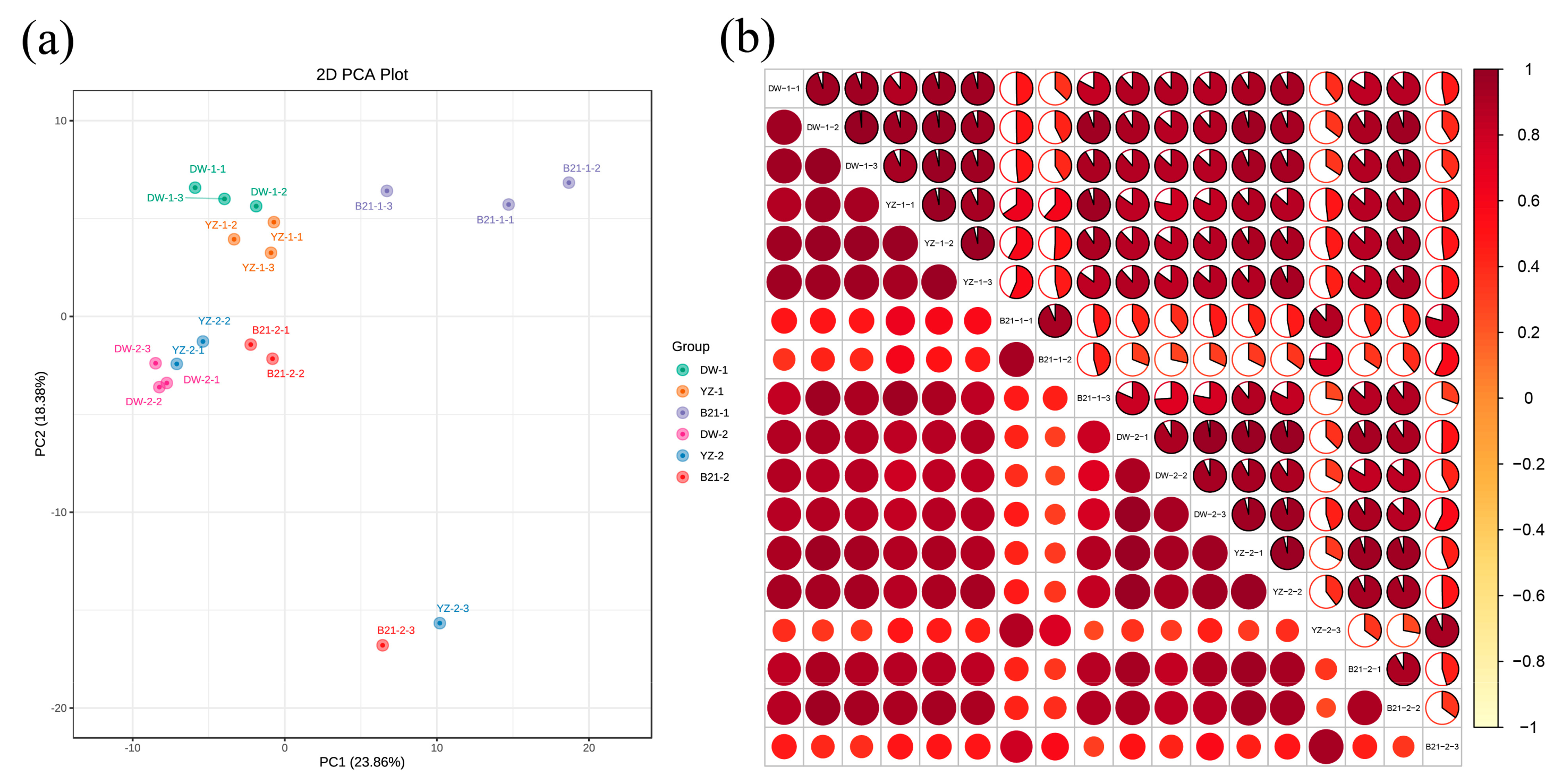
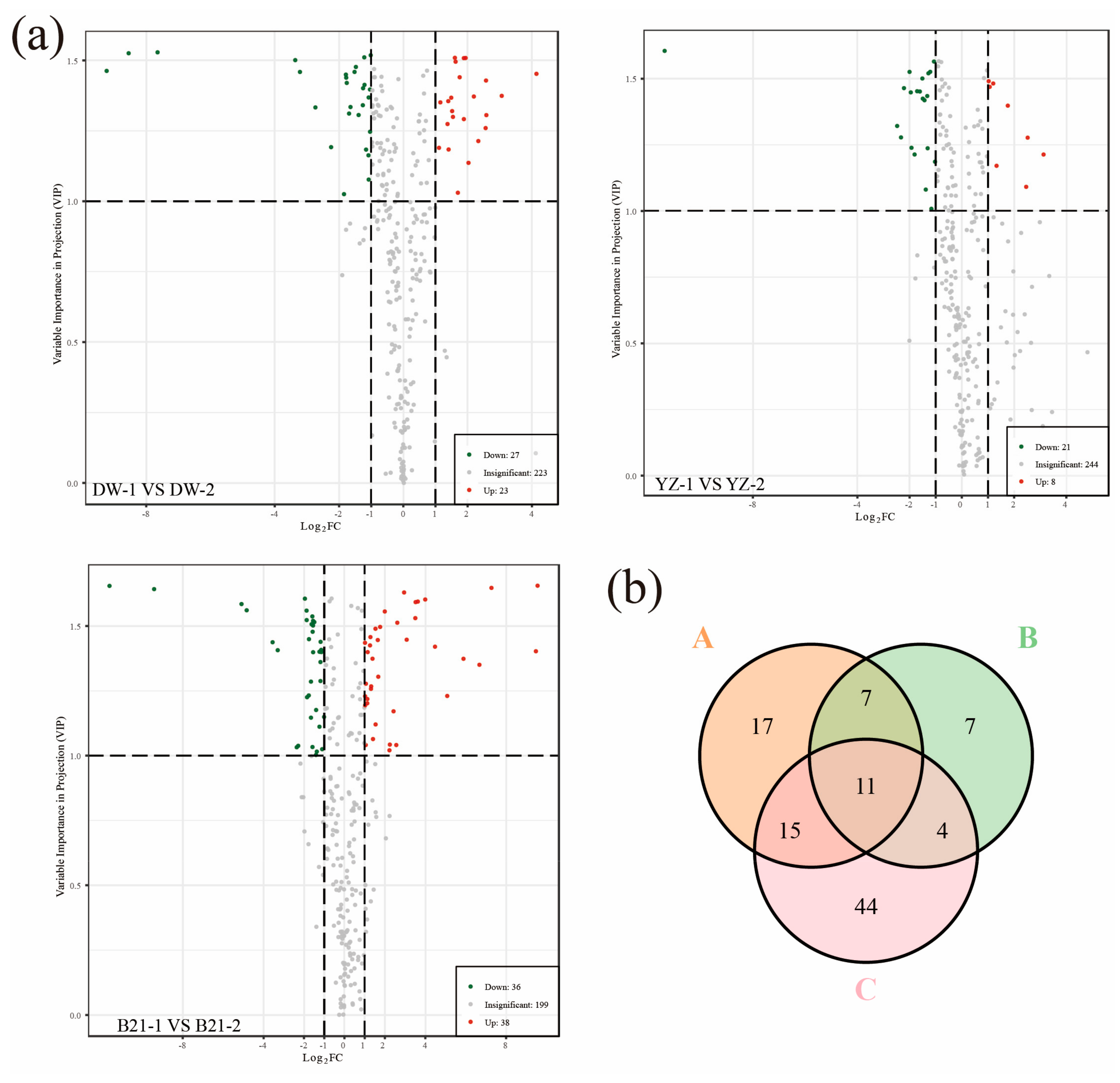
The amino acids and their derivatives in DW, YZ, and B-21 species were examined by UPLC-M S/MS. The total ion chromatogram (TIC) (Figure S1) had good coincidence, which verified the reliability of the metabolome data in this study. Principal component analysis (PCA) showed that the contribution of principal components 1 (PC 1) and 2 (PC 2) was 42.24% to the sample, of which PC 1 contributed 23.86% and PC 2 contributed 18.38% (Figure 3a). Although the cumulative variance of the first two PCs was 42.24%—a typical value for highly complex, multidimensional plant metabolomics datasets—the score plot revealed distinct clustering driven primarily by developmental stage and cultivar. In addition, inter-sample correlation analysis was performed (Figure 3b). The Pearson correlation coefficients between biological replicates were predominantly higher than 0.8, indicating a highly consistent pattern of relative metabolite abundances and excellent technical reliability across the replicates. Both PCA and within-group correlations reflected large differences between different samples and high similarity between biological replicates within groups. The metabolomics data showed that 273 amino acid-related metabolites were identified in the seed, including the free forms of 10 essential amino acids (Table S1). In order to further study the significant changes in amino acids in the three varieties, DW-1 vs. DW-2, YZ-1 vs. YZ-2, and B21-1 vs. B21-2 were compared (Figure 4). The results (Figure 4a) indicate that a total of 50 significantly different metabolites were identified in DW-1 vs. DW-2. DW-2 has 23 upregulated and 27 down-regulated metabolites. For YZ-1 vs. YZ-2, 8 metabolites were significantly upregulated and 21 metabolites were down-regulated. For B21-1 vs. B21-2, 38 metabolites were significantly upregulated and 36 metabolites were down-regulated. Furthermore, a Venn diagram was constructed to illustrate the three combinations. The results of the Venn diagram (Figure 4b) show that 11 differential metabolites were common in the three combinations. There were 18 differential metabolites between DW-1 vs. DW-2 and YZ-1 vs. YZ-2 (A and B), 26 between B21-1 vs. B21-2 (A and C), and 15 common differential metabolites between YZ-1 vs. YZ-2 and B21-1 vs. B21-2 (B and C). These results all indicate that there were differences in amino acid metabolic profiles among different varieties.

3.4. RNA Sequencing Analysis of C. heterophylla × C. avellana Seed Gene Expression

To further investigate the molecular regulatory mechanism of amino acid metabolites in fruit ripening, RNA sequencing was performed on the DW, YZ, and B-21 species. Q20 values for all samples ranged from 97.68% to 98.16%, and Q30 values ranged from 92.21% to 93.69%. The GC content ranged from 46.99% to 49.97% (Table S2). All the transcriptome data were reliable for further analysis.

3.5. Transcriptomic Analysis During Seed Development and Ripening

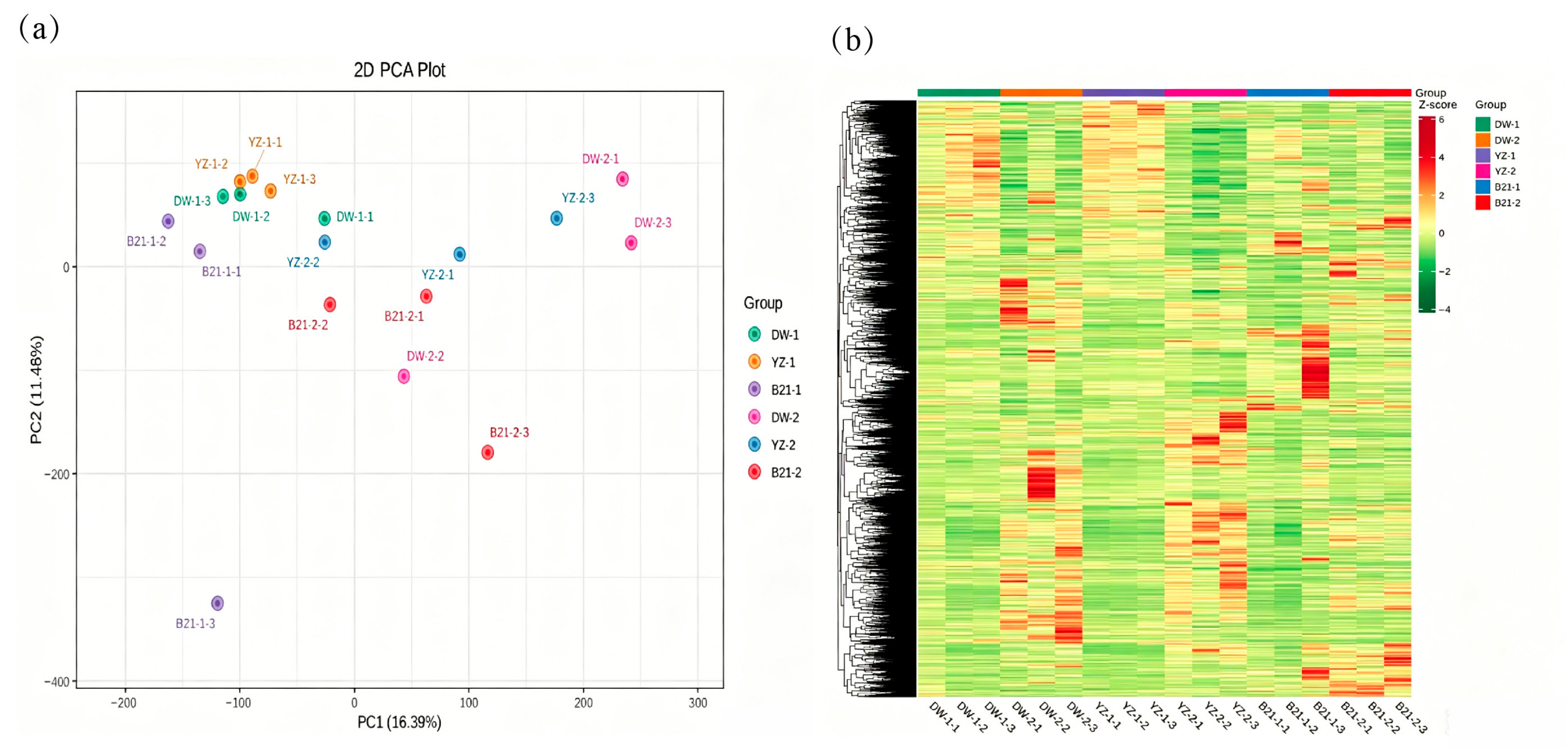
To investigate the transcriptome during the development of DW, YZ, and B-21, transcriptome analysis was performed at two key developmental stages. PCA of the transcriptome (Figure 5a) showed that the contribution rates of PC1 and PC2 to the samples were 16.39% and 11.46%, respectively. Given the high dimensionality of the whole-transcriptome data, this variance was typical. The plot demonstrated that the three varieties grouped primarily according to their developmental stage rather than cultivar type during the seed enrichment stage, indicating that they had similar transcriptome patterns in the seed enrichment stage, and they showed differences in the transcriptome when entering the fruit maturity stage. A Z-score-normalized expression heatmap was subsequently generated, with clustering based on gene expression patterns. The within-group correlation analysis of the transcriptome (Figure 5b) showed that the overall gene expression pattern was correlated with the fruit development stage, and that B-21 was specific. These results indicate that the gene expression pattern of C. heterophylla × C. avellana seed was developmentally specific.

3.6. Differential Gene Enrichment Pathway Analysis

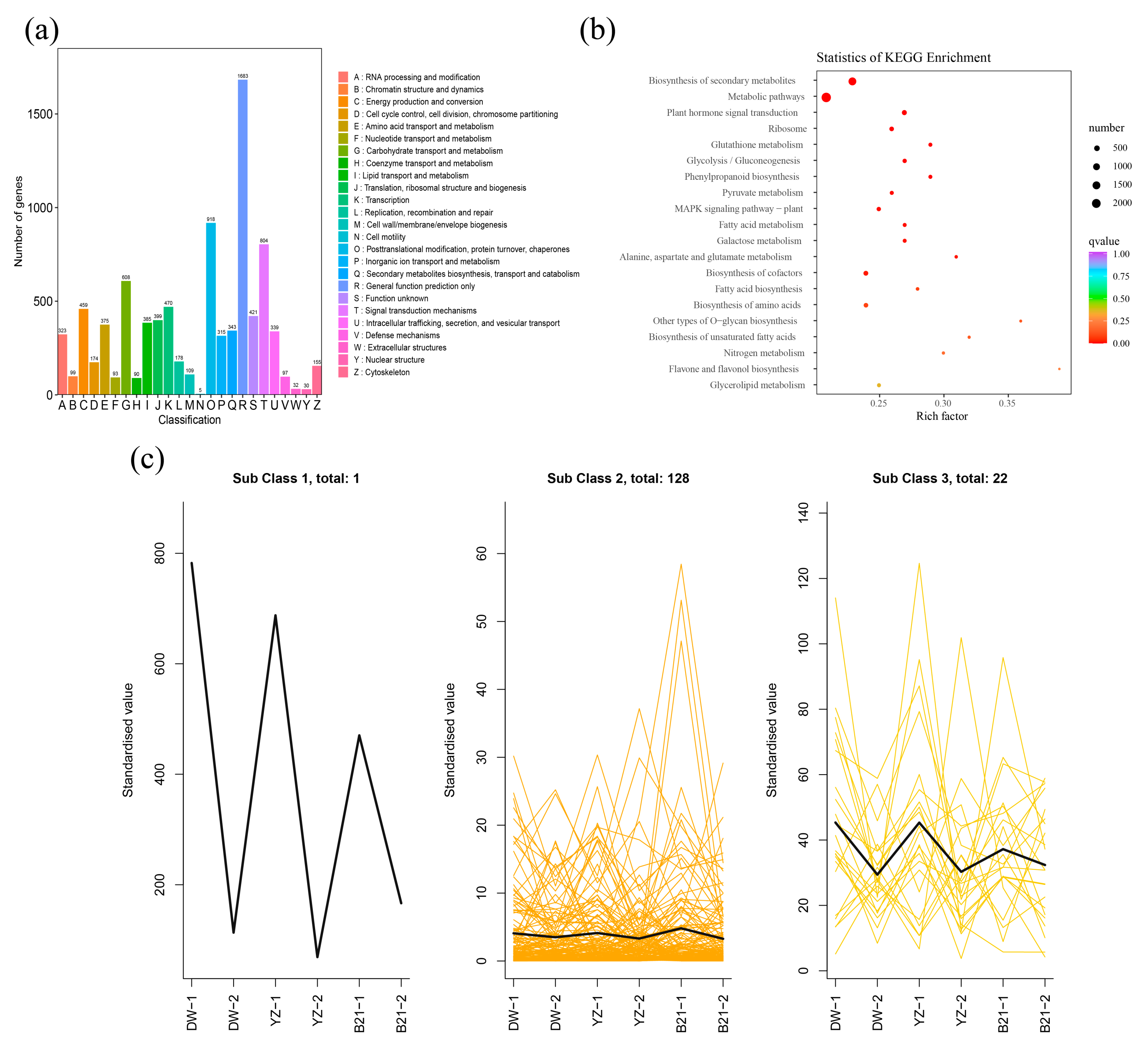
According to the gene function, the differentially expressed genes in the DW, YZ, and B-21 species were divided into 25 categories, among which as many as 1683 genes were enriched R (gene function prediction only) (Figure 6a). In addition, more than 400 differentially expressed genes were also enriched in functional categories such as O (posttranslational modification, protein turnover, and chaperones), T (signal transduction mechanism), G (carbohydrate transport and metabolism), K (transcription), and C (energy production and conversion). It was also worth noting that 375 genes were also enriched in the functional categories associated with amino acid synthesis (category E).
Figure 6b revealed that there was a large number of genes involved in amino acid synthesis and metabolism in C. heterophylla × C. avellana seed. Based on KEGG functional annotations, these genes act as the core intrinsic drivers of amino acid biosynthesis, as they directly encode the metabolic enzymes responsible for driving the carbon and nitrogen fluxes through the synthesis pathways. To further elucidate the gene changes during seed development, the differential genes were divided into three clusters using the k-means clustering algorithm (Figure 6c). This analysis groups genes with similar co-expression patterns, where each line represents an individual gene. The expression level of Class 1 genes decreased significantly during seed development, Class 2 genes did not change significantly with seed development, and Class 3 genes gradually decreased with seed development, but their content was different among different varieties of C. heterophylla × C. avellana. For example, in the seed enrichment stage, the gene expression level of the B-21 seed was lower than that of the DW and YZ varieties. In conclusion, a substantial number of genes were involved in the synthesis and transport of amino acids during the development of C. heterophylla × C. avellana seed.

3.7. Expression Analysis of Genes Involved in Amino Acid Biosynthesis in Seed

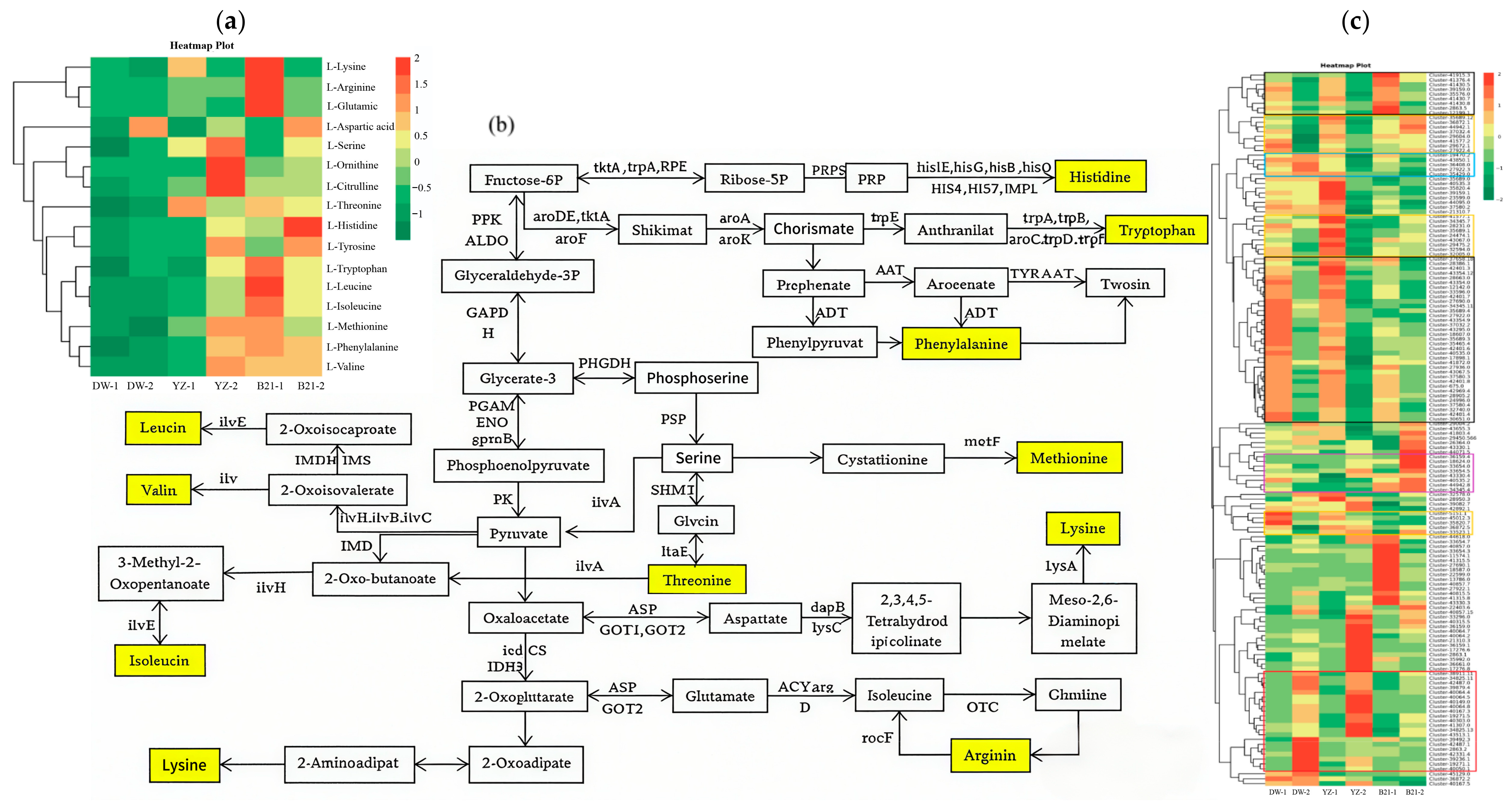
To identify key genes involved in amino acid biosynthesis, a correlation analysis was performed between the Free Amino Acid metabolic pool (measured via UPLC-MS/MS relative peak areas, representing the dynamic biological intermediates) and differentially expressed genes (DEGs) in the seeds of DW, YZ, and B-21. (Figure 7). Gene expression analysis revealed distinct transcriptional patterns for amino acid biosynthesis-related genes across the three hybrid hazelnut cultivars (Figure 7c). For instance, PGK (Cluster-41915.3), aroK (Cluster-41376.4), ltaE (Cluster-41430.5, Cluster-41430.7, Cluster-41430.8), ENO (Cluster-39159.0), PHGDH (Cluster-35576.0), rpiA (Cluster-2863.5), and SHMT (Cluster-12199.1) (Black box) decreased with seed development in the three varieties. And TYRAAT (Cluster-38911.11), PFK (Cluster-34825.11, Cluster-34825.13), ASS (Cluster-40050.1), and rpiA (Cluster-43513.1, Cluster-2863.2) (red box) showed an increasing trend with development; the expression levels of ilvH (Cluster-35689.1, Cluster-35689.12), ENO (Cluster-36872.1, Cluster-36872.5), hisD (Cluster-44942.1), argC (Cluster-37032.4), RPE (Cluster-27296.1), and SHMT (Cluster-27922.4) (yellow box) decreased with the development of the fruit of DW and YZ, but the opposite was true in B-21. While the PK (Cluster-19470.2), lysA (Cluster-43850.1), aroDE (Cluster-36408.0, Cluster-35429.0), and SHMT (Cluster-27922.3) (blue box) genes consistently maintained high expression in DW, in YZ and B-21, they showed a decreasing trend with the development process. However, PGK (Cluster-36159.4), ilvC (Cluster-18624.0), GOT (Cluster-33654.0, Cluster-33654.5), and ACY (Cluster-43330.4) (purple box) expressed exactly opposite to the blue box gene expression. Differences in gene expression levels directly affect the levels of the different amino acids. The metabolite expression heatmap (Figure 7b) showed the highest amount of arginine and lysine and the lowest amount of methionine and valine. The contents of lysine, arginine, and glutamate in B-21 decreased significantly with the development process, while histidine was the opposite; ornithine and citrulline increased in YZ with the development process. As illustrated in the pathway map (Figure 7), the essential amino acids (highlighted in yellow) are predominantly the terminal products of these metabolic chains. Consequently, their ultimate accumulation is highly dependent on the coordinated transcriptional activation of the upstream genes depicted in the associated heatmaps. In summary, the diverse expression patterns of biosynthetic genes and the changes in metabolite pools underscore the complexity of amino acid metabolism in hybrid hazelnut seeds. The integrated pathway analysis not only elucidates the correlations between genes and metabolites but also establishes a foundational framework for future investigation into the regulatory mechanisms of amino acid biosynthesis.
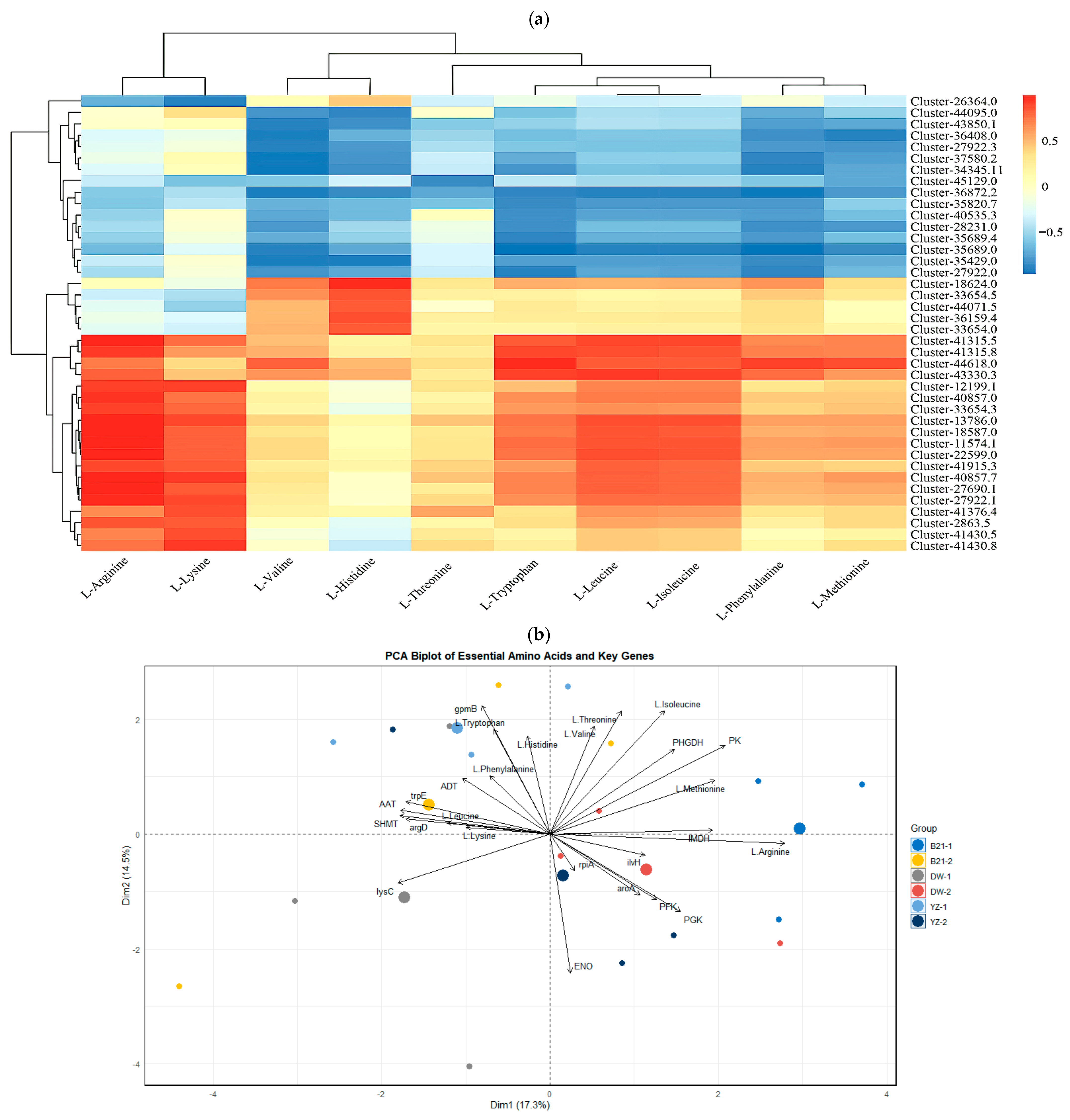
The correlation analysis of the expression levels of different genes and the contents of 10 essential amino acids (Figure 8a) showed that arginine, tryptophan, leucine, isoleucine, phenylalanine, and methionine were significantly positively correlated (p < 0.05) with IMDH (Cluster-44618.0), and valine, tryptophan, leucine, phenylalanine, and methionine were significantly negatively associated with ilvH (Cluster-35689.0). Since PFK is the upstream gene of the amino acid synthesis pathway, and its expression level directly affects the synthesis of different amino acids, the effect on different amino acid synthesis is different. For example, PFK (Cluster-37580.2) showed a significant negative association with histidine, but had a positive role in lysine synthesis. Moreover, IMDH is a key gene for valine synthesis, while ilvC (Cluster-18624.0), GOT1 (Cluster-33654.5, Cluster-33654.0), and PGK (Cluster-44071.5, Cluster-36159.4) focus on histidine synthesis. The presence of substrate competition between different amino synthesis reactions may be an important factor leading to the above results.
To integrate the multi-omics data, an exploratory correlation network was constructed between the essential amino acids and the synthetically relevant DEGs. By filtering the high-dimensional data through strict Pearson correlation thresholds (|r| > 0.8, p < 0.05), we mitigated the risk of false positives. This integration approach allowed us to identify ‘hub’ candidate regulatory genes whose expression patterns strongly co-vary with the system-wide accumulation of essential amino acids. Through this network analysis, we found that 16 candidate genes were strongly associated with amino acid biosynthesis (Figure 8b). These 16 specific genes were highlighted based on two strict criteria: first, they exhibited high canonical loadings (strong statistical correlation, |r| > 0.8, p < 0.05 with the essential amino acid matrix based on pairwise Pearson analysis); second, biological annotation confirmed their positions as critical upstream or rate-limiting structural enzymes in the KEGG amino acid biosynthesis pathways. These included PK (Cluster-42401.3), ENO (Cluster-36872.5, Cluster-36661.0), PHGDH (Cluster-43655.3), ADT (Cluster-39492.3, Cluster-34345.7), aroA (Cluster-35820.4), AAT (Cluster-41872.0), trpE (Cluster-40535.2), ADT (Cluster-39492.3), PGK (Cluster-36159.4), rpiA (Cluster-2863.2), lysC (Cluster-35465.4), ilvH (Cluster-35689.0), argD (Cluster-28950.3), and gpmB (Cluster-28213.0). Among them, IMDH (Cluster-44618.0), an enzyme primarily involved in purine nucleotide biosynthesis, exhibited a strong statistical correlation with arginine accumulation. Rather than a direct biosynthetic link, this co-expression likely reflects parallel shifts in nitrogen partitioning. Both purine derivatives and arginine serve as massive nitrogen sinks during seed development, and their synchronized upregulation suggests a coordinated transcriptomic response to high nitrogen demand during seed filling. Furthermore, AAT (Cluster-41872.0) was significantly correlated with lysine synthesis, and ilvH (Cluster-35689.0), rpiA (Cluster-2863.2), and lysC (Cluster-35465.4) showed strong positive correlations with the accumulation of methionine, histidine, and tryptophan. This was consistent with the results of the correlation analysis.

4. Discussion

Protein is an essential nutrient for the human body and an important material basis for all tissue cells of the body, carrying almost all life activities [29,30]. Complete proteins—those containing appropriate proportions of essential amino acids—are highly valued in human diets [30]. The edible part of the hazelnut is the mature seed; the changes in nutrients during growth and development are very important to the quality. Only when the nutrients accumulate to a certain amount can they have edible value. As a plant-derived food, the nutrients and secondary metabolites of nuts are combined in various forms, which are easy for the human body to absorb and utilize. In the diet structure of China, plant foods occupy a dominant position. The results of this study show that the seeds were rich in amino acids, including essential amino acids, among which arginine and tryptophan were the most abundant (as detailed in Table 1 and visualized in Figure 2b). The high accumulation of arginine is particularly noteworthy from a physiological standpoint. Due to its high nitrogen-to-carbon ratio (containing four nitrogen atoms per molecule), arginine serves as the primary storage form of organic nitrogen in many plant seeds. During the seed ripening process, arginine acts as a massive nitrogen sink, safely storing nitrogen to support the high metabolic demands of breaking dormancy and nourishing the seedling during future germination. Amino acids are not only essential nutrients for the human body but also affect and determine the flavor and quality of fruits [31]. Different amino acid compositions will play different roles. For example, the amino acid composition of tea greatly influences taste and aromatic properties [32]. Most amino acids, especially theanine, give green tea an umami flavor and are significantly positively correlated with green tea quality [33]. Free amino acids such as leucine and lysine can not only affect the taste of tea but also increase the freshness of tea soup [34]. They are also widely used food additives used to enhance the umami flavor of foods. The types, contents, and proportions of amino acids in different plant foods vary greatly [35]. Therefore, studying the amino acid composition in different foods has important reference value for supplementing the intake of essential amino acids and other nutrients.
By integrating metabolomic and transcriptomic data, our correlation network revealed precise regulatory hubs. For instance, the significant positive correlation between IMDH expression and arginine accumulation highlights its potential role in driving the ornithine/arginine precursor pathways during seed enrichment. Conversely, the negative correlation between ilvH and valine/methionine suggests a complex feedback inhibition loop or competitive substrate utilization during the later stages of ripening. These network linkages demonstrate that the depletion of free amino acids in the B-21 cultivar at maturity is closely mirrored by the down-regulation of upstream synthetic genes like PGK and ENO, meaning the transcriptomic shift directly supports the metabolic profile changes observed.
During hazelnut seed development and maturation, the transition from rapid structural growth to extensive nutrient storage represents a major, fine-tuned metabolic shift [36,37]. Understanding the molecular regulatory mechanisms of fruit development and maturation can not only expand our understanding of biological processes but also provide useful information for crop farming. The process of amino acid biosynthesis during this phase is very complex and precise and involves hundreds of reaction steps [29]. With the exception of aromatic amino acids and histidine, most of the amino acids are synthesized by the Embden–Meyerhof pathway (EMP) and the tricarboxylic acid cycle as intermediates produced by the carbon chain backbone [38]. Among them, PFK (Phosphofructokinase) is a rate-limiting enzyme in glycolysis. While not a direct amino acid biosynthetic gene, PFK regulates the carbon flux that provides essential precursor skeletons (such as pyruvate and phosphoenolpyruvate) required for the downstream synthesis of various amino acids [36]. Therefore, the upregulation of PFK acts as a crucial upstream driver, ensuring a steady supply of carbon intermediates to support the high demand for amino acid biosynthesis during hazelnut seed ripening [37]. Moreover, the function of this gene is conserved in living organisms, and it shows positive effects in promoting amino acid synthesis in different species. Overall, PFK is a backbone gene of the amino acid biosynthesis pathway, which has a direct effect on the synthesis of various amino acids, and is the main gene for amino acid synthesis in the C. heterophylla × C. avellana seed.
The distinct accumulation pattern observed in the cultivar B-21 offers valuable insights into the sink–source dynamics of hybrid hazelnuts. B-21 exhibited the highest amino acid content during the seed enrichment stage, suggesting a superior ‘sink strength’ for nitrogen assimilation and transport from vegetative tissues (source) during early seed filling. However, unlike cultivars DW and YZ, the relative amino acid content in B-21 declined significantly at maturity. This decrease in relative concentration (g/100 g) is primarily driven by the ‘dilution effect’ commonly observed in oil-bearing seeds. While our current study did not quantify parallel lipid accumulation or track dry mass changes, extensive literature on Corylus seed development demonstrates that late maturation is characterized by the massive and rapid synthesis of lipids (fatty acids). We hypothesize that this rapid expansion of the lipid and starch pools during late maturation outpaces the accumulation of free amino acids. Therefore, while B-21 may maintain high absolute nitrogen levels, the rapid expansion of the lipid pool results in a lower concentration per unit weight. This implies that B-21 is physiologically characterized by rapid early-stage nitrogen remobilization, making it an ideal candidate for harvesting at earlier stages for specific functional food applications where protein density is prioritized over oil content.
However, there are certain limitations in this study that should be acknowledged. First, we focused on two key developmental stages (seed enrichment and maturity). While these represent critical phases of seed development, amino acid biosynthesis is a highly dynamic process. Analyzing only two time points limits our ability to fully capture the finer temporal dynamics of amino acid accumulation. Second, because we did not simultaneously track total dry mass or lipid profiles, our attribution of the relative amino acid decrease to a lipid ‘dilution effect’ remains a hypothesis based on established hazelnut biology. Future studies incorporating multiple intermediate time points are necessary to map the complete metabolic trajectory. Furthermore, the current data relies on samples collected during a single growing season (2022). While identical environmental and management conditions were ensured for the sampled trees to isolate genetic differences, plant metabolism is inherently sensitive to climatic fluctuations. Future multi-year field trials are required to evaluate Genotype × Environment (G × E) interactions and confirm the stability of these amino acid profiles under varying annual weather conditions. Second, while PCA provided strong statistical associations between gene expression and metabolite accumulation, it is important to note that these changes in gene expression likely occur alongside the amino acid changes rather than acting as the sole causal driver. Amino acid biosynthesis is heavily regulated at multiple levels; therefore, while transcriptomic upregulation provides the necessary enzymatic machinery (correlation), actual metabolite accumulation is also dictated by post-translational modifications, enzyme kinetics, and competitive substrate availability. Consequently, we cannot definitively claim strict causality based solely on steady-state transcriptomic data. Their actual biological functions and expression patterns require robust validation through quantitative real-time PCR (qRT-PCR), enzymatic assays, or transgenic characterization. Future studies will focus on functional verification of these key genes to confirm their specific roles in hazelnut amino acid metabolism.
Conversely, the cultivar YZ exhibited a continuous accumulation strategy, increasing its total amino acid content by 70% at the full maturity stage. This suggests a different carbon/nitrogen partitioning mechanism where protein and amino acid synthesis remains highly active until the end of ripening. From a commercial and agricultural perspective, these cultivar-specific behaviors imply that tailored harvesting strategies are necessary. While B-21 might be ideally harvested slightly earlier for specialized high-protein applications, YZ is exceptionally well suited for late harvesting to maximize both seed yield and amino acid richness, making it an excellent candidate for producing late-harvest functional foods or amino-acid-enriched nutritional supplements.
Finally, it is critical to contextualize these findings within the breeding history of these hybrid cultivars. The native Chinese wild hazelnut (C. heterophylla) is renowned for its rich free-amino-acid pool and superior aromatic roasting quality, but suffers from exceptionally small seeds. Conversely, the European hazelnut (C. avellana) boasts high yields and large, lipid-rich seeds. The multi-omics profiles of the C. heterophylla × C. avellana hybrids (such as B-21) observed in this study demonstrated a successful molecular introgression: they combined the robust transcriptomic ‘sink capacity’ of the European parent (driving rapid seed expansion and lipid filling) with the rich free-amino-acid synthesis network of the wild parent. This hybridization significantly improved the overall nutritional and commercial quality by maintaining a high absolute content of essential, flavor-precursor amino acids within a much larger, agronomically viable seed.

5. Conclusions

This study provided a comprehensive insight into the metabolomic and transcriptomic changes associated with amino acid biosynthesis in three hybrid hazelnut cultivars. We demonstrated that the cultivar B-21 possessed a superior amino acid profile compared with DW and YZ, despite a decreasing trend during ripening. This decline was consistent with the “dilution effect” commonly observed in oil-bearing nut crops, where the rapid accumulation of lipids and starch during the seed filling stage (sink phase) outpaces amino acid synthesis, leading to a reduction in relative content per unit weight. However, the fact that B-21 remained at significantly higher levels despite this dilution suggests it possesses a more efficient nitrogen remobilization mechanism or a more robust “source” strength compared with other cultivars. This characteristic makes B-21 an excellent candidate for functional food breeding. Through multi-omics integration, we constructed a correlational regulatory network and identified 16 candidate pivotal genes, including PK, ENO, and IMDH, that were strongly associated with the accumulation of essential amino acids. These findings provide valuable insights into the potential transcriptional coordination of amino acid accumulation in Corylus heterophylla × Corylus avellana but also provide valuable genetic resources for breeding programs aimed at enhancing the nutritional value of hazelnuts. However, a limitation of this current work is the reliance on transcript-level data. Because mRNA abundance does not strictly equate to protein functionality, future studies must incorporate direct enzyme activity tracking and quantitative proteomics to definitively validate the regulatory roles of these candidate pathways during seed ripening.

Supplementary Materials

The following supporting information can be downloaded at: https://www.mdpi.com/article/10.3390/agriculture16101079/s1, Figure S1. Total ion flow map of QC samples (TIC diagram). Where N represents the negative ion mode and P represents the positive ion mode. Tabel S1. Average relative content of amino acids and their derivatives of the three C. heterophylla × C. avellana kernel cultivars kernel. Table S2. RNA-Seq assembly, statistics and quality of 18 RNA sequencing libraries.

Author Contributions

Conceptualization, X.Y.; methodology, M.L.; validation, X.Y., M.L., and R.L.; formal analysis, X.Y., M.L., S.G., R.L., X.W., Y.L., S.H., B.Z., and H.L.; data curation, M.L.; writing—original draft, M.L. and S.G.; writing—review and editing, X.Y. and M.L.; visualization, M.L.; project administration, X.Y.; funding acquisition, X.Y. All authors have read and agreed to the published version of the manuscript.

Funding

This research was supported by the Special Project for Guiding the Transformation of Scientific and Technological Achievements in Shanxi Province (202404021301049). The earmarked fund for Modern Agro-industry Technology Research System (2026CYJSTX07-15). Shanxi Provincial Science and Technology Major Special Programs “jie bang gua shuai” Project (202201140601027). Science and technology support project for high-quality development of special high-quality agriculture in Shanxi Agricultural University (TYGC25-23).

Data Availability Statement

The de novo assembly of hazelnut transcriptome data and transcript abundance of hazelnut genes across different varieties are available at Figshare [https://doi.org/10.6084/m9.figshare.28217855].

Conflicts of Interest

The authors declare no conflicts of interest.

References

  1. Pascoalino, L.A.; Reis, F.S.; Barros, L.; Rodrigues, M.Â.; Correia, C.M.; Vieira, A.L.; Ferreira, I.C.F.R.; Barreira, J.C.M. Effect of Plant Biostimulants on Nutritional and Chemical Profiles of Almond and Hazelnut. Appl. Sci. 2021, 11, 7778. [Google Scholar] [CrossRef]
  2. Hu, X.; Guo, F. Amino acid sensing in metabolic homeostasis and health. Endocr. Rev. 2021, 42, 56–76. [Google Scholar] [CrossRef] [PubMed]
  3. Yancey, P.H.; Siebenaller, J.F. Co-evolution of proteins and solutions: Protein adaptation versus cytoprotective micromolecules and their roles in marine organisms. J. Exp. Biol. 2015, 218, 1880–1896. [Google Scholar] [CrossRef] [PubMed]
  4. Wu, G. Amino Acids: Biochemistry and Nutrition; CRC Press: Boca Raton, FL, USA, 2021. [Google Scholar]
  5. Lopez, M.J.; Mohiuddin, S.S. Biochemistry, Essential Amino Acids; StatPearls Publishing: Treasure Island, FL, USA, 2020. [Google Scholar]
  6. Xu, Y.X.; Hanna, M.A. Evaluation of Nebraska hybrid hazelnuts: Nut/seed characteristics, seed proximate composition, and oil and protein properties. Ind. Crops Prod. 2010, 31, 84–91. [Google Scholar] [CrossRef]
  7. Alasalvar, C.; Shahidi, F.; Liyanapathirana, C.M.; Ohshima, T. Turkish tombul hazelnut (Corylus avellana L.). 1. Compositional characteristics. J. Agric. Food Chem. 2003, 51, 3790–3796. [Google Scholar] [CrossRef] [PubMed]
  8. Wei, Y. Amino acid composition analysis and nutritional evaluation of Hazelnut protein and its components. Food Ind. 2022, 43, 334–338. [Google Scholar]
  9. Burlingame, B.; Mouillé, B.; Charrondiere, R. Nutrients, bioactive non-nutrients and anti-nutrients in potatoes. J. Food Compos. Anal. 2009, 22, 494–502. [Google Scholar] [CrossRef]
  10. Keller, H.; Kiosze, K.; Sachsenweger, J.; Haumann, S.; Ohlenschläger, O.; Nuutinen, T.; Syväoja, J.E.; Görlach, M.; Grosse, F.; Pospiech, H. The intrinsically disordered amino-terminal region of human RecQL4: Multiple DNA-binding domains confer annealing, strand exchange and G4 DNA binding. Nucleic Acids Res. 2014, 42, 12614–12627. [Google Scholar] [CrossRef]
  11. Elango, R.; Ball, R.O.; Pencharz, P.B. Amino acid requirements in humans: With a special emphasis on the metabolic availability of amino acids. Amino Acids 2009, 37, 19–27. [Google Scholar] [CrossRef]
  12. Henriques, S.F.; Dhakan, D.B.; Serra, L.; Francisco, A.P.; Carvalho-Santos, Z.; Baltazar, C.; Elias, A.P.; Anjos, M.; Zhang, T.; Maddocks, O.D.K.; et al. Metabolic cross-feeding in imbalanced diets allows gut microbes to improve reproduction and alter host behaviour. Nat. Commun. 2020, 11, 4236. [Google Scholar] [CrossRef]
  13. Xue, C.; Li, G.; Zheng, Q.; Gu, X.; Shi, Q.; Su, Y.; Chu, Q.; Yuan, X.; Bao, Z.; Lu, J.; et al. Tryptophan metabolism in health and disease. Cell Metab. 2023, 35, 1304–1326. [Google Scholar] [CrossRef]
  14. Mahendra, I.; Hanaoka, H.; Yamaguchi, A.; Amartuvshin, T.; Tsushima, Y. Diagnosis of bladder cancer using 18 F-labeled α-methyl-phenylalanine tracers in a mouse model. Ann. Nucl. Med. 2020, 34, 329–336. [Google Scholar] [CrossRef] [PubMed]
  15. Tang, Q.; Tan, P.; Ma, N.; Ma, X. Physiological functions of threonine in animals: Beyond nutrition metabolism. Nutrients 2021, 13, 2592. [Google Scholar] [CrossRef] [PubMed]
  16. Lin, M.; Zhang, W.; Wang, T.; Ke, F.; Feng, X.; Yao, Z.; Xu, C. Free amino acid composition of fruits and its effect on flavor quality in 15 hybrid citrus varieties. J. Fruit. Trees 2022, 39, 352–365. [Google Scholar]
  17. Li, Q.; He, C.; Shi, X.; Zhang, Q.; Liu, W.; Jin, N.; Li, D.; Chen, Y. Quality evaluation of free amino acids of barbary wolfberry fruits from different provenance. Econ. For. Res. 2023, 41, 26–35. [Google Scholar]
  18. Zhu, Y.; Wang, Y.; Wang, G.; Zhou, C.; Jiao, Y.; Gan, K.; Sun, D.; Zhu, C.; Jia, H.; Gao, Z. Analysis of the free amino acid composition of fruits of different arbutus cultivars. J. Zhejiang Univ. Agric. Life Sci. Ed. 2021, 47, 736–742. [Google Scholar]
  19. Fei, X.; Hu, H.; Luo, Y.; Shi, Q.; Wei, A. Widely targeted metabolomic profiling combined with transcriptome analysis provides new insights into amino acid biosynthesis in green and red pepper fruits. Food Res. Int. 2022, 160, 111718. [Google Scholar] [CrossRef]
  20. Xu, J.; Yan, J.; Li, W.; Wang, Q.; Wang, C.; Guo, J.; Geng, D.; Guan, Q.; Ma, F. Integrative analyses of widely targeted metabolic profiling and transcriptome data reveals molecular insight into metabolomic variations during apple (Malus domestica) fruit development and ripening. Int. J. Mol. Sci. 2020, 21, 4797. [Google Scholar] [CrossRef]
  21. Zhang, Y.; Liu, L.; Liang, W.; Zhang, Y. Chinese Fruit Tree Annals Chestnut Hazelnut Roll; China Forestry Press: Beijing, China, 2005. [Google Scholar]
  22. Yang, Z.; Wang, L.; Zhao, T. High genetic variability and complex population structure of the native Chinese hazelnut. Braz. J. Bot. 2018, 41, 687–697. [Google Scholar] [CrossRef]
  23. GB 5009.124-2016; National Food Safety Standard-Determination of Amino Acids in Foods. China Standard Publishing House: Beijing, China, 2016.
  24. Xia, Z.; Huang, D.; Zhang, S.; Wang, W.; Ma, F.; Wu, B.; Xu, Y.; Xu, B.; Chen, D.; Zou, M.; et al. Chromosome-scale genome assembly provides insights into the evolution and flavor synthesis of passion fruit (Passiflora edulis Sims). Hortic. Res. 2021, 8, 14. [Google Scholar] [CrossRef]
  25. Li, B.; Dewey, C.N. RSEM: Accurate transcript quantification from RNA-Seq data with or without a reference genome. BMC Bioinform. 2011, 12, 323. [Google Scholar] [CrossRef] [PubMed]
  26. Love, M.I.; Huber, W.; Anders, S. Moderated estimation of fold change and dispersion for RNA-seq data with DESeq2. Genome Biol. 2014, 15, 550. [Google Scholar] [CrossRef] [PubMed]
  27. Varet, H.; Brillet-Guéguen, L.; Coppée, J.Y.; Dillies, M.A. SARTools: A DESeq2-and EdgeR-based R pipeline for comprehensive differential analysis of RNA-Seq data. PLoS ONE 2016, 11, e0157022. [Google Scholar] [CrossRef] [PubMed]
  28. Xia, J.; Wishart, D.S. Web-based inference of biological patterns, functions and pathways from metabolomic data using MetaboAnalyst. Nat. Protoc. 2011, 6, 743–760. [Google Scholar] [CrossRef]
  29. Hertzler, S.R.; Lieblein-Boff, J.C.; Weiler, M.; Allgeier, C. Plant proteins: Assessing their nutritional quality and effects on health and physical function. Nutrients 2020, 12, 3704. [Google Scholar] [CrossRef]
  30. Usydus, Z.; Szlinder-Richert, J.; Adamczyk, M. Protein quality and amino acid profiles of fish products available in Poland. Food Chem. 2009, 112, 139–145. [Google Scholar] [CrossRef]
  31. Obretenov, C.; Demyttenaere, J.; Tehrani, K.A.; Adams, A.; Keršiene, M.; De Kimpe, N. Flavor release in the presence of melanoidins prepared from L-(+)-ascorbic acid and amino acids. J. Agric. Food Chem. 2002, 50, 4244–4250. [Google Scholar] [CrossRef]
  32. Alcázar, A.; Ballesteros, O.; Jurado, J.M.; Pablos, F.; Martín, M.J.; Vilches, J.L.; Navalón, A. Differentiation of green, white, black, oolong, and pu-erh teas according to their free amino acids content. J. Agric. Food Chem. 2007, 55, 5960–5965. [Google Scholar] [CrossRef]
  33. Chen, D.; Sun, Z.; Gao, J.J.; Peng, J.K.; Wang, Z.; Zhao, Y.; Lin, Z.; Dai, W.D. Metabolomics combined with proteomics provides a novel interpretation of the compound differences among Chinese tea cultivars (Camellia sinensis var. Sinensis) with different manufacturing suitabilities. Food Chem. 2022, 377, 131976. [Google Scholar] [CrossRef]
  34. Wang, L.; Xu, R.; Hu, B.; Li, W.; Sun, Y.; Tu, Y.; Zeng, X. Analysis of free amino acids in Chinese teas and flower of tea plant by high performance liquid chromatography combined with solid-phase extraction. Food Chem. 2010, 123, 1259–1266. [Google Scholar] [CrossRef]
  35. Salman, S.; Yılmaz, C.; Gökmen, V.; Özdemir, F. Effects of fermentation time and shooting period on amino acid derivatives and free amino acid profiles of tea. LWT 2021, 137, 110481. [Google Scholar] [CrossRef]
  36. Buchanan, B.B.; Gruissem, W.; Jones, R.L. Biochemistry and Molecular Biology of Plants, 2nd ed.; Wiley-Blackwell: Chichester, UK, 2015; pp. 490–544. [Google Scholar]
  37. Galili, G.; Amir, R.; Fernie, A.R. The regulation of essential amino acid synthesis and accumulation in plants. Annu. Rev. Plant Biol. 2016, 67, 153–178. [Google Scholar] [CrossRef]
  38. D’Este, M.; Alvarado-Morales, M.; Angelidaki, I. Amino acids production focusing on fermentation technologies—A review. Biotechnol. Adv. 2018, 36, 14–25. [Google Scholar] [CrossRef]
Figure 1. The morphological characteristics of C. heterophylla × C. avellana seed: (a) the phenotype of the seed in different development stages. The first row is the seed enrichment stage, and the second row is the fruit maturity stage; (b) the three diameters and seed yield in different development periods. Capital letters indicate significant differences at 0.05 level between different cultivars of the same index of the same fruit development stage, and lowercase letters indicate significant differences at 0.05 level between different fruit development stages of the same index of the same cultivar.
Agriculture 16 01079 g001
Figure 2. Amino acid content of different C. heterophylla × C. avellana cultivars during seed enrichment stage and fruit maturity stage: (a) total amino acid content; (b) essential amino acid content. Capital letters indicate significant differences at 0.05 level between different cultivars of the same index of the same fruit development stage, and lowercase letters indicate significant differences at 0.05 level between different fruit development stages of the same index of the same cultivar.
Agriculture 16 01079 g002
Figure 3. Amino acid metabolism characteristics of C. heterophylla × C. avellana seed: (a) PCA of metabolomics data of two developmental stages of DW, YZ, and B-21 species; (b) intra-group correlation study of samples of two developmental stages. The heatmap represents the Pearson correlation coefficients between all biological replicates. Both the X and Y axes display the individual samples. The color scale indicates the strength of the correlation, with darker red indicating a stronger positive correlation (approaching 1.0), demonstrating high reproducibility among biological replicates.
Agriculture 16 01079 g003
Figure 4. Differential metabolites accumulated at different developmental stages: (a) volcano plot of differential metabolites between DW-1 vs. DW-2, YZ-1 vs. YZ-2, and B21-1 vs. B21-2; (b) Venn diagram of differential metabolites between three combinations, where A represents DW-1 vs. DW-2, B represents YZ-1 vs. YZ-2, and C represents B21-1 vs. B21-2.
Agriculture 16 01079 g004
Figure 5. Transcriptome analysis of genes: (a) PCA of transcriptome; (b) systematic cluster analysis of differential gene expression of two developmental stages of DW, YZ, and B-21. Color indicates gene expression determined by the average peak response area normalized by R scale.
Agriculture 16 01079 g005
Figure 6. Functional analysis of differentially expressed genes: (a) bar chart of classification statistics of KOG annotation; (b) classification statistics of KEGG annotation of differentially expressed genes; (c) trend analysis of differentially expressed genes using k-means clustering. In each sub-class box, the X-axis represents the different sample groups across the developmental stages, and the Y-axis represents the standardized gene expression value. Each thin colored line represents the expression trajectory of a single differentially expressed gene, while the overall shape of the lines illustrates the consensus expression trend for that specific cluster.
Agriculture 16 01079 g006
Figure 7. The amino acid biosynthesis pathway and expression profiles in C. heterophylla × C. avellana seeds: (a) Heatmap displaying the relative content of major amino acids across different developmental stages (red indicates high accumulation, green indicates low). (b) The biological pathway map of amino acid biosynthesis. The yellow boxes specifically highlight the essential amino acids, illustrating that they act as the terminal end-products of these complex enzymatic cascades. (c) Heatmap showing the expression patterns (Z-score normalized) of key structural genes driving these pathways (red indicates high expression, blue indicates low). Together, the colors in (a,c) correlate the transcriptomic activation of upstream genes directly with the metabolic accumulation of the terminal end-products highlighted in (b).
Agriculture 16 01079 g007
Figure 8. Screening of major genes contributing to C. heterophylla × C. avellana seed amino acid biosynthesis: this figure identifies the core regulatory hub genes linking transcriptomics to metabolomics. (a) between-group correlation analysis of essential amino acids and genes involved in amino acid synthesis; (b) Pearson correlation analysis of essential amino acids and related synthetic genes in hazelnut species.
Agriculture 16 01079 g008
Table 1. Essential amino acids content of C. heterophylla × C. avellana seed (g/100 g).
CompoundsDW-1DW-2YZ-1YZ-2B21-1B21-2
L-Arginine5.114 ± 0.078 Ba2.49 ± 0.208 Bb0.537 ± 0.128 Bb2.3 ± 0.1 Ba12.987 ± 0.301 Aa3 ± 0.298 Ab
L-Phenylalanine0.445 ± 0.11 Ab0.769 ± 0.102 Aa0.17 ± 0.083 Ab0.822 ± 0.101 Aa0.419 ± 0.141 Ab0.911 ± 0.157 Aa
L-Leucine1.582 ± 0.04 Aa1.22 ± 0.088 Ab0.213 ± 0.085 Bb1.13 ± 0.124 Ba0.829 ± 0.179 ABb1.39 ± 0.158 ABa
L-Isoleucine0.739 ± 0.082 Aa0.609 ± 0.071 Aa0.145 ± 0.042 Bb0.571 ± 0.073 Ba0.408 ± 0.078 ABb0.702 ± 0.114 ABa
L-Lysine1.026 ± 0.025 ABa0.546 ± 0.08 ABb0.733 ± 0.184 Ba0.49 ± 0.094 Ba1.691 ± 0.115 Aa0.637 ± 0.113 Ab
L-Valine0.557 ± 0.07 Aa0.743 ± 0.2 Aa0.106 ± 0.021 Ab0.682 ± 0.187 Aa0.314 ± 0.088 Ab0.856 ± 0.131 Aa
L-Histidine0.331 ± 0.037 Aa0.406 ± 0.06 Aa0.157 ± 0.039 Ab0.373 ± 0.061 Aa0.233 ± 0.078 Ab0.481 ± 0.013 Aa
L-Methionine0.286 ± 0.032 Aa0.163 ± 0.05 Ab0.033 ± 0.014 Bb0.156 ± 0.068 Ba0.124 ± 0.056 ABa0.177 ± 0.07 ABa
L-Threonine0.396 ± 0.006 Aa0.531 ± 0.17 Aa0.316 ± 0.14 Aa0.495 ± 0.089 Aa0.313 ± 0.146 Aa0.62 ± 0.179 Aa
Note: capital letters indicate significant differences at 0.05 level between different cultivars of the same index of the same fruit development stage, and lowercase letters indicate significant differences at 0.05 level between different fruit development stages of the same index of the same cultivar.
Disclaimer/Publisher’s Note: The statements, opinions and data contained in all publications are solely those of the individual author(s) and contributor(s) and not of MDPI and/or the editor(s). MDPI and/or the editor(s) disclaim responsibility for any injury to people or property resulting from any ideas, methods, instructions or products referred to in the content.