Article

Functional and Proteomic Changes in Ram Sperm During 48-Hour Liquid Storage at 5 °C Across the Breeding Season


by
Marta Neila-Montero
1,2,
Marta F. Riesco
3,4,*,
Mercedes Alvarez
3,5,
Rafael Montes-Garrido
3,5,
Cristina Palacin-Martinez
3,5,
Victor Contreras-Santamaria
3,6,
Antonio Silva-Rodríguez
7,
Francisco E. Martín-Cano
8,
Luis Anel
3,5 and
Luis Anel-Lopez
3,6
1
Investigación en Sanidad y Biotecnología (SaBio), Instituto de Investigación en Recursos Cinegéticos (IREC), Consejo Superior de Investigaciones Científicas–Universidad de Castilla-La Mancha–Junta de Comunidades de Castilla-La Mancha, 02006 Albacete, Spain
2
Genética, Departamento de Ciencia y Tecnología Agroforestal y Genética, Universidad de Castilla-La Mancha, 02071 Albacete, Spain
3
Investigación en Técnicas de Reproducción Asistida (Itra-ULE), Instituto de Desarrollo Ganadero y Sanidad Animal (INDEGSAL), Universidad de León, 24071 León, Spain
4
Biología Celular, Departamento de Biología Molecular, Universidad de León, 24071 León, Spain
5
Reproducción Animal y Obstetricia, Departamento de Medicina, Cirugía y Anatomía Veterinaria, Universidad de León, 24071 León, Spain
6
Anatomía, Departamento de Medicina, Cirugía y Anatomía Veterinaria, Universidad de León, 24071 León, Spain
7
Servicio de Análisis e Innovación en Productos de Origen Animal, Universidad de Extremadura, 10003 Cáceres, Spain
8
Laboratorio de Reproducción y Espermatología Equina, Hospital Clínico Veterinario, Universidad de Extremadura, 10003 Cáceres, Spain
*
Author to whom correspondence should be addressed.
Agriculture 2026, 16(10), 1045; https://doi.org/10.3390/agriculture16101045
Submission received: 30 March 2026 / Revised: 29 April 2026 / Accepted: 7 May 2026 / Published: 11 May 2026

Abstract

This study evaluated functional and proteomic changes in ram sperm during 48 h of liquid storage at 5 °C, comparing samples collected at two breeding-season stages (July and November). Semen from six Assaf rams was diluted in INRA 96® and stored at 15 °C for 6 h and at 5 °C for 24 and 48 h. Sperm functionality (motility and kinetics, viability, apoptotic-like changes, and mitochondrial reactive oxygen species content) and proteomic profiles were assessed at each storage protocol. Sperm collected in July showed a significantly faster decline in motility and kinetics, viability, and mitochondrial reactive oxygen species levels, along with increased apoptotic-like changes during storage (p < 0.05), resulting in lower values for several functional parameters after 48 h compared with November samples. Proteomic analyses revealed more pronounced changes in protein abundance during storage in July samples, including enrichment of metabolic pathways and reduction in proteins associated with membrane stability and ion regulation. In contrast, November samples showed fewer changes in protein abundance, mainly involving mitochondrial and regulatory proteins. These results indicate that ram sperm resistance to liquid storage varies across breeding-season stages and is associated with distinct proteomic profiles. The findings provide descriptive molecular insights that may support future studies aimed at improving semen preservation strategies in ovine reproduction.

1. Introduction

Sheep breeding has grown significantly in recent years, playing a crucial role in the economic and social activities of many countries, especially in regions with harsh climates or subfertile lands [1,2]. In this context, reproductive management is essential for improving production efficiency and accelerating genetic progress in the ovine species [3]. However, although artificial insemination is the most widely used assisted reproductive technique in this species, it remains far less implemented than in other domestic animals, such as cattle and pigs [4]. This is mainly because frozen-thawed semen cannot be successfully applied vaginally [5]. The complex anatomy of the ovine cervix acts as a barrier to intrauterine deposition of semen [6,7], leading to low and inconsistent fertility rates when cryopreserved semen is placed at the cervical entrance [8,9,10]. Consequently, intrauterine artificial insemination via laparoscopy is needed to ensure acceptable fertility rates when using frozen-thawed semen [11]. This application route has some limitations, including high costs associated with specialized equipment and trained personnel [12,13], as well as animal welfare concerns arising from the invasive nature of the procedure.
Therefore, most commercial breeding programs rely on cervical artificial insemination with liquid semen stored at 15 °C [5]. This method requires the existence of a reproduction center near the farms, as semen doses must be produced on the same day of artificial insemination because cooled semen has a short lifespan (6–8 h from collection) [14]. After this period, fertility drops, regardless of the extender, sperm concentration, temperature, or storage conditions used [15]. Thus, extending ram semen lifespan beyond the current 6–8 h limit would greatly simplify field reproduction management, potentially increasing the use of artificial insemination and accelerating genetic progress [16].
Moreover, sheep are seasonal breeders whose reproductive activity is strongly influenced by photoperiod, which affects endocrine regulation and spermatogenesis [17,18,19]. Several studies have reported differences in semen quality and fertility in rams throughout the year, not only between breeding and non-breeding seasons but also within the breeding season itself [4,20,21,22,23]. These seasonal variations may also influence sperm functionality and the ability of ram sperm to tolerate extended liquid storage. For this reason, understanding the alterations that occur in ram sperm during refrigeration at different stages of the breeding season, as well as the timing of these changes during storage, is essential for developing more targeted preservation strategies that extend liquid storage periods while preserving sperm functional competence and post-storage fertility.
Traditional semen analyses can offer valuable insights into certain situations, but provide limited information when more complex processes are involved. Classical semen evaluation tests are poorly correlated with fertility in several mammalian species, including humans [24], stallions [25], boars [26,27], bulls [28], and rams [29,30]. Indeed, O’Hara and colleagues [31] reported that ram sperm can maintain motility, viability, and mucus penetration ability after storage at 5 °C for up to 72 h, whereas both in vitro embryo development and in vivo fertility are affected by storage time, before clear impairment of these functional parameters becomes evident. This discrepancy highlights the need for more sensitive approaches to understand the mechanisms of sperm deterioration during refrigeration.
In this context, “omics” technologies—including genomic, transcriptomic, proteomic, epigenomic, metabolomic, and lipidomic approaches [32]—offer powerful tools to investigate the biomolecular processes underlying semen preservation. Among them, proteomic analyses are particularly informative because proteins represent the functional effectors of cellular processes [33] and can provide valuable insight into molecular changes associated with sperm functionality during storage [34,35,36,37]. Previous studies across several mammalian species have shown that semen preservation is associated with significant alterations in the sperm proteome, including changes in proteins involved in energy metabolism, structural integrity, and stress responses [38,39,40]. Nevertheless, most of this evidence derives from cryopreservation studies, and comparable information on liquid storage—especially regarding seasonal variation in ram sperm—is still very limited. To our knowledge, only one study in rams has explored proteomic differences in relation to seasonal variation under standard storage conditions (6 h at 15 °C), showing that fertility differences between distinct stages of the breeding season can occur in the absence of detectable changes in reproductive examination of the males or conventional sperm quality parameters and are instead associated with alterations in the sperm proteome [41].
Thus, this study aimed to characterize the functional and proteomic changes in ram sperm during 48 h of liquid storage at 5 °C and to determine whether these changes differ between two stages of the breeding season (July as the Early Breeding Season –EBS– and November as the Late Breeding Season –LBS–). Understanding these mechanisms may help develop more precise strategies to extend the lifespan of ram semen for artificial insemination programs.

2. Materials and Methods

2.1. Semen Collection and Processing

The experiment involved six mature (2–6 years old) and healthy Assaf rams of proven fertility trained for semen collection by artificial vagina. Animals were housed at the Centro de Selección y Reproducción Animal de la Junta de Castilla y León (CENSYRA; Villaquilambre, León, Spain; 42.63366° N, 5.54932° W), located in the Northern Hemisphere, under a temperate climate with dry and mild summers, and received a daily diet consisting of alfalfa hay and 0.5 kg of concentrate, with free access to water and a salt lick. Rams were maintained under the routine semen collection schedule used at the breeding center (two collection days per week).
From each ram, two consecutive ejaculates were obtained on the same collection day in July (Early Breeding Season, EBS) and November (Late Breeding Season, LBS), corresponding to the onset and peak phases of the breeding season in the Northern Hemisphere, during 2020. Semen collection was performed using an artificial vagina pre-warmed to 40 °C (IMV Technologies, L’Aigle, France) in the presence of a female decoy. In total, 24 ejaculates were collected (12 per season). Collection tubes were kept in a 30 °C water bath during the initial semen quality assessment. Ejaculate volume was recorded directly using graduation marks on the collection tube. Mass motility was subjectively scored on a zero-to-five scale under a microscope equipped with a heated stage at 37 °C (Leica DM LB; Meyer Instruments, Houston, TX, USA) using a 4× objective. Sperm concentration was determined with a cell counter (NucleoCounter SP-100; ChemoMetec, Allerod, Denmark). Only ejaculates with volume ≥0.5 mL, mass motility ≥3, and sperm concentration ≥3000 × 106 sperm/mL were processed.
Both ejaculates from each ram within the same stage of the breeding season were pooled, resulting in six pooled semen samples per stage. This pooling strategy was used to obtain a representative sample for each ram by minimizing within-day ejaculate variability, although it may limit the ability to detect ejaculate-specific differences, and followed routine semen handling procedures at the reproduction center. Each pooled sample was then diluted to 1600 × 106 sperm/mL in INRA 96® medium, a concentration consistent with field practice in ovine artificial insemination programs [42,43], and divided into two aliquots. For the first aliquot, the semen was cooled at a rate of −0.5 °C/min from 30 to 15 °C in a programmable water bath (CC-K8; Huber, Offenburg, Germany) and stored at 15 °C for 6 h (according to the standard semen preservation protocol). For the second aliquot, the semen was chilled at a rate of −0.25 °C/min from 30 to 5 °C and stored at 5 °C for 24 and 48 h (medium-term preservation protocols aimed at extending the lifespan of the semen).

2.2. Sperm Functionality Evaluation

2.2.1. Sperm Motility and Kinetics by a CASA System

Sperm motility and kinetics were evaluated using a Computer-Assisted Sperm Analysis system equipped with SCA® software version 6.3.0.59 (Microptic S.L., Barcelona, Spain). The configuration was set to record 50 consecutive frames at 100 frames/s, identifying particles with an area between 20 and 70 µm2. Sperm samples were diluted to 25 × 106 sperm/mL in a TES-Tris-Fructose medium supplemented with 1% clarified egg yolk (320 mOsm/kg, pH 7.2) and equilibrated on a 37 °C warming plate for 5 min. Subsequently, a 5 µL drop of the diluted sample was loaded into a Makler cell chamber (10 µm depth; Sefi Medical Instruments, Haifa, Israel).
Analyses were performed on an Eclipse E400 microscope (Nikon, Tokyo, Japan) fitted with a 10× negative phase-contrast objective, a BASLER acA1300-200uc digital camera (Basler Vision Technologies, Ahrensburg, Germany), and a heated stage at 37 °C (MATS-U505S; Tokai Hit, Shizuoka, Japan). At least 400 sperm from four randomly selected microscopic fields were captured and processed, excluding non-sperm particles. The parameters reported included total motility—TM: percentage of sperm with curvilinear velocity (VCL) > 15 μm/s—, progressive motility—PM: percentage of sperm with VCL > 45 μm/s—, linearity (LIN, %), and amplitude of lateral head displacement (ALH, μm). The velocity thresholds used to define motility categories correspond to the default parameter settings of the SCA® CASA system for ram semen analysis.

2.2.2. Sperm Viability, Apoptotic-like Changes, and Mitochondrial ROS Content by Flow Cytometry

Flow cytometry assays were performed following the procedure described by Riesco et al. [37], with minor modifications to the washing steps. Specifically, centrifugation conditions were modified by replacing the original protocol (500× g for 10 min at room temperature) with a short centrifugation spin (15 s). Briefly, aliquots containing 2 × 10⁶ sperm were first washed in 1 mL of phosphate-buffered saline (PBS; 300 mOsm/kg, pH 7.2) using a MiniSpin Plus centrifuge (Eppendorf, Hamburg, Germany). The supernatant was discarded, and the sperm pellet was incubated for 30 min at room temperature in the dark with the following fluorescent markers: Zombie Violet™ Fixable Viability Kit for plasma membrane integrity (1:1,000 final dilution in PBS; BioLegend, San Diego, CA, USA), CellEvent™ Caspase-3/7 Green Detection Reagent for detection of caspase 3 and 7 activation as indicator of apoptotic-like changes (4 µM final concentration in PBS; Thermo Fisher, Waltham, MA, USA), and CellROX™ Deep Red Reagent for labeling reactive oxygen species (ROS) content, primarily superoxide anion, previously associated with mitochondrial functional status in ram [44] and stallion [45] sperm (5 µM final concentration in PBS; Invitrogen, Eugene, OR, USA). After incubation, the samples were washed again to stop the staining reaction, resuspended in 1 mL of PBS, and immediately analyzed.
Flow cytometry was carried out on a MACSQuant Analyzer 10 (Miltenyi Biotech, Bergisch Gladbach, Germany) equipped with three lasers (405, 488, and 635 nm) and ten photomultiplier tubes. Fluorescent signals were detected in channels V1 (excitation 405 nm, emission 450/50 nm), B1 (excitation 488 nm, emission 525/50 nm), and R1 (excitation 635 nm, emission 655–730 nm (655LP + split 730)). Data acquisition was managed using MACS Quantify™ software (Miltenyi Biotech, Bergisch Gladbach, Germany), recording 40,000 events per sample at a flow rate of 200–300 cells/s. Data analysis was performed with FlowJo™ software version 10.8.1 (Ashland, Wilmington, DE, USA).
Sperm were classified as viable (low Zombie Violet™), showing apoptotic-like changes (CellEvent™ Caspase-3/7 Green positive), and with high mitochondrial ROS levels (CellROX™ Deep Red positive).

2.3. Sperm Proteome Assessment

Samples were centrifuged at 10,000× g for 15 min at 4 °C. The supernatant was discarded, and the resulting sperm pellet (200 × 106 cells) was stored at −80 °C until analysis. No additional washing was performed to minimize potential alterations to sperm physiology caused by repeated centrifugation procedures [46]. Therefore, the proteomic profile may include not only sperm-intrinsic proteins but also proteins tightly associated with the sperm surface, potentially derived from extracellular sources (seminal plasma and/or extender), reflecting physiological interactions occurring prior to sample processing. The absence of somatic cell contamination was confirmed by phase-contrast microscopy. Protein extraction, quantification, and digestion were performed as previously described by Martín-Cano et al. [47]. Briefly, sperm pellets were solubilized in 400 µL of lysis buffer (Protein Extraction Reagent Type 4: 7.0 M urea, 2.0 M thiourea, 40 mM Trizma® base, and 1.0% C7BzO; pH 10.4) (Sigma-Aldrich, Saint Louis, MI, USA) and rotated at 4 °C for 1 h. Lysates were then centrifuged at 17,000× g for 30 min at room temperature to remove cell debris, and supernatants were collected. Proteins were quantified using the 2-D Quant Kit (GE Healthcare, Sevilla, Spain), and 100 μg of protein from each sample was subjected to in-solution trypsin digestion. When sufficient material was available, duplicate digestions (100 μg each) from the same sperm sample were processed independently, generating technical replicates. Each pooled semen sample (one per ram and season) was therefore represented by one or two independent proteomic runs. In most experimental groups, this resulted in up to 12 LC-MS/MS runs (6 biological samples × 2 technical replicates), although in a small number of cases, only a single digestion was available, yielding 11 runs for specific comparisons.
Proteomic profiling was analyzed using an ultra-high-performance liquid chromatography/mass spectrometry (UHPLC/MS) platform consisting of an Agilent 1290 Infinity II UHPLC coupled to an Agilent 6550 Q-TOF Mass Spectrometer with an AJS-Dual ESI source (Agilent Technologies, Santa Clara, CA, USA). Data were acquired with MassHunter Workstation Data Acquisition software version B.06.01 (Agilent Technologies, Santa Clara, CA, USA). All LC-MS/MS analyses were performed within a single analytical batch. Instrument calibration was carried out at the beginning of the run, and mass accuracy was verified throughout data acquisition by infusion of a reference calibrant. For each run, 75 µg of digested protein were loaded into an Agilent AdvanceBio Peptide Mapping UHPLC column (2.7 μm, 150 × 2.1 mm; Agilent Technologies, Santa Clara, CA, USA), which was thermostatted at 55 °C and operated at a flow rate of 0.4 mL/min. The chromatographic gradient was programmed as follows: 2% buffer B (water/acetonitrile/formic acid, 10:89.9:0.1) in isocratic mode for 5 min, ramped to 45% over 40 min, increased to 95% in 15 min, maintained for 5 min, and then re-equilibrated to the initial conditions for 5 min.
MS analyses were performed in positive ion mode with the following parameters: nebulizer gas pressure of 35 psi, drying gas flow of 10 L/min at 250 °C, sheath gas flow of 12 L/min at 300 °C, and capillary spray, fragmentor, and octopole voltages of 3500, 340, and 750 V, respectively. Data were collected over an extended dynamic range, with acquisition windows spanning 50–1700 m/z. MS and MS/MS scan rates were 8 and 3 spectra/s, respectively. Auto MS/MS mode, selecting up to 20 precursors per cycle, applying a ramped collision energy (slope 3.6, offset −4.8) and excluding each ion after two consecutive spectra.
Spectral data were processed with Spectrum Mill MS Proteomics Workbench version B.04.01 (Agilent Technologies, Santa Clara, CA, USA). Extraction parameters included precursor [MH]+ range 50–10,000 m/z, charge ≤ +5, S/N > 25, retention time and m/z tolerance ± 60 s, and 12C signal detection. Database searches were performed against the UniProt Ovis aries proteome, with carbamidomethylated cysteine as a fixed modification, tryptic cleavage (≤ 5 missed cleavages), and variable modifications as specified. The search settings included peptide precursor tolerance of 20 ppm, product ion tolerance of 50 ppm, a minimum matched peak intensity of 50%, and monoisotopic masses. Peptide-spectrum matches were validated using an autovalidation strategy targeting 1.2% peptide-level False Discovery Rate (FDR), followed by a stringent protein-level polishing step, in which only proteins supported by peptides passing the peptide-level FDR threshold were retained, without allowing additional protein-level false positives.

2.4. Statistical Analysis of Functionality Data

CASA and flow cytometry data were analyzed with the SAS/STAT® statistical package version 9.1 (SAS Institute, Cary, NC, USA). Graphs were created using Prism version 10 (GraphPad Software, San Diego, CA, USA).
Data normality was assessed, and normally distributed variables were analyzed by mixed linear models (PROC MIXED), with males included as a random effect to account for between-animal variability. A variance component covariance structure was applied.
Within each stage of the breeding season (EBS or LBS), storage protocol (15 °C for 6 h, 5 °C for 24 h, and 5 °C for 48 h) was included as a fixed effect. Additionally, the effect of season was evaluated within each storage protocol using separate mixed models. The same six rams were included across all experimental groups, and each observation was treated as independent within the corresponding model.
Results are expressed as mean ± standard error of the mean (SEM), and statistical significance was set at p < 0.05.

2.5. Bioinformatic Analysis of Proteomic Data

All analyses were performed in R software version 4.1.2 (Auckland, New Zealand). Protein intensity values were quantile-normalized to ensure comparable distributions across samples. Each LC-MS/MS run was treated as an individual observation in the dataset, including technical replicates derived from independent digestions of the same biological sample. Given the dataset’s structure, a group-based design matrix was used, with experimental conditions modeled as levels of a main factor. Variance estimation was stabilized using empirical Bayes moderation (eBayes, robust = TRUE).
Data quality and sample comparability were assessed through exploratory analyses, including inspection of raw and normalized data distributions, principal component analysis (PCA), and hierarchical clustering. These analyses confirmed the effectiveness of normalization and did not reveal systematic clustering patterns consistent with major technical or batch effects, as all samples were analyzed within a single analytical batch. In general, technical replicates derived from the same biological sample showed similar distribution patterns, indicating acceptable reproducibility of the analytical workflow.
Pairwise contrasts among storage protocols (15 °C for 6 h and 5 °C for 24 and 48 h) were evaluated within this framework using the limma package version 3.50.3. Considering the exploratory nature of the proteomic analysis and the limited sample size, technical replicates were included to capture variability across runs but were not explicitly modeled as nested factors in the statistical design. Accordingly, the statistical inference reflects combined biological and technical variability rather than strictly independent biological replication. p-values from these analyses were corrected for multiple testing by the Benjamini–Hochberg procedure. Statistical significance was defined as a q-value (adjusted p-value) < 0.05 together with a |log2 fold change| ≥ 1. Heatmaps were generated using the heatmap3 package version 1.1.9.
Missing values were not imputed to avoid introducing artificial signals. For visualization analyses (PCA and heatmaps), proteins with missing values were excluded, whereas for differential analysis, limma used all available observations for each protein.
Finally, proteins showing significant variation across storage protocols within each stage of the breeding season were further queried in STRING (https://string-db.org/) using the Ovis aries database to infer functional networks and biological pathways potentially relevant to ram sperm physiology. In cases where no significant enrichment was detected, proteins appeared as isolated nodes. Due to the limited annotation for Ovis aries, these proteins were represented in STRING by gene names, UniProt-derived identifiers, or orthologous matches, depending on database availability, and were subsequently examined individually based on available functional annotation and literature.

2.6. Use of Generative AI

During the preparation of this manuscript, the authors used a generative AI tool (ChatGPT version 5.2, OpenAI) for language editing and text refinement to improve clarity and coherence. No generative AI tools were used for study design, data collection, data analysis, or interpretation of the results. The authors have reviewed and edited the output and take full responsibility for the content of this publication.

3. Results

3.1. Sperm Motility and Kinetics by a CASA System

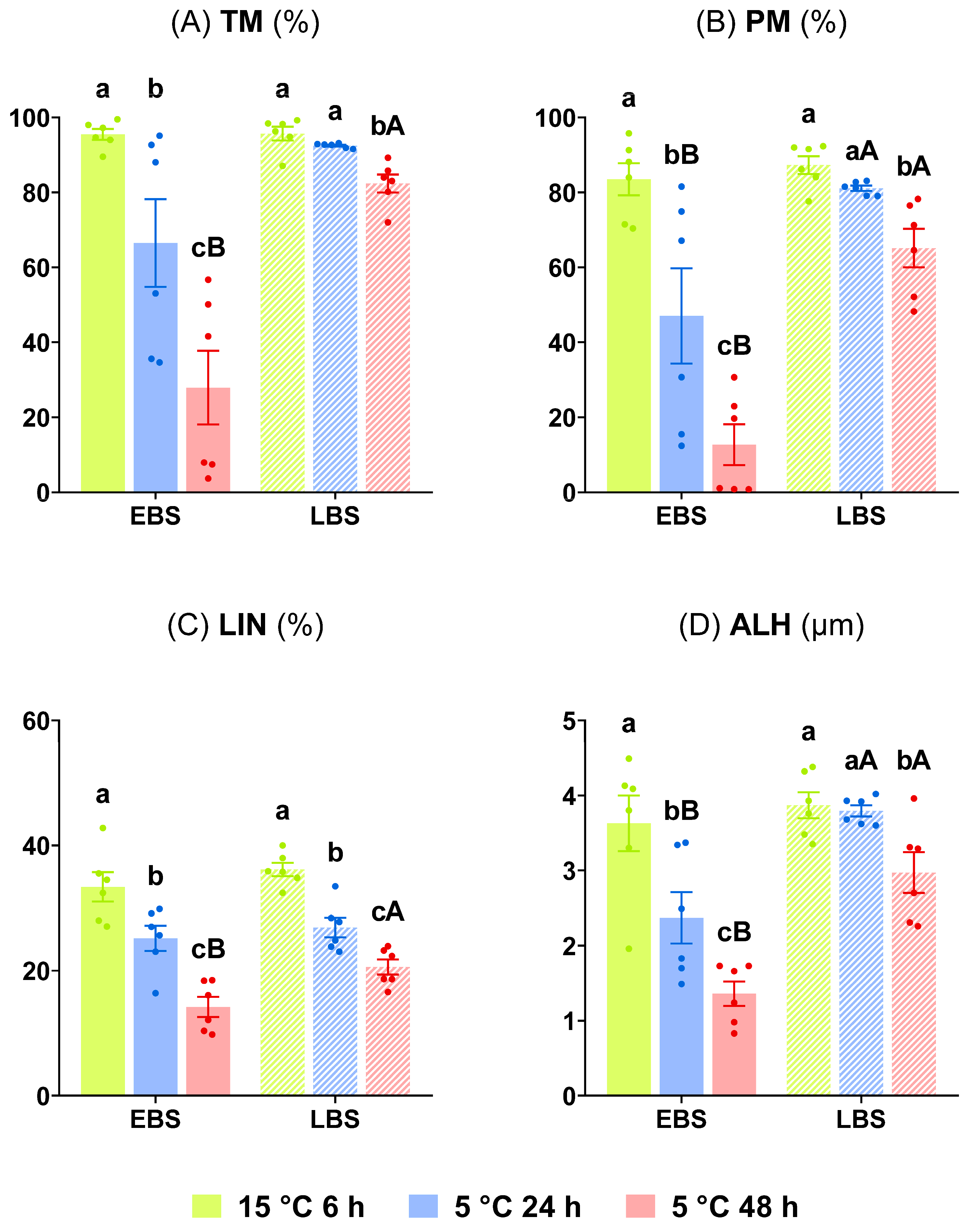
TM, PM, and ALH significantly decreased across preservation protocols during the EBS (p < 0.05), whereas these parameters remained stable up to 24 h (p ≥ 0.05) and declined significantly only after 48 h of storage in the LBS (p < 0.05) (Figure 1A,B,D). By contrast, LIN progressively decreased across preservation protocols at both times of the breeding season, showing significantly lower values under each successive preservation protocol (p < 0.05) (Figure 1C). Additionally, all sperm motility and kinetic parameters studied were significantly lower in the EBS than in the LBS after 48 h of storage at 5 °C (p < 0.05), when comparing both seasons under the same storage conditions (Figure 1).
Detailed numerical values for all motility and kinetic parameters are provided in Table A1.

3.2. Sperm Viability, Apoptotic-like Changes, and Mitochondrial ROS Content by Flow Cytometry

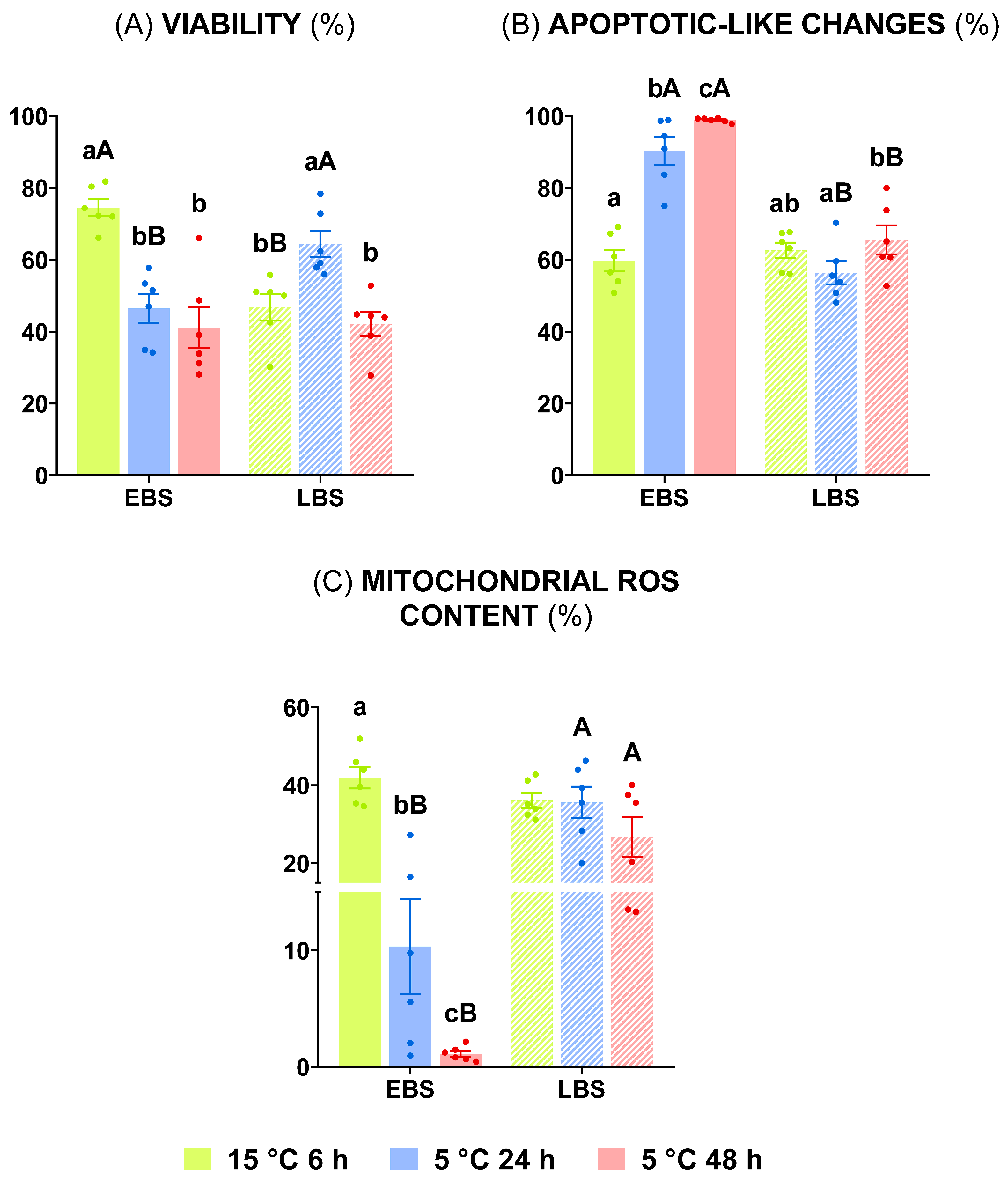
Flow cytometry revealed a significant reduction in sperm viability at 24 and 48 h compared with 6 h in the EBS (p < 0.05), with no significant differences between the two extended storage protocols (p ≥ 0.05). In the LBS, a significant decline in the percentage of viable sperm was observed between 24 and 48 h (p < 0.05). Despite this, viability at 48 h did not differ significantly between EBS and LBS (p ≥ 0.05) (Figure 2A).
The proportion of apoptotic sperm increased progressively across preservation protocols in the EBS (p < 0.05), remained unchanged up to 24 h (p ≥ 0.05) and showed a significant increase only at 48 h in the LBS (p < 0.05). In this storage protocol, apoptotic-like changes were significantly higher in the EBS than in the LBS (p < 0.05) when both seasons were evaluated under the same storage conditions (Figure 2B).
Finally, mitochondrial ROS levels in the EBS samples decreased progressively and significantly at 24 and 48 h (p < 0.05), whereas they remained stable across preservation protocols in the LBS (p ≥ 0.05). After 48 h of storage, sperm from the EBS exhibited significantly lower mitochondrial ROS content than those from the LBS (p < 0.05) (Figure 2C).
Detailed numerical values for all flow cytometry parameters are provided in Table A2.

3.3. Sperm Proteome Assessment

A total of 2,479 proteins were identified and quantified across all samples. As expected in label-free proteomics, protein quantification was incomplete across all samples, leading to missing values for a subset of proteins.
Each biological sample (n = 6 per season) was represented by one or two LC-MS/MS runs derived from independent digestions, which were treated as separate observations in the analysis.
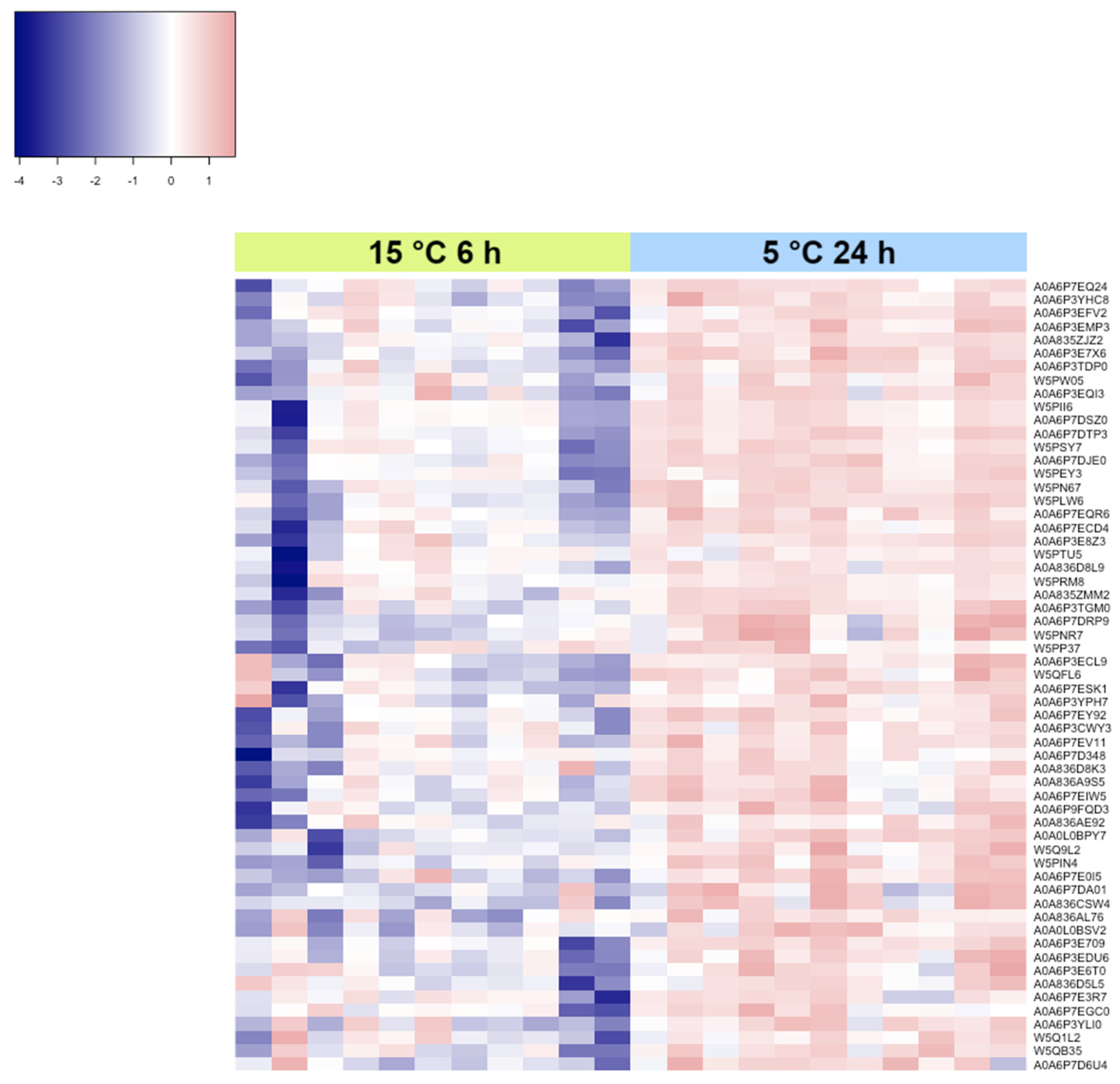
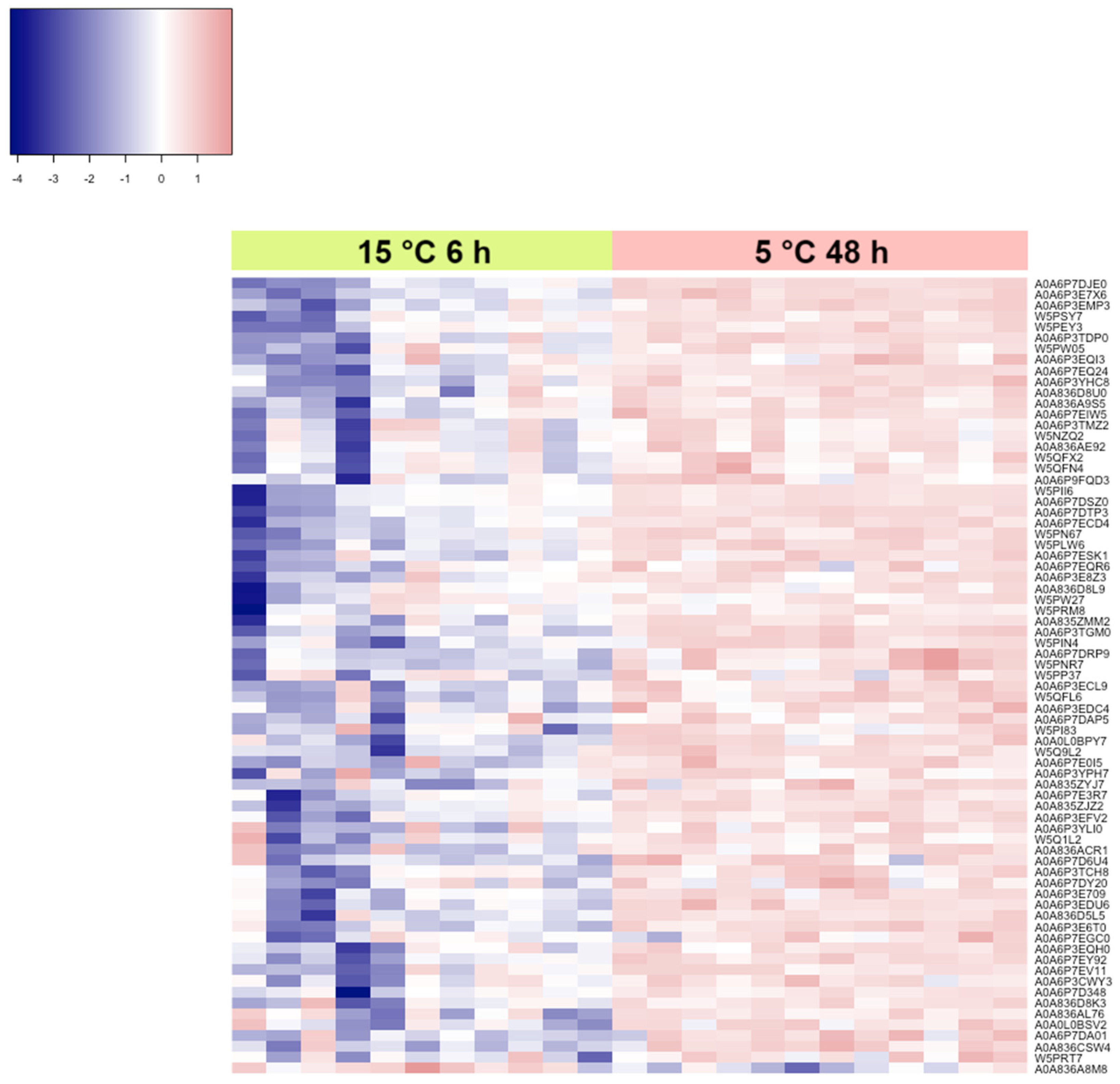
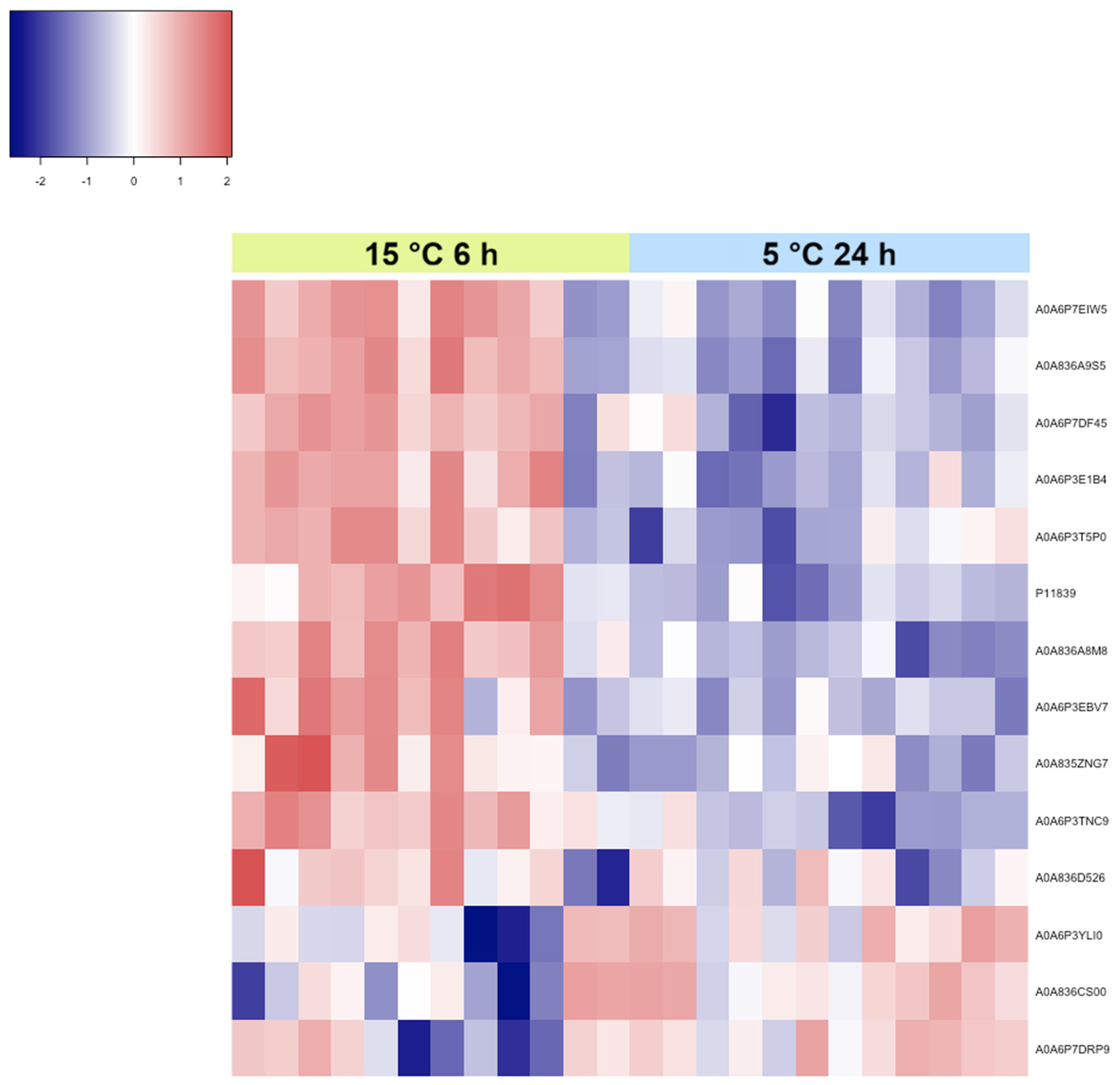
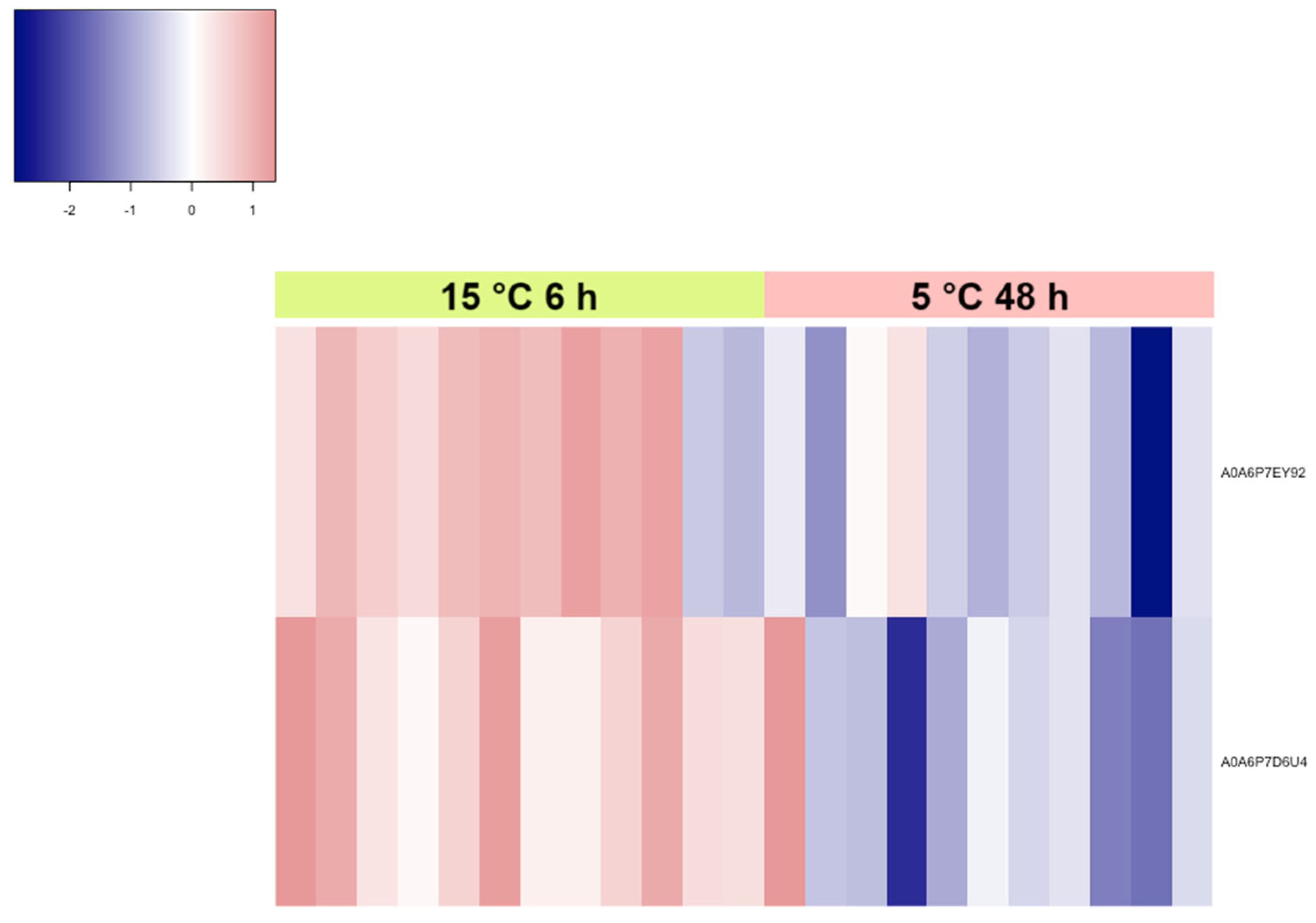
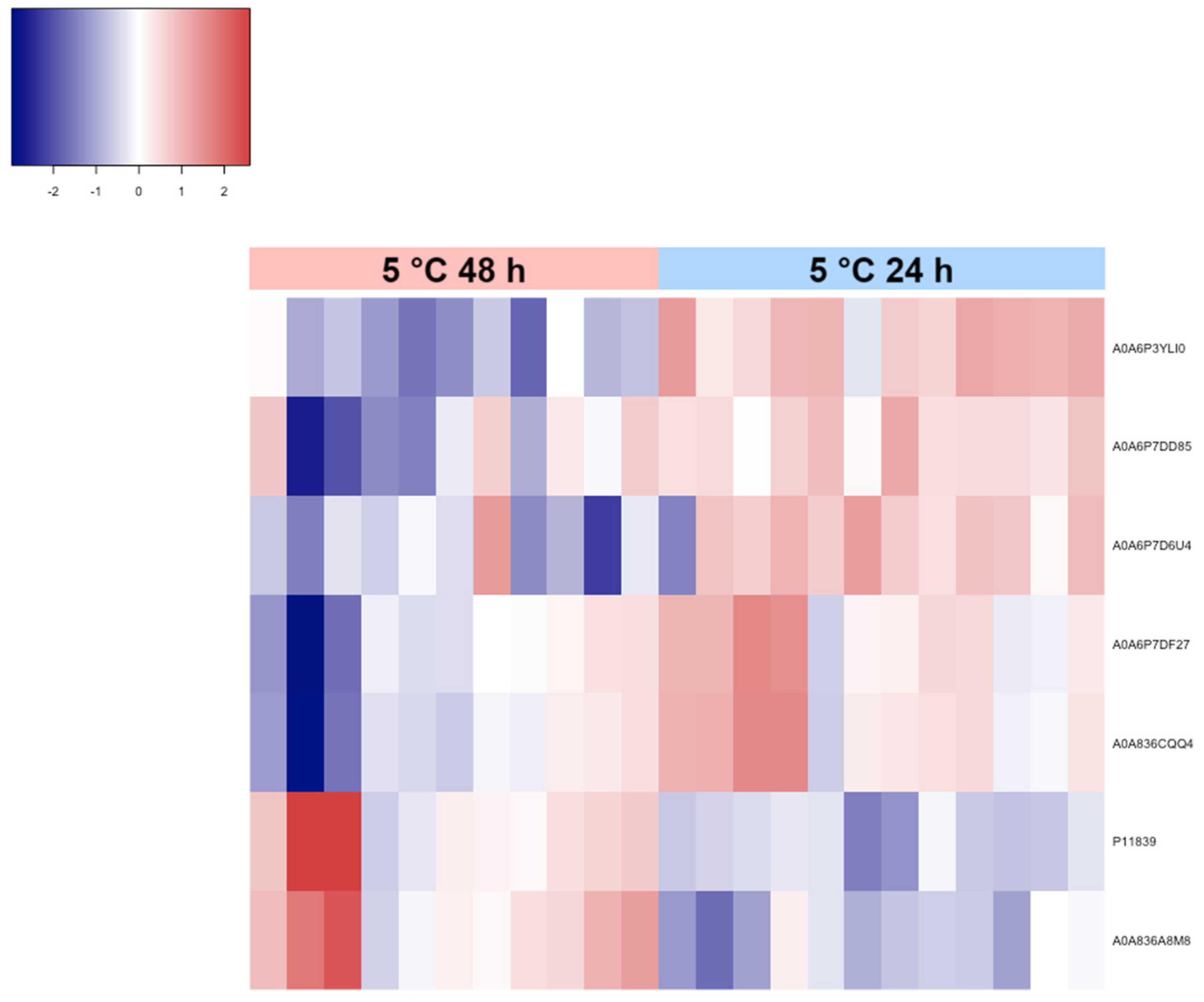
Within the EBS, relative to the standard semen preservation protocol (6 h at 15 °C), 177 proteins showed higher and 16 lower relative abundance after 24 h of storage at 5 °C, whereas 227 showed higher and 20 lower relative abundance after 48 h at 5 °C, using a threshold of q < 0.05 and |log2 fold change| ≥ 1 (Data A1). The comparison between 24 and 48 h did not yield significantly differentially abundant proteins (Data A1). Figure 3 and Figure 4 illustrate the abundance patterns of proteins at 24 or 48 h compared with the reference protocol.
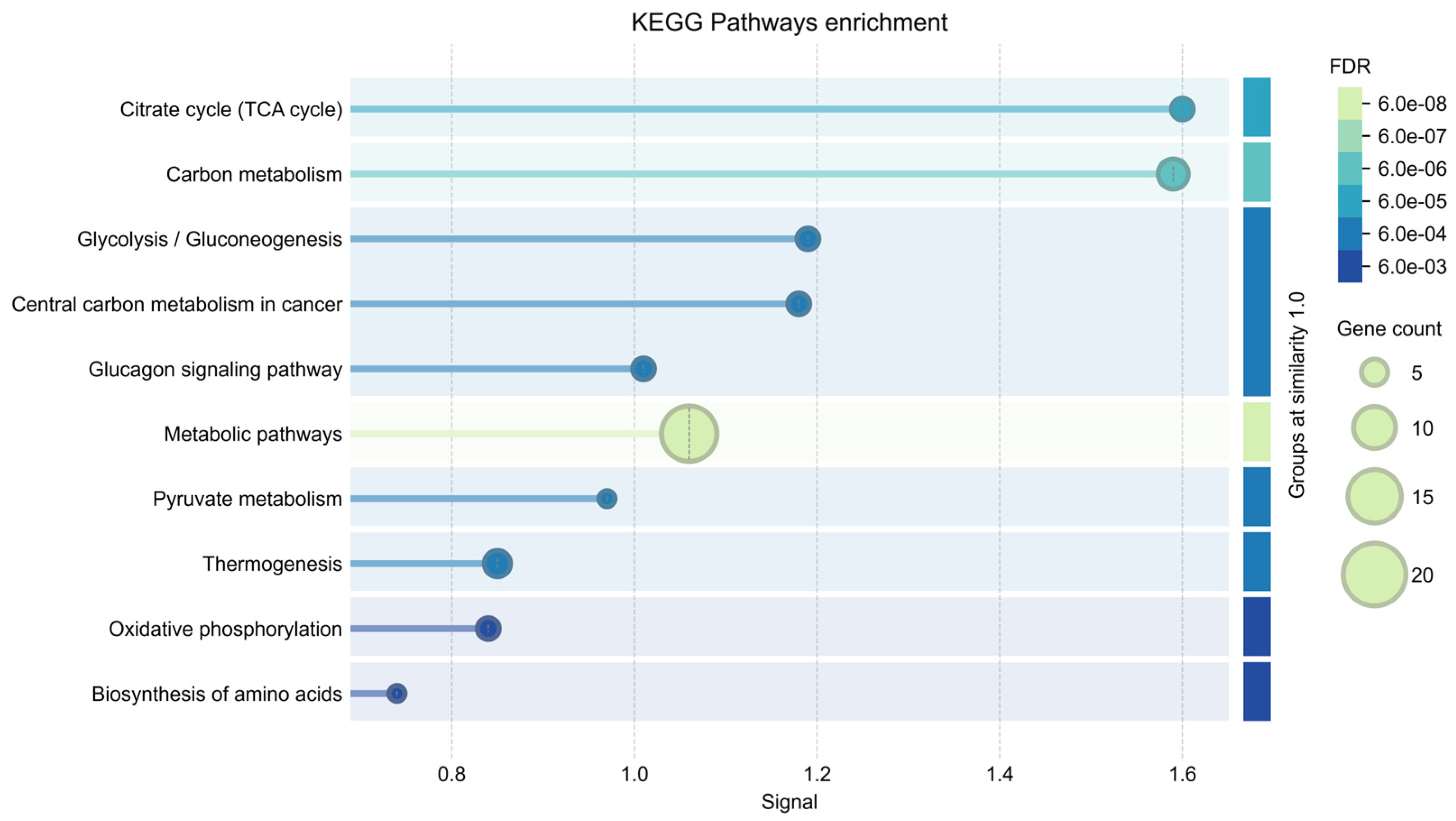
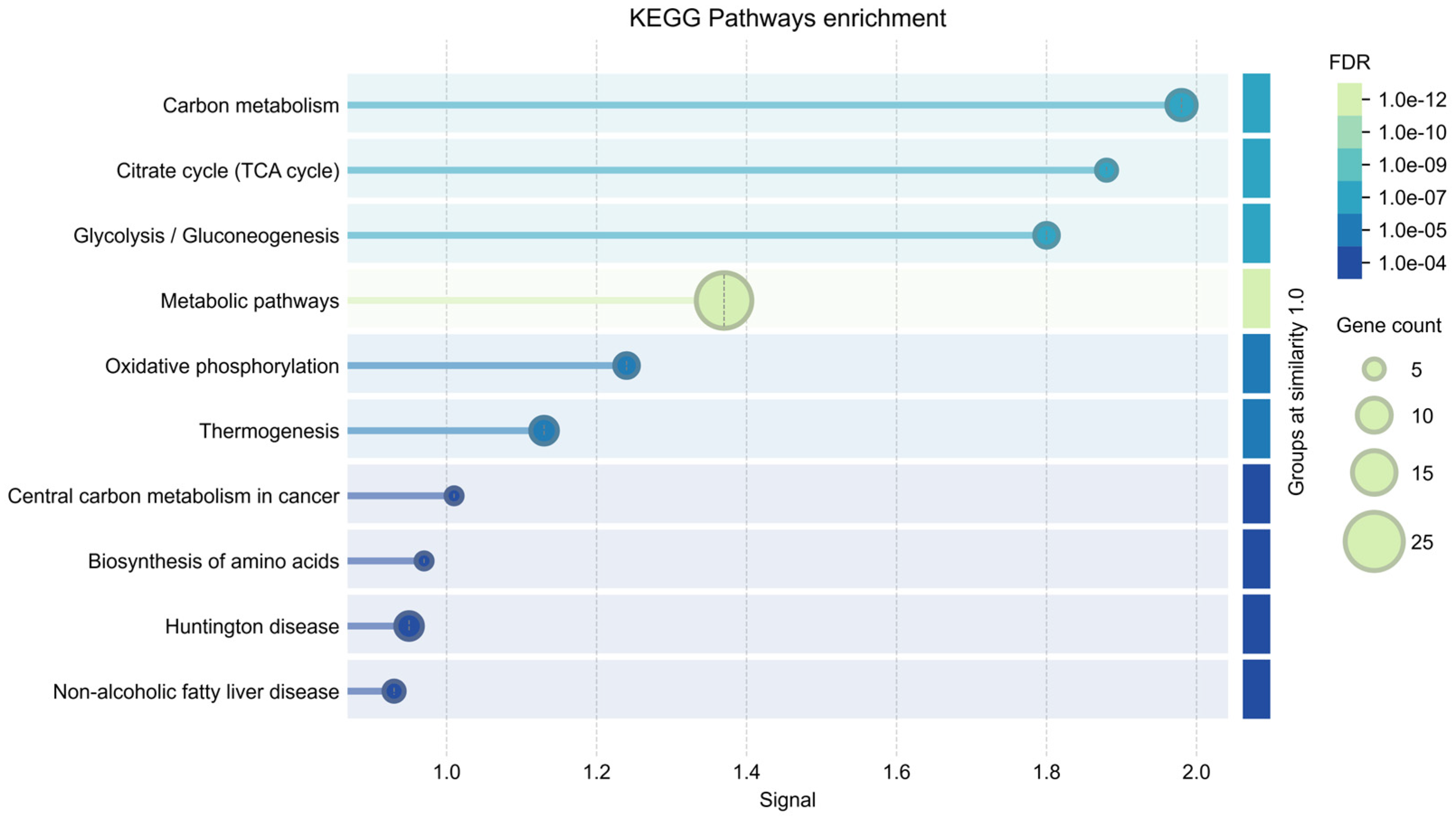
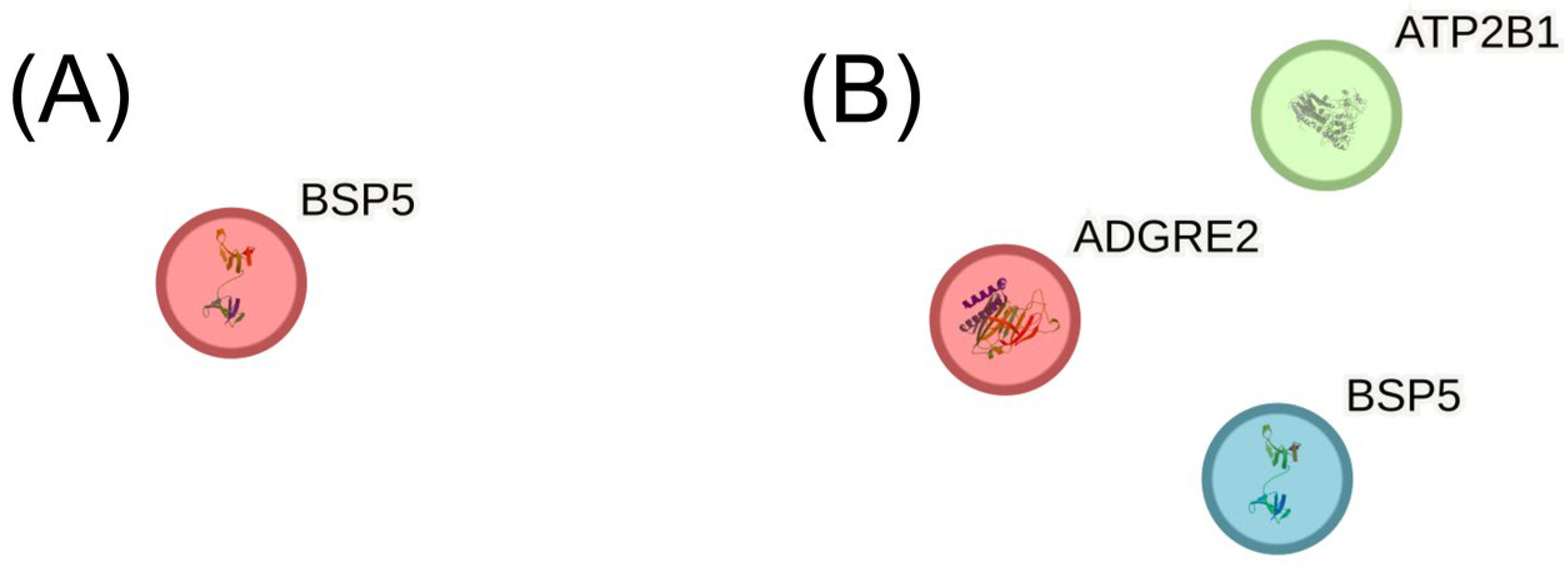
Functional enrichment analysis in the EBS revealed that proteins with higher relative abundance after both 24 and 48 h of storage were associated with pathways related to energy metabolism, including the citrate cycle (TCA cycle), carbon metabolism, glycolysis/gluconeogenesis, oxidative phosphorylation, metabolic pathways, thermogenesis, and biosynthesis of amino acids (Figure 5 and Figure 6). After 24 h, additional pathways related to glucagon signaling and pyruvate metabolism were also identified. Proteins with reduced abundance at both storage times did not show significant enrichment and appeared as isolated nodes, including BSP5 (Binder of sperm 5), ATP2B1 (Plasma membrane calcium-transporting ATPase 1), and ADGRE2 (Adhesion G protein-coupled receptor E2) (Figure A1).
Within the LBS, relative to the reference protocol (6 h at 15 °C), 5 proteins showed higher and 41 lower relative abundance after 24 h of storage at 5 °C (q < 0.05; |log2 fold change| ≥ 1). After 48 h, a similar pattern was observed, with 5 proteins showing higher and 13 lower relative abundance compared to 6 h (q < 0.05; |log2 fold change| ≥ 1). In contrast to the EBS, a significant difference was detected between the two extended storage protocols (24 h vs. 48 h), with 13 proteins showing higher and 12 lower relative abundance at 48 h (q < 0.05; |log2 fold change| ≥ 1) (Data A1). Heatmaps summarize the protein abundance patterns for each pairwise comparison (Figure 7, Figure 8 and Figure 9).
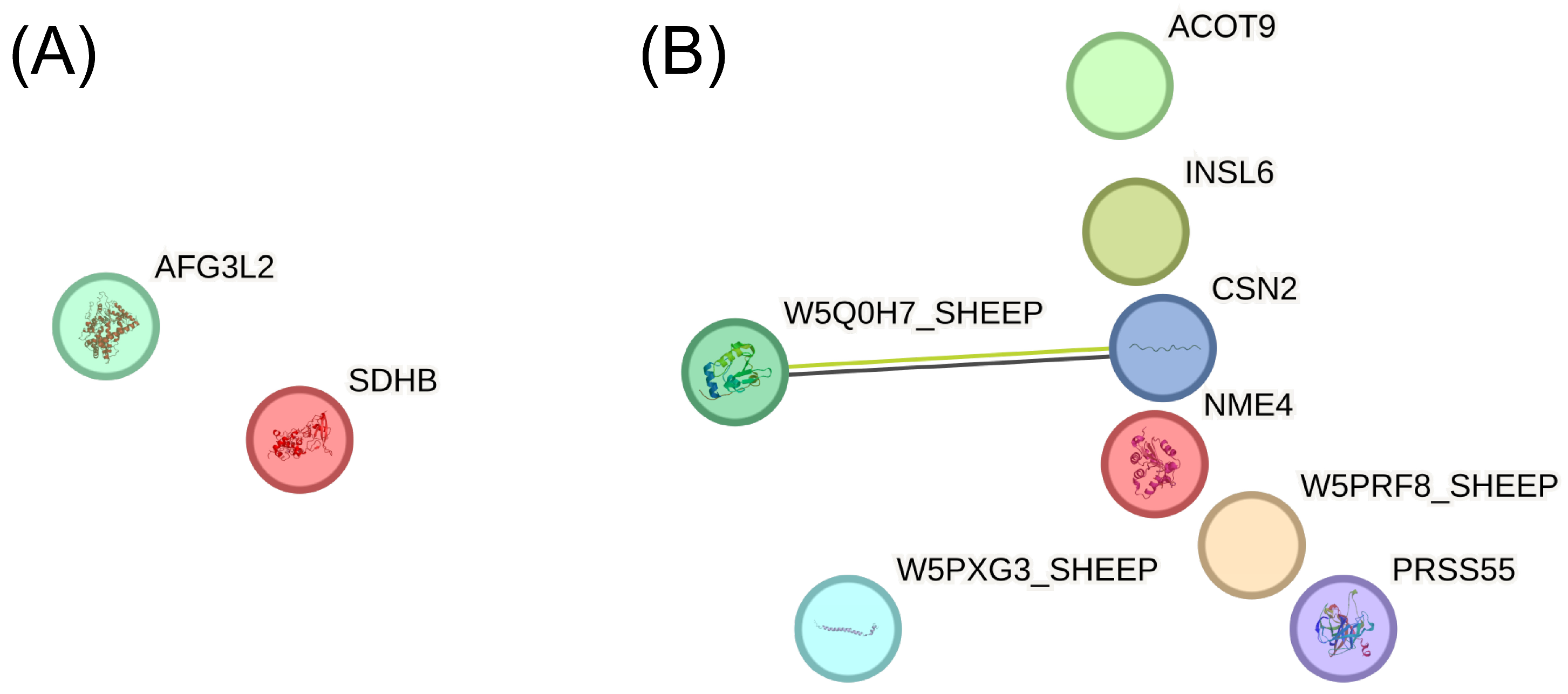
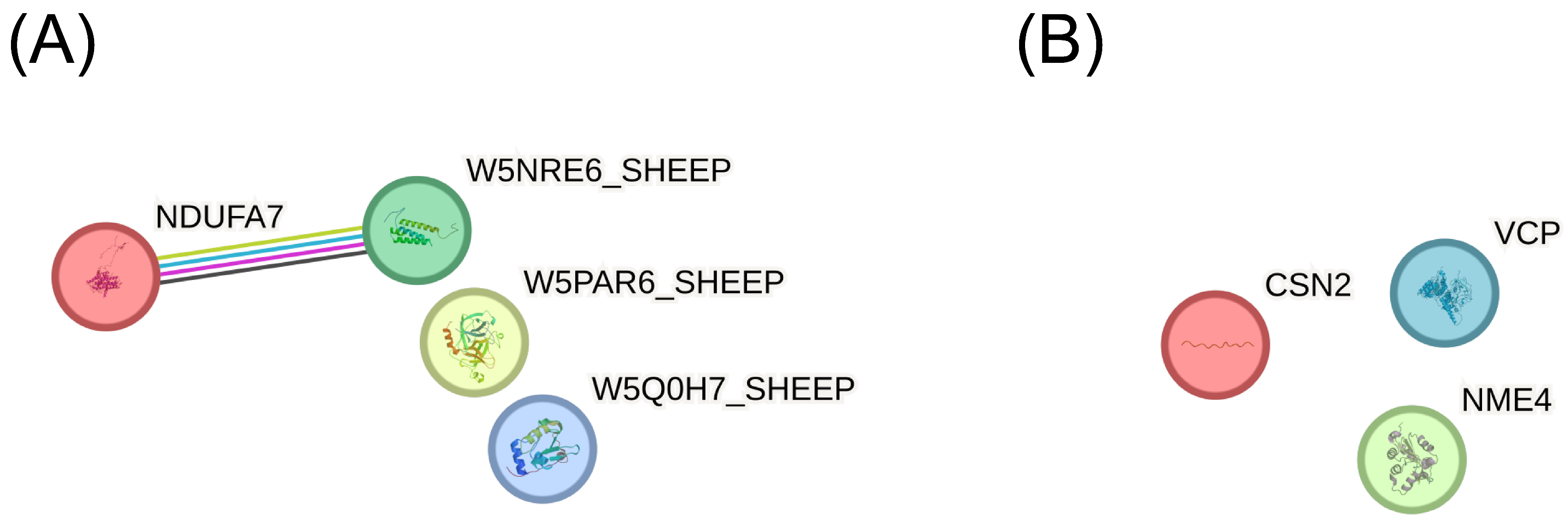
Proteomic changes across preservation protocols in the LBS were quantitatively less pronounced than in the EBS. When comparing samples stored for 24 h to those stored for 6 h, the 5 proteins with higher relative abundance included AFG3L2 (AFG3-like matrix AAA peptidase subunit 2) and SDHB (Succinate dehydrogenase [ubiquinone] iron-sulfur subunit B), whereas the 41 proteins with lower relative abundance included ACOT9 (Acyl-CoA thioesterase 9), INSL6 (Insulin-like peptide 6), CSN2 (Beta-casein), NME4 (Nucleoside diphosphate kinase 4), PRSS55 (Serine protease 55), together with several proteins with limited annotation in Ovis aries databases, such as W5Q0H7_SHEEP (Glycosyl hydrolase family 22 (GH22) domain-containing protein), W5PRF8_SHEEP (Protein phosphatase inhibitor 2-like), and W5PXG3_SHEEP (Cytochrome c oxidase subunit 6C) (Figure A2). Similarly, when comparing samples stored for 48 h with those stored for 6 h, the 5 proteins with higher relative abundance could not be mapped to STRING identifiers, likely reflecting limited annotation and coverage of Ovis aries proteins in current databases, whereas the 13 proteins with lower relative abundance showed sparse connections in STRING analysis. These included NDUFA7 (NADH dehydrogenase [ubiquinone] 1 alpha subcomplex subunit 7), W5NRE6_SHEEP (NADH dehydrogenase [ubiquinone] 1 alpha subcomplex subunit 5), W5PAR6_SHEEP (Peptidase S1 domain-containing protein), and W5Q0H7_SHEEP (Glycosyl hydrolase family 22 (GH22) domain-containing protein) (Figure A3A).
The comparison between the two extended storage protocols (24 and 48 h) revealed 13 proteins with higher relative abundance at 48 h, represented by VCP (Valosin-containing protein), CSN2 (Beta-casein), and NME4 (Nucleoside diphosphate kinase 4) (Figure A3B), and 12 proteins with lower relative abundance (q < 0.05; |log2 fold change| ≥ 1) that could not be matched to STRING identifiers either. Overall, no significant pathway enrichment was detected in the LBS, and the proteins identified appeared as isolated nodes without a defined interaction network.

4. Discussion

This study provides new insights into the functional and proteomic changes experienced by ram sperm during 48 h of liquid storage at 5 °C, highlighting marked differences between samples collected at EBS and LBS in the Northern Hemisphere.
From a functional perspective, although ram sperm quality after short-term storage at 15 °C for 6 h (standard ram semen preservation protocol) was similar across both breeding-season stages, clear differences emerged during medium-term storage at 5 °C for 48 h. Semen collected in the EBS exhibited a faster decline in sperm motility and kinetics, viability, and mitochondrial ROS levels, together with an increase in apoptotic-like changes compared with semen collected in the LBS. As a result, after 48 h of storage, several functional parameters were lower in EBS than in LBS, indicating a reduced resilience of EBS sperm to prolonged storage. These seasonal differences in sperm resilience may be related to physiological changes that occur throughout the breeding season progression. In rams, photoperiod-driven endocrine regulation modulates testicular structure and function, including spermatogenesis [48,49]. During the EBS, animals transition into full reproductive activity, a phase often associated with incomplete physiological stabilization. In contrast, during the LBS, reproductive function is typically more stable, with more consistent hormonal profiles and optimized testicular and sperm characteristics [50,51]. These differences may contribute to the reduced functional stability observed in EBS sperm during storage.
Previous studies have also demonstrated a seasonal influence on the ability of ram sperm to withstand liquid storage, often showing patterns consistent with our observations. For example, Ngcobo and colleagues [52], studying Zulu rams in South Africa, observed higher sperm motility after 24 h at 10 °C during the breeding season (late summer to autumn) than during the non-breeding season (late winter to spring), although this advantage was not maintained at 72 h, suggesting only a transient seasonal effect. Within the breeding season itself, additional variability has also been reported. Francis et al. [53], working with Bannur rams under tropical conditions in India, found that semen collected in summer exhibited the lowest quality across storage times at 4 °C (0, 24, 48, and 72 h), with reduced motility, viability, and acrosome integrity, and increased morphological abnormalities, whereas ejaculates collected in winter or during the monsoon period were more resilient, in line with our results. Similarly, Badi et al. [54] demonstrated reduced total and progressive sperm motility in semen collected during summer compared with autumn in Boujaâd rams in Morocco across all evaluation times (0, 8, and 24 h) during storage at 15 °C. In contrast, Benmoula et al. [55], also working in Morocco, reported no differences in total motility between summer and autumn during storage of INRA180 semen at 15 °C for 24 h, although progressive motility declined earlier (8 h) in autumn than in summer (24 h), indicating an opposite trend to our study. Collectively, these discrepancies highlight that the effect of season on ram sperm liquid preservation is complex and should be interpreted cautiously, as differences among studies may depend not only on whether samples are collected within or outside of the breeding season, but also on the precise timing within the breeding season itself, as well as on storage protocols, breed differences, and broader geographic and climatic conditions.
Additional support comes from studies on cryopreserved ram semen, which, although not directly comparable to refrigeration, consistently indicate that sperm resilience is influenced by seasonality. D’Alessandro and Martemucci [56], studying Leccese rams in Italy, and Malinova and co-workers [57], working with Pleven Blackhead, Assaf, and Kotel breeds in Bulgaria, showed higher post-thaw sperm quality in terms of survival, acrosomal damage, and motility and kinetic parameters during the breeding season compared with the non-breeding season. In addition, Fernandes et al. [58] observed poorer sperm viability after thawing at the onset of the breeding season (late April and early May) than at mid-season (November and December) in Portuguese Merino rams, suggesting that sperm collected earlier in the breeding season may be less resilient to preservation-related stress, in line with the pattern observed in this study.
Importantly, the proteomic analyses in this study provide insights into the molecular changes associated with the distinct functional responses of EBS and LBS sperm to prolonged liquid storage, characterizing for the first time the proteomic dynamics of liquid storage in ram sperm. To date, proteomic research on sperm preservation in the ovine species has largely focused on cryopreservation, consistently revealing substantial alterations in the sperm proteome, including reduced abundance of proteins involved in energy metabolism, oxidative phosphorylation, redox balance, structural integrity, and stress response. These changes have been linked to mitochondrial dysfunction, oxidative stress, and reduced sperm quality after thawing [59,60,61,62,63,64]. However, comparable data on liquid storage are lacking, and no studies have addressed whether these proteomic responses are modulated by seasonality under refrigeration conditions.
When interpreting the proteomic data, it should be noted that no additional washing was performed in the present study to preserve sperm physiological integrity. Furthermore, even when washing procedures are applied, some extracellular components can remain bound to sperm due to their interaction with the cell membrane [46]. Consequently, the detected proteomic profile may include not only sperm-intrinsic components but also proteins tightly associated with the sperm surface, potentially originating from seminal plasma or extender components.
Within this methodological context, EBS samples showed marked changes in the detected proteomic profile during 48 h of storage at 5 °C, including a generalized increase in the abundance of several proteins as early as 24 h, together with enrichment of pathways related to the TCA cycle, glycolysis/gluconeogenesis, oxidative phosphorylation, and amino acid biosynthesis. Comparable results have been reported in boar sperm stored at 15–17 °C for three days, in which proteins involved in energy metabolism, protein folding, and membrane organization increased in abundance after storage [65]. These findings were interpreted as reflecting responses to low-temperature stress or increased energetic demand associated with capacitation-like changes, as also suggested by Chen et al. [66] for frozen-thawed boar sperm. In this sense, the enrichment of metabolic pathways observed in our study is compatible with a protein abundance profile indicative of metabolic remodeling during storage, although these pathways are broad and should be interpreted with caution. Such changes may be associated with altered metabolic activity and could be related to the earlier functional decline observed in EBS samples in terms of motility, viability, and mitochondrial ROS levels, but they could also reflect general alterations in protein abundance without a direct functional implication.
The additional enrichment of pathways related to glucagon signaling and pyruvate metabolism at 24 h could also suggest increased mobilization of carbohydrate-derived substrates. Although glucagon itself has not been described in ram sperm physiology, glucagon-related metabolic signaling has been reported in human sperm, where it modulates mitochondrial activity and energy metabolism [67]. Pyruvate, in contrast, is a well-established metabolic and antioxidant substrate in ram sperm, supporting motility, mitochondrial function, and protection against oxidative stress during storage [68,69]. While such substrate mobilization may be consistent with increased metabolic activity, it could also be associated with alterations in redox balance and mitochondrial efficiency, thereby leading to the accelerated functional deterioration observed in the EBS samples.
In this context, it is important to consider that mature sperm have traditionally been regarded as transcriptionally inactive cells with highly limited translational capacity. However, emerging evidence indicates that sperm retain elements of the translational machinery, including cytoplasmic and mitochondrial ribosomes and associated translation factors, suggesting that selective protein synthesis may occur under specific conditions, particularly during capacitation [70,71,72,73]. Because capacitation-like processes may take place during semen preservation, especially under prolonged storage and stress, it is conceivable that a limited degree of translational activity could occur in this context. Nevertheless, the extent to which such mechanisms contribute to the increase in protein abundance observed here remains unclear. Alternative mechanisms, including differential protein extractability [74], redistribution of proteins among sperm compartments [75,76], and changes in protein detectability associated with post-translational modifications, which are well-established regulators of sperm function and stress responses [77,78,79], could also drive the proteomic remodeling described above.
Conversely, proteins with decreased abundance in the EBS did not cluster into enriched functional pathways and appeared as isolated nodes in STRING analyses, which is consistent with the possibility that protein loss during this period may affect individual components rather than coordinated systems. Among them, BSP5 (Binder of sperm 5), PMCA1 (Plasma membrane calcium-transporting ATPase 1), and ADGRE2 (Adhesion G protein-coupled receptor E2) are highlighted as differentially abundant proteins, although their functional relevance in this context should be interpreted cautiously due to limited annotation and interaction support.
BSP5 belongs to the binder of sperm protein family, one of the most abundant protein groups in bull [80] and ram [81] seminal plasma, which bind to the sperm membrane at ejaculation [82] and regulate membrane remodeling in sperm capacitation [83,84]. In bulls, BSP5 exerts both protective and destabilizing effects depending on its concentration and exposure time [85,86,87,88,89], whereas in rams it appears to play a predominantly protective role, reversing structural membrane damage [90] and improving sperm viability [91] after cooling to 5 °C. Therefore, the decreased abundance of BSP5 observed after 24 and 48 h of storage may reflect the loss of membrane-protective proteins, which could be related to the reduced viability and increased apoptotic-like changes observed in EBS samples.
PMCA1 is a Ca2+ extrusion pump that maintains intracellular calcium at levels compatible with cell viability [92]. Although PMCA4 is the dominant isoform in mammalian sperm, PMCA1 is also present and plays a primary housekeeping role in calcium homeostasis, being essential for embryonic development [93]. PMCA1 can even partially offset the absence of PMCA4, helping to preserve cell viability in vivo [93], a compensatory mechanism further supported by the transfer of PMCA1 to sperm via oviductal extracellular vesicles in PMCA4-deficient female mice [94]. Because Ca2+ homeostasis directly regulates sperm motility [95], capacitation signaling [96], and the acrosome reaction [97,98], the decrease in PMCA1 abundance during EBS storage may indicate a reduced capacity for Ca2+ clearance after cooling-induced disturbances, which could be associated with the decline in motility and kinetics, viability, and mitochondrial ROS production observed in this period.
Finally, ADGRE2 is a member of the adhesion GPCR family primarily described in immune cells, where it participates in cell adhesion and mechanosensing [99]. Its role in sperm physiology remains poorly characterized, and current proteomic studies do not support a direct involvement in sperm function or fertility [100]. Accordingly, the reduced abundance of ADGRE2 observed in this study should be interpreted with caution and may reflect non-specific changes in the EBS samples, rather than a direct contribution to the functional alterations detected.
On the other hand, sperm collected during the LBS displayed a more stable proteome, with only a limited number of proteins showing quantitative variation across storage times. None of these sets yielded significant functional enrichment, and STRING analyses consistently displayed isolated nodes with minimal or no interaction architecture, indicating that cooling-induced proteomic changes during the LBS were sparse, uncoordinated, and not pathway-driven.
Among the few proteins that increased in abundance at 24 h during the LBS, AFG3L2 (AFG3-like matrix AAA peptidase subunit 2) and SDHB (Succinate dehydrogenase [ubiquinone] iron-sulfur subunit B) are both mitochondrial. AFG3L2 is part of the mitochondrial m-AAA complex, which maintains inner mitochondrial membrane proteostasis by degrading misfolded proteins and regulating respiratory chain assembly [101,102,103]. Although its specific role in sperm has not yet been characterized, its known function suggests that its increased relative abundance during storage may be associated with the maintenance of mitochondrial integrity under cooling conditions. Similarly, SDHB, a core subunit of complex II linking the TCA cycle to the electron transport chain [104], plays a key role in ATP production, redox balance, and sperm activation in several species, and its disruption impairs motility and male fertility [105,106,107]. Thus, the elevation of SDHB abundance during LBS could reflect maintenance of mitochondrial function rather than a stress-induced response, in line with the preserved motility and mitochondrial ROS levels observed under these conditions.
Proteins showing increased abundance at 48 h included VCP (Valosin-containing protein), CSN2 (Beta-casein), and NME4 (Nucleoside diphosphate kinase 4). Among them, VCP is a ubiquitin-dependent AAA+ ATPase involved in protein quality control, chromatin remodeling, and sperm capacitation-related signaling pathways [108,109]. However, increased VCP abundance has been negatively associated with sperm concentration, motility, and morphology in humans, suggesting that its overexpression reflects stress-related responses rather than enhanced sperm functionality [110]. In this context, the increase in VCP observed after 48 h of storage under LBS conditions may be associated with proteostatic stress accompanying the decline in sperm motility and overall sperm quality at this time point.
The increase in CSN2 is likely attributable to the composition of the storage extender rather than to sperm-intrinsic proteomic modulation. INRA 96® is a milk-based extender formulated with native phosphocaseinate, a purified fraction composed of total micellar caseins, which is included to provide membrane protection during liquid storage by limiting lipid loss and preventing cold-shock-induced damage [111,112,113]. Therefore, the apparent increase in CSN2 probably reflects residual extender-derived caseins associated with sperm during prolonged storage.
Finally, NME4 is a mitochondrial enzyme involved in nucleotide homeostasis, mitochondrial bioenergetics, cardiolipin dynamics, and mitochondrial quality control [114]. NME4 is highly expressed in testicular tissue compared with other mitochondria-rich organs, suggesting specific roles in reproductive function [115]. Although direct evidence linking NME4 to sperm physiology remains limited, and the potential contribution of extracellular proteins cannot be entirely excluded, mitochondrial dysfunction has been associated with impaired sperm motility and fertility [116]. In this context, the higher abundance of NME4 observed after prolonged storage may reflect alterations in mitochondrial function under these conditions rather than enhanced mitochondrial performance, in line with the early maintenance but progressive decline of sperm functionality observed under LBS conditions.
Proteins showing reduced relative abundance during LBS storage exhibited a similarly uncoordinated interaction pattern, without significant functional enrichment, but were broadly associated with biological processes related to mitochondrial metabolism and sperm competence. Several of these proteins, including ACOT9 (Acyl-CoA thioesterase 9), NDUFA5 and NDUFA7 (NADH dehydrogenase [ubiquinone] 1 alpha subcomplex subunits 5 and 7), and COX6C (Cytochrome c oxidase subunit 6C), are directly involved in lipid metabolism and oxidative phosphorylation, suggesting that their decrease may contribute to progressive impairments in mitochondrial function during storage. Although ACOT9 has not been specifically characterized in sperm, acyl-CoA thioesterases regulate intracellular fatty acyl-CoA availability and mitochondrial β-oxidation [117,118], processes increasingly recognized as relevant to sperm motility under substrate-limited conditions [119,120,121]. Likewise, NDUFA5 and NDUFA7 are components of mitochondrial complex I, and evidence from related subunits in humans, rodents, and Drosophila links their reduced abundance to impaired mitochondrial membrane potential, increased oxidative stress, and decreased male fertility [122,123,124]. In addition, cytochrome c oxidase (complex IV) is the terminal enzyme of the respiratory chain, and several of its subunits display testis- or sperm-enriched expression patterns that fine-tune oxidative phosphorylation to meet the energy demands of sperm motility [125,126,127]. Alterations in these subunits have been associated with reduced motility and subfertility in multiple species, often without overt disruption of basal respiration, indicating a selective impairment of sperm performance rather than global mitochondrial failure [128,129]. Thus, the decrease in COX6C observed in the present study is consistent with impaired mitochondrial efficiency during storage. Taken together, the concurrent decreases in proteins involved in lipid utilization (ACOT9), electron entry into the respiratory chain (NDUFA5/NDUFA7), and terminal electron transfer (COX6C) may indicate a progressive, multi-level weakening of mitochondrial efficiency during LBS storage. This could be related to the decline in sperm functionality observed beyond the first 24 h of preservation, particularly affecting motility and energy-dependent processes.
Beyond mitochondrial metabolism, regulatory proteins linked to the functional state of mature sperm were also affected. W5PRF8_SHEEP (Protein phosphatase inhibitor 2-like) showed reduced abundance throughout storage. In mammalian sperm, inhibitor 2-like proteins regulate the sperm-specific phosphatase PP1γ2, a central negative regulator of motility [130,131]. Proper control of PP1γ2 activity is important for maintaining sperm motility and capacitation-associated signaling, and disruption of PP1-inhibitor complexes has been associated with impaired sustained motility [132,133]. Therefore, the decrease in this inhibitor protein during LBS storage may be linked to alterations in regulatory mechanisms that maintain sperm motility over time.
Among the proteins with lower abundance, PRSS55 (Serine protease 55) deserves particular attention due to its well-established roles in sperm maturation, structural integrity, and fertilization competence. Loss-of-function studies in mice have demonstrated severe male infertility due to impaired uterotubal junction migration and defective zona pellucida binding, sometimes accompanied by flagellar and mitochondrial abnormalities and reduced ATP levels [134,135,136]. Moreover, a pathogenic PRSS55 variant has been associated with severe teratozoospermia in humans [137]. In this context, the reduction in PRSS55 during LBS storage may be associated with sperm functional changes observed at extended storage times.
Additional proteins with reduced abundance during LBS storage were linked to spermatogenic quality and sperm surface composition. INSL6 (Insulin-like peptide 6), a germ-cell-derived hormone essential for normal spermatogenesis and sperm production [138,139], was also reduced over time. INSL6 deficiency leads to meiotic arrest, increased germ-cell apoptosis, and the production of poorly motile sperm in animal models [140], and altered levels have been associated with human spermatogenic failure [141]. Although INSL6 is not known to directly regulate mature sperm function, its reduction during storage may reflect changes in proteins associated with spermatogenic origin or cellular integrity, though its functional implications in this context remain unclear.
W5PAR6_SHEEP (Peptidase S1 domain-containing protein) also showed reduced abundance during LBS storage. While this protein has been identified in ovine testis and sperm proteomic datasets [142,143], its specific function in sperm physiology remains unknown, and its decrease cannot be directly linked to a defined functional outcome.
Similarly, W5Q0H7_SHEEP (Glycosyl hydrolase family 22 (GH22) domain-containing protein) was reduced during LBS storage. GH22 proteins are lysozyme-like enzymes involved in glycan hydrolysis and antimicrobial defense [144,145,146], and related proteins have been detected in seminal plasma and at the sperm surface, where they are thought to contribute to immune modulation, antimicrobial protection, or interactions with the female reproductive tract [147,148,149,150,151]. In this context, the decrease in W5Q0H7_SHEEP during prolonged storage may reflect alterations in sperm surface-associated proteins, but the functional consequences of these changes cannot be established.
The biological mechanisms underlying the different responses observed between EBS and LBS samples remain to be fully elucidated. Several factors could contribute to this seasonal difference in sperm resilience to refrigeration, including changes in the lipid composition of the sperm membrane—particularly in fatty acid profiles and cholesterol content [152,153]— and in the proteins involved in membrane stabilization and antioxidant protection of seminal plasma [154,155]. In addition, differences in the baseline molecular characteristics of sperm cells, even in the absence of detectable changes in conventional functional parameters, may also contribute to the distinct responses observed between the two seasonal periods [41]. Although these factors were not specifically evaluated in the present study, they represent plausible mechanisms that could partly explain the reduced stability of EBS sperm during prolonged liquid storage.
Overall, our results indicate that seasonality influences both functional and molecular changes in ram sperm during 48-h liquid storage at 5 °C, affecting their resilience to preservation-related stress. However, given the limited sample size, the exploratory nature of the proteomic analysis, the use of technical replicates derived from the same biological samples, as well as the potential contribution of extracellular-derived proteins and the limited functional characterization of several identified proteins, further studies, including orthogonal validation approaches, are needed to clarify the biological significance of these findings.

5. Conclusions

Ejaculates collected during the EBS showed lower functional stability than those obtained from the LBS during 48-h liquid storage at 5 °C. While sperm quality was initially comparable between the two stages of the breeding season, EBS samples exhibited a significantly faster decline in sperm motility and kinetics, viability, and mitochondrial ROS levels, together with an increase in apoptotic-like changes. As a result, after 48 h of storage, several functional parameters were lower in EBS than in LBS, indicating a reduced resilience of EBS sperm to prolonged storage.
Proteomic analyses revealed distinct seasonal patterns associated with storage. EBS sperm showed more pronounced changes in protein abundance, including enrichment of metabolic pathways and a reduction in proteins associated with membrane stability and ion regulation. In contrast, LBS sperm displayed a comparatively stable proteome, with fewer, more isolated changes, mainly affecting mitochondrial and regulatory proteins.
Altogether, these findings indicate that both prolonged storage at 5 °C and the breeding season stage influence ram sperm resilience to liquid storage and support the need to consider seasonal variation when developing strategies to extend semen lifespan for ovine artificial insemination.

Author Contributions

All authors have contributed substantially to this manuscript. Conceptualization: M.N.-M., M.F.R., M.A., R.M.-G., C.P.-M., V.C.-S., L.A. and L.A.-L.; Methodology: M.N.-M., M.F.R., M.A., R.M.-G., C.P.-M., V.C.-S., A.S.-R., F.E.M.-C., L.A., and L.A.-L.; Software: M.N.-M. and A.S.-R.; Validation: M.N.-M., M.F.R., M.A., R.M.-G., C.P.-M., V.C.-S., L.A. and L.A.-L.; Formal analysis: M.N.-M. and A.S.-R.; Investigation: M.N.-M., R.M.-G., C.P.-M., V.C.-S., A.S.-R. and F.E.M.-C.; Resources: M.F.R., M.A., L.A. and L.A.-L.; Data curation: M.N.-M.; Writing—original draft preparation: M.N.-M.; Writing—review and editing: M.F.R., M.A., L.A. and L.A.-L.; Visualization: M.N.-M.; Supervision: M.F.R., M.A., L.A. and L.A.-L.; Project administration: M.A. and L.A.-L.; Funding acquisition: L.A. and L.A.-L. All authors have read and agreed to the published version of the manuscript.

Funding

This research is part of the project PID2021-122470OB-I00, supported by the MCIN/AEI/10.13039/501100011033/FEDER, UE. Moreover, it is partially financed by MINECO (AGL2017-83098-R) and Universidad de León. Victor Contreras-Santamaria was supported by MICIU (fellowship FPU24/02100).

Institutional Review Board Statement

The present study was conducted in accordance with the Guidelines of the European Union Council (2010/63/EU) and Spanish legislation (RD/1386/2018) for the protection of laboratory animals. The animal study protocol was approved by Comité de Ética e Integridad Científica de la Universidad de León (ETICA-ULE-013-2018 and ETICA-ULE-050-2022) on 7 May 2018 and 29 November 2022.

Data Availability Statement

The data presented in this study are available from the corresponding author upon reasonable request.

Acknowledgments

The authors thank Pedro José de Vega Álvarez and Ainoa Jordán Esteban for their help in acquiring and analyzing the samples, and the staff of CENSYRA, Ovigén, and ASSAF.E for their collaboration in developing this work.

Conflicts of Interest

The authors declare no conflicts of interest.

Abbreviations

The following abbreviations are used in this manuscript:
ACOT9Acyl-CoA thioesterase 9
ADGRE2Adhesion G protein-coupled receptor E2
AFG3L2AFG3-like matrix AAA peptidase subunit 2
ALHAmplitude of lateral head displacement
ATP2B1Plasma membrane calcium-transporting ATPase 1
BSP5Binder of sperm 5
COX6CCytochrome c oxidase subunit 6C
CSN2Beta-casein
EBSEarly breeding season
INSL6Insulin-like peptide 6
LBSLate breeding season
LINLinearity
MSMass spectrometry
NDUFA5NADH dehydrogenase [ubiquinone] 1 alpha subcomplex subunit 5
NDUFA7NADH dehydrogenase [ubiquinone] 1 alpha subcomplex subunit 7
NME4Nucleoside diphosphate kinase 4
PBSPhosphate-buffered saline
PMProgressive motility
PRSS55Serine protease 55
ROSReactive oxygen species
SDHBSuccinate dehydrogenase [ubiquinone] iron-sulfur subunit B
SEMStandard error of the mean
TMTotal motility
UHPLCUltra-high-performance liquid chromatography
VCLCurvilinear velocity
VCPValosin-containing protein
W5NRE6_SHEEPNADH dehydrogenase [ubiquinone] 1 alpha subcomplex subunit 5 (NDUFA5)
W5PAR6_SHEEPPeptidase S1 domain-containing protein
W5PRF8_SHEEPProtein phosphatase inhibitor 2-like
W5PXG3_SHEEPCytochrome c oxidase subunit 6C (COX6C)
W5Q0H7_SHEEPGlycosyl hydrolase family 22 (GH22) domain-containing protein

Appendix A

Table A1. Motility and kinetic parameters (mean ± SEM) in ram sperm under different preservation protocols in the Early (EBS) and Late Breeding Season (LBS).
SeasonParameter15 °C 6 h5 °C 24 h5 °C 48 h
EBSTotal motility (%)95.47 ± 1.4666.51 ± 11.7127.91 ± 9.86
Progressive motility (%)83.50 ± 4.2747.03 ± 12.6912.67 ± 5.46
Linearity (%)33.39 ± 2.3425.19 ± 2.0214.21 ± 1.61
Amplitude of lateral head displacement (μm)3.63 ± 0.372.37 ± 0.341.36 ± 0.16
LBSTotal motility (%)95.68 ± 1.8492.47 ± 0.2582.36 ± 2.41
Progressive motility (%)87.27 ± 2.3881.11 ± 0.7165.15 ± 5.14
Linearity (%)36.14 ± 1.0626.90 ± 1.5820.58 ± 1.21
Amplitude of lateral head displacement (μm)3.87 ± 0.173.80 ± 0.072.97 ± 0.27
Statistical differences among experimental conditions are shown in Figure 1.
Table A2. Flow cytometry parameters (mean ± SEM) in ram sperm under different preservation protocols in the Early (EBS) and Late Breeding Season (LBS).
SeasonParameter15 °C 6 h5 °C 24 h5 °C 48 h
EBSViability (%)74.52 ± 2.3846.47 ± 4.0341.17 ± 5.78
Apoptotic-like changes (%)59.77 ± 3.0090.28 ± 3.8398.88 ± 0.25
Mitochondrial ROS content (%)41.92 ± 2.7410.34 ± 4.091.13 ± 0.26
LBSViability (%)46.80 ± 3.7564.43 ± 3.7042.12 ± 3.39
Apoptotic-like changes (%)62.62 ± 2.1456.38 ± 3.2265.52 ± 4.03
Mitochondrial ROS content (%)36.08 ± 1.9635.57 ± 4.0626.70 ± 5.06
Statistical differences among experimental conditions are shown in Figure 2.
Data A1. List of differentially abundant proteins (q < 0.05; |log2 fold change| ≥ 1) identified in ram sperm across pairwise comparisons. Each worksheet corresponds to a specific pairwise comparison between storage conditions (15 °C for 6 h, 5 °C for 24 h, and 5 °C for 48 h) within seasonal stages (EBS, Early Breeding Season; LBS, Late Breeding Season). UniProt: UniProt accession number of the identified protein. UniProtLink: Direct link to the corresponding UniProt entry for each protein. log2FC: Log2 fold change in protein abundance between the two conditions compared. HigherIn: Condition in which the protein is more abundant. AveExpr: Average log2 expression value across all samples included in the comparison. t: Moderated t-statistic obtained from the differential analysis. P.Value: Raw p-value from the statistical test. adj.P.Val: Adjusted p-value (false discovery rate, FDR; Benjamini–Hochberg correction), equivalent to the q-value used throughout the manuscript. B: Log-odds that the protein is differentially abundant.
Figure A1. STRING network of proteins with lower abundance at 24 and 48 h vs. 6 h in ram sperm during the Early Breeding Season (EBS). Proteins were compared between 15 °C for 6 h and either (A) 5 °C for 24 h or (B) 5 °C for 48 h. No significant functional enrichment was detected, and proteins appeared mainly as isolated nodes represented in STRING by gene names, UniProt-derived identifiers, or orthologous matches, depending on database availability.
Agriculture 16 01045 g0a1
Figure A2. STRING network of proteins differentially abundant in ram sperm during the Late Breeding Season (LBS). (A) Proteins with higher abundance at 5 °C for 24 h compared with 15 °C for 6 h, and (B) Proteins with lower abundance at 5 °C for 24 h compared with 15 °C for 6 h. No significant functional enrichment was detected, and proteins appeared mainly as isolated nodes in STRING, represented by gene names, UniProt-derived identifiers, or orthologous matches, depending on database availability.
Agriculture 16 01045 g0a2
Figure A3. STRING network of proteins differentially abundant in ram sperm during the Late Breeding Season (LBS). (A) Proteins with lower abundance at 5 °C for 48 h compared with 15 °C for 6 h, and (B) Proteins with higher abundance at 5 °C for 48 h compared with 5 °C for 24 h. No significant functional enrichment was detected, and proteins appeared mainly as isolated nodes in STRING, represented by gene names, UniProt-derived identifiers, or orthologous matches, depending on database availability.
Agriculture 16 01045 g0a3

References

  1. Naitana, S.; Ledda, S. Reproductive Technologies in Sheep. In Reproductive Technologies in Animals; Academic Press: Cambridge, MA, USA, 2020; pp. 31–54. [Google Scholar]
  2. Amiridis, G.S.; Cseh, S. Assisted Reproductive Technologies in the Reproductive Management of Small Ruminants. Anim. Reprod. Sci. 2012, 130, 152–161. [Google Scholar] [CrossRef] [Scilit]
  3. Velasco, A.; Ruiz, S. New Approaches to Assess Fertility in Domestic Animals: Relationship between Arterial Blood Flow to the Testicles and Seminal Quality. Animals 2021, 11, 12. [Google Scholar] [CrossRef] [Scilit]
  4. Palacín, I.; Yániz, J.L.; Fantova, E.; Blasco, M.E.; Quintín-Casorrán, F.J.; Sevilla-Mur, E.; Santolaria, P. Factors Affecting Fertility after Cervical Insemination with Cooled Semen in Meat Sheep. Anim. Reprod. Sci. 2012, 132, 139–144. [Google Scholar] [CrossRef] [Scilit]
  5. Santolaria, P.; Palacin, I.; Yaniz, J. Management Factors Affecting Fertility in Sheep. In Artificial Insemination in Farm Animals; IntechOpen: London, UK, 2011; pp. 167–190. [Google Scholar]
  6. Halbert, G.W.; Dobson, H.; Walton, J.S.; Buckrell, B.C. The Structure of the Cervical Canal of the Ewe. Theriogenology 1990, 33, 977–992. [Google Scholar] [CrossRef] [Scilit]
  7. Kershaw, C.M.; Khalid, M.; McGowan, M.R.; Ingram, K.; Leethongdee, S.; Wax, G.; Scaramuzzi, R.J. The Anatomy of the Sheep Cervix and Its Influence on the Transcervical Passage of an Inseminating Pipette into the Uterine Lumen. Theriogenology 2005, 64, 1225–1235. [Google Scholar] [CrossRef] [Scilit] [PubMed]
  8. Salamon, S.; Maxwell, W.M.C. Frozen Storage of Ram Semen II. Causes of Low Fertility after Cervical Insemination and Methods of Improvement. Anim. Reprod. Sci. 1995, 38, 1–36. [Google Scholar] [CrossRef] [Scilit]
  9. Anel, L.; Kaabi, M.; Abroug, B.; Alvarez, M.; Anel, E.; Boixo, J.C.; De La Fuente, L.F.; De Paz, P. Factors Influencing the Success of Vaginal and Laparoscopic Artificial Insemination in Churra Ewes: A Field Assay. Theriogenology 2005, 63, 1235–1247. [Google Scholar] [CrossRef] [Scilit]
  10. Fair, S.; Hanrahan, J.P.; O’Meara, C.M.; Duffy, P.; Rizos, D.; Wade, M.; Donovan, A.; Boland, M.P.; Lonergan, P.; Evans, A.C.O. Differences between Belclare and Suffolk Ewes in Fertilization Rate, Embryo Quality and Accessory Sperm Number after Cervical or Laparoscopic Artificial Insemination. Theriogenology 2005, 63, 1995–2005. [Google Scholar] [CrossRef] [Scilit]
  11. Masoudi, R.; Zare Shahneh, A.; Towhidi, A.; Kohram, H.; Akbarisharif, A.; Sharafi, M. Fertility Response of Artificial Insemination Methods in Sheep with Fresh and Frozen-Thawed Semen. Cryobiology 2017, 74, 77–80. [Google Scholar] [CrossRef] [Scilit] [PubMed]
  12. Evans, G.; Maxwell, W.M.C.; Salamon, S. Salamon’s Artificial Insemination of Sheep and Goats; Butterworth-Heinemann Ltd.: Oxford, UK, 1987. [Google Scholar]
  13. Fernandez-Abella, D.; Preve, M.O.; Villegas, N. Insemination Time and Dilution Rate of Cooled and Chilled Ram Semen Affects Fertility. Theriogenology 2003, 60, 21–26. [Google Scholar] [CrossRef] [Scilit]
  14. Alvarez, M.; Anel-Lopez, L.; Boixo, J.C.; Chamorro, C.; Neila-Montero, M.; Montes-Garrido, R.; de Paz, P.; Anel, L. Current Challenges in Sheep Artificial Insemination: A Particular Insight. Reprod. Domest. Anim. 2019, 54, 32–40. [Google Scholar] [CrossRef] [Scilit]
  15. Maxwell, W.M.C.; Salomon, S. Liquid Storage of Ram Semen: A Review. Reprod. Fertil. Dev. 1993, 5, 613–638. [Google Scholar] [CrossRef] [Scilit]
  16. Neila-Montero, M.; Alvarez, M.; Riesco, M.F.; Soriano-Úbeda, C.; Montes-Garrido, R.; Palacin-Martinez, C.; de Paz, P.; Anel, L.; Anel-Lopez, L. Seminal Plasma Removal for Medium-Term Preservation of Ram Sperm at 5 °C. BMC Vet. Res. 2024, 20, 360. [Google Scholar] [CrossRef] [Scilit]
  17. Casao, A.; Cebrián, I.; Asumpção, M.; Pérez-Pé, R.; Abecia, J.A.; Forcada, F.; Cebrián-Pérez, J.A.; Muiño-Blanco, T. Seasonal Variations of Melatonin in Ram Seminal Plasma Are Correlated to Those of Testosterone and Antioxidant Enzymes. Reprod. Biol. Endocrinol. 2010, 8, 59. [Google Scholar] [CrossRef] [Scilit]
  18. Chemineau, P.; Malpaux, B.; Delgadillo, J.A.; Guérin, Y.; Ravault, J.P.; Thimonier, J.; Pelletier, J. Control of Sheep and Goat Reproduction: Use of Light and Melatonin. Anim. Reprod. Sci. 1992, 30, 157–184. [Google Scholar] [CrossRef] [Scilit]
  19. Hedia, M.G.; El-Belely, M.S.; Ismail, S.T.; Abo El-Maaty, A.M. Monthly Changes in Testicular Blood Flow Dynamics and Their Association with Testicular Volume, Plasma Steroid Hormones Profile and Semen Characteristics in Rams. Theriogenology 2019, 123, 68–73. [Google Scholar] [CrossRef] [Scilit]
  20. Windsor, D.P. Factors Influencing the Success of Transcervical Insemination in Merino Ewes. Theriogenology 1995, 43, 1009–1018. [Google Scholar] [CrossRef] [Scilit] [PubMed]
  21. Taha, T.A.; Abdel-Gawad, E.I.; Ayoub, M.A. Monthly Variations in Some Reproductive Parameters of Barki and Awassi Rams throughout 1 Year under Subtropical Conditions 1. Semen Characteristics and Hormonal Levels. Anim. Sci. 2000, 71, 317–324. [Google Scholar] [CrossRef] [Scilit]
  22. Moghaddam, G.H.; Pourseif, M.M.; Rafat, S.A. Seasonal Variation in Semen Quantity and Quality Traits of Iranian Crossbred Rams. Slovak J. Anim. Sci. 2012, 45, 67–75. [Google Scholar]
  23. Pourseif, M. Photoperiod as a Factor for Studying Fluctuations of Seminal Traits during Breeding and Non-Breeding Seasons. J. Cell Anim. Biol. 2012, 6, 241–249. [Google Scholar] [CrossRef] [Scilit]
  24. Muller, C.H. Rationale, Interpretation, Andrology Lab Corner Validation, and Uses of Sperm Function Tests. J. Androl. 2000, 21, 10–30. [Google Scholar] [CrossRef] [Scilit] [PubMed]
  25. Love, C.C. Relationship between Sperm Motility, Morphology and the Fertility of Stallions. Theriogenology 2011, 76, 547–557. [Google Scholar] [CrossRef] [Scilit]
  26. Gadea, J.; Sellés, E.; Marco, M. The Predictive Value of Porcine Seminal Parameters on Fertility Outcome under Commercial Conditions. Reprod. Domest. Anim. 2004, 39, 303–308. [Google Scholar] [CrossRef] [Scilit] [PubMed]
  27. Gadea, J. Sperm Factors Related to In Vitro and In Vivo Porcine Fertility. Theriogenology 2005, 63, 431–444. [Google Scholar] [CrossRef] [Scilit]
  28. Longobardi, V.; Kosior, M.A.; Pagano, N.; Fatone, G.; Staropoli, A.; Vassetti, A.; Vinale, F.; Campanile, G.; Gasparrini, B. Changes in Bull Semen Metabolome in Relation to Cryopreservation and Fertility. Animals 2020, 10, 1065. [Google Scholar] [CrossRef] [Scilit]
  29. O’Meara, C.M.; Hanrahan, J.P.; Prathalingam, N.S.; Owen, J.S.; Donovan, A.; Fair, S.; Ward, F.; Wade, M.; Evans, A.C.O.; Lonergan, P. Relationship between In Vitro Sperm Functional Tests and In Vivo Fertility of Rams Following Cervical Artificial Insemination of Ewes with Frozen-Thawed Semen. Theriogenology 2008, 69, 513–522. [Google Scholar] [CrossRef] [Scilit]
  30. Tsakmakidis, I.A. Ram Semen Evaluation: Development and Efficiency of Modern Techniques. Small Rumin. Res. 2010, 92, 126–130. [Google Scholar] [CrossRef] [Scilit]
  31. O’Hara, L.; Hanrahan, J.P.; Richardson, L.; Donovan, A.; Fair, S.; Evans, A.C.O.; Lonergan, P. Effect of Storage Duration, Storage Temperature, and Diluent on the Viability and Fertility of Fresh Ram Sperm. Theriogenology 2010, 73, 541–549. [Google Scholar] [CrossRef] [Scilit]
  32. Nice, E.C. The Omics Revolution: Beyond Genomics. A Meeting Report. Clin. Proteom. 2020, 17, 1. [Google Scholar] [CrossRef] [Scilit]
  33. Kovac, J.R.; Pastuszak, A.W.; Lamb, D.J. The Use of Genomics, Proteomics, and Metabolomics in Identifying Biomarkers of Male Infertility. Fertil. Steril. 2013, 99, 998–1007. [Google Scholar] [CrossRef] [Scilit] [PubMed]
  34. Ren, C.; Sun, Z.; Chen, Y.; Chen, J.; Wang, S.; Liu, Q.; Wang, P.; Cheng, X.; Zhang, Z.; Wang, Q. Identification of Biomarkers Affecting Cryopreservation Recovery Ratio in Ram Spermatozoa Using Tandem Mass Tags (TMT)-Based Quantitative Proteomics Approach. Animals 2023, 13, 2368. [Google Scholar] [CrossRef] [Scilit] [PubMed]
  35. Palacin-Martinez, C.; Alvarez, M.; Soriano-Úbeda, C.; Anel-Lopez, L.; Montes-Garrido, R.; Neila-Montero, M.; de Paz, P.; Anel, L.; Riesco, M.F. Transmembrane Protein 95 as a Promising Molecular Marker of Ram Sperm Functionality. Theriogenology 2025, 242, 117440. [Google Scholar] [CrossRef] [Scilit]
  36. Ma, X.; Liu, A.; Liu, R.; Zhang, L.; Zheng, Z.; Li, Y.; Tian, S. Identification and Functional Analysis of Differentially Expressed Proteins in High and Low Freezing Tolerance Sheep Sperm. Theriogenology 2023, 211, 212–223. [Google Scholar] [CrossRef] [Scilit]
  37. Riesco, M.F.; Anel-Lopez, L.; Neila-Montero, M.; Palacin-Martinez, C.; Montes-Garrido, R.; Alvarez, M.; de Paz, P.; Anel, L. ProAKAP4 as Novel Molecular Marker of Sperm Quality in Ram: An Integrative Study in Fresh, Cooled and Cryopreserved Sperm. Biomolecules 2020, 10, 1046. [Google Scholar] [CrossRef] [Scilit]
  38. Arunkumar, R.; Kumaresan, A.; Sinha, M.K.; Elango, K.; Ebenezer Samuel King, J.P.; Nag, P.; Karuthadurai, T.; Baithalu, R.K.; Mohanty, T.K.; Kumar, R.; et al. The Cryopreservation Process Induces Alterations in Proteins Associated with Bull Sperm Quality: The Equilibration Process Could Be a Probable Critical Control Point. Front. Endocrinol. 2022, 13, 1064956. [Google Scholar] [CrossRef] [Scilit]
  39. Fan, Y.; Li, X.; Guo, Y.; He, X.; Wang, Y.; Zhao, D.; Ma, Y.; Feng, X.; Zhang, J.; Li, J.; et al. TMT-Based Quantitative Proteomics Analysis Reveals the Differential Proteins between Fresh and Frozen-Thawed Sperm of Yak (Bos grunniens). Theriogenology 2023, 200, 60–69. [Google Scholar] [CrossRef] [Scilit]
  40. Rusco, G.; Słowińska, M.; Di Iorio, M.; Cerolini, S.; Maffione, A.B.; Ciereszko, A.; Iaffaldano, N. Proteomic Analysis of Rabbit Fresh and Cryopreserved Semen Provides an Important Insight into Molecular Mechanisms of Cryoinjuries to Spermatozoa. Theriogenology 2022, 191, 77–95. [Google Scholar] [CrossRef] [Scilit]
  41. Neila-Montero, M.; Alvarez, M.; Riesco, M.F.; Montes-Garrido, R.; Palacin-Martinez, C.; Silva-Rodríguez, A.; Martín-Cano, F.E.; Peña, F.J.; De Paz, P.; Anel, L.; et al. Ovine Fertility by Artificial Insemination in the Breeding Season Could Be Affected by Intraseasonal Variations in Ram Sperm Proteomic Profile. Theriogenology 2023, 208, 28–42. [Google Scholar] [CrossRef] [Scilit] [PubMed]
  42. Contreras-Solís, I.; Porcu, C.; Sotgiu, F.D.; Chessa, F.; Pasciu, V.; Dattena, M.; Caredda, M.; Abecia, J.A.; Molle, G.; Berlinguer, F. Effect of Strategic Supplementation of Dietary By-Pass Linseed Oil on Fertility and Milk Quality in Sarda Ewes. Animals 2023, 13, 280. [Google Scholar] [CrossRef] [Scilit]
  43. Galarza, D.A.; López-Sebastián, A.; Santiago-Moreno, J. Supplementing a Skimmed Milk–Egg Yolk-Based Extender with L-Carnitine Helps Maintain the Motility, Membrane Integrity and Fertilizing Capacity of Chilled Ram Sperm. Reprod. Domest. Anim. 2020, 55, 805–813. [Google Scholar] [CrossRef] [Scilit] [PubMed]
  44. Palacin-Martinez, C.; Anel-Lopez, L.; Álvarez, M.; Neila-Montero, M.; Montes-Garrido, R.; de Paz, P.; Anel, L.; Riesco, M. The Characterization of CellROXTM Probes Could Be a Crucial Factor in Ram Sperm Quality Assessment. Front. Vet. Sci. 2024, 11, 1342808. [Google Scholar] [CrossRef] [Scilit]
  45. Davila, M.P.; Muñoz, P.M.; Tapia, J.A.; Ferrusola, C.O.; da Silva, C.B.; Peña, F.J. Inhibition of Mitochondrial Complex I Leads to Decreased Motility and Membrane Integrity Related to Increased Hydrogen Peroxide and Reduced ATP Production, While the Inhibition of Glycolysis Has Less Impact on Sperm Motility. PLoS ONE 2015, 10, e0138777. [Google Scholar] [CrossRef] [Scilit]
  46. Palacin-Martinez, C.; Montes-Garrido, R.; Alvarez, M.; Neila-Montero, M.; Ramírez-González, D.; Diez-Zavala, V.; Soriano-Úbeda, C.; Anel-Lopez, L.; Borragán, S.; Manrique-Revuelta, P.; et al. Choosing the Best Washing Condition Could Be Crucial in Metabolomic Analyses of Frozen-Thawed Brown Bear Sperm. Anim. Reprod. Sci. 2026, 288, 108141. [Google Scholar] [CrossRef] [Scilit] [PubMed]
  47. Martín-Cano, F.E.; Gaitskell-Phillips, G.; Ortiz-Rodríguez, J.M.; Silva-Rodríguez, A.; Román, Á.; Rojo-Domínguez, P.; Alonso-Rodríguez, E.; Tapia, J.A.; Gil, M.C.; Ortega-Ferrusola, C.; et al. Proteomic Profiling of Stallion Spermatozoa Suggests Changes in Sperm Metabolism and Compromised Redox Regulation after Cryopreservation. J. Proteom. 2020, 221, 103765. [Google Scholar] [CrossRef] [Scilit] [PubMed]
  48. Belkhiri, Y.; Benbia, S.; Djaout, A. Influence of Season on Stereological and Histomorphometric Characteristics of Testes of Ouled Djellal Rams in Algeria. Thai J. Vet. Med. 2020, 50, 297–304. [Google Scholar] [CrossRef] [Scilit]
  49. Zamiri, M.J.; Khodaei, H.R. Seasonal Thyroidal Activity and Reproductive Characteristics of Iranian Fat-Tailed Rams. Anim. Reprod. Sci. 2005, 88, 245–255. [Google Scholar] [CrossRef] [Scilit]
  50. Sarlós, P.; Egerszegi, I.; Balogh, O.; Molnár, A.; Cseh, S.; Rátky, J. Seasonal Changes of Scrotal Circumference, Blood Plasma Testosterone Concentration and Semen Characteristics in Racka Rams. Small Rumin. Res. 2013, 111, 90–95. [Google Scholar] [CrossRef] [Scilit]
  51. Zamiri, M.J.; Khalili, B.; Jafaroghli, M.; Farshad, A. Seasonal Variation in Seminal Parameters, Testicular Size, and Plasma Testosterone Concentration in Iranian Moghani Rams. Small Rumin. Res. 2010, 94, 132–136. [Google Scholar] [CrossRef] [Scilit]
  52. Ngcobo, J.N.; Nephawe, K.A.; Maqhashu, A.; Nedambale, T.L. Seasonal Variations in Semen Parameters of Zulu Rams Preserved at 10 °C for 72 h during Breeding and Non-Breeding Season. Am. J. Anim. Vet. Sci. 2020, 15, 226–239. [Google Scholar] [CrossRef] [Scilit]
  53. Francis, J.R.; Javvaji, P.K.; Dhali, A.; Kolte, A.P.; Roy, S.C.; Giridhar, K.; Sejian, V. Seasonal Variations in Quality, Preservability and Fertilizing Ability of Ovine Spermatozoa. Biol. Rhythm Res. 2020, 51, 951–962. [Google Scholar] [CrossRef] [Scilit]
  54. Badi, A.; Benmoula, A.; El Khalil, K.; Allai, L.; Essamadi, A.; Nasser, B.; El Amiri, B. Does Advanced Age Affect Reproductive Variables, Semen Composition, and Liquid Semen Storage during Different Seasons in Boujaâd Rams? Anim. Reprod. Sci. 2018, 197, 40–47. [Google Scholar] [CrossRef] [Scilit]
  55. Benmoula, A.; Badi, A.; El Fadili, M.; EL Khalil, K.; Allai, L.; El Hilali, A.; El Amiri, B. Effect of Season on Scrotal Circumference, Semen Characteristics, Seminal Plasma Composition and Spermatozoa Motility during Liquid Storage in INRA180 Rams. Anim. Reprod. Sci. 2017, 180, 17–22. [Google Scholar] [CrossRef] [Scilit]
  56. D’Alessandro, A. Evaluation of Seasonal Variations of Semen Freezability in Leccese Ram. Anim. Reprod. Sci. 2003, 79, 93–102. [Google Scholar] [CrossRef] [Scilit]
  57. Malinova, R.; Boeva, S.; Yaneva, M. Effect of Breed and Season on the Quality of Fresh and Cryopreserved Ram Semen. Agric. Sci. 2024, 16, 101–106. [Google Scholar] [CrossRef] [Scilit]
  58. Fernandes, M.; Hernández, P.R.; Simões, J.; Barbas, J.P. Effects of Three Semen Extenders, Breeding Season Month and Freezing–Thawing Cycle on Spermatozoa Preservation of Portuguese Merino Sheep. Animals 2021, 11, 2619. [Google Scholar] [CrossRef] [Scilit]
  59. Pini, T.; Rickard, J.P.; Leahy, T.; Crossett, B.; Druart, X.; de Graaf, S.P. Cryopreservation and Egg Yolk Medium Alter the Proteome of Ram Spermatozoa. J. Proteom. 2018, 181, 73–82. [Google Scholar] [CrossRef] [Scilit]
  60. Bai, J.; Zhou, G.; Hao, S.; Liu, Y.; Guo, Y.; Wang, J.; Liu, H.; Wang, L.; Li, J.; Liu, A.; et al. Integrated Transcriptomics and Proteomics Assay Identifies the Role of FCGR1A in Maintaining Sperm Fertilization Capacity during Semen Cryopreservation in Sheep. Front. Cell Dev. Biol. 2023, 11, 1177774. [Google Scholar] [CrossRef] [Scilit]
  61. Peris-Frau, P.; Martín-Maestro, A.; Iniesta-Cuerda, M.; Sánchez-Ajofrín, I.; Mateos-Hernández, L.; Garde, J.J.; Villar, M.; Soler, A.J. Freezing–Thawing Procedures Remodel the Proteome of Ram Sperm before and after In Vitro Capacitation. Int. J. Mol. Sci. 2019, 20, 4596. [Google Scholar] [CrossRef] [Scilit] [PubMed]
  62. He, Y.; Wang, K.; Zhao, X.; Zhang, Y.; Ma, Y.; Hu, J. Differential Proteome Association Study of Freeze-Thaw Damage in Ram Sperm. Cryobiology 2016, 72, 60–68. [Google Scholar] [CrossRef] [Scilit] [PubMed]
  63. Lv, C.; Larbi, A.; Memon, S.; Liang, J.; Zhao, X.; Shao, Q.; Wu, G.; Quan, G. The Proteomic Characterization of Ram Sperm during Cryopreservation Analyzed by the Two-Dimensional Electrophoresis Coupled with Mass Spectrometry. Cryobiology 2020, 97, 37–45. [Google Scholar] [CrossRef] [Scilit] [PubMed]
  64. Jia, B.; Larbi, A.; Lv, C.; Liang, J.; Xiang, D.; Zhang, B.; Fang, Y.; Shen, W.; Wu, G.; Quan, G. Identification and Validation of Ram Sperm Proteins Associated with Cryoinjuries Caused by the Cryopreservation Process. Theriogenology 2022, 184, 191–203. [Google Scholar] [CrossRef] [Scilit]
  65. Bajuk, B.P.; Zrimšek, P.; Pipan, M.Z.; Tilocca, B.; Soggiu, A.; Bonizzi, L.; Roncada, P. Proteomic Analysis of Fresh and Liquid-Stored Boar Spermatozoa. Animals 2020, 10, 553. [Google Scholar] [CrossRef] [Scilit]
  66. Chen, X.; Zhu, H.; Hu, C.; Hao, H.; Zhang, J.; Li, K.; Zhao, X.; Qin, T.; Zhao, K.; Zhu, H.; et al. Identification of Differentially Expressed Proteins in Fresh and Frozen–Thawed Boar Spermatozoa by ITRAQ-Coupled 2D LC–MS/MS. Reproduction 2014, 147, 321–330. [Google Scholar] [CrossRef] [Scilit]
  67. Rago, V.; De Rose, D.; Santoro, M.; Panza, S.; Malivindi, R.; Andò, S.; D’Agata, R.; Aquila, S. Human Sperm Express the Receptor for Glucagon-like Peptide-1 (GLP-1), Which Affects Sperm Function and Metabolism. Endocrinology 2020, 161, bqaa031. [Google Scholar] [CrossRef] [Scilit]
  68. Upreti, G.C.; Jensen, K.; Munday, R.; Duganzich, D.M.; Vishwanath, R.; Smith, J.F. Studies on Aromatic Amino Acid Oxidase Activity in Ram Spermatozoa: Role of Pyruvate as an Antioxidant. Anim. Reprod. Sci. 1998, 51, 275–287. [Google Scholar] [CrossRef] [Scilit]
  69. Zhao, G.; Zhao, X.; Bai, J.; Dilixiati, A.; Song, Y.; Haire, A.; Zhao, S.; Aihemaiti, A.; Fu, X.; Wusiman, A. Metabolomic and Transcriptomic Changes Underlying the Effects of L-Citrulline Supplementation on Ram Semen Quality. Animals 2023, 13, 217. [Google Scholar] [CrossRef] [Scilit] [PubMed]
  70. Gur, Y.; Breitbart, H. Mammalian Sperm Translate Nuclear-Encoded Proteins by Mitochondrial-Type Ribosomes. Genes Dev. 2006, 20, 411–416. [Google Scholar] [CrossRef] [Scilit] [PubMed]
  71. Castro-Arnau, J.; Chauvigné, F.; González, A.; Finn, R.N.; Carrascal, M.; Cerdà, J. Post-Testicular Spermatozoa of a Marine Teleost Can Conduct De Novo Cytoplasmic and Mitochondrial Translation. iScience 2025, 28, 111537. [Google Scholar] [CrossRef] [Scilit]
  72. Corda, P.O.; Silva, J.V.; Almeida, C.R.; Pierre, P.; Fardilha, M. De Novo Protein Synthesis Occurs Through the Cytoplasmic Translation Machinery in Mammalian Spermatozoa. J. Cell. Physiol. 2025, 240, e70038. [Google Scholar] [CrossRef] [Scilit]
  73. Chen, W. Advances in Sperm Transcription and Translation Activities: From Traditional Views to New Discoveries. Mol. Asp. Med. 2026, 108, 101463. [Google Scholar] [CrossRef] [Scilit]
  74. Sosa, E.J.; De Lourdes Juárez Mosqueda, M.; Villeda, M.B.; Mancera, B.D.; Sánchez, P.D.; Rodriguez, J.M.P.; Morales, M.B. Extraction of Proteins and Location of the L-Ype Voltage-Dependent Ca2+ Channel (CaV1.2 A1c) in Pig Sperm Extracted from Fresh, Frozen and Permeated Semen. Multidiscip. Sci. J. 2024, 6, 2024135. [Google Scholar] [CrossRef] [Scilit]
  75. Diniz, P.; Leites, I.; Batista, M.R.; Torres, A.C.; Mateus, L.; Lopes-da-Costa, L.; Silva, E. Characterization of Expression Patterns and Dynamic Relocation of Notch Proteins during Acrosome Reaction of Bull Spermatozoa. Sci. Rep. 2024, 14, 14925. [Google Scholar] [CrossRef] [Scilit]
  76. Zigo, M.; Manaskova-Postlerova, P.; Jonakova, V.; Kerns, K.; Sutovsky, P. Compartmentalization of the Proteasome-Interacting Proteins during Sperm Capacitation. Sci. Rep. 2019, 9, 12583. [Google Scholar] [CrossRef] [Scilit]
  77. Brohi, R.D.; Huo, L.J. Posttranslational Modifications in Spermatozoa and Effects on Male Fertility and Sperm Viability. OMICS 2017, 21, 245–256. [Google Scholar] [CrossRef] [Scilit] [PubMed]
  78. Baker, M.A. Proteomics of Post-Translational Modifications of Mammalian Spermatozoa. Cell Tissue Res. 2015, 363, 279–287. [Google Scholar] [CrossRef] [Scilit]
  79. Ali, M.A.; Qin, Z.; Dou, S.; Huang, A.; Wang, Y.; Yuan, X.; Zhang, Y.; Ni, Q.; Azmat, R.; Zeng, C. Cryopreservation Induces Acetylation of Metabolism-Related Proteins in Boar Sperm. Int. J. Mol. Sci. 2023, 24, 10983. [Google Scholar] [CrossRef] [Scilit] [PubMed]
  80. Nauc, V.; Manjunath, P. Radioimmunoassays for Bull Seminal Plasma Proteins (BSP-A1/-A2, BSP-A3, and BSP-30-Kilodaltons), and Their Quantification in Seminal Plasma and Sperm. Biol. Reprod. 2000, 63, 1058–1066. [Google Scholar] [CrossRef] [Scilit]
  81. Soleilhavoup, C.; Tsikis, G.; Labas, V.; Harichaux, G.; Kohnke, P.L.; Dacheux, J.L.; Guérin, Y.; Gatti, J.L.; de Graaf, S.P.; Druart, X. Ram Seminal Plasma Proteome and Its Impact on Liquid Preservation of Spermatozoa. J. Proteom. 2014, 109, 245–260. [Google Scholar] [CrossRef] [Scilit]
  82. Pini, T.; Leahy, T.; Soleilhavoup, C.; Tsikis, G.; Labas, V.; Combes-Soia, L.; Harichaux, G.; Rickard, J.P.; Druart, X.; De Graaf, S.P. Proteomic Investigation of Ram Spermatozoa and the Proteins Conferred by Seminal Plasma. J. Proteome Res. 2016, 15, 3700–3711. [Google Scholar] [CrossRef] [Scilit]
  83. Desnoyers, L.; Manjunath, P. Major Proteins of Bovine Seminal Plasma Exhibit Novel Interactions with Phospholipid. J. Biol. Chem. 1992, 267, 10149–10155. [Google Scholar] [CrossRef] [Scilit]
  84. Greube, A.; Müller, P.; Töpfer-Petersen, E.; Herrmann, A. Influence of the Bovine Seminal Plasma Protein PDC-109 on Cholesterol in the Presence of Phospholipids. Eur. Biophys. 2002, 31, 438–447. [Google Scholar] [CrossRef] [Scilit]
  85. Jois, P.S.; Plante, G.; Thérien, I.; Manjunath, P. Functional Characterization of the Domains of the Bovine Binder of SPerm 5 (BSP5) Protein. Reprod. Biol. Endocrinol. 2015, 13, 64. [Google Scholar] [CrossRef] [Scilit]
  86. Thérien, I.; Bleau, G.; Manjunath, P. Phosphatidylcholine-Binding Proteins of Bovine Seminal Plasma Modulate Capacitation of Spermatozoa by Heparin. Biol. Reprod. 1995, 52, 1372–1379. [Google Scholar] [CrossRef] [Scilit] [PubMed]
  87. Thérien, I.; Soubeyrand, S.; Manjunath, P. Major Proteins of Bovine Seminal Plasma Modulate Sperm Capacitation by High-Density Lipoprotein. Biol. Reprod. 1997, 57, 1080–1088. [Google Scholar] [CrossRef] [Scilit] [PubMed]
  88. Thérien, I.; Moreau, R.; Manjunath, P. Bovine Seminal Plasma Phospholipid-Binding Proteins Stimulate Phospholipid Efflux from Epididymal Sperm. Biol. Reprod. 1999, 61, 590–598. [Google Scholar] [CrossRef] [Scilit]
  89. Thérien, I.; Moreau, R.; Manjunath, P. Major Proteins of Bovine Seminal Plasma and High-Density Lipoprotein Induce Cholesterol Efflux from Epididymal Sperm. Biol. Reprod. 1998, 59, 768–776. [Google Scholar] [CrossRef] [Scilit]
  90. Barrios, B.; Pérez-Pé, R.; Gallego, M.; Tato, A.; Osada, J.; Muiño-Blanco, T.; Cebrián-Pérez, J.A. Seminal Plasma Proteins Revert the Cold-Shock Damage on Ram Sperm Membrane. Biol. Reprod. 2000, 63, 1531–1537. [Google Scholar] [CrossRef] [Scilit] [PubMed]
  91. Barrios, B.; Fernández-Juan, M.; Muiño-Blanco, T.; Cebrián-Pérez, J.A. Immunocytochemical Localization and Biochemical Characterization of Two Seminal Plasma Proteins That Protect Ram Spermatozoa against Cold Shock. J. Androl. 2005, 26, 539–549. [Google Scholar] [CrossRef] [Scilit]
  92. Strehler, E.E.; Filoteo, A.G.; Penniston, J.T.; Caride, A.J. Plasma-Membrane Ca2+ Pumps: Structural Diversity as the Basis for Functional Versatility. Biochem. Soc. Trans. 2007, 35, 919–922. [Google Scholar] [CrossRef] [Scilit]
  93. Okunade, G.W.; Miller, M.L.; Pyne, G.J.; Sutliff, R.L.; O’Connor, K.T.; Neumann, J.C.; Andringa, A.; Miller, D.A.; Prasad, V.; Doetschman, T.; et al. Targeted Ablation of Plasma Membrane Ca2+-ATPase (PMCA) 1 and 4 Indicates a Major Housekeeping Function for PMCA1 and a Critical Role in Hyperactivated Sperm Motility and Male Fertility for PMCA4. J. Biol. Chem. 2004, 279, 33742–33750. [Google Scholar] [CrossRef] [Scilit]
  94. Bathala, P.; Fereshteh, Z.; Li, K.; Al-Dossary, A.A.; Galileo, D.S.; Martin-DeLeon, P.A. Oviductal Extracellular Vesicles (Oviductosomes, OVS) Are Conserved in Humans: Murine OVS Play a Pivotal Role in Sperm Capacitation and Fertility. Mol. Hum. Reprod. 2018, 24, 143–157. [Google Scholar] [CrossRef] [Scilit] [PubMed]
  95. Breitbart, H.; Rubinstein, S.; Nass-Arden, L. The Role of Calcium and Ca2+-ATPase in Maintaining Motility in Ram Spermatozoa. J. Biol. Chem. 1985, 260, 11548–11553. [Google Scholar] [CrossRef] [Scilit]
  96. Breitbart, H. Intracellular Calcium Regulation in Sperm Capacitation and Acrosomal Reaction. Mol. Cell. Endocrinol. 2002, 187, 139–144. [Google Scholar] [CrossRef] [Scilit] [PubMed]
  97. O’Toole, C.M.B.; Arnoult, C.; Darszon, A.; Steinhardt, R.A.; Florman, H.M. Ca2+ Entry through Store-Operated Channels in Mouse Sperm Is Initiated by Egg ZP3 and Drives the Acrosome Reaction. Mol. Biol. Cell 2000, 11, 1571. [Google Scholar] [CrossRef] [Scilit]
  98. González-Martínez, M.T.; Galindo, B.E.; De De La Torre, L.; Zapata, O.; Rodríguez, E.; Florman, H.M.; Darszon, A. A Sustained Increase in Intracellular Ca2+ Is Required for the Acrosome Reaction in Sea Urchin Sperm. Dev. Biol. 2001, 236, 220–229. [Google Scholar] [CrossRef] [Scilit]
  99. Lin, H.H.; Hsiao, C.C.; Pabst, C.; Hébert, J.; Schöneberg, T.; Hamann, J. Adhesion GPCRs in Regulating Immune Responses and Inflammation. In Advances in Immunology; Academic Press: Cambridge, MA, USA, 2017; pp. 163–201. [Google Scholar]
  100. Corda, P.O.; Santiago, J.; Fardilha, M. G-Protein Coupled Receptors in Human Sperm: An In Silico Approach to Identify Potential Modulatory Targets. Molecules 2022, 27, 6503. [Google Scholar] [CrossRef] [Scilit]
  101. Murru, S.; Hess, S.; Barth, E.; Almajan, E.R.; Schatton, D.; Hermans, S.; Brodesser, S.; Langer, T.; Kloppenburg, P.; Rugarli, E.I. Astrocyte-Specific Deletion of the Mitochondrial m-AAA Protease Reveals Glial Contribution to Neurodegeneration. Glia 2019, 67, 1526–1541. [Google Scholar] [CrossRef] [Scilit]
  102. Pareek, G.; Pallanck, L.J. Inactivation of the Mitochondrial Protease AFG3l2 Results in Severely Diminished Respiratory Chain Activity and Widespread Defects in Mitochondrial Gene Expression. PLoS Genet. 2020, 16, e1009118. [Google Scholar] [CrossRef] [Scilit]
  103. Ghosh Dastidar, R.; Banerjee, S.; Lal, P.B.; Ghosh Dastidar, S. Multifaceted Roles of AFG3L2, a Mitochondrial ATPase in Relation to Neurological Disorders. Mol. Neurobiol. 2024, 61, 3788–3808. [Google Scholar] [CrossRef] [Scilit]
  104. Rizwan, M.; Al Rasheed, H.; Tarjan, G. Succinate Dehydrogenase Complex: An Updated Review. Arch. Pathol. Lab. Med. 2018, 142, 1564–1570. [Google Scholar] [CrossRef] [Scilit]
  105. Woodhouse, R.M.; Frolows, N.; Wang, G.; Hawdon, A.; Wong, E.H.K.; Dansereau, L.C.; Su, Y.; Adair, L.D.; New, E.J.; Philp, A.M.; et al. Mitochondrial Succinate Dehydrogenase Function Is Essential for Sperm Motility and Male Fertility. iScience 2022, 25, 105573. [Google Scholar] [CrossRef] [Scilit]
  106. Jin, S.; Hu, Y.; Fu, H.; Jiang, S.; Xiong, Y.; Qiao, H.; Zhang, W.; Gong, Y.; Wu, Y. Identification and Characterization of the Succinate Dehydrogenase Complex Iron Sulfur Subunit B Gene in the Oriental River Prawn, Macrobrachium nipponense. Front. Genet. 2021, 12, 698318. [Google Scholar] [CrossRef] [Scilit]
  107. Gao, Z.; Zhang, W.; Jiang, S.; Yuan, H.; Cai, P.; Jin, S.; Fu, H. Identification of Male Sex-Related Genes Regulated by SDHB in Macrobrachium nipponense Based on Transcriptome Analysis after an RNAi Knockdown. Int. J. Mol. Sci. 2023, 24, 13176. [Google Scholar] [CrossRef] [Scilit]
  108. Geussova, G.; Kalab, P.; Peknicova, J. Valosine Containing Protein Is a Substrate of CAMP—Activated Boar Sperm Tyrosine Kinase. Mol. Reprod. Dev. 2002, 63, 366–375. [Google Scholar] [CrossRef] [Scilit]
  109. Jabloñski, M.; La Spina, F.A.; Schiavi-Ehrenhaus, L.J.; Marín-Briggiler, C.I.; Gomez-Elias, M.D.; Krapf, D.; Visconti, P.E.; Krapf, D.; Luque, G.M.; Buffone, M.G. Dual Role of Valosin-Containing Protein (VCP/P97) in Mouse Sperm during Capacitation. Reproduction 2024, 168, e240069. [Google Scholar] [CrossRef] [Scilit]
  110. Ocakli, S.; Gevrek, F.; Erdemir, F.; Cayli, S. Expression of P97/Valosin Containing Protein in Human Sperm and Its Correlation with Semen Parameters. Int. J. Sci. Technol. Res. 2020, 6, 311–319. [Google Scholar] [CrossRef] [Scilit]
  111. Batellier, F.; Magistrini, M.; Fauquant, J.; Palmer, E. Effect of Milk Fractions on Survival of Equine Spermatozoa. Theriogenology 1997, 48, 391–410. [Google Scholar] [CrossRef] [Scilit]
  112. Bergeron, A.; Manjunath, P. New Insights towards Understanding the Mechanisms of Sperm Protection by Egg Yolk and Milk. Mol. Reprod. Dev. 2006, 73, 1338–1344. [Google Scholar] [CrossRef] [Scilit]
  113. Manjunath, P. New Insights into the Understanding of the Mechanism of Sperm Protection by Extender Components. Anim. Reprod. 2012, 9, 809–815. [Google Scholar]
  114. Lacombe, M.L.; Tokarska-Schlattner, M.; Boissan, M.; Schlattner, U. The Mitochondrial Nucleoside Diphosphate Kinase (NDPK-D/NME4), a Moonlighting Protein for Cell Homeostasis. Lab. Investig. 2018, 98, 582–588. [Google Scholar] [CrossRef] [Scilit] [PubMed]
  115. Tokarska-Schlattner, M.; Rstom, B.; Tellier, C.; Attia, S.; Kay, L.; Schlattner, U. Knock-out of Mitochondrial Nucleoside Diphosphate Kinase NME4 Reveals Surprising Tissue-Distribution and Remodeled Cell Signaling, Suggestive of Multiple Functions. Biophys. J. 2023, 122, 97a. [Google Scholar] [CrossRef] [Scilit]
  116. Vahedi Raad, M.; Firouzabadi, A.M.; Tofighi Niaki, M.; Henkel, R.; Fesahat, F. The Impact of Mitochondrial Impairments on Sperm Function and Male Fertility: A Systematic Review. Reprod. Biol. Endocrinol. 2024, 22, 83. [Google Scholar] [CrossRef] [Scilit]
  117. Tillander, V.; Alexson, S.E.H.; Cohen, D.E. Deactivating Fatty Acids: Acyl-CoA Thioesterase-Mediated Control of Lipid Metabolism. Trends Endocrinol. Metab. 2017, 28, 473–484. [Google Scholar] [CrossRef] [Scilit]
  118. Kirkby, B.; Roman, N.; Kobe, B.; Kellie, S.; Forwood, J.K. Functional and Structural Properties of Mammalian Acyl-Coenzyme A Thioesterases. Prog. Lipid Res. 2010, 49, 366–377. [Google Scholar] [CrossRef] [Scilit]
  119. Amaral, A.; Paiva, C.; Baptista, M.; Sousa, A.P.; Ramalho-Santos, J. Exogenous Glucose Improves Long-Standing Human Sperm Motility, Viability, and Mitochondrial Function. Fertil. Steril. 2011, 96, 848–850. [Google Scholar] [CrossRef] [Scilit]
  120. Amaral, A.; Castillo, J.; Estanyol, J.M.; Ballesca, J.L.; Ramalho-Santos, J.; Oliva, R. Human Sperm Tail Proteome Suggests New Endogenous Metabolic Pathways. Mol. Cell. Proteom. 2013, 12, 330–342. [Google Scholar] [CrossRef] [Scilit]
  121. Amaral, A. Energy Metabolism in Mammalian Sperm Motility. WIREs Mech. Dis. 2022, 14, e1569. [Google Scholar] [CrossRef] [Scilit]
  122. Yang, Y.; Cheng, L.; Wang, Y.; Han, Y.; Liu, J.; Deng, X.; Chao, L. Expression of NDUFA13 in Asthenozoospermia and Possible Pathogenesis. Reprod. Biomed. Online 2017, 34, 66–74. [Google Scholar] [CrossRef] [Scilit]
  123. Yu, J.; Li, Z.; Fu, Y.; Sun, F.; Chen, X.; Huang, Q.; He, L.; Yu, H.; Ji, L.; Cheng, X.; et al. Single-Cell RNA-Sequencing Reveals the Transcriptional Landscape of ND-42 Mediated Spermatid Elongation via Mitochondrial Derivative Maintenance in Drosophila Testes. Redox Biol. 2023, 62, 102671. [Google Scholar] [CrossRef] [Scilit]
  124. Wang, Y.; Sun, Y.; Zhao, X.; Yuan, R.; Jiang, H.; Pu, X. Downregulation of DJ-1 Fails to Protect Mitochondrial Complex I Subunit NDUFS3 in the Testes and Contributes to the Asthenozoospermia. Mediat. Inflamm. 2018, 2018, 6136075. [Google Scholar] [CrossRef] [Scilit]
  125. Hashemitabar, M.; Heidari, E.; Orazizadeh, M.; Sabbagh, S.; Afrough, M.; Dastoorpoor, M.; Ghadiri, A.A. Cytochrome C Oxidase 6B2 Reflects the Mitochondrial Status Through the Oxidative Phosphorylation. Iran. Red. Crescent Med. J. 2024, 20, e81348. [Google Scholar] [CrossRef] [Scilit]
  126. Wang, C.; Lv, J.; Xue, C.; Li, J.; Liu, Y.; Xu, D.; Jiang, Y.; Jiang, S.; Zhu, M.; Yang, Y.; et al. Novel Role of COX6c in the Regulation of Oxidative Phosphorylation and Diseases. Cell Death Discov. 2022, 8, 336. [Google Scholar] [CrossRef] [Scilit]
  127. Hüttemann, M.; Jaradat, S.; Grossman, L.I. Cytochrome c Oxidase of Mammals Contains a Testes-Specific Isoform of Subunit Vib—The Counterpart to Testes-Specific Cytochrome c? Mol. Reprod. Dev. 2003, 66, 8–16. [Google Scholar] [CrossRef] [Scilit]
  128. Shimada, K.; Lu, Y.; Ikawa, M. Disruption of Testis-Enriched Cytochrome c Oxidase Subunit COX6B2 but Not COX8C Leads to Subfertility. Exp. Anim. 2024, 73, 1–10. [Google Scholar] [CrossRef] [Scilit] [PubMed]
  129. Fujisawa, Y.; Kikuchi, S.; Kuba, F.; Oishi, K.; Murayama, S.; Sugiyama, T.; Tokito, R.; Ueno, H.; Kashiwabara, S.I.; Yumura, Y.; et al. Ectopic Expression of the Mitochondrial Protein COXFA4L3 in Human Sperm Acrosome and Its Potential Application in the Selection of Male Infertility Treatments. Reprod. Med. Biol. 2024, 23, e12602. [Google Scholar] [CrossRef] [Scilit]
  130. Smith, G.D.; Wolf, D.P.; Trautman, K.C.; Da Cruz E Silva, E.F.; Greengard, P.; Vijayaraghavan, S. Primate Sperm Contain Protein Phosphatase 1, a Biochemical Mediator of Motility. Biol. Reprod. 1996, 54, 719–727. [Google Scholar] [CrossRef] [Scilit] [PubMed]
  131. Vijayaraghavan, S.; Stephens, D.T.; Trautman, K.; Smith, G.D.; Khatra, B.; Da Cruz E Silva, E.F.; Greengard, P. Sperm Motility Development in the Epididymis Is Associated with Decreased Glycogen Synthase Kinase-3 and Protein Phosphatase 1 Activity. Biol. Reprod. 1996, 54, 709–718. [Google Scholar] [CrossRef] [Scilit] [PubMed]
  132. Goswami, S.; Korrodi-Gregório, L.; Sinha, N.; Bhutada, S.; Bhattacharjee, R.; Kline, D.; Vijayaraghavan, S. Regulators of the Protein Phosphatase PP1γ2, PPP1R2, PPP1R7, and PPP1R11 Are Involved in Epididymal Sperm Maturation. J. Cell. Physiol. 2019, 234, 3105–3118. [Google Scholar] [CrossRef] [Scilit]
  133. Ferreira, A.F.; Santiago, J.; Silva, J.V.; Oliveira, P.F.; Fardilha, M. PP1, PP2A and PP2B Interplay in the Regulation of Sperm Motility: Lessons from Protein Phosphatase Inhibitors. Int. J. Mol. Sci. 2022, 23, 15235. [Google Scholar] [CrossRef] [Scilit]
  134. Shang, X.; Shen, C.; Liu, J.; Tang, L.; Zhang, H.; Wang, Y.; Wu, W.; Chi, J.; Zhuang, H.; Fei, J.; et al. Serine Protease PRSS55 Is Crucial for Male Mouse Fertility via Affecting Sperm Migration and Sperm–Egg Binding. Cell. Mol. Life Sci. 2018, 75, 4371–4384. [Google Scholar] [CrossRef] [Scilit]
  135. Zhu, F.; Li, W.; Zhou, X.; Chen, X.; Zheng, M.; Cui, Y.; Liu, X.; Guo, X.; Zhu, H. PRSS55 Plays an Important Role in the Structural Differentiation and Energy Metabolism of Sperm and Is Required for Male Fertility in Mice. J. Cell. Mol. Med. 2021, 25, 2040–2051. [Google Scholar] [CrossRef] [Scilit]
  136. Kobayashi, K.; Endo, T.; Matsumura, T.; Lu, Y.; Yu, Z.; Matzuk, M.M.; Ikawa, M. PRSS55 but Not PRSS51 Is Required for Male Fertility in Mice. Biol. Reprod. 2020, 103, 223–234. [Google Scholar] [CrossRef] [Scilit]
  137. Liu, M.; Jiang, C.; Zhang, X.; Zhang, G.; Liu, M.; Zheng, R.; Yang, Y.; Shen, Y. PRSS55 Is a Novel Potential Causative Gene for Human Male Infertility. Reprod. Biomed. Online 2022, 45, 553–562. [Google Scholar] [CrossRef] [Scilit]
  138. Lu, C.; Walker, W.H.; Sun, J.; Weisz, O.A.; Gibbs, R.B.; Witchel, S.F.; Sperling, M.A.; Menon, R.K. Insulin-Like Peptide 6: Characterization of Secretory Status and Posttranslational Modifications. Endocrinology 2006, 147, 5611–5623. [Google Scholar] [CrossRef] [Scilit]
  139. Lok, S.; Johnston, D.S.; Conklin, D.; Lofton-Day, C.E.; Adams, R.L.; Jelmberg, A.C.; Whitmore, T.E.; Schrader, S.; Griswold, M.D.; Jaspers, S.R. Identification of INSL6, a New Member of the Insulin Family That Is Expressed in the Testis of the Human and Rat. Biol. Reprod. 2000, 62, 1593–1599. [Google Scholar] [CrossRef] [Scilit]
  140. Burnicka-Turek, O.; Shirneshan, K.; Paprotta, I.; Grzmil, P.; Meinhardt, A.; Engel, W.; Adham, I.M. Inactivation of Insulin-Like Factor 6 Disrupts the Progression of Spermatogenesis at Late Meiotic Prophase. Endocrinology 2009, 150, 4348–4357. [Google Scholar] [CrossRef] [Scilit]
  141. Gumus, K.; Demir, M.; Dag, I. Insulin-like Peptide-6 Levels in Non-Obstructive Azoospermia. J. Coll. Physicians Surg. 2022, 32, 1238–1241. [Google Scholar] [CrossRef] [Scilit]
  142. Li, T.; Wang, H.; Luo, R.; An, X.; Li, Q.; Su, M.; Shi, H.; Chen, H.; Zhang, Y.; Ma, Y. Proteome Informatics in Tibetan Sheep (Ovis aries) Testes Suggest the Crucial Proteins Related to Development and Functionality. Front. Vet. Sci. 2022, 9, 923789. [Google Scholar] [CrossRef] [Scilit]
  143. Zhu, W.; Cheng, X.; Ren, C.; Chen, J.; Zhang, Y.; Chen, Y.; Jia, X.; Wang, S.; Sun, Z.; Zhang, R.; et al. Proteomic Characterization and Comparison of Ram (Ovis aries) and Buck (Capra hircus) Spermatozoa Proteome Using a Data Independent Acquisition Mass Spectometry (DIA-MS) Approach. PLoS ONE 2020, 15, e0228656. [Google Scholar] [CrossRef] [Scilit] [PubMed]
  144. Wohlkönig, A.; Huet, J.; Looze, Y.; Wintjens, R. Structural Relationships in the Lysozyme Superfamily: Significant Evidence for Glycoside Hydrolase Signature Motifs. PLoS ONE 2010, 5, e15388. [Google Scholar] [CrossRef] [Scilit]
  145. Marar, T.; Garg, D. Glycosyl Hydrolases: Biochemistry and Applications. In Industrial Applications of Glycoside Hydrolases; Springer: Berlin/Heidelberg, Germany, 2020; pp. 85–95. [Google Scholar]
  146. Taylor, E.J.; Skjøt, M.; Skov, L.K.; Klausen, M.; De Maria, L.; Gippert, G.P.; Turkenburg, J.P.; Davies, G.J.; Wilson, K.S. The C-Type Lysozyme from the Upper Gastrointestinal Tract of Opisthocomus hoatzin, the Stinkbird. Int. J. Mol. Sci. 2019, 20, 5531. [Google Scholar] [CrossRef] [Scilit] [PubMed]
  147. Zhang, K.; Gao, R.; Zhang, H.; Cai, X.; Shen, C.; Wu, C.; Zhao, S.; Yu, L. Molecular Cloning and Characterization of Three Novel Lysozyme-Like Genes, Predominantly Expressed in the Male Reproductive System of Humans, Belonging to the C-Type Lysozyme/Alpha-Lactalbumin Family. Biol. Reprod. 2005, 73, 1064–1071. [Google Scholar] [CrossRef] [Scilit] [PubMed]
  148. Mandal, A.; Klotz, K.L.; Shetty, J.; Jayes, F.L.; Wolkowicz, M.J.; Bolling, L.C.; Coonrod, S.A.; Black, M.B.; Diekman, A.B.; Haystead, T.A.J.; et al. SLLP1, A Unique, Intra-Acrosomal, Non-Bacteriolytic, c Lysozyme-Like Protein of Human Spermatozoa. Biol. Reprod. 2003, 68, 1525–1537. [Google Scholar] [CrossRef] [Scilit] [PubMed]
  149. Narmadha, G.; Yenugu, S. Immunization against Lysozyme-like Proteins Affect Sperm Function and Fertility in the Rat. J. Reprod. Immunol. 2016, 118, 100–108. [Google Scholar] [CrossRef] [Scilit] [PubMed]
  150. Huang, P.; Li, W.; Yang, Z.; Zhang, N.; Xu, Y.; Bao, J.; Jiang, D.; Dong, X. LYZL6, an Acidic, Bacteriolytic, Human Sperm-Related Protein, Plays a Role in Fertilization. PLoS ONE 2017, 12, e0171452. [Google Scholar] [CrossRef] [Scilit] [PubMed]
  151. Wei, J.; Li, S.J.; Shi, H.; Wang, H.Y.; Rong, C.T.; Zhu, P.; Jin, S.H.; Liu, J.; Li, J.Y. Characterisation of Lyzls in Mice and Antibacterial Properties of Human LYZL6. Asian J. Androl. 2013, 15, 824–830. [Google Scholar] [CrossRef] [Scilit]
  152. Aurich, C.; Ortega Ferrusola, C.; Peña Vega, F.J.; Schrammel, N.; Morcuende, D.; Aurich, J. Seasonal Changes in the Sperm Fatty Acid Composition of Shetland Pony Stallions. Theriogenology 2018, 107, 149–153. [Google Scholar] [CrossRef] [Scilit]
  153. Argov-Argaman, N.; Mahgrefthe, K.; Zeron, Y.; Roth, Z. Season-Induced Variation in Lipid Composition Is Associated with Semen Quality in Holstein Bulls. Reproduction 2013, 145, 479–489. [Google Scholar] [CrossRef] [Scilit]
  154. Domínguez, M.P.; Falcinelli, A.; Hozbor, F.; Sánchez, E.; Cesari, A.; Alberio, R.H. Seasonal Variations in the Composition of Ram Seminal Plasma and Its Effect on Frozen-Thawed Ram Sperm. Theriogenology 2008, 69, 564–573. [Google Scholar] [CrossRef] [Scilit]
  155. Leahy, T.; Marti, J.I.; Evans, G.; Maxwell, W.M.C. Seasonal Variation in the Protective Effect of Seminal Plasma on Frozen–Thawed Ram Spermatozoa. Anim. Reprod. Sci. 2010, 119, 147–153. [Google Scholar] [CrossRef] [Scilit]
Figure 1. Ram sperm motility and kinetic parameters. (A) Total motility (TM, %), (B) Progressive motility (PM, %), (C) Linearity (LIN, %), and (D) Amplitude of lateral head displacement (ALH, µm). The same six rams were included in each experimental group (15 °C for 6 h, 5 °C for 24 h, and 5 °C for 48 h). Each dot represents the pooled ejaculates from one ram. Different lowercase superscript letters (a, b, c) denote significant differences (p < 0.05) among preservation protocols within each stage of the breeding season (EBS, Early Breeding Season; LBS, Late Breeding Season). Different uppercase superscript letters (A, B) denote significant differences (p < 0.05) between EBS and LBS for the same preservation protocol.
Agriculture 16 01045 g001
Figure 2. Ram sperm flow cytometry parameters. (A) Viable sperm (%) low stained with Zombie Violet™, (B) Sperm with apoptotic-like changes (%) stained with CellEvent™ Caspase-3/7 Green, and (C) Sperm with high mitochondrial ROS content (%) stained with CellROX™ Deep Red. The same six rams were included in each experimental group (15 °C for 6 h, 5 °C for 24 h, and 5 °C for 48 h). Each dot represents the pooled ejaculates from one ram. Different lowercase superscript letters (a, b, c) denote significant differences (p < 0.05) among preservation protocols within each stage of the breeding season (EBS, Early Breeding Season; LBS, Late Breeding Season). Different uppercase superscript letters (A, B) denote significant differences (p < 0.05) between EBS and LBS for the same preservation protocol.
Agriculture 16 01045 g002
Figure 3. Heatmap of differentially abundant proteins (q < 0.05; |log2 fold change| ≥ 1) in ram sperm during the Early Breeding Season (EBS). Proteins were compared between 15 °C for 6 h and 5 °C for 24 h and classified by hierarchical clustering. Rows correspond to individual proteins (UniProt IDs), and columns represent individual proteomic runs, including technical replicates derived from independent digestions of pooled semen samples from individual rams (n = 6 biological samples), when available. The color scale indicates normalized abundance levels, with red areas representing higher values and blue lower values.
Agriculture 16 01045 g003
Figure 4. Heatmap of differentially abundant proteins (q < 0.05; |log2 fold change| ≥ 1) in ram sperm during the Early Breeding Season (EBS). Proteins were compared between 15 °C for 6 h and 5 °C for 48 h and classified by hierarchical clustering. Rows correspond to individual proteins (UniProt IDs), and columns represent individual proteomic runs, including technical replicates derived from independent digestions of pooled semen samples from individual rams (n = 6 biological samples), when available. The color scale indicates normalized abundance levels, with red areas representing higher values and blue lower values.
Agriculture 16 01045 g004
Figure 5. KEGG pathway enrichment (STRING) of proteins with higher relative abundance at 5 °C for 24 h compared with 15 °C for 6 h in ram sperm during the Early Breeding Season (EBS). Only the top 10 significantly enriched pathways (enrichment false discovery rate –FDR– < 0.05) are shown, grouped by functional similarity. Circle size represents the number of proteins associated with each pathway, while the color gradient indicates the enrichment FDR, with green indicating lower values and blue indicating higher values.
Agriculture 16 01045 g005
Figure 6. KEGG pathway enrichment (STRING) of proteins with higher relative abundance at 5 °C for 48 h compared with 15 °C for 6 h in ram sperm during the Early Breeding Season (EBS). Only the top 10 significantly enriched pathways (enrichment false discovery rate –FDR– < 0.05) are shown, grouped by functional similarity. Circle size represents the number of proteins associated with each pathway, while the color gradient indicates the enrichment FDR, with green indicating lower values and blue indicating higher values.
Agriculture 16 01045 g006
Figure 7. Heatmap of differentially abundant proteins (q < 0.05; |log2 fold change| ≥ 1) in ram sperm during the Late Breeding Season (LBS). Proteins were compared between 15 °C for 6 h and 5 °C for 24 h and classified by hierarchical clustering. Rows correspond to individual proteins (UniProt IDs), and columns represent individual proteomic runs, including technical replicates derived from independent digestions of pooled semen samples from individual rams (n = 6 biological samples), when available. The color scale indicates normalized abundance levels, with red areas representing higher values and blue lower values.
Agriculture 16 01045 g007
Figure 8. Heatmap of differentially abundant proteins (q < 0.05; |log2 fold change| ≥ 1) in ram sperm during the Late Breeding Season (LBS). Proteins were compared between 15 °C for 6 h and 5 °C for 48 h and classified by hierarchical clustering. Rows correspond to individual proteins (UniProt IDs), and columns represent individual proteomic runs, including technical replicates derived from independent digestions of pooled semen samples from individual rams (n = 6 biological samples), when available. The color scale indicates normalized abundance levels, with red areas representing higher values and blue lower values.
Agriculture 16 01045 g008
Figure 9. Heatmap of differentially abundant proteins (q < 0.05; |log2 fold change| ≥ 1) in ram sperm during the Late Breeding Season (LBS). Proteins were compared between 5 °C for 24 h and 5 °C for 48 h and classified by hierarchical clustering. Rows correspond to individual proteins (UniProt IDs), and columns represent individual proteomic runs, including technical replicates derived from independent digestions of pooled semen samples from individual rams (n = 6 biological samples), when available. The color scale indicates normalized abundance levels, with red areas representing higher values and blue lower values.
Agriculture 16 01045 g009
Disclaimer/Publisher’s Note: The statements, opinions and data contained in all publications are solely those of the individual author(s) and contributor(s) and not of MDPI and/or the editor(s). MDPI and/or the editor(s) disclaim responsibility for any injury to people or property resulting from any ideas, methods, instructions or products referred to in the content.