Article

Siloxane and Nano-SiO2 Dual-Modified Bio-Polymer Coatings Based on Recyclable Spent Mushroom Substrate: Excellent Performance, Controlled-Release Mechanism, and Effect on Plant Growth


College of Resources and Environment Science, Anhui Science and Technology University, Fengyang 233010, China
*
Author to whom correspondence should be addressed.
Agriculture 2026, 16(1), 76; https://doi.org/10.3390/agriculture16010076 (registering DOI)
Submission received: 28 November 2025 / Revised: 23 December 2025 / Accepted: 25 December 2025 / Published: 29 December 2025
(This article belongs to the Section Agricultural Technology)

Abstract

Spent mushroom substrate (SMS)-derived bio-based polyurethane coatings typically exhibit poor hydrophobicity and short nutrient release durations, limiting their ability to satisfy long-term crop requirements. This study developed improved controlled-release urea by preparing water-repellent and compact bio-polymer coatings from recyclable SMS using non-toxic siloxane and nano-SiO2 modifiers through simple processes. The dual modification markedly reduced water absorption (from 6.60% to 4.43%) and porosity (from 6.32% to 3.92%), creating a dense coating with lotus-leaf-like nanoscale surface protrusions and fewer intermembrane pores. As a result, the nitrogen (N) release period of the dual-modified bio-polymer-polyurethane-coated urea (SBPCU) with a 7% coating thickness was extended from 23 days to 42 days. Phytotoxicity assessments confirmed the excellent biosafety of the bio-polymer coating, revealing no adverse effects on maize growth and even promotional effects at low concentrations. This approach offers a sustainable, eco-friendly, and scalable strategy for producing bio-polymer-coated urea from agricultural waste, serving as a viable alternative to petrochemical coatings while improving nutrient use efficiency and biosafety.

1. Introduction

The global population is projected to reach 9.7 billion by 2050, thereby necessitating a nearly 70% increase in food production to meet future demands [1,2]. Synthetic fertilizers, rich in essential nutrients, play an indispensable role in maintaining soil fertility and enhancing crop productivity [3,4,5]. Currently, global demand for nitrogen (N), phosphorus, and potassium fertilizers stands at approximately 204 million tons and is anticipated to rise by about 1% annually in the coming years [6]. Nevertheless, excessive and improper application of synthetic fertilizers has resulted in alarmingly low N use efficiency of 30–50%, leading to severe resource wastage and significant economic losses [7,8,9]. Consequently, enhancing N use efficiency and crop yields is essential for advancing sustainable agriculture.
Coated urea offers substantial potential to revolutionize agricultural practices by enabling sustainable control of N release rates throughout the growing season [10]. Prior research has shown that coated urea represents an effective and practical approach to improving N use efficiency and mitigating the environmental drawbacks of traditional N fertilizers [11,12]. Among prevalent coated urea variants, the adoption of polyurethane-coated urea has surged at an annual rate of approximately 6.5% per year [13]. However, polyurethane-based coatings are mainly sourced from costly, non-renewable, and non-biodegradable petrochemicals, potentially posing substantial environmental threats [14,15,16]. Thus, there is an imperative to replace petroleum-based polyurethane coatings with eco-friendly bio-polymer coating alternatives that minimize environmental hazards while delivering enhanced controlled-release performance, thereby safeguarding agricultural productivity and ecological balance.
In comparison to polyurethane-based coatings, bio-polymer polyurethane coatings have attracted considerable attention due to their environmental friendliness and wide range of raw material sources [17,18]. With the rapid advancement of bio-polymer polyurethane synthesis technology, this material has thus emerged as a highly promising and economically viable option for controlled-release fertilizers. For instance, Lu et al. [19] developed bio-polymer polyurethane coatings for coated urea using a liquefaction product derived from wheat straw. Although various bio-polymer feedstocks—such as lignocellulose, vegetable oils, straw, and natural rubber—have been extensively investigated for producing controlled-release fertilizer coatings [20,21,22], spent mushroom substrate (SMS) has received minimal attention in this application. As a by-product of mushroom production, SMS is rich in lignin, cellulose, and hemicellulose, providing substantial potential for conversion into bio-polyols and subsequent synthesis of bio-polymer polyurethanes. Nevertheless, several critical challenges persist; specifically, the abundance of micropores induced by hydrophilic groups, coupled with inadequate coating compactness, often results in excessively rapid nutrient release (within 10 days), failing to satisfy nutrient requirements over the entire crop growth cycle [18,23,24]. Thus, enhancing the hydrophobicity and compactness of bio-polymer polyurethane coatings is essential to optimize their controlled-release performance.
The N release characteristics from bio-polymer-polyurethane-coated urea currently unfold in two distinct stages [25,26]. Initially, water permeates and directly contacts the coating material. Subsequently, water molecules diffuse through the coating shell, dissolve the N nutrients, and drive their outward release via osmotic pressure. In both stages, the hydrophobicity and compactness of the bio-polymer coating critically influence N release duration. Consequently, prolonging this period demands modification strategies that concurrently bolster hydrophobicity and coating compactness [27,28]. For example, Chen et al. [3] developed hydrophobic waterborne copolymer coatings by augmenting surface roughness and diminishing surface energy. Compared to unmodified bio-polymer coatings, both hydrophobicity (with the water contact angles increasing from 33.3° to 120.9°) and N release duration were significantly improved. However, despite these advances, the intricate processing steps and elevated production costs of such modifications severely impede the large-scale adoption of bio-polymer-coated fertilizers. Moreover, the controlled-release mechanisms of bio-polymer-polyurethane-coated urea following hydrophobic and densification modifications are still poorly understood. These constraints highlight the pressing need to engineer innovative bio-polymer polymer coatings exhibiting superior hydrophobicity, compactness, and controlled-release efficacy.
The main goal of the current study was to develop a water-resistant and compact dual-modified bio-polymer polyurethane coating for controlled-release urea, utilizing renewable and low-cost SMS as the primary resource. Siloxane and nano-SiO2 were employed as non-toxic modifying agents to enhance coating hydrophobicity and compactness through a simple and scalable process. The water absorption capacity, porosity, microstructure, elemental composition, and thermal stability of the unmodified, nano-modified, and dual-modified bio-polymer polyurethane coatings were systematically evaluated. The N controlled-release behavior and swelling characteristics of the dual-modified bio-polymer-polyurethane-coated urea (SBPCU) were assessed, and predictive kinetic models were established. Through comprehensive analysis and interpretation, this study aimed to address the following key questions: (a) How effectively does the dual modification strategy improve the hydrophobicity, compactness, and controlled-release performance of SMS-derived bio-polymer polyurethane coatings? (b) Can this straightforward, non-toxic modification approach yield an eco-friendly coated fertilizer capable of extending N release duration while maintaining high biosafety and overcoming the limitations of conventional bio-polymer coatings?

2. Materials and Methods

2.1. Materials

Urea was purchased from Xinlianxin Chemical Industry Group Co., Ltd. (Xinxiang, China). Polyphenyl polyisocyanate (PM200) was purchased from Wanhua Chemical Group Co., Ltd. (Yantai, China). Castor oil, nano-SiO2, and siloxane were obtained from Aladdin Biochemical Technology Co., Ltd. (Shanghai, China), while polyethylene glycol (PEG400), glycerol, and sulfuric acid were purchased from Sinopharm Chemical Reagent Co., Ltd. (Shanghai, China). Spent mushroom substrate (SMS) was supplied by Jiaxiang Edible Fungi Co., Ltd. (Jining, China).

2.2. Synthesis of Dual-Modified Bio-Polymer Polyurethane Coatings

Dual-modified bio-polymer polyurethane coatings were synthesized via a two-step process. In the first step, 360 g of PEG 400 and 40 g of glycerol were placed in a 1500 mL three-necked flask equipped with an electric stirrer, reflux condenser, and thermometer. The mixture was heated to 100 °C under stirring, after which 80 g of SMS (passed through a 60-mesh sieve) and 12 mL of sulfuric acid were added. It was then further heated to 165 °C and held for 60 min. The product was cooled to room temperature to yield bio-polyols [29], which were used immediately. In the second step, predetermined amounts of bio-polyols, castor oil, and PM-200 were mixed in a beaker to form the bio-polymer polyurethane prepolymer solution. Nano-SiO2 (0.00, 0.50, 1.00, 1.50, or 2.00 wt%) and siloxane (0.00, 0.50, 1.00, 1.50, or 2.00 wt%) were independently added to the prepolymer solution, yielding 25 distinct coating formulations. After homogenization at 60 °C, the mixtures were uniformly sprayed onto glass plates using a high-pressure spray gun. The coatings were allowed to stand for 12 h and then collected and stored for subsequent use. The scheme of preparation progresses for mixed polyol and dual-modified bio-polymer coatings is shown in Figure 1a,b.

2.3. Synthesis of Dual-Modified Bio-Polymer-Polyurethane-Coated Urea

Bio-polymer-polyurethane-coated urea (BPCU) was prepared using an in situ polymerization coating technique. Urea granules (1 kg; 2–4 mm) were placed in a coating machine and preheated to 75–80 °C for 10 min. Subsequently, predetermined amounts of bio-polyols, castor oil, and PM-200 were sprayed onto the urea granule surfaces, thereby forming bio-polymer-polyurethane-coated urea (BPCU) at coating thicknesses of 3%, 5%, and 7%. Similarly, a selected dual-modified bio-polymer polyurethane solution was applied using the same procedure to yield nano-modified bio-polymer-polyurethane-coated urea (NBPCU), dual-modified bio-polymer-polyurethane-coated urea (SBPCU), and castor-oil-based polyurethane-coated urea (SPCU) at coating thicknesses of 3%, 5%, and 7%. The scheme of preparation progresses for SBPCUs is shown in Figure 1c.

2.4. Characterization of Dual-Modified Bio-Polymer Polyurethane Coatings

2.4.1. Determination of Water Absorption

The prepared bio-polymer polyurethane coatings, dual-modified bio-polymer polyurethane coatings, and castor-oil-based polyurethane coatings were cut into 3 cm × 3 cm specimens and weighed to obtain their initial masses (W0). The specimens were then immersed in distilled water (25 °C) for 24 h to reach swelling equilibrium. They were subsequently removed with tweezers, surface moisture blotted with filter paper, and their saturated masses (W1) immediately recorded. Water absorption (WA) was calculated using Equation (1).
WA (%) = [(W1 − W0)/W0] × 100%
where W1 represents the mass of the film at saturation, and W0 is the initial mass of the film before immersion.

2.4.2. Determination of Porosity

The prepared bio-polymer polyurethane coatings, dual-modified bio-polymer polyurethane coatings, and castor-oil-based polyurethane coatings were cut into 3 cm × 3 cm specimens and dried in an oven at 60 °C until constant mass was achieved. The dry mass (Wd) and density (ρp) of the coatings were then measured. The dried specimens were immersed in distilled water for 24 h to reach saturation and then removed; surface moisture was gently blotted with filter paper, and the wet mass (Ww) was immediately recorded. The porosity (ε) of the coatings was calculated using Equation (2):
ε (%) = (Ww − Wd)/[(Ww − Wd)/ρw + Wd/ρp] × 100%
where Ww and Wd are the wet and dry masses (g) of the coatings, respectively; ρw and ρm are the densities of water and the coatings (g cm−3), respectively.

2.5. Chemical Structure

The microstructure of BPCU, NBPCU, and SBPCU was examined using a scanning electron microscope energy dispersive X-ray (EDX) spectroscopy system (SEM-EDX) (Regulus 8100, Hitachi, Ltd., Tokyo, Japan). Samples were sputter-coated with a thin layer of gold prior to analysis, and imaging was performed at an accelerating voltage of 5.0 kV. The surface chemical states and elemental composition were analyzed using an X-ray photoelectron spectrometer (XPS, Thermo Scientific, Inc., Waltham, MA, USA). The thermal stability and dynamic thermal decomposition characteristics were evaluated using a thermogravimetric analyzer (TGA 55, TA Instruments, New Castle, DE, USA). Analyses were conducted under a simulated air atmosphere (50 mL min−1) at a constant heating rate of 10 °C min−1.

2.6. Nitrogen Release Characteristics

Accurately weighed 10 g samples of BPCU, SBPCU, and SPCU at coating thicknesses of 3%, 5%, and 7% were placed in 250 mL flasks. Each flask was filled with 200 mL of distilled water and incubated at 25 °C under static conditions (three replicates per treatment). At incubation times of 1, 3, 5, 7, 10, 14, 21, 28, and 42 days, the solutions in flasks were taken out for N concentration analysis. The withdrawn volume was immediately replaced with an equal volume of distilled water to maintain the original incubation volume. The N concentration was quantified using the Kjeldahl method.

2.7. Toxicity to Plants

Phytotoxicity of the SBPCU coating material was assessed according to Tian et al. [21]. The material was ground and sieved through a 100-mesh sieve to prepare a series of aqueous extracts (0, 50, 100, 150, and 200 mg L−1: CK representing the 0 mg L−1 control and SBPCU1-4 denoting the modified extracts). Sterilized maize seeds, pre-soaked in deionized water at 25 °C for 24 h and rinsed, had 20 seeds placed per Petri dish lined with two layers of filter paper moistened with 10 mL of the corresponding extract. The dishes were then incubated in the dark at 25 °C. Seed germination was monitored daily for 14 days, after which seedlings were harvested to measure the growth parameters.

2.8. Statistical Analyses

All experimental data were organized and summarized using Microsoft Excel 2023 (Microsoft Corporation, Redmond, WA, USA). Graphs were prepared using Origin 2022 (OriginLab Corporation, Northampton, MA, USA). Statistical analyses were performed by one-way analysis of variance (ANOVA), followed by mean separation using Fisher’s least significant difference (LSD) multiple range test at p ≤ 0.05. In the figures and tables, lowercase letters indicate statistically significant differences among treatments.

3. Results and Discussion

3.1. Water Absorption

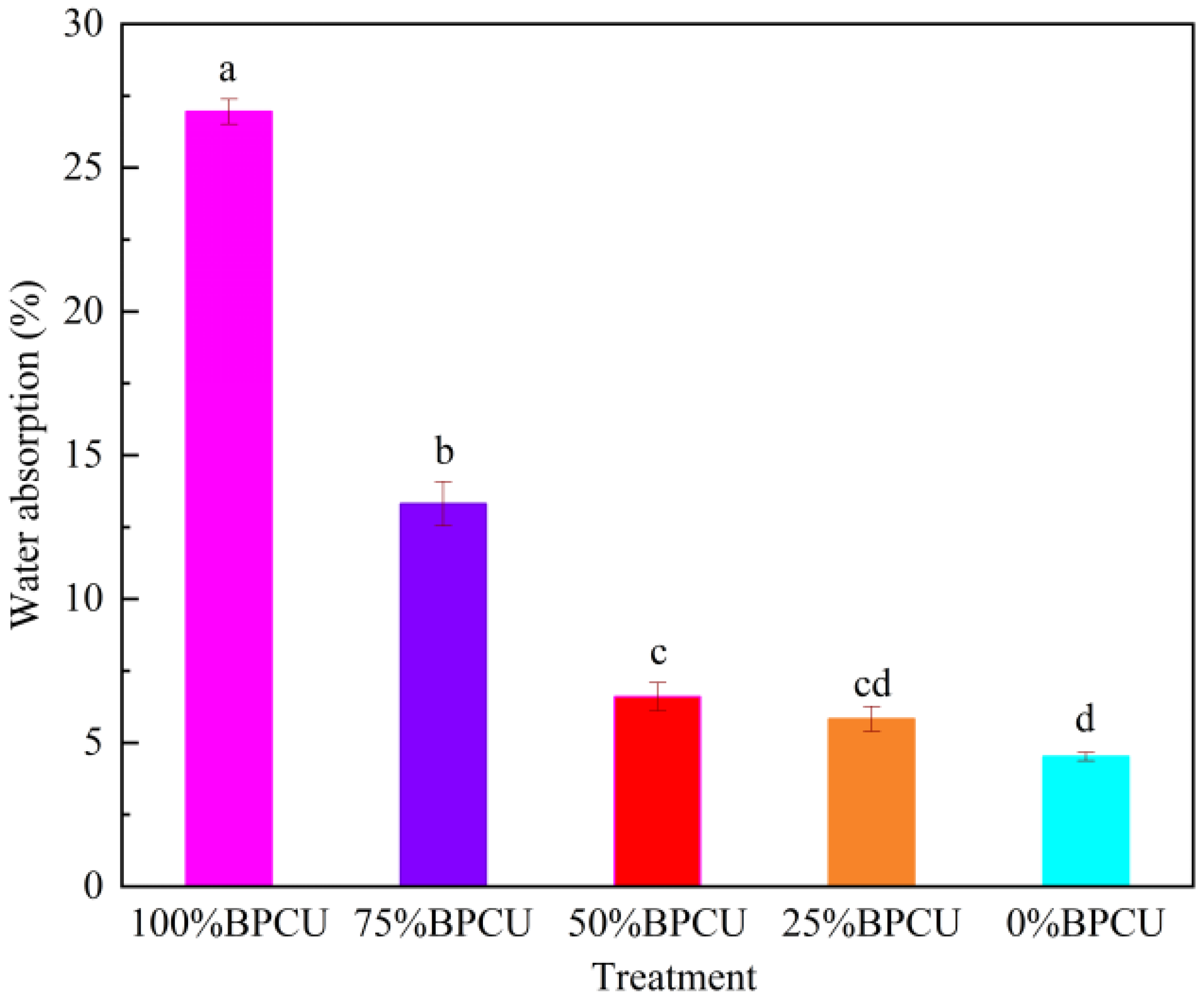
Figure 2 illustrates the water absorption characteristics of bio-polymer polyurethane coatings. The water absorption of these coatings increased with increasing bio-polymer polyol content. The 0%BPCU coatings exhibited the lowest water absorption rate (4.52%), which was significantly lower than the 100%BPCU, 75%BPCU, and 50%BPCU treatments, representing a 31.56–83.20% reduction relative to them. Conversely, the 100%BPCU treatment, in which bio-polymer polyol completely replaced castor oil, exhibited the highest water absorption rate (26.95%), which was significantly greater than those of the other treatments, which primarily attributable to the greater abundance of hydrophilic hydroxyl (-OH) groups in the liquefied SMS polyol relative to the more hydrophobic long-chain fatty acids in castor oil. This pattern is consistent with observations in lignocellulosic-derived polyurethanes, where residual polar groups from cellulose and hemicellulose enhance hydrophilicity, thereby leading to poor N release [30].
The 50%BPCU treatment had a water absorption rate of 6.6%, which differed significantly from that of the 75%BPCU treatment (a 50.30% reduction relative to the latter), while no significant difference was observed with the 25%BPCU treatment. Prior studies have demonstrated that lower water absorption rates indicate enhanced water resistance in bio-polymer polyurethane coatings for N fertilizers, thereby retarding water permeation through the coatings and improving N controlled-release efficacy [4]. Accordingly, the 50%BPCU treatment was selected as the baseline for subsequent modifications to develop bio-polymer polyurethane coatings with superior hydrophobic properties.
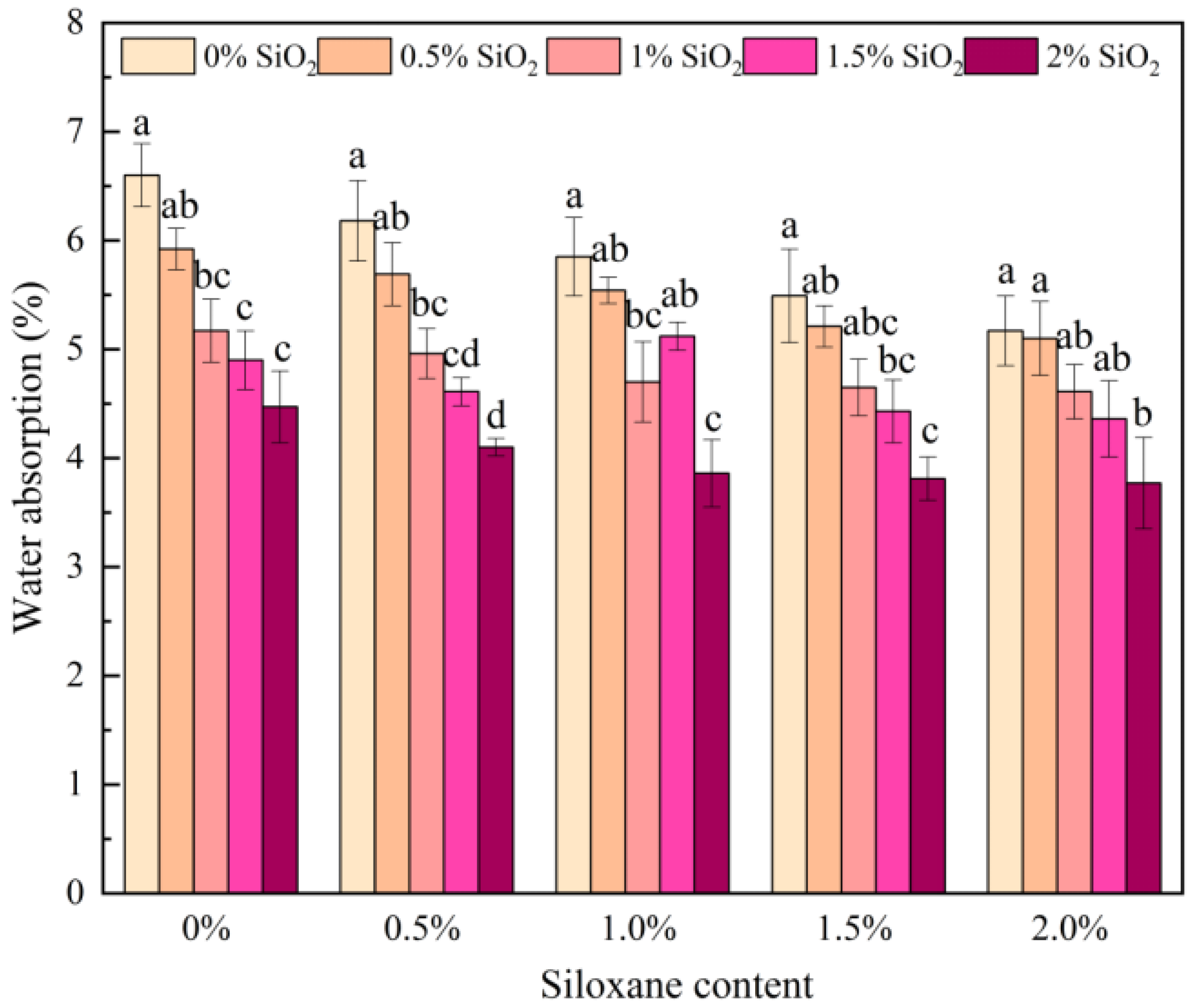
To further enhance the hydrophobicity of the bio-polymer polyurethane coatings, superhydrophobic modification was performed on the 50%BPCU coatings using nano-SiO2 and siloxane. Figure 3 presents the effects of nano-SiO2 and siloxane contents on the water absorption of the 50%BPCU coatings. As the nano-SiO2 content increased from 0.00% to 2.00%, the water absorption of the coatings decreased from 6.60% to 4.47%, representing a 32.27% reduction. The incorporation of siloxane further decreased the water absorption rate. At a combined content of 1.50% for both additives, the water absorption rate decreased to 4.43%, which was 32.87% lower than that of the 50%BPCU coatings. Although further increases in nano-SiO2 and siloxane contents continued to reduce the water absorption, the marginal improvements were no longer significant. Tang et al. [31] demonstrated that siloxane addition facilitates cross-linking reactions and that its hydrophobic moieties reduce the water permeability of BPCU coatings. Chen et al. [3] noted that nano-SiO2 content is a critical factor affecting the water absorption of nano-modified water-based polymers, as introducing nano-SiO2 into water-based copolymer films constructs a micro–nano rough structure that enhances hydrophobicity. In this study, the reaction between the 50%BPCU coatings and nano-SiO2 likely formed a network structure that consumed excess -OH groups, thereby reducing hydrophilic sites and improving water resistance. Furthermore, siloxane addition may have promoted cross-linking within the modified coatings, while its inherent hydrophobicity presumably contributed to the enhanced hydrophobic performance of the coating.

3.2. Porosity

With the bio-polymer-polyurethane-coated urea contact with moisture in the surrounding environment, the water can infiltrate the coating material through its internal pores. Simultaneously, the enclosed N nutrients are released outward through these pores under a pressure gradient, thereby sustaining N nutrient supply for plant growth [32]. However, excessive pore density or oversized pores accelerate N nutrient release, substantially shortening the controlled-release duration. Consequently, the pore structure characteristics of the coating material profoundly influence the efficacy of N controlled-release.
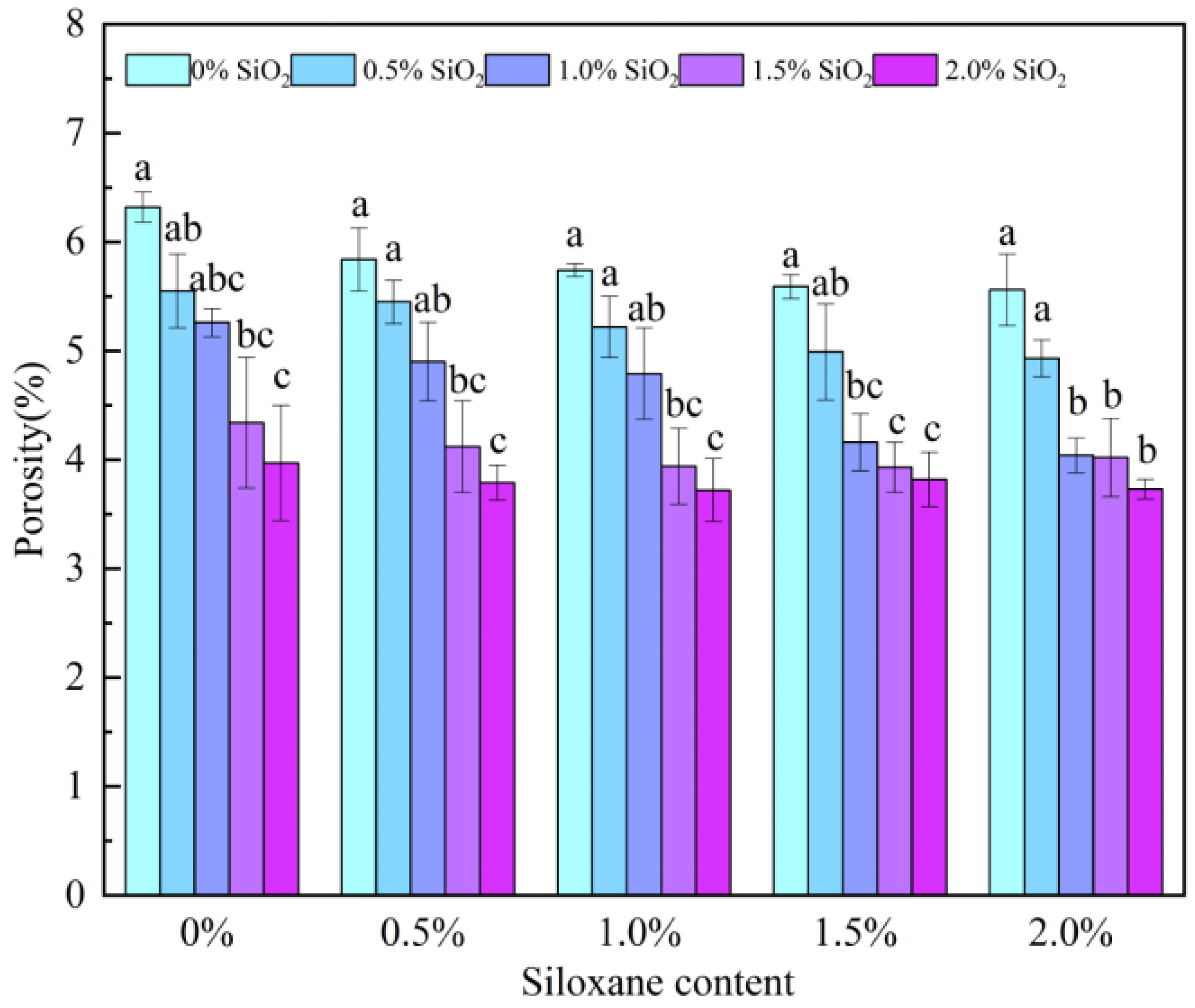
Figure 4 illustrates the effects of nano-SiO2 (0.00–2.00 wt%) and siloxane (0.00–2.00 wt%) content on the porosity of dual-modified bio-polymer polyurethane coatings. The results demonstrate that the incorporation of nano-SiO2 significantly reduced the porosity of the coatings. The unmodified bio-polymer polyurethane coatings exhibited the highest porosity of 6.32%, which was significantly higher than that of all modified samples. The porosity decreased progressively with increasing nano-SiO2 content from 0.00% to 2.00%. The porosity of the modified coatings was reduced to 3.97% with 2.00% nano-SiO2 content, representing a 37.18% reduction compared to the unmodified coatings. This densification arises from the role of nano-SiO2 as nanofillers that integrate into the polyurethane matrix during polymerization, bridging polymer chains, occupying free volume, and restricting chain mobility to form a denser three-dimensional network with diminished void volume and pore interconnectivity [33,34,35]. Comparable effects have been observed in nano-SiO2-reinforced waterborne polyurethanes and copolymer coatings, where filler addition typically achieves 23.83% porosity reductions [31]. Similarly, the incorporation of siloxane also significantly reduced porosity. As the siloxane content was increased from 0.00% to 1.50%, the porosity of the modified films decreased progressively. When both nano-SiO2 and siloxane were added at 1.50%, the porosity of the modified coatings was 3.92%, corresponding to a 37.74% reduction relative to the unmodified coatings. However, a further increase in siloxane content did not lead to a significant decline in porosity, suggesting that the porosity-reducing effect of siloxane reached a saturation point at this concentration. The synergistic action of nano-SiO2 and siloxane effectively reduces the porosity of bio-polymer coating materials, thereby offering a viable strategy for enhancing their compactness and hydrophobic properties.

3.3. SEM and EDX Analysis

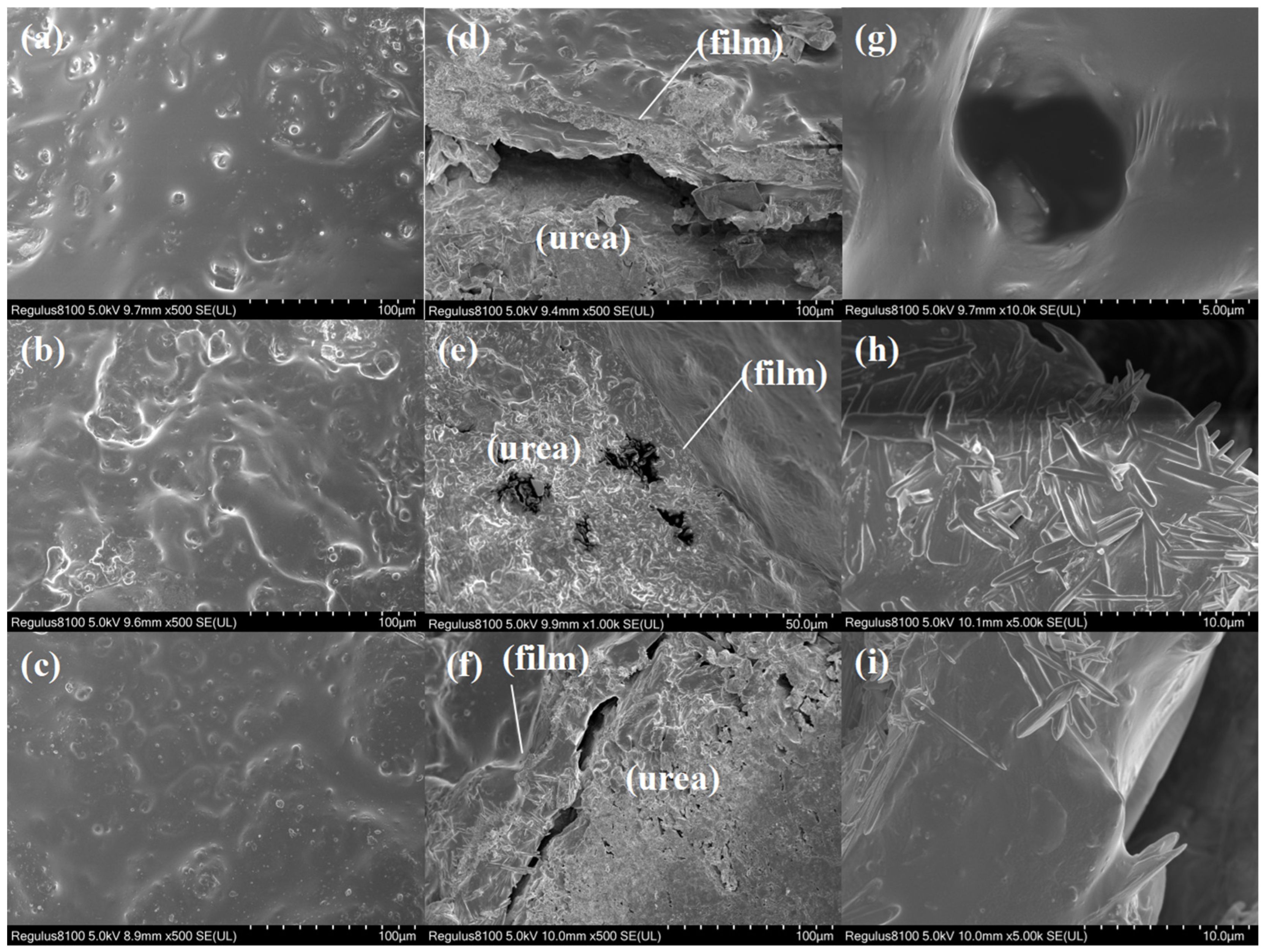
Figure 5 illustrates the surface and cross-sectional microstructures of three types of bio-polymer-polyurethane-coated urea: 50%BPCU, NBPCU, and SBPCU. As depicted in Figure 5a, the 50%BPCU treatment exhibits a relatively loose microstructure on both the surface and cross-section, characterized by numerous micro- and nanoscale pores (Figure 5g). These pores serve as primary conduits for water ingress and N diffusion, thereby accelerating moisture permeation and compromising controlled-release performance—a common limitation in unmodified bio-polymer polyurethane coatings [36,37]. Consequently, the hydrophobicity of the coating is compromised, resulting in diminished N controlled-release performance [38]. In contrast, the surfaces of the NBPCU and SBPCU samples display abundant micro–nano protrusions (Figure 5b,c), which effectively reduce the actual contact area between water molecules and the coating surface, thereby enhancing overall hydrophobicity. Moreover, the cross-sectional morphology of NBPCU and SBPCU (Figure 5e,f) reveals a denser and more compact structure, with a significant reduction or near elimination of intrinsic micropores. This structural refinement is anticipated to improve the mechanical strength and water resistance of the coatings, thereby prolonging the N controlled-release duration [39,40]. These findings indicate that modification with nano-SiO2 and siloxane facilitates the formation of a micro–nano rough surface, reminiscent of a lotus leaf, on the bio-polymer polyurethane coating [41]. Previous studies also indicated that the superior pore reduction and lotus-like surface achieved here through dual modification surpass typical single-modification outcomes in straw-based systems [1].
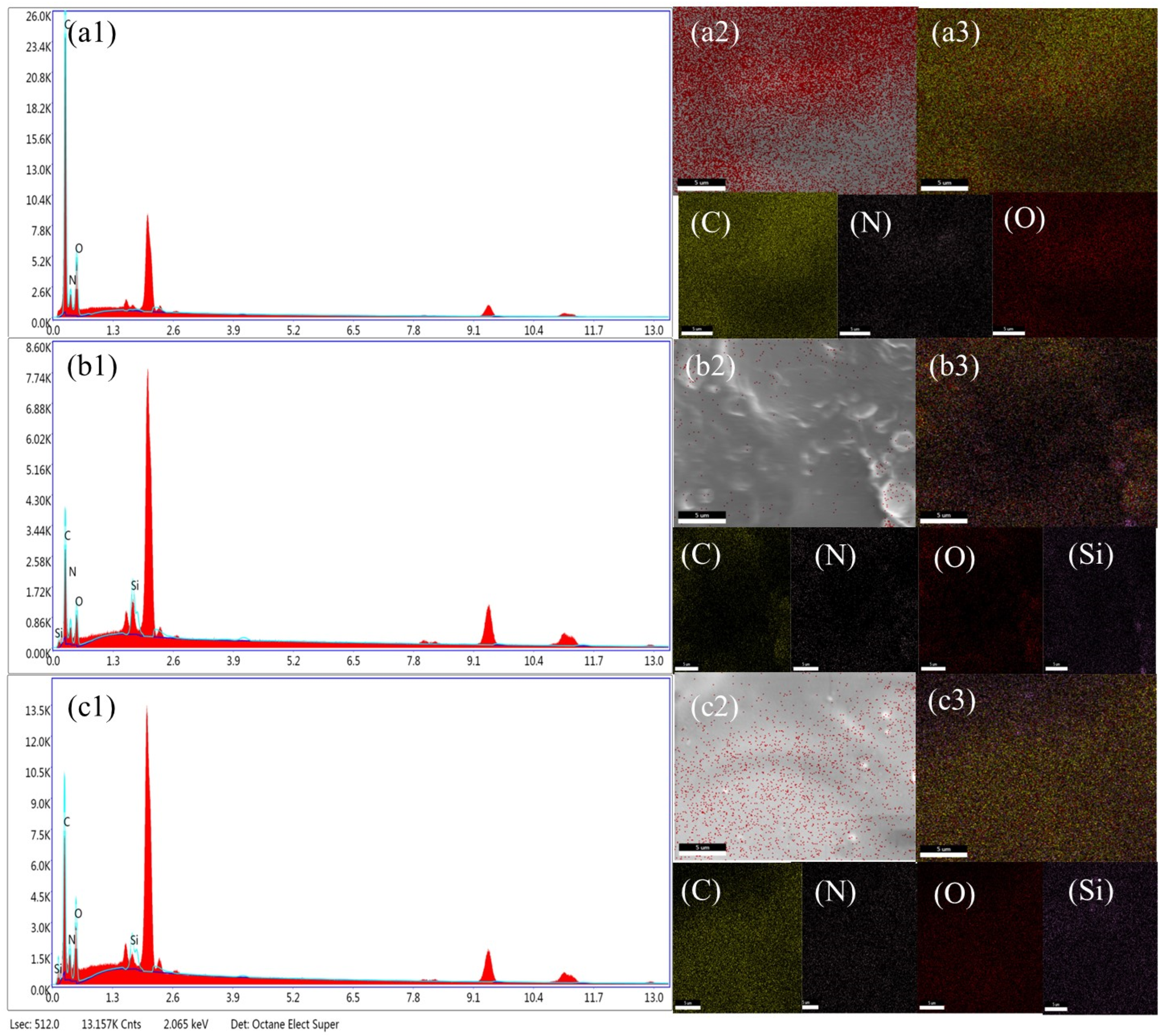
Figure 6 illustrates the surface elemental composition and distribution before and after modification: 50%BPCU, NBPCU, and SBPCU. As shown in Figure 6(a1,a2), the 50%BPCU surface is enriched with C, O, and N. By contrast, Si is detected on the surfaces of both NBPCU and SBPCU, confirming the successful preparation of the hydrophobically modified bio-polymer polyurethane coatings.

3.4. XPS Analysis

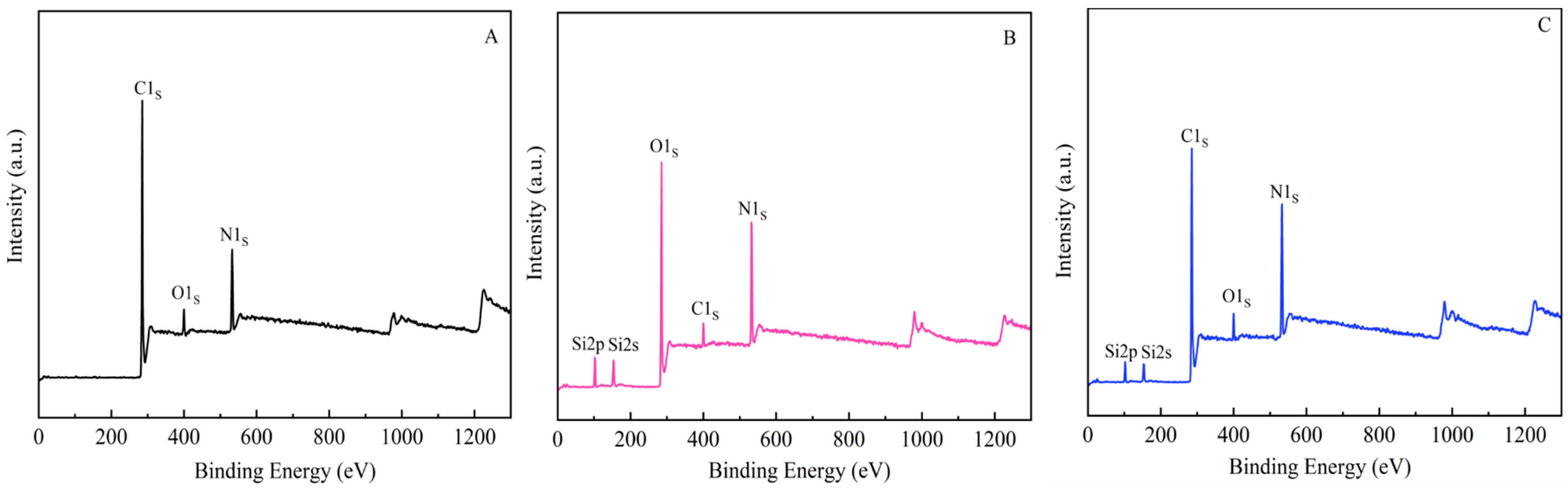
XPS is employed to determine the elemental composition and chemical states of the bio-polymer polyurethane coatings before and after modification. As shown in the XPS spectrum of the 50%BPCU (Figure 7A), characteristic peaks for O 1s, N 1s, and C 1s are observed at binding energies of approximately 532, 402, and 286 eV, respectively, indicating that the material consists mainly of these three elements. After modification (Figure 7B,C), the peaks corresponding to O 1s, N 1s, and C 1s persist. Additionally, two new peaks emerge at approximately 102 and 153 eV, assigned to Si2s and Si2p, respectively, confirming the successful incorporation of silicon [35,42]. These results demonstrate that siloxane and nano-SiO2 were successfully introduced into the bio-polymer polyurethane matrix, thereby evidencing the chemical modification of the coatings.

3.5. TGA Analysis

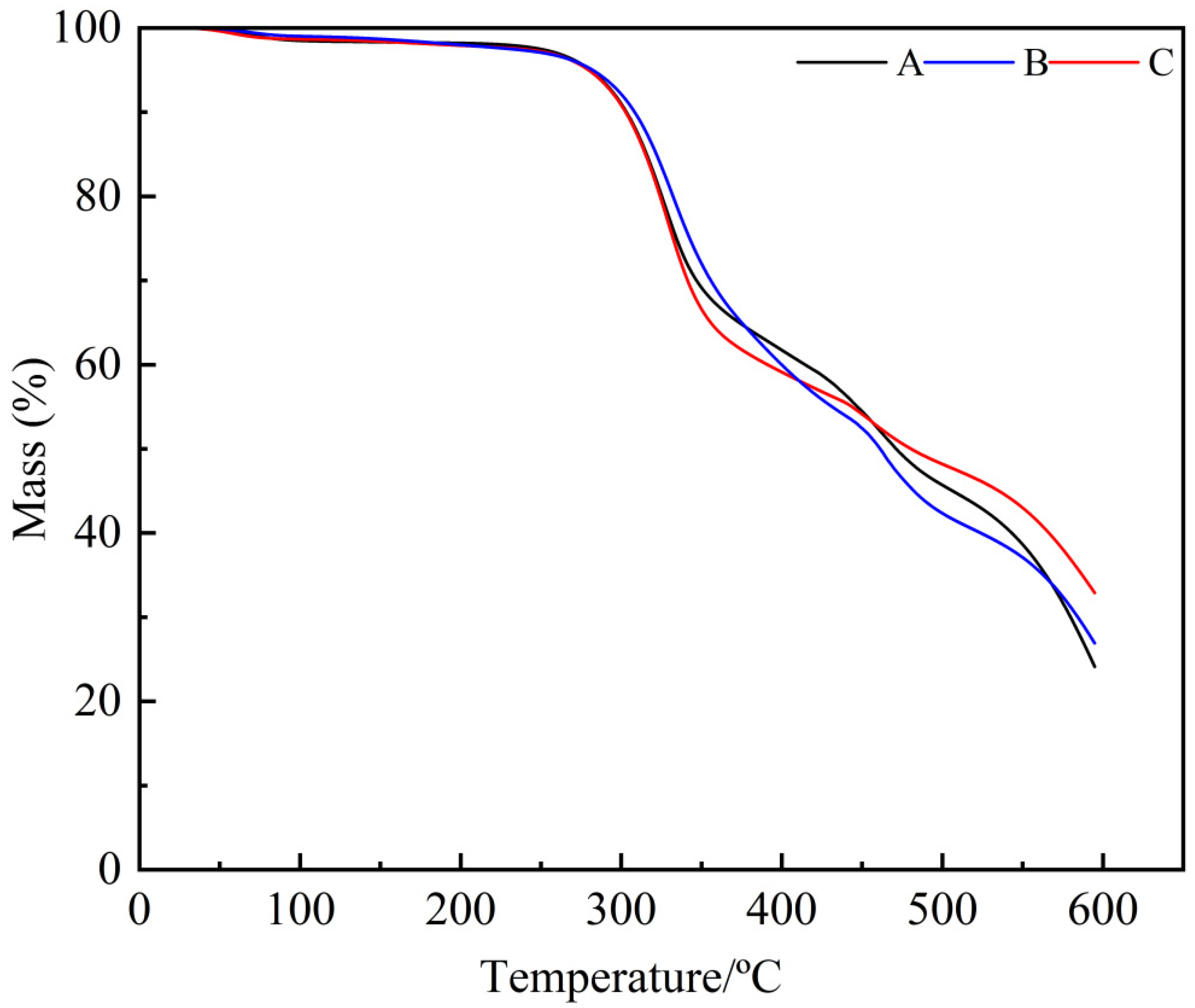
Figure 8 shows the thermogravimetric analysis (TGA) curves of the bio-polymer polyurethane coatings before and after modification. The thermal degradation of these coatings can be divided into two main stages. The first stage is a slow decomposition process, where the temperature for 5% weight loss (T5%) is between 279.68 and 282.29 °C for all three coatings (50%BPCU, NBPCU, and SBPCU), with no significant differences, indicating comparable initial thermal stability. The weight loss in this stage is primarily due to the elimination of small molecular groups and volatile components [43]. The second stage is characterized by rapid decomposition, with the temperature for 50% weight loss (T50%) ranging from 461.21 to 480.45 °C; among these coating materials, SBPCU exhibits the highest (T50%), due to the high bond energy of the Si-O bonds, thereby enhancing thermal stability. In this stage, the degradation primarily results from the cleavage of cross-links and the decomposition of the polymer chains [44,45]. Furthermore, SBPCU demonstrates the highest residual char content at 600 °C, consistent with its slower overall decomposition rate and superior thermal stability.

3.6. N-Release Behavior and Mechanism

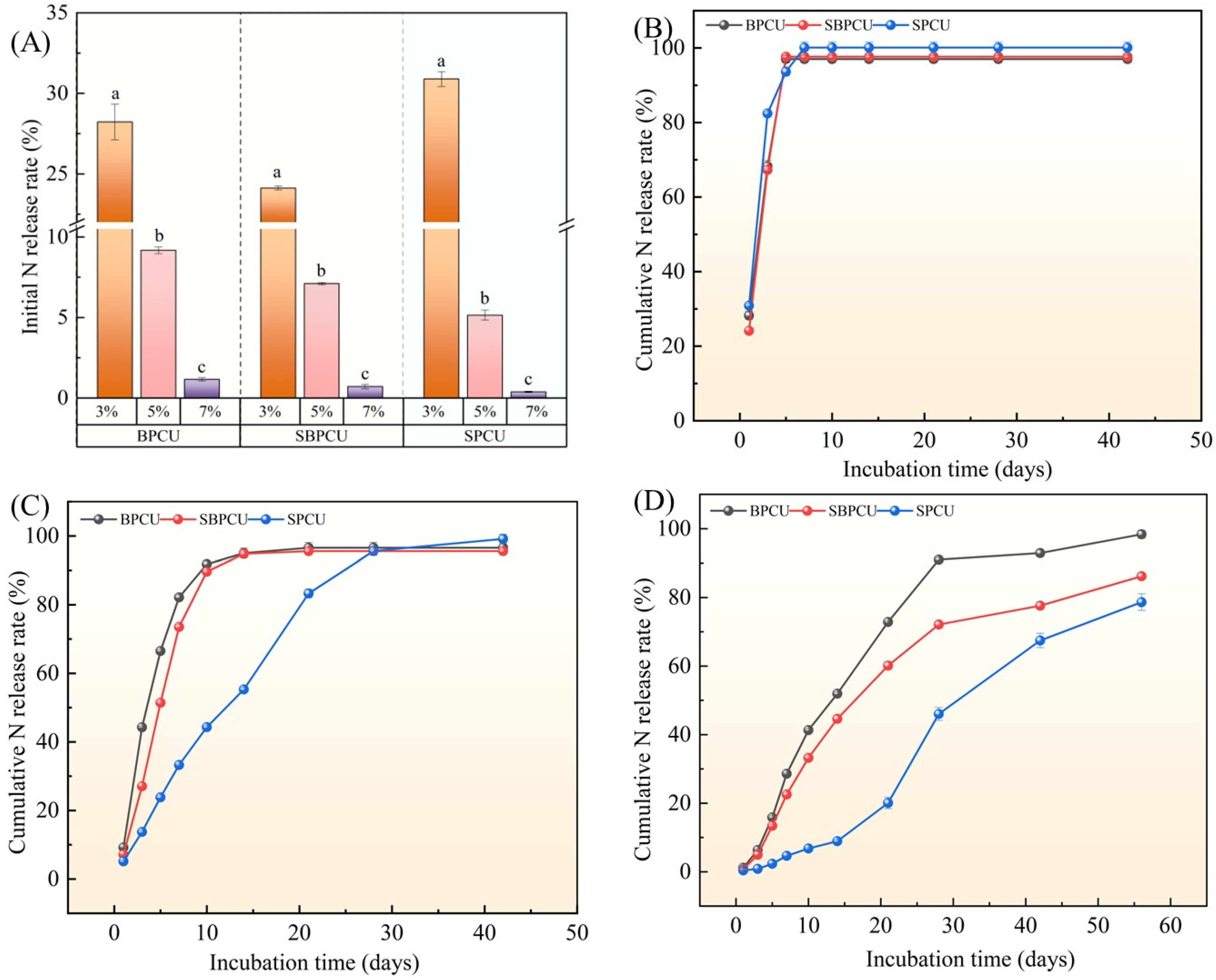
To investigate the N release characteristics of bio-polymer-polyurethane-coated urea before and after modification, these samples of BPCU, SBPCU, and SPCU with coating thicknesses of 3%, 5%, and 7% were prepared and subjected to leaching tests in water at 25 °C. The results provide insights into the N release dynamics of these coated fertilizers under field conditions [2,46]. Figure 9A presents the initial N release rates of the bio-polymer-polyurethane-coated urea before and after modification under static water conditions. Initial release decreased significantly with increasing coating thickness, as thicker coatings provide greater diffusion barriers and reduced surface exposure to water, thereby slowing urea dissolution—a trend consistently observed in polymer-coated fertilizers where thickness directly modulates permeability [5]. For any given thickness, the initial N release rate of SBPCU was lower than that of BPCU and SPCU. This can be attributed to the formation of a hydrophobic, lotus-leaf-like structure on the coating surface following modification with nano-SiO2 and siloxane, which reduced water-coating contact and enhanced the controlled-release performance [47,48].
Figure 9B shows the cumulative N release curves for BPCU, SBPCU, and SPCU with a 3% coating thickness. Their initial N release rates were 28.22%, 24.12%, and 30.89%, respectively. By day 5 of immersion, N was almost entirely released from BPCU and SBPCU, whereas the cumulative N release from SPCU reached 93.64%. When the coating thickness was increased to 5% (Figure 9C), the initial N release rates of BPCU, SBPCU, and SPCU decreased to 9.17%, 7.10%, and 5.14%, respectively. After 7 days, the cumulative N release of BPCU exceeded 80%, compared to 73.53% for SBPCU and 33.23% for SPCU. SPCU required approximately 21 days to achieve an 80% cumulative N release rate. For samples with a 7% coating thickness (Figure 9D), the initial N release rates were further reduced to 1.16%, 0.71%, and 0.38% for BPCU, SBPCU, and SPCU, respectively. After 21 days, the cumulative N release rates were 72.86%, 60.13%, and 20.05%. The estimated N release periods for NBPCU and SPCU were approximately 42 days and 56 days, respectively.
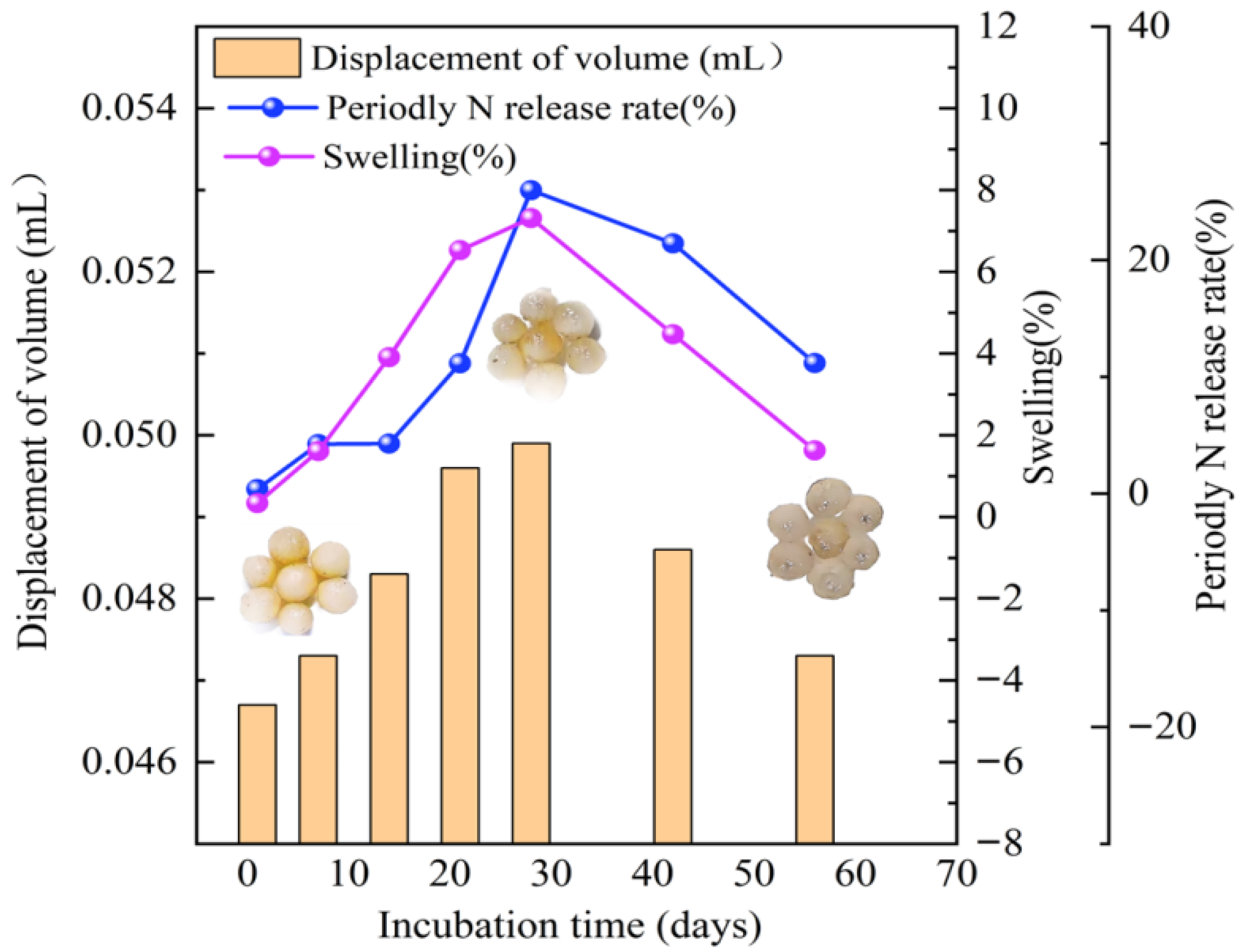
These results indicate that the N release behavior of bio-polymer-polyurethane-coated urea is co-regulated by the coating composition and thickness. A greater coating thickness prolongs the N release period and enhances the sustained-release effect [1]. Specifically, as the coating thickness increased from 3% to 7%, the controlled-release period of SBPCU was extended from about 4 days to 42 days, by which time the cumulative N release of BPCU had reached 92.88%. At the same coating thickness, SBPCU showed a slower release rate than BPCU, indicating that hydrophobic modification significantly alters the N release pattern [49]. This improvement primarily stems from the dense hydrophobic coating formed by nano-SiO2 and siloxane modification, coupled with a reduction in intramembrane pores, thereby enhancing the controlled-release capability of SBPCU [50,51]. However, while SBPCU exhibits superior controlled-release performance compared to BPCU, it remains less effective than SPCU. Potential reasons include the following: (1) the inherent limitations of the bio-polymer coating material, which may retain insoluble residues and hygroscopic hydroxyl groups post-modification, interfering with the release control; (2) the progressive water penetration, despite the surface hydrophobic layer, which can induce coating swelling, exposing intermembrane pores and consequently accelerating N release. Figure 10 illustrates the dynamic relationship among N release, particle volume expansion, and the swelling rate of SBPCU. As the immersion time increased, the SBPCU particles gradually expanded in volume, leading to the enlargement of micropores within the coating and facilitating N release [52]. Yang et al. [7] demonstrated that with the volume of coated fertilizers increased, the N release rate accelerated under the water incubation conditions. In this study, the swelling and N release rates both peaked on day 28. Subsequently, as nutrients inside the coating shell continued to dissolve and release, the osmotic pressure difference across the membrane decreased, the particle swelling rate declined, and the intermembrane pores gradually closed, thereby slowing the nutrient release rate [53].
To further elucidate the controlled-release mechanism, the N release curves were fitted using the Elovich equation, first-order kinetic equation, and second-order equation (Table 1). Although all models described the N release process adequately, the Richards equation provided the highest correlation coefficient (R2), indicating its superior suitability for characterizing the cumulative release pattern and underlying mechanism. Consequently, the Richards equation was selected to represent the N release characteristics. This model evaluates the goodness of fit based on the theoretical maximum release (a), the release inflection point time (d), the kinetic constant (k), and the coefficient of determination (R2), revealing the N release dynamics of BPCU, SBPCU, and SPCU at different coating thicknesses. With the exception of the BPCU-3% treatment, all other treatments exhibited R2 values ≥ 0.79. The fitted a values for most treatments were close to the theoretical maximum of 100%, indicating a good overall fit. Notably, as the coating thickness increased from 3% to 7%, the k values generally decreased, confirming that a thicker coating significantly reduces the nitrogen release rate.

3.7. Influence of SBPCU Coating on Growth Parameters of Maize

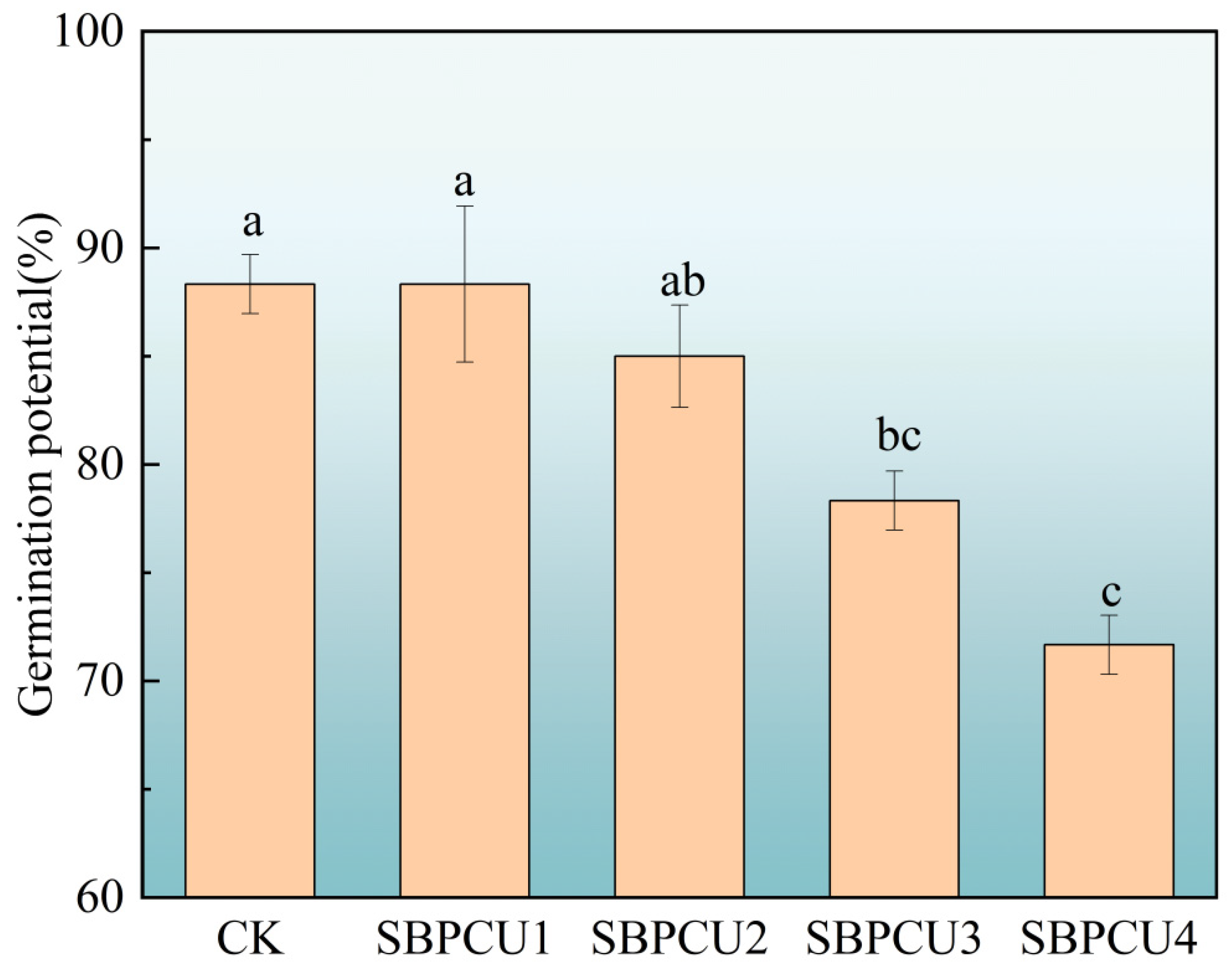
Seed germination, a critical stage in plant growth, is a key indicator for assessing material phytotoxicity [54]. Dong et al. [14] indicate that, after 7 days of incubation, the coating shell extracts at concentrations of 0–200 mg L−1 exhibited no phytotoxic effects on seed germination. Notably, at 200 mg L−1, the germination rate was significantly higher than that of the control, indicating a promotional effect on rice seed germination. In this research, the results demonstrate that SBPCU coating concentrations significantly affected seed germination potential and various growth parameters. As shown in Figure 11, after 4 days of incubation, the germination rate in the SBPCU1 treatment was 88.33%, which showed no significant difference from the control, whereas the SBPCU3 and SBPCU4 treatments significantly inhibited seed germination, reducing germination rates by 11.32% and 18.87%, respectively, compared to the control. Table 2 illustrates the effects of different SBPCU coating concentrations on maize growth parameters. At concentrations below 100 mg L−1, the SBPCU coating significantly increased plant height, stem diameter, root length, and the fresh and dry weights of aboveground parts. However, the number of secondary roots, root fresh weight, and root dry weight were not significantly affected. In contrast, at concentrations exceeding 100 mg L−1, none of the measured growth parameters differed significantly from those of the control.

4. Conclusions

This study successfully developed a compact dual-modified bio-polymer polyurethane coating for controlled-release urea using recyclable spent mushroom substrate (SMS) and non-toxic siloxane/nano-SiO2 modifiers via simple processes. The modifications reduced water absorption from 6.60% to 4.43% and porosity from 6.32% to 3.92%, creating dense, lotus-leaf-like micro/nano-rough surfaces with fewer intermembrane pores. Consequently, N release duration was extended from approximately 23 days to 42 days at 7% coating thickness, with the underlying mechanism elucidated via kinetic modeling (Richards equation) and microstructural analysis. Phytotoxicity tests confirmed excellent biosafety, with no adverse effects on maize growth and promotional effects at low concentrations. Therefore, the novel dual-modification technique and resulting SMS-derived bio-polymer polyurethane coating offer promising and reliable alternatives to petroleum-based coatings, meeting the increasing demand for renewable, eco-friendly, and sustainable controlled-release fertilizers. However, the experiment employed in this study, while effective for controlled evaluation of coating properties and N release mechanisms, has inherent limitations as it does not fully replicate complex field conditions; therefore, future validation through field trials is essential to confirm practical performance and ensure broader applicability.

Author Contributions

Writing—original draft preparation, J.Z., Y.Z., F.L. and S.C.; writing—review and editing, S.C., H.W. and R.H.; review and visualization, J.Z. and S.C.; funding acquisition, S.C. All authors have read and agreed to the published version of the manuscript.

Funding

This work was supported by Anhui Provincial Department of Education (2024AH050291) and Anhui Science and Technology University (ZHYJ202202).

Data Availability Statement

Data will be made available on request.

Conflicts of Interest

The authors declare no known competing financial interests or personal relationships that could have appeared to influence the work reported in this paper.

List of Abbreviations

SMSSpent mushroom substrate
NNitrogen
PM200Polyphenyl polyisocyanate
PEG400Polyethylene glycol
BPCUBio-polymer-polyurethane-coated urea
NBPCUNano-modified bio-polymer-polyurethane-coated urea
SBPCUDual-modified bio-polymer-coated urea
SPCUCastor-oil-based polyurethane-coated urea
SEM-EDXScanning electron microscope energy dispersive X-ray spectroscopy system
XPSX-ray photoelectron spectrometer
TGAThermogravimetric analyzer

References

  1. Wang, C.; Song, S.; Du, L.; Yang, Z.; Liu, Y.; He, Z.; Zhou, C.; Li, P. Nutrient Controlled Release Performance of Bio-based Coated Fertilizer Enhanced by Synergistic Effects of Liquefied Starch and Siloxane. Int. J. Biol. Macromol. 2023, 236, 123994. [Google Scholar] [CrossRef] [PubMed]
  2. Zhao, X.; Ma, F.; Yan, L.; Liu, J.; Zhang, T.; Su, X.; Wang, W.; Yang, Y.; Xu, J.; Xie, J. Double-modified Biopolymer-coatings Based on Recyclable Poplar-catkin: Efficient Performance, Controlled-release Mechanism and Rice Application. Prog. Org. Coat. 2024, 186, 107980. [Google Scholar] [CrossRef]
  3. Chen, S.; Han, Y.; Yang, M.; Zhu, X.; Liu, C.; Liu, H.; Zou, H. Hydrophobically Modified Water-based Polymer for Slow-release Urea Formulation. Prog. Org. Coat. 2020, 149, 105964. [Google Scholar] [CrossRef]
  4. Han, M.; Gao, L.; Tang, C.; Tong, Z.; Gao, B.; Meng, S.; Dong, S.; Zhang, L.; Ding, B.; Ren, P.; et al. Borate-epoxy Crosslinking Elastomer Modified Bio-based Polyurethane Coated Fertilizers with Toughness and Hydrophobicity. Sustain. Mater. Technol. 2025, 43, e01337. [Google Scholar] [CrossRef]
  5. Wan, L.; Ge, C.; Ma, F.; Zhou, J.; Du, C. Biomimetic Modification of Waterborne Polymer Coating using Bio-wax for Enhancing Controlled Release Performance of Nutrient. Polymers 2025, 17, 838. [Google Scholar] [CrossRef]
  6. Vermoesen, E.; Cordeels, E.; Schaubroeck, D.; Brosens, G.; Bodé, S.; Boeckx, P.; Van, V. Photo-crosslinkable Biodegradable Polymer Coating to Control Fertilizer Release. Eur. Polym. J. 2023, 186, 111835. [Google Scholar] [CrossRef]
  7. Yang, M.; Gao, H.; Zou, H.; Sun, D. Siloxane and Lauric Acid Copper Dual Modification Improves Hydrophobicity and Elasticity of all Biopolymer Coated Fertilizers with Enhanced Nitrogen Release Abilities. Ind. Crops Prod. 2025, 226, 120620. [Google Scholar] [CrossRef]
  8. Zhao, J.; Li, X.; Liu, F.; Zhao, W.; Chen, S. Smart Fertilizer with Temperature-Responsive Behavior Coated using a Naturally Derived Material. J. Appl. Polym. Sci. 2025, 142, e56721. [Google Scholar] [CrossRef]
  9. Wang, Z.; Wang, G.; Li, Z.; Zhao, X.; Li, J.; Chen, D.; Xia, G.; Yao, Y.; Zhang, S.; Wang, X.; et al. Self-repairing Bio-based Controlled-release Fertilizer for Enhanced Quality and Nutrient Utilization Efficiency and Reveal their Healing Mechanisms. Chem. Eng. J. 2025, 504, 158852. [Google Scholar] [CrossRef]
  10. Channab, B.E.; Idrissi, A.E.; Zahouily, M.; Essamlali, Y.; White, J. Starch-based Controlled Release Fertilizers: A review. Int. J. Biol. Macromol. 2023, 238, 124075. [Google Scholar] [CrossRef]
  11. Priya, E.; Sarkar, S.; Maji, P. A Review on Slow-release Fertilizer: Nutrient Release Mechanism and Agricultural Sustainability. J. Environ. Chem. Eng. 2024, 12, 113211. [Google Scholar] [CrossRef]
  12. Su, B.; Yang, M.; Gao, B.; Li, Z.; Zhao, X.; Zhang, S.; Cheng, D.; Shen, T.; Yao, Y.; Yang, Y. Ceresin Wax Enhances Hydrophobicity and Density of Bio-based Polyurethane of Controlled-release Fertilizers: Streamlined Production, Improved Nutrient Release Performance, and Reduced Cost. J. Clean. Prod. 2024, 452, 142145. [Google Scholar] [CrossRef]
  13. Moradi, S.; Babapoor, A.; Ghanbarlou, S.; Kalashgarani, Y.M.; Salahshoori, I.; Seyfaee, A. Toward a New Generation of Fertilizers with the Approach of Controlled-release Fertilizers: A review. J. Coat. Technol. Res. 2024, 21, 31–54. [Google Scholar] [CrossRef]
  14. Dong, S.; Pang, M.; Li, H.; Zou, G.; Liang, L.; Li, L. Introduction of Bio-based Hard Segment as an Alternative Strategy to Environmentally Friendly Polyurethane Coated Urea. Ind. Crops Prod. 2023, 203, 117164. [Google Scholar] [CrossRef]
  15. Mumford, K.; Mcquillan, R.; Stevens, G. Implementation of Biodegradable Liquid Marbles as a Novel Controlled Release Fertilizer. ACS Sustain. Chem. Eng. 2023, 11, 122–132. [Google Scholar]
  16. Kassem, I.; Ablouh, E.; Bouchtaoui, F.; Jaouahar, M.; Achaby, M. Polymer Coated Slow/controlled Release Granular Fertilizers: Fundamentals and Research Trends. Prog. Mater. Sci. 2024, 144, 101269. [Google Scholar] [CrossRef]
  17. Bian, W.; An, L.; Zhang, S.; Feng, J.; Sun, D.; Yao, Y.; Shen, T.; Yang, Y.; Zhang, M. The Long-term Effects of Microplastics on Soil Organomineral Complexes and Bacterial Communities from Controlled-release Fertilizer Residual Coating. J. Environ. Manag. 2022, 304, 114193. [Google Scholar] [CrossRef]
  18. Fertahi, S.; Ilsouk, M.; Zeroual, Y.; Oukarroum, A.; Barakat, A. Recent Trends in Organic Coating Based on Biopolymers and Biomass for Controlled and Slow Release Fertilizers. J. Controll. Release 2021, 330, 341–361. [Google Scholar] [CrossRef]
  19. Lu, P.; Zhang, Y.; Jia, C.; Li, Y.; Zhang, M.; Mao, Z. Degradation of Polyurethane Coating Materials from Liquefied Wheat Straw for Controlled Release Fertilizers. J. Appl. Polym. Sci. 2016, 133, 44021. [Google Scholar] [CrossRef]
  20. Sipponen, M.; Rojas, O.; Pihlajaniemi, V.; Lintinen, K.; Österberg, M. Calcium Chelation of Lignin from Pulping Spent Liquor for Water-resistant Slow-release Urea Fertilizer Systems. ACS Sustain. Chem. Eng. 2017, 5, 1054–1061. [Google Scholar] [CrossRef]
  21. Guo, Y.; An, X.; Qian, X. Biodegradable and Reprocessable Cellulose-based Polyurethane Films for Bonding and Heat Dissipation in Transparent Electronic Devices. Ind. Crops Prod. 2023, 193, 116247. [Google Scholar] [CrossRef]
  22. Tian, H.; Zhang, L.; Sun, X.; Cui, J.; Dong, J.; Wu, L.; Wang, L.; Wang, Y.; Zhang, L.; Wang, L.; et al. Self-healing Modified Liquefied Lignocellulosic Cross-linked Bio-based Polymer for Controlled-release Urea. Ind. Crops Prod. 2022, 186, 115241. [Google Scholar] [CrossRef]
  23. Liang, D.; Zhang, Q.; Zhang, W.; Liu, L.; Liang, H.; Quirino, R.; Chen, J.; Liu, M.; Lu, Q.; Zhang, C. Tunable Thermo-physical Performance of Castor Oil-based Polyurethanes with Tailored Release of Coated Fertilizers. J. Clean. Prod. 2018, 210, 1207–1215. [Google Scholar] [CrossRef]
  24. Xu, Y.; Wang, W.; Wan, K.; Deng, C.; Pei, K. Preparation and Antibacterial Properties of SiO2 Encapsulated TiO2 Nanoparticles/cationic Waterborne Polyurethane Composite Coatings. Mater. Lett. 2025, 384, 138075. [Google Scholar] [CrossRef]
  25. Lawrencia, D.; Wong, S.; Low, D.; Goh, B.; Goh, J.; Ruktanonchai, U.; Soottitantawat, A.; Tang, S. Controlled Release Fertilizers: A Review on Coating Materials and Mechanism of Release. Plants 2021, 10, 238. [Google Scholar] [CrossRef]
  26. Yang, M.; Tang, C.; Han, M.; Tong, Z.; Yang, Y.; Gao, L.; Zhang, S. Tailoring MO-303 Reinforced Biopolymer Hybrid Coatings with Hierarchically Porous Architectures for Precision Nitrogen Delivery in Sustainable Agriculture. Adv. Sustain. Syst. 2025, 9, 2500185. [Google Scholar] [CrossRef]
  27. Yao, L.; Baharum, A.; Yu, L.; Yan, Z.; Badri, K. A Vegetable-oil-based Polyurethane Coating for Controlled Nutrient Release: A review. Coatings 2025, 15, 665. [Google Scholar] [CrossRef]
  28. Chen, X.; Yang, H.; Zhang, L.; Li, Z.; Xue, Y.; Wang, R.; Fan, X.; Sun, S. Green Construction and Release Mechanism of Lignin-based Double-layer Coated Urea. Biotechnol. Biofuels Bioprod. 2023, 16, 97. [Google Scholar] [CrossRef] [PubMed]
  29. Chen, S.; Yang, M.; Han, Y. Hydrophobically Modified Sustainable Bio-based Polyurethane for Controllable Release of Coated Urea. Eur. Polym. J. 2021, 14, 110114. [Google Scholar] [CrossRef]
  30. Lu, H.; Chen, Y.; Dun, C.; Hu, X.; Wang, R.; Cui, P.; Zhang, H.; Zhang, H. Preparation of a Novel Economically Efficient and Environment Friendly Controlled Release Urea from Liquefied Corn Straw and Castor Oil. BMC Chem. 2025, 19, 154. [Google Scholar] [CrossRef]
  31. Tang, J.; Xu, J.; Fan, H.; Li, R.; Shi, M.; Liu, Y.; Wang, B.; Liu, P. Preparation of Hydroxy-terminated Polydimethylsiloxane and Nano-SiO2 Hydrophobic Polyurethane Coated Urea and Investigation of Controlled Nitrogen Release. Chem. Eng. Sci. 2025, 302, 120728. [Google Scholar] [CrossRef]
  32. Lu, H.; Dun, C.; Jariwala, H.; Wang, R.; Cui, P.; Zhang, H.; Dai, Q.; Yang, S.; Zhang, S. Improvement of Bio-based Polyurethane and its Optimal Application in Controlled Release Fertilizer. J. Controll. Release 2022, 350, 748–760. [Google Scholar] [CrossRef]
  33. Ghamarpoor, R.; Jamshidi, M.; Joshaghani, M. Hydrophobic Silanes-modified Nano-SiO2 Reinforced Polyurethane Nanocoatings with Superior Scratch Resistance, Gloss Retention, and Metal Adhesion. Sci. Rep. 2025, 15, 31555. [Google Scholar] [CrossRef]
  34. Silva, T.; Marques, A.; Shakoor, R.; Montemor, M.; Taryba, M. Biopolyurethane Coatings with Silica-titania Microspheres (MICROSCAFS) as Functional Filler for Corrosion Protection. Surf. Coat. Technol. 2024, 494, 131376. [Google Scholar] [CrossRef]
  35. Zhang, Z.; Zheng, J.; Chen, R.; Li, R.; Yu, J.; Liu, Q.; Zhu, J.; Sun, G.; Liu, J.; Wang, J. Sustainable Bio-based Polyurethane Coating with Integrated Corrosion Resistance and Antifouling Functions. Sustain. Mater. Technol. 2025, 44, e01406. [Google Scholar] [CrossRef]
  36. Hu, X.; Liu, B.; Chen, S.; Chen, Q.; Chen, H.; Dong, J.; Zhang, K.; Wang, J.; Zhang, M.; Liu, Z. Lignin-Modified Petrochemical-source Polyester Polyurethane Enhances Nutrient Release Performance of Coated Urea. Agronomy 2025, 15, 2030. [Google Scholar] [CrossRef]
  37. Su, B.; Yang, M.; Gao, B.; Zhao, X.; Li, Z.; Zhang, S.; Cheng, D.; Shen, T.; Yao, Y.; Yang, Y. Enhancing Longevity and Mechanisms of Controlled-release Fertilizers Through High Cross-link Density Hyperbranched Bio-based Polyurethane Coatings. ACS Sustain. Chem. Eng. 2024, 12, 18712–18724. [Google Scholar] [CrossRef]
  38. Xiang, S.; Yang, J.; Chen, Y.; Zhong, M.; Xiang, Z.; Zhou, Z. Enhancing the Slow-release Performance of Urea by Biochar Polyurethanes Co-coating. J. Coat. Technol. Res. 2024, 22, 763–771. [Google Scholar] [CrossRef]
  39. Dong, S.; Cao, B.; Wang, X.; Liang, L.; Zou, G.; Yuan, L.; Chen, Y. Fully Bio-based Polyurethane Coating for Environmentally Friendly Controlled Release Fertilizer: Construction, Degradation Mechanism and Effect on Plant Growth. Ind. Crops Prod. 2025, 225, 120437. [Google Scholar] [CrossRef]
  40. Singh, A. Bio-based Materials for Fabrication of Controlled-release Coated Fertilizers to Enhance Soil Fertility: A Review. Next Mater. 2025, 8, 100701. [Google Scholar] [CrossRef]
  41. Liu, X.; Wu, L.; Wang, J.; Zhou, W.; Hu, L.; Lv, J.; Du, W. Self-assembled Superhydrophobic Bio-based Controlled Release Fertilizer: Fabrication, Membrane Properties, Release Characteristics and Mechanism. J. Clean. Prod. 2022, 378, 134586. [Google Scholar] [CrossRef]
  42. Chen, S.; Liu, F.; Zhao, W.; Zhao, J.; Li, X.; Wang, J. Waterborne Polymer Coating Material Modified with Nano-SiO2 and Siloxane for Fabricating Environmentally Friendly Coated Urea. Sustainability 2025, 17, 6987. [Google Scholar] [CrossRef]
  43. Huang, J.; Sha, G.; Cui, M.; Quan, M.; Wang, Y.; Lu, Y.; Zhu, J.; Chen, J. A Highly Reactive Soybean Oil-based Superhydrophobic Polyurethane Film with Long-lasting Antifouling and Abrasion Resistance. Nanoscale Adv. 2024, 6, 5663–5670. [Google Scholar] [CrossRef]
  44. Yang, M.; Zhang, J.; Sun, Z.; Sun, D. All-natural Plant-derived Polyurethane as a Substitute of a Petroleum-based Polymer Coating Material. J. Agric. Food Chem. 2024, 72, 6444–6453. [Google Scholar] [CrossRef]
  45. Liu, J.; Yang, Y.; Gao, B.; Li, Y.; Xie, J. Bio-based Elastic Polyurethane for Controlled-release Urea Fertilizer: Fabrication, Properties, Swelling and Nitrogen Release Characteristics. J. Clean. Prod. 2019, 209, 528–537. [Google Scholar] [CrossRef]
  46. Pang, M.; Dong, S.; Zou, G.; Zhao, J.; Li, H.; Li, L. Study on Reduction Potential of Curing Agent in Sustainable Bio-based Controlled Release Coatings. Polym. Test. 2023, 127, 108193. [Google Scholar] [CrossRef]
  47. Sankaranarayanan, S.; Lakshmi, D.; Vivekanandhan, S.; Ngamcharussrivichai, C. Biocarbons as Emerging and Sustainable Hydrophobic/oleophilic Sorbent Materials for Oil/water Separation. Sustain. Mater. Technol. 2021, 28, e00268. [Google Scholar] [CrossRef]
  48. Tang, X.; Li, J.; Yang, J.; Xiang, Z.; He, Y.; Huang, Y.; Zhou, N.; Luo, W.; Zhou, Z. Agricultural Sustainability: Biochar and Bio-based Polyurethane Coupling Coating to Prepare Novel Controlled-release Fertilizers. Ind. Crops Prod. 2025, 223, 120296. [Google Scholar] [CrossRef]
  49. Zhang, J.; Balkovič, J.; Azevedo, L.; Skalský, R.; Bouwman, A.; Xu, G.; Wang, J.; Xu, M.; Yu, C. Analyzing and Modelling the Effect of Long-term Fertilizer Management on Crop Yield and Soil Organic Carbon in China. Sci. Total Environ. 2018, 627, 361–372. [Google Scholar] [CrossRef]
  50. Zhang, S.; Yang, Y.; Gao, B.; Li, Y.; Liu, Z. Superhydrophobic Controlled-release Fertilizers Coated with Bio-based Polymers with Organosilicon and Nano-silica Modifications. Sci. Total Environ. 2017, 5, 19943–19953. [Google Scholar] [CrossRef]
  51. Dai, C.; Yang, L.; Xie, J.; Wang, T. Nutrient Diffusion Control of Fertilizer Granules Coated with a Gradient Hydrophobic Film. Colloids Surf. A 2020, 588, 124361. [Google Scholar] [CrossRef]
  52. He, D.; Zhang, S.; Yang, Y.; Tong, Z.; Yao, Y.; Xie, J.; Tang, Y.; Li, S.; Liu, Y.; Yang, M. Preparation and Nutrient Release Characteristics of Liquefied Apple Tree Branche-based Biocoated Large Tablet Urea. ACS Omega 2023, 8, 9775–9784. [Google Scholar] [CrossRef]
  53. Liu, Z.; Pang, M.; He, W.; Zhang, F.; Liu, S.; Li, L. Polyurethane-coated Urea Fertilizers Derived from Vegetable Oils: Research Status and Outlook. ACS Omega 2025, 10, 32626–32636. [Google Scholar] [CrossRef] [PubMed]
  54. Lian, J.; Wu, J.; Xiong, H.; Zeb, A.; Yang, T.; Su, X.; Su, L.; Liu, W. Impact of Polystyrene Nanoplastics (PSNPs) on Seed Germination and Seedling Growth of Wheat (Triticum aestivum L.). J. Hazard. Mater. 2020, 385, 121620. [Google Scholar] [CrossRef] [PubMed]
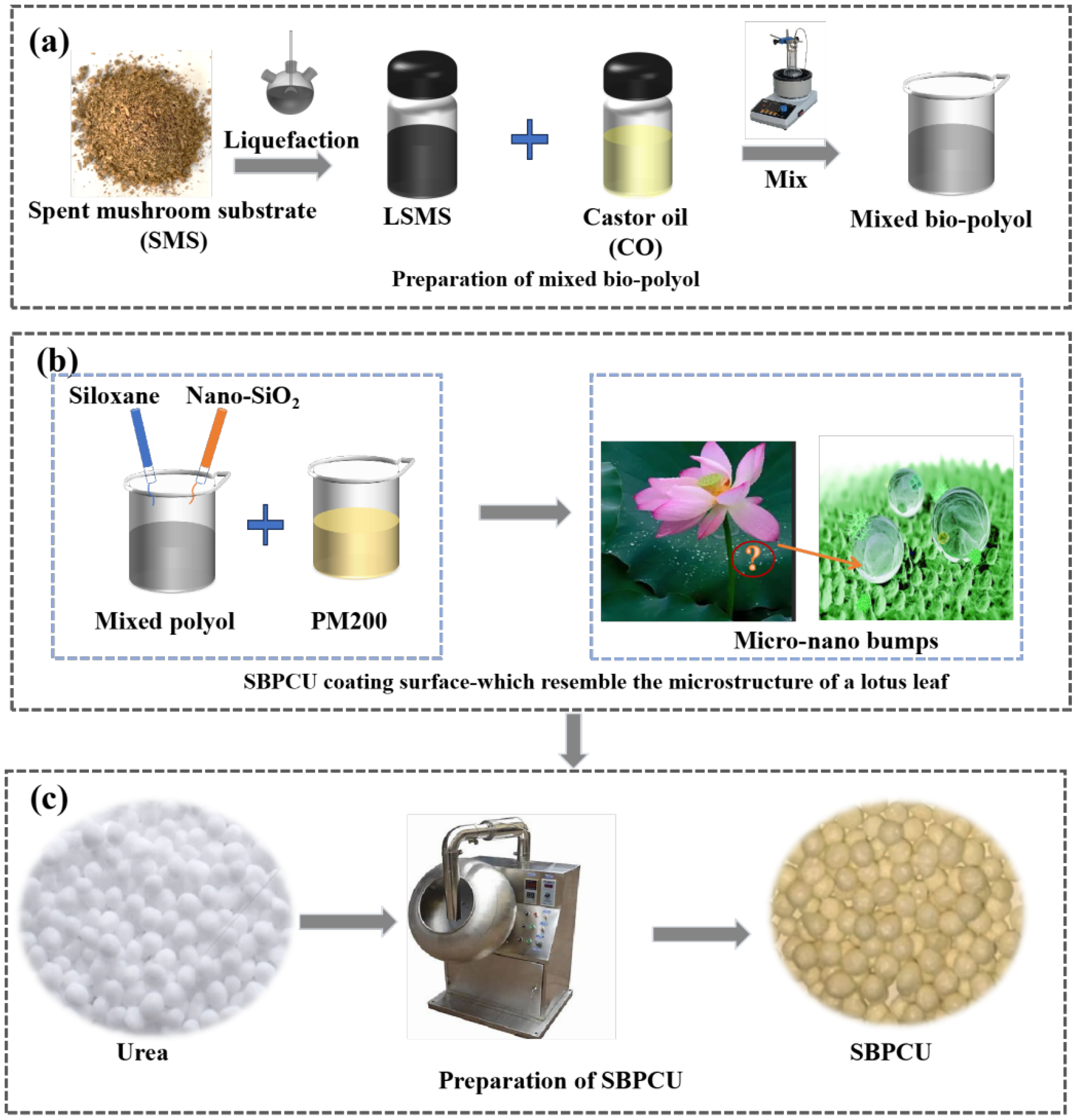
Figure 1. The scheme of preparation progresses for (a) mixed polyol, (b) dual-modified bio-polymer polyurethane coatings, and (c) SBPCUs.
Agriculture 16 00076 g001
Figure 2. Water absorption of coatings prepared with different bio-polymer coating content. Note: Different lowercase letters denote significant differences among treatments (LSD test, p ≤ 0.05).
Agriculture 16 00076 g002
Figure 3. Water absorption of siloxane and nano-SiO2 dual-modified bio-polymer polyurethane coatings. Note: Different lowercase letters denote significant differences among treatments (LSD test, p ≤ 0.05).
Agriculture 16 00076 g003
Figure 4. Porosity of siloxane and nano-SiO2 dual-modified bio-polymer polyurethane coatings. Note: Different lowercase letters denote significant differences among treatments (LSD test, p ≤ 0.05).
Agriculture 16 00076 g004
Figure 5. The surface (ac), fracture (df) and micro-pore (gi) images of the 50%BPCU, NBPCU, and SBPCU coatings.
Agriculture 16 00076 g005
Figure 6. SEM-EDX spectra of 50%BPCU (a1a3), NBPCU (b1b3), and SBPCU (c1c3) surface.
Agriculture 16 00076 g006
Figure 7. X-ray electron spectra of 50%BPCU (A), NBPCU (B), and SBPCU (C) coatings.
Agriculture 16 00076 g007
Figure 8. TGA analysis of 50%BPCU (A), NBPCU (B), and SBPCU (C) coatings.
Agriculture 16 00076 g008
Figure 9. (A) Initial N release rate and cumulative N release rate with (B) 3%, (C) 5%, and (D) 7% coating percentage. Note: Different lowercase letters denote significant differences among treatments (LSD test, p ≤ 0.05).
Agriculture 16 00076 g009
Figure 10. Relationship among the periodic N release rate, volume expansion, and swelling.
Agriculture 16 00076 g010
Figure 11. Germination potential of maize seeds cultured with different concentrations of SBPCU coatings. Note: Different lowercase letters denote significant differences among treatments (LSD test, p ≤ 0.05).
Agriculture 16 00076 g011
Table 1. Fitting parameters for N release from coated fertilizer in aqueous culture.
SampleRichard Equation First-Order Kinetic EquationQuadratic Equation
adkR2abR2abcR2
BPCU-3%94.830.000.180.5898.620.450.9655.884.080.080.52
BPCU-5%97.350.270.311.00109.040.160.9528.366.060.110.78
BPCU-7%100.920.330.081.00137.010.030.98−3.974.730.050.99
SBPCU-3%97.6316.227.801.00101.860.310.9853.794.350.080.52
SBPCU-5%96.011.140.411.0098.080.180.9516.166.850.120.85
SBPCU-7%84.030.420.091.00193.570.010.93−2.743.740.040.99
SPCU-3%98.030.000.280.79104.300.450.9660.983.870.070.51
SPCU-5%114.380.160.060.99125.620.040.99−1.595.400.071.00
SPCI-7%163.880.440.020.97−9.12−0.040.81−0.591.560.000.97
Table 2. Effects of different concentrations of SBPCU coatings on growth parameters of maize.
TreatmentHeight (cm)Stem Diameter (mm)Root Length (cm)Number of Lateral RootsRoot Fresh Weight (g)Aboveground Fresh Weight (g)Root Dry Weight (g)Aboveground Dry Weight (g)
CK10.43 ± 0.18 b0.61 ± 0.01 bc9.27 ± 0.19 c8.33 ± 0.26 a0.09 ± 0.00 a0.63 ± 0.02 b0.01 ± 0.00 a0.23 ± 0.01 b
SBPCU111.30 ± 0.24 a0.70 ± 0.01 ab10.73 ± 0.19 a8.67 ± 0.27 a 0.09 ± 0.00 a0.70 ± 0.02 a0.01 ± 0.00 a0.21 ± 0.01 a
SBPCU210.63 ± 0.26 ab0.71 ± 0.03 a9.93 ± 0.35 ab8.33 ± 0.27 a 0.09 ± 0.00 a0.66 ± 0.00 ab0.01 ± 0.00 a0.22 ± 0.00 b
SBPCU310.20 ± 0.19 b0.65 ± 0.03 abc9.07 ± 0.15 c8.00 ± 0.47 a0.09 ± 0.00 a0.64 ± 0.01 b0.01 ± 0.00 a0.20 ± 0.00 c
SBPCU410.10 ± 0.09 b0.59 ± 0.02 c8.93 ± 0.34 c8.00 ± 0.46 a0.08 ± 0.00 a0.62 ± 0.02 b0.010 ± 0.00 a0.19 ± 0.00 c
Note: Different lowercase letters denote significant differences among treatments (LSD test, p ≤ 0.05)
Disclaimer/Publisher’s Note: The statements, opinions and data contained in all publications are solely those of the individual author(s) and contributor(s) and not of MDPI and/or the editor(s). MDPI and/or the editor(s) disclaim responsibility for any injury to people or property resulting from any ideas, methods, instructions or products referred to in the content.