Article

Observed (1979–2024) and Projected (2030) Climate Trends in Relation to Farmers’ Perceptions in Coffee Cooperatives of Northern Peru


by
Jonathan Alberto Campos Trigoso
1,
Pablo Rituay
2,*,
Meliza del Pilar Bustos Chavez
1,
Rosmery Ramos-Sandoval
3,
Grobert A. Guadalupe
4,
Dorila E. Grandez-Yoplac
1 and
Ligia García
5,*
1
Centro de Investigación Economía Circular y Prospectiva de Agronegocios, Instituto de Investigación en Negocios Agropecuarios, Facultad de Ingeniería Zootecnista, Biotecnología, Agronegocios y Ciencia de Datos (FIZBAC), Universidad Nacional Toribio Rodríguez de Mendoza de Amazonas, Chachapoyas 01001, Chachapoyas, Peru
2
Escuela de Posgrado, Programa Doctoral en Ciencias para el Desarrollo Sustentable, Facultad de Ingeniería Zootecnista, Biotecnología, Agronegocios y Ciencia de Datos (FIZBAC), Universidad Nacional Toribio Rodríguez de Mendoza de Amazonas, Chachapoyas 01001, Chachapoyas, Peru
3
Facultad de Administración y Negocios, Universidad Tecnológica del Perú, Lima 15412, Lima, Peru
4
Instituto Universitario de Ingeniería de Alimentos Food-UPV, Universitat Politècnica de València, Camino de Vera s/n, 46022 Valencia, Spain
5
Facultad de Ingeniería Zootecnista, Biotecnología, Agronegocios y Ciencia de Datos (FIZBAC), Universidad Nacional Toribio Rodríguez de Mendoza de Amazonas, Chachapoyas 01001, Chachapoyas, Peru
*
Authors to whom correspondence should be addressed.
Agriculture 2026, 16(1), 57; https://doi.org/10.3390/agriculture16010057
Submission received: 26 November 2025 / Revised: 18 December 2025 / Accepted: 23 December 2025 / Published: 26 December 2025
(This article belongs to the Section Agricultural Economics, Policies and Rural Management)

Abstract

Climate change is increasingly threatening the sustainability of coffee farming in northern Peru, particularly in the Amazonas region, where coffee cooperatives serve as vital socioeconomic hubs for thousands of families. This study analyzed historical climate data from 1979 to 2024 to project trends up to 2030, integrating local perceptions from coffee producers to identify trends, anomalies, and future scenarios within four coffee cooperatives in northern Peru. We examined variables such as precipitation, temperature, evapotranspiration, and wind speed using nonparametric statistical analyses and SARIMA time-series models. The findings indicate a steady increase in maximum and average temperatures, alongside greater irregularity in precipitation. Specifically, the Bagua Grande and COOPARM cooperatives are experiencing precipitation deficits, while the Alta Montaña and Ocumal cooperatives are facing excess rainfall. Additionally, we project an increase in evapotranspiration by 2030. Surveys conducted with coffee growers reveal a consensus regarding irregular rainfall patterns; however, there is less recognition of the rising temperature trends. This discrepancy emphasizes the importance of combining scientific data with local knowledge to develop more effective adaptation strategies at the cooperative level. We conclude that enhancing climate training and cooperative management is essential for improving the resilience of regional coffee farming.

1. Introduction

Agriculture is a key component of global food security and plays a crucial role in the economic development of developing countries [1]. However, its sustainability is increasingly threatened by the diverse effects of climate change. These include rising temperatures, more frequent extreme weather events, altered precipitation patterns, and the increased prevalence of pests and diseases [2,3]. These changes directly impact productivity, the stability of rural incomes, and the resilience of agricultural ecosystems, leading to vulnerabilities that are particularly pronounced in sensitive crops, such as coffee [4,5,6,7,8].
Coffee (Coffea arabica) is the primary species cultivated in tropical mountain systems, such as the Peruvian Amazon [9]. It ranks among the world’s leading agricultural products, supporting the livelihoods of around 25 million farmers, as well as more than 100 million people who are part of its value chain [10]. The global coffee market is expanding due to increased consumption in emerging economies and a rise in specialty coffee in industrialized nations [11,12]. Recent studies indicate that climate change could significantly reduce the areas suitable for growing Coffea arabica in the coming decades. This is especially concerning for tropical regions in Latin America and Africa [6,13,14,15,16].
Peru plays a significant role in this dynamic, being the world’s second-largest exporter of organic coffee and a major producer of specialty coffees [17]. It currently manages 425,416 hectares of coffee plantations, benefiting 223,482 families, mainly distributed across seven regions, including Amazonas, Cajamarca, Junín, and San Martín [9]. In the Amazonas region, the districts of Omia and Lonya Grande are notable for their cultivated areas of 5668.46 ha and 5457.22 ha, respectively, which together represent 2.6% of the national coffee area [18]. Coffee production in this region, organized through cooperatives and associations, not only generates economic benefits but also acts as a sociocultural and environmental hub for thousands of rural families [19].
However, coffee production in Amazonas is becoming increasingly vulnerable due to climate change. The rise in average temperatures, irregular rainfall patterns, and the spread of pests, such as coffee rust (Hemileia vastatrix), are significant concerns [20]. Both the coffee berry borer (Hypothenemus hampei) and other factors threaten the stability of production and the quality of the beans [21]. Confronted with these challenges, climate science utilizes global and regional atmospheric circulation models, along with statistical downscaling methods, to provide valuable future scenarios that aid in informed decision-making and the development of effective adaptation strategies [14]. In rural areas, farmers’ perceptions are a crucial element that should not be overlooked [22,23]. The experience of coffee growers regarding climate changes, pests, and yields informs the viability and acceptance of adaptation practices proposed by science [4,24,25].
Studies in Latin America indicate some alignment between scientific projections and local perceptions, but notable differences also arise [26]. The differences observed often arise from cultural and economic factors, as well as varying access to information [27]. These elements hinder the implementation of collaborative adaptation strategies and create a disconnect between technical evidence and local knowledge [24,28].
The development of data-driven prediction tools has become essential for agricultural planning [29] and adapting to climate change [30]. Various statistical and machine learning models, such as regression analysis, decision trees, neural networks, and time series models like Seasonal Auto Regressive Integrated Moving Average (SARIMA), have been highly effective in estimating crop yields [31] and projecting trends based on environmental factors, including temperature [32], humidity [33], evapotranspiration [34], precipitation [35], and soil nutrients [36]. Among these factors, temperature is a critical element in plant physiology. While moderate temperature changes can often be tolerated or adjusted for through phenological adaptations, extreme events—such as heatwaves, droughts, or frosts—can cause irreversible damage to crops [37].
Thus, combining climate models with local perceptions is essential for designing effective public policies, agricultural extension programs, and sustainability strategies in sensitive value chains, such as coffee [38,39]. This study addresses the challenges faced by coffee cooperatives in northern Peru. It utilizes historical climate records from 1979 to 2024. It employs statistical models to achieve the following objectives: (a) Construct current climate trends for key variables, including evapotranspiration, precipitation, maximum, average, and minimum temperatures, and wind speed; (b) Identify anomalies in these variables through time series analysis; (c) Model projections of climate conditions up to 2030; and (d) Compare observed and projected trends with the perceptions of coffee growers within associations and cooperatives in the Amazonas region. By doing so, we identified points of convergence and divergence between scientific knowledge and local insights. This provides valuable input to enhance the sustainability of regional coffee farming in the context of climate change, aligning with Sustainable Development Goals 13 and 15 of the 2030 Agenda.

2. Materials and Methods

2.1. Study Area

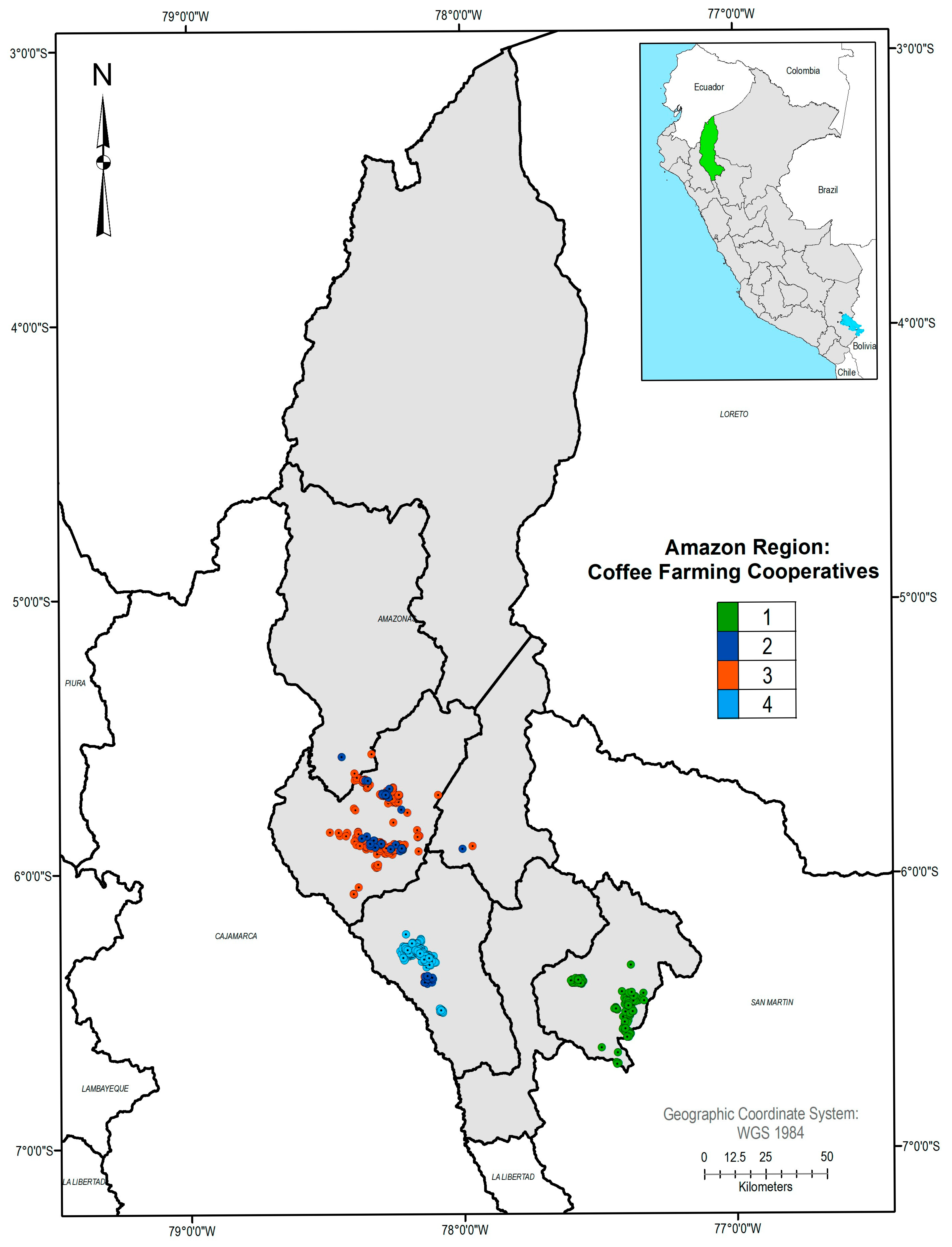
The research was conducted in the Amazonas region of Peru, focusing on several cooperatives: Cooperativa Agraria Cafetalera Bagua Grande, which includes 308 farms; Cooperativa Agraria Rodríguez de Mendoza (COOPARM), with 255 farms; Cooperativa Agraria Cafetalera Alta Montaña, comprising 222 farms; and Cooperativa Agraria Cafetalera Ocumal, totaling 375 farms. As illustrated in Figure 1, the Amazonas region is in northeastern Peru. This area is renowned for its coffee cultivation and is situated between 1200 and 1800 m.a.s.l. It features a humid tropical climate with average annual temperatures ranging from 18 to 24 °C. The selected cooperatives represent organized regional coffee production, encompassing a total of 1160 farms. Georeferenced coordinates for each cooperative are listed in Supplementary Table S1.

2.2. Obtaining Climate Data

We utilize the Climate Engine platform (https://www.climateengine.org/, accessed 10 January 2025), which is a freely accessible application for remote sensing and climate cloud computing [40]. Climate Engine is powered by Google Earth Engine, allowing us to process and download climate variable data from 1979 to 2024 [18]. The values were calculated within Climate Engine using collections of Landsat surface reflectance products provided by the United States Geological Survey (USGS) and hosted on Google Earth Engine [41,42].
Climate Engine automatically applies cloud masks from the Landsat surface reflectance collections to ensure data accuracy [18]. We calculated spatially and temporally averaged climate values within Climate Engine and downloaded these as median values. Next, we analyzed historical trends using RStudio software version 4.2.3 and the ggplot2 package.

2.3. Trends, Anomalies, and Climate Modeling

The Seasonal Autoregressive Integrated Moving Average (SARIMA) model was employed to forecast a time series [43,44]. This time series forecasting method relies solely on historical data to model and predict future values. SARIMA effectively captures seasonal patterns and recurring data fluctuations [45]. A significant benefit of this univariate method is that it relies entirely on previous observations, allowing for precise predictions based on the historical patterns of the series [46]. The SARIMA model is developed using the Box-Jenkins methodology [47,48]. The process consists of several essential steps: (i) assessing the stationarity of the time series to ensure that statistical properties, such as the mean and variance, remain stable over time; (ii) determining the appropriate structure for the Seasonal Autoregressive Integrated Moving Average (SARIMA), including seasonal components and differentiation; (iii) estimating the model parameters; (iv) performing diagnostic checks to evaluate the adequacy of the model; and (v) generating forecasts based on the final model. For this analysis, R software version 4.2.3 and the forecast package were used.
The Seasonal Autoregressive Integrated Moving Average (SARIMA) model was chosen because it is particularly effective for analyzing long-term climatic time series that exhibit strong seasonal patterns and temporal autocorrelation. SARIMA enables the separation of trend, seasonal, and irregular components and has been widely used in climatological studies to evaluate historical variability and generate short-term projections. However, SARIMA is a univariate approach, meaning it does not explicitly consider interactions among different climatic variables. Additionally, it requires that the series being modeled is stationary, which may limit its ability to capture complex climate dynamics. These limitations are discussed further in Section 4.4.

Application of the SARIMA Model

The SARIMA model was applied to monthly time series data for six climatic variables: precipitation, maximum temperature (Tmax), mean temperature (Tmean), minimum temperature (Tmin), evapotranspiration (ET), and wind speed [49]. This analysis was conducted for each of the four coffee cooperatives evaluated. The modeling period spanned from 1979 to 2024, with data from 1979 to 2019 used for model calibration and the years 2020 to 2024 reserved for validation [50].
Before fitting the models, we assessed the stationarity of each time series through visual inspection, autocorrelation (ACF) and partial autocorrelation (PACF) plots, as well as unit root tests. When non-stationarity was detected, we applied first-order and/or seasonal differencing as necessary. Logarithmic transformation was not utilized because the variables were expressed in consistent physical units and did not show exponential growth patterns.
Given the monthly resolution of the data, we set the seasonal period to \(s = 12\) to account for annual climatic cycles. We evaluated a set of standard SARIMA candidate models commonly used in climatological studies, including SARIMA (1,1,1)(1,1,1)\(_{12}\), (2,1,1)(1,1,1)\(_{12}\), (1,0,1)(1,1,0)\(_{12}\), and (2,0,2)(1,1,1)\(_{12}\). Model selection was based on the lowest values of the Akaike Information Criterion (AIC) and the Bayesian Information Criterion (BIC) to ensure both parsimony and a good fit.
We evaluated model performance using various metrics, including mean absolute error (MAE), root mean square error (RMSE), mean absolute percentage error (MAPE), the Pearson correlation coefficient (R), and Nash–Sutcliffe efficiency (NSE) [49]:
Additionally, we conducted residual diagnostics using the Ljung–Box test to check for the absence of autocorrelation [51,52]. Models with non-significant Ljung–Box p-values (p > 0.05) were considered to have adequately captured the temporal structure of the data [53]. The final selected SARIMA models were then used to generate monthly projections of climatic variables up to 2030, along with 95% confidence intervals. All analyses were performed using R software (version 4.2.3) and the forecast package [54].
A conventional out-of-sample validation strategy was applied during model development. Monthly data from 1979 to 2019 were used for model calibration (training), while the period 2020–2024 was reserved as an independent validation subset. This approach allowed model performance to be evaluated under recent climatic conditions without compromising the representation of long-term trends and seasonality.
After confirming satisfactory predictive performance through error metrics (MAE, RMSE, MAPE, R, and NSE) and residual diagnostics (Ljung–Box test), the final SARIMA models were refitted using the complete historical dataset (1979–2024). This step was undertaken to maximize the information available for forecasting climatic trends up to 2030. While fitting the model to the full dataset may reduce strict independence between calibration and projection, this approach is appropriate for short-term climate trend analysis and is commonly adopted when the objective is to characterize expected trajectories rather than to perform real-time forecasting.

2.4. Farmer Perception Surveys

To incorporate the social dimension, a semi-structured survey was administered to all coffee growers who are members of four coffee cooperatives in the Amazonas region. Before launching the study, a focus group was conducted to explain the meaning of the variables, intentionally avoiding specific examples of crop impacts to minimize any potential influence on the participants’ responses [55]. Following this, the surveys were distributed to 152 coffee growers (selected through convenience sampling [56] who were members of the four cooperatives, from which georeferences of their coffee plots were obtained. The growers were asked about their perceptions of changes in climate variable patterns, their current experiences with these phenomena, and their expectations for how these patterns might evolve in the future. The validity of the survey instrument was ensured through expert review and a pilot test conducted with 15 producers. The pilot test demonstrated strong reliability with a Cronbach’s α coefficient of 0.82 [57,58,59,60].

2.5. Data Analysis

To evaluate the statistical behavior of the climatic variables, data distribution was first assessed using the Kolmogorov–Smirnov test for normality. Because all variables deviated from normality, nonparametric methods were adopted to compare differences among cooperatives. To evaluate the distribution of climatic variables (evapotranspiration, precipitation, temperature, and wind speed), the Kolmogorov–Smirnov (KS) test was applied [61]. The results showed that all variables had p-values less than 0.05, indicating that they did not follow a normal distribution (see Table S1). Consequently, the nonparametric Kruskal–Wallis test [62,63] was used to identify differences between the cooperatives evaluated. The Chi2 values obtained were significant for all variables (p < 0.05), demonstrating the existence of statistically significant differences between cooperatives in terms of the climate indicators analyzed during the period 1979–2024.

3. Results

This section presents the empirical results of the climatic analyses, SARIMA model performance, and farmer perception surveys. Results are organized to first describe model validation outcomes, followed by observed climate trends, anomalies, projections, and their comparison with local perceptions.

3.1. SARIMA Model Performance and Validation

In some cases, such as with variable wind speed, the AIC and BIC values were found to be negative [64]. This behavior indicates that the model achieved a very high level of plausibility due to low variance and high predictability of the time series [65]. In these situations, the term \(−2\ln(L)\) can become negative; when this value is combined with the complexity penalty, it can result in the total value of the criterion being below zero [46]. Therefore, negative AIC and BIC values should only be interpreted as evidence of an exceptional fit of the model to that variable [66]. The comparison remains valid in relative terms between alternative models, with the one with the lowest AIC or BIC value being preferable [67].
We use the same four standard SARIMA candidate models for all variables (1,1,1) (1,1,1) [12], (2,1,1) (1,1,1) [12], (1,0,1) (1,1,0) [12], (2,0,2) (1,1,1) [12] (see Table 1). We used the range 1979–2019 as training and 2020–2024 as validation.

3.2. Current Climate Trends

Table 2 presents the descriptive results of the time series for six key climate variables—evapotranspiration, precipitation, maximum temperature (Tmax), average temperature (Tmean), minimum temperature (Tmin), and wind speed—analyzed from 1979 to 2024 across four evaluated coffee cooperatives: Bagua Grande, COOPARM, Alta Montaña, and Ocumal.
Overall, the time series demonstrates significant climatic variability among the cooperatives, which can be attributed to the rugged topography of the Amazonas region and the spatial variability of the rainfall patterns. The differences observed in the mean, maximum, and minimum values for each variable indicate the presence of contrasting microclimates that directly influence the physiology and productivity of coffee.
In terms of the evapotranspiration (ET) variable, the highest average values were found in Bagua Grande and COOPARM, both at 92.1 mm, while Alta Montaña had a lower average of 78.4 mm. This discrepancy may be linked to the higher altitudes and greater vegetation cover in Alta Montaña, which reduces evaporative demand. Conversely, Ocumal exhibited an unusually high average, likely due to an extreme data point, suggesting either a numerical error or significant local variability. The dates of the maximum and minimum values (June 2017 and September 2024, respectively) align with seasonal transition phases, confirming the strong influence of annual cycles on ET dynamics.
In terms of precipitation, the most significant inter-cooperative disparity was observed. Alta Montaña recorded the highest average (177.9 mm), characteristic of its location in humid mountainous areas with orographic influence; in contrast, COOPARM and Ocumal recorded averages close to 59 mm, while Bagua Grande reached 70.9 mm. This difference coincides with the rainfall patterns described for the region, where the eastern slopes have higher humidity. Extreme years exhibit high interannual variability, characterized by maximums in 2015–2023 and minimums associated with dry periods, such as 1986 or 2017.
Maximum temperatures showed a more uniform distribution among cooperatives, with averages ranging from 19.6 to 19.9 °C. The highest values were recorded in November 2010, coinciding with a warm event associated with El Niño. The average temperature reflected a similar pattern, with averages of 12.8–13.8 °C and low standard deviations (<1.5 °C), suggesting regional thermal stability. However, the minimum values (7.5 °C in Bagua Grande and COOPARM; 11.0 °C in Alta Montaña) indicate the possibility of cooling episodes that may affect coffee flowering.
Notable differences were identified in relation to the minimum temperature: Bagua Grande had an average of 12.8 °C. In comparison, Ocumal dropped to 8.4 °C, which could be associated with higher altitude and exposure to radiative frost. These temperature variations directly affect phenological risk and cherry quality, as temperatures below 10 °C can inhibit growth and affect bean maturation.
Finally, wind speed showed moderate average values (0.7–0.8 m·s−1); however, extreme peaks were recorded in COOPARM and Ocumal during isolated years (2009 and 2019), indicating the influence of episodic strong wind events rather than a sustained long-term pattern. The stability of the minimum values, shared among cooperatives (0.43 m·s−1), confirms a general regime of light winds, consistent with the topographical conditions of protected inter-Andean valleys.
The differences observed highlight the necessity for tailored adaptation strategies for each cooperative. For instance, while Bagua Grande and COOPARM need to enhance water management and vegetation cover to address water shortages, Alta Montaña and Ocumal require measures to manage excess moisture and reduce the risk of low temperatures.
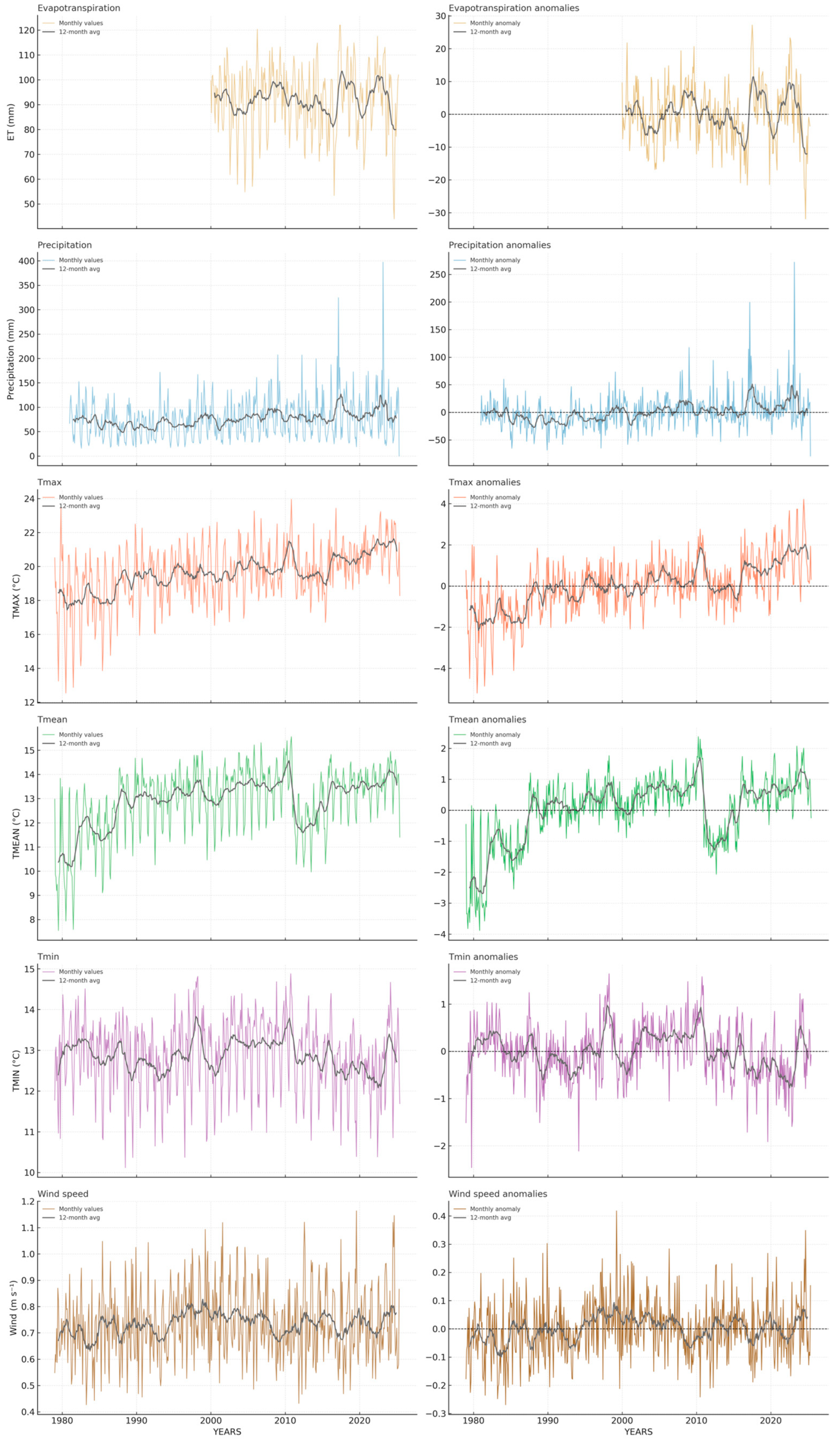
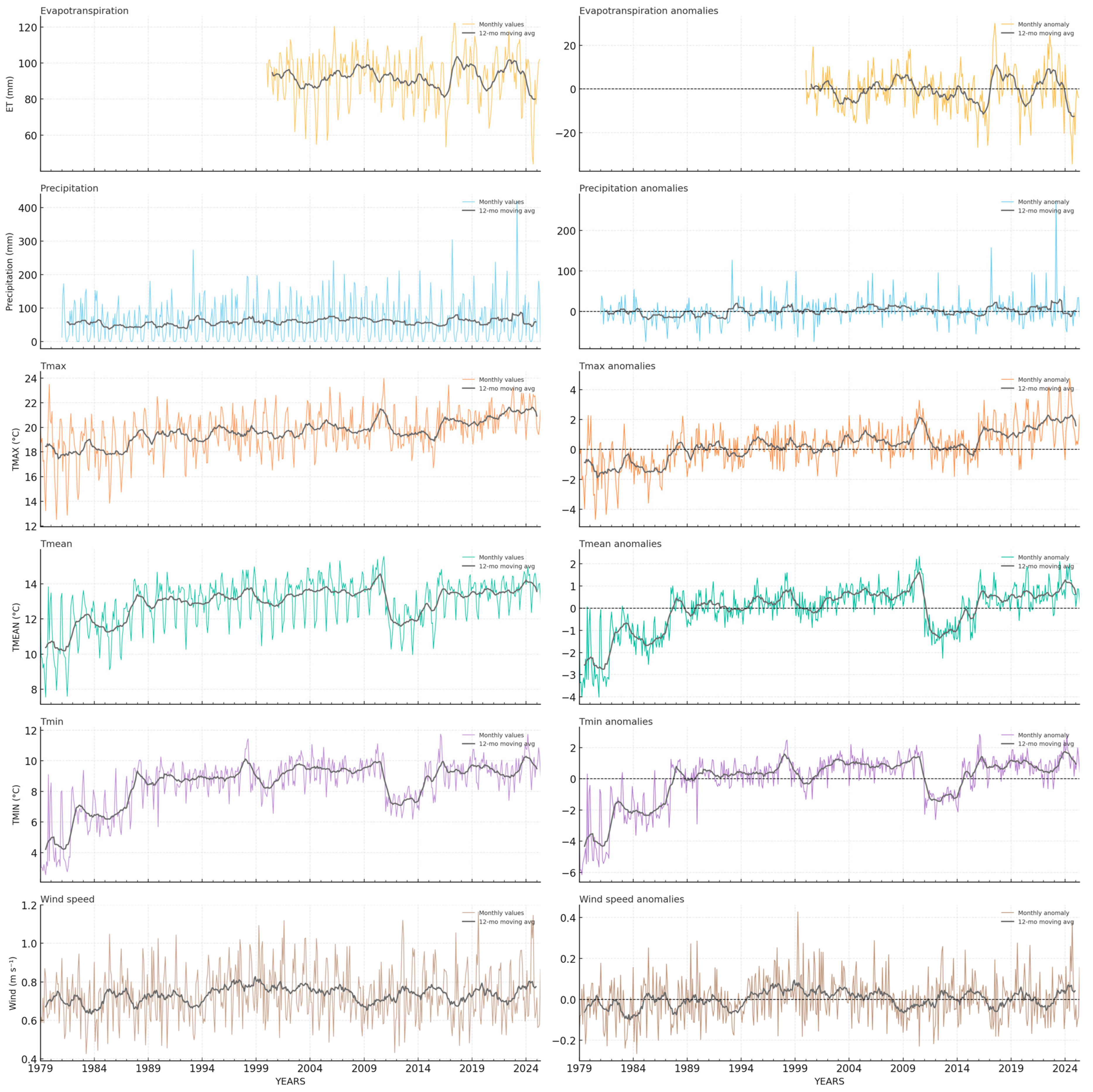
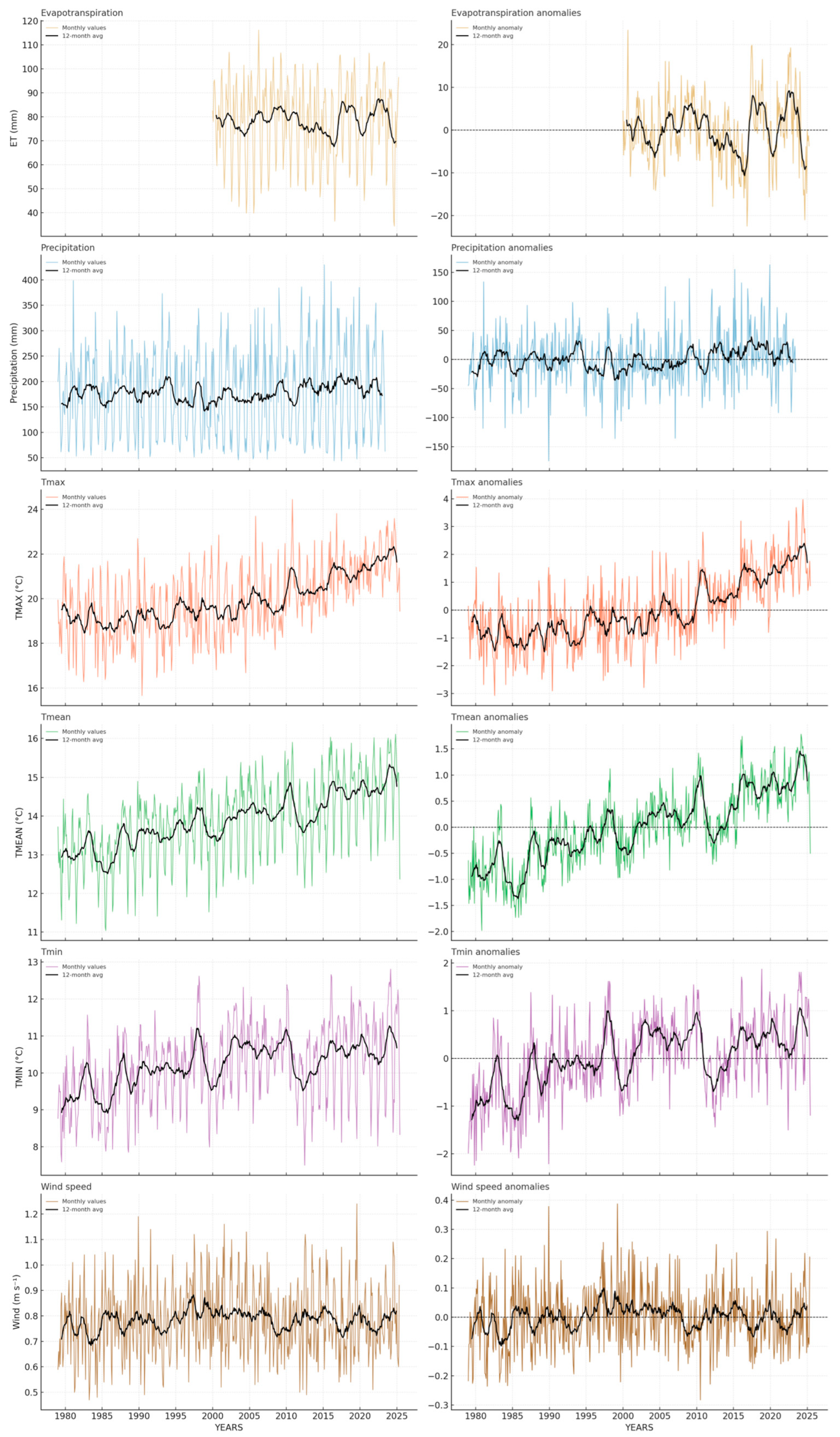
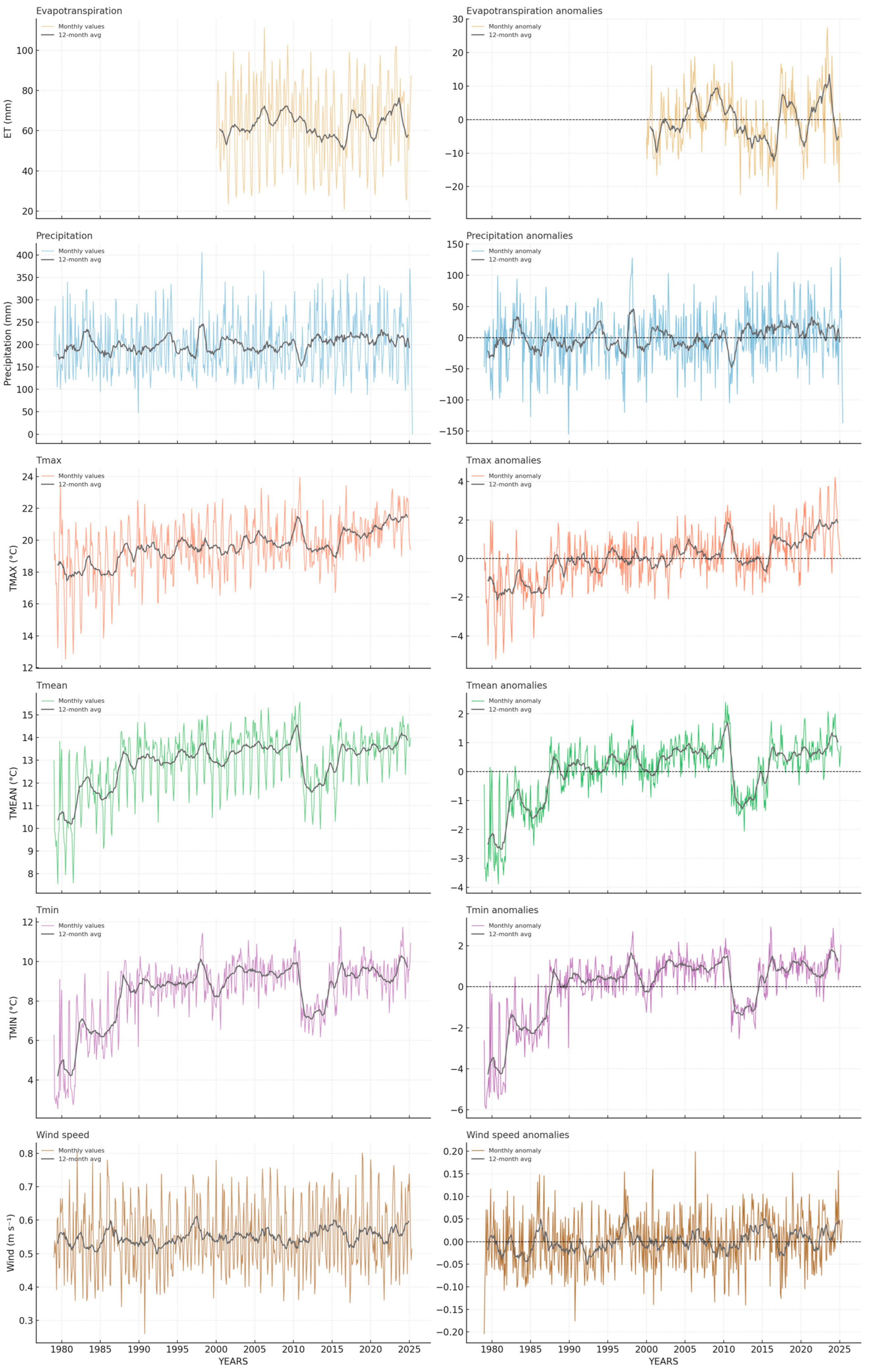
A joint analysis of the time series data reveals a trend of rising maximum and average temperatures, accompanied by increasingly unpredictable rainfall patterns. This aligns with the findings presented in Figure 1, Figure 2, Figure 3 and Figure 4 of the manuscript. Such trends suggest a shift toward warmer conditions and greater interannual variability, reflecting global reports on the effects of climate change in tropical coffee-growing regions.
In summary, Table 2 provides crucial statistical evidence that supports further inferences regarding anomalies (Table 3) and projections (Table 4). The analysis confirms that coffee cooperatives in northern Peru are facing diverse climatic conditions, with trends that could alter the agroecological suitability of their areas by 2030. These findings underscore the importance of integrating local climate management with predictive models and farmers’ perspectives, thereby guiding the development of specific, sustainable adaptation policies for Amazonian coffee farming.

3.3. Climatic Anomalies

Table 3 summarizes the climatic anomalies observed in each cooperative. It highlights years with significant rainfall deficits, such as 1995 in Bagua Grande and 2014 in COOPARM, as well as years with excessive rainfall, like 2002 in Alta Montaña and 2007 in Ocumal. These anomalies contribute to coffee growers’ perceptions of irregular rainfall patterns.
Notable positive temperature anomalies were recorded in maximum temperatures (Tmax), particularly in 1997 in Bagua Grande (Table 3, Figure 2) and 1998 in COOPARM, which were associated with the El Niño phenomenon (Table 3, Figure 3). Wind speed exhibited considerable variability across all cooperatives, with unusually high maximum values observed in 2023–2024.
Figure 1, Figure 2, Figure 3 and Figure 4 illustrate the time series and corresponding anomalies for each cooperative. These graphical representations support the statistical findings: there is an upward trend in temperatures, significant interannual variability in precipitation, and relative stability in the evapotranspiration series. For example, Bagua Grande displays significant cycles of precipitation with recurring deficit periods; COOPARM and Alta Montaña frequently experience peaks of excess water, whereas Ocumal shows marked extreme anomalies in both directions. These local differences underscore the necessity for adaptation strategies tailored to specific regional contexts.
The results indicate considerable spatial and temporal variability among cooperatives. For instance, the Alta Montaña cooperative recorded the highest average precipitation at 177.9 mm, confirming its location in a region with higher rainfall (Table 3, Figure 4). In contrast, Bagua Grande and Ocumal recorded lower averages of 70.9 mm and 59.0 mm, respectively (Table 3, Figure 5). Maximum and average temperatures showed less variability, ranging from 19 to 20 °C, indicating relatively uniform thermal stability in the coffee-growing region. However, Ocumal faced extreme minimum temperatures as low as 2.5 °C, which may suggest local frost events that could negatively impact coffee flowering and yields.
In coffee cultivation, the ideal average air temperature is around 20 °C; deviations above or below this threshold create suboptimal conditions that can harm crop development. In agroforestry systems, the presence of shade trees can reduce air temperature by 1 to 5 °C, depending on coverage [5,68]. Recent studies have shown that shade trees can mitigate thermal variability and enhance the system’s resilience to climate change, as highlighted in research exploring the cooling effects of shading (2023).
The inter-cooperative comparison of climate variables (Table 3) shows that the Alta Montaña and Ocumal cooperatives experience higher levels of precipitation and greater interannual variability. In contrast, Bagua Grande and COOPARM have more stable climates, though they do encounter occasional extreme weather events. This highlights the importance of adopting local strategies for adaptive climate management.

3.4. Projections (2024–2030) of Climate Variables

Table 4 presents the projections for climate variables from 2024 to 2030. The results indicate a consistent increase in evapotranspiration in Bagua Grande and COOPARM, averaging 91.1 mm, while Ocumal shows lower values at 56.9 mm. Projected precipitation is decreasing in Bagua Grande (86.5 mm) and COOPARM (61.7 mm), while remaining high in Alta Montaña (193.6 mm) and Ocumal (210.3 mm). The projected maximum and average temperatures range from 21 to 22 °C and 12 to 14 °C, respectively, confirming a gradual increase compared to historical averages.
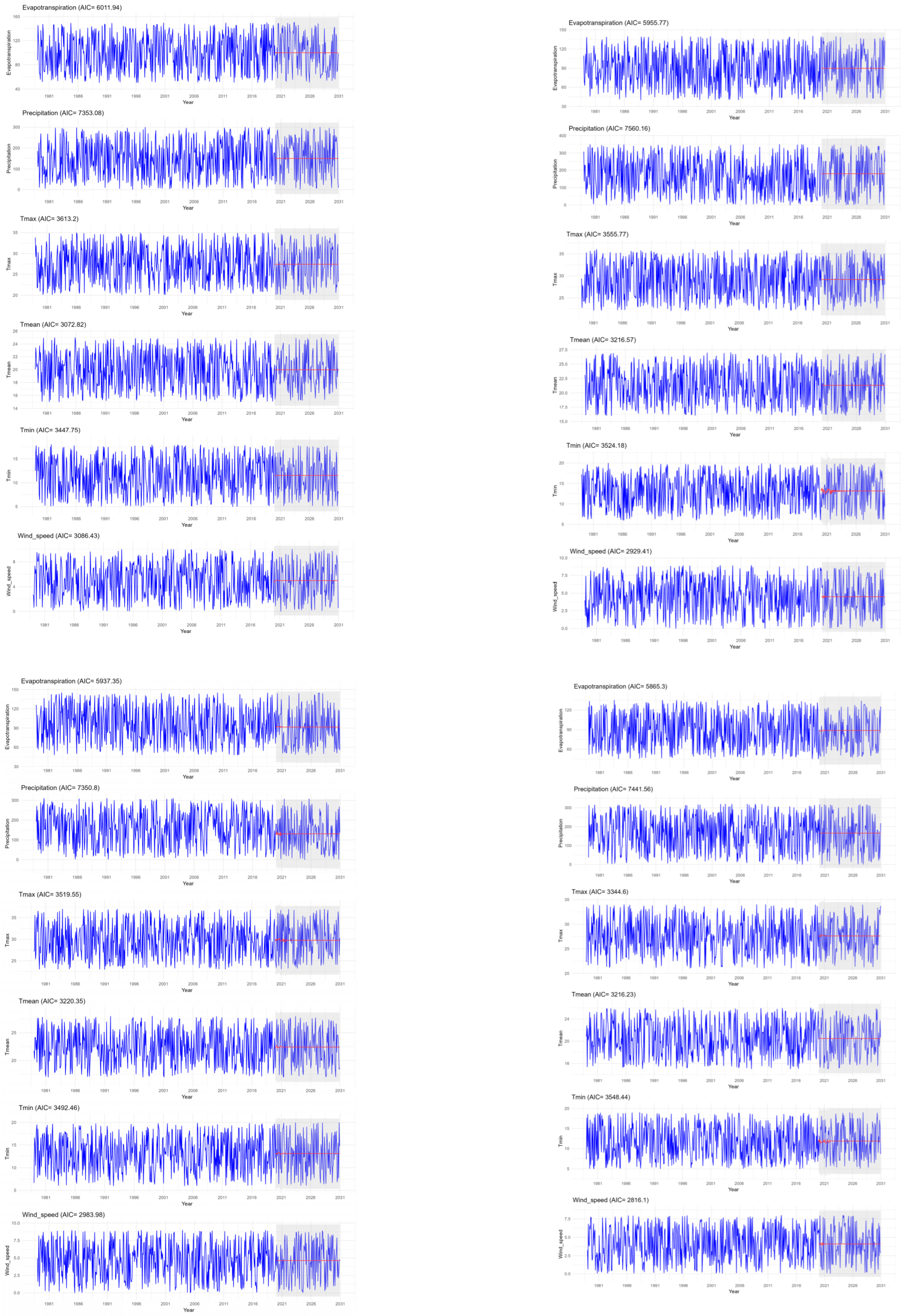
These projections, based on historical data from 1979 to 2024, help us identify expected future trends in each area, along with potential agroclimatic risk scenarios that could impact the sustainability of coffee production in the Amazonas region (Table 4, Figure 5).
Evapotranspiration is projected to show an increasing trend across all cooperatives, although the magnitudes differ. Bagua Grande and COOPARM exhibit similar average values (91.1 mm), indicating a slight increase compared to the historical period. Alta Montaña has a lower average of 69.98 mm, while Ocumal records the lowest value at 56.86 mm, consistent with its higher altitude and lower temperatures. This increase in evapotranspiration implies greater water demand for crops, potentially intensifying water stress risks, particularly in Bagua Grande and COOPARM, where projected rainfall is decreasing.
The 95% confidence interval (CI) for Bagua Grande ranges from 71.4 to 110.8 mm, reflecting moderate uncertainty. In contrast, the CI for Ocumal ranges from 23.3 to 90.4 mm, indicating high interannual variability. This pattern suggests that colder areas may experience years with exceptionally low evapotranspiration values, alternating with periods of water recovery, which would affect irrigation scheduling and the phenology of coffee trees (Table 4, Figure 5).
The precipitation variable exhibits a contrasting distribution among the cooperatives, highlighting distinct microclimates. Bagua Grande and COOPARM show significant decreases in average precipitation (86.5 mm and 61.7 mm, respectively), while Alta Montaña and Ocumal maintain high levels (193.6 mm and 210.3 mm). These results reinforce the existence of an orographic humidity gradient, with increasing water deficits in the lower areas of the Utcubamba Valley and surpluses in the higher eastern slopes.
The wide range of the confidence interval (±60 mm on average) indicates that precipitation scenarios will be characterized by significant climate uncertainty, with years potentially being drier or rainier than anticipated. The downward trend in western areas suggests the possibility of prolonged dry periods, which could negatively impact coffee flowering and ripening. Conversely, the predicted excess rainfall in Alta Montaña and Ocumal may lead to issues such as soil saturation, the spread of fungal diseases, and increased erosion (Table 4, Figure 5).
Projected maximum temperatures are expected to rise across the four cooperatives, with average values ranging from 21.4 to 22.2 °C. Bagua Grande and COOPARM exhibit similar temperature levels, while Alta Montaña reaches the highest maximum at 22.18 °C, and Ocumal records 21.65 °C. This variation of approximately +1.5 °C from historical values confirms a regional warming trend, consistent with thermal increase scenarios noted in recent climate literature for the tropical Andes.
The increase in maximum temperatures could have detrimental physiological effects on Coffea arabica, which thrives within an optimal growth range of 18 to 22 °C. An increase in the number of days with temperatures above this threshold may lead to thermal stress, reduced photosynthesis, and lower-quality beans. The broad confidence intervals (±2.5 °C) indicate the potential for extreme events, such as heat waves or temporary thermal anomalies.
Additionally, the projected average temperature ranges from 12.78 °C (in Bagua Grande and COOPARM) to 14.35 °C (in Alta Montaña), showing a slight increase compared to the historical average (approximately 12.8 °C). This gradual rise reflects a sustained thermal transition, although it remains within the crop’s tolerance limits. The higher average temperature in Alta Montaña is noteworthy, as it historically has had cooler conditions; this change could signify an upward shift in the optimal range for coffee production, moving the production frontier to higher elevations.
The projections also indicate an increase in temperature variability, as inferred from the confidence intervals (±3 °C). This heightened variability could lead to more frequent diurnal fluctuations, impacting the synchrony of flowering and the uniformity of ripening, both of which are critical factors for the quality of specialty coffee.
The projected minimum temperatures (Tmin) exhibit significant differences among the cooperatives. Bagua Grande has a relatively high Tmin of 12.85 °C, while COOPARM and Ocumal have lower values of 9.14 °C and 9.97 °C, respectively. Alta Montaña shows an intermediate Tmin of 10.49 °C. These findings indicate that areas at higher altitudes will generally remain colder, though there is a slight trend toward increasing minimum temperatures, which may reduce the frequency of frosts. However, the lower bound of the 95% confidence interval for COOPARM, at 4.96 °C, suggests that critical cooling events could still occur.
Regarding variable wind speed, values remain stable across most cooperatives at approximately 0.77 m·s−1, except Ocumal, where a slight decrease to 0.57 m·s−1 is observed. Although these differences are moderate, the confidence intervals indicate some variability, ranging from 0.45 to 0.99 m·s−1. This stability suggests that wind patterns are unlikely to undergo significant changes by 2030, although there may be seasonal peaks of greater intensity. Moderate winds are essential for ventilating foliage and dispersing pests; however, excessive wind speeds could lead to increased evapotranspiration and mechanical damage to leaves and flowers.
As a comparative summary, the inter-cooperative analysis of projections highlights contrasting climate patterns. Bagua Grande and COOPARM have emerged as the areas most vulnerable to water deficits and increased thermal stress. In contrast, Alta Montaña and Ocumal are likely to maintain a more humid environment, which poses a risk of soil saturation and diseases associated with excessive humidity. Overall, the projected scenario suggests that the coffee-growing region of Amazonas will encounter more variable and uncertain climatic conditions, which may have implications for yield, quality, and the sustainability of production systems.
Figure 6 displays these projections with confidence intervals, emphasizing the positivetrend in temperatures and the growing uncertainty in precipitation.

3.5. Trends Versus Perception (Current Climate)

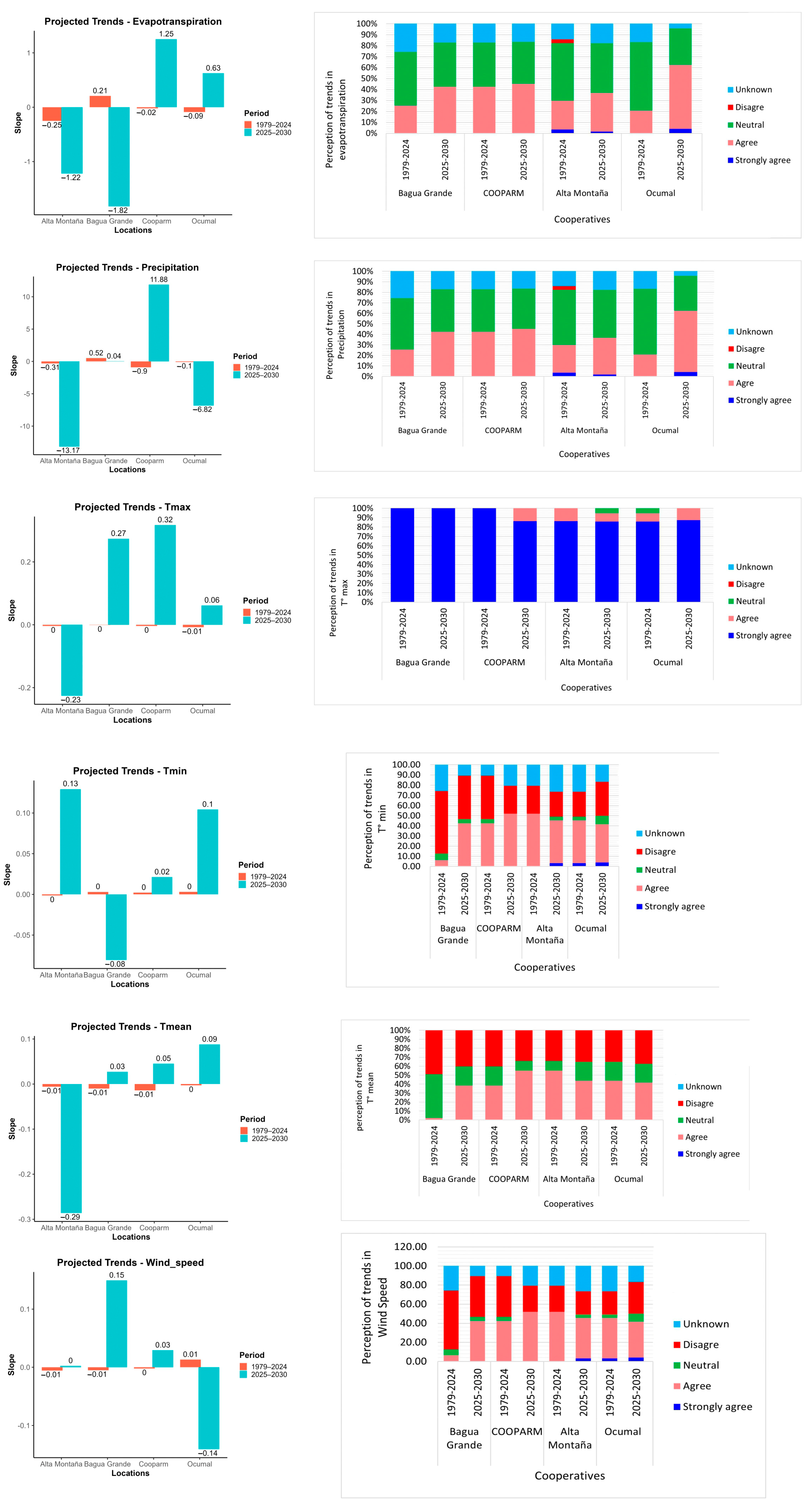
Finally, Figure 7 compares climate trends with producers’ perceptions. The analysis reveals high levels of agreement regarding the irregularity of rainfall and the increased frequency of extreme events. However, significant differences are identified among cooperatives in their perceptions of temperature change and environmental humidity.
About precipitation, there is a consensus on irregularity. On average, 78% of the coffee growers surveyed said that rainfall has become more irregular in the last ten years. This perception coincides with the negative or fluctuating trends observed in historical precipitation series. The Bagua Grande cooperative has the most pronounced perception: 86% of producers say that it rains less than before or that rainfall is more concentrated, which coincides with the downward trend observed (−0.9 mm year−1). At COOPARM, 82% report a reduction or alteration in the seasonal pattern, reflecting the irregular rainfall peaks recorded since 2015. In Alta Montaña, where the historical rainfall trend is slightly positive, only 63% perceive noticeable changes, indicating that producers interpret rainfall as “shorter but more intense.” In the Ocumal Cooperative, the perception of change is lower (58%), probably due to its naturally high rainfall regime (>190 mm monthly average), which softens the feeling of deficit. Despite these differences, more than 70% of respondents overall consider that extreme events (intense rainfall or prolonged droughts) are now more frequent. This coincidence with the anomalies recorded between 2010 and 2023 reinforces the reliability of local empirical knowledge as an early indicator of climate variability.
In the temperature variable, there were divergences between data and perception. The most obvious contrast is observed in air temperature. Although historical series show an average increase of +1.4 °C in maximum temperature and +0.9 °C in minimum temperature, only 46% of producers perceive that “it is hotter than before,” while 37% maintain that “the temperature has not changed significantly.” In the Bagua Grande cooperative, 62% notice greater heat during the day, especially in the summer months; however, 25% do not perceive any variation and 13% even consider that “mornings are colder.” At COOPARM, only 48% perceive a temperature rise, while 40% believe that the climate remains the same. Furthermore, at the Alta Montaña cooperative, 58% perceive that “temperatures are more pleasant” or “more temperate,” indicating possible confusion between gradual warming and thermal mitigation caused by tree shade. In Ocumal, only 34% perceive a temperature rise, while 50% consider that conditions have remained stable.
In terms of humidity and dryness in the environment, 65% of farmers report experiencing lower humidity levels, with variations that are altitude dependent. In Bagua Grande and COOPARM, 74% and 69% of farmers, respectively, describe their environment as “drier,” which aligns with the observed increase in evapotranspiration of approximately 0.7 mm per year. In Alta Montaña, 52% perceive greater dryness, while 30% believe the climate remains humid. In Ocumal, only 41% feel a sense of dryness, likely due to ongoing humid conditions with a monthly average precipitation exceeding 200 mm. These statistics indicate a clear spatial correlation between the projected water deficit and the perception of moisture loss. In the lowland areas (Bagua Grande, COOPARM), there is a more substantial alignment between data and local perceptions. In contrast, the highland areas (Alta Montaña, Ocumal) tend to underestimate the actual dryness caused by the indirect effects of warming, even if they recognize its physical causes.
Regarding wind, the perception of change is less consistent. Only 39% of producers noted an increase in wind intensity or frequency, while 51% reported no noticeable variations. In Bagua Grande, 42% of farmers perceive “stronger winds in summer.” In COOPARM, 48% of observations showed an increase in wind associated with storms. Conversely, in Alta Montaña and Ocumal, 35% and 31%, respectively, mentioned that they believe “the wind blows the same as before.” This moderate perception corresponds with recorded stability in wind speed, averaging between 0.7 and 0.8 m/s, with occasional seasonal peaks (Figure 7).
Overall, coffee growers demonstrated a strong awareness of rainfall variability and extreme events. However, their understanding of gradual increases in minimum and maximum temperatures was more limited, despite these factors significantly impacting coffee production.

4. Discussion

4.1. Current Climate Trends

Recent findings indicate a consistent trend of rising maximum and average temperatures across all coffee cooperatives, which aligns with global and regional reports on warming in tropical coffee-growing areas [15,69]. This warming is associated with adverse climatic conditions, including continuous temperature increases, irregular annual rainfall, hailstorms, strong winds, floods, and hurricanes. These factors negatively impact coffee yields in the central producing regions of the Americas, Asia, and Africa [70]. Notably, this trend is also evident in coffee cooperatives in northern Peru. The observed increase of approximately +1.4 °C in maximum temperatures (Tmax) and +0.9 °C in minimum temperatures (Tmin) from 1979 to 2024 reflects a sustained thermal transition that could affect the metabolism and yields of Arabica coffee, a species that thrives at temperatures between 18 and 22 °C [70,71].
The identified altitude-related temperature gradient, with higher values in Bagua Grande and COOPARM, and lower values in Alta Montaña and Ocumal, demonstrates the significant influence of altitude and tree cover on the microclimate [72]. These findings are consistent with studies in Brazil [73] and Ethiopia [74], which show that agroforestry systems act as natural thermal moderating factors, reducing air temperatures by 2–4 °C. However, the overall increase in temperatures may gradually alter the local climate and its impact on coffee cultivation.

4.2. Anomalies and Time Series

The anomalies detected in the time series confirm the occurrence of recurring extreme weather events associated with El Niño and La Niña phenomena [75,76]. Positive temperature anomalies were recorded in 1997, 1998, 2010, and 2016, coinciding with warm phases in the Pacific Ocean. Notable rainfall deficits were observed in 1995, 2014, and 2017, which were years linked to regional droughts [77]. These episodes highlight the high interannual sensitivity of coffee systems to variations in oceanic and atmospheric conditions [78,79].
A graphical analysis of Figure 1, Figure 2, Figure 3 and Figure 4 reveals that while temperatures tend to increase steadily, rainfall patterns exhibit irregularity, alternating between wet and dry periods with significant variability [80,81]. This temporal variability is crucial for agricultural planning, as it impacts both phenology (the timing of flowering) and grain quality [78,82]. Cooperatives located in low-lying areas, such as Bagua Grande (COOPARM), are particularly vulnerable to water stress. In contrast, those situated at higher altitudes, like Alta Montaña and Ocumal, face risks of saturation and fungal diseases.
The observed pattern aligns with the global literature, which warns of a simultaneous increase in the frequency of both droughts and torrential rains. This situation reduces the optimal intermediate periods for cultivation [83,84]. These findings underscore the necessity for local water and soil management strategies, along with community climate monitoring, to maintain productivity in an environment of greater uncertainty [85].

4.3. Perceptions of Coffee Growers in Associations and Cooperatives in the Amazon Region

The results indicate that coffee growers possess a remarkable ability to recognize changes in rainfall and humidity [86,87], but they tend to underestimate the effects of thermal warming [88]. On average, 78% of these growers perceive irregular rainfall, while only 46% recognize an increase in temperature. This observation is consistent with prior studies conducted in Ethiopia [89], where farmers primarily connect climate change to alterations in rainfall rather than cumulative heat [90].
Different patterns emerge among the cooperatives: Bagua Grande and COOPARM demonstrate a high degree of alignment between growers’ perceptions and objective data. In contrast, Alta Montaña and Ocumal, situated in humid areas with dense shade, exhibit a lower perception of warming. The role of agroforestry systems is essential in this context, as tree shade not only reduces thermal exposure but also creates a stable microclimate [9].
Additionally, 65% of producers report experiencing greater environmental dryness, with Bagua Grande (74% of coffee growers) and COOPARM (69% of coffee growers) being particularly affected. This aligns with observed increases in evapotranspiration. Understanding these perceptions will facilitate the development of strategies to optimize water use in coffee cultivation, considering the climatic and soil conditions typical of the intertropical Andean region, particularly on hillsides [91].
In contrast, only 41% of coffee growers in Ocumal perceive dryness, which reflects the ongoing high rainfall regime of over 200 mm per month. Perceptions regarding wind are mixed, with 39% of growers noting an increase; this aligns with the stable historical data reported by Capstick in 2015 [92]. This set of perceptions suggests that coffee growers primarily interpret climate change through its impacts on crop performance and phenology, particularly in relation to flowering, pests, and soil moisture. Notably, 82% of growers associate the rising incidence of coffee rust and broca beetles with climate change, demonstrating a validated understanding of global warming. These findings highlight the importance of local knowledge as a valuable monitoring tool and as a foundation for developing participatory adaptation strategies [51].

4.4. Future Limitations

While the SARIMA model provides robust short-term projections for 2024–2030, its univariate nature does not account for the physiological and socioeconomic variables that affect the resilience of the coffee system. Future research should consider integrating multivariate or machine learning models that incorporate climatic, edaphic, and management factors to improve our understanding of the interactions between these elements.
Another limitation is the spatial scale: Climate Engine satellite data provides regional coverage but fails to capture the microvariability present on individual farms, which is particularly important in mountainous areas like Amazonas. Establishing cooperative weather stations would enable the collection of local data and enhance climate literacy among producers.
Additionally, farmers’ perceptions of climate change encompass not only environmental conditions but also their cognitive and cultural contexts. Therefore, adaptation programs must blend scientific information with participatory educational processes, fostering the co-creation of knowledge. In this regard, strengthening cooperative governance, diversifying tree shade, and connecting climate science with traditional agricultural knowledge are vital strategies for creating a resilient and sustainable coffee industry in the northern Peruvian Andes.
This study did not include quantitative data on coffee yields due to the lack of availability and inconsistent long-term production records at the cooperative level. Coffee yields are significantly influenced by management practices, renovation cycles, pest outbreaks, and market decisions, which can obscure the direct impacts of climate. Future research should incorporate standardized yield datasets alongside climatic variables to enhance causal inference. Nonetheless, the inclusion of farmers’ perceptions in this study offers a valuable perspective, highlighting how climate variability affects production conditions and decision-making processes within coffee cooperatives.

5. Conclusions

Historical trend analyses from 1979 to 2024 indicate a sustained increase in both maximum and average temperatures within the coffee cooperatives of Amazonas. This rise in temperatures is accompanied by significant variability in precipitation and wind speed. Climate anomalies point to recurring extreme events, such as water shortages in Bagua Grande and COOPARM, as well as excessive rainfall in Alta Montaña and Ocumal. These events directly affect producers’ perceptions of irregular rainfall patterns.
Climate projections for 2030 suggest a gradual temperature increase of approximately 1.5 °C and a reduction in rainfall in certain areas, which could negatively impact productivity and heighten the risk of pests and diseases. A comparison between scientific findings and producers’ perceptions reveals some alignments, such as the recognition of irregular rainfall and a higher incidence of pests. However, there is a divergence regarding the positive temperature trend, which coffee growers do not seem to perceive. This discrepancy underscores existing information gaps that hinder the implementation of effective adaptation measures.
To address these challenges, it is essential to strengthen climate training programs, utilize agroclimatic information systems, and promote adaptation practices within cooperatives. This approach should encourage the integration of scientific models with local knowledge to enhance the resilience of regional coffee farming.

Supplementary Materials

The following supporting information can be downloaded at: https://www.mdpi.com/article/10.3390/agriculture16010057/s1, Table S1. Georeferenced for each cooperative.

Author Contributions

Conceptualization, J.A.C.T., P.R., M.d.P.B.C., R.R.-S., G.A.G., D.E.G.-Y. and L.G.; methodology, J.A.C.T., P.R., M.d.P.B.C., R.R.-S., G.A.G., D.E.G.-Y. and L.G.; software, J.A.C.T., P.R., M.d.P.B.C., R.R.-S., G.A.G., D.E.G.-Y. and L.G.; validation, J.A.C.T., P.R., M.d.P.B.C., R.R.-S., G.A.G., D.E.G.-Y. and L.G.; formal analysis, J.A.C.T., P.R., M.d.P.B.C., R.R.-S., G.A.G., D.E.G.-Y. and L.G.; investigation, J.A.C.T., P.R., M.d.P.B.C., R.R.-S., G.A.G., D.E.G.-Y. and L.G.; resources, J.A.C.T., P.R., M.d.P.B.C., R.R.-S., G.A.G., D.E.G.-Y. and L.G.; data curation, J.A.C.T., P.R., M.d.P.B.C., R.R.-S., G.A.G., D.E.G.-Y. and L.G.; writing—original draft preparation, J.A.C.T., P.R., M.d.P.B.C., R.R.-S., G.A.G., D.E.G.-Y. and L.G.; writing—review and editing, J.A.C.T., P.R., M.d.P.B.C., R.R.-S., G.A.G., D.E.G.-Y. and L.G.; visualization, J.A.C.T., P.R., M.d.P.B.C., R.R.-S., G.A.G., D.E.G.-Y. and L.G.; supervision, J.A.C.T., P.R., M.d.P.B.C., R.R.-S., G.A.G., D.E.G.-Y. and L.G.; project administration, J.A.C.T. and P.R.; funding acquisition, J.A.C.T. and P.R. All authors have read and agreed to the published version of the manuscript.

Funding

This research was funded by PROCIENCIA, grant number CONTRATO N° PE501088206-2024-PROCIENCIA (CLIMCAFE). The APC was funded by Universidad Nacional Toribio Rodríguez de Mendoza de Amazonas.

Institutional Review Board Statement

The study was conducted in accordance with the Declaration of Helsinki and approved by the Institutional Review Board of the Universidad Nacional Toribio Rodríguez de Mendoza de Amazonas (UNTRM) (protocol code CIEI-N°00159, approved on 27 March 2025).

Data Availability Statement

The original contributions presented in this study are included in the article. Further inquiries can be directed to the corresponding author.

Acknowledgments

We are grateful for the support of the Universidad Nacional Toribio Rodríguez de Mendoza and PROCIENCIA-CONCYTEC.

Conflicts of Interest

The authors declare no conflicts of interest.

References

  1. Pawlak, K.; Kołodziejczak, M. The Role of Agriculture in Ensuring Food Security in Developing Countries: Considerations in the Context of the Problem of Sustainable Food Production. Sustainability 2020, 12, 5488. [Google Scholar] [CrossRef]
  2. Jiang, W.; Wang, L.; Zhang, M.; Yao, R.; Chen, X.; Gui, X.; Sun, J.; Cao, Q. Analysis of Drought Events and Their Impacts on Vegetation Productivity Based on the Integrated Surface Drought Index in the Hanjiang River Basin, China. Atmos. Res. 2021, 254, 105536. [Google Scholar] [CrossRef]
  3. Zhong, R.; Chen, X.; Lai, C.; Wang, Z.; Lian, Y.; Yu, H.; Wu, X. Drought Monitoring Utility of Satellite-Based Precipitation Products across Mainland China. J. Hydrol. 2019, 568, 343–359. [Google Scholar] [CrossRef]
  4. Baca, M.; Läderach, P.; Haggar, J.; Schroth, G.; Ovalle, O. An Integrated Framework for Assessing Vulnerability to Climate Change and Developing Adaptation Strategies for Coffee Growing Families in Mesoamerica. PLoS ONE 2014, 9, e88463. [Google Scholar] [CrossRef]
  5. DaMatta, F.M.; Ramalho, J.C. Impacts of Drought and Temperature Stress on Coffee Physiology and Production: A Review. Braz. J. Plant Physiol. 2006, 18, 55–81. [Google Scholar] [CrossRef]
  6. Koh, I.; Garrett, R.; Janetos, A.; Mueller, N.D. Climate Risks to Brazilian Coffee Production. Environ. Res. Lett. 2020, 15, 104015. [Google Scholar] [CrossRef]
  7. Magrach, A.; Ghazoul, J. Climate and Pest-Driven Geographic Shifts in Global Coffee Production: Implications for Forest Cover, Biodiversity and Carbon Storage. PLoS ONE 2015, 10, e0133071. [Google Scholar] [CrossRef]
  8. Moat, J.; Williams, J.; Baena, S.; Wilkinson, T.; Gole, T.W.; Challa, Z.K.; Demissew, S.; Davis, A.P. Resilience Potential of the Ethiopian Coffee Sector under Climate Change. Nat. Plants 2017, 3, 17081. [Google Scholar] [CrossRef] [PubMed]
  9. Arellanos, E.; López, G.M.; Guadalupe, G.A.; García, L.M. Balancing Tree and Crop Biodiversity and Yield in Coffee Plantations of the Peruvian Amazon: The Role of Shade and Certification as Indicators of Sustainable Management. Environ. Chall. 2025, 20, 101223. [Google Scholar] [CrossRef]
  10. Jaber, M.M.; Ali, M.H.; Abd, S.K.; Jassim, M.M.; Alkhayyat, A.; Aziz, H.W.; Alkhuwaylidee, A.R. Predicting Climate Factors Based on Big Data Analytics Based Agricultural Disaster Management. Phys. Chem. Earth 2022, 128, 103243. [Google Scholar] [CrossRef]
  11. Birinyi, E.; Lakatos, B.O.; Belényesi, M.; Kristóf, D.; Hetesi, Z.S.; Mrekva, L.; Mikus, G. Contribution of Data-Driven Methods to Risk Reduction and Climate Change Adaptation in Hungary and Beyond. Idojaras 2023, 127, 421–446. [Google Scholar] [CrossRef]
  12. Alharbi, F.R.; Csala, D. A Seasonal Autoregressive Integrated Moving Average with Exogenous Factors (SARIMAX) Forecasting Model-Based Time Series Approach. Inventions 2022, 7, 94. [Google Scholar] [CrossRef]
  13. Bouznad, I.E.; Guastaldi, E.; Zirulia, A.; Brancale, M.; Barbagli, A.; Bengusmia, D. Trend Analysis and Spatiotemporal Prediction of Precipitation, Temperature, and Evapotranspiration Values Using the ARIMA Models: Case of the Algerian Highlands. Arab. J. Geosci. 2020, 13, 1281. [Google Scholar] [CrossRef]
  14. Mondal, S.K.; Ahmmad, M.S.; Khan, S.; Chowdhury, M.H.; Paul, G.K.; Binyamin, M.A.; Gupta, P.S.; Purohit, S.; Chakrabortty, R. Modeling and Forecasting Monthly Humidity in South Asia: A SARIMA Approach. Earth Syst. Environ. 2025, 9, 1285. [Google Scholar] [CrossRef]
  15. Muthee, S.W.; Kuria, B.T.; Mundia, C.N.; Sichangi, A.W.; Kuria, D.N.; Wanjala, J.A.; Kipkemboi, W.; Goebel, M.; Graw, V.; Rienow, A. Using the SARIMA Model to Predict the Trends of Evapotranspiration and Runoff in the Muringato River Basin, Kenya. Stoch. Environ. Res. Risk Assess. 2023, 37, 4707–4718. [Google Scholar] [CrossRef]
  16. Caraka, R.E.; Abu Bakar, S.; Tahmid, M. Rainfall Forecasting Multi Kernel Support Vector Regression Seasonal Autoregressive Integrated Moving Average (MKSVR-SARIMA). In Proceedings of the AIP Conference Proceedings, Selangor, Malaysia, 4–6 April 2018; Volume 2111. [Google Scholar]
  17. Nirmaladevi, S.; Jagatheswari, S. A Data-Driven Machine Learning Framework for Predicting Total Agricultural Food Grain Yield. Results Eng. 2025, 27, 106790. [Google Scholar] [CrossRef]
  18. Xie, D.; Zheng, Z.; Ding, X.; Wei, L.; Lan, Y. Interpretable Deep Learning Method to Quantify the Impact of Extreme Temperatures on Vegetation Productivity in China. Sci. Rep. 2025, 15, 30631. [Google Scholar] [CrossRef]
  19. Tapaça, I.D.P.E.; Mavuque, L.; Corti, R.; Pedrazzani, S.; Maquia, I.S.A.; Tongai, C.; Partelli, F.L.; Ramalho, J.C.; Marques, I.; Ribeiro-Barros, A.I.f. Genomic Evaluation of Coffea Arabica and Its Wild Relative Coffea Racemosa in Mozambique: Settling Resilience Keys for the Coffee Crop in the Context of Climate Change. Plants 2023, 12, 2044. [Google Scholar] [CrossRef] [PubMed]
  20. Chavez, S.G.; Mendoza, M.M.; Caetano, A.C. Antioxidants, Phenols, Caffeine Content and Volatile Compounds in Coffee Beverages Obtained by Different Methods. Food Sci. Technol. 2022, 42, e47022. [Google Scholar] [CrossRef]
  21. Guadalupe, G.A.; García, L.; Quispe-Sánchez, L.; Doménech, E. The Fault Tree Analysis (FTA) to Support Management Decisions on Pesticide Control in the Reception of Peruvian Parchment Coffee. Food Control 2024, 166, 110729. [Google Scholar] [CrossRef]
  22. Adhikari, M.; Isaac, E.L.; Paterson, R.R.M.; Maslin, M.A. A Review of Potential Impacts of Climate Change on Coffee Cultivation and Mycotoxigenic Fungi. Microorganisms 2020, 8, 1625. [Google Scholar] [CrossRef]
  23. Bilen, C.; El Chami, D.; Mereu, V.; Trabucco, A.; Marras, S.; Spano, D. A Systematic Review on the Impacts of Climate Change on Coffee Agrosystems. Plants 2023, 12, 102. [Google Scholar] [CrossRef]
  24. Grüter, R.; Trachsel, T.; Laube, P.; Jaisli, I. Expected Global Suitability of Coffee, Cashew and Avocado Due to Climate Change. PLoS ONE 2022, 17, e0261976. [Google Scholar] [CrossRef]
  25. Lara-Estrada, L.; Rasche, L.; Schneider, U.A. Land in Central America Will Become Less Suitable for Coffee Cultivation under Climate Change. Reg. Environ. Chang. 2021, 21, 88. [Google Scholar] [CrossRef]
  26. Guadalupe, G.A.; Grandez-Yoplac, D.E.; García, L.; Doménech, E. A Comprehensive Bibliometric Study in the Context of Chemical Hazards in Coffee. Toxics 2024, 12, 526. [Google Scholar] [CrossRef]
  27. García, L.M.; Veneros, J.E.; Oliva-Cruz, M.; Olivares, N.; Chavez, S.G.; Rojas-Briceño, N.B. Construction of Linear Models for the Normalized Vegetation Index (NDVI) for Coffee Crops in Peru Based on Historical Atmospheric Variables from the Climate Engine Platform. Atmosphere 2024, 15, 923. [Google Scholar] [CrossRef]
  28. Guadalupe, G.A.; Chavez, S.G.; Doménech, E.; García, L. Ecological and Health Risk Assessment of Metals in Organic and Conventional Peruvian Coffee from a Probabilistic Approach. Agronomy 2024, 14, 2817. [Google Scholar] [CrossRef]
  29. Julca-Otiniano, A.; Alvarado-Huamán, L.; Castro-Cepero, V.; Borjas-Ventura, R.; Gómez-Pando, L.; Pereira, A.P.; Nielen, S.; Ingelbrecht, I.; Silva, M.d.C.; Várzea, V. New Races of Hemileia Vastatrix Detected in Peruvian Coffee Fields. Agronomy 2024, 14, 1811. [Google Scholar] [CrossRef]
  30. Aristizábal, L.F.; Johnson, M.A.; Mariño, Y.A.; Bayman, P.; Wright, M.G. Establishing an Integrated Pest Management Program for Coffee Berry Borer (Hypothenemus Hampei) in Hawaii and Puerto Rico Coffee Agroecosystems: Achievements and Challenges. Insects 2023, 14, 603. [Google Scholar] [CrossRef]
  31. Jha, S.; Kaechele, H.; Lana, M.A.; Amjath-Babu, T.S.; Sieber, S. Exploring Farmers’ Perceptions of Agricultural Technologies: A Case Study from Tanzania. Sustainability 2020, 12, 998. [Google Scholar] [CrossRef]
  32. Muñoz-Rios, L.A.; Vargas-Villegas, J.; Suárez, A. Local Perceptions about Rural Abandonment Drivers in the Colombian Coffee Region: Insights from the City of Manizales. Land Use Policy 2020, 91, 104361. [Google Scholar] [CrossRef]
  33. Castellanos, E.J.; Tucker, C.M.; Eakin, H.C.; Morales, H.H.; Barrera, J.F.; Díaz, R.M. Assessing the Adaptation Strategies of Farmers Facing Multiple Stressors: Lessons from the Coffee and Global Changes Project in Mesoamerica. Environ. Sci. Policy 2013, 26, 19–28. [Google Scholar] [CrossRef]
  34. Eakin, H.C.; Tucker, C.M.; Castellanos, E.J.; Diaz-Porras, R.A.; Barrera, J.F.; Morales, H.H. Adaptation in a Multi-Stressor Environment: Perceptions and Responses to Climatic and Economic Risks by Coffee Growers in Mesoamerica. Environ. Dev. Sustain. 2014, 16, 123–139. [Google Scholar] [CrossRef]
  35. Finnis, J.; Sarkar, A.; Stoddart, M.C.J. Bridging Science and Community Knowledge? The Complicating Role of Natural Variability in Perceptions of Climate Change. Glob. Environ. Chang. 2015, 32, 1–10. [Google Scholar] [CrossRef]
  36. Beebe, J.R.; Baghramian, M.; Drury, L.O.; Dellsén, F. Divergent Perspectives on Expert Disagreement: Preliminary Evidence from Climate Science, Climate Policy, Astrophysics, and Public Opinion. Environ. Commun. 2019, 13, 35–50. [Google Scholar] [CrossRef]
  37. Cerda, R.H.; Allinne, C.; Gary, C.; Tixier, P.; Harvey, C.A.; Krolczyk, L.; Mathiot, C.; Clément, E.; Aubertot, J.N.; Avelino, J. Effects of Shade, Altitude and Management on Multiple Ecosystem Services in Coffee Agroecosystems. Eur. J. Agron. 2017, 82, 308–319. [Google Scholar] [CrossRef]
  38. Guodaar, L.; Bardsley, D.K.; Suh, J. Integrating Local Perceptions with Scientific Evidence to Understand Climate Change Variability in Northern Ghana: A Mixed-Methods Approach. Appl. Geogr. 2021, 130, 102440. [Google Scholar] [CrossRef]
  39. Gonçalves, C.; Honrado, J.P.; Cerejeira, J.; Sousa, R.; Fernandes, P.M.; Vaz, A.S.; Alves, M.; Araújo, M.; Carvalho-Santos, C.; Fonseca, A.R.; et al. On the Development of a Regional Climate Change Adaptation Plan: Integrating Model-Assisted Projections and Stakeholders’ Perceptions. Sci. Total Environ. 2022, 805, 150320. [Google Scholar] [CrossRef]
  40. Huntington, J.L.; Hegewisch, K.C.; Daudert, B.; Morton, C.G.; Abatzoglou, J.T.; McEvoy, D.J.; Erickson, T. Climate Engine: Cloud Computing and Visualization of Climate and Remote Sensing Data for Advanced Natural Resource Monitoring and Process Understanding. Bull. Am. Meteorol. Soc. 2017, 98, 2397–2410. [Google Scholar] [CrossRef]
  41. Foga, S.; Scaramuzza, P.L.; Guo, S.; Zhu, Z.; Dilley, R.D.; Beckmann, T.; Schmidt, G.L.; Dwyer, J.L.; Joseph Hughes, M.; Laue, B. Cloud Detection Algorithm Comparison and Validation for Operational Landsat Data Products. Remote Sens. Environ. 2017, 194, 379–390. [Google Scholar] [CrossRef]
  42. Zhu, Z.; Woodcock, C.E. Object-Based Cloud and Cloud Shadow Detection in Landsat Imagery. Remote Sens. Environ. 2012, 118, 83–94. [Google Scholar] [CrossRef]
  43. Dabral, P.P.; Murry, M.Z. Modelling and Forecasting of Rainfall Time Series Using SARIMA. Environ. Process. 2017, 4, 399–419. [Google Scholar] [CrossRef]
  44. Gocheva-Ilieva, S.G.; Ivanov, A.V.; Voynikova, D.S.; Boyadzhiev, D.T. Time Series Analysis and Forecasting for Air Pollution in Small Urban Area: An SARIMA and Factor Analysis Approach. Stoch. Environ. Res. Risk Assess. 2014, 28, 1045–1060. [Google Scholar] [CrossRef]
  45. Ebhuoma, O.; Gebreslasie, M.; Magubane, L. A Seasonal Autoregressive Integrated Moving Average (SARIMA) Forecasting Model to Predict Monthly Malaria Cases in Kwazulu-Natal, South Africa. S. Afr. Med. J. 2018, 108, 573–578. [Google Scholar] [CrossRef]
  46. Dubey, A.K.; Kumar, A.; García-Díaz, V.; Sharma, A.K.; Kanhaiya, K. Study and Analysis of SARIMA and LSTM in Forecasting Time Series Data. Sustain. Energy Technol. Assess. 2021, 47, 101474. [Google Scholar] [CrossRef]
  47. Loganathan, N.; Ibrahim, Y. Forecasting International Tourism Demand in Malaysia Using Box Jenkins Sarima Application. South Asian J. Tour. Herit. 2010, 3, 50–60. [Google Scholar]
  48. Dritsakis, N.; Klazoglou, P. International Journal of Economics and Financial Issues Forecasting Unemployment Rates in USA Using Box-Jenkins Methodology. Int. J. Econ. Financ. Issues 2018, 8, 9–20. [Google Scholar]
  49. Bilgili, M. Trends and Variability in Global Ocean Heat Content Time Series Data for the Period 2005–2035. J. Atmos. Solar Terr. Phys. 2025, 274, 106586. [Google Scholar] [CrossRef]
  50. Box, G.E.P.; Jenkins, G.M.; Reinsel, G.C. Time Series Analysis: Forecasting and Control, 4th ed.; John Wiley & Sons: Hoboken, NJ, USA, 2013; pp. 1–746. [Google Scholar]
  51. Cloutier, G.; Joerin, F.; Dubois, C.; Labarthe, M.; Legay, C.; Viens, D. Planning Adaptation Based on Local Actors’ Knowledge and Participation: A Climate Governance Experiment. Clim. Policy 2015, 15, 458–474. [Google Scholar] [CrossRef]
  52. Mohammed, H.; Al-Sharif, A.-M. Libyan Journal of Medical and Applied Sciences LJMAS Analysis and Evaluation of ARIMA and SARIMA Models Performance in Time Series Forecasting: An Applied Study. Libyan J. Med. Appl. Sci. 2025, 3, 146–157. [Google Scholar]
  53. Wagenmakers, E.-J.; Farrell, S. AIC Model Selection Using Akaike Weights. Psychon. Bull. Rev. 2004, 11, 192–196. [Google Scholar] [CrossRef]
  54. Almasi, A.; Jalalian, A.; Toomanian, N.; Student, P. Using OK and IDW Methods for Prediction the Spatial Variability of A Horizon Depth and OM in Soils of Shahrekord, Iran. J. Environ. Earth Sci. 2014, 4, 17–27. [Google Scholar]
  55. Szostek, K.; Mazur, D.; Drałus, G.; Kusznier, J. Analysis of the Effectiveness of ARIMA, SARIMA, and SVR Models in Time Series Forecasting: A Case Study of Wind Farm Energy Production. Energies 2024, 17, 4803. [Google Scholar] [CrossRef]
  56. Ray, S.; Das, S.S.; Mishra, P.; Al Khatib, A.M.G. Time Series SARIMA Modelling and Forecasting of Monthly Rainfall and Temperature in the South Asian Countries. Earth Syst. Environ. 2021, 5, 531–546. [Google Scholar] [CrossRef]
  57. Aliyu, A.S.; Auwal, A.M.; Adenomon, M.O. Application of Sarima Models in Modelling and Forecasting Monthly Rainfall in Nigeria. Asian J. Probab. Stat. 2021, 13, 30–43. [Google Scholar] [CrossRef]
  58. Pichler, M.; Hartig, F. Machine Learning and Deep Learning—A Review for Ecologists. Methods Ecol. Evol. 2023, 14, 994–1016. [Google Scholar] [CrossRef]
  59. Haden, V.R.; Niles, M.T.; Lubell, M.N.; Perlman, J.; Jackson, L.E. Global and Local Concerns: What Attitudes and Beliefs Motivate Farmers to Mitigate and Adapt to Climate Change? PLoS ONE 2012, 7, e52882. [Google Scholar] [CrossRef]
  60. Golzar, J.; Tajik, O. Convenience Sampling. Int. J. Educ. Lang. Stud. 2022, 1, 72–77. [Google Scholar]
  61. Khanal, B.; Chhetri, D.B. A Pilot Study Approach to Assessing the Reliability and Validity of Relevancy and Efficacy Survey Scale. Janabhawana Res. J. 2024, 3, 35–49. [Google Scholar] [CrossRef]
  62. Hasnida, N.; Ghazali, M. A Reliability and Validity of an Instrument to Evaluate the School-Based Assessment System: A Pilot Study. Int. J. Eval. Res. Educ. 2016, 5, 148–157. [Google Scholar]
  63. Ataei, P.; Dastenaei, A.M.; Izadi, N.; Karimi, H.; Menatizadeh, M. Corrigendum to ‘‘The Predictors of Social Capital in Agricultural Consultation, Technical, and Engineering Service Companies” [Heliyon, Volume 10, Issue 1, 15 January 2024, E23853]. Heliyon 2024, 10, e23853. [Google Scholar] [CrossRef] [PubMed]
  64. Zaremohzzabieh, Z.; Krauss, S.E.; D’Silva, J.L.; Tiraieyari, N.; Ismail, I.A.; Dahalan, D. Towards Agriculture as Career: Predicting Students’ Participation in the Agricultural Sector Using an Extended Model of the Theory of Planned Behavior. J. Agric. Educ. Ext. 2022, 28, 67–92. [Google Scholar] [CrossRef]
  65. Veneros, J.; Hansen, A.J.; Jantz, P.; Roberts, D.; Noguera-Urbano, E.; García, L. Analysis of Changes in Temperature and Precipitation in South American Countries and Ecoregions: Comparison between Reference Conditions and Three Representative Concentration Pathways for 2050. Heliyon 2025, 11, e42459. [Google Scholar] [CrossRef]
  66. Wang, K.; Li, Y.; Zhai, X.; Bai, G. A Method for Evaluating the Coal Spontaneous Combustion Index by the Coefficient of Variation and Kruskal–Wallis Test: A Case Study. Environ. Sci. Pollut. Res. 2023, 30, 58956–58966. [Google Scholar] [CrossRef]
  67. Revilla-León, M.; Gohil, A.; Barmak, B.A.; Gómez-Polo, M.A.; Alonso-Pérez-Barquero, J.; Att, W.; Kois, J.C. Influence of Ambient Temperature Changes on Intraoral Scanning Accuracy. J. Prosthet. Dent. 2023, 130, 755–760. [Google Scholar] [CrossRef]
  68. Lara Estrada, L.; Rasche, L.; Schneider, U.A. Exploring the Cooling Effect of Shading for Climate Change Adaptation in Coffee Areas. Clim. Risk Manag. 2023, 42, 100562. [Google Scholar] [CrossRef]
  69. Damatta, F.M.; Avila, R.T.; Cardoso, A.A.; Martins, S.C.V.; Ramalho, J.C. Physiological and Agronomic Performance of the Coffee Crop in the Context of Climate Change and Global Warming: A Review. J. Agric. Food Chem. 2018, 66, 5264–5274. [Google Scholar] [CrossRef]
  70. Ayugi, B.; Eresanya, E.O.; Onyango, A.O.; Ogou, F.K.; Okoro, E.C.; Okoye, C.O.; Anoruo, C.M.; Dike, V.N.; Ashiru, O.R.; Daramola, M.T.; et al. Review of Meteorological Drought in Africa: Historical Trends, Impacts, Mitigation Measures, and Prospects. Pure Appl. Geophys. 2022, 179, 1365–1386. [Google Scholar] [CrossRef] [PubMed]
  71. Daramola, M.T.; Eresanya, E.O.; Ishola, K.A. Assessment of the Thermal Response of Variations in Land Surface around an Urban Area. Model. Earth Syst. Environ. 2018, 4, 535–553. [Google Scholar] [CrossRef]
  72. Zignol, F.; Kjellström, E.; Hylander, K.; Ayalew, B.; Zewdie, B.; Rodríguez-Gijón, A.; Tack, A.J.M. The Understory Microclimate in Agroforestry Now and in the Future–a Case Study of Arabica Coffee in Its Native Range. Agric. For. Meteorol. 2023, 340, 109586. [Google Scholar] [CrossRef]
  73. Soares Ferreira, D.; Eduardo da Silva Oliveira, M.; Rodrigues Ribeiro, W.; Altoé Filete, C.; Toledo Castanheira, D.; Cesar Pereira Rocha, B.; Polonini Moreli, A.; Catarina da Silva Oliveira, E.; Carvalho Guarçoni, R.; Partelli, F.L.; et al. Association of Altitude and Solar Radiation to Understand Coffee Quality. Agronomy 2022, 12, 1885. [Google Scholar] [CrossRef]
  74. Getachew, M.; Tolassa, K.; De Frenne, P.; Verheyen, K.; Tack, A.J.M.; Hylander, K.; Ayalew, B.; Boeckx, P. The Relationship between Elevation, Soil Temperatures, Soil Chemical Characteristics, and Green Coffee Bean Quality and Biochemistry in Southwest Ethiopia. Agron. Sustain. Dev. 2022, 42, 61. [Google Scholar] [CrossRef]
  75. Mohammadi, B.; Vaheddoost, B.; Danandeh Mehr, A. A Spatiotemporal Teleconnection Study between Peruvian Precipitation and Oceanic Oscillations. Quat. Int. 2020, 565, 1–11. [Google Scholar] [CrossRef]
  76. Rodríguez-Morata, C.; Ballesteros-Canovas, J.A.; Rohrer, M.; Espinoza, J.C.; Beniston, M.; Stoffel, M. Linking Atmospheric Circulation Patterns with Hydro-Geomorphic Disasters in Peru. Int. J. Climatol. 2018, 38, 3388–3404. [Google Scholar] [CrossRef]
  77. Marengo, J.A.; Espinoza, J.C. Extreme Seasonal Droughts and Floods in Amazonia: Causes, Trends and Impacts. Int. J. Climatol. 2016, 36, 1033–1050. [Google Scholar] [CrossRef]
  78. Richardson, D.; Kath, J.; Byrareddy, V.M.; Monselesan, D.P.; Risbey, J.S.; Squire, D.T.; Tozer, C.R. Synchronous Climate Hazards Pose an Increasing Challenge to Global Coffee Production. PLoS Clim. 2023, 2, e0000134. [Google Scholar] [CrossRef]
  79. Bento, M.; De Camargo, P.; Camargo, M.B.P. The Impact of Climatic Variability and Climate Change on Arabic Coffee Crop in Brazil (1) Resumo Impacto da Variabilidade e da Mudança Climática na Produção de Café Arábica No Brasil. Bragantia 2010, 69, 239–247. [Google Scholar]
  80. Trenberth, K.E. Changes in Precipitation with Climate Change. Clim. Res. 2011, 47, 123–138. [Google Scholar] [CrossRef]
  81. Westra, S.; Fowler, H.J.; Evans, J.P.; Alexander, L.V.; Berg, P.; Johnson, F.; Kendon, E.J.; Lenderink, G.; Roberts, N.M. Future Changes to the Intensity and Frequency of Short-Duration Extreme Rainfall. Rev. Geophys. 2014, 52, 522–555. [Google Scholar] [CrossRef]
  82. Peters, V.E.; Carroll, C.R. Temporal Variation in Coffee Flowering May Influence the Effects of Bee Species Richness and Abundance on Coffee Production. Agrofor. Syst. 2012, 85, 95–103. [Google Scholar] [CrossRef]
  83. Caramanica, A. Prehispanic Arid Zone Farming: Hybrid Flood and Irrigation Systems along the North Coast of Peru. Agronomy 2024, 14, 407. [Google Scholar] [CrossRef]
  84. Sanabria, J.; Calanca, P.; Alarcón, C.; Canchari, G. Potential Impacts of Early Twenty-First Century Changes in Temperature and Precipitation on Rainfed Annual Crops in the Central Andes of Peru. Reg. Environ. Chang. 2014, 14, 1533–1548. [Google Scholar] [CrossRef]
  85. García, L.; Veneros, J.; Bolaños-Carriel, C.; Guadalupe, G.A.; Garcia, H.; Mori-Zabarburú, R.C.; Chavez, S.G. Agro-Morphological Traits, Proximate Composition, and Phenotypic Plasticity of Coffea Arabica in Contrasting and Very Close Environments in Northern Peru. Agronomy 2025, 15, 2465. [Google Scholar] [CrossRef]
  86. Foguesatto, C.R.; Artuzo, F.D.; Talamini, E.; Machado, J.A.D. Understanding the Divergences between Farmer’s Perception and Meteorological Records Regarding Climate Change: A Review. Environ. Dev. Sustain. 2020, 22. [Google Scholar] [CrossRef]
  87. Simelton, E.; Quinn, C.H.; Batisani, N.; Dougill, A.J.; Dyer, J.C.; Fraser, E.D.G.; Mkwambisi, D.; Sallu, S.; Stringer, L.C. Is Rainfall Really Changing? Farmers’ Perceptions, Meteorological Data, and Policy Implications. Clim. Dev. 2013, 5, 123–138. [Google Scholar] [CrossRef]
  88. DaMatta, F.M.; Rahn, E.; Läderach, P.; Ghini, R.; Ramalho, J.C. Why Could the Coffee Crop Endure Climate Change and Global Warming to a Greater Extent than Previously Estimated? Clim. Change 2019, 152, 167–178. [Google Scholar] [CrossRef]
  89. Chemeda, B.A.; Senbeta, F.; Birhane, E. Coffee Farmers’ Perception of Climate Change Trends in Gimbi District, Western Ethiopia. Discov. Sustain. 2025, 6, 111. [Google Scholar] [CrossRef]
  90. Olana Jawo, T.; Teutscherová, N.; Negash, M.; Sahle, K.; Lojka, B. Smallholder Coffee-Based Farmers’ Perception and Their Adaptation Strategies of Climate Change and Variability in South-Eastern Ethiopia. Int. J. Sustain. Dev. World Ecol. 2023, 30, 533–547. [Google Scholar] [CrossRef]
  91. Quiroga, S.; Suárez, C.; Solís, J.D. Exploring Coffee Farmers’ Awareness about Climate Change and Water Needs: Smallholders’ Perceptions of Adaptive Capacity. Environ. Sci. Policy 2015, 45, 53–66. [Google Scholar] [CrossRef]
  92. Capstick, S.; Whitmarsh, L.; Poortinga, W.; Pidgeon, N.; Upham, P. International Trends in Public Perceptions of Climate Change over the Past Quarter Century. Wiley Interdiscip. Rev. Clim. Chang. 2015, 6, 35–61. [Google Scholar] [CrossRef]
Figure 1. Location of the cooperatives that were part of this study. 1: Cooperativa Agraria Rodríguez de Mendoza (COOPARM); 2: Cooperativa Agraria Cafetalera Alta Montaña; 3: Cooperativa Agraria Cafetalera Bagua Grande; 4: Cooperativa Agraria Cafetalera Ocumal.
Agriculture 16 00057 g001
Figure 2. Time series in the left column and climate anomalies in the right column (evapotranspiration, precipitation, maximum, average, and minimum temperatures, and wind speed) recorded at the Bagua Grande Cooperative (1980–2023).
Agriculture 16 00057 g002
Figure 3. Time series data is presented in the left column, while climatic anomalies (including evapotranspiration, precipitation, maximum, average, and minimum temperature, and wind speed) are recorded in the right column for the Rodríguez de Mendoza Agricultural Cooperative (COOPARM) from 1980 to 2023.
Agriculture 16 00057 g003
Figure 4. Time series in the left column and climate anomalies in the right column (evapotranspiration, precipitation, maximum, average, and minimum temperature, and wind speed) recorded at the Alta Montaña Cooperative (1980–2023).
Agriculture 16 00057 g004
Figure 5. Time series in the left column and climate anomalies in the right column (evapotranspiration, precipitation, maximum, average, and minimum temperature, and wind speed) recorded at the Ocumal Cooperative (1980–2023).
Agriculture 16 00057 g005
Figure 6. Projections of climate variables using ARIMA (SARIMA) models until 2030. Historical monthly observations (blue) and forecasts obtained with SARIMA (red) are shown, together with 95% confidence intervals (shaded gray), for evapotranspiration (ET, mm), precipitation (mm), maximum temperature (Tmax, °C), mean temperature (Tmean, °C), minimum temperature (Tmin, °C), and wind speed (m s−1). (top left): Bagua Grande; (top right): COOPARM; (bottom left): Alta Montaña; (bottom right): Ocumal.
Agriculture 16 00057 g006
Figure 7. Trends versus perception (current climate).
Agriculture 16 00057 g007
Table 1. Performance metrics of selected SARIMA models for climatic variables across coffee cooperatives (training: 1979–2019; validation: 2020–2024).
Cooperative
Variable
ModelAICBICMAERMSEMAPERNSEPred_SDLjung Box_Qp_ValueH0
Random_Residuals
Bagua Grande
EvapotranspirationSARIMA (1,0,0) (1,0,0) [12]6011.946029.6825.9129.7230.090.080.0129.7510.5920.564Not rejected
PrecipitationSARIMA (0,0,0) (0,0,0) [12]7353.087361.9676.2587.33206.12−0.03087.48.2780.763Not rejected
TmaxSARIMA (0,0,0) (0,0,0) [12]3613.23622.073.784.3614.32004.378.3660.756Not rejected
TmeanSARIMA (0,0,0) (0,0,0) [12]3072.823081.692.422.8312.53002.8314.2240.287Not rejected
TminSARIMA (0,0,0) (0,0,0) [12]3447.753456.633.333.8235.26003.828.0860.778Not rejected
Wind_speedSARIMA (1,0,0) (1,0,0) [12]3086.433104.172.482.85342.620.0702.859.2920.678Not rejected
COOPARM
EvapotranspirationSARIMA (0,0,0) (0,0,0) [12]5955.775964.6424.528.5132.450028.539.5820.653Not rejected
PrecipitationSARIMA (1,1,2) (0,0,0) [12]7560.167577.989.25103.39955.530.080103.4711.1080.52Not rejected
TmaxSARIMA (0,0,0) (0,0,0) [12]3555.773564.643.694.1713.08004.1711.7120.469Not rejected
TmeanSARIMA (0,0,0) (0,0,0) [12]3216.573225.442.753.1713.34003.1815.7830.201Not rejected
TminSARIMA (1,0,1) (2,0,0) [12]3524.183550.793.494.0431.980.150.024.047.8580.796Not rejected
Wind_speedSARIMA (0,0,0) (1,0,0) [12]2929.412942.722.152.52528.20.0402.529.9950.616Not rejected
Ata Montaña
EvapotranspirationSARIMA (0,1,1) (1,0,0) [12]5937.355950.6524.2428.1529.490.09028.157.1860.845Not rejected
PrecipitationSARIMA (2,1,2) (1,0,0) [12]7350.87377.4174.5687.13223.440.110.0187.122.9190.996Not rejected
TmaxSARIMA (0,0,1) (2,0,0) [12]3519.553541.733.464.0311.930.120.014.039.9930.617Not rejected
TmeanSARIMA (0,0,0) (0,0,1) [12]3220.353233.662.743.1812.550.0603.1811.4590.49Not rejected
TminSARIMA (0,0,0) (1,0,1) [12]3492.463510.213.393.9530.610.0503.953.9840.984Not rejected
Wind_speedSARIMA (0,0,0) (0,0,0) [12]2983.982992.852.262.63365.650.0902.6413.2350.352Not rejected
Ocumal
EvapotranspirationSARIMA (0,0,0) (1,0,0) [12]5865.35878.6123.2726.47300.03026.498.5460.741Not rejected
PrecipitationSARIMA (1,0,1) (0,0,0) [12]7441.567459.3180.8993.454837.480.06093.539.3390.674Not rejected
TmaxSARIMA (0,0,0) (1,0,0) [12]3344.63357.92.993.5111.120.0303.5114.0880.295Not rejected
TmeanSARIMA (0,0,1) (0,0,0) [12]3216.233229.542.743.1713.850.080.013.1717.2630.14Not rejected
TminSARIMA (0,0,0) (2,0,0) [12]3548.443566.193.624.1337.070.10.014.139.9360.622Not rejected
Wind_speedSARIMA (0,0,0) (1,0,0) [12]2816.12829.422.3218.640.0702.322.1480.0359rejected
Table 2. Time Series Current Climatic.
Variable Bagua GrandeCOOPARMAlta MontañaOcumal
Evapotranspiration (ET, mm) *Min43.965443.965434.3943.9654
Date min2024-092024-092024-092024-09
Max122.0476122.0476116.13122.0476
Date Max2017-062017-062006-042017-06
Mean92.10389671 a92.10389671 b78.39671 a1.07 × 1026 c
SD13.574093613.574093616.3852613.55175
Precipitation (mm) *Min0043.7080
Date min2024-091986-062017-071986-06
Max122.0476420.1671429.67420.1671
Date Max2017-062023-032015-032023-03
Mean70.9293 ab59.01239456 a177.9084 a59.01239 b
SD41.5790936857.5716686883.6130157.51764
T° max (°C) *Min12.5338709712.5338709715.6612.53387
Date min1980-071980-071990-061980-07
Max23.9623.9624.4423.96
Date Max2010-112010-112010-112010-11
Mean19.59974461 a19.59974461 ab19.92645 a19.59974 b
SD1.7095214871.7095214871.5377361.707989
T° mean (°C) *Min7.5446516137.54465161311.047.544652
Date min1979-071979-071985-071979-07
Max15.5607766715.5607766716.1115.56078
Date Max2010-112010-112024-112010-11
Mean12.87500059 a12.87500059 b13.87986 a12.875 1212 c
SD1.3695078711.3695078710.9933551.36828
T° min (°C) *Min10.119580652.5467741947.52.546774
Date min1988-071979-072012-071979-07
Max14.8770193511.7534482812.8111.75345
Date Max2010-102016-022024-032016-02
Mean12.8586236 a2016-02 b10.21498 a8.478155 c
SD0.8816545411.7098662041.0352521.708333
Wind Speed *Min0.4269066670.4269066670.470.426907
Date min1983-041983-041983-041983-04
Max1.1635677425.95 × 10281.245.95 × 1028
Date Max2019-082009-072019-082009-07
Mean0.733631499 a1.068 × 1026 a0.782072 a1.07 × 1026 b
SD0.1329854972.52 × 10270.1371612.52 × 1027
* = statistical significance for the mean. The different letters mean different groups.
Table 3. Anomalies in climate variables of coffee cooperatives.
CooperativeVariableEvapotranspirationPrecipitationTmaxTmeanTminWind_Speed
AltaMontañaMin48.053023020.43449461623.0030083317.007528826.0035425380.006285436
DateMin1 November 20201 December 20201 November 19911 June 19811 July 19921 June 1985
Max144.9125203309.943981236.9811167727.9953753219.937768448.976369713
DateMax1 May 19831 June 20021 November 19831 February 19991 June 20231 December 2003
Average95.60439162158.614267429.6763886922.4132952413.130515864.627356808
S.D.28.0153075887.752081224.0857991183.1832952713.9360089622.632323437
BaguaGrandeMin50.506158381.38960690120.0740997115.015651055.0001512520.006533908
DateMin1 May 19961 June 19951 November 19931 December 20161 November 20121 March 2021
Max149.9717673299.380233234.9912058924.9834751117.971671129.995577033
DateMax1 April 20231 November 20141 January 19971 November 19851 October 19811 February 2023
Average100.8092423149.138006727.392831319.9358071211.549629084.933455643
S.D.29.932336386.653711274.3512458152.8386194913.8164919612.841762276
CooparmMin40.008188760.04203552122.0019031916.026292346.0009497360.005012306
DateMin1 March 20201 August 20141 February 20221 June 20151 April 19861 October 1994
Max139.8918406349.460694135.9950195126.9929885119.926208968.938456338
DateMax1 July 20181 October 20121 February 19981 April 20041 August 19831 November 2007
Average89.57483702169.132666129.0950060421.2828505413.071348254.524747239
S.D.28.48368369102.3677414.1690468113.1887978014.0517980792.522142603
OcumalMin45.284455860.00642171621.0469285215.003085485.0058287720.05124546
DateMin1 October 20181 January 20171 May 19971 January 20151 September 20161 January 2022
Max134.841837319.485922533.9961633625.9953081218.995422337.998884022
DateMax1 March 19921 April 20071 September 19851 March 19961 June 19881 April 2024
Average89.00558561167.929774727.6014954620.4589010211.851953094.122180525
S.D.26.2733957793.244259573.5059699283.2141732414.173455552.317038392
Table 4. Descriptive statistics for the projected data set (2024–2030) in coffee-growing agriculture.
Cooperative EvapotranspirationPrecipitationTmaxTmeanTminWind Speed
Bagua GrandeMean forecast91.186.5221.412.7812.850.77
Lower 95% CI71.424.7719.149.5211.370.56
Upper 95% CI110.81148.2723.6516.0314.330.99
COOPARMMean forecast91.161.6621.412.789.140.77
Lower 95% CI71.46.5319.149.524.960.55
Upper 95% CI110.81116.7823.6516.0313.330.98
Alta MontañaMean forecast69.98193.5922.1814.3510.490.77
Lower 95% CI71.46.5319.149.524.960.55
Upper 95% CI110.81116.7823.6516.0313.330.98
OcumalMean forecast56.86210.2821.6513.659.970.57
Lower 95% CI23.28124.1619.3710.335.680.45
Upper 95% CI90.44296.423.9216.9614.270.68
Disclaimer/Publisher’s Note: The statements, opinions and data contained in all publications are solely those of the individual author(s) and contributor(s) and not of MDPI and/or the editor(s). MDPI and/or the editor(s) disclaim responsibility for any injury to people or property resulting from any ideas, methods, instructions or products referred to in the content.